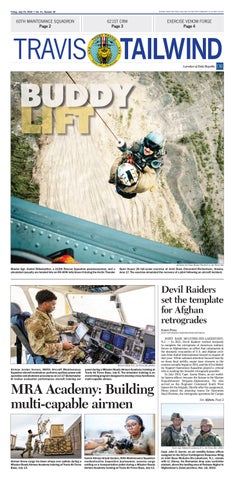

BUDDY LIFT

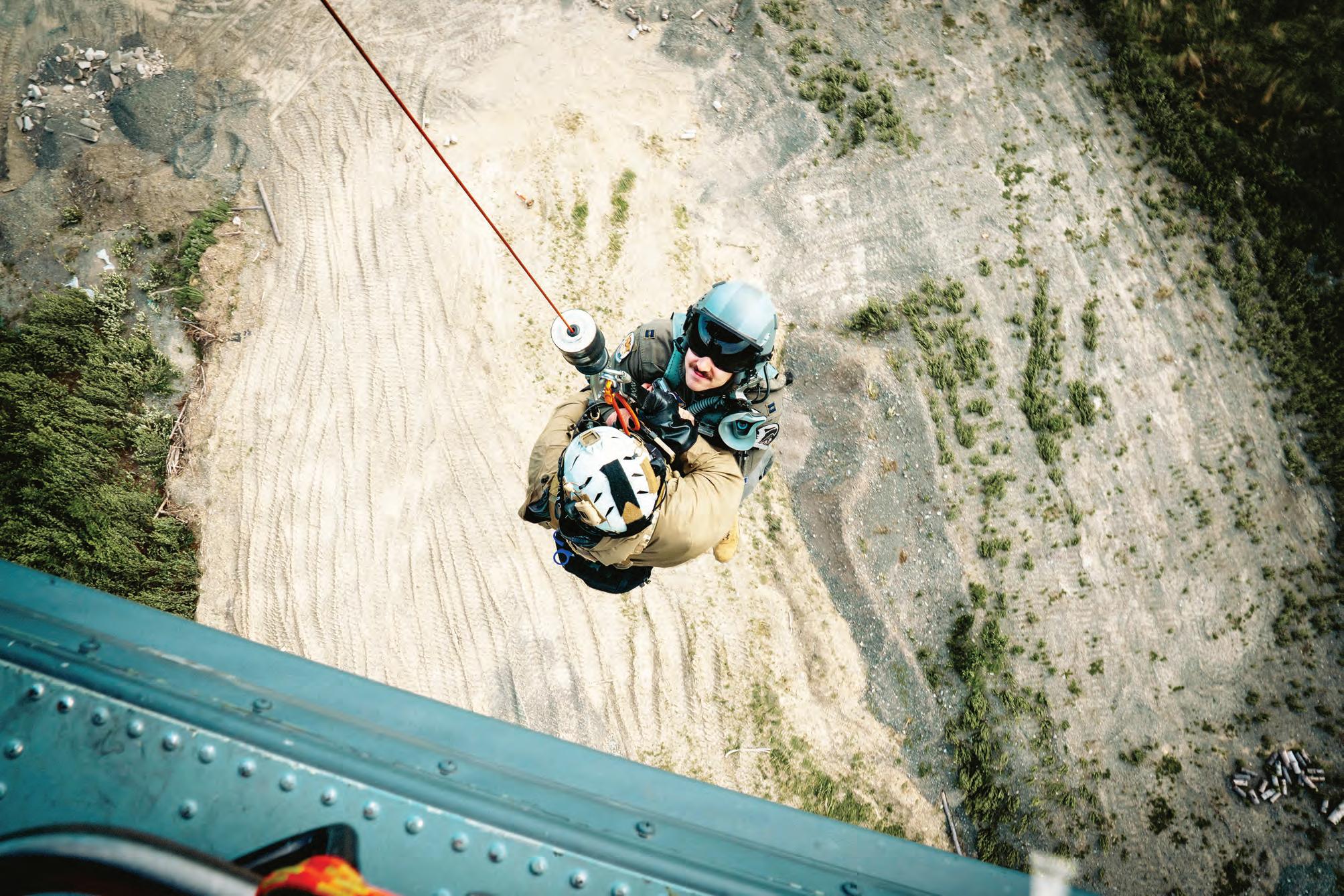
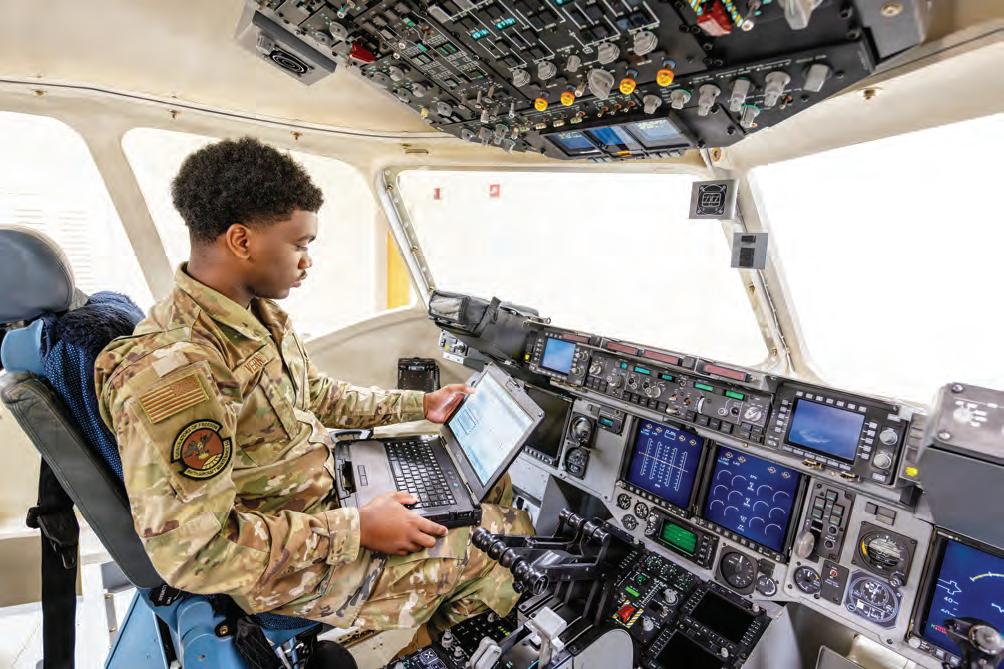
MRA Academy: Building
New commanders, new opportunities: Leading, following with purpose
Hello, beautiful people, its your Travis AFB hype-man here.
Change-of-com mand season is a special time across Travis Air Force Base – and the entire Air Force. New commanders have arrived ready to lead wings, groups, and squadrons across Travis AFB, while airmen prepare to welcome new priorities, personalities and possibilities. The guidon may have been passed in formal ceremonies, but the real work begins the morning after the ceremony, when new leaders and followers begin to build trust with each other every day.
n The best commander’s also make their intent clear. Airmen perform their best when they understand not only what must be done, but why it matters. Connect daily duties to the global air mobility mission. Set a few understandable priorities, repeat them often, and empower your teams to make sound decisions within them. Clear intent turns initiative into action.
n Finally, new Commanders must be visible, consistent, and human. Celebrate initiative and good work publicly. Correct with dignity. Explain difficult decisions when you can, admit when you do not have the answer, and follow through on commitments. Rank may establish authority, but character earns confidence. Your airmen will remember how you made them feel
See Evalle, Page 4
A few thoughts from your old chief: n Commanders, listen before you launch. You may have arrived with great ideas – I hope you have – but take time to learn your unit’s story. Walk the work centers. Visit every shift. Ask airmen what helps them succeed and what gets in their way. Listen to the seasoned civilians, the young airmen, the NCOs who know every process, and the family members supporting the mission from home. When people know their voice matters, trust in leadership begins to grow.
Ready for every takeoff, prepared for every landing

U.S. Coast Guard/Courtesy file photo
The Chinese research ship Xue Long transits north through the U.S. exclusive economic zone and over the U.S. extended continental shelf in the Bering Sea, July 12. In recent years, the Coast Guard has observed heightened activity in the U.S. Arctic and anticipates a continued and increased presence in the region this summer.
Coast Guard monitors Chinese vessels in the
Arctic’s Bering Sea
U.S. CoaSt GUard
JUNEAU, Alaska —
The Coast Guard recently monitored two Chinese research ships as they transited north through the U.S. exclusive economic zone and over the U.S. extended continental shelf in the Bering Sea.
The Chinese research ships Xue Long and Xue Long 2 transited the Arctic, marking the first time this year that Chinese vessels were tracked transiting this area. In response, the Coast Guard cutter Munro executed Operation Frontier Sentinel to actively monitor the vessels during their northbound transit.
The operation was
designed to protect American sovereign rights, ensure consistency with international law and position the Coast Guard to rapidly respond to any detected malign activity.
While foreign vessels are permitted to operate within the U.S. exclusive economic zone and over the U.S. extended continental shelf, the Coast Guard remains vigilant to ensure their activities comply with established international laws. In particular, conducting marine scientific research within this area would require advance permission from the United States and See Arctic, Page 3
Yokota AB
YaSUo oSakabe
374TH AIRLIFT WING
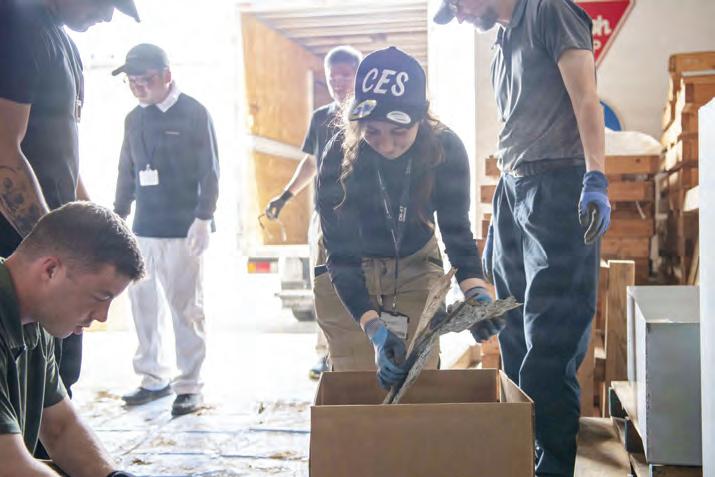
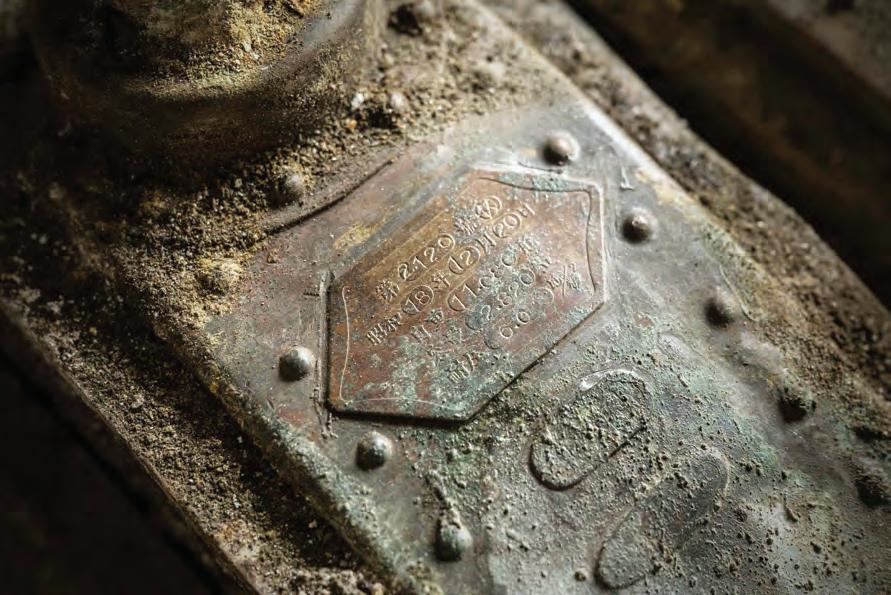
YOKOTA AIR BASE, Japan — Members assigned to the 374th Civil Engineer Squadron at Yokota Air Base, Japan, transferred World War II-era Imperial Japanese Army aircraft artifacts to representatives of the Japanese government, July 1, marking the return of historically significant materials discovered during a construction project on base.
In January, construction crews uncovered the artifacts approximately 7-10 feet below ground during a construction project on base. Initially believed to be unidentified metal debris, the materials were referred for further evaluation after environmental personnel recognized their potential historical significance.
returns historic aircraft artifacts
TRAVIS TAILWIND

Serving Travis Air Force Base and the surrounding community 1250 Texas St., Fairfield, Calif. 94533 707-425-4646 | Fax 707-425-5924
Publishers: Foy S. McNaughton and T. Burt McNaughton
Advertising Manager: T. Burt McNaughton
Editor: Todd R. Hansen
Layout : Aaron Rosenblatt
“When these materials were uncovered, I determined they should be assessed for historical significance,” said Callie Oldfield, 374th Civil Engineer Squadron environmental scientist. “We were only able to recognize the true significance of these artifacts because of the knowledge and expertise of the historians and museum curators.”
Oldfield coordinated the initial assessment with the Fussa City Board of Education before
assembling a multidisciplinary team led by the
and Space Museum. The team included aviation historians, museum cura-
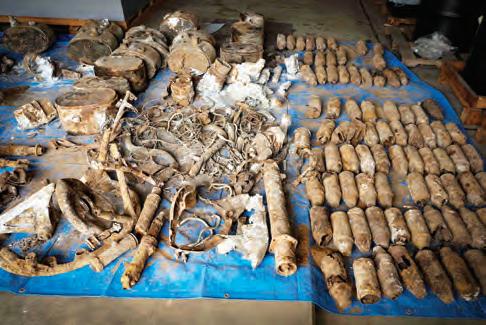
tors, cultural property specialists and aviation technology experts who conducted an on-site examination of the collection in May. Researchers assessed the recovered materials were Imperial Japanese Army aviation artifacts consisting of aircraft radiators, engine components, landing gear assemblies, airframe sections and deactivated munitions. Their investigation concluded the collection represents components
See Yokota, Page 5
From Page 1
Bastion and Leatherneck. This massive logistical effort required intricate coordination between U.S. Transportation Command, U.S. Central Command, Marine Forces Central Command, U.S. Air Forces Central Command, 18th Air Force liaisons, the Tanker Airlift Control Center and United
Kingdom military liaisons. U.S. Central Command set an Oct. 31 deadline for the base closures and the disposition of all equipment and assets. Hines successfully campaigned to provide inputs to the force flow conferences between the participating organizations. He determined that planners had used conservative cargo-loading capacity numbers and suggested breaking apart unit line number cargo to better
maximize the use of C-17 and C-5 aircraft. He also recommended that units perform pre-joint inspections to ensure cargo would be ready on the available-to-load date. These changes ultimately increased aircraft cargo loads by 32% and reduced the total number of aircraft required.
Operation Steel Horizon concluded on Oct. 27, 2014, beating the established deadline by four days. The Marine
Expeditionary BrigadeAfghanistan completed 700 missions on 128 C-17s and 55 C-5s to move 16,000 short tons of cargo and 9,000 passengers. On the last two days of the mission alone, aircraft onloaded 1 million pounds of cargo, and three C-5s set aircraft load records. Ultimately, the plans drawn up for the closure of Camps Bastion and Leatherneck set the strategic template for future retrogrades in Afghanistan.
Fairfield, CA 94533.
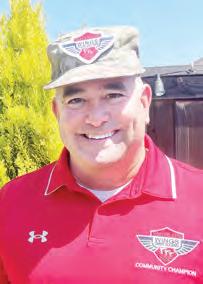
John Evalle Hype Man
Airman 1st Class Daniel Schmitt/U.S. Air Force photos
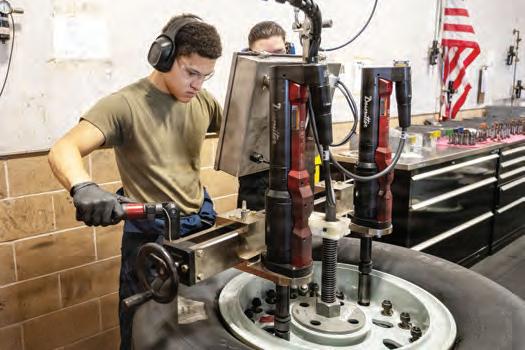
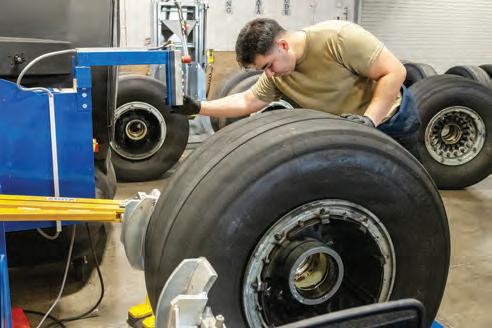
Senior Airman Felipe Bautista, 60th Maintenance Squadron wheel and tire technician, removes bolts from a tire at Travis Air Force Base, Tuesday. The 60th MXS
wheel and tire shop is responsible for maintaining tires on the C-17 Globemaster III, C-5M Super Galaxy and KC-46A Pegasus aircraft assigned to Travis AFB.
Senior Airman Brandon Ashley, 60th Maintenance Squadron wheel and tire technician, torques bolts on an aircraft tire at Travis Air Force Base, Tuesday. Each wheel and tire assembly is thoroughly inspected to meet Air Force maintenance standards before returning to service.
Senior Airman Felipe Bautista, 60th Maintenance Squadron wheel and tire technician, loads a tire onto a machine at Travis Air Force Base, Tuesday. The 60th MXS wheel and tire shop performs field and depot level repairs for three different aircraft, providing critical support across several bases, including installations within the Indo-Pacific area of responsibility.
Gifu-Kakamigahara Air
Yasuo Osakabe/U.S. Air Force file photos
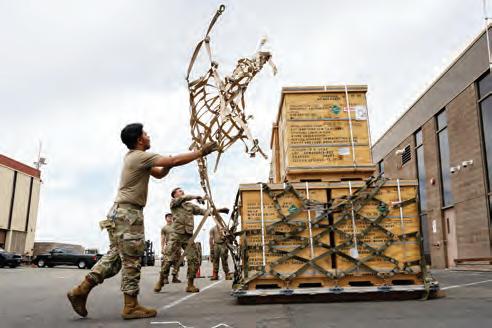
Callie Oldfield, 374th Civil Engineer Squadron environmental scientist, packs a World War II-era Imperial Japanese Army aircraft component into a box for transport at Yokota Air Base, Japan, July 1. The artifact was discovered during a construction project and later identified as historically significant by Japanese aviation experts before being transferred to Japanese government representatives for continued research and preservation.
World War II-era Imperial Japanese Army aircraft artifacts are displayed at Yokota Air Base, Japan, July 1.
33rd MXS refurbishes Khobar Towers memorial sword
senior a irM an reagan h ardy 33RD FIGHTER WING
EGLIN AIR FORCE
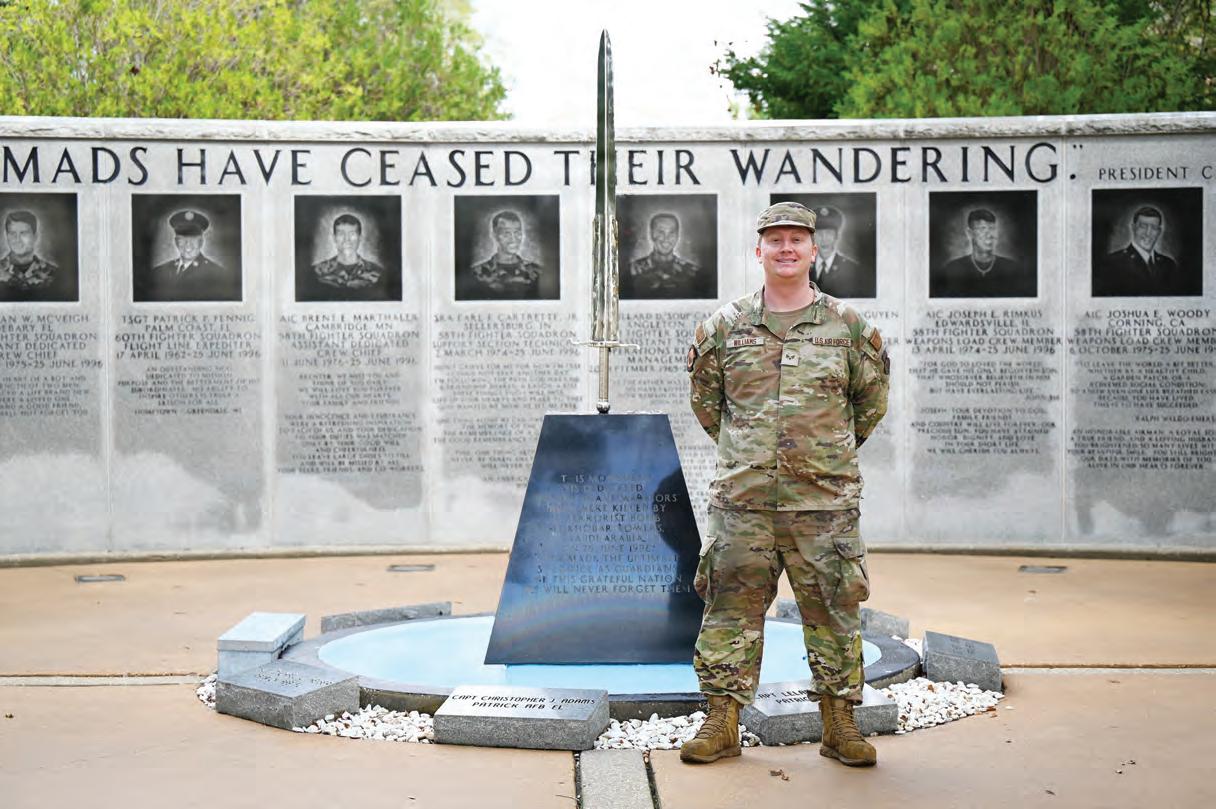
BASE, Fla. — Airmen assigned to the 33rd Maintenance Squadron have worked to revitalize the flaming sword centered on the 33rd Fighter Wing’s Khobar Towers Memorial by modifying it to keep the flame burning without environmental disruption.
The evening of June 25, 1996, went down in history as a tragic night of lasting impact when terrorists bombed Khobar Towers, a housing complex in Dhahran, Saudi Arabia, killing 19 U.S. airmen –12 assigned to the 33rd Fighter Wing. The sacrifice of the airmen will forever root the wing’s values and continue to fuel the mission.
In 1997, airmen assigned to the 33rd Fighter Wing milled a stainless-steel sword to be placed at the center of a memorial located at Eglin Air Force Base, Florida. The sword bears a flame that burns continuously, representing an everlasting legacy “forged by fire.”
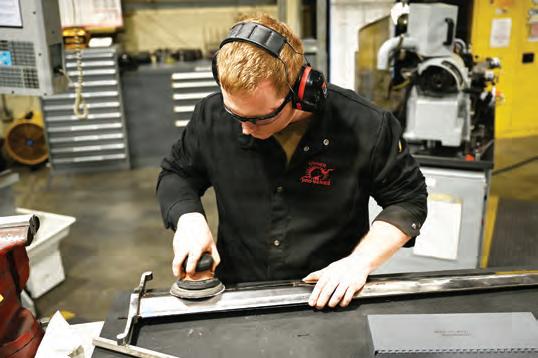
As the 30th anniversary of the bombing approached, 33rd Maintenance Squadron airmen worked to revitalize the sword by polishing the steel and making structural modifications.
Air Force Senior Airman Adam Williams, 33rd Maintenance Squadron metals technology
journeyman, and Air Force Airman 1st Class Sir Christon Oliver, 33rd Maintenance Squadron metals technology apprentice, have combined expertise and worked diligently to properly modify the sword and refresh the original design.
“The flame kept going out. So, we’ve made little fins that go on the side to protect the flames from going out from wind, leaves, debris, anything like that,” Williams said.
Williams fabricated the fins from sheets of metal, while both Williams and Oliver produced welds that cleanly attached the fins to the blade. They cut 19 holes representing the 19 lost airmen into the sides of the sword, allowing the flame to disperse.
“There’s some propane that goes through it, so we’ve got holes on each side that, when the sword is connected to the base, it uses regular pressure to ignite, and that’s how it stays lit all the time,” Williams said.
One airman assigned to the project has a deeper connection to the sword and its legacy. Williams was born in Jeddah, Saudi Arabia, a month and a half after the Khobar Towers bombing. Williams’ father, a U.S. Navy veteran, was working as a contractor in Saudi Arabia at the time of the attack and the family lived close to the bombing site.
See Sword, Page 6
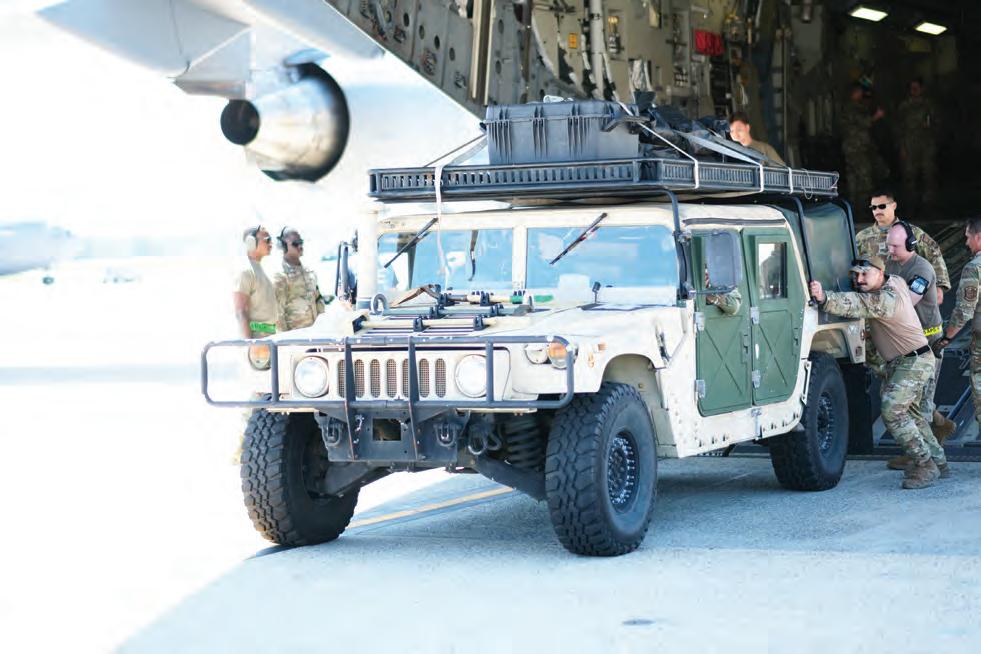
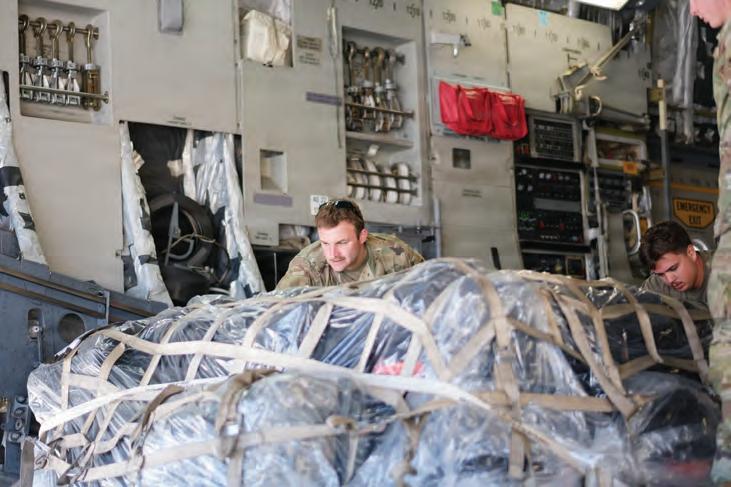
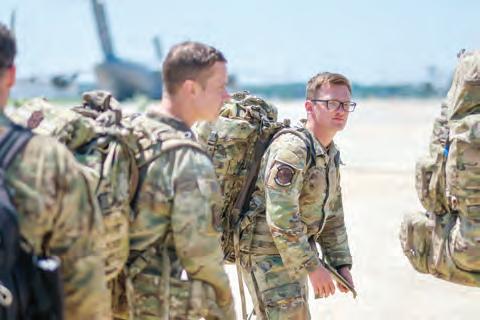
Members of the 621st Contingency Response Wing return to Joint Base McGuire-Dix-Lakehurst, N.J., Monday, following a deployment to Simón Bolívar International Airport, Venezuela. At the direction of U.S. Southern
Command, assigned U.S. military forces are supporting Department of State-led U.S. disaster assistance to the people of Venezuela in the aftermath of the June 24 earthquakes.
CRE returns from earthquake relief operations in Venezuela
1st Lt. Jessica McLaughLin 621ST CONTINGENCY RESPONSE WING
SIMÓN BOLÍVAR INTERNATIONAL AIRPORT, Venezuela —
After weeks of supporting a continuous, 24-hour airlift of global aid, the U.S. Air Force’s 621st Contingency Response Wing has concluded its disaster relief deployment in Venezuela. Operating at the direction of U.S. Southern Command to support a U.S. State Department-led mission, the “Devil Raiders” facilitated the transfer of nearly 3 million pounds of lifesaving cargo intended for earthquake survivors.
Senior Airman Reagan Hardy/U.S. Air Force file
Senior Airman Adam Williams, 33rd Maintenance Squadron metals technology journeyman, stands in front of the newly refurbished sword on the Khobar Towers memorial at Eglin Air Force Base, Fla., Feb. 20. Williams, who grew up in Saudi Arabia near the site of the Khobar Towers bombing, was selected to refurbish the sword.
When the earthquakes struck on June 24, critical distribution.
The operational impact of the relief mission drew a July 6 visit from U.S. Southern Command Commander Gen. Francis L.

From Page 2
subsequent sharing of the information collected.
In recent years, the Coast Guard has observed heightened activity in the U.S. Arctic and anticipates a continued and increased presence in the region this summer.
“Alongside the Department of War, the Department of State, and our international partners, we are actively responding to competitor activities across an increasingly contested Arctic,” said Rear Adm. Bob Little, U.S. Coast Guard Arctic District commander.


Donovan. Visiting the CRE’s Joint Operations Center, Donovan met face-to-face with the contingency response airmen to survey the ongoing disaster response.
During the walkthrough, Donovan highlighted the professionalism and operational effectiveness of the unit. He also recognized the coordinated command structure that enabled the rapid logistical throughput, specifically noting the leadership of Col. Joseph Michaels, Joint Task ForcePort Opening commander,
and Lt. Col. Jessica Foster, CRE commander.
“I’m very proud of the effort of our Air Force element at Simón Bolívar Airport, the contingency response element, who were literally on the ground within the first 24 hours. They were able to get the airfield open and operate at max capacity right away, and that’s important when you bring in relief supplies,” Donovan said.
Executing a disaster response of this scale required mobilizing the Air Force’s Total Force
network. While the mission was led by the 321st Contingency Response Squadron, the deployment integrated active-duty augmentees from the 521st and 621st squadrons at Joint Base McGuire-DixLakehurst, New Jersey. Crucial logistical and airfield capabilities were also seamlessly integrated from the Air National Guard, incorporating the California Air National Guard’s 146th Contingency Response Flight, and the Puerto Rico Air National Guard’s 156th Contingency Response Group. The mission in Venezuela is just the latest chapter in the wing’s extensive history of rapid global mobility. Whether supporting combat forces downrange or directing international humanitarian relief, the 621st CRW specializes in turning chaotic environments into fully functioning mobility hubs. When a contingency arises, the “Devil Raiders” stand ready to open the base and project airpower anytime, anywhere.






Capt. Michael Hong/U.S. Air Force photos
Members of the 621st Contingency Response Wing unload cargo at Simón Bolívar International Airport, Venezuela.
Members of the 621st CRW stand on the tarmac at Simón Bolívar International Airport, Venezuela.
Venom Forge tests Agile Combat Employment scenarios
Staff Sgt. Jake JacobSen
432D WING PUBLIC AFFAIRS
CREECH AIR FORCE
BASE, Nev. — An integration exercise designed to develop new tactics, techniques and procedures, combined support from five wings, seven groups and 17 squadrons across maintenance, logistics, operations, medical, security, safety, fuels, fire emergency services, airfield operations and host-base support June 17, on Creech Air Force Base, Nevada.
Dubbed Venom Forge, this exercise implemented lessons derived from the 57th Maintenance Group’s inaugural Agile Maintenance Leadership Course to develop tactical-level maintenance leaders who can build mission-type orders, manage risk, communicate under friction, generate aircraft and create the conditions for combat airpower to happen.
In preparation for the event, mission partners completed a multi-platform hot-pit refueling site certification at Creech Air Force Base, helping enable contingency hot-pit and Integrated Combat Turn (ICT) training for multiple fighter platforms. The effort also supported the spin-up of four crews on contingency hot-pit and integrated combat turn procedures, creating a foundation for future Agile Combat Employment training iterations.
“Creech’s support was critical because it gave the capstone an unfamiliar environment and helped turn the course concept into executable training,” said Maj. Yoarmerby Gomez, 57th Maintenance Group maintenance tactics officer. “This exercise required more than ramp space. It required access, support equipment, airfield operations, fuels support, fire emergency services, safety, security, medical response planning, hostbase coordination and leadership buy-in.”
F-16C Fighting Falcons.
Laser strikes near Luke AFB lead to federal prison sentence
thomaS brading AFOSI PUBLIC AFFAIRS
PHOENIX, Ariz. —
A joint Air Force Office of Special Investigations and FBI case in Arizona is highlighting how laser strikes against military aircraft can lead to federal prison time.
William Wilson, 56, of Buckeye, Arizona, was sentenced June 15 by U.S. District Judge Steven P. Logan to 10 months in prison for aiming a laser pointer at aircraft, including U.S. Air Force F-35 fighter jets.
For AFOSI, the case has put a spotlight on both the danger laser strikes pose to aircrews and the importance of close coordination with federal law enforcement partners.
“Pointing lasers at aircraft not only endangers the crew on board, but it also endangers the communities below,” said AFOSI Special Agent Gregory Tiegs, who is assigned to the FBI Phoenix Division Joint Terrorism Task Force. “The efforts of AFOSI in this case demonstrate our commitment to protecting U.S. military personnel, safeguarding mission readiness and keeping our communities safe.”
According to the Justice Department, Wilson targeted multiple U.S. Air Force F-35 fighter jets training near Luke Air Force Base, Arizona, with lasers between September 2024 and January 2025.
Division Joint Terrorism Task Force helps AFOSI to work with federal, state and local partners on threats to military personnel, installations and surrounding communities.
For investigators, the case also demonstrates that laser strikes are not harmless pranks and can carry significant legal consequences.
“Pointing a laser at an aircraft is not a harmless act,” Tiegs said. “It is a serious federal crime that has potential life-threatening consequences. AFOSI and the FBI are dedicated to holding those accountable who jeopardize the safety of aircrew and the communities below them on the ground.”
Special Agent Keith M. Daniels, senior enlisted leader for AFOSI Detachment 421, said laser strikes pose immediate danger to aircraft and crews.
“Interfering with aircraft by pointing lasers or any other means is dangerous and illegal,” Daniels said. “It puts the safety of the aircrew, passengers and everyone on the ground in jeopardy.” The Arizona case reflects a threat aviation officials have warned about for years of how a small handheld laser can create a much larger danger when pointed at an aircraft, particularly at night.
Because of its proximity to Nellis Air Force
Creech Air Force Base provides realism and operational value to support a controlled hub-to-spoke training model, while allowing airmen to learn how to coordinate with a real host base.
To execute Venom Forge, organizations from the 57th Wing, 99th Air Base Wing, 53rd Wing, 355th Wing and 432d Wing came together to give students a realistic stage to experience how maintenance decisions affect logistics. The students learned how movement timelines affect aircraft generation, how medical and emergency-response planning affects mission risk, and how host-base constraints shape execution. Creech AFB provided further support with equipment required for execution, facilitation of access across the installation and aided aircraft integration and operations not part of normal day-to-
day mission operations.
“Creech provided the right balance of proximity, realism and operational value,” said Gomez. “It is close enough to Nellis to support a controlled hubto-spoke training model but separate enough to force students to coordinate with a real host base instead of relying on homestation assumptions.”
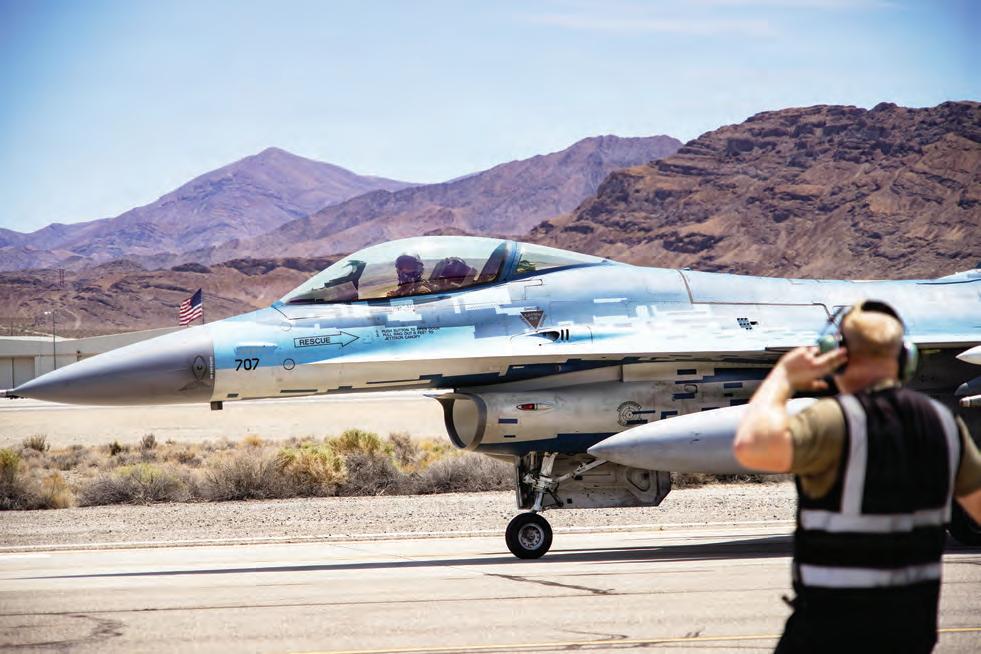
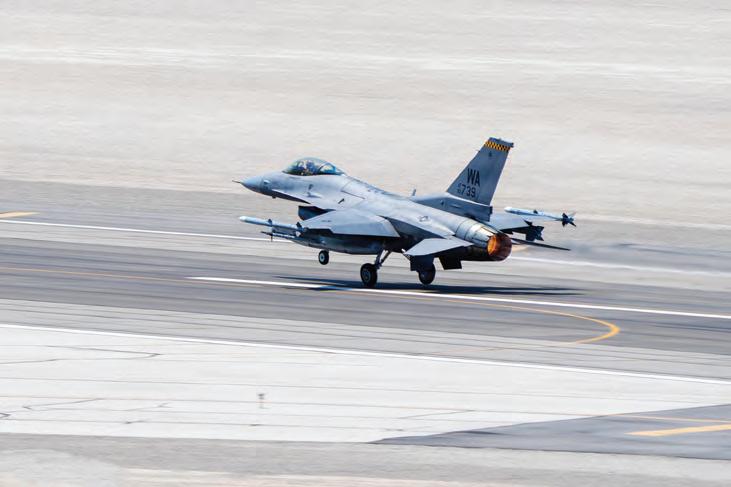
To further test units involved, an inject involving members suffering from simulated heat stroke was enacted, allowing medical teams on HH-60W Jolly Green II to integrate Critical Care Air Transport while aggressor units conducted hot-pit ICTs on F-35A Lightning IIs and
“What made Venom Forge unique was that every organization had its own reason to be there,” Gomez said. “One of the clearest examples of the training value was the level of deconfliction required on the airfield. At one point, F-35s and F-16s were being refueled and rearmed while two HH-60s were entering the airspace. These elements of controlled chaos were exactly what we wanted the students to experience. It forced multiple agencies to communicate, deconflict and execute safely in a dynamic environment.”
The certification and partnership conducted at Creech has enabled a repeatable foundation for future iterations of the exercise. These next events could include more students from Creech, additional mission partners, different aircraft and more deliberate deconfliction across multiple simultaneous operations.
“For the students, Venom Forge showed that aircraft generation is not just a maintenance action,” Gomez said. “Thanks to this exercise, we now have a scalable course model, a stronger relationship with Creech, a multi-agency training framework and a better understanding of what it takes to generate combat airpower from a
location.”
when the mission was demanding and life was complicated.
Now for everyone else who did not receive the ceremonial guidon, great leadership needs great followership. That does not mean simply agreeing with everything. It means bringing competence, honesty, courage, and a mission-first mindset to the team. Give your new
commander a fair opportunity to learn the unit. Share what works, identify problems respectfully, and bring a possible solution whenever you can. One of the biggest challenges is status quo in a unit. When we have worked in a unit for a long time, we can become accustomed to problems that a newcomer notices immediately. Be open and resist the tendency to push back on their feedback. Be curious before being critical. A new process may feel
uncomfortable because it is unfamiliar, but it just may be a better new, more efficient way. Ask questions, seek the commander’s intent, and then execute with energy. If you see a genuine risk, speak up through the right channels with facts and professionalism. Loyal airmen support the mission and have the courage to offer thoughtful feedback. Finally, take care of one another. Welcome new teammates. Share knowledge instead of guarding it. Solve the
problem in front of you, give credit freely, and remember that attitude is contagious. Every airman, regardless of rank or duty title, helps set the climate of a unit. Your professionalism can steady a team during transition and help a new commander lead effectively from day one.
The strongest units I’ve had the privilege to serve in were not built by commanders alone or by airmen waiting to be inspired. They are built through a daily partnership: leaders who listen, clarify, empower and
On Jan. 8, 2025, an FBI surveillance plane captured video showing laser strikes coming from Wilson’s residence. The pilots of the FBI aircraft and two F-35s were struck by lasers that night.
Agents later searched Wilson’s home and found two lasers, one red and one green. Wilson admitted to investigators that he had pointed lasers at planes on several occasions.
“AFOSI, FBI and local law enforcement worked hand-in-hand to identify the origin of the laser strikes,” Tiegs said. “Through this exceptional interagency collaboration, we were able to combine our investigative resources and expertise to identify and hold accountable the individual responsible.”
Tiegs said his assignment as a task force officer to the FBI Phoenix
“These are not harmless pranks,” Daniels said. “There’s a risk of causing permanent visual impairment. From the public’s standpoint, misusing lasers can severely impact a person’s ability to see and function.”
Daniels said realtime reporting and coordination among pilots, command posts, AFOSI and law enforcement are crucial to rapidly responding to laser incidents, both stateside and overseas.
“The challenge is not just in reporting the incident,” he said. “What makes it actionable is the pilot’s ability to specify, with a degree of certainty, a geo-coordinate from which the laser originated.”
Individuals convicted of aiming lasers at aircraft may face fines of up to $250,000 and up to five years in prison. The Federal Aviation See Laser, Page 5
care, and followers who communicate, contribute and carry the mission forward. That partnership is especially important at Travis, where the global mission impact begins with local teamwork.
To every incoming commander: Welcome to Team Travis. Lead boldly, listen deeply, and never underestimate the people entrusted to your care.
To every Travis arman: Bring your best, stay open to growth, and help your new leadership succeed. New command is not just a change at the top, it is a
fresh opportunity for all of us to get better together. So, until next time, my friends, keep leading, keep following and keep lifting one another higher. The future of the Travis and the 60th Air Mobility Wing is bright because Team Travis is ready –and that is directly because of you. Let’s Go. John Evalle is a retired U.S. Air Force chief master sergeant, who works in the Military Affairs Office, Travis Credit Union. jevalle@ traviscu.org.
spoke
Staff Sgt. Jake Jacobsen/U.S. Air Force file
An F-16C Fighting Falcon aircraft assigned to the 64th Aggressor Squadron taxis to the runway during exercise Venom Forge at Creech AFB, Nev., June 17. The exercise
was the capstone event for a course aimed at familiarizing airmen with commander’s intent, communication under friction and generating aircraft.
Airman Vinh Phan/U.S. Air Force file
An F-16C Fighting Falcon aircraft assigned to the 64th Aggressor Squadron takes off from the runway during exercise Venom Forge at Creech Air Force Base, Nev., June 17. The exercise helps maintain the skills required for advanced airpower in operations.
Staff Sgt. Jake Jacobsen/U.S. Air Force file
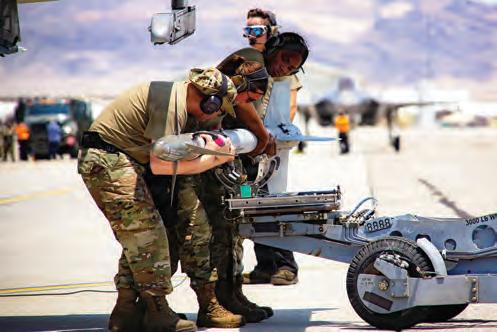
Three weapons load crew members assigned to the 57th Aircraft Maintenance Squadron prepare to load an inert air-to-air missile onto an F-16C Fighting Falcon during exercise Venom Forge at Creech Air Force Base, Nev., June 17.
Base,
Senior Airman Christopher Callaway/U.S. Air Force file (2013)
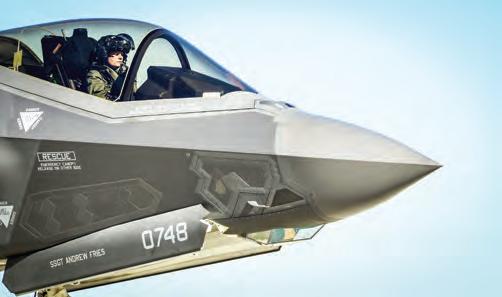
An F-35A Lightning II pilot prepares to refuel at Eglin Air Force Base, Fla., Dec. 12, 2013.
From Page 2
from multiple Imperial Japanese Army aircraft, reflecting the historical role of Yokota Air Base, formerly Tama Army Airfield, where numerous aircraft underwent testing during World War II.
The team also identified several rare components, including a water cooler from a Kawasaki Ki-61 Hien fighter aircraft, oil coolers from a Kawasaki Ki-45 twin-engine fighter aircraft and an oil cooler believed to be from a Kawasaki Ki-102 fighter aircraft. According to the researchers, some components may be among the few surviving examples of their kind and retain original wartime paint valuable for aviation conservation research.
Following the assessment, Oldfield coordinated the transfer of the artifacts to the appropri-
ate Japanese authorities for continued research, preservation and potential public display. The artifacts were temporarily stored on base while the appropriate Japanese agencies coordinated their acceptance.
“I don’t want to lose a piece of history,” Oldfield said. “Although preserving and assessing artifacts takes time, the best outcome is seeing them used for education and research. I’m excited to see what new information these artifacts will reveal in the future.”
Japanese government representatives visited the base to receive the collection, while members of the engineer squadron assisted with loading the artifacts for transport.
The transfer reflects the continued cooperation between the base and its Japanese partners to preserve historically significant materials discovered during ongoing installation construction and modernization projects.
Yasuo Osakabe/U.S. Air Force file
A World War II-era Imperial Japanese Army aircraft engine component is displayed at Yokota Air Base, Japan, July 1. The component was discovered during a construction project on the installation and later identified as historically significant by Japanese aviation experts before being transferred to Japanese government representatives for continued research and preservation.
Laser
From Page 4
Administration may also impose civil penalties that can reach tens of thousands of dollars.
According to the FAA’s website, laser strikes against aircraft remain at historically high levels. Pilots reported 13,304 laser strikes in 2023, 12,840 in 2024 and about 11,000 in 2025. Since the FAA began tracking laser-strike reports in 2010, pilots have reported more than 330 injuries.
In Wilson’s case, the Justice Department said he was indicted July 29, 2025, on four counts of aiming a laser pointer at an aircraft. He later pleaded guilty to two of the counts.
Individuals who witness someone directing a laser toward an aircraft should note the person’s description, location and the circumstances of the incident, officials said, then report it to local law enforcement and AFOSI, regardless of whether the aircraft is military or civilian. Reports may also be sent to laserreports@faa.gov.
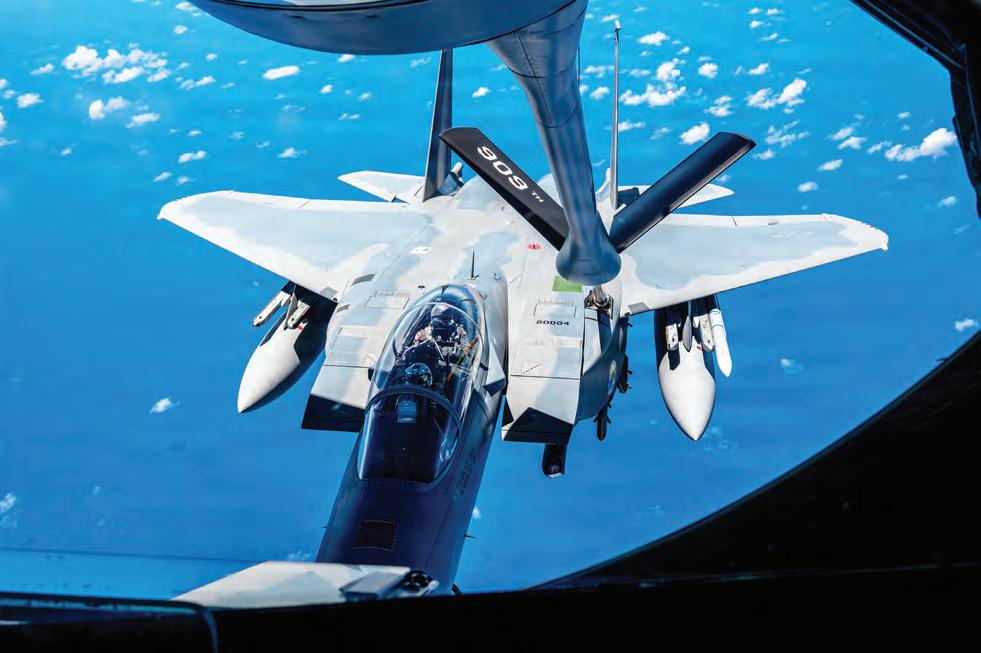
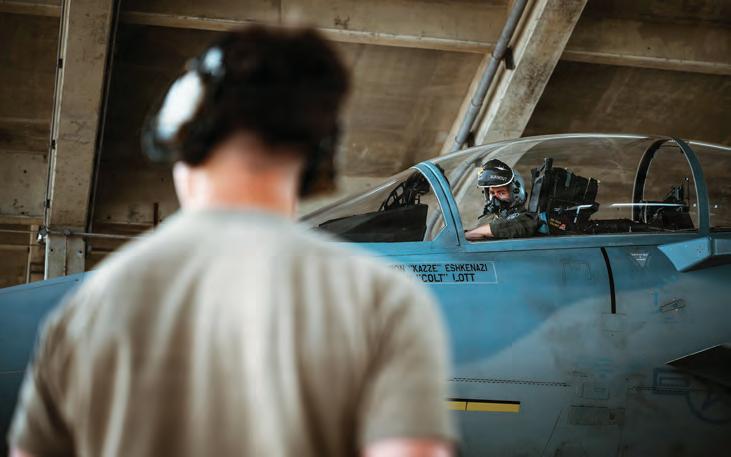
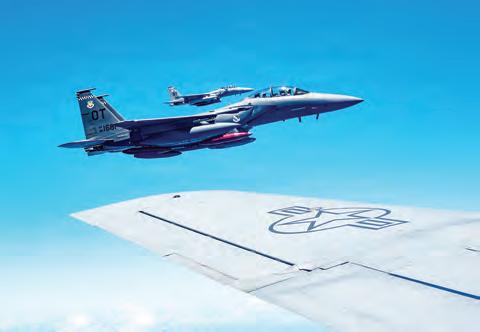
KADENA AIR BASE, Japan — The F-15EX Eagle II returned to Kadena Air Base, Japan, June 29, accompanied by two F-15E Strike Eagle aircraft, all assigned to the 85th Test and Evaluation Squadron, Eglin Air Force Base, Florida. Building on the aircraft’s inaugural visit last year, the deployment gives airmen another opportunity to train alongside the Air Force’s newest fighter as Kadena prepares for its transition to
The visit marks the next phase of the Department of War’s effort to replace Kadena’s F-15C/D Eagle fleet with the F-15EX. Operating the Eagle II from its future home station enables pilots, maintainers and mission support personnel to refine the tactics, maintenance procedures and sustainment practices that will support longterm operations across the Indo-Pacific.
“Building familiarity with the aircraft now will help ensure a smooth transition as the Eagle II becomes part of Kadena’s long-term mission and strengthens combat readiness across the IndoPacific,” said Lt. Col. Casey Watts, commander of the 85th Test and Evaluation Squadron.
Throughout the visit, airmen from across the 18th Wing are integrating with the aircraft to strengthen coordination between operations, maintenance and mission support teams. The deployment also provides opportunities to validate maintenance procedures,
logistics requirements and combat generation capabilities that will support future F-15EX operations at Kadena.
Equipped with advanced avionics, enhanced survivability, modern electronic warfare systems and increased weapons capacity, the F-15EX will enhance Kadena’s ability to respond to evolving security challenges throughout the Indo-Pacific while giving airmen valuable
experience operating and sustaining the platform before it becomes a permanent part of the wing.
“The F-15EX represents the next chapter of airpower at Kadena,” said U.S. Air Force Brig. Gen. John Gallemore, 18th Wing commander.
“Our airmen have the opportunity to train with the aircraft, build confidence in its capabilities and ensure we’re ready to project lethality and integrate into operations as we
continue providing combat power in support of a free and open Indo-Pacific.”
For the 67th Fighter Squadron, Kadena’s first operational F-15EX unit, the deployment expands the operational knowledge and technical expertise required to employ the Eagle II. By participating in integration events with the test aircraft, future pilots, maintainers and mission support personnel continue refining the tactics and sustainment practices that will support the squadron once the F-15EX arrives permanently at Kadena. Each integration event moves the 18th Wing closer to fielding the Eagle II as part of its enduring mission in the Indo-Pacific. By bringing together operators, maintainers and mission support airmen, the wing is building the expertise, interoperability and combat readiness needed to employ the aircraft effectively from its first day of operational service at Kadena.





Staff Sgt. Dwane Young/U.S. Air Force file
An F-15EX Eagle II assigned to the 85th Test and Evaluation Squadron, Eglin Air Force Base, Fla., approaches a KC-135 Stratotanker assigned to the 909th Air Refueling Squadron for aerial refueling en route to Kadena Air Base, Japan,
June 29. The test aircraft arrival supported the Department of War’s effort to modernize United States airpower in the Indo-Pacific and prepare Kadena personnel and the local community for the F-15EX’s arrival.
Senior Airman Mason Hargrove/U.S. Air Force file
An F-15EX Eagle II assigned to 85th Test and Evaluation Squadron taxis into a hangar at Kadena Air Base, Japan, June 29.
Staff Sgt. Dwane Young/U.S. Air Force file
An F-15EX Eagle II and F-15E Strike Eagle assigned to the 85th Test and Evaluation Squadron fly in formation on the wing of a KC-135 Stratotanker assigned to the 909th Air Refueling Squadron over the Pacific Ocean, June 29.
Airmen conduct decompression sickness exercise at Joint Base Andrews
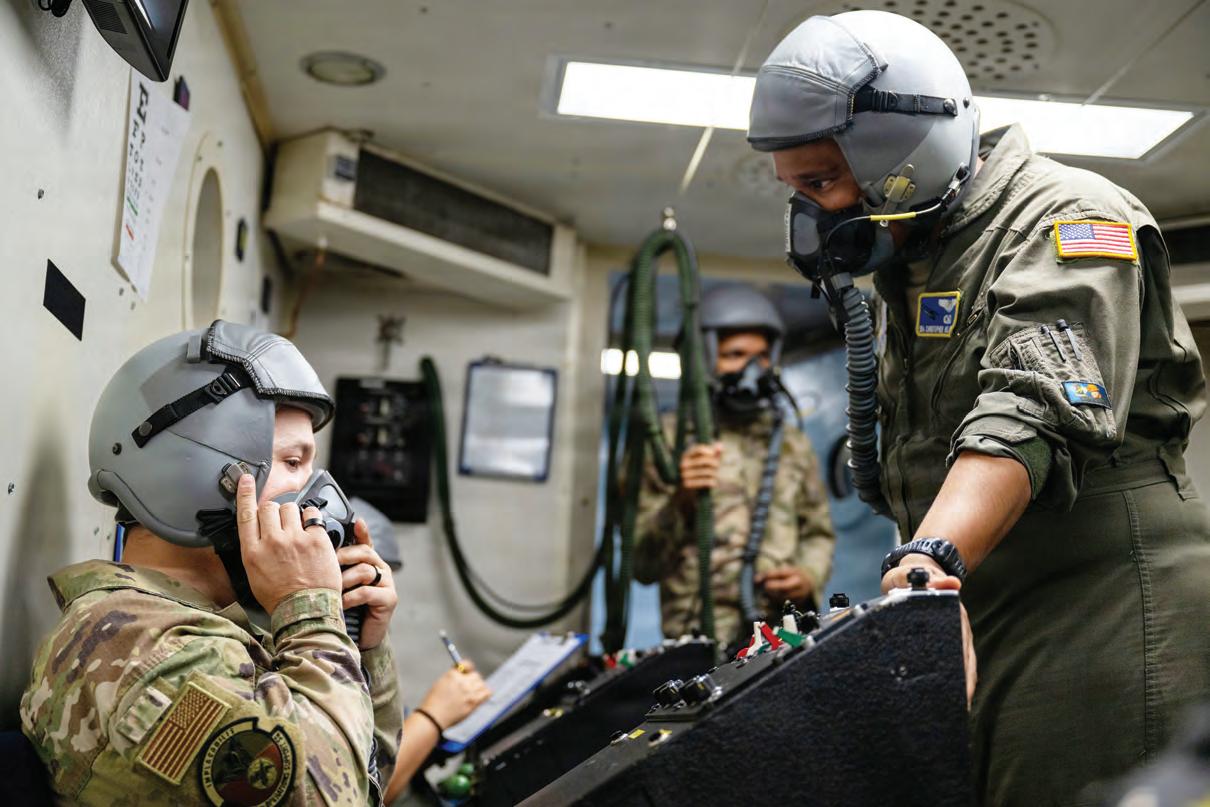
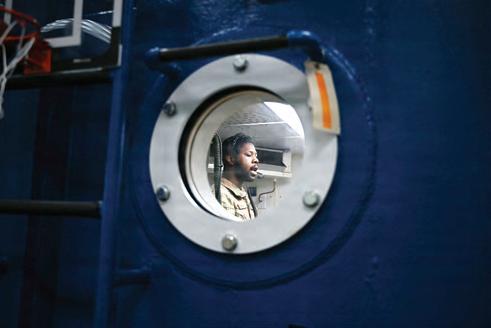
Md. — Inside the heavy steel walls of the altitude chamber at the 316th Operations Support Squadron Aerospace Physiology unit at Joint Base Andrews, airmen peer through pressure windows watching your every move. A voice comes on instructing them to start working on a simple worksheet that includes personal questions, simple math problems and a maze. Their fingertips start to tingle; they become dizzy and struggle to think clearly.
Decompression sickness, also known as barotrauma or “the bends,” is caused by a rapid decrease in pressure. This can occur during high-altitude training or unpressurized air travel. When decompression sickness occurs, the body experiences something similar to a shaken, carbonated drink opening. Nitrogen in the bloodstream separates and forms bubbles, obstructing vital blood flow throughout the body.
Some symptoms that an individual might experience from decompression sickness are dizziness, difficulty thinking, and tingling or numbness in the arms and legs. Immediate, emergency treatment involves maintaining blood pressure and administering high-flow oxygen.
Optimal treatment requires the use of a hyper-
signs and symptoms of hypoxia and decompression sickness.
“For us, the criticality is knowing our checklists; (they are) written in blood and it’s important that we follow them,” said U.S. Air Force Lt. Col. Kimberly Dowd, Aerospace Physiology commander. “Making sure that we have checklist discipline, so we don’t have any blind spots, and if we do, what are they so we can practice them in training and be as prepared as possible for someone’s worst day.”
“We never want to create a patient, but we want to make sure that we are trained at the highest level possible,” said Dowd. She noted that if an airman’s worst day happens in the flight chamber, they know they will receive the care they need.
The third prong in the exercise was working with the Maryland State Police Aviation Command – Washington Section Trooper 2, a civilian unit that supports local military partners and responds to medevac requests. Trooper 2 medevaced the simulated patient to the R Adams Cowley Shock Trauma Center at the University of Maryland in Baltimore to complete the exercise.
The traditional transport route with an ambulance from Andrews to Baltimore’s R Adams Cowley Shock Trauma Center takes on average 90 minutes. By adding Trooper 2 into the fold, and getting patients airborne, medical personnel are able to reduce the time to 15 minutes to get patients the critical care they need, reducing the potential for any secondary or tertiary symptoms to set in.
“I spent 18 years in Dammam, which is 45 minutes from Khobar Towers. So, as I grew up, to go into town, you had to drive by Khobar Towers and that whole area, and that was my childhood,” he said. “[The Khobar Towers Memorial] resonated with me, because I knew where it was and what the impact was.”
Williams later joined the Air Force and was assigned to the wing linked to this significant part of his youth, and he shared what it means to him.
“I feel so honored to be able to be a part of this history. I literally walked those streets where it happened, and I still sometimes get goosebumps,” he said.
The sword represents more than just the memorial’s centerpiece.
“[The sword’s significance] is keeping the heritage alive and honoring those [who] did die for us. It’s also making sure that those family members [who] do come, see that we’ve put the effort in and made time for them, because they have the loved ones that made the ultimate sacrifice,” Williams said. “We’ve put the effort in to make sure it’s going to withstand the test of time, and I think in 30 years all it will need is a little touch-up.”
With the 33rd Maintenance Squadron’s efforts, the flaming sword will continue to burn, withstanding the environment for years to come.
“The incredible service, sacrifice and resiliency our airmen demonstrated during the Khobar Towers tragedy is part of our nomad legacy. That legacy wasn’t achieved from a single event; it’s an honor we earn and maintain every day with our actions,” said Col. Dave Skalicky, 33rd Fighter Wing commander. “Our commitment to that legacy is what I see in that sword.”
baric oxygen chamber filled with 100% oxygen.
The 316th OSS Aerospace Physiology unit, in coordination with Maryland State Police Aviation Command – Washington Section Trooper 2 and the

Malcolm Grow Medical Clinics and Surgery Center Emergency Care Center, conducted a decompression sickness exercise, June 11. The exercise provided training to understand the
During the exercise, an airman simulated symptoms of decompression sickness. Aerospace Physiology airmen jumped into action, calling the base defense operation center to transfer the airman to the ECC where they simulated the patient receiving further care.



Dowd said the ultimate goal for the exercise was to make sure everyone involved had one common goal. “We are here help you, we want to support you, and it’s really cool to see the partnerships of everyone all in it for the common good of preserving our most valuable asset, our airmen.”





Senior Airman Daniel Walderbach/U.S. Air Force file
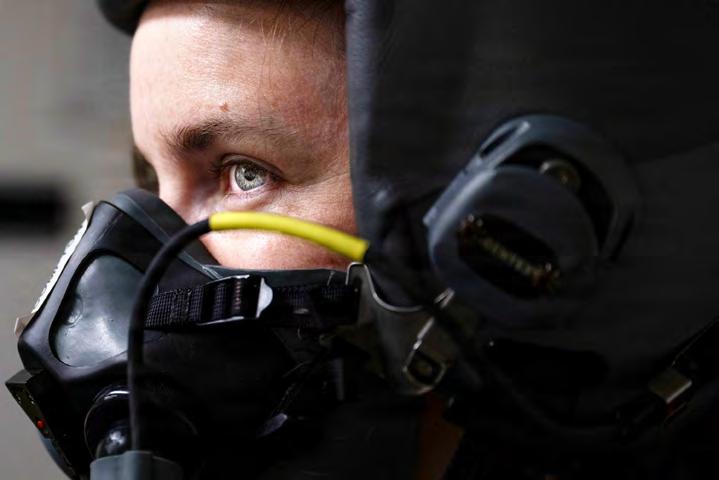
Senior Airman Christopher Velasquez, right, an aerospace physiology technician assigned to the 316th Operational Support Squadron, checks an airman’s mask during a decompression sickness exercise at Joint Base Andrews, Md., June 11.
Airman 1st Class Kiora Brooks/U.S. Air Force file
Senior Airman Brandon Smith, 316th Operations Support Squadron aerospace physiology technician, participates as an instructor during a decompression sickness exercise at Joint Base Andrews, Md., June 11. The exercise provided training for following and implementing decompression chamber procedures.
Senior Airman Daniel Walderbach/U.S. Air Force file
Staff Sgt. Karen Compton, an aerospace physiology technician assigned to the 316th Operational Support Squadron, listens during a decompression sickness exercise at Joint Base Andrews, Md., June 11. The exercise emphasized the importance of following designated decompression chamber procedures.
Vietnam War MIA families gather for updates
DaviD vergun
PENTAGON NEWS
ARLINGTON, Va. — The bedrock of the warrior ethos is that Americans never leave behind a fallen comrade, said Anthony Tata, undersecretary of war for personnel and readiness.
Tata spoke in Arlington, Virginia, June 25, to members of families who lost loved ones during the Vietnam War. The event was sponsored by the Defense POW/MIA Accounting Agency.
“The Vietnam War may have ceased more than half a century ago, but I know that for all of you, it’s never really ended, and you have spent decades carrying your silent vigil, a silent vigil for your unaccounted –[for] fathers, mothers, brothers, sisters, family and friends, and waiting for answers. Know that this War Department is focused on helping you find them,” Tata said.
The undersecretary applauded the work that teams are doing in the field around the world searching for remains, as well as the scientists who make the identifications in the laboratories at Joint Base Pearl Harbor–Hickam, Hawaii, and Offutt Air Force Base, Nebraska.
The DPAA mission is per-
sonal, Tata said, noting his own combat service and remembering his comrades who never made it home alive.
took place are aging and dying, McKeague said.
Justin O’Connell is the grandson of Marine Corps Maj. Francis Edward Visconti, who died Nov. 22, 1965, when his UH-34D helicopter crashed during a night flight in a storm in South Vietnam. He brought a photo of his grandfather and a shadow box full of his medals and other mementos. Visconti and three others on that flight are still missing.
Susan Lilly Harvey’s brother, Army 1st Lt. Lawrence Lilly, went missing in Southeast Asia when his Cobra helicopter went down. She said she’s been coming to these gatherings every year for 40 years.
Raymond L. Echevarria Jr.’s father, Army Sgt. Maj. Raymond L. Echevarria Sr., and two other soldiers went missing in Laos following a firefight with the Viet Cong. An interpreter escaped to relay what happened.

First Assembly is
all are welcome to Discover, Develop, and Demonstrate a relationship with God.
We invite you to join us for Sunday service at 10:30 a.m.
2207 Union Avenue, Fairfield, CA www.1ag .com


Kelly K. McKeague, director of DPAA, said his agency has been working to recover remains from the Vietnam War since 1985 and that DPAA-trained Vietnamese recovery teams have located the remains of many missing Americans.

Communicating and connecting is just as important as it is with accounting for your loved ones, McKeague said.
“This is that sacred obligation, that moral imperative that we have told you for years, that we live it, we don’t just talk it. We live it simply because we know your loved ones made the supreme sacrifice, you deserve those long-sought answers, and that’s why we’re here,” he said. While DPAA has been searching for service members from all wars dating to World War II, the agency has prioritized finding the missing from the Vietnam War since firsthand witnesses in several nations where operations
Last year, 231 missing service members were accounted for, including eight from the Vietnam War, with the remainder from World War II and the Korean War. Most of the recovery sites are in Europe and Southeast Asia. There are currently 1,565 missing U.S. personnel from the Vietnam War.



Christ Exalted, Lives Transformed 3777 Vaca Valley Pkwy Ste.F, Vacaville, 95688
Email: o ce@northhillsvv.org
Website: www.northhillsvv.org
Service Times: Sunday morning 10 a.m., Wednesday evening 6:30 p.m. Phone: 707-449-8977




Vacaville
Church of Christ
401 Fir St., Vacaville, CA 95688 (707) 448-5085
Minister: Elliott Williams
Sunday Morning Bible Study 9:30 AM
Sunday Morning Worship 10:30 AM
Sunday Evening Worship 5:00 PM

8:15am, 10am
Wednesday Evening Bible Study 6:00 PM vacavillecoc.com 401




NA ZARENE
Staff Sgt. Dallin Wrye/U.S. Air Force file
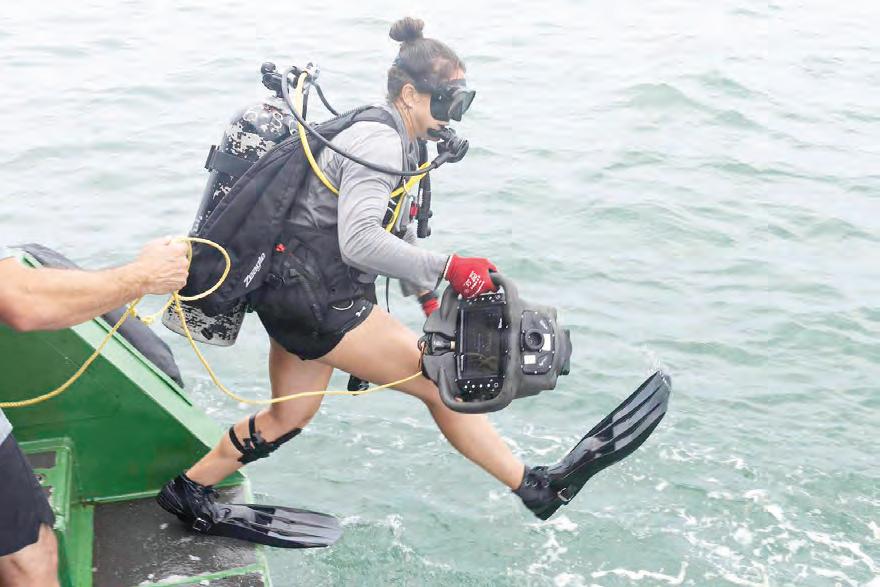
A Navy explosive ordnance disposal technician assigned to the Explosive Ordnance Disposal Mobile Unit 3 jumps into the water during an underwater investigation mission in Vietnam, June 6.