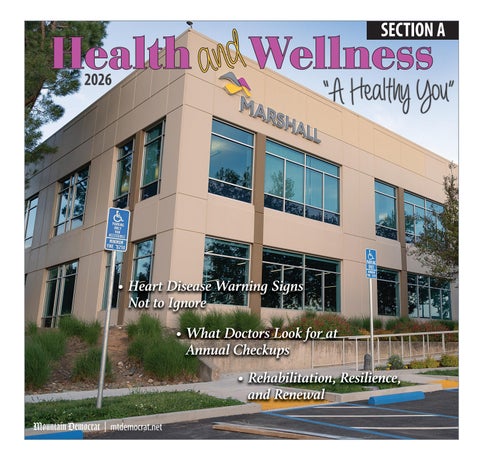
Health&Wellness2026_SectionA

Page 1


Celebrating 20 Years in El Dorado County Exceptional Medical Care, Aesthetic Expertise, and a New Era of Wellness

For more than 20 years, Dignity Medical Aesthetics & Wellness has proudly served El Dorado County with care grounded in medical integrity, safety, and personalized attention. Our practice was built on a foundation of medical aesthetics, offering thoughtful, results-driven treatments designed to support natural aging, confidence, and long-term skin health. In 2025, Dignity Medical expanded to include comprehensive wellness and longevity care, responding to patient demand for proactive, preventive medicine. Services include bioidentical hormone replacement therapy, cognitive health support, advanced diagnostic testing, and personalized longevity-focused care strategies.

Aesthetics:

• Botox

• Dermal Fillers

• Skin Rejuvenation

• Skin Tightening

• Laser Hair Reduction

• Spot Removal

• Spider Vein Removal

• Body Contouring

Specializing in:

Wellness:

• Weight Loss Medications

• Bioidentical Hormone Replacement Therapy

• IV Therapy

• Recode Program for Cognitive Decline

• Cancer Screening

• Gut Health Testing

• VO2 Max Testing

• Micronutrient Testing

Zanoni-Potts
Gretchen Britt Receptionist Sarah Spadavecchia Receptionist Emilee Olson Receptionist Kat Phoumychack Social Media
The Aesthetic Team
Dr. Namuun Bat Naturopathic Doctor Dr. Lauren Chong Naturopathic Doctor Dr. Lauren Wallace RN, IV Specialist Terri Miller Director of Wellness
Chloe Giannini Medical Assistant & Plebotomist
The Wellness Team

Revive Fitness

Whether you’re just starting out or looking to take your fitness to the next level, you belong here. We work with all fitness levels, offering private personal training and group fitness classes throughout the day. Our beginner-friendly TRX classes are ideal for those with limited mobility or anyone new to exercise, and every member has access to nutrition support and progress tracking through body scans. This is more than a place to work out—it’s a warm, welcoming community where you’ll be supported every step of the way. Visit our website to learn more or schedule your free fitness consultation through our booking site.

Thank you,

How Helping Others Boosts Your Own Health and Happiness

VOLUNTEERING NOT ONLY BENEFITS THOSE YOU HELP, BUT DOES WONDERS FOR YOU, TOO.

As you get older, staying socially connected becomes one of the most important things you can do for your health. Strong relationships help you feel supported and less alone. They give your days purpose and keep your mind active. But many people find that their circle gets smaller with time. Kids grow up, friends move away, and routines change.

One of the best ways to strengthen your sense of connection is to help others. It may sound simple, but giving your time, skills, or support can have a powerful impact on your own well-being. Research shows that people who volunteer often feel healthier, happier, and more satisfied with their lives. Helping others gives you a reason to get out of the house, meet new people, and stay mentally and physically active.

Volunteering can also lower stress. When you focus on someone else’s needs, your own worries tend to shrink a bit. Acts of kindness can even trigger feelgood chemicals in your brain. These chemicals help lift your mood and can improve your overall sense of well-being.

Another benefit is that helping others can give your life more purpose. Many older adults say they miss feeling useful. Sharing your experience with someone who needs guidance or support can remind you how much you have to offer. Whether you are reading to children, visiting with other seniors, or helping at a community food pantry, your presence matters. Feeling needed is good for your emotional health and can boost your confidence.

It is also good for your physical health. Volunteer work often involves movement, whether you are stocking shelves, walking dogs, or assisting at community events. Even light activity can help keep your muscles stronger and your heart healthier. Some research has found that older adults who volunteer regularly may have a lower risk of high blood pressure and may stay more independent as they age.

Another important factor is connection. When you volunteer, you naturally build relationships with people who share your interests. These new friendships can help protect your mental health, and having regular social interactions gives you something to look forward to and keeps your mind engaged.

The best part is that you do not have to make a huge commitment to see benefits. Even small acts of kindness count. You can start by checking in on a neighbor or offering to drive a friend to an appointment. If you prefer something more structured, many organizations welcome volunteers for just a few hours a month. Choose something you enjoy, so it feels rewarding and not like a chore.

Everyone has something to give. You might be great with kids, love animals, or enjoy organizing things behind the scenes. Volunteering lets you share your strengths, and as you will see, it can also make your own life richer, healthier, and more joyful.

To learn more about volunteer opportunities at Marshall, visit: marshallmedical.org/patients-visitors/ community-information/volunteers/

Everyone has something to give. You might be great with kids, love animals, or enjoy organizing things behind the scenes. Volunteering lets you share your strengths, and as you will see, it can also make your own life richer, healthier, and more joyful.
Photo courtesy Marshall Norma is a dedicated member of the Marshall Auxiliary Volunteers.

Heart Disease Warning Signs You Should Never Ignore

IF YOU HAVE ANY OF THESE SYMPTOMS, GETTING THEM CHECKED OUT MAY SAVE YOUR LIFE.

Heart disease is often thought of as something that happens suddenly, like when someone has a heart attack seemingly out of the blue. But in reality, the body usually sends warning signs long before a major event occurs. The problem is that many of these symptoms are easy to brush off or blame on stress, aging, or other health issues. Knowing what to watch for can make a life-saving difference.

Paying attention to early signs of heart disease and taking action right away can help prevent serious complications and even save your life. Some are obvious, while others are subtle and easy to dismiss. Here are some of the warning signs you should not ignore:

■ Chest discomfort that does not feel “normal.” This is often described as pressure, tightness, or a heavy feeling rather than sharp pain. It may come and go or linger for several minutes. Many people assume it is heartburn or indigestion, especially if it happens after eating or during stress.

■ Shortness of breath during simple activities. Getting winded while walking, climbing stairs or doing routine chores can signal that the heart is struggling to pump enough blood. This symptom is frequently blamed on being out of shape or getting older, which can delay care.

■ Pain or discomfort outside the chest. Heartrelated discomfort can show up in one or both arms, the back, neck, jaw, or upper stomach. The feeling may be dull or tight rather than painful, making it easy to overlook.

■ Extreme or unusual fatigue. Feeling wiped out without a clear reason can be an early warning sign, especially for women. This fatigue often feels different from being tired after a long day and may last longer than expected.

■ Nausea or stomach discomfort. Some people feel sick to their stomach, vomit or notice a vague sense of indigestion. These symptoms are often mistaken for a stomach bug or food-related issue.

■ Dizziness or feeling lightheaded. Feeling faint, unsteady, or as though you might pass out can happen when the heart is not delivering enough blood to the brain.

■ Cold sweat without a clear cause. Breaking out in a sudden sweat, especially when paired with other symptoms, can be a red flag that should not be ignored.

It is also important to recognize that heart disease does not always look the same in men and women. Men are more likely to experience classic chest pain. Women often have less obvious symptoms such as nausea, shortness of breath, back and jaw discomfort or overwhelming fatigue. Because these signs do not always scream “heart problem,” women may wait longer to seek help.

If you have any of these symptoms and they are new, severe, or getting worse, take them seriously. If symptoms are mild but keep returning, schedule an appointment with a healthcare provider as soon as possible. Early treatment can keep your heart healthier. Call 911 right away if you think you may be having a heart attack.

It is also important to recognize that heart disease does not always look the same in men and women.
Photo courtesy Marshall Cardiac

At-Home Colon Cancer Tests vs Colonoscopy: What’s the Difference?

HERE IS AN OVERVIEW OF SCREENING TESTS SO YOU CAN DECIDE WHICH IS RIGHT FOR YOU.

Colorectal cancer often develops quietly, and many people have no warning signs until the disease is more advanced. That is what makes screening so important. When colorectal cancer is found early, treatment is often simpler and outcomes are better. Screening can also stop cancer before it starts by finding and removing precancerous growths.

There are multiple options available to screen for this type of cancer. Some tests can be done at home while others are done in a medical office. Each has its benefits, limitations, and recommended uses. Understanding how the different types of testing compare can help you make an informed choice about what is best for you.

TYPES OF COLORECTAL CANCER SCREENING

Colorectal cancer screening falls into two general categories. One group of tests looks for signs of cancer in stool. The other looks directly inside the colon.

■ At-home stool tests – These check for hidden blood or abnormal DNA that may come from cancer or large polyps. The most common options include fecal immunochemical tests (FIT) and stool DNA tests. These tests are done at home and mailed to a lab for results.

■ Colonoscopy – This is an in-office procedure where a doctor uses a small camera to examine the entire colon and rectum. If polyps or abnormal tissue are found, they can usually be removed during the procedure.

WHO AT-HOME TESTS ARE GOOD FOR

At-home tests are generally recommended for adults at average risk for colorectal cancer. This usually means they have no personal history of colorectal cancer or polyps, no strong family history, and no inflammatory bowel disease. Most experts recommend screening beginning at age 45 if you are at average risk. FIT tests are typically done every year. Stool DNA tests are usually done every three years if results are normal.

These tests are popular because they are easy to do in the privacy of your home. There is no bowel prep, no sedation, no big expense, and no need to take time off work. But they cannot prevent cancer. They only look for signs that cancer or advanced polyps may already be present. A positive result always needs follow-up with a colonoscopy.

WHO SHOULD CONSIDER COLONOSCOPY

Colonoscopy is often recommended for people at higher risk for colorectal cancer and is typically repeated every 10 years if nothing abnormal is found. It is best for those with a family history of the disease, a personal history of polyps, or certain genetic conditions. It is also the next step after an abnormal at-home test.

While preparation can be inconvenient, colonoscopy has a major advantage. It can find small polyps that may not be detected during at-home tests. It can also remove them on the spot, before they cause problems.

CHOOSING THE RIGHT SCREENING OPTION

Health organizations like the Centers for Disease Control and Prevention and the U.S. Preventive Services Task Force

agree that regular colorectal cancer screening saves lives. And many health experts suggest that the best test is the one that you are willing to do.

For some people, being able to do an at-home test means they are more likely to get screened. For others, colonoscopy offers reassurance and longer-lasting

Marshall’s Population Health team educates the community about the benefits of Colorectal Cancer screening.

protection. Talking with a healthcare provider about your health history can help you decide which test is right for you.

What Doctors Look for at Annual Checkups and Why

HERE’S WHY IT IS WORTH TAKING ONE DAY A YEAR TO CHECK IN WITH YOUR DOCTOR.

It can be tempting to skip routine checkups when you feel fine. But these annual visits do more than just confirm that you are healthy right now. They give doctors a chance to catch small changes in your health early, help prevent future problems, and keep your health on track. So even when you feel well, making time for this once-a-year visit is worthwhile.

Here is what doctors typically look for during annual checkups and why these visits are an important part of staying healthier:

■ Updates to your health history. Doctors start by asking about changes since your last visit. This includes new symptoms, medications, stress levels, sleep habits, and family health history. These details help doctors understand what may be affecting your health now and what risks to watch for going forward.

■ Vital signs. Blood pressure, heart rate, weight, and sometimes oxygen levels are checked at annual visits. These numbers provide a snapshot of how your body is functioning. High blood pressure or gradual weight gain can raise the risk of heart disease, stroke, and other conditions if left unchecked.

■ A physical exam. During the exam, doctors listen to your heart and lungs, look in your eyes, ears, and throat, and check your abdomen and skin. These steps can uncover issues like irregular heartbeats, breathing problems, thyroid changes or skin conditions that you may not notice on your own.

■ Preventive screenings based on your age and risk. Annual checkups often include or lead to screenings such as cholesterol checks or blood sugar testing. These screenings help detect conditions like diabetes or high cholesterol early, when lifestyle changes or treatment can be most effective.

■ Review of vaccines and preventive care. Doctors use annual visits to make sure you are up to date on recommended vaccines. They may also discuss screenings for cancer, bone health, or other agerelated concerns. Staying current on preventive care helps reduce the risk of serious illness later

■ Conversations about daily habits. Diet, physical activity, sleep, stress, and use of tobacco or alcohol are common topics discussed during annual checkups. These conversations are meant to support you, not judge you. Small changes in daily habits can have a big impact on long-term health, and doctors can offer guidance that fits your lifestyle.

■ Monitoring of chronic conditions. For people with conditions like high blood pressure, asthma, or arthritis, annual visits help track how well these issues are being managed. Even if symptoms feel stable, regular check-ins can prevent complications and keep treatment plans up to date.

■ Building a long-term relationship with your doctor. Seeing the same provider each year helps them understand what is normal for you. This makes it easier to notice changes early and address concerns before they become bigger problems.

Many serious conditions develop slowly, and by the time symptoms appear, treatment may be complicated. Skipping annual checkups means it is more likely you will miss the chance to catch health issues early when they are often easier to manage.

Skipping annual checkups means it is more likely you will miss the chance to catch health issues early when they are often easier to manage.
Photo courtesy Marshall

A Comeback Story With Heart

On September 13, 2025, Patty Vander Dussen completed the El Dorado Hills Gold Country Run. Completing a local “fun run” might not seem like a tremendous accomplishment for someone who has participated in the California International Marathon (CIM), the Boston Marathon, the American River 50 Mile Endurance Run, the Kauai Half Marathon, and a 100K 24-hour run in San Francisco (she stopped at 62.33 miles – her age at the time), among countless others.

But considering it was less than six months after Patty’s open-heart surgery, it was quite an accomplishment!

Patty is an avid cyclist, something she and her husband have shared since they met. Parents to six and grandparents to 11, they rode their birthday and anniversary years in miles each year. At 57, she

started running because her daughter, Emily, was training for the CIM and Patty didn’t want her to run alone. A new passion was born.

In 2024, Patty was training for Sacramento’s Shamrock’n Half Marathon when she underwent a heart catheterization. The procedure revealed that although her arteries were clean, Patty had severe aortic stenosis, a condition where the valve that controls blood flow from the heart to the body becomes narrowed. In March 2025, Patty had open-heart aortic valve surgery.

Patty wanted her active lifestyle back. Her doctor was hesitant to refer her to cardiac rehabilitation because she was such an accomplished athlete and so, surely, she could do the work on her own. Patty’s surgeon and her running coach, however, strongly encouraged her to enroll in Marshall’s cardiac rehabilitation program.

Marshall’s Pritikin Intensive Cardiac Rehabilitation has three core pillars: exercise, nutrition, and a healthy mindset. For some, adopting a healthy mindset means establishing new active, healthy habits. For Patty, however, it meant slowing down to allow her heart and her chest incision time to fully heal and recover. Marshall’s cardiac rehabilitation tailors its program to fit the needs of each patient, and Patty credits the team with teaching her to pace herself during her recovery.

“Honestly, cardiac rehab saved me from myself mentally as well as physically,” Patty said. “I was feeling pretty down about staying home, hurting, not working, and doing my regular routine. It was a very emotional time for me. With the help of a heart monitor and nurses and qualified medical staff watching me, I knew I was in a safe place to push myself and see what I

could do. I am forever grateful for this team who lovingly cared for each one of us in class … all of us on our own fitness journeys. Through cardiac rehab, I am stronger mentally, emotionally, and physically. I have an insatiable need to be strong, and these classes, this amazing team, and the new friends I have met through this process gave me an excellent start to getting my strength back.”

Photos courtesy Marshall.

Rehabilitation, Resilience, and Renewal

“ALONE, YOU ARE STRONG, BUT TOGETHER, YOU’LL BE STRONGER THAN EVER!”

When her pulmonologist, Dr. Ravi Chopra, first referred Ruth Weeks for pulmonary rehabilitation, her lung function was just 19%. She arrived at her evaluation appointment at Marshall’s Placerville Pulmonary Rehabilitation facility on October 26, 2024, in a wheelchair, unable to walk or drive.

Ruth was determined to be able to exercise to qualify for the double lung transplant she was told she needed. At the time, she did not qualify for the lifesaving procedure because of her weight. With the support of family and her medical teams at Marshall and Stanford Hospital, she persevered and was soon able to build up her stamina, using the rehabilitation clinic’s NuStep exercise equipment for up to 40 minutes without stopping.

Session after session, Ruth increased her stamina as she worked toward a goal of getting out of the wheelchair and reclaiming her independence. With work, she was ultimately able to walk more and even drive herself to appointments.

“It took about three days to adjust to my new lungs once I was taken off the ventilator.”

On March 4, 2025 – just 129 days after her pulmonary rehabilitation evaluation – the call from Stanford came; her new lungs were ready for transplant. She was packed and ready, but in a cruel twist, when the donated lungs arrived at Stanford, the transplant team determined they were not up to standard. Ruth left disappointed but not discouraged.

The delay was only a matter of days. Ruth received a successful double lung transplant on March 8 at Stanford Hospital with her family beside her. Following the surgery, Ruth was relying on a ventilator to breathe and was expected to be unconscious for three weeks. After only nine days, however, she was able to leave the hospital. Her resilience and the support of her care network had paid off.

“It took about three days to adjust to my new lungs once I was taken off the ventilator,” Ruth said. “But very quickly, I felt self-sufficient. Talk about a breath of fresh air!”

Ruth returned to Marshall to continue her rehabilitation, and her lung function increased to 80%. Just months after her transplant, Ruth was able to climb the 160 feet of stairs at the bluff-tobeach access point to Seal Cove beach. She recently went on her first camping trip in 12 years.

Ruth is especially grateful to her daughter-in-law Georgia, who was by her side throughout the entire journey, and whose support helped make everything seem possible. She is looking forward to enjoying her family, including a 15th grandchild, and to getting out and living the active lifestyle her network of family and medical partners has helped her achieve.

Photo courtesy Marshall

How to Protect Your Joints as You Become More Active This Spring

THESE TIPS HELP PREVENT JOINT PAIN AND INJURY WHILE YOU ENJOY MORE PHYSICAL ACTIVITY.

Warmer weather and longer days are the perfect reasons to get out and enjoy more walks, gardening, and a return to exercise routines that may have slowed down over the winter. But while this boost in activity is great for your overall health, it can put stress on your joints if your body is not ready for the change. Knees, hips, shoulders, and ankles are especially vulnerable when activity levels increase too quickly.

With these smart habits, however, you can protect your joints and enjoy everything spring has to offer without sidelining aches and injuries:

■ Ease back into activity. One of the most common reasons people develop joint pain is that they do too much too soon. If you were less active this winter, your muscles and joints need time to adjust. Jumping straight into long walks, intense workouts or hours of yard work can overload the joints. Instead, start slow and build up gradually. Increase the length or intensity of activity a little each week rather than all at once. This gives joints time to adapt and lowers the risk of overuse injuries.

■ Warm up before you move. Cold or stiff joints are more likely to get injured. A short warm-up helps increase blood flow and prepares joints for movement. Before heading out the door or starting chores, spend five to ten minutes doing gentle

movements like marching in place, arm circles, or easy stretches. This simple step can make a difference in how your joints feel during and after activity.

Staying active is one of the best things you can do for your health. By pacing yourself and taking these steps to protect your joints, you can enjoy all that spring has to offer while keeping your body strong and pain-free.

■ Strengthen the muscles around your joints. When muscles are weak, joints have to absorb more impact, which can lead to pain and inflammation. Adding light strength training to your routine helps stabilize joints. Focus on major muscle groups, including the legs, hips, core, and upper body. Bodyweight exercises, resistance bands, or light weights provide benefit without much strain on joints.

■ Choose low-impact activities. Low-impact activities can improve fitness while being gentler on the body. Walking, cycling, swimming, and using an elliptical machine are good options for many people. Mixing low-impact activities with higherimpact ones can help reduce joint stress while still keeping you active.

■ Wear the right footwear. Shoes play a bigger role in joint health than many people realize. Worn-out or unsupportive shoes can change the way you walk and place extra stress on the knees, hips, and back. Choose footwear that fits well and offers proper support for the activity you are doing. Replace shoes regularly, especially if you walk or exercise often.

■ Listen to your body. Some muscle soreness is normal when you become more active, but joint pain is a signal to slow down. Swelling, sharp pain, or stiffness that does not improve with rest should not be ignored. Taking rest days, icing sore joints, and modifying activities can help prevent minor issues from turning into bigger problems. If joint pain persists, talk to a healthcare provider.

Staying active is one of the best things you can do for your health. By pacing yourself and taking these steps to protect your joints, you can enjoy all that spring has to offer while keeping your body strong and pain-free.

Photo courtesy Marshall

How Hormonal Changes Affect Women’s Health at Different Ages

WHAT TO EXPECT AS YOUR HORMONE LEVELS FLUCTUATE THROUGH VARIOUS STAGES OF LIFE.

Hormones play a powerful role in women’s health. From the teenage years through later adulthood, changing hormone levels can affect mood, energy, weight, sleep, and overall well-being. While these shifts are normal, they can sometimes cause symptoms that are uncomfortable or difficult to manage. Understanding what is happening at different ages can help you deal with these changes and makes it easier to know when to talk to a doctor.

HORMONAL CHANGES DURING THE TEEN YEARS

Puberty is often the first major hormonal shift. During this time, estrogen and progesterone levels rise and the menstrual cycle begins. These changes help the body mature, but they can also bring challenges.

Common effects include:

■ Acne and oily skin

■ Irregular periods

■ Mood swings or emotional ups and downs

■ Breast tenderness

To help manage these changes, teens can focus on simple habits like eating balanced meals, getting enough sleep, and staying physically active. Seeing a healthcare provider is also important if periods are very painful, extremely heavy, or don’t become regular over time.

STABILIZING HORMONES IN YOUR 20S AND 30S

In early adulthood, hormone levels are usually more stable. This stage is often linked with peak fertility, but hormones still influence daily health. Stress, pregnancy, birth control use and lifestyle habits can all affect hormone balance.

Women in this age range may notice:

■ Changes in menstrual cycles

■ PMS symptoms like bloating or irritability

■ Shifts in weight or energy

■ Mood changes tied to stress

Managing stress, exercising regularly, and eating nutrient-rich foods can support healthy hormone levels. For those planning pregnancy or using hormonal

birth control, regular checkups help ensure hormones are working as expected.

HORMONAL SHIFTS IN THE 40S

The 40s often bring perimenopause, which is the transition toward menopause. During this time, estrogen levels begin to rise and fall unevenly. This can cause symptoms that come and go.

Possible symptoms include:

■ Irregular periods

■ Hot flashes or night sweats

■ Trouble sleeping

■ Mood changes or anxiety

Healthy habits become more important during this stage. Limiting alcohol, staying active, and practicing good sleep routines can ease symptoms. A healthcare provider may also suggest treatments if symptoms interfere with daily life.

MENOPAUSE AND BEYOND

Menopause officially begins when a woman has gone 12 months without a period. Estrogen levels drop and

remain low, which can affect many parts of the body.

Common effects include:

■ Hot flashes

■ Vaginal dryness

■ Bone loss

■ Changes in heart health

After menopause, women can protect their health by focusing on strength training, getting enough calcium and vitamin D, and keeping up with regular screenings. Hormone therapy may be an option for some women, depending on their symptoms and medical history.

WHEN TO TALK TO A DOCTOR

Hormonal changes are normal, but severe or sudden symptoms are not something to ignore. If you are experiencing symptoms, a healthcare provider can help rule out other conditions and offer treatments that improve quality of life. Paying attention to your body and seeking guidance early can make each stage of life more comfortable and manageable.

Photo courtesy Marshall

What to Look for in a Therapist

Therapy can be an immensely rewarding journey, and you’ll need to establish an open, trusting connection with a new person. Research indicates that the quality of the relationship with a therapist plays a central role in this search for personal growth. Here’s how to select a therapist who aligns well with your needs:

BEGINNING THE SEARCH

If you intend to use your insurance for therapy payments, begin the search by reviewing your insurance plan’s network to identify providers who are covered. Familiarize yourself with the number of sessions covered by the plan and understand its mental health coverage policies, including copays and deductibles.

DISCUSS YOUR OPTIONS

Dig into reputable online databases to learn more about mental health providers in your vicinity. Resources such as the American Psychological Association, the American Association of Marriage and Family Therapists, and the Association of LGBTQ+ Psychiatrists are excellent starting points. Some organizations focus on specific concerns related to your mental health. The National Center for PTSD, the National Eating Disorders Association, and the Anxiety and Depression Association of America can provide valuable guidance in finding suitable providers.

With all that information in hand, seek out recommendations from trusted family members, friends and colleagues. Ask about their experiences, including how long they’ve been working with their current therapist and how they compare with others. Just remember that your particular therapeutic needs or objectives may differ from others. What works for them may not necessarily be suitable for you.

QUESTIONS TO ASK

The selection process can be narrowed by asking potential therapists key questions suggested by the American Psychological Association. They include asking about state licensing, areas of specialization,

experience with your issue and successful approaches to its treatment, the therapist’s insurance and network affiliations, and individual payment or reimbursement options.

SETTING GOALS

Before you start therapy, outline your specific goals and the outcomes you wish to achieve. For instance, if you want to explore your options with medications, select a provider who can write prescriptions. Note that your goals may shift as you make progress in therapy. Just be sure to communicate those changes with your therapist.

Finding the right person to begin your mental wellness journey with can be difficult.
© adobe stock

Finding Your Resilience

Life will inevitably present challenges. Prepare for them by fostering personal resilience through connections with others, staying positive, being physically active and eating well. Here are some achievable strategies to help get you there:

MAKING CONNECTIONS

Building connections is vital for emotional support, practical assistance and shared perspective. Engage in the world around you by joining a club, enrolling in classes, volunteering or simply by reaching out to old friends and acquaintances. Strengthening these existing relationships requires dedication. Schedule time to nurture these bonds by setting specific dates and activities to get together. Experts say participating in a support group may be beneficial.

POSITIVE VIBES

Laughter can alleviate pain and anxiety, while positive emotions help lower stress hormones. Cultivating a mindset of optimism can have a positive effect on both your mental and physical health. To maintain a positive outlook, focus on gratitude, identify silver linings in difficult situations, avoid procrastination, visualize a hopeful future — and, above all, steer clear of negativity.

STAY ACTIVE

Regular exercise benefits physical health while boosting your mood through the reduction of stress and anxiety. The American Heart Association recommends taking part in

moderate aerobic activity for at least 30 minutes five days a week, with strength training on the two additional days.

HELPING OTHERS

Research shows that frequent helping behaviors lead to lower levels of depression and enhanced overall well-being. Acts of kindness can range from volunteering for nonprofits to lending a hand to a friend, or simply smiling at a stranger. Look around for volunteer opportunities that align with your interests and values, and you’ll be investing in good mental health, too.

SLEEP AND EAT WELL

An element of our everyday lives has a huge effect on our mental health: Insufficient sleep can lead to increased anxiety, heightened risk of depression and impaired memory. Establish a consistent bedtime routine, reduce your caffeine intake (especially close to bedtime) and give yourself plenty of time to unwind before sleeping. Maintaining a nutritious diet also enhances energy levels, supports a good mood and mitigates stress. Plan meals thoughtfully, eat healthy snacks and steer clear of excessive dieting.

Taking care of your mental health often starts with building inner strength.
© adobe stock

Turn static files into dynamic content formats.

Create a flipbook
Health&Wellness2026_SectionA by mcnaughtonmedia - Issuu