Rowland Freedom Center
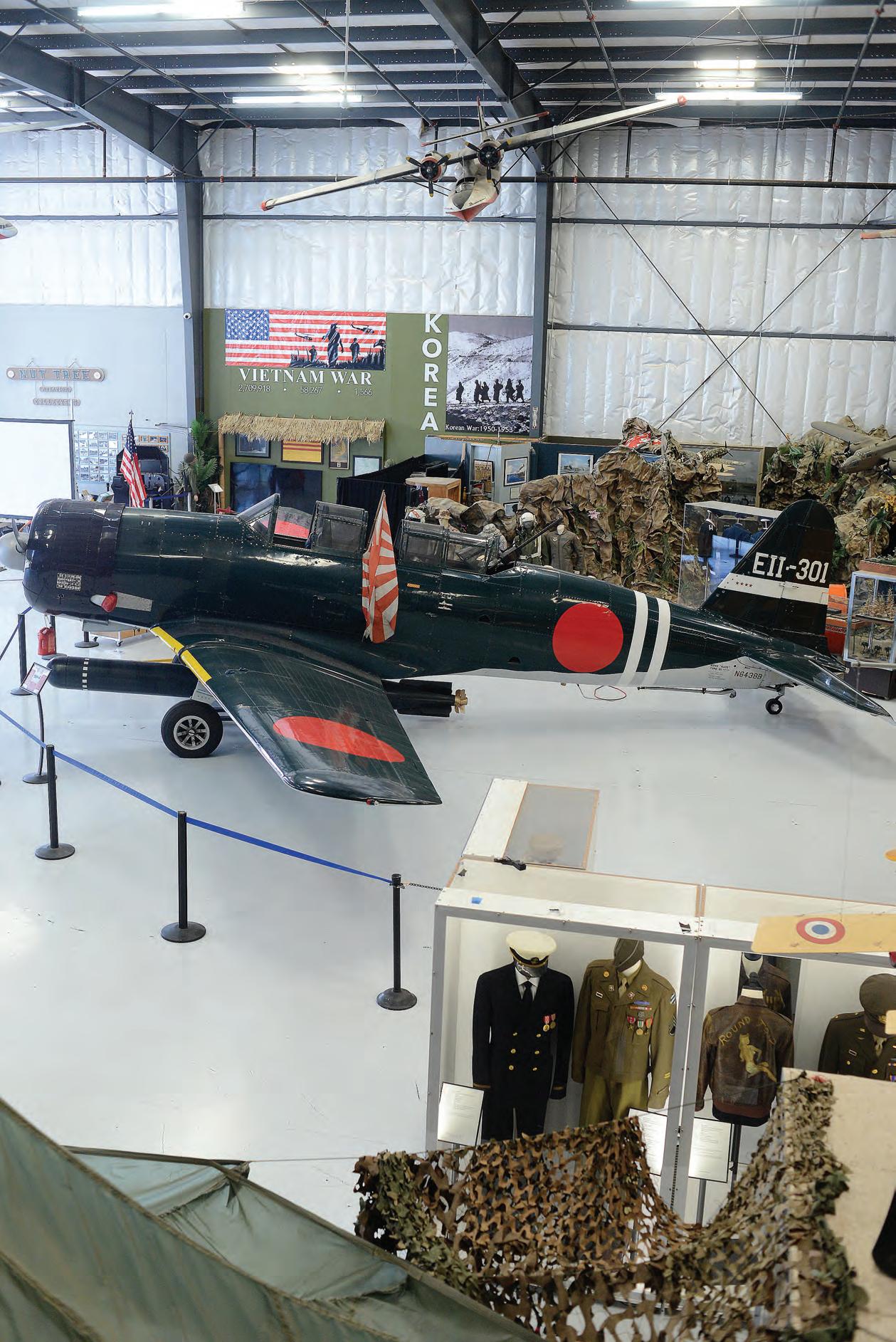


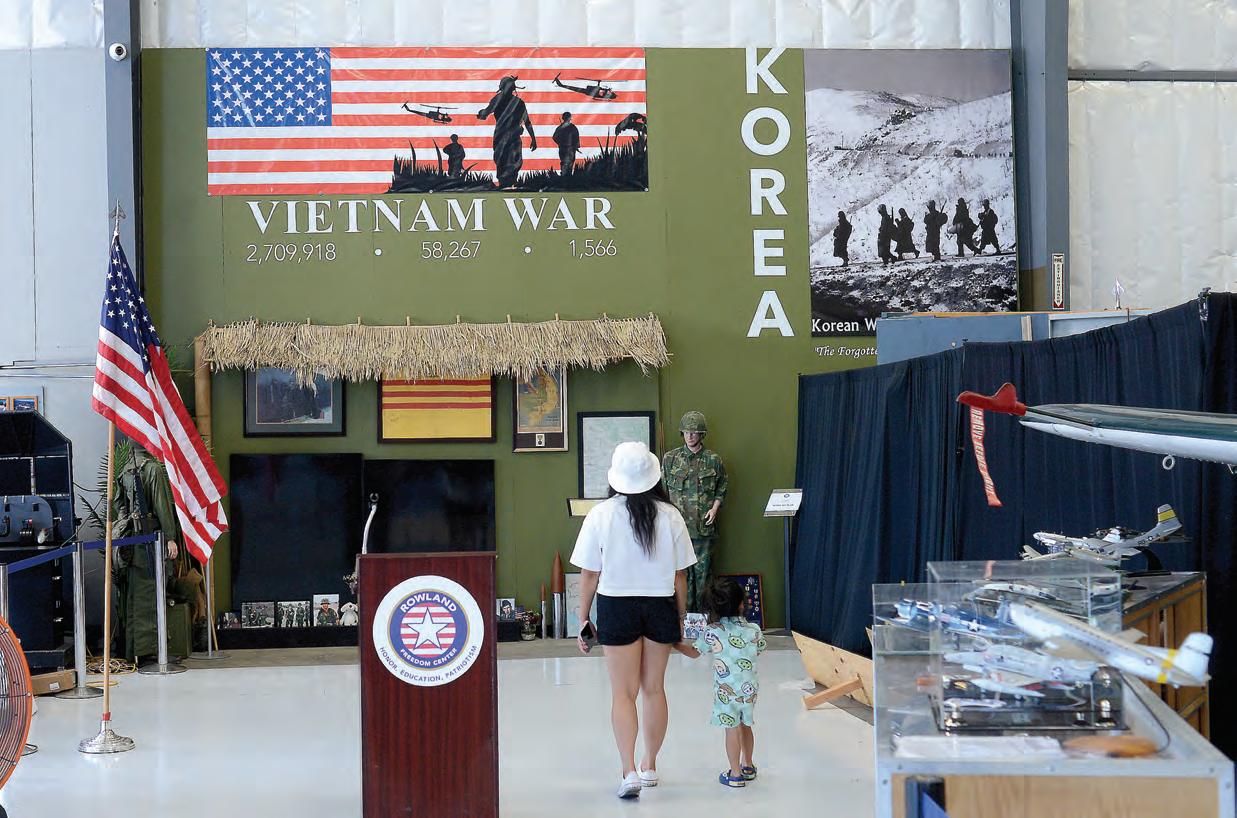









































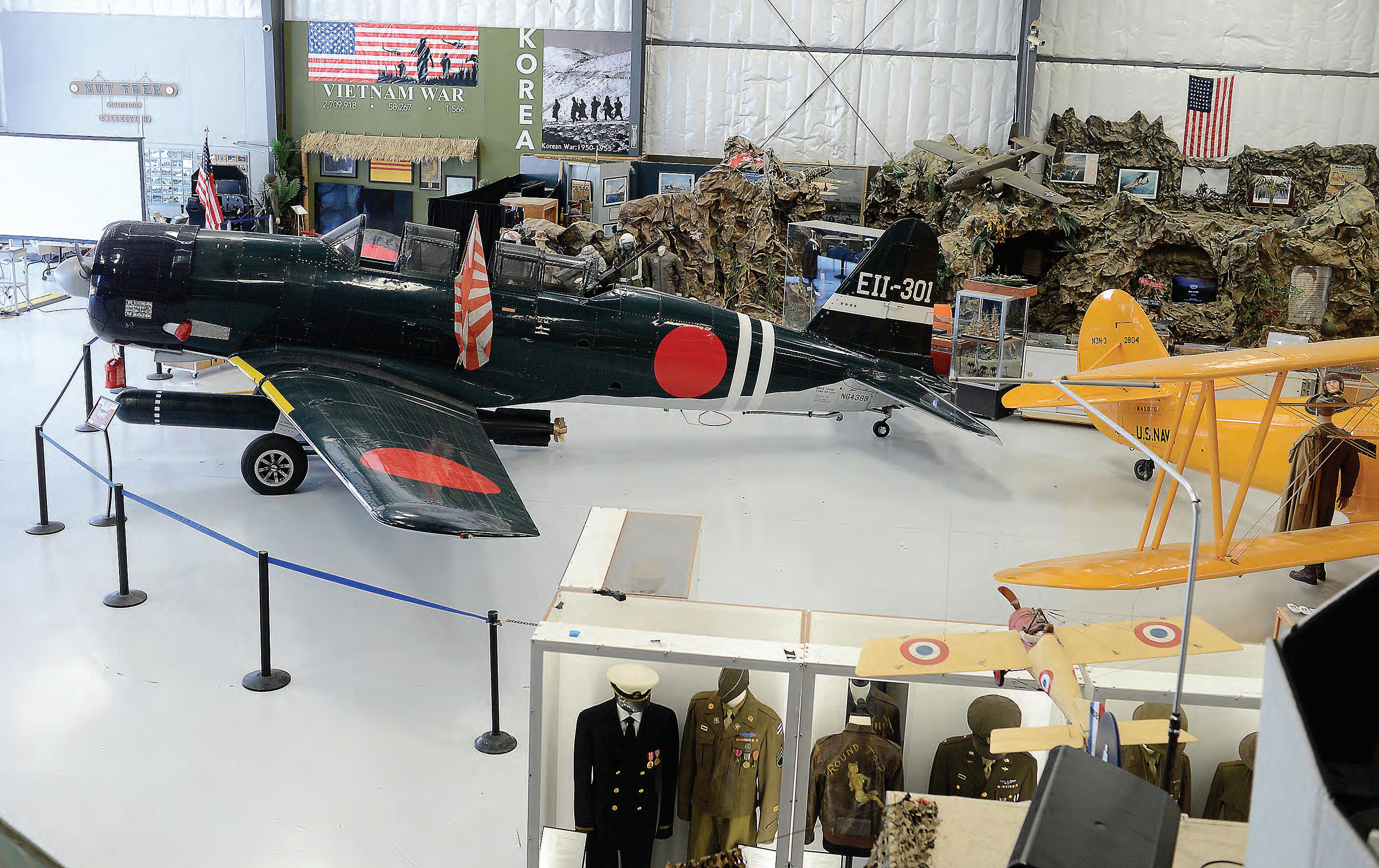
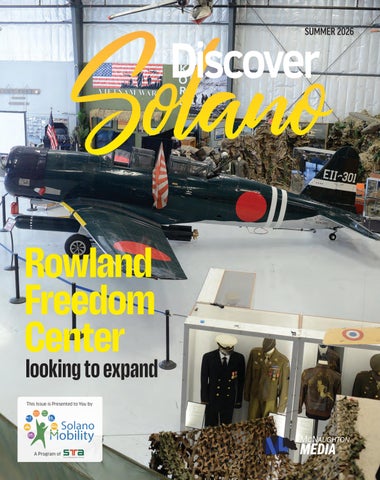
Displays are exhibited at the Rowland Freedom Center in Vacaville.
Asmall map, dotted with pins, shows many, but not all the places from where visitors to the Rowland Freedom Center have come.
Doug Dunnett, an Air Force veteran (1973-77) and volunteer at the Aviation and Military Museum for five years, said he met a man from Mongolia in March who was visiting family in Vacaville, and was just looking for something to do.
A quick internet search, and the center popped up, prompting the newly designated tourist – and perhaps the first from the east-central Asian nation – to make his way over to the Nut Tree Airport.
“It’s always nice when people come in and we always ask how did they hear about us,” Dunnett said.
Many are aviation buffs, and others search out history. In that sense, the Rowland center is a destination locale.
“And a lot of people from Europe know a lot of history,” said Dunnett, who enjoys
STORY BY TODD R. HANSEN
giving those tours most of all. “I don’t have to say a word; I just listen.”
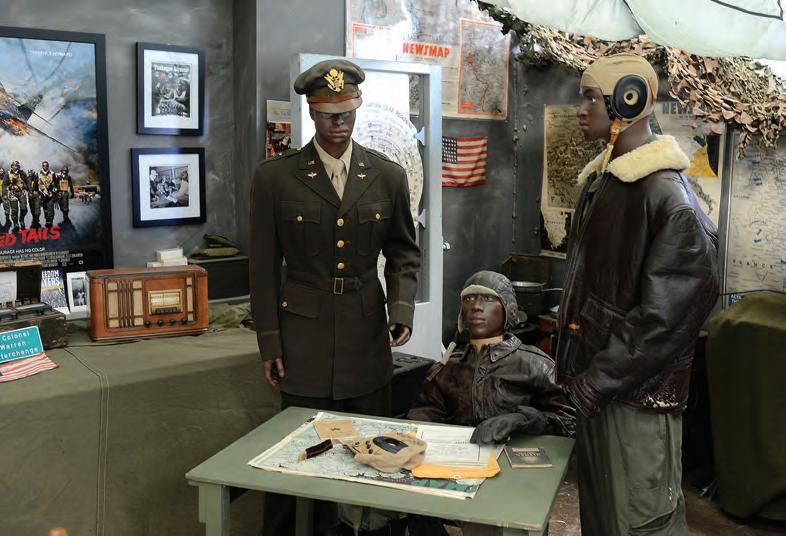
The museum features archives and displays dating back to the Revolutionary War, and touches on much of the U.S. military history that has followed.
The center even squeezed in a B-25 Mitchell bomber into its limited space in 2025, one of 35 planes it rotated through for display.
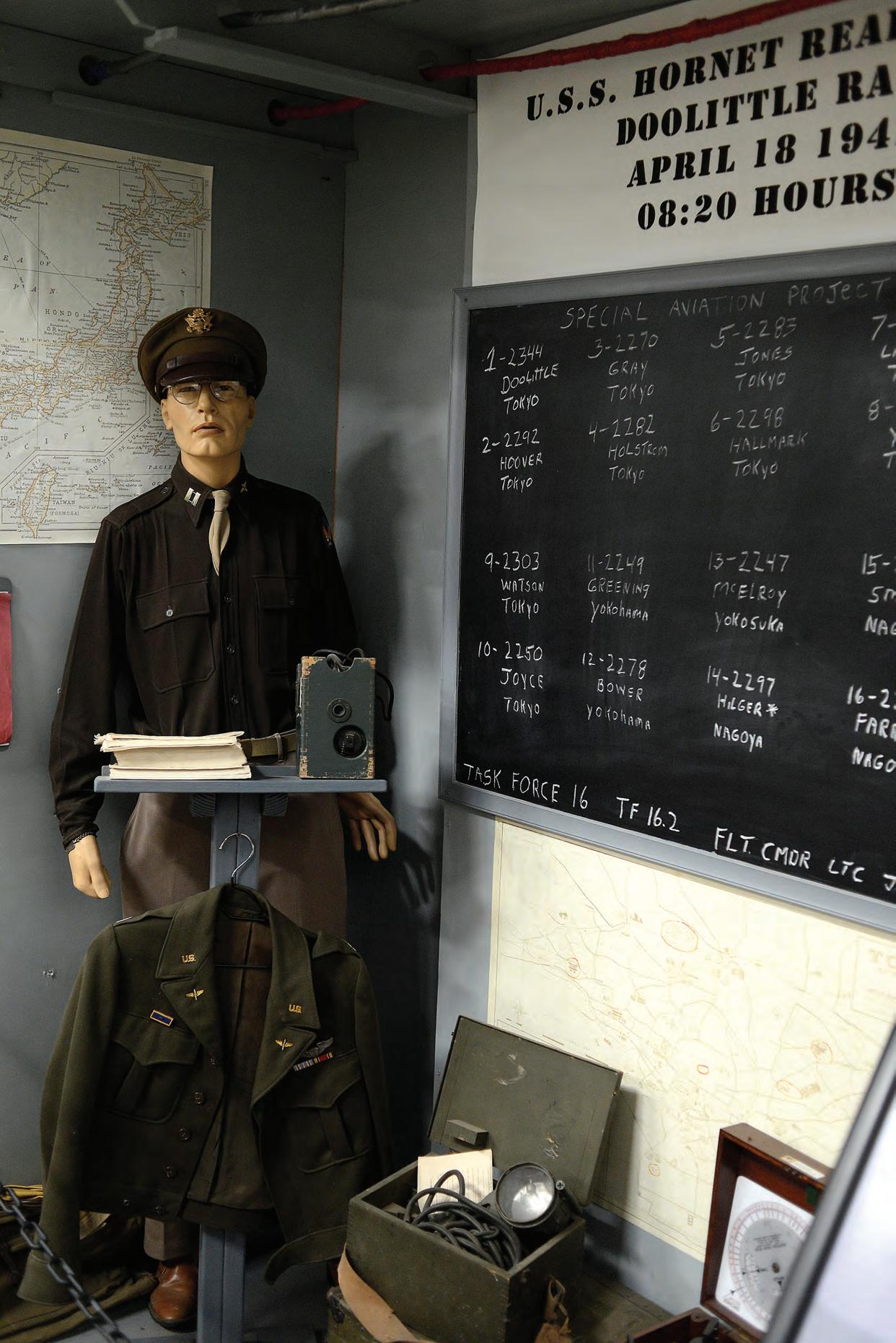
However, the B-25 is particularly appropriate to the Rowland center, since it was the plane-type Lt. Col. Jimmy Doolittle and 15 other crews –80 volunteers in all – flew to bomb Japan. They launched from the deck of the USS Hornet on April 18, 1942.
The center has its 2002 origin tied to Doolittle history – originally named after the Alameda native turned World War II hero.
That lineage of what was the Jimmy Doolittle Air & Space Museum, however, has a confounded beginning that
involved a kind of in-progress vision, promises and troubled execution involving Travis Air Force Base, Vacaville and other individuals and entities.
At one time, it was planned for

“Very
“A
“Certainly
“Always
“Professional,




Travis AFB.
The museum would become the Center for Freedom and Flight before finally being named after Herm Rowland, of Jelly Belly fame, in November 2020 – the result of a 4-1 vote of the board of directors with Rowland, the chairman, the lone dissenter. It expanded to its current 15,000 square feet in 2023.
The building belonged to Jay Adair, who is now developing a winery at Mankas Corner in Suisun Valley. However, like the map, the museum needs to grow.
And that is the plan.
“They have always been talking about expanding it for 10, 15 years, but for whatever reason, they never got off the ground,” said Bob Hampton, the chief executive officer of the Rowland center, and point man for the expansion project.
One of the reasons Hampton was selected was because of his long history as an educator, including 23 years at Vacaville Unified School District, at which he started Buckingham Collegiate Charter Academy, and was one of the founders of Kairos Public Schools.
The museum board wants education to be a pillar in the mission of the new center, so Hampton was tagged as the frontman.
The goal is a 50,000- to 70,000-square-foot center on 5 acres of land near the Lowe’s Home Improvement at 1751 E. Monte Vista Ave. There is even talk of working with the American Armory Museum in Fairfield. There is a possibility that another 5 acres will be added to the footprint.
“We are going though the land survey,” Hampton said. The results of that are expected at the end of June or
early July.
They have met with city and county officials about the vision and the plans, and if all goes well, they will break ground on the project by the end of the year.
“We have pretty much defined what we want to do,” he said. “And there will be opportunities (for the public) to donate for this.”
One of those opportunities is the Donor Wall for special sponsors.
The museum does hold a special place for Hampton, who did not serve in the military, but grew up immersed in it.
“My great-uncles were great inspirations to me. The fought in the Great War and used to tell me a lot of stories,” Hampton said.
Paul Mirich, an Air Force veteran and the general manager of the Rowland Freedom Center, said the immedi-
ate advantage a new and bigger center will provide is the ability to put out more displays.
“We have a lot in storage, and we could take that out of storage and put it on display,” Mirich said.
The current museum also is home to a KC-10 simulator.
“The idea is when we get that new building set up, we would take it over there and set it up,” Mirich said.
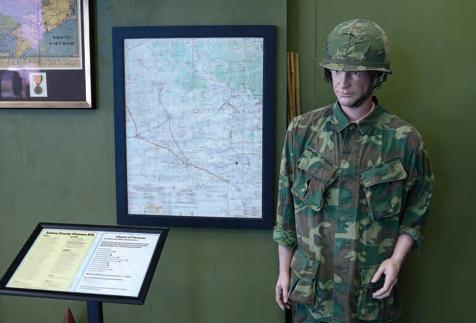
Another feature that likely would see expansion is the former Women in Military display, now named Daughters of Patriotism, which tracks back to the Revolutionary War. Curator Shaina Whaley has lead the way on that work.
One of Mirich’s favorite displays is the one that tells the story about U-2 pilot Rudolf Anderson.
While the Gary Powers incident, when he and his U-2 was shot down on May 1, 1960, over the former Soviet Union is generally well known, Anderson’s story – Mirich and many others contend – may have prevented World War III.
Anderson was shot down and killed over Cuba on Oct. 27, during the Cuban Missile Crisis. It was not supposed to happen. Cuban forces were not to fire on aircraft.
“So this guy’s death got the super powers to talk, and may have averted World War III,” Mirich said.
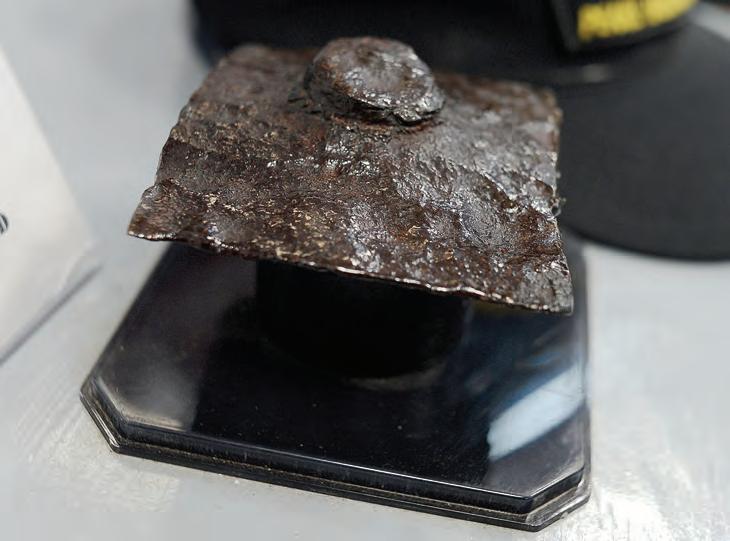
“But my favorite thing, even though I was Air Force, I have to give the Navy credit,” Mirich said, pointing to an actual piece of the USS Arizona battleship donated to the museum by the Navy. A flag that flew over the memorial on the 2007 anniversary also is on display.
And to add to the human quality of the display, a flag that flew at the 2000 funeral service of Earl Henry Pecotte also is there for visitors to see.
Pecotte was a gunner’s mate second class assigned to the USS Arizona during the Dec. 7, 1941, attack on Pearl Harbor. He was among the approximately 335 crew members who survived.
David Reeves was a firefighter in the Air Force, in which he served for 20 years. That includes Desert Shield and Desert Storm. He too is a volunteer at the center.
His favorite display is one of World War II German artifacts, which he helped put together. The items came back to the U.S. after the war. Reeves said they “were liberated by my uncle.” Mirich admits it initially caused some controversy, but also noted it is part of the story, too.
Reeves loves the idea of expanding the center, but thinks the museum leadership needs to look beyond its immediate plans.
“Include room for expansion,” he said.
When it is all said and done, Hampton said the new center will, in fact, be a tourism destination, a place that will live up to the mission of “Honor. Education. Patriotism,” and help boost the local economy.
And what is to happen to the current building? As the largest building at the airport, there will be interest in it, and it could be sold. However, the museum may choose to hold on to it and develop a special events center, or perhaps just use it for storage.
The center is open from 10 a.m. to 4 p.m. Wednesday through Sunday, at 300 County Airport Road, in Vacaville. To learn more about how to donate, go to www.rowlandfreedomcenter.org. DS
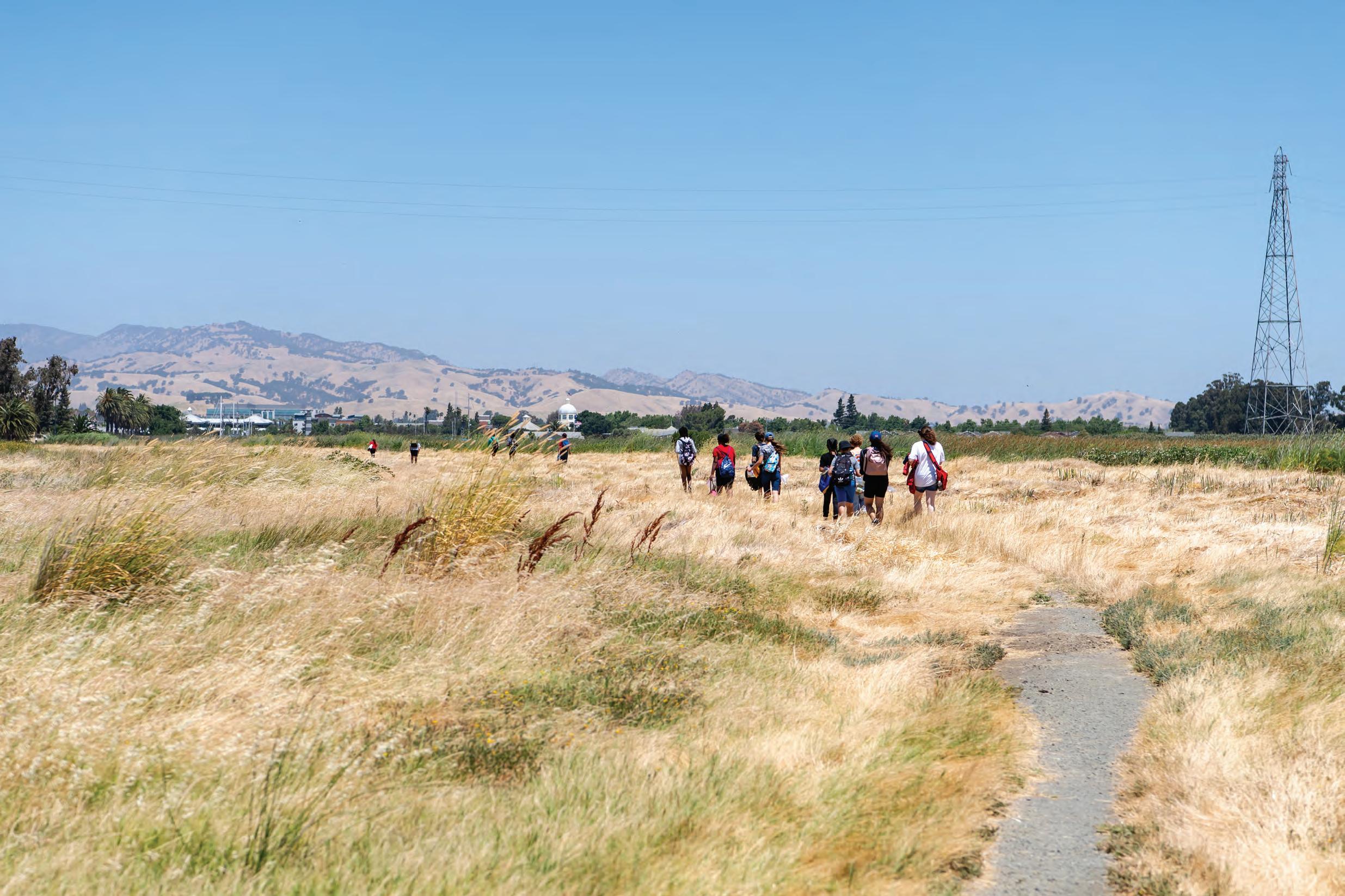
Crystal Middle School and Natural Resources Group conduct an annual summer educational program in partnership with California Department of Water Resources in Suisun City. The education program is comprised of outdoor education, including a kayak tour, and classroom learning.
Those who want to hike this spring and summer along scenic trails have ample opportunities to do so here in Solano County, both near the city and well off the beaten path.
Bay Area outdoors enthusiasts have long dreamed of having trail systems circling the region along its hilltops and along its waterways.
The Bay Area Ridge Trail tackles the hilltop route. Some 330 miles of a targeted 550 miles of trails are open, including about 29 miles in Solano County. The Solano County portions pass through such areas as Lynch Canyon Open Space and Rockville Hills Regional Park in Fairfield and along McGary Road.
More should be coming in future years. For example, the Solano Land Trust bought what was then known as
the 1,500-acre Rockville Trails Preserve property in the hills above Suisun and Green valleys, providing the opportunity to extend the trail from adjacent Rockville Hills Regional Park toward Napa County. The Rockville Trails property has since been renamed the Patwino Worrtla Kodoi Dihi Open Space in honor of the native Patwin people who originally settled across the region.
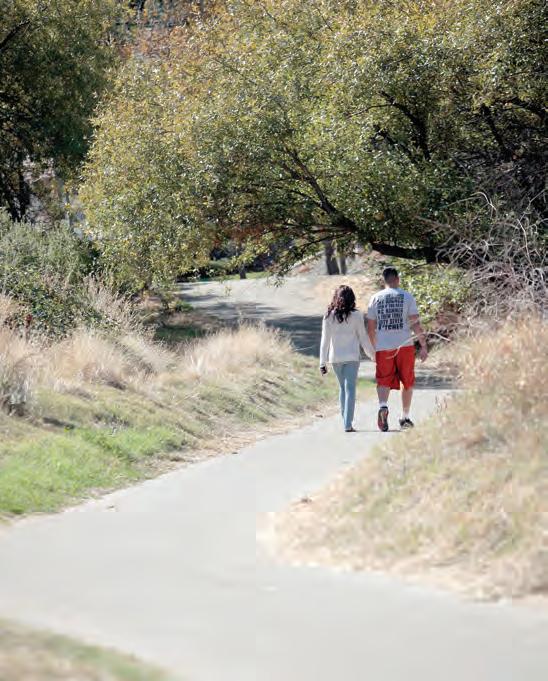
The Bay Trail envisions a 500-mile trail along the shorelines. Existing segments in Solano County include the Benicia Bridge and Carquinez Bridge pedestrian paths, as well as segments along the Benicia and Vallejo waterfronts.
MORE INFORMATION: Bay Area Ridge Trail, www. ridgetrail.org; Bay Trail, www.baytrail.org
This 365-acre park with its many waterways through the SacramentoSan Joaquin Delta is located on the lower end of Brannan Island. The Sacramento River is on its west, Three Mile Slough to the southeast and Seven Mile Slough is on its northeast.
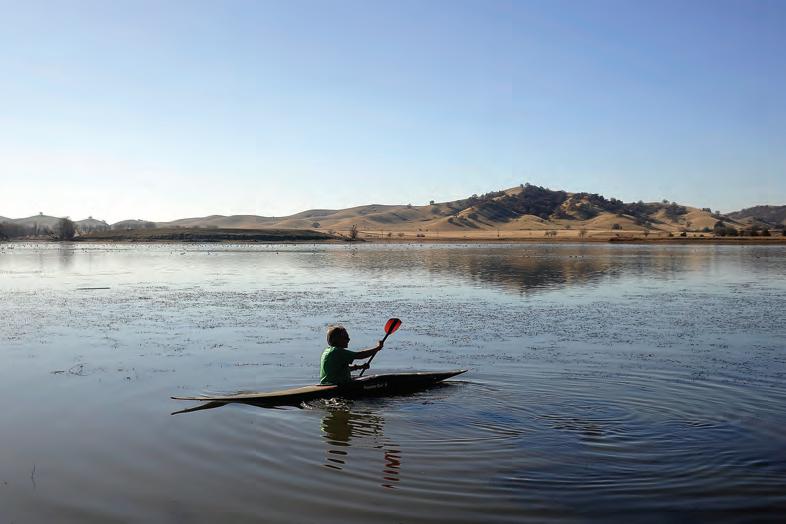
The park offers both day use and camping with a multiple-lane boat launch, picnicking, swimming, windsurfing and wildlife habitats within a maze of waterways. Anglers can catch a variety of striped bass, sturgeon, catfish, bluegill, perch and bullhead. Dogs are allowed but must be on a leash.
LOCATION: 17645 Highway 160, Rio Vista (Highway 160 a few miles south of the city of Rio Vista in Sacramento County)
MORE INFORMATION: www. parks.ca.gov/?page_id=487
Grizzly Island Wildlife Area is a 115,000-acre Suisun Marsh showplace that contains 10 percent of the state’s remaining wetlands, as well as sloughs and upland habitat.
Much of the land is owned by 150 duck clubs and is off-limits to the public. The 8,600-acre Grizzly Island Wildlife Area, 10 miles south of Suisun City, is open. Owned by the state Department of Fish and Game, it provides a place where people can hunt, fish and bird watch. The state also owns other land in the marsh that forms what it calls the 14,300-acre Grizzly Island Complex.
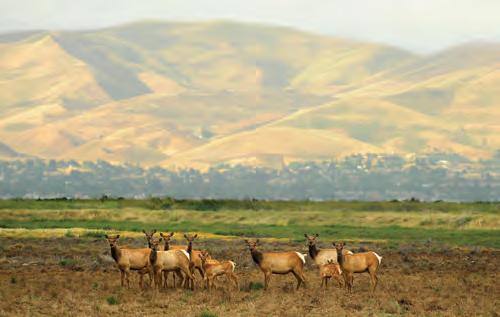
On Grizzly Island itself, visitors can see such sights as tule elk, ducks, otters, herons, California clapper rails and many other types of wildlife. The Department of Fish and Games grooms land behind levees to grow vegetation favored by waterfowl, flooding and draining these areas at certain times of the year.
Some historians say the name “Grizzly Island” comes from grizzly bears that long ago traveled to the area from Mount Diablo to eat rosehips and other vegetation.
LOCATION: Department of Fish and Game headquarters at 2548 Grizzly Island Road MORE INFORMATION: 707-425-3828, https:// wildlife.ca.gov/Lands/Places-to-Visit/GrizzlyIsland-WA
Jepson Prairie Preserve is one of California’s best remaining examples of a vernal pool ecosystem and native grassland prairie. Dry and dormant most of the year, the prairie is transformed each
spring by winter rains into a tapestry of stunning colors, and its vernal pools host a rich diversity of rare aquatic life. Enjoy an easy guided walk which may include portions of the preserve that are only accessible with a Jepson Prairie docent. Learn about vernal pools and see the aquatic invertebrate and flowering plants that depend on them.
The vernal pool flora at Jepson were first described in 1892 by botanist Willis Linn Jepson, but it took another 80 years for scientists and conservationists to gain enough momentum for protection. In the mid-1970s a committee was formed to protect Olcott Lake and the surrounding prairie.
Two years after the Nature Conservancy purchased the 1,566-acre site, it was dedicated as the Willis Linn Jepson Prairie Preserve in 1982. In 1983, the University of California brought the preserve into the University’s Natural Reserve System. In 1987 the National Park Service designated Dixon Vernal Pools, of which Jepson is the centerpiece, a National Natural Landmark.
Solano Land Trust assumes primary responsibility for the management of the land with the goal to preserve, protect and enhance the habitat for native plants and animals.
Knowledgeable docents share information during guided tours about the beautiful flowers, and certified dipper docents show participants some of the fascinating aquatic invertebrate that live
in the vernal pools.
LOCATION: Cook Lane off of Highway 113, 10 miles south of Dixon in rural Solano County.
MORE INFORMATION: Solano Land Trust. 707-432-0150; https://solanolandtrust.org/ protected-lands/jepson-prairie
Joice Island is a 2,150-acre property in Suisun Marsh that has been a state wildlife area since 1931, making it one of California’s first refuges.
The island is managed by the Department of Fish and Game as part of its Grizzly Island Wildlife Area. Joice Island allows less public access than Grizzly Island itself, which has the Department of Fish and Game headquarters. Waterfowl hunters can hunt on Joice Island during the duck hunting season by reservation only.
Joice Island is also the site of the annual wild pig hunt. Hunters during the spring can get permits to help control the wild pig population there.
LOCATION: About 4 miles south of Suisun City and Highway 12 near Grizzly Island Road
MORE INFORMATION: 707-425-3828 or wildlife. ca.gov/…-Visit/Grizzly-Island-WA.
The King-Swett Ranches are a hidden treasure yet to be discovered by most Bay Area residents. This recently protected 3,956-acre expanse of land straddles the southwestern corner of Solano County. Views from atop King Ranch sweep
across the Suisun Marsh all the way to the Sierras, with Mount Diablo rising to the south. On the western edge of Vallejo-Swett Ranch, views include the Golden Gate Bridge and Mount Tamalpais, the San Francisco and San Pablo Bays, and the Napa River and marshes.
The steep hilly grasslands, oak woodlands and riparian corridors provide habitat for a wide variety of species, including many that are rare and endangered. Johnny jump-ups provide habitat for rare butterflies. Several ponds provide prime habitat for the endangered California red-legged frog. Slivers of serpentine soils support native grasses such as purple needlegrass, blue wild rye and numerous wildflowers.
The hills are a raptor’s paradise where golden eagles, Northern harriers, burrowing owls, and Swainson’s, Cooper’s and red-tailed hawks scan the open grasslands for food. Birders will delight in spotting Northern orioles, towhees, Western bluebirds, Swainson’s thrushes, Western kingbirds, black phoebes, tree swallows, and western meadowlarks. Mammals include black-tailed deer, coyotes and ground squirrels.
The King-Swett Ranches are currently open to the public for staff- or docent-led activities only. A nature hike takes place from 9 a.m. to 1 p.m. the first Saturday of the month most months.
LOCATION: Between Interstates 680 and 80 near Fairfield (to the northeast), Benicia (to the south) and Vallejo (to the west) MORE INFORMATION: Solano Land Trust. 707-432-0150, https://solanolandtrust.org/ protected-lands/king-swett-ranches
Lagoon Valley/Peña Adobe Regional Park offers a great mix of recreation and history for residents, with hiking and biking trails, a lake for fishing, picnic areas, a dog park, the Peña Adobe and the Goheen-Mowers Museum.
The two parks, which cover more than 470 acres, are run by Vacaville and are halfway between Fairfield
and Vacaville on the south side of Interstate 80.
The 106-acre lagoon is the home to a considerable population of geese and ducks, as well as a nice backdrop for the many running and bicycling events that take place in the parking lot and use the trails that run through the surrounding hills.
Historic Peña Adobe was built in the 1840s by some of Vacaville’s first pioneers and hosts many spring and summertime youth parks programs. Both the adobe and the adjacent Goheen-Mowers Museum were renovated and reopened to the public more than a decade ago. Volunteers now offer demonstrations of early pioneer and American Indian life the first Saturday of every month in conjunction with the Rush Ranch Educational Council.
LOCATION: Entrance to both Lagoon Valley Park and Peña Adobe on Peña Adobe Road just off Rivera Road, just west of Vacaville MORE INFORMATION: Lagoon Valley Park: https://www.ci.vacaville.ca.us/government/ parks-and-recreation/parks-fields/lagoonvalley-park. Peña Adobe/Goheen-Mowers Museum: 707-447-0518, www.penaadobe.org
Lynch Creek, at 1,039 acres, is home to a wide variety of flora and fauna that includes buckeyes, oaks and wet-
land meadows, and deer, fox, bobcat, waterfowl, and many raptors to include red-tailed and red-shouldered hawks, and the majestic golden eagle. Also of interest are specimens of native grasses. A small reservoir provides a home to muskrats, great blue herons and endangered California red-legged frogs.
Lynch Canyon is open from 9 a.m. to 5 p.m. Fridays through Mondays. It may be closed on short notice in case of high fire danger, extreme rain or construction.
For those who want more of a handson experience, volunteer work days are scheduled from 9 a.m. to noon the second Saturday of most months. Guided horseback rides are available to experienced riders with fit horses on any day that a docent agrees to lead such a ride.
LOCATION: Just north of Interstate 80 between American Canyon Road and Highway 12 (Jameson Canyon Road)
MORE INFORMATION: Solano Land Trust. 707-432-0150, https://solanolandtrust.org/ protected-lands/lynch-canyon
Visitors to the preserve at Mare Island in Vallejo can take in both history and nature.
A trail leads to the top of a 284-foot
hill overlooking San Pablo Bay, with distant views of Mount Tamalpais, Mount Diablo and Mount St. Helena. Those who don’t want to hike can still see Mare Island cemetery and century-old stone buildings at the old ammunition depot left over from the island’s long history as a naval shipyard.
Access to the preserve was restricted for several months due to wildfires that occurred there and on Mare Island in the fall of 2019. The preserve reopened to the community in the spring of 2020. Check ahead of time for access requirements.
LOCATION: Railroad Avenue at southern tip of Mare Island
MORE INFORMATION: Erin Hanford, erin. hanford@cityofvallejo.net, 707-648-5406
Patwino Worrtla Kodoi Dihi Open Space Park, formerly Rockville Trails Preserve, epitomizes the beauty, rural character and quiet splendor that is Solano County. Filled with stands of blue and live oaks, temporal vernal pools, wildflowers and wildlife, the preserve’s 1,500 acres provides a connection to the region’s past and a vision for the future. As you explore this land, it is easy to imagine a time when Patwin Indians walked the oak forests and stood on the highest mesa to look out over the valleys below. The forests, rugged hills and high ridges that they saw hundreds of years ago are largely unchanged. This new natural park will be the gateway for visitors from the local community, the Bay Area and the Central Valley into the western hills of Solano County and beyond.
Solano Land Trust will preserve and protect Patwino Worrtla Kodoi Dihi Open Space Park and its biological and cultural resources for generations to come. The nonprofit values sustaining agriculture on this property and foresees compatible public access, education and
scientific discovery as a means to connect this land with the community.
The property is only available for specified docent-led tours. Guided horseback rides are available to experienced riders with fit horses on any day that a docent agrees to lead such a ride.
MORE INFORMATION: Solano Land Trust. 707-432-0150, https://solanolandtrust.org/protected-lands/patwinoworrtla-kodoi-dihi
The park includes 633 beautiful acres of grass lands and oak woodlands, with a dense mixed broadleaf forest. The rich, biological and diverse habitats provide shelter to a variety of wildlife that make the park their home. The park is main tained by the city of Fairfield and features hiking and mountain bike trails.
LOCATION: 2149 Rockville Road in Fairfield, about threequarters of a mile west of the intersection of Rockville Road and Suisun Valley Road. Park entrance on the left side of the road.
MORE INFORMATION: www.fairfield.ca.gov/government/ city-departments/public-works/rockville-hills-regionalpark-open-space-661
DS








ts status as a former state capital is part of California lore, but Benicia was also once destined to be called Francisca until Yerba Buena changed its name to San Francisco and the similarity spurred the town’s founder to select another name.
Robert Semple had wanted in 1847 to name the town after Gen. Mariano Vallejo’s wife, Francisca Maria Felipa Benicia Carrillo de Vallejo, and he still did. Semple just choose another of her many names.
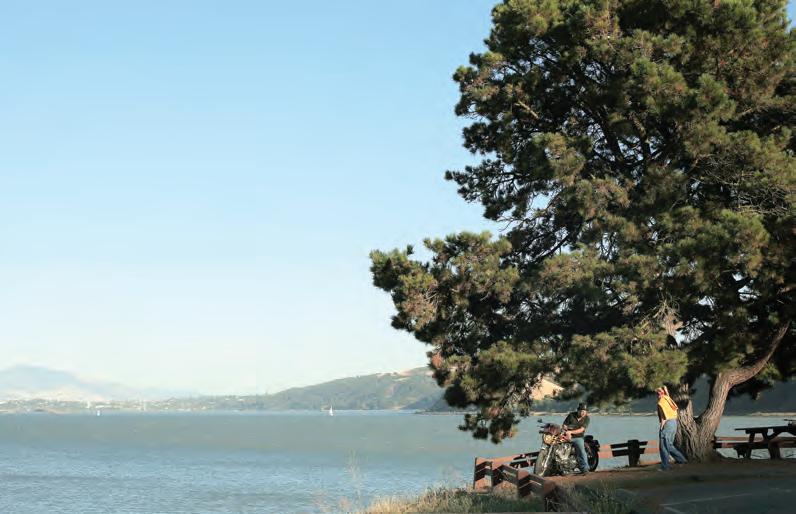
The town’s residential and business districts are on its west side with a vibrant waterfront as well as the Benicia State Recreation Area along Southhampton Bay.
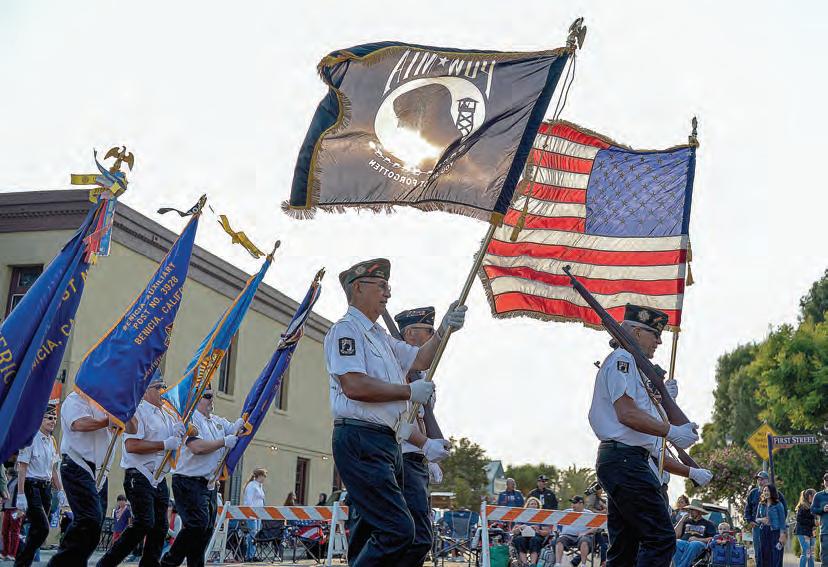
Benicia is home to events that range from Arts Benicia and the Benicia Peddlers Fair to The Holy Ghost Parade and the July 3 Torchlight Parade.
Its industrial side includes the Port of Benicia and the town’s largest employer, the Valero Oil Refinery, with its tanks, pipes and stacks that sprawl across a large area alongside Interstate 680.
The town could have been the center of California politics when the state in 1853 declared Benicia as its capital after deciding they were dissatisfied with Vallejo in that role. Lawmakers took over the Benicia City Hall, with its Doric columns and appearance of a Greek temple.
“So Benicia, the memorable ‘city of the Straits,’ ‘the rival emporium of the Pacific wealth and commerce,’ is to be vested with new dignities . . .” the Feb. 5, 1853, Daily Alta Californian reported.
The state Legislature met again in Benicia in 1854. It voted to make Benicia the permanent state capital. Then lawmakers quickly changed
their minds when 100 people coming to the session couldn’t find lodgings and had to sleep in saloons. They moved the capital to Sacramento.
Another historical site is the Benicia Arsenal, built in 1849 as an ordnance supply depot. William Tecumseh Sherman and Ulysses S. Grant spent time there prior to going on to Civil War fame. Sherman became an admirer of the town.
“That Benicia has the best natural site for a commercial city, I am satisfied, and had half the money and half the labor since bestowed upon San Francisco been expended at Benicia, we should have at this day a city of palaces along the Carquinez Strait,” he wrote in his memoirs.
The arsenal also stabled the U.S. Army’s only Camel Corps, which was disbanded in 1863. The Camel Barns, built in 1855, now house the Benicia Historical Museum. Union troops from the West gathered at the arsenal during the Civil War.
After the bombing of Pearl Harbor, 125 truck convoys were loaded at the arsenal. A total of 250 Italian and 400 German prisoners of war once resided at the arsenal.
Benicia was almost economically shattered in the 1960s when the arsenal closed, removing its economic foundation, but re-creation of the arsenal land as a successful industrial park that now contains the Valero refinery helped save the town’s economy.
The city is home to a thriving art community, many who live in the historic arsenal area, which dates back to 1849. The Clock Tower Fortress, also in the arsenal, built in 1859, is open for many community functions.
Contact: Benicia Chamber of Commerce & Visitors Center, 707-745-2120, www.beniciachamber.com
Downtown Benicia offers myriad festivals and events for all ages. The spring and summer seasons offer plenty of seasonal activities, from a farmers market to wine- and food-tasting activities to various community celebrations and more.
MORE INFORMATION: 707-745-9791, www. beniciamainstreet.org
The shores of Southampton Bay are home to one of Solano County’s few state parks. People come to Benicia State Recreation Area to walk, run, cycle, birdwatch and fish. The state lists the Dillon’s Point marsh as an area in the park particularly favored by anglers. A few motorhome campsites are available, though no tent campsites. It has 2.5 miles of roads and paths. Benicia State Park is also home to the Forrest Deaner Native Plant Botanic Garden. The only other Solano County state park is Benicia Capitol State Historic Park, though the county does have state wildlife refuges.
LOCATION: Columbus Parkway exit from Interstate 780 in Benicia
MORE INFORMATION: 707-648-1911, www.parks.ca. gov/?page_id=476
Benicia briefly served as California’s capital 150 years ago. Benicia Capitol State Historic Park commemorates the era of 1853 to 1854. The old capitol building remains and is open to visitors.
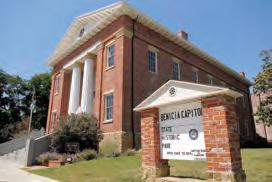
Vallejo was the state capital before Benicia, but Gen. Mariano Vallejo failed to provide the promised buildings and lawmakers moved it. Benicia has a Greek temple-style capitol building, but this too failed to convince state lawmakers to stay in Solano County. Sacramento became the capital in March 1854. The Benicia Capitol building over the years served as a fire station, police station and even a dance hall. The Benicia Capitol is the only pre-Sacramento capitol building that remains.
LOCATION: 115 W. G St., Benicia
MORE INFORMATION: 707-745-3385, www.parks.ca. gov/?page_id=475
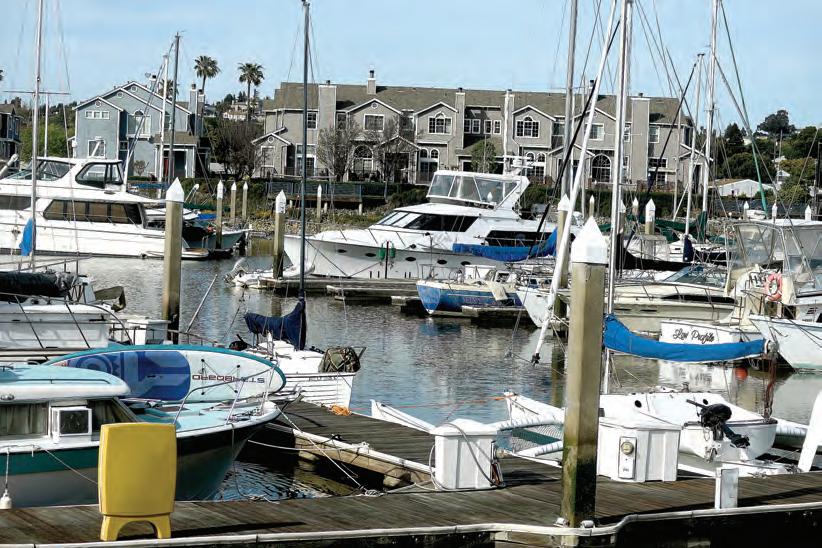
Located between the Sacramento River Delta and San Francisco Bay, the Benicia Marina is a jewel located on the north side of the Carquinez Strait, with spectacular views from every slip in the harbor. It offers guest berthing, power, water and a safe environment. It is also only a short walk away from downtown Benicia’s charming First Street and its shops as well as walking and bike trails. Guest boats must check in at the marina office for berth assignments. Call in advance for the availability of either transient or overnight berthing.
LOCATION: 266 E. B St., Benicia MORE INFORMATION: 707-745-2628, www.benicia marina.net
The Benicia Plein Air Gallery specializes in the work of local artists who capture the outdoor scenes in and around Benicia, the Carquinez Straits and the San Francisco Bay Area. Each month, the open-air gallery showcases the works of one of its many artists, with creations that range from classical landscapes to saturated pastels. The annual Paint Out event is returning May 29 through June 5. Join artists from all over to paint anywhere in this quaint and historic town. The
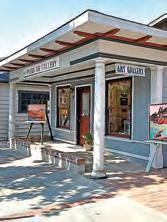
event will culminate with a one-day exhibit on Saturday, June 6, during the Benicia Arts Festival from 11 a.m. to 5 p.m.
LOCATION: 307 First St., Benicia MORE INFORMATION: 707-771-6166, www.beniciapleinair.com
Sepay Groves Olive Oil, the oldest olive oil store in Solano County, offers an expansive variety of award-winning extra virgin and flavored olive oils and serves as an outlet store for the oldest
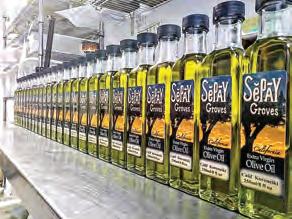
operating olive oil producer in Suisun Valley, who arguably produces the best Tuscan extra virgin olive oil in Northern California. All oils and vinegars are bottled by hand in small batches to maintain their integrity, with the oils sold in their first year of life.
LOCATION: 364 First St., Benicia MORE INFORMATION: 707-434-8222, www.sepayoliveoil.com
Farmers Market: Benicia Main Street draws many people to its popular farmers market. The market offers fresh fruits and vegetables, baked goods, gourmet food, delicious hot foods, arts and crafts, live entertainment and face painting from 4 to 8 p.m. Thursdays, through Aug. 27; 4 to 7 p.m. Sept. 3 through Oct. 29.
July 3rd Torchlight Parade: 6:30 p.m., First Street in downtown Benicia. Celebrate 250 years of American spirit with an evening of community, tradition and festive fun as the parade lights up downtown Benicia.
Benicia Waterfront Weekend Festival: Benicia celebrates its picturesque waterfront locale with two days of live music, craft beer tastings, tasty foods, vendor village, and a children’s activity area from 11 a.m. to 6 p.m. July 25-26 at the First Street Green, corner of First and East B streets. Info: 707-745-9791, www.beniciamainstreet.org.
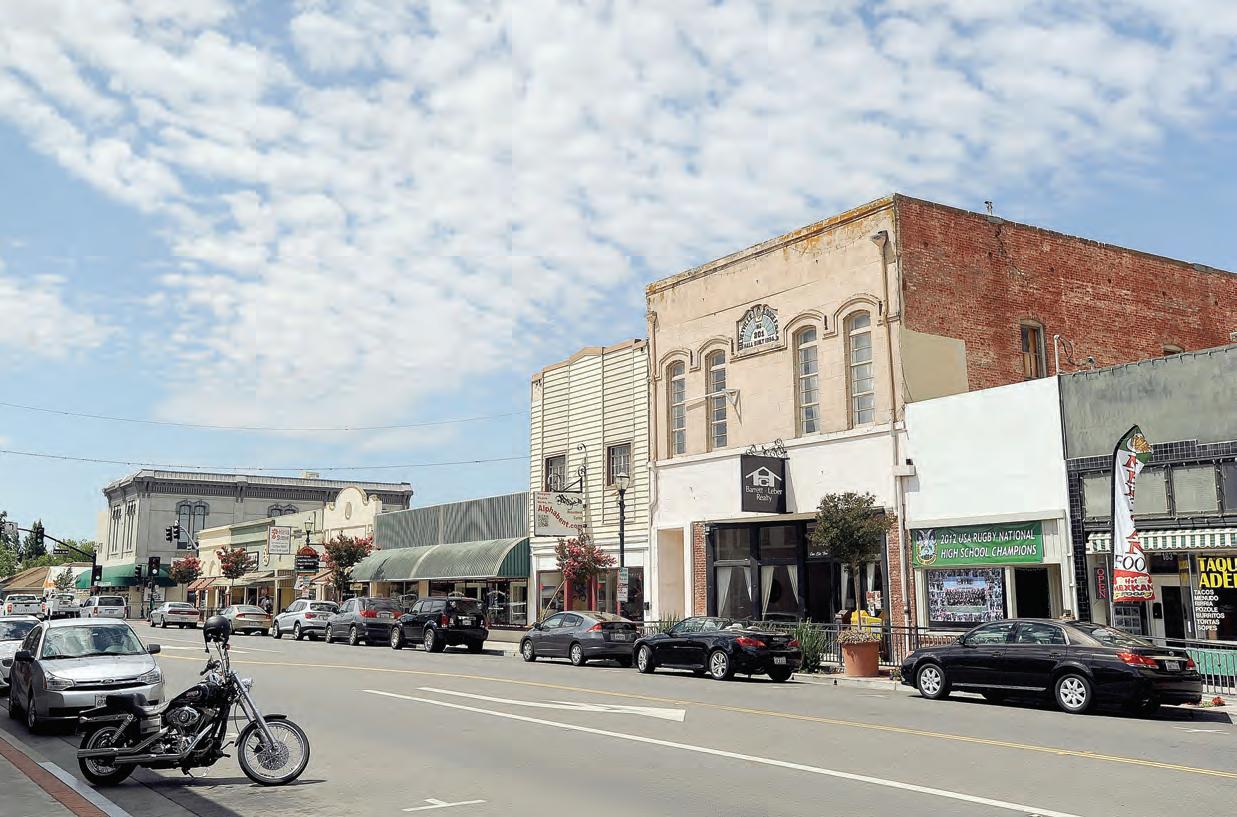
The city was going to be called Dicksonville after pioneer Thomas Dickson, who donated 10 acres of his property for a railroad depot, but a merchandise shipment in 1872 misspelled the name as Dixon.
Almost two years of trying to have the town formally named Dicksonville ended in 1874 when the county recorder filed the name Dixon on new maps. Dixon was a simpler name, he said.
The dairy cows that once gave Dixon the nickname The Dairy City are for the most part gone, though the Heritage Dairy is located a few miles from town. But Dixon is located amid the Dixon Ridge farming area of the Central Valley.
The town’s agricultural heritage draws from some of Solano County’s most fertile soil where farmers grow everything from tomatoes to alfalfa, ranchers run cattle and sheep, and orchardists grow almonds and walnuts.
The annual May Fair, which began in the late 1800s and is the longest continually running agriculture fair in California, helps keep Dixon’s farming heritage alive. Fall brings such attractions as the Cool Pumpkin Patch corn maze. The Dixon Fairgrounds hosts year-round events.
Solano County has a 548-acre area zoned for agricultural services next to Dixon. This area is to be home to processing plants and other businesses that help the farming economy.
Dixon has become more suburban in recent decades, with subdivisions swelling its population of commuters who travel to Davis and the Sacramento area to work.
The city was incorporated in 1878.
Dixon almost became home to a major horseracing center, but residents voted that down on the grounds they liked their town the way it was. The city also courted the idea of trying to land a movie studio that would have been built on the south side of town and produce family films, but the studio
never came about.
But agriculture still looms large. Just look at the city seal, which portrays an orchard and rows of crops in the foreground and buildings in the distance.
Dixon was born in 1851 when pioneer Elija Silvey founded the town of Silveyville, which was located a few miles from present-day Dixon. He set up a hotel and saloon for mule teams traveling between San Francisco and the gold fields in the Sierra Nevada and put up a red lantern to make certain people could find it.
By 1865, Silveyville had about 150 residents and boasted a store, blacksmith shop and a post office, with Silvey serving as postmaster. But the Central Pacific railroad came through in 1868 several miles away and Silveyville died. A new town sprung up along the railroad tracks, with people moving many of the Silveyville buildings there on rollers.
In a twist of irony, one of the few buildings to survive from Silveyville was a church that was too large to be hauled over the railroad tracks. When a massive fire burned down much of Dixon, the church survived quite literally because it was on the wrong side of the tracks.
The Nov. 19, 1883, fire started in the kitchen of the Centennial Hotel, where the Moose Lodge is now located, and almost completely destroyed the town. Winds up to 60 mph spread the fire and the town’s saloons and six churches were destroyed within hours.
A city ordinance that followed set brick or tin as the building material of choice.
The city is a true Central Valley town amid a county that is considered part of the Bay Area, with more in common geographically with Sacramento than San Francisco. It has the flat expanses of land and hot summer temperatures of the valley.
And, of course, it has the vast expanses of farmland at its borders.
Contact: Dixon Chamber of Commerce, 707-678-2650, www.dixonchamber.org.
Spend the day, see some sights

The Sacramento Valley National Cemetery is the seventh national cemetery built in California and the 124th in the nation. It opened to burials in 2006. It is located on Midway Road between Vacaville and Dixon.
LOCATION: 5810 Midway Road, Dixon MORE INFORMATION: 707-693-2460, www.cem.va.gov/cems/nchp/ sacramento.asp
Concerts in the Plaza: Enjoy free music at the Pardi Plaza on the corner of South First Street and West A Street from 6 to 8:30 p.m. the first and third Thursday through August. Bring folding chairs or a picnic blanket, and listen to a variety of music styles. Scheduled performances by Smokehouse Reunion, July 17; Hey Jude, Aug. 7; Helios, Aug. 21. Info.: https://dixonchamber.org
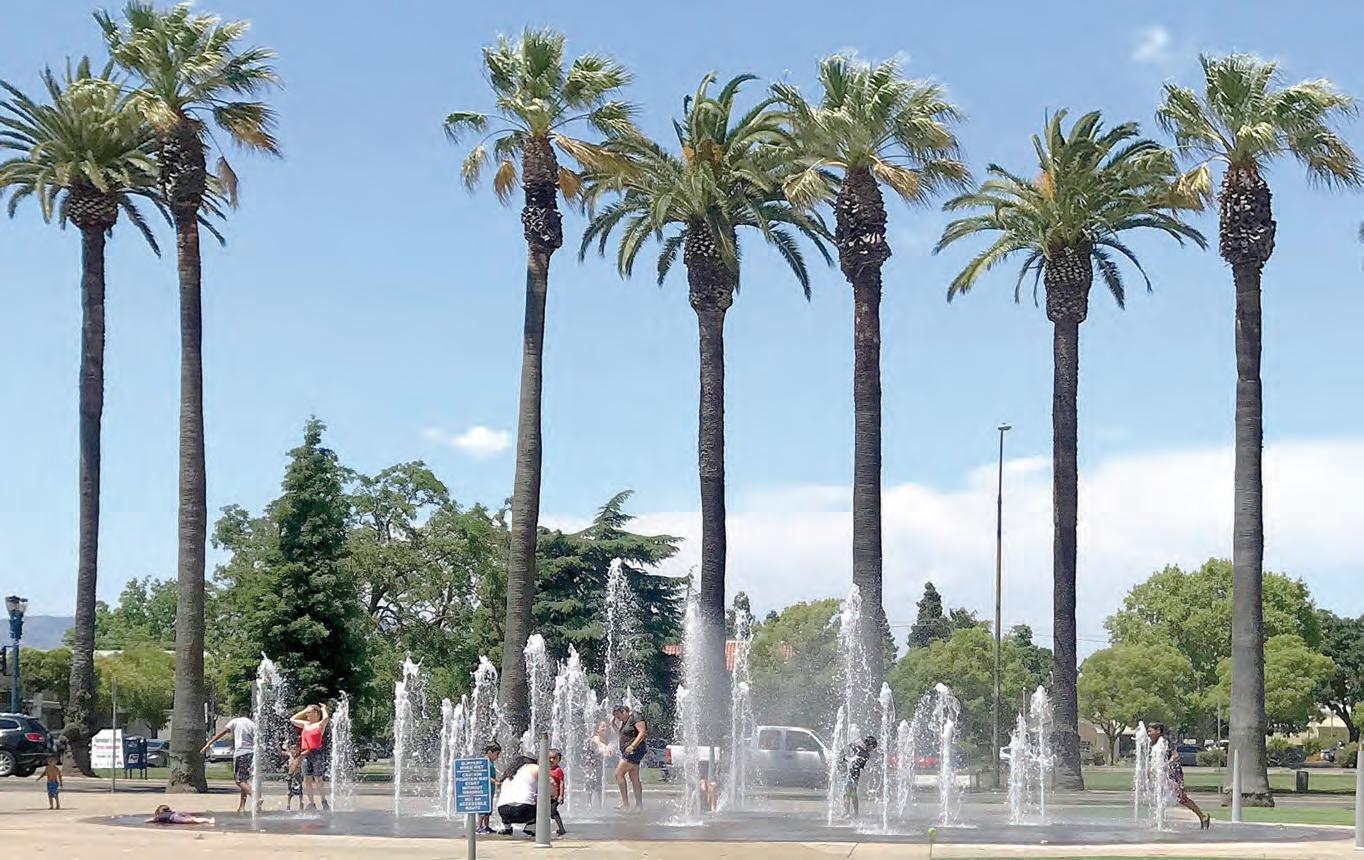
Apublic art event in 1995 asked “Where is Fairfield?” and a plane flew over the city with that question on a banner. At NorthBay Medical Center, babies were given T-shirts that posed the same question.
Halfway between San Francisco and Sacramento is the easy answer – although residents might note that description overlooks the rich history of Fairfield.
The city is the Solano County seat and home to Travis Air Force Base – along with attractions that include Jelly Belly, Solano Town Center mall and the Rancho Solano and Paradise Valley golf courses.
Fairfield began in 1856 when nearby Suisun City had waterfront shipping access crucial for pioneer-era communities. A treeless plain is how one writer described Fairfield.
But an offer to the county of land to build a government center was too good a deal for voters to pass up and in 1858 they approved moving the county seat from Benicia to
Fairfield. The city’s population doubled between the late 1850s and 1880. A century later, more than 44,000 people lived in the city – a number that more than doubled by 2000.
Buildings constructed for government are among Fairfield’s most impressive structures. Renovation of the 1911 county courthouse was recently completed while the modern six-story county Government Center dominates downtown.
By World War II, after decades of playing second fiddle to Suisun City, Fairfield was on its way to becoming the second largest city in Solano County. The U.S. Air Force decision in 1942 to build a major base installation on land east of Fairfield boosted the area economy. Travis Air Force Base was annexed to Fairfield in 1966.
The city now is targeting development on two fronts. The Fairfield-Vacaville train station for Amtrak and bus riders, located about a mile from Travis Air Force Base, is seen as a boon for residents and the economy and is
the site of current development. A project to help the city’s central business district to grow and match the downtown turnarounds that other Bay Area cities is in its formative stages. Recent projects to support the effort include ongoing work to update Allan Witt Park on West Texas Street and a project completed in Spring 2022 to modernize and update the streetscape at the downtown’s entrance on the west end of West Texas Street at Interstate 80.
Fairfield at nearly 40 square miles is almost the physical size of San Francisco, if not a match in population or cable cars that climb halfway to the stars. Its location along Interstate 80, Interstate 680 and Highway 12 between the Bay Area and Central Valley makes it a regional crossroads.
The rich past of Fairfield may be rivaled only by its future. In 2003, as Fairfield celebrated its 100th anniversary as a city, officials buried a time capsule at City Hall, with an opening date of 2103.
Playing host to hundreds of community events each year including concerts, festivals and seminars and performances, the Downtown Theatre is the cultural hub of the Fairfield area. Also home to an art gallery, new works are shown each month at the center. Admission to the gallery is free during hours of operation. The award-winning, 360-seat theater received an exterior facelift in August 2018 with the addition of a state-of-the-art lighted marquee. The theater and other facilities can be rented out to host your special event as well.
LOCATION: 1035 Texas St., Fairfield MORE INFORMATION: 707-940-0700, www.downtowntheatre.com
From being a local secret to world-famous, the pint-sized jelly bean offers a variety of flavors and colors at the Jelly Belly Candy Co. Starting in the lobby filled with jelly bean art and eclectic decorations, guests can tour the factory daily. Tours leave every 10 to 15 minutes and last about 40 minutes. Free samples of Jelly Belly products are available. During the 40-minute walking tour, Jelly Belly guides will show guests a working factory where more than 150 different sweet treats are made. The factory, however, is not in operation during the weekends and on major holidays. Learn the secrets to how they create the legendary Jelly Belly jelly bean and discover why it takes more than a week to make a single bean. Upcoming events include the 16th Annual Mascot Day on Aug. 7 and the 13th Annual Candy Palooza on Sept. 26-27.
LOCATION: 1 Jelly Belly Lane, Fairfield MORE INFORMATION: www.jellybelly.com
Whether it’s exercise, a birthday party or swim lessons, the Fairfield Aquatics Complex offers a lane or slide for all occasions. The center features a natatorium with retractable roof, a zero-depth entry play area, a lazy river current for fun and a six-lane activity pool with a slide and diving board. The outside shallow play area for kids includes slides, climbing structures, water-dumping toys and water-spray toys adjacent to a grass area for families to lounge and enjoy the sunshine. There is also a picnic area for large groups to use for the day or rent the entire facility after hours for company parties, school field trips or special occasions. There is an indoor meeting room and party rooms for smaller groups to enjoy the facilities and catered to in a private setting. A concession stand provides hot and cold drinks and food.
LOCATION: Allan Witt Park, 1741 W. Texas St., Fairfield
MORE INFORMATION: 707-428-7428, www.fairfield.ca.gov
The Travis Air Force Base Aviation Museum holds an extensive collection of aircraft and
artifacts detailing the history of Travis Air Force Base, airlift, space exploration and military air power. Founded in 1983, the center is surrounded by an impressive collection of restored historic military aircraft that includes the B-29 Superfortress, a Vietnam-era B-52 Stratofortress, an F-4C Phantom Fighter, a C-124 Globemaster II, a C-47 Skytrain and an F-86 Sabre fighter. Inside, there are exhibits containing artifacts, documents, aircraft models, uniforms, aircraft nose art and photos from the dawn of military air power in World War I to present-day military and humanitarian operations around the world. Due to post-9/11 security concerns, aviation lovers will need a base visitor’s pass to see the Travis Heritage Center.
LOCATION: Travis Heritage Center, 400 Brennan Circle, Travis Air Force Base
MORE INFORMATION: 707-424-8180, www.travisafbaviationmuseum.org
Sonoma Harvest Olive Oil & Winery’s stylish tasting room offers complimentary tastings of almost all of the available Sonoma Harvest food products, including its gourmet olive oils, vinegars, mustards, honey, tapanades, jams, sauces and more. A wine tasting includes the full flight and features four varietals. The tasting room features a well-equipped kids’ club so the little ones can be entertained by puzzles, games, and movies while the adults sip some wine, sample yummy bites and shop among wine country merchandise. Sonoma Harvest’s tasting room is open from noon to 4 p.m. Wednesday through Sunday.
LOCATION: 770 Chadbourne Road in Fairfield
MORE INFORMATION: 707-389-4815, www.tastesonomaharvest.com
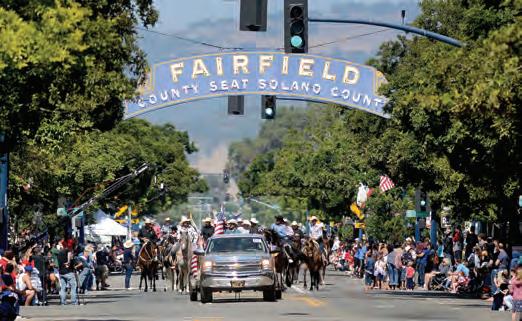
Fairfield Farmers Market: 3 to 7 p.m. Thursdays, through Sept. 24. Jefferson and Texas streets. Info.: www.fairfield.ca.gov/ our-city/city-events/fairfield-farmers-market Independence Day Parade: Fairfield celebrates America’s 250th birthday as well as a major milestone in local history: the lighting of the restored Fairfield Arch at 10 a.m. July 4 as the official kickoff to the parade, which winds through downtown Fairfield along Texas Street. Info: www.fairfield.ca.gov
35th Annual Tomato & Vine Festival: 11 a.m. to 5 p.m. Aug. 15-16, downtown Fairfield. The community’s celebration of all things tomato, the event typically includes a VIP wine and food pairing on Day 1, a classic car show on Day 2, and a carnival throughout. Details to be announced. Info: www.fairfield.ca.gov Veterans Day Parade: The day kicks off at 10 a.m. Nov. 11 with a Commemoration Ceremony and Concert inside the Downtown Theatre, 1035 Texas St. The parade follows at 12:30 p.m., which winds through downtown Fairfield along Texas Street. Info: www.fairfield.ca.gov
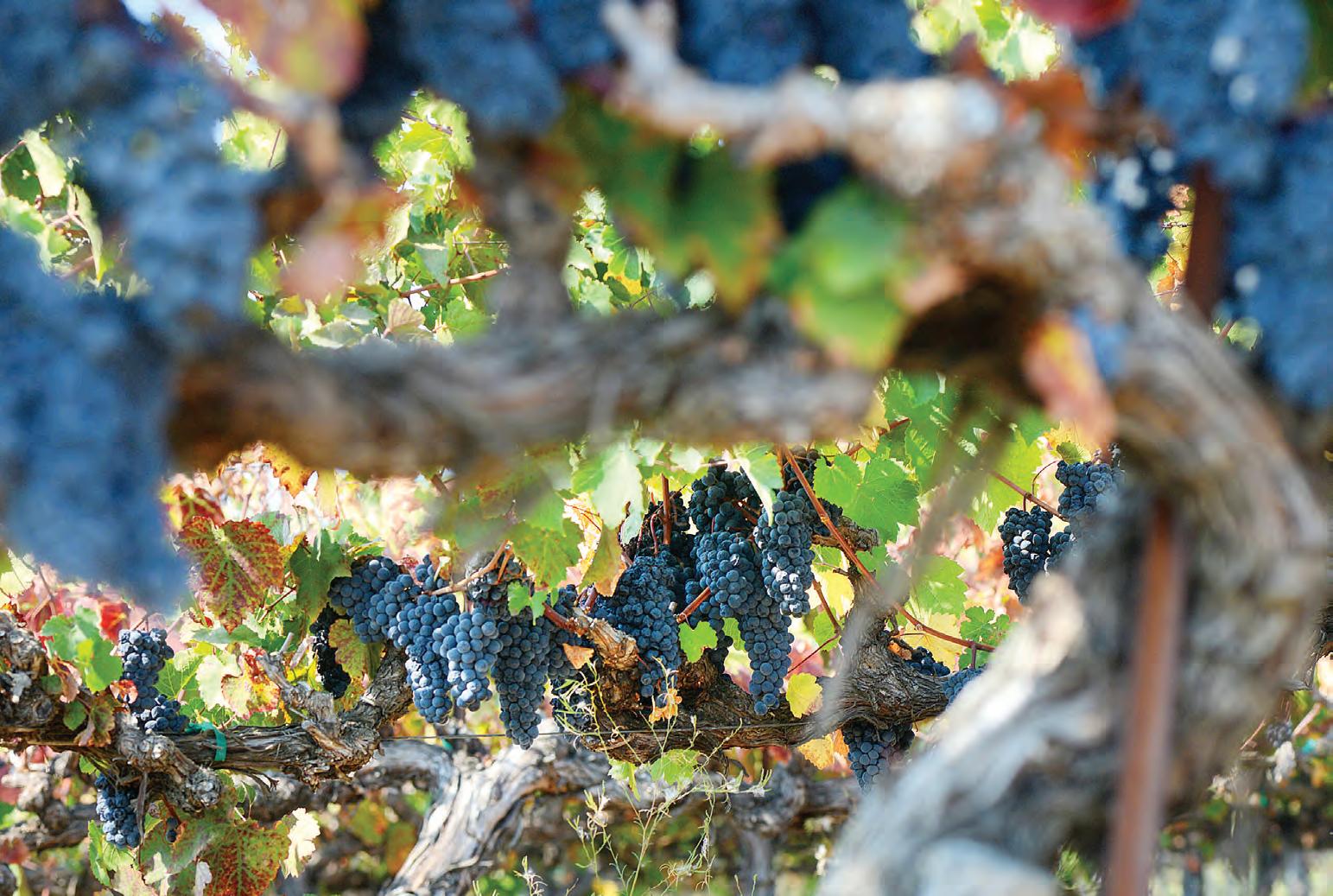
Suisun Valley offers city dwellers a place to escape crowded streets and see the country, buy fresh produce and taste wines.
It is located just west of Fairfield. It has fertile soils with a Mediterranean climate good enough to grow grapes for fine wines, just as in the neighboring, worldfamous Napa Valley.
The valley has its scenic attractions, framed as it is by oak-covered hills, with acres of vineyards, orchards and other farming areas. It has buildings such as the 1900, one-room Gomer School, complete with bell tower. It has small commercial areas such as Manka’s Corner with restaurants and other businesses.
Wine is a big part of the valley. Suisun Valley in 1982 won federal recognition as the Suisun Valley Appellation, making the valley an American Viticultural Area. Grape varieties ranging from Sauvignon Blanc to Chardonnay to Gamay to Pinot Noir to Riesling are grown in the valley.
Several small wineries have tasting rooms. In addition, other wineries have grouped together to run a cooperative tasting room on Suisun Valley Road.
A big winery has come to Suisun Valley. The Wagner family, owner of Caymus Vineyards in Napa Valley, is building a winery at the very southern end of the Suisun Valley appellation
More information: www.suisunvalley.com
capable of producing 5 million gallons of wine annually. It plans to bring grapes and wines from other locations to the Cordelia Road site for bottling, as well as grow grapes there.
But Suisun Valley is more than grapes. People can go there to buy corn, strawberries, dried fruit and nuts and other produce from small, family run produce stands. They can buy olive oil made from olives grown and processed in the valley.
Solano County wants to get the word out. It has designated Suisun Valley to become an agritourism area. Goals include creating several more small centers with businesses that cater to valley visitors.
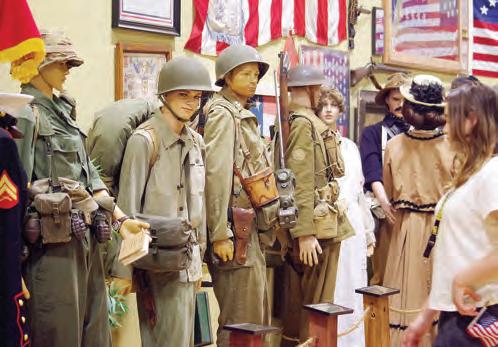
The American Armory Museum strives to educate future generations about, and impress upon them, the sacrifice, bravery and enduring significance of the U.S. military. Numerous vehicles are on display, with some available for rides. Various static displays are also set up to illustrate life in the field while in the armed forces. The museum features such military vehicles as the 1955 Larc amphibious cargo hauler, the M35A2 cargo truck, the 1944 M5A4 artillery tractor, the M936A1 wrecker and recovery truck, the FV433 Abbot self-propelled artillery vehicle, the HET 1070 heavy equipment transport, an Israeli M-5 half track armored personnel carrier, a Ford GWP jeep, the M561 Gama Goat amphibious vehicle and the Super Mack heavy-duty truck. Ask in advance about ride fees. The museum opened in May 2016. Admission is free, although donations are accepted. Open from 10 a.m. to 3 p.m. Wednesday through Saturday and by appointment. Ride fees for vehicles are to be determined and are subject to change without notice.
LOCATION: 4144 Abernathy Road, rural Fairfield in Suisun Valley
MORE INFORMATION: 707-389-6846, info@AmericanArmoryMuseum.org, www.americanarmorymuseum.org.
Manka’s Corner is a small commercial area amid the farmlands of Suisun Valley. Solano County is promoting Suisun Valley as an agricultural tourist draw and Manka’s Corner is a key part of the plan, given that it has restaurants and shops where valley visitors can stop. The area’s name comes from Christley Manka, a pioneer to Suisun Valley around 1850. He established a tavern at what is now Manka’s Corner.
LOCATION: Mankas Corner Road and Clayton Road, rural Fairfield.
MORE INFORMATION: www.suisunvalley.com
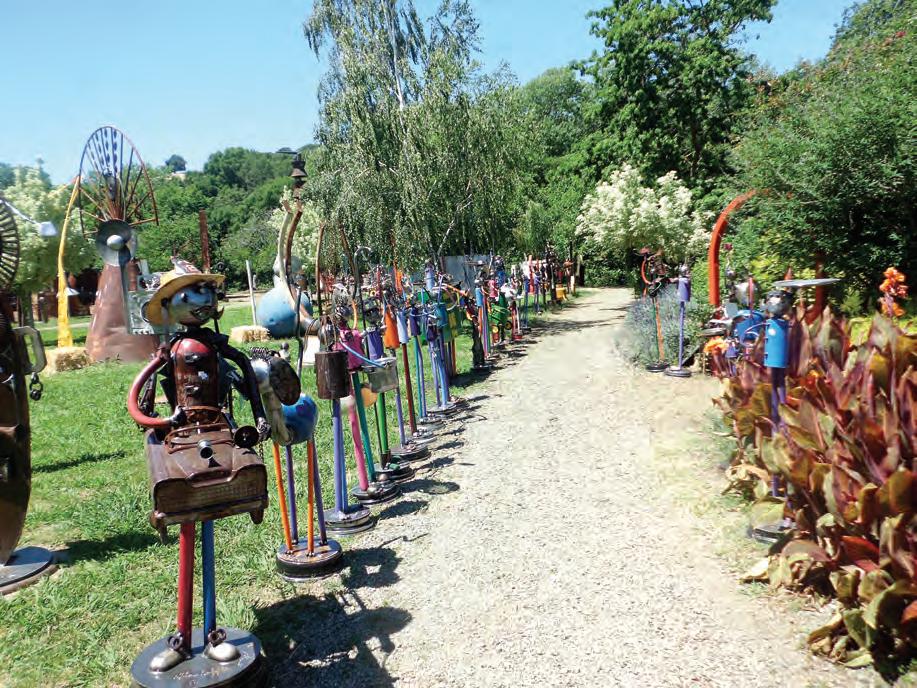
Home to an eclectic array of art and sculptures, the late Phil Glashoff’s ranch in Suisun Valley can be toured by appointment. Much of the art is made up of salvaged rusty machinery, fire extinguishers, compressor covers, motorcycle tanks and other items that had been abandoned and scattered around the farm. The sculptures have brought Glashoff attention from around the world. Those who appreciate art find there is goodwill and humor in each piece.
LOCATION: 5402 Williams Road, rural Fairfield MORE INFORMATION: 707-639-7076, glashoffgallery@aol.com

Solano County has its own wine country in the Suisun and Green valley areas, and they offer plenty of tasting opportunities. Visitors can try locally produced wines at several locations:
BackRoad Vines at Village 360: Tasting room at Village360, 4949 Suisun Valley Road, Fairfield. 707-759-0185, http://backroadvines.com.
Bally Keal Estate: 4266 Suisun Valley Road, Fairfield. Info: 707-646-2901, www.ballykeal.com.
Blue Victorian Winery: 5071 Suisun Valley Road, Fairfield. Info: 707-422-8025, www.vezer familyvineyard.com.
Caymus-Suisun Winery: 4991 Suisun Valley Road, Fairfield. 707-286-1776, www.wagnerfamily ofwine.com.
GV Cellars: 1635 Mason Road, Fairfield. 707-8642089, www.gvcellars.com.
Mangels Vineyards: 4529 Suisun Valley Road, Fairfield. www.mangelsvineyards.com.
Rock Creek: 4610 Green Valley Road, Fairfield. 707-864-2471, rockcreekvineyard.com.
Ryan Darrall Wine: 4994 Gordon Valley Road, Fairfield. 707-440-2242, www.ryandarrallwine.com.
Sonoma Harvest Wine and Olive Oil Tasting Room: 770 Chadbourne Road, Fairfield. 707-389-4815, www.tastesonomaharvest.com.
Suisun Creek Winery: 2350 Morrison Lane, Fairfield. 707-864-1818, www.suisuncreekwinery.com.
Sunset Cellars: 4495 Suisun Valley Road, Fairfield. Info: 415-566-2910. sunsetcellars.com.
Tenbrink Vineyards: 4185 Chadbourne Road, Fairfield. 480-7334, www.tenbrinkvineyards.com.
Tolenas Winery: 4185 Chadbourne Road, Fairfield. 707-372-1434. www.tolenaswinery.com.
Vezer Family Vineyard: Mankas Corner Winery, 2522 Mankas Corner Road, Fairfield. 707-429-3958, www.vezerfamilyvineyard.com.
Village 360: 4949 Suisun Valley Road, Fairfield, 707-863-0646, https://village-360.com.
Wooden Valley Winery: 4756 Suisun Valley Road, Fairfield. 707-864-0730, www.woodenvalley.com.
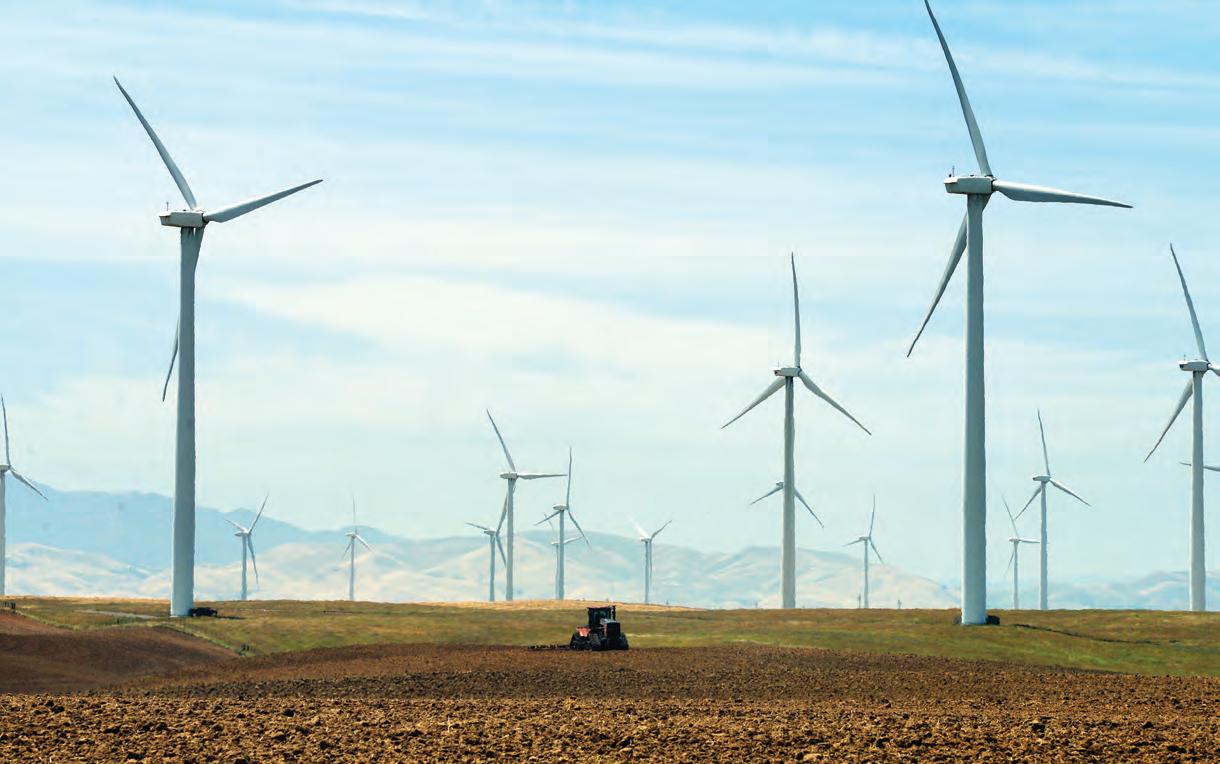
Water helped give life to this Solano County community and, in 1862, helped to destroy it.
That was when the Sacramento River rose and 12 feet of water covered Rio Vista.
The community was re-established on higher ground about 2 miles from its original location where the Cache Slough meets the Sacramento River.
A wharf was built and the first church, for Catholics, was erected 1862. A Congregational Church was also built the same year.
A salmon cannery was among businesses of the river town, which has seen rapid growth recently. Its population nearly doubled between 2000 and 2010 and California State Department of Finance projections foresee continued growth.
The Sacramento River often doubled in films as the Mississippi River – most notably playing a starring role in numerous Tom Sawyer and Huckleberry Finn films dating back to the early 1900s. Dozens of other notable movies – from silent to talkies –brought in famous stars and directors such as William Desmond, John Ford, Cecil B. DeMille, Jackie Coogen and perhaps even John Wayne, when “The Big Trail” was filmed there in 1930.
Along with human visitors, wayward Humpback whales occasionally make their way to Rio Vista, attracting enough attention to gridlock the tiny hamlet. The most recent were in 2007 – a mother and calf named Delta and Dawn. Humphrey’s 1985 visit, however, is immortalized on a plaque at the foot of Main Street by City Hall.
The Chamber of Commerce likes to note that Joseph Strauss, architect of the Golden Gate Bridge, designed the community’s largest landmark, the Helen Madere Memorial Bridge, or the Rio Vista Bridge as its known, “situated on the historic Sacramento River with a silhouette of the rolling Montezuma Hills to the south.”
Madere was a former Rio Vista city councilwoman.
The business group also boasts how Rio Vista “still maintains an easy-going small-town attitude even though it is central to the two largest population centers in Northern California.” Moreover, the community is known to have some of the best sport fishing in the state and is host to the West Coast’s oldest striped bass derby each October – the Rio Vista Bass Derby and Festival.
The Rio Vista Airport on the outskirts of town makes flying in for a day of business,
lunch or just to explore the area easily accessible. The community is also home to home to “world-class” Percheron horses, buffalo and the only endive producer in the United States.
Whatever you’re looking for, you will find Rio Vista a friendly, fun place to visit, right in the heart of the California Delta.
Rio Vista is trying to stay ahead of the pace by upgrading the town’s infrastructure and modernizing downtown. The community is counting on its location to continue growth, as Rio Vista did during the days when being next to the Sacramento River allowed the town to capitalize on trade between San Francisco and Sacramento.
Now Fairfield and Lodi, each about 20 minutes away on Highway 12, are the larger nearby cities. Stockton and Sacramento are only half an hour away on nearby Interstate 5.
The town is home to a number of highly popular events in addition to the venerable Bass Derby and Festival. The city offers shopping downtown, several restaurants and the Rio Vista Museum where people can learn some Rio Vista and Delta history.
Nearly 6% of the city exists within neighboring waterways – and the community’s future may match its river past.

Saturday, August 29, 2026
5:00 pm Social • 6:30 pm Dinner
McNaughton Park
729 Great Jones Street • Downtown Fairfield For more information & sponsorship call (707) 427-6927
Presenting Sponsor

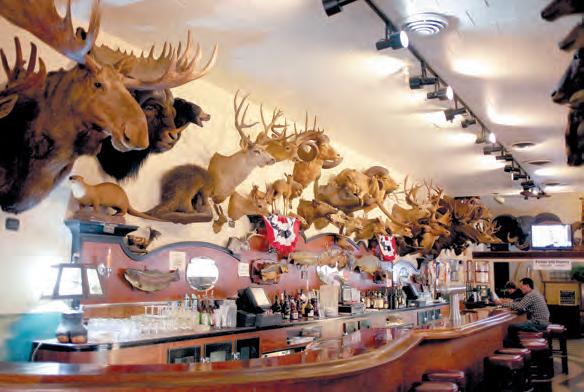
If you’re looking for big horns –literally – look no further than Foster’s Bighorn Bar in Rio Vista. Along with an extensive menu of barbecue, steak, seafood and a fully stocked bar, the restaurant boasts a private collection of more than 250 big-game hunting specimens from Africa and North America. The collection was put together by Bill Foster in the 1930s and ’40s. Several exotic and prized animals from his travels to Africa, Canada and Alaska hang on the wall, including heads of an African elephant and giraffe. Foster, a native of Hayward, was involved in bootlegging. Running from the law, he moved his wildlife collection to Rio Vista, where it has remained for more nearly 100 years.
LOCATION: 143 Main St., Rio Vista
MORE INFORMATION: 707-374-2511, www.fostersbighorn.com
Located on the Sacramento River near Rio Vista, the half-mile-long Sandy Beach is a great Solano County location to cool off during the spring, summer and fall and enjoy some time outdoors throughout the year. It’s open the entire year and has a 24-hour boat launch, campsites and areas to picnic that include tables, barbecue pits, volleyball courts and a horseshoe pit.
LOCATION: 2333 Beach Drive, Rio Vista
MORE INFORMATION: 374-2097 (maps and reservation information available), www.solanocounty.com/depts/rm/countypark/sandybeach.asp
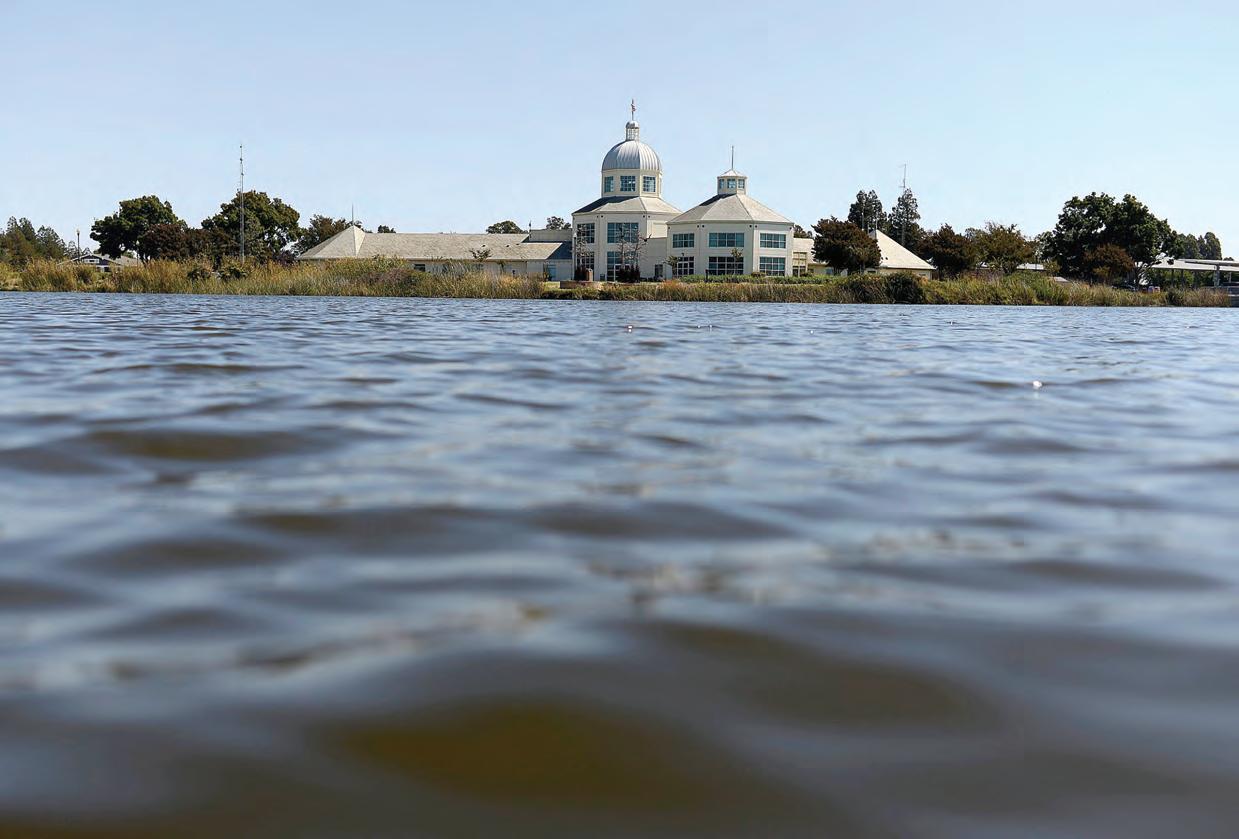


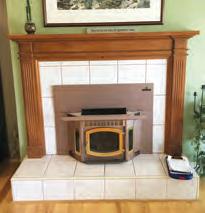









Rio Vision Gallery offers art of the Delta region by local artists. The gallery features monthly artist receptions.
LOCATION: 116 Main St., Rio Vista
MORE INFORMATION: 707-360-5244, www.riovisiongallery.com



















Step back into history when you enter the Rio Vista Museum. Local mementos from years gone by range among a wide array of artifacts –from photos and newspaper headlines to vehicles, farm equipment to clothing, books to kitchen items. Opened in 1975, it is in a converted blacksmith shop. Friendly and knowledgeable docents are available to answer any questions.
LOCATION: 16 N. Front St., Rio Vista MORE INFORMATION: 707-374-5169, www.riovistamuseum.com


Rio Vista Farmers Market: 4 to 7 p.m. first and third Thursday through Oct. 16, Front and Main streets. Info.: riovista.org
12th Annual Hog August Bites: 10 a.m. to 11 p.m. Aug. 22. With live music all day, People’s Choice rib and chili tasting, juried rib and chili contests, food, craft vendors, craft beers, car and truck show. Info.: https://hogaugustbites.com
78th Annual Bass Derby and Festival: Oct. 2-4. Fishing tournament, live music, great food and drinks, vendors, parade, car show and fireworks all along the river’s edge. Info: www.bassfestival.com
Possibly the most mispronounced city in the county, Suisun City’s roots date back to the 1850s.
Things have changed in those 170-plus years, yet there’s still plenty of history.
The city dates back to 1850 when Josiah Wing, a schooner captain, found an island in the Suisun Marsh and built a wharf and warehouse there. It soon became the major agriculture shipping point for the farms and orchards in the Suisun Valley and Green Valley areas.
A train depot was built. Suisun City was bustling with several hotels along Main Street.
Fairfield was the smaller of the two towns, but that changed with World War II and with construction of what’s now Travis Air Force Base and Interstate 80. After that, Suisun City’s growth tapered off.
The train station on Main Street opened in 1914. Historic homes line the old part of town. The Lawler House, home to an art gallery, is one of them. It was built in 1857 as a ranch house on the land now occupied by Dover Terrace South. It was moved to its present location by a truck and barge in 1979.
Suisun City has weathered some tough years. In the early 1980s, a survey of San Francisco Bay Area communities called the town the least attractive place to live in the area, which spurred then-Mayor Jim Spering to take on an ambitious redevelopment effort.
Waterfront properties were redeveloped and a crime-ridden neighborhood was razed and replaced with a Victorian-style development. Improvements continued with the construction of a senior center, community center and library.
Suisun City’s new face earned it accolades such as Sactown magazine’s description of it as “a sweet and delightfully surprising vacation spot.”
The city now includes the modern Kroc Center near the library. The old and the new merge in both locations as the Kroc Center has come to serve as a community center.
The downtown area hosts the city’s events such as an annual Waterfront Festival and Christmas celebration. Downtown is also home to many popular restaurants. A state-of-theart Blue Devils Bingo Center operates in the Marina Shopping Center.
An alliance of local and regional performing
arts groups now offer performances at the Harbor Theatre on Main Street and the historic train depot wrapped up its facelift recently.
One of the city’s best-kept secrets may be the Suisun Wildlife Center, which is home to a variety of wildlife. Some residents will call it home forever. Others are there with hopes of being released back into their native habitat. Those who have a paranormal bent can take part in a ghost walk, to potentially hear from any number of spirits that “haunt” the downtown area.
There’s Victoria, who reportedly died in 1923 when she was 7 and is often found at the Lawler House. Michael was reportedly murdered by drowning in 1924 after he got involved in rum-running operation that resulted in him losing some of the illicit booze and paying for that mistake with his life. The spirits of a series of prostitutes identified by paranormal experts as Iris, Hillary, Eleanor, Sweet Marie and Frances can be found at various spots along Main Street near the hotels and pool halls where they plied their trade in the decades before World War II.
Ef fective August 2, 2026
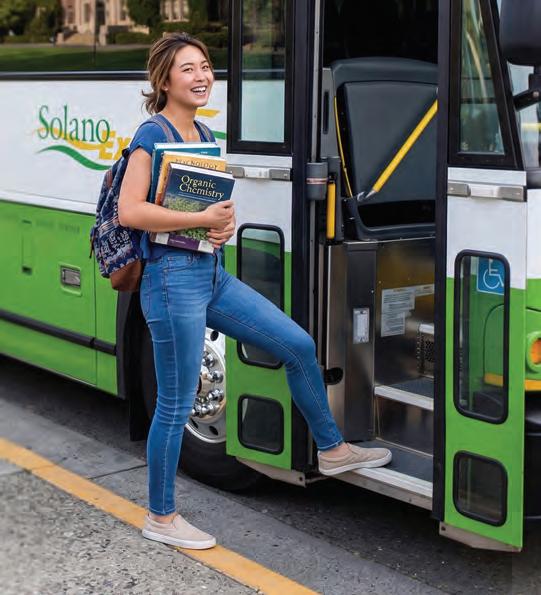
New destinations and increased service on SolanoExpr ess 90 , 60 , and 40
A bevy of festivals, Independence Day fireworks, shops, restaurants and cafés beckon local residents and visitors to the Suisun City waterfront. Fishermen, dog walkers and people just taking a stroll can be seen at the waterfront almost daily. Much of the activity is centered around the Harbor Plaza at Main and Solano streets, which has hosted concerts and plenty of community activities. The waterfront is often referred to as “a jewel.”
LOCATION: Main Street, Suisun City MORE INFORMATION: www.suisunwaterfront.com
Whether you’re a child or an adult, a hiker, birdwatcher, biologist, teacher, photographer, poet or painter, or just out for a picnic, this Solano Land Trust jewel will win you over with its historical building and self-guided trails. Rising out of the northeast edge of the Suisun Marsh, Rush Ranch stretches across 2,070 acres of marsh and rolling grassland. Purchased in 1988 by Solano Land Trust, Rush Ranch provides recreational and educational opportunities to thousands of visitors each year. Rush Ranch is open to the public seven days a week year-round, 8 a.m. to 5 p.m.
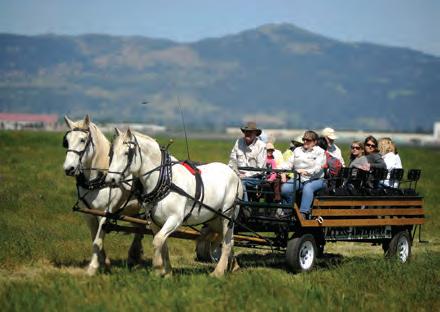
Nov. 1 through Feb. 28, 8 a.m. to 7 p.m. March 1 through Oct. 31.
LOCATION: 3521 Grizzly Island Road, approximately 2 miles south of Highway 12
MORE INFORMATION: www.solanolandtrust.org

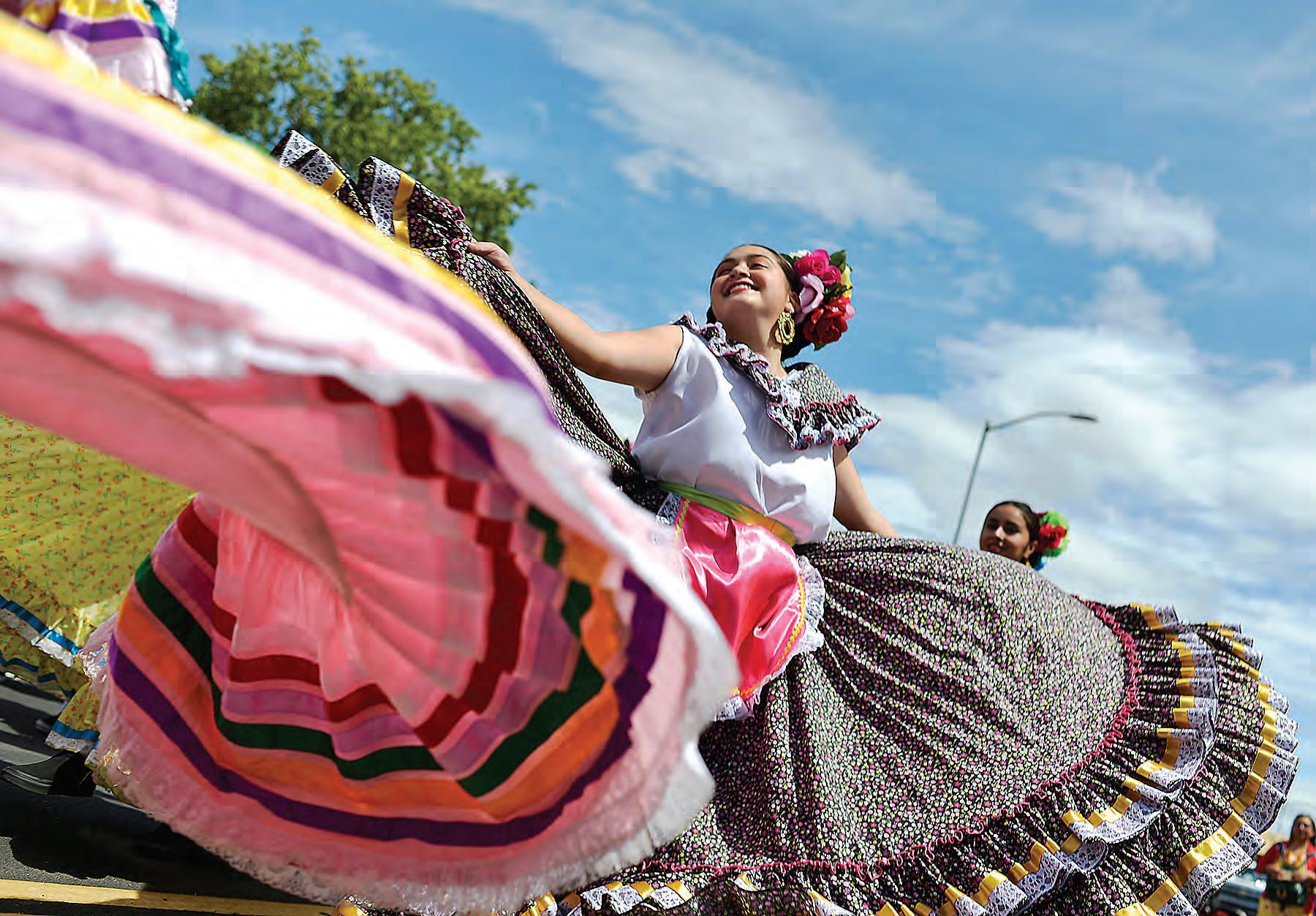

4th of July Celebration: 11 a.m. to 10 p.m. July 4 on the waterfront. Festivities include food and retail vendors, carnival rides, live music and a fireworks show. Info.: www.suisun.com/ events-directory/4th-of-july-celebration-2026 Music on the Waterfront: 6:30 to 9 p.m.
Saturdays through Oct. 10. Enjoy live music, great food and a beautiful summer evening at the Suisun City Waterfront. Calendar: July 11, Top Secret; Aug. 8, The GTC; Sept. 12, Groove Foundation; Oct. 10, Fast Times. Info.: www.suisun.com/ events-directory/music-on-the-waterfront-2026
Sunday Jazz on the Waterfront: 3 to 5 p.m. second and fourth Sundays through Aug. 23. Spend your Sunday afternoon relaxing with live jazz, scenic waterfront views and a vibrant community atmosphere at Harbor Plaza Stage. Calendar: July 12, The Notes of Choice; July 26, 2nd Planet; Aug. 9, Sabrina the Songstress; Aug. 23, Alive Music Orchestra. www.suisun.com/events-directory/sunday-jazzon-the-waterfront-2026
Dinner and Movies in the Park: 8:15 p.m. Fridays, Heritage Park, 611 Village Drive. Bring your blanket and enjoy a free movie night in the park – dinner will be provided for participants while supplies last, and the exact meal will be announced the week of the event. Calendar: July 10, “The Bad Guys 2”; Aug. 14, “The Super Mario Galaxy Movie”; Sept. 11, “Angels in the Outfield.”
acaville is a people-oriented city and as such, takes immense pride in its community events, such as springtime’s Fiesta Days (May 25 this year), the Christmas Festival of Trees, which raises money for the town’s homeless shelter, and Merriment on Main, which packs the downtown every year.
Sprinkled between these offerings are myriad events that draw the community together and attract others to the city to experience the city’s charm.
The city has a welcoming downtown with a host of small businesses, including stores and restaurants, with an active town square that hosts entertainment events on many weekends. The adjacent Creekwalk and Andrews Park are also often entertainment venues.
A thriving downtown and large, popular shopping areas – including Vacaville Premium Outlets and the Nut Tree shopping center –make Vacaville a popular shopping destination.
The city has always prided itself on being a forward-looking town, as evidenced by its biotech industry, the arrival of Icon Aircraft,
large number of electric vehicle charging stations and its family oriented community with a network of parks and youth programs.
Vacaville was founded in 1851 by pioneer William McDaniel, when he bought part of an 1843 Mexican land grant held by Manuel Cabeza Vaca with the promise that McDaniel would name the town Vacaville. The city was incorporated in 1892.
Vacaville’s most famous restaurant, the Nut Tree, opened in the 1920s as a produce stand located under a large oak next to the main road that linked Sacramento with the San Francisco Bay Area. While the Nut Tree closed in 1996, its legacy continues in the Nut Tree shopping center, which opened in 2009.
Vacaville is not a city stuck in the past, but many residents are sweet on the old Nut Tree and what it represents.
When a sign along Interstate 80 marking the former business was taken down in March 2015, devotees of the old Nut Tree were there to mourn and memorialize the moment of cement and glass that took two years to build – and a day to take down.
Two of the 12-ton panels of the 72-foot-tall
sign that marked the site of the Nut Tree restaurant, the historic site where a San Francisco mayor was once said – erroneously he insisted – to have met with the Mafia, were preserved.
Vacaville, like much of California, boomed after World War II. Population now puts the municipality at third in Solano County, behind Vallejo and Fairfield, although many Vacaville residents would say that’s a contest they’re not entering.
Rather than look at numbers, Vacaville’s boosters say its benefits include a thriving downtown and a quality of life unmatched in Solano County.
For the sizable population of commuters, Vacaville is equidistant from the Sacramento area and the San Francisco Bay Area, connected to both by Interstate 80, which cuts the town in half.
The hills west of town shelter Vacaville, giving it warm summers with average highs in the upper 90s and mild winters with lows that can drop into the mid-30s.
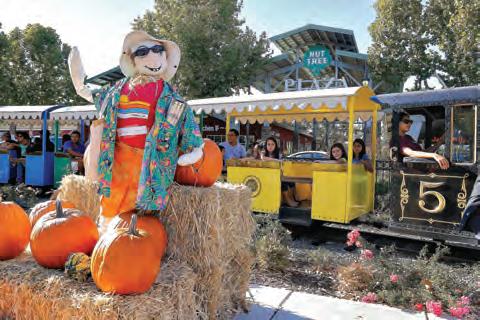
Nut Tree Plaza, next to Interstate 80 in northeast Vacaville, is an entertaining blend of the old and new, with a wide host of retail businesses sharing the land with a family oriented town plaza that features the restored Nut Tree train and a carousel. The plaza inherited the legacy of the original Nut Tree, which was founded in 1921 when the Power family set up a small fruit stand under a large oak tree beside the road that is now I-80. It grew into the most popular road stop between Sacramento and San Francisco, offering a restaurant, dried fruits, toys, children’s rides, aviation books, souvenirs, gemstones and a post office. The original Nut Tree closed in 1996, only to be reborn as the Nut Tree Plaza, which offers a mix of more than 40 restaurants and businesses that includes Fenton’s Creamery, See’s Candy and major businesses such as Best Buy. Nut Tree’s town plaza offers special events such as the Vacaville Jazz Festival.
LOCATION: East Monte Vista Avenue at Nut Tree Road
MORE INFORMATION: www.nuttreevacaville.com
It’s easy to spend an entire day shopping at the impressive collection of more than 120 retail outlets in the Vacaville Premium Outlets. The retail campus is one of the largest shopping destinations in the Sacramento/San Francisco Bay area. Reviews by shoppers laud its wide selection of stores that includes major names such as Calvin Klein, Nike and Polo Ralph Lauren, as well as some really good deals for those who are willing to hunt. Reviewers’ only downside is the sheer size and its popularity for everyone from local shoppers to tour buses, which can make finding weekend parking an adventure of
its own. For those who want a break from all the bargain hunting, there is a good selection of sit-down restaurants such as The Olive Garden and fast food joints such as In-N-Out Burger within walking distance.
LOCATION: 321 Nut Tree Road, Vacaville MORE INFORMATION: 707-447-5755; www.premiumoutlets.com/outlet/ vacaville
Since it was established in 1984, the Vacaville Museum has prided itself on preserving and educating the public about all of Solano County’s cultural and historical heritage. The museum has produced more than 40 exhibits on the area’s history, from American Indian artifacts found in and around Vacaville to the region’s famous fruit industry. It does not offer any permanent exhibits and produces two temporary exhibits every year. It also hosts public events such as Sallie Fox Day, which teaches local schoolchildren about the life and times of California pioneer girl Sallie Fox.
LOCATION: 213 Buck Ave., Vacaville MORE INFORMATION: 707-447-4513; www.vacavillemuseum.org




of July Free Concert & Fireworks: Celebrate the nation’s 250th birthday with an evening of music and fireworks at Andrews Park, 614 E. Monte Vista Ave. Enjoy a live performance by the Fog City Swampers from 6:30 to 9:30 p.m., followed by a spectacular fireworks show. Info.: www.visitvacaville.com














Creekwalk Concert Series: 6:30 p.m. Fridays, through Aug. 7 at the CreekWalk Plaza, Andrews Park, 614 E. Monte Vista Ave. Food, drinks, beer, and wine available for purchase from food trucks and food stands. Free admission for children 12 and younger. Calendar: July 4, Fog City Swampers; July 10, Club 90; July 17, Time Bandits; July 24, Township; July 31, Pub Kats; Aug. 7, Los Cochinos. Info.: www.cityofvacaville.gov/government/parks-and-recreation/ special-events/creekwalk-4th-of-july.
Vacaville Farmers Market: 8 a.m. to noon Saturdays, year-round. Andrews Park, 614 E Monte Vista Ave. Info.: www.downtownvacaville.com
3rd annual Downtown Shakedown Car & Art Show: noon to 6 p.m. Sept. 12. This family friendly event is one you won’t want to miss with classic cars, awards, bands, street vendors and more! Info.: www.downtownvacaville.com
Vacaville Jazz Festival: Sept. 19-20. With live music all day in downtown Vacaville, the Vacaville Performing Arts Theatre and Nut Tree Plaza.
Info.: www.jazzsociety.org
Market by Moonlight: 4 to 10 p.m. Oct. 10 at Andrews Park, 614 E. Monte Vista Ave. Experience the magic of downtown Vacaville after dark with vendors offering unique finds, handcrafted goods and delicious food.
Info.: www.downtownvacaville.com
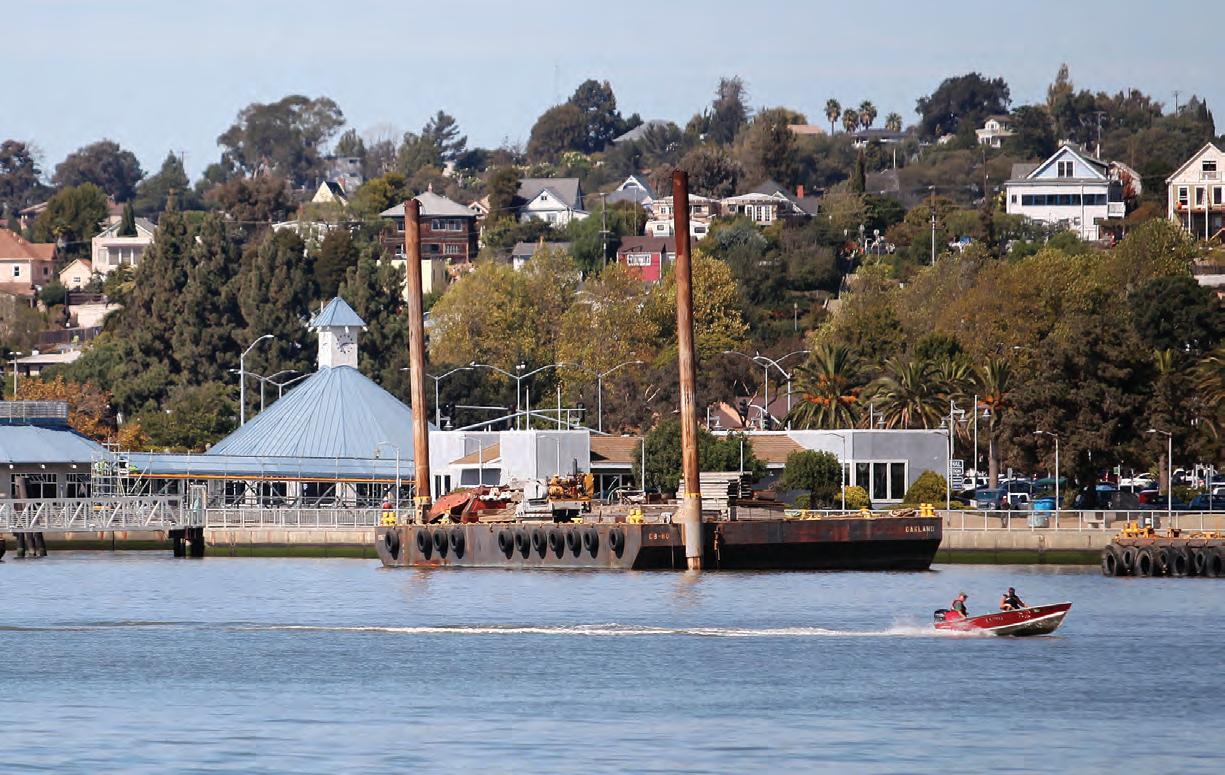
Solano County’s largest city is classic Bay Area.
For one thing, Vallejo is located along the Mare Island Strait and San Pablo Bay, so water dominates its views. On days when such county cities as Dixon are broiling under 90-degree heat, Vallejo might have gray skies from the coastal overcast.
Also, the older parts of Vallejo have more of an urban than suburban atmosphere found in many of the county’s cities.
One of the county’s biggest tourist attractions is in Vallejo: Six Flags Discovery Kingdom. The amusement park features such theme rides as The Joker, Wonder Woman Lasso of Truth, Harley Quinn Crazy Coaster and Batman: The Ride. The Tsunami Soaker is a tea cup-type ride that allows riders to squirt each other using large water guns.
Animal shows and attractions at Discovery Kingdom feature giraffes, seals, sharks, butterflies and other creatures.
The 149-acre Solano County fairgrounds is located nearby. It is home to the county fair each summer, but also hosts events yearround.
Vallejo is home to a ferry that links it with San Francisco. Riders can take catamaran ferries that reach almost 40 mph and make the trip to the San Francisco Ferry Building in about an hour. Ferries are also available to Pier 41, Angel Island and Oracle Park.
Mare Island gives people the chance to see a former naval shipyard that was founded prior to the Civil War and closed in 1996. Buildings from various eras are visible, from the 19th-century brick buildings and Victorian homes to massive, World War II-era industrial buildings.
The excellent Mare Island Strait led the Navy in 1852 to buy land for Mare Island Naval Shipyard. The first commander was David Glasgow Farragut, who later gained fame during the Civil War for capturing Mobile, Alabama, and for operations along the lower Mississippi River.
The shipyard was a mainstay of the Pacific Fleet’s presence through World War II and the Cold War prior to its closure. Vallejo has since redeveloped Mare Island as an industrial area work in progress as well as home to institutions such as Touro University, which occupies the old hospital building, and
residential subdivisions.
Mare Island also plays host to a portion of the San Francisco Pacific Flyway Festival each February, with hikes along the picturesque shoreline and viewing of the various migratory birds.
Visitors can hike in Mare Island Shoreline Heritage Preserve. Among the features there are a 284-foot-high hill overlooking San Pablo Bay, the Mare Island cemetery and century-old stone buildings at the old ammunition depot.
Gen. Mariano Vallejo, a powerful civil and military leader when Mexico ruled California, lent his name to the city.
Vallejo in 1850 wanted to establish a city that would become the capital of the newly formed state of California. He saw the location as “the true center of the state, the true center of commerce and the true center of travel,” according to Frank Keegan’s book “Solano: The Crossroads County.”
Modestly, Vallejo wanted to name his city “Eureka.” Others insisted it be called “Vallejo” in his honor and their viewpoint won out.
Vallejo is among the nation’s most diverse cities. Vallejo Convention & Visitors Bureau: 800-4-Vallejo, 642-3653, www.visitvallejo.com Vallejo Chamber of Commerce: 644-5551, www.vallejochamber.com
The former Mare Island Naval Shipyard was the first permanent naval installation on the West Coast when founded in 1854. It built more than 500 ships in its 142-year service to the United States before closing in 1996. Today, much of Mare Island’s historical artifacts are carefully being preserved by the Mare Island Historic Park Foundation. It’s housed in Building 46, a 50,000-square-foot space built in 1855.
LOCATION: Eighth Street and 1100 Railroad Ave., Vallejo MORE INFORMATION: 707-557-4646; www.visitvallejo. com/listing/mare-island-museum
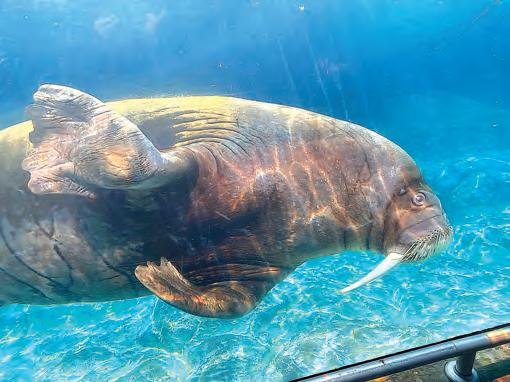
attractions for Halloween and Christmas and a Fourth of July celebration that includes fireworks. Season passes are available.
Vallejo’s Empress Theatre opened in February 1912, hosting a vaudeville act. It was re-opened in 2008 after nearly 20 years of non-use due to damage from the 1989 Loma Prieta earthquake. The one-room movie house has undergone complete renovation and seismic retrofit. Operated as a nonprofit, it now shows movies, hosts live performances and is rented for private events.
LOCATION: 330 Virginia St., Vallejo MORE INFORMATION: 707-552-2400, www.empresstheatre.org
Known years ago as Marine World/Africa USA for its ocean and continental wildlife, Six Flags Discovery Kingdom is now known more for its rides. Take a topsy, turvy spin on the thriller coaster, Superman, or one of the many other thrill, family or children’s rides – to include this year’s new attraction, Sidewinder Safari. See cougars and dolphins, walruses and penguins, among other animals. Take in a wildlife show, eat some food and take in an exhibit. The park also transforms during some holidays, adding special
LOCATION: 1001 Fairgrounds Drive, Vallejo (From Fairfield: Take Interstate 80 westbound. From Interstate 80, take the Discovery Kingdom exit) MORE INFORMATION: 707-643-6722 for recorded information; 707-644-4000 for administrative office, www.sixflags.com/discoverykingdom
Acres of pure childhood joy await at this Vallejo park, with castles, a giant teapot, fire truck and other play structures as well as Cinderella’s carriage and modern play structures. A fully fenced park with plenty of high-imagination play areas, picnic facilities, open space, a craft area and an outdoor theater, Children’s Wonderland provides plenty of fun for the youngsters. Birthday party packages are available as well as multiple-visit passes.
LOCATION: 360 Glenn St., Vallejo MORE INFORMATION: 707-980-8004, www.gvrd.org/children-s-wonderland
The Vallejo Naval and Historical Museum is a required stop for fans of local history and the Navy. The museum, which is located in Vallejo’s historic old City Hall, features five galleries devoted to the history and cultures of Vallejo and the U.S. Navy at Mare Island. It also sponsors educational and cultural programs. It is a lot of history to cover, because Vallejo traces its roots to 1844 with the arrival of Gen. Mariano Vallejo, and Mare Island Naval Shipyard traces its own history to 1852, when Congress bought the island. While three of the galleries are devoted to permanent exhibits, the other two offer a constantly changing menu of visiting exhibits pulled from other museums and private collections. One of its more unusual features is the working submarine periscope that can be found at the top of the museum’s grand staircase, where visitors can get a sub’s-eye view of surrounding Vallejo.
LOCATION: 734 Marin St., Vallejo
MORE INFORMATION: 707-643-0077, www.vallejomuseum.org
Used by both commuters and tourists headed from Solano County to San Francisco, the San Francisco Bay Ferry, formerly the Vallejo Bay Ferry, offers another option to traveling to the interior Bay Area. The San Francisco Bay Ferry leaves the Vallejo waterfront several times daily to bring travelers across San Pablo Bay to the San Francisco Ferry Building. Ferry commuters avoid the traffic and get stunning views of the region. The trip takes about an hour. Some ferries also stop at Pier 41. In addition to the daily trips, the ferry offers special service to San Francisco Giants games. There is a fee to park.
LOCATION: 289 Mare Island Way MORE INFORMATION: 877-643-3779, www.sanfranciscobayferry.com
171st annual 4th of July Parade: 10 a.m. to 1 p.m. July 4. Parade steps off at corner of El Dorado and Tennessee streets. Info.: 707-648-8616, www.visitvallejo.com
Mad Hatter July 4th Festival: 11 a.m. to Evening Sky Show, Vallejo waterfront. Celebrate the nation’s 250 years of independence with live entertainment, cultural performances and Wonderland family activities. Info.:
www.hattervallejo.com
Mare Island Spirit Ship Celebration: 5:30 p.m. to 9:30 p.m. July 4, Mare Island Promenade, 860 Nimitz Ave. The evening marks two extraordinary milestones: America’s 250th birthday and Vallejo’s 175th anniversary. Kick off the evening with live music from The Floorshakers, magic by Brian Scott, food trucks, refreshing drinks, and a dedicated kids’ zone – then watch the sky come
alive with a custom drone light show to close the night. Ages 10 and under are free. Info.: www.visitvallejo.com
Vallejo Fest: 10 a.m. to 6 p.m. Oct. 3, Vallejo waterfront. Celebrate Vallejo’s rich history, culture and local pride with a daytime event packed with whaleboat races and live music to delicious food, art and youth-focused activities. Info.: www.vallejowaterfrontweekend.com
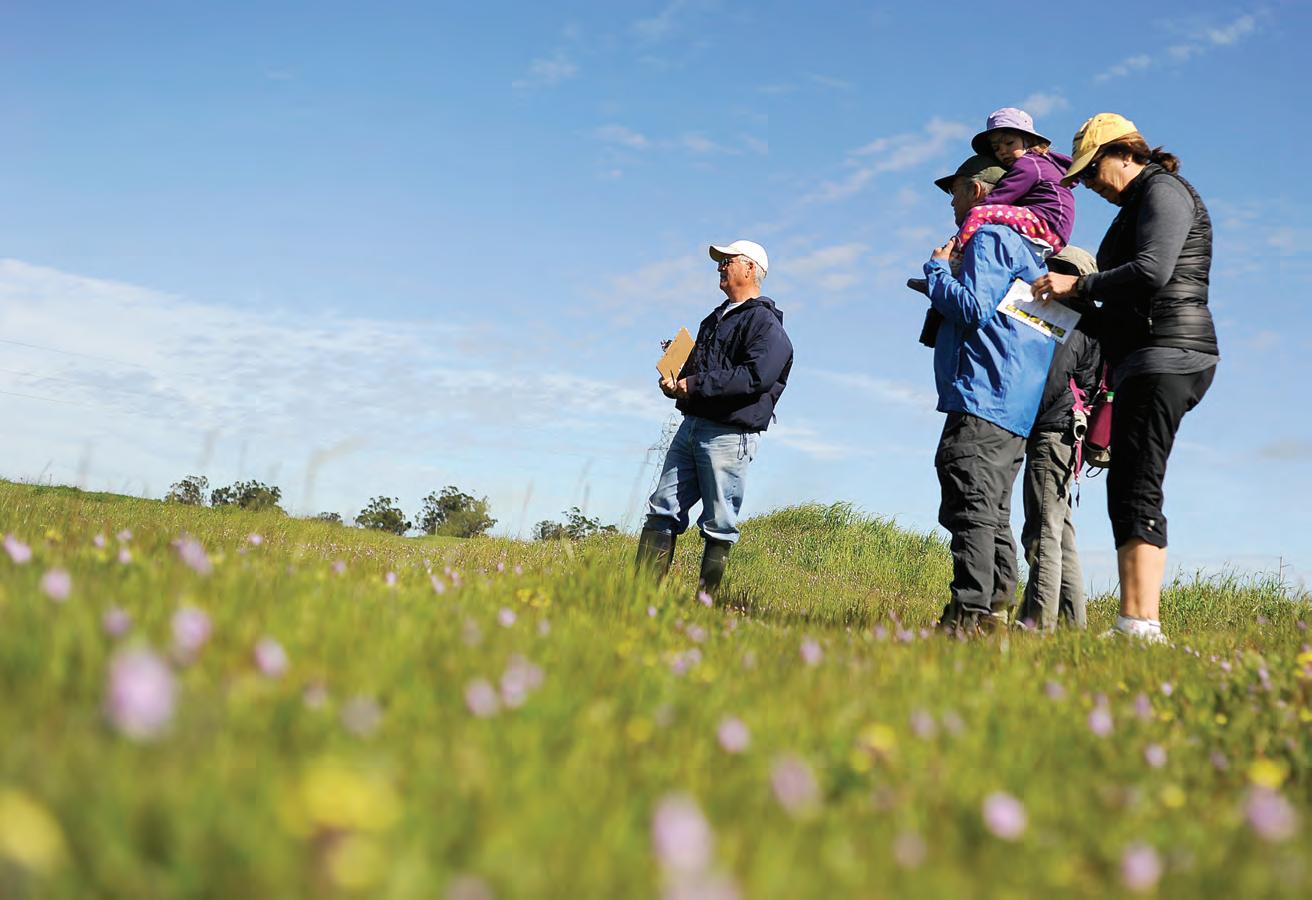
Solano County is among the most geographically diverse of California’s 58 counties.
Vallejo, in the southern corner of the county, sits along San Pablo Bay and has the graceful Carquinez suspension bridge to take Interstate 80 motorists over the Carquinez Strait. Here, summer skies are often gray in the morning from the high fog that streams through the Golden Gate on the opposite end of the bay.
Benicia’s views are also dominated by water. The city sits along the Carquinez Strait and Southhampton Bay. Solano County is considered part of the Bay Area and the Vallejo/Benicia area shows why.
In the northernmost county near Dixon, the Bay Area seems a world away. The flat Central Valley land is dominated by agriculture. Summer temperatures often soar into triple digits and winter brings a type of fog called the tule fog. There are no major waterways to be seen, though there are canals that bring irrigation water to farms.
Eastern Solano County is Delta country. Here, near the small city of Rio Vista, the Sacramento River and a network of sloughs are a watery highway for boats. Summer temperatures are hot here, unlike those in Vallejo. The Real McCoy II ferry takes travelers on Highway 84 over Cache Slough to Ryer Island, a farming community behind levees.
The western county has oak-studded hills and valleys, in places presenting an appearance similar to the Wine Country of Napa and
Sonoma counties. Not coincidentally, this is Solano County’s own wine country, with acres of vineyards and several wineries in Suisun Valley.
The central county near Fairfield and Suisun City is a land of transition between the Delta and the bays. Among its features are Suisun Marsh, the largest contiguous estuarine marsh in the United States. Duck clubs dominate this land of tules and wetlands. State preserves feature such sights as tule elk.
Solano County, with 444,500 residents, retains a rural feel. A voterpassed law funnels most growth into the county’s seven cities. Fairfield has established open space buffers between it and Vacaville to the north and Benicia and Vallejo to the south.
That leaves agriculture as the main land use in rural Solano County. Farmers grow everything from tomatoes to peaches to sunflower to alfalfa. Ranchers have sheep, cows and other animals. Crops in 2020 had a value of $357.16 million, according to the county’s most-recent crop report.
The county’s rural areas also provide places for recreation. People can boat and fish in local sloughs, hunt in Suisun Marsh and hike in Lynch Canyon, Rockville Hills and Lagoon Valley parks. They can camp along Putah Creek at Lake Solano park and along the Sacramento River at Sandy Beach park.
Solano County can also boast of being one of California’s original counties, established in 1850 along with the state.
From the Western Railway Museum east of Suisun City to Stonedene in Fairfield, Solano County is full of historic buildings and sites. At least 20 Solano County structures are on the National Register of Historic Places. The list contained a few more, but ships such as the Delta King have moved on. Some of the historic places, such as the Benicia state capitol and the Pena Adobe near Vacaville, are open to the public. Others, such as the Samuel Martin House – also known as Stonedene – are privately owned, but can still be admired for their exterior architecture.
The county sites on the historic register are:
• Benicia Arsenal, Army Point: Interstate 680, Benicia. www.beniciahistoricalmuseum.org.
• Benicia Capitol State Historic Park: First Street and G Street, Benicia. Owned by state. 707-745-3385, www.parks.ca.gov/?page_id=475.
• Benicia Southern Pacific Railroad Passenger Depot: 90 First Street, Benicia.
• Bird and Dinkelspiel Store: 2145 Collinsville Road, Birds Landing. Privately owned.
• Jackson Fay Brown House: 6751 Maine Prairie Road, Dixon. Privately owned.
• Will H. Buck House: 301 Buck Ave., Vacaville. Privately owned.
• Carr House: 165 E. D St., Benicia. Privately owned.
• Crooks Mansion: 285 W. G St., Benicia. Privately owned.
• Dixon Carnegie Library: 135 E. B St., Dixon.
• Old Masonic Hall: 106 W. J St., Benicia. Privately owned.
• Joseph Fischer House: 135 G St., Benicia. Owned by state. 707-745-3385.
• Hastings Adobe: Northeast of Collinsville. Privately owned.
• Mare Island Historic District: including the old shipyard, on Mare Island. Federally and privately owned.
• Samuel Martin House, or Stonedene: 293 Suisun Valley Road, Fairfield. Privately owned.
• Peña Adobe: in Lagoon Valley/Peña Adobe Regional Park on Peña Adobe Road. Owned by Vacaville. 707-447-0518, www.penaadobe.org.
• Pleasants Ranch: 8212 Pleasants Valley Road, Vacaville. Privately owned but available for some events. https://joyfulranch.org.
• Saint Vincent’s Hill Historic District: In Vallejo bounded by Mare Island Way almost to Sonoma Boulevard and from Quincy Alley to Kissel Alley. Owned by private parties and local government.
• Suisun Masonic Lodge No. 55: 623 Main St., Suisun City. Privately owned.
• Vacaville Town Hall: 620 E. Main St., Vacaville. Owned by Vacaville.
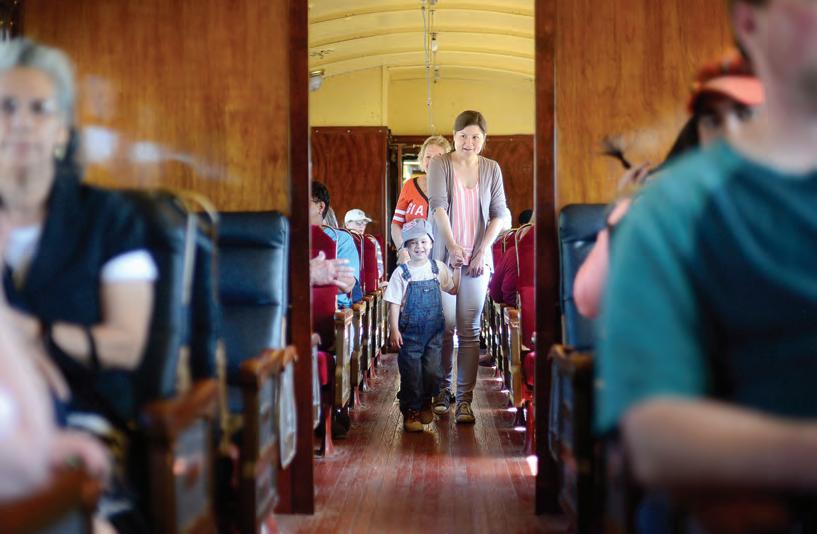
• Vallejo City Hall and County Building Branch: 734 Marin St., Vallejo. Owned by Vallejo.
• Vallejo Old City Historic District: Bounded by Sonoma Boulevard and Monterey, Carolina and York streets in Vallejo. Privately owned.
t• Western Railway Museum: 5848 Highway 12. 707-374-2978, www.wrm.org
• Westminster Presbyterian Church and Cemetery of Tremont: 8290 Tremont Road, Dixon.
Electric trains still rumble through rural eastern Solano County, just as they did some 75 years ago. Today, it’s all for fun, rather than providing mass transit between the Sacramento and Oakland areas. The Western Railway Museum runs classic trains on a portion of the old route near the Montezuma Hills. Volunteers care for the tracks, overhead electrical wires and old street cars and trains. Visitors can go for a ride, explore dozens of restored street cars and learn about the history of urban and interurban electric train services in Solano County and California. The F.M. Smith Memorial Library features a circulating collection of books that are available to members. The library also hosts periodic activities and events.
LOCATION: 5848 Highway 12, between Suisun City and Rio Vista
MORE INFORMATION: www.wrm.org, 707-374-2978
Solano County and neighboring areas offer golf courses in a variety of types and settings. Golfers can enjoy a round near the oak-studded hills of Green Valley, the flatlands near Vacaville or the Delta area of Rio Vista. Or they can take a short trip and golf near Napa County vineyards
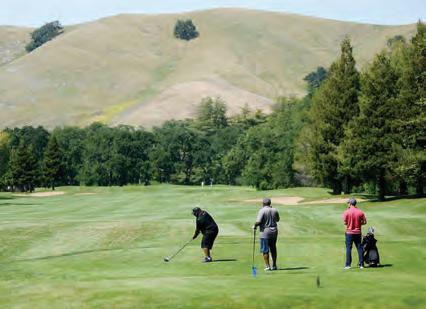
or in Yolo County’s rural Capay Valley. Nearby courses:
• Paradise Valley Golf Course: 3950 Paradise Valley Road, Fairfield. 707-426-1600, www.fairfield golf.com
• Rancho Solano Golf Course: 3250 Rancho Solano Parkway, Fairfield. 707-429-4653, www.fairfieldgolf.com
• Cypress Lakes Golf Course: 5601 Meridian Road, Vacaville. 707-448-7186, www.travisfss.com/golf
• Blue Rock Springs: 655 Columbus Parkway, Vallejo. 707-643-8477, www.bluerockspringsgolf.com
• Hiddenbrooke Golf Course: 1095 Hiddenbrooke Parkway, Vallejo. 707-558-0330, www.hiddenbrookegolf.com
• The Golf Club at Rio Vista: 1000 Summerset Drive, Rio Vista. 707-374-2900, www.playriovista.com
• Chardonnay Golf Club: 2555 Jameson Canyon Road, Napa. 707-257-1900, www.chardonnay golfclub.com
• Yocha Dehe Golf Club at Cache Creek Casino Resort: 14455 Highway 16, Brooks. 530-796-4653, www.yochadehegolfclub.com
SOLANO TRANSPORTATION AUTHORITY
For over a decade, the Solano Transportation Authority’s (STA) Solano Mobility Call Center has been helping Solano County residents get where they need to go. Launched in 2014, Solano Mobility offers 16 countywide and two local programs designed to take the stress out of travel. Whether you are a commuter, student, older adult, Veteran, employer, or person with a disability, Solano Mobility has a practical, affordable travel solution waiting for you.
connecting the cities of
Davis (UC Davis
and Sacramento. The expanded service supports access to employment, education, and regional destinations.
Getting to work or school shouldn’t be a hassle. Solano Mobility offers several ways to save money, reduce stress, and ensure you have a way home.
First/Last Mile Program: Public transit can take you to your destination; this program fills the gap to get you to transit. Enjoy discounted First/Last Mile Lyft rides connecting home or work to 12 major transit hubs across the county.
Guaranteed Ride Home (GRH): Commute with peace of mind. If an emergency pops up, registered commuters can take an Uber, Lyft, or taxi home. The program covers up to six trips a year (up to $100 per ride).
Vanpools: Gather a group of 7 to 15 people to split commute costs. Eligible groups can receive $200 to $800 in monthly subsidies.
Solano Express Route 30: Enjoy a comfortable, stress-free commute on the new Solano Express Route 30. Starting August 3rd, Route 30 replaces the Solano Mobility Express Vanpool,
Bucks for Bikes & Commute Rewards: Earn while you travel! Solano Mobility supports bike commuters through the Bucks for Bikes program, and the Commute Challenge rewards alternative travel with gift cards. Just log your trips at commuterinfo.net to start earning.
Independence and access to healthcare are vital. Solano Mobility provides tailored, subsidized programs to ensure everyone can travel safely and affordably.
ADA Eligibility Program: This program helps determine if you qualify for specialized paratransit services under the Americans with Disabilities Act (ADA), opening the door to curbto-curb rides and the Intercity Taxi Program.
Intercity Taxi Card (ITX): ADA-certified individuals can use a convenient
prepaid debit card for subsidized taxi fares. You get $100 worth of ride credits for just $40 – and only $20 if you qualify as low-income.
Medical Trip Concierge (GoGo Grandparent): Seniors (aged 60+) and ADA-eligible riders can book up to 30 discounted Uber or Lyft rides per month specifically for medical appointments. You only pay 40% of the fare (20% for low-income), and same-day, wheelchair-accessible vehicles are available.
Veterans Mobility Program: Our local heroes can easily travel to regional medical and VA facilities, including Travis AFB and the Martinez VA, utilizing the Medical Concierge or ITX programs with wheelchair-accessible options.
Free Travel Training: Want to use public transit but not sure where to start? This free program offers one-onone or group coaching to teach you to confidently read schedules, plan routes, and pay fares.
Solano Mobility Call Center supports your daily commute travel with localized services, including:
• Personalized Transit Trip Planning & Info
• Benicia & Suisun City Lyft Discounts
• Suisun City Microtransit services
Ready to plan your next trip or find the right program for you?
Visit: www.solanomobility.org
Call: 800-535-6883
Hours: Monday-Friday, 8 a.m. to 5 p.m.