
Disaster Resource Guide
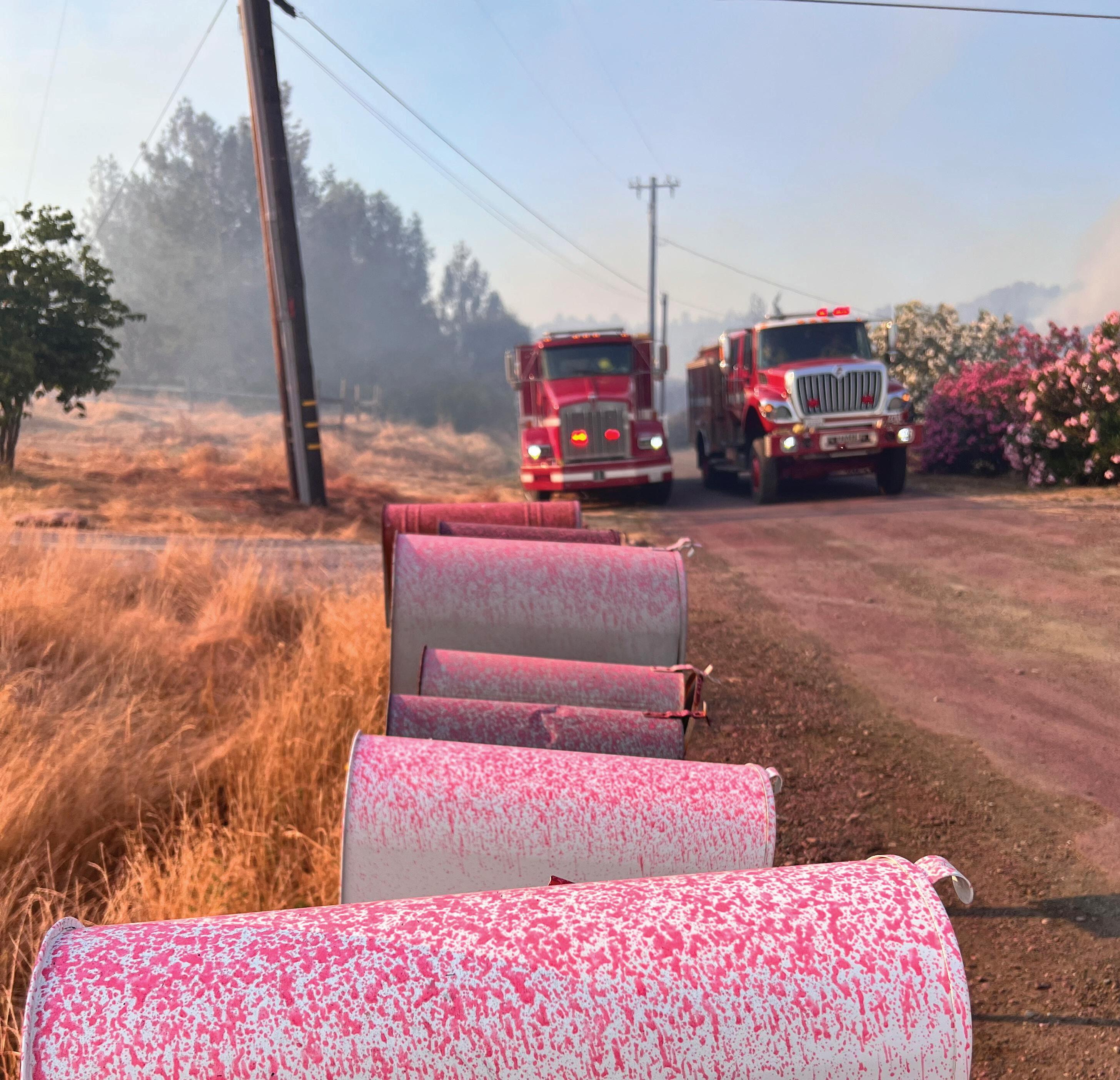
➤ County Office of Education Partners with Multiply Agencies
➤ PG&E Safety for Disaster Preparedness
➤ Evacuation Preparedness
➤ Marshall Hospital: Being Prepared is Essential






From natural disasters to major accidents and more, there’s no benefit in ignoring the catastrophes that could happen in our community. There are, however, plenty of benefits to emergency preparedness.
The Mountain Democrat’s Disaster Guide offers tips and resources for residents as proper planning and prevention can reduce the impacts a disaster may have on individuals, families and property. Emergency preparedness can be a life-or-death matter. Knowing escape and evacuation routes can ensure people aren’t trapped in dangerous locations. Having accessible stores of water and food can prevent people from suffering while sheltering in place. Emergency shelters can keep people safe from perilous conditions and offer a temporary place to live after a disaster has occurred.
The more people know and the more they prepare, the better off the entire community will be. Find the information you need in this guide.



Make An Emergency Supply Kit
HAVE A PLAN
Preparing for disasters and emergencies is crucial in minimizing fear, anxiety and losses associated with such events. By taking a proactive approach, being prepared, and regularly practicing your emergency plan, you can significantly reduce the impact of unforeseen circumstances.
A key element in safeguarding your family’s safety is the ability to evacuate swi�tly and early when faced with an emergency. Ensure that you have an emergency supply kit ready for both your family and pets, establish a comprehensive family communication plan, familiarize yourself with your community’s evacuation routes and practice driving the evacuation routes to become familiar with them.
EMERGENCY SUPPLY KIT
Having an emergency supply kit — also called a go bag — stocked and ready is an important step in being able to leave at a moment’s notice. Many of the items included in a kit are things you already have at home and simply need to be gathered into one bag or backpack. Below is a list of essential items to include in your emergency supply kit so that you have the necessary items ready if you must evacuate. Backpacks work great for storing these items (except food and water) and are quick to grab. Storing food and water in a tub or chest on wheels will make it easier to transport.
EMERGENCY SUPPLY KIT CHECKLIST
First Aid Kit
■ �ree-day supply of non-perishable food and three gallons of water per person
■ Battery-powered portable radio and extra batteries
■ Flashlight and extra batteries
■ Can opener
■ Lighter
■ Lantern
■ Essential toiletries (toilet paper, feminine products, toothbrush/toothpaste, shampoo/conditioner, bar soap, deodorant, hairbrush, razor)
■ Hand sanitizer and hand wipes
■ Prescriptions or special medications
■ Copies of important documents (passports, birth certificates, social security card, credit card/cash, emergency contact list, driver’s license, medical card, insurance card)
■ Blanket
■ Change of clothing. Pack for hot, cold, or rainy weather
■ Extra eyeglasses or contact lenses
■ Map marked with at least two evacuation routes
■ Cell phone and chargers
■ N95, antimicrobial/filter mask, bandana, or cotton t-shirt to help filter the air
■ Don’t leave the house without your phone and car keys
As you put together your emergency preparedness kit, remember to prepare a kit for your pets and livestock, too. �is ensures the entire family is taken care of during an emergency. For items to include in a livestock and animal evacuation kit, visit ReadyforWildfire.org.
FAMILY COMMUNICATION PLAN
Having a family communication plan is also vital in times of disasters. Preparing ahead of time ensures that every member of your household — including children, individuals with disabilities and those with specific needs — knows how to connect with one another and where to gather during emergencies. Your plan

should cover key aspects such as the designated meeting point in case of evacuation, an emergency contact person residing outside your area along with their contact details, important local numbers (e.g., fire department, police), and two evacuation routes from your home. Keep the plan in a readily accessible location for everyone in the household and maintain a copy in your emergency supply kit. In situations where regular phone calls may not go through, sending a text message using a mobile phone could be more e�fective. Text messages require less bandwidth than phone calls and have the advantage of automatically saving and sending once network capacity becomes available.
Taking these proactive measures will greatly enhance your preparedness and resilience in the face of any potential disaster. For additional tips and ways to prepare for an emergency visit Emergency Supply Kit — Ready for Wildfire.
Additional wildfire preparedness
resources and information
fire.ca.gov
■ Information specific to California wildfires, including incident updates, alerts, and preparedness.
readyforwildfire.org/
■ Comprehensive information and tips on wildfire preparedness.
fire.ca.gov/dspace
■ Information specific to defensible space. edcfiresafe.org
■ El Dorado County Fire Safe Council. amadorfiresafe.org
■ Amador County Fire Safe Council. cafiresafecouncil.org/
■ Information about Fire Safe Councils. nfpa.org/
■ National Fire Protection Association. O�fers wildfire safety resources and guidelines.
ready.gov/wildfires
■ Information on wildfire preparedness.
Barton Health is prepared for crises with elevated care

Kandra Yee, MD, FACEP
Chief Medical O cer, Barton Health
BARTON
HEALTH
IS PREPARED FOR CRISES WITH ELEVATED CARE
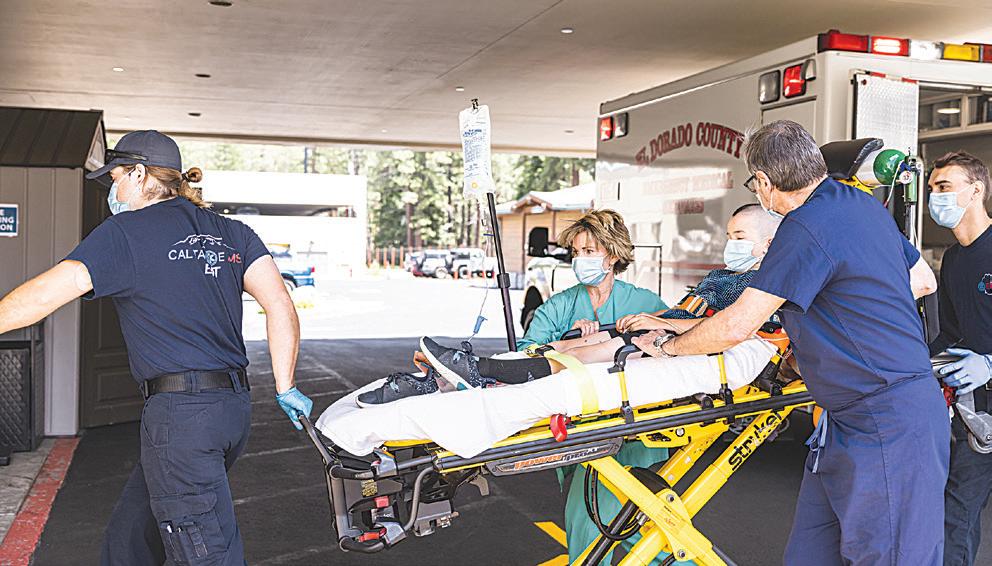
�e safety and well-being of Lake Tahoe residents and visitors is Barton Health’s top priority. Sta�f and physicians regularly train for a variety of emergency and disaster situations, as the remote and mountainous local geography requires the entire healthcare system to remain ready to care for patients during wildfire, earthquake, �lood and
avalanche, in addition to treating traumatic injuries.
TRAUMA CENTER ELEVATES CARE
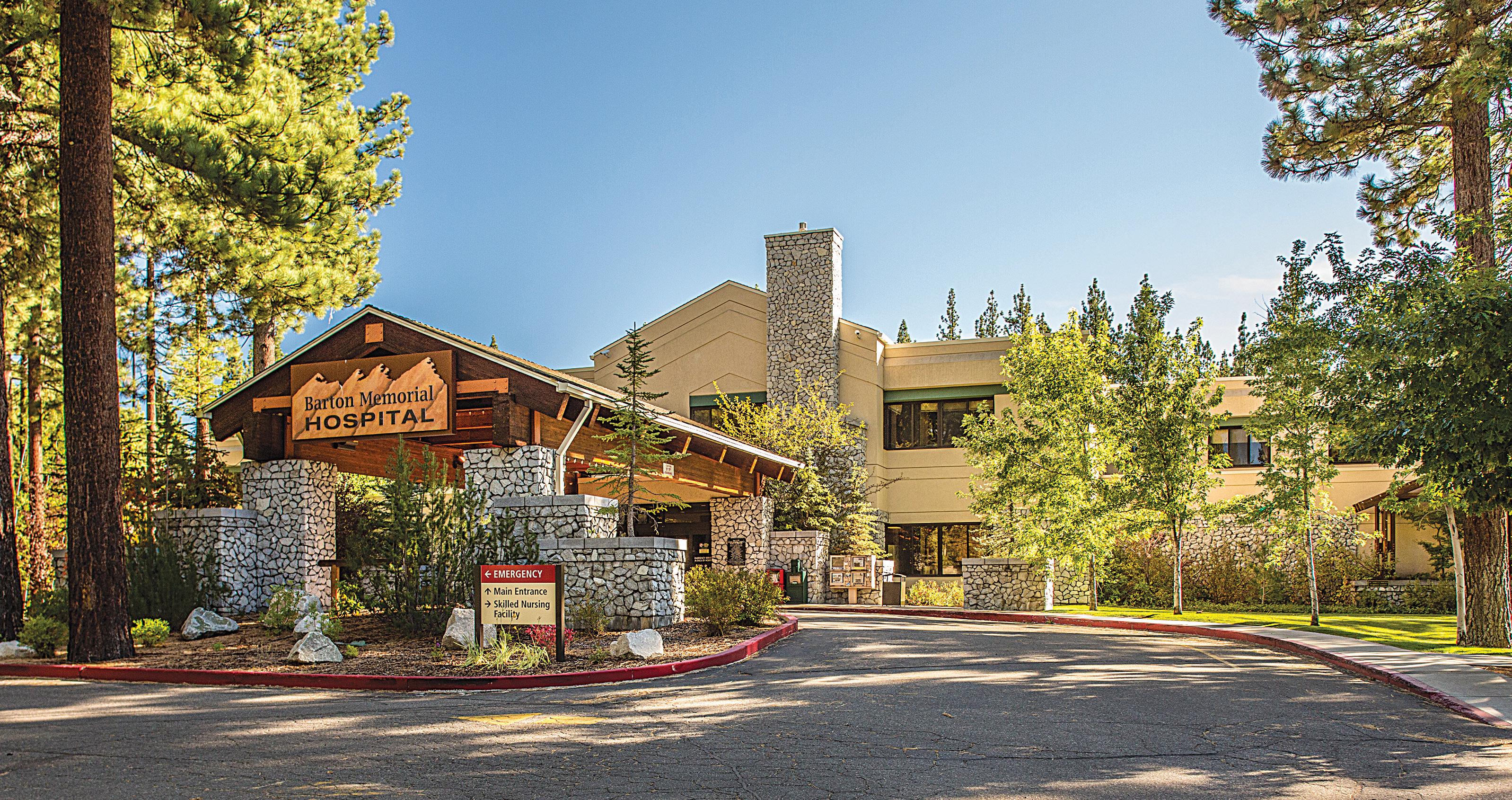
Designated by the American College of Surgeons as a Level III Trauma Center, Barton Memorial Hospital o�fers the region expanded blood bank capabilities, expedited patient evaluation and triage, priority access to diagnostic technology, and an increased care team aptitude and preparation for traumatic injuries. Highly trained, boardcertified surgeons and emergency physicians
are experienced in treating a wide variety of traumatic injuries. �e skilled clinical teams who work with these physicians are available around the clock to provide rapid, lifesaving care to patients.
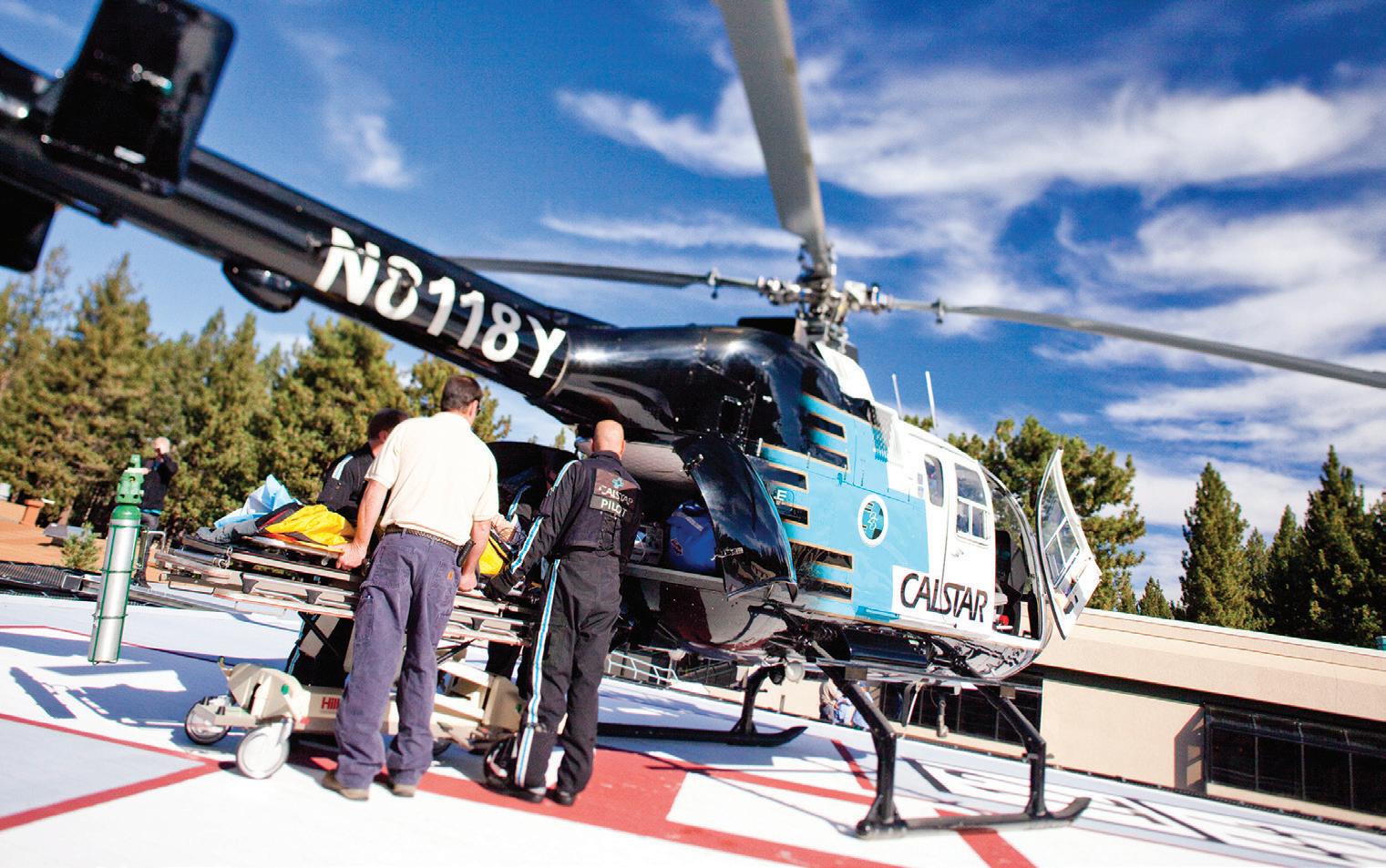
As part of a regional trauma system, Barton has the ability via both ground and air ambulance to transport acute patients rapidly to access broadened trauma services at Renown Regional Medical Center’s Level II Trauma Center in Reno and University of California, Davis Medical Center’s Level I Trauma Center.
Powering the Trauma Center and lifesaving medical equipment at the hospital is critical, as prolonged power outages are possible in the Sierra Nevada. Barton invested in a state-of-the-art central utility plant, which provides energy independence in the event of a disastercaused outage or public safety power shuto�f.
STRONGER THROUGH REGIONAL PARTNERSHIPS
In the event of a disaster, if patient transfer is necessary, Barton has the ability to request expanded capacity at any facility, including neighboring hospitals: Carson Valley Health, UC Davis Medical Center, Marshall Medical Center and Renown Regional Medical Center.
Additionally, partnerships with local police, fire and first responders strengthen crisis response; coordinated training e�forts include simulations of mass casualty incidents to wildfire evacuations.
�ese coordinated e�forts have been critical during real-world emergencies, including regional wildfire responses.
�rough a program called “Stop the Bleed,” medical experts from Barton’s Trauma Center provide tourniquet training to area educators and school sta�f. �e Stop the Bleed program is recommended to empower bystanders to help stop extremity bleeding and save lives in the event of a school shooting or other traumatic incident.
ACCESSIBLE CARE, EVEN IN A CRISIS
With expert care, updated facilities and collaboration with
regional partners, Barton remains prepared to care for patients should a disaster strike. In the face of traumatic incidents, natural disasters or infectious diseases, emergency response preparedness is an essential component of Barton Health providing high-quality care in the Lake Tahoe region.
For those experiencing a medical emergency, call 911 or proceed to Barton’s 24/7 Emergency Department, 2170 South Ave., South Lake Tahoe.
Dr. Kandra Yee is Barton Health’s Chief Medical O�ficer. Learn more about Barton Memorial Hospital’s Emergency Department and Level III Trauma Center at BartonHealth.org.



How you can help prevent wild res
Wendy Oaks Public Information O cer CAL FIRE
Amador-El Dorado Unit
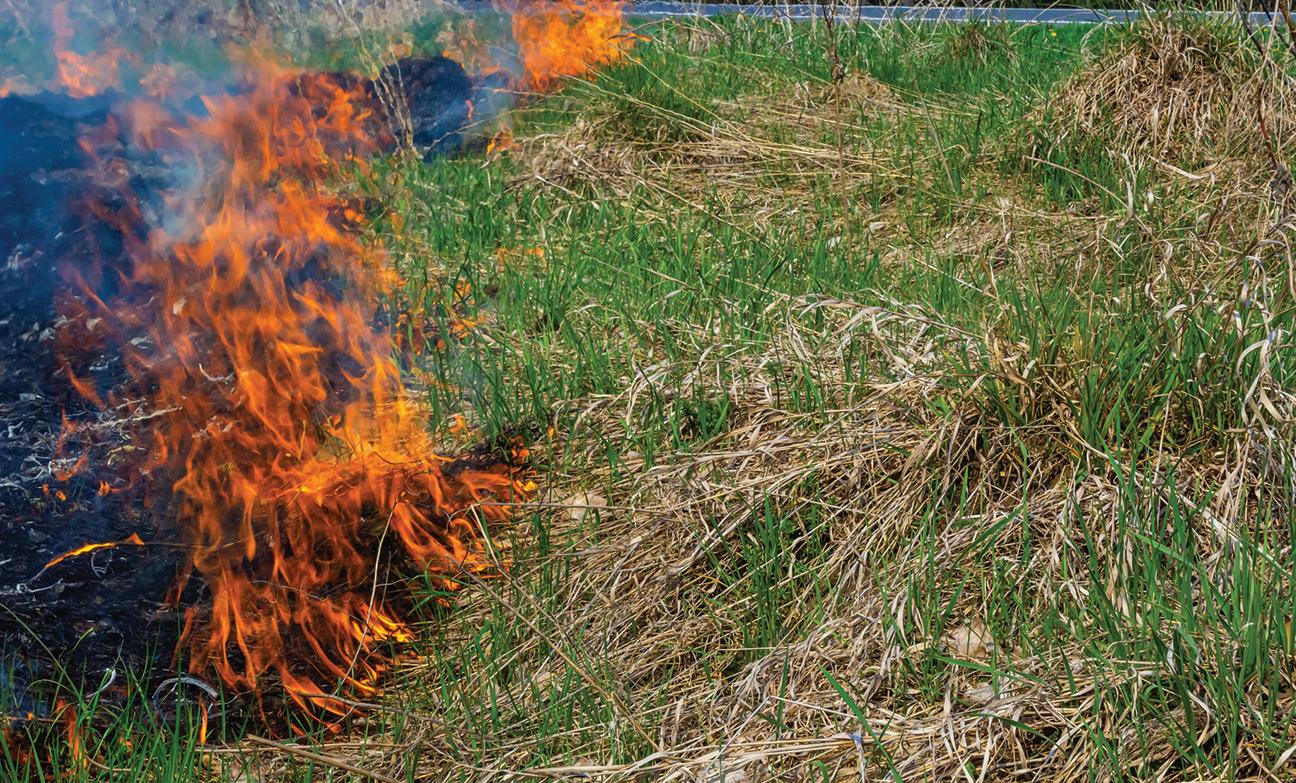
Did you know that 95% of wildfires are caused by human activity? Many of these fires start from everyday tasks like using equipment or burning debris. �e good news is that most of these incidents are preventable. By taking a few simple steps and staying aware of conditions, you can play a critical role in reducing wildfire risk and protecting your community.
Here are some of the most common ways wildfires start, and what you can do to prevent them.
EQUIPMENT USE
Improper use of equipment can easily ignite a wildfire. Whether it’s a lawn mower, chainsaw, weed-eater, grinder, tractor, trimmer, or another power tool, taking precautions is essential.
■ Time of Day and Conditions: Avoid using equipment during the hottest part of the day when conditions are driest. Mow before 10 a.m. and always avoid windy or dry conditions.
Remember that lawn mowers are for lawns, not for dry weeds or grass, as metal blades can spark fires when hitting rocks.
■ Maintain Equipment: Regularly check and repair your equipment to prevent sparks. In wildland areas, spark arresters are required on all portable gasoline-powered equipment. Keep the exhaust system, spark arresters, and mower in proper working order and free of carbon buildup.
■ Safe Equipment Use: Before conducting any grinding or welding operations in wildland areas, secure a permit and ensure you maintain a clear 10-foot radius. Keep a shovel and a fire extinguisher ready to use.
VEHICLES
Vehicles and trailers can inadvertently start fires, especially when chains are involved. Follow these guidelines to ensure your vehicle use does not contribute to the risk of wildfires.
■ Secure Chains: Practice safe towing. Use appropriate safety pins and hitch balls to secure chains and ensure they are not dragging, which can create sparks.
■ Remove Dragging Parts: Ensure your vehicle is properly maintained, with no parts dragging on the ground.
■ Tire and Brake Maintenance: Maintain proper tire pressure to prevent driving on exposed wheel rims that will throw sparks. Regularly check
and maintain your brakes.
• Avoid Dry Areas: Do not drive or park on dry grass or brush, as hot exhaust pipes and mu��lers can start fires. Regularly check the undercarriage for debris that could ignite.
CAMPFIRES
A campfire can quickly turn into a raging wildfire. Before setting up a campfire, always check local rules and restrictions, as some places prohibit campfires, especially when there’s a high risk of fires. Obtain a permit from CAL FIRE, United State Forest Service, or Bureau of Land Management if required. Follow these steps to ensure your campfire is safe.
■ Designated Areas: Only build campfires in approved fire rings or pits in designated recreation sites.
■ Clear Surroundings: Ensure there’s a 10-foot radius around the fire that is free of �lammable materials.
■ Safety Tools: Keep safety tools like a shovel and a water source within arm’s reach. Always keep the fire to a manageable size.
■ Never Leave Unattended: Always keep an eye on your campfire and ensure it is completely extinguished before leaving. Use the “drown, stir and feel” method to extinguish your campfire.
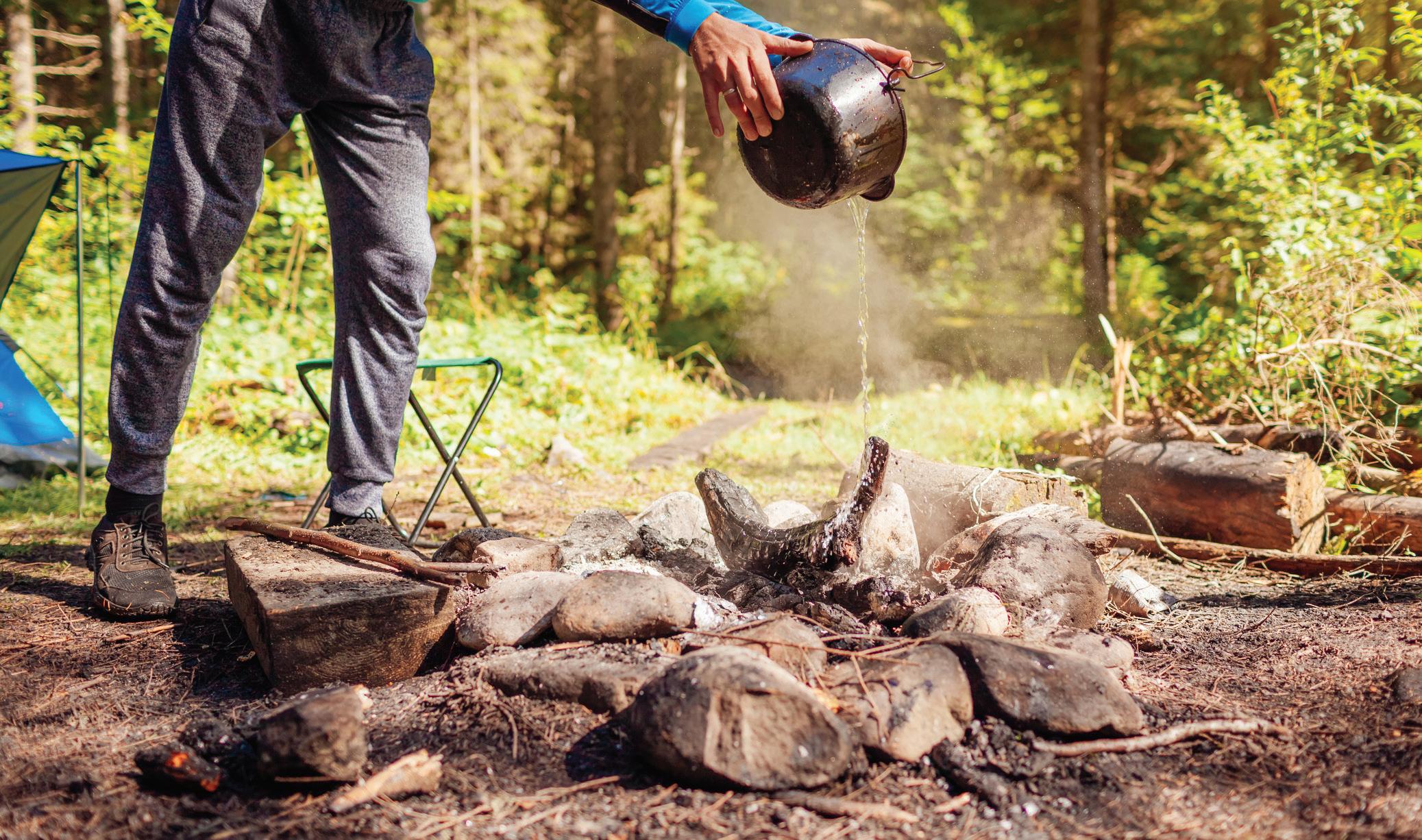
■ Drown: Drown the fire with water, then stir around the fire area with your shovel to wet any remaining embers and ash. Turn over any wood pieces and soak all sides thoroughly.
■ Stir: Add soil to the fire bed and mix thoroughly to smother any remaining heat.
■ Feel: Confirm the fire is out by feeling for heat with the back of your hand. �e area should be cool to the touch.
DEBRIS BURNING
Improper debris burning can quickly escalate into a wildfire. Before burning, always check if a permit is required and confirm there are no current burn restrictions in your area. You can verify whether it’s a permissive burn day by contacting your local air quality management district.
■ Permits and Regulations: Check local regulations and obtain any necessary permits before burning.
■ Weather Conditions: Never burn on windy, hot, or excessively dry days.
■ Piles: Keep burn piles small (no larger than 4 feet by 4 feet) and clear at least 10 feet around the pile down to bare soil to prevent spread.
■ Safety Tools: Always have a water source, shovel and hand tools nearby to control the fire.
■ Fully Extinguish: Drown the fire with water, stir the ashes and feel for heat to ensure it is completely out. If it’s too hot to touch, it’s too hot to leave.
By taking these simple steps, we can significantly reduce the number of human-caused wildfires. Each of us has a role to play in protecting our communities, so let’s do our part. For more information on wildfire preparedness visit ReadyforWildfire.org.
■ Never Leave It Unattended: An adult must always be present while the fire is burning and never leave it unattended.
KEEP YOUR HOME SAFE From reat of Wild re
Owned and operated by David Young and Dale Bourassa, Embershield has been locally owned since 2025, and is located on Main Street in Old Historic Placerville, CA. Born out of the aftermath of the devastating Caldor Fire of 2021, owner David Young was evacuated from his home in Pollock Pines and spent 3 weeks watching the carnage on his ring camera as embers fell into his front yard. His home did not ignite, thankfully, but the re came within 100 yards. When David returned and saw the devastation he knew he had to do something. With a desire to help the community, coupled with more than 2 years of research into the developing Home Hardening industry, he established EMBERSHIELD HOME HARDENING LLC. Dale and David met and collaborated on the idea for a comprehensive home hardening business. They formed a friendship and ultimately a business partnership that resulted in EmberShield Home Hardening.
With David’s extensive engineering background and Dale’s diverse experience as a General Contractor and entrepreneurial spirit, they bring professionalism and expertise to the home hardening business.
One of the rst of its kind, Embershield was able to partner with leading Class “A” rated product manufacturers such as Vulcan Vents, Firestorm Embermesh, and Timbertech class ‘A’ rated decks. Embershield is in the unique position to bring these amazing products directly to homeowners here in El Dorado County, Northern California and beyond. Their user-friendly and helpful retail website, “EmbershieldShop.com”, is nearing completion and will be up and running soon.
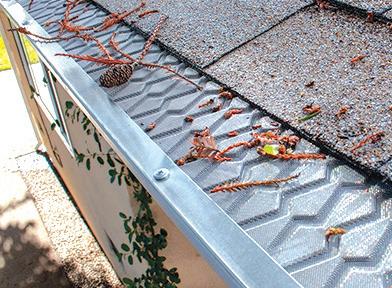

Embershield is a California General Contractor business focusing on exterior home hardening and designing true defensible space for residents of El Dorado County, especially those in rural areas where the danger is greatest. They specialize in safeguarding your home from the devastating impacts of wild res, and by offering datadriven, comprehensive layered solutions to reduce your re risk, they fortify your home with cutting-edge WUI and class “A” re-rated technology and proven strategies from roof to foundation, providing holistic home hardening solutions. They know that each property is different and unique, and offers personalized assessments and solutions for your individual needs. The owners are Certi ed Home Hardening and Defensible Space inspectors who stay up to date on all current building codes, rules and ordinances, and through this work Embershield Home Hardening can help you lower your home insurance and protect you and your loved ones (and their treasures) from the threat of wild re & embers.
EMBERSHIELD HOME HARDENING is also in the unique position of becoming one of the most in uential Home Hardening General Contractors in the entire industry. Recently they attended the 2026 WUI Fire Conference in Reno, Nevada as guests (WUI), and often speak at local El Dorado, Placer and Amador county Fire-Safe and HOA council meetings. Truly an ongoing educational process, but a labor of love for the owners. As they grow, Embershield wants to continue sharing their accumulated knowledge with residents and home owners and supports their community wherever and whenever possible.
They invite you to visit their showroom at 451 Main Street STE #3, in Downtown Historic Placerville, to see all Class A-rated products designed to protect your home and property. The only one of its kind! Call them at (530) 207-FIRE (3473).

◆ Expertise You Can Trust: Our team of experienced contractors are also certi ed Home Hardening Inspectors and use the latest re-resistant materials and technologies to protect your home.
◆ Comprehensive Protection: From roof to foundation, we provide holistic home hardening solutions.
◆ Tailored Solutions: Every home is di erent. We o er personalized assessments and solutions for your unique needs. Whether it be a new re-rated deck, vents, gutter guards or a protective paint or stain.
◆ Sustainability: We prioritize eco-friendly solutions that don’t compromise on safety.


County O ce of Education partners with multiple agencies to ensure school safety
El Dorado County O ce of Education
The El Dorado County O�fice of Education (EDCOE) is dedicated to building a leading education system, rooted in a foundational commitment to providing a safe and welcoming environment for all students.
As a county, it has developed strong collaborations between schools, law enforcement and school community partners to improve campus and community safety. �rough the development of strategic initiatives and innovative communication systems, the O�fice of Education is
continuously taking steps to provide safe and engaging teaching and learning environments for the students and sta�f.
Within El Dorado County, there are countywide programs (administered by EDCOE), 15 school districts, 67 schools and several charter schools. EDCOE partners with multiple agencies to ensure school safety. �ese include all 15 school districts, law enforcement agencies, CalOES, all local fire departments, Health and Human Services, County Behavioral Health, District Attorney’s O�fice, Child Protective Services, Tribal Health and Fire, and County Coordinated Emergency Response teams.
Foothill Mobile Veterinary Service
Foothill Mobile Veterinary Service is focused on the treatment of horses, as well as llamas, alpacas, sheep and goats.
A robust �reat Assessment process and Team have been evolving over the last three years to prevent targeted acts of school violence.
With guidance and technical assistance from law enforcement partners, public schools in El Dorado County have developed school safety plans that are regularly reviewed and updated. Plans include procedures for lockdowns, evacuations, threat assessments, wildland fires, earthquakes and more.
Each campus maintains plans tailored to its site and addresses critical needs at that campus. Safety plans include communication protocols for connecting with law enforcement and messaging to families. Plans are formally reviewed annually to ensure that current safety protocols are addressed.
made several facility enhancements in an e�fort to improve lockdown procedures. �is included extensive communication upgrades, including PA and notification systems (texting, email and Zoom phones), and the implementation of a Workplace Violence Plan with Human Resources. �e Sheri�f’s O�fice, along with the California Governor’s O�fice of Emergency Services (OES), has been instrumental in planning and coordinating meetings, trainings, community events and preparedness for schools, along with educating members of the community regarding safety.
• Preventive Medicine and Vaccinations
• Colic Treatment and Wound Care
• Equine Dentistry, (Performed by a Veterinarian) with Powered Instruments
• Lameness Examinations & Radiographs
• Reproductive Examinations & Ultrasound
• Pre-Purchase Examinations
• Consultation and on-site animal management advice
(NOTE: We do not treat dogs, cats, pigs, cattle, or exotics) Serving El Dorado County Since 1983
Foothill Mobile Veterinary Service 530-622-0174 • 3281 Luneman Rd., Placerville email: dturoff@fmvs.biz | foothillmobilevet.com Our Services Include:

Fire and lockdown drills are scheduled throughout the school year to ensure students and sta�f are familiar with what is expected of them in the event of an emergency. Additionally, for the past several years, law enforcement and other public agencies have held active shooter drills on school campuses.
Over the last two years, EDCOE has
EDCOE’s Facility and Maintenance Department has also worked extensively to improve fire safety by reducing fuel usage around facilities. �e department participates in the county’s Local Area Hazard Mitigation Plan to help identify risks to schools and align emergency preparedness and safety strategies with regional e�forts. �ey continue to work diligently on the County Drought Resilience Plan alongside multiple local jurisdictions to align key messaging and preparedness strategies. �is continued work is critical in ensuring every student, family and community member feels safe and welcomed at every school in El Dorado County.

Prepare for power outages before they happen
Pioneer Community Energy
As the power provider for California’s Sierra foothills, Pioneer Community Energy is ever-aware of the increasing exposure to extreme weather and natural disasters — including wildfires, winter storms and heat waves — all of which can lead to sudden and prolonged power outages.
In 2026, disaster preparedness is more important than ever. With longer fire seasons and rising demand on the grid, planning is essential for protecting your household, your health and your peace of mind.
BE PREPARED
Start by assembling an outage-ready emergency kit that include �lashlights, extra batteries, portable phone chargers, or battery banks, a battery-powered or hand-crank radio, bottled water, blankets and nonperishable food to last at least three to five days.
Don’t forget essential medications, pet supplies and hygiene items. Maintain a list of emergency information in case there is a need to evacuate and check with local leaders or community groups for available resources.
STAY CONNECTED AND INFORMED
Communication plans are key during
outages. Talk with family and neighbors about how to stay in touch. Identify a safe meeting place and check in regularly when it is safe to do so.
Sign up for local emergency alert systems and utility notifications to receive real-time updates on outages, fire conditions, and evacuation orders. In many areas, alerts can now be customized by location and severity, making them more useful than ever.
CONSIDER ADDITIONAL POWER OPTIONS
�ere are ways to keep the lights on even when the power goes out. For example, Pioneer’s GridGen is a solar + storage program that can keep the lights on during power interruptions.
Residents and businesses can install roo�top solar and industry-leading battery systems with no up-front cost and no credit underwriting, allowing anyone to use the power they generate the moment they need it.
While outages may sometimes be unavoidable, preparation can dramatically reduce their impact. Taking steps now — before an emergency — can help ensure safety, comfort and resilience when it matters most.
Learn more about Pioneer and the GridGen program at PioneerCommunityEnergy.org/GridGen.















































Paul Moreno
PG&E Gas and Electric Safety for Disaster Preparedness
PG&E Marketing and Communications
Pacific Gas and Electric Company urges customers to be prepared in case of disasters in case of wildfires, earthquakes, �loods or severe storms.
“PG&E o�fers several online tools and tips to keep you and your family safe in case of disaster,” said Joe Wilson, vice president of PG&E’s North Valley & Sierra Region. “We work closely with first responders on gas and electric safety so we can closely coordinate when disasters strike our communities. PG&E has a 24/7 Hazard Awareness and Warning Center that monitors disasters and potential disasters such as fires, avalanches, earthquakes and more so we can be prepared to respond.”
PG&E urges customers to ensure that PG&E has their up-to-date contact information so customers can receive alerts and get updates on power outages or gas situations. Visit pge.com or call 800-PGE-5000.
Downed Power Lines — If a power line goes down in your area, never touch it and stay away as it can still be live. Immediately call 911 and then call PG&E at 1-800-7435000. Do not touch anything or anyone who has been in contact with a downed power line. Avoid driving over a downed power line. Always assume downed power lines are live.
Protect Yourself from a Gas Leak — If there is a hissing or whistling sound coming from a gas appliance or underground, or if you smell sulfur or a rotten egg type of smell, alert everyone in the household and go to a safe location away from the immediate area. Call 911 for emergency assistance and then call PG&E at 1-800-743-5000.
Know where gas valves are and how to turn gas o�f. Keep a tool near the meter so you can turn it o�f quickly. Visit our gas safety page to learn more.
Important Note: If you do shut o�f your gas, you must call PG&E at 1-800-743-5000 to restore it.
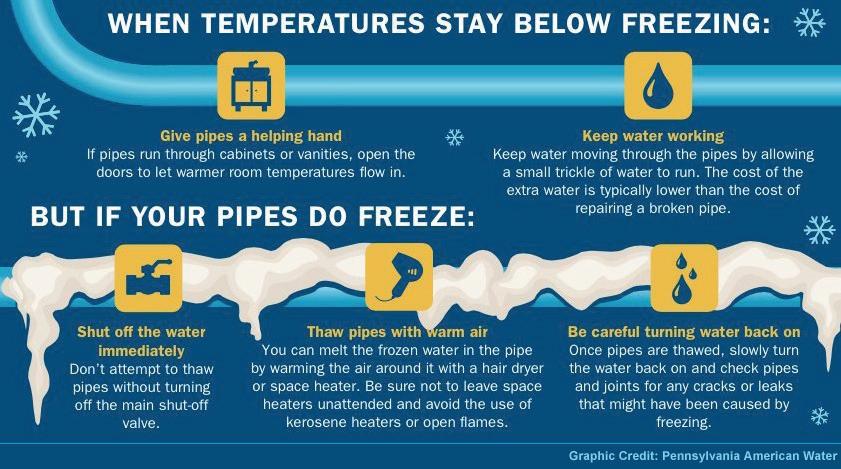
Power Outages — If you lose power, contact PG&E to report it and to receive updates on power restoration. Keep your refrigerator closed. Transfer blocks of ice or frozen two-litter soda bottles filled with water from your freezer to the fridge to keep food cool.

GENERATOR SAFETY —
PORTABLE GENERATOR SAFETY
■ Make sure you maintain your generator as outlined in the owner’s manual.
■ Be sure that the power needs of the device (electric load) are supported by your generator. Do not go above the specifications set by the manufacturer.
■ Place your generator where its exhaust can safely vent. �is prevents carbon monoxide poisoning and death. Do not place it indoors or in a garage.
■ To prevent overheating, use the right size extension cords for your generator. �e American Wire Gauge (AWG) chart (PDF) can be used to find which extension cord is right for you.
■ Never run cords under rugs or carpets. �is is because heat can be generated or damage to a cord may go unnoticed.
■ Have fuel on hand so the generator is ready to use when you need it. Do not store fuel inside the house.
PERMANENT GENERATOR SAFETY

■ �is type of generator is trickier to install. �is is because there is a direct connection to a home or business electric system. We suggest you use a professional installer.
■ A permanent generator should be placed on high ground, where �looding is not likely. Building code requirements must also be taken into account.
■ Make sure power from your generator does not �low or backfeed into PG&E powerlines.
■ Have any changes to your house wiring inspected by your city or county’s building department. Check with this department for any other requirements.
■ Once installation is complete, contact us to let us know about your backup system. We will then be aware of your generator when working on an outage in your area.
■ Do not store fuel inside the house.
For information on these and other tips, visit pge.com/ safety.
Being prepared is essential in the event of disaster
Marshall Medical
Since opening its doors in July of 1959, Marshall has provided exceptional healthcare to the community, regardless of the conditions that a�fect our daily lives. Whether facing raging wildfires, devastating snowstorms, or a global pandemic, the dedicated sta�f at Marshall always puts the well-being of its patients and the community first. �is unwavering commitment and resilience are what enables everyone to receive the highest quality care in times of exceptional need.
To ensure that the sta�f is prepared to weather any emergency, Marshall conducts regular drills and simulated training exercises. �e teams work with the El Dorado County Sheri�f’s O�fice, Fire Department, the Department of Public Health, O�fice of Emergency Services and others to create real-life situations with volunteers playing the parts of victims and patients. �ese full-scale, multi-agency exercises assess challenges such as how and where to shi�t patients, sta�f and supplies to ensure maximum e�ficiency. �rough it all, patient safety and well-being remain top priorities and as a result, Marshall is prepared for almost any emergency that may arise.
O�ten the Emergency Department (ED) is the first place impacted by a disaster. Rapid treatment of patients is an important step when facing an emergency of any kind. Patients and visitors should follow all directions when arriving at the ED in case of disaster, as changes in the treatment area may have been made to best serve you.
Marshall is a Level III Trauma Center as well as a Designated Emergency Preparedness facility and Base Hospital. �e ED sta�f and providers are well-versed in quickly treating and discharging patients who are not critical and rapidly admitting or transferring more serious patients to make room for a sudden in�lux of emergeny patients. Marshall is stocked with mobile exam rooms and other supplies to set up in parking lots should this in�lux be more than the current 111-bed capacity.
Marshall maintains a supply of materials necessary to care for the community in nearly any disaster, but how can you prepare at home?
WHAT TO STOCK IN YOUR MEDICINE CABINET
Talk to your doctor or pharmacist about creating an emergency supply of essential prescription medication. Keep a list of all your prescriptions, dosage and frequency. Be prepared with a cooler and chemical ice packs for storing medication if necessary.

Be sure to have essential over-the-counter items as well, including:
■ Cough drops and cough syrup
■ Cold/�lu medicine
■ Ibuprofen
■ Antihistamines
■ Decongestants
■ Anti-diarrheal medicine
■ �ermometer
■ Face masks
■ Hand sanitizer
■ Sanitizing wipes
■ Latex or nitrile gloves
■ Pulse oximeter (optional)
■ Fine-tipped tweezers
Check the expiration dates of these items regularly to ensure they are still in good condition in case of emergency.
POWER OUTAGES
During wildfire and snow seasons, be prepared for power outages which may last days at a time. In addition to stocking ice for your cooler and batteries for your �lashlights, make sure your medical supplies are also stocked and ready.
Make sure you have several days of medication on hand. If they need to be refrigerated, have a cooler and ice at the ready, or a generator powerful enough to power your refrigerator.
If you are on oxygen, it is important that you have several batteries on hand or a generator su�ficient to power your tank.
If you use a BiPAP or CPAP machine, charge the batteries to a full charge, especially if the possibility of a Public Safety Power Shuto�f (PSPS) is declared. Have a portable charger on-hand should your battery not last the full length of the outage.
SEEING YOUR DOCTOR DURING A DISASTER
During a disaster or emergency like a PSPS, you may still be able to see your doctor.
Check Marshall’s website marshallmedical.org for updates on closures.
Your existing appointments may be rescheduled or relocated to another clinic or location. Alternatively, you may be o�fered a video or telephone visit from your home.
Marshall is prepared for, and anticipates, emergency situations. �e health and well-being of the residents of the Western Slope of El Dorado County is a top priority and one we take very seriously.
Creating Fire-Resilient Landscapes
Kit Veerkamp
UC Master Gardeners of El Dorado County
California, like much of the West has evolved ecosystems with characteristics that are reliant on fire for ecosystem health, but create serious fire hazards for people who live in the urban wildland interface between areas of higher density housing and more natural areas. Sparks from a downed power line, a lawn mower, a catalytic converter, a carelessly tossed cigarette or match, a fire cracker, stray ammunition, or an untended campfire are all it takes to ignite a fire that can erupt into a con�lagration that cannot be easily slowed or stopped.
Depending on rainfall, by late spring to mid-summer, soil moisture is depleted, and the growing season essentially over. Native plants respond by entering a state of summer dormancy, o�ten dropping most or all of their foliage in early to mid-summer. As the moisture level in plant tissue is depleted with increasing summer heat and lack of rain, vegetation becomes tinder dry. In autumn, conditions of relative humidity as low as 10 percent combined with hot, dry winds further desiccate the landscape and create exceptionally dangerous conditions.
�e adaptations of native and introduced plant species to summer drought contribute to their �lammability. Many plants, such as conifers, chamise, Adenostoma fasciculatum; manzanita, Arctostaphylos spp.; coyote brush, Baccharis pilularis; sage, Salvia spp.; and some ceanothus, contain volatile oils and resins that make them more likely to burn than broader leafed plants, especially when moisture content is low. �e spread of �lammable, invasive, exotic trees and shrubs such as broom, pampas grass, acacia, eucalyptus, etc., create a fire-ladder e�fect that can allow a fire to rise into the tree canopy.
Fuel is anything �lammable that will contribute to the spread of a fire, especially dead or dry vegetation, highly �lammable plants, plant litter, firewood, miscellaneous scrap wood or stored lumber, and wooden structures such as fences, decks and arbors. For the purpose of this discussion, structures are excluded, although their design and placement are key factors in fire safety.
Fuel should be reduced within a zone ranging 30 to 50 feet from a home or other structure.
Fuel reduction should be increased to 100 feet or more on steep slopes and in dense vegetation.

Zero to five defensible space is desirable.
Within these zones, reduce fuel by:
■ Removing dead and dry brush
■ Removing excessive accumulations of dry leaf litter and du�f
■ �inning out trees so that there are 10 to 20 feet between the canopies of single trees or groups of trees
■ �inning existing shrubs, or planting new shrubs in widely separated islands
■ Raising the limbs of trees to at least eight feed above ground, and 10 feet over roofs, to reduce the fire ladder e�fect
■ Removing invasive, exotic plants that are highly �lammable, such as Scotch broom, Cytisus scoparius; pampas grass, Cortaderia selloana; cotoneaster, cypress and junipers
Following its enactment on July 1, 2021, California Assembly Bill 38 required all homes in high or Very High Fire Hazard Severity Zones (FHSZ) to be compliant with Defensible Space standards. Find your Fire Hazard Severity Zone at osfm.fire.ca.gov/what-we-do/ community-wildfire-preparedness-and-mitigation/
fire-hazard-severity-zones.
�e new State Defensible Space standards went into e�fect in 2023, creating zones around our homes. �e Immediate or Ember Resistant Zone (Zone 0) is the first five feet immediately adjacent to all structures, including attached amenities such as decks, attached patio covers and trellises. Within this zone, there should be no combustible materials, including organic mulches, to reduce the likelihood of burning plant material igniting the adjacent structure.
�e Intermediate Zone (Zone 1), also known as the lean, clean and green zone, is that area between the first five feet (Zone 0) to 30 feet beyond structures or to the property line. �e Extended Zone (Zone 2) is an area beyond 30 feet to at least 100 feet from the structures. In this zone, manage natural vegetation to keep it open with about 50% coverage and encourage native trees, and remove any exotic, invasives such as broom.
FUNCTIONAL FIREBREAK
Many homeowners mistakenly believe that defensible space requires extensive clearing of trees and shrubs,
Courtesy art by Cal Fire
essentially creating a moonscape. �e results are unattractive, and encourage invasive, fire prone plants. Broad paved or graveled paths not only provide access through a yard, but function as a firebreak as well. A continuous ribbon of four-footwide walkways around a home provides a safe place for firefighters to defend your home from a threatening wildfire. For sloped sites, utilize non-�lammable materials such as masonry, concrete, boulders, or rammed earth to create terraces helping to keep garden beds manageable while making the overall garden more accessible and aesthetically pleasing.
Defensible Space Zones do not preclude planting or maintaining trees and shrubs, but there is no such thing as fire-proof plants. Any plant will burn if hot enough.
What makes some plants more fireresistant than others is determined by several factors. Plant structure, size, foliage type, and density are key characteristics to consider. Overgrown plants and those in poor health are going to be less resilient. Bottom line, we all need to give more consideration to the principle of “right plant, right place.” Plant tissue moisture and soil moisture levels in�luence a plant’s �lammability potential. Even the most fire-resistant plants, such as succulents, may burn if moisture is depleted by an extremely hot fire. Even though we frequently face serious drought conditions, it is critical to occasionally
irrigate any landscaping within 30 feet of structures to maintain adequate moisture levels in the plants in that area. In terms of density of plant material, it aims for no more than approximately 50% total coverage for a mature landscape. �is number has been proven to be an optimal density to slow down fires but also support wildlife.
KEEP FIRE IN MIND
As we well know, fire cannot be ignored as a force of nature in the Sierra Nevada. �is force must be taken into consideration by all who plan, design, build and live in this environment to reduce the risk to the community at large. Doing nothing is not an option as the consequences of not doing so are made painfully clear each year.
MORE INFO
For more information about the UC Master Gardener classes, events and garden resources, visit the website: mgeldorado.ucanr.edu/.
Also available on the website are the hours and activity information for the Sherwood Demonstration Garden: ucanr. edu/sites/EDC_Master_Gardeners/ Demonstration_Garden/.
Have a gardening question? Use the “Ask a Master Gardener” option on the website or call (530) 621-5512.







Photo from Pixabay
Defensible space can save a home from fire.
Evacuation Preparedness
FOR PETS
Every member of your family should know what he or she needs to take when you evacuate. You also need to prepare supplies for your pet. Stock up on nonperishables well ahead of time, add perishable items at the last minute and have everything ready to go at a moment’s notice. Keep everything accessible, stored in sturdy containers (du�fel bags, covered trash containers, etc.) that can be carried easily.
IN YOUR DISASTER KIT,
YOU SHOULD INCLUDE:
■ Medications and medical records stored in a waterproof container and a first aid kit. A pet first aid book also is good to include.
■ Sturdy leashes, harnesses and carriers to transport pets safely and to ensure that your pets can’t escape. Carriers should be large enough for the animal to stand comfortably, turn around, and lie down. Your pet may have to stay in the carrier for hours at a time while you have taken shelter away from home.
■ Current photos and descriptions of your pets to help others identify them in case you and your pets become separated and to prove that they are yours.
■ Food and water for at least three days for each pet, bowls, cat litter and litter box and a manual can opener.

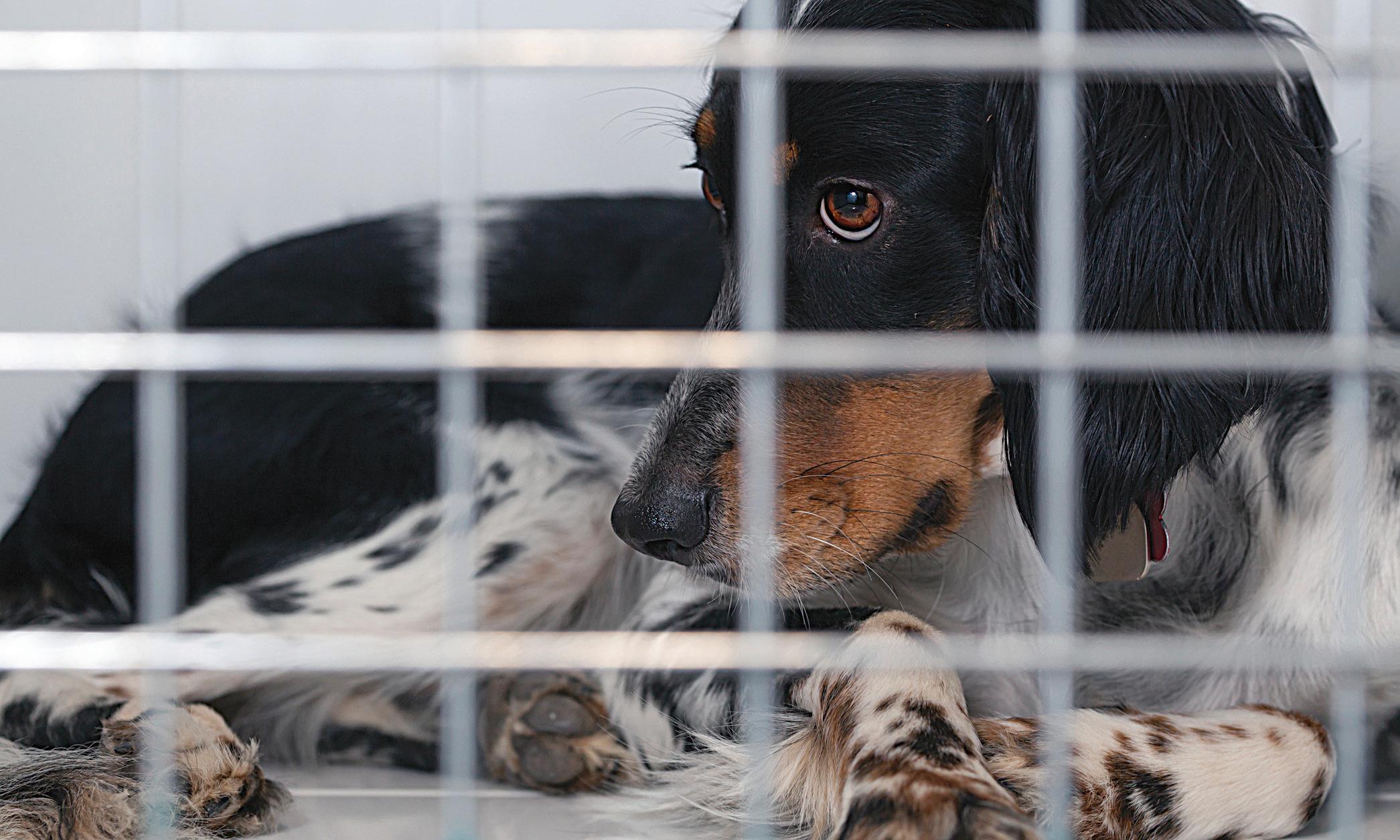
■ Pet beds and toys, if you can easily take them, to reduce stress.
AS THE DISASTER APPROACHES
■ Don’t wait until the last minute to get ready. Warnings of disasters may be issued hours, or even days, in advance.
■ Call to confirm emergency shelter arrangements for you and your pets.
■ Bring pets into the house and confine them so you can leave with them quickly if necessary. Make sure each pet and pet carrier has up-to-date identification and contact information. Include information about your temporary shelter location.
■ Make sure your disaster supplies are ready to go, including your pet disaster kit.
IN CASE YOU’RE NOT HOME
■ An evacuation order may come or a disaster may strike, when you’re at work or out of the house.
■ Make arrangements well in advance for a trusted neighbor to take your pets and meet you at a specified location. Be sure that the person is comfortable with your pets, knows where your animals are likely to be,
knows where your disaster supplies are kept and has a key to your home.
■ If you use a pet-sitting service, it may be able to help, but discuss the possibility well in advance.
IF YOU EVACUATE, TAKE YOUR PETS
�e single most important thing you can do to protect your pets if you evacuate is to take them with you. If it’s not safe for you to stay in the disaster area, it’s not safe for your pets. Animals le�t behind in a disaster can easily be injured, lost or killed.
Animals le�t inside your home can escape through storm-damaged areas, such as broken windows. Animals turned loose to fend for themselves are likely to become victims of exposure, starvation, predators, contaminated food or water, or accidents. Leaving dogs tied or chained outside in a disaster is a death sentence.
■ If you leave, even if you think you may be gone only for a few hours, take your animals. Once you leave your home, you have no way of knowing how long you’ll be kept out of the area and you may not be able to go back for your pets.
■ Leave early — don’t wait for a mandatory evacuation order. An unnecessary trip is far better than waiting
too long to leave safely with your pets. If you wait to be evacuated by emergency o�ficials, you may be told to leave your pets behind.
DON’T FORGET ID
Your pets should be wearing up-to-date identification at all times. It’s a good idea to include the phone number of a friend or relative outside your immediate area. If your pet is lost you want to provide a number on the tag that will be answered even if you’re out of your home.
FIND A SAFE PLACE AHEAD OF TIME
Because evacuation shelters generally don’t accept pets, except for service animals, you must plan ahead to ensure that your family and pets will have a safe place to stay. Don’t wait until disaster strikes to do your research.
■ Contact hotels and motels outside your immediate area to check policies on accepting pets. Ask about any restrictions on number, size and species. Ask if “no pet” policies would be waived in an emergency. Make a list of pet-friendly places and keep it handy. Call ahead for a reservation as soon as you think you might have to leave your home.
■ Check with friends, relatives or others outside your immediate area. Ask if they would be able to shelter you and your animals or just your animals, if necessary. If you have more than one pet, you may have to be prepared to house them separately.
■ Make a list of boarding facilities and veterinary o�fices that might be able to shelter animals in emergencies; include 24-hour telephone numbers.
■ Ask your local animal shelter if it provides foster care or shelter for pets in an emergency. �is should be your last resort, as shelters have limited resources and are likely to be stretched to their limits during an emergency.


FOR HORSES
During an emergency, the time you have to evacuate your horses will be limited. With an e�fective emergency plan, you may have enough time to move your horses to safety. If you are unprepared or wait until the last minute to evacuate, you could be told by emergency management o�ficials that you must leave your horses behind. Once you leave your property, you have no way of knowing how long you will be kept out of the area. If le�t behind your horses could be unattended for days without care, food or water. To help you avoid this situation, we have prepared information and suggestions to help you plan for emergencies.
HORSE EVACUATION TIPS
■ Make arrangements in advance to have your horse trailered in case of an emergency. If you do not have your own trailer or do not have enough trailer space for all of your horses, be sure you have several people on standby to help evacuate your horses.
■ Know where you can take your horses in an emergency evacuation. Make arrangements with a friend
or another horse owner to stable your horses if needed.
■ Place your horses’ Coggins tests, veterinary papers, identification photographs and vital information — such as medical history, allergies and emergency telephone numbers (veterinarian, family members, etc.) — in a watertight envelope. Store the envelope with your other important papers in a safe place that can be quickly reached.
■ Keep halters ready for your horses. Each halter should include the following information: the horse’s name, your name, your telephone number and another emergency telephone number where someone can be reached.
■ Prepare a basic first aid kit that is portable and easily accessible.
■ Be sure to have on hand a supply of water, hay, feed and medications for several days for each horse you are evacuating.
■ �ere may be times when taking your horses with you is impossible during an emergency. So you must consider di�ferent types of disasters and whether your horses would be better o�f in a barn or loose in a field.
Evacuation Preparedness
FOR LIVESTOCK
Disaster preparedness is important for all animals, but it is particularly important for livestock because of the animals’ size and the requirements needed to shelter or transport them. It is imperative that you be prepared to protect your livestock, whether by evacuating or by sheltering in place.
�e leading causes of death of large animals in high wind events are collapsed barns, dehydration, electrocution and accidents resulting from fencing failure. If you own farm animals, you should take precautions to protect them from these hazards, no matter what the disaster potential for your area.
■ Evacuate animals as soon as possible. Be ready to leave once the evacuation is ordered. Remember: Even a fire truck fully loaded with water is considered “out of service” in winds exceeding 40 mph. If there are already high winds, it may not be possible to evacuate safely.
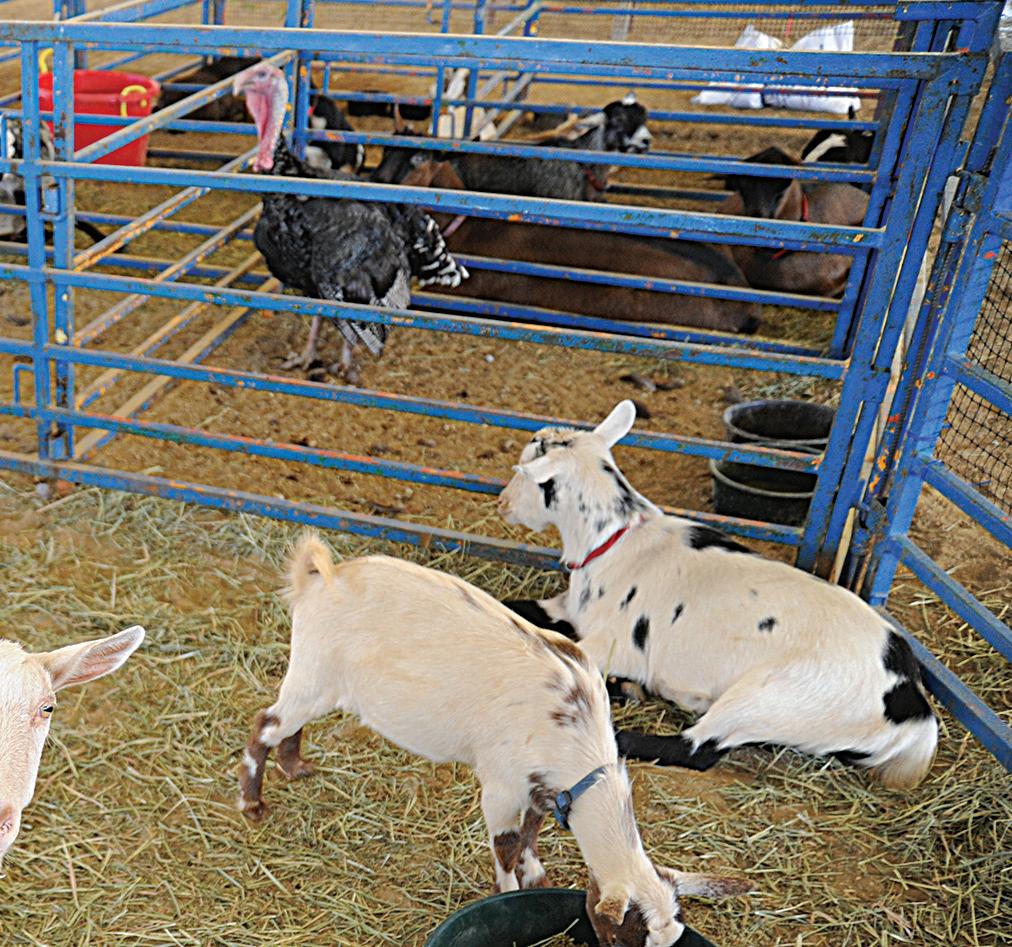
■ Arrange for a place to shelter your animals. Plan ahead and work within your community to establish safe shelters for farm animals. Potential facilities include fairgrounds, other farms, racetracks, humane societies, convention centers and any other safe and appropriate facilities you can find. Survey your community and potential host communities along your planned evacuation route.
■ Contact your local emergency management authority and become familiar with at least two possible evacuation routes well in advance.
■ Set up safe transportation. Trucks, trailers and other vehicles suitable for transporting livestock (appropriate for transporting each specific type of animal) should be available, along with experienced handlers and drivers.
■ Take all your disaster supplies with you or make sure they will be available at your evacuation site. You should have or be able to readily obtain feed, water, veterinary supplies, handling equipment, tools and generators if necessary.
■ If your animals are sheltered o�f your property, make sure that they remain in the groupings they are used to. Also, be sure they are securely contained and sheltered from the elements if necessary, whether in cages, fenced-in areas or buildings.

SHELTERING IN PLACE
If evacuation is not possible, a decision must be made whether to confine large animals to an available shelter on your farm or leave them out in pastures. Owners may believe that their animals are safer inside barns, but in many circumstances, confinement takes away the animals’ ability to protect themselves. �is decision should be based on the type of disaster and the soundness and location of the sheltering building.
Survey your property for the best location for animal sheltering. If your pasture area meets the following

criteria, your large animals may be better o�f out in the pasture than being evacuated:
■ No exotic (nonnative) trees, which uproot easily
■ No overhead power lines or poles
■ No debris or sources of blowing debris
■ No barbed-wire fencing (woven-wire fencing is best)
■ Not less than one acre in size (if less than an acre, your livestock may not be able to avoid blowing debris).
If your pasture area does not meet these criteria, you should evacuate. Whether you evacuate or shelter in place, make sure that you have adequate and safe fencing or pens to separate and group animals appropriately.
Work with your state department of agriculture and county extension service. If your animals cannot be evacuated, these agencies may be able to provide on-farm oversight. Contact them well in advance to learn their capabilities and the most e�fective communication procedure.










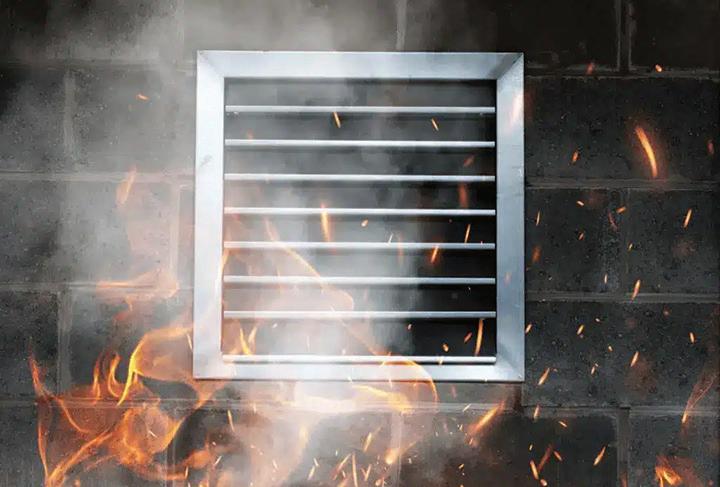



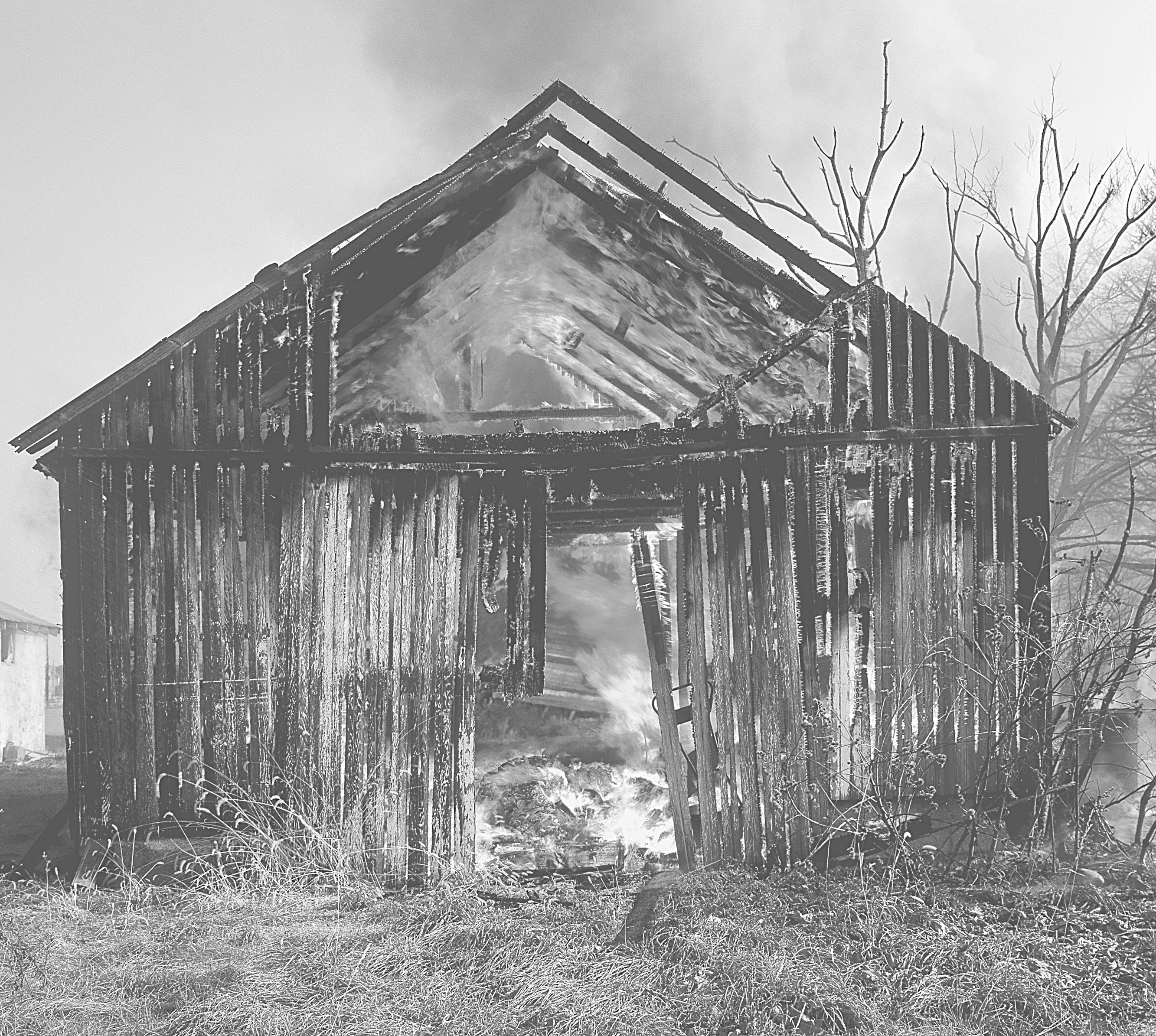
THE LEADING DISASTER FOR HORSES AND LIVESTOCK OWNERS Barn Fires
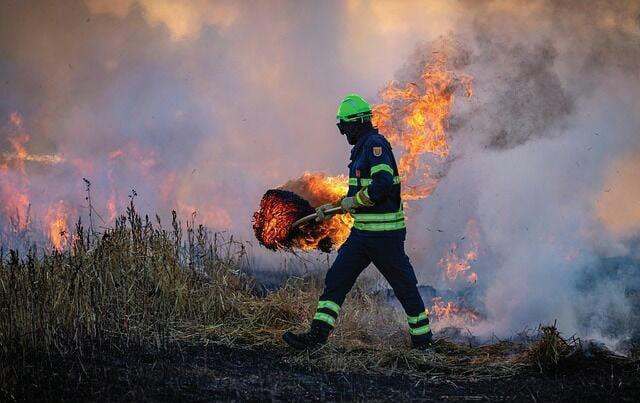
Preventing barn fires and being prepared in the event of a fire can mean the di�ference between life and death for your horses and livestock. Knowledge of the danger of fires and how to deal with them are of the greatest importance and should be an ongoing concern to horse and livestock owners.
FIRE PREVENTION IS KEY
■ Prohibit smoking in or around the barn. A discarded cigarette can ignite dry bedding or hay in seconds.
■ Avoid parking tractors and vehicles in or near the barn. Engine heat and backfires can spark a �lame. Also store other machinery and �lammable materials outside of the barn.
■ Inspect electrical systems regularly and immediately correct any problems. Rodents can chew on electrical wiring and cause damage that quickly becomes a fire hazard.
■ Keep appliances to a minimum in the barn. Use stall fans, space heaters and radios only when someone is in the barn.
■ Be sure hay is dry before storing it. Hay that is too moist may spontaneously combust.
BE PREPARED FOR A BARN FIRE
■ Keep aisles, stall doors and barn doors free of debris and equipment.
■ Mount fire extinguishers around the stable, especially at all entrances.
■ Have a planned evacuation route for every stall in the barn. Familiarize your family and any employees with evacuation plans.
■ Post emergency telephone numbers at each telephone and at each entrance. Emergency telephone numbers should include those of the veterinarian, emergency response personnel and any qualified handlers. Also keep your barn’s street address clearly posted to relay to the 911 operator or your community’s emergency services.
■ Be sure your address and the entrance to your property are clearly visible from the main road.
■ Consider installing smoke alarms and heat detectors throughout the barn. New heat sensors can detect
rapidly changing temperatures in your barn. �e heat sensors should be hooked up to sirens that will quickly alert you and your neighbors to a possible barn fire.
■ Familiarize your animals with emergency procedures and common activities they would encounter during a disaster. Try to desensitize them to �lashlights and �lashing lights.
IN THE EVENT OF A BARN FIRE
■ Immediately call 911 or your local emergency services. Keep that number clearly posted.
■ Do not enter the barn if it is already engulfed in �lames.
■ If it is safe for you to enter the barn, evacuate animals one at a time starting with the most accessible ones.
■ Move animals quickly to a fenced area far enough from the fire and smoke. Never let animals loose in an area where they are able to return to the barn.
■ A�ter the fire, be sure to have all your animals checked by a veterinarian. Smoke inhalation can cause serious lung damage and respiratory complications. Horses are prone to stress and may colic a�ter a fire.
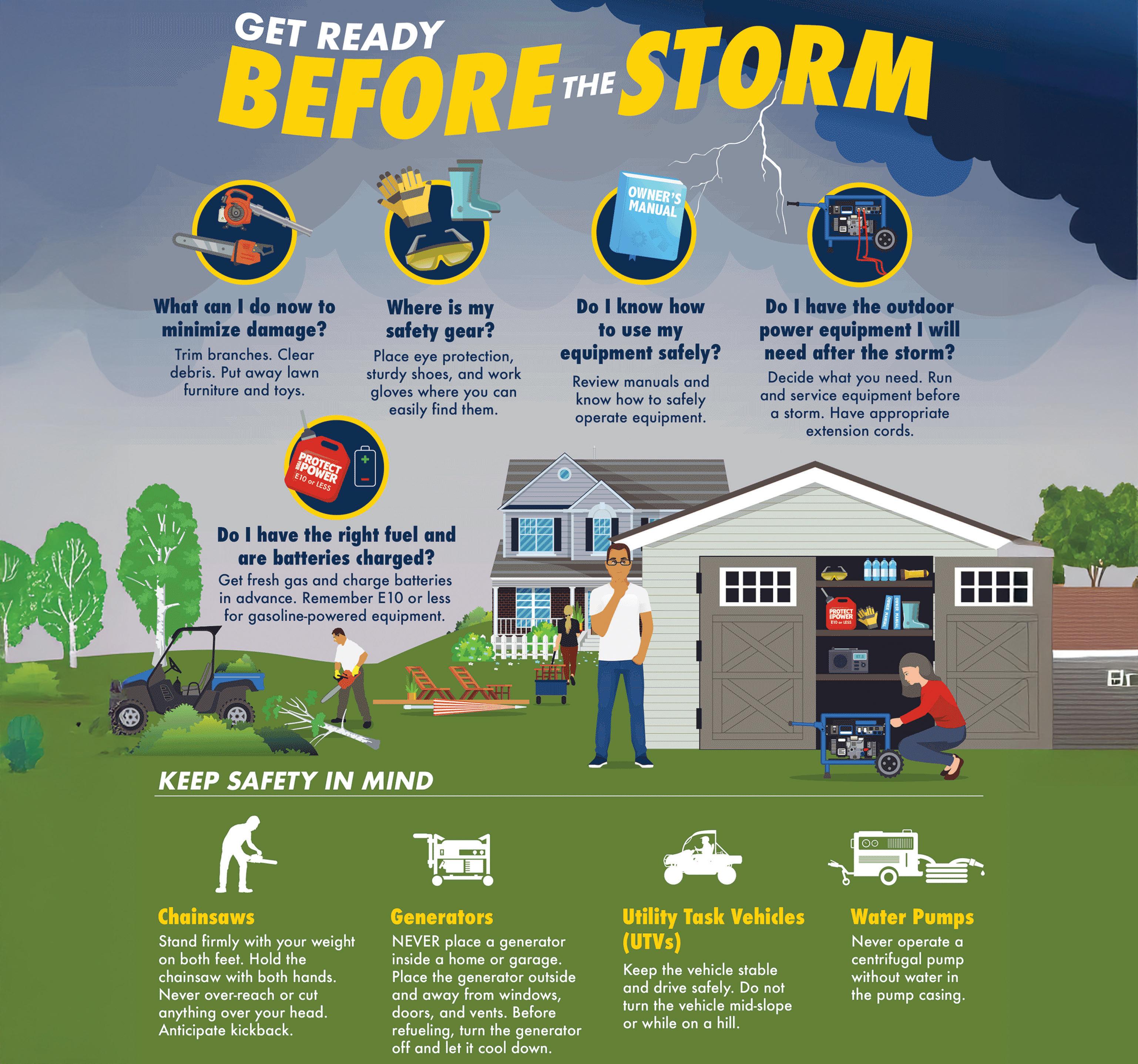
OUTDOOR POWER EQUIPMENT HELPS WEATHER A Storm or Power Outage
BE PREPARED AND KEEP SAFETY IN MIND
Having the right outdoor power equipment on hand year-round is important, says the Outdoor Power Equipment Institute (OPEI), which advises home and business owners to think ahead before foul weather or a power outage disrupts life.
“It’s important to be prepared year-round given any season can be storm season. We see more people investing in portable and whole house generators and having other outdoor power equipment on hand such as chainsaws and water pumps to mitigate any damage from felled trees and water damage and �loods,” said Kris Kiser, President and CEO of OPEI, an international trade association representing manufacturers and suppliers of outdoor power equipment, small engines, battery power systems, portable generators, utility and personal transport vehicles and golf cars.
He notes that outdoor power equipment is becoming faster, lighter, more e�ficient and more technologicallyadvanced. “�ere’s a power source for every need including battery/electric, propane, solar and gasoline,” he said, noting each has di�ferent maintenance and care requirements. “Always read and follow the manufacturer’s manual.”
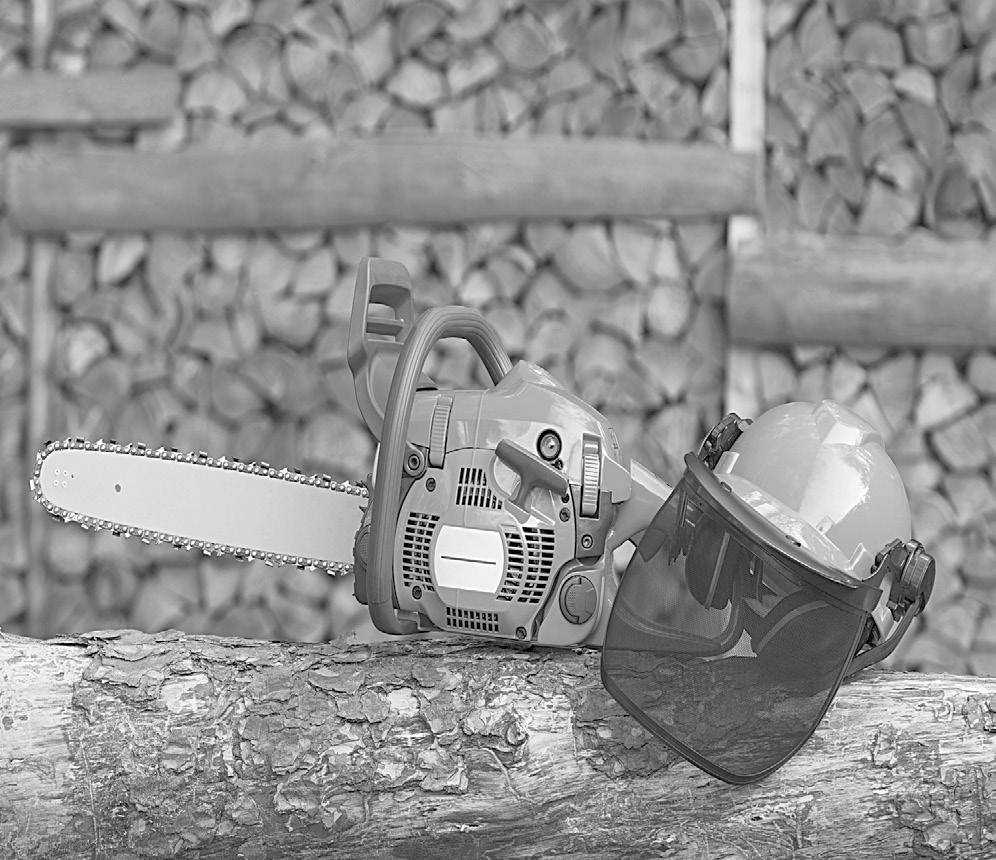
To get ready for inclement weather, homeowners should identify which equipment is needed. Chainsaws or pole saws can trim limbs and shrubs ahead of a storm and handle clearing. String trimmers, pruners and chainsaws can also remove combustible material from around your home, making it less vulnerable to wildfires.
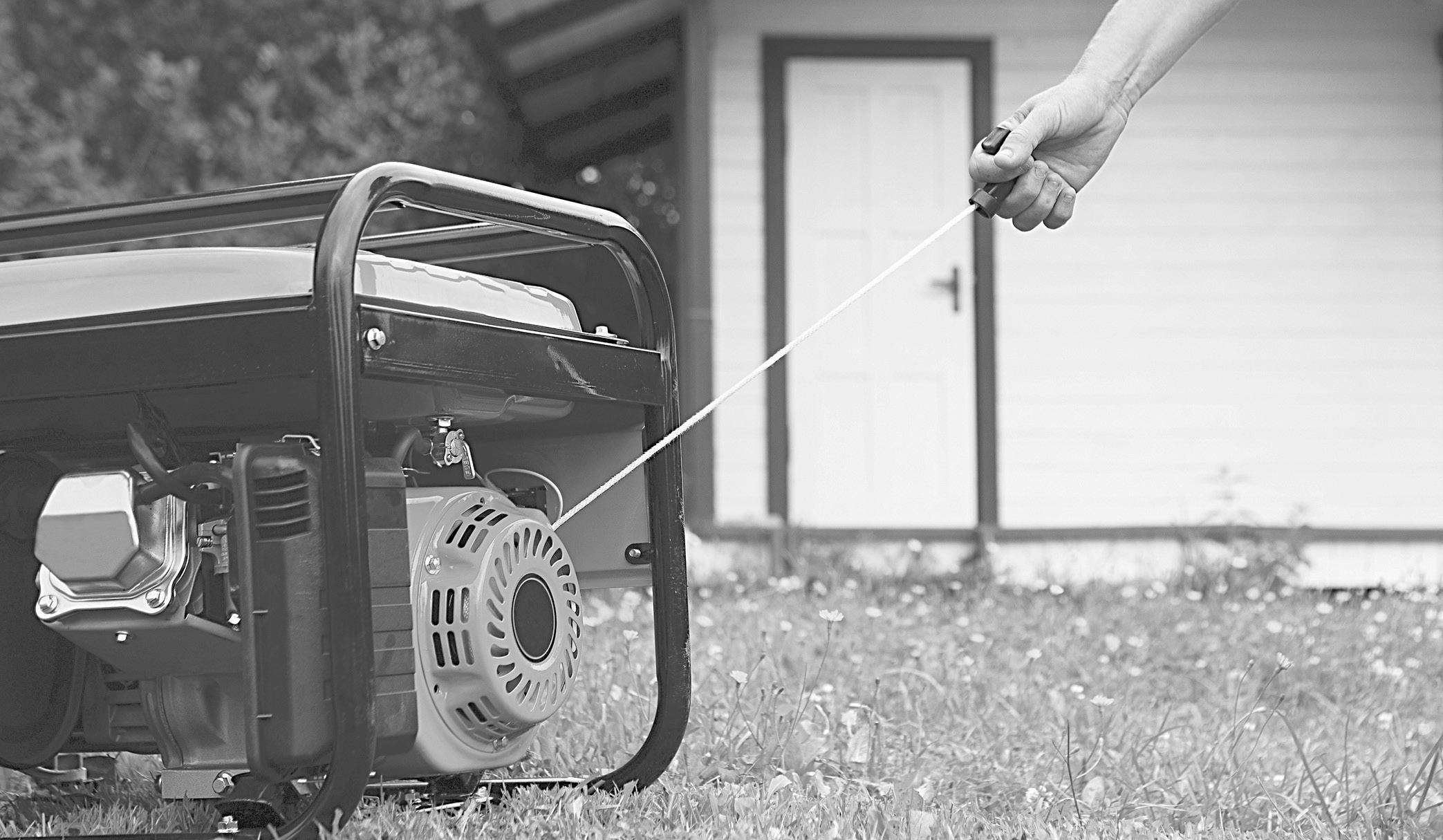
A portable generator will power key appliances and charge cell phones when utilities go down. Before an outage, plan where the generator will be set up (never in a home or garage, and always away from your home and any air intake) and determine how to secure it if needed. Buy and install a carbon monoxide detector, too. Get outdoorrated extension cords for portable generators and consider adding an approved cover to your generator for rainy weather. A whole house generator can keep the lights and appliances on and running.
Water pumps can help get water and muck out of basements and homes. Be sure you know how to operate the pump. Never pump substances that your equipment is not designed to cope with. Pay attention to avoid overheating and follow all safety precautions.
A utility type vehicle can transport people and supplies quickly in an emergency. Keep the vehicle stable and drive slowly. Do not turn mid-slope or while on a hill. Consider taking a safety course.
Always read the directions provided by outdoor power equipment manufacturers and be sure to follow all manu-
facturer’s safety and usage recommendations before you need it — not waiting until an emergency. Practice how to operate equipment. Save a digital copy of the owner’s manual on your computer if possible, so it can easily be consulted in the future.
Make sure to have the right fuel on hand and charge batteries ahead of an outage. Gasoline-powered equipment uses E10 or less fuel and most manufacturers recommend adding a fuel stabilizer. Fuel that is more than 30 days old may phase separate and cause running problems, so it’s important to purchase fuel just ahead of a storm. Store fuel safely and only use an approved fuel container.
One of the most important things operators can do for safety is to pay attention to energy levels and health. Preparation for bad weather, a power outage and storm cleanup can be taxing on the body and the spirit. Do not operate power equipment when tired or overly fatigued. Drink plenty of water and take regular breaks. Always use safety equipment like chaps, gloves, eye protection or hearing protection.
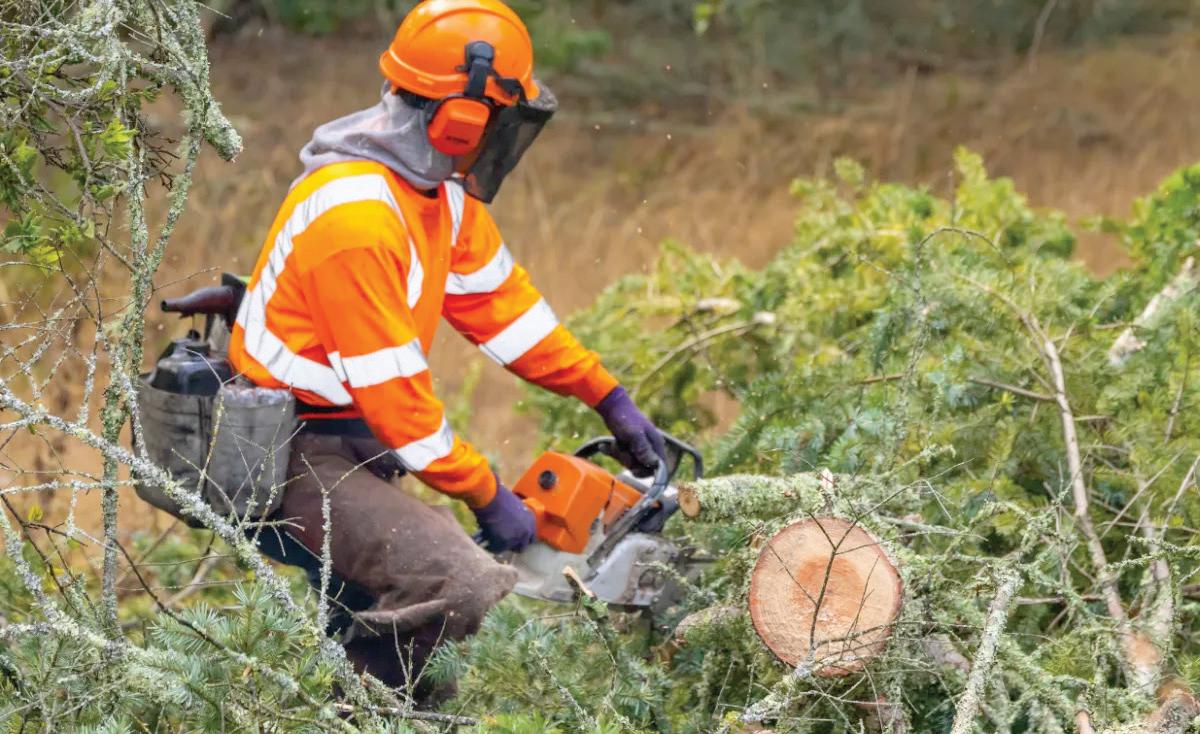
Protect Your Property & Enhance Its Value!
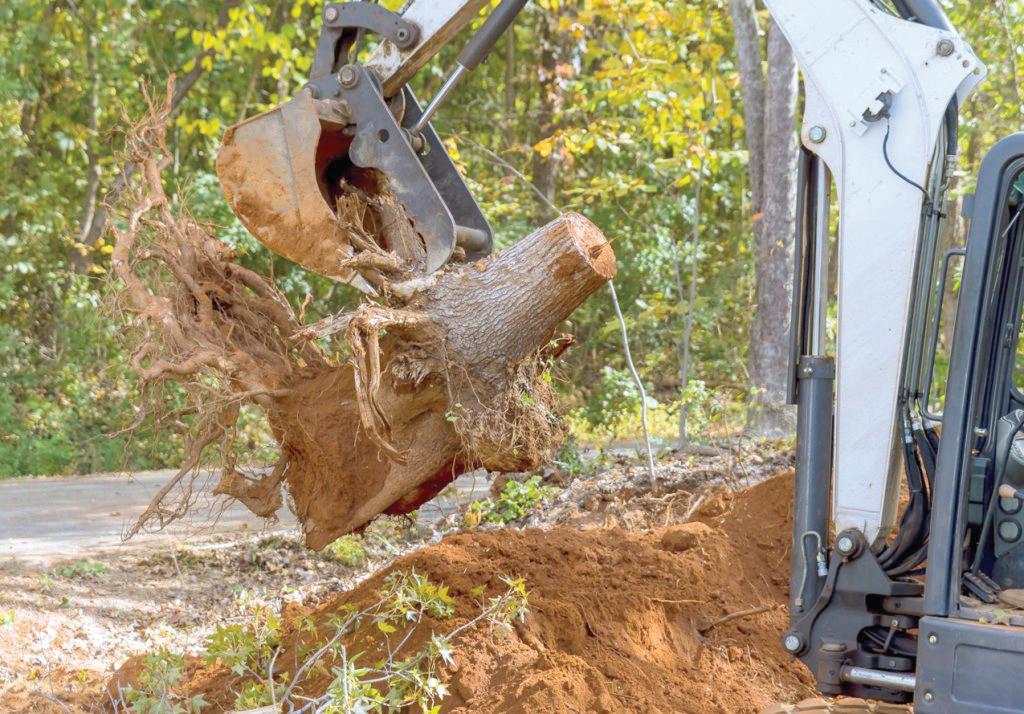
Proper tree care, vegetation control, and land clearing safeguard your home from hazards, reduce wild re risk, improve accessibility, and enhance curb appeal. Whether you need a onetime removal or ongoing maintenance, we deliver solutions tailored to your goals.
Why Homeowners Choose Ads Tree Service
We believe in fair pricing, honest communication, and high-quality workmanship. Every project is handled with care for your land, respect for your property, and full attention to safety and compliance. Our equipment, training, and local experience allow us to complete jobs e ciently and correctly — the rst time.
Request Your Free Tree Service Estimate Today
Ads Tree Service is ready to help you protect, maintain, and enhance your property with expert service and dependable results. Contact us today to schedule your free quote.






WHAT IS DEFENSIBLE SPACE?
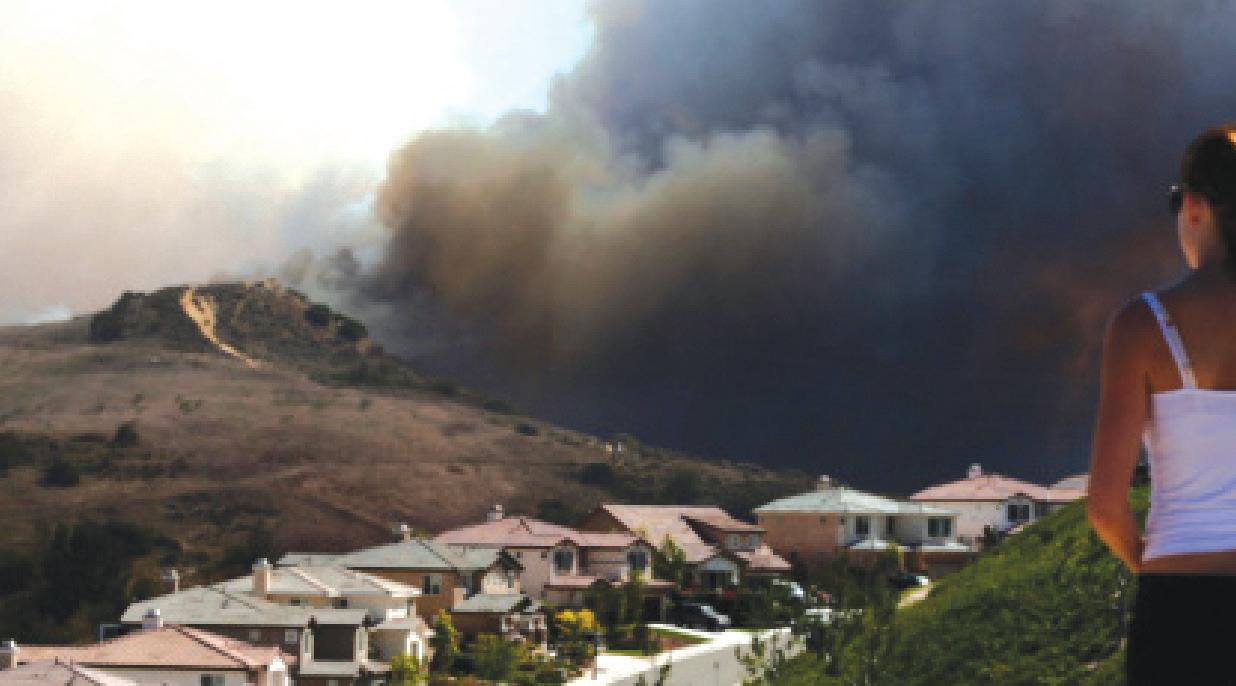
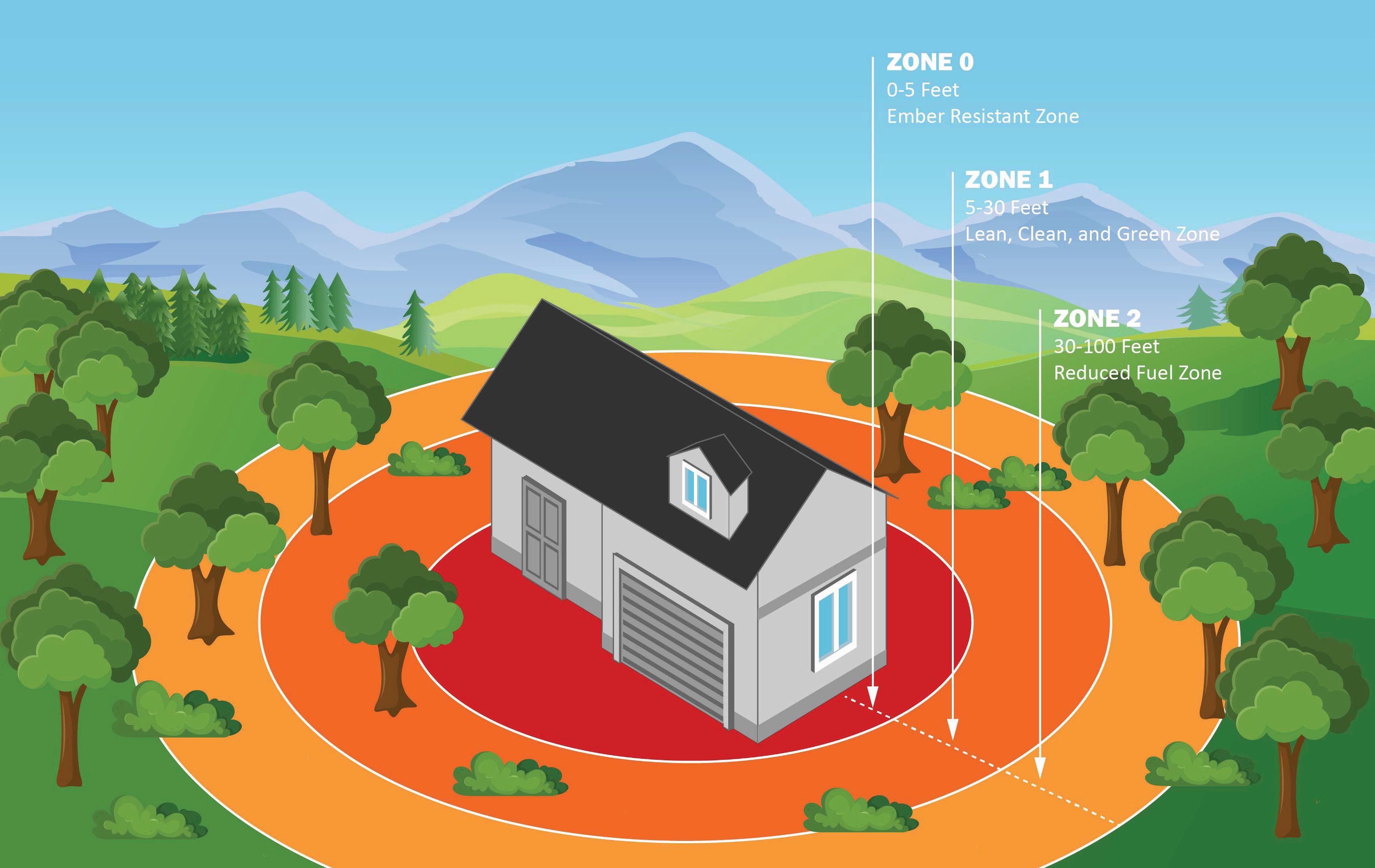
Defensible Space is the buffer zone that you create between your home and the plants, brush, trees, or other items surrounding your home that could ignite in the event of a fire. The establishment and maintenance of proper defensible space helps to protect your property and community from the risk and spread of wildfire.
LEARN MORE AT tinyurl.com/D-Space


CONTACT US
County of El Dorado
Office of Wildfire Preparedness and Resilience
360 Fair Lane Placerville, CA (530) 621-5569
wildfireready@edcgov.us
Zone 0 - Ember Resistant Zone
0 - 5 Feet
• Remove all combustible plants and replace with gravel, pavers, or concrete
• Keep roofs, gutters, decks/porches, and stair ways clear of vegetation and combustible materials
• Replace combustible fencing, gates, and arbors that are attached to home with noncombustible materials
Zone 1 - Lean, Clean, and Green Zone
5 - 30 Feet
• Remove all dead plants, grass, and weeds
• Clear dead leaves and pine needles from your yard, structures, rain gutters, and roofs
• Remove or separate live flammable ground cover and shrubs
• Remove all branches within 10 ft. of chimneys/stove pipes
Zone 2 - Reduced Fuel Zone
30 - 100 Feet
• Cut or more annual grass down to a maximum height of 4 in.
• Create horizontal spacing between shrubs and trees
• Clear lower vegetation that could lead to a fire climbing into the tree canopy





















Locally owned and operated Western Slope Septic Pumping, Inc. provides a ordable pumping services throughout El Dorado County.
Serving Placerville, Cameron Park, Camino, Coloma, Diamond Springs, El Dorado Hills, Grizzly Flats, Pollock Pines, Shingle Springs, and other El Dorado communities.

















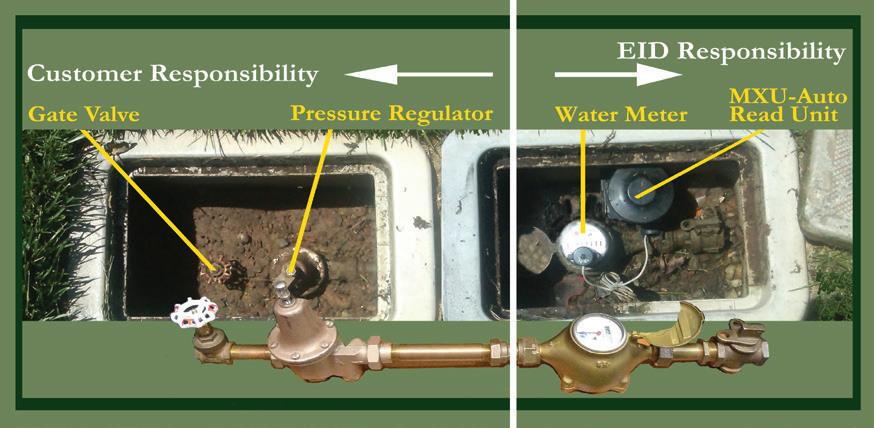
Stay informed about SERVICE OUTAGES or EMERGENCIES by updating your contact information. Email Customer Service at Billing@EID.org or complete the online form @ www.EID.org/ UpdateMy Account.

@ElDoradoIrrigationDistrict Recreation Pages: @CaplesLake, @SlyParkRecreationArea, @ForebayReservoir, and @SilverLakeWest




WHO ARE YOU GOING TO CALL IN CASE OF FIRE?
United States Forest Service
100 Forni Road
Placerville, CA 95667 (530) 622-5061
California Department of Forestry
Amador/El Dorado Headquarters 2840 Mt. Danaher Road Camino, CA 95709 (530) 644-2345
LOCAL
FIRE AGENCIES
Cameron Park
3200 Country Club Drive
Cameron Park, CA 95682 (530) 677-6190
Diamond Springs – El Dorado
501 Main St. PO Box 741
Diamond Springs, CA 95619 (530) 626-3190
El Dorado County Fire Protection District
Administrative Of ce:
P. O. Box 741
4040 Carson Road
Camino, CA 95709 (530) 644-9630
Fire Station Phone Numbers:
Coloma: (530) 622-3441
Cool: (530) 885-1232
Oak Hill: (530) 626-2527
Placerville: (530) 626-2521
Pleasant Valley: (530) 644-9643
Pollock Pines: (530) 644-9640 Shingle Springs: (530) 677-2212
El Dorado Hills
1050 Wilson Blvd. El Dorado Hills, CA 95762 (916) 933-6623
Fallen Leaf
P. O. Box 9415
South Lake Tahoe, CA 95158 (530) 542-1343
Garden Valley 4860 Marshall Road
P. O. Box 408
Garden Valley, CA 95633 (530) 333-1240
Georgetown
6281 Main St.
P. O. Box 420 Georgetown, CA 95634 (530) 333-4111
Latrobe
7660 South Shingle Road
P. O. Box 178
Shingle Springs, CA 95682 (530) 677-6366
Lake Valley
2211 Keetak St.
South Lake Tahoe, CA 96150 (530) 577-3737
Meeks Bay
8041 Highway 89, Emerald Bay Road
P. O. Box 189 Tahoma, CA 96142 (530) 525-7548
Mosquito
8801 Rock Creek Road Placerville, CA 95667 (530) 626-9017
Pioneer
7061 Mt Aukum Road
P. O. Box 128 Somerset, CA 95684 (530) 620-4444
Rescue Fire Protection District
5221 Deer Valley Road
P. O. Box 201 Rescue, CA 95672 (530) 677-1868
South Lake Tahoe
2101 Lake Tahoe Blvd. South Lake Tahoe, CA 96150 (530) 542-6163
YOUR PET EMERGENCY KIT SHOULD INCLUDE:
• 3-7 days of food and supplies
• 14 days of medication
• First aid kit, litter box/supplies, waste bags, sanitary supplies
• Identification papers, vaccination/medical records
• Kennel, leash, comfort items

• Microchip your pet, update contact info
• Keep collars and ID tags on your pet
• Have a recent photo of your pet on hand









Supporting older adults, neurodiverse children/adults, and their families by creating care services that enable your loved ones to experience A Life Lived Fully Every Day.
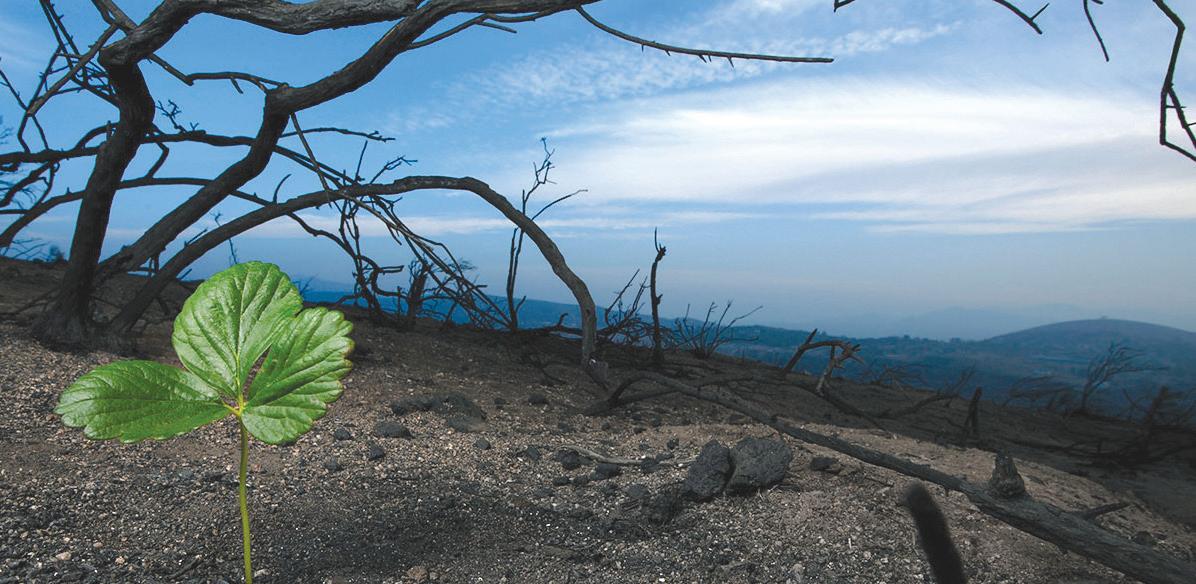
WORRIED ABOUT FIRE?
Strike Up the Conversation: A community approach to prepare for a fire
Learn about the story behind Strike Up the Conversation and gather the tools to prepare yourself for FREE!
www.elderoptionsca.com/ news-resources/strike-up-the-conversation
Tools available in English & Spanish
(800) 336-1709 Elder Options, Inc.
Serving Placerville • El Dorado Hills • Folsom • Sacramento • South Lake Tahoe





The bene ts of fuel reduction projects for wild re preparedness
The El Dorado and Georgetown Divide Resource Conservation Districts
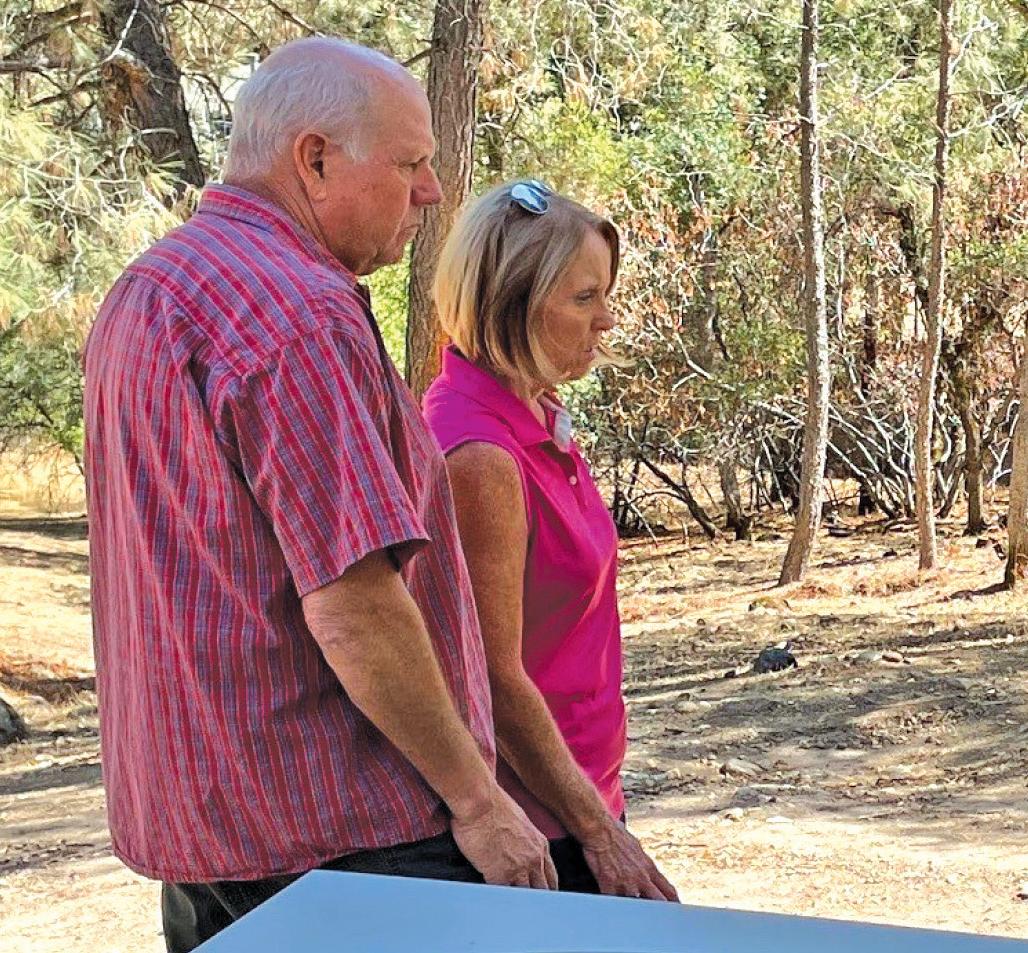
Wildfires pose serious threats to communities, ecosystems and economies, especially in areas with dry conditions and dense vegetation. Fuel reduction projects play a vital role in lowering these risks by managing vegetation to minimize combustible material. �ese e�forts not only slow wildfire spread but also improve safety for residents and first responders.
A notable example is the Fire Adapted 50 Project, which leverages existing fuel breaks and forest treatments to build broader, more resilient firebreaks. One such break was critical in containing the Caldor Fire near Pollock Pines, giving firefighters a defensive advantage and helping protect the community.
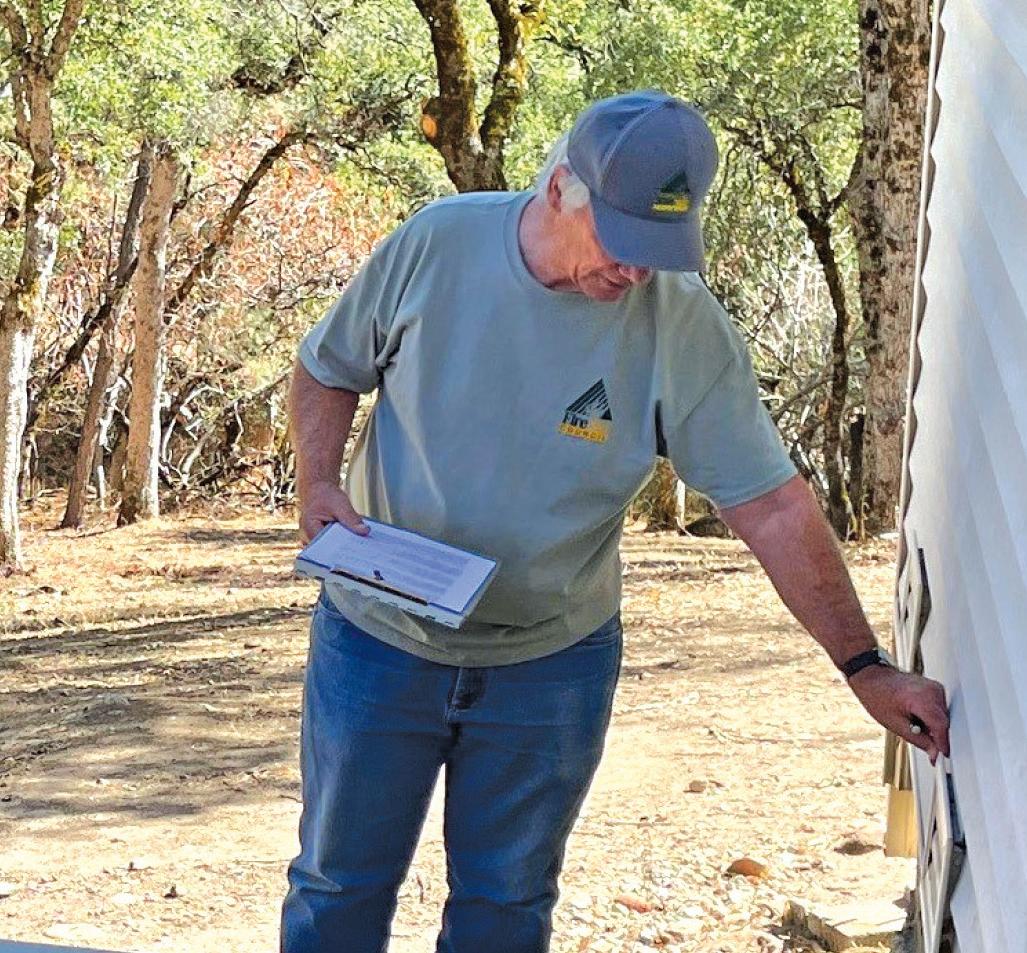
�e El Dorado and Georgetown Divide Resource Conservation Districts (RCDs) are key partners in regional fuel reduction e�forts, focusing on vegetation removal, forest thinning health and the creation of defensible space. �ey manage several projects on behalf of the El Dorado County Fire Safe Council (EDCFSC), including:
■ Community wildfire protection projects in Volcanoville, Mosquito, Sierra Springs and Grizzly Flat.
■ Landscape fire prevention projects in the areas of Oak Hill, Omo Ranch, Mt. Aukum, Fair Play, Kelsey and Georgetown.
In addition to planning and implementing these e�forts, the RCDs coordinate with stakeholders and ensure projects meet environmental and safety standards.
�e RCDs are also active in post-fire recovery, support-

ing restoration e�forts for the Caldor and Mosquito fires. �ese projects mitigate hazardous trees and restore forest cover through reforestation. �e El Dorado RCD leads the Emergency Forest Restoration Team (EFRT), which provides rapid response in wildfire a�termaths — assessing damage, prioritizing actions and restoring impacted areas.
To support long-term resilience, the RCDs o�fer technical assistance programs to landowners. �ese programs promote best practices in defensible space, vegetation management, and fire prevention — empowering communities to be better prepared and more fire-resilient.
Participation is voluntary and free for landowners. For more information about these projects or technical assistance contact the RCD at (53) 295-0120, email edgdrcd@ gmail.com or visit eldoradorcd.org.







Emergency contact information













KNOW THE Risk Factors of a Stroke

KNOW THE Warning Signs of a Stroke
A stroke can happen to someone you care about at any time, significantly impacting their quality of life. Know the signs and symptoms of stroke so that you can get help quickly, giving them the best chance for recovery and a return to the lifestyle they enjoy.
Making healthy lifestyle changes can dramatically reduce your risk for stroke. Talk with your healthcare provider for any questions you may have related to your risk factors.
• High blood pressure
• Smoking and vaping
• Diabetes, high cholesterol, carotid or other artery disease
• Phsyical inactivity and obesity
• Transient ischemic attacks (TIAs) sometimes referred to as “mini strokes” that have no lasting effects
• Atrial fibrillation (AFib) or other heart disease
• Substance abuse
Scan for more information about the Marshall Stroke Center and Stroke Support Group.