













Finding a home at Taylor means more than access to a stunning new cottage or apartment – it means receiving the keys to present and future peace of mind.
Taylor Community is located in the beautiful Lakes Region of New Hampshire with campus locations in Laconia, Wolfeboro, and Meredith. Whether you prefer an active lifestyle lled with tness classes and an extensive lineup of social and recreational opportunities, or would rather enjoy a ne dining experience with friends after a day spent by the lake... Taylor is the place for you!






Bedford, NH
Top Fertility Doctor Kristen Wright, MD and Boston IVF are here for you with New Hampshire’s only IV F center.
New Hampshire

“Bringing the best of New England to life has special meaning as the nation’s 250th birthday approaches. Join us this season as we celebrate what makes our region— America’s birthplace —truly special.”
—Brook Holmberg Publisher, Yankee
Thrilling Revolutionary War reenactments in Lexington and Concord, Massachusetts
Horseback riding through Vermont’s fall foliage
Cooking with James Beard Award–winning Mashpee Wampanoag chef Sherry Pocknett
Setting sail in Maine’s Great Schooner Race
Autumn adventures at New Hampshire’s historic Omni Mount Washington Hotel
Foraging with Connecticut vegan chef and cookbook author Chrissy Tracey
Biking along the beautiful New Hampshire seacoast
The art of the New England clambake at Castle Hill Inn in Newport, Rhode Island

Learn more about our show and check local listings at WEEKENDSWITHYANKEE.COM




8 Editor’s Note
8 Contributors
34 Saddle Up
UNH polo team and Kingston equestrian center gallop to success.
By Brion O'Connor, Photography by Ryan Moran
43 At Home in NH
Explore our new guide to elevated living in the Granite State, complete with design solutions that make sense.
68 Reader Photo Contest
Our reader-submitted photo contest features animals in Granite Staters' homes and in the wild.
Compiled by NH Magazine
80 2026 Top Doctors
The results of the annual Castle Connolly Top Doctors poll are in. See who made the list.

14 The Big Picture Waterfalls at Dixville Notch are the perfect illustration of spring.
Photo by Kim Nagy
16 Our Town
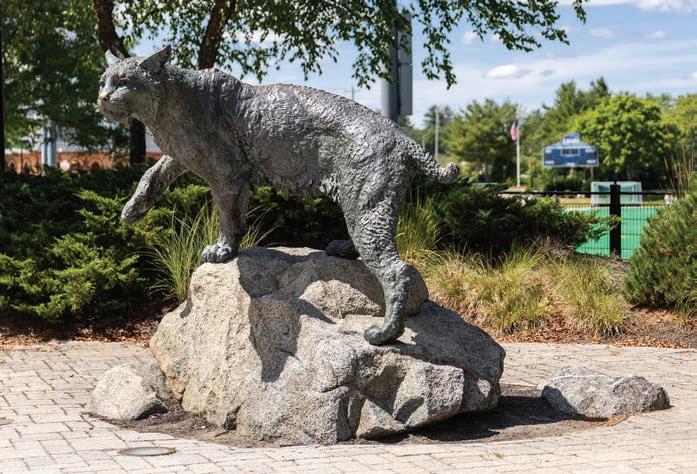
The home of the state's flagship university ebbs and flows with the student population.
By Paul Briand, Photos by Ryan Moran
22 Savor
Two iconic restaurants — Louie's and Loaf and Ladle — reopen on the Seacoast.
By Jill Armstrong
28 Q&A
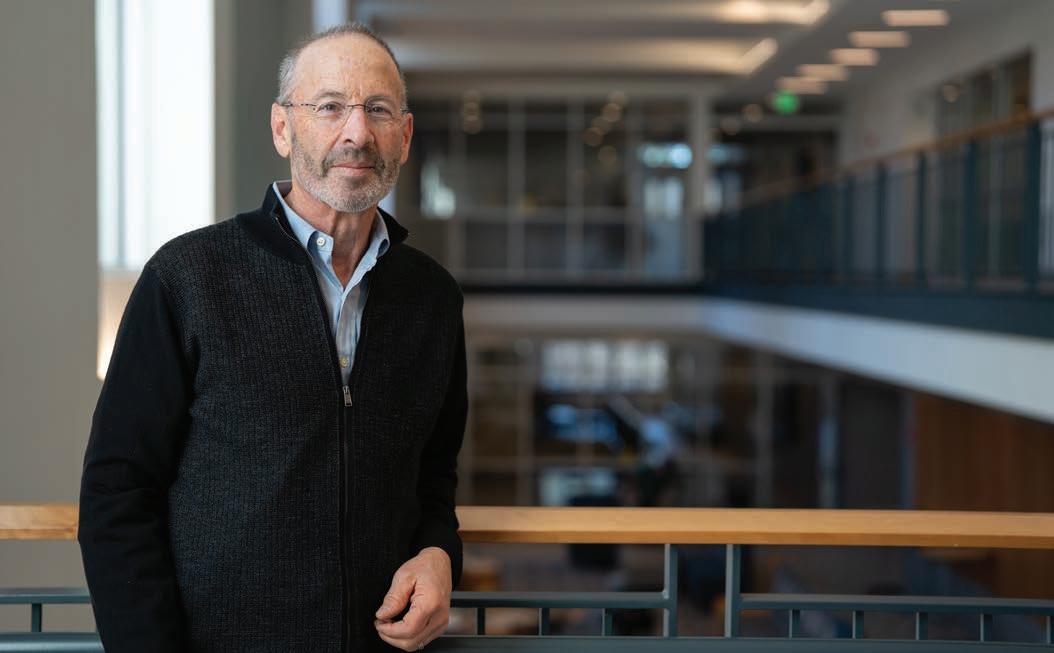
Meet environmentalist and author Duncan Watson.
By Emily Reily
32 What Do You Know?
Maxfield's Monument By Marshall Hudson

104 Living
A new generation of Granite State makers embraces fiber arts.
By Kara McGrath
114 Out and About Calendar of events
Compiled by Elisa Gonzales Verdi
116 Community
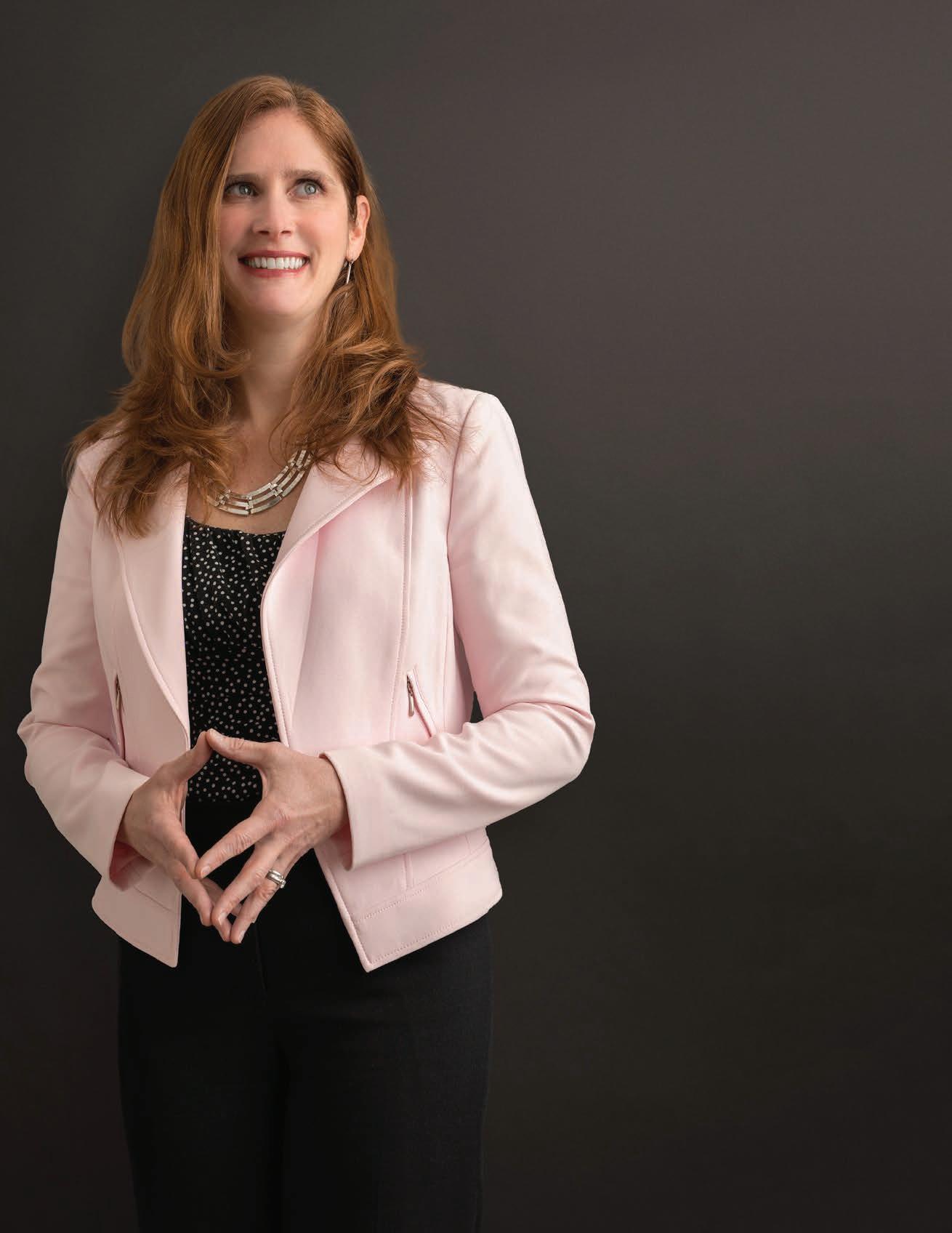
Blair Demers works to strengthen nonprofits and build healthier communities.
By Lynne Snierson
118 Healthwise
Find what you need on patient portals without getting lost.
By Krysten Godfrey Maddocks
120 Live Free
An Ode to Rock Skis
SPECIAL ADVERTISING SECTION
109 Ask the Experts
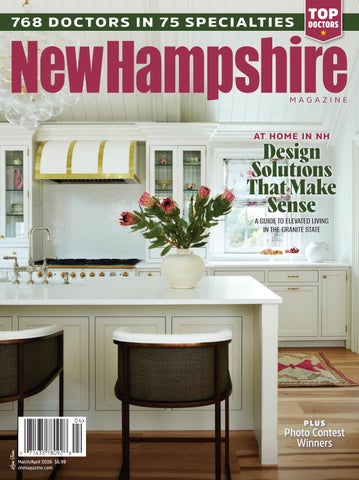
By Brion O'Connor ON THE COVER: Make yourself at home, and enjoy our special report on how to elevate your living spaces.

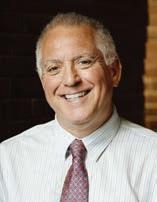
WHEN I RETURNED to New Hampshire from Colorado more than a decade ago, I moved into a condo barely half the space of the home I left behind.
While 950 square feet (plus a finished basement) seems small by U.S. standards, it’s really all the room two people need and exceeds the average size of a home in the UK — and much of the rest of the world.
After going big for decades, home sizes are starting to contract in the U.S., as the cost of property, material and labor have skyrocketed and inventory has plummeted.
Home sizes in the U.S. began expanding from 1,800 square feet in 1980 and peaked at nearly 2,500 square feet in 2015, according to Census data cited by the National Association of Realtors. Over the past few years, they’ve averaged about 2,200, still plenty big by global standards.
While high-end homes are often more than twice that big, smaller ranches and condos are in high demand by baby boomers ready to downsize and young couples looking for starter homes.
When space is at a premium, maximizing how you use it becomes essential. That’s the theme of the lead story in this month’s special Home & Garden Guide, a collaboration with our sister publication, New Hampshire Home Magazine (page 43).
In “Living Large in Small Spaces,” contributor Rob Duca shares tips from NH home professionals about how to save space with style. (Hint: It might involve decluttering.)
Whether you’re trying to upgrade your existing home or are building a new but smaller one, they can help you make smart choices — from design features to appliance picks — that cut those space challenges down to size.
Janice Rohlf, editor of New Hampshire Home, serves as your tour guide for this special section, which she directed.
Spaces and places
My first apartment was a modest two-bedroom in Durham, but even for a family of three, including an infant boy just learning to walk, it seemed colossal compared to the tiny dorm room I shared with a roommate at the University of New Hampshire.
We lived in Durham and marked the seasons not just with the changing weather but with the arrival and departure of college students, much like seaside residents do with summer tourists.
Durham resident Paul Briand, a regular contributor to NH Business Review (for which I also serve as editor), wrote this month’s “Our Town” about the university community (page 16). UNH senior Ryan Moran contributed photography.
Moran’s images also accompany Brion O’Connor’s feature on the upstart UNH polo team and the equestrian center in Kingston where members train (page 34).
O’Connor’s “Live Free” essay (page 120) introduced me to a concept that was new to this newbie skier: “rock skis.” These are the old but trusted pairs you pull out of the back of the garage for spring skiing, when the slopes start revealing patches of grass but you still want to get some turns in.
March/April heralds our annual Top Docs feature, where you can find the best physicians in every practice area working in hospitals and medical centers across the Granite State (page 80). The 2026 Top Doctors Poll, conducted by national research firm Castle Connolly, includes more than 760 doctors, as nominated by their peers. Whatever your medical needs — cardiac care, dermatology, sports medicine — you can find the best of the best here.

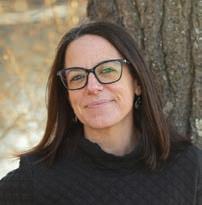
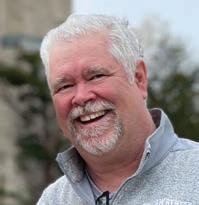
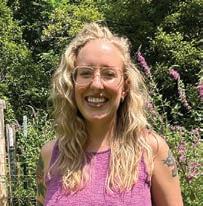



Vice President/Publisher Ernesto Burden 603-624-1442 x5117 ernestob@yankeepub.com
Editor Mike Cote 603-624-1442 x5141 mikecote@yankeepub.com
Managing Editor Emily Heidt 603-624-1442 x5115 eheidt@nhmagazine.com
Managing Editor, Sarah Pearson 603-624-1442 x5128
Custom Publications sarahekp@yankeepub.com
Assistant Editor Elisa Gonzales Verdi 603-624-1442 x5010 egonzalesverdi@nhmagazine.com
Assistant Editor Emily Reily 603-624-1442 x5119 emilyr@yankeepub.com
Art Director John R. Goodwin 603-624-1442 x5131 johng@yankeepub.com
Creative Services Director Jodie Hall 603-624-1442 x5122 jodieh@yankeepub.com
Graphic Designer Christian Seyster 603-624-1442 x5116 christians@yankeepub.com
Senior Graphic Nicole Huot 603-624-1442 x5116
Production Artist nicoleh@yankeepub.com
Director of Business Jenna Pelech 603-624-1442 x5154 Development jennap@yankeepub.com
Sales Executives Josh Auger 603-624-1442 x5144 jauger@nhmagazine.com
Jessica Schooley 603-624-1442 x5143 jessicas@yankeepub.com
Connie McCullion 603-624-1442 x5000 conniemc@yankeepub.com
Operations Director Ren Chase 603-624-1442 x5114 renc@yankeepub.com
Sales & Events Coordinator Paul Milone 603-624-1442 x5121 paulm@yankeepub.com
Information Manager Gail Bleakley 603-563-8111 x113 gailb@yankeepub.com
Assistant Controller Nancy Pfuntner 603-563-8111 x138 nancyp@yankeepub.com
VP/Consumer Marketing Brook Holmberg brookh@yankeepub.com
VP/Retail Sales Sherin Pierce sherinp@yankeepub.com
250 Commercial Street, Suite 4014 Manchester, NH 03101
603-624-1442, fax 603-624-1310
E-mail: mikecote@yankeepub.com
Advertising: sales@nhmagazine.com
Subscription information: Subscribe online at: nhmagazine.com or email customerservice@nhmagazine.com
To order by phone call: 877-494-2036
© 2026 Yankee Publishing, Inc.
New Hampshire Magazine® is published by Yankee Publishing, Inc., 250 Commercial Street, Suite 4014, Manchester, NH 03101, 603-624-1442. All rights reserved. Reproduction in whole or in part without the written permission of the publisher is prohibited. The publisher assumes no responsibility for any mistakes in advertisements or editorial. Statements/ opinions expressed herein do not necessarily reflect or represent those of this publication or its officers. While every effort has been made to ensure the accuracy of the information contained in this publication, Yankee Publishing, Inc.: New Hampshire Magazine disclaims all responsibility for omissions and errors. New Hampshire Magazine is published monthly, with the exception of February and April.
USPS permit number 022-604. Periodical postage paid at Manchester 03103-9651. Postmaster send address changes to: New Hampshire Magazine, P.O. Box 37900, Boone, IA 50037-0900 PRINTED






this ‘n that
Send letters to Editor Mike Cote, New Hampshire Magazine, 250 Commercial St., Suite 4014, Manchester, NH 03101, or email him at mikecote@yankeepub.com.
The Old Farmer’s Almanac forecast calls for continued publication
The Old Farmer’s Almanac touts an 80 percent accuracy rate for its weather forecasts, but it could not have predicted a sales surge for the 2026 edition.
After a competitor with a very similar name — Farmer’s Almanac — ceased publication in November, editors at The Old Farmer’s Almanac immediately took to social media and the web to clear up confusion about its future.

What they did not expect was a sellout. With the holiday season just beginning, stock was depleted, said Sherin Pierce, publisher of The Old Farmer’s Almanac.
“We went back on press and reprinted 137,000 copies,” said Pierce, noting the outpouring of support from readers — including some who posted comments online to correct media reports that got the story wrong.
The Old Farmer’s Almanac, published by Yankee Publishing Inc., the parent company of New Hampshire Magazine, sells about 2.3 million copies annually.
— Mike Cote
Spot FOUR newts like the one here, hidden on ads in this issue, tell us where you found them and you might win a gift certificate for $50 to use at The Common Man Restaurants. Each month’s gift card will be different, which adds to the overall Newt fun. Let the hunt begin!









To enter our drawing for Spot the Newt, visit spotthenewt.com and fill out the online form. Or, send answers plus your name, email address and mailing address to:
Spot the Newt c/o New Hampshire Magazine 250 Commercial St., Suite 4014 Manchester, NH 03101
You can also email them to newt@nhmagazine.com.
Last month’s “Spot the Newt” winner is Deborah Brooks of Colebrook. January/February issue newts were on pages 17, 19, 31 and 93.
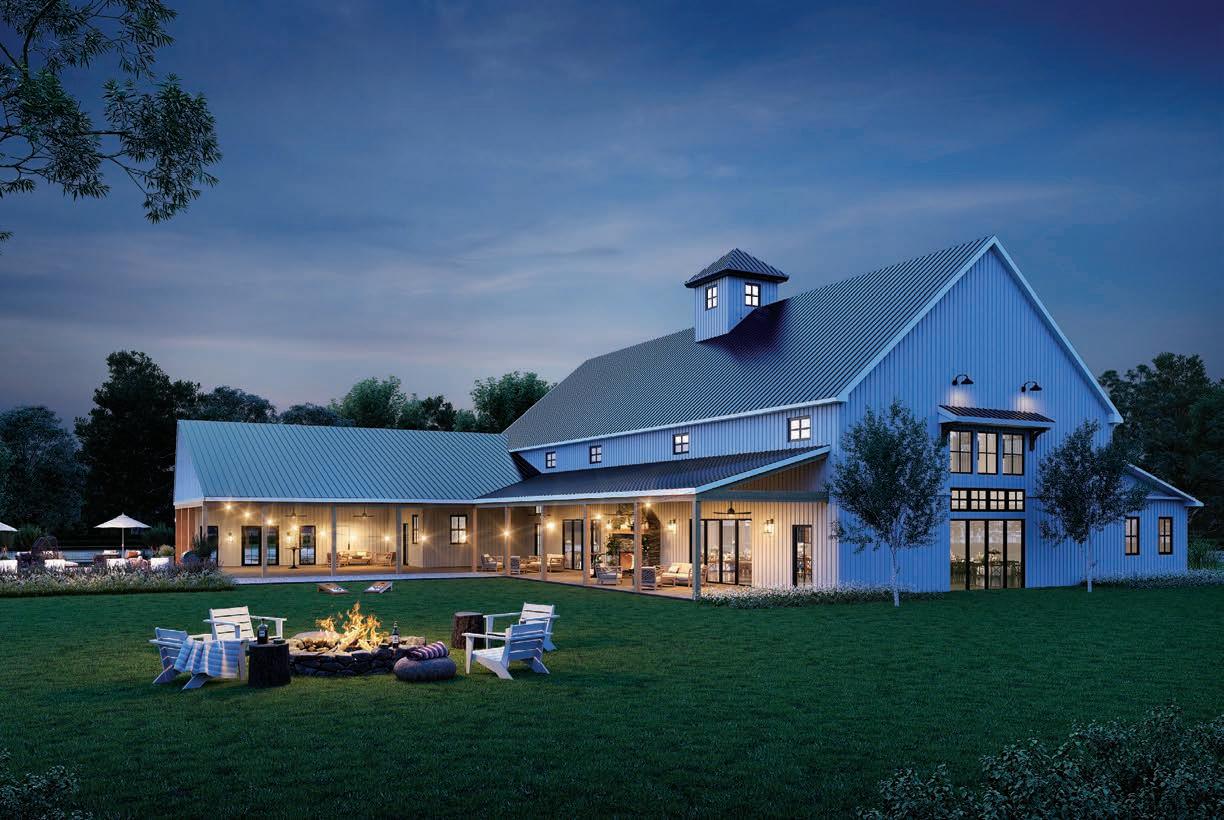
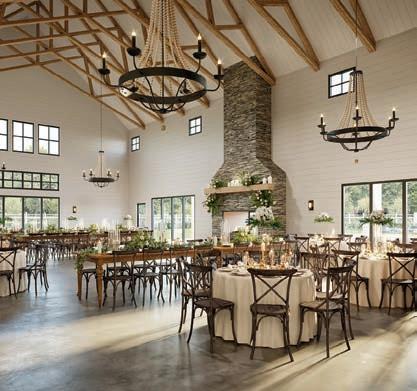

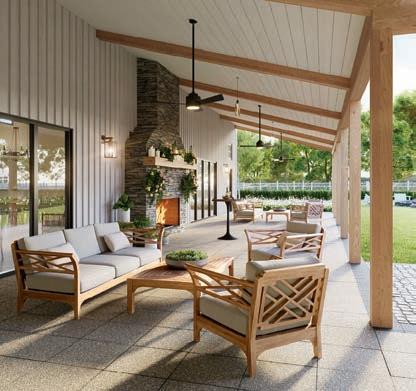

Discover Hyla Brook Estate: your new go-to for modern farmhouse elegance! Nestled on 9 beautiful acres in Derry, NH, our stunning private garden estate is perfect for weddings, corporate events, showers, anniversaries, and more. With multiple indoor and outdoor spaces, we create the ideal backdrop for unforgettable celebrations. Experience laid-back luxury like never before—where every occasion becomes a cherished memory!


“Photography has taught me many valuable life lessons. I visited Dixville Notch one day for wildlife photography, and there was little activity. It was dark and gloomy. At first disappointed (I drove hours to get here!), I changed my mindset and realized that a dark and gloomy day is perfect for waterfalls. In nature, there’s always something going on. Photography, like life, is all about focus.”
PHOTO BY KIM NAGY
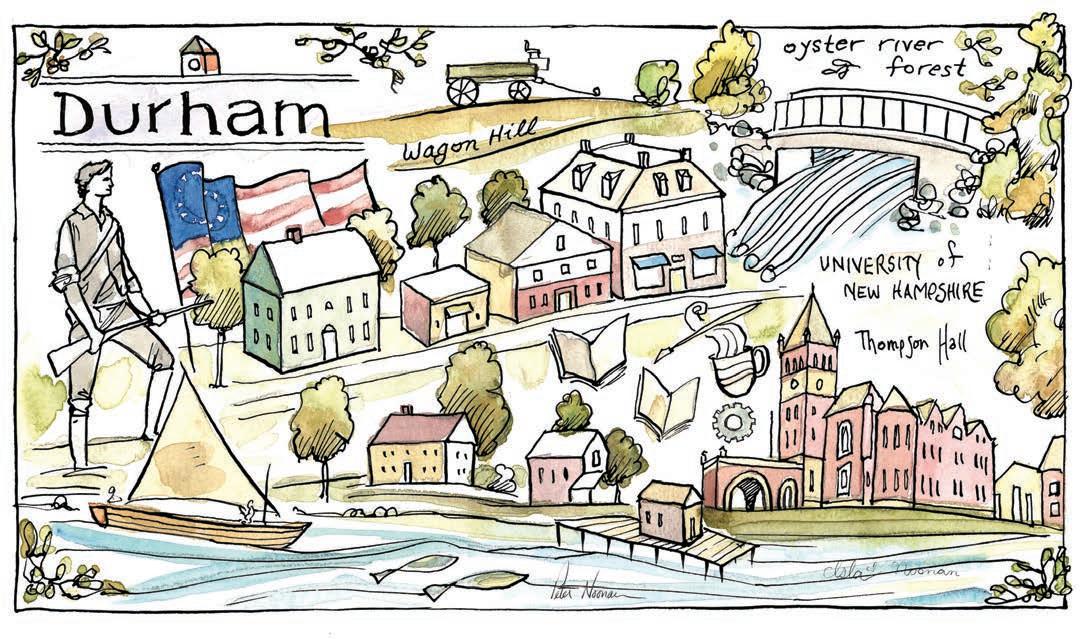
BY PAUL BRIAND / PHOTOS BY RYAN MORAN / ILLUSTRATION BY PETER & ISLA NOONAN
To many people on the outside looking in, Durham is simply a “college town.”
Indeed, it is home to the University of New Hampshire, the state’s flagship fouryear public institution.
But it is so much more, says Todd Selig, Durham’s town administrator since 2001.
“We have what I would call the quintessential New England charm downtown,” Selig says. “It’s a beautiful downtown that’s on a very human scale, and it’s a pleasure to be there to walk around.”
Selig describes the town’s “tremendous ethos for land conservation” as its foundation for wooded and coastal areas that remain accessible to the public.
Durham is located at the mouth of the Oyster River, which snakes its way through town on its way to Great Bay. Its cooperative school system with the towns of Lee and Madbury is named for that river.
“We have huge tracts of the town that have been conserved over decades to create sort of natural, undisturbed areas where people can hike and walk and reflect,” Selig says. “People might be most familiar with a property like Wagon Hill Farm right on Route 4. But then you’ve got the Oyster River Forest, the Doe Farm, the College Woods — acres and acres of long horse trails of natural space.”
Wagon Hill Farm is exactly what the name implies — a farm wagon situated on top of a scenic hill on land that was privately owned starting in 1653 until it was acquired by the town in 1989.
Listed among the New Hampshire State Register of Historic Places, the property, which abuts the Oyster River, encompasses some 139 acres for hiking, walking dogs and winter sledding.
Durham’s history traces back to the
earliest days of the American colonies. Originally known as Oyster River Plantation when settled in 1635, it was then part of Dover, the seventh-oldest settlement in the nascent American colonies.
It became Durham — named after Durham, England — with its incorporation in 1732.
Gunpowder, stolen by colonists from a Royal British fortification in New Castle and later used at the 1775 Battle of Bunker Hill, was said to have been stored in various Durham locations.
UNH’s origins date back to 1893, when the New Hampshire College of Agriculture and Mechanical Arts moved from Hanover to Durham on land willed expressly for that purpose by Benjamin Thompson, a wealthy (and said to be eccentric) farmer.
It is now a university with undergraduate and graduate programs and about 11,400 undergraduates and 2,200 graduate students, many of whom live in Durham.
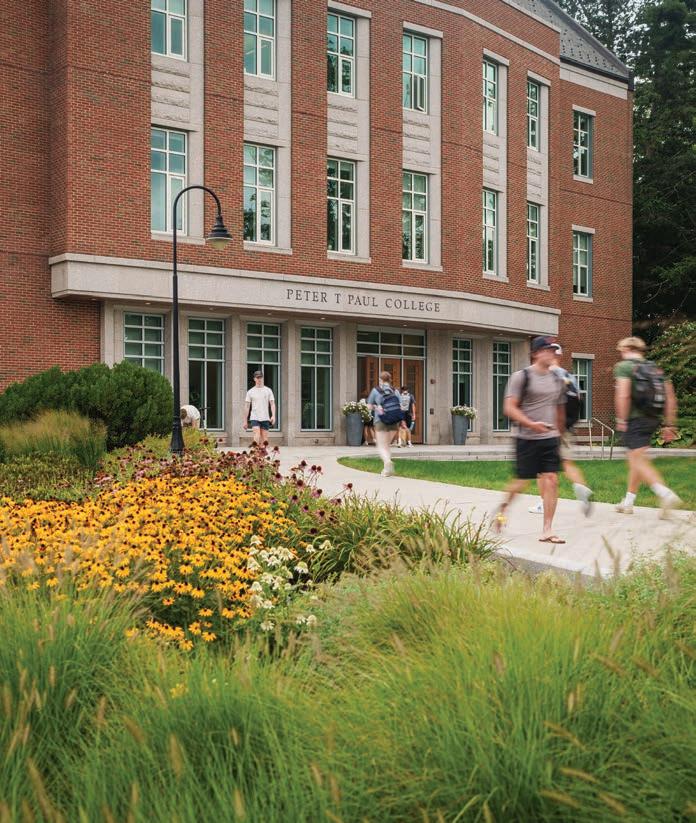
Unlike other college towns, where the school is an island unto itself, the UNH campus, residences, sorority and fraternity houses and facilities “meld into one another and create great opportunities for cross connection between residents and
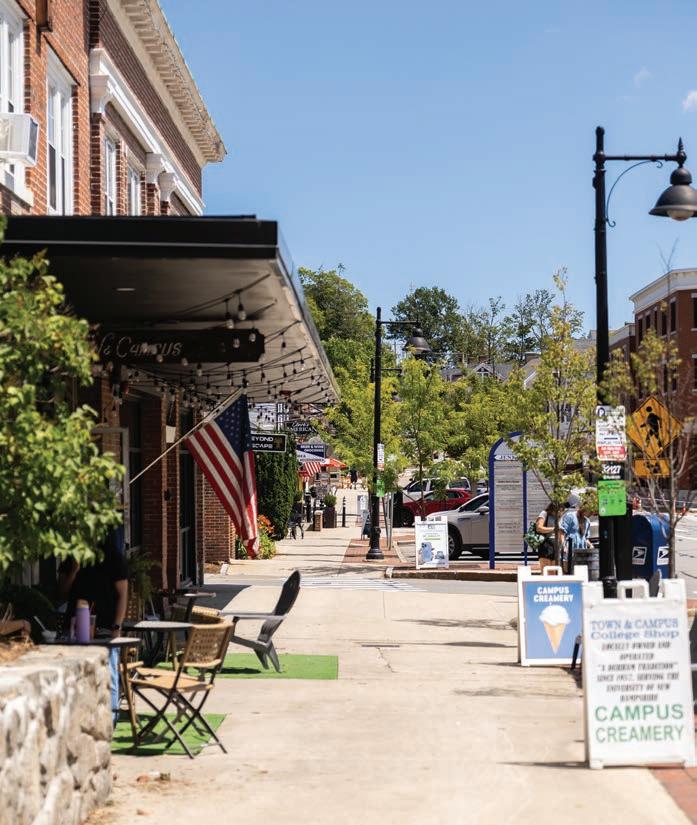
students and faculty and staff,” Selig says.
The overall population of the town ebbs and flows with the student population. The resident population numbers about 10,500. The bulk of that population, according to census information, is employed in education services-related jobs, while the balance is spread among health care, accommodation/ food services, retail, scientific/technical and others.
Joe Friedman was a Durham outsider looking in, and is now an insider looking out.
Originally from Connecticut, he transferred from Union College in New York and was a UNH politics science major who graduated in 1977. He left for a while and returned to live in 2012.
He remembers the town, even in the ’70s, as being what he described as “environmentally sensitive.” Indeed, it was the town of Durham and its grassroots efforts that in 1974 effectively blocked Greek shipping magnate Aristotle Onassis from constructing a then $600 million oil refinery, targeting 3,000 acres along Great Bay in Durham for the plant and tank farm.
As home to the state’s largest liberal arts college, Friedman also remembers the political activism, given New Hampshire’s place as home to the first presidential primary.
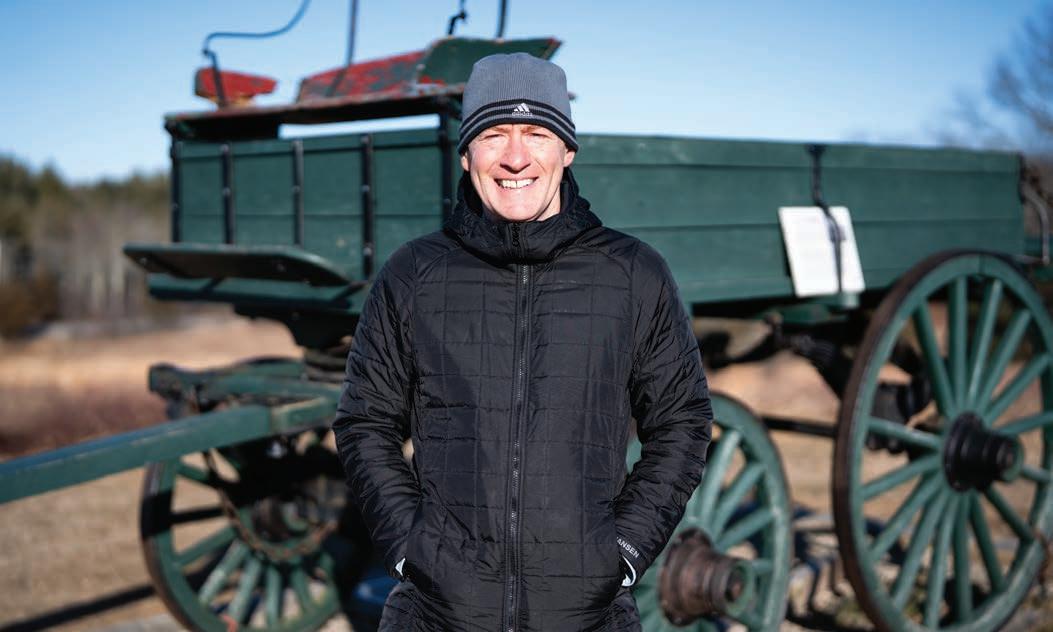
“It was a treat,” recalls Friedman, now chair of Durham’s Town Council. “All the candidates who come to New Hampshire, and invariably they come to Durham, so you got to see the national candidates.”
Dave Gerard arrived from Long Island, New York, as a UNH student and remained as a full-time resident after his 1985 graduation.
“I’m grateful, because I ended up here pretty organically,” says Gerard, who has worked full-time as a musician, solo singer/songwriter and frontman for the band Truffle.
His friends, bandmates and the people in town helped Gerard create a connection to the community that has stayed with him through the years. “I just fell in love with it. I loved being by the water for certain. I mean, everybody’s just so friendly around here,” he says.
He does his banking in town; he gets his haircut in town. The servers at his favorite cafe downtown know him. Wagon Hill is where he occasionally walks his dog, where his daughter slid down its snowy hill.
“It felt comfortable,” Gerard says. “It certainly has a much more laid-back feel than where I grew up, and I think I was really attracted to that.”
You will still find our hilltop hideaway at the end of the winding dirt road. Lighten your spirit as you step out of your world and into ours. Welcome to Pickity Place. Have a Pickity Day!
Call us for dining reservations.




THURSDAY APRIL 9, 2026 5PM TO 8PM For



SNHU MLLYARD MANCHESTER, NH
PRESENTED BY

Tickets are $150pp and include a complimentary beverage, delicious hors d’oeuvres, and creative food stations
Help us light the room with red! Guests are encouraged to wear red, the Girls Inc. color, as we come together to support girls across NH. Unique silent & live auction items in various price ranges
Online auction begins March 24th at 8AM with hundreds of choices to bid on!
Durham is a residential community, with small pockets of commercial/retail/industrial opportunities downtown and in a large manufacturing facility that once produced newspaper production-related equipment. And therein lies the challenge.
For the last few years, Selig has raised concerns that without more commercial/ retail/industrial development, more and more of the tax burden will fall on homeowners. In late 2025, homeowners received increased property tax levies because of higher residential property values and higher costs associated with the town and its cooperative school system.
One key area of expanded commercial development is the downtown, now a mix of small shops, restaurants, pizza parlors and bars. Business owners are often challenged, according to Selig, by a fluctuating population — busy when the students are in town, not so busy when they aren’t.
“If one looks around at the most thriving downtowns, they almost always have a few
stories of residential above, commercial and retail uses on the first floor,” he says. Durham is looking at a rezoning of the downtown that would allow multi-floored mixed commercial/residential development.
“It creates the opportunity for new construction that might be higher than we have
now, inhabited by a broader range of the population living above who could support the businesses,” he says.
Other areas of potential significant commercial development include the Mill Plaza (currently owned by Torrington Properties, which has been on a commercial development blitzkrieg throughout the Granite State) and the former Goss Manufacturing newspaper equipment building on Technology Drive, now owned by the R.J. Kelly Co..
Then there’s The Edge in the so-called West End part of town, an academic, research, business and residential project proposed by UNH in cooperation with the town.
“The Edge at West End is, from my perspective, a huge opportunity for the University of New Hampshire to bring in industry partners, and that can offer cutting-edge, real-life experience for students and job pipeline for students, and lease or ongoing additional revenue for UNH,” Selig says.
“Because much of what is being envisioned out there would be privately owned and be taxable, that would be a tremendous prospect for the broadening of the tax base,” he says.
Friedman is also excited about the potential for how The Edge could benefit the town as a whole.
“It’s certainly a foundation for continued growth on that side,” he says. “And I think that retail, with all the infrastructure that’s in place, could grow again, also in downtown. If we had more year-round residents, they could walk there within 5 or 10 minutes.”





BY JILL ARMSTRONG
The significance of neighborhood restaurants extends well beyond the food. These locales are gathering places where people find connection and make memories that last a lifetime, whether it’s sharing a midweek charcuterie board with a friend or relishing the wholesome comfort of soup and bread with the family on a cold winter afternoon.
For many on the Seacoast, the loss of two community staples several years ago — Louie’s of Portsmouth and Exeter’s Loaf and Ladle — was particularly devastating.
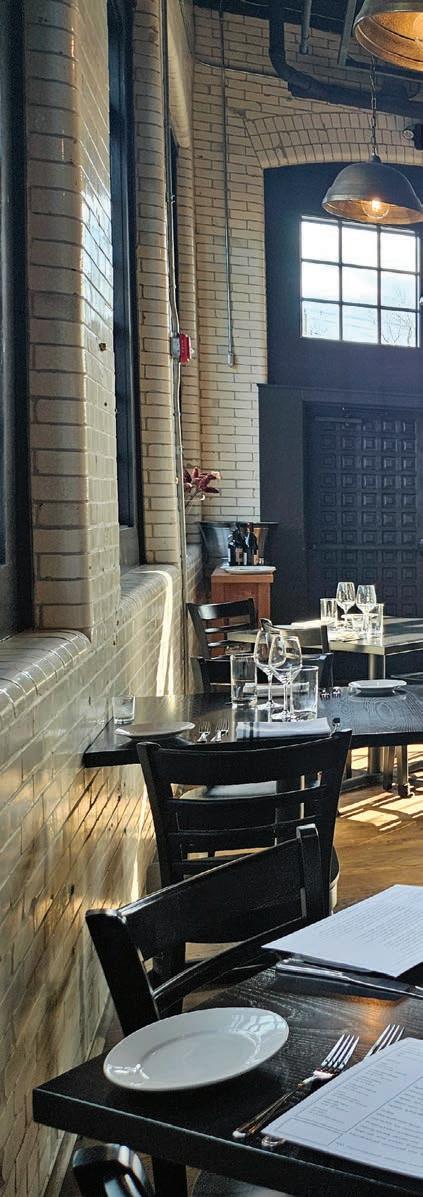
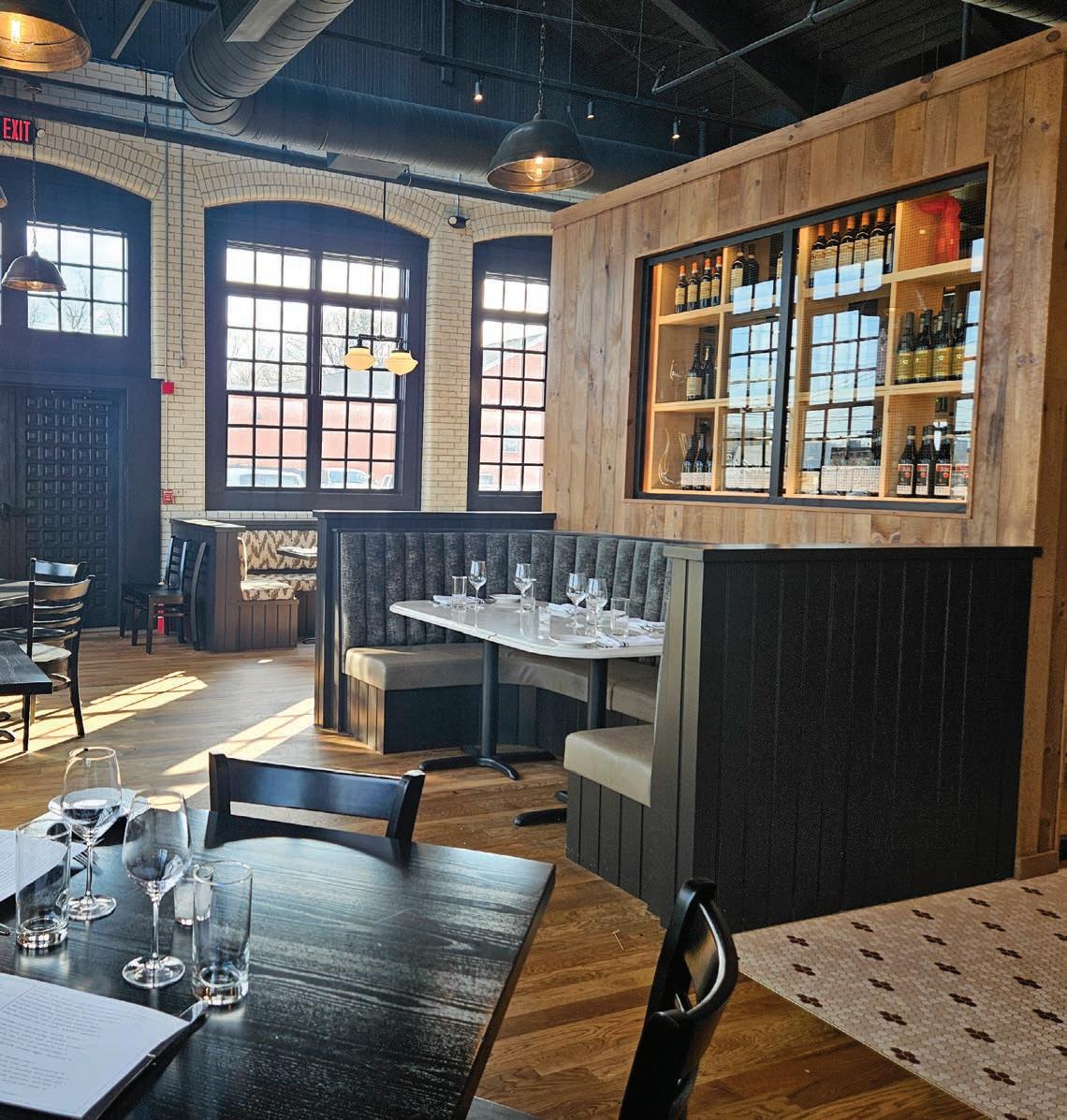
In 2017, the Pleasant Street building that housed Louie’s burned down. The irreparable damage forced owners James Woodhouse and RJ Joyce to close their doors and begin the search for a new location. Eight years later, and to the delight of many loyal patrons, Louie’s reopened in October on the port city’s West End.
“People are showing up,” said Woodhouse, seated at a dining room table, bright morning light flooding through the windows. “It’s a game-changer, and it’s helped us survive.”

About a year after the fire, Woodhouse and Joyce took over the Carriage House restaurant in Rye, another beloved Seacoast institution, while they worked on reopening Louie’s.
“It’s no exaggeration. Every single night that we opened the door at the Carriage House somebody would tell us that they miss Louie’s and asked when it would
PHOTO BY JILL
reopen,” Joyce said. “It was always super flattering. That support sustained us from the very start when the fire happened and we didn’t have a new home.”
Louie’s continues to serve rustic Italian cuisine. Returning customers will recognize the menu’s format: a section dedicated to pasta appetizers, such as cacio e pepe and pansotti; a selection of local and imported
cheese and charcuterie items; and several entrees, including whole roasted flounder and dry-aged duck, their accoutrements evolving with the seasons.
“Even at the Pleasant Street location, the menu evolved seasonally, so we didn’t think that going back to our last menu made a lot of sense because we are eight years evolved,” Woodhouse said. “We like to think that the
menu would have evolved along with that.”
Although the atmosphere of the new restaurant looks completely different — a refined, contemporary space in a brick building off Islington Street — longtime patrons will recognize the distinctive display of wooden shoe lasts tucked away in the dining room’s interior.
The lasts were part of a much larger

installation at the old location, which featured hundreds of these foot-shaped molds, all facing in the same direction. “Every night after we left, one of our staff would turn one backward. It would drive us insane. And no one ’fessed up,” Joyce said, laughing.
When asked about the origin of the restaurant’s name, the pair said they wanted Louie’s to capture the idea and feel of their brand. Ultimately, they wanted a name that was conceptually Italian enough, but that also felt familiar, like an iconic neighborhood joint.
“We’ve always wanted to make sure that we defined ourselves by our warmth,” Joyce said. “We’re not just an occasional kind of thing. When people join you midweek, you’re in the fabric of their life.”
Exeter’s Loaf and Ladle, which reopened in December after a 12-year hiatus, is another iconic establishment whose legacy in the community has endured. The new location of this family-run bakery, which serves up fresh bread and homemade soups, is run by Andrew and Aidan Ulery, the sons of Meredith Pease-Stolper Mygatt, who purchased the shop from Joan Harlow in 1986.
The new location is housed in what was formerly St. Anthony’s Bakery. An acquaintance of the Ulerys, owner Anthony Antosiewicz decided it was time to retire and sold the shop to them.
“It felt nice to be able to take over a spot that was already a spot,” Andrew said.

“It didn’t feel like we were stepping on someone’s toes.”
While the original restaurant sat 99 inside and 45 outside, the new Loaf and Ladle is much more intimate. Regardless, the Ulerys have done their best to preserve what guests remember most: the yellow and green colorway, the long, wooden tray railing at the counter, and the same recipes from Harlow’s 1983 “Loaf and Ladle Cookbook” — the Iberian chicken soup, for example, which has been a fan favorite early into the reopening.
Living only a block from the original location, and just young boys themselves when their mother purchased the restaurant, Andrew and Aidan grew up in the business. “A lot of the early cooks were our babysitters,” Andrew said. “And they always wanted to get

us in there, serving drinks and cookies — just being the cute kids behind the counter.”
As the brothers worked to reopen, friends lent a hand renovating the space. A former baker, who now owns a bike manufacturing company, has returned to make sandwiches on Saturdays during the winter months. And past employees have come in requesting the “Tommy B,” a staff nickname for the hearty tomato blue cheese soup that emerged from the kitchen years ago.
“Reopening has been sort of a fireball,” Andrew said. “There’s been a lot of hype, and things have been going really well.”
“Everyone’s said thank you for bringing it back,” Aidan added. “They appreciate all the things we’ve done to make it feel like the Loaf.”
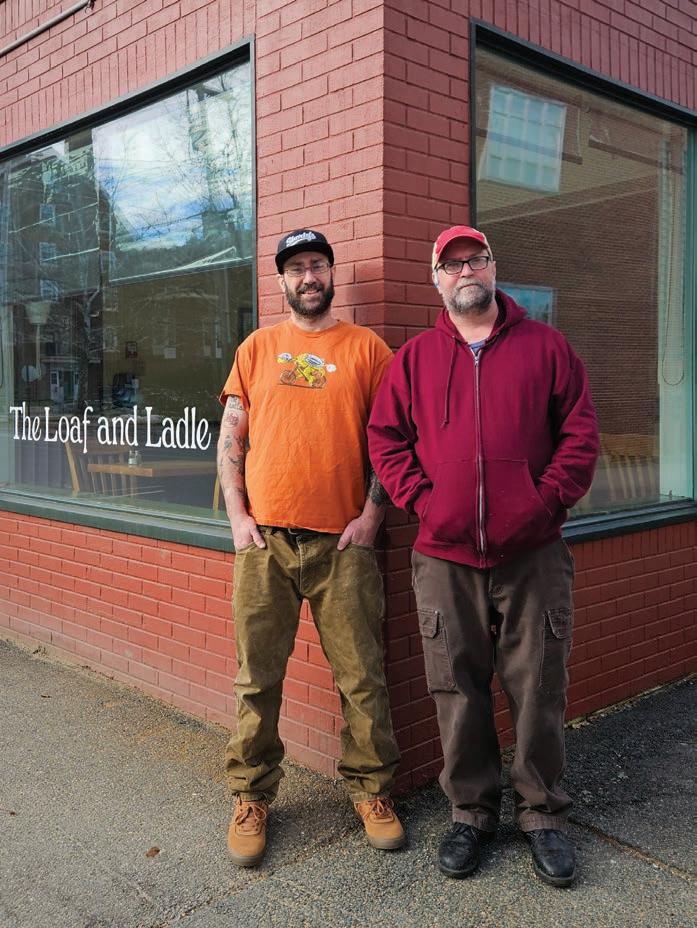
Andrew and Aidan were flattered when a longtime patron came in to show off his new tattoo: a reproduction of the Loaf and Ladle logo, which features a slice of bread positioned between two curved soup ladles.
“He got it a month before we opened,” Aidan said. “He had the cookbook, and his family were big Loaf and Ladle people. He’d been coming here since he was a baby.”
Linda Clark, who started working at the Loaf and Ladle in the fall of 1986, visited on opening day, savoring two of her favorites: a cup of clam chowder and a slice of the lemon-carrot bread.
“That brought back all the memories of years past,” she said. She even made sure to bring a loaf of the signature anadama bread, a dark, rustic bread made with cornmeal and
molasses, back to her coworkers at the office.
Clark remembers the early days fondly: “We had a line out the door for several hours every day, and the energy was electric.”
“I learned so much at the Loaf and Ladle,” she said. “I think so many of us were shaped by our time there.”
The Loaf and Ladle experienced its fair share of hardships, Clark recalled, mostly in the form of flooding events. “But we always bounced back a stronger team,” she said, “ready to get back to what we were so good at.” NH
Louie’s, 909 Islington St., Portsmouth louiesnh.com
The Loaf and Ladle, 231 Water St., Exeter Facebook
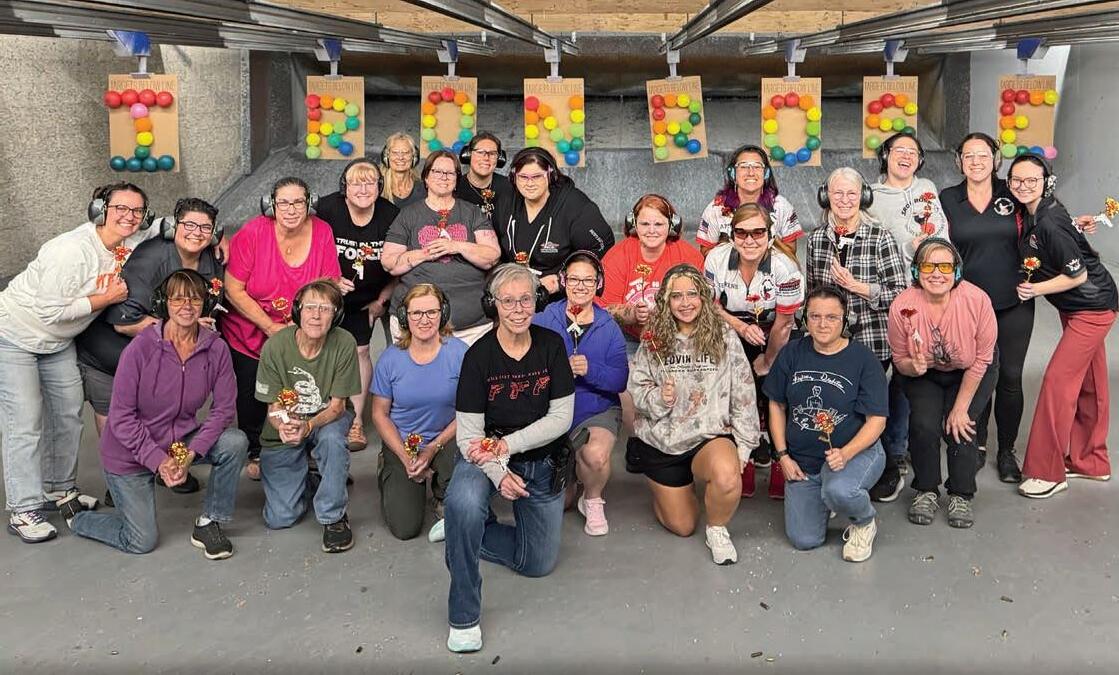
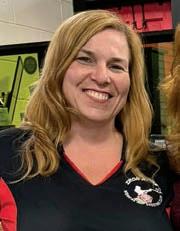
Co-Owner | Manchester Firing Line, 2540 Brown Ave., Manchester, NH | gunsnh.com
Q. What does the Iron Rose Women’s Shooting Club focus on?
Iron Rose was created to serve all women interested in firearm education, regardless of experience level. Women come into this space for many different reasons, and Iron Rose is designed to meet them where they are. Whether a woman is brand new to firearms, returning after time away or continuing to build skills and confidence, the focus is on education, safe handling and responsible ownership. Just as importantly, Iron Rose emphasizes belonging. The goal is to create an environment where learning feels accessible, respectful, and supportive at every stage.
Q. Iron Rose emphasizes a non-intimidating environment. What does that look like in practice?
A non-intimidating environment begins with emotional safety. Some women arrive confident, while others carry uncertainty, fear or concern about being judged. At Iron Rose, questions are encouraged, and learning is
never rushed. Clear communication, patience and meeting women at their current level are central to the experience. When women feel supported rather than pressured, confidence grows. That confidence directly supports both safety and long-term learning.
Q. Community is a major pillar of Iron Rose. Why does that matter so much? Firearms education can feel isolating, especially for women who may be the only female in a class or on a range. Community changes that experience. Learning alongside other women creates trust, shared understanding and reassurance that you are not alone. Iron Rose fosters connection during training and beyond it, creating mentorship, friendships and peer support that encourage continued growth. Iron Rose is also intentionally designed to spotlight female instructors and leaders, giving women a way to find, learn from and be inspired by those already teaching and leading in this space. Our guiding belief is that we are stronger

together, and when women support one another, everyone benefits.
Q. How did your own experience shape Iron Rose, and how do you hope it continues to grow?
I came into this industry feeling intimidated myself, and after more than a decade as a range owner and instructor, I have never forgotten what it feels like to be new. Iron Rose exists because I did not want women to feel like they were stepping into a space that was not built for them. Our motto is “Go Where You Grow,” because growth does not have to happen in one place. It simply needs to happen. As Iron Rose has grown, it has evolved into a national online community of women and female instructors supporting one another across state lines. That growth is reflected in the National Iron Rose Rise Together Weekend each October, which brings women together from across the country for education, connection and collaboration. When leaders collaborate instead of compete, we rise together.
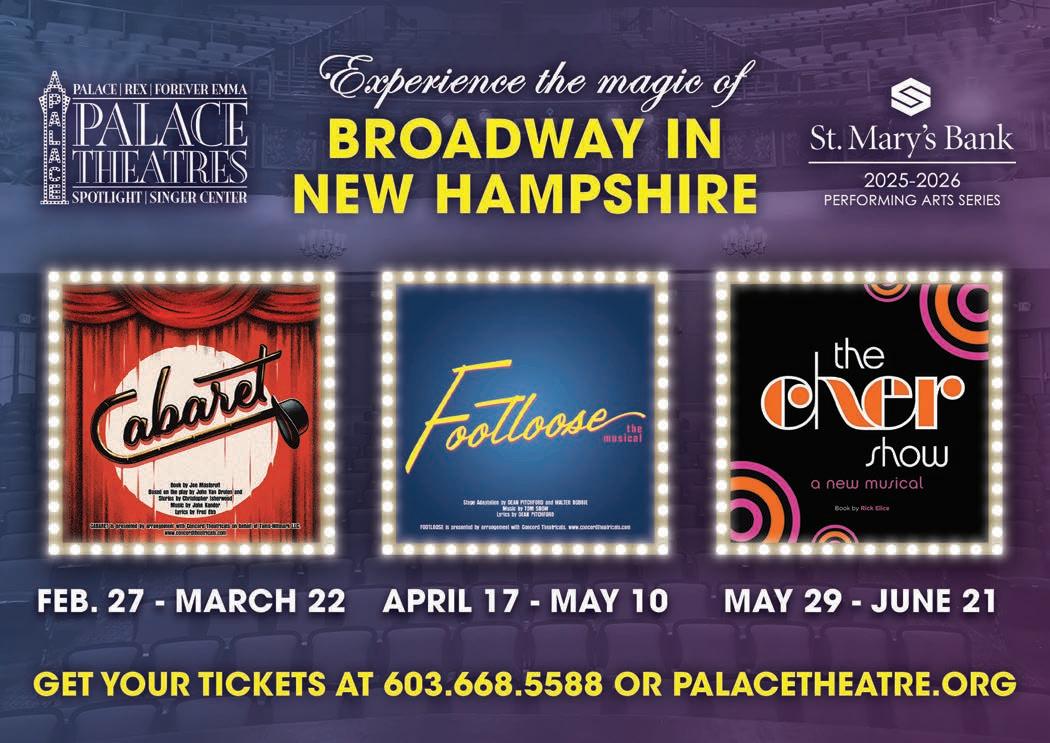

SPONSORS:




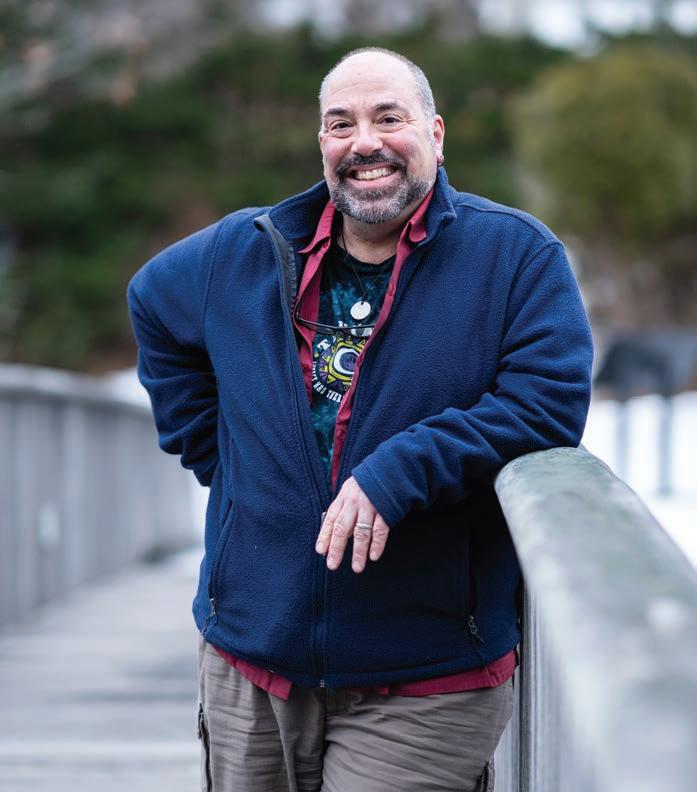
The Walpole environmentalist caps a career in waste management with a new book while embracing his childhood vocation as Charlie Brown
BY EMILY REILY
Duncan Watson of Walpole has spent more than 30 years being passionate about sustainable solid waste management.
Though it’s a highly technical topic, Watson believes saving the planet by reusing more and discarding less can be simplified with a change in thinking.
In Watson’s 2025 book, “Everybody’s Trash:
One Man Against 1.6 Billion Pounds,” the recently retired Keene assistant public works director uses eye-opening anecdotes from his own life to illustrate the importance of caring for the environment.
Watson has yet another notable accomplishment: voicing the indomitable “Peanuts” character Charlie Brown from 1975 to 1977 in TV specials like “Be My Valentine, Charlie
Brown” and “You’re a Good Sport, Charlie Brown,” and the feature-length film, “Race for Your Life, Charlie Brown.”
Besides greeting faithful Peanuts fans at comic-cons, Watson educates others around the state about new methods of recycling and waste disposal. And like Charlie Brown, Watson remains optimistic that things can change for the better.
New Hampshire Magazine: How did your interest in conservation begin?
Duncan Watson: In California in the earlyto mid-’70s, there was a pretty significant drought. Conserving water was something that we needed to do, and we took that all very seriously. To this day, I have trouble taking a shower that’s more than, like, a minute long, just because I’m thinking about water conservation.
NHM: How do you explain sustainability to others?
DW: I talk a lot about infrastructure. In July of 1969, I was at the ticker-tape parade in New York City to welcome home the astronauts from Apollo 11. It was literally a pipe dream just a few years earlier. Yet, we were still dragging suitcases to the airports, because wheels on suitcases did not appear in the patents until 1970. We’re basically at a point in our solid waste management program where we’re dragging our suitcase to the airport, and we need wheels.
NHM: What do you mean?
DW: The “wheels” is basically investment in infrastructure. The ability exists today to repurpose, have a higher and better use solution, from an energy standpoint, about 90 percent of our waste stream. Only 10 percent of that incoming waste stream would need to be landfilled.
This technology exists. In (Granada, Spain, and Oslo, Norway), they’re achieving very, very high diversion rates. One of these facilities that I’m talking about costs between $500 million and $700 million to build.
NHM: Will something better be implemented in the U.S.?
DW: (People will) basically say, ‘If we just build a new cell on the landfill, it’ll take care of this problem.’ That’s part of the challenge. People don’t understand that there is an alternative, and it’s far superior to what we’re doing right now. Unless we start talking about investments in infrastructure, this is just magical thinking, and nothing’s going to change.
NHM: Can this be accomplished in your lifetime?
DW: I sure hope so. Gosh. I’m 62 years old, and I see how things move at a glacial pace. But there’s no good reason not to do it. I hope that as more people become aware there is a better mouse trap out there, the public senti ment can get the attention of lawmakers.
And if we don’t get our collective act together with using this existing technology, then we’ve been sold out by the corporate interests.
NHM: You mentioned dumpster-diving in your book. Do you do that yourself, too?
DW: Oh, heck, yeah. It’s a professional curiosity. I’m always fascinated at what people will throw away. It’s a way of getting a snapshot of waste disposal behaviors when you get a chance to climb up on the side of the dumpster and peer over the side — even if there isn’t something that you might be able to snag out of it.
NHM: Given all that discussion, can one person still make a difference?
DW: Absolutely. I have always maintained that every individual action does, in fact, make a difference. I have a character on the front of my book named Recycling Sam, and his motto is, “Everyone makes a difference.”
NHM: Was it difficult to include your voice work in your book, because it might draw more attention to that when you want to focus on the environment?
DW: I’m getting a little more used to that part of my life coming to the forefront. The secret (is) sort of out now. It doesn’t define me, but it’s also a cool part of my resume. I’m very grateful and humbled that I got to participate in something like that. It’s also a little strange, being the voice of Charlie Brown. It’s a long, long time ago.
I’m clearly more interested in my legacy being what I did on the environmental front, but I’m also grateful. And I’m intrigued that there’s a huge fan base out there, and I get to meet some people that I never would have met under other circumstances. And I like doing that.
NHM: Are you ultimately glad for that opportunity?
DW: Yes. I didn’t know anything about this world. My association with Charlie Brown was extraordinary; but again, it was also 50 years ago. That people would still be interested in that work that I did all those years ago is sometimes a little head-scratching. Somehow, by some stroke of good fortune, I got to be associated with probably one of

“Somehow, by some stroke of good fortune, I got to be associated with probably one of the top five iconic cartoon characters in the world.”

Each day, every single person in the United States discards about 5 pounds of waste. Be it a bottle that gets placed in a recycling bin or a piece of paper crumpled and tossed into the waste bin, every bit of the daily 1.6 billion pounds cast off has a story. This book is full of those stories. It will wake you up and give you hope. As the author, Duncan Watson says, “More people in America recycle than vote. Recycling is more popular than democracy!”
Watson began his personal trash journey in his pre-teens as an attendant at a small municipal recycling center in Northern California. He has been helping run the city of Keene’s solid waste program for 33 years and has brought national attention to the program for solid waste disposal that Keene has built. Duncan spins a good yarn, and the rich characters who populate the “dump” in Keene provide endless entertainment and a lot of laughs. Always a storyteller, he continues to explore the possibility of transforming the dump culture to provide a vision of something bigger, something worthy.
“Everybody’s Trash: One Man Against 1.6 Billion Pounds” can be purchased at Amazon, Barnes & Noble, NH Audubon and local book sellers.
the top five iconic cartoon characters in the world. I’m just really humbled and grateful that I got to be a part of that. It’s definitely a part of history. I just got really lucky being in the right place at the right time.
NHM: “Peanuts” TV specials are a big part of some families’ holiday entertainment; you must hear so many stories like that.
DW: That’s exactly what I’m talking about. I put it into a phrase of: ‘Is it really a holiday until you watch the “Peanuts” special?’
NHM: When did you realize being the voice of Charlie Brown was so important to people?
DW: Well, when you go to these comic-cons and you set up your table with various Charlie Brown or “Peanuts” scenes, and (fans) start telling you about how your voice was something that they would use as a lighthouse, for a safe harbor for themselves. When they needed some comfort or some safety and security, they would put on their “Peanuts” specials because they knew what was going to happen. They associated my voice with something that represented something comfortable to them.
And I love holding space for that and hearing what that meant to them. And I understand — It’s obviously not me. It’s something much, much bigger than me that I just happened to be associated with.
NHM: What is your favorite Charlie Brown episode that you worked on?
DW: “Be My Valentine” was my favorite one, because it was my first one. It’s very sad that Charlie Brown brings two briefcases to school for Valentine’s Day, thinking of all the Valentine’s he’s going to get. And then he ends up getting no Valentines whatsoever. His friends feel bad and bring him a used Valentine, and he’s so desperate to get the Valentine that he’ll accept the used one. These are pretty great gags.
I always think of Charlie Brown as the ultimate optimist. It never really does go the way that he thinks it’s going to. And he doesn’t give up. He picks himself up, dusts himself off and tries again. I’ve had many, many Charlie Brown type of incidents in my life. And I think we can all relate to these things, but we don’t give up. We realign and try again. NH













A poor farmer who scrimped on his own needs left a surprise in his will to his beneficiaries
STORY AND PHOTOS BY MARSHALL HUDSON
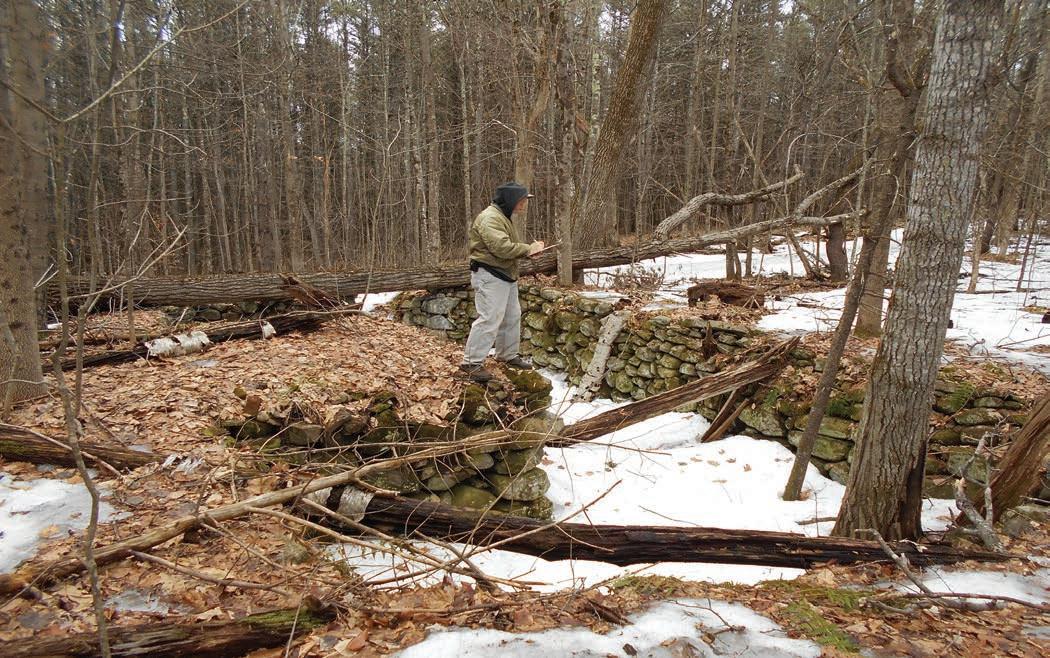
I’m poking around in an old cellar hole on a forgotten farm in the corner of the world where the towns of Canterbury, Loudon and Concord all come together. The cellar hole is atop a rocky knoll, and somewhat like a castle moat, is surrounded by wide, stagnant marsh.
Old maps indicate that a road once provided access to this house, but historical records reveal the house was dismantled about 100 years ago, and maintenance of the road ceased. Encroaching forests and zealous beavers have plugged the swamp outlets and flooded the access road. I hoofed it in here following abandoned roads and crossing the frozen marsh on the ice.
Maps of this area are contradictory, with some showing the entire area being a part of
the town of Loudon, but the town line corner markers indicate the old farm straddled the town line. While the house was in Canterbury, the adjacent barn was in Loudon. Both structures are now long gone. The remaining cellar holes, stone walls and outbuilding foundations suggest this farm was once an active place.
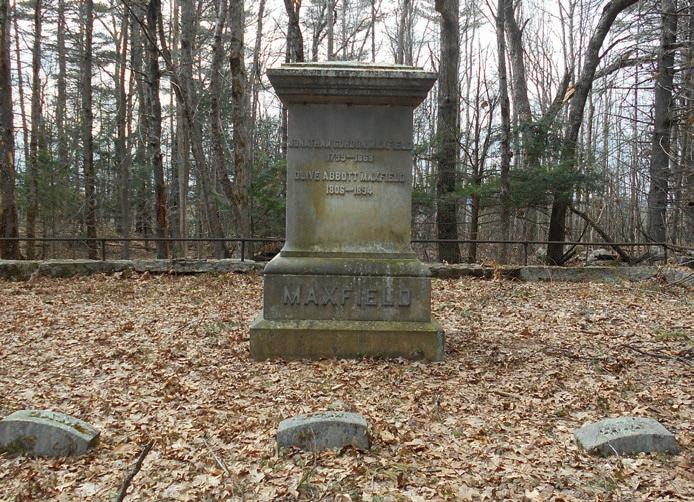
The family burying ground, across the dooryard from the barn, is small and contains a handful of headstones. Probably not intentionally, but some of the graves are in Canterbury and some in Loudon.
An important-looking monument in the center of the cemetery announces the name, “Maxfield.” Collectively, the dates on the headstones suggest the family resided here for generations, up until the early
1900s. Puzzled by why such a prominent monument would exist at this remote hardscrabble farm, I found the answer in an old newspaper clipping.
The last Maxfield to own the property was William Maxfield, a farmer who grew apples on this hill in the late 1800s and then sold them door-to-door from a broken-down horse-drawn wagon. The road into his farm from Canterbury Center was rough and unpassable at times, so Maxfield preferred to travel the longer route into Loudon Village, where he sold his apples and other produce. Village residents described him as frugal and poor: “He was short and chubby and had a full beard and wore a rusty looking coat. He looked like he didn’t have the things he needed.” Maxfield appeared to be teetering on poverty, and housewives sometimes took pity and purchased his produce whether they needed it or not.
Maxfield lived all 76 years of his life as a bachelor on the farm, and died alone in 1905 of what is described as “cardiac dropsy and valvular disease of the heart.” His handwritten last will and testament left a small amount of cash to be shared by nieces and
nephews, along with a donation to the Canterbury Free Will Baptist Church. He also left money for his burial expenses, requesting to be laid to rest beside his parents, in the family graveyard.
The will further stated that the remainder of his property and assets were to be left to the town of Loudon. His farm consisted of 119 acres, which included the rundown house on 10 acres in Canterbury, 2 acres in Concord and the remainder in Loudon. Except for some small orchards, most of the land was rocky, steep or wetland.
Maxfield’s will stipulated that Loudon could never sell the farm, and that the town must maintain the family cemetery located on it. Because the farm couldn’t be sold, it had little cash value. It was presumed that other than the farm, there were few additional assets in his estate. To everyone’s surprise, Maxfield had cash and savings worth some $16,692. He also had a life insurance policy valued at $20,000, a significant amount of money in 1905. An inventory of his estate also discovered Maxfield owned rental properties in Penacook and Loudon.
Maxfield’s will bequeathed nine relatives a combined gift totaling $1,800. When the will and inventory of his estate were placed on public record at probate court, the nine relatives, along with five other relatives, protested and filed a lawsuit contesting the legality of the handwritten will, charging that the deceased Maxfield was not of sound mind, and that the will hadn’t been properly witnessed.
The NH Superior Court upheld the terms of the will and dismissed the charges brought by the disgruntled relatives.
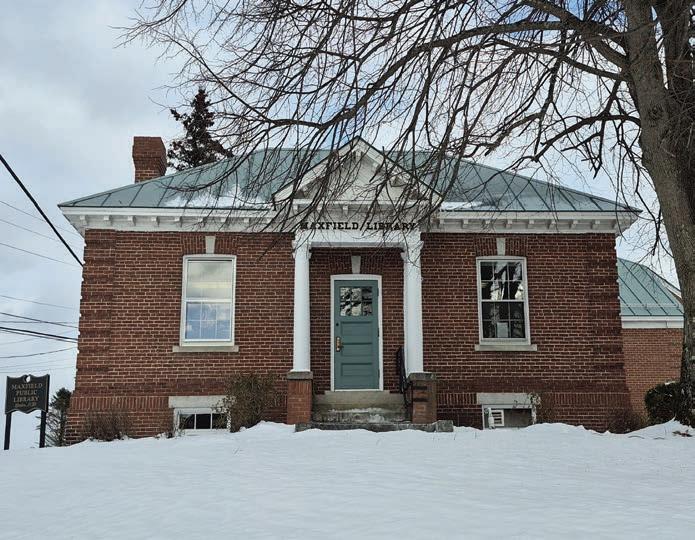
Residents of Loudon must have been surprised to discover that the frugal and poor Maxfield had generously left his farm, worldly possessions and bulk of his estate to the town. Loudon residents voted to accept the donations, along with the stipulations specified in Maxfield’s will. Further, they voted to use this money to construct a Maxfield Public Library named in his honor. The new library would
be built at the crossroads in the village where he had once sold apples door-to-door. Construction of the new library was completed in 1909 and remains in operation today, although expansion projects have increased its size.
Maxfield’s farmhouse, a deteriorating, dark, center chimney cape on an open hilltop in Canterbury, was leased out for a few years by the town of Loudon. But about 30 years after his death, Loudon voters lacking funds for the continual maintenance and repairs had it torn down. Workmen dismantling the building found books and old magazines stuffed beneath the floorboards acting as crude insulation to keep the winter wind and cold out. The barn lasted a few more years and then it, too, was taken down.
This story explains the cellar holes I’m now exploring, and also the unusual Maxfield monument in the woods at this remote site. Perhaps it also explains why maps of this area sometimes indicate Loudon bulging across the town line into Canterbury. What it doesn’t explain is why an apple farmer went without the things he needed, only to leave significant funds to the town. But I think Maxfield would be pleased to know his lifetime of scrimping and saving resulted in a public library, monument and curious tale.
You never know what you’ll find poking around in old cellar holes. NH
UNH Wildcats and Kingswood New England Polo & Equestrian gallop to success



ederico “Fede” Wulff had a dream. This past fall, as his piercing blue eyes gazed across his Kingswood of New England Polo & Equestrian facility in East Kingston, watching princely horses trot through the bucolic setting, the 40-year-old native of Argentina realized his dream was now a reality.
“The concept of our business is to follow our passion,” Wulff says. “I know for sure that we and the entire Kingswood family are doing this for the right reasons.”
The serene setting, though, was soon replaced by controlled mayhem, as the women’s polo teams from the University of New Hampshire and Skidmore College squared off at Kingswood’s cavernous indoor arena. For Wulff, that dichotomy is the very nature of polo.
“For me, polo is the most difficult sport in the world,” he says. “It combines a unique connection with the horses, endless strategies, teamwork and lots of work and training behind the scenes.”
While Kingswood may be the culmination of Wulff’s vision, there’s little question that he and this impressive facility have launched many more dreams — reviving a moribund horse farm, establishing a first-class equestrian and polo facility, and enabling UNH to launch a successful women’s polo program in 2024, while also absorbing the polo programs at Babson College.
“Fede is instrumental in both Kingswood’s and UNH polo team’s success,” says Ariadne “Ari” Dogani, captain of the UNH polo team and a senior in the Animal Science: Equine Industry and Management program within UNH’s College of Life Sciences and Agriculture (COLSA). “Without his management of horses and people, his personality, his knowhow, his horsemanship, and his exceptional ability as player and coach, our UNH polo team would not have been able to rise to prominence in such a short time.”
Wulff has coached the Babson teams since 2022 and recently took over the reins of the UNH team from Kingswood assistant manager Ernesto “Rulo” Trotz. Like Wulff, Trotz hails from Buenos Aires, Argentina. He first came to the United States with his father, a professional polo player, and then relocated more permanently eight years ago to pursue his own polo career. He has played with Wulff and was impressed with his countryman’s devotion to his profession.
“When Fede created Kingswood, I told him, ‘Don't leave me out of this. I want to be a part of this,’ ” Trotz says. “I saw the potential that the place had. Federico has a lot of imagination, a lot of plans and a lot of projects. I wanted to work in a place like that.”
Wulff arrived here in 2002 to play polo professionally (he is a three-goal-rated professional; five goals indoors) and work as a trainer. The Kingswood location in East Kingston, he says, is ideal, “close enough to


the city of Boston. But, the number of schools and universities is also great for upcoming polo players.”
The 180-acre operation is an equestrian utopia, offering boarding options and riding instruction for all ages. During the winter, Kingswood houses between 40 and 60 horses, and that number increases to more than 100 during the warmer months. Similarly, Wulff’s staff of five during the winter expands to 10 in the summer. The property, by equestrian standards, is immaculate.
“The Kingswood facility is state of the art,” says Claira Seely, assistant professor with

UNH’s Department of Agriculture, Nutrition, and Food Systems, and faculty advisor to the UNH polo team. “I can safely say it is one of the nicest horse barns I have ever been in.”
As the farm’s name suggests, Kingswood’s priority is polo, embodying Wulff’s vision of establishing a world-class program in New England. But Kingswood needed more than a vision; it required a serious financial investment and plenty of elbow grease. Work began immediately after Wulff purchased the dilapidated property in June 2022, with a full renovation of the existing stables and barn, barn bathroom and temperature-controlled
tack rooms, the addition of 18 stalls in a second barn, 14 outdoor paddocks and 30 outdoor stalls, plus a new outdoor polo field and outdoor practice area.
The center stage at Kingswood is the facility’s indoor polo arena. Insulated and illuminated with LED lighting, the arena features an elevated, heated viewing deck with linen-covered tables for spectators, two new bathrooms, dressing rooms and a players’ lounge that showcases the trophies won by Kingswood-affiliated teams. Spectators — typically family members and friends — set up tables of food and other refreshments,
giving the deck a true tailgating feel.
“The atmosphere we’re trying to create is that you can spend the whole day here,” Wulff says.
But creating an inviting space, and drawing new polo fans, meant dispelling misconceptions about the game.
“Many people do not try the sport because they think it is too exclusive,” Wulff says. “We try to attract as many new people as possible and guide them through it, showing them that there’s always a way.
“There is much more to the sport — the love of the animals, the lifestyle, how
healthy it is for families to be involved in such an amazing environment,” he says.
Wulff established an interscholastic program for young players ages 12 to 18, an intercollegiate program that currently hosts UNH and Babson, a club polo program for Kingswood members and a coaching league program for beginners. During the summer, Kingswood offers similar programs outdoors, and Wulff plans to host tournaments every Saturday to increase exposure.
“We want to make a difference by making sure people know that this place is for everybody,” Wulff says. “The gates are always open.”
The lure is the expertise that Wulff, Trotz and other staff members bring to the Kingswood programs, and the quality of the amenities.
“We have the facilities, and we’re waiting for more players to get involved, new people that are not from the sport and want to see what it’s about,” Trotz says. “And I guarantee that everybody, every person that comes, they get hooked.”
Shortly after purchasing Kingswood, Wulff welcomed the Babson College men’s and women’s polo teams. His plan for hosting collegiate programs was elegant and affordable. Kingswood provides the ponies, including their care and boarding, the facilities where the teams can practice and play, and any necessary coaching. The schools produce the players and a portion of the required finances.
“We offer a premium service for riders,” Wulff says. “Colleges usually have a hard time figuring out ways to afford their polo program. There are too many expenses and responsibilities, so eventually their efforts wear off and their level of horses gets weaker.
“We’re a third-party provider, and (the schools) don’t have to think of anything,” he says. “Kingswood offers sustainability. You only succeed by growing the program. You have to keep growing.”
The seamless integration of the Babson teams paved the way to establishing the women’s polo program at UNH. Driven in large part by Dogani and her parents, Wulff offered Kingswood as the team’s home base, but the idea still took several years to reach fruition.
“Polo isn’t just another college or club
sport,” says Dogani, 21, of Brookline, Massachusetts. “Besides the players, it requires a college recognition as a college sport, a faculty sponsor, team formation documents, a regulation polo arena, strings of trained polo horses, a polo coach and funding for a budget to maintain all of the above. With the support and persistence of the leadership of COLSA, the UNH Foundation, and the United States Polo Association, we found a way to combine our team’s enthusiasm, Kingswood’s expert coaching and polo resources, and launched the team for the 2024-25 season.”
“There is much more to the sport — the love of the animals, the lifestyle, how healthy it is for families to be involved in such an amazing environment."
— FEDERICO “FEDE” WULFF
According to Wulff, the ongoing support and financial investment of the Dogani family “has been essential with everything at Kingswood.”
“They believe in my dream and vision, and from there, the journey began,” Wulff says. “We say to each other: This is two families sharing a dream, and we need to make sure this concept is what other people see so we can make the polo family bigger.
“The Doganis thought how important it would be to add another equestrian sport to UNH,” he says. “The rest is history.”
The UNH team immediately established themselves as a force, reaching the finals of the U.S. Polo Association Women’s Division II National Intercollegiate Championship last spring before losing a heartbreaker to Cornell University in overtime. The Wildcat crew benefited from the veteran leadership of Dogani and Brynn Roberts, a senior nursing major who was a member of Dogani’s high school polo squad.
However, teammates Catherine Ling and Rebecca LaFrance were new to the game. Though both are skilled equestrians —


they compete for UNH’s Intercollegiate Horse Shows Association team — Ling and LaFrance soon realized that polo, and adapting to polo ponies, was a very different proposition.
“My initial attraction to the sport after playing a few times was the speed. I loved when there was a breakaway in a game or practice, and I could just explode after the ball or the other horses,” says Ling, 22, of Wolfeboro. “I was also so impressed with the horses and their training. They are so unlike the horses that I am used to riding, you’d think they are a completely different species.”
One of the time-honored beliefs among polo players is that the ponies are the true athletes on the pitch. Riding techniques, Ling says, “are completely different on the polo ponies, which was a bit of a learning curve.”
“But once I started to understand, there was almost no limit to what you could ask them to do,” she says. “They can rock back on their hind end and pivot on a dime with just a light shift in your seat and guiding motion with your hand.”
LaFrance, a 22-year-old from Berwick, Maine, fortuitously met Dogani her freshman year. By her junior year, she was on the team.

“The adrenaline from playing and the combination of riding horses, which I had already had a deep love for, and playing a team sport made me love the game,” says LaFrance, a senior studying psychology.
Trotz, who coached the UNH team last year, says a key ingredient is matching ponies with players based on ability.
One significant hurdle for the UNH newcomers “was to actually grab the mallet properly and be able to hit the ball properly,” Trotz says. “That was the biggest challenge, because all the riding skills that they already have makes it much easier to learn. They already have the foundation; that is the riding.”
This year, the team welcomed two new players — sophomore Jamie Sherman of Brimfield, Massachusetts, and freshman Heidi Goodwin-Wienges of Hope, Maine — both of whom have years of riding experience but no polo background.
“I came into the sport never having played a day in my life, and was a nervous wreck,” Goodwin-Wienges says. “Federico has always been so supportive and patient and has been the best coach I could ask for. Polo can be very intimidating, but I know I’m being taught by the best.”
The ponies at Kingswood, she adds, “are absolute beasts, and are the most athletic and powerful horses I’ve ever sat on.’
“I’ve never ridden horses who enjoy their jobs so much,” says Goodwin-Wienges. “They are treated with so much respect by everyone at Kingswood.”
Dogani says those ponies are “the essence” of the Kingswood programs.
“Without them, nothing would be possible,” she says. “Fede, like all dedicated polo players and horsemen, defines himself by the quality and condition of the horses. After all, horses account for more than 70 percent of the success of every player.
“Horses are the ones that allow a good player to shine,” Dogani says. “The fact that we use top quality horses allows all our players to perform better, learn easier and progress quicker. Not all programs are as lucky. Most college programs must make do with donated older horses or retired horses, and that makes it harder on both the players and the horses to perform their best.”
The players, however, also acknowledge that the overall success of the program depends on more than ponies, quality coaching,

Members of the UNH and Skidmore College polo teams celebrate a spirited match. From left: Ariadne “Ari” Dogani, Nora Jackson, Heidi Goodwin-Wienges, Charlotte Wilkes, Rebecca “Becca” LaFrance, Eleanor King, Jamie Sherman, Val Chervinskaya and Catherine Ling.
and the facilities. In addition to praising Seely in her role as faculty advisor, Dogani credits Sue McDonough from the UNH Foundation as being “a force behind the scenes getting UNH to support us.”
“She was one of the first people at UNH that recognized the benefit of having a polo team,” Dogani says. “Polo is a lifelong sport, and college polo creates a great opportunity for alumni to stay engaged with the school.”
Seely, conversely, says the lion’s share of the recognition belongs with the players.
“The dedication by the team members and unwavering support of one another is incredibly valuable,” Seely says. “In their first season, only two of the girls had played polo before, but that didn’t stop them from playing collaboratively and doing incredibly well.”
At the beginning of 2026, the UNH women had already qualified for the Northeastern Regional Championship, which will be held at Kingswood in mid-March. Home turf. Just the scenario to inspire new dreams. NH
For details on programs offered at Kingswood of New England Polo & Equestrian, visit kingswoodpolo.com.
As an equine pursuit, polo is an agility-oriented, adrenaline-fueled discipline that combines “the highly technical, careful, and structured showjumping routines with free-flowing and improvisational riding that must be adapted to every play,” says Ariadne “Ari” Dogani, captain of the UNH polo team.
“I started, like most people who have no family or background in polo, by playing arena polo,” she says. “Arena polo teaches you the basics without requiring significant investment in horses and is particularly accessible to prospective players in the Northeast, especially during the winter.”
Polo is often referred to as “hockey on horseback,” and indoor, or arena, polo takes that comparison to the next level. The game is played in a venue that looks like a hockey rink, without ice.
At Kingswood of New England Polo & Equestrian facility in East Kingston, the arena measures roughly 300 feet by 100 feet, enclosed by boards to keep the ball in play. There’s even a Zamboni-like groomer that levels the sand-covered pitch at halftime (outdoor polo, meanwhile, is played on grass, which led to the wonderful tradition of spectators “stomping divots” at halftime).
The indoor game has obvious similarities with outdoor polo. Both versions feature polo ponies and mallet-wielding players. The object is still to put a small ball into the goal, and to do that more often than your opponent. But there are distinct differences.
The outdoor goal is typically 8 yards wide, while the indoor goal is between 10 feet and 12 feet wide. The outdoor field is enormous — the size of nine football fields. The much smaller arena means each team has three pairs of ponies and players instead of four, and the game itself is shorter, consisting of four chukkers of seven minutes each (rather than six to eight chukkers outdoors).
Those variations mean the players require fewer ponies — two to four for indoor polo compared to six to 10 or more for outdoors. That allows Kingswood to provide ponies for visiting teams (the teams switch ponies during the match to ensure fairness).
The indoor ball is also different. Unlike the hard, solid plastic ball designed for long passes and shots, the arena polo ball, while the same size, resembles a mini-soccer ball, softer with a bladder, to prevent injuries (while also creating rebounds off the boards, changing tactics).
While outdoor polo is defined by speed, more spacing with long passes, elegance and endurance, arena polo is better known for its rough-and-tumble nature, a physicality that demands quick reflexes and tactical rebounds.
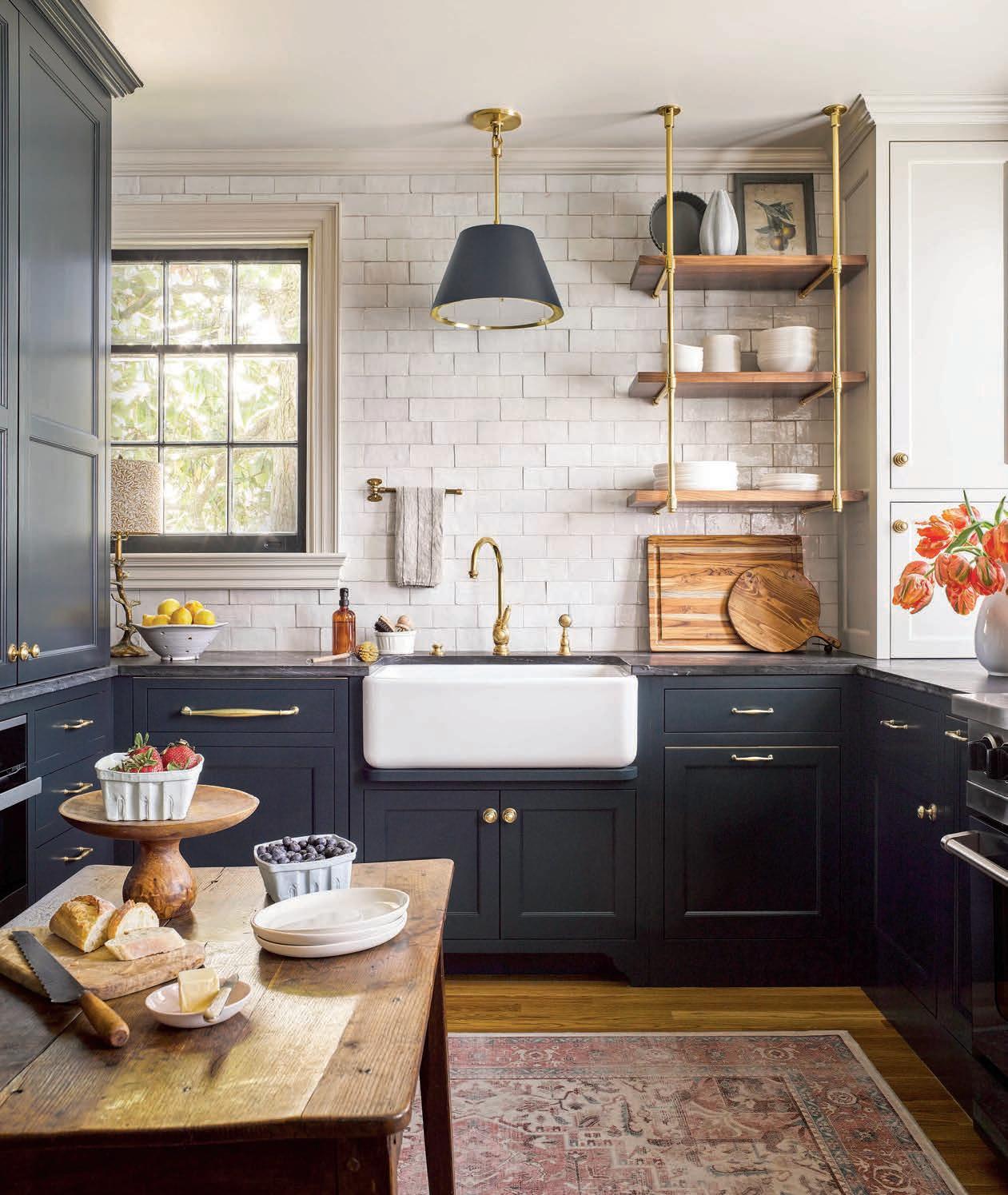
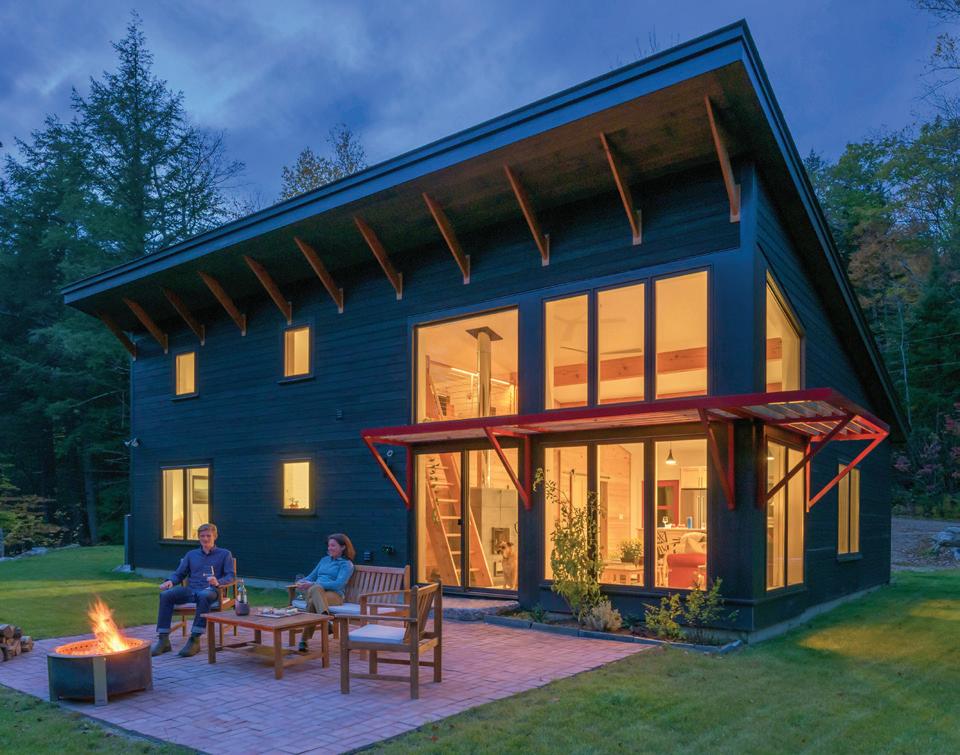
Picture-perfect mountain views from large, high-performance windows complement the restrained interior design. Artistic lighting, colorful chairs and solidwood furniture come together for a modern aesthetic. This energyefficient home in Carroll County was designed and built by BEAM Construction Associates, Inc., for outdoors-loving homeowners.

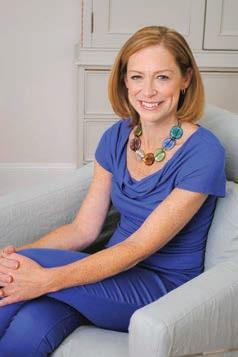
As I write this, most of New England is digging out from the biggest winter storm in years. It’s not so bad, though, as we’re also gloating over the Patriots’ win over the Broncos. By now, maybe Drake Maye and team have become Super Bowl LX champs!
Besides snow and football, this time of year is also a prime moment to think about giving your home a glow-up. Whether it’s adding a pop of color to a neutral palette or knocking down a wall to combine two small rooms, a step in a new direction is sure to boost your spirits and help keep cabin fever at bay.
Greeting spring with a fresh take on your everyday environment comes highly recommended for both aesthetic and functional reasons. For specific steps you may want to follow, we’ve invited experts in several areas of professional home and landscape design to share their knowledge in this special Home & Garden issue of New Hampshire Magazine.
Many of these industry leaders are familiar to me as editor of this magazine’s sister publication, New Hampshire Home. Six times a year, we feature brand-new houses, whole-home makeovers — large and small — beautiful landscapes and gardens, interviews with design/build authorities, talented artists and much more. It is a privilege to share this wealth of home and garden expertise with readers of New Hampshire.
In these pages, you’ll find plenty of suggestions for beautifying your home as well as tips on topics like downsizing, energy efficiency, smart home technology, minimizing maintenance and even putting your home on the market.
So, as the days get longer and we inch closer to spring, think about giving a single room or your entire house a completely new look. You won’t regret it!

Janice Randall Rohlf Editor, New Hampshire Home Magazine
BY ROB DUCA
As an architect, Tracy Kozak has the training and expertise to maximize every inch in a house with a modest footprint. But when it comes to living large in a small space, she has another advantage: She has lived it.
For 27 years, Kozak raised a family of four in a 200-year-old former fisherman’s house in Portsmouth with less than 900 square feet of living space.
“We had a view across Portsmouth Harbor all the way to Kittery, Maine, and that was more important to us than a large living
area. It was all about location, location, location,” says Kozak, of ARCove Architects in Portsmouth.
The location was ideal, but the footprint wasn’t, and that required plenty of flexibility and ingenuity. Kozak created space by cleverly turning a dining room into what she calls “our everything room.” Convertible furniture choices included a table that expanded for dining and folded into a desk-sized box, a piano that was used as a sideboard when the top was closed, kitchen countertops that folded up when cooking and down when not
needed, ceiling racks over the sink to hang glasses, and sliding drawers under all the living room furniture for storage.
“We had cubbies under the stairs and little nooks and crannies everywhere,” she says. “There is a ton of wasted space in a typical house. Closets, cabinets, stairs, plumbing fixtures — none of them are designed to maximize space. Built-in storage is essential.”
There are many such ways to create the illusion of space. The use of vertical space, with floor-to-ceiling shelves, frees up floor space. Closet organizers and over-the-door
storage capitalize on every inch. Hidden spots, such as under the bed, behind doors and in awkward corners, can house storage bins or shelves. Beds with drawers, ottomans with storage and tables that fold down are also wise choices, as is furniture with simple lines and exposed legs that make a room feel less crowded. But when it comes to that plush, oversized sofa? Forget it.
“That takes up a lot of space,” says Shannon Alther, principal architect at TMS Architects & Interiors of Portsmouth. “Maybe go for something a little more modern or chic, in terms of its bulkiness, and that might allow you to put a cabinet behind the sofa, which could store books, or even dining ware, so that it becomes like a pantry that will consolidate space.”
One of the first things Kozak advises homeowners is to declutter. “Get rid of the things you don’t use,” she says. “It takes a lot
of self-discipline, and it’s hard, because we’re all frugal Yankees, and it’s not easy to let go of things that are still useful or sentimental, but you have to do it to live in a small space.”
A useful design trick she recommends is strategically placing frameless mirrors high on a wall. “The mirror will reflect off the ceiling and make it look like it’s pulling you into another room,” she says.
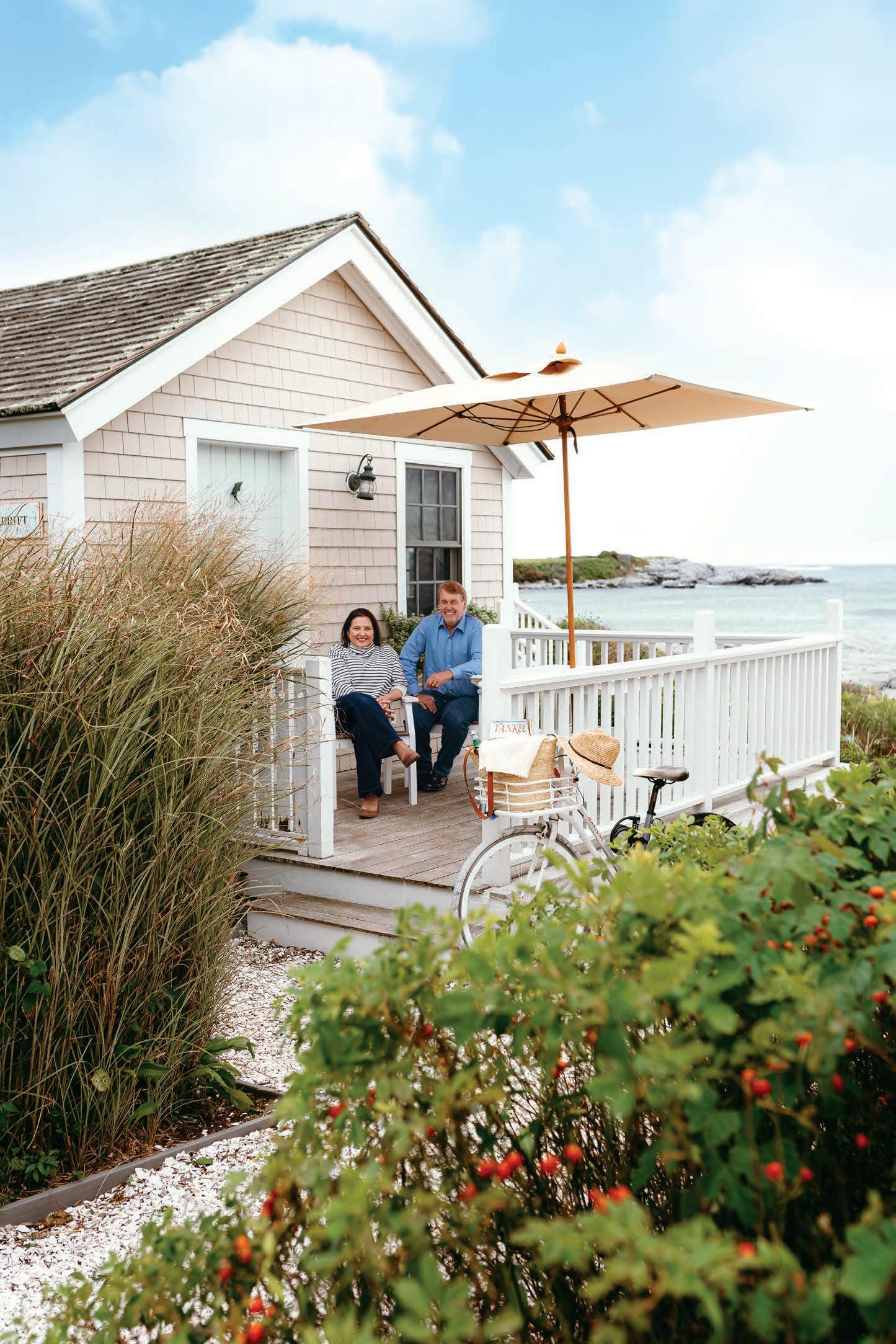
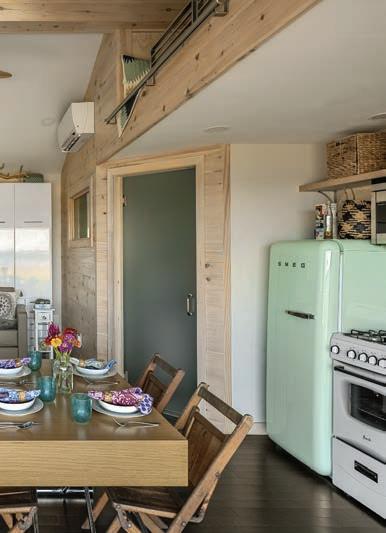
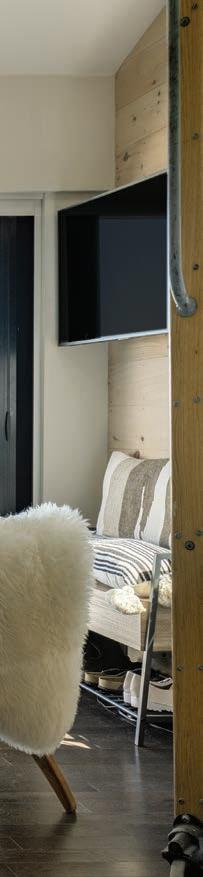
Jeff Feuer and his wife, Leslie Feldman, who purchased a 340-square-foot seaside cottage eight years ago, turned to Alther to design a welcoming home that never feels claustrophobic, “even though we have 1,500 square feet of stuff crammed into 300 square feet of space,” Feldman says.
One reason is a 12-foot-long La Cantina folding door that replaced nearly the entire back wall of the cottage and provides unobstructed ocean views, while turning the wraparound porch into an extension of the
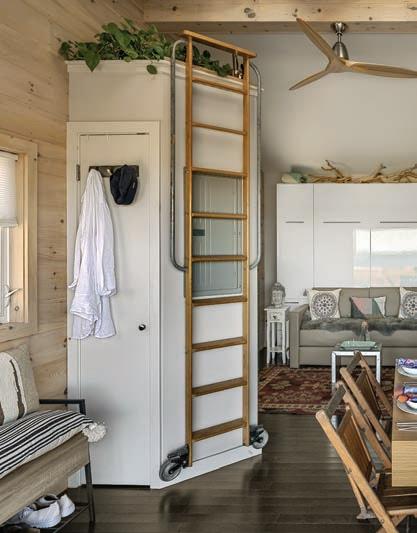
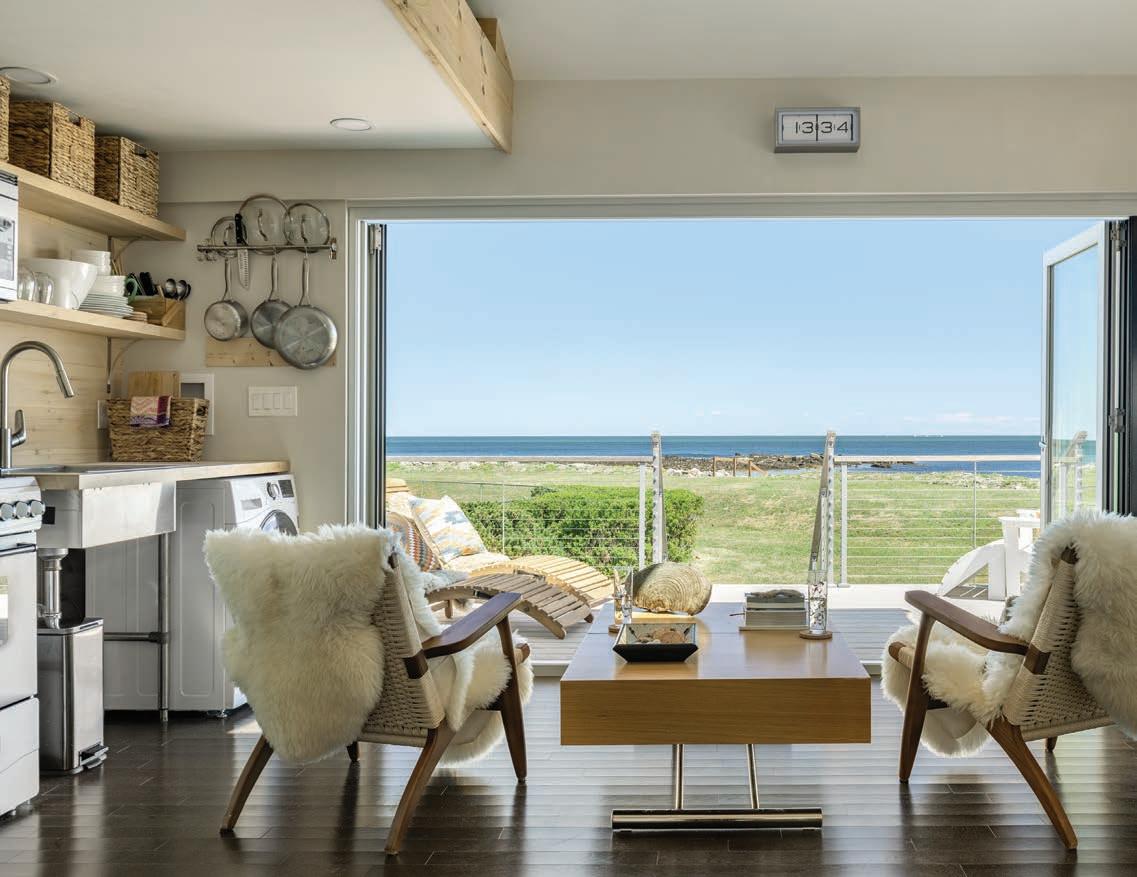
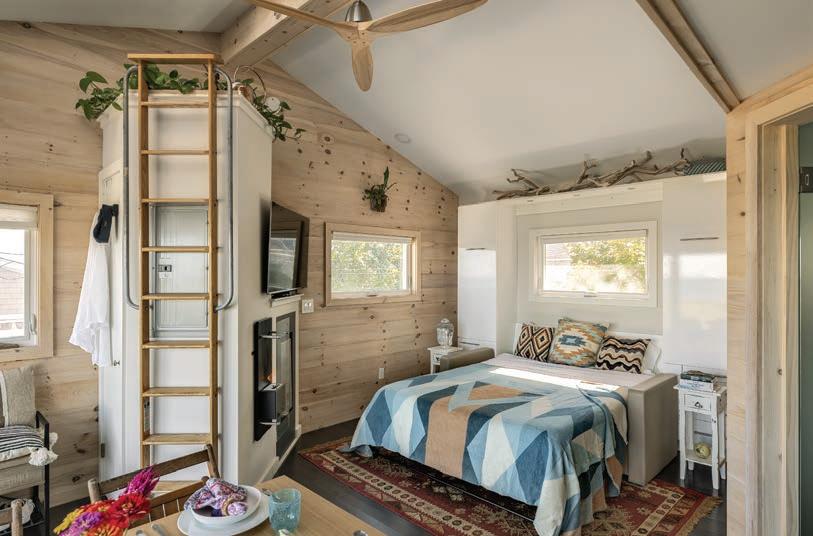
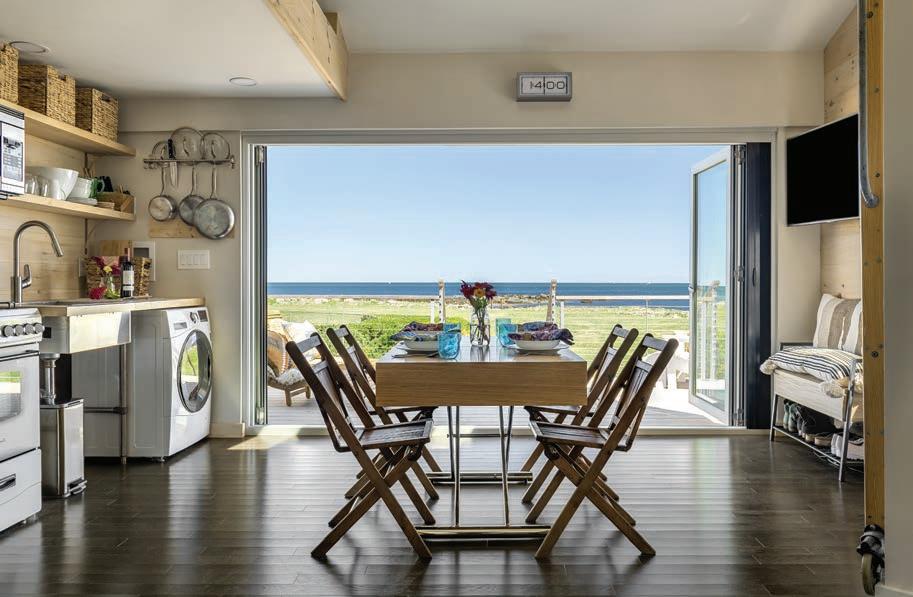
living space. Another is the removal of the attic, which was replaced by a cathedral ceiling, with two skylights that now flood the interior with natural light.
Now, Feuer says, “The feel of the place is like you’re staying in a really, really nice hotel room that’s overlooking the water, so whenever we go there, we feel like we’re on vacation.”
Among Alther’s tips when working with a
modest footprint is to avoid full-size kitchen appliances. “Maybe you look at a 2-foot-wide refrigerator instead of 2.6, which is standard,” he says. “Six inches doesn’t sound like a lot, but with that space you could have tray storage and a couple of shelves for silverware. Every 6 inches in a kitchen is important.”
He also suggests installing a convection oven that also serves as a microwave and downsizing to a two-burner stove. As for
that desired dream dining room that will host family dinners on Thanksgiving and Christmas, Alther says bluntly, “Don’t design your house for two days of the year.”
Instead, he offers, design a slightly larger living room that is open to the kitchen, and bring in a table that expands and contracts. In the Feuer-Feldman house, the dining room table expands to seat 12 but also converts to a small coffee table.
“We’ve rolled that table onto the deck, turned it horizontally and had parties,” Feuer says.
Rooms should adapt and do double duty. For example, a mudroom or entryway could have a bench seat where the top lifts up for storage and there are cubbies below to place shoes. “Think about using spaces twice, not only vertically, but horizontally,”
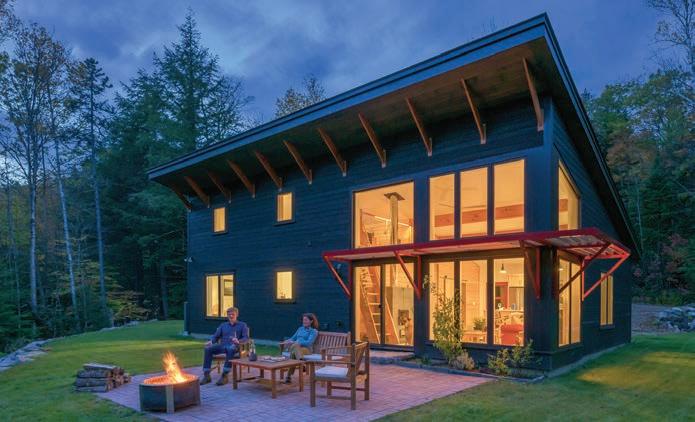
Pier and Emily Pennoyer's 1,000-squarefoot home is clean and modern, with a pop of red in the steel beam and supports. Stacked, oversized windows bring in light and make the interiors of the home feel more spacious.
Alther says. “That minimizes the amount of floor space you are using, while balancing the open feeling of space.”
For Pier Pennoyer and his wife, Emily, the use of glass was a major factor when designing their 1,000-square-foot home. Two
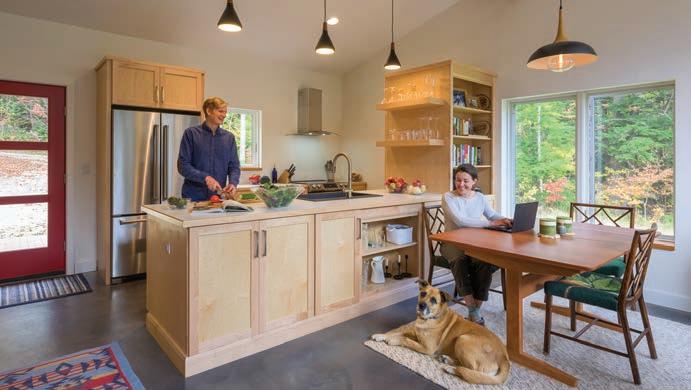
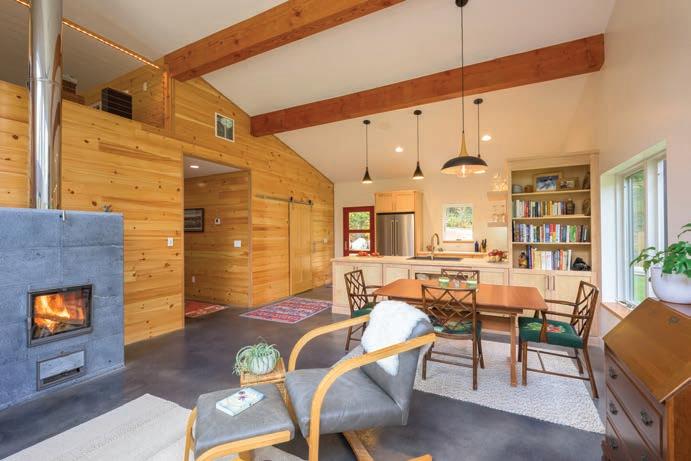
rows of 6-foot-high windows, stacked on top of each other, provide endless views from the main living areas.
“The windows let in so much daylight that you feel like you have this wide, expansive space,” Emily says. “When you’re sitting at the kitchen table, your eyes are drawn past the walls of the house outside to the trees and beyond.”
Pier’s dad, Sheldon Pennoyer, an architect, made some creative design choices. For example, a hallway that runs along the eastwest access of the house is wider than usual, and kitchen countertops are more than 4 feet wide. “We could have added an extra square foot or two in each bedroom instead, but we made the decision to put that into what would traditionally be smaller spaces, and I think that contributes to the feeling of having more room,” Emily says.
A loft tucked along the pitched roof’s highest side serves as both an office and a guest bedroom, and off the kitchen is a laundry room, which includes shelves and a ski locker for cleaning supplies and winter gear.
“Between the laundry room, the crawl space up in the loft, and with the pitched shed roof and the lower angle of the ceiling that’s not usable space for walking around, there’s plenty of room for storing things that we don’t need access to every day,” Emily says.
Finally, a sliding glass door provides access to a patio, which in summer becomes an extension of the house, where the couple host dinners around a firepit. “That gives us another 200 square feet of living space,” Pier says.
With resourcefulness, a few wise choices and a design trick or two, the goal of living large in a small space is not unrealistic.
“Just think high ceilings, lots of windows, flexible-use spaces and rooms that can adapt,” Kozak says. NH

BY CRYSTAL WARD KENT
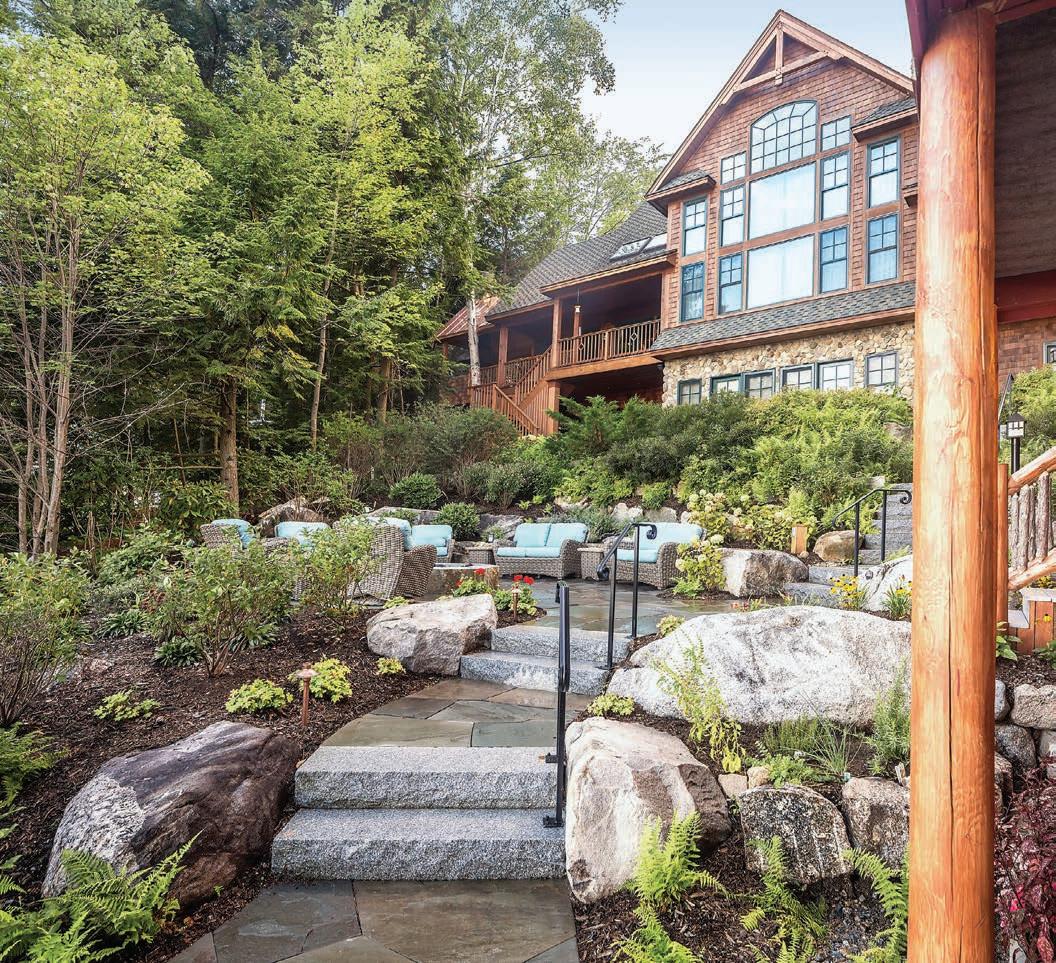
Yards come in all shapes and sizes, but whatever their dimensions, they function best when fully integrated with the home.
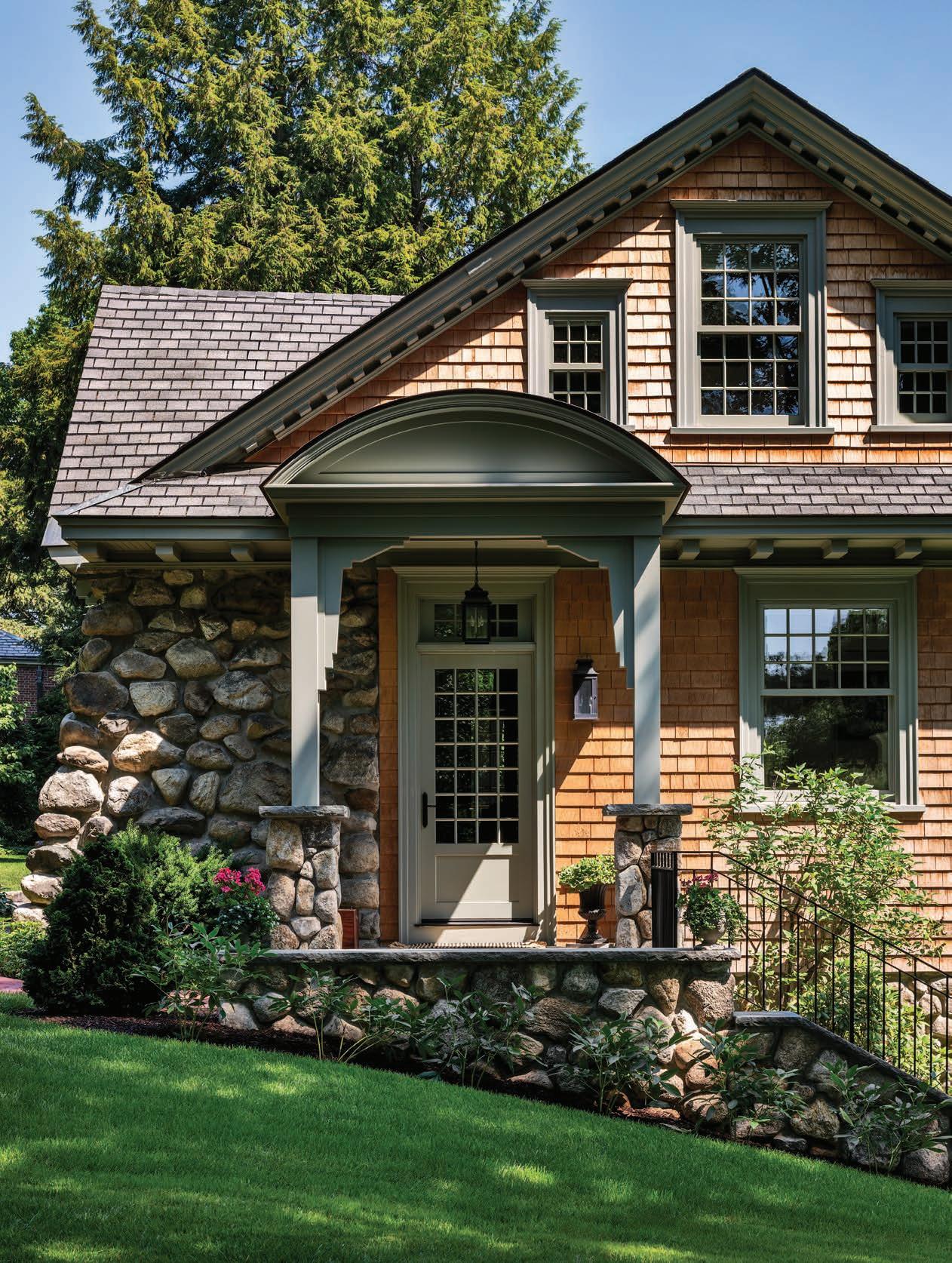
“If you are embarking on a new build, have your architect and landscape architect work together,” says Daniel Bruzga, owner of db Landscaping LLC in New London. “How your outdoor spaces relate to your home can influence everything from window placement
to elevations and driveway location. Getting your vision for your home and your outdoor areas in sync from the beginning can save time and money.”
Bruzga notes your outdoor spaces are not just the patio.
“You see outdoor areas from inside and in all seasons. They should be appealing wherever you look. By adding features, such as four-season color, a water feature and trees
with interesting shapes, you can create a year-round environment that is peaceful and lovely.”
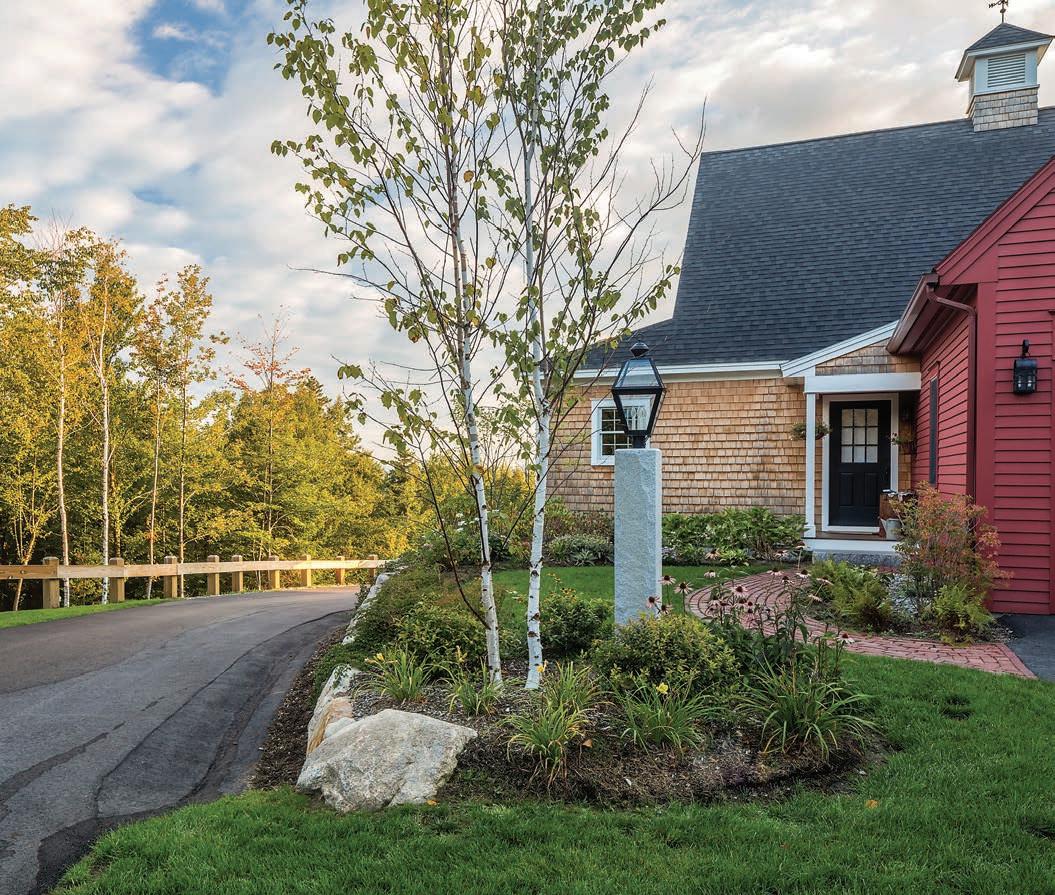
Given New England’s long winters, Bruzga creates “winter-scapes” using trees with interesting characteristics, such as the colorful, peeling bark of birches or paper bark maples, pops of color from red twig dogwood and winterberry holly, or the varied shapes of different yews and spruces.
“Ornamental grasses, if left uncut, also provide color and movement,” he adds. As an added bonus, many of these plantings support wildlife.
Revamping the landscape of an existing home can seem daunting, Bruzga admits. “If your home is surrounded by overgrown evergreens, it can be more efficient to remove them and plant fresh than try to trim them into shape. Trimming can work, but


some homeowners don’t want to go through the ‘ugly’ phase after the trees are cut back and before they grow into their new shapes. Your landscaper can advise you as to the best move.”
If your yard butts up to an overgrown woodlot, Bruzga advises hiring a pro with a brush cutter on an excavator to cut some “windows” into your woods: “Opening up the woods not only allows access, but lets you see into the woodlands, creating new vistas.”
Whether your home is new or not, taking a moment to walk through and consider what you see outside can improve your yard. “Adding flowering trees or shrubs, selective plantings or stonework can soften the land-
scape with color and shapes,” he says. Even a water feature need not be a big expense. Bruzga suggests buying a premade element that you simply fill up and plug in to get the soothing sound of flowing water.
While larger estates may enjoy a number of garden “rooms” serving various functions, even small spaces can create areas for dining, cooking and relaxing through judicious use of plantings and screens. “Open plan is fine, but if you want separation, use latticework and climbing plants to create walls of greenery for privacy, or add a row of planters to create a boundary. Even changes in the hardscape, from pavers to crushed stone, can delineate areas,” Bruzga says.
Bruzga primarily works with native plants as these are bred to withstand the regional climate, are hardier when it comes to disease and are more economical. “A plant or shrub that is meant to be here is more likely to last longer than one that is not,” he says.
Whatever your outdoor vision, a professional can help you make it a reality and advise on choices that accommodate your budget. “There are so many options out there,” Bruzga says. “Transformation is always possible with the right planning and expertise. Anyone can see beauty out their window.” NH
For more information, visit dblandscaping.net.

BY CRYSTAL WARD KENT
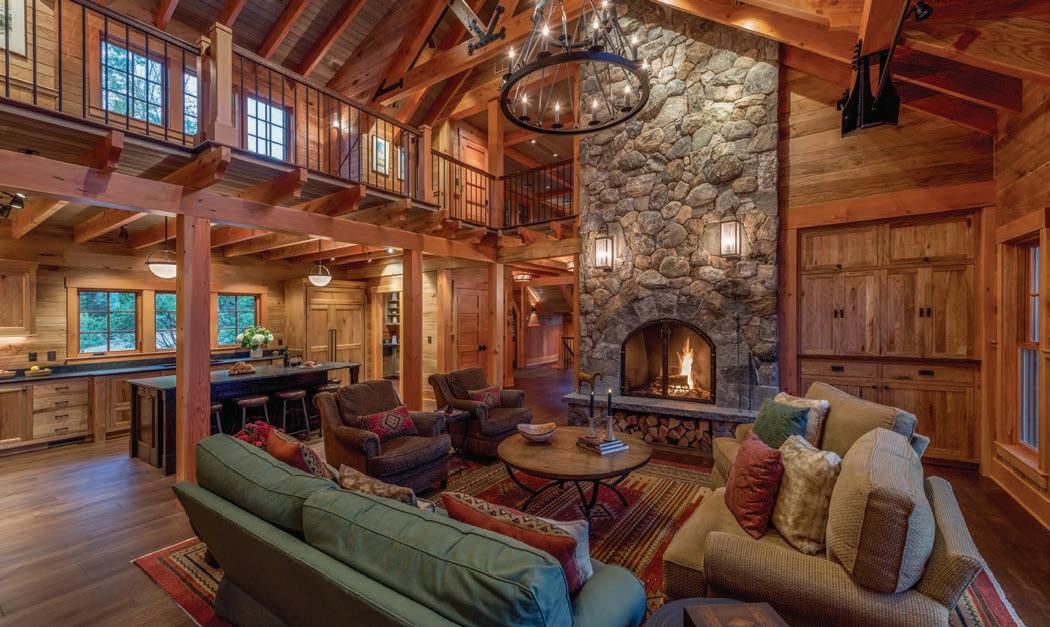
Style or practicality? This seems to be the eternal question when it comes to interior design. Can a home have the look you crave but also be practical?
Fred Puksta, product designer with Crown Point Cabinetry in Claremont, says the answer is yes.
“Everyone’s project is different, but there are general strategies to help rooms achieve the aesthetic you want while saving
money,” he says. “In an existing home, a good starting point is paring back what’s in the room. Design can get cluttered over time, and streamlining lets you really see a room and plan better.”
Consider removing wallpaper, chair rails and millwork as these can also distract, he says.
“I recommend making cardboard mockups of new elements before you make
a change. They can help you arrange gallery walls before you insert nails and even aid in kitchen cabinet placement. Arrange your cardboard cabinets so you see the look and test the flow. If it’s not working, you haven’t committed.”
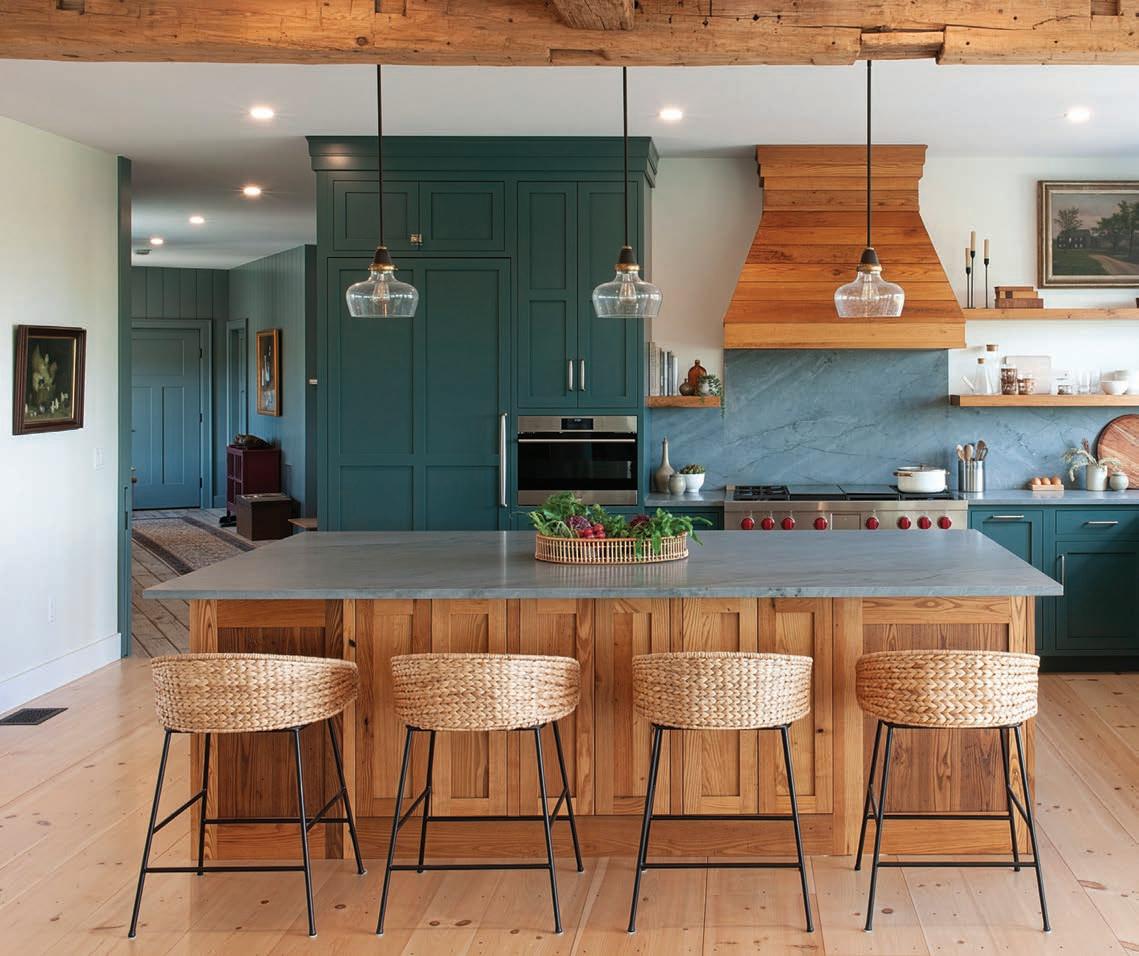
Puksta notes that easy, cost-effective room refreshes can be done with new coats of paint — easy to test beforehand with samples — replacing cabinet fronts or adding new hardware. For a bigger remodel, consider updating your kitchen with an “unfitted look.”
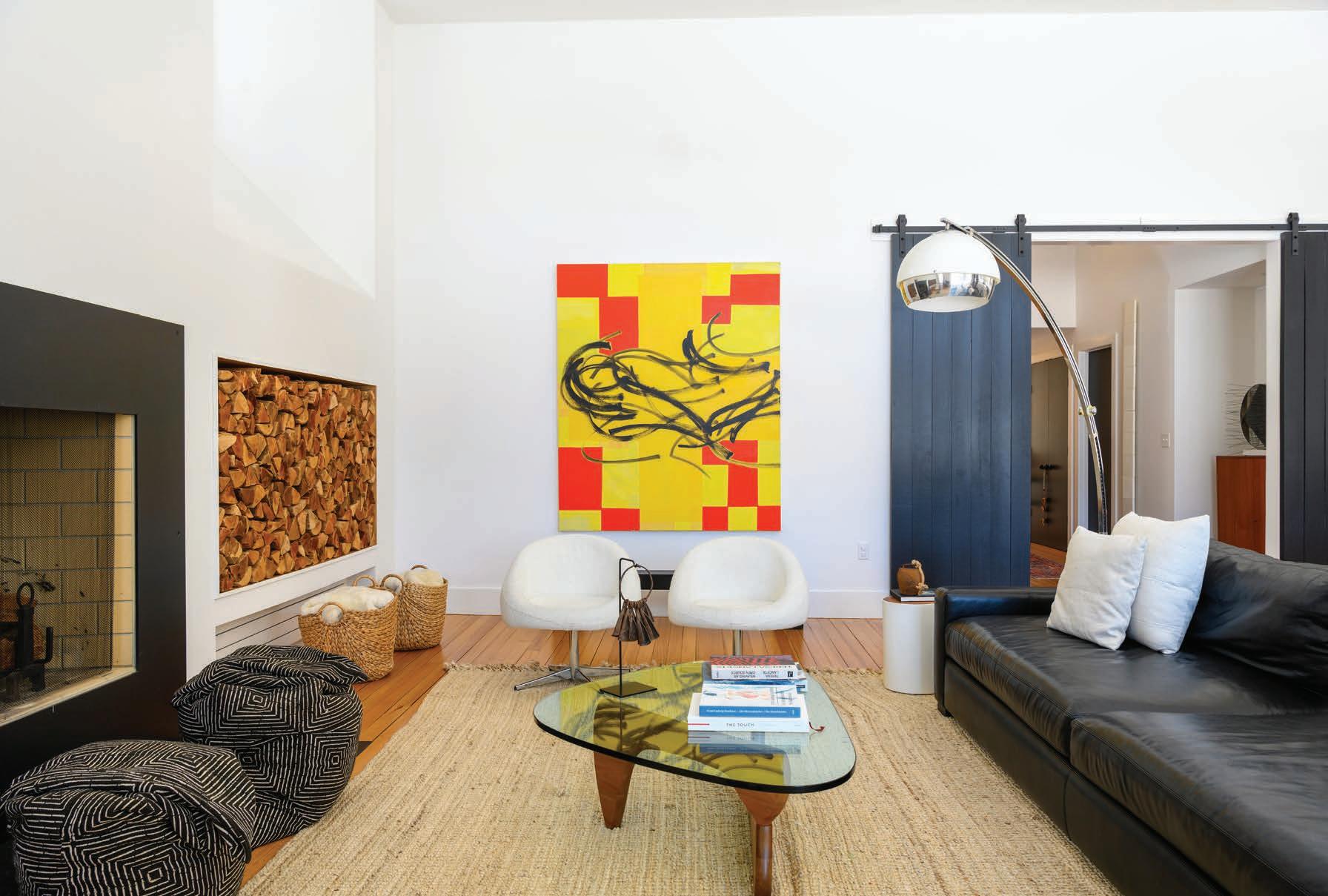
“An unfitted look forsakes traditional cabinets and islands for furniture pieces, such as tables with storage, vintage dressers, buffets or hutches,” he says. “These pieces make statements and can be more personal.”
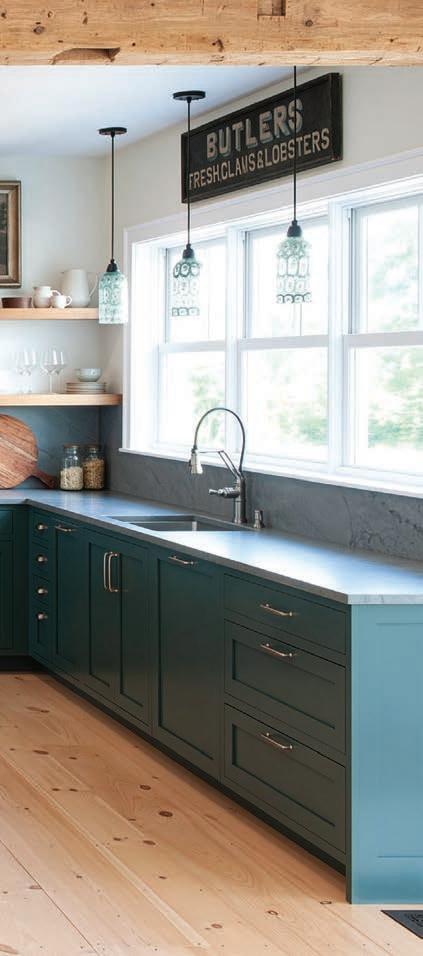
Puksta also recommends using only base cabinets, thus freeing up more wall space for windows or shelving, which opens up a kitchen, changing the look completely:
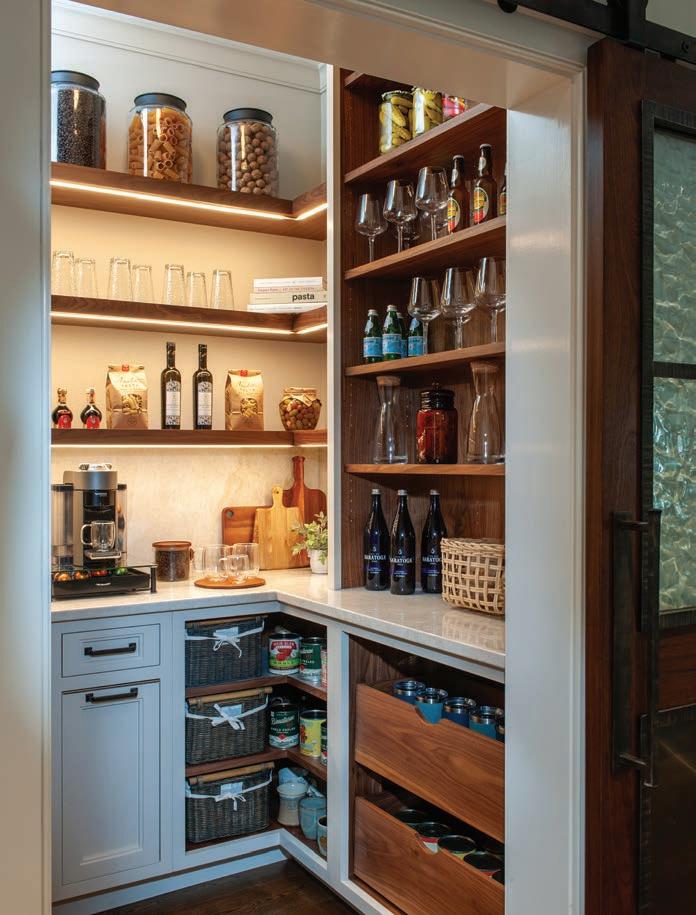
“Many homeowners are also returning to the traditional pantry; this is a room adjacent to the kitchen where supplies and appliances are stored, leaving the kitchen itself free for cooking and entertaining.”
Storage is the challenge for many homeowners, but Puksta says your home may have more storage than you think.
“Unexpected places can provide tasteful storage, such as under stairs. You may also be able to perforate walls to gain space. If a closet is on the other side of the wall, you could perforate that wall to allow your fridge to expand into that space. This allows the
BY NANCY A. RUHLING /
fridge to now sit flush to the cabinetry and gives you more kitchen space. A perforated wall can also give you deeper drawers, which creates more space in kitchens, bedrooms, anywhere.”
Another fix is not installing baseboard heat, which takes up space, but instead having radiant floor heating, which provides warmth but is hidden from view.
Whether you are planning a new home or seeking to revamp an existing home, Puksta urges homeowners to consult with professionals for proven ways to blend functionality with their vision.
“The internet can have great ideas, but the professionals have the experience and understand the technology needed to bring these ideas to life,” Puksta says. NH
For more information on Crown Point Cabinetry, visit crown-point.com.
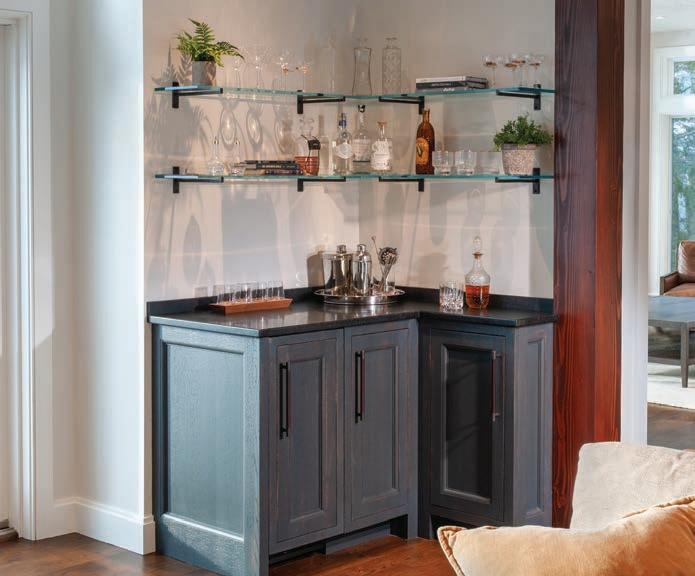
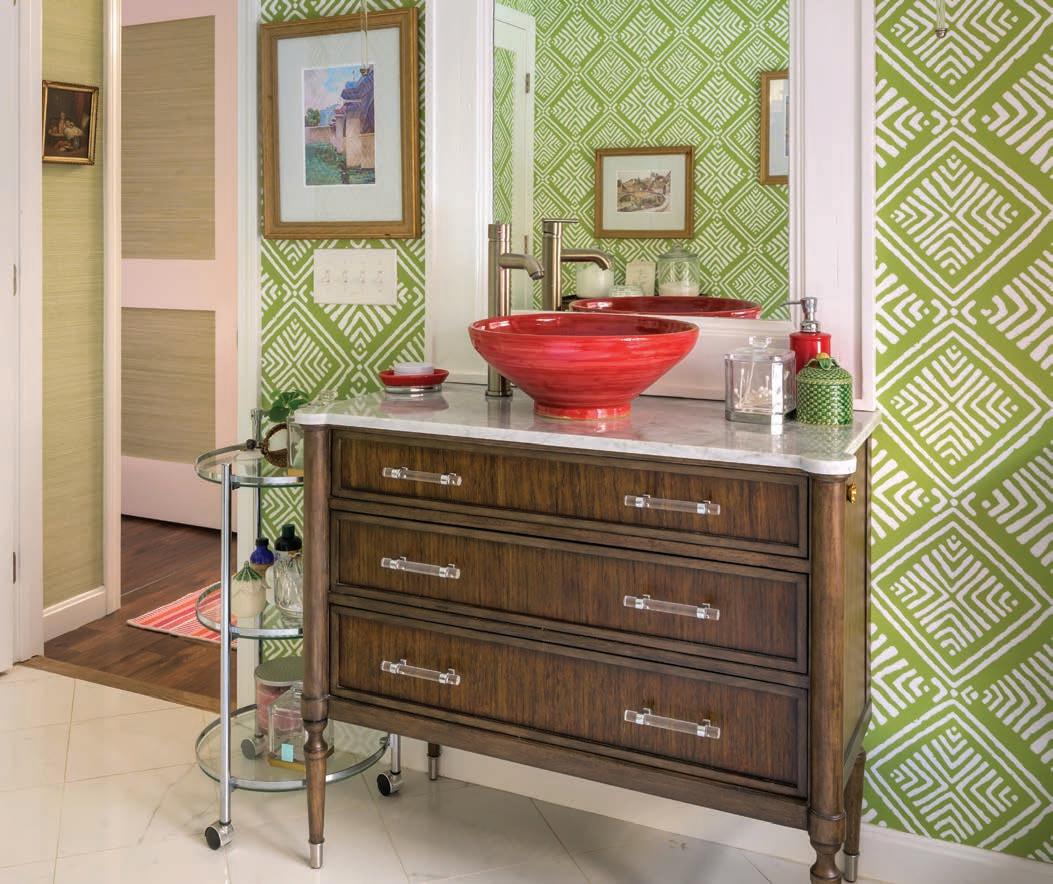



In New Hampshire, homes are shaped by seasons, tradition and routine. They warm snowy boots by the door, let in the sun spilling over the mountains and provide a space to shower off the sand after a day at the beach. New Hampshire Magazine asked experts from a range of home construction and landscape design specialties to share how they are helping clients make thoughtful choices in creating spaces that work better, last longer and look beautiful.
We asked: What is the most compelling trend in your segment of the home industry,
and how can homeowners take advantage of it?
Rather than chasing the latest fad, the insights you’ll see here reflect a deeper shift toward intention. Today’s most compelling ideas focus on how a home feels, functions and supports the people who live there. Trends inspire elements, but don’t take the spotlight. Spaces are designed around real life with materials chosen for durability, comfort and craft.
Across every perspective, our experts shared a common thread: personalization.
In building, renovating, selling or even a minor refresh, homeowners are encouraged to ask better questions on how they live and what matters most to them. The answers lead to a home that is grounded, welcoming and built with the future in mind.
These conversations offer practical guidance rooted in local experience and shaped by the realities of life in New Hampshire. It’s not about reinventing your home overnight, but making thoughtful, lasting decisions that create spaces you’re glad to return to season after season.
In high-end shingle-style architecture, one of the most meaningful design advances is often the least visible. While the language of the style remains rooted in tradition, natural materials, carefully proportioned massing and a strong relationship to landscape, its evolution is increasingly defined by the home’s performance. Sustainable, energy-efficient design has become a natural extension of the shingle-style ethos, reinforcing its emphasis on longevity, comfort and craftsmanship.
Rather than announcing itself through overt technology, sustainability in these homes is embedded within the architecture. High-performance building envelopes, discreetly detailed insulation, and carefully scaled window openings improve comfort while preserving the warmth and restraint that define the style. Mechanical systems are right-sized and quietly integrated, supporting the architecture rather than competing with it.
For homeowners, the benefits are immediate. Energy demands are reduced, interior environments are more stable and serene, and materials are selected for durability as much as beauty. Over time, these homes prove resilient, aging gracefully as codes, climates and expectations evolve.
In this way, sustainable design does not alter the character of shingle-style architecture. It deepens it, outlasting trends and ensuring that houses rooted in tradition continue to perform intelligently for generations to come.
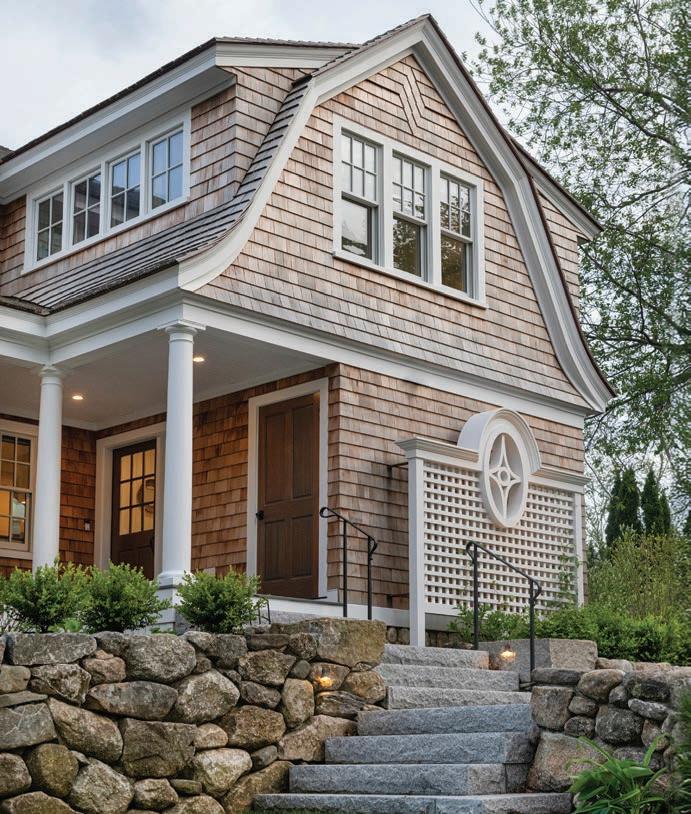
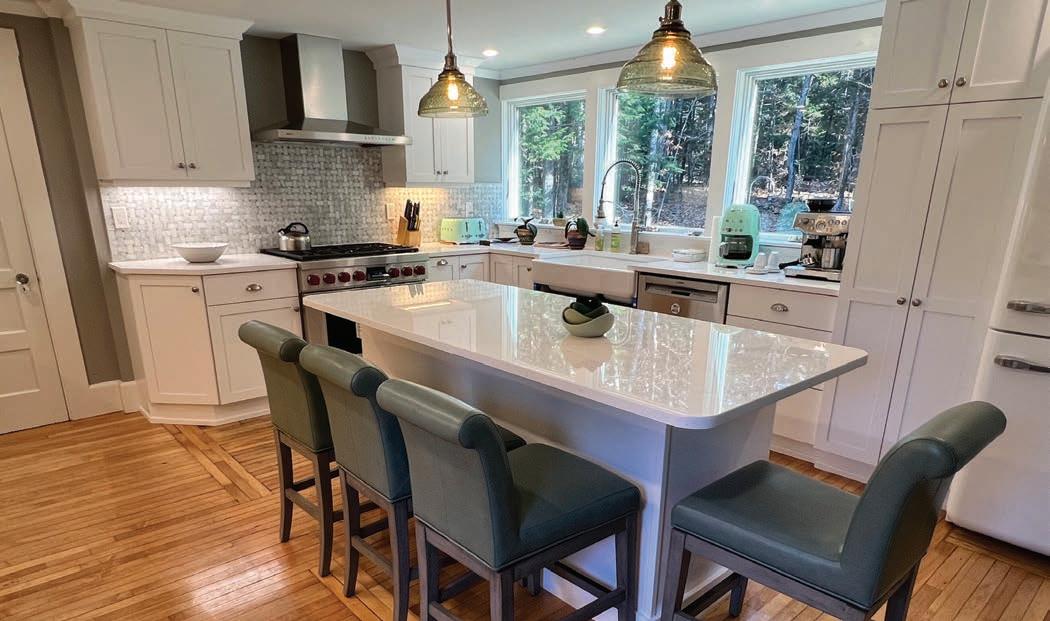

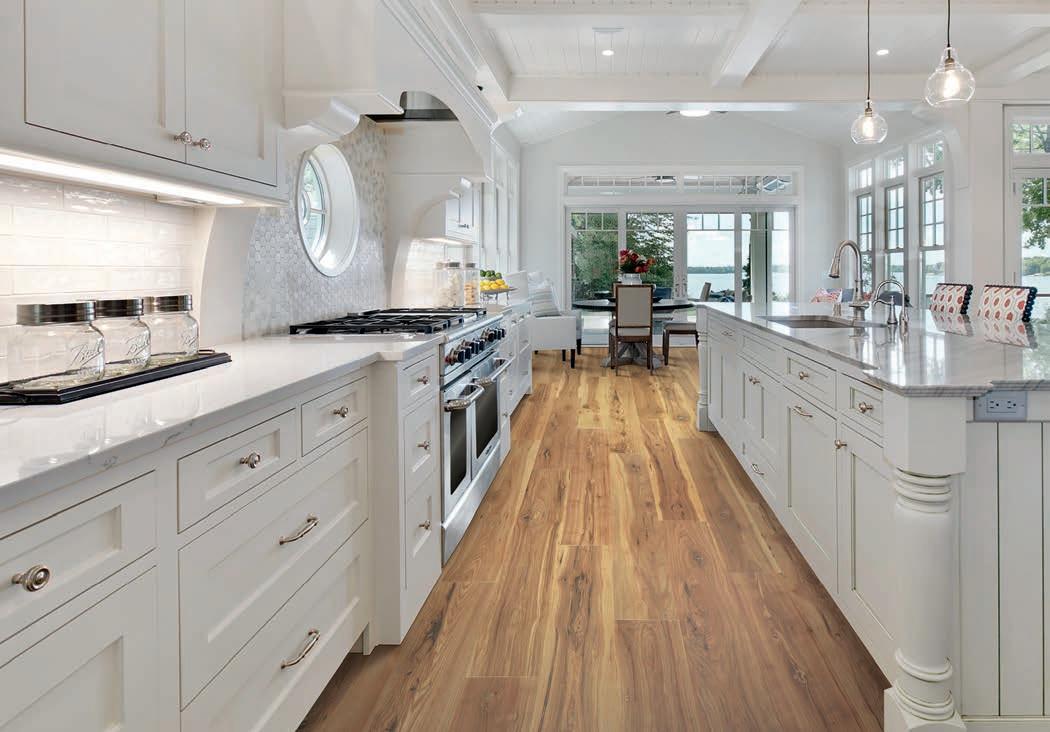


Stephanie Wentworth, NCIDQ, ASID, CKBD, President, Decorative Interiors
For me, the most compelling trend in the home industry is lighting, and it starts with planning. Lighting was never overlooked, but it has truly moved to the front seat of the design process. Today, it’s about more than fixtures; it’s about how light shapes the way a home feels and functions throughout the day.
Ambient lighting can now be intelligently controlled, with color temperature adjusting as daylight changes. This creates a natural rhythm in the home, supporting energy, focus and calm as exterior conditions shift. Even window shades now contribute to lighting design — gently waking you in the morning, extending daylight into the evening, and welcoming you home from work or school.
Decorative lighting has also evolved beyond function. It can be a true work of art that is sculptural, expressive and deeply personal. These pieces anchor a space visually, create moments of impact and help tell the story of the home.
When lighting is planned early and layered thoughtfully, it elevates every other design decision. It’s not just about seeing a space — it’s about experiencing it.
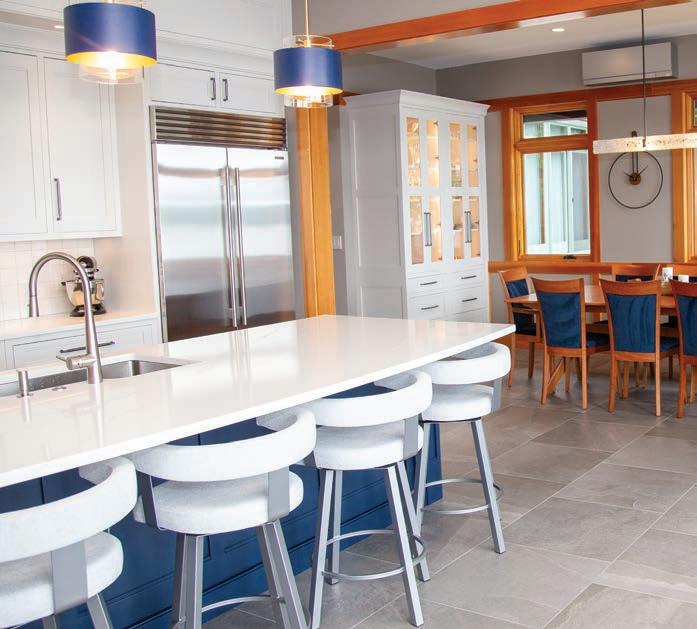
I am not a big believer in trends. Rather, I focus my process on timeless, classic designs.
However, I do find all the energy-efficient tools and materials available for construction exciting. And I love the return to handmade craftsmanship.
As for artificial intelligence (AI), while I think it has an application in our industry for organizing meeting notes and project data, I do not believe it is a good tool for design. I design homes and spaces for people to live in, and I always want the human touch to be part of my process.
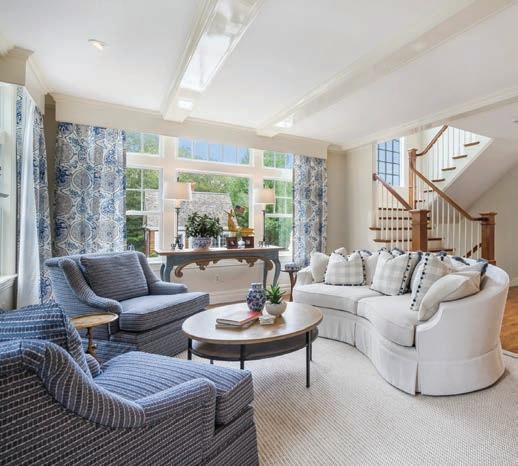
One of the most compelling trends in today’s real estate market is the strategic use of “private exclusives” and “coming soon” marketing prior to a public launch. Rather than relying on a single MLS debut, homeowners are increasingly working with agents who capitalize on these early phases to create opportunity-driven results.
Through private exclusives, properties can be quietly introduced to a network of qualified agents and buyers, allowing sellers to gauge interest, receive early feedback and maintain privacy, often resulting in strong offers before public exposure. The "coming soon" phase then builds momentum by generating anticipation, visibility and buzz through targeted digital marketing, professional visuals and storytelling, all before the home officially hits the market.
Together, these phases help reduce days on market, encourage competitive interest, fine-tune pricing and protect a home’s long-term market perception. Homeowners can take advantage of this trend by partnering with an agent who understands how to thoughtfully deploy these tools —using timing, data and marketing strategy to position a property for its strongest possible outcome before the public launch ever begins.



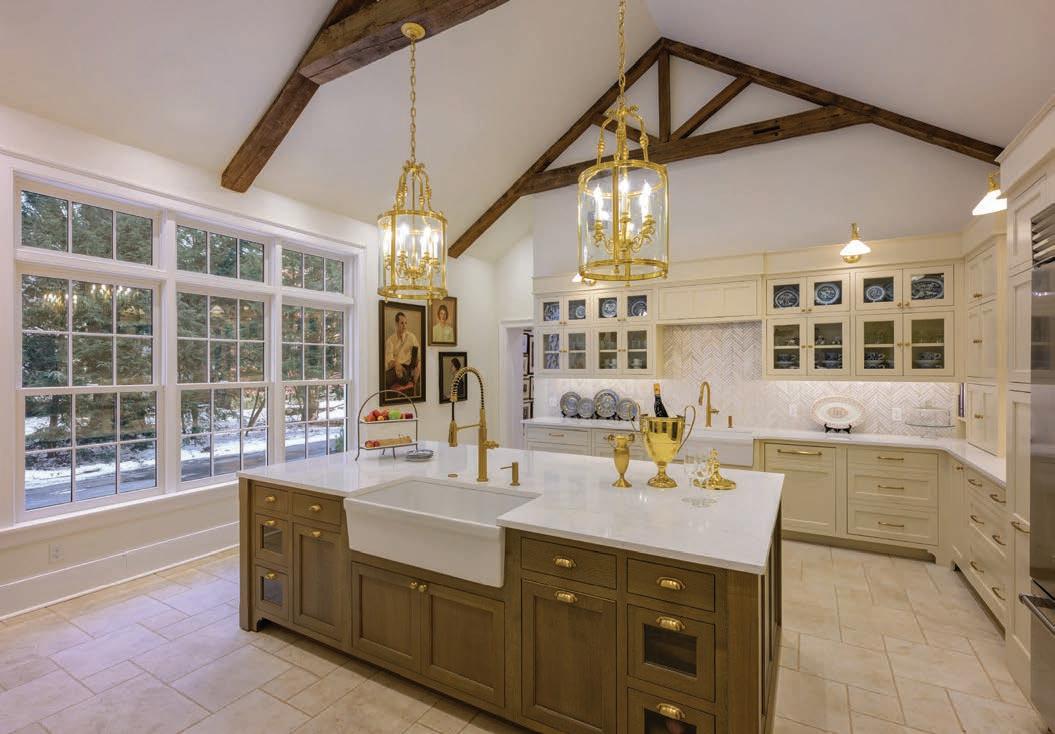
Our vegetable-dyed wool Oriental rugs are hand-knotted with a construction that prioritizes craftsmanship, durability and quality; they are long-term investments, not seasonal fads. Rugs are the anchor of a room. They shape the tone and mood of a home, adding depth, dimension and texture.
We curate patterns and colorations that are timeless to create a space that is both welcoming and personal. Fine rugs are not a trend-driven category in home furnishings; however, we do get to see consumer interests with what they are selecting for colorations and style. From a style standpoint, we are seeing tremendous response to our designs that are fresh takes on traditional patterns, which is achieved by removing the thick borders that typically act as a “frame.”
These new designs take a classic, like a Bidjar or Heriz design, and give a less detailed patterned border that may only be two inches wide, versus other styles that have borders closer to nine inches. Sometimes, even a patterned border isn’t used; we have a solid color for the border, with the rug field going nearly to the edge. This thin border style has become a modernized hybrid of nostalgia and today’s more casual living.
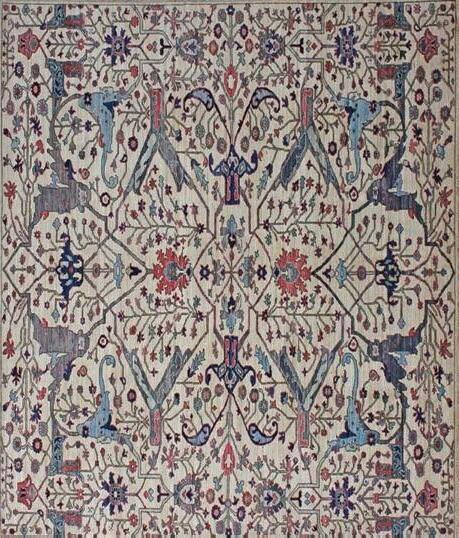
The most compelling trend we are finding in the cabinetry industry today is the shift toward personalized design. The homeowners we work with have moved away from one-size-fitsall solutions and are instead investing in spaces tailored to how they live, work and entertain.
At Crown Point Cabinetry, this isn't a new trend for us because it's how we've always worked. Every single project of ours is fully custom and built to order. Rather than chasing a single look or finish, the focus is on function, longevity and craftsmanship. Cabinetry designed to fit the space, not the other way around.
By choosing to work with Crown Point Cabinetry, clients work directly with our inhouse designers. With their expertise, each space is thoughtfully planned to reflect how you live. This collaborative approach allows homeowners to fully embrace personalized design, resulting in handcrafted cabinetry that is intentional and timeless.
At Crown Point Cabinetry, we're seeing homeowners prioritize lasting quality and thoughtful selection while investing in their homes with intention. Within the cabinetry industry, another compelling trend is the shift toward expertly designed solutions that feel custom, perform beautifully and stand the test of time.
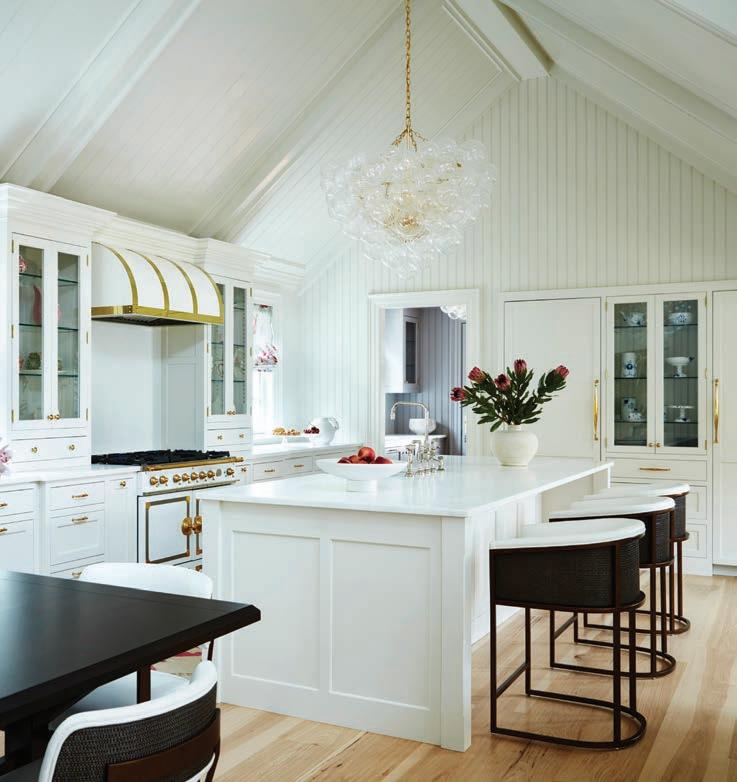
Crown Select was created to deliver exactly that. This line of cabinetry offers a streamlined path to custom-quality cabinetry, while still providing homeowners with the same exceptional fit, finish and craftsmanship as our Crown Point line. Rather than navigating endless choices, Crown Select helps homeowners focus on their investment where it matters most. The collection is intentionally designed to simplify the decision-making process and deliver a polished result with confidence. It's an ideal option for homeowners who value exceptional craftsmanship and quality while appreciating a more efficient, value-driven approach to custom design.
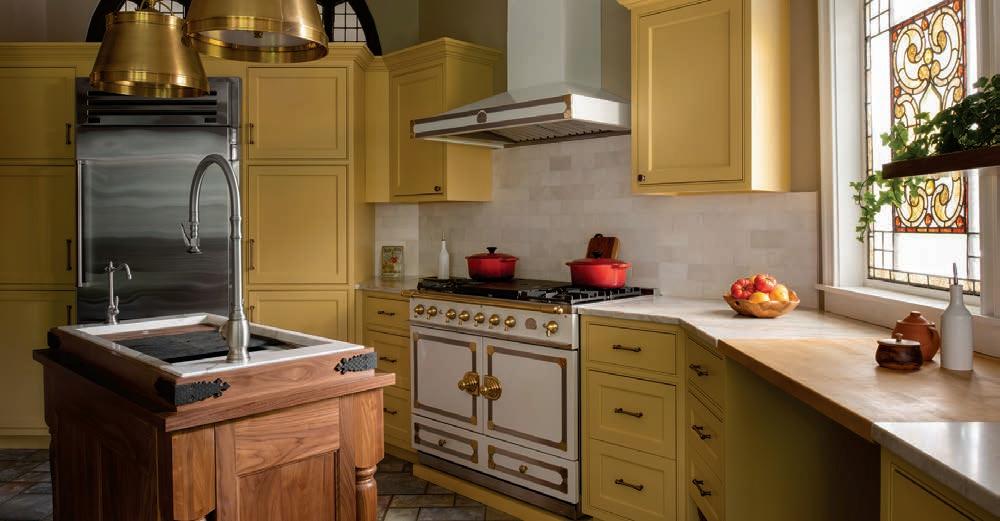

Shannon Robinson-Beland, Owner/Vice-President of Wood & Clay, Inc.
Homes built by Wood & Clay are typically second and third homes for the majority of our clients. With seasonal or occasional use in areas where the weather can be extreme, minimizing maintenance is almost always a priority. For years, we have recommended composite siding and trim when it aligns with a client’s aesthetic and maintenance goals and have had great results with recycled PVC products such as Azek.
More recently, we have seen an uptick in the use of natural wood products that have been modified in a variety of ways to yield both stunning results and lasting durability. One such product is Accoya. Through a process called acetylation (simply explained, Radiata pine is submerged in a strong vinegar bath), the wood is transformed into a highly-stable, water- and rot-resistant material that is well suited for decking and trim. Shou sugi ban, or Japanese charred wood, is another natural product that has seen a recent rise in popularity on our projects, typically for siding. Both are natural alternatives to PVC products that still promise to minimize maintenance while appealing to those looking for sustainability in a real wood product.
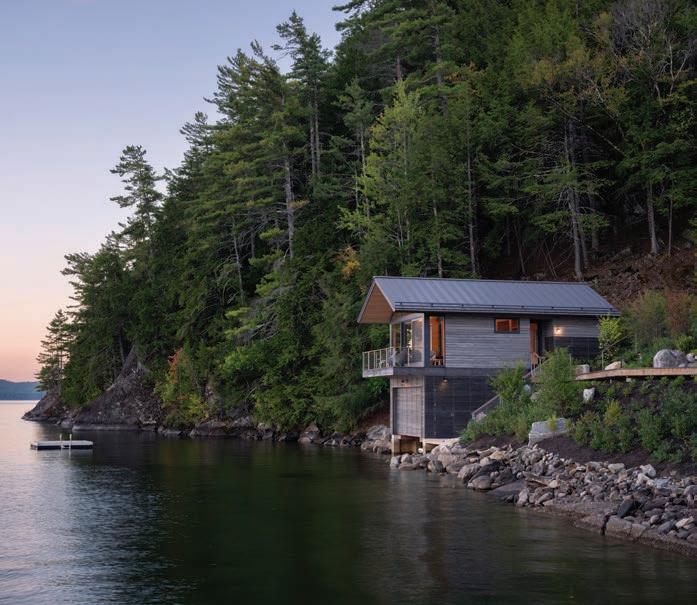
Design inspiration is everywhere; TikTok, HGTV shows, and home magazines all play a big role in getting homeowners excited about their spaces. While those trends influence what people ask for, here in New England, our customers still lean toward classic, timeless design rather than anything too trendy.
What we’re seeing most is a strong demand for wider plank wood floors with a matte finish. They feel warm, clean, and updated without going out of style. In the Lakes Region especially, durability really matters. Many homes are seasonal, see a lot of foot traffic, and need materials that can handle real life: water, sand, pets, and guests coming and going.
Because of that, water-resistant flooring like luxury vinyl plank, has become extremely popular for summer homes, while pet-friendly options are a must for a lot of our customers. Homeowners want floors that look great but don’t require constant worry or maintenance.
The best way to take advantage of this trend is to use inspiration as a starting point, then choose products that make sense for how you actually live. When you balance style with durability, you end up with a home that works just as good as it looks.
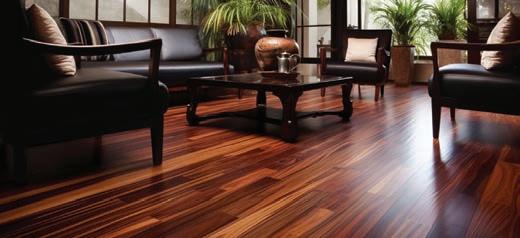
The most compelling trend we’ve seen for the past several seasons is a shift away from traditional wood and cast metal toward recycled materials that are maintenance-free and can be recycled at the end of a long life of carefree comfort.
Recycled HDPE (High-Density Polyethylene) frames, combined with Sunbrella cushions, offer tremendous year-round comfort and durability.
Our best-selling poly line is Seaside Casual of Rhode Island. Their designs transcend the clunky utilitarian design of most poly products with hidden hardware and modern style, and are manufactured in the USA.

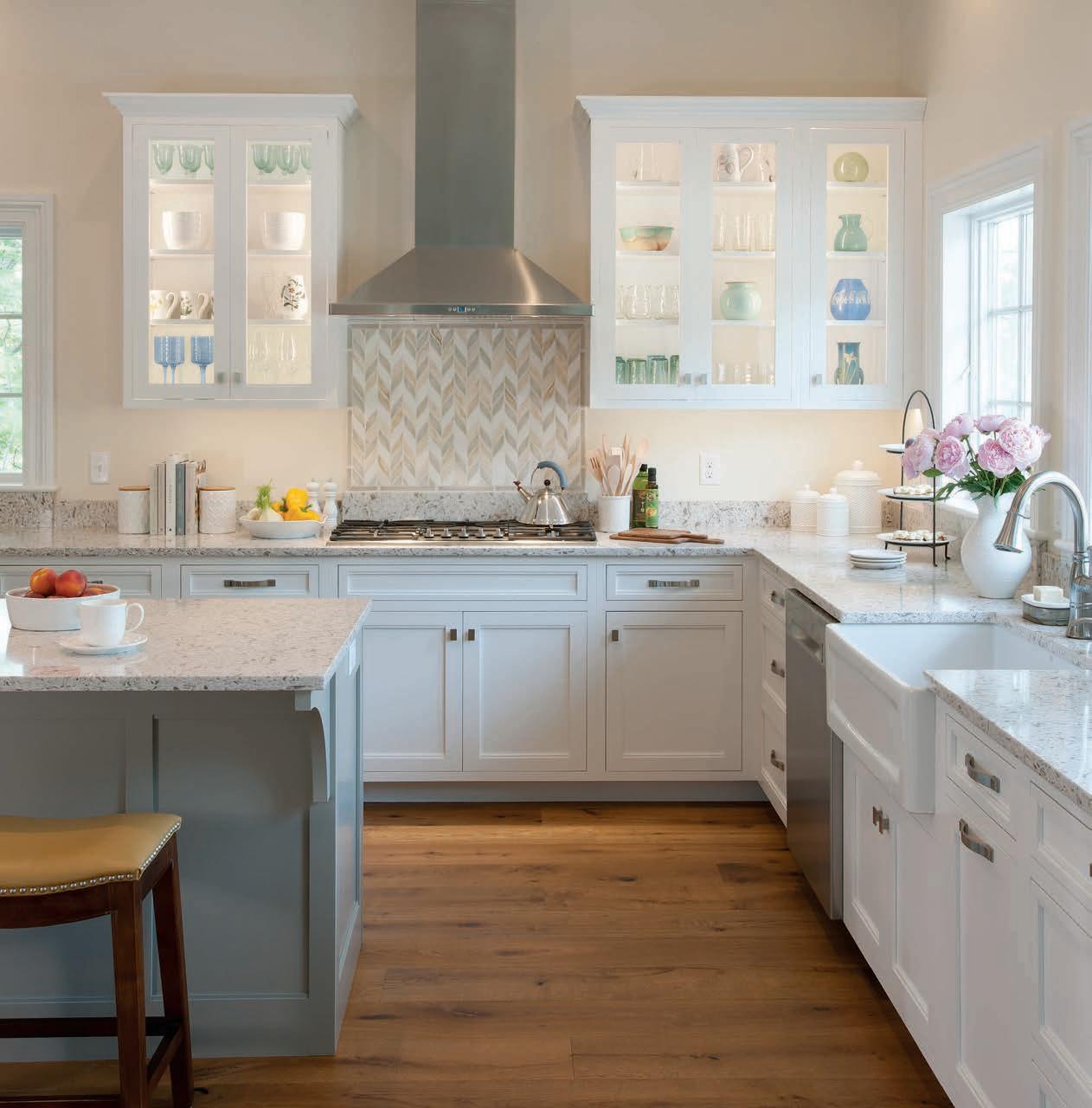

As we move into 2026, the most compelling shift we’re seeing in kitchens and baths is toward spaces that feel more personal, functional and layered. In recent years, many homeowners felt pressure to follow a familiar formula: an all-white kitchen, spa-inspired baths or completely open layouts. What’s exciting now is that people are permitting themselves to design for how they actually live.
In kitchens, this shows up through warmer materials, deeper colors, thoughtful storage, and layouts that support gathering as much as cooking, while still allowing for moments of privacy for work or study. In bathrooms, the focus has shifted to comfort and longevity: walk-in showers, better lighting, smart niches and storage, and materials that feel calming but not clinical.
The opportunity for homeowners isn’t to chase a trend, but to ask better questions: What isn’t working in my space? How do I want this room to feel? What colors and materials genuinely appeal to me, regardless of what’s trending? And what will still make sense five or ten years from now?
Compelling design today is less about making a statement and more about creating rooms that feel intuitive, comfortable, and unique to the homeowner. When those priorities guide the process, the result almost always feels current — without ever feeling trendy.
This will be an exciting year for interior design with intentional swings away from neutrals, minimalism and restraint. Driving this present-day shift is our requisite desire to feel wrapped in a natural cocoon of emotional comfort, selfexpression, warmth, luxury and biophilia.
Revival of the greats — Tony Duquette, Sister Parish and Albert Hadley — will invite clients and designers to a less curated, layered and colorful look. Look for color drenching (one color on all surfaces and textiles) in warm analogous bygone hues of aubergine, yellow, burgundy and persimmon. Eclectic combinations of patterns and styles will create a personal, vintage sensibility. Imagine the resurgence of bold, colorful wall coverings, trimmings, fabrics and furnishings. Unexpected cultural and stylistic combinations will infuse interiors with artistic sophistication.
Preserved or reimagined wood paneling, warmly stained or painted in dramatic, reflective hues, will suggest traditional craftsmanship. There will be references to wood and stone both in natural and man-made materials. Oversized art, performance fabrics, curves in upholstery and case goods, fantastic lighting inspired by nature and cordless LED lamps are beautiful emerging trends greatly influenced by modern technology. This renaissance of self-expression and love of home will surely bring gratitude and enjoyment to our surroundings. NH
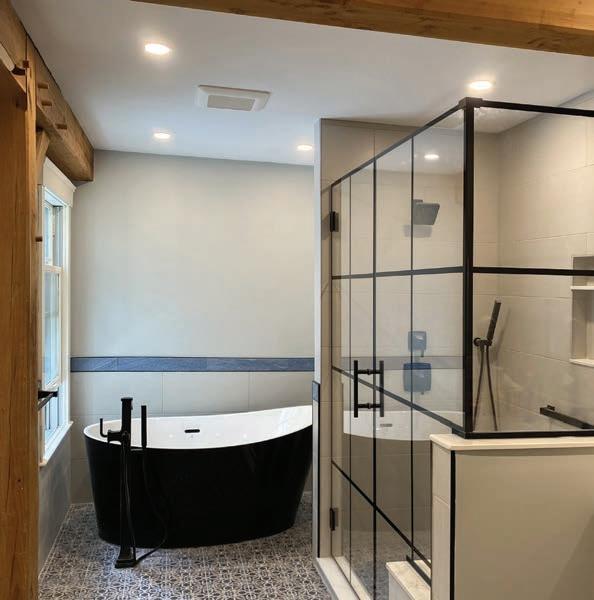
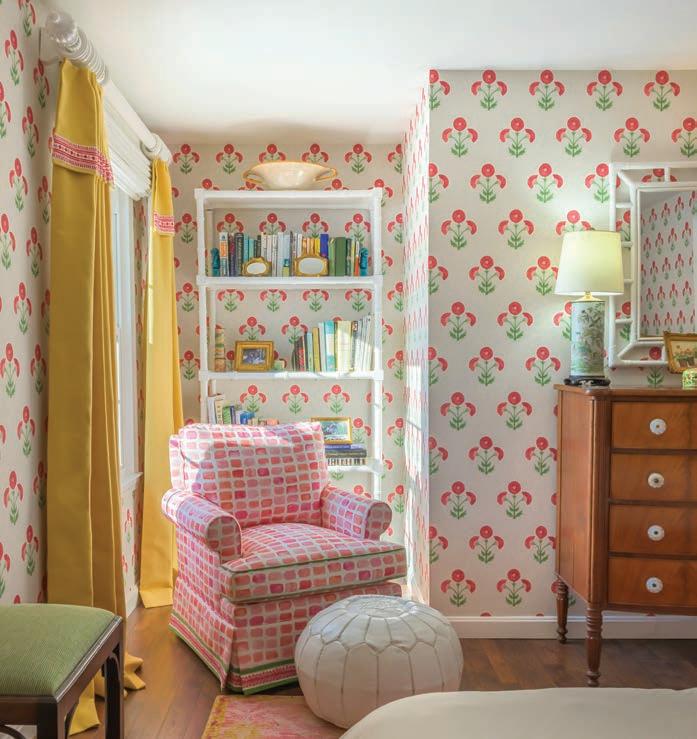


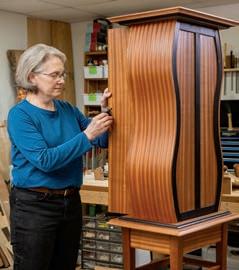
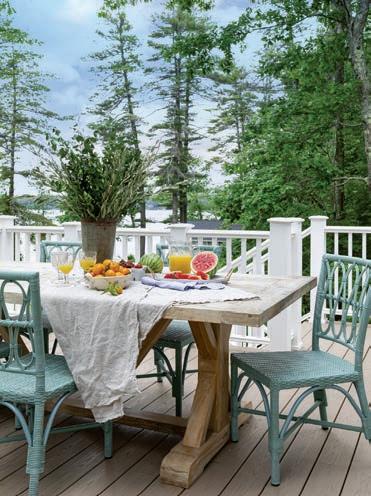

Fabulous Finds: A selection of products available locally to share design trends with our readers.
Shop Talk: A look into NH’s brickand-mortar destinations specializing in home decor and design.

Things I Love: An interior designer or architect and some of their favorite things to incorporate into the homes they design.
Living Small: Highlighting thoughtful but smaller homes and spaces that are big on design and innovation.
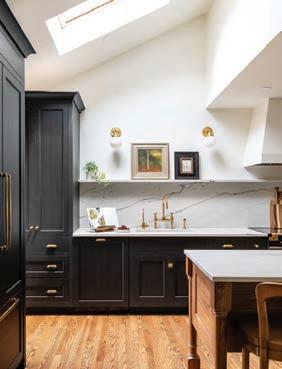

Before & After: Big or small, changes add a “wow” to these project makeovers.
Home Away: A design focus on venues other than a personal residence, such as a hotel, B&B or glamping site.
Create: Spotlighting New Hampshire artisans and makers.
Garden Space: Featuring area gardens and landscape design.

AFTER A MONTH of accepting submissions, followed by careful deliberation by our judging panel, we are finally ready to announce the winners of our Pets & Wildlife Photo Contest.
While we love the scenery that our beautiful state has to offer, the great outdoors wouldn’t be the same without the animals who call it home — including the animals who live in our homes.
From birds that soar above the tree lines to dogs who know their angles, the winning photographs have captured it all.
Photographers Jenn Bakos, Joe Klementovich and Jared Charney reviewed more than 100 submissions. Thanks to everyone who participated.
Along with being featured in print, our winners received a cash prize (1st place: $500; 2nd place: $300; 3rd place: $200), and all winners and honorable mentions received a one-year subscription to New Hampshire Magazine.


“Our pup Tilly is our rescue Labrador, and she has gone from being a scared little pup to such a happy country dog. I love capturing her beauty whenever she’s out running in our fields with our kids, rolling in puddles, frolicking in the snow, or just enjoying the wind in her face (as seen here)."


WILDLIFE, 2ND PLACE WINNER ↑
Jared Plante from Rochester, NH | Taken in Rochester | jaredplantephotography.com | @jjplante12
"I've been looking in this tree hole over the past year, waiting for an owl to make it a home. As I passed by on Sunday morning, I looked up as I always do, and I saw a large body nestled away keeping warm. Thinking it was an owl, I ran home to grab my camera to take a closer look. When I arrived back, I could see a tiny face in the back and instantly recognized it was not an owl at all, it was a raccoon. As I prepped my camera, I could tell that little face was curious of my presence. Peeking through the viewfinder, I could see in its tired eyes that we both were watching each other. Lo and behold, a second head turned and peeked out the bottom of the hole. What a surprise, twins resting and keeping warm."
Fawn Langerman
From North Conway, NH
Shot with: iPhone 15 Pro Max
Taken on Stinson Mountain in Rumney @ Bikecamphikegirl
“This photo was taken on the summit of Stinson Mountain, in Rumney, NH. Stinson is one of the '52 With A View' hikes and we had a really nice day for this hike. Echo is a 2+ year old rescue dog — she is a cattle dog and Australian shepherd mix. She is a great hiker and we have been enjoying many of the White Mountains hikes since she came to live with me in September 2024."




WILDLIFE, 3RD PLACE WINNER ← Stephen DeFelice
@ stevie_defelice
"On an early morning outing, I was capturing some of the last remaining songbirds that were finishing off the sunflowers before migrating. I followed this female goldfinch for about an hour before the conditions aligned to capture this shot."


WILDLIFE, HONORABLE MENTION ←
Arthur Coy from Webster, NH Shot with: Sony A7III Taken in Boscawen @arthurcoy.jpg
“I started taking my camera to work with me in case I saw any animals, and my first trip with the camera, I saw these young bucks grazing.”

PETS, HONORABLE MENTION ↑
Valerie Reifke from Loudon NH | Shot with: Canon Rebel DSLR model T6S and Canon 70-200 mm lens | Taken in Loudon flickr.com/photos/203083716@N02 | @ hesakeepersmom
"This dark and handsome animal saw me from across the snowy field photographing another. He came charging over like he was trying to tell me this was his pasture.”
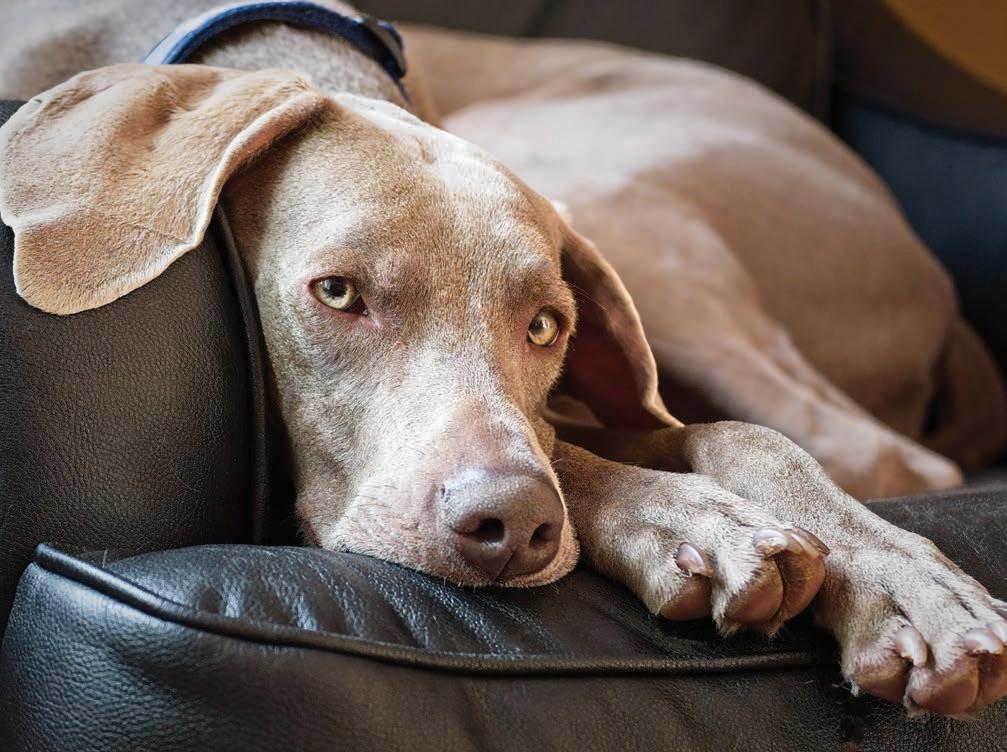
, HONORABLE MENTION ↑
PETS, HONORABLE MENTION → Carol Stone from Canterbury, NH Shot with: Pixel 8 Taken in Canterbury
"This is 4-month-old brothers Remington and Kirby looking well-adjusted after being transported from a shelter in Miami.”
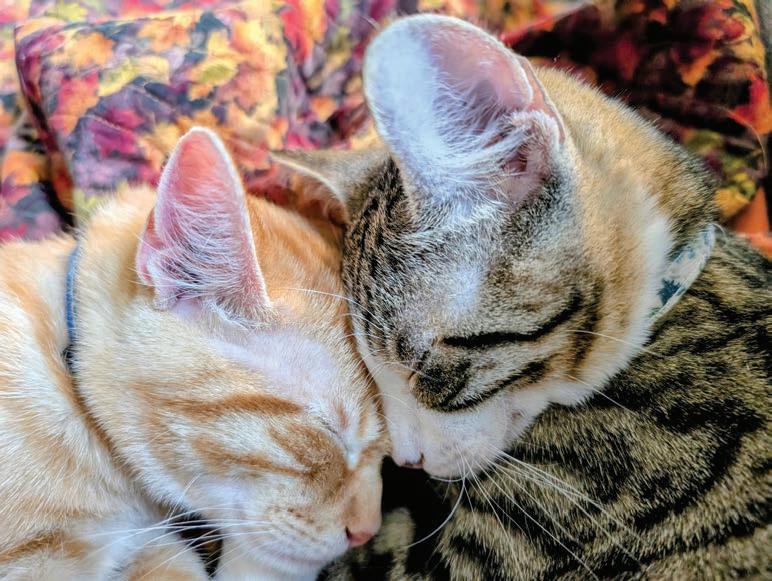

WILDLIFE, HONORABLE MENTION ↑
Michael Hubley from Londonderry, NH | Shot with: Nikon D500, 200-500 mm lens @ 5.6, ISO-2500, shutter 1/400 | Taken at Odiorne Point State Park, Rye | MichaelHubley.com
“I was exploring Odiorne Point S.P. one afternoon. I reached the end of a path and saw a marsh with bluebirds across the road. After watching them fly from branch to branch, this photo was my favorite of the day with the perfect pose and background.”

WILDLIFE, HONORABLE MENTION ↑
William Holmes from Littleton, NH | Shot with: Canon 77D with a Sigma 18-300 mm lens Taken in Littleton | wmholmesphoto
“We have a few crocuses in our garden, and when they bloomed, a few dozen honey bees descended, with several bees vying for the opportunity to visit each bloom."
Jenn Bakos is a Portsmouth-based photographer whose work often appears in the pages of New Hampshire Magazine. She loves to document and capture the special moments in life, and specializes in food, product, lifestyle and brand photography. Check out more of her work at jennbakosphoto.com and Instagram.com/jennbakos-
Jared Charney is a north-of-Boston photographer specializing in editorial and portrait photography. He can often be found drinking coffee wherever there's a good pour. His work can be viewed at jaredcharney.com

Joe Klementovich is a freelance North Conway-based photographer who specializes in environmental photography. Find more of his work at klementovichphoto.com


Congratulations to our 291 doctors who were recognized in New Hampshire Magazine’s 2026 Top Doctors list. Whatever the specialty, all of our providers rede ne what’s possible to bring you world-class care, right here. To learn more visit go.d-h.org/topdocs
EACH YEAR, New Hampshire Magazine undertakes the work of compiling our Top Docs lists.
A Healthy Disregard for the Impossible™
More than 40 hospitals and clinics across the region. One world-class health system. In partnership with Dartmouth and the Geisel School of Medicine.
It is not an easy project. It requires rigor, care and deep respect for the medical professionals who serve our communities every day, often under extraordinary pressure.
But it is an important one.
For our readers, it offers a trusted guide. For families, it provides a starting point for some of life’s most important decisions. And for the physicians and health care providers featured here, it’s a recognition of excellence earned through lifetimes of dedication.
Fonts & Images
Over the years, we’ve come to know many of these doctors personally, and we are truly proud each year to highlight their work and their commitment to you.
Logos/Print/Ai/DH_Logo_FullColor_CMYK.ai)
Prepared by DiMassimo Goldstein
What is equally important to recognize is that a project of this scope is only possible through partnership.
We could not produce Top Docs without the support of the hospitals, health care organizations, and community partners who step forward each year to underwrite this issue. Their investment reflects not only confidence in our work, but a forward-looking commitment to the health and well-being of the communities they serve.
That commitment deserves recognition.
So as you explore this year’s Top Docs section, I invite you to take note of the sponsors who made it possible. Their support sustains this project and helps ensure that this resource remains available to readers across New Hampshire.
To all of our sponsors: Thank you. Your partnership matters, and we are deeply grateful for it.
Welcome to our Top Docs section.


The dedication of our doctors brings the mission of the Elliot life by inspiring wellness and healing our patients while serving We thank them for setting the highest standards of healthcare unwavering commitment to patients, colleagues, and the community.

Together, we are building healthier communities and advancing to be your first choice to give and receive care.

> View the Entire List at ElliotHospital.org/2026TopDocs

For the 2026 Top Doctors Poll, we selected national research firm Castle Connolly to conduct the survey process. Included are more than 750 doctors in their chosen specialties, as nominated by their peers, who cover a wide range of medical needs from pediatrics to surgical care.
Kathleen H. Chaimberg, MD
ADDICTION MEDICINE
Mitchell G. Cohen, MD
St. Joseph Hospital
ADDICTION PSYCHIATRY
Luke J. Archibald, MD
Dartmouth Hitchcock Medical Center
Bryan G. Hybki, MD
Dartmouth Hitchcock Medical Center
ADOLESCENT MEDICINE
Keith J. Loud, MD
Dartmouth Health Children’s Lebanon
ALLERGY & IMMUNOLOGY
Amitha Harish, MD
Southern New Hampshire Medical Center
John N. Kalliel, MD
Manchester Allergy Elliot Hospital
Amit Kumar, MD
Southern New Hampshire Medical Center
Kevin Roelofs, MD
Allergy Associates of New Hampshire
Sarah A. Taylor-Black, MD
Dartmouth Hitchcock Clinics Concord
ANESTHESIOLOGY
Carrie D. Ayers, MD
Amoskeag Anesthesia Elliot Hospital
Myles D. Boone, MD
Dartmouth Hitchcock Medical Center
Corinne E. Cambio, MD
Dartmouth Hitchcock Clinics
Manchester, Dartmouth Hitchcock Clinics Nashua
Dartmouth Hitchcock Medical Center
Laura M. Chiang, MD
Dartmouth Hitchcock Medical Center
Dean Galatis, MD
Concord Hospital
Kiran Guthikonda, MD/PhD
Dartmouth Hitchcock Medical Center
Kylene E. Halloran, MD
Dartmouth Hitchcock Medical Center
Samuel C. Hembree, MD Amoskeag Anesthesia
Elliot Hospital, Dartmouth Hitchcock Medical Center
Simon Hillier, MD
Dartmouth Hitchcock Medical Center
Robert J. Laflam, MD
Concord Hospital
Linzi B. Moss, MD
Dartmouth Hitchcock Medical Center
Brian C. Spence, MD
Dartmouth Hitchcock Medical Center
BARIATRIC SURGERY
Robert A. Catania, MD
Southern New Hampshire Weight Management and Advanced Laparoscopic Surgery
Southern New Hampshire Medical Center
CARDIAC ELECTROPHYSIOLOGY
David Chang, MD
Cardiovascular Specialists of New England
Catholic Medical Center, Parkland Medical Center, St. Joseph Hospital
Jinu J. John, MD
Cardiovascular Specialists of New England
Catholic Medical Center, Speare Memorial Hospital, St. Joseph Hospital, Parkland Medical Center
Jamie H. Kim, MD
Cardiovascular Specialists of New England
Catholic Medical Center, Parkland Medical Center, St. Joseph Hospital
Jeanney Lew, MD
Cardiovascular Specialists of New England
Catholic Medical Center, Parkland Medical Center, St. Joseph Hospital
Michael Mazzini, MD
Wentworth-Douglass Hospital
Steven P. Beaudette, MD
St. Joseph Hospital
Michelle A. Bejarano, MD
Dartmouth Hitchcock Medical Center, New London Hospital
William G. Berndt, MD
Exeter Hospital
Wendi Cardeiro, MD
Southern New Hampshire Medical Center, Lahey Hospital & Medical Center
Adam Chodosh, MD
Concord Hospital, Concord Hospital – Laconia
Peter Dourdoufis, DO
Portsmouth Cardiology Associate
Portsmouth Regional Hospital
Carl M. Fier, MD
Elliot Cardiovascular Consultants
Elliot Hospital
Kalyan Ghanta, MD
Dartmouth Hitchcock Clinics Manchester
Gregory M. Goodkin, MD
Exeter Hospital
Stephen Hanlon, MD
Elliot Cardiovascular Consultants
Elliot Hospital
Kevin F. Kwaku, MD/PhD
Dartmouth Hitchcock Medical Center, Dartmouth
Hitchcock Clinics Manchester
Michael E. Metzger, MD
Wentworth-Douglass Hospital
Ayesha Nazeer, MD
Concord Hospital, Concord Hospital – Laconia
Ernest J. Podrasky Jr, MD
Exeter Hospital
Sachin Saksena, MD
Wentworth Health Partners
Wentworth-Douglass Hospital
Steven L. Schwartz, MD
Southern New Hampshire Medical Center, Lahey Hospital & Medical Center
Peter W. Shaw, MD
Elliot Cardiovascular Consultants
Elliot Hospital
Robert Spencer, MD
Monadnock Cardiology Associates
Monadnock Community Hospital
Jessica A. Sutherland, MD
Elliot Cardiovascular Consultants
Elliot Hospital
Vikas Veeranna, MD
Elliot Cardiovascular Consultants
Elliot Hospital
Tong Zhu, MD
Elliot Cardiovascular Consultants
Elliot Hospital
Craig L. Donnelly, MD
Dartmouth Health Children’s Lebanon
Jennifer L. McLaren, MD
Dartmouth Health Children’s Lebanon
Katherine M. Shea, MD
Dartmouth Health Children’s Lebanon
Deborah Rukin Gold, MD
Dartmouth Health Children’s Lebanon, Dartmouth Health Children’s Manchester
Priyanka Shekhawat, MD
Wentworth Health Partners
Wentworth-Douglass Hospital
John V. Flannery Jr, MD
Southern New Hampshire Medical Center
Jeffrey R. Harnsberger, MD
Dartmouth Hitchcock Clinics Manchester, Elliot Hospital
Sara W. Mayo, MD
Dartmouth Hitchcock
Medical Center, Alice Peck
Day Memorial Hospital
Lauren R. Wilson, MD
Dartmouth Hitchcock Medical Center, New London Hospital
Matthew Z. Wilson, MD
Dartmouth Hitchcock Medical Center, Alice Peck
Day Memorial Hospital
Lorenzo Klein, MD
Southern New Hampshire Medical Center
Denise M. Aaron, MD
Dartmouth Hitchcock Clinics Heater Road
Rana K. Abdat, MD
Dartmouth Hitchcock Clinics Nashua
Anthony J. Aversa, MD
Northeast Dermatology Associates
Brienne D. Cressey, MD
Optima Dermatology
James G. Dinulos, MD
Seacoast Dermatology
Wentworth-Douglass Hospital
Kent S. Handfield, MD
Adult & Pediatric Dermatology
Mollie A. MacCormack, MD
Southern New Hampshire Medical Center
Gary W. Mendese, MD
Dermatology & Skin Health
Stephen D. Moyer, DO
Dermatology & Skin Health
Jose Emilio Peraza, MD
Peraza Dermatology Group
Molly Plovanich, MD
Dermatology & Skin Health
Robert B. Posnick, MD
Southern New Hampshire Medical Center
Gregory P. Seymour, MD
Dartmouth Hitchcock Clinics Cheshire
Brian J. Simmons, MD
Dartmouth Hitchcock Clinics Heater Road
Joan S. Sisto, MD
Optima Dermatology
Portsmouth Regional Hospital
Cheryl B. Waldman, MD
Waldman Plastic Surgery & Dermatology
St. Joseph Hospital
Andrew E. Werchniak, MD
Seacoast Dermatology
Wentworth-Douglass Hospital
DEVELOPMENTALBEHAVIORAL PEDIATRICS
Nina Sand-Loud, MD
Dartmouth Health
Children’s Lebanon
DIAGNOSTIC RADIOLOGY
Elizabeth Angelakis, MD
Southern New Hampshire Radiology Consultants
Catholic Medical Center, Elliot Hospital
Gregory A. Bonci, MD
Concord Imaging Center
Concord Hospital
Constantine P. Brocoum, MD
Concord Imaging Center
Concord Hospital
Jocelyn D. Chertoff, MD
Dartmouth Hitchcock Medical Center
Elizabeth F. Clemente, MD
Concord Imaging Center
Concord Hospital
Matthew J. Daily, MD
Dartmouth Hitchcock Clinics Nashua, Dartmouth
Hitchcock Clinics Concord, Dartmouth Hitchcock Clinics Manchester
Arash Delshad, MD
Southern New Hampshire Radiology Consultants
Catholic Medical Center, Elliot Hospital
Matthew H. DiMasi, MD
Concord Imaging Center
Concord Hospital
Anthony M. Dinizio, MD
Concord Imaging Center
Concord Hospital
Adam Elias, MD
Southern New Hampshire Radiology Consultants
Catholic Medical Center, Elliot Hospital, Monadnock
Community Hospital, Speare Memorial Hospital
David W. Fontaine, MD
Southern New Hampshire Radiology Consultants
Catholic Medical Center, Elliot Hospital, Monadnock
Community Hospital, Speare Memorial Hospital
Stephen L. Foster, MD
Dartmouth Hitchcock Medical Center
Scott Greenwald, MD
Southern New Hampshire Radiology Consultants
Catholic Medical Center, Elliot Hospital
David D. Hou, MD
Dartmouth Hitchcock Clinics Manchester, Dartmouth Hitchcock Clinics Concord, Dartmouth
Hitchcock Clinics Nashua
John J. Januario, MD
Southern New Hampshire Radiology Consultants
Catholic Medical Center, Elliot Hospital, Monadnock
Community Hospital, Speare Memorial Hospital
Steven E. Kammann, MD
Dartmouth Hitchcock Clinics
Manchester, Dartmouth
Hitchcock Clinics Nashua
NH programs address cardiac patients’ emotional as well as physical challenges
BY KAREN A. JAMROG
Ahni Malachi’s first heart attack happened under the most mundane of circumstances. She was standing in line at the bank, waiting for a document to be notarized, when she felt pain in her chest and back. She became lightheaded, nauseous and short of breath. Having read about heart attack symptoms, she knew she needed to get to a hospital.
That was in July 2024, when Malachi, a Concord resident, was 57 years old. Upon her doctor’s recommendation, she joined a cardiac rehabilitation class at Concord Hospital, one of several such programs offered at hospitals throughout the state.
Concord Hospital’s program provides supervised physical rehab for cardiac patients, plus classroom education and candid discussion about fears and feelings. The discussion part is important because cardiac emergencies can stir up a psychological tsunami of anxiety, depression, and other problems that can interfere with patients’ healing and affect their quality of life.
For example, many cardiac patients become hyper-aware of sensations in their body, says Hilary Dooley, cardiac and pulmonary rehabilitation manager at Concord Hospital. “They now notice a twinge in their shoulder or pain in their jaw, even if that pain had been there” long before they had a cardiac emergency, she says. “They panic, thinking, ‘Is this another heart attack?’ ” Rehab and support programs, such as Concord’s, teach patients which body signals to pay attention to.
continued on page 84

continued from page 83
Perhaps not surprisingly, cardiac patients often feel unsure of what’s to come and have a new and profound sense of their vulnerability.
“It changes your perception of your health, and your life,” Dooley says. An overarching goal of Concord’s program is to restore patients’ confidence and emotional well-being while teaching them how to safely work toward physical recovery.
“We want people to be able to move forward and be well,” Dooley says. “We help them recognize they’re going to be OK, they can move, they have people in their corner.”
“We want people to be able to move forward and be well. We help them recognize they’re going to be OK, they can move, they have people in their corner.”
Patients gain reassurance not just from Dooley and other group leaders, but also from their fellow participants.
Malachi says she feels “very safe” going through her rehab exercises as Dooley and other class leaders supervise, encourage and help her and other participants understand and accept what their body has gone through. She tries to practice self-compassion, allows herself to rest and takes time to simply have fun, which she did not do before that fateful day at the bank.
“I was an executive, a single mom, pushing myself nonstop,” she says.
Her priorities are different now.
“I’ve had this horrible thing happen to me that I don’t ever want to happen again,” Malachi says. “(Cardiac rehab classes) have helped me feel like, I’m going to be OK, I know what to do to continue to be OK, and I have people who are going to support me in any way that I need. They’re going to help me get to wherever it is I need to be.” NH
Making your way through life as an adult after a heart attack or other cardiac emergency is hard enough. Imagine being the parent of a newborn or young child who has been diagnosed with a heart problem. How you would feel when that child wants to run and skip, and maybe play sports as their friends do?
Such a scenario can be overwhelming for parents and create “constant worry about their child’s future,” says Dartmouth Health Children’s pediatric cardiology nurse Bridget Boss. Exhaustion, financial strain and feelings of guilt are also common, she says, as the parents wonder if they’re somehow responsible for their child’s condition or if they’re doing enough for their child.
Children in these circumstances experience their own set of challenges, of course, as they sense that they are different from their peers, live with the knowledge of their health risks and struggle with their physical limitations.
Professional support for children and their parents can provide guidance and help alleviate anxiety. Dartmouth Health Children’s, for example, offers an array of services in inpatient and outpatient settings, and even holds a weekend camp for kids with congenital heart disease. Therapy dogs Maverick and Winnie are also on hand for Dartmouth’s pediatric patients, offering unconditional cuddling and irresistible reassurance. NH
Dartmouth Hitchcock Clinics Concord
Petra J. Lewis, MD
Dartmouth Hitchcock Medical Center
Bryce Lowrey, MD
Southern New Hampshire Radiology Consultants
Speare Memorial Hospital, Catholic Medical Center, Elliot Hospital
David M. Naeger, MD
Dartmouth Hitchcock Medical Center
Todd A. Noce, DO
Dartmouth Hitchcock Clinics Concord, Dartmouth
Hitchcock Clinics
Manchester, Dartmouth Hitchcock Clinics Nashua
Victor Nwokocha, DO
Southern New Hampshire Radiology Consultants
Elliot Hospital, Catholic Medical Center
Marianne R. Petruccelli, MD Concord Imaging Center Concord Hospital
John G. Pierce, MD
Southern New Hampshire Radiology Consultants
Catholic Medical Center, Elliot Hospital, Monadnock Community Hospital, Speare Memorial Hospital
Kevin Y. Rivera-Colon, MD
Southern New Hampshire Medical Center
David S. Sargent, MD
Dartmouth Hitchcock Medical Center, Alice Peck Day Memorial Hospital, New London Hospital
Anne M. Silas, MD
Dartmouth Hitchcock Medical Center
Jesse B. Smith, MD
Concord Imaging Center Concord Hospital
Robert R. Sprague, MD
Southern New Hampshire Radiology Consultants
Catholic Medical Center, Elliot Hospital
Joseph R. Stein, DO
Dartmouth Hitchcock Clinics Manchester, Dartmouth Hitchcock Clinics Concord, Dartmouth Hitchcock Clinics Nashua
Michael H. Stella, MD
Concord Imaging Center
Concord Hospital
Alexander Stetsyuk, MD
X-Ray Professional Association
Concord Hospital
Peter van der Meer, MD
Southern New Hampshire
Radiology Consultants
Elliot Hospital, Catholic Medical Center
Joseph G. Venus, MD
Concord Imaging Center
Concord Hospital
D. Tyler Zapton, MD
Concord Imaging Center
Concord Hospital
Patricia R. Atchinson, DO
Dartmouth Hitchcock Medical Center, Alice Peck Day Memorial Hospital
Matthew R. Babineau, MD
Dartmouth Hitchcock Medical Center, Alice Peck Day Memorial Hospital
Jessica L. Brooks, MD
Dartmouth Hitchcock Medical Center, Alice Peck Day Memorial Hospital
Sarah C. Crockett, MD
Dartmouth Hitchcock Medical Center, Alice Peck Day Memorial Hospital
John A. Curtis Jr, MD
Cheshire Medical Center, Dartmouth Hitchcock Medical Center
Kevin M. Curtis, MD
Dartmouth Hitchcock Medical Center
E. Paul DeKoning, MD
Dartmouth Hitchcock Medical Center, Alice Peck Day Memorial Hospital
Linda Hatch, MD
Southern New Hampshire Medical Center
Alison Payne Reid Kapadia, MD Cheshire Medical Center, Dartmouth Hitchcock Medical Center
Patricia L. Lanter, MD
Dartmouth Hitchcock Medical Center, Alice Peck Day Memorial Hospital
Kendra L. Larkin, MD Cheshire Medical Center
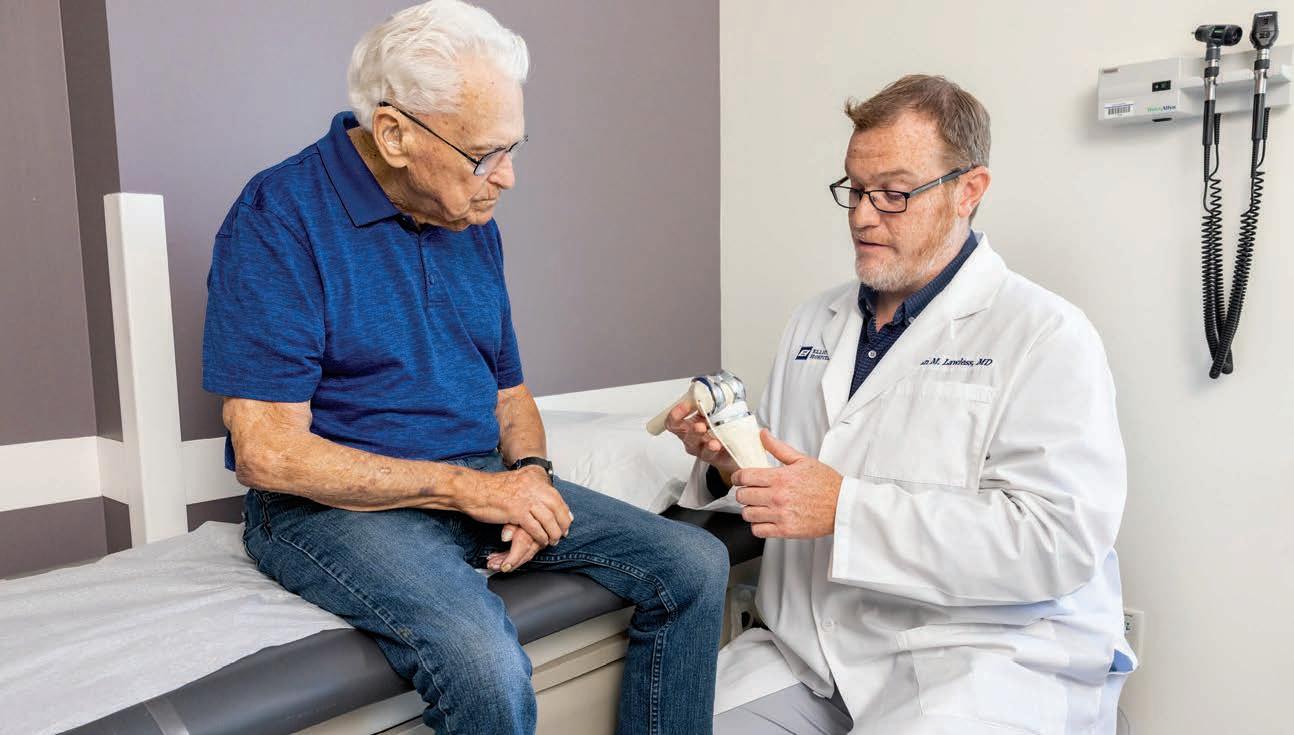
The dedication of our doctors brings the mission of the Elliot Health System to life by inspiring wellness and healing our patients while serving with compassion. We thank them for setting the highest standards of healthcare and for their unwavering commitment to patients, colleagues, and the community.
Together, we are building healthier communities and advancing our vision to be your first choice to give and receive care.
> View the Entire List at ElliotHospital.org/2026TopDocs

Joseph Leahy, DO
Southern New Hampshire Medical Center
Shankar S. LeVine, MD
Dartmouth Hitchcock Medical Center, Alice Peck Day Memorial Hospital
Christina G. Loporcaro, MD Concord Hospital
Michael T. Lynch, MD Alice Peck Day Memorial Hospital
Evadne G. Marcolini, MD
Dartmouth Hitchcock Medical Center, Alice Peck Day Memorial Hospital
Alison G. Marshall, MD
Dartmouth Hitchcock Medical Center, Alice Peck Day Memorial Hospital
John T. Moeller, MD
Dartmouth Hitchcock Medical Center, Alice Peck Day Memorial Hospital
Todd D. Morrell, MD
Dartmouth Hitchcock Medical Center, Alice Peck Day Memorial Hospital
Colin O’Brien, MD
Southern New Hampshire Medical Center
Jennifer V. Pope, MD
Dartmouth Hitchcock Medical Center, Alice Peck Day Memorial Hospital
Kevin Rankins, MD Elliot Hospital
Kristine M. Reid, MD Elliot Hospital
Robert D. Rix, MD Concord Hospital
Scott W. Rodi, MD
Dartmouth Hitchcock Medical Center, Alice Peck Day Memorial Hospital
Matthew A. Roginski, MD
Dartmouth Hitchcock Medical Center, Alice Peck Day Memorial Hospital
Andrew W. Seefeld, MD
Speare Memorial Hospital
Harneet S. Sethi, MD
Cheshire Medical Center
James C. Suozzi, DO
Cheshire Medical Center
Brett Sweeney, MD
Southern New Hampshire Medical Center
Ian R. Symons, MD Cheshire Medical Center
Thomas W. Trimarco, MD
Dartmouth Hitchcock Medical Center, Alice Peck Day Memorial Hospital
Susan B. Varga, MD
Dartmouth Hitchcock Medical Center, Alice Peck Day Memorial Hospital
Jason K. Veith, DO Cheshire Medical Center, Brattleboro Memorial Hospital
Andrew H. Watt, MD
Southern New Hampshire Medical Center
Melanie R. Watts, MD
Dartmouth Hitchcock Medical Center, Alice Peck Day Memorial Hospital
Nicholas E. Weinberg, MD
Dartmouth Hitchcock Medical Center, Alice Peck Day Memorial Hospital
ENDOCRINOLOGY, DIABETES & METABOLISM
Sadia Ashraf, MD Elliot Hospital
Sushela S. Chaidarun, MD/PhD
Dartmouth Hitchcock Medical Center
Ellie Chuang, MD
Southern New Hampshire Medical Center
Andrew R. Crawford, MD
Dartmouth Hitchcock Medical Center
Pallavi Guddeti, MD
Dartmouth Hitchcock Clinics Manchester, Dartmouth Hitchcock Clinics Nashua, Catholic Medical Center
Nneka Iroka, MD Elliot Hospital
Matthew F. Kamil, MD
Concord Endocrinology
Concord Hospital
Nicola Kreglinger, MD
Dartmouth Hitchcock Clinics Cheshire
Paul T. Labinson, DO
Southern New Hampshire Medical Center
Mini Mahata, MD Exeter Hospital
Mikhail Signalov, DO
St. Joseph Hospital
Sue A. Taylor, MD
Wentworth Health Partners
Wentworth-Douglass Hospital
FACIAL PLASTIC SURGERY/ OTOLARYNGOLOGY
Benoit J. Gosselin, MD
Dartmouth Hitchcock Medical Center
Christopher E. Allen, MD
Concord Hospital
Hilary K. Alvarez, MD
Concord Family Medicine
Concord Hospital
Paul S. Austin, MD
Dartmouth Hitchcock Clinics Milford
Jennifer Badger, DO
DMC Primary Care
J. Bryan Bannister, MD
DMC Primary Care
Kyle T. Baron, MD
Concord Hospital Primary Care Meredith
Concord Hospital
Anne Barry, DO
DMC Primary Care
Ellen Bernard, MD
Core Physicians
Exeter Hospital
Maria Boylan, DO
Elliot Hospital
Teri L. Brehio, MD
Concord Hospital
Annika M. Brown, MD
Alice Peck Day Memorial Hospital
Joann Buonomano, MD
Goodwin Community Health
Wentworth-Douglass Hospital, Portsmouth
Regional Hospital
Timothy E. Burdick, MD
Dartmouth Hitchcock Clinics Heater Road
Maureen E. Cashman, MD
Wentworth-Douglass Hospital
Mayumi Chatani-Hinze, MD
Dartmouth Hitchcock Clinics Nashua
Carolyn S. Crosby, MD
Concord Hospital Primary
Care Meredith
Concord Hospital
John P. Daley, MD
DMC Primary Care
Valerie J. Danielson, MD
Elliot Hospital
Kevin M. Donovan, DO
Wentworth-Douglass Hospital
Robert G. Dorf, DO DMC Primary Care
Robert R. Dow, DO
Elliot Hospital
Douglas R. Dreffer, MD DMC Primary Care
Peter H. Eckberg, MD
Dartmouth Hitchcock Clinics Concord
Cristi M. Egenolf, MD
DMC Primary Care
Sharon E. Ferguson, DO
Dartmouth Hitchcock Clinics Cheshire
David V. Ferris, DO
Ammonoosuc Community Health Services
James F. Fitzgerald, MD DMC Primary Care
John Edward Ford, MD
Weeks Medical Center
Patrick Fox, MD DMC Primary Care
Rachel Franchi-Winters, DO
Concord Family Medicine
Concord Hospital
William E. Hassett, MD Wentworth-Douglass Hospital, Massachusetts General Hospital
Scott C. Jaynes, MD
Dartmouth Hitchcock Clinics Heater Road
Michael F. Kasschau, MD
Dartmouth Hitchcock Clinics Cheshire
Timothy G. Keenan, MD
Seacoast Direct Primary Care Exeter Hospital
Rebecca E. Krasnof, MD
DMC Primary Care
Karolyn Lee, MD
Elliot Hospital
Matthew B. Mackwood, MD
Dartmouth Hitchcock Clinics Heater Road
Michelle S. Mancherje, MD
Wentworth-Douglass
Hospital, Massachusetts General Hospital
Debra E. Margolis, DO DMC Primary Care
Amy L. Martel, MD
Concord Family Medicine
Concord Hospital
Leah G. Matthew, MD
Dartmouth Hitchcock Clinics Heater Road
Mary F. Merkel, DO
Dartmouth Hitchcock Clinics Merrimack
Sarah E. Murai, MD DMC Primary Care
Richard J. O’Brien Jr, MD
Concord Hospital
Louie Olive, MD
Elliot Hospital
Steven T. Olive, MD
Martin’s Point Health Care
Michael A. Pangan, MD Exeter Hospital
Kristina I. Parisien, MD
Elliot Hospital
Douglas Phelan, DO, MPH, FAAFP
DMC Primary Care
Leslie T. Pitts, MD
Dartmouth Hitchcock Clinics Cheshire
David Reall, MD
Alton Family Medicine Huggins Hospital
Mark Reeder, MD
Core Physicians Exeter Hospital
Daniel Rosenbaum, MD DMC Primary Care
Tamara L. Shilling, DO Concord Hospital
Alena K. Shoemaker, MD
Dartmouth Hitchcock Clinics Heater Road
Rebecca R. Small, MD
Elliot Hospital
Alexia Strzalka, MD DMC Primary Care
Michael F. Thompson, MD
Goodwin Community Health
Wentworth-Douglass Hospital
Andrew G. Tremblay, MD
Dartmouth Hitchcock Clinics Cheshire
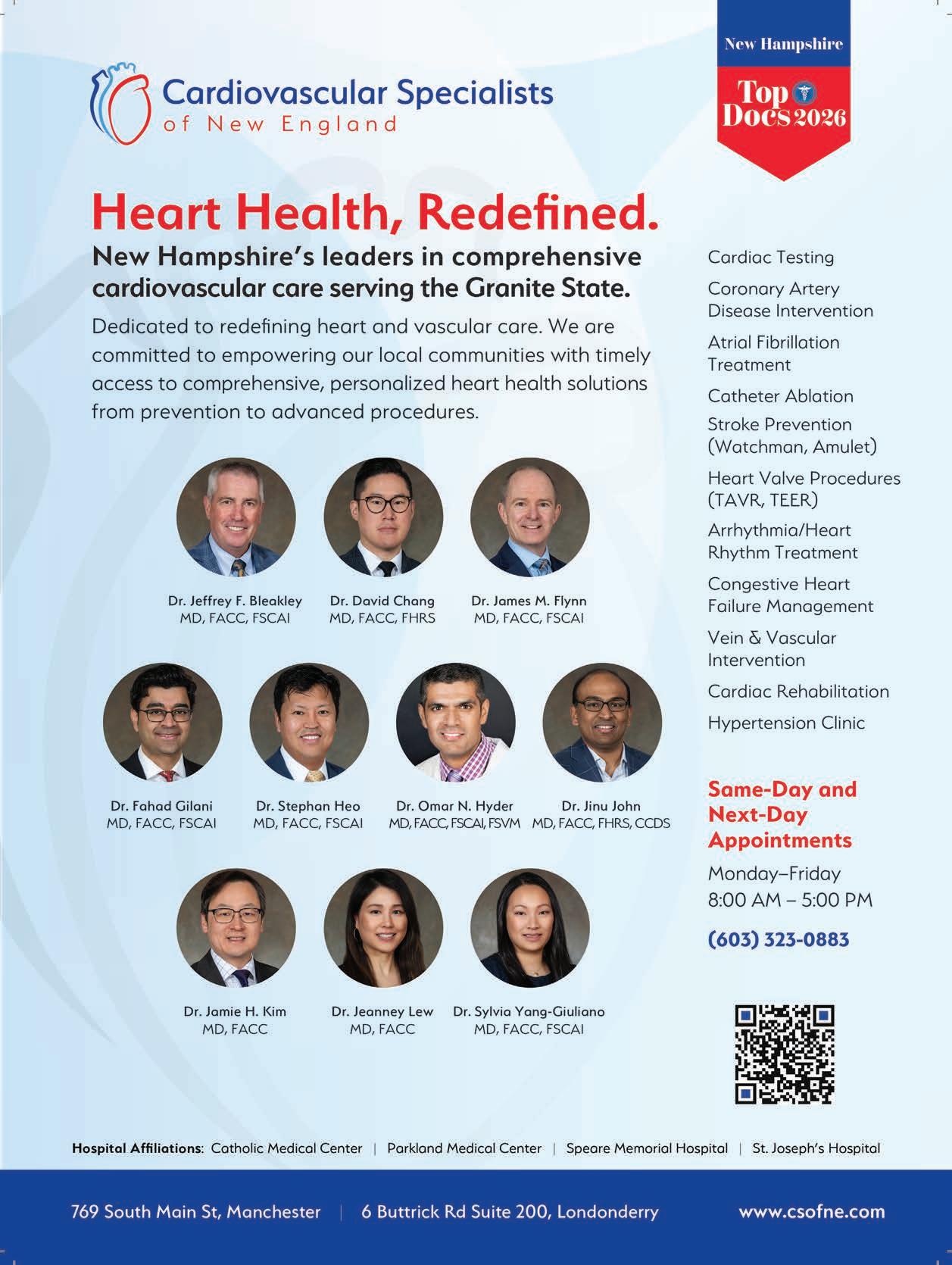
Michael B. Watto, DO
HealthFirst - Franklin Office
Speare Memorial Hospital
Katharine L. Wetherbee, DO DMC Primary Care
John H. Wheeler, DO DMC Primary Care
Michael C. Wu, MD
Exeter Hospital
Jeffrey M. Adler, MD
Dartmouth Hitchcock Medical Center
Vincent Aguirre, MD Elliot Hospital
Jack T. Bueno, MD
Dartmouth Hitchcock
Clinics Nashua, Dartmouth Hitchcock Clinics Manchester, St. Joseph Hospital
Christopher N. Dainiak, MD
Bedford Gastroenterology
Aristotle J. Damianos, MD
Atlantic Digestive Specialists
Portsmouth Regional Hospital, York Hospital, Wentworth-Douglass Hospital, Frisbie Memorial Hospital
Roger M. Epstein, MD
Atlantic Digestive Specialists
Portsmouth Regional Hospital, York Hospital, Wentworth-Douglass Hospital, Frisbie Memorial Hospital
Timothy B. Gardner, MD
Dartmouth Hitchcock Medical Center
Leyla J. Ghazi, MD Concord Hospital
Michael J. Gilbert, MD
Monadnock Community Hospital
Stuart R. Gordon, MD
Dartmouth Hitchcock Medical Center
Andrew C. Gorske, MD
Dartmouth Hitchcock Clinics Cheshire
Brian Hyett, MD
Atlantic Digestive Specialists
Portsmouth Regional Hospital, York Hospital, Wentworth-Douglass Hospital, Frisbie Memorial Hospital
Michael R. Kaczanowski, MD
Southern New Hampshire Medical Center
Dmitriy Kedrin, MD
Elliot Hospital
Arathi R. Komarla, MD Elliot Hospital
L. Campbell Levy, MD
Dartmouth Hitchcock Medical Center
Jennifer M. Lewis, MD
Atlantic Digestive Specialists
Wentworth-Douglass Hospital, York Hospital
Sean P. Lynch, MD
Atlantic Digestive Specialists
Wentworth-Douglass Hospital, Frisbie Memorial Hospital
William E. Maher, MD
Atlantic Digestive Specialists
Wentworth-Douglass Hospital
Leon P. Mclean, MD, PhD, MPH, AGAF
Granite State Gastroenterology Parkland Medical Center
Trinh B. Meyer, MD
Dartmouth Hitchcock Clinics
Manchester, Elliot Hospital
Srikrishna Nagri, MD
Dartmouth Hitchcock Clinics Nashua, St. Joseph Hospital
Scott Oosterveen, MD
Concord Hospital, Elliot Hospital
Matthew J. Rockacy, MD
Dartmouth Hitchcock Clinics Cheshire
Robert A. Ruben, MD
Atlantic Digestive Specialists
Wentworth-Douglass Hospital, Frisbie Memorial Hospital
Timothy D. Scherer, MD
Dartmouth Hitchcock Clinics Manchester, Elliot Hospital
Corey A. Siegel, MD
Dartmouth Hitchcock Medical Center
Mark J. Silversmith, MD
Catholic Medical Center
Robert D. Thomson, MD
Concord Hospital
Arifa Toor, MD
Dartmouth Hitchcock Medical Center, Alice Peck
Day Memorial Hospital
Michael W. Winter, MD
Dartmouth Hitchcock
Medical Center, Alice Peck
Day Memorial Hospital
GERIATRIC MEDICINE
Masooma Athar, MD
Senior Health Primary Care
Elliot Hospital
Samuel J. Goldman, DO
Senior Health Primary Care
Elliot Hospital
Sung E. Jang, MD
Elliot Hospital
GERIATRIC PSYCHIATRY
Dax C. Volle, MD
Dartmouth Hitchcock Medical Center
GYNECOLOGIC ONCOLOGY
Ilana E. Cass, MD
Dartmouth Cancer Center Lebanon
Ivy Wilkinson-Ryan, MD
Dartmouth Cancer Center
Lebanon, Dartmouth Cancer Center Manchester
HAND SURGERY
Roderick Bruno, MD
Access Sports Medicine & Orthopaedics
Exeter Hospital
Robert J. Heaps, MD
New Hampshire Orthopaedic Center
Southern New Hampshire Medical Center, St. Joseph Hospital, Elliot Hospital, Catholic Medical Center
Nicholas J. Horangic, MD
Dartmouth Hitchcock Clinics Manchester, Dartmouth Hitchcock Clinics Nashua, Elliot Hospital
Anthony V. Mollano, MD
Concord Orthopaedics
Concord Hospital
H. Matthew Quitkin, MD
Atlantic Orthopaedics & Sports Medicine
Portsmouth Regional Hospital, York Hospital
Jinsong Wang, MD/PhD
New Hampshire Orthopaedic Center
Elliot Hospital, Catholic Medical Center
HEMATOLOGY
Kenneth R. Meehan, MD
Dartmouth Cancer Center Lebanon
HOSPICE & PALLIATIVE MEDICINE
Mary K. Eckert, MD
Capital Region Palliative Care
Concord Hospital
Nathan E. Goldstein, MD
Dartmouth Hitchcock Medical Center
Linda Kornfeld, MD
Elliot Hospital
Lisa A. Leinau, MD
Dartmouth Hitchcock Clinics Cheshire
Sarah J. Macduffie, DO
Wentworth-Douglass Hospital
Charles S. Mills, MD
Elliot Hospital
INFECTIOUS DISEASE
Gabriela M. Andujar Vazquez, MD
Dartmouth Hitchcock Medical Center
Nida Arif, MD
Appledore Medical Group
Portsmouth Regional Hospital
Michael S. Calderwood, MD
Dartmouth Hitchcock Medical Center
Roma L. Cruz-King, MD
Southern New Hampshire Medical Center
Alexander Granok, MD
Southern New Hampshire Medical Center
Colleen M. Kershaw, MD
Dartmouth Hitchcock Medical Center, Dartmouth Hitchcock Clinics Bedford, Dartmouth
Hitchcock Clinics Nashua
James T. Noble, MD
Concord Hospital
Geetika Sharma, MD
Southern New Hampshire Health
Southern New Hampshire Medical Center
INTERNAL MEDICINE
Jeffrey T. Calegari, DO
Delphi Enhanced Primary Care
Elliot Hospital
Anne G. Chehade, MD
Concord Hospital Internal Medicine
Concord Hospital
Gus G. Emmick, MD Elliot Hospital
Sarah H. Finn, MD
Dartmouth Hitchcock Clinics Manchester
Jennifer Fishbein, MD
Delphi Enhanced Primary Care
Timothy S. French, MD Elliot Hospital
Andrea H. Greenfeld, MD Elliot Hospital
Virginia Hassett, MD
Wentworth-Douglass Hospital
Marcio Jablonka, MD
Southern New Hampshire
Internal Medicine Associates
Catholic Medical Center, Elliot Hospital
Heather L. Marks, MD
Dartmouth Hitchcock Clinics Manchester
Todd Mellish, DO
Southern New Hampshire Health
Patricia L. Min, MD
Dartmouth Hitchcock Medical Center
Jennifer P. Packard, MD
Bedford Center Internal Medicine and Pediatrics
Catholic Medical Center
Lisa C. Pastel, MD
Dartmouth Hitchcock Medical Center
Kevin Y. Pho, MD St. Joseph Hospital
Ryan C. Ratts, MD/PhD
Dartmouth Hitchcock Medical Center
Donald E. Reape, MD St. Joseph Hospital
Rebekah L. Reeves, MD Littleton Regional Healthcare
Andrew R. Rosen, MD Elliot Hospital
Pamela R. Schultze, MD Wentworth-Douglass Hospital
Kevin A. Silva, MD
Littleton Regional Healthcare
Lijun Song, MD/PhD
Dartmouth Hitchcock Clinics Manchester





CONCORD (603) 226-2600
NASHUA (603) 889-9952
GREATER BOSTON (603) 226-2600
MANCHESTER (603) 226-2600
MONTPELIER (802) 552-4037
RATHLAW.COM



DANIELLE ALBUSHIES, MD
“The most meaningful part of my job is delivering babies. Being present for such an emotional and important part of a couple’s life is such a privilege.”

KRISTEN BANNISTER, MD
“Over time, if you get to know people, they start to trust you and want to share their lives with you. The fact that we are given the opportunity to earn that trust is very special.”
COLLEEN BARBER, MD
“I choose OB-GYN because I love the variety of patient care experiences it offers — from developing long-standing relationships with women in the office setting to sharing in a family’s birth story, to guiding a patient through surgery and post operative recovery.”
MONICA CHUN, MD
“Being an OB is an amazing experience, seeing a baby being born is experiencing a miracle every time. Being able to support moms through this journey is such an honor.”
EMILY DEIBERT, MD
“It’s a privilege to care for women during the most significant turning points in their lives. I enjoy educating and empowering women to be informed decision makers while seeking to understand and support what is most important to them. Delivering babies never gets old!”
LARA HANLON, MD
“Developing long-term relationships is the most important part of what I do. I am honored in so many ways to be able to provide care to the women of our community.”
KRISTINE HENNEBERRY, DO
“One of the most rewarding parts of being an OB-GYN is the ability to care for women at every stage of their lives. Delivering care and building relationships as their health needs change over time is very important to me.”
ELIZABETH MAXWELL, MD
“The most meaningful part of my job is building relationships with my patients and caring for them through each stage of life. I aim to empower my patients through education and help guide them in making decisions that best meet their individual needs. It is truly an honor to provide care to our community!”
LISBETH MURPHY, MD
“The best part of my job is the deliveries. It’s a chance for me to be part of a birthday party, a day in someone’s life that they will always remember.”

SAMANTHA PAWLOWSKI, MD
“Being an OB-GYN means that I get to be on a team that helps deliver babies. A team that not only consists of fabulous doctors, but the ability to partner with all of our patients who are excited to welcome a new baby into their lives.”
DANIELLE SAUCIER, MD
“I enjoy educating my patients on the variety of treatment options and helping them choose the treatment that best aligns with their goals.”
ADILI SHAY, MD
“My goal is to provide compassionate care that is tailored to an individual’s need. I love building a relationship with patients and listening to their concerns.”
KATLYN VIGLIANCO, MD
“Patient relationships mean everything to me. It is a joy to get to know a patient and care for her throughout her lifetime. Every stage of a woman’s life is unique and I love being there through the journey.”
JENNIFER WEIDNER, MD
“I think the thing that I love the most is when you can see that you have made a positive difference in someone’s life. As a practice, I think we do that in so many different ways.”
FLETCHER WILSON, MD
“I really focus on each patient as an individual, taking into account their personal beliefs and concerns, while addressing their needs in the most effective way possible.”


Starting your family is one of life’s most beautiful journeys, and we’ve been honored to be part of over 25,000 of them. From our first visit to the big day, we’re here with expert care, support, and a team that’s as excited about your BIRTH-day as you are!
We understand that every woman’s experience is different, and that’s why our team is here to listen, guide, and offer solutions that help you feel like your best self — inside and out.
Menopause is a big change — but you don’t have to navigate it alone. We provide personalized menopause support, education, and hormone therapy designed just for you. Let us help you embrace this new chapter with confidence, comfort, and vitality!
Whether you’re juggling life, staying active, or navigating new chapters like menopause, we’re here to make sure your health is as strong as your spirit.
With years of experience and a team that’s truly passionate about women’s health, we provide everything from wellness exams to specialized care — always with a smile and a sense of humor.
Vijaya Upadrasta, MD
Dartmouth Hitchcock Clinics Manchester
Salvatore J. Vella Jr, DO
Southern New Hampshire Medical Center
Craig P. Widness, MD
Elliot Hospital
Yvonne F. Wilson, MD
Mass General Brigham Integrated Care
Southern New Hampshire Medical Center
Jeffrey F. Bleakley, MD
Cardiovascular Specialists of New England Catholic Medical Center, Speare Memorial Hospital
Paul Boffetti, MD
Southern New Hampshire Medical Center
Jonathan Bridges, MD
York Hospital Cardiovascular Care of New Hampshire York Hospital, Portsmouth Regional Hospital
Jeffrey Colnes, MD
York Hospital Cardiovascular Care of New Hampshire York Hospital, Portsmouth Regional Hospital
James T. DeVries, MD
Dartmouth Hitchcock Medical Center, Cheshire Medical Center
James M. Flynn, MD
Cardiovascular Specialists of New England Catholic Medical Center, Speare Memorial Hospital
Fahad S. Gilani, MD
Cardiovascular Specialists of New England Catholic Medical Center, St. Joseph Hospital, Parkland Medical Center
Stephan Heo, MD
Cardiovascular Specialists of New England Catholic Medical Center, St. Joseph Hospital
Aaron V. Kaplan, MD
Dartmouth Hitchcock Medical Center
Johny Kuttab, MD
Elliot Cardiovascular Consultants
Elliot Hospital
Aaqib H. Malik, MD
Catholic Medical Center
Shahab Moossavi, MD
Concord Hospital, Concord Hospital – Laconia, Concord Hospital – Franklin
Michelle L. Ouellette, MD
Catholic Medical Center, Parkland Medical Center
Christopher T. Pyne, MD
Southern New Hampshire Medical Center, Lahey Hospital & Medical Center
Xiaoyu Yang-Giuliano, MD
Cardiovascular Specialists of New England Catholic Medical Center, Speare Memorial Hospital, Monadnock Community Hospital
Michael N. Young, MD
Dartmouth Hitchcock Medical Center
MATERNAL & FETAL MEDICINE
Emily R. Baker, MD
Dartmouth Hitchcock Medical Center, Dartmouth Hitchcock Clinics Bedford, Dartmouth Hitchcock Clinics Concord
E. Rebecca Pschirrer, MD
Dartmouth Hitchcock Medical Center, Dartmouth Hitchcock Clinics Bedford, Dartmouth Hitchcock Clinics Concord, Dartmouth Hitchcock Clinics Nashua
Michelle A. Russell, MD Dartmouth Hitchcock Medical Center
MEDICAL ONCOLOGY
Cherif Abdelmalek, MD Southern New Hampshire Medical Center, Massachusetts General Hospital
Elizabeth M. Bengtson, MD Dartmouth Cancer Center Lebanon, Dartmouth Cancer Center St. Johnsbury
Michael S. Buff, MD New Hampshire Oncology-Hematology
Concord Hospital, Elliot Hospital
Peter H. Crow, MD New Hampshire Oncology-Hematology
Concord Hospital, Elliot Hospital
Gina M. DiVenuti, MD
New Hampshire Oncology-Hematology
Concord Hospital, Elliot Hospital
Konstantin H. Dragnev, MD Dartmouth Cancer Center Lebanon
Kathryn C. Hourdequin, MD
Dartmouth Cancer Center Lebanon
Gautami S. Rao, MD
Southern New Hampshire Medical Center, Massachusetts General Hospital
Meredith J. Selleck, MD New Hampshire Oncology-Hematology
Concord Hospital, Elliot Hospital
Keisuke Shirai, MD Dartmouth Cancer Center Lebanon
Zachary S. Spigelman, MD Parkland Center for Oncology and Hematology Parkland Medical Center
Jeanna Walsh, MD New Hampshire Oncology-Hematology
Concord Hospital, Elliot Hospital
James E. Gray, MD
Dartmouth Hitchcock Medical Center
Lauren M. Priolo, MD Elliot Hospital
Steven A. Ringer, MD/PhD
Dartmouth Hitchcock Medical Center
Kulli M. Barrett, MD
Seacoast Kidney & Hypertension Specialists
Frisbie Memorial Hospital, Portsmouth Regional Hospital
Michael Casimir Danielski, MD
Seacoast Kidney & Hypertension Specialists
Frisbie Memorial Hospital, Portsmouth Regional Hospital
Sean W. Fitzpatrick, MD
Southern New Hampshire Medical Center, St. Joseph Hospital
David S. Friedenberg, DO
Nephrology Associates
Elliot Hospital, Catholic Medical Center, Concord Hospital
Charles W. Hopley, MD
Dartmouth Hitchcock Medical Center
Sucharit Joshi, MD
Seacoast Kidney & Hypertension Specialists
Frisbie Memorial Hospital, Portsmouth Regional Hospital
Shiv Kumar, MD
Seacoast Kidney & Hypertension Specialists
Frisbie Memorial Hospital, Portsmouth Regional Hospital
Naresh Matta, MD
Seacoast Kidney & Hypertension Specialists
Frisbie Memorial Hospital, Portsmouth Regional Hospital
Kevin B. Meyer, MD
Dartmouth Hitchcock Clinics
Manchester, Catholic Medical Center, Southern New Hampshire Medical Center
Krupa S. Rajur, MD
Southern New Hampshire Medical Center, St. Joseph Hospital
Ana Stankovic, MD
Center for Kidney and Metabolic Disorders
Parkland Medical Center
NEUROLOGICAL SURGERY
Katharine M. Cronk, MD/PhD
Southern New Hampshire Medical Center
Gareth M. Davies, MD Appledore Medical Group
Portsmouth Regional Hospital
Alexander J. Gamble, DO
New Hampshire
NeuroSpine Institute
Elliot Hospital, Catholic Medical Center, Concord Hospital
Neal Luther, MD
New Hampshire
NeuroSpine Institute
Elliot Hospital, Catholic Medical Center
Hulda B. Magnadottir, MD
Alice Peck Day Memorial Hospital
Tung T. Nguyen, MD
Southern New Hampshire Medical Center
Henry F. Pallatroni III, MD
Appledore Medical Group
Portsmouth Regional Hospital
Harold J. Pikus, MD
Alice Peck Day Memorial Hospital
Nathan E. Simmons, MD
Dartmouth Hitchcock Medical Center
Paul P. Wang, MD
New Hampshire
NeuroSpine Institute
Elliot Hospital, Catholic Medical Center
Murali K. Bogavalli, MD
Concord Hospital Neurology Concord Hospital
Krzysztof A. Bujarski, MD
Dartmouth Hitchcock Medical Center, Dartmouth
Hitchcock Clinics Bedford, Catholic Medical Center
Ann C. Cabot, DO
Elliot Neurological Specialties
Elliot Hospital
Khosro Farhad, MD
Wentworth-Douglass
Hospital, Massachusetts General Hospital
Jason Fleming, MD
Elliot Hospital
Valerie E. Gendron, MD
Dartmouth Hitchcock Clinics Cheshire
Maureen C. Hughes, MD
Concord Hospital Neurology
Concord Hospital, Elliot Hospital
Barbara C. Jobst, MD
Dartmouth Hitchcock Medical Center
Ana G. Lizama, MD Elliot Hospital
Keith J. McAvoy, MD
Dartmouth Hitchcock Clinics Bedford
Aleksandra C. Stark, MD
Dartmouth Hitchcock Medical Center
Geoffrey Starr, MD
Appledore Medical Group
Portsmouth Regional Hospital
Leslie Suranyi Jr, MD
Concord Hospital
Vijay M. Thadani, MD/PhD
Dartmouth Hitchcock Medical Center
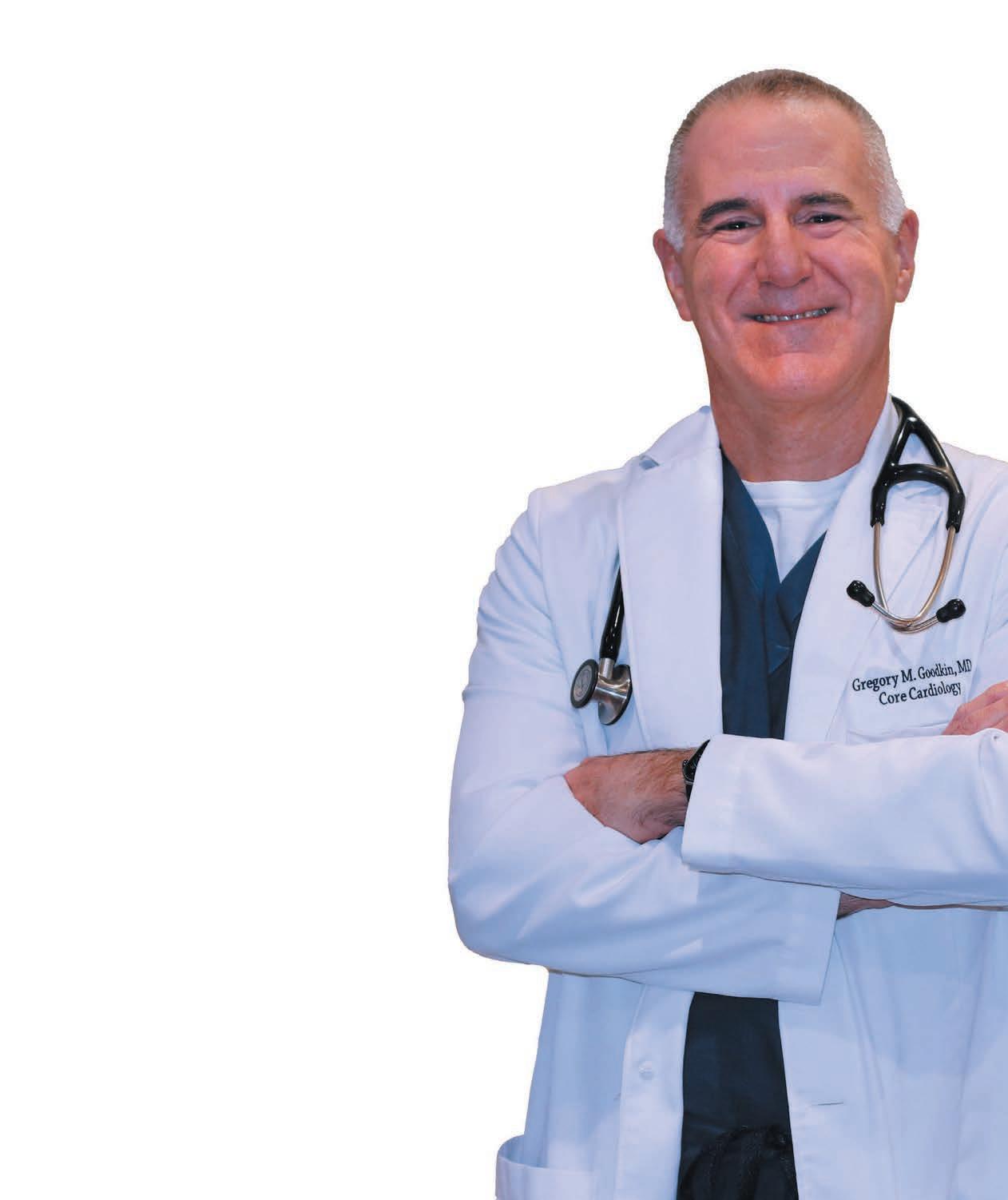
Thank you for helping to create healthier communities, one person at a time.
Addison Gilbert Hospital
Anna Jaques Hospital
BayRidge Hospital
Beth Israel Deaconess Hospital – Milton
Beth Israel Deaconess Hospital – Needham
Beth Israel Deaconess Hospital – Plymouth
Beth Israel Deaconess Medical Center
Beth Israel Lahey Health At Home
Beth Israel Lahey Health Behavioral Services
Beth Israel Lahey Health Primary Care
Beth Israel Lahey Health Specialty Care
Beverly Hospital
Core Physicians
Exeter Hospital
Joslin Diabetes Center
Lahey Hospital & Medical Center
Lahey Medical Center, Peabody
Mount Auburn Hospital
New England Baptist Hospital
Winchester Hospital
Rebecca J. Thompson, MD
Dartmouth Hitchcock Medical Center
Gopalan Umashankar, MD
Concord Hospital Neurology
Concord Hospital
Gary D. Usher, MD
Wentworth-Douglass Hospital
Roya Vakili, MD
Dartmouth Hitchcock Clinics Bedford
Clifford J. Eskey, MD/PhD
Dartmouth Hitchcock Medical Center
Stephen J. Guerin, MD
Dartmouth Hitchcock Medical Center
Rihan Khan, MD
Dartmouth Hitchcock Medical Center
David A. Pastel, MD
Dartmouth Hitchcock Medical Center
Corey N. Sides, MD
Dartmouth Hitchcock Clinics Manchester, Dartmouth Hitchcock Clinics Concord, Dartmouth Hitchcock Clinics Nashua
Jeffrey B. Mendel, MD
Parkland Medical Center, Portsmouth Regional Hospital
OBSTETRICS & GYNECOLOGY
Danielle Albushies, MD
Bedford Commons OB-GYN
Elliot Hospital
Jenny G. Backman, MD
Manchester Ob/Gyn Associates
Elliot Hospital
Rebecca Banaski, DO
Wentworth-Douglass Hospital
Kristen L. Bannister, MD
Bedford Commons OB-GYN
Elliot Hospital
Colleen M. Barber, MD
Bedford Commons OB-GYN
Elliot Hospital
Valerie A. Bell, MD
Dartmouth Hitchcock Clinics Nashua, Southern New Hampshire Medical Center
Julie A. Braga, MD
Dartmouth Hitchcock Medical Center, Valley Regional Hospital
Monica J. Chun, MD
Bedford Commons OB-GYN Elliot Hospital
Mark A. Conway, MD St. Joseph Hospital
Jennifer M. Donofrio, MD
Manchester Ob/Gyn Associates Elliot Hospital
Jillian K. Dulac, MD
Manchester Ob/Gyn Associates Elliot Hospital
Rebecca H. Evans, MD
Dartmouth Hitchcock Medical Center
Heather L. Feltmate, MD
Dartmouth Hitchcock Clinics Nashua, Southern New Hampshire Medical Center
Mary Ellen Fiske, MD
Dartmouth Hitchcock Clinics Concord Concord Hospital
Heidi Hallonquist, MD
Concord Hospital
Lara C. Hanlon, MD
Bedford Commons OB-GYN
Elliot Hospital
Kristine Henneberry, DO
Bedford Commons OB-GYN Elliot Hospital
Courtney B. Jones, MD Concord Hospital
Janine Keever, MD
Amherst Obstetrics and Gynecology
Southern New Hampshire Medical Center
Kelly M. MacMillan, MD St. Joseph Hospital
Karen K. Maynard, MD
Southern New Hampshire Medical Center
Heidi Meinz, MD
Manchester Ob/Gyn Associates
Elliot Hospital
Deborah A. Mueller, MD Huggins Hospital
Lisbeth A. Murphy, MD
Bedford Commons OB-GYN
Elliot Hospital
Joshua M. Nathan, MD
Manchester Ob/Gyn Associates
Elliot Hospital
Sonja Nelson, MD
Harbour Women’s Health
Portsmouth Regional Hospital
Samantha R. Pawlowski, MD
Bedford Commons OB-GYN
Elliot Hospital
Timothy Pinard, MD
Huggins Hospital
Adili L. Shay, MD
Bedford Commons OB-GYN
Elliot Hospital
Brenna Corbett Stapp, DO
Manchester Ob/Gyn Associates
Elliot Hospital
Sylvia Tufano, MD
Southern New Hampshire Medical Center
Jennifer Weidner, MD
Bedford Commons OB-GYN
Elliot Hospital
Fletcher R. Wilson, MD
Bedford Commons OB-GYN
Elliot Hospital
Phillip B. Collins, MD
Alice Peck Day Memorial Hospital
Heather Bartels, MD
The Medical Eye Center
Monadnock Community Hospital
Claudia Bartolini, MD
Eyesight Ophthalmic Services
Portsmouth Regional Hospital, Exeter Hospital
Kinley Beck, MD
Eyesight Ophthalmic Services
Portsmouth Regional Hospital, WentworthDouglass Hospital
Timothy D. Blake, MD
Nashua Eye Associates
Southern New Hampshire Medical Center, St.
Joseph Hospital
Nancy E. Bonachea, MD
New Hampshire Eye Associates
Elliot Hospital, Catholic Medical Center
Anthony J. Correnti, MD
New Hampshire Eye Associates
Elliot Hospital
Sonalee M. Desai-Bartoli, MD
Nashua Eye Associates
Southern New Hampshire Medical Center, St.
Joseph Hospital
Janine R. Eagle, MD
Dartmouth Health
Children’s Lebanon
Maxwell D. Elia, MD
The Medical Eye Center
Elliot Hospital
Ahad A. Fazelat, MD
The Medical Eye Center
Elliot Hospital
Erin S. Fogel, MD
Concord Eye Center
Eliot D. Foley, MD
The Medical Eye Center
Warren Goldblatt, MD
Eyesight Ophthalmic Services
Frisbie Memorial Hospital, Portsmouth Regional Hospital
Jason A Hall, MD
The Medical Eye Center
Elliot Hospital
Amy L. Hennessy, MD
The Medical Eye Center
Elliot Hospital
Marsha Kavanagh, MD
Eyesight Ophthalmic Services
Portsmouth Regional Hospital, WentworthDouglass Hospital
Richard J. Lasonde, MD
Excellent Vision
Portsmouth Regional Hospital
David P. Lawlor, MD
Dartmouth Hitchcock Medical Center
Vasilios P. Lazos, DO
New Hampshire Eye Associates
Elliot Hospital
Kimberly Licciardi, MD
New Hampshire Eye Associates
Elliot Hospital
Donald M. Miller, MD
Dartmouth Hitchcock Medical Center
Christiana E. Munroe, MD
New Hampshire Eye Associates
Elliot Hospital
Paul S. Musco, MD
Speare Memorial Hospital
Purak Parikh, MD
Nashua Eye Associates
Southern New Hampshire Medical Center, St.
Joseph Hospital
Newton T. Peters, MD
Eyesight Ophthalmic Services
Wentworth-Douglass Hospital
Patrick Joseph Riddle, MD
Nashua Eye Associates
Southern New Hampshire Medical Center, St.
Joseph Hospital
Erin M. Salcone, MD
Dartmouth Health
Children’s Lebanon
Douglas R. Scott, MD
Laconia Eye & Laser Center
Concord Hospital – Laconia
Dane H. Slentz, MD
The Medical Eye Center
Elliot Hospital
Timothy Sullivan, MD
Eyesight Ophthalmic Services
Portsmouth Regional Hospital, WentworthDouglass Hospital
Lucian Szmyd Jr, MD
Eyesight Ophthalmic Services
Portsmouth Regional Hospital
David A. Weinberg, MD
Concord Eye Center
Concord Hospital
Melissa M. Wong, MD
New Hampshire Eye Associates
Elliot Hospital
Sarah C. Xu, MD
The Medical Eye Center
Elliot Hospital
Michael E. Zegans, MD
Dartmouth Hitchcock Medical Center
Uri Michael Ahn, MD
New Hampshire
NeuroSpine Institute
Elliot Hospital
James B. Ames, MD
Dartmouth Hitchcock Medical Center
Eric Arvidson, MD
Mobility Bone & Joint Institute
Parkland Medical Center
John-Erik Bell, MD
Dartmouth Hitchcock Medical Center
Eric R. Benson, MD
New Hampshire Orthopaedic Center
Elliot Hospital, Catholic Medical Center

HCA Healthcare in New Hampshire proudly celebrates our outstanding physicians, recognized by their peers for excellence in care. These physicians embody our mission: Above all else, we are committed to the care and improvement of human life.
Need help finding a doctor or health information? Call Consult-A-Nurse® at 844-706-8773
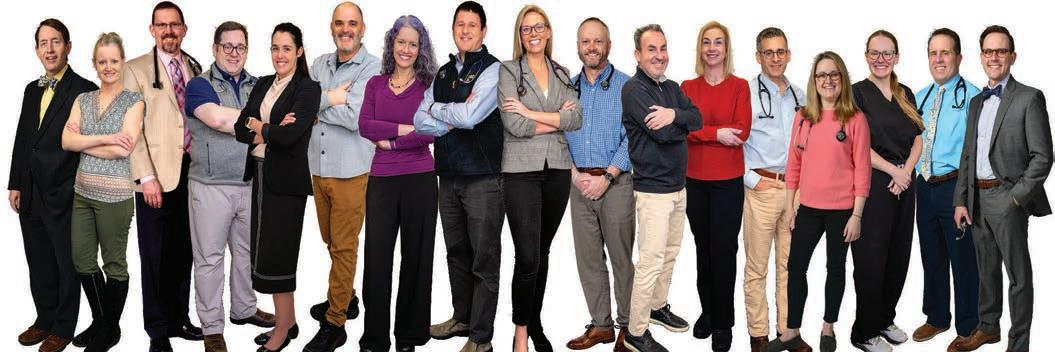
From left to right:
John Daley, MD, Derry
Sarah Murai, MD, Derry
J.Bryan Bannister, MD, Bedford
Douglas Phelan, DO, FAAFP, Windham
Alexia Strzalka, MD, Bedford
Daniel Rosenbaum, MD, Bedford
Cristi Egenolf, MD, Derry
Patrick Fox, MD, Concord
Katharine Wetherbee, DO, Londonderry
James Fitzgerald, MD, Bedford
John Wheeler, DO, Derry
Rebecca Krasnof, MD, Windham
Robert Dorf, DO, Londonderry
Anne Barry, DO, Windham
Jennifer Badger, DO, Derry
Douglas Dreffer, MD, Concord
Adam Androlia, DO, Derry
Debra Margolis, DO, Bedford (Not Pictured)
Daniel P. Bouvier, MD
New Hampshire Orthopaedic Center
St. Joseph Hospital, Southern New Hampshire Medical Center, Parkland Medical Center
Patrick Casey, MD
Concord Orthopaedics
Concord Hospital
Avnish N. Clerk, MD
Exeter Hospital
Jeffrey Clingman, MD
Advanced Orthopaedics
Frisbie Memorial Hospital
Marcus P. Coe, MD
Dartmouth Hitchcock Medical Center, New London Hospital
Mark C. Cullen, MD
Wentworth-Douglass Hospital, Massachusetts General Hospital
Alexander D. Davis, MD
Access Sports Medicine & Orthopaedics
Portsmouth Regional Hospital
Robert F. Davis, MD
Southern New Hampshire Medical Center
Neil T. Dion, MD
Concord Orthopaedics
Concord Hospital
Tahsin Ergin, MD
Mobility Bone & Joint Institute
Parkland Medical Center
Frances D. Faro, MD
Dartmouth Hitchcock Medical Center, New London Hospital
Andrew T. Garber, MD
New Hampshire Orthopaedic Center
St. Joseph Hospital, Parkland Medical Center, Elliot Hospital, Catholic Medical Center, Southern New Hampshire Medical Center
Mark J. Geppert, MD
Wentworth-Douglass Hospital, Massachusetts General Hospital
Ida Leah Gitajn, MD
Dartmouth Hitchcock Medical Center
Ricardo A. Gonzales, MD
Elliot Hospital
Douglas M. Goumas, MD
New Hampshire Orthopaedic Center
Catholic Medical Center, Southern New Hampshire Medical Center
Eric R. Henderson, MD
Dartmouth Hitchcock
Medical Center, Dartmouth
Hitchcock Clinics Manchester, Dartmouth Hitchcock Clinics Concord
Jeffrey I. Kauffman, MD Littleton Regional Healthcare
Heather C. Killie, MD
New Hampshire Orthopaedic Center
Catholic Medical Center, Southern New Hampshire Medical Center
Bryan Lawless, MD Elliot Hospital
Gregory P. Leather, MD Cheshire Medical Center
Glenn S. Lieberman, MD
Concord Hospital Orthopaedics
Concord Hospital
Timothy J. Lin, MD
Dartmouth Hitchcock Medical Center, Alice Peck Day Memorial Hospital
Thomas F. McGovern, MD Exeter Hospital
Kevin J. McGuire, MD
Dartmouth Hitchcock Medical Center
Marc J. Michaud, MD
New Hampshire Orthopaedic Center
Elliot Hospital, Catholic Medical Center
Wayne E. Moschetti, MD
Dartmouth Hitchcock Medical Center, Alice Peck Day Memorial Hospital
Mayo Noerdlinger, MD
Atlantic Orthopaedics & Sports Medicine
Portsmouth Regional Hospital, York Hospital
Jason A. Oliviero, MD
Dartmouth Hitchcock Clinics
Manchester, Elliot Hospital
Alexander R. Orem, MD
Dartmouth Hitchcock Medical Center, Gifford Medical Center
Robert C. Parisien, MD Elliot Hospital
Ira M. Parsons, MD
The Knee, Hip & Shoulder Center
Portsmouth Regional Hospital
Adam M. Pearson, MD
Dartmouth Hitchcock Medical Center
Anthony H. Presutti, MD
Cheshire Medical Center
Akhilesh Sastry, MD
Atlantic Orthopaedics & Sports Medicine
Portsmouth Regional Hospital
Paul Scibetta Jr, DO
Elliot Hospital
Joshua A. Siegel, MD
Access Sports Medicine & Orthopaedics
Portsmouth Regional Hospital
Edward A. Sirlin III, MD
Southern New Hampshire Medical Center
Gregory W. Soghikian, MD
New Hampshire Orthopaedic Center
Elliot Hospital, Catholic Medical Center
Michael B. Sparks, MD
Dartmouth Hitchcock
Medical Center, Alice Peck Day Memorial Hospital
Adrian J. Thomas, MD
New Hampshire NeuroSpine Institute
Elliot Hospital
Benjamin M. Thompson, MD
Access Sports Medicine & Orthopaedics
Portsmouth Regional Hospital, Frisbie Memorial Hospital
David C. Thut, MD
Wentworth-Douglass Hospital, Massachusetts General Hospital
Lance G. Warhold, MD
Dartmouth Hitchcock Medical Center
Gavin R. Webb, MD
Wentworth Health Partners
Wentworth-Douglass Hospital, Massachusetts General Hospital
Tyler P. Welch, MD
Atlantic Orthopaedics & Sports Medicine
Portsmouth Regional Hospital, York Hospital
Jeffrey W. Wiley, MD
Concord Orthopaedics
Concord Hospital
James P. Bartels, MD
Bartels Facial Rejuvenation
Eunice Y. Chen, MD/PhD
Dartmouth Hitchcock Medical Center
Colin R. Edwards, MD
Dartmouth Hitchcock
Clinics Manchester
Elliot Hospital
Peter Soon Ihm, MD
Exeter Hospital
Keith Jorgensen, MD
Parkland Medical Center
Joseph A. Paydarfar, MD
Dartmouth Hitchcock Medical Center
James E. Saunders, MD
Dartmouth Hitchcock Medical Center
Sarah S. Seo, MD
Dartmouth Hitchcock Medical Center
Mark C. Smith, MD
Dartmouth Hitchcock Medical Center
Andrew R. Spector, MD
Dartmouth Hitchcock Clinics Manchester
Elliot Hospital
Jeffrey M. Zimmerman, MD
Dartmouth Hitchcock Clinics Manchester
Elliot Hospital
Musa M. Aner, MD
Dartmouth Hitchcock Medical Center
Christopher J. Curatolo, MD
Wentworth-Douglass Hospital
Jason M. Donnelly, MD
Amoskeag Anesthesia
Elliot Hospital
Alex M. Dressler, MD
New Hampshire NeuroSpine Institute
Elliot Hospital
Mark A. Horton, MD
Dartmouth Hitchcock Clinics Cheshire
James A. Mirazita, MD
Pain Solutions
Southern New Hampshire Medical Center, Concord Hospital – Laconia
Syed A. Razvi, MD
Amoskeag Anesthesia
Elliot Hospital
Praveen Suchdev, MD
Pain Solutions
Southern New Hampshire Medical Center
Kimberly M. Youngren, MD
Dartmouth Hitchcock Medical Center
Michael L. Baker, MD
Dartmouth Hitchcock Medical Center
John P. Bissonnette, MD
Elliot Hospital
Southern New Hampshire Medical Center, Elliot Hospital
Candice C. Black, DO
Dartmouth Hitchcock Medical Center
Anil K. Dewan, MD
Elliot Hospital
Southern New Hampshire Medical Center, Elliot Hospital
Nancy M. Dunbar, MD
Dartmouth Hitchcock Medical Center
Jorge L. Gonzalez, MD
Dartmouth Hitchcock Medical Center
Edward J. Gutmann, MD
Dartmouth Hitchcock Medical Center
Prabhjot Kaur, MD
Dartmouth Hitchcock Medical Center, New London Hospital
Darcy A. Kerr, MD
Dartmouth Hitchcock Medical Center
Robert E. LeBlanc, MD
Dartmouth Hitchcock Medical Center
Mikhail Lisovsky, MD/PhD
Dartmouth Hitchcock Medical Center
Xiaoying Liu, MD
Dartmouth Hitchcock Medical Center
Jonathan D. Marotti, MD
Dartmouth Hitchcock Medical Center
Isabella W. Martin, MD
Dartmouth Hitchcock Medical Center
Shabnam Momtahen, MD
Dartmouth Hitchcock Medical Center
Jason R. Pettus, MD
Dartmouth Hitchcock Medical Center
Christopher E. Allen, MD FAMILY MEDICINE
Hilary K. Alvarez, MD FAMILY MEDICINE
Kyle T. Baron, MD FAMILY MEDICINE
Murali K. Bogavalli, MD NEUROLOGY
Gregory A. Bonci, MD
DIAGNOSTIC RADIOLOGY
Teri L. Brehio, MD FAMILY MEDICINE
Constantine P. Brocoum, MD
DIAGNOSTIC RADIOLOGY
Michael S. Buff, MD ONCOLOGY & HEMATOLOGY
Patrick J. Casey, MD ORTHOPAEDIC SURGERY
Anne G. Chehade, MD INTERNAL MEDICINE
Adam Chodosh, MD CARDIOLOGY
Elizabeth F. Clemente, MD DIAGNOSTIC RADIOLOGY
Carolyn S. Crosby, MD FAMILY MEDICINE
Peter H. Crow, MD ONCOLOGY & HEMATOLOGY
Matthew H. DiMasi, MD
DIAGNOSTIC RADIOLOGY
Anthony M. Dinizio, MD
DIAGNOSTIC RADIOLOGY
Neil T. Dion, MD ORTHOPAEDIC SURGERY
Doctors for being recognized by your peers.
Gina M. DiVenuti, MD ONCOLOGY & HEMATOLOGY
Mary K. Eckert, MD HOSPICE & PALLIATIVE MEDICINE
Scott J. Fabozzi, MD UROLOGY
Mary Ellen Fiske, MD OBSTETRICS & GYNECOLOGY
Rachel Franchi-Winters, DO FAMILY MEDICINE
David Friedenberg, DO NEPHROLOGY
Dean J. Galatis, MD ANESTHESIOLOGY
Alexander Gamble, DO NEUROLOGICAL SURGERY
Leyla J. Ghazi, MD GASTROENTEROLOGY
Steffen Haider, MD VASCULAR & INTERVENTIONAL RADIOLOGY
Heidi Hallonquist, MD OBSTETRICS & GYNECOLOGY
Melissa Hoyt, MD GENERAL SURGERY
Maureen C. Hughes, MD NEUROLOGY
Courtney B. Jones, MD OBSTETRICS & GYNECOLOGY
Matthew F. Kamil, MD ENDOCRINOLOGY, DIABETES & METABOLISM
Amichai D. Kilchevsky, MD UROLOGY
Robert J. Laflam, MD ANESTHESIOLOGY
Yan Li, MD RHEUMATOLOGY
Glenn S. Lieberman, MD ORTHOPAEDIC SURGERY
Christina G. Loporcaro, MD EMERGENCY MEDICINE
Amy L. Martel, MD FAMILY MEDICINE
Su K. Metcalfe, MD RADIATION ONCOLOGY
James Mirazita, MD PAIN MEDICINE
Robert E. Mitchell, MD UROLOGY
Anthony V. Mollano, MD ORTHOPAEDIC SURGERY
Shahab Moossavi, MD INTERVENTIONAL CARDIOLOGY
Ayesha Nazeer, MD CARDIOLOGY
James T. Noble, MD INFECTIOUS DISEASE
Richard J. O’Brien Jr., MD FAMILY MEDICINE
Scott Oosterveen, MD GASTROENTEROLOGY
Marianne R. Petruccelli, MD DIAGNOSTIC RADIOLOGY
Robert D. Rix, MD EMERGENCY MEDICINE
Bryan P. Rowe, MD RADIATION ONCOLOGY
Ari I. Salis, MD INTERVENTIONAL RADIOLOGY
William Farber Santis, MD UROLOGY
Douglas R. Scott, MD OPHTHALMOLOGY
Meredith J. Selleck, MD ONCOLOGY & HEMATOLOGY
Tamara L. Shilling, DO FAMILY MEDICINE
Hoke H. Shirley, MD RHEUMATOLOGY
Jesse B. Smith, MD DIAGNOSTIC RADIOLOGY
Michael H. Stella, MD DIAGNOSTIC RADIOLOGY
Alexander Stetsyuk, MD DIAGNOSTIC RADIOLOGY
Leslie Suranyi Jr., MD NEUROLOGY
Robert D. Thomson, MD GASTROENTEROLOGY
Veronica Triaca, MD UROGYNECOLOGY
Gopalan Umashankar, MD NEUROLOGY
Joseph G. Venus, MD DIAGNOSTIC RADIOLOGY
Jeanna Walsh, MD ONCOLOGY & HEMATOLOGY
David A. Weinberg, MD OPHTHALMOLOGY
Christopher M. Weinmann, MD GENERAL SURGERY
Jeffrey W. Wiley, MD ORTHOPAEDIC SURGERY
D. Tyler Zapton, MD DIAGNOSTIC RADIOLOGY
THANK YOU FOR YOUR DEDICATION TO MEDICAL EXCELLENCE.
Patients who have a choice, choose us to keep them, their families, and their communities healthy.
Weldon W. Sanford, MD
Catholic Medical Center, Monadnock Community Hospital, Huggins Hospital
James Samuel Smoot, MD
Elliot Hospital, Southern New Hampshire Medical Center
Arief A. Suriawinata, MD
Dartmouth Hitchcock Medical Center
Zbigniew M. Szczepiorkowski, MD/PhD
Dartmouth Hitchcock Medical Center
Karen N. Wu, MD
Optima Dermatology - Laboratory
Shaofeng Yan, MD/PhD
Dartmouth Hitchcock Medical Center
George J. Zanazzi, MD/PhD
Dartmouth Hitchcock Medical Center
PEDIATRIC ALLERGY & IMMUNOLOGY
Robert W. Hickey, MD
Allergy Associates of New Hampshire
PEDIATRIC CARDIOLOGY
Christopher J. Clarke, MD
Dartmouth Health Children’s Manchester
David I. Crowley, MD
Dartmouth Health Children’s Manchester
Jenifer A. Glatz, MD
Dartmouth Health Children’s Manchester, Dartmouth Health Children’s Lebanon
Kimberly M. Molina, MD
Dartmouth Health Children’s Lebanon, Dartmouth Health Children’s Manchester
Julie A. Vincent, MD
Dartmouth Health Children’s Lebanon, Dartmouth Health Children’s Manchester
PEDIATRIC CRITICAL CARE MEDICINE
Kelly L. Corbett, MD
Dartmouth Health Children’s Lebanon
PEDIATRIC DERMATOLOGY
Julianne A. Mann, MD
Dartmouth Health Children’s
Lebanon, Dartmouth Hitchcock Clinics Heater Road
Jillian F. Rork, MD
Dartmouth Health Children’s Manchester
PEDIATRIC EMERGENCY MEDICINE
Maia S. Rutman, MD
Dartmouth Health Children’s Lebanon
Emily A. Zajano, MD Elliot Hospital
PEDIATRIC ENDOCRINOLOGY
Robert C. Gensure, MD/PhD
Dartmouth Health Children’s Manchester, Dartmouth Health Children’s Lebanon
PEDIATRIC GASTROENTEROLOGY
Amer Al-Nimr, MD
Dartmouth Health Children’s Lebanon
Julie L. Sanville, DO
Dartmouth Health Children’s Lebanon
PEDIATRIC HEMATOLOGYONCOLOGY
Julie Kim, MD/PhD
Dartmouth Cancer Center Lebanon, Dartmouth Health Children’s Lebanon
Angela M. Ricci, MD
Dartmouth Cancer Center Lebanon, Dartmouth Health Children’s Lebanon
Nadine P. SantaCruz, MD
Dartmouth Cancer Center Lebanon, Dartmouth Health Children’s Lebanon
PEDIATRIC NEPHROLOGY
Matthew M. Hand, DO
Dartmouth Health Children’s Manchester, Dartmouth Health Children’s Lebanon
PEDIATRIC ORTHOPAEDIC SURGERY
William J. McKinnon Jr, MD
Dartmouth Health Children’s Lebanon
PEDIATRIC PULMONOLOGY
Brian P. O’Sullivan, MD
Dartmouth Health Children’s Manchester, Dartmouth Health Children’s Lebanon
PEDIATRIC SURGERY
Daniel P. Croitoru, MD
Dartmouth Health Children’s Lebanon, Dartmouth Health Children’s Manchester
Eileen M. Duggan, MD
Dartmouth Health Children’s Lebanon, Dartmouth Health Children’s Manchester
Meghna V. Misra, MD
Elliot Hospital
Elizabeth S. Soukup, MD
Elliot Hospital
PEDIATRICS
Thomas M. Albushies, MD
Concord Pediatrics
Cheryl E. Anderson, MD
Dartmouth Health Children’s Lebanon
Alexandra D. Bonesho, MD
Core Physicians
Exeter Hospital
Joel M. Bradley, MD
Dartmouth Health Children’s Lebanon
Candice L. Camacho, MD
Southern New Hampshire Medical Center
Charles T. Cappetta, MD
Dartmouth Health Children’s Nashua
Leslie S. Dick, MD
Dartmouth Health
Children’s Concord
Keith R. Dominick, MD
Pediatric Associates of Hampton & Portsmouth
Danielle L. Dunetz, DO
Southern New Hampshire Medical Center
Eileen Forrest, MD
Exeter Hospital
Mitchell Frumkin, MD
Dartmouth Health Children’s Nashua
Matthew J. Hajduk, MD
Elliot Hospital
Marc A. Hofley, MD
Dartmouth Health Children’s Manchester
John R. Hollister, MD
Dartmouth Health
Children’s Manchester
Samantha A. House, DO
Dartmouth Health
Children’s Lebanon
Nancy S. Husarik, MD
Elliot Hospital
Jessica P. Jacobs, MD
Weeks Medical Center
Kristen C. Johnson, MD
Core Physicians
Exeter Hospital
Ryan C. Johnson, MD
Dover Pediatrics
Wentworth-Douglass Hospital, Massachusetts General Hospital, Portsmouth Regional Hospital
Jennifer L. Jones, MD
Core Physicians
Exeter Hospital
Gregory Kaupp, MD
Southern New Hampshire Medical Center
John Klunk, MD
Elliot Hospital, Southern New Hampshire Medical Center
Tessa J. Lafortune-Greenberg, MD
Dartmouth Health
Children’s Concord
Steven P. Loh, MD Exeter Hospital
Michele D. Mandel, MD
Elliot Hospital
Heather A. Mane, MD Elliot Hospital
Lila H. Monahan, MD
Pediatric Healthy Weight and Wellness
Southern New Hampshire Medical Center
Rebecca H. Murphy, MD
Dartmouth Health
Children’s Manchester
Mark D. Myers, MD
Elliot Hospital
Theresa M. Oliveira, MD
Dartmouth Health
Children’s Concord
Andrea Palumbo, MD
Elliot Hospital
Jessica S. Payton, MD
Dartmouth Health
Children’s, Dartmouth
Hitchcock Clinics Cheshire
Mitchell N. Pivor, MD
Goodwin Community Health
Todd M. Poret, MD
Dartmouth Health
Children’s Concord
Christopher M. Riccio, MD
Southern New Hampshire Medical Center
Geraldine Rubin, MD
Dartmouth Health
Children’s, Dartmouth
Hitchcock Clinics Cheshire
Donald E. Salvatore, MD
Elliot Hospital
Andrew J. Schuman, MD
Dartmouth Health
Children’s Nashua
Erik M. Shessler, MD
Dartmouth Health Children’s Manchester, Dartmouth
Health Children’s Bedford
Catherine D. Shubkin, MD
Dartmouth Health
Children’s Lebanon
Marni A. Silverstein, MD
Dartmouth Health
Children’s, Dartmouth
Hitchcock Clinics Cheshire
Alyssa R. Smith, MD
Puddle Dock Pediatrics
Sandra F. Truebe, MD Elliot Hospital
Pamela S. Udomprasert, MD
Goodwin Community Health
Linda A. Williams, MD
Southern New Hampshire Medical Center
Hilary A. Yehling, MD
Elliot Hospital, Southern New Hampshire Medical Center
Denise E. Youssef, MD
Dartmouth Health
Children’s Nashua




John A. Ditri, MD
Frisbie Memorial Hospital
Thomas M. Frates, MD
New Hampshire
NeuroSpine Institute
Elliot Hospital
Aron M. Jeffrey, DO
New Hampshire NeuroSpine Institute
Elliot Hospital
Bruce Myers, MD
Seacoast Physiatry
Wentworth-Douglass Hospital
Daniel S. Zipin, DO
Exeter Hospital
Cecil W. Bean, MD
Wentworth-Douglass Hospital, Frisbie Memorial Hospital
Steven L. Brown, MD
Catholic Medical Center
Todd E. Burdette, MD
Elliot Hospital
Gary L. Freed Jr, MD
Dartmouth Hitchcock Medical Center
Michael K. Matthew, MD
Dartmouth Hitchcock Medical Center
Jeremy Waldman, MD
Waldman Plastic Surgery & Dermatology
St. Joseph Hospital
Paul F. Belliveau, MD
Innovative Psychiatry Center
Eduardo Andres Calagua
Bedoya, MD
Dartmouth Hitchcock Medical Center
Matthew S. Duncan, MD
Dartmouth Hitchcock Medical Center
Julia R. Frew, MD
Dartmouth Hitchcock Medical Center
Samantha Gnanasegaram, MD
Hope Counseling Services
Patrick A. Ho, MD
Dartmouth Hitchcock Medical Center
Andrew Kaplan, DO LifeStance Health
Portsmouth Regional Hospital
Sreenivas Katragadda, MD LifeStance Health
H. S. Landsman, MD
Dartmouth Hitchcock Medical Center
Gillian L. Sowden, MD
Dartmouth Hitchcock Medical Center
Devendra S. Thakur, MD
Dartmouth Hitchcock Medical Center, Cheshire Medical Center
Haitham Al Ashry, MD
Elliot Hospital
Graham T. Atkins, MD
Dartmouth Hitchcock Medical Center, Copley Hospital
John P. Brennan, MD Exeter Hospital
James L. Carroll Jr, MD
Dartmouth Hitchcock Medical Center
Christopher C. Daigle, MD
St. Joseph Hospital
Sunil Dhunna, MD Elliot Hospital
Joseph C. Hou, MD
Dartmouth Hitchcock Clinics Manchester, Catholic Medical Center
Amit Joglekar, MD Exeter Hospital
Brian L. Jones, MD/PhD
Dartmouth Hitchcock Medical Center
Harold L. Manning, MD
Dartmouth Hitchcock Medical Center
Vinia Madonna C. Mendoza, MD
Seacoast Pulmonary Medicine
Wentworth-Douglass Hospital
Muhammad Mirza, MD
Elliot Hospital
Richard N. Read, MD
Dartmouth Hitchcock Clinics Manchester
RADIATION ONCOLOGY
Jeffrey V. Brower, MD/PhD
Wentworth-Douglass Hospital, Elliot Hospital
Nirav S. Kapadia, MD
Dartmouth Cancer Center Lebanon
Brian R. Knab, MD
Elliot Hospital
Jeffrey Lemons, MD
Wentworth-Douglass
Hospital, Lahey Hospital & Medical Center
Su K. Metcalfe, MD
Concord Hospital, Elliot Hospital
Bryan P. Rowe, MD
Concord Hospital, Wentworth-Douglass Hospital
Himanshu Singh, MD
Wentworth-Douglass Hospital
Bassem I. Zaki, MD
Dartmouth Cancer Center Lebanon, Dartmouth Cancer Center Manchester
REPRODUCTIVE ENDOCRINOLOGY/ INFERTILITY
Joseph A. Hill III, MD Fertility Centers of New England
Kristen Wright, MD
Boston IVF
Elliot Hospital, Beth Israel Deaconess Medical Center-Boston
RHEUMATOLOGY
Daniel A. Albert, MD
Dartmouth Hitchcock Medical Center
Christopher M. Burns, MD
Dartmouth Hitchcock Medical Center
Todd F. Dombrowski, MD
Dartmouth Hitchcock Clinics Cheshire
Kalyani Govindaraju, MD
Nashua Rheumatology
Southern New Hampshire Medical Center
Lyudmila Kirillova, MD
Nashua Rheumatology
Southern New Hampshire Medical Center
Daniel Kunz, DO
Exeter Hospital
Yan Li, MD
Concord Hospital
Douglas F. Marks Jr, MD
Elliot Hospital
Brian McKinley, MD
Wentworth-Douglass Hospital
Naureen Mirza, MD
Elliot Hospital
Aparna Raju Padmaraju, MD
Elliot Hospital
Hoke H. Shirley III, MD
Concord Orthopaedics
Concord Hospital
Robert W. Simms, MD
Dartmouth Hitchcock Medical Center
SLEEP MEDICINE
Brooke G. Judd, MD
Dartmouth Hitchcock Clinics Heater Road
Michele G. Rush, MD
Speare Memorial Hospital
SPORTS MEDICINE
Adam Androlia, DO
DMC Primary Care
Christopher J. Couture, MD
Wentworth-Douglass Hospital, Massachusetts General Hospital
Peter M. Loescher, MD
Alice Peck Day Memorial Hospital
Jonathan Mack, MD
Elliot Hospital
John Andrew McMahon, DO
Atlantic Orthopaedics & Sports Medicine
Portsmouth Regional Hospital, York Hospital
Erika Sadeghi, MD
Elliot Hospital
Stacey A. Abbis, MD
Dartmouth Hitchcock Clinics Nashua
Alexandra Briggs, MD
Dartmouth Hitchcock Medical Center
H.E. Guy Burman, MD Cheshire Medical Center
David J. Coppola, MD
Wentworth-Douglass Hospital
David A. Gould, MD
Dartmouth Hitchcock Clinics Manchester, Elliot Hospital
Rajan Gupta, MD
Elliot Trauma and Acute Care Surgery
Elliot Hospital
Melissa Hoyt, MD
Concord Surgical Associates
Concord Hospital
Daiying Lu, MD
Elliot Hospital
Christopher Lundquist, MD
Catholic Medical Center
Patrick Mahon, MD
Catholic Medical Center
Sabine Manoli, MD St. Joseph Hospital
Eric D. Martin, MD
Dartmouth Hitchcock Medical Center
Kurt K. Rhynhart, MD
Dartmouth Hitchcock Medical Center
Alice Rocke, MD
Speare Memorial Hospital
Meredith J. Sorensen, MD
Dartmouth Hitchcock Medical Center
Jay W. Swett, MD
Exeter Hospital
Richard Joseph Tomolonis, MD
Catholic Medical Center
Thadeus (Ted) L. Trus, MD
Dartmouth Hitchcock Medical Center
Christopher M. Weinmann, MD
Concord Hospital General Surgery
Concord Hospital – Laconia, Concord Hospital, Concord Hospital – Franklin
Andrew Wu, MD
Catholic Medical Center
SURGICAL ONCOLOGY
Richard J. Barth Jr, MD
Dartmouth Cancer Center Lebanon
Kari M. Rosenkranz, MD
Dartmouth Cancer Center Lebanon
Jessica L. Ryan, MD
Catholic Medical Center
THORACIC & CARDIAC SURGERY
Gerald L. Sardella, MD
Elliot Hospital
Benjamin M. Westbrook, MD
Catholic Medical Center


For more than 170 years, health care providers and employers have turned to the skilled team at Sulloway & Hollis to provide innovative solutions to legal issues.
New Hampshire | Maine | Massachusetts | Rhode Island | Vermont Sulloway.com | Info@Sulloway.com | 603-223-2800 Trusted Advisors for Changing Times
THORACIC SURGERY
David J. Finley, MD
Dartmouth Cancer Center
Lebanon, Dartmouth Hitchcock Clinics Cheshire
Joseph D. Phillips, MD
Dartmouth Cancer Center Lebanon
Curtis C. Quinn, MD
Elliot Hospital
UROGYNECOLOGY/ FEMALE PELVIC MEDICINE & RECONSTRUCTIVE SURGERY
Elizabeth C. Chase, MD
Wentworth-Douglass Hospital
Deeptha Sastry, MD
Harbour Women’s Health
Portsmouth Regional Hospital
Kris Strohbehn, MD
Dartmouth Hitchcock Medical Center, Dartmouth Hitchcock Clinics Bedford
Veronica Triaca, MD
Concord Hospital, Concord Hospital – Laconia
UROLOGY
Hernan Altamar, MD
Manchester Urology Associates
Portsmouth Regional Hospital, WentworthDouglass Hospital
Christian Bartels, MD
Manchester Urology Associates
Elliot Hospital, Catholic Medical Center
Lawrence M. Dagrosa, MD
Dartmouth Hitchcock Medical Center
Scott J. Fabozzi, MD
Concord Hospital
Christopher R. Girasole, MD
Manchester Urology Associates
Elliot Hospital, Catholic Medical Center
Elizabeth Ann Gormley, MD
Dartmouth Hitchcock Medical Center
Michael T. Grant, MD
Dartmouth Hitchcock Medical Center, New London Hospital
Martin S. Gross, MD
Dartmouth Hitchcock
Medical Center, Dartmouth
Hitchcock Clinics Cheshire, New London Hospital
Cullen M. Jumper, MD
Exeter Hospital
Amichai D. Kilchevsky, MD
Concord Hospital, Springfield Hospital - Springfield, Vt.
Shilpa Lamba, MD
Elliot Hospital
Wentworth-Douglass Hospital, Portsmouth Regional Hospital
Sarah J. McAleer, MD
Manchester Urology Associates
Elliot Hospital, Catholic Medical Center
Robert E. Mitchell, MD
Concord Hospital
John J. Munoz, MD
Manchester Urology Associates
Elliot Hospital, Catholic Medical Center
Cyrus B. Noble, MD
Manchester Urology Associates
Elliot Hospital, Catholic Medical Center
Cormac E. O’Neill, MD
Elliot Hospital
Wentworth-Douglass Hospital, Portsmouth Regional Hospital
Vernon M. Pais Jr, MD
Dartmouth Hitchcock Medical Center
Eric Raffin, MD
Elliot Hospital
Wentworth-Douglass Hospital, Portsmouth Regional Hospital
William Farber Santis, MD
Concord Hospital
William A. Selleck, MD
Manchester Urology Associates
Elliot Hospital, Catholic Medical Center
Samuel T. Snipes, MD
Manchester Urology Associates
Southern New Hampshire Medical Center, St.
Joseph Hospital
VASCULAR & INTERVENTIONAL RADIOLOGY
Thomas Alberico, MD
Southern New Hampshire Radiology Consultants
Elliot Hospital, Catholic Medical Center
Karina Bosman, MD
Southern New Hampshire
Radiology Consultants
Elliot Hospital, Catholic Medical Center
Jeffrey P. Chapdelaine, MD
St. Joseph Hospital
John M. Gemery, MD
Dartmouth Cancer Center
Lebanon, Dartmouth
Hitchcock Medical Center
Steffen Haider, MD
Concord Imaging Center
Concord Hospital
Eric K. Hoffer, MD
Dartmouth Cancer Center
Lebanon, Dartmouth
Hitchcock Medical Center
Nancy J. McNulty, MD
Dartmouth Cancer Center
Lebanon, Dartmouth Hitchcock Medical Center
Javier Perez-Rodriguez, MD
Southern New Hampshire
Radiology Consultants
Catholic Medical Center,
Elliot Hospital
Ari I. Salis, MD
Concord Imaging Center
Concord Hospital
Daniel Sheibley, MD
Southern New Hampshire Radiology Consultants
Elliot Hospital, Catholic Medical Center
Vibhor Wadhwa, MD
Southern New Hampshire Radiology Consultants
Elliot Hospital, Catholic Medical Center
VASCULAR SURGERY
Jocelyn M. Beach, MD
Dartmouth Hitchcock Medical Center, Dartmouth Hitchcock Clinics Cheshire
James M. Estes, MD
Wentworth-Douglass Hospital
Patricia C. Furey, MD
Catholic Medical Center
Philip P. Goodney, MD
Dartmouth Hitchcock Medical Center, Alice Peck
Day Memorial Hospital
Chelsey N. Lewis, MD
Elliot Hospital
Richard J. Powell, MD
Dartmouth Hitchcock Medical Center, Alice Peck Day Memorial Hospital
Rebecca E. Scully, MD
Dartmouth Hitchcock Medical Center, Dartmouth Hitchcock Clinics Cheshire
Laurence P. Young, MD St. Joseph Hospital
CONNOLLY TOP DOCTORS is a health care research company and the official source for Top Doctors for the past 26 years. Castle Connolly's established nomination survey, research, screening and selection process, under the direction of an M.D., involves many hundreds of thousands of physicians, as well as academic medical centers, specialty hospitals and regional and community hospitals all across the nation.
The online nominations process — located at castleconnolly.com/nominations — is open to all licensed physicians in America who are able to nominate physicians in any medical specialty and in any part of the country, as well as indicate whether the nominated physicians is, in their opinion, among the best in their region in their medical specialty or among the best in the nation in their medical specialty. Once nominated, Castle Connolly's physician-led team of researchers follows a rigorous screening process to select top doctors on both the national and regional levels.
Careful screening of doctors' educational and professional experience is essential before final selection is made among those physicians most highly regarded by their peers. The result: We identify the top doctors in America and provide you, the consumer, with detailed information about their education, training and special expertise in our paperback guides, national and regional magazine “Top Doctors” features and online directories.
Doctors do not and cannot pay to be selected and profiled as Castle Connolly Top Doctors.
Physicians selected for inclusion in this magazine’s “Top Doctors” feature also appear online at castleconnolly.com, or in conjunction with other Castle Connolly Top Doctors databases online and/or in print.
Castle Connolly was acquired by Everyday Health Group (EHG), one of the world’s most prominent digital health care companies, in late 2018. EHG, a recognized leader in patient and provider education, attracts an engaged audience of over 53 million health consumers and over 780,000 U.S. practicing physicians and clinicians to its premier health and wellness websites. EHG combines social listening data and analytics expertise to deliver highly personalized health care consumer content and effective patient engagement solutions.
EHG’s vision is to drive better clinical and health outcomes through decision-making informed by highly relevant data and analytics. Health care professionals and consumers are empowered with trusted content and services through the Everyday Health Group’s flagship brands including Everyday Health, What to Expect, MedPage Today, Health eCareers, PRIME Education and our exclusive partnership with MayoClinic.org and The Mayo Clinic Diet.
Everyday Health Group is a division of J2 Global Inc. (NASDAQ: JCOM), and is headquartered in New York City.
For nearly 120 years, Wentworth-Douglass Hospital has been defined by exceptional physicians.
Serving our communities since 1906, our doctors uphold a legacy of compassionate care, innovation, and clinical excellence.
We are grateful for your unwavering dedication to professional excellence and exceptional patient care — across the Seacoast and beyond.
Proudly part of the Mass General Brigham family.



You have spent most of your adult life creating wealth and assets for you and your family. If you are like most people, you probably believe that your final wishes will be carried out without much difficulty. Those who fail to manage their estates and create rock solid wills are leaving themselves wide open to a plethora of troubles that will make it very difficult for your loved ones and others to receive what you intended. We reached out to some of New Hampshire’s most prestigious law and financial planning firms to learn more about wills and estate planning and why they are critical to protecting your assets.

QHow can I determine whether I need a will, a trust, or both as part of my estate plan, what key documents should every adult have in place, how often should an estate plan be reviewed or updated, and how can proper estate planning help minimize taxes, fees, and delays for my heirs?
AEstate planning begins with understanding your goals, assets, and family situation. Whether you need a will, a trust, or both depends on factors such as the size and complexity of your estate, whether you own real estate in multiple states, your privacy concerns, and whether you want to avoid probate. A will directs how assets are distributed and names guardians for minor children, while a trust can manage assets during your lifetime, provide continuity if you become incapacitated, and help avoid probate delays.
Every adult should have several core documents in place. These typically include a will, a durable power of attorney for financial matters, a health care power of attorney, and an advance directive or living will.
Depending on your circumstances, a revocable or irrevocable trust may also be appropriate.
Estate plans should be reviewed every three to five years or whenever a major life event occurs. Events such as marriage, divorce, the birth of a child, a significant change in assets, relocation, or changes in tax law should trigger a review.
Proper estate planning can reduce taxes, administrative costs, and court involvement. By structuring assets thoughtfully and clearly documenting your wishes, you help ensure a smoother, more efficient transfer of wealth to your heirs.
Mark Bartram is a member of Sheehan Phinney’s Estate Planning Group, focusing his legal practice on trusts and estates with extensive experience in estate planning, trust and fiduciary administration, and probate matters. For more information please contact Mark at mbartram@sheehan.com or (603) 627-8326.

QSecond marriages: How do I protect my spouse without disinheriting my kids?
AA great way to protect your spouse without disinheriting your kids is to title your home and your non-qualified investments in a revocable trust with what is known as a “qualified terminable interest property” (QTIP) provision. This trust allows the income and principal of the trust to be used for your surviving spouse’s needs, as defined in the trust (commonly, for “health, education, maintenance and support”), which covers most normal expenses.
At their death, the trust calls for the remaining assets to pass to your children or other beneficiaries.
Your spouse will receive a step-up in basis in the assets to
Qfair market value at your death, and there will be a second step-up at your spouse’s death, minimizing any income taxes from the sale of the assets.
If you own property in a state that is not New Hampshire (including Massachusetts or Maine), you will want to consider state estate tax considerations.
Trusts do come with costs, so are best established when assets exceed $500,000.
There are other considerations for other types of assets (including retirement accounts); you can read our full article on this topic.
— Jennifer L. Climo, CPA, CFP®, MSFP
How do you ensure that your estate executor, financial power-of-attorney and other appointees in your estate plan know how to find the documents they need to properly execute their roles?
AIt used to be that when a loved one died, the executor of the estate was able to piece together a person’s financial affairs by looking for documents in a desk drawer, safe or filing cabinets. They could use the information they found to settle the affairs of the person that passed. Now, most things are stored electronically on personal computers, hard drives, cloud drives, etc. Electronic records are a great storage solution for someone while they are living but what happens when you’re gone if no one knows how to gain access to the records or even where they are stored? At any age, you owe it to the people you appoint to give them clear directions on where your important financial documents are stored and how they can gain access. Otherwise, you’re setting them up for failure. There are a handful of online digital
Qlegacy planning tools available to help with this process. I personally use a combination of Trustworthy and a spreadsheet. I also have a set of instructions that clearly give a step-by-step action plan for how to access my important documents and where the list of my financial accounts is. I’ve also set up digital legacy permissions for my phone, personal computer, cloud storage, password manager and personal email. Finally, I include guidance on a number of soft things like where all of my photos are stored, what I want for burial/funeral arrangements and what do with my personal effects. Doing all of this can be time-consuming but the alternative is that you leave a mess for your appointed fiduciaries to deal with.
— Jonathan C. Harrington, CFP®, MSFP, MST
What are some effective ways to integrate charitable giving into your estate plan?
AIntegrating charitable giving into your estate planning allows you to make a final gift to causes you care about and serves as lasting demonstration of your values. Doing so need not be complicated and does not require large sums or disinheriting other heirs. A few strategies you might consider include:
• Naming a charity as a beneficiary of a pre-tax IRA account. This is simple to set up, and can reduce the taxes due on your estate.
• Making a bequest in your revocable trust document. If you have a trust speak to your attorney to create a simple amendment designating a portion of the trust’s funds to
be donated to charity. If you don’t have a trust creating a provision like this can be easily added to the trust at inception.
• Making a bequest in your will. If your estate plans do not include a trust you can name a charity directly in your will. Keep in mind that your will becomes public record during the probate process, you may want to use another method if you want to keep your plans private.
A qualified advisor or attorney can help you explore these and other strategies further.
— Daniel Koppel, CFP®, MSFS
QHow can blended families, subsequent marriages, or complex family dynamics benefit from a more customized estate plan?
AEstate planning for blended families and subsequent marriages can be complicated and proper planning is important. There might be concerns about the potential for unequal treatment of children, stepchildren, and current spouses. It is important to determine your goals and create an estate plan that outlines how assets will be divided to avoid conflicts later. Communication with your new spouse or partner about finances and estate planning is essential to ensure that your goals regarding your children and your spouse or partner are met. If you are married and have a Prenuptial Agreement, this will clarify how assets will be distributed upon death, but even with a Prenuptial Agreement, you might choose to provide for a current spouse and stepchildren in your estate plan.
An effective tool for managing the complexities associated with blended families is a trust. A joint revocable trust can be used, but there are pitfalls, including the possibility that, unless specified to the contrary, a surviving spouse can amend it after your death. An alternative might be to create a joint trust to hold marital assets and then separate individual trusts to hold separate property.
There are also a variety of irrevocable trusts that can be used depending on the intricacies of your family and financial situation. Some allow the surviving spouse to choose beneficiaries and others can provide for the deceased spouses’ children from a prior relationship.
Other methods of providing for beneficiaries include designating who the beneficiaries will be on retirement accounts, annuities, and life insurance policies. Certain bank accounts also allow you to indicate who will receive the funds upon your death, frequently known as a Payable on Death or Transfer on Death Designations.
Navigating the intricacies that come with estate planning for blended families can be complicated. With the guidance of an experienced estate planning attorney, you can create a thoughtful plan that protects your loved ones.
— Laura M. Dudziak, Associate Attorney
Estate Planning, Probate and Family Law, Upton & Hatfield

Estate Planning: Wills, trusts, powers of attorney, and personalized plans to protect those who matter most and your assets.
Probate Administration: Compassionate guidance through the probate process, ensuring your wishes are honored and estates are managed efficiently.
Our experienced team proudly serves all individuals, couples, and families, and we make the process clear, caring, and confident.

QW hy would your children need an estate plan once they turn 18 and head to college?
AGoing off to college or beginning a new career is an exciting and significant step into adulthood for many young individuals. As parents, we prepare them with dorm gear or equipment, new clothes, all the electronics and safeguards we can put in place for them to fly the coop. One essential safeguard that is often overlooked is estate planning.
Once a person turns 18 and has entered adulthood, it is easy to forget that their legal responsibility begins immediately. Once your child has turned 18, the automatic authority that a parent has to make financial and medical decisions on your child’s behalf, ends swiftly and abruptly. An estate plan can protect them when your parental rights can no longer reach key decisions relative to their wellbeing.
Financially, your child may have earned money from jobs, now have savings and checking accounts with graduation money invested or scholarships. Should the unexpected happen, an estate plan would protect these assets, and a properly named power of attorney will delegate a trusted person to handle these finances on their behalf should they be unable to do so themselves.
The idea of your student having a medical emergency or becoming sick while away is tough on all parents, but reality tells us that no one is immune from accidents or illness. Preparation of a living will for your young adult will permit you or another delegated party to make those decisions for your student if they are unable to speak for themselves.
HIPPA Authorizations are also included in estate planning and will allow parents or a designated person to access your student’s medical records and have open communication with health care providers.
As parents, we want our children’s first steps into adulthood and independence to be safe and full of adventure. Giving the gift of the protection of a proper and legal estate plan exemplifies your desire to protect them now and into their futures.
— Laura Purslow, Russman & Phinney
QW hat are the key documents every adult should have in place to protect themselves and their family?
A“I really have to get to that . . .” or “I had planned to get that done but keep putting it off . . .” We have all heard it and probably said it regarding estate planning. It is a topic that comes up and we realize the importance of having these safeguards and plans in place, and yet, it is pushed to the back burner time and time again.
Estate planning is not only for those in their senior years or for the wealthy, but estate planning is also essential for every adult. Having the appropriate legal paperwork in place to protect your loved ones, your personal wishes for your property and your independence is a tool that transcends all ages groups and situations. At its core, a proper estate plan will help document your wishes should you become incapacitated and avoid intestacy, which is dying without a will. Intestacy will lead to court involvement and more times than not, increase family tensions or conflict. The key documents are as follows: Last Will and Testament; Durable Power of Attorney; Designation of Health Care Agent; The Living Will and the Revocable Living Trust. Now is the time to prioritize your estate planning.
— Emily LeClerc, Russman & Phinney



BY KARA MCGRATH
The coolest person you know is spending their Saturdays knitting … or crocheting or cross-stitching or sewing or needle felting, or participating in one of the many varieties of fiber arts that have recently gained popularity among millennials and Gen Z.
While this phenomenon is undoubtedly global, New Hampshire has a storied relationship with craft and fiber arts. Before any Europeans arrived, the Abenaki and Penacook tribes were creating baskets, clothing, art and other household items out of textiles made from local plant materials.
Londonderry became famous for its linen (rumored to have been worn by at least two founding fathers) in the mid-1700s. “The Great Sheep Boom” of the 1800s brought merino wool to the area. According to the 1840 census, New Hampshire was home to more
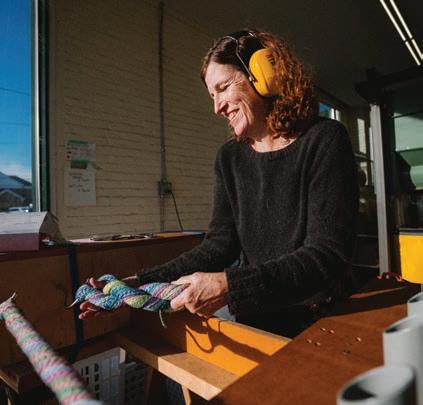
than 600,000 sheep (more than twice as many humans were recorded for the same year), a phenomenon largely credited to William Jarvis, the U.S. consul to Portugal, who was able to import merino sheep to his farm near Claremont. Around the same time, Shakers in New Hampshire invented a new way to make socks that combined machine- and hand-knitting.
Today in 2025, a younger group of crafters is rediscovering practices that have been passed down through the generations. David Broughton, the program manager at MAXT Makerspace in Peterborough, says he’s seeing an increase in younger members and class attendees.
“(They’re wanting to) step back a little bit from technology, step back a little bit from consumerism, and really focus on things that are handmade,” he says, noting the Sewing 101 class that MAXT offers fills up so quickly, he often has to create a waiting list.
“We’re seeing a lot of younger people in that class who want to create handmade garments, learn some sewing skills, and maybe get a little away from fast fashion.”
Kelly Bridges, the owner of Elegant Ewe yarn shop in Concord, has seen a similar trend.
“Lately, I’ve been noticing a want for classes for kids who are in their early teens,”
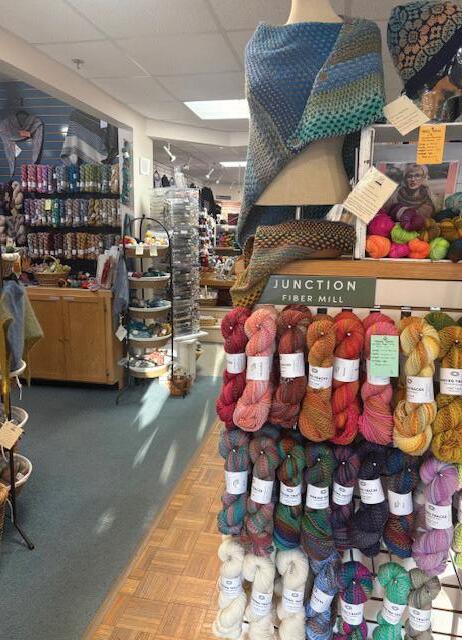
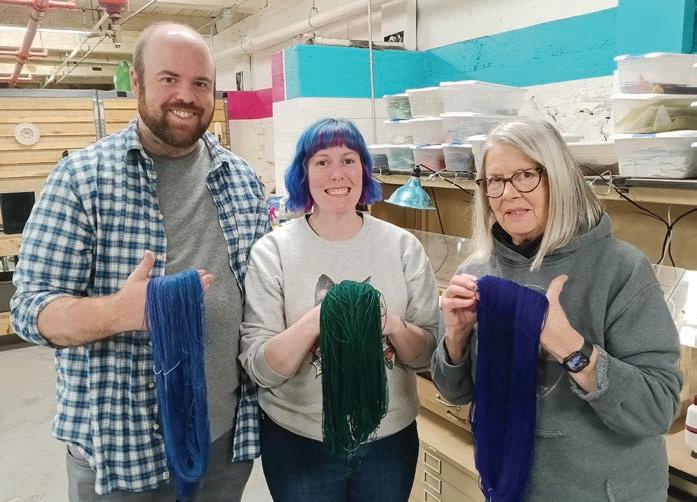
Bridges says, noting crochet is particularly popular among that demographic.
For many younger folks, finding an analog hobby has felt imperative in an age when every other aspect of our days involves at least one digital screen.
“The idea of connecting more authentically with real stuff of the earth, especially coming from the New York City tech world, felt exciting to me,” says Amanda Kievet, a 34-year-old former web developer and current co-owner of Junction Fiber Mill in White River Junction, Vermont.
“Knitting is a pretty accessible way for people to do that.”
Making your own clothes and home decor is certainly a big draw (there’s no better feeling than responding, “Oh, I made it!” when someone asks where your top is from), but a lot of people who have picked up these hobbies are seeking community more than a new sweater.
When Meg Locker, 29, would Google, “How do you make friends as an adult?”, the first result was always the same: Find a group of people doing the things you like to do, then show up consistently.
“I was like, ‘OK, but there is no group doing what I want to do,’ ” Locker says, recalling the many hiking and running and board game groups she found that seemed nice but weren’t what she was looking for. So she started NH Craft Club for crafty Granite Staters.
Locker hosts several events a month at locations all over New Hampshire. “There’s someone at every event who echoes the same sentiment: ‘I’m so glad we now have a space where we can meet and do stuff like this,’ ” Locker says. The events span a wide range of crafts: Grapevine wreaths, stamped tea towels, vision boards, ornaments and doormats are just a few offerings.
Louise Snodgrass, a well-followed knitter known as @lou.dangit online, is part of several knitting and fiber arts groups in their real-life community.
“Fiber arts build connectivity. It is all about collectivism and community building,” Snodgrass says. “We’re building on and sharing and reveling in knowledge and technique and patterns that have been passed down to us from other folks. It’s more about sharing and collectivism and passing along knowledge as opposed to the competitive nature of our current society.”
These days, those techniques are often being shared through the glow of a phone screen rather than around the fire. Everyone interviewed for this story agreed that younger generations are seeking out fiber arts to disconnect from the digital sphere, and that they are picking up the hobby quickly, in part because of resources available online.
“I don’t do a lot of social media, but I do do KnitTok,” says Liz Piantedosi, a millennial fiber artist and founder of the Knitter’s
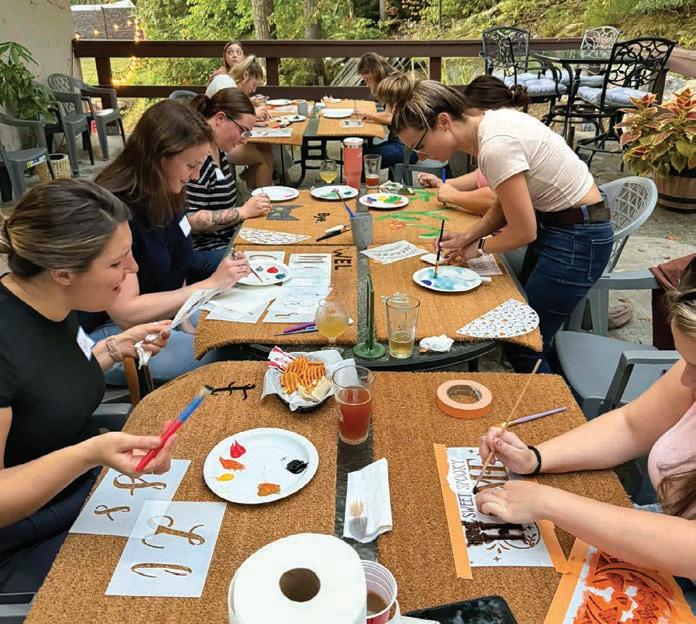
Guild of NH, referring to the massive community of TikTok knitters.
That community includes Snodgrass, Kievet and her business partner, Peggy Allen (who, at 67, provides positive online representation for the baby boomer/Generation Jones set). Junction Fiber Mill is perhaps the most famous New England-based yarn producer among Internet-savvy fiber artists.
“I think we’re one of the very, very, very few small mills that have completely locked in on the social media front,” Allen says.
The pair gained traction via their podcast, then pivoted to vertical short form video about a year ago. They jumped from 11,000 Instagram followers in August 2024 to more than 76,000 in November 2025. “It’s a lot easier to break into knitting than ever before,” Allen says, noting you can find YouTube tutorials for many techniques.
This online virality is often leading to more in-person encounters. Junction Fiber Mill regularly has some of the longest lines at their booths at fiber arts festivals around the country. Locker’s craft club is an analog meetup, but it found its members thanks to viral TikTok videos. The first video she posted — an informal, “Hey, would anyone else want to join a craft club?” clip — gained about 100,000 views over two days. Once she launched the website, she had 400 people sign up in 12 hours.
“Knitting can give you a connection to other people, as well as yourself,” Bridges
says. “I hope people … are falling in love with it because of the connection it gives you to something other than technology.”
While this art might be increasing in popularity among younger folks, it’s for all ages. Meeting attendees always span a wide range of ages, crafters say.
“It brings groups of people together that probably wouldn’t rub shoulders otherwise on a typical day,” Piantedosi says of Knitter’s Guild meetings. “It’s very cool to see … that the level of engagement and enthusiasm is the same, whether you are 22 or 92.”
“It’s very cool to see ... that the level of engagement and enthusiasm is the same, whether you are 22 or 92.”
—LIZ PIANTEDOSI
All this is good for your brain, too. Finding community is proven to have crucial mental health benefits, that might be boosted when you throw crafting — which has been credited with reducing stress and anxiety, improving self-esteem and even slowing cognitive decline — into the mix.
“(Crafting) keeps your mind flowing,” Locker says. “It’s similar to doing Sudoku or crossword puzzles — it’s good for your brain health.”
When asked for beginner tips for those ready to start their crafting or fiber arts journey, the general consensus was simple: Just start … and then don’t be afraid to ask questions.
“Everyone can make something, even if you don’t think you can,” Broughton says. “It’s not magical. You’re not born with the skills to create art pieces. It’s all practice and learning from other people … it’s about community.” NH
• Sign Up for Ravelry: The must-have website for fiber artists, this is “the” place to keep track of your projects, discover new patterns, and get inspired by other creators.
• Browse YouTube, TikTok and Instagram: The virtual fiber arts community has blessed the web with countless “patterns for beginners” video roundups, along with short tutorials on every technique you could possibly encounter.
• Find a Fiber Arts Circle: These are everywhere are typically attended by people with a wide range of skill sets who are eager to share knowledge. Local yarn stores and libraries are good first places to look.
• Pick a Project You’re Interested In: Yes, scarves and blankets might be simple, but they can also be repetitive and boring. A beginner-friendly sweater or hat will keep you engaged enough to keep going.
• Bring Your Projects in Public: Snodgrass says that, without fail, people approach them when they’re knitting in public — it’s how they got invited to one of their current fiber arts groups. “If you knit or crochet or weave in public, people will want to share and be in (the) community with you,” they say.
• Don’t Be Afraid to Ask for Help: There’s nothing fiber artists like more than teaching other people their craft. “Don’t be shy,” Piantedosi says. “This community is so supportive and loving and kind and patient and just wants to share their love of this with others.”

The Battle of the Badges Hockey Championship, presented by the Elliot Perry Foundation, will bring together police officers, firefighters and first responders on the ice at the SNHU Arena to celebrate 18 years of hockey and philanthropy, in support of Dartmouth Health Children’s and the Children’s Hospital at Dartmouth Hitchcock Medical Center (CHaD). The annual Battle of Good vs. Good is a fun, competitive event that raises money for critical programs and services that children and families rely on every day at Dartmouth Health Children’s and CHaD. Funds from the Battle of the Badges Hockey Championship support the Child Life Program, Pediatric Mental Health Access Initiative, Child Advocacy and Prevention Program, family resource centers, and the CHaD Social Work Team, among others. Plus, the Kids Zone is back this year with painting, games, and more. New this year is the Ultimate Badges Fan Ticket offered via Ticketmaster, which includes front-row reserved seating, a $10 food voucher, and a 10 percent discount on any one game day merch item, all for $45 (+fees) per person. Seats are limited. Annually, Dartmouth Health Children’s and CHaD sees more than 90,000 unique patients, many of whom benefit from funds raised through community fundraising activities such as the Battle of the Badges Hockey Championship. $16. 1 p.m., SNHU Arena, 555 Elm St., Manchester; snhuarena.com
6-27
Beginner Tai Chi with Russell Jones from Sachem Health
This four-week Tai Chi basics course will focus on balance, strength, flexibility and leg strength in one-hour sessions. No sign-up is required, and participants should wear comfortable, loose-fitting clothing suitable for movement and plan to attend all four classes. 1 to 2 p.m., Laconia Rotary Hall, 695 N. Main St., Laconia; laconianh.gov
See New England’s finest artisans and traders who are keeping early American history alive. $5. Saturday, 9 a.m. to 5 p.m., Sunday, 9 a.m. to 2 p.m., Dover Lodge of Elks #184, 282 Durham Road, Dover; ellisriverknifeworks.com
In the inaugural season of Bloom, the New Hampshire Federation of Garden Clubs has partnered with the Currier to create 18 Currierinspired custom arrangements that have been crafted by Garden Club members. Visitors will discover floral arrangements in a fresh experience for all ages. Ticket prices and times vary. Currier Museum of Art, 150 Ash St., Manchester; currier.org

Produced by the professionals at the New Hampshire Home Builders Association, this is the one show of the year to attend and interact with builders, remodelers, decorators, landscapers and all types of home solutions providers. The latest in home-related products and services will be showcased — everything from air quality to mortgages, hot tubs to custom home builders, and custom closets to fabulous kitchens and baths. With more than 200 vendors and exhibitors covering all aspects of the home building/remodeling industry, plus items in the “Made in New England” and “Beer & Wine Garden” areas, this is a home event that you won’t want to miss. $10. Saturday, 10 a.m. to 6 p.m. and Sunday, 10 a.m. to 4 p.m., Doubletree by Hilton, 700 Elm St., Manchester; nhstatehomeshow.com
APRIL 9-MAY 9
25th Putnam County Spelling Bee
An eclectic group of six mid-pubescents vie for the spelling championship of a lifetime. While candidly disclosing hilarious and touching stories from their home lives, the tweens spell their way through a series of (potentially made-up) words, hoping never to hear the soul-crushing, pout-inducing, life un-affirming “ding” of the bell that signals a spelling mistake. Six spellers enter; one speller leaves a champion. At least the losers get a juice box. Ticket prices and times vary. Seacoast Repertory Theatre, 125 Bow St., Portsmouth; seacoastrep.org
APRIL 11
Sh!t-faced Shakespeare presents: Hamlet
Something is rotten in the state of Denmark. Is it the murder of a king? A hasty incestuous marriage? A prince bent on revenge? Or maybe just a gassy Polonius full of beer. Shakespeare’s greatest work gets the full boozy treatment as the Claremont Opera House proudly presents Sh!t-faced Shakespeare: Hamlet. This timeless examination of the nature of humanity is performed in under two hours, so “To be or not to be” gets answered and you shan’t need a nap! Grab a cocktail and enjoy as we prove that though this be madness, yet there is method in ‘t- helped with a bit of wine. Be advised, anyone younger than 16 must be accompanied by an adult. Parental discretion is advised. $40, 7:30 p.m., Claremont Opera House, 58 Opera House Square, Claremont; cohnh.org
APRIL 11
Don Quixote
Experience the classic tale of Don Quixote, presented by Safe Haven Ballet. Expect an unforgettable journey filled with passion, humor, and breathtaking choreography. From dazzling leaps to vibrant Spanish flair, this timeless story will sweep you off your feet. Ticket prices vary. 4:30 p.m., Chubb Theatre at CCA, 44 S. Main St., Concord; safehavenballet.org/events
APRIL 17-19
Made in NH Expo
The Made in NH “Try It & Buy It” expo is the only expo that showcases the wide variety of quality products made right here in the Granite State. Now in its 29th year, the expo offers exhibitors a great opportunity to meet thousands of buyers, and shoppers the chance to discover all of the unique products available right here in NH. $8. Friday, 1 to 7 p.m., Saturday, 10 a.m. to 5 p.m.,
Sunday, 10 a.m. to 4 p.m.
DoubleTree by Hilton Manchester Downtown, 700 Elm St., Manchester; buisnessnhmagazine.com
18
Learn to bake your own from scratch using a sourdough starter. You’ll learn how to start and keep a sourdough culture alive and use it to make breads and many other baked goodies, including a loaf of bread to finish at home and biscuits that use the sourdough discard to enjoy at the end of the class. You will also go home with some sourdough starter to continue your sourdough baking journey. Participants should bring a bag lunch for this 4-hour class, a container to transport their unbaked sourdough, and a small jar for their starter. Registration required. $25-$40. 10 a.m. to 2 p.m., Prescott Farm Environmental Educational Center, 928 White Oaks Road, Laconia; prescottfarm.org
Discover WILD New Hampshire Day is a fun way for the whole family to explore New Hampshire’s wildlife resources and outdoor traditions. With
more than 100 education and experiential exhibits, this day is fun for the entire family. See live animals, big fish, and trained falcons. Try your hand at archery, casting, and fly-tying. Test your marksmanship at the air-rifle range, watch retriever dogs in action, and get creative with hands-on wild craft activities. Meet a Fish and Game biologist, talk with a conservation office or explore the Discovery Room. The food truck alley is available all day with something for every taste. Free. 10 a.m. NH Fish and Game Department, 11 Hazen Drive, Concord; wildnh.com
The garden is for all of us! Head to 3S Art Space’s Performance Space for a hands-on workshop facilitated by artist Kolika Chatterjee, where participants learn to make their own stainedglass flowers using the Tiffany-style copper foil method. Each participant will create up to three flowers, mounted on individual wooden stands. This is an 18+ event, and all safety gear is provided. $160, 10 a.m. to 1 p.m. or 1 p.m. to 4 p.m., 3S ArtSpace, 319 Vaughn St., Portsmouth; 3sarts.org NH
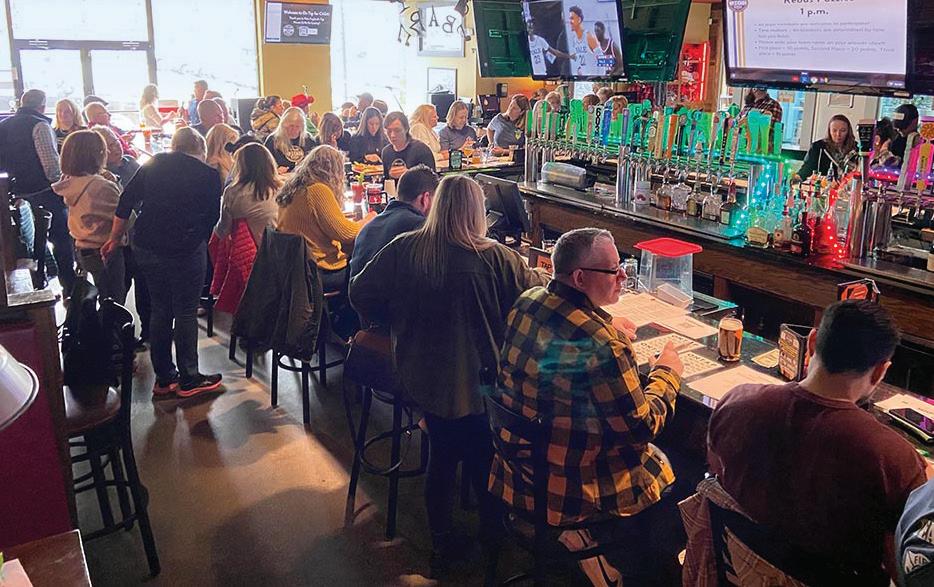
MARCH 7
At this fundraiser for CASA (Court Appointed Special Advocates) of New Hampshire, participants aim to keep their teams’ barstools occupied for 10 hours without abandoning the post while competing in a variety of fun competitions to gain points, including trivia, stein-hoisting and more. Come for the cause, stay for the friendly competition. All participant spots will likely be filled by early March, but interested persons can donate and drop by the event for music, raffles and libations offered throughout the 10-hour event. All proceeds go toward recruitment and training of CASA volunteer advocates, women and men advocating for abused or neglected children in New Hampshire’s court system. New England Tap House and Grille, 1292 Hooksett Road, Hooksett; donate.casanh.org
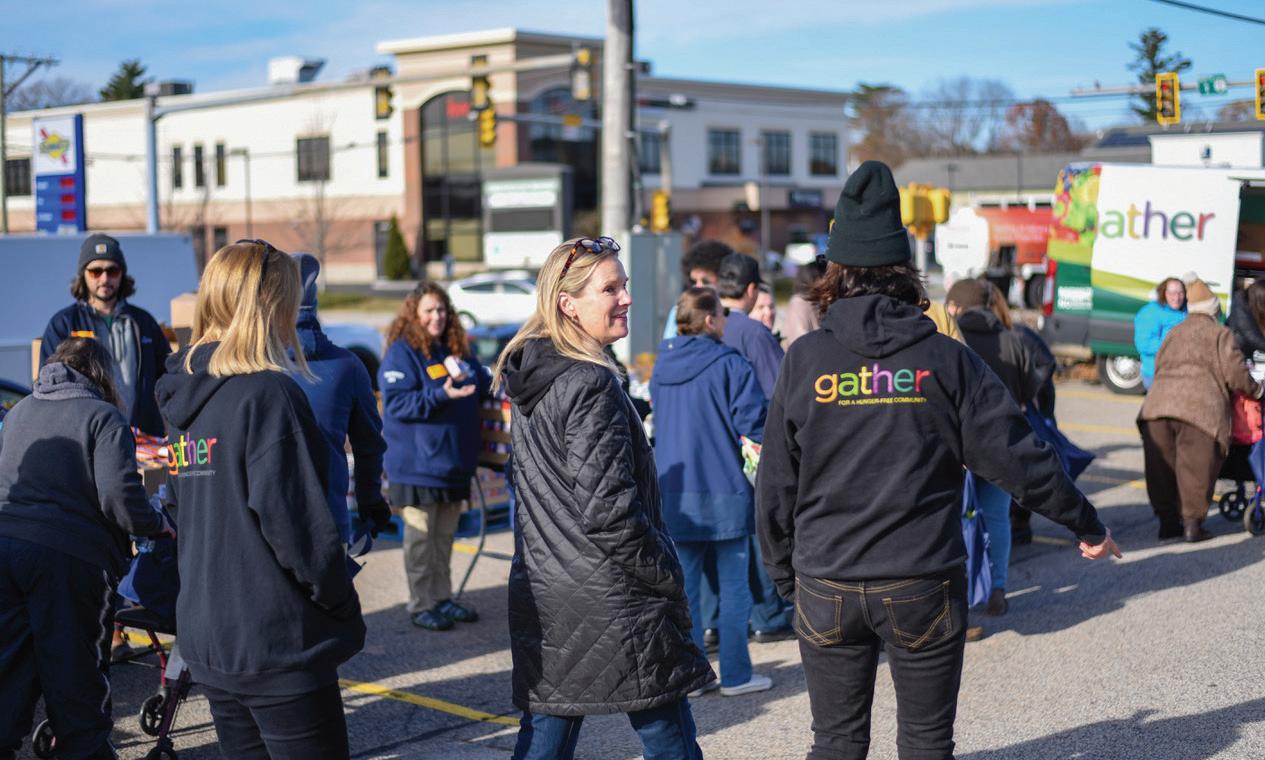
BY LYNNE SNIERSON / PHOTOGRAPHY BY CODEE LINEN
Martin Luther King, Jr., once said, “Life’s most persistent and urgent question is, ‘What are you doing for others?’ ”
Blair Demers of Portsmouth answers that question every day.
Demers became the chief executive officer of the Foundation for Seacoast Health in October 2024, and in her role, she oversees the nonprofit organization, which is a catalyst for positive change by supporting a creative mix of initiatives that build healthier communities through grants and programs throughout the region.
“For me, it’s always been about opportunity,” says Demers, who is a graduate of St. Paul’s School in Concord and Princeton University. “I’ve had so much opportunity in my life. I was raised to appreciate that
and to take advantage of it and not take it for granted.”
She also earned an executive MBA at Stanford University and a graduate certificate in nonprofit management at Johns Hopkins University.
“I see a lot of opportunity to make a change in manageable ways to make other people’s lives better, and particularly for young people,” Demers says. “At the same time, I really love people, and I really love helping people. That sounds ‘trite or clique’ but it is part of who I am.”
Demers, 51, heard the call early on and went to work in the nonprofit sector straight out of school. Her first job was at a startup nonprofit working to close the opportunity gap for inner-city kids in San Francisco, and over the next 25 years, she has served as the
head of several purpose-driven organizations and as a philanthropic consultant. Her passion lies in harnessing generosity in all its forms to change the world for the better.
“I think that people benefit so much from having the mindset of generosity, the mindset of abundance over scarcity,” she says. “I don’t mean that strictly in the form of dollars. I mean that in every way that they approach their life and the way that they connect with their neighbors and community members.”
The Foundation for Seacoast Health, which was founded in 1984 and has an endowment of approximately $35 million, is strictly a grant-maker. Currently, it focuses on the three main areas of mental health, healthy aging and the health care workforce. It addresses those needs within the local sector while at the same time connecting and collaborating with other funding organizations and nonprofits. Demers says the intent is to think more deeply about the ways in which what the organization is accomplishing can ultimately impact the entire state of New Hampshire.
“Where is the clog in the pipe? There are probably many,” she says. “We at the foundation are small but mighty. We can’t
change the whole system, but perhaps there is a piece of that clog that the foundation can help loosen. I want to find those parts with the limited resources that we have. How can we make the biggest impact?”
Attorney Andrea L. Daley, who is in her 10th year as the foundation’s board chair, is convinced Demers is the right person at the right time to hold the reins.
“Blair has been an integral part of the Seacoast for a long time,” Daley says. “Her employment background and extensive involvement with many well-respected nonprofit organizations in this community has provided her with a set of skills that has made her uniquely qualified to lead the Foundation for Seacoast Health at a time
Hwhen we are significantly expanding our grantmaking work.”
Demers, who met her husband, Jeff, while they were students at St. Paul’s and with him shares three daughters, aged 23, 21 and 18, feels that she is living a life of consequence in this role that ideally suits her.
“It’s fitting all the puzzle pieces together of the types of work, the types of hats that I’ve worn in relation to the nonprofit sector, whether I’m doing philanthropic advising or running a nonprofit, or I’m running the Seacoast Women’s Giving Circle, which I did for a number of years, and is collective giving at the grassroots level,” she says. “I really love what happens when people come together for a common goal.” NH
aven NH is the largest agency in the state providing support for survivors of domestic and sexual violence. The nonprofit, which also offers prevention education and community outreach, is a grant recipient from the Foundation for Seacoast Health.
“Part of what makes Blair so effective is really getting to know the nonprofits, and she is finding more about the needs in the community. It’s a huge advantage. Since Blair has taken the helm, there has been a great shift in really focusing on the nonprofits and their needs in trying to streamline the grant process, so it’s not so complicated or challenging for folks to get this funding that is so necessary,” says Executive Director Kathy Beebe.
One of the targeted grants received by Haven NH this year enables the agency to add an additional prevention educator who will give school kids in grades K-12 age-appropriate presentations on personal body safety, healthy relationships, consent, and power and control. The goal is to help if they are in need or want to know how to step up for a friend.
“We’ve been seeing about 13,000 kids each year, and that’s less than half of the kids in our geographic area. It’s very important that kids have the tools,” Beebe says. “It’s helpful to link any of them to an adult who will be able to help them get out of a situation and get the support that they need, or help get somebody else out of a situation.”

BY KRYSTEN GODFREY MADDOCKS / ILLUSTRATION BY JOHN R GOODWIN
Before you see your doctor, you might be asked to log in to a portal to make your next appointment or fill out forms. Some may prefer using technology in lieu of calling a receptionist, but others may have difficulty remembering passwords or navigating screens.
According to a recent study, 90% of U.S. hospitals offer patient portals, but only 70% of patients get access to their portal and just 34% use it regularly to view, download or transmit their health information.
Patient portals have become one of the most powerful tools in modern health care, reshaping how we interact with our health care providers and medical records. Nearly every major health system offers one, yet many patients still aren’t fully aware of what their portal can do for them.
Concord Hospital Health System’s patient portal serves as a single access point for
nearly every part of a patient’s medical experience, from primary care and specialists to emergency and inpatient visits, according to Dr. Michael McLeod, DO, a family medicine physician with Family Tree Health Care — Hopkinton and associate chief clinical officer for primary care for the Concord Hospital Health System.
Whether patients see a health system primary care provider or a specialist, each of their records from those visits is stored in the portal. This gives both patients and providers a unified view of their lab results, visit summaries, medications, imaging records and upcoming appointments.
“Your emergency room visit two weeks ago, your blood work from your cardiologist a month ago — those are all within your access in your portal,” McLeod says. “It’s a singular point of entry for, really, the entire health system.”
Portals provide patients with greater transparency and flexibility. Patients can ask for prescription refills, check appointment times, or complete forms in minutes, without picking up the phone. Test results and health care records require no phone call or special permissions — just a few clicks. And because most portals are accessible through phone apps, you can retrieve information just as easily on vacation as you would at home.
“I think one (advantage), which is a solution for both patients and doctors, with everybody having such busy lives, is asynchronous communication,” McLeod says.
Patients can send secure messages to doctors through the portal any time, and care teams can more easily respond to patient questions during office hours. Staff members can then triage messages, ensuring health care providers reach patients with more timely concerns right away.
While portals provide a convenient way for patients and providers to communicate with one another, they are not designed to handle emergencies, McLeod says.
“If you said, ‘I’m having crushing chest pain right now,’ you shouldn’t send that in a portal message,” he says.
Beyond convenience, portals encourage
patients to play a more active role in their own health care. Data shows that patients most commonly log into portals to view test results and clinical notes. But portals can also help patients remember what medications they should be taking and what they discussed at their last visit. It can also close potential gaps in care.
“It provides you with a double check to make sure things aren’t missed,” McLeod says. “If folks notice something in their portal that maybe their provider didn’t talk to them about or didn’t have a follow up plan for, they can actively manage their health.”
On the back end, the portals help consolidate patient records and gives providers a place to share information and communicate in real time.
“I had two examples today of patients who see one of our specialists, and it was just very helpful to be able to send them a message through our electronic health system to say, ‘Hey, I’m seeing a mutual patient today and this is what their lab looked like. Is there anything else you want me to do? Does this seem OK?’ The communication is much better,” McLeod says.
If portals are so convenient, why aren’t more patients logging in? Some patients aren’t aware that they have access to one, and others might not be comfortable with technology. However, most systems allow you to reset forgotten passwords and offer user experiences that are intuitive and accessible from a mobile device. If you don’t have portal access and want to start using it, you can typically get that information from your provider’s office staff.
“Some of my strongest portal users are 90 years old,” McLeod says. “A lot of my older patients have already looked at their blood work (in the portal) so that they’re prepared for their office visit. I had someone who said they cheated by looking in advance. I told them, ‘It’s not cheating. It’s your lab test.’ ” Looking ahead, Dr. McLeod expects artificial intelligence to play a growing role in patient portals, including chatbots that can answer common questions, point users to helpful resources and guide patients on when to seek care.
“Obviously there will still always be the ability for folks to interact with human
beings,” he says. “But you know, if a patient said, ‘I’ve read something online that ACE inhibitors have coughing as a side effect,’ the chatbot would be able to answer, ‘Yes, that is true; did I answer your question?’ ”
The health care business is still very much a human business. Patients shouldn’t be worried that portals will replace doctors, because they do have their limitations, McLeod says. They don’t always use the most patient-friendly language, which can confuse visitors who stumble across lab reports they don’t understand.
Legislation requires patients receive immediate access to test results, and that can sometimes cause undue anxiety for patients who aren’t able to go over those results with their provider in-person.
“People will sometimes get panicked because they’ll read information that they don’t know what to do with,” McLeod says. “It doesn’t replace the human interaction. There are some things you can do electronically, but it doesn’t replace the need to see folks in the office.” NH
• Log in before your visit. Reviewing test results, medications or visit summaries ahead of time can help you prepare better questions for your provider.
• Access it for routine needs. Portals work best for appointment requests, prescription refills, form completion and non-urgent questions.
• Know what not to use it for. Portals are not monitored 24/7. For urgent or emergency symptoms, always call your provider or seek immediate care.
• Don’t panic over medical language. Lab results and diagnoses may appear before your provider contacts you, and they may use clinical terms. If something is unclear, follow up rather than assume the worst.
• Take advantage of visit summaries. If you forget what was discussed — or want to share instructions with a family member — your portal can help jog your memory.
• Reset; don’t give up. Forgetting passwords is common. Most portals allow for easy resets, and office staff can help point you in the right direction.
• Use it your way. Whether you log in through an app on a smartphone or tablet, or a website on your computer, portals are meant to be accessible from anywhere.
The pre-eminent girls’ leadership organization equipping girls to reach their full potential.

Girls Inc. equips girls –particularly girls from lowincome communities and girls of color– to succeed and lead while advocating for an end to inequity and discrimination.
Serving girls throughout NH since 1974
Providing after-school and summer programs at two Girls’ Centers located in Manchester and Nashua
Dinner Club feed over 100 girls daily
Delivering in-school programs at dozens of schools across the state
Educational programs on careers and leadership, health and nutrition, STEM, media and economic literacy, drug and alcohol prevention, and violence prevention
Scan for information on programs, volunteer opportunities, or to donate www.girlsincnewhampshire.org info@girlsincnewhampshire.org

BY BRION O’CONNOR / ILLUSTRATION BY PETER NOONAN
Lord knows New Hampshire skiers and snowboarders love the arrival of spring, and spring skiing, even if it’s a harbinger of our favorite season coming to an end.
Much like New England weather, spring skiing can be the very definition of capriciousness, as the vagaries of March and April can translate to a wild mix of conditions.
In short, don’t be fooled by the promise of sunshine and mild temperatures. Resorts will market those bluebird days, and you can’t blame them. It’s a tough business, especially given the erratic behavior of Mother Nature.
Despite the best efforts of local snowmaking and grooming crews, spring skiing is still a gamble, to some extent, and skiers and snowboarders should know that most gamblers rarely win against the house in the long run.
The funny thing is, these less-than-ideal circumstances often lead to epic outings, providing ample fodder for the best après ski stories. My brother Sean’s bachelor party in early April delivered nonstop rain, forcing us to don trash bags (before we could afford Gore-Tex gear). The fog was so dense, we could barely see 10 feet in front of us, inspiring one pal to coin the phrase, “skiing by Braille.”
On another wet spring day, I had a wellknown resort all to myself. The steady drizzle was a tad uncomfortable, especially on the
lifts (I had finally upgraded my outerwear), but the conditions on the trails were simply outstanding. I skied until my legs were fried. Back at the base lodge, folks looked at me like I’d lost my mind. Yes, they were warm. And dry. But I left with memories of an exceptional day that I still cherish decades later.
That’s why I continue to head north, no matter what the forecast is. But I don’t make that trek without my trusty “rock skis.”
The venerable rock ski is an integral part of any dedicated skier’s quiver, in large part because warm rain and fog can eat through a snowpack quicker than a starving Labrador retriever devouring his Purina dog chow. When local slopes look like they’re dotted with coffee stains (thanks to the barely covered mud and gravel), skiers and snowboarders know they’re risking wallet-crushing gouges to the P-Tex bottoms and metal edges of their boards. For those who care about the investment they’ve made in their equipment — often well into four figures — spring often means turning to and tuning up the rock skis.
“Every ski has a place, and rock skis are no different,” says my good friend and fellow winter fanatic Lafe Low. “They’re essential for those first turns early in the season when coverage is sketchy. They’re also critical for those last few runs when you’re more likely to hit a rock or two, or have to skim across a
bare spot. They’re even valuable companions for hauling up to Tuckerman Ravine and snaking down the last tendrils of snow on the lower Sherburne Trail.”
Most rock skis are typically an older pair of beloved boards — used skis given an opportunity to enjoy a second life (not unlike a great baseball player who becomes a designated hitter before being put out to pasture). There’s also the sensation of reconnecting with an old friend.
“It’s the life cycle of a ski,” says Low, a 1984 graduate of Keene State College. “It starts out factory-fresh, super sharp and snappy. A fresh ski is able to carve up the hardest loud powder New England can serve up with alacrity.
“Then, you get used to it,” he says. “It becomes your go-to, everyday ski. You know its nuances and how it feels. A few seasons go by, and you don’t pull them out quite as much. They retire to the exalted position of ‘rock ski.’ ”
Ski equipment, like bicycles and tennis racquets and even sneakers, has seen a sea change in technological advances. Superior design and superior components have made the performance characteristics of skis and snowboards better than ever.
But it also makes them … different. When the snow cover gets suspect, I break out my old K2 KVC Comp skis with their screaming neon pink highlights or my squash-colored Salomon X-Scream skis to carve some old school turns through the mashed-potato snow.
And those old friends have never let me down. NH

















Right here, 291 of our Top Doctors make the impossible possible every day.





























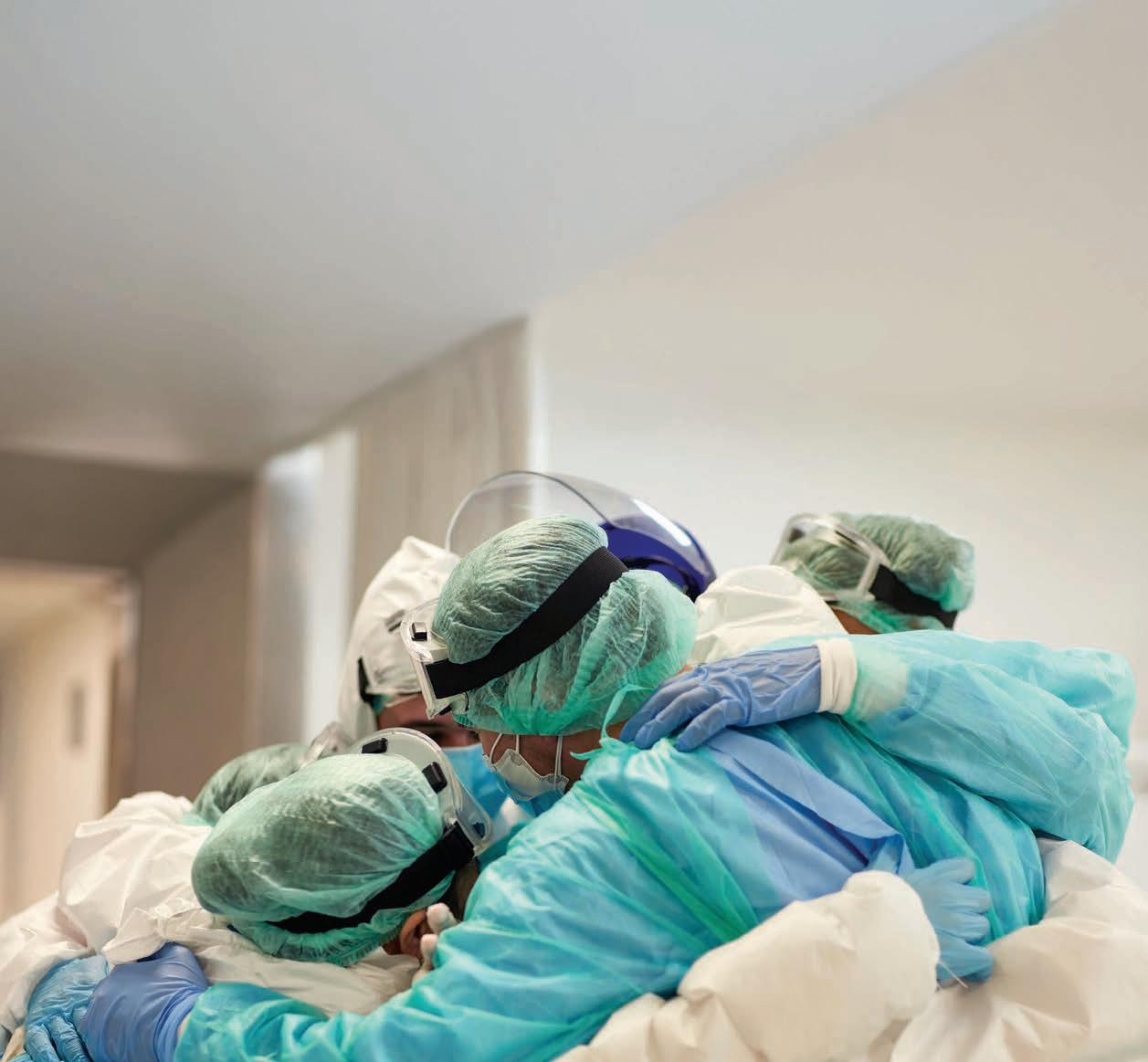
Congratulations to our 291 doctors who were recognized in New Hampshire Magazine’s 2026 Top Doctors list. Whatever the specialty, all of our providers rede ne what’s possible to bring you world-class care, right here. To learn more visit go.d-h.org/topdocs
More than 40 hospitals and clinics across the region. One world-class health system. In partnership with Dartmouth and the Geisel School of Medicine. A Healthy Disregard for the Impossible™