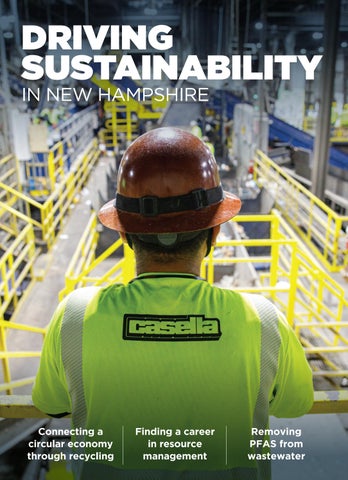
DRIVING SUSTAINABILITY
IN NEW HAMPSHIRE
RECYCLING IMPROVEMENTS
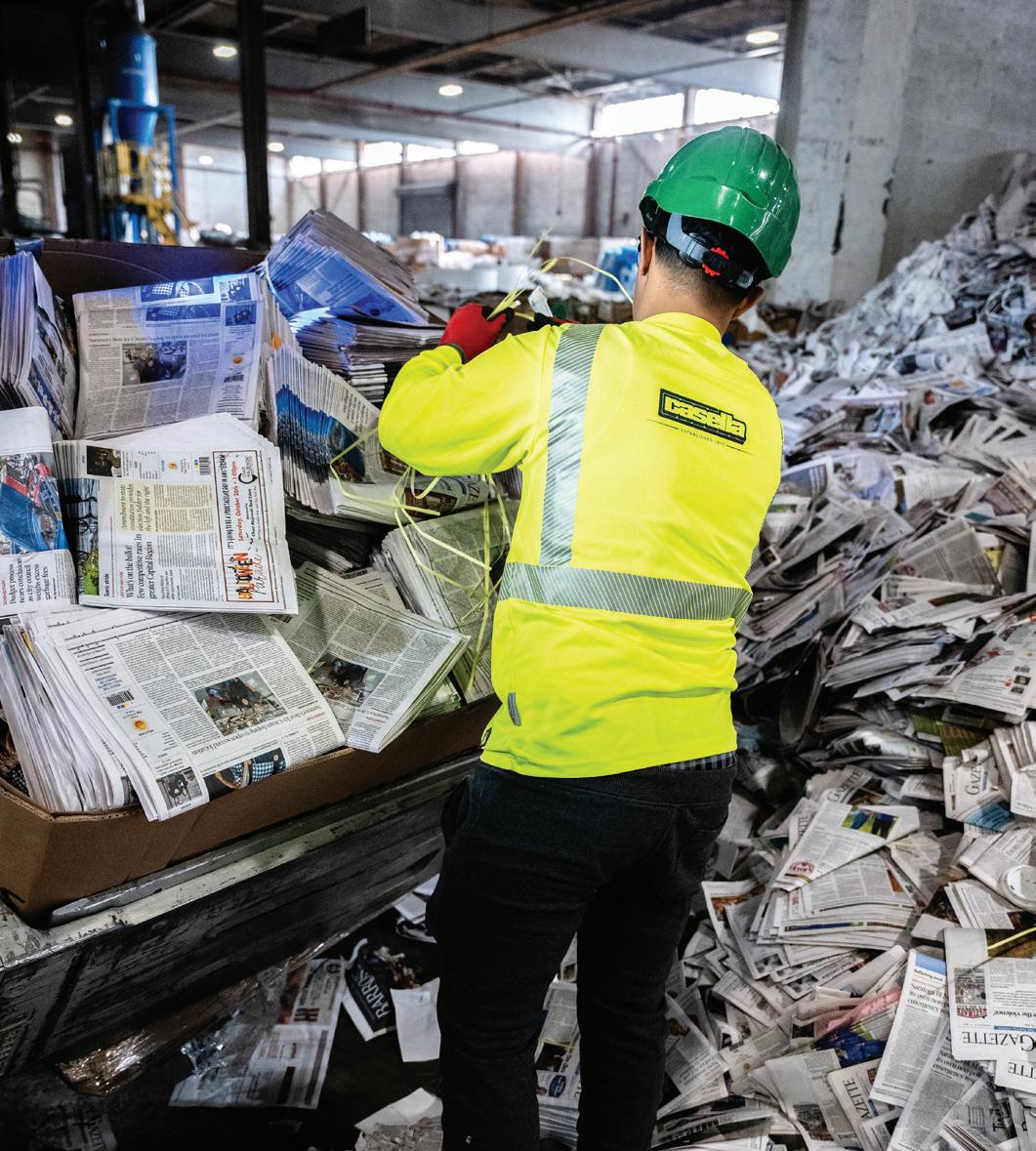
Investments and innovation in the single-stream processcess
4 12 14 18 20 20
COMMUNITY CONNECTIONS
Casella’s greenhouse becomes hub for growth
SETTING THE STANDARD FOR PFAS MANAGEMENT
Your trash often contains PFAS; Casella now manages it at its Coventry, Vt., landfill
MEET JEFF MARTIN Vice President of Safety
INVESTING IN PEOPLE
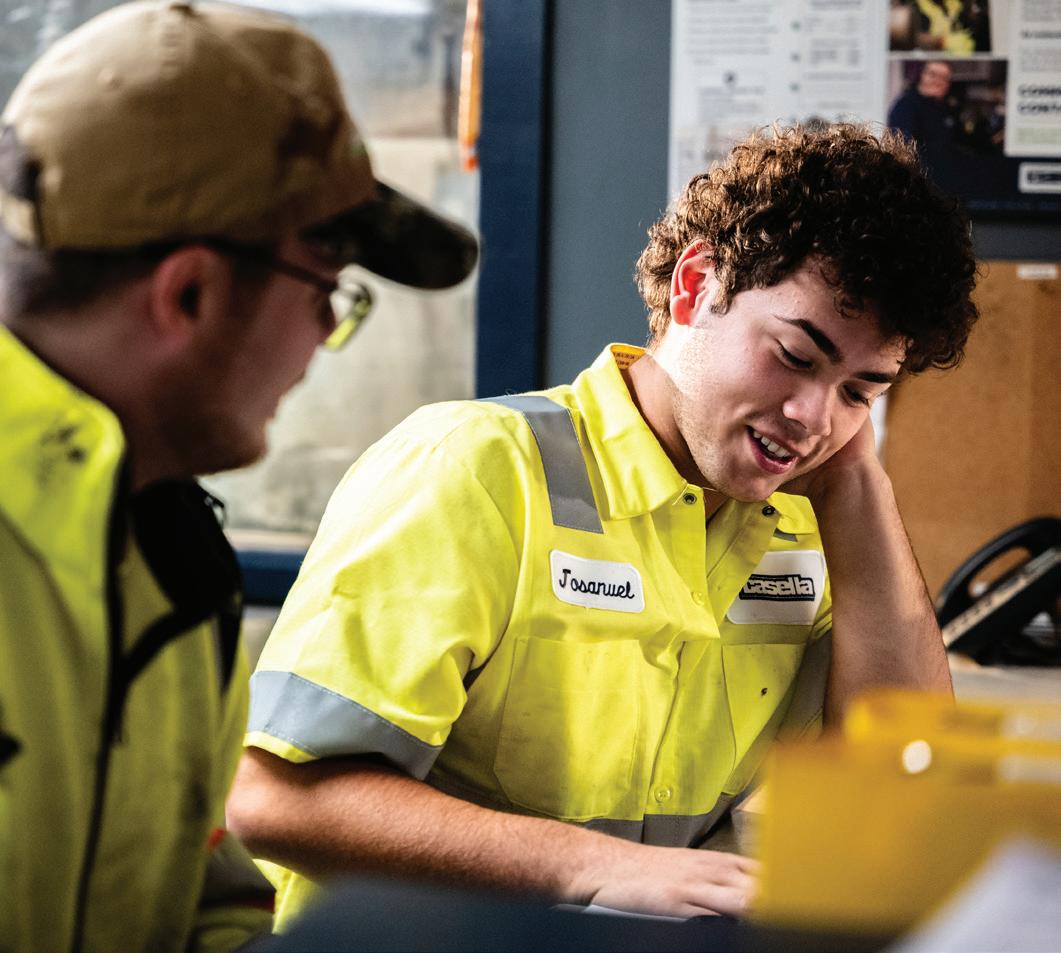
High school students get introduced to trades careers
CASELLA CONNECTS A CIRCULAR ECONOMY
Upgrades to recycling help return more waste to supply chain
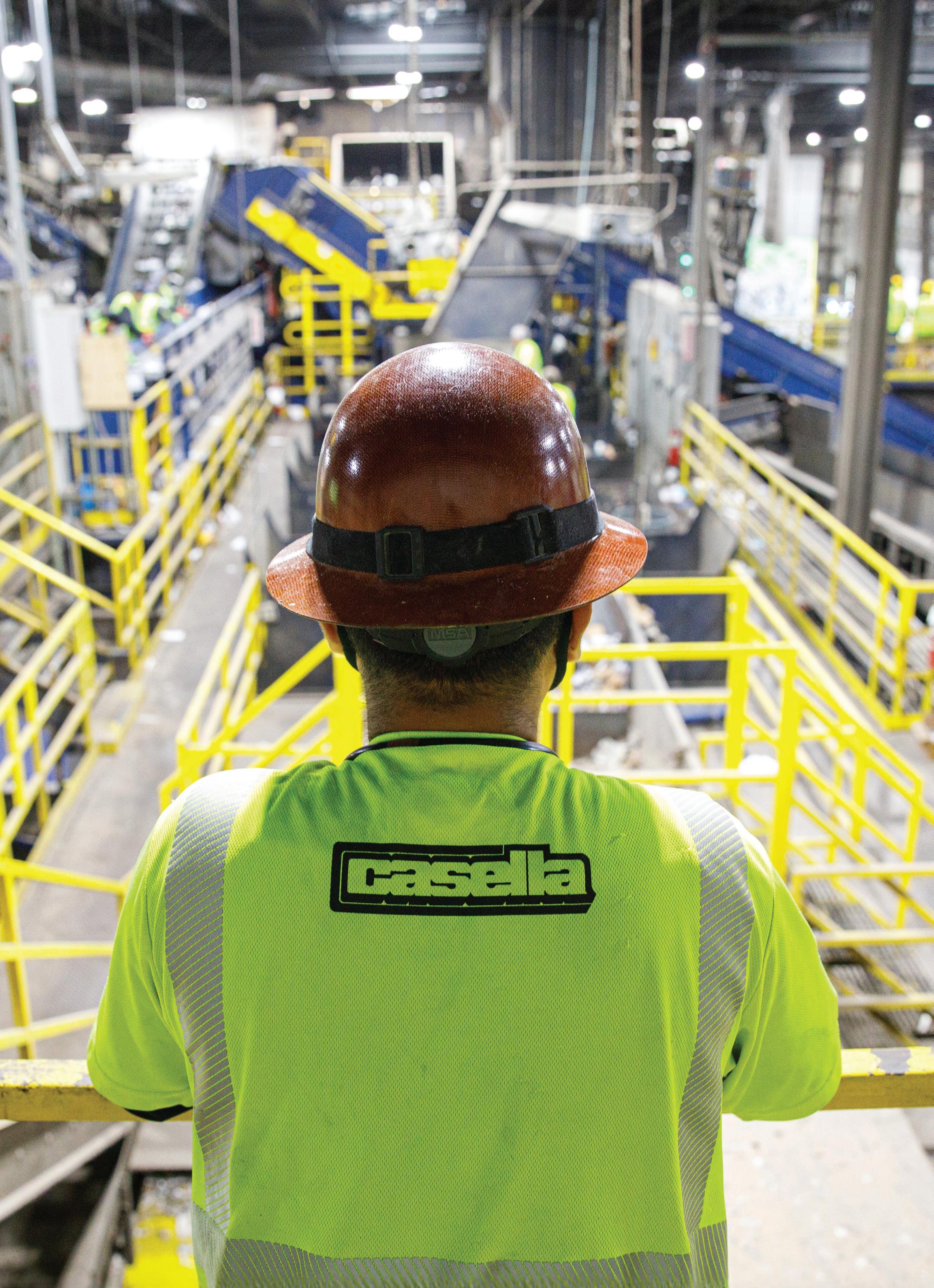
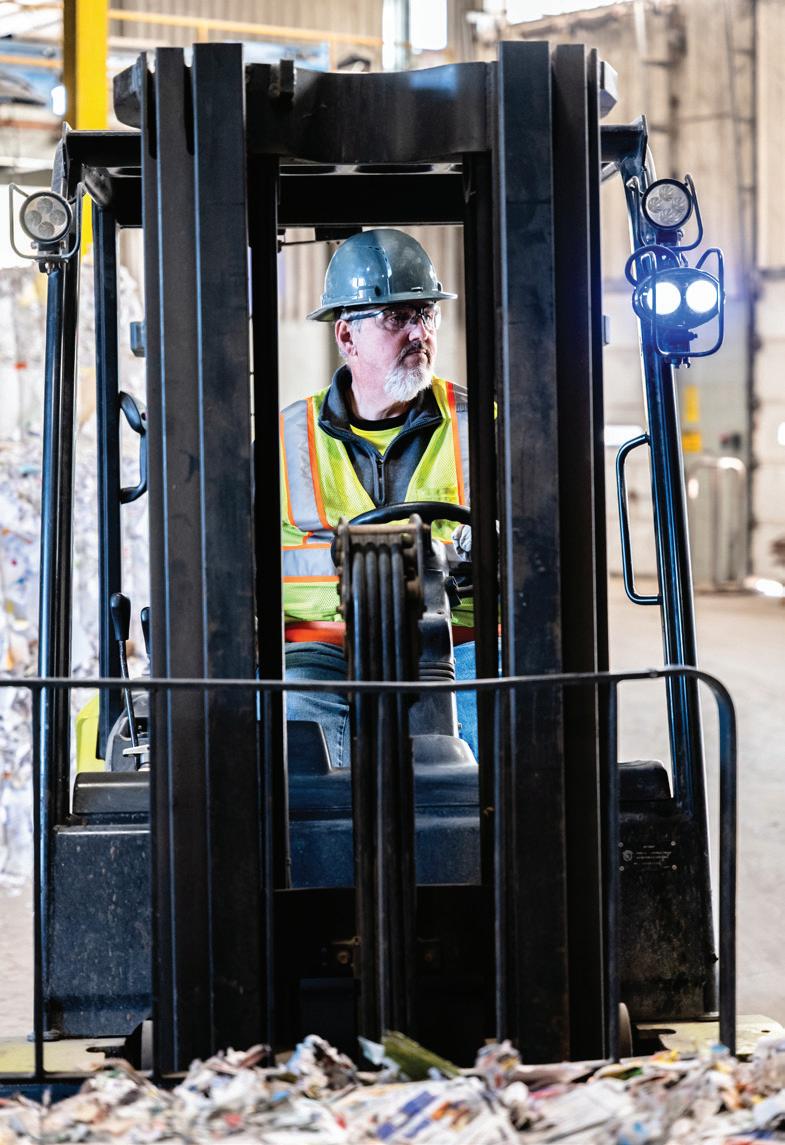
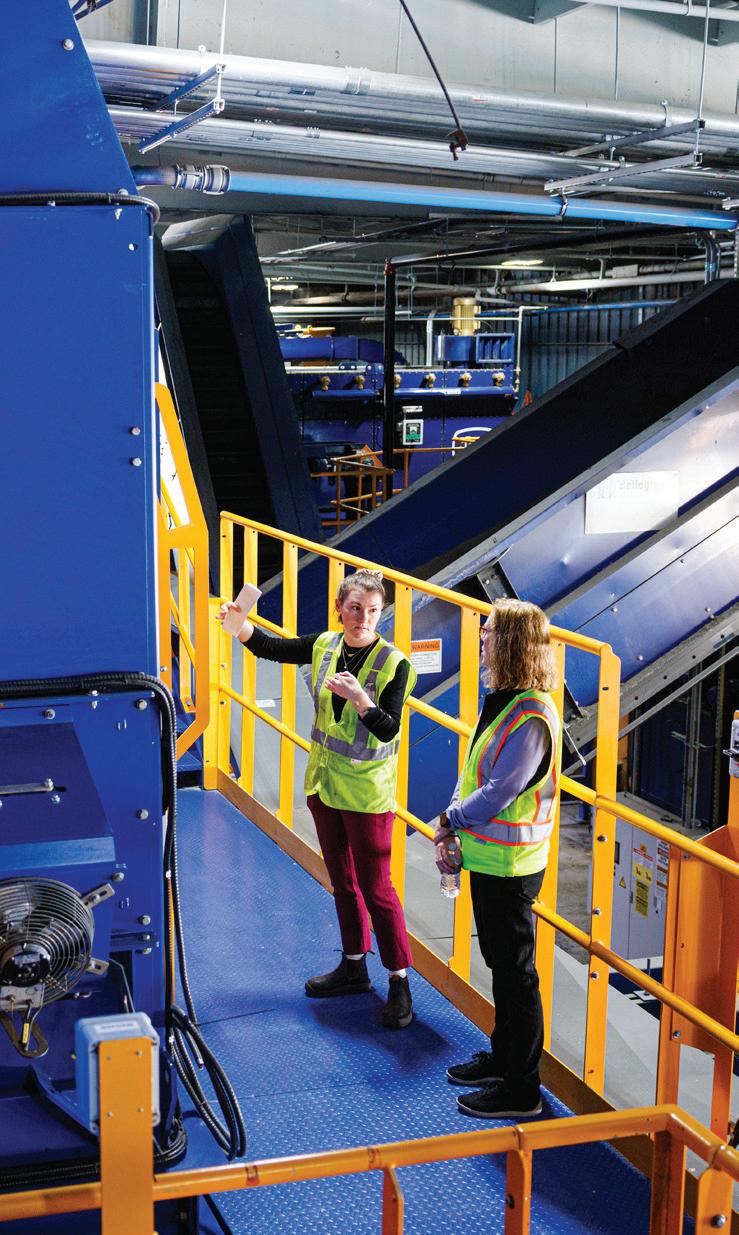
At Casella’s newly upgraded Willimantic facility, blue conveyors carry mixed recyclables beneath optical sorters that separate cardboard, paper and plastics. The technology boosts processing to 27 tons per hour — an investment that increases both quality and quantity of materials targeted for reuse.
The company built Vermont’s first recycling facility just two years after its founding. Its foresight continues through efforts like the Casella Center for Circular Economy at the University of Vermont, which advances research in circular waste solutions — shifting from a linear waste-to-landfill model toward continuous reuse.
IMPROVING RECYCLING THROUGH TECH
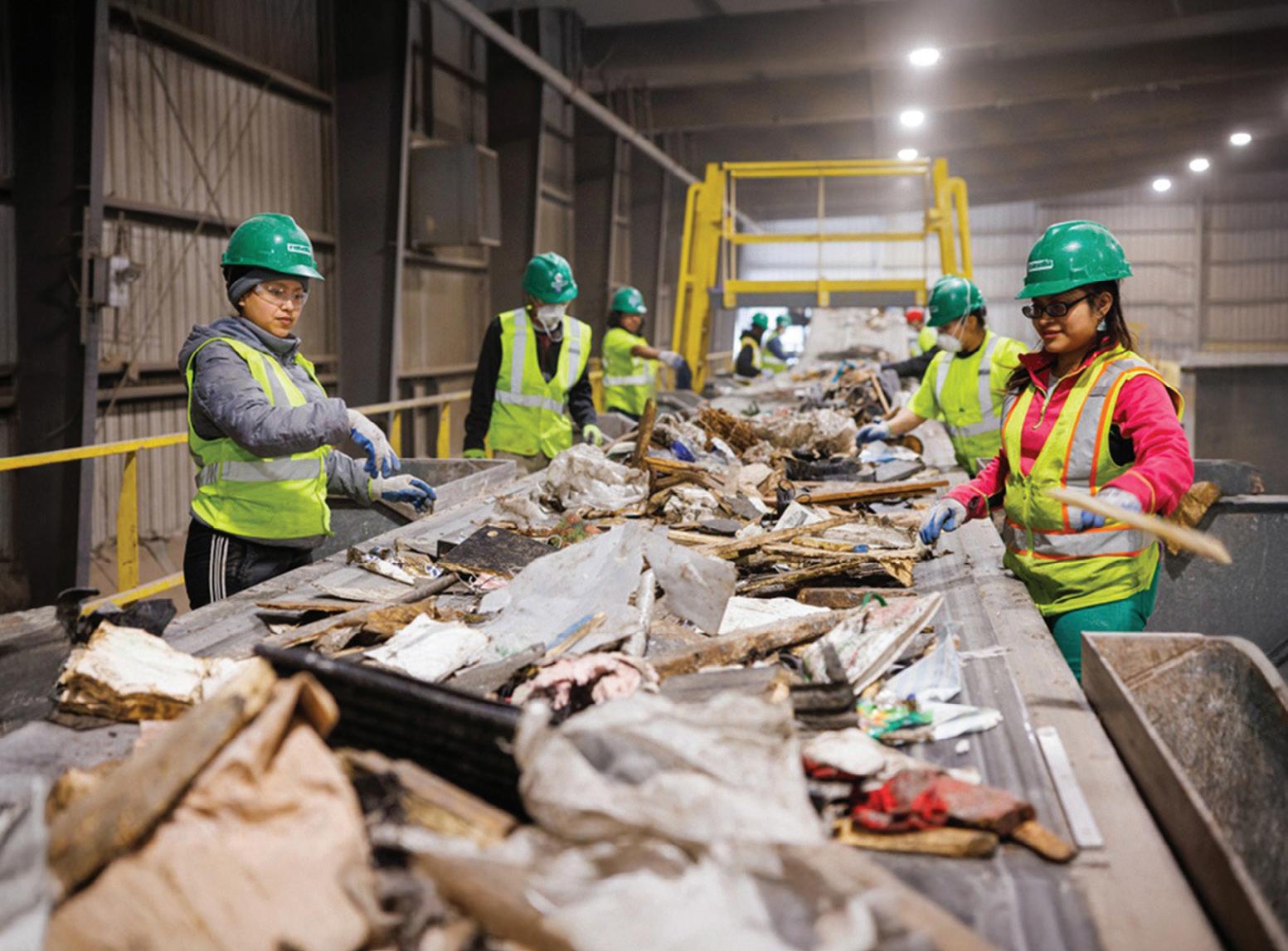
Robert Cappadona, currently vice president of resource solutions, joined Casella in 1999. At that point, Casella was primarily focused on residential recycling with dual-stream sorting, where divided trucks picked up paper/cardboard on one side and containers like plastic, metal and glass on the other.
In the 2000s, single-stream recycling launched on the West Coast. Casella was the first in the Northeast to convert its Vermont facility from the multi-stream method to single-stream recycling.
“There's a lot more technology today,” Cappadona said. “In the old days, with dual-stream there was a lot of manual hand-sorting. Today, technology such as optical sorters, magnets, eddy currents and glass breakers is used in the processing of single-stream.”
When residential customers no longer have to presort, their recycling participation increases.
“All of a sudden you have a lot more volume,” Cappadona said. “Folks are making it very convenient to recycle, as opposed to the dual stream.”
Recent upgrades at the Willimantic, Connecticut, and Charlestown, Massachusetts, material-recovery facilities have increased both the volume of recyclables handled and the quality of the finished bundles.
“We're increasing the throughput by 35% to 40% and we're increasing the quality of the material that we're shipping into the market by 30% or 35%,” John Casella said in the spring. “That’s a very dramatic increase.”
Making sure that households know what and how to recycle is among the responsibilities of Abbie Webb, Casella’s vice president of sustainability.
“We're providing marketing materials and education materials to make sure that our individual households understand their recycling programs, have a level of confidence and know what to put in the bin and what not to put in,” she said.
Recycling guidelines are particularly important so residents can maximize things that can be reused. Avoiding “tanglers,” like ropes and wires, that snag on equipment, or lithium batteries, which explode when crushed, are not just a reusability concern but a safety measure.
EXPLORING BETTER AND HIGHER USES
As part of its 2030 sustainability goals, Casella aims to reduce, reuse or recycle more than 2 million tons of solid waste per year. It has increased its materials management by 36% from 2019 to 2023, currently recycling more than 1.4 million tons annually.
While improvements in recycling technology have contributed to this, it’s also due to Casella’s work in reducing waste at the source and better handling of mixed materials.
In the last 15 years or so, Casella has also expanded its work with commercial and industrial clients.
“I spend a lot of time with industrial manufacturing customers, healthcare and higher education: clients who have ambitious goals around zero waste or waste reduction,” Webb said.
Casella’s sustainability advisors work with commercial customers to assess all their material needs, not just how to reduce the volume of waste that’s leaving a facility.
“It becomes more of a conversation of those products that they're making; do those have pathways to recycling?” Webb said.
Webb said Casella also helps clients design products and supply chains that incorporate recycled materials.
She gave the example of a syringe manufacturer. It can make a product that is recyclable, but it can’t force hospitals to recycle it. Casella, however, can work with the hospital to put in place systems that collect the syringes and manage the recycling chain, because there are places that will want to buy that recycled plastic.
“Since 2018, Casella has pledged that we will not sell any plastics overseas,” Cappadona said. “All of our traditional curbside plastics are sold domestically.
MATERIALS MANAGEMENT VALUE CHAIN
The value chain refers to the full life cycle of a product, including raw material sourcing, production, distribution, consumption and end-of-life disposal or recycling. We work to transform one customer’s outputs into another customer’s inputs, while creating the connections that add up to a circular economy.
There's plenty of markets, there's plenty of capacity, and there's no need for it to be shipped.”
GETTING MORE OUT OF MIXED MATERIALS
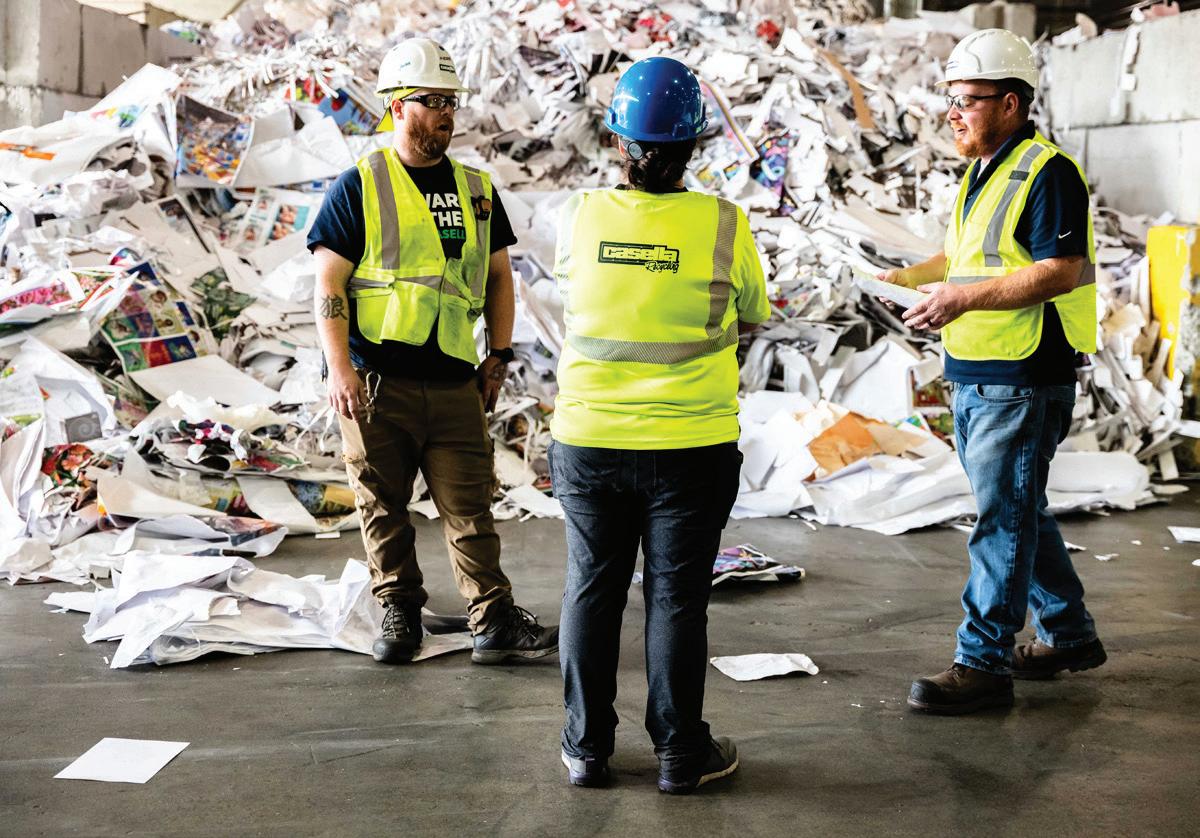
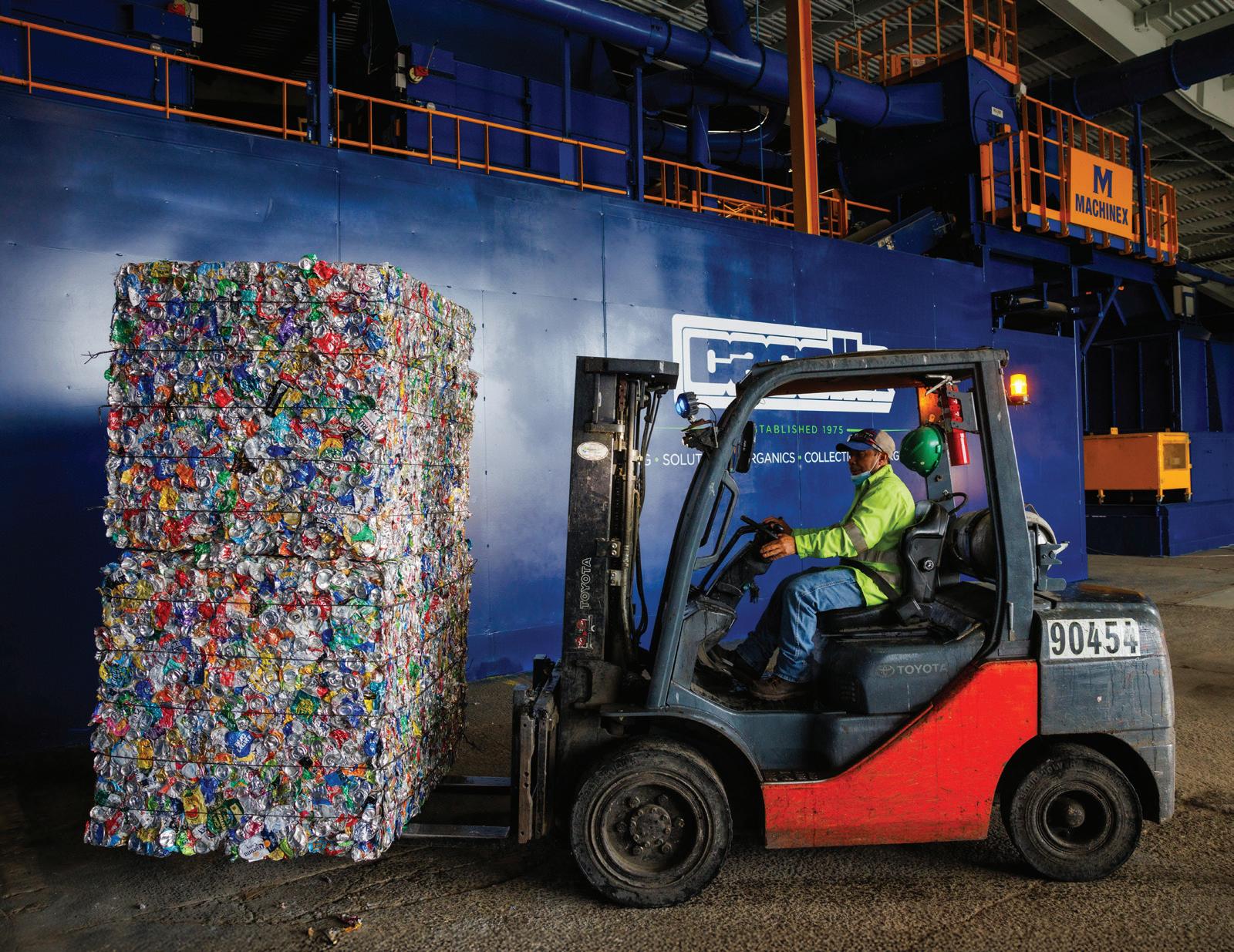
Casella has also invested in workflows and technology that help maximize materials from mixed sources. Separating multi-material waste was previously time-intensive and not always financially feasible, but improvements in mechanical separation are making it easier, faster and less costly.
Depackaging technology helps divert packaged food waste by separating it from plastic, glass or cardboard containers. This allows food to be composted, used for biogas production or even sold as animal feed.
“I think society underestimates how much packaged food gets generated,” Webb said. “We picture our leftovers, we picture our plate scrapings, but packaged food is a huge area of food waste, and we have solutions for that, too.”
At any manufacturing facility, there will be a small percentage of products that don’t meet quality standards due to misaligned labels, loose lids, product-line changes or other issues. Previously, these rejects would go to a landfill or incinerator.
“We've invested in technology to separate the packaging from the food: big steel machines that break the packaging apart,” Webb said. “Then, bestcase scenario, we can both recycle the packaging and send the food or beverage to an anaerobic digester to make renewable energy or return the nutrients to the soil. That's really one of those hidden parts of the waste stream that people don't know about, which turned out to be a big part of the puzzle once we started looking at it.”
Mattresses, which can take up lots of landfill space, are another multi-material product that can be disassembled so that wood, metal springs, foam and fabric can be recycled independently.
“Mattress recycling is an area that, 10 years ago,
I don't think most people would have believed that would be a viable recycling material,” Webb said. “We've actually found that there are mattresses primarily composed of recyclable material, and the key is to get it separated.”
CONNECTING THE CIRCULAR ECONOMY
For Casella, reclaiming waste and connecting it with better and higher uses is critical to its sustainability and financial goals.
“Every home and business in our country and beyond makes some form of waste and recycling output,” Webb said. “The work we do is often around efficiency.”
The company keeps a wide perspective on that, looking at everything from the most effective collection routes to finding solutions for complicated waste streams. The more Casella is able to find avenues for recyclables, the less new raw materials will need to be extracted, as well.
“The real promise and potential of recycling is the opportunity to reduce the extraction of resources all over the world,” Webb said. “If you think of whether it's recycled paper, plastic or metal, you're bringing that back into the supply chain.”
Furthermore, in the Northeast, landfill disposal capacity is not what it once was, so finding those reuse diversions is an economical mission and an ecological one.
Investments in better recycling systems, collaboration with clients and a drive for innovation have positioned Casella as a champion for waste reduction.
As people pay more attention to products they use and where they end up, Casella is there as a champion to help meet their zero-waste goals.
“We want to find a higher and better use for everything that's in the waste stream that's going to ultimate disposal,” Casella said. “We’re going to be the first to cannibalize our business in landfills.” n
CASELLA BY THE NUMBERS
OUR NEW HAMPSHIRE OPERATIONS RECOVER NEARLY 56,000 TONS OF RECYCLABLES CONSERVING DISPOSAL CAPACITY AND RETURNING VALUABLE RESOURCES TO THE ECONOMY.
700+
CONTRIBUTED BY NEW HAMPSHIRE EMPLOYEES
270
EMPLOYEES IN NH OVER
$32M+
124,000
HOUSEHOLDS SERVED IN NH
77
REGISTERED TRUCKS
BUSINESSES
11,000+ AND ORGANIZATIONS SERVED THROUGHOUT NH
ESTIMATED VOLUNTEER HOURS GRADUATES IN NH PAYROLL AND TAXES
OF THE KENNETH A. HIER SR. CDL AND TECHNICIAN TRAINING CENTER IN NH OUT OF A TOTAL FLEET OF 2,200 COLLECTION VEHICLES OVER 6,000 TOTAL 1.2M IN TOTAL NORTHEAST COLLECTION RECYCLING LANDFILL TRANSFER/ DROP-OFF
400+
END-USER EXPERTISE
Proper recycling can reduce contamination, improve safety and keep valuable materials out of landfills
If you’ve ever stared at the number on the bottom of a container or wondered if it's OK to throw out plastic bottles in a plastic shopping bag, you’re not alone.
Leaps in innovation over the last couple of decades have changed what can and cannot be recycled. Most people want to recycle correctly, but don’t always know the latest requirements.
Confusion about what belongs in the bin can cause some recyclable items to be thrown out or create contamination that slows the sorting process, damages equipment and reduces the value of recyclable materials. Small mistakes — like tossing single-use plastic bags or batteries — can have major consequences.
Casella’s Recycle Better hub offers clear instructions on what should and shouldn’t be in your recycling bin so that you can adjust your habits to be most helpful.
RECYCLING 101
Single-stream recycling has simplified the process by allowing recyclable materials to go into one bin.
THE PRIMARY RECYCLABLE CATEGORIES ARE
• Cardboard, like shipping boxes, cereal boxes, egg cartons, paper towel and toilet paper rolls.
• Paper, like office paper, newspaper, paper bags, magazines, junk mail and paper cups. Staples and envelopes are okay to include, but books should not be discarded whole.
• Rigid plastics, such as drink bottles, milk jugs, yogurt tubs and shampoo bottles. Attach caps, which are too small to be sorted on their own.
• Metal, like beverage cans, canned food containers and balled foil. Large scrap metal should not be recycled through curbside collection.
• Glass, like whole bottles and jars. Broken glass, windows and Pyrex should not be disposed of in recycling.
For all these items, they should be clean, dry and loose. This means rinsing out any food or detergent residue from containers, tossing very greasy cardboard pizza boxes and putting individual items in your bin without bagging.
It is acceptable and encouraged to crush cans and bottles so they take up less space in the bin, as well as flattening cardboard boxes.
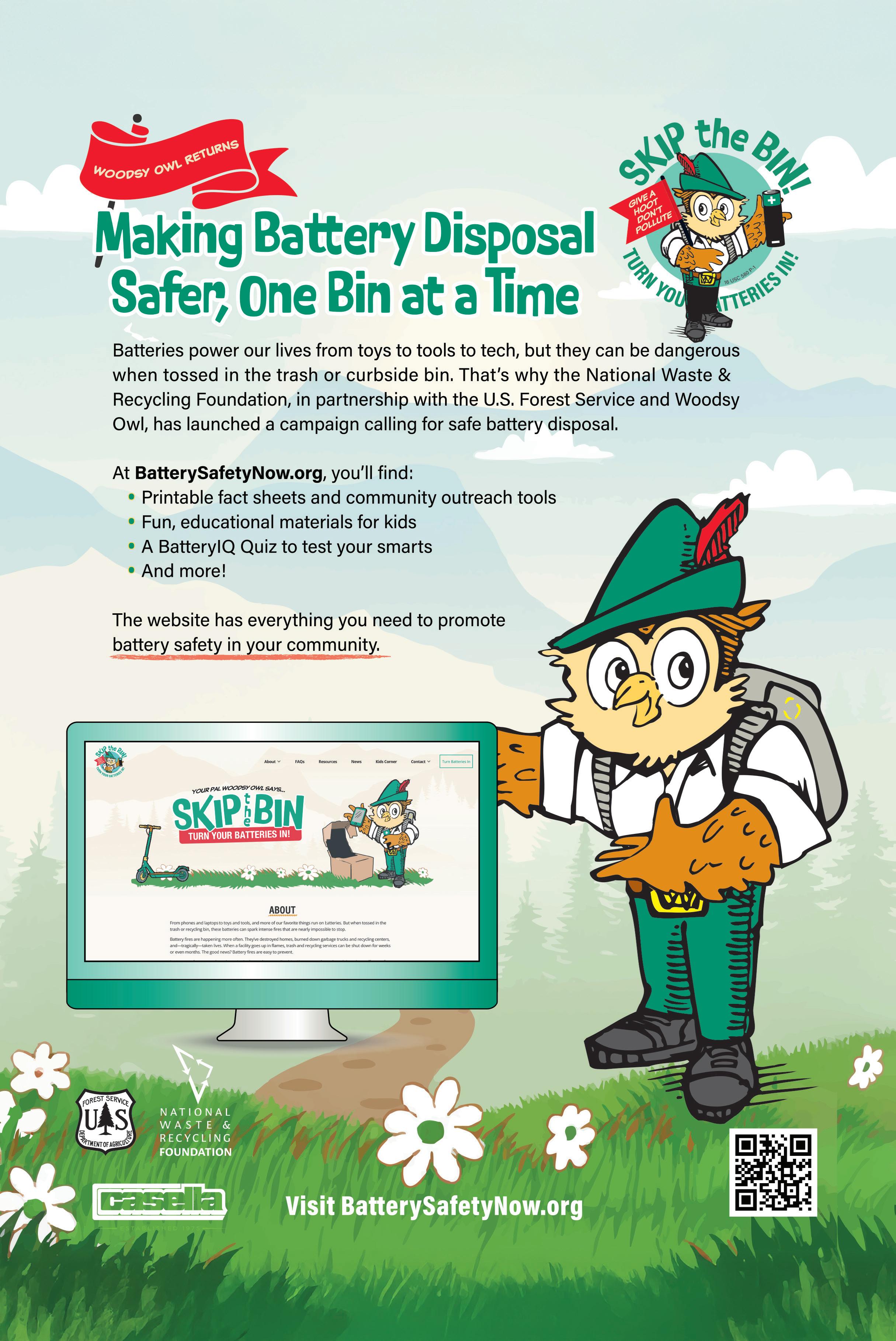
BATTERIES NEVER BELONG IN THE BIN
Many people don’t realize how many everyday items now contain rechargeable lithium batteries, including greeting cards, toys and cordless household tools.
They are also among the most important things to never discard in the recycling or trash. When crushed, by a truck’s compactor or a recycling center’s excavator, these batteries can ignite and reach exceptionally hot temperatures.
These batteries can be found in an array of rechargeable electronics from portable power tools, cellphones and laptops, to e-bikes and portable solar arrays.
Battery fires burn hotter and for longer than other types of combustion.
“Lithium batteries are very, very dangerous,” said Bob Cappadona, Casella’s vice president of resource solutions. “In our industry, we lose a facility a year from lithium battery fires. They are the most dangerous contamination to keep out of the recycling stream, because the other contamination may impede productivity, but fires, well, we want all our employees to go home safely.”
Lithium battery fires can jump from 212 degrees Fahrenheit to 1,800 degrees in seconds — some fires can even exceed 2,000 degrees.
Retail locations that sell items with lithium batteries, like many hardware stores, have an in-store battery recycling drop-off point. Your home municipality may also have a collection point.
You also can find collection boxes and more information about battery recycling at batterysafetynow.org.
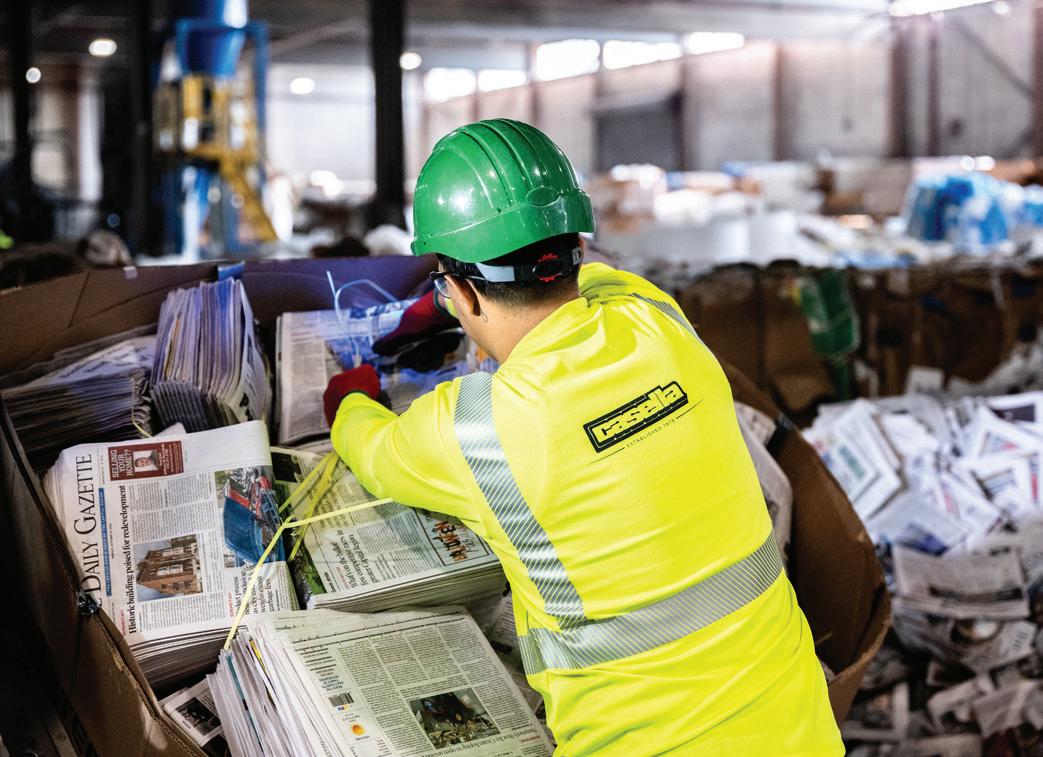
COMMON RECYCLING MISTAKES
Modern recycling facilities can sort materials more effectively than ever before, but certain contaminants still create major safety and operational problems. Tools like optical sorters, magnets, electric currents and robotic arms remove trash and then separate different types of recyclable materials.
THE CONTAMINANTS TO WATCH OUT FOR INCLUDE
• Bagging recyclables can prevent sorting.
• “Tanglers,” like hoses, cords and ropes; single-use plastic bags; VHS tapes; and textiles like clothing can snag on the machinery and damage equipment. Video tapes also can unwind and snag on equipment.
• Scrap metal, beyond metal cans, is often pieces too large to go through the sorting equipment. This material can be recycled, but not through your curbside collection bin. Please bring it to the scrap metal pile at your local recycling center.
• Food waste/liquids diminishes the recyclability of other items in your bin. Instead, try composting at home or find out if your town has a food waste diversion program you can participate in.
• Electronics are made of a variety of materials, some hazardous, which may come apart during the sorting process.
• Small items under 2 inches square, like disposable cutlery, straws and bottle caps, or broken bits of glass, fall through the sorting screen.
• Needles and sharps are not recyclable. They should be safely stored in a rigid container, sealed and never loosely disposed.
• Batteries can cause fires if damaged, injuring employees and damaging facilities.
The key to proper recycling is making sure what is collected won’t become hazardous for workers and machinery to handle.
When contaminants get tangled in the machinery, the machine must be stopped, locked out and an employee has to go in to free the debris. It is a dangerous job to enter the equipment to cut away tangled items. For many of these contaminant items, there are alternative methods of disposal that are safer.
Donating usable clothes to thrift stores, plastic bags to grocery stores and bringing electronics to e-waste handlers is the best way to ensure the materials are able to be reused.
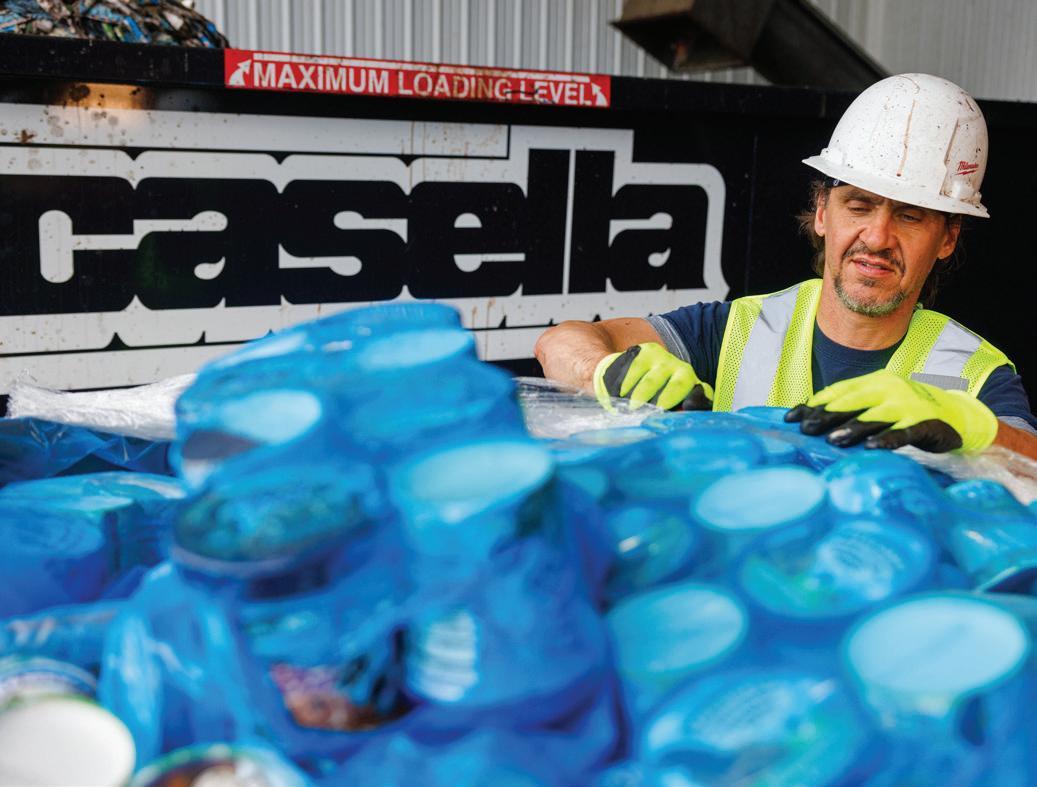
RECYCLING RULES EVOLVE
As technology improves, the requirements around recycling evolve.
For example, paper cups used to be considered not recyclable due to their waterproof lining. However, recent mill technology can now separate that coating from paper fibers.
• Recycling systems evolve as technology and markets improve.
• When people take care to recycle better, Casella employees are safer and more materials can go on to better and higher uses.
• To stay updated on guidelines, you can visit Casella’s Recycle Better hub or ask your municipal provider.
When residents recycle better, communities stay safer, more materials stay in circulation and fewer valuable resources end up in landfills.
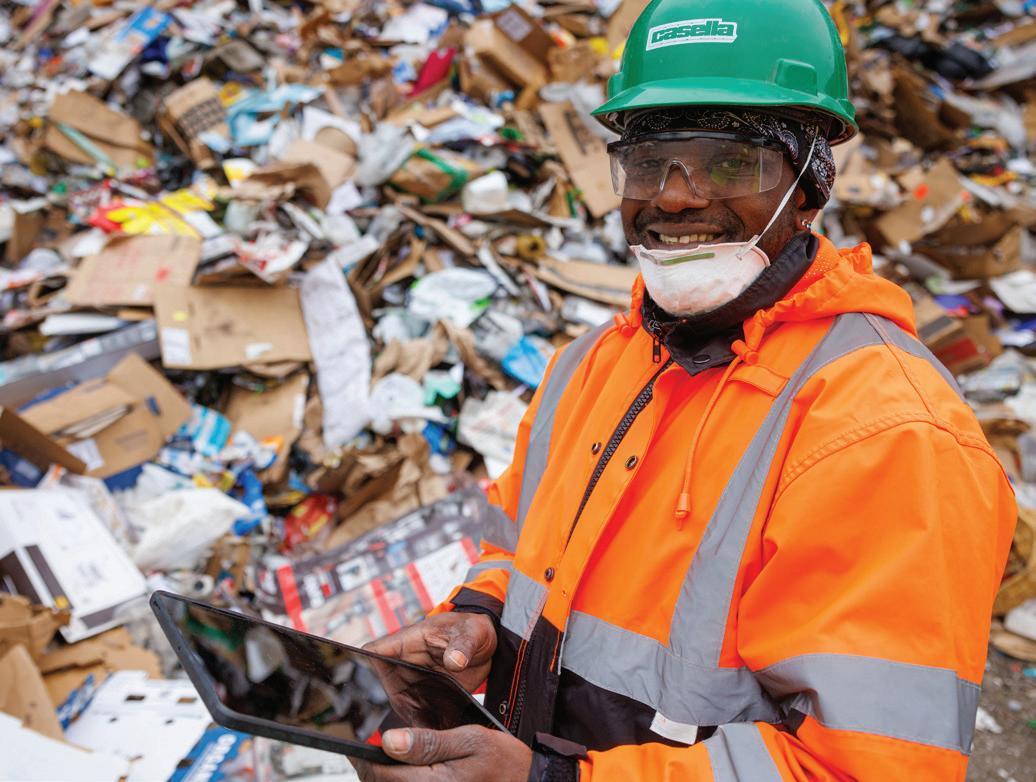
SERVING OUR COMMUNITIES
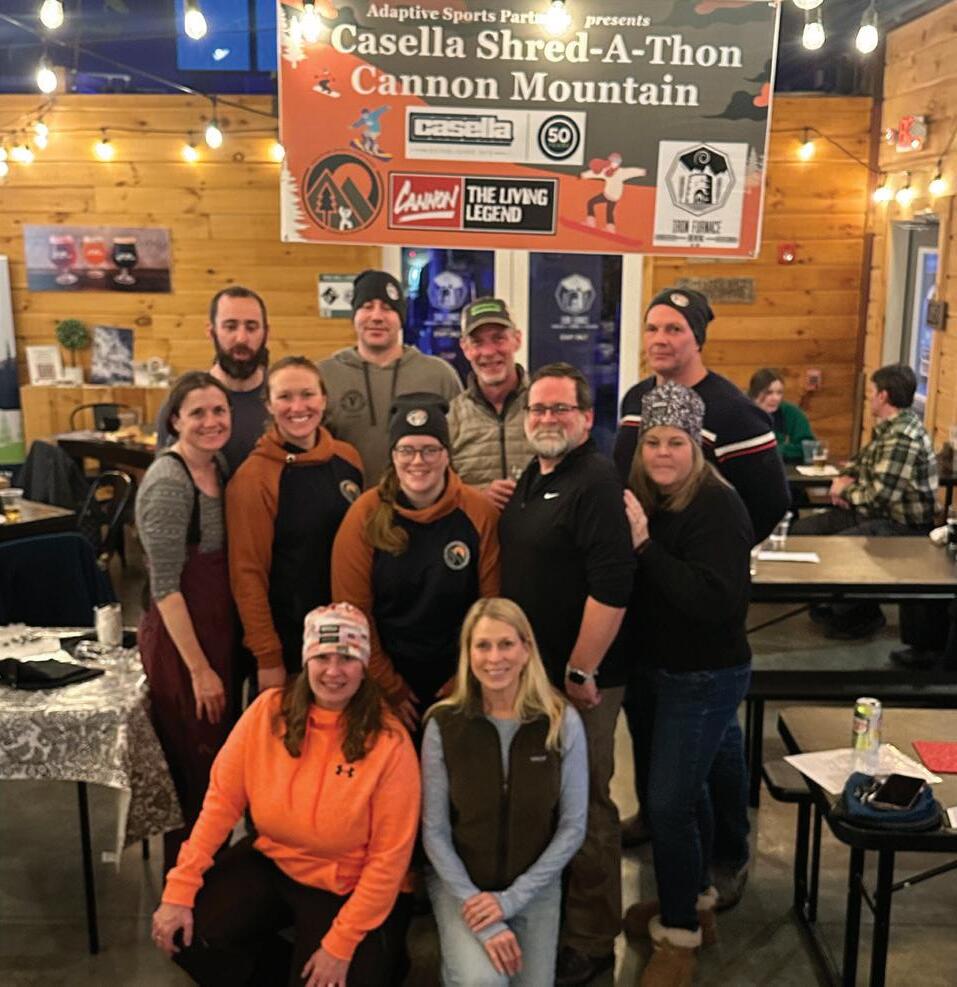
At Casella, we are driven to make a difference by investing in the communities where we live and work through community giving, employee volunteering and educational outreach.
COMMUNITY GIVING
By 2023, we achieved and surpassed our community giving goal, contributing about $2,200,000 in the form of charitable donations, local sponsorships and in-kind services.
In addition to achieving our 2030 goal, we launched The Casella Foundation in 2024 to support qualified charitable organizations demonstrating impact in environmental and natural resource conservation. Beyond this primary focus, we also support organizations advancing neighborhood revitalization, workforce development and disaster relief.
EMPLOYEE VOLUNTEERING
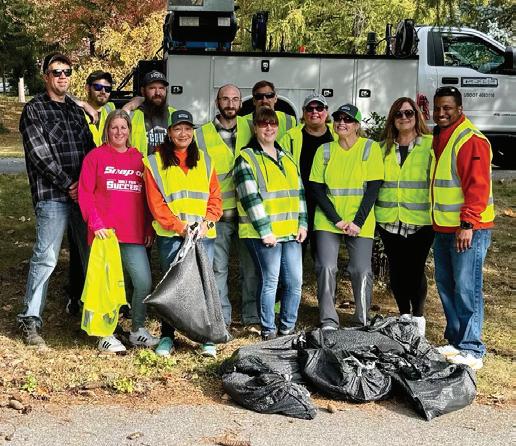
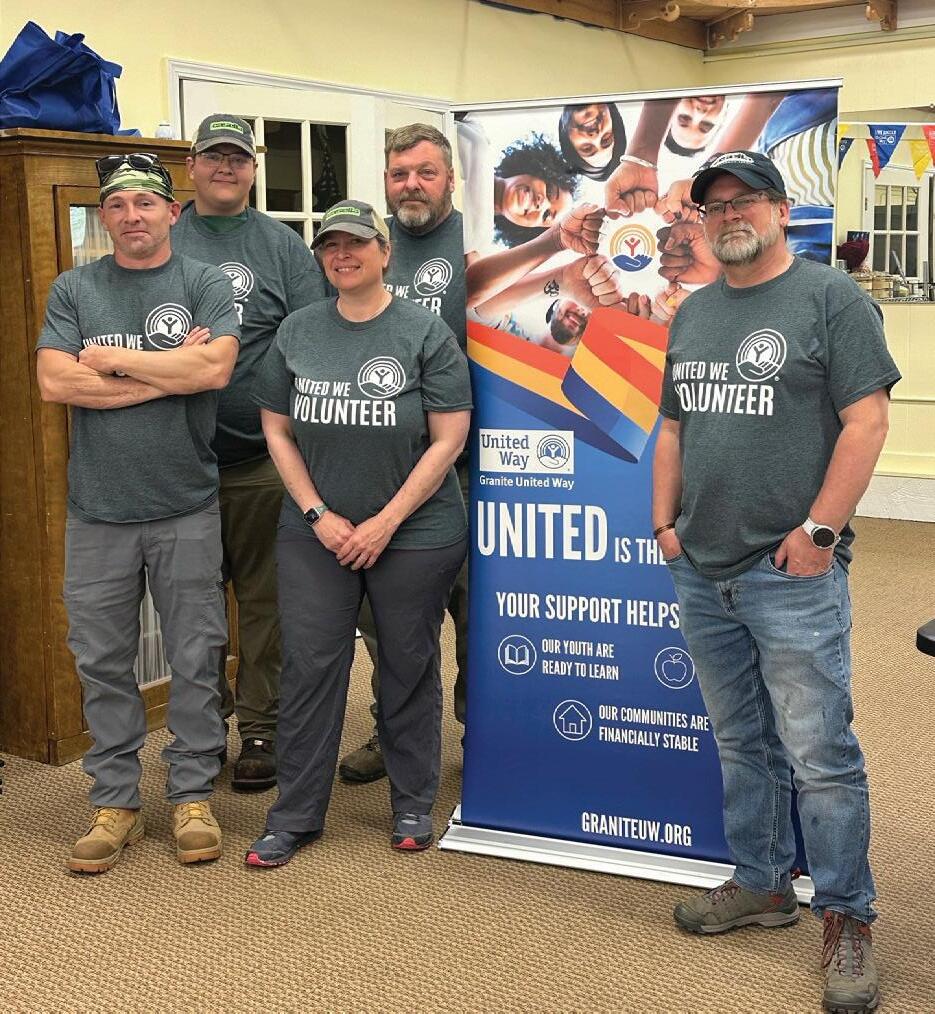
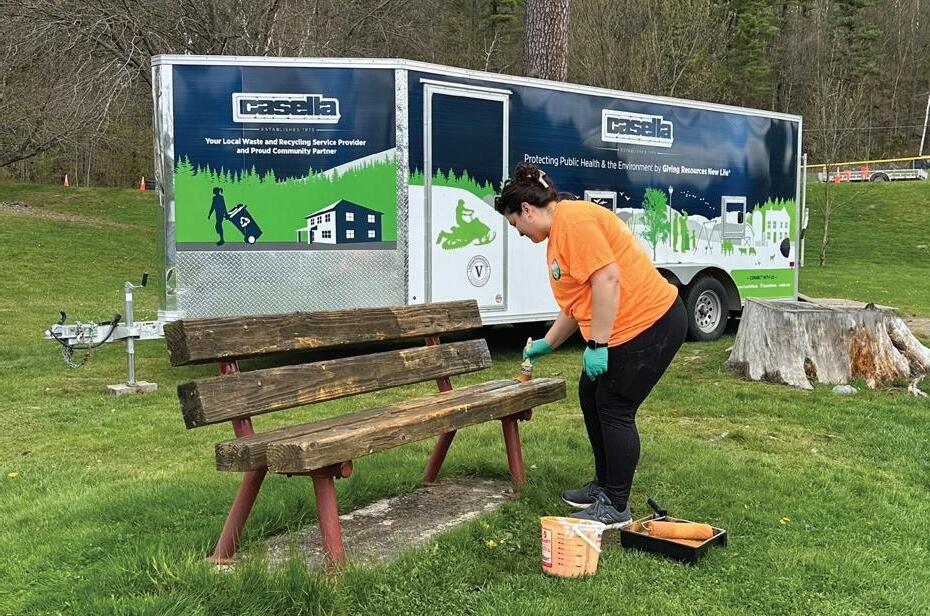
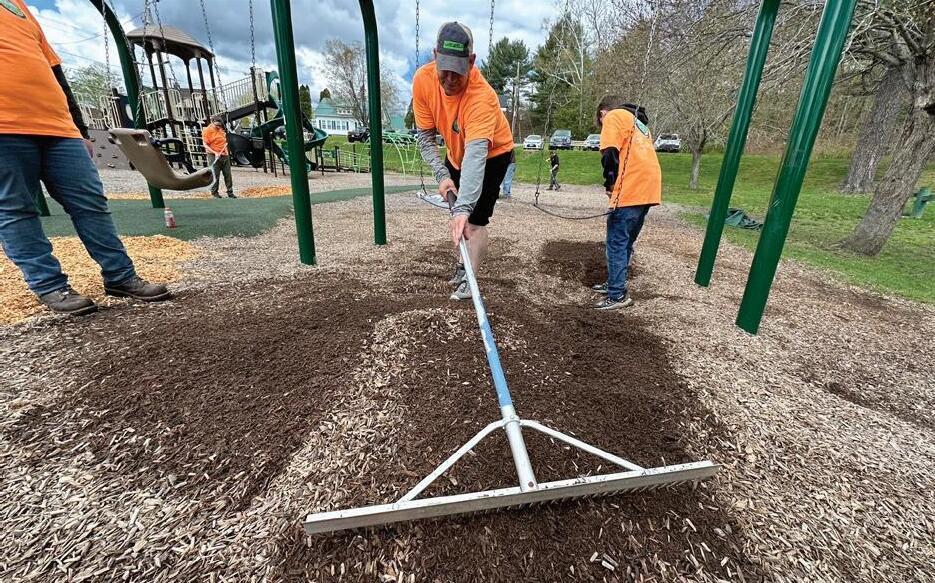
As part of our drive to make a difference, our team members volunteer for disaster relief efforts, food drives, neighborhood clean-ups, mentor connections and much more. Having achieved our first community giving goal, we will now focus on building our employee volunteering program, with a new goal to invest 21,000 hours per year of our time and expertise in our communities. As our team grows, we expect to increase this goal.
EDUCATIONAL OUTREACH
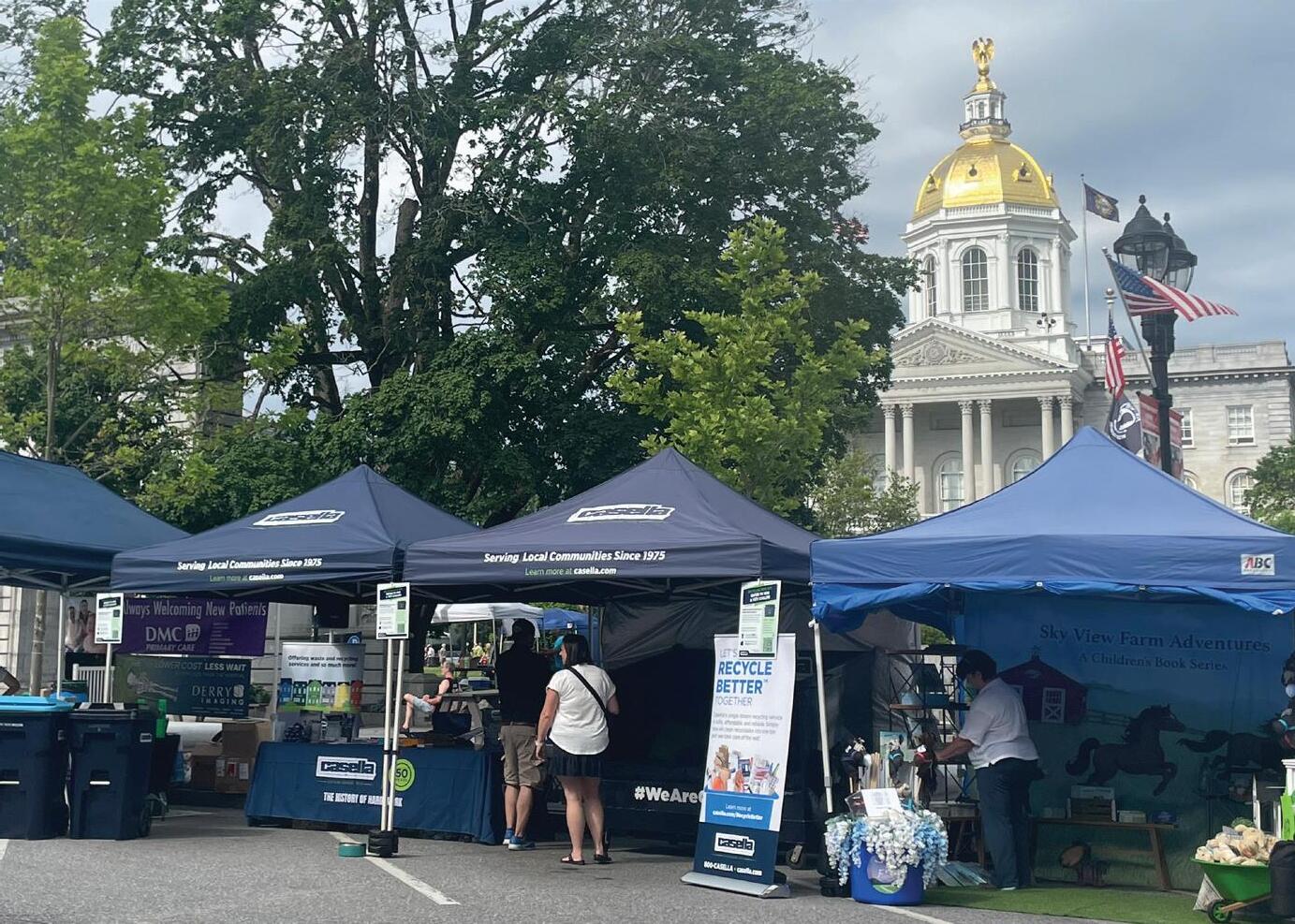
At Casella, we know that sharing our expertise, in-person and online, across our region helps us to educate the communities we serve. Each year, we share our technical knowledge by participating in community events, visiting local schools, lecturing in university classrooms, offering facility tours, serving on industry panels, meeting with municipal governments, testifying to statelevel leaders and more. n
POWER OF PARTNERSHIPS
GEOTHERMAL GREENHOUSE FUELS COMMUNITY
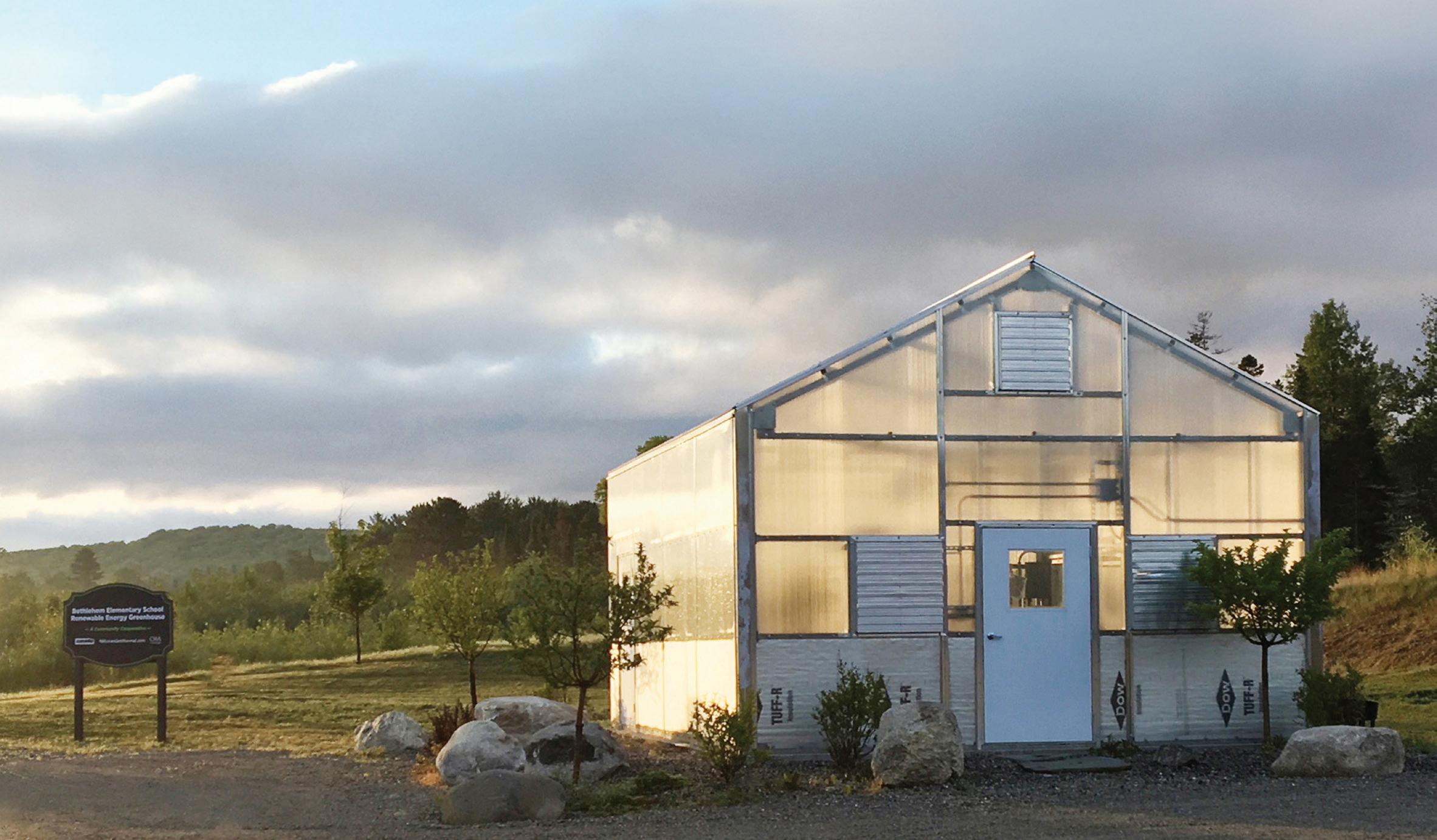
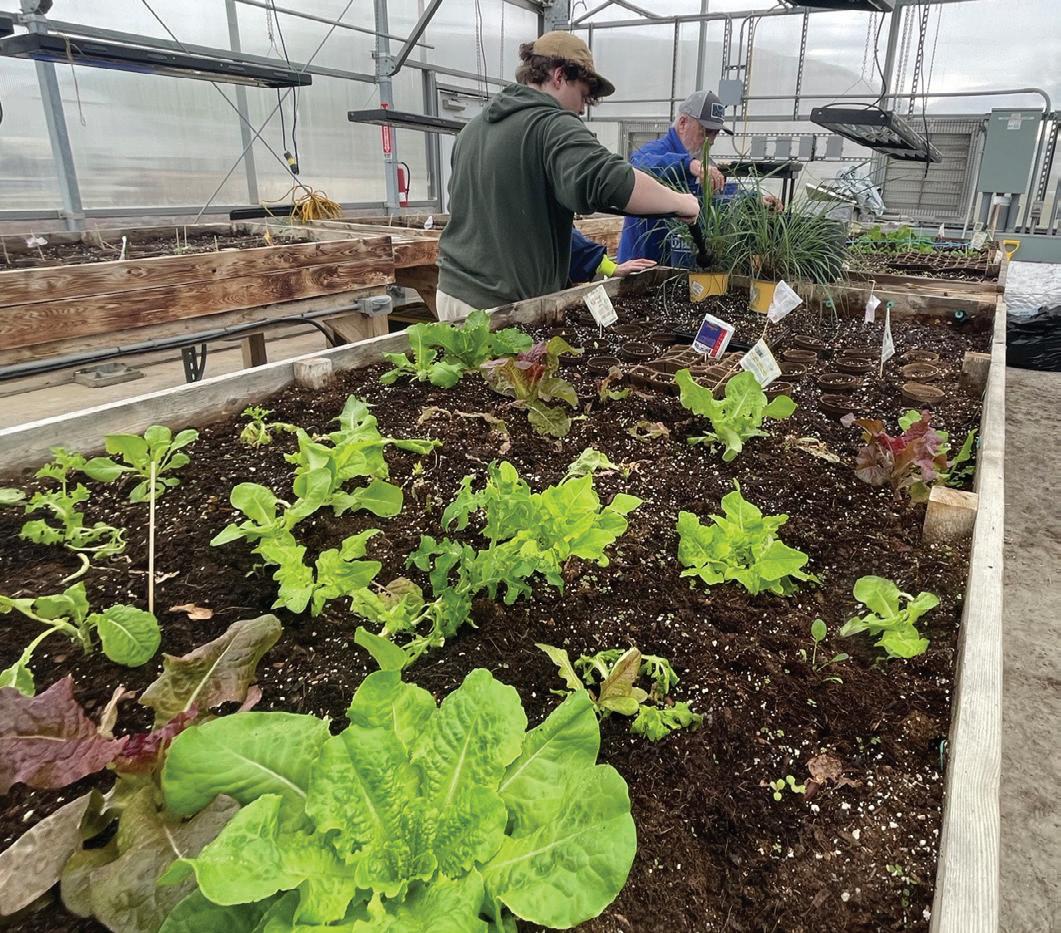
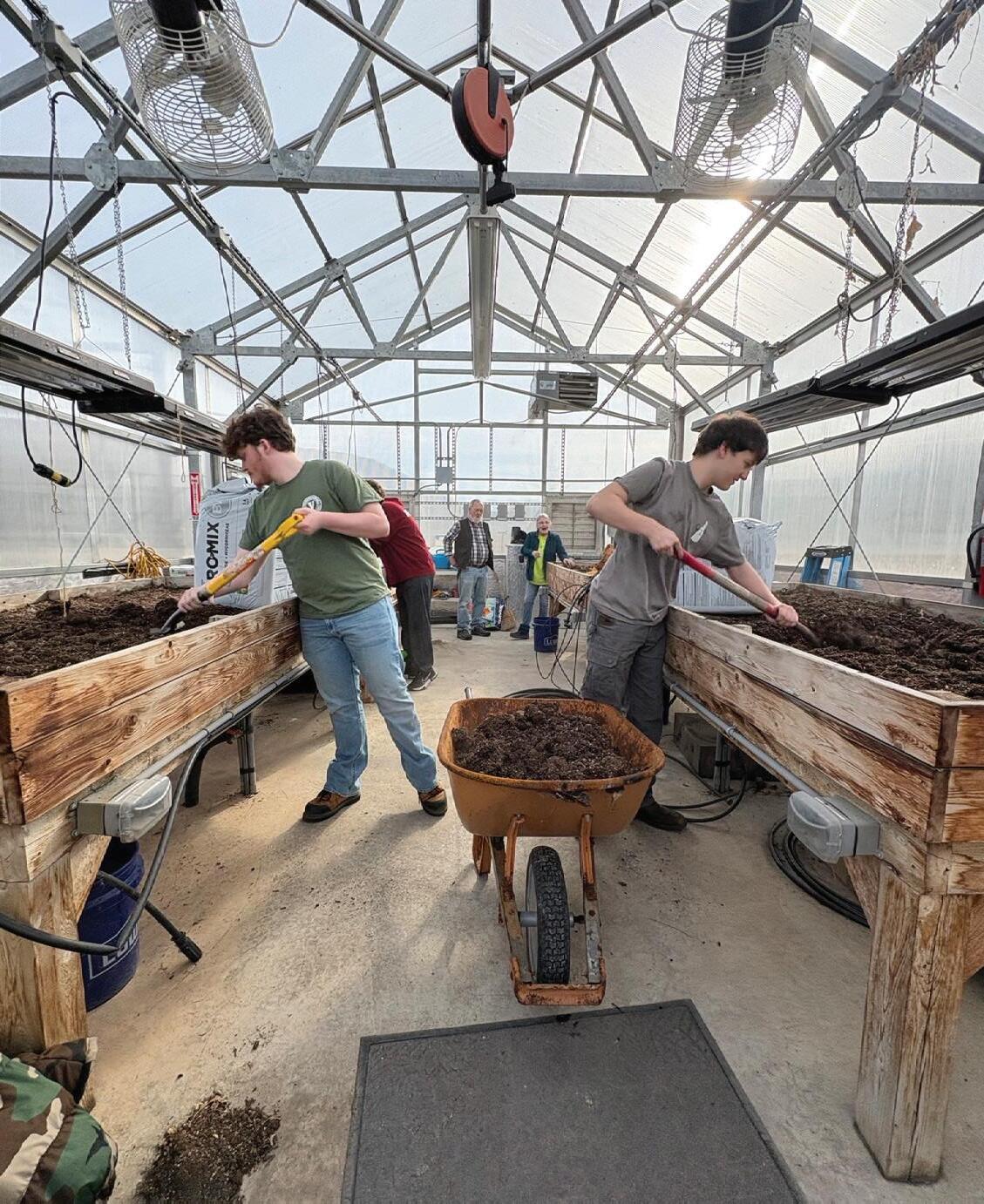
On Fridays, students from North Country Charter Academy (NCCA) are released from the classroom to work on service projects. Some of them can be found working at the greenhouse at Casella’s Bethlehem, New Hampshire, landfill.
NCCA students and their teacher, Rich Larcom, have experiential learning opportunities to sow seeds and nurture seedlings.
Casella’s greenhouse, warmed with geothermal energy harnessed from the landfill, has hosted different community groups for more than a decade.
“The idea came because we had extra energy from the landfill,” said Rebecca Metcalf, community engagement and outreach coordinator for Casella in New Hampshire. “The landfill produces heat as waste decomposes. As a company, Casella is driven to put waste to a higher and better use, and utilize every available resource. So, during construction, the general manager decided to install geothermal loops that could harness that energy to heat facilities such as the greenhouse. It was really an experimental project, but has proven to be an outstanding exercise in how resource recovery works.”
For the past two years, Casella’s greenhouse has served as the growing space that connects Pantry Partners, a grassroots effort to grow and donate produce led by Bethlehem resident, Martie Cook, with NCCA students who prepare the seedlings.
Two years ago, Cook was concerned about how changes to food programs like the Supplemental Nutrition Assistance Program (SNAP) were impacting her neighbors. She put out a call for greenhouse space to plant seedlings for produce. Access to affordable, fresh produce can be challenging in the North Country.
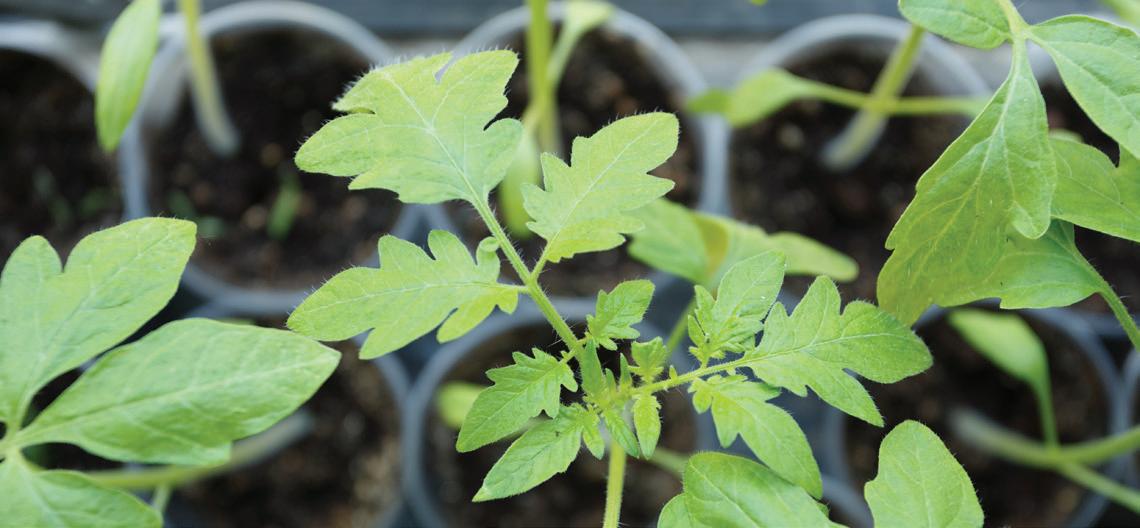
Casella offered its greenhouse space, and the students helped with the work.
“Without Casella, this program would not happen,” Cook said. “It just morphed into this amazing, wonderful thing for the town and the kids and me and everybody else.”
Larcom works with his students to select seeds, track their growing times and prepare the starters. The seedlings started at the greenhouse are later transplanted to gardens where they can mature.
“They will go to two different nonprofits and three private growers,” Cook said.
When the produce is harvested, it is donated to a Little Free Pantry in town. While the community also has a traditional food pantry supported by USDA programs, the Little Free Pantry is open all day, every day with no registration required to access it.
“Last year, it was very successful,” said Metcalf. “We were able to supply more than 2,000 servings of locally grown vegetables to the community. We’re using the same premise for this year’s project and looking to expand it even more.”
In 2025, the group grew about 300 plants. This spring, volunteers planted 400 and hope to grow
as many as 600, doubling their efforts.
The fresh produce has become a welcome resource for community members.
“The people who have gotten the food have been overwhelmingly grateful,” Cook said. “That’s the word I hear over and over — they’re so grateful. They were eating fresh lettuce within an hour of when it was picked in early May, and that is such a luxury in northern New Hampshire.”
Larcom, a biology teacher and master gardener, had been working with his students on a hydroponics system. But when he saw the call for help in the greenhouse, he saw an opportunity to expand that program.
“As part of the science program, we quite often start some wild native plants at the school,” Larcom said. “But we also started with some vegetables so the kids could have some gardening experience.”
North Country Charter Academy is a public charter school focused on individualized education and preparing students for college, careers and life after graduation.
Two of the students volunteering this year, Zachary Bond and Ethan Delventhal-Parker, are interested in pursuing culinary careers. Seeing how food is grown has helped expand those skills.
“My mantra is to teach people to grow their own food and feed those who can’t,” Cook said. “If you’re going to be a chef, and you’re paying $2 for a head of lettuce, but you can get 30 lettuce heads out of a $2 pack of seeds, isn’t that going to make you money, and isn’t it going to be better produce?”
Casella’s greenhouse also provides starter plants to the local Boys & Girls Club for its garden-to-kitchen efforts.
The partnership among Casella, Pantry Partners and
North Country Charter Academy demonstrates the value of creative problem-solving. What began as an experiment in beneficially reusing landfill energy has evolved into a community-driven model that expands educational opportunities while improving access to fresh, locally grown food — a model Metcalf hopes other communities may someday replicate.
“All you really need is some form of a greenhouse, some partnerships and people willing to put the time into it,” she said. n
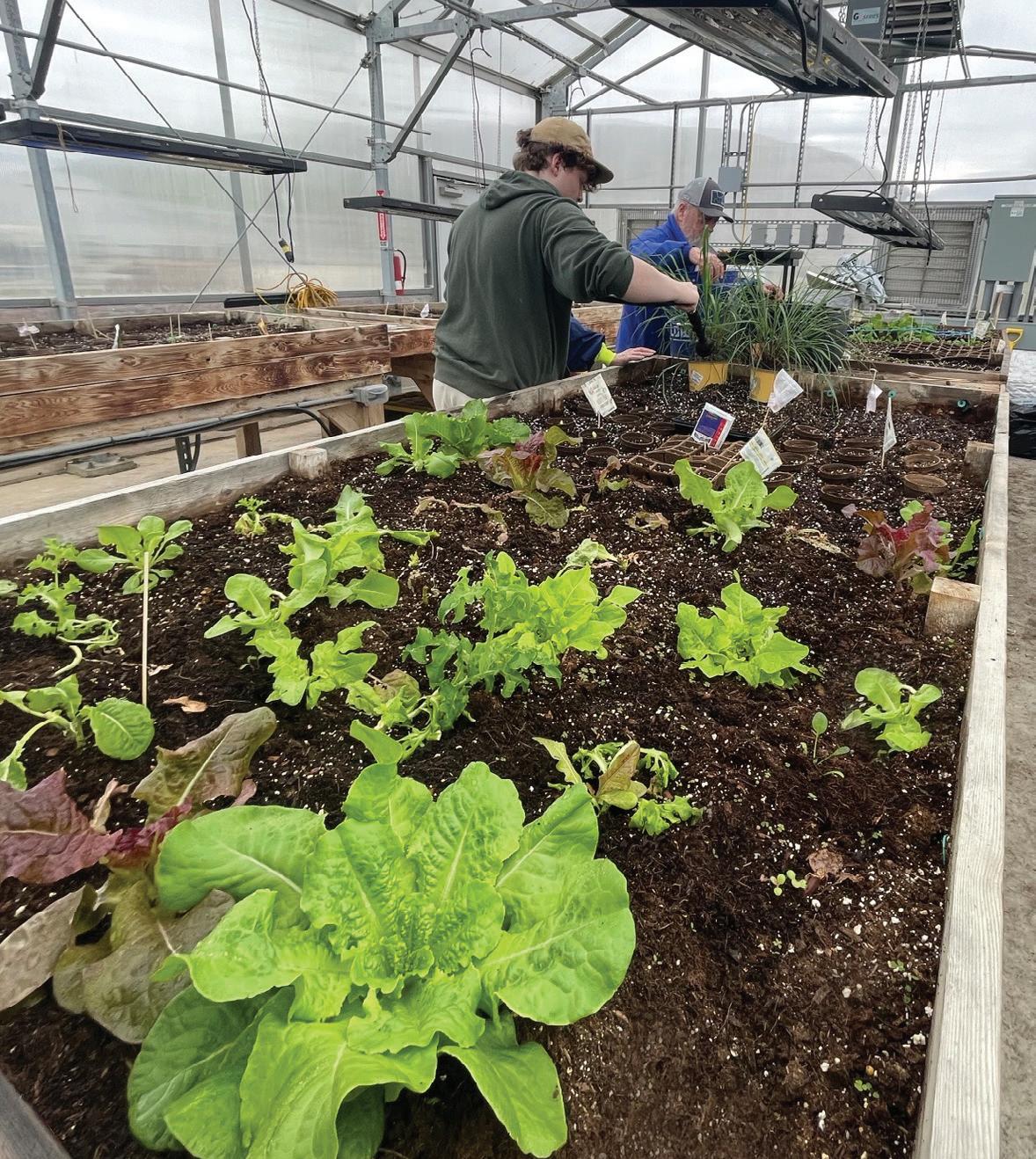
Students from North Country Charter Academy work in the Casella greenhouse to cultivate seedlings, which will grow into produce for a community pantry.
SETTING THE STANDARD FOR PFAS MANAGEMENT
Casella landfill removes ‘forever chemicals’ from leachate
They help make your raincoat waterproof, your frying pan non-stick and your carpet stain resistant.
Per- and polyfluoroalkyl substances (PFAS) are produced by chemical companies and valued by manufacturers for their ability to resist heat, grease and water. They are often called “forever chemicals” because they break down extremely slowly in the environment.
So even after that raincoat rips or the handle breaks off the frying pan, the PFAS used to manufacture those products remain. Concern over PFAS has grown in recent years. Because they break down so slowly, PFAS can accumulate in the environment and in the human body. Long-term exposure to certain PFAS has been associated with increased cancer risk, hormone disruption and developmental effects.
The U.S. Environmental Protection Agency
notes that there are thousands of different PFAS compounds with varying characteristics and toxicity levels, yet most research has focused on only a limited number of the better-known chemicals.
Landfills do not manufacture PFAS. When PFAScontaining products are discarded, they often end up in landfills. By design, landfills do an outstanding job of sequestering the chemicals and preventing them from escaping into the natural environment. However, rainwater and moisture moving through the waste create a liquid known as leachate, which can contain PFAS and other constituents. The landfill liner system safely collects this leachate for treatment. Traditionally, leachate has been sent to wastewater treatment facilities, but many conventional treatment plants were designed before PFAS were recognized as contaminants of emerging concern and therefore were not engineered specifically to remove them.
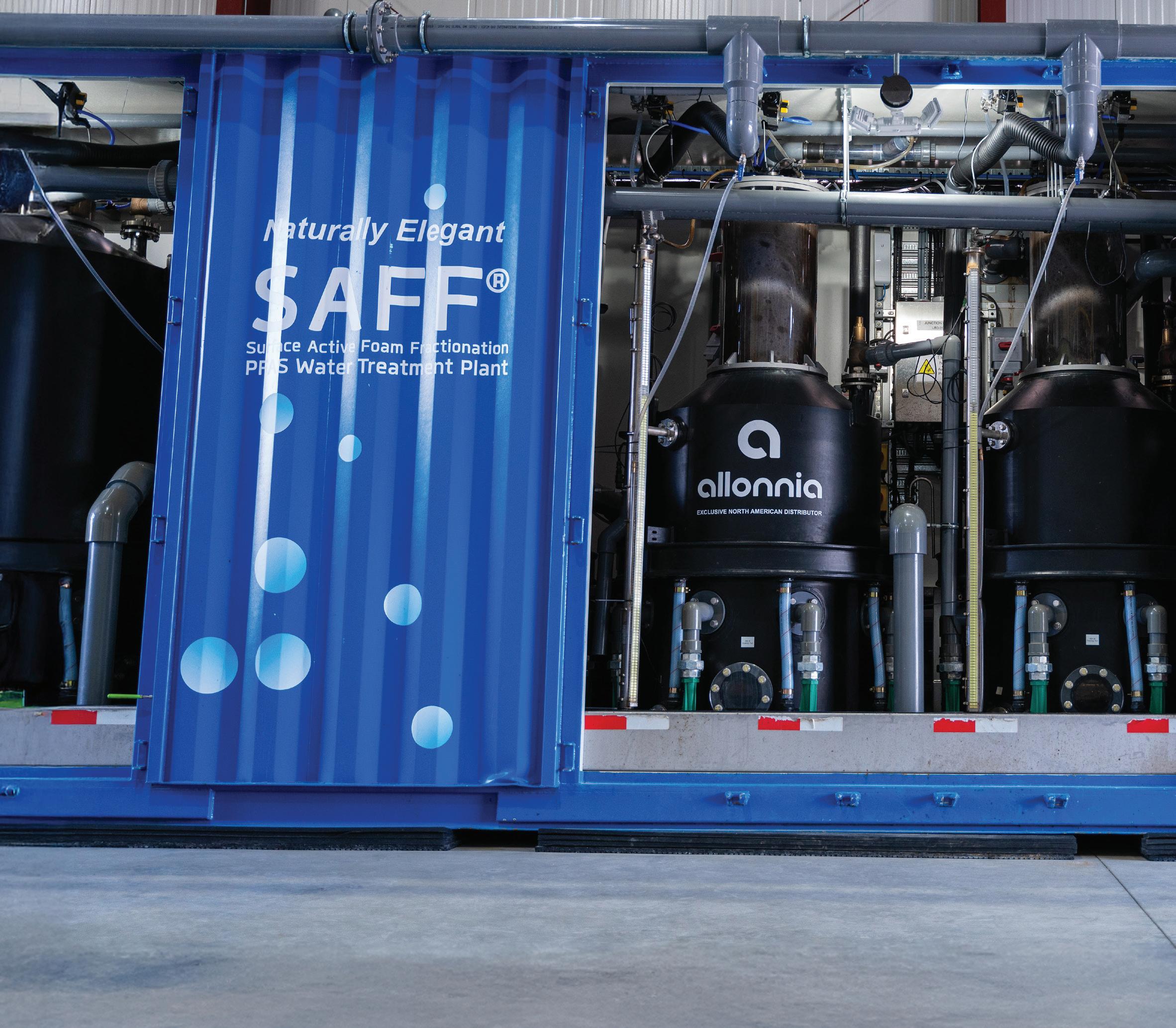
Casella’s landfill in Coventry, Vermont, recently became one of the first landfills in the country to implement full-scale PFAS pre-treatment using
foam fractionation before landfill leachate is sent to a wastewater treatment facility. Several other landfills have since begun implementing similar technologies, although the approach has not yet become standard across the industry.
Jeremy Labbe, PE, general manager of the Coventry landfill, said the landfill itself does not generate PFAS. Rather, as a passive receiver of products containing PFAS, the facility manages these materials after they have reached the end of their useful life. Despite increasing regulations and voluntary phase-outs, products containing PFAS continue to enter the marketplace.
Labbe said that, even if PFAS production stopped today, these chemicals would remain in products already in the supply chain or in use for decades. That’s why Casella chose to invest in technologies that help keep PFAS contained and managed responsibly.
“As a passive receiver, we are doing everything we can to make sure the PFAS stay in the designated facility,” Labbe said.
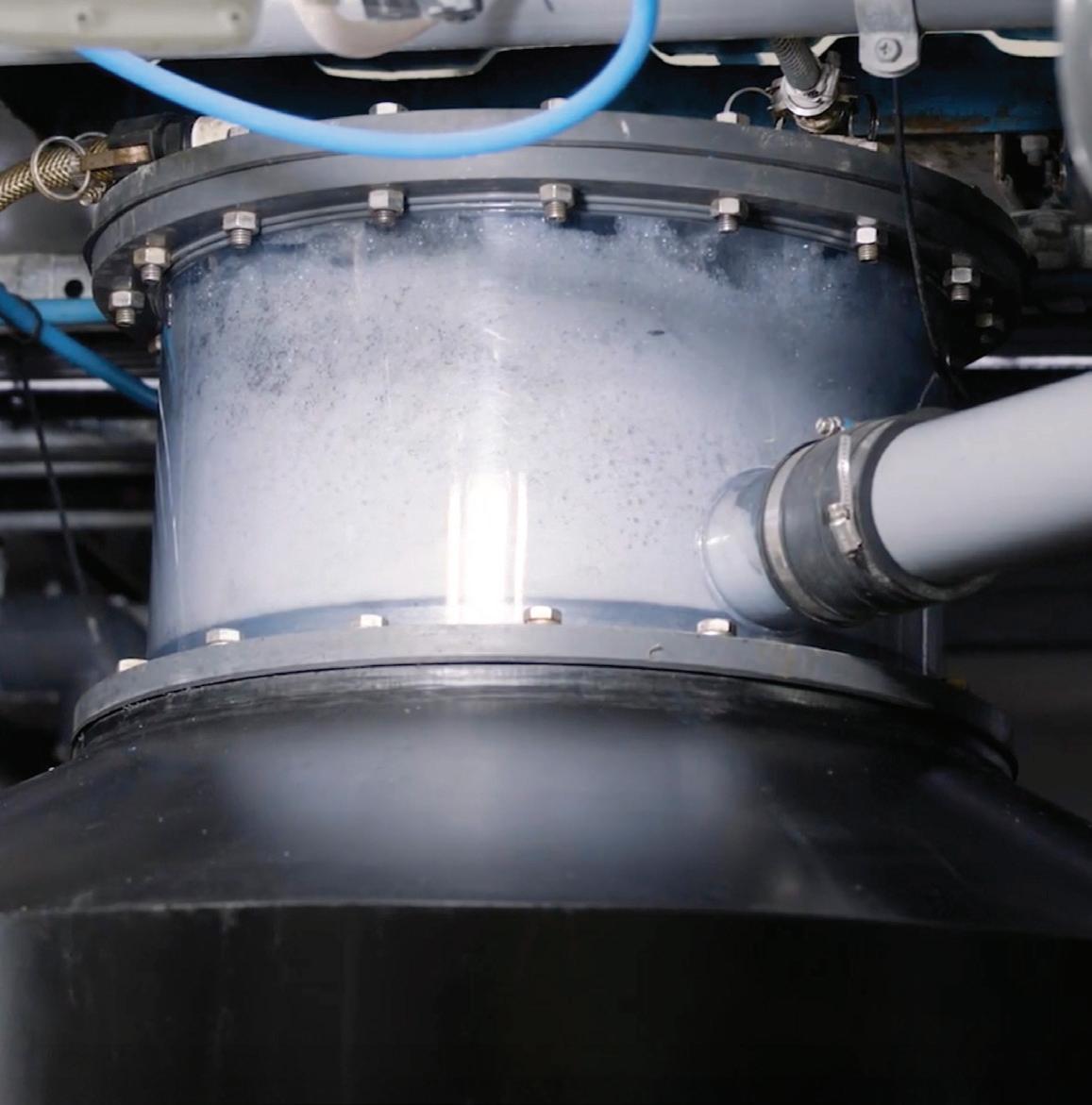
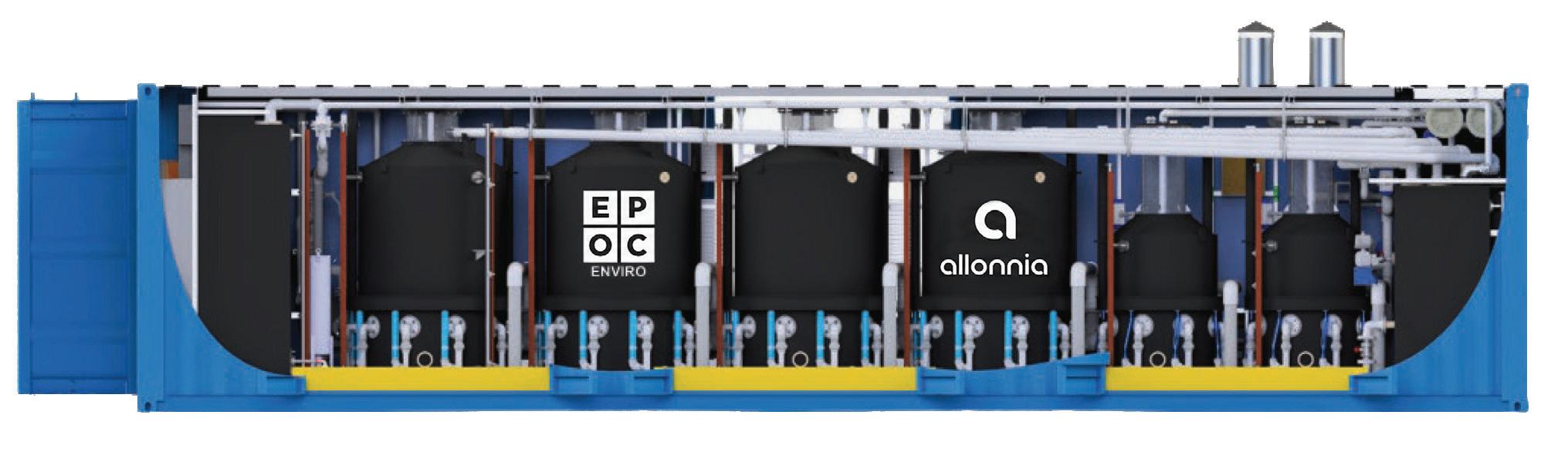
The Allonia Surface Active Foam Fractionation process implemented by Casella removes nearly all PFAS from landfill wastewater.
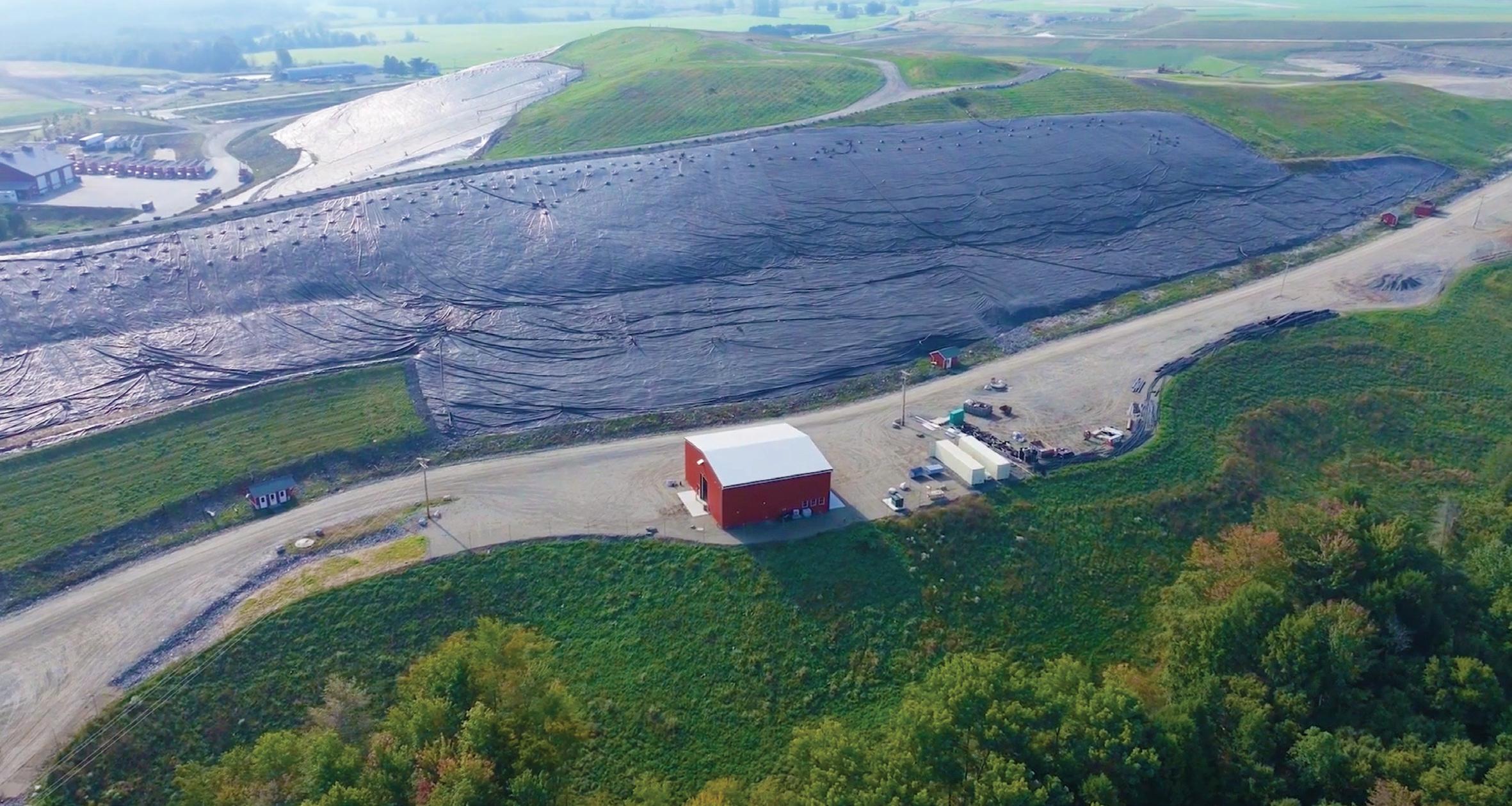
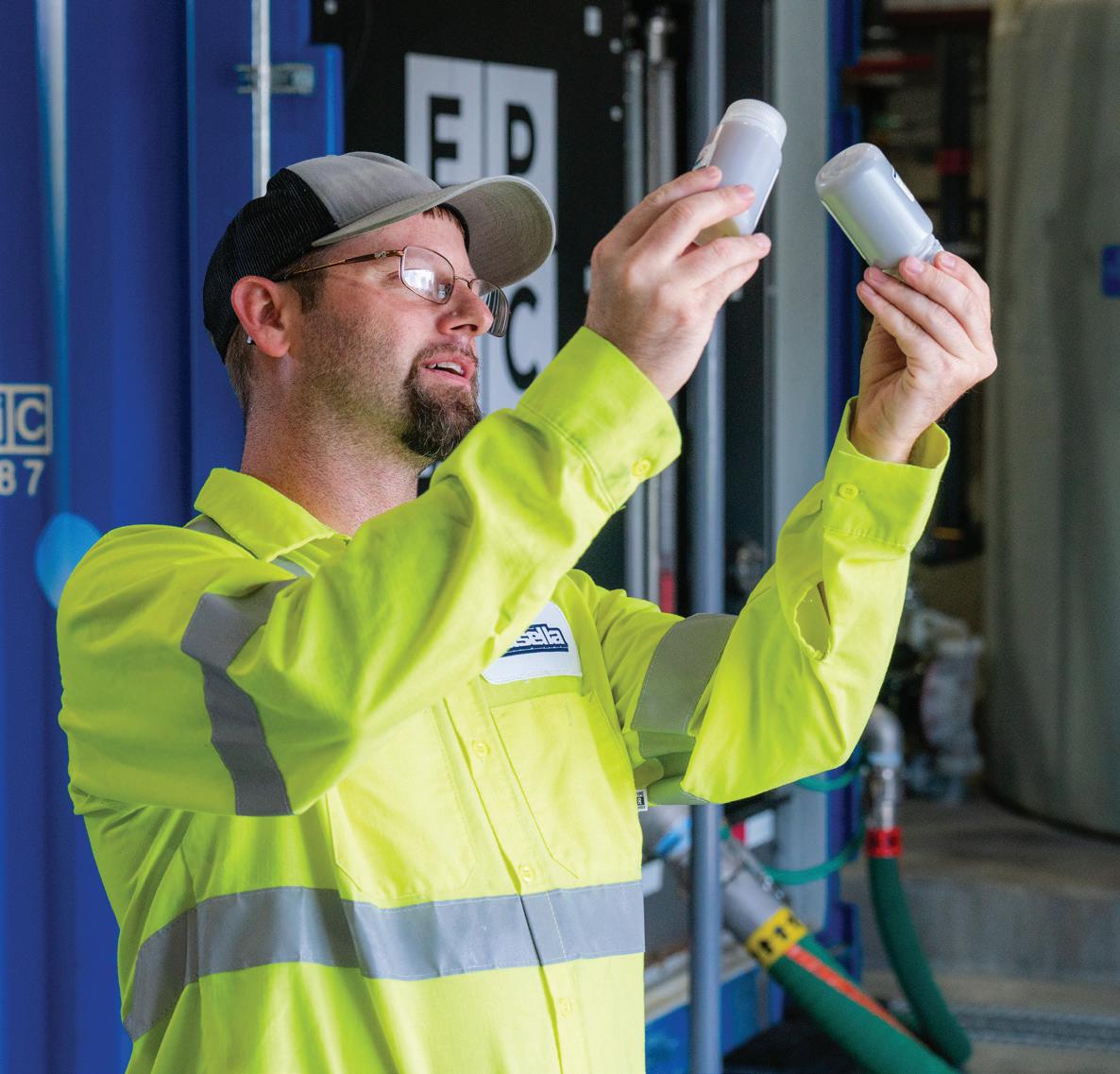
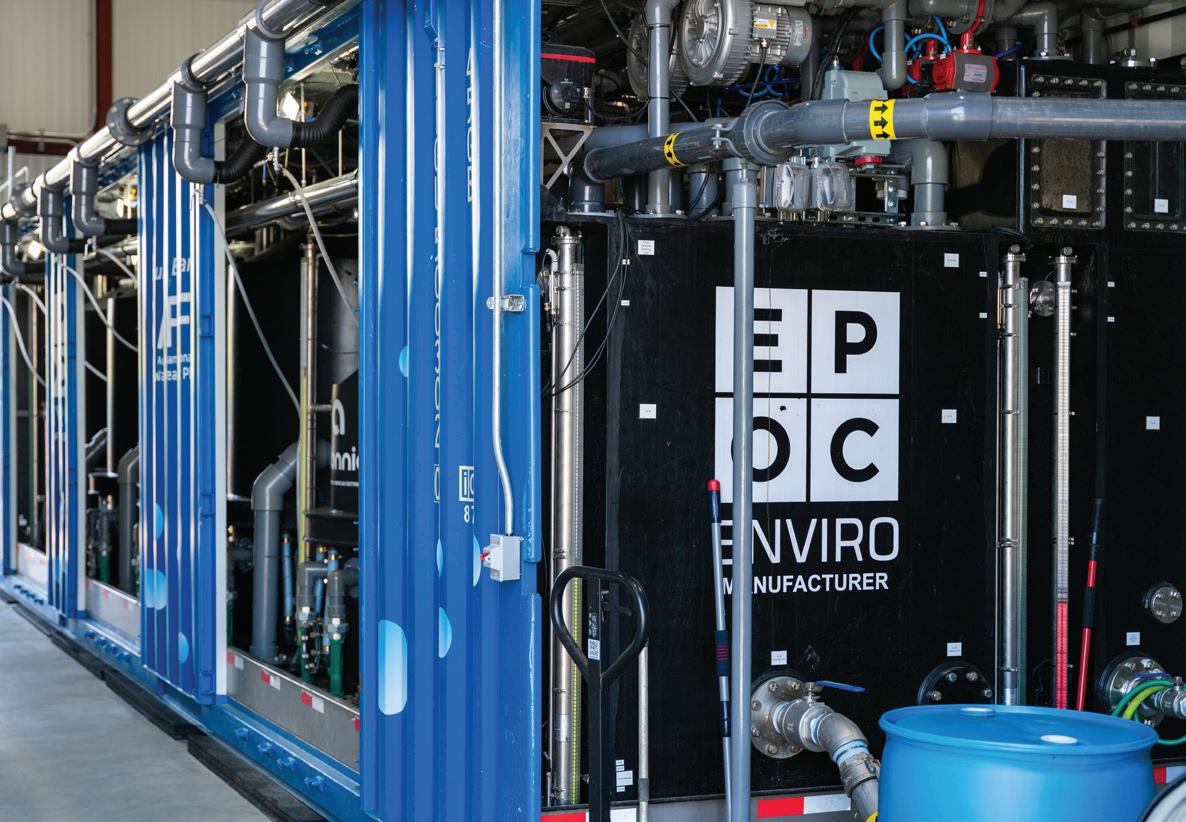
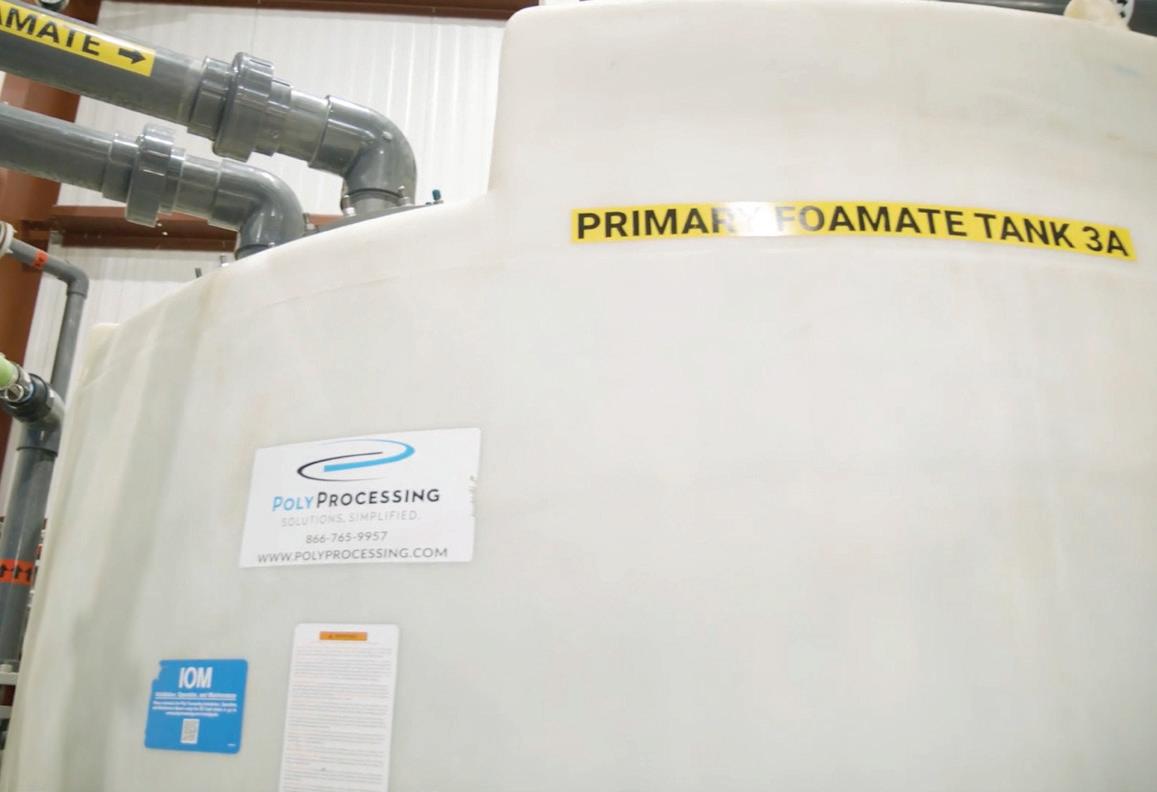
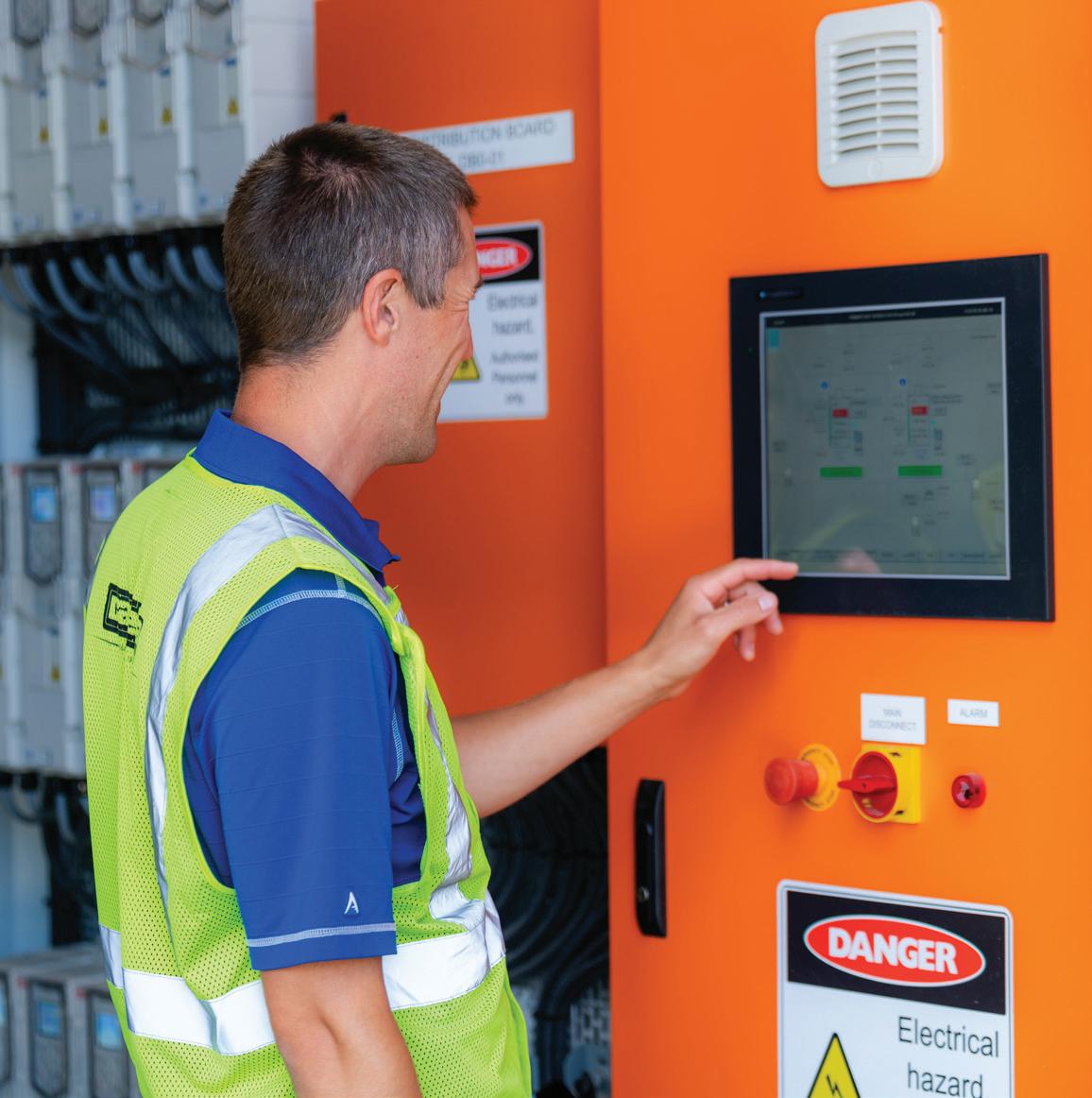
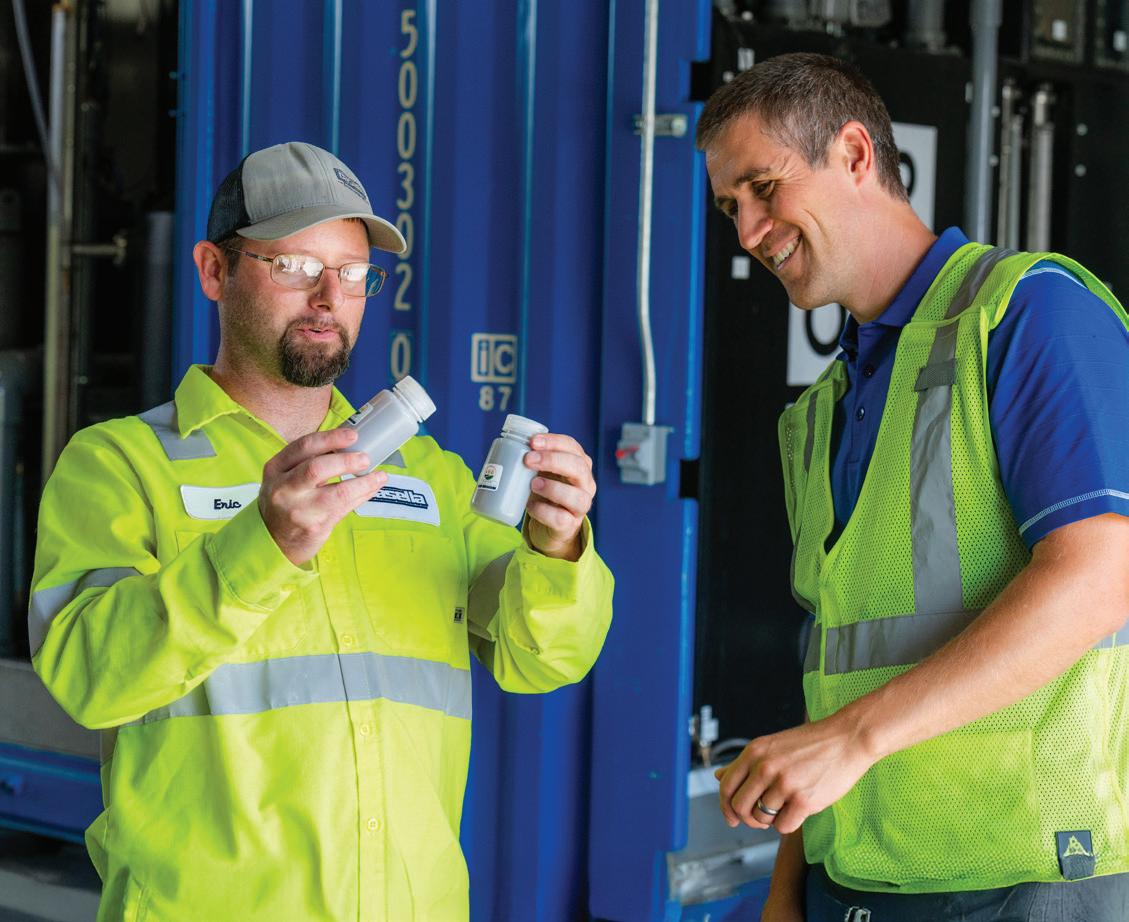
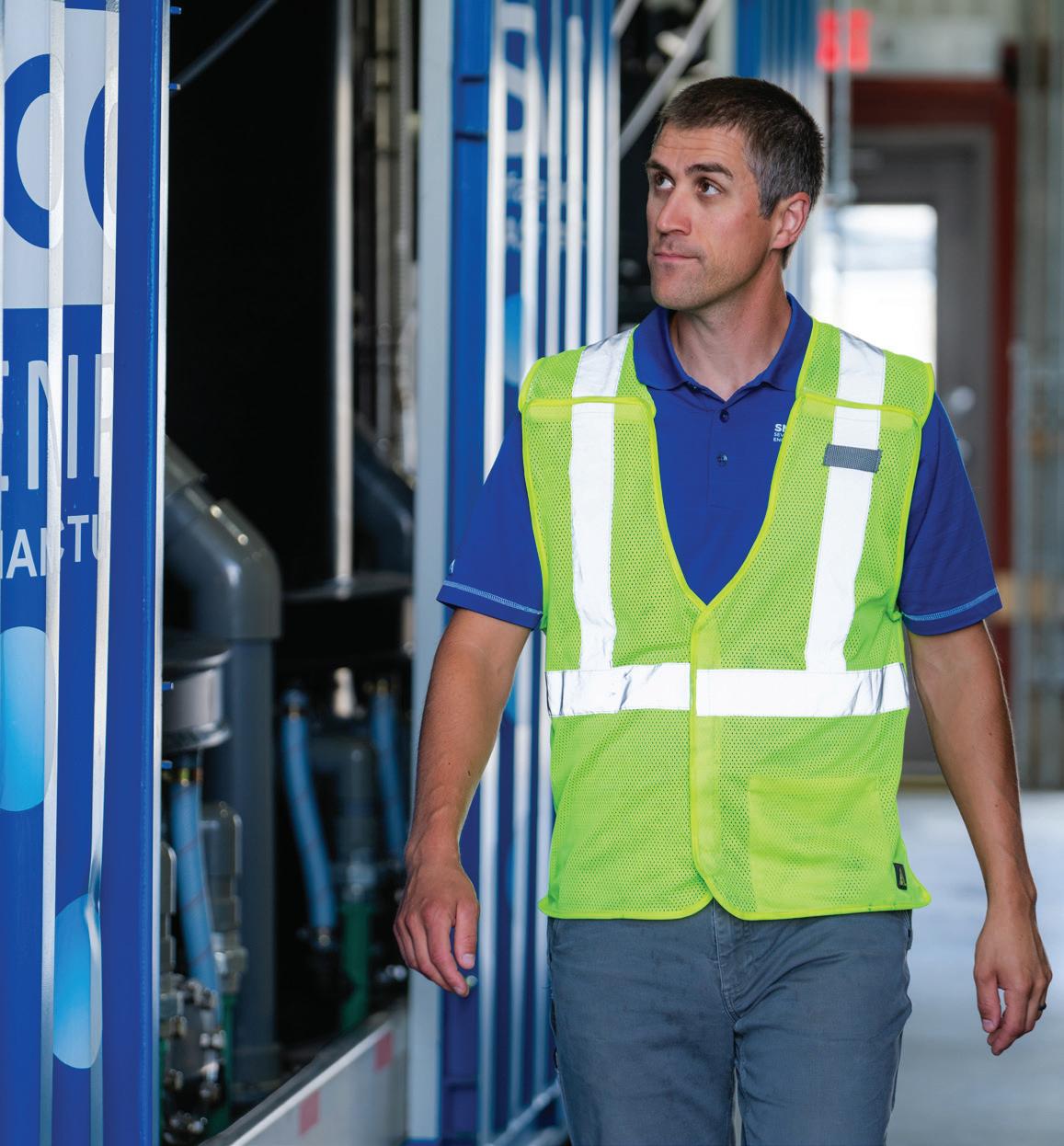
Top: Casella’s landfill in Coventry, Vermont. Below left: Eric Patch, an environmental engineer at Casella’s Coventry site, looks at samples of the treated leachate. Below right: Jeremy Labbe, PE, general manager, reviews the plant’s operations.
Casella’s landfill uses foam fractionation, a process that pumps air through leachate to separate PFAS from the liquid. PFAS compounds have one end that is water-attracting and one that is water-repelling. This unique chemical property that makes them good for non-stick or waterproof purposes can be exploited by turning properties that cause them to turn into a foam that floats to the top of the leachate where the air and water meet, then it can be skimmed off. Casella’s system was developed by EPOC Enviro and is distributed in North America by Allonnia.
Researchers in Australia wrote in the Journal of Hazardous Materials that foam fractionation is advantageous over other PFAS removal technologies owing to its simplicity, lower operational cost and greater applicability to different types of materials.
The system includes four large primary tanks that are gravity-fed with leachate. This first stage of treatment takes approximately 30 to 40 minutes and removes most of the regulated compounds, according to Eric Patch, an environmental engineer at Casella’s Coventry site.
The leachate then undergoes a second round of treatment in two smaller secondary tanks. After about an hour in that system, well over 95% of the regulated PFAS compounds have been separated from the leachate.
The concentrated PFAS are then encased in special resin and permanently disposed of within the landfill’s engineered containment system.
The amount of leachate processed varies depending on seasonal conditions and precipitation, typically ranging from 30,000 to 50,000 gallons per day.
The system operates continuously, with remote monitoring by EPOC in Australia during the landfill’s overnight hours, and is capable of treating up to 60,000 gallons each day.
Due to the extremely small concentrations involved, Labbe said that, out of 30,000 gallons of leachate, only about 2 to 3 grams consist of PFAS compounds.
During its first three years of operation, Casella has successfully processed millions of gallons of leachate, removing PFAS and sequestering it in the landfill. Coventry is Vermont’s only active municipal solid waste landfill. Although no state law currently requires landfill operators to pre-treat leachate for PFAS before sending it to wastewater treatment facilities, Casella chose to invest ahead of evolving regulations.
As part of its continued investment in environmental stewardship and operational innovation, Casella invested approximately $6 million to install the foam fractionation system.
As attention to PFAS continues to grow nationwide, efforts like this are becoming increasingly important beyond a single landfill in Vermont. Regulators at both the state and federal levels have begun to examine limits on PFAS in drinking water and wastewater discharge. In that context, pretreatment at the landfill level represents a proactive step in managing contaminants before they move further through the system.
Casella’s investment in Coventry may also offer a model for other facilities facing similar challenges. While foam fractionation is not yet standard practice across the industry, its ability to operate continuously and process variable volumes of leachate makes it a practical option for broader adoption. By investing early, Casella has positioned itself to adapt as regulations evolve while continuing to advance responsible environmental management.
Labbe said that collaboration is already strong across the waste management industry. As understanding of PFAS continues, sharing of expertise will be critical to addressing challenges. For Casella, that means continuing to refine its systems while sharing insights with regulators, partners and the broader industry. As PFAS remain present in everyday materials, solutions like those in Coventry highlight how infrastructure can evolve to meet environmental contaminants, including PFAS. n
SURFACE ACTIVE FOAM FRACTIONATION (SAFF®)
It is a robust technology unaffected by the presence of co-contaminants, even at high concentrations. SAFF rapidly achieves a high-density, low-volume PFAS concentrate, without the use of adsorption media, enabling effective pairing with portable destruction technologies for on-site, closed-loop remediation.
MEET JEFF MARTIN
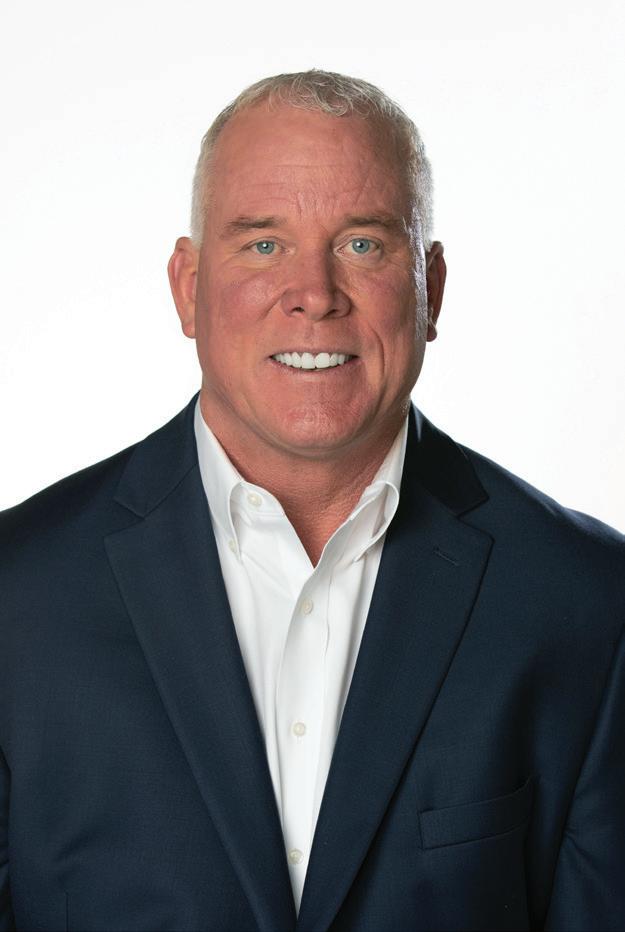
Jeff Martin joined Casella as vice president of safety in August, continuing a lengthy career in waste management and a personal passion for safety.
What was your experience before coming to Casella?
I joined Waste Management in 1996, where I served 25 years in a variety of capacities, from sales to operations to safety. In 2022, I retired, but I came out of retirement to join Lytx, which is a video safety technology company. After retiring, I got bored and missed the people in the industry terribly, so I consulted until I joined the Casella team in a full-time capacity.
With your wide experience in waste management, what directed you toward safety departments?
My wife’s previous husband was killed in a workplace accident involving a forklift when her three children were ages 5, 4 and 2, and I became an instant dad when I joined her family.
Then our son, Connor, when he was 10 years old was critically injured and his best friend was killed in a boating accident when a wakeboarder swerved into their tube’s wake and collided with them.
So those two lifetime tragedies have really propelled me to not only embrace safety, but to take it personally and to share those stories with people. It doesn't have to happen. Casella workers are trained to realize how things can change in an instant. That fuels me. There's nothing better than seeing people understand that they know that their safety is most important.
What made you interested in working for Casella?
The ability to work with a highly respected company with a tremendous reputation. Casella is a highly motivated company and a very progressive company, in that the ability to safely service the customers efficiently is a key focus. We're going to drive the efficiencies. Efficiency is not about going faster — I want to make that very clear. It's about eliminating wasteful steps in your day. When you do that with great customer service and you do it safely, it builds a great momentum and a great spirit within the company.
What is the safety culture at Casella that you have to build on?
It’s the employee engagement and the one-on-one accountability. We've got to win hearts in order to win minds. We want to get to a place where we have 100% of the employees wanting to be safe instead of doing it as a condition of employment. When people are fully bought in, they are some of the best cheerleaders and fellow coaches on the front lines. It's a great opportunity to further strengthen our safety culture and really look at taking a building-block approach. It's the most rewarding thing for me when you see people believing in safety, because nothing's more important. We want everyone to go home safely each and every day.
What role does leadership play in Casella’s culture of safety?
It's really leadership by example. It starts with Ned Coletta and the rest of the leadership team, who are fully committed to taking the next step in the safety culture at Casella.
Any top safety performance company must start with senior leadership. If it's there and we all know what is expected at the top level of the company, that has a cascading effect through the organization. It's infectious, it's exciting.
How is technology helping with those coaching conversations?
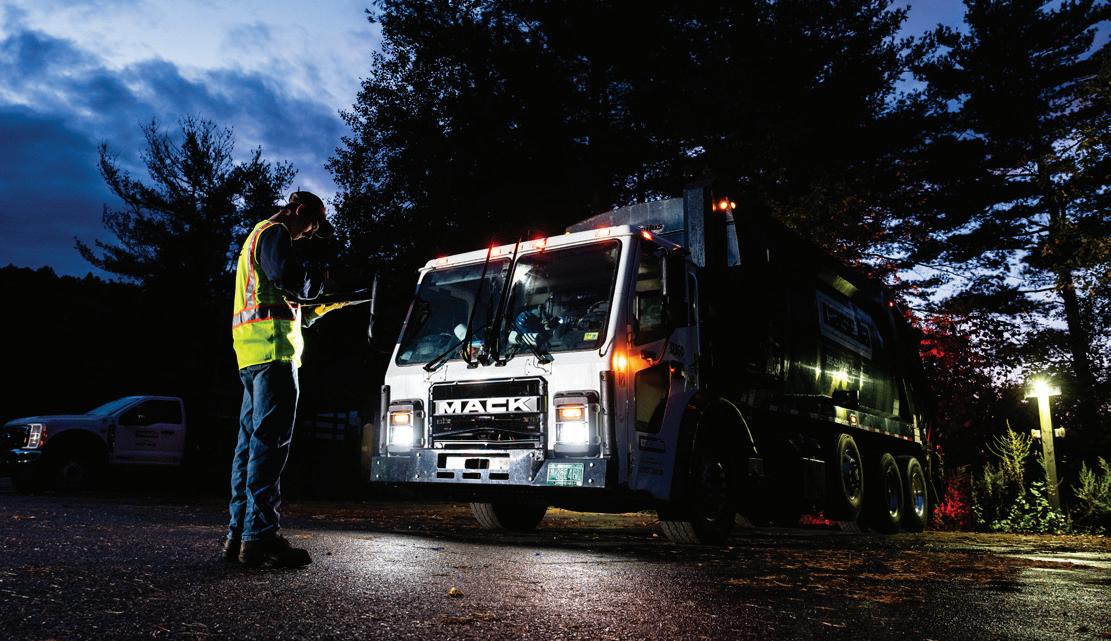
The artificial intelligence today, it's what is referred to as a “coach in the cab.” If I pick up my cellphone or I don't have my seat belt on, it's going to go, “ding, ding, ding, seat belt.” So now I know, I have to put on my seat belt. If I don't, it will continue to remind me. Same thing if I pick up a cellphone. The power in that, with today's safety technology, is it allows drivers to self-correct in the moment, and they feel good about it.
It not only protects our drivers, but it also makes sure that we are safely servicing the communities that we're responsible for.
What are other areas that you’re looking to make safety improvements?
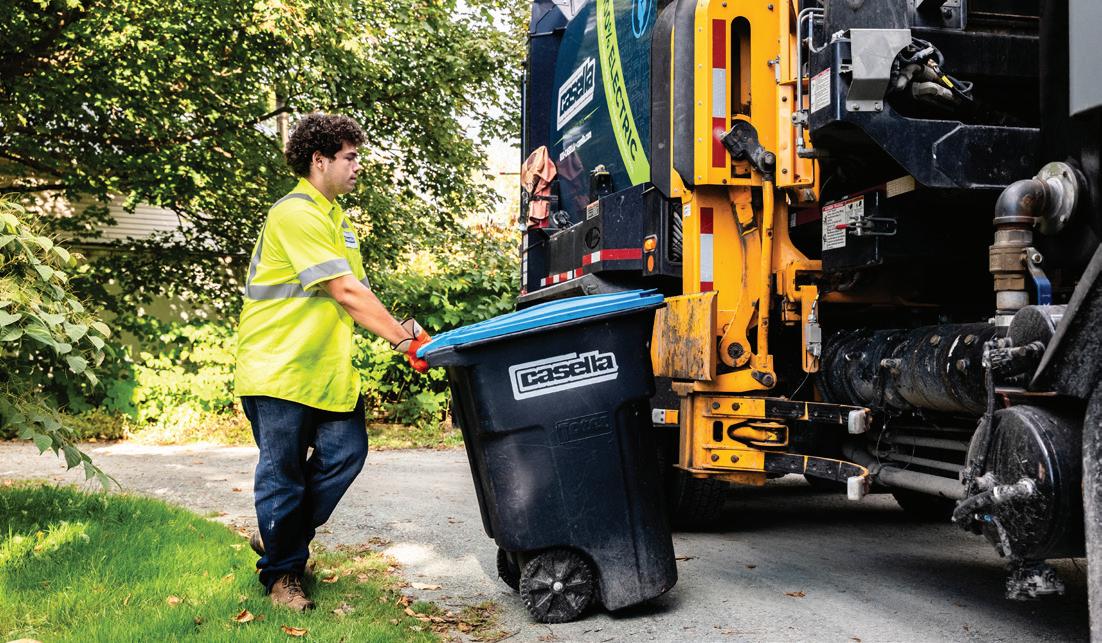
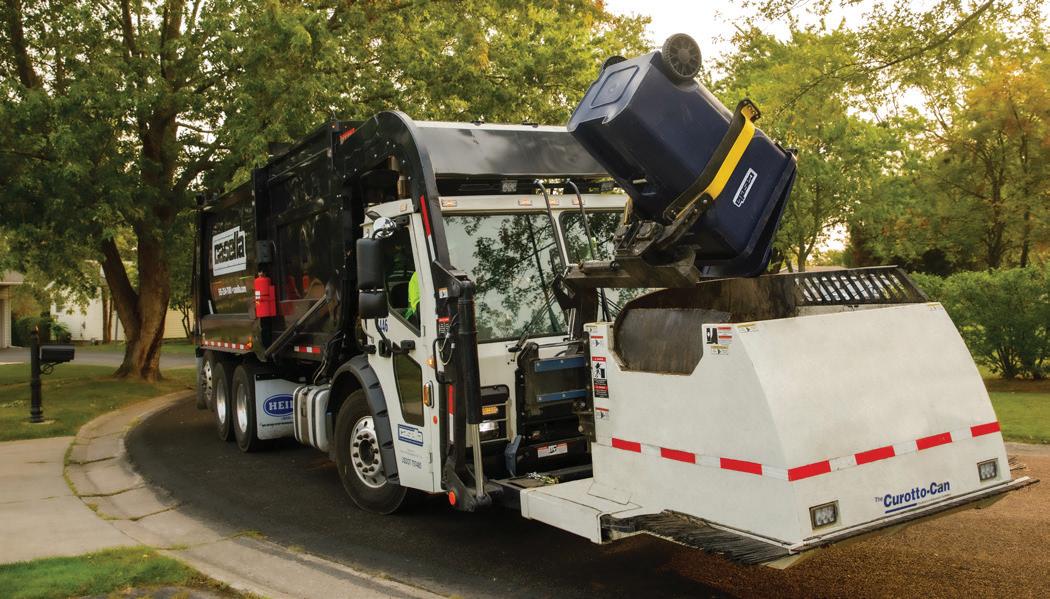
One of the ways we are looking to eliminate musculoskeletal injuries that are related to our rearload operations trucks, and replacing them with what are called automated side load (ASL) trucks that can pick up a 45- or 96-gallon cart from a residence curbside and safely collect that without the use of people, who unfortunately are not only subject to muscular skeletal injuries but susceptible to being struck in the street by vehicles.
How do you ensure safe operations across Casella’s many different facilities and services?
It all starts with our new hire orientation and training program and making sure that, in our facilities, employees understand the rules, guidelines and expectations, and are outfitted with personal protective equipment (PPE), and most importantly, are observed and coached on awareness and operating practices. We are developing our new hire orientation and training programs so that it is replicated easily throughout our system.
Whether it's a recycling facility or a disposal facility, we are making sure everybody understands that every employee or visitor has the authority to stop work immediately. If you see something wrong or somebody is at risk, stop work authority is your authority. It's everyone's authority, and it's very important.
How does Casella stay up-to-date on the latest safety policies and best practices?
We participate in the National Waste and Recycling Association and share best practices and safety. The great news is that, whether it's within the industry or outside of the immediate solid waste recycling industry, there is a spirit among safety professionals to steal shamelessly and share with one another, because who can ever argue with saving lives and saving dreams?
Casella has a 2030 goal of lowering the total recordable incident rate down to 4.0 from 6.2 in 2019. What steps are taken after an incident or close-call to mitigate future harm?
First and foremost is tremendous care for our employees and the folks affected. With any incident or near-miss, it must be dealt with openly and honestly. What are those takeaways? What opportunities do we have, individually and collectively, to address and mitigate before the risk presents itself, and to obviously rectify it? What can we do to raise awareness in training and other remediations to prevent it from happening again?
What is the last thing you like to leave people with?
I think the really big one is that safety is everyone's responsibility at Casella. That is our belief system, and everyone owns it and is empowered. We’re focused on taking great care of our customers, but we understand we have a great responsibility to do it safely. n
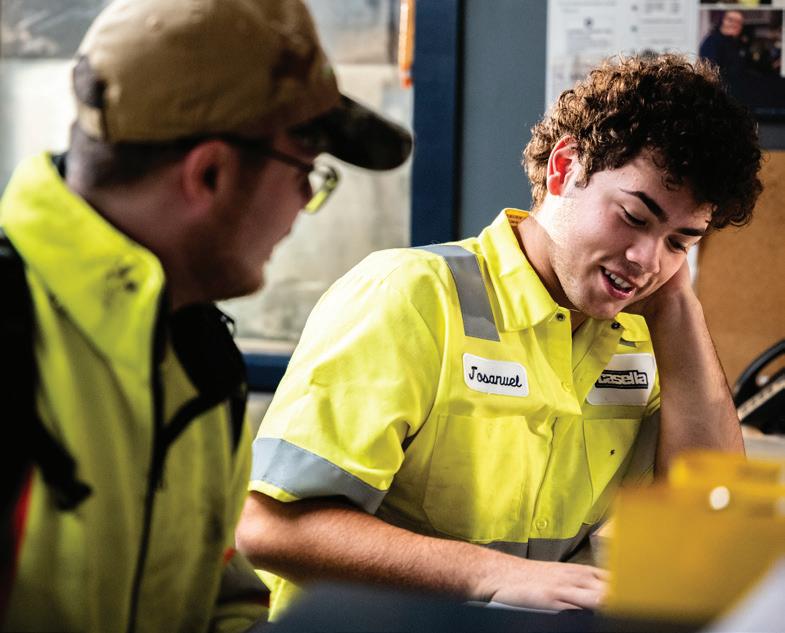
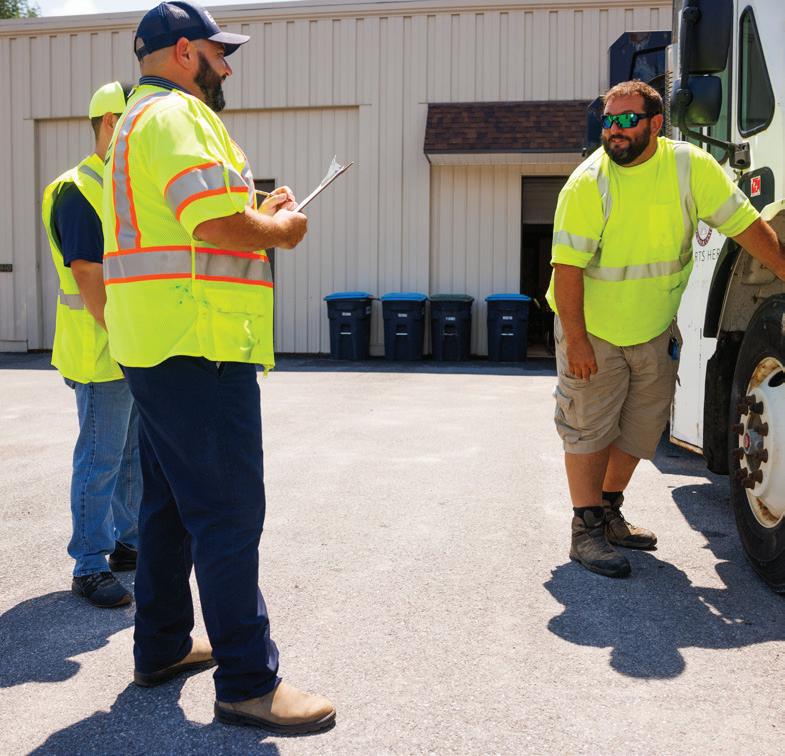
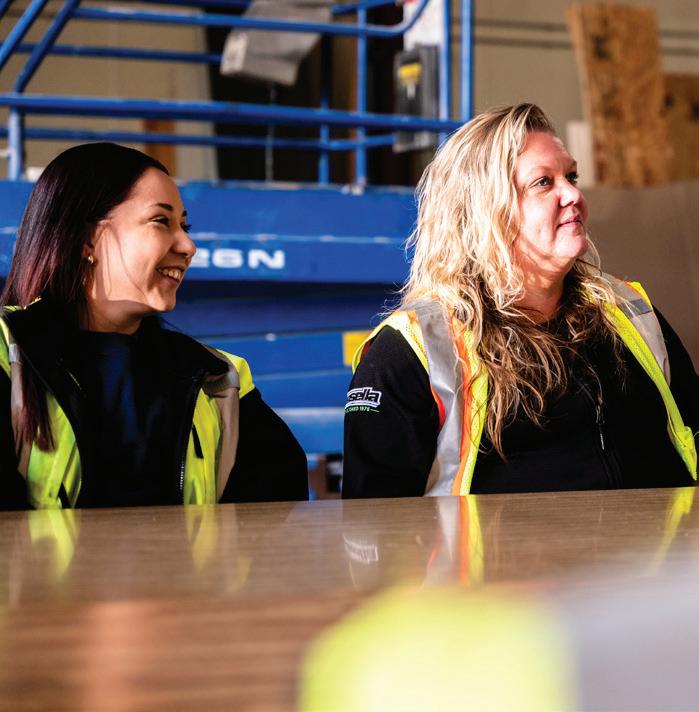
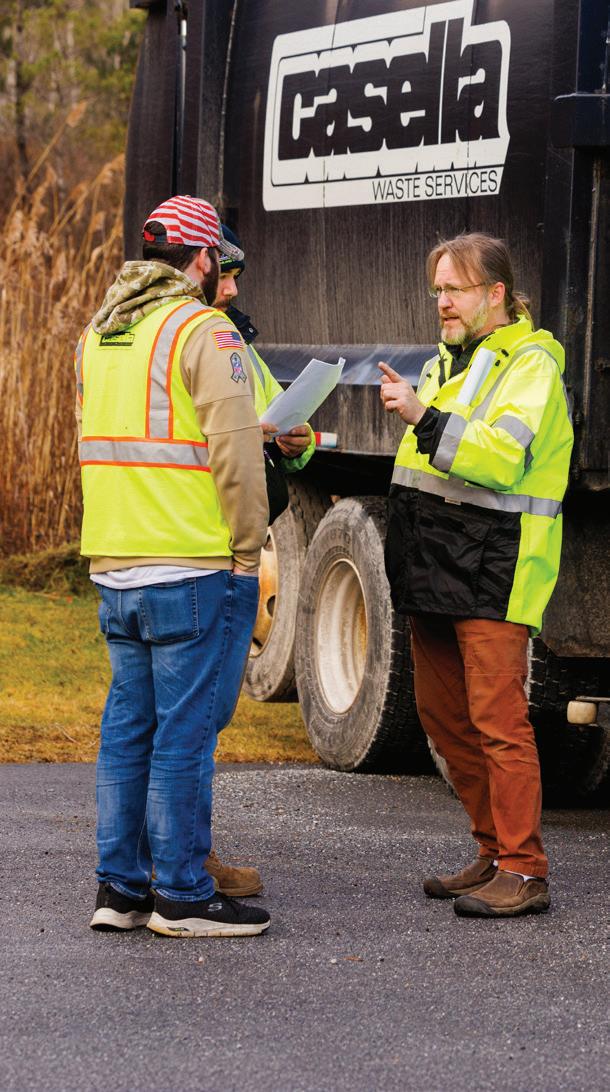
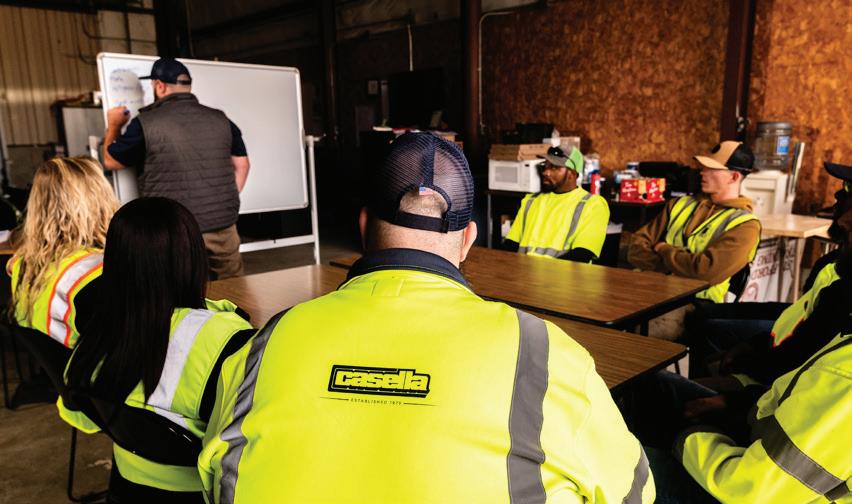
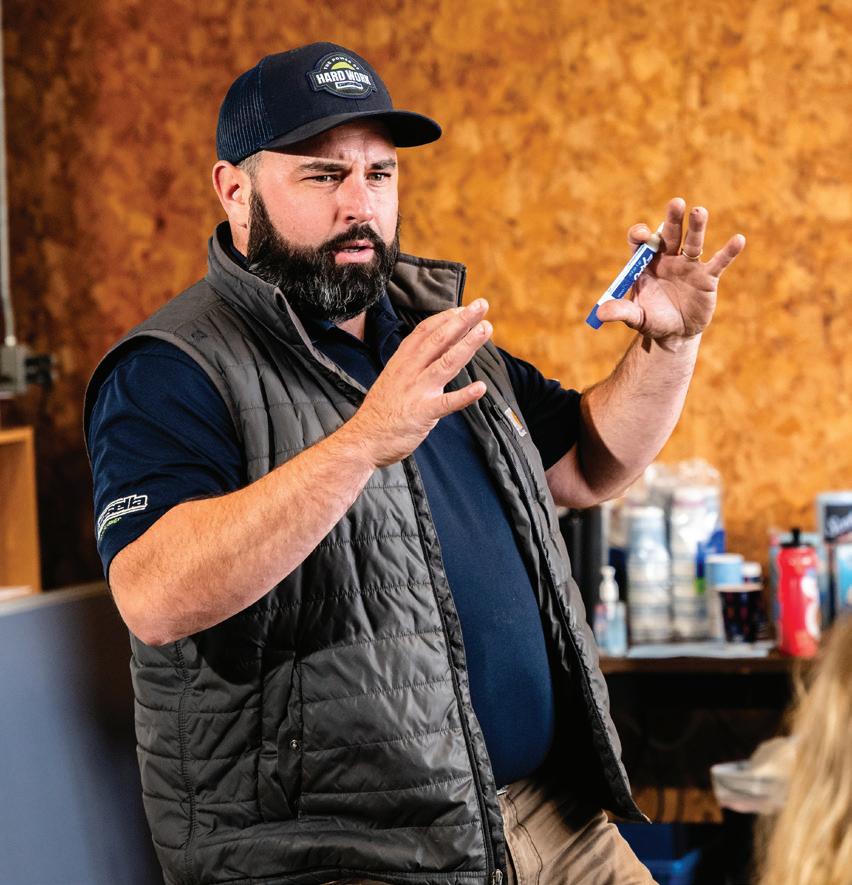
“School educators have acknowledged how this collaboration has opened more opportunities for many students.”
— TONY VOLPONE
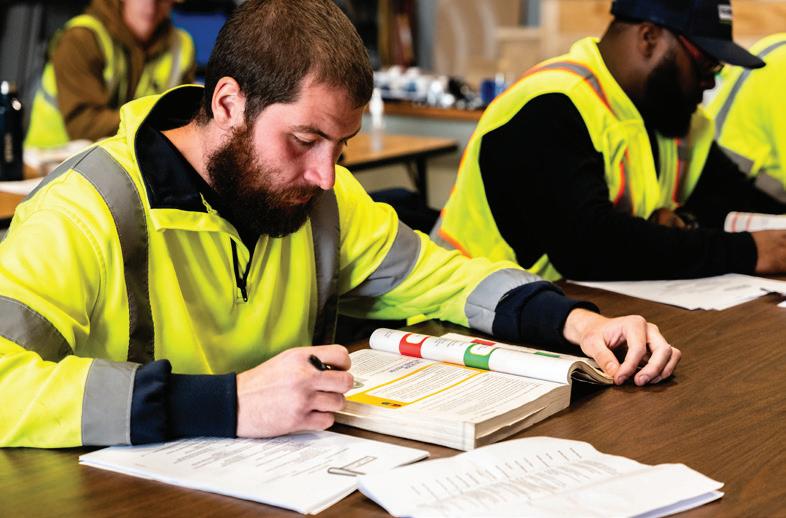
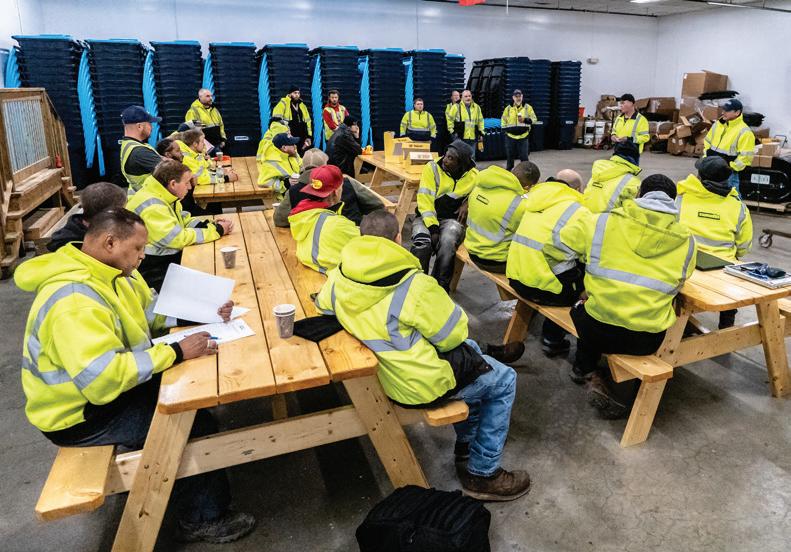
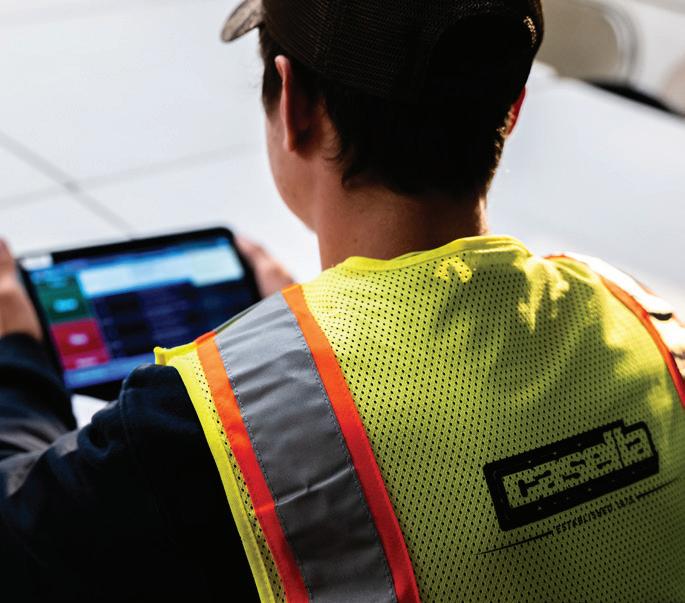
A INSIDE CASELLA’S HIGH SCHOOL RECRUITMENT PROGRAM
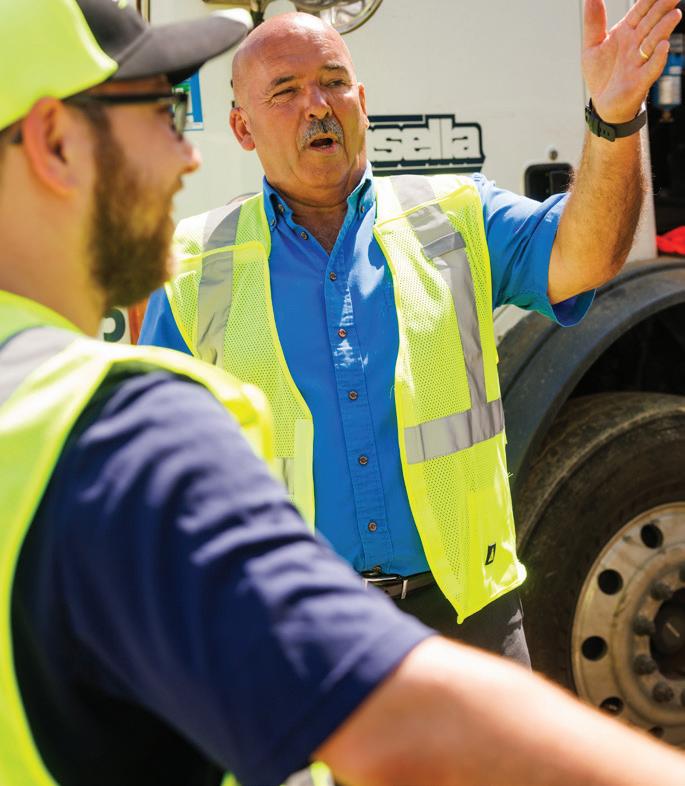
s workforce shortages continue to impact the trades industry, Casella has taken a proactive, hands-on approach to building its future talent pipeline. Through its high school recruitment program, the company is creating direct pathways for students to enter the workforce while also strengthening its ability to support long-term operational needs.
“When you analyze the trade industry today, you will find that, for every five people getting ready to retire, there are only two coming in to replace them,” explained Casella Talent Acquisition Partner Tony Volpone, the driving force behind the initiative. “The need for this type of program is significant.”
With that gap continuing to widen, Casella recognized it needed to get ahead of the issue by finding ways to connect with younger talent and build a more sustainable pathway that introduces students to meaningful careers.
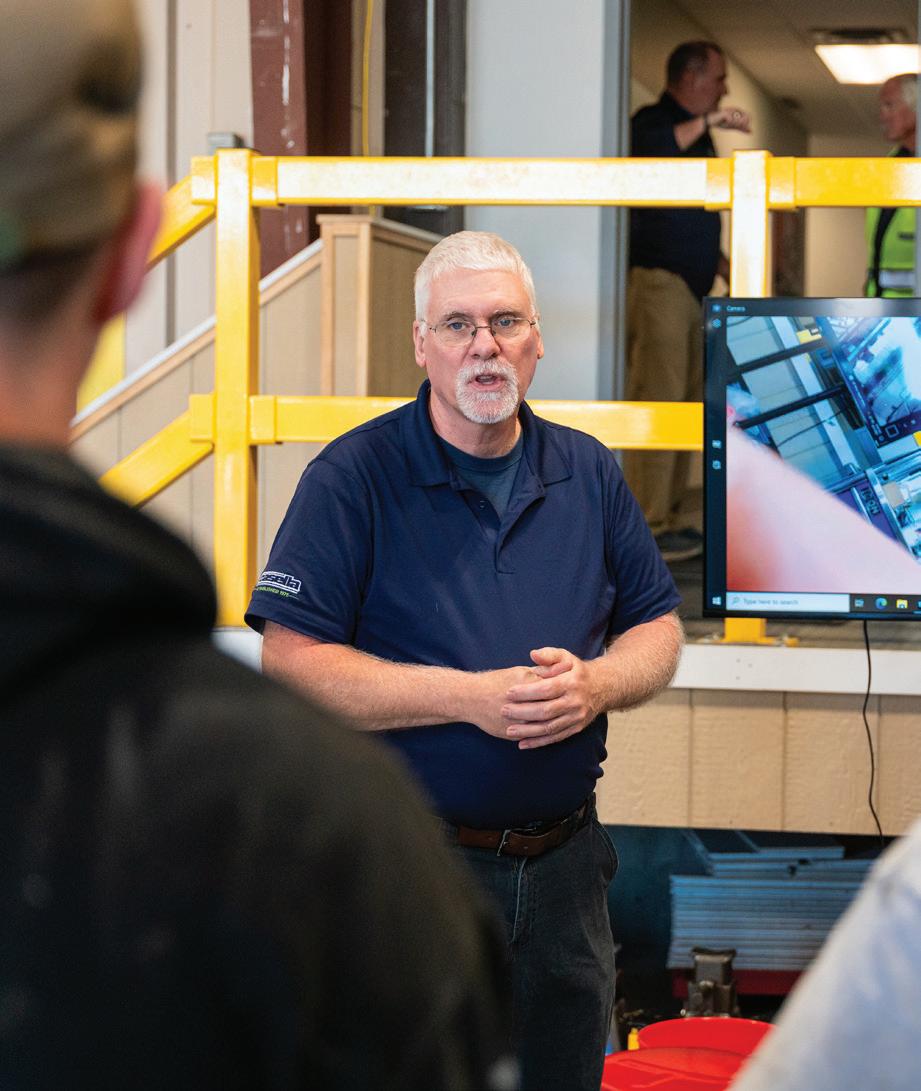
The program began with broad outreach. Volpone spent time visiting schools, introducing the company in classroom settings and during athletic practices, and being present at career fairs and other school events. The goal was not just visibility, but credibility.
“We were focused on getting the word out and building relationships,” said Volpone.
Within a year, that consistent presence began to shift the dynamic. Schools began inviting Casella in, requesting presentations, scheduling meetings with specific students, and even organizing field trips to Casella facilities.
“Today, we are proactively being asked to come to schools,” he explained. “School educators have acknowledged how this collaboration has opened more opportunities for many students. Not all high school students are meant for college due to finances or interest, and this gives them another pathway.”
That momentum has translated into real outcomes. Students are now approaching Casella as early as their junior year, already thinking about how to position themselves for a job.
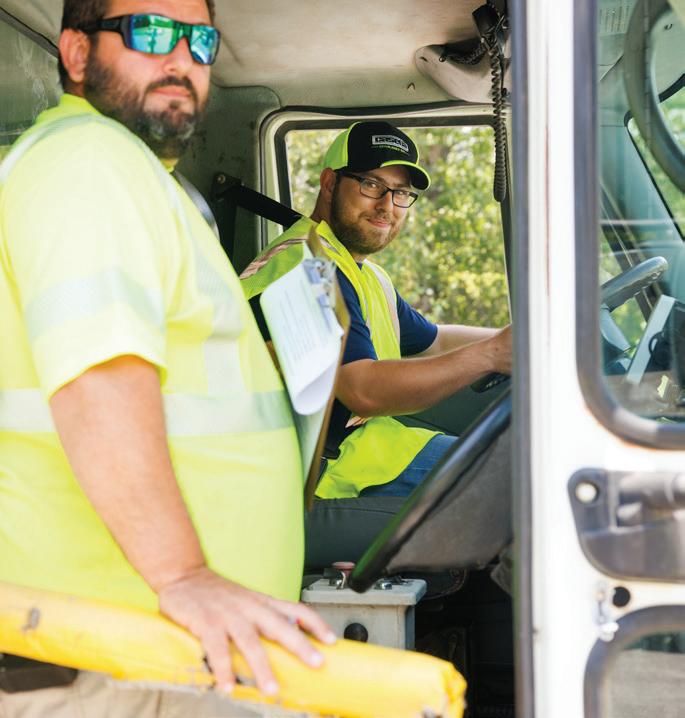
One of the program’s earliest success stories came from River Bend Career and Technical Center in Vermont, where student Alex Mattoon began working part time as a diesel mechanic while finishing high school.
“He impressed his manager enough to get promoted to full-time,” Volpone said, “And he’s now nearing his one-year anniversary.”
At its core, the program is about more than just hiring; it’s about building a strong foundation. Casella works closely with educators to identify students who demonstrate reliability, work ethic and strong character. As Volpone puts it, “We can always teach technical aptitude, but the hire must have the fundamental pieces.”
The program’s success has also enabled it to expand beyond its early roots in Vermont. It has since grown into New York and Maine, with managers across the company increasingly recognizing the value of investing in the next generation of workers. That growing support has played an important role in expanding the program’s reach and strengthening its long-term impact.
Looking ahead, Casella sees strong potential for continued growth. In the coming years, the goal is to begin seeing early hires advance within the company and to establish clearer career pathways for program participants.
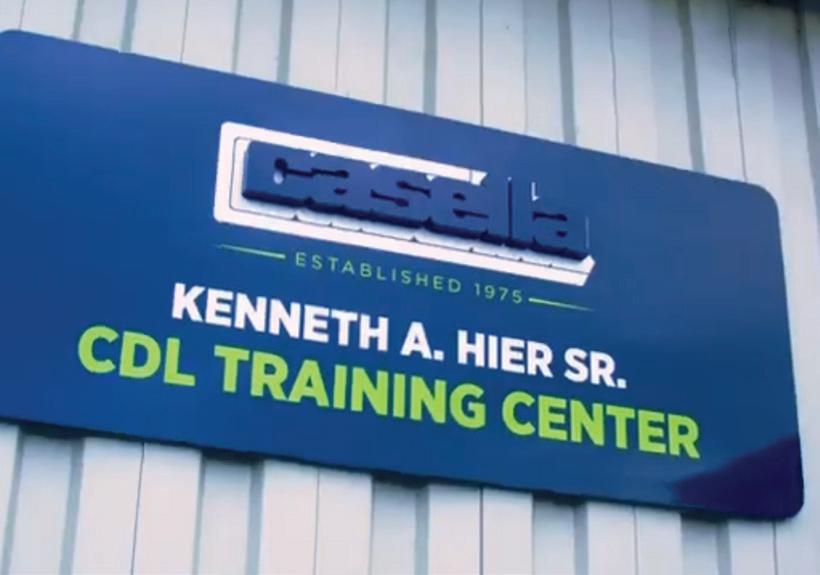
Casella is also working toward registering its CDL and Diesel training programs as federal apprenticeships, which would expand opportunities and further strengthen training across its operating regions. As the program continues to evolve, it represents a long-term investment not only in the workforce, but also in the communities Casella serves.
For Volpone, the program’s impact is also personal. Moments of connection, like when a student asks how they can join the company, are what make the work meaningful.
“You can see the focus and excitement in their eyes,” said Volpone. “That’s why we do this.” n
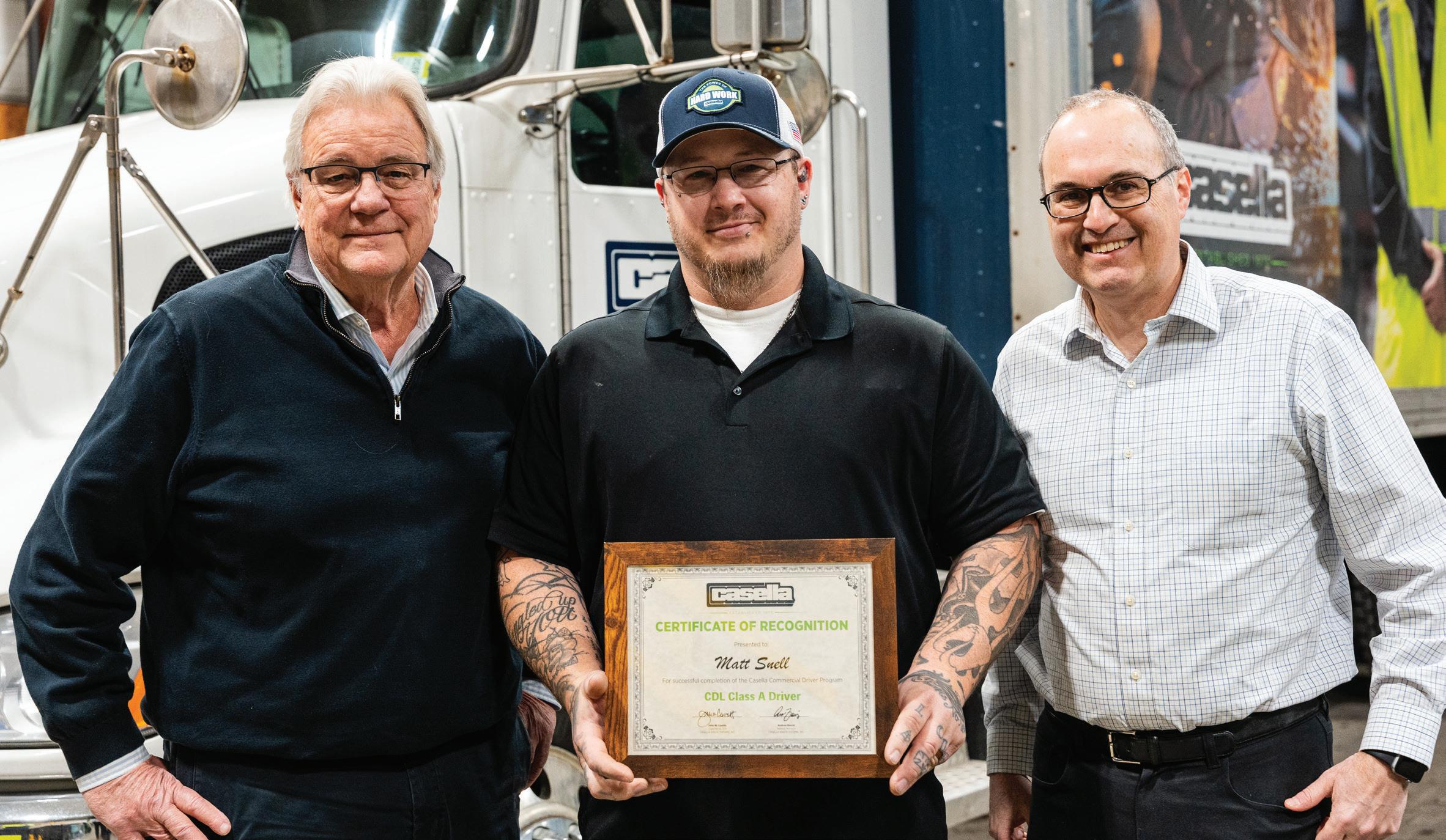
MATT SNELL, CASELLA’S 400TH CDL GRADUATE
W DRIVING GROWTH
ith two decades of CDL experience and more than a decade in the industry, Matt Snell joined Casella's Belmont, NH, hauling team over four years ago seeking opportunity and growth and found both.
As the 400th graduate of Casella’s CDL Training Program, he represents a milestone not only for himself but for the company’s commitment to investing in its people. Today, Snell serves as a swing driver, designated driver trainer and member of his regional safety committee, embodying the pride, leadership and camaraderie that define Casella.
How did you first get started in the industry?
One day, I watched a garbage truck service a local stop and thought, “I can do that.” That moment set me on the path that has led me here.
What makes your experience at Casella stand out compared to other jobs you’ve had?
In past jobs, it felt like just work. You clock in, do your job and leave. At Casella, there’s a real sense of pride in what we do. The company still feels small and people oriented but with the strength and resources of a larger business. That balance makes a huge difference.
How would you describe the impact of your team and local leadership on your career?
I have a great team and an amazing local leadership group. Anything you need gets done. That builds a lot of respect. The environment here is supportive, and it’s helped me grow.
What keeps you motivated in your role today?
I never expected to have these types of opportunities, to learn, grow and advance. From
training new drivers to serving as a safety committee member, it’s been rewarding. I feel like a natural leader. I do something different every day, and I love that. Casella continues to open doors for me, and that’s what keeps me here.
What inspired you to pursue your Class A license through Casella’s CDL Training Program?
I’ve had my CDL for 20 years, but I knew I wanted to take the next step. When the opportunity came up, I immediately took it. Even as a seasoned driver, I learned new things. You never master everything; there’s always more to build your skills.
What was your experience like in the CDL Training Program?
The instructors, Drew and Bill, are extremely knowledgeable. They make it stress free, no pressure, and spend as much or as little time with you as needed. Drivers from across the footprint come together, and there’s a real sense of camaraderie. It brings everyone together.
How does it feel to be Casella’s 400th CDL graduate?
It’s an impressive milestone. That’s a lot of people, and I feel honored to be part of it. It feels like an accomplishment for all of us, not just me.
What advice would you give to others considering the program?
If you have the opportunity to better yourself and your career, you’d be foolish not to take it. Casella invests in its people, and that comes full circle. This is a career, not just a job. I’d encourage everyone to explore the program. n
TECHNOLOGY FUELS TRUCKING
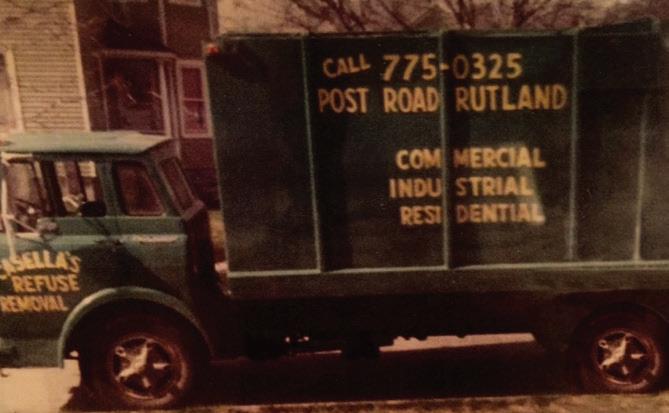
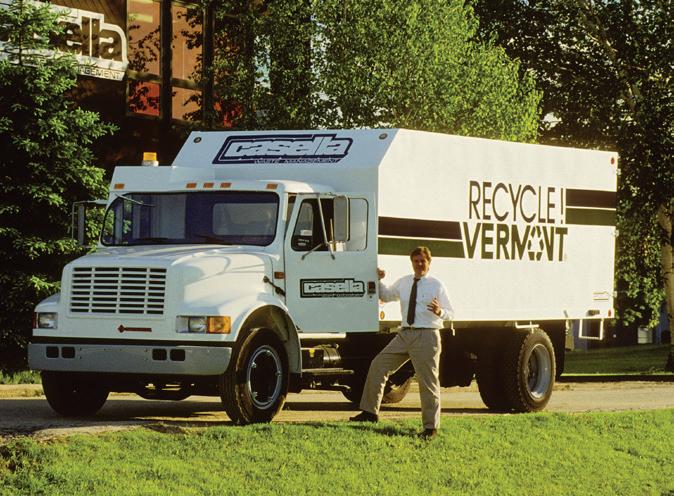
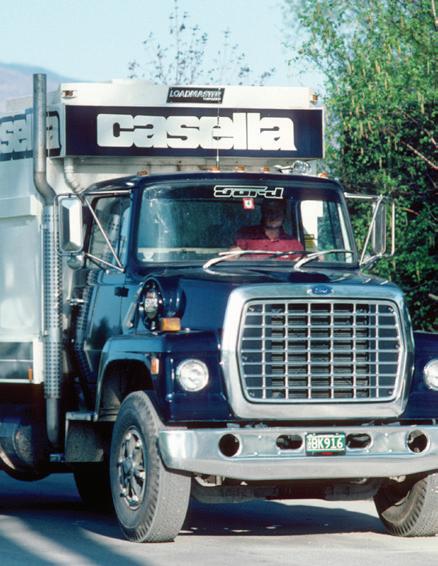
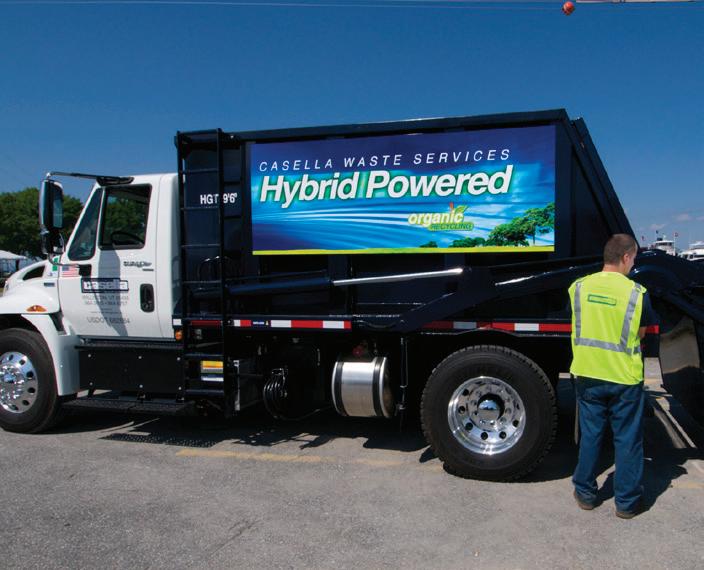
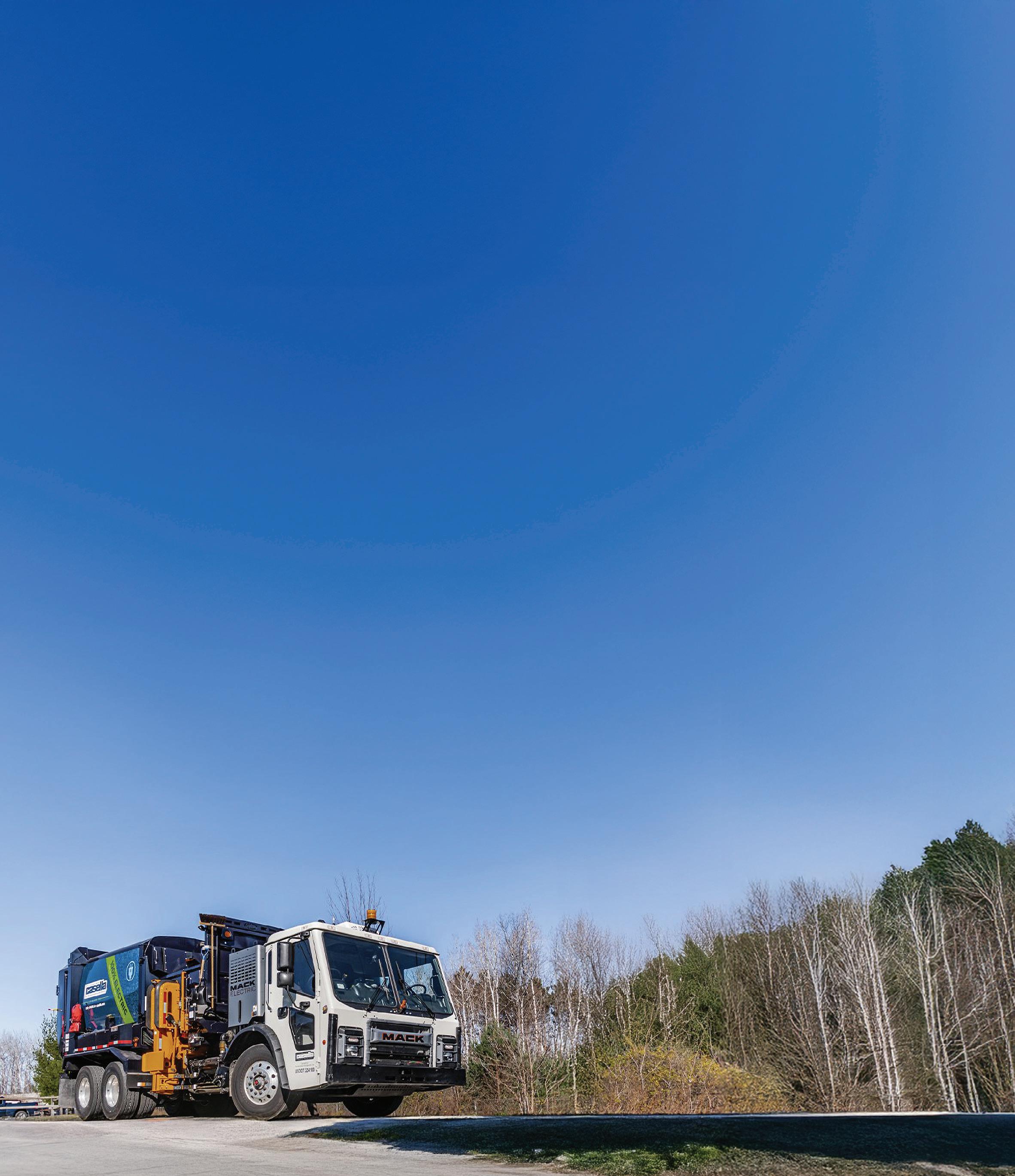
From the first pickup truck to the latest in automation and clean energy, Casella’s fleet has evolved to make serving their customers and communities more efficient, safer and cleaner.
The earliest trucks were big on utility and ensured that, through a combination of hard physical labor and multiple trucks, the waste and recycling was picked up from homes and businesses. Early technology equipped trucks with hydraulic hoppers and on-board compactors, marking the first steps toward more efficient collection, cutting down on trips to the landfill and improving urban cleanliness.
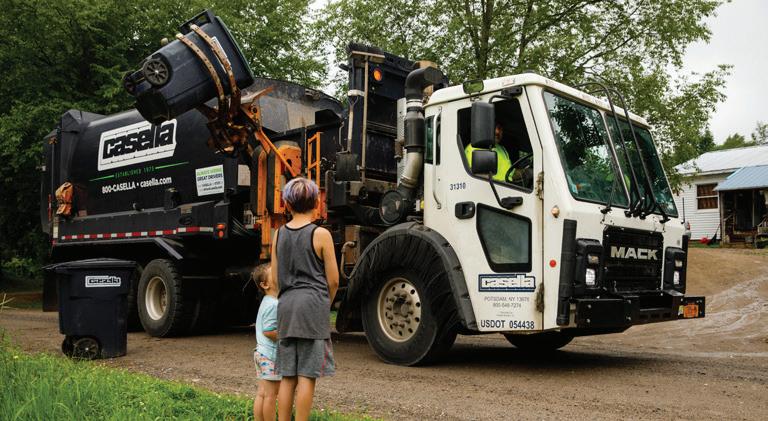
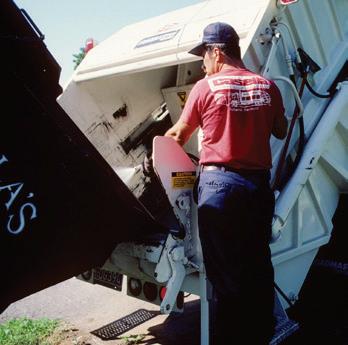
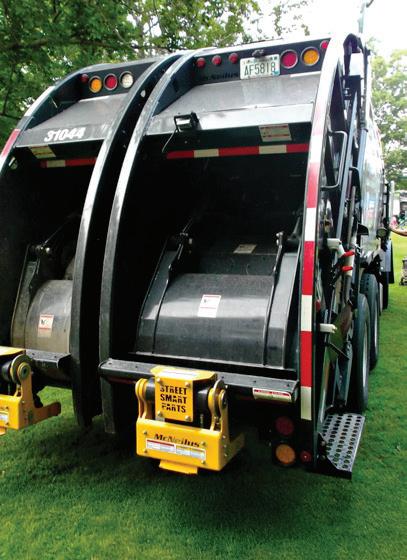
The demand for speed and safety continued to grow, and front-loading trucks became the norm for commercial routes, lifting massive dumpsters with mechanical arms. This innovation slashed collection times and minimized worker injuries. Soon after, automated side-loaders appeared, allowing operators to stay inside the cab while robotic arms handled the bins — a game-changer for safety and efficiency. In addition to automation, dualcollection trucks have allowed for a reduction in the number of trucks on the roads providing service.
The next wave of technology aimed at protecting workers and the public with backup cameras, emergency braking systems and improved visibility features that helped reduce accidents. Fleet managers embraced telematics and route optimization software, cutting fuel costs and emissions while ensuring timely pickups.
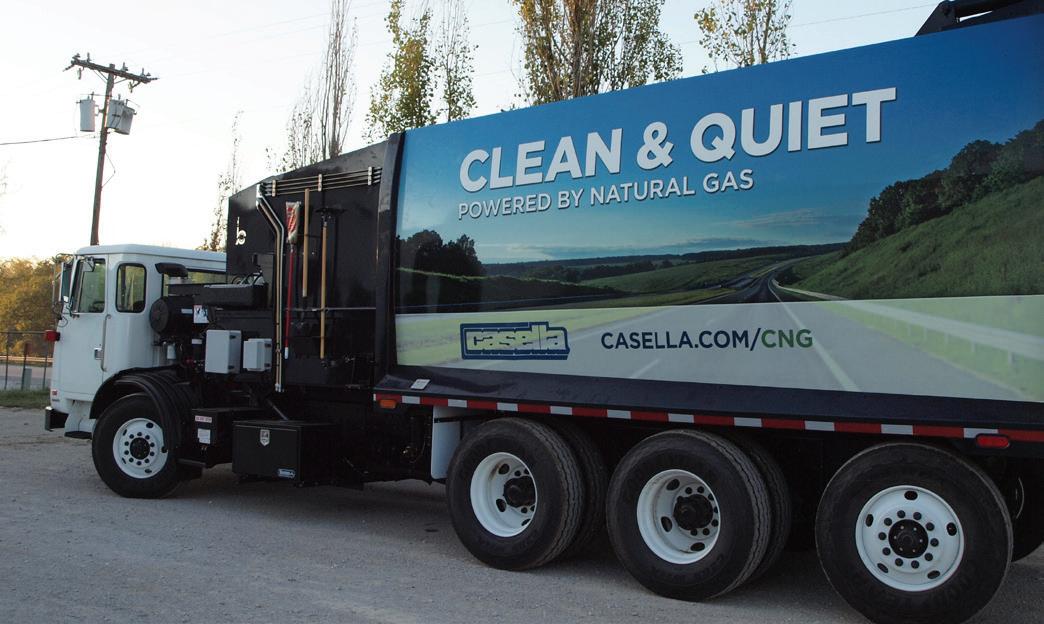
Today, sustainability drives the technology forward. Garbage trucks powered by compressed natural gas (CNG), biomethane and electricity are replacing diesel fleets, reducing greenhouse gas emissions and noise pollution. Smart sensors and AI-assisted routing now help to minimize unnecessary stops, while advanced collision mitigation systems keep communities safer than ever.
From hydraulic compactors to electric drivetrains, the garbage truck has evolved into a high-tech cornerstone of modern sanitation — quietly shaping cleaner, safer and greener communities. n
Learn