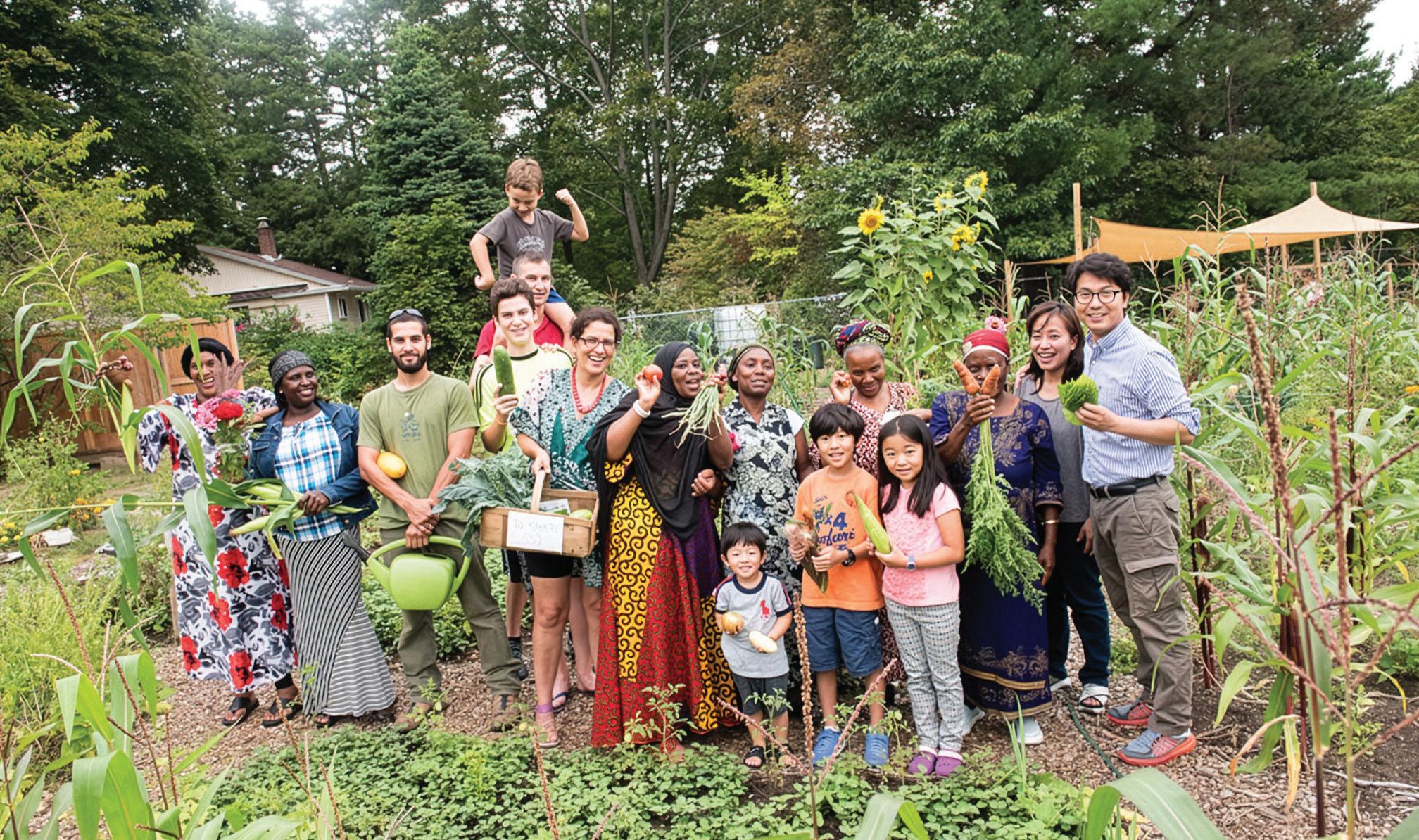
A diverse workforce supports seniors
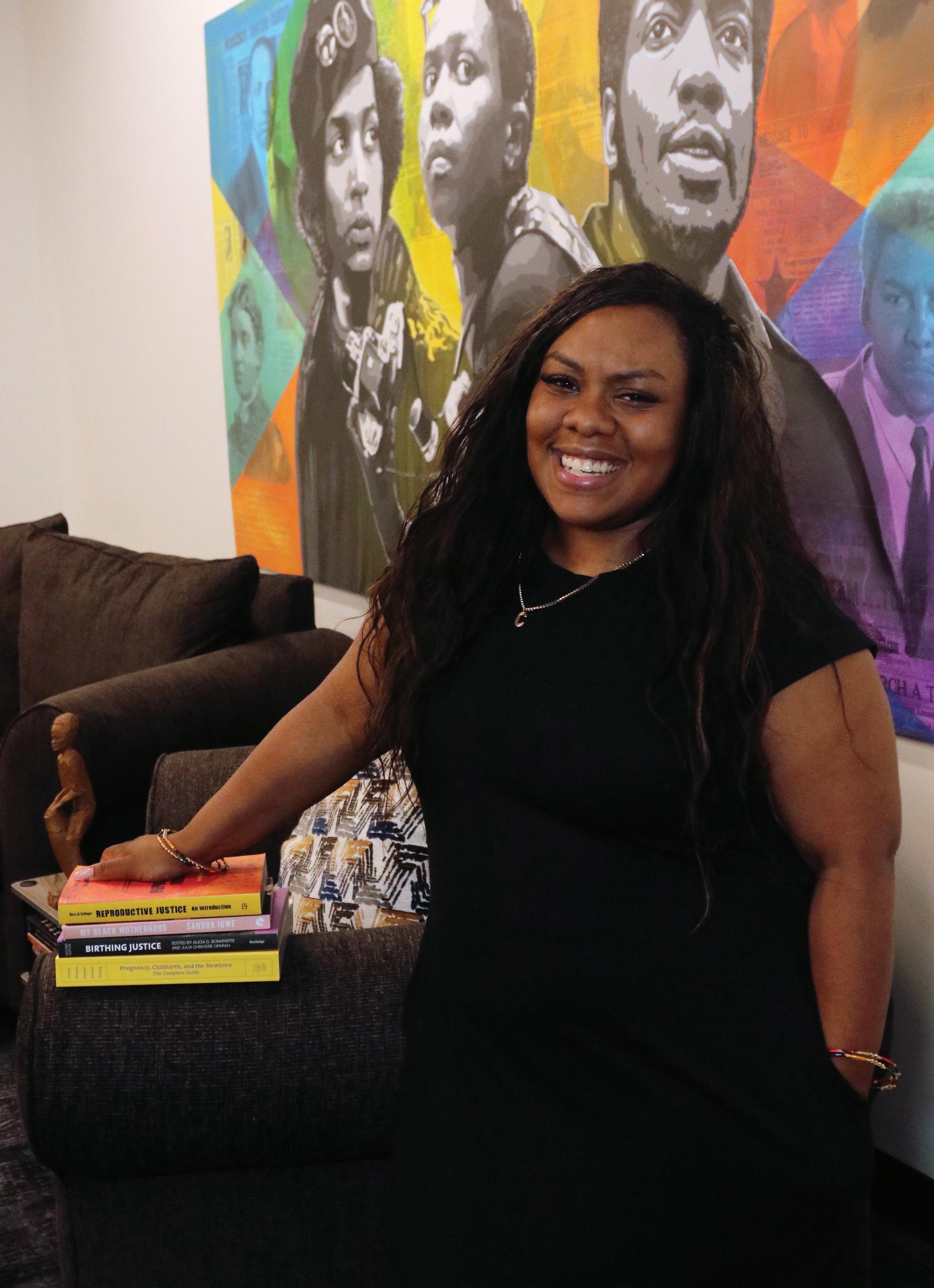
Camilla Thompson, Black Lives Matter
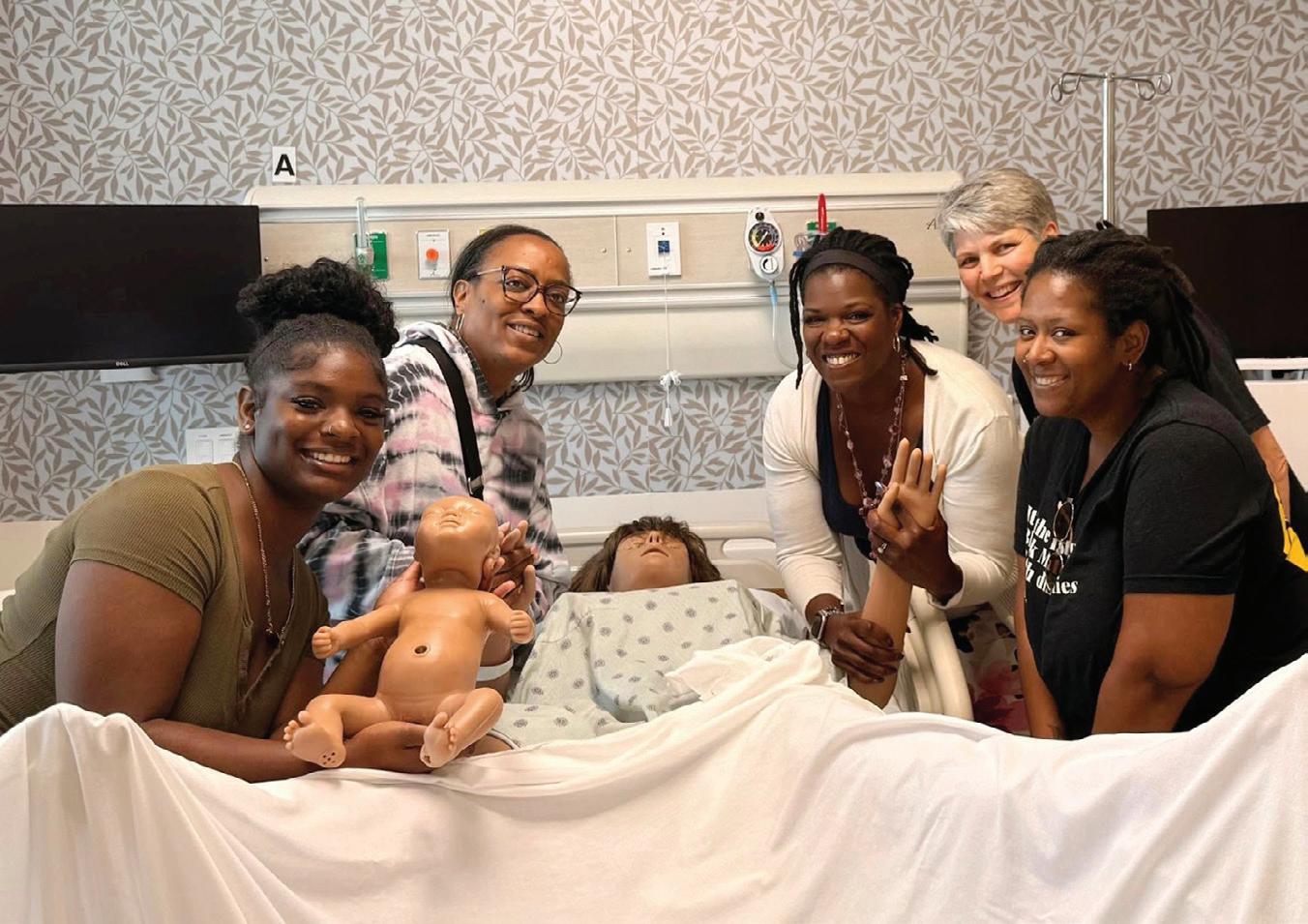
NH maternal health director, organized a doula certification course to help improve health outcomes for Black families.
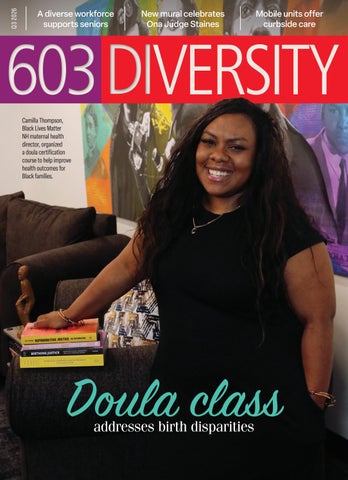
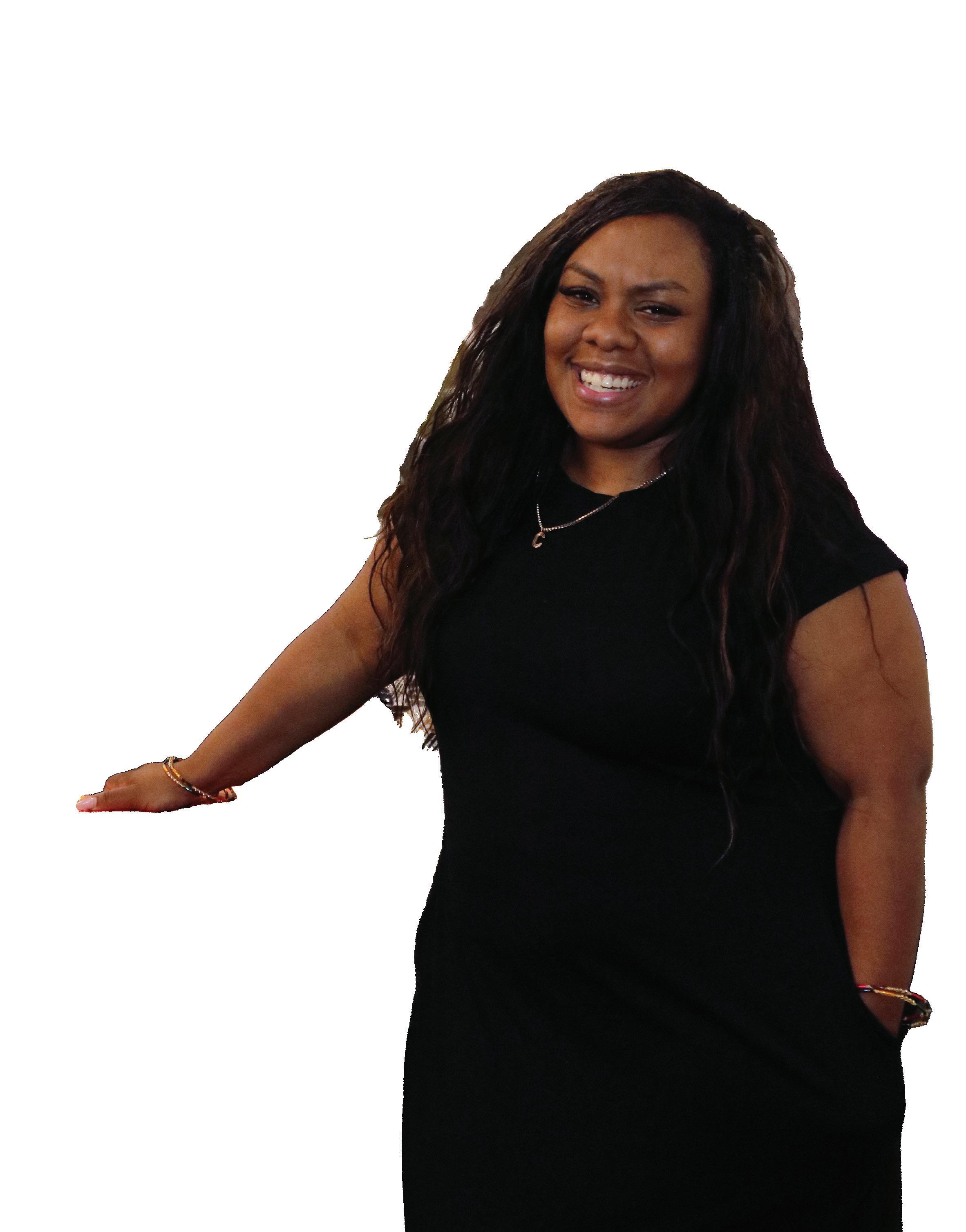
Camilla Thompson, Black Lives Matter
NH maternal health director, organized a doula certification course to help improve health outcomes for Black families.

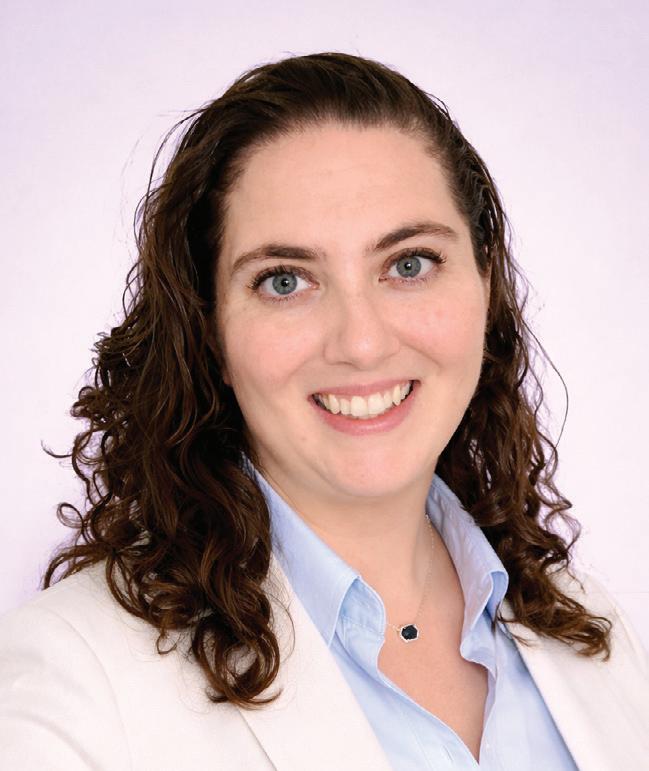
Sarah Pearson
As I sit down to write this, we’ve wrapped up a month celebrating Pride and commemorating Juneteenth, and now across the country, communities are gearing up to recognize the 250th anniversary of the drafting of the Declaration of Independence.
That preamble famously states: “We hold these truths to be selfevident, that all men are created equal, that they are endowed by their Creator with certain unalienable Rights, that among these are Life, Liberty and the pursuit of Happiness.”
That statement was not a reality for all in America then, nor has it been equally realized for everyone today. Yet, it remains an ideal worth striving toward.
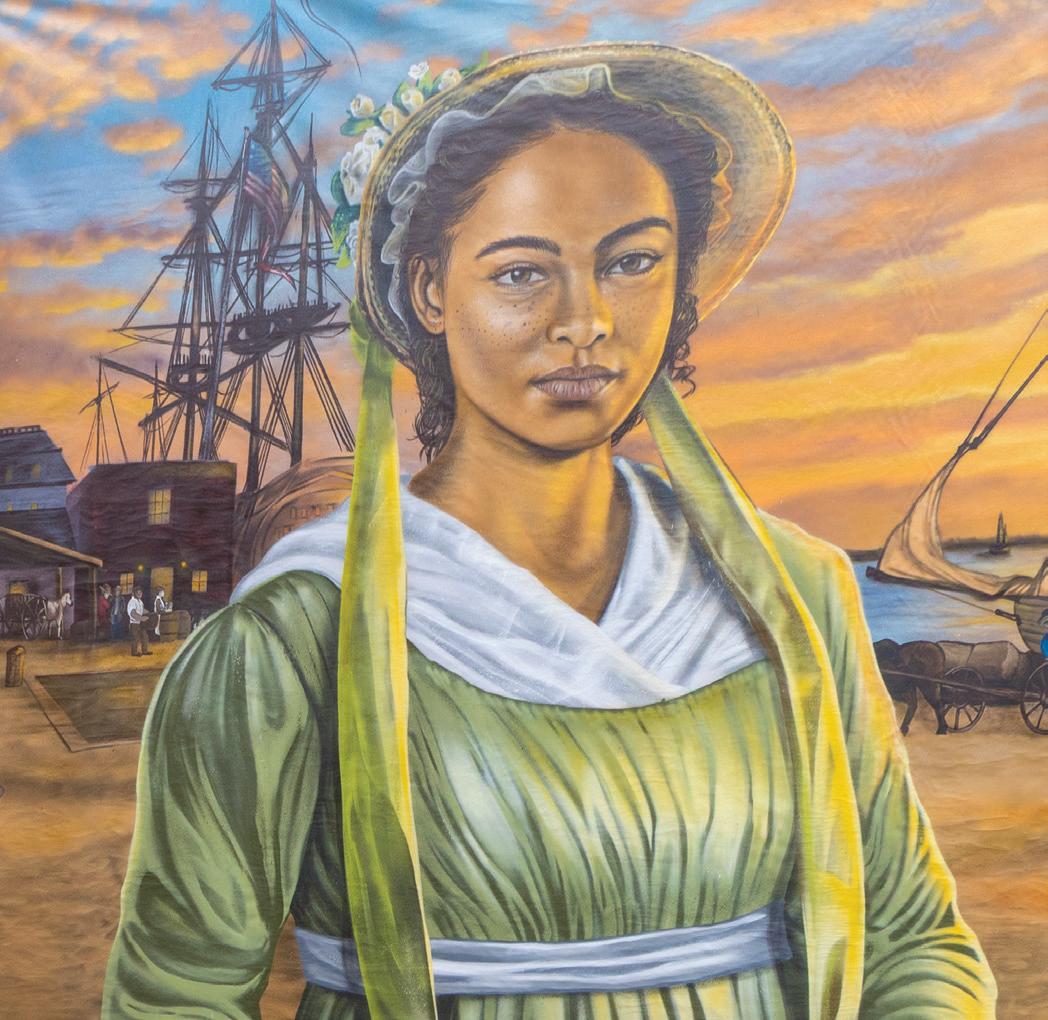
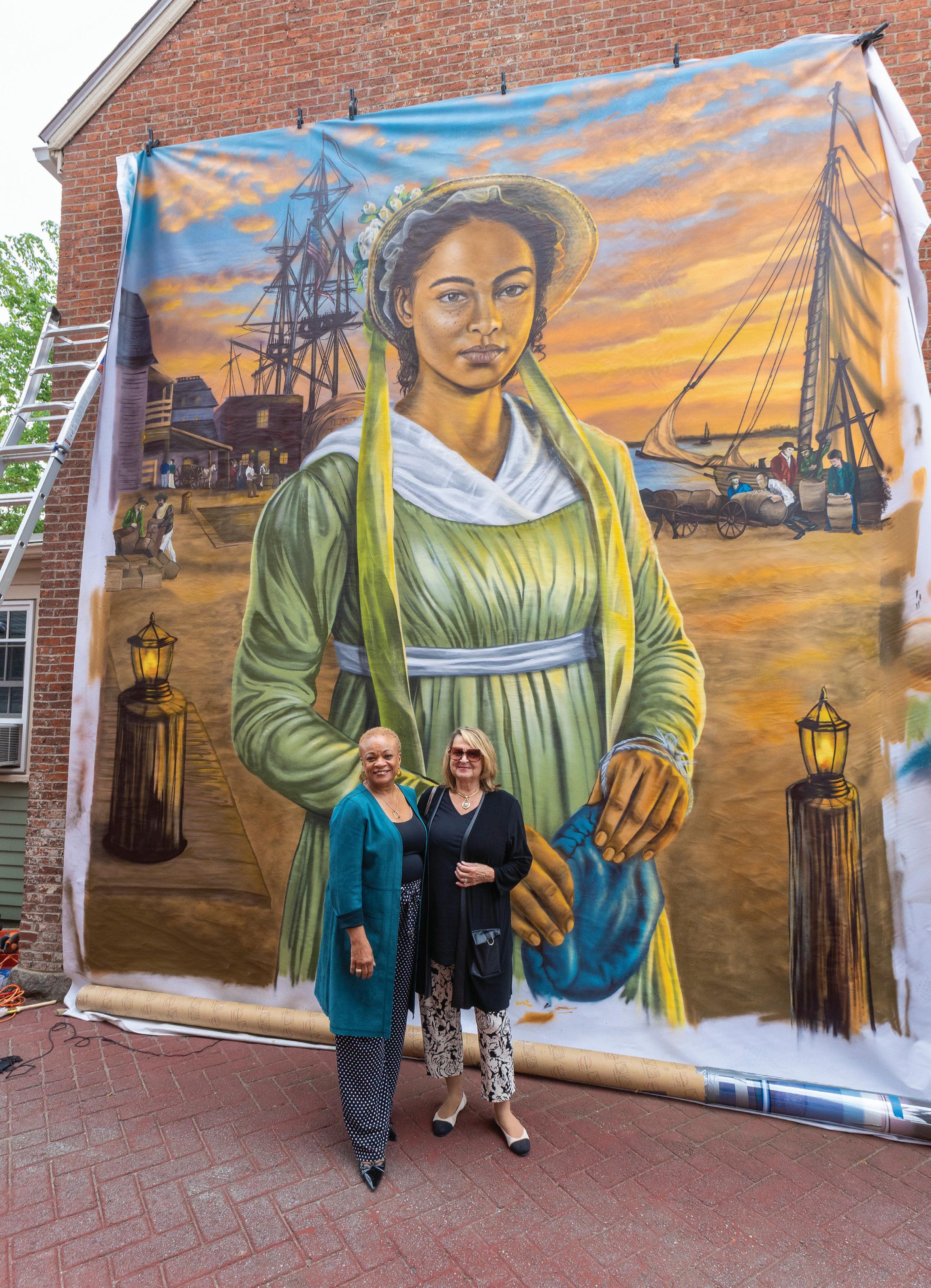
Ona Judge was among those for whom equality and liberty were not gained solely through the winning of the Revolution or the passage of the Constitution. Instead, she escaped enslavement by George Washington and found her way to freedom in New Hampshire. Her courage in daring to defy arguably the most powerful man in the new United States was memorialized this year in a Portsmouth mural at the Black Heritage Trail of NH by Manuel Ramirez, co-founder of Positive Street Art.
Judge's escape was one step in a much longer struggle for freedom. It would be nearly another 70 years before enslaved people in Galveston, Texas, would hear of emancipation and the end of the Civil War. And still, more work is needed to address barriers to life, liberty and happiness that hold back Black Americans and other marginalized communities.
Black individuals giving birth in the United States face significantly higher rates of pregnancy complications, maternal mortality and dismissive treatment in health care settings, even when studies control for educational attainment and socioeconomic factors. Black Lives Matter NH is addressing these disparities through a doula training program that includes culturally competent care and by providing toolkits to help families make more informed decisions about their bodies and health care.
Health research on Black patients and other populations of color lags
behind that of white patients because of bias in research design and historical mistrust after unethical medical research on marginalized communities. The American Cancer Society hopes to address these concerns in its ongoing national study of Black women by having a research leadership team comprised of Black and brown scientists.
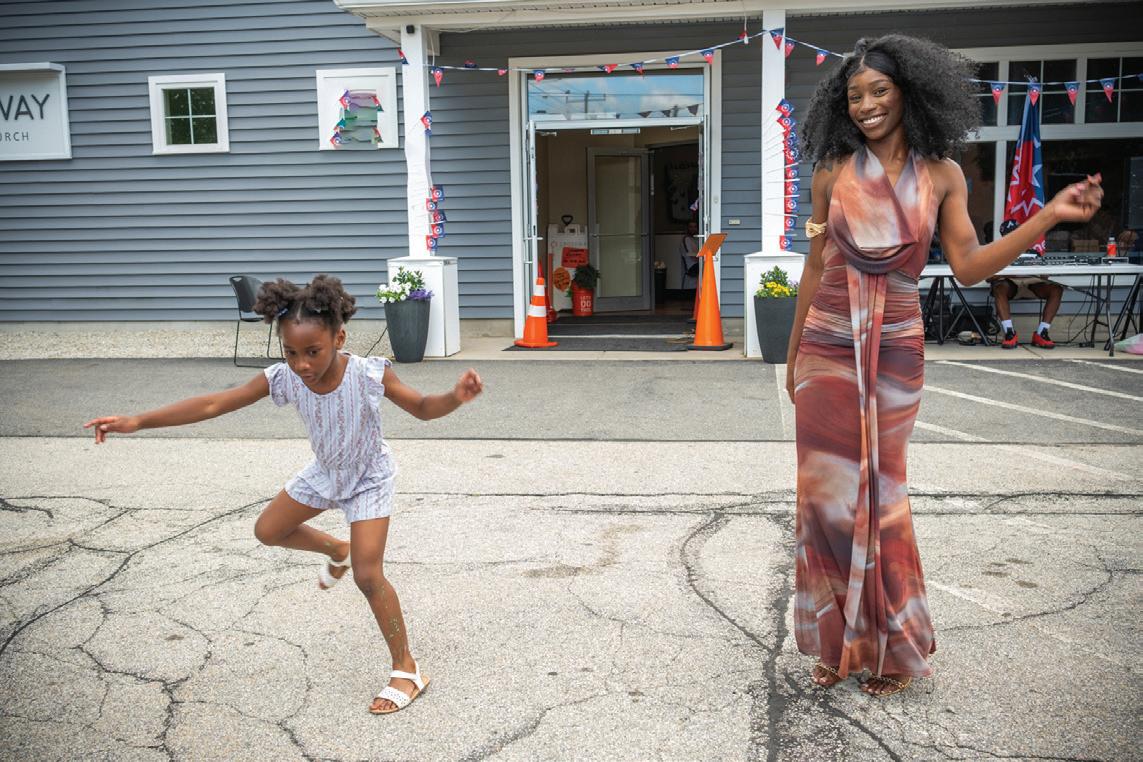
To bring care to people who need it most, mobile health care teams and personal care providers connect with disabled, older adults and others facing transportation barriers in their homes and neighborhoods. As demand for this type of work grows, these roles are increasingly being filled by immigrant workers. Newcomers and native-born Granite Staters alike strive to pursue their happiness. The Pozios family immigrated to Manchester from Greece and is now operating Chelby’s restaurant while sharing their cultural cuisine. Hashira Rodriguez has made a career with the Boys & Girls Clubs that encouraged her to dream big as a tween.
While the Declaration says our rights are self-evident and unalienable, our past and present show that this pursuit of life, liberty and happiness is never finished. It is advanced by people willing to make sacrifices, take risks, build community, seize opportunities and remove barriers — not just for themselves but for all those who come after them. 603


Contributing Photographers
Allegra Boverman Dan Comly
Robert Ortiz
CEO/President
Ernesto Burden x5117 ernestob@yankeepub.com
Editor, Custom Publishing Sarah Pearson x5128 sarahekp@yankeepub.com
Managing Editor Mike Cote x5141 editors@603diversity.com
Creative Director/Associate Publisher Jodie Hall x5122 jodieh@yankeepub.com
Graphic Designer Christian Seyster x5126 christians@yankeepub.com
Senior Production Artist Nicole Huot x5116 nicoleh@yankeepub.com
Sales Executive John Ryan x5120 johnr@yankeepub.com
Director of Sales, Operations & Events Ren Chase x5114 renc@yankeepub.com
Information Manager Gail Bleakley x113 gailb@yankeepub.com
(603) 624-1442
editors@603diversity.com
sales@603diversity.com
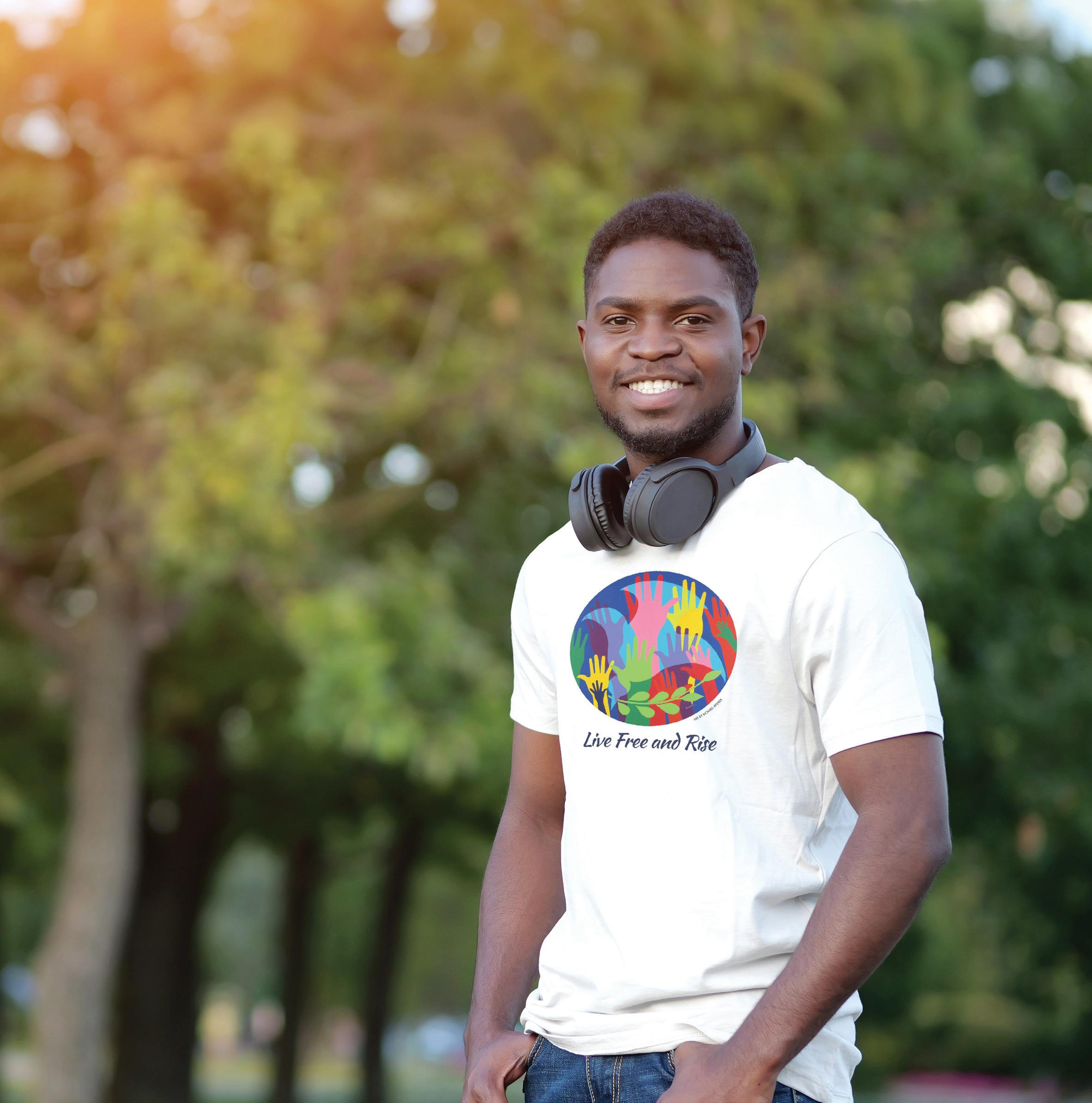
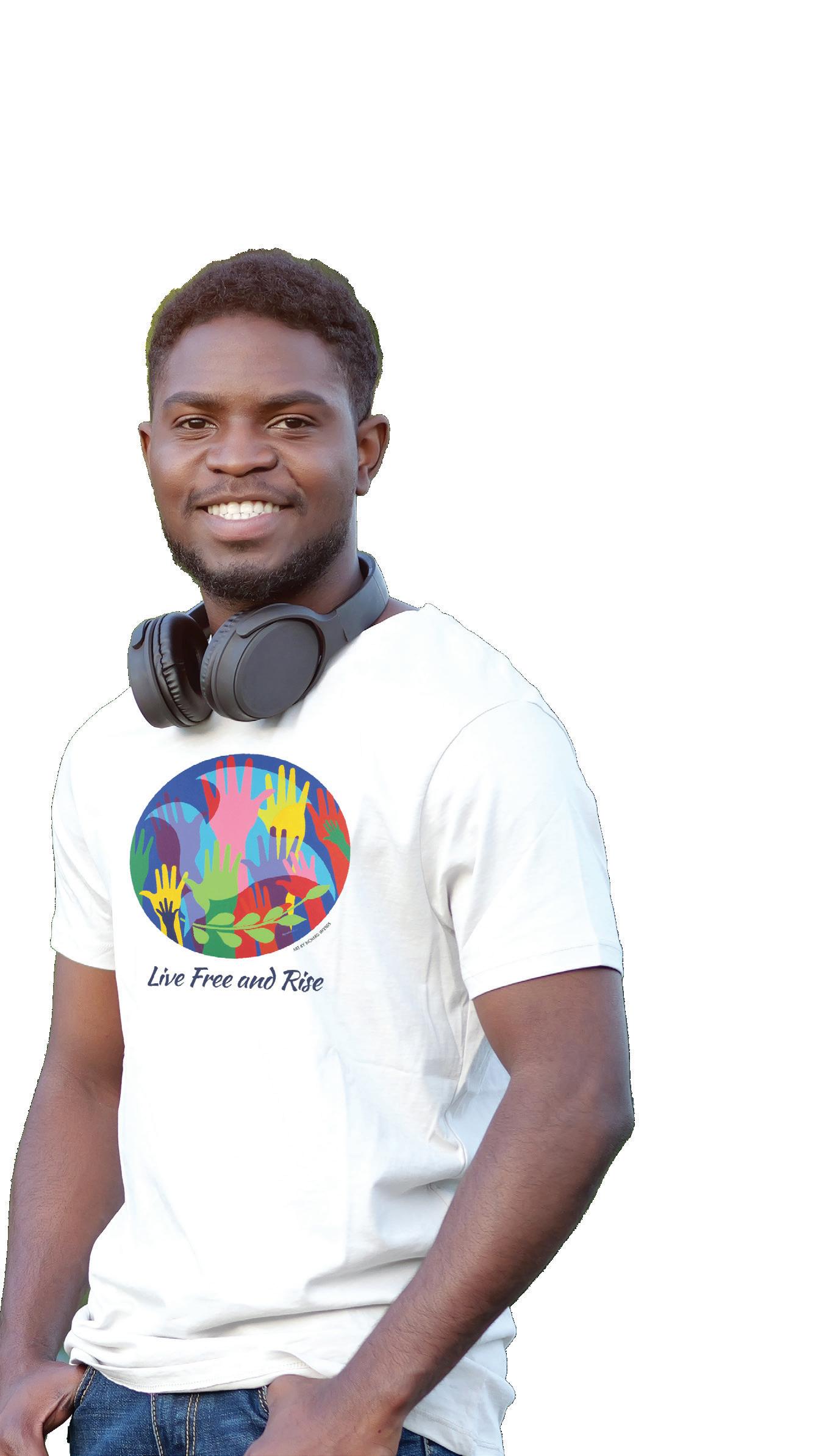
To illustrate the mission of 603 Diversity, Seacoast artist Richard Haynes has provided one of his recent designs to accompany our motto “Live Free and Rise.” We are selling T-shirts and other merchandise featuring Haynes’ design, or a design created by art student Chloe Paradis, to benefit the Manchester Chapter of the NAACP.
Visit 603Diversity.com to buy one today.



The 603 Diversity underwriters provide a significant financial foundation for our mission, enabling us to provide representation to diverse communities and for diverse writers and photographers, ensuring the quality of journalistic storytelling and underwriting BIPOC-owned and other diverse business advertising in the publication at a fraction of the typical cost. We’re grateful for our underwriters’ commitment to diversity, equity and inclusion in this magazine, their businesses and their communities. THANKS TO THE UNDERWRITER OF THIS




we do. We help you and our community grow, celebrating milestones big and small and

Rates up to 4x the national average*
$603 average savings per household per year vs big banks**
Proudly serving NH since 1921

EVERYTHING YOU NEED
Checking & Savings Auto & Personal Loans
Mortgages Credit Cards
Business Banking & Services24/7 Digital Banking
Visit us in Manchester · Nashua · Bedford · Pelham


*As of June 15, 2026, the FDIC National Deposit Rate for savings accounts shows a national average APY of 0.38%. Results may vary. Our Emergency Savings account’s APY of 1.75% is 4x higher than the national average. $5.00 minimum to open a savings account. Balance earns a premium rate from the first penny deposited, equal to the highest tier on our money market savings accounts, on full balance up to $500. Any amount above that limit earns our standard savings rate of 0.01% APY. Fees may reduce earnings. Rates are subject to change. **Savings amount of $603 per Bellwether member household per year compared to banking institutions is an estimation calculated by America’s Credit Unions for a Member Benefits Report. Assumes 2.1 credit union members per household.

Everyone deserves to
find their
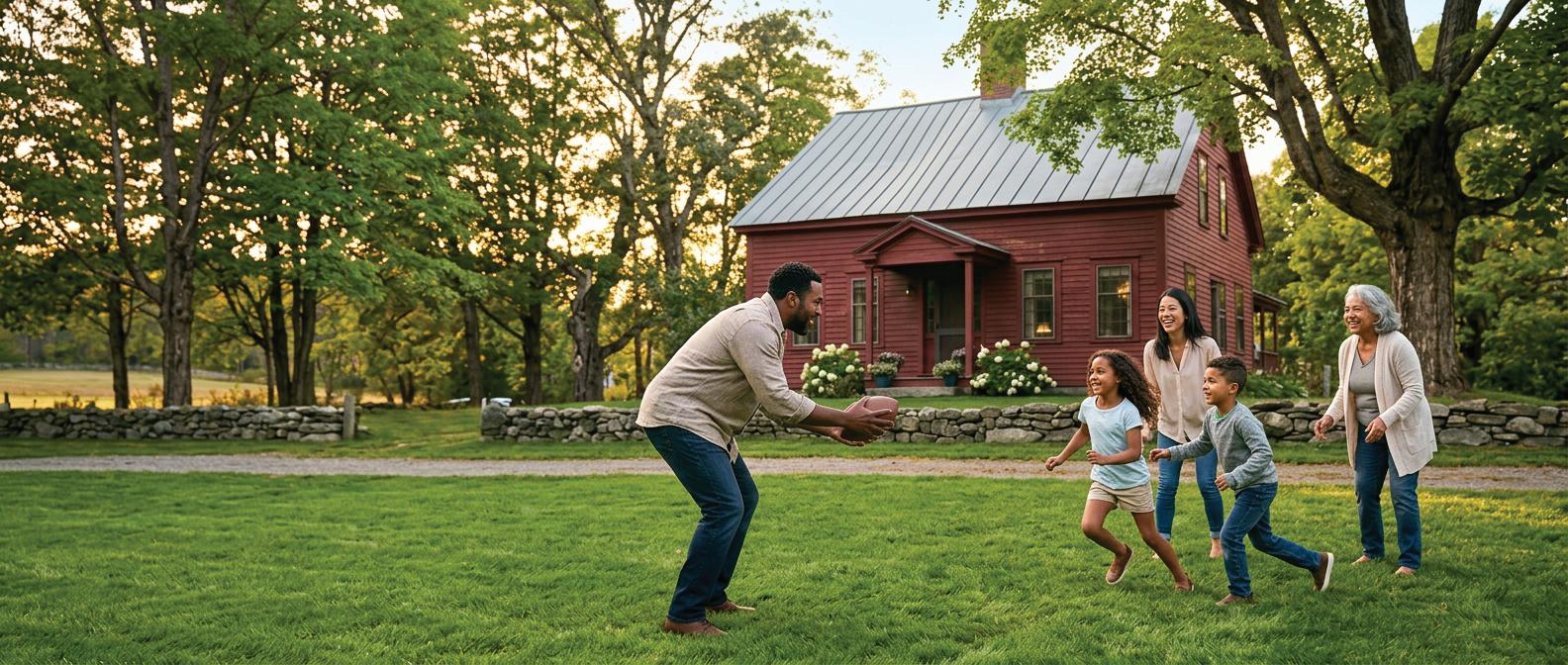
perfect place to call home, a space where they feel safe, seen, and
celebrated.
We understand that for our LGBTQ+ community, this search can sometimes come with unique considerations. That’s why we’ve built our business on a foundation of genuine care, unwavering support, and a deep commitment to our community. More than just a real estate team, we actively support local LGBTQ+ organizations, because we believe in investing in the wellbeing and vibrancy of our community. We see you, we value you, we’re one of you, and we’re here to help you navigate the real estate journey with confidence and peace of mind.
“I believe real estate is about more than just transactions— it’s about partnering with clients through major life transitions.
Whether you’re purchasing your first home, moving your family, or embracing a new chapter, I recognize the deep, multigenerational significance of this process. My promise is to treat this work as sacred and personal, focusing relentlessly on minimizing your stress and clearing the path to your goals. Ready to start your journey? Let’s navigate it together.”
Michael Jewer Real Estate Advisor & Lead Agent michael.jewer@compass.com 978-983-1580
Raised in a diverse community in Boston, Massachusetts, Suzanne Laurent worked as a registered nurse for the Boston Head Start Program. She moved to Toronto, Ontario, in 1982, and unable to work as a nurse, Laurent pursued a career in photojournalism. She has been a resident of New Hampshire since 1987. She has an extensive award-winning background in journalism. She is also a juried photography member of the New Hampshire Art Association and a published poet.
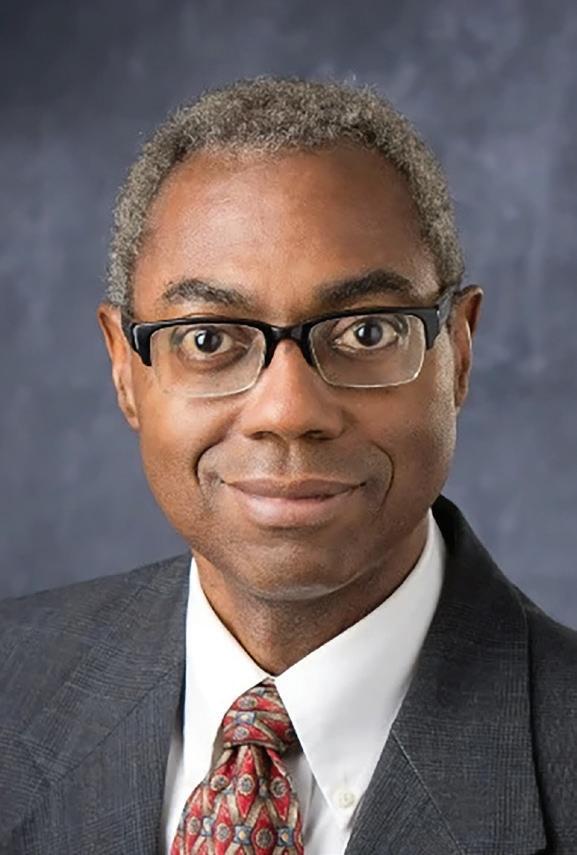
Dr. Wildolfo Arvelo is president of Thrive Collective, consulting on nonprofit leadership and management, property development, board development and fundraising. Prior to that, Arvelo served as executive director of Cross Roads House and director of the Division of Economic Development for New Hampshire. From 2007-2017, he served as president of Great Bay Community College in Portsmouth. Arvelo has a doctorate in educational leadership from the University of Massachusetts/Boston.
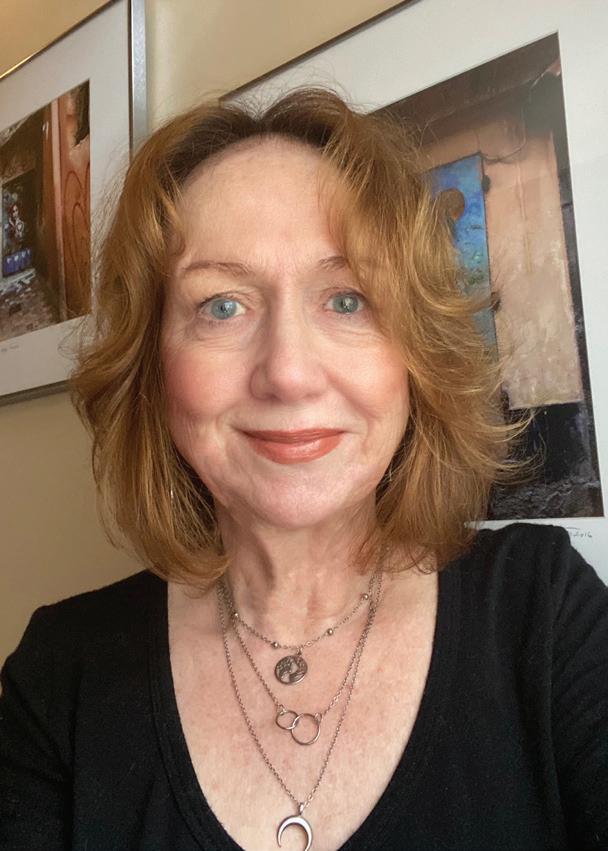
James McKim, who was involved in the original planning of 603 Diversity and has written essays for past issues, serves as managing partner of Organizational Ignition. He is driven by an intense need to help organizations achieve their peak performance through the alignment of people, business processes and technology. He is recognized as a thought leader in organizational performance, the uses of neuroscience and program management.
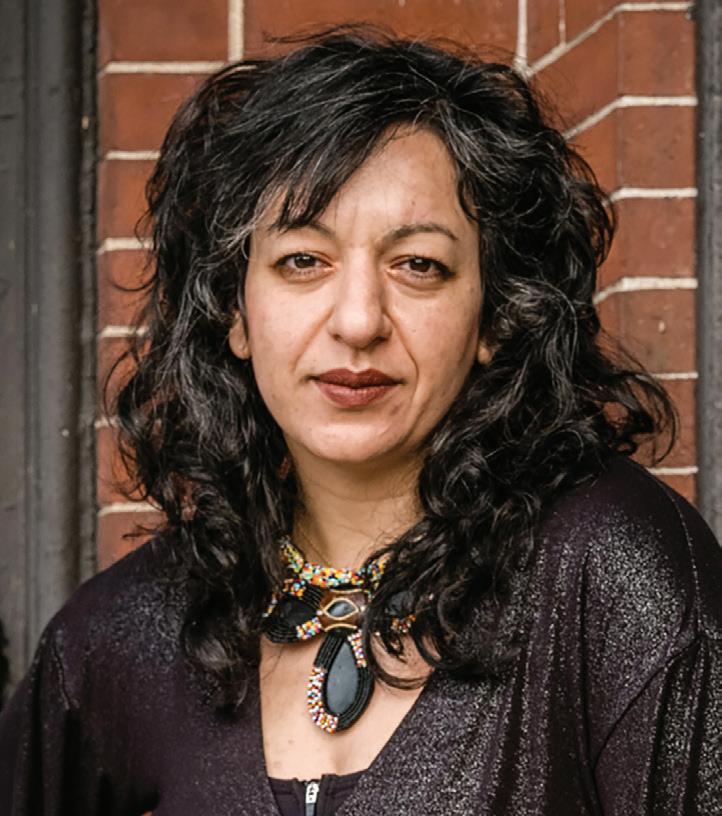
Advocate, coordinator and educator Yasamin Safarzadeh, a native Angelino and current resident of Manchester, compiled our calendar. Safarzadeh hopes to secure a future for a more diverse young adult population in New Hampshire to ensure a more prosperous and effective future for all. DM her at phat_riot on Instagram.
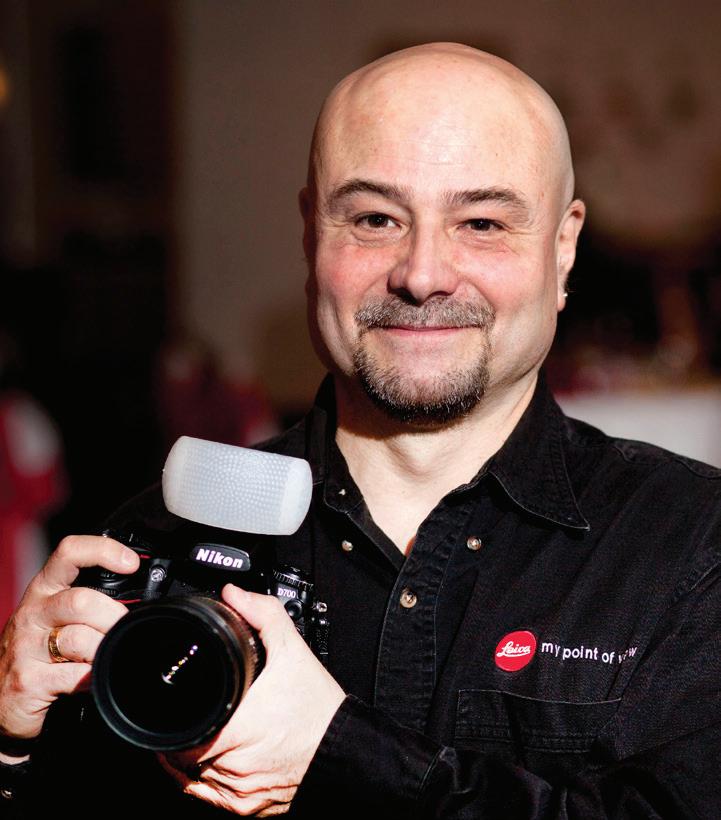
Primary photographer for 603 Diversity is Robert Ortiz of Robert Ortiz Photography. Ortiz began his photographic career at 15, and has chronicled everything from local weddings and events to the lives of the native peoples of the Peruvian Amazon. He lives in Rochester with his wife and children.
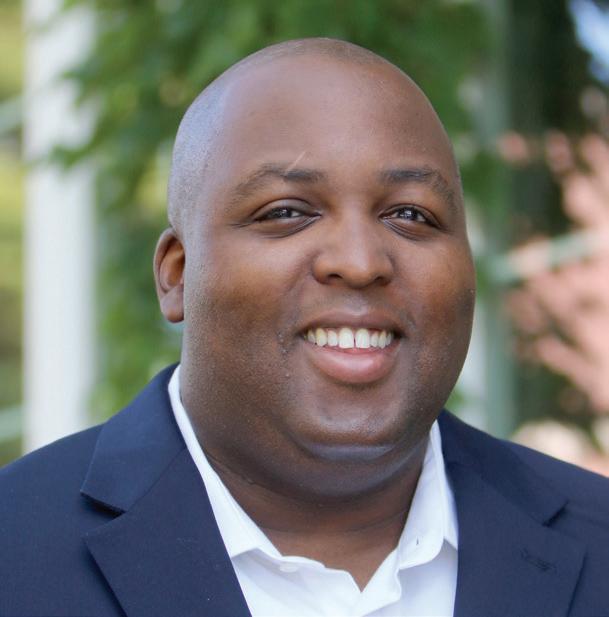
Freelance photographer Dan Comly began taking pictures as a teen. He studied photojournalism at Boston University, graduating in 1978. While his career detoured to technical writing, photography remained a dormant passion. Now living in southern New Hampshire, Dan has returned to photography as his second career, specializing in documenting events with a photojournalist’s eye.
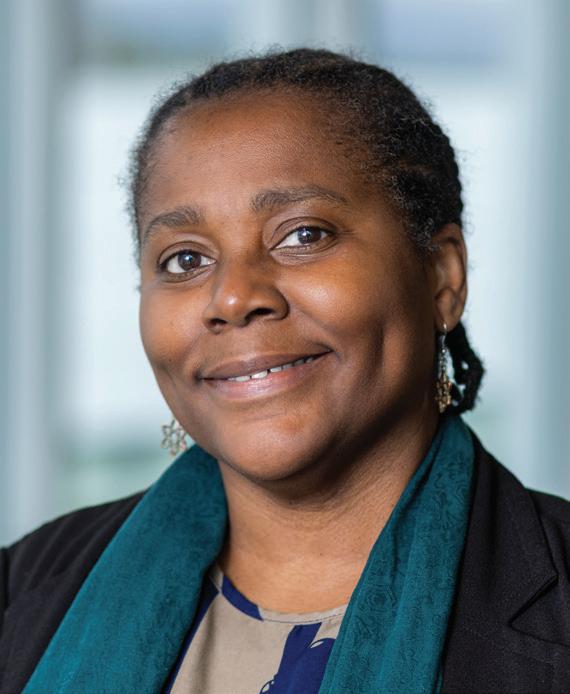
A regular 603 Diversity contributor, Rony Camille is a freelance journalist and a native of Canada. He became a U.S. citizen in 2019 after being a U.S. permanent resident for nearly 25 years. Camille is currently the media program director for the Town of Tyngsborough, Massachusetts.
Dr. Asojò is a structural biologist and crystallographer whose multidisciplinary interests include structure-based therapeutic discovery for cancer and infectious disease and deploying evidence-based interventions to increase recruitment, retention and persistence in biomedical careers. She is the principal investigator of an American Cancer Society Post-Baccalaureate Fellows Program at Dartmouth Cancer Center’s Individualized Mentorship Program to Accelerate Cancer Training (IMPACT).
Sarah Pearson is editor of custom publications for Yankee Publishing, which produces 603 Diversity and many other titles. She is a lifelong New Hampshire resident, editor and journalist, and parent.
Nathan Graziano lives in Manchester with his wife and a pug named Buster. He is a teacher, journalist and the author of 11 books of poetry and fiction. A recent collection of short fiction, “A Better Loser” was published by Roadside Press in 2025. For more information, visit his website at www.nathangraziano.com
Allegra Boverman is a longtime photographer in New Hampshire. She believes art of all kinds should and must be part of everyday life and our experiences. More recently, she has worked with local news organizations, including NH Business Review, NH Magazine and NH Public Radio, and for area organizations.

603 Diversity is continuing to share stories of our neighbors in our Rising Changemakers series with another person who is making a difference in diversity spaces of New Hampshire. Our editorial board members and contributors have shared the names of many remarkable people who have not been in this publication before. If you know of someone who deserves some spotlight, please email editor Sarah Pearson at sarahekp@yankeepub.com.
Q What areas of advocacy are you passionate about?
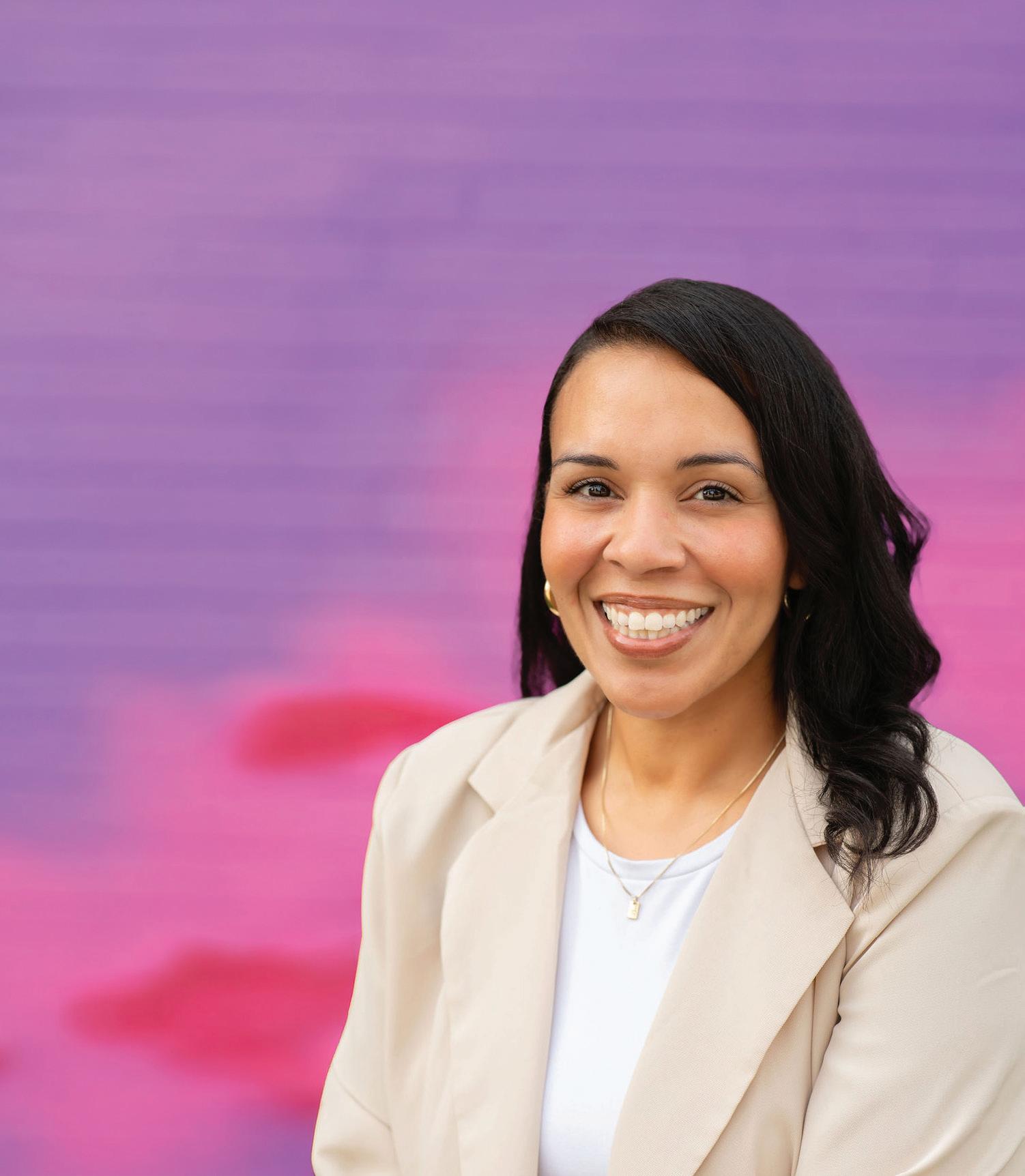
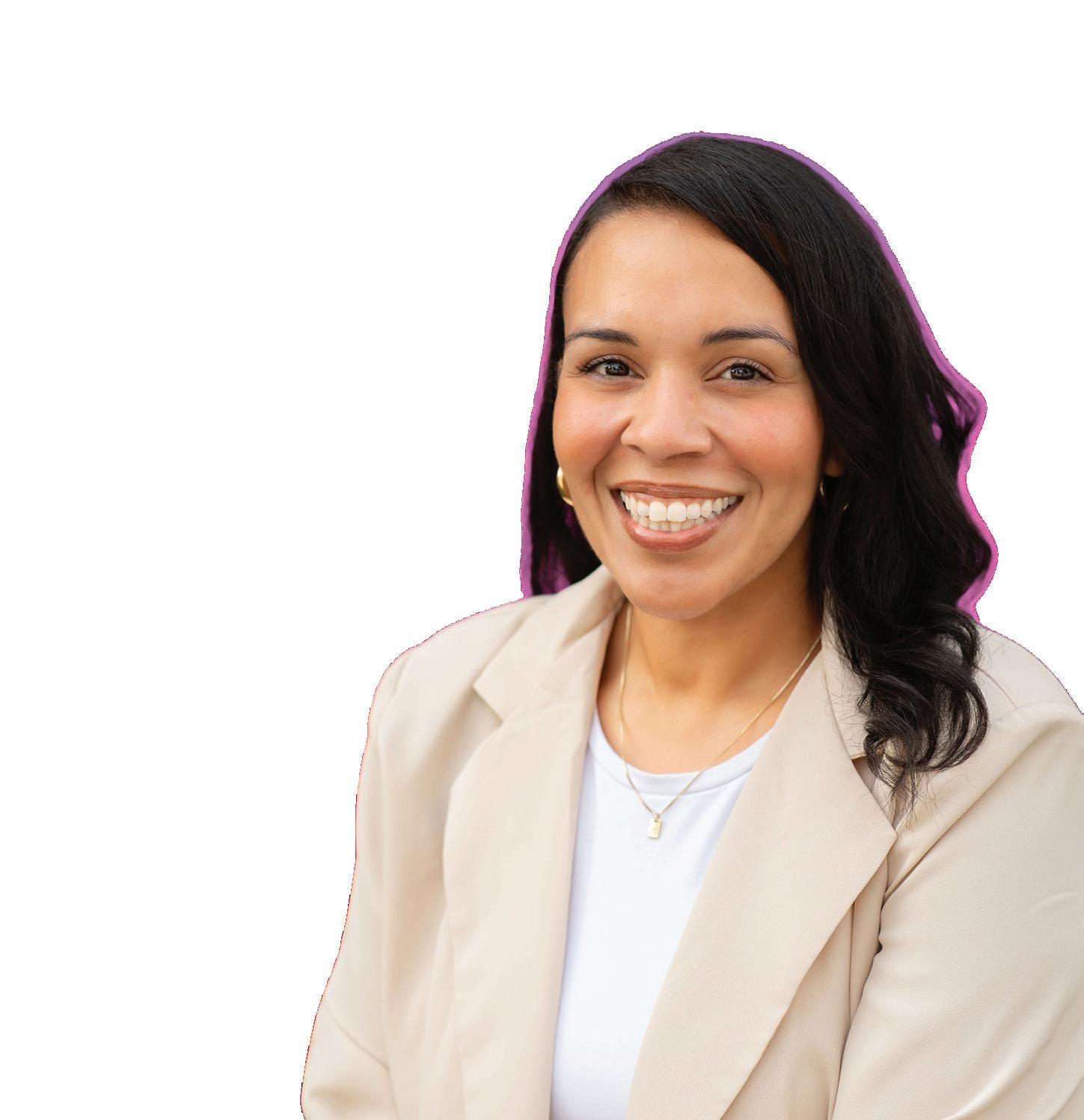
Rodriguez: I'm passionate about creating opportunities for young people, especially those who may not see a clear path for themselves yet. As someone who grew up facing challenges and benefited from having caring adults in my corner, I advocate for youth development, education, workforce readiness and ensuring every child has access to opportunities that can change the trajectory of their life.
Q How did you get connected with the Boys & Girls Club as a youth?
Rodriguez: I grew up on the West Side of Manchester and joined the Boys & Girls Club when I was 10 years old. What started as a place to go after school quickly became a second home. It was a place where I felt safe, supported and encouraged to dream bigger. The staff invested in me, challenged me to step outside my comfort zone and helped me discover leadership opportunities that ultimately shaped the direction of my life.
Q What made you want to continue working there for your professional career?
Rodriguez: The Boys & Girls Club changed my life. When I think about my journey from Club member to first-generation college graduate, and now director of development, I recognize that none of it would have been possible without the people who believed in me. Returning to work for the organization felt like coming full circle. Every day, I have the opportunity to help create the same life-changing experiences for today's young people that were created for me.
QAre there any programs that Boys & Girls Club offers now (or is planning to offer soon) that weren't available when you were a child, but you would’ve liked then?
Rodriguez: Absolutely. Today's Club members have access to workforce development initiatives, STEM programming, leadership pathways and partnerships with local employers that simply didn't exist when I was growing up. As a young person, I would have loved exposure to career mentors, internships, financial literacy and entrepreneurship programs. Helping youth see what is possible beyond what they encounter in their immediate environment can be incredibly powerful.
Q What are your responsibilities as director of development, and how does that fit into the organization's larger mission?
Rodriguez: As director of development, my role is to build relationships with the
people, businesses and organizations that make our work possible. Whether it’s meeting with donors on tours of the Club or Camp Foster, building partnerships, securing sponsorships or sharing the stories of our Club kids, my role is all about bringing people together to invest in the next generation. At the end of the day, it's about creating opportunities for youth in the Greater Manchester area. It’s truly a team effort, and I’m fortunate to work with so many passionate people who believe every child deserves the opportunity to reach their full potential.
QAre you involved with any other volunteer or social organizations?
Rodriguez: In addition to my work with the Boys & Girls Club, I serve as a vice chair of the Boys & Girls Clubs of America's Latinos Unidos Mission Resource Group, which focuses on
elevating Latino voices and leadership throughout the national organization. I also support community engagement efforts through local young professional and leadership networks and enjoy opportunities to mentor emerging leaders whenever possible.
QIn what areas would you like New Hampshire to make improvements for children or young adults?
Rodriguez: I would love to see continued investment in youth mental health, workforce development, affordable child care and pathways that help young people successfully transition from adolescence into adulthood. We often talk about preparing young people for college or careers, but we also need to ensure they have access to mentors, transportation, life skills, financial literacy and meaningful work experiences. I would also like to see more intentional efforts to ensure every young person feels represented, valued and connected to their community. When young people have a sense of belonging and believe there is a place for them in New Hampshire's future, they are more likely to stay, lead and contribute to strengthening our communities for generations to come.
Hashira Rodriguez will be part of NH Business Review’s Powered by Women panel on Nov. 12, 8 to 11:30 a.m., at the Manchester Country Club in Bedford. Watch the events/ awards tab at nhbr.com for details.
BY NATE GRAZIANO
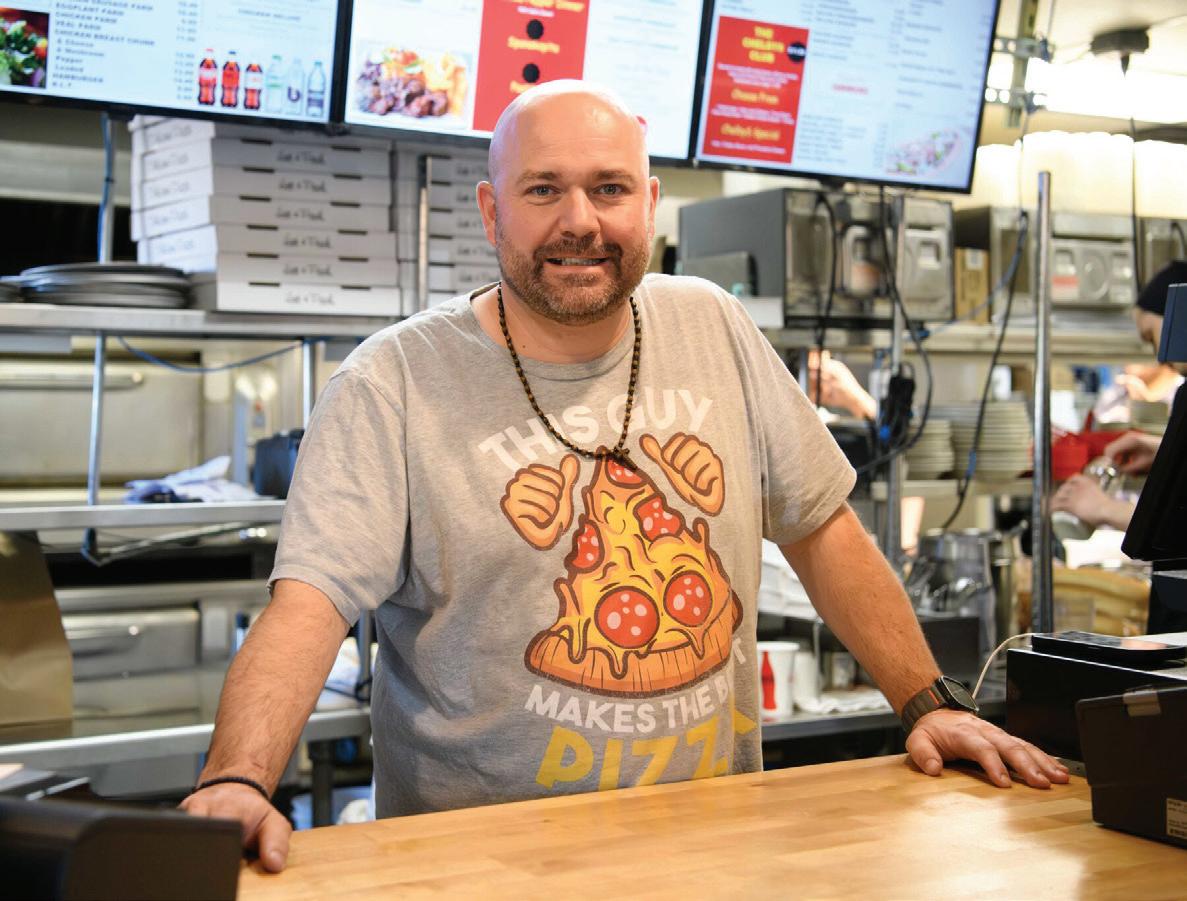
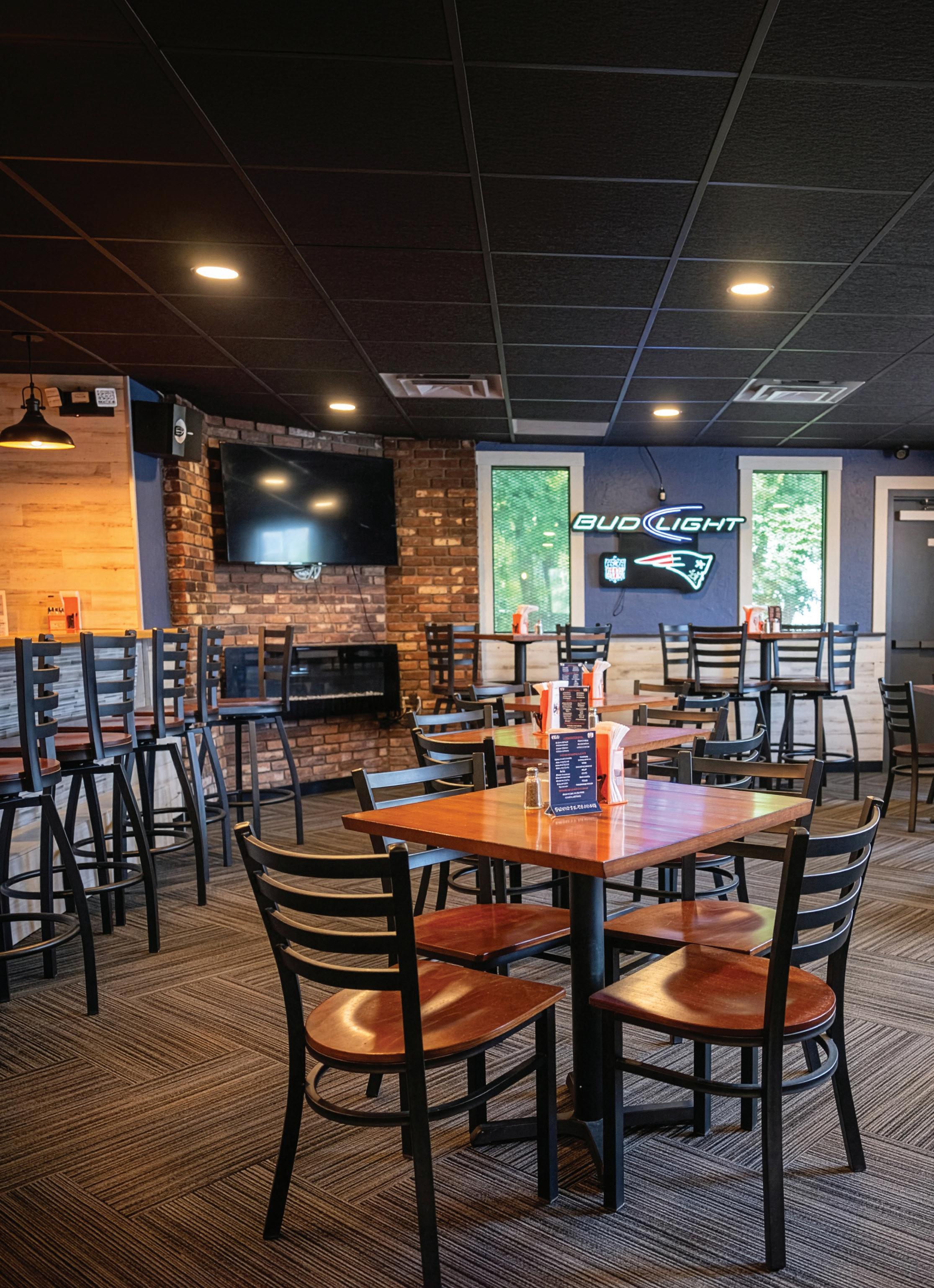
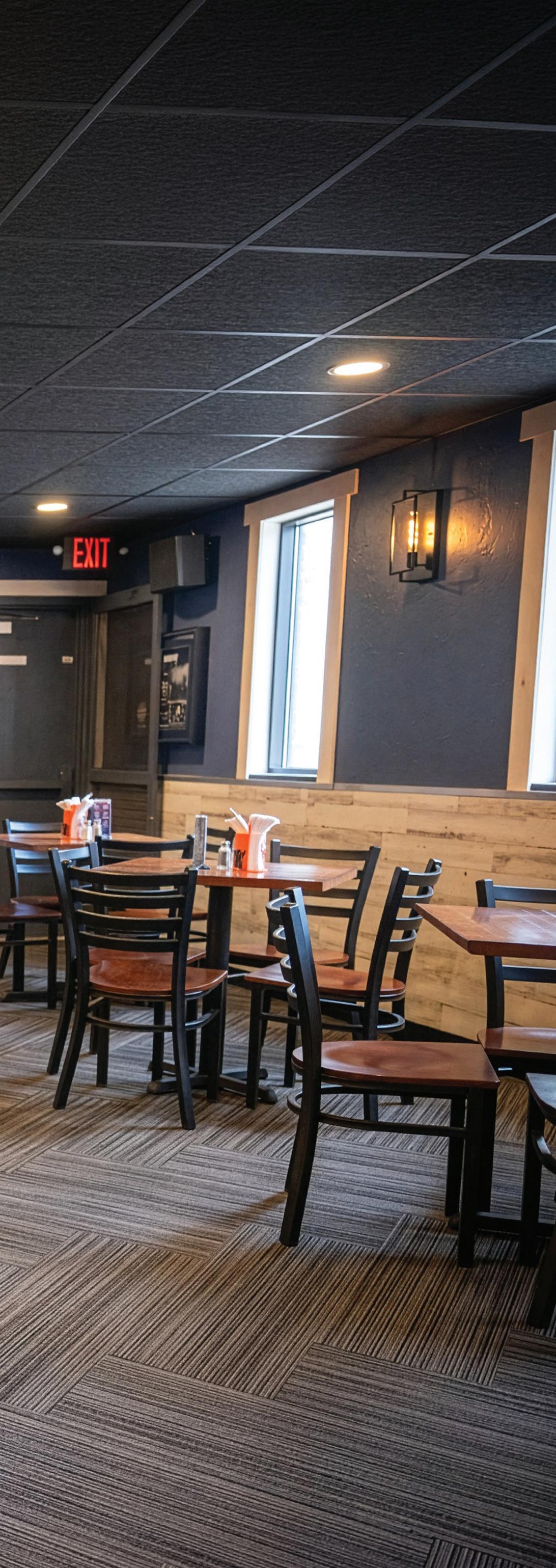
“It’s never too early for tsipouro,” says Loukas Pozios, the owner and chef at Chelby’s Food and Drink in Manchester.
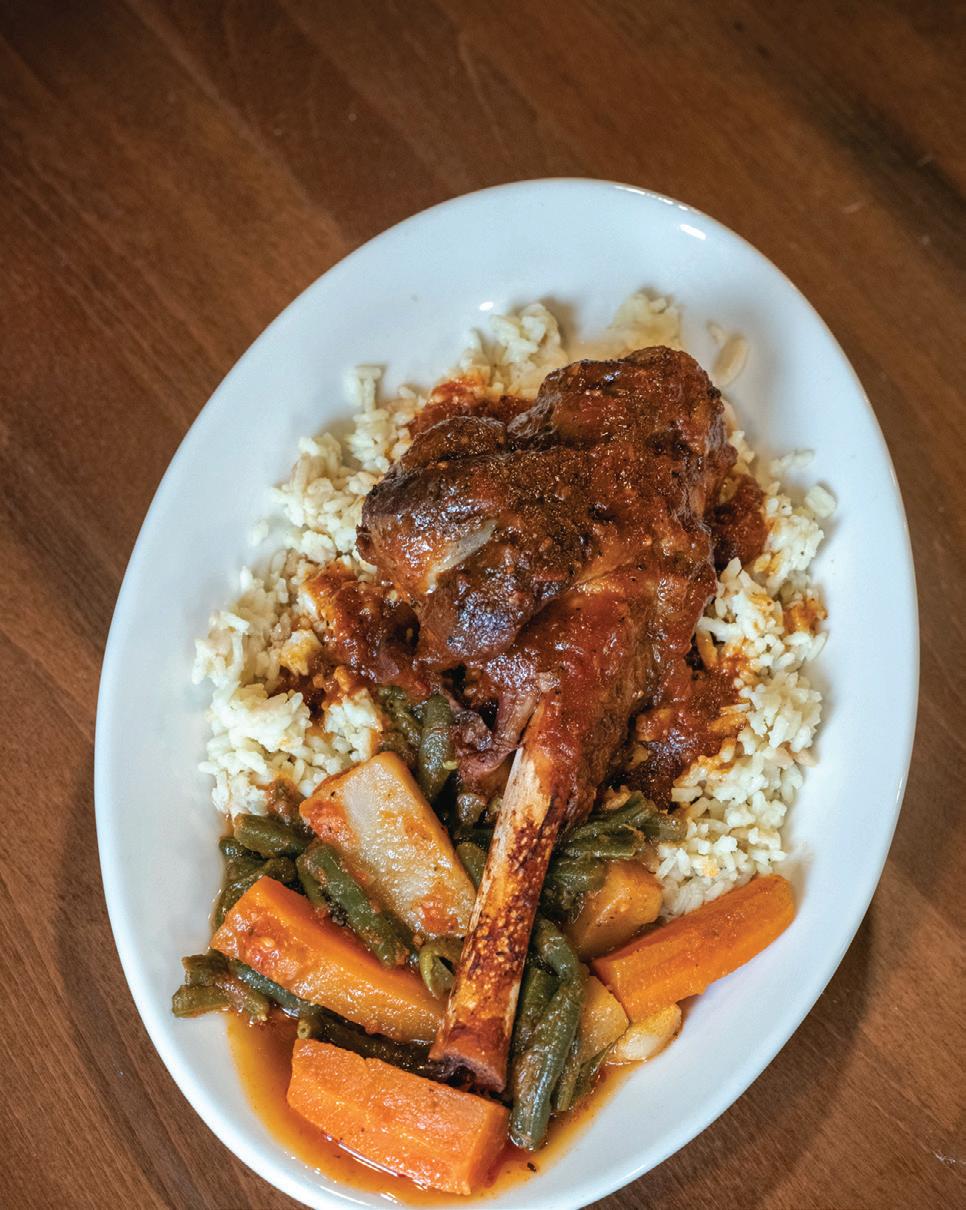
It’s 9 a.m. on a Wednesday, and while the lamb shanks braise on the grill, in preparation for tomorrow’s “Greek Thursday,” a weekly special menu at Chelby’s, Pozios disappears into a dry walk-in and returns holding a glass bottle with a handwritten label.
The liquor was made from the grapes grown by Pozios’ friends in the small village of Koubourniana in central Greece, where Pozios grew up, and it was shipped to America from Greece. Pozios pours a finger’s width of the alcohol into two small glasses and hands one to me. “One tsipouro and everything is good,” he says.
I take the glass and raise it. Who am I to question Greek culture?
“Yamas,” Pozios says and clinks my glass.
Pozios then returns to his preparation for “Greek Thursday,” an addition to Chelby’s daily fare that includes pizzas, burgers, sandwiches and other standard American favorites. He finishes braising the 30 lamb shanks and places them in hotel pans, where they’ll cook for six hours after being topped with his homemade au jus and tomato sauce.
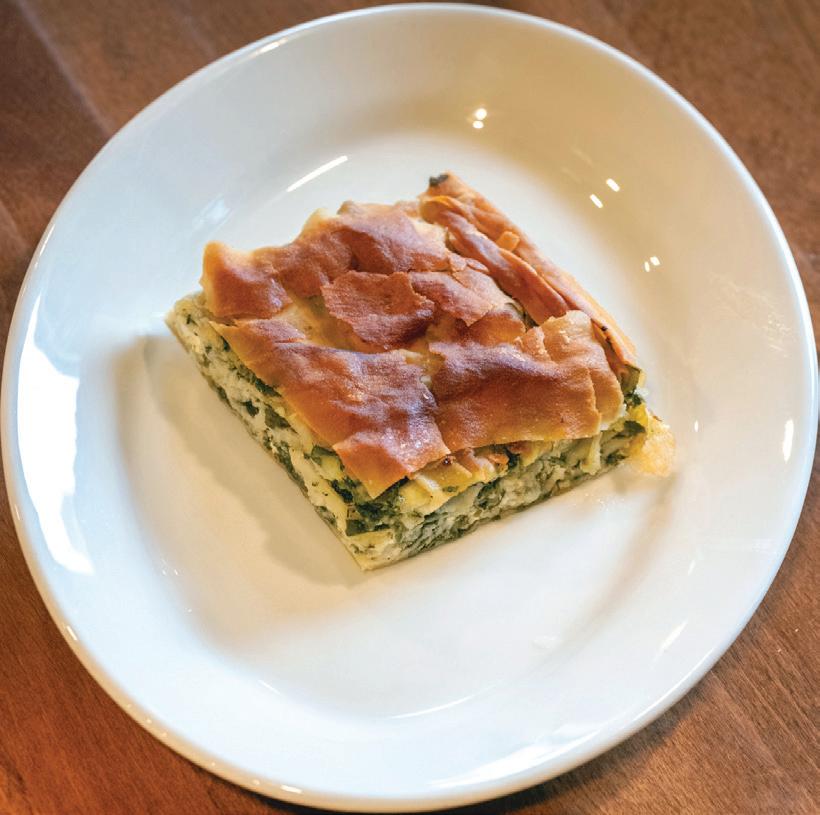
He then prepares a green bean recipe that he learned from his grandmother in Greece, and when he’s finished with vegetables, he goes to work on the pastitsio. Tomorrow morning, Pozios tells me, he’ll make the spanikopita and the chicken lemon soup — more family recipes.


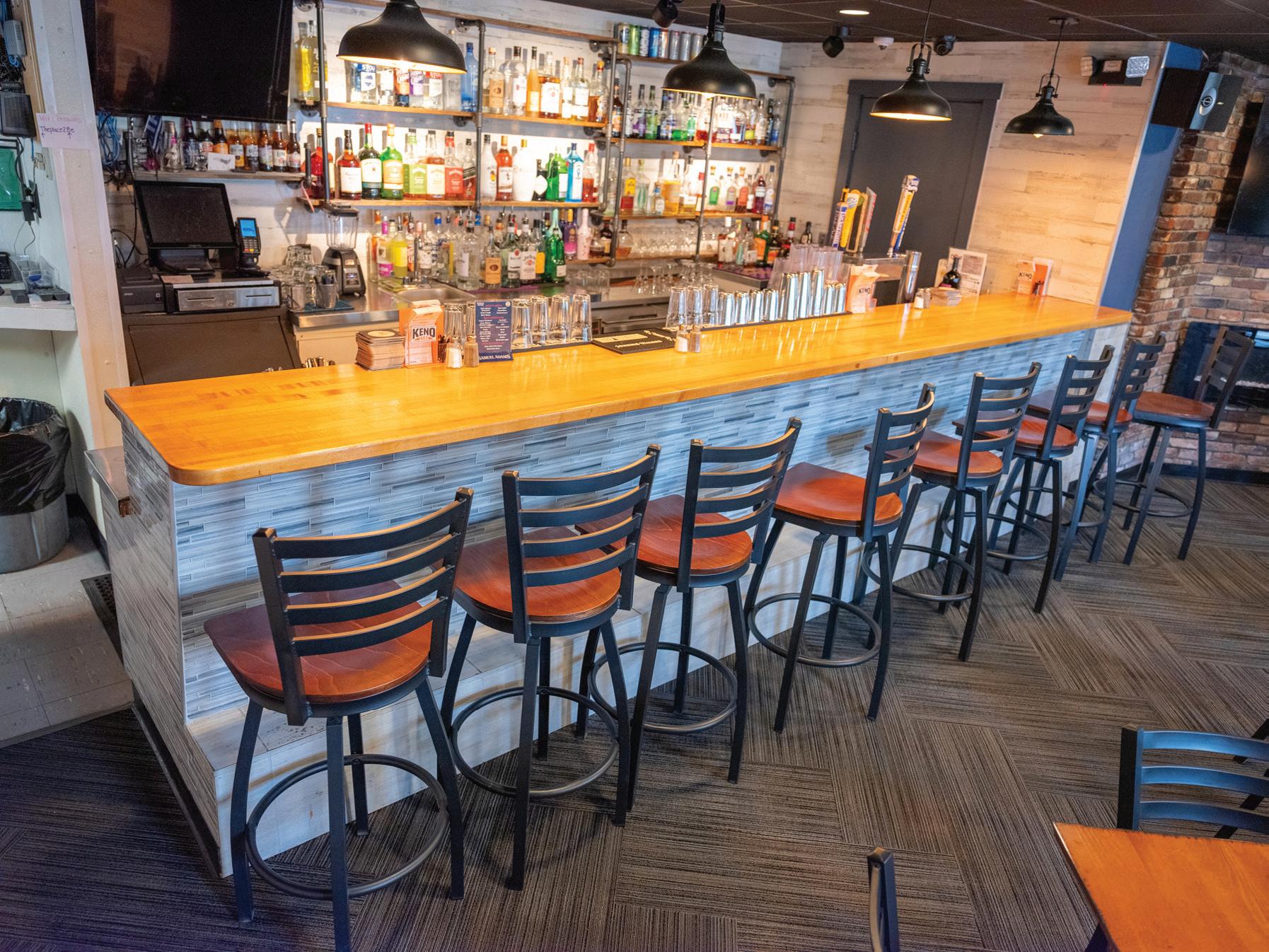
For Pozios, every Thursday offers an opportunity for him to bring some of the authentic foods and flavors from his home country to his American patrons.
“We started ‘Greek Thursdays’ to give the community, who embraced us when we came here a part of Greece, a part of our heritage and a part of our culture,” Pozios says.
Pozios adds that the dining table in Greece is a sacred place where they celebrate with family and friends, commune with neighbors and resolve differences.
“It is where everything happens,” he says.
In 2019, Pozios, his wife and co-owner, Effie Pozios, and their two children left their home in the Karditsa region of Greece and moved to New Hampshire with the goal of opening a restaurant and pursuing the American Dream in Manchester.
“When I was a child, I longed to come to America,” said Pozios, who started working in his family’s restaurant when he was 8 years old and later completed his degree in the culinary arts in Greece. “It was my dream to come to America and open restaurants.”
In Karditsa, both Loukas and Effie worked at Keramario, a restaurant owned by Effie’s parents, where they honed many of the dining design and restaurant management skills they would bring to the United States.
The Pozios purchased Chelby’s Food and Drinks in 2023 from the former owners and fellow countrymen, siblings Heidi and John Liolios. The Pozios now run their
For authentic Greek cuisine, Pozios says you need family recipes, traditional techniques and high-quality ingredients.
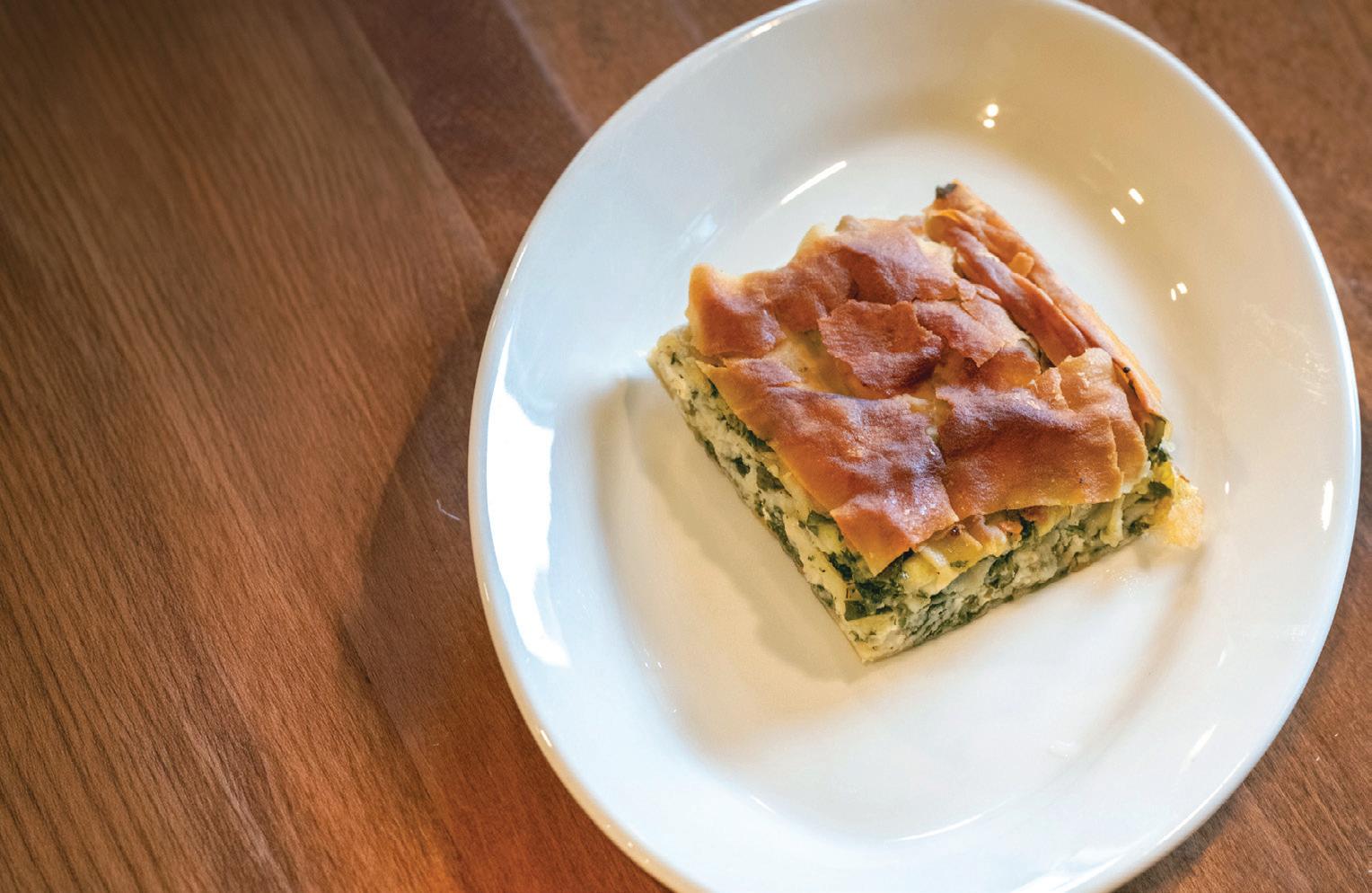
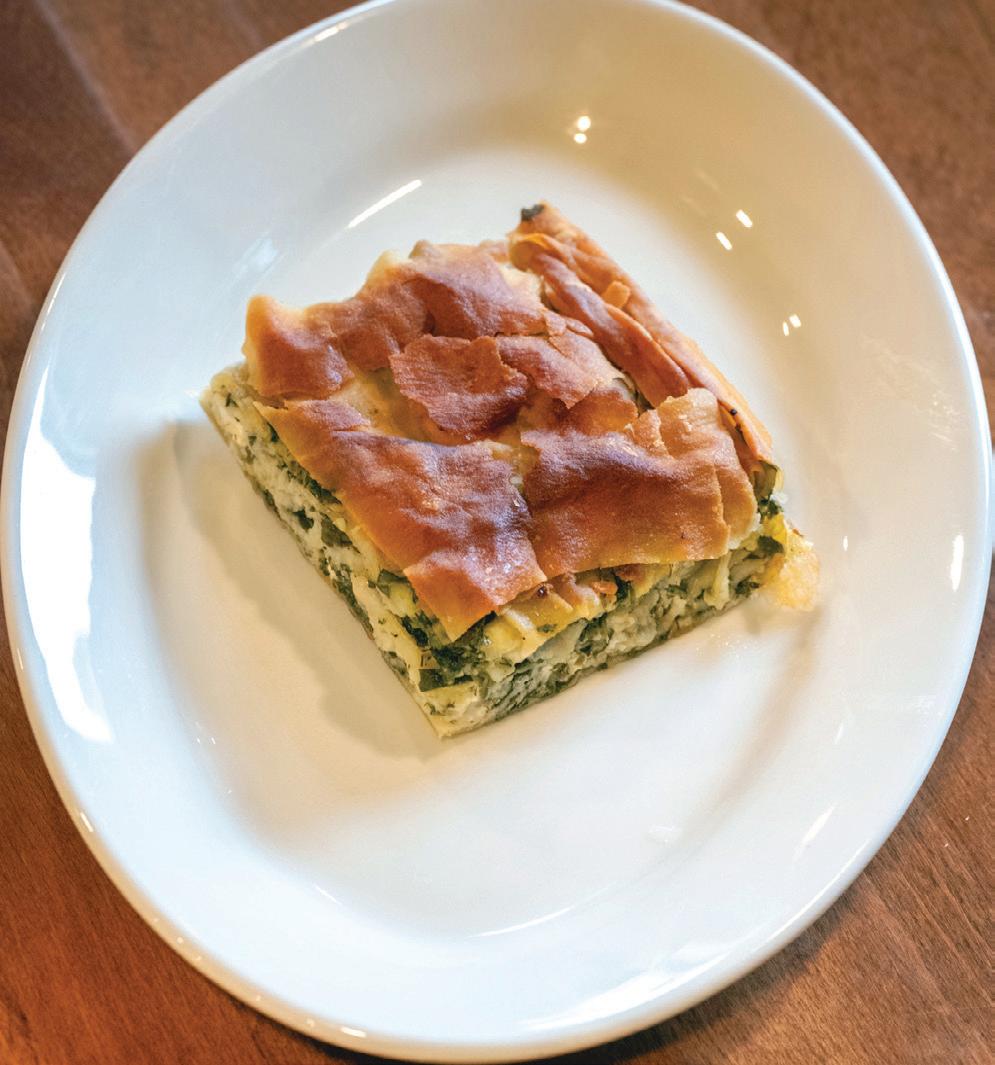
restaurant in accordance with the values of a Greek cultural code called “philoxenia,” which translates to “a friend to the stranger.”
“When a stranger walks into your house, you want them to feel like they’re welcome,” said Effie Pozios. “You want your guests to be well-fed, and you want to hear their stories. It is a big part of the hospitality that was taught to us by our parents and our grandparents.”
Chelby’s is one of numerous restaurants in New Hampshire owned and run by Greek families and serving authentic Greek food.
In fact, the Greek community has had a profound impact on the Granite State, which is home to nearly a dozen Greek Orthodox churches that sponsor myriad Greek festivals throughout the year.
Front and center in many of these cultural festivals sits the “authentic” Greek food and cultural experience. From gyros to lamb shanks to souvlaki, from spanakopita to pastitsio to moussaka, the New Hampshire palate has a seemingly insatiable taste for Greek cuisine, and there is no shortage of Greek-owned restaurants ready to dish it out.
One of the most iconic Greekowned restaurants in New Hampshire is The Puritan Backroom in Manchester. Originally a confectionery company started in 1917 by the Pappas family,
selling ice cream and candy, The Backroom restaurant opened in 1974 and featured Greek-influenced cuisine.
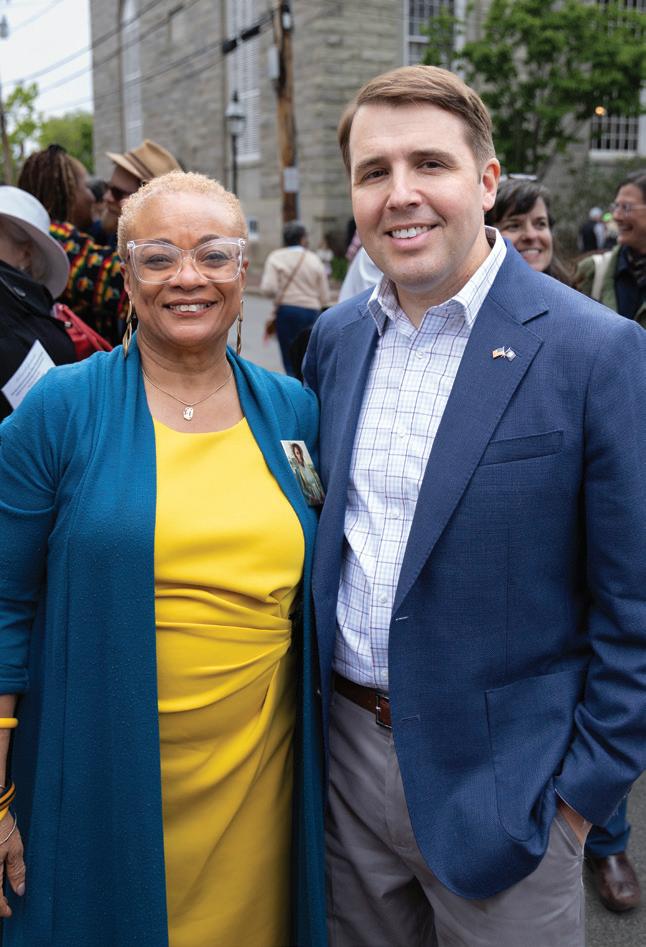
Now run by the fourth generation of Pappas family members — including U.S. Rep. Chris Pappas — the Puritan Backroom is widely known for its claim to have invented the chicken tender, as well as their signature mudslides. Still, more than a half-century later, it still prominently features some Greek items on its menu, paying homage to the family’s culture and ancestry.
In 2010, Greek culture and cuisine also inspired restaurant owner Peter Tsoupelis, whose father immigrated from Xanthi in Northern Greece, to open Amphora in Derry, where he honors both old and new Greek culture.
Similarly, Tsoupelis boasts a familial lineage in Greek cuisine. His father ran a successful restaurant in Utica, New York, called Symeon’s, and his mother provided many of the original recipes that appear on the menu, such as Thracian chicken and Psari-Sto-Filo — the latter’s recipe was sought-after by the magazine Bon Appetit, but his mother never revealed it.
“I didn’t want to open a Greek restau rant. I wanted to open a restaurant where you could dine in Greece,” Tsoupelis said. “All of my mentors and inspirations were Greek chefs.”
While the word “authentic” is bandied around quite a bit in the restaurant industry, sometimes to
the point of attrition, it certainly begs further definition.
What exactly makes Greek food — or any cultural cuisine, for that matter — “authentic” to its origins, and not merely some Americanized knock-off? This is not some rhetorical navel-gazing question; it is a genuine concern here.
“One of the things that makes the food authentic is using the family recipes,” Tsoupelis said. “But we also use good, high-quality ingredients imported fresh from Greece. A lot of places pull the food straight from the freezer. We’re a 99% scratch-kitchen, and that’s the difference.”
For Pozios, it is about more than the recipes, although he also imports ingredients from his native country when possible.
“It is about staying true to the cultural values, traditions and techniques,” he said. “It is about the love you put into the food. From village to village, the same dish might be a little different, but it is still authentic if you stay true to those values.”
At Chelby’s, it is another slamming “Greek Thursday” with lamb shanks and the pastitsio I watched prepared flying out on plates from the kitchen. As customers enjoy their meals, I think I might be starting to understand this
BY SUZANNE LAURENT PHOTOS BY DAN COMLY
While many were celebrating the ideals the country was founded on this summer, others were offering more context of the ways those ideals fell short of reality.
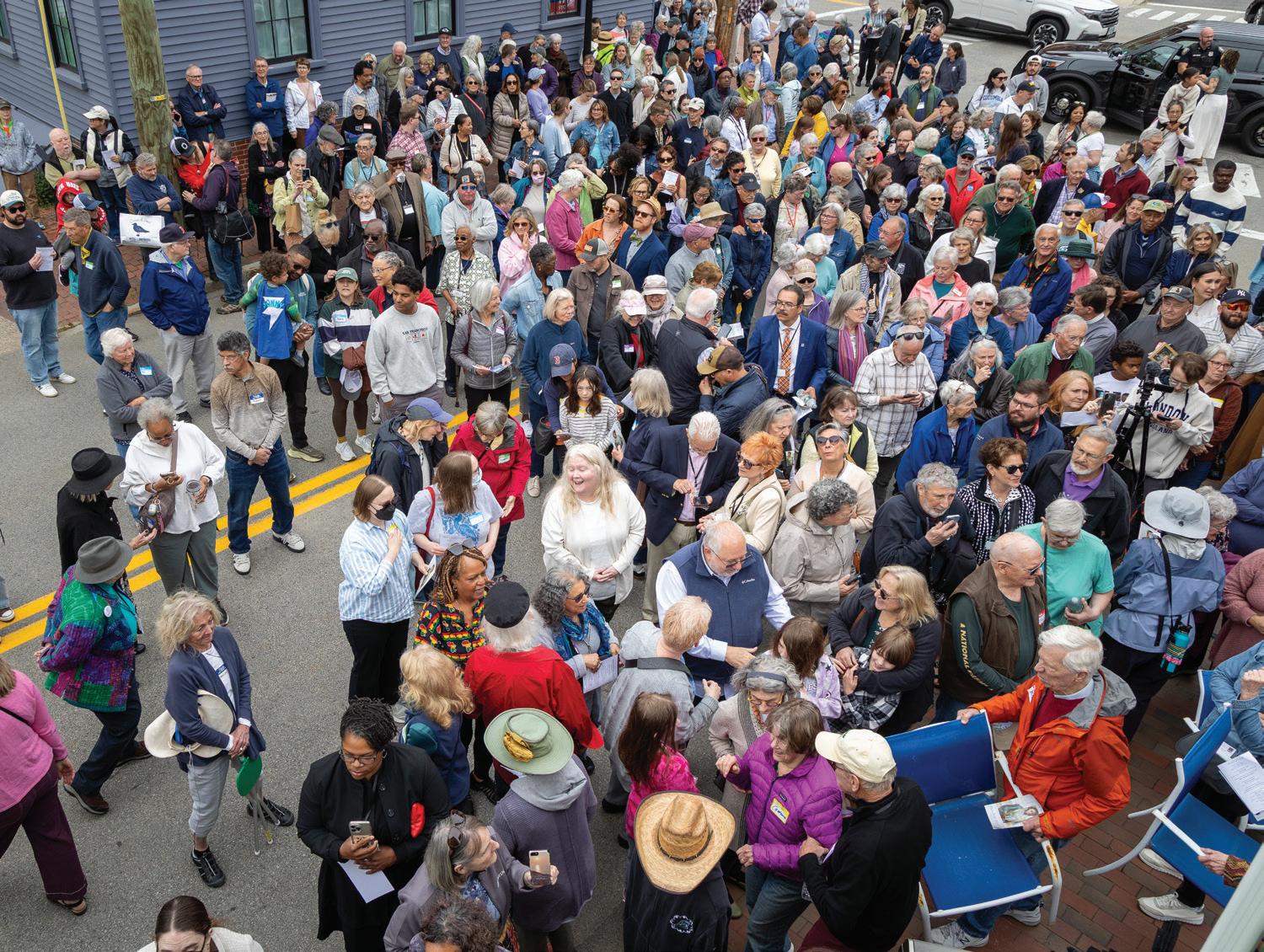
The Black Heritage Trail of New Hampshire drew an estimated crowd of 500 for the unveiling of a mural of Ona Judge Staines on the side of its Court Street headquarters.
On May 21, 1796, George Washington and his family sat down for dinner at the President’s House in Philadelphia, enjoying one of their last meals in the city before returning to Mount Vernon for the summer. As the Washingtons dined, an enslaved woman named Ona Judge made her escape, slipping out of the mansion to freedom.
After Judge fled, she made her way north, securing passage on a ship bound for Portsmouth, New Hampshire.
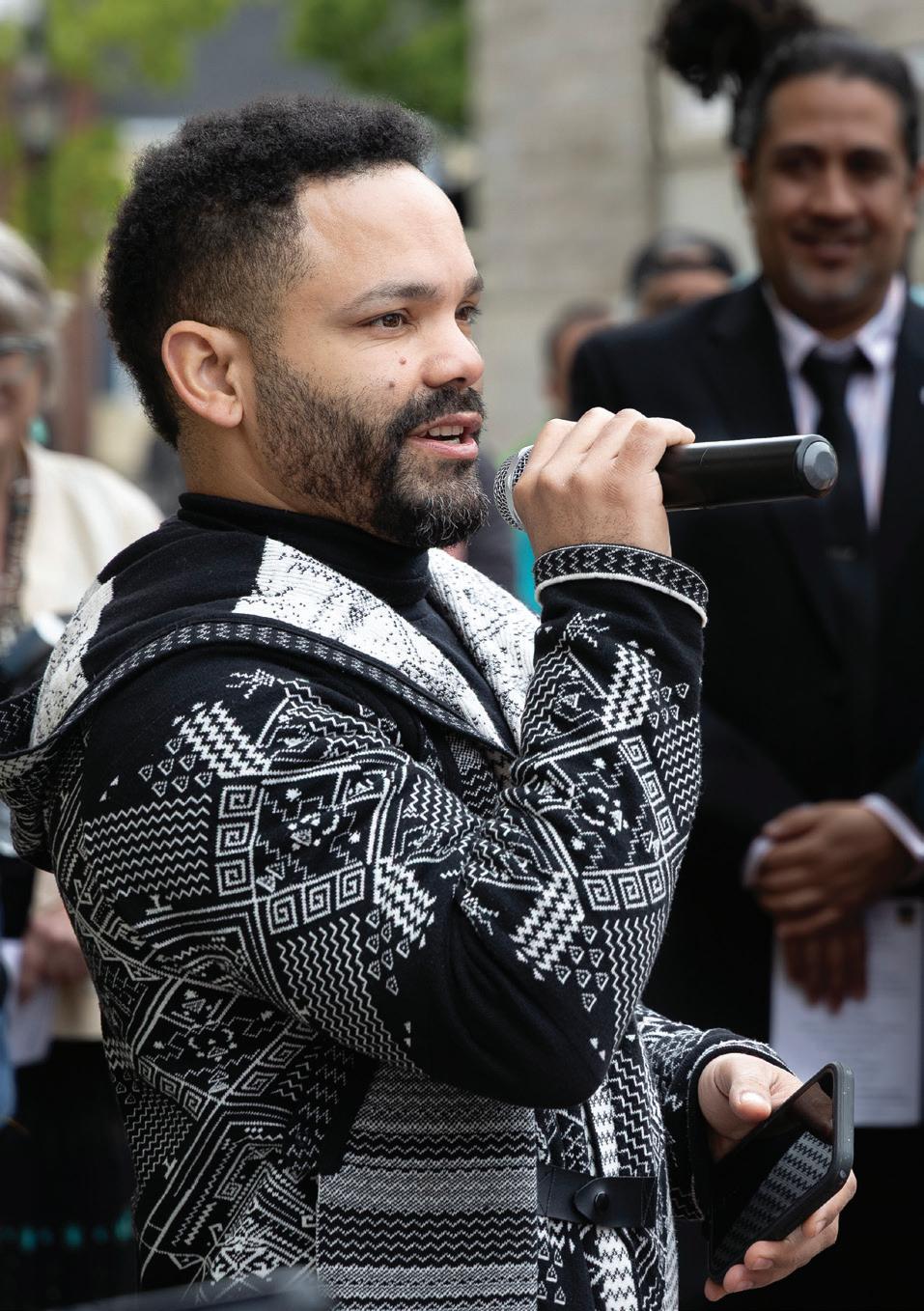
“Ona walked these streets over 200 years ago,” said mural creator Manuel Ramirez of Positive Street Art, based in Nashua.
“I am thankful to honor a person like her,” he said. “It was very emotional for me trying to get into her footsteps and to imagine how she would like to be portrayed.”
He depicted the woman who escaped to Portsmouth against the backdrop of the city’s waterfront as it would have looked in 1796 when she arrived.
“As we unveil this mural, we unveil memory, we unveil history, we unveil the truth,” JerriAnne Boggis, the executive director of the nonprofit, said at the unveiling ceremony. “We unveil the courage of a young woman who chose freedom despite all the odds. This mural ensures that Ona’s story will no longer remain hidden.”
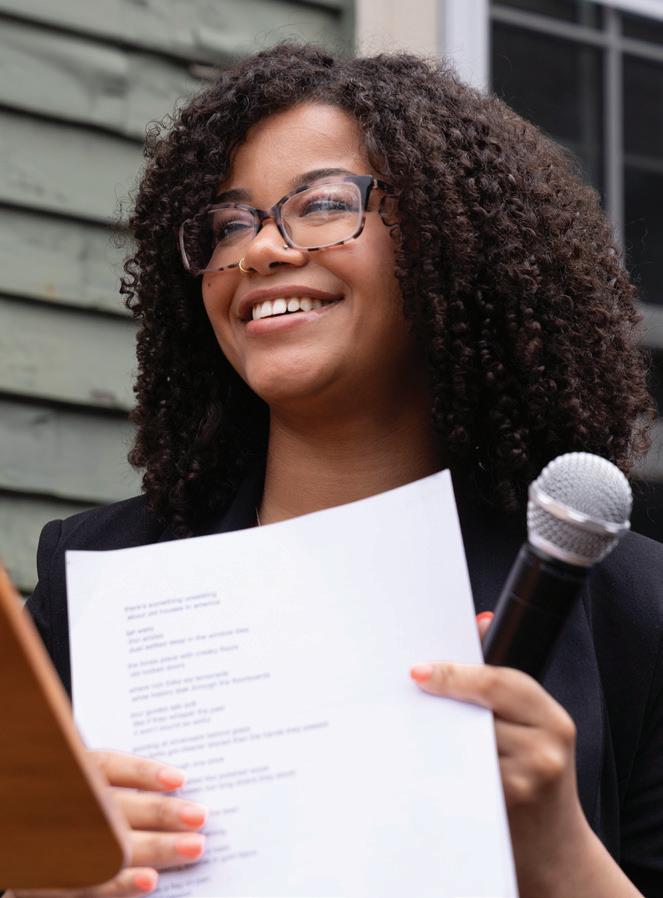
Jazlynn (Jazzy) Mota, a spoken-word artist, led the hourlong ceremony by reading a poem she wrote titled, “We Gotta Learn.”
“My poem was inspired by Adrienne Rich’s poem ‘From an Old House in America,’” Mota said. “Rich’s poem explores the
long history of struggle and survival in America, focusing on how the past is connected to stories of pain and courage. It shows how the experiences of women, including their trauma and resilience, are often overlooked or misunderstood.
Inspired by this, my poem, ‘We Gotta Learn,’ honors that history and the strength it represents.”
Mota said another huge inspiration for her poem was the story of Ona Judge.
“Ona Judge’s story reminds us how important it is to truly understand the hardships Black Americans — especially Black American women — faced in their fight for liberty and freedom,” she said.
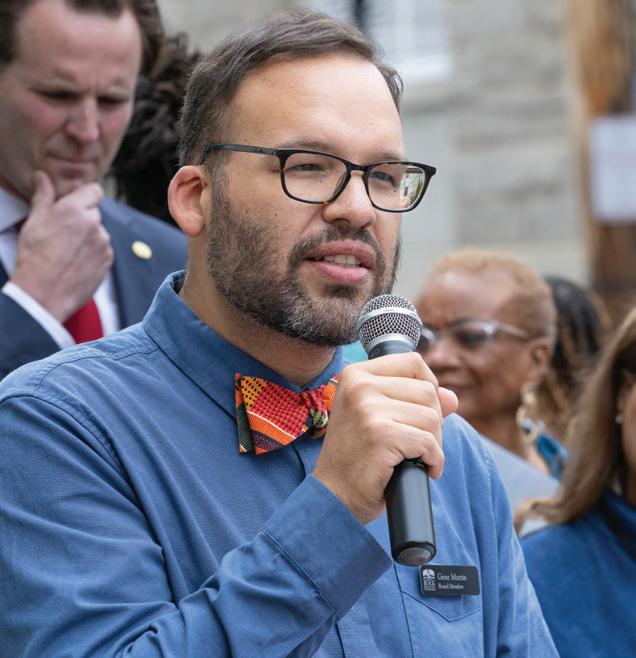
Gene Martin, board president of the BHTNH, gave some background on the history of Judge, who lived in Portsmouth and in the neighboring town of Greenland, where she married a free Black sailor named Jack Staines, raised children and
lived the rest of her life as a free person.
“Today we erase that silence,” Martin said. “This moment belongs to Portsmouth, to the USA, to the nation.”
The ceremony included remarks by representatives of the city and elected officials. Brendan Narcia, a descendant of another Black person enslaved at Mount Vernon, also spoke.
Portsmouth Mayor Deaglan McEachern said that, although he grew up in the city, he had never heard of Ona Judge until he went to college.
“Someone, somewhere far away, told me of her courage and about this city's place in her story. This is why this mural matters,” McEachern said. “This place and this mural make hidden history visible. They tell everyone who passes that Black history is not separate from Portsmouth history or from American history. It is central to both.”
Michael Coard, founder of the Avenging the Ancestors Coalition and a Philadelphia civil rights attorney, asked for nine seconds of silence to honor Ona’s legacy.
In Western cultures, listeners typically feel the urge to fill conversational gaps after just three to four seconds. When a pause stretches to nine seconds, it often signals an "awkward silence,” a sudden shift to a heavy atmosphere, or an indication that a delicate topic requires processing.
In Portsmouth, Judge found lodging and employment as a domestic laborer. Compared with her duties as a lady’s maid, this work would have been much more demanding.
Following the unveiling, a reception was held at Strawbery Banke Museum, where Erica Armstrong Dunbar, a nationally recognized historian and author of “Never Caught: The Washingtons’ Relentless Pursuit of Their Runaway Slave, Ona Judge,” was the keynote speaker.
As Dunbar writes in “Never Caught,” “that Judge elected to become a domestic, that she chose to endure physically punishing work in New Hampshire, rather than remain a slave, says everything we need to know about how much she valued freedom.”
“The unveiling of the Ona Judge mural was nothing short of extraordinary,” Boggis said. “It was powerful, emotional and simply beautiful. More importantly was the overwhelming sense of community and purpose that filled Portsmouth. I mean, did you hear that extended applause?” 603
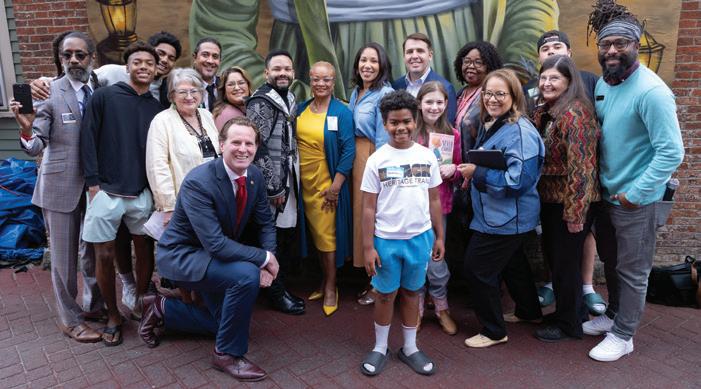
“Everything was great until it wasn’t,” Coard said. “The guy in the White House shut down a site that had 34 panels (depicting slavery). But the guy in the White House did one good thing: He brought us all together here today.”
The mural unveiling comes as the Trump administration has made aggressive attempts to strip discussions of slavery, race and systemic oppression from federal sites and institutions, including exhibits connected to Ona Judge at the Philadelphia President’s House site.

“We Gotta Learn”
By Jazlynn Mota
there’s something unsettling about old houses in america tall walls
thin smiles
dust settled deep in the window tiles the kinda place with creaky floors old locked doors where rich folks sip lemonade while history leak through the floorboards tour guides talk soft
like if they whisper the past it won’t sound as awful pointing at silverware behind glass like forks got cleaner stories than the hands they passed i walked through one once every room smelled like polished wood and secrets hidden too long where they stood outside
tourists laughing on the lawn inside i swear the air felt wrong cause america got a habit of dressing wounds in gold fabric throw a flag on pain call it passion rename suffering and sell it back as tradition but i’m staring at a staircase thinking about footsteps who walked up em who ran down em whose heartbeat got so loud they thought the whole house found em cause freedom sound pretty till it’s your life on the line till cold hit your teeth and fear hit your spine
everybody wanna quote freedom like it came cheap
whole time freedom probably looked like dark water and blistered feet probably smelled like harbor salt wet clothes
hands shaking from the cold cause people love freedom in hindsight after the risk done passed after pain gets cleaned up into classroom facts but in the moment?
freedom probably felt terrifying cause sometimes survival and imprisonment look just alike sometimes the cage feed you sometimes it dress you nice sometimes pain gets so familiar you stop asking why it stay every night we gotta learn this country was built by contradiction folks chasing liberty while tightening somebody else’s restrictions that tension still live here in classrooms courtrooms
headlines and gossip every time somebody say “that’s just how america is” like struggle itself patriotic i remember being young thinking america was simple good guys
bad guys fireworks and bald eagles real movie scene type stuff then you grow up realize the american dream got landlords late fees and police lights flashing through car doors realize some people inherit safety others inherit survival stories some people born with room to dream others spend they childhood trying not to become warnings and despite all that people still laughed still loved still made music loud enough to shake grief from they blood that type of resilience different Now that’s what soul sounds like that’s somebody looking suffering dead in the face and refusing to let it swallow em whole and maybe that’s why i respect the runners the ones who chose cold nights over owned lives who would rather risk death than never feel alive cause i think a lot of us still running today from poverty from shame from systems that profit off pain but maybe freedom start small truth spoken out loud heads unbowed refusing to shrink just to fit in a crowd maybe being american ain’t pretending this place perfect maybe it’s loving people enough to say this way of life still hurting to keep learning keep building keep breaking old cycles apart cause a country ain’t its buildings And freedom comes from the damned one's heart



BY RONY CAMILLE PHOTOS BY ROBERT ORTIZ
IS OFTEN OVERLOOKED.
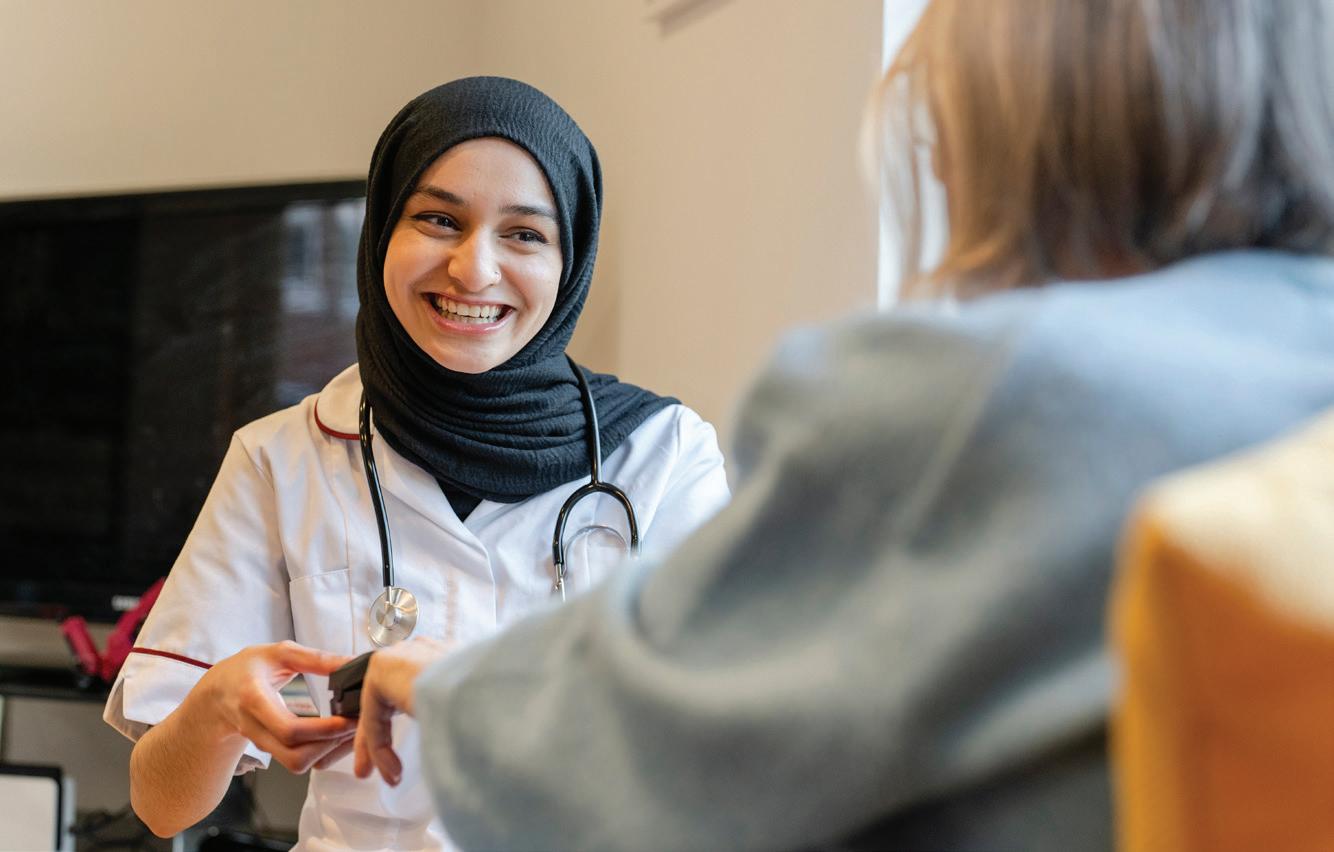
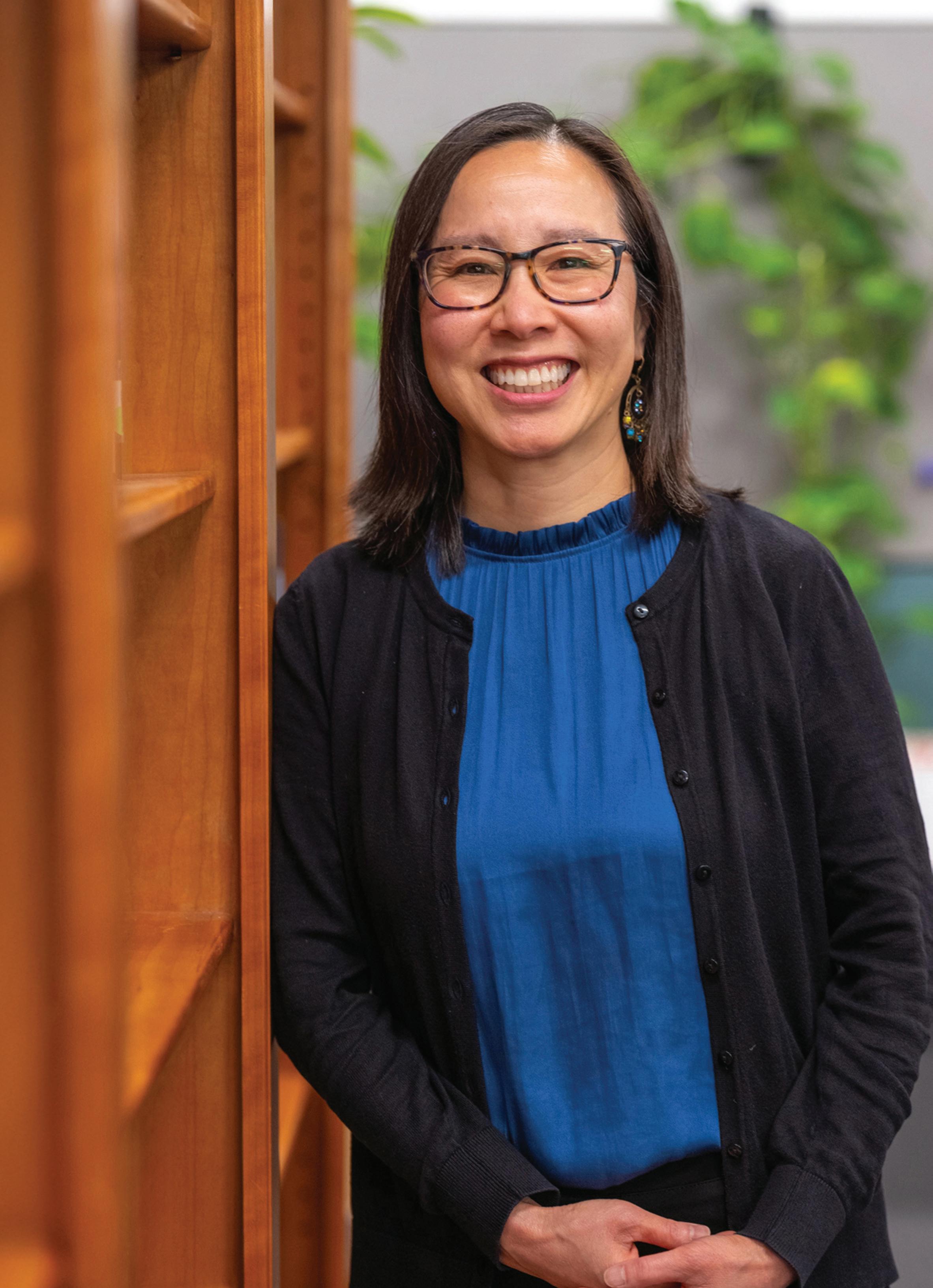
“These are really the unsung heroes of health care,” Dr. Serena Chao said.
A Derry native and daughter of Taiwanese and Chinese immigrants, Chao understands firsthand how culture and family shape the experience of aging.
Now, as the inaugural chief of geriatric medicine at Dartmouth Hitchcock Medical Center in Lebanon, she is helping lead the health system’s response to the needs of a rapidly aging state.
Throughout her career, Chao has focused on helping older adults maintain not only their health but also their dignity
and quality of life. Increasingly, she says, that work depends on a broad network of direct care workers, home health aides, nursing assistants, caregivers and families.
Older adults are living longer and seeking to remain independent and engaged in their communities. As New Hampshire’s population ages while birth rates slow, one question looms larger with each passing year: Who will provide the care?
Immigrants are increasingly filling important roles and meeting those home health and personal care needs. A recent
Kaiser Family Foundation analysis found nationally that immigrants account for 28% of the nation’s direct long-term care workforce, including nearly one-third of workers in home-care settings.
Another recent Health Affairs study found foreign-born workers accounted for roughly half of the growth in the home- and community-based direct care workforce between 2012 and 2022.
“People often think about health care as doctors and hospitals,” Chao said. “But so much of what allows older adults to age with dignity happens because of direct care workers, home health aides,
“So much of what allows older adults to age with dignity happens because of direct care workers,
home health aides, nursing assistants and caregivers.”
Sharon
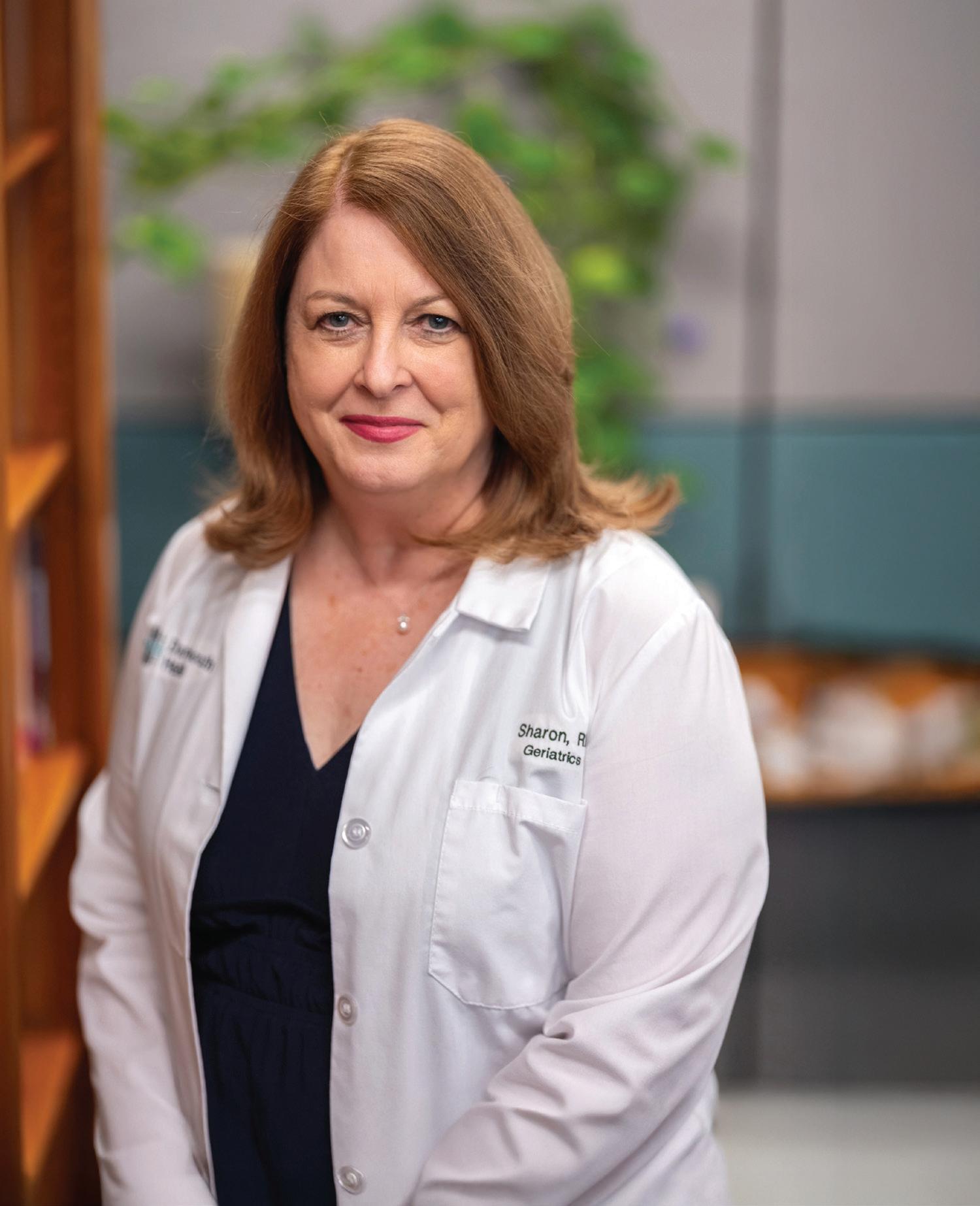
“For some patients, maintaining family connections or participating in cultural or religious traditions is central to their quality of life.”
SHARON WENTZ
nursing assistants and caregivers.” Those workers are often the people who spend the most time with patients and residents, helping with everything from meals and medications to companionship and daily routines. And for Chao, the value of a diverse
workforce extends beyond filling vacancies.
As New Hampshire becomes increasingly diverse, so too are the seniors who are entering retirement and long-term care. She said cultural understanding can help build trust
and comfort for patients and families, particularly when caregivers understand traditions, family dynamics or language preferences that are important to those receiving care.
“It’s about seeing the whole person,” Chao said.
Recent research published in Health Affairs by Harvard University researchers Britainy Barnes and David Grabowski suggests that the linguistic and cultural diversity of the caregiving workforce may improve the patient experience as the population receiving care becomes increasingly diverse.
“The challenge is not simply helping people live longer; it’s helping them live well,” said Sharon Wentz, a registered nurse specializing in geriatrics at Dartmouth Health. “During Medicare Annual Wellness Visits, conversations about ‘What Matters Most’ often reveal the important role that family, cultural traditions, faith and community play in an older adult’s life.
“For some patients, maintaining family connections or participating in cultural or religious traditions is central to their quality of life. Understanding those priorities helps us tailor care recommendations and ensure that health care decisions align with the person’s values, goals and daily life.”
Wentz previously practiced in Fresno, California, where caring for patients from diverse backgrounds reinforced the importance of understanding not only medical needs but also family structures, traditions and cultural values.
Aging well, she said, means preserving quality of life, independence and human connection.
At Taylor Community in Laconia, president and CEO Michael Flaherty sees those relationships every day.
“The people who choose this work are mission-driven,” Flaherty said. “They’re not simply providing services; they’re helping residents live meaningful lives.”
He said the bonds formed between residents and caregivers often become deeply personal.
“We’re all competing for the same workforce,” Flaherty said, noting that senior living providers across the region continue to face staffing challenges.
New Hampshire, like much of the nation, faces a growing shortage of workers needed to provide that care.
According to New Hampshire Employment Security, home health and personal care aides are projected to be among the state’s fastest-growing occupations through 2032. Statewide demand is expected to increase by more than 1,600 positions over the next decade, a more than 23% increase, while registered nurses and nursing assistants remain among the occupations with the greatest need.
State wage data shows New Hampshire’s roughly 8,200 home health and personal care aides earn an average wage of about $18 an hour, while nursing assistants average approximately $22 an hour.
Those wages fall below what many workers need to comfortably afford housing and other basic expenses in New Hampshire. Phil Sletten, research director at the New Hampshire Fiscal Policy Institute, said many caregivers likely struggle to cover their own expenses despite working full time, even as the state’s aging population increases demand for care.
“Current wages are below the statewide median, and workers are likely to face living costs that are substantially higher than their incomes,” Sletten said.
As New Hampshire grows older and more diverse, the people providing that care may increasingly come from different countries, cultures and backgrounds — making cultural understanding an essential part of helping seniors age with dignity. 603
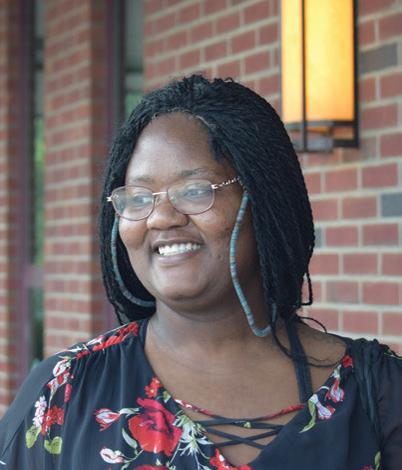
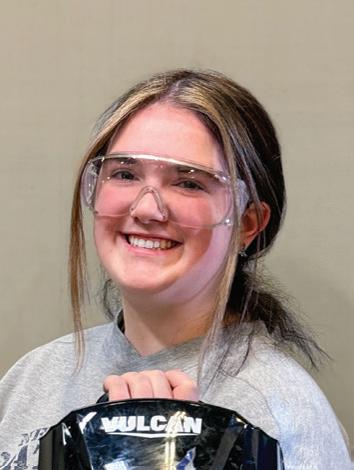
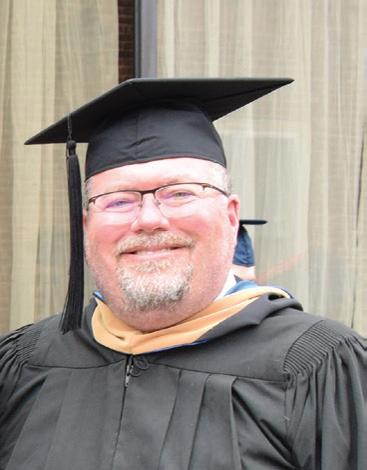
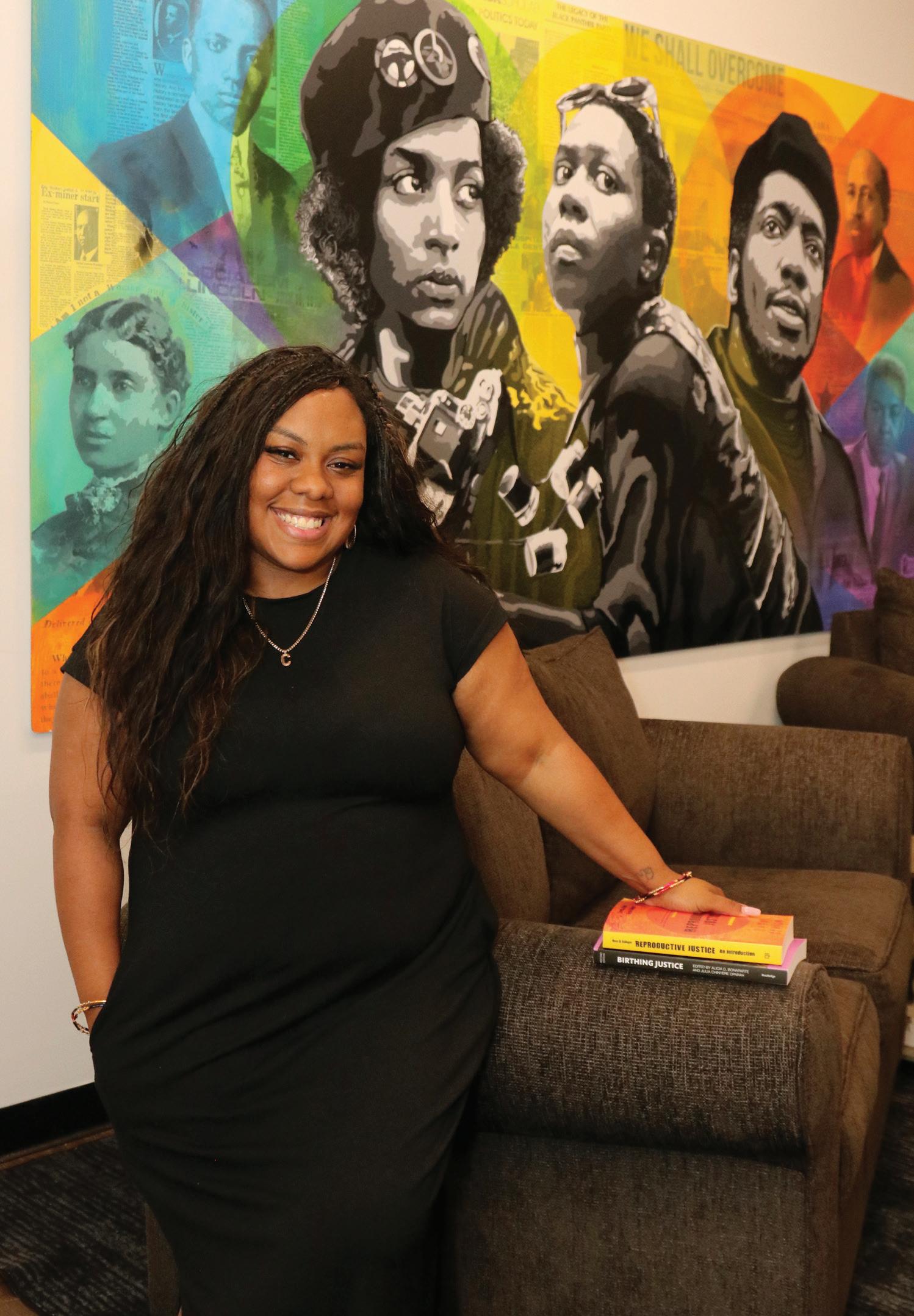
Welcoming a new child may be considered a joyous occasion, but it can also be traumatizing for many Black parents.
Camilla Thompson, the Black maternal health director for Black Lives Matter NH (BLM NH), is leading the organization’s effort to bring visibility to the alarming disparities Black women and women of color face in reproductive and maternal care. These disparities cost lives, cause trauma and leave too many unseen and unheard within health care systems.
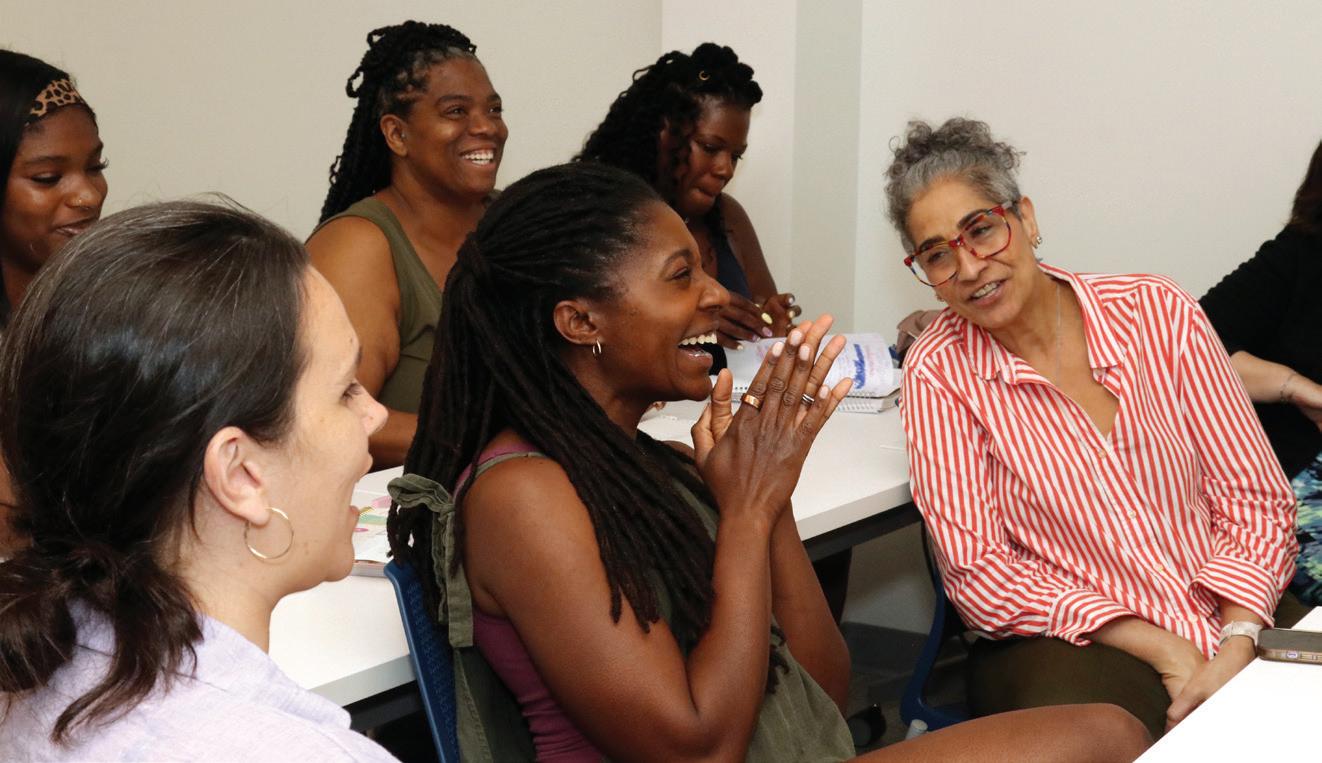
I saw her in action in April while she was facilitating “From Womb to Well-Child: Protecting Black Families — A Minority Health Equity Panel.” She led a robust conversation regarding the safeguarding of individuals and families who journey through the birthing process, and the pre- and aftercare involved.
The analysis of data accumulated regarding racial disparities in childbirth is overwhelming.
Black women are disproportionately impacted by adverse experiences during pregnancy.
They experience a maternal mortality rate of 50.3 deaths per 100,000 live births, significantly higher than White women (14.5), Hispanic women (12.4), and Asian women (10.7), according to data shared by Black Lives Matter NH. Black women are over three times more likely to die from pregnancy-related causes than white women. This disparity persists regardless of income or education level.
Data points correlating infant and parent mortality rates, the drastic differences between accessing educational resources, securing post and prenatal care, and mental health and well-being are overwhelming.
To start to address these disparities and close the gap, programming like BLM NH’s Black Maternal Health Division is integral to the health and safety of Black and Brown people in the state.
Thompson discussed with 603 Diversity what inspired her to get into this type of work and what efforts are still needed.
QWhat is your driving force for engaging in this work? What was your genesis?
Thompson: I have always been fascinated with pregnancy and obsessed with childbirth. I think it’s because I was adopted, so the whole conversation around my birth was always missing. Now that I have my own children, I fully comprehend the process and complexity around birthing. But growing up, with both myself and my brother, I never saw my mom’s belly getting bigger or experienced the physical aspects of pregnancy and birth. My mom is the woman who raised me, and while my birth mother has always been a part of my story, I never saw sonograms or witnessed a pregnancy firsthand.
I always found that fascinating. Understanding that someone else carried me into the world is still something I find incredibly meaningful.
QWere there other environmental factors which piqued your interests as well?
Thompson: When I was 3 or 4 years old, we had a nanny, and she used to watch “A Baby Story” on TLC. And when the women gave birth, my mom told me I would always clap with both hands — this is important, because typically I would be sucking my thumb. Now as a mom, I don’t think I would ever have let my children watch women giving birth, but when I asked my parents why they allowed me to watch it, they said, “Well it wasn’t hurting you.”
QDid you think about what you wanted to do for work in your youth?
Thompson: I wanted to be an obgyn, then a labor and delivery nurse. Now it’s a midwife. It’s taken longer to get to my goal because I had children. But, the shift towards Black maternal health happened when I had my last C-section. I was certain there wasn’t enough pain medication when it was happening, because I could feel a lot of what was going on.
QCan you explain more about the circumstances around your C-section? What made you think, “This isn’t right.”
Thompson: All of my C-sections have not been great. They gave me fentanyl for the first. The second, they put me out. My last one was rushed, and my son was four weeks premature. When I first got on the operating table, initially, I fell off. They didn’t listen to me when I said, “I feel like I am falling off the table.” And I did!
I just knew, in my body, that that operation was not going to go well. I remember my husband had to step in and say, “She can feel that you need to do something. She can feel that.”
I remember when I got out of the operating room, I called my mother and I couldn’t say anything besides, “Mom that was so bad. Mom that was bad.” The first group of people I could talk to about this was BLM. I sort of started to open up about it, but it took a few weeks to be able to speak on what had happened as a result from the trauma.
My friends and family told me I needed to speak up, as this is a systemic issue. I was able to finally do something about the experience, and after encouragement from a nurse, April St. Hilaire, I requested a meeting with the hospital. They explained that
the pain I experienced was due to significant scar tissue. Before my son's birth, I had asked them to do whatever they had done during my daughter Ava's birth, because that experience had gone well. But I believe every birth is different, and no pregnancy or birth should be approached as if it will be the same as the last. The birth trauma I experienced is not an isolated incident; it is part of a much larger national problem.
QThere seems to be a lack of understanding about the depth and legitimacy of doulas in the general discourse. What has been your experience?
Thompson: I worked in health care for 12 years and became a doula last fall. I became a certified medication assistant when I was pregnant with my last child. Then, I heard about this doula program in Maryland near where I buried my birth mother the year prior. I felt like it was a godsend, and I asked for support to attend. BLM NH paid for the training and then asked if we could pioneer a New Hampshirebased program. And we did it!
Q What does the program entail?
Thompson: The program consists of approximately 10 weeks of comprehensive didactic training followed by a two-week clinical shadowing experience with our partner hospitals across New Hampshire. As part of the program, doulas in training shadow medical professionals and community birth workers, with the goal of observing one to three births whenever possible. Eleven doulas completed our first cohort. While New Hampshire does not require doulas to be certified, some hospitals and organizations require formal training or certification through recognized programs. BLM NH is currently pursuing recognition for our doula training program, and we
are incredibly proud of what we have built.
QWhy do doulas make a difference?
Thompson: Doulas play a critical role in improving maternal health outcomes. Research consistently shows that doula support can reduce birth complications, improve communication with health care providers, strengthen emotional and physical support throughout pregnancy and birth, and help birthing people feel safer, more informed and more empowered in their care.
For Black and Brown families, who continue to experience disproportionate rates of maternal morbidity and mortality, culturally responsive doula care can be transformative and, in some cases, lifesaving. Yet New Hampshire has historically had very few BIPOC doulas, leaving many families without access to someone who shares or understands their lived experiences.
That reality is exactly why we created the BLM NH Doula Cohort. Our goal is not simply to train doulas; it is to build a workforce of compassionate, culturally responsive birth workers who reflect the communities they serve.
QThere is some history with women-experienced birthing and midwifery being pushed out in favor of institutionalized medicine. Can you provide some historical context?
Thompson: Historically, Black women have always been central to childbirth in America. Before birth became largely medicalized, Black "granny midwives" were highly respected members of their communities, providing prenatal care, attending births and caring for families across generations. During enslavement, many Black women were also forced to care for white families, serving as birth attendants and wet nurses while being denied autonomy over their own bodies and families. As
birth increasingly shifted into hospitals, many of these traditional practices and trusted community birth workers were pushed aside in favor of institutionalized medicine.
Today, we're seeing a renewed recognition of the value of doulas and community birth workers. While access has historically been limited because of cost, more organizations are working to make doula care available to everyone. Many people are surprised to learn that doulas provide support not only during vaginal births but also during cesarean births, offering emotional, physical and informational support throughout the birthing experience.
QWhat are some of the program developments you are excited about working with BLM NH as their maternal health director?
Thompson: The fact that we offer free services to a broader range of women who historically have not been able to get doulas. Working-class families experience higher mortality rates, and so I think this work is really important.
QAre there integral historical figures that you think about often? People whose contributions were vital?
Thompson: The mothers of gynecology were enslaved Black women whose bodies received mutilations and traumas in the name of research. Lucy, Anarcha and Betsey were the women whom J. Marion Sims enacted horrors upon, where he later became known as the father of gynecology. This man conducted up to 30 surgeries on a dozen women.
Hampshire, who has given birth here, who doesn’t have a story about being dismissed or not listened to.
QHow does the work of BLM NH try to balance the mental and physical parts of health?
Thompson: People do not think about the psychology of birthers, their family or their fears in approaching the birthing process. People like to think Black people have higher tolerances to pain than white people. It is so engrained in the health care system, these racist ideas about Black people. ... We don’t want to break down the health care systems, but we want to turn the needle. There are too many Black women who experience massive amounts of trauma in comparison to white counterparts, and their experiences and stories need to be addressed.
Q What has been a pivotal moment for you in creating this doula program?
Thompson: I think it was when Tanisha Johnson (BLM NH executive director) and I were speaking on the versatility and expertise engaged in the program. When we executed our Doula Cohort, for example, we had so many instructors from around the nation in the same teaching cohort. These incredible individuals who were instructing on the whole-health aspect of childbirth; social workers, midwives, grief doulas, ob-gyns, a diverse array of people and experts! We were really intentional about creating this structure. And to see it all come to reality was so affirming.

QWhat is your long-term goal or vision for this work?
Thompson: For myself, in the next 10 years, I dream that I am practicing — for New Hampshire — as a Black midwife. We do not have a single Black ob-gyn in the state. We maybe have one Black midwife. When I had my daughter, I was thinking maybe we can have a Black doctor for her, but there was no one. I did not want to drive to Boston for every appointment, and I think with that in mind, representation is so important. I want to contribute to securing that representation for New Hampshire. And my vision for the doula cohort: I hope that we continue the growth the program is experiencing, and I want us to have national certification! 603

I magine moving to a new city or town, maybe not having reliable transportation, needing non-urgent health services and you don’t know where to begin. Health care can also be especially hard to obtain if you are experiencing homelessness, don’t have stable housing or don’t have money. Mobile health care in New Hampshire includes mobile medical vans that bring primary and urgent care directly to specified locations or communities.
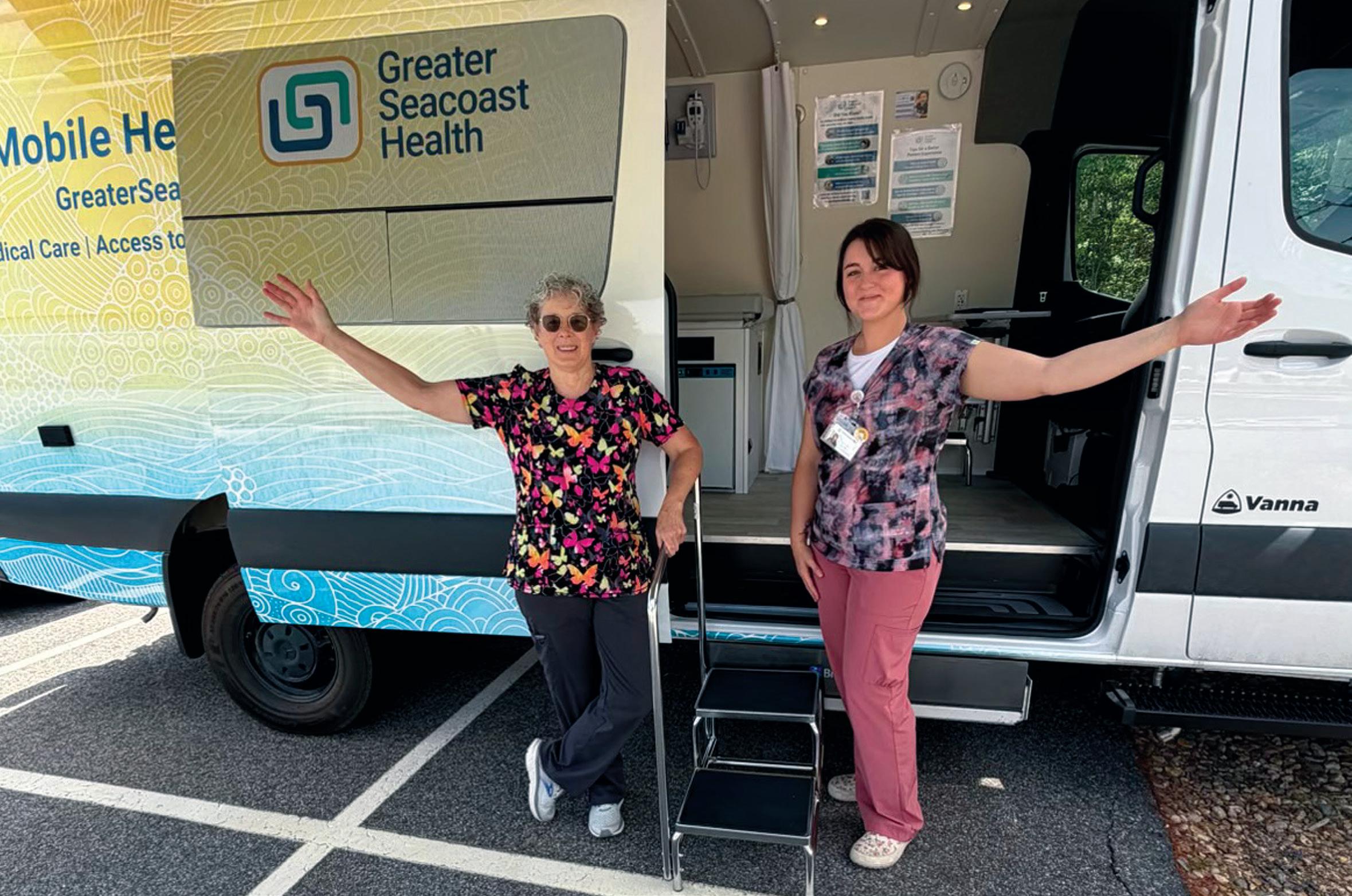
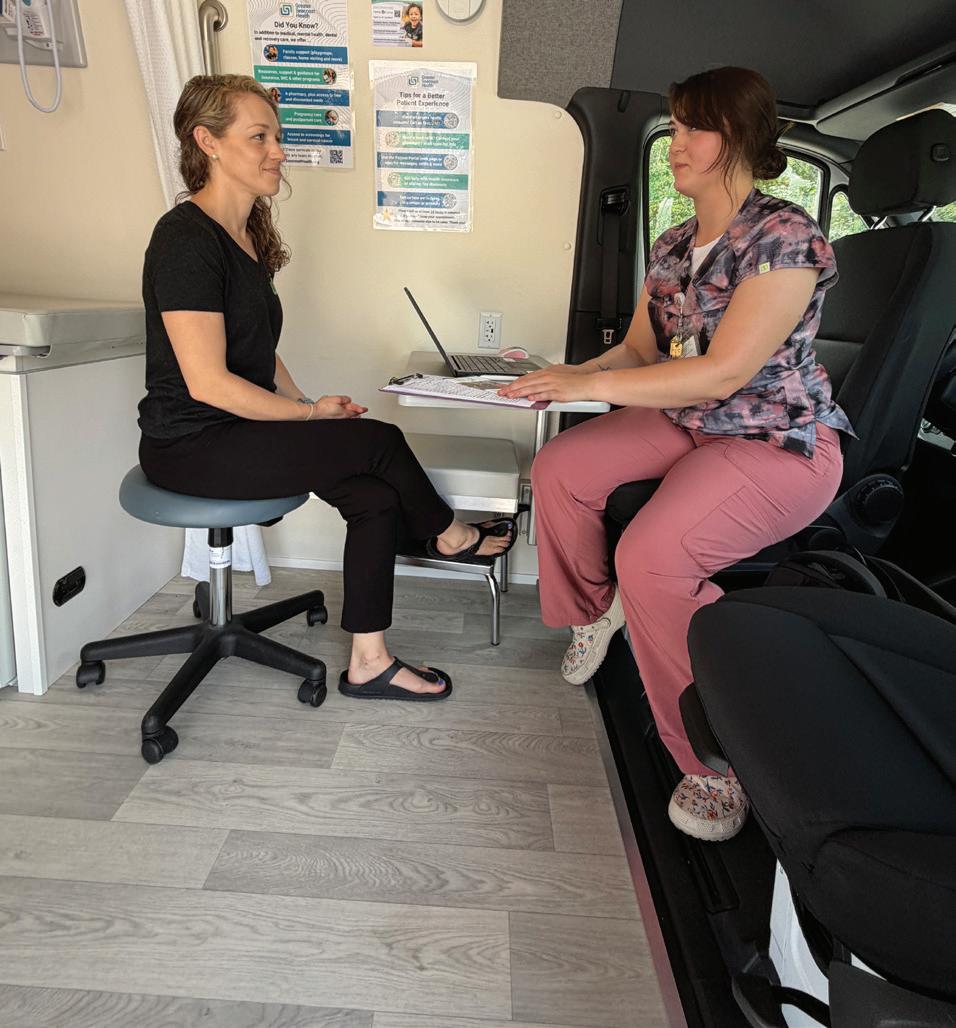
Greater Seacoast Health’s Mobile Health Clinic
Families First, based in Portsmouth, was a pioneering organization for mobile health care in the Seacoast region. Using federal grants secured to help the local homeless population, the organization launched its innovative Mobile Health Services in 2002, offering easy-to-access medical and social work services at convenient places like shelters, soup kitchens and community organizations in the Seacoast region.
Families First operated two vans, and in 2018 it merged with Goodwin Community Health, based in Somersworth, expanding its outreach. The merger is now named Greater Seacoast Health with locations in Portsmouth and Somersworth.
“When the two organizations merged, there were two vans that serviced the Seacoast community, not one designated per site though,” said Luke Mason, BSN, RN, the Mobile Health program director.
“These vans have provided us with so much opportunity, but it was time to retire them and purchase a new van. The two now-retired vans required
drivers with a Commercial Driver’s License to drive. The new smaller van does not require a CDL, is driven by staff members, and by removing the license requirement, increased our availability within our communities.”
Last year, the mobile health clinic provided services to nearly 600 patients.
“In most instances, our van sees and establishes patients, and is their first access point into our clinics,” Mason said. “As we meet these patients’ immediate needs, we develop a care plan that often connects them with our health centers so they can meet with social workers, insurance specialists and more. It’s a bridge between our direct community and providing them access to the tools our organization offers to meet their optimal health goals.”
With the new van, communities from Seabrook to Wakefield will be able to access health care.
“Increasing access to our community is offering a chance for all people to partake in holistic health care regardless of who they are, where they come from, their circumstances, etc. Our goal is to provide an opportunity to help address anyone and everyone’s individual social determinants of health care needs.”
Reasons for using the van can range from having a temporary or transitional living situation, being unsheltered, to being a seasonal worker or to being anxious in traditional medical settings.
Appointments aren’t required, and those needing health services can check out the van’s schedule online at greaterseacoasthealth.org.
“Many think health only pertains to their physical health, but we humans are so much more than that,” Mason said.
“We are like a windchime. When one piece of the chime rings, it often makes another chime. In short, our health needs are all interdependent, and here at Greater Seacoast Health, we provide care for all care needs for all people, with this belief — what better way to offer this type of care where people need it most, where they currently are.”
The services offered by the mobile health clinic include preventive health screenings, sick visits, chronic disease management, access to medications, help in applying for housing and food assistance, disability benefits, Medicare, Medicaid, other health insurance, veterans benefits and more.
It also helps with referrals to dental care, substance abuse and mental health counseling at its health centers, referrals to family support and parent education at its Family Center, and referrals to specialty care, labs and diagnostic testing.
Mason said there is a high demographic of patients seeking help to quit smoking or needing some rehabilitation help.
The van drivers are medical assistants with a per diem nurse practitioner or, at some sites, a medical doctor to see patients. The van is handicap accessible, and the restroom situation is
assessed when establishing partnerships with a site such as a fire station, food pantry or library. The van is available at each location in three-to-four-hour blocks.
Mason recalled a woman who came to the mobile health van in Portsmouth.
“She was living in a homeless shelter with her husband and one child,” he said. “She had an addiction problem, and we established primary care for her. She became pregnant and had access to the clinic’s prenatal care program.”
The woman anonymously made a statement about the mobile health van:
“The mobile health van was there when I needed it most. It opened a door I didn’t think existed for me. I was offered so many different kinds of support — not just medical care but help creating a plan that actually worked for me, my life and my situation. What I liked most was that there was no judgment. They treated me like a human being, not just a set of problems. That one visit made me feel seen and respected, and it gave me the ability and direction I needed to keep going. It’s the reason I’m where I am today.”
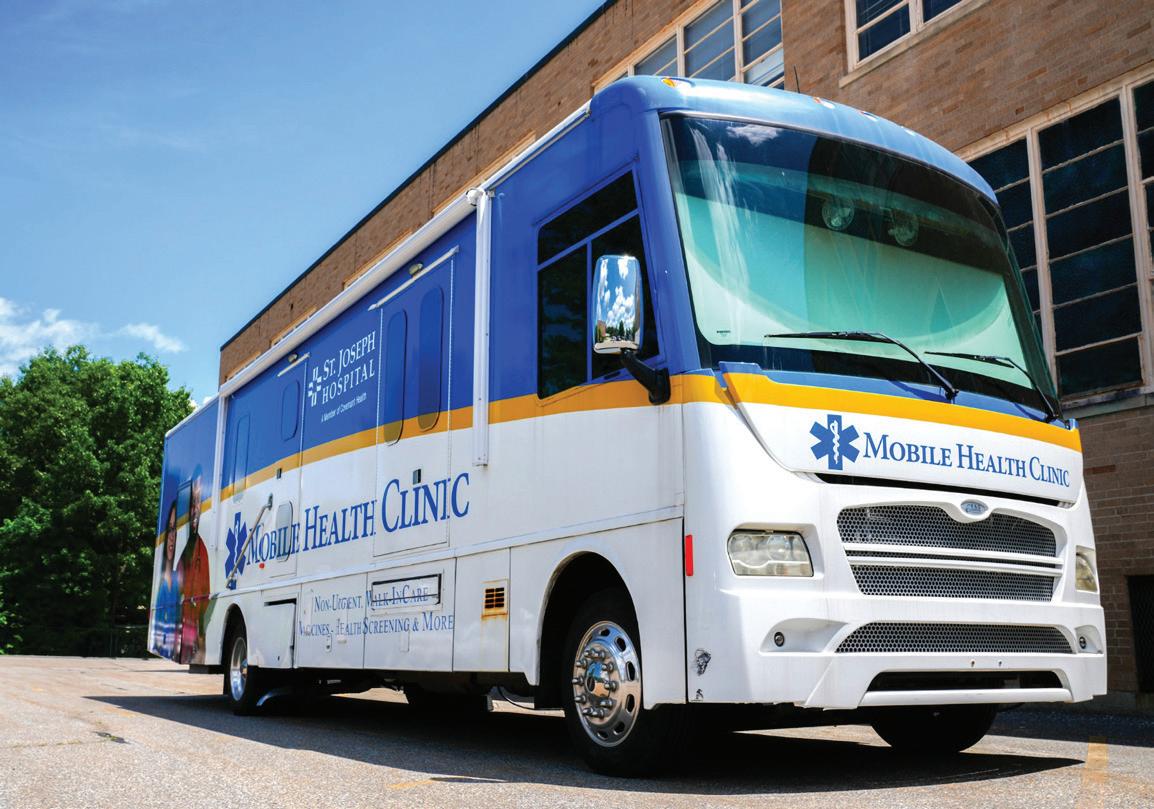
St. Joseph Hospital’s Mobile Health Clinic provides services in Nashua and surrounding communities.
(Courtesy photo)
St. Joseph Hospital’s Mobile Health Clinic
Health care is most effective when it meets people where they are.
Every week, the St. Joseph Hospital Mobile Health Clinic brings medical care directly into neighborhoods across Greater Nashua, serving individuals and families who might otherwise face barriers to accessing health care. Since launching in 2021, the clinic has become a trusted health care resource, providing compassionate, high-quality care where it is needed most.
The Mobile Health Clinic serves Nashua and the surrounding communities of Amherst, Brookline, Hollis, Hudson, Litchfield, Mason, Merrimack, Milford and Mont Vernon. Through regularly scheduled community stops and partnerships with
local organizations, the clinic delivers care in locations that are convenient and accessible for patients.
“Consistency is key,” said Rosemary Ford, system director of interpreter services and the mobile health clinic.
“Many individuals rely on knowing exactly where and when the clinic will be available, making it easier to seek care without the transportation, scheduling or logistical challenges that often prevent people from visiting a traditional medical office.”
The clinic posts its schedule at stjosephhospital.com/mobile-health-clinic.
The clinic also works closely with community partners to respond to emerging needs. During the winter months, for example, the team partners with Nashua Public Health to provide health care services at the Nashua Warming Station, ensuring vulnerable community members have access to care during the coldest time of the year.
One of the Mobile Health Clinic’s greatest strengths is its accessibility. No appointment is necessary, and walk-in, non-urgent care is available to anyone who needs it. The clinic is fully ADA-accessible and equipped with a wheelchair lift, ensuring individuals with mobility challenges can comfortably access services.
The mobile clinic is fully integrated into St. Joseph Hospital’s electronic medical record system. Every patient is registered and receives a medical record that allows for coordinated care, continuity of treatment and seamless follow-up throughout the health system.
“Most importantly, everyone is welcome,” Ford said. “Patients are cared for regardless of insurance status or ability
to pay. For individuals who are uninsured or underinsured, staff members assist with free-care applications and help connect patients with available resources. No one is turned away because of financial circumstances.”
The impact of the Mobile Health Clinic continues to grow. In 2025 alone, the clinic provided care to more than 1,500 patients and experienced an 81% increase in registered patient visits. Those numbers reflect more than growing demand; they reflect the trust that has been built within the community.
Not every interaction begins with a medical concern. Sometimes health care starts with a simple conversation, a blood pressure screening, or an opportunity to step inside the clinic and meet the team. The Mobile Health Clinic places a strong emphasis on outreach, relationship-building and education. For individuals who may have experienced barriers to care in the past, building trust is often the first and most important step.
The team also distributes essential items such as water, snacks, hygiene products, seasonal clothing and socks to individuals in need. These small acts of kindness often open the door to larger conversations about health, wellness and available community resources.
“The clinic truly functions as a doctor's office on wheels, featuring two examination rooms and a patient registration area,” Ford said. “Patients commonly visit for sick visits, wound care, chronic disease monitoring, preventive screenings and point-of-care testing.”
Services include blood glucose testing, respiratory illness testing, pregnancy testing, HIV screening, vaccinations, medication management and health education. Providers can also prescribe medications and coordinate follow-up care when needed.
While the ultimate goal is to connect patients with a primary care provider, the Mobile Health Clinic often serves as a vital health care lifeline for individuals facing transportation challenges, housing instability, financial hardship or other socioeconomic barriers. By bringing care directly into neighborhoods, the clinic helps ensure that health care remains within reach for everyone.
A key component of the clinic’s mission is ensuring meaningful access to care for individuals from diverse backgrounds. Through on-demand audio and video interpreter services available in more than 240 languages, patients can communicate with qualified medical interpreters in real time. This allows individuals and families with limited English proficiency to actively participate in health care decisions and better understand their treatment options.
“The Mobile Health Clinic is equally committed to providing culturally responsive care,” Ford said. “Team members recognize that effective health care extends
beyond language alone. By understanding and respecting the cultural backgrounds, health beliefs and lived experiences of the people they serve, providers can deliver care that is more personalized, effective and meaningful. This approach is especially important when working with underserved populations, including immigrant, refugee, Black, Latino and other diverse communities throughout the region.”
The clinic does not currently provide dental services but works closely with community partners to connect patients with organizations that can provide dental care and related support. Donor contributions, grant funding and collaborative relationships help sustain and expand the clinic’s services, allowing the team to bring health care where it is needed most.
“Every day, the Mobile Health Clinic demonstrates what health care can look like when it is accessible, compassionate and community-centered,” Ford said. 603
• Greater Seacoast Health Mobile Health Van: Regularly visits locations like the Community Action Partnership of Strafford County (CAPSC) in nearby Dover. It provides accessible, walk-in medical and social work services for those facing barriers to health care.
• St. Joseph Hospital Mobile Health Clinic: Operates a fully licensed mobile clinic in the Greater Nashua area staffed with nurse practitioners and nurses for non-urgent, walk-in health care.
• Merrimack Mobile Medical Care: Based in Windham, this provider offers in-home urgent care visits and accepts insurance plans such as Aetna, Humana and United Healthcare.
• Lamprey Health Care: Operates mobile medical vans in the region (including Newmarket) to provide care, street medicine and outreach to local vulnerable and homeless populations.
• DOT Mobile Health: Provides on-site occupational health services, including DOT medical exams, drug testing and alcohol testing at your location anywhere in NH.
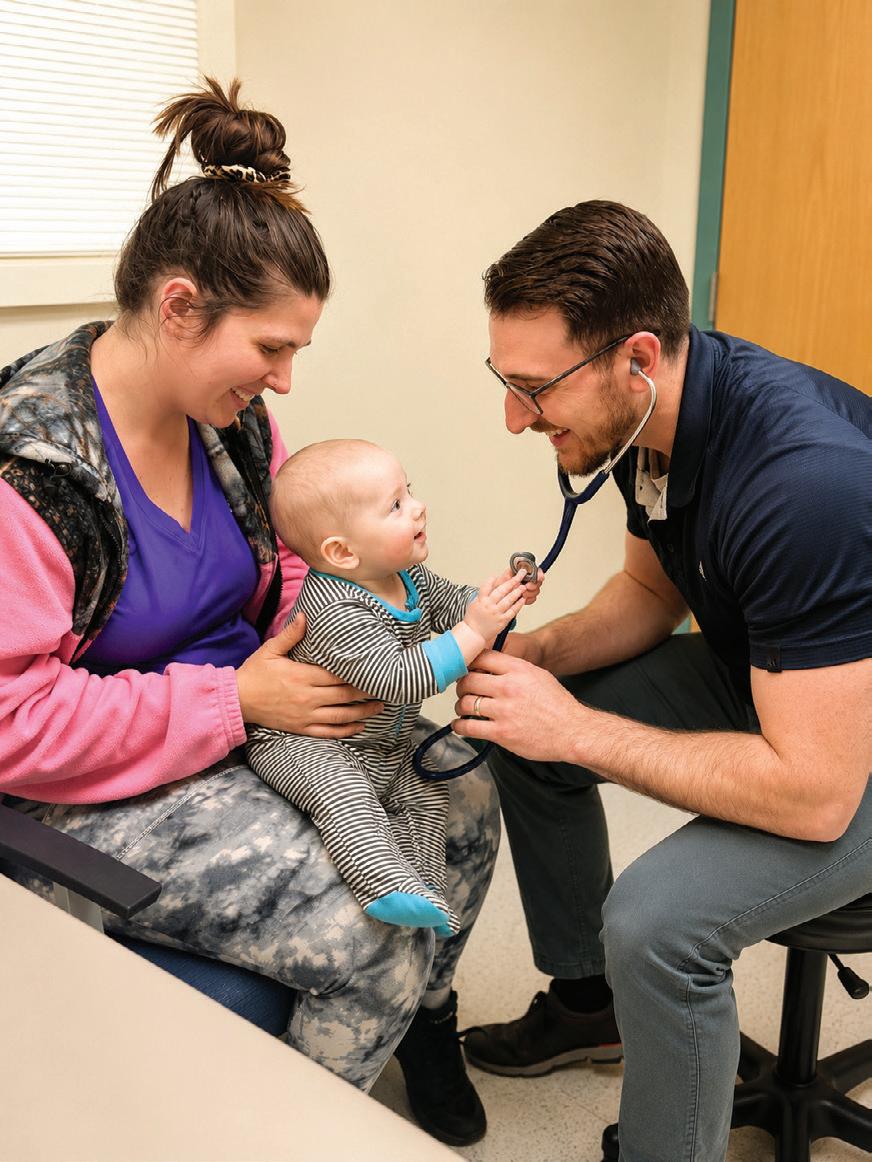
At HealthFirst, we’ve built our practice on something simple: every person deserves to be treated with compassion, respect, and dignity.
From a baby’s first checkup to helping adults stay healthy and supporting patients through every stage of life, we’re proud to provide high-quality, compassionate care close to home. As we celebrate 30 years of serving central New Hampshire, we’re honored to continue caring for generations of families—today and for years to come.
The Community College System of New Hampshire (CCSNH) has long worked to bridge the career education with the state’s workforce needs. With the recent approval of more than $6.7 million in year-one funding from the Centers for Medicare & Medicaid Services’ Rural Health Transformation (RHT) program — and up to $37.7 million over five years — CCSNH announced in a press release that it is advancing the governor’s GO-NORTH initiative through a statewide Healthcare Career Guidance Hub (HCGH) Initiative.
Key components of the Healthcare Career Guidance Hub Initiative include:
• Establishing four regional hubs focused on health care careers, partnering with CCSNH’s seven colleges.
• Leveraging existing strong health care programs, employer and educational partnerships, and flexible learning formats.
• Defining and building clear career pathways from high school to hire. Building on a proven apprenticeship model.
• Providing students with career guidance, training pathways, certifications, pre-apprenticeship and apprenticeship opportunities, and job placement support.
“CCSNH is excited about the opportunity the Rural Health Transformation grant brings to NH. This initiative represents exactly the kind of coordinated, forward-thinking approach we need to address New Hampshire’s health care workforce challenges,” said Kristine Dudley, CCSNH director of workforce development. “Too often, individuals interested in health care careers face unclear pathways or barriers to entry, while employers struggle to find qualified talent. The Healthcare Career
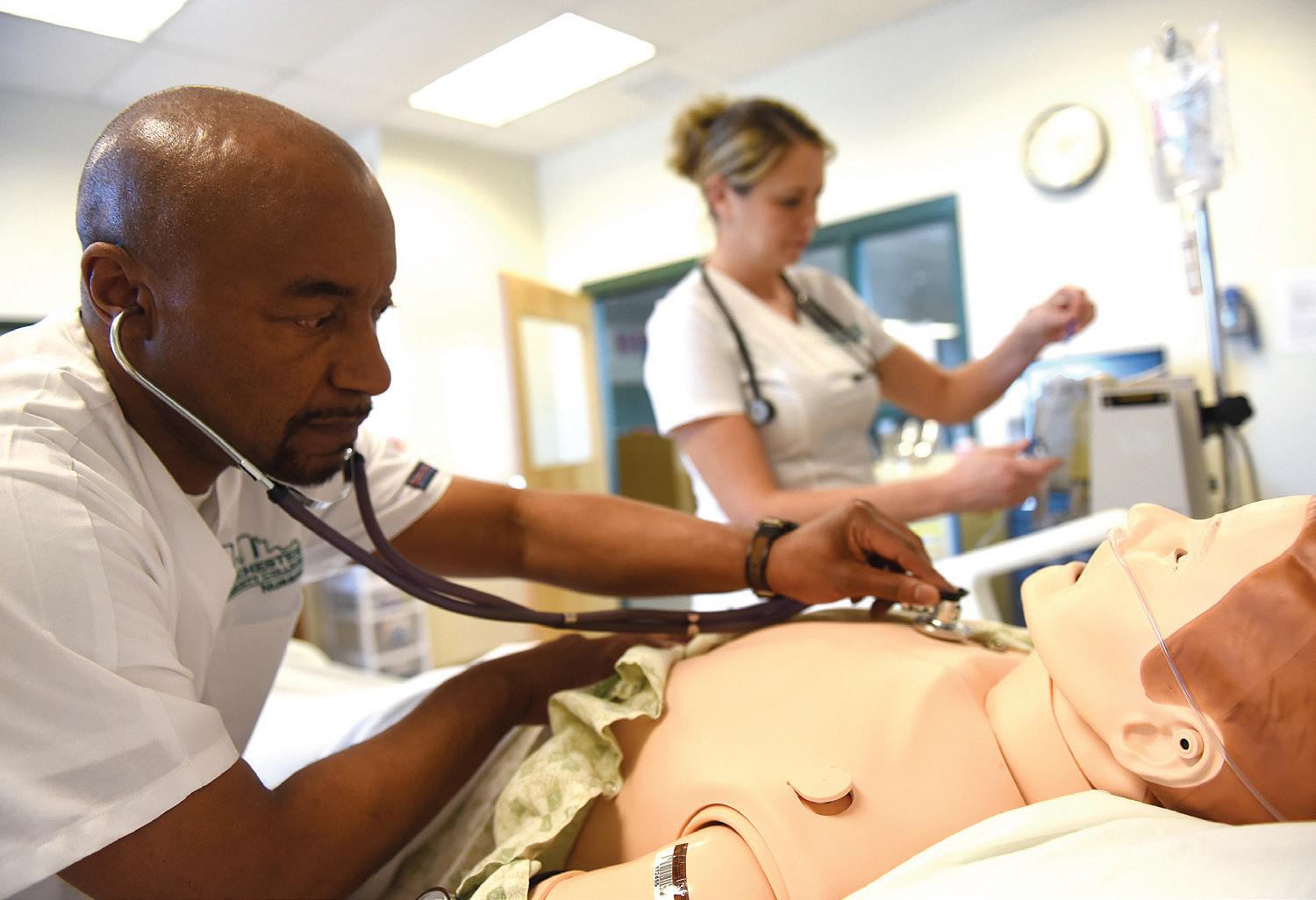
Guidance Hub Initiative brings these pieces together.”
The U.S. Bureau of Labor Statistics says the health care and social assistance job markets are projected to add roughly 5.2 million jobs nationally between 2024 and 2034, an 8.4% growth rate, which is driven by an aging population and rising chronic conditions, making it the fastest-growing sector in the U.S. economy.
“By expanding access to short-term credentials, increasing capacity in academic programs, strengthening apprenticeship models and building clearer pathways from high school to employment, CCSNH is not only preparing more individuals for in-demand health care roles, but also helping ensure our rural communities have the skilled workforce they need to thrive,” Dudley said.
The HCGH initiative addresses key workforce challenges, including limited awareness of diverse health care roles,
unclear career pathways for entry-level workers, and mismatches between student demand and program capacity in high-interest fields.
Over five years, CCSNH aims to double annual credential attainment to serve more than 1,200 students and expand capacity in high-demand fields such as nursing, allied dental health and paramedic medicine.
New Hampshire received roughly $205 million total from the federal government late last year through the federal Rural Health Transformation Program and expects to receive similar sums each year until the program concludes in 2030.
“Our team has worked closely with CMS, DHHS, our rural providers, workforce partners and community organizations to build a budget that is accountable, practical and focused on results,” said Donnalee Lozeau, director of GO-NORTH, in a statement. 603



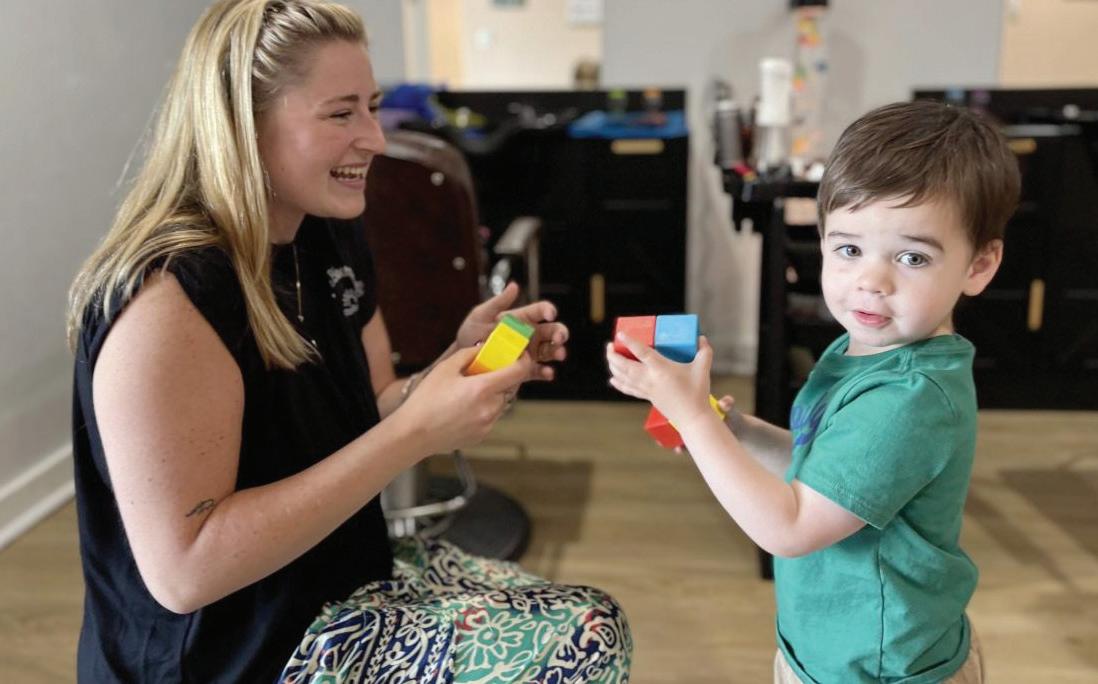
David Morgan had taken a nap in the car. It was an hour drive from his home in Rochester to Little Bloom Studio in Concord. As David and his mother, Erin, walked in, he rubbed sleep from his eyes then immediately squirmed in his mother’s arms, itching to explore the colorful toys abounding in the space.
Owner Lanni McGrath got down on her knees to play with him. They tossed a ball back and forth, explored the place’s different nooks and crannies and stood together before the light-up fish tank. McGrath kept her shears close by but knew the haircut would happen in its own time. First, she wanted David to get acclimated to the space and develop a sense of comfort around her. David struggled at typical hair salons, his mom said. He didn’t enjoy sitting still and ended up fussing to the point of tears. So when she heard about Little Bloom, designed to be sensory-friendly and geared towards neurodiverse children, she knew they needed to try it.
As McGrath alternated between stacking blocks with David in one corner by a small trampoline and trimming portions of his brown hair, his mom looked around the studio and saw that it was “really unique, and in a wonderful way.”
At Little Bloom, families can book appointments for the time interval they believe their child will need, so the service is customizable, McGrath said. Her background as an applied behavior analysis therapist and paraprofessional working one-on-one with children lends itself perfectly to understanding her young clients.
In the weeks since Little Bloom opened in mid-April, McGrath has met scores of new kids and worked to build their trust in her and the space she’s created. Everything in the studio is designed to destimulate the experience, from silent haircutting tools to calming paint colors on the walls. Parents even fill out a questionnaire ahead of time so McGrath can prepare for whatever best meets their child’s needs. Families also have the option to do a studio visit before the actual haircut appointment to help get acclimated.
“(It’s) very individualized, which is nice,”
said McGrath. “I don’t think a lot of people have patience when it comes to certain stuff like this,” she said.
— Rachel Wachman/Concord Monitor
Cristofer Ortega-Varela spent about a year at the Strafford County Jail, waiting, as his petition challenging the legality of his detention worked its way through the New Hampshire U.S. District Court. But he says he never had the chance to stand in front of a judge.
“I never had court. So I literally waited all that time,” he said. “You don't really see the world the same after you get out of a place like that. You really just come out of a place like that completely different.”
Immigration officers had stopped Ortega-Varela while he was driving through Manchester in early 2025. He was deported in April, and his case was eventually dismissed.
Ortega-Varela’s habeas corpus petition is one among more than 200 that have been filed in New Hampshire U.S. District Court this past year.
New Hampshire, like the rest of the country, has seen these filings skyrocket as the Trump administration detains more immigrants but immigration courts hold fewer bond hearings.
The sheer number of filings can put a strain on detainees, attorneys and the courts. These habeas corpus petitions made up just 1% of cases in New Hampshire's federal district court in 2024, but made up 27% of cases in May, as lawyers and detainees try to use them to get a bond hearing.
For Ortega-Varela, a 21-year-old from Honduras, his habeas petition didn’t result in his release.
Now, he’s living with relatives in Honduras and trying to stay positive as he tries to get his papers in order, get his phone back and find a job while he figures out a way to get back to his New Jersey home. Despite the outcome, Ortega-Varela said he’s grateful for his lawyers.
Lawyers say filing these petitions is a way for detainees to get due process, but they add pressure to high caseloads.
In Brandon Ladebush's case, these petitions account for most of his work. The Dover-based immigration lawyer estimates he’s filed between 30 and 40 habeas cases this year.
“We've seen a whole wide array of cases come down through our Board of Immigration Appeals that have basically stripped away the rights of individuals present in the United States to seek a bond hearing just directly with the court,” Ladebush said. “These people are eligible for bond, but the immigration courts are not following it. So it's necessitated a large amount of these cases to still be filed in federal court.”
— Lau Guzman/NH Public Radio
A Republican effort to keep transgender people out of restrooms, sports teams and other spaces in New Hampshire that align with their gender identity has again been stymied in the State House’s corner office.
Gov. Kelly Ayotte vetoed Senate Bill 552, sometimes called a “bathroom bill,” on June 19. The bill would create exceptions to New Hampshire’s 2018 Law Against Discrimination, which legally protects people from discrimination on factors such as race, religion, age and “gender identity.” The bill would allow business owners to prevent transgender people from entering the restroom or locker room not associated with their sex at birth, sports teams to keep transgender girls and women off female teams, and jails and prisons to categorize
inmates by sex at birth. It doesn’t require business owners, sports teams, and jails and prisons to do so, but it does give them the option.
“I have continued to ask the Legislature to address this issue in a thoughtful, narrow way while protecting the privacy, safety and rights of all Granite Staters,” the Republican governor wrote in a veto message. “Unfortunately, there is minimal difference between this bill, the bill I vetoed earlier this year, the one I vetoed last year, and the one vetoed in 2024 by Governor Sununu. Trying the same thing again isn’t going to get a different result. For this reason, I have vetoed Senate Bill 552.” Ayotte was referencing the fact that this is the fourth time this type of bill is being vetoed.
— William Skipworth/NH Bulletin
Tuesday mornings are special for Tom Piezzo. He gathers his stack of books and heads to the memory care unit at Epsom Health Care Center, where a small group of residents awaits. Piezzo, director of the Epsom Public Library, spends the next half hour reading books to individuals experiencing memory loss as part of an initiative piloted by the State Library through the organization Reading2Connect.
their minds. The books, created by a gerontologist and a speech pathologist, have a simple structure: No recall is required from page to page, with each book centering around a general topic rather than containing a story with a throughline. Images are key, too, in eliciting engagement from the residents.
Ever since Piezzo first began reading with the residents at the start of November, Cindy Pickard, the activities director at Epsom Health Care Center, has seen these interactions have a positive impact on those who participate. Each resident has the opportunity to read aloud to the group. For those who are nonverbal or find themselves unable to read that day, Piezzo gives them the chance to interact with the material in a different manner.
“I just hold the book and read and point
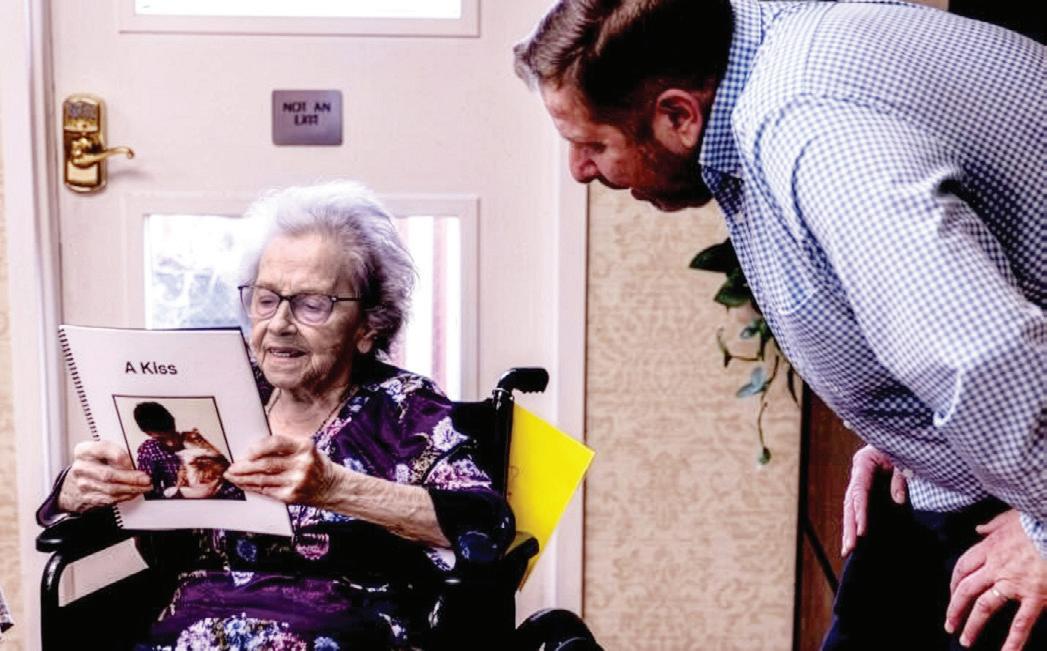
Epsom Library Director Thomas Piezzo listens as Epsom Manor resident Lorraine Therrien reads one of the books to fellow residents and staff on Tuesday, November 25, 2025.
the words as we go to see if that triggers any recognition, and also just to make sure that they’re still included,” he said.
“From the library’s perspective, (it’s) an underserved population that really has no access or options for library programming, and we’re minimal in terms of traditional library services, so this is a way to address that deficiency,” Piezzo said. Reading2Connect centers around connecting people with memory loss to reading material designed to stimulate
Over the next several months, Piezzo will continue reading with the residents of the Epsom Health Care Center before reporting back to the State Library, at which point the materials will be collected from him and distributed to other libraries in New Hampshire for the same purpose and possibly also be made available to patrons to check out.
— Rachel Wachman/Concord Monitor
New Hampshire is one of the healthiest states in America. So why doesn’t everyone get the memo? New Hampshire loves a good ranking.
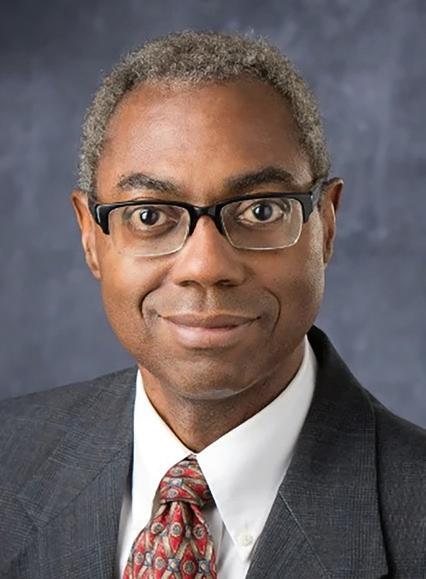
BY JAMES MCKIM
We're frequently told we're one of the safest states, one of the best places to live, one of the most educated states and — perhaps most impressively — one of the healthiest states in the country. Granite Staters wear these rankings like a well-worn fleece jacket: comfortably and with great pride.
And to be fair, the numbers support the bragging rights. We have long life expectancies, low rates of chronic disease and access to some of the best health care systems in the nation.
But here is a statistic that should give us pause: While New Hampshire has the lowest infant mortality rate in the United States, Black infants in New Hampshire are approximately 40% more likely to die before their first birthday than the state average.
That's the challenge with averages. They tell us how the state is doing, but not necessarily how all Granite Staters are doing.
The average temperature in New Hampshire might be pleasant in June, but that doesn't mean you won't find snow on Mount Washington. Likewise, the average health of New Hampshire residents tells only part of the story. For many Black and Brown residents, the state's celebrated health outcomes are not showing up with the same consistency.
In other words, New Hampshire may be getting an A in health, but some of its communities are still waiting for the study guide.
The statewide report card has an equity problem
New Hampshire's overall health rankings look fantastic from 30,000 feet. Unfortunately, people don't live at 30,000 feet. They live in neighborhoods, communities and health care systems that don't always provide equal opportunities for health and wellness.
Data from the New Hampshire Department of Health and Human Services show persistent disparities in health care access and outcomes among racial and ethnic groups. While communities of color continue to grow across the state, they often face greater barriers to obtaining preventive care, mental health services and culturally responsive treatment.
Think of it this way: If a restaurant boasts that 99% of customers loved their meal, the remaining 1% still matters, especially if the same groups of people keep getting served cold soup.
Or, to put it another way, New Hampshire's health rankings are a little like saying the average person in a room is 6 feet tall. If one person is 7 feet tall and another is 5 feet tall, the average may look great, but somebody is still struggling to reach the top shelf.
One area where disparities become impossible to ignore is maternal health.
Nationally, Black women are more than three times as likely to die from pregnancy-related causes as white women. Here in New Hampshire, maternal health outcomes are generally strong, but racial disparities still exist. According to New Hampshire's Maternal Mortality Review Committee, Black and African American women represented 12.5% of pregnancy-related deaths reviewed by the state despite accounting for a much smaller percentage of the population.
While the total number of maternal deaths in New Hampshire remains relatively low, the disparity reflects a troubling pattern seen across the country.
Let's pause for a moment and acknowledge how absurd this is.
We're capable of performing robotic surgery, replacing hips and carrying tiny computers in
our pockets that can instantly tell us the batting average of a Red Sox backup catcher from 1987. Yet we're still struggling to ensure that every mother receives the same quality of care during pregnancy and childbirth.
That's not a technology problem; that's a systems problem.
Chronic disease doesn't care about rankings
Health inequities don't stop at childbirth.
Communities of color in New Hampshire experience higher rates of chronic disease and face greater barriers to preventive care than white residents. COVID highlighted this disparity. Public health organizations point to factors such as transportation challenges, language barriers, lack of culturally responsive providers, workforce shortages and economic inequities as contributors to these outcomes.
These are often called the "social determinants of health," which sounds suspiciously like a term invented specifically to make people's eyes glaze over during a PowerPoint presentation.
What it actually means is simple: Your health is influenced by much more than what happens in a doctor's office.
Can you find affordable housing? Do you have reliable transportation? Is healthy food available nearby? Can you take time off work to see a doctor? Can you find a provider who understands your culture and experiences? These factors influence health outcomes just as much as prescriptions and procedures.
It's difficult to prioritize preventive health care when you're trying to decide whether to miss work, lose income or pay the electric bill.
cost of inequity: spoiler alert — it's expensive
Some people hear the phrase "health equity" and assume it's merely a social issue. It's actually an economic issue, too.
When people don't have access to preventive care, they often end up needing
more expensive emergency care. When chronic diseases go untreated, health care costs rise. When workers become ill or die prematurely from preventable conditions, businesses lose productivity and families lose income.
Researchers estimate that racial and ethnic health inequities cost the United States more than $420 billion annually through excess medical spending, lost productivity and premature deaths. That's billion — with a "B."
New Hampshire may be small, but we don't receive a discount on those costs. Every preventable hospitalization, unmanaged chronic illness, missed workday and premature death shows up somewhere: in insurance premiums, health care spending, workforce shortages and taxpayer-supported services. Health inequity isn't just a moral issue. It's a budget issue.
Imagine discovering that a bridge was slowly crumbling and saying, "Well, fixing it sounds expensive." Sure. But waiting until it collapses is usually more expensive.
Fortunately, there are people and organizations across New Hampshire refusing to accept these disparities as inevitable.
The New Hampshire Minority Health Coalition has spent more than three decades working to eliminate health disparities and improve outcomes in underserved communities. Through advocacy, education, community partnerships and data-driven initiatives, the Coalition has become one of the state's most influential voices for health equity.
The New Hampshire Health & Equity Partnership brings together nonprofits, public agencies, health care providers and community leaders to tackle the root causes of poor health. Their work recognizes a simple truth: Health begins long before someone walks into a doctor's office. Housing, transportation, employment, education and economic opportunity all play a role.
The Foundation for Healthy Communities and the NH/VT Bi-State Primary Care Association have also made health equity
a statewide priority, helping hospitals and health care systems identify disparities and develop strategies to better serve increasingly diverse populations.
Meanwhile, organizations such as the NAACP, Black Lives Matter New Hampshire and the NH Black Women’s Health Project have elevated issues like Black maternal health, helping ensure that conversations about health care include the voices and experiences of the communities most affected.
Local public health departments are joining the effort as well. The Nashua Division of Public Health and Community Services, for example, has explicitly identified health equity as a community priority and has worked to address the impact of systemic racism on health outcomes.
Together, these organizations are helping New Hampshire move beyond simply being one of the healthiest states and toward becoming one of the healthiest states for everyone.
The good news is that improving health equity doesn't require anyone to lose.
This isn't a pie. Nobody gets a smaller slice because someone else receives quality prenatal care, preventive screenings or culturally responsive health care. When disparities decrease, health care costs fall. Workforce participation increases. Families become more stable. Communities become stronger. Everyone benefits.
Which brings us back to those rankings New Hampshire loves so much. Being one of the healthiest states in America is a remarkable achievement. But if we're going to keep celebrating that title, we should make sure it applies to everyone who calls New Hampshire home.
After all, the goal isn't to be the healthiest state on average. The goal is to be healthy enough that every resident gets the memo. Or, as we might say in New Hampshire, "Live Free and Die" should never mean "Live Healthy — But Only If You're Lucky."603
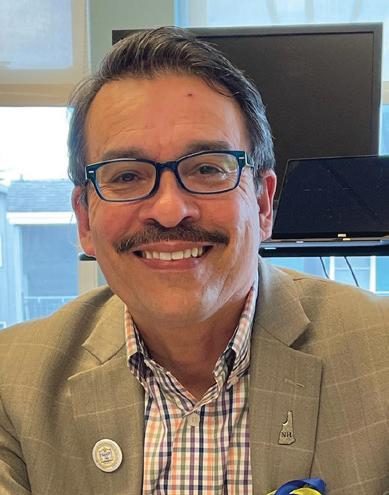
For the last several years, those of us not hiding under rocks have had some encounter with artificial intelligence. The fact is that what started in the 2010s as a concern about what artificial intelligence might mean for the future of mankind in earnest and deep conversations quickly evolved into a race that gave us ChatGPT in November of 2022.
Since then, numerous companies beyond the pioneers, like DeepMind (now owned by Google), OpenAI and Anthropic, have joined the wild west of the artificial intelligence revolution. It would be an understatement to say that generative AI will become the most transformative technology the world has ever seen. It will impact every aspect of our lives, how we see ourselves and how we progress as a species.
about most of us) how they are being used and impacted by the rapid development and deployment of this immensely powerful technology. What does this mean for them?
It could mean better access to education, as tools are developed to ensure educational efficiency and equity across communities, regardless of income and resources. Health care outcomes could improve as the pipeline for health research and medicine is ramped up and compressed, leading to more and better products, resulting in better health outcomes in our Black and Brown communities.
If you have an idea as a Black or Brown innovator, your cost of access to information and tools for getting into business may decrease while meeting with entrepreneurial success may increase.
HERE ARE A FEW GOOD BOOKS TO GET YOU STARTED.
• Empire of AI by Karen Hao
• If Anyone Builds It, Everyone Dies by Eliezer Yudkowsky and Nate Soares
• Code Dependent –Living in the Shadow of AI by Madhumita Murgia
• Artificial Intelligence –A Guide for Thinking Humans by Malanie Mitchell
As I have become informed about what it may mean to our future, my mind wonders at the potential benefits to ourselves and our blue planet. How will birth, rearing, education, health, travel, ecology, culture, equity and justice, to name a few, be improved for 8+ billion people on Earth?
What scares me the most, despite the potential for positive human evolution with the use of this new technology, is that the founders and creators of AI and the small number of people throughout the world who are key stakeholders, researchers and investors have little to no clue where AI will lead humankind. They have admitted to this concern repeatedly.
Once AI reaches superintelligence — at the point where machine learning will overtake human intelligence — what happens? Will machines still need humans, and might this mean the end of us? Speak to any scientist or futurist, and you will get different answers, but the bottom line is that they don’t know. We’ve never had technology that we might lose control of to itself. As companies like Google, Microsoft, Amazon, Meta and their global counterparts compete for their share of this highly lucrative market and its products, few of its leaders, researchers and investors are calling for regulation or a pause to better understand where we are heading.
Within all this chaos and uncertainty exist the Black, Brown and marginalized communities that have yet to fully understand (can probably say this
Finally, as Black and Brown communities continue to fight for more structural accountability within social and justice systems, AI’s data sets may more easily and readily highlight discrimination in housing, education, policing and sentencing, as well as health services. Analytic, diagnostic and predictive AI tools may help Black and Brown communities understand some of their most common life-threatening ailments such as hypertension, cancer, asthma and diabetes.
On the negative side, we must understand that AI is a flawed technology, because large language model trainers are fed historical information that is often biased and discriminatory toward Black and Brown communities. This can’t be overemphasized enough.
In many cases, AI uses bad data or makes up stuff on its own. From criminal activity to health outcomes, our communities have been historically, structurally and from a policy perspective cast and twisted in so many negative ways. Already, AI tools have been developed to police marginalized communities in more intensive and repetitious ways than communities that have access to more and better resources. Large language models already highlight one major flaw in their misidentification of Black and Brown people involved in criminal activity when they have not been involved in such activity.
We’ve all seen the prognostication about how AI will transform the labor market. Every sector of the economy will suffer job losses, but what worries me
is that Black and Brown communities will be disproportionately impacted. Manufacturing and middle- to low-skills repetitive jobs, three areas where AI will have a huge impact, are already seeing losses. These include clerical, customer service, bookkeeping, food service, retail services, security and warehouse jobs to name a few. In all these areas, Black and Brown people are disproportionately represented.
Now, AI development and deployment are entering a new phase in the building of large, resource-intensive data centers that will power AI 2.0. Since the rich don’t want these monstrosities in their neighborhoods, guess where they will be placed? You may soon see them coming to poor communities throughout the United States and the world, where these centers will place a heavy burden on water and electricity resources.
We are in the midst of what could be the most consequential transformation in
human society with the development of AI. What direction it takes will be up to us.
The creators of this technology are struggling to define a direction and, exponentially more worrisome, they do not know how it will ultimately impact humanity, either over the next 10 years or in the longer term.
If Black, Brown and marginalized communities do not engage with this technology as researchers, business owners, investors, policy formulators, regulators and regular folks who are being impacted, we will miss the opportunity to share in the biggest wealth creator in history and will be left behind.
We must have a place at the table so that we may impact the ethical use of AI through policy formulation and regulation that lead to finding ways to positively impact Black and Brown communities. Otherwise, we will be used by this transformation in so many negative ways without reaping the immense benefits.
If there ever was an obligation to get
engaged, it is now. We have an obligation to inform ourselves and ask relevant questions about not just what it means to us now and how we can employ it to our benefit, but what it will mean to our futures.
As we approach the mid-term elections, let’s ask our elected officials where they stand on AI and how they see it evolving. What are their concerns? What policy formulations are they pursuing? How will they support the transition of the labor market? Do they have thoughts on upskilling those who will be displaced? The last one being the most critical question.
Most of us, even the experts, do not know where this is all heading. The more reason for the average person to be curious, ask questions and get engaged as the rapid evolution of AI and transformation of our world and our lives continues unabated. There is no more important task ahead of us: for the sake of humanity and the many species that can’t speak for themselves. 603
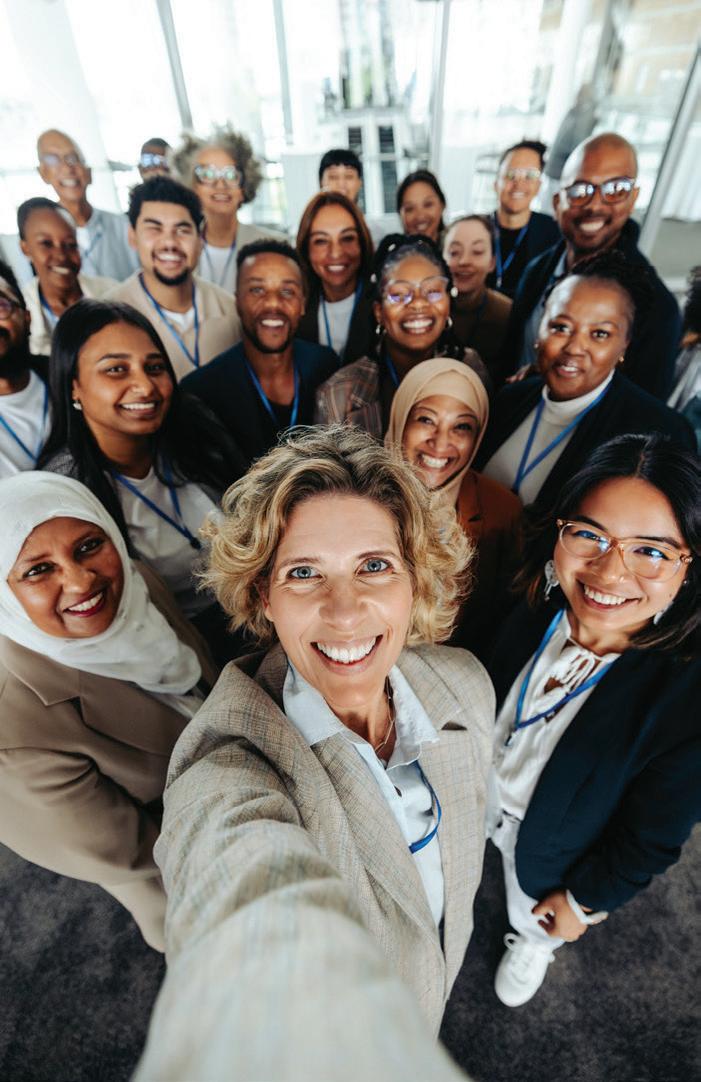
At NH Mutual Bancorp our values drive a culture of respect, inclusion, and belonging where we embrace the uniqueness that each individual brings forth to our organizations. Values are at the core of who we are; they drive innovation, foster collaboration and a respect for diverse thought and unique experiences. Ultimately, they ensure that individuals feel welcomed and empowered to succeed.
We are committed to dedicating our efforts, including leadership focus and financial investment, to promoting equal opportunity across our work environments and within the communities we serve. Doing so makes us a stronger, more successful, and sustainable organization over the long term.
www.nhmutual.com/careers/
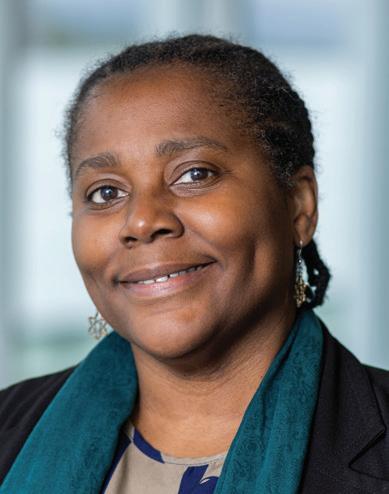
BY OLÚWATÓYÌN AJÍBOLÁ ASOJÓ, PHD • •
The American Cancer Society (ACS) wants to hear Black women’s voices. ACS launched a groundbreaking population cohort study — VOICES of Black Women — underscoring ACS’s commitment to better understand why Black women are impacted by cancer disparately.
VOICES of Black Women is designed to clarify the multilevel drivers of incidence, morbidity and mortality of cancer and other health conditions among Black women in the United States, so we can learn how to collectively address them.
Black women have historically been underrepresented in research, and VOICES directly engages Black women. VOICES is recruiting Black women ages 20 to 60 who have not been diagnosed with cancer (except basal or squamous skin cancer) and who live in the United States. With a goal to recruit 100,000 Black women,
Black women have a 38% higher mortality risk from breast cancer, are 12% more likely to die from cancer, and are twice as likely to die from uterine cancer as white women.
VOICES will be the largest cohort-based study of cancer risk and outcomes among Black women in the United States.
Enrollees will provide informed consent and answer questions about behavioral, environmental and lived experience through periodic short surveys delivered via a secure online portal. No medication, clinical testing, treatment or lifestyle changes are part of the VOICES of Black Women study.
As a 15-year breast cancer survivor, I cannot participate in this study, so I’m using my voice to make a difference. As a cancer researcher, VOICES ambassador and Black woman, I encourage eligible Black women to participate in the VOICES of Black Women study so we may collect vitally needed data. VOICES will be trans-
formative in clarifying why Black women have some of the highest death rates and shortest survival rates in the U.S. for many cancers.
Black women have a 38% higher mortality risk from breast cancer, are 12% more likely to die from cancer and are twice as likely to die from uterine cancer as white women.
VOICES will also inform advocacy efforts to initiate, support or expand evidence-based health policies to improve Black women's health for generations.
For more than a century, the American Cancer Society has been dedicated to pursuing better outcomes for every cancer, every life. Today, more people are surviving cancer than ever before, but there is still work to be done. The American Cancer Society has conducted some of the world’s largest and most impactful cohort studies to better understand how cancer develops in a population. American Cancer Society cohort studies also identify cancer risk factors and how to improve both outcomes and survivorship. Notable groundbreaking discoveries in cancer science from American Cancer Society population studies include linking cigarette smoking to lung cancer, linking obesity to risk of early death and linking regular aspirin use to lower risk of colorectal cancer, among many others.
Having worked for numerous world-class universities and medical schools from Nebraska to Texas and New Hampshire, I know the importance of representation in research. VOICES provides a unique opportunity for Black women to be represented in cancer research and aligns with my advocacy efforts as the associate director for Inclusive Excellence at the Dartmouth Cancer Center.
You can use your voice to support this groundbreaking study to help Black women detect cancer earlier and improve survival rates.
To learn more, visit voices.cancer.org. Those interested in learning about the study or becoming a VOICES ambassador should contact Amy Deavitt at amy.deavitt@cancer.org. 603
AUG. 18

This is a collaborative peer support group for transgender, nonbinary and gender nonconforming (TGNC) teens in grades 9 to 12. No sign-up is required, and meetings will be held at Kilton Public Library in West Lebanon on the third Tuesday of every month from 6 to 7:30 p.m. nhoutright.org
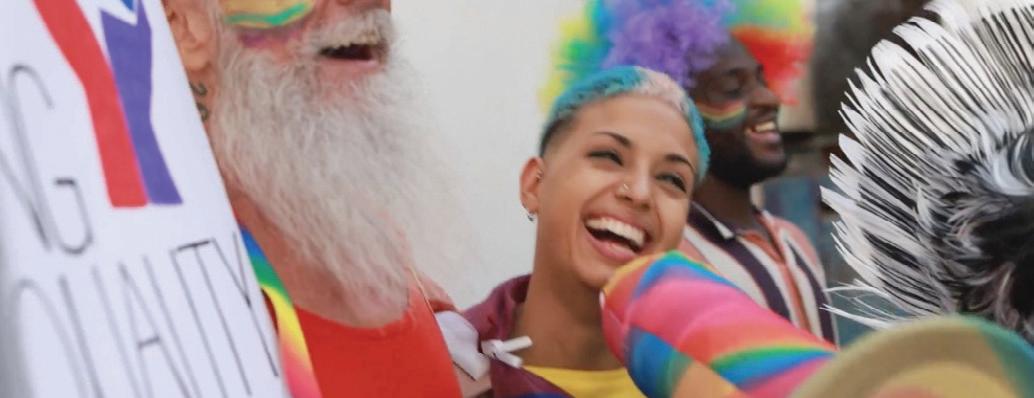
AUG. 20

Peer support group for middle and high school LGBTQIA+/ allied youth in Nashua. Meetings occur the third Thursday, 6 to 7 p.m., of each month at 58 Lowell St. in Nashua, NH, and no sign-up required. nhoutright.org
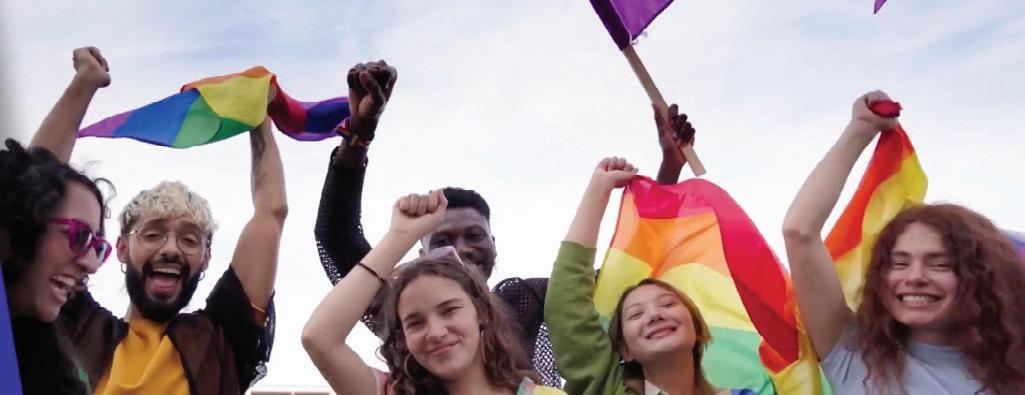
AUG. 22

Understanding the circumstances and dynamics that create true belonging and inclusion is crucial to developing NH workplaces and communities that excel and thrive. This eight-week course is a self-paced learning experience. nhbsr. org/event/welcoming-workplaces-and-communities
AUG. 22 and SEPT. 5
Jenny Tibbets will guide walkers through the rich Black history of Dover. Learn about the people enslaved by the Waldron family and how the cotton mill fueled slavery in the South. Meet at the Woodman Museum, 15 Summer St., Dover. blackheritagetrailnh.org
AUG. 28
This group is open to LGBTQ+ youth and allies in grades 7-12. Group meets at Community Campus in Portsmouth from 6:30 to 8:30 p.m., and there is no sign-up required. nhoutright.org
AUG. 28

New York’s legendary drag icon Lady Bunny returns to the stage with an outrageous theatrical comedy concert that lovingly spoofs Broadway’s biggest hits. “Bunny Butchers Broadway!” is a laugh-outloud blend of musical theater parody, glamorous costumes and razor-sharp comedy. Show is at 8 p.m. with doors at 7 p.m. at the Bank of NH Stage, 16 S. Main St., Concord. ccanh.com

AUG. 29, SEPT. 26, NOV. 27
Noir Nights is hosted by the BWINH Collective as a consistent gathering space for the Black community in New Hampshire and surrounding areas. This is a space for us to come together, eat good, laugh loud, let the kids play and enjoy culturally relevant fun as a community. It is held from 6 to 9:30 p.m. in Manchester. There is a suggested donation of $20, but no one will be turned away due to cost. bwinhsc.com/meetups
SEPT. 20
Enjoy live music, 150 vendors including artisans, food trucks, circus performances, drag acts and more. keenepride.org
SEPT. 7
The Health Committee works to advance the Chapter’s mission through accelerating the well-being of Black people and all persons of color. New members are always welcome. The committee meets on the first Monday of the month at 7 p.m. on Zoom. If you have interest in joining, please contact Tracy Strombom at tstrombom@ wsfca.net. naacpmanchesternh.com
SEPT. 24
General Meeting open to all members of the Manchester Branch of the NAACP. It is held from 6 to 7 p.m. at MCAC, 340 Granite St., Manchester, and online on Zoom. naacpmanchesternh.com
3
SEPT. 12
Join JerriAnne Boggis, executive director of the Black Heritage Trail of NH, and Hancock writer Eric Aldrich to see where the Due family lived and farmed in Hancock. This bus tour will visit the Society for the Protection of NH Forest’s Welch Family Farm and Forest to see the former homestead of the Due family, who were described in the census as a free family of color. Also living here was Jack Ware, enslaved as a child in Africa and later became free. Meet at the Hancock Town Offices, Hancock. blackheritagetrailnh.org
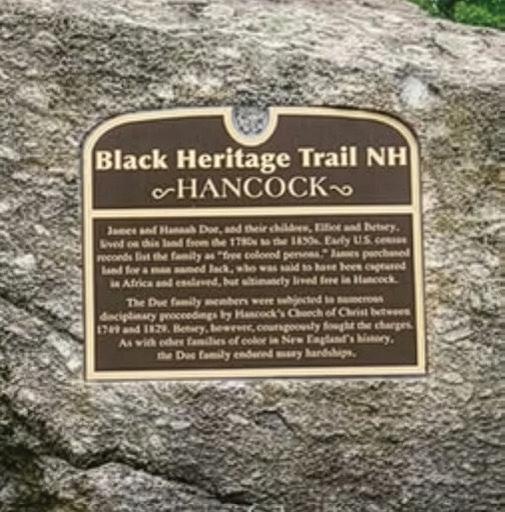
Black Lives Matter NH will hold its 7th annual gala from 6 to 10 p.m. at Rivermill at Dover Landing. The purpose of the gala is to celebrate Black excellence with Black performances, Black food, Black music, Black art; a space to love and appreciate Blackness in the purest and unapologetic form. The proceeds of our event go to our Mutual Aid Fund. This invaluable fund has helped our Black community by giving back over $200,000 for needs such as rent, utilities and basic family needs. The Mutual Aid Fund is our radical act of caring for each other, while simultaneously working to change our communities. blmnh.org
To submit multicultural or changemaker events for the next issue, send them to editors@603diversity.com
Since 1975, BAYADA has been helping children, adults and seniors get the care they need where they feel safest: at home. As a national leader in home health care, our mission is simple: to help people live with comfort, independence and dignity through compas sionate, expert care. From nursing and therapy to personal care and support with everyday tasks, our team works oneon-one with clients and families to meet their unique needs.
Manchester, NH
603-413-7100
Visit: bayada.com
Contact: cslack@bayada.com
Wellness services, resources and events — because the world is hungry for places where people remember how to care for one another. they say it takes a village; let us be yours.
Wellness Village NH 660 Mast Road Manchester, NH
603-935-9556
New Hampshire's premier destination for restorative head spa treatments, relaxation-focused skincare, electrolysis and IPL Laser treatments. Our spa is designed to rejuvenate your body, refresh your spirit and
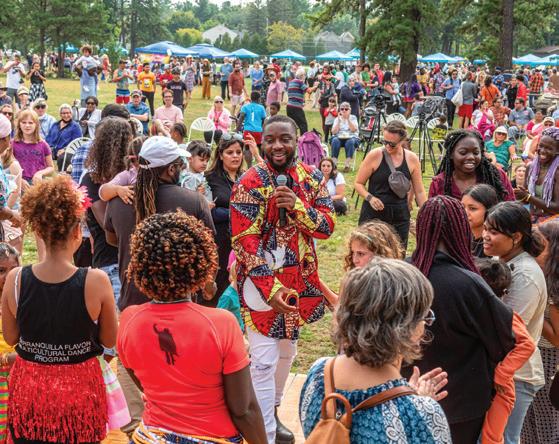
stories are shared and connections are made. Our goal is to deepen understanding, and remind us of the beauty that exists in our differences. Join us! Sunday, September 20, 2026, 11 a.m. to 5 p.m., Keach Park, Concord, NH
Visit: wellnessvillagenh.com
Contact: wellnessvillagenh@gmail.com
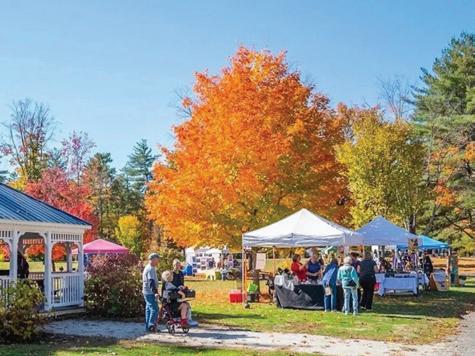
The Concord Arts Market is a unique collective of artists, makers and creatives in Concord, NH. We host yearround markets and pop-up events, bringing together local talent for engaging and creative experiences. Enjoy live music, grab a bite from food trucks, try hands-on activities and shop one-of-a-kind goods — all while supporting independent artists and makers and boosting the local creative economy. Check out our website for our continually updated schedule of events.
Visit: concordartsmarket.org
Contact: hello@concordartsmarket.org
Visit: concordmulticulturalfestival.org
Contact: connect@concordnhmulticulturalfestival.org
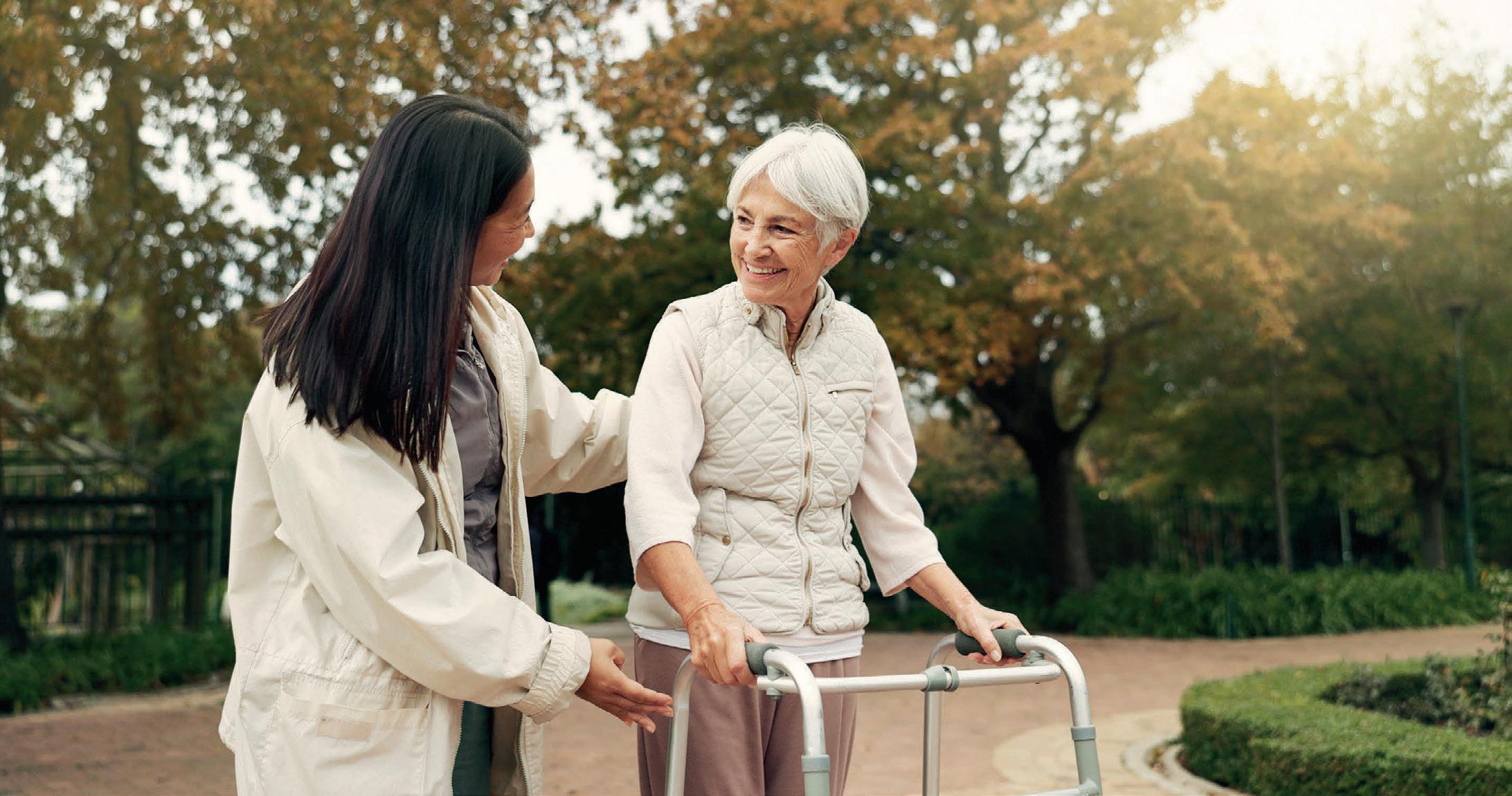
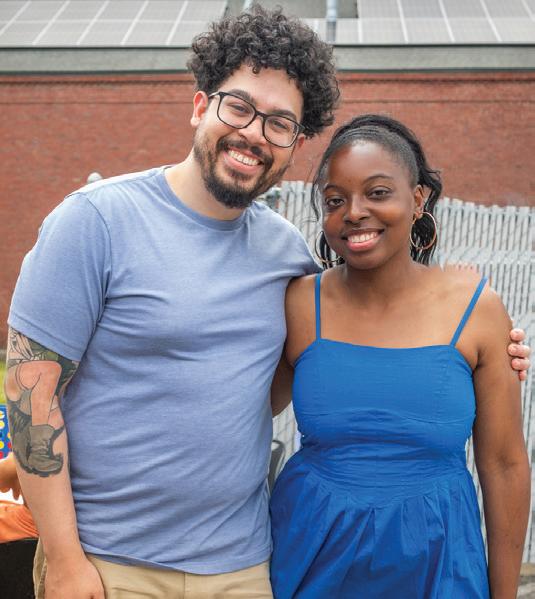
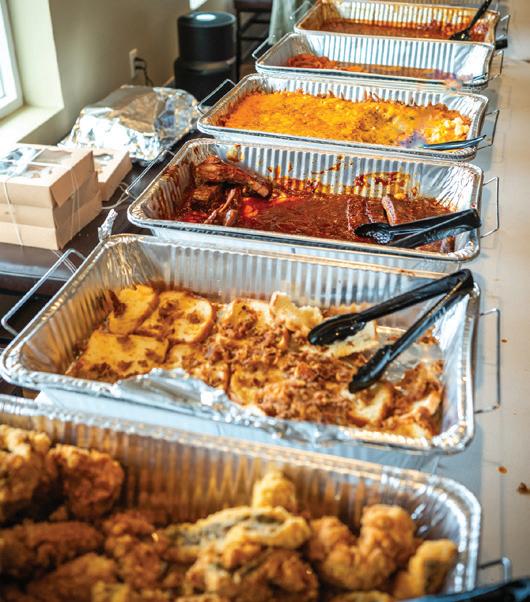
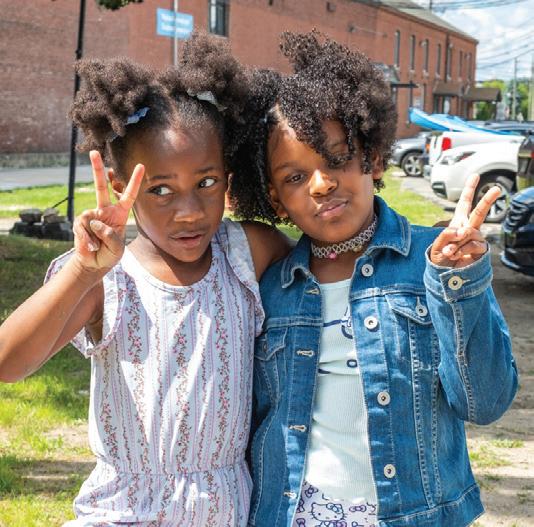
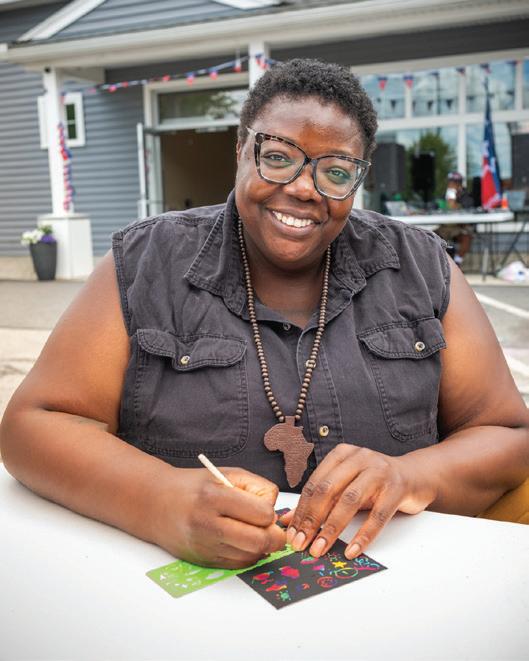
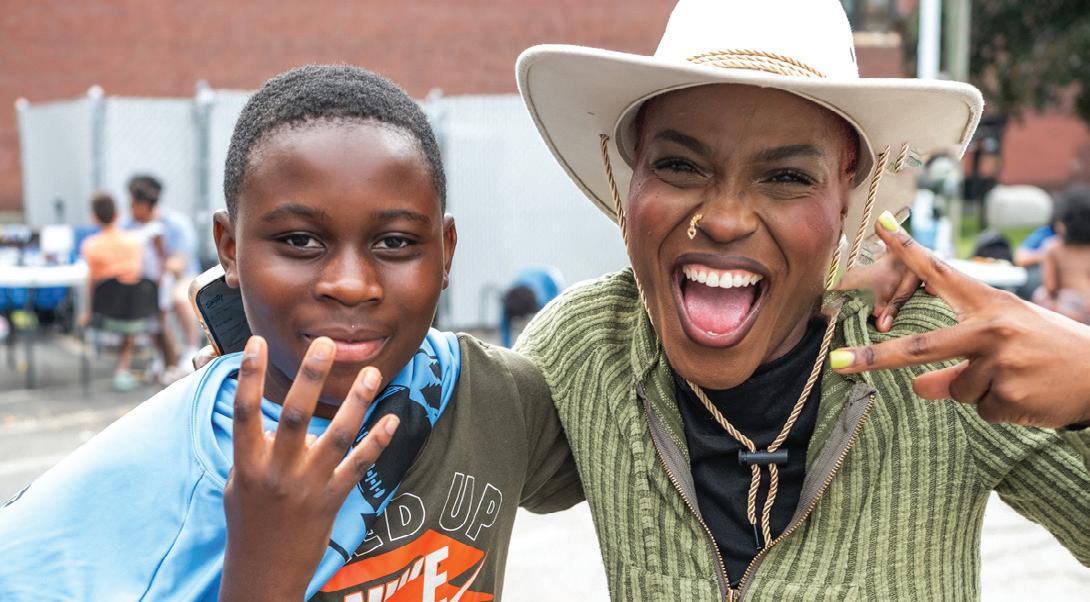
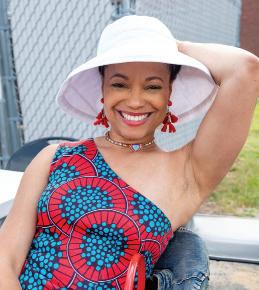
mong several Juneteenth celebrations and commemorations in New Hampshire, the BWINH Collective and Black Womxn in New Hampshire Social Club gathered on June 20 in Nashua. Attendees shared stories, listened to music, enjoyed food and built community together. Juneteenth recognizes when word of emancipation and the end of the Civil War reached enslaved African Americans in Texas on June 19, 1865. 603