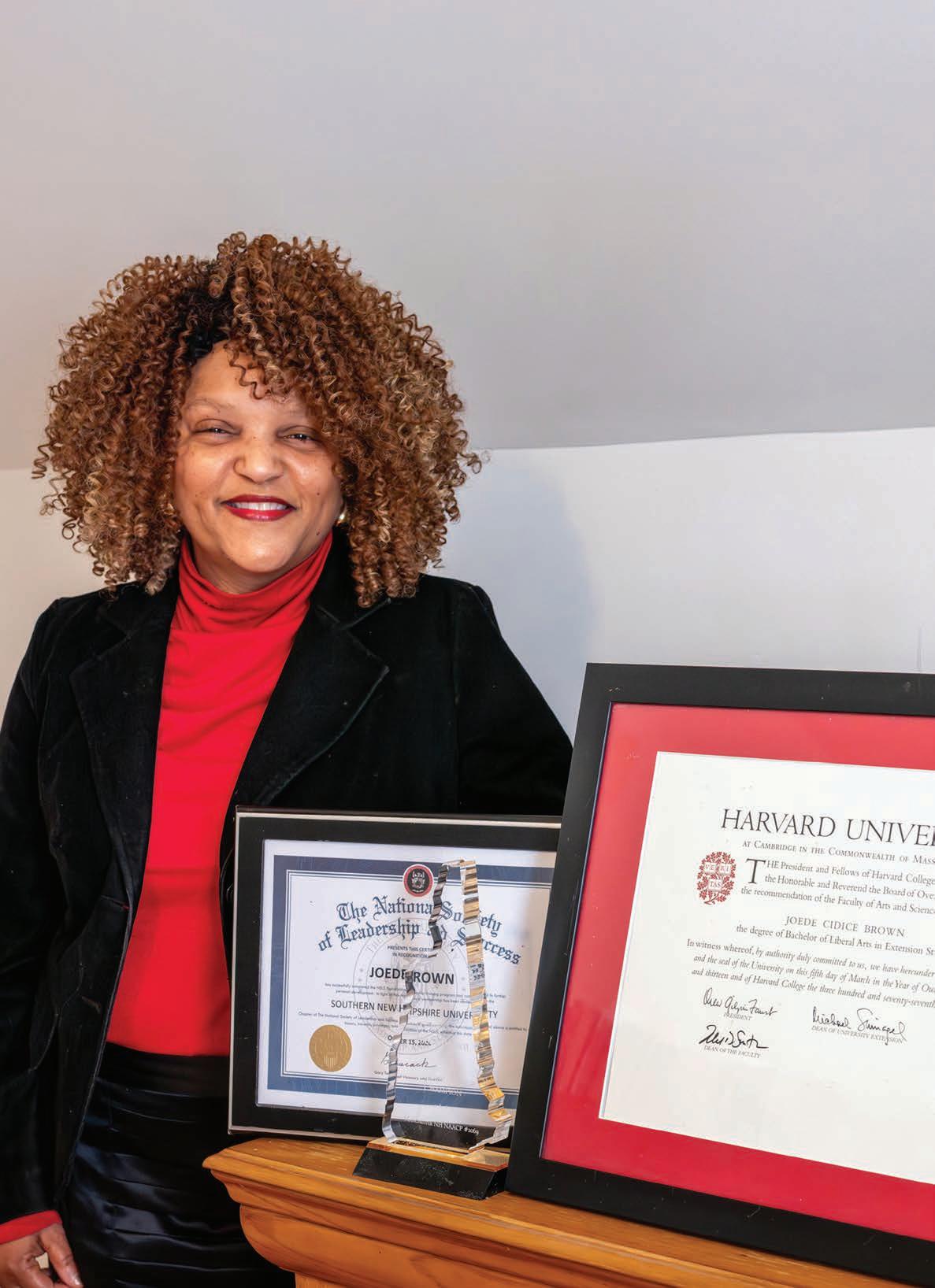
Joede Brown has built two businesses with an eye for intricacies.








Sarah Pearson EDITOR OF 603 DIVERSITY
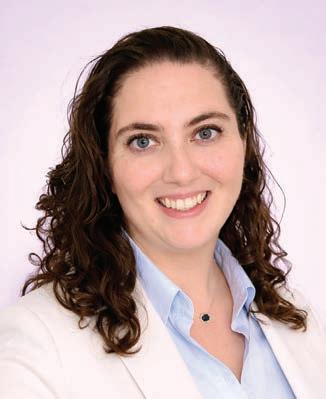
Sarah Pearson EDITOR OF 603 DIVERSITY
Spring makes the presence of change visible. Lilacs bloom early here in New Hampshire, as the rest of the natural world shakes itself out of winter’s hibernation.
In recent years, I’ve joined the spirit of spring and tried my hand at growing vegetables in a few raised beds. Sometimes I’ve been fortunate, cultivating green beans that thrive despite weeds; other times I can’t coax a single edible cucumber from the soil.
Starting something new and choosing change for yourself always comes with risks and rewards. Staying the course carries risk, too. Whether slight or substantial, every path asks something in return.
In this issue, we’re sharing stories of several people who have weighed the cost of change and made investments in themselves.
One decided to leave his home country to come to a state he’d never been to before in a way that shaped his education, career and sense of
home. Another found that by joining an organization working to improve others’ lives, she helped build a space that supported her identity.
In another story, you learn about a woman so industrious that she’s running multiple businesses at the same time. Another team of entrepreneurs created a space that blends culture, cuisine and community.
These new beginnings were not just inevitable changes, but opportunities invested in. Leadership, entrepreneurship and artisanship are choices they followed that have paid off in community, visibility and expression.
Frequent readers also may notice that this publisher’s letter space is changing. Earlier this year, Ernesto Burden was named CEO of Yankee Publishing. As we celebrate his shifting responsibilities and leadership, he’s handed this space to me. What is not changing is this publication’s commitment to amplify diverse stories across the Granite State.
As the season shifts, it reminds us to embrace the changes that fuel personal and professional growth, not just as something that happens, but as choices we make to shape stronger, more inclusive communities. 603
Contributing Photographers Robert Ortiz
Contributing Artist Richard Haynes
CEO/President
Ernesto Burden x5117 ernestob@yankeepub.com
Editor, Custom Publishing Sarah Pearson x5128 sarahekp@yankeepub.com
Managing Editor Mike Cote x5141 editors@603diversity.com
Creative Director/Associate Publisher Jodie Hall x5122 jodieh@yankeepub.com
Graphic Designer Christian Seyster x5126 christians@yankeepub.com
Senior Production Artist Nicole Huot x5116 nicoleh@yankeepub.com
Sales Executive John Ryan x5120 johnr@yankeepub.com
Director of Sales, Operations & Events Ren Chase x5114 renc@yankeepub.com
Information Manager Gail Bleakley x113 gailb@yankeepub.com 250
Manchester, NH 03101 (603) 624-1442
Email: editors@603diversity.com
Advertising: sales@603diversity.com

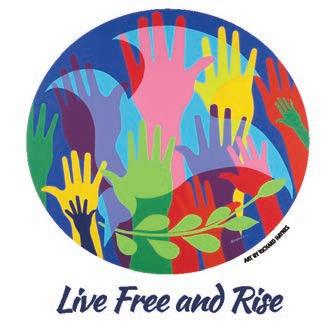
To illustrate the mission of 603 Diversity, Seacoast artist Richard Haynes has provided one of his recent designs to accompany our motto “Live Free and Rise.” We are selling T-shirts and other merchandise featuring Haynes’ design, or a design created by art student Chloe Paradis, to benefit the Manchester Chapter of the NAACP.
Visit 603Diversity.com to buy one today.


a




Everyone deserves to find their perfect place to call home, a space where they feel safe, seen, and celebrated.

We understand that for our LGBTQ+ community, this search can sometimes come with unique considerations. That’s why we’ve built our business on a foundation of genuine care, unwavering support, and a deep commitment to our community. More than just a real estate team, we actively support local LGBTQ+ organizations, because we believe in investing in the wellbeing and vibrancy of our community. We see you, we value you, we’re one of you, and we’re here to help you navigate the real estate journey with confidence and peace of mind.


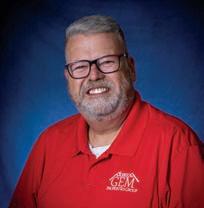
“I believe real estate is about more than just transactions— it’s about partnering with clients through major life transitions.
Whether you’re purchasing your first home, moving your family, or embracing a new chapter, I recognize the deep, multigenerational significance of this process. My promise is to treat this work as sacred and personal, focusing relentlessly on minimizing your stress and clearing the path to your goals. Ready to start your journey? Let’s navigate it together.”
Michael Jewer Real Estate Advisor & Lead Agent michael.jewer@compass.com 978-983-1580
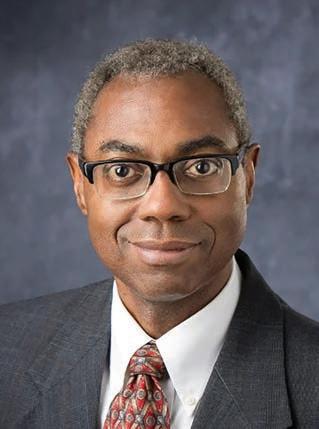
Raised in a diverse community in Boston, Massachusetts, Suzanne Laurent worked as a registered nurse for the Boston Head Start Program. She moved to Toronto, Ontario, in 1982, and unable to work as a nurse, Laurent pursued a career in photojournalism. She has been a resident of New Hampshire since 1987. She has an extensive award-winning background in journalism. She is also a juried photography member of the New Hampshire Art Association and a published poet.
James McKim, who was involved in the original planning of 603 Diversity and has written essays for past issues, serves as managing partner of Organizational Ignition. He is driven by an intense need to help organizations achieve their peak performance through the alignment of people, business processes and technology. He is recognized as a thought leader in organizational performance, the uses of neuroscience and program management.
Musician and community organizer Amara Phelps loves to engage with her city of Manchester in more ways than one: fronting her popular local rock band Cozy Throne, teaching and sharing art in southern New Hampshire, and promoting community events and efforts for local publications, including Manchester Ink Link. She was recently named Youth Social Justice Champion by the Manchester NAACP.
Primary photographer for 603 Diversity is Robert Ortiz of Robert Ortiz Photography. Ortiz began his photographic career at 15, and has chronicled everything from local weddings and events to the lives of the native peoples of the Peruvian Amazon. He lives in Rochester with his wife and children.
Emily Reily is an assistant editor for New Hampshire Group, writing features for NH Magazine, NH Business Review, 603 Diversity, and Yankee’s custom publishing division. A copy editor, former photojournalist and freelancer, she lives in Dover.
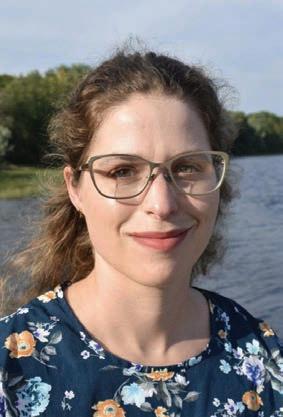
Sarah Pearson is managing editor of custom publications for Yankee Publishing, which produces 603 Diversity and many other titles. She is an awardwinning editor and journalist who previously worked for a newspaper. She is a lifelong New Hampshire resident and mother of two.
Caitlin Andrews has been a reporter and writer for nearly 10 years and has covered everything from politics to restaurant openings. She lives in Maine.
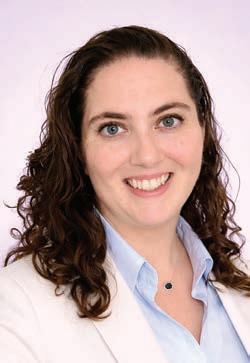
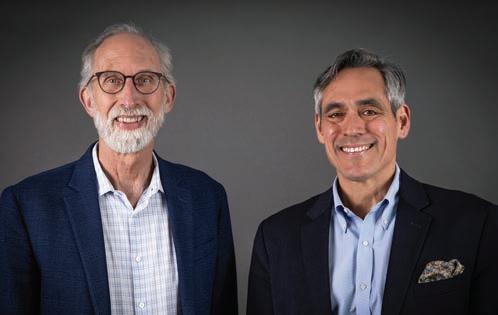
The parent company of New Hampshire Magazine has a new CEO and president who is familiar to our readers.
Ernesto Burden is taking over as president and CEO of Yankee Publishing Inc. from Jamie Trowbridge, who has served in those roles for more than 25 years.
For the past six years, Burden has led YPI's New Hampshire Group, whose titles include New Hampshire Magazine, New Hampshire Home, NH Business Review and 603 Diversity.
“Both a strategic thinker and a hands-on leader, he has a wealth of experience navigating the changing media landscape,” said Trowbridge, who is retiring but will remain on the company's board of directors.
Burden's background includes diversifying business models and managing the introduction of new technologies at media companies.
“Since the start of my career, the industry has undergone existential levels of change, but YPI has shown incredible resilience in handling these challenges,” Burden said. “I am honored to have been chosen to shepherd YPI into the future.”

Add your voice to the conversation
603 DIVERSITY accepts essays for publication consideration on matters related to diversity, inclusion and protected classes. Essays should be between 600-800 words and grounded in personal experience or expertise. Writers should live in New Hampshire or have a strong New Hampshire connection. Please email to editors@603diversity.com
Those submitting to the Essays section are not paid and are not staff members of 603 Diversity or its parent publications. Content in this section is labeled and separated from reported feature articles. The views expressed in essays are those of the writer and do not necessarily reflect the views of the magazine or its staff.
Submissions that have blatantly false statements will be rejected. Writers are encouraged to challenge ideas, but personal attacks are not allowed. The editors reserve the right to refuse content they feel does not meet our values of civil debate.
Profiles of leaders who are lifting diverse voices

603 Diversity is continuing to share stories of our neighbors in our Rising Changemakers series with two more profiles of people who are making a difference in diversity spaces of New Hampshire. Our editorial board members and contributors have shared the names of many remarkable people who have not been in this publication before. If you know of someone who deserves some spotlight, please email us at editors@603diversity.com.
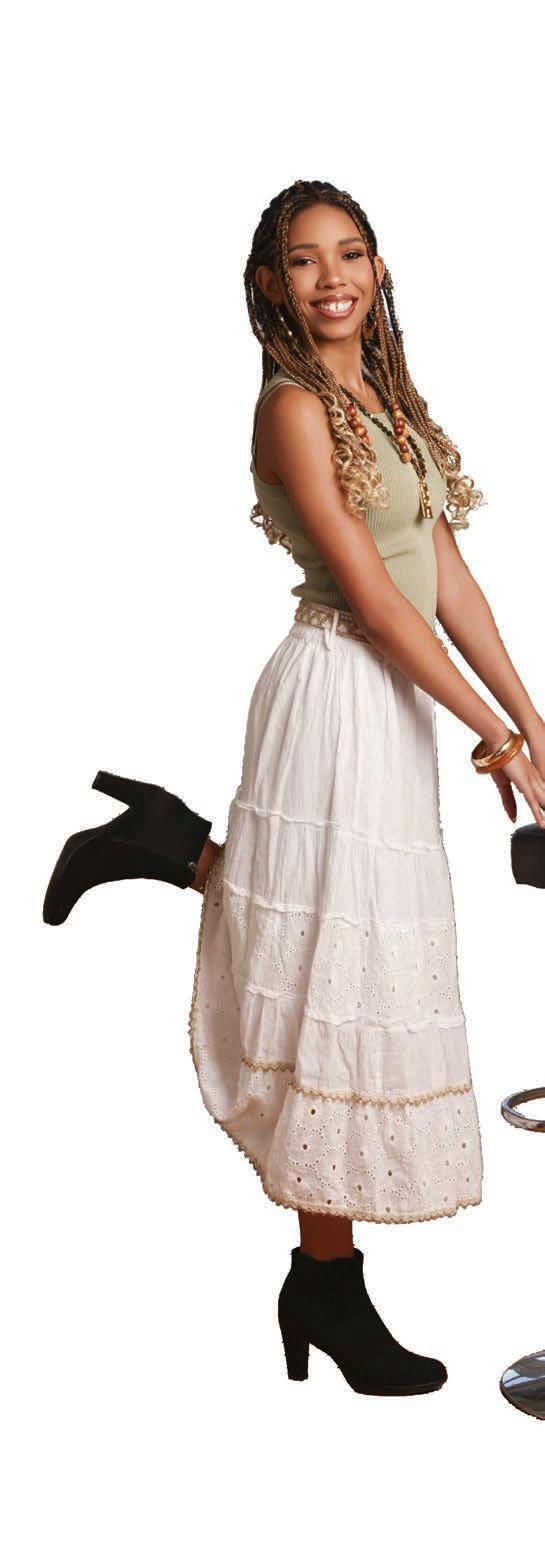
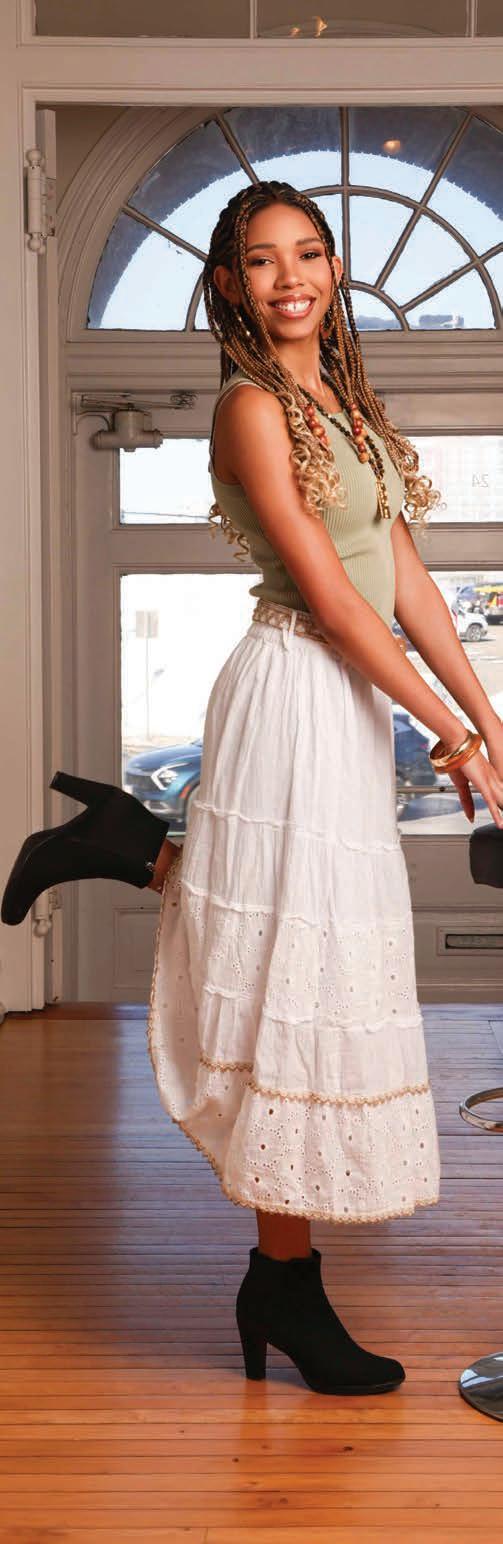


CITY: Manchester
QWhat things are you passionate about?
Verdiner: I love reading. I am very passionate about libraries. I love to read books about Black history and share what I learned with my friends. Right now, I am reading “Pedagogy of the Oppressed” by Paulo Fierr.
QYou lead the Young Organizers United (YOU) segment of the Granite State Organizing Project. What does that entail, and what things are you presently organizing around?
Verdiner: My job entails a lot of things. As program coordinator, I plan and facilitate all YOU meetings. YOU students can earn credit for participating in the program, and it is my job to record what and how they learn.
I design a curriculum for YOU that flows with whatever the current campaign is. I manage their campaign progress and guide them to reach the finish line and make concrete changes. Right now, students are working on a campaign called Better Spaces Brighter Futures, the goal of which is to get the bathrooms at all the high schools removed or brought to a functioning standard.
I teach the students the difference between a school board member and an alderman, who has the power to change what they want to change and how to access those people. I
show them the websites where they can find contact information for all their elected officials, and I show them how to write a professional email to contact those people. On top of developing their leadership, I also develop my own by attending training on organizing hosted by GSOP and other nonprofit groups
Q
How did you get involved in the organization, and what inspired an interest in this type of work?
Verdiner: I started in high school. A friend of mine invited me to a YOU meeting in my freshman year, and I have stayed with the program ever since. What initially sparked my interest was the fact that there were so many kids of color. It was nice not to be the only Black/brown person in the room, which is an experience I had a lot of in high school. What has kept me here is the value of actually making a difference in my community and in people's lives. It is so fulfilling to get to be someone's mentor, a person they look up to.
Q
What do you see as some of your successes?
Verdiner: One of my successes at GSOP has been starting the YOU Alumni Network. This is a group of high school grads who went through the YOU program and want to stay connected to the work. We meet monthly to talk about how we can continue to support the new students and some of the new issues we are facing as adults, like AI.
Q Are you involved in other groups or have special hobbies?
Verdiner: I do Brazilian jiu jitsu at the martial arts zone, and I am involved with the Manchester chapter of the NAACP. I also do modeling and photography on the side. And I like to crochet.
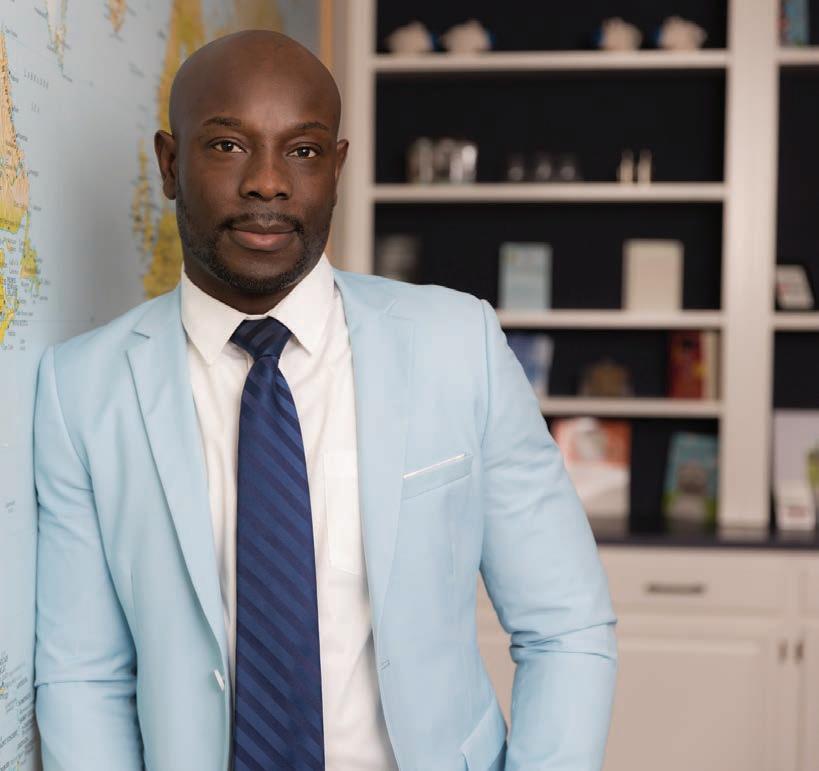
QYou came from Nigeria to New Hampshire to study and play soccer at Southern New Hampshire University. What was that experience of coming to a new country like?
Edum: It is hard to believe I have lived in New Hampshire for almost 19 years now. I got scouted in Nigeria and got offered a scholarship to come to the U.S. to study and play soccer. I had no idea where New Hampshire was.
My first impression was overwhelming. The culture, food, language and social interactions felt quite different. Adapting to American customs took some time. In Nigeria, we speak and write the “Queen’s English.” I had to adjust my spelling variation to conform to the U.S. version.
Food was the biggest culture shock for me. Having grown up in a family restaurant business, food was (as still is) a big part of me. I was used to spicy, flavorful food growing up in Nigeria. The food at the cafeteria on campus was
bland. I felt homesick, and it took quite a while for me to adjust.
Social interactions were a positive experience for me. I am generally outgoing and social. I was a bit popular on campus due to being a collegiate athlete and part of the Student Government Association and the International Students Association. I made a lot of friends and acquaintances, which expedited my adaptation to the American culture. My best friend at the time, Sean Moore (RIP) played a pivotal role in my assimilation and adaptation to the American culture — he taught me what Thanksgiving was/ meant; he was not only book-smart but people/street-smart!
Moving from Nigeria, which has a tropical climate, to New Hampshire, known for its cold winters and seasonal changes, was a significant adjustment. I was not prepared for the winter but was so fortunate and blessed by the generosity of my history professor, who rallied
my classmates to donate some warm clothing, mittens, hats and snow boots to me. Contrary to what I was told, that folks in New England were standoffish, I experienced the warmth and friendliness from folks around me — an experience I will forever be grateful for.
Studying at Southern New Hampshire University (SNHU) involved navigating a different academic system, with varying expectations regarding assignments, participation and classroom dynamics. I was used to a 1:50 teacher-to-student ratio, which made the classroom dynamic and participation challenging and taking 10 to 12 courses per semester. At SNHU, I had a 1:15 ratio and took five to six courses per semester. The classroom dynamic and participation were different. With the incorporation of audiovisuals and other technologies, education felt easier for me at SNHU. Overall, it was a very positive experience for me.
Being a part of the soccer team helped me build rapport with teammates from different backgrounds, which was very rewarding — especially since there wasn’t much diversity on campus at the time. The level of competition was different, providing an opportunity to grow as a player and teammate. One of the highlights of my collegiate career was winning the NE-10 Conference Championship — the season I scored the famous bicycle kick goal against Franklin Pierce University.
Though every individual's experience varies, my journey from Nigeria to New Hampshire for education and soccer was one filled with challenges, growth and exciting new opportunities.
QWhat contributed to your staying in New Hampshire after you completed both your bachelor’s and master’s degrees?
Edum: The main reason I chose to stay in New Hampshire after the completion of my bachelor’s and master’s degrees was my son, Deklan! I had my first child during my first year of graduate school.
I had other plans prior to his birth — once he was born, nothing else mattered to me. I chose fatherhood rather than pursuing professional soccer. If it weren’t for him, I certainly wouldn’t be in the U.S. today.
QHow did you get involved with the Manchester NAACP, and has your role with the organization changed over time?
Edum: I initially got involved with the Manchester NAACP through a friend who was already a member. I attended a few meetings and events and was drawn to the organization's mission of fighting for civil rights and social justice. Over time, I became more involved in various projects and initiatives and eventually took on a leadership role within the organization. My role has evolved from simply being a member to actively participating in decision-making processes, organizing events and advocating for change in our community. I am in my second term as the treasurer of the Manchester, N.H., branch.
QWhat do you enjoy about your job?
Edum:I enjoy the opportunity to build long-term, trusted relationships with clients and help them make confident decisions about their financial futures. A big part of my job is taking complex topics — investments, insurance, retirement, tax and estate considerations — and translating them into clear, actionable strategies tailored to each client’s goals.
I also really like the problem-solving aspect: analyzing data, markets and risk to create plans that are both strategic and practical, then refining those plans as clients’ lives and market conditions change. Seeing measurable progress — growing assets, improving protection and increasing client confidence — is very rewarding.
For over a decade in financial services, I’ve been privileged to serve individuals, families and small business
owners. I’ve seen firsthand the impact of holistic financial planning and how it has impacted various family trees and created generational wealth.
Another aspect I enjoy is leadership and collaboration. Whether it’s mentoring team members, improving processes, or partnering with community organizations to expand financial literacy and access, I appreciate being able to contribute beyond individual client relationships and help drive broader business and community impact.
QHow do you feel like you make a difference in your work?
Edum: I make a difference by helping people move from uncertainty to clarity and confidence around their financial lives. In my roles, I’m often sitting at the intersection of investments, insurance, retirement, tax and estate planning, so I can see the full picture and design integrated strategies that are truly aligned with what clients are trying to achieve. Over time, that shows up in very tangible ways — growing assets, better protection, more efficient plans and clients feeling more in control of their future.
I also make a difference through relationship-building and education. I spend a lot of time explaining complex concepts in plain language, so clients can make informed decisions instead of just “trusting the numbers.” That’s been true whether I was managing a large book of high-net-worth households at Fidelity or serving families and business owners more recently as a wealth manager and insurance professional.
Beyond individual client impact, I’ve focused on improving teams and the broader community. I’ve led and mentored colleagues to elevate client service, supported process improvements to make communications and operations more effective, and built partnerships with organizations like the NAACP and local universities to expand financial literacy and create more
diverse talent pipelines. Knowing that my work can both improve one family’s plan and help strengthen the systems and communities around them is where I feel I add the most value.
QOutside of work, what interests do you have?
Edum:: I am passionate about photography, nature, music and arts; I play the drums, keyboard and percussion. When I was much younger, in Nigeria, I used to write music and poems. I love painting and being out in nature, and cooking.
QIs there anything else you’d like to share?
Edum: One thing I’d add is that my path has shaped me into both a resilient person and a well-rounded financial professional.
I was recruited from Nigeria to the U.S. as a student-athlete, and that experience — balancing academics, leadership and adapting to a new country — built a strong work ethic, humility and an appreciation for different perspectives. Those traits still drive how I show up for clients and colleagues today.
Professionally, I’ve deliberately built a broad, integrated skill set across investments, insurance, planning and business development, and I’m continuing that journey by pursuing the certified financial planner designation. I take a consultative, educational approach: I want clients to really understand their options and feel heard, not “sold to.”
I also care a lot about inclusion and access. My work with organizations like the NAACP, HBCUs and local universities reflect a genuine commitment to expanding financial literacy and creating opportunities for underrepresented communities.
Overall, people who work with me tend to experience someone who is prepared and technically strong, but also patient, empathetic and deeply invested in their long-term success.

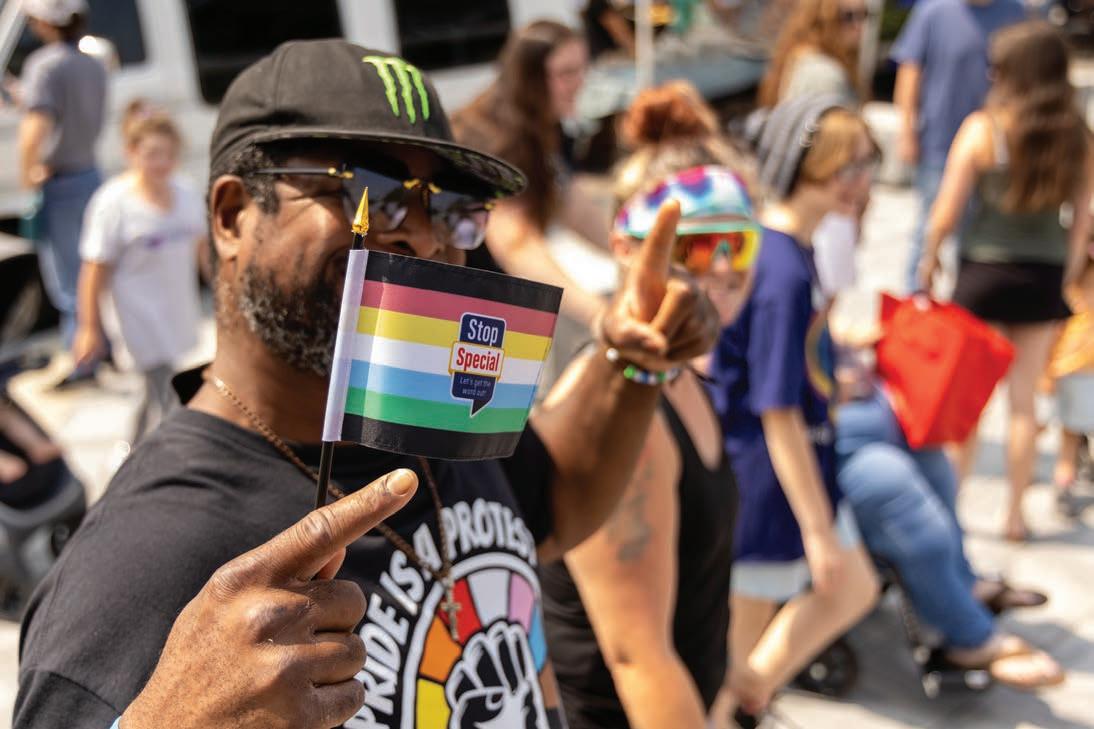
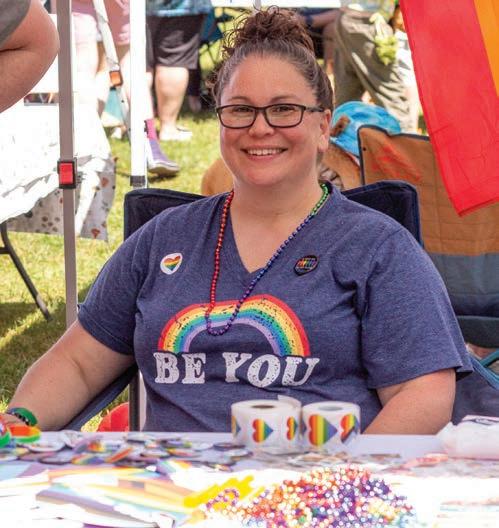
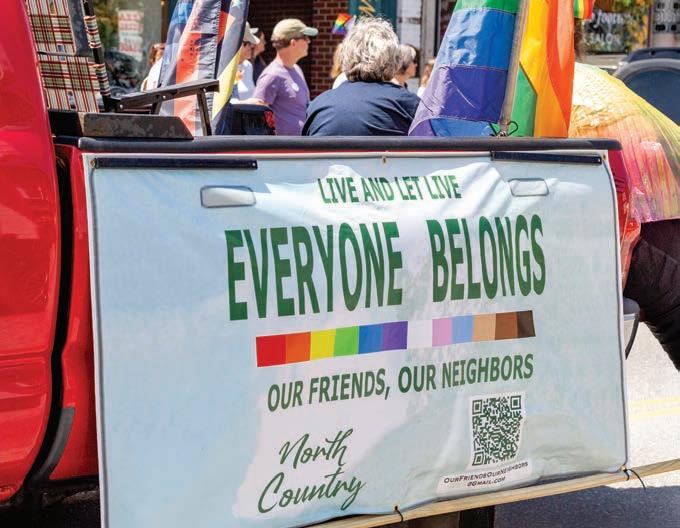
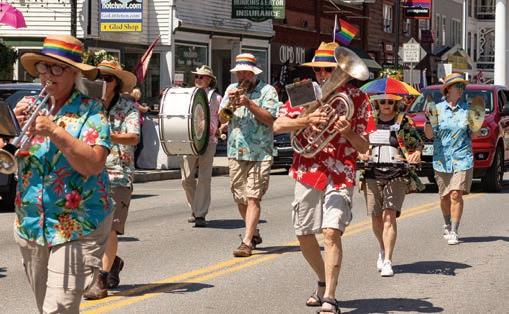
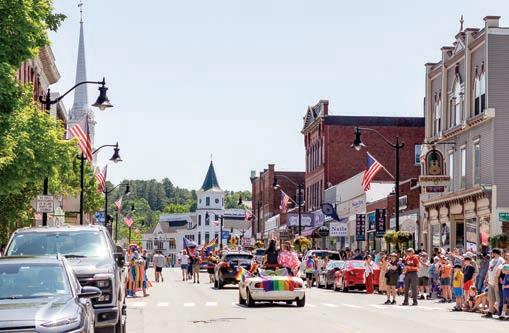
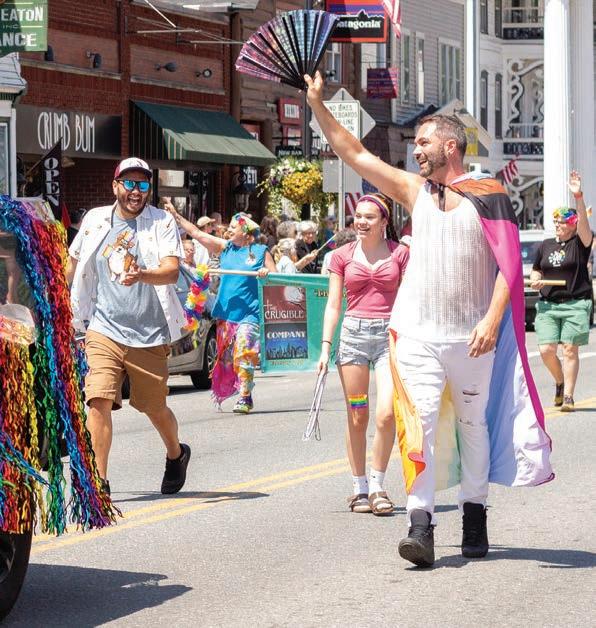
ast year, North Country Pride held Littleton’s inaugural Pride parade and festival. The event will return on June 27, 2026, with a parade, music, food and fun.
While the parade and festival are newer undertakings for the organization, they’ve been holding other Pride activities for years.
For more than six years, North Country Pride has partnered with local eateries for Dine with Pride. During June, LGBTQIA+ supporting restaurants share a portion of the proceeds with the organization and often create special Pride-themed dishes and drinks.
The organization previously coordinated the Pride Ride, a spirited car ride through Littleton, Franconia and Bethlehem.
The number of Pride festivals in New Hampshire has grown over the years, particularly coming out of the pandemic, as people look to build community. 603
CAPITAL CITY PRIDE – Date to come, capitalcitypridenh.com
CLAREMONT PRIDE – Date to come, greaterclaremontnh.org
LEBANON OPERA HOUSE PRIDE – Date to come, lebanonoperahouse.org/pride
WINDHAM PRIDE FESTIVAL – June 6, windhamdei.org
MILFORD PRIDE – June 7, instagram.com/milfordnhprideofficial
NASHUA PRIDE FESTIVAL – June 20, facebook.com/NashuaPrideFestival/
PORTSMOUTH PRIDE – June 20, nhoutright.org/portsmouth-pride-1
MANCHESTER PRIDE – June 27, manchestertrue.org/pride2026
NORTH COUNTRY PRIDE – June 27, northcountrypridenh.org
WHITE MOUNTAINS PRIDE – June 27, whitemountainspride.com
KEENE PRIDE WEEK – Sept. 12 to 20 with festival on Sept. 20, keenepride.org
PLYMOUTH PRIDE – Early October
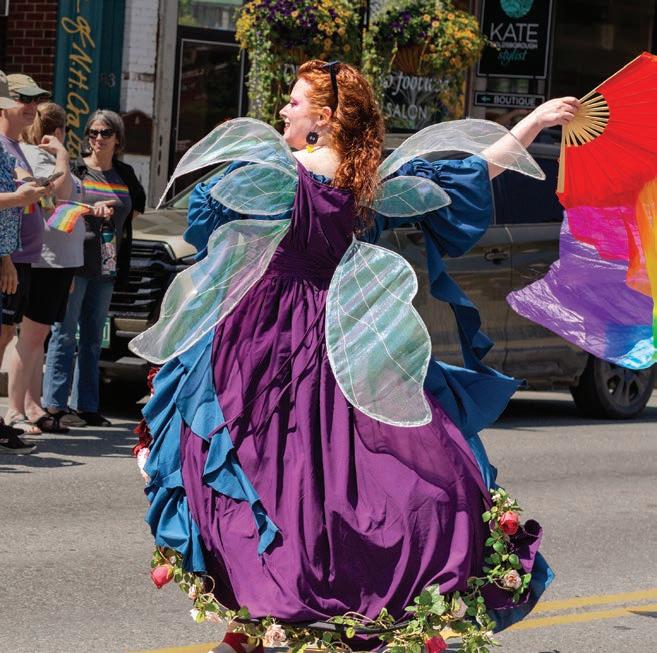
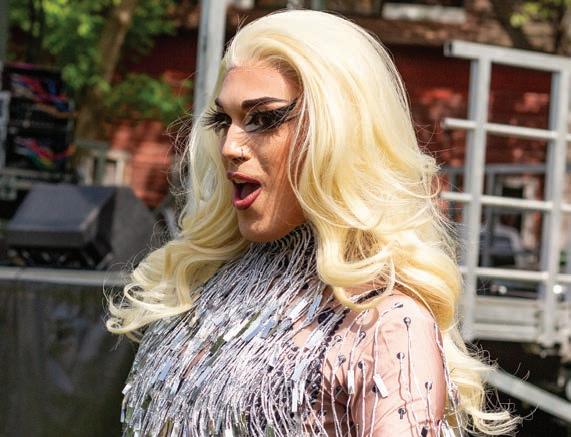
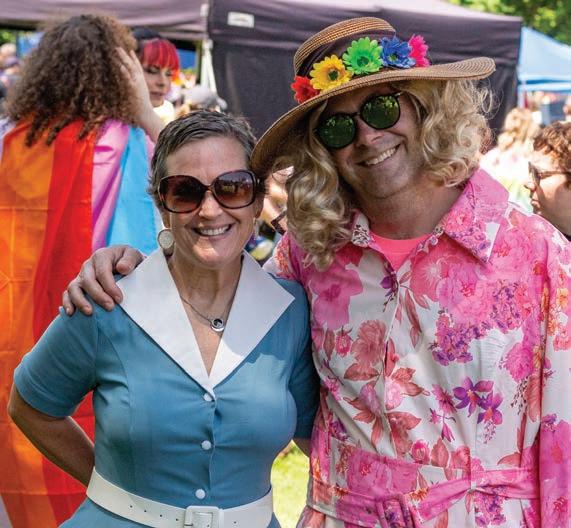

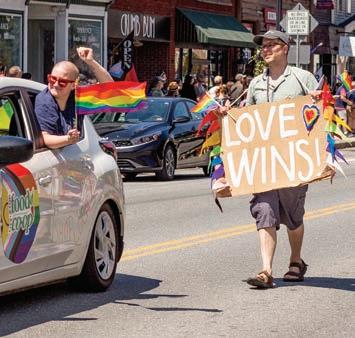
PHOTOS BY ROBERT ORTIZ
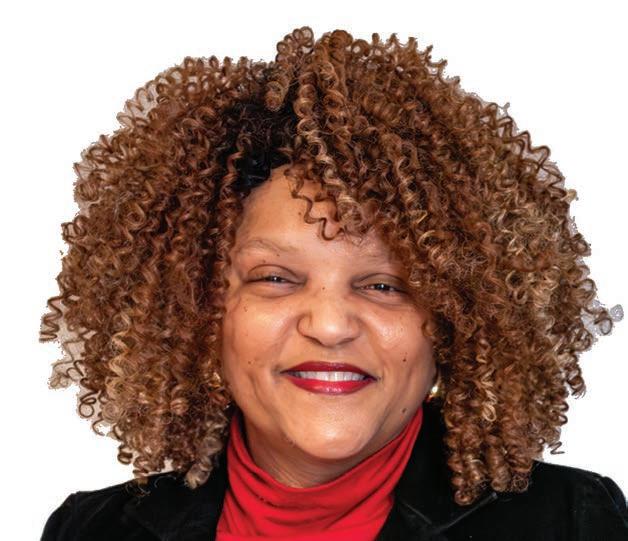
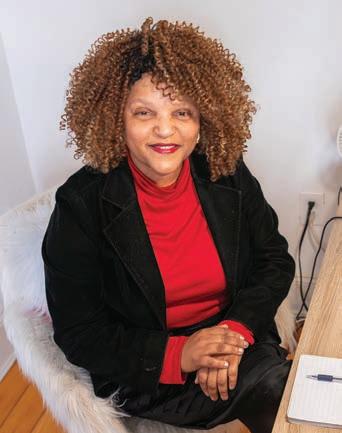
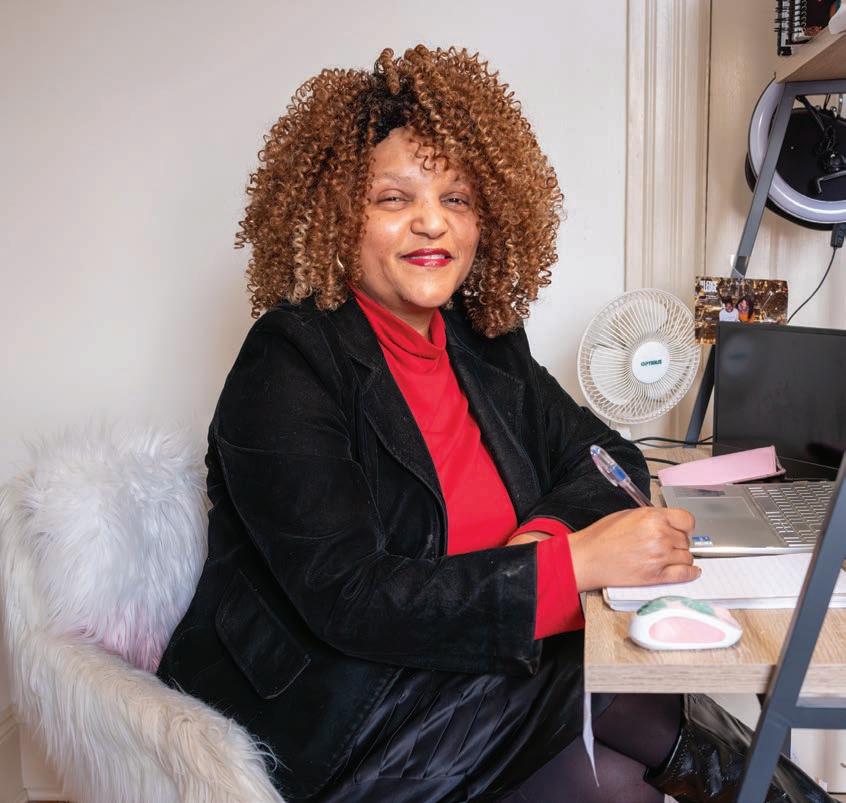
For some entrepreneurs, running one business is tough enough. For Joede Brown, knitting her two passions together drives her forward.
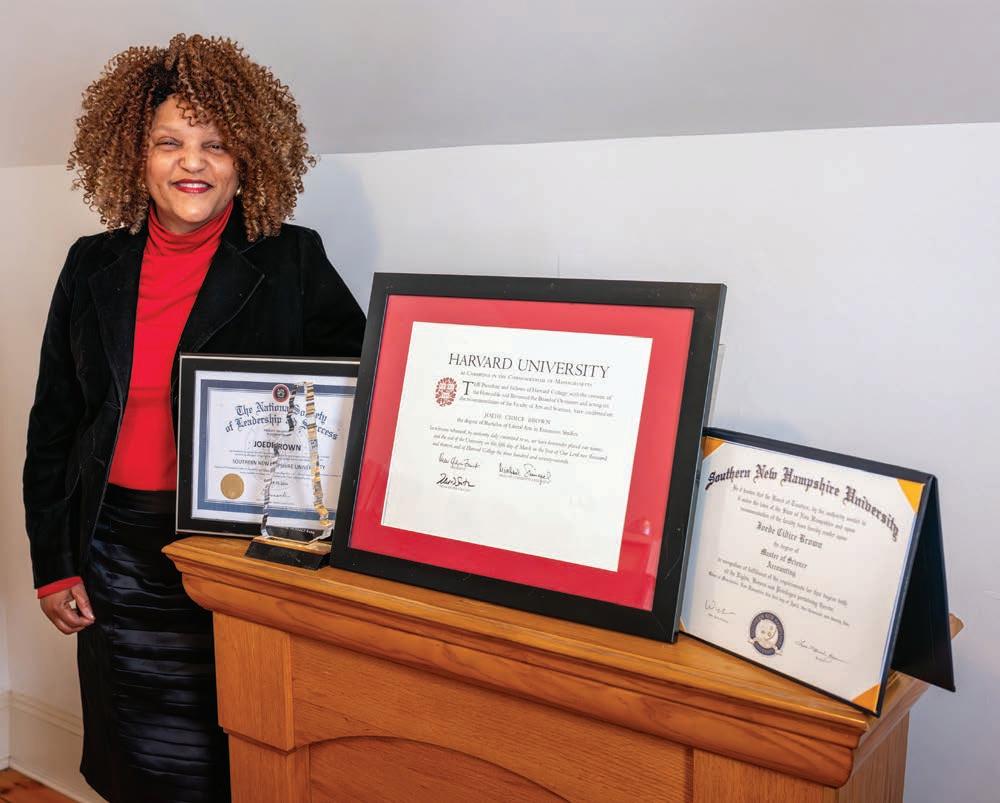
The Manchester resident has nearly 30 years of accounting experience. She decided to further her education while working for the local school district, thinking a master’s degree would lead to additional opportunities. But as she neared graduation, Brown realized she wanted to work for herself.
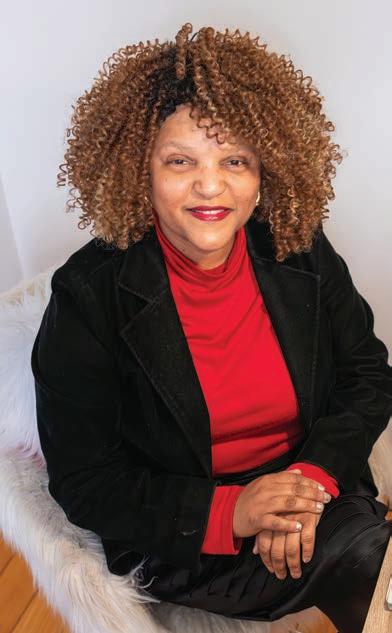
Joede Brown of Manchester has found freedom in running two of her own businesses, despite sometimes working long hours.
After graduating from Southern New Hampshire University last May, she founded Brown & Associates, a financial advice firm where she helps businesses decipher their books and understand how they actually operate.
Brown said she has always had a mind for numbers and detail — at 16, she was closely reading the tax codes she was tasked with updating during a summer job at a staff judge advocate’s office. That meticulousness also serves her well in
her side knitwear business, Foliage, where she creates bespoke clothing and accessories.
The work can be tough, especially during tax season, when Brown said she sometimes works 12-, 15-hour days. But being able to do it at home while in her fuzzy slippers and knowing she can step away to take care of her personal life when needed makes it worthwhile, she said.
"It's the freedom of being able to be there for my family and still be able to provide for us, but also the freedom of being able to run it how I want to,” Brown said.
The two businesses could not be more different.
In her accounting work, Brown’s clients can range from a retail consignment business to a wellness-based service and a contractor. None of their needs are ever alike; the retail business, for example, has a high number of transactions and complex vendor payouts, so Brown created for them an accounting system that would properly track liabilities and cash flow. The wellness business needed a structure that would support both its daily operations and tax reporting.
Sometimes, people are surprised about what the books show when they sit down with Brown.
“When someone looks at their bank account, they think that (what is in there) is what they made, but it’s really not, because
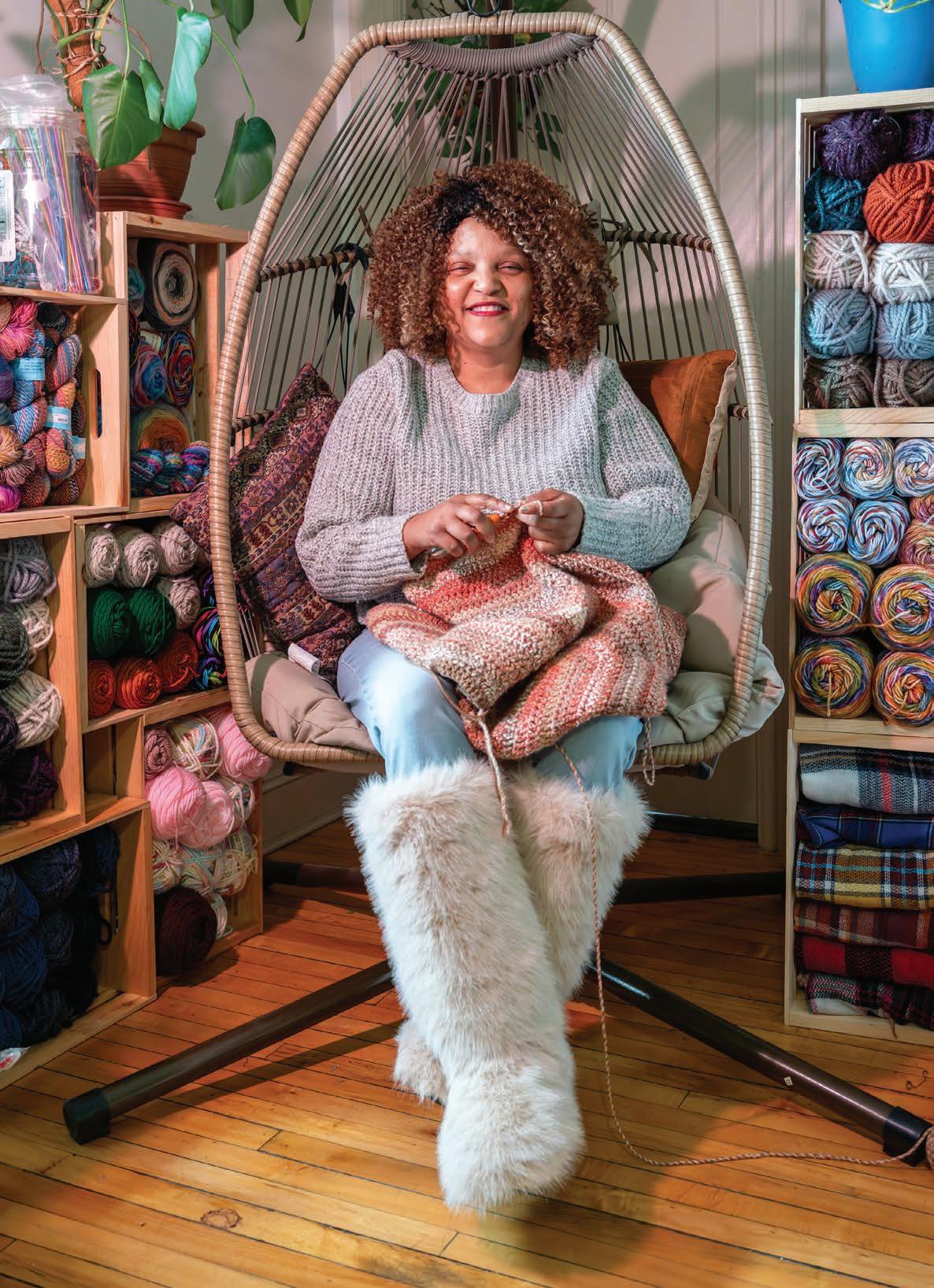
Joede Brown, who has founded a booking business and knitware company, says she's always been meticulous.

you have obligations that come out of it,” Brown said. “You have payroll, things like that, and hopefully you have a separate payroll account.”
Brown would chalk that up to a lack of financial education in school systems. Even with her background, she said it was surprising to see how much infrastructure a personal business can require, like software licenses and subscriptions to video meeting platforms to speak with remote clients, when starting her own.
“I was fortunate enough that I already knew what I was doing, so I was already putting money aside to say, ‘OK, I know I need this, and I need that,’” she said.
“It's the freedom of being able to be there for my family and still be able to provide for us, but also the freedom of being able to run it how I want to.”
— Joede Brown
Foliage requires a different kind of infrastructure. Brown will visit sheep and wool festivals to source unique colors, usually inspired by the colors of the White Mountains and the Kancamangus Highway in fall. Those skeins in turn get made into scarves, sweaters, dusters and hats.
It requires a different kind of preparation, too. While Brown
offers her wares year-round through her online shop, her prime venue is through different markets and craft fairs, so she builds up her inventory throughout the seasons. Individual commissions can be made upon request.
It is, in a way, fitting — Foliage got its name in part because of a revelation Brown had when she turned 50 in 2021.
“One thing I was noticing was that once you turn 50, it just seems like nobody takes you seriously. You're kind of ignored, you know, it's just like a different way of moving in the world,” she said.
But Brown was also noticing that her friends of a similar age were trying new things and feeling better than they had ever before. It made her think about the life cycle of leaves.
“What people don't realize is that the leaves are actually dying. They're aging, and they're dying off, right?” she said. “But yet when they are aging, they're coming right to that twilight stage — they're absolutely beautiful.” 603

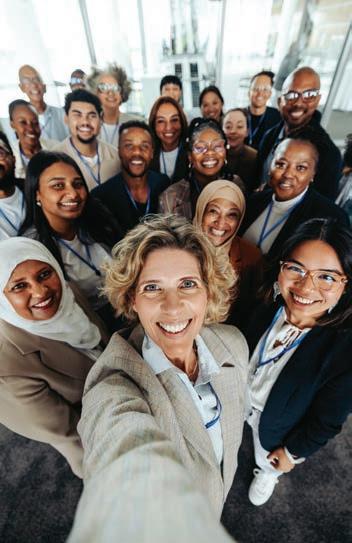
At NH Mutual Bancorp our values drive a culture of respect, inclusion, and belonging where we embrace the uniqueness that each individual brings forth to our organizations. Values are at the core of who we are; they drive innovation, foster collaboration and a respect for diverse thought and unique experiences. Ultimately, they ensure that individuals feel welcomed and empowered to succeed.
We are committed to dedicating our efforts, including leadership focus and financial investment, to promoting equal opportunity across our work environments and within the communities we serve. Doing so makes us a stronger, more successful, and sustainable organization over the long term.
www.nhmutual.com/careers/
BY SUZANNE LAURENT
BY ROBERT ORTIZ
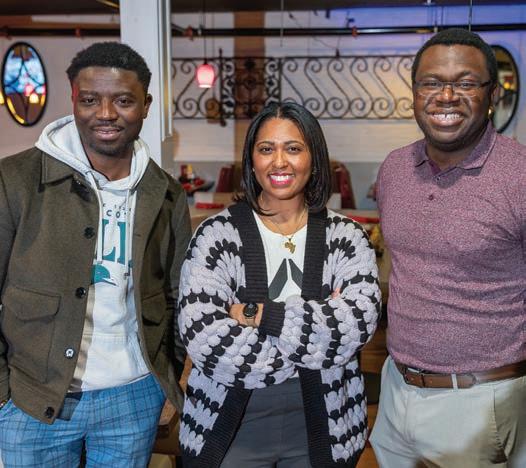
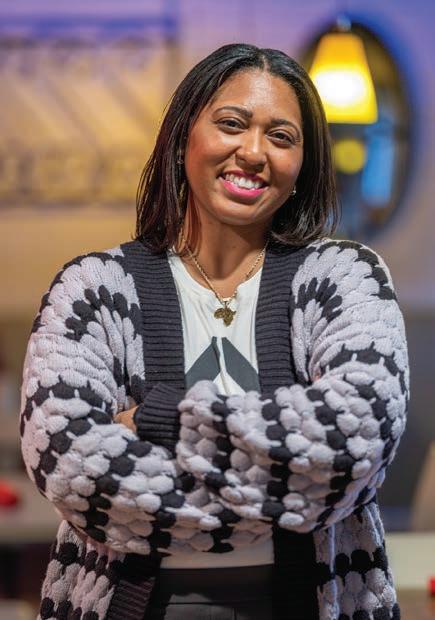
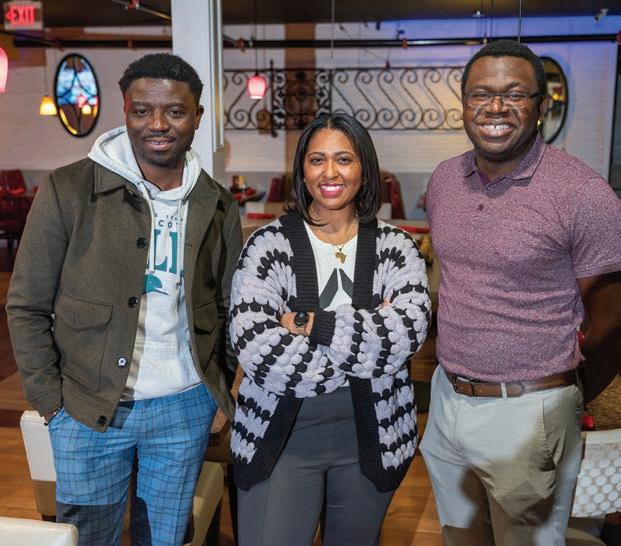
ne can hear the enthusiasm in Chelsea Muyuka’s voice as she describes the newly opened Afro Fusion Lounge and Restaurant on Hanover Street in Manchester.
Muyuka is the event director of The Olive Grove Event Center, which opened in April 2025, and is the “doing business as” host of Afro Fusion Lounge. She is dedicated to building meaningful connections within the community, making the venue the premier host for both private and community events and bringing every experience to life.
Chelsea’s husband, Loïck Muyuka, is one of the four partners of Afro Fusion Lounge. He has built strong connections within the community, playing a key role in guiding each step of the process leading up to the restaurant’s soft opening.
In his role as director of community engagement with the Small Business Development Center, Loïck Muyuka has been instrumental in fostering relationships and supporting the business’s successful launch.
Peter Zagabe serves as the general manager overseeing operations across both establishments.
“I’m excited to bring something like this to the community and to be part of the economic growth in New Hampshire,” Zagabe said.
Zagabe and Loïck Muyuka met through Zagabe’s sister, Isabelle Ruhamya, who is the fourth partner of Afro Fusion Lounge and brings a strong hospitality background rooted in African cuisine.
Together, the partners share a vision of introducing culturally rich and diverse food experiences to the Manchester community. Zagabe and Ruhamya have expressed a shared commitment to honoring and carrying forward their mother’s legacy through Afro Fusion Lounge.
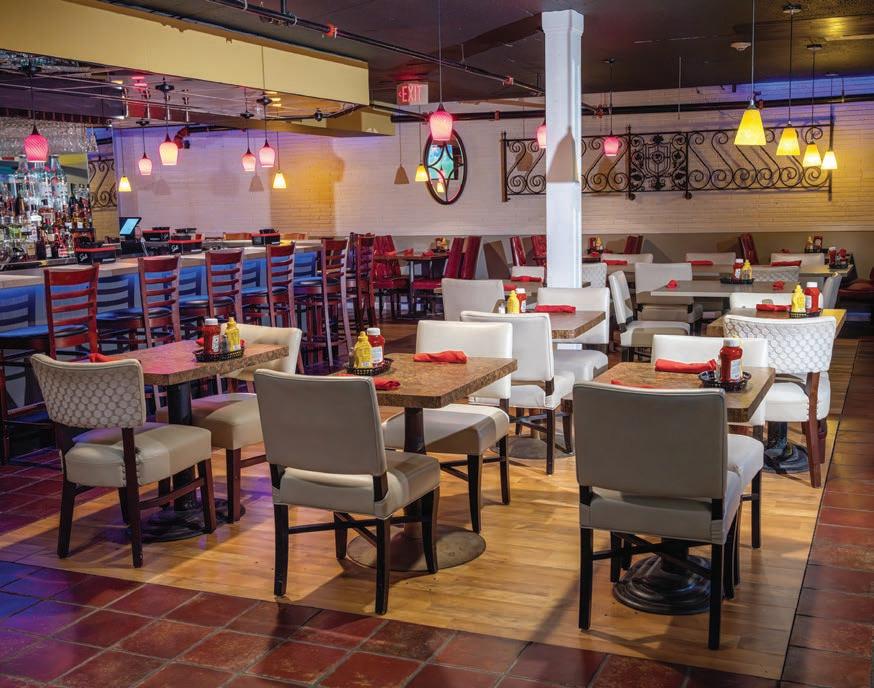
Afro Fusion Lounge held its soft opening on Feb. 5, 2026, and was expected to be fully operational by May. The restaurant’s seating area is 1,147 square feet and is colorfully decorated in red, yellow and black. There is also the VIP lounge that serves as an extension for both the restaurant and the events space for special occasions and an 1,800-square-foot courtyard that can accommodate up to 125 guests.
Chelsea Muyuka shared that The Olive Grove Event Center, in total, can accommodate up to 400 guests and offers Afro-Caribbean cuisine catered directly from its in-house restaurant, the Afro Fusion Lounge.





HOURS
Mondays





“Since opening the event space, we’ve hosted a wedding, featuring a beautiful and intimate outdoor ceremony in the courtyard with seating for 150 guests, followed by a reception across all three halls in the Olive Grove, accommodating up to 350 guests,” Muyuka said. “We’ve also welcomed a variety of events, including a quinceañera, a graduation party, the Community Driven Economic Empowerment event hosted by the Community Loan Fund, the NAACP 2025 Freedom Fund Dinner and Small Business Saturday hosted by the Business Alliance for People of Color.”
Afro Fusion Lounge is designed as an African-Caribbean dining destination, blending flavors from across Africa and the Caribbean in a warm and welcoming space for all.
On the culinary and operational side, Beauty Zagabe works closely with her husband, Peter, to shape and deliver the restaurant’s menu and overall dining experience. In collaboration with Ruhamya, the restaurant’s visionary, they blend traditional African cuisine with Caribbean influences to create distinctive and authentic offerings.
Chelsea Muyuka sees Afro Fusion Lounge as a hub, where meats and produce are locally sourced. One of their main goals is to support local small businesses. They are pursuing ways to source goat and other ingredients from local New Hampshire farms.
“The goat meat is freshly cut, seasoned well and served with kwanga (cassava bread), a traditional African staple,” Muyuka said. “It is deeply flavorful, hearty and rooted in rich culinary traditions.”
A beloved West African staple, attiéké, is served alongside grilled tilapia or red snapper, complemented by caramelized onions, fried plantains, a fresh salad and a creamy mix of seasoned vegetables in mayonnaise, finished with a housemade hot pepper sauce.
“The main component is attiéké, a fermented cassava dish with a light, couscous-like texture,” Chelsea Muyuka explained.
The menu also features classic fish and plantain pairings, an essential part of Caribbean cuisine, bringing familiar, comforting flavors to Caribbean guests.
Early reviewers have already praised the restaurant. One review noted, “A breath of fresh air in Manchester! Amazing food and vibes. The goat stew is out of this world, and don’t skip the beignets or the plantains.”
Starters feature African doughnuts and freshly baked cornbread. The full drink menu offers island and tropical favorites, alongside globally inspired fusion cocktails and a variety of nonalcoholic options.
The restaurant will also feature live music (national and international), enhancing its lively and vibrant atmosphere. Located at 201 Hanover Street, just a short distance from the Palace Theatre, makes Afro Fusion Lounge and The Olive Grove Event Center a premier destination in Manchester for dining, culture and entertainment. 603
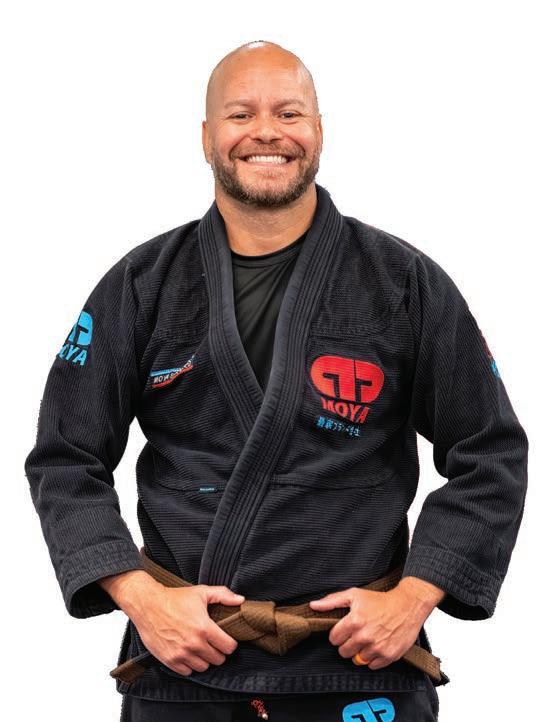
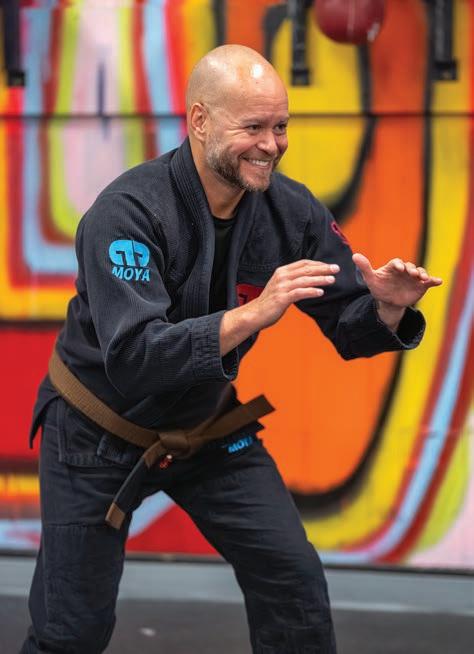
In the heart of the city, Manchester Police Department employee David Lisboa is breaking barriers across the spectrum of ability by teaching grappling and combat sports.
Lisboa trained for most of his life in Brazilian jiu-jitsu (BJJ), a martial art known for its primarily ground-based fighting style. It emphasizes the power held in all competitors regardless of size and strength through tactics like leverage.
about an acquaintance in Brazil who ran BJJ classes for children with disabilities, Lisboa saw an opportunity to execute a similar vision within the MPAL programming and community.
“I thought, ‘we have the wrestling mats here, we have the space, we have the Ikiro gis, we can use those for now; let’s start training on Saturdays.’”
Since August 2023, this dynamic BJJ group called Real Champions has held down a steady and dedicated training team, proven by the participants’ willingness to sacrifice their weekend time
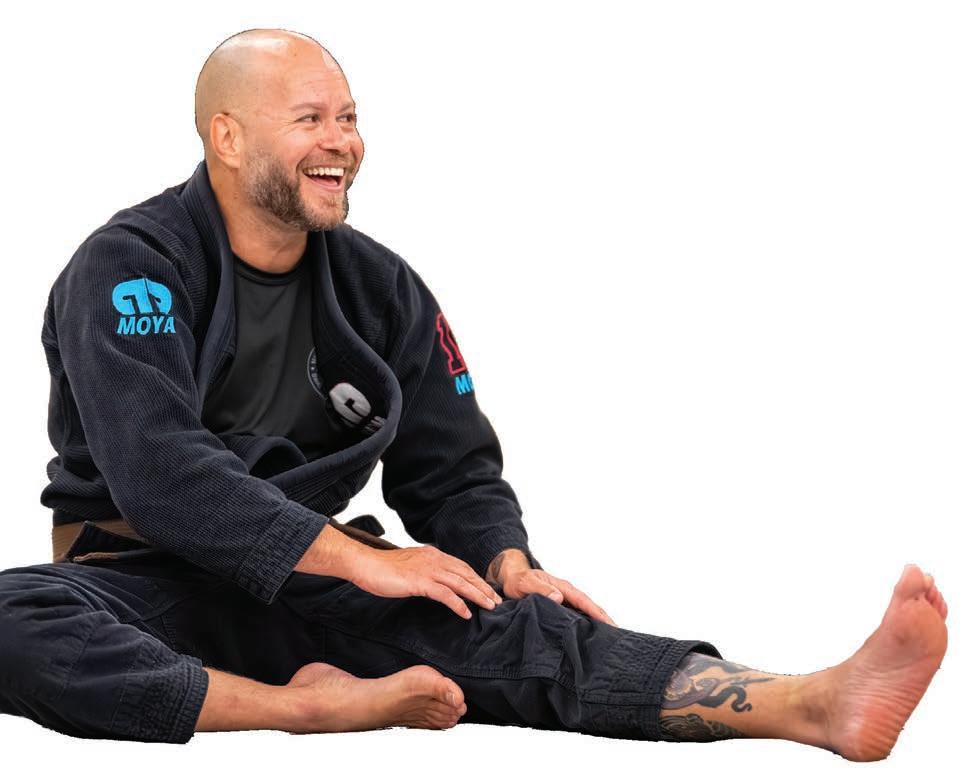
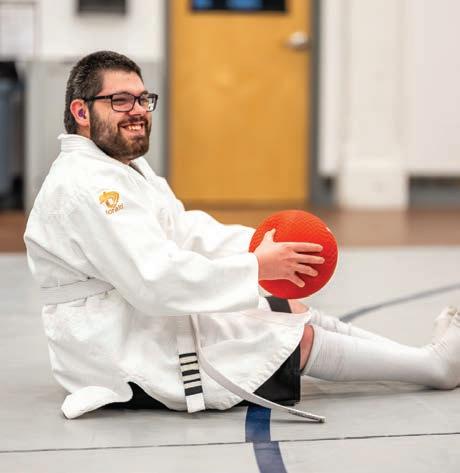
“I have kids from all different ages,” Lisboa said. “I have some kids who have started here from as young as 7 who have autism. My oldest right now is 28, also autistic. In that spectrum, between 8 years old and 28 years old, we have kids with autism, Down syndrome, even one kid with Cerebral Palsy.”
Class is coached by Lisboa, and assisted by parents, paraprofessionals and MPAL volunteers including Lisboa’s wife. While he has no formal educational background working with students who have special needs or disabilities, his wife, Melissa Lisboa, is a special ed coordinator in a local district, and her extensive experience is certainly a reason for the Real Champions program’s
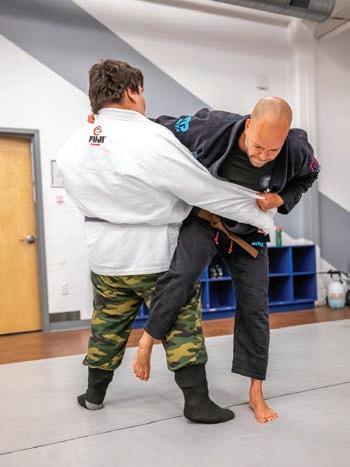
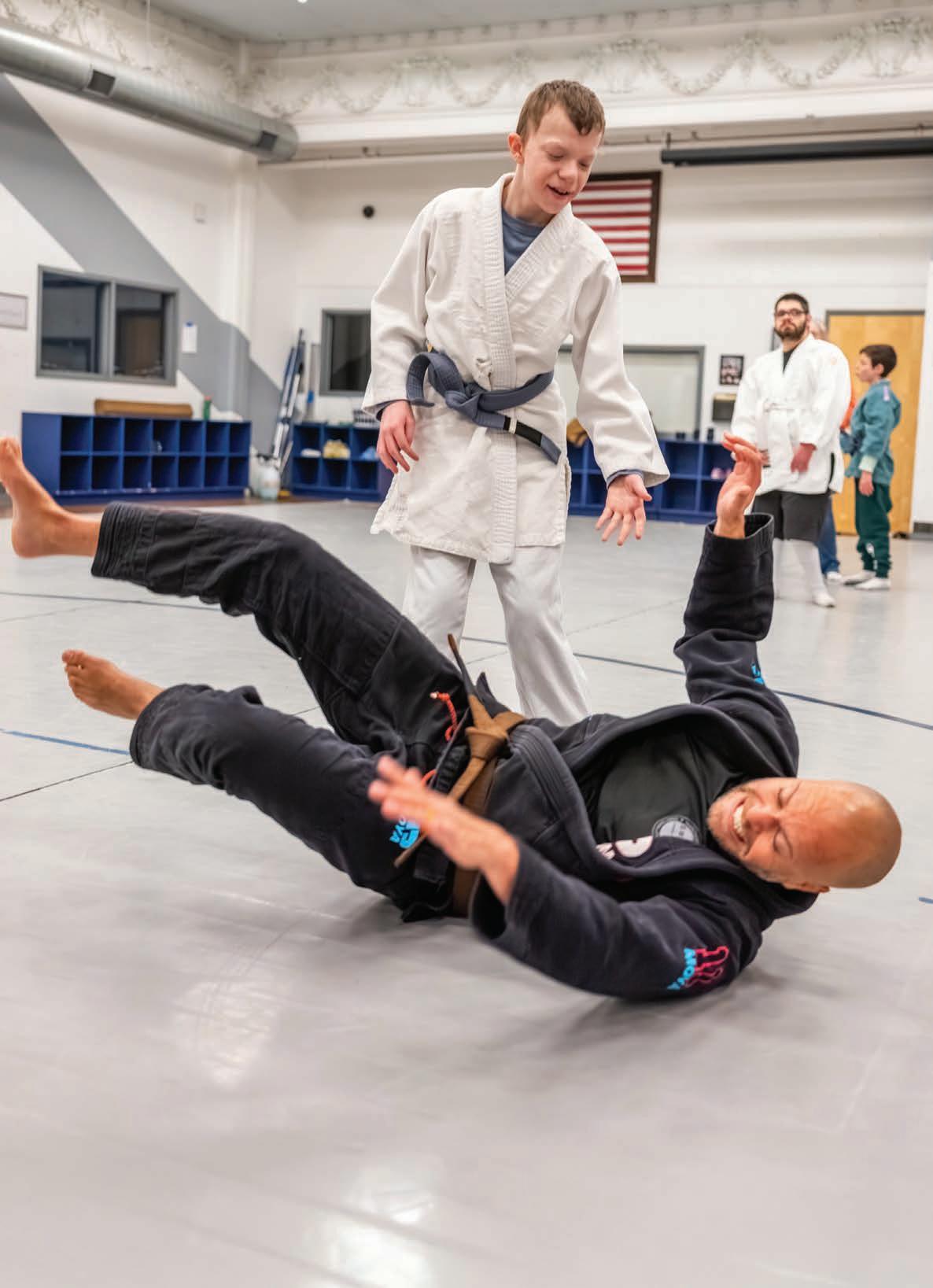
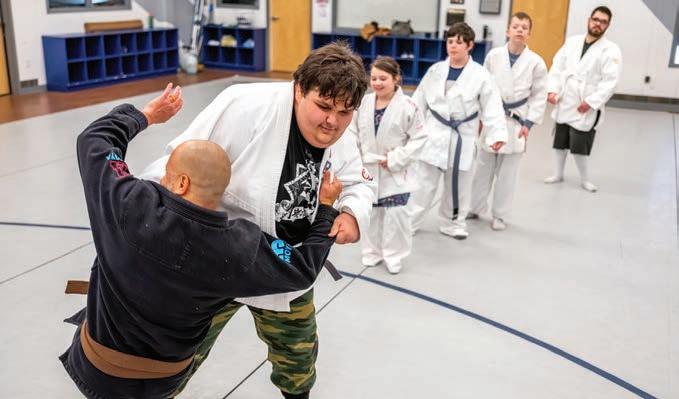
Youth from ages 8 to 28, who have disabilities like autism, Down syndrome or cerebral palsy participate in jiu jitsu training through the MPAL program.
“My goal is, hopefully someday, we get more people involved in BJJ, more people embracing the disabled population to participate; maybe see some of our players go to the Special Olympics.”
— DAVID LISBOA
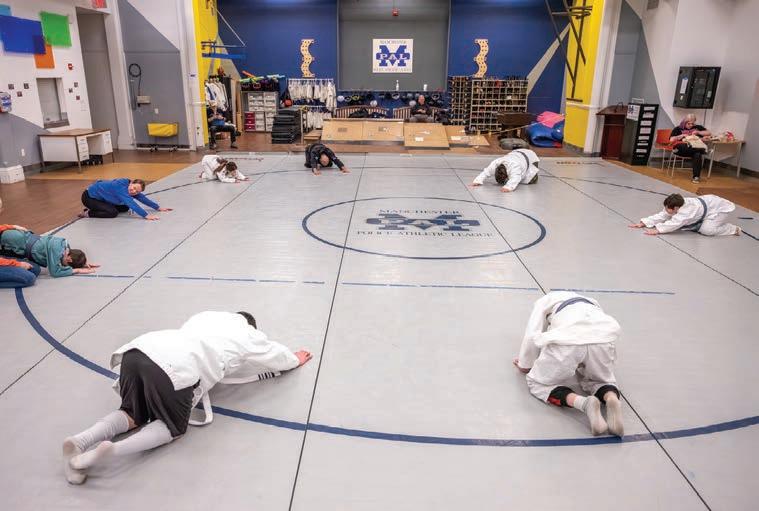
For participants, training in Brazilian jiu jitsu gives them opportunities not just to practice take-downs but also how to address sensory challenges.
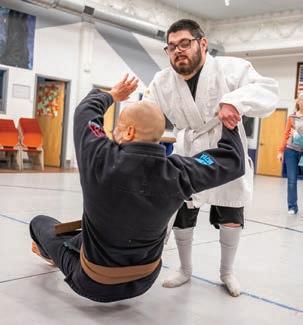

“It’s been great being able to work with her, and learning from her,” he said.
A gateway to regimen and routine, Lisboa guides students weekly through a series of warmups and drills as they navigate personal challenges such as sensory struggles, physical touch boundaries and more.
“Holding each other’s uniform (a key skill for a takedown in BJJ), that was something we had to overcome,” Lisboa said. “In jiu jitsu, there’s a handshake we do before a match — that was how I worked around that. ‘When we do the handshake, it’s OK for you to hold onto your partner’s uniform.’”
Over the years, Lisboa has had to challenge himself just as much as he challenges students to see the world through a new lens, considering accommodations and ability differences that many neurotypical individuals walk through life without confronting: how even before the match starts, there are barriers to entry for some with sensory-processing differences.
“OK, now there’s a step,” he coaches. “Now, we can maybe be okay with touching each other, the feeling of the uniform.”
Lisboa cites a shift in mindset and challenge that faces neurodivergent individuals and their preconceived notions of disability and how disabled people move through the world and wish to be perceived.
“In the beginning sometimes, I found
myself treating them with a little more leniency than I might have given a neurotypical person,’ he said.
“After a while, I was like ‘What am I doing? I gotta treat them the same way I would treat any other student, right?’”
He has since grown to understand how the Real Champions are able to achieve real power and inclusivity just by treating everyone with the same capability and respect.
Lisboa, as well as students’ families, note a distinct growth in students’ physical and mental character through the program. One student with cerebral
palsy has made significant progress not only in his BJJ form but also in his ability to walk, with the strength provided by training aiding muscle function.
“They are learning a lot of different things here … I see some of them working through anxiety sometimes, ADHD, physical and sensory touch, personal space, vocabulary,” he said. “My goal is, hopefully someday, we get more people involved in BJJ, more people embracing the disabled population to participate; maybe see some of our players go to the Special Olympics.”
These impactful and important classes, among a number of other offerings, are free and open to all in the Manchester Police Athletic League at 409 Beech St., Manchester. Manchester Police Athletic League and their programs, including Real Champions, is funded by donations, which are accepted online. 603

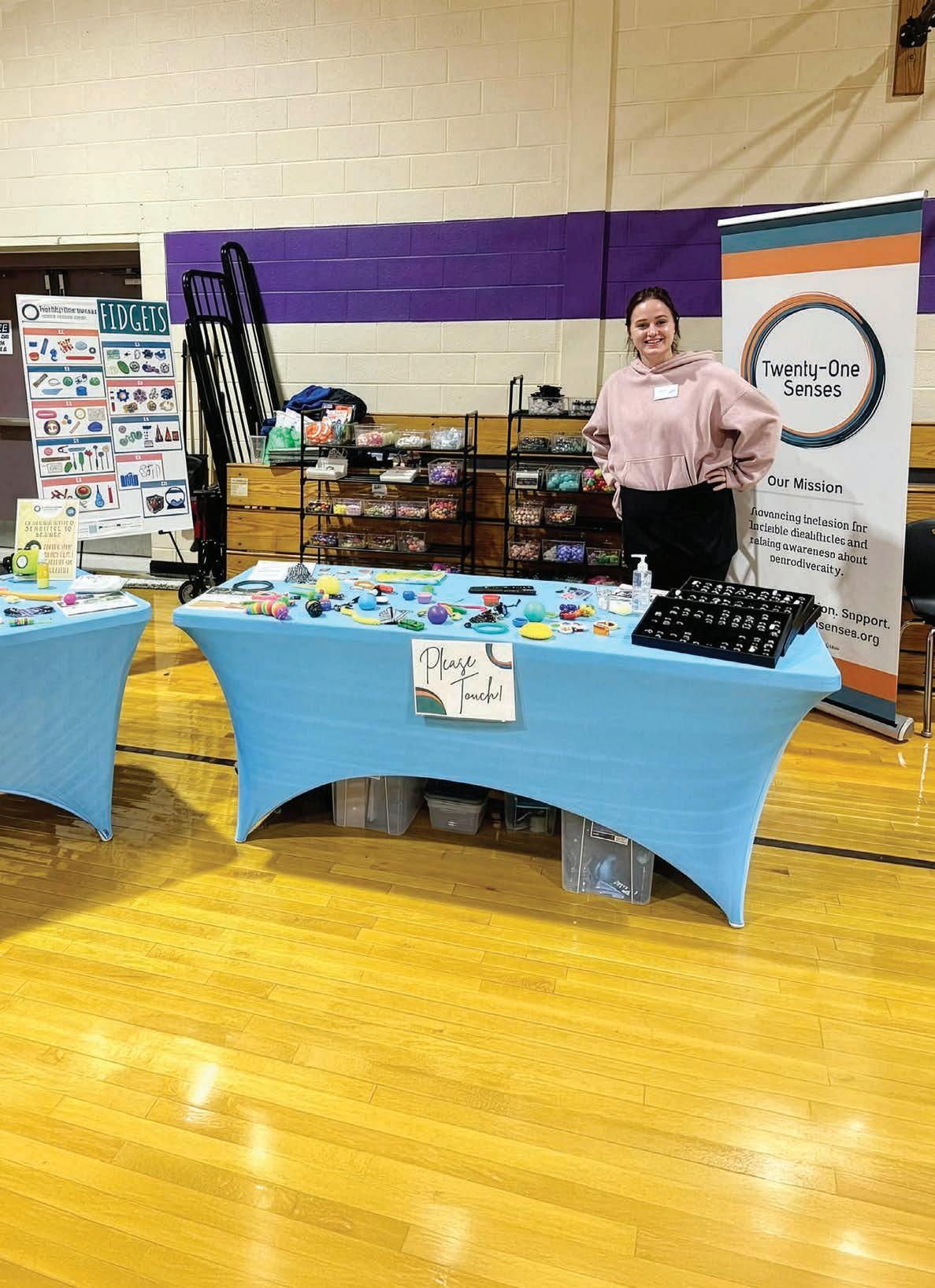
Twenty-One Senses staffed a table at the Milton PTA
fair in 2024.
“I’M INCREDIBLY PROUD TO SAY OVER THE LAST FIVE YEARS, OUR SEACOAST COMMUNITY HAS JUST GROWN IN THEIR AWARENESS AND RECOGNITION OF INVISIBLE DISABILITIES AND NEURO DIVERSITY.”
— DANIELLE HEATON
Children explore a sensory table during a public festival.
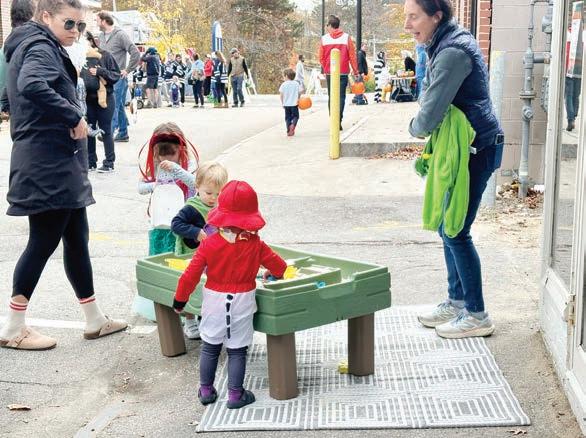
Since co-founding the nonprofit Twenty-One Senses, Danielle Heaton of Madbury has gathered up a lot of heartwarming success stories.
Over the past five years, Heaton and co-founder Jen Puccini of Chicago have heard from families who expressed difficulty “fitting in” at noisy public events. Toddlers, kids and even adults would struggle to manage the extra stimuli that come with large gatherings — bright lights, loud sounds, strange smells and throngs of people. Their stress and anxiety would eventually spill over into a meltdown, officially ending the fun.
Heaton and Puccini experienced some of those same difficulties with their families and wanted to help.
For Heaton, it’s just something that she had to figure out so that she could best care for her child.
“I often say I became the parent my child needed me to be. It has to be easier for others, and that was the source of how we started,” she says.
Twenty-One Senses offers mobile calming spaces and various fidgets, at the request of event organizers, for people of all ages struggling with sensory processing disorder or other mental health or disability challenges.
People with sensory processing disorder can be on the autism spectrum, have ADHD or other developmental
disabilities or mental health issues. It’s not just sound or light that can provoke sensory overload. Movement, touch and taste sensations can also be affected.
When parades, festivals and birthday parties don’t include a safe place to reduce high amounts of sensory overload, people are less likely to show up, leading to isolation. Having areas for sensory breaks may encourage more people to connect with others, the organization says.
Studies have shown that sensory processing plays a big role in how a person organizes and processes outside information. Twenty-One Senses uses scientifically proven methods for calming the nervous system, and clinicians sit on the nonprofit’s advisory boards to review their content and training information.
Heaton isn’t a clinician, but builds upon her own lived experience learning about nervous system regulation.
Having to eat something that you don’t like because it feels too squishy or weird can also set off a neurodivergent brain.
Heaton remembers one trip abroad where their food choices were significantly reduced.
“By the end of day two, my kid had not eaten anything. Every single day we had to find a restaurant that had cheese pizza. It was sad and frustrating for me at times,” Heaton says, adding that they went to five different grocery stores to find the right brand of peanut butter.
“My kid needed to eat, and this was a safe food for him. But you’re in a different country. They don’t carry Jif, because Jif is way too manufactured,” Heaton explains.
Heaton calls sensory processing disorder and similar challenges “invisible disabilities,” and wants the organization to raise awareness to the issue.
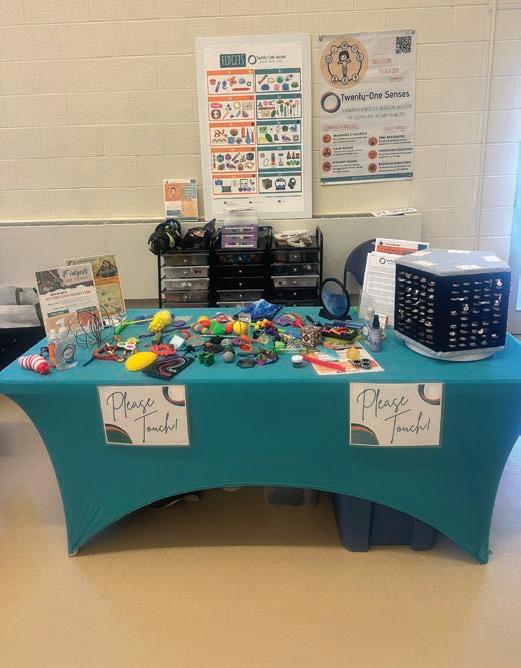
Twenty-One Senses brings an array of fidgets and sensory tools to events at the request of organizers.
“We do believe it is so important to make sure invisible disabilities are being accounted for in conversations as well, and people understand what that is and what it can look like.”
Twenty-One Senses tests out new ideas at public places to pinpoint where extra support is needed.
”We are really good at understanding where the gaps are in our communities, because we live in them and we experience them. We try to find a way to make it easier,” Heaton says.
Activities in Twenty-One Senses’ calm rooms include chess, puzzles and Sudoku, various fidgets, headphones and “alternative seating” like rocking chairs and hammock swings.
The organization has even created one-person “sensory isolation tents” that Heaton calls “calm rooms in a box.” You can zip them up to reduce light and sound and other sensory inputs. The person can stay in the tent until they feel ready to rejoin their friends or continue with their usual activities.
Previous events that Twenty-One Senses has attended include Hampton Beach Seafood Fest, Apple Harvest Day in Dover, and FIRST Robotics at UNH Whittemore Center in Durham, with which it has a partnership.
“It’s a sporting event for the brain. It’s a multi-day event, and it’s loud. They’ve got PA systems, they’ve got music going, they’ve got big-screen TVs showing the action. It is a very intense couple of days, but it can also be very overwhelming,” Heaton says.
She says FIRST Robotics now mandates calming rooms at their events.
“They know how critical this space is,” Heaton says.
Twenty-One Senses eventually discovered it was tapping in to three different areas of need: disabilities, mental health and education.
“We proactively end up educating on nervous system regulation, because people don’t understand how regulation plays in with sensory. We originated around sensory processing issues, which puts us pretty squarely in the disability world. Our lived experience comes from neurodiversity, and so we fit in the DEI space as well. And it puts us into the mental health space, because our society, unfortunately, doesn’t educate about nervous system regulation until you’ve been in crisis recovery,” where the concept is taught and the tools provided.
Twenty-One Senses wants to change that model.
“You shouldn’t have to almost be pushed to the brink to learn this information,” she says.
Educating parents and children about sensory regulation and inclusion begins with a person’s own curiosity and awareness, which can happen at their fidget exploration booths at outdoor festivals, for example.
Getting the chance to touch different things, like fidget rings, cubes or spinners; therapy putty, pop-its and stretchy, metal acupressure rings allow for a new tactile experience in the real world, which provides immediate feedback.
Heaton often hears people say, “‘I’ve seen a TikTok on this, but I’ve never gotten to touch it, I’ve been really curious.’ That’s what we want. We give them that opportunity to touch and feel and explore and understand their own sensory needs a little better.”
After getting positive reviews about their space at recent Portsmouth Pride events, Heaton says other New Hampshire towns planning a Pride event have already reached out to them for services after being recommended by event organizers.
“Awareness is really the first step. And I’m incredibly proud to say over the last five years, our Seacoast community has just grown in their awareness and recognition of invisible disabilities and neurodiversity, and (understanding) that they can need different supports,” Heaton says.
The organization has seen a rise in understanding of how unique everyone is, and why inclusion, education and support — the nonprofit’s tagline — are so important today.
Heaton says as more people learn about their advocacy, they’re always open to feedback.
“We’re constantly evolving because we want to be helpful. If we’re not helpful in person or through information, then we’re not doing what we were trying to achieve,” says Heaton.
Learn more at twentyonesenses.org 603







BY SARAH PEARSON
BY CAITLIN ANDREWS COURTESY
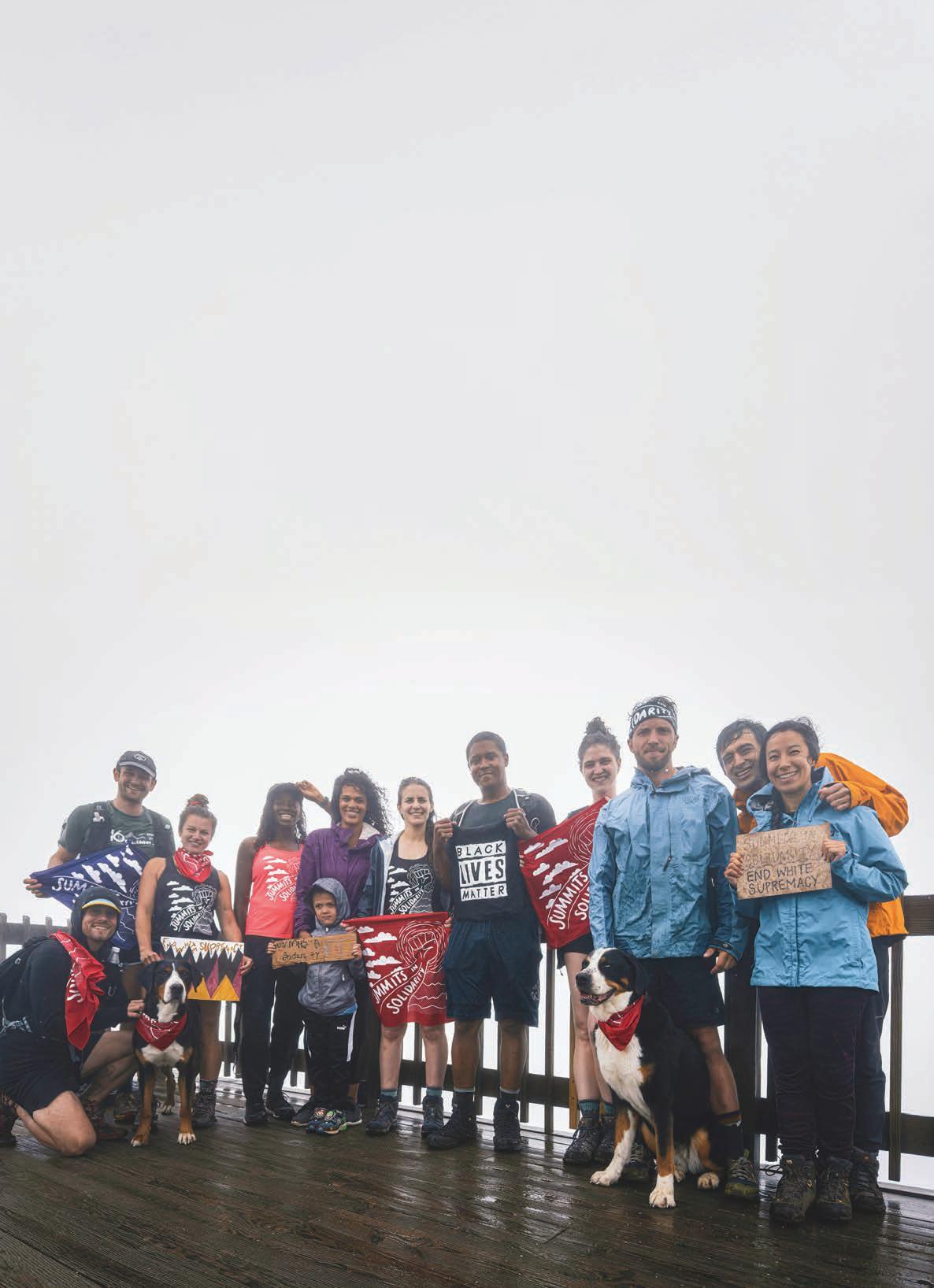
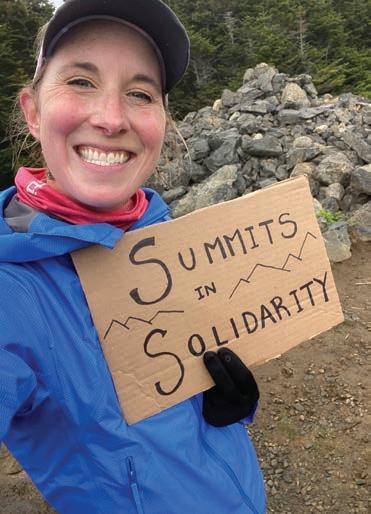
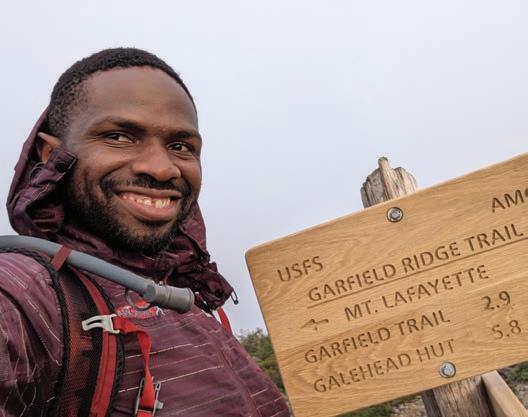
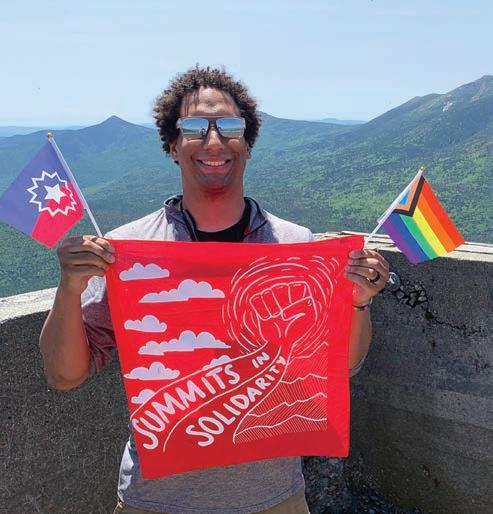
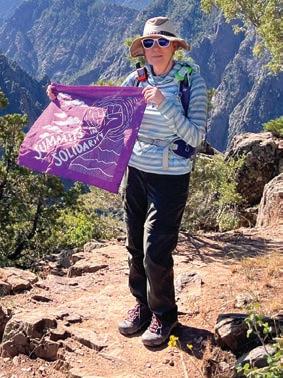
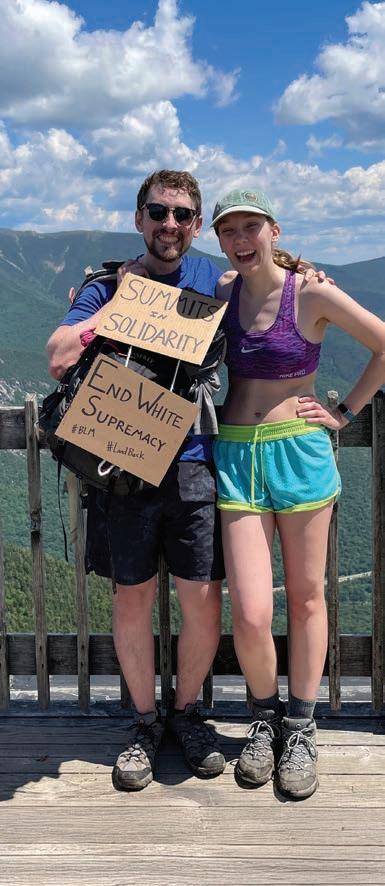
An annual hike-a-thon fundraiser organized by the nonprofit Summits in Solidarity is off to a strong start this year.
Running from March 21, the spring equinox, to June 20, the summer solstice, participating hikers collect pledges for miles hiked.
Summits in Solidarity was founded in 2020 by hikers from the White Mountains to foster justice and equity for Black, Indigenous, and People of Color (BIPOC), amplify their voices in outdoor spaces, support anti-oppression and anti-racist efforts, and mobilize hikers to dismantle white supremacy.
Founder and executive director Serena Ryan said each year, it aims to raise $50,000, which will be given to two partner organizations.
This year, 55 hikers and eight teams
have registered as of April. They may hike wherever they wish.
On March 21, a kickoff hike was held in Franconia Notch with about 100 participants. The organization had a goal of collectively hiking 321 miles (to mirror the date, 3/21) and raising $10,000. Five sponsors pledged to donate $5 a mile for the 321 miles hiked. However, participants ended up logging 647 miles and raising $15,000 from sponsors and additional donations.
“It went amazingly well,” Ryan said. “It was more successful than we could have imagined.”
Another event is planned for June 6 at the Crawford Notch Depot, with a collective goal of 606 miles and raise an additional $10,000. One athlete plans to climb Mount Willard from 4 a.m. to 4 p.m. as many times as he can, and he
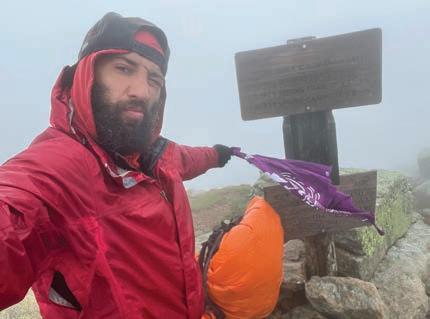
invites others to join him, particularly at 8 a.m. and 3 p.m. Participants may also do laps and other routes on their own.
Just two weeks into the fundraiser, the organization has reached $22,000. While the hiking ends June 20, donations will be collected through June 30.
Since it began tracking, Summits in Solidarity has donated more than $200,000 in grants to selected partner organizations.
Summits in Solidarity selects the recipients from applicant organizations that are majority-BIPOC-led.
The funding supports programs to improve fundamental aspects of BIPOC life (such as financial stability, health and education), or to increase BIPOC access to or equity in outdoor recreation. Summits in Solidarity’s BIPOC board members vote on which applicants
will be sponsored each year.
The two organizations receiving grants in 2026 are Khmer Maine, a nonpartisan, community organization working to improve the quality of life and the social and economic well-being of Cambodians in Maine, and Intrepid Academy at Hale, which creates opportunities for BIPOC students from cities in the Greater Boston area to experience liberatory outdoor learning, using Hale Education’s 1,100 acres of forested woodlands in Westwood, Massachusetts.
Past grants have allowed organizations to grow their programs, Ryan said.
“We funded Latino Outdoors Boston for two years,” Ryan said. “They used our grants to offer their members transportation from Boston to New England trailheads, continue their ski and surf programs, run camping trips and a
white-water rafting trip, and offer more leadership training for their all-volunteer team. It takes big bucks to run these programs, and federal support is drying up.”
Ryan said she was motivated to launch Summits in Solidarity in 2020 following the police killing of George Floyd.
“I live and work in northern New Hampshire. I run a hostel. I have a lot of privilege in doing that and access to people who have a lot of privilege in the community, with the time and the money to recreate outdoors and the ability to travel to the White Mountains to do so,” Ryan said. “I asked myself, ‘what can I do individually, with my community — hikers in the White Mountains of New Hampshire — to make a difference?’ That’s how the hike-athon idea came to be.”
For more information or to donate, visit summitsinsolidarity.org 603
The Trump administration has agreed to drop its ban on diversity and equity initiatives in public schools in New Hampshire – and the rest of the country. That’s according to a ruling Feb. 18 by Federal Judge Landya McCafferty, which dismissed the case.
New Hampshire’s largest teachers union, four public school districts, and civil rights groups challenged the ban last year in a federal lawsuit, arguing it violated free speech and equal protection rights. Schools that violated the ban risked losing federal funding.
McCafferty temporarily blocked the ban in April 2025 while the parties litigated the case. Earlier in February, the school districts, civil rights groups, and National Education Association of New Hampshire agreed to drop their lawsuit after the Trump administration told the court it would not withhold federal money from schools if they have diversity and equity programs. It did not say why, but pointed to a similar legal challenge in Maryland. In that case, the Department
of Justice agreed last month to drop enforcement of the ban in Maryland without explanation.
Gilles Bissonnette is the legal director for the American Civil Liberties Union in New Hampshire – one of the organizations that sued. He said the lawsuit was critical for educators in New Hampshire and nationally.
“That’s why cases like these are just so, so critical to force the government to prove and demonstrate the necessity for why they’re doing what they’re doing,” Bissonnette said. “And here they certainly couldn’t do that.” In the lawsuit, New Hampshire educators said the ban left them fearful of investigation and concerned that lessons on American history could violate the ban’s “systemic and structural racism” or “discriminatory policies and practices.”
In a statement, Megan Tuttle, NEANew Hampshire President, thanked the educators who joined the lawsuit. “Their actions and the rulings from courts on this issue reaffirm that every student deserves the opportunity to learn in a school where they are valued, seen, and supported for who they are, not erased by political agendas,” Tuttle said. “And their leadership sends a clear message that educators, not politicians, belong at the center of decisions about teaching and learning.” The agreement does not resolve two separate lawsuits challenging New Hampshire laws that seek to ban diversity and equity initiatives in schools and limit teaching on racism and discrimination.
– Annmarie Timmons / NHPR via the Granite State News Collaborative
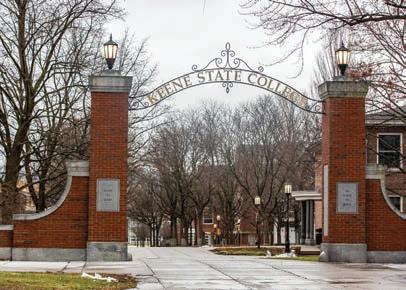
Keene State College has been no exception to state-issued rollbacks on diversity, equity and inclusion (DEI) initiatives as a result of state laws passed and executive orders signed by President Donald Trump that target DEI programs. Over the summer, Gov. Kelly Ayotte signed a budget bill that barred public entities from “implementing, promoting, or otherwise engaging in any diversity, equity, and inclusion-related initiatives, programs, training, or policies.”
As a result, KSC renamed its Office of Student Diversity, Belonging and Equity (OSDBE) to Office of Community and Belonging (OCB) and took down certain webpages to prevent a review of their programs and policies. Both Nina Zienkiewicz, the coordinator of student support at OCB and Dottie Morris, the associate vice president of community and belonging, said the change was an institutional decision.
Zienkiewicz said the office’s renaming would not affect the work they do. “It was an adaptation to House bills that were released so we could maintain funding for the school. There was this whole thing of, ‘if you have this in the title, we’re taking funding,’ but I wasn’t a part of that bigger conversation,” Zienkiewicz said. Over the last year,
many TRIO programs in New Hampshire and Vermont had their funding withheld or cut. It was previously stated by Adam Keese, director of Keene State’s TRIO Programs, that TRIO programs suffered nationwide due to Title IV.
“If you combine all of the cuts between TRIO and GEAR UP [Gaining Early Awareness and Readiness for Undergraduate Programs], that’s like over 5,000 students that just lost services, over thirty people who just lost their jobs. It’s pretty devastating, and these programs are in a lot of school districts that are in really bad shape to begin with,” Keese said previously.
– Samantha Menard / The Equinox via the Granite State News Collaborative
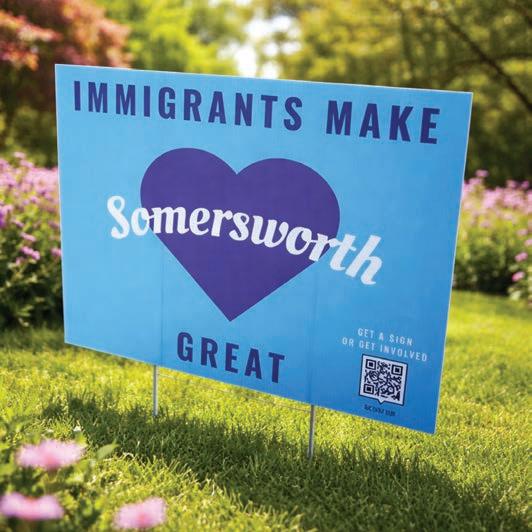
‘IMMIGRANTS MAKE SOMERSWORTH GREAT’ SIGNS TAKING ROOT
A small, quiet protest against the perceived ill treatment of immigrants by federal law enforcement has taken root in Somersworth, and the people responsible are inviting other cities and towns to join them. Popping up around the Hilltop City are blue and white signs reading “Immigrants Make Somer-
sworth Great,” and many city leaders and residents are proudly displaying the signs on their lawns.
Somersworth has a significant Indonesian population, which was the original impetus for the signs, but organizer Marci Stone said they are supporting all immigrants, particularly those in potential danger of being caught up in ongoing ICE roundups. “When people we know and love are afraid, are in hiding with their families, we can’t look the other way,” said Stone.
Stone, who chairs the Somersworth Democrats and the Somersworth chapter of End 68 Hours of Hunger, said they wanted to do something that is not political, but instead gives a visual sign of support for what their friends and neighbors are experiencing. She said they have been talking with other cities about joining the quiet cause and Dover has expressed interest.
“About 20% of Somersworth citizens are Indonesian,” Stone said. “They do wonderful things in our community, and we want to be there for them, to show our support, to show we care about them.” Raude Raychel, a founder of the group Indonesian Community Connect, said the community is grateful to see the signs. “It is heartening to see visible reminders of the welcoming spirit that defines our city,” Raychel said. “For the families we serve in NH and beyond, these gestures reinforce a sense of belonging and celebrate the cultural contributions that enrich our community.” So far, there are about 50 signs around the city.
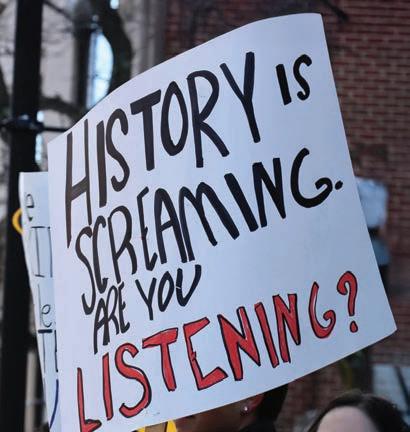
A few hundred Nashua high school students staged a walkout Feb. 4 to protest the aggressive federal immigration enforcement playing out nationally. Several said living in one of the most diverse cities in the state — or with immigrant parents — has left them fearful for family and friends.
Sixteen-year-old Manuel Lorenzo was the first in his family to be born in the U.S. He lives with his grandmother, who is from the Dominican Republic and speaks only Spanish. Lorenzo fears federal immigration agents won’t care that she is in the country legally.
“It really gets me in my heart because at any moment, that could be my family, the people that I care for,” Lorenzo said.
–
Karen Dandurant / Foster’s Daily Democrat via Granite State News Collaborative
Senior Kaylee Hall said she’s encountered prejudice because her mom is Vietnamese. Most of the school’s students are non-white, she said. “We do not have the power to vote,” Hall said, “but we have the power to speak.”
There are 49 languages spoken in Nashua schools and more than 1,600 students are learning English, according to the district. Nashua junior Jordin Lopez, who is Hispanic, put it this way. “Even if they are legally here, ICE doesn’t care,” she said. “They see you on the street. You look a little Spanish. You have an accent. You’re taken.” A few hundred Concord students staged a walkout the week before to protest aggressive ICE enforcement.
– Annmarie Timmons / NHPR via the Granite State News Collaborative
BY PACY MORGADO FOR THE NEW HAMPSHIRE
s diversity, equity, and inclusion (DEI) initiatives face increasing scrutiny and legal challenges at the state and federal levels, the University of New Hampshire is reassessing how it maintains its institutional values while remaining compliant with the law.
Earlier this year, New Hampshire lawmakers passed House Bill 2, a sweeping budget bill that includes provisions limiting DEI-related programs at public institutions. The law has since prompted a lawsuit from the American Civil Liberties Union (ACLU) and advocacy groups representing LGBTQ+ students and educators, arguing that the restrictions could harm marginalized communities and limit educational opportunities.
According to the New Hampshire Bulletin, the legislation broadly restricts DEI initiatives in public institutions, creating uncertainty across schools and universities as leaders try to interpret what is and is not allowed.
Despite this shifting landscape, UNH administrators say the university remains committed to student success, inclusion, and academic freedom.
“Diversity, equity, and inclusion at New Hampshire public institutions, and at some privates, are in flux because at the state and federal levels, these practices are being challenged,” said Dr. Nadine Petty, associate vice president for community, equity, and diversity at UNH. “Through this process, what is most central to UNH’s mission is to ensure academic freedom is protected, that student success and well-being remain at the forefront of decision making, and that all related initiatives
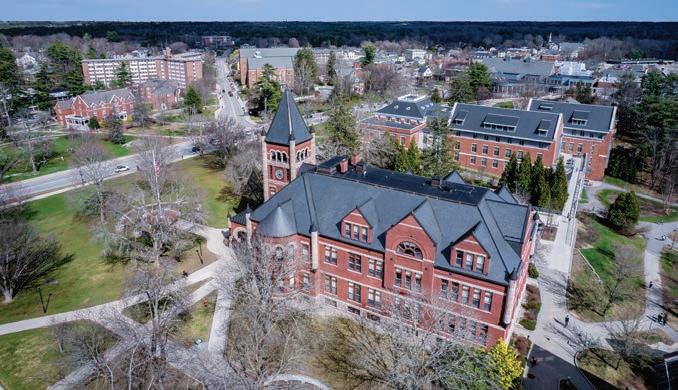
continue to foster an inclusive campus where all employees and students, regardless of their backgrounds and identities, can thrive.”
Petty described HB2 as “vague and convoluted,” noting that some interpretations of the law appear to conflict with existing federal civil rights and equal employment laws.
“One interpretation leads us to assume the state wants us to take action that would violate existing federal Equal Opportunity in Employment laws, Civil Rights laws, and other laws on both federal and state levels,” Petty said.
“Since we do not think the state wants us to violate any existing laws, UNH’s interpretation is tied to the spirit of what we believe the state is getting at, which is to uphold the anti-discrimination laws that have been on the books for decades now.”
In a December 2025 blog update, UNH leadership similarly emphasized that the university is reviewing programs to ensure compliance while maintaining its commitment to inclusion, academic freedom, and student
success. The university noted that it would continue to evaluate initiatives carefully as legal challenges and guidance evolve.
According to Petty, UNH has focused on ensuring programs remain inclusive and non-discriminatory, rather than targeting specific demographic groups for state-funded services.
“What’s interesting to note here is that without programs that address diversity, equity, and inclusion that educate people and build awareness, we likely would only promote the success of white, heterosexual, cisgender men over the success of others,” Petty said. “That is what higher education was founded on.”
Petty added that eliminating DEI-related services would disproportionately affect students from marginalized backgrounds, students she emphasized are also paying customers of the institution.
“It makes no sense to take their money and then decide we will not serve their needs,” Petty said.
At the federal level, Petty said recent rhetoric and policy shifts demonstrate
what she sees as a widespread misunderstanding of DEI work.
“There is little to no understanding that diversity, equity, and inclusion covers a wide swath of demographic groups,” Petty said, pointing to veterans, students with disabilities, first-generation college students, and low-income families. “Yet that is exactly what has occurred with this administration’s anti-DEI rhetoric, whether intentionally or through a trickle-down effect.”
Petty also pushed back against the idea that DEI prioritizes identity over merit.
“This is an icky and dangerous belief and far from the truth,” Petty said, citing her experience on hiring committees. “Candidates of color are often weeded out of the search process or are not chosen for hire for ‘concerns’ that are overlooked in their white counterparts.”
From a legal standpoint, Chad Pimentel, UNH’s general counsel, said the impact of recent DEI-related legislation has varied across institutions.
“New Hampshire has a long-standing law prohibiting preferential treatment based on membership in a number of groups,” Pimentel said. “That meant that some recent federal law changes, like the Supreme Court’s Students for Fair Admissions decision banning race-conscious admissions, changed nothing for UNH even though they prompted a lot of attention and changes at other institutions.”
According to Pimentel, the most significant effect has been the need for careful program review to ensure compliance with state and federal law, particularly given the lack of clarity surrounding what qualifies as “DEI-related.”
“One of the trickiest areas is determining exactly what folks mean when they say that something is ‘DEI-related,” Pimentel said. “Programs that do not have ‘DEI’ in the title could still be affected by changes in the law.”
Pimentel added that ongoing legal challenges to the state law have left the university in a “wait-and-see mode.”
“The biggest challenge is the uncertainty of it all,” Pimentel said. “Once the dust settles, UNH and other public institutions will do what they have always done, support their students within the confines of the law.”
Petty said UNH has already made limited adjustments to program language and training content in response to the legislation. One example involved revising implicit bias training to emphasize that bias is a shared human condition rather than something tied to a specific group.
“The content was clear to begin with, but we thought it was important to be even clearer,” Petty said.
Still, Petty stressed that laws cannot dictate how individuals treat one another on campus.
“The government may be able to legislate the words we use, the services we provide, and how we go about our work, but they can’t legislate how we engage with each other,” Petty said. “Our actions should be our testament, not some words on a webpage somewhere.”
Looking ahead, Petty said DEI at UNH will continue to be shaped by external forces, but the university’s core mission remains unchanged.
“We could not call ourselves a public institution if we did not work to meet the needs of all students,” Petty said. “We would find a way to reach our end goal, even if how we went about doing it needed to shift.” 603
This article is being shared by partners in the Granite State News Collaborative. For more information, visit collaborativenh.org
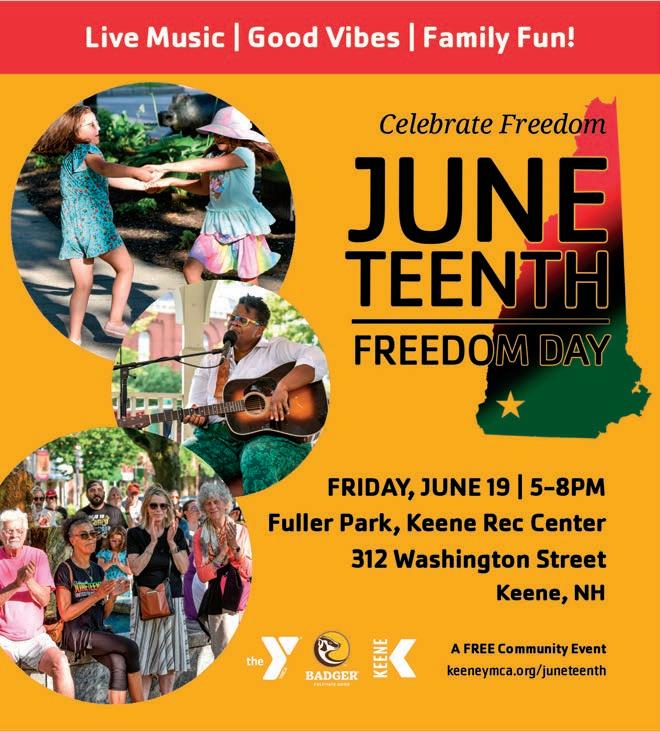
Why New Hampshire’s future depends on who gets to write the next business plan
BY JAMES MCKIM
If you’ve lived in New Hampshire long enough, you know there are a few universal truths. We measure distance in time:
“It’s only 20 minutes away,” we take our maple syrup personally, and we firmly believe that if someone has a good idea, a strong work ethic and a decent snowblower, they can build a business.
That last one is especially important. It’s part of the mythology of the Granite State— the idea that entrepreneurship is open to anyone willing to hustle.
But like many good New England stories, the reality is a bit more complicated. Because while New Hampshire prides itself on independence and opportunity, not everyone starts with the same map, the same shovel, or even the same driveway. And that’s where finance— and who has access to it — comes in.
On paper, starting a business is straightforward:
1 Have a great idea
2 Get funding
3 Build something people want
4 Profit (and maybe upgrade from Dunkin’ to local artisan coffee)
But step two — get funding — I can tell you from personal experience, is where things often go sideways.
Access to capital isn’t just about having a good idea. It’s about networks, relationships, credit history and often generational wealth. For many diverse entrepreneurs, those doors can feel less like doors and more like decorative shutters on a colonial: Charming, but not actually functional. And here’s why that matters — not just morally, but economically.
New Hampshire’s unemployment rate hovers around 3.0%, well below the national average. Which sounds great — until you realize what it actually means: We don’t have enough workers.
In fact, according to the New Hampshire Fiscal Policy Institute, one of the biggest constraints on the state’s economy for years hasn’t been a lack of jobs; it’s been a lack of people to fill them. So where do new workers come from?
Small businesses are the backbone of New Hampshire’s economy. According to the Office of Advocacy, they make up 99% of all businesses in the state, and they employ roughly half of the private workforce. And nationally, small businesses create about two-thirds of net new jobs.
Translation: If you want more jobs in New Hampshire, you don’t just recruit companies — you grow entrepreneurs.
Now imagine what happens when large segments of the population face barriers to starting businesses. We’re not just excluding people. We’re excluding job creation itself.
The good news? New Hampshire is small — and that’s a huge advantage. We’re not trying to turn an aircraft carrier. We’re steering a kayak. A stubborn, independent, possibly slightly underfunded kayak — but still, a kayak.
That means change can happen faster. We already have: Strong community banking traditions, local lending networks, and a relationship-driven business culture.
Now imagine layering intentional inclusion on top of that. Because here’s the opportunity:

Even modest increases in entrepreneurship can have an outsized impact. In 2016 alone, small businesses in New Hampshire created over 9,200 net new jobs. That’s not a rounding error. That’s entire communities gaining employment.
Every time this topic comes up, someone inevitably asks: “But are there enough diverse entrepreneurs in New Hampshire?” To which the correct answer is: “Are there enough Dunkin’s in New Hampshire?” (Also yes, I’m a Krispy Kreme guy, but again, not the point.)
Entrepreneurial potential exists everywhere. What varies is whether that potential is supported. Across the state, there are people running side hustles after their 9–5; building ideas at kitchen tables; and solving problems that others don’t even see.
Some are first-generation Americans. Some are lifelong Granite Staters who’ve never had access to capital. Some are young people who haven’t yet been told, “Yes, you can do this here.” The issue isn’t a lack of entrepreneurs. It’s a lack of pathways.
Finance can either be a bridge or a barrier. Right now, for many diverse entrepreneurs, it still acts like a gatekeeper with a clipboard asking: “Do you have collateral?” “Do you have a long credit history?” “Do you have prior business experience?” All reasonable questions, unless you’ve been systematically excluded from opportunities to build those things.
And here’s the irony: In a state where nhbr.com reports economic growth hit 5.5% in a recent quarter, we still struggle to fully activate all available talent. That’s like having a snowstorm and only plowing half the roads. The solution isn’t to eliminate standards, it’s to expand how we define potential.
New Hampshire is a relationshipdriven state. That’s one of its strengths. But it can also mean opportunity circulates within familiar circles. If we want a stronger economy, we need to intentionally expand those circles. Because diversity doesn’t just happen. It’s designed.
When diverse entrepreneurs thrive, more businesses open. More jobs are created. More local wealth stays local. And importantly, the economy becomes more resilient.
The New Hampshire Fiscal Policy Institute documents that New Hampshire already benefits from a relatively diverse mix of industries, which helps buffer against downturns. Expanding who participates in entrepreneurship strengthens that resilience even further. More perspectives = more innovation. More innovation = more growth.
And yes, potentially more coffee shops. But hopefully also more tech startups, healthcare solutions, manufacturing innovations, and community-based enterprises.
Somewhere in New Hampshire right now, someone has an idea. It might be scribbled on a napkin. It might be in a Google Doc titled “Business Idea FINAL_ v7_reallyfinal.” It might be sitting quietly because they’re not sure anyone would take them seriously.
We need lenders, investors, policymakers, and community members to make sure those ideas have a fair shot. Because the next great New Hampshire business isn’t just going to come from the usual places. It’s going to come from someone who, until now, hasn’t been invited to the table.
And if we do this right, those folks won’t just get a seat. They might end up running the meeting. 603


BY CARLOTA DE ALMEIDA FOR THE NH CENTER FOR JUSTICE & EQUITY
When a young person gets into trouble with the law, what happens next can affect the entire trajectory of their life. For many youth in New Hampshire, juvenile court diversion programs offer a chance to make things right without stepping into a courtroom or going deeper into the judicial system.
The New Hampshire Juvenile Court Diversion Network, a statewide 501(c)(3) organization that accredits diversion programs, trains practitioners, and partners with state agencies, has coordinated this community-based work since 1994.
In the broadest sense, diversion refers to any intervention that keeps a young person from moving further into the formal court system. “We’ve been doing diversion in New Hampshire for more than 40 years,” said New Hampshire Center for Justice & Equity Executive Director Alissa Cannon, who has led the NH Juvenile Court Diversion Network for the past seven years. “What started as grassroots community problem-solving in the 1980s has become a formalized, statewide system focused on keeping youth out of the courts whenever it’s safe and appropriate to do so.”
For New Hampshire’s accredited diversion programs, that definition includes restorative practices that address the harm done, motivational interviewing to support behavior change, and screening for mental health and substance use needs.
Cannon notes that more than 60% of youth referred to diversion programs screen positive for mental health challenges and substance use.
Importantly, diversion is now the
preferred first option for most youth encounters with law enforcement, for a variety of charges. And thanks to statewide juvenile justice transformation efforts completed in 2022, young people can participate in diversion more than once, acknowledging real-life changes in circumstances, development, and risk.
“A 13-year-old and a 17-year-old are entirely different developmentally,” Cannon said. “Why shouldn’t they get another opportunity to make amends and move forward?”
While the NH Juvenile Court Diversion Network does not run diversion programs itself, it provides accreditation, oversight, training, and financial support so that local programs across the state can do the on-the-ground work.
Member programs can be structured as independent nonprofits, municipal entities, county programs, or even police department-affiliated organizations.
The Upper Room in Derry, for example, operates its diversion program within a Family Resource Center, meaning that when a youth's needs are identified during the diversion process, they can access services like anger management, parenting support, and family counseling under the same roof.
In Manchester and Nashua, Police Athletic League (PAL) programs offer diversion within a space already dedicated to after-school activities and positive engagement with law enforcement. Municipal programs like the City of Keene Youth Services and Dover Teen Center, operated by the Dover Police Department, connect youth with structured activities and recreational opportu-
nities that reduce the chances of future involvement with law enforcement. Merrimack County's program deploys two county navigators who ensure that youth can be connected to appropriate local resources regardless of where they live.
“What I love about this network is that programs reflect their communities and are built on the belief that youth deserve support, not a criminal record,” Cannon said. "We know that having these options available for youth to be active and engaged in their community reduces the chances of them recidivating.”
Last year, the statewide completion rate of youth court diversion programs was over 90% across delinquency and violation-level cases. Additionally, a six-cohort recidivism study (2012–2020), which tracked youth one and three years after diversion, found that New Hampshire’s participants reoffend at rates well below national averages.
“That tells us the model is working,” Cannon said. “Youth aren’t returning to the court system. They’re making amends, addressing the root causes of their behavior, and moving forward.”
And since youth can now participate in diversion more than once, the NH Juvenile Court Diversion Network is preparing a new study that will redefine recidivism to align with the state’s reformed probation and assessment system.
These strong outcomes have helped solidify diversion as a central component of New Hampshire’s juvenile justice system, but questions about equity mirror the broader criminal justice system.
NHCJE previously reported, incarceration in New Hampshire disproportionately affects Black and Brown residents, and diversion referrals, anecdotally, show similar disparities. However, identifying exactly where inequities occur is difficult because New Hampshire lacks consistent data on first-contact decisions.
"That critical moment of discretion, whether a law enforcement officer gives a youth an informal warning and sends them home, or escalates the encounter by filing a petition, is not tracked uniformly across New Hampshire's many law enforcement agencies,” Cannon said.
To address this, the NH Juvenile Court Diversion Network convened a Center for Youth Justice (CYJ) team, modeled on Georgetown University’s capstone approach and spanning the entire referral pipeline. This includes law enforcement, juvenile prosecutors, JPPO supervisors, program coordinators, and Cannon. Together, they are working to develop training for both police officers and prosecutors on equitable referral practices, identify gaps in geographic access (particularly for rural areas), and have a goal of eliminating program fees so diversion is financially accessible.
While policy reforms and training are key to strengthening equity and access, Cannon says diversion ultimately depends on community involvement. Beyond financial barriers to participation in diversion programs, awareness remains a major challenge. “People don’t know this option exists,” Cannon said. “They don’t know there’s a program in their community.”
Residents can volunteer on panels, mentor youth, partner on community engagement opportunities, serve on nonprofit boards, or support to local diversion programs. “We need organizations willing to empower our youth,” she said. “They make mistakes. But they deserve guidance, connection and the chance to grow.” 603

Corporate / Tax / Trusts & Estates / Litigation
Education / Employment / Health Care
Bankruptcy / Intellectual Property / Immigration
Cybersecurity & Privacy / Artificial Intelligence
Energy / Environment / Real Estate & Land Use
Personal & Family Representation
Government & Criminal Investigations
Government Affairs & Regulation

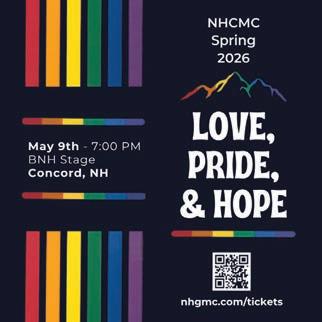
MAY 9, MAY 16
Don’t miss the summer season of Love, Pride, & Hope! Smile along to recognizable favorites and uplifting songs. The NHGMC, now in its 28th year, is dedicated to sharing the joy of live music and presenting a positive face of the LGBTQ+ community in New Hampshire. This show will be held May 9 at 7 p.m. at the Bank of NH Stage, Concord, and May 16 at 7 p.m. at Christ the King Lutheran Church, Nashua. ccanh.com or nhgmc.com
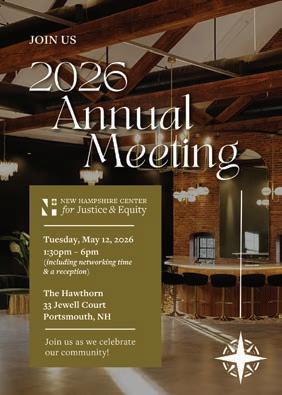
MAY 12
The New Hampshire Center for Justice and Equity will hold its annual meeting May 12 at the Hawthorne in Portsmouth. This event is a powerful gathering of community members, advocates, partners, and leaders all committed to building a more just and equitable future for the Granite State. nhcje.org
MAY 13, JUNE 10, JULY 8
The group offers a safe, welcoming, and low-pressure space for neurodivergent adults to hang out, connect, and be themselves. Those who attend may participate in the featured activity as much or as little as they are comfortable. A range of sensory toys and aids are available, and we encourage people to join in the conversations as little or as much as they want. Meetings are held at 6 p.m. at Nashua Public Library. nashualibrary.org




MAY 14
Aligned and Amplified: The Strength of Local Collaboration will be an event brimming with inspiration, innovation, and meaningful connections. Dive into engaging sessions featuring interactive exercises, lively discussions geared towards actionable insights, and meaningful networking. The keynote will be presented by Shaylyn Romney Garrett, co-author of “The Upswing” with Robert D. Putnam. The event will be held at the Grappone Conference Center in Concord. nhbsr.org


MAY 17

Big Gay Events returns to The Hop Knot, 1000 Elm St., Manchester, for the second season of Big Gay Drag Brunch, with an all-new cast. These events often sell-out. hopknotnh.com

JULY 1
This workshop series is designed for parents and caregivers of children up to age 8. Participants will gain insights into child development and behavior management while learning strategies to support social and emotional growth. Complete all classes to earn a certificate. The series runs Wednesdays, July to Aug. 19 from 2:30 - 4 p.m.
MAY 28, JUNE 25, JULY 23
General Meeting open to all members of the Manchester Branch of the NAACP and is held at 6 p.m. at the Manchester City Library and via Zoom.
JULY 25

MAY 29

The 9th annual Gala will come to the Queen City to celebrate trailblazing women and this year’s AmplifiHER awardee. The event begins at 5 p.m. at the Doubletree by Hilton on Elm Street. nhwomensfoundation.org

MAY 30, JUNE 27
Build community by sharing a potluck meal with the YWCA, 72 Concord St., Manchester. Lunch is held the last Saturday of the month from noon to 2 p.m. ywcanh.org

Ivy League Entertainment and Big Gay Events team up for a night of outstanding drag performances, tricks and more. Iconic host Ivy League is being joined at Backyard Brewery & Kitchen, 13518 S. Willow St., Manchester, by stunning performers Pancake, Kira Stone, Sasha Stone and Mizery McRae. www.eventbrite.com/e/ brewery-babes-tickets-1847099667829 ONGOING
See the full list on page 12
To submit multicultural or changemaker events for the next issue, send them to editors@603diversity.com

Sunday, September 19, 2026
11 am - 5 pm
Keach Park, Concord, NH
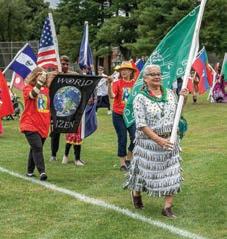
The Concord Multicultural Festival is more than a festival— it’s a celebration of who we are, together. Through food, music, art, and joyful gathering, we create a space where cultures are honored, stories are shared, and connections are made. Our goal is to deepen understanding, and remind us of the beauty that exists in our differences. Contact: connect@concordnhmulticulturalfestival.org Website: concordmulticulturalfestival.org
Saturday, June 27, 2026
PARADE
Down Elm Street
11 am - 11:45 pm
Ends at Veteran's Park
FESTIVAL
Veteran's Park
12 pm - 5 pm

Featuring: Live Entertainment, Local Musicians & Drag, Performers, Youth Area, 100+ Local Vendors & Artists, Food Trucks and more.
Follow us: manchestertrue.org
Insta: @manchestertrue Facebook.com/Manchestertrue

Helping address social justice issues, elevate diverse voices, and meet the needs of underrepresented community members and visitors in the Lakes Region & White Mountains.
Next big event: JUNETEENTH!
Email: info@lakesmountainsdei.org


Monthly Markets & Events
Featuring:
• Local Artists
• Food Vendors
• Activities
• Live Music
•Community

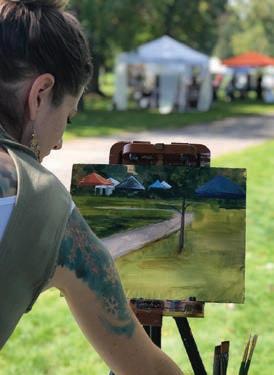
Visit: ConcordArtsMarket.org for current schedule





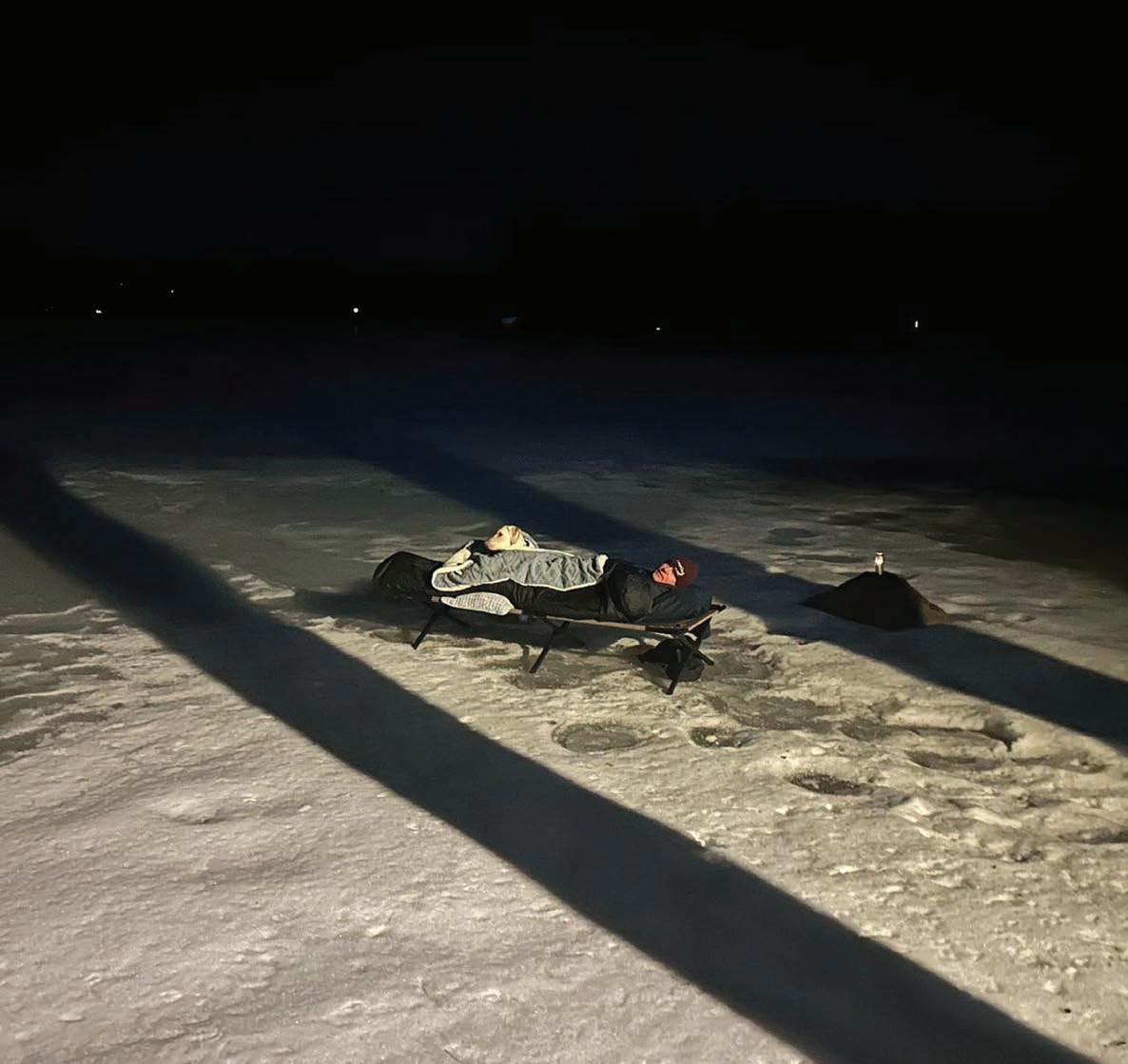
SARAH PEARSON
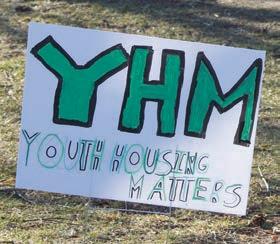
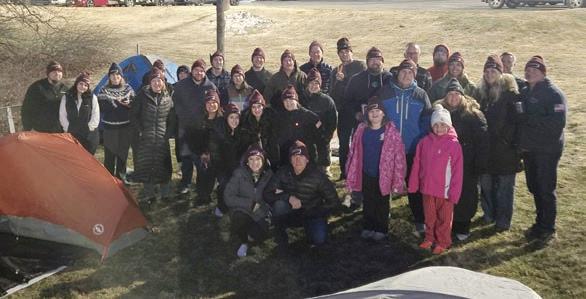
s temperatures dipped below 30 degrees, 145 participants in Waypoint’s 12th annual Sleepout fulfilled their commitment to spend the night outside to raise money for young people experiencing homelessness.
The Sleepout held a kick off March 27 at Manchester's Bronstein Park before the 26 teams relocated to private yards for the evening.
"The money we raise here is vital to maintaining programs and that's not a hyperbole, that's a fact, and so there's a
lot of gravity to this event," said Mandy Lancaster, director of the Homeless Youth and Young Adult department at Waypoint, at the Friday evening event.
With more than 1,200 donors and 34 sponsors, the organization had raised $310,000 the initial weekend, with more coming in through the end of April.
SleepOut supports New Hampshire’s only low-barrier emergency youth shelter and safe space located in Manchester, youth drop-in centers in Manchester and Rochester, and a range of support services that lead to long-term stability.
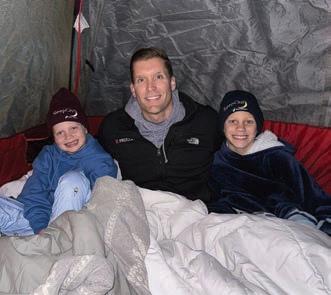
sponsor
had a team of employees and their families sleep outdoors at its office and their own yards.
Several years ago, participants would spend the night at the park, in part to draw attention and raise awareness of homelessness. As a response to the U.S. Supreme Court ruling in July 2024 regarding Grants Pass v. Johnson, which allows municipalities to criminalize sleeping in public places, this was discontinued.
Each year an estimated 15,000 young people experience homelessness across New Hampshire. At least 70 percent of them do not have the option to return to a safe and stable home. 603