Volume 115, Issue 18 | Monday, March 23, 2026 | mcgilldaily.com McGillemininomenon since 1911
The McGill Daily is located on unceded Kanien’kehá:ka territory.
Published by The Daily Publications Society, a student society of McGill University.
Good People: Girls Who Code
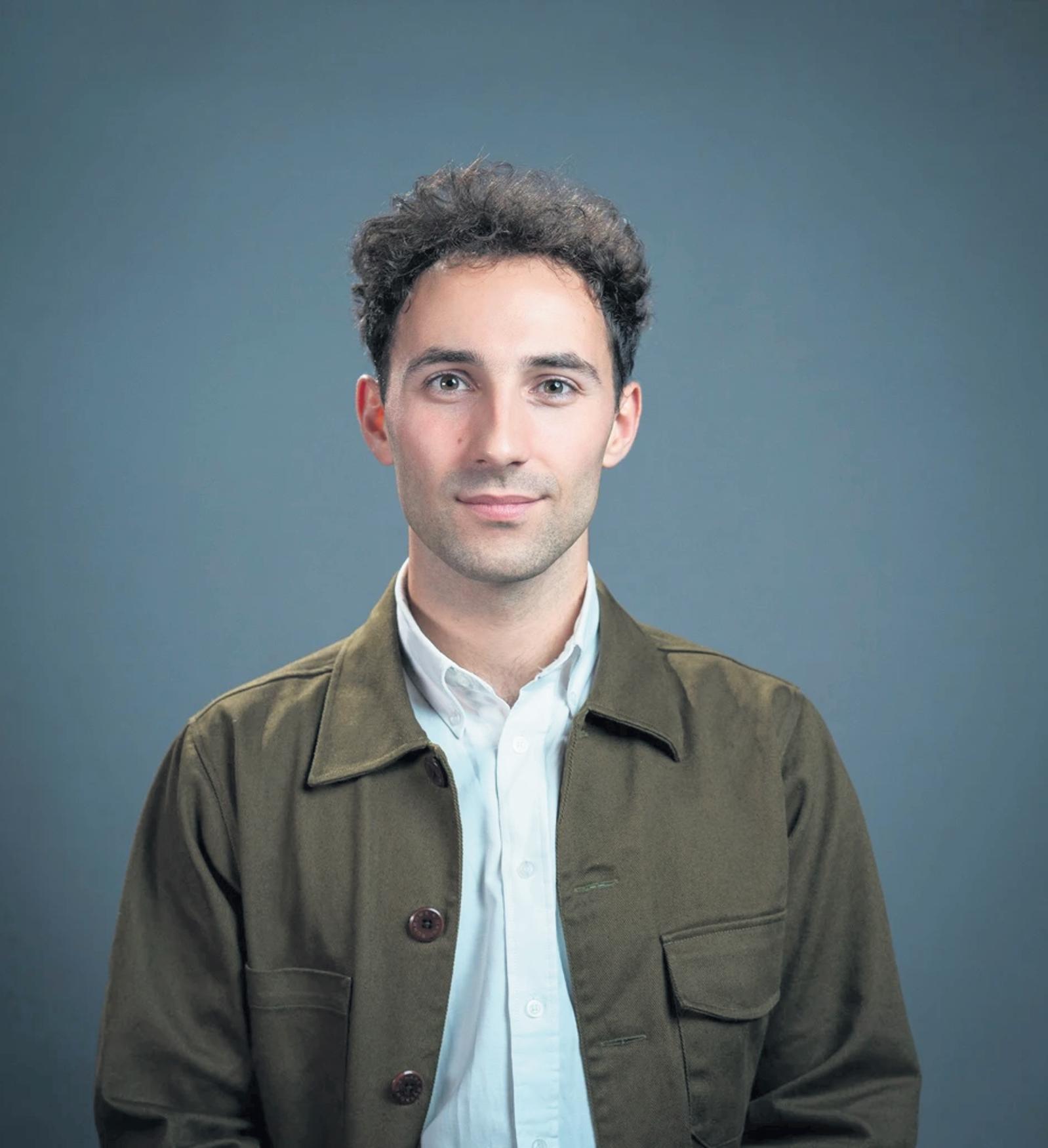
Interview with Luca Léry Moffat, McGill Alum at the Kyiv Independent
Highlighting McGill Alumnae Commentary
Culture
Love Story: Carolyn Besset
Local Artist Cinzia’s New EP
Hamnet Review
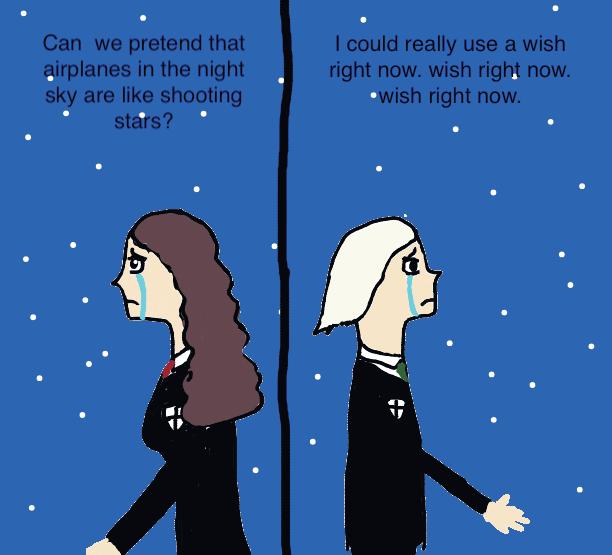
• Fanfiction Post-creds
editorial board
3480 McTavish St, Room 107 Montreal, QC, H3A 0E7
phone 514.398.6790 fax 514.398.8318
mcgilldaily.com
The McGill Daily is located on unceded Kanien’kehá:ka territory.
coordinating editor
Vacant
managing editor
Sena Ho news editors
Adair Nelson
Justin Friedberg
Mara Gibea commentary + compendium! editors
Ingara Maidou
Sonia Berman
culture editors
Isabelle Lim Youmna El Halabi features editor
Elaine Yang visuals editors
Eva Marriott-Fabre
Nikhila Shanker copy editor
Charley Tamagno design + production editor
Cassandra Cohen multimedia editors
Golnar Saegh
Parker Russell social media editor
Lara Arab Makansi cover design
Nikhila Shanker
Golnar Saegh
Parker Russell staff contributors
Helena Cruz Da Costa Barros, Enid Kohler, Annabelle Premont contributors
Chiara Sainz Lipscomb, Lily Tasson, Maria Hamdaoui, Héloïse Durning
Published by the Daily Publications Society, a student society of McGill University. The views and opinions expressed in the Daily are those of the authors and do not reflect the official policy or position of McGill University. The McGill Daily is independent from McGill University.
Spotlighting Powerful McGill Alumnae
InhonourofourInternationalWomen’sHistoryspecialissue, The McGillDailyhashighlightedsixinfluentialMcGillalumnaewho haveflourishedintheirrespectivefields.
Rewriting the Code: McGill Students Break Barriers in Computer Science
Student-run organization Girls Who Code seeks to empower women and gender-diverse students in computer science and related fields.
Enid Kohler Staff Writer
Good People is a bi-weekly column highlighting McGill students doing communityoriented work on and around campus. Because it’s important to celebrate good people doing good things.
In 2026, Deloitte predicts that women will make up less than 30 per cent of the global technology workforce, given that they are consistently underrepresented in academic programs in science, technology, engineering, and mathematics (STEM). What is more, women make up only 25 per cent of tech positions on a global scale, as reported by Forbes and the National Center for Women and Information Technology.
Girls Who Code confronts gender disparity in STEM by making the field inclusive and accessible for women and gender-diverse people. With an eye towards breaking gender barriers, the organization offers computer science lessons and mentorship for elementary and high school students across Montreal. It also runs hackathons for university students, networking events, and workshops.
The Daily spoke with Girls Who Code executives Jenna Cacchione and Virginia Ceccatelli, U3 students studying Computer Science and Economics at McGill. We talked about the creative side to coding, imposter syndrome, and why young girls and gender-diverse students belong in the computer science field.
This interview has been edited for clarity and conciseness.
Enid Kohler for The McGill Daily (MD): How did you get involved in Girls Who Code, and why?
Virginia Ceccatelli (VC): I was never really exposed to coding in high school. It wasn't really a subject that was taught, and I always thought it was scary as a field and very masculine. When I started my studies in International Relations in university, I got a bit of exposure to Python and R and had so much
fun with it, so I transferred into Computer Science. I want to give girls the opportunity to get into coding and see that it's a creative process as well.
Jenna Cacchione (JC): Similar to Virginia, I did my first year in [another program, Economics,] and then I switched into Computer Science. My high school didn't have anything computer related Had I had a program like this, maybe I would have switched into CS a little bit earlier. I really just wanted to give back [by giving] other girls that same opportunity.
VC: CS really is like learning a language. Like any language, the more you speak it and the earlier you're exposed to it, it's so much easier to pick it up.
MD: That's a really good comparison.Forthosewhoaren’t familiar with your organization, can you pitch Girls Who Code in a few sentences?
VC: [Girls Who Code] a way to make coding fun and creative, and to change the narrative that [coding] is anything relegated to the masculine sphere. We give back to young girls [by seeing] them learn every week. It's really rewarding.
JC: [Coding] can be really daunting. Sometimes I look at my computer screen and I'm like, ‘oh my God, what am I even doing?’ For younger girls especially, it can be super intimidating, especially since it’s a maledominated field. I hope our facilitators can act as big sisters to our students.
MD: Why is it important that young girls and gender-diverse students have access to a program like Girls Who Code?
VC: In general, the CS field is massively male-dominated. Most role models in the industry are guys. So for us, it's really to show girls that they can do it; it's not that hard. For guys, this message is something they might have been told growing up, and for girls, it's not necessarily the narrative.
MD: You mentioned that the Computer Science space is predominantly male-dominated.
In your own professional and/or academic experiences, what kind of patterns have you observed in terms of female representation and inclusivity?
VC: I'm not working in the field yet, but through research projects, I’ve found that you have to prove yourself more. If you're in a room that has seven guys and two girls, the two girls have to prove that they know what they're talking about, that they can actually do everything that everyone else can. I feel like there's this constant voice that’ s second guessing my abilities as a girl coder.
JC: I have to agree. I also find imposter syndrome is very much there. Exactly what you said, if you'resittingatatablewithabunch of men, and you're the only two girls, I sometimes feel like, ‘I don't belonghere.’ It'samentalchallenge. Like, ‘no, I’ve put in the work. I do belonghere.’”
MD: On that note, what do you hope students will take away from the program beyond practical coding skills?
JC: I hope that students realize
that it's okay to ask for help. Sometimes you do need guidance. I had tons of [it], and I was very lucky to have had mentors who were part of Girls Who Code. I hope that [these girls are] able to ask for help and possibly find a mentor later on in their academic career.
MD: Do you have a favorite memory of your work with Girls Who Code?
VC: In my year of being a facilitator for Girls Who Code, I taught at the same high school and a lot of the girls stayed the entire year. In the beginning, they were shy about asking questions, but it was really nice to see them gradually gain so much confidence.
JC: I like the fact that our whole executiveteamisgoingthroughthe same thing: we’re all looking for internships, we're all studying pretty much the same classes. It’ s nicetohavethatcommunity.
MD: The theme of this column is “good people doing good things.” In the context of your work with Girls Who Code, what does being a “good person” mean to you?
JC: To me, being a good person means giving back and helping younger girls. Acknowledging that I didn't have the guidance or knowledge that I do now, and then giving it to the next person.
VC: Instead of resenting the system and having to stretch myselftocatchuptogettowhere I am now, I can give these girls what I wish I had. Being a good person also means sticking together as girls and by helping girls realize that they can do it if they want to. There's nothing stopping them.
End note: If you know good people doing good things who you would like to see featured in this column, email news@mcgilldaily.com.
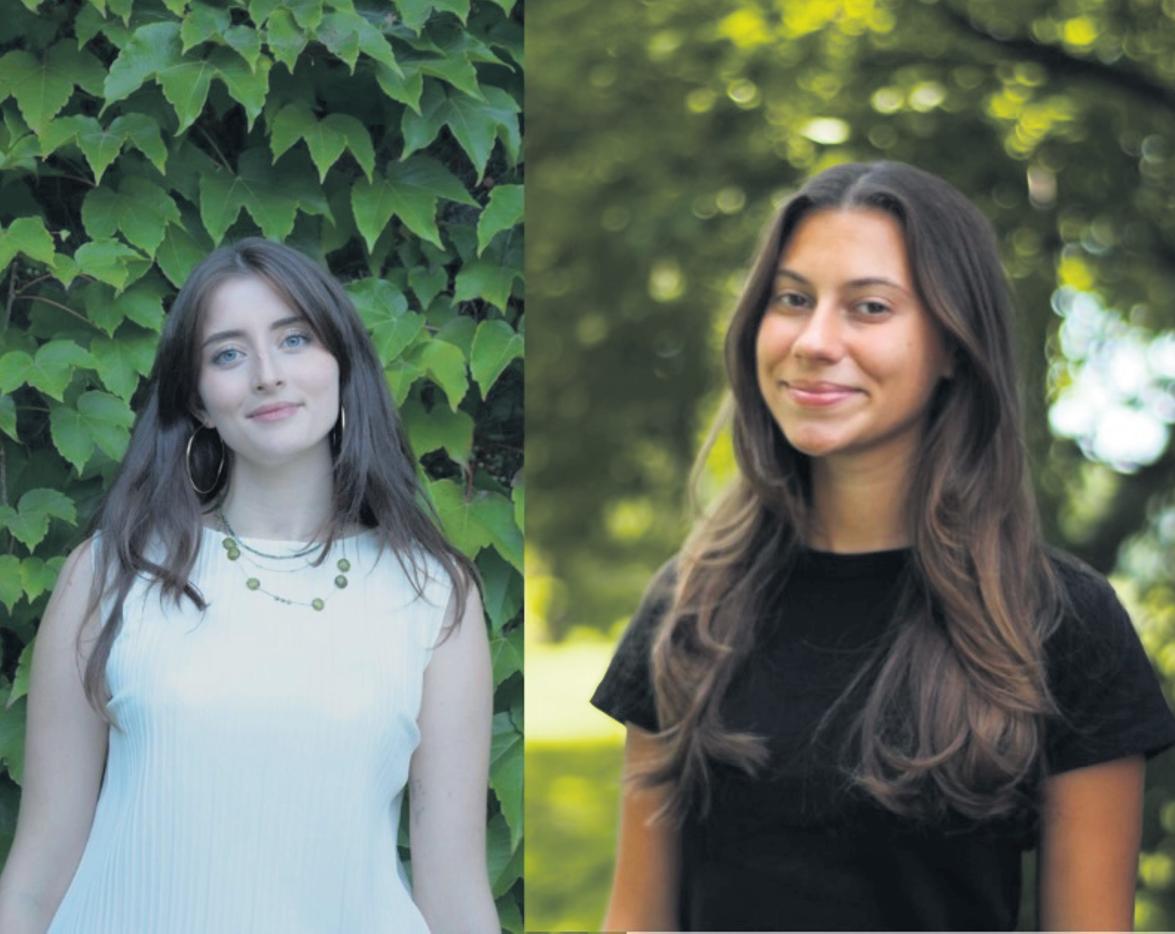
Girls Who Code Executives Virginia Ceccatelli (left) and Jenna Cacchione (right). Image Courtesy of Virginia Ceccatelli and Jenna Cacchione.
March 23, 2026
Reporting in a Warzone
A conversation with McGill alumnus and journalist Luca Léry Moffat
Eva Marriot-Fabre & Sena Ho
Visuals Editor & Managing Editor
On March 11, Professor Maria Popova coordinated a Zoom call with Luca Léry Moffat, aneconomicsreporterfor TheKyiv Independent, for her Politics of East Central Europe class. The students convened to ask Moffat about his experiences working in Ukraineandhisperspectiveonthe present state of the RussoUkrainian war. Moffat graduated from McGill in 2022 with a BA in economics and Russian. The McGillDailyhad the opportunity to conduct an extended interview with him, particularly about the role of journalism in the war.
This interview has been edited forclarityandconciseness.
The McGill Daily (MD): After graduating from McGill and enteringtheworkforce,youdidn’t originally anticipate becoming a journalist. In what ways did your education at McGill and prior experience in economic research prepareyoutobecomeajournalist?
Luca Léry Moffat (LLM): To maybegiveyouabitofbackground, in my third or fourth year, I got really into economics. I was doing a different major, did ECON 416 that was about topics in economic development, and sort of fell in love with it and decided to switch to the honours program. By the end of my third year, going into my fourth year, I was pretty set onapplyingforeconomicresearch. As I said in the lecture, I applied to a bunch of different pre-docs; mostofwhichwereveryacademic. Then, of course, I went on to get this job at a think tank. It was a kind of pre-doc as a research
analyst, but it was at a think tank, so [it was] less academically focused. Policy is a bit different from academia. It's more about being a messenger between academia and policymakers. So, asaneconomist,Iwasreadinglots of academic stuff, policy papers, and then trying to communicate it clearly to another audience. I think it was actually during my first job when I picked up a lot of the skills that I needed in journalism: the ability to read a lot, synthesize that information, spin a story, figure out what the most important story is, and what the key messages you want to get across are. Something else I got from my first job was a network. So, I started building a network in Brussels, and those people have becomeinvaluablein[my]pivoting to journalism because being a journalist is basically knowing lots of people and getting them to tell you stuff. I mean, that's literally all it is anyone could do it.
I would say that one thing that IgotfromMcGillintheeconomics programwastheabilitytousedata. I think that has given me a real edge in my journalistic career becausenotmanypeoplecanmake a graph. Data visualization is something which journalism is really shifting towards. People don't have [long] attention spans anymore, so we like to see pretty graphsandpictureswhilescrolling through these interactive articles. The ability to code and knowing how to use an Excel spreadsheet was very attractive to prospective employers.I'dsaythat'ssomething I got from McGill which really helped me.
MD: You mentioned that you were also a graduate of POLI 331. With regards to knowledge concerning Ukraine, Russia, and
“I believe the facts clearly show that Ukraine is in a war for its own existence, that this is a war for two competing visions of society: one is dictatorship, and one is democracy and liberal values, and I am more partial to the latter.”
- Luca Léry Moffat
their histories, what piqued your interest in Eastern European affairs during your undergraduate degree or even when working in economic research?
LLM: I was talking to Professor Popova about this I loved my time at McGill. I had amazing professors, learned so much, and got a really good quality of education. Having said that, I feel as though I was taught economics and Russian both quite badly. I don't think that's McGill's fault, I think that's just education in the West.
On the economic side, you learn all of this economic theory which comes from the 1970s and 80s. But you don't really look at finance at all even though finance has, over the last 40-50 years, become such a crucial part of the economic system. International financial flows have real ramifications for the economy, whereas that's not integrated into a lot of the economic models that we study. On the Russian side, we were studying all of this literature without looking at it through the lens of colonialism. I think in the West, the idea that Russia is an empire is sort of a bit of an odd one when you're first confronted with it. But actually, it's one of the last standing empires from this massiveperiodofcolonialism.The USstillexists,butmanyoftheothers have kind of disintegrated, or are now a shell of their former selves. I would study Russian literature and I remember studying, for example, A Hero of Our Time by [Mikhail] Lermontov, and at no point did I stop to consider, “Why is there this Russian guy in the Caucasus?Whatishedoingthere?” Well, of course, it was part of this expansion of the Russian Empire. So, that's just something which I've sort of reflected on since leaving McGill.
In terms of what piques my interest in Eastern European affairs, I think it was classes like POLI331orHIST226,whichwere about the Balkans, Greece, and Turkey throughout the 20th century. What I found so interesting about it was how it’ s really complicated borders changed all the time throughout the 20th century, and people moved.AfterWorldWarI,borders moved and people stayed where they were. After World War II, bordersprettymuchstayedwhere they were and people moved. There's so much packed into European history, which is really
difficult to unearth because it's complicated.TheRussian,poli-sci, andhistoryclassesItookatMcGill started to shed a light on that, or even just scratched the surface of those really complicated events. And it left me hungry for more.
MD: During the Zoom call, you mentioned that you often feel conflicted as the journalistic field often emphasizes objectivity and neutrality,whilethereportingyou do and the publication you work for are staunchly supportive of Ukraine’ssovereignty.Howdoyou
MD: To my knowledge, you are proficientinRussianandcurrently learning Ukrainian. What has the process of learning the Ukrainian language been like for you, and whatisitliketoreportforaprimarily English-languagenewspaperwhen English is not the official language of Ukraine?
LLM:Firstofall,learningRussian [at McGill] was amazing because I had incredible professors. I have to shout out Maria Ivanova, I think she's still there, as well as Daniel Pratt, and a few others.
“Freedom of the press is a key tenet of a democratic, rulesbased, sovereign state.”
- Luca Léry Moffat
navigate this conflict and adhere to journalistic integrity while fighting for a cause you feel so strongly about?
LLM: I find no trouble navigating it whatsoever because I think manythingscanbetrueatthesame time. I'm staunchly supportive of Ukraine. I believe the facts clearly show that Ukraine is in a war for its own existence, that this is a war for two competing visions of society: one is dictatorship, and one is democracy and liberal values, and I am more partial to the latter.
At the same time, I believe that Ukraine has a lot of work to do when it comes to implementing certain reforms. Some articles I've written have been sharply critical of the government. In other articles, I have been less critical or even praised the government. I'm not writing op-eds. I'm a reporter, so I'm interviewing people,I'mputtingintheirquotes, and I’m telling the story. I [will] always try to tell a story that I believe is factually accurate and where I've quoted people in the way that they would want to be quoted.
At the end of the day, Ukraine is fighting for a future where it's a democracy and it has its own sovereignty. Freedom of the press is a key tenet of a democratic, rules-based, sovereign state. So I think as a reporter, it makes complete sense that I'm writing articles which [can be] more critical of the government.
Havinghadaseriesofotherlanguage teachers since who weren't so good, it made me appreciate how incredible [my McGill ones] were. AtMcGill,thequalityofeducation in the Russian department was really phenomenal. I'm really nostalgic about it.
TheprocessoflearningUkrainian started when I arrived here on the 17th of April, exactly 11 months ago. When I first arrived, I figured that my Russian would be reasonably helpful, even though I understood that people were speaking less Russian nowadays because they're being invaded by Russiaandalsowantingtoput[the] Ukrainian [language] into the limelight. Kyiv used to be a very Russian-speaking city up until the full-scaleinvasionin2022,buthas [now] massively pivoted to Ukrainian. You still hear Russian around quite a lot, but out of respect I wanted to learn Ukrainian.Forme,itwasveryclear that a lot of people didn’t want to be spoken to in Russian. As a way of just being respectful, I wanted to learn Ukrainian.
What I think the most crucial element of learning any language is completely immersing yourself. It's been very humbling because learning a language from scratch is not easy. Ukrainian is a very difficult language. It's massively helped me to have such a good quality of education at McGill on the Russian side of things because they're both Slavic languages. Eventhoughthey'reverydifferent, lots of the grammar is the same,
“What was always clear to me but really crystallized when I arrived in Ukraine was that this war is happening because of Russia's intent to erase Ukrainian statehood, erase the Ukrainian language, and to absorb Ukraine as part of Russia.”
- Luca Léry Moffat
[and] lots of the endings are sort of similar. Not having to start from scratch on the grammar side has been really helpful.
MD: How have you perceived reporting from journalists in UkraineontheRusso-Ukrainianwar to be different from reporting published by Western media?
LLM: I'm thinking of a time when I went back to the UK last summer, and we had a big gathering [with] abunchofMcGillalumni.Ibrought back a bunch of caps with the Ukrainian flag on them to give to some friends. Someone said, “Oh, you're the one who's working as a journalist in Ukraine,” and made a joke about not being neutral [in the war]becauseofmyfriendswhohad these caps on. I think there is a desireamongstsomereporters,and a desire in the public rhetoric of the West, to [believe] that this war is political and that you can be neutral in it.
What was always clear to me but really crystallized when I arrived in Ukraine was that this war is happeningbecauseofRussia'sintent to erase Ukrainian statehood, erase the Ukrainian language, and to absorb Ukraine as part of Russia. Putin has some really peculiar
Courtesy of TheKyivIndependent
historical fantasies which all mainstreamhistoriansrejectentirely: that Ukraine isn't a real place and that it's the Bolsheviks’ fault that Ukraine exists. The reality is that Ukraineisarealplace.Ithaspeople whoreallycareabouttheircountry, [and] demonstrably so because there are 900,000 people in the army. There are hundreds of thousands who have been injured or have died defending their country. There are so many Ukrainiancivilsocietyactivistswho care about their language. You see Ukrainianflagseverywhere.People have backpacks with Ukrainian ribbons.
“The reality that Ukraine is a real place. It has people who really care about their country [and] demonstrably so because there are 900,000 people in the army. There are hundreds of thousands who have been injured or have died defending their country.”
- Luca Léry Moffat
Ukrainian society is complicated. There are lots of different perspectiveswithinthecountry.But I'm actually rather impressed by the homogeneity in supporting Ukraine, [and] not wanting [it] to be part of Russia, especially in a country that has a long history of entanglement with Russia. Given everything that I've just said, it's pretty easy to define this war as a genocidal war because it is an attempt to erase a nation. And that is the definition of genocide. In the Western media, this is not always made explicit. I think it
should be made explicit. This is essentiallyananachronisticempire. Ifyouknowanythingabouthistory, youcanseethis[repeating].Imean, it rings throughout the ages. If you look at recent history, you can see Georgia in 2008, which Russia invaded. You can see Crimea in 2014. You can see interference in Ukrainian elections in 2004 [and] 2005 (the Orange Revolution). Westernmediasometimesdoesn’t always do a good job of portraying that. But for me, those are the facts and a journalist's job is to report the facts. And it's very difficult for metoseeitfromanyotherperspective. I love hearing other people's views, even if I find them abhorrent sometimes. I really enjoy trying to understand where people come from. For me, it's so clear that the facts are [that] this is an imperialistic, genocidal war.
Another doomed LoveStory: The American Media & Carolyn Bessette
FX’s new show puts an iconic couple under a new lens
Lily Tasson Culture Contributor
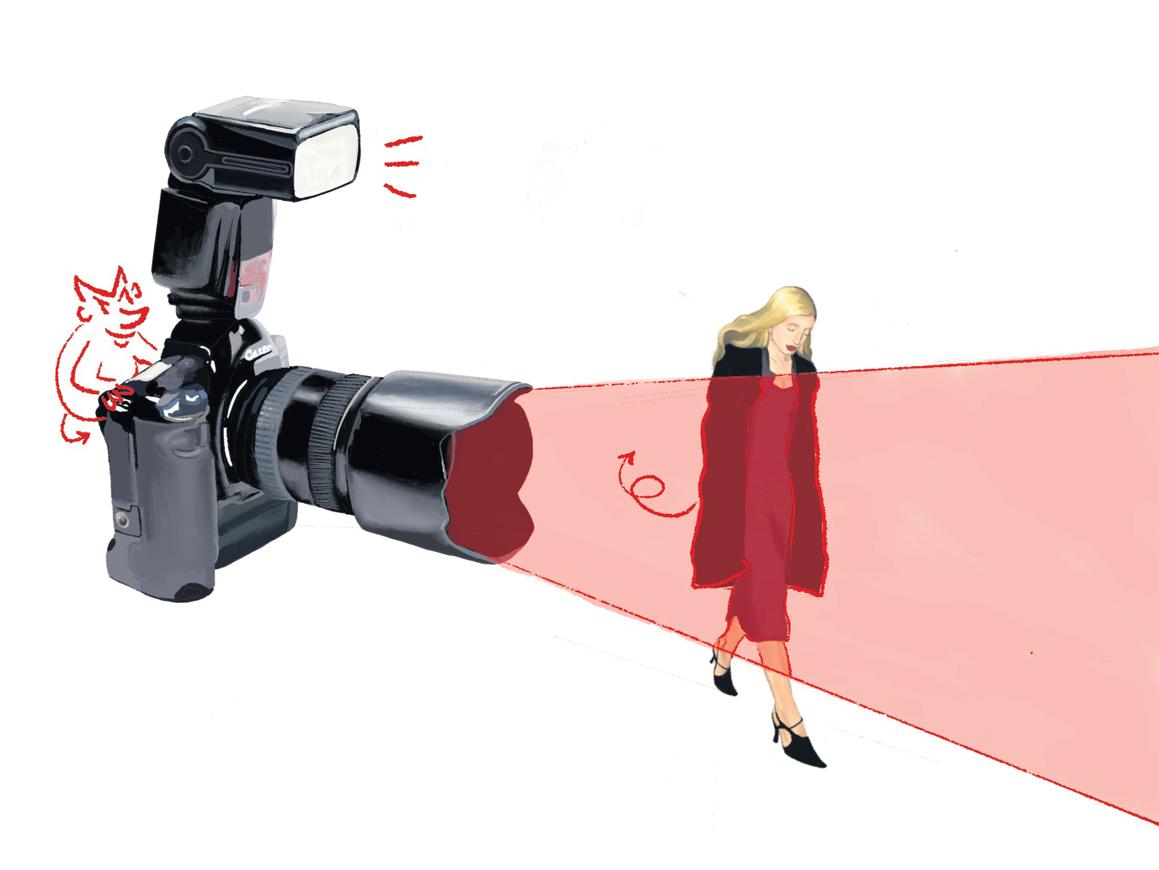
It’sFriday,July16,1999.Ablonde womanisatanailappointment, while paparazzi gather outside the salon. Incessantly snapping pictures, they call out her name. Her nails have been painted a vibrantred,butshesecond-guesses the decision, asking the beautician for something safer: a nude shade. Sunglasseson,sheleaves,swarmed byshoutsandcameraflashes.This is Carolyn Bessette-Kennedy on thelastdayofherlife.
The above vignette forms the opening scene from Love Story: John F. Kennedy Jr. & Carolyn Bessette, FX’s newest show that has quickly become a sensation. Speaking to the public's enduring infatuation with the couple, it is now the platform’s most watched limited series to date, just a month after its release. The limited series tells the story of America’ s reluctant “it couple” of the 1990s. Love Story curates the details of Kennedy Jr. and Bessette’ s notoriously guarded relationship. Drawing from friends’ anecdotes and media footage we see Bessette
of fiction and reality, it's easy to believe the iconic couple’s real relationship is finally being revealed. The chemistry between thetwoleads(SarahPidgeonand Paul Anthony Kelly), close-up shots, warm lighting, and the “behind closed doors” setting develops a captivating intimacy. After watching the first few episodes of the show I had a feeling of hollowness I couldn’t place. Only to discover, I was mourningthecouple’sdeath,over 25yearslater.
The intense public investment which LoveStory dependsonand re-evokes was significant to Kennedy Jr. and Bessette’ s relationship. The public’ s adoration and collective grief for his father as well as a life in front of the cameras made John F. KennedyJr.America’sson,aswell as its most coveted bachelor. Any woman Kennedy Jr. dated was held to high standards by the public. The same went for Bessette, who was put under intense scrutiny by the media. She hadclaimedthemanwhobelonged to America, and these were the consequences.
Having never been in the public
Despite providing narrative form and an empathetic lens, the show can be deemed as no less invasive than the ’90s tabloids it scrutinizes.
fittingKennedyJr.forasuitinthe
Calvin Klein show room, to a proposal on a boat at Martha’ s vineyard,orafightinBatteryPark where Kennedy Jr. pulled off Bessette’s ring. This collage of moments is depicted in the show, with certain shots taking on the grainy quality and square framing of a ’90s era camera, making the restaging obvious of a moment captured by the press. Other production choices appeal to cultural memory, such as the costuming. The show’s crew went through pains to source archival pieces from Yohji Yamamoto and specific items like a green Valentino coat to evoke the image of Besette’s looks, as seen in paparazziimages. With the series’ clever blending
eye,CarolynBessettewasdifferent fromallofthewomenKennedyJr. had previously dated. When the show begins, Kennedy Jr. is still dating actress Daryl Hannah. Hannah is adept at handling the paparazzi, as she poses for a few good pictures to get them to go away. This juxtaposes Bessette, who refuses to give any of herself awaytothemedia.She’stheperfect enigma.Herstyleistheepitomeof minimalism. There are only two clips of her voice that circulate online, each under two seconds long. Her attitude defied the public’sinsistenceonastakeinher relationship. The tabloids called heran “icequeen.” As the couple’s relationship got more serious, so too did the American public’s investment. In
Love Story, Bessette and Kennedy Jr. are swarmed and harassed by reporters who block the entrance to their apartment upon their return from their honeymoon. A few days later, the couple’s car is climbed on and surrounded by photographers, making them unable to drive away. More and more tabloids speculate about Bessette, commonly circulating rumours about a pregnancy based on her appearance. As a result of the intense media attention on the couple, the scope of Bessette’ s world becomes smaller. She quit herjobaspublicistatCalvinKlein, and began to limit public appearances. Love Story imagines the press as anxiety-inducing for Bessette,withclose-upshotsofher fidgetinghandsandslowedcamera flashesacrossherworriedface. This is referenced in the show’ s opening.Bessetteisfirstseenbeing hounded by the media and nervously conforming her appearance to their expectations. Meanwhile, Kennedy Jr. is introduced on his way out of the offices of his magazine George. In contrasttoBessette,heconfidently strides down the halls, undisturbed; followed only by his assistant. This immediately establishes the couple’s differing relationship with the media,
Annabelle Premont | Staff Illustrator
showingitasparticularlycrippling forBessette.
The aggression of the media in Love Story is particularly striking. In another scene, Carolyn is pushedintoacardoorbyamobof reporters.IfthisishowLoveStory sees the American media of the ’90s, then how does it see itself? This is a fine line for the show to walk. The vicious portrayal of the media invites recognition of Love Story itself as equally aggressive andintrusive.Nottomention,with questionable ethics. Despite providing narrative form and an empathetic lens, the show can be deemedasnolessinvasivethanthe ’90stabloidsitscrutinizes.
Love Story dramatizes the inner lives of a couple who were notoriously private, undoubtedly adding to the appeal. Its main character is Carolyn Bessette, a woman who never gave a public interview. However, the show often aligns the viewer with Bessette to develop pathos, focusing on her hesitation and nerves as she meets the Kennedy family and faces the paparazzi for the first time. Viewers are invited to identify with Bessette’s position as an outsider to the life of America’s royalty. “They feel like they know us,” says Jackie Kennedy in the show. Her and
Kennedy Jr. sit in her apartment, reflecting on their relationship with the American public. Her statementisimmediatelyuncanny, the show’s staging of this intimate conversation giving it a selfreflexiveresonance.
A similar moment speaks to me. In the show’s seventh episode, “Obsession”, Bessette opens up to Kennedy Jr. about her struggles with media attention, admitting that it was much harder to handle than she had thought. Overcome withheavingsobsinKennedyJr.’ s arms, Bessette relinquishes her strongexterior.Itisoneofthemost heart-breaking and vulnerable moments of the show. As their apartmentbuzzersounds,shecries out: “Theywon’tleaveusalone.”
As a result of the intense media attention...the scope of Bessette’s world becomes smaller.
TheWaxTalk
Cinzia & The Eclipse shares her thoughts on her newest EP
Youma El Halabi Culture Editor
Charm,talent,andemotion;that is what comes to mind when onethinksaboutlocalmusician Cinzia, professionally known as Cinzia&TheEclipse.
The artist was born and raised in MontrealNord’svibrantcommunity, which played a role in developing her narrative voice early on, writing intimate and cinematic songs straight from the heart. Armed with unbreakable determination and a pure love for music, Cinzia has amassed a dedicated following, as well as strong streaming numbers throughout the years. She has performed at major festivals including Festivoix, Ottawa Bluesfest, Festival sur le Canal, and St. Roch X. Most recently, she performed at Cafe Campus on March3.
In late 2025, Cinzia released “When I Think About Us,” followed by “Runner” both tracks included in the newly released EP, TheWax, which was released on March 20, 2026.
“WhenIThinkAboutUs” kicksoff
The Wax with an upbeat tune reminiscing on a love that never couldbe,inspiteofitsgreatness.On the other hand, “Runner” is a slow
introspection of the writer’ s unhealthyattachmenttoemotionally unavailable partners. Both singles pave the way for “Thread,” the latest singleCinziareleasedbeforesharing hercompletedEP.
The Daily spokewithCinziaabout The Wax, why “Thread” means so much to her, and what the listener shouldlookoutforwhilelisteningto herwork.
This interview has been edited for clarityandconciseness.
Youmna El Halabi for The McGill Daily (MD): How did the idea of your new EP come to be? Why “The Wax”?
Cinzia: Most of what I do with Cinzia&TheEclipseisbasedonthe magicofthemoonandhercycle.The waxing crescent actually begins this Friday so I thought [it would be] a perfect time to take her beauty and [immortalize] it within the music thatwe'resharing.
MD: How did you decide that “Thread” wouldbetheleadsingle?
Cinza: “Thread” is the song that means [more] to me than anything I've ever written for myself. There was something extremely cathartic and therapeutic about writing
[about]howIreallyfelltomyknees at one point and would’ve done absolutelyanythingforthepersonI love. I know people say that, but in that last relationship I really understood what it meant to love someone unconditionally. I saw every scar, every crack, every ounce ofheart,hurt,beautyanduglyofthis person,eventhepartshethoughthe was hiding, and I have to admit I loved this person. I would've quite honestly walked through fire if it came to it. So when we wrote “Thread,” I didn't even know I was writing about myself and that relationship. I really thought I was just writing a cute little song until I started to piece the lyrics together andbelike,"Ohhh,shewasme!!"
MD: What was the people’ s response to “Thread,” and what are yourthoughtsontheirreactions?
Cinzia: People locked in, which wasreallyincredible.Ihadpeople messaging me in tears because of the chorus, which honestly fills me with gratitude because that chorus is truly a beg. You're begging for someone to stay, that you'll become whatever they want. I think the music driving those words and the repetitions really captures the anxious state ofmindyouendupinwhenyou're
so in love and begging someone to stay.
MD: You’ve put out several EPs throughout the years, and I’ m guessing with each one there was a unique process that was followed. Whatwasitlikefor TheWaxduring production?
Cinzia: Tobehonest,Iwasapainin the ass with this EP. I've become really confident in the sound and elements that I want in my music. These songs have evolved into exactly what I want them to be. In the past, I've had a little more of a pop sound, but it never spoke to me as an artist, even though everything [producers] Markybeats and Luca did with those songs is absolutely everything. It's always a great pleasure to work with friends becausetheyunderstandmewithout mehavingtoexplain[myvision]too deeply,soI'mreallygratefulfortheir talentandfriendship.
MD: Describe your writing process frominspirationtocreatingasong.
Cinzia: I don't know if I have a process. I think it's just being real, getting in a room, having real conversationsandspinningthatinto cool lyrics and melodies. That's the beauty of the arts in my opinion.
You're kind of spinning something out of nothing, something you just pulledoutofasubconsciousplace.I think the more in tune you are with yourself and the universe, the easier it is to tap into songwriting and connectwithpeople. We'reinahub where all thoughts and experiences cross over. That's why songs can become so relatable! We're all living someofthesameexperiences.
MD: What do you hope people get fromthealbum?
Cinzia: Some closure, maybe some spells they can repeat and chant. I hopepeoplehavefunwithitandget whatevertheyneedatthetimethey hearit.
MD: What is your favourite part about performing your new songs versusyouroldones?
Cinzia: I'm an impulsive person, so doing anything new will always be where a lot of my excitement lies. I also think these songs are the most realandhonestI'vebeen,soit'snice to be able to play music that truly resonateswithmeasahuman.
TheWaxisavailableforlistening on all platforms. Cinzia & The Eclipse will resume touring on April 26.
Review: Hamnet, The Retelling of a Lost Figure A
classic told through a shadowed figure
Chiara Sainz Lipscomb Culture Contributor
Iwatched Hamnet a little later than most and it surprised me far more than I expected. I anticipated another William Shakespeare bio-pic, with the great man at its centre. Surprisingly, what Ifoundwassomethingmoreradical andaffecting:alooseadaptationthat stays, determinedly, with Shakespeare’s wife Anne Hathaway here called Agnes. History has long referenced her as a footnote. Meanwhile, this film places her at thecentreoftheframe.
For clarity, “Shakespeare” will be used in reference to playwright WilliamShakespeare,Williamtothe husband andAgneswillbereferred tobyherfirstname.
Inspired by Maggie O’Farrell’ s novel of by the same name, cowrittenanddirectedbyChloeZhao, the film carries arrives carrying considerable weight. After receiving the Oscar for Best Actress for her role as Agnes Shakespeare, Jessie Buckleyisalloverthemedia.Critics have described her performance as “devastating” and called it a “radically feminine take on Shakespeare’s family life” both of
which are true. As Buckley said herself,theroleofferedherachance tocounteracommonnarrativeabout theplaywright'swife thatshehad "kept [Shakespeare] back from his genius" and instead to "give the full landscape of what it is to be a woman." Despite an impressive performance from Paul Mescal as William Shakespeare, I am of the opinionthatBuckleystealstheshow.
Setin 16th-centuryWarwickshire, thestoryfollowsAgnes’ navigationof child loss, the shifting dynamics betweenparents,andbothAgnesand William’s journeys traversing their grief, as William writes the play Hamlet, the play, about their deceased sonboy. The film opens with a breathtaking shot: a dense forest canopy, an overhead camera slowly tracking down through the foliage to find Agnes positioned at the base, in a fetal position, alluding to Mother Nature. In this, motherhood immediately takes centrestage.
The costume design sustains this theme throughout the film. She is dressed almost entirely in red, set starklyagainstthedarkgreensofthe forest and the navy blues of Shakespeare and the children. Colours in the film have symbolic messaging: the bedroom covers shift
from orange to blue after Hamnet's death, signifying the turn from familial joy to grief; and the boy himselfwearsbothorangeandblue in the scenes before he dies, subtly distinguishinghimfromhissiblings. WhenAgnesappearsinredagainat the final reconciliation, it reads as something quietly triumphant. The cinematography by Łukasz Żal reinforces her centrality at every turn fromprolongedclose-upson herface,towideshotsthatplaceher at the centre of the frame while William Shakespeare recedes behindher.
When William Shakespeare decides to move to London, Zhao makes a poignant directorial decision to keep the camera, and thus the story, with the family that stayed behind, framing Agnes' encouragement as a genuine, costly sacrifice, rather than a passiveacceptance.
The two birthing scenes are extraordinary in their contrast. The first has Agnes alone in the forest, grippingtherootsofatreeinherred dress, giving life as Mother Nature does: in solitude, and in pain. The second, set at home, is stripped of any musical score, the silence makingitalmostunbearable.
The film's treatment of
motherhood is among its most striking qualities. The solidarity between women across generations receives equal care in its portrayal: Agnes’ stepmother's support during thebirthofthetwins,thequiet"you canandyouwill,"andtheflashbacks ofAgnesasachildhavinglostlosing her own mother to childbirth. Her cry "I want my mum" is one of the rawest lines in the film.
Shakespeare's absence at the moment of Hamnet's death is handled with the same weight: the laterline,"youshould'vebeenthere," landswithquietdevastation.
Furthermore, Jacobi Jupe, who plays young Hamnet, deserves serious recognition. The farewell scene between Hamnet and Shakespeare is shot with remarkable composition: an expansive wide angle shot that almost divides the frame between them, both turning back to look at each other laughing, unwilling to leaveaftersayinggoodbye.
Hamnet’s death scene devastated theentirecinema.Itisrenderedwith an almost expressionistic, poetic quality: the boy walking away into death, surrounded by painted trees that echo the forest of the movie’ s opening scene, the circle of his life quietly closing. The line "I'll be
brave," delivered with tears barely held back, by candlelight and with MaxRichter'sscorebeneathit,isthe film'semotionalpeak. Therearemomentsthatfeeloverly indulgent. The close-up staging of the "To be or not to be" soliloquy, although brilliantly performed by Mescal, disrupts the narrative momentum and feels like a gesture toward theatre enthusiasts rather than something the film has earned. It felt like an attempt to anchor this loose adaptation back to canonical Shakespeare. The final scene also overstays its welcome, the sustained violinsdrawingoutemotionthathas alreadybeenfullybroughtout.
As Peter Bradshaw has noted for The Guardian, "on one level, the narrative is a fallacious misreading," relying heavily on a name coincidence that could be simply that. But he is equally right that it representsa"thrillingactofcreative audacity, reaching back through the centuries to embrace Shakespeare andAgnesashumanbeings."Thatis the film's genuine achievement. It is a story about grief, parenthood and ultimately the unheard characters behind one of the most recognized playseverwritten.
The Gentrification of Online Fandom Spaces
How publishing corporations are ruining fanfiction
Héloïse Durning
Le Delit News Editor
Over the past few years, fandoms have become increasingly visible in mainstream media: memes,tropes,art,evennovel-length transformative works fanfiction –have reached wider audiences. Although social media has played a significant role in this visibility, major publishing companies offering book deals to popular fanfiction authors have irreparably upset the system. You might have heard about the recently published novel Alchemised, a reworked version of a Draco Malfoy/Hermione Granger fanfiction written by SenLinYu on fanfiction site Archive Of Our Own (AO3).Earlierthismonth,anauction for the All The Young Dudes, one of themostreadfanfictionsonAO3with 19 million views and counting, took placeattheannualLondonBookFair, where the fanfiction, now under the new name Wolf Boy, was put up for sale. It is rumoured to have scored a 7-figuredeal.
Make no mistake, fanfiction has always existed in mainstream spaces. More romance novels than you might think are actually Rey/ Kylo Ren fanfiction disguised by unsubtle name changes and superficial editing. Fifty Shades of Grey started off as a Twilight fanfiction.EventheGameChangers series (you might know it better as the books from which Heated Rivalry wasadapted)isrumouredto have been a “stucky hockey au” [Marvel fanfiction of Steve Rogers and Bucky Barnes]. The current problem comes from the shift away frombottom-updecision-making to top-down, from authors deciding to monetize their work to publishing corporations asking for it. Most of all, the problem is the visibility that comes with it, which opens up fandoms to potential outside threats, like angry authors or toxic internetusers.
Capitalism
The best thing about fanfiction is thatitisagiftfromtheauthortothe reader. The first unspoken rule when entering online fandom communities is to respect and appreciate the work that is done. Fanfiction authors write for free in their own time, during their very (infamously so) busy lives. Maybe the story is bad, and the grammar non-existent; there might be no punctuation, or capital letters every three words, but it was written by someone who was passionate and experimenting, and it is frowned upontocriticizethemforit.
To someone who has only experienced mainstream online
spaces, smaller fandoms can be extremely welcoming. There is a reason for that, (weirdos sticking togetherifyouwanttobesappy,but, from a more cynical and realistic point of view): compensation or the lack thereof. The basis for most of the discourse opposing disparaging comments is that fanfiction writing is a hobby shared out of the goodness of one’s heart. No one owes anyone anything, and one only needs to be kind in return. Yet now, a precedent has been set; money has entered the equation. If once is happenstance and twice a coincidence,itonlyneedstohappen again for money to become enemy action, to become a pattern. And who knows how this new business model will impact the community’ s ethosofmutualrespect.
But, why are publishing companies picking up fanfiction? Theanswer itmightsurpriseyou is also money. Fanfiction, even scrubbed of every trace of the original world and characters, still offers the enormous advantage of a built-inaudience,thusguaranteeing automatic return on investment. Fansfamiliarwiththeworkwillbuy it, and people, morbidly curious, having heard of the story and its originsbywordofmouth,willwant togetaglimpse.
A risk for the HarryPotter fandom
It is a truth universally acknowledged that if the original author can no longer maintain plausible deniability about fandom activity, bad things happen. Although a lot of authors, such as George R. R. Martin, operate under a kind of “Don’t Ask, Don’t Tell” policy regarding fanfiction, others like Anne Rice are not so kind. The author of Interview with the Vampire is infamous in fandom circles for threatening to sue fanfictionwritersandgoingsofaras to send a cease-and-desist letter to Fanfiction.net, asking them to remove everything related to her work.
The risk of dragging Harry Potter fan-created content into the mainstream is that it might force a confrontationwiththeauthor.Asof yet, there have been no such incidents, but how long will that peace last? There has rarely been a fandom with so much genuine, blinding hatred for the original author as the Harry Potter fandom. Most of the time, hate geared towards the original creators of works comes from disappointment withthesourcematerial:theending of Game of Thrones, the blatant queer-baiting in Netflix’ s Wednesday,or VeronicaMars’ entire fourth season. People hate the
directors for the choices they made. Meanwhile, Harry Potter fans hate J.K. Rowling for personal and political reasons, and that hatred runsdeep.
J.K. Rowling’s views about the LGBTQ+ community are very problematic, and if there is one thing to know about fandom, it is thatitisqueer.Writingfanfictionis not just teenage girls shipping male characters. It’s marginalized audiences reappropriating symbols and characters. It’s incorporating queer themes into originally cis heterosexual media, creating trans plotlines, and discussing internalized homophobia, intersectionality, and the intricacies ofconsent.Rowlinghas,historically andwithgreatemphasis,denigrated suchsocialissues.Itraisesconcerns about her potential reaction to an army of fans who curse the ground she walks on. Will she continue to close her eyes and allow fandom communities to operate? That seems like a best-case scenario, but far from the only one. Rowling can decide to co-opt the more supportive and ‘acceptable’ branches of the movement, or even retaliateandwreakdestructionona scaleonlypermissibletobillionaires likeherself.
Outsiders looking in Originalcontentcreators,authors, and directors are not the only threat that heightened visibility brings to fandom. A more insidious, though no less dangerous one is judgmental internet users who feel entitled to fandomspaces,andrefusetoadapt to these spaces’ rules and culture despite having chosen to enter them. Fandom spaces are being forcefully gentrified by individuals who refuse to interact with the more alternative parts of the community. Most people know that fandom is weird, but they don’treallyunderstandit.Howare you supposed to explain “Dead Dove, Do Not Eat” to someone who’s never heard of it before?
People might like the cute couples or the hot, slightly-but-not-tooproblematic relationships, but they might not necessarily be prepared for works that go beyond what is usually socially acceptable. Thisisnotnew:itishappening –and has been for a while – to the fandomandLGBTQ+communities as a whole. Who is the most relevant? The most marketable?
Fandoms fanfiction maybe especially are close to such subcultures and might face the same progressive sanitisation if shoved to the center stage. When somethingexistsasasubculture,it is easy for it to be more diverse because everyone is equally threatened by the public majority. In recent times, fandoms have grown more visible and attractive; yet only certain facets of them are deemed appropriate to the mainstreampublic.Thiscanhavea negative impact on its internal dynamics, based on trust and respect, as newcomers become influenced by public discourse or are simply ignorant of the community’s culture. Hence, safe spaces previously designed for marginalized communities to exist and thrive are gentrified, becoming another pawn from whichcapitalistentitiescanprofit.
Such debates arise as people discuss the inclusion (or exclusion) of more marginalized sub-groups. Hence, internal hierarchiesarecreatedandcertain groups deemed ‘other’ by the broader community and audience. In queer circles, underground practices like BDSM get slapped with the label of “sexually deviant” and are excluded from some queer spaces they’d historically been a part of.
Parker Russell | Multimedia Editor
TVM Reveals the First Issue of PostCreditsMagazine
A new platform for creative film interpretation.
Charley Tamagno Copy Editor
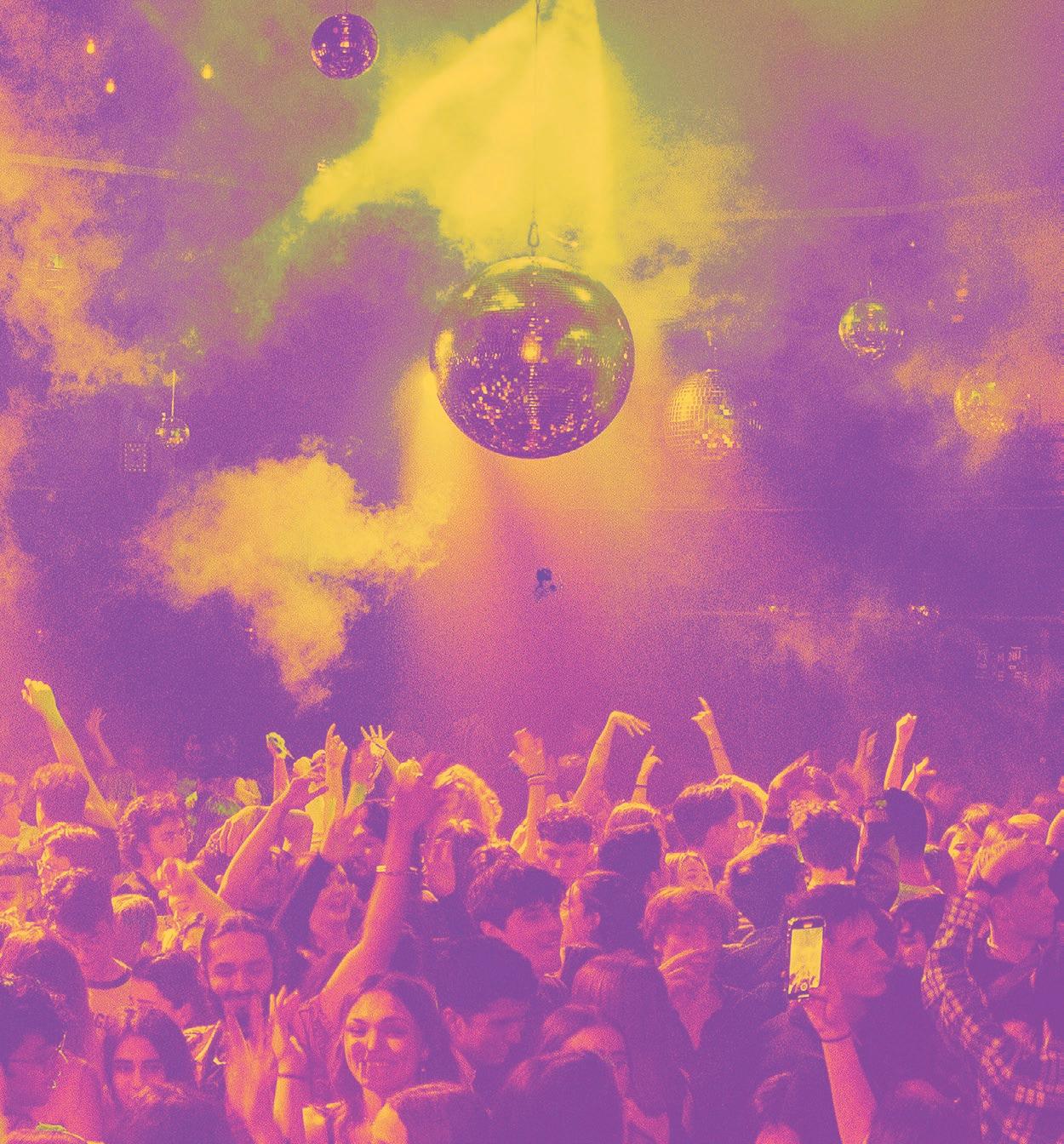
On February 24, Gerts Bar sparkled with blue streamers and star cutouts.
Students crowded around the semi-circle of the bar dressed in the classic David Lynch uniform: a black suit, white button-down, all paired with a black tie. Others recreated the iconic looks of his characters, such as Laura Palmer in TwinPeaks and Sue Blue from InlandEmpire. Set to the tune of a McGill student band and followed by a DJ set, at first glance, the Student Television at McGill (TVM)’ s Post-Credits Magazine launch appeared halfcostume party and half-creative meetup. Which, indeed, it was.
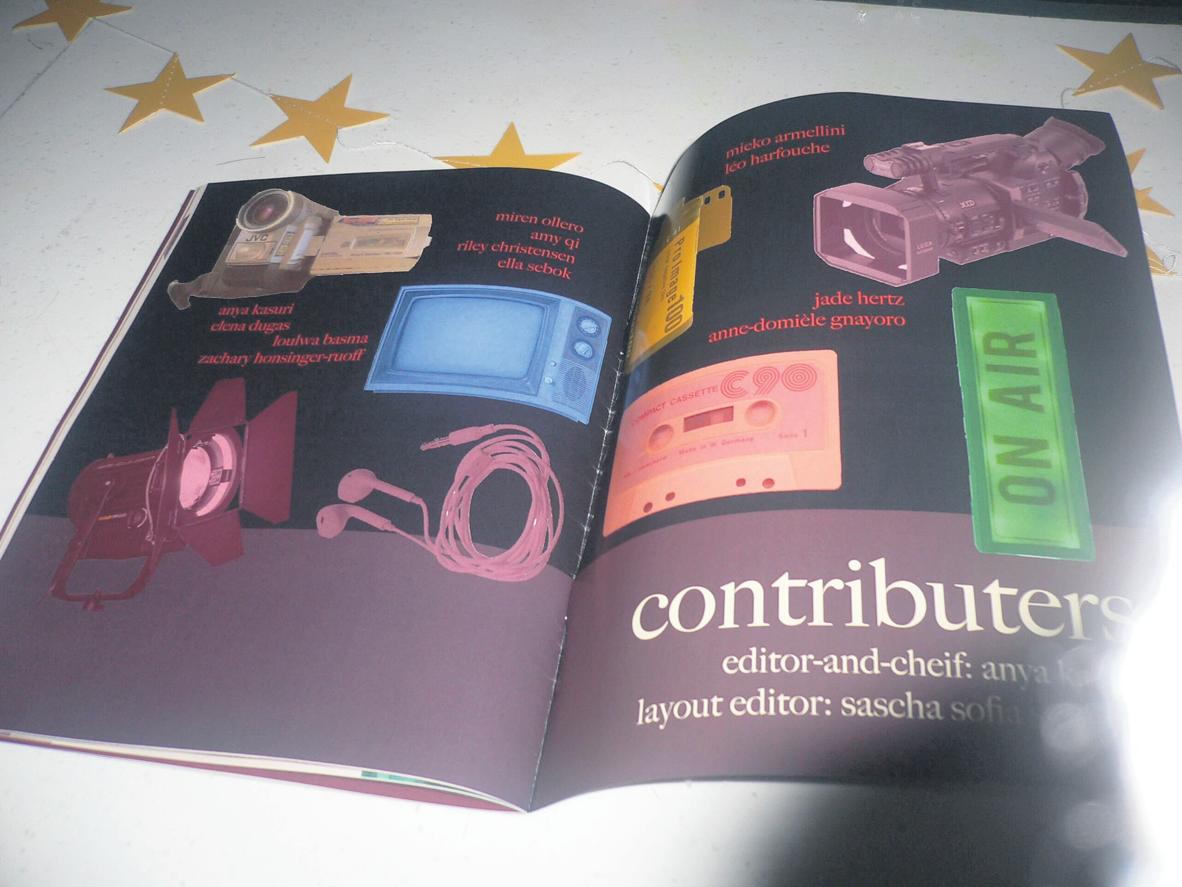
Anya Kasuri, TVM President and Post-Credits Editor-inChief, attended the event dressed in a sparkling gown and touted the magazine’s sole physical copy. The magazine, which she co-founded alongside TVM’s graphics coordinator, Sascha Siddiqui, encourages authors to thoughtfully analyze their favourite films. Kasuri is in her third year, studying International Development with a double minor in Political Science and World Cinemas. In an interview with The McGillDaily, Kasuri says, “Film is the medium that influences our everyday character and aspirations.” Not only does it influence you, it allows you to
“Critiquing film is a social activity, an intellectual engagement, and at its core is a self-assessment of your values and beliefs...”
- Anya Kasuri
understand yourself: “Critiquing film is a social activity, an intellectual engagement, and at its core, is a self-assessment of your values and beliefs the meaning you derive from it can be really telling of your character too. ”
Her favourite part of the magazine is the graphics: “[Unlike writing, graphics] provide visuals to cinema...to perfectly complement the [article’s] argument. Sascha [Siddiqui], our graphics coordinator, did an incredible job bridging the gap When I saw the final [magazine] it was her creativity that grounded the writing back to its roots an appreciation of cinema.” “Films should always be critically analyzed this way. I feel like that's a value that I've derived from my film classes, particularly with Professor Ara Osterweil,” she replied when asked about the vision behind the magazine. “The process of watching and experiencing a film is not only viewing it, then going home and going to sleep. It's about watching it with your friends, watching other people, reacting, [and] hearing everyone's reactions in the crowd. Afterward, [the experienceisabout]discussingit as you understand it because when you come out of a movie, you're not going to know exactly what you have to say; it's not a fully fleshed-out thought. When you spend time discussing it, you learn more about it.”
The key difference, for Kasuri, between short- and long-form analysis lies in its depth: “[Longform analysis] offers full fledged evaluations of films’ formal elements: cinematography, mise en scene, visual tone, colour palette, acting, narrative being able to evaluate that in a longer form analysis lets you see each film individually...and its directors’ vision apart from one another because you get into the depths of each films’ elements’ meaning[s].” To conclude: “It’ s a better, more engaging, intellectual, and educational alternative to short-form media.” However, she notes that many peopleforgetthecoreofanalysis: what the film wants to be.
“A lot of people misjudge pieces of media by applying the same expectations to all [of them]. It's important to judge a film based on what it's striving to be they all have different standards of their visual language, their pacing, their acting, their sets,”
felt that it was special in the way that the score/music was so integral to the story and the conversations that were happening around the film.” Degas got her start in film scoring when she watched Euphoria in 2019. The music was what made her love the show; she found that it could tell a poignant story on its own. Herfavouritepartofthearticle she wrote for Post-Credits was her analysis of the use of blues at the centre of Sinners. It gives the viewer insight into the film’ s characters and their struggles. Especially the song “Pick Poor Robin Clean,” demonstrates the turn from oppressed to oppressor in Remmick, an Irishman. It opens up a “ space for a larger conversation about the history of predominately Black genres of music and how they've evolved and continue to live on today.” From her article: "It is
Student initiatives like Post-Credits
Magazine are working to allow student film lovers to think critically about the art they are passionate about.
said Kasuri.
I encountered Elena Degas at a bar table next to the DJ booth, listening intently to the live band. As TVM’s music composer, she wanted to “provide insight from a musical perspective.” Writing to the Daily, she highlighted how the score was integral to the story: “Sinners was by far the film that impacted me most from the last year, and I
immediately following [the surreal montage] scene when the people in the juke joint are faced with the vampires, who dauntingly perform an upbeat, folk-inspired rendition of ‘Pick Poor Robin Clean’ for the group.” The song is “a blues song that [embodies] someone trying to survive by picking apart and taking everything they can from a dead robin.”
For Degas, “this jolly folk rendition exemplifies the white vampires’ inability to engage empathetically and thoughtfully with the community they are attempting to infiltrate, and recalls a common pattern in genres such as blues and jazz, in which white musicians have historically appropriated and overshadowed Black artists.” Remmick’s positionality is especially striking because of his Irish heritage and experience with colonialism. His desire to completely consume the music is shaped by a selfish desire to preserve it the way he was unable to with his own heritage. However, in doing so, he reproduces colonial violence, with music becoming a tangible symbol of culture.
TVM has allowed Degas to explore her passion for the soundscape of a movie: “Film is now one of the main cornerstones of my life, I have found a huge love for making music for films at TVM, and have found a great community of other film-lovers here; I now plan on attending film school next year for sound design in hopes of a career in film audio/ music!”
McGill’s distinct lack of a creative arts programme is no secret. However, student initiatives like Post-Credits Magazine are working to allow student film lovers to think critically about the art they are passionate about.
TVMwillbehostingitslargest event of the year, FOKUS Film FestivalonThursday,March26 at Cinema Du Parc. For more information, visit TVM at tvmtelevision.com or @tvm. televisiononInstagram.
Courtesy of Isabelle Lim
March 23, 2026
Second-Class Citizens
The growing cost of being a woman in Quebec
Helena de Cruz Da Costa Barros
Commentary Contributor
Every year, March 8 serves as a benchmark to gauge the causes that women are fighting for, a moment to reflect on theprogressoflastyear'sconcerns, and on the wave of new ones that have since emerged. This year, indignation towards legislative amendments in the province dominated demonstrations in Montreal and Quebec City, with thousands of participants protesting recent changes including threats to religious freedoms, reductions in women’ s access to healthcare services, and narrowimmigrationpolicies.
A notable point of contention is thegovernment'songoingpursuitof secularism. While in 2019, Bill 21 initially banned public service workers, like teachers, from wearing religious symbols in the workplace, last October, Bill 94 went a step further, prohibiting school staff, volunteers, and students from doing the same. According to CBC, the Quebec government intends to “defend equality between men and women," though the bill can often carry out
theoppositeeffect.DoloresChew,a member of Women of Diverse Origins, the group who organized the march, explained that "women who wear hijabs are going to lose employment, making them economically dependent." Thus, instead of reversing the effect of patriarchal power dynamics, measures like these reinforce them.
The consequences of Bill 94, which encourages women to choose between faith and involvement in civil society, are already evident. In January, the Riverside Elementary School in Montreal banned Sabaah Khan, a mother who had volunteered at the library for 8 years, for wearing a hijab due to its compliance with Bill 94. Furthermore, the new secular proposal of Bill 9 expands the current restrictions on religious attire to subsidized daycares and private schools, in addition to banning prayer spaces and religious foodsinpublicinstitutions.
Another central issue among protesters is women's access to healthcare. Funding and staff shortageshaveledtothetemporary closure of obstetrics clinics across theprovince.Inthelastfewmonths, several women have had to travel hours to give birth due to a lack of professionals or clinics near them,
particularly in the Gaspésie region in eastern Quebec. As reported by CBC, a member of the Parti Quebecois and a health critic, Joël Arseneau, denounced the government's idleness, which treats women in the Gaspé like “second classcitizens.” Thosewithoutaccess topublichealthinsurancefaceeven more obstacles, since the communitygroupsthataremeantto help them also face severe funding drawbacks from the provincial government. Moreover, intimate partner violence reports in Quebec tripled from 2015 to 2024. The rise in reports throughout the decade might not only reflect the quantity of cases, but also an increase in women reporting violence to the police. In the first three weeks of 2026, at least four men killed women in a context of intimate partner violence in Quebec. Additionally, women's shelters are in demand now more than ever, with the housing crisis and limited access to the appropriate resources women need to leave dangerous situations.
Furthermore, the stricter immigration policies in the last few years have created an especially precarious environment for female immigrants. Filipino protester Deann Nardo, from Migrante
Quebec, claims women of colour who immigrate to Quebec are more vulnerable to “exploitation and abuse,” both at home and in the workplace. These women are more than 20 per cent more likely than men to arrive in Canada with spousal status. They are put in precarious situations where the right of many immigrant women to remain in the country depends on their partner's employment. This systemic economic dependence binds them to their partners resulting in not only a lack of selfsufficiency, but also a difficulty in leaving a patriarchal household. While open work permits were a gateway into finding employment, now,withgreaterrestrictionsonthe eligibility of spouses and dependents, financial autonomy for immigrant women seems even furtheraway.
The provincial instability mirrors abroaderconcern.Onaglobalscale, the ascension of the far-right threatens the security of women's rights. “There's a rise in antifeminist discourse," says AnneValérie Lemieux-Breton, the coordinator of the social services group Regroupement des Groupes de Femmes de la CapitaleNationale. Québec Solidaire (QS) leader Ruba Ghazal highlights how
hateful comments online targeting female public figures discourage many women from continuing to share their views online. She partly attributes targeted online harassmentto “ariseinmisogynistic and masculinist discourse, even in schools.” Montreal-based author, India Desjardins, shared a recent commentinwhichshewastargeted on one of her posts: “You’ re a crazy bitch. Go get help.” Ghazal defends the importance of not trivializing suchviolence,aswellastheneedfor a service that addresses the issue and helps victims feel safer. The QS leaderclaims “Thereisalotofwork to be done to educate and raise awarenessamongthepopulation.” International Women's Month is here not just as an opportunity to celebrate all that women have conquered over centuries of oppression. It's a reminder that systemic barriers against equality perpetually rig the game, and that women of colour constantly find themselves in a lose-lose. In this political climate, women like protester, Mathilde Leduc, are fearful that “the rights that we had will disappear over time." Though standingtallMarchafterMarchisa tiresome battle, we’re still standing, asresistanceisimperativesothatno womanisleftbehind.
The Emotional Whiplash of Infinite Scroll
Apathy and psychological exhaustion in the face of short-form content
Maria Hamdaoui
Commentary Contributor
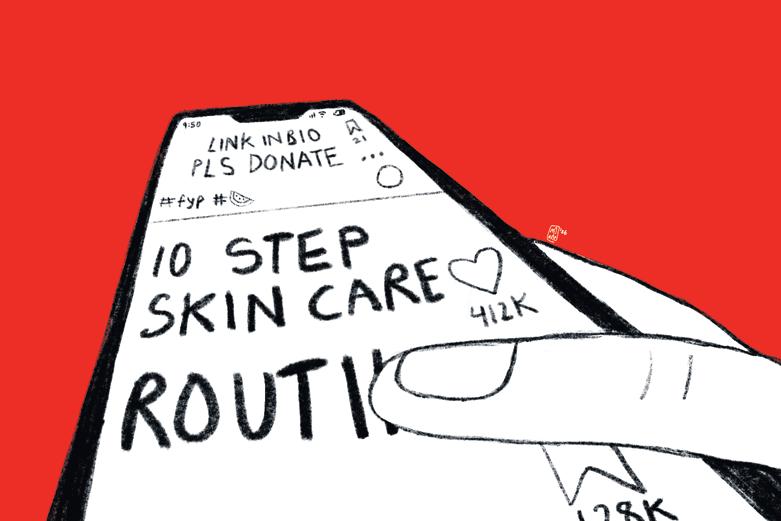
One moment, an influencer is showingtheirskincareroutineon TikTok.
The next, you are watching footage of bombingsinGaza.
Thisisthestrangeparadoxicalrhythm ofsocialmedia.Imagesofwar,famine, and political violence appear alongside memes, fashion content, and pop culture gossip. Tragedy and entertainment converge into the same continuousstreamofcontent.
Formanypeople,especiallystudents whoreceivemostoftheirnewsthrough platformslikeTikTok,Instagram,orX, the juxtaposition of global tragedy and everyday entertainment creates a kind of emotional whiplash. We move instantly from witnessing human suffering to something else entirely, without the time to process what we havejustseen.Inpreviousgenerations, exposure to global tragedy was slower and more mediated. Encountering globaltragedyoftenrequiresdedicated time and attention whether through readingafullarticleorwatchinganews segment becauseunderstandingand emotionally processing such events cannot happen instantaneously. Social
media breaks this experience into fragments: war footage appears between vacation photos and makeup tutorials, exposing users to global suffering in brief moments, squeezed between other content competing for attention. The infinite scroll collapses the distance between the catastrophic andthemundane.
This constant exposure to suffering can be psychologically exhausting.
Seeing repeated images of violence, starvation, or destruction, even from afar, can create feelings of anxiety, helplessness,oremotionalfatigue.Some psychologistsrefertothisassecondary or vicarious trauma: the emotional toll of witnessing suffering indirectly throughmedia.
However,socialmediaintroducesan additionallayertothisexperience.The problem is not only that we see these images but rather how we see them. Online feeds offer no pause, no transition, and no context. The emotional system is forced to switch rapidly between empathy, shock, amusement,andindifference. Overtime,thiscancreateadangerous form of desensitization. When atrocity appears constantly in the feed, it risks becomingjustanotherformofcontent. The brain begins to protect itself by dullingitsresponse.Theimagesarestill
disturbing, but they begin to blur together.Whatoncefeltshockingstarts tofeellikethenorm.
There is also an emotional tension manyusersexperience:thediscomfort of scrolling past suffering. A video showsastarvingchild,adestroyedcity, orgrievingfamilies.Wewatchforafew seconds,perhapsfeelasurgeofsadness oranger,andthenwemoveon.Then, another post appears. Another video. Another distraction. Features like infinite scroll and algorithmically curatedfeedsencourageustocontinue scrolling,evenwhenwhatwehaveseen deservesattentionandreflection.
This dynamic raises an unsettling question:arewetrulyempathizingwith suffering,orsimplyobservingit?
CriticSusanSontagoncewroteinher book, Regarding the Pain of Others, abouthowimagesofwarcantransform violenceintospectacle.Whensuffering is repeatedly photographed and circulated,itrisksbecomingsomething viewersobserveratherthansomething they meaningfully engage with. Social media intensifies this problem. The platformsthatdelivertheseimagesare designedtomaximizeengagementand attention,notreflection.
None of this means people should ignore global events or stop paying attentiontoinjustice.Thecirculationof
images from conflict zones has also played an important role in raising awareness and documenting human rights violations. Many of the world’ s most urgent stories now reach global audiences precisely because ordinary peoplesharethemonline. Nonetheless, it is worth questioning howthestructureofsocialmediafeeds and shapes our emotional relationship totheseevents.Whentragedyappears alongside entertainment, when catastrophe becomes part of the same endless scroll as memes and lifestyle content,oursenseofempathybecomes
hardertosustain.
We are more informed than ever before. Yet at the same time, we are often overwhelmed, exhausted, and unsurehowtorespond.
The problem is not that we see the world’s suffering. The problem is that theplatformsthroughwhichweseeit rarelyallowusthespacetofeelit.
Nikihila Shanker | Visuals Editor
Iran Is Not Dealt A Fair Hand When It Comes to Democracy
Hope dwindles for regime change and improved conditions
Golnar Saegh Multimedia Editor
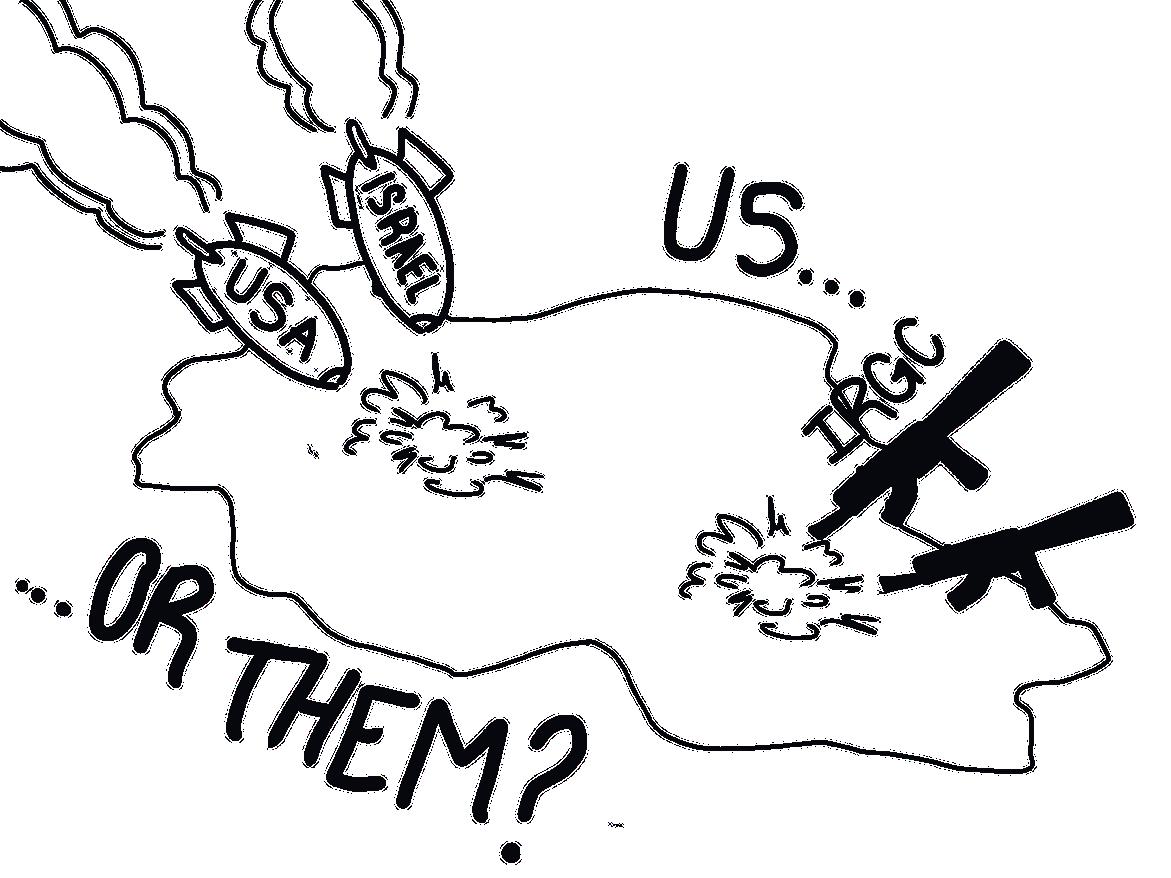
On February 28, the US and Israel launched a joint airstrike attack on Iran, killing many high-ranking government officials including Supreme Leader Ayatollah Ali Khamenei. Iran quickly retaliated in a series of missile and drone strikes against Israel and US allies in the region. The war has since turned into a chaotic global conflict; political leaders stand divided, the energy market has stalled, the Gulf states suffer damage from the unprecedented attack, and Trump speaks exclusively in contradictory terms about his next move.
Meanwhile, the Iranian government maintains a neartotal internet blackout throughout the country, which renders it difficult to determine how the war is affecting Iranians on the inside of the conflict. The Daily was able to get in contact withafactorymanagerinIran,to recount his experiences and share his thoughts from the first week of the conflict.
“[On the morning of Monday March2],avery,veryloudsound – caused by a bomb or missile –jolted me out of bed, waking me up, ” he writes. “I froze, and did not immediately go to check on thefactoryuntilabout15minutes
later. In the factory, about 80 per cent of the windows facing the explosion were broken The factory yard was full of bomb or missile fragments, full of large metal pieces, full of various parts including vision cameras, full of crushed rubble broken glass covered my desk.
”
“I think if [the explosion] had happened during working hours, we would have had at least 10-20 people injured the distance between the explosion and our factory was about 100 meters.”
In the following week, Saeed cancelled work for his employees, although he went to the factory every day.
“Every day and night – at 10 p.m. or 3 a.m. or 8 a.m. etc., generally at different times – I heardasoundlikeanairplaneor a missile. With my previous knowledge, I tried to take shelter quickly, so that if something happened, I wouldn't gethurt.Itsoundedabouttwoto four times every day.”
Once work resumed for Saeed’s employees, the sentiment amid the factory was one of unrest and paranoia.
“There was worry in their eyes.
A few of them had turned their feelings of worry into anger or chaos. Inadvertently, their words disturbed their coworkers and caused them to
grow anxious as well. Seeing the state of the situation, I decided to call off work until further notice and send everyone home.”
“Some people decided to stay, to help clean up the rubble at 9 a.m. we started replacing the broken windows. At noon, there was another explosion and the windows broke again.”
Such destruction and paranoia is characteristic of war. As the conflict drags on, Iranians – both within the country and in the diaspora – become increasingly disillusioned with the foreign powers who came to their “aid.” Hope dwindles for regime change andimprovedconditionsoncethe war is over.
On the other hand, the majority of Iranians express discontent with the current regime, and have grown desperate for an alternative. “The ordinary people have lived without any peace or prosperity for 47 years. They are tired; they are unhappy,” Saeed tells us. “But they have found that whenever they protest, they face severe crackdowns and bloodshed, while the government remains untouched. I think more than 85 per cent of the people are against the government.”
Time and time again, mass protests against the regime have been met with violent retaliation. The most recent wave of protests in January and February of this year have been
Golnar Saegh | Multimedia Editor
recorded as the deadliest wave of crackdowns in Iran’s modern history, with many estimates of fatalities exceeding 30,000.
This is why the assassination of Ayatollah Ali Khamenei on February 28 had such a profound effect on Iranians: after decades of protests that rendered thousands dead while harbouring no real change, hope is in scarce supply. The sudden death of the regime’s most important figurehead gives a despairing population a tangible sourceofhopetolatchonto.The overwhelming sentiment seemed to be that Khamenei’s death had freed the people of Iran, and put adefinitiveendtotheirsuffering.
However, liberation did not immediately follow Khamenei’ s death. In fact, what Iran saw instead of democracy was its antithesis: Ali Khamenei’ s son, Mojtaba Khamenei, was appointed by Iran’s Assembly of Experts as his replacement; and the Islamic regime, although weakened, remains in power.
Weakened in terms of state apparatus, but not in spirit; since the beginning of “Operation Epic Fury,” the Iranian government has doubled down on its repressive measures and intimidation tactics. On state television, one presenter threatened that “every single” dissident will be pursued, and they will “make [their] mothers mourn. ” The chief of police claimedthatanyonewhotakesto the streets against the regime “[will not be seen] as a protester or something else; we will see them as the enemy and do with them what we do with the enemy. ” Some Iranians profess that, in spite of the current airstrikes, they are still more afraid of their own government than outside forces.
Their fear is not unfounded; the Islamic regime has routinely imprisoned, tortured, and killed those who it deems a threat to its hegemony. Systemic violence is intrinsic to the government’ s state apparatus.
It is true that the US-Israeli attack is an illegal one, and the continual erosion of international law is deeply concerning. It is also true that American intervention in the Middle East, such as the “ war on terror” in Afghanistan and the 2003 Iraqi invasion, has an egregious track record. The US’ meddling has often resulted in lengthy, drawn-out conflicts that destabilize governments and
devastate local populations. However, the present alternative for Iran – complete withdrawal of US and Iraqi forces from the region, leaving the people's fate in the hands of the Islamic regime – isn’t awfully alluring either. It is likely that as soon as foreign attacks cease to be a threat, the Iranian government will carry out mass imprisonmentsandexecutionsof its internal “enemies.”
One option touted enthusiastically by the diaspora is the return of the exiled crowned prince, Reza Pahlavi. Although Pahlavi has a sizeable support base in the Iranian diaspora, and perhaps has some backing in Iran, his competency fortheroleisquestionable.Saeed has his reservations regarding the exiled prince: “A person who has only talked and lived in luxury for 47 years wouldn’t be willing to come to Iran even if they give him the country with both hands. In my opinion, the percentage of people's desire for Reza Pahlavi is not even between 5 and 15 per cent.”
In Saeed’s view, Reza Pahlavi is a troublesome candidate; “Having a father as the Shah is not proof of sensibility and wisdom. If your father was wise and sensible, the events of 1979 would not have taken place. [The Shah]alsohadinhismindagreat delusion, and wanted not only Iran, but the entire world under his feet; a delusional dream of power and global domination. Like Mohammad Reza Shah, [Reza Pahlavi] is our Trump who wants to rule the world.”
When the most viable “democratic” alternative Iran sees for itself is a relic of an archaic autocratic dynasty, it is clear that Iran is not dealt a fair hand when it comes to democracy. Grievances and suffering have compounded over decades of living under oppressive rule, resulting in progressively lower expectations and standards for change. Even when people continue fighting for a “democratic” alternative, what they come to accept as “democracy” becomes more lenient.
What results is a nation in which war sparks celebration, and the most viable form of democracy is the return of monarchy. After 47 years of violence and bloodshed, war is peace and freedom is slavery.