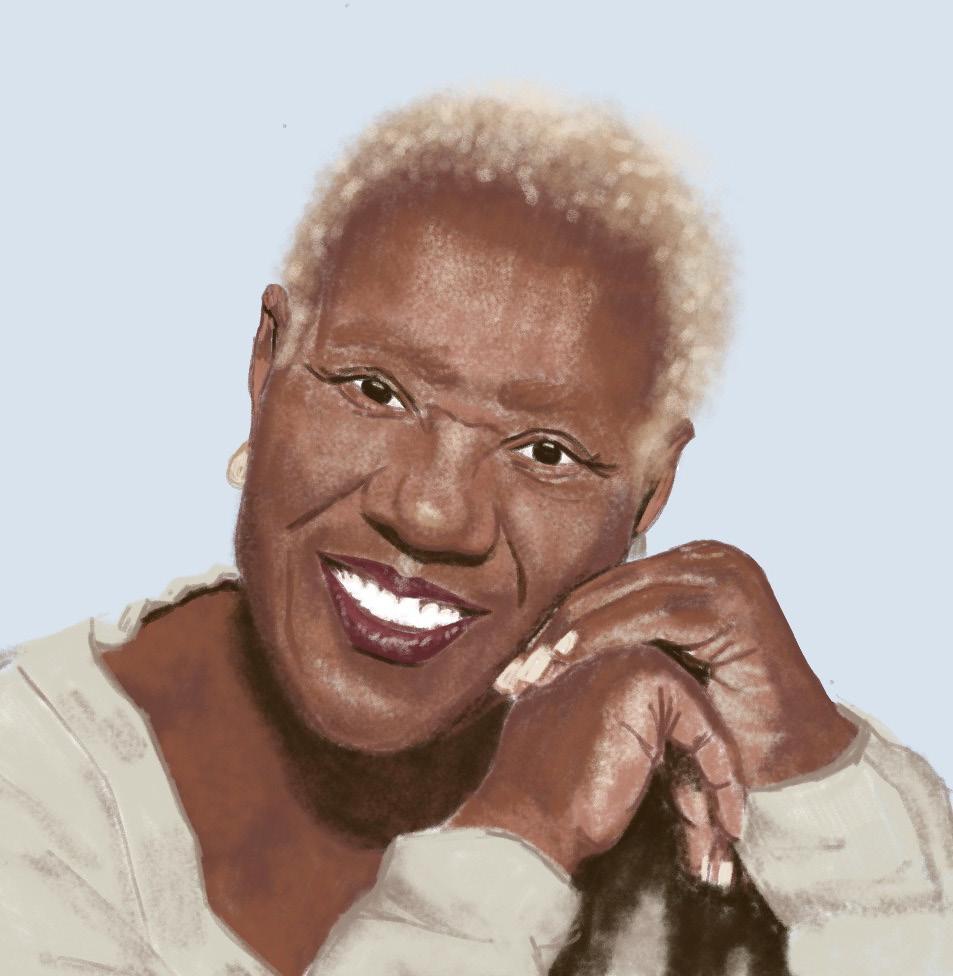
One week before The Tribune’s first production night, I found myself in Toronto in a black dress, black shoes, and sparkles on my eyelids. I was at the funeral of Fabienne de Cartier, a former News Editor.
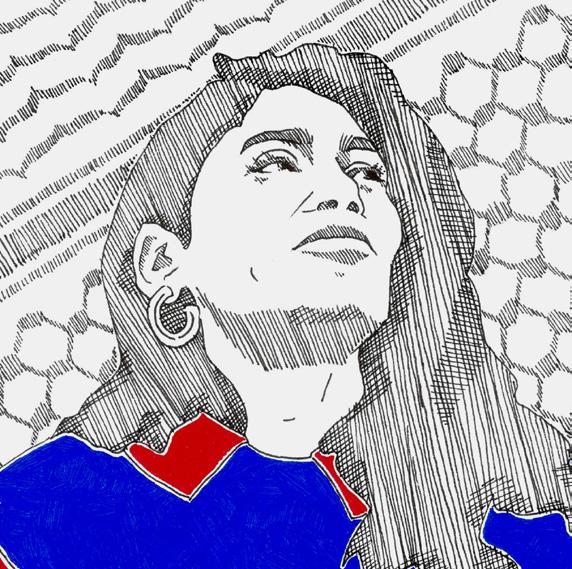
We dedicated Volume 45 to Fabienne, an unforgettable force of nature who shaped our paper in countless ways, so it is only fitting that our final special issue return to the theme of memory.
Journalism, at its core, is an act of remembering. On a team with constant turnover, what we publish becomes the only thing that tangibly endures. The archive outlives us and holds what might otherwise be forgotten. It is a great privilege to preserve memory in this way.
But memory is imperfect. In our newsroom, we try to document events faithfully, but the paper you hold will always be an incomplete record. There is never enough space for everything that we know matters. Stories are constantly pushed online, paragraphs cut, and photos sacrificed so more words can fit (See page 4). But however incomplete it may be, the act of preserving something is always tremendously important, because when the future comes, and someone inevitably asks what students saw and what they stood for, they will find the answers in our pages.
My favourite, most terrible memory is of our first production night. I didn’t remember that we needed permission to stay in our office past midnight, so after getting
kicked out with several more pages to complete, we snuck into the Ferrier computer lab to finish the issue. I asked Zoe, one of our design editors, to redraw Fabienne’s portrait about ten times until it was finally perfect— at 5:00 a.m. That’s when I realized that we had taken so long, our paper would be distributed a day late. I felt like I had disappointed everyone.
But the next day, I saw Fabienne’s face across campus, on every stand, and it didn’t feel like disappointment anymore. It was the most rewarding moment of my four years at McGill, and that sense of pride and care carried me through the 26 issues that followed.
Even if “nobody reads student papers” (which, of course, isn’t true, because I read them), I am overwhelmed with pride at Volume 45, because while I cannot promise
perfection in our pages, I can promise honesty, thought, and real, genuine care.
I leave with a sense of comfort that this promise will be kept in the future. I am certain that Mairin, our incoming Editor-in-Chief, will transform the paper in ways I cannot imagine. I am so grateful to be leaving it in the most competent and gentle hands.
To the unforgettable Tribune community: each of you has shaped me in ways I will carry long after our final publication. My years of writing fail me when I try to put my gratitude into words, but I hope you can feel it. I am truly in awe of all of you.
Thank you for letting me be part of your memory, and for being a beautiful part of mine.
Yusur Al-Sharqi, Editor-inChief
Referendum to boycott Israeli institutions passes with the highest voting turnout in recent LSA history
57.3 per cent of students voted in favour amid repeated interferences from McGill administration
Amelia H. Clark News Editor
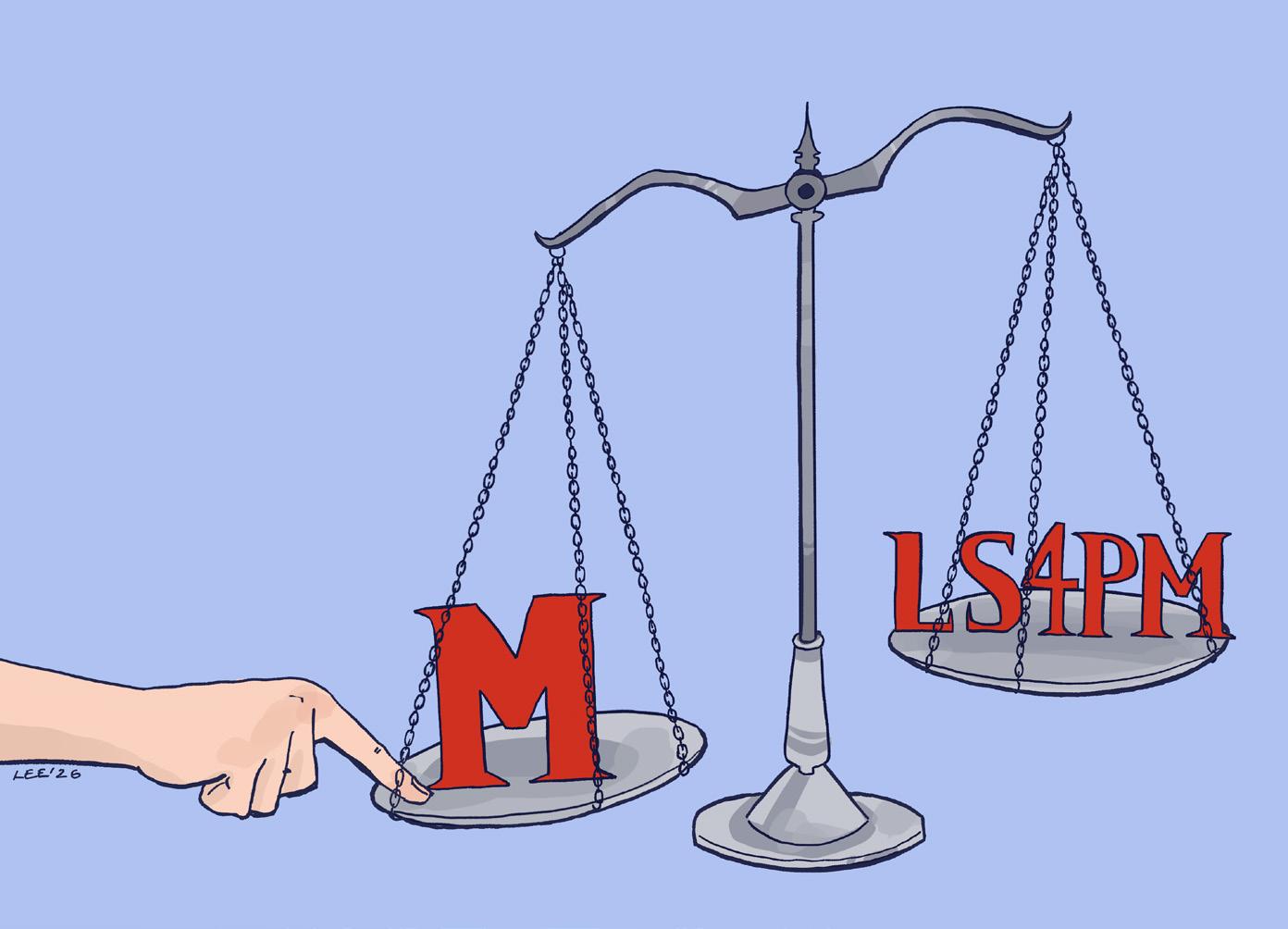
On March 19, voting for the Referendum Regarding the Academic and Cultural Boycott of Israel to Preserve Academic Freedom (PACBI) opened to all members of the Law Students’ Association (LSA). The motion, put forward by Law Students for Palestine at McGill (LS4PM) and McGill Radical Law Students’ Association (RadLaw), called on the LSA to modify its constitution to terminate all academic ties with Israeli postsecondary institutions complicit in Israel’s ongoing genocide in Palestine.
Citing the targeted bombing of all 12 universities in Palestine and the killing of thousands of students and professors, in addition to statements made by the United Nations, LS4PM argued that the systematic destruction of academic freedom in Palestine breaks Canada’s Crimes Against Humanity and War Crimes Act.
10 minutes before the voting period began, Provost and Executive Vice-President Academic Angela Campbell, along with then-interim, now-official, Dean of Law Tina Piper, sent a joint letter to all law students describing the amendment as “objectionable.” They stated that its mandate to terminate all academic exchanges with Israeli post-secondary institutes is discriminatory toward Jewish students both at McGill and in Israel. The letter also affirmed that Campbell and Piper do not take a particular political position on the matter, but oppose the PACBI motion due to concerns from Jewish students. As the LSA’s constitution prevents any parties directly involved in the referendum item from campaigning during the voting period, LS4PM was not able to address these allegations until after the referendum outcome was announced.
In an interview with The Tribune , four representatives from LS4PM, Jamie*, Robin*, Sasha*, and Sam*, described the letter as interference with the LSA’s democratic process. Highlighting the potential danger of a precedent in which the McGill administration swings voters in their favour, these representatives explained the reasoning behind the proposed modifications to LSA by-laws, as well as the concerns behind McGill administrators depicting the Jewish community as a monolith.
“We were told to stop campaigning. Yet, [McGill’s administration] effectively got two more days where it was constitutionally impossible for us to say anything in response. That is the procedural injustice in this,” Jamie said.
Sam added, “We follow the rules, but they are free to run over our democracy.”
According to the LS4PM representatives, the letter followed a list of frequently asked questions (FAQ) sent out by the LSA at 11:00 p.m. on March 18. The FAQ stated that if the PACBI referendum passed, the LSA would, by default, be in breach of its Memorandum of Agreement (MoA) with McGill. The letter went on to forecast a three-year arbitration with administration, which they estimated would cost around $40,000 CAD. The LSA’s letter also included anonymous statements from professors in the Faculty of Law, ranging from disapproval of LS4PM’s motion to threats of stopping classes should it pass.
The four representatives agreed that although the LSA showed solidarity with LS4PM by denouncing McGill’s letter as an attempt to influence voters, the mass FAQ email sent to students likewise ad -
vised students to vote against the motion.
“All of these negative messages had the effect, in our opinion, [of saying] that the LSA was against the referendum, and all of this information confused the voters,” Sam said. “The effect of these cherry-picked testimonies, and of this worstcase scenario forecast, was to interfere with the student vote [....] We understand the need to provide information from the LSA, especially about the threat of litigation. However, the way the information was provided was unbalanced and did not account for the myriad of factors that could influence the cost of arbitration.”
McGill’s Jewish Law Students’ Association (JLSA) ran a Vote No campaign against the referendum prior to the voting period. The JLSA cited concerns that the LSA taking an official stance would impose a singular viewpoint on the whole Law Faculty based on a subset of voters. They further deemed the motion discriminatory toward students who disagree with LS4PM’s reasons to boycott Israeli institutions, referring to the group’s stance on genocide, apartheid, and war crimes in Israel.
In a written statement to The Tribune , a JLSA executive elaborated on these concerns, stating that the motion may be used to scrutinize or stigmatize minority groups on campus. The executive also mentioned ongoing worries regarding how the referendum was conducted, specifically whether the required threshold for adoption was met. The executive stated that they are looking into the matter through the appropriate channels.
“[The motion] appears poised to curtail the ability of Jewish and Israeli students to participate fully and equally in academic and campus life. Students risk being excluded or ostracized based solely on their belief in the right of a Jewish state to exist,” the executive wrote. “All law students—regardless of religion, nationality, or political belief—should feel welcome on campus and free to express their identities and pursue their academic interests. That must apply equally to members of the JLSA and to members of LS4PM.”
In response to these concerns, Sasha explained that nothing in the motion itself suggests that it would lead to an increase in antisemitism.
“There’s a lot of language that the community feels unsafe [....] Jewish students have this unfair burden. Jewish faculty feel unsafe [....] [There have been] no reports of intimidation or discrimination,” Sasha said. “Using this language of safety, harm, making students and faculty feel scared to be at school, really is exaggerating what this actually is into something that seems like conflict when really it’s a student-led movement for a vote. It couldn’t be any less violent.”
Sam further emphasized that this mischaracterization of LS4PM as an antisemitic organization not only discredits them unfairly as a student group, but also takes away from the seriousness of these allegations.
“You’re essentially emptying antioppression language from its meaning to then uphold the status quo and interfere in student democracy, [...] which means that this advocacy can be characterized as racist, when we are fighting racist apartheid,” Sam explained.
Referring to the letter sent by Piper and Campbell, Jamie, who is Jewish, explained that the claims of antisemitism levied against the motion ignore members of the Jewish community at McGill who advocated for the referendum, clarifying that
the boycott doesn’t apply to individuals, but to institutions that support and perpetuate Israel’s actions against Palestinians’ academic freedom.
“I genuinely have not read such an antisemitic message in so long,” Jamie said. “It literally says if your Jewish identity is not tied to the State of Israel, we do not see you. We don’t care about your feelings.”
“There are tons of Jewish students in LS4PM [....] It’s really frustrating that this is McGill’s take toward the Jewish community on campus, framing it as one monolithic perspective, which in itself is antisemitic,” Sasha added. “Painting it as one collection of ideas and thoughts that are all aligned toward the same thing, just to advance [administrators’] own objectives.”
Emphasizing their support for the democratic process, the representatives explained how the administration’s reaction to the PACBI should concern all students, regardless of their political affiliations.
“Equating democratic action with violence essentially makes it impossible for students to come forward with any sort of political movement in the faculty without being labelled as violent or threatening the safety of the community and the faculty,” Sasha added.
Despite the interference, the motion passed with 67.3 per cent of LSA members voting, 57.3 per cent in favour. This marks the highest voting turnout in the LSA’s recent history.
Now passed, LSA bylaws have been modified to terminate academic exchanges with Israeli institutions, notably Tel Aviv University (TAU). One Jewish student has filed a court injunction against the adoption of these modifications. McGill’s Media Relations Office (MRO) clarified in a written statement to The Tribune that no court judgement has determined the referendum to be discriminatory or exclusionary as of April 5, and that the case is ongoing. Jonathan Amiel, the chair of the Faculty’s Advisory Board, course lecturer, and donor, has resigned from his position in protest of the motion, explaining his reasoning in a public letter.
“An institution once defined by intellectual rigour and principled debate has, in too many instances, become an environment where being Jewish, identifying as a Zionist, or maintaining any association
with the State of Israel carries professional and personal risk,” Amiel wrote. “It is particularly concerning that, at a time when Jewish communities face heightened vulnerability, the Law Faculty has not provided a constructive or unifying response. Instead, a majority of its students have supported a measure that isolates leading academic institutions and risks further division within its own community.”
A student has since brought a petition to the Quebec Superior Court against the LSA, seeking to overturn the referendum results. McGill President and Vice-Chancellor Deep Saini has endorsed her position, stating in an email to students that the motion’s mandates fall outside the purview of a student association on campus, and therefore cannot be implemented.
Still, faculty opinion is divided. In a written statement to The Tribune , Law Professor Omar Farahat expressed concern about the administration’s approach.
“We must distinguish between intervention by university administrators and potential review of those student actions through the judicial system,” Farahat said. “Anyone is entitled to resort to the judiciary in the event that they feel that a violation of their legal or constitutional rights has occurred [....] University administrators, in my view, have an even higher burden [than students] to protect and respect the students’ freedom of speech and freedom of association.”
Farahat went on to explain that the administration’s interference risks setting a dangerous precedent for student activism on campus.
“It is one thing to argue that a specific measure by a student group may technically give rise to tensions concerning the group’s agreements with the University, but it is a completely different thing to portray this act of student activism as discriminatory, racist, or dangerous without any objective justification of those claims,” Farahat wrote. “This is a very troublesome approach as it sends the message that morally conscious activism—which is precisely what we expect from young critical minds—will be met with institutional resistance and reprimand, which, I personally worry, could hurt our standing as a major institution of learning and thinking not only in our region but globally.”
*These names have been changed to preserve the speakers’ anonymity.
Black Sisterhood at McGill targeted with online racist harassment
Co-founders of BSISSY say their Instagram account was banned following racist messages and threats
Moyọ Alabi & Ellen Lurie
Opinion Editors
Content warning: Mentions of racial violence
AfterBlack Sisterhood at McGill (BSISSY) began recruiting members to start an Alpha Kappa Alpha (AKA) sorority chapter at McGill, co-founders Lena Karis Moussio, U1 Arts, and Astou Badiane, U1 Arts, received racist comments and threats of violence through the organization’s Instagram account. The account was subsequently taken down after being falsely reported.
Established in 1908, AKA was founded in the United States at Howard University, a Historically Black College or University (HBCU). As the oldest Greek-letter organization established by Black women on a college campus, AKA aims to foster unity and friendship among college women while simultaneously advancing and uplifting Black communities. In a written
statement to The Tribune, Moussio and Badiane described BSISSY’s mission in creating an AKA chapter at McGill.
“Aiming to bring a chapter of Alpha Kappa Alpha Sorority, Inc. to McGill, […] [BSISSY is] a sorority based on Black excellence, Black sisterhood, and […] giving back to the community,” Moussio and Badiane wrote. “[It is] a space where Black women can be themselves and feel safe, without having to be someone else.”
However, once BSISSY began recruiting on social media, their Instagram account was targeted with racist comments and private messages.
“The comments we were receiving were asking what the point of doing this was, if white guys could join, and saying things like ‘If it were white people doing this, we would’ve burned the school down,’” Moussio and Badiane shared. “Someone even told us to ‘stay segregated’ and called us ‘baboons.’ I think the worst was the person who told us to shut down the
Alpha Kappa Alpha has over 1,120 chapters globally. (Eliot Loose / The Tribune)
school because they wanted to ‘shoot’ us. That was really scary.”
The BSISSY Instagram account—alongside Badiane’s personal page—was later banned due to “child sexualization,” a claim with no relevance to the organization’s social media activity.
“It was such a hard day for me. I couldn’t do anything, I was just so sad and discouraged. I kept asking myself what we had done wrong,” Badiane said. “However […] after that, we knew the project would continue no matter what. It was just our social media that had been affected, not our connections or the work or preparation we had already done for the project.”
In an interview with The Tribune, N. Keita Christophe, assistant professor in McGill’s Department of Psychology and principal investigator of the Cultural Development Science Lab, explained that such experiences are unfortunately not uncommon among Black university students.
“It just makes me sad, you know, because it’s consistent with […] my experience recruiting for our students, consistent with a lot of things that individual students […] over the past several years have come in and talked about,” Christophe said. “It’s just another reminder that racial discrimination is still common in our society, and that trickles down all the way to our campuses.”
Christophe then emphasized the importance of institutional dedication to dismantling systemic racism and fostering a welcoming and diverse community.
“Institutions like McGill [must] continually [drive] a culture that is maximally inclusive and accepting, and […] [signal] that when people don’t act in the spirit of equity, diversity, and inclusion, that this is inconsistent with the values of the university,” Christophe said. “Continuing to invest in [affinity groups] […] signals as an institution [that] we are supportive of people creating community, and we aren’t putting up roadblocks to that.”
In a written statement to The Tribune, McGill’s Media Relations Office (MRO) highlighted the university’s ongoing efforts toward
Antisemitic graffiti found in McGill bathrooms
combatting anti-Black racism on campus.
“In 2020, McGill launched an Action Plan to Address Anti-Black Racism to ensure the University enters its third-century with a firm commitment to equity and inclusion,” the MRO wrote. “Every member of our campus community deserves to work and learn in a respectful, inclusive, and supportive environment. Likewise, we all share a responsibility to foster a climate that rejects hate, intolerance, and harassment.”
Following the incidents on social media, Moussio and Badiane report having received support from the McGill administration.
“Antoine-Samuel [Mauffette] Alavo, the liaison officer for Black students, reached out and asked for a meeting that will take place in the coming weeks,” they wrote. “He has already brought us a lot of support for what’s next. We’ll see over time what measures will be put in place.”
Christophe added that, beyond institutional support, allyship from both Black and non-Black students is important in combatting anti-Black racism.
“It’s one thing for people that are personally affected by unequal social structures to advocate for themselves […] but I think it’s also important for people that are even benefiting from existing structures, people with privilege in different areas, to also speak up for those that are oppressed and help them out,” Christophe said.
Moussio emphasized the solidarity McGill community members extended toward the organization following this incident.
“I never thought that my video would go viral and that we would get so much support from the McGill Black community,” Moussio wrote. “Even non-Black people have been very supportive, and we’re truly grateful that people understand that the goal is to fight against racism and sexism at McGill, and that Black girls should have the same college experience as everyone else.”
BSISSY will be hosting its next meeting on Friday, April 10 at 6:30 p.m. in the Black Student Space, Ferrier Building 216.
University investigating incident as discussions about campus safety persist
Yusur Al-SharqiEditor-in-Chief
Content warning: Antisemitism and violent threats
Arecent act of antisemitic vandalism at McGill is raising renewed concerns about campus safety for Jewish students. The graffiti, found in a bathroom stall in the Faculty of Medicine, read “Kill all Jews” and “Jews out of McGill Med.” An official statement from McGill administrators states that the incident is under investigation, and appropriate disciplinary action will be taken if a perpetrator is identified.
A spokesperson for McGill reiterated the University’s stance against antisemitism in a statement to The Tribune , writing that the administration is actively working to protect and support Jewish students.
“McGill unequivocally denounces all forms of antisemitism and anti-Jewish hatred and reaffirms its dedication to preventing and combating such discrimination,” the spokesperson wrote. “The University has taken concrete steps to support the safety and well-being of students, faculty, and visitors. McGill also regularly reassesses whether additional steps are needed to reinforce its efforts to
maintain a safe, inclusive and welcoming campus.”
While details surrounding the bathroom vandalism remain limited, the incident follows a pattern of reported antisemitism on campus, sparking concern from student groups such as the Medicine and Dentistry Jewish Association (MDJA).
“The presence of these messages within a medical school, an institution dedicated to the preservation of life above all else, is particularly disturbing,” the MDJA wrote in an official statement on the incident. “Calls for our exclusion and elimination undermine not only the safety and dignity of Jewish students, but also the foundational values of the profession we are preparing to enter.”
The Tribune contacted the MDJA, Chabad McGill, Hillel Montreal, and McGill Chavurah for comment, but they did not respond in time for publication.
In response to the recent graffiti, Independent Jewish Voices (IJV) McGill told The Tribune that they perceive the University’s conflation of anti-Zionism and antisemitism as heightening tensions on campus for Jewish students.
“IJV McGill understands this current climate as one which necessitates a wholly different approach to centring Zionist discomfort and modes of un-
derstanding incidents of discrimination and hate speech—while nevertheless condemning and seeking accountability for hate speech, such as in the Medicine Faculty.”
Regarding the University’s actions moving forward, McGill’s spokesperson referenced the Working Group on Antisemitism (ASWG) at McGill, which did not respond for comment in time for publication. The Working Group launched in Fall 2025 to assess how antisemitism manifests on campus and to recommend strategies for prevention and response. Among its areas of focus, the Working Group has examined anti-Zionism and its relationship to antisemitism. This issue has been contentious at McGill, with disagreements among Jewish student groups about the definition of antisemitism.
“While members of IJV McGill have engaged in University Channels, such as the university’s committee on antisemitism and anti-Israeli discrimination, we have felt uncomfortable doing so out of an unwillingness to legitimate structures which […] implicitly equate anti-Zionism with antisemitism—all while no such committee exists for Palestinian students at McGill.”
IJV then claimed that the incident demonstrates the administration’s at-
tempt to homogenize Jewish perspectives.
“This transgression imposes itself far more heavily on our community’s conscience than Sharpie in bathroom stalls,” IJV wrote. The rise in antisemitism on campus reflects a broader nationwide trend. An email containing violent death threats and references to explosives was sent to roughly 125 organizations across Canada—the majority being Jewish institutions. In Montreal, Jewish school Yeshiva Gedola was targeted in two separate shootings less than a week apart in November 2023. And more recently, two synagogues in the Greater Toronto Area were hit by gunfire.
Existing channels for reporting incidents of harassment, discrimination, and anti-Jewish hate through McGill include campus security or the Office for Mediation and Reporting. Further, students can file complaints through the Student Affairs Liaison for Jewish Students and the ASWG’s confidential form. Faculty and staff can refer to the Employee and Family Assistance program for confidential support, and students can reach out to the Student Wellness Hub, which offers counselling services, and GuardMe for 24/7 mental health support from anywhere in the world.
Parc-Extension tenants rally against abusive rent hikes, demanding effective rent control
Organizers criticize Quebec’s new rent-setting formula’s incapacity to prevent excessive increases
Nell Pollak Managing Editor
Over100 tenants and fair housing activ-
ists gathered outside 955 av. d’Anvers on March 31 to denounce what organizers called abusive rent increases imposed on residents. Organized by the Regroupement des comités logement et associations de locataires du Québec (RCLALQ) and the Comité d’Action de Parc-Extension (CAPE), the rally’s attendees demanded better rent control. In collaboration with artistic and activist collective Le Sémaphore, the organizers projected messages like “No to abusive rent increase,” and “Je refuse je reste” (“I refuse I’m staying”) onto the building’s exterior.
The building’s tenants, part of a complex of 18 buildings for a total of 165 units, reported receiving increases of up to 20 per cent. According to a representative from the rally, one tenant received a rent increase of $300 CAD, and many of these notices do not include meaningful renovations to justify them. March 31 is the deadline for many Quebec landlords to send rent increase notices, making it a deliberate day for action.
In an interview with The Tribune, Noémie Beauvais, a community organizer with the RCLALQ, explained that the increases reflect a persistent gap in tenant protections despite recent regulatory changes. Quebec introduced a new rent-setting formula in January, but Beauvais noted that the reform has done little to curb excessive demands from landlords.
“The calculation is a bit different. It is a bit easier for tenants to understand,” Beauvais said. “But the problem is the same. If the landlord wants to just put any number on the notice, then [the tenants][…] feel like they have no power.”
The complex has changed ownership multiple times in recent years. In a speech to the crowd, Rizwan Khan, a community organizer with CAPE, highlighted that conditions have deteriorated across each transition.
“These buildings have been affected for a
very long time with cleanliness and hygiene issues related to negligence from the owners*,” Khan said. “The new owners also introduced new building regulations with abusive clauses and pressured tenants by saying, ‘If you want your new key to the building’s front door, you have no choice but to sign.’ These are the kinds of tactics that are used by far too many landlords, and this has to stop*.”
In an interview with The Tribune, Sohnia Karamat Ali, an organizer with CAPE, emphasized how the cycle of ownership changes has worn tenants down.
“This is the third administration,” Karamat Ali said. “We started mobilizing against the first who were here five, six years ago. After a huge mobilization, they just sold the building [….] It is like every time, we start from zero again.”
Ali Kamruzzaman, a 70-year-old tenant who has lived in Parc-Extension for 27 years, told The Tribune that many residents are afraid to push back against the increases. He urged fellow tenants not to acquiesce to their demands.
“My message is: Do not be scared,” Kamruzzaman said. “We have the Parc-Extension Action Committee, and you can ask them. They can advise you where to go. You have the rental board.”
The rally is part of a province-wide campaign organized by the RCLALQ against the 2026 rent increase season, with similar actions held in Quebec City and Granby. The Tribunal administratif du logement set a baseline increase of 3.1 per cent for leases renewing after April 1 under a new formula tied to the consumer price index, down from the 4.1 per cent in 2025. But the rate has done little to slow a broader trend: Average rents in Quebec have risen by roughly $1,800 CAD per year since 2023, and asking rents in Montreal have doubled since 2019. The RCLALQ reaffirmed that a revised framework should include stricter limits on annual increases tied to actual maintenance costs and new legal obligations for landlords to justify any hikes above the standard rate.
Émile Boucher, a community organizer with the RCLALQ, stressed that the rate only functions as a floor, and tenants in the complex are facing increases nearly seven times that amount.
“There is no effective rent control,” Boucher said in an interview with The Tribune “Landlords can still propose whatever increase they want. They are not required to follow the
recommendations of the Tribunal administratif du logement, and that is an enormous problem for us. People will experience rent hikes individually because they receive the notice, they have to accept it or refuse it, they have to pay. But we are showing that this is a collective problem, and tenants are not alone in this*.”
*These quotes were translated from French.
COFAM rallies outside the Arts building demanding counteroffer from McGill
Attendees chant “Le mépris, ça suffit !” as they march toward the James Administration Building
Asher Kui News Editor
OnApril 2, around 60 professors gathered outside the McCall MacBain Arts Building in a rally organized by the Confederation of Faculty Associations of McGill (COFAM). Following a few speeches delivered by faculty representatives, the group walked to the James Administration Building while chanting “Le mépris, ça suffit !” and “Quoi ? Une contre-offre ! Quand ? Maintenant !”
COFAM consists of five associations: the Association of McGill Academic Staff of the School of Continuing Studies (AMASCS/AMPEEP), the Association of McGill Professors of Education (AMPE), the Association of McGill Professors of the Faculty of Arts (AMPFA), the Association of McGill Professors of Law (AMPL/AMPD), and the Association of McGill Library Academic Staff (AMLAS). Amid ongoing negotiations with McGill to improve faculty working conditions, the rally marked COFAM’s launch of the “Full Counter-Offer Now!” campaign.
In an interview with The Tribune, Edward Dunsworth, associate professor in the Department of History and Classical Studies and organizer with AMPFA, explained that professors have gathered at the rally to denounce McGill’s stalling tactics in bargaining.
“The university has been around [for] 200 years,” Dunsworth said. “[Professors]
have never been unionized until the last few years, compared to the rest of Quebec, where [at almost] every other university [professors] are unionized [….] More and more faculties are continuing to unionize, so McGill needs to adapt to that new reality and bargain seriously, and get things moving at the bargaining table.”
Dunsworth continued to mention that COFAM had delivered their list of demands in July 2025. Up until the rally, COFAM still has not received an adequate or complete response from McGill.
“One thing that’s been really challenging is that McGill has responded piece by piece to certain articles,” Dunsworth noted.
“It’s really difficult to bargain like that. We need a full response to be able to properly negotiate and possibly make advances in one area and make compromises in another. It’s impossible to do that without a full picture of what the counteroffer is.”
Barry Eidlin, associate professor in the Department of Sociology and second vice president at AMPFA, delivered a speech to the crowd highlighting why a counteroffer is important for achieving COFAM’s nonmonetary demands.
“We believe in this university, and we want to be able to teach our students with adequate support,” Eidlin said. “We have a message to the administration today. Come to the table, negotiate. You might not like something in the offer, that’s fine. That’s why you make a counteroffer. That’s how
bargaining works. Rest assured that this is not a problem that the McGill administration can simply ignore, because we’re not going away.”
COFAM’s non-monetary demands call for better transparency and fairness for faculty, with little to no financial impact on the university. Such demands include a tenure-track pathway for ranked Contract Academic Staff (CAS), improved retirement options, and more transparent regulations in tenure, appointments, renewals, and promotions. In a speech to the audience, Kyle Kubler, a CAS faculty lecturer at the McGill Writing Centre and the AMPFA’s treasurer, highlighted some of COFAM’s other non-monetary demands—including enshrining academic freedom into the framework of labour relations.
“We’ve seen over the past couple years the way that our academic freedom has been challenged in various situations. We want to take academic freedom, put it into our collective agreement, and make it stronger than it currently is,” Kubler said. “[We also want] unique recognition for our Black and Indigenous colleagues, to
identify ways that we can also recognize the service and the research that they do for their academic profiles, as well as making sure that the histories of racism and colonialism are […] recognized within our country.”
Dunsworth highlighted that bargaining must happen more efficiently in the interests of both the university and its faculty.
“We have made some progress in bargaining, but we need to move things along quickly,” Dunsworth said. “That’s the best for the university, for us to reach a deal, carry on doing the teaching and research and service that we care a lot about and want to continue to do.”
Average rent in Quebec has increased by roughly $150 CAD per month since 2023. (Nell Pollak / The Tribune)
Are these the good old days?
Julie Raout Staff Writer
Iwishthere was a way to know you’re in the good old days before you’ve actually left them.”
The Office’s Andy Bernard nudges us with a gentle reminder that happiness often goes unnoticed until it has slipped away.
Haven’t we all reopened a keepsake box, smiled in remembrance of childhood memories, and wished we had spent more time existing in their softness as the moment had taken place?
Amid the tumult of university life, we often make the same mistake. We overlook the threads of joy that keep our lives from unravelling into a cluster of deadlines and crises. We get caught up in eight-page essays, Perusall assignments, and MyCourses notifications. Schoolwork also
gets tangled up in other gusts of life’s hurricane—finding time for hobbies, contending with bureaucracy, and dealing with The Big Personal Thing we seldom talk about.
Yet, one day, just like any other, our time at McGill will be over. As I brace myself for my last year as a McGill student, Andy Bernard’s words echo in my mind. I know that by graduation, I will be leaving the good old days. It’s a weird feeling, knowing that I will fondly look back on a time in which I am still living.
Knowing sneaks up on you. It lurks in the comfortable silence of a late-night conversation. It rests in the small pleasure of a sweet treat bought as an ephemeral escape from the readings sitting dauntingly on a McLennan desk. It blends with the warm chaos of laughter around a dinner table and manifests in the quiet realization that these are the people you will miss when you move away. It even lies in reaping the consequences of your academic
irresponsibility, knowing you won’t regret—not even one bit—having spent time with friends instead of studying. Today, I stress about final exams, finding an internship, and having time to make dinner. But I know that I’ll look back at this whirlwind of assignments, bad decisions, messy conversations, and all the times I have smiled in between, and think: “I was happy back then.”
Sometimes, happiness is not a feeling noticed in the moment; it’s the joy you don’t consciously feel because you’re too caught up in living it. Maybe all we can do, then, is welcome the premature nostalgia, take a second to breathe it in, and, when we have let it settle in our chests, dive right back into the moment we can’t let unfold without us. Don’t let the good old days pass by and drift into memory like the pretty candle you never wanted to ruin, or the childhood stickers you never used out of fear of running out.
A requiem for my old self—Do growing pains ever end?
Defne FeyziogluOpinion Editor
Change isn’t always welcomed with celebration. Sometimes it comes with mourning. Sometimes it feels like losing someone you once knew so well—the body you lived within. And usually, it is the old you who gets left behind. It is not easy to bid farewell, regardless of when or to whom. Leaving behind pieces of yourself isn’t always a clean break, it often resurfaces—like it did for me one afternoon in early winter, as I found an old diary buried deep in one of my ‘everything drawers’. That day, as the sun was setting way too early, I realized for the first time that those scribbles belonged to my former self—not to the person I had become. That’s the strange part about moving: You don’t just change—you become someone in a new place, and in the process, you lose parts of yourself that once felt absolutely vital. You learn what kind of person makes sense in your new environment. You trans-
late your humour, enhance your softness, dilute your anger, and retell your story until the version of you that first arrived is not the version that stays. Yet while relocation is growth, it is also erosion. And no one really teaches you how to mourn what gets worn away.
That evening, I came to terms with the fact that the girl I used to be was gone because, somewhere along the way, I had stopped being her. I had moved countries, survived Montreal’s harsh winters with my dangerously low iron levels, met people I would have never encountered, connected with new cultures, set aside my native language in the process, and refound my identity. If immigration teaches you anything, it’s that ‘becoming yourself’ is not a clean, triumphant arc. You gain a life that fits the place you now call home, but you leave behind a version of you that you can never really return to.
If we are souls—and not in the Cartesian way, but in the way often described in a romanticized comingof-age novel—then the body I once carried, though it is still mine, now belongs to a completely new person.
I recognize what I have lived through, but I no longer feel like the person who has lived it.
While I have wished to grow, to learn and explore, I am not sure if I have ever wished to be erased. One hopes to change and accepts the moments that have been foregone in the process, but celebration, reinvention, and growth must leave room for the grief that comes with them. It seems strange to think that I was gone once, and I will be gone again and again and again—then remade. I wonder if it will hurt as much each time, if the pain of change and growth will ever ease.
Yet, I now welcome this fear and the pain I carried; the bittersweet ache of nostalgia I once felt for the person I used to be has quietly become subsumed by sympathy. And maybe that is where life’s strange mercy is hidden: We never quite stop grieving, but instead learn to hold the people we once were gently as we grow beyond them. It is a lovely day to be reborn, after all.
The responsibility of memory
Asher Kui News Editor
As you leave campus through the Roddick Gates, drifting out into the bustling traffic on rue Sherbrooke, the city unfolds into an endless stream of cars—each carrying a license plate that reads Je me souviens
The motto of Quebec, Je me souviens—or I remember in English—was first coined by Eugène- Étienne Taché in 1883, and was inscribed beneath the province’s coat of arms on the Quebec Parliament façade. It was not officially adopted as the provincial motto until 1939, and only began appearing on license plates in 1978.
Taché never explained what Je me souviens truly meant, leaving it open for interpretation today through the context in which it was created. The same year the motto was added to Quebec’s coat of arms, former Prime Minister John A. MacDonald authorized the
creation of the residential school system, placing Je me souviens within a broader pattern of systemic oppression and violence against Indigenous Peoples in Canada. The Indian Act had come into power just seven years earlier, in 1876.
Taché’s slogan was added to the Parliament’s façade alongside bronze statues, each commemorating important figures in Canadian history. Out of 26 statues that were supposed to create a pantheon of Canada’s founding narrative, only two featured references to Indigenous life—the Nigog Fisherman and A Halt in the Forest. Such diminished representation—along with the overemphasis of the ‘noble savage’ image of Indigenous Peoples in Canada—reflects a broader colonial framework of commemoration, in which Taché’s work reproduces a narrative that continuously marginalizes Indigenous voices and experiences. In such light, Je me souviens is not merely a celebration of our heritage; it implores us to reconsider what we remember and what we ought to remember.
The memories we reproduce are not neutral—just as Taché curated his own version of history through the Parliament’s design, collective memory is moulded by our perceptions, our values, and our prejudices. What is preserved as heritage worthy of celebration, what is relegated and marginalized, and what is deliberately suppressed are choices—choices that have decided how we understand the past. To remember, then, is not simply to recall what happened, but to critically engage with existing narratives.
Memory thus becomes a responsibility. Je me souviens is more than a catchphrase found in souvenir shops, or a slogan carved in stone. It is an omnipresent reminder that memory holds immense power. If memory can be used as a tool of silencing and distortion, it also has the capacity to drive meaningful change. Our responsibility is to ensure that memory preserves truth, rather than just echoing the past—so that it can be used to reconcile, inspire, and build a future we are willing to stand behind.
The Tribune Editorial Board
FromJan. 29 to March 8, 2026, a new exhibition at Montreal’s Sanaaq centre revisited the story of Gloria Baylis, a Black nurse who, in 1965, became the first person in Canada to successfully challenge racial discrimination in employment under the law. Baylis was denied a nursing position at the Queen Elizabeth Hotel after being falsely told that the position had been filled, which prompted her to bring the case forward under Quebec’s newly introduced Act Respecting Discrimination in Employment. She won.
Today, Gloria Baylis’ precedential case is commemorated as a turning point in Canadian law. However, the persistence of similar cases in the present reaffirms the limits of the Canadian system. While legal precedent now exists, the institutional frameworks used to assess and ‘counter’ racism continue to obscure its structural nature, making incidents of discrimination susceptible to dismissal as the government continues to operate under the guise of progress.
Although the $25 CAD penalty imposed on the Queen Elizabeth Hotel was symbolic, Baylis’s case offered undeniable proof that Canadian institutions could be held accountable under the law for racial discrimination in employment. The case also reshaped how discrimination could be publicly
confronted. Prior to Baylis’s challenge, many Black individuals were reluctant to report discriminatory experiences, often fearing retaliation or believing that such claims would not be taken seriously. Following the ruling, more individuals came forward, allowing advocacy groups like the Negro Citizenship Association to document patterns of racial discrimination and build the case for watchdog agencies, such as the Federal Human Rights Commission and Quebec’s Commission des droits de la personne et des droits de la jeunesse (CDPDJ).
Yet, just over 60 years later, Wanda Kagan’s case is a reminder of the inadequacy of current legal frameworks to identify and address racial discrimination. After decades of working within Montreal’s public health system, Kagan filed a complaint with the CDPDJ, alleging that systemic racism had stalled her career advancement despite her qualifications and seniority.
However, the CDPDJ’s institutional design inherently constrains its ability to recognize and, by consequence, redress incidents of systemic racism. The CDPDJ does not provide clear public guidelines for how systemic racism in employment should be proven or dealt with, and such complaints are evaluated using the same standards as individual discrimination claims. In Kagan’s case, instrumental context—such as her race
and the demographic composition of her workplace—was omitted from the commission’s statement of facts, minimizing a pattern of unequal treatment to a mere administrative ‘oversight.’
The limitations evident in Kagan’s case are not proper to a single complaint: They are part of a broader, recurring discrepancy in Quebec’s confrontation with systemic racism. Former Quebec Premier François Legault has repeatedly refused to formally acknowledge systemic racism as a fact of Quebec’s history and structural design. For example, the province refuses to consistently collect standardized, disaggregated, racebased data across employment or public institutions, making patterns of discrimination difficult to identify, and even harder to prove. Instead, complaints are assessed in isolation, reducing systemic racism to coincidental incidents that can be dismissed as irregularities instead of structural inequities that must be fundamentally addressed.
The aforementioned limitations in recognizing the full extent of systemic racism are also embedded within McGill itself. The University’s selective institutional memory celebrates its legacy of prestige while simultaneously minimizing the conditions of injustice upon which it was built. James McGill, the university’s founder, was a slave owner who amassed the majority of his wealth—which he then used to fund the creation of the
The pattern behind Hassan’s denial of entry
school—through enslaved labour and the fur trade.
Throughout the 20th century, McGill imposed restrictions on admission and instituted barriers to medical training and hospital internships for Black students. These histories are rarely foregrounded or acknowledged in McGill’s narrative—instead, McGill continues to maintain and re-embed systemically racist structures on campus. In September 2025, the university dissolved the Faculty of Medicine’s main equity, diversity, and inclusion body. As of 2023, Black professors represented merely 1.6 per cent of McGill’s teaching staff, with only 4.4 per cent of the student body self-identifying as Black. McGill’s omission of its historical and current perpetuations of anti-Black racism is purposeful. This selective institutional memory shapes how inequality is understood in the present and how it will be addressed in the future.
To move beyond commemoration, Quebec must formally recognize systemic racism as a structural reality to be addressed at a foundational level. Institutions like McGill must move past selective remembrance and commit to transparent accountability and meaningful support for Black students and scholarship. Without using the knowledge of the past as a catalyst for change, McGill risks not just perpetuating, but promoting practices of inequality.
Sofia Sada Contributor
Rima Hassan, a FrenchPalestinian Member of European Parliament (MEP), was denied entry into Canada days before she was scheduled to attend conferences in Montreal on the suppression of Palestinian advocacy and the rise of the far right. Canada’s Office of Immigration, Refugees, and Citizenship (IRCC) did not provide a specific reason for refusing Hassan’s entry, merely blaming the situation on Canadian legal requirements. According to the IRCC, Hassan had failed to announce a previous visa refusal or denial of entry as well as an alleged criminal offence, arrest, indictment, or conviction.
Hassan has since described the IRCC’s decision as an “attempt at censorship” and an “obstacle to parliamentary action and freedom of expression.” Québec solidaire member Andrés Fontecilla seconded her declaration, calling upon the government to explain itself. Contrastingly, Jewish advocacy groups such as B’nai Brith and the Centre for Israel and Jewish Affairs (CIJA) have supported the denial of her entry, claiming that speech that “justifies terrorism, glorifies violence, and
denies Jewish history” ought to be limited.
There has been a rise in censorship in Canada, particularly through the mainstream media’s warping of news and content related to Palestine. Often, Canadian mainstream media manipulates language to minimize or misrepresent the genocide, excluding Palestinian voices. The lack of credibility awarded to journalists on the ground in Gaza, as scholar Adel Iskandar explains, perpetuates a colonial dynamic where “the native cannot speak for themselves.” This selectiveness silences Palestinian perspectives to distort the public’s worldview. Taken together, Hassan’s exclusion and the media’s framing of Gaza reflect this imbalance, where those affected by a conflict are not given the right to speak for themselves.
Hassan being denied entry is not the first time Canadian institutions have limited public discourse on Palestine. In Sept. 2025, the IRCC banned Liam Óg Ó hAnnaidh, a member of the Irish hip-hop band Kneecap, better known by his stage name ‘Mo Chara,’ from entering Canada based on unproven allegations of terrorist activity. Similarly to Hassan, the band was quieted with opaque justifications before
even being given the chance to speak.
These constraints on speech also extend to universities. In 2024, McGill instituted a 10-day injunction against Students for Palestine’s Honour and Resistance (SPHR), banning the group from protesting on campus. Since then, McGill has threatened to terminate its agreements with other student groups, such as Quebec Public Interest Research Group (QPIRG) at McGill and the Students’ Society of McGill University (SSMU), for refusing to sever ties with SPHR. This form of censorship is a consistent pattern, with the administration interfering in a democratic vote of the Law Students’ Association (LSA) to boycott Israel last week. Universities play a crucial role in shaping the beliefs of the next generation; excluding important perspectives on global conflicts inhibits students from thoroughly grasping them. Not only do they have the right to hear all points of view, but obstructing them maintains colonial power dynamics where dissenting voices are intentionally suppressed. Such gatekeeping and political obstruction hinder collective understanding of global issues, with consequences at a broader
level. Not including all of the historical perspectives involved in an issue distorts publicly understood narratives, which most affects those whose stories are already underrepresented. It maintains power imbalances where the freedom of expression of those already oppressed is perpetually hindered.
Some may argue that Hassan’s denial of entry occurred due to administrative reasons, not political motives. However, regardless of the IRCC’s intentions when restricting Hassan’s entry, the refusal’s effects remain the same: Rima Hassan cannot tell her story.
The cornerstone of a democratic society is free expression. Failure to do so puts the public’s right to know at risk and continues to perpetuate a system that maintains the censoring of some while uplifting others.
Managing
Meta has granted 94 percent of all content‑removal requests from the Israeli authorities since October 7, 2023. (Eliot Loose / The Tribune)
Shatner University Centre, 3480 McTavish, Suites 404, 405, 406
Simona Culotta, Defne Feyzioglu, Alexandra Hawes Silva, Lialah Mavani, Nour Khouri, Laura Pantaleon, Amy Xia
Brooke Barak, Rachel Blackstone, Loriane Chagnon, Josette Chandler, Carla Cretin, José Moro Gutiérrez, Will Kennedy, Antoine Larocque, Sofia Lay, Lialah Mavani, Talia Moskowitz, Talia Moskowitz, Luca Paone,Julie Raout, Parisa Rasul, Alex Hawes Silva, Michelle Yankovsky, Ivanna Zhang
Kendyl Daley, Julia Lok, Camila Sierra Ordóñez,Sofia Sada Abbey Locker, Sunny Bell
Sofia Lay Staff Writer
OCritics must balance linguistic priorities with human impact when discussing Air Canada’s faux pas
n March 22, an Air Canada plane departing from Montreal collided with a Port Authority firetruck at LaGuardia Airport in New York City. The crash, which tragically killed pilots Captain Antoine Forest and First Officer Mackenzie Gunther, elicited an outpouring of grief. Shortly after the event, Air Canada CEO Michael Rousseau released a video statement delivered entirely in English, with French subtitles, offering his condolences. However, Rousseau immediately faced backlash from figures including Prime Minister Mark Carney and Bloc Québécois (Bloc) Leader Yves-François Blanchet, who said that the condolence message was insensitive in its unilingual format.
Shortly thereafter, the House of Commons’ Committee on Official Languages summoned Rousseau to Ottawa to defend his decision to speak solely in English, leading the CEO to deliver a public apology first in French and eventually resign from his position at Air Canada. While Rousseau’s resignation was not explicitly linked to his court summons, its timing happened to coincide with the scandal timeline. The controversy surrounding Rousseau’s English condolence message garnered a significant amount of attention, even as communities struggled to make peace with the pilots’ deaths. While it is important to consider the potential im -
pacts of exclusively using English in messages addressing Canada’s bilingual communities, this debate must not overshadow the severe human impact of the Air Canada tragedy itself.
Yves-François Blanchet expressed particular disappointment, given that Captain Antoine Forest was a francophone Quebec resident. In Blanchet’s view, Rousseau’s refusal to speak in French signalled a blatant disregard for Forest’s heritage and Canada’s bilingual identity. However, Rousseau attested that he made this linguistic decision primarily due to his lacklustre French. According to Rousseau, speaking in French would have significantly curtailed his ability to articulate a crucial message with the nuance and sensitivity it warranted. Furthermore, the video was subtitled in French, reducing potential language barriers for francophone Canadians. Clearly, public gripes with Rousseau stem from concerns about francophone representation rather than reservations over practical aspects of the message’s linguistic accessibility. It appears politicians are more concerned with the optics of Rousseau’s decision than its actual impact on communities.
Undoubtedly, the languages that public figures choose to use for important communications can signal which linguistic groups are prioritized and considered mainstream. Especially given Canada’s complicated linguistic history, it is understandable that Carney, Blanchet, and others would raise an eyebrow at Rousseau’s
pattern of unwillingness to speak French. For Mario Beaulieu, the Bloc’s spokesperson on Official Languages, Rousseau’s statement was an unwelcome manifestation of Anglophone encroachment within Quebec. Condemnation of the condolence message has quickly escalated into a public spectacle separate from the airline tragedy itself, becoming a medium through which to critique English-language dominance in Quebec. However, given the tragic human toll of the crash, it is inappropriate and insensitive to use the tragedy as a vehicle for political discourse. This crash has had a deep personal impact on francophones and anglophones alike— weaponizing it to further a political agenda, and memorializing it as a language scandal is abhorrent
As Canada grapples with its fraught linguistic legacy, national memory should inform political rhetoric without reducing issues to an anglophone or francophone-serving binary. French and English language use are not mutually exclusive, and should be treated as complementary facets of Canadian culture rather than
opposing forces. Legislation like the Official Languages Act exists to meld a shared national identity under two vastly different language systems, a process that, though worthwhile, will be inherently messy and imperfect. While Canadian leaders must take steps to promote French-language equality, this process should not overshadow the humanity of those citizens it claims to serve. Though Rousseau’s linguistic choices must be examined critically, focus should be placed primarily on the event’s human impact. An overemphasis on language politics during a time of mourning eclipses the humanity of those Quebecers that francization claims to serve.
Forgetting sexual assault survivors implicitly forgives their aggressors COMMENTARY
Camila Sierra Ordóñez Contributor
Content warning: Sexual violence
In March 2026, former teacher and Bloc Québécois (Bloc) member of Parliament Pascal-Pierre Paillé was arrested and charged with sexual offences involving two minors, the allegations dating back to 2006 and as recently as August 2024. Paillé, who represented the riding of Louis-Hébert for the Bloc from 2008 to 2011, was released from custody under courtordered conditions, including a ban on entering parks, playgrounds, and daycare centres, as well as a prohibition on holding any position of authority over individuals under the age of 18.
Cases like Paillé’s no longer shock the public in the way they once did. Instead, they dissolve into a continuous stream of allegations involving high-profile figures where each new case resembles the last.
Cases like Jeffrey Epstein’s and the Canadian national hockey team sexual assault scandal are paraded online and eventually fade—but do not disappear entirely from public memory. Instead, what remains is a kind of acceptance—an assumption that elites are capable of perpetrating such violence and are rarely met with real accountability. Over time, that assumption doesn’t only become a belief, but an expectation.
Overexposure to sexual violence and abuses of power have made stories like Paillé’s disturbingly familiar. While individual cases may fade from immediate public attention, their accumulation quietly reshapes what we come to accept as normal in public life. But familiarity is not the same as understanding, and forgetting is not inevitable. One must make the active choice not only to remember survivors but also to place the blame squarely
on the perpetrators and continue fighting for justice until it is achieved. This collective memory and persistence offer a counterweight to desensitization. Without that mobilization, memory becomes a passive archive of repeated harm, dulling public response, weakening accountability, and enabling thenormalization of sexual violence.
Social media is a principal enabler of the desensitization of sexual violence.
Following the partial release of the Epstein files by the Trump administration, the collections of emails, text exchanges, court documents, and heavily redacted records linked to late financier Jeffrey Epstein offer a fragmented but disturbing glimpse into a network of abuse sustained by wealth and power. Their release demonstrates a troubling paradox: An overabundance of information can obscure rather than clarify the truth. When millions of documents are made public, the sheer volume of material overwhelms the average reader, making it impossible to extract meaning, and even more so, hold aggressors accountable.
At the same time, social media platforms transform these events into consumable content. As allegations circulate, they are reframed through memes, satire, and viral posts, reducing serious crimes to moments of entertainment. In the case of Epstein, a scandal that has swept the world, the proliferation of online jokes and edited content has shifted attention away from victims and toward the spectacle of those allegedly involved, trivializing the severity of sexual violence and reshaping how it is perceived.
More concerning is the role of algorithmic systems in reinforcing this process. Social media platforms are designed to maximize engagement, often by promoting increasingly provocative or emotionally charged content. Repeated
exposure to violent or disturbing material—whether actively sought or passively recommended—has been shown to blunt emotional responses, reduce empathy, and normalize harsh or dehumanizing interpretations of others. Over time, this creates a feedback loop in which users not only consume more extreme content, but also become less affected by it. In an environment that prizes reactions over interactions, sexual violence and severe abuses of power become unfortunate but nonetheless ordinary occurrences. Collective memory, then, is an essential form of resistance against this de -
sensitization. The Epstein case made it clear: These abuses were not isolated but sustained by complex webs of power that run deep through the world’s elite, relying on silence, corruption, and the public’s short attention span to persist. Without an active effort to preserve and organize memory into action, serious crimes risk becoming just another reel on Instagram—scrolled past, shared, laughed at, and buried under the next trending post. To remember, in this context, is not enough. Memory must be mobilized, or we risk forgetting—and in doing so, forcing survivors to forgive.
Following Rousseau’s English only condolence statement, the corporation received nearly 800 complaints from both public figures and private citizens. (Zoe Lee / The Tribune)
According to RAINN, an estimated 443,635 people age 12 and over experience sexual violence each year in the United States. (Zoe Lee / The Tribune)
Photo MomentsEssay: in time
By: Anna Seger & Armen Erzingatzian, Photo Editors, and Emiko Kamiya, Staff Photographer
Memory exists in our minds less like an endlessly replayable recording and more like a moldable piece of clay. Although photojournalism adds an evocative layer to our work as journalists, we cannot—and should not—pre tend to capture objective truth. Photography’s strength lies instead in the way it forces us to get close to the action and allows us to connect with our emotional experiences. As the winter term draws to a close, The Tribune’s photographers reminisce on the places they’ve journeyed, the experi ences they’ve had, and the memories they’ve constructed throughout the year.
charged moments is a privilege and comes with immense responsibility. For a moment during the vigil, I put my camera down, and Nooran’s dad’s eyes met mine. I will never forget our subtle interaction and Mr. Rezayi’s facial expression. I will never forget
Armen Erzingatzian
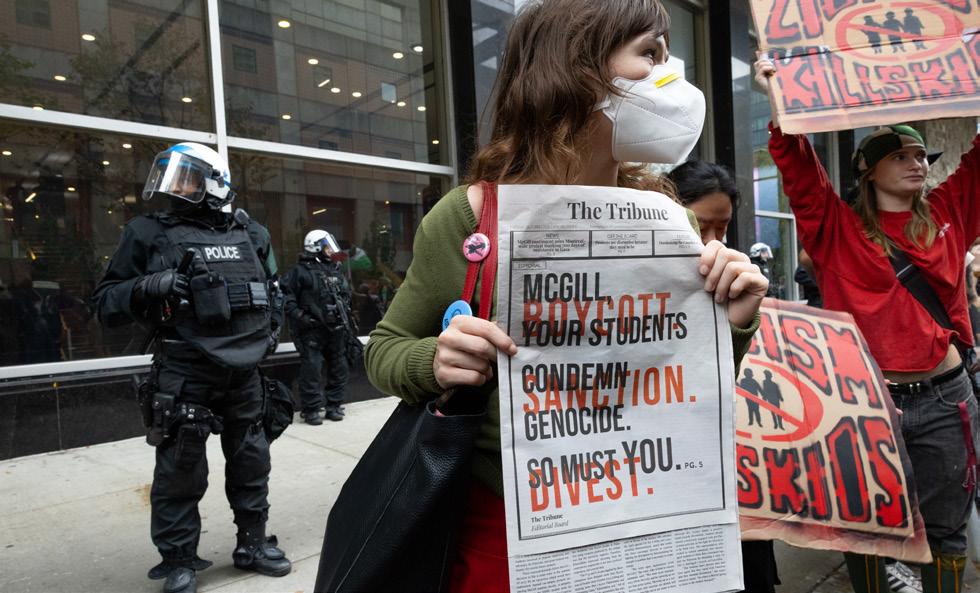
Oct. 7, 2025. A perfect metaphor: a police officer in full riot gear and a young protestor armed with a copy of our Oct. 7 issue look in opposite directions. Seeing people pick up a copy on campus or read The Tribune on their metro ride home always fills me with a sense of pride. This photograph, featuring a cover inspired by our then most recent editorial piece, is a powerful visual representation of the strength of student journalism. Armen Erzingatzian
Oct. 7, 2025. Thousands assembled on Oct. 7, seeking justice for the genocide of Palestinians.
day, I was reminded of the meaning of solidarity and the power of collective action. Every single voice, flag, poster, and soul present contributed to the
and demonstration.
Armen Erzingatzian
While you can never experience the same thing twice, a photo serves as a vessel for those memories and the emotions entwined with them. Reflecting on the 25/26 academic year, the images I’m most proud of are protest photos and landscapes. The dichotomy between chaos and activism, and tranquillity and adventure, has characterized my last year. Emiko Kamiya
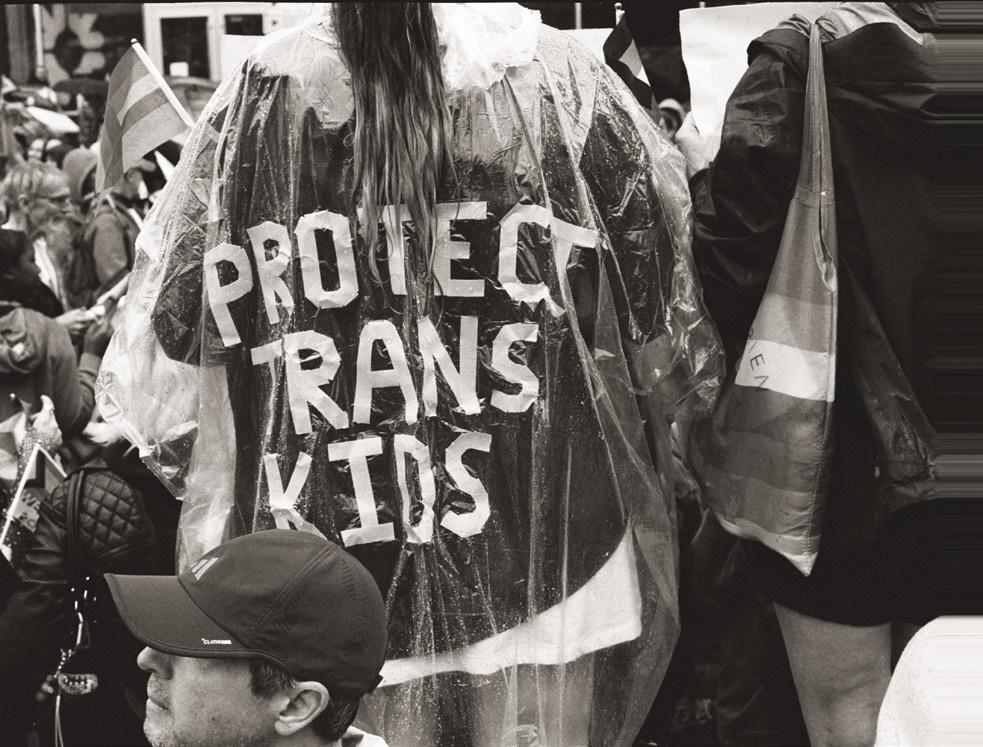
A protester dons an emergency poncho that reads “Protect Trans Kids” at a No Kings Day Protest in Boston, Massachusetts, on June 14, 2025.
The McGill Martlets went up against the Italian Women’s National Team in a pre Olympic exhibition game on Jan. 8, 2026. Although the headlines will tell you only that the Martlets lost 7 0, anyone present in the arena could attest to the strength of their performance. As players crashed into boards and whipped across the ice, I was inspired by the fiery passion and incredible teamwork of my peers. Anna Seger
The demonstration for Palestine on Oct. 7, 2025, brought together members of the community from all walks of life, from CEGEP students to the Mohawk Mothers to university professors. One of the most fulfilling parts of attending and photographing protests has been witnessing this solidarity flourish. Anna Seger
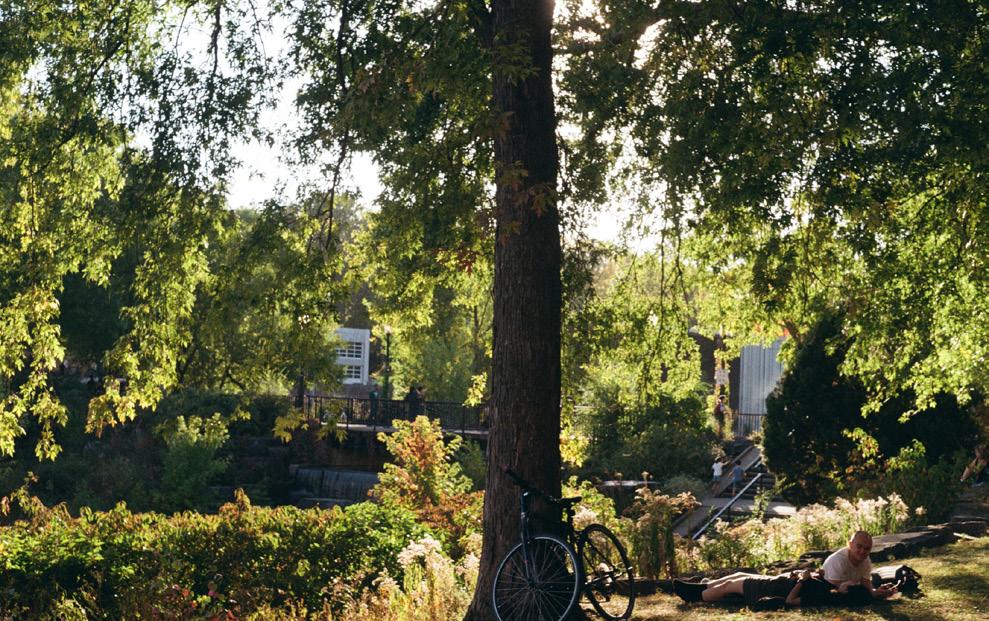
Rays of light spill out from between the trees on a late summer afternoon in Parc La Fontaine. The memory of what seemed like the whole city splayed out across friends and grass and blankets basking in the serenity and sunshine kept me warm through the winter. Anna Seger
Sept. 27, 2025. One family among hundreds of other mourners in Longueuil, six days after the police shot and killed unarmed 15 year old Nooran Rezayi. Capturing such sensitive and emotionally
Nooran.
That
student strike
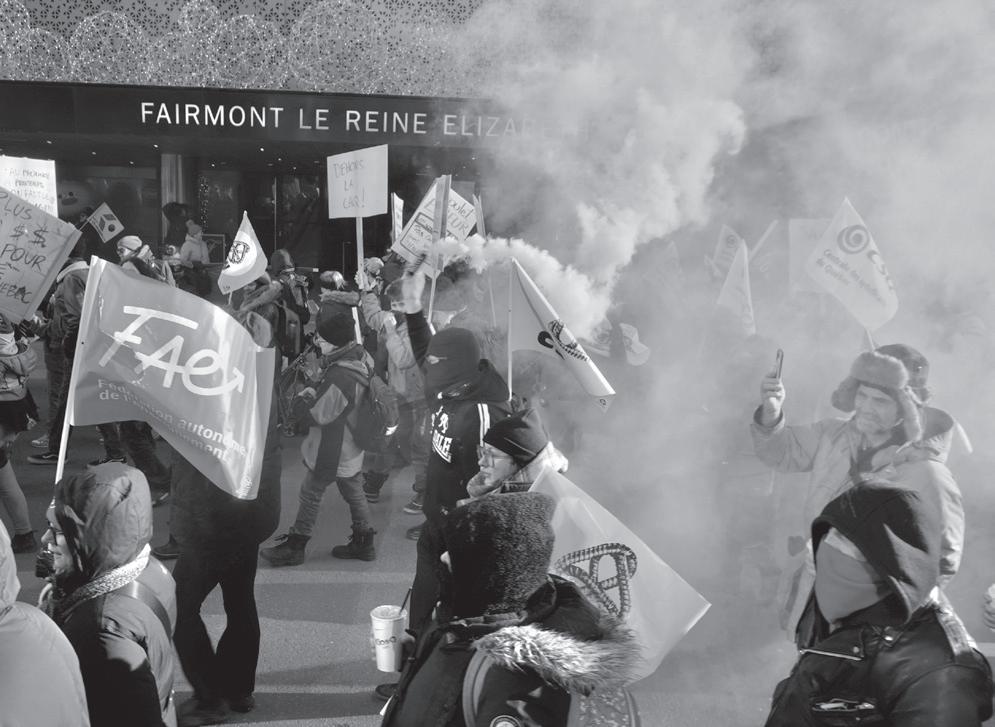
Flags and flares fill the air in downtown Montreal on Nov. 29, 2025, as unions rally against new bills enacted by the CAQ that target union funding and threaten unions’ ability to assemble and act. Emiko Kamiya
Alamere Falls meets the Pacific Ocean along the Point Reyes National Seashore. August 2025. Emiko Kamiya
Winter 2026: Memory on Campus
(Alexa Roemer / The Tribune)
(Armen Erzingatzian / The Tribune)
(Zoe Lee / The Tribune)
(Gwen Heffernan / The Tribune)
(Alexa Roemer / The Tribune)
(Anna Seger / The Tribune)
(Eliot Loose / The Tribune)
(Eliot Loose / The
(Serena
(Zoe Lee / The Tribune)
(Lilly Guilbeault / The Tribune)
(Emiko Kamiya / The Tribune)
(Mia Helfich / The Tribune)
(Mia Helfich / The Tribune)
(Anna Seger / The Tribune)
(Sunny Bell / The Tribune)
(Abbey Locker / The Tribune) (Serena Elsammak / The Tribune)
Canada’s prison system is predicated on rehabilitation and reintegration—yet, the country’s own correctional service is defunding the most integral program to realizing that aim.
Correctional Service Canada (CSC) has announced the suspension of its federal prison education program in Quebec correctional facilities, effective June 30, 2026. At present, Quebec offers prison educational programs under Commissioner’s Directive 720 at two federal penitentiaries: The Cowansville men’s and Joliette women’s institutions.
Collèges d’enseignement général et professionnel (CEGEPs) are integral to the delivery of educational programs to incarcerated individuals in Quebec, as CEGEP instructors teach the majority of courses in prisons. They offer upper-level, preprofessional, and field-specific courses that extend past general education objectives, facilitating greater personal and professional development. Crucially, these CSC-CEGEP partnerships allow incarcerated people who have not completed primary and/or secondary education to pursue studies that go beyond CSC’s Adult Basic Education requirements.
Of CEGEPs holding partnerships with CSC, Cégep Marie-Victorin is the primary institution offering pre-university programs in the province, having been involved in education in correctional contexts for approximately 50 years. However, due to financial constraints, CSC has decided not to renew its contract with Marie-Victorin in its current form, emphasizing the need to locate a cost-neutral alternative.
Without these programs, the Canadian justice system’s stated purpose of “assisting inmates to become law-abiding citizens” cannot be realized. For a legal system predicated on rehabilitation, accountability, and a safe return into one’s community, this radical reduction in funding is fundamentally incoherent with the mission of correctional institutions.
The state’s aim: Reintegration and recidivism
According to CSC Quebec’s Regional Communications Manager, Jean-François Mathieu, the purpose of educational programming in prisons is primarily centred on post-correctional outcomes with a two-pronged goal: Promoting reintegration and reducing recidivism.
“These programs allow inmates to acquire the basic skills in literacy and personal development that they require in order to succeed in the community [after incarceration],” Mathieu wrote in a statement to The Tribune.
Yet, education bears merit beyond reducing criminal activity, with proven positive impacts on the psychological health and livelihoods of incarcerated individuals. Jeffrey Kennedy, Assistant Professor in McGill’s Faculty of Law, elaborated on how education’s rehabilitative value does not—and should not—stand alone as the sole justification for the program’s existence in prisons.
“Education is a social good, period, and
we shouldn’t limit its value to ‘rehabilitative’ purposes, even if it also helps prevent future crimes,’” Kennedy stated in a written statement to The Tribune. “The same reasons why McGill [community members] are themselves part of this university and see education as valuable—for personal growth, career prospects, relationships, interest, or seeing education as a good in itself— also apply to the people we have imprisoned.”
Samuel Rochette, Professor of Psychology at Cégep Marie-Victorin and now-former instructor at the Cowansville men’s institution, affirmed this sentiment, describing how the time commitment education in prison requires, alongside its ‘optin’ nature, encourages incarcerated people to develop positive habits both during and after imprisonment.
“I’ve known for several of [the prisoners] who stopped taking drugs, at least on a regular basis, because they were much more focused on what they were doing [in classes]. And that’s not an exception,” Rochette said in an interview with The Tribune
Prisoner well-being, desistance, and identity re-formation
The benefits of educational programming are in no way limited to post-correctional outcomes. While reducing recidivism is a key aim of the state in its carceral project to deter future law-breaking, the more normative, prisoner-centric benefits of these programs remain and are perhaps more profound.
Frédérick Armstrong, the United Nations Educational, Scientific, and Cultural Organization (UNESCO) Chair in Applied Research for Education in Prison at Cégep Marie-Victorin, has conducted significant research affirming the benefits of education to the well-being of people in prison. Armstrong’s work, mainly his qualitative analyses, is crucial to the progressive development of UNESCO’s policy agenda, particularly the UN Sustainable Development Goals.
He collaborated with Cégep Marie-Victorin educator Lyne Bisson on a 2024 report, conducting interviews with more than 40 people across five provincial prisons. Participants described how participating in educational programs can build self-esteem, foster a sense of academic competence, and even make the days pass faster.
CEGEP-led educational courses also empower the incarcerated to redefine their identities and self-perceptions in a process known as desistance, or the evolution in identity that occurs when incarcerated individuals undergo effective rehabilitative programs. Drawing from one of the interviews he conducted with Bisson, Armstrong offered an example of how this phenomenon may manifest.
“A young man [in the prison] […] made a big thing of being called a student by the prison guards. So, the prison guard would say, ‘Okay, all students can go to school.’ And he’s like, ‘I’m a student?’ [….] That identity shift is key in the process of desistance,” Armstrong shared in an interview with The Tribune
The ability of CEGEP professionals to support these shifts in the identity and behaviour of incarcerated people is not just important for students’ personal growth; Parole Board members rely on educators to report on prisoner desistance when evaluating whether to offer parole and, if release is granted, what its conditions will be. In an open letter to CSC shared with The Tribune, Theodore, student incarcerated at Cowansville who withheld his last name, described how educators can serve as advocates for imprisoned people.
“The Parole Board doesn’t live here among us, and all they have to go by is our parole officer, [correctional officer], and program officers, in most cases,” Theodore shared in the letter. “CEGEP […] [is] a program in which inmates can accomplish presentable metrics to the Parole Board about what they have done here. ‘How can I show you I’m doing better if there’s nothing good for me to do?’”
Prison Education as an Opportunity for Socialization
Educational programming in prisons also fosters another crucial aspect of reintegration: Adopting pro-social behaviours. Relying on his personal experience, Theodore described how the classroom environment—particularly its use of ‘rehearsals’—can support the development of prisoner social skills.
“The specific environment created by [the] CEGEP operating in this penitentiary creates a transitional environment for offenders to ‘rehearse’ living prosocially. This includes skills, but also social situations: Navigating teacher relationships, submitting to the curriculum, and navigating interactions with peers,” Theodore wrote. “The [institutional program] uses role-play very often to […] make sure we know to apply the skills we are being taught.”
By strengthening these social skills, prison education programs make significant progress toward rehabilitation efforts, addressing the behavioural, cognitive, and emotional roots of criminal activity. Rochette added that without these course offerings, it is difficult for people in prison to find opportunities for socialization.
“I had a student tell me, […] ‘In 18 years, you’re the first real human interaction I’ve been having,’ and I wanted to cry at that moment. I mean, that was really touching.”
The Psychological and Human Rights Dimensions of Punishment
Correctional Service Canada cuts funding for its prison education program after 50
years of service
Written by Ellen Lurie, Opinion Editor & Designed by Zoe Lee, Design Editor
The ability of educational programs to offer opportunities for socialization and facilitate desistance is undeniably critical to the psychological health of imprisoned people during and after incarceration. However, such benefits are greatly
impaired when the method of punishment is incompatible with these positive outcomes. Drawing from his expertise in psychology, Rochette offered a theory-based explanation of the threats posed by detention as a mechanism of punishment.
Operant conditioning models state that punishment must follow three rules to effectively deter future repetition of the behaviour: Immediacy, consistency, and proportionality. Therefore, a punishment must be intuitively related to the initial wrongdoing for it to result in positive behavioural shifts.
However, these three conditions are rarely met in Canadian prisons. Mandatory minimum sentences and long prison sentences are frequently applied to nonviolent or drug-related offences,
someone’s imprisonment on the basis of ‘rehabilitation’ […] and then deprive that person of the
‘How can I show you I’m doing better if there’s nothing good for me to do?’
amounting to incoherent and disproportionately severe models of punishment.
The ineffectiveness of current models of punishment in the criminal justice system is epitomized by the persistence of administrative segregation, more commonly known as solitary confinement. Administrative segregation is a temporary correctional measure under which certain incarcerated people are isolated from the rest of the prison population to mitigate violence or security risk. Although administrative segregation was officially abolished in 2019, it persists in the form of Structured Intervention Units (SIUs), often described as ‘administrative segregation by another name.’
Educational programming is thus one of the few opportunities to counterbalance the negative elements of punishment. It is the provision of such programs in the face of these unnecessarily punitive measures that is crucial to reducing recidivism, improving prisoner well-being, and achieving the positive identity shifts associated with recognition and socialization. As a result, as Kennedy describes, depriving incarcerated people of these programs proves counterintuitive.
“It seems indefensible to me to justify
opportunities they need to realize that,” Kennedy wrote. “There can’t be a disconnect between the reasons we sentence people and the actual realities of imprisonment.”
Financial constraints and online prison education
Despite these immeasurable benefits, budget pressure on CSC has forced the end of Cégep Marie-Victorin as it currently stands. However, such austerity calculations entirely neglect that the program, beyond being socially and ethically beneficial, is an economically efficient investment.
“The program [costs] around $400,000 CAD to $450,000 CAD a year [….] Keeping someone in prison in Canada, especially in Quebec, is about $100,000 CAD to $120,000 CAD a year,” Rochette said. “Of our 40 students, we only need one or two of them to not go back to prison for this program to be productive and, in fact, save money [for] the government.”
And such educational programs are in high demand: Many incarcerated people transfer into the Cowansville and Joliette institutions for the sole purpose of attending the Cégep Marie-Victorin program, sometimes leading to waiting lists. In fact, when CSC announced that budget cuts had forced the end of CEGEP education in prisons, Rochette reported that prisoners immediately offered to direct their Inmate Committee’s budget toward funding the program. As a result, when scaled up against the psychological and emotional benefits of these programs, such financial constraints appear increasingly inconsequential.
Although it has not yet been officially announced, CSC has communicated its intention to reformat prison education into an online model, known as the Offender Digital Education (ODE) program, in hopes of continuing the program while cutting costs.
However, the majority of both tangible and intangible benefits of prison education are lost
when educational programming shifts online, making these austerity measures lethal to the program rather than simply cost-cutting.
“[Online prison education] has been tried elsewhere. For instance, in France, it was a fiasco, it was horrible. They wasted a lot of money, and people used the computers there to hack, and it didn’t work,” Rochette stated. “And plus, you remove the human connection, the interaction, […] the normalcy, and the alternative to their lifestyle that is very appealing to them.”
Moving forward: An international human rights standard for prisoner education
Prison education is not a program unique to Quebec; it is an internationally pursued human rights imperative. Given Armstrong’s work in the UNESCO chair role, prisoner education in Quebec bears implications for policy work far beyond Canada, let alone the province.
However, research on the efficacy of prison education models tends to emphasize the need for randomized controlled trials and qualitative research as more scientifically reputable justifications for implementing such programs. Yet, such empirical justifications are, in many ways, secondary to the pursuit of what is really a human rights goal.
“I’ve had that conversation […] where evidence-based policy is very important. I don’t have any evidence that education is a human right, right? That’s not evidence-based. That’s normative. It’s a political statement to say that people have a right to education,” Armstrong explained. “So, if we show that education does not reduce recidivism, it would still be legitimate to provide education in correctional contexts because it remains a right.”
While empirical studies, educator and prisoner testimonies, and financial calculations all suggest that the prison education model should be preserved in its current form, such evidentiary support is, in many ways, extraneous. Rather, the necessary and sufficient condition that obligates prisons worldwide to provide education to the incarcerated is one simple fact: Education is a human right.
“I’m a student?”
50 years of prison education made that question possible, but it took only one budget cycle to force the program’s closure. Reinstate CEGEP education in Quebec prisons—not because it saves money, not because the data demand it, and not because it stands to reduce recidivism, but because human rights should not disappear behind bars.
OFF THE BOARD
Oh, the places I’ll go (but not stay)!
Rupneet Shahriar Web Editor
At the airport, I learned to expect the pauses, the extra questions, the glances at my passport that lingered a second too long. I did everything right—got into McGill, applied for my visa, and carried proof that I would leave once my degree was over. Even in places I call home, I keep the justifications ready, prepared to defend my right to be there. As I grew older, I realized that my movement through the world has never been as simple as it is for others. The opportu -
nity to move and start again may seem universal, but belonging is not. For people like me, moving remains a privilege––something we must earn again and again.
Every winter, thousands of birds from Siberia migrate to Bangladesh, drawn to its temperate climate. My dad used to take me to see them, scattered across the glistening lakes of his university campus. I was fascinated by the way they flew, crossing borders in search of food, shelter, and a better future for their offspring. Their journey felt natural, almost inevitable.
My parents’ move from Dhaka to Dubai followed the same instinct. It was driven by the promise of a future where my sister and I could thrive. I grew up believing that this kind of movement rewarded effort, that merit and mobility would work hand in hand to open up the world to us.
So, we worked hard in a place that celebrated diversity on the surface. I scrubbed off the traces of Bengali in my accent while my parents learned to adapt to what was expected of them. But beneath the surface, not everyone moved through that space the same way. As one of the few Bangladeshi
families in those professional circles, we learned early that we had to work harder to be taken seriously.
Over time, I began to see that belonging wasn’t simply about effort. No matter where we went, the question of our citizenship followed us, drawing a line we could not cross. Overlooked in offices, scrutinized at embassies, and constantly expected to prove that we were not like the others
This is when I realized that, unlike the frictionless mobility of Western passport holders, my movement through the world will always be conditional and precarious. My passport does not simply state where I am from, but it dictates how far I can go and how much I must prove that I can belong, reminding me that merit does not carry the same weight for everyone.
Students from around the world secure admission to top universities, only to face visa denials. While a Canadian student can live in Europe for months as a digital nomad with littleto-no restriction, merit alone was not enough to guarantee a place for the Gazan students accepted into McGill. Skilled workers fill essential labour shortages, yet remain trapped in sys -
Winter 2026 report card: On-campus dining
McGill has many dining options, but which are worth your while?
Rachel Blackstone Staff Writer
As finals season looms upon us, we get ready to say goodbye to our social lives, regular sleep schedules, and hobbies. In this time of despair, trips to the grocery store get farther and farther apart, causing many students to fall into a vendingmachine-anchored diet. Arguably worse than the barely functioning existence we all enter each exam period is the endless waiting for grades McGill bestows upon us each semester. While The Tribune would love to promise early marks back, that is slightly beyond our reach. Instead, we present the marks of the best on-campus dining in hopes that the vending machines get some time off this April.
Hot Dog Man and Woman:
students. This makes the Hot Dog Man an iconic part of our fleeting years at McGill and worthy of the coveted A grade.
Vinh’s Café:
Vinh’s Café has two locations, one in the Genome Building and the other in the Strathcona Music Building. It offers fresh Vietnamese food at affordable prices. Known for their bánh mi’s, Vietnamese coffee, and pho, Vinh’s is a convenient and delicious lunch on campus that won’t hurt your wallet beyond repair. Pick up one of their loyalty cards and get your 10th bánh mi for free!
Frostbite:
This McGill classic needs no introduction. Hot Dog Man’s return to campus each spring acts as the unofficial first flicker of light at the end of a very snowy tunnel. The hot dogs themselves are great: The efficiency, faint taste of charcoal, toasted bun, and plethora of toppings make this staple something to write home about. The cart offers an original jumbo dog, a vegan option, and a Polish kielbasa. Perhaps even better than the sausages themselves is the excitement that hits as you stand in line with your friends, surrounded by fellow hot dog lovers. The Hot Dog Man unites McGillians across faculties and years, fostering a true sense of community amongst 40,000
If you take a sharp left when you enter McConnell Engineering, you will stumble across Frostbite, McGill’s very own ice cream shop. Open Monday to Friday from 12:00 p.m. to 5:00 p.m., Frostbite is entirely student-run and the perfect mid-day treat. McGill’s worst-kept secret is arguably the shop’s Toonie Tuesday special, where you can grab a ‘baby scoop’ in exchange for a single toonie. In addition to Toonie Tuesday, Frostbite gives out a free scoop to anyone who scores less than 30 per cent on an exam worth 15 per cent or more of their final grade. With rotating and interesting flavours to choose from, the only thing holding Frostbite back from that top score is the massive line that forms each Tuesday.
tems that treat them as expendable and replaceable. In this world, mobility is not a right but a privilege, unevenly distributed and shaped by manmade borders.
We are welcomed for what we can contribute to society, but are never fully trusted to stay. We are expected to prove that we deserve to remain, and are quickly dismissed when deemed not ‘good enough.’ It makes me wonder— are we valued as people, or simply as resources to be extracted from?
The Siberian birds are never asked where they’re truly from or how long they plan to stay. They are simply admired wherever they land. And yet, just as they return year after year, I find myself already preparing for the next cycle—graduating, thinking about the next permit, the next approval, the next justification.
The world does not fairly dole out the right to belong. But I’ve learned that, when the time comes, belonging is something you can define, not because the system allows it, but because living through its limits has taught me to claim it for myself. And no system, no border, and no passport will ever take that away from me.
SNAX: Squeezed into the hallway between Leacock 26 and Rooms 111 and 112 is SNAX cafe. SNAX is affordable, conveniently located, and good at what they do. Since it is primarily a coffee shop, SNAX only offers a small selection of baked goods and delicious Montreal bagels; the somewhat limited menu results in a good but not excellent final grade. Nonetheless, SNAX is the perfect caffeine boost or hunger fix when running between classes. So, before frantically meeting with a TA in an attempt to master the entire syllabus, gift yourself an afternoon sweet treat and grab a double chocolate cookie for $2.75 CAD.
McConnell Engineering Cafeteria: Tucked above the racecars and Dispatch in the McConnell Engineering lobby is the McConnell Engineering Cafeteria, home to Mezze Café and Booster Juice. While both options are delicious and close to the indoor seating that is so essential in the winter, their prices turn a trip to the cafeteria into a special treat, with most meals being above $10 CAD. Mezze offers Mediterranean fare made with halal ingredients for both breakfast and lunch, and Booster Juice has an array of smoothies to choose from. What makes these options stand out is the incredibly kind employees who consistently take time to chat, smile, and laugh with each customer.
With every purchase at Booster Juice, get a chance to spin the wheel and win a prize. (Emiko Kamiya / The Tribune )
Jenna Durante & Malika Logossou
Features Editor Managing Editor
What defines home? For some, it’s your favourite comfort food, the cozy feeling of your bed at the end of a long day, or being surrounded by the love of your family and friends. And in Montreal, home is rarely limited to one thing. In this vibrant, multicultural city, shaped by a rich and layered history, people find their own sense of belonging in many different ways. The Tribune presents a few places across the city and on campus where students can foster their own meaning of home.
Food and cultural heritage
Established in the 1890s, Montreal’s Chinatown exudes a strong sense of history and community. Formally home to Wing Noodles—famous for making the first bilingual fortune cookie—Chinatown remains a hub for restaurants and markets that continue to serve locals. With urban sprawl and gentrification threatening Chinatown neighbourhoods across the country, it is integral to support these communities and small businesses. Organizations like the JIA Foundation work to protect and celebrate the neighbourhood’s cultural heritage, while advocating for their future. On your next visit, explore the wide range of dishes and desserts, immersing yourself in the culture and history that define the community. Wander through the neighbourhood and discover murals, street performances, and festivals that have thrived for generations.
Finding home in Montreal
The power of community building
Urban oasis
Home to a diverse ecological web of plants and animals, Parc La Fontaine is the perfect place to spend an afternoon basking in the sun while appreciating the nature around you. With the park’s rich native biodiversity, this 34-hectare green space provides the city with a lush oasis amid the urban jungle of downtown Montreal. Across all seasons, visitors can enjoy a number of activities, including cycling, soccer, tennis, crosscountry skiing, and more. Bird watchers can also take part in spotting out local species, or simply sit by the pond and admire the park’s beauty.
Religious spaces
Beyond physical spaces, many students find a sense of home within their religious communities. Whether through on-campus clubs such as the Muslim Students’ Association, McGill Sikh Association, McGill Chavurah, or the McGill Christian Fellowship, these communities provide a place where individuals can feel safe, supported, and connected with others who share their beliefs. These spaces become even more essential in the context of Quebec’s increasing restrictions on religious expression, such as Bill 21, which bans public employees from wearing visible religious symbols, and Bill 9, which extends to newly-hired daycare workers, bans prayer rooms in public institutions, prohibits public prayer without municipal authorization, and bars public institutions from solely offering food based on religion. These campus groups offer spaces of belonging for practising faith freely.
Music and representation
Music is another powerful way students can feel at home thanks to its transcendent and intergenerational scope, bridging cultural and geographical gaps alike. It can tie people together by creating shared memories and evoking sentiments that language cannot always express. Music festivals also help foster this sense of community, bringing people of all creeds together to celebrate art they collectively cherish. Montreal hosts a number of such events, such as the Montreal International Jazz Festival, Festival International Nuits d’Afrique, Fuego Fuego, Les Francos de Montréal, LASSO, and more, giving students spaces to celebrate music and culture, and helping them feel rooted—even far from their original homes.
is of Lebanese and Egyptian descent and incorporates Arabic music into her songs by singing in English, French, and Arabic, demonstrating how music offers a creative medium to celebrate both cultural heritage and diffusion.
Memory
Drag shows and queer spaces that centre music have long served as safe havens for 2SLGBTQIA+ individuals, fostering community, self-expression, and belonging. Many Montreal artists have also found music to be an outlet for exploring and merging their different identities. Montreal-based pop singer Zeina, for instance,
The Tribune’s guide to post-finals fun
Activities to forget about the stress of finals
Parisa Rasul Staff Writer
WHOO!” yells a student on Lower Field. The cheery sounds of OAP ring out across campus, marking the end of another dark period of finals. Students crane their tired heads up, still pleasantly surprised by the return of a bright spring sun. But doubts still linger about final grades and aching hands remain smudged with lead (after your Apple pencil finally gave out, of course). What can you do to forget all of those troubles? The Tribune has compiled the ultimate post-finals celebration and unwind guide.
Catch up on some reality TV
What better way to forget about your own life than to catch up on the lives of others? Reality TV can transport you to an alternative realm, which you will greatly value post-finals. Begin with the incomparable Love Island, and catch up on season 7 before season 8 drops this June. Was Huda really that bad? Is Amaya Papaya cancelled? These are the hard-hitting questions that should have been in the long answer section on your exam bluebook. End your binge with Love is Blind and find out if couples will survive after seeing each other in person for the first time (spoiler alert: love probably isn’t blind).
Create a summer bucket list
Make sure you get to it all this summer with the ULTIMATE SUMMER BUCKET LIST (must be in all caps to ensure ultimate summer fun). Grab a poster board, fun colours, glitter, and get to work compiling a list of all the fun activities you want to do this summer! If you’re having trouble thinking of ideas, consider going to a drive-in movie theatre, making a time capsule with your besties, or painting some shirts with bleach to create a custom design.
Have a picnic
Take advantage of Montreal’s green spaces and the (hopefully) good weather. Pick up a bottle of wine from the SAQ and a cute blanket you won’t mind getting dirty. To have even more fun, plan a theme like Y2K or Mad Hatter and play dress-up. Try the different parks Montreal has to offer such as Parc La Fontaine, Parc du Mont-Royal, Parc Jeanne-Mance and Parc Jean-Drapeau, and see which one is your preferred spot for all your frisbee-throwing, charcuterieboard-eating fun!
Make slime
Throwback! Many have forgotten the art of slime-making and its unique de-stressing properties. All you need is some glue and borax, Tide, or contact lens solution. Mix half a cup of glue with one tablespoon of activator and knead until the slime is to your
liking. For texture, try adding shaving cream or beads! And go crazy (PSA: avoid the floor slime trend for a much easier cleanup).
Go window shopping
Broke from the copious amounts of energy drinks you bought during finals? Hit up Rue St. Catherine’s and try just staring at all the clothes you could buy. It will serve as a lesson in self-control, but also a way to heighten your fashion sense. Learn to curate a wardrobe with fewer clothes, but more style. Keep an eye out for some timeless pieces, and avoid fast fashion.
Host a Euphoria Night
If you had to skip out on ’s season three premiere because of finals, be sure to go all out after exams! Have your friends put on their best glittery, bold, coloured eye makeup. Set some mood lighting, perhaps some silver decor, and turn up the Labrinth. Try to avoid the Nate Jacobs of the world, and find out if Jules is still riding that damn bike.
Last but not least, memory plays a powerful role in shaping what “home” means. Our own reinterpretation of physical spaces, familiar smells, sounds, or experiences transports us back to a specific time or space. Whether you and your community host a potluck or make crafts together, acts that appear mundane can gain newfound meaning once removed from a familiar reality. These moments of nostalgia recreate a sense of comfort and belonging, allowing us to carry a piece of home with us wherever we go.
Curate playlists for loved ones
Although physical mixtapes have been lost to time, Spotify (or Apple Music if you’re too stubborn to admit that Spotify is superior) is around instead. Think of your favourite people and have everyone curate a special playlist for each of them. Music can be a window into someone’s soul and a way to truly get to know them. Design a cover for the playlist and have a listening party!
Based on the 2021 census, about 33.3 per cent of Montreal’s population was born outside of Canada, making it a major hub for immigration and cultural diversity. (Mia Helfrich / The Tribune)
Farewell to The Tribune: Last words from our graduating editors
Mia Helfrich Creative Director: I can’t remember what pulled me into The Tribune. I showed up to an Arts and Entertainment pitch meeting before classes began in my first year at McGill. My memories of university simply start here. After writing articles for a few months, I became curious about layout design, and started contributing to the illustration section. Next thing I know, I’m accepting positions as Design Editor, then Creative Director. I am endlessly grateful to be a member of our tight-knit community of creatives, and for the mentorship I received in my graphic design, drawing, photography, and writing. For me, university begins and ends with The Tribune—it would not be the same without it.
Nell Pollak, Managing Editor: Would you believe me if I told you that I started at The Tribune as a spy? Well, maybe not an adversarial spy, but a mole—sent by a Communications professor I was researching for, tasked with writing for each McGill student paper to map their editorial structures. The Tribune was my first target. I walked into the board room having no clue what to expect, but found myself inexplicably drawn to the art of an op-ed—the slow alchemy of a broad opinion hardening into a sharp argument, the rabbit holes of research, the thesaurus searches to find the word I didn’t even know I was looking for. By the end of that first piece, my original undercover mission had slipped from my consciousness entirely. That next month, I applied to be an Opinion Editor; the following year, Managing Editor. I arrived to observe, and I leave having been intrinsically altered by the incredible community I found.
Malika Logossou, Managing Editor: I first discovered The Tribune when a friend shared a News article with me in my first year. Later, after the incoming Editor-in-Chief encouraged me to get involved, I formally encountered it. I joined, scared of the outcome or of not liking it. But what I originally signed up for as a simple extracurricular activity became such an important part of my years at McGill. As a commuter, finding a community on campus isn’t always easy, but I found a sense of belonging through the strong connections I built at this paper. I am so privileged to have read and edited such outstanding pieces, and I will miss this deeply rewarding experience. I cannot wait to see what The Tribune does next year, knowing it’s in competent hands.
Defne Feyzioglu, Opinion Editor: As I walked down McTavish Street after our last editorial board meeting, I kept thinking about how strange it is to find yourself in a place you least expect. I started my McGill journey with nothing but a lot of confusion and a sharp sense of unbelonging. In a new city across the ocean, and knowing so little about myself, I just tried: Picked up new hobbies, went to gatherings, considered changing faculties, partied at Café Campus (though, in retrospect, not the greatest site of self-discovery), and drifted. But somehow, it was at The Tribune’s pitch meeting that something clicked. Somewhere in that room, I discovered my love for journalism and grew into my voice. I now leave The Tribune with more gratitude than one final paragraph could ever contain.
single piece in Science and Technology two years before I applied to be an editor. What I found was unlike anything another campus organization could have offered me. The Tribune gave me a chance to pursue truly important stories on campus. With the help of my brilliant Managing Editor, Nell Pollak, and amazing Co-Editor, Tamiyana Roemer, we gave Student Life both a more serious tone, following campus protests and activism, and also brought back some much-needed whimsy with a number of hilarious satirical pieces. I’ve loved every article I had the privilege to write, and I will cherish every minute I got to spend with our incomparable Editorial Board.
Ethan Kahn, Sports Editor: Whenever someone wraps up a major chapter in their life, the goal for many is to finish that time without any regrets. Unfortunately, I have one regret about my four years at McGill: I waited until my third year to join The Tribune. I can say without a shadow of a doubt that being a part of The Tribune for the past two years has been the most rewarding experience I could have imagined. I’ve had the privilege of working with so many incredible, driven, and caring writers and editors. A massive thank you to my Managing Editors, Mairin Burke and Kaitlyn Schramm, and my co-editor Clara Smyrski for making me feel so welcomed, and of course to all of the fabulous writers who worked tirelessly throughout the year. I’m immensely proud of the work we have done, and I am so excited to see how the paper evolves in the future.
Gregor McCall, Student-Life Editor: When I joined The Tribune earlier this year, I was, in all honesty, scared to death. My experience in student journalism was next to nothing—only a
Jenna Durante, Features Editor: Last year, I came into the Trib as a SciTech Editor and had the privilege of switching over to Features this year. Anxious about starting the new role, I was eager to see all that we would accomplish in the Features section. What a joy it has been to be part of such a brilliant team of editors and designers for the past two years. I am beyond grateful to have worked one-on-one with the editors to help develop their investigative articles every week—I learned so much from everyone. I cannot thank them enough for their time, care, and dedication to making this section come to life, and for sharing the stories that are so close to their hearts.
Leanne Cherry, SciTech Editor: I attended my first-ever SciTech pitch meeting towards the end of my first year, with the hope of finally trying out scientific writing. However, at the time, the thought of doing an interview scared me so badly that I didn’t go through with the article. It took me until the beginning of my third year to finally return to those pitch meetings. Looking back now, I can confidently say that becoming a contributor and an editor for The Tribune was the best choice I’ve made at McGill, not merely because it showed me that I was capable of science writing, but because I have truly found some of the kindest and smartest people I have ever known. I cannot overstate my gratitude for this newspaper and the people who make its existence possible.
Armen Erzingatzian, Photo Editor:
My regrettably short journey at The Tribune started because all I really wanted to do was take perfect, pretty little pictures. My year at the paper turned out to be by far the most influential of my five years at McGill. Covering protests and other events as a photographer and the occasional interviewer-writer made me feel like I had a finger on the pulse of
my hometown. It helped me understand the issues that affect my community and think critically about them. Through assignments and team meetings, I built incredibly meaningful relationships with the brightest, kindest and most driven people around. They made me a stronger, more responsible, and more empathetic person, and taught me more than I dared to imagine. Thank you, Trib. I’ll miss you.
Rupneet Shahriar, Web Editor: I hadn’t planned to join The Tribune in my final year at McGill. For most of my time, I believed journalism and I were meant to run parallel, and I was content watching from the sidelines. That changed when a friend mentioned they were looking for someone with coding skills. I stepped in hesitantly, unsure if I had the voice or confidence to belong. But I soon found myself surrounded by people who are incredibly thoughtful, fearless, and deeply passionate about what they do. Their commitment helped me to trust my ideas and express them more freely. In doing so, I rediscovered my love for storytelling. I’m incredibly grateful to The Tribune for that, and it’s bittersweet that my journey here was so short. Nonetheless, I’m excited for what comes next!
Serena Elsammak, Video Editor: Throughout my entire undergraduate experience at McGill, I always looked up to The Tribune; its value for honest, independent, and against-themainstream journalism resonated deeply with me. In a time where dominant news narratives have demonized people from my community and my family members
back home in Lebanon, I have been especially grateful for The Tribune’s humanizing and justice-oriented work. For a long time, I flirted with the idea of applying for a role at The Tribune, but every time I wanted to apply, something else came up that wouldn’t let me go all-in. Finally, this last semester, the application for Multimedia Video Editor went up, and I was immediately drawn in. Using editing software creatively and simply documenting have always been passions of mine. The Tribune allowed me to re-explore this creative side of myself, and for that, and much more, I am extremely grateful.
Anna Seger, Photo Editor: I joined The Tribune in the fall of my second year. The splendour of Montreal’s autumn is always a source of inspiration for me, albeit a fleeting one, fading slightly as the leaves drop from their branches and a bitter chill fills the air. These past two years, though, the brilliant minds I’ve met through The Tribune have been a steady source of inspiration, not only because of their ambition and intelligence but also because of their kindness and sincerity. I am constantly moved by your creative spirits, your thoughtful contributions, and our truly countless meaningful discussions. I cannot wait to see the wonderful things you all go on to do.
Mia Helfrich, Armen Erzingatzian, Anna Seger (Zoe Lee / The Tribune)
Ethan Kahn, Jenna Durante, Gregor McCall, Serena Elsammak (Anna Seger / The Tribune)
Before the price of coffee skyrocketed and the death of third spaces; before the tyrannical reign of Ticketmaster and the monopolization of the music industry; before we slipped into antisocial seclusion and let blue light mollify our beautiful brains, there was once an invaluable institution, home to art, community, and political activism: The glorious 1960s coffeehouse.
Even though coffeehouses were ubiquitous in the 1960s, they were popular long before the folk revival. The first coffeehouse opened in Constantinople in 1555 and became the centre of debate and business affairs. Coffeehouses then spread to Western Europe in the 17th century, evolving into the Paris salons essential to the French Enlightenment. In 1676, the coffeehouse reached Boston, and later permeated North America.
After World War II, Montreal welcomed an influx of Italian and Portuguese immigrants whose newly opened cafes became social and political hubs, much like the renowned literary cafes in Paris. In a grand melting pot of espresso, postwar counterculture, poetry, politics, and music, the illustrious coffeehouse was born. Several coffeehouses dotted the streets of Montreal, imbuing creativity and companionship into youth culture and the city at large.
Coffeehouses were a fusion of the jazz club, the beatnik poetry joint, and the espresso bar. Montreal had a web of coffeehouses in the 1960s, including Le Pot Pourri and the Flaming Ember Coffeehouse on rue Stanley, the neighbouring Café Andre, Finjan Club in Côte-des-
Neiges, and The New Penelope, a famous venue on the corner of av. du Parc and Sherbrooke Ouest.
In dimly-lit cafes filled with the silver haze of smoke, people from all walks of life would gather to hear folk music, intimate jazz sets, and poetry readings. They would pack into basements and revamped Victorian homes, eating peanuts and sipping espresso; they would talk art and politics, meet strangers, make friends, and be inspired. Audience members were exposed to a range of talent and influences, while aspiring artists were given platforms and an entry into the arts scene. Montreal’s coffeehouses hosted famous performers like Muddy Waters, Frank Zappa, Joni Mitchell, and Bob Dylan, who gave his first-ever Canadian performance at Le Pot Pourri.
Performers would play to an eager, well-caffeinated audience, and without backstage areas in such small venues, they would mingle with cafe-goers after their set. Thus, the integration and accessibility of the coffeehouse circumvented many race and class boundaries of the 1950s and 1960s. At the intersection of art, coffee, and conversation, the coffeehouse was a democratizing institution that harboured political conversation and artistic collaboration. Supported by welcoming meeting places, 1960s youth were encouraged to be social, artistically integrated, and politically engaged.
However, by the end of the decade, many of Montreal’s coffeehouses shut their doors—except the long-standing Yellow Door Coffeehouse on rue Aylmer, which
remains devoted to community service and social integration. Ever since the death of the coffeehouse, artistic collaboration and social interaction have plummeted. Without third spaces to foster affordable socialization, the loneliness epidemic will continue. As of 2022, only 19.3 per cent of Canadians meet a friend on an average day. Our generation parties less, socializes less, and even has less sex. This shortage of gathering spaces perpetuates our lack of cohesive aesthetics, sweeping political movements, and community. There will be no art in a world where artists cannot afford to pay venue fees—in a world where
everything costs money, even the air we breathe.
We must rally the youth. We must revive the coffeehouse. If we do not actively defend the arts, if we do not seek company, inspiration, and human connection, we are at risk of losing them forever. We cannot forget the glory days of the Montreal coffeehouse, for the coffeehouse may just be the light at the end of a dark, socially deprived, artistically barren tunnel.
Author Kendyl Daley is the host of and a frequent performer at the monthly literary coffeehouse, Ninth Life Coffeehouse.
Preserving childhood magic in adulthood
Children’s books well worth rereading
Bianca Sugunasiri & Alexandra Lasser
Arts and Entertainment Editors
Malika Logossou
Managing Editor
As kids, we ache to grow older; as adults, we ache for childhood.
The Tribune shares three childhood books that capture this longing.
The Little Prince by Antoine de SaintExupéry - Bianca Sugunasiri, Arts and Entertainment Editor
Grown-ups become preoccupied with the most inconsequential matters. Peering at the world blindly, they neglect what is laid bare in their hearts, unsure of what they’re searching for. They forget everything that was once painfully obvious as children.
The Little Prince is a story of a stranded pilot once discouraged from drawing elephant-eating-boa constrictors, and the clever little prince he meets in the desert—a child tired of always and forever explaining things to grown-ups. The little prince is a character full of wonder, and wiser than most every grown-up I’ve ever met. His inquisitive heart never relinquishes a question once asked. In his dedication, author Antoine de Saint-Exupéry notes that although all grown-ups were once children, few remember it.
In finishing this book, you find yourself with more questions than you would’ve thought to ask—why is it that when making a new friend, grown-ups
only ask about inconsequential things like their age, but never what their voice sounds like, or whether they collect butterflies? You will also follow the little prince to otherworldly places: Secrets in the land of tears, a planet with forty-four sunsets, and a glass dome with a tamed rose inside. He reminds grown-ups that their “matters of consequence” matter very little. The Little Prince is a book which you will mourn after finishing. It will leave you listening for the goldenhaired prince laughing amongst every interaction you will have.
The Phantom Tollbooth by Norton Juster - Alexandra Lasser, Arts and Entertainment Editor
Though it’s difficult to pick a single moment that began my love of literature, reading the first pages of Norton Juster’s The Phantom Tollbooth is definitely in the running. The story follows Milo, a young boy bored with life, until a mysterious tollbooth appears and whisks him away to a land of imagination and endless wordplay. There he learns that the ordinary is not always boring, and that one can make an adventure out of every day. Juster’s world-building conjures images as vivid today as they were upon first reading. It is a novel that isn’t afraid to dive into the ridiculous, hysterical nonsense that children—and adults, secretly too—find amusing. For all those longing for a world unburdened by the everyday routines that melt weeks into years, The Phantom
Tollbooth escapes the confines of time and space as the princesses, Rhyme and Reason, are missing. Milo and readers are charged to tackle the beautiful chaos of the world to restore logic and meaning to life. As a student, the pressure of work and assignments makes the idea of a world without structure enticing, and Juster appeases that, but not without a lesson. Chaos is not sustainable; eventually, rhyme and reason must return to grant purpose and organization to a society, leaving readers to appreciate the consistency of each new day.
Love You Forever by Robert
Munsch
Malika Logossou,
Managing Editor
As children, we are rarely confronted with the reality of aging, of watching those who care for us grow old. But with time, that innocence fades, and this reality grows closer, scarier, and harder to ignore. Love You Forever by Robert Munsch traces a boy’s life from infancy to adulthood, marked by his mother’s unconditional love for him as expressed through her singing: I’ll love you forever / I’ll like you for always / As long as I’m
living / my baby you’ll be . She is present at every stage of his life, even going to her son’s house once he’s grown, opening his bedroom window and crawling inside, collapsing the distance between childhood and adulthood as if it never existed. However, the story shifts as the boy grows older and his mother ages. Their roles reverse as he holds her and sings the same song back, later sharing it with his daughter. Revisiting Love You Forever as an adult reminds readers that love— whether from a parent, guardian, or anyone who shapes us—moves in cycles and endures over time.
Ninth Life Coffeehouse is a Montreal-based event for poetry and music. (Anna Seger and Katya Loidap / The Tribune)
Pretty Song Book by Tommy Thumb, published in 1744, is the first known nursery rhyme collection. (Zoe Lee / The Tribune)
Live long and prosper, Notre-Dame-de-Grâce
A guide to the artistic history of one of Montreal’s most renowned neighbourhoods
Dylan Hing Staff Writer
It can be easy to drift toward the known hotspots of Montreal’s art scene; if you are looking for an artist, throw a stone in Little Burgundy, Griffintown, or Little Portugal, and you’ll hit 10 of them. As international students, it’s also way too easy to stay within the McGill bubble or, when feeling “adventurous,” head to the Plateau and convince ourselves we’re experiencing all of Montreal’s artistic culture. However, neighbourhoods like Notre-Damede-Grâce (NDG) carry memories forged through generations of creativity.
Known for its communal charm, you might not find the vibrant network of artists and meeting places that dot those more immediately attractive areas. However, if you take a closer look, you will find that art is not always a painting, a poem, or a photo, and it is not always created by a trained hand.
The municipality of NDG was first established in 1876, and primarily encompasses the community served by the beautiful Church of Notre-Dame-de-Grâce. In a borough abundant with churches like the impressive St. Joseph’s Oratory, NDG’s church may seem quaint, but that only accentuates the neighbourhood’s artistic subtlety. It evokes feelings of intimacy through simplicity to focus its faith, with quiet touches of beauty in details such as the stained glass that colour this as a place of communal worship.
Four decades later, in 1916, Loyola College moved to NDG. The central building, opened in 1947, represents the grandeur of the College’s broader architectural style, creating cohesion with the rest of the
campus despite its mid-20th-century construction. Loyola College and Sir George Williams University merged in 1974 to create Concordia University, which now boasts state-of-the-art journalism and media facilities. Although these facilities primarily serve the students of the university, they allow NDG to serve as a home for journalistic arts, nurturing future journalists such as CBC reporter Hana Gartner.
Today, the neighbourhood is well-represented in the field of community visual arts. A standout is the Our Lady of Grace mural just past rue Sherbrooke and Madison, created by art agency Ashop in 2011. The industrial-looking but colourful mural brightens an otherwise dreary Montreal winter, featuring a Madonna rising from a city while surrounded by red and turquoise nature. It harkens back to NDG’s past, with art bringing a community together as its religious subject once did.
While that mural stuns all who see it, it is not the only artwork to come from the neighbourhood. The impressive NDG Art Hive, which provides free access to workshops and studio spaces to those interested in trying visual art, was born out of the Cheap Art Collective of St. Raymonds in 2015. This concept, part of a larger network of art hives that seek to connect communities, uses art to provide a gathering space for people of all ages and socioeconomic backgrounds under the common pursuit of artistic endeavour.
Any discussion of NDG’s artistic legacy would be incomplete without mention of actor William Shatner, of Star Trek fame. He grew up in the neighbourhood, having spent his youth acting with the NDG-based Montreal Children’s Theatre. Founded at the height of the Great Depression, youth arts programs like this represent the best of art culture. The theatre’s persistence serves as a reminder that, while culture can be found in Picasso or Shakespeare, it can also come from two ladies in a basement
putting on a show with their kids. Not every neighbourhood can be a cultural cornerstone–but they don’t all have to be. At its best, art is an expression of the unique memories a community shares. Culture is a mural of a saint; it is student journalists amplifying the voices of those who are overlooked; it is a group of ordinary people picking up paint brushes; it is the final frontier of self-discovery. The NotreDame-de-Grâce community draws on these collective memories boldly
You’re a hobbit, Grogu: Arts & Entertainment reflects on the revival of nostalgic film franchises
When heroes, adventurers, and sorcerers return to our screens
Dylan Hing Staff Writer
Star Wars , how I’ve missed you
It’s been almost seven years since the last Star Wars movie hit cinemas, and I’m eager for more. While there has been a plethora of new shows to fill the gap, including the fan-favourite Andor last year, spring 2026 marks the franchise’s return to the big screen with The Mandalorian and Grogu . Based on the Disney+ show The Mandalorian , the film continues the story of the eponymous bounty hunter and his sidekick Grogu, more famously known to audiences as “Baby Yoda.”
My dad first introduced me to the original six films, having seen them in cinemas himself. I watched the great battles in awe as armies clashed and light battled dark. I was about eight when, after almost 10 years with no new movie, I experienced Star Wars for the first time in the cinema with Episode 7. I saw it, I loved it, and that was when I knew I would be a Star Wars fan for life. Even after all of these years and countless movies and shows, it’s impossible to grow tired of these galactic adventures.
Loriane Chagnon Staff Writer
Lord of the Rings, finding our way back to Middle-Earth
Every year without fail, my sister and I find our way back to Middle-Earth in rewatching the Lord of the Rings trilogy. With a hot cocoa in one hand and a bowl of popcorn in the other, we are entranced by this enchanting world of dwarves, elves, magicians, and hobbits. Hearing Aragorn softly say, “I would have gone with you to the end, into the very fires of Mordor,” brings me back to the doe-eyed 11-year-old that I used to be, who wholeheartedly believed in Frodo’s mission and in the imminent defeat of Sauron.
After the highly divisive TV show Rings of Power , Peter Jackson, director of the original trilogy, is taking back control of the mythical world, as he is set to produce not one, but two new original movies. The Hunt for Gollum , which is set to release in 2027, is directed by Andy Serkis, who is also reprising his role as the One Ring-obsessed creature Gollum. The second movie, Shadow of the Past , has just been announced. It is to be written by The Late Show host Stephen Colbert. Being a lifelong Lord of the Rings fan, Colbert seems overjoyed by this career opportunity after the cancellation of his talk show. I, for one, am eager to return to my favourite fantasy world to see many of the original actors reprising their roles, and to experience the magic of Middle-Earth once more whilst eating “second breakfast”—the
greatest hobbit tradition.
Lia JamesStaff Writer
The revival of Harry Potter : magic or mockery?
Aworld where children inhabit a towering castle as they learn to master magic spells is enchanting. Even 15 years after the final Harry Potter film, the wonder created by its universe full of mystical creatures is infinite. Perhaps this is why the Harry Potter franchise is getting a TV show adaptation this year. While the trailer looks promising, many are skeptical, questioning: Who asked for this? I would have preferred a prequel—one exploring the Marauders’ storyline. Instead, this remake revisits a series that one could say is close to perfection.
Still, maybe this skepticism is fogged by nostalgia. Growing up with the original Harry Potter movies—the impressive shots of Hogwarts and magical creatures captured our young hearts. This new show targets a younger audience, but will parents introduce their kids to it, or will they simply return to the original movies? And while the show may capture that same
charm and whimsy for the next generation, one could argue that this might still be best achieved through the movies. It should also be noted that some are calling for a boycott of the franchise due to J.K. Rowling donating profits to anti-trans legislation efforts. So, will the new adaptation reignite the magic for a new audience, or will it fall short of its legacy? Only time will tell.
Notre-Dame-de-Grâce is home to a plethora of historic institutions, most notably Concordia’s Loyola Campus. (Anna Seger / The Tribune)
While many fan-favourite franchises are being revived for the screen, plans for others like Pirates of the Caribbean have stalled. (Alexa Roemer / The Tribune)
Project Hail Mary reads the sign of the times
Ryan Gosling stands out in this new sci-fi movie, aided by the
Loriane Chagnon Staff Writer
Warning: This piece contains spoilers.
Amaze! Amaze! Amaze!” sums up my experience watching the biggest debut of the year: Project Hail Mary . Adapted from Andy Weir’s 2021 book and directed by the duo who brought us 21 Jump Street and The Lego Movie , Phil Lord and Christopher Miller, Project Hail Mary shows us that “everything is awesome” when you give Ryan Gosling glasses and cast him as a molecular biologist-turned high-school teacher-turned astronaut, who wakes up in space with no memories of how he got in a space ship.
The premise is straightforward: The sun and stars in the galaxy’s solar system are dying because of an alien microorganism called astrophage—literally “star-eater” in Greek. These organisms threaten to drastically drop the Earth’s temperature and trigger global extinction within decades. Dr. Ryland Grace (Gosling) awakes as the sole surviving traveller on a spaceship, light-years away from Earth, with retrograde amnesia, and must carry out a mission to understand why the star Tau Ceti remains the only one undimmed. He soon learns, however, that he has been sent on this mission knowing he will never be able to come back.
Gosling is both swoon-worthy and endearing as Dr. Grace, who develops a close bond with the extraterrestrial Rocky (James Ortiz), whom he meets in space and a team of puppeteers nicknamed “the Rocky-teers.”
The supporting cast includes Sandra Hüller as Eva Stratt, the morally grey character leading the international task force against the astrophage crisis. The movie explores themes of memory, friendship, duty, and
bravery, with the protagonist sacrificing himself for humanity.
Coming from the Catholic Hail Mary prayer, the expression describes a lastditch effort to rectify a hopeless situation. The film encapsulates this desperation. The spiritual themes of the story are not lost, but what is most striking is the optimism with which it approaches its difficult subject matter. Grace’s tale is supported by an enticing soundtrack by Daniel Pemberton and beautiful cinematography, with wide shots of space that lean into warmer tones and away from common representations of space in cold and desaturated colours.
The era that we currently live in has felt dominated by confusion, consumerism, the rapid growth of technology, and war. The movie industry is no exception, favouring big-budget blockbusters over original scripts. It feels like genuine passion projects are slowly replaced by extended trailers, with big explosions, empty declarations, and characters that lack depth. Project Hail Mary stands out with the love and care imbued into its soul, exemplified by Gosling and Ortiz’s acting. Instead of having Gosling work alone while talking to a tennis ball that stands for Rocky—as is customary for computer-generated imagery—the directors chose to work with practical effects and to have Rocky’s puppet built by the renowned special effects artist Neal Scanlan. This made Grace and Rocky’s relationship seem genuine and multilayered, as the actors were developing a deep friendship over months.
Furthermore, with the recent launch of Artemis II, which holds four astronauts—including Canadian Jeremy Hansen, who will venture around the moon for 10 days—the importance
endearing alien Rocky
of scientific discoveries in space exploration cannot be forgotten. Project Hail Mary calls for much-needed optimism about the good faith of humanity after this year has shown us how unsettling it is to be human in the 21st century. Watching Grace save humanity in space reminds us why scientific discovery and missions like Artemis II are important: they help us gain knowledge, foster international cooperation, and inspire next genera -
tions of scientists.
If there is one thing that I encourage you to do, it is to go watch Project Hail Mary in theatres to experience the magic firsthand. If you need, be like Rocky and borrow “Ryan Gosling money” to go see Project Hail Mary ; you might even catch a rendition of Harry Styles’s Sign of the Times or fall in love with an adorable alien proudly stating, “Grace Rocky save stars.”
In defence of Cinderella
Revisiting a Disney princess that deserves more credit
Julia Lok Contributor
Now and then, I fall into deep conversation with my friends about Disney princesses: Who’s our favourite or least favourite? Who should we dress up as for Halloween? These characters were integral to my childhood. Though I grew up rewatching Princess Jasmine’s adventures long after Aladdin , going to the theatre when Frozen 2 was released, and having my mom collect the Rapunzel Animator’s Collection dolls, Cinderella remains closest to my heart.
As a child, what initially drew me to her was the gentleness of her story. Assuredly, I wouldn’t want an evil stepmother and stepsisters, but Lady Tremaine’s cruelty was far more bearable to watch compared to Ursula stealing Ariel’s voice, or Dr. Facilier’s scary Friends on the Other Side . Watching Cinderella felt comforting and joyful rather than frightening.
As an adult, whenever I admit that Cinderella is my favourite, I am met with people’s side eyes : ‘Other princesses teach better lessons,’ ‘She doesn’t have a personality,’ ‘There are just more interesting stories to watch.’ On Medium, Lipika Sahu criticizes Cinderella’s obedience, depicting her as spineless. A New York Times article once described Cinderella as a “symbol of the patriarchal oppression of all women.” While I don’t discredit these takes, it is unfair to dismiss the merit of Cinderella’s story entirely.
When I rewatched the 1950 film to recall her tale, I was reminded of its beautiful ani-
mation: hand-drawn and vivid Technicolour. The animals’ minute details, delicate movements, and elegant backgrounds comprise this dedicated piece of art. Visually, Cinderella is iconic.
Before becoming a princess, Cinderella endures dreadful hardships. She loses both her parents at a young age, leaving her at the mercy of an uncaring stepmother. Every day, Cinderella rises early to feed her stepmoth-
er’s cat, Lucifer, cook everyone’s breakfast, and fulfill her assigned chores. Everyone, even Lucifer, tries to make her life harder. The most upsetting scene is when she excitedly goes downstairs wearing her late mother’s dress, ready to go to the royal ball, only for her stepsisters to shred it apart. The claim that Cinderella is frustratingly obedient or unable to defend herself blatantly ignores the abuse she sustained at
the hands of her stepfamily. Her abusers were her only family; she had nowhere else to go. Forced labour and insults were her entire environment, and she adapted to it. It’s easy for one in a different position to claim that she could’ve always left, but the truth is more difficult. Exiting an abusive situation is one of the hardest things to do, and this argument virtually victim-blames Cinderella.
Others argue that her story is patriarchally boring. Prince saves maiden, the end. While Cinderella does end up with Prince Charming, it’s worth remembering that she didn’t go to the ball to meet a man. She simply wanted to have fun and take a muchdeserved break from her never-ending duties. She didn’t even realize she was dancing with the prince—marriage to him was a bonus to her freedom.
All things considered, there’s nothing directly negative to learn from Cinderella’s character. She’s kind, a hard worker, and never gave up on her dreams. People place higher expectations on Cinderella because she is seen as a paradigm of the ideal fictional woman. The lesson isn’t to be blindly obedient; it’s to be resilient. Don’t give up on your dreams; kindness and persistence will be rewarded. Cinderella teaches us a simple but significant lesson.
I find beauty in her tale; a simple story is sometimes just as powerful as a complex one. Cinderella and the other princesses’ legacies remain after 50 years. While we shouldn’t base our entire lives on princesses, there’s no harm in enjoying a film about finding happiness in a difficult life.
Ryan Gosling secured the rights to produce Project Hail Mary in 2020. (Alexa Roemer / The Tribune)
Cinderella’s story has inspired many iconic remakes, like A Cinderella Story and Ella Enchanted in 2004. (Sunny Bell / The Tribune)
Antoine
Larocque
Staff Writer
José Moro
Gutiérrez
Staff Writer
Michelle
Yankovsky
Staff Writer
Antoine-BSc,HonoursBiology
Dear Bio, If you’re into bio, you’d better learn to love DNA. Breathe it. Dream about it. Because everything comes back to DNA. What’s the reason behind ‘phenomenon X?’ A gene. ‘Phenomenon Y?’ Another gene. Are you curious about the composition of a microbial community? Sequence another gene. You will not go a single day in biology without encountering DNA, so you might as well make peace with it.
And while we are here—a message to the department: Where are the plant courses? Apart from BIOL 205, the course selection for plant people is literally a desert. But plants are fun. Plants are essential. Plants are, quite frankly, carrying the entire biosphere on their backs— so why does McGill only offer half a plant course for a biology degree? Plant people, and plants themselves, of course, deserve better.
Tip to incoming bio students: Don’t procrastinate—or you may regret it after your midterm— and get involved in research early. You certainly won’t regret that.
Cheers, and I hope to never have to hear about DNA again,
Antoine
José
- BEng, Chemical Engineering
Toall engineering students, and to the incoming class of 2030, Chemical engineering was quite the journey—and quite the learning curve. It’s a program that pushes you to your limits and teaches you temperance. It’s a career that forces you to problem-solve, then to solve your own problems. It’s a path that taught me concepts in math, physics, and a bit of chemistry, but it was also where I learned a lot about myself. More than anything, it’s a degree that puts you on the spot and forces you to ask yourself whether you are good enough. To anyone who finds themselves questioning this, I simply want to say: You are.
What advice can this cynical, outgoing undergrad offer? Take risks, maintain a healthy level of skepticism, allow yourself to make mistakes, open every door you can, regardless of perceived limitations, and surround yourself with people whom you love—and who love you.
Why is the last point so important? Many years ago, after telling my father I wanted to pursue this career, he looked at me, smiled, and then hugged me. From then on, I knew I was not facing this uphill battle alone. I hope you’ve had, or will find, your version of that too.
Keep your head up, and enjoy the experience. ¡Mucho éxito!
José
Michelle - BSc, Psychology
Dearincoming freshmen, Like many students at McGill, I came in thinking I had my future mapped out. As a first-year student in the biomedical sciences freshman stream, I had always imagined myself following the traditional “premed” path. So, when the time came to declare a major at the end of my first year, Anatomy and Cell Biology seemed like the “logical” choice. However, my expectations quickly shifted when, over the summer, I had the chance to work as a mental health worker. This experience changed the way I wanted to approach medicine
entirely. My vision was not only to be knowledgeable in the sciences, but also in understanding people—how their behaviour, emotions, and lived experiences shape them. By the end of that summer, I had switched into Psychology.
After four years, I still hope to pursue medicine, but I now graduate with a perspective shaped by a degree that gave me passion, hope, and a more well-rounded view of the world. I’ll leave you with this: The right path is not always the one that looks best on paper, but the one that makes you excited to keep learning. Here’s to finding the major you didn’t know you needed, Michelle
Has spring felt weird this year? This is why
How climate change is reshaping Montreal’s precipitation, temperature, and seasons
Antoine Larocque Staff Writer
Spring has felt unusually out of sync this year, with winter lingering well into late March and only brief, inconsistent stretches of warmth. Is this just a strange season or a symptom of climate change? In an interview with The Tribune, Robert Fajber, Assistant Professor in McGill’s Department of Atmospheric and Oceanic Sciences, shared his thoughts on the city’s recent weather patterns.
“Montreal kind of follows […] the same overall climate and weather patterns that we see for most of the mid latitudes,” Fajber said.
As a result of climate change, Montreal has warmed up by 1 to 1.2 degrees Celsius over the last 50 years. With this warming comes a shift in precipitation.
“Globally, precipitation changes by about two per cent per degree of global warming,” Fajber said. “However, local extreme precipitation changes more like seven per cent per degree. So if you have an extreme rainfall event, and the local warming is two or three degrees, expect that extreme rainfall event to be more like 20 per cent stronger.”
According to climate data comparing recent decades to the mid-20th century, winters in Montreal are becoming shorter and milder. Between 1950 and 1980, the city experienced about 148 frost days—the number of days when the minimum air temperature is below zero—per year, but today that number has dropped to around 130.
Winter is also shifting in time: It now starts later, moving from around Oct. 10 to Oct. 18, and ends earlier, with the last frost day arriving closer to April 20 instead of April 29. These trends are based on 30-year climate normals, which smooth out year-to-
year variability, but individual winters can still differ widely, as seen this year.
To explain this year’s odd spring temperatures, we need to understand what drives the North American climate. Much of North America’s climate is shaped by an “east–west dipole,” where one side of the continent experiences cold conditions while the other is warmer. This pattern is driven by atmospheric waves, influenced by temperatures in the Pacific and Atlantic Oceans.
Depending on how these waves shift, Arctic air can be pulled further south, bringing colder conditions to regions like eastern Canada. This year, unusually strong flows of cold Arctic air occurred, cooling Montreal.
Predicting these patterns is becoming more challenging. Over the past decade, both oceans have experienced unprecedented heat waves, starting with the Pacific “blob” around 2014, and more recently, extreme warming in the Atlantic since 2023. These ocean influences are now interacting in complex ways, making climate patterns harder to predict.
“Most climate models actually show the Atlantic as being one of the slowest places that [has] warmed on the planet,” Fajber said. “The North Atlantic warms very slowly because this is an area where the ocean actually draws down a lot of water, and as that water basically goes away from the surface. It takes heat with it.”
Looking ahead, scientists expect Montreal to see
climate trends that largely mirror the past half-century. Winters will likely continue to shrink, snow cover will decline, and extreme weather events will intensify.
However, new uncertainties are emerging. In addition to the unexpected warming of the Atlantic Ocean, sea level rise remains unknown. While sudden and large-scale ice loss is considered unlikely in the next 50 years, it could significantly raise water levels in the st. Lawrence River, impacting people living on its shores.
Beyond gradual warming, extremes are the real story. Heavy precipitation and severe storms are intensifying faster than average conditions and will likely have the greatest impact on daily life.
As these changes accelerate in Montreal, adaptation strategies must go beyond individual action. While personal efforts can help, they are often limited in scope.
“We are much better when we work together on adaptations than when we try to work by ourselves,” Fajber said.
This year’s SciTech staff writers have written a combined total of over 40 pieces. (Anna Seger / The Tribune)
Malika LogossouManaging
Editor
Sarah McDonald Science & Technology
Editor
Leanne Cherry Science & Technology Editor
A look at Artificial Intelligence - Malika Logossou, Managing Editor
Afew months ago, I wrote a piece on Artificial Intelligence (AI) tools, examining whether they reduce cognitive skills and how this extends to students and adults. Drawing from Nandini Asavari Bharadwaj’s expertise, a PhD candidate in McGill’s Department of Educational & Counselling Psychology, she explained that the effect of AI on our critical thinking skills depends on how we use it—but it can also serve as a powerful instrument to assist learning.
Since Alan Turing’s 1950 proposition of the ‘Imitation Game’ to test machine intelligence, to Arthur Samuel’s checkersplaying program, AI has evolved considerably. Most recently, a humanoid robot gave a speech alongside the U.S. First Lady at the Fostering the Future Together Global Coalition Summit. Though AI is not new, it has become increasingly present in our everyday lives.
“AI has been around since the 1950s [....] Currently, we are seeing significant interest and development in generative AI, particularly large language models and related conversational interfaces such as chatbots,” wrote Bharadwaj in an email to The Tribune
The trajectory of AI highlights its dual nature: It can enhance our thinking, but overreliance risks dulling our critical reasoning. Its growth also has environmental implications and social costs, and affects how we view and understand art and friendships. As we look back on why these tools were initially created, it’s important to remember that struggle, reasoning, human contact, and creation are central to human
learning.
Reviewing perceptions of public transport -
Sarah McDonald, Science & Technology Editor
When I first joined SciTech as a staff writer, the third article I wrote examined public perceptions of public transportation developments. Reflecting on recent Réseau express métropolitain (REM) station openings, I reached back out to Lancelot Rodrigue, a member of the Researchers at Transportation Research at McGill (TRAM), to see how the team’s research has progressed since November 2024.
“The research project which we were talking about [in 2024] was […] part of our bigger project on the REM, so this project has been ongoing. I think now we just collected the wave six or seven […] of the survey,” Rodrigue explained.
TRAM’s projects have included comparing reception from the Pie-IX BRT and the REM— finding that the BRT has been far less controversial than the REM— and analyzing the difference between projected and actual demographic use of the REM stations in a recent article.
Recent work has validated public concerns that Rodrigue described to me back in 2024.
“There are elements that we discussed about two years ago, which were issues with the references in terms of governance and planning, [such as], it might have gone too fast, and people weren’t feeling certain about it. We did have some confirmation that these were kind of valid fears in terms of issues that the REM has been having during the winter.”
With their research still ongoing, TRAM continues to evaluate both the impacts and perceptions of public transport develop-
ments such as the REM.
Additional details on The James Webb Space Telescope - Leanne Cherry, Science & Technology Editor
One of the first pieces I wrote as a SciTech editor came after attending a Physical Society Colloquium on the James Webb Space Telescope. While every component of Webb is a feat of engineering, one particularly incredible aspect which I wasn’t able to mention in my original article is the telescope’s sunshield.
Webb captures images of our universe by detecting and interpreting the low-energy infrared light emitted from astronomical objects. The telescope itself must be kept at
exceptionally low temperatures to accomplish this—a process which is largely mediated by the sunshield. The shield is larger than a tennis court, and is composed of five layers of Kapton—a tough and sturdy plastic—each layer thinner than a human hair. Acting as a wall between Webb’s lenses and the sun, the shield reduces the temperature by nearly 300 degrees Celsius from one side to the other.
Perhaps most impressively, the engineers figured out how to fold this massive structure into something that would not only fit inside a rocket but could be unfurled upon reaching its orbit without tearing. This required around 150 different mechanisms working in perfect harmony, and 7000 flight parts.
Alzheimer’s explained: Addressing medical advances and common misconceptions
Michelle Yankovsky Staff Writer
Alzheimer’s disease (AD) is a progressive neurodegenerative disease that affects memory, thinking, and eventually grows severe enough to interfere with daily life. AD is the most common cause of dementia, an umbrella term that encompasses many different symptoms of cognitive decline.
While AD is still categorized as an incurable disease, researchers continue to look for treatments to improve the lives of patients and their families. With promising developments emerging in the field, could AD research be entering a new era? Experts such as Dr. Serge Gauthier, a professor of McGill’s Department of Neurology and Neurosurgery and Department of Psychiatry, suggest that it may be.
As director of the Alzheimer’s Disease and Related Disorders Research Unit at the Douglas Research Centre, Gauthier’s research aims to expand treatment options and advance earlier intervention for patients. Like many clinicians, Gauthier’s interest in pursuing AD research stemmed from a surprising encounter in the clinic.
“I met a 30-year-old woman with AD who came into our clinic,” Gauthier said in an interview with The Tribune. “It was a chance encounter, to meet someone so young with the disease, and it completely shocked me.”
There is a common misconception that
AD can only develop in older adults, but Gauthier explained why this is not the case.
“Now, it’s well known that you can have three specific inherited [AD] genes, which can make symptoms emerge around age 30 to 40,” Gauthier said. “Over the years, we have developed a special network to treat people as young as 20 from those families.”
Gauthier then highlighted some of the biggest changes in AD research over the course of his career.
“The biggest change has been the definition of AD, which is now based on the presence of specific proteins in the brain, amyloid and tau. Strokes also play a big role, and there are other protein changes that come into play,” Gauthier said. “So AD is more complex [than previously thought], and we now may be able to say what kind of AD it is, what protein is most important for [a given patient’s AD], and [how to tailor] treatments to the patient’s [unique form of AD].”
AD is commonly thought to be just a normal part of aging, but Gauthier clarified the nuances here.
“Over age 70, everybody has slight shortterm memory [decline], but as long as it does not interfere significantly with your daily life, it’s considered normal,” Gauthier said. “If you have hesitations for words or remembering appointments and it’s [affecting] your daily routine, you should see a clinician to see if it’s caused by medications, lack of thyroid hormone, poor sleep, or AD.”
Next, Gauthier explained the grey zone of AD—the ambiguous, early stage of the disease where mild symptoms begin to develop. At this stage, biomarkers such as amyloid accumulations can be seen on a PET scan.
“There is this grey zone that may last three to five years, where we see mild cognitive impairments, which are mostly memoryrelated. This zone is of interest because if it is caused by AD, we do have medications that could prolong this more benign stage and delay dementia.”
Vascular factors, such as diabetes, may also contribute to the development of AD, where damage to blood vessels may disrupt blood flow to the brain, resulting in damaged tissue.
Gauthier also discussed how socioeconomic factors play a role in the development of AD, where certain populations are at higher risk. He highlights the fourteen modifiable risk factors for dementia to be used as a helpful tool for the prevention of AD.
“Those less educated, with high blood pressure, and living in relative social isolation [are at highest risk],” Gauthier said. “It’s rarely one factor that you should pay attention to and more of a combination.”
Gauthier points to the Dementia Education Program as a helpful resource for the patients’ loved ones who are undeniably impacted by AD’s effects.
“The dementia education program is focused on caregiver needs and resources […]
helping educate people and give them a place where they can talk about what they’re living through.”
As the population of older adults continues to rise, so does the urgency of addressing AD and its wide-reaching effects on patients, caregivers, and healthcare systems. With over 40 years of experience, Gauthier remains optimistic about the direction AD research is heading. With blood tests, clinical trials, and FDA-approved medications on the way, the field is moving toward earlier diagnosis and more individualized treatment options.
The Tribune’s SciTech section was only introduced in Vol. 31. (Eliot Loose / The Tribune)
Senior spotlight: Sophie Courville, Ayoub Sabri, and Erik Linseisen
Three seniors share the lessons they have learned during their time wearing the varsity ‘M’
Clara Smyrski & Ivanna Zhang
Sports Editor Staff Writer
Sophie Courville
Sophie Courville, a physiology senior and Cross Country runner, was voted Réseau du sport étudiant du Québec (RSEQ) Women’s Cross Country Athlete of the Year, led the team with a fifth-place finish at the U SPORTS National Championships, and earned all-star honours for the third time.
While this is more than enough to earn her a place in Martlet history, she also joined Team Canada for the 2026 FISU World University Cross Country Championships, where she earned sixth place in the long run to help Canada secure bronze.
Throughout her time at McGill, Courville has learned to emphasize enjoyment over success.
“[T]he most important part […] is having fun,” Courville wrote in an email to The Tribune. “At the end of the day, we do it because we love the sport and the team, we wouldn’t be doing it day after day if it was only for the result. Good results are fun, but not as fun as enjoying the day to day, and bad results shouldn’t affect our love for the sport.”
Courville is nominated for Female Athlete of the Year at the 2026 Varsity Awards Gala, which will take place on April 14. After graduation, she will head to London, U.K., to start a PhD in Immunology at the Francis Crick Institute and will continue to pursue her athletic passion in London’s vibrant running scene.
Ayoub Sabri
Ayoub Sabri, a senior in the Faculty of Science, started rowing at McGill for fun and to meet new people. However, since joining, he has helped McGill Rowing achieve tremendous success. At the Head of the Rideau Regatta last September, he won two gold medals and helped the team secure the Kandahar Trophy—awarded to the top-scoring university team. In an email to the The Tribune, Sabri re-
called his favourite memory from his athletic career so far.
“My favourite memory is sitting at the starting gates of my first international race at the Under 23 World Rowing Championships. Hearing the empires call out each boat by country and finally hearing ‘Morocco’ gave me chills,” Sabri wrote. “It was the moment I realized how far I had come. I was representing my country on the world stage against the fastest crews in the world.”
As a joint honours student in computer science and mathematics, he explained the importance of enjoying and learning through the journey, both academically and physically, to avoid burnout.
“It is easy to get overwhelmed by numbers, standards, and expectations,” Sabri wrote. “However, if you keep enjoying the process and having fun, performance will naturally follow.”
Sabri hopes to pursue a Master’s degree in Computer Science after graduating. Regardless, he will keep rowing.
“No matter where I end up, I’m going to keep rowing. I want to see how far I can go in the sport and ultimately race at the Olympics!”
Erik Linseisen
Erik Linseisen, of Redbirds Swimming, is a civil engineering senior who, with his relay partner Tristan Govier, earned bronze at the U SPORTS National Championship, completing the 4x100 freestyle relay in 3:32.39 and breaking the school record.
While he has excelled in the pool throughout his McGill career, Linseisen’s
As the 2026 World Cup expands, access to it narrows
final season was his most impactful. He led the Redbirds with two gold medals in the 50metre breaststroke and 100-metre individual medley at the annual University of Toronto dual meet, where he also qualified for the U SPORTS championships in three events.
Echoing Courville and Sabri’s sentiments, Linseisen emphasized having fun when competing and highlighted the commitment he has learned through sport.
“The most important thing I’ve learned […] is how to stay committed through both the highs and the lows,” he wrote to The Tribune. “There are times when the results will not reflect the work you’re putting in, but having the mental resilience to do what’s required instead of what’s comfortable is where the real growth takes place, both in performance and personal development.”
Linseisen is nominated for the Richard Pound Award for Proficiency and Leadership in Athletics, which will be awarded at the Varsity Awards Gala.
After graduation, Linseisen will work to grow Alta Construction Group—a Montrealbased construction and real estate company he co-founded, whose goal is to rethink project delivery and support housing in Canada.
While the McGill athletic community will miss these seniors’ grit, talent, and tireless dedication to their sport, their impact on teammates and fans alike will last long after they leave McGill. Considering their competitive careers for the Martlets and Redbirds, and the success they found in their sports and in the classroom, this group of seniors is sure to excel in their post-graduate endeavours.
FIFA’s vision of a global tournament collides with the reality of who can—or who feels safe—to attend
Nell Pollak Managing Editor
Last July, a father and asylum-seeker took his two children to the Fédération Internationale de Football Association (FIFA) Club World Cup final at MetLife Stadium in New Jersey. He was cited for a minor drone ordinance violation in a nearby parking lot. Instead of releasing him, officers handed him to Immigration and Customs Enforcement (ICE) agents. He spent 11 weeks in arbitrary detention before self-deporting to Colombia. The 2026 World Cup final will be played on the same field this summer, just over one year later. The 2026 edition promises the largest World Cup yet: 48 teams and 104 matches across 16 host cities—11 in the U.S. and five split between Canada and Mexico. FIFA’s infamous slogan is that “football unites the world,” but as the tournament grows in size and spectacle, the world it claims to welcome is shrinking, staged behind the most restrictive entry regime in World Cup history. Fans from Haiti—who will compete for the first time in 52 years— Iran, Senegal, and the Ivory Coast face almost a complete travel ban that suspends tourist visas for those without one already in hand. Fans from Senegal and Cote d’Ivoire face a partial ban that suspends tourist visas for those without one already in
hand. Fans from Algeria, Tunisia, and Cape Verde—which qualified for its first-ever World Cup this year—must deposit up to $15,000 USD per person under the State Department’s Visa Bond Pilot Program just to obtain a tourist visa. Under a new rule expected to take effect before the tournament, travellers from 42 additional countries will be required to provide five-year social media disclosures as a condition of entry.
This is not what was promised. The U.S., Canada, and Mexico pitched the 2026 tournament to FIFA in 2018 as the United Bid—a trilateral showcase of continental cooperation. For the first time, human rights commitments were embedded directly into the hosting agreement. Each host city was required to develop action plans addressing discrimination, workers’ rights, and protections for vulnerable populations. The bid’s campaign video declared the tournament would be “more inclusive [and] more universal than ever.” Those commitments have been hollowed out, pressing FIFA to match its rhetoric with action. As of March 2026, only four of the 16 U.S. host cities had published their plans, and Amnesty International found that none of them addressed protections from ICE operations. ICE’s acting director, Todd Lyons, testified this February that the agency would be a “key part of the overall security apparatus for
the World Cup” and refused to rule out enforcement at venues. From January to October 2025, ICE arrested at least 92,392 people in and around the 11 U.S. cities hosting World Cup matches. Of these arrests, 65.1 per cent involved immigrants with no criminal convictions. Amnesty International’s March 2026 report described the U.S. as facing a “human rights emergency” and warned that the tournament was drifting far from the safe and inclusive event promised eight years ago.
FIFA is not a neutral arbiter of these failures. President Gianni Infantino has met with U.S. President Donald Trump at least a dozen times since January 2025. In December 2025, Infantino created the FIFA Peace Prize and awarded it to Trump at the World Cup draw for his “tireless efforts to promote peace.” An institution so closely aligned with the administration producing immigration policies that leave so many human rights organizations and fans in fear is in no position to challenge them.
In 2018, Infantino gifted Trump a referee kit with yellow and red cards, joking that the red card could be useful for Trump if he wanted to kick anyone out. Trump picked it up, grinning, and pretended
to throw it at the press. Today, that ‘joke’ has hardened into reality. A tournament that bars, targets, and surveils the very fans it is supposed to unite is a bigoted red card being wielded before the games have even begun.
Notable McGill Athletics alumni include basketball inventor James Naismith and six-time Stanley Cup winner Ken Dryden. (Abbey Locker / The Tribune)
FIFA received 145 human rights-related reports during last summer’s Club World Cup alone. (Lilly Guilbeault / The Tribune)
Varsity Report Card: Winter 2026
Grading the Martlets and Redbirds, from the rink to the pool
Jenna Payette, Alex HawesSilva, & Lialah Mavani Staff Writers
Martlets Artistic Swimming: A+
The Martlets delivered a historic 2025–2026 campaign, establishing themselves as the undisputed top program in the country. They swept every event they entered at the Canadian University Artistic Swimming League (CUASL) National Championships, finishing first among 16 teams and capturing all six gold medals across both the experienced and novice categories. Their dominance extended all season, with first-place finishes at the Eastern Divisional meet (nine teams) and the McGill Invitational (eight teams). At nationals, McGill claimed all five major trophies, including top overall program, while Sonia Dunn and Hailey Hertzog earned Experienced and Novice Athlete of the Meet honours, respectively. Under head coach Lindsay Duncan, this performance secured the program’s 18th national title and further cemented its status as a powerhouse in Canadian university artistic swimming.
Redbirds Ice Hockey (19–17–0): B+
Redbirds Hockey battled through another demanding season, finishing third in the Ontario University Athletics (OUA) East before their run came to an end in the quarterfinals with a two-game sweep at the hands of the Queen’s University Gaels, the eventual OUA bronze medallists. The season showcased standout performances from several key players. Charles-Antoine Dumont led the way with an OUA First Team AllStar selection and a nomination for McGill Male Athlete of the Year due to his remarkable offensive capabilities, while Thomas Bélzile secured a spot on the OUA Second Team All-Stars. The Redbirds made meaningful contributions off the ice as well, with Mikisiw Awashish being recognized with the OUA Equity, Diversity, and Inclusion Award. With five seniors set to graduate, the Redbirds will look to build on this year’s positives as they prepare for a new chapter next season.
Martlets Ice Hockey (4–27–0): C
The Martlets endured a challenging 2025–2026 season, finishing with a 4–27–0 record and 4th place in the Réseau du sport étudiant du Québec (RSEQ). Despite the results, there were notable individual contributions, as captain Anika Cormier led the team offensively in points and goalie Jade RivardCoulombe started 25 of 31 games. The season concluded with a tough matchup against the Concordia University Stingers, who went on to claim silver at the U SPORTS National Championship. Throughout the year, the team embraced a rebuilding phase, focusing on developing a young and resilient roster. The Martlets also gained valuable experience competing against the Italian National Team during their pre-Olympic training camp in Montreal. A bright spot for the team came in the form of rookie Élodie Boutin, who earned recognition with a selection to the
RSEQ All-Rookie Team, a nod to the exciting potential of this team’s future.
Swimming: Martlets A+
Redbirds A+
McGill Swimming had another incredible season, with both the Martlets and Redbirds finishing first in every RSEQ University Cup meet they entered. At the RSEQ Championships in Sherbrooke in February, the number three-ranked Martlets claimed their sixth straight RSEQ title and their 24th consecutive conference meet victory. The Redbirds matched them, claiming their sixth consecutive men’s banner. Two of the younger athletes truly stood out this season, with freshman Rebecca McGrath breaking two records, winning five gold medals, and earning Swimmer of the Meet and Athlete of the Week honours at the RSEQ championship. Sophomore Loïc Courville-Fortin swept the 100 and 200 backstroke and the 200 individual medley, breaking both school and RSEQ records on his way to earning RSEQ Athlete of the Year. Head Coach Peter Carpenter was named RSEQ women’s coach of the year for the seventh time, the cherry on top of a successful season.
Martlets Women’s Basketball (17–11): A
This was the season Martlets Basketball re-established themselves as strong competitors within Canadian basketball. Under Head Coach Rikki Bowles, who has guided the team through consistent improvements during her tenure, McGill finished second in the RSEQ regular season and advanced to the league championship game for the first time since 2018. There, they delivered the upset of the year: Second-seeded McGill defeated the division-leading Laval University Rouge et Or 51-45 to claim the program’s 14th provincial banner, with Daniella Mbengo scoring 18 points off the bench to solidify the victory. Bowles was voted RSEQ Coach of the Year, while Lily Rose Chatila, who averaged 16.3 points per game, earned first-team all-star honours, and Emilia Diaz-Ruiz was named to the second team and received the league’s Leadership and Citizenship Award. The Martlets made their first trip to the U SPORTS National Championships since 2018, falling to thirdseeded University of Calgary Dinos 58-45 in the quarter-finals. Although the season may not have ended how they had hoped, it is safe to say the program is on an undeniable upward trajectory.
Redbirds Men’s Basketball (3–20): C
It was a difficult year for Redbirds Basketball, though they still had flashes of promise and success throughout the season. McGill finished the first half of their schedule at 1–7, heading into winter exams on a tough break. The second semester followed the first’s track record, with the Redbirds falling to 1–12 at one point, ultimately missing the playoffs and finishing fifth in the five-team RSEQ conference. That said, the margins of each game were often thin: A last-second three-point attempt was blocked away as
the Rouge et Or escaped with a 69-67 win, a game McGill very nearly had in the bag. Third-year forward Saransh Padhy was the team’s anchor, averaging 12.3 points and 6.7 rebounds per game. Padhy shot 56.0 per cent from the field and earned a spot on the RSEQ second all-star team. First-year guard Sean Duff was also a strong contributor, ranking second in the RSEQ with 33 threepointers and was voted the conference’s top rookie. With a young roster gaining experience, the program’s trajectory is pointing upward.
Track & Field: Martlets B+ Redbirds A-
This was a season of overwhelming strength and triumph, despite heartbreak off the track. In November, McGill announced the elimination of its 125-year-old track and field program, along with 23 other varsity teams and clubs. The decision drew fierce backlash: A petition to reinstate the program drew over 10,000 signatures, and Athletics Canada called the cut a blow not just to one program but to athlete development across the country. The athletes responded by having one of the best seasons in recent memory. The Redbirds captured five gold medals at the RSEQ Championships, broke two school records and one conference mark, and finished second among 10 schools. Long jumper Robert Gerstner earned the RSEQ’s major award for most outstanding field performance of the year after leaping 7.56m at the University of Massachusetts Lowell Invitational, a new school record and the top mark in U SPORTS this season.
The Martlets captured three gold medals and finished third at the RSEQ Championships. Pole vaulter Julie Bortolato won gold at the RSEQ Championships with a vault of 3.76 metres, a jump that surpassed the long-standing McGill record of 3.65m set in 2004. Alongside Bortolato, jumper Rebecca Warcholak also won gold at the RSEQ Championships, giving the Martlets two individual champions to anchor their podium haul. It was clear to see that the athletes left everything on both the track and the field for their final season.
The Redbirds had an impressive season, building off their results from last year. The team finished in second place overall in the RSEQ. At the start of the season, McGill Men’s Badminton dominated the league, with significant wins over all teams, except the Université de Montréal (UdeM) Carabins. However, at their second meeting, the Redbirds prevailed, pulling off a narrow 3-2 victory. Their performance at the Canadian College/University Championships was also spectacular, with senior Nicolas Germain leading the team to a seventh-place finish over the Université de Sherbrooke. Germain notably reached the quarter-finals of both the men’s singles and doubles draws. Geramin is the only McGill Badminton player ever to reach two quarter-final rounds in two separate events.
Martlets Badminton (7–5): B+
Martlets Badminton had another successful season, finishing in third place in the RSEQ standings. The team started the season by dominating the first two meets in September and November with decisive wins over Université du Québec à Montréal (UQÀM) Citadins, Université du Québec à Trois-Rivières (UQTR) Les Patriotes, École de technologie supérieure (ÉTS), and Université de Sherbrooke. However, in November, the Martlets narrowly lost to Laval University and UdeM. Unfortunately, the Martlets were not able to muster a comeback, falling to Laval in the semi-finals of the RSEQ Championships.
Martlets Volleyball (8–17): C+
The Martlets had an anti-climactic season, ending with a 6–15 record in the RSEQ Conference. The team started off their regular season with tough three-set losses to the UQÀM Citadins, UdeM Carabins, Université de Sherbrooke, and the UQTR Patriotes. However, in the latter half of the season, the Martlets stormed back, beating ÉTS in a thrilling five-set match. The team ultimately still fell short of catching the second-ranked team in the league, Laval. Despite the lateseason resurgence falling short, the Martlets closed out the year ranked sixth in the RSEQ, with senior Selima Guidara earning RSEQ second-team all-star honours.
Redbirds Badminton (9–3): A-
(Armen Erzingatzian / The Tribune)
HIGHLIGHTS
News Opinion
Montrealers rallying against U.S.-Israel strikes in Middle East call for Canadian neutrality
Rebecca Votier, Staff Writer
Editorial
The student empire strikes back The Tribune, Editorial Board
In exercising institutional restraint, McGill protects only itself Sofia Lay, Staff Writer