& TECHNOLOGY
GameDev McGill: From inspiration to invention PG. 13

& TECHNOLOGY
GameDev McGill: From inspiration to invention PG. 13
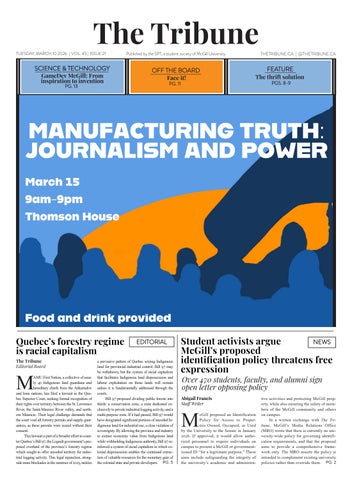
March 15 9am-9pm Thomson House
Food and drink provided
MAMU First Nation, a collective of nearly 40 Indigenous land guardians and hereditary chiefs from the Atikamekw and Innu nations, has filed a lawsuit in the Quebec Superior Court, seeking formal recognition of their rights over territory between the St. Lawrence River, the Saint-Maurice River valley, and northern Mauricie. Their legal challenge demands that the court void all forestry permits and supply guarantees, as these permits were issued without their consent.
This lawsuit is part of a broader effort to counter Quebec’s Bill 97, the Legault government’s proposed overhaul of the province’s forestry regime which sought to offer unceded territory for industrial logging activity. This legal injunction, alongside mass blockades in the summer of 2025, tackles
a pervasive pattern of Quebec seizing Indigenous land for provincial industrial control. Bill 97 may be withdrawn, but the system of racial capitalism that facilitates Indigenous land dispossession and labour exploitation on those lands will remain unless it is fundamentally addressed through the courts.
Bill 97 proposed dividing public forests into thirds: a conservation zone, a zone dedicated exclusively to private industrial logging activity, and a multi-purpose zone. If it had passed, Bill 97 would have designated significant portions of unceded Indigenous land for industrial use, a clear violation of sovereignty. By allowing the province and industry to extract economic value from Indigenous land while withholding Indigenous authority, Bill 97 reinforced a system of racial capitalism in which colonial dispossession enables the continued extraction of valuable resources for the monetary gain of the colonial state and private developers.
Student activists argue McGill’s proposed identification policy threatens free expression
Over 470 students, faculty, and alumni sign open letter opposing policy
Abigail Francis Staff Writer
cGill proposed an Identification Policy for Access to Properties Owned, Occupied, or Used by the University to the Senate in January 2026. If approved, it would allow authorized personnel to require individuals on campus to present a McGill or governmentissued ID “for a legitimate purpose.” These aims include safeguarding the integrity of the university’s academic and administra-
tive activities and protecting McGill property, while also ensuring the safety of members of the McGill community and others on campus.
In a written exchange with The Tribune , McGill’s Media Relations Office (MRO) wrote that there is currently no university-wide policy for governing identification requirements, and that the proposal aims to provide a comprehensive framework only. The MRO asserts the policy is intended to complement existing university policies rather than override them.
Abigail Francis Staff Writer
Continued from page 1.
The policy has, however, drawn pushback from student activist groups. On Feb. 23, Divest McGill issued an open letter for students to sign, which will be submitted to the Senate for discussion at its next meeting on March 18. As of 3:00 p.m. on March 5, 474 undergraduates, graduate students, faculty, and alumni had added their signatures.
Divest McGill hopes this campaign will mobilize the Senate to push back against the policy. In a written statement to The Tribune, a representative from Divest McGill explained that the policy regulates behaviour through a framework of risk—one that assumes suspicion rather than fairness or justice—which may discourage students from expressing dissent.
“The ambiguity of the policy particularly in areas of training leaves room for violence and racial profiling, almost all treatment of the student seems to be up to the ‘authorized personnel’s’ discretion,” the representative wrote. “There is more than enough room in this policy for authorized personnel to imbue it with their own personal biases and allow for
possibly hateful actions to be taken and validated by this general discretion provided.”
Further, Divest McGill worries these policy developments suggest McGill has increasingly taken steps to limit protest on campus, and the proposed policy appears to be part of this.
Barry Eidlin, associate professor in the Department of Sociology, said in an interview with The Tribune that this policy would leave a chilling effect on campus. He argued the mandate is counter to the university’s intellectual mission and its commitment to free expression.
“For the university to have these tools at their disposal, to threaten and intimidate people engaged in protest, is going to hamper or restrict our own scope of action, and so it’s important for us to take a stand, to protect our own rights as well,” Eidlin said.
Regarding free speech, Eildin further described the proposed identification policy as part of a broader pattern of administrative overreach.
“We don’t know what other contexts they might feel that it’s appropriate to use this [policy],” Eidlin explained. “Part of the problem with the policy is that it is overly broad […] so it’s going to be applied in arbitrary ways without any sort of clear criteria to determine
when it’s used.”
The representative from Divest McGill quoted the open letter, expressing that the policy, if approved, would instill a fear of surveillance in students.
“Under this policy, McGill community
members’ right to learn, work, and research can be interrupted without any evidence of wrongdoing. Not even the police, who must have reasonable suspicion of a crime having been committed to request identification, have this much discretionary power.”

Asher Kui News Editor
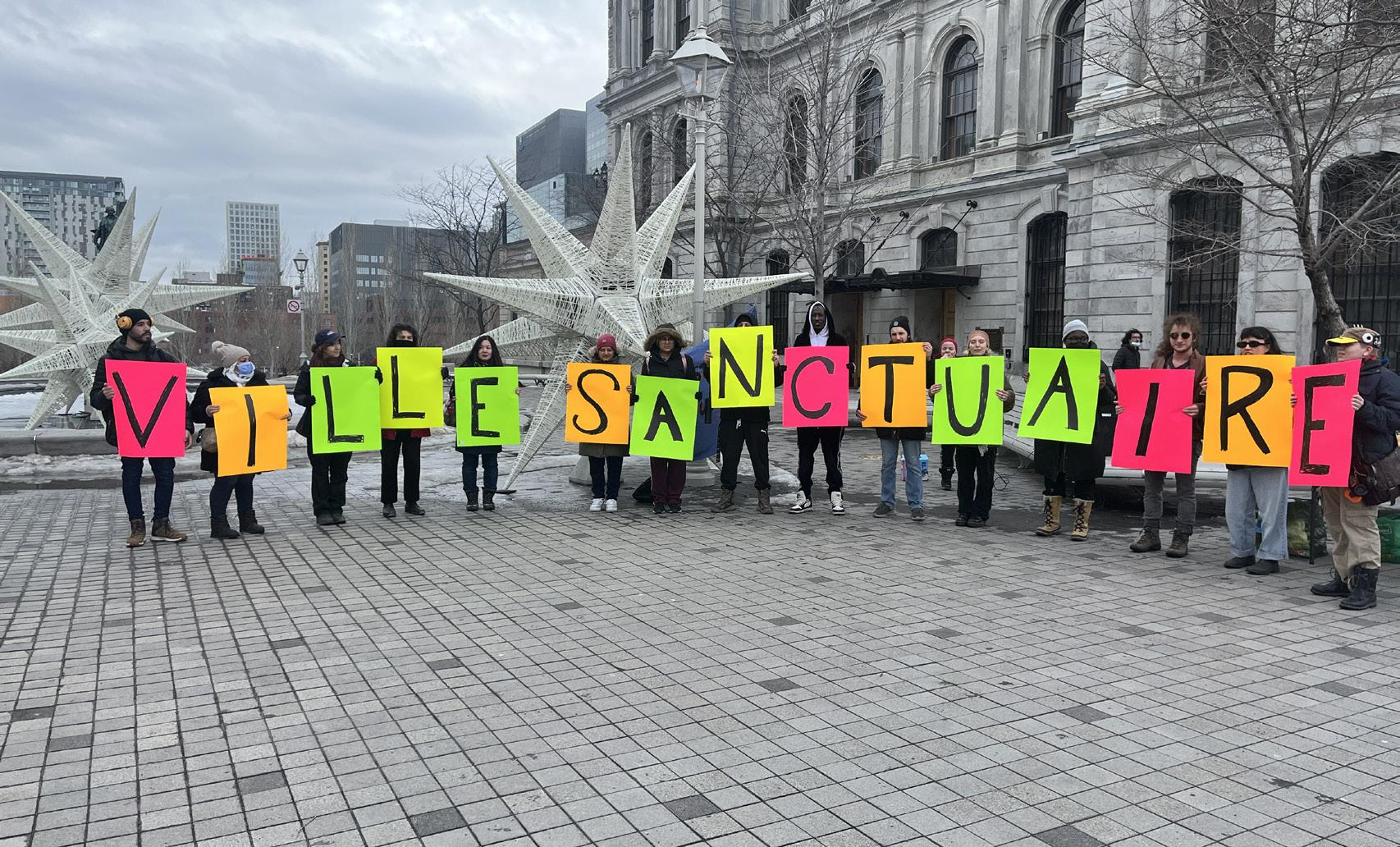
So, so, so, solidarité ! Avec, avec, avec les sans papiers!”
On March 7, around 100 demonstrators gathered outside the Montreal City Hall for a rally demanding that Mayor Soraya Martinez Ferrada make Montreal a sanctuary city. According to Solidarité sans frontières—one of the organizations that held the rally—making Montreal a sanctuary city would allow everyone in the community to feel protected regardless of their legal status. This includes increasing undocumented immigrants and foreign workers’ accessibility to housing, employment, healthcare, and social aid.
The rally started at 2:00 p.m. when Samira Jasmin, a representative from Solidarité sans frontières, explained the need for Montreal to become a sanctuary city.
“In Montreal, tens of thousands of residents live and work in fear of being arrested and deprived of their dignity and human rights,” Jasmin said. “They do not have any political, economic, or social rights. They suffer from violence and exploitation in their workplaces as much as in their own homes.”
Jasmin then posed a question to the Martinez Ferrada government.
“What have you done to represent and defend the rights of immigrants of precarious status, […] their right to live and exist, as well as their most fundamental rights?”
The next speaker was a representative from Women of Diverse Origins. In her speech, she read out a letter her colleague Dolores Chew wrote to Martinez Ferrada.
“Soraya, you are familiar with how
people flee persecution, violence, and torture in our countries of origin and come here to build lives in peace and security,” she said. “The Head Tax imposed on Chinese migrants, the Continuous Journey Clause that impacted migrants mostly from the Punjab in India, the exclusion from voting rights, and on and on [….] The precarity of asylum seekers is part of a historical trajectory in Canada of laws that are put in place to exclude racialized populations.”
The representative also emphasized the need for immediate action in order to protect the city’s most vulnerable.
“On the eve of International Women’s Rights Day, we highlight the particularly critical situation of undocumented migrant women in precarious situations,” she said. “They are exposed to exploitation and abuse in their work environments [….] Fighting for women’s rights also means ensuring that the most vulnerable among us have access to services and resources. Soraya, sanctuary city now!”
A representative from the Defund the Police Coalition also gave a speech. The coalition, which comprises over 80 civil groups, aims to reduce the power and impunity of the Service de police de la ville de Montréal (SPVM) and the Canadian Border Services Agency (CBSA). They demanded that the Martinez Ferrada government shift the municipal budget’s priority to invest in ser-
vices that support the Montreal community and its marginalized groups. The representative stressed that municipal politicians must shift away from exploiting migrant identities during political campaigning.
“The mayor of Montreal, a former migrant herself, has used this position to help her get elected in the municipal elections, while doing nothing for the migrant community,” the representative explained. “The weaponization of the migrant community to gain votes while standing idly by mass deportation and massive budget cuts of provincial support for migrants show how identity politics do not work [….] We are here to stand in solidarity with undocumented folks across Canada to demand the regularization
of everyone and to demand that Montreal become a sanctuary city.”
The representative concluded her speech by emphasizing the policies that the Martinez Ferrada government must implement.
“Soraya Martinez Ferrada can prove that she cares about her constituents by doing three simple things,” she pointed out. “End the collaboration between the SPVM and CBSA. Ban arbitrary street checks, reduce the police budgets, and stop funding racial abuse and dystopian surveillance technologies. Use that money to fund social services that will help everyone, including undocumented folks.”
*All quotes were translated from French
Shea McDonnell Staff Writer
On Feb. 6, after an 18-month study of McGill’s proposed Sustainability Park at the Royal Victoria Hospital (RVH) site, Quebec infrastructure firm CDPQ Infra estimated that the project would cost $845 million CAD. The project proposes the construction of 1,150 student housing units and further structural evaluation due to advanced degradation in several buildings. The Société Québécoise des Infrastructures (SQI) has stated it will not move forward with the project in its current state, citing concerns about funding and investments.
The recent survey and the completion of decontamination at the site’s main pavilions mark a major step forward in the project’s four-year progression, which aims to sustainably address the university’s demands for shared public spaces and student housing.
Despite these proposed benefits, the project has faced major controversy since renovation began in 2015. According to Indigenous activist group Kanien’keha:ka Kahnistensera (Mohawk Mothers), there is plausible evidence that the site contains unmarked Indigenous human remains, and further excavation without proper archaeological oversight could destroy them. RVH has also come under fire for its role in the MKUltra program, where classified psychiatric experiments took place at the Allan Memorial Institute following World War II. The Mohawk Mothers, along with survivors of MKUltra, allege that some of the victims were Indigenous children taken from residential schools.
Despite the SQI’s investment coming into question, McGill has continued its development of the Sustainability Park. McGill’s Media Relations Office (MRO) wrote to The Tribune that the project is still progressing as planned.
“The McGill Sustainability Park—a stateof-the-art research, teaching, and learning hub dedicated to Sustainability Systems and Public Policy—is moving forward, as planned, with an expected opening date of 2029.”
Previously known as the New Vic Project, the Sustainability Park has taken different forms since the RVH was decommissioned in 2015. Aiming to curb the university’s space deficit, the project seeks to renovate the hospital’s original pavilions, with the rest of the hospital under the SQI’s purview. The acquisition of the RVH pavilions in 2014 likewise aimed to redevelop the space into an academic hub for graduate students with an estimated construction time of five years. It wasn’t until September 2020, while the hospital functioned as a temporary shelter for the unhoused during COVID-19, that the New Vic project was submitted to the SQI as a centre for sustainability.
The Allan Memorial Institute (AMI), the psychiatric wing of the Royal Victoria Hospital founded in 1943, is now known for the CIA-led, Canadian-backed MKUltra program headed by Ewen Cameron. From 1957 to 1964, the Institute, with assistance from McGill, was home to subproject 68, tasked with experimenting and producing a ‘truth drug’ against Chinese and Soviet spies, ‘depatterning’ patients with extensive electroshock treatment, prolonged, drug-induced sleep, and LSD. Over the project’s seven-year history, hundreds of patients went through the AMI’s doors unaware of the experiments they were participating in, leaving many permanently scarred.
Following the program’s end, a vast majority of the project’s documents were destroyed by CIA director Richard Helms, kept away from the public. In 1977, a number of the project’s files were found, revealing some of its major features. Professor in the Department of Social Studies of Medicine, Annmarie Adams, detailed some of the remaining documents’ findings, leaked by the New York Times.
“The article outlined how isolation, LSD, and electroshock treatments had been used to uncover traumatic life events and aberrant behaviour at the Allan [Memorial Hospital],” Adams described. “According to some sources, patients were recorded by hidden cameras and watched from viewing booths. In 1988, nine former pa-
tients sued over their unwitting participation in what they described as unethical experimental procedures.”
In the following decades, many survivors have come forward demanding reparations. Aside from compensation in 1988 by the Canadian Supreme Court, no formal recognition of the experiments has been granted. Last summer, survivors and their relatives sued the Canadian government for damages, demanding recognition from both the Canadian government and McGill University for the injuries they incurred through the program. As of March 2026, the case is ongoing.
Since the earliest proposals of the New Vic Project in 2015, the Mohawk Mothers have called for McGill to halt construction work to allow future searches for burials beneath RVH.
The Mohawk Mothers have fought an ongoing legal battle to conduct archaeological research into Indigenous burials beneath RVH, citing the Truth and Reconciliation Commission’s enabling of investigations into residential school burials. In a written statement to The Tribune, the Mohawk Mothers emphasized that their initiative to secure these remains is crucial to Kaianerehko:wa (the Great Law of Peace).
“We will never stop looking after our children from all generations, present, future and past. We can’t stop, and we won’t! It is our cultural duty and responsibility under kaianerehko:wa and we will fulfill it. We can never stop loving and caring for our people of the past, present and future until we are completely satisfied that we carried our duties and responsibilities to the satisfaction of the Kaianerehko:wa [....] We have no choice but to continue caring for our earth mother and our children.”
In October 2022, the Quebec Superior Court ordered an injunction against McGill to stop excavation of the RVH site to conduct archaeological searches into human remains. However, according to the Mohawk Mothers, the ensuing research that summer was highly questionable.
The Mohawk Mothers criticized careless

archaeology, the use of destructive equipment on dig sites, and the university’s inconclusive research on bone fragments found at the site. The Mohawk Mothers also questioned the university’s sudden closing of the investigation in 2023.
“McGill-SQI [...] unilaterally decided and announced ‘the first phase of the investigative work on the site of the New Vic Project [had come] to a close,’ while the binding recommendations by the Panel were not all implemented.”
The university has ultimately ceased further investigation despite evidence of the potential presence of human remains. The Mohawk Mothers petitioned for another injunction against McGill in the summer of 2025, hoping to restart an archaeological investigation amid increasing construction on the site. The group called for negotiations with McGill and SQI to resolve the issue outside of court.
“We are currently working to amend our application for an upcoming hearing on the merits of our case that will be heard in the Superior Court of Quebec, if we have to get to that again,” the Mohawk Mothers wrote. “In the interest of minimizing the strain on the Court and all parties, we also extended an invitation to McGill and SQI to sit together and discuss how we may be able to find some common ground outside of litigation.”
MRO wrote that the university engages with the recognized governing institutions of local First Nations when addressing issues affecting Kanien’kehá:ka rights and cultural practices.
“Our efforts to foster reconciliation and Indigenous representation at McGill are undertaken in partnership with the governing institutions of local First Nation communities, including their traditional and elected leadership,” the MRO wrote. “And while we respect that there are Mohawk citizens and members of local communities who have differing views regarding their own governance structures and systems, when it comes to matters pertaining to the rights and cultural practices of Kanien’kehaka that may be impacted by McGill, McGill has a responsibility to engage with the Nation through its longstanding elected and traditional governments.”
However, despite the university’s efforts to maintain relationships with Indigenous communities and initiatives, the Mohawk Mothers are not recognized as a governing institution within this framework. The Mohawk Mothers criticized this distinction as a colonially imposed institution.
“The ‘elected leadership’ [McGill is] referring to is the Band Council,” explained the Mohawk Mothers. “As we and other Indigenous people all around Turtle Island keep reminding, the Band Councils are colonial institutions forced through the Indian Act: They are a genocidal device designed to undermine our traditional governance systems.”
The Mohawk Mothers further argue that the Band Council does not speak for the Kahnistensera nation as a whole and said that members of the longhouse community have not been contacted or consulted by McGill or the Quebec government.
“Of all longhouse people we have been sharing with regarding this struggle, no one has ever been contacted, let alone consulted, by McGill or Québec! Us Kahnistensera are not alone in this fight, the men’s fire is behind us and we are continuously in discussion with them too. To be honest, it doesn’t seem McGill has anyone in our communities to consult or to collaborate with!”
Josette Chandler Staff Writer
On Oct. 9, 2025, Quebec Minister of Justice Simon Jolin-Barrette introduced Bill 1, the Quebec Constitution Act, to the National Assembly of Quebec. The act intends to establish a provincial constitution, allowing for more legislative autonomy by enshrining popular Quebec values, such as French language protection, secularism, and abortion rights. However, on Feb. 20, Jolin-Barette withdrew Section 29 of this bill, which would have guaranteed the right to abortion as part of the prospective constitution. The Tribune breaks down Section 29 of the Quebec Constitution Act, examining how its withdrawal may affect the protection of
abortion rights in Quebec.
What is Section 29?
Section 29 of the Quebec Constitution Act states, “the state shall protect the freedom of women to have recourse to a voluntary termination of pregnancy.” Jolin-Barrette originally added this clause due to his concern that women’s reproductive rights may one day be called into question, which he described in an open letter.
“I am sincerely worried. Worried that in the coming years, women’s rights—of our mothers, our sisters, our daughters—will crumble, at the risk of their health and dignity,” Jolin-Barette wrote. “It is this deep and persistent concern that convinced me to include in the draft Constitution a provision that would commit the Quebec government to act to defend women’s free choice to have an abortion.”

Why was the clause protecting abortion withdrawn?
The idea of withdrawing Section 29 first gained traction on Feb. 18 in the public hearings for Bill 1, when Claude Morin, a former member of the National Assembly of Quebec, asked whether the clause
was being considered for removal. EtienneAlexis Boucher, a former Parti Québécois member for the Johnson electoral division, expressed support for the section’s withdrawal.
“My recommendation to all parliamentarians is to improve the bill so that the final version can respond to criticism. And you are right, there has been very strong criticism of the right to abortion,” Boucher said. “If this type of enhancement to the bill allows [us] to broaden the consensus on this one, I think that would be a good idea.”
Later in the hearing, Natacha Meilleur, a representative from the Clinique des femmes de l’Outaouais, requested the removal of Section 29 from the bill. She argued that the clause does not aid abortion rights, but rather puts them at risk.
“Enshrining abortion in a constitutional text would [offer no] additional protection demonstrated,” Meilleur said. “Canada protects abortion with autonomy and personal safety. And, moreover, the Canadian model is legally more integrated into the fundamental rights structure. And that’s what makes it more stable. It is therefore the absence of legislation that is our strength. Legislating on abortion is therefore a way of offering a breach, a legal hold that may be interpreted, challenged, or modified in the future.”
Following the arguments introduced in this session, Jolin-Barrette removed Section 29 from the Quebec Constitution Act.
What protections are in place for abortion rights in Quebec?
Currently, abortion rights in Quebec are protected based on jurisprudence that supports the right of women to choose, such as R. v. Morgentaler. This case overturned a 1969 law that criminalized abortion except in specific circumstances across Canada. The case used Section 7 of the Charter of Rights and Freedoms—specifically the right to security of the person—as the legal basis for removing the abortion restrictions, arguing that they infringed on pregnant women’s right to security.
In a written exchange with The Tribune, McGill’s chapter of the Women’s Network, the largest collegiate networking organization for women in North America, emphasized the significance of protecting women’s bodily autonomy as fundamental to women’s rights.
“It is important to protect abortion rights because they are integral to a woman’s freedom, independence and self-autonomy,” the Women’s Network wrote. “Abortion rights are human rights and women’s rights, and it is important that the legislation reflects that. One should have the right to make decisions regarding their own body and future without judgment or fear of legal or social repercussions.”
For more information on accessing abortion at McGill, please visit a previous article published on Nov. 19, 2024.
The online discussion brought together scholars, legal advocates , and students to discuss the impact of immigration on Muslims and pro-Palestine individuals.
Sahar Jafferbhoy Staff Writer
On Feb. 24, the Teaching Palestine: Pedagogical Praxis and the Indivisibility of Justice initiative held an online open classroom on Islamophobia to examine historical and contemporary forms of antiMuslim racism, immigration enforcement, and political repression. The event, titled “Enemy Alien/ICE, Racism & Empire,” was the first session of their Ramadaniyat series.
The panel was moderated by Rabab Abdulhadi, director of the Arab and Muslim Ethnicities and Diasporas Studies program at San Francisco State University (SFSU). She opened the event with a moment of silence honouring the victims of global conflicts, including Israel’s ongoing genocide in Palestine.
Abdulhadi said the series was launched after the cancellation of the only class on Islamophobia at SFSU, which raised concerns about academic freedom.
“We felt it was necessary to continue this conversation publicly,” Abdulhadi explained.
She also emphasized that the discussion is particularly crucial in the context of the Trump administration’s use of the Enemy Alien Act to ‘divide and conquer’ immigrant populations.
Throughout the discussion, panellists described Islamophobia as part of a long-standing pattern of racialized state power. Hatem Bazian, lecturer at the University of California, Berkeley, described Islamophobia as a persistent form of racism directed at Muslims.
He argued that while the issue is widely recognized, institutions and policymakers often only engage with it symbolically.
“Data shows continued high levels of Islamophobic sentiment,” Bazian said. “Absence or only symbolic engagement with addressing Islamophobia limits Muslim, Arab, and Palestinian freedom to participate and speak up in civil society.”
The event’s title references the legal concept of the enemy alien used by the United States during World War II to justify the internment of Japanese Americans. Abdulhadi said similar legal frameworks and rhetoric have re-emerged in contemporary immigration enforcement, particularly through U.S. Immigration and Customs Enforcement (ICE) operations targeting immigrants and international students.
Panellists then discussed several individual cases to illustrate these dynamics.
Amal Thabateh, a staff attorney with the legal advocacy organization Creating Law Enforcement Accountability and Responsibility (CLEAR), discussed the case of Leqaa Kordia, a 33-year-old Palestinian woman currently held in ICE detention in Texas. According to Thabateh, Kordia was arrested during a proPalestine protest in 2024. Although the charges were dropped, she was detained by immigration authorities in 2025 while pursuing a green card.
Thabateh said immigration judges have twice ordered Kordia released on bond, but government appeals have kept her detained.
“It is no secret that Leqaa is being targeted and continues to be confined because of her advocacy for Palestine and because she is Palestinian,” Thabateh said. “She is experiencing her second Ramadan in detention [....] It’s really inhumane, the conditions she’s endured.”
Palestinian author and journalist Laila ElHaddad explained that Kordia’s case shows how intersecting identities can increase vulnerability within immigration systems.
“She is quadruply vulnerable,” El-Haddad said. “She is Muslim, she is a woman, she is Palestinian, and she has a precarious legal status. All of those characteristics have been weaponized.”
Another panellist, Momodou Taal, a doctoral student at Cornell University, described his experience with disciplinary action and immigration scrutiny following pro-Palestine activism on campus. Taal said he was suspended after participating in protests calling for university divestment from companies linked to Israel.
In March 2025, Taal’s legal advisors warned he could become a target of immigration enforcement, and he chose to self-deport from the United States.
After returning to the United Kingdom, where he holds citizenship, Taal said he was detained by counterterrorism police under Schedule 7 of the UK Terrorism Act, which allows authorities to question individuals at the border without suspicion.
During the six-hour interrogation, he said officers asked questions about his views on Palestine and his religious identity.
For the panellists, cases like Kordia’s and Taal’s illuminate broader patterns linking Islamophobia, national security, and political repression.
“The crises we’re facing with Islamophobia are part of a long history of empire, colonialism, capitalism and racism,” Bazian said.
Speakers encouraged participants to follow cases like Kordia’s and raise awareness about immigration detention and surveillance targeting Muslim and pro-Palestinian communities.
“Say her name,” Thabateh urged attendees. “Spread the word. Too many people still don’t know about her case.”

Editor-in-Chief
Yusur Al-Sharqi editor@thetribune.ca
Creative Director Mia Helfrich creativedirector@thetribune.ca
Managing Editors Kaitlyn Schramm kschramm@thetribune.ca
Malika Logossou mlogossou@thetribune.ca Nell Pollak npollak@thetribune.ca
News Editors Eren Atec Amelia H. Clark Asher Kui news@thetribune.ca
Opinion Editors Moyọ Alabi Defne Feyzioglu Ellen Lurie opinion@thetribune.ca
Science & Technology Editors
Leanne Cherry Sarah McDonald scitech@thetribune.ca
Student Life Editors
Gregor McCall Tamiyana Roemer studentlife@thetribune.ca
Features Editor Jenna Durante features@thetribune.ca
Arts & Entertainment Editors Alexandra Lasser Bianca Sugunasiri arts@thetribune.ca
Sports Editors Ethan Kahn Clara Smyrski sports@thetribune.ca
Design Editors Zoe Lee Eliot Loose design@thetribune.ca
Photo Editors Armen Erzingatzian Anna Seger photo@thetribune.ca
Multimedia Editors Seo Hyun Lee multimedia@thetribune.ca
Web Developers Rupneet Shahriar Johanna Gaba Kpayedo webdev@thetribune.ca
Copy Editor Sarah-Maria Khoueiry copy@thetribune.ca
Social Media Editor Mariam Lakoande socialmedia@thetribune.ca
Business Manager Laura Pantaleon business@thetribune.ca
Xia
Continued from page 1.
Indigenous communities and environmental groups protested the bill, warning it would prioritize extraction while weakening already inadequate public and Indigenous oversight.
Despite the success of Indigenous activists in demanding Bill 97’s removal, scrapping the bill does not resolve the underlying issue, as Quebec’s current legal framework still violates the decision-making power of Indigenous groups, instead placing all autonomous control in the hands of the province. Quebec’s Sustainable Forest Development Act may require the government to take into account the “interests, values, and needs” of Indigenous communities and consult Indigenous
communities specifically. However, by only requiring consultations with band councils, whose expertise is often limited to the reserves they preside over, the government neglects the authority of territory chiefs, land guardians, and hereditary chiefs. The law may obligate the Quebec government to conduct consultations, but if this does not come with policy adjustments, these legal standards are obsolete.
Aboriginal and treaty rights are explicitly recognized and affirmed under Section 35 of the Canadian Constitution. Yet, through their treatment of Quebec’s forests, the province and private industry continue to prioritize extraction and economic gain over these constitutionally guaranteed rights.
Canada’s labour system operates by the same logic. Under the Seasonal Agricultural Worker Program, migrant workers are recruited to fill labour shortages while being kept on
temporary status, limiting long-term security. The Temporary Foreign Worker Program reinforces that precarity by tying workers’ futures to employer sponsorship. When employers determine the ability of temporary workers to secure permanent status or citizenship, changing jobs, reporting abuse, or resisting exploitation can carry serious risks. Though the laws governing land and labour differ, the premise of racial capitalism is foundational to both: for-profit extraction through the exploitation of stolen land and foreign labour.
McGill is not outside this system, either. The university, situated on the unceded territory of the Kanien’kehà:ka, not only operates on stolen land but has continued to pursue expansion and development projects. The wealth behind the university’s founding came directly from James McGill’s participation in the colonial economic system
Amalia Kylie Tsampalis Contributor
Despite increasing sexual health awareness, longterm oral contraceptives are still relatively inaccessible to young individuals within Quebec, as many fall victim to the province’s high healthcare costs and physician unavailability. This lack of uncompromised access to basic healthcare perpetuates the stagnation in promoting reproductive health in Quebec.
In October 2024, Bill C-64, the Pharmacare Act, was implemented across Canada. Its objective was to allow single-payer coverage for contraceptives, boosting attainability and building the foundation for pharmacare expansion. However, the Bloc Québécois’s arguments that healthcare is a provincial matter quietly influenced the bill’s implementation into the province’s existing health insurance plan, Régie de l'assurance maladie du Québec (RAMQ).
CONTRIBUTORS
Those in the young adult demographic who lack access to a family or employer plan typically rely on RAMQ’s Public Prescription Drug Insurance Plan, which generally reimburses only up to the cost of the lowest-price generic medication in a given class. As RAMQ’s drug formulary is updated multiple times a year and the designated lowest-cost alternatives shift, patients who depend on the public plan can be pushed to switch medications repeatedly. In the case of oral contraception, these frequent switches can trigger harmful
the author and do not necessarily re- flect the opinions of The Tribune, its editors or its staff.
hormonal side effects. RAMQ’s approach thus fails to account for the clinical consequences of such instability, disregarding important nuances in women’s healthcare.
Furthermore, physicians in Quebec who prescribe these medications already struggle with understaffing. The passing of Bill 2 now ties physicians’ salaries to province-set performance targets, exacerbating existing strain and pushing doctors to leave the province.
This problem is perpetuated through McGill’s very own Wellness Hub. It is seemingly impossible for students to receive care in a timely fashion—or get appointments at all. This inaccessibility stems from the fact that the Wellness Hub is not the primary place of employment for its healthcare workers. Physicians sign up for extra hours to work at McGill, and are not paid specific salaries. This is unfair to thousands of McGill students who may otherwise struggle to access care.
Ruba Ghazal, Québec Solidaire’s co-spokesperson and leader of the second opposition group at the National Assembly of Quebec identified this inaccessibility struggle. In May 2025, she proposed Bill 994, or the Act to foster sexual and reproductive health through improved access to contraception. Its objectives include improving anonymity and destigmatization, enhancing personal autonomy, reducing unplanned pregnancies, and alleviating societal inequalities.
If the bill is passed, its desired implementation would occur in four divisions. Ghazal’s first proposed
and his slave ownership, illustrating its continued execution of racial capitalism through land dispossession and labour exploitation. The New Vic Project is also still in process despite persistent legal action by the Mohawk Mothers and potential evidence of human remains buried on the site. As is the case under Quebec’s forestry law, consultation without redistributed authority remains an inadequate, selfserving standard, especially for an institution whose history and presentday action are both inseparable from colonial dispossession.
If Quebec is serious about reform, it must move beyond consultation and end the system that turns land and labour into sources of profit, all the while stripping power from the most impacted.
As long as the province can profit from licensing extraction on unceded land and precarious racialized labour, the deeply embedded system of racial capitalism will remain unchanged.
stage allows individuals under the RAMQ free access to contraceptives, also offering coverage to unhoused people, minors, and others. The second stage will design pilot projects that enable designated professionals (such as midwives and nurses) to prescribe, dispense, and administer contraception—a role typically reserved for physicians. The final measures touch on awareness and privacy. Stage three describes confidential distribution methods for prophylactics across high schools, colleges, and universities. The fourth implements mandatory sexual education in grade schools. Bill 994 would grant Quebec the opportunity to promote a more nuanced approach to fundamental healthcare.
Thus far, the government has not moved to adopt Bill 994, despite broad support from reproductive-health advocates. Critics of expanding contraception access to minors without parental involvement often invoke safety and
“family communication” concerns, arguing that non-physicians should not be prescribing or managing higher-impact methods without close medical oversight. These fears sit uneasily with the bill’s central premise: that young people and marginalized patients deserve timely, confidential access to contraception. Furthermore, Bill 994 would save the Quebec government money. According to Action Canada for Sexual Health & Rights, for every $1 CAD put into covering contraceptive costs, $9 CAD is saved in pregnancy-related fees.
Ghazal’s Bill 994 allows young adults to access a basic form of healthcare while offering solutions to Quebec’s pharmacare challenges through the Free Access to Contraception Program. With creativity and a humanitarian approach, Ghazal has shown that working to rebuild a broken system is possible—it just requires the right mindset.

Seger / The Tribune )
Reelected as Conservative Party Leader, Pierre Poilievre is a divisive choice
Nello Giuliani Contributor
For the Conservative Party of Canada (CPC), re-electing Pierre Poilievre as party leader reflects a calculated bet that ideological consistency will outweigh declining cross-party support, even amid shifting public attitudes. By relying on a familiar face to unite constituents across the country, CPC has assumed its audience is willing to entertain the same policy platform, populist sentiment, and combative messaging that lost the Conservatives the 2025 General Election. Reaffirming his leadership also stands as a polarizing choice that risks interand intra-party division—not only regarding policy, but also his appeal as a leader. Although his reelection might solidify his base among Conservatives, it risks further propagating political polarization in Canada at a time when the country cannot afford it.
Poilievre was reelected by a vote of 87.4 per cent at the Conservative Party’s convention in late January 2026. At first glance, this staggeringly high result appears to confirm that his core voter base and fellow Conservative Party members still fully back his agenda and continue to believe in the momentum he held prior to Trump’s re-election. However, the election was also explicitly designed to maximize Poilievre’s chances of victory. It was held in his hometown of Calgary, Alberta—a conservative stronghold—at the same time as the Ontario Progressive Conservative
Sofia Lay Staff Writer
IParty Convention, to limit the presence of Poilievre-doubters.
This strategic vote reveals two major insecurities within the Conservative Party. The first is that consolidating Poilievre’s leadership in Alberta hints at a lack of crossover appeal, which hinders the CPC’s chance at expansion. This is reinforced by signs of a weaker voter base in central and eastern regions during the 2025 federal elections, which forced Poilievre to abscond to Alberta to retain a seat in Parliament after losing the Ontario riding he had held for almost two decades. The second is that there are fears of internal division, not only with Poilievre’s loss of support among more centrist Conservative voters, but also from the party’s shrinking coalition. This fear has only been reinforced as more Conservative Members of Parliament (MPs) cross the floor to join the Liberal Party, the latest being Matt Jeneroux, representative for Edmonton Riverbend.
These losses are in part due to the fact that Poilievre’s platform, focused on affordability, reducing crime, and reducing the national deficit, is closely aligned with Trump’s successful 2024 presidential campaign. Yet, despite the Trump administration’s hostile stance on Canadian foreign policy, including tariffs and threats of annexation, this platform has remained unchanged, rendering it unable to sway voters. A MAGA-sympathetic CPC is a harder sell now that tensions with the US require a Canadian leader who will not
capitulate to Trump’s demands. This sentiment is clearly shown in new polls measuring Poilievre’s personal ratings, which show that 48 per cent of Canadians hold a negative impression of Poilievre. Similarly, in Quebec, Parti Québécois leader Paul St-Pierre Plamondon has experienced declining popularity due to his separatist platform which alienates voters who are more concerned with national unity in light of international uncertainty. Since Poilievre is reinforcing his line of conservatism to favour his most dedicated voter base, which tends to include young people and recent immigrants, he has failed to make gains beyond. As a result, a divide has emerged between the core Conservative bloc, which has unwaveringly platformed him, and Conservative voters at large. This has only fostered division between more radical and more progressive conservatives—division that is far too fundamental for this solidifying base approach to be an effective strategy. Even worse, Poilievre’s blind commitment to his hardline voters has only deepened national

Poilievre is vastly unpopular nationwide, with only 34 per cent of Canadians holding a favourable view of the party leader. (Mia Helfrich/ The Tribune)
polarization. As the CPC distances itself further and further from the platforms of the Liberals and the New Democratic Party, the result is an effective divide both between parties and within them.
As a majority of Canadians have begun to view the US as a negative global force, Canadians are far more likely to rally behind the party preaching national unity, and Poilievre will have to make changes to show that he can represent a united Canada. However, even though CPC leaders seem aware that their platform under Polievre has become more unpopular to constituents and has, in fact, undermined national unity, they don’t seem ready to adopt a new strategy— or a new leader to be their party’s face.
n 2017, the Supreme Court of Canada presided over Canada (Attorney General) v. Fontaine, a case brought against the federal government by former National Chief of the Assembly of First Nations (AFN) Philip Fontaine. Fontaine demanded the destruction of Indigenous residential student testimony gathered during the Indian Residential Schools Settlement Agreement (IRSSA), arguing that maintaining these records for potential future disclosure violates the confidentiality of survivors, many of whom shared experiences of intense physical and sexual abuse in their testimony. The Supreme Court ruled in favour of Fontaine, citing the government’s promise to protect witnesses’ privacy as the basis for their decision.
The federal government and some Indigenous groups have argued that destroying records undermines accountability for the horrors perpetrated against Indigenous people at residential schools. However, if implemented correctly, this ruling marks an important step toward honouring survivors’ autonomy by allowing them to control the fate of their testimonies.
As part of the IRSSA’s Independent Assessment Process (IAP), the Government of Canada conducted hearings and negotiated settlements with nearly 40,000 former residential school students. During these hearings, all students testified under the pretense of indefinite confidentiality. Given
this, the legal basis for preserving these files in their totality (presumably for future reference in some capacity) is dubious. AFN National Chief Perry Bellegarde echoed similar sentiments in a press release, emphasizing that Indigenous community members shared their experiences under the assumption that hearings were private. While some individuals are comfortable publicizing their testimony, others testified only with the assurance that their anonymity would be protected. For this reason, the original stipulations of the IAP should be respected, and personal statements must remain confidential.
The Supreme Court’s ruling does not mandate the destruction of all residential school testimonies, but leaves the fate of individual records to the witnesses themselves.
IAP participants have until September 19, 2027, to request that their files be preserved for public use by the National Centre for Truth and Reconciliation (NCTR). Whether residential school testimonies are preserved in federal records is not for the Canadian government to decide, nor is it the decision of the NCTR. Rather, it is an individual decision owed to those who endured the horrors of residential schools. Even within Indigenous communities in Canada, discourse surrounding testimony preservation has been divisive. While governing bodies like Anishinabek Mukwa Dodem have strongly advocated for the reversal of Canada v. Fontaine, the legal injunction by the AFN under Fontaine proves that support exists for the Supreme Court’s ruling. First Nations and Indigenous people
do not share monolithic perspectives, and this heterogeneity must be reflected in policy that respects privacy wishes on an individualized level.
Additionally, it is important to recall the original purpose of the IRSSA, the IAP, and its associated testimonies.
The IRSSA was never a social education campaign. Rather, it was an effort to win financial compensation and a formal apology for individuals who have been deeply harmed by residential school systems. Witnesses should not be required to compromise the privacy of their traumatic experiences in exchange for acknowledgement of the wrongs committed against them.

In addition to issuing financial compensation to residential school survivors, the Canadian government issued a formal apology in 2008. (Zoe Lee / The Tribune )
The Canadian government must honour the legacies and experiences of these survivors by centring the preferences of those directly affected. While the universal preservation of IAP testimonies would likely be useful in promoting government transparency and public education, it would also be yet another undercut to the autonomy of Indigenous people living in Canada, many of whom have expressed a desire for these records to be concealed or erased.
Fundamentally, it is not for the Canadian
government, nor for other non-Indigenous institutions, to dictate how reconciliation is most meaningfully implemented. Just two years ago, McGill, which officially recognizes the Kanien’kehà:ka as the “traditional custodians of the lands and waters on which [the university meets],” removed a ceremonial pine tree planted by Kanien’kehà:ka community members. This move exemplifies the dissonance between the university’s stated dedication to honouring Indigeneity and its disregard for Indigenous wishes that counter McGill’s agenda. It is time for both McGill and the Canadian government to decide whether they will approach reconciliation merely as a semantic exercise or truly commit to a healing process set on Indigenous terms.
What we liked this winter break
The books and shows that kept us busy
Loriane Chagnon Staff Writer
Shrinking
Shrinking returned to Apple TV+ for its third season, delivering a well-needed dopamine surge after midterms. Created by Bill Lawrence, Brett Goldstein, and Jason Segel, the show follows the life of grieving therapist Jimmy, who begins breaking the ethical guidelines of his trade by telling his clients exactly what he thinks. The show’s supporting cast is incredible and makes it worth returning to every season. Harrison Ford shines in what I consider the best role of his career as the cynical senior therapist Paul, who has Parkinson’s disease.
The show balances humour with rawness and honesty whilst exploring deep themes and navi- gating the personal growth of every character. This season explores parenthood, aging, loneliness, and learning how to love again after surviving a tragedy. Interestingly, for this season, Shrinking has also cast Michael J. Fox, who famously played Marty McFly in Back to the Future , as Gerry, a patient with Parkinson’s disease. This marks the inspiring return of the actor who retired due to his Parkinson’s diagnosis. Fox’s dynamic with Ford is funny and effortless, revealing the skill of two of Hollywood’s biggest movie stars.
If you need a show to make you smile, cry, laugh, or feel hopeful again—look no
further— Shrinking delivers exactly what you have been craving.
Alexandra Lasser Arts & Entertainment Editor
Blue Sisters by Coco Mellors
Brutal fights, long silences, devastating losses, and stubborn distances will never undo love formed through a shared childhood. Coco Mellors’s second book, Blue Sisters , explores the sacred and unbreakable bond between sisters. The story follows three of the Blue sisters as they spiral and recover from the loss of the fourth.
Mellors introduces each sister as a stereotype: The responsible lawyer, Avery; the reckless partier, Lucky; the tough boxer, Bonnie; and the unassuming teacher, Nicky, whose death rocked them all. However, with each page, these seemingly solid identities crumble, revealing the humbling truth that they are all lost, in pain, and desperately in need of emotional support. Avery, for instance, is only responsible so long as someone else is in crisis, but who is she when she is the one in shambles? Nicky’s unexpected death exposed the fallacy of their constructed identities most of all, in that her outwardly conventional life was a coping mechanism for severe endometriosis and an addiction to painkillers.
Though some themes are perhaps slightly overdone—the put-upon, respon-
sible eldest and the plight of the beautiful— Blue Sisters delivers an emotionally rewarding tale with lifelike and sympathetic characters. The ending doesn’t bring a shiny resolution to all that life has thrown at the Blue family, but it provides closure as each sister decides to pursue happiness and stability.
Bianca Sugunasiri Arts & Entertainment Editor
The Vanishing Cherry Blossom Bookshop by Takuya Asakura and translated by Yuka Maeno
The companionship of the soft pages of a book never seems quite so compelling as when one is in a time of need. When sorrow or worry overwhelm us, we seek comfort in what is steady and familiar. For many, that comfort lies in the pleasant voice of a story. Takuya Asakura’s voice paints a space between the real and imagined that whimsically emulates the experience of seeking comfort from a book within periods of waywardness.
The Cherry Blossom bookshop is a mysterious entity—a melange of coffee shop and bookstore—complete with a charming young waitress, Sakura and her deific cat, Ko-
bako. Appearing only to those facing hardship, the bookshop toes the line between a world of logic and the universe beyond. Once inside the bookshop, you are invited backwards into your past, offered memories that defy explanation, and given the clarity to continue intentionally forward.
Although a fiction, Asakura draws emotion from your chest as tangibly as a physical ache. Each bookshop patron occupies a different sphere of tragedy: A guilt-ridden daughter facing the death of her distanced mother, an elderly gentleman grasping at fading memories of his passed lover, and a pair of twins growing apart and into themselves. The magic woven within these pages takes root in your soul and follows you— demands from you compassion, capriciousness, and childlike wonder.

Annual “Actor Awards” brings a new name and continued support for organized labour
The celebration commemorates its roots as a show by actors, for actors
Dylan Hing Staff Writer
On March 1, Hollywood’s brightest stars graced the stage of the Shrine Auditorium for the 32nd annual Actor Awards, formerly the Screen Actors Guild (SAG) Awards. Hosted by Kristen Bell for the third time, the ceremony was livestreamed on Netflix.
This year’s newly implemented dress code had the theme “Reimagining Hollywood Glamour from the ‘20s and ‘30s,” and as always, attendees rose to the task. Chase Infiniti of One Battle After Another arrived on the red carpet in an eye-catching dress fitted with 92,000 crystals, and Viola Davis stunned in a sparkling emerald dress.
Speaking of the red carpet, one of the cutest pre-show moments came when singer Teyana Taylor’s five-year-old daughter, Rue, sang “Let it Go” from Frozen , dazzling those around her and mesmerizing Jessie Buckley, star of Hamnet . And yes, Rue’s fashion was on point.
The big winners of the night were Buckley, who won Best Actress for Chloé Zhao’s adaptation of Hamnet , and Michael B. Jordan, who took home Best Actor for Ryan Coogler’s Sinners . Having already raved about Buckley’s performance, I couldn’t help but cheer as she accepted her award, and I never doubted that Jordan would win his category. Another major vic-
tory for Sinners occurred when Samuel L. Jackson presented the night’s final award for Outstanding Performance by a Cast in a Motion Picture, and Delroy Lindo gave a truly wonderful acceptance speech on their behalf.
Regarding well-deserved awards, one cannot go without mentioning the heartbreaking moment where the late Catherine O’Hara won Best Actress in a Comedy Series for The Studio . The series’ co-creator, Seth Rogen, who won the award’s male equivalent for his performance in that same show, spoke on her behalf. His tribute to O’Hara was touching, and his reminder to keep her legacy alive gracefully honoured her decades of contributions to the industry.
As SAG-AFTRA, the labour union for screen and audio artists, presented the ceremony, the night also served as a reminder of the importance of actors uniting as one labour movement. Sheryl Lee Ralph, recent star of Abbott Elementary , stressed the necessity of the union during the pre-show interviews, and SAG-AFTRA president Sean Astin spoke about the union’s importance during the main event. In addition, Noah Wyle, who was awarded Outstanding Performance by a Male Actor in a Drama Series for his performance in The Pitt , made a personal comment on his relationship with the union.
“I love being an actor. I love actors. Working with you, playing with you, and
when necessary, marching alongside all of you, has been the greatest joy of my life. I’m so grateful to this union [....] I don’t take it for granted, and I don’t forget the hardwon fights and battles by giants who fought before us, on whose shoulders I and we all stand.”
Harrison Ford, who received the Lifetime Achievement Award, echoed similar remarks about the personal importance an actor feels through the chance to work alongside others in the shared space of the industry.
“The work I do with other actors is one of the great joys of my life. My career is built on their work, as well as the work of writers, directors, and every single cast member, every crew member [...] and being able to deliver the work we create together to an audience is an honour and a privilege.”
The celebration of not just the work of actors, but the community’s collective elevation of its members, gave the Actor Awards a sense of power
that distinguishes it from other annual ceremonies. The award winners were selected through a vote of union membership now totalling almost 200,000, making each award both collectively symbolic and deeply personal. While the “ Actor Awards ” may be running under a new name, it’s a change that harkens back to who unions are for in the first place: The people.


conditions. Even at its most efficient, circularity cannot fully counter a production model built on excess—nor can it unsettle the society’s pressure to constantly consume.
Thrifting emerged in the late 19th and early 20th centuries as a response to industrialization and urbanization. Today, many characterize it as one of the easiest counterweights to overconsumption. Long before sustainable fashion became a buzz phrase, secondhand stores and donation networks formed a parallel clothing economy—part necessity, part community infrastructure, and part subculture.
Now, thrifting offers a simple moral equation, a choice individuals can make without waiting for policy change or corporate reform: Buyusedinsteadofnew,andkeepclothingincirculationlonger.
The concept aligns with how circular fashion is often described—by keeping clothes on the rack through practices like resale, repair, and reuse, fewer resources are wasted making brand-new replacement items. In that sense, thrifting becomes a genuine harm-reduction strategy as it diverts clothing from landfills and can reduce demand for new production. Yet, in recent years, the belief that thrifting alone can resolve the harms of fast fashion has grown far more complicated.
Fashion production accounts for 10 per cent of total global carbon emissions—roughly equivalent to the emissions of the European Union—and around 85 per cent of textiles end up in landfills each year. Thrifting, then, appears to offer a plausible solution. In practice, however, thrift shops receive more donations than they can sell through traditional or secondhand retail avenues, pushing large volumes of clothing into secondary channels beyond standard resale. Discussion surrounding circular fashion often emphasizes consumer behaviour while overlooking the fashion industry’s routine overproduction and disposal of unsold stock.
Thrift shopping can meaningfully reduce harm compared to buying new— but it does not, on its own, undo an overconsumption mindset, nor does it erase the barriers that shape who can shop sustainably. The question then isn’t whether thrifting is ‘good’ or ‘bad,’ but when it functions as a genuine alternative to new consumption—and when it becomes a greener-looking version of the same cycle.
Montreal’s wide secondhand landscape reflects a similar dynamic. On one end are donation-based chains that still function, for many shoppers, as a baseline source of clothing: Predictable locations, broad inventory turnover, and the expectation of lower prices. On the other end are curated vintage and resale shops, where stock is handpicked, trends are named and merchandised, and secondhand is sold not as a cheaper alternative, but as a cultivated aesthetic. In a city where personal style is part of everyday identity, especially among students, thrifting has become both a practice and a performance: A way to stretch budgets, signal values, and participate in a distinctly Montreal fashion culture.
Students and organizers working within the thrifting ecosystem describe sustainability as something that is both widely embraced and unevenly lived. In an interview with The Tribune, Selena Menez Nielsen, U2 Arts and director of communications of P[h]assion McGill—a student-led nonprofit that organizes fashion-based fundraisers for AIDS Community Care Montreal—highlighted the different opinions shaping the thrifting discourse.
Nielsen shared that she has seen strong interest in thrifting and secondhand shopping—an enthusiasm she read as part of a broader shift in awareness around sustainability among students. However, she also cautioned that it can be vulnerable to the same dynamics that drive mainstream fashion, such as trend cycles, social validation, and volume.
“Within the thrift pop-up, I think a lot of people were receptive to the idea that [...] we were promoting sustainability through [thrifting],” said Nielsen. “And a lot of people, especially right now, are really receptive to thrifting, and also like purchasing second-hand clothing.”
The interest in shopping second-hand, she said, does not automatically mean people are consuming less. Nielsen described an online environment in which thrifting is celebrated even as people keep buying in high volume.
“It’s more so the consumption aspect,” Nielsen said. “If you’re buying copious amounts of garments, even if [they’re] thrifted, it kind of defeats the purpose of thrifting.”
In Montreal, those questions not only show up in shopping habits but also in cost. Alina Lu, a U4 management
A 2025 study by Loughborough University challenged the economic logic behind many circular business models, arguing they tend to generate lower profit margins compared to selling new garments—meaning that if circular models actually reduce new production, fashion revenues would shrink. And if they merely operate alongside continued production, the environmental gains are likely to be negligible. The study further argues that a shift toward lower-margin circular models could lead to more precarious employment in second-hand clothing sorting and recycling, due to stagnant wages and worsening working
student and co-president of she has noticed the prices of
“It’s almost like a vicious see thrifting as a trend,” Lu said. stores, and then thrift stores drive their prices up. I definitely lege in curated thrifting and being and not as a need.”
At the same time, Lu cautioned secondhand shopping and sustainability, issue is not who thrifts, but how practice and shape the market
“There shouldn’t be a limit to thrift. I think that’s also wrong,” are buying bins or reselling at I think is deserved criticism. But, iting who gets to thrift, that’s
As curated vintage shops becomes more visible, thrifting as a sustainable practice, but shoppers, that shift has turned cal debate: If the clothing was pricing and who is entitled to
In an interview with The Tribune er at ThriftStop, said that criticism and scalpers specifically—people items and list them again at higher ed the idea that reselling is inherently that this practice can keep more would otherwise be possible.
“Some people think it’s unethical make money through [reselling], they steal the clothing and [resell] said. “But I think that, in fact, pieces of clothing than what people there are to give a second the more beneficial it is to the Laurette Dubé, Professor partment of Marketing, made back against what she described erarchy between commercial els. Dubé called the idea that long-standing myth, and argued not determine whether a secondhand or harmful. For Dubé, the ethical whether there is monetary profit cess a store creates—who it serves, and how it fits into the surrounding “Look at what [the stores] with The Tribune. “[Look at] pricing they have. You can also within their neighbourhood where I think you can have differentiating relevant, [...] because the NGO Dubé also emphasized that fast fashion and thrifting should the same lifecycle. She described ing, where the more garments important it becomes to reuse In this ecosystem, reuse is materially clothing as disposable inventory.


P[h]assion McGill, said that second-hand clothing rising. vicious cycle where people now said. “Then they’ll go to thrift see this as an opportunity to definitely think there is a bit of privibeing able to thrift as a choice
cautioned against gatekeeping sustainability, arguing that the how people participate in the market around it. limit or a restriction on who gets wrong,” Lu said. “When people exorbitant prices online, that But, if we’re criticizing and limnot helping the cause at all.”
multiply and online reselling thrifting is no longer just framed but also as a market. For some turned secondhand into an ethiwas donated, what counts as fair make money from it?
Tribune, Emile Nault, a managcriticism often targets resellers specifically—people who buy secondhand higher prices. But Nault rejectinherently unethical, arguing more items in circulation than unethical for some people to [reselling], because they think that [resell] for more money,” Nault fact, they are just saving more was possible [....] The more second life to any type of goods, the planet.”
Emerita in the Desautels Demade a similar argument, pushing described as a reflexive moral hicommercial and non-commercial modthat “making money is wrong” a argued that revenue alone does secondhand outlet is ethical ethical question is less about profit and more about what acserves, what rate it prices at, surrounding community. stores] do,” she said in an interview the type of clothes [and] the also look at their embedding and their community. That’s differentiating criteria that are NGO [...] also needs resources.” that the relationship between should be understood as part of described an “ecosystem” of clothgarments are produced, the more reuse before disposing of them. materially better than treating inventory.

“This ecosystem perspective is possibly something that is not understood and thought through enough,” Dubé said. “Fast fashion and thrift stores, for me, should go together in some way. The more you produce, the more you want to reuse before [disposing].”
Even when secondhand options exist, the shopping process itself can be a barrier. In-store thrifting is often built around browsing, physical sorting, and trying items on—steps that can be difficult for people with limited mobility or other access needs.
Danika Zandboer, a Concordia Master’s student in Studio Arts, said the practical realities of thrifting actively shape her experience and how much she buys.
“Functionally, it’s hard [to overconsume] because there’s a bit more of a digging component to finding stuff,” Zandboer said. “So, at least for me, I feel more intentional [when thrifting].”
Zandboer also pointed to the physical demands that are built into the same process that makes shopping intentional.
“Thrifting requires, generally speaking, more of a physical presence in this space to try things on,” she said. “Although that’s not necessarily true, because there are [places] where you can buy things online. But since [the items] are one of a kind, and there’s less regulation about listings, it maybe does make it a bit harder.”
An Aalborg University study on secondhand consumption suggests that barriers aren’t only about willingness; they are often practical, embodied, and unevenly distributed. A later study on secondhand purchasing across product categories found that consumers describe distinct barriers that shape whether they buy secondhand at all, including concerns about trust, hygiene perceptions, and the transaction process. For people living with disabilities, the act of acquiring clothing itself can create barriers to everyday participation and daily life.
For other shoppers, the barrier is not only about physical limitations or transportation, but the way secondhand spaces interact with mental health. In an interview with The Tribune, Hanbyeol Kim, U3 Arts, described contamination fears linked to Obsessive Compulsive Disorder that can make thrifting difficult and escalate anxiety—even when shopping secondhand aligns with her values.
I start thinking, ‘Oh my God, who were the people that had these clothes, [did they] wash them properly? And then I get really stressed out and [need to] leave,” they said. “If I’m seeing a few things like stains that don’t just look like paint, I think, ‘You know what, I’d rather just buy something brand new from a store.’”
For Kim, the sustainable choice isn’t a simple moral decision—it can be shaped by stress responses and accessibility needs that don’t disappear in a thrift aisle. Taken alongside time, mobility, and pricing barriers, her experience highlights that buying secondhand is not equally accessible for everyone.
Ultimately, thrifting isn’t a cure-all, and it cannot bear the full weight of fast fashion and habitual overconsumption. But it still remains one of the most materially meaningful interventions available at the consumer level, reducing harm in a system that depends on replacement—even when it’s not equally available to everyone.
Montreal has already built a fashion identity around discovery, reinvention, and secondhand fashion statements. If thrifting is going to last beyond trend cycles, it has to move from novelty to routine—with fewer purchases overall, not just different ones. And this shift starts with ordinary questions: Why am I buying this? How long will I wear it? What am I replacing—or am I just adding? Thrifting matters most when it becomes a default starting point for consuming less, wearing clothes longer, and recognizing when you already have enough. Secondhand alone cannot solve the problem that follows us into every aisle: more


“Sometimes, if I’m in a thrift store, all of a sudden
Written by Defne Feyzioglu, Opinion Editor & Designed by Zoe Lee, Design Editor
Richard Avedon’s ‘Immortal-Portraits of Aging’ has revolutionized photography Living in a time of anti-aging campaigns, this exhibit emphasizes authentic humanness
Lia James Staff Writer
In a time of glamourized celebrity personas and pristine, unchanging faces, Richard Avedon’s work is a breath of fresh air. The American fashion photographer and portraitist treasured the honest representation of aging in those he photographed. The exhibit Immortal–Portraits of Aging at the Montreal Museum of Fine Arts features his successful capture of the natural beauty of his subjects. By shooting in black and white, Avedon highlighted wrinkles, reflection in the eyes, and human imperfections, placing subjects face-toface with viewers.
Avedon produced a diverse array of portraits, including notable directors, artists, singers, and politicians—some of the most well-known being Ronald Reagan, Patti Smith, and Willem de Kooning. Today, celebrities are constantly altering their appearances to look more youthful. Whether through plastic surgery or Instagram filters, audiences barely get to see those who have created impactful art as their true selves. Avedon, however, captured his celebrity subjects with no filters and no glamorous poses, just their bare selves. In doing so, his work continues to
challenge traditional beauty expectations, revealing that aging is a beautiful blessing, not a curse.
The exhibit also includes nine photographs of his father, Jacob Israel Avedon, as he battled liver cancer between 1969 and 1973. Avedon captured the final portrait only days before his father’s death. Through these images, viewers sense the close relationship the two men shared through Jacob’s natural positioning in the photos. These images expose the ephemerality of life; no matter who we are, time will take us all in the end. The photos portray the final moments between a father and a son, immortalizing the temporary, countering the loss of a loved one with an eternal appreciation for their life.
Richard’s photographs depict love, sadness, and most prominently, satisfaction. He successfully conveys how legacies live on into old age, and how the spirit his subjects held in their craft persists. A prominent portrait in this exhibit is that of actor Gloria Swanson at age 81. Swanson is shown with a large smile on her face, running her hands through her hair, wearing glamorous red lipstick and eye shadow. She was known throughout her career for her glamour, and this image illustrates how she continues to uphold her style beyond
her acting years.
Another photo in this exhibit is of William Casby, a man born into slavery, taken in 1963. True to style, the photograph is a close-up and reveals many of Casby’s facial features. Avedon, including such a highly detailed photograph of Casby, reminds us that historical atrocities such as American slavery are not so distant a past. In reality, it was so recent that high-resolution photographs of survivors are something we can view today. Immortal–Portraits of Aging not only shows the beauty of aging, but also puts into perspective moments in history.
Another prominent theme of this exhibit is what love looks like as you age. A photograph of pediatrician Benjamin Spock and his wife Jane Cheney Spock kissing depicts how love can transform from youthful joy into something deeper and more passionate. The photograph illustrates the intimacy that has grown be -
tween two people who are deeply familiar and comfortable with each other.
Immortal–Portraits of Aging is a love letter to continuous change throughout human life. It illustrates both the beauty and sadness that come with aging, teaching us to appreciate our lives and embrace the changes we will undergo as we continue to live.
Immortal–Portraits of Aging runs at the Montreal Museum of Fine Arts from Feb. 12, 2026 - Aug. 9, 2026

‘Love Story: John F. Kennedy Jr. & Carolyn Bessette’ reinvents the look of love Sarah Pidgeon and Paul Anthony Kelly reenact one of the most famous romances of the 1990s
Loriane Chagnon Staff Writer
Warning: This piece contains spoilers.
New York in the 1990s, bike rides in the rain, an avoidantly-attached girlboss, and the son of a former president who falls for her—this is what the new FX show, Love Story: John F. Kennedy Jr. & Carolyn Bessette , offers. Produced by “the most powerful man in TV,” Ryan Murphy, this series is a dramatic retelling of the tragically beautiful romance between Calvin Klein’s fashion publicist, Carolyn Bessette, and People’s 1988’s Sexiest Man Alive, John F. Kennedy (JFK) Jr.
Starring Sarah Pidgeon and newcomer Paul Anthony Kelly, the show dramatizes the relationship between the most eligible bachelor of the ‘90s and the woman who finally captured his heart. Among recent pleas on social media to “bring back yearning,” the show lives up to the task. The lead actors yearn, suffer and plead throughout, but especially in a particularly memorable scene where John stands in the rain at Carolyn’s doorstep, pleading to come in , managing to make me feel particularly single. It’s beautiful.
The show shines a light on this cherished love story whilst critiquing the intensity of the press, which felt it had a right to invade the private lives of the Kennedy family. Pidgeon’s portrayal of Carolyn Bessette stands out as she encompasses the legend of this powerful woman whilst delivering a relatable and raw performance. The Kennedys are depicted with all the pompousness, pride, and ridiculousness that accompany a dynasty family endlessly preoccupied with
upholding their title as “America’s Royal Family.” The show explores their humanness, depicting JFK Jr. as a well-intentioned, intelligent, and caring, privileged man, used to things going his way. In contrast, Carolyn Bessette is the first woman who is not set on indulging him, and what results is a love story that transcends time.
In his breakout role, Kelly delivers a convincing performance as America’s Prince, quickly becoming Canada’s boyfriend by virtue of being an Ontario native. Episode 5: Battery Park stands out as a cautionary tale about the potential downfall of women who risk giving up their identity by marrying powerful men. After receiving John’s marriage proposal, Carolyn must decide whether marrying the man she loves is worth having her life publicly scrutinized and invaded. Reminiscent of Princess Diana’s marriage to King Charles III, the love story between Bessette and JFK Jr. has fascinated the public since the ‘90s, only amplified by their tragic death in a 1999 plane crash.
Notably, Kennedy family members, including Jack Schlossberg, have criticized the show’s creators for not contacting them before making the series. The show’s creators have defended their choice, claiming it allowed them to remain objective in their treatment of the material. They were thus able to take creative liberties whilst retaining the allure of the love story that has fascinated people for three decades. Accordingly, the show stands out as a beautifully entertaining story that exposes the highs and lows of the mesmerizing romance. It makes me want to move to New York, fall in love, wear a capsule wardrobe, and dye my hair platinum blonde.
Still, it is important to question the eth-
ics of adapting a story without the subject’s consent. Further, we must also question the necessity of platforming a family that has consistently dominated American politics. Wouldn’t it be better to adapt novel love stories or romances that have remained hidden on the margins of history? In my view, shows like Fellow Travelers greatly succeed at this task.
Despite everything, Love Story: John F. Kennedy Jr. & Carolyn Bessette is a great watch and reinvents the look of love, because telling someone you ardently need to see them while standing in the rain is a lot more romantic than receiving a “you up?” text at 1 a.m.


Zoe Lee Design Editor
Isaw my mom for the first time this summer. Sitting alone in the busy Toronto Pearson Airport, I waited for my flight to Edmonton to join my family on a trip. I was armed with a couple of pencil crayons, a sharpener, and an Above Ground sketchbook bought from their tiny store next to OCAD University.
I had been working at a children’s art camp where I spent my breaks outside sketching strangers from my Pinterest boards or friends from university. The kids would clamour around, ask me questions about the people I was drawing, and then enthusiastically confirm that my 15-minute scribbles did, in fact, look like their reference photos. Sometimes, perhaps unnecessarily,
they would be brutally honest and tell me that I was way off.
It’s hardest to draw people you know personally; when you know someone’s face so casually from seeing them every day, you take the minute details of their facial features for granted. However, you also know what makes these people who they are, so when they don’t fully resemble themselves, you can tell. Perhaps you drew a friend’s face perfectly, but it still wouldn’t be right unless you managed to capture their boundless whimsy you could only know from years shared together and a particular glint in their eyes.
So, when I was stuck waiting in the airport, I felt like I was seeing my mom properly for the first time in this rough sketch of the woman who raised me. It was still imperfect, because the reference photo I used was a couple of years old—her smile lines and the creases in her eyes were softer than what greets me nowadays—but these are things I would only know from loving her.
I find that drawing people you’re close with makes you confront how much you actually don’t know about their faces. My mom’s face is one I’ve seen my entire life, but as I was drawing her, I forgot which side her mole is on. I realized I did not know that the right corner of her mouth tilts down at the very end. I do know, however, how loving her smile is, and how we have the
same nose.
My favourite thing to draw has always been faces. I love drawing a portrait, starting with the same proportions and guidelines I learned from an Instagram tutorial when I was 11, then moving on to the eyes, nose, and mouth. Faces of people I know, faces of people online, faces of movie characters, and characters I made up. Landscapes and still-lifes bore me—I wish to understand people
And, as much as I enjoy drawing portraits, others are even more delighted to have their portraits drawn. They like being seen, being recognized, and being known to others. Not only seeing themselves in a picture, but also knowing that someone took great care to translate their face into a piece of art.
The guidelines don’t change: A circle split by a horizontal line to indicate where each facial feature goes, and a vertical one for symmetry. You have to be careful, though, because if you mess up the roundness of their cheeks or the angle of their nose, the face distorts into a new stranger. It’s the same process each time, but I always get to learn something new. What does it look like when a person with monolids furrows their brow, or when an old man laughs?
When the Sports section of The Tribune writes a “Know Your Athlete” piece, I sign up to do the illustration. Should you search through issues, you will find I have done
several portraits for various sections. Some are scientists, rugby players, television characters, or filmmakers.
It is an intimate and quiet waltz between my subject and me. Who has loved this face, I wonder? What features are they proud of? Which would they change if they could? These are strangers I will never meet, people who will never know someone spent hours staring at their faces, searching for their most recognizable features to ensure that they are represented as accurately as possible. Yet I know how their eyes crease at the corners, I gather how shy they may be to smile in front of a camera, and I see the way they style their makeup for a professional headshot. Maybe I even fall in love with them, my dance partner, while my pen etches lines and shadows. Though don’t tell them, of course.
I still struggle to draw myself. My eyes always turn out too wide or my nose too small, and please don’t get me started on the shape of my jaw. But I’ll keep trying; whether it’s the narcissistic impulse of a 20-year-old, or an effort to know myself as well as these strangers whose portraits fill my sketchbooks’ pages. Each time, I am a little more faithful to my image, slowly improving until the day I will recognize the face as my own. I wish to see myself as I saw my mother on the pages of my sketchbook, with her sweet but stern look etched in turquoise and dark blue pencil crayons.
Rebecca Hamilton Contributor
On Feb. 24, Burnside 1B16 was filled with students eating falafels and discussing neoliberalism. This wasn’t a class—it was a workshop put on by Working Alternatives McGill (WAM). The student group aims to foster a community that explores sustainable futures amid late-stage capitalism and the climate crisis. WAM’s most recent workshop was the second installment in a series called “Economics for Everyone.” By focusing on neoliberalism as the current dominant form of economic policy and thought, WAM built upon its first workshop, which traced the evolution of economic systems in Europe and North America over the last 500 years. Content particularly analyzed neoliberal capitalism as a root of many current issues, including the housing crisis, ecological crisis, and market concentration in the grocery sector.
Organizer Basil Dogra, a PhD student in the Faculty of Education, majored in Economics during his undergraduate degree. He says students may internalize economic myths from “advocates of the capitalist economy” through economic courses or general media, and explained that one goal of all of WAM’s activities—and particularly the Economics for Everyone workshops—is to examine these underlying assumptions.
“For example, [there is] the idea that capitalism is the best system because it allocates resources efficiently. This is something
which […] is in fact not the case,” Dogra said in an interview with The Tribune
Another common claim he addressed is that capitalism uniquely enables innovation.
“Innovation is a direct product of people’s public investment first, and then certainly it’s often a labour of love,” said Dogra.
He pointed to open-source software as an example. Much of the world’s digital infrastructure relies on software developed collaboratively and shared freely rather than produced for profit. Dogra also spoke about rational choice theory as a foundational assumption of traditional economic thinking. Rational choice theory is a model for human thinking used in microeconomics, theorizing that individuals will make decisions that maximize their personal benefit and satisfaction. The discipline itself is increasingly recognizing the limits of rational choice theory, particularly following Richard Thaler’s 2017 Nobel Prize win.
While some advanced economics courses cover similar debates, Dogra says that, in his experience, a single core assumption often remains.
“[It is assumed] that you cannot think about any kind of economic activity without a profit motive.”
By studying economic structures such as worker cooperatives, the group hopes to challenge what many commentators identify as a central feature of contemporary capitalism: the belief that the current economic system is the only possible one.
In addition to the Economics for Ev-
eryone series, WAM is running two other projects this semester. One is a series of discussion circles about different practices for economic change, including union organizing and mutual aid.
Organizer Harlan Porfiri, U3 Science, explained the format of these sessions.
“[They] are less directly educational and more about having nuanced conversations,” Porfiri said.
The third project is a career fair featuring organizations within Solidstate, a “cooperative of cooperatives, bound together by a commitment to friendship and mutual aid” based in British Columbia. Planned for the end of March, organizers aim to showcase organizations that provide alternative employment options for STEM students who are typically recruited by fossil fuel companies and defence contractors.
What, exactly, is a ‘solidarity economy’?
Dogra describes it as an economic model in which “the economy is run by firms and organizations that have community welfare and broader prosperity as their priority
rather than profits.” SEIZE, a Montreal group and cooperative incubator from Concordia University working to build solidarity-economy practices, also collaborates with WAM.
Dorga sees WAM’s environment as an essential complement to other forms of political organizing.
“There is one aspect to leftist organizing where you organize protests, picket, or call out the McGill administration. That is an absolutely important dimension,” he says. “But an equally important dimension is building popular education, the intellectual orientation to the leftist enterprise.”
Students interested in attending events or getting involved are encouraged to explore WAM’s Instagram page, @workingalternativesmcgill.

Four years of full-scale war in Ukraine: McGill braces for more
Luke Pindera Contributor
Tuesday, Feb. 24, was like any other day on McGill’s campus. Students crammed in final revisions before tackling their midterms and counted down the days until the long-awaited reading week break. But for Ukrainians, this date was of supreme importance. It marked four years since Russia launched its full-scale invasion of Ukraine—four years of immense suffering and resilience.
As Europe’s deadliest war since World War II enters its fifth year, The Tribune spoke to McGill students and professors to gauge campus sentiment regarding the gruelling conflict.
The frenzied state of international politics and the relentless pace of the media cycle seem to have pushed the Russo-Ukrainian war to the margins of many students’ psyches.
In an interview with The Tribune, Lilian Yates, U0 Arts, reflected on how many people seem to have ‘forgotten’ about the conflict.
“I really don’t feel like it’s that present in the daily culture [….] I do think it’s kind of been buried under other concepts.”
The unexpected length of this war of attrition has contributed to a growing mental detachment from Ukraine’s fight for survival. When Russian President Vladimir Putin launched the full-scale invasion in February
2022, the Kremlin sought to take Kyiv in three days. Emilie Jodoin, U1 Engineering, commented on the prolonged duration of the war, which has now raged for years.
“No one thought it would last this long [....] I thought it would be over in a year.”
Contrary to popular expectations, as of Jan. 12, the Russo-Ukraine war has surpassed the duration of the Great Patriotic War, arguably the most fundamental historical narrative for Russia’s national mythology. However, Maria Popova, Professor of political science, explained in an interview with The Tribune that it was clear this was going to be a very long war from the beginning.
“It’s an existential war for Ukraine. It’s really a choice between losing your independent statehood or continuing to try to resist [.…] But I think it has also become clear […] that for Putin […] there is a very deep commitment to this war […] and he is not ready to withdraw as a result of losses,” she said.
Despite this, the enormous losses suffered by Russia and the dire state of Ukraine’s energy infrastructure have pushed the countries to the negotiation table, with U.S. President Donald Trump pressuring Ukraine to make concessions.
Juliet Johnson, Professor of political science, clarified to The Tribune that while Ukraine’s losses are visible, Russia is not invincible from the war’s destructive consequences.
“The Ukrainian suffering is obvious, but Russia is also in a really devastating situation [….] They need this to end too, but my feeling is that the Russian regime thinks that with Trump in the White House, they can actually get what they want.”
However, Ukraine and Russia’s irreconcilable demands have made it challenging to negotiate a peace deal that satisfies both sides, especially since Russia’s overarching goal is regime change in Ukraine. This makes it hard to envision how the war can end.
“Ukraine is obviously not willing to sacrifice a part of its own territory and basically abandon its people [….] On the Russian side, […] capitulating on their maximalist demands […] would be perceived as losing to the West,” Johnson explained.
“Right now with an expansionist, authoritarian, Russian regime, and a Ukrainian regime that’s committed to Europe and democracy, [the positions are] irreconcilable,” Johnson said.
McGill students echoed this pessimistic outlook.
“There’s a feeling of impending doom [….] I don’t know that the tensions are going to go down, honestly, I’m not sure how they can,” Yates added.
Despite the bleak prospects of sustainable peace in Ukraine, Popova expressed that there are reasons to be hopeful.
“The reality is that Russia is running out of time, and Ukraine doesn’t show signs of catastrophic strain. Kind of on the contrary, it shows signs that Ukrainian society has sort of adjusted, accepted that this will continue and they just have to mobilize to outlast Russia,” Popova continued.
Against all odds, Ukraine has heroically defended itself from Russia’s full-scale imperial conquest for four years. Heading into its fifth year, it is critical not to forget that Ukraine needs our support, as much now as ever.

Gregor McCall Student Life Editor
Zawadi Ombeni, U1 Science, is just like any other McGillian. She studies Software Engineering, jokes about her bi-weekly mad dash from Adams Auditorium to McIntyre Medical between back-to-back lectures, and wonders if we can truly call our exams “mid-terms” when they don’t end until finals have already begun.
Unlike most students, however, Zawadi arrived at McGill from a refugee camp in Malawi.
Zawadi is one of thousands of studentrefugees that World University Services Canada (WUSC) has sponsored to re-settle in Canada and pursue higher education over the course of its century-long existence. In an interview with The Tribune , Zawadi reflected on what receiving such a sponsorship meant for her.
“I heard about WUSC when I was still at secondary school, and that it [provides] opportunities to help young refugees to be relocated to Canada and […] [pursue] an opportunity to study at university,” Ombeni said. “I was like, ‘Whoa! This is a very great opportunity for me to become the very first person ever in my family to go to university.’”
For hundreds of young refugees, WUSC provides a path to opportunities that would be otherwise unimaginable for students fleeing war, violence, persecution, and socio-political instability.
“It’s a beacon of hope for quite a lot
of us young refugees, whereby you’re living in a place where opportunities are very limited. [WUSC] helps you to be relocated. It helps you navigate through the finances. It helps you navigate accommodation. Arriving here, at a new place, where you don’t know anybody, you don’t have [for instance] an uncle here that is going to help you, but WUSC and the local committees have always been there trying to help you.”
Despite the resources WUSC provides to students like Zawadi, young refugees still face a range of complex barriers when coming to study in Canada. McGill’s rigorous admissions process, for example, emphasizes high secondary-education grades but often does not fully consider the extreme extenuating circumstances many displaced students face when applying.
“[W]ith a refugee camp, it’s not like you’re assured every time [that] you’re going to have something to eat. It’s not like you’re assured there’s electricity, or [that] you [will] have other resources. No. It’s not like a person who has gone [to school] here in Canada who has resources, who has got WiFi, who has got […] electricity, because sometimes […] in the camp, you can even do one month without having electricity.”
Besides facing obstacles at the administrative level, Zawadi described the complicated social pressures that student-refugees must navigate upon arriving at university. Often, she said, such students must reconcile the struggle to adapt to a new culture with the need to put down roots, all
the while striving to maintain relationships with the family and friends with whom they are now physically distanced.
“You have the pressure from the families upon arriving here, [who are still] living in the camp. Coming from there, you know the situation. You also have pressure […] to send money back to them, and then, [also in] trying to understand everything: ‘How does this new system work? How am I going to get registered for a new class? What do I do? How do I communicate?’” Ombeni said. “Now, this is another environment. It’s another cultural environment. I need to get adapted to that.”

Over 90 per cent of WUSC beneficiaries become influential members of Canadian society. (Emiko Kamiya / The Tribune)
Nevertheless, Ombeni is confident, eager to work hard, and endlessly grateful to have the opportunity to study at McGill. Thinking ahead to what she’d like to pursue post-graduation, she hopes to help other students from difficult situations receive excellent higher education.
“I’ve started becoming involved
with different humanitarian organizations [around campus], although I’m still studying [....] [At these organizations], you try to advocate for girls in the community, [and] try to speak for somebody who cannot speak for themselves,” she said. “If I have the potential to speak for somebody who cannot speak for themselves, why can’t I do that?”
Students interested in getting involved with WUSC’s humanitarian work can join the organization’s McGill Local Committee, a SSMU club that organizes funds and assists student refugees in their transitions to McGill.
Asher Kui News Editor
Have you ever wondered what it takes to make a video game? The Game Development Student Society (GameDev) at McGill sets out to answer this question. Whether you dream of designing the next Super Mario, or you are simply interested in what actually happens in the digital universe, GameDev turns your curiosity into creation.
Kelly Lio, U3 Engineering and Vice President External of GameDev McGill, explained in an interview with The Tribune that the club hosts monthly social events where members come together and exchange ideas.
“People come and show their games and whatever they’ve worked on. It’s very fun, and we always have pizza for everyone,” Lio said. “A lot of the time, some people I know have been like, ‘I’m trying to make this game a reality, but I don’t know how to do art, or I don’t know how to code’ […] [and] they find other people in the club and collaborate.”
Lio then emphasized GameDev’s inclusive environment, particularly through its collaboration and mentorship.
“[The club] can bring a sense of community as well, and we never discriminate against those who don’t know [or] are less experienced,” she said. “Having a club or a community can help, [allowing] those who are more experienced to share their knowledge.”
Lio also explained that sponsorships provide most of GameDev’s funding.
“We basically don’t use money from the school,” Lio said. “This year we have around
ten companies, including Ubisoft and Behaviour [Interactive] [as sponsors] [….] In exchange, they have places for promotions, prizes, and involvement in our club.”
President Hussein Serageldin, U3 Arts, highlighted some of the club’s other achievements in an interview with The Tribune
“We do a bunch of […] workshops and talks, social events, demo nights, and studios. We’re trying to be as active as possible, so a few events a week,” Serageldin said. “There are two games that came from out of the club that have done tremendously well. One of them is called Starvaders. You can find it
online, there’s a bunch of people who made YouTube videos about it. There was another one called ANEURISM IV [….] It has over 100,000 sales publicly.”
Other notable games created by members of the club include Feline Fortress, Nebula’s Descent, and Sleep Herd. While managing a club of 400 members may be a challenge to many McGillians, Serageldin enjoys working with a group of students deeply passionate about game-making.
“Having to worry about the club falling apart at any point, but also trying to elevate it as much as possible, can be stressful,” Se-

rageldin said. “This year we had a recruitment season. We got over 190 new members [….] I’m not a very lenient president. We’re very intense. But everybody does so amazing and really wants to do good for the club, and so everything runs smoothly.”
Every year, GameDev McGill hosts McGameJam—Quebec’s largest games hackathon. McGameJam 2026 took place from Jan. 30 to Feb. 1, during which around 400 participants were given 48 hours to develop a game. Lio, who won this year’s McGameJam, shared that attending such events is a great way to network and discover postgraduate pathways.
“[McGameJam] is the biggest event we host, and we [even] have a dedicated executive for it,” Lio said. “A lot of our members, or at least the alumni, have a lot of experience in the industry, so it’s a very good way to break into [the industry] [….] The sponsors are especially important because they come directly to us during GameJam. We host a career fair, they are […] right there, and you can connect with them.”
Lio reaffirmed that community is the most important aspect at GameDev McGill.
“It’s a club that aims to help students be in a community where they can focus on making games, whether it’s as an artist, a programmer, sound designer, or just a level designer,” Lio said. “That’s the main goal at GameDev McGill.”
Interested students should note that GameDev McGill is currently recruiting executives for the 2026-2027 school year. The deadline to apply is March 15.
Michelle Yankovsky Staff Writer
Polycystic ovary syndrome (PCOS) is a disease characterized by excess hormone production from the ovaries, resulting in irregular menstrual cycles and fertility issues. PCOS affects around one in ten women, making it one of the most common endocrine disorders among women of reproductive age. Beyond its relationship to menstruation and fertility, PCOS is also associated with significant long-term cardiometabolic consequences, such as hypertension, type 2 diabetes, and obesity.
Hyperglycemia—elevated blood sugar levels—is a key culprit in PCOS-related cardiometabolic complications. High blood sugar can result in endothelial dysfunction, in which the thin layer of cells lining blood vessels cannot circulate blood and maintain a balanced cardiovascular system. Endothelial dysfunction is particularly common among women with PCOS.
These complications led Danielle Berbrier, a recent PhD graduate of McGill’s Department of Kinesiology and Physical Education and current first-year medical student in McGill’s School of Medicine, to search for a potential intervention.
In her recent study, published in the American Journal of Physiology, Endocrinology and Metabolism, Berbrier investigated the role of ketone monoester (KME) as a therapeutic for mitigating high blood sugar and endothelial
impairments in women with PCOS. Berbrier employed a double-blind randomized control design, comparing 10 females with PCOS and 10 matched controls.
Berbrier’s desire to study PCOS stemmed from the lack of attention the syndrome has received in scientific research thus far.
“You put 10 women in a room, and the stats say one out of 10 should have it,” Berbrier said in an interview with The Tribune. “The other part that drove me was how understudied it was and how there’s no real universal treatment for [PCOS]. The more [I] worked with women and heard their stories of what they’ve been through, it felt like the least I could do was do research in this area.”
Berbrier’s study found that women with PCOS had higher blood glucose levels when administered the oral glucose tolerance test—a drink containing 75 grams of sugar—compared to their controls, which could be a marker of prediabetes or metabolic impairment. Researchers then administered KME and placebo supplementation to determine whether the treatment altered blood sugar levels.
“We found that [women with PCOS] had higher glucose levels and that their blood vessel health was impaired following that glucose [ingestion], but with a quick shot of KME, both their glucose levels and vascular health improved,” Berbier said.
The findings also demonstrated that KME’s ability to reduce hyperglycemia improved endo-
thelial function, which is critical for preventing cardiovascular disease.
“Endothelial dysfunction is one of the earliest indicators of cardiovascular disease risk, and it’s a key role in the development of hypertension and atherosclerosis [….] It could also occur way before cardiovascular disease even happens,” Berbrier explained.
Other studies have found that ketogenic diets may improve hormone levels in women with PCOS. So, could KME supplementation through dietary sources achieve similar benefits for women with PCOS who have hyperglycemia and endothelial dysfunction?
“The dose of KME that the participants took was really high and so acute, […] ketone diets would take longer to see those types of benefits,” Berbier said. “It would be a hard comparison just because of dosing differences, but both [avenues] are promising.”
Berbier emphasized how meticulous her recruitment of participants was, noting that it represents both a strength and a limitation to the study’s findings.
“Anyone on Metformin or Ozempic were excluded, [which] ended up excluding a lot of females who were in the obese category,” Berbrier explained. “So, not by design, but by my rigorous inclusion criteria, I studied a non-
obese cohort, which allowed me to look at the syndrome through its intrinsic symptoms with no confounding variables.”
However, up to 80 per cent of women with PCOS are obese. Berbrier noted that her findings are therefore not fully generalizable and suggested further investigation with more diverse cohorts of participants.
Given the increased prevalence of cardiometabolic diseases among females with PCOS, early intervention strategies are critical to preserving long-term health. PCOS must be addressed as being related not just to reproductive issues, but as having further significant cardiometabolic implications. Berbrier’s study helps address those implications through KME treatment, a promising avenue.

José Moro Gutiérrez Staff Writer
Geroscience, the study of aging and age-related diseases, has become a popular area of research in recent years. Here, the focus is not on treating agerelated illnesses, but preventing or delaying their onset by understanding the biological mechanisms underlying aging. In a recent study, researchers discovered that Cyrene, a plant-derived solvent, can extend lifespan and improve health in model organisms, raising new questions about how small molecules might influence aging.
Published in npj Aging, the study examined Cyrene’s effects on two organisms used in aging research: The microscopic roundworm Caenorhabditis elegans and the fruit
fly Drosophila melanogaster. These species share many biological pathways with humans, allowing scientists to observe agingrelated changes quickly across many generations.
Abdelrahman AlOkda, a former PhD student in McGill University’s Integrated Program in Neuroscience who worked in the Van Raamsdonk Neuroscience Lab, led this study. In an interview with The Tribune, AlOkda noted the discovery of Cyrene’s antiaging effects was unexpected. While evaluating Cyrene as a potential solvent, he noticed that worms exposed to the compound lived significantly longer than untreated worms.
“This was just a side discovery,” AlOkda said. “Cyrene is a solvent. It’s not supposed to do this. When we saw the animals living longer and resisting stress better, the reaction was, ‘What is happening here?’”

Cyrene comes from plant cellulose and was designed as a sustainable solvent for chemical research. (Mia Helfrich / The Tribune)
AlOkda exposed worms to several concentrations of Cyrene and monitored their lifespan. A concentration of about one per cent produced the best results, significantly extending lifespan while producing only mild side effects such as slight developmental delays and small reductions in fertility.
The compound did more than simply extend lifespan. Worms treated with Cyrene also maintained stronger movement
as they aged, suggesting improvements in what is called ‘healthspan.’
“You could extend lifespan but still have animals that are unhealthy,” AlOkda added. “What researchers really care about is healthspan, [which is] the period where the organism is still functioning well. There’s no point living longer if you’re sick the entire time.”
The treated worms also showed increased resilience when exposed to environmental stress. They survived heat, oxidative damage, and other stress conditions better than untreated worms, particularly later in life. Because aging often reduces the body’s ability to cope with stress, maintaining this resilience may indicate that protective cellular systems remain active for longer.
Moreover, cyrene appeared to help protect against neurodegenerative disease in experimental models. Worm strains engineered to mimic conditions similar to Alzheimer’s, Parkinson’s, or Huntington’s disease typically show reduced movement as toxic proteins accumulate in their cells. Worms treated with Cyrene, however, maintained higher levels of activity, suggesting the compound may help preserve nervous system function.
“A geroprotective compound affects the process of aging in a positive way,” AlOkda explained. “Instead of treating just one disease, you’re modifying aging itself. When you slow aging down, you can potentially protect against multiple age-related diseases.”
Another finding involved the worms’ bacterial food source. In some experiments,
McGill iGEM: An award-winning synthetic biology
chemicals extended worm lifespan simply by altering the metabolism of bacteria used in laboratory cultures, indirectly changing the worms’ diet. AlOkda tested this possibility and found that Cyrene extended lifespan even when worms were fed bacteria that could not grow or reproduce, implying that the compound acts directly on the organism itself rather than the bacteria in its food.
To test whether Cyrene’s effects extend beyond worms, AlOkda repeated similar experiments with fruit flies. Flies exposed to certain concentrations of Cyrene lived longer than untreated flies, with lifespan increases ranging from about 11 to 29 per cent depending on the dose and the sex of the flies. These results suggest that Cyrene may influence biological mechanisms shared across different species.
However, AlOkda cautions that the findings remain preliminary. Studies in worms and flies provide perspective into biological mechanisms, but they do not guarantee that the same effects will occur in mammals or humans. Further research is needed to understand how Cyrene interacts with cellular pathways and whether similar benefits could appear in more complex organisms.
“This discovery was really just a side quest,” AlOkda concluded.
For now, the discovery shows how unexpected observations can lead to important scientific breakthroughs: A compound originally developed as a sustainable solvent may now offer new clues about how organisms maintain resilience against aging.
team iGEM leaders detail their groundbreaking invention Cohera
Luca Paone Staff Writer
McGill iGEM is one of McGill’s premier synthetic biology research teams. They tackle a range of ambitious projects involving both wet and dry lab components, granting students the opportunity to lead original research in campus laboratories and compete internationally at the iGEM Jamboree in Paris, France— winning the Grand Prize in the 2025 competition.
The team’s 2025 project, Cohera, exemplifies their technical ambition, opening a new door for cellular architects by allowing them to essentially use cells as building blocks. They engineered a toolbox for scientists to employ controlled cell-cell adhesion, a process necessary for cell networks to maintain the stability and flexibility required to function. Cohera addresses limitations in traditional laboratory adhesion methods, allowing researchers to ensure strong bond strength between cells without limiting which cells they can bond. This technique takes advantage of SpyCatcher and SpyTag proteins—the biological components that form strong, irreversible covalent bonds.
“These are two proteins which form an isopeptide covalent bond together,” Mollee Ye, U3 Bioengineering student and team co-lead, explained in an interview with The Tribune. “We attach them onto membrane
proteins so that when expressed in microbes, these proteins would localize to the surface of these microbes and allow them to adhere together.”
The team has also demonstrated possible Cohera applications spanning natural rubber production, wastewater treatment, and gastrointestinal therapeutics. Its unbounded implementation can be used for a plethora of needs. One example focused on preventing the body from prematurely flushing therapeutic yeast and bacterial microbes when scanning for cancerous or diseased cells. Cohera addresses this issue through targeted adhesion, which prevents the unwanted removal of microbes.
“The problem with yeast probiotics is that it doesn’t maintain in your gut very well [.…] So with the idea of adhering cells together, the bacteria would express one part of the adhesion proteins, and the yeast would express a different part,” Salena Sun, U2 Anatomy and Cell Biology student and team co-lead, said in an interview with The Tribune. “That way, the yeast is able to release its therapeutics. And with the protease, [i.e.] the scissors, you’re able to control how long the yeast is maintained in the gut. After it’s done its therapeutic effects, it will be flushed out of the body as it naturally would be.”
Sun noted that subteams are part of the iGEM grading criteria—with subteams including Human Practices, Education, Entrepreneurship, Inclusivity, and Media—and
that they are assessed for community impact. Last year, the Inclusivity team hosted queer health case competitions and interviewed math drag queen Kyne for their STEMcast podcast, and the Education team ran miniGEM—a synthetic biology competition for high schools across Canada. One iGEM member even proposed Synbiosis, an art exhibit whose applicants submit synthetic biology-related art, which is now a yearly event.

During fall competition crunch time, the team has a drawer full of Monster Energy drinks to fuel them. (Mia Helfrich / The Tribune)
bonding.
“For us, we have [team members] integrated. People who are wet lab members [are also] on the education team and on the human practices team, [and] people on the dry lab team who are also involved in media and finances,” Ye explained. “Because of that, people just get a more holistic view of the project and generally also learn a lot more.”
Members describe McGill iGEM as an experience that extends beyond the club’s events and activities.
“A lot of my time is within iGEM. But when I’m outside of iGEM, I also talk about iGEM,” Ye said.
Similarly, camaraderie is forged through other means beyond a shared name. Sun described how shared failure also contributes to
“In the lab [...] you try to successfully clone this construct. And for weeks, it just doesn’t work. And then, when you finally get it, you feel like you have a team of people to really bond over that.”
The team aims to publish Cohera in scientific journals such as Frontiers and looks forward to sharing their foundational advance in synthetic biology and its potential applicability. Beyond science, however, the club offers a community. Commitment to iGEM’s community is inseparable from regular involvement, and it is a devotion that exceeds undergraduate competition. Sun described iGEM as a lifelong identity marked by Patagonia fleeces, sticker-plastered laptops, and immediate kinship with strangers wearing iGEM patches.
Ozempic advertising at the Winter Games sparks questions about the role of pharmaceutical marketing in sports media
Jenna Durante Features Editor
Popularized between 2021 and 2023, GLP-1 drugs have become all the rage.
As the new band-aid weight-loss solution, products such as Ozempic, Wegovy, and Ro have moved from pharmacy counters into mainstream media, promising quick and efficient ways to keep the weight off. During coverage of the 2026 Milano Cortina Winter Olympics on CBC Gem, advertisements for Ozempic began appearing in between sporting events—an unexpected pairing for a global event built to celebrate athletic performance.
Originally developed for patients with type 2 diabetes, GLP-1 agonists work to regulate blood sugar, slow digestion, and increase feelings of fullness. Drugs like Ozempic contain semaglutide, a compound that stimulates insulin release while suppressing appetite, leading many patients to experience significant weight loss. What began as a metabolic treatment has quickly evolved into a cultural phenomenon, with a recent survey suggesting that about three million Canadian adults are currently taking GLP-1 drugs.
Seeing these medications advertised during Olympic coverage raises questions about how and where pharmaceutical products like Ozempic should enter the public eye, especially when they appear alongside an elite athletic competition.
In Canada, prescription drug advertising
is tightly restricted under the Food and Drugs Act and Food and Drug Regulations. Given the strict guidelines, pharmaceutical companies rely on ‘reminder ads,’ which may name a prescription drug but cannot mention what it treats, and ‘help-seeking messages,’ which discuss a disease or condition but do not identify a specific medication for it, prompting viewers to consult their healthcare providers.
Concurrently, these direct-to-consumer ads communicate vague and ambiguous drug information to Canadians. When these ads appear during major international sports broadcasts, they can blur the line between public health information and pharmaceutical marketing.
In an interview with The Tribune, Etay Ben-Eli, U3 Kinesiology, spoke about the implications of advertising Ozempic during the Olympic Games.
“These are the elite athletes of the planet. These are top-shape individuals being advertised beside something that’s either used for diabetes or for extreme weight-loss or for people who have difficulty losing weight,” BenEli said. “It’s just especially shocking to see that in the Olympic Games, where there’s so many people watching, kids included.”
This juxtaposition is what viewers witnessed firsthand. In one moment, hockey fans watched Mitch Marner score a heroic overtime goal for Team Canada against Czechia in the Olympic quarterfinals—an impressive display of speed, endurance, and precision. Seconds
later, the broadcast cut to a commercial break featuring an advertisement for Ozempic.
The use of elite athletes to promote GLP-1 drugs extends beyond Olympic broadcasts. During the 2026 Super Bowl, 23-time Grand Slam champion and all-time tennis great Serena Williams appeared in an advertisement for Ro, a telehealth-based weight loss program that provides access to GLP-1 medications. The commercial featured Williams using a GLP-1 drug, framing the medication as a tool for weight loss and self-improvement.
“There’s kind of this sad reality that these companies are almost not selling medication. They’re just searching for profit and they’re using elite athletes to sell [the idea] that this is not just a medication for people who need it, this is just an easy fix to a common problem or even a nothing-problem,” Ben-Eli said. “I don’t understand why Serena Williams would ever endorse this medication, or even take it. She’s in incredible shape and is one of the best athletes on the planet. So it’s sad to see the stretch that they’ve gone to convince people that this [drug] should be normalized.”
The growing presence of GLP-1 advertising
in major sporting broadcasts raises questions about how these messages shape public perception. When 30.5 million Canadians tuned into the 2026 Olympic Games, frequent drug advertisements blurred the line between medical treatment and lifestyle marketing. Media organizations such as CBC Gem risk facing increased scrutiny regarding the role they play in disseminating pharmaceutical messaging and its potential impact on audiences.
“These are giant corporations and they need to be careful about the messages that they portray,” Ben-Eli explained. “So I think to myself, CBC, do all they care about is just making deals with companies to just put some money in the back of their pocket? Or do they actually care about the sports they’re showing?”

Audiences logged over 89 million streams of Milano Cortina 2026 content on CBC/Radio-Canada’s digital platforms, more than triple compared to Beijing 2022. (Mia Helfrich / The Tribune)
Lialah Mavani Staff Writer
On Feb. 22, the 2026 Milano Cortina Winter Olympics came to an end. While the Olympic Games featured talented athletes from all over the globe, some aspects of the event sparked controversy. One of these conversations was centred on American-born freestyle skier Eileen Gu.
Gu is an international superstar: A superb athlete, a fashion model, and a student of quantum physics at Stanford University. At 22, Gu has become one of the most decorated skiers of all time. In 2022, she made her debut at the Beijing Winter Olympic Games, making history as the youngest Olympic freestyle skiing champion. Gu was the first freestyle skier to win three medals in one Olympic Games, winning gold in the big air and halfpipe events and silver in slopestyle.
At this year’s Games, Gu built on past successes, adding three more medals to her collection—two silvers and one gold—and defending her title in the women’s freeski halfpipe event. She left the Milano Cortina Games as the single most-decorated freestyle skier in history.
However, while Gu is the pinnacle of success on the slopes, her achievements have created a great divide between supporters and critics. Back in 2019, after competing for Team USA in three World Cups, Gu took to Instagram to announce that she would no longer be competing for the United States and would instead represent the People’s Republic of China.
Her decision faced major backlash at the time. She claimed that by honouring her mother’s identity and her biracial background, she wanted to inspire young girls in China, acting as a representation of a successful ChineseAmerican woman athlete in an underrepresented sport. Her goal was “to unite people, promote common understanding, create communication, and forge friendships between nations.”
Gu’s decision continues to spark debate seven years after her initial announcement. Some applaud Gu for embracing both her American and Chinese identities, but others criticize the decision, questioning her choice to ski for China given their complicated human rights history and fragile relationship with the United States. US Vice President JD Vance claims that she is the product of an American system but is choosing not to compete for her country. Others are taking to social media to brand her as a “traitor.”
Many of these criticisms are rooted in the compensation Gu receives from the Chinese Olympic Committee. As a Chinese athlete, she is paid more than she would be if she continued to compete under Team USA. However, a majority of her current earnings come from partnerships rather than the Chinese government. She is also a symbol of the fight to close the gender pay gap in sports, as she is one of the highest-paid female athletes in the world.
While questioning Gu’s decision to compete for Team China is reasonable, these critiques walk a fine line between questioning and aggression. In 2022, Gu reported that the criticism escalated to harassment: She was physi-
cally assaulted, received death threats, and her dormitory at Stanford was robbed. Beyond this escalation, critics have unfairly compared her to other Asian-American athletes from similar backgrounds who chose to compete for Team USA, like figure skater Alysa Liu. These comparisons assume that athletes with similar ethnic backgrounds should make the same choices, ignoring personal and cultural factors that shape each athlete’s identity.
Instead of pitting high-achieving women athletes like Liu and Gu against one another, the media needs to uplift the narratives of two women athletes with similar stories, both achieving greatness. Liu and Gu are models for future generations, not rival stories.
Gu’s decision to represent China will likely always remain controversial. But framing her choice as just a matter of financial incentives or resources overlooks the context in which it was made. Gu’s decision reflects her genuine connection to her Chinese identity and heritage. Instead of reducing her choice to opportunism, we need to
ask more nuanced questions: Why do athletes sometimes feel compelled to represent countries other than their birthplace? What does this reveal about the political climate of the United States, particularly as anti-immigration and xenophobic sentiments resurface? Gu’s decision shows that nationality in sport is not just about opportunity or funding, but is centred on belonging and identity.

athletes
Each year, a fleet of elite athletes balance faith and performance during Islam’s holiest month
Zain Ahmed Staff Writer
Picture this: You wake at 4:30 a.m. to eat a pre-dawn meal, knowing it’s your last chance to eat or drink until sunset. By evening, you will have run 10 kilometres or competed in front of millions of spectators, all without a single sip of water or morsel of food. For Muslim athletes observing Ramadan, this is reality for an entire month.
Ramadan, the ninth month of the Islamic lunar calendar, requires Muslims to fast from sunrise to sunset as one of the Five Pillars of Islam. No food. No water. No exceptions during daylight hours. For athletes, this creates an extraordinary challenge where they must compete at elite levels while deprived of basic sustenance. Research on Algerian soccer players, for example, found significant declines in speed and endurance while fasting, with 70 per cent of athletes reporting that their performance suffered. Yet worldwide, Muslim athletes continue competing at the highest levels while maintaining their observance.
The Premier League showcased this during the 2025-26 season, with 55 Muslim players across its 20 clubs navigating Ramadan while fighting for titles. Liverpool FC’s Mohamed Salah habitually observes his fast even as his team chases Premier League titles. This year, Salah and his teammates are set to compete in the high-stakes Round of 16 in the Champions League against Galatasaray S.K. on March 10,
where he will once again likely have to break his fast on the side of the field. Analysts consistently acknowledge potential dips in form during crucial matches, highlighting that competitive calendars do not pause for faith.
In the National Basketball Association (NBA), Kyrie Irving became the most visible advocate for Muslim athletes during Ramadan. After disclosing his conversion to Islam, Irving scored 34 points in a 2022 playoff victory against the Cleveland Cavaliers while fasting, later explaining how he felt connected to millions of Muslims worldwide observing alongside him.
The challenges extend beyond physical deprivation. Fasting disrupts sleep patterns, as athletes wake before dawn for suhoor and stay up after sunset for iftar and prayers. The body shifts from glucose to fat utilization after 12 to 16 hours without food. Dehydration becomes critical for sports requiring constant movement. Yet athletes from Lamine Yamal at FC Barcelona to Jaylen Brown with the Boston Celtics continue competing at elite levels.
Some sports organizations have implemented accommodations. Since 2021, the Premier League allows referees to pause matches briefly around sunset, enabling fasting players to break their fast with dates and water. Manchester United hosted its second historic Ramadan iftar celebration at Old Trafford in February 2026. Clubs like LA Galaxy in Major League Soccer (MLS) have detailed how they provide tailored nutrition plans emphasizing
high-fibre carbohydrates and lean proteins at sunrise to maximize energy throughout the day, with glycogen-replenishing meals at sunset to aid in recovery. Alongside this nutrition work, many clubs adjust training schedules to evenings, and work with sports scientists to optimize their players’ performance whilst observing Ramadan.
However, approaches vary dramatically. While the Premier League embraces accommodation, France’s Football Federation banned official pauses for breaking fasts in the name of neutrality, forcing players like Achraf Hakimi to wait until halftime. Even where protocols exist, acceptance isn’t guaranteed. During Leeds United’s match against Manchester City on Feb. 28, audible boos erupted when play paused for Muslim players to break their fast. Despite messages on stadium screens explaining the stoppage, Pep Guardiola and anti-discrimination group Kick It Out made sure to condemn the fans’ callous disrespect. This patchwork approach highlights the need for universal standards respecting religious observance while maintaining competitive integrity.

No food, no water, no problem. Muslim athletes compete at the highest levels while fasting up to 16 hours daily during Ramadan.
is equality. Muslim athletes should not have to choose between their faith and their profession, especially amongst the additional struggles that come with their careers or religious alignments.
As Jaylen Brown noted: “Ramadan is something special. It’s something that’s saved my life in a lot of ways [.…] Some things are bigger than basketball.”
Sports bodies ought to formalize and universalize their support systems, provide education for coaches and teammates, and recognize that accommodation is not special treatment—it
The extraordinary commitment of athletes who fast while competing demands strong institutional support. It is simply the bottom line for allowing athletes of all ages, shapes, sizes, and crafts to honour both their faith and career without compromise.
Influential figures in European football reject the idea that migrants and people of colour earn basic dignity
Will Kennedy Staff Writer
On Feb. 17, Sport Lisboa e Benfica (S.L. Benfica) hosted Real Madrid CF in Lisbon for the first portion of a two-leg Union of European Football Associations (UEFA) Champions League playoff. Real Madrid’s Vinicius “Vini” Jr. opened the scoring in minute 50 of the game before running towards the corner flag to celebrate—an action that Benfica fans and players alike did
not take well.
Benfica fans threw objects onto the pitch towards the celebrating Madrid players in addition to making monkey gestures at Vini, and several Benfica players attempted to confront him, including winger Gianluca Prestianni. Prestianni got in Vini’s face and covered his mouth with his shirt before saying something that left Vini incensed. This led to Vini running straight towards the referee, exclaiming that Prestianni had just made a racist remark. Unfortunately, without Prestianni admitting to the remark, there is no evidence that can be used to ban him, and to this day he maintains his innocence. Instead, he reportedly told investigators he used an anti-gay slur— as if that is any more acceptable.
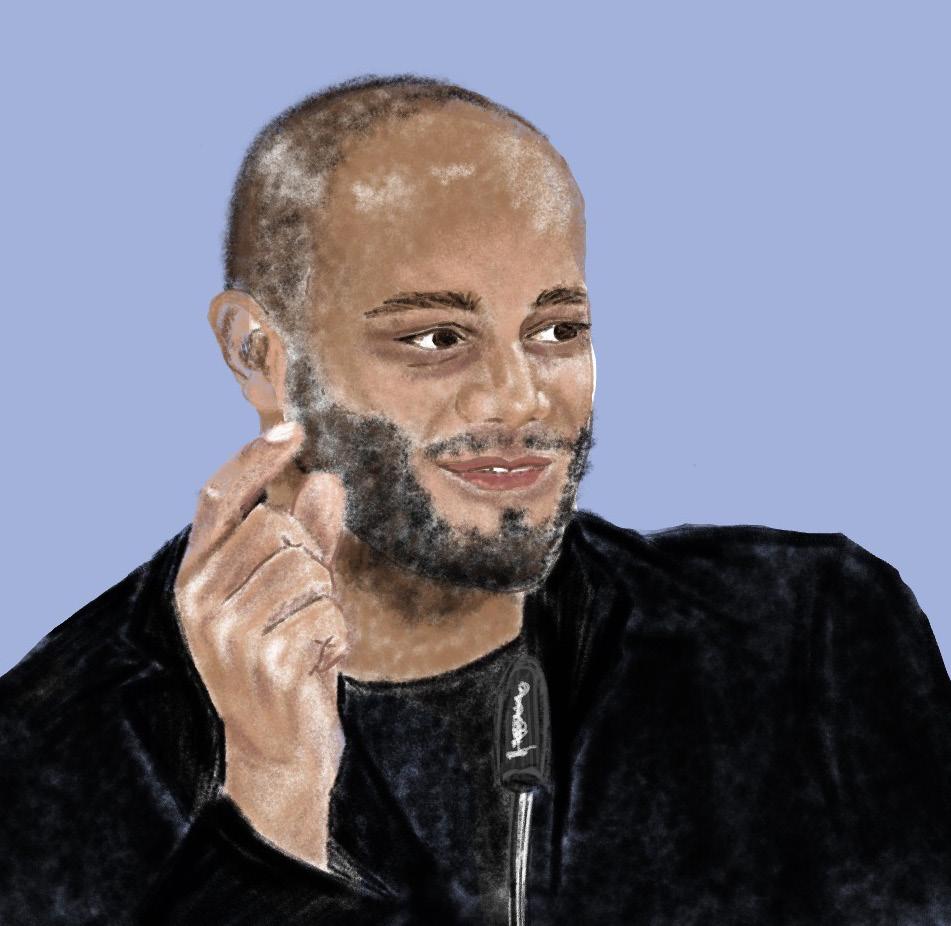
After the game, Benfica Head Coach José Mourinho went on the offensive and implied both that Vini may have lied and that he was at fault for the racist abuse he received.
“He should have […] not messed with 60,000 people in this stadium,” he said in a post-game interview.
Mourinho then went on to make comments suggesting that Benfica as a football club could never be racist because
their greatest player ever—Eusébio da Silva Ferreira—was Black.
Eusébio was Portuguese by way of the nation’s colonization of Mozambique. He played in Portugal while the nation functioned as a brutal right-wing dictatorship under Antonio Salazar. Eusébio scored plenty of goals for both club and country and thus was well liked in Portugal and is looked upon favourably. However, he still dealt with racism both at an individual and systemic level. Eusébio never spoke openly about racism during his playing days, as Vini has often spoken to the press in Spain about the racism he faces in opposing stadiums. One must imagine that had he been outspoken as Vini has been, he would have most certainly been targeted even further by racists in a similar manner to Vini.
Mourinho’s highlight a certain colonial logic: Conform or be at fault for the racism you are faced with. It is the same logic we often hear when folks try to explain why they do not like immigrants. Oftentimes it is grievances over immigrants not speaking the same language, or complaints that immigrant communities still maintain their own culture. The concept is known as respectability politics: If you assimilate to and imitate the dominant group, then you earn your dignity. In Vini’s situation, this logic places the blame on him for celebrating rather than on Prestianni or the numerous fans in the stands making racist gestures.
In a similar vein, Manchester United and
INEOS Chemical Group Owner James Ratcliffe went after immigrants in an interview with Sky News, suggesting that they are invading the United Kingdom and blaming them for societal problems the nation faces. There is a certain irony to a British man saying his nation is being colonized and the colonization is causing larger societal issues when three of the UK’s largest immigrant groups in recent years are folks from India, Pakistan, and Nigeria—all of which are former British colonies. Ratcliffe’s reasoning for his anti-immigrant stance both in his initial statements and in his so-called ‘apology’—that felt more like an explanation—is that he feels immigrants are a burden on the UK economy despite the amount of money they generate for his various businesses. Ratcliffe has since explained that the ideal immigrant is one who generates economic growth.
Despite the differing context, the backwards idea both Ratcliffe and Mourinho push remains the same: Basic dignity for immigrants and people of colour is not a given and it must be earned by following the ideals of those in charge. This implication from two of the sport’s most influential figures is extremely disheartening and a reminder of how much progress is needed. Not only should governing bodies like UEFA take action against perpetrators like Prestianni, but there ought to be punishment for anyone who insinuates that racism can be justified because of the victim’s behaviour.