Bad Bunny’s Puerto Rican pride combats hateful rhetoric
The chaotic state of international politics looms large at this year’s Olympic Games
The Tribune Editorial Board
Mayor Soraya Martinez Ferrada’s 2026 budget implemented a 90 per cent reduction in funding for Montreal’s universal mobility program, an initiative dedicated to making public spaces accessible for individuals with reduced mobility. Ferrada’s administration allocated $354,000 CAD in funding for 2026 and has planned $0 CAD for 2027, severely compromising accessibility.
Ferrada’s minuscule budget allocation for mobility notably pales in comparison to the $3 million CAD the Plante administration had dedicated annually to the program. This funding has been critical in developing accessible infrastructure to support individuals with disabilities and injuries, the elderly, and parents with strollers.
The Ferrada government has eradicated funding for mobility efforts in a blatant violation of equality rights as enshrined in the
EDITORIAL
Canadian Charter of Rights and Freedoms. These policies—mirrored by the failure of public institutions such as the Société de transport de Montréal (STM) and McGill University to offer sufficient programming for physical accessibility—reveal a broad neglect for the principle of universal mobility and must be rectified immediately.
Universal mobility entails access to one’s place of work and schooling, as well as to recreational third spaces. Under this fundamental standard, governments and institutions, public and private, are legally obligated to ensure dignity for those with reduced mobility.
The Accessible Canada Act mandates the identification and removal of barriers to accessibility, as well as the prevention of new barriers. When physical barriers to mobility persist, they bear compounding repercussions on one’s ability to seek employment, receive medical care, obtain an education, or even access public transpor
tation.
Faculty of Science reports unprecedented wage increase for management staff
Rebecca Votier Staff Writer
Following the Quebec government’s decision to maintain a tuition hike for outof-province students, alongside McGill’s faculty and staff unionization efforts, the university is implementing a $45 million CAD budget cut for the 2025-2026 fiscal year (FY2025-26). This measure coincides with the administration’s intensified anti-union stance: McGill has spent over $1 million CAD in the past five years alone fighting unions. Despite having its own in-house legal counsel, McGill has retained an external legal counsel for negotiations with faculty unions. Documents obtained by The Rover indicate
that Borden Ladner Gervais (BLG), the external law firm McGill employs in discussions with unions, costs the university approximately $400,000 CAD annually.
In an interview with The Tribune, Barry Eidlin, associate professor in the Department of Sociology and second vice-president (VP) of the Association of McGill Professors of the Faculty of Arts (AMPFA), explained that McGill’s retention of BLG sends a strong signal to the faculty unions at the bargaining table.
“This [legal] counsel suggests that they are taking a very hard-nosed approach,” Eidlin said. “The reason that they’re going to outside counsel is precisely because they want the special expertise in avoidance. Or at least, if not avoidance, mitigation.”
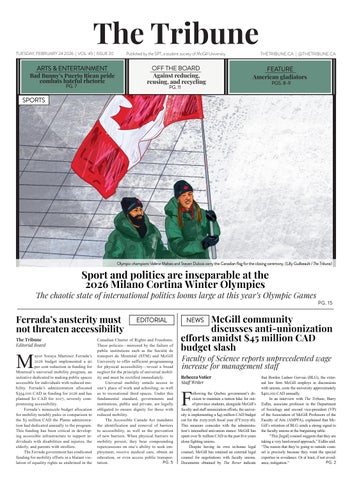
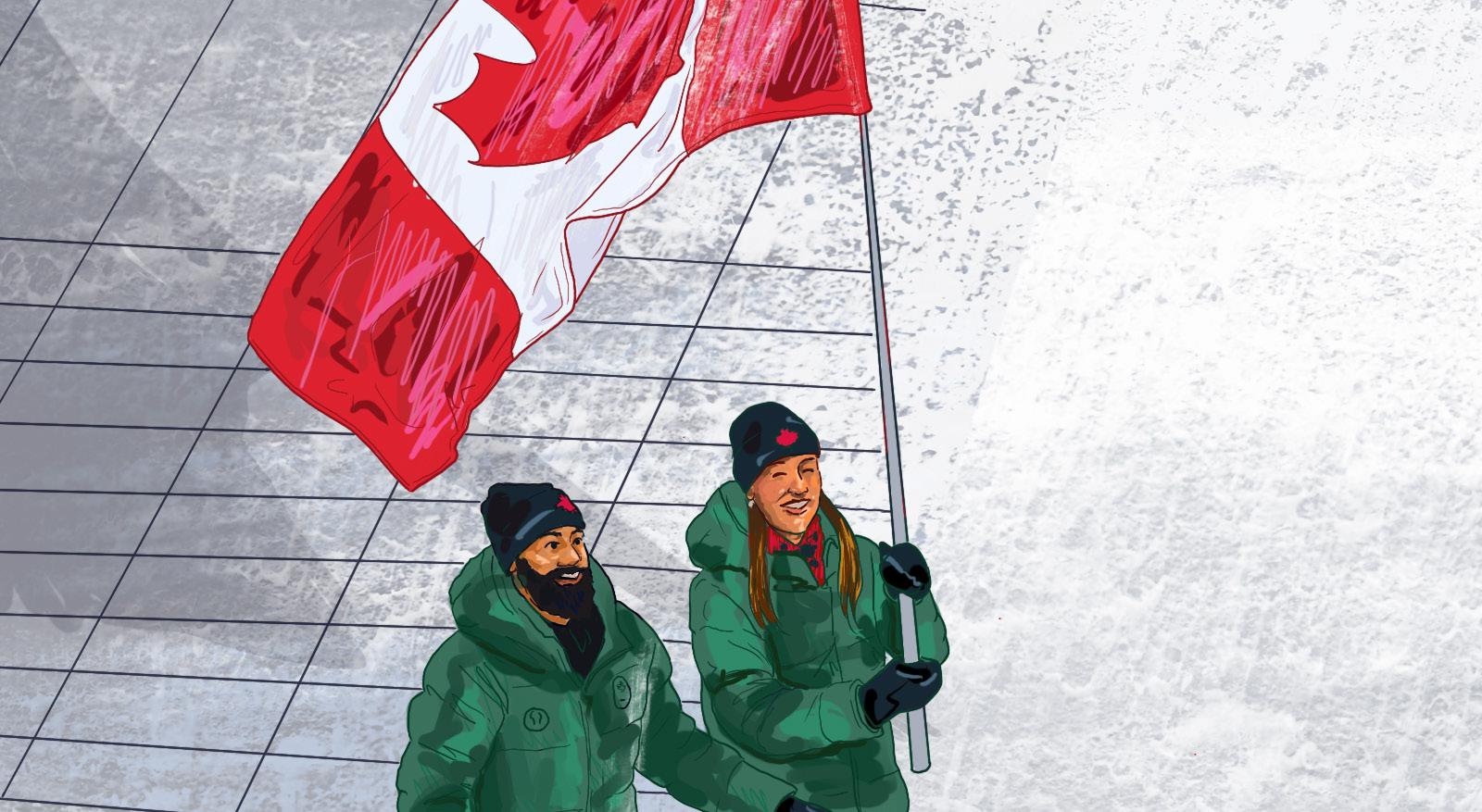
Olympic champions Valérie Maltais and Steven Dubois carry the Canadian flag for the closing ceremony. (Lilly Guilbeault / The Tribune)
PG. 15
McGill community discusses anti-unionization efforts amidst $45 million CAD budget slash
Faculty of Science reports unprecedented wage increase for mana gement staff
Rebecca Votier Staff Writer
Continued from page 1.
McGill’s decision to hire BLG, who has previously been involved in other major labour disputes, has prompted criticism from some faculty representatives, including Jonathan Nehme, president of the Association of McGill University Support Employees (AMUSE).
“That decision is well-reflective of the way McGill acts as an employer,” Nehme explained in an interview with The Tribune “Their representatives are very hostile to unionization efforts and actively act against union members being made aware of the fact that their union exists. McGill hiring professional mercenary union busters fits with that.”
In a written statement to The Tribune, McGill’s Media Relations Office (MRO) maintained that the university is open to negotiation.
“The legal fees incurred by McGill for labour relation matters are related to various files,” the MRO wrote. “McGill welcomes discussions with all its association and union partners and appreciates the time they dedicate to negotiating. We firmly believe that the best agreements are reached at the bargaining table.”
Retaining external legal counsel during a period of budgetary reductions has drawn scrutiny from some faculty representatives, who have questioned whether academic cuts are occurring alongside sustained legal expenditures. The McGill Association of University Teachers (MAUT) President Steve Jordan and President-Elect Reghan James Hill have filed an access to information and privacy (ATIP) request regarding the university’s expenditures.
“In 2026, I would encourage the VicePresident (Administration and Finance) to disclose the amounts McGill University has paid to other law firms in connection with this matter,” wrote Jordan and James Hill in a joint statement to The Tribune . “The lack of transparency also raises legitimate questions about how much the university might spend each year on litigation aimed at preventing or impeding reasonable [ATIP] requests.”
Eidlin argued that these developments reflect what he describes as a broader corporatization of the university.
“With the change and structure of the university toward this more corporate model,
it became increasingly clear that you had this administrative layer that had developed into a separate form, separate from the faculty and the rest of the university,” said Eidlin.
Eidlin also highlighted that administrative roles have become professionalized career tracks rather than temporary service roles undertaken by faculty, likening the process to “the academic version of climbing the corporate ladder.”
Nehme emphasized some of the university’s choices that push this corporate image, from semantic changes to growing austerity measures.
“The way [the university has been] restructuring [its] budget, the way they treat labour disputes et cetera, to even the fact that they renamed the Principal to President is extremely characteristic of McGill choosing to move forward with running itself as a for-profit corporation instead of a public academic institution,” Nehme said.
In the Department of Sociology, Eidlin mentioned that the number of faculty members has declined by approximately 40 per cent over the past decade. Graduate student representatives describe similar pressures. Dallas Jokic, president of the Association of Graduate Students Employed at McGill (AGSEM), said that 21 per cent of teaching assistant (TA) positions in the Department of English were cut between Fall 2024 and Fall 2025. Eidlin suggested that the upper administration has split off from the rest of the university.
“It is like this bifurcation where the segment of the university is not experiencing austerity,” he said.
Jokic also pointed out that cuts to TA hours degrade the quality of education at McGill.
“Cuts tend to make professors turn away from qualitative learning and assessments and towards those which are easier to grade,” Jokic said. “That means less personalized feedback on essays and more multiple-choice tests.”
Faculty representatives also pointed to a widening pay gap between academic staff and senior administration. A report by the Association of McGill Professors of Science (AMPS) found that expenditures on director and manager salaries from operating funds increased by 118 per cent over the past decade, adjusted for inflation. Contrastingly, the salary mass for full-time academic staff rose by six per cent.
“Professors’ salaries are not keeping pace with inflation, even when professors’ performance evaluations are formally rated
as exceptional,” noted Jordan and James Hill. “These concerns have led MAUT, for the first time in its history, to formally reject the administration’s proposed (2026) salary policy.”
Eidlin and Jokic both emphasized that the growing administrative share of operating funds signals a shift from collegial governance toward more centralized, managerial modes. In a written statement to The Tribune, MAUT revealed that it is currently conducting a survey which suggests that concerns about centralization are widespread among academic staff.
“A recurring theme among academic staff was concern about what our members describe as increasing centralization or decision-making and, in some cases, shifts toward managerial or corporate modes of governance.”
These concerns have coincided with unionization efforts across McGill’s faculties. The Association of McGill Professors of Law (AMPL) received union certification in late 2022. AMPFA and the Association of McGill Professors of Education (AMPE) followed. In 2024, AMPL voted to strike in August, going into the start of the fall semester. Days before the vote, McGill Provost Christopher Manfredi and VP Administra-
tion & Finance Fabrice Labeau sent emails to AMPL members addressing the potential strike. Later that year, the Tribunal administratif du travail found that McGill had violated the Quebec Labour Code by interfering in the unionization process. Global News reported that the university defended its actions by insisting that it had followed all procedures.
The disparity between fiscal restraint and administrative growth has intensified scrutiny over how authority and resources are distributed within the university. For representatives of faculty unions, unionization is a mechanism to formalize bargaining power. For the administration, it remains part of routine labour relations within a complex financial environment. Eidlin highlighted this as the most complex part of labour matters.
“One of the things that I’ve spent a lot of my time as a labour researcher, getting my head around, is the degree to which employers attach an extremely high value to retaining control of the workplace,” Eidlin concluded. “It is a very high price that they are willing to pay. I think that’s also part of the dynamic that we’re seeing here, is what premium management places on retaining control of the workplace.”
AGESM recently pledged, “No More Free Hours,” following TA budget cuts (Gwen Heffernan / The Tribune)
Laila Parsons presents seminar on 1917 Gaza Parsons analyses the conquest of Palestine through a British military lens
Devdas Hind Contributor
On Feb. 19, the Montreal British History Seminar hosted “Gaza 1917.” Laila Parsons, a decorated historian specializing in 20th-century Middle Eastern history and professor in the Department of History and Classical Studies and the Institute of Islamic Studies, led the seminar.
Parsons prefaced the talk by specifying that the conquest of Palestine in 1917 should not be understood as a distant part of World War I history or as a heroic British victory over the Ottoman Empire. Rather, she argues that the conquest represents a foreign incursion.
“[The conquest stands as] an alien invasion and occupation, and as the material starting point of the colonization of Palestine,” Parsons stated.
She maintained that, from the perspec -
tive of Palestinians, the invasion represented a rupture in which they lost the structure that came with Ottoman rule. The British encouraged the expansion and acquisition of land from Zionist settler colonies initially established under the Ottoman Empire in the late nineteenth century.
“The promise of a national home for the Jewish people in Palestine was meaningless without the military occupation that first conquered the land and then protected the settler community, at least until 1939,” Parsons said.
Parsons then clarified that the British had initially been waging a defensive war against Ottoman attacks on the Suez Canal. However, this had changed by the spring of 1917.
“The earliest point [would be] when the British Prime Minister David Lloyd George started talking about ‘wanting Jerusalem as a Christmas present,’” Parsons said.
The British continued their advance into what they understood as the ‘Near East,’ taking Jerusalem, then Damascus, and eventually the whole of Syria.
The conquest’s extent is exemplified in Parsons’ quoting of General Edmund Allenby, a high-ranking British officer.
“I can occupy any strategic points I like,” Parsons read from a letter written by Allenby. “I have the military administration of Syria and Palestine.”
The presentation concluded with an account of the strained peace in the postwar period. Parsons described cataclysmic famine, destruction of essential infrastructure, and a Palestinian future dictated by the brutal British military occu -
pation—factors which led to the termination of the British Mandate for Palestine, the unilateral declaration of Israeli independence, and the 1948 Nakba—to put into context how the consequences of the British conquest of Palestine persist today.
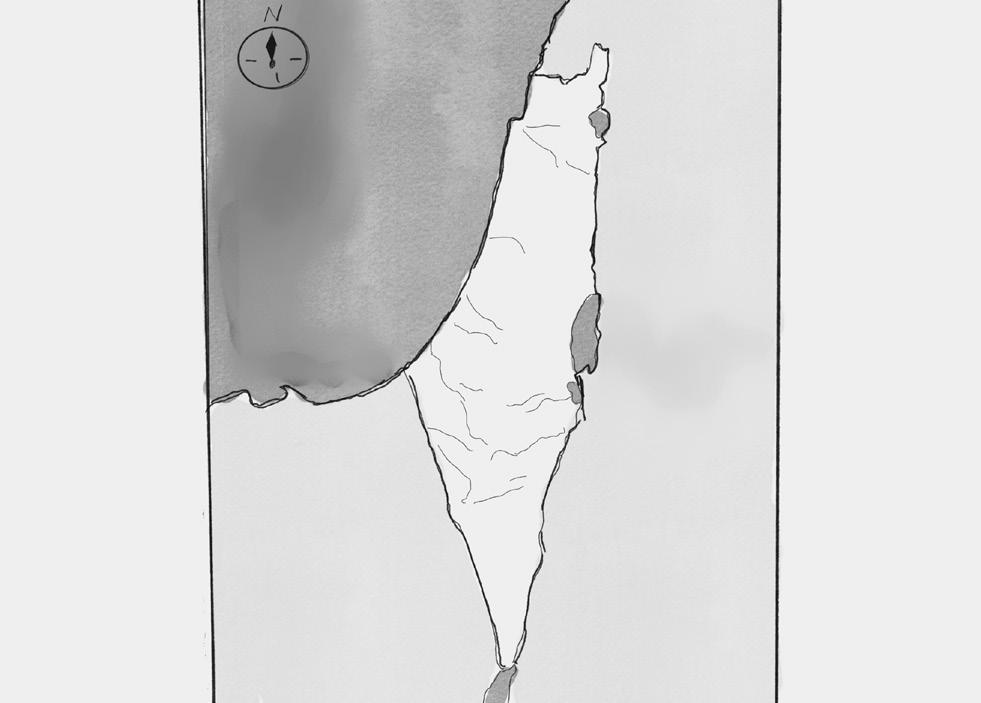
British troops filmed themselves entering Gaza for propaganda purposes. (Mia Helfrich / The Tribune)
AUS voting opens as candidates debate student governance and VP duties
Presidential candidates propose reallocation of budget and collaboration with faculty
Asher Kui News Editor
The McGill Arts Undergraduate Society (AUS) elections for the 20262027 Executive Committee opened its voting period on Feb. 19 at 9:00 a.m. On Feb. 17, the AUS hosted a debate for candidates, allowing McGill students to pose questions to those running. Chief Elections Officer Cyprien Figuière began the event with a land acknowledgement, followed by Chief Elections Officer Lauren Irving who explained the debate rules.
Presidential candidate Keith Baybayon delivered his opening statement first, where he emphasized his priority of encouraging student democracy.
“[From] the low governance participation to now, where we have over 20 candidates standing before me [….] I’m not starting from scratch because so much work has been done the past few years, and I’m here to continue building upon it,” Baybayon said. “Ensuring that the internal structures we have are strong enough to withstand any crises, strategizing our advocacy to ensure that the policies reach the right decision-making
people and leadership administration [….] You deserve an AUS that works for you.”
Rishi Kalaga, the next presidential candidate, highlighted his mission to increase job security of AUS members and to improve the social life of McGill students.
“You can have your research projects funded and opportunities that are on and off campus that are supported by the AUS,” Kalaga said. “We’re going to partner with the Arts Internship Office and strengthen that relationship that we already have.”
Bogdan Sava, the third presidential candidate, reiterated his commitment to serving different departments in the Faculty of Arts by revisiting the allocation of student funds. Sava emphasized the importance of coordination between the AUS and the different faculties—promising monthly roundtables that would allow discussion and collective decision-making. Incumbent AUS President Aishwarya Rajan then posed questions regarding the balance of student fees, administration, and presidential duties to the three candidates.
Kalaga mentioned that he would lower the fees of drinks at the student bar, Bar des Arts (BdA)—which was then questioned by AUS Vice-President (VP) Finance Ben Weissman.
“We get a contract from Sleeman that is the lowest that we could possibly get. How would you balance bringing the prices down without diluting the deficit?” Weissman asked.
Kalaga responded by say-
ing the AUS may subsidize drink prices by redirecting the Arts Undergraduate Improvement Fund.
“I don’t think it necessarily would lead us into a deficit,” Kagala said. “The turnover year to year that sometimes happens in these funds isn’t really necessary, because people’s priorities have been clear.”
Sava ended the presidential candidacy round by thanking the participants for their attendance.
“I want to end by thanking you all, and as Keith mentioned, congratulating you for taking this moment here to give life to student democracy,” Sava said.
The VP Internal round came next, where the two candidates—Jane-Andrea Kwa Mbette and Gillian Vetters—debated the need to increase accessibility to faculty voices and collaboration with academic departments.
Nicholas Coffin and Lucy Crowther, the two candidates running for VP Academic, then discussed the need for more student voices in the McGill administration’s decisionmaking. Crowther specifically mentioned her commitment to more student initiatives, such as expanding social media outreach and creating study groups with teaching assistants to increase academic transparency.
Ines Wolff, David Luzzatto, and PearceTai Thomasson were the sole candidates running for VP Social, VP Finance, and VP Communications, respectively. Wolff explained that she would like to include more sober events during Frosh, as well as BdA drinks for people with celiac disease. Luzzatto emphasized that his priority, if elected, will be giving students more access to the money that they pay to McGill and the AUS.
“We keep paying money every year, and it’s not going back to students directly, or at least not enough,” Luzzatto said. “Looking at how large expenses, for example, auditing or other insurance lawyers [and] making sure
that this is still the best option on the market […] is the best use of student money, because at the end of the day, that’s our job, to ensure that the money that the students trust and get to AUS is used in the best possible way.”
Janya Rajpal and Leonard Cox, the two candidates running for VP External, both discussed the student life after graduation from McGill. Rajpal explained AUS’s duty to help students explore paths beyond undergraduate studies, while Cox highlighted the need for transparency of career and graduation fairs.
The candidates running to be senators and representatives for the Students’ Society of McGill University (SSMU) had their debates next. There are six senator candidates: Rajan Duncan, Mateo Juan, Alexia Juillard, Ellen Kim, Frances Li, and Cindy Zhang. Four candidates are running for Arts representative: Achille Croquelois, Rhys Jones, Charley Letham, and Matias Rodriguez.
The campaigning period opened simultaneously with the voting period on Feb. 19, during which candidates could create social media accounts and present their platforms.
Duncan’s campaign includes revising the Policy on Assessment of Student Learning (PASL) and improving access to lecture recordings. Juan’s emphasizes transparency and accountability, while Kim’s aims to represent minority voices in the McGill Senate. Li promised to implement a textbook subsidy program and a free breakfast program in an effort to tackle food insecurity.
Among the four candidates running to be SSMU Arts representatives, Croquelois assured greater accountability through more accessible office hours with student governors, while Jones will prioritize funding for clubs and services.
The voting period will end on Feb. 26 at 5:00 p.m., and election results will be announced at 6:00 p.m. the same day. Students may cast their vote through a link sent to student emails from Elections AUS.
Pro-Palestine student activists face legal charges for occupying James Administration Building
SPHR raising money to support the Palestine 13’s legal battle
Josette Chandler Staff Writer
On June 7, 2024, 15 McGill students were arrested for occupying the third floor of the James Administration building in protest during the solidarity encampment for Palestine, and 13—referred to as the ‘Palestine 13’— continue to face criminal charges today, with legal fees amounting to $40,000 CAD. Students for Palestine’s Honour and Resistance (SPHR) at McGill, an advocacy group on campus that has organized multiple pro-Palestine demonstrations, is now campaigning to raise money for the Palestine
13’s ongoing legal battle.
During the summer of 2024, over 100 McGill students participated in a solidarity encampment for Palestine, lasting from April 27 to July 10. The specific protest in question took place on June 6 outside the James Administration building, initially with approximately 50 students. 13 students entered the building, leading to their arrest for breaking and entering, and an additional two were arrested for obstruction of police work. Shortly after, Service de police de la Ville de Montréal (SPVM) officers arrived at the scene in riot gear, employing tear gas and pepper spray to disperse the crowd.
In a written response to The Tribune, a spokesperson from McGill’s Media Relations Office (MRO) stated that McGill did not and does not intend to infringe upon students’ right to protest, unless the given demonstration appears to be unsafe or negatively impacts the university’s learning environment.
“McGill is committed to upholding students’ rights to freedom of expression and peaceful assembly in the context of student activism,” the spokesperson wrote. “At the same time, both McGill and the [Students’ Society of McGill University] unequivocally condemn any acts of protest involving vandalism, violence, intimidation, or the obstruction of teaching, learning, research, and other core academic activities.”
Profs4Palestine, a collective of McGill professors in support of Palestine, disagrees with the actions taken by McGill and SPVM against the Palestine 13, who were protesting in support of defunding the genocide in Gaza.
“All spaces are inherently political— campuses are no different from anywhere else in society. Those of us who work in universities largely believe in using campus spaces as places for open exchange, the debate of ideas, and locations for learning,” a representative from Profs4Palestine wrote to The Tribune “A political space does not mean that people of a wide variety of views, positions, and politics cannot work together—the opposite in fact. It’s important that we do not try to claim
a false neutrality for university campuses, it will not bring about the learning that needs to happen there.”
Across the United States and Canada, pro-Palestine protests have sparked hundreds of arrests. While public opinion generally supports students’ right to protest—a poll by the Angus Reid Institute found that 81 per cent of Canadians are ‘OK’ with student protests— police are still readily employed to stop these demonstrations.
Francis Rose Zeitoun, a U3 student in the Faculty of Agricultural and Environmental Science involved with student group Mac Community For Collective Activism, stated in an interview with The Tribune that McGill’s response to protests on campus is against the spirit of the university and disrespectful to the student body as a whole.
“Since getting to McGill a few years ago, I’ve seen the administration pick profit over people over and over again,” said Zeitoun. “Using our academic labour and tuition money to support things we have demanded and screamed for you to divest from is deplorable. McGill is not the administration, McGill is the students who’ve come and gone, the students who’ve worked hard to make campus a better place, the students who go forward in life with a McGill degree. To see the administration suing the students over what we want is enraging because they are not McGill, we are.”
The Tribune Explains: SSMU Special Plebiscite on constitutional
reform
The plebiscite sought to assess student opinions on SSMU governa nce, drawing 6.2 per cent of eligible voters
From Feb. 16 to Feb. 19, students voted in a Special Plebiscite concerning proposed amendments to the Constitution of the Students’ Society of McGill University (SSMU). The vote was intended to gather feedback from students ahead of a Special Referendum later this semester, when the constitutional changes may be adopted.
According to certified results processed by Simply Voting, 1,482 students cast ballots, representing 6.2 per cent of 23,957 eligible voters.
The Tribune explains what the plebiscite asked, what the results were, and what happens next.
How is a plebiscite different from a referendum?
A plebiscite gathers student opinion but does not itself amend governing documents. In contrast, a referendum is binding and can formally change the Constitution if it meets quorum. The results of the Special Plebiscite may influence what appears on the Special Referendum ballot later this semester, but they do not mandate any specific revisions be made to the proposal.
Why was this plebiscite held?
While the vote itself will not amend
the constitution, SSMU held the vote to consult the student body on potential changes before bringing them forward to the referendum.
The results of the plebiscite will help inform proposed amendments to the SSMU Constitution before a separate vote later this term. Students were able to consult a separate document outlining the full proposed amendments before voting.
Because changes to the constitution affect how SSMU governs itself, this preliminary vote served as an opportunity for students to voice their opinions on the current SSMU governance system before binding changes are made.
What was on the ballot?
The plebiscite included three questions related to governance and constitutional reform. First, it asked which of the Board of Directors (BoD), Legislative Council (LC), or Executive Committee should serve as SSMU’s highest governing authority. This question concerned SSMU’s inner hierarchy and which body should hold the most decision-making power within the organization.
A majority of participating voters selected the LC, which received 586 votes, or 51.1 per cent of ballots cast on the question. The BoD received 440 votes (38.4 per cent), while the Executive Committee received 121 votes (10.5 per cent). There were 335 absten-
tions on this question, representing 22.6 per cent of participants.
The next question on the ballot asked voters to rank their preferred quorum threshold for a student strike from the following options: 50 per cent, 40 per cent, 30 per cent, 20 per cent, or 15 per cent of the student body. Quorum determines the minimum level of student participation required for a strike vote to be valid. Thus, changing this threshold would significantly affect how student strikes are ratified.
from March 9 to March 20.
form, allowing students to directly voice their opinions on changes to SSMU’s legislature.
Based on the ranked ballot points system, the 20 per cent quorum option received the highest number of points (4,114), followed closely by the 30 per cent option (4,050).
The 15 per cent option received 3,786 points, the 40 per cent option received 3,529 points, and the 50 per cent option received 2,998 points. There were 172 abstentions on this question, representing 11.6 per cent of voters.
The final question on the ballot was a call for open feedback on constitutional re-
What happens next?
The results of the plebiscite will be considered as constitutional reform proposals move forward. Students will have the opportunity to vote again when the amendments are presented in a Special Referendum.
Although turnout was relatively low at 6.2 per cent, the plebiscite offers a view of student opinion on key governance questions. The upcoming Special Referendum will ultimately determine whether these preferences influence constitutional change.
McGill thanks SPVM “for their expertise” in handling student protest through the use of tear gas. (Zoe Lee / The Tribune)
Eren Atac News Editor
Students will be able to vote in SSMU’s Winter Referendum
(Mia Helfrich / The Tribune)
Editor-in-Chief
Yusur Al-Sharqi editor@thetribune.ca
Creative Director Mia Helfrich creativedirector@thetribune.ca
Social Media Editor Mariam Lakoande socialmedia@thetribune.ca
Business Manager Laura Pantaleon business@thetribune.ca
Ferrada’s austerity must not threaten accessibility
The Tribune Editorial Board
Continued from page 1.
The STM has implemented cuts to accessibility that mirror and are directly derived from the municipal government’s budget reductions, demonstrating how Ferrada’s actions will have a ripple effect in exacerbating barriers to accessibility in Montreal. Ferrada’s 2026 budget allocated $1.8 billion CAD for the STM—a six per cent increase in the city’s contribution to public transit, but still short of the funding needed to ensure the metro runs effectively. As a result, the STM has greatly reduced its accessible mobility options at stations and in transit vehicles. In April 2025, the STM implemented what it stated would be the metro system’s last universal accessibility
project due to budget cuts, despite only 30 of the 68 stations in the metro network currently being universally accessible.
In 2017, the Regroupement des activistes pour l’inclusion au Québec filed a class-action lawsuit over wheelchair accessibility in STM metros, seeking $1.5 billion CAD in damages. However, after almost ten years of legal proceedings, the Quebec Superior Court dismissed the class action. The Court acknowledged that discrimination against individuals with disabilities had occurred, but stated that transit agencies were investing in accessibility to the best of their abilities given their limited budgets. While pressure to meet budgetary obligations can necessitate some austerity measures, the Charter rights of individuals with disabilities or impaired mobility cannot be made dispensable under financial
constraint.
The STM still requires those using paratransit or other accessible public transportation alternatives to complete an accessibility form as far as 45 days in advance, with the expectation that individuals provide medical proof of their need for these services. For people with temporary injuries or those who lack health insurance and are unable to obtain documentation, these requirements render public transit completely inaccessible.
The municipal government’s neglect is closely paralleled at an institutional level. McGill, despite continuously claiming dedication to accessibility, still lacks sufficient programming to ensure nondiscriminatory mobility options on its campus. The university’s current mobility programming requires students to tirelessly advocate for their own accessibility needs to receive bare-minimum
Sudine Riley’s case shows how systemic anti-Black racism shapes Canada’s justice system
Moyọ Alabi Opinion Editor
Ontario’s Special Investigations Unit (SIU) has declined to invoke its mandate in response to allegations that Sudine Riley, a Black criminal defence lawyer, was violently assaulted by Durham Regional Police officers inside the Oshawa courthouse. According to statements released through her counsel, Riley was questioned about her presence in an interview room after completing her court appearances, had her head slammed into a desk, and was dragged to courthouse cells. Riley has since been charged with violating the Trespass to Property Act, and the matter has been referred to York Regional Police for criminal investigation.
CONTRIBUTORS
While courts have historically been framed as neutral spaces conducive to procedural justice, the institutional response to Sudine Riley’s alleged assault demonstrates how anti-Blackness remains embedded within the Canadian legal authority. By employing restrictive thresholds to determine eligibility for investigation and rendering Black professionalism conditionally legitimate, oversight systems reproduce the very racial hierarchies they purport to regulate.
Under Ontario’s Special Investigations Unit Act, the SIU maintains jurisdiction only in cases involving ‘serious injury,’ death, sexual assault, or the discharge of a firearm. According to the agency’s own criteria, ‘serious injury’ refers to
harm likely to interfere with health or comfort that is neither transient nor trifling in nature, typically involving hospitalization or fractures. Oversight is contingent on these categorical thresholds.
However, data on policing in Ontario demonstrates that racialized harm often operates through discretionary force and suspicion that does not always culminate in catastrophic injury. The Ontario Human Rights Commission (OHRC) found that although Black residents comprised 8.8 per cent of Toronto’s population, they accounted for 28.8 per cent of arrests involving a single charge and 38.9 per cent of arrests involving ten or more charges. In police-involved shootings nationwide, officers kill Black people at disproportionate rates: Black people account for 8.7 per cent of those killed despite constituting only 4.3 per cent of Canada’s population. Because oversight is triggered by bureaucratically-designated and highly specific thresholds, many forms of racially biased policing fall outside the reach of jurisdiction for formal investigation, further determining which—and whose—injuries qualify for recognition, compromising mechanisms meant to ensure accountability and institutional reform.
Research on systemic anti-Black racism in Canada demonstrates that professional status does not insulate Black individuals from suspicion.
The OHRC’s inquiry into the Toronto Police Service concluded that race remains a significant predictor of police use of force even after accounting for
accommodations, as several buildings lack directly wheelchairaccessible entrances. Further, students must present medical documentation to prove eligibility for its adapted transport service program, reducing the accessibility of these accommodations.
Critically, students and residents pay tuition and taxes even when they are unable to access and enjoy the public spaces and services these contributions are financing. Taking payments from individuals with reduced mobility without dedicating a meaningful portion of tuition and tax dollars toward ensuring equitable access is unethical and negligent. The Ferrada government—and McGill—must end its chronic disregard for the rights, needs, and experiences of individuals living with impaired mobility, and allocate sufficient funding for accessibility projects within public and private spaces.
age, gender, neighbourhood, and situational factors. In Quebec, a 2024 Quebec Superior Court ruling found that racial profiling is a systemic issue within the Service de police de la Ville de Montréal (SPVM) and held the City of Montreal liable in a $171 million CAD class-action lawsuit concerning discriminatory police stops. The decision affirmed that institutional practices, not merely individual ‘misconduct,’ produced discriminatory effects on Black and other racialized communities.
Evidently, suspicion is institutional and not incidental. It manifests through discretionary stops, challenges to authority, and demands for verification that are disproportionately exercised against Black people. Black legal professionals are frequently mistaken for defendants or court clerks, asked to justify their presence in courthouses, or required to produce identification in ways their white counterparts are not. This dynamic, presumed illegitimacy of presence, persistently associates Blackness with deviance and criminality irrespective of role or status.
Canada, as a national entity, often touts its exceptionalism: The assumption that systemic racism and racialized police violence is an American problem, and that its justice system operates through
neutral procedure. However, when its oversight mechanisms define harm so narrowly and its institutions view Black legitimacy as conditional, Canada cannot continue to assert its inherent ‘neutrality.’ If serious injury is the threshold for recognition, and suspicion remains discretionary, then the problem is undoubtedly structural. Accountability requires a framework that recognizes anti-Black harm before it escalates. Until then, Canadian exceptionalism obscures the fact that, in practice, neutrality remains a claim rather than a condition.
Sudine Riley was not a bystander. She was a criminal defence lawyer doing her job inside a courthouse. Yet, this proximity did not insulate her from the racialized scrutiny and discretionary force documented across Canadian policing. Meaningful reform requires expanding accountability frameworks beyond individual incidents and confronting the systemic conditions that allow racial bias to persist.
Shatner University Centre, 3480 McTavish, Suites 404, 405, 406
Simona Culotta, Defne Feyzioglu, Alexandra Hawes Silva, Lialah Mavani, Nour Khouri, Laura Pantaleon, Amy Xia
TPS BOARD OF DIRECTORS
Brooke Barak, Rachel Blackstone, Loriane Chagnon, Josette Chandler, Carla Cretin, José Moro Gutiérrez, Will Kennedy, Antoine Larocque, Sofia Lay, Lialah Mavani, Talia Moskowitz, Talia Moskowitz, Luca Paone,Julie Raout, Parisa Rasul, Alex Hawes Silva, Michelle Yankovsky, Ivanna Zhang Gwen Heffernan, Lilly Guilbeault, Emiko Kamiya, Alexa Roemer
Arielle Brunet,Devdas Hind, Camila Sierra Ordóñez, Luke Pindera Sunny Bell, Ryan Dvorak
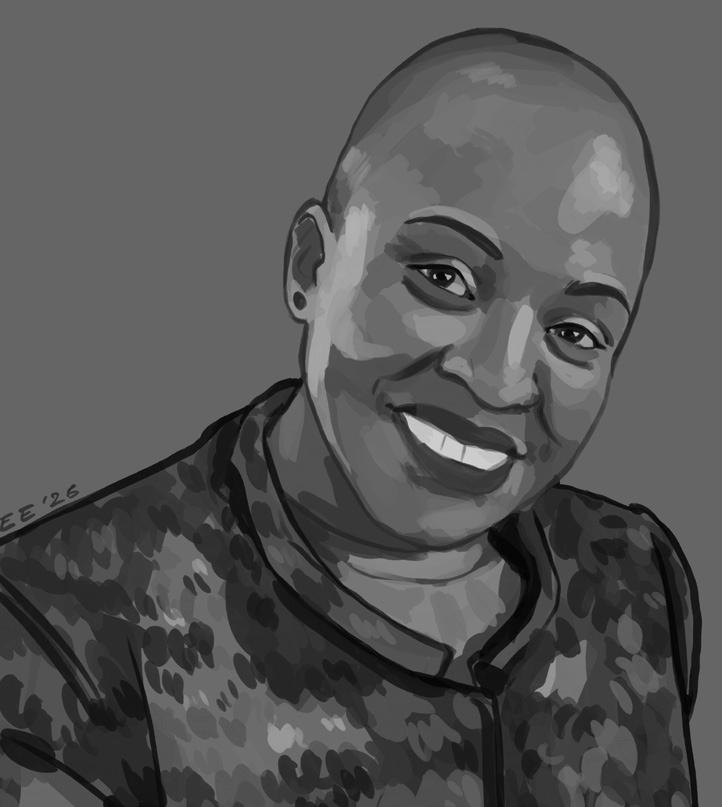
Sudine Riley, portrait (Zoe Lee / The Tribune )
Asher Kui News Editor
SThe Olympics’ selectivity erodes neutrality
ince 1924, nations have come together to celebrate athletic excellence every fourth winter. This year, the Olympic Winter Games in Milan and Cortina mark a century of such tradition, setting record viewership just one week in. Amid the exciting celebrations of record-breaking athleticism, competing Olympians can hardly escape the political turmoil that is unfolding alongside the Games. Sports are inherently intertwined with politics, and the Olympic Committee must enforce rules governing participation consistently. Penalizing athletes of certain nationalities because of their government’s politics, all the while ignoring other ongoing injustices, reflects an unsettling selectiveness that further perpetuates political divides, corroding the three values on which the Olympics were founded—excellence, respect, and friendship.
The International Olympic Committee (IOC) has banned 14 countries from competing in the past due to various political issues: South Africa had been repeatedly banned due to Apartheid, while Germany and Japan had been excluded for their involvement in the Second World War. Most recently, the IOC banned Russia and Belarus from the Winter Olympics due to their war crimes in Ukraine, which forced many athletes to compete as individual neutral athletes (INA).
The IOC framed such bans as moral obligations, but also as a consequence of Russia’s repeated violations of the Olympic
COMMENTARY
Camila Sierra Ordóñez
Contributor
ATruce—a United Nations-backed policy that calls for ceasefires immediately before, during, and after the Olympic Games. However, frameworks like the Olympic Truce hardly ever compel substantive political change. For example, Apartheid in South Africa did not end solely because athletes were barred from competing—it ended after decades of civil disobedience and activism, including widespread pressure from economic boycotts and sanctions. While sporting bans may be symbolic to advancing world peace through their role in broader international pressure campaigns, their selective application cannot be justified as a tool for achieving justice.
What these bans do achieve, however, is reducing athletes to a monolithic identity. When athletes’ only option to compete is to strip themselves of any national symbol, their pride in representing their homeland and their culture is treated as complicity in their government’s actions.
Such tension is further exemplified by Ukrainian Skeleton Athlete Vladyslav Heraskevych’s “memory helmet” featuring portraits of athletes killed in the RussoUkraine War, which led the IOC to ban Heraskevych from competing. This act was deemed a violation of Rule 50 of the Olympic Charter, which aims to keep the sport podium neutral. But sports are political. Heraskevych did not introduce politics into the Olympics; he merely commemorated the many Ukrainian athletes whose lives were lost. The IOC cannot act as the inconsistent arbiter of geopolitical morality while claiming that its arenas are neutral.
Global actors and human rights organizations have condemned Israel’s genocide in Palestine. Iran’s brutal crackdown on protestors is likewise criticized. Even the United States’ military invasion of Venezuela has been denounced as a violation of international law. These conflicts and their impacts have persisted through multiple Olympic Games, yet none of these countries were barred from the Olympics, and none of their athletes have been forced to compete as INAs. When athletes cannot represent their nation through the craft they dedicate themselves to, the IOF directly undermines the Olympics’ founding principles of excellence, respect, and friendship, setting inconsistent and unfair rules by which athletes must play the Games.
Ukraine Skeleton Athlete Vladyslav Heraskevych will file a lawsuit against the Olympics following the IOC’s ban of his “memory helmet."
/ The Tribune)
while others’ are overlooked, some national identities become politically unfavourable while others are affirmed as diplomatically tolerable.
Excellence should be measured by athletic merit, not nationality. Respect requires the acknowledgement that athletes are global citizens, not campaigns of their government’s complicity. Friendship calls for the cultivation of athletic connection even amid adverse political conditions. When some athletes’ identities are written off as an extension of their government’s actions
Welcomed to work, not to stay
the government has undermined both its moral authority and its long-term economic interests.
s of Nov. 19, 2025, international graduates of Quebec universities and temporary foreign workers are no longer eligible to apply through the accelerated immigration pathway to obtain a Certificat de sélection du Québec for permanent residence. This pathway, known as the Programme de l’expérience québécoise (PEQ), was abolished by Immigration Minister JeanFrançois Roberge under the François Legault administration, leaving previously eligible individuals with shattered hopes of obtaining permanent residency in Quebec.
The Programme de sélection des travailleurs qualifiés (PSTQ), which replaced the PEQ program, is a competitive, pointsbased system with stringent requirements regarding French language proficiency, certified job offers, and alignment with the specific labour market needs. Since its establishment, the new program has been heavily scrutinized by immigration experts, municipalities, and businesses. Those who had moved to Quebec planning to apply for permanent residence through the nowabolished PEQ pathway—known as ‘PEQ orphans’—are now placed at the mercy of the PSTQ guidelines.
The abolition of the PEQ is not simply an administrative reform but a breach of trust between Quebec and the people it invited to build their lives in the province. In narrowing immigration to serve short-term labour goals,
This change cannot be understood solely as an economic adjustment. It reflects a broader policy approach under Quebec Premier Legault, whose administration consistently pushed for restrictions, cultural protection, and linguistic conformity. This pattern is evident in recent legislation such as Bill 21, which enforces secularism by banning certain public-sector employees from wearing visible religious symbols, disproportionately targeting religious minorities, and Bill 96, which toughens French language requirements for new immigrants, international students, and institutions under the guise of preserving francophone identity.
These decisions are part of a longstanding legislative pattern in Quebec, led by political figures such as Legault, who have repeatedly denied the presence of systemic racism in provincial institutions. That pattern is now being reinforced by Roberge’s refusal to implement a grandfather clause for the PEQ, which would have allowed current applicants to retain eligibility for permanent residence.
On Feb. 7, protesters marched in Montreal, articulating the impact of the PEQ’s abolition. A psychology PhD graduate held a sign that read “Assez bonne pour travailler pour le Québec, pas assez pour rester” (Good enough to work for Quebec, not good enough to stay). Others echoed similar sentiments: “Je suis venu donner de la valeur, pas demander une faveur” (I came to contribute value, not to
ask for a favour).
The government insists that the PSTQ is necessary to better align immigration with labour shortages, reduce pressure on housing and public services, and distribute newcomers more evenly across the province. These concerns are not irrational, yet by dismantling a predictable pathway for already-integrated workers and graduates, the government risks deepening precisely the labour shortages it claims to address, particularly in sectors such as healthcare, where over 6,300 temporary foreign workers face expiring permits by 2026.
The Olympics’ immense visibility comes with great responsibility: If the IOC chooses to invoke morality as grounds for participatory bans, sanctioning countries that have committed international crimes, they must lay out transparent criteria and enforce them consistently, regardless of global negligence or diplomatic alliances. Otherwise, the IOC should acknowledge the limits of sporting sanctions. Sports are inevitably political, but sporting sanctions carry limited power outside of moral symbolism. Symbolism cannot uphold justice when applied selectively.
More than 6,300 healthcare workers in Quebec, over half of whom are based in Montreal, are on a temporary foreign work permit set to expire by the end of 2026. (Armen Erzingatzian / The Tribune )
while leaving human realities unaccounted for.
At its core, this shift raises deeper concerns about the nature of Quebec’s immigration policies. Immigration is not merely an economic tool; it is a system built on integration and trust. When governments change the rules, they reshape the relationship between the state and those who choose to build their lives within it. Instead of addressing the anxieties and expectations of Quebec immigrants by implementing a grandfather clause or equivalent measure, Roberge and his cabinet have merely replaced one immigration pathway for another—a solution that serves administrative priorities
Quebec must not make promises it cannot—or will not—honour; to do so is a failure of governance. At its most basic level, effective governance requires listening to the people whose lives are shaped by political decisions and recognizing the weight those decisions carry. Immigrants are not interchangeable economic units to be recalibrated according to the province’s shifting priorities. They are people who have spent years building their lives in Quebec, contributing through work, study, and engagement. Any policy that ignores this reality risks undermining not only individual futures, but the very trust upon which effective and legitimate governance depends.
(Zoe Lee
A rat who betrayed a cat, a benevolent dragon, and a pig who stopped for a snack The ancient Story of the Chinese Zodiac and how it remains today
Bianca Sugunasiri Arts & Entertainment Editor
Folk tales and legends are forms of art that permeate our lives and pass on wisdom across generations. Few embody this as vividly as the Chinese zodiac, which continues to influence centuries after its origins. The shengxiao, or Chinese zodiac, are the 12 animals that represent each year in the Chinese lunar calendar, or yin-yang li—also known as “heaven-earth.” Each animal has a distinct personality with character traits, lucky signs, and compatibility. On Chinese New Year, which typically begins between Jan. 21 and Feb. 20 on the Gregorian calendar, the cycle changes to the next animal in the zodiac. This year, the celebration begins on Feb. 17 and ends March 3, marking 2026 as the year of the fire horse. Chinese astrology places one of the five elements in rotation with the zodiac in a 60-year cycle. The elements—wood, fire, earth, metal, and water—interact with the animals to create a unique projection for each year.
It is believed that the zodiac emerged from a legendary race between all the animals; however, sources disagree on its historical origin. Some trace it back to the Warring States period (475-221 BCE), others to the Qin dynasty (221-207 BCE), and some to the Han dynasty (206 BCE-220 CE). Over time, the Chinese zodiac evolved into a shifting piece of culture, guiding how people in-
terpret the future and providing insight into the personality and fortune of each upcoming year.
The Story of the Chinese Zodiac Centuries ago, the Jade Emperor, the most revered of the Daoist deities, wished to help his people measure time by giving them a proper calendar: The zodiac. Hoping to name each year after a different animal, he asked them all to partake in a swimming race where the first twelve to cross the river to his palace would be named the zodiac. Legend
has it that the story begins with the rat betraying the cat and the kinship they once shared. Although contested, one version of the tale recounts how the two animals, the closest of companions, were horrified by the setting of the race, as neither could swim particularly well. They decided to ask the ox if he would kindly offer them a ride on his back. The rat, blinded by ambition, wished to be first in the calendar and mused that the ox would swim faster without the cat on his back. So, he pushed his friend into the swirling waters. Thus, there is no cat in the zodiac calendar.
Some even claim this to be the origin of the two species’ longstanding animosity. However, many agree on the rest of the tale. Each of the remaining animals ventured on their own journey to reach the Emperor. After the rat finished first, the ox lumbered after him, honour still intact. The tiger came third, easily braving the river. The resourceful rabbit hopped across by way of stones, but reached an impasse and was unable to go any further until a log blew his way. To his surprise, the log carried him to the Emperor’s palace over the distance remaining. The dragon arrived fifth, much to the Emperor’s bewilderment—the dragon revealed that he had stopped to provide rain to a droughtridden town, and then had blown the log across for the stranded rabbit. The horse and the snake ran neck and neck, but the snake spooked the horse and underhandedly secured sixth place. The rooster, monkey, and goat came next, having built a makeshift raft which pleased the Emperor. As a result, he deemed the goat eighth, the monkey ninth, and the rooster tenth. The languorous dog came eleventh, after he had whittled away his time luxuriating in the river’s cool water. Finally, the pig came last, having paused for breakfast, lunch, dinner, and a nap.
Each year, the order of the animals reminds us to be mindful of our thoughts, the way we treat others, and the way we carry ourselves throughout the year. This centuries-old tale is ever-influential today.
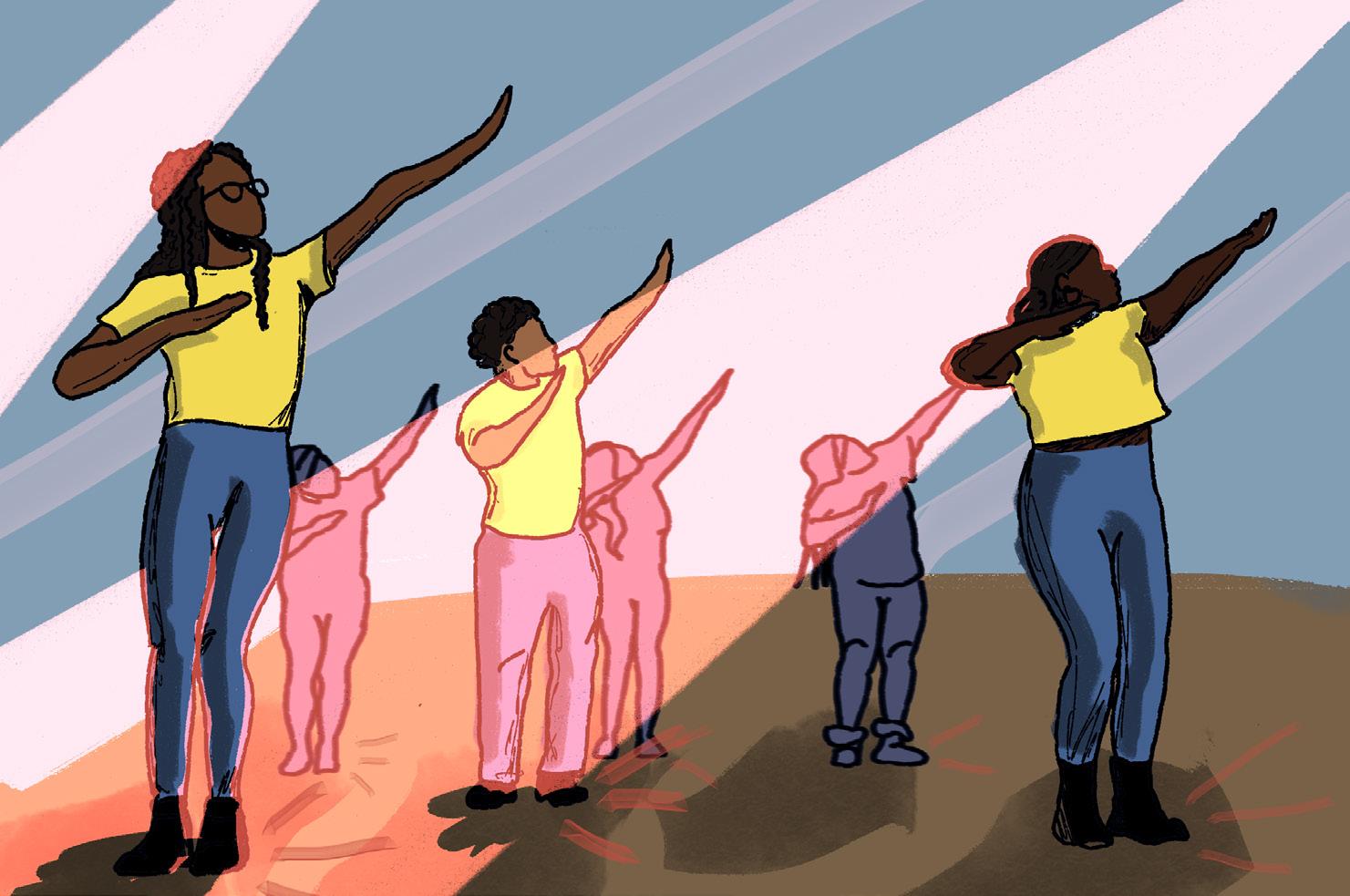
A deep dive into the Montreal Steppers and the art of stepping The power of collective movement and honouring the past
Malika Logossou Managing Editor
Body-based art forms have long served as forms of resistance in Black communities, and stepping is one of its most powerful expressions. It is a Black diasporic art form that uses clapping, stomping, body slapping, and vocalization to create rhythm and beats through movement.
The Montreal Steppers, a nonprofit organization founded in 2019, carry on this legacy by teaching stepping across Montreal and beyond. Kayin Queeley, founder and director, explained his motivation for creating the organization in an interview with The Tribune
“When I came to Montreal, I was surprised at how little [...] awareness [there was] about stepping,” Queeley said. “So what I thought of doing is creating different workshops that would marry learning step with learning [...] elements of Black history, like how stepping started, what it was about, why it was important.”
Although many may be tempted to describe stepping as a dance, Queeley clarified that it is a distinct art form.
“Stepping is an art form because of its history, because of its lineages, because of its movement, because of its expansion, and [...] because of those elements that bring together the new music, the sharing of sounds, the synchronization, […] [and] the polyrhythmic beats,” he said.
By shifting dialogues about Black culture and history, creating original productions, and collaborating with various communities, the organization does more than just teach step.
“We worked with close to 25,000 students
across the province since we started. We’ve written original productions that centre Black life after slavery, and we do a lot of community collaborations,” Queely said. “We’re [also] working with seniors and adults and people who might have limited access and mobility, but to give them the sense that the body still has power.”
The Montreal Steppers offer introductory and advanced workshops, as well as courses in several schools, such as the National Theatre School of Canada. The group also shares stepping with college and university students through workshops and performances; they have staged productions all over Canada and have even gone on an exchange to South Africa.
“We don’t compromise our workshops by just focusing on teaching step [....] We focus on what is critical to the work we do, [which] is making sure that people at least leave with the knowledge being presented to them,” Queeley explained.
During performances, audiences are invited to try stepping movements. This collectivity of movement, sound, action, and momentum gives the art its meaning.
“When we’re working together, moving at the same [time] in the same direction, there’s impact, and it gives nod and recognition to the art form of people mobilizing together to make a difference, because [Black people] came together to create this music to resist and to push back against narratives and beliefs that people held,” Queeley said.
The Montreal Steppers also honour Black history by honouring the cultural roots of stepping in each space they enter.
“We thank the ancestors in every space to say ‘thank you for creating this art form out of resistance that we get to share as performance, that we get to share as teaching, that we get to share as community,’” he shared.
Queeley expressed that the organization also acknowledges the land and people present at each event.
“Once we’re in a space, we give acknowledgement to the land, recognition to the Indigenous Peoples […] the land, the music with it and the ground, and then the final acknowledgement is to the people.”
Beyond enjoyment, the Montreal Steppers
hope that their workshops and performances help audiences learn or relearn new elements of Black history.
“It’s not just performance. It’s a ritual, it’s a practice, and that’s why we talk about it as ancestral, because it comes with that level of weight and influence and impact,” Queeley said. “It’s important that we celebrate it, and we don’t shy away from what is ours.”
Anyone interested in joining a stepping class or learning more about this art can reach out to the Montreal Steppers through their website, montrealsteppers.com, or Instagram, @montrealsteppers
In 2024, the Montreal Steppers performed and participated in a discussion panel at Elizabeth Wirth Music Building as part of McGill’s annual Black History Month Opening Ceremony. (Mia Helfrich / The Tribune)
2026 is the Year of the Horse, associated with confident, agreeable personalities that dislike being penned down or reigned in. (Ryan Dvorak / The Tribune)
AMERICAN GLADIATORS FOOTBALL’S CONCUSSION CRISIS
WRITTEN BY ETHAN KAHN, SPORTS EDITOR DESIGNED BY ELIOT LOOSE, DESIGN EDITOR
Warning: This piece mentions self-inflicted harm.
Dave Duerson was a hard-hitting safety at the core of two Super Bowl-winning defences, taking home titles with the 1985 Chicago Bears and the 1990 New York Giants, two of the greatest defensive units in the National Football League’s (NFL) history. The Associated Press voted him Second Team All-Pro for his stellar 1986 campaign, during which he set the record for sacks by a defensive back in a season with seven—a record that stood for nearly two decades. Duerson earned four Pro Bowl selections and gained great success off the field; voters named him Walter Payton Man of the Year in 1987. Following his career, Duerson appeared to be enjoying a fruitful retirement.
So, why did authorities find Duerson dead in his Florida home on Feb. 17, 2011, with a self-inflicted gunshot wound to the chest?
Those in his inner circle noticed significant changes during the last decade of his life. He was increasingly erratic and violent, and he suffered from bouts of depression and intense mood swings. His memory faded and he had trouble putting together words to form sentences. To his wife, Alicia, he had become a completely different person. Duerson’s final message, sent in a text to his family members, was simple.
“Please, see that my brain is given to the N.F.L.’s brain bank.”
Upon autopsy, Duerson was found to have been suffering from a neurodegenerative disease called chronic traumatic encephalopathy (CTE). The disease most commonly affects athletes involved in contact sports who have sustained multiple concussions without proper recovery time between injuries. At the time of his death, Duerson was one of about 15 retired NFL players posthumously confirmed to have the condition. This number has now increased to at least 345, according to data collected by Boston University’s (BU) CTE Center, the institution where Duerson requested his brain be donated for research. The 345 confirmed cases came from a study of 376 former players, or 91.7 per cent of the sample. While this is a clear example of selection bias, the numbers are still shocking.
According to the Mayo Clinic, a concussion is “a mild traumatic brain injury that affects brain function [....] [Effects] can include headaches and trouble with concentration, memory, balance, mood and sleep.” These symptoms can present significant challenges to the mental health of those who sustain the injury. Concussions are not only found in the highest levels of sport—in fact, it is estimated
that between nine and 12 per cent of all injuries sustained in high school athletics are concussion-related. For an age group that is already at higher risk for mental health problems, concussions introduce unpredictable consequences, making brain injuries a youth health issue, not just a professional sports problem.
In an interview with The Tribune, Dr. Gordon Bloom, professor of Sports Psychology at McGill University, explained that the effects of concussions can be incredibly detrimental to the mental health of even casual athletes, especially if not properly diagnosed or treated.
“Unlike other injuries that are more visible, a concussion is an invisible injury [....] People look at someone [with a concussion] and think that they’re completely healthy when they could be going through so much trauma, turmoil, and stress,” Bloom said. “[Symptoms] could last weeks, days, months, years, and that can have a harmful effect on someone’s mental health because it affects your day-to-day activities. You can’t go to school, sometimes you can’t drive [...] or [go] somewhere where there’s loud music or bright lights.”
Clearly, CTE’s long-term risks extend beyond the upper echelons of professional sport, affecting amateur and youth levels as well. BU examined the brains of over 150 contact sport participants who had passed away before the age of 30 and found that over 40 per cent of them had CTE, including the first-ever confirmed case of CTE in a woman, a 28-year-old collegiate soccer player.
According to the lab, “more than 70 per cent of them had apathy, and a similar number were depressed, while more than half had difficulty controlling their behavior; many also had issues with substance use.” Dr. Annie McKee, Director of the BU CTE Center, contends that “those symptoms might be a result of the head injury itself [...] breaching the bloodbrain barrier.”
This creates a troubling dynamic: An athlete gets concussed, can’t engage with life as they once did, slips into depression, and then re-enters their sport too early and sustains another concussion. If the concussion itself can cause symptoms of depression, not just solely through social isolation, a vicious cycle begins to emerge.
CTE, as it is currently understood, is a rare phenomenon, but there are risks from concussions themselves that are much more common and are still cause for concern. If not dealt with properly, concussions can create significant interruptions to the most formative years of most youths’ lives. Bloom expanded on the severity of this issue.
“What some of the evidence shows is that if you come back too early, when you’re not fully healed, and you sustain another traumatic brain injury, that you’re doing damage
to your brain long term, and if that happens repeatedly, you’re playing with fire,” Bloom said.
For younger athletes, missing out on the socialization they gain in schools can have a massive impact on their social development, not to mention the possible effects concussions have on growing brains, as the human brain does not fully develop until the age of 25.
In an interview with The Tribune, Dr. Isabelle Gagnon, professor and Associate Dean of the McGill School of Physical and Occupational Therapy, who heads a research program on pediatric concussions at the Montreal Children’s Hospital, outlined key concerns when a young person or child sustains a concussion.
“Social life [for kids] is very different [compared to adults], because the social environment is related to school [....] So if you’re taken out of there or have trouble reintegrating, you’re also excluded socially from your circle. That creates extra anxiety, extra problems and symptoms,” Gagnon explained. “We have to protect these young kids, because [...] they injure the brain, but the brain is still very, very actively changing, so it’s more difficult to judge the impact of the injury on a brain that’s so unstable.”
Recovery from a concussion can be a long and arduous process because the timeline is not necessarily linear or the same for every person. Gagnon says that this is a key factor in why concussions are so risky when someone returns to action before their body is ready.
“It’s less about the seriousness of the injury
concussion in someone who would have had one before that took three, four, five months to recover [....] Then we worry more about the next one, what that one is going to do,” Gagnon explained.
Many problems arising in concussion diagnosis and recovery stem from the difficulty of diagnosing concussions, especially in youth. It’s difficult to determine whether academic struggles are due to a concussion suffered earlier in the year or just a student underperforming. There are no concussion spotters in high school sports like there are at the professional or collegiate level, and up to 30 per cent of high school athletes do not have access to an athletic trainer experienced in identifying concussion injuries.
The onus is on adolescent athletes to honestly report how they are feeling and if their condition has improved, or if they think they may have sustained a concussion in the first place. For many years, this was a difficult task, as research into concussions was limited, and people did not understand the full scope of how the injury could affect mental and physical health. However, in the past decade, concussion education has improved drastically.
“I think the message now, through the research [...] and really paying attention to this, is that people now are being more honest,” Bloom said. “They realize [they] don’t want to have long-term brain damage, so [they’re] going to be more honest and forthcoming with my symptoms than they used to be.”
The question that parents of athletes across the country now have to face is: Is all of this worth it? Should my kid play tackle football as a ten-year-old and risk altering their adult life forever?
The answer to this question, of course, is not a simple yes or no.
Youth sports promote teamwork, enhance social opportunities, and provide an outlet for kids to stay healthy by doing physical activity. According to the U.S. Office of Disease Prevention and Health Promotion, participation in youth sports can lead to “lower rates of anxiety and depression, lower amounts of stress, [...] [and] reduced risk of suicide.” Many parents, especially those who had positive experiences with sports themselves, would certainly be inclined to allow their children to participate despite the existing risks.
Eloa Latendresse-Regimbald, the starting quarterback at McGill who grew up playing football in the Greater Montreal area, believes that there is inherent risk in playing football, but recent attitudes have improved concussion management and recovery.
“Nowadays, when you start [playing] really young, there’s not a lot of contact [....] Even though it’s a beautiful sport, I think you need to be aware of the consequences that [it] comes with,” Latendresse-Regimbald said.
vancements are made, athletes are still making the conscious decision to risk completely altering their lives for what is, at the end of the day, a game.
The NFL generated over $23 billion USD in revenue during their 2024 fiscal year. It’s not competing with the NBA, MLB, or NHL; it’s competing with Google, Microsoft, and Apple. As the NFL’s revenue grows, so too does the popularity of football worldwide. It will continue to invest in concussion education and research, develop new helmets, and add new rules in an attempt to improve player safety. But to ensure that no player ever meets the same fate as Duerson, there needs to be serious reconsideration about the longevity of the sport if it continues on this course.
Flag football has increased in popularity— over 600,000 kids are playing for teams in the NFL FLAG program in the United States— and concussion education is the best it’s ever been. But football’s connection to American identity, its entrenchment in the hearts and minds of people across races, religions, and backgrounds, makes it nearly impossible to see any major changes coming to the sport.
Despite the comparatively paltry popularity of football in Canada, the data show that the perceived absence of macho culture does not mean that Canadians aren’t also at risk of brain injury. On average, 200,000 Canadian athletes suffer a concussion every year.
He ended with a poignant message to all athletes, reminding them that there’s more to life than sport.
“Every athlete is going to have a life after football, and if the few years you play football affects your life [after] [...] it’s an issue.”
The larger problem is that contact sports like football and hockey are firmly enshrined in North American culture. It’s impossible to turn on a television during the fall and not see a football game on. Football tells the tale of America: Underdog stories, intense comebacks, competition. It reflects all the good we want to see in the country, and has all the stories to keep our eyes glued to the screen. And once winter arrives, sports fans in both the U.S. and Canada can be found cheering on their favourite hockey teams on the ice, or driving their kids to an early-morning practice. It then creates a daunting task of changing sports that are so closely tied to people’s national identity.
But beneath the cheers and celebrations lies an unsavoury truth: Athletes are sacrificing their quality of life 30 years in the future for immediate gratification.
It’s the same choice parents must make when they consider allowing their kids to play sports in the first place. Almost three million children aged six to 14 play organized tackle football. That’s three million brains slamming together at the line of scrimmage, three million heads bouncing off the turf after a contested catch—to what end? The macho, tough-guy attitudes of the past may be fading away, and concussion education may be standard practice for the athletes of today, but football is rooted in violence. Players are praised for brain-jarring hits, and physicality is emphasized above all. No matter how many ad-
Canada’s advancements in concussion education can be owed to Rowan’s Law, a legislation that requires sport organizations to educate their athletes on concussions and have proper concussion management protocols. This law was created in honour of Rowan Stringer, who passed away at just 17 following repeated, mismanaged concussions suffered while playing rugby. This is not just an American issue; it affects athletes of all ages, in all sports, in all places.
Without proper treatment, people who suffer from concussions may suffer from the same hurdles that have afflicted other athletes for years: headaches, lethargy, and depression. The reliance on self-reporting of concussions will continue to lead to more people coming back into action before they’ve fully recovered, risking more serious consequences like CTE. The average NFL career is just over three years, largely on account of turnover due to injuries like concussions. While NFL executives continue to rake in the cash, its players continue to go to war on the gridiron every Sunday, risking their bodies while fans cheer on the carnage. It is a cycle that will continue to compound until something changes. These changes must take place at the grassroots level: reducing head-to-head contact in youth sports.
Dave Duerson’s final message wasn’t just so his family could get closure; it was to ensure any athlete going through the same issues could get the help they need, and that future athletes could be protected from repeated head injuries and their devastating effects on mental health. Sporting organizations across the world must honour his memory by protecting their athletes and making sure that players don’t sacrifice their quality of life for the sports that they love.
Bad Bunny’s Puerto Rican pride combats hateful rhetoric
Bad Bunny’s heartfelt Super Bowl halftime show will remain forever iconic
Lia James Staff Writer
The Super Bowl has long been an annual time of excitement for both Americans and international football fans alike. Although some love the opportunity to get together with friends and family to passionately root for their team, others with no interest in football still tune in for the halftime show. The musical performance during the game’s halftime has hosted acts by many iconic artists such as Prince, Michael Jackson, and Beyoncé. Even weeks later, this year’s performance by Bad Bunny still resonates.
Bad Bunny is a Puerto Rican rapper and singer who rose to fame after releasing his 2016 song “Diles.” Today, he has six solo studio albums and is the only artist to have been named Spotify’s number one Global Top Artist four times. Bad Bunny’s music honours and celebrates Latine culture, denouncing American imperialism and the ongoing effects of colonialism— especially in his most recent album, DeBí TiRAR MáS FOToS
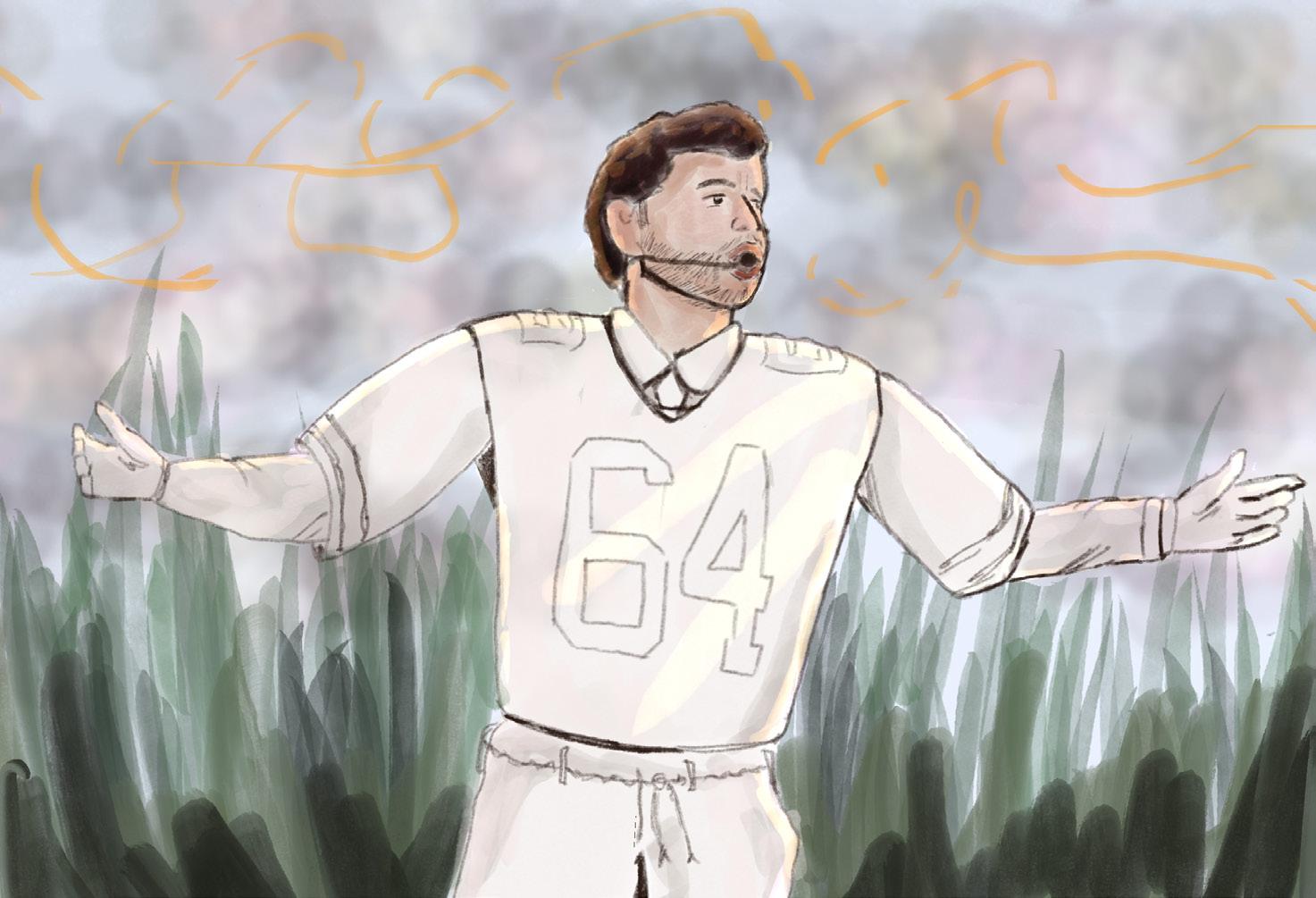
Throughout his Super Bowl performance, the staging itself venerated his Puerto Rican heritage. The set, a field of tall grass, paid homage to Latine labour—a reference to sugar cane extraction, which was collected through slave labour in the Americas. Bad Bunny also had actors play roles across many different industries dominated by Latine workers, including con -
struction, food service, and more. In spotlighting labour that is often overlooked, the artist created a space of acknowledgement and appreciation for those workers and the generations before who have toiled in these workforces.
Bad Bunny also celebrated love during his performance. He invited one lucky couple to get married on the football field, which ended with the introduction of Lady Gaga’s performance of Die With a Smile. This is a stunning example of how celebrities can use their fame to make others’ dreams come true. It also highlights how love in the face of hatred can encourage others to combat political polarization through community building.
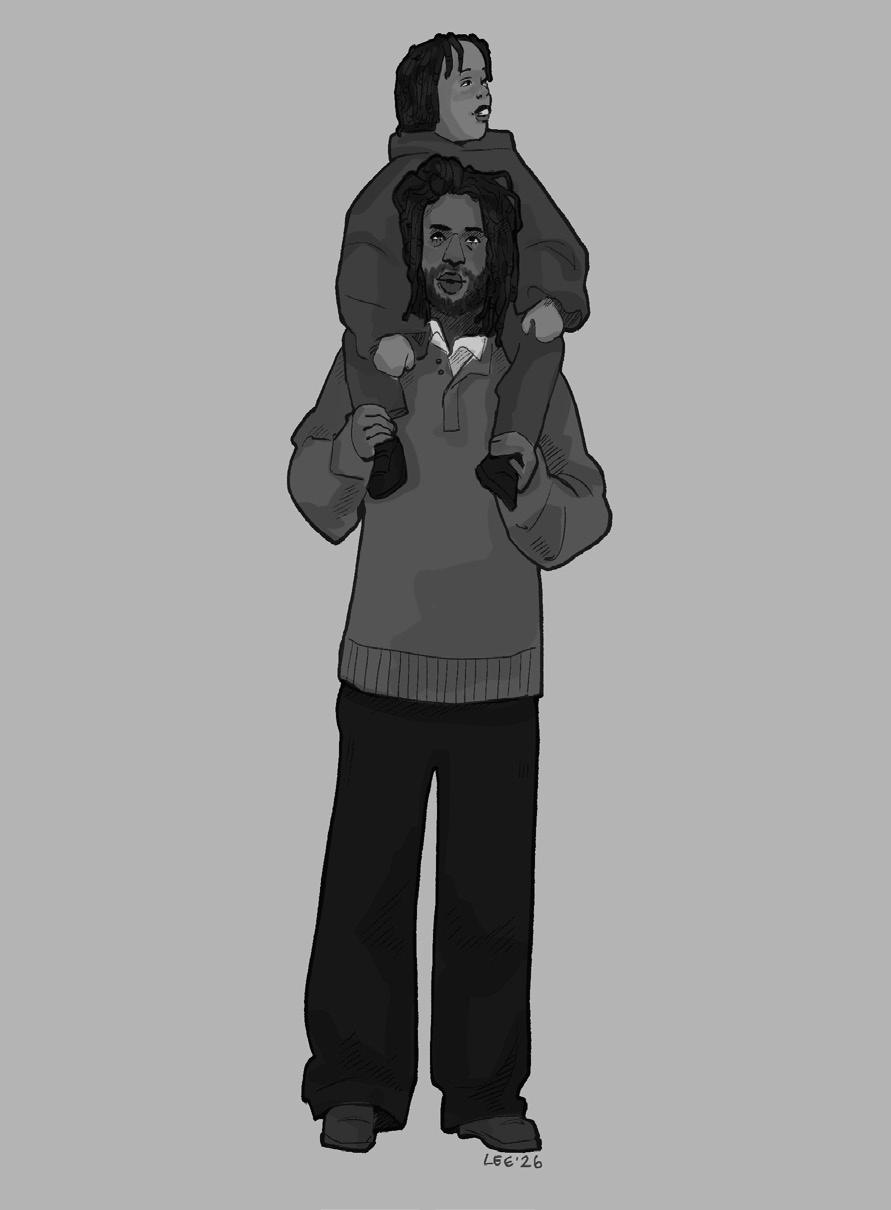
One of the most noteworthy segments of the performance featured a Latino boy and his father watching Bad Bunny’s recent Grammy acceptance speech, where he discussed the vital impact of immigrants on American success, condemning ICE’s violent treatment of citizens and non-citizens alike, and advocating for the celebration of multiculturalism. Bad Bunny was the first artist to win Album of the Year for a fully Spanish album. Amidst the rise of anti-immigrant sentiment and prejudice towards Latin Americans, Bad Bunny serves as a model of Latine resilience and accomplishment for immigrants and youth. This inclusion highlights the importance of representation as a way to dismantle stereotypes that dehumanize marginalized groups.
As Bad Bunny concluded his perfor -
mance, he gave a shoutout to every country in the Americas. Naming them in geographic order from south to north, his final shoutout went to his home of Puerto Rico. As he exited the stage with a group of musicians and dancers carrying flags of the Americas, he sang the chorus of his song “DtMF”, filling the field with the elation of North and South American cultural diversity, forever marking this performance. On the stadium’s jumbotron, the message “The Only Thing More Powerful Than Hate is Love” shone in large print while Bad
Bunny held a football that read the message “Together, We Are America.”
Bad Bunny’s display of pan-Americanism is particularly impactful during a time of intense division. Over time, global superpowers, specifically the U.S., have revealed prejudice towards Latin American communities, as evidenced by the increasing atrocities committed by ICE. Bad Bunny’s theme of unity in the face of hatred sends the message that everyone should have a place in America—the nation’s cultural diversity is its greatest strength.
Silva Bumpa blows the roof off Newspeak as UK garage continues t o soar in Montreal The Sheffield native showed why he is one of the most exciting names in UK dance music
Luke Pindera Contributor
Being on the sold-out dancefloor of Newspeak last Friday felt like being transported to a smoke-filled Manchester warehouse or an underground party in the heart of Sheffield. For Montreal’s UK bass community, this was no ordinary club night. Feb. 13 had occupied calendars for several months, as rising garage producer and DJ Silva Bumpa made his long-awaited Montreal debut at one of the city’s perennial electronic music venues.
As Silva Bumpa loaded the first track of his two-hour set, anticipation buzzed through the room. The Sheffield native’s groovy UK garage music style has made him one of the leading figures of the new generation.
Judging by the expressions of disbelief that accompanied each sub-bass frequency and synth melody, the crowd’s high expectations were met.
“His style makes you so excited and grateful to be there,” Ignacio Hampton, U2 Arts, said in an interview with The Tribune
Silva Bumpa’s selections are remarkably tight and consistent, making for an extremely cohesive set. He has carved out a distinct style of bumpy, nostalgic garage that prioritizes maintaining a continuous groove throughout a set, rather than producing singular moments of bass-heavy drops. Whether he’s picking from his extensive production catalogue or his prized folder of
dubplates, he fills his sets with club-ready tools built for the dancefloor. When discussing his production techniques in an interview with MusicRadar, Silva Bumpa said, “Layering is everything for me. Separating out sub, having stuff that gives punch, stuff that gives texture, and stuff that gives powerful sub energy so that it can hit on a sound system.”
This demonstrates the garage prodigy’s astute ability to make tunes that are functional for a rave.
Coming off an all-night long tour in the UK last fall, Silva Bumpa is at ease when he’s controlling the pace of his sets, selecting tracks that keep the audience engaged while still allowing the dancefloor to breathe. Clearly a master at reading crowds, he consistently builds up the club’s energy before dropping some of his most explosive tracks, such as “Wrap it Up,” a bassline-influenced standout from his 2025 EP Check Dis Out
One of the most memorable moments of the set came when Silva Bumpa mixed “Doin’ It” after playing a monstrous edit of Basement Jaxx’s “Where’s Your Head At,” a staple of UK rave culture. Since ATW, a label run by fellow garage heavyweights Interplanetary Criminal and Main Phase, released “Doin’ It” last summer, it has become a viral anthem.
Despite Silva Bumpa’s commercial success, he has stayed true to his northern roots, with the celebrated sounds of Sheffield bassline and speed garage influencing his trademark style. The Steel City has played a
huge role in the legacy of UK dance music. One of Sheffield’s most iconic clubs, Niche is regarded as the most influential venue for the development of modern bassline.
Raver Kenzo Ebanda explained his appreciation for Silva Bumpa’s style in an interview with The Tribune
“Especially in this venue, that more sweaty, underground feel that he has fit really well. We don’t usually get that many sets like that in Montreal. I feel like a lot of the UK [garage music] is more of that mainstream stuff,” Ebanda said.
One of the standout tunes that conveyed the vibe of the underground was Interplanetary Criminal’s “Memories,” a jaw-dropping dub that’s been on every bass-head’s search history for months.
Silva Bumpa’s impressive showing at Newspeak was the latest chapter in an evolving love story between North American audiences and UK garage. With various local collectives thriving and more garage stand-outs slated to grace the city’s clubs in the coming months, the future is bright for bass music in Montreal.
Silva Bumpa took home the Breakthrough DJ award at the 2025 DJ Mag Best of British Awards (Luke Pindera / The Tribune)
Approximately 380 people dressed up as tall grass stalks for Bad Bunny’s halftime performance. (Mia Helfrich / The Tribune)
OFF THE BOARD
Against reducing, reusing, and recycling
Anna Seger Photo Editor
As a full-time English Literature student and part-time moviewatcher, one of my greatest pleasures is building a mental web of intertextuality: The way texts are influenced by, adapted from, or allude to previous texts. Canonical works such as the Bible, Greek and Roman classics, and Shakespearean plays have long served as the foundations of or inspirations for works across literature and film.
Milton’s Paradise Lost and Steinbeck’s East of Eden radically reimagine stories from the Book of Genesis. Carson’s Autobiography of Red draws from and gives new
life to fragments of the lyric poet Stesichorus’s Geryoneis My Own Private Idaho , The Lion King , 10 Things I Hate About You , The Talented Mr. Ripley , and countless other seemingly modern tales imaginatively retell or rework Shakespeare’s plays, themselves retellings of older stories. What makes adaptations like these work is that they believe in the works they are drawing from while establishing their own unique vision.
Walking into Emerald Fennell’s Wuthering Heights adaptation last week, I certainly was not expecting anything near Paradise Lost ’s level of innovation and depth. Somehow, it still managed to disappoint.
Emily Brontë’s Wuthering Heights is a novel about obsession, rage, revenge, cruelty, and abuse. It’s about the class resentment and racial anxieties of the 19th-century British Empire. It grabs hold of its reader and doesn’t let them go. It does not invite the reader to mourn; it demands that we sit with our discomfort.
Fennell’s Wuthering Heights saps the novel of all this substance, flattening it into a glossy, Romeo and Juliet -esque tragedy marketed as “the greatest love story of all time.” The novel, on the other hand, actually only grants about a third of its narrative space to Cathy and Heathcliff’s relationship, focusing
primarily on cycles of violence and abuse. Heathcliff is a victim of brutality and of racial Othering, but our readerly empathy for these struggles is stretched and challenged as he perpetuates calculated violence against other characters. Casting Jacob Elordi as Heathcliff and framing his character as a sardonic and misunderstood dreamboat instead of a complex, tormented, terrifying figure goes beyond mere divergence from the source material: It squashes any possibility of transmitting the novel’s thoughtful commentary on social dynamics in 19th-century England. What the film lacks in real nuance it attempts to make up for in shock value and aesthetics, yet it ends up falling short of any meaningful intervention, entirely out of touch with what makes its source material so compelling.
What stuck out most to me, though, was that I couldn’t even enjoy criticizing the film because it isn’t an isolated failure. The film is symptomatic of a much larger, disappointing cultural trend: Reliance on the profitability of nostalgia at the expense of originality and creativity. Studios greenlight lacklustre sequels and adaptations because they perform predictably and consistently well at the box office. Despite mixed reviews and criticism, Wuthering Heights is still the highest-
grossing title of the year so far, bringing in $83 million USD at the global box office on opening weekend. Clearly, though, despite the prevalence of adaptations like Wuthering Heights , there remains a strong cultural desire for original and innovative works. The massive commercial success and critical acclaim of recent films such as Everything Everywhere All at Once and Sinners prove as much. Even so, these original works don’t stand entirely alone. Everything Everywhere All at Once began as Daniel Kwan and Daniel Scheinert’s response to The Matrix but draws in allusions to other director styles and films, from Wong Kar-Wai to Princess Mononoke Sinners reinvents the vampire genre and deepens familiar character archetypes and dynamics through the dimensions of race, religion, and class.
Creation always comes from a vast and interconnected web of inspirations. The parameters for good retelling, then, are not so different from the parameters for good art in general. For an adaptation to work, it must both believe in the works it’s drawing from while establishing its own unique vision. All works should contribute to this conversation across time, as this connection is what allows art to deepen its individual and interwoven meanings instead of being watered down.
Word on the Y: What McGillians are saying about the end of the Legault era
Students reflect on implications for education in Quebec
Parisa Rasul Saff Writer
Quebec Premier Francois Legault announced on Jan. 14 that he would be stepping down from his position after eight years as the head of the Coalition Avenir Québec (CAQ), a leadership emblazoned by the weaponization of identity politics and controversy. Through various legislative agendas, Legault forged a path rooted in partisan nationalism, rallying for the preservation of a Quebec identity through measures such as Bill 96 and Bill 21, which solidified his attachment to conservative secularism and nationalism.
It is no surprise that rampant discussion has emerged from such controversies. That is why The Tribune took to the Y to see what McGillians have to say about Legault’s resignation and the future of Quebec.
Camila Sierra, U1 Arts, reflected on the impact of Quebec’s restrictive legislation.
“It’s a relief, honestly, knowing that he’s resigning, and I hope that the values he’s taking with him are these very narrow-minded and conservative values that represent mostly white, richer parts of the population. I hope the values that are introduced are more inclusive and more intentional policies that don’t only focus on secularism […] [because] they weren’t really considering the kinds of populations that would be affected by the law [Bill 21]
directly.”
Passed in 2019, Bill 21 bars public sector workers such as judges, police officers, prison guards, and teachers from wearing religious symbols while at work. However, under the guise of creating a secular province, the act disproportionately impacts religious minorities.
Bill 21 represents Quebec’s living history of racism and xenophobia still attempting to restrict the religious liberties of minorities today. It posits strict secularism as the standard, thus rendering outward expressions of faith by religious minorities more easily condemnable while purporting to be a policy of progression and equality.
Jacintha Dykes, U4 Arts, discussed the implications of an identity-obsessed government as other issues continue to negatively impact Quebec residents and students in the province.
“I remember the tuition hikes, a couple years ago. That caused a lot of panic. I don’t think it’s productive to […] favour one part of the population over another. I think that it just creates a lot of division […] [and] distracts from actual issues.”
Vanessa Charleston, U1 Science, explained her own experience with Quebec language laws and how they shaped her early education.
“Going to an English school in Quebec my entire life, I have noticed that our schools just don’t get any funding. [Kids in Quebec typically] all go to French schools because [Legault] only wants
kids to go to French schools [….] When I was a kid just starting school, my mom was going to put me into French school, but then she thought that there was not enough English for me to learn because they only do, at least from when I was a kid, roughly three hours of English a week.”
As of 2026, the Quebec government has maintained its 33 per cent tuition hike for out-of-province students enrolling in English universities. This not only discourages out-of-province Canadian students from attending top institutions like McGill, but also puts a financial strain on
the university due to decreased application rates. By attempting to maintain a francophone majority, the government has instrumentalized and abused educational institutions to reestablish a narrow Quebec identity.
Legault will remain the official Premier of Quebec until the election of his successor in April of 2026. The consensus on campus is clear: The CAQ must reevaluate its priorities and put forth a candidate ready to confront longstanding systemic issues in the province, from its healthcare shortage, the housing crisis, and a struggling education sector.
Brooke Barak Staff Writer
Have you noticed yourself sniffling or coughing more? Is the back of your throat starting to get that feeling? I hate to be the bearer of bad news, but you probably have the McGill cold. This bothersome illness can last from about five days to two months and can feel like a minor drag or the worst sickness you’ve ever experienced. With midterm season upon us, it’s more important than ever to develop your toolkit against this pesky winter inevitability. The Tribune has compiled four pro-tips to combat the notorious McGill cold.
Get yourself a flu shot
The first and most important thing is to try to prevent the illness before it reaches you. Getting a flu shot at the beginning of the school year is an effective preventative measure to stave off influenza and strengthen your immune system. Although vaccinations may seem inaccessible, they’re more in reach than they may seem. Jean Coutu pharmacies offer free flu vaccinations by appointment, and there are a few right near McGill’s downtown campus! Getting vaccinated is easy and will do wonders to fend off the wretched McGill cold.
Battling the McGill cold Three tips to improve your recovery
Book a consultation with the McGill Student Wellness Hub
Want to talk to a medical professional? Call McGill’s Student Wellness Hub. They provide online or in-person consultations and can diagnose or prescribe you with the appropriate medication for whatever symptoms you’re facing. But be ready: Appointments fill up quickly. Set your alarm for 8:20 a.m., as the hub opens at 8:30 a.m. and your best chance at getting the earliest appointment is to be the first person on their line.
Do not go out
Even if you already bought your Café Campus or New City Gas ticket, you should take the weekend off. This is easier said than done when you’ve already paid $25 CAD for an “early bird” cover charge, but pushing yourself to go out will only exacerbate your symptoms. Plus, being in a crowded environment like a club could allow the illness to spread, inevitably putting your fellow students and friends at risk. Instead, rest at home—binge the series you’ve been meaning to watch or catch up on some work you’ve been procrastinating; drink a cup of “throat coat” tea and go to bed early. A good night’s sleep will give your body more time to redirect its energy towards your immune system, strengthen it, and help you recover more
quickly. Trust me, you’ll thank yourself in the morning.
Indulge in nutritious comfort foods
When recovering from a cold, a steamy broth will be your best friend. Soothe your throat and your soul and get on Uber Eats to order some hot, comforting chicken noodle soup from Snowdon Deli. If anything is going to cure you, it’ll be the warm broth from one of Montreal’s most famous Jewish delis. Alternatively, some warm lentil soup will put your throat at ease, and its health benefits will strengthen your body for a speedier recovery. Remember to eat Vitamin-C-rich
foods or take supplements.
Battling the McGill cold can be a long, hard fight. Whether it’s the infamous “Frosh Flu” or the feared finals season cold, the sickness will always find you. It’s crucial to take care of yourself to recover during this inevitable period. And remember, it is just as important to take preventative measures as it is to ask for help. Call on friends and family to help you through your battle against the multitude of winter illnesses! You shouldn’t have to fight a dreaded sickness alone. Follow these tips and hopefully your fight will be a little less wearing.
There are
Queer McGill’s second annual Black History Month event fosters solidarity and community
The event celebrates camaraderie between queer and Black students at McGill
Talia Moskowitz Staff Writer
On the evening of Feb. 18, Queer McGill hosted its second annual Black History Month event, featuring students, panellists, and representatives from various McGill organizations, centred on the celebration of intersectionality between queer and Black communities on campus.
In an interview with The Tribune , Queer McGill member Al Derviseric, U3 Arts, shared some of the initiatives and core values of the club, highlighting its important work in providing resources such as gender-affirming care, safe sex supplies, education, and outreach to McGill’s queer community.
“Queer McGill is a student service for the queer student body,” Derviseric said. “We have resources that are free or paywhat-you-can. For Black History Month, this is our second annual attempt at a panel. The goal tonight is to reach out to all sections of our queer student body.”
Derviseric stressed the importance of solidarity, intersectionality, and representation— three themes that guided the event’s agenda.
“In the panel, the idea was to highlight Black voices in our community and also to have the vendors and the panellists to talk about or sell what they do, and just to highlight some community members from the queer community. I think soli -
darity between all groups at the margins of society is very important. It is very important that we stand up for each other, and it’s important to achieve collectivity and collective resistance,” Derviseric said.
Organizers and attendees also emphasized the importance of creating a safe, accepting, and intellectually stimulating space for queer and Black students to come together. Miah Dionne, a M.A. student in Education and Society at McGill, expressed the importance of bringing marginalized groups together to learn from and celebrate one another.
Dionne is involved in various antiBlack racism initiatives at McGill, including the Black Student Liaison and the Branches Program for Black learners. She is also the leader of Black Students for Youth, a mentor program designed to offer a network of support systems for Black students designing their educational paths. She highlighted the value of the event in creating a space of collaboration and education for queer and Black students.
“Having the space to speak with folks is always revolutionary,” Dionne said. “We can exchange ideas, especially as someone who talks a lot about Blackness, but also learning about queerness and how being on those margins and being able to find solidarity with each other is something that is very powerful.”
Matahilde Martial-Oger, U2 Arts,
represented UHURU, the African Studies journal at McGill. Martial-Oger is a junior editor on the journal and articulated the publication’s vital role in creating an academic space for innovation and creativity surrounding diasporic African culture, politics and society.
“What we want to do is give a space for McGill students, but also people in the world because we are not just restricted to university students and certainly not to Canada [...] to empower them to speak their stories, to bring an analytical and artistic personal perspective on the various topics that they want.”
Montreal annually hosts the Massimadi Festival, which celebrates the art of the city’s rich Afro-Queer community. (Armen Erzingatzian / The Tribune)
Martial-Oger stressed UHURU’s vital role in fostering increased student scholarship and engagement with African Studies, pointing out its marginalized position as a field of study at McGill.
“We want to give a place to a topic that is often neglected. If we even consider the fact that African Studies is part of the Islamic Studies [department] at McGill, it speaks to that issue,” Martial-Oger said.
UHURU’s upcoming issue is focused thematically on Afrofuturism, which Martial-Oger described as a unique and forward-looking lens through which African Studies can be engaged.
“Afrofuturism is a cultural, artistic, and political movement that seeks to reimagine, reconsider, reframe African history, cultural movements, and future through a more futuristic lens, a more optimistic one as well,” Martial-Oger said. “It kind of reaches into science fiction, it has its own look that is very bold, it stands out, mixing tradition with also a futuristic sense.” By showcasing intersectionality and solidarity between Black and 2SLQBTQIA+ students on campus, the event reaffirmed that true inclusion rests in shared learning and mutual empowerment—a vision that Queer McGill and its collaborators continue to bring to their events. Interested students can visit Queer McGill’s Instagram, @queermcgill. UHURU is currently accepting submissions for their upcoming issue.
over 200 known respiratory diseases. (Ryan Dvorak / The Tribune)
Take the Tribune’s Science and Technology quiz
How well do you know McGill and Montreal’s science scene?
Arielle Brunet
Contributor
Montreal is often nicknamed the “Underground City” due to its large pedestrian subway network. How many kilometres does this network run?
a) 33 km
b) 55 km
c) 23 km
d) 47 km
Which McGill professors discovered the chemical element radon in 1899?
a) John J. M. Bergeron and Ernest Rutherford
b) Rudolph Marcus and Otto Mass
c) John S. Foster and William Osler
d) Ernest Ruth- erfold and Robert B. Owens
Annie L. Macleod was the first woman to earn a PhD at McGill. In which department did she complete her PhD in 1910?
a) Genetics
b) Chemistry
c) Immunology
d) Neuroscience
In what McGill faculty did Leonard Cohen, legendary Montreal poet and lyricist, enroll for a single semester after completing
his undergraduate English literature program at McGill?
a) Science
b) Arts
c) Law
d) Schulich School of Music
In what year did Dr. Wilder Penfield found the Montreal Neurological Institute?
a) 1912
b) 1934
c) 1955
d) 1898
Which dinosaur species at 8 meters in length captivates the entrance of the Redpath museum?
a) Tyrannosaurus
b) Hadrosaurus
c) Gorgosaurus
d) Megalosaurus
In what McGill building can you find the Facility for Electron Microscopy Research (FEMR), dedicated to advanced electron microscopy—one of the most cutting-edge electron microscopes of the modern era?
a) Duff Medical Building
b) Maass Chemistry Building
c) McIntyre Medical Building
d) Strathcona Anatomy and Dentistry Building
Which of the following is an ecosystem not represented in Montreal’s Biodome?
a) Temperate Grasslands
b) Laurentian Maple Forest
c) Sub-Antarctic Islands
d) Tropical rainforest
Temperate Grasslands
Strathcona Anatomy and Dentistry Building
c) Gorgosaurus
b) Chemistry c) Law b) 1934
d) Ernest Rutherfold and
33 km
Answers:
McGill BioDesign pushes the boundaries of competitive bioengineering and peer collaboration A look into the club’s inner cogs and fascinating initiatives
Luca Paone Staff Writer
McGill BioDesign is one of McGill University’s premier bioengineering design teams. Based on engineering design practices, the team tackles an array of projects in medtech and sustainability, affording students the opportunity to collaborate in research laboratories across campus and compete internationally. For many, McGill BioDesign provides a unique learning environment outside of traditional coursework.
In an interview with The Tribune, project lead and U3 Faculty of Science student Siqi Mi—who joined McGill BioDesign as a research member and currently serves as Team Lead for the SensUs project—praised the team’s open-minded ethos and push to pursue individual interests.
“For me, BioDesign is a place [where] you can implement your thoughts,” Mi said. “When you feel like there’s a problem outside […] you can just come in and bring it up, and people will do the research and implement it into a protocol.”
Each year, McGill BioDesign runs approximately five projects, with teams of roughly 15 to 25 members. Projects begin with an ideation phase, followed by a literature review and protocol designs. Teams often start by replicating methods described in previous research before modifying them to meet specific project goals.
“We definitely follow the path of what the previous paper has done […], and oftentimes we will add our new stuff in it to improve for certain goals,” Mi explained.
A distinctive feature of BioDesign lies in
its internal structure. Similar to the scientific industry, projects at BioDesign are divided into research and translational potential groups. The research group handles experiment ideation, laboratory testing, and result optimization for competition. The translational potential group focuses on the projects’ real-world applications, consulting with industry professionals and collaborating with the research team on commercial aspects. The two groups meet weekly to update one another on progress and constraints.
In addition to developing practical skills, BioDesign allows its members to see how research unfolds outside a classroom setting.
“Oftentimes, research fails. You go into lab, and whatever you make doesn’t work,” said Alan Fu, BioDesign’s Co-President and a U3 student in the Faculty of Engineering, in an interview with The Tribune. “But you slowly iterate, you slowly improve, and finally achieving something that gets some nice results is quite satisfactory.”
BioDesign also emphasizes global exposure. Each year, the team sends projects to international competitions, including the SensUs competition in the Netherlands and the BioDesign Challenge in New York City. SensUs is a biosensor competition that provides teams with a specific challenge; one recent prompt involved developing a monitoring system for levodopa, a medication used as a dopamine replacement in Parkinson’s patients. In addition to international events, BioDesign participates in local competitions such as the TechIdea Pitch Competition, where the team recently placed third.
On campus, BioDesign hosts the Biocase
competition, inviting undergraduate teams to design solutions to bioengineering-related dilemmas over the course of a weekend. According to organizers, hosting Biocase serves as a way for BioDesign to give back to the student competition community.
Beyond research and competition, members consistently praise the club’s sense of community. Students come from a range of academic backgrounds, which allows projects to benefit from different perspectives. Fu noted that the club fosters close friendships through shared lab work and team social events.
“I joined BioDesign in my first year, and that was when I met some of my closest friends from university,” Fu recalled.
Over the past four years, BioDesign has
grown from approximately 40 members and around two projects to more than 100 members across five projects. Certain initiatives continue for longer than an academic year, and one team is currently in the peer-review process for publication through Cambridge University Press.
For students interested in applied science and design, BioDesign offers a clear pathway into hands-on research.
“Getting involved in a design team is a really amazing way to get actual hands-on experience on what industry or research might actually look like,” Fu said.
Interested students should note that recruitment for research roles typically occurs in the fall, while executive positions open later in the academic year.
Dr. Kenneth Melville was the first Black department chair in 1953, serving as the chair of McGill’s Pharmacology and Therapeutics department. (Eliot Loose / The Tribune)
BioDesign execs impart their fourth-year wisdom: Get involved outside of the classroom early to learn the tools necessary for success, and build yourself a great community. (Sara Moores / The Tribune)
Robert B. Owens
Available but not accessible: Clinicians highlight gaps in mental health service delivery
Systemic barriers decrease access to mental health care for socioculturally diverse communities
Michelle Yankovsky Staff Writer
Conversations surrounding mental health (MH) have increased dramatically in recent years, with many institutions promoting wellness and expanding volumes of resources. However, the presence of services alone does not guarantee accessibility, particularly for immigrants, refugees, and socioculturally diverse communities, who often face barriers due to language, financial constraints, and increasing wait times. Many domains across Canada claim to value equity, diversity, and inclusion (EDI); why are certain communities continuously excluded?
This question led Tasmia Hai, associate researcher at the Douglas Research Centre and principal investigator of the Cognition, Attention & Achievement Research (CAAR) lab, to examine clinicians’ perspectives on MH service delivery. Hai’s recent study, published in BMC Health Services Research, interviewed 19 MH clinicians to gain their perspectives on the barriers to access of diverse populations. Her desire to pursue this research stems from both personal experience and an intention to better capture the current MH service landscape.
“Since 2020, there’s been a lot of push for EDI initiatives, and I wanted to get a sense from clinicians specifically working with individuals from diverse sociocultural backgrounds,” Hai said in an interview with The Tribune . “I myself am a first-generation
immigrant to Canada, so I really wanted to see what the current circumstances were and which barriers [clinicians] were identifying.”
Other studies typically focus on patients’ experiences when navigating MH systems; Hai aimed to address this research gap by shifting the focus toward MH providers.
“As a clinician myself, I wanted to get a sense of what their experiences are when it comes to the challenges they are finding at work, because at the end of the day, clinicians are the frontline staff [providing the services].”
Clinicians identified logistical challenges—long wait times, high costs, and limited access to multilingual services—as common barriers to MH care.
“MH services are not generally free, so you would have to have access to external insurances [to cover costs]. However, the organizations providing services for reduced costs often have limitations, such as only allowing 10 sessions, which clinicians expressed [might not be sufficient for adequate care],” Hai explained. “Sometimes a family could only come to the clinic in the evening, but the clinician has to work their general nine to five, and so they don’t have the flexibility to move their schedule around because it’s not [permitted].”
The MH providers also identified social obstacles—stigma, mistrust, and cultural mismatch—that perpetuate barriers for diverse populations when accessing MH ser-
vices.
“Many [clinicians] mentioned systemlevel changes to support individuals from diverse backgrounds,” Hai said. “It often felt tokenistic, like ‘Here is an EDI training that you can do,’ whereas if staff were more able to take time from their day to get those trainings and integrate them throughout their daily work, [social barriers could be better addressed].”
Hai highlighted that most of the clinicians in the study were from diverse backgrounds themselves, which may have contributed to their view of EDI as central to their work.
“There’s something about having that lived experience that I think often does not get captured in traditional Western medicine’s [curriculum],” Hai said.
Hai also emphasized the importance of early student involvement in their education so that, as future clinicians, they can develop the skills to foster equitable environments for diverse patients.
“With McGill being such a diverse institution with so many individuals from across the world, I think we should encourage students to think about some of the impacts of MH barriers to advocate for themselves and others in their future,” Hai said.
Hai emphasized the im-
portance of addressing MH concerns proactively, noting that preventative measures are crucial to maintaining well-being.
“Things like high stress can lead to high blood pressure, which can lead to other cardiovascular diseases or diabetes,” Hai said. “We often don’t think about MH being associated with these things, but if we don’t address these challenges early on, it can cause [poor outcomes].”
Overall, Hai’s findings show that improving MH service access is not solely about expanding services but about transforming the systems that govern them through structural reform. While institutions may promote EDI on the surface, translating those missions into meaningful change for our diverse population remains a work in progress.
Parenting Black and Latine children in an era of heightened racism How a racial profiling scale captures parents’ worries over their children facing racism
Antoine Larocque Staff Writer
In a political context marked by U.S. President Donald Trump’s inflammatory rhetoric vilifying people of colour, the rise of white supremacy, and heightened anti-immigration enforcement by ICE, racism and discrimination have become increasingly prevalent and dangerous for many people of colour. Black and Latine youth, in particular, are victims of disproportionate discrimination at school and in broader society, leaving parents deeply concerned about their children.
“Parents of colour have often had these [racist] experiences growing up and probably worry about their kids having them as well, and that worry might be associated with psychological outcomes or different behaviours,” N. Keita Christophe, an assistant professor in McGill’s Department of Psychology, said in an interview with The Tribune
This worry can take on many different forms, depending on social circumstances as well as parents’ own experiences with racism.
“Parents can worry about their kids getting discriminated against by teachers,” Christophe said. “They can worry about […] their kids experiencing police violence. Some of them might even worry that their kids will discriminate against other kids.”
Due to a lack of tools to assess parents’ concerns about their children’s experiences of racism, Christophe and his collaborators sought to measure how parents worry about their children’s discrimination. Their goal was to observe
whether different types of worry reflect distinct concerns about racial discrimination.
The researchers used a scale called Worries About Racial Profiling (WARP) to assess the types of worries parents have, surveying Black and Latine parents in the United States who have a child aged 10 to 18. Parents reported on their concerns about their children facing discrimination, their own discriminatory experiences, and how they talk to their children about race and racism.
The team worked to determine whether the different survey items correlated with one another—whether they cluster into distinct dimensions or operate in distinct spheres. Their findings suggest that the different types of worries are closely related. Importantly, the measure also performed well across both Black and Latine racial groups and accounted for biases.
“A lot of times, [in psychology], the measures that we use […] have not been tested to see if they have a bias for or against certain groups, but if we want to compare groups on different things that we care about, we want to make sure our measures work equally and do not introduce that bias,” Christophe said.
The researchers also explored how these worries relate to other aspects of the parents’ lives. Parents who expressed greater concern about their children were more likely to have experienced discrimination themselves and to have more frequent conversations with their children about coping with racism. Notably, higher levels of parental worry were also associated with depressive symptoms in parents.
One strength of this study is that it targeted
people across different geographical areas, capturing how racialized experiences vary across regions.
However, the study did not evaluate parental worries in Asian families. Asian individuals typically face different stereotypes, such as the “model minority” myth, a harmful stereotype which undermines the discrimination Asian people experience by framing them as intelligent and hardworking. Because discrimination can take distinct forms across racial groups, future work should focus on developing more inclusive measures that reflect a broader range of racialized experiences.
Looking ahead, Christophe recommends studying how parents’ worries about discrimination evolve as their children grow older. They expect concerns to grow during their children’s adolescence, as teenagers often spend more time outside the home and face greater exposure to other adults as well as the police.
More broadly, Christophe situated his work within a paradigm shift in psychology. Historically, racialized communities were excluded from psychology research or treated as inferior to the white population. Today, more academics are focusing on the cultural strengths of Black, Latine, and other racialized communities—a critical area which must continue to be studied to progress
towards an equitable society.
“As much as it is important to focus on things related to racism and discrimination, I would say it is even more important to focus on positive aspects,” Christophe said. “That is a lot of what my other work does, looking at cultural pride and identity and how you instill that in kids and in families.”
While some parental concern about discrimination may help prepare children to cope with racism, excessive stress may undermine effective parenting. (Zoe Lee / The Tribune)
Nearly one quarter of Canada’s population identify as immigrants. (Lilly Guilbeault / The Tribune)
McGill track and field shines at RSEQ Indoor Championships
Record-breaking RSEQ performances despite recent cut of the Program
Ivanna Zhang Staff Writer
Athletes from 11 universities competed at the Réseau du sport étudiant du Québec (RSEQ) Indoor Track and Field Championship meet on Feb. 20 and 21. Hosted at McGill’s Tomlinson Fieldhouse, the meet featured 82 McGill athletes with impressive results from both the Redbirds and the Martlets.
As the final home meet at McGill, the RSEQ championship carries more than results and standings. It represents the last time the McGill track and field team will ever compete on home soil, and the final meet the 125-year-old program will ever host. For athletes, the RSEQ championship also serves as a qualifying event for the U SPORTS National Championships. Athletes who placed first in their event, produced a result ranked in the top 12 nationally, or reached the U SPORTS Qualifying Standard will represent their university in Winnipeg from March 5 to March 7.
Despite McGill Athletics’ decision to cut the program, the team has had one of its best seasons yet. At the Martlets Open on Nov. 29, the Men’s and Women’s teams placed first and second, respectively, out of 19 teams, breaking several school records along the way. However, the team faced some unexpected challenges over the past weekend. The 4x200 Men’s Relay was disqualified due to improper baton passes after breaking the school’s record for the second time this season.
Head Coach Dennis Barrett started coaching McGill Track and Field in 1986. In an interview with The Tribune, he discussed the expectations entering the meet.
“We’ve been doing quite well,” Coach Barrett said. “We want to make sure we’re competing at a very high level in terms of our athletes and our team being competitive to be in the hunt [for champions at the] RSEQ championships.”
William Sanders, U1 Engineering and member of the 4x200 team, explained to The Tribune his emotions after the disqualification.
“It’s unfortunate because we ran a great time,” Sanders said. “But we’re still going to Nationals, and we just put up the best time in the country. So I think we know what we’re going to do, and everybody else does too.”
Sanders also competed in the 600-metre, 300-metre, and 4x400-metre events, placing third in the 600 and winning both the 300 and 4x400-metre races. In the 300-metre dash, Sanders clocked 34.03 seconds, breaking the school record that was last set by his teammate Luca Nicoletti, U3 Engineering, at the Martlets Open.
“I’m super happy with that one,” Sanders explained. “Before the race, [Nicoletti and I] said that the only good outcome was that we both make it to nationals. We went out there and dragged each other to our personal bests.”
Nicoletti believes that this is the strongest the team has ever been.
“I would say this is our glory year of track, and it’s the best I’ve seen this pro-
gram,” Nicoletti said.
Determination carried the team throughout the season. With the men’s team placing second and the women’s team placing third, and capturing five golds combined, the track and field team has seen success across the board, from the men’s squads to the women’s, and from the racetrack to the field events.
Rebecca Warcholak, U2 Science, is one of the captains of the McGill track and field team. She placed first in the triple jump event with a mark of 11.68 metres. In an interview with The Tribune, she reflected on how McGill Athletics’ decision has motivated her to elevate her performance.
“Standing on the runway competing yesterday and today, I was definitely trying to fuel myself with all the anger and the emotions that were present this entire season and just making sure I don’t have any regrets,” Warcholak said.
Sanders and Nicoletti also shared similar sentiments, describing how the decision has impacted them.
“I’m thinking about this decision while I’m on the starting line,” Sanders said. “At nationals, I want to show the country what a horrible mistake [McGill Athletics] made.”
“I love my school, but I’m very disappointed in my athletics department,” Nicoletti said. “We have a lot of promise. There are a lot of young guys who will have a shot at the Olympics, and this could be ruining their dreams.”
Barrett, however, emphasized the importance of staying in the present moment.
“One of the things that sports has taught me is that you’ve got to focus on the here and now, and tomorrow will take care of itself. You focus on now, keep battling, and hope you can get a reversal of fortune going forward.”
Despite the uncertainty, the team hopes to carry the words of their head coach at the U Sports Championships, where they will represent McGill and strive to achieve new heights one last time.
Sports and politics inseparable at the 2026 Milano Cortina Winter Olympics
The chaotic state of international politics looms large at this year’s Olympic Games
Luke Pindera Contributor
During the opening weekend of the 2026 Winter Olympics, U.S. Representative Tim Burchett made a post on X, writing, “Shut up and go play in the snow.” His jeer was in response to comments made by American skier Hunter Hess, who said that “it brings up mixed emotions to represent the [United States] right now [….] There’s obviously a lot going on that I’m not the biggest fan of.” Unsurprisingly, U.S. President Donald Trump also took issue with Hess, calling him “a real Loser” on Truth Social— Trump’s personal propaganda platform.
Ah, yes: The classic trope that athletes must “stick to sports,” or that they should “leave sports out of politics.” Those have never been sensible arguments. International sport has always been political.
Finnish historian Antero Holmila argues that the point of the Olympics has not simply been to organize different sports under one international event, but rather to promote “international understanding and ultimately, peace.” The idea of achieving international cooperation through sporting competition is central to Olympism. But the paradox of the Olympics is that while they intend to strengthen internationalism, the very nature of the Games—pitting nations against each other—inherently fuels national competi -
tion. The balance between internationalism and nationalism is a delicate one, and as the so-called rules-based order crumbles, the tone and meaning of the 2026 Olympic Games have shifted in tandem with the fierce nationalism of hard power politics.
The hostility hovering over this year’s Games was evident during the opening ceremony, with boos echoing through the iconic San Siro Stadium after U.S. Vice President JD Vance’s face appeared on the video screen. Top European Union diplomat Kaja Kallas commented on the incident, saying that “our public also has a pride, a European pride. So it shows.” This highlights one of the political trends that sits in the backdrop of the Games: The breakdown of the transatlantic alliance. Trump’s tariff threats, belligerence toward Greenland, and withdrawal of military support for Ukraine have led to a historic rift between the U.S. and Europe. JD Vance is a particularly controversial figure in Europe due to his infamous speech at last year’s Munich Security Conference, in which he expressed fear about Europe’s supposed “threat from within” and argued that the continent was not living up to its democratic values.
The athletes themselves may not be wrapped up in the political ramifications of their performances, but with two Latvian fans hoisting the flag of Greenland during the men’s ice hockey match between the U.S. and Denmark, it is clear
that onlookers understand that Milano Cortina serves as a political arena.
The American-Canadian sporting rivalry is another affair to watch, as Trump has spent the last year and a half provoking and intimidating his northern neighbour. Former New Democratic Party Member of Parliament Charlie Angus said that “we’re looking at a next-door neighbour who makes increasingly unhinged threats towards us. So to go to international games and pretend that we’re all one happy family, well, that’s gone.” After the intensity of last year’s 4 Nations Face-Off hockey final, which saw Canada defeat the U.S. in overtime amidst Trump’s invasion threat, all eyes have been on men’s and women’s hockey in Milan, a sport that is central to Canadian identity. Both the women’s and the men’s gold medal games saw the Americans defeat the Canadians in overtime, which clearly landed well in the White House.
The competitive nature of international sport makes it a useful tool for nationalist actors. There are implicit Darwinian notions of physicality, fitness, and competition in sports, indicating how sports can serve as propaganda to convey ideas of national superiority. With today’s Great Powers approaching
foreign policy through conquest and coercion, the mood of national confrontation hangs over the fragile international liberal order. One could argue that sport is an important avenue for nations to exert their competitive energies—after all, the ice rink is preferable to the battlefield. But as hard power politics become increasingly legitimized, international sporting competitions will offer important opportunities for nations to display their might and defeat their rivals.
The 2026 Milano Cortina Games have seen recordbreaking viewership. (Lilly Guilbeault / The Tribune)
The last time McGill hosted the RSEQ Championships was 2023. (Emiko Kamiya / The Tribune)
Know Your Team: McGill Men’s Hockey
Redbirds Hockey wraps up 149th campaign after overtime battle against the Gaels
Asher Kui News Editor
On Feb. 20, McGill Redbirds Hockey headed to Kingston to play a second game against the Queen’s University Gaels in the Ontario University Athletics (OUA) East Quarter-finals. Centre William Rouleau, U3 Management, scored first, giving McGill a temporary lead in the third period. The game would go to overtime following a Gaels equalizer, ultimately ending in a 2-1 loss for the Redbirds. Still, Rouleau highlighted that playing for McGill has been a privilege.
“It’s reminding ourselves that we play hockey for moments like these, that pressure is a privilege and [that] we have a chance to accomplish something great,” Rouleau said in an interview with The Tribune
Forward Alexandre Gagnon, MA Kinesiology, is among the five players on the team expected to graduate this year. As team captain, he mentioned his efforts in being a role model for the team’s underclassmen.
“My role is really to use my experience to guide the younger players, help them understand what’s coming and how the playoffs unfold, and how important every game is,” the Ottawa Senators fan said. “But I’m not alone in that process, we have a great group of guys with strong leadership and even younger guys […]
that contribute to keeping good vibes and a good morale.”
After their first game against the Gaels on Feb. 18, where McGill lost 6-2, defenseman Nicolas Pavan, U3 Education, reflected on how the team could improve moving forward.
“On their side, they played well defensively, they just got the puck out really fast and they were able to chip pucks out into the neutral zone,” Pavan said. “It’s the next [shift] that counts. You can’t do anything about the last one, and you just got to play the next one.”
Forward Patrick Larkin, U3 Arts, highlighted that being there for the team means bringing positive energy into the locker room and the arena.
“For me, just being vocal, energetic, and happy in the room, that’s one of my biggest attributes in every team that I’ve played on,” Larkin said. “When you get to playoff hockey, it’s very much a selfless game.
It needs to be based on everyone coming together.”
In the second game against the Gaels, goaltender Nicolas Ruccia, U0 Continuing Studies, saved an impressive 41 of 43 shots. Ruccia pointed out that the players have a strong connection with each other on and off the ice, which is definitely a factor in their performance.
“A huge part of hockey is momentum and in a game, both teams are going to have their moments,” Ruccia said. “On
the ice, the key for us is just managing the pressure and working collectively in those moments. Off the ice, we have really solid leadership and gel between us all, and that tightness will definitely help in those moments.”
Off the ice, the Redbirds players train with Redbirds Alum and Varsity Strength & Conditioning Coach Neal Prokop. In a written statement to The Tribune , Prokop highlighted the intensity of playoff hockey.
“A trip to the OUA finals will mean the potential of playing nine high-intensity games in 19 days,” Prokop said. “We can’t forget the athletes will still be practicing, travelling on a bus, taking full courseloads, and preparing for exams
alongside their classmates [….] Thus the off-ice routine during playoffs is very dependent on how a series goes, and how the athletes feel.”
In an interview with The Tribune , Head Coach David Urquhart reaffirmed that this year’s team players are all selfmotivated, and that it has been a pleasure to coach them.
“We have veteran leadership within the group that has been in these tough situations before and been able to come out the other side,” Urquhart said. “[We relied] heavily on them within the games to take control of the morale in the locker room and the effort and execution on the ice [….] I definitely would be picking our team if I had to pick any team to coach.”
From Montreal to Milano Cortina: McGillians at the Olympics
Over two dozen McGill alumni are helping shape the 2026 Winter Games
Alex Hawes Silva Staff Writer
This year, over two dozen McGillians took part in the 2026 Winter Olympics in Milan and Cortina, Italy. Current McGill students and staff were among the athletes, coaches, officials, and media professionals shaping the Games both on and off the ice.
One of the most high-profile figures is Lilah Fear, a 2023 Arts graduate who held the rare role of Olympic flag bearer, marking the fourth McGillian in history to receive that honour. Fear represented Great Britain in ice dancing alongside partner Lewis Gibson, performing a rhythm dance on Feb. 9 and the free dance final on Feb. 11.
Also competing was Kayla Tutino, known to many McGill students from her time as associate women’s hockey coach from 2022 to 2024. Tutino suited up for Italy’s women’s hockey team and made her mark by scoring Italy’s first goal of the tournament in a 4-1 victory over France.
Five coaches and technical staff also carried the school’s legacy into the Olympics. Among them were multiple figures with ties to hockey, including assistant coach Alexandre Tremblay and goalkeeping coach Karel St-Laurent—both alumni of McGill’s hockey program—who worked with the Italian women’s team. Mikael Nahabedian, a former McGill Martlets video technician, also served as the team’s video coach.
Meanwhile, McGill also had a connection with Jamie Kompon, (BEd ‘87), the assistant coach of the National Hockey League’s (NHL) Florida Panthers who is now supporting the German Olympic team, and Stephen Gough (BA ‘98, LLB ‘08), a former Canadian Olympian who served as the head coach for the U.S. short-track speed skating team.
Additionally, this Olympics featured nine McGill alumni working in administration and official capacities, including Richard Pound (BCom ‘62, BCL ‘67), an International Olympic Committee member and former McGill varsity swimmer who competed at the 1960 Rome Olympics himself. On the organizational front, Canada’s presence at the games was bolstered by McGill graduates such as Jennifer Heil (BCom ‘13), a former Olympic champion who served as chef de mission for the Canadian Olympic Committee (COC), and Marie-Andrée Lessard (BCom ‘01), who served as the COC’s senior director of Games. Others include Eric Myles (EMBA ‘11), the COC’s chief sport officer, Claire Carver-Dias (BA ‘01), a former Olympic bronze medalist now in COC operations, and Manny Almela (BA ‘99), guiding press operations at the Games.
Five of the Games’ medical professionals also have ties to the university, including physicians from the McGill Sport Medicine Clinic and specialists like Robert Foxford, who was attending his sixth Olympics as a sports medicine physician. Additionally,
five alumni served in media roles, including former National Football League (NFL) player Laurent DuvernayTardif covering events for Radio-Canada, and Jennifer Lorentz (BA ‘01), a graphic designer with NBC Sports on her eighth Olympic assignment.
McGill’s connection to the Olympics stretches back more than a century. Since the first McGillian appeared at the 1904 Olympics, alumni have accumulated 34 Olympic medals, and several have carried national flags at opening ceremonies. Yet this historic legacy may face an uncertain future. In late 2025, McGill announced sweeping cuts to its varsity and club sports portfolio, eliminating 25 teams and clubs across a range of sports, including track and field, rugby, badminton, and Nordic skiing. The decision sparked considerable backlash from athletes, alumni, and much of the student body.
The first-ever McGill student to compete at the Olympic Games was Percival Molson, who participated in track and field at the 1904 Summer Olympics in St. Louis. (Gwen Heffernan / The Tribune)
Without certain varsity sports, future generations of McGillians may have fewer opportunities to train, compete, and pursue Olympic-level achievement. Phil Edwards, a former McGill track athlete who won five
Olympic bronze medals between 1928 and 1936, developed his skills at McGill and later became the most decorated alumnus at the Olympics for several years. Edwards is just one of the many talented alumni who shone at the Olympics, who may not have achieved the same success without the opportunities and training McGill provided. With vast cuts to varsity teams within the McGill community, the university is clipping the wings of many athletes who may have had the potential to flourish as these Olympians have. As McGill diminishes its athletic scope, its presence at the Olympics will surely follow.
Five seniors on the Redbirds Hockey team are expected to graduate next year: Alexandre Gagnon, Mathieu Gagnon, Alexandre Blanchard, Patrick Larkin, and William Rouleau. (Armen Erzingatzian / The Tribune)