Flip to page 7 for Fall 2024 SSMU Referendum Endorsements by
On The Table: Kitchen Chemistry
OFF THE BOARD PGS. 8-9
The quest for perfection is unrealistic and harmful
PG. 5
Mohawk Mothers and Independent Special Interlocutor Kimberly Murray call for legal reform and justice for Indigenous children
“Our current legislation [...] is not about finding the truth, it’s about hiding the truth,” Murray says
Fabienne de Cartier & News Editors
Content warning: Mentions of residential schools, settler colonialism, violence, and death.
On Oct. 29, Independent Special Interlocutor for Missing Children and Unmarked Graves and Burial Sites associated with Indian Residential
Schools, Kimberly Murray, released her final report on missing and disappeared Indigenous children. Murray— who was appointed to the position by the Minister of Justice and Attorney General of Canada in June 2022—worked with Indigenous residential school survivors, their families, and their communities to outline the actions needed to create a legal framework to protect the rights of and ensure justice for children buried at the sites of former residential schools. Murray’s findings also supported the demands of
Canada’s new immigration restriction promotes racism and xenophobia
the Kanien’kehá:ka Kahnistensera (Mohawk Mothers’) for an investigation into the New Vic Project site, for which they filed a motion at the Supreme Court on Oct. 15. Murray asserts that through actions such as subjecting them to violence, malnutrition, and medical experimentation, the state committed “enforced disappearances” of many Indigenous children sent to residential schools—a crime and violation of human rights under international law.
PG. 2
EDITORIAL SCIENCE & TECHNOLOGY
The Tribune
On Oct. 24, Prime Minister Justin Trudeau announced a new policy which will significantly cut the number of immigrants Canada admits, as a response to rapid population
growth and insufficient resources. This policy will reduce the number of legal immigrants in 2025 from the previously projected 500,000 to just 395,000—a drop of 21 per cent. The policy places additional restrictions on undergraduate and master’s student visas, further jeopardizing
the country’s international student population. This new legislation reflects the broader Canadian tendency to render certain immigrant groups scapegoats for governmental failures to properly address the turbulent economy, unaffordable housing, and crime rates.
5
Are you feeling burned out with your STEM degree?
Uncovering
the patterns of motivation loss among STEM students
K. Coco Zhang Science & Technology Editor
University students studying science, technology, engineering, and mathematics (STEM) tend to lose motivation over time, largely due to daunting coursework and competitive
environments. This loss of motivation can be detrimental to students’ pursuit of careers and further studies in STEM fields, not to mention their mental health. A detailed understanding of when and how students are most likely to lose motivation could help support students and combat this issue,
but research into the dynamics of motivational loss is lacking.
In a recent paper, Kristy Robinson, assistant professor in McGill’s Faculty of Education, and her team investigated short-term changes in motivation and how they correlate with specific academic settings.
(Eliot Loose / The Tribune), PG. 3
The Tribune
Eliza Lee
Mohawk Mothers and Independent Special Interlocutor Kimberly Murray call for legal reform and justice for Indigenous children
“Our current legislation [...] is not about finding the truth, it’s about hiding the truth,” Murray says
Fabienne de Cartier & Eliza Lee News Editors
Continued from page 1.
Murray’s report also outlines 42 “legal, moral, and ethical obligations that governments, churches, and other institutions have to support Indigenous-led search and recovery work.” Among these obligations are calls for institutions to issue “full reparations” to families of missing and disappeared children and to protect burial sites from being disturbed by establishing an “Indigenous Burial Site” designation.
Murray also determined that investigations should take place not only at sites of former residential schools, but at other locations such as hospitals, sanitoria, and mental health institutions where children were forcibly transferred, and later died. One of the obligations in the report demands that Action 73 of the Truth and Reconciliation Report—which calls on the government to create an “online registry of residential school cemeteries, including, where possible, plot maps showing the location of deceased residential school children”—be expanded to including these other institutions as well.
“[The Canadian government is] refusing to support searches of these other institutions, of the archival records of these institutions, so that people can find where their loved one is,” Murray said. “They’re absolutely refusing to repatriate remains if the person did not die at the Indian residential school, and they died in the hospital.”
Many of Murray’s findings aligned with the legal battles of Mohawk Mothers, who filed a motion with the Supreme Court demanding an independent investigation into potential unmarked graves on the grounds of McGill’s New Vic Project at the former Royal Victoria Hospital (RVH). Murray expressed her solidarity with the group at an Oct. 15 press conference in Ottawa, when the Mothers’ chose to bring their case to the Supreme Court.
Located at the RVH, the Allan Memorial Institute was among the locations where the CIA conducted mind control and chemical interrogation experiments as part of the
MK-ULTRA project in the 1950s and 1960s. The Mothers believe that there are ancestral burials, which pre-date colonization, and unmarked graves from the experiments on the site.
In an interview with The Tribune, Murray asserted that Canada’s legal framework fails the survivors of residential schools, and their families and communities, by creating barriers to accessing archives and information relating to residential schools that could lead to truths about the disappearances of Indigenous children.
“When it comes to the archives, the privacy law, the access to information law [...] they were never created for a truth-finding process,” Murray said. “We know under international law that victims of atrocities have the right to know the truth. Our current legislation in Canada is not about finding the truth, it’s about hiding the truth.”
The Mothers came to a settlement agreement with McGill—as well as Société québécoise des infrastructures (SQI), RVH, the City of Montreal, and the Attorney General of Canada—in April 2023, which mandated that archival and testimonial investigations into possible unmarked graves and archeological work at the site begin. This work was overseen by an archeological panel appointed by McGill, the Kahnistensera, and SQI. The panel disbanded in August 2023, which the Mohawk Mothers claim violated the terms of the settlement agreement.
The McGill Media Relations Office (MRO) stated in a written statement to The Tribune that the panel disbanded because it had fulfilled its mandate.
“It’s important to note the mandate letter to the panel members stipulated an end date of [July 17, 2023] for their service contracts. As the Panel had carried out its mandate by that date, it dissolved, as it was intended to,” the MRO wrote. “The settlement agreement nonetheless indicates that McGill, SQI, and Kahnistensera will seek the advice of the panel as to how to move forward if there is some unexpected discovery.”
The Mothers took the parties to court again in November 2023, where Justice Gregory Moore ruled to reinstate the panel. In August 2024, Quebec’s Court of Appeal granted McGill’s appeal of Moore’s decision, at which
point the Mothers brought the case to the Supreme Court.
As of Nov. 4, the Supreme Court has not publicly stated whether it will take on the case.
McGill maintains that it has abided by the settlement agreement and that no unmarked graves have been found on the site.
The MRO also highlighted that although the panel is disbanded, “[t]he investigation into possible unmarked graves is ongoing” and that the excavation continues to follow the panel’s recommendations.
In an email to The Tribune, Kwetiio, one of the Mohawk Mothers, noted that many of Murray’s arguments on the legal system’s failings resonated with the group’s ongoing battles in the courtroom. Kwetiio emphasized that Indigenous legal traditions were in place before colonization, and urged courts to “accept that our traditional laws govern the land.”
“The court system is not our way. The Kaianerehkowa (Great Peace) outlines a consensus decision-making system where all parties try to overcome their disagreements to come to an understanding,” Kwetiio wrote. “But our attempts to discuss with McGill and SQI out of court were consistently denied, and we have no choice [but] to go to the court.”
Associate Professor in the Faculty of Law at McGill, Kirsten Anker, studies Indigenous jurisprudence and is among the instructors who teach LAWG 103: Indigenous Legal Traditions. Anker noted that LAWG 103 takes a “bottom-up” approach to studying Indigenous law, as the differences between Indigenous laws and Western laws stem from different epistemologies or knowledge systems.
“[The] understanding of a human [...] as someone who is interdependent with all these other elements of the world, of the ecosystem and the planetary system, [...] that’s a very different understanding to the individual model in the Enlightenment tradition that has formed the foundation of [the] Western legal system, and the idea of individual responsibility and the kind of moral tones of criminality and punishment as some kind of behavioural modification,” Anker said.
For Kwetiio, the lack of legal protection for burial sites and unmarked graves means the burden falls primarily upon Indigenous people to advocate for missing and disappeared Indigenous children.
“The burden should not be ours to protect evidence from the mass atrocities that we endured, but on settler institutions and governments,” Kwetiio wrote. “Because of the lack of any legal framework protecting these sites of atrocities and medical experimentation, we had to dedicate so much of our time and resources and face a slew of attorneys using legal tricks and technicalities to bury us under paperwork, [...] [and appeal] court decisions in our favour, which continuously adds to the trauma we experienced.”
Reflecting on the possibility of having reconciliation within the legal system, Murray noted that some law schools and law federations are seeking to “revitalize” Indigenous law and teach it to lawyers. For example, she noted Justice Moore’s referencing of Haudenosaunee law in his November 2023 decision reinstating the panel in the Mohawk Mothers’ case. However, Murray emphasized that there are still challenges with applying these laws in court and that more must be done to see these changes.
“We’re seeing some movement and understanding, but [...] we need the Crown and the defence council to start lawyering for reconciliation instead of trying to protect the rights of their clients in such offensive ways that they do,” Murray said. “I think we can go a lot further, if people would sit down and collaborate with each other.”
The Kanien’kehá:ka Kahnistensera have been advocating for a comprehensive investigation of the New Vic site since 2015. (Drea Garcia Avila / The Tribune)
(Drea Garcia Avila / The Tribune)
(Anna Seger / The Tribune)
McGill administration and students consider potential ramifications of federal government immigration restrictions
The university says it is too early to tell
Asher Kui & Shani Laskin Staff Writer Managng Editor
On Oct. 24, Immigration, Refugees and Citizenship Canada (IRCC) Minister Marc Miller announced the 2025-2027 Immigration Levels Plan which aims to decrease the number of temporary residents in Canada from 6.2 per cent of the population in 2023 to 5 per cent by the end of 2026. To achieve this, the plan includes a new ceiling of 437,000 study permits issued for 2025. The government will also tighten the eligibility requirements to gain a post-graduation work permit (PGWP). Starting Nov. 1, those wishing to obtain a PGWP must demonstrate a Canadian Language Benchmark level 7 for French or English. Amid the rollout, McGill and its students hypothesize the potential impact on the university.
According to a federal government news release from January, the government imposed the restrictive measures to address the housing and healthcare shortage. In the same release, Miller alluded to some institutions that “significantly increased their intakes to drive revenues.”
McGill boasts a diverse student body with almost 30 per cent of the population coming from over 150 countries. The Media Relations Office (MRO) wrote to The Tribune that it is unclear whether these restrictions will impact the university as details have yet to be shared. As such, MRO
wrote that McGill remains confident in its international standing.
“McGill’s international standing is based on the excellence of its academic and research programs, its international outlook and its ability to innovate based on the research it conducts,” the MRO wrote. “As a result, we expect our international standing to remain strong. ”
According to Caroline Viola, U3 Science, and co-president of the McGill Biology Student Union (MBSU), many international students are attracted to McGill under the notion that there is a clear pathway to obtaining a PGWP. The implementation of the new PGWP restrictions could act as another stress factor for many—especially those who will be graduating this year.
“This change is definitely detrimental to students [...] if you have jobs in mind in Canada, just knowing that there might be a restriction on if you can actually be allowed to stay here to take the job is really unfortunate, and I think it definitely just adds a stressor for a lot of students, as well as restricting probably where students will end up applying,” Viola told The Tribune
The MRO wrote that McGill President and Vice-Chancellor Deep Saini, along with administration leaders from the Université de Montréal, Université Laval, and Université de Sherbrooke, will appear before a Parliamentary Commission at the National Assembly of Québec on Tuesday, Nov. 5 to present their unified stance on the new im -
migration regulations.
The MRO also noted that the International Student Services provides support to students who wish to obtain a PGWP through webinars, advising sessions, and step-bystep guides.
Nick Chow, U3 Arts and Science and MBSU’s co-president, also remarked on the potential that it may be some time before any impacts are seen at McGill.
The 2025-2027 Immigration Levels Plan intends to result in a “marginal population decline” of 0.2 per cent for 2025 and 2026. (Mia Helfrich / The Tribune)
“These are federal government changes and changes that are affecting schools all across the country,” Chow told The Tribune . “And so we’re getting numbers at the federal level and once that trickles down to McGill itself, it’s really hard to know exactly how many less international student spots there will be.”
Alongside these restrictions, the Quebec government has taken its own measures to cut down immigration levels. The provincial government announced on Oct. 31 that it will not accept new applications under the Québec graduate stream of the Québec Experience Program. This will be in effect until July 30, 2025 at the latest. Additionally, tuition hikes have been im -
posed on out-of-province and international students at anglophone universities. For Twisha Singh, coordinator for the PostGraduate Students’ Society’s International Student Caucus, these kinds of measures have an outsized effect on students from low-income backgrounds.
“When considered alongside Quebec’s recent tuition increases for out-of-province and international students, these federal restrictions seem part of a broader trend that could disproportionately impact students from marginalized or lower-income backgrounds,” Singh wrote to The Tribune “Policies like these affect not just individual students but also our ability to foster an environment where diversity, representation, and inclusivity are more than words— they are lived realities.”
“Kiki as Resistance” discusses ballroom culture, radical joy, and Black queer identity
Vincent Mousseau’s talk explored kiki’s role in shaping Black queer identity development
Eliza Lee News Editor
Acrowd of roughly 25 people gathered in Redpath Library on Oct. 28 for a talk entitled “Kiki as Resistance: Shaping Black Queer and Trans Identities” by Vincent Mousseau—a social worker, PhD student in Health at Dalhousie University, and member of the kiki scene in Montreal. Mousseau discussed the role of kiki ballroom culture in shaping the identities of Black queer individuals and as resistance to systemic anti-Black racism.
Mousseau first explained that kiki ballroom is a “youth-centred offshoot” of the ballroom scene that focuses less on competition and seeks to build community and foster self-expression among Black and Latinx youth in particular. They then presented their research, which explores the way Black and queer people understand their own racial and sexual identities. They argued that kiki ballroom culture influences identity development by affirming an understanding of Black and queer identity as one rather than being seen as split. Mousseau’s research found that when Black queer people report an understanding of their identities as one, they also experience better health outcomes.
“[W]hen we consider human physiology and more specifically our central nervous system, it becomes clearer how our bodies hold onto trauma and stress,” Mousseau wrote to The Tribune. “Understanding identity holistically,
without having to police parts of oneself, plays a significant role in alleviating that burden. This perspective is also deeply personal to me as a Black queer person, experiencing the fullness of my identity within spaces where I don’t need to hide or fragment myself.”
They went on to discuss how elements of ballroom are rooted in Africentric principles, such as the understanding of kinship outside of biological family. Mousseau also noted ballroom’s emphasis on embodied ways of trans-
ferring knowledge as another Africentric principle, which is a tool to “hold knowledge that has been taken from us.”
Later in the talk, Mousseau invited Father Ali Old Navy, a member of the Montreal kiki scene, to the front of the room to enact and discuss the significance of different moves and styles of walks in ballroom culture. For example, Ali explained that ballroom culture works to reclaim the “limp wrist”—a gesture that has been historically used to mock queer people—by incorporating this movement in voguing. For Mousseau, this element of the talk highlighted the conversational dimension of ballroom.
“Ballroom, and especially Vogue, is about dialogue. It’s a way of saying something powerful in response to the marginalization we face,” Mousseau wrote. “Working with Father Ali brought this out; the talk wasn’t just me sharing information, it became a space where people engaged in the conversation together.”
Mousseau’s talk was organized as part of Queer History Month at McGill. Amanda Wheatley, Outreach and Engagement Coor-
dinator at the Humanities and Social Sciences Library, spoke to the choice to hold the talk in a library, highlighting the “collective” nature of the space.
“Libraries are often unique in that they are available for everyone, regardless of disciplinary affiliation. It makes sense to host these events in collective spaces on campus,” Wheatley wrote.
“We hold talks about knitting, Voltaire, science dissemination, challenges to scholarly publishing, medieval manuscripts, and more. So why not kiki balls?”
Librarian in the Humanities and Social Sciences Library Michael David Miller, who introduced Mousseau at the beginning of the event, noted that it “might be the very first kiki ballroom talk at the university.”
Reflecting on what they hope attendees take away from the talk, Mousseau reinforced the joy that comes with ballroom’s opposition to societal norms and its celebration of this subversion.
“It’s about honouring femininity in a world steeped in misogyny, uplifting Blackness and queerness unapologetically, and celebrating the ‘limp-wristedness of it all,’” Mousseau wrote. “This joy and defiance have an immense cultural impact, visible in how mainstream culture borrows from ballroom—even though it’s often misaligned or taken without respect. My hope is that attendees leave with a sense of this joy, resilience, and the power of community-based resistance.”
Mousseau drew from afro-pessimistic theorists such as Saidiya Hartman and Frank B. Wilderson III in their arguments. (Lilly Guilbeault / The Tribune)
How willing are Canadians to support undocumented immigrants?
Irene Bloemraad, professor of Political Science and Sociology at the University of British Columbia, delivered the McGill Institute for the Study of Canada’s 2024 Mallory Lecture, titled “The Limits of Canadian Tolerance” on Oct. 30. She presented her recent research on Canadians’ attitudes towards out-of-status immigrants—temporary residents whose visas have expired. Bloemraad also explored the broader landscape of concerns around how many temporary and permanent immigrants Canada allows, what kind of support should be given to immigrants, and how Canada’s immigration patterns compare with the United States.
Opening by comparing the U.S. and Canada, Bloemraad noted that scholars in the U.S. have more reliable numbers on out-ofstatus immigrants than Canada does, because undocumented immigration has historically been a higher-profile issue in the U.S. than in Canada. In Canada, estimates of the number of out-of-status immigrants ranges from 20,000 up to 500,000, leaving Canadian experts unsure how widespread an occurrence this is. Bloemraad discussed this uncertainty in the field, which can leave policymakers and the public unsure of how many resources to allocate to addressing the issue.
“Should we as Canadians, be concerned about [the number of out-of-status immi-
grants]?” Bloemraad asked during her lecture. “If you walk out of this talk with at least one thing in your mind, I want you to think that we need to get ahead of this, because it is going to be an issue.”
Bloemraad presented two major reasons for concern about immigration: That Canada currently grants more temporary work and study permits than permanent residencies; and that an influx of immigrants may face deportation from the U.S. by a possible Trump administration.
“Irrespective of whether you think this is a good policy or a bad policy, if you have a temporary worker program or temporary students, you are probably going to get undocu-
mented migration at some point in the future, because the temporary [immigrants] might stay and then fall out of status,” Bloemraad noted.
Jacob Kates Rose, a master’s student in McGill’s Max Bell School of Public Policy, emphasized Bloemraad’s point about possible immigration from the U.S. in an interview with The Tribune
“One of the most important takeaways was that, projecting a possible Trump presidency, if [government officials] follow through on trying to deport millions of people, [...] a lot of those people will end up in Canada,” Kates Rose said.
Shifting from the broader policy landscape, Bloemraad outlined her recent study: “Categorical Inequalities and Canadian Attitudes toward Positive and Negative Rights.” To determine how likely Canadians were to be concerned about human rights violations against out-of-status immigrants, and endorse governmental support for them, Bloemraad designed a series of survey questions based on fictional vignettes.
The vignettes showed immigrants of different races and legal statuses experiencing difficulties such as being repeatedly stopped and questioned by the police, or not having enough food to eat. Participants then answered questions about how serious of a problem they viewed the police stops as, and whether the government should support them in accessing food.
Bloemraad found that respondents were most concerned about the police stops when the immigrant was Black, and a legal resident, less so for a white legal resident, and least of all for out-of-status immigrants of any race. In the food insecurity scenario, respondents generally agreed that the government should support the residents with legal status, although it was slightly lower for the Black immigrant than the white one.
“The story here is, again, if you’re outof-status, people are not particularly excited about having the government step in and help you, even if you’re not having enough to eat,” Bloemraad said.
This research approach resonated with Japteg Singh, a PhD student in Epidemiology at McGill, who is studying immigrant experiences with the healthcare system in Canada.
“No one’s really looked at [immigration] as heterogeneous, like immigrants come from different parts of the world. How does that affect their interaction with the healthcare system?” Singh said in an interview with The Tribune. “Immigration is complex, there are a lot of forces in play.”
“Lupa ay Buhay” teach-in connects Filipino peasant struggles and Canadian imperialism
Elsie Yang
Contributor
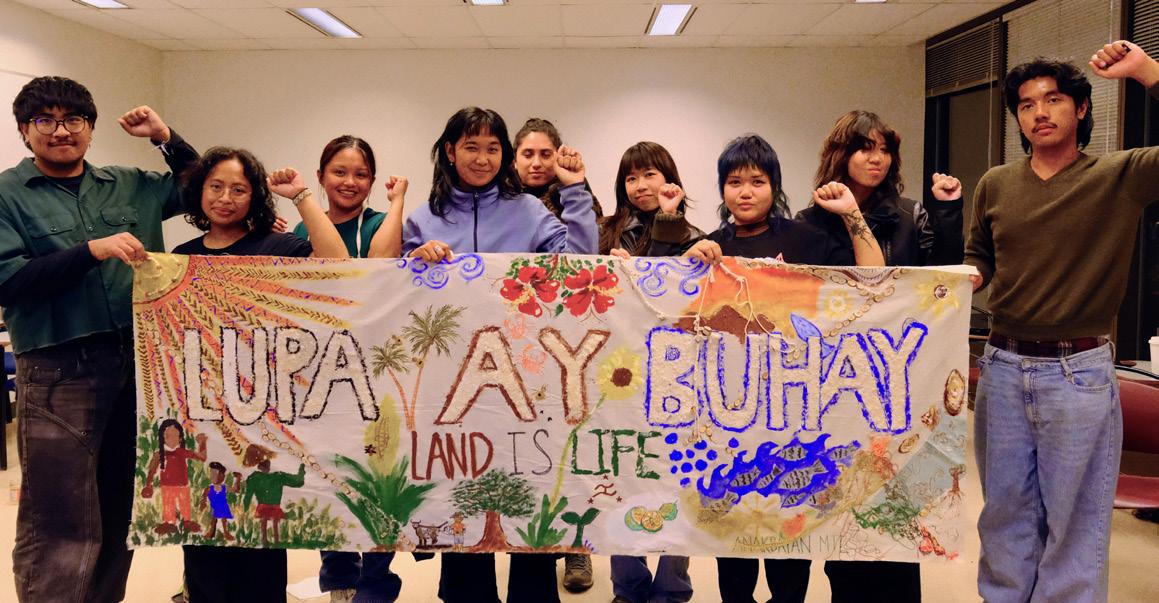
The Quebec Public Interest Research Group’s (QPIRG) 2024 Culture Shock series concluded on Oct. 29 with the “Lupa Ay Buhay” (Land is Life) Teach-In, led by the Filipino youth group Anakbayan Montreal. Anakbayan’s work—as a chapter of an international Filipino National Democratic Front organization—includes several youth engagement and education programs, with a focus on “connecting Canadian issues to the homeland.” QPIRG has collaborated with Anakbayan for several years, as the organization was a part of QPIRG’s working group program.
The first half of the workshop, led by former Anakbayan member Fatima Barron, provided background on the peasant struggle in the Philippines, and Canada’s relationship to the issue as an imperialist country. Filipino peasants are farmers, fisherfolk, and agricultural workers who produce most of the country’s food, yet the majority of peasants do not own the land they till and struggle to afford food. A legacy of Spanish colonialism, this semi-feudal system is maintained by the United States through neoliberal economic policy. Peasants face high land rent, high interest rates on loans for seeds and fertilizer, land grabbing from landlords or multinational corporations, and the criminalization of peasant leaders.
PIRG’s Culture Shock series
Philippine land and communities by degrading the environment and displacing Indigenous communities. She also drew attention to the exploitative conditions affecting Filipino migrant workers in Canada’s Temporary Foreign Worker Program. Employers often underpay or deny pay to workers, and may prevent them from seeking support.
Barron’s knowledge of the topic comes, in part, from experience learning from peasant communities. She spent four months in the peasant community of Lupang Tartaria, Philippines, in the spring of 2024 as part of one of Anakbayan’s “exposure trips”—opportunities meant to facilitate a deeper understanding of social conditions in the Philippines. While there, armed personnel were reportedly building barricades on farmers’ agricultural land, prompting peasants to fight back.
The event drew in both Filipino and nonFilipino participants, something that, for Barron, added to its effectiveness.
“When I was in the Philippines, people [were] so happy to see Filipinos abroad and non-Filipinos caring about issues in the Philippines. It provides them a sense of motivation to show them that they’re not alone in their fight,” Barron said.
consumers of peasant labour, which produces many essential products for Canadians such as rice. Attendees added a variety of materials to the banner, including rice, string, and fabric. Others painted scenes that the presentation brought up for them.
land cultivation in degraded areas of the countryside—is a central initiative of the peasant movement in the Philippines. (Anakbayan Montreal)
Barron explained that Anakbayan Montreal’s inclusion of art as a part of the teach-in aligns with their political goals as a National Democratic organization.
“Art is a vehicle to put forward ideas,” Barron said. “Anyone can make art, and everyone should be encouraged to [….] It’s also important to break down the idea that art is only for the few and the talented.”
Barron noted how Canadian mining harms
During the event, Barron also highlighted the importance of arts and culture in Tartarian resistance and community building, bridging the connection between participants and farmers in Tartaria through the decoration of a banner reading “Lupa ay Buhay” (“Land is Life”). While introducing the project, she noted how participants benefit as
Joliz Dela Peña, a member of Anakbayan, said that having a collective activity enriched the educational aspect of the workshop.
“The banner-making activity truly inspired us to collaborate, and it was fun to meet youth that support these types of actions [in] this way,” Dela Peña said.
Providing alternative learning spaces like the
one created in the teach-in is a key part of QPIRG’s work. According to Lola Milder, the Campus Outreach Coordinator at QPIRG, the organization’s Culture Shock programming has seen a record turnout due to an increasing number of students’ disillusionment with traditional education.
“There is an increasing distrust in the places we’ve gotten knowledge [as students] in the past, and people are realizing that what we’ve learned [in traditional school spaces] might not be accurate,” Milder said. “It makes people turn out.”
Barron also attested to the importance of learning environments beyond school walls.
“What’s beautiful about spaces like this is learning [how] we are not alone and that there’s a broader movement of peoples fighting for change,” Barron said. The workshop concluded Q
Bungkalan—collective
According to Statistics Canada, immigrants make up 23 per cent of the Canadian population. (Sophie Schuyler / The Tribune)
TUESDAY, NOVEMBER
Editor-in-Chief
Jasjot Grewal editor@thetribune.ca
Creative Director Drea Garcia Avila dgarciaavila@thetribune.ca
Design Editors Mia Helfrich Zoe Lee design@thetribune.ca
Photo Editor Rohan Khanna photo@thetribune.ca
Multimedia Editor multimedia@thetribune.ca
Web Developer Roberta Du webdev@thetribune.ca
Copy Editor Matt Adelberg copy@thetribune.ca
Social Media Editor Aliya Singh socialmedia@thetribune.ca
Business Manager Sophie Smith business@thetribune.ca
Canada’s new immigration restriction promotes racism and xenophobia
The Tribune Editorial Board
Continued from page 1.
Since the 1988 Canadian Multiculturalism Act, Canada has prided itself on being a haven of diversity which welcomes and honours cultural, religious, and ethnic differences. However, racism in Canada has steadily increased in the past several years. Racism against the South Asian population—including the largest recent-immigrant demographic, Indians—has risen 143 per cent from 2019 to 2022. Forty-one per cent of Canada’s Black community report having experienced discrimination based on their skin colour—a frequency 15 times higher than non-Indigenous and non-racialized populations. The growing antiimmigration rhetoric, especially in reaction to Canada’s persistent housing crisis, exacerbates this bigotry. Under such circumstances, the Canadian government and large Canadian corporations evade accountability, shoving the onus of a failing housing system onto
the backs of those most vulnerable and with the least power to defend themselves.
Because Canadian xenophobic anti-immigration rhetoric is based in racism, it does not apply to white or white-passing immigrants, regardless of the country from which they emigrated, but instead to the “visible immigrant.” In this way, “immigrant” has become a euphemism for people of colour and thus a systemic, legallyenforced mechanism for racism in Canada. In addition to the racist anti-immigrant rhetoric they face, “visible immigrants” simultaneously contend with other forms of racism in the police force, the workplace, and healthcare, to name only a few environments.
The prevalence of antiimmigration sentiment is ironic considering that the term “immigrant” applies to every citizen in Canada who is not part of the Indigenous population. It is a further irony that anti-immigration rhetoric blames immigrants for overtaking the job market or undermining the opportunities of other (“nonimmigrant”) Canadians, when much
The
Malika Logossou Student Life Editor
After leaving high school sports behind and starting my post-secondary studies, school became a central part of my life. I quickly internalized that grades defined my worth and success. Good grades would lead to a good life—or so I thought— driving me to put relentless pressure on myself to excel. Anytime I scored lower than I had expected, I would spiral, assuming everyone else held the same perfectionist standards.
A few weeks ago, I found myself in a full-on cram session for a midterm, sacrificing sleep and sanity in pursuit of the perfect grade. Following the exam I came
of Canada itself is built on stolen Indigenous lands.
At McGill, international students are a critical part of the campus ecosystem—they make up about 30 per cent of the student population and pay the highest tuition fees of all university attendees. For this reason, the new immigration policy could present a massive cut to McGill’s funding, potentially diluting the quality of its facilities and faculty, and thus reducing its prestige on the global educational stage. While McGill is taking productive steps by suing the Québec government for its tuition hikes and restrictions on international student visas, it still incentivizes European French-speaking students with lower tuition not offered to francophones from other parts of the world.
Perhaps more detrimental, reducing the number of international students at McGill undermines its diversity. One of the best remedies to rising racist rhetoric is exposure—coexisting with students from different countries, with different ethnic identities, and who practice different religions is the best education a school can offer.
Denying this campus diversity will homogenize McGill’s student population and thus homogenize its students’ worldviews, working against Canada’s alleged commitment to multiculturalism and against challenging racist and antiimmigrant rhetoric.
The first step in combating the growing xenophobic attitude in Canada is a governmental commitment to strong public services. There must be substantial and holistic attention to social safety nets such as affordable housing, access to transportation, and lower food prices in order to establish a solid foundation to support all those within the country. McGill must continue to fight for its international students while also ensuring fair and equitable admission and outreach, such as equitable incentivization for all francophone students, not just European francophones. However, before all else, Canadian governments, corporations, and individual politicians must accept accountability for the faults of their own policies and institutions without shirking the blame onto its already vulnerable immigrant population.
quest for perfection is unrealistic and harmful
home disappointed, telling myself I could have done more or studied differently. I calculated how much I would need to score next time to hit my goal as if that could somehow remedy my stress and frustration. While panicking frantically in my room, my 14-year-old sister walked in and said, “You’re always stressed. Why don’t you just live life?”
Her statement annoyed me at first, but afterwards, it struck me. As the idiom goes, the truth came “out of the mouths of babes.” Her words made me rethink my relentless chase for academic perfection. Am I truly living my life, or spending it in constant obsession over grades?
Our exchange led me to confront the toxic side of academic perfectionism, which compels us to overlook the big picture of academic experience. Measuring success solely by grades makes us lose sight of education’s true value. Rather than seeing school as a place to grow and learn, we treat it as a never-ending race to flawless results. It narrows our focus to only the negatives, ignoring that mistakes are normal and setbacks are part of life and growth. As stated by the singer Gerard Way, “Being
happy doesn’t mean that everything is perfect. It means you’ve decided to look beyond the imperfections.”
For a long time, I fixated on these imperfections, only deepening my unhappiness. However, my sister forced me to recognize that doing my best is sufficient—what matters is the effort we put in, not the grade we receive.
This new mindset made me question whether I’d ever truly valued my mental health. While I consistently encouraged my peers to embrace their efforts and offered support during setbacks, I realized I wasn’t extending the same compassion to myself. Cramming for exams was necessary, I told myself— but the constant comparisons and GPA fixation weren’t. Worrying endlessly about each exam or paper drained me, blocking out any appreciation for the university experience beyond school. It didn’t take long for me to recognize that this type of perfectionism has real consequences. The pressure wasn’t just limited to my school life; it was pervasive.
If left unchecked, perfectionism can lead to increased levels of stress, worry, anxiety, and
even depression. When I learned this, I knew I had to prioritize my mental health and remind myself that my value does not hinge on impossible standards. The university experience is about discovering oneself, making mistakes, meeting new people, joining clubs, and ultimately stepping outside of one’s comfort zone. Is sidelining all of that just to meet grade standards truly living?
While I still struggle with letting go of high expectations, I no longer equate grades with success or self-worth. Academics are important, but balancing them with life is crucial. Grades are not worth harming your mental health, and if you’re struggling to find balance, McGill offers plenty of resources to support you.
My sister’s timely reminder prompted me to reflect on my journey at McGill, and I realized that life is too short to strive for perfectionism and obsess over letters on a transcript. That night I felt lighter, understanding that I may not hit every mark I want, but life has so much more to offer than that. Instead of being perpetually stressed, I would rather, as my little sister says, embrace life.
Celine Li, Ella Gomes, Jasjot Grewal, Sophie Smith
TPS BOARD OF DIRECTORS
Alex Hawes Silva, Amelia Clark, Asher Kui, Annabella Lawlor, Bianca Sugunasiri, Bianca Tri, Charlotte Hayes, Daniel Miksha, Daniel Pyo, Ellen Lurie, Ethan Kahn, Jamie Xie, Luken Castañeda Garces, Mahin Siddiki, Mairin Burke, Olivia Ardito, Reuben Noam, Samathar Senso, Sarah McDonald, Tamiyana Roemer, Zain Ahmed.
Aiqing Qiu, Anna Seger, Ariella Morgan, Eliot Loose, Hannah Nobile, Lilly Guilbeault, Nour Khouri, Ruby Reimer, Ryan Dvorak.
Alex Hawes Silva, Elsie Yang, Lily Dodson, Michelle Yankovsky, Samuel Ferreira Duran
Bruno Cotler, Cam-Ly Nguyen, Clio Blazer Evelyn Li, Holden Callif, Sophie Schuyler
Simu Liu, bubble tea, and the importance of solidarity
Dana Prather Arts & Entertainment Editor
Little in this world entertains and aggravates me as much as Dragons’ Den
Now on its 19th season, this hit CBC show sees aspiring entrepreneurs pitch ideas to a panel of potential investors that range in quality from inspired to downright idiotic: Bottled Intentions, a company selling bottled water with embossed words of affirmation along the side to promote positive thinking, is a particularly memorable flop. Though the show was a staple of my childhood, Dragons’ Den had completely disappeared from my consciousness until just a few weeks ago.
On an episode that aired Oct. 10, acclaimed actor Simu Liu joined the show as a Guest Dragon in hopes of finding Asian American and Pacific Islander (AAPI)-led small businesses to back with his newly-founded venture capital firm, Markham Valley Ventures. Instead, Liu found himself amidst controversy for voicing his concerns about Québecois entrepreneurs Sébastien Fiset and Jess Frenette’s company Bobba, a purveyor of bottled bubble tea.
Describing bubble tea as a “trendy, sugary drink” with ingredients that buyers can “never be quite sure about,” Fiset and Frenette pitched Bobba as a healthy solution. After mild pushback from Liu, who expressed dismay that their products lacked appropriate recognition of the drink’s Taiwanese origins, the founders claimed that Bobba was no longer an ethnic product thanks to the addition of “crazy innovations” like
popping bubbles to their recipes.
Fiset later clarified that, despite the complete absence of references to the drink’s cultural roots on the can or in the marketing materials, the product’s cultural aspects came from the company’s collaborations with a Taiwanese supplier to develop its boba recipes and pearls.
This microaggression-laden pitch is a clearcut example of cultural appropriation: Two white individuals profiting off of a cultural product and taking credit for so-called innovations while rendering its distinctly Asian roots invisible. Boba first originated in Taiwan’s tea shops in the 1980s, but it has since spread to many other Asian countries and diasporic communities worldwide, becoming an important cultural symbol in the process. Ignoring the drink’s cultural significance while profiting off its popularity is straightforward exploitation, and the founders’ insinuation that traditional boba recipes are deceptive and mysterious is incredibly insulting to Asian communities that have been making this drink for decades. Furthermore, these concerns are completely fabricated; traditional bubble tea recipes call for a simple combination of tapioca pearls, brown sugar, milk, and black tea, while fruit tea variants can be made using fresh fruits and simple syrups.
Yet perhaps just as concerning as this misguided pitch was the speed and fervour with which fellow Dragon Manjit Minhas jumped to its defence. The Indian-Canadian venture capitalist repeatedly spoke over Liu and rebuked him for overreacting, insisting that there is nothing wrong with giving traditional cultural products a new
spin. Minhas then proceeded to make an investment offer the Bobba founders swiftly accepted.
As one of two other people of colour and the only South Asian Dragon, it is especially disappointing to see Minhas show no solidarity with Liu’s perspective. Instead, Minhas’ implicit message—that those who speak out against cultural appropriation are overly sensitive and raising an unnecessary fuss—only emboldened the other Dragons to ignore Liu’s concerns themselves.
Following public backlash to the episode, Minhas took to Instagram to confirm that she had pulled her offer after further reflection. While many were happy to see her withdrawing financial support for the company, the post lacked any remorse for her behaviour towards Liu or acknowledgement of the pitch’s shortcomings. Rather, she subtly doubled down on her denial of cultural appropriation, insisting that sharing traditional foods and goods is just an essential part of connecting with others.
In our increasingly globalized world, cross-cultural exchange is inevitable, and that is by no means inherently bad. However, there is a marked difference between giving a cultural product you appreciate a new twist and divorcing it from its cultural origins completely. As consumers, we must recognize
the difference between cultural appreciation and appropriation. We must stand in solidarity with those like Liu who call out the minds behind exploitative companies like Bobba for what they are: Uninformed businesspeople looking to make a quick buck off of another group’s heritage.
Do you or someone you know have
◊ Experiences with McGill’s adapted transport service, or anything related to physical accessibility on campus? ◊ Stories from hiking or spending time on Mont-Royal? ◊ Interactions with security guards on campus?
Roommate trouble?
Cooking for yourself?
Making plans for exams or the holidays?
Simu Liu rose to fame while portraying the character of Jung Kim in the hit CBC television show Kim’s Convenience. (Ariella Morgan / The Tribune)
Fall 2024 SSMU Referendum Endorsements
The Tribune’s Editorial Board presents its endorsements for the Students’ Society of McGill University (SSMU) Fall 2024 Referendum questions. The Tribune’s editors researched and discussed each question before voting on each endorsement. The endorsements reflect a majority vote of the editorial board, with the option for editors with conflicts of interest to abstain from pertinent questions.
Radio CKUT Fee Increase: Yes
Radio CKUT, McGill’s 24/7 non-profit campus-community radio station offers music, news, arts, and cultural programming, providing a unique media outlet for students and the Montreal community. With inflation driving operating costs, the proposed opt-outable fee will increase by $3.00 CAD, which would bring the total fee to $7.00 CAD per semester for full-time and $5.50 CAD per semester for part-time undergraduate students in professional programs (Dentistry, MDCM, Law). The total fee would be $8.00 CAD per semester for full-time and $6.00 CAD per semester for part-time undergraduate students in all other programs. This increment will start in Winter 2025 to Winter 2027 (inclusive), with the understanding that a majority “No” vote will keep the fee at its current rate. The increased fee will help CKUT maintain its operations and avoid a future budget deficit. In the absence of a journalism program at McGill, CKUT fills an important educational gap by providing one of the only spaces on campus for students to gain hands-on experience in broadcasting and radio production. In voting “Yes,” The Tribune highlights CKUT’s commitment to providing valuable learning opportunities for students, building community connections, and supporting sustainable operations in the workplace.
Legal Essentials Fee Renewal: Yes
The Legal Essentials Fee is an opt-outable, $30 CAD per year fee that will cease to exist if not renewed during this Fall 2024 referendum. The Legal Essentials program makes legal aid accessible, affordable, and safe. It is complementary to the Legal Information Clinic at McGill (LICM) and fills in gaps that other legal sources at McGill cannot; specifically, services like the LICM can only inform students about their legal rights and assist only in disputes at the university level, but cannot advise on the specific legal actions students should take. Meanwhile, Legal Essentials offers students access to consultation and representation by accredited lawyers who can represent them in cases regarding any area of the law, including disputes and violations regarding housing, academics, human rights, employment, and assist with small claims and civil mediation. For a fraction of the price, they cover both case and legal fees, and expenses that accumulate during proceedings. Access to legal aid is often costly, complicated, and daunting, but Legal Essentials works in conjunction with other legal sources at McGill to break down these barriers. By endorsing a “Yes” vote for the opt-outable fee, The Tribune supports the rights of students to have a certified advocate during legal proceedings, and seeks to ensure this support system is protected for years to come.
QPIRG Fee Increase: Yes
The Quebec Public Interest Research Group at McGill (QPIRG) is seeking a fee increase from $5.00 CAD to $6.75 CAD per semester. QPIRG fosters community and engages students in social justice causes by offering educational initiatives, the Free Textbook Loan Program, and an Alternative Research Library. The group also organizes Rad Frosh each year. The organization’s fee has not increased since 2015; meanwhile, inflation has posed a strain on the group’s budget, resulting in a reduction of programming.
QPIRG’s mission to provide alternative educational spaces on campus is invaluable in promoting community and solidarity. As it has been nearly a decade since the organization last recieved a fee increase, The Tribune supports a “Yes” vote on this optoutable fee.
Ambassador Fund Fee Increase: Yes
The proposed $2.00 CAD increase to this opt-outable fee, bringing the total to $4.00 CAD per semester for both full-time and part-time students, would continue to fund student participation in off-campus academic and extracurricular conferences, competitions, and other events through Fall 2029. This increase, which would bring in an additional $40,000 CAD in funding available to students, will allow more students to participate in off-campus events without facing financial barriers. In recent years, demand for the Ambassador Fund has exceeded the available resources, demonstrating that students need the support of this fund to attend external events. The Tribune endorses a “Yes” vote to this fee increase.
Community Engagement Fee Renewal: Yes
The Community Engagement Fee is a source of financial assistance provided to incentivize the charitable work of McGill students and further the connection between the McGill student body and its surrounding communities. This opt-outable fee is $0.72 CAD per semester for both full-time and part-time students. The fund is primarily intended for community engagement initiatives, not for events with the sole purpose of fundraising—including projects in community development and social services. In 2023-2024, however, more than 12 per cent of funding applications were directed to the Community Engagement Fund, despite this being the smallest of the fees disbursed by the funding committee. The Tribune supports this opt-outable fee renewal.
Equity Fund Fee Renewal: Yes
The Equity Fund Fee is an opt-outable $1.00 CAD per semester fee for full-time and part-time students, beginning in Winter 2025 and ending in Fall 2029 (inclusive and excluding Summer terms).
The SSMU Equity Fund was created to empower campus members to engage in initiatives that foster leadership, encourage civic engagement, and make observable or measurable differences in the representation or experiences of individuals who are members of historically and currently disadvantaged groups. The fund supports projects, research and policies that aim to end discrimination and promote accessibility and inclusiveness in the McGill community. Should it fail to pass, there will no longer be a dedicated fund reserved for the purpose of supporting equity-related initiatives through funding applications. The Tribune endorses a “Yes” vote to this fee renewal.
Création d’une cotisation de soutien aux affaires francophones/Creation of a contribution to support francophone affairs: Yes
The creation of a contribution to support francophone affairs would promote the growth and endurance of the Francophone Affairs Committee (CAF), which currently receives no funding, as well as the McGill francophone community. This opt-outable fee will be $1.00 CAD per semester for full-time and part-time SSMU members, excluding the summer term. It is set to begin in Winter 2025 and will continue until Winter 2030 (inclusive). The fund will help cover the salary of the Commissaire des affaires francophones, as well as part-time translation interns. It will also be allocated to francophone groups, francophiles, and anglophones undertaking projects aimed at enhancing accessibility for Francophones, organizing community events, and establishing partnerships with Francophone organizations to provide learning opportunities. Currently, 20 per cent of the student body and 21 per cent of staff report that French is their mother tongue, making the fee important for the CAF to fulfill its mandate of representing the francophone student body on campus. The Tribune supports the creation of this opt-outable fee to support francophone communities on campus.
SSMU Membership Fee Increase For Operations: Yes, with reservations
This question seeks to increase SSMU’s base fee for student members. For full-time students not enrolled in Medicine, Dentistry, or Law, the fee will increase by $14.86 CAD, from $70.95 CAD to $85.81 CAD per semester. For part-time students in the same faculties, the fee will increase by $7.22 CAD, from $34.44 CAD to $41.66 CAD. The funds generated from the increase will go entirely toward the salaries of SSMU’s full-time and part-time employees, not toward those of the executives. SSMU claims this will allow them to dedicate more of their operational budget to addressing their deficit and to offer new initiatives for students.
Since its last increase in 2019, students have voted against raising the membership fee many times, including in both semesters last academic year. The 2023-2024 academic year saw SSMU struggle against the financial strain of its deficit, which one executive estimated exceeded $726,000 CAD in February 2024. SSMU has cited budget constraints as the reason for employee layoffs, reduced operations, and an abrupt interruption in service for two weeks in April 2024. SSMU offers countless vital services to students, including funding clubs and student initiatives, managing Gerts, running a daycare on campus, offering the Menstrual Health Project, the Grocery Program, and more. Considering this, it is vital that SSMU secures the funding necessary to continue serving students and its employees.
However, SSMU must strengthen its relationship with its constituency. Between a lack of candidates applying for executive positions, dismal voter turnout, and consistently poor attendance at governance meetings, SSMU is struggling to engage the student body. Furthermore, its repeated failed attempts to raise the base fee suggest it must rebuild trust with students by clearly communicating how their money is managed and why the deficit has persisted. Finally, SSMU must extend better training and care for the executive team, some of whom have reported a lack of support in the demanding role. The Tribune endorses a “Yes” vote for the referendum question, while demanding that SSMU foster student engagement, increase financial transparency, and better support its executives.
Hello everyone,
This week, The Tribune has given On The Table (OTT) the opportunity to bring you, their beloved readers, something a little different.
I’m Johann, and for the past three years, I’ve been developing recipes at McGill’s oldest culinary magazine, OTT. This week I’m bringing you some of my work, as part of our magazine’s new partnership with The Tribune. Just as The New Yorker has Bon Appetit Vox has Eater, now The Tribune has OTT.
Since our founding, OTT has aimed to do three things:
Distribute beautiful print magazines freely to McGillians.
Create content about, surrounding, and that is food, inspired by cooks and journalists from J. Kenji
Lentil Soup
Ingredients:
• 1+1/2 cups split red lentils
Baking soda 1/2 tbsp for lentils
• 1 tsp for Brussels sprouts
ingredients).
• 500g Brussels sprouts
Halve, then cut off root. Keep loose leaves
• 2 medium onions (red preferred).
Halve, peel, cut off root, slice about 4cm thick. Make slices parallel to root, like latitude lines
• 1 red bell pepper
• Halve, remove stem and seeds, slice thin. (Cut with shiny side down to avoid injury)
• 6 cloves garlic
• Lightly crush, then peel, cut root off, roughly chop
• 1/2 inch ginger
• Peel (spoon works well), mince
Spices (any you enjoy, my choices below, I would not omit cumin or whole mustard)
• Fresh-ground black pepper (grind until your forearm hurts)
• 2+1/2 tbsp tomato paste
• 1 tbsp apple-cider vinegar
• 5 dashes fish sauce (for veg, soy sauce)
Salt to taste
• Olive oil
Steps:
1. Soak lentils in about 5 cups of water for a total of 30 mins. While soaking, do steps 2-4.
2. Cut all vegetables (see
3. Prepare Brussels sprouts:
Off heat, in a large pan, pour a generous amount of olive oil (about 2cm / 1/2 inch). Lay all Brussels sprouts cut side down, sprinkle loose leaves on top. (If you want to minimize dishes, you can do this in the soup pot, although you’ll likely need multiple batches.)
• Mix 1 tsp baking soda into 1/2 cup warm water.
• Place pan (3) uncovered on high heat.
Kitchen Chemistry Introducing On The Table, McGill’s
Lopez-Alt to Anthony Bourdain.
Written by Johann Pacheco-Veissiere,
Help McGillians feed themselves better, through teaching skills, recipes, and where to eat. Coming very soon, you’ll be able to find our past print issues digitized on The Tribune’s website, as well as individual articles and recipes.
A lot of OTT’s content is niche. We nerd out on food history, chemistry, showcase unknown cuisines, and sometimes just write odd journalism which only barely excuses itself through the notion of “food content”—but I really think you’ll like our stuff!
to brown around edges. Remove from heat.
5. Soup chemistry: Drain lentils (1).
• When you begin to hear sizzling: Add 1 garlic clove, alkaline water (3), then immediately cover.
• Listen closely: At first, you will hear simmering, then boiling. When it begins to sound like frying, remove the cover. (Another good cue to remove the cover is the smell of browning.)
• Add drained lentils (5), then five cups boiling water to a large soup pot. N.B. It is important the lentils and water do not reach more than 3/5ths up the pot. With the soda, the pot will foam until the lentils dissolve (think baking soda volcano). In a small pot, the foam could overflow.
• If your pot isn’t quite big enough, you can stir nonstop, which prevents a buildup of foam.
• Carefully flip over one sprout. If the cut side is already deeply browned, remove pan from heat. If not, turn heat to medium low, and fry until brown, then remove from heat.
• Lift sprouts out of oil, keep oil, set sprouts aside.
4. Prepare aromatic base: Return pan with oil (3) to burner, set to medium-high.
• Immediately add onions and ginger. Sautee until the onions are soft.
• Then, add garlic and spices (except paprika or herbs). Sautee until onions or garlic begin
• Add the oil and aromatics from the pan (4) to the pot, as well as paprika or herbs (if desired).
• Add 1/2 tbsp baking soda to pot.
• Cook on high heat, stirring frequently, until lentils almost completely disappear (about 6-8 minutes from boil).
Neutralize soup pH by adding 2+1/2 tbsp tomato paste and 1 tbsp apple cider vinegar.
6. Finishing:
• Add Brussels sprouts (3) and sliced red bell pepper to pot.
• Add 5 dashes of fish sauce.
• Cook until red bell peppers are tender. If consistency is thicker than you would prefer, adjust with water before salting.
• Salt the soup! This is the last step, and you can taste to see if it’s missing anything: More pepper? More salt? Maybe more olive oil? (Note from
Italian proofreader: there’s never enough olive oil. Add more olive oil.)
Chef’s Note:
In this recipe, the main lesson I aim to transmit is how to use alkalinity in cooking. The higher the pH, the faster two things happen: The breakdown of plant matter, and browning.
The first point is useful in a lot of contexts, but most of all when cooking legumes. Legumes can take hours to reach a toothsome texture, and even longer to completely fall apart. It’s common to add a touch of baking soda to cook lentils a touch faster, but to showcase the effect I developed this method. By upping the pH a lot, everything breaks down a lot faster—the pot foams up and the lentils and onions essentially dissolve. At the same time, I wanted to keep some ingredients toothsome, for which we need to back-adjust the pH (with tasty acids) before adding the rest in.
The Brussels sprouts are a perfect example of browning. By dousing them with alkaline water, the sugars and amino acids dissolve into the water, the base saturates the leaves, and the liquid softens them. As soon as the water evaporates, they caramelize deeply and quickly. You can use the same methods to caramelize onions twice as fast! I also recommend trying these sprouts on their own—just add salt and some chili flake after it’s done cooking.
All these lessons about alkalinity work in reverse when it comes to acidity. Adding acid to plant matter will make them cook slower, and acid will prevent browning. So, always add acid to legumes at the end of cooking, and if you don’t want a brown crust on something (e.g keep a cake very pale), add a touch of acid.
Chemistry McGill’s oldest culinary magazine
Pacheco-Veissiere, Designed by
Zoe Lee
The bulk of this piece is meant to give you a taste of the content we make at OTT. As the days are getting shorter, I’ve developed two soup recipes to keep you warm. Far from being just recipes, they also teach you some food chemistry theory and techniques.
The first recipe is a velvety lentil soup, with ridiculously good Brussels sprouts which you should make even by themselves. Here, I’m teaching you how to use alkalinity to your advantage. You’ll feel like a mad scientist as you vapourize lentils in a foaming cauldron.
Umami Soup
Ingredients:
• 2x 10cm sheet (10-14g) of kombu
• 3 handfuls of katsuobushi (dried bonito flakes)
• 10g dried shiitake (any mushroom works, shitake is ideal due to high guanylate concentration)
• 4 chicken thighs
• Make into thick strips by cutting into thirds, lengthwise.
• Marinade / Seasoning: 2 tbsp soy sauce
• 2 tbsp mirin
• 1 minced garlic clove
• 1/2 inch minced ginger
• 1/2 head of cabbage Quarter, shred by cutting thin strips lengthwise or quarter, shred with box grater
• 150g enoki mushrooms
• Cut off end, separate 2 carrots
• Peel, then halve, cut into very thin half-moons
• 1 inch ginger Peel, cut into matchsticks
1 leek
• Cut in half, wash, separate white from green, remove root, slice white into half moons, as thin as reasonable to your knife skills
1 bunch green onion
• Separate white from green part
• Remove root from white, cut in half
• Slice green into rounds, as thin as reasonable to your knife skills (as close to serving as possible)
• 1/2 cup peanut oil
Steps:
1. Marinade (Make up to the first step even if not using chicken, as it is added in 3)
Combined minced garlic, ginger, soy sauce, and ginger in a small bowl.
• Place chicken thighs in a Ziploc, pour contents of bowl over the chicken
The second recipe is a light and intensely savoury mushroom soup, with a crispy ginger-leek topping and infused oil. Here it’s less about technique than theory—I developed this recipe to be the most umami possible!
I explain the chemistry of “umami,” and there’s a fun little exercise for you to taste the chemistry of umami as you cook.
Of course, I don’t actually expect that many of you will cook my recipes to the letter. In fact, I don’t really think you should!
To me, cooking is like jazz. It’s important to be able to play the standards, that’s for sure, there’s nothing wrong with following a recipe rote— you learn what works well, and why it works. But in my recipes, what I want is to teach you techniques to improvise with. So take whatever suits you, and go make some stomachs happy!
Johann Pacheco-Veissière, November 2024
P.S. If you want to send OTT a recipe or article, we have a form on Instagram. @onthetablemag.
thighs.
• Close the Ziploc almost the whole way, squeeze air out from open corner, close, then massage thighs.
• Marinate two hours, up to three days.
2. Broth (Mushroom Dashi)
Fill a pot with five cups cold water, add kombu. (Optionally, let sit for 1 hr). If making leek oil, also add leek greens, because why the hell not?
Heat the pot on medium low heat until it begins to simmer. In meantime, prepare rest of vegetables.
• When a steady simmer is reached, remove kombu and leek greens, discard kombu. [1]
• Ladle about 2 cups of hot liquid over dried shiitakes in a bowl.
• Add katsuobushi to pot (2), raise heat to medium, boil 8 minutes. After 8 minutes, turn off heat.
• Let katsuobushi infuse for another 8 minutes. After, strain, discard used katsuobushi, place liquid back in pot (2) Add liquid from bowl (2) into strained Dashi. when cool, squeeze liquid out of mushrooms into pot. Slice re-hydrated mushrooms, set aside.
3. Soup
• On medium high heat, add marinade and the chicken, if used.
Add carrots, simmer 5 minutes.
• Add white of green onions, enoki, chicken, simmer 5 minutes.
• In a heat safe container (e.g., Pyrex), add sliced leek whites, ginger matchsticks, and half a
cup of oil.
• Microwave on full power for 5 minutes, remove, stir. Microwave on full power for 2 more minutes, stir. Repeat until leeks are crispy.
5. Serving
• In the bottom of the bowl you’ll eat in, add leek oil, ladle soup on top.
• Top with green onion greens, crispy leeks.
Chef’s Note:
This recipe is less about food chemistry techniques and more so about food chemistry theory: Specifically, the theory of umami. Using chemical principles, I developed the umami-est soup possible. You can taste the chemical theory along the way. As a little bonus, I put in a new technique with the microwave oil-infusion.
tasting umami. Some things can “open up” the keyhole to make glutamate bind better, particularly inosinate and guanylate. Basically, when these chemicals combine, things taste MUCH more umami. Dashi, which has been made for much longer than the chemistry has been known, uses this synergy. Dried fish, like katsuobushi, contains inosinate, as does most seafood, chicken, and nori. For vegetarians, all hope is not lost—guanylate, found in mushrooms, also synergizes with glutamate. Not all mushrooms have guanylate, but enoki and dried shiitakes are particularly rich in it.
I hope from my recipe you consider stocking the ingredients for dashi. A stock makes any soup vastly better, and dashi is one of the few stocks which one can make entirely from shelf-stable ingredients. It’s more neutral than you’d think—it’s essentially umami-tea. It’ll enhance the flavour of most soups.
“Umami” is a Japanese word which has been wholly incorporated into the English language. It’s the fifth flavour to sour, sweet, bitter, and salty—which remarkably English lacked an exact word for, although “savoury” approximates it. It’s that flavour for meaty-savoury-salivatingly-yummy which is chemically manufactured to sprinkle on Doritos. For this, we thank Kikunae Ikeda, who discovered what umami is at the molecular level.
Glutamate, discovered in dashi (in the recipe, step 2), is the chemical that activates the receptors in our tongue for “umami”. Glutamate is like a key to a keyhole in your tongue; when it fits in, you experience umami. Kombu, half of dashi’s major ingredients, is one of the most glutamate-rich things in nature, although many other things contain it, such as yeast extract, tomatoes, and parmesan.
Although, glutamate is not the only chemical which plays a role in
If you want to play around with umami synergy, check out the Umami Information Centre. On www. umamiinfo.com, there’s a guide on which ingredients have what chemicals.
Also, you can do the oil infusion trick with a million different things! The classics are shallot and garlic, but I’ve also done it with capers, oregano, and scotch bonnets—all amazing additions to a bowl of ramen.
[1] As a way to see the chemistry of umami in action, reserve a little bit of the pure kombu stock.
[2] With this liquid, compare the (2) kombu stock (glutamate), the (2) kombu+mushroom stock (glutamate+guanylate), and (2) kombu+katsuobushi (glutamate+inosiate). Which tastes the most savoury? Rinse your mouth with water between tests. Compare to final product from step 2.
Explore Montreal’s culinary milieu with MTLàTABLE
Serving
up the
Tamiyana Roemer Staff Writer
Wperfect chance to taste food with transparent pricing
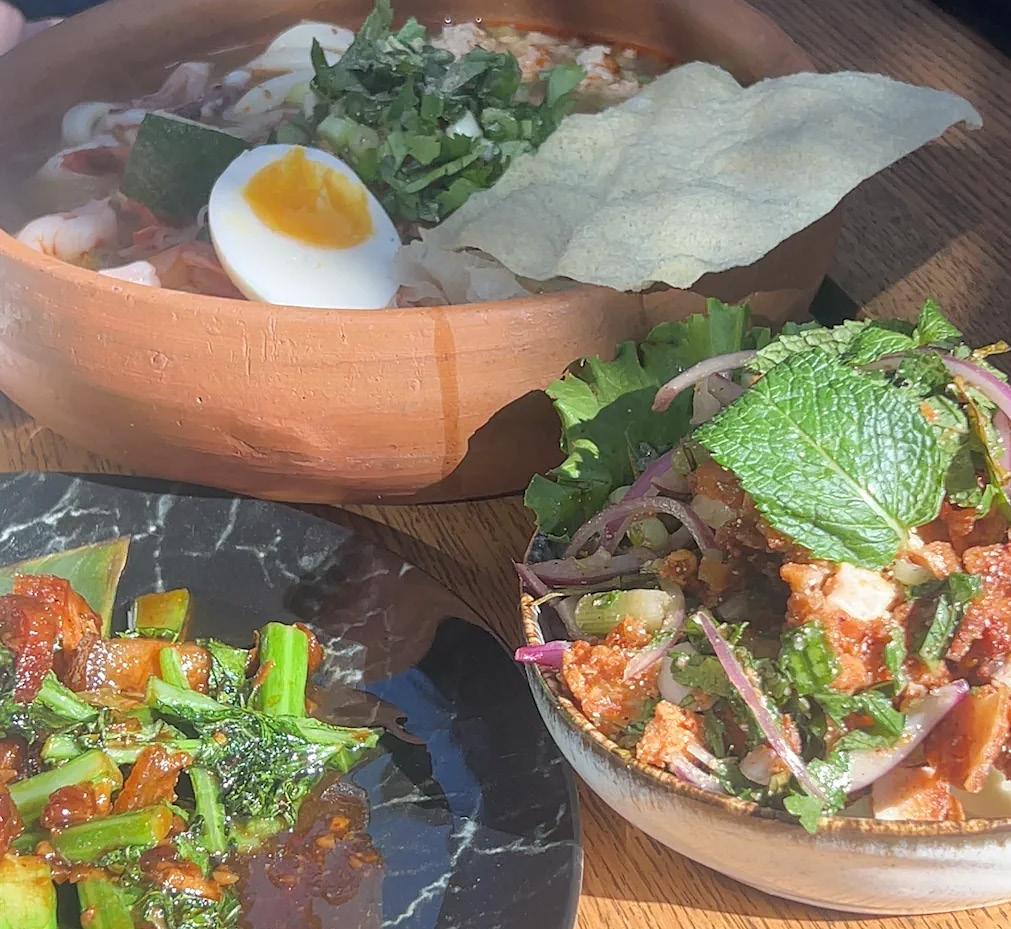
ith Halloween behind us, there’s no need to fear surprise charges lurking at the end of a meal. MTLàTABLE’s set-price menus offer students a taste of the city’s vibrant culinary scene, spook-free, until Nov. 17. Each participating restaurant offers three or four-course set-price evening menus priced at $35, $50, $65, or $80 CAD. With over 150 restaurants on board, MTLàTABLE showcases Montreal’s rich culinary diversity—and to help you choose, The Tribune has curated highlights from this year’s lineup.
French
fare
From casual bistros to fine dining establishments, French cuisine is a cornerstone of the city’s restaurant scene. MTLàTABLE showcases this rich culinary heritage and invites diners to explore French dishes from an array of restaurants. Among the most enticing options are the $65 CAD three-course offerings at both Leméac and Modavie. Leméac, a landmark Montreal restaurant, is celebrated for its chic bistro fare, featuring unique delights such as cromesquis of suckling pig and arctic char. Meanwhile, Modavie, nestled in the heart of Old Montreal, presents French classics like escargots and duck
confit in a charming vintage atmosphere. Both venues promise delightful evenings that highlight the depth of French influence in Montreal’s food culture.
Quebec cuisine
Quebec cuisine blends traditional French influences and local ingredients, reflecting the province’s distinct cultural heritage and culinary landscape. If you’d like to explore this gastronomic scene during MTLàTABLE, Caribou Gourmand is an excellent choice, offering a $50 CAD four-course menu that captures the essence of Montreal’s flavours. Their dishes include bison stew and the Magdalen Islands wild seal, highlighting unique Canadian offerings. If that doesn’t pique your interest, fear not: There are vegetarian options too, ideal for those who prefer their meals more flora than fauna-centered. After all, who needs to wrestle with a wild seal when you can indulge in homemade beet gnocchi?
For a unique twist on traditional Quebec flavours, try Hh3, which infuses Québecois classics with Asian influences—think squash soup with hints of yuzu and maple. Priced at $65 CAD for four courses, H3 impresses with main offerings like seared salmon paired with Massawipi miso and celeriac, along with beef striploin steak served with aligot potatoes.
Pescatarian and vegetarian options
Perles et Paddock’s $50 CAD four-course menu features the rich flavours of Quebec and the Maritimes, featuring standout dishes like their tapioca cromesqui with pumpkin and curry, and a robust seafood option of grilled Bobines Farm trout served with barbecued salsify. Guests can choose between vegetarian delights, such as the roasted cauliflower with honey and tahini, and meatier fare like the braised beef short rib with butter-roasted parsnips. With clear identification of vegetarian, vegan, and gluten-free options, this menu ensures that everyone can experience a remarkable dining experience, regardless of their dietary preference.
Date night
As the temperatures drop, there’s nothing like warming up a chilly evening with a romantic date night and a cozy meal. The Tribune recommends three enticing dining options at varying price points, ensuring you can impress without breaking the bank. Foiegwa presents a three-course experience for just $35 CAD. Featured on their MTLàTABLE menu is the popular black truffle spaghetti, artfully topped with an egg yolk. The restaurant’s intimate seating and warm dim lighting create the perfect ambiance for a cozy evening. Le Boulevardier steps
it up with four courses at $65 CAD, offering an impressive selection that includes scallops, tuna tartare, burrata, and sea bass. This elegant eatery strikes the right balance between sophistication and comfort, making it an ideal choice for a memorable night out. For those looking to treat themselves, Ratafia provides a luxurious four-course menu for $80 CAD. Highlights include the gravlax of Arctic char, eggplant with koji and amazake glaze, and a stunning dessert featuring burnt meringue paired with fresh sea buckthorn, buckwheat ganache, and a refreshing buffalo mozzarella sorbet from Maciocia Farm. Whichever option you choose, you’re bound to keep the chill at bay and impress your date!
How did students celebrate Diwaloween?
The challenges and joys of combining Diwali and Halloween on the same weekend
Jasjot Grewal Editor-in-Chief
This year, Diwali fell on Oct. 31— making the Hindu, Sikh, and Jain celebration fall on the same day as Halloween. For students who celebrate both Diwali and Halloween, this presented quite a conundrum. The Tribune talked to South Asian students to see how they commemorated the joint festivities.
For Keya Tyagi, Vice President Academic of McGill’s South Asian Studies Student Association (SASSA), the days around Diwaloween were hectic as she navigated exams, family celebrations, and school events.
“For me personally it’s been a bit chaotic, especially considering it’s still kind of midterms season for me as well,”
Tyagi wrote in a statement to The Tribune . “As someone who’s from Montreal and currently lives at home, I definitely have a different experience from students who are celebrating far from home, but for me, the struggle has been in balancing family commitments/celebrating Diwali at home [versus] everything that is going on for Halloween and going out with friends.”
Tyagi also explained that it can be difficult for South Asian students to balance both Diwali and Halloween events offered by campus groups. SASSA offered a Diwaloween event on Nov. 1 in the Morrice Hall Theatre, with dance, music, and food for attendees.
“I think with [the SASSA Diwaloween event] and other similar ones I’ve seen happening around here you can find a way to combine the two holidays [and] celebrate Diwali in a way that’s very unique to the diaspora,” Tyagi wrote. “At first, [SASSA event organizers] were scared that we wouldn’t have as good of a turnout for our event due to people having conflicting Halloween plans, but so many people showed up which was a nice surprise!”
Tia Sharma, U3 Arts, acknowledged that it can be difficult for South Asian students to find community in Montreal, especially if they don’t have friends from the same origin.
“We live in North America currently, [and] naturally the culture is more western-centric so it’s hard
to make time for your own festivals in between Halloween,” Sharma wrote in a statement to The Tribune “South Asian students with multiple brown friends like me are fortunate on that end that we do have an option to skip things together to celebrate Diwali but for students that don’t have any brown friends from their own culture, they’d have to just go along with their friends’ plans.”
Nonetheless, Sharma explained that she has found a way to make a home away from home for herself, which helps when it comes to celebrating holidays such as Diwali. She strongly encourages students to create safe spaces where they can retain their cultural values.
Every year, the date of Diwali changes, but it always falls between October and November. (Mia
new addition, meaning that Diwali takes precedence when it comes to celebrations.
“For example, a friend of mine made everybody who entered his house light diyas, even his non-Indian friends and explained the concept to them. Most people (with a few exceptions [of course]) are willing to learn about and appreciate your culture. I personally always find things to do like eating an Indian meal, buying sparklers, facetiming my mom and sitting through her Diwali pooja to feel like I’m home,” she wrote.
Bhavya Kalra, Co-President of the Indian Students’ Association, explained that for some students, Diwali has been a lifelong tradition, whereas Halloween is a
“With Halloween being something that I personally started celebrating very recently (since I moved to Canada 3 years ago), I’ve celebrated Diwali every single year since I’ve been born and so the festival means much more than anything. It keeps me connected to my roots and my family and I think this is how all the brown kids, who are miles away from their homes feel,” Kalra wrote in a statement to The Tribune
She added that she hopes more events such as SASSA’s Diwaloween are hosted in coming years to foster a sense of community for South Asian students.
“It would further create a sense of belonging for South Asians far from their homes in this country while also being connected to their own cultural identity,” she wrote.
According to post-pandemic data, Canadians have returned to restaurants with sales reaching $7.7 billion in March 2023. (Cam-Ly Nguyen / The Tribune)
Helfrich / The Tribune)
(Mia Helfrich / The Tribune)
Student of the Week: Elijah Olise
Elijah Olise’s experience
Yusur Al-Sharqi Managing Editor
Elijah Olise, a first-year Social Work student at McGill, has an extraordinary ability to connect with others. From the moment he entered The Tribune ’s office, he made an impact—shaking hands with everyone in the room, making eye contact, and engaging in genuine conversation. His humility and kindness shone through in every interaction, never overshadowed by his impressive accomplishments.
Olise is a full-time student and the founder of the nonprofit organization, Holistic Afro Youth Center (HAYC), supporting those transitioning out of youth protection. Olise’s journey is shaped by his experiences in the foster care system in Montreal. By the age of 17, he had aged out of government housing and found himself feeling alone and lost—a reality many youth in care struggle to overcome. His activism is inspired by the 2020 Black Lives Matter and Defund the Police movements, in which Olise was deeply involved. However, he stated that calls to reallocate police funds to social workers were not so straightforward. The field of social work is riddled with misconduct––with many practices stemming from Canada’s residential school systems.
as a full-time
student and leader of a non-profit
Three out of every five Canadian unhoused youth were once in the child welfare system.
(Yusur Al-Sharqi / The Tribune)
“When I aged out [of foster care] at 18, I realized that a lot of the activists and advocates I was surrounded by weren’t aware of the issues in the system,” Olise said in an interview with The Tribune So, he took action. Olise began planning the launch of HAYC, which was officially established in 2023. Though it collaborates with hundreds of organizers across the province, HAYC operates with a humble but mighty team of just three people. Olise credits the success of the center to support from organizations like MYCASA and individuals who have shaped
The NFL’s racist double standard
his activism, such as Marcelle Partouche Gutierrez of the Carrefour Jeunesse Emploi - Notre-Dame-de-Grâce, Dez Gregoire of Tasiutigiit, and his personal mentor Leith Hamilton, all of whom share the common goal of supporting youth in Montreal and beyond.
The organization focuses on tangible changes, measuring success through goals set by the youth themselves. Olise explained that HAYC has three pillars: Food security, sovereignty initiatives, and holistic skills training. The team meets with youth before they age out of care, discussing their plans for the future.
“I believe every single individual is accountable to the health of their community,” he said.
However, this work is not without its challenges. Olise acknowledges that his personal experiences in the system seep into his work and activism, often making it difficult to separate himself from those he supports.
“I’m responding to trauma that I’m still healing from,” Olise said.
Despite the demands of his nonprofit, Olise balances his advocacy with his academic responsibilities as a student at McGill. For Olise, scheduling is key to ensure he doesn’t “get lost in the sauce.”
HAYC is currently in the process of
San Francisco 49ers’ defensive end Nick Bosa endorses Trump
Jasjot Grewal Editor-in-Chief
After the San Francisco 49ers beat the Dallas Cowboys (30-24) on Oct. 27, the 49ers’ defensive end Nick Bosa videobombed his teammate and quarterback Brock Purdy’s postgame interview while proudly wearing and pointing to a Make America Great Again (MAGA) hat, indisputably endorsing presidential candidate Donald Trump. In 2016, the NFL blacklisted former 49ers quarterback (2011-2016) Colin Kaepernick for sitting and kneeling during the national anthem to protest racial inequality and police brutality toward Black individuals. Yet, despite its policy limiting political messaging, the NFL has not acted against Bosa. The league’s silence on Bosa’s sentiment in comparison to its response to Kaepernick illustrates the clear double standard in the NFL, further propagating the anti-Black racism and bigotry that prevails within American football and the broader sports sphere.
In the 2016 NFL preseason, Kaepernick sat down during the Aug. 26 pregame national anthem in protest of antiBlack policing. Kaepernick’s protests advanced to kneeling when the anthem was played, with 49ers safety Eric Reid soon joining him. Kaepernick received nationwide attention from proponents and critics alike. While former-president Barack Obama defended Kaepernick’s “constitutional right to make a statement,” 2016
president-elect Donald Trump denounced Kaepernick for his “lack of respect” for the American flag.
Kaepernick continued his protests and frequently spoke out in interviews about the debate around racism and patriotism. After the 2016 season ended, the 49ers had a 2–14 record, and Kaepernick opted out of the final year of his contract, instead entering the NFL free-agent market. However, no team offered to sign him. Kaepernick soon filed a formal grievance accusing NFL team owners of conspiring to keep him out of the league, which was resolved in February 2019; the settlement details have remained confidential. Kaepernick has not played on an NFL team since 2016.
While Kaepernick’s stance of antiracism effectively ended his football career and resulted in him receiving countless death threats and hate messages online, Bosa has been commended for his endorsement of Trump. Users on X responded to clips of the interview with praise, including sentiments like “You gotta love it” and “We’re so fucking back.”
Just hours before Bosa appeared in the NBC interview, Trump had held one of his most racist, sexist, and vile rallies yet. Speaker Tony Hinchcliffe began the rally with slurs against Latinx and African-American individuals, David Rem called presidential candidate Kamala Harris “the antichrist,” and Sid Rosenburg attacked former presidential candidate Hillary Clinton with misogynistic rhetoric.
acquiring property, with plans to create a holistic housing model replicable in other Canadian cities. Olise’s long-term goals include legislative change to prevent youth from abruptly aging out of care at 18 and building a greenhouse to provide a local food system. Along with this, he aims to establish a knowledge hub connected to McGill and Concordia where youth can receive vocational training certifications.
“Of the youth who age out of care in Quebec, 2 per cent go to post-secondary, and only 1 per cent obtain the degree. At most throughout Canada, it’s 17 per cent,” Olise said.
McGill students can learn a lot from Olise: Most importantly, that each of us is responsible for nurturing the well-being of our community, and we should do so with unwavering passion and commitment.
“There’s a lot of shame around radicalism,” he said. “But negative peace can never trump genuine justice. Find your role and be radical about it.”
For those looking to get involved, HAYC welcomes donations, volunteers, and anyone interested in learning more about its mission and initiatives. Interested students can find more information on HAYC’s website, haycenter.ca or on their Instagram, @haycenter.
SPORTS sports@thetribune.ca
Trump himself gave some of his most sinister anti-immigration remarks, calling for the death penalty against migrants who kill American citizens, with chants of “Send them back” resounding from the crowd.
For Bosa to endorse a candidate who is openly racist, misogynistic, and xenophobic should be considered an act of hate, especially considering the backlash Kaepernick received when he called for an end to anti-Black killings. At best, Bosa will be fined around $10,000 USD for his political statement. While Kaepernick was completely shunned from the NFL for his social activism efforts, Bosa will not face the same consequences and will be allowed to ‘practice his constitutional rights.’
Nick Bosa joined the 49ers in 2019. (Zoe Lee / The Tribune)
turing racist and homophobic language. During Kaepernick’s 2016 protests, Bosa called Kaepernick a “clown” on X. He has continuously commended former presidents Trump and Ronald Reagan, referring to them as the “greatest of all time.”
Yet Bosa’s endorsement of Trump should come as no surprise given his own values. Bosa has long had a history of liking and following Instagram accounts fea -
The NFL—administrators, players, coaches, and fans—cannot blacklist Kaepernick for a stance against racism and then commend Bosa for his hateful proTrump sentiments. Sport is not apolitical; rather, it chooses to platform racism and silence impactful dissent. The NFL’s racist double standard must be addressed.
Northern Super League makes exciting new signings ahead of firstever season
Montreal Roses FC sign Charlotte Bilbault and Gabrielle Lambert
Alex Hawes Silva Staff Writer
The Northern Super League (NSL), Canada’s first professional women’s soccer league, was officially announced in May 2024 and is set to launch in April 2025. This new league fills a major gap in Canadian sports by providing a top-tier platform for women athletes, previously missing in Canadian soccer. Spearheaded by Diana Matheson’s Project 8, the NSL will debut with six teams, based in Montreal, Ottawa, Halifax, Toronto, Vancouver, and Calgary. Team franchises were first announced in May 2024, with Calgary Wild FC being the first. Montreal was one of the next to be launched, naming themselves Montreal Roses FC, a tribute to the roses featured in the city’s coat of arms.
With the first season quickly approaching, teams are beginning to announce new signings as they gradually build up their rosters. On Oct. 21, 2024, Montreal Roses FC announced two significant signings that have created a buzz in the NSL, the first being French midfielder Charlotte Bilbault. Bilbault is a seasoned player with 56 international caps for France; this experience will bring leadership and defensive strength to the team’s midfield. Additionally, Bilbault has experience in top European leagues, including
Montpellier in France’s Division 1 Féminine, and will thus hopefully bring insight and expertise to Roses FC as they build their team from the ground up. Athletic director and French former soccer player, Marinette Pichon, described Bilbault as an “impact player” whose game-reading ability will enhance the team’s defensive and playmaking abilities.
Another noteworthy signing for the Roses is Gabrielle Lambert, a Canadian goalkeeper from SC Freiburg in Germany. Known for her agility and tactical awareness, she’s set to play a mentoring role, elevating standards and setting an example for the team’s younger players. Roses FC’s early signings of seasoned players highlight their intent to compete at a high level and provide fans with a strong firstever season. Looking forward, there’s excitement over the Roses’ future as a team and potential signings that could further balance the team’s roster with promising young talent as the league approaches kickoff in April 2024
Other teams across the NSL have also made several exciting roster moves. AFC Toronto signed forward Jade Kovacevic, one of Canada’s top talents, who brings an abundance of experience from both the collegiate and international levels, including time at Louisiana State University and Fanshawe College. Known for her playmaking skills and leadership
qualities, Kovacevic is expected to be a key player for Toronto both on and off the field. Calgary Wild FC, although still finalizing and building its lineup, is also rumoured to be targeting myriad high-profile names such as Stephanie Bukovec as they establish their roster. The Canadian-Croatian goalkeeper has spent the last six seasons in Europe but stated that there’s always a chance she would return home. She recently followed Calgary Wild FC on Instagram, a possible hint toward her future team.
These early signings illustrate the league’s commitment to building a highly competitive, talent-driven division that can captivate fans across Canada. The NSL’s inaugural season truly marks a transformative moment for women’s soccer in Canada, promising to elevate the sport domestically and provide new pathways for players and coaches who have never previously had the opportunity to do so domestically. By pulling talent from both Canadian and international sources, the league is already capturing the attention of fans eager to support hometown teams and see high-quality professional soccer
Canada’s first-ever women’s national soccer team was founded in 1986. (Holden Callif / The Tribune)
close to home. These initial signings not only bolster the league’s competitiveness but also display their commitment to creating a strong, sustainable foundation for women’s professional soccer in Canada. With solid backing from sponsors and a national broadcast deal, the NSL is set to inspire the next generation of female athletes and create a thriving sports culture that will grow the game and inspire young girls for years to come.
Jack Draper and Giovanni Mpetshi Perricard claim ATP 500 titles in Vienna and Basel
The young tennis players are rising in the rankings
Samuel Ferreira Duran Contributor
On Oct. 27, Jack Draper and Giovanni Mpetshi Perricard continued to set the stage for a new era of young tennis stars, claiming their maiden Association of Tennis Professionals (ATP) 500 titles in the Vienna Open and the Swiss Indoors Basel. Both players won their finals in narrow straight sets, with Draper defeating the experienced Russian player Karen Khachanov 6-4, 7-5 and Perricard edging out sixth seed Ben Shelton 6-4, 7-6. Their victories solidified what has been an exceptional year for the pair, as both players captured their first ATP 200 and 500 titles—achievements that position them for an exciting 2025 season, focused on Masters 1000 and Grand Slam opportunities. Perricard’s championship in Vienna culminated his breakthrough season, while Draper’s victory in Basel marked an impressive comeback year following a 2023 season marred by injuries.
Draper had his first standout season in 2022, climbing the ATP Rankings from World No. 265 to 42. Unfortunately, the 22-year-old Brit suffered numerous injuries in 2023, which caused him to drop out of the top 100 at one point during the year. At the end of 2023, Draper
set his goal for the 2024 season: a top-20 finish. His triumph in Basel achieved just that, pushing him to World No. 15—a career-high—and capping off a spectacular year. Apart from his victory in Vi -
enna, Draper won his first ATP 250 title in Stuttgart in June. He reached the US Open semifinals in September, where he lost to the eventual champion and World No. 1 Jannik Sinner.
While Draper’s season continued to cement him as a highlyranked player, Mpetshi Perricard made a name for himself this year; his victory in Basel sent a strong message to those still unaware of his talent. The Frenchman, standing at 6’8, showed his impressive backhand and unbelievable serve in the Basel championship game, drawing eyes as he hit 22 aces in the final. He defeated Canadian No. 1 Felix Auger-Aliassime, a Montreal native and a twotime defending champion, on his way to the final. Perricard, who only went pro in 2021, soared to World No. 31 following his triumph in Basel, having started the year at No. 205. The 21-year-old also won the ATP Lyon Open in May on home soil and reached the last 16 at Wimbledon in July. Draper’s and Perricard’s victories further mark 2024 as a transformative year for tennis. Until recently, the Big Three continued to rule Grand Slams and Master 1000 tournaments. Following
Federer’s retirement in 2022 and Nadal’s exit this year, Djokovic maintained the Big Three’s dominance, producing a staggering 2023 season in which he won the Australian Open, Roland Garros, and the US Open. Still, for Djokovic, at 37 years old, retirement is on the horizon. 2024 marked the first year since 2002 that one of the Big Three did not win a Grand Slam, signalling a passing of the torch to the younger generations.
The old guard has changed. The Basel Open featured for the first time that the ATP tour had four semi-finalists born in the 2000s. The Vienna Open’s semifinals featured two 22-year-olds. Draper has set himself as Britain’s new No. 1 following Andy Murray’s retirement this year, and Perricard joins the likes of Arthur Fils as exciting new French talent.
A new era of young tennis talent has emerged, spearheaded by 21-year-old Carlos Alcaraz and 23-year-old Jannik Sinner who already have multiple Grand Slams to their names. The question remains of who will join them as the third great in this new chapter. Stories play a beautiful role in sports, and fans will quickly look to find a third member to join Alcaraz and Sinner. Draper’s and Perricard’s victories this past Sunday may well position both as potential candidates for that third member of a new Big Three.
Mpetshi Perricard averaged a first serve speed of 138 mph in the Basel championship match. (Clio Blazer / The Tribune)
Reevaluating earplug comfort and effectiveness against hearing l oss McGill research calls for real-world testing to improve hearing protection
Daniel Pyo Staff Writer
Industrial noise levels frequently surpass 85 decibels, which is roughly equivalent to the noise a blender produces. Extended exposure to such noise levels can lead to longterm hearing damage, and earplugs are a common tool to mitigate this risk. However, conventional auditory assessments fail to comprehensively measure the effectiveness and comfort of earplugs in work environments, despite their critical role in protecting against hearing loss.
To address these concerns, recent studies have started using new methods that combine measurable performance tests with comfort surveys.
Olivier Valen- tin, a research associate in Neuroengineering at the Research Institute of the McGill University Health Centre, is dedicated to learning how we can enhance quality of life for people with hearing disorders and acquired hearing losses. An important aspect of his research pertains to the study of both earplug comfort and efficiency.
“Personal health experiences can also drive research interest, and this is significant for understanding motivations in scientific explorations,” Valentin said in an interview with The Tribune Valentin’s curiosity about this field of research was piqued when he was diagnosed with mild bilateral high frequency hearing loss while participating in an auditory re-
The
More
than 1.5 billion people globally have hearing loss, which is almost 20 per cent of
the world’s population. ( Sophie Schuyler / The Tribune )
search study. He conducted a recent study evaluating the comfort and effectiveness of different earplug types—roll-down foam, pre-molded foam, and push-to-fit—in virtual sound environments. Participants completed tasks designed to assess how well they could hear alarms and human speech, as well as answering questions about their comfort levels.
“There has been a lot of effort in trying to do research for a more accurate simulation, but conventional laboratory studies of multidimensional aspects of comfort in noisy conditions don’t mimic real-life conditions,” Valentin said.
As Valentin noted, the study assessed how different acoustic environments and types of earplugs affect comfort across multiple di-
power of persuasion
mensions. Objective tests—alarm detection and speech perception—and questionnaires assessed the earplugs along the dimension of acoustic comfort, while additional surveys evaluated them along the dimensions of physical, functional, and psychological comfort.
The study found that virtual sound environments mimicking industrial sound exposure significantly impacted how well earplugs work, especially for tasks like detecting alarms and understanding speech. Objective tests showed clear differences in earplug effectiveness across environments, emphasizing the need to fully account for how sound settings affect earplug performance.
Different types of earplugs affected comfort in distinct ways. Participants noted that
push-to-fit and pre-molded earplugs caused less annoyance from internal sounds compared to roll-down foam. Roll-down foam and push-to-fit earplugs, on the other hand, led to less physical discomfort and pain than premolded ones.
Participants reported physical comfort as the most important factor in evaluating earplugs, followed by functionality and overall comfort. While earplug type had minimal effect on alarm detection, it did impact users’ ability to understand speech in noisy settings.
While objective measures like acoustic performance matter, Valentin warned against overlooking comfort as a factor in protecting against hearing loss, as people are more likely to consistently wear earplugs that are more comfortable.
“Any earplugs and noise-cancelling devices should not only cater to their ability to protect the ear but also to maximize comfort so that we can prevent people from losing their sense of hearing,” Valentin commented.
Although this research focuses on workers in industrial settings, Valentin emphasized that earplugs and hearing loss are relevant to everyone, not only people who are in constant exposure to sound.
“Educating the public about these kinds of misconceptions about hearing loss is critical for promoting hearing safety and preventative measures. That’s ultimately my goal, [which is] to help mitigate hearing losses as they are a growing problem and work with industries that do this work,” Valentin said.
for driving vaccination against COVID-1 9
How different messages impact an individual’s willingness to get vaccinated
Michelle Yankovsky Contributor
Let’s get back to normal” was a phrase that circulated the globe at the height of the coronavirus (COVID-19) pandemic. To some, getting vaccinated to accelerate a return to normalcy was a no-brainer, but others felt various degrees of hesitation. Still, experts estimate that the COVID-19 vaccine prevented nearly 19.8 million deaths globally within the first year of vaccination. Why, then, does vaccine hesitancy persist?
In a recent publication in the journal Frontiers in Public Health, Krista Muis, a professor in McGill’s Faculty of Education, investigated the effectiveness of three different messages for persuading individuals to get vaccinated against COVID-19. Muis’ involvement was driven by the urgency of the pandemic and the intensity of conversations surrounding it.
“When COVID hit, there were a lot of misconceptions about it,” Muis said in an interview with The Tribune. “It seemed like a natural fit to look at something so relevant, so pressing, so immediate [...] and impacting society at that moment.”
Muis was interested in examining how principles of persuasion from past research would apply to the pandemic and how emotions played a role in the decision-making process of getting vaccinated.
“I really wanted to make an impact and to get people to think about getting vaccinated,”
Muis emphasized.
She collected data from 436 participants who self-reported their concern for COVID-19 and their confidence or hesitancy towards vaccination. She then randomly assigned participants to one of three text conditions.
The first was self-interest: This condition consisted of a persuasive message highlighting how serious of a threat COVID-19 was to the participant and the need to get vaccinated to ‘protect yourself.’
The second condition involved both selfinterest and altruism—the practice of concern for the well-being of others. This condition featured a persuasive message focusing on COVID-19 being a threat to the participant and their community, emphasizing ‘protect[ing] you and your loved ones.’
“There are seniors that are getting sick and dying,” Muis explained. “If we get vaccinated, that will protect them. It’s doing something for the [betterment] of the community.”
The third condition combined self-interest, altruism, and an appeal to normalcy: A persuasive message including the other conditions but adding ‘this is the only way to get back to normal life.’
“That was one thing I heard a lot of people talking about—how it was awful, how we couldn’t socialize anymore, how we couldn’t go for dinner, nothing was normal,” Muis said.
There was also a baseline condition: A control with no textual information delivered.
The results indicated that the third condition was most effective at increasing par-
ticipants’ willingness to get vaccinated. For those labelled vaccine-hesitant, these results bring important implications for similar contexts in the future.
“If ever we were to be in another situation like this, then we have a better understanding of what kind of messaging we need moving forward,” Muis said.
In the study, Muis also investigated emotions—quantified using self-report questionnaires—as a core variable in participants’ feelings toward COVID-19 and getting vaccinated.
COVID-19 vaccination resulted in a global reduction of 63 per cent in total deaths from January 2021 to 2022. ( Evelyn Li / The Tribune )
Emotions such as joy, hope, and relief were shown to increase across all conditions with persuasive messages. Muis noted that experts believe that those in a positive mood tend to process information more holistically, making this an ideal environment to foster, especially for those with vaccine hesitancy.
“We wanted to minimize the anger that they would experience reading about vaccinations. Having the messages focus on the positive [...] would hopefully decrease the negative emotions they might have otherwise experienced,” Muis explained.
Moreover, giving participants the au-
tonomy to select which brand of vaccine they wanted also increased willingness to get vaccinated. Muis’ study highlights the power of persuasion and its ability to impact global health. Moving forward, investigating other contexts with differing value systems—for example, countries with a less collectivist emphasis— may be useful in establishing persuasive techniques that are unique and adjusted to each context’s values. With the pervasiveness of COVID-19, addressing the controversy surrounding vaccination is critical to our safety, health, and advancement of society.
Are you feeling burned out with your STEM degree?
Uncovering the patterns of motivation loss among STEM students
K. Coco Zhang Science & Technology Editor
Continued from page one.
“Building on previous research showing students tend to lose motivation over time, we wanted to identify times in the semester when motivational loss seems more or less common, and to answer the question of whether motivational changes can look different in different settings,” Robinson wrote to The Tribune . “In other words, how much of a difference might a teacher or class make for supporting positive motivational trajectories?”
Robinson found students were most likely to lose motivation during the initial period of the semester. This suggests that interventions meant to maintain motivation might be particularly impactful if they are timed to the return to school.
“For example, if instructors aim to enhance students’ long-term academic choices, providing opportunities for students to reflect on the personal importance of learning early in the semester would be beneficial,” Robinson wrote.
Equipping students with strategies to regulate negative emotions, especially in the challenging environment of weed-out courses and near the beginning of the semester, could be helpful for managing the stress, worry, or embarrassment that students experience in high-pressure STEM
environments.
The study also found that a professor’s overall course design and approach could influence trends in motivation.
“We did find that trajectories differed at least a bit from course to course. What we took away from that was that motivational declines aren’t inevitable, and that instructors can ‘move the needle’ on students’ motivation by providing supportive course environments,” Robinson wrote.
The research also revealed that students’ incoming perspectives—such as their confidence, how costly they felt the course would be, and the value they placed on the material—were closely linked to their course grades and choices of major.
“In general, students who showed more positive trajectories of value and confidence tended to have higher course grades at the end of the semester,” Robinson wrote. “In contrast, students [who perceived the course as overly challenging] tended to receive lower final course grades, but different beliefs mattered more or less for grades and major choices depending on the time of the semester when the beliefs changed.”
Robinson’s team also found that students tended to lose confidence for their course topic over time, while simultaneously perceiving an increasing burden associated with studying the course topic.
Furthermore, early assignment scores appeared to be particularly important for
shaping motivational changes. In other words, students who did well in their early assignments tended to see a subsequent increase in motivation.
The results of the study highlight the importance of developing interventions early in the semester to mitigate motivational declines in courses.
“Our study is the first, to our knowledge, to examine how motivational change is situated within specific learning contexts, with important consequences for course performance and [choices of major],” Robinson wrote.
Moving forward, Robinson pointed to the need to understand which specific features of various courses, such as instructor speech or course assessment practices, are most important for shaping students’ motivation.
“Tracking students’ motivational changes, combined with carefully designed and perhaps even individually tailored support for their various motivational beliefs, is a really interesting avenue for future research,” Robinson wrote.
Innovative approaches to modelling small-scale, Indigenous agriculture in Guatemala
Applying
advanced statistical methods to regions with sparse data collection
Ella Paulin Managing Editor
Creating robust statistical models to predict crop yields, food security, and malnutrition is crucial for determining the next steps for governments, community leaders, and farmers—all of whom are stakeholders in the fight for sustainable and reliable access to food. Developing these models typically relies on detailed, long-term data, which allow researchers to train their algorithm using historical data and then use it to make predictions about the future.
Governments and large research agencies often fund the long-term research collection projects necessary to train these predictive statistical models, but in countries with unstable governments or limited funding for scientific research, the data can be scarce. How, then, can we approach developing and testing models for these regions?
A recent paper published in Agricultural Systems tackles this issue creatively by dividing their data along spatial rather than temporal lines.
One of the researchers on the project, Julien Malard-Adam, who is currently affiliated with Université de Montpellier in France and Tamil Nadu Agricultural University in India but was studying at McGill while the research was conducted, explained the method they used in an interview with The Tribune
Models are typically developed in two stages: First, they are calibrated on most— but not all—of the data available. Once they have been trained, researchers validate them by making predictions about the portion of the data they withheld. If the predictions match up with the data, then the model seems to be functioning well. This is a crucial step in the process of developing a model that’s ready for real-world applications.
“Validating the model means making sure the model really represents what we think it represents, and can give predictions that are useful and not misleading,” Malard-Adam explained.
But, if scientists don’t have enough years of data for both the calibration and validation steps, it can be difficult to know if the statistical model truly works or not.
“We can’t do this over time for one municipality because we don’t have that data,” Malard-Adam said. “But what we could do is say, ‘We’re going to make a hypothesis that this relationship is the same across most of the country.’ So instead of cutting it temporally, we could cut it geographically, and use these regions then to test if the model is following the major trends.”
For example, if they trained a model on data from Montreal and Vancouver in 2020, they would then make predictions about Toronto in the same year, and compare them with real data from Toronto to see if the predictions were accurate.
Using this approach, the researchers validated a model that described the relationships between key variables like child malnutrition, population numbers, diversity of livelihoods, and forest cover.
In order to determine what variables to study and learn more about their broader contexts and dependencies, the researchers used a participatory method that incorporated perspectives from community members in the regions they were modelling.
“There’s nobody who’s as much of an expert on the system as the people who work with it everyday,” Malard-Adam stated. “There’s no way that a researcher, especially one who’s not from the region, could build a model that really captures the important aspects of the system by themselves.”
Ultimately, they found that although technological methods like chemical fertilizers and high-yield varieties of crops do improve crop yields, they do not improve the agricultural resilience of communities as a whole. Instead, they found that livelihood diversifica-
tion—which means having a wider variety of methods of obtaining food and money—was more correlated with agricultural resilience. Malard-Adam explained that livelihood diversification may have been more impactful because it more effectively addressed the deeper, socioeconomic causes of hunger.
“If we make fixes that attempt to boost productivity without fixing those underlying causes, we risk the system just adjusting over time,” Malard-Adam commented. “If we implement policies that instead tackle access to education, decent living wages for everybody, and access to land, then we have a better chance of really addressing the underlying causes and having food security improve naturally.”
79 per cent of United States college students in a large, nationally representative study indicated that staying motivated during online instruction was a problem. ( Bruno Cotler / The Tribune )
33 per cent of the population of Guatemala work in agriculture. ( Mia Helfrich / The Tribune )
Soup and Memory film series reflects on community and food through
The event screened Shirley Soh’s ‘Remember, to Eat’ and Emily Gan’s ‘Cavebirds’
Eliza Lee News Editor
On the evening of Oct. 28, Peterson Hall was filled with warmth, warmed by yellowed lamps inside Critical Media Lab’s bookshelf-lined screening room, warmed by cheerful conversation, and warmed by soup.
Attendees had gathered for Soup and Memory, a two-night film series bringing together food and film, screening documentaries by Asian women filmmakers and serving soup made by community chefs. Miao Collective—a group that seeks to showcase films from emerging filmmakers to local audiences, focusing on Asian creators—organized the event series with support from McGill’s Critical Media Club.
On one side of the room, Miao Collective organizers spooned out bowlfuls of Indonesian chicken curry and snow fungus soup to eager attendees. On the other side, those already served chatted, tucking into their Tupperware containers and red solo cups.
After having eaten, attendees filed into the Critical Media Lab and waited for the documentary screenings to start.
Audrey Jiang, Curator and Director of Miao Collective, began by explaining that the event’s theme speaks to the way soup can act as a site for commu -
nity building and a reminder of ancestral knowledge. Jiang told The Tribune that she first conceived of the event after reflecting on her own experiences with food as a member of the Asian diaspora living in North America.
“It’s through my interaction with other cultures that I realized [...] how food is important to my digestive system, my body, and my memory,” Jiang said.
“After I realized this, I found a lot of memories that are really dear to my heart [and] are always related to food. I always wanted to do something related to diasporic film and diasporic food [as] it can bring people together to have communal healing together.”
Shirley Soh’s Remember, to Eat took to the screen first. The short documentary showcases four senior residents of a Singapore public rental housing neighbourhood as they cook their favourite recipes, exploring the memories and community ties that form around food.
Attendees then watched Cavebirds by Emily Gan. The film follows her father’s efforts to build a birdhouse for swiftlets in Mengkarak, Malaysia in the hopes of harvesting their nests, which are used to make bird’s nest soup. Following the screening, Gan and the attendees discussed her practice as a filmmaker and the documentary’s reflections on memory and family in a Q&A session.
In an email to The Tribune , Gan highlighted that she journaled frequently while working on the film, and many memories of family meals arose from this.
“Half-quoting from my film, [...] I realized that food very much serves as an expression of love and care—a way to nurture, provide, offer, and share,” Gan wrote. “Food awakens our senses, and through them, it can evoke memories, transporting us to different times and places.”
my memories with food are so much more than just trying to sustain myself physically,” Lok said. “They’re also with my family and with the people around me.”
However, Gan noted that bird’s nest soup is a luxury food that stands in contrast to ideas of soup as a comfort food. In Cavebirds , it is this soup that “came to represent an imagined legacy [Gan’s father] wished to pass down.”
For event attendee Dorothy Lok, the documentaries served as an important reminder of the intentionality that goes into cooking and the ties that it creates, something that busy students can easily forget.
“Looking at these films reminded me of how food can be communal, and also
Jiang explained that one motivation for serving soup before the screenings was to encourage attendees to engage with one another and with the documentaries. Jiang—who plans on publishing the recipes for the soups on their Instagram—hopes that the dishes will be a way for attendees to retain and return to their experiences watching the films.
“If you get sick, if it’s windy, it’s a snowy day, you’re home, you have chicken, maybe you can cook the same soup, and think of the warmth and depths you felt from the films.”
The best fictional political dramas to get us through this election
Political dramas have become a popular fixture of American television
Lily Dodson Contributor
For the few who haven’t yet had enough of American politics during this tumultuous election year, I have just the thing for you. Below are my top recommendations for political dramas as both an avid lover of the genre and someone fascinated with American politics.
HBO’s Veep (2012-2019):
For newcomers to fictional political shows, Veep is the perfect place to start. This dramedy stars Seinfeld standout and beloved American comedian Julia LouisDreyfus as Selina Meyer, a fictional vice president of the United States.
Part of the magic of Veep is that it explicitly avoids mentioning Democrats or Republicans. Instead, the show refers to politicians of “our party” and ones of “the other party” to explore the corruption and immorality inherent in politics, regardless of party affiliation.
Veep has experienced a recent resurgence partly due to comparisons between the current presidential election and the show. A particularly relevant comparison is at the end of Season 2, when Meyer finds out that the president of the United States (“POTUS,” as he is generally referred to on the show), isn’t going to be running for reelection, which gives her the green light to start her campaign. This is evidently reminiscent of this past July
when President Joe Biden announced he was stepping down as the Democratic nominee, thus passing the torch to Vice President Kamala Harris.
ABC’s Scandal (2012-2018):
I believe, professionally speaking, that Shonda Rhimes can do little to no wrong; from Grey’s Anatomy to Bridgerton , she knows how to craft an immensely entertaining TV show.
Scandal perfectly combines the soap opera-esque drama of Grey’s with the political elements of Veep . While the show’s leading character, Olivia Pope (Kerry Washington), is based on Washington D.C. lawyer Judy Smith, the show itself is highly dramatized, and its ridiculous storylines are a significant part of the show’s appeal. Though Scandal takes place in D.C. and features many politicians, the story centres Pope’s on-againoff-again relationship with the fictional president Fitzgerald “Fitz” Grant (Tony Goldwyn) and her career as a “fixer” lawyer for prominent D.C. figures. Similarly to Veep , Scandal doesn’t shy away from Washington’s high level of corruption, though the latter does downplay the poor character of its politicians more than the former.
NBC’s The West Wing (1999-2006):
Even though The West Wing is often praised as one of the greatest shows of all time, it is my least favourite on the list— it doesn’t have the same exciting dramatic effect of Scandal or the absurd comedy
that makes Veep so punchy. Additionally, since reading reports that claim Veep is a more realistic portrayal of politics than The West Wing , I have to say I have lost some interest.
A staunch difference between The West Wing and the previous two shows is its overly optimistic nature and attempts to demonstrate that, despite their (sometimes) corrupt nature, politicians aren’t inherently as bad as we think. Though this may have been true when Aaron Sorkin began writing the show, most people would agree that The West Wing is more of an idealized version of what politics could be and less of what it actually is. There’s
no shortage of corruption in Washington, and unlike how it’s portrayed on the show, politicians are not usually working together to achieve a common goal but instead working independently to further their own careers. Thus, it’s important to regard this show as a non-realistic version of American politics. It can be a comforting fantasy sometimes to imagine what politics could be like, but given the current political state in the United States, namely the intense polarization between political parties, it becomes increasingly difficult to imagine a world in which this was the case.
Scheduled for Tuesday, Nov. 5, this year’s US Presidential Election will likely be one of the closest races in history. (Eliot Loose / The Tribune)
Miao Collective is based in Amsterdam and Montreal. ( Ryan Dvorak / The Tribune )
Hannah Frances’ ‘Keeper of the Shepherd’ is the most sincere record of the year
In her fifth album, Frances explores the bouts of loss and love
Annabella Lawlor Staff Writer
Softly strummed chords steadily resound beneath layers of swelling vocals, grief-stricken and tenderly sincere. In her song “Husk,” Hannah Frances explores the glacial vulnerability of death, expounding grief as an absent presence and a manifestation of immortalized love. For sorrow cannot exist without the chances taken by love, and death forever plagues the corporeal body. The resulting imagery is passionately intimate: Dirt wedged between pulsating
hands that claw at the mud, aching for some semblance of return, releasing the cages of despair that impede life in a time of loss. “Husk” is emotionally harrowing and breathtakingly articulate, spilling soulful introspections on life’s ubiquitous misgivings. Frances laments in the final lyrical blow, “Death is a husk / Holding the shape of my life.”
Frances’s record, Keeper of the Shepherd , released in March of this year, melds the traditions of folk and avant-garde jazz to construct her distinctive sound. In this musical space, Frances grapples with the grief of losing her father and the emotional aftermath of vacuous relationships. Her lyrics are pure poetry and her guitar work is profoundly inventive. What results is a passionately authentic work, carried by its elegiac fortitude into untouched worlds perfectly encapsulated by its writing.
“When I started approaching Keeper of the Shepherd , I had grown so much as a musician,” Frances said
in an interview with The Tribune . “The whole album is challenging, […] but I wanted to reach my edges as a musician on this record. Emotionally, I was going through a lot of intense reckoning and releasing a lot.”
Throughout the record, the land is pushed to the soundscape’s foreground, while the perishable body becomes minute in the narrative of enduring nature. Frances now resides in Vermont, amongst the state’s breathtaking landscapes of ceaseless forests, lively wildlife, and harsh changes of the seasons. On “Woolgathering,” Frances sings, “Give me time to free my lungs / The ribs are loosening / The life breathes in.” She immerses herself in the life of a wandering shepherd to access the shearing of her bodily grief, communing with the surrounding mortality of nature for acceptance of this past.
In discussing some of her literary influences, Frances said, “I think [Mary Oliver] subconsciously always inspires me to turn to the land for imagery and also to remember something bigger than the myopic stories that we all live in.”
Sometimes music unintentionally appears at the right time in a person’s life. This album arrived at an odd period for me. The March ice was waging wars as cold as ever, soon melting into the mud
that bloomed the leaves of tomorrow’s summer. But Keeper of the Shepherd is a medicine for sorrow, engulfing you in its warm presence, comforting and easing with every note. The work accepts the loss that courses through every aspect of life, and the fleeting nature of love that drifts from season to season.
“Once it’s out of my hands, I think records find people when they’re meant to,” Frances stated. “It’s my hope that it makes people feel strong. I hope it makes people feel in touch with something very real and feel triumphant.”
The implementation of alternate tunings and irregular time signatures throughout the tracks fashion a soundscape of auditory uncertainty as a mirror to grief’s unpredictability. The record’s first song, “Bronwyn,” explores every inch of this theoretical space by continuously altering its signature to expound emotive wanderings. The accompanying arrangements crescendo as Frances expels, “For no one is mine to hold and no one holds still.” Her powerful voice hums every note like it’s her last, loosening ribs for breath and song to course through. There are no albums like Keeper of the Shepherd ; its tender intensity and vulnerable beauty cement Hannah Frances as a true folk poet.
AM Kanngieser’s ‘Listening as Coming To’ transports you through
Alex Hawes Silva Staff Writer
This fall, the PHI Centre is hosting Habitat Sonore: A Kind of Harmony, a series of six sound exhibitions created by different artists. Each event comprises an in-depth interview with the artist, followed by a collective listening experience for the sound piece. Most recently, the centre welcomed audiences on Oct. 26 and 27 for AM Kanngieser’s exhibition ‘Listening as Coming To.’ Kanngieser, an award-winning geographer and sound artist, brings his talent to the PHI Centre to shed light on environmental justice through sound art.
Pioneered by futurist Luigi Russolo, sound art is an immersive art form that utilizes auditory mechanisms for creative expression through atmosphere. Kanngieser’s exhibition cultivates sounds in a way that illustrates a deeper form of recognition and understanding of the land and all that came before him: For ‘Listening as Coming To,” Kanngieser worked with the sounds of Nauru, a small island in Micronesia, to pay respect to the island’s Indigenous population.
The exhibition began with a conversation with the artist dissecting the concept of listening itself. Kanngieser and the interviewer discussed how, as humans, we come to conversations and environments with our own personal baggage that influences how we perceive and interpret sound. Thus, by bringing our own
presence to every experience, we change the environment itself.
Additionally, Kanngieser spoke to how certain cultures build relationships with sound patterns and utilize similar motifs of audio over the course of time. This cultural side of sound is based mostly on the environment, the history of a place, and the people that came there before. Recognizing and respecting that facet of the listening process is a crucial part of building a relationship with the listening environment and ensuring that the audience fully sees the space for all that it is.
“You have to establish a relation, you know, you can’t just go in and take things. You can’t just extract all the time again and again,” Kanngieser stated.
He accompanied that statement by asserting that one’s presence must appreciate the totality of the environment when recording sounds for their art. Kanngeiser touched on building a relationship with a space, elaborating on how people can choose the conditions in which they care for a space and take into account its liberation amidst environmental change. With appreciation for the space came greater respect and understanding of what he created.
One of the final things discussed in the interview was the power of silence and its complexities. Kanngieser explained that while most people view silence as a lack and sense of emptiness, he approaches it differently.
“Silence is more of an over -
flowing of, an overabundance [of], all of these things that exist in a way that maybe can’t be said, that sit at the limits of language,” Kanngieser clarified.
The interview concluded with Kanngieser establishing silence as an invitation to the audience to pause and listen, thereby reorienting themselves to the plethora of sonic relations occurring at that moment. Kanngieser’s 15-minute piece followed.
The piece commenced with tranquil nature sounds that simulated a rainforest and what I perceived to be a river. With serene water sounds flowing all around the room, I felt as though I myself was in the rainforest. The dim lighting of the exhibition room, paired with the cozy cushions provided for audience members to lie on, created an idyllic ambience for
sinking into the auditory experience. The piece continued with a series of sparkling sounds, celestial and otherworldly, until eventually fading out to silence.
Throughout the experience, I felt transported from place to place and was moved to such a state of peace that I felt myself slowly being lulled to sleep. The piece was transportive and sensational, evoking feelings and sensations of serenity strictly from listening and bathing in the surrounding sounds.
Kanngieser built this ambience by using recordings from Nauru to reveal the natural life of the island. By displaying the beauty of Nauru, Kanngieser hopes to spread awareness and spark discussions of environmental justice for the land in other creative spaces.
Sound art began in the early 20th century with the boom of digital technology and the production of noise machines. ( Anna Seger / The Tribune)
Having just finished recording her next record, Frances plans to embark on several American West Coast shows in early December. ( Hannah Nobile / The Tribune )