

Artifice Magazine (2024)

Page 1


The Sifting

Will a reed return to grow upward bound

After the fervorous wind has ceased?

Or must, with its face bowed down to the ground, It stay bent to the master of whispers in peace?

Does a sun-blown kiss on the skin of your cheek

Strike a blush then cool to remove its trace

Or linger -- an invite to take a peek

At the secrets in constellations displayed?

For as it bends, the reed will overcome, With frailty strong 'gainst the wind of the storm. And the sun's affection, dreaded by some, Burns to leave those embracing you warm

Thus, then, like gold refined by the fire

To perfection, my soul will submit and inspire!

Livermore ‘25

Shruti Nair ‘25

Callum Bullers ‘26
Alexa Klein ‘24
Klein ‘24
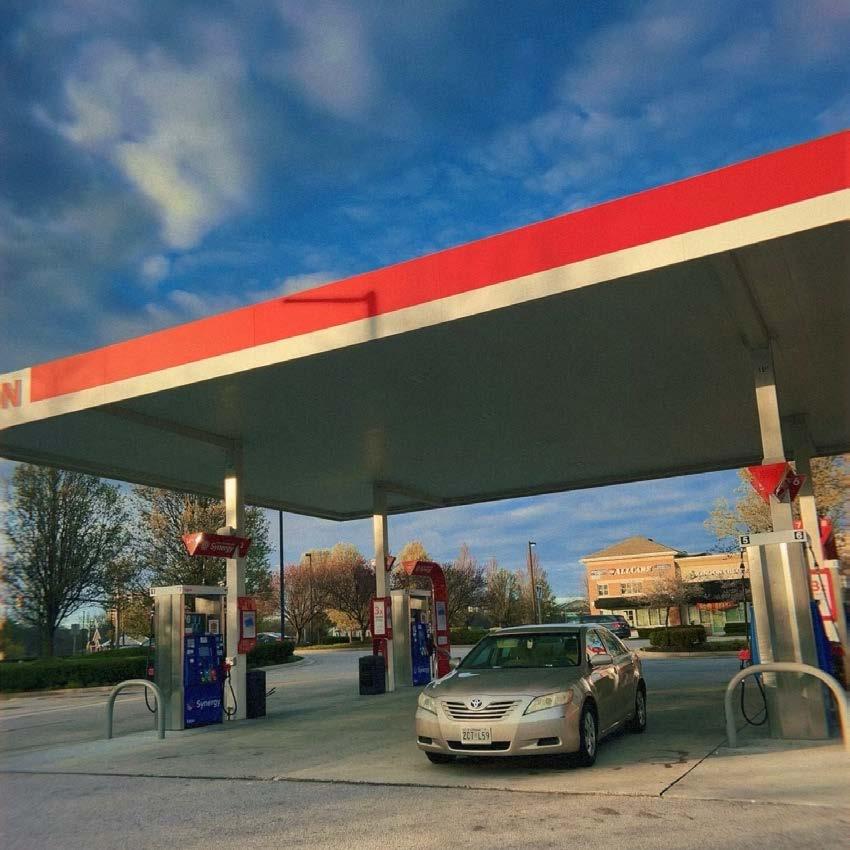
Shattered
Eloise Khouzami '24
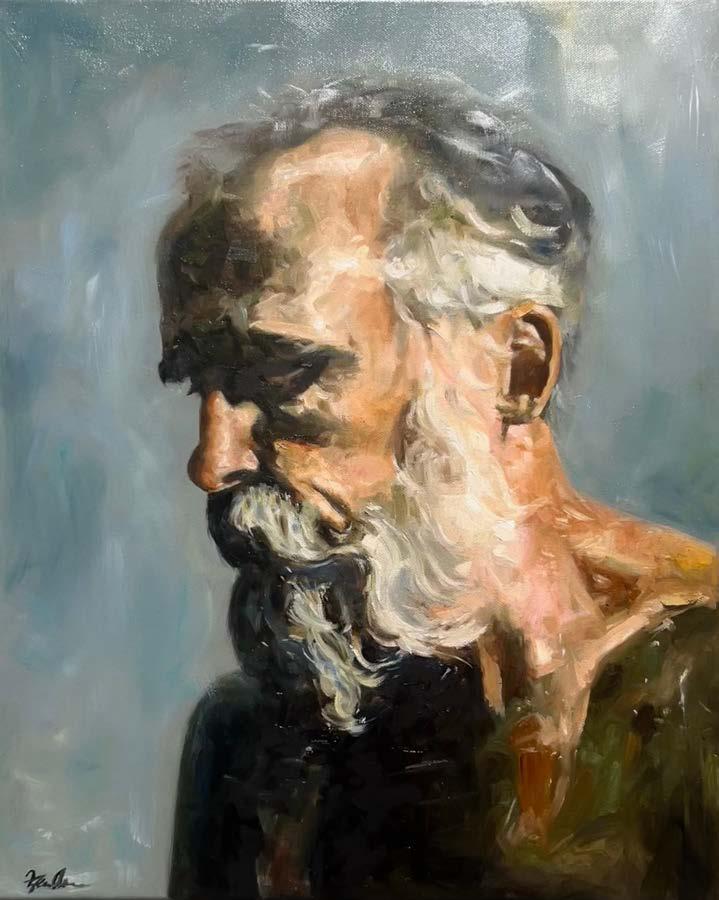
Zara Allen ‘25

Hook,

Handshakes and Pumpkin Pie

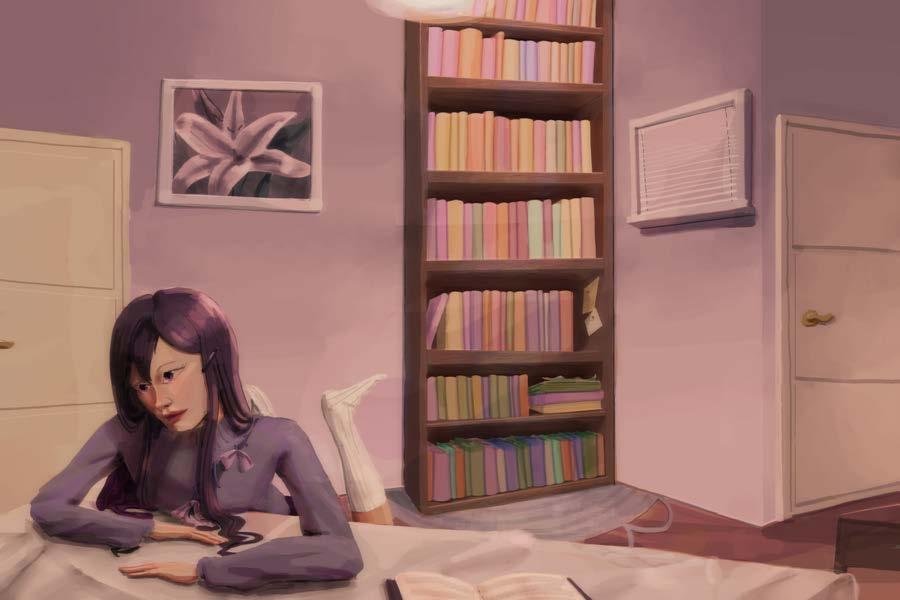
Yuri Enjoying Solitude

Madelyn Louise Madelyn Singer ‘24

Zara Allen ‘25

Anxiety

Catherine Zanti ‘26

Passion of fire

Embrace Femininity Catherine Zanti ‘26

Temptation Catherine Zanti ‘26

Genesis

Abby Kim '24

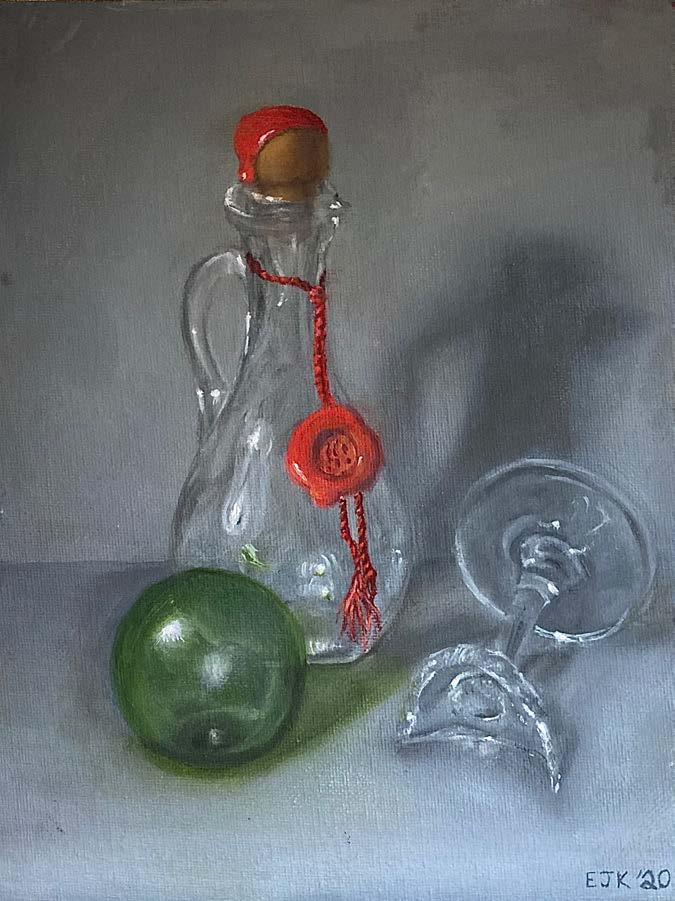
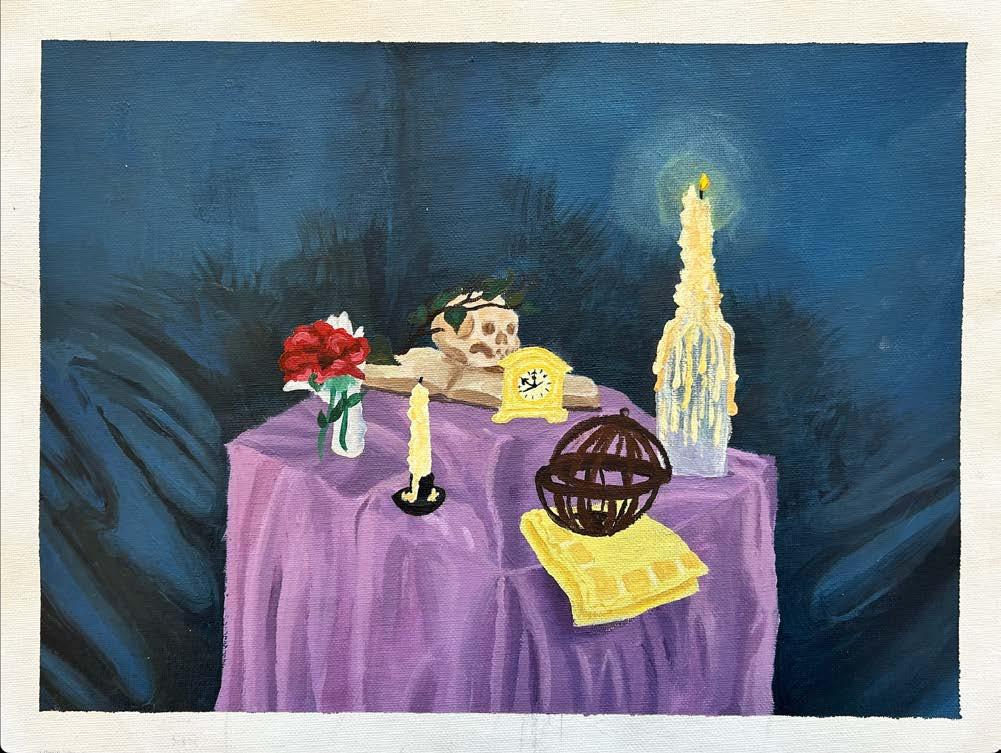
Vanitas
Mira Adkins ‘26

New Possibilities with AI Art

Orange Bubbles, Little Trees

Ch4p4l Elle Long ‘24

h66p Elle Long ‘24

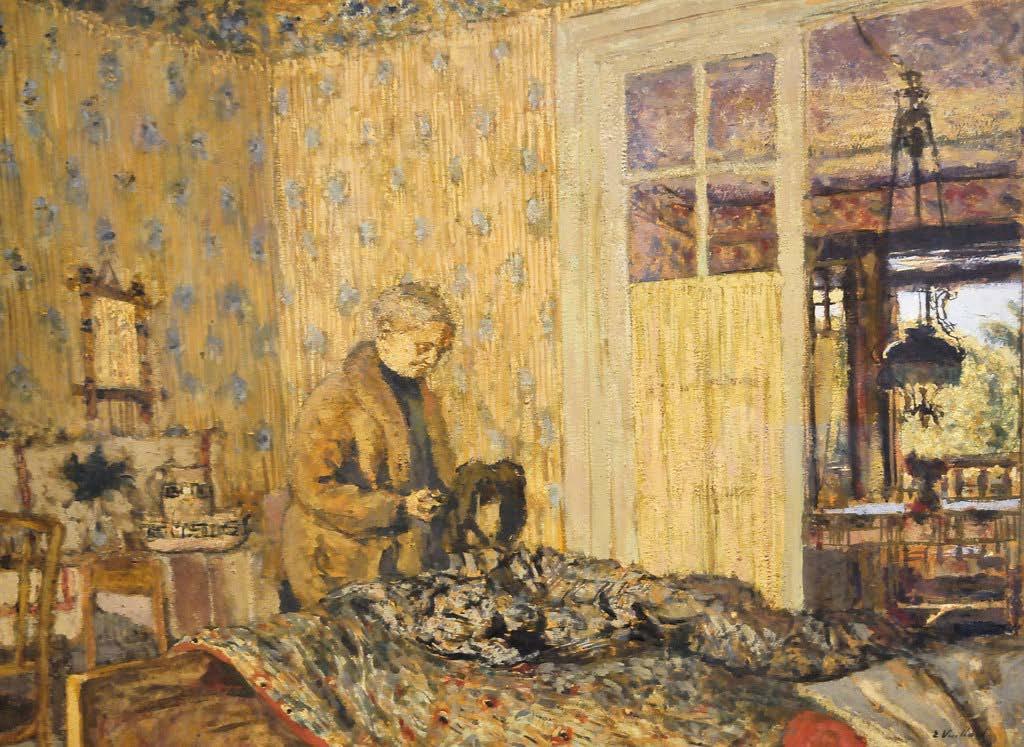
An Examination of “Interior on a Grey Day, Vaucresson”

A key aspect of “Interior on a Grey Day, Vaucresson” by Edouard Vuillard is its texture. Vuillard used distemper as his visual medium, which dries quickly and allows him to add more layers on top. With this technique, Villard created a painting with such rich texture and painterly aspects, for some spots are more layered than others. Most notably, the blankets on the bed have a certain fuzziness to them because of their texture, and the wallpaper has a distinctly aged look, almost as if it is starting to peel. This texture gives a certain liveliness to the painting, for the piece does not seem rigid and static but instead seems to move with the lines left by the brush strokes. In this respect, the painting appears to take on an impressionist element; these techniques add a deeper layer to the painting than a photograph could. Another important aspect of this painting is its usage of color. Villard mainly uses dull colors, such as light browns and greys, which seem adequate to create the look of this “Grey Day.” However, there are also a few pops of color, such as the red blanket on the bed, which give a certain amount of liveliness and warmth to the piece.

Upon looking at the piece, one’s eyes are immediately drawn to the woman in the center; after that initial look, the viewer’s eyes go around the painting, seeing the detailed couch and chair on the left and the dining room table on the right. One of the last components the viewer sees in the painting is the slight glimpse of the outside; although the painting appears to be completely interior, the windows on the right show the titular “grey day” outdoors. Despite such a small part of the painting, this glimpse is enough representation to let the viewer know what dreariness lurks outside. Still, though, the interior of the house, and more specifically the woman, takes precedence, always acting as a point of return for the viewer’s eyes; the world outside is dreary, but that is what makes the interior and the aura of this woman so comforting in comparison. When observing this painting, I felt calm and comforted. The scene came alive with the use of texture; I could feel the gloominess of the “grey day,” but I could also feel the warmth that overshadowed it. With the fuzzy blankets and the old wallpaper, I felt almost as if I was inside my own grandmother’s cozy house on such a dreary day. The slight smile of the woman in the piece is enough to comfort me completely as would the warm smile of my grandmother; and, because my eyes immediately go to the woman in the center, she seems to be such a central figure of this piece who is providing this aura of warmth.

Vuillard’s use of texture is also able to create the sense of such an old yet charming house. The varied layers depicted at the top of the painting to form the ceiling make the house look old and worn with some water stains and uneven paint; this creates another layer of charm, for although the house is old, it has so many stories and so much history behind it, which just adds to that feeling of comfort. The “fuzziness” created by the texture of the distemper also seems to have a deeper meaning. When I look at this image, it feels almost like a memory; the specific details of the moment may be “fuzzy,” but the feeling is still there, which is exactly what this painting achieves.

Megan Winakur ‘24
Bella Sodhi ‘25
Catherine Trapeni ‘25
Sophie Winter ‘25 Megan Winakur ‘24
Gabby Ward ‘24
Catherine Zanti ‘26

Turn static files into dynamic content formats.

Create a flipbook