the magazine

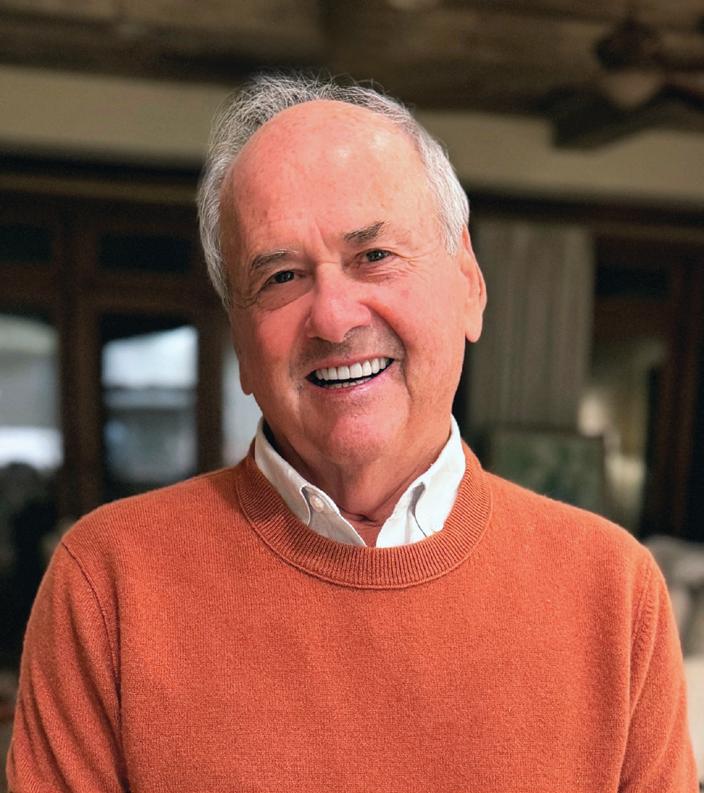
a letter from John McConnell
I love spring pollen and the August heat in our region! Now that we are in the beautiful spring season — and with this past winter thankfully in our rearview mirror — I will try to appreciate the other seasons without focusing too much on the unpleasant aspects. We live in a great place to enjoy all four seasons, but this recent winter started to wear on me more than in years past. Green has replaced the brown, dormant Bermudagrass, and our golf courses and clubs are back in full swing.
This will be a special year for members at Sedgefield Country Club as the club celebrates its 100th anniversary. The Roaring Twenties produced a multitude of country clubs, but few in North Carolina have the history and character that Sedgefield enjoys. What a great-looking clubhouse — and the updated Sam Snead Cottage facade blends beautifully with the new fitness building that replaced the old, worn-out one. And the golf course — enough said. Next year, Holston Hills Country Club will celebrate its own centennial, so the parties will continue.
At Virginia Tech, I majored in finance but took all the history courses I could and usually made A’s in those. I will refrain from discussing my grades in accounting and economics — but I did graduate in four years! My fourth son, Alex, graduates from Tech in May, so those lofty education expenses will hopefully turn into a few more golf trips for my kids! And did I mention he has a real job lined up in commercial real estate? That means the living expenses are now his to assume. One of the best days for a parent is watching your children learn to live independently and begin their career journey.
My golf trips with my sons this year will be to Cabot Links in early June and to
Northern Ireland in September. It should be a great year to play some of the best courses in the world. When I ask previous travelers whether they prefer Royal Portrush or Royal County Down, the replies are about 50-50. I look forward to reporting in the next magazine which one I liked better.
“On to Richmond” was the battle cry of the Union army in the spring of 1865. That same slogan applies to McConnell Golf this spring as we place a course under contract in Richmond, Virginia — a city where we have long hoped to establish a presence. Having a club in the three state capitals within our market is exciting, and I believe this golf course will be something special.
The club has been out of operation for two years, and we will rebuild the course and club from the ground up, modeling it after Cobblestone Golf Club in Blythewood, South Carolina. I love the property — more than 200 acres with no houses. It lies along the Chickahominy River, where several Civil War battles took place, making it a truly historic location. We expect to open for play in late summer 2027.
This March, I took our corporate team, long-term managers and guests to Puerto Rico to celebrate reaching our $100 million revenue goal in 2025. Can we make the billion-dollar club? Definitely not in my lifetime, but perhaps the next generation will find opportunities to continue our growth. Thank you to our members for helping us reach this milestone. We look forward to continuing to provide the quality and experiences you deserve.
By the time this magazine is published, I hope the PGA TOUR will have announced its plan for 2027. It will be interesting to see what the future holds for its events, and hopefully Sedgefield will continue to host one of them. Any club with 100 years of history — and a golf course this good — deserves to be included. While the number of TOUR events may decrease and financial payouts to players will likely continue to escalate, Sedgefield’s place on the schedule remains to be seen.
We also congratulate Cameron Young on winning THE PLAYERS Championship, one of the TOUR’s premier events. He joins three other former winners of the Wyndham Championship who have also won at TPC Sawgrass: K.J. Choi (2), Webb Simpson and Si Woo Kim. All except K.J. won their first TOUR event at Sedgefield — a testament to the role our course continues to play at the highest levels of the game. We look forward to seeing you in August for another great tournament.

John McConnell, CEO and Founder

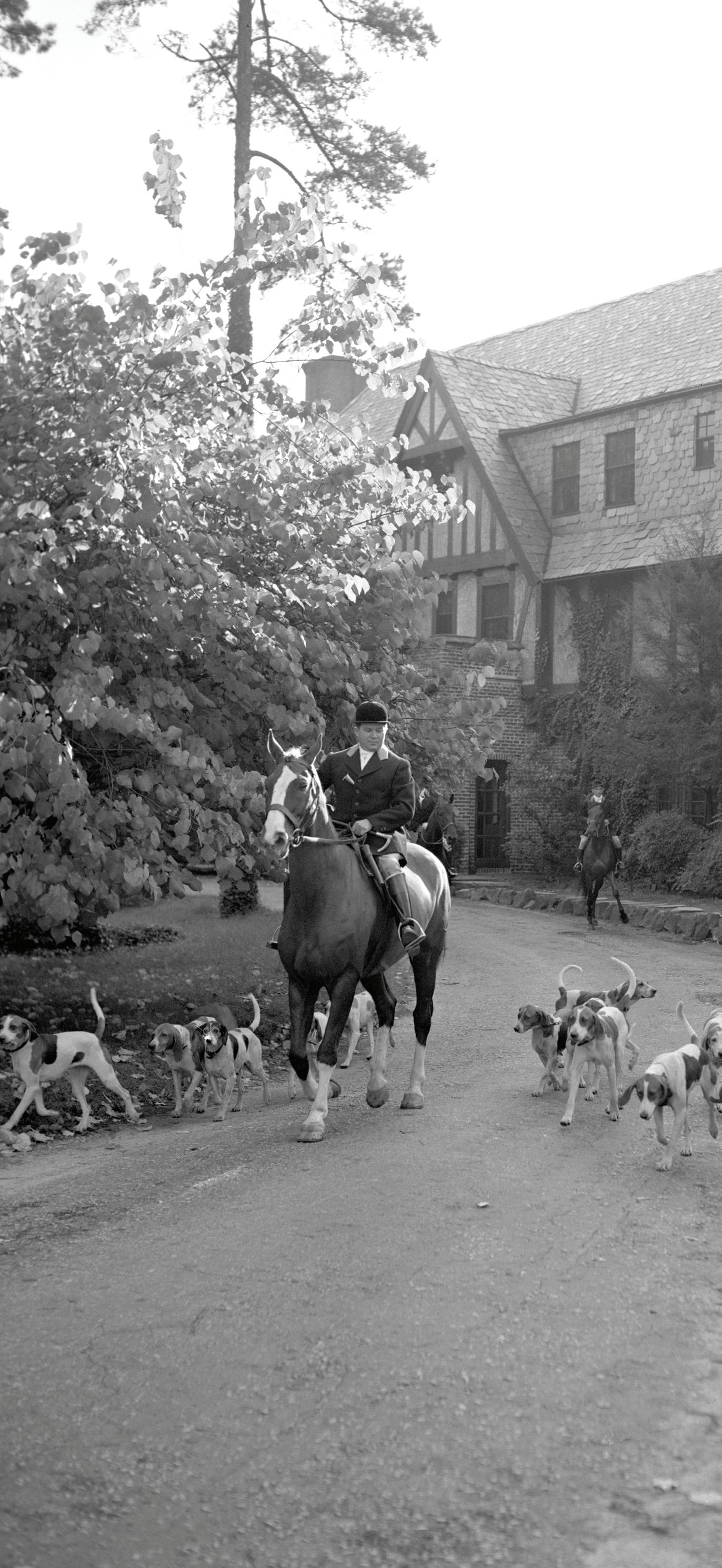
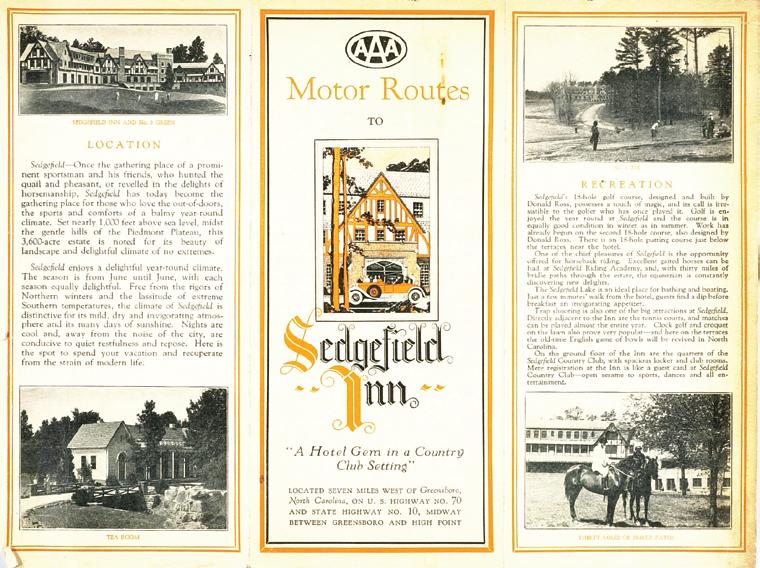
A rider leads a pack of fox hounds in front of the Sedgefield Inn. Organized fox hunts were a popular tradition in the early days of the Sedgefield community.
McConnell Golf the magazine
on the Tee
Talent and tenacity propel this Holston Hills standout to new horizons
Cobblestone Golf Club
Helps Change the Game
Foundation puts military families and adaptive golfers on the fairway
Couples’ friendships forged at Providence Country Club have deepened with time
On course with Michael Shoun
Exploring the revolutionary roots within two McConnell Golf courses in South Carolina
Century at Sedgefield
People, places and moments that shaped a Greensboro landmark over the past century
Two chefs share how Carolina barbecue culture shows up on club menus
The Bird Man of Wilson C.C.
Retired science teacher pairs lifelong passion for birding with the game of golf
Capturing McConnell Golf memories
On foot at McConnell Golf’s courses
Wakefield couple compiles net gains of precious medals in pickleball


Chief Executive Officer & Founder
John McConnell
Chief Operating Officer
Christian Anastasiadis
Communications Director
Faith Inman
Creative Director
Paxton Rembis
Social Media & Digital Marketing Specialist
Madeline Bonnabeaux
Contributing Writers
Amanda Capps
Brad King
J. Morgan McCallum
John Jeter
Lillia Callum-Penso
Contributing Photography
Amara Images Photography
Brian Spurlock/Icon Sportswire
Carol W. Martin/GHM Collection
David Fattaleh
Jay Norris
John Gillooly/Wyndham Championship
Kristen Burgess
Leda Holliday
State Archives of North Carolina
USGA Museum
Wilson Library/UNC-Chapel Hill
McConnell Golf, The Magazine
Rooted in the spirit of McConnell Golf, our magazine is as distinguished as our 17 club properties, which stretch from the Blue Ridge Mountains to the Atlantic Coast. Since 2008, McConnell Golf, The Magazine has captured the stories and experiences that make our community unique. This publication is supported by the members, for the members, reflecting the lifestyle and camaraderie found across our network of clubs.
Inquiries
Advertising/Membership: Lauri Stephens membership@mcconnellgolf.com
Editorial: Faith Inman finman@mcconnellgolf.com
Stay Connected


McConnellGolf.com
@McConnellGolf
@McConnellGolf
Facebook.com/McConnellGolf
YouTube.com/McConnellGolf
Cover
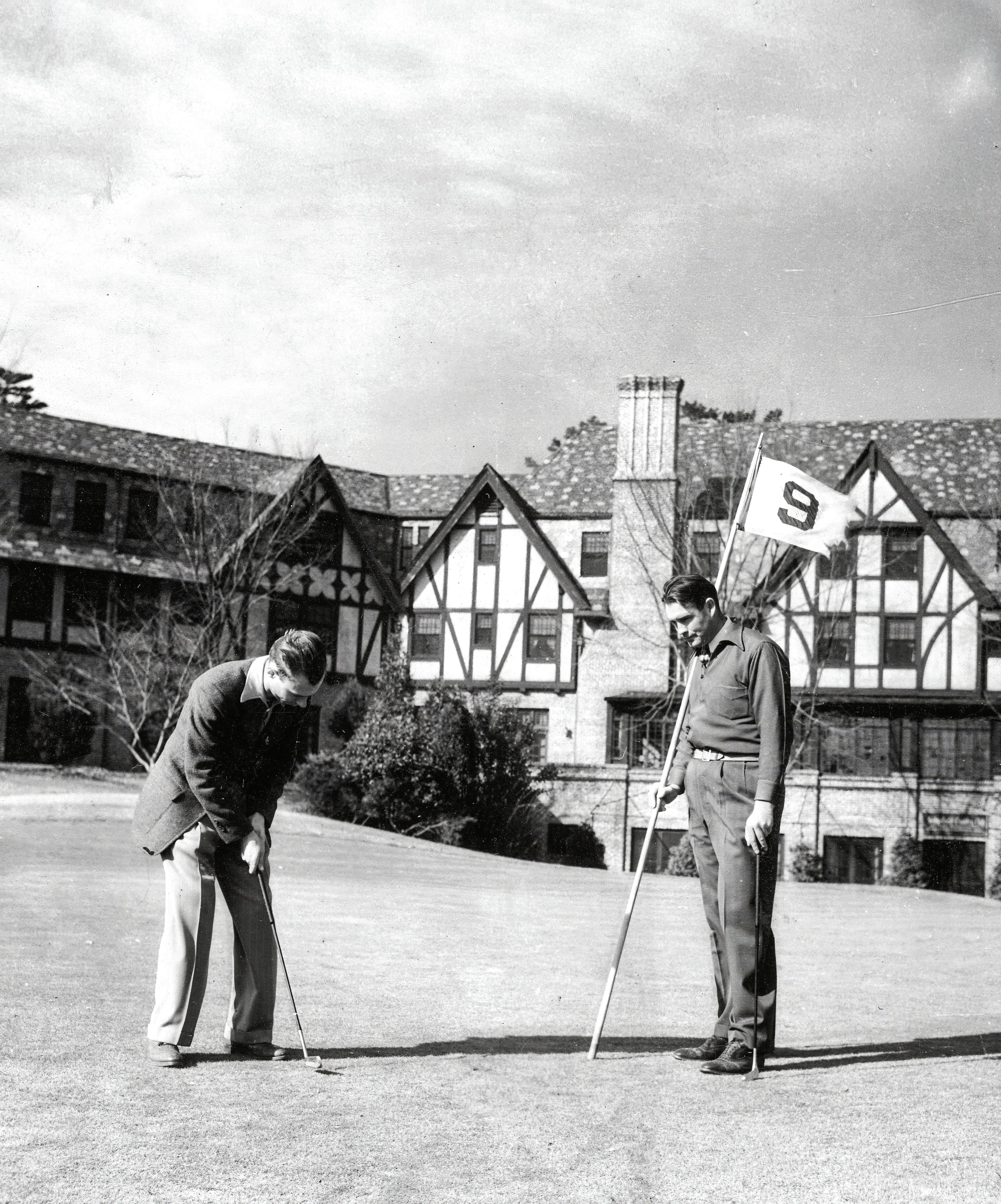
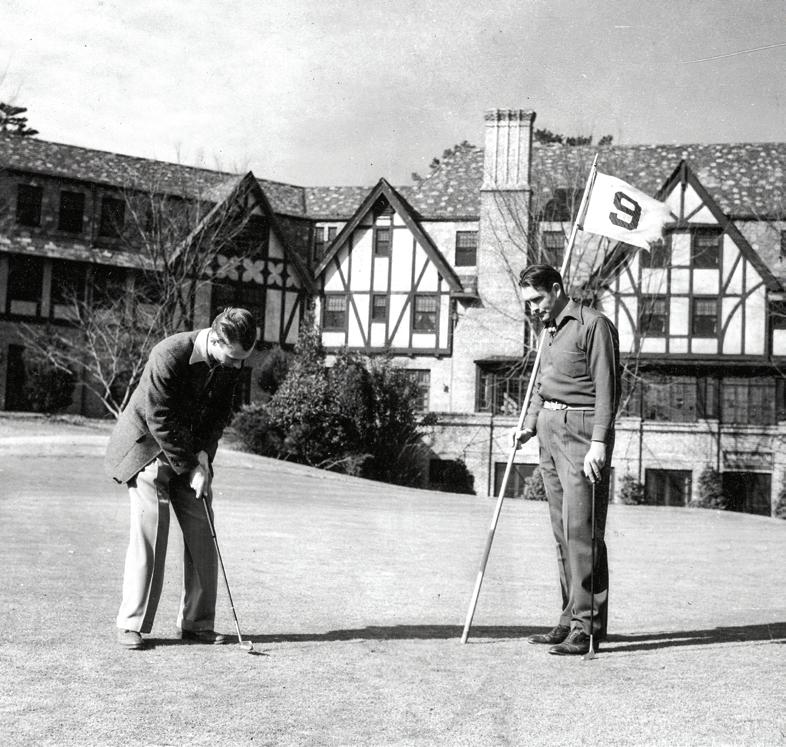
Bobby Dunkelberger and Orville White stand on the No. 9 green at Sedgefield.
Photo Courtesy of State Archives of North Carolina
Published by Community Journals Publishing Group 581 Perry Avenue Greenville, SC 29611
864.679.1200 CommunityJournals.com
President
Mark B. Johnston
Design Director Kristy Adair
Editor Claire Billingsley
Go Digital
Access past and present editions of McConnell Golf, The Magazine online: McConnellGolf.com/The-Magazine


Talent and tenacity propel this Holston Hills standout to new horizons
by J. Morgan McCallum
For rising star Isabella Coughlin, a love of the game isn’t just fuel for personal victories — it’s a family tradition that goes back three generations.
“Some of my earliest memories playing are of just hitting the ball around with my dad and grandpa, and traveling to various golf courses with them,” says Coughlin, who started joining her family on the green at the age of 5. At Holston Hills Country Club, her father, Alex, once stood in her shoes: working part-time on the Donald Rossdesigned course in high school and college.

“Our family has a background in golf: friends, cousins who have played on the PGA TOUR, and I played on a high school team that won a state championship, so I know how much work it is, what it takes to compete,” says Alex Coughlin. “I also knew Isabella would have a community she could lean on if she chose golf.”
Some of Alex’s favorite memories are the countless summer evenings spent coaching his daughter at Holston Hills. “She started wanting to stay out there with me longer and longer. I went from practicing with her, to being more invested in watching her practice and getting more enjoyment out of seeing her develop and get better than I did practicing my own game,” he says.
“Some of my earliest memories playing are of just hitting the ball around with my dad and grandpa, and traveling to various golf courses with them.”
Isabella Coughlin


Alex & Isabella Coughlin
Isabella may have been set on the path by family legacy, but her drive to win is all her own. “I’ve always been pretty competitive growing up. I played various sports — including volleyball — until I chose to focus solely on golf,” says Coughlin, who first joined her school’s junior golf team in eighth grade. “At first, I mainly wanted to spend more time with my dad, bonding and learning different things out on the course. Once I joined a team and started making some of my very best friends that way, and having fun competing both together and individually, I knew I wanted to go play in college.”
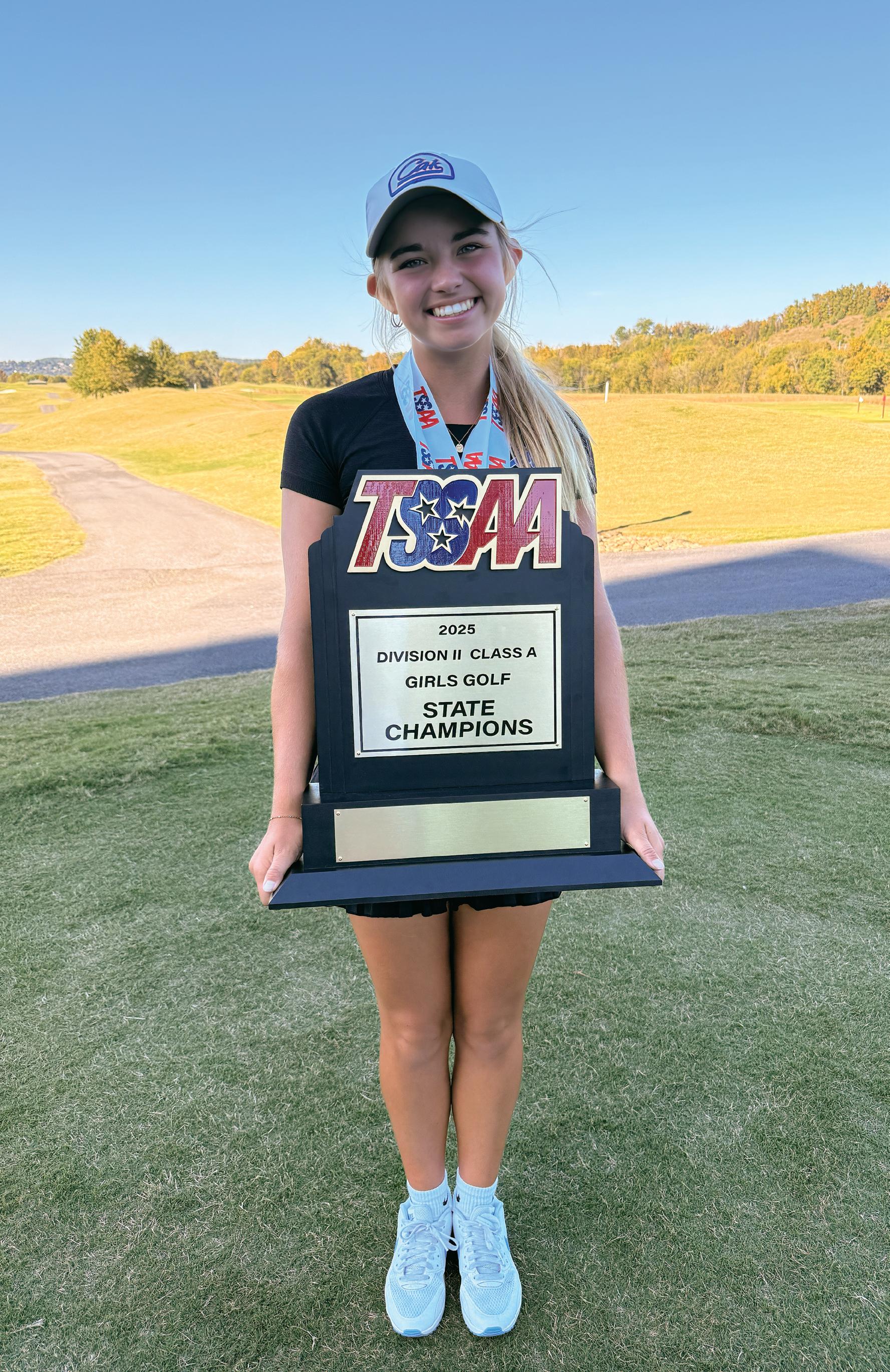
The biggest adjustment for this Farragut, Tennessee, native was the change from playing for fun to competing in tournaments. Coughlin went on to guide her team at the Christian Academy of Knoxville to two state titles in 2024 and 2025, along with four regional and district championships. The regional champion also qualified for the Tennessee Junior Cup twice and was named to the U.S. national development program team in Tennessee twice.
The path to victory wasn’t always smooth for the cheerful senior. Overcoming an injury to carry her team forward took dedication and hard work — and led to one of Coughlin’s proudest moments during the 2024 state championship her junior year.
(RIGHT) Isabella Coughlin helped lead Christian Academy of Knoxville to back-to-back TSSAA Division II Class A state titles in 2024 and 2025, finishing second individually in 2025.

“A few weeks before the tournament, I had broken my wrist, and I still wasn’t sure if I would be able to play — but my dad and I would go to the course every day to see if I could hit a few shots, trying to get my wrist to the point where I could tolerate the pain. I knew it was going to hurt but wouldn’t get worse, and I ended up playing all 36 holes and contributing to our win. That was really special.”
Following more big achievements — including winning the Sneds Elite at Old Fort in 2025 and the Sneds Tournament of Champions in 2024 — Coughlin set her sights on the successful golf program at Western Kentucky University. She is committed to play Division I golf for the Hilltoppers starting this fall. In the meantime, you’ll likely find her at the Holston Hills practice facility, one of her
“Once I joined a team and started making some of my very best friends that way, and having fun competing both together and individually, I knew I wanted to go play in college.”
Isabella Coughlin
(ABOVE) Adeline, Alex, Isabella and Elizabeth Coughlin celebrate Isabella’s signing day.
favorite places to work on her game. “I’m mainly just focused on hitting the ball farther off the tee, so I’ve been weightlifting and working with my swing coach, Jason Gandy of Willow Creek, to make my swing more efficient and gain speed,” says Coughlin.
As she prepares to leave for college, she credits the clubhouse staff, former Holston Hills director of golf and PGA professional Chris Dibble, and fellow members as invaluable supporters.
“Golf takes a lot of dedication, and I’m excited for a change of pace and meeting new teammates — so this summer, it’s important to spend as much time with my family as I can.”
STAY. PLAY. EXPLORE
From leaf-bright mountain trails to breezy waterfront porches, discover fall at The Carolina Experience—historic inns and boutique getaways with the kind of Southern welcome that makes cooler days feel warmer.
Wake up in a historic inn, sip coffee on the porch, and stroll Main Street or the water—at destinations across The Carolina Experience.



Cobblestone Helps theChangeGame
Range Fore Hope Foundation puts military families and adaptive golfers on the fairway
by Amanda Capps
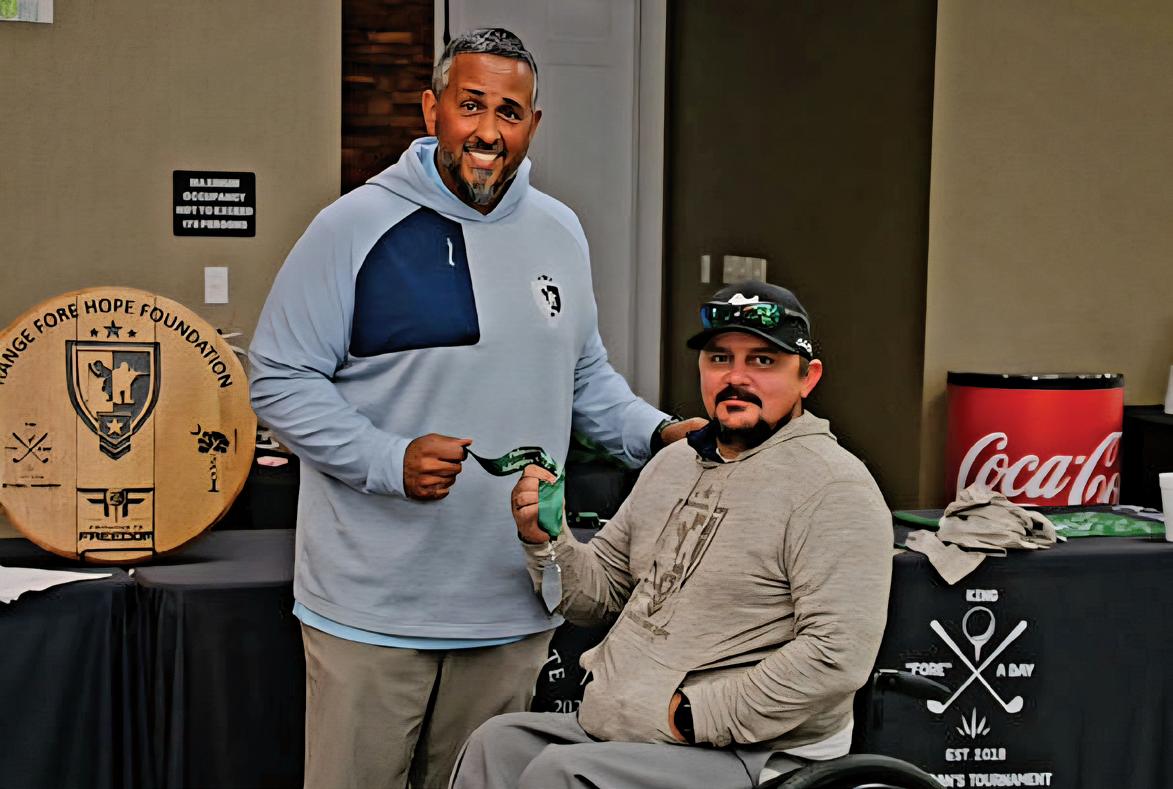
After eight combat tours, Cobblestone Golf Club member Alvin King retired from the Army in 2018 carrying more than memories of deployment. Like many veterans, he faced the quiet, complicated work of readjusting to civilian life — and the weight of PTSD.
Surprisingly, relief came on the golf course.
While golf began as a personal refuge — a safe, steady place to reset — it soon led to something larger. As King settled into “normal life,” he began noticing what was missing for others. Military spouses and children no longer had access to the built-in resources and community they relied on while their service member was on active duty.
“We were suddenly dealing with the Department of Veterans Affairs versus the Department of Defense,” King said.
The structure had changed. The support system had shifted. And families often felt the gap.
With a desire to continue supporting the military community — and to recreate some of that lost connection — he hatched an idea for a tournament. The initial event at Cobblestone was relatively small.

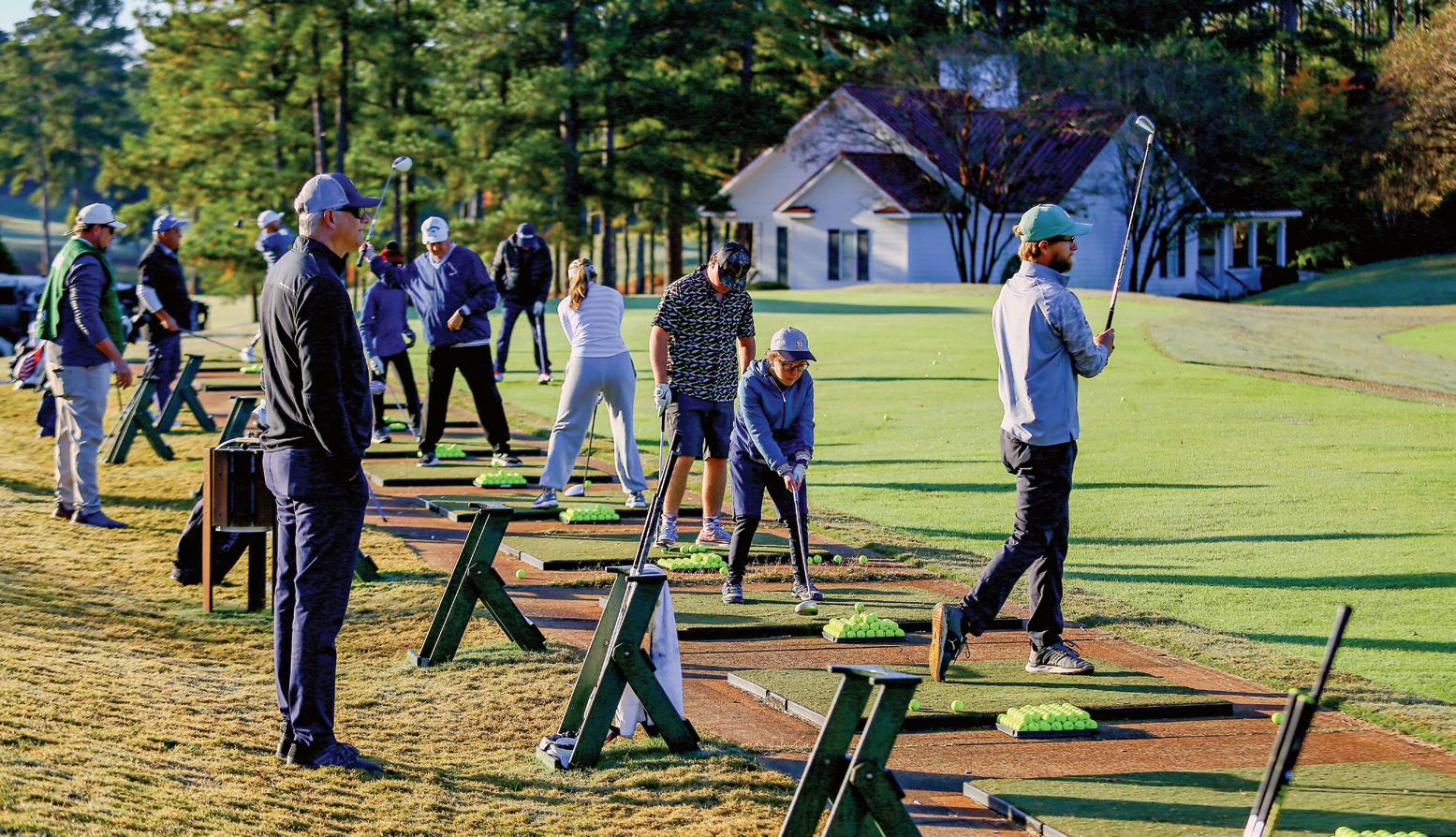
(TOP) Adam Troutman prepares for his next shot as Derrick Long, caddying in the pairing, follows the group. (BOTTOM) Golfers warm up on the practice range during the Palmetto State Adaptive Golf Open at Cobblestone.
It was planned and executed quickly, but it marked the beginning of a new mission.
As participation grew, so did the vision. King began exploring how to formalize the effort. After consulting with a few nonprofit leaders, he found himself Googling “how to start a 501(c)(3)” and again asking, “How hard could it be?”
In reality, it’s an extremely complex undertaking, but the Range Fore Hope Foundation has quickly grown into a network of nonprofits, businesses, programs, services and volunteers. King said one essential has been flexibility. Keeping the scope intentionally broad, he and his board have been able to help families with issues ranging from health and housing to finances.
“We simply haven’t put limits on ourselves,” King said. “With the lessons, the tournaments and the fundraising, the golf course has become a source of comfort and a hub for support and resources. The organization has created connective tissue between active-duty service members and veterans, along with their families.”
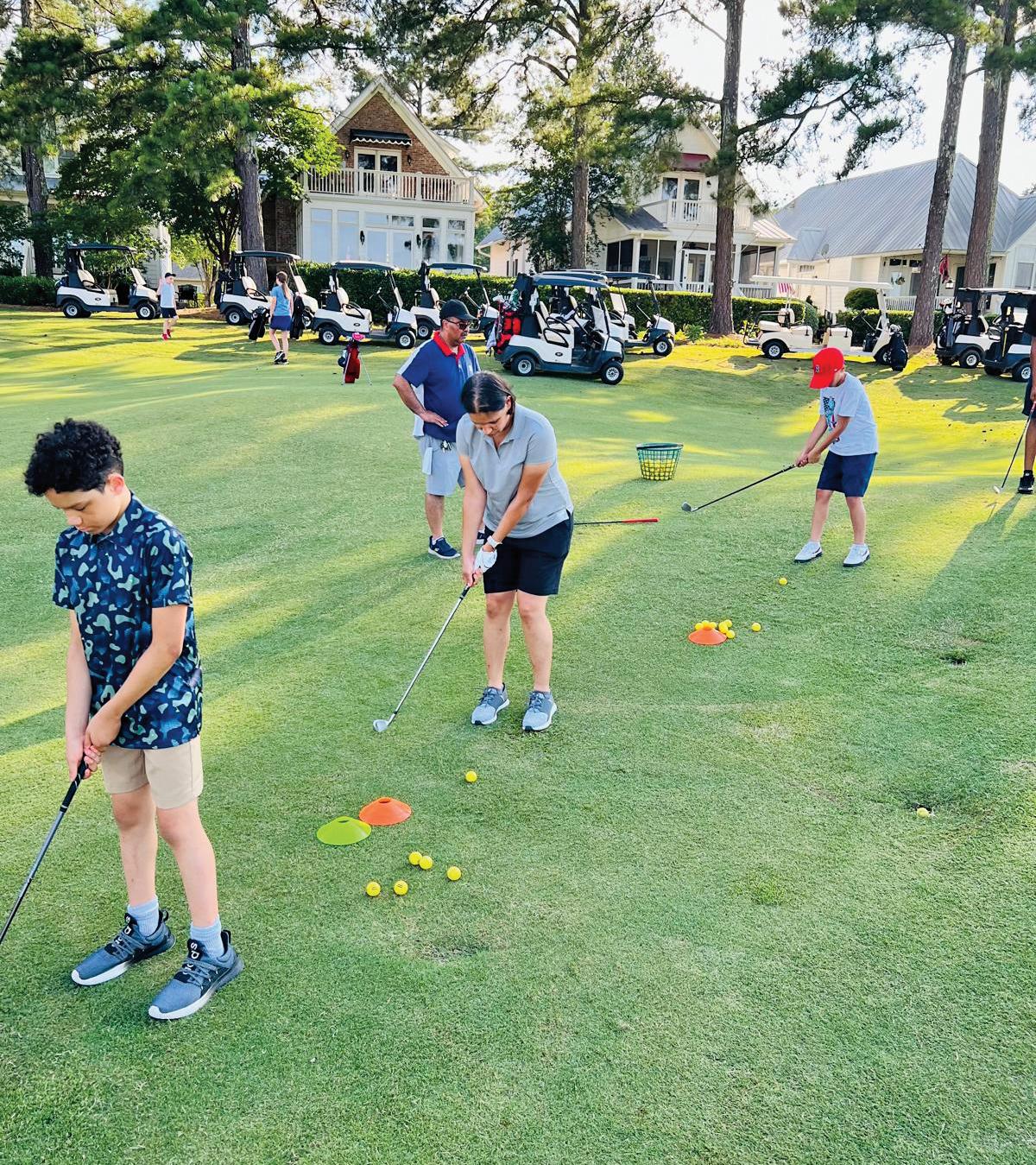
Cobblestone is one of five Range Fore Hope locations offering free lessons and play, and this year, the club will host the fifth annual Palmetto State Adaptive Golf Open, along with the foundation and Carolina Adaptive Golf.
The “adaptive golf space” was a natural extension for King as his organization strived to serve disabled veterans.
At a clinic with Dave Windsor, director of adaptive golf for the Georgia State Golf Association, King was thrown into the action when Windsor immediately motioned for him to teach putting as he stepped onto the course.

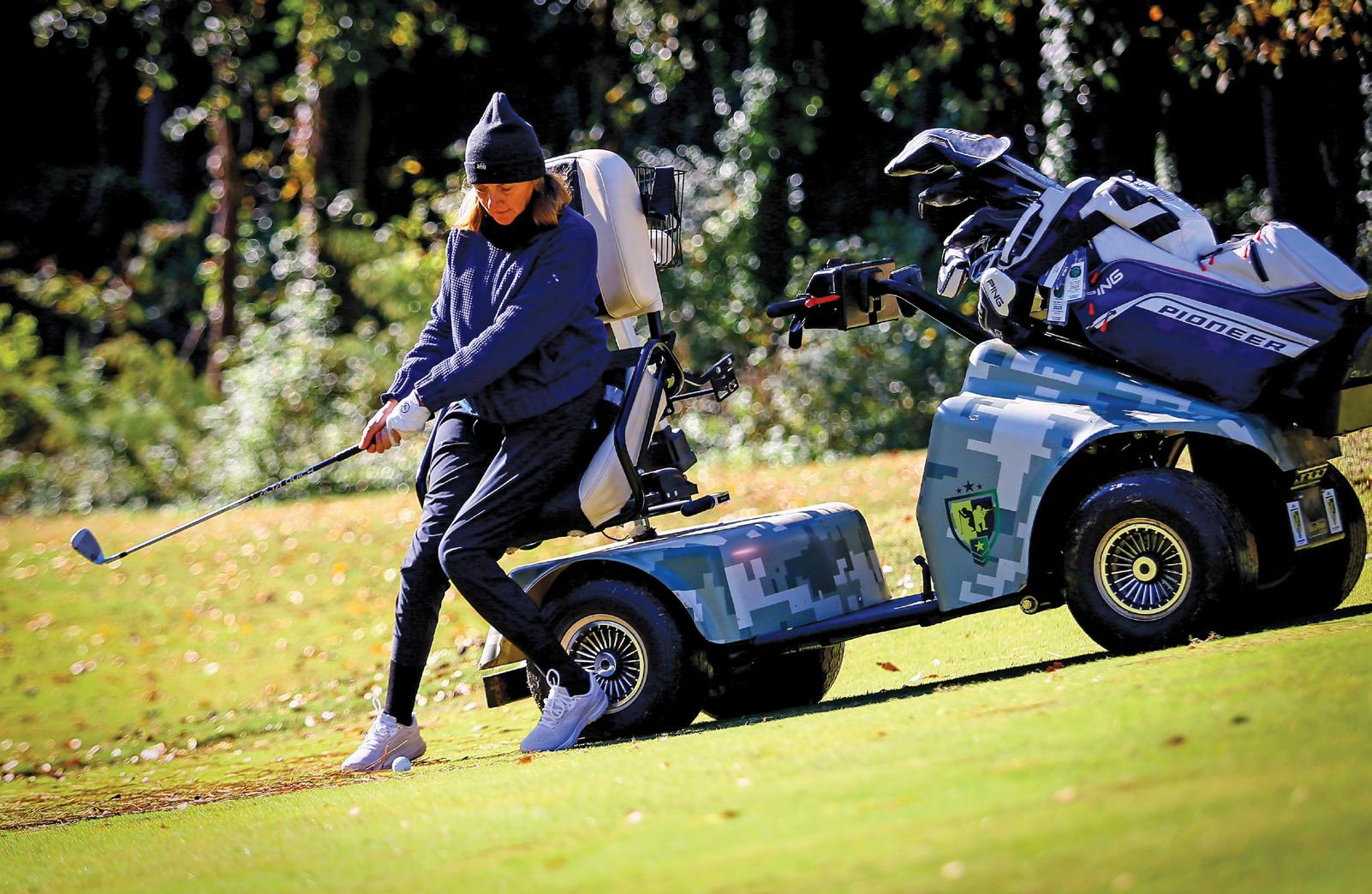
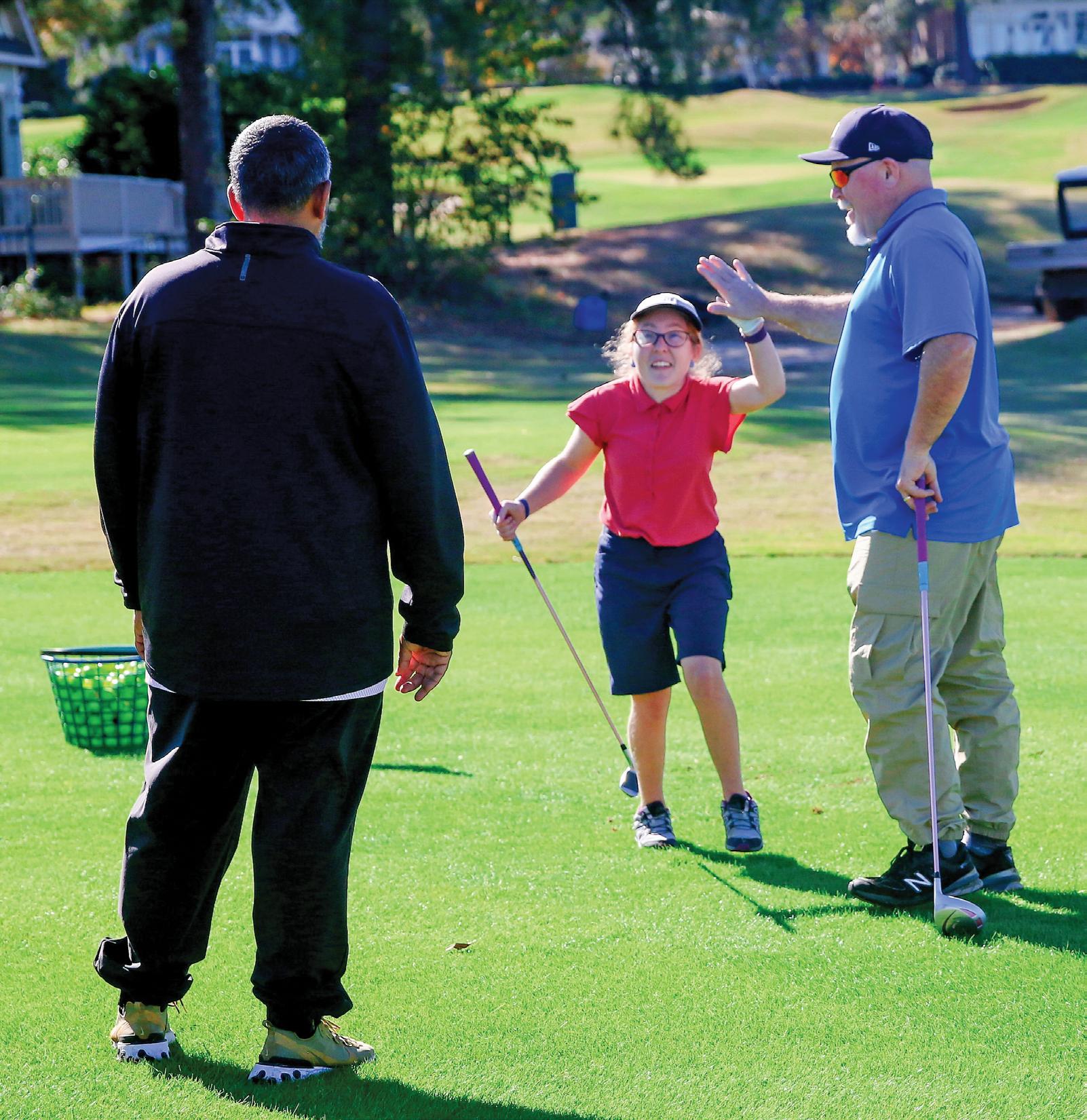
(TOP) Competitor Annie Hayes uses a SoloRider adaptive golf cart. (BOTTOM) Marrin Holliday of Greenville, South Carolina, high-fives her dad/caddie as Alvin King of the Range Fore Hope Foundation cheers her on.
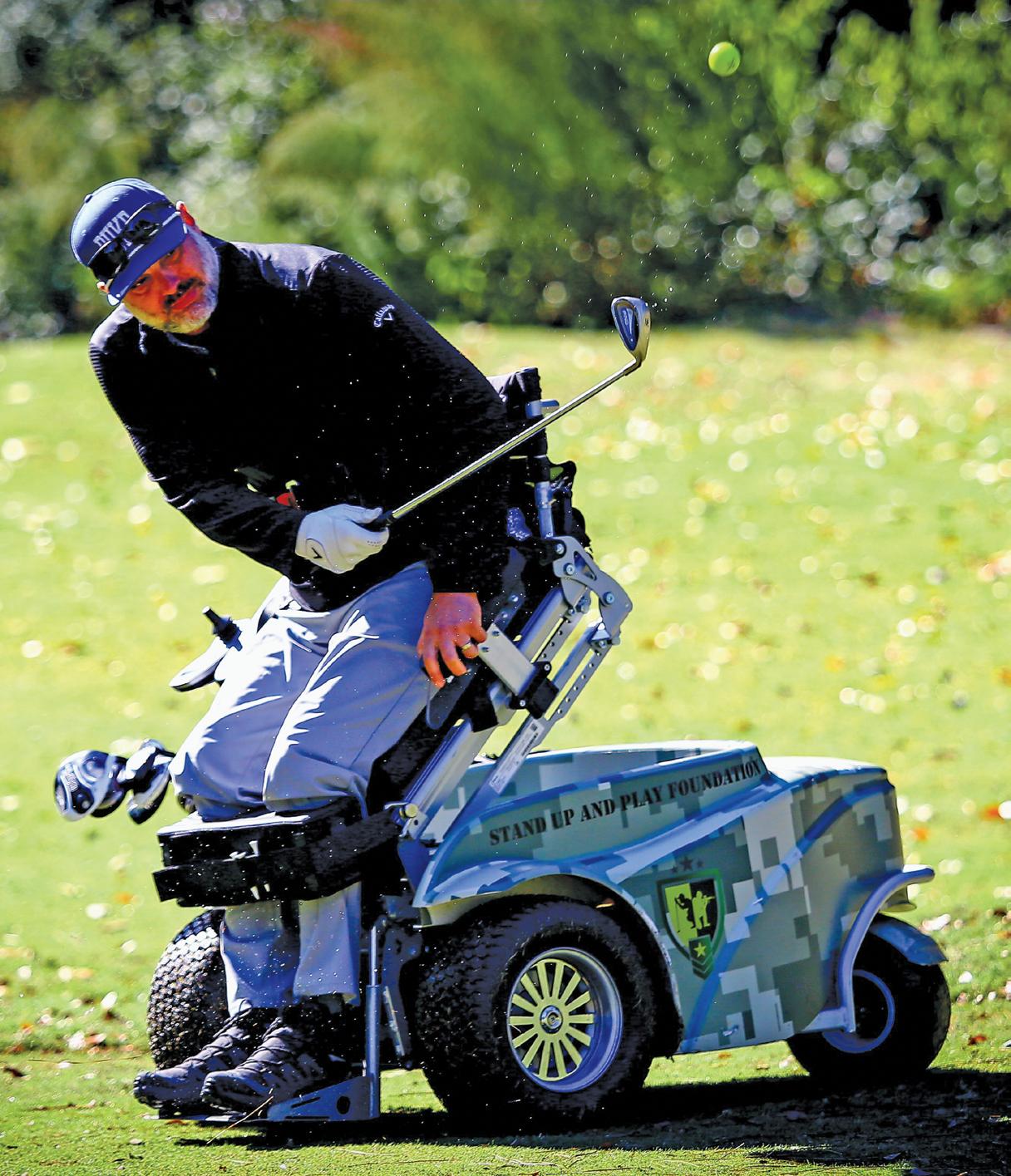
“The person I was helping was using an adaptive cart designed for non-load-bearing individuals. I’ll never forget the look on his face or his family’s reaction when they saw him, a man who was over six feet tall, in a standing position for the first time in over 20 years,” King said. “That was my hook, line and sinker moment.”
The foundation acquired its first piece of specialized equipment on a handshake. With continued support, and with grant funding from organizations such as the Stand Up and Play Foundation, Range Fore Hope has six adaptive carts — some that accommodate golfers without lower extremities — and a wide variety of clubs for all types and ages.
“It’s a blessing to put this together in conjunction with CAG founder Brandon Worley and his team. It’s a USGA-certified event, and it’s open
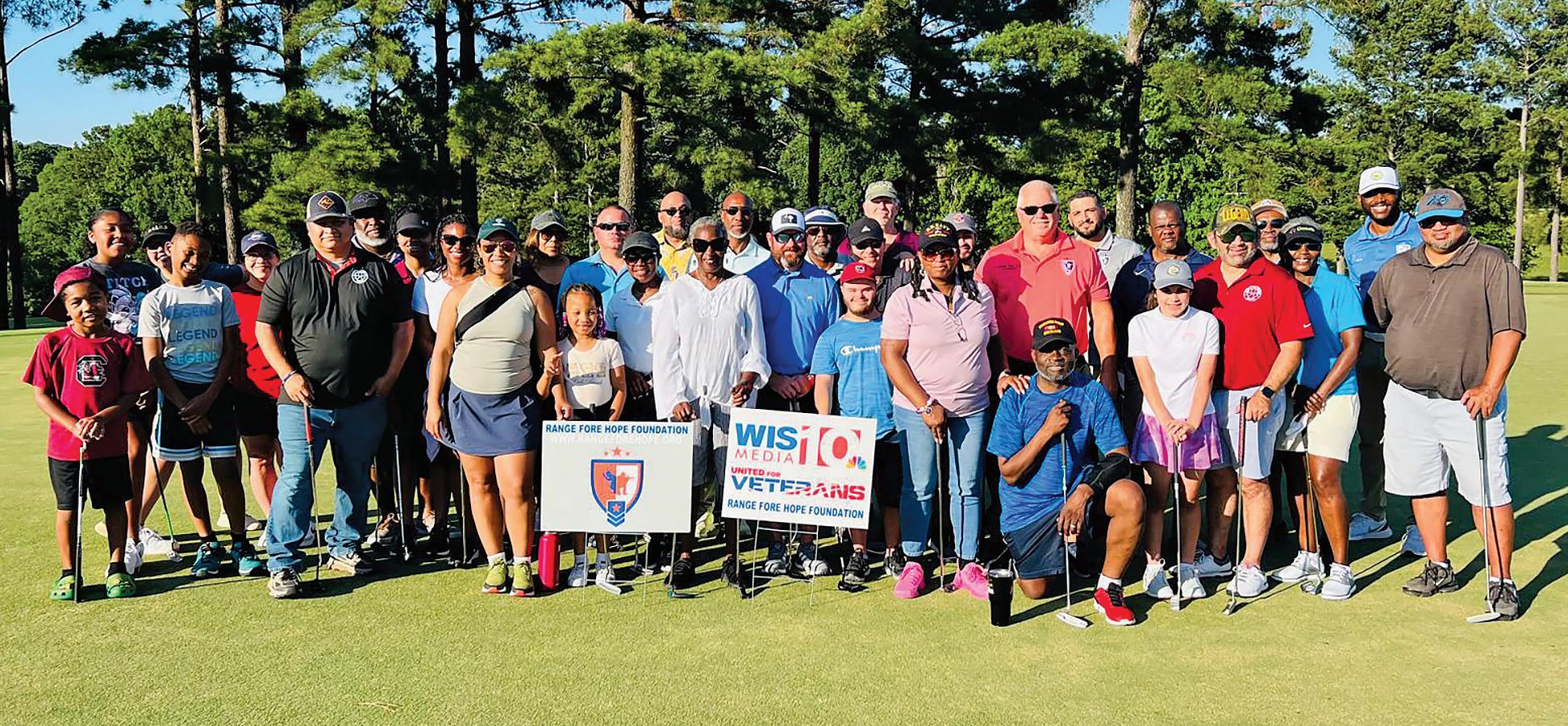
(TOP) Participants in a Range Fore Hope weekly community clinic gathered at Cobblestone Golf Club. (RIGHT) Alvin King, left, pictured with Greg Penwarden, the first to use adaptive equipment provided by the foundation. (ABOVE) Chris Sparrow of Raleigh, North Carolina, competes using a ParaGolfer.
to the full gamut of adaptive athletes in addition to combat-disabled veterans,” King said.
In 2023, King was named the inaugural Veteran of the Year by the South Carolina Department of Veterans’ Affairs. Once humbled by the game of golf itself, he’s now awed by his organization’s reach and happy to give his playbook to any course, club or group that wants to replicate the main ideas and make them work in their communities.
“If I had 100 guesses about what I’d be doing after retirement, this wouldn’t have been on the list, but we’re going into our ninth year, and I’m excited to see what’s next,” King said. There’s no doubt something extraordinary will happen the next time King asks, “How hard could it be?”
To learn more about the organization — or to become a volunteer or sponsor — visit www.rangeforehope.org.
“If I had 100 guesses about what I’d be doing after retirement, this wouldn’t have been on the list, but we’re going into our ninth year, and I’m excited to see what’s next.”
Alvin King


Linked
for Life
by Lillia Callum-Penso
Couples’ friendships forged at Providence Country Club have deepened with time
It’s not often you meet friends who carry you through all the phases of life, but for Providence Country Club members Kim O’Malley, Rebecca Shore and Kathleen Nicolaides, that has been the case for two decades.
What began as a neighborhood friendship has grown into something deeper — shared dinners, shared milestones and now shared golf trips across the McConnell Golf network.
The three women met while raising their children on a street in the Providence Country Club neighborhood, shuttling them to swim practice and school while balancing work and home life.
Today, the three friends — along with their husbands, Dan O’Malley, Marcus Shore and Mike Rader — are finding deeper friendship in a new phase of life, and it just so happens that golf is lending a hand.
(PICTURED ABOVE, FROM LEFT) Mike Rader, Kathleen Nicolaides, Rebecca Shore, Marcus Shore, Dan O’Malley and Kim O’Malley
MEMBER SPOTLIGHT
The friends have set a goal of playing every McConnell Golf course together, taking advantage of the network of expertly designed courses, the dining offerings at each club and the time together. Thus far, the six have played four McConnell Golf courses together and plan to visit two more in July.
While golf is the impetus, the trips as couples have become about more than golf.
“It’s really about friendship. That’s really what it is for me,” Rebecca says.
The O’Malleys moved to Providence in 1997. Dan was always the golfer in the family, though Kim began golfing more regularly herself a few years ago after the couple’s children moved out of the house.
What began as neighborhood friendship has grown into something deeper — shared dinners, shared milestones and now shared golf trips across
the McConnell Golf network.
Kathleen moved from the San Francisco Bay Area to Charlotte in 2001. She was drawn to Providence immediately for its sense of community, golf and the beauty of the neighborhood. She met Kim in a Jazzercise class soon after.
The Shores moved to Providence from Southern California a few years later, and Rebecca started taking that same Jazzercise class.
The three struck up a friendship that only grew with time.
Meanwhile, Dan, Marcus and Mike — all passionate golfers — began playing the Providence course together regularly.
But the friendship among the couples took on new meaning during the pandemic. Looking for safe ways to gather, Kim suggested a cookout in the backyard. That first cookout led to weekly outdoor dinners together. The friends would take turns hosting, sometimes
(CONTINUED ON PAGE 20)
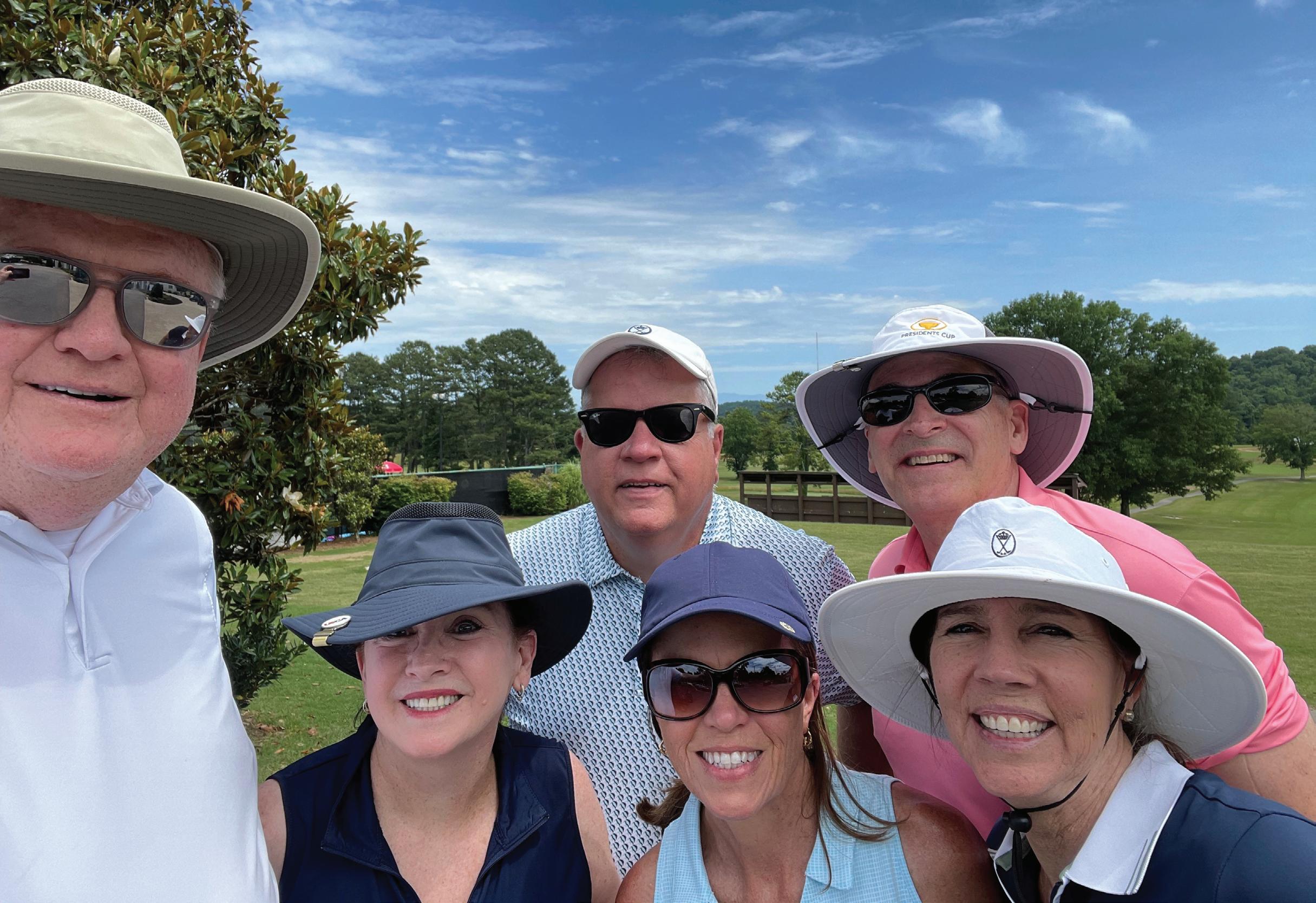
(ABOVE) Mike Rader, Kathleen Nicolaides, Dan O’Malley, Kim O’Malley, Marcus Shore and Rebecca Shore
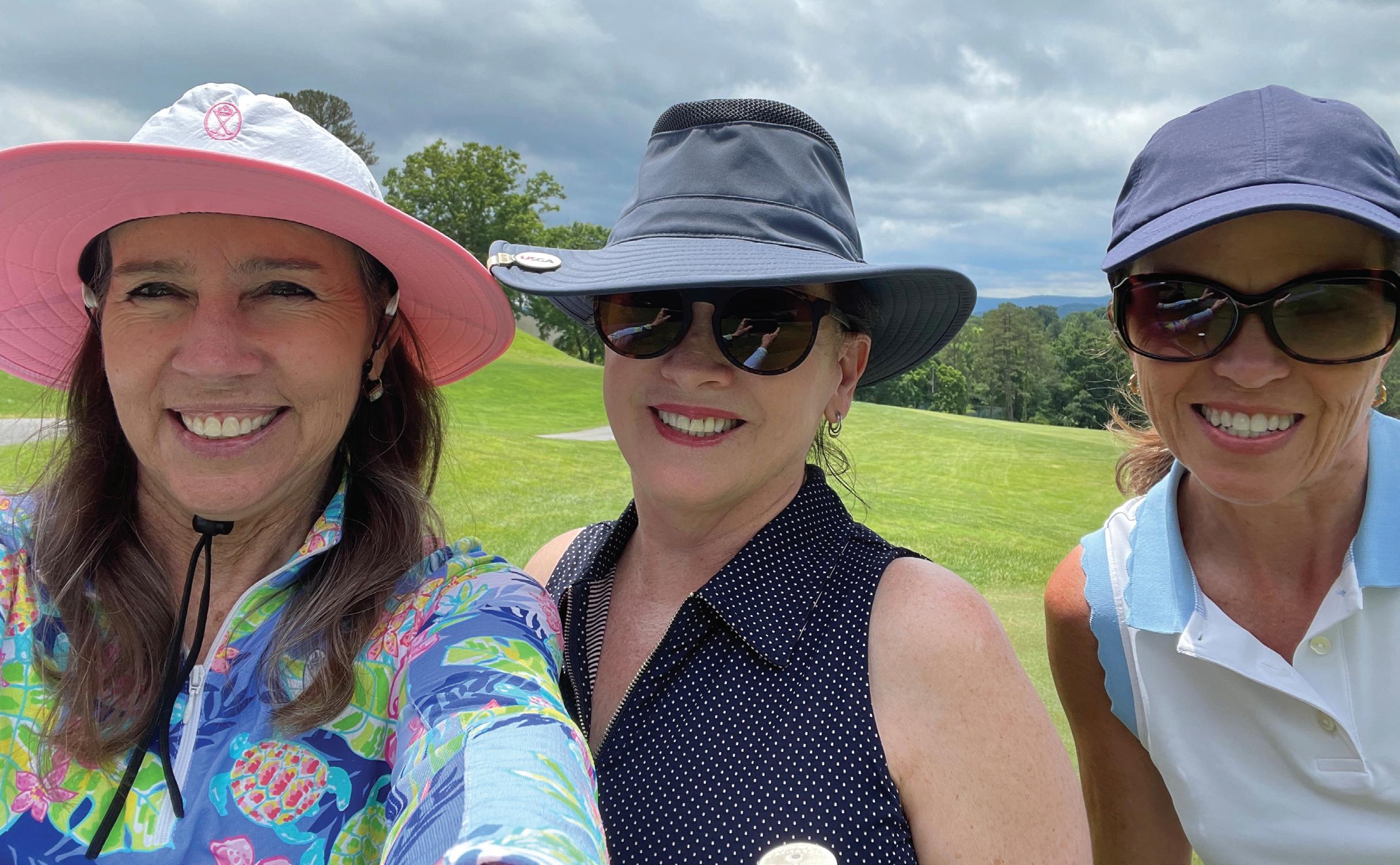
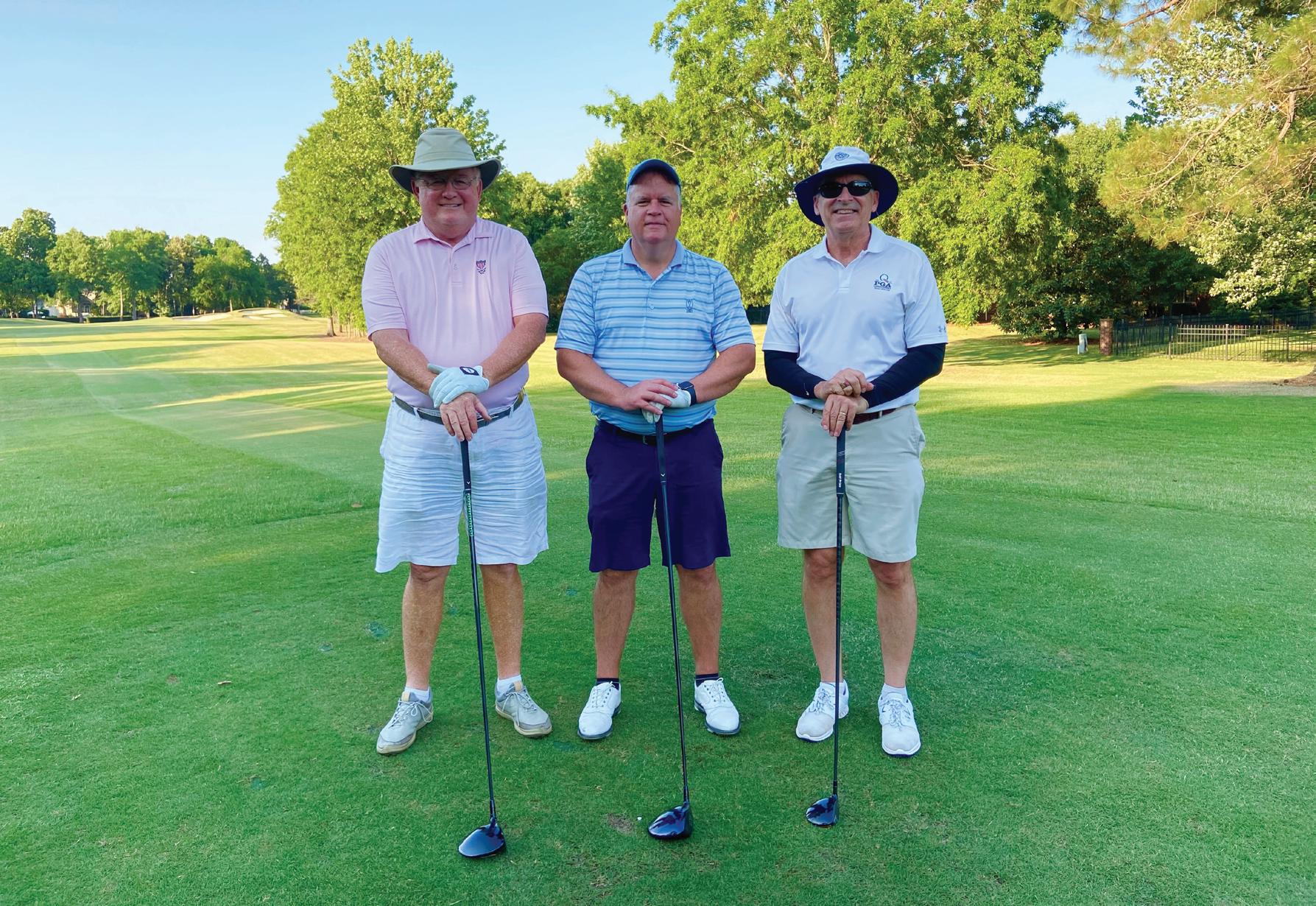
The group’s friendship has become the backdrop for some of life’s most meaningful moments.
(ABOVE) Rebecca Shore, Kathleen Nicolaides and Kim O’Malley; (LEFT) Mike Rader, Dan O’Malley and Marcus Shore
cooking in and sometimes ordering from Providence Country Club.
Their grown children would often join as well.
During this period, the men continued to play golf together, the ritual of the game and the dinners taking on new meaning during a time of intense strain and anxiety.
“So we really got to know each other very well,” Kathleen says of the weekly dinners.
Eventually, they — no one is quite sure who — started calling the weekly gatherings the Pine Valley Club Drive Supper Club, or PVCDSC.
The name remains today, as do the regular gatherings. Now, however, the couples often meet at the club for dinner instead of sticking to backyards.
In the interim years, the friends have evolved together into new phases of life — retirement, watching children get married and becoming grandparents. Rebecca and Kathleen both retired from their positions as professors at UNC Charlotte, and Kim and Rebecca have become grandparents.
Over time, the group has only grown closer, remaining a steady presence in one another’s lives.
“We first started conversing about our kids and the different milestones and struggles with teenagers,” Kim says. “Rebecca’s daughter and my daughter have both had babies now and we’re grandmas together. We have a lot in common, and we genuinely enjoy each other’s company.”
And while the three men have always found solace and enjoyment in golf, the women have slowly been honing their own interest in the sport as well, finding more time now with children grown and retirement underway.
“I’m probably the novice in the group,” admits Rebecca, a longtime tennis player. But she still finds the experience of golf — being outside and being with friends — soul-filling.
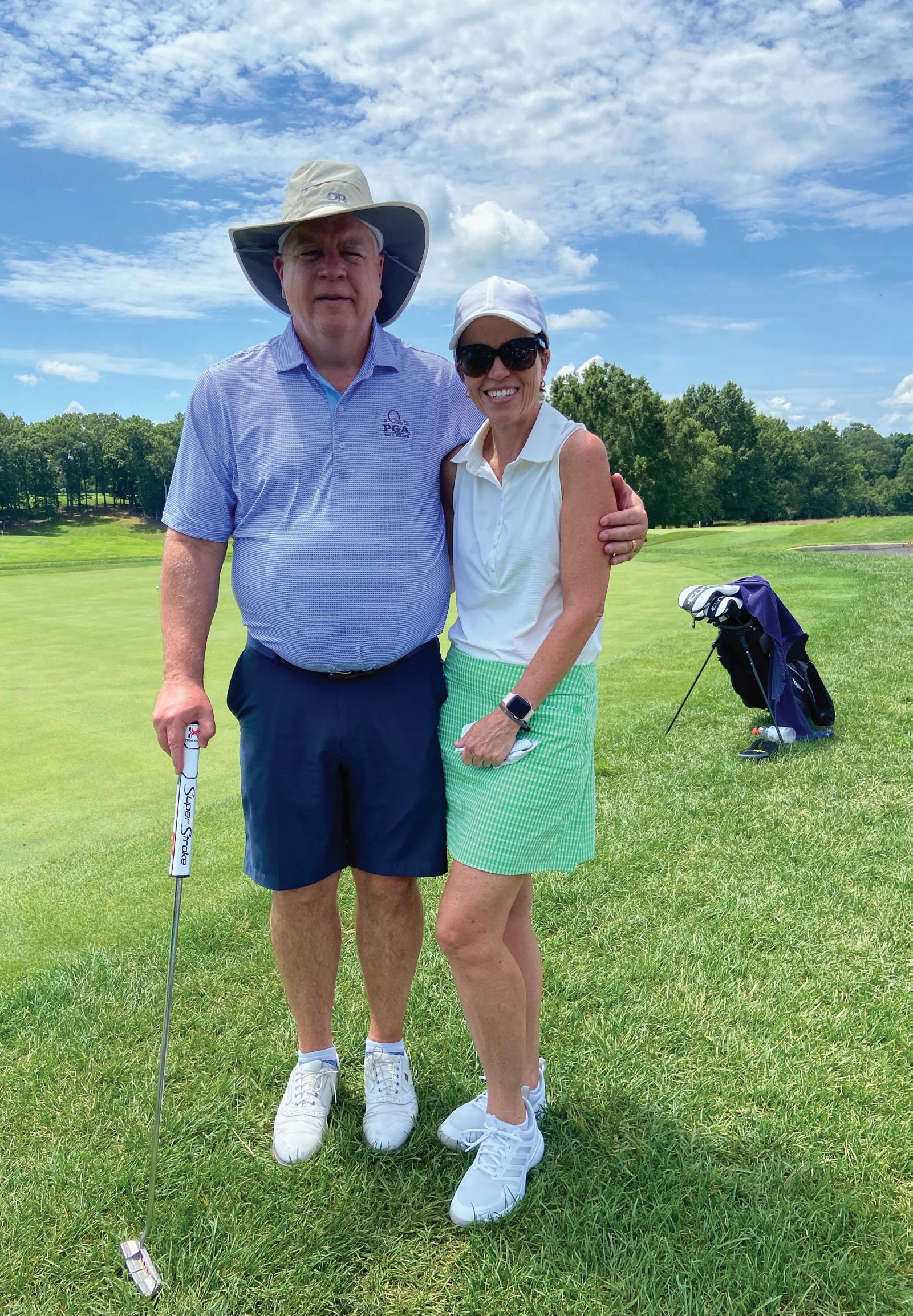
(ABOVE) Dan and Kim O’Malley
While Dan, Mike and Marcus had begun taking golf trips in 2021, it was Dan who suggested they add couples trips as well.
It made perfect sense to take advantage of the McConnell Golf network.
Dan plans each excursion with proximity in mind, strategizing so the group experiences at least two golf courses per three- or four-day trip. The men will play 18 holes, while the women will play nine, save for Rebecca, who often opts to spectate.
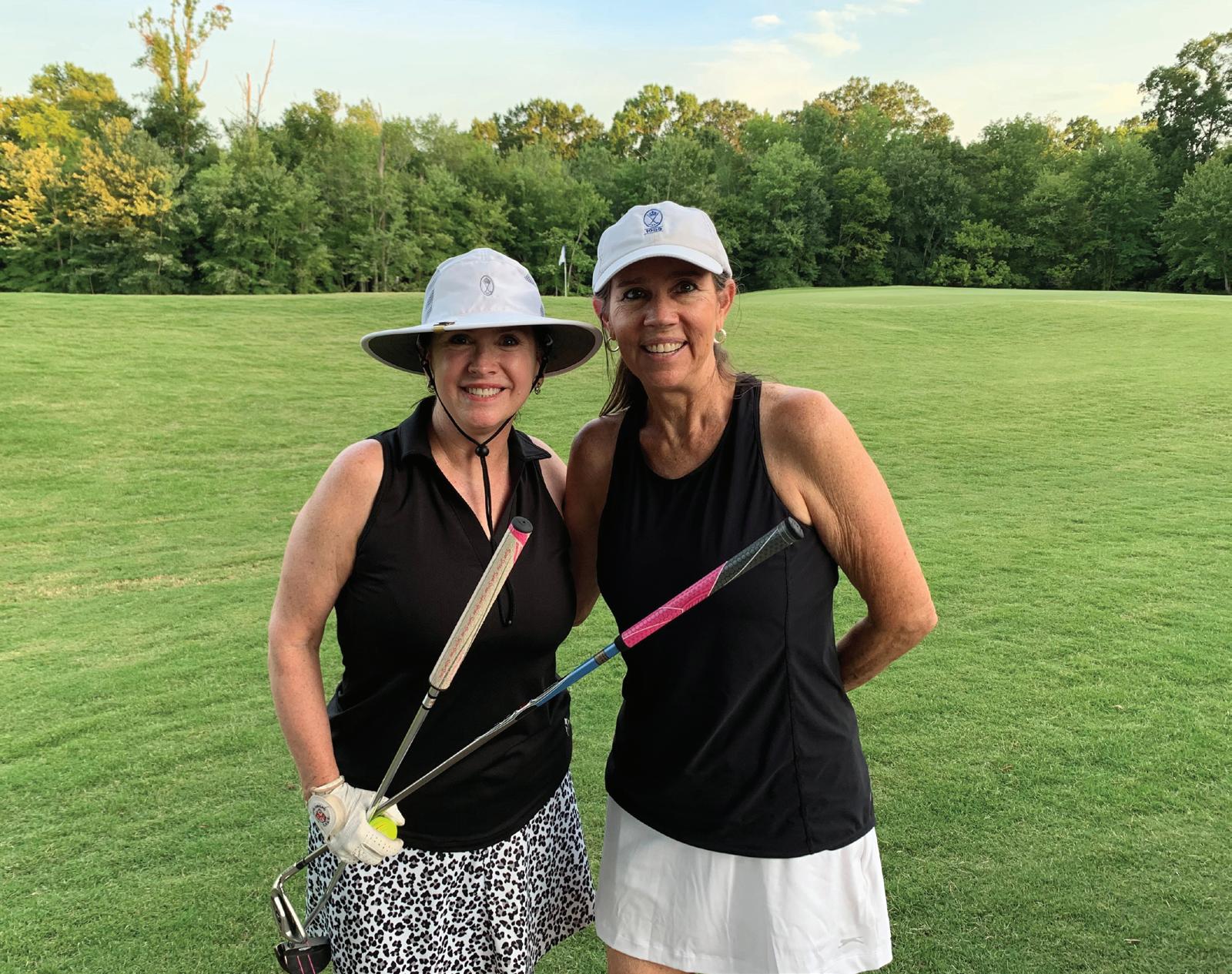
In 2024, the group visited Country Club of Asheville and Holston Hills Country Club in Knoxville, Tennessee. In 2025, they traveled to Virginia to play at The Water’s Edge Country Club and Pete Dye River Course of Virginia Tech but ended up playing twice at The Water’s Edge because of weather.
This summer, the six will head to Sedgefield Country Club in Greensboro, North Carolina, and Old North State Club in New London, North Carolina.
Each experience is unique.
“We’ve been in the fall when the leaves are different colors, and we’ve been in the spring when things are blooming,” Rebecca says. “Golf courses are beautiful even when you don’t golf.” The group’s friendship has become the backdrop for some of life’s most meaningful moments.



On Course with
MichaelShoun
by Amanda Capps
Vice president of agronomy cultivates turf and talent across McConnell Golf’s properties
The word “Agronomy,” which describes a branch of agriculture, has roots that can be traced to the term “land steward,” a fitting description for Michael Shoun. As McConnell Golf’s vice president of agronomy, he is responsible for more than 2,500 acres of meticulously maintained turf spanning 18 properties across the Southeast.
Shoun’s love of the land began on farms owned by grandparents on both sides of his family. His passion for golf came from his dad, “a big-time golfer,” who had him playing by age 5. By the time he turned 16, Shoun was working at a club in East Tennessee. He never envisioned himself becoming a golf pro, but he couldn’t stop thinking about the game and the beautiful grounds where it’s played.
Football was the sport that dominated Shoun’s college years. He attended East
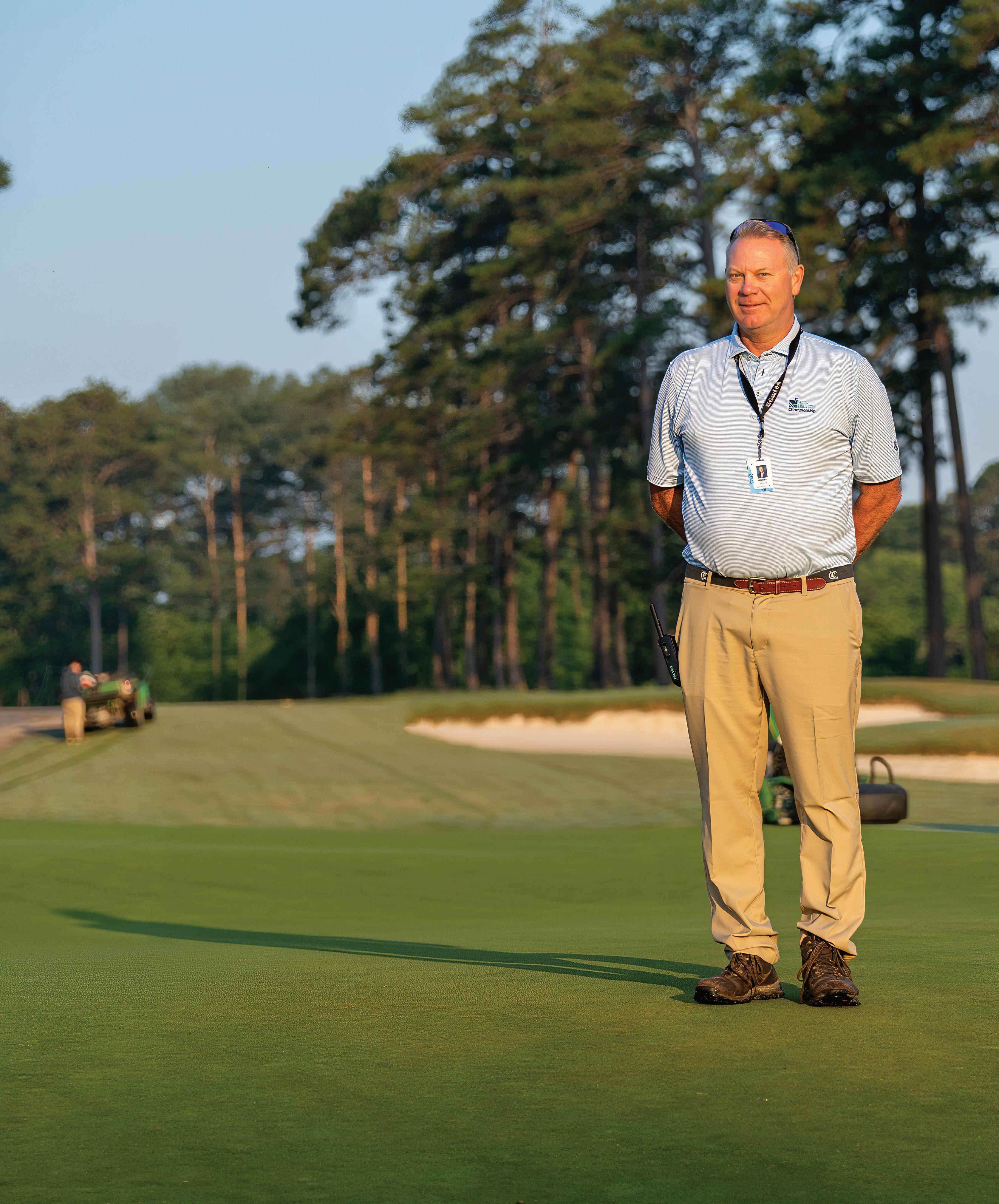
Shoun is responsible for more than 2,500 acres of meticulously maintained turf spanning 18 properties across the Southeast.
Tennessee State University on scholarship and served as a kicker and punter for the Buccaneers. Majoring in education, his plan was to become a football coach.
“Luckily, I had a really great advisor. He knew about my history with golf and the outdoors and was extremely insightful. He’s the one who told me about agronomy, and that was the start of my career,” Shoun said.
Shoun’s next move was to Chapel Hill, North Carolina, where he worked at the Governors Club while his wife, Holly, was attending the University of North Carolina. He accepted a position with Raleigh Country Club in January 1999 and served as superintendent until it was purchased by McConnell in 2003. Today, his responsibilities encompass “anything outside the clubhouses” as he and his staff perform the full gamut of
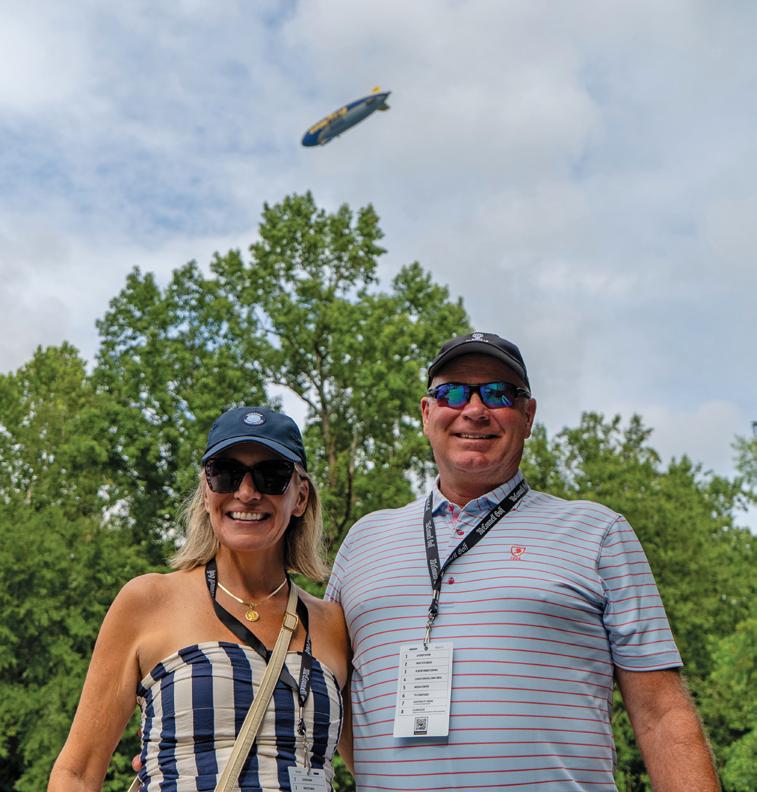
Holly and Michael Shoun
landscaping in addition to keeping the courses immaculate. Striving for consistency, they have to tailor their work in some cases to meet not only McConnell Golf’s standards, but also those set by course architects such as Donald Ross, Arnold Palmer and Tom Fazio.
“Of course, the weather affects everything, but we’re always looking at playability — from the height of the grass on the fairways to the speed of the greens,” Shoun said.
Aside from weather, the labor market is the most significant challenge he faces, but those who work with Shoun admire his knowledge and praise his leadership. Billy Cole, superintendent at Raleigh Country Club, attests to his record as he has known Shoun for 32 years. “He is such an outstanding person. He cares about all of the workers, superintendents and members throughout McConnell Golf,” Cole said.
Buckley Brockmann of Brook Valley Country Club credits him for developing other leaders and for supporting him in his dual role of superintendent and general manager. “We were talking about me taking on the role of general manager in 2023. It was the first time one person had held both positions within McConnell Golf.
His reaction was so simple and supportive: ‘What do you need to make it work?’ At that point, I had to see the club differently — not just from the turf side,” Brockmann said. “There were lots of moving parts and personalities. I consistently think about the sense of calm Michael brings to the job when I’m doing mine.”

Protecting and enhancing biodiversity. There are 7.5 billion people in the world. Each year, we are joined by 80 million more. We need to grow more food. We must also protect the ecosystems that are vital to our planet’s health. As part of The Good Growth Plan, Operation Pollinator is one way golf courses can provide pollinating insects the habitat they need to thrive. OperationPollinator.com
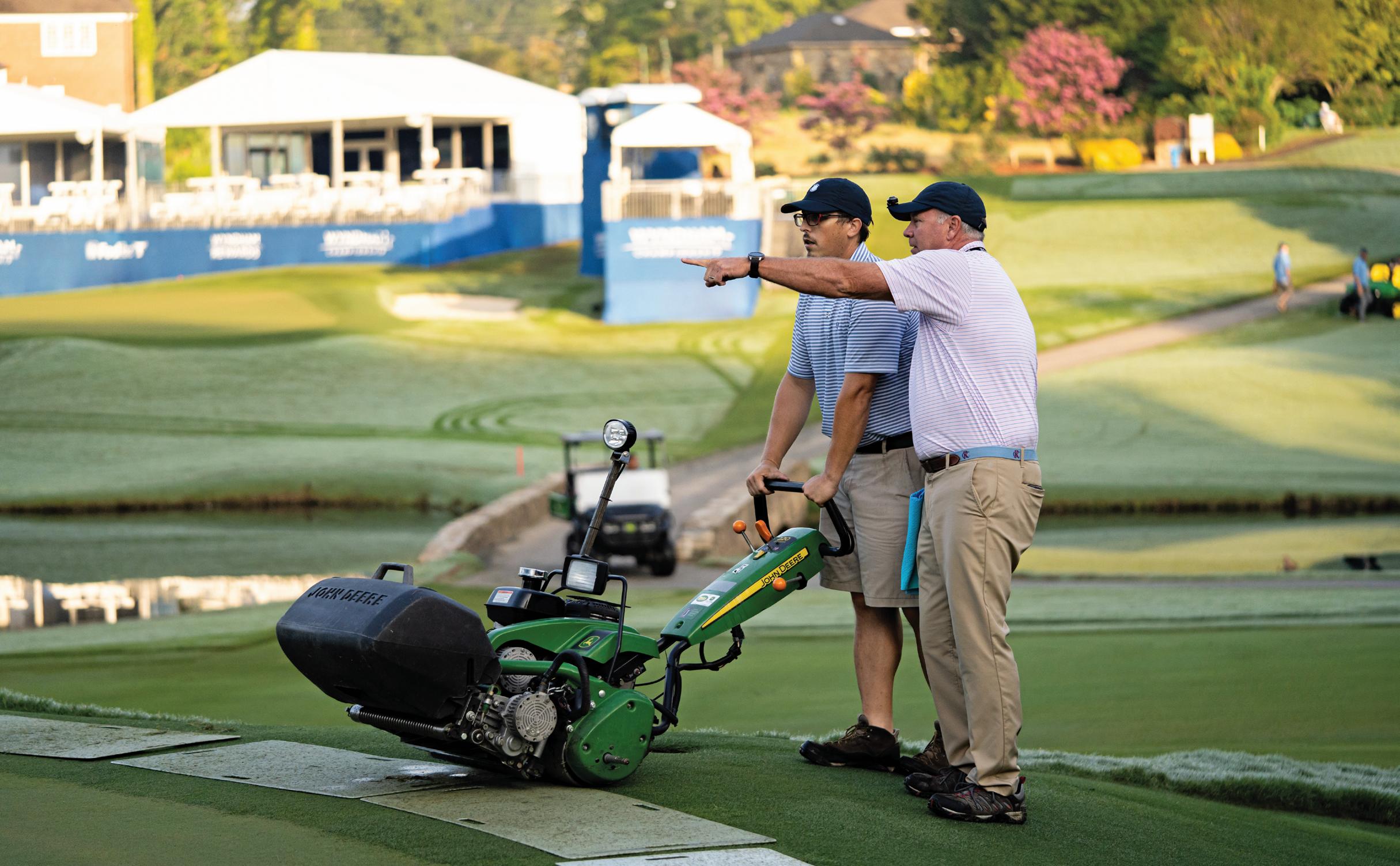
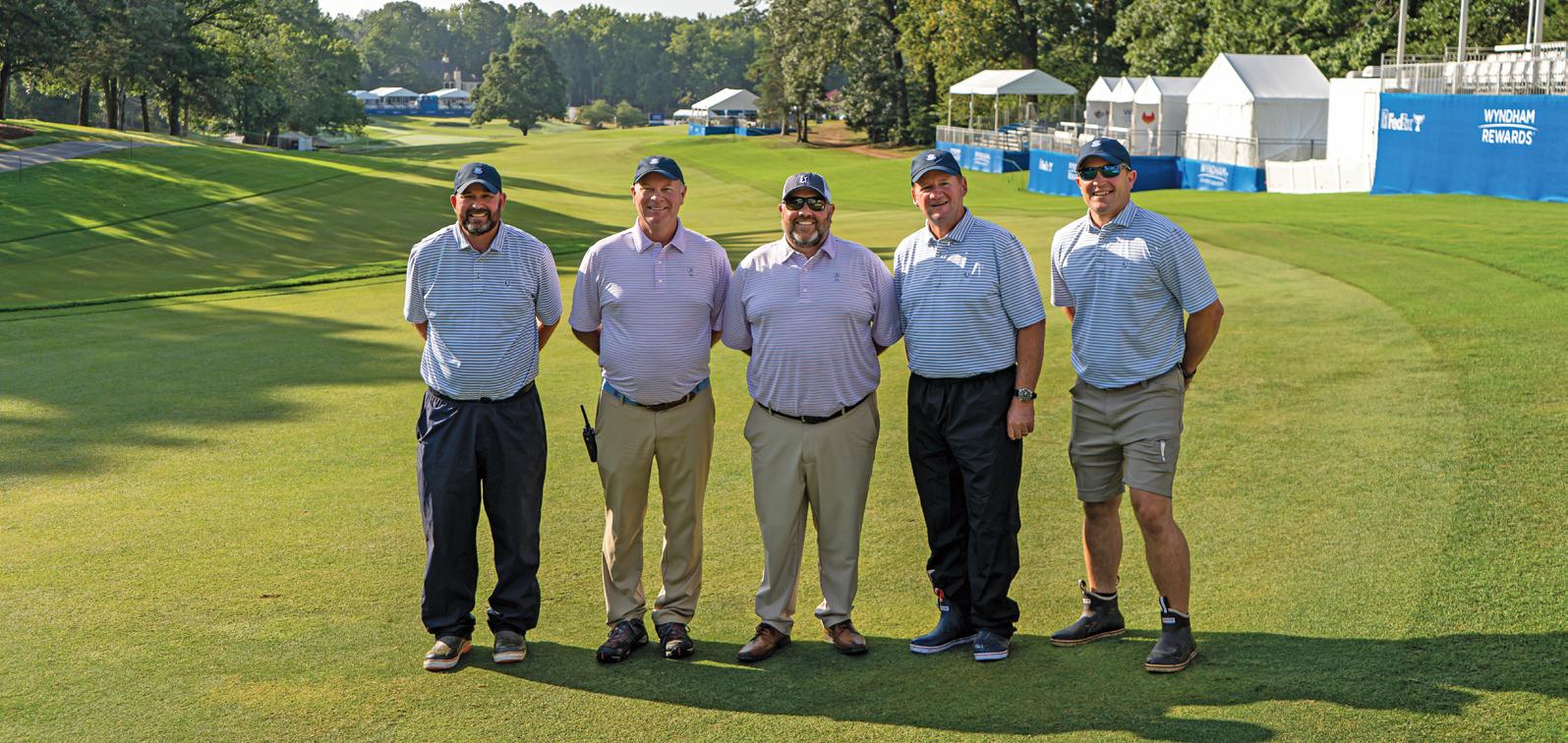
Agronomy staff during the Wyndham Championship

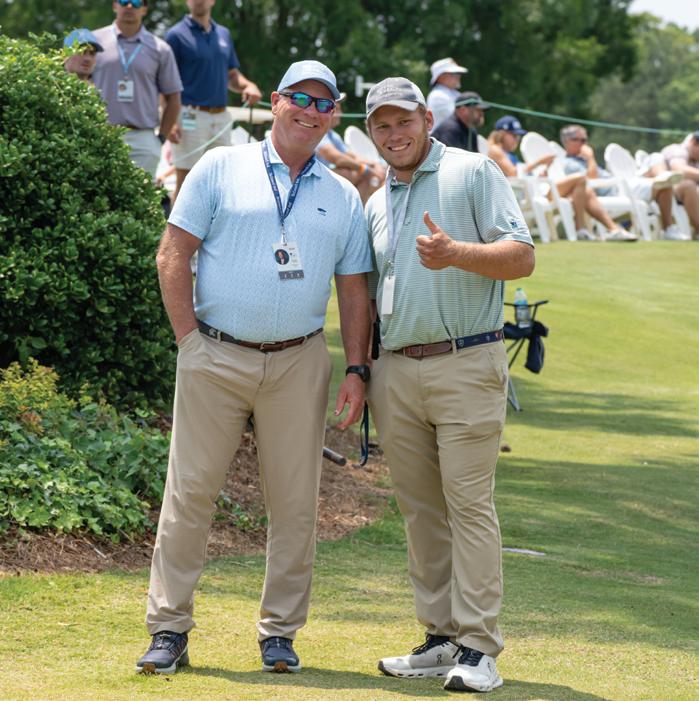
Shoun displayed that calmness under pressure in 2024 when a tropical storm threatened to wash out the PGA TOUR’s Wyndham Championship at Sedgefield Country Club in Greensboro. “He was out there with a rake and a blower working with 80 crew members and volunteers to get that course ready for the next day. He was unflappable,” Brockmann said.
Shoun logs a lot of miles as McConnell Golf hosts two Korn Ferry Tour events — part of the PGA TOUR’s official developmental pathway — along with the Wyndham and numerous amateur and collegiate tournaments, but much of his travel time is meant to connect with the crews and the courses.
“I traveled 45,000 miles last year. The superintendents can send pictures or videos and reach me anytime they have an issue, but I like to actually be there, so I can walk on the grass and spend time with the staff,” Shoun said.
Family continues to play a central role in Shoun’s life. His son Parker, a recent college graduate, now works at The Country Club at Wakefield Plantation; his daughters include Macie, who lives in Raleigh with her husband, Dennis, and Mia, an undergraduate at UNC Chapel Hill; and wife Holly, who enjoys playing tennis in her spare time.
Shoun is quick to point to them when reflecting on his career. “I would like to sincerely thank my wife, Holly, for her
unwavering support over the years,” he said. Her encouragement, patience and belief, he noted, have meant more than he can fully express. He also credits his children — Macie, Parker and Mia — whose love and steady support have been a constant source of motivation. “Without them by my side, I would not have accomplished what I have over the years,” Shoun said. “I am truly grateful for each of them.”
Shoun said he often gets messages from people asking about how to care for their properties. The short answer for a residential or commercial location is “good sun, good water and good drainage.” For McConnell Golf, it’s that formula — paired with exceptional stewardship — that keeps the standard high.
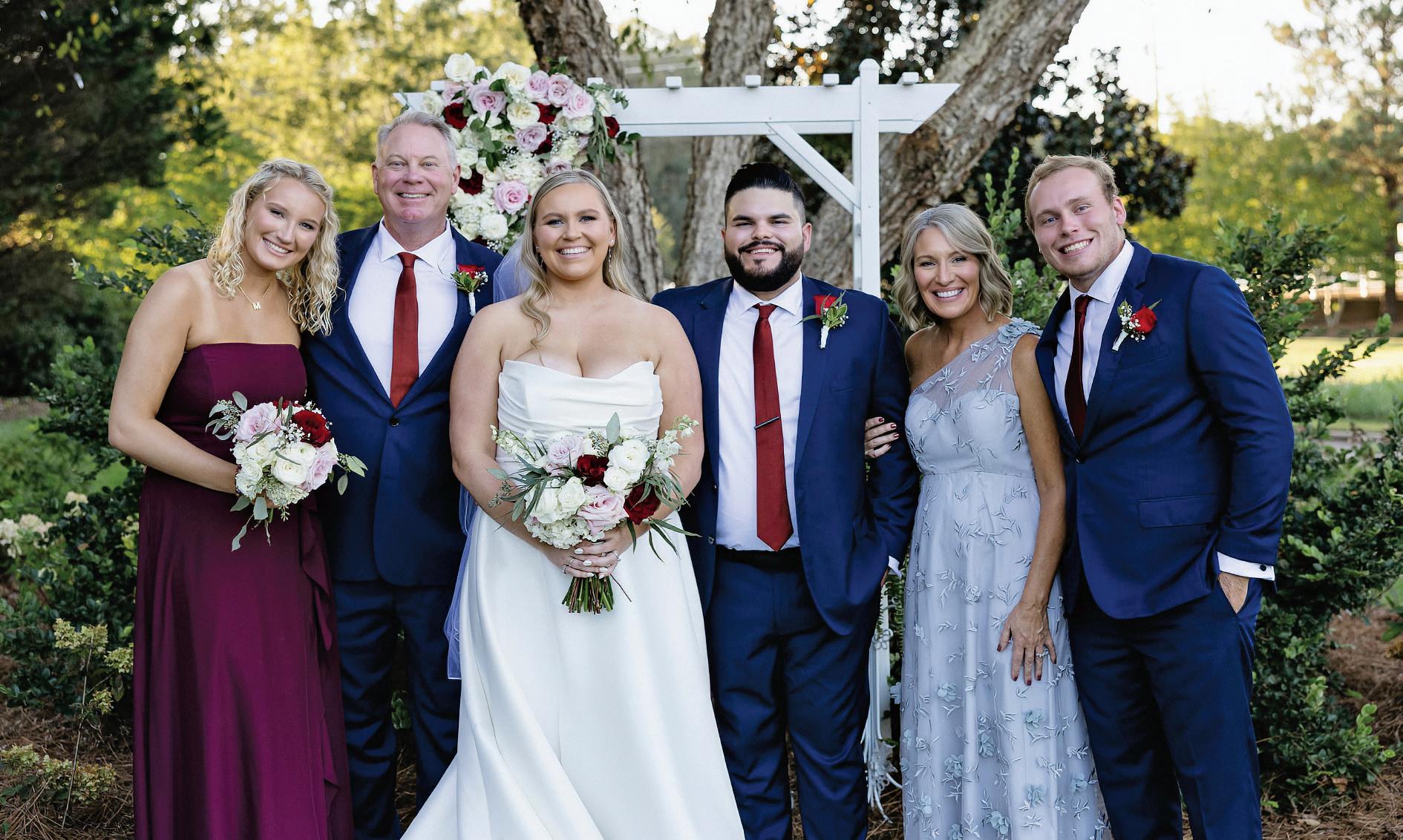
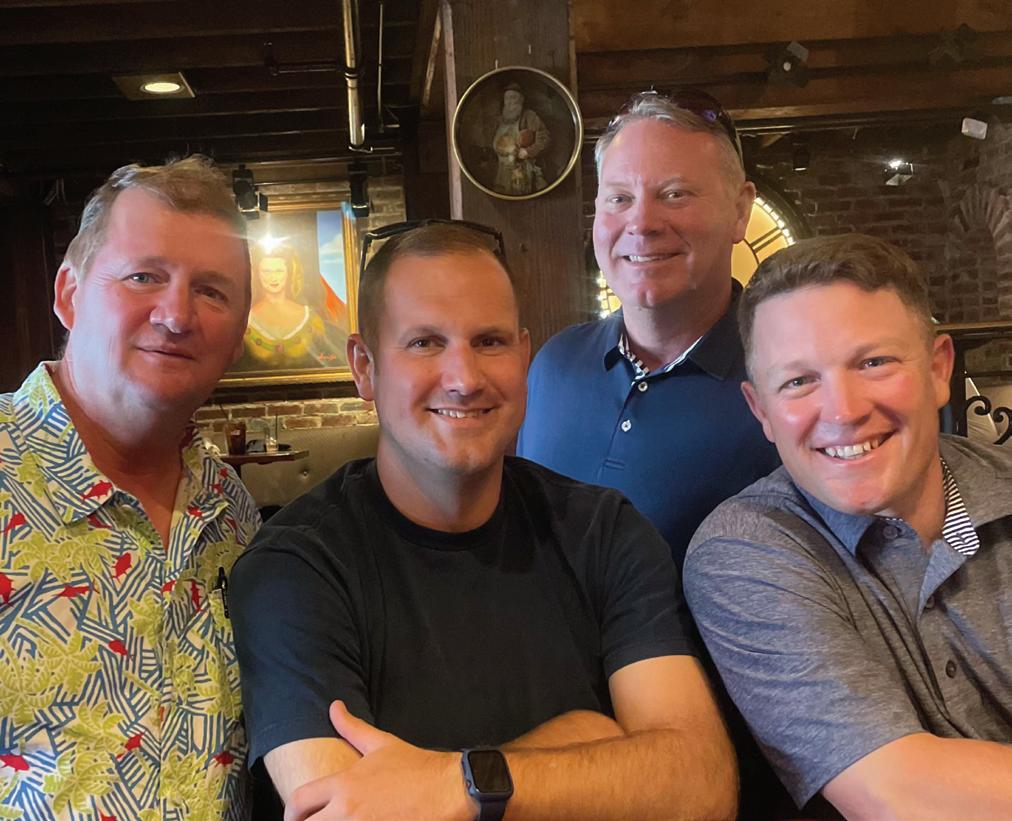
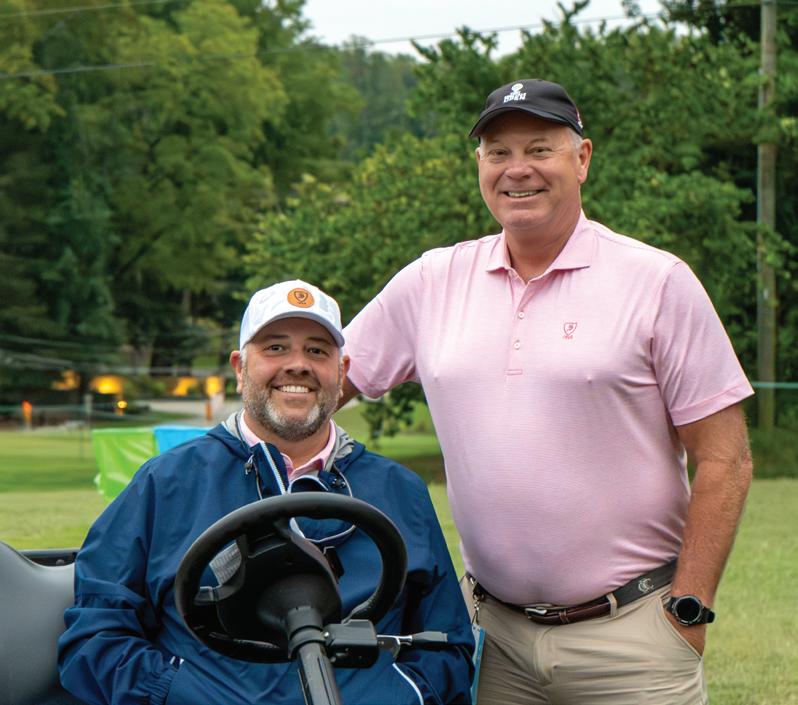
(CLOCKWISE FROM TOP LEFT) The Shoun family — Mia and Michael Shoun, Macie and Dennis Delgado, Holly and Parker Shoun — at Macie’s wedding at The Country Club at Wakefield Plantation; Chris Parham, Mark Scott, Michael Shoun and Buckley Brockmann; Billy Cole and Michael Shoun; Chad Cromer and Michael Shoun; Parker and Michael Shoun

This year marks one of the most important milestones in our country’s history: 250 years of American independence. Though our nation has changed in countless ways since the signing of the Declaration of Independence in 1776, evidence of our shared history and heritage can still be seen all around us — or found in unexpected places.
by J. Morgan McCallum
Exploring the revolutionary roots within two McConnell Golf courses in South Carolina
Did you know that McConnell Golf is home to multiple properties with direct ties to early American and Revolutionary War history? Across the idyllic state of South Carolina, The Reserve Golf Club in Pawleys Island and Musgrove Mill Golf Club in Clinton stand out for their significant connections to important 18th-century events and travel routes.
In honor of America’s semiquincentennial, we’re taking a fascinating look at how the preservation of a timeless sport like golf — and intentional land stewardship — has made it possible to preserve two time-honored historic sites.
HISTORY
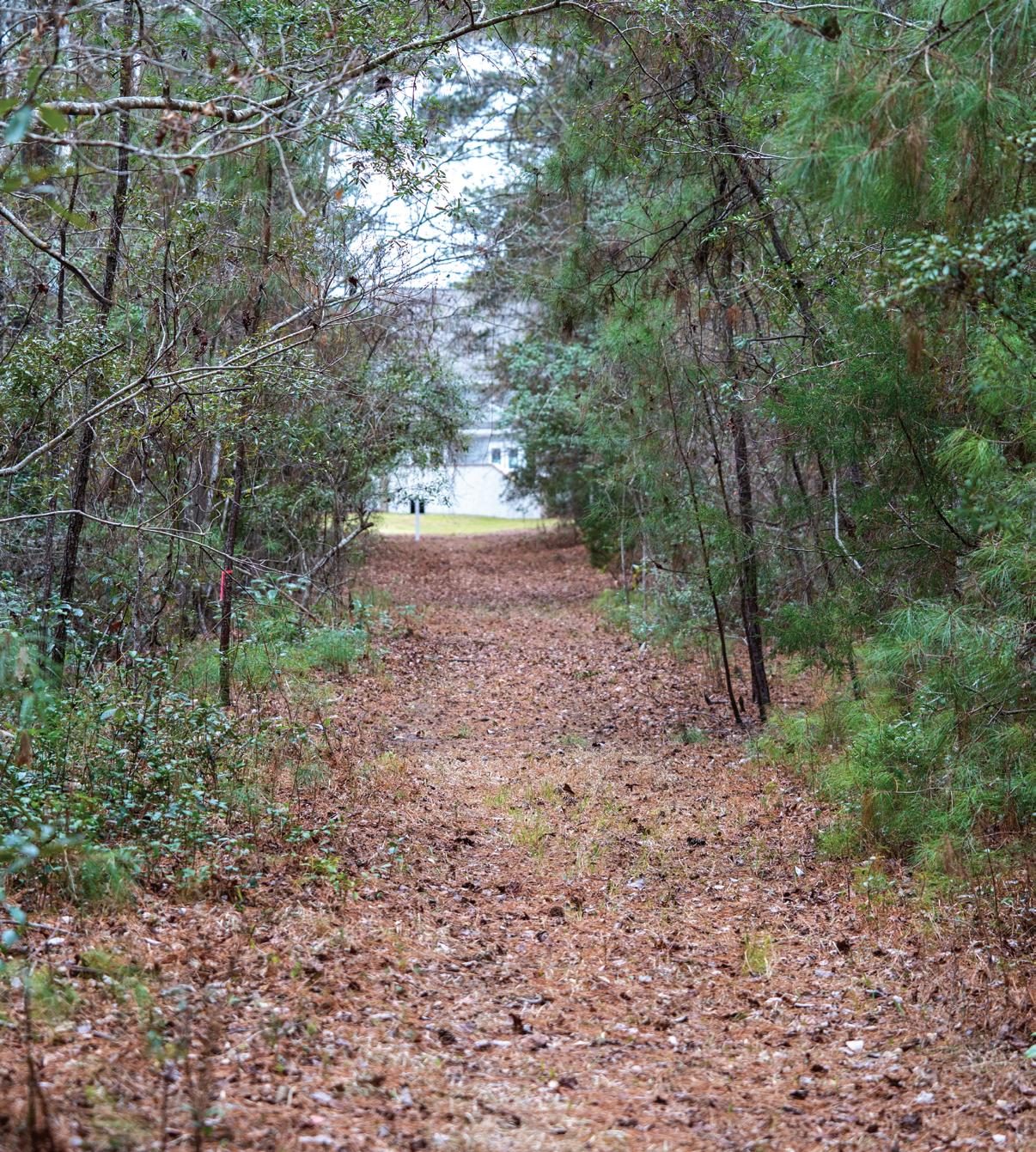
The King’s Highway at The Reserve Golf Club In the spring of 2023, Reserve members Mark and Beverly Buffkin were walking near some recently cleared land when they spotted a trail emerging from the trees on their home course. The trail seemed eerily well-defined considering it led through a long-undisturbed wooded area — and quickly piqued the couple’s interest.
“Earlier that day, I had read an article about the history of The King’s Highway here in our county written by historian Dennis Chastain,” reflects Beverly. “I knew there was a missing segment of the old highway, and suggested to Mark that we look at the satellite view of this land when we got home.”
Mark was familiar with the history, too: A descendant of the French Huguenots, he could trace his family’s story back to 1686, when they settled in the French Santee Region north of Charleston, South Carolina — and went on to travel the historic road for generations as part of their daily lives.
“We knew that the Old King’s Highway went by the All Saints Church down the road, and we knew where it went through Brookgreen Gardens,” says Mark. “So when we looked at the aerial map and saw that this trail perfectly lined up with both, it was a real ‘wow’ moment of connecting the dots.”

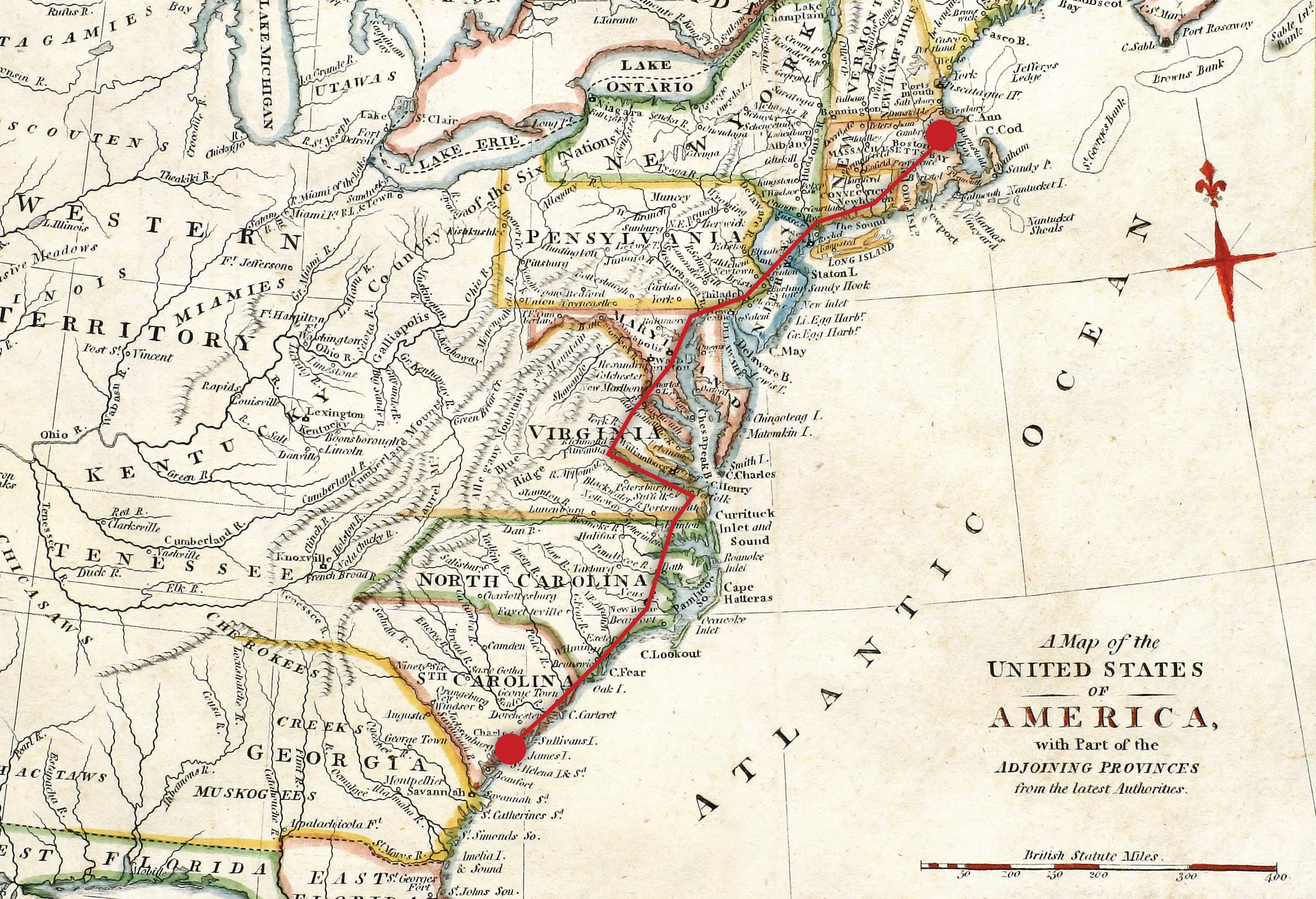
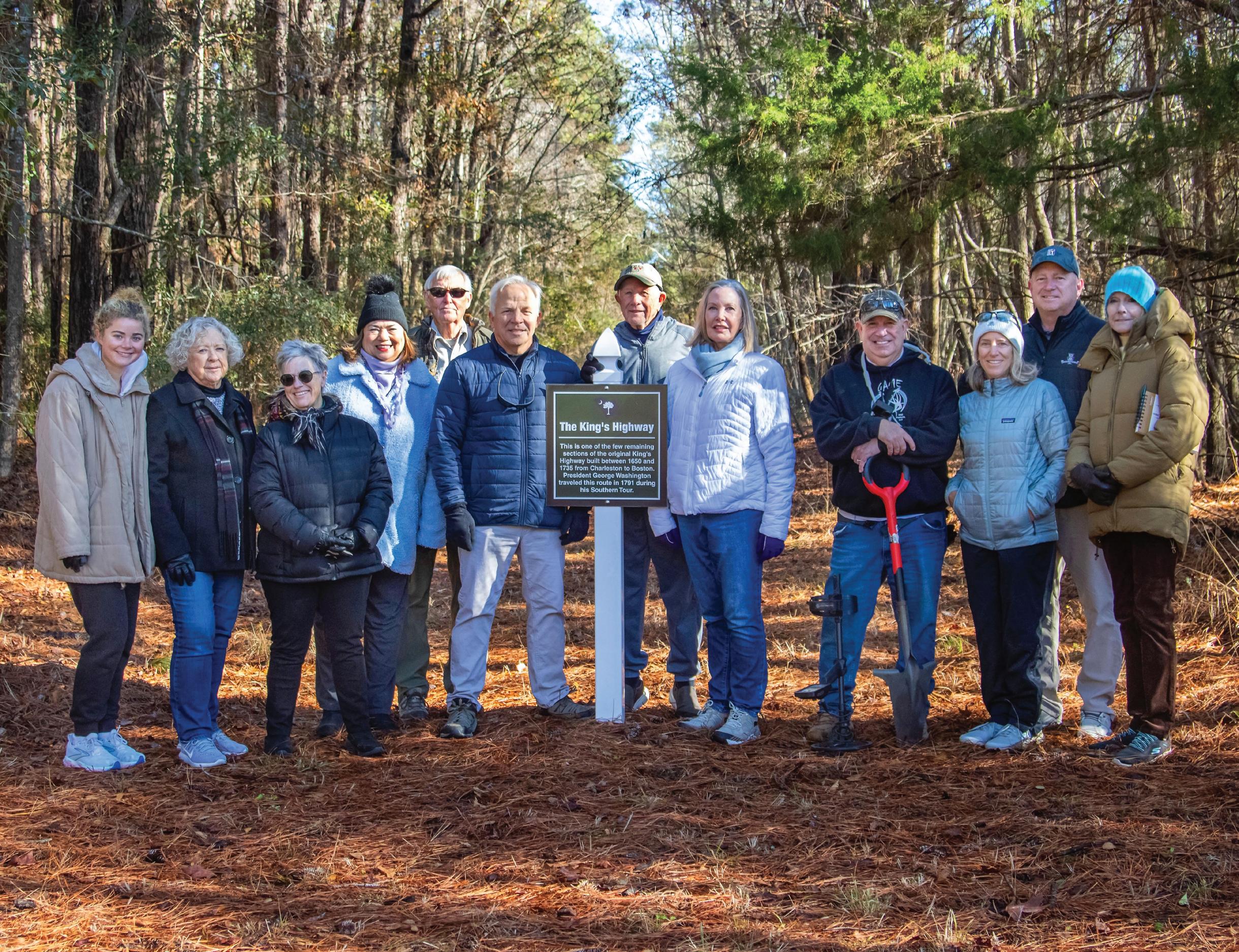
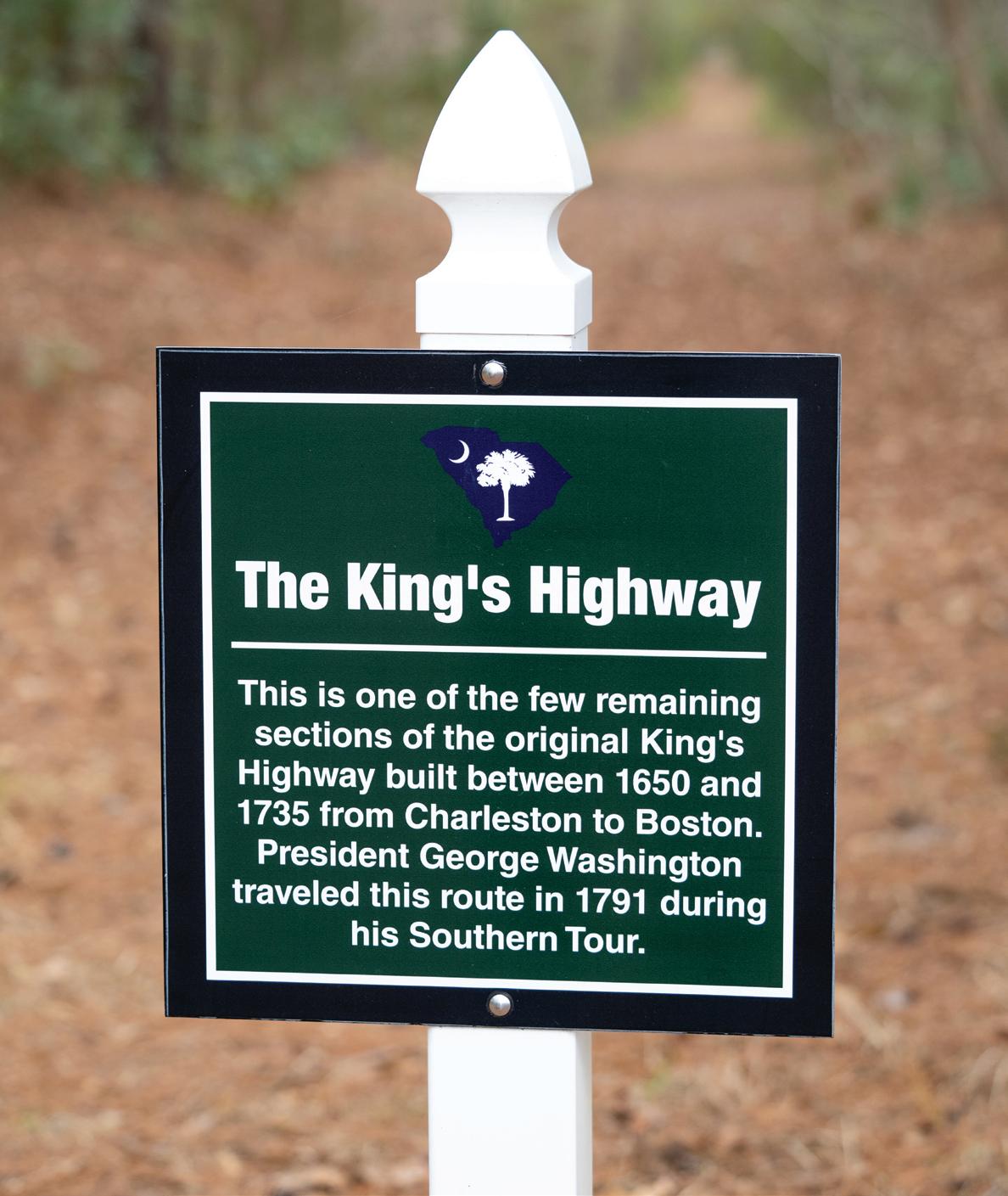
First commissioned under King Charles II to create a continuous line of communication between the American colonies, The King’s Highway was built between 1650 and 1735, and served as a vital land route connecting Charleston to Boston. As goods were traded between port cities, the roadway helped fuel South Carolina’s early economy, and carried troops from both sides back and forth during the American Revolution.
To confirm their findings, the couple contacted respected South Carolina historian Dennis Chastain, who confirmed the site as an authentic preserved segment of the original King’s Highway. A little later, Reserve member and author Thomas Lee contacted Mark and Beverly about the highway. Lee came across references to the roadway while researching his American Revolution novel, “The Palmetto Patriot.”
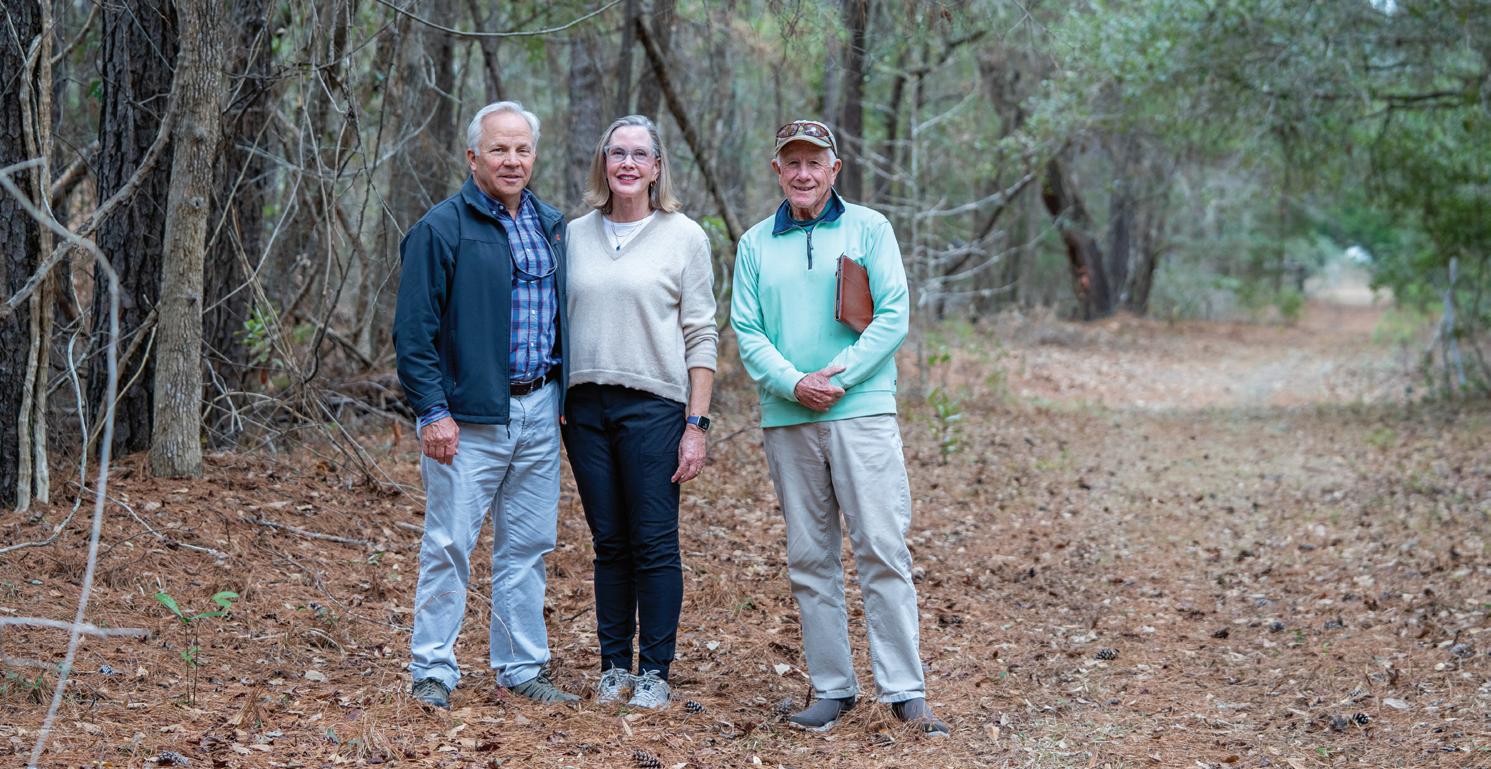
“It was hiding in plain sight for 250 years,” says Lee, who organized a group expedition of Reserve members and staff, students and interested parties to
experience the trail together, including Lee Brockington, celebrated Pawleys Island historian, and Mike Ammons, Brookgreen Gardens historian.
(ABOVE) Illustrated map of The King's Highway, stretching from Boston to Charleston. (BELOW) The Buffkins with Thomas Lee near The King's Highway marker.
HISTORY
“The first time I saw it, I was astounded. The hair on the back of my neck stood up,” says Lee. “The visual is amazing. There are very few things from that era that are so well preserved. Walking that trail makes you think of all the Americans who traveled along it for the last 250 years.” That includes President George Washington, who traveled the route in April 1791 during his Southern Tour after staying overnight at nearby Brookgreen Gardens.
“I can easily imagine my ancestors here, and it being just a short walk from our home is pretty special,” agreed Mark Buffkin. The historical discoveries may not be over yet. Mark believes another stretch of The King’s Highway may be between holes five and six on the golf course, and he plans to research his theory further.
Want to walk through history yourself? This exciting discovery is now easier to spot, thanks to an elegant historical marker recently installed by the Buffkins with support from General Manager Chris Dibble.
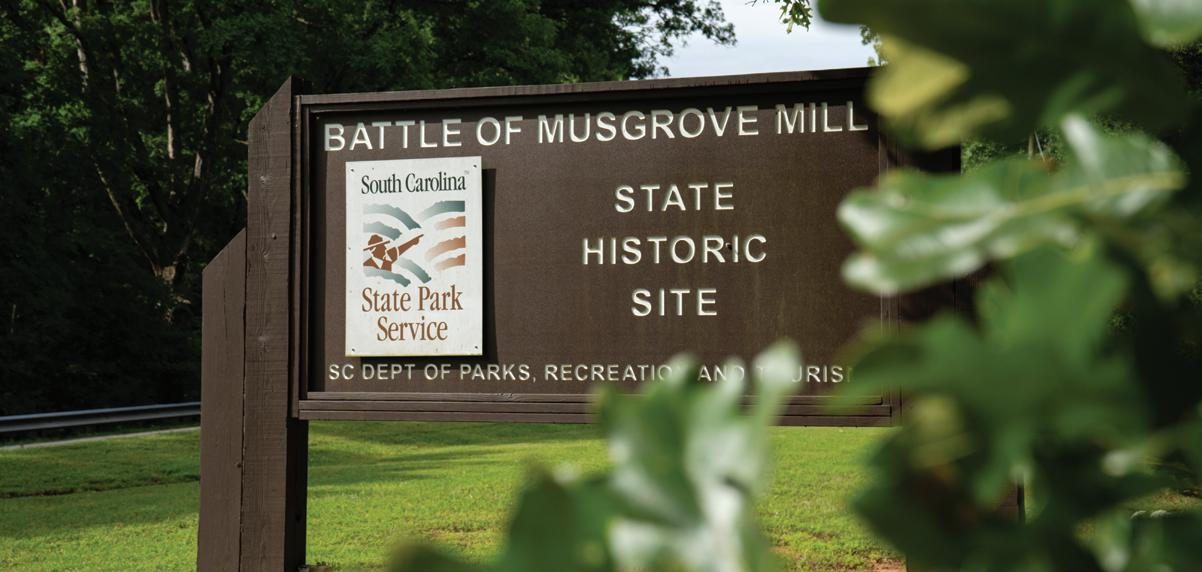
Revolutionary War History at Musgrove Mill Golf Club
“You don’t have to travel hundreds of miles away to Philadelphia or Virginia to find Revolutionary War history. It is here in your backyard — or for some, just across the road from your favorite golf course,” says Mark Stanford, interpretive ranger at the Battle of Musgrove Mill State Historic Site.
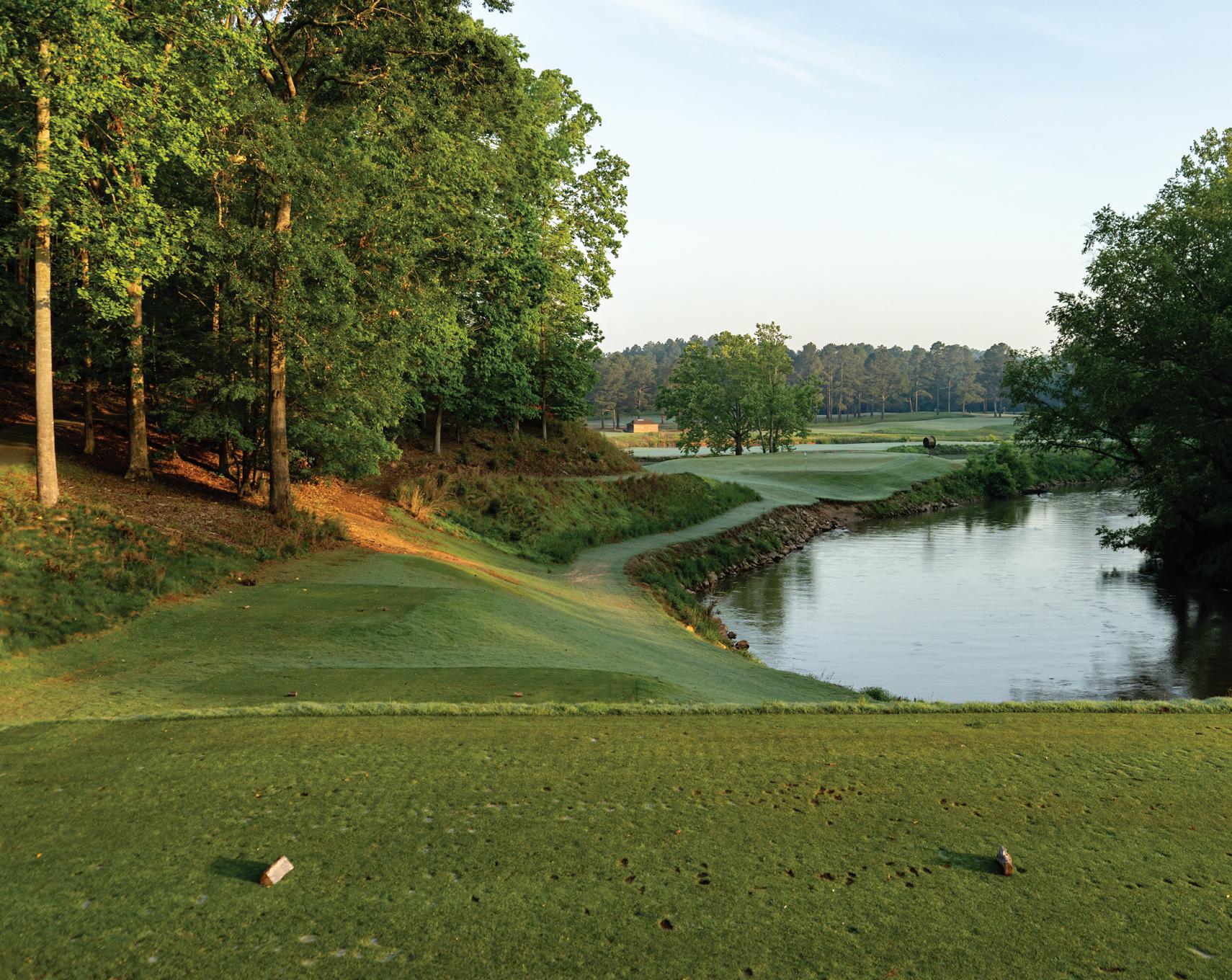
Standing out on the fairway in the early hours, with mist rolling over the calm waters of the Enoree River and no modern urban noise to drown out the birdsong, it’s easy to see what Stanford means: it could be sunrise in 1776, not 2026, as you prepare for your first round of the day at Musgrove Mill Golf Club in Clinton, South Carolina.
“There’s still a heavy spirit of history, camaraderie and preserving the past out here on these 315 acres,” says Jeff Tallman, club manager. “You can even see it in our logo, which represents the club’s transformation from Revolutionary War site into a golf destination. There are muskets turning into clubs, and in the center is a grist mill, for Edward Musgrove’s mill — and you’ll find a millstone underneath our American flag at the entrance of the clubhouse, too.”
Perched at the base of the American flag in
clubhouse, lies a millstone similar to what would've been
Musgrove’s mill in the 1700s.

(ABOVE) A historical marker now identifies the section of The King’s Highway that can be found a short walk from The Reserve clubhouse.
(BELOW)
front of Musgrove Mill’s
used at Maj. Edward
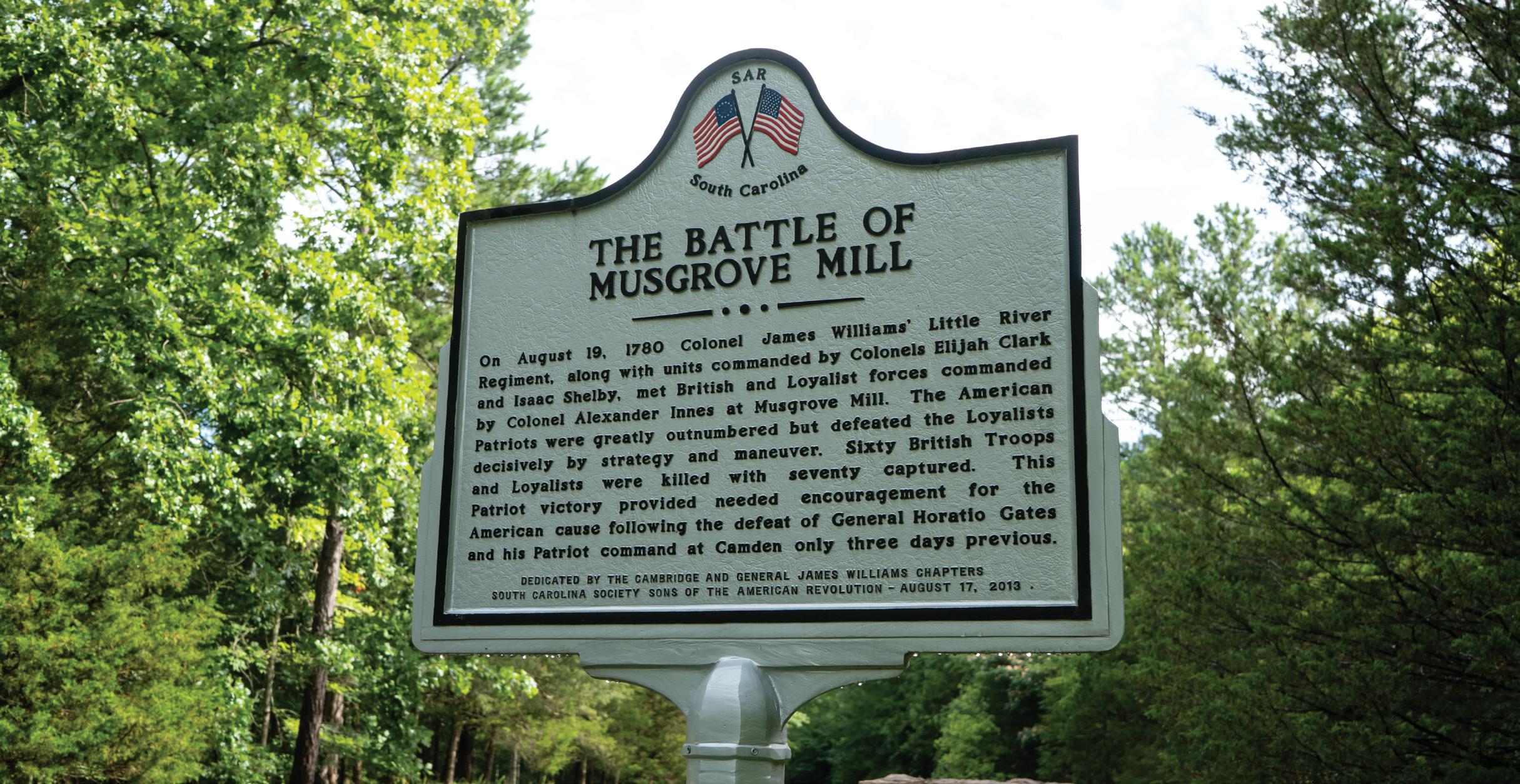
McConnell Golf’s Musgrove Mill sits on land deeply connected to the American Revolution. The course occupies ground that was once part of the Battle of Musgrove’s Mill, fought on Aug. 19, 1780, now preserved nearby as the Battle of Musgrove Mill State Historic Site.
“The patriot victory at Musgrove Mill was significant because it came at a critical moment for the patriot cause in South Carolina,” adds Stanford. “Just a few days prior, the patriots had suffered two crushing defeats, and morale had plummeted to nothing. News of the victory inspired many to continue the fight — and even led to those same men answering the call and winning another victory at the Battle of Kings Mountain on October 7, 1780, a turning point in the war.”
“You don’t have to travel hundreds of miles away to Philadelphia or Virginia to find Revolutionary War history. It is here in your backyard — or for some, just across the road from your favorite golf course.”
Mark Stanford
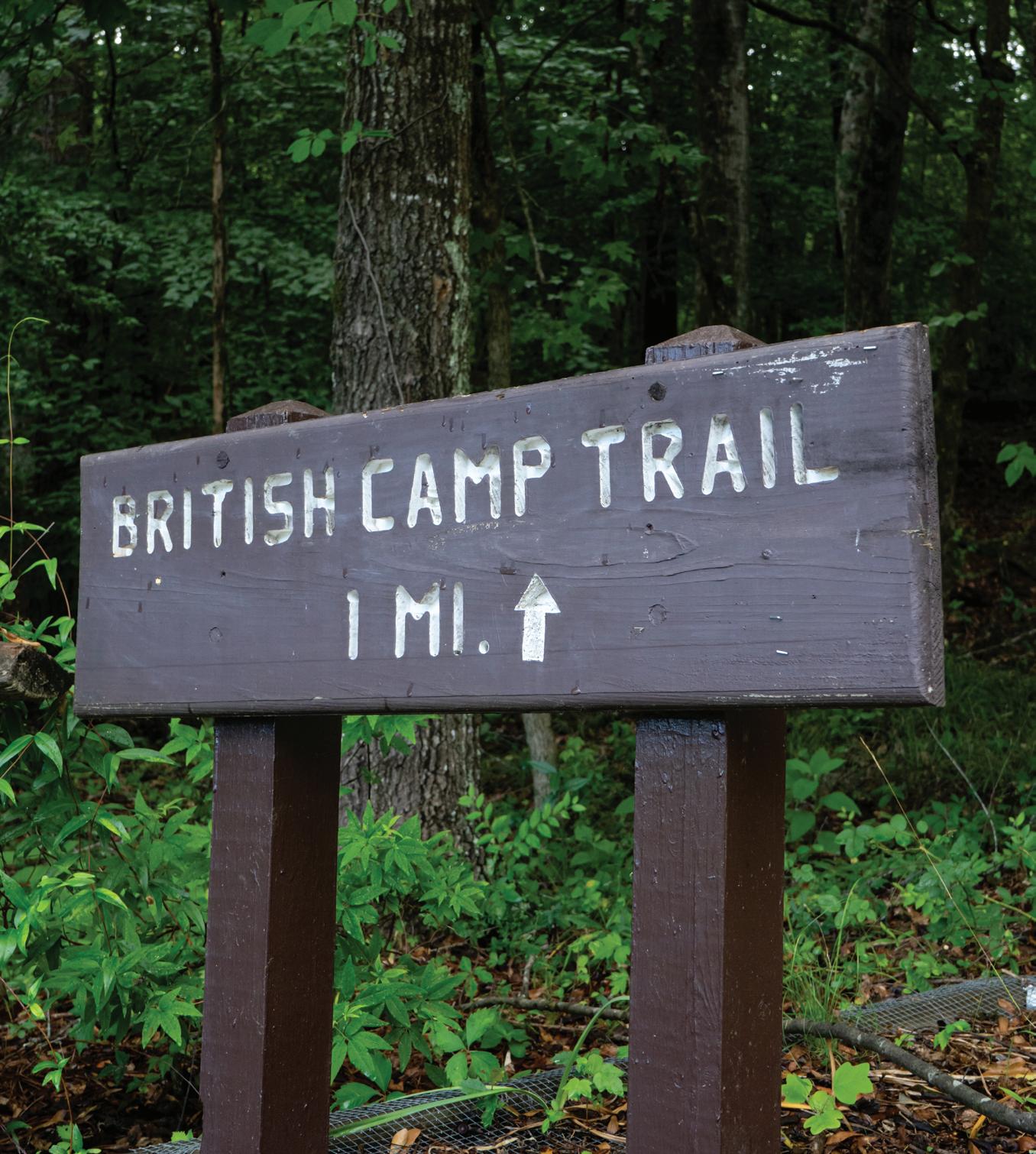
The Battle of Musgrove Mill State Historic Site features two hiking trails, the 1-mile British Camp Trail and the 1.5-mile Battlefield Trail.
HISTORY
We all know the outcome of the Revolutionary War, but the rich stories woven between the bunkers and the past can still surprise us — and make historical stewardship important. “Here’s something most visitors don’t expect: everyone who fought was an American,” Stanford reveals. “This battle was fought between patriots (Americans wanting to break away from the British) and loyalists (Americans who stayed loyal to the King). It reminds us that history, and choices, were often more complicated than clear.”
Keeping the spirit of the historic area intact is a priority for this top-ranked McConnell Golf property and its members, but there’s
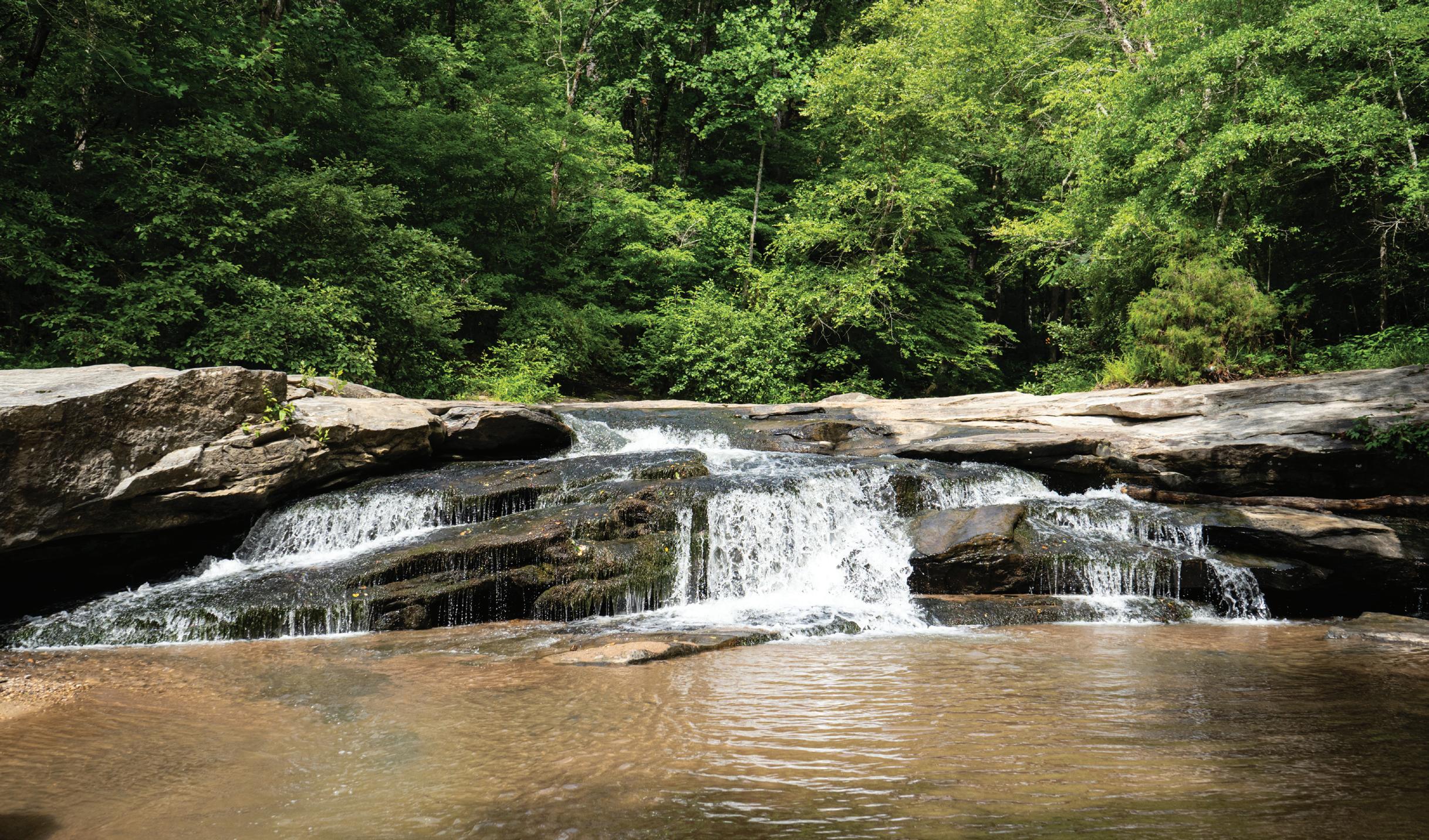
Horseshoe Falls
another reason you’ll find only natural dogwood fencing, minimal signage and elegant cottage-inspired lodging on the championship course — or for that matter, less notifications pinging your phone while you line up a shot.
“We call this the ‘decompression chamber,’” says Tallman. “The drive in is eight-tenths of a mile; you’re off the road and out of cities. Sometimes you have a cell signal, sometimes you don’t. This is a pure golf experience where you’re back to nature and back to a game that fosters fellowship between people from all over the world.”
BATTLE OF MUSGROVE MILL STATE HISTORIC SITE — THINGS TO DO
HIKING: Trails include the 1-mile British Camp Trail (easy difficulty) and the 1.5-mile Battlefield Trail (moderate difficulty).
FISHING: Enjoy fishing in the Enoree River or in the park pond. A valid South Carolina fishing license is required.
EDUCATION: The Visitor Center features exhibits highlighting the Battle of Musgrove Mill and South Carolina’s pivotal role in the Revolutionary War.
BIRD-WATCHING: Bird-watching is permitted in the park. Birds seen year-round include wild turkeys, great horned owls, bald eagles, red tailed hawks, cardinals, Carolina wrens, eastern bluebirds, great blue heron and various species of woodpeckers.
OTHER ACTIVITIES: Horseshoe Falls is also located within the park. The overlook of this small but beautiful waterfall is easily accessible via a paved ADA walkway.
“This
is a pure golf experience where you’re back to nature and back to a game that fosters fellowship between people from all over the world.”

Jeff Tallman
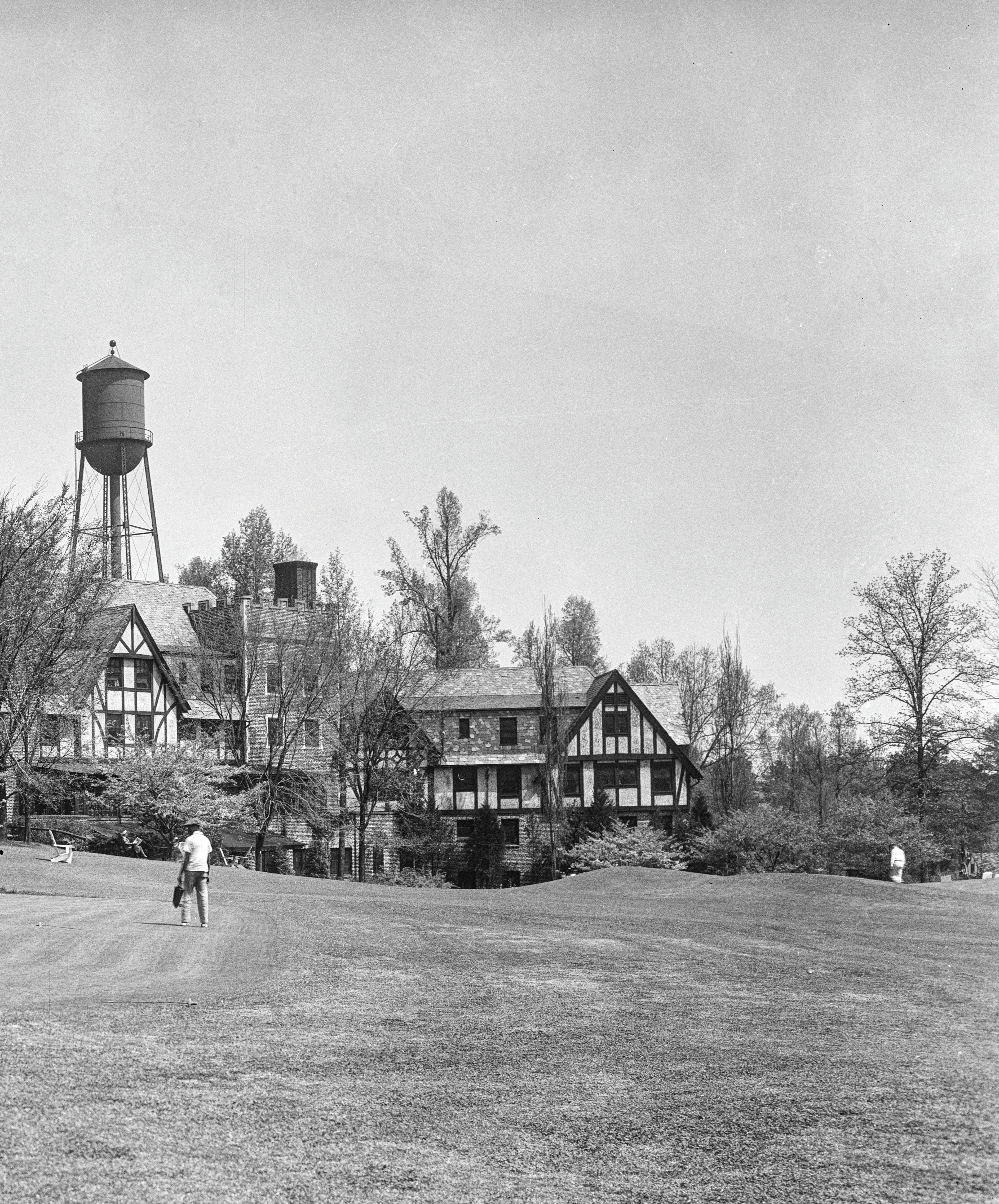
Members and longtime staff reflect on the people, places and moments that shaped a Greensboro, North Carolina, landmark over the past century
by Amanda Capps
PHOTO COURTESY OF THE WILSON LIBRARY, UNIVERSITY OF NORTH CAROLINA AT CHAPEL HILL
FEATURE
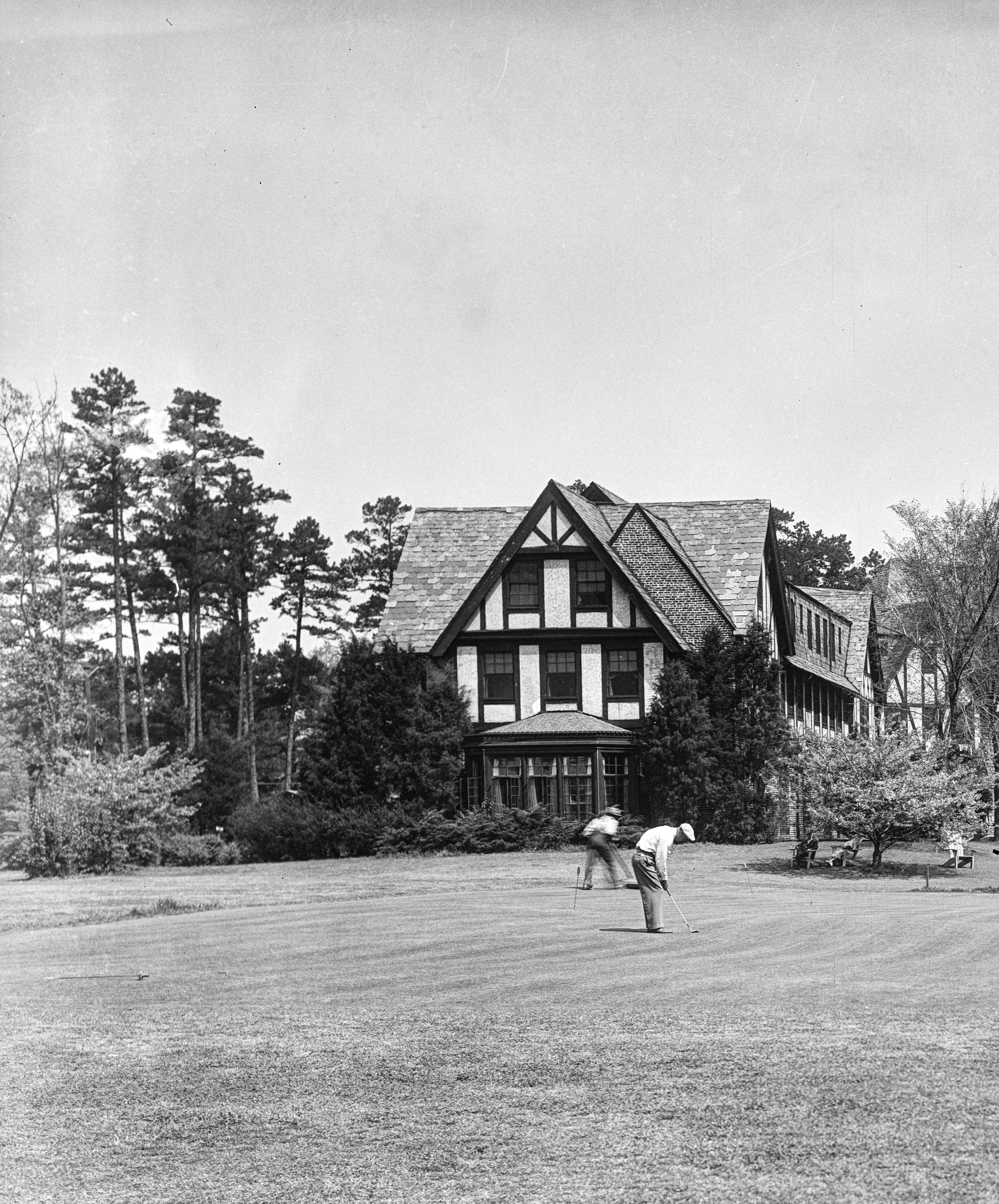
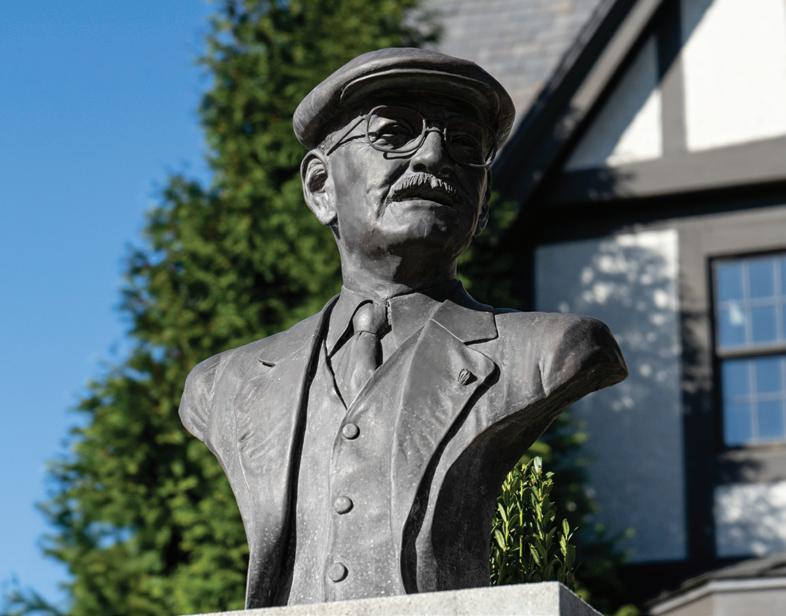
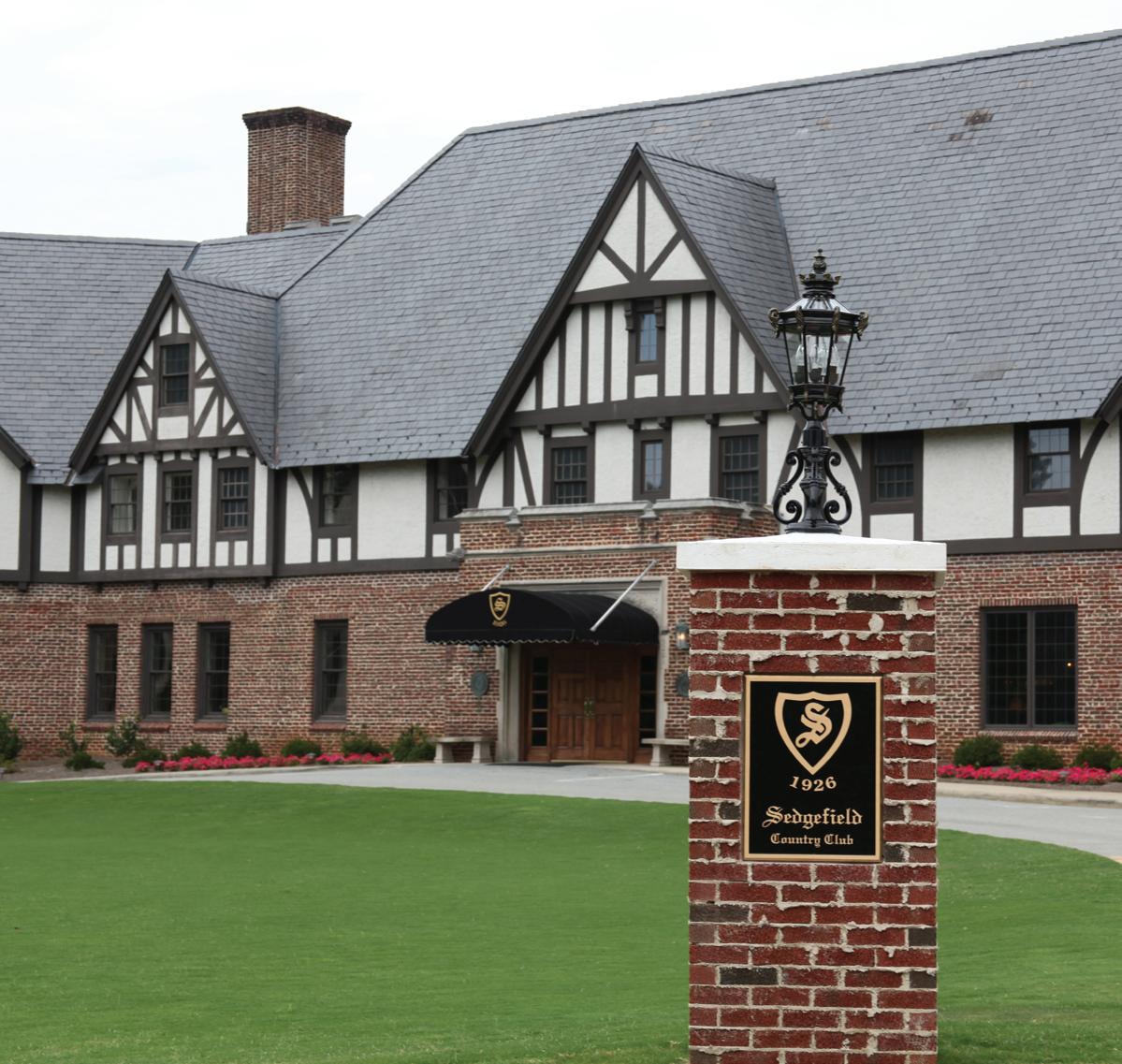
On any given day at Sedgefield Country Club, members will be playing golf — but some are just as likely to be playing tour guide. Walking down the “Donald Ross hallway” in the landmark Tudor-style clubhouse, they point to photographs of golf legends, sharing both the club’s storied past and their own proud history within its first 100 years.
That history began more than a century ago with a vision for something greater than a golf course.
Long before the first tee shot was struck, the land itself had a name. In the late 1800s, a hunting preserve known as “Sedgefield” covered thousands of acres south of Greensboro, North Carolina. The name referred to the sedge grasses that grew across the rolling Piedmont landscape. When developers later built a golf course and residential community on the property, the name endured — eventually coming to define both the club and the surrounding area.
The name would travel far beyond Greensboro. Today, streets named Sedgefield Drive, Sedgefield Lane and Sedgefield Court appear in communities across the country — from the Carolinas to the Midwest — often in neighborhoods built around golf courses or planned residential developments. While many of those streets have no direct connection to the club, they echo the name of the Greensboro landmark where the idea of a golf-centered community first took root. In fact, variations of the name appear on hundreds of street signs across the United States, a quiet reminder of the landscape where Sedgefield began.
Creating Community
In the early 1920s, the land that would become Sedgefield Country Club was part of a 3,660-acre hunting preserve acquired in 1923 by the Southern Real Estate Co. Its vision for the area southwest of Greensboro’s urban center extended well beyond a golf course. Like many developers of the era, the company
set out to create a self-contained residential community — an enclave of homesites paired with lifestyle amenities. Golf would serve as the anchor, and celebrated architect Donald Ross was commissioned to design two premier courses.
Ross believed great courses should follow the land rather than reshape it. “The best golf courses are those that nature has already designed,” he once said. “All I do is follow nature.”
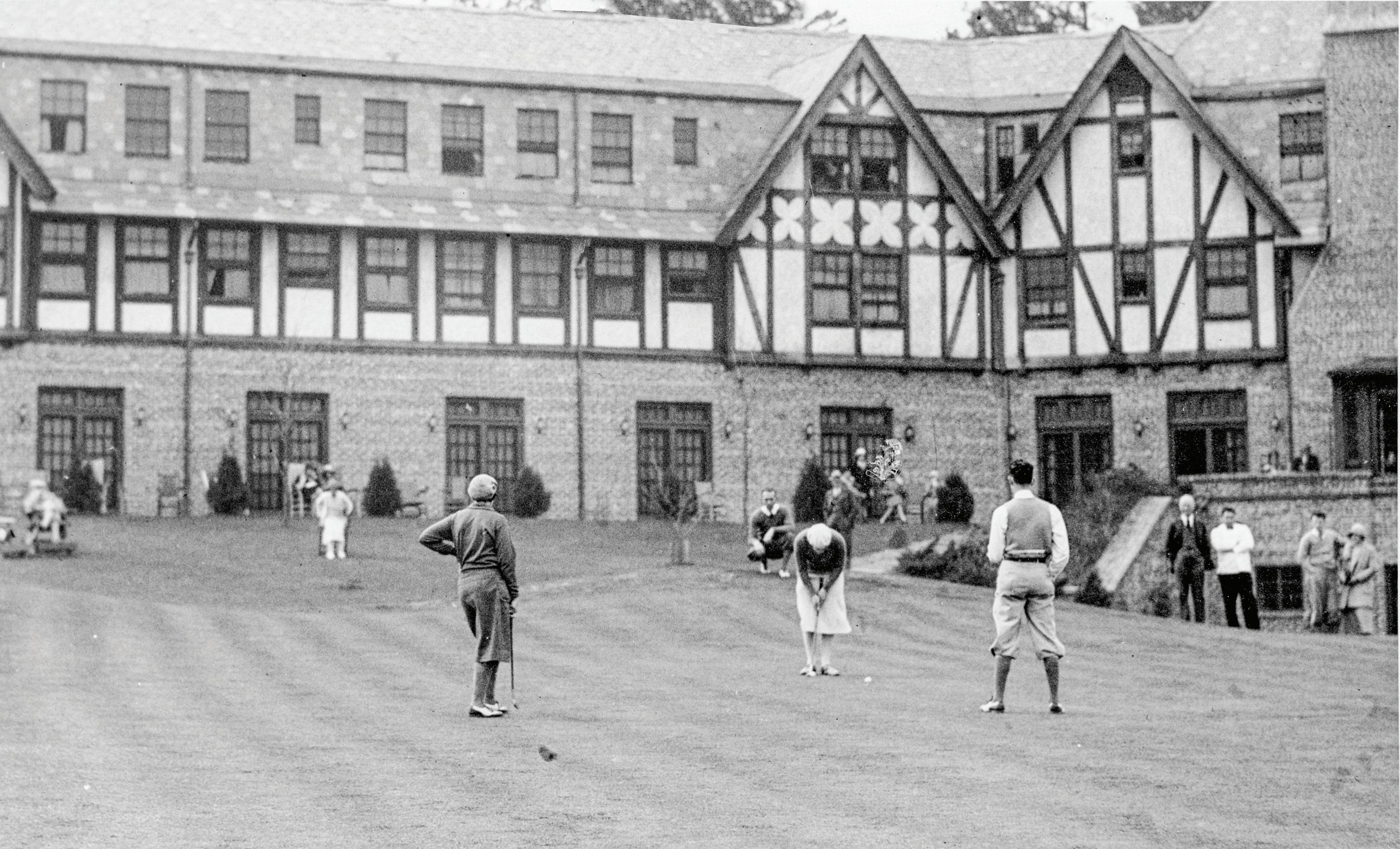

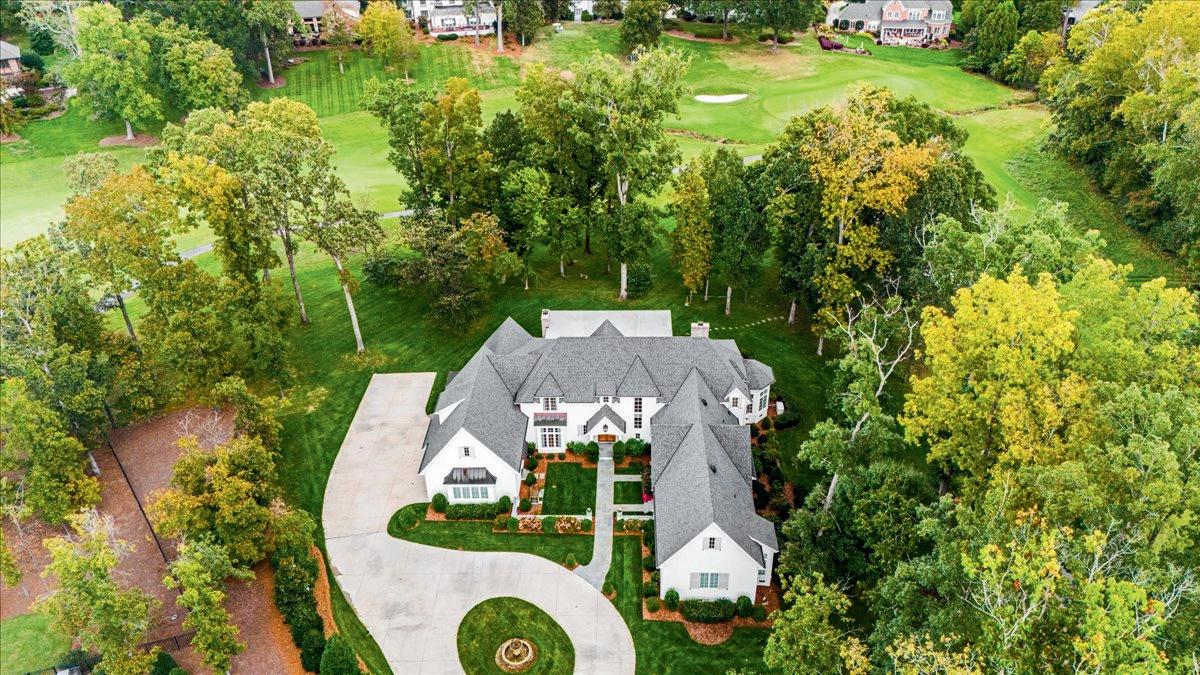





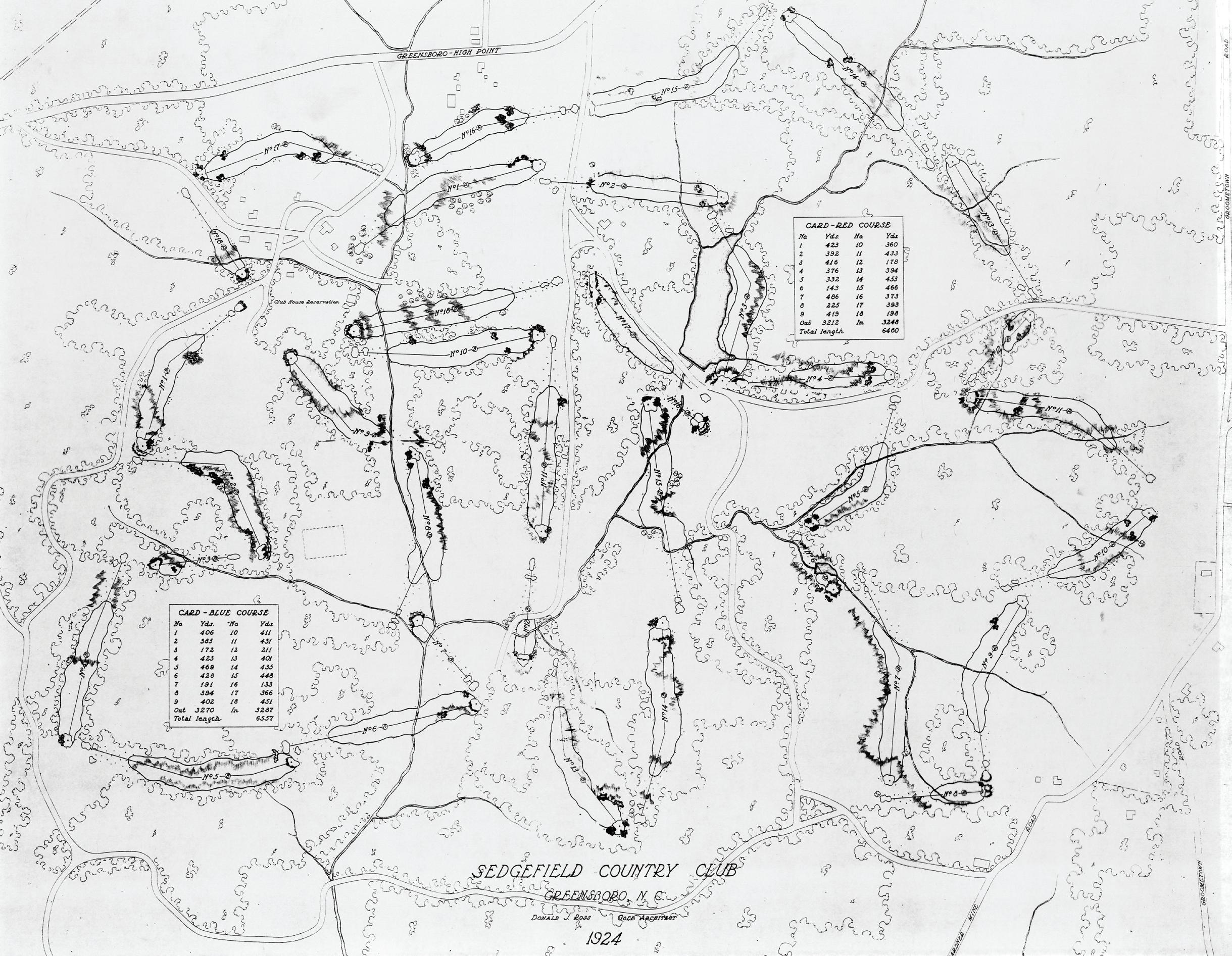
(ABOVE) Original plans called for two courses at Sedgefield; however, only the “blue” Valley Brook course was built.
Although the economic collapse at the end of the decade precluded construction of the second course, Sedgefield Country Club was incorporated in 1925, and the course, then known as Valley Brook, opened in the spring of 1926. The name reflected the gently rolling terrain and small brooks winding through the property — natural features Ross incorporated into the course’s routing.
When Ross declared Sedgefield “the most perfect golf course I have ever made,” he was speaking of fairways and greens. Generations of members and visitors would extend that praise to the community that grew around it.
Beverly Marler, director of talent recruiting and development at McConnell Golf, says, “Sedgefield has always been more than a club. It’s a community, and it stays with you.”
Witnessing History
Marler’s journey with the club began when she was 24 years old. Hired by longtime general manager and treasured mentor, the late Drew Boyland, as the office manager, she has become synonymous with Sedgefield. “At the time, I had no idea this club would become the place where I’d grow up professionally and spend the next 33 years of my career,” Marler says. “It’s surreal, and an honor, to realize
I played a small part in roughly a third of Sedgefield’s centennial story.”
Revering Sedgefield’s history, Marler has a room in her home filled from floor to ceiling with black-and-white images from the club’s early days. “There are pictures of Arnold Palmer, Ben Hogan, Seve Ballesteros, Sam Snead and his caddie Jimmy Steed, along with beautiful interior and exterior shots of our iconic clubhouse,” Marler says. “In a lot of ways, it feels sacred.”
Members take pride in Sedgefield — its crest alone has been recognized in many
corners of the world during their travels. Patrick Eakes, a member since 2002, was surprised when friends from Los Angeles first mentioned the club, and he’s always excited to share it. Soon, he’ll host a group that includes guests from Japan. “Almost every one of the greats to ever play the game — Jack Nicklaus, Tiger Woods — has stepped up to the ball right here,” Eakes says. “People from all over the world have seen it on TV, watching the Wyndham Championship (a PGA TOUR event), and they’re thrilled at the chance to play here.”
Over the years, Sedgefield has become internationally known, but the club, located in North Carolina’s manufacturing heartland, retains its approachable charm. Eakes attributes much of that to the location and the members. “For decades, the club was built by people working in industries like textiles, furniture and tobacco. We have a wide range of members, and it’s not at all stuffy like some clubs can be,” he says.
Eakes was serving as club president during a pivotal time for Sedgefield as members transferred ownership to
McConnell Golf. “Going corporate” was a huge decision, but one they’ve never regretted. “For those of us involved in the governance of the club, it’s been liberating to walk into the clubhouse and not hear about the chlorine level in the pool or the way somebody’s burger was cooked,” he says. “We get to enjoy being just members. It’s a different experience.”
Eakes also commended McConnell Golf for “providing what employees want in a work environment” and noted that it means a great deal to the members that numerous staffers have been there for many years.
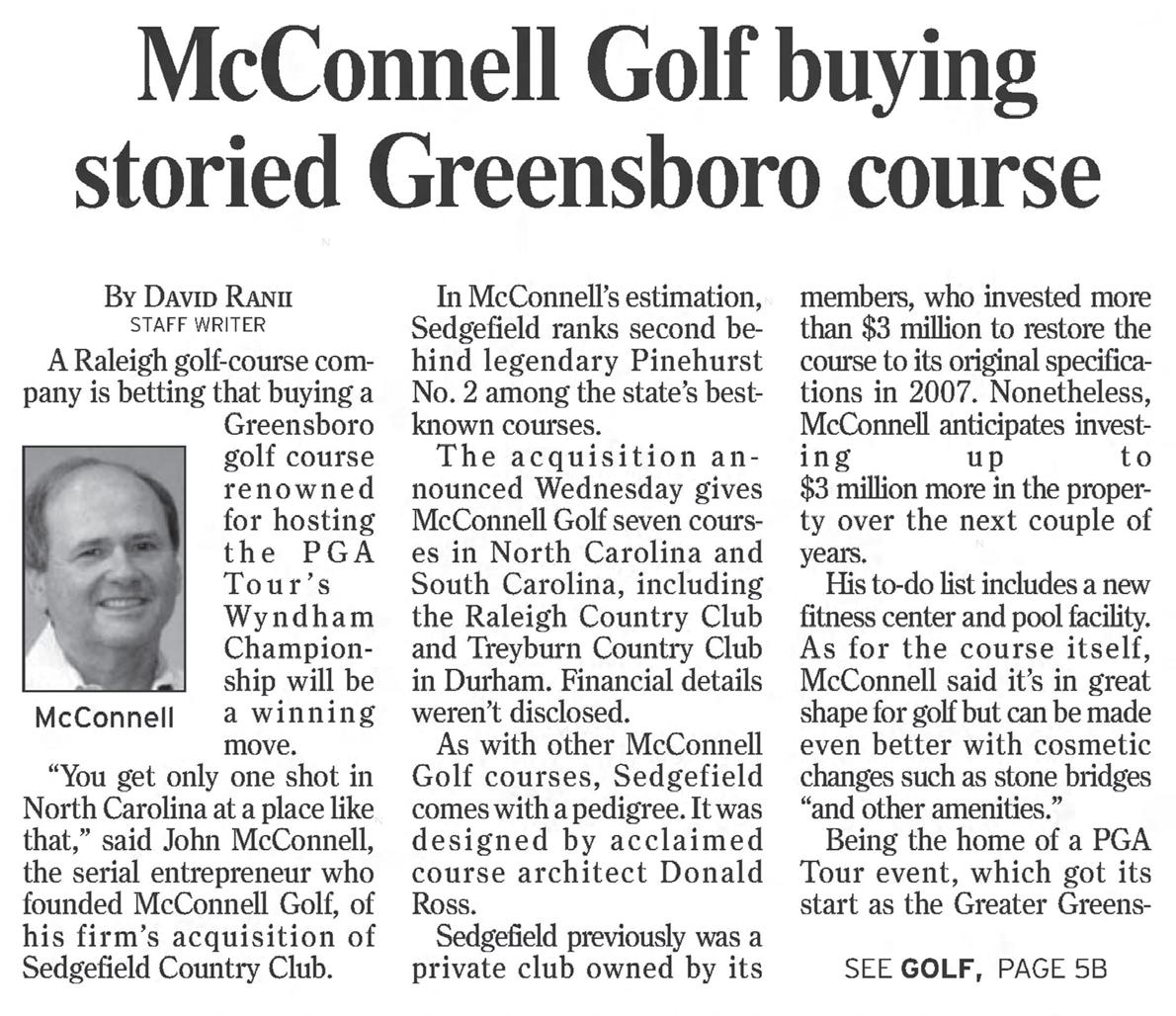
Among those well-tenured employees is Marler, who served as the controller and later membership director before taking on the role of interim general manager when McConnell acquired Sedgefield as its seventh property in 2011. Within three months, she had earned the top spot and eventually went on to a regional position. By 2022, McConnell Golf had doubled in size and needed someone to focus on recruiting and developing talent across the portfolio. “Growth from within is always our goal,” she says.
SOURCE: THE NEWS AND OBSERVER (FEBRUARY 11, 2011)
“Sedgefield has always been more than a club. It’s a community, and it stays with you.”
Beverly Marler
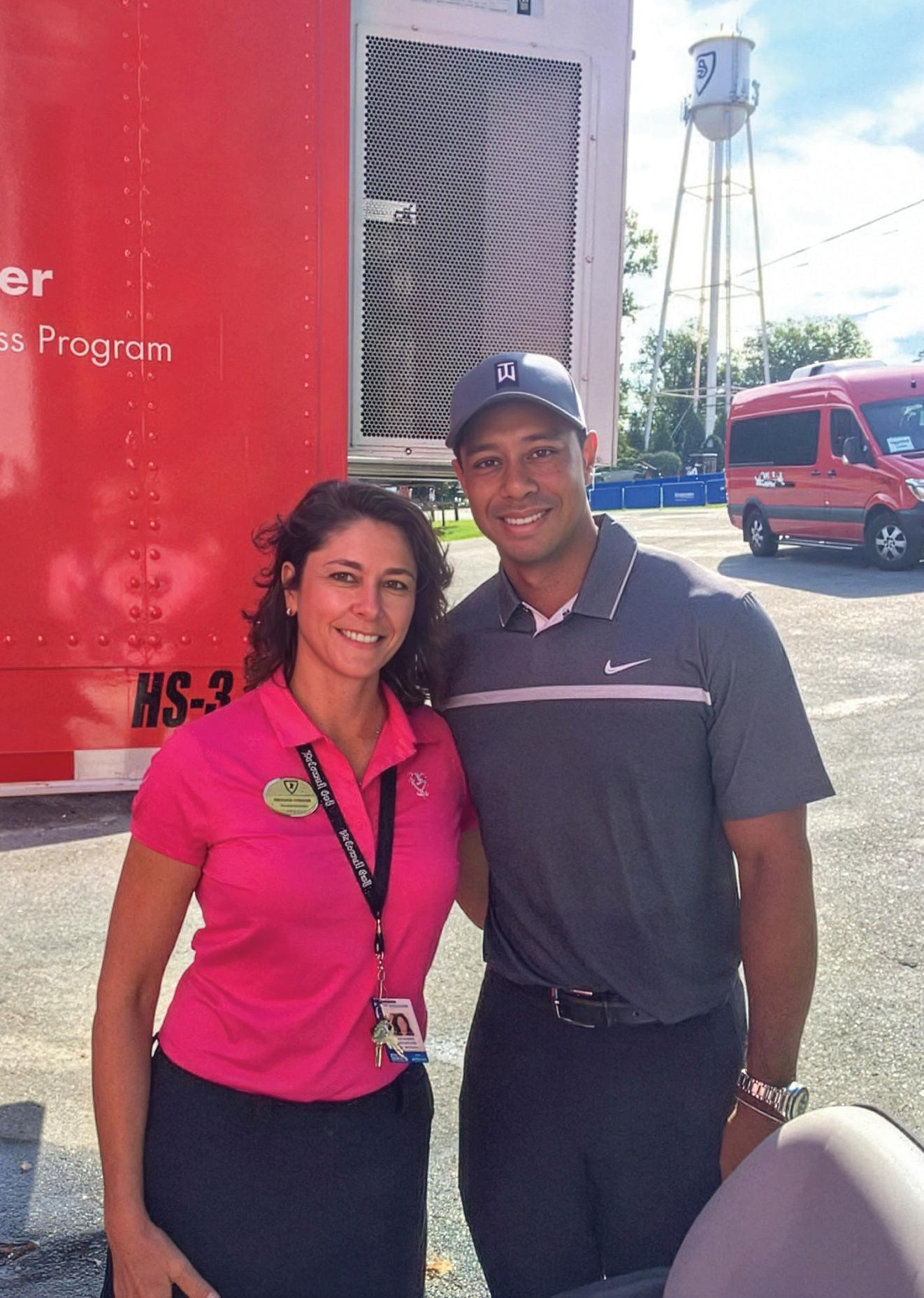
Beverly Marler and Tiger Woods at the 2015 Wyndham Championship
FEATURE
As Marler strives to ensure future success by working with the next generation of leaders, she reflects on her trajectory: “What I’ve gained from the people, experiences and opportunities at Sedgefield and within McConnell Golf has been nothing short of a masterclass,” she said.
Going All Inn
According to Marler, Sedgefield feels like a home away from home for members and
staff, and for years, it literally was as visitors flocked to the Sedgefield Inn. Prominent manufacturers would showcase their pieces in certain rooms for customers of the High Point Furniture Market.
Highlights of the resort hotel’s history include its service as command quarters for overseas personnel of the Army Air Corps during World War II. In 1953, the inn became famous as the birthplace of the Atlantic Coast
Conference. Seven schools — Clemson, Duke, Maryland, North Carolina, North Carolina State, South Carolina and Wake Forest — withdrew from the Southern Conference during the league’s spring meeting and agreed at Sedgefield to form another conference.
Sedgefield purchased the inn in 1967 and transformed it into the distinctive clubhouse that characterizes the grounds to this day. As for lodging, the Stanley Apartment and the
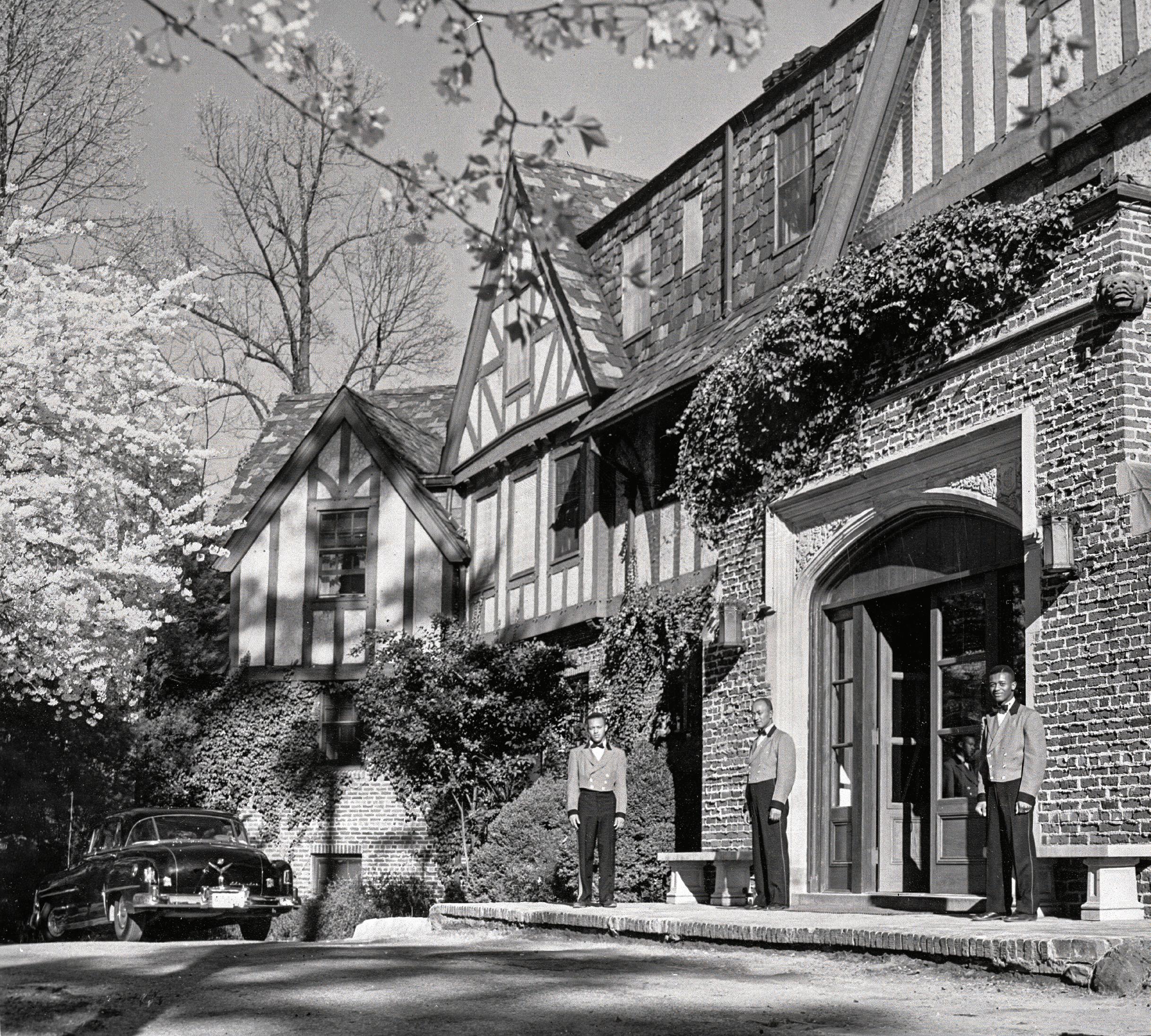
PHOTO COURTESY OF THE STATE ARCHIVES OF NORTH CAROLINA
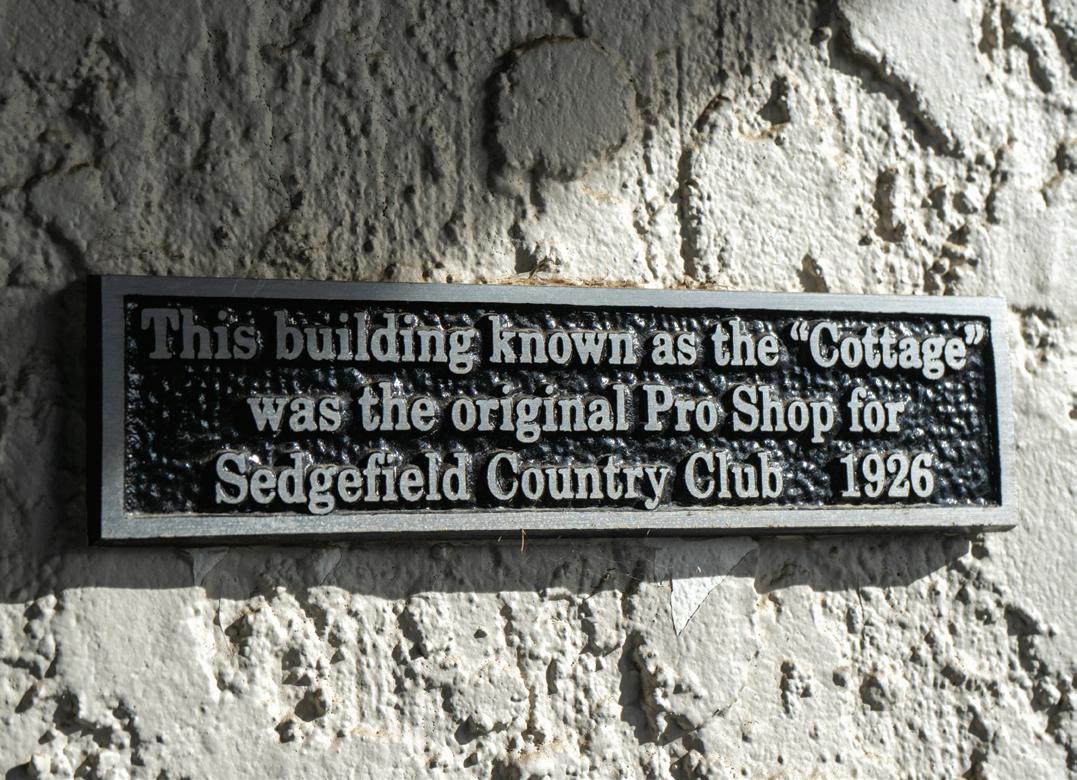
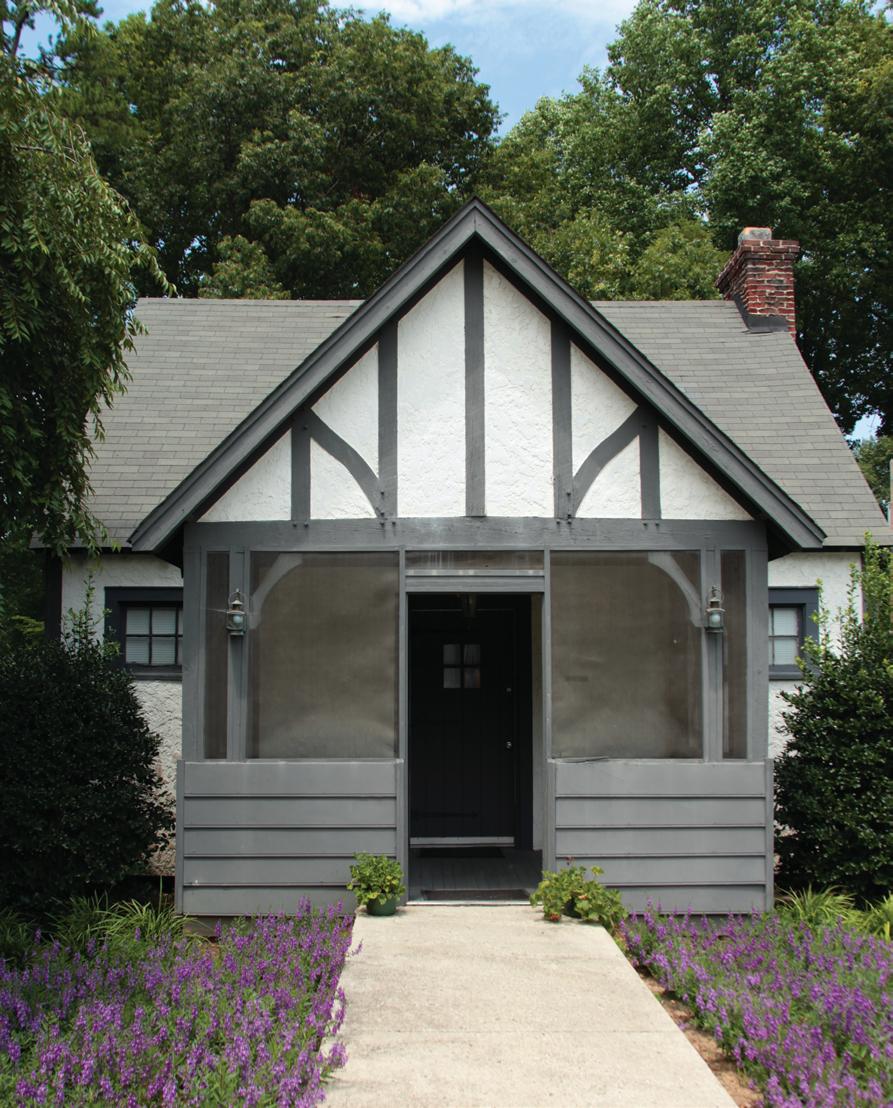
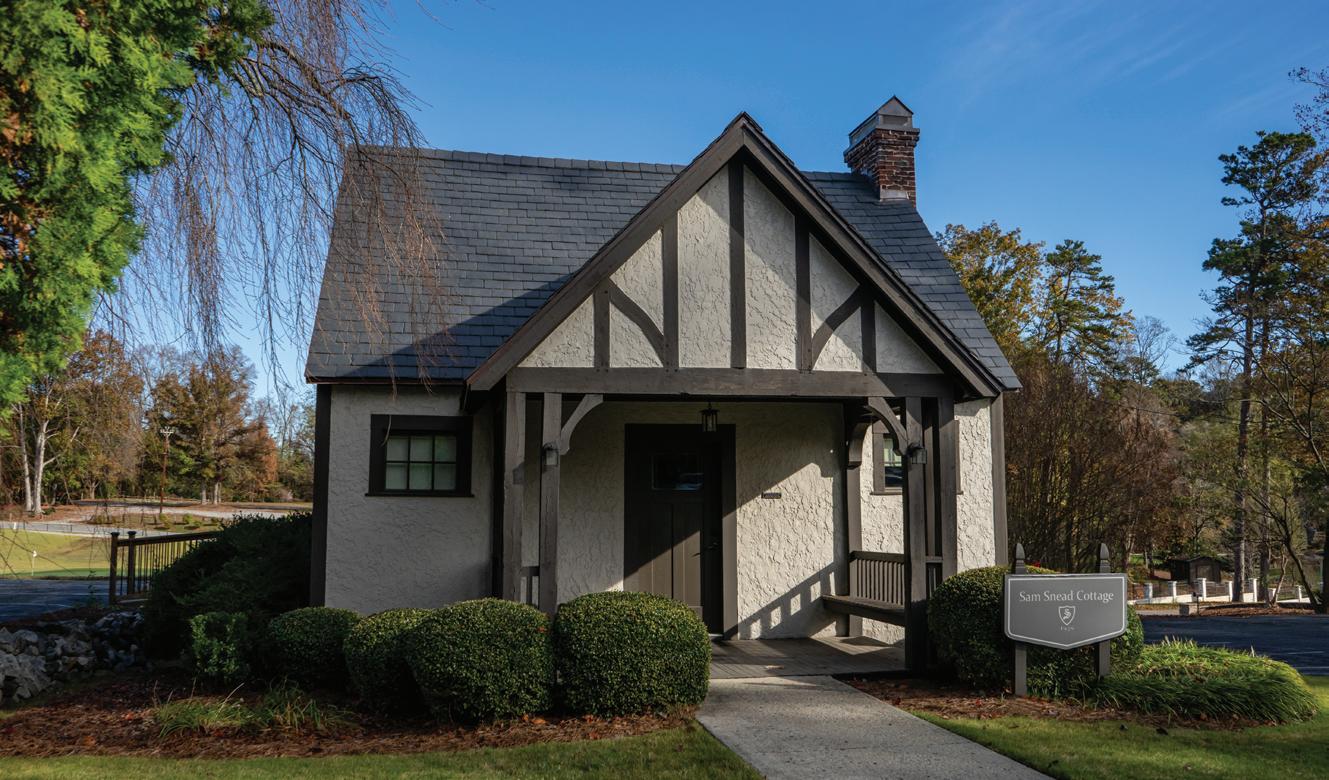
Sam Snead Cottage accommodate visitors from other McConnell Golf clubs and guests of current members. Carol Tuggle, a member since 1964, helped coordinate the fundraising and later the renovation of these notable structures, which have prime locations near the clubhouse and the first tee.
Tuggle’s first move was to “concoct a letter asking each member for $250.” By the end of the week, contributions had reached $20,000. With help from the club’s crew and lots of consignment store shopping, the project was completed in 2010. Tuggle had budgeted so well, the total came to approximately $22,000,
THE SAM SNEAD COTTAGE THROUGH THE YEARS
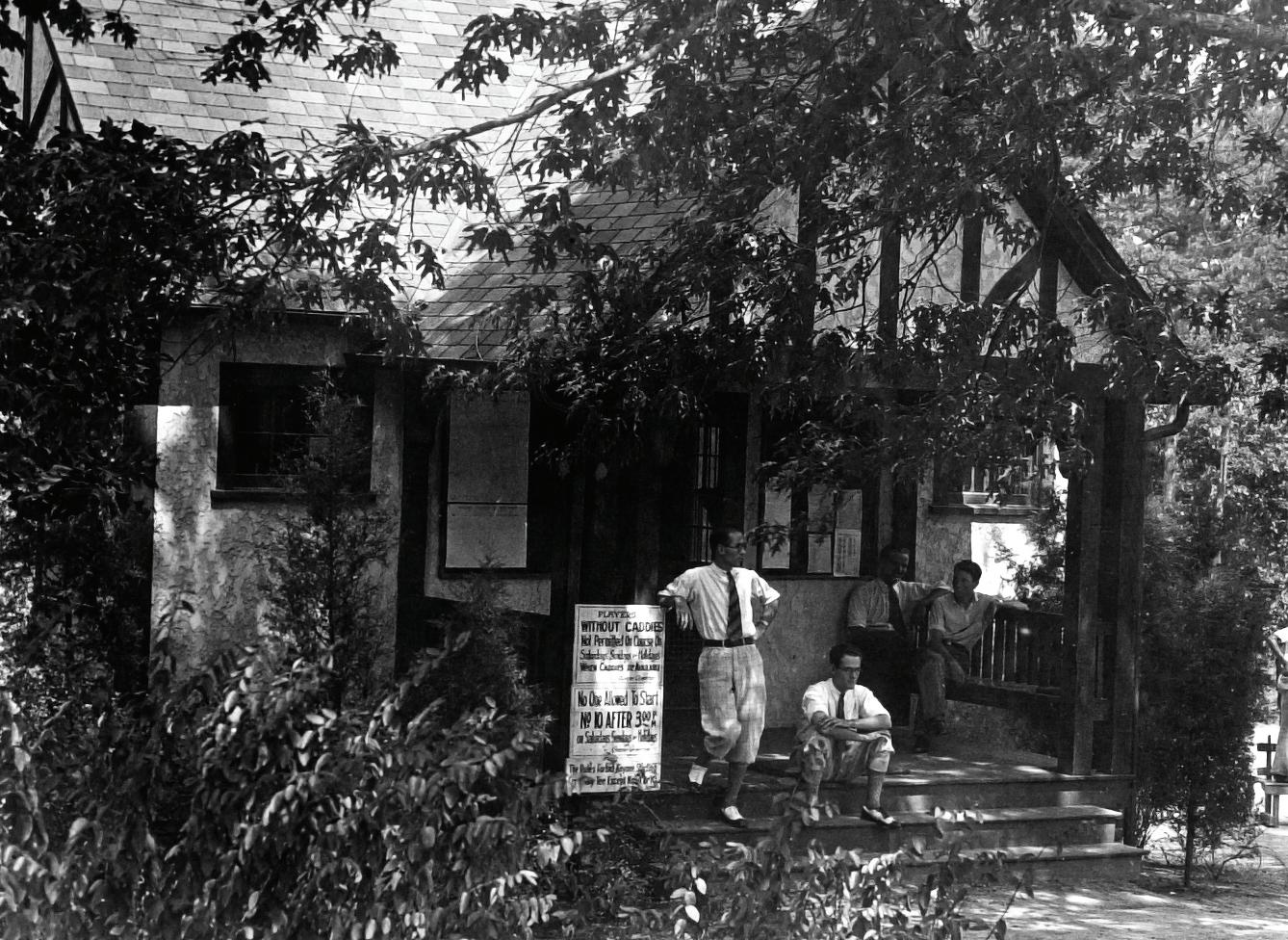
1920s–1930s
STAYING AT SEDGEFIELD
and she refunded just over $1,000 to the members, according to the proportion of their donations; some received about $4.50.
In addition to preserving the cottage and apartment, Tuggle assembled the albums on display in the clubhouse, thoughtfully chronicling the club’s legacy.
2011
PRESENT DAY
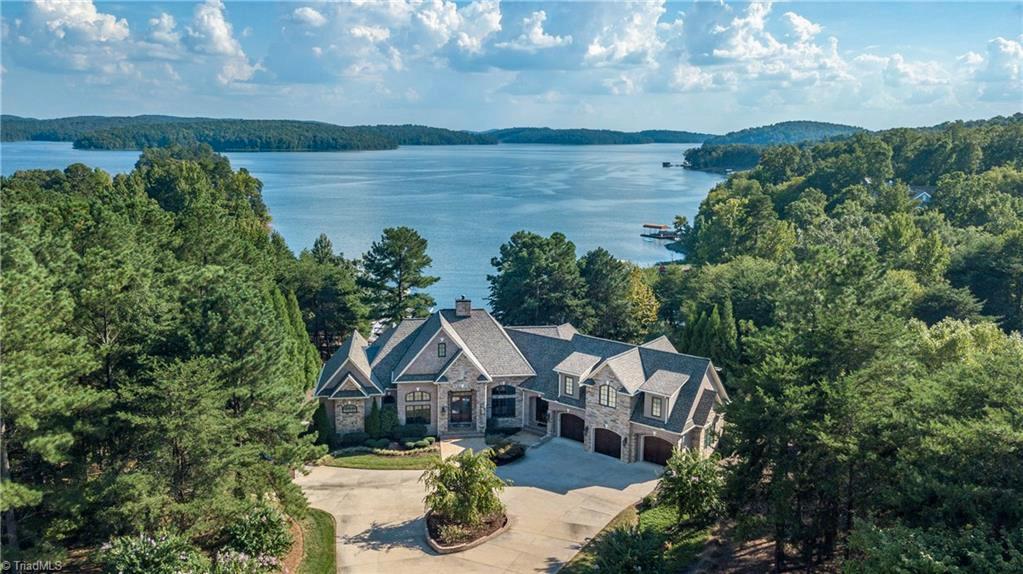
Members visiting from other properties often take advantage of Sedgefield’s two lodging options. The Stanley Apartment is a spacious and private retreat, ideal for extended stays. The historic Sam Snead Cottage offers classic character along with modern convenience.
The cottage includes two bedrooms each with one queen bed, one bathroom, living room, dining room, and kitchen with a microwave, coffee maker and refrigerator. For more lodging information, visit the travel section of the McConnell Golf private website.
Tuggle and her late husband once lived in a home on the 18th green, and she remembers the rural nature of the development in the 1970s. Sitting in an unincorporated gap between Greensboro and High Point, North Carolina, Sedgefield maintained a rustic but lush atmosphere.
Although Tuggle no longer resides there, she is an active member and usually has breakfast at the club every Sunday. In her own home now, she smiles in recollection of the inn when she sees her souvenir from its furnishings — a perfect little Baker table.
Celebrating A Century
Sedgefield was planned as “a community.” A hundred years later, its sense of community — friendships, traditions and shared history — endures. “If Sedgefield has ever been part of your life, you understand the sense of community immediately,” Marler says. “You can read about our history, but it’s something entirely different to walk these grounds and truly feel it.”
The official anniversary celebration will culminate with a Saturday, Oct. 17, centennial event. A century after its founding, the club remains what its early planners envisioned — a place where golf brings people together and community takes root. Looking back on the pivotal decision to become a McConnell Golf club, Eakes says the focus has always been on preserving the club’s future as much as its past.
“McConnell cares not only about the function of the club today,” he says, “but also that it will be here and going strong 100 years from now.”

“McConnell cares not only about the function of the club today, but also that it will be here and going strong 100 years from now.”
Patrick Eakes

PHOTO COURTESY OF THE STATE ARCHIVES OF NORTH CAROLINA
PHOTO COURTESY OF JOHN GILLOOLY/WYNDHAM CHAMPIONSHIP
KEY DATES IN SEDGEFIELD COUNTRY CLUB'S HISTORY
August 20, 1925
Hunt Benoist, Clem Boren and Fred Newnham become the first golfers to play all 18 holes at Sedgefield.
October 12, 1927
The Sedgefield Inn opens with 106 rooms available for lodging. Featuring golf, dining, tennis, swimming and horseback riding amenities, the hotel poised itself to become a sportsman’s paradise.
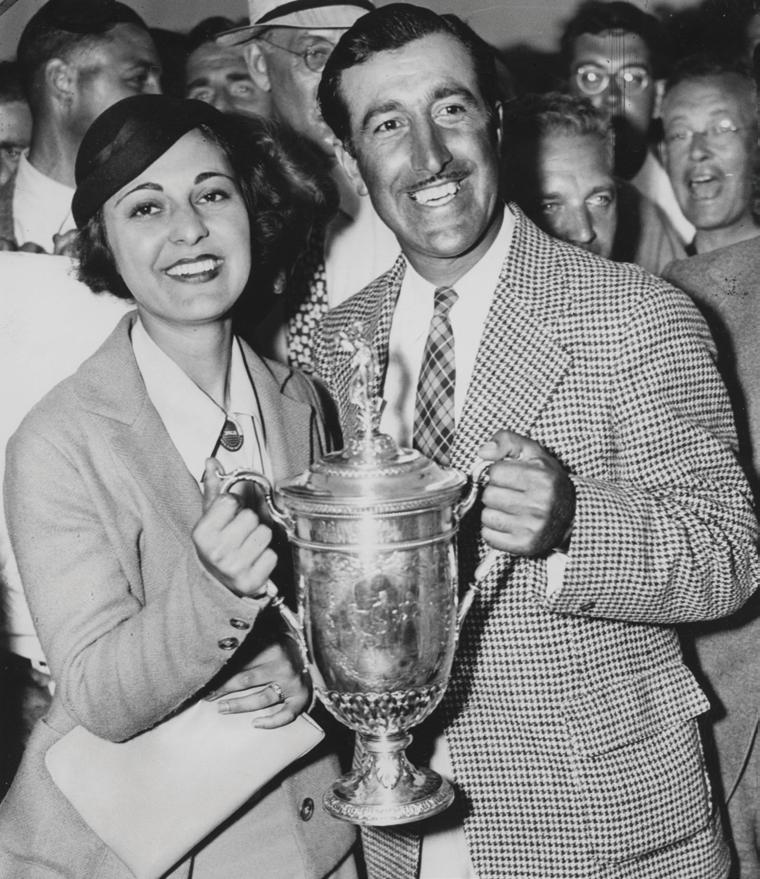
June 6, 1936
Tony Manero, the head golf professional at Sedgefield Country Club, wins the U.S. Open at Baltusrol Golf Club.
March 26 –28 , 1938
The inaugural Greater Greensboro Open takes place at both Starmount Forest and Sedgefield Country Club. A 25-year-old Sam Snead was victorious, his first of eight titles at the event.
March 11, 1942
The Sedgefield Inn closes to civilians as the Army Air Corps uses the building for officer quarters during World War II.
May 8, 1953
Seven schools meet at the Sedgefield Inn to form the Atlantic Coast Conference.
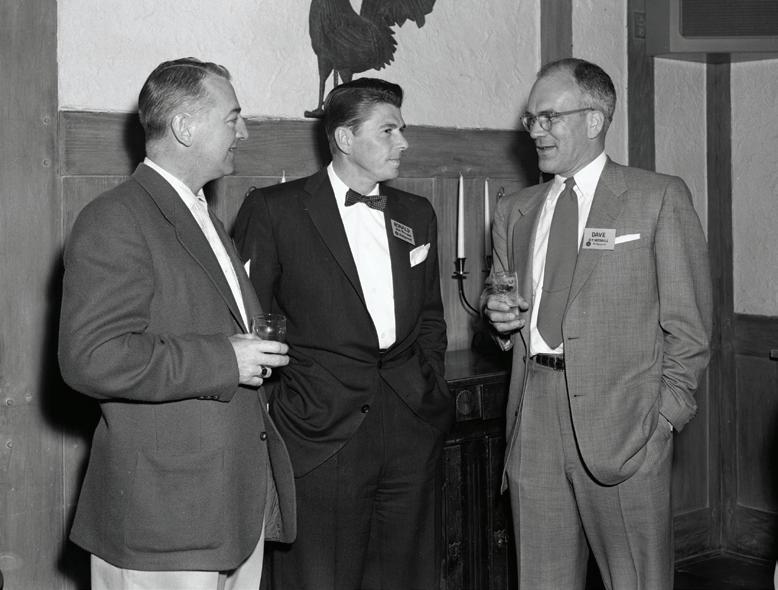
March 17, 1955
Future president Ronald Reagan visits the Sedgefield Inn for a General Electric meeting during his time as the company’s national spokesperson.
April 13 – 16, 1961
Charlie Sifford becomes the first African American golfer to compete in a PGA TOUR event in the South at the GGO. Sifford was the first round leader and finished T-4.
April 4, 1965
Sam Snead wins his final and record-setting eighth Greater Greensboro Open.
March 24, 1980
Demolition begins on the Sedgefield Manor House after a fire in 1976 left the building in disrepair. Built in the 1890s, the Manor House was part of J.B. Cobb’s hunting estate and served as the original clubhouse at Sedgefield.
September 1992
Sedgefield Inn renovations begin. During the project, a new clubhouse was built inside the former inn while maintaining the Tudor-style architecture of the building’s exterior. The clubhouse reopens in August 1993.
June 25–28, 1998
The first of three Nike and Buy.com Tour events at Sedgefield takes place from 1998 to 2000. SCC member John Maginnes and 17-year-old amateur Sergio Garcia both finish T-3 in the inaugural Greensboro Open event.
September 21, 2007
Golf course reopens following a $3 million renovation led by architect Kris Spence.
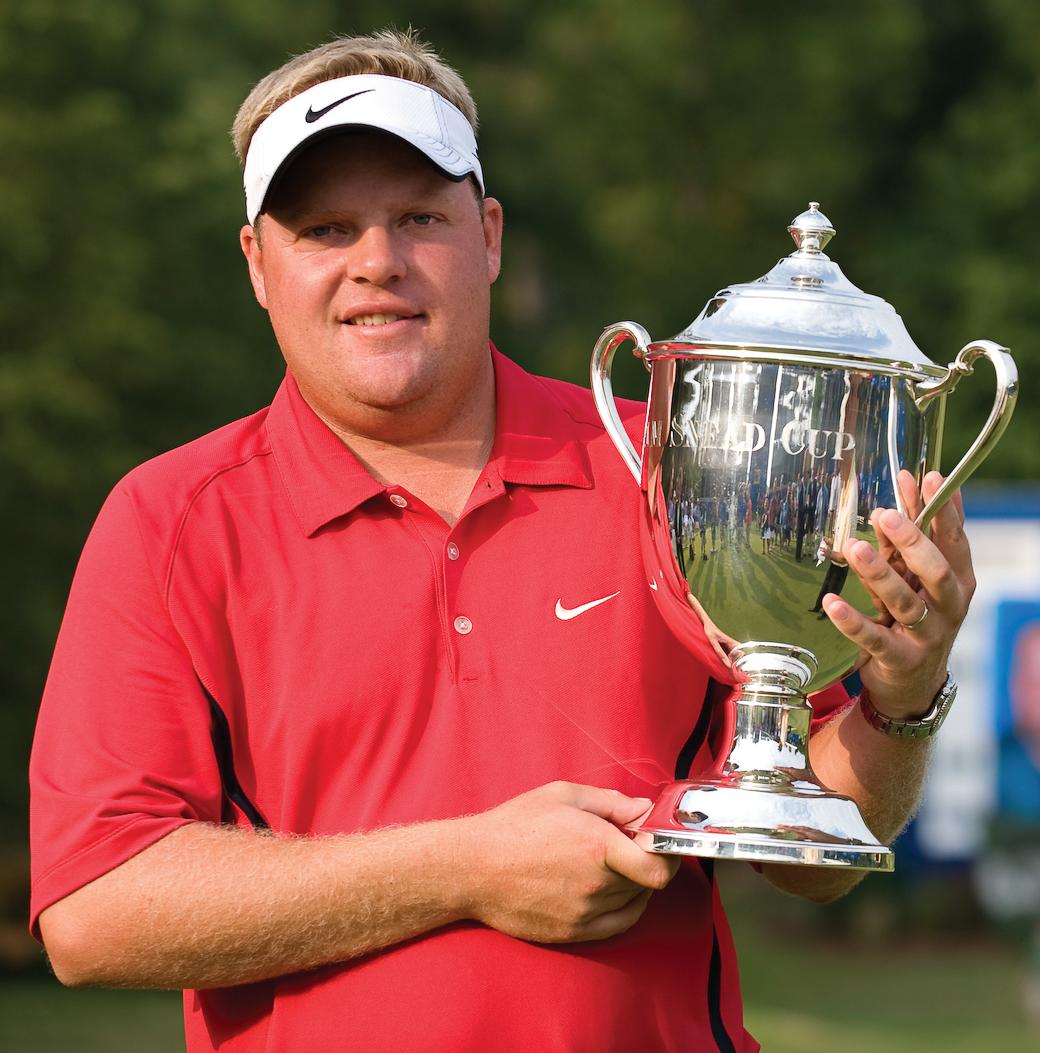
August 14–17, 2008
Carl Pettersson claims the Sam Snead Cup at the Wyndham Championship in its return to Sedgefield for the first time since 1976.
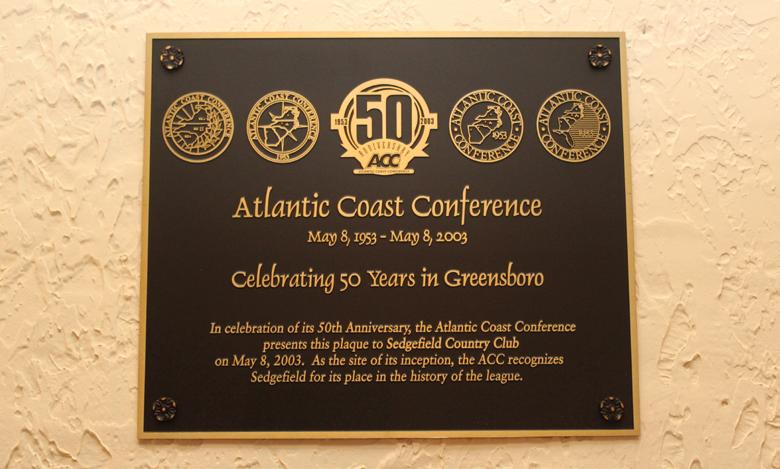
April 17–19, 2009
The Atlantic Coast Conference returns to its birthplace, hosting the ACC Women’s Golf Championship at Sedgefield for the first time.
February 2, 2011
McConnell Golf acquires Sedgefield Country Club, the seventh property in the company’s portfolio.
JOHN GILLOOLY/ WYNDHAM CHAMPIONSHIP
CAROL W. MARTIN/ GHM COLLECTION
USGA MUSEUM
May 26, 2012
A Memorial Day weekend grand opening for the new Fitness and Activities Center takes place, marking the first major improvement project completed under McConnell Golf ownership.
August 20–23, 2015
Tiger Woods makes his first and only appearance at the Wyndham Championship, drawing record-breaking crowds to Sedgefield. Woods finishes T-10 in the tournament.
August 10, 2020
A new two-acre practice area, designed by the PGA TOUR, makes its debut at the 2020 Wyndham Championship.
October 17, 2024
A grand opening event is held for six new dedicated pickleball courts at Sedgefield Country Club’s racket sports facility.
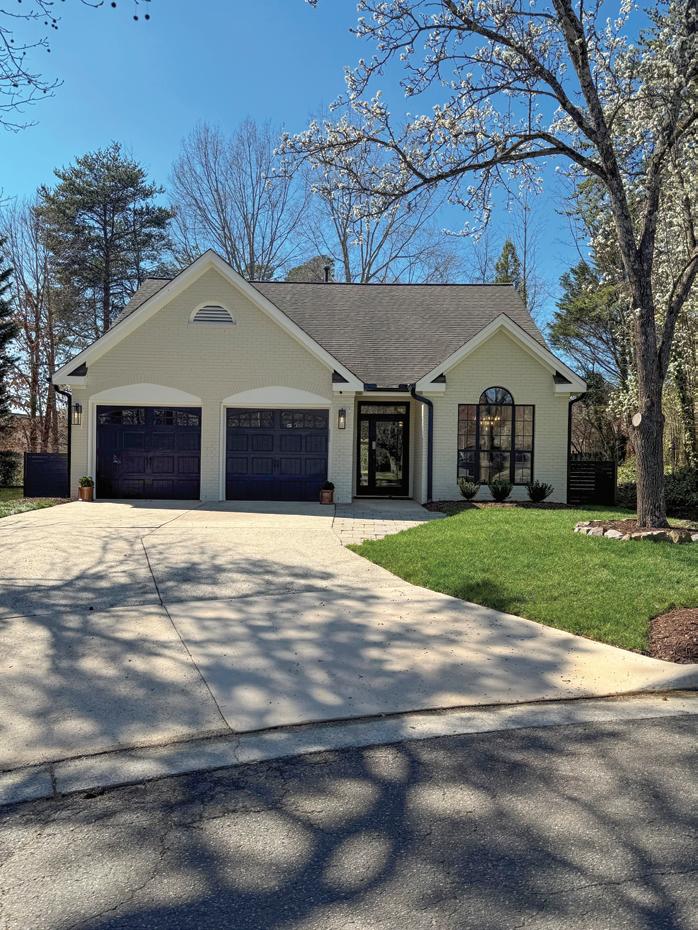
Designed especially for McConnell Golf members visiting Sedgefield Country Club — just 1 mile away.
Ideal for tournament week stays and private golf getaways. Scan for photos, details and availability. Hosted by





Meg Stiphany Founder & CEO
EXPERIENCE my club
GENERATIONS AT THE CLUBS
In this edition of My Club Experience, we asked multigenerational members to reflect on their favorite club memories. For many families, our clubs have served as the backdrop for cornerstone traditions — from family rounds of golf and summer days at the pool to weddings, tournaments and celebrations. These reflections show how each generation builds on the last, creating new memories while carrying forward the club’s legacy.
Weathers Family
THE COUNTRY CLUB AT WAKEFIELD PLANTATION
My wife Betsy and I have been members of The Country Club at Wakefield Plantation since September 2005 — a little over 21 years. We have created some of our family’s best memories at the club.
We have hosted one wedding and two wedding receptions there when our son and daughter were married. We’ve celebrated Member-Guest and Member-Member wins, along with several hole-in-ones. We’ve enjoyed numerous birthday celebrations, Santa brunches, and family dinners with our kids and grandkids.
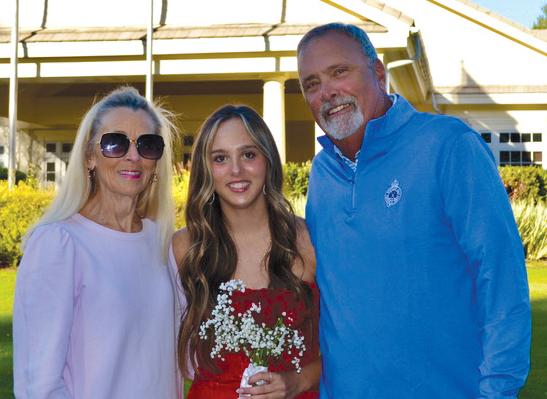
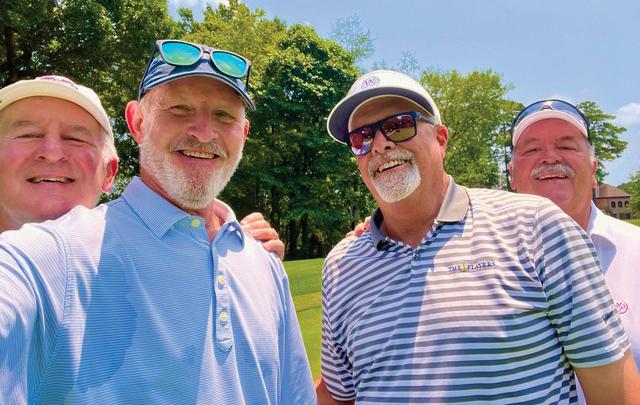
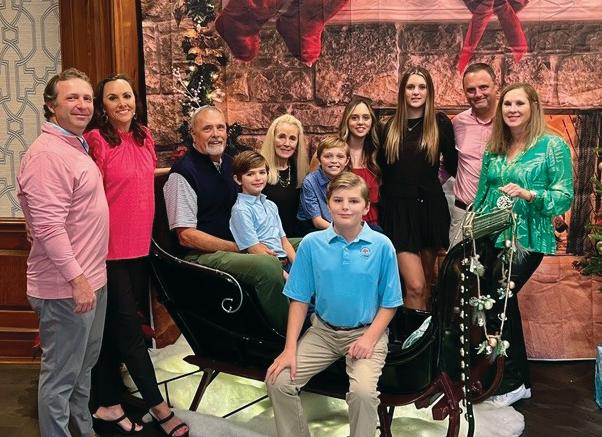
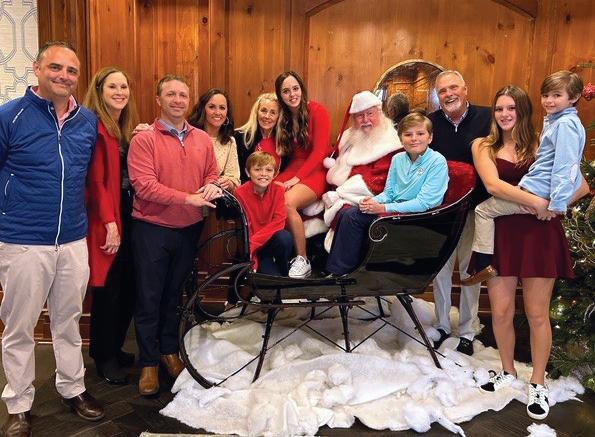
Our son Josh and his wife Karen, along with their daughters, Ella and Olivia, are now members of the club. Our daughter Kristy and her husband Rynal, along with their sons, Reece, Carson and Bennett, are also members. We have formed some of our closest friendships with people we met at Wakefield.
Needless to say, over the last 20 years, The Country Club at Wakefield Plantation has been a significant and enjoyable part of our lives.
— JIM WEATHERS
(CLOCKWISE FROM LEFT) Betsy, Ella and Jim Weathers; Tom Carpenito, Mark Saharski, Jim Weathers and Randy Screen; the Weathers family at Christmas at Wakefield Plantation
Davis Family
HOLSTON HILLS COUNTRY CLUB
My husband Greg and I joined the club in 1985 with the hopes of offering our two boys, Dustin and Tyler, the opportunity to learn the game of golf — and what better place than Holston Hills Country Club? My husband and my father, Ace Miller, were great friends with John Wylie, and his character stands alone on that golf course! We knew having our boys grow up there would benefit them in ways we could hardly imagine.
We spent countless hours at the club with them, from teaching the fundamentals of golf to learning how to play respectfully. We made it a family affair!
Dustin was 4 when Greg first introduced him to the course. Tyler was 2 when we ventured over with him. There were many days Greg would send me to the club with the boys to play all day while he worked. We spent hours on the course, grabbing lunch at the Bean Station, resting up for another round of golf, or heading to the pool. Tyler even played tennis for a while. I used to tell their teachers that we practiced math and reading by studying golf rule books!
Both boys have played well-known courses and learned so much from their time at Holston Hills — lessons they have carried into their own lives. They are both members at Holston Hills and are introducing their children to the game. Greg and I are enjoying watching them grow through many club events.
Thanks for all the family memories at Holston Hills!
— TRACY DAVIS
Carver Family
TREYBURN COUNTRY CLUB
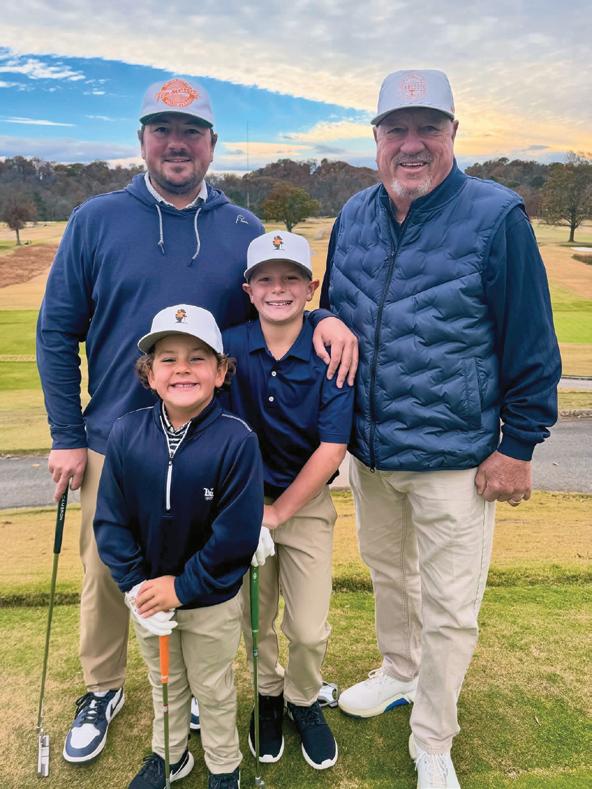

My wife Kay and I were very early members of Treyburn Country Club, having joined in March 1999. We currently have three grown children and four grandchildren.
My son, Will, his wife, Kim, and their children, Kaitlin and Matthew, are current Treyburn members. My daughter, Sissy, and her husband, Kenneth Barham, along with their children, Andrew and William, live in Wake Forest and are members at The Country Club at Wakefield Plantation. All of the adult men in our family are single-digit handicaps, and three grandsons are beginning to play golf.
Over the span of 36 years, I have made many fond memories at Treyburn. At 72 years old, I am hoping to make many more. Two very special memories are my daughter Sissy’s wedding reception in June 2008 and my daughter Nannette’s 30th birthday celebration in December 2010.
— GORDON CARVER
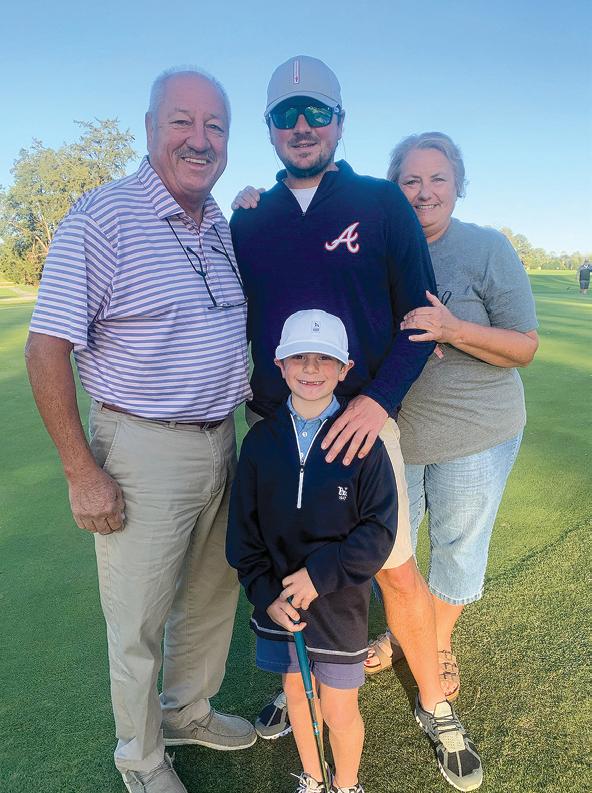

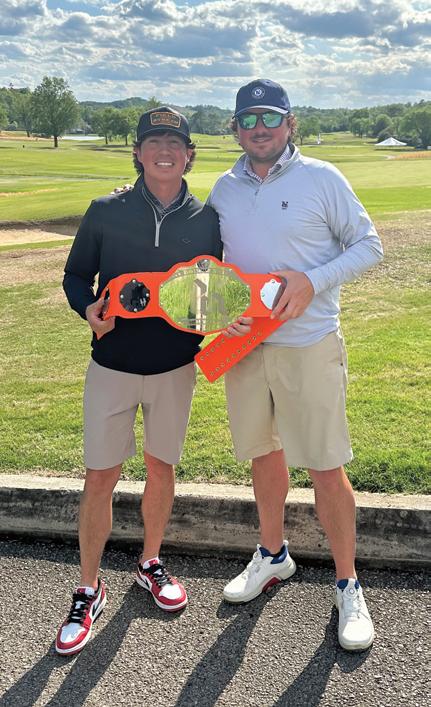
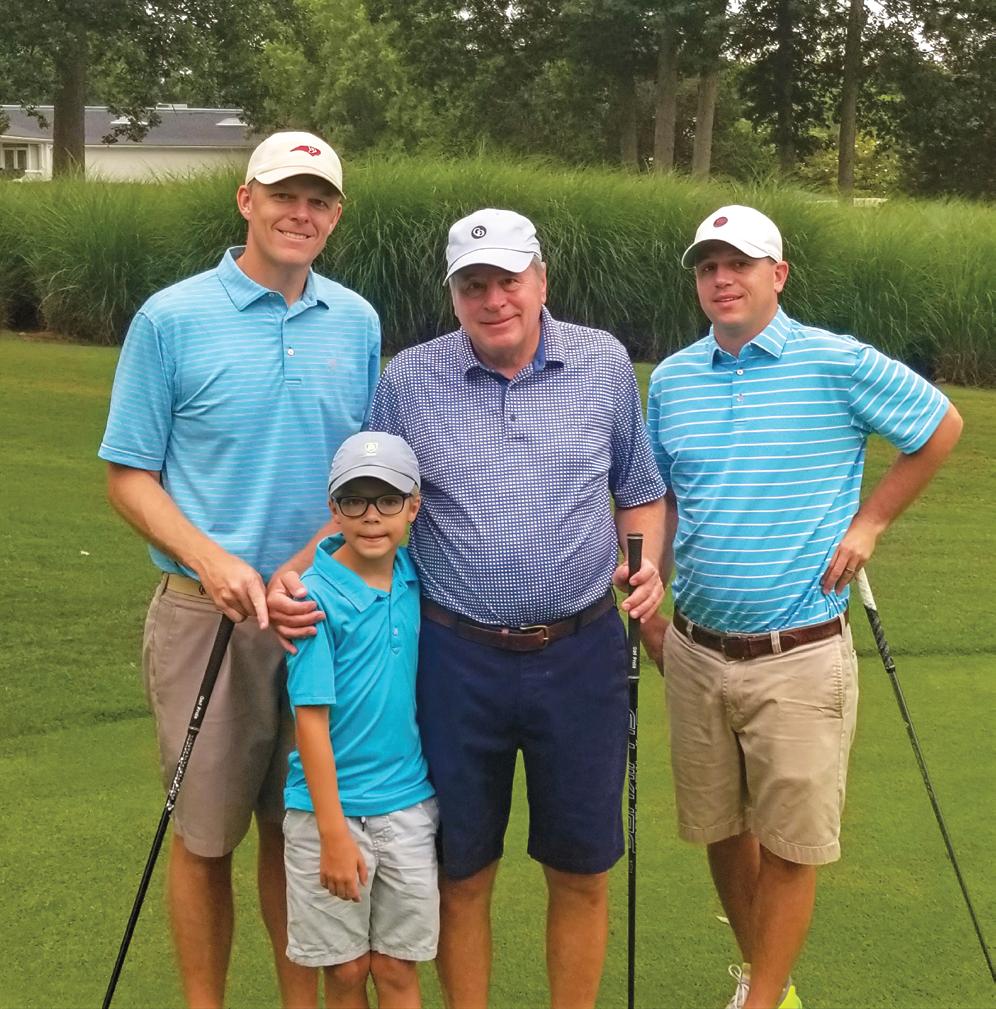
Kenneth and Andrew Barham with Gordon and Will Carver
(CLOCKWISE FROM LEFT) Dustin, Wade, Creed and Greg Davis; Greg, Dustin, Tracy and Creed Davis; Arch Davis; Creed Davis; Tyler and Dustin Davis
Perry Family
PROVIDENCE COUNTRY CLUB
As an avid golfer for more than 57 years, I’ve been a member of a country club in each of the four cities where I have lived. When we moved to Charlotte more than 25 years ago, finding the right, familyfriendly club was a priority. Providence was perfect for our family, with a great golf program, pool, pavilion and many other amenities. The junior golf program was top-notch.
Kyle and Kelsey took full advantage of the junior programs, receiving great instruction from Leslie. As a teaching professional, she taught them fundamentals while encouraging them to enjoy the game and play well. Kyle joined the club after earning his engineering degree and MBA from Clemson University. Kelsey joined after graduating from the College of Charleston and the Medical University of South Carolina with her doctorate in dentistry. She now has a dental practice in Charlotte.
When McConnell Golf purchased Providence Country Club, it enhanced the club’s value immensely. A complete golf course renovation, followed by improvements to dining, the pavilion and fitness facilities, elevated the club to a top-tier one in Charlotte.
Our family regularly uses the facilities and enjoys playing in tournaments together, including the Turkey Trot, Spence Test, Tip and Tuck, and other member events. Kyle and his older brother Chris competed as a team in The Cates Invitational and won their flight in 2025.
Access to other McConnell Golf properties has been fun for our family to enjoy together. We have played most of the clubs but most frequently visit Old North State Club and Sedgefield Country Club due to their proximity.
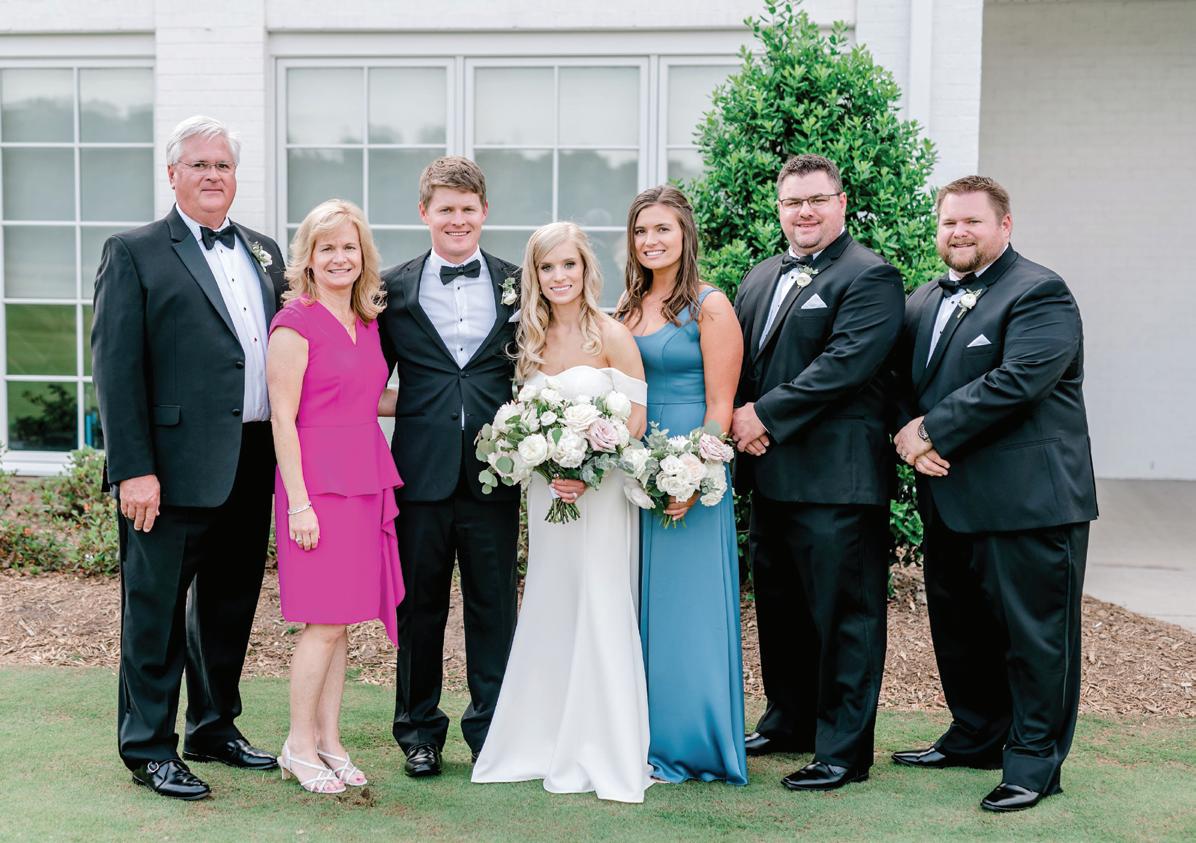
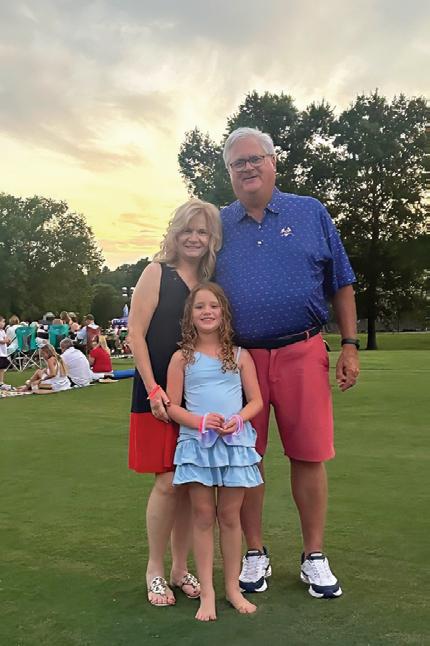
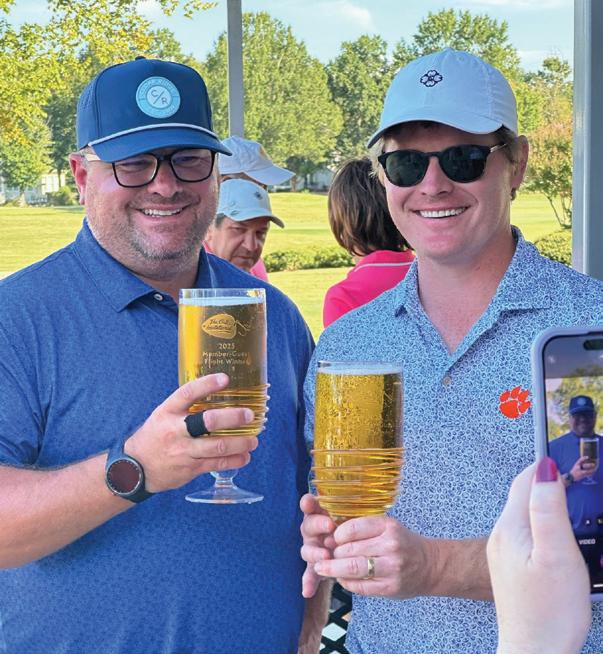
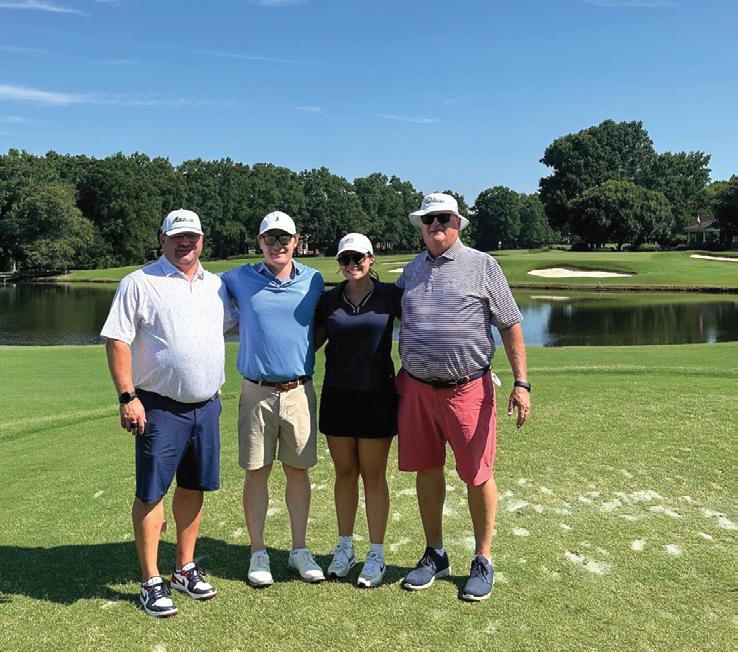
Providence has also been the setting for many of our most meaningful celebrations. We host our annual company Christmas party at the club each year and our employees always look forward to the event. Kyle and his older brother Steven were married at Providence, which proved to be a beautiful venue overlooking the 18th and 11th holes.
— ARLIN PERRY
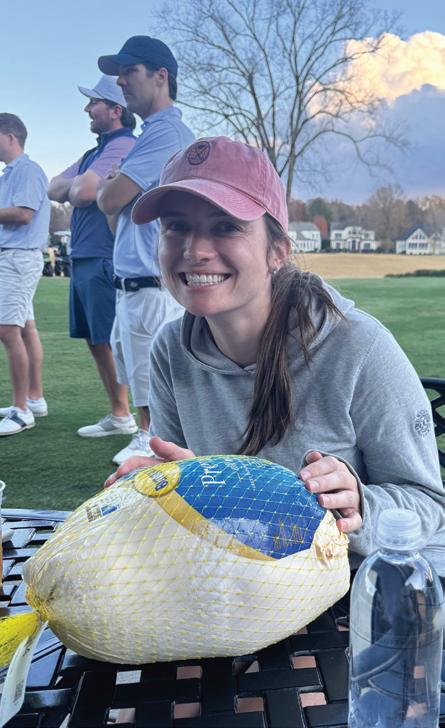
Our parents moved our family to Charlotte when we were 9 and 7 years old and joined Providence Country Club. Golf has always been an important pastime for our family, and we’re pretty sure we are conservatively into the thousands of rounds played together at Providence now, 25 years later.
Being able to join Providence alongside my parents has been a true blessing and has created many memories we will cherish forever. We are actively lobbying our brother Chris (pictured at left) to move to Charlotte so he can graduate from my Member-Guest partner to Crown Cup partner.
— KYLE PERRY
Wedding of Kyle and Madeline Perry
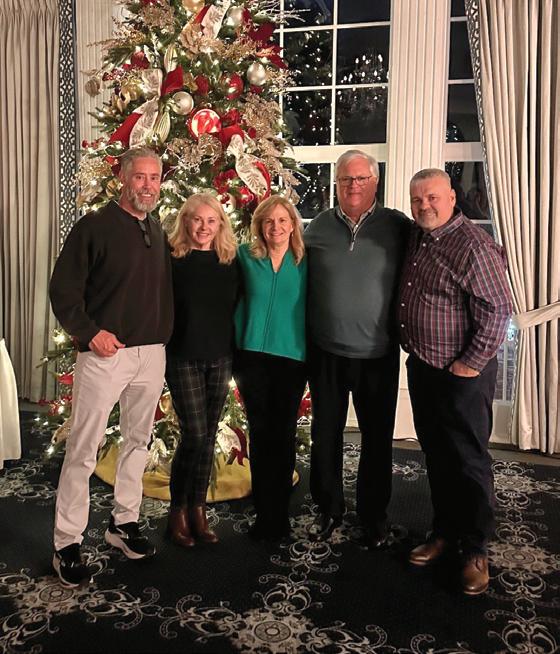
(CLOCKWISE FROM LEFT) Sonya and Arlin Perry (center) with colleagues; Chris and Kyle Perry; Sonya, Arlin and Gracey Perry; Chris, Kyle, Kelsey and Arlin Perry; Kelsey Perry
Carbone Family
PROVIDENCE COUNTRY CLUB
We joined Providence Country Club in 1987 while it was under construction — and before we even moved to Charlotte. When Mike called to tell me he had joined a country club that hadn’t been built yet, but hadn’t secured a house for us after our move from Cincinnati, my response was less than enthusiastic! Everything changed when we officially relocated in the fall of 1988 and embraced our new club.
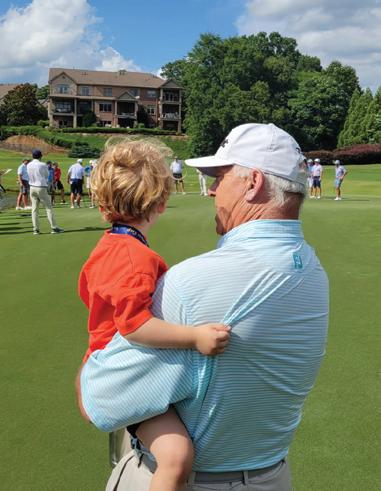
Our two sons, Michael and Chase, grew up at Providence — swimming, playing golf and tennis, attending camps, celebrating milestones, and making lifelong friends. The club quickly became our family’s go-to place.
Over the years, we also enjoyed Old North State Club, and boating there has become one of our go-to summer traditions. Now, seeing Chase and his wife Claire join Providence — along with their son William, who has enthusiastically embraced golf at just 2½ years old — has been incredibly special. We look forward to involvement in all that Providence has to offer, as it has truly been an integral part of our lives for three generations.
— MIKE AND MIMI CARBONE
Barnes Family
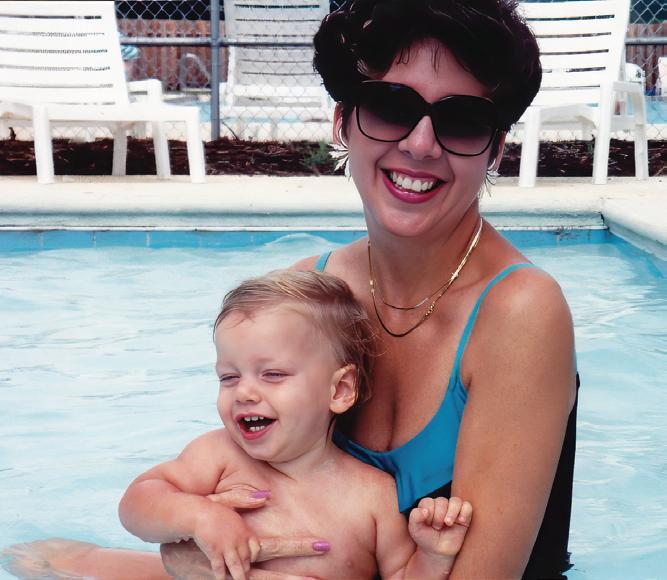
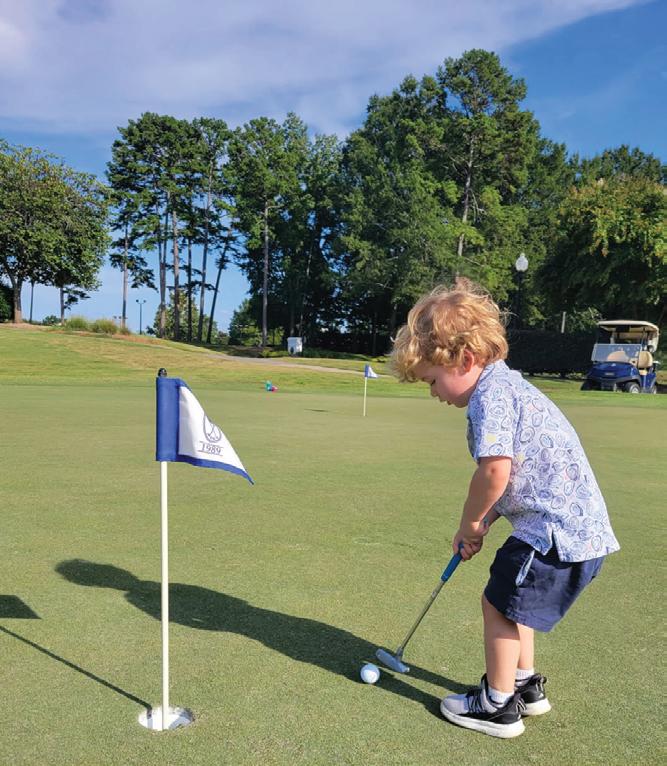
I could probably write a short book if I began retelling all the stories and characters Raleigh Country Club has known. I sit in my office right now with multiple father-son trophies, member-member trophies and photos of me, Dad and the boys golfing.
In the late ’70s, I remember going to bingo nights and can still hear Ike Gas, the longtime club manager and eventual member, stuttering the numbers. My mom still laughs about the Christmas my dad dressed up as Santa because the real Santa never showed up. Afterward, my mom asked how I liked Santa, and I told her I didn’t: “He wasn’t a real Santa.”
In the ’80s, I really started playing golf. I played on weekends with Dad, or we would play a quick few holes when he got off work. I still believe there is no prettier spot than Raleigh Country Club at sunset.
In the summers, Mom or Dad would drop me off with my bathing suit packed in my golf bag. I often played with a group of retired members who adopted me as one of their own.
RALEIGH COUNTRY CLUB
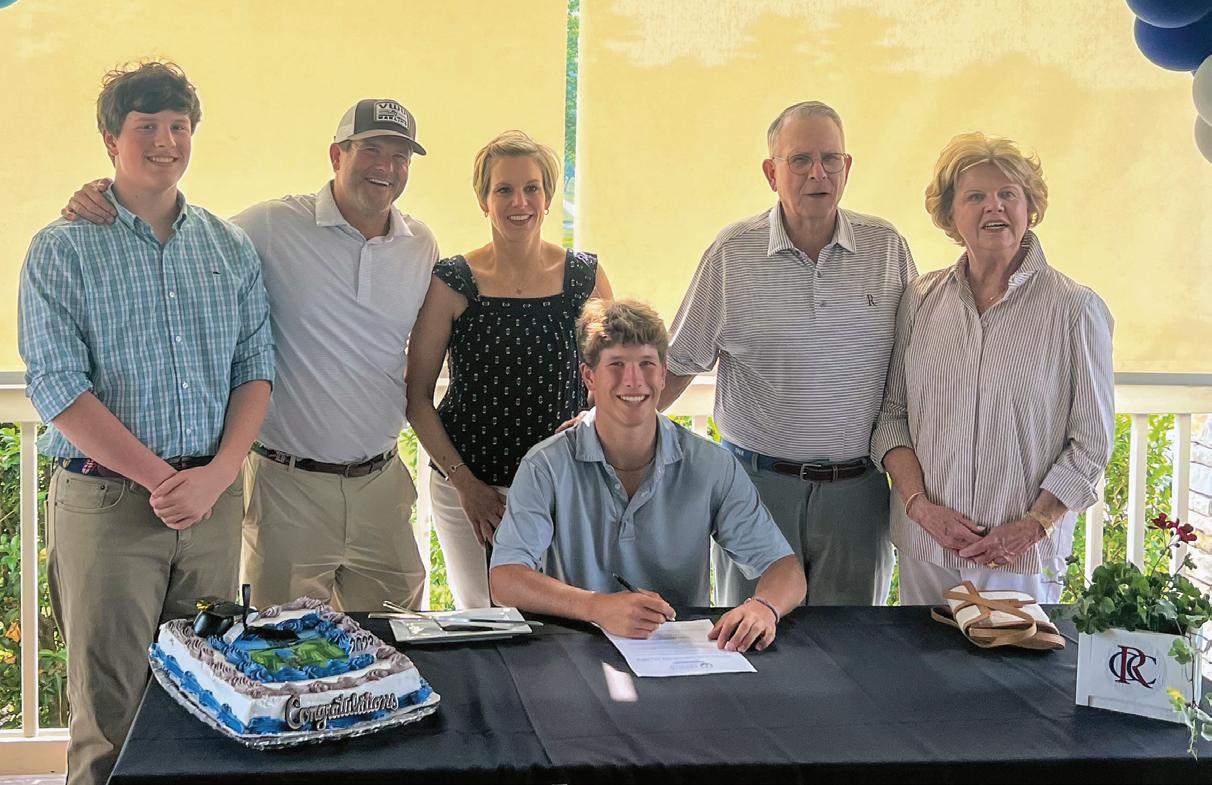
(FROM LEFT) Camden Barnes, Jim Barnes, Amanda Barnes, Avery Barnes, James Barnes and Beth Barnes celebrate Avery’s signing day at Raleigh Country Club.
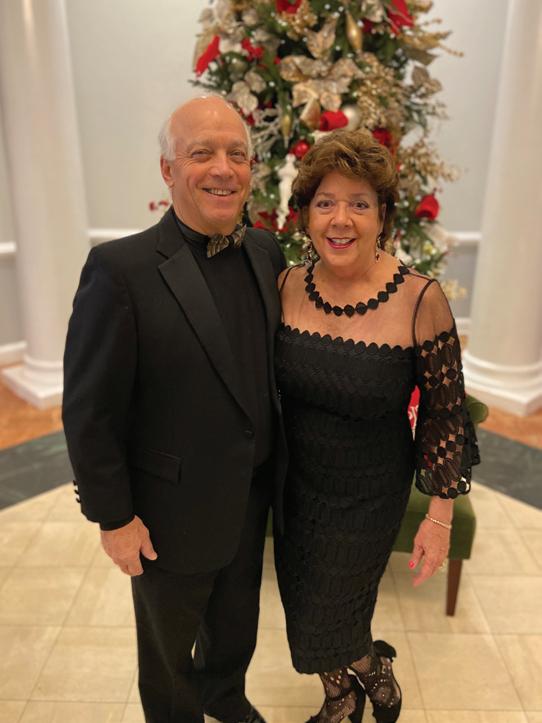
(CLOCKWISE FROM LEFT) William and his grandfather; Mike and Mimi Carbone; Mimi Carbone and her son, Michael, during the inaugural 1989 pool season; and William Carbone
Even Mr. Ruby would let me play a hole or two with him if I was alone. I remember him unloading an entire dozen brand-new Titleist Balatas into the pond on 16. He was determined to get it across. I can still hear his profanities after each splash.
My days at the club paused in the mid-’90s when I headed to college and law school. I moved back to Raleigh in 2003. Just as Mr. McConnell started building RCC into what it is today, I was starting my career and my own family with Amanda.
In April 2012, Amanda and I joined Raleigh Country Club. Camden was 4, and Avery was 6. We immediately bought both boys’ sets of clubs from the pro shop. Just like my dad, in the summer evenings after work, the boys and I would slip off the first tee and play a few holes before they were ready to eat chicken fingers or head to the pool. They participated in summer golf camps, and we played every Parent-Child with my dad — now “Papa.” There is nothing better than having three generations together at the place that is so special to us.
Since rejoining, Dad and I have made it a tradition to play in the Member-Member together. Member-Member weekend is the best
Beth and I have been members of Raleigh Country Club since March 1973. Having played golf as a child on a Donald Ross-designed course, Raleigh Country Club was my first choice after college when we moved to Raleigh. That decision has allowed three generations of Barnes golfers to enjoy this wonderful facility.
Our son and his sons continue to enjoy the privilege of membership at Raleigh Country Club. By far, our most memorable and favorite events have been the Donald Ross Classic with my son and the Parent-Child Tournament with our grandsons.
When my son and I played in the Parent-Child Tournament in the 1980s, there were only three teams. The last time we played, there were more than 60 teams participating in this great McConnell Golf club.
— JAMES BARNES
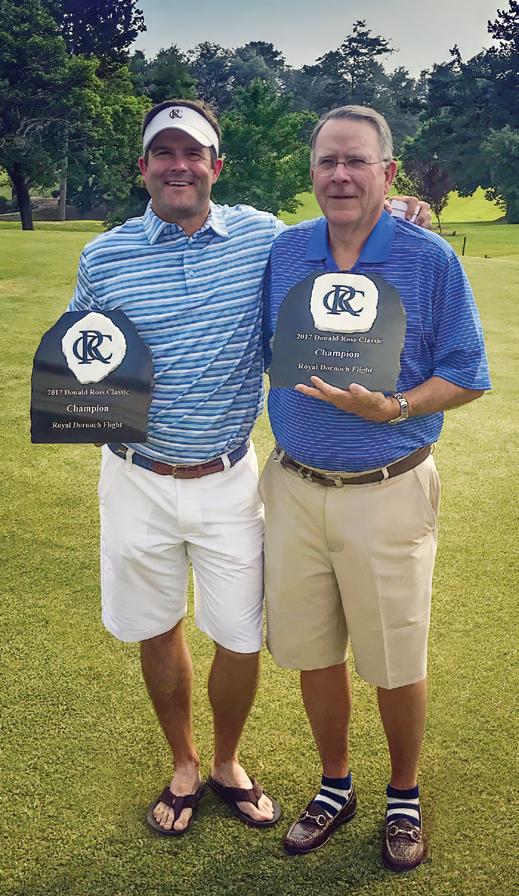
weekend of the entire year. The course is in perfect shape in May. The weather mostly cooperates. The cocktail parties have been memorable in many respects, and the matches have been epic. Watching the Sunday shootout in the golf cart armada is thrilling. Most everyone who plays in the event knows I call it “my Christmas.” I get to spend three uninterrupted days with my dad at the place we absolutely love most.
In November 2020, we watched Papa hit the ceremonial first tee shot at the grand reopening of RCC. As usual, he hit it right down the middle — the same sweet swing I have admired my entire life.
My dad and I still play every Sunday at RCC. It has gotten harder for him, and his days of shooting 28 on the front are long gone, but he occasionally shoots his age or better. He still walks and pushes his cart several days a week.
For the Barnes family, three generations of golfers call RCC home. My life is a storybook filled with chapters about people, rounds, laughter, tears, tournaments, friendships and, most importantly, family. It all happened off Donald Ross Drive.
— JIM BARNES
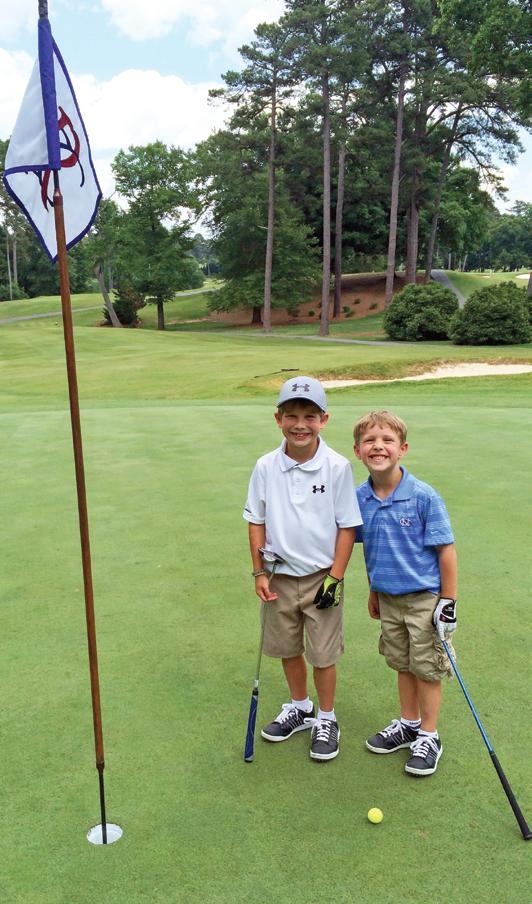
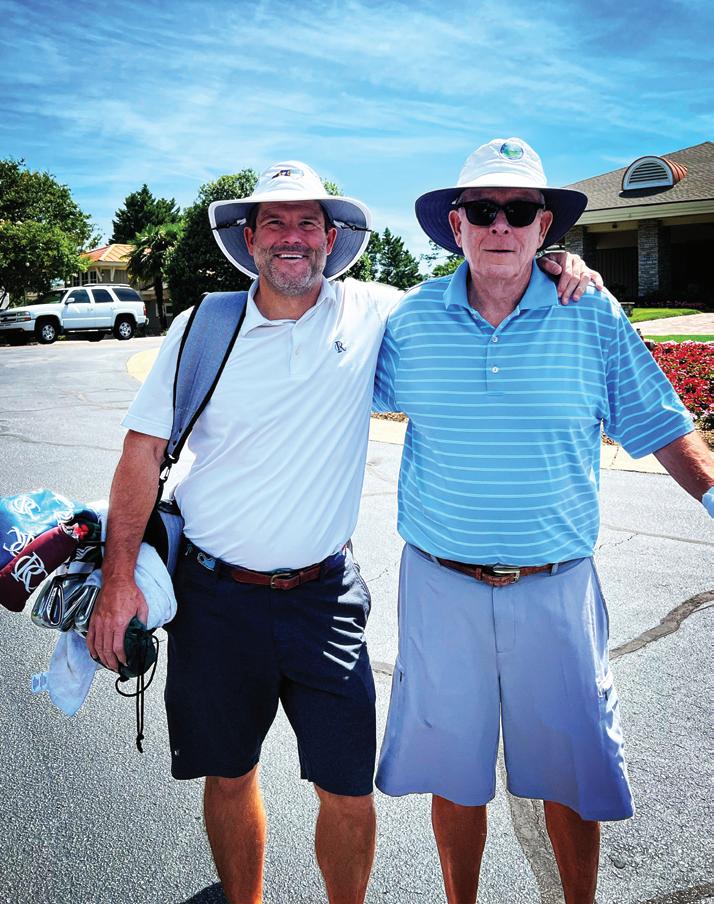
Growing up at Raleigh Country Club, I learned the game from my dad and grandfather, participated in junior programs, and watched great players like Grayson Murray and Akshay Bhatia. Those early experiences shaped who I am today and sparked my love for golf.
Being part of the Raleigh membership has given me access to world-class practice facilities, helping me become an accomplished college golfer. I now play Division I golf at Presbyterian College in Clinton, South Carolina, where I’m
also able to enjoy another McConnell Golf course, Musgrove Mill Golf Club.
Some of my favorite memories include winning three Junior Club Championships and watching my dad and grandfather win their flight in the Member-Member.
Because of this, Raleigh isn’t just a golf course to me — it’s home, filled with memories that will last a lifetime.
— AVERY BARNES
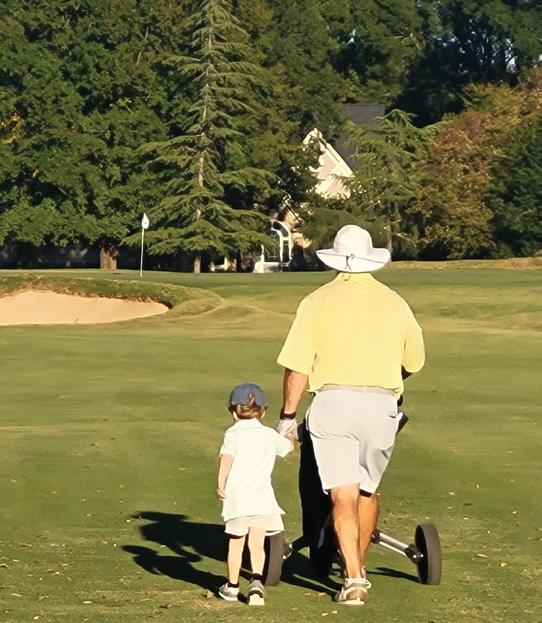
(FROM LEFT) Jim and James Barnes; Avery and Camden Barnes; Jim and James Barnes
Barbecue Traditions
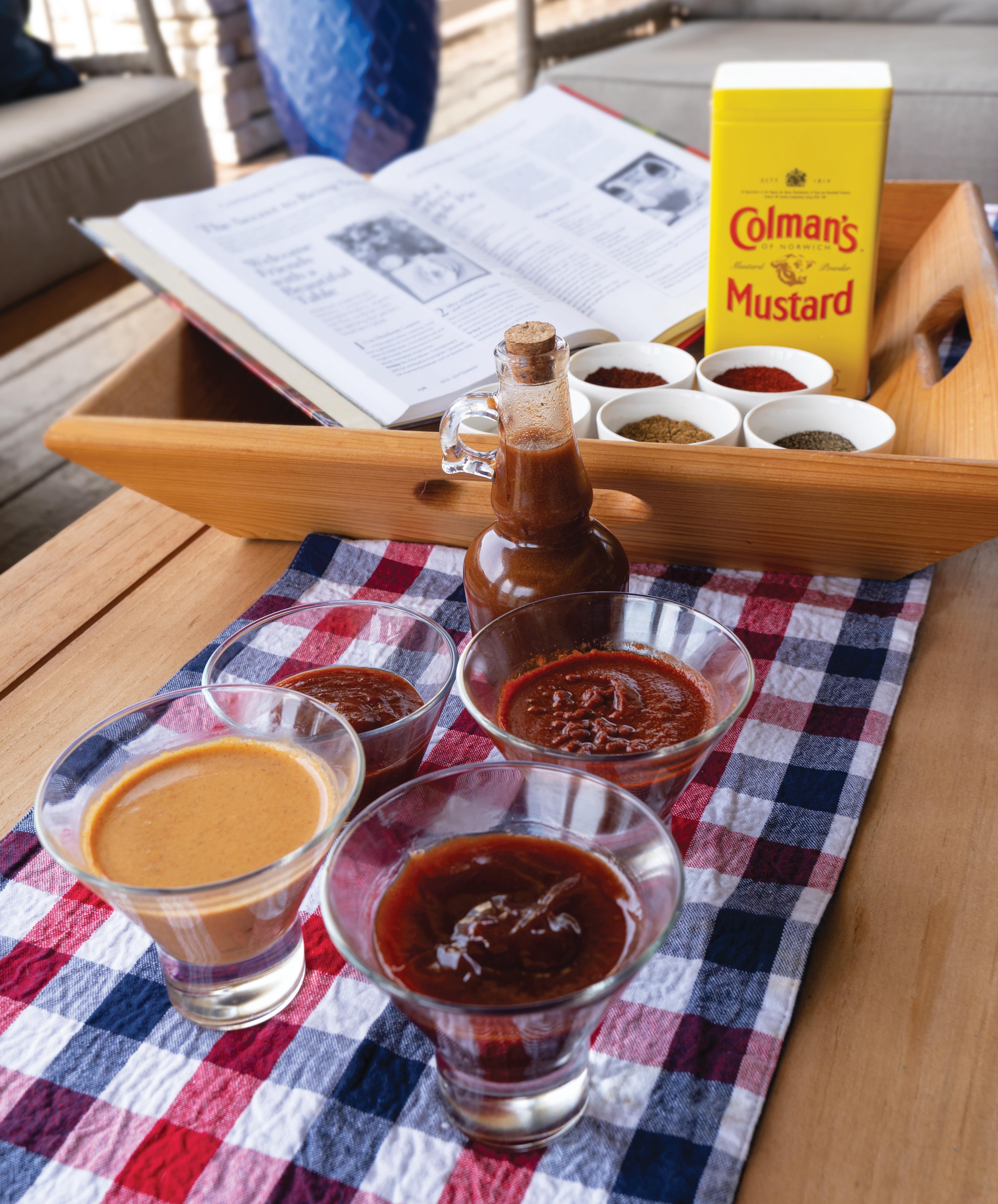
by Brad King
Two McConnell Golf chefs share how Carolina barbecue culture shows up on club menus
In North Carolina, barbecue is more than food — it’s identity. People argue about it the way they argue about basketball and politics. In many families, those loyalties get passed down like accents: Eastern or Western, whole hog or shoulder, vinegar bite or a touch of tomato sweetness — even whether slaw goes on top of the sandwich or on the side of the plate.
At McConnell Golf clubs, those loyalties show up in a different setting — a dining room after a Saturday round, a terrace lunch with a foursome still in golf shoes, a poolopening cookout with kids running in and out of the water or an end-of-month dinner where members arrive expecting something that feels like an occasion. Barbecue fits easily into these moments: familiar, social
and built for groups. It’s also a clear example of how regional traditions live on in modern club kitchens.
Two McConnell Golf chefs — Kenric Hunt of Brook Valley Country Club and Sean O’Neill of Treyburn Country Club — offered a window into how those traditions show up on their menus. Their answers land on the same point: you can change sauces, cuts and presentation, but if you respect the process — smoke, time and texture — it remains true to itself.
THE CAROLINA BARBECUE MAP
To understand why it matters so much here, you’ve got to start with the basic map. North Carolina barbecue splits into distinct styles that locals can describe in a sentence or two — and defend for a lifetime.
Eastern North Carolina is the home of whole hog cooking — “every part of the hog except the squeal,” as the old line goes. The meat is chopped or pulled and seasoned with a thin vinegar-and-pepper sauce. No tomato. Just vinegar tang, salt and heat, designed to cut through the richness of pork that’s been cooking low and slow for hours.
Western or Lexington-style usually puts the spotlight on pork shoulder. The sauce stays vinegar-forward, but it often brings in ketchup or tomato, which adds a touch of sweetness and gives the liquid a red tint. That sauce also becomes the base flavor for red slaw — a finer, vinegar-based slaw that can pick up both color and character from that “dip.”
South Carolina complicates the conversation in a good way. In parts of the state, the signature
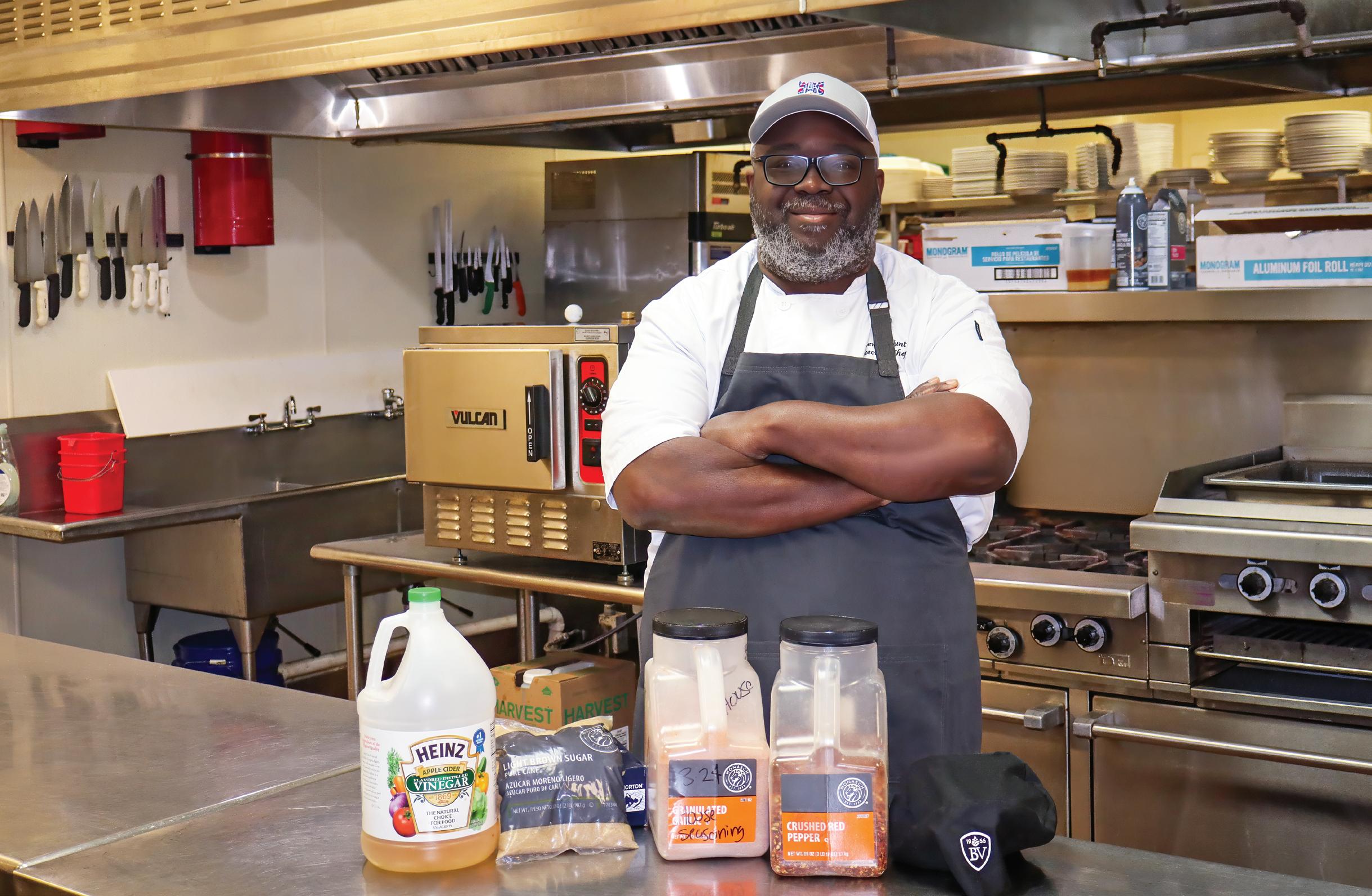
Executive Chef Kenric Hunt of Brook Valley Country Club

is mustard-based sauce — “Carolina Gold” — rooted in the German influence that settled in the region. It’s tangy, bold and unmistakable, and it’s often paired with smoked pork in a way that makes even the most loyal North Carolinian pause and admit it works.
FROM FAMILY TRADITION TO CLUB FAVORITES
For Kenric Hunt at Brook Valley, barbecue starts with South Carolina.
“South Carolina barbecue is my first; it’s the base for a lot of dishes,” he says. Then he goes straight to craft: “Just changing wood allows me to change flavor.”
“‘Que,’ as my family calls it, can be changed at the last minute with sauce and seasoning.”
Kenric Hunt
Hunt also makes a point that sounds simple but is really the difference between barbecue as a meal and barbecue as a tradition: sauces and rubs can change quickly, but the cooking process is what travels.
“‘Que,’ as my family calls it, can be changed at the last minute with sauce and seasoning,” he says. “But I’ve found understanding the cooking process will allow you to adapt to regions and cultures.”
When he talks about personal influence, he doesn’t reach for culinary-school language. He reaches for family.
“Slow is my father’s style handed down like old clothes,” he says. “Indirect cooking allows for more flavor to develop.”
When you think “club dining,” it’s easy to assume barbecue needs a makeover — cleaner plating, fancier garnishes, less mess. Hunt’s answer suggests something else: barbecue adapts best when you keep the flavor structure intact.
“Use vinegars, homemade pickles, house barbecue on wings,” he says, pointing to techniques that keep smoked meats bright and balanced without drifting away from what members expect.
He also describes how barbecue can stretch beyond summer.
“Cold smoking allows the protein to shine with background notes of the summertime in a winter dish,” Hunt says.
Ask any chef what members really get excited about and you’ll get a practical answer quickly. At Brook Valley, Hunt doesn’t hesitate.
“Theirs has to be brisket,” he says. “It’s a big part of end-of-month dinners at the club.”
Brisket isn’t the historic centerpiece of Carolina barbecue the way whole hog and shoulder are, but it has become a national benchmark.
Hunt also ties barbecue to a seasonal marker every club family recognizes.
“Start-of-summer cookouts are huge because it’s also signal time to open the pool,” he says.
When a big weekend arrives, barbecue becomes the easiest way to feed a crowd and make the club feel alive.
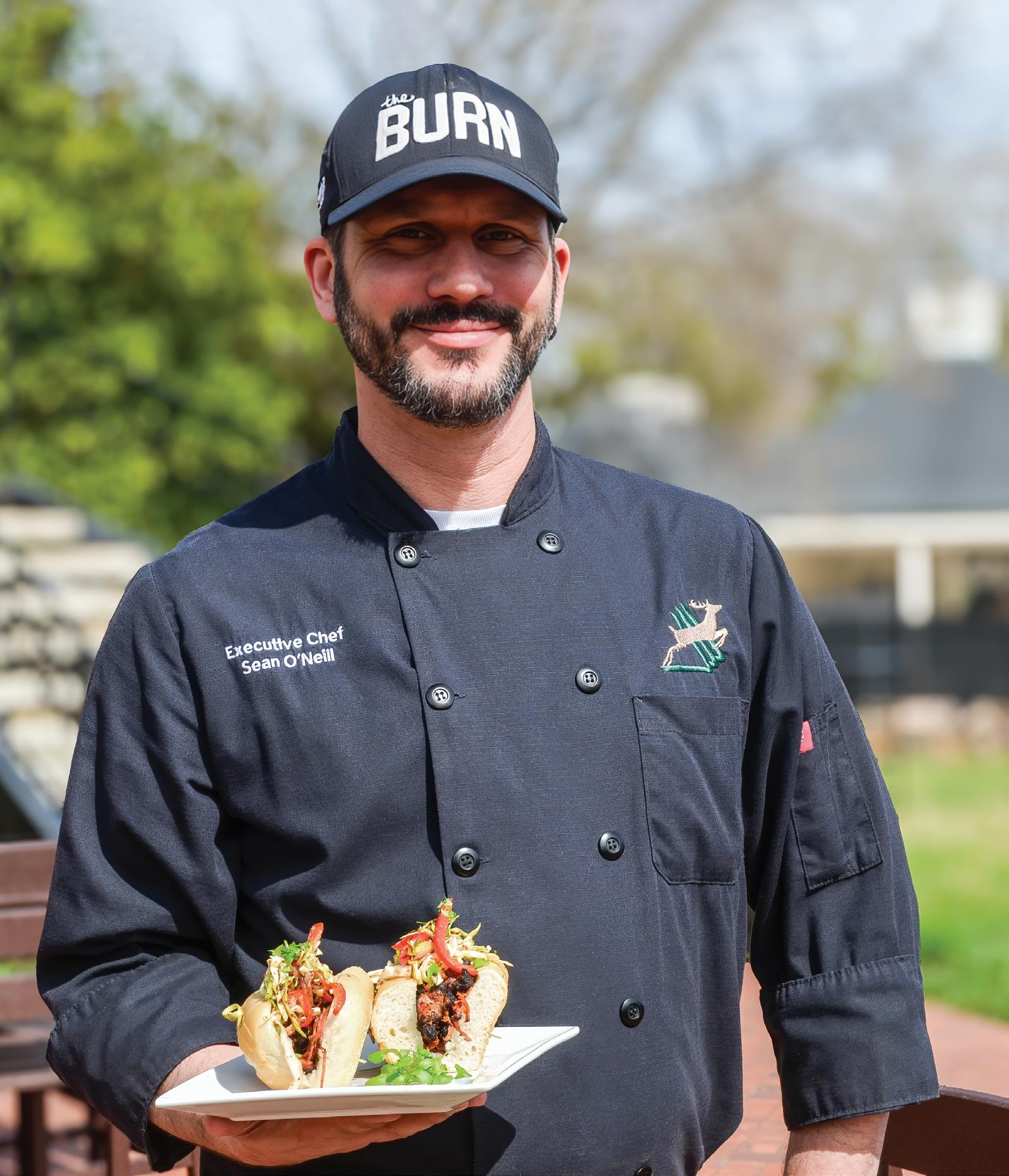
Executive Chef Sean O’Neill of Treyburn Country Club
DIFFERENT ROOTS, SAME BARBECUE PRINCIPLES
At Treyburn, Sean O’Neill’s barbecue story starts far from North Carolina.
“I am originally from Pennsylvania, where I started my career in the food industry, so I had a lot of influence there,” O’Neill says. “From the mountain areas to Lancaster, home of the Amish, there is strong German influence in the food.”
He connects that background to something Carolina barbecue people instantly understand: vinegar.
“I think those areas influence my barbecue the most, a lot of work with vinegars and how they round out flavors or add a certain tang to any dish or sauce,” he says. “In short, a lot of Texasstyle barbecue with German influence.”

“Classic barbecue tends to speak for itself and can stand on its own.”
Sean O’Neill
When asked how he adapts barbecue for club dining, O’Neill makes a point worth remembering.
“Honestly, not much adaptation is needed,” he says. “Classic barbecue tends to speak for itself and can stand on its own.”
That’s a useful reality check. Members have expectations when they hear “barbecue.” They want it to taste right. Texture matters. Sauce matters. And in North Carolina, plenty of people have strong opinions about what “right” means.
O’Neill also notes a foundational truth for cooking barbecue in this state.
“North Carolina is a must to learn how to cook a proper pulled pork barbecue,” he says. “But I think people have certain expectations when they hear barbecue so we stick with it.”
Where the craft comes in, he adds, is keeping things interesting without breaking those expectations.
“The challenge is learning and providing a variety of different flavors and barbecue styles to keep the club’s members interested,” O’Neill says.
At Treyburn, that variety has shown up in a specific member favorite.
“Recently my membership has really gotten into barbecue burnt ends,” he says. “If done right, they have tons of flavor and are still moist and pull-apart tender.”
“We ran a version with turkey burnt ends and that really took off,” O’Neill says. “That was my biggest request over the last season.”
WHY BARBECUE BELONGS AT THE CLUB
The appeal of barbecue goes beyond the plate.
“Since golf is an outdoor sport, I think barbecue just fits right into place,” O’Neill says. “It lets the guys just be guys and enjoy the day outside, a beer and some barbecue after a golf round keeps the fun of the day going. Sometimes into the night!”
Hunt frames it from a regional angle, pointing to how deeply barbecue is woven into North Carolina’s identity. “Eastern North Carolina makes it fit,” he says, referencing the pig cookoffs and the broader barbecue culture that has long been part of the state.
The answer is simple: barbecue belongs at clubs because they are community spaces, and barbecue is community food.
If there’s one practical takeaway from cooking barbecue in North Carolina, it’s this: members notice the details. They notice whether the sauce leans sharp and peppery or sweeter and red. They notice whether the slaw is creamy or vinegarbased. They notice whether the meat tastes like smoke and pork, or like sauce covering mistakes.
That’s why both chefs keep circling back to balance. Vinegar is a throughline across the Carolinas in different forms. It brightens smoke, cuts fat, and keeps barbecue from feeling heavy, especially in a club setting where diners might be coming straight off 18 holes.
Hunt’s approach — vinegars, homemade pickles, cold smoke — is a blueprint for balance. O’Neill’s German-influenced vinegar focus shows that barbecue doesn’t have to be tied to one hometown to feel authentic. It just has to be cooked with respect.
Barbecue is often framed as an argument about what’s “real” — whole hog or shoulder, Eastern or Western, mustard or vinegar. In club kitchens, its strength is in its flexibility: brisket at an end-of-month dinner or turkey burnt ends becoming the request of the season.
In McConnell Golf kitchens, those traditions aren’t preserved in amber. They’re used — week by week, event by event — to make clubs feel like home, whether members grew up on vinegar-and-pepper pulled pork or arrived in North Carolina with a different barbecue story. In principle, barbecue still does what it always has: gather people, feed them well and give them something to talk about — usually with a little sauce on their hands.
THE CAROLINA BARBECUE CHEAT SHEET
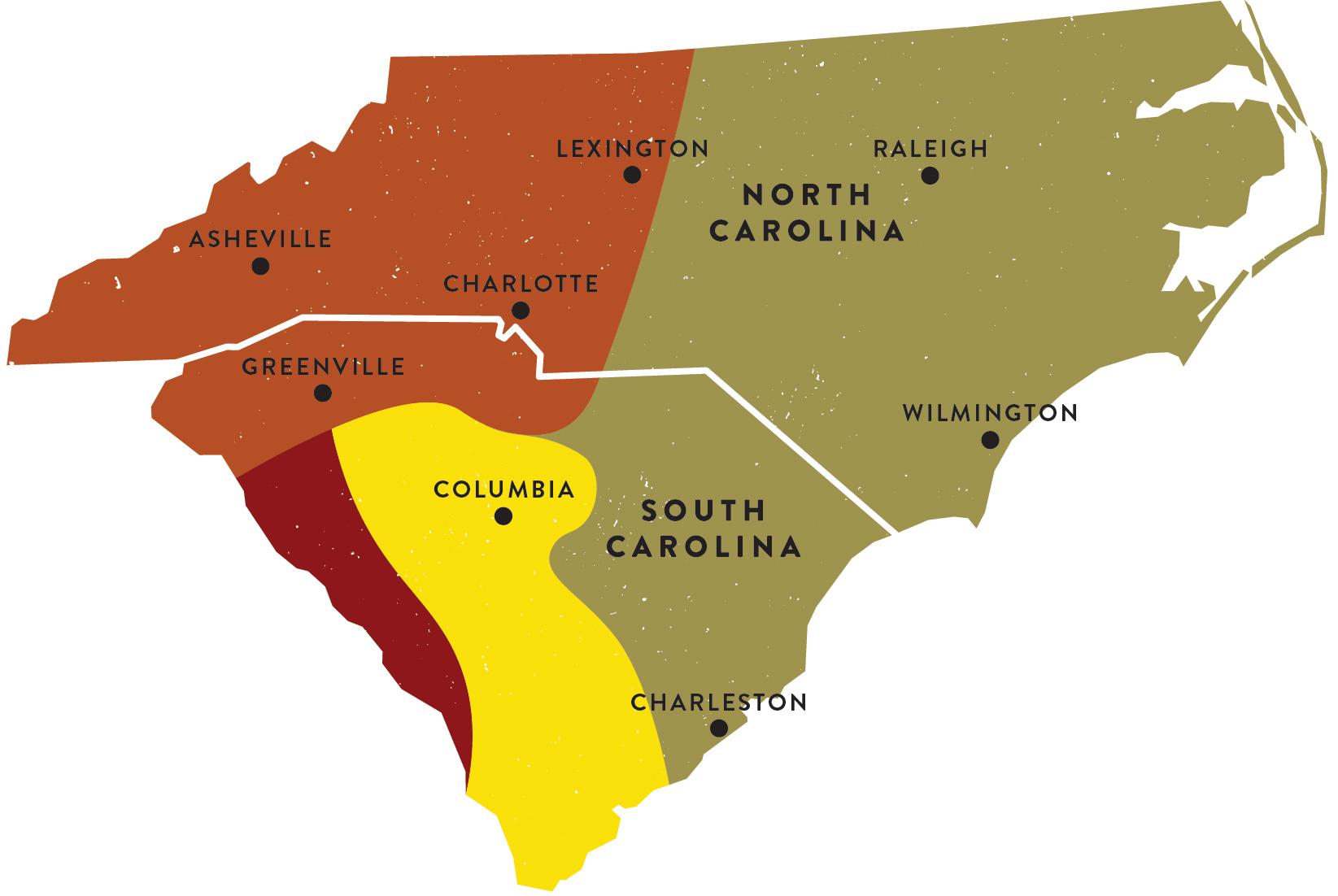
NORTH CAROLINA/SOUTH CAROLINA
VINEGAR AND PEPPER SAUCE

VINEGAR & PEPPER
WESTERN STYLE
TOMATO BASED
MUSTARD BASED
Vinegar and pepper sauce is one of the oldest barbecue styles in the United States, with roots going back hundreds of years. It’s the most popular along the South Carolina coast, where its sharp acidity cuts through the richness of pork. In North Carolina, it’s known as Eastern North Carolina sauce and is traditionally served with whole-hog barbecue, dressed with a thin mix of vinegar and pepper — no tomato, just tang, salt and heat.
LIGHT TOMATO SAUCE
Light tomato sauce builds on the vinegar-and-pepper base by adding ketchup for a touch of sweetness. In North Carolina, this style is called Lexington Style or Western North Carolina Style. It is especially popular in the Pee Dee region of South Carolina (the northeastern corner of the state). In North Carolina, it is typically paired with pork shoulder and served alongside “red slaw,” which is also dressed with a vinegar-and-tomato-based seasoning.
SOUTH CAROLINA
CAROLINA GOLD
Mustard-based barbecue sauce, known as Carolina Gold, is considered South Carolina’s unofficial signature sauce and is unique to the state. It is most popular in the central region, where German immigrants settled in the 1700s.
TOMATO-BASED SAUCE
A heavier, tomato-based barbecue sauce is found in the western and northwestern corners of South Carolina. It tends to be sweeter and is sometimes referred to as a “tomato and sugar” sauce. This style is most commonly found on grocery store shelves across the United States.
Source: South Carolina’s Four Barbecue Sauces

McConnell Golf Creed
In everything we do, we believe in thinking differently and challenging the status quo.
We are innovators in the club industry.
We believe in “Building Clubs of the Future” with our members and staff being a club’s true product.
We believe in being environmentally responsible and a pillar in our communities.
We believe in being more inclusive than exclusive.
We believe in pure golf for the true golfer and that every day is an opportunity to make a difference.


Congrats, Akshay!
2026 Arnold Palmer Invitational Winner Third PGA TOUR Victory
Former McConnell Golf Scholar earns first signature win at Arnie’s Place
Akshay Bhatia delivered a memorable performance at the Arnold Palmer Invitational, rising to the occasion on one of golf’s toughest stages.
Facing a five-stroke deficit on the back nine, Bhatia mounted an impressive charge at Bay Hill Club and Lodge. His momentum shifted in a big way on the par-5 16th hole, where his approach nearly found the cup and set up a short eagle to keep him in contention. He stayed composed through the closing stretch to force a playoff with Daniel Berger, then carried that same steady approach into extra holes to secure his third PGA TOUR victory.
The win marks his first signature event victory and a major moment in his career. A former McConnell Golf Scholar, Bhatia’s confidence and composure reflect a foundation built through years of hard work, competitive play and mentorship — hallmarks of a program designed to help young golfers develop and reach the next level.


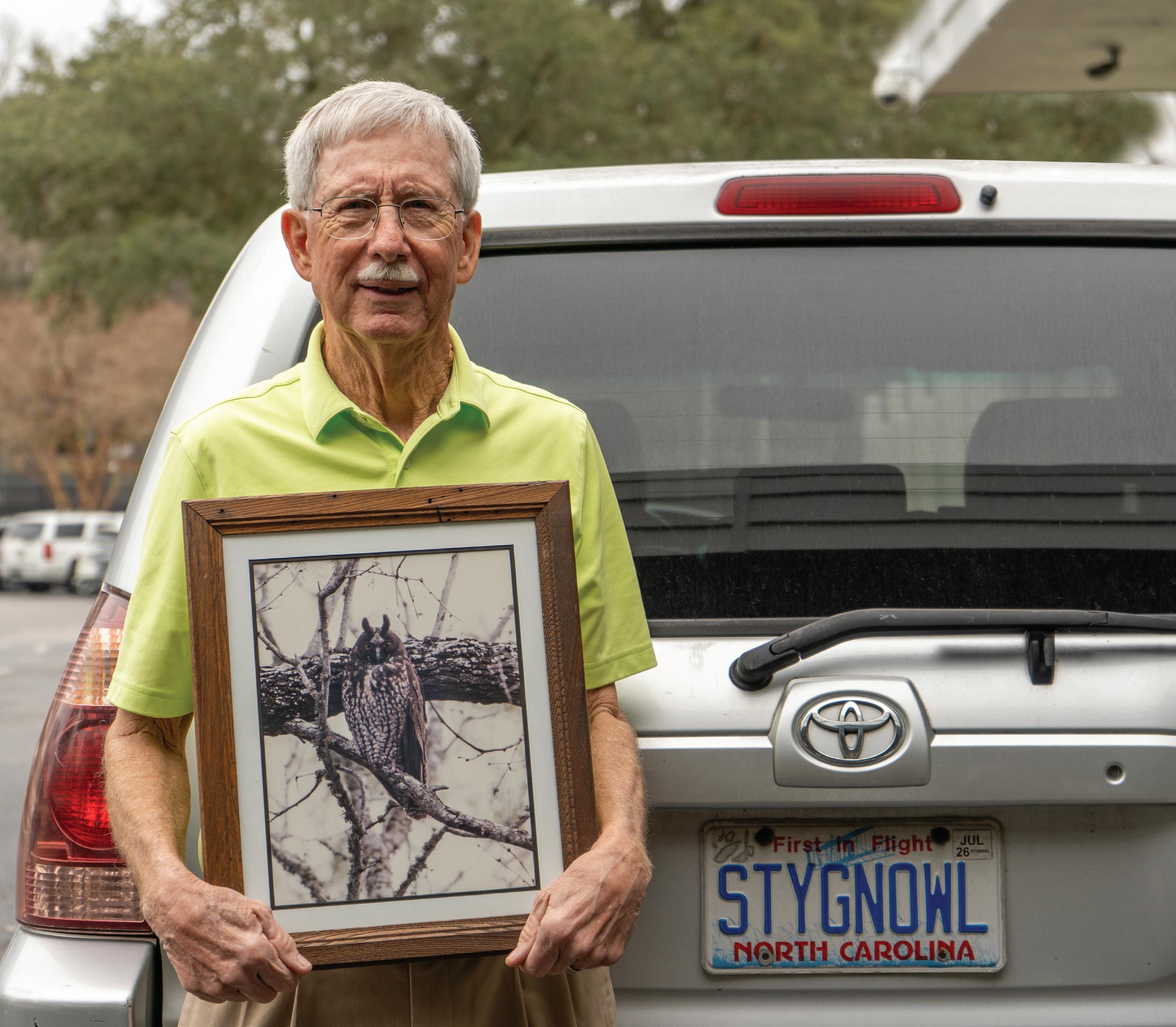
The Bird Man of Wilson Country Club
by John Jeter
Wright was the first birder to find and record the Stygian Owl on U.S. soil hence the vanity tag on his vehicle.

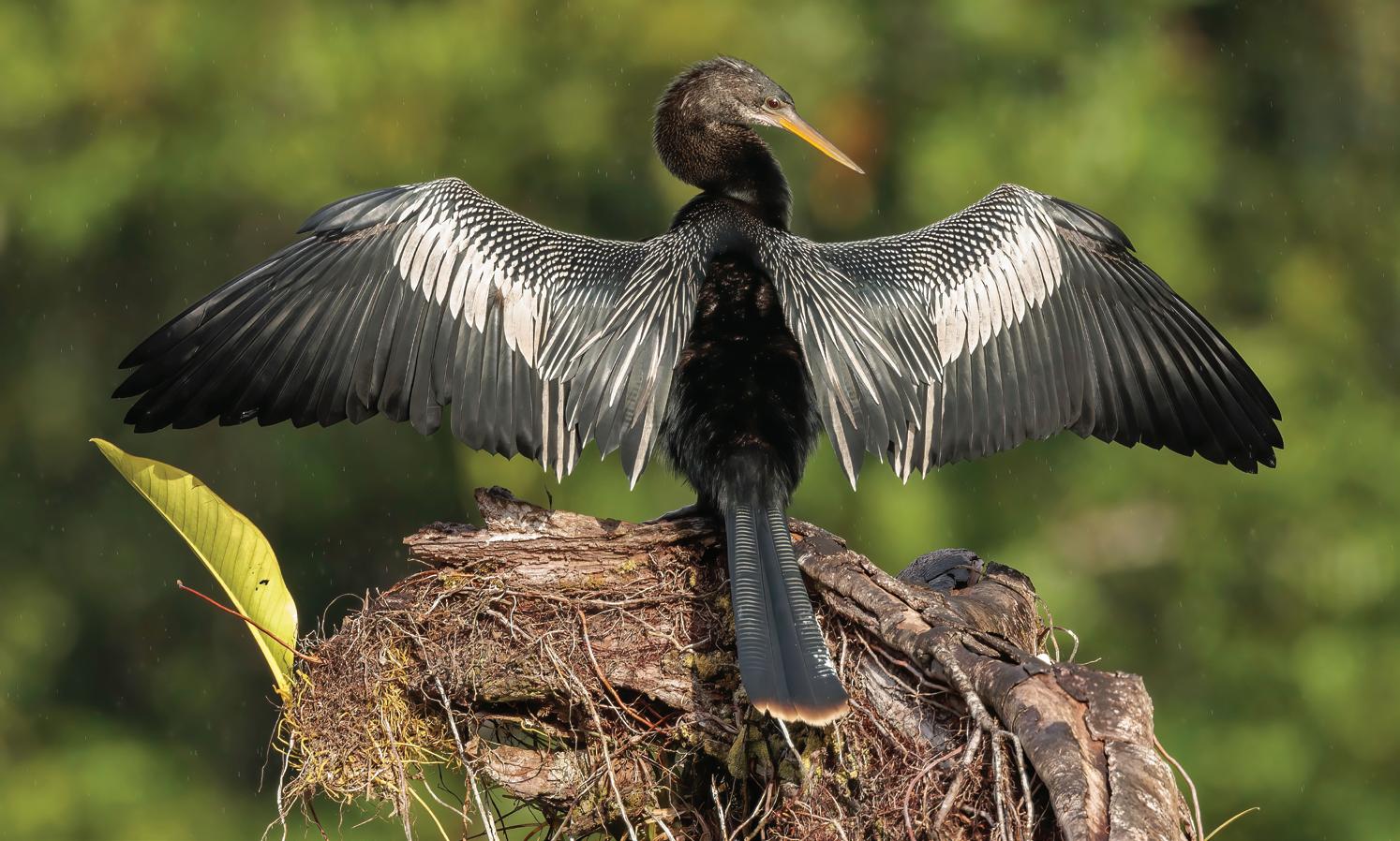
Retired science teacher pairs a lifelong passion for birding with the game of golf
John Wright knows all about birdies, eagles and albatrosses on the golf course. He also knows plenty about the Mississippi kite, the swallow-tailed kite, the red-shouldered hawk, the Cooper’s hawk and the eastern kingbird, too, among several hundred others.
At Wilson Country Club, some golfing regulars know the retired high school science teacher simply as “Bird Man.”
“Some come up to me with questions about birds they have seen, either on the course or elsewhere,” he says. “What pleases me most is
when I have made an impact and see a fellow golfer evolve into one who spends a little more time looking up and around to see the birds on the course.”
In 1970, Wright became a serious birder — that is, someone who invests significant time and money in a hobby based on bird identification. That was years before he joined his first McConnell Golf club, Brook Valley Country Club, in Greenville, North Carolina. “I thought perhaps I could excel at the game, but golf has a way of humbling most of us,” he says.

When he realized his birding skills would always surpass his birdie scores, he put down his clubs for about 10 years and picked up binoculars and a spotting scope.
“However, every time I passed a golf course when on the road, I looked at it longingly,” he says.
In 1990, he picked up the game again at Brook Valley, and in 2009, with his wife, Paula, moved an hour’s drive west and joined Wilson Country Club in Wilson, North Carolina.
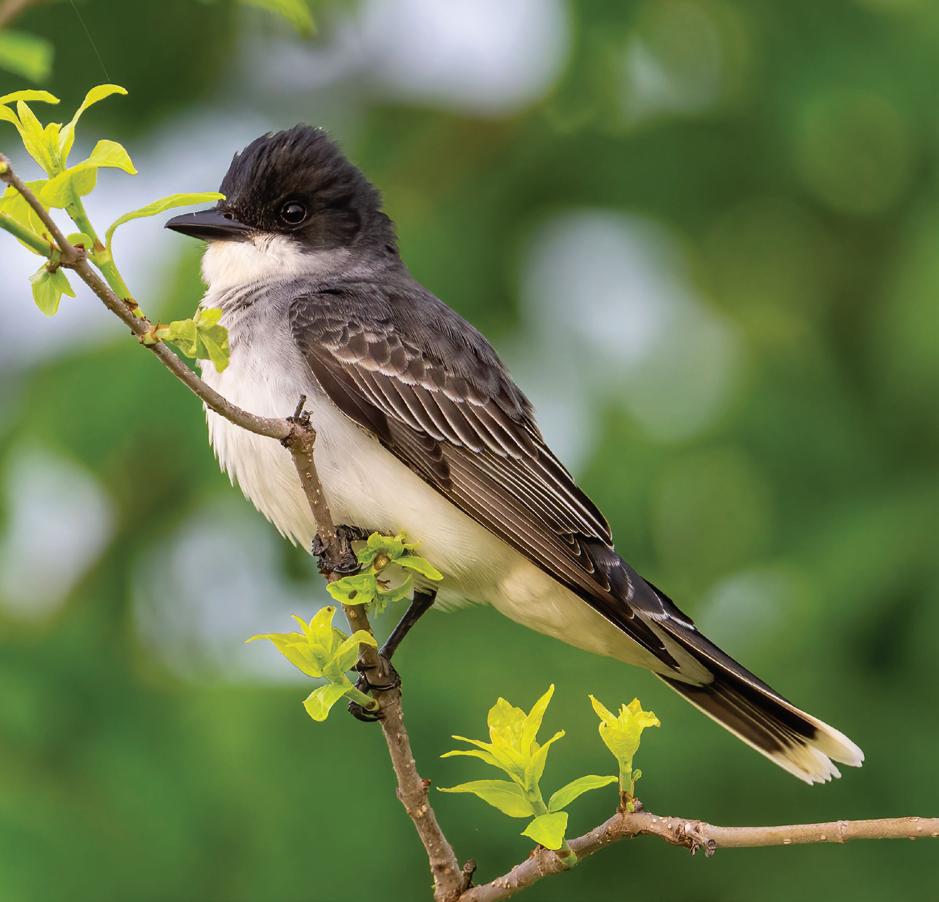
Closeup shot of anhinga displaying its wings.
Cooper’s hawk perched on a branch.
Eastern kingbird
Swallow-tailed kite
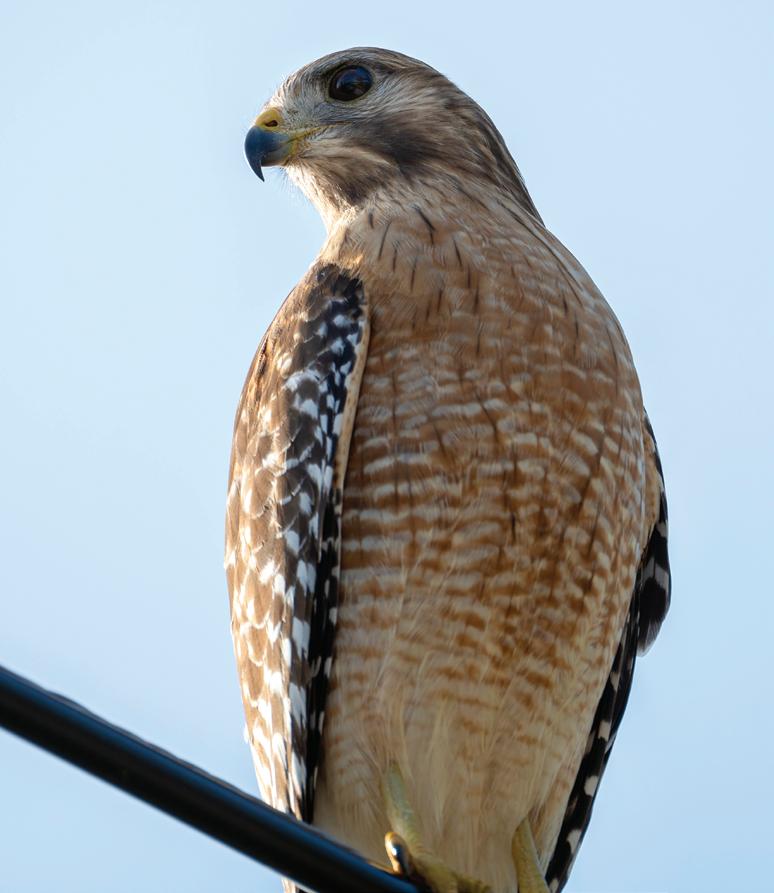
SIDEBIRDS
John Wright shares his thoughts on birds found at Wilson CC and across McConnell Golf properties.
BALD EAGLE AND OSPREY
Many golfers mistake the osprey, often called a fish hawk, for the bald eagle. Both are seen in Wilson most commonly in the spring.
CANADA GOOSE
They love to pluck tender grass from manicured fairways and greens, leaving their calling cards. Not an easy bird to scare away from our cherished greens. A course superintendent at Brook Valley solved the problem with a very efficient Australian shepherd named Goose.
MISSISSIPPI KITE
They are found swooping and soaring over the fairways on any clear day, late April through August. Their very graceful flight, combined with white and gray colors make them a unique spectacle. The kite is so graceful that it can catch a dragonfly on the wing.
ADDITIONAL BIRDS SEEN AT OTHER MCCONNELL GOLF CLUBS
Swallow-tailed kite
Anhinga
Red-shouldered hawk (shown above)
Cooper’s hawk
Years of travel to good birding spots across North America resulted in a “life list” of more than 700 species. His North Carolina state bird list now numbers about 425 carefully, faithfully reported sightings.
“A birder’s reputation depends more than anything else on his/her demonstrated skill, knowledge and integrity,” he says, adding: “Making an honest mistake when reporting a rare bird sighting is forgivable if it doesn’t happen too often. In that sense, it’s a bit like a golfer who is known for turning in incorrect scores.”
Wright was the first birder to find and record the Stygian owl on U.S. soil: a bird found in Central and South America and the Caribbean. That was in 1996, when he and the fierce-looking bird crossed paths in South Texas. “I sometimes have to explain my car’s vanity tag, ‘STYGNOWL,’” he says.
That’s especially interesting, coming from a 78-year-old grandfather who doesn’t come across as anything like the bird whose black face, piercing orange eyes and horn-like ear tufts give it its Hades River name.
Closer to home, Wright especially enjoys pointing out his favorite species. The eastern

kingbird’s northward migration arrives at Wilson in late spring.
“It is almost always seen first on the wide 13th fairway, where its noisy chatter and flashing white tail tip make it obvious to anyone with an eye out for something other than a little white ball,” he says.
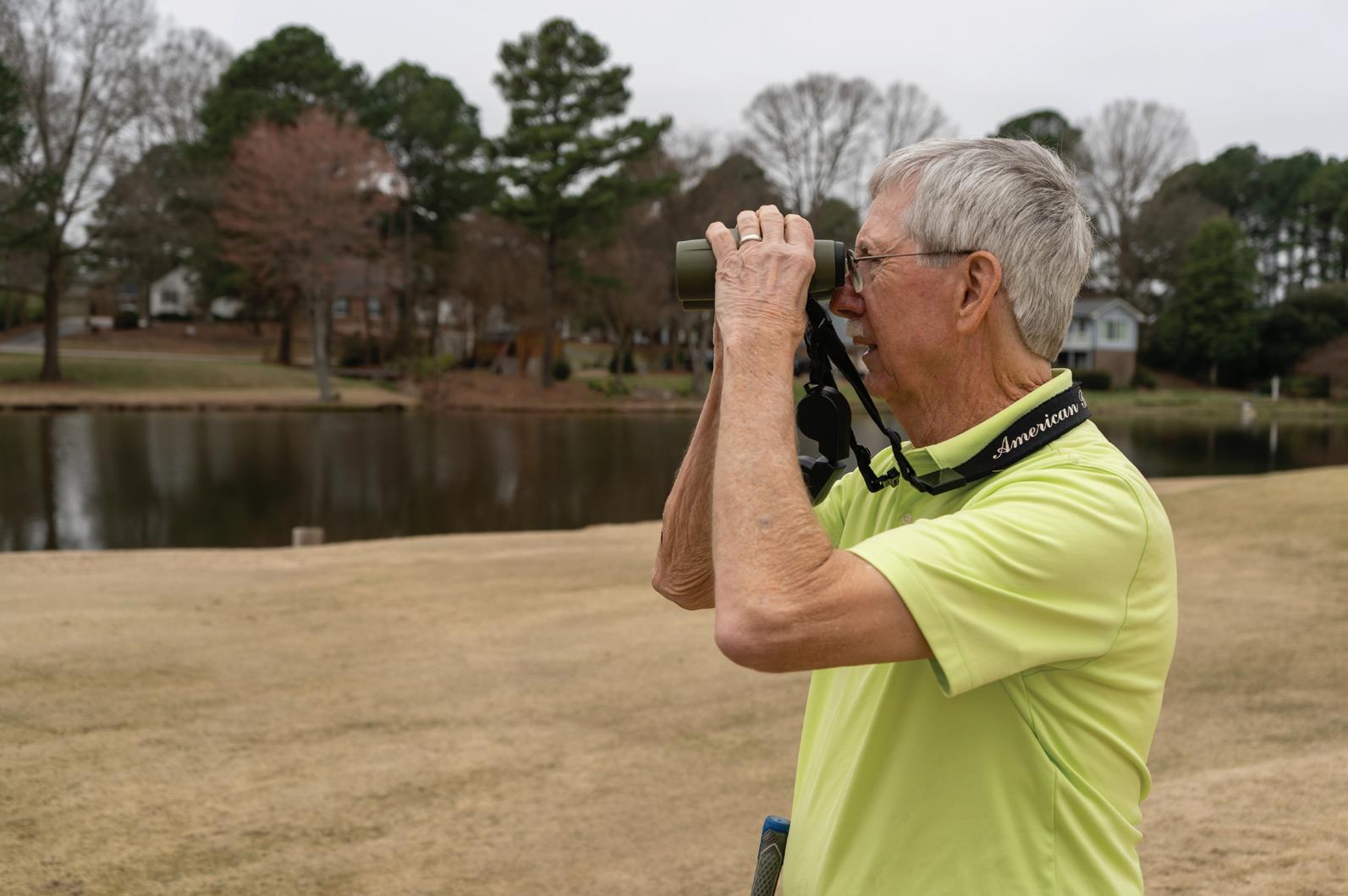
Stygian owl
Serious birders with plenty of disposable income can spend as much on one hobby as they do on the other, with binoculars and scopes in the same range as top-ofthe-line custom golf clubs and kits.
Wright, though, has always pursued his paired passions for the pleasure. At Wilson, he gets a twofer — fairways and fowl.
“In addition to my range finder, I carry a pair of binoculars in my golf bag, just in case some interesting or unidentified bird shows up,” he says. “It’s not a bad idea for any nature-loving golfer and will add to the enjoyment of the course, but in a pinch, your range finder itself can be used to get a better look at a bird.”
Better yet would be a bird with an eagle eye for a birdie: “Now, if birds would just perch on flag sticks.”
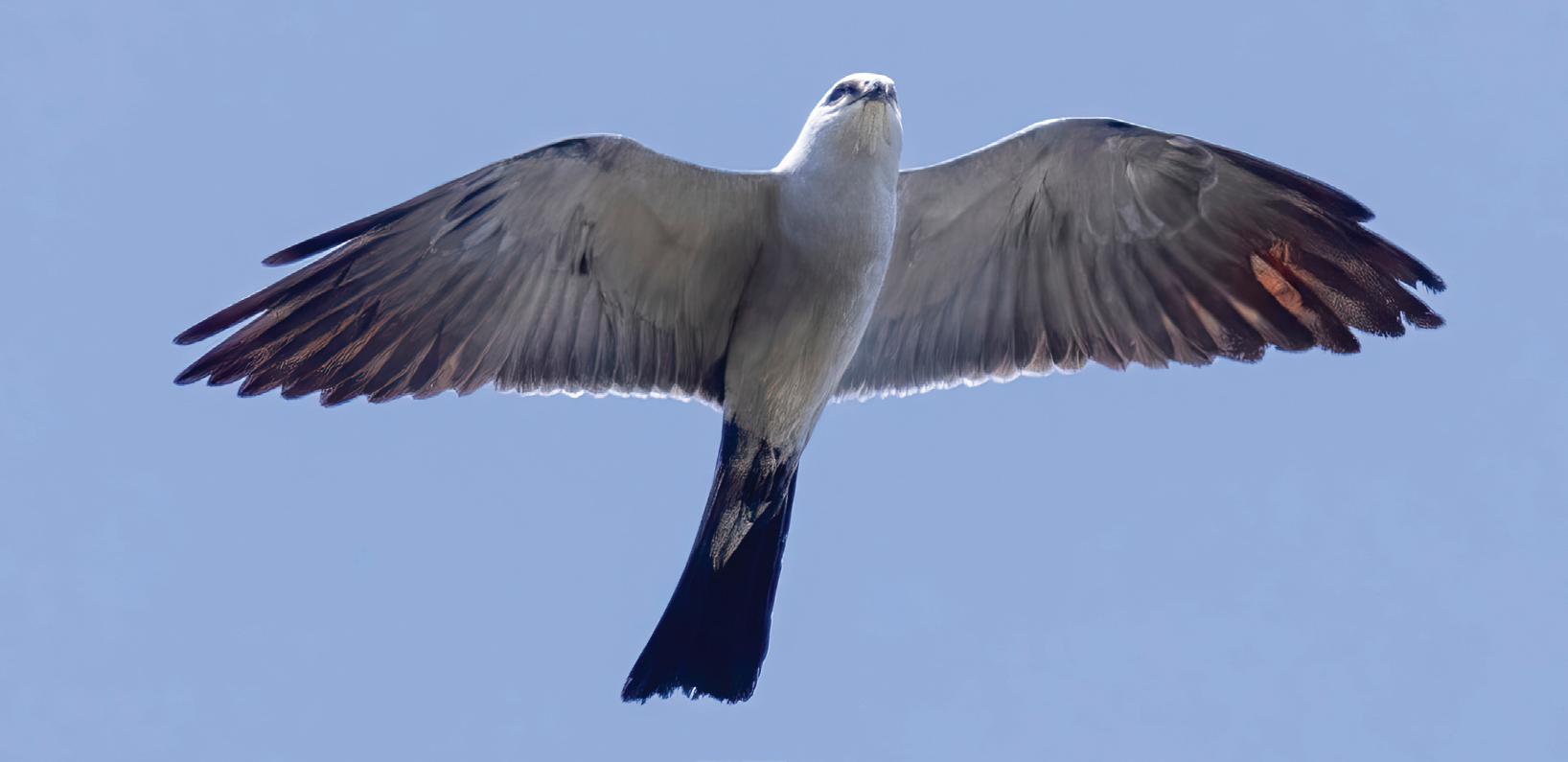
“Some come up to me with questions about birds they have seen, either on the course or elsewhere. What pleases me most is when I have made an impact and see a fellow golfer evolve into one who spends a little more time looking up and around to see the birds on the course.”
John Wright

Mississippi kite
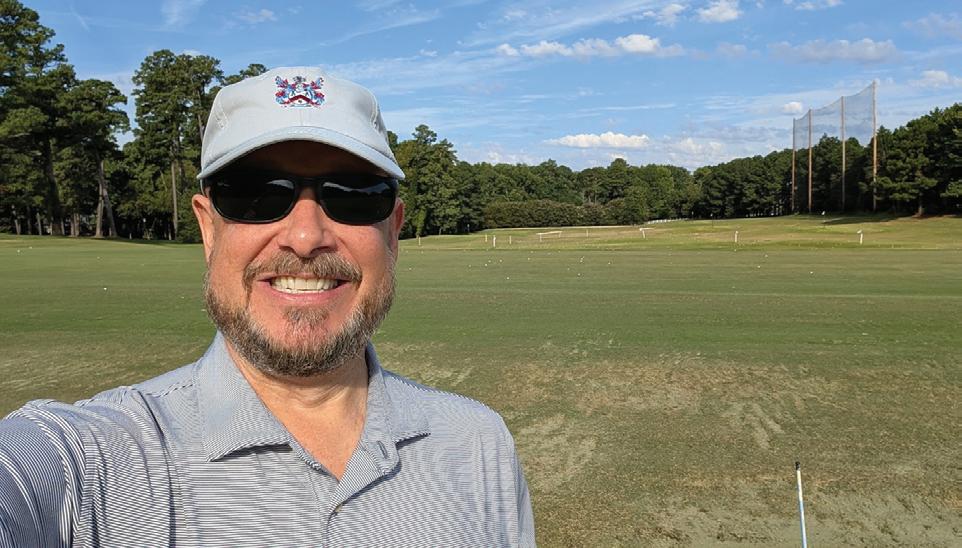

Making
MEMORIES THROUGHOUT MCCONNELL GOLF
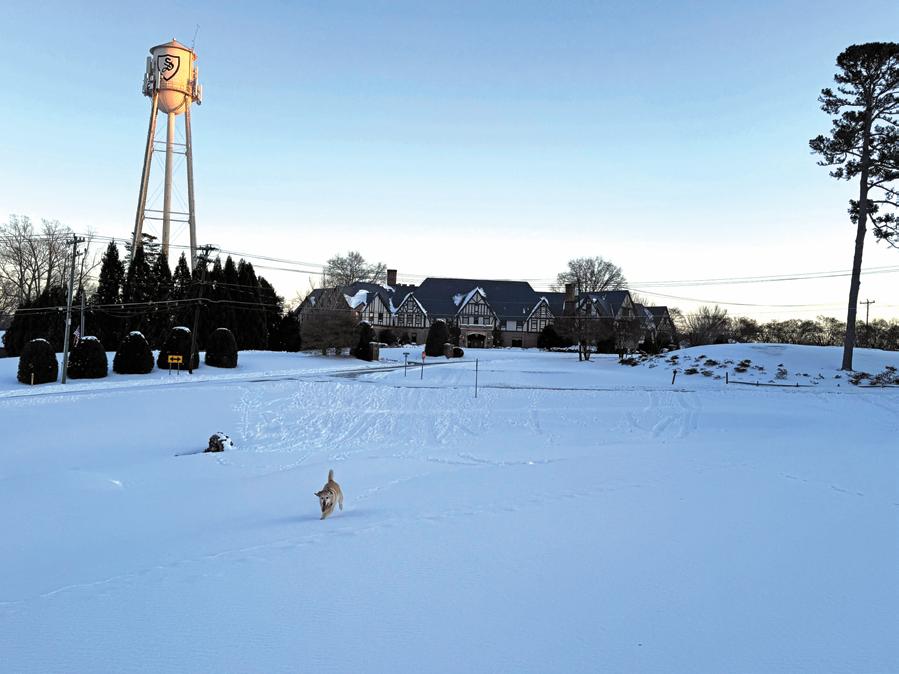

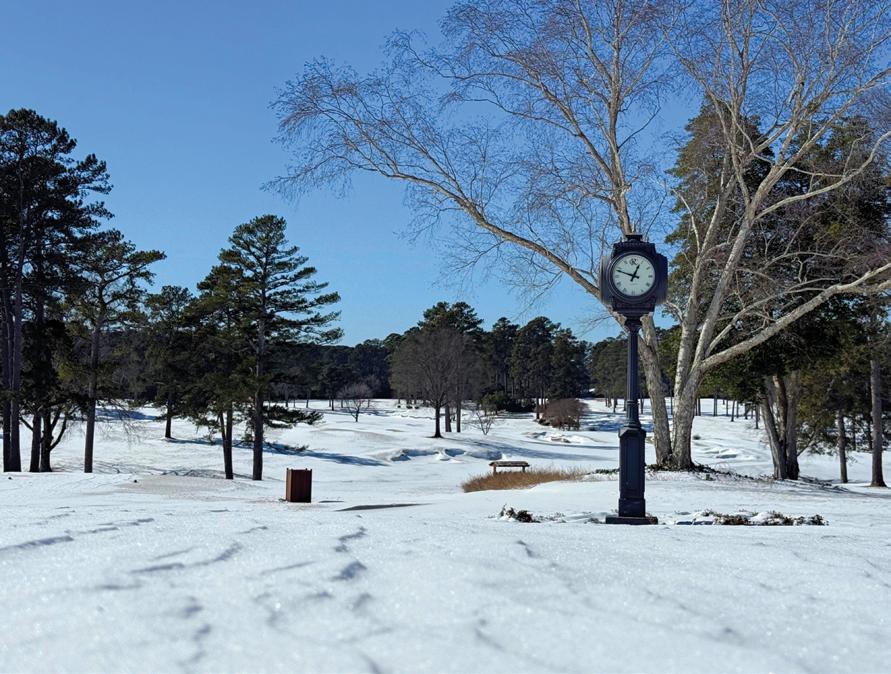
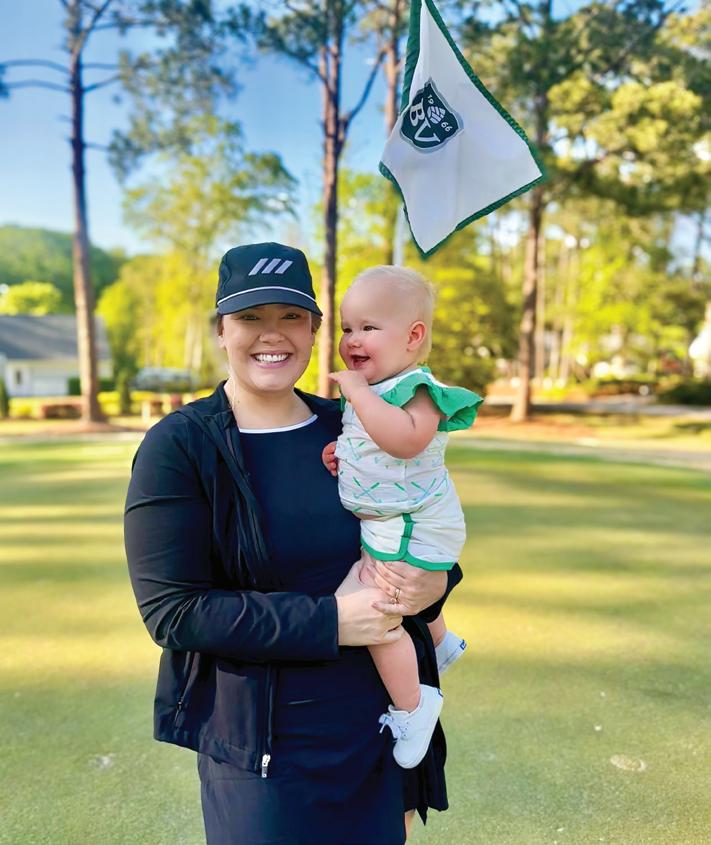

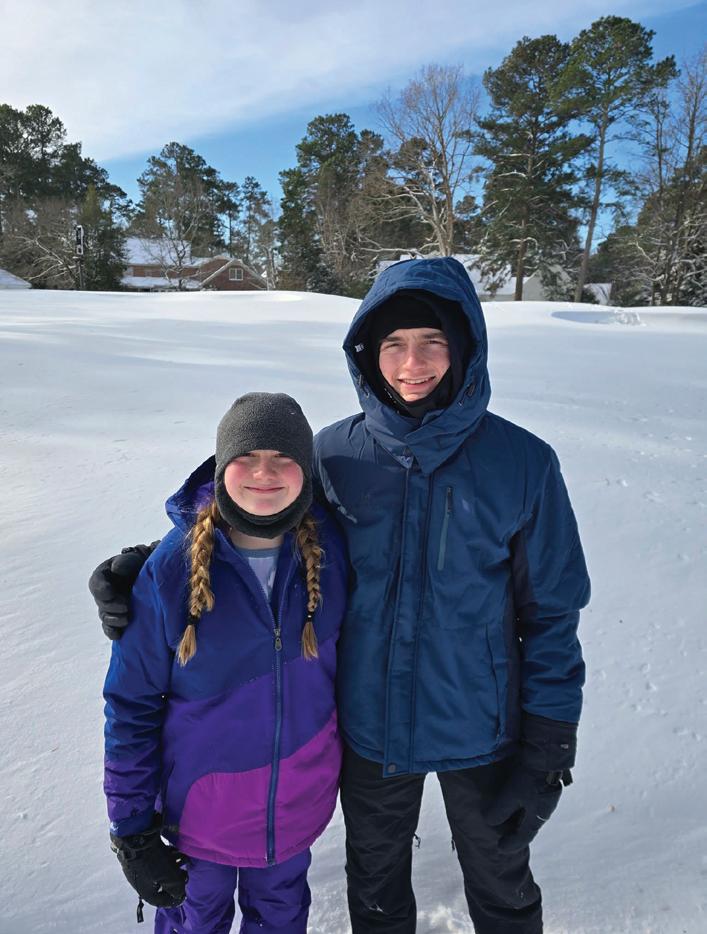
Robert Redd, WP
Luca and Santino Navarro, WP
Casey and Lainey Hardison, BVCC
Rick Grossman and Meade Bradshaw, PCC
Rafa Russo, TCC
Abigail and Zachary Owens, WCC
Corwin Arthur, RCC
Scott Petitfils, SCC
London Cribari, Sharon Fleming, Dawn Boyd-Cribari and Lisa Hearn, BVCC
Ethan Woodall, PDRC
Mia and Ben Schrader, PCC
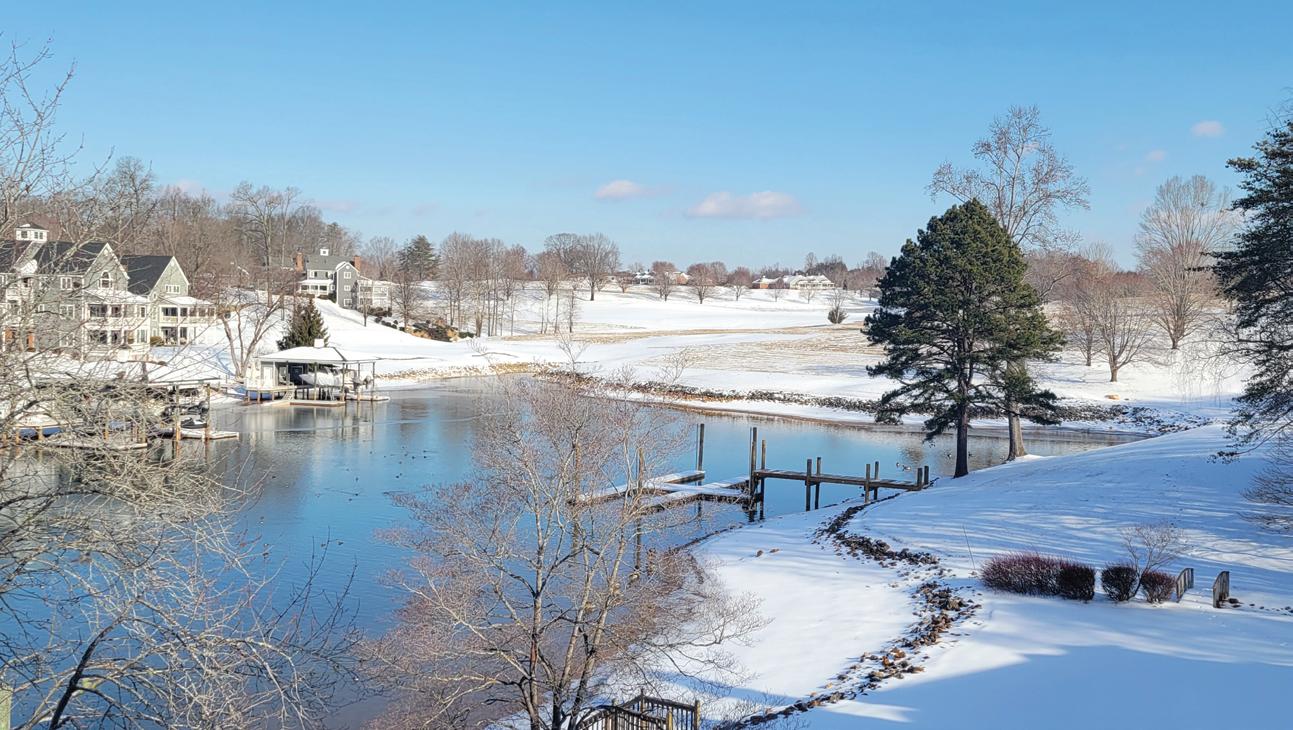
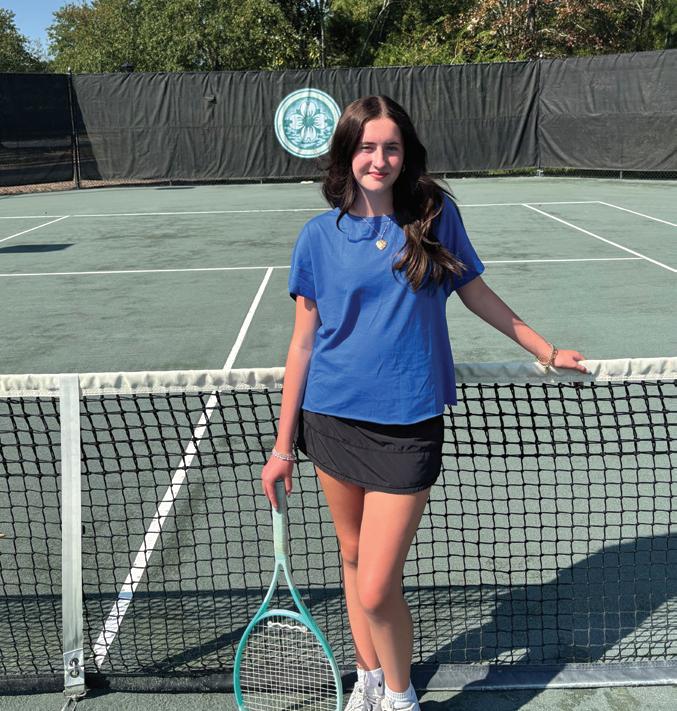
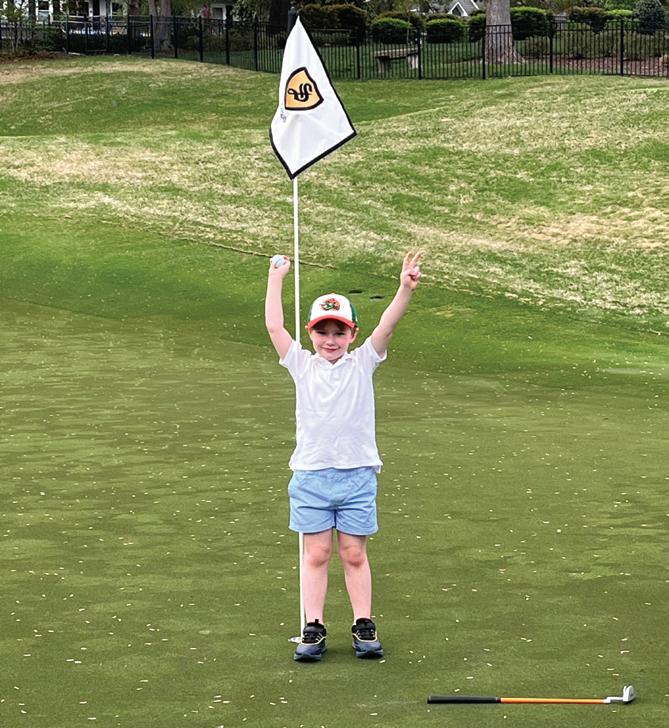
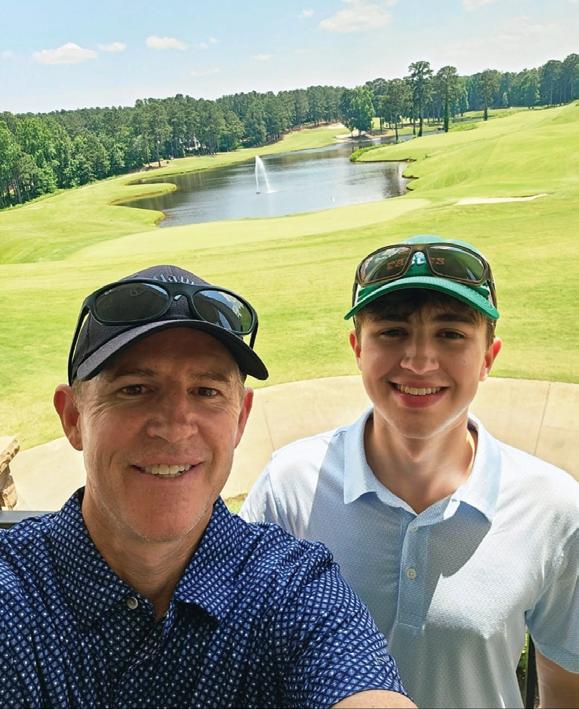
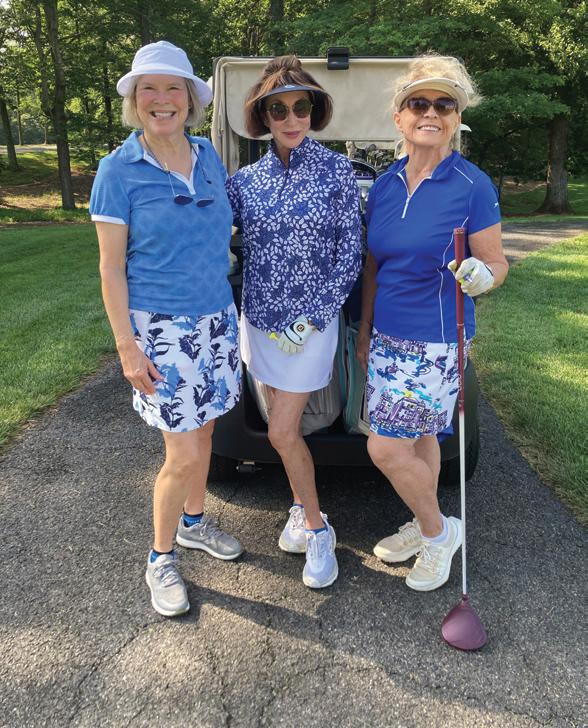
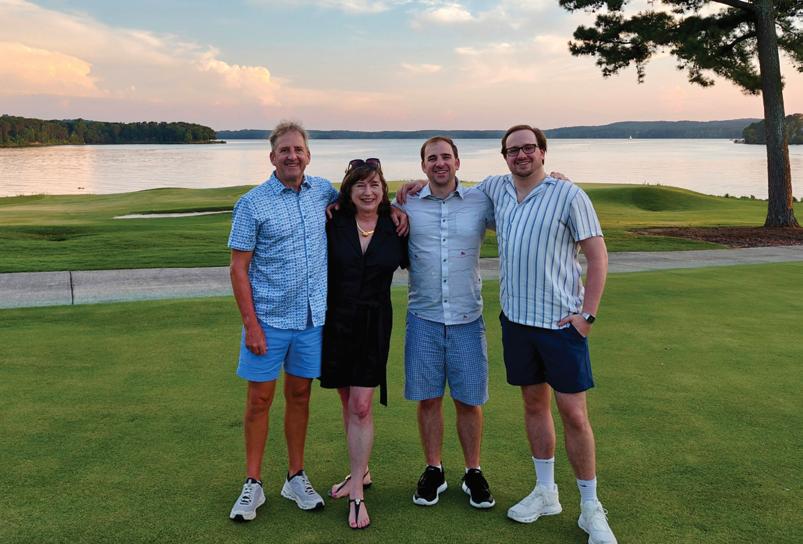
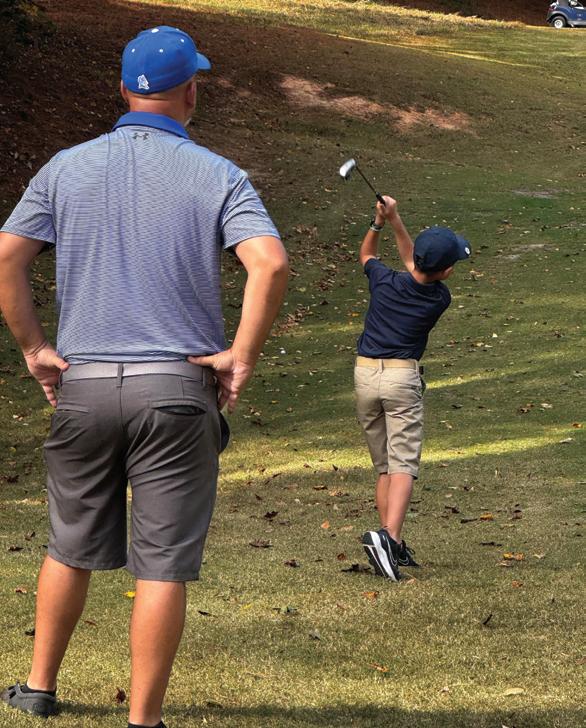
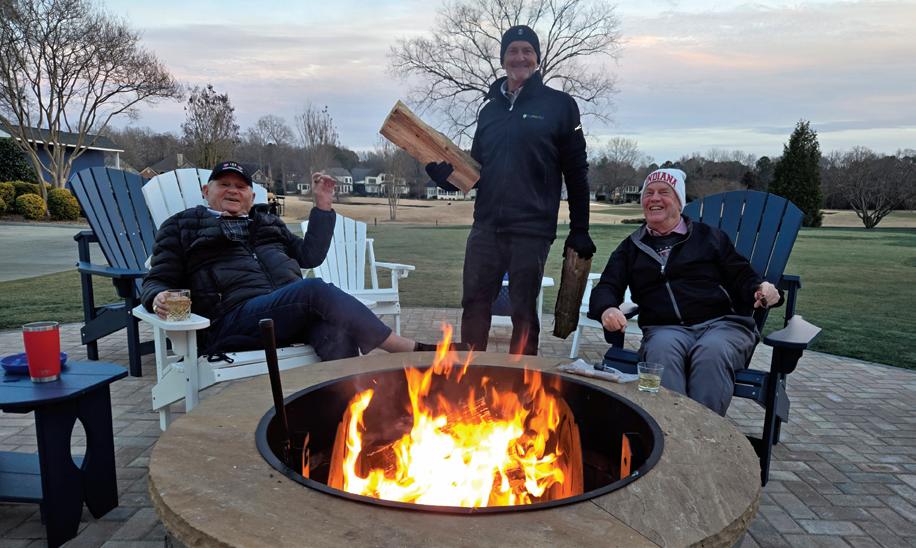
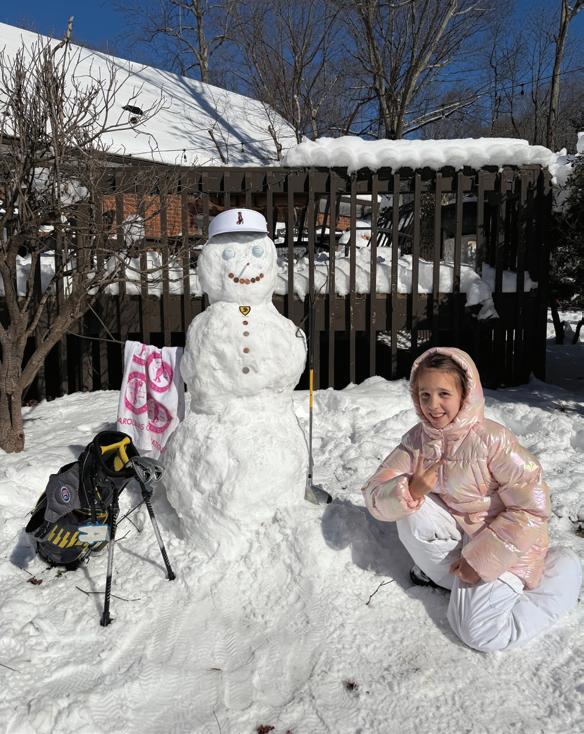
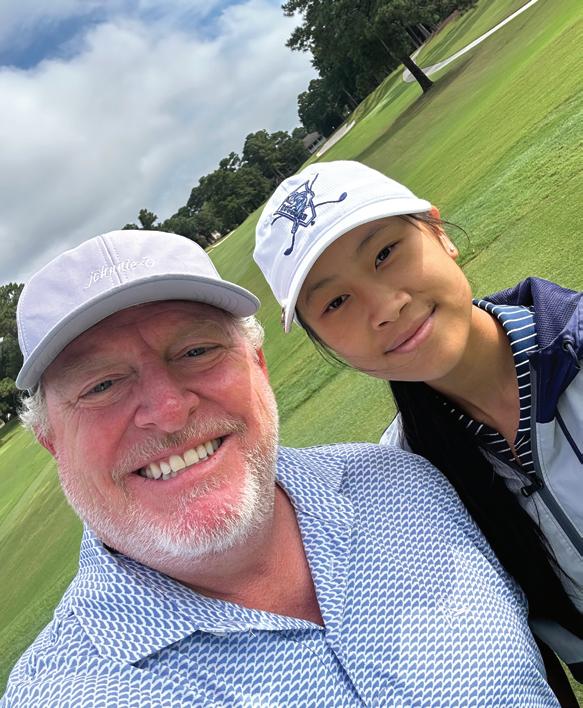
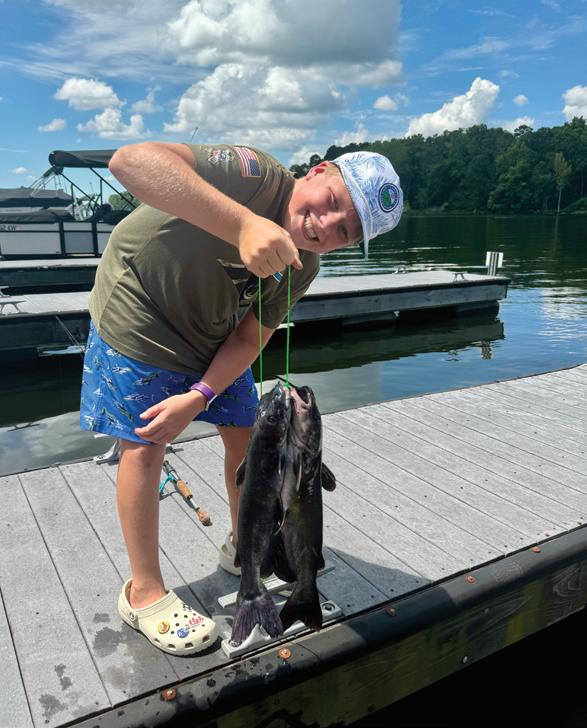
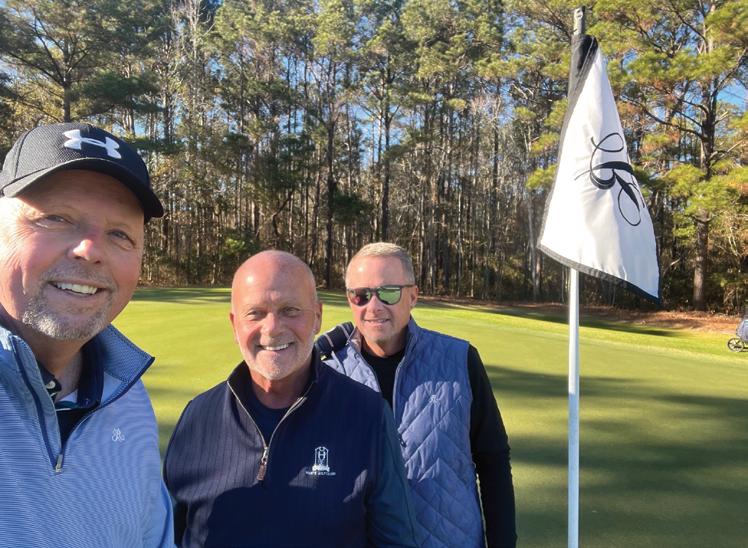
Toni Bulla, WECC Kory and Rhodes Webb, HHCC
Lucy Holland, SCC
Jarett and Sarah Peppard, PNCC
John Ellis Eades, ONSC
Glen Woods, Rick Watkins and Mike Watkins, RS Jim Slappey, Texas Todd Reynolds and Russ Algood, PCC
Greg, Carol, Marshall and Alec Brown, ONSC
David Ciser Jr., SCC
Brenda Heck, Susan Elliot and Cherie Melby, WECC
Aubrey Swoope, ONSC Glenn and Beckham O’Neill, CGC Bryan and Mary Kiser, RCC
Chad and Santino Navarro, WP
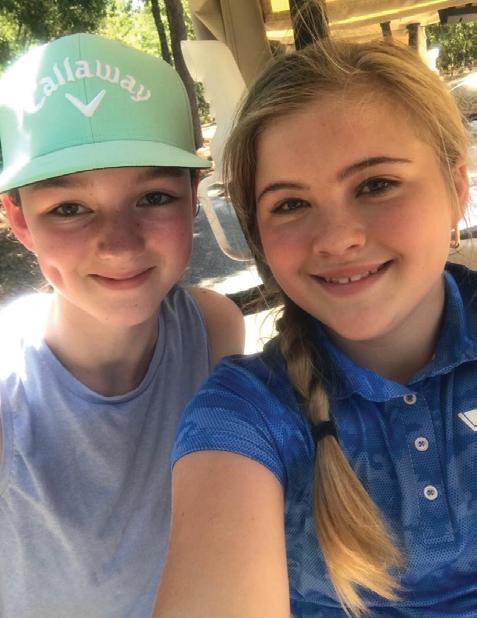
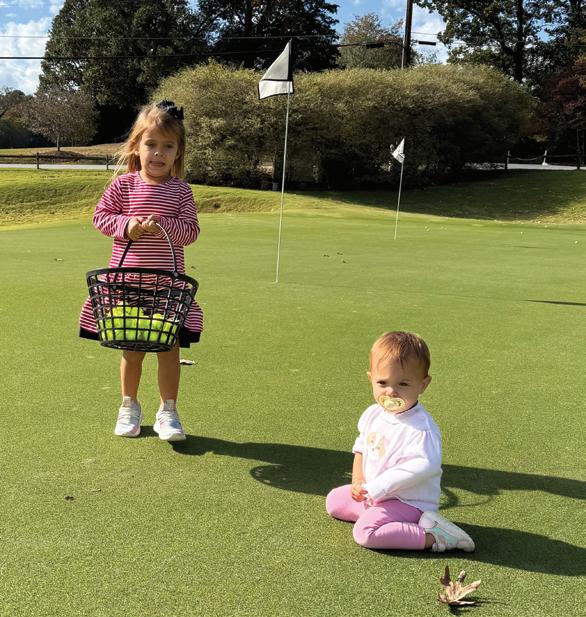
Making
MEMORIES THROUGHOUT MCCONNELL GOLF
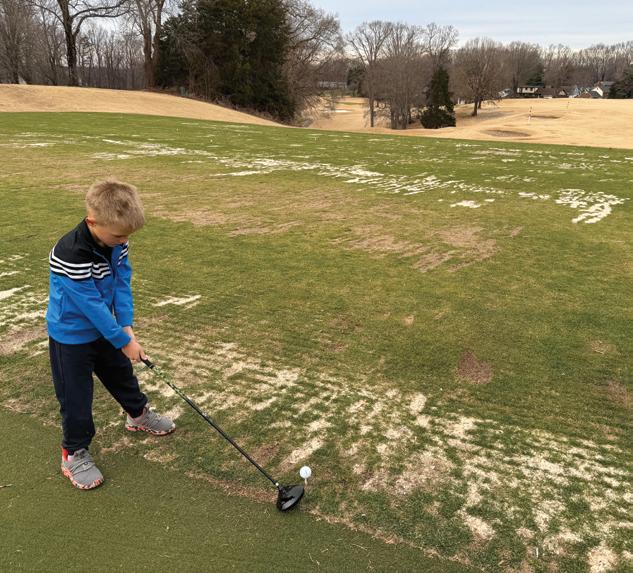
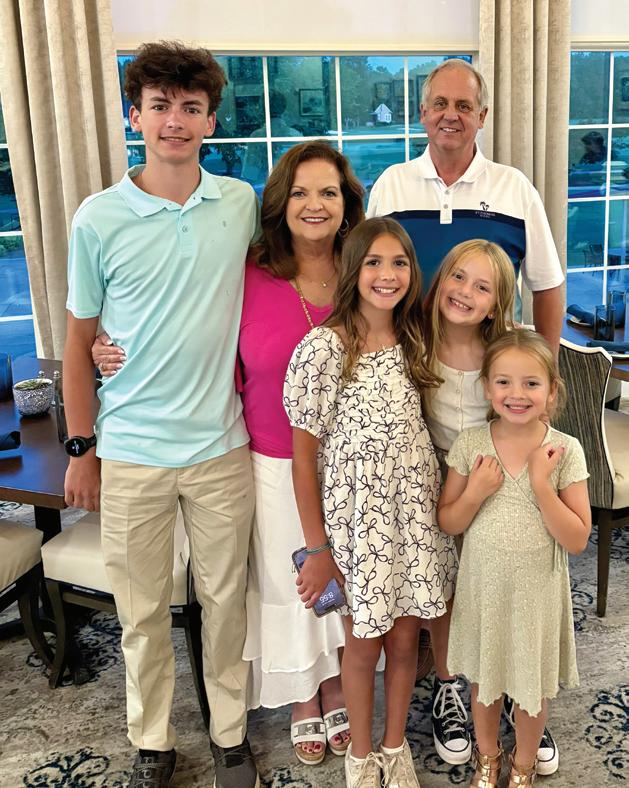
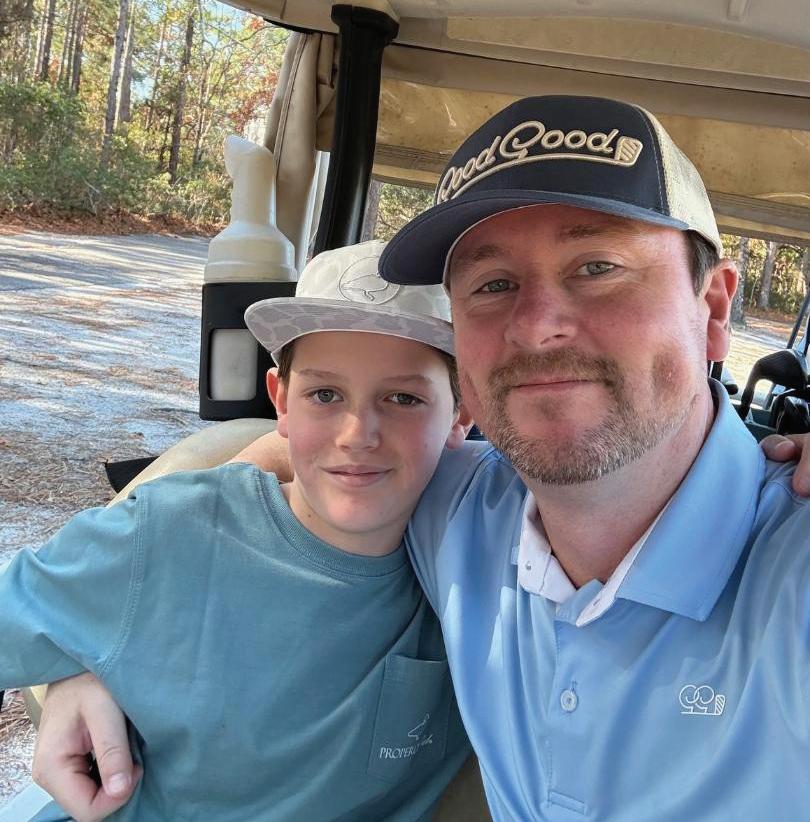
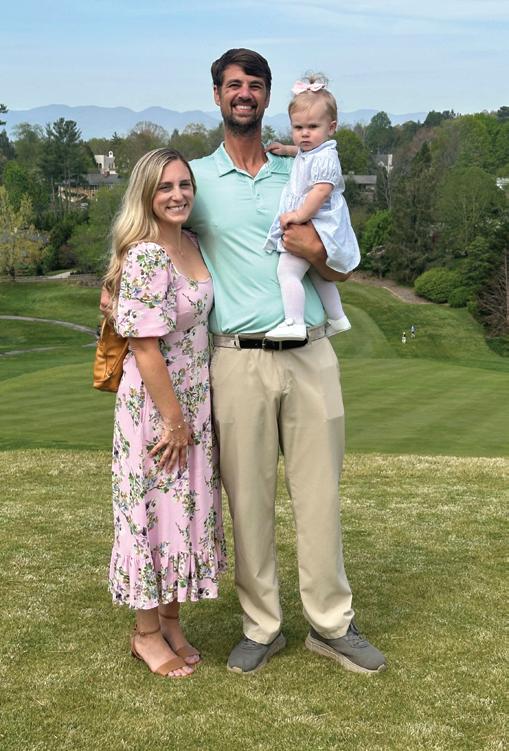
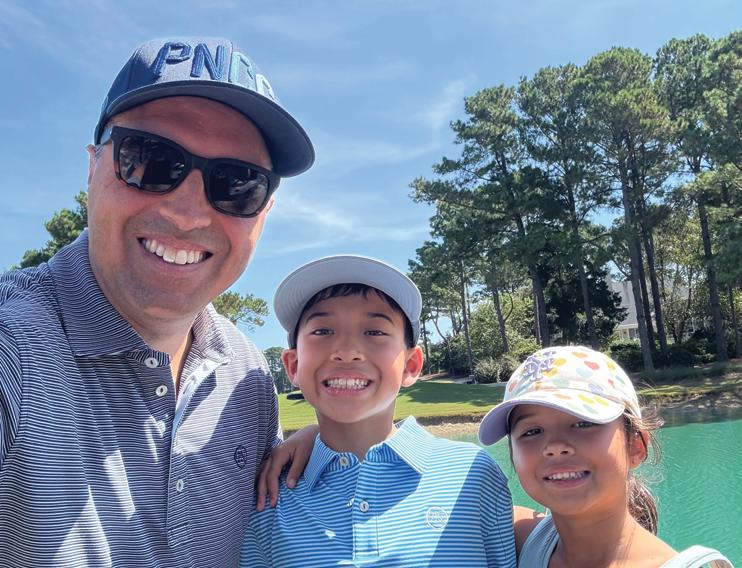


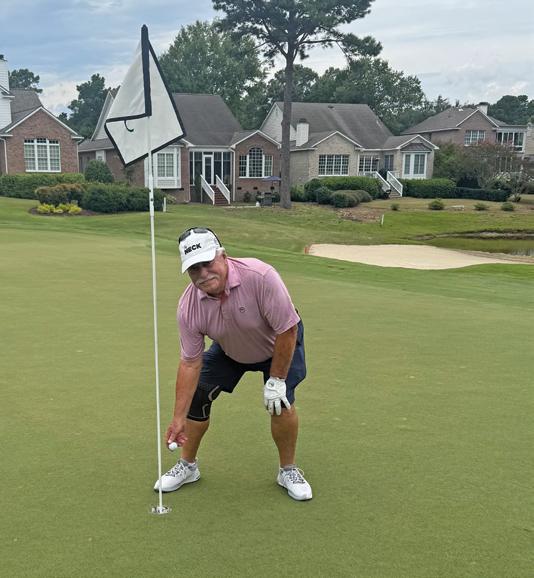
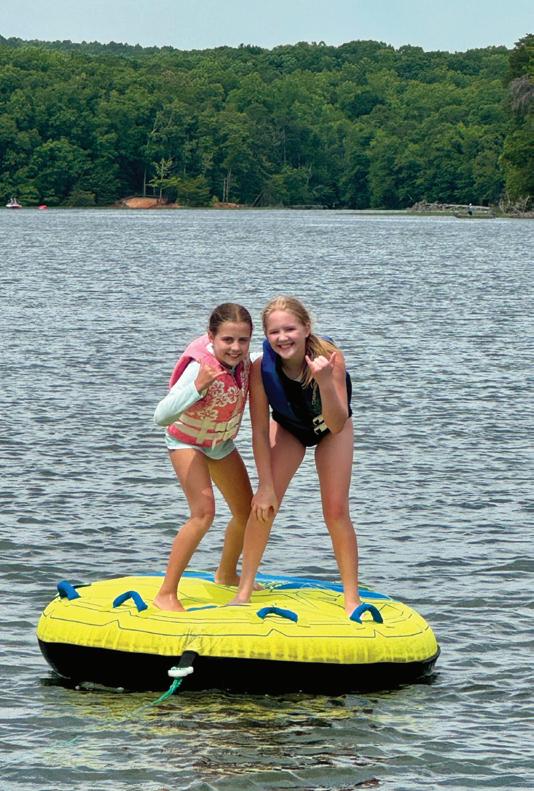
Ethan Johnston, WP
Kylie Krueger and Sydney Ausherman, RS Lilly and Macdonald,HalleySCC
Luke and Nick Krueger, RS
Henry Woodruff, Allie Carr and Rhett Torres, CCA
Molly, Ryan and Ruby Jaskot, CCA
Wesley Wheeler and Bella Rae Linton, PNCC
Quinn Feeley and Jimmy Russo, ONSC
Chuck Screen, PNCC
Berkeley Olsen and Lucy Eades, ONSC Wesley and Barrett Wheeler, PNCC
(Back) Landon, Angela and Jerry Thomas; (Front) Lahna, Reagan and Emmy Thomas, PNCC
Candice, Kory and Rhodes Webb, HHCC
Dominick, Grayson and Liana Fiordimalva, PNCC
Carter Gray, CPD
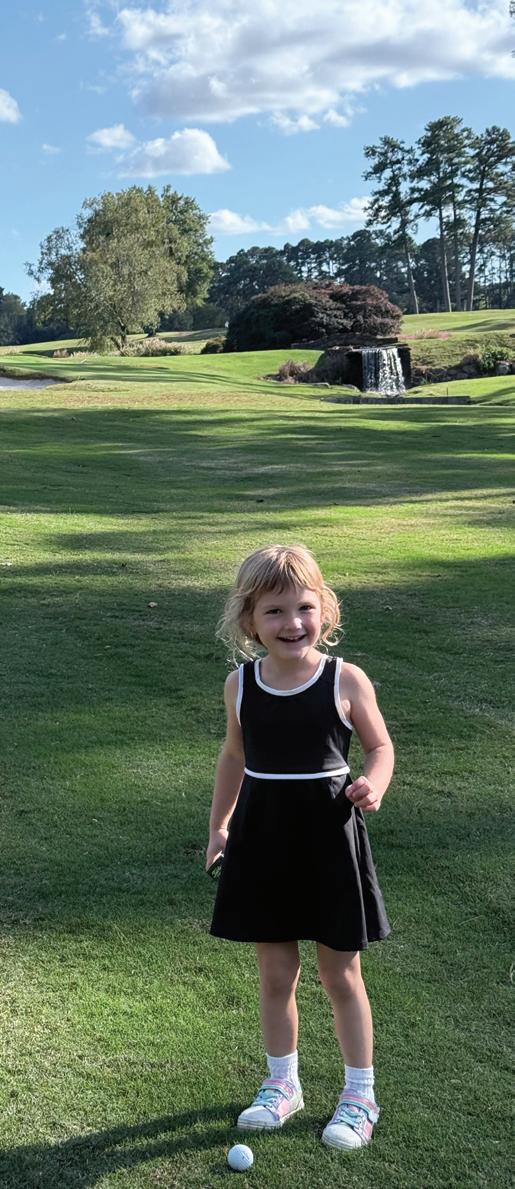

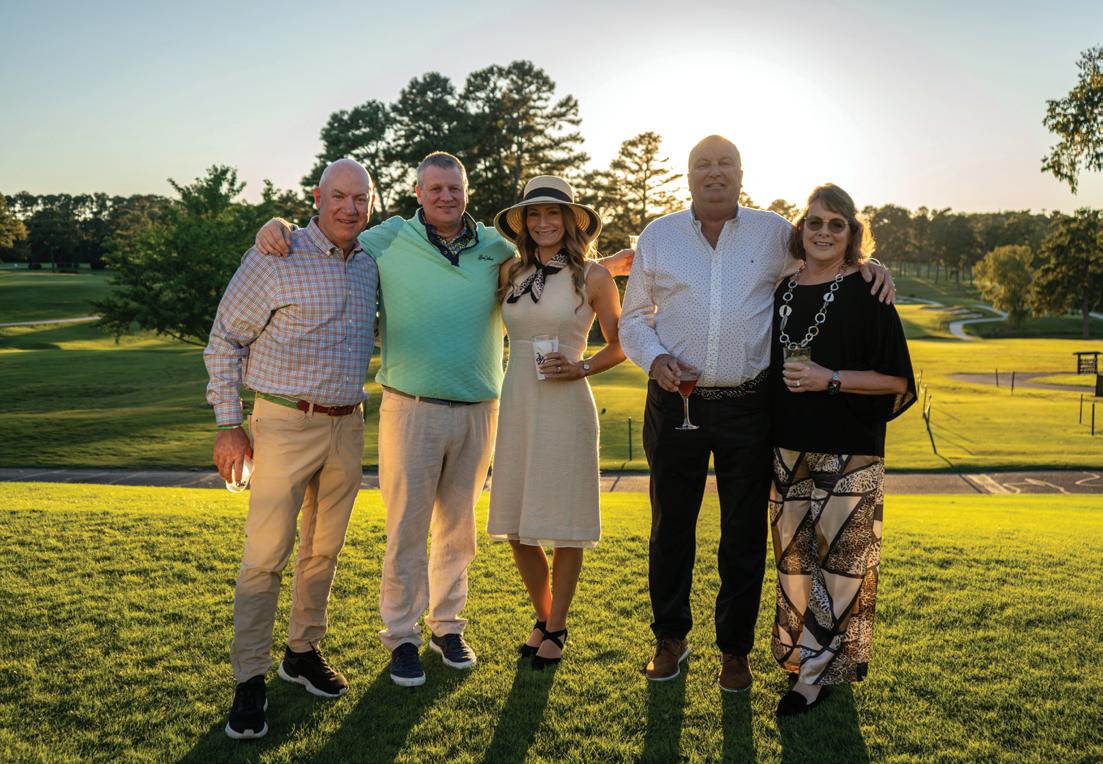
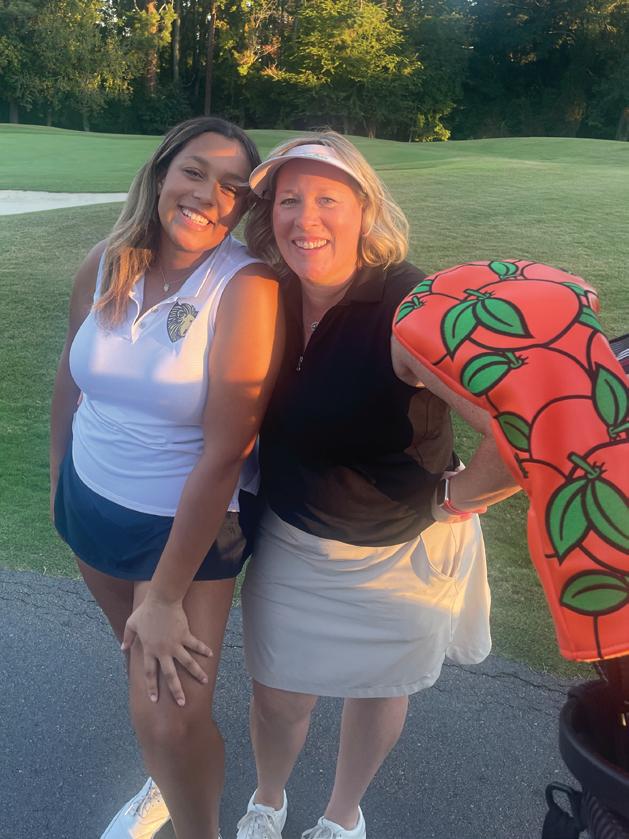
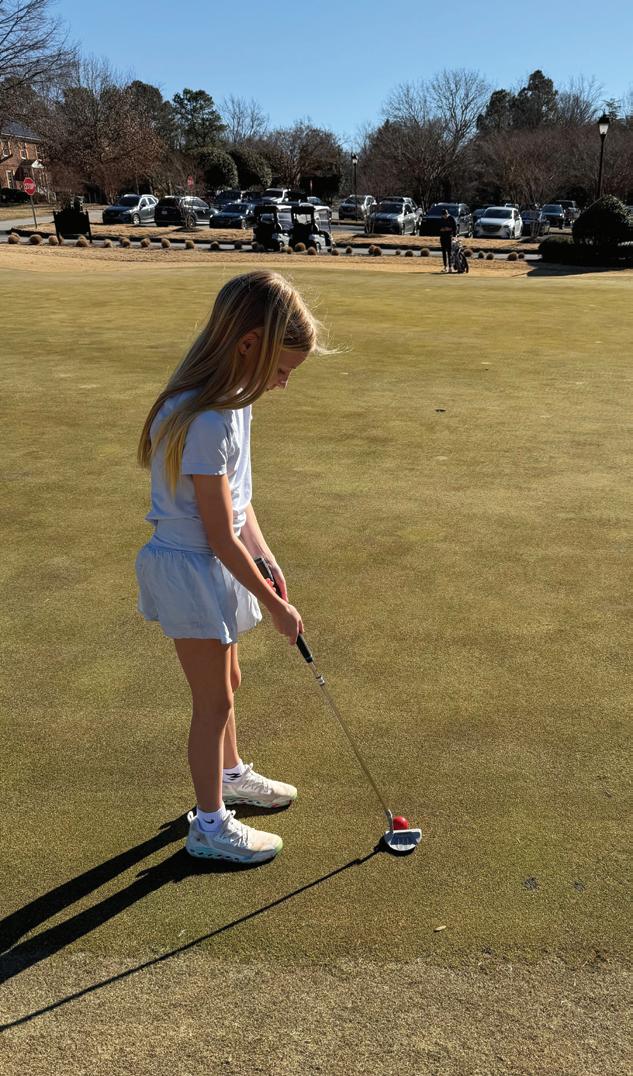

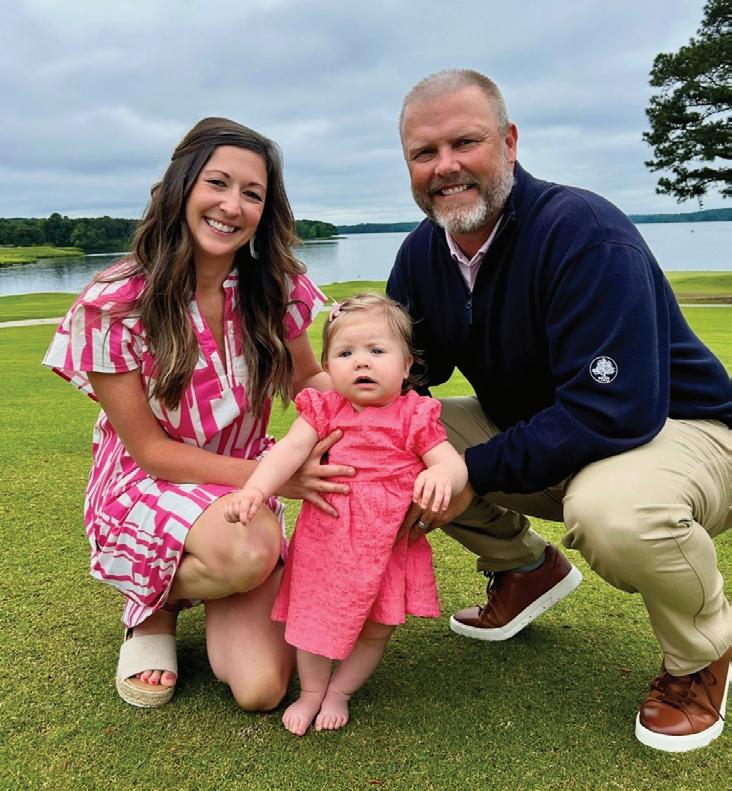
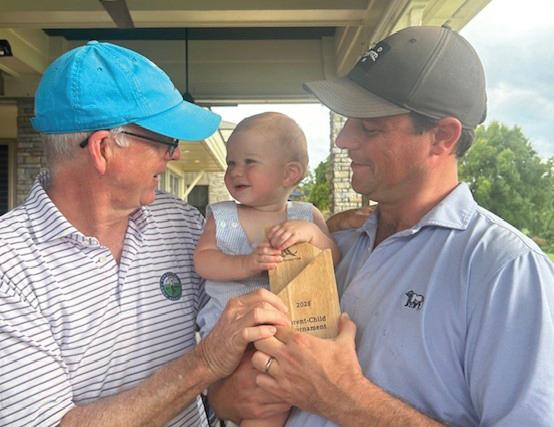

Mallory Albertson and Rick Perkinson, TCC
Kimberly, Palmer and Nathan Jessup, ONSC
Jay, Louie and Cyrus Stewart, RCC
Dwyer Moran and Charlie Ramsey, PCC
Rylan Gray, CPD
Greg and Carol Brown, ONSC
Jeff Johnson, Bryan and Mary Kiser, and Linwood and Kimberly Johnson, RCC
Mathilda and Dr. Olumide Danisa, TCC
Rich Carlino, WECC
Conrad and Laura Frey, PNCC
Victoria Eisenschmidt, RCC
The Walking Game
On foot at McConnell Golf, members are finding the walk, unhurried and observant, to be the finest way to play
by Brad King
On a cold Asheville, North Carolina, morning, Randal “Randy” Treiber has every excuse to stay home. The course is wet. Snow clings to the shadows. He’s retired now — which means he can wait for perfect weather.
Still, when he plays at Country Club of Asheville, he almost always walks and carries his clubs.
The round becomes a five-mile-plus walk that also includes 14 clubs, a few great shots, and, if we’re being honest, more than a few not-so-great ones.
“It’s mainly exercise,” Treiber says. “As long as I’m able, that’s just a good part of my exercise routine.”
A number of members walk — some with carry bags, some with push carts, some with the remote-control trolleys that have become an increasingly common sight.
Treiber’s men’s group plays Tuesday, Wednesday and Friday mornings. The group is older — he says he’s one of the youngest at 74. Three of them routinely walk and carry. About half the group walks in some form.

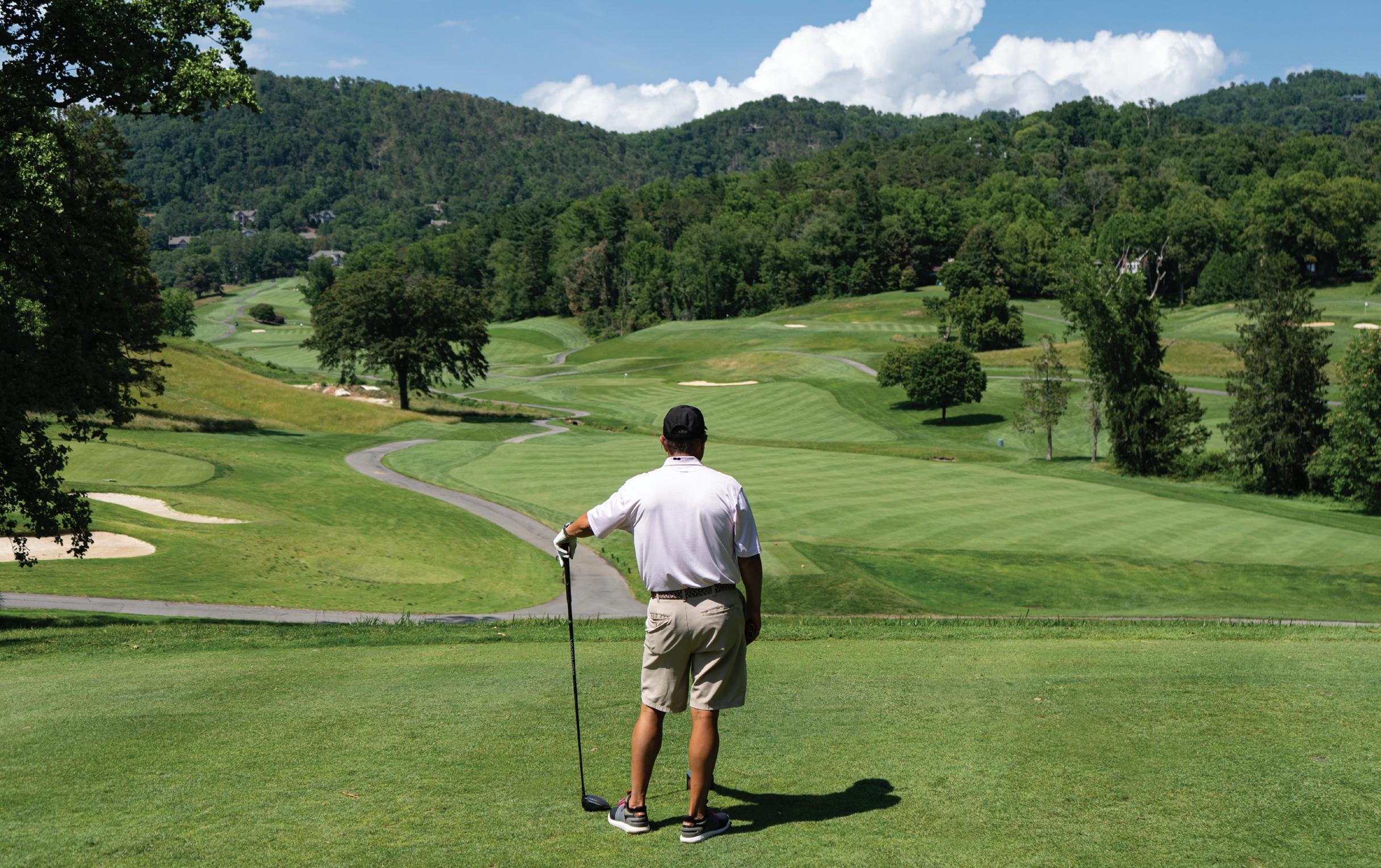
A “majority,” he said, use remote carts. Others compromise — walk the front nine, ride the back.
Part of that comes down to routing. Country Club of Asheville’s front nine is “relatively flat,” says Treiber. The back nine is “in the mountains,” a bit more demanding, with longer transitions between the greens and tees.
In many U.S. markets, golf has become a ride. At the same time, something else has been happening in pockets across McConnell Golf’s portfolio — a quiet return to the walking game, helped along by walkable routings, renewed interest in architecture and a growing awareness that the best way to experience a course is still the oldest way.
SEEING THE COURSE
Landon Harper has been a member at Raleigh Country Club since 2001. He arrived as a young professional from Virginia, joined before he was married and watched the club become central to his family’s life.
Harper says he likes to walk the golf course because it makes the entire experience better — socially, mentally, aesthetically. “For me, it just slows down the round a little bit,” he says.
He believes he plays better when he walks.
“I score better when I walk,” he says, explaining that the slower pace sharpens his focus and helps him see the course more clearly.
Harper loves architecture, and he notices the subtleties that disappear in a cart.
He studies the different architects and the similarities between their work. “I think riding sometimes takes that away,” Harper says. “When you are walking, you really get to see it.”
THE WALK AS DISCIPLINE
Sue Pregartner’s connection to walking golf is deeply personal. She joined Country Club of Asheville on Valentine’s Day four years ago, soon after losing her husband. “I thought this is exactly what he would want me to do,” she says.
Pregartner started playing at 8, picking up her first clubs at the Eighth Army Golf Course in Seoul, South Korea. She learned from female caddies who carried two bags and moved quickly, absorbing not only the mechanics of the game, but the rhythm of the walk.
Later, growing up in the Philadelphia area, she encountered a caddie culture grounded in deep course knowledge and skill. “The better caddies wanted to carry my bag because they felt it was obviously a reflection if I played well,” she says. She adds that those caddies understood the course, could read greens expertly and elevate her game — which is exactly why she wanted them on her bag.
Golf, for Pregartner, is not something to rush. It’s a discipline to practice, and walking is part of that discipline.
She describes walking almost like meditation — the space where golf becomes more than mechanics. Moving shot to shot, she takes in the landscape and can consider what’s next.
Country Club of Asheville
And then there’s the perk that doesn’t make the glossy brochures: “I don’t have to listen to anyone else’s garbage,” she adds with a laugh.
Pregartner has never minded being one of the only walkers in a group. At Country Club of Asheville, she says, if 25 to 30 women go out on a play day, maybe four or five walk. Most ride.
“I think the reason you don’t have bad knees is because you’ve walked all these years,” she says.
Pregartner played at the University of Arizona on a golf scholarship. At her peak, her handicap was 2. Even now, she says, she can still “bat it out there” for an older player.
“I don’t think I’m slowing down anytime soon,” she says.
The remote trolley has become a kind of peace treaty between the desire to walk and the reality of aging bodies, injuries and energy levels.
Pregartner laughs about the first remote trolley she saw — a member who “ran it into a ditch and ran it into herself.” The woman sold it to her at half price.
At Country Club of Asheville, Treiber says remote carts are now the norm in his men’s group. Most players walk — they just don’t carry.
Harper hasn’t made the switch. “Guys in our foursome have those electric low carts,” he says. “I haven’t gone to that yet. Still carry the bag — traditionalist.”
Different versions, same idea: to experience the course at ground level. Walking widens the lens. Treiber says it helps him “see what’s in front of me.” “If you are walking,” he adds, “you pretty much see every shot.”
HEALTHY HABITS
And there’s the health piece — the practical one. That shows up most clearly in Joel “Jody”
Rood’s voice. At Holston Hills Country Club, he says, walking is not only tradition, it’s maintenance — the simple math of staying in shape while doing something enjoyable.
“I like to eat,” Rood says. “And if I didn’t walk 25 miles a week, I’d wear different size pants. My wife wouldn’t be happy with me.”
Rood was raised to believe that walking is the default setting for the sport. It’s what he saw in his own family, and it’s what he still values.
“I was taught that that’s the way the game’s supposed to be played,” he says. “My granddad walked into his 80s, and when he couldn’t walk 18, he walked nine and got a cart for the back nine — and felt guilty about it.”
“You get to a phase in your golfing life where a cart lets you keep playing,” Rood says. “But until that time comes, we enjoy the walk.”
Rood’s affection for walking is tied to a specific kind of golf course — one that doesn’t fight the
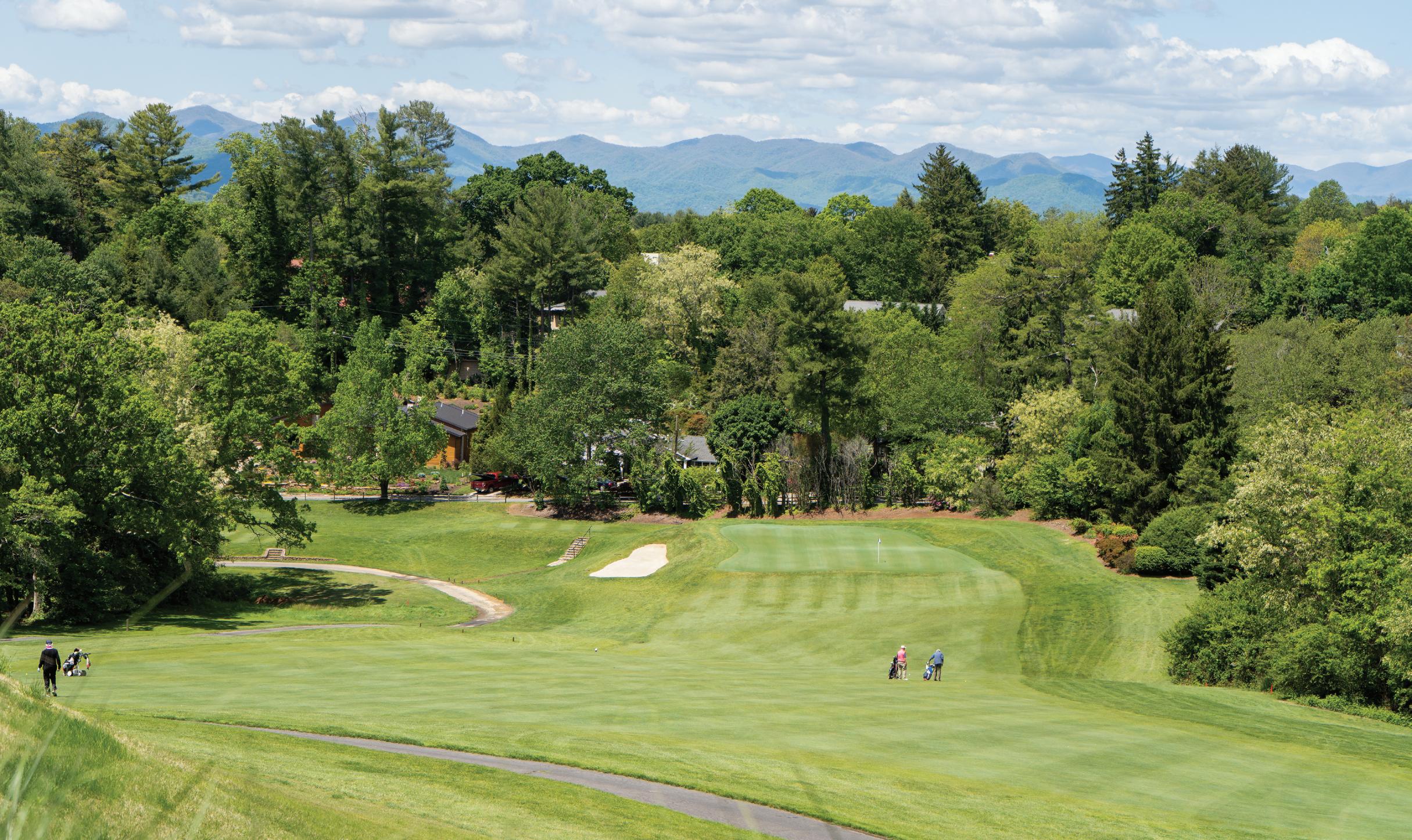
Country Club of Asheville


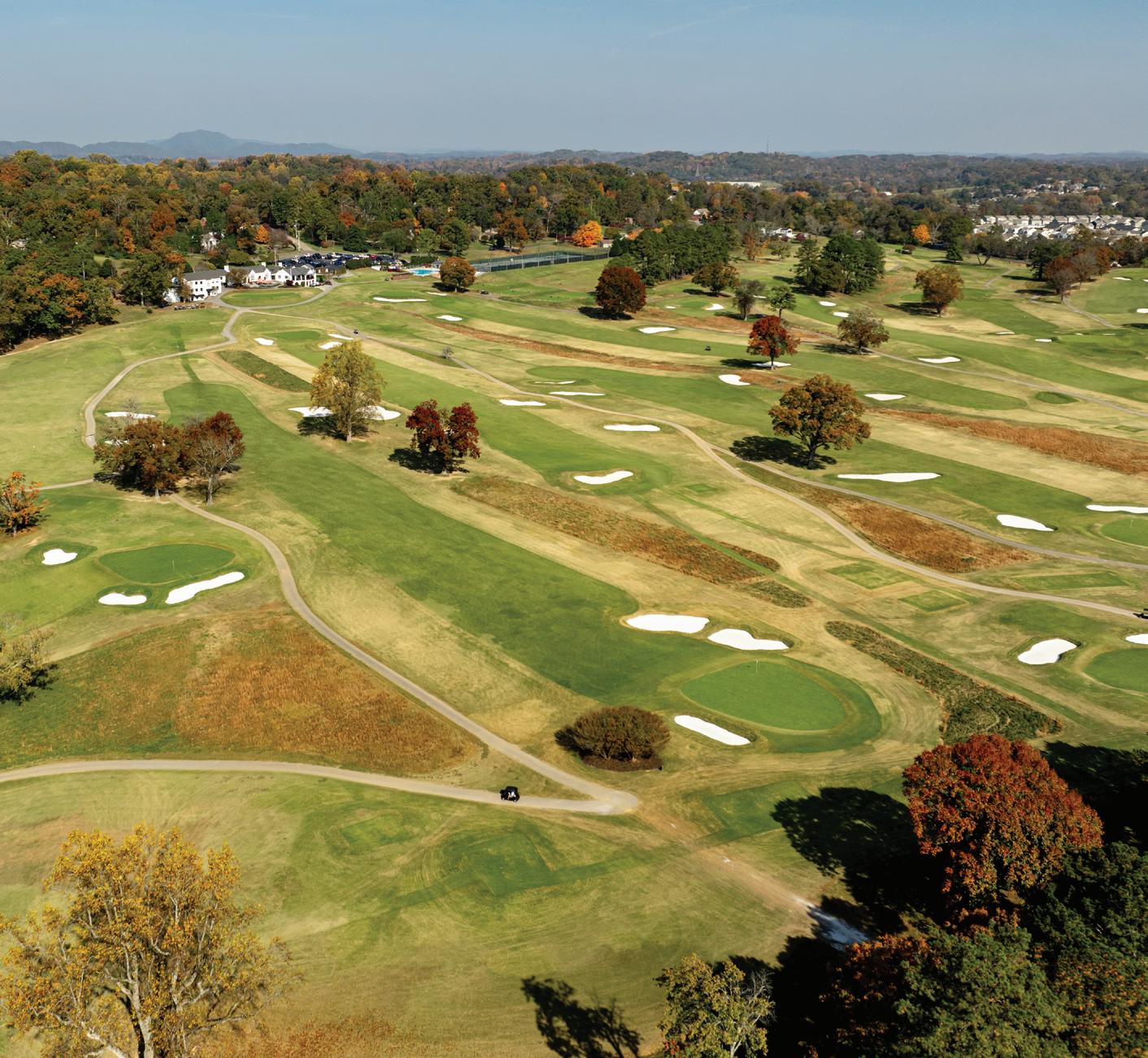
idea. Holston Hills, the Knoxville, Tennessee-area Donald Ross design in the McConnell Golf portfolio, is a course he calls “right in front of you.”
He says the routing moves naturally from green to tee.
At Holston Hills, Rood says walking even improves pace of play — a small but meaningful counterpoint in a cartdominated culture.
“We can walk 18 in three hours without hurrying,” he says.

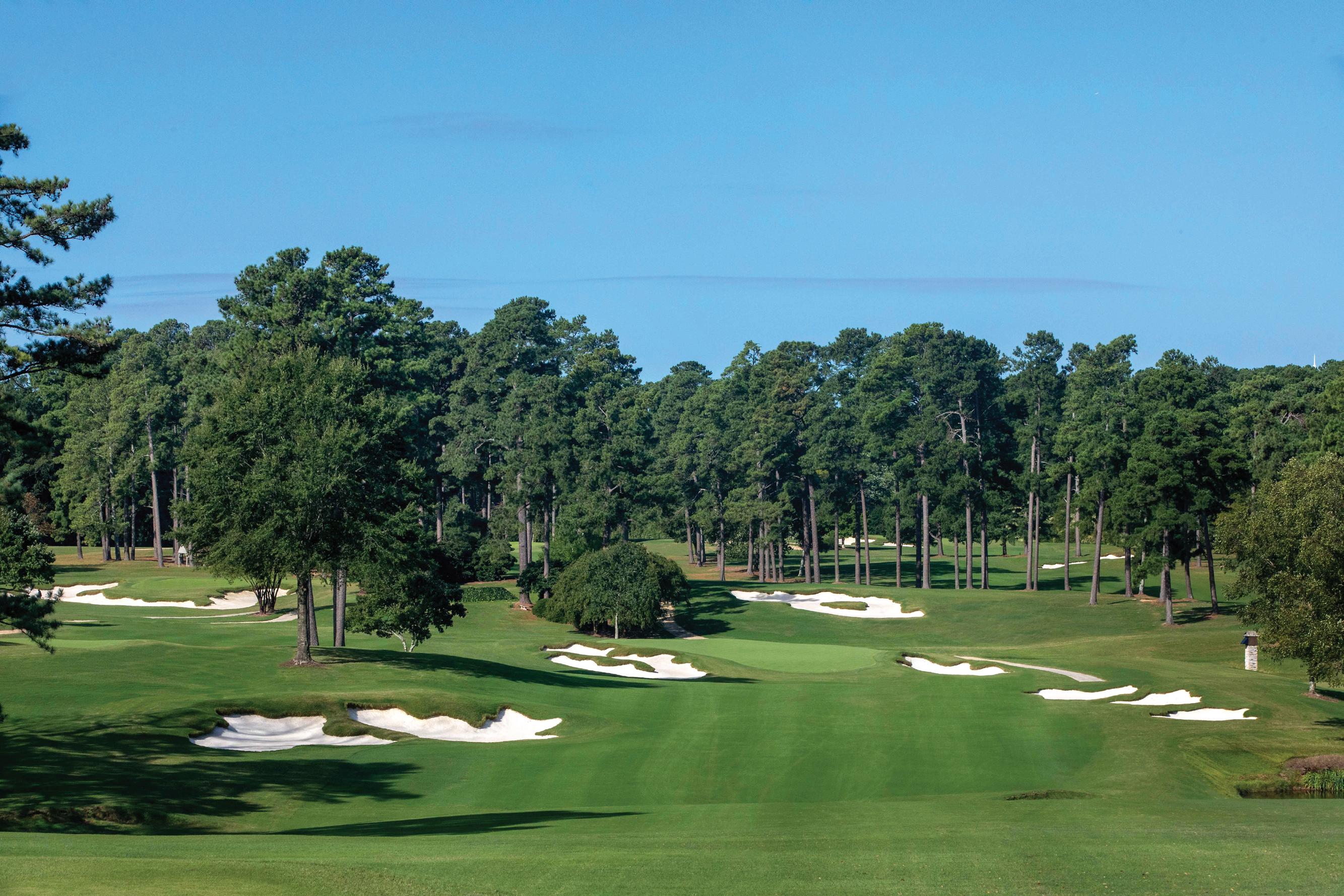
And pace isn’t the only benefit. Rood says that in winter time, walking is the warmer option.
“Riding in a cart, you’re usually colder because of the wind,” he says.
Like Harper, Rood agrees that the case for walking isn’t just physical — it’s architectural. Holston Hills, he says, asks golfers to learn shots, not simply overpower the course.
“It’s designed like the courses in Europe — bunkers are strategic and penalize bad shots, but the greens are open in the front, so you always have options,” he says.
He says Ross’ designs demand variety.


Holston Hills Country Club
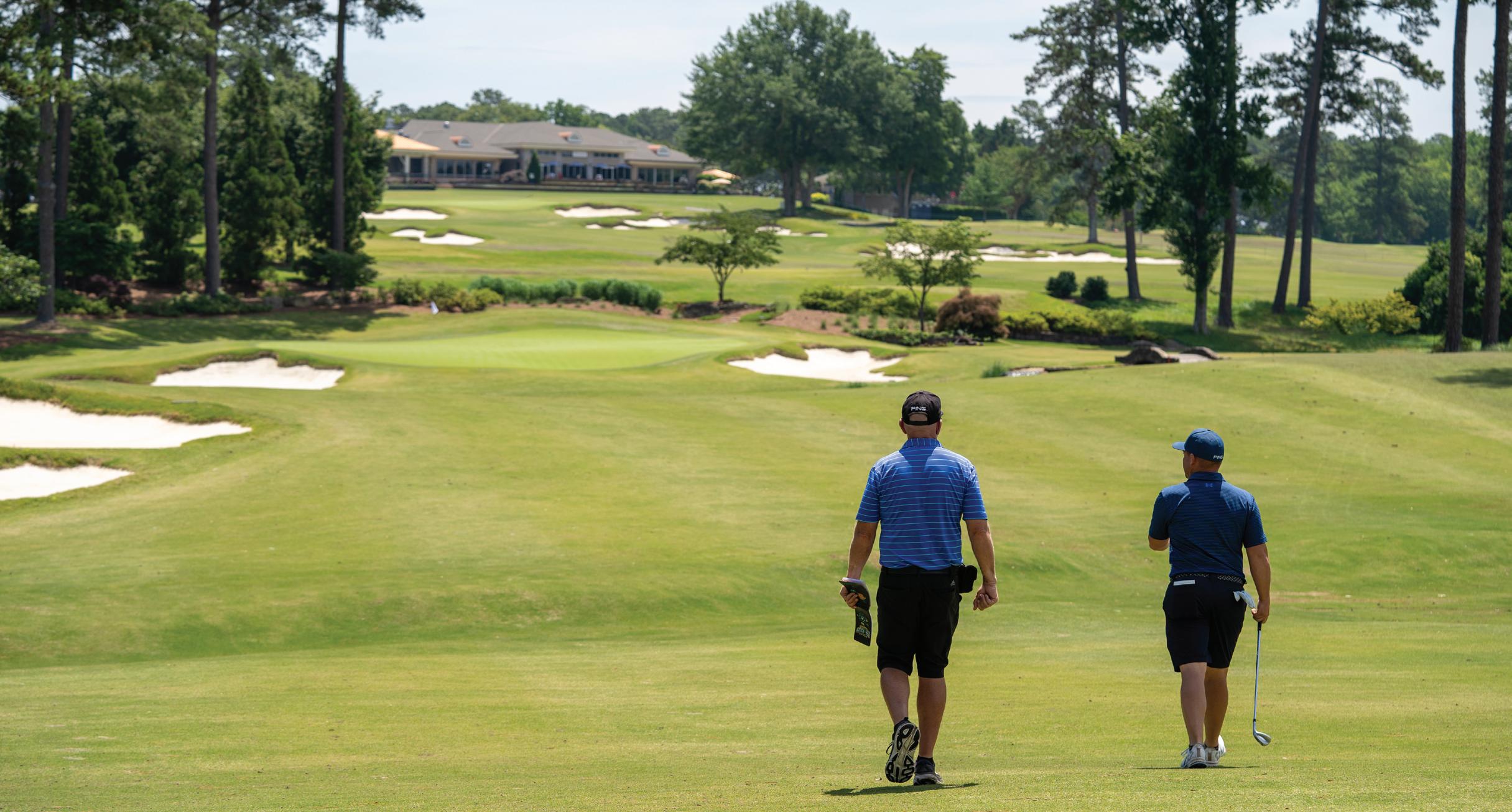
“You had to learn shots,” he says. “Knockdowns. Moving the ball. You couldn’t just hit wedges straight up in the air and spin them.”
The defense isn’t tricked-up. It’s subtle. “The real defense of the course is where they put the pins,” Rood says.
Walking forces better decisions. It turns the round into something closer to problemsolving than pure execution.
SAVOR THE EXPERIENCE
That same theme comes through at Sedgefield Country Club, where Chris Deinlein has been a member for more than five decades. Deinlein, 83, walked almost exclusively when he was younger. Now he mixes walking and riding, depending on heat and stamina, sometimes walking nine and riding the back.
Sedgefield remains a walkable course in his view, but age changes what “walkable” means.
Two stretches still bite: The climb at No. 13. And the uphill finish at No. 18 — especially, he says, when the round isn’t going well.
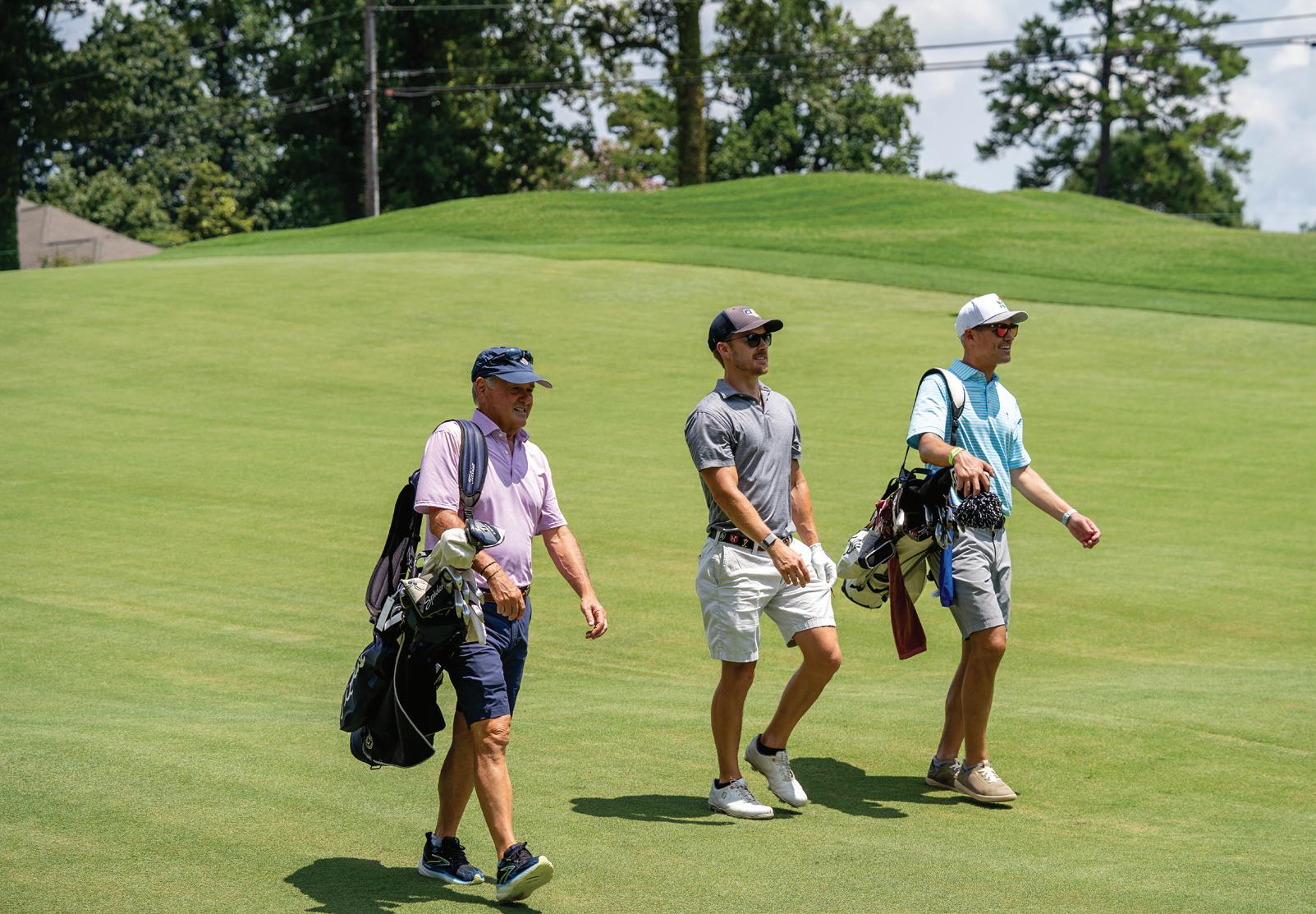
Still, he comes back to the reason walking matters. It changes how golf feels.
“With a cart you hit your ball and rush to the next one,” Deinlein says. “Walking, you think
about the next shot, but it’s also social. You enjoy the course.”
That’s the late-afternoon version of the game Deinlein likes best.
Sedgefield Country Club
Raleigh Country Club


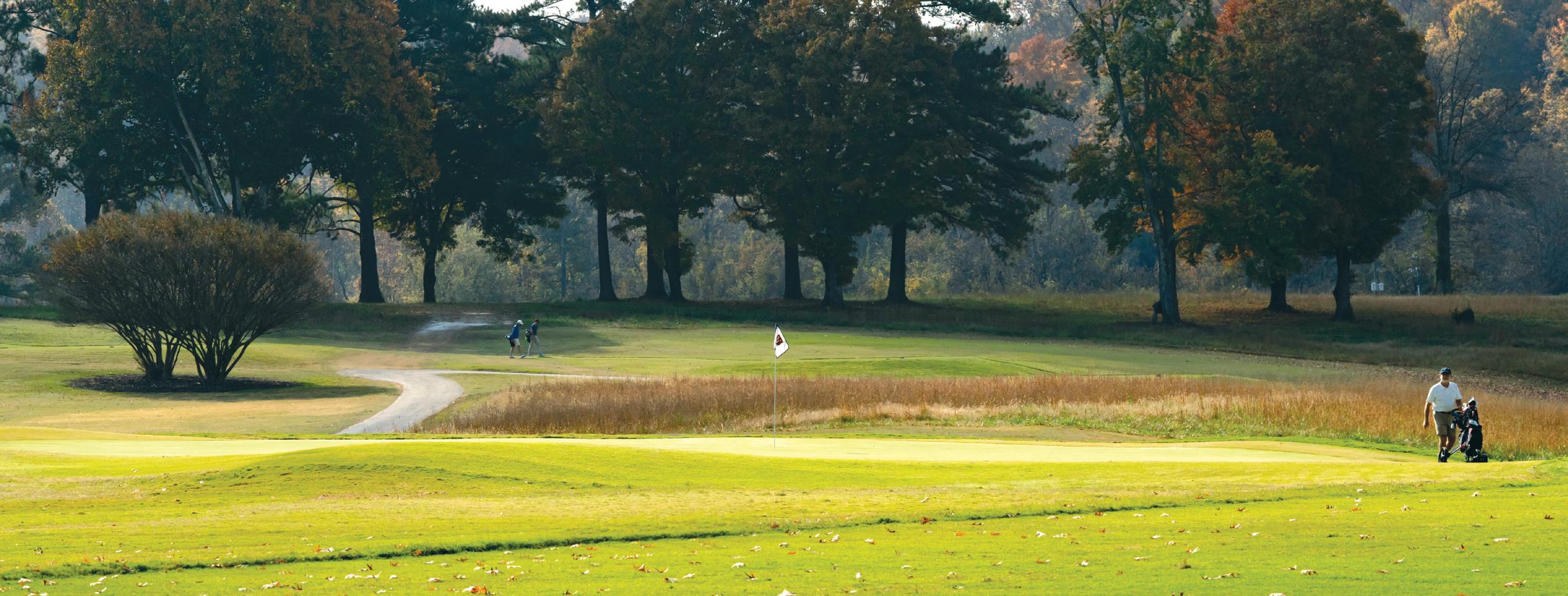
“We’re out there to enjoy life, not just compete,” he says. “You see what the architect was trying to do.”
Deinlein takes that a step further with a practice that sounds eccentric until it starts to make perfect sense: he plays with hickory clubs. He got into hickories about 20 years ago at Oakhurst Links near The Greenbrier. For a while, he alternated between modern clubs and hickories, but the more he played hickories, the more he realized he enjoyed golf more with them. Fewer clubs forces creativity. Shotmaking becomes essential. The game slows down.
“You’ve got to develop shots,” he says. He believes classic courses like Sedgefield make more sense with hickories.
“You can see why things are where they are,” he says. “What Ross was thinking.”
With hickories, the game gives golfers the best excuse in sports.
“It’s the greatest excuse for missing a shot,” Deinlein says.
Deinlein’s memories of walking also include caddies — particularly a longtime companion, Charles Whit, a former top Black amateur who later worked in New York. Whit practiced relentlessly, had an automatic short game and carried himself like someone who wanted the game to be good for everyone.
He planted an oak tree at Sedgefield in Whit’s memory.
“He wanted everybody to do well and enjoy the game,” Deinlein says.
It’s hard to ask for a cleaner statement of what walking golf can feel like when it’s at its best: shared, generous, unhurried.
THE BEST GAME
The most interesting thing about walking in 2026 is that it’s not a single identity anymore. Treiber carries. Harper carries. Pregartner walks but uses a remote trolley. Rood walks aggressively — 25 miles a week — but understands the day may come when the cart becomes the bridge to keep playing. Deinlein still walks, but sometimes the heat or the hills send him to the cart for nine.
The walking game has expanded. Rood points to the way golf is still played overseas — the way walking is simply assumed.
“You really get the character of the golf course when you are walking.”
Landon Harper
“When you play in Europe, you walk,” he says. “There aren’t carts. That’s just how golf is played.”
Rood even offers a small bit of walking logic that feels obvious once it’s said aloud: many golfers ride because they believe it saves time and effort. In certain conditions, especially cart-path-only, walking can be the simpler option.
And even when it isn’t simpler, walking can still be better.
“When you’re walking, you can actually talk,” Rood says. “Think about your next shot. Enjoy the round.”
He’s only half-joking when he adds that walking provides a social release valve. If conversation gets too hot, the walk creates space.
“You can stroll along and talk politics with people who agree with you — and if things get heated, you can just walk away,” he says.
Harper offers what could be the story’s thesis: “You really get the character of the golf course when you are walking.”
And that, ultimately, is why the walking game persists — at Country Club of Asheville, at Raleigh Country Club, at Sedgefield, at Holston Hills and across a portfolio of clubs where the best golf is still the kind you experience at ground level.
That’s the walking game at its best: the course isn’t simply a venue. It’s an experience.
Holston Hills Country Club

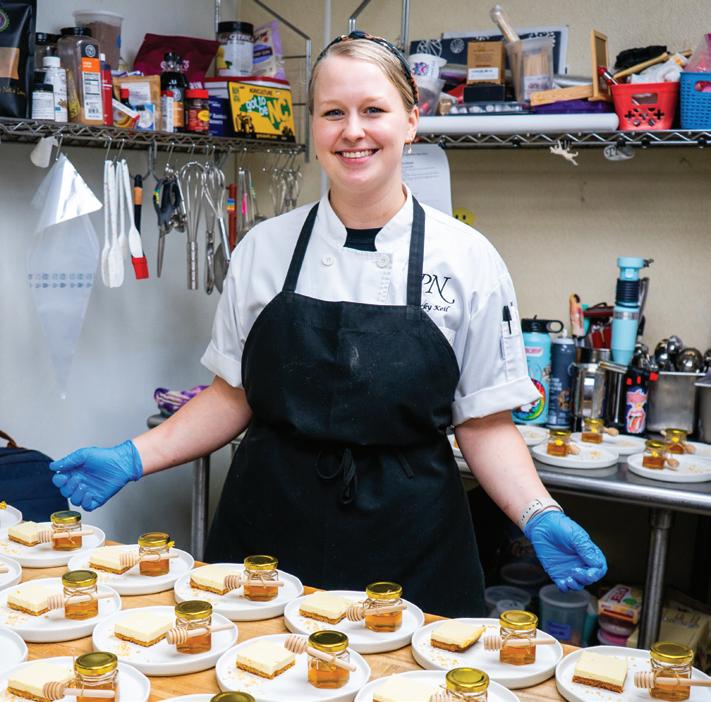
Just Desserts
with Rebecca Keil
A conversation with Porters Neck Country Club’s pastry chef on creativity, seasonal ingredients and member favorites
What is your favorite dessert to create — and what makes it special to you?
CHEF: “My favorite dessert to make is ice cream. I love how versatile it is — you can create so many different flavors using fresh fruit, chocolates and seasonal ingredients. It’s a great way to highlight what’s local and in season. My all-time favorite is the strawberry ice cream from Lewis Farms.”
Which dessert has become a favorite among members?
CHEF: “One dessert our members consistently love is my gluten-free chocolate chip macaroons. They’ve become a favorite not just because they’re gluten free, but because they’re rich, chewy and full of chocolate flavor. They’re simple, satisfying and something people enjoy any time of year.”
For members visiting Porters Neck for the first time, which dessert would you recommend they try?
CHEF: “I always recommend trying the cake of the week featured at the bar. I create a new cake each week, focusing on unique flavor combinations you don’t typically see. It’s something fun and different each time you visit.”
Is there an ingredient you especially enjoy working with?
CHEF: “I love working with ingredients that are fresh, local and in season. They offer the best flavor and truly inspire creativity in the kitchen.”
When you’re off the clock, what sweet treat do you find yourself reaching for?
CHEF: “I really love a good chocolate chip cookie. I have my own signature version that uses a mix of milk, dark and white chocolate chips, which gives it a great balance of flavors.”
Where do you typically find inspiration when creating new desserts?
CHEF: “Crumb cake is a dessert that’s personal to me. It was always my dad’s favorite to have with his coffee, so making it brings a sense of nostalgia. It’s a simple dessert, but it carries a lot of meaning. I’ve also had members here at the club compare it to a classic New York/ New Jersey-style crumb cake, which I really appreciate. It makes it feel even more special.”
What do you enjoy most about creating desserts for members across our clubs?
CHEF: “What I enjoy most is creating desserts that members genuinely look forward to. It’s rewarding to bring a little excitement to their experience while also being creative and introducing new flavors.”
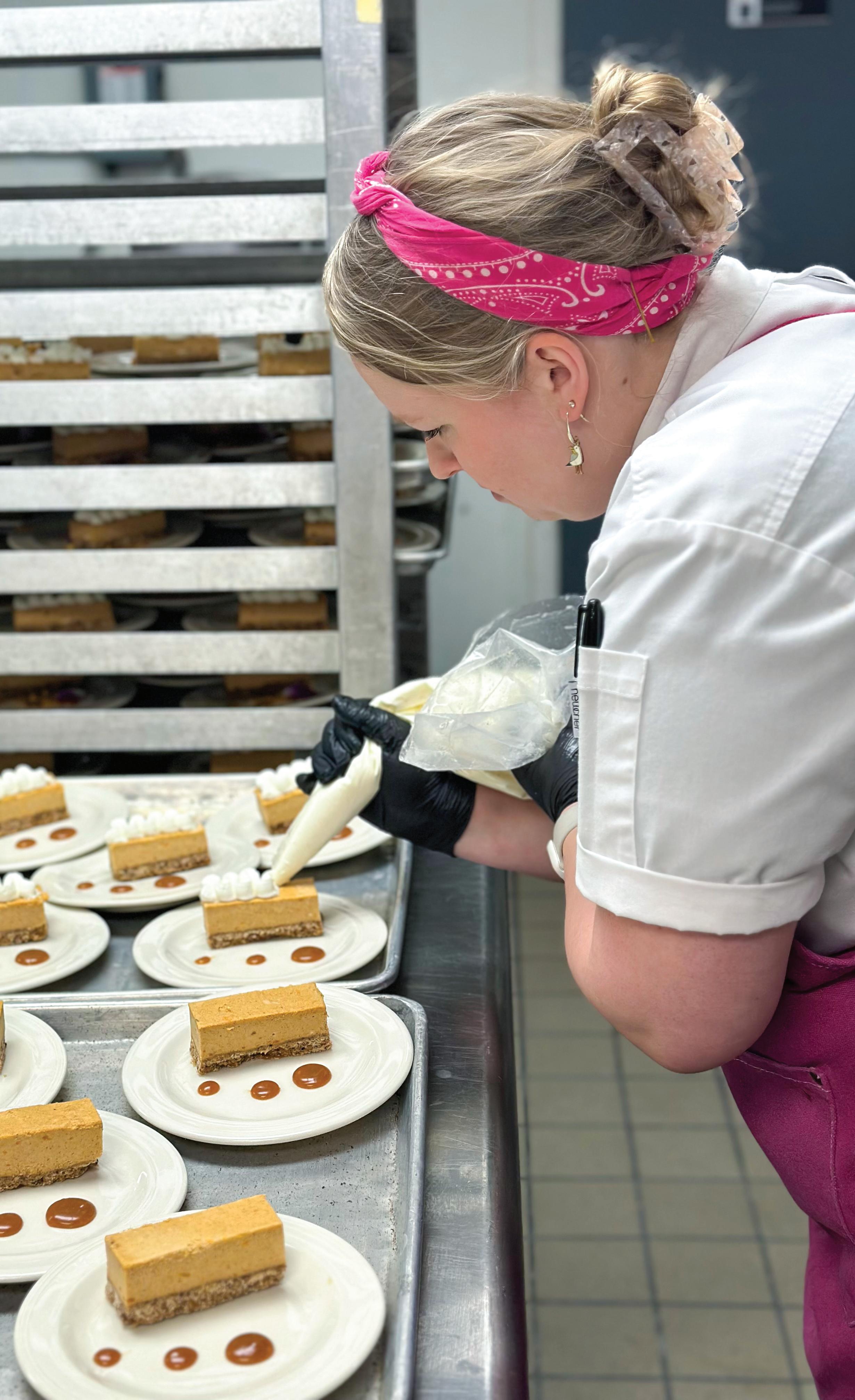
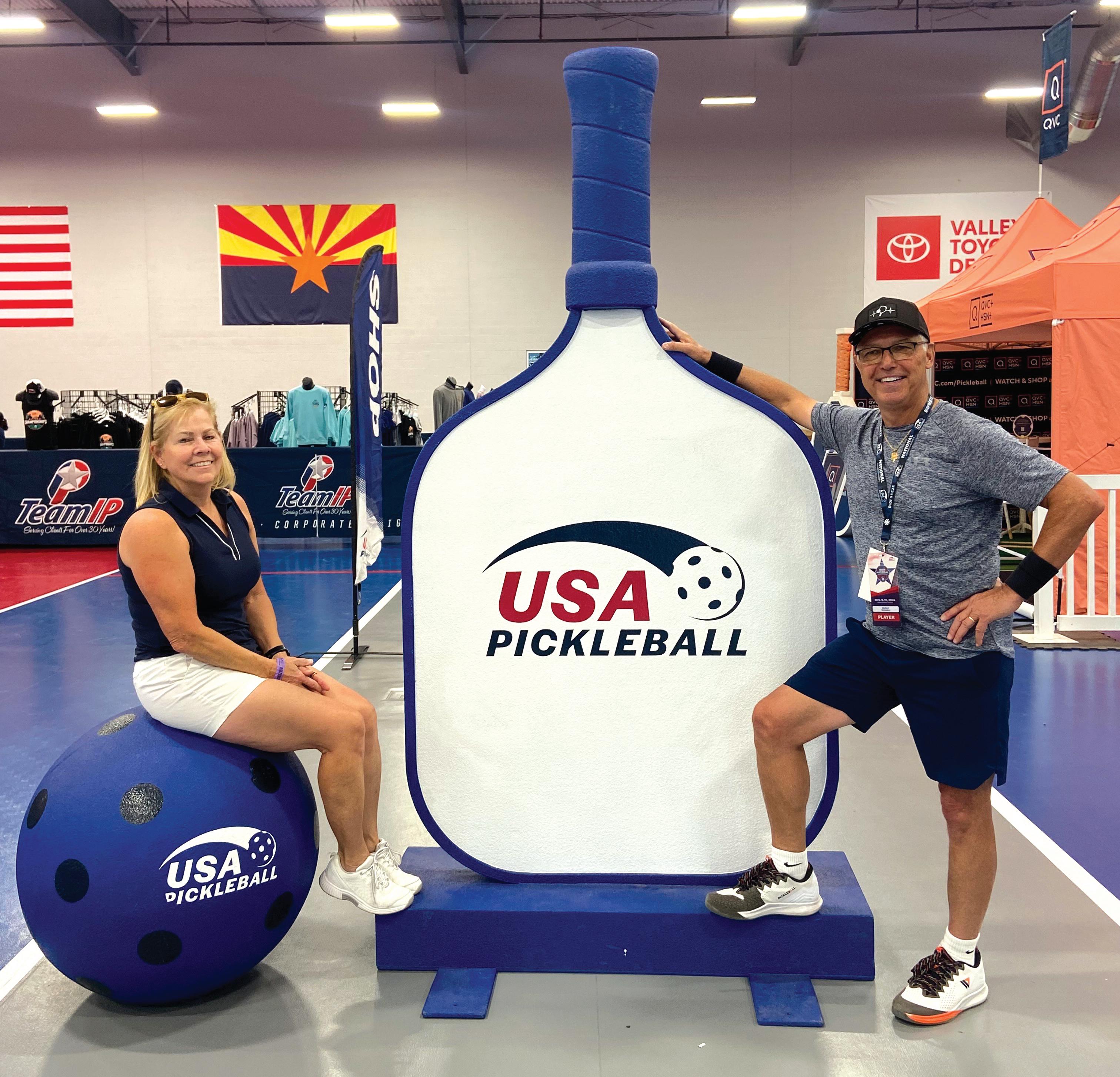
A Competitive Match
by John Jeter
Wakefield couple compiles net gains of precious medals in pickleball
For Herb and Teesa McKinley, pickleball began as a curiosity at their club. When the McKinleys joined The Country Club at Wakefield Plantation in 2018, the sport was still finding its footing there. The club’s racket-sports offerings centered on an eightcourt lighted tennis complex, and the small but growing group of pickleball players improvised by taping court lines onto the tennis surface.
“As a matter of fact,” Teesa says, “most of the tennis players were not happy that we were taping the courts at all.”
The tape curled and peeled. The courts were temporary. But the enthusiasm was real.
Herb had first heard about the sport during a conversation high above the Atlantic while working as a pilot.
“What an experience! When I played at the world championship, 38 countries and every state in the U.S. was represented. When I’m really old, I’ll always have that gold medal to look at and relive that accomplishment.”
Herb McKinley
“I play a lot of soccer,” Herb told a co-pilot during the flight. “But I’m at the point in my life where I need to find something to
replace it. I can’t run up and down the field for an hour and a half anymore.”
His copilot had a suggestion.
“She said, ‘Why don’t you try pickleball?’ And I looked at her and said, ‘Pickle what?’” Herb recalls.
Wakefield Plantation turned out to be the perfect place to give the sport a try.
The McKinleys soon connected with Rod Andrew, the club professional, on the courts.
“The first lesson I ever had with Herb, his goal was clear and set. He wanted to be the best 60-plus-year-old pickleballer in the state of North Carolina,” Andrew says. “I said, ‘That’s a pretty big goal, and I’m here to help you.’”
Herb dove into the sport with the same competitive mindset that had fueled years of athletics.

PICKLEBALL
“I started playing with a lot of the men here in the community on those courts,” he says. “And, of course, we were constantly petitioning the club, ‘Hey, why don’t you build dedicated pickleball courts?’”
McConnell Golf leadership responded. In 2024, the club added four lighted pickleball courts, giving the sport a permanent home.
Building a new amenity isn’t cheap, says Kyle Thortsen, McConnell Golf’s corporate director of tennis. But he says the results have been a clear win for the club community.
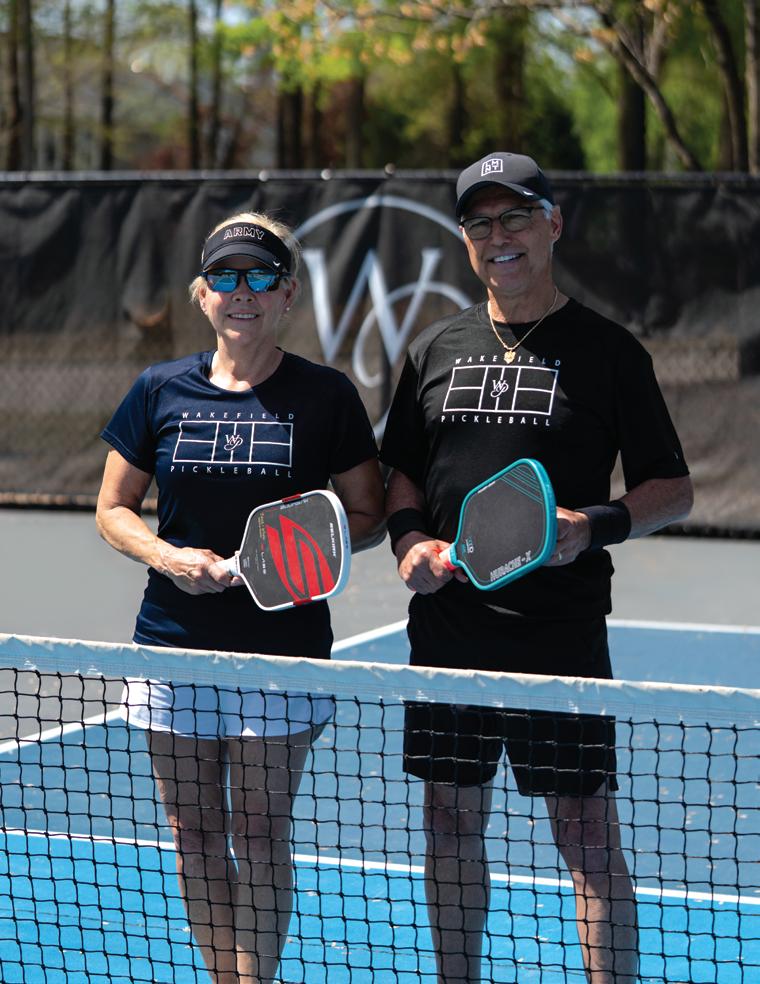
PADDLING UPSTREAM
Here are just a few of the major national and state pickleball competitions the McKinleys have played to date:
• 2025 Pickleball World Championships: Dallas
• U.S. Senior Pickleball National Championships at Pictona, Holly Hill, Florida — the nation’s only all-senior national championship tournament. The McKinleys won the Mixed Doubles Legends division.
• 2025 BODYARMOR State Games
Winter Pickleball Tournament, Raleigh — Silver medal, Mixed Doubles 50+ division
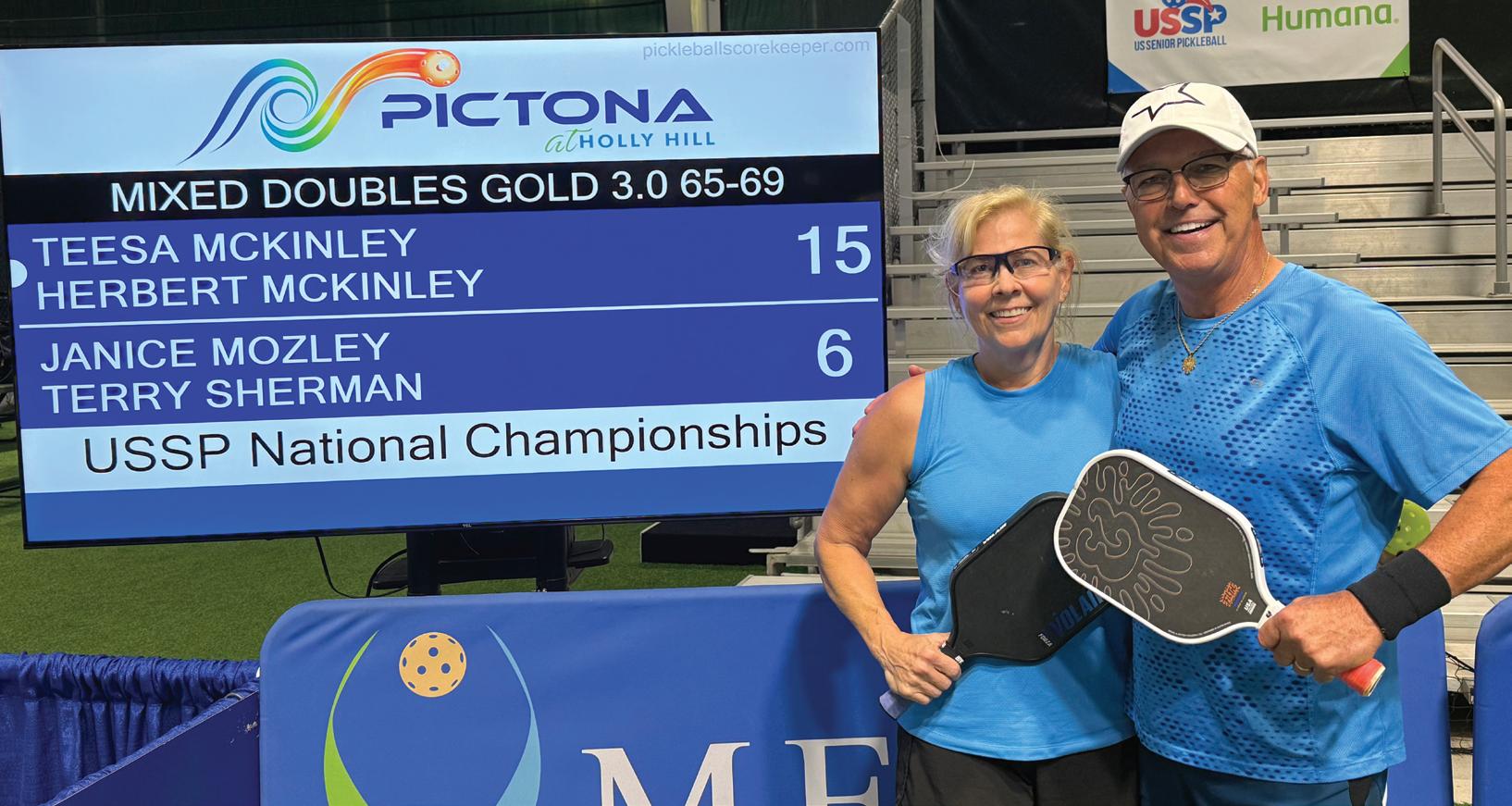
“We’ve got a bunch of guys who come out almost every day that traditionally have only used the club for golf and dining. And now they’re starting to be at our facility all the time,” Thortsen says. “It’s just truly brought another amenity for the membership to have value in and participate in.”
Meanwhile, the sport itself has exploded in popularity nationwide. Known for its welcoming atmosphere and accessible fitness benefits, pickleball attracts players of all ages — an estimated 50 million participants nationwide, according to Pickleheads.
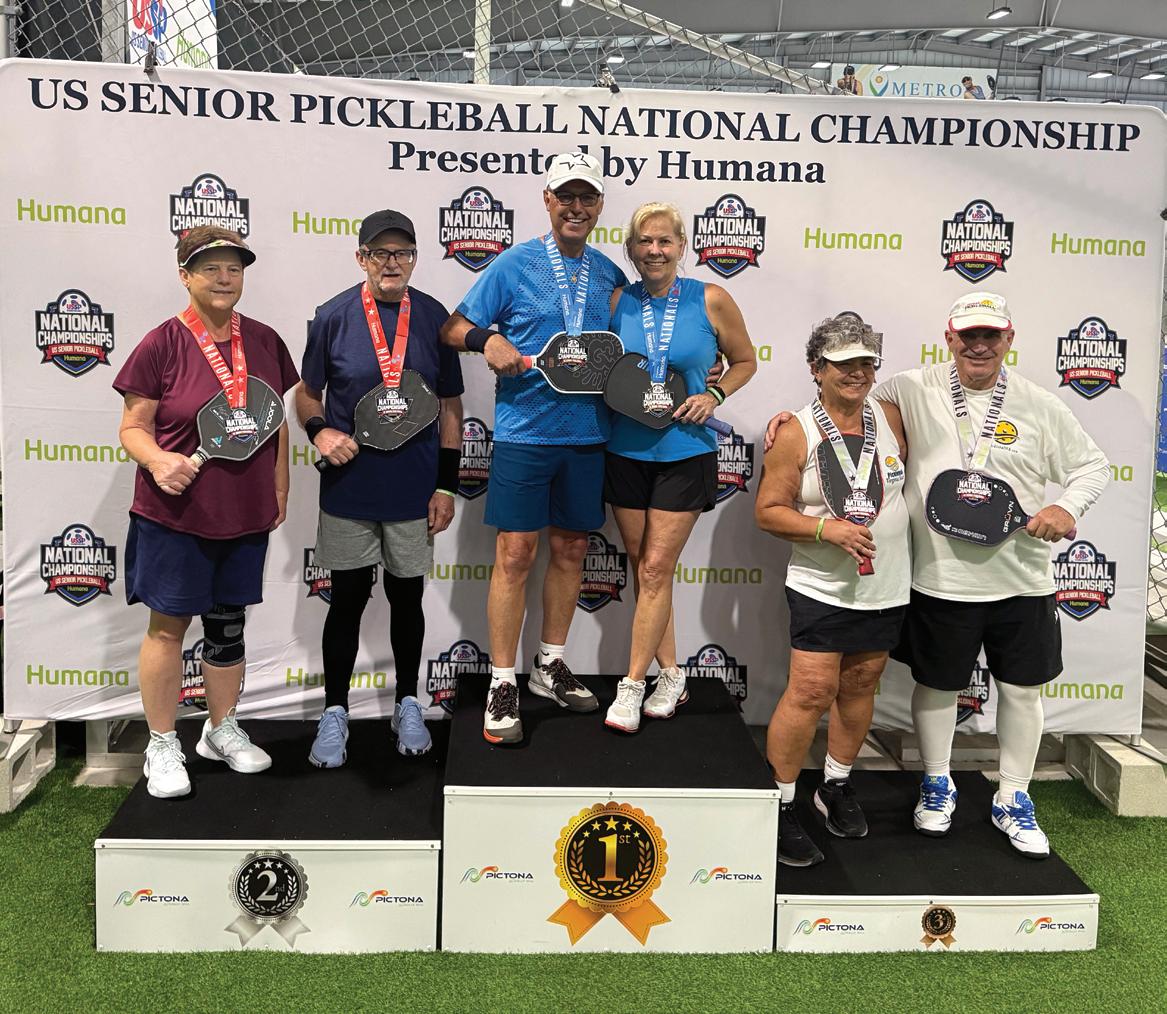
Now they have medals to show for it, including finishes at world and national championships in Florida, Texas, Colorado and Arizona.
For the McKinleys, the friendly games and lessons at Wakefield soon turned into something more competitive.
The couple — both 67 and married for 43 years — began entering local tournaments in 2024, Teesa says. Within a year, they were traveling around the country competing in some of the sport’s biggest events.
“What an experience! When I played at the world championship, 38 countries and every state in the U.S. was represented,” Herb says. “When I’m really old, I’ll always have that gold medal to look at and relive that accomplishment.”
What began with taped lines on a Wakefield tennis court has become an adventure played on the national stage.



CONSTRUCTION & REMODELING
ARTISAN ROOFING COMPANY
Ashley Sibbett
336.502.7676
ArtisanRoofingCompany.com
OVERHEAD DOOR CO. OF NEW BERN (AND OTHERS)
252.638.3167
OverheadDoorEasternNC.com
PELLA WINDOWS & DOORS OF NORTH CAROLINA
Brendan Bresnan
336.379.8550
Pella-NorthCarolina.com
THE PLYLER GROUP
Erik Plyler
540.721.8362
ThePlylerGroup.com
FINANCE & INSURANCE
CSG CAPITAL PARTNERS OF JANNEY MONTGOMERY
SCOTT LLC
Erik Fromm
209.955.4318
CSGCapitalPartners.com
FARTHER
Kerrie Debbs
910.218.2878
Farther.com/advisor/kerrie-debbs
ONEDIGITAL
Rand Williams
919.827.3658
OneDigital.com
Member Business Directory
TRINITY WEALTH MANAGEMENT
Jim Wilkie, CFP®, ChFC® 336.814.3328
TrinityWealthMgt.com
FOOD & BEVERAGE
COCA-COLA CONSOLIDATED
Jennifer DeAngelo
800.260.2653
CokeConsolidated.com
ULTRA PURE BOTTLED WATER
Patrick Cacciatore
813.493.1231
NameYourBottle.com
US FOODS
Darrell Hall 919.417.8301
USFoods.com
WAKEFIELD TAVERN
Anthony Scalese 919.554.0673
WakefieldTavernRaleigh.com
HEALTH & WELLNESS
RALEIGH ORTHODONTICS
Dr. Daniel Grossman 919.847.6364
RaleighOrthodontics.com

SYNGENTA
336.822.3000
FurniturelandSouth.com
SOLE SOURCE SOLUTION, LUXURY HOMES
Courtney Greco 919.762.0801
SoleSourceSolution.com
PROFESSIONAL SERVICES
GHOST LAB NC
Brandon Golden 336.471.4857
GhostLabNC.com
NEXT LEVEL CREATIVE
Krystal Baker 919.605.2203
NextLevelCreative.net
STIPHANY CONSULTING
Dana Mathews
910.340.9756
GoodsHomeFurnishings.com

704.412.1796
StiphanyConsulting.com
Ben Peters 919.214.2054
GreenCastOnline.com
TELEPATHIC GRAPHICS
Mark Gauley 919.624.4543
mark@telepathicgraphics.com
REAL ESTATE
BERKSHIRE HATHAWAY HOMESERVICES SMITH
MOUNTAIN LAKE REAL ESTATE
Ronald L. Willard II 540.721.8659
SmithMtnLake.com
JANE AT THE LAKE INC.
Jane Sullivan Horne 540.493.1690
JaneattheLake.com

abbeyefird@remax.net
REAL ESTATE
THE JAREE TODD TEAM
Jaree Todd
336.601.4892
JareeTodd.BHHSCarolinas.com
OLD NORTH STATE REALTY
Rob Brady
919.349.3013
OldNorthStateRealty.com
RETAIL
&
SHOPPING
MCCONNELL GOLF
ONLINE GOLF SHOP
Kira Aiken Benfield McConnellGolf.shop kaiken@mcconnellgolf.com
PETER MILLAR
Jennifer Holwick 913.449.7677
PeterMillar.com
Member Business Directory

PROFESSIONAL GOLF TOURNAMENTS
UNC HEALTH CHAMPIONSHIP Jack Bonnell – Business Development Director jack.bonnell@unchealth.unc.edu
UNCHealthChampionship.com
WYNDHAM CHAMPIONSHIP Mark Brazil WyndhamChampionship.com
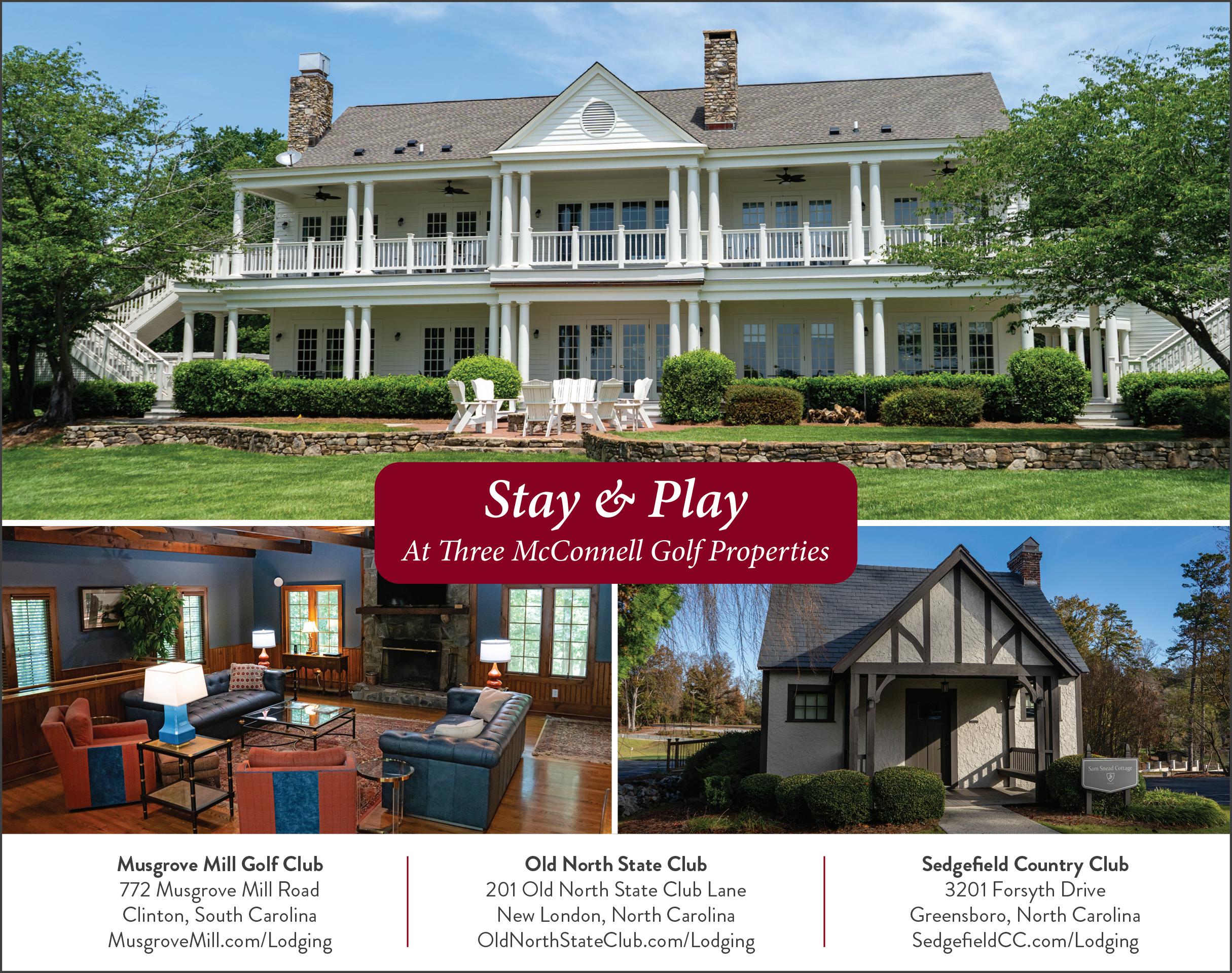
Kelly Kirwan 919.908.0850 TheCarolinaExperience.com
LODGING AT MUSGROVE MILL GOLF CLUB
Jeff Tallman 864.833.6921
jeff@musgrovemill.com
LODGING AT OLD NORTH STATE CLUB Roxann Phillipy 336.461.2477
lodging@oldnorthstateclub.com
LODGING AT SEDGEFIELD COUNTRY CLUB Angela Ayers 336.299.5324 aayers@sedgefieldcc.com
OLD NORTH STATE CLUB MARINA
Michael Gutterson Dock Master marina@oldnorthstateclub.com
SEDGEFIELD GOLF RETREAT Lynne Garrison 336.209.1818 ccircle@aol.com
THE WATER’S EDGE COUNTRY CLUB EQUESTRIAN CENTER Kristina Wray Equestrian Center Manager barn@watersedgecountryclub.com
INTERESTED IN
IN MCCONNELL GOLF, THE MAGAZINE ? VISIT MCCONNELLGOLF. COM/CONTACT TO LEARN MORE.