SUMMER SESSION IS HERE!
We’re looking forward to kicking off summer in the studio with you! We have some exciting news to share in this month’s newsletter and few housekeeping items for the studio. Registration for summer classes is still open - if you were interested in taking a class this summer but couldn’t get into the one you wanted, or are on a waitlist - we have spots open in the following classes - grab your spot today!
CLASSES WITH AVAILABILITY:
Monday 1:30PM - Ceramics All Levels #48814
Tuesday 1:00PM - Ceramics Handbuilding #48813
Wednesday 10:00AM - Ceramics All Levels #48824
Wednesday 1:00PM - Ceramics All Levels #48820
Friday 10:00AM - Ceramics All Levels #48821
Friday 1:00PM - Ceramics All Levels #48822
A BIG WELCOME TO OUR NEW INSTRUCTORS!
You'll see a couple of new faces in the studio this summer!
Please join us in welcoming Joseph Henderer and Em Irvin, who will be teaching classes while Lowell and Mitsuko are away for the summer. We’re excited to have these two talented instructors join the studio - please say hello and give them a warm welcome!
See below for the classes they are offering this summer and a little spotlight on both.
Joseph’s Summer Classes:
Tuesday 10:00AM - Advanced Wheel Throwing Tuesday 1:00PM - Handbuilding
Em’s Summer Classes: Wednesday 10:00AM - All Levels Wednesday 10:00AM - All Levels
JOSEPH HENDERER
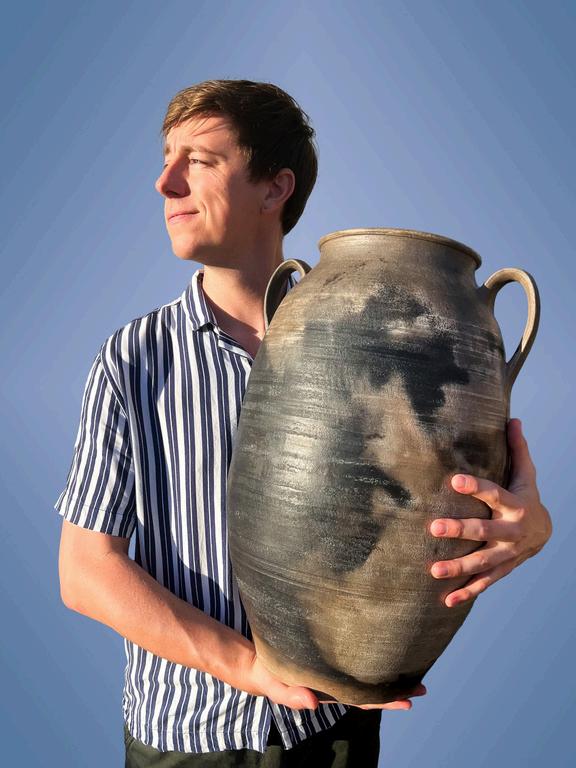
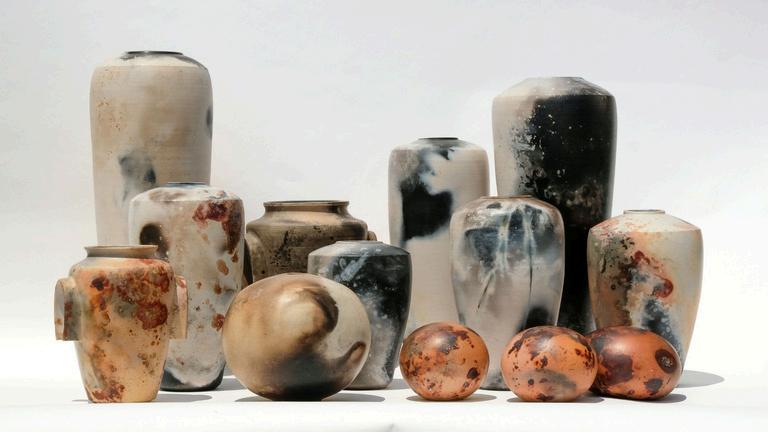
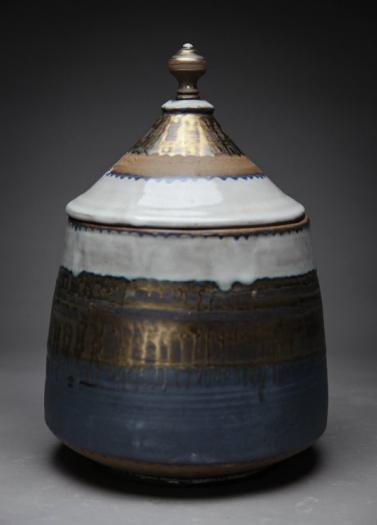
Joseph Henderer has worked with clay since 2001, developing a practice that bridges functional pottery, sculptural forms, and material exploration. Raised between California and Minnesota, he creates functional wares, atmospheric decorative pieces, and semi-figurative vessels that investigate the relationships between materials, storytelling, and abstraction.
His process is highly iterative, often
involving extensive prototyping and the development of his own tools, glazes, underglazes, and natural colorants. As an instructor, Joseph enjoys helping students build confidence through consistency, efficiency, and a deeper understanding of ceramic techniques, encouraging makers to refine both their skills and creative process.


Em Irvin (they/them) performs with clay and ceramic materials, exploring the intimate possibilities of indexing their body through the ceramic process. They received an MFA in Ceramics from the University of Colorado Boulder and are currently a PhD candidate in Performance Studies at the University of California, Davis.
In addition to teaching ceramics at the university level, em has served as a Ceramics Technician at Scripps College and was an Artist-inResidence at Baltimore Clayworks. Their work has been exhibited internationally, including at the Biennale of Contemporary Keramics in Santorini, Greece, where they received Second Prize (2024), as well as exhibitions in Rome, Italy, and Gyeonggi-do, South Korea.
SCIENCE CORNER
IS THIS POT DRY ENOUGH TO BISQUE?
That is a great question, and Science Corner is here to answer!
Let’s talk a little about why we need really dry pots to fire in the bisque kiln. First, why do we even need to do a first firing (bisque)? The goal of a bisque firing is threefold; burn off of any organics within the clay, start the chemical bonding process within the clay to make it firm but porous to any applied glaze and lastly, to remove any very small amount of remaining water within the clay.
We know from our pottery making experience, water takes up a significant portion of our clay. We even add a little more to it as we form it (wheel thrown) or bond it together (slip and score).
As the clay slowly dries out, you can see how the color of the clay changes to a lighter and lighter tone. In addition, the clay become less cool to the touch, as that coolness is primarily from water still being within the clay body.
SCIENCE CORNER
IS THIS POT DRY ENOUGH TO BISQUE?
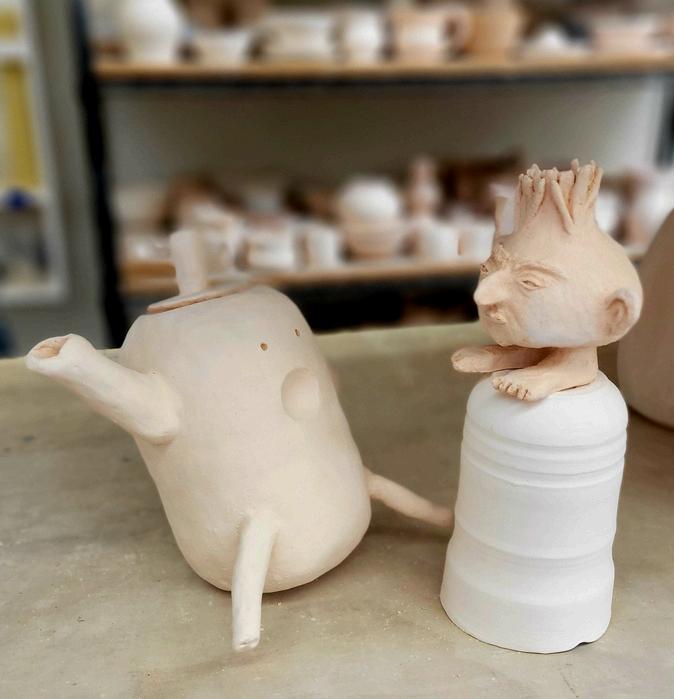
Clay dries from the surface to the inside, the thicker the piece the longer it takes to dry. A pot with ¼” walls will dry much quicker than one with ½” walls. The base/foot of a bowl or vase is typically the thickest. When the thinner walls have dried, the thicker base might not have, and if this pot goes into the bisque firing, things can go badly. If you are making a sculpture, they tend to have a very thick base to keep the piece erect. Care needs to be taken here in assessing its readiness to go into bisque!

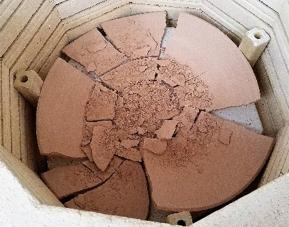
We work too hard to get the pottery we love to have such an unfortunate accident. Be patienttaking extra time can only make it work! Plus, it is better than being looked at by one of the tech team if it goes wrong!
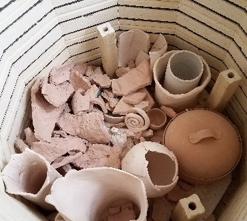
Here’s the big problem. Our bisque firing goes to a temperature of 1850°F to get your clay ready for glazing. Water boils at 212°F - this is trouble! If a large quantity of water remains in the clay, the water boils, turns into steam and will burst explosively from inside to the surface.
STUDIO NEWS AND REMINDERS
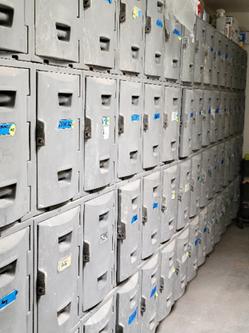
Need a Summer Session Locker?
They’re now available for rental!
Head over to MB City Hall, Parks & Rec desk.
Ask about locker rentals - that’s it!
Bring your recipt to the studio and pick one
Forgotten Pottery!
Finding where all the pottery you made is one of the hardest things every artist seems to encounter!
We strongly encourage taking photos of the location and/or using an app, like ClayLab to track your work!
After 2+ months we need the space!
Pieces not claimed by end of day Sunday, July 5 will unfortunately be discarded th
Dreaming about what color to glaze your piece when you are home?
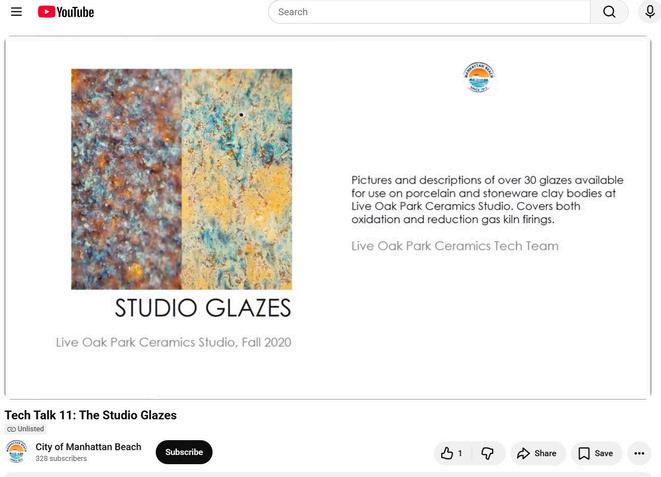
Did you know that our studio has an on-line glaze guide?
Just click on this link → here ← and you can get ride of all those glazing nightmares!
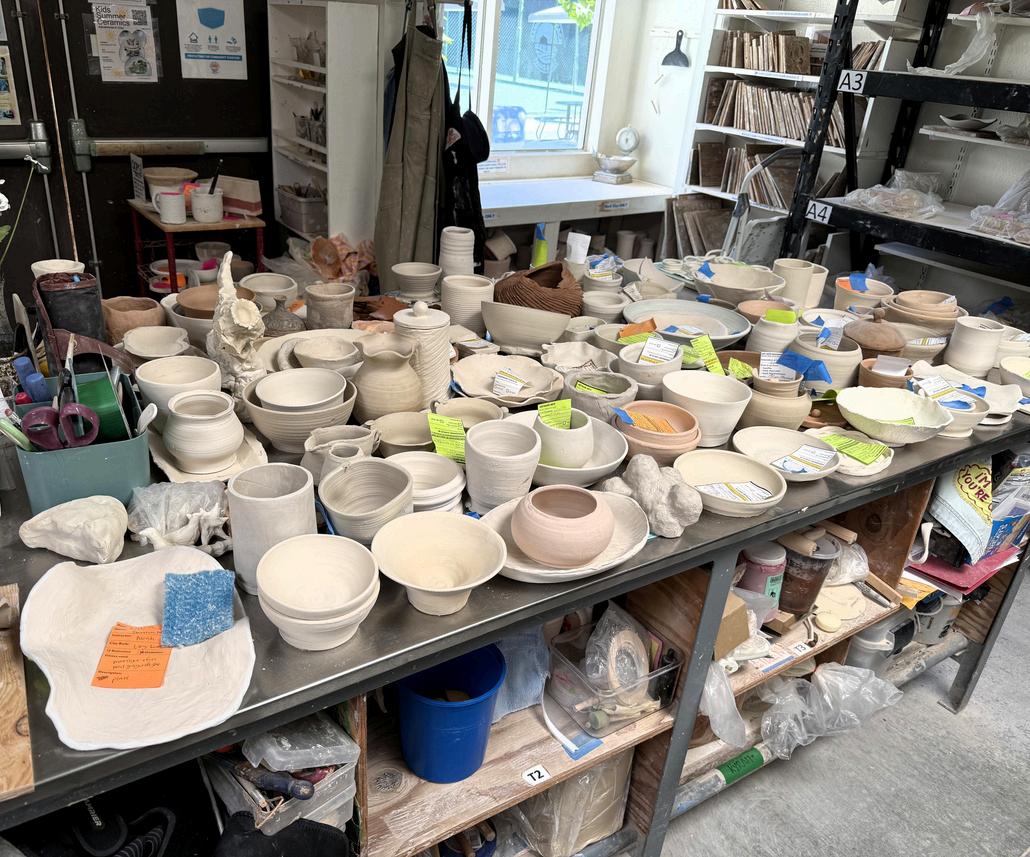
“Lost” pots as of July 1! Find yours!
GLAZE OF THE WEEK
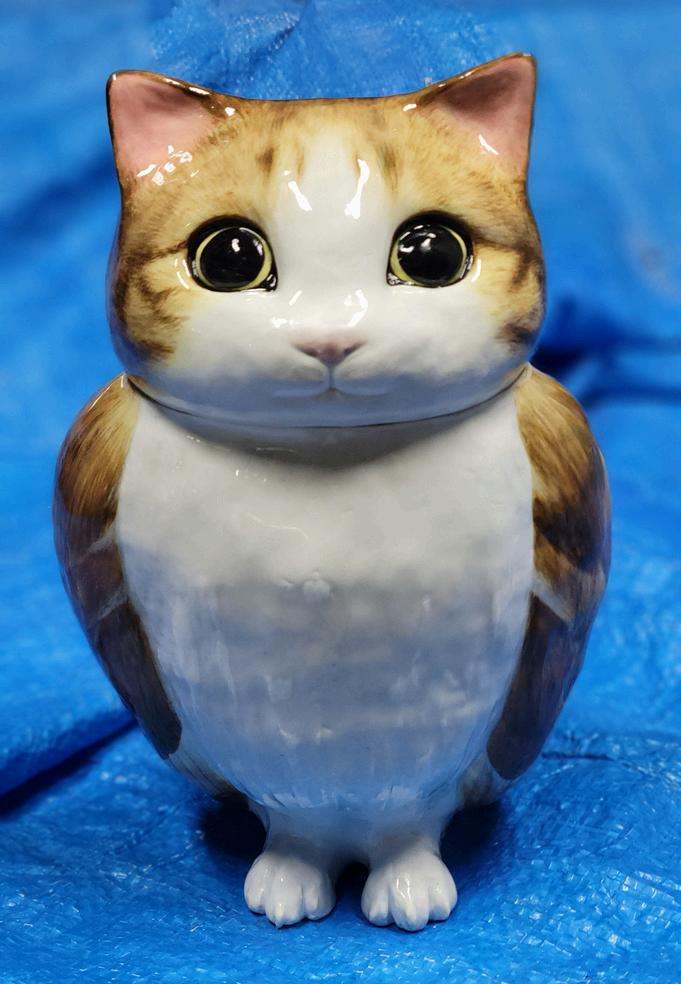
We are all in love with this Cat Owl (Cowl?!) lidded container made by Jeana from a recent oxidation firing. The beautiful detailed fur and feather patterns were made with a brush and underglaze. A clear coat on top to make it pop.
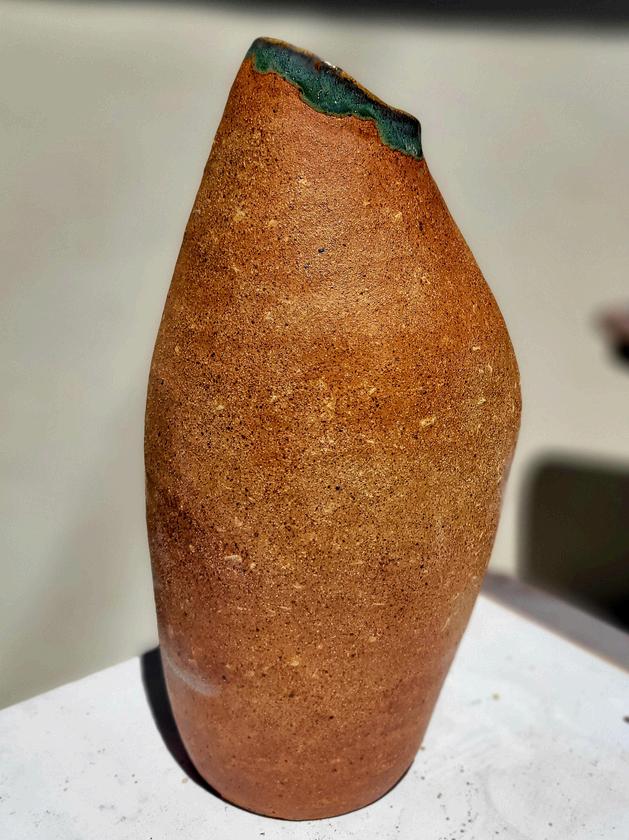
On the right we have the “Unglaze” of the Week! Rod's Bod can be amazing on it’s own in a good reduction fire. The iron grog and the auburn-ish clay color highlight the vase shape to it’s very best. The interior is Green Colemanite
with a drizzle coming out the top. So cool! Artist unknown.
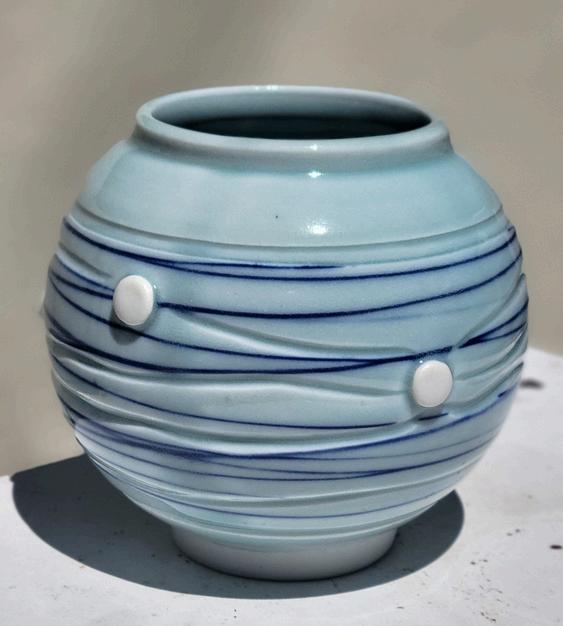
Next, we have this wonderful vase by artist Julie K. The glaze is Non Iron Blue Celedon with some streaks of blue underglaze. We love the pattern that was created by the carving as well as the unglazed procelain “buttons.” It really made the vase pop!
The Annual Community Exhibition is coming up! There are lots of potters from the studio who will be showcasing their work in the show - so come out to support, we’d love to celebrate with you!
OPENING RECEPTION:
FRIDAY, JULY 24, 2026 5:00PM - 8:00PM
EXHIBITION RUNS JULY 24 - OCTOBER 4, 2026
Manhattan Beach Art Center, 1560 Manhattan Beach Blvd.
SUMMER 2026 SCHEDULE

Open Lab
9:00 - 1:00 Open Lab
1:00 - 5:00 Open Lab 9:00 - 1:00 Ceramics Class (Chris) 6:30 - 9:30 Ceramics Class (Alan) 6:30 - 9:30
Ceramics Class (Em) 10:00 - 1:00 Ceramics Class (Em) 1:00 - 4:00 Ceramics Class (Alan) 6:30 - 9:30 Ceramics Class (Joseph) 10:00 - 1:00 Ceramics Class (Joseph) 1:15 - 4:15 Ceramics Class (Chris) 6:30 - 9:30 Ceramics Class (Kathryn) 10:00 - 1:00 Ceramics Class (Kathryn) 1:00 - 4:00 Ceramics Class (Noah) 10:00 - 1:00 Ceramics Class (Noah) 1:00 - 4:00 Open Lab 10:00 - 2:00 Open Lab 2:00 - 6:00 Kids Class (Kate) 4:30-6:00 Kids Class (Kate) 4:30-6:00 Ceramics Class (Alan) 1:30 - 4:30 Teens Class (Alan) 4:30-6:00
Teens Class (Kate) 4:30-6:00
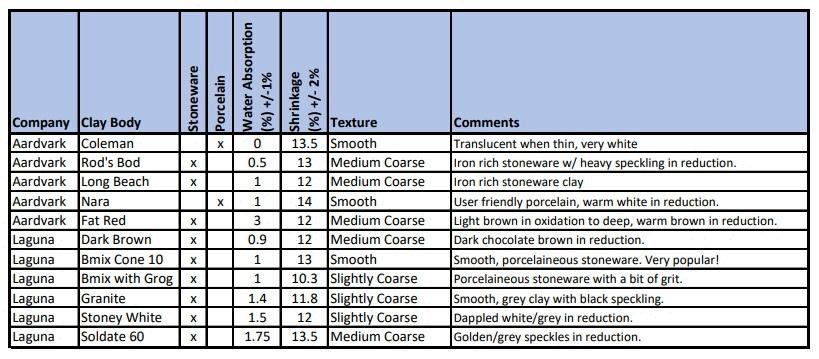
CLAY LIST AND CHARACTERISTICS