
ADDRESS Kernot Avenue, Mulgrave VIC 3170
PRINCIPAL Dr Paul Shannon
TELEPHONE (03) 9560 0911
EMAIL principal@mazenod.vic.edu.au
WEBSITE www.mazenod.vic.edu.au
E NUMBER E1265
• I Dr Paul Shannon attest that Mazenod College is compliant with:
• The minimum standards and other requirements for school registration and school boarding premises (if applicable) as specified in the Education and Training Reform Act 2006 (Vic) and the Education and Training Reform Regulations 2017 (Vic).
• Australian Government accountability requirements related to the 2023 school year under the Australian Education Act 2013 (Cth) and the Australian Education Regulations 2023 (Cth).
• The Child Safe Standards as prescribed in Ministerial Order 1359 – Implementing the Child Safe Standards, Managing the Risk of Child Abuse in Schools and School Boarding Premises.
• Attested on 12th May 2026
NOTE: The school’s financial performance information has been provided to the Australian Charities and Not-for- profits Commission (ACNC) and will be available for the community to access from their website at www.acnc.gov.au

We acknowledge and pay our respects to the traditional custodians, past and present, of this land, the Bunurong people of the Kulin nation.
Who long before us lived, loved, and raised their children on this land.
We also acknowledge all the Aboriginal and Torres Strait families in our community and acknowledge their physical and spiritual connections to the land.
We come together today to learn, to share, and to journey together.
When Melbourne Archdiocese Catholic Schools (MACS) launched our inaugural strategic plan MACS 2030: Forming Lives to Enrich the World just over a year ago, I spoke about the need for our whole organisation to reflect on the biggest challenges that confront us, and to work at speed to find practical, ambitious, student-centred solutions.
As a relatively new governing authority, 2023 set us on the path to achieving our first goals, as we focussed our efforts on building strong foundations for success. The four pillars of MACS2030 – Inspired by Faith; Flourishing Learners; Enabled Leaders; and Enriched Communities - serve to guide our work on how we achieve our strategic intent.
When we surveyed our teachers in late 2022, over 80 per cent told us that they want access to quality teaching and assessment resources. So, in January 2023, we secured a system-wide licence for MACS primary and secondary schools to access the Progressive Achievement Test (PAT) assessment suite. The inclusion of the Social and Emotional Wellbeing Survey allows schools to monitor the wellbeing of their students and target resourcing to specific areas of need. Together, these tools provide a coherent and systematic approach to student assessment.
In partnership with Ochre Education, we began work on F-6 Mathematics curriculum resources, being developed in a phased approach over three years, and delivered the first tranche for F-2. A key consideration in developing the materials is ensuring teachers retain autonomy to tailor curriculum implementation to meet the individual and local needs of students.
This is an exciting development for our MACS community, clearly demonstrating the commitment we all share to delivering the best possible education opportunities for our 120,000 students and supporting our 10,000 classroom teachers to be the very best that they can be.
Archbishop Peter commissioned a comprehensive review of Religious Education curriculum, the first in over a decade. It offers us some challenges but fundamentally is a hope-filled report that invites a path of ongoing work to develop a new RE curriculum for all Catholic schools. We continued Working Together in Mission with Parish Priests throughout the Archdiocese, including through regular roundtable discussions.
Across greater Melbourne, one in five students attend a Catholic school and 2023 saw steady growth in enrolments across our system, demonstrating the value families place on a Catholic education and the high quality, holistic education MACS schools provide.
As a system of schools, we can be better together, reducing the administrative load on our schools and freeing our teachers and principals to focus on what they do best.
I would like to pay tribute to our MACS school and office colleagues who have worked so hard to achieve our goals. We look forward to further strengthening those partnerships as we work together to deliver an education that inspires young people to enrich the world.
Yours sincerely
Dr Edward Simons Executive Director Melbourne Archdiocese Catholic
Schools Ltd
Vision
Centred on the person of Jesus Christ, our Oblate community is built on faith, nourished by the Eucharist and seeks to live and share Gospel values in word and deed. Each person at Mazenod is encouraged to contribute to a welcome and caring community in collaboration with our local Parishes. Mazenod College aims to educate the whole person in the pursuit of personal excellence, to make a better world for all.
Mission
Our mission guides our work every single day. Mazenod College is a Melbourne Archdiocese Catholic Secondary School for boys in the charism of St Eugene de Mazenod.
Let us be united in the love of Jesus Christ.
We seek to develop a personal relationship with Jesus Christ, the Saviour, and to see people and the world through His eyes. By regularly turning our hearts and minds to Him, and by opening ourselves to the gift of the Holy Spirit, we seek, like Mary Immaculate, to receive God's holiness and bring it to reality in our daily lives.
Be a burning flame not a smouldering wick.
We serve to light the fire inside our students, fostering a burning desire to achieve academic excellence and to cultivate their abilities to the fullest. We see education as a lifelong process of formation in the truth, not just a moment in time, encouraging our students to be the flame, continuously burning brightly and sharing their talents.
We have but one heart, one soul.
We strive to nurture a friendly and caring school, enabling students to develop a sense of loyalty, solidarity, and service. We provide pastoral care and encourage participation in all aspects of college life. Nourished by the Eucharist, and led by the Missionary Oblates of Mary Immaculate, we believe that once a student enters Mazenod College, he and his family become part of our community for life.
Learn who you are in the eyes of God.
We aspire to instil in all people the knowledge that God's unconditional love is real and everlasting. Through the creation of an inclusive community and an environment that is conducive to students discerning their unique worth in the eyes of God, all members of the Mazenod family are free to flourish and grow.
Enter to learn, leave to serve.
We endeavour to emulate St Eugene de Mazenod's model of standing with the poor in our community and beyond. Acts of service are a key component of an education at Mazenod College. On their journey, our students recognise their call to bring the transforming presence of Christ to the world.
Mazenod College takes its name from St Eugene de Mazenod, founder of the Missionary Oblates of Mary Immaculate. It is a regional College administered under the Melbourne Archdiocese Catholic Schools Ltd (MACS) who work collaboratively with the Oblates, who continue to exercise administrative and pastoral care to provide holistic Catholic education. The College Advisory Council provides a crucial point of connection between the wider school community and school leaders. The College motto is to ‘Leave Nothing Undared for the Kingdom of God.’
Mazenod College's journey is a testament to the profound connection between our past, present, and future. Our past serves as the foundation upon which our traditions, values, and reputation have been built. Established in 1967 by the Missionary Oblates of Mary Immaculate, Mazenod College has a rich history of providing outstanding education while instilling a deep sense of moral and social responsibility in our students.
We have a history of outstanding success in VCE and Vocational education. This success is underpinned by an evidence-based approach to learning, focusing on explicit teaching and individualised educational pathways. Our teachers utilise a Visible Learning framework to focus on clear expectations supported by regular individualised feedback, visible to students and parents alike.
Mazenod College continues to flourish as a vibrant hub of learning and personal development. Our commitment to academic excellence, character formation, and community engagement remains unwavering. Students benefit from a modern and dynamic curriculum that equips them with the skills and knowledge necessary to thrive in an ever-evolving world.




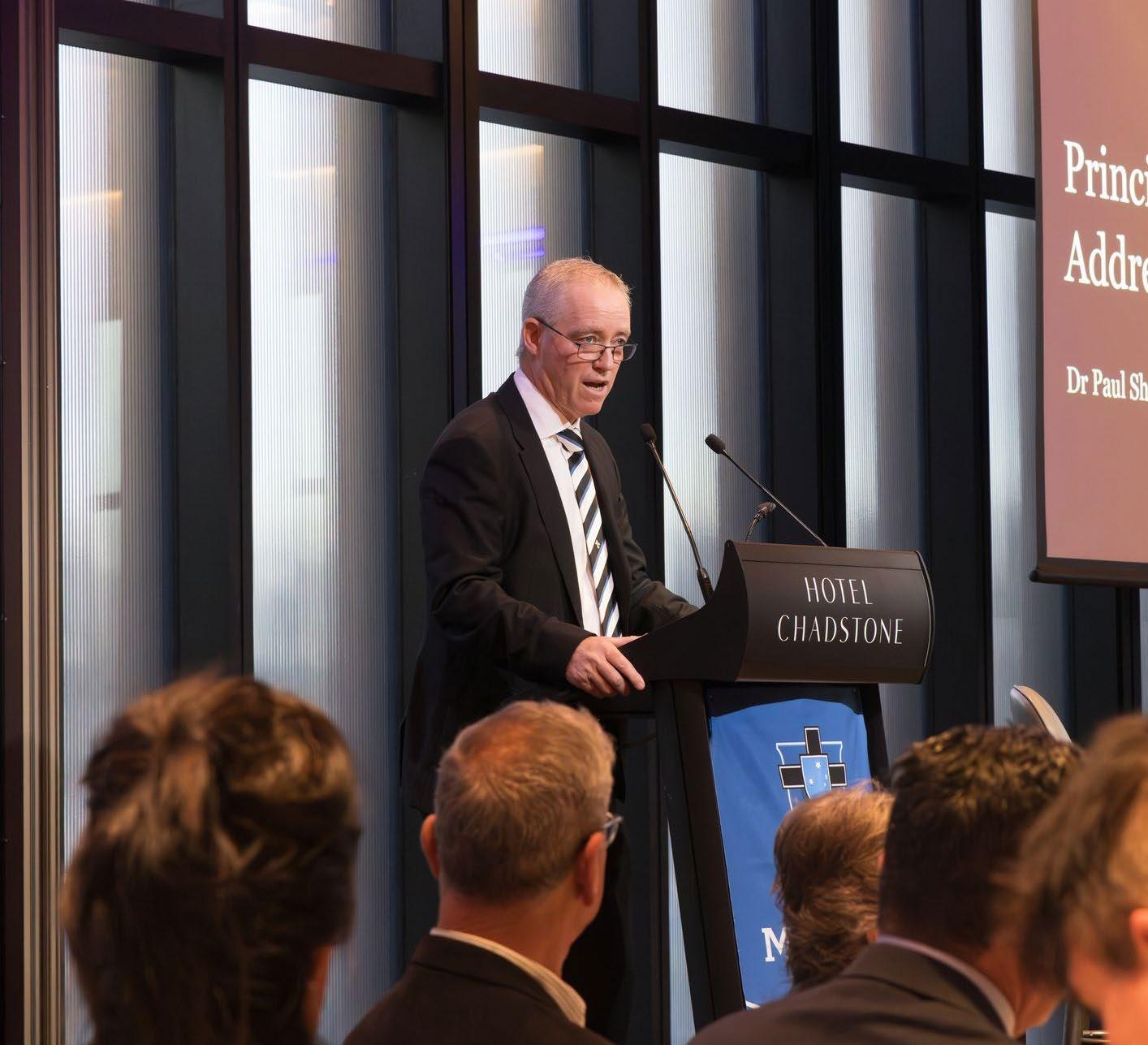
In 2025 Mazenod College were excited to embark on another year of growth, learning, and community. To our dedicated staff, passionate students, and supportive parents, thank you for your commitment to making our College a place of excellence. Together, we will continue to foster a nurturing environment where everyone can thrive. We celebrated the opportunities and successes as the year unfolded for all in our community.
The current Mazenod College Strategic Plan expired at the end of 2024 and a new plan is needed to guide Mazenod’s ongoing growth and development from 2025-2030. An engaging, thoughtful, and rigorous process was undertaken to develop the strategic plan and increase the likelihood of its implementation by Mazenod’s students, staff, and parents. Support for the strategic plan from other key stakeholders such as the Melbourne Archdiocese Catholic Schools (MACS), the Missionary Oblates of Mary Immaculate and the Mazenod College Advisory Council further strengthened the College’s desire to implement change.
There is a desire for the Mazenod College Strategic Plan 2025 -2030 to be a challenge document, one that questions long held assumptions, pushes thinking beyond current boundaries and draws leaders to new pathways. The strategic planning process was led by Damian Mannix (Director) from The Agenda Group (TAG). Damian engaged with key College stakeholders, not only to provide a source of content and overall direction, but also to secure an ongoing and genuine commitment to implementation.
The Strategic Plan places a strong emphasis on student voice. By prioritising student voice, we aim to create an environment where students feel heard, valued, and empowered to contribute to the decisionmaking processes that affect their educational journey. Our Strategic Plan is built on two foundational pillars: Inspiration and Empowerment. These are not just buzzwords. They are the driving force behind our commitment to creating a positive and impactful environment for students and staff.
The Mazenod College’s Strategic Plan 2025-2030: Inspiring. Empowering. can be accessed on the College website.
Term 1 concluded with Mission Action Day. The generosity of families once again is amazing. On behalf of the Oblates of Mary Immaculate, thank you for assisting your sons and encouraging them to support the Oblates' missions and the MAMI organisation. Thank you to the Year 12 students for all their hard work and leadership. Thank you to the staff for their guidance and direction, and for their enthusiasm and passion for the program.
The Mazenod College Reconciliation Action Plan continues to grow and be embedded in College life. In addition, the social justice committee organised activities across the curriculum to recognise and acknowledge the contributions of our First Nations Peoples. At the core of our Reconciliation Action Plan (RAP) is the acknowledgment of the traditional custodians of the land on which Mazenod College stands, the Bunurong People of the Kulin Nation. We pay our respects to the elders' past, present, and emerging, and recognise their enduring connection to the land, waters, and culture. By acknowledging the traditional owners of the land, we honour their resilience, wisdom, and profound contribution to our collective heritage.
Mazenod College commits to walking with and learning from our First Nations Peoples, who clearly have so much to teach us. We commit to the achievement of reconciliation and healing through the acknowledgement and practice of Aboriginal and Torres Strait Islander history and culture. On our reconciliation journey, we commit to continual cycles of learning, unlearning and relearning, to improve the cultural competency of all in our community, so that we become proactive in our pursuit of justice, healing and restoration, to create a shared identity which reflects the best of all of us, as we ensure that past wrongdoings are never repeated.
It is with great pleasure that I congratulate our Year 12 cohort for 2025 on their academic performance throughout the year, which is reflected in the final analysis of their VCE, VET and Vocational Major results.
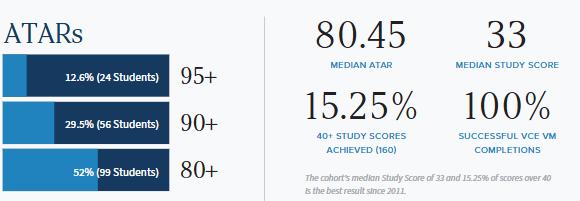
The Class of 2025 has delivered an exceptional set of VCE results, reflecting their hard work, determination, and resilience throughout the year. This year’s highlights include a median ATAR of 80.45 and a median study score of 33 the highest achieved since 2012. Notably, 15.25% of study scores were 40 or above, the best result since 2011, with 56 students (30% of ATAR recipients) achieving an ATAR of 90 or higher. We are also proud to report a 100% completion rate for our VCE Vocational Major students, demonstrating the strength of our academic and vocational programs.
Staff at Mazenod College are aware that an encouraging emotional climate creates a positive energy and safe environment. When students have a sense of trust and warmth, they are more likely to engage in school life. First and foremost, we want to foster a strong sense of connectedness from students to their school community and the opportunity it provides, which enables them to feel safe and included.
There is much more to education than the pursuit of academic prowess. One of the strong traditions of the College is the attempt to provide a truly holistic education, one which fosters not only academic growth, but also physical and social development, emotional well-being and spiritual growth, that is, the growth of the whole person. In the 2025 Annual Report you will see this celebrated across all year levels and all facets of College life.
Dr Paul Shannon Principal
2025 marked a year of significant progress and change in the physical infrastructure of the College, as it continues to uplift facilities and position itself as the school of choice for families in the south- east. With so much change underway, it was important for the Advisory Council to fully leverage its expertise to fully support Dr Shannon and the College Leadership Team during the year.
To that end, the College Advisory Council re-invigorated its portfolio of Sub-Committees to ensure that each was actively engaged on a regular basis with the relevant subject matter experts on the College staff. Council members were involved in a series of both Council and Sub-Committee meetings over the course of 2025.
Each of the Sub-Committees are chaired by a non-Executive member of the Council:
• Michael Curtis – Finance Sub-Committee
• Laurie Langford – Building & Property Sub-Committee
• Aleesha De Mel-Tucker – Marketing & Brand Sub-Committee
• James Dobeli – Risk & Governance Sub-Committee
The five non-Executive Councillors bring insights and expertise from a range of sectors, to support Dr Shannon and his leadership team as they navigate the strategic complexities and risks of managing the College. It is noteworthy, however, that the Board of the Melbourne Archdiocese Catholic Schools Ltd (MACS) has the responsibility of overseeing College’s management of day-to-day operations.
Complementing the non-Executive roles on the Council, are the following ex officio positions:
• College Principal (Dr Shannon)
• College Rector (Rev Fr Harry Dyer OMI)
• Canonical Representative (Rev Fr David Francis OMI)
• Oblate Provincial (Rev Fr Andrew Chen OMI)
• Dean of Staff (Joanne Noone)
• College Business Manager (Cameron Moroney)
• Principal’s Assistant (Diana Abulencia - Council Secretary).
The role of the Advisory Council is not to delve into daily operational and management issues – that is left to the College Leadership and staff, along with MACS. Rather, the role of the Council is to support the College by providing input into strategic and risk matters. In doing so, the Council bears an important role in representing the College community in discussions. Furthermore, the inclusion of Fr Dyer, Fr Francis, and Fr Chen on the Advisory Council provides a strong and direct link with the Mazenod charism and reminds us of the need to consider all members of the community, especially those who are vulnerable, marginalised, or needing support, as we try to walk in the footsteps of St Eugene de Mazenod.
Dr Eugene B. Fredericks Chair of the College Advisory Council
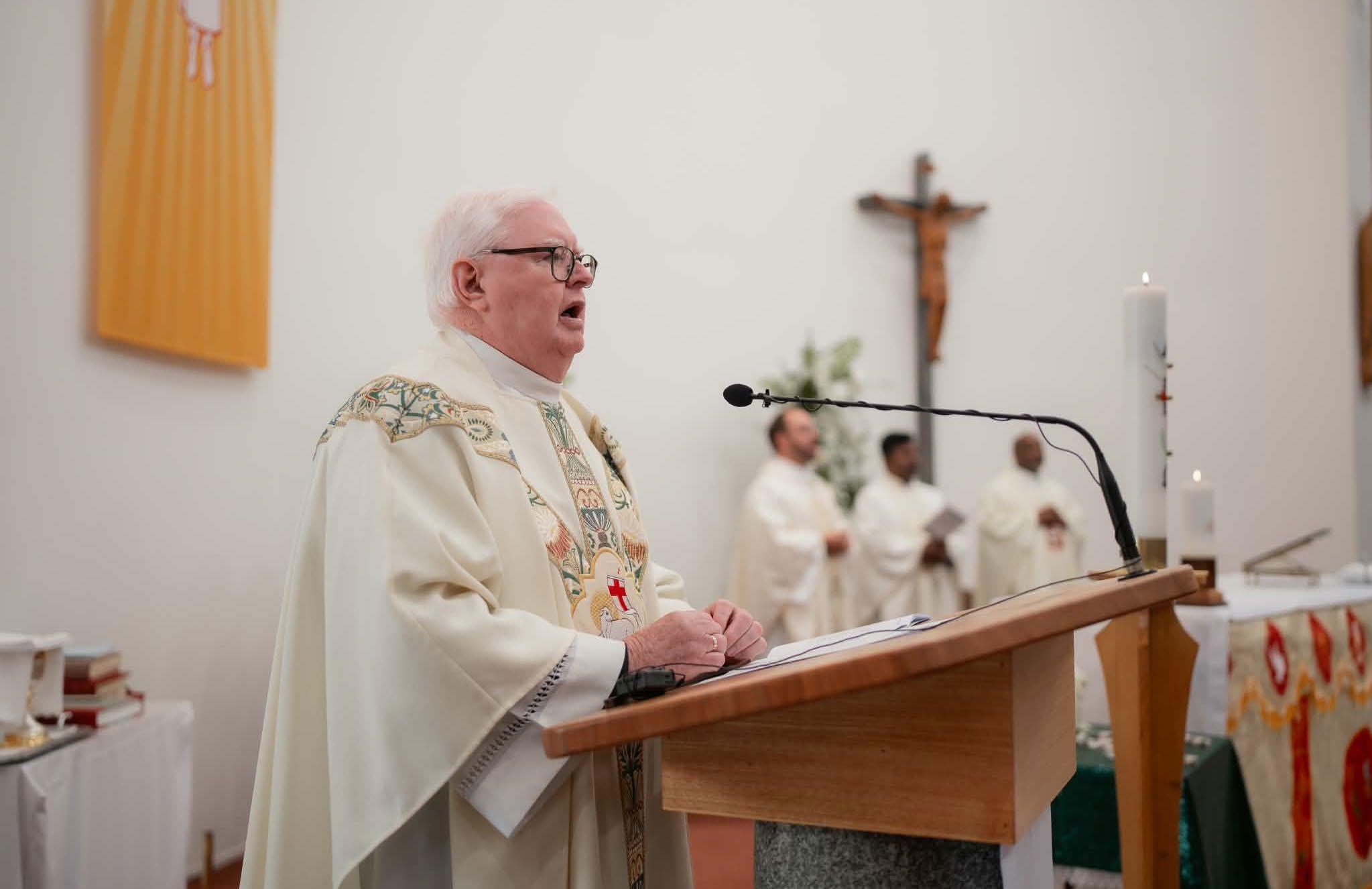
It is with joy that I present the Rector’s Report for 2025, as this year has been one of growth, renewal, and deepened faith across our Mazenod College community. Inspired by the charism of St Eugene de Mazenod, we continue to strive to “Leave Nothing Undared for the Kingdom of God,” remaining faithful to our mission of educating young men of heart, conscience and character. Throughout 2025, our Catholic identity remained the cornerstone of college life. Daily Mass and prayer, College liturgies, and retreat programs invited students and staff to encounter Christ in personal ways.
This year we witnessed the election of Pope Leo XIV on May 8 as the 267th pope. The inauguration of Pope Leo XIV in his Petrine Ministry was celebrated on Sunday May 18 in St Peter’s Square, Vatican City.
The College Inaugural Mass, celebrated on February 27 at St Patrick’s Cathedral, spiritually prepared our Mazenod community for our academic year. We welcomed Fr Andrew Chen OMI, Oblate Provincial, as our main celebrant and homilist in his first official appearance amongst us as the recently elected Australian Provincial.
In February we also welcomed Fr Dominic Rozario OMI as College Chaplain. Fr Dominic is from Bangladesh, being ordained a priest on 18 January 2013. Together we continue to care for the spiritual life and pastoral care of all members of our college community. Our Oblate charism rooted in closeness to those most in need was again a lived experience through the generous involvement of students, staff and families who continue to demonstrate generosity of spirit, living out the Gospel in small but significant actions through community service programs, Mission Action Day, St Vincent de Paul initiatives, and social justice involvement like our Rosies Oblate Street Outreach.
The partnership between families and the college remained strong with parent events, Sacramental celebrations and community gatherings enriching our mission. The college is proud of its ongoing connections with its extended family through a variety of Old Collegians’ networks and our De Mazenod Family. I also acknowledge the dedication of our teaching and non-teaching staff who continue to serve with professionalism, care and deep commitment to Catholic education. I extend sincere thanks to our Leadership Team and Advisory Board for their guidance, vision and collaborative stewardship of the College. The vibrancy of Mazenod College was on full display across sport, music, arts, debating, and cultural activities. Our ACC participation fostered teamwork, sportsmanship and pride, while the performing arts showcased the creativity of our students. These activities remain essential in forming well-rounded young men who understand the importance of balance, commitment and joy.
I especially celebrate the achievements of the graduating class of 2025 not only in VCE or VET outcomes, but in their resilience, leadership and service to the College. Their contributions strengthened the Mazenod story, and they leave with our prayers and blessings for their futures. As we look toward 2026, Mazenod College remains committed to forming young men who are faith-filled, compassionate, courageous and hopeful. The challenges of our times call for authenticity, integrity and leadership grounded in Gospel values as we continue to respond with generosity, resilience and a spirit of unity in the charism of St Eugene de Mazenod.
St Eugene de Mazenod, Pray for us.
Fr Harry Dyer OMI
Rector

Mazenod College has been served by the Missionary Oblates of Mary Immaculate in partnership with the Catholic Archdiocese of Melbourne since 1967. It sees daring and commitment to Christ as essential central elements in its character. We are reminded of this daring in our college motto, ‘Leave Nothing Undared for the Kingdom of God’. It requires us to seek, find, share, and celebrate the presence of God among us. Mazenod College is named after the Founder of the Oblates, St Eugene de Mazenod, and he asks us to do this as a community. St Eugene de Mazenod called the people of post-revolutionary France (19th Century) back to a relationship with God. He was especially interested in supporting those that are marginalised.
Mazenod College seeks to foster in all its students the development of their knowledge and love of God. Through deepening their faith in Jesus Christ, Mazenod College seeks to develop persons who are responsible and inner-directed, capable of choosing freely in conformity with a well-informed conscience. Mazenod College seeks to promote a moral consciousness in its students, in accordance with Christ’s teaching and the mind of the Church and enable them to relate it to their own lives.
Mazenod College seeks to provide a suitable Christian atmosphere that encourages the growth of the whole person and provides the opportunity to integrate culture and faith through the acceptance of Christ and his ideas, attitudes, and values. Mazenod Colle ge seeks to provide a critical and systematic account of the teaching of the Gospel and the Catholic Church in accordance with the guidelines provided by the archdiocese, whilst at the same time enabling students to experience a sense of Christian Communit y. It will also put students in touch with their unique Australian Catholic heritage.
In conjunction with the traditional owners of the land, Mazenod College, through its curriculum in Religious Education, promotes unity by marking important times and the history of the First Nations Peoples. The Religious Education department, through Faith and Charism, will endure to mark important ritual celebrations in the Catholic Tradition and in the traditions of the First Nations.
Through the Faith and Charism structure of the College, Elders and leaders of the First Nations Peoples will be invited to the school to celebrate rituals in their culture and partake in educational instruction furthering the knowledge of our students and staff.
The presence of Oblate Priests of a missionary tradition and a beautiful Chapel with daily Eucharist are great blessings. Mass is offered at 8.10am Monday to Friday in the Mazenod College Chapel, and the whole school celebrates the Eucharist together at important times during the year. The Priests are always available pastorally for students. Reconciliation is formally made available to all students during Lent and before Christmas.
Each morning all pastoral groups begin with our daily prayer where students are invited to lead the prayer further deepening our rich heritage in Catholic tradition. This prayer can also be an opportunity for an offering for a particular need within the pastoral group drawing students into a community spirit as St. Eugene emphasised the importance of support within the community.
Each day after recess the College Student Leaders lead the daily College prayer over the intercom calling all our community to stop and reflect on our Catholic faith and Oblate charism.
• The College began the school year with the celebration of the Inaugural Mass at St. Patrick’s Cathedral, Melbourne.
• Our Year 11 and 12 students, along with our Year 11 VET Christian Ministry & Theology 3&4 students, took time to volunteer with Rosies Oblate Youth Mission. Here, each Friday night, a team offer their friendship and hospitality through the simple gesture of a free hot or cold drink to the homeless.
• Our Year 11 into 12 students attended an overnight retreat during their transition time in November on the theme “From childhood to adulthood”. The students were accompanied by their pastoral leaders, retreat leaders, our Oblate priests and our Oblate Youth Ministers.
• Students, staff and families generously donated in solidarity to the Oblate Missions Christmas Appeals and to our local St Vincent de Paul Winter Appeal, bringing in food items, toiletries, blankets, children’s books and toys for our brothers and sisters in need in our neighbouring communities.
• Fifty Year 10 students opted to study Youth Ministry in Semester 1, where they explored the topics of “What it means to be a Christian Leader today”, “Apologetics: Is God real? How do we know? Evidence for our faith and how to defend it confidently, passionately, and respectfully”. Our two Year 10 Youth Ministry classes then ran retreats for all Year 7 classes.
• Students were welcomed to receive the Sacrament of Reconciliation, formally made available to all students during Lent and before Christmas.
• Our Year 8 students participated in their Reflection Day, where they explored the theme “Knowing God” led by YMT Melbourne
• Our Year 7 students enjoyed their Reflection Day exploring “Relationships & Belonging” from real talk Australia.
• Years 7-9 students during the lunchtime ‘Alpha Club’, discussed their faith in small groups.
• Year 12 students were fully engaged by David Kobler in “Unpacking Love and Responsibility”, reflecting on the topics of positive sexuality, relationships, and future family life.
• Year 12 students really enjoyed listening to Melbourne-based Catholic priest and X Factor musician Fr Rob Galea, and his story from “Addiction to Jesus” as he performed and gave testimony to his faith, encouraging the students in their own faith.
• Year 7 students participated in many faith development workshops facilitated by our Oblate Youth Ministers.
• The Year 7/8 voluntary retreat was attended by over 30 students who went to Casa Pallotti for two nights and were accompanied by some of our staff and our youth ministers.
• The year 9 students also attended their voluntary retreat and spent two nights at Casa Pallotti with staff and our youth ministers.
• Year 11 students attended a voluntary retreat on “Friendship with Jesus through the Eucharist: Deepening our relationship with God” – 60 students took up this invitation. Year 11 students attended a voluntary retreat on “Friendship with Jesus through the E ucharist: Deepening our relationship with God” – 60 students took up this invitation.
• Year 12 students were invited to a “Faith and Pizza” evening with Mr Tighe.
• Current and past students were invited to share an evening reflection, and Adoration called “Empowered”.
• Students had the opportunity to be involved in National Reconciliation Week activities, recognising our journey to reconciliation with our First Nations Peoples.
• 10 students and 3 staff joined with other Catholic schools from the Archdiocese of Melbourne to celebrate the annual St. Patrick’s Day Mass celebrated in St. Patrick’s Cathedral, Melbourne.

Goals and Intended Outcomes
This report outlines the key initiatives undertaken to strengthen teaching practice, enhance curriculum delivery, and build instructional capacity across the College, throughout 2025.
1. Continued Implementation of Explicit Direct Instruction
The College has maintained its commitment to explicit direct instruction as a core pedagogical approach. Teachers continue to apply structured, evidence-based instructional strategies to support clarity, engagement, and improved learning outcomes across all year levels.
2. Implementation of the Study Skills Program
A comprehensive study skills program has been introduced to equip students with essential learning habits and organisational strategies. This program provides consistent guidance on goal setting, time management, revision techniques, and independent learning practices, ensuring all students develop the skills necessary for academic success.
3. Documentation of Scope and Sequence
All subject areas are now required to clearly document and publish their scope and sequence. This initiative supports:
• Consistent and low variance curriculum delivery
• Alignment of learning outcomes
• Improved transparency and collaboration within and across faculties
Centralised documentation ensures teachers have ready access to current curriculum plans and can maintain coherent delivery across year levels.
4. Engagement with Educational Consultant – Kirsten Bourne
The College engaged educational consultant Kirsten Bourne to support staff development with a focus on disciplinary literacy. Following her presentation to the entire teaching staff, Kirsten conducted targeted workshops with the Mathematics, Religion, and Commerce faculties. These sessions strengthened disciplinary literacy practices and provided faculty-specific strategies to enhance student comprehension and academic language use.
5. Ongoing Training of Instructional Coaches
The College continues to invest in the professional learning of instructional coaches under the leadership of the Dean of Professional Learning, Brooke Sullivan. This training aims to build internal coaching capacity in preparation for the launch of a College-wide instructional coaching program in 2026. The initiative is designed to promote continual improvement in teaching practice and strengthen pedagogical consistency across the school.
Across all three NAPLAN domains, Numeracy, Reading and Writing, Mazenod College demonstrated above average growth from Year 7 to Year 9. This sustained progress highlights the strong value-add our students experience and reflects the impact of the College’s targeted and high-quality teaching and learning programs in Years 7, 8 and 9.
The College achieved exceptional VCE results, with a median study score of 33 for both VCE and VET subjects. This is the highest median the College has achieved across our VET subjects. 15.25% of all study scores were above 40. The median ATAR was an impressive 80.45. Our Dux, Pramesh Silva, achieved an ATAR of 99.50.
Five students achieved a perfect study score of 50 across the subjects VET Engineering, General Mathematics, and Software Development.
These outstanding results have opened strong pathways for students beyond school. All students who applied through VTAC received a university offer, and those who did not apply secured alternative pathways through apprenticeships, traineeships, direct TAFE entry, or planned gap years.
The Learning Diversity team at Mazenod College is committed to supporting the individual learning needs of all students, ensuring equitable access to curriculum and learning opportunities. In 2025, the team comprised 22 staff, including specialist teachers, psychologists and education support officers, providing a comprehensive and responsive approach to student learning and wellbeing.
The College offers structured literacy and numeracy intervention programs alongside in- class and individualised support. These provisions play a vital role in enabling students to engage successfully with learning across all year levels.
The Learning Diversity leadership structure supports strong middle leadership and ensures effective coordination of student programs:
• Director of Learning Diversity
• Dean of Learning Diversity
• Learning Diversity Leader – Year 7
• Learning Diversity Leader – Years 8 & 9
• Learning Diversity Leader – Years 10–12
• Learning Diversity Psychologist
• Administrative Assistant to the Director of Learning Diversity
• Learning Diversity Teachers
• Learning Support Officers
• Wellbeing Support Officer
This model reflects the College’s ongoing commitment to working collaboratively with families to provide a holistic and inclusive education for all students. It also enables targeted support for teaching staff, assisting with the planning, implementation and monitoring of personalised learning programs, as well as adjustment documentation and evidence collection for the Nationally Consistent Collection of Data (NCCD).
In 2025, 288 students were identified as requiring educational adjustments and were included in the NCCD. Of these, 183 students required supplementary, substantial or extensive levels of adjustment. Commonwealth funding enabled the College to resource the Learning Diversity team to ensure these students could access learning on the same basis as their peers.
The Learning Diversity team continued to apply a Response to Intervention (RTI) framework, ensuring students receive targeted and timely support aligned to their specific needs at Tier 2 and Tier 3 levels.
• Identification of student need through the provision of targeted assessments
• The Literacy Support Program is a 2 Year program in Years 7 & 8. In 2025, 17 Year 7 students participated in this program. A further 24 Year 8’s accessed the program.
• Tier 3 literacy intervention Corrective Reading was introduced in 2025 with 9 students in Years 7 & 3 Year 8 students identified to participate. When measuring progress, all students demonstrated improved reading fluency, which has a direct impact on their comprehension. In addition, students' rate of reading showed an improvement.
• Numeracy Support (Years 7 & 8) – in-class and targeted small group intervention delivered by specialist numeracy teachers, which provided support to approximately 50 Year 7 students across the year. In addition, 30 Year 8 students accessed this numeracy support.
• Individual learning support for students undertaking a reduced subject load from Years 9 – 12.
• Social skills and positive behaviour programs, including:
o Talk About for Teens (Junior School)
• Study Without Stress Program (Senior School)
• Provision of targeted assessments to identify student needs
• Personal and social development clubs, including:
o Games Club
o Film Club
o Homework Program
These programs aim to improve student literacy and numeracy outcomes, increase engagement, support wellbeing, and foster confidence and independence in learning.
Mazenod College offers a comprehensive enhancement program in areas such as Humanities, Music, Mathematics, English, Robotics and Information Technology. Many students are involved at all levels in the following programs:
• Enhancement English (Year 7, Year 8, Year 9, Year 10)
• Enhancement Mathematics (Year 7, Year 8)
• Enhancement Mathematics (Year 9, Year 10)
• Enhancement Science (Year 10)
• Enhancement Biology (Year 10)
• Enhancement History (Year 7, Year 8, Year 9)
• Enhancement STEM (Robotics) (Year 8)
• Enhancement Music (Year 8)
• Enhancement Religious Education (Year 9)
• Enhancement Physical Education (Year 10)
• Enhancement Business Management (Year 10)
• VCE Units 1 & 2 History (Year 10)
• Software Development Extension (Year 10)
• Religion & Society Units 3 & 4 in (Year 11)
• VCE VET Christian Ministry and Theology Units 3&4 (Year 11)
• Numerous other Units 3 & 4 in (Year 11)
• University Enhancement subjects in (Year 12)
Languages
• Our VCE Italian students interviewed Holocaust survivor and refugee survivor and refugee Mr Joe Szwarcberg. This inter-curriculum activity developed the students' language skills, knowledge of the diverse source of migration we have in Australia and their ability to empathise.
• Languages Week with activities for the three languages
• Greeting Languages Week with activities for the three languages:
• Origami. 1000 paper cranes workshop
• Judo class
• Chop stick race
• Jian Shen Dragon
• International short film festival
• Japanese
• Twenty students attended the Japan Study Tour in Semester 2
• Students attended the annual Japanese Speech Contest at the University of Melbourne
• VCE students attended the MIFF International Film Festival
• Chinese
• Twenty students attended the China Study Tour in Semester 2
• Students attended the annual Chinese Reading Awards at the University of Melbourne
• Junior students celebrated the International Chinese Language Day and visited the Box Hill Town Hall for Chinese Cultural Day
• Senior students attended the Monash University initiative ‘Spring into Monash’
• Italian
• Junior students attended the Dante Alighieri Poetry Competition and visited the Museo Italiano at Co.As.It. in Carlton
• Middle school students attended a Language Exchange evening with peers from Sacred Heart Oakleigh
• Senior students went on a movie night and watched ‘Anytime, anywhere’ as part of Unit 3 activities
• Senior students visited the Melbourne Holocaust Museum and participated in the “In touch with Memory” program
• Senior students visited the Immigration Museum as part of Unit 4 activities
• Senior students had an online Language Exchange with a class of students from our partner school Liceo Vivona, Rome, during Term 1.
Mathematics
• Introduction of Unit 3/4 VCE General Mathematics for Year 10 Enhancement students:
A select group of Year 10 students were offered the opportunity to undertake Unit 3/4 VCE General Mathematics following a careful selection process. Their performance was outstanding, with several students excelling at an advanced level and three achieving a perfect study score, highlighting both their commitment and the strength of the school’s enrichment pathways.
• Strong growth in the Years 7–10 Enhancement Math program:
Participation across all year levels remained exceptionally high, contributing to a vibrant, academically curious, and highly motivated learning community.
• Students excelling beyond their year level:
o Three Year 9 students successfully undertook the Year 10 Enhancement Mathematics program, demonstrating strong readiness for accelerated learning.
o Three Year 10 students progressed into the Year 11 Mathematical Methods program and achieved outstanding results. w
o One Year 11 student advanced further to study Year 12 Mathematical Methods, showcasing exceptional capability and dedication.
• Outstanding results in the Australian Mathematics Competition:
A very large number of students participated, with many earning High Distinctions (top 3% in their year level and region) and numerous others achieving Distinctions (top 20%). These results reflect the depth of talent within the cohort and the effectiveness of the school’s mathematics enrichment initiatives.
• Visual Arts students were published in Catholic Education annual anthology Shared Stories.
• Many of our students participated in excursion to a range of Art Galleries.
English
• Many of our Literature, Enhancement and Visual Arts students were published in Catholic Education annual anthology Shared Stories;
• Numerous students participated in the Debating Association of Victoria competition and engaged in various Public Speaking opportunities.
Library
• Students participated in Book Club, Yarn Club, Tech Club and other activities including puzzles, Lego and chess in the library.
• Students read, studied, recorded presentations and collaborated during recess, lunchtimes and before and after school.
• Students in Year 7,8 and 9 participated in fortnightly wide Reading classes with a Teacher Librarian. They learnt a variety of reading strategies and were encouraged to actively engage in reading and reflecting upon a variety of genres.
• 70 students completed the Victorian Premiers' Reading Challenge between February and August.
• Joel McKerrow, poet, presented to and workshopped with Year 8 students as part of their poetry unit.
• Mazenod Literature Festival, celebrated in Book Week, featured author talks and workshops, writing competitions, trivia competitions and an Escape Room. Featured authors Tristan Bancks, Emily Gale, Michael Hyde and illustrator, Marc McBride were very popular speakers and encouraged our junior students in reading and writing.
• Our weekly Wednesday lunchtime sessions have been a resounding success! These gatherings provided students with a safe and supportive environment to enjoy friendly gaming with their peers. Beyond the fun of gaming, participants learned important lessons about cyber security and the critical resources available, like kids' helplines. The positive feedback from students highlights the importance of creating spaces where they can connect and learn together.
• We recently held internal competitions for our Years 7 and 8 students to select representatives for the Melbourne South Mario Kart Competition. Out of over 60 participants, we are proud to celebrate Ted Weston, who not only won the competition but will also represent our school at the national level in the Gold Coast later this year. Ted’s achievement reflects the hard work and dedication of all competitors, and we look forward to cheering him on in the upcoming national event.
• Our FRC Robotics team, composed of over 15 enthusiastic students, has been hard at work preparing for the Melbourne Regional Event in July. This year marked our first foray into the national competition, where our team impressively placed 15th out of 41 teams. The support from our highprofile sponsors has been invaluable, enabling us to enhance our capabilities and strive for even greater success in future challenges.
• An annual highlight has been the visit from Monash University, which conducted a hands- on robotics workshop for our Year 9 students. This interactive experience allowed students to gain practical skills and insights into robotics, further enriching their understanding of the field. The enthusiasm from both students and instructors made this workshop a memorable occasion.
• We were fortunate to host representatives from Danger Thumbs, a game development company that shared their expertise with our students. Their discussion on game and software development opened exciting avenues for students to consider potential careers in the tech industry. The engagement and curiosity displayed by our students during this session were truly inspiring.
24 | Page
Mazenod College Annual Report to the School Community 2025
Science
• Weekly science club for Year 7 and 8’s completing experiments and engineering challenges.
• Science week lunchtime activities based on the 2025 theme of "Decoding the Universe – Exploring the unknown with nature’s hidden language" including; code breaking activities, modelling asteroids falling to earth, laser interference and a science-based escape room.
• Zoo excursion for Yr 7 to undertake a STEM session run by the zoo educators on how species can be maintained locally.
• Live demonstrations during Open Night
• Experiments in all science subjects to model theory learnt in class and give students hands on experience
Design and Technology
• Year 12 Furnishing students completed resin hall tables that were put on display in the College reception
• Year 11 Engineering students followed the design process to make original “engineering furniture pieces, made from a combination of timber and metal. These were put on display at the end of last year and open day
Drama
• Students have attended professional theatre productions such as Sweeney Todd and Beetlejuice the musical.
• Attended performance of VCE Season of excellence – Top Class Drama.
Humanities
• Experiential excursions to the Vietnam Veterans’ Museum on Phillip Island and the Holocaust Museum, expanding the scope of student subject engagement, with a new major excursion to the Melbourne Museum for the ‘Rome: Empire, Power, People’ exhibit approved for our Y7 cohort
• Geography students also partook in field trips to carefully selected external sites, to undertake case studies in landforms and land use
• Facilitation of both DAV and ACC debating and public speaking competition preparation by faculty staff
• Senior History has drawn upon the expertise, experiences and role modelling of our most successful past History Revolutions students through closed student led classroom sessions, Q&As and seminars
Commerce
• Expansion of a partnership with Banqer to support our Year 9 Financial Literacy offering. Students utilise a digital financial education platform where online simulations explore a range of essential financial concepts from debt to investments, budgeting to careers etc. The platform simulates real life events, like stock market shifts, natural phenomena like flooding, and job promotions, to link students to experiential learning and real-world applications.
• The development of a Year 9 Legal Studies elective to further enhance our civics and citizenship programme. Questions that form the basis of this elective include who makes laws? Can lawmakers be influenced by society? How are laws enforced? Do laws apply differently to young people? What punishments do people face when laws are broken? Should punishments be harsher? Students will also critique the effectiveness of our youth justice and adult justice systems in comparison to justice systems across the world.
• Continuation of our Year 12 Business Management excursion to Yakult. The tour moved through the whole facility giving students the opportunity to witness the entire manufacturing process and find the connections between real-world application and their understanding of operations management in Unit 3.
VET, VM, and VPC
• The Year 10 VET Career Investigations students attended an excursion to Holmesglen Institute, Chadstone, on Thursday February 27. The excursion allowed students to explore the facility and partake in the Level Up Apprenticeship and Traineeship Expo. Here, students met with industry experts, connected with potential employers, and explored apprenticeship or traineeship opportunities.
• The Year 10 VET Career Investigations students attended an excursion to Swinburne University of Technology, Wantirna, on Friday May 30. The excursion allowed students to explore the facility and partake in the Brick & Block Laying TAFE Taster Day as part of the Try TAFE initiative. The excursion offered students a hands-on experience in bricklaying, and they spoke directly with teaching staff about apprenticeship and traineeship opportunities.
• The Year 10 VET Career Investigations students attended an excursion to Rail Academy, Newport, on Wednesday June 25. The excursion allowed students to take part in the Rail Career Immersion Day where they participated in hands-on activities and explored diverse career paths, including track work, station management, and safety operations. They also heard from industry experts, gaining insights into the future of rail careers. The excursion was part of the Reimagining Work Experience 2025 program, facilitated through Mazenod College’s membership in the Eastern Metropolitan VET Cluster (EMVC) and Gateway LLEN.
• Two Year 10 VET Career Investigations students participated in the Suburban Connect Work Experience Program which ran from Monday June 30 to Friday July 4. The unique opportunity was designed for Year 10 students interested in pursuing a career in Engineering via the world of tunnelling and infrastructure. The program was facilitated through Mazenod College’s membership in the Eastern Metropolitan VET Cluster (EMVC) and Gateway LLEN, and their partnership with Suburban Connect, Suburban Rail Loop Authority (SLRA), and BGKLLEN.
• The Year 11 VET Christian Ministry and Theology students attended an excursion to Our Village (formerly St Kilda Mums, Geelong Mums, and Eureka Mums) on Wednesday February 19, Tuesday February 25, and Wednesday February 26. Here, students actively engaged in various activities including sorting and organising donations, cleaning equipment, and preparing items for redistribution. It was a valuable hands- on experience allowing them to develop empathy, compassion, and a deeper understanding of the importance of community service.
• The Year 11 VET Christian Ministry and Theology students attended an incursion on Friday June 27. The incursion featured guest speaker, Shelley Ware, a prominent media personality, educator, and advocate for First Nations voices in Australia. During the incursion, students learnt about the significance of Welcome to Country and First Nations Spirituality.
• The Breakfast Club officially launched on Thursday April 3, with a Grand Opening held on Thursday May 1. From May 7, customers were also able to conveniently order and pay online. This initiative served as a hands-on extension of the Year 11 VET Small Business Operations course, allowing students to apply their learning in a real-world context. They were responsible for designing, costing, marketing, and selling a variety of breakfa st items to both staff and students. All profits from the venture were donated to Rosies, a total of $3,800. To further replicate the dynamics of a real small business, students worked in rotating shifts, serving customers on Monday, Thursday, and Friday mornings between 7:30 am and 8:30 am.
• The Year 12 VET Sport and Recreation students attended an excursion on Friday March 7 to Urbnsurf. There, they undertook surf lessons under a controlled environment. They also explored different coaching styles and learned to work within health and safety guidelines.
• The Year 12 VET Sport and Recreation students attended an excursion on Monday May 19 where they explored the Yarra River and Melbourne City via water bikes and mountain bikes. Facilitated by Waterbikes Australia, the experience allowed students to explore sport and recreation within an urban area.
• As part of the transition program for incoming Year 12 VCE VM students, essential training sessions were held in late November 2024, to prepare students for workplace readiness. On Monday November 25 students completed their Construction Induction Training (White Card), equipping them with the knowledge and certification required to safely enter construction sites. This was followed by First Aid Training on Tuesday November 26, where students gained vital skills in emergency response and basic life support.
• On Monday February 24 and Tuesday February 25, the Year 12 VCE VM students attended camp at The Ranch in Boneo on the Mornington Peninsula. They engaged in a range of activities designed to build teamwork, resilience, and leadership, in accordance with their studies in Personal Development Skills.
• On Tuesday March 4, the Year 12 VCE VM students cooked, sold, and served pancakes to Year 7 students for Shrove Tuesday. This event not only supported a good cause in the Oblate Missions, it provided a meaningful opportunity for the Year 12 VCE VM students to demonstrate leadership, hospitality, and community spirit, whilst also engaging in the cultural/religious tradition that marks the beginning of Lent.
• In honour of International Women’s Day, the Year 12 VCE VM students organised a luncheon for staff on Monday March 17, showcasing their culinary talents and celebrating female empowerment and the achievements of women in the world. The students prepared a spread of both sweet and savoury dishes, each one reflecting the diverse flavours and cultures represented within the College community.
• On Mission Action Day held on Friday April 4, a group of dedicated Year 12 VCE VM students volunteered their time to run the sausage sizzle stand. They took on a variety of responsibilities including cooking and serving sausages, serving beverages, and managing cash transactions. The experience not only supported a good cause in the Oblate Missions but also gave students a chance to develop practical skills in customer service, teamwork, and money handling.
• On Friday May 9, the Year 12 VCE VM students played a key role in supporting the 'Discover Tomorrow' Careers Expo. Their responsibilities included ushering exhibitors and delegates during the event set-up, ensuring a smooth and welcoming arrival experience. They remained on hand to assist with logistics. This hands-on experience allowed them to develop valuable skills in event coordination, communication, and teamwork, whist also gaining insight into a wide range of career pathways.
• The Year 12 VCE VM students participated in an accredited Responsible Service of Alcohol (RSA) course on Monday May 26, delivered by Best Restaurant Training. The course provided students with industry-recognised certification whilst building their understanding of workplace responsibilities, legal compliance, risk management, and communication skills, in accordance with their studies in Work Related Skills.
• Year 12 VCE VM students led two interactive workshops for Year 5 and Year 6 students at St. Peter’s Primary School in Clayton. These sessions, held on Friday June 6 and Friday June 13, supported these younger students as they prepare for the transition to Secondary School. The sessions offered guidance, insights, and practical strategies to help them feel confident about the next stage of their education.
• The Year 12 VCE VM students attended an incursion on Friday June 27. The incursion featured guest speaker, Shelley Ware, a prominent media personality, educator, and advocate for First Nations voices in Australia. During the incursion, students learnt about the significance of Welcome to Country and First Nations Spirituality.
• As part of the transition program for incoming Year 11 VCE VM and VPC students, essential training sessions were held in late November 2024, to prepare students for workplace readiness. On Monday November 25, students completed their Construction Induction Training (White Card), equipping them with the knowledge and certification required to safely enter construction sites. This was followed by First Aid Training on Tuesday November 26, where students gained vital skills in emergency response and basic life support.
• On Mission Action Day held on Friday April 4, a group of dedicated Year 11 VCE VM and VPC students volunteered their time to run the sausage sizzle stand. They took on a variety of responsibilities including cooking and serving sausages, serving beverages, and managing cash transactions. The experience not only supported a good cause in the Oblate Missions but also gave students a chance to develop practical skills in customer service, teamwork, and money handling.
• As part of Australian Manufacturing Week (AMW 2025), the Year 11 VCE VM and VPC students attended the Future Solutions Industry Immersion at the Melbourne Convention Centre on Friday May 9. The Industry Immersion was a unique opportunity for students to experience a corporate trade show environment, exploring technologies, processes, and innovation in the Engineering and Advanced Manufacturing sectors. The opportunity was facilitated through Mazenod Colleges’ partnership with Monash Tech School.
• The Year 11 VCE VM and VPC students attended an incursion on Friday June 27. The incursion featured guest speaker, Shelley Ware, a prominent media personality, educator, and advocate for First Nations voices in Australia. During the incursion, students learnt about the significance of Welcome to Country and First Nations Spirituality.
• The Year 11 VCE VM and VPC students have been actively involved in the ongoing upkeep and restoration of the Turtle Pond, with two hands-on sessions taking place on Tuesday December 3, 2024, and Tuesday May 5, 2025. These sessions focused on environmental stewardship and sustainability, giving students the opportunity to engage in meaningful outdoor learning. Activities included the removal and responsible disposal of invasive plant species, replanting cleared areas with native flora, applying mulch to prevent regrowth, and maintaining soil health.
• VCE Students attended two professional musicals “Sweeney Todd” and “Beetlejuice”
• String quartets performed in various events as pre-entertainment. Events and organisations such as MACs, Alumni Awards Dinner etc.
• Mazenod-Avila Orchestra workshop – students got together for a few hours after school to have a quick rehearsal and perform. This doubled as a social event with the other students.
• ACC Hamer Hall Event – selected students were chosen to participate and perform in the ACC Hamer Hall event which included all the ACC schools.
• Monash Youth Music Festival – Chamber String students competed in this festival and received first place.
• Victorian School Music Festival – lots of ensembles competed in this event and received various awards.
• Victorian Brass Solos – about 51 students competed in this and won many awards.
29.5% of Year 12 students had an ATAR score equal to 90 or more in 2025, placing them in the top 10% of the state.
A summary of our key senior school data follows:
• Number of students scoring 99+ ATAR: 4 (Top 1% in the state)
• Number of students scoring 95+ ATAR: 24 (9.6%)
• Number of students scoring 90+ ATAR: 56 (29.5%)
• Number of students with a perfect study score of 50: 5
• Number of study scores of 40+: 160 (15.25%)
• For the tenth year in a row, Mazenod College had students in Top Class auditions for drama. One student achieved the Top-Class Performance with an additional student representing the College in the auditions.

In addition to studying Religion and Society in Year 11, a group of enhancement students study a second Year 12 subject in Year 11. In 2025, 70 students did this as indicated below, achieving 52 study scores of 35 or more.
In 2025, Mazenod College received another round of pleasing NAPLAN results. With at least 80% of students in Year 7 being categorized as strong or exceeding the National Proficiency Standard in each of the five assessments, and a similar 84% of students in Year 9. This is a reflection the above state average growth of Mazenod Students in all the external testing they undertake.

At Mazenod College, student wellbeing is central to all that we do, as we strive to create an environment in which young men can flourish academically, spiritually, and emotionally. Through a strong focus on mental health, physical wellbeing, and positive relationships, the College supports the development of well-rounded young men who are equipped to make meaningful contributions to society. This holistic approach not only supports learning and achievement but also fosters a sense of purpose and ethical responsibility, encouraging students to lead lives grounded in faith, service, and compassion.
In 2025, the College further strengthened its wellbeing approach by clearly embedding the role of the Pastoral Leader as the primary point of contact for students and their families. Daily connection within Pastoral Groups supported consistent communication and relationship-building, enabling Pastoral Leaders to develop a strong understanding of individual students while supporting their social development, organisation, independence, and overall wellbeing.
Personal wellbeing and social development are the focus of a structured and sequenced pastoral curriculum delivered across Years 7–12 in a weekly pastoral period. This is supported through Reflection Days and seminars at each year level that addresses age- and stage-appropriate wellbeing topics.
In Years 7–9, the Resilience Project curriculum, supported by a range of complementary resources, was used to strengthen students’ emotional awareness and wellbeing. The focus was on fostering positive emotions and building resilience, with particular emphasis on developing strong peer and student –teacher relationships, and promoting gratitude, empathy, mindfulness, and kindness. As part of this approach, Year 7 students also attended The Flipside performance, which encouraged reflection on personal responsibility, respect, and ethical decision-making in the online world, while equipping students with strategies for empathy, resilience, help-seeking, and positive bystander behaviour.
Likewise, students in Years 10-12 also engaged with a variety of different partners to learn about age specific issues, such as drug education, safe partying and healthy approaches to diet and exercise. Additionally, Real Life Resilience delivered a presentation to our Year 10s, where they shared their stories of personal hardship and resilience and the necessity of having control over your own actions.

In 2025, the College continued to facilitate the Senior Child Safety Committee and the Junior Child Safety Committee established in the previous year. Both groups were chaired by the Deputy Principal (Students) and included the Dean of Senior School, the Dean of Junior School, and student representatives from each year level. The purpose of these committees is to identify and discuss child safety matters from the students’ perspective. They provide a safe and supportive forum for students to share their experiences of college life and offer suggestions for improvement. This ongoing process has strengthened student voice and agency, while also providing the Pastoral Team with valuable insight into the views and lived experiences of our students.
Our commitment to providing a genuinely safe environment relies on open dialogue and a culture that empowers individuals to speak up and challenge unacceptable behaviour. Building on this commitment, the MazSAFE platform, launched in 2024, continued to be embedded and strengthened throughout 2025, further consolidating the College’s approach to child safety and wellbeing.
MazSAFE provides a secure and accessible mechanism through which current and former students, families, and members of the wider school community can raise concerns:
• freely,
• without fear of repercussion, and
• with confidence that their concerns will be heard and that appropriate action and follow-up will occur.
The ongoing use of MazSAFE reinforces a culture of ethical behaviour, respectful relationships, compliance, and strong governance, supporting the College’s commitment to ensuring safety, accountability, and care for all members of the community.
As part of our whole school commitment to wellbeing, we offered a diverse range of programs and initiatives for all students. The aim was to foster a strong sense of belonging and identity and an optimistic outlook on the future.
In 2025 some of our Student Wellbeing initiatives included:
• Tomorrow Man workshops and expert facilitation, which provided our students with the critical emotional and social skills they need to lead flourishing lives and to have healthy relationships with others.
• The Pat Cronin Foundation presentation to senior students, raising their awareness of the consequences of alcohol fuelled violence.
• Real Life Resilience workshop delivered by Ben Pettingill and Mike Rolls, equipping students with the confidence and skills needed to overcome challenges and change.
• Time and Space events were held for parents and students in Year 7, 8 and 11, providing an opportunity for meaningful communication and connections.
• Victoria Police delivered a presentation to students about managing their safety in a digital world.
• Game Aware facilitated seminars for both parents and students on how to build a healthier relationship with gaming.
• The Push Up Challenge was a student driven initiative which aimed to educate our community about mental health, as well as foster mental wellbeing and fitness.
• The R U OK Day? initiative was led by our Student Leaders who reminded us that every day is a good day to check in with family and friends to see how they are.
• Year 8 Grandparents Day was a wonderful opportunity for our students to share their school life with their grandparents and special friends.
• METEC Driver Education for Year 10 students.
• The ‘Discover Tomorrow’ Careers Expo provided students with direct access to a broad range of career pathways. With over 100 exhibitors representing diverse occupations, tertiary institutions, and industries, students were able to engage directly with professionals and gain valuable insights to support informed pathway decision-making.
• Student Leadership Retreat provided middle and senior school leaders with a valuable opportunity to step away from the day-to-day demands of school life to reflect on leadership within a Catholic context. Through shared reflection and discussion, students explored how they can authentically live out and animate these values in their leadership roles at Mazenod.
In 2025, the College continued to facilitate Time and Space evenings for students and their parents. These events are designed to strengthen relationships between parents and their sons while highlighting the importance of a strong partnership between home and school. Opportunities were provided for Year 7 students and their mothers or female mentors, Year 8 students and their fathers or male mentors, and for Year 11 students and their parents as they prepared for the transition into Year 12. These evenings create meaningful moments for special connection and conversation in an increasingly busy world, reminding families of the importance of intentionally making time for one another. These Time and Space evenings have become an established and valued part of the College calendar.
In 2025, the Year 10 students participated in two activity afternoons with Killester College. The aim of these sessions was to bring students together through a range of group activities that fostered confidence, communication, and interpersonal skills. These afternoons provided a valuable opportunity for students to build connections and develop respectful relationships with young women from a closely affiliated Catholic school.
Student Satisfaction
In 2025, the College continued to support individual wellbeing through College Psychologists both counselling and educational with a greater ability to conduct diagnostic testing especially for learning and social/emotional needs. Both the Senior and Junior Pastoral Teams continued to meet regularly throughout 2025 to collaborate and identify students requiring additional wellbeing support. These teams bring together the Deputy Principal (Students), College Deans, Year Level Leaders, Vocational Leaders, Psychologists, and representatives from the Learning Diversity and Nursing teams, ensuring a coordinated and informed approach to student care and pastoral support.
The College partnered with Social Network Analysis Toolbox (SNA Toolbox), an independent consultancy specialising in educational performance and wellbeing analysis, to gather meaningful student wellbeing data. Using an evidence-based Wellbeing Test designed specifically for Australian adolescents, the platform provides insights into students’ social connections, learning dispositions, and mental and emotional wellbeing. This enabled the College to gain a deeper understanding of student social, mental, and academic wellbeing through analysis of peer-to -peer relationships.
Through these insights, friendship groups, key influencers, and students who may be socially isolated or at risk were identified, allowing for timely and targeted pastoral intervention. By making the oftenunseen social dynamics within the student body visible, SNA Toolbox supports informed decision-making, strengthens student voice, and contributes to the development of a positive, respectful, and inclusive school culture.
Strong participation in sport, music, and community service, together with our above average and value added senior academic results, reflects the vibrant and diverse culture of the College. This is further evidenced by exceptionally high student attendance at significant events such as the Inaugural Mass and the Night of Excellence held at Robert Blackwood Hall, as well as strong participation in the House Athletics and House Swimming Carnivals.
Students consistently demonstrate a willingness to contribute to the broader life of the College, as shown through the large number who volunteered their time to support events including Time and Space, College Tours, and Open Day.
Students recognise the strengths of the College, expressing greater positivity than the MACS average on almost every category, including:
• Rigorous Expectations
• School Engagement
• Student Engagement
• Student Voice
• Teacher-Student Relationships
• School Belonging
• Learning Disposition
• Catholic Identity

Mazenod College excelled in 2025 in the areas of volleyball, badminton and chess.
Term 1 & 4
2
Term 3
Senior
Junior Bowls N/A
Mazenod A = 1st
Junior Chess
Intermediate Chess
Open Chess
Mazenod B = 2nd
Mazenod C = 4th
Mazenod A = 1st
Mazenod B = 2nd
Mazenod C = 3rd
Mazenod A = 1st
Mazenod B = 2nd
Mazenod C = 3rd Open Golf
2)
(Div. 2)
Student’s attendance is recorded every morning during pastoral period, and at the beginning of every period of the day. We record students’ attendance in pastoral or whenever they arrive to the College after this. Parents are required to ring the school if their child is absent. All school related and long-term absences are noted. We send a system generated SMS message to all parents whose students have been marked absent with no reason given. Our attendance recording methods capture data for every period electronically, not just pastoral or the last period.
Student Enrolment
Funding for Catholic schools is determined based on enrolments at key census dates in February and August. The enrolment data for the last few years’ February 2025 census is provided below. Mazenod College continues to grow as new streams roll through with a projected enrolment of 1600 students.
• Total number of Year 12 students: 222
• VCE students: 197
• VCE Vocational Major students: 25
• Tertiary applications: 193
• No VTAC applications 5
Summary of University Destinations by Institution
Summary of Destinations for TAFE
Summary of Private Provider Destinations by Institution
In complying with Ministerial order 1359, Mazenod College, in conjunction with MACS has initiated a child safe policy that specifically designates responsibility to all members of Mazenod College in providing a safe learning environment for all its students. All community members have a responsibility to minimise the risk that students may be subject to and have been instructed to immediately act upon any issue that comes to their attention.
Achievements
Specifically, Mazenod College has:
• The establishment of MazSAFE, an issues and complaint raising platform for use by students, staff and the wider community. This platform allows for the anonymity when raising concerns and can be accessed through the Mazenod College website
• In-serviced staff as to their specific responsibilities regarding child safety
• Publicised MACS’ code of conduct that adheres to the guidelines set down by government bodies and ensured that this code was signed and available to all staff members, volunteers, and contractors.
• Advertised the code of conduct on Mazenod College website and the wider community through our weekly newsletter and parent emails.
• Reviewed the recruitment and onboarding of staff to ensure the safety, wellbeing, and inclusion of all students in our care.
• Ensured that our hiring practises comply with child safe standards as set out by MACS.

The first year of the 2025-2030 Strategic Plan was initiated with several projects that were aligned to these goals. Members of the Leadership team in their respective pillars set about some significant structural changes and targeted improvements. The 3 main goals for 2025 were:
1. That teachers follow an explicit instruction model. The curriculum taught in classrooms is low variance, and students learn the same content regardless of the teacher. To understand the relationship between disciplinary literacy and content teaching across subjects, with a focus on Mathematics and Religious Education
2. To complete a review that examines the holistic student pathways experience from Years 7 -12 and to build a culture of student voice and agency for Year 7-12 students, characterised by warmth, empathy and compassion.
3. To undertake a detailed analysis of the College’s entire ICT environment to present an accurate and reliable account of the current state of the College’s ICT services & systems, including user experience for students, staff and families.
Following on from the curriculum project in 2024, all curricula were transferred into a consistent template to enable consistency amongst all subjects and year levels. Furthermore, a low variance curriculum ensures that in all subject areas and year levels where there is more than one teacher, teachers teach the same knowledge and skills to students. The professional learning schedule dedicated time through teaching teams to allow teachers to collaborate, plan and prepare lessons and units of w ork.
Instructional coaching, using the Steplab model, was introduced to build upon teachers' undertaking of explicit instruction and the art of teaching. Under the guidance of the Dean of Professional Development, a group of staff trained as coaches, ready to coach their colleagues in 2026. The College engaged the services of Kirstin Bourne to work with staff from Year 7 Maths to develop disciplinary literacy tasks relating to worded Maths problems and common language. The plan is for this to continue in 2026 with the Religious Education Faculty.
A major project in 2025 was to review student pathways at Mazenod from Years 7 -12. With a focus on uplifting pastoral care and student voice. The allocation of subject time and activities was reviewed and adjusted to assist in achieving the broad goals for 2026. The following key changes from the review were implemented during Transition in November 2025 for the 2026 academic school year.
1. 10-Day Timetable
2. Pastoral Period once a week (Period 2 on Friday). As well as 10 minutes of pastoral time every day.
3. Consistent lesson length of 50 minutes, except on Mondays.
4. Flexibility in Year 11 to do 7 subjects or select 6.
To achieve a common Pastoral period (Friday period 2) across the College, reallocation of periods occurred from Religious Education and Sport to Pastoral Care. Some changes to the elective system included an increase in time for semester-based subjects, an increase in time for science at year 8 and the introduction of a free choice elective at year 8. The Mazenod Athletic program replaces House Sport at Year 10, offering improved specialised coaching for the ACC Sport Program. Planning through the second half of 2025 focused on preparations for the Vertical House Pastoral System, scheduled to be implemented in 2027.
Another significant undertaking throughout 2025 was the Mazenod Digital Transformation. This project was to have a significant impact in all areas of the College, whereby, after the 2024 ICT review, the decision was made to transition from Google to Microsoft for the start of 2026. Furthermore, implementation of the Intellischools platform was most welcomed as it brings together important assessment, attendance and wellbeing data to provide teachers with the information to better understand, support and prepare for each student’s needs.
The Reflective Practice Program again provided support and guidance throughout 2025 to current and emerging leaders, facilitated by the Director of Leadership and Coaching. This program is designed to further develop leadership capacity in staff’s current and future roles. Furthermore, Position of Leadership midterm reviews were conducted, and leaders were afforded the opportunity to seek feedback from colleagues and reflect on this with a member of the leadership team.
At a local level, Mazenod staff had the opportunity to participate with other De Mazenod schools throughout Australia through the Faith and Charism retreat, Staff Conference and Student Leadership Conference. These gatherings enabled invaluable networking, sharing ideas, practices, and resources with schools that share the same charism. The College continued its commitment to the International Boys School Coalition Annual Conference with 3 staff attending the event in Boston, bringing back and sharing with the College current insights and learnings on contemporary practices in Boys' education from an international perspective.
All teachers at Mazenod College undertook professional learning in 2025, primarily focused on curriculum and student wellbeing. Staff completed student wellbeing training with Tomorrow Man in Term 1, participated in Explicit Instruction workshops on the Term 2 Teaching and Learning Day, and undertook IT training in Term 3 on Microsoft 365 and Intellischools Analytics.
All staff completed several workshops and online training modules, including:
• Faith and Charism formation
• First Aid level 2 and CPR
• Anaphylaxis Training
• Disability Standards for Education online e-learning modules
• Protecting Children - Mandatory Reporting and Other Obligations
• Compliance standards - becoming compliant with Ministerial Order 1349
• NCCD briefing for leaders and training for all teachers
• Certificate IV in Training and Assessment (VET Teachers)
25 teachers assessed VCAA examinations and the GAT and participated in the review and writing of VCE Study Designs. They also attended a range of subject association annual conferences and targeted PL. Such professional development provides genuine benefits, both to the teachers involved and to other teachers at Mazenod College.
144 teachers participated in PL in 2025 for a total expenditure of $235 576, which is approximately $1 791 per teaching staff member. This amount also included the establishment of our Instructional Coaching platform, Steplab and training of Instructional Coaches. The continued commitment to the IBSC international conference in Boston also contributed to the professional learning spend.
Mazenod College enjoys high staff morale, and this is reflected in several ways:
• The high level of qualifications gained, and further study being undertaken
• A highly active staff social committee
• A keen sense of support and belonging as fostered by the presence of the Oblate Religious Community
Our teaching staff show a great sense of self-efficacy and expresses trust in our school culture, as borne out by results in the MACSSIS survey. Most categories indicate positive results including student safety, school climate, staff leadership relationships, support for teams, collective efficacy, and Catholic identity. The college has embedded annual review meetings with each staff member each year. We anticipate that this will lead to a greater sense of individual feedback and positive relationships with leaders.

This high percentage Teaching Staff retention rate of 93% is testament to the incredibly positive teacher satisfaction rate.
Doctorate Masters Graduate
Gradulate
Bachelor
Advanced
No qualification listed
In 2025 there were 21 teachers (and 30 total staff) with more than 20 years of service to the College .
Goals and Intended Outcomes
Mazenod College envisions itself as a community cooperating, witnessing Gospel values and responding to a call to service and responsibility to others.
• Continue to strengthen relationships with families through the Mazenod Old Collegians’ Association (MOCA) and the Parents & Friends Association with a culture of inclusivity and belonging.
• Establish new ways of communicating with parents, and improve current processes, keeping them informed of their son’s progress.
• Provide an environment that allows students to belong, to form friendships with peers and establish professional relationships with staff.
• Continued development and community engagement through the Mazenod Foundation including the Mazenod College Building and Scholarship Funds and 1967 Bequest Society underpinning renewed vitality within the broader Mazenod community with the release of the b iannual publication of The Provence community magazine and the Philanthropy & Community Impact 2025 Report.
Achievements
Mazenod College through the Mazenod Foundation works in conjunction with our Old Collegian Association and parent bodies to ensure that the values and teachings of Christ and St Eugene de Mazenod are experienced throughout the wider community.
The Old Collegians network coordinates the many Old Collegian sporting teams, such as the Old Collegians Football, Soccer, Volleyball and Cricket clubs, as well as providing the opportunity for the physically and intellectually disadvantaged sports person through the Mazenod Panthers, a member of the FIDA.
The Mazenod Old Collegians Association (MOCA) assisted the Mazenod Community through:
• Funding various Old Collegians' sporting club initiatives.
• Sharing careers knowledge and mentoring in-person at the successful MOCA Careers Evening.
• Engaging with students in the Mazenod Panthers all-abilities vs Students Football Match.
• Donations & awards to various Mazenod College events.
• The Parent bodies organised social events such as Mothers’ and Fathers’ Day Breakfasts, Mothers' Day Dinner, assistance with Social Justice activities (Mission Action Day).
Mazenod College through the Foundation and MOCA successfully launched the inaugural Mazenod Alumni Awards and Business Breakfast in 2025.
Our Parent satisfaction continues to show great trust in the College, as borne out by the fact that in the 2025 MACSSIS survey of our Families and Students expressed positivity above the MACS average in almost every category including:
• School Fit
• School Climate
• Student Safety
• Communication
• Catholic Identity
While the MACSSIS Survey 2025 outcome provides a source of affirmation and confidence from the positive survey outcomes, the College remains dedicated and active in pursing improved engagement and satisfaction across the Mazenod Community including Families, Students and Staff.
Families are involved in ways of:
• Parent/Teacher Interviews
• Parents and Friends Association (PFA)
• Rosies
• Mass
• Assemblies
• Parent/Carer Information evenings
• College Newsletter
• Family welcome packs for new enrolments
Together, these activities create a vibrant, collaborative environment where parents feel welcomed, valued, and connected. They reinforce the shared responsibility of nurturing young men who are well-rounded, faith-filled, and community-minded the core mission of Mazenod College.
Through 2024 the final Stages 3-6 of the original College building (Years 8-10) renovations were completed providing modernised Learning and Teaching environments across all classrooms in the original Heritage building. With a creative use of space, a new science laboratory was added to the middle corridor of the main building and the lower classrooms on the Year 9 level were opened up to the outdoor adjacent courtyard to allow for teaching breakout spaces.
During the first half of 2025 the College, through the generous support of the College community, completed the redevelopment of the Central Courtyard area including decking, landscaping, Indigenous fire pit and covered synthetic court area to provide improved year-round social and recreational space amenity for students.
With the introduction of a 10th Year 7 stream in 2025, the College undertook a major phased refurbishment of all Year 7 classrooms (including the addition of a 10th room), precinct student bathroom amenities and associated Year 7 staff offices in readiness for the start of the 2026 academic year. Additionally, the Food Technology Centre (located within the Year 7 complex) was fully redeveloped to enhance the teaching and student learning experience with ‘state of the art ’ teaching kitchen facilities and dedicated Food Tech theory classroom enabling an enhanced hospitality educational pathway for students.
College investment priorities through 2026 and immediate years beyond will focus on the staged redevelopment and expansion of College Science facilities.
The first half of 2026 will see a new modular Junior Science Lab and associated Prep and Storage facilities built adjacent to the Year 7 Complex. Once fully commissioned in mid 2026 enabling a degree of science decanting capability, the College will commence the Stage 1 Refurbishment of the existing Science Labs (including Prep and Storage facilities) in the Heritage building.
Existing Science Labs - Stage 2 will be progressively undertaken over late 2027 through 2028.