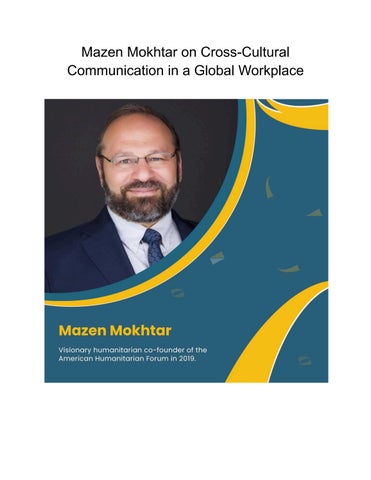
Mazen Mokhtar on Cross-Cultural
Communication in a Global Workplace

Cross-Cultural Communication plays a key role in today’s connected world Global communication skills help people from different cultures understand each other and work together more effectively Mazen Mokhtar recognizes that strong Cross-Cultural Communication builds trust, improves teamwork, and supports success in international environments.
Modern organizations often include employees, partners, and clients from many different countries. Each culture has its own traditions, communication styles, and expectations. When people do not understand these differences, confusion can appear quickly
Clear communication begins with awareness. People must first understand that cultural differences exist Some cultures prefer direct communication, while others prefer more indirect, polite language In certain places, speaking openly during meetings is encouraged In others, people may wait for senior leaders to speak first.
Another important part of Cross-Cultural Communication involves nonverbal signals. Gestures, facial expressions, and body language may carry different meanings across cultures For example, eye contact may show confidence in one culture but appear disrespectful in another Being aware of these differences helps people communicate with greater sensitivity.
In global organizations, teamwork often depends on the ability to collaborate across cultures Teams may work together through online meetings, shared documents, or international travel. Cross-Cultural Communication helps team members stay connected and focused on common goals It encourages respect, patience, and openness during discussions
Training programs often support this process Many organizations now offer cultural awareness workshops that teach employees how to communicate effectively in diverse environments. These programs help workers learn practical skills such as respectful conversation, conflict resolution, and inclusive communication
Mazen Mokhtar believes that strong Cross-Cultural Communication strengthens both organizations and communities When people feel respected and understood, they become more comfortable sharing ideas and solving problems together. This atmosphere encourages creativity and cooperation
Businesses that value cultural understanding often see better collaboration, stronger partnerships, and improved customer relationships Cross-Cultural Communication allows organizations to work confidently across borders and expand their global reach.
As international collaboration continues to grow, Cross-Cultural Communication will remain an essential skill for professionals everywhere. Inter-cultural workplace collaboration helps teams bridge cultural differences and build meaningful connections With thoughtful communication and open-minded leadership, people from many backgrounds can work together to achieve shared success.