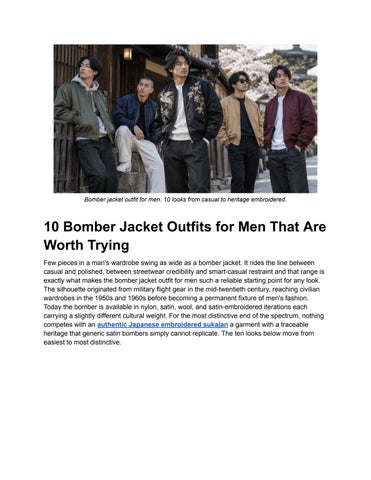
Bomber jacket outfit for men: 10 looks from casual to heritage embroidered.
10 Bomber Jacket Outfits for Men That Are Worth Trying Few pieces in a man's wardrobe swing as wide as a bomber jacket. It rides the line between casual and polished, between streetwear credibility and smart-casual restraint and that range is exactly what makes the bomber jacket outfit for men such a reliable starting point for any look. The silhouette originated from military flight gear in the mid-twentieth century, reaching civilian wardrobes in the 1950s and 1960s before becoming a permanent fixture of men's fashion. Today the bomber is available in nylon, satin, wool, and satin-embroidered iterations each carrying a slightly different cultural weight. For the most distinctive end of the spectrum, nothing competes with an authentic Japanese embroidered sukajan a garment with a traceable heritage that generic satin bombers simply cannot replicate. The ten looks below move from easiest to most distinctive.
Look 1–3: casual and smart-casual bomber jacket outfit formulas for men.
Looks 1–3: Casual and Everyday Bomber Jacket Outfits for Men The most versatile bomber jacket outfit for men starts with a nylon or lightweight satin shell in a neutral black, navy, or olive. Pair a slim-fit or classic-fit bomber over a white crew-neck tee with straight-leg dark-wash jeans and clean white low-top sneakers. The formula is intentionally simple: the jacket does the visual work; everything below stays quiet. This is the look that works whether you're heading to a weekend market or meeting friends for a low-key dinner. Look 2 shifts the base layer. Swap the crew-neck for a mock-neck or thin roll-neck in grey or ecru the slightly elevated collar reads more considered under the bomber's ribbed neckline and creates a cleaner front profile. Straight-leg chinos replace the denim, and suede desert boots replace the sneakers. The same jacket, the same proportions, but the colour palette and base layer push the whole outfit one tier up the formality scale without breaking into actual tailoring territory. Look 3 is the casual streetwear iteration: a slightly oversized bomber one size up from your usual worn over a plain black tee with tapered joggers and clean chunky-sole trainers. The oversized shell reads intentional rather than sloppy when the base layer and bottoms are both fitted. This proportion rule applies across all bomber jacket outfits for men: if the jacket runs large, keep everything else slim; if the jacket fits close, you have more freedom with volume below.
Looks 4–5: Smart-Casual and Evening Bomber Jacket Outfits
Look 4 is where most men underestimate the bomber. A structured, fitted bomber particularly a wool or premium satin version layers cleanly over a slim OCBD (Oxford cloth button-down) in white or pale blue, with slim-fit trousers in navy or charcoal and Chelsea boots. The OCBD collar visible above the bomber's ribbed neck signals effort without the formality of a blazer. This smart-casual profile is appropriate for casual office environments, drinks events, and first dates. The key is fit: the bomber must skim the body without pulling at the shoulders, and the hem should land no lower than mid-hip. For a comprehensive breakdown of how the bomber sits relative to the sukajan and varsity jacket in cut and occasion, see this comparison of sukajan vs varsity vs bomber jackets. Look 5 is the evening iteration. A midnight-navy or black satin bomber over a simple black turtleneck with slim-fit dark trousers and leather Chelsea or Derby boots creates a monochrome evening outfit that reads distinctly more dressed than a standard jacket-and-jeans combination. Satin's natural sheen picks up ambient light at evening venues, giving the outfit a texture most fabrics can't offer. This is the look to reach for when you want to appear considered without wearing formal tailoring.
Look 4–5: smart-casual and evening bomber jacket outfit formulas.
Looks 6–7: Japanese Streetwear and Heritage Embroidered Looks Look 6 is where the bomber jacket format becomes genuinely distinctive. The sukajan a reversible satin bomber jacket embroidered with Japanese motifs including dragon, koi, crane, and phoenix was originally produced in Yokosuka in the late 1940s for US military personnel stationed in Japan. The garment translates to contemporary streetwear naturally: pair a sukajan over a plain black tee with slim-fit straight-leg trousers (not joggers the contrast between the embroidered shell and tailored bottom reads more intentional) and clean white or black low-profile trainers. The embroidery carries the visual weight of the entire outfit; the rest should stay restrained. This is the look that rewards readers willing to go beyond the standard nylon
satin shell. For building a full wardrobe of outfits around this style, the everyday sukajan styling guide covers seasonal and occasion-specific formulas in more depth. Look 7 is the heritage elevated version: a sukajan in a satin black ground with koi or phoenix embroidery, worn over a dark turtleneck, with slim-fit charcoal or black trousers and leather boots. This is a wearable evening look that carries more visual interest than a standard satin bomber the embroidery gives it a narrative quality that plain shell jackets lack. The sukajan's reversible construction (typically a contrasting liner in red, cream, or patterned satin) also means you can flip the jacket for a more low-key colourway variation. Japanese fashion history documents the sukajan's post-war origins as a cross-cultural garment the [EXTERNAL_LINK_1] holds archival material on postwar Japanese textile traditions that traces exactly how this garment category emerged from that exchange. For men building towards a Japanese streetwear aesthetic, this look is the clearest on-ramp: one statement jacket, worn with minimal supporting pieces, is more effective than multiple mid-tier items. The Japanese streetwear outfits for men guide covers the full aesthetic framework this look sits within.
Looks 8–10: Fit Rules and Colourway Pairing for Bomber Jacket Outfits Look 8 is a layered transitional-season outfit: a medium-weight bomber worn open over a chunky-knit jumper and slim-fit cord trousers, with leather boots. The open-front silhouette works when the knit beneath is structured enough not to look shapeless through the bomber's opening. This is the look for October into November, when a single layer is no longer sufficient but a full overcoat is premature. Look 9 applies the monochrome principle. An all-black bomber jacket outfit for men bomber, tee, jeans, and trainers all in black is one of the most foolproof outfit structures available. Every piece recedes; the silhouette becomes the outfit. The key is texture variation: matte cotton tee, satin or nylon shell, structured denim, and a trainer with some material interest (leather, suede, or mesh). Without texture differentiation, the look reads flat. With it, it reads intentional. Look 10 is the heritage embroidered date-night look, reserved for men willing to commit to a strong visual statement. A sukajan jacket in a deep navy or burgundy ground, worn over a plain white tee with well-fitted slim dark jeans and clean white minimal trainers, lets the embroidery speak without any supporting noise. This is the look that generates the most genuine compliments in real-world wear the embroidery reads as craft, not costume, because the sukajan's construction and cultural history are genuine, not replicated for fashion purposes.
Look 7–10: heritage embroidered and evening bomber jacket outfit formulas.
Frequently Asked Questions How should a bomber jacket fit for men? A bomber jacket should fit close through the shoulders the seam should sit exactly at the shoulder break, not drop over it. The chest should allow a layer beneath without pulling, and the hem should land between mid-hip and the trouser waistband. The ribbed cuffs and hem should be snug enough to keep wind out without restricting movement. Size down one if the jacket is unstructured; stay true to size for stiffer, structured shells.
What do you wear under a bomber jacket? The safest base layer under a bomber jacket is a plain crew-neck or mock-neck tee in a neutral colour. For smart-casual contexts, a slim-fit OCBD or a thin roll-neck works well. The collar of the base layer sits above the bomber's ribbed neckline, so the collar shape matters: a crew-neck disappears cleanly, while a point collar on a dress shirt adds visible formality. Avoid thick knitwear unless the bomber is worn open the ribbed hem gap makes bulk visible.
Are bomber jackets still in style? Yes the bomber jacket has remained a consistent menswear staple across decades precisely because it sits at the mid-point between casual and polished. The silhouette's military flight-gear origin gives it an inherent functionality that fashion pieces often lack, and its adaptability across nylon, wool, satin, and embroidered constructions means it evolves with each cycle of streetwear. The sukajan iteration the Japanese embroidered satin version — is currently among the strongest versions of the silhouette for anyone seeking to go beyond the generic.
What shoes go with a bomber jacket outfit? Clean low-profile trainers (white leather or all-black) are the default for casual bomber jacket outfits for men. For smart-casual looks, Chelsea boots or suede desert boots in tan, sand, or black are the cleanest choice. Avoid chunky-sole hiking boots unless the rest of the outfit is deliberately utilitarian they read too heavy against a slim satin bomber. Loafers work well for warmer-weather bomber outfits paired with slim chinos.
Can you dress up a bomber jacket? Yes, within limits. A slim-fit, structured bomber in a premium fabric satin, wool, or a satin-silk blend layers cleanly over a slim OCBD and tailored trousers to create a smart-casual outfit appropriate for casual offices, evening events, and low-key dinners. The ceiling is a drinks-event level of formality; a bomber jacket does not sub for a blazer in genuinely formal contexts. The sukajan reads as the most dress-up-able bomber iteration because the embroidery signals craft value.
What is the difference between a sukajan and a regular bomber jacket? A sukajan is a specific type of bomber jacket originating in Yokosuka, Japan, in the late 1940s: a reversible satin shell with chain-stitched or machine-embroidered Japanese motifs covering the back panel and often the chest and sleeves. A standard bomber jacket is typically unembroidered nylon, polyester, or wool with a plain shell. The sukajan's craft heritage embroidery executed with Tajima machines or by hand distinguishes it from the generic bomber both visually and in terms of production tradition.
Final Thought The bomber jacket outfit for men succeeds because the silhouette is adaptable without being shapeless. Worn plain, it is a reliable casual staple. Worn in a premium satin or embroidered iteration particularly a sukajan with genuine craft heritage it becomes the kind of piece that defines an outfit rather than just completing it. Start with the casual look, learn the fit rules, then decide how distinctive you want to go. The range from Look 1 to Look 10 is wider than most men expect from a single jacket silhouette.
About the Author James Harlow is a menswear writer and contributing editor with over a decade covering outerwear, Japanese streetwear, and men's fashion for editorial and commercial publications. He specialises in heritage garment categories including sukajan, varsity, and flight jacket traditions and consults for outerwear brands on styling and product positioning. He is based in London.