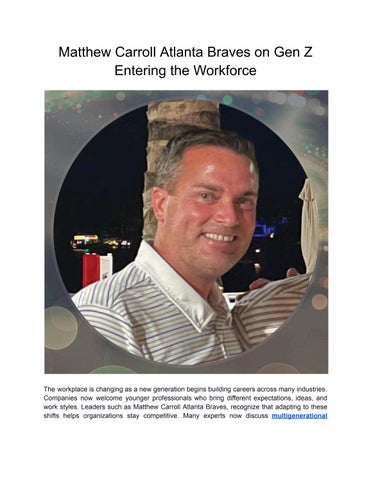
Matthew Carroll Atlanta Braves on Gen Z Entering the Workforce
The workplace is changing as a new generation begins building careers across many industries. Companies now welcome younger professionals who bring different expectations, ideas, and work styles. Leaders such as Matthew Carroll Atlanta Braves, recognize that adapting to these shifts helps organizations stay competitive. Many experts now discuss multigenerational
workplace dynamics because the interaction between experienced professionals and younger employees is shaping the future of modern business. Gen Z professionals grew up in a world filled with digital technology, instant communication, and constant access to information. Because of this background, they often feel comfortable with new platforms and tools that support productivity. Established professionals may notice that younger employees move quickly between systems and adapt to digital workflows easily. This ability can help companies improve efficiency and modernize traditional processes. Another difference is how Gen Z approaches career growth. Many younger professionals value learning opportunities and personal development as much as financial rewards. They often look for workplaces where they can gain skills, explore new roles, and contribute ideas early in their careers. Established professionals who mentor younger team members can help guide this growth while also strengthening team collaboration. Communication styles can also vary between generations. Gen Z often prefers quick and direct communication through digital platforms. Short messages, collaborative tools, and real-time updates are common in their daily work habits. Experienced professionals prefer structured meetings or longer discussions. When both groups understand these differences, they can create balanced communication methods that work for everyone. Flexibility is another important factor for many Gen Z employees. Younger professionals often value work environments that support a balance between professional and personal life. Remote work options, flexible schedules, and outcome-based performance models are attractive to them. Established professionals who understand these priorities can help create workplaces that support productivity while respecting changing expectations. At the same time, experienced professionals bring valuable knowledge and perspective to the workplace. Years of industry experience help them recognize patterns, manage complex projects, and guide strategic decisions. Gen Z employees benefit from this insight when experienced professionals share lessons learned from real business challenges. Collaboration between generations can strengthen organizations when both sides learn from each other. Younger employees may introduce fresh ideas, digital efficiency, and new market insights. Established professionals contribute leadership skills, strategic thinking, and industry expertise. Together, these strengths create balanced teams that adapt to change while maintaining stability. Matthew Carroll, Atlanta Braves, reflects the kind of leadership awareness that many organizations value during this generational shift. Understanding how different age groups work together is becoming an essential part of professional success. At the center of this transition is generational workforce collaboration, which helps businesses create stronger teams while preparing for the future of work.