2027 Senior Years Pathway - Years 10 - 12 Curriculum Guide
2027 Senior Years Pathway CURRICULUM GUIDE
Years 10 - 12
Full-Year Compulsory Subject
Contact Name Name
Email namename@email.edu.au
Subject Description
Lorem ipsum dolor sit amet, consectetur adipiscing elit, sed do eiusmod tempor incididunt ut labore et dolore magna aliqua.
Structure
UNIT 1: The Industrial Revolution
Excepteur sint occaecat cupidatat non proident
Excepteur sint occaecat cupidatat non proident
Excepteur sint occaecat cupidatat non proident
Excepteur sint occaecat cupidatat non proident
Excepteur sint occaecat cupidatat non proident
UNIT 2: The Industrial Revolution
Excepteur sint occaecat cupidatat non proident
Excepteur sint occaecat cupidatat non proident
Excepteur sint occaecat cupidatat non proident
Excepteur sint occaecat cupidatat non proident
Excepteur sint occaecat cupidatat non proident
UNIT 3: The Industrial Revolution
Excepteur sint occaecat cupidatat non proident
Excepteur sint occaecat cupidatat non proident
Excepteur sint occaecat cupidatat non proident
UNIT 4: The Industrial Revolution
Excepteur sint occaecat cupidatat non proident
Excepteur sint occaecat cupidatat non proident
Excepteur sint occaecat cupidatat non proident
Excepteur sint occaecat cupidatat non proident
Excepteur sint occaecat cupidatat non proident
Assessment may include Duis aute irure dolor in reprehenderit in voluptate velit esse cillum dolore eu fugiat nulla pariatur. Excepteur sint occaecat cupidatat non proident, sunt in culpa qui officia deserunt mollit anim id est laborum. Lorem ipsum dolor sit amet, consectetur adipiscing elit, sed do eiusmod tempor incididunt ut labore et dolore magna aliqua.
Personalise your
YEAR 10 CURRICULUM OVERVIEW
Welcome to Year 10
Year 10 is an important stage in students’ learning journey, providing opportunities to build independence, confidence, and future-focused skills while preparing for senior secondary pathways. The curriculum is designed to balance core academic learning with increased student choice, allowing students to personalise their program based on their interests, strengths, and future goals. Through a combination of core studies, electives, and acceleration pathway opportunities, students are encouraged to challenge themselves, explore passions, and begin shaping their future direction.
All students complete core studies in English, Mathematics, Religious Education, Health and Physical Education, and Science, while also selecting a range of elective subjects across learning areas including Arts, Humanities, Languages, Science, Design and Technology, English, and Health and Physical Education. Students are encouraged to create a balanced program that supports both personal interests and future study or career aspirations. Highly capable students may also apply for VCE acceleration or VET pathways, providing opportunities to begin senior studies and vocational learning while in Year 10.
Year 10: Subjects & Subject Selection
CORE SUBJECTS
Students study the following core subjects for the full year:
- English - Mathematics
- Religious Education
Students study the following core subjects for one semester:
- Health and Physical Education
- Science
ELECTIVE SUBJECTS
Students select elective units from a broad range of learning areas, including:
Teenagers and the Law
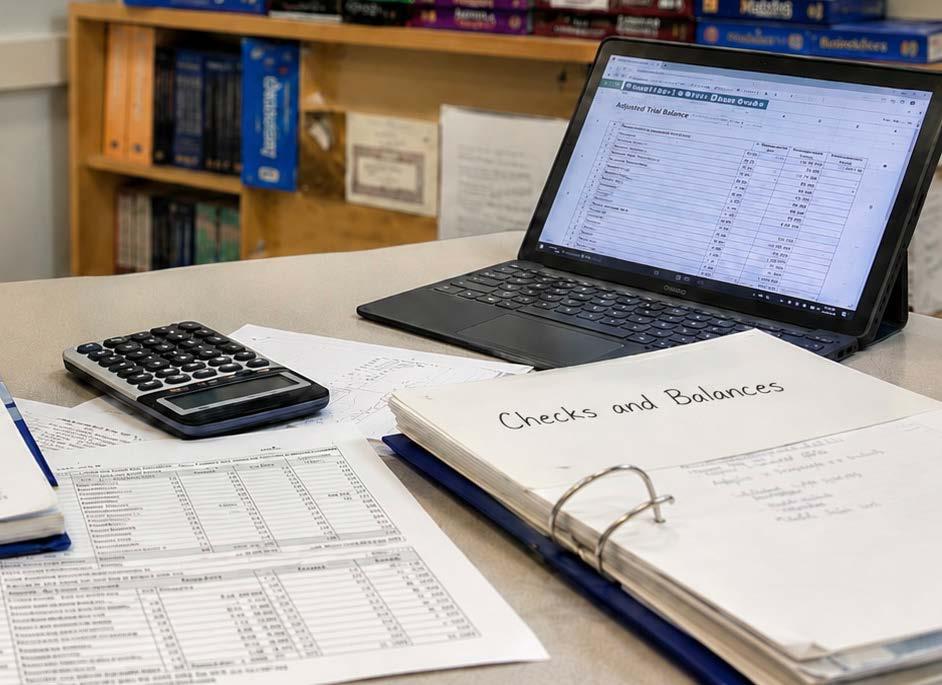
Checks and Balances
Shaping the World
French
VET Certificate II (Semester 1) and III (Semester 2) in Chinese
Drama
Expressive Dance
Visual Communications Design
Art Creative Practice
Media
Relationships and Romance (Literature)
Sports Science
Women’s Health & Wellness
Mater Chef
On the Runway
Life Science
Physical Science
Subject Selection Process
Subject selections are completed online during Term 3 prior to entry into Year 10. Families will receive information and instructions via email, including access to the College’s online subject selection portal.
Parents and carers are encouraged to work closely with students when selecting subjects to ensure choices align with interests, strengths, and future pathways. Support and guidance are available through curriculum information sessions, course planning resources, and College staff.
Students wishing to change subjects after selections are submitted should discuss options with the relevant Learning Leader. Changes are subject to availability and approval.
Year 10: Learning Pathway
Year 10 is an exciting stage of learning where students are encouraged to become more independent, future-focused learners while exploring their interests, strengths, and pathway opportunities. Through a combination of core studies, electives, and pathway options, students are supported to challenge themselves academically, build confidence, and prepare for the senior years of schooling. Students are encouraged to develop important skills in organisation, collaboration, critical thinking, and resilience while making informed decisions about future study and career pathways. The Year 10 program provides pathways into VCE, VCE Vocational Major (VCE VM), VET, university, TAFE, apprenticeships, and employment. Through subject selection and pathway planning, students are empowered to personalise their learning and pursue areas of passion and interest with confidence. More information on VCE pathway can be found here:
University (via ATAR), TAFE, apprenticeships, or employment
apprenticeships, university (nonATAR pathways) or employment
Accelerated Pathways
VCE and VET acceleration opportunities are available in Year 10 for highly capable, motivated, and organised students who are ready to challenge themselves through senior-level study. These pathways allow students to begin selected VCE or VET subjects while still in Year 10, providing valuable preparation for the senior years and helping students develop the study habits, independence, and academic skills required for future success. Acceleration pathways can also support students in broadening future study and career opportunities by allowing greater flexibility in Years 11 and 12. Applications are completed through the College process and are carefully considered to ensure students are well prepared for the demands of accelerated study. Participation in these programs allows students to explore areas of passion and interest while gaining valuable experience in senior secondary learning and vocational pathways.
Year 10 Core: English
Students are required to choose one English Subject for Year 10.
LEARNING PATHWAYS
Year 10 English supports students in developing advanced literacy, analytical thinking, and communication skills through the study of a diverse range of texts, media, and language forms. Students can choose between Mainstream English or Foundation English, with both pathways designed to strengthen reading, writing, speaking, listening, and critical thinking skills while preparing students for future senior secondary pathways.
Which English is Right for Me in Year 10?
Mainstream English
Best for students who:
– Enjoy reading, analysing and discussing texts, films and media
– Are confident readers and writers
– Like exploring ideas and themes in depth
– May be considering future VCE English or Literature studies
Foundation English
Best for students who:
– Would benefit from additional support in literacy and communication
– Prefer practical, hands-on learning experiences
– Want to build confidence in reading, writing, speaking and listening
– Are developing independence in literacy skills
Year 10 Core: Mainstream English
Subject Description
Mainstream English focuses on analytical and creative responses to literature, film, and media while developing students’ persuasive communication, interpretation, and discussion skills. Students explore how language and storytelling shape meaning and influence audiences through text analysis, oral presentations, debates, and written responses.
Assessment
Assessment may include analytical and creative writing, oral presentations, persuasive language tasks, research activities, reading comprehension tasks, discussions, multimedia responses, and examinations.
Pathway
This unit provides a foundation for VCE English or VM Literacy.
Year 10 Core: Foundation English
Subject Description
Foundation English supports students in strengthening comprehension, communication, and practical literacy skills through engaging and supportive learning experiences that build confidence in written and spoken communication across a range of real-world contexts.
Assessment
Assessment in Foundation English focuses on demonstrating essential communication skills through practical, real-world tasks that measure a student’s ability to read, write, speak, and listen with clarity and purpose. It emphasises growth, accessibility, and functional literacy, allowing students to show their learning in supportive, scaffolded formats suited to their needs.
Pathway
This unit provides a foundation for VM Literacy and is a modified subject designed to develop practical and workplace skills.
Year 10 Core: Health & Physical Education
Subject Description
Students explore practical and creative actions that promote their own and others’ health and wellbeing and that of their wider community. Such as designing strategies to promote safe practices that will contribute to the health and wellbeing of young people. Practical learning experiences at this level, supports students to plan, implement, monitor and evaluate personal habits to enhance their wellbeing.
Students investigate a range of health issues relevant to young people, including mental health, sexual health, healthy eating, personal and relationship safety, body image, and behaviours associated with substance use. As they do so, students further refine their help-seeking strategies, assertive behaviours, conflict resolution and negotiation.
Students practise and refine more specialised movement skills and complex movement strategies and concepts in different movement environments.
Students further investigate techniques to assess the quality of movement performances. Students refine and consolidate their leadership, teamwork and collaborative skills through participation in a range of physical activities.
Assessment
Assessment may include tests, investigations, projects, problem-solving tasks, practical applications, and performance-based activities.
Pathway
This unit provides a foundation for all VCE Health & Physical Education subjects.
YEAR 10 CORE CURRICULUM
Year 10 Core: Mathematics
Students are required to choose one Mathematics subject in Year 10.
MATHEMATICS LEARNING PATHWAYS
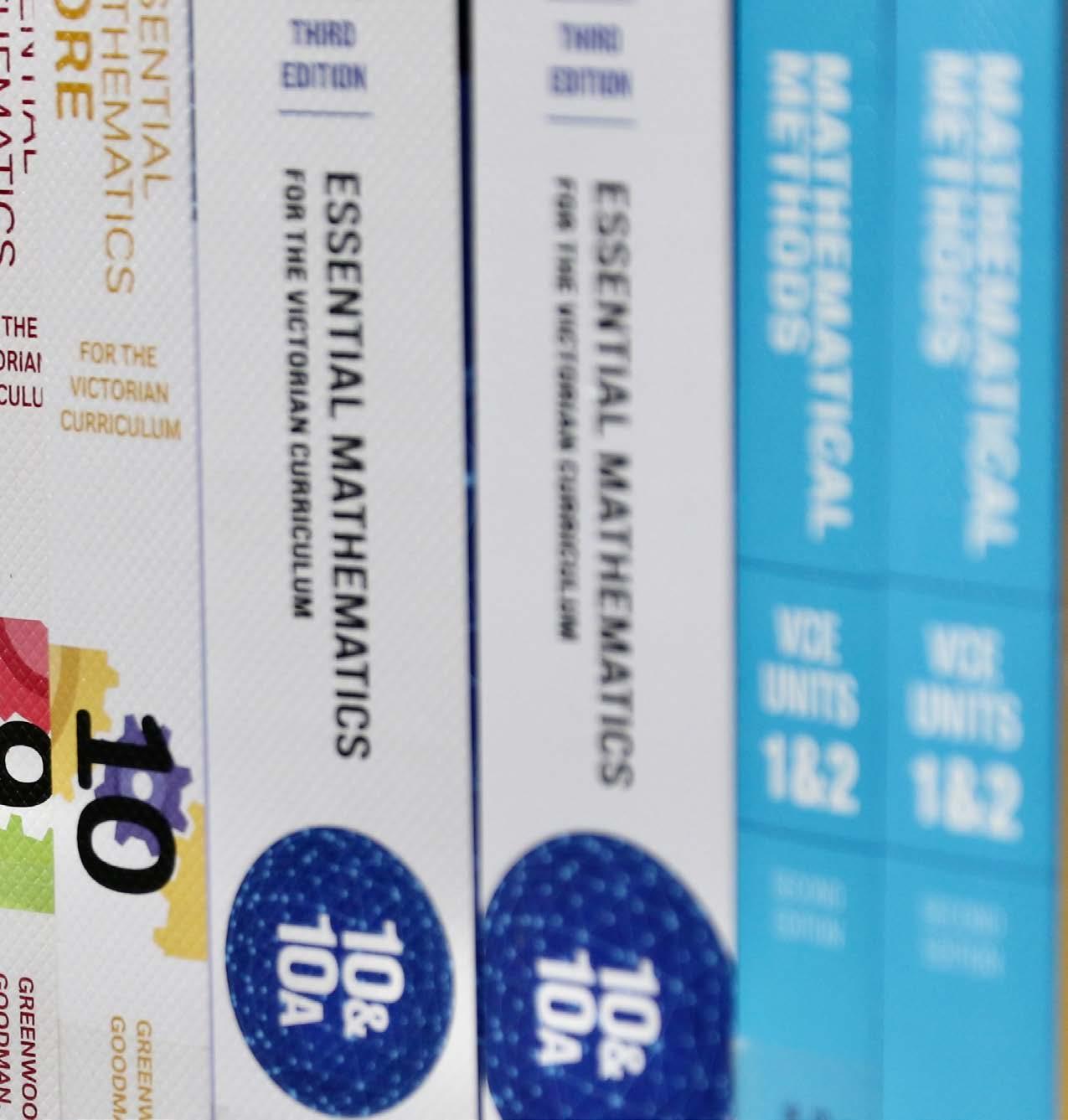
Learning in Year 10 Mathematics builds on each students prior learning and experiences and provides the basis for a sound background in number, algebra, function, geometry and statistics. Students engage in a range of approaches to the learning and doing of mathematics that develop their understanding of and fluency with concepts, procedures and processes by making connections, reasoning, problem-solving and practice. Proficiency in mathematics enables students to respond to familiar and unfamiliar situations by employing mathematical strategies to make informed decisions and solve problems efficiently.
Year 10 Core: Essential Mathematics
Subject Description
In Year 10 Essential Mathematics, students learn concepts in number, measurement, space, algebra, probability, and statistics. They learn through standard skills practice and by applying these skills to real life situations.
Assessment
Assessment may include tests, investigations, projects, problem-solving tasks and practical applications.
Pathway
This unit provides a foundation for VCE Foundation Mathematics or VM Numeracy.
*Note: This course is a modified course to support students through a practical and accessible learning pathway. It is not suitable for students considering a pathway into General Mathematics or Mathematical Methods.
Year 10 Core: General Mathematics
Subject Description
In Year 10 General Mathematics, students learn concepts in number, measurement, space, algebra, probability, and statistics. They learn through standard skills practice and by applying these skills to real life situations.
Assessment
Assessments may include tests, problem solving tasks, investigations or projects, and a semester exam.
Pathway
This unit provides a foundation for VCE General Mathematics.
Year 10 Core: Enhanced Mathematics
Subject Description
In Year 10 Enhanced Mathematics, students learn concepts in number, measurement, space, algebra, probability, and statistics. They learn through standard skills practice and by applying these skills to real life situations.
Some advanced content is covered in this subject with the aim of preparing students for VCE Mathematical Methods.
Assessment
Assessments may include tests, problem solving tasks, investigations or projects, and semester exams.
Pathway
This unit provides a foundation for VCE Mathematical Methods.
Year 10 Core: Religious Education
Students are required to choose from two core units.
LEARNING PATHWAYS
Year 10 Religious Education encourages students to explore beliefs, values, ethics, spirituality, social justice, and the role religion plays in contemporary society. Students engage with a range of inquiry-based units that challenge them to think critically about faith, identity, culture, the environment, and the impact religion has on communities and everyday life. Through discussion, research, reflection, and analysis, students develop a deeper understanding of Catholic teachings while exploring diverse perspectives and contemporary global issues.
Students select two Religious Education units from a range of offerings including Youth Mininstry (requires application), Bold Women, Eco Conversion, Religions and Cults, and The Influence of Religion. Each unit provides opportunities for students to explore topics such as social justice, influential figures, environmental responsibility, belief systems, ethics, popular culture, and the connections between religion and society. The program encourages students to develop empathy, critical thinking, communication, and reflective skills while supporting personal growth and understanding of the wider world.
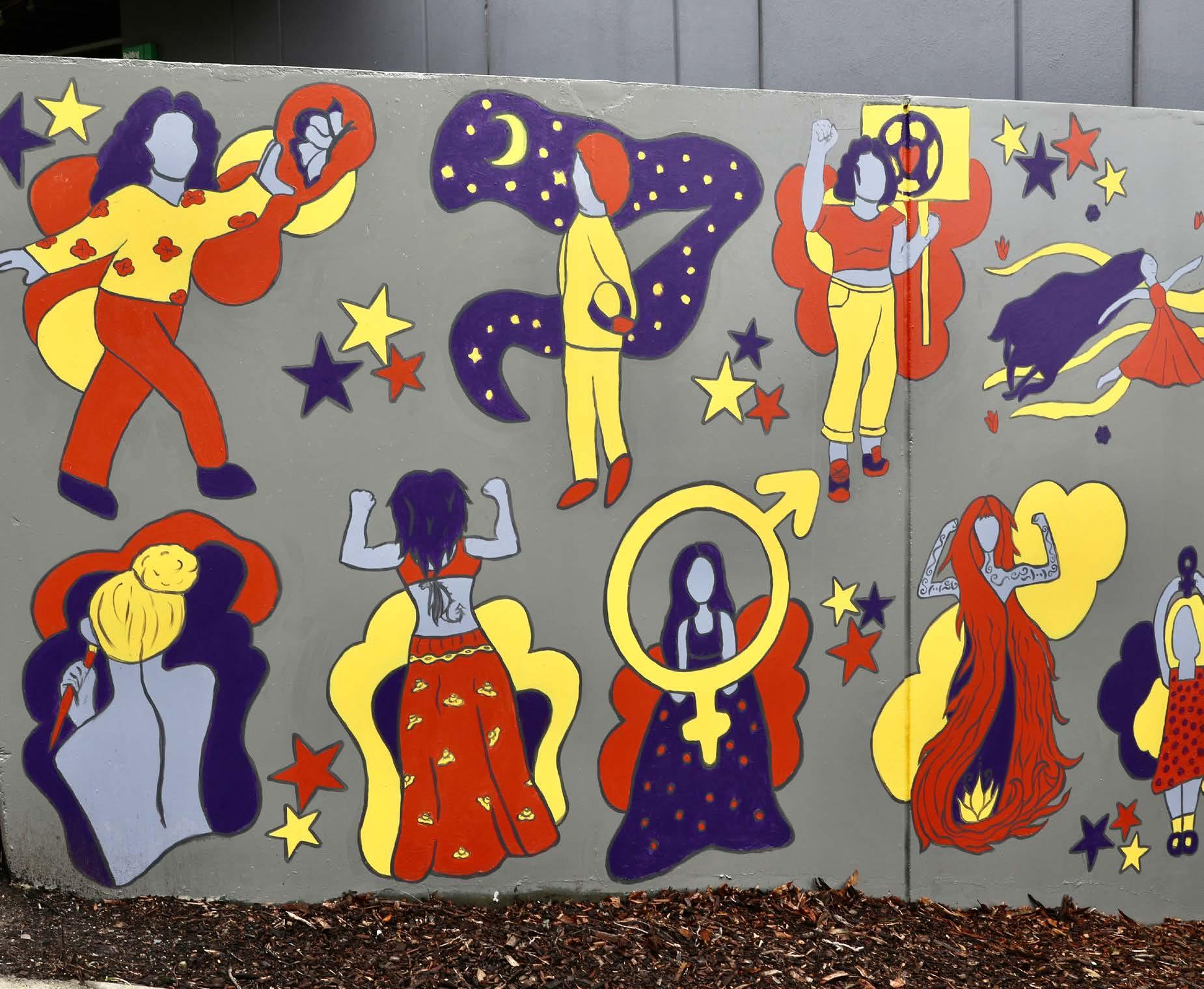
Women (Core)
*Students to choose two core units
Year 10 Core: Religious Education – Bold Women
Subject Description
Bold Women explores the role and influence of women throughout Scripture, the history of the Church, and contemporary society. Students investigate the lives and contributions of significant women including biblical figures, saints, and modern-day leaders who have challenged expectations, demonstrated courage, and inspired change through faith, leadership, and service. Through discussion, reflection, and inquiry-based learning, students examine how these women have shaped religious communities and contributed to social justice, compassion, and the wider world.
Students examine key teachings, scripture and traditions of the Catholic Church, and reflect on how these shape personal and community life. They are encouraged to think critically about moral and ethical issues, considering how faith can guide decision-making and promote justice, compassion and respect for all people.
Assessment
Assessment may include research projects, essays, multimedia presentations, artworks, discussions, reflective tasks, and biblical analyses.
Pathway
This unit provides a foundation for VCE Religion & Society or Catholic Education Program (CAP).
Year 10 Core: Religious Education – Eco Conversion
Subject
Description
Eco Conversion explores the relationship between faith, social responsibility, and care for the environment. Students investigate how major religions, Indigenous perspectives, and Catholic Social Teachings encourage respect for creation and promote environmental stewardship. Through the study of environmental issues, ethical decision-making, and contemporary global challenges, students develop a deeper understanding of humanity’s responsibility to care for the world and support sustainable futures.
Students examine topics including environmental justice, climate change, Indigenous connections to Country, and the role of faith communities in responding to ecological challenges. Inspired by Catholic teachings, including Laudato Si, students are encouraged to reflect critically on their own values, actions, and impact on the environment while exploring practical ways individuals and communities can create positive change. The course promotes compassion, leadership, critical thinking, and active participation in caring for the environment and the wider community.
Assessment
Assessment may include tests, investigations, projects, problem-solving tasks and practical applications.
Pathway
This unit provides a foundation for VCE Religion & Society or Catholic Action Program (CAP).
Year 10 Core: Religious Education –Religions & Cults
Subject Description
Religions and Cults encourages students to explore belief systems, spirituality, and the role religion plays in shaping individuals, communities, and societies. Students investigate what defines a religion, why people are drawn to religious and cultural groups, and how belief systems influence values, identity, traditions, and everyday life. Through inquiry and discussion, students examine similarities and differences between world religions and explore the historical and contemporary impact of religious movements and cults.
Students develop critical thinking and analytical skills as they explore concepts such as faith, belonging, ethics, culture, and influence. The course encourages students to respectfully consider diverse perspectives while reflecting on the role religion and belief systems play in society and personal identity. Through engaging discussions and investigations, students build greater understanding of human beliefs, traditions, and cultural practices in both historical and modern contexts.
Assessment
Assessment may include research projects, essays, multimedia presentations, artworks, discussions, reflective tasks, and biblical analyses.
Pathway
This unit provides a foundation for VCE Religion & Society or Catholic Action Program (CAP).
Year 10 Core: Religious Education – Youth Ministry
Subject Description
Youth Ministry is designed for students who are interested in leadership, faith, service, and working positively within school and community settings. This subject explores the foundations and practical skills of Youth Ministry within the Catholic tradition, providing students with opportunities to support and engage with others through peer ministry, leadership activities, and community involvement. Students develop communication, teamwork, organisation, and leadership skills while learning how faith can inspire positive action and meaningful relationships. Throughout the course, students explore topics including liturgy, ministry in action, youth leadership, community engagement, and the role of faith within contemporary society. Students are encouraged to reflect on their own values, strengths, and capacity to contribute to the wellbeing of others while building confidence in working collaboratively and respectfully with peers and the wider community. The course provides authentic opportunities for participation in ministry experiences both within and beyond the school environment.
Assessment
Assessment may include research projects, essays, multimedia presentations, artworks, discussions, reflective tasks, and biblical analyses.
Pathway
This unit provides a foundation for VCE Religion & Society or Catholic Education Program (CAP).
Additional Information
Students wishing to apply for Youth Ministry are required to complete the College application process. Students accepted into the program are exempt from completing the compulsory Religious Education elective rotations.
Year 10 Youth Ministry Student Application Form – Fill out form
Year 10 Core: Influence of Religion
Subject Description
Influence of Religion explores the significant role religion has played in shaping societies throughout history and continues to influence the modern world. Students investigate how religious beliefs, values and traditions impact individuals, communities and global issues. Through inquiry and research, students examine the ways religion influences laws, decisionmaking, culture, language, education, healthcare and social justice.
Students analyse historical and contemporary examples from a range of religious traditions and evaluate differing perspectives on the role of religion in society. The course encourages students to think critically, communicate respectfully and develop an informed understanding of how religion continues to shape cultures, beliefs and worldviews.
Assessment
Assessment may include research projects, essays, presentations, source analyses, debates and multimedia tasks.
Pathway
This unit provides a foundation for VCE Religion & Society and supports further studies in History, Global Politics, Philosophy and other Humanities disciplines.
Year 10 Core: Core Science
Subject Description
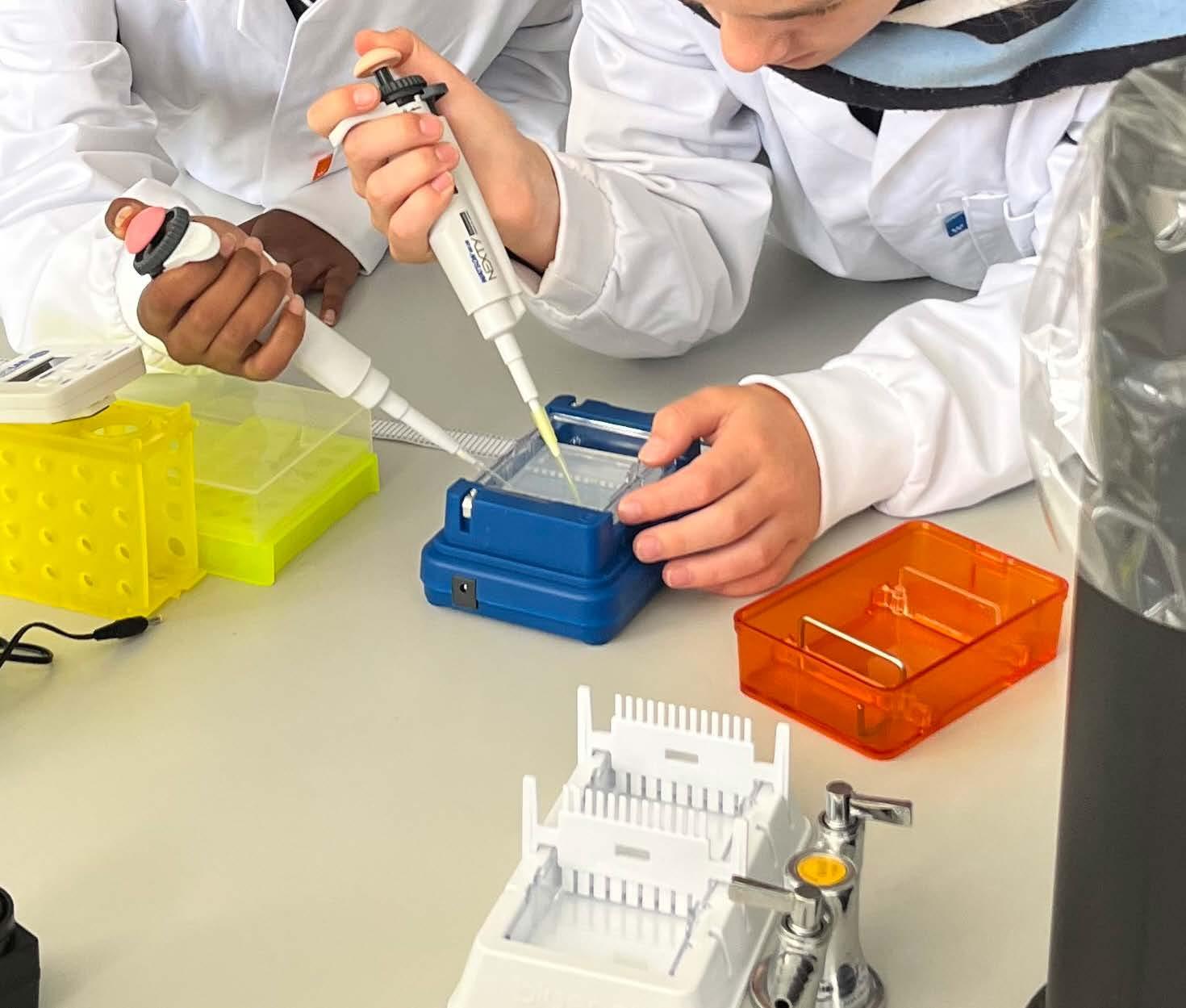
The Year 10 core Science curriculum builds students’ understanding of scientific knowledge, inquiry processes and the role of science in society. Students examine how science, engineering and technology interact, and how evidence and information influence decision-making on socioscientific issues. In Biology, they explore reproduction and the process of evolution. In Chemistry, students investigate atomic structure, periodic trends and how this influences chemical reactions. In Earth and Space Science, they examine the origins and evolution of the universe and evaluate the implications of space exploration. Through practical investigations, students develop skills in forming hypotheses, collecting and analysing data, evaluating evidence and refining methods. They communicate scientific ideas using appropriate representations and justify conclusions based on evidence.
Assessment
Assessments may include practical investigation reports, research tasks and tests.
Pathway
This unit provides a foundation for Specialised VCE Science Pathways.
Year 10: The Arts Pathway
LEARNING PATHWAY
The Year 10 Arts pathway provides students with exciting opportunities to develop their creativity, technical skills, confidence, and artistic expression across a diverse range of creative disciplines. Students can explore areas including Music Performance, Media, Creative Practice, Visual Communication Design, Drama, and Expressive Dance, allowing them to discover and develop their individual talents, passions, and creative interests. Through practical, hands-on learning experiences, students are encouraged to experiment with ideas, techniques, and creative processes while building confidence as independent and collaborative artists.
Across the Arts pathway, students engage in performance, design, visual arts, photography, choreography, composition, production, and creative problem-solving while developing skills in communication, critical thinking, collaboration, and self-expression. Students are supported to create, reflect, analyse, and present their work in authentic and engaging ways, preparing them for future pathways in VCE Arts subjects and creative industries. The Year 10 Arts program encourages students to embrace creativity, challenge themselves artistically, and develop a lifelong appreciation for the arts and creative expression.
Year 10: Media
Subject Description
Media is designed for students who are interested in film, podcasts and visual storytelling. Students will observe and analyse how and why media arts concepts are manipulated and constructed.
They learn about the construction and production of advertisements and podcasts before exploring the framework media forms use to create meaning and understanding for audiences.
Students will also investigate how media languages, technologies and production processes are applied to create and produce media art works across various genres.
Assessment
Assessment may include photography tasks, magazine layouts, filming and editing projects, media production activities, process journals, and creative folio work.
Pathway
This unit provides a foundation for VCE Media.
Year 10: Visual Communication Design
Subject Description
Visual Communication Design is for students interested in the design of buildings, logos and objects.
Students will develop a range of technical skills including perspective and paraline drawings to assist them to design a stationary holder or alarm clock. They will create a logo and floorplan for a cafe. During both of these tasks students will develop their skills using Adobe Illustrator. Both designs follow aspects of the Design Process in their folio including; research, sketching, annotations and evaluating.
Assessment
Assessment may include research and folio development.
Pathway
This unit provides a foundation for VCE Visual Communication and Design.
Year 10: Art Creative Practice
Subject Description
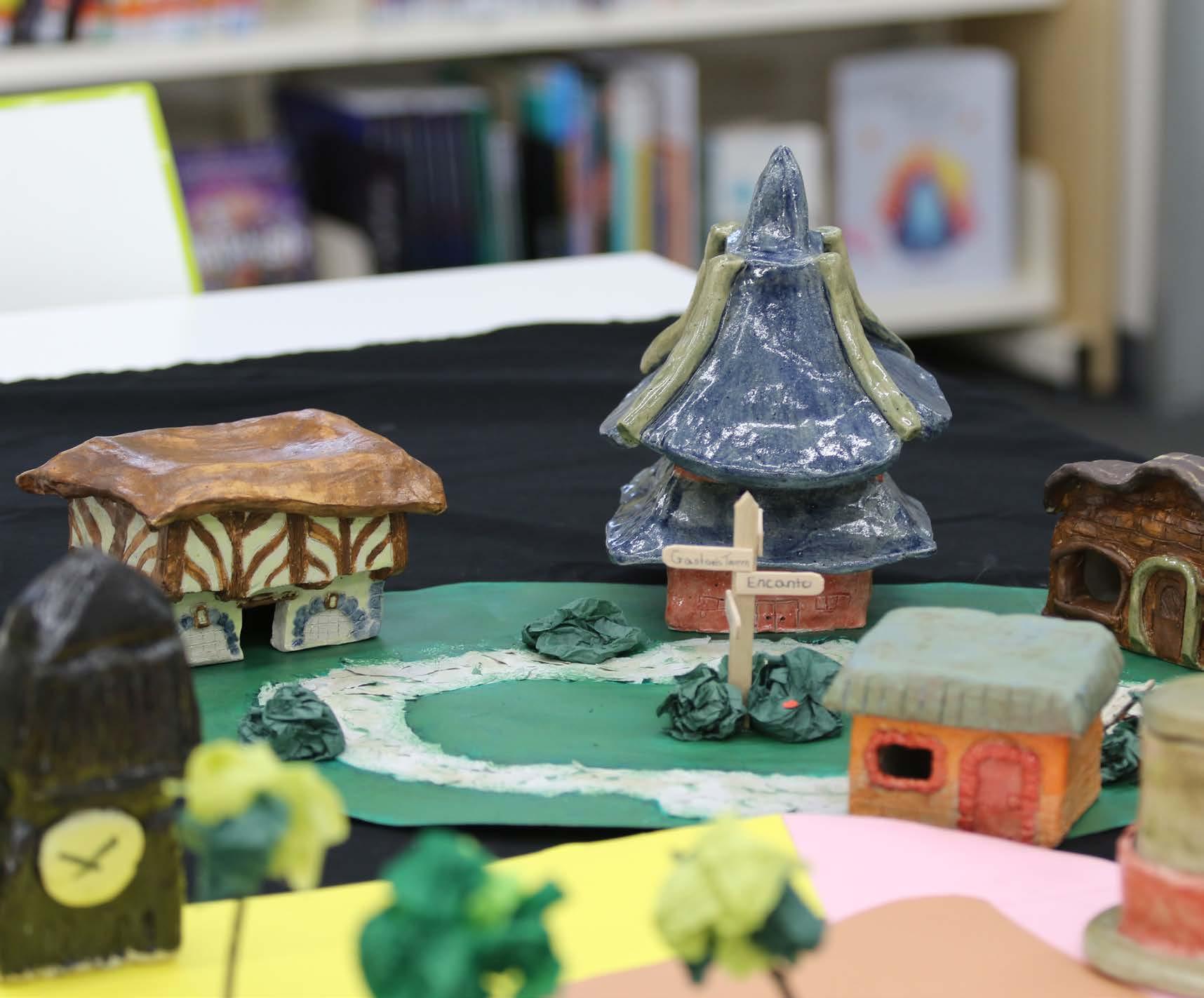
Art Creative Practice is designed for students who enjoy exploring visual arts, sculpture, mixed media, and creative expression through hands-on artistic experiences. Students experiment with a wide range of materials and techniques including clay, wire, paper, glass, textiles, natural materials, and mixed media to create original and imaginative artworks. Through the exploration of artistic themes and creative processes, students develop confidence in expressing ideas visually while building technical and practical art-making skills.
Students are encouraged to investigate, experiment, reflect, and refine their artistic work while developing an understanding of how artists use materials, techniques, and visual language to communicate meaning. The course promotes creativity, problem-solving, critical thinking, and independent learning in a supportive studio environment. Students develop folio work and create resolved artworks that showcase their growing artistic skills, imagination, and personal style.
Assessment
Assessment may include folio development, research and investigation tasks, practical studio work, experimentation with materials, process documentation, and final presentation artworks.
Pathway
This unit provides a foundation for VCE Art Creative Practice.
Year 10: Drama
Subject Description
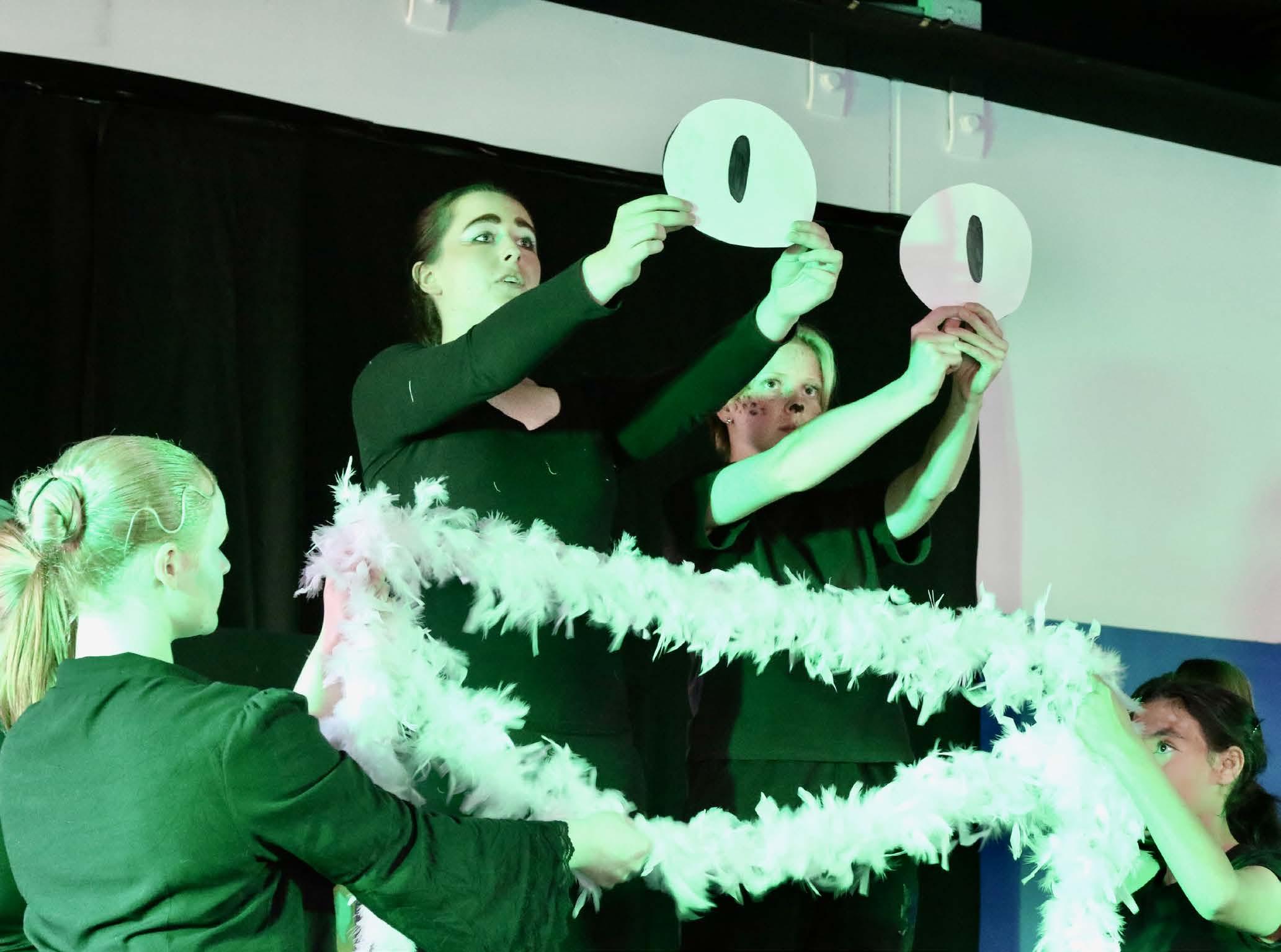
Drama is designed for students who enjoy performance, storytelling, creativity, and collaborative learning. Students will explore the dynamic and creative world of drama performance. Beginning with an individual performance, students will devise and perform a solo work in an alternative space within the school, drawing on the provocative principles of Theatre of Cruelty. Students will then broaden their understanding by researching a range of performance styles before collaborating in ensembles to devise and present an original non-naturalist performance responding to a real-world social issue. Lastly, students will attend a professional performance and develop their skills as critical thinkers, producing a written analysis that evaluates the work using the language of drama. Throughout the semester, students will build confidence as performers, collaborators and independent creative thinkers.
Assessment
Assessment may include process folios, research tasks, performance written analysis, monologues, solo and ensemble performances, rehearsals, and reflective tasks.
Pathway
This unit provides a foundation for VCE Drama.
Year 10: Expressive Dance
Subject Description
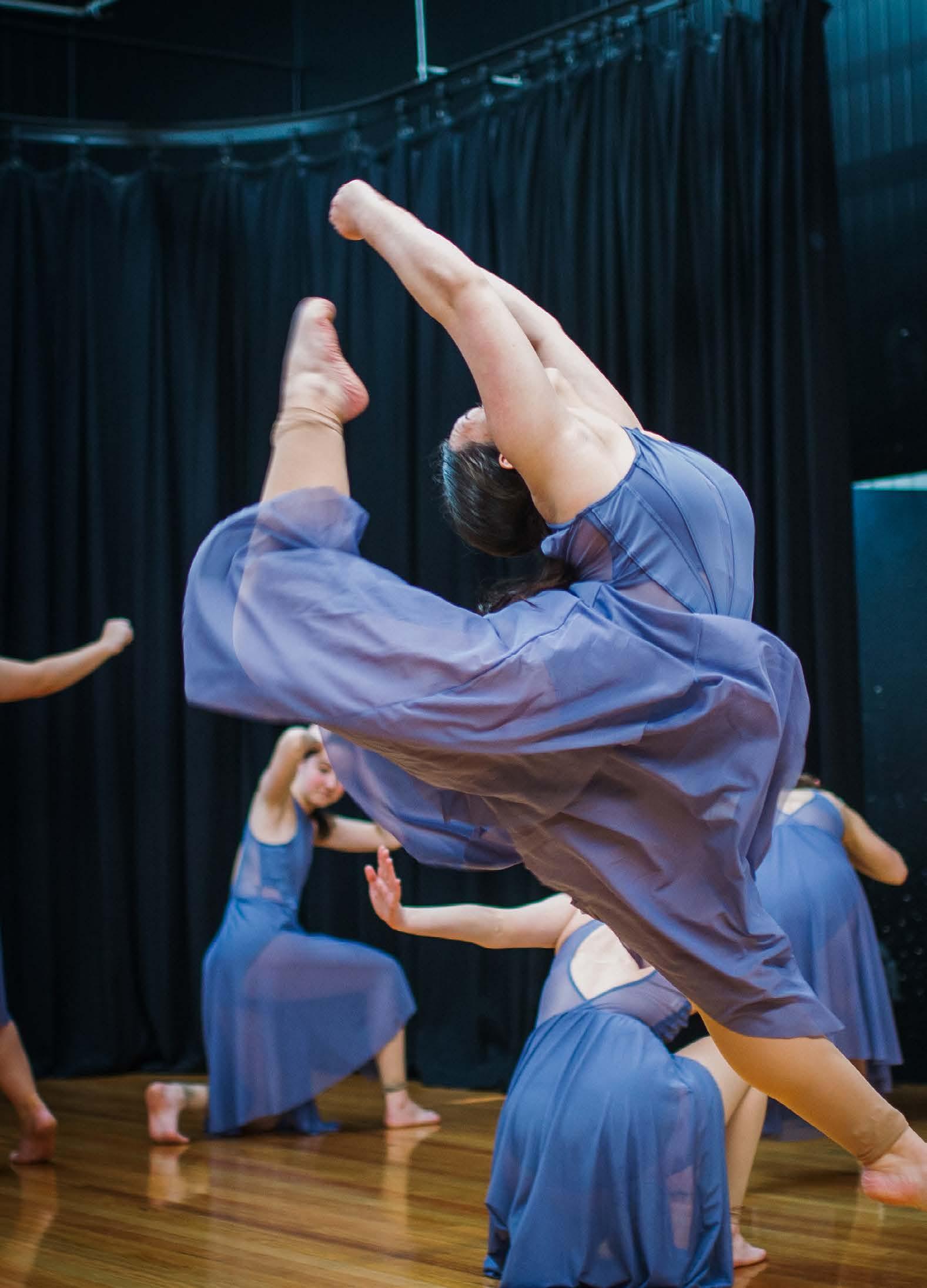
Expressive Dance is designed for students who enjoy movement, performance, creativity, and exploring dance as a form of artistic expression.
Students will learn about movement as an expressive language. The subject will allow students to explore the origins of ballet and contemporary dance while also developing knowledge of safe dance practices and dance terminology. Students will also develop technique and choreographic skills through the creation of solo, duo, or trio and perform in a whole class dance work.
Some dance experience is recommended when selecting ‘Expressive Dance’.
Assessment
Assessment may include process journals, choreography tasks, practical performances, research activities, reflective tasks, and performance-based assessments.
Pathway
This unit provides a foundation for VCE Dance.
Year 10: English Pathway
LEARNING PATHWAY
Year 10 English supports students in developing advanced literacy, analytical thinking, and communication skills through the study of a diverse range of texts, media, and language forms. Students can choose between Mainstream English or Foundation English, with both pathways designed to strengthen reading, writing, speaking, listening, and critical thinking skills while preparing students for future senior secondary pathways.
Year 10: English - Relationships & Romance
Subject
Description
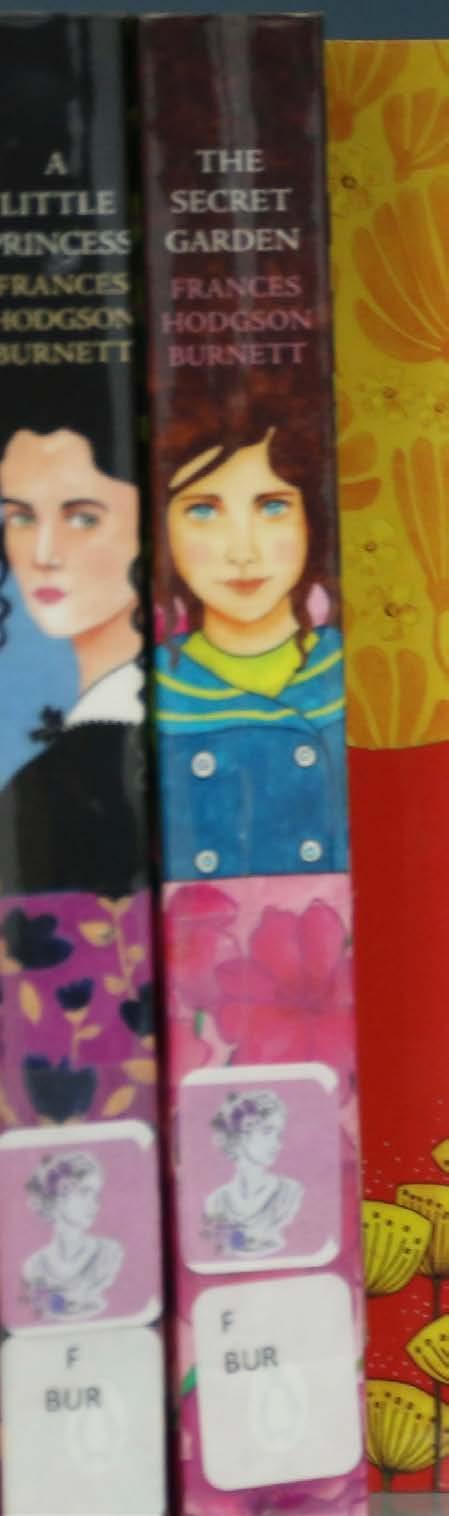
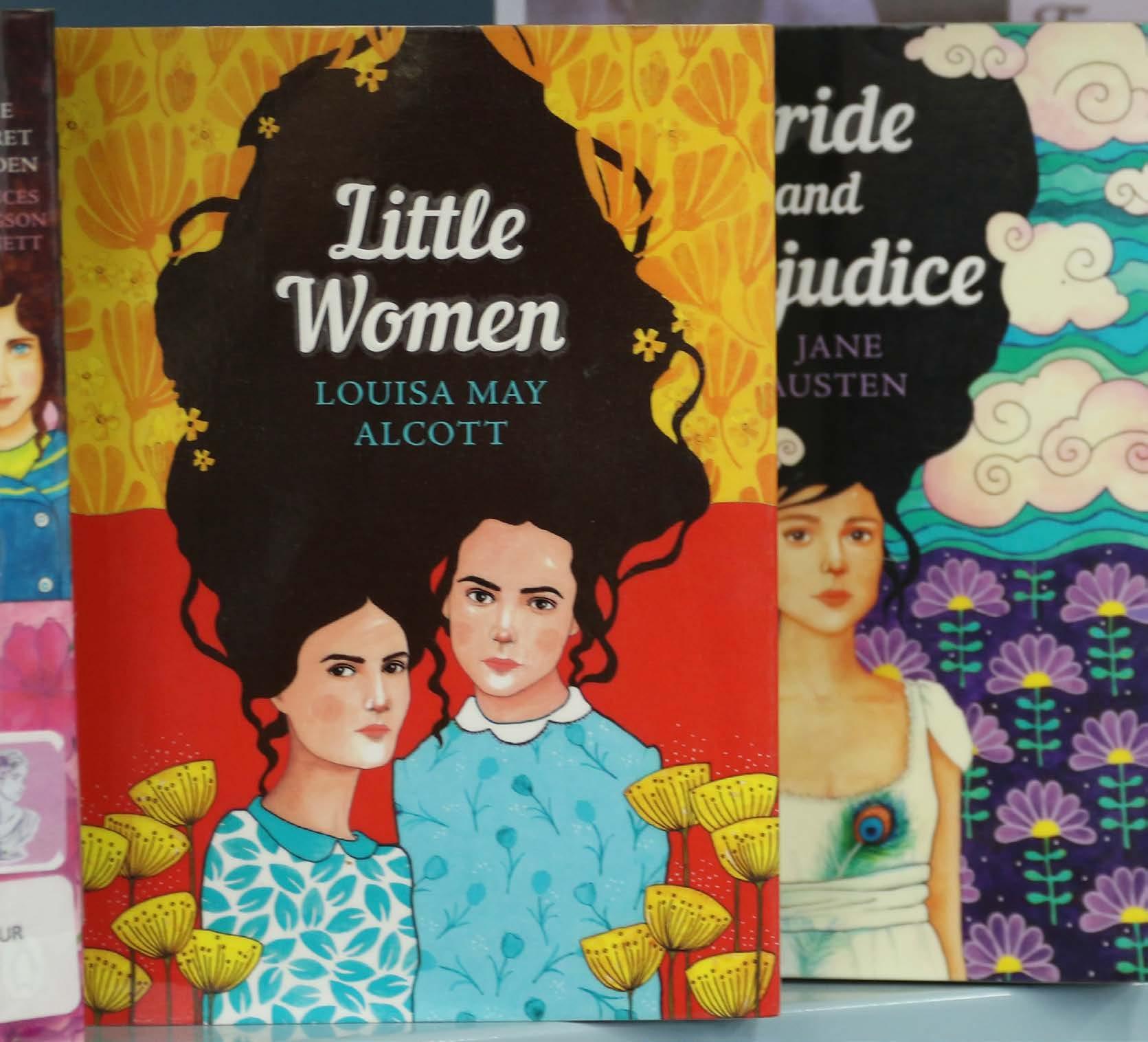
English - Relationships & Romance sees students embark on a journey through classic and contemporary literature, exploring themes of identity, social expectations, and rebellion. Through the study of a range of contemporary and classical texts, students enter the worlds of strong-willed characters who will challenge norms, uncover truths, and forge their own paths. Students collaborate in a group context study, where they analyse the historical and social influences shaping each text. They create individual imaginative responses, crafting original pieces inspired by the themes, characters, and conflicts they encounter. Through close analysis, they will strengthen their critical thinking skills by examining key passages and cinematic techniques. Finally, they will step into the digital age by producing a multi media response content that bring literature to life in modern and engaging ways.
Assessment
Assessment may include group context tasks, creative and multimodal responses, close passage analysis, comparative text and film studies, presentations, and analytical writing tasks.
Pathway
This unit provides a foundation for VCE Literature.
Year 10: Health & Physical Education Pathway
LEARNING PATHWAY
The Year 10 Health and Physical Education pathway provides students with opportunities to explore health, wellbeing, fitness, performance, and active lifestyles through engaging theoretical and practical learning experiences. Students can choose electives including Sports Science and Women's Health and Wellness, allowing them to develop knowledge and skills connected to personal wellbeing, physical performance, anatomy, body systems, and healthy decision-making. The pathway encourages students to build confidence, leadership, teamwork, and critical thinking skills while exploring future pathways in health, fitness, sport, and wellbeing industries. Through practical activities, investigations, collaborative learning, and real-world experiences, students deepen their understanding of how physical, mental, and social wellbeing contribute to overall health and performance. The Year 10 HPE pathway supports students in developing lifelong healthy habits while providing strong foundations for future studies in VCE Physical Education and Health and Human Development.
Year 10: Sports Science
Subject Description
This unit is modelled on VCE Physical Education and investigates several major areas relating to physical performance. Students learn about functional anatomy, which covers skeletal and muscular systems, including their relationship to each other during physical activity. Specific exercise physiology components such as energy systems, the cardiovascular and respiratory systems, and their responses to exercise, are also examined. The last topic examines coaching and skill acquisition and the physics of motion in relation to biomechanics within physical activity, providing a solid foundation for further study in the area of physical activity and the body's responses to exercise.
Year 10: Women’s Health & Wellness
Subject Description
In the unit students explore various women’s issues encountered throughout their lives. Students investigate topics such as reproductive health, health services, relationships, stages of development across the lifespan and making informed decisions. This unit includes practical experiences such as caring for a newborn baby, and a pre-driver education program that introduces students to road laws and driving a car, as well as caring for a newborn baby. Students also participate in a range of recreational activities such as archery and lawn bowls.
Assessment
Assessment may include assignments, structured questions, presentations, research activities, and practical learning experiences.
Pathway
This subject provides a foundation for VCE Health and Human Development.
Year 10: Humanities Pathway
LEARNING PATHWAY
The Year 10 Humanities pathway encourages students to explore the world through the study of business, law, politics, history, economics, and contemporary global issues. Through electives including Checks and Balances, Teenagers and the Law, and Shaping the World, students develop critical thinking, problem-solving, communication, and research skills while investigating how societies, governments, businesses, and individuals influence the world around them. The pathway encourages students to think independently, analyse real-world issues, and develop informed perspectives on social, political, legal, and economic topics.
Through inquiry-based learning, collaborative activities, case studies, and real-world investigations, students build confidence in analysing information, debating ideas, and applying their knowledge to practical situations. The Humanities pathway provides strong foundations for future studies in Legal Studies, History, Accounting, Business Management, Politics, and related fields, while supporting students in becoming thoughtful, informed, and active global citizens.
Year 10: Cheques & Balances
Subject Description
Students explore how small businesses operate and respond to opportunities and challenges in a changing world. They investigate the role of entrepreneurship, innovation, and financial management in developing successful businesses. Students examine the characteristics and skills required to establish and run a business, including leadership, communication and decision-making. Through practical activities, students apply business concepts to real-world scenarios, considering factors such as finance, ethical practices and strategic planning.
Assessment
Assessments include case studies and tests.
Pathway
This subject provides a foundation for VCE Accounting and Business Management.
Year 10: Teenagers & the Law
Subject Description
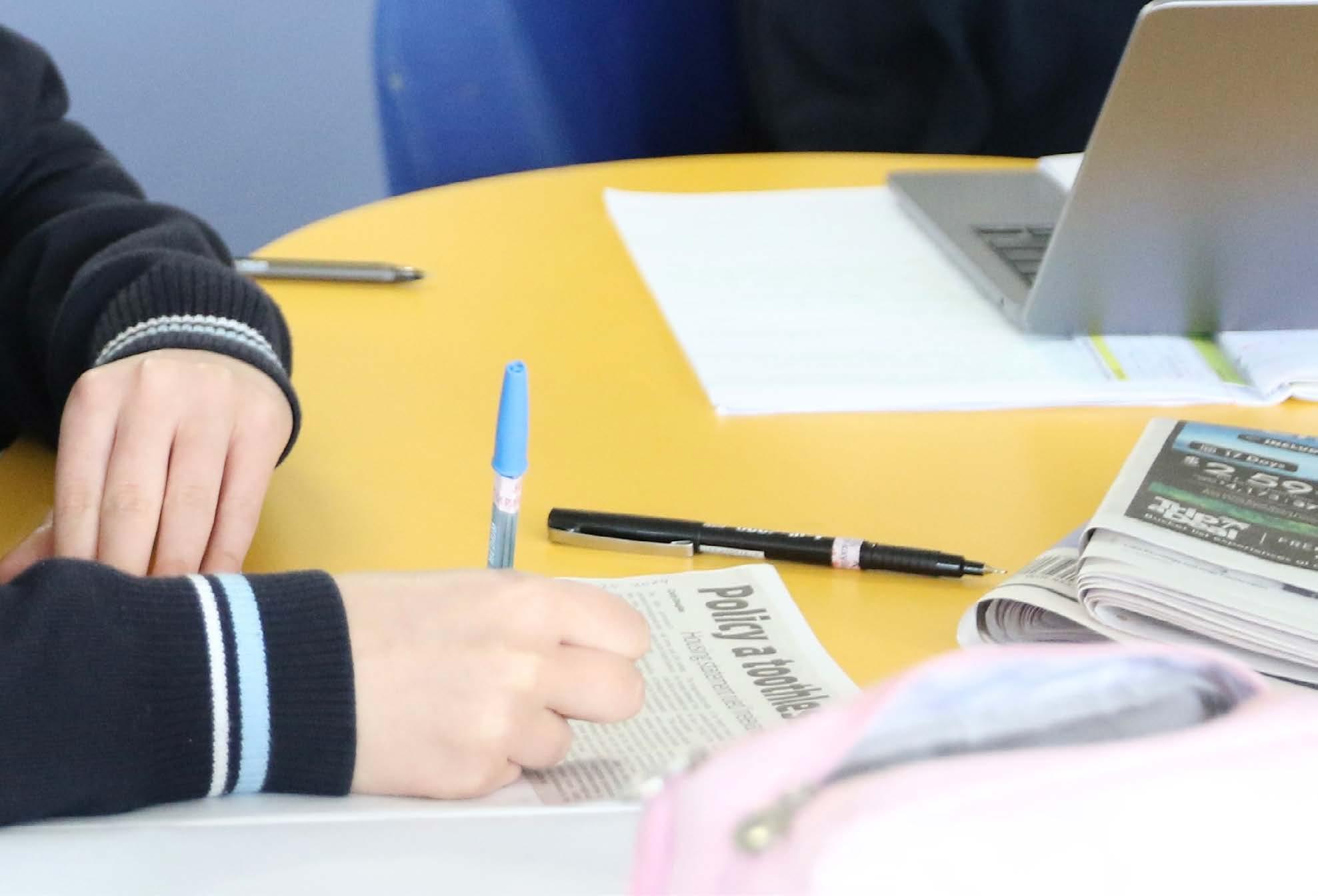
Students explore how laws shape society and why they are needed, with a focus on those that impact young people. They investigate the role of courts, the powers of police, and how legal issues are reported in current media, using newspapers and articles to examine real-world cases and topics of interest. Students build skills in analysing legal information, interpreting current events, and establishing informed viewpoints about justice and rights.
Assessment
Assessments include a folio of annotated news issues, an exploration of political party powers, and a court case report.
Pathway
This subject provides a foundation for VCE Legal Studies.
Year 10: Shaping the World
Subject Description
Students explore how the world has changed post 1945 and the influence of globalisation on these changes. Looking through the lens of popular culture, students evaluate the historical significance of events, ideas, individuals, groups movements and developments of the modern world. The effects of global politics, sport and society, music, and the progression of film and television are considered as well as how Australian beliefs and values have developed.
Assessment
Assessment may include source analysis, written evaluations and research presentations.
Pathway
This subject provides a foundation for VCE History.
Year 10: Languages
LEARNING PATHWAY
The Year 10 Languages pathway encourages students to build confidence as global communicators while developing valuable cultural understanding, communication, and interpersonal skills. Through the study of French and VET Applied Language (Chinese), students strengthen their speaking, listening, reading, and writing abilities in authentic real-world contexts. Students explore language through personal experiences, careers, travel, workplace communication, culture, and everyday interactions, helping them develop confidence, independence, and global awareness.
The pathway provides students with opportunities to connect language learning to future study, employment, and international engagement. Through practical communication tasks, collaborative learning, and cultural exploration, students develop skills that support pathways into VCE Languages, VET programs, further education, and future careers in an increasingly interconnected world.
Year 10: French
Subject Description
French provides students with opportunities to strengthen their communication skills while developing a deeper understanding of French language and culture. Using a range of texts and real-life situations, students build vocabulary, grammar, and conversational skills related to friendships, family, travel, the environment, careers, and everyday experiences.
Students gain confidence in speaking, listening, reading, and writing through practical and engaging learning experiences. The course encourages students to communicate ideas, share opinions, and interact in authentic contexts while building cultural awareness and language fluency.
Assessment
Assessment may include written and oral tasks, listening activities, reading comprehension, role plays, conversations, and visual or multimedia texts.
Pathway
This subject provides a foundation for VCE French.
Year 10 VET: 10949NAT Certificate II Applied Language (Chinese)
Subject Description
The Certificate II in Applied Language is a national accredited curriculum that aims to provide participants with the language skills and cultural knowledge to enable them to communicate in social and workplace situations in a language other than English [Chinese].
Students develop the intercultural sensitivity and capacity to function in environments where there is a range of cultural and language backgrounds present. They learn the basic linguistic competency required to understand and use an additional language in social and workplace settings.
This is an 18-month program consisting of 4 core units.
- Full Year Commitment (Year 9)
- Semester One Elective (Year 10)
Credit in the VCE
Students may be able to attain up to three VCE VET units at the Unit 1 and 2 level.
Upon completion of all course requirements, the RTO will issue a completion certificate. Where a student has attained only some units, the RTO will issue a statement of attainment.
Assessment
Assessment may include listening tasks, oral presentations, reading comprehension, workplace communication activities, and written language tasks.
Pathway
This subject provides a pathway into Certificate III in Applied Language (Chinese), VCE VET studies, and future language and vocational opportunities.
Additional Information
This certificate is delivered in partnership with Ripponlea Institute (RTO 21230). Students who successfully complete the course may receive VCE VET credit towards their senior secondary studies.
Year 10: Science Pathway
LEARNING PATHWAY
The Year 10 Science pathway encourages students to think critically, investigate real-world problems, and deepen their understanding of the natural and physical world. Through elective studies including Life Science and Physical Science, students build strong scientific inquiry skills while exploring concepts in Biology, Psychology, Chemistry, and Physics. Students develop practical laboratory skills, analyse evidence, conduct investigations, and apply scientific thinking to contemporary issues and discoveries.
The pathway supports students in becoming curious, analytical, and confident learners who can communicate scientific ideas and solve complex problems. Through hands-on experiments, collaborative investigations, and real-world applications, students are encouraged to explore areas of personal interest while preparing for future pathways in VCE Biology, Psychology, Chemistry, Physics, and other STEM-related fields.
Year 10 Science: Life Science
Subject Description
Life Science provides students with the opportunity to build on their knowledge of Biology and Psychology while developing key scientific inquiry skills for VCE Science. In the Psychology component, students investigate the nervous system and brain linking this to how they form different types of memories. Students then go further by applying the biopsychosocial model as an approach to consider social interactions, development, and mental wellbeing.
In Biology, students explore DNA structure, heredity and genetic diversity, predicting outcomes of simple genetic crosses and examining how mutations contribute to natural selection. They analyse evidence supporting the theory of evolution, including fossil records and Earth’s evolutionary timeline. Students consider how scientific knowledge can influence decision making and societal responses to relevant issues and introduces students to the bioethical framework. Through investigations, they construct evidence-based explanations, evaluate information from multiple sources and communicate findings using appropriate scientific language and representations, strengthening their ability to justify conclusions and engage with scientific ideas.
Assessment
Assessment may include scientific practical investigation poster, case study analysis and test.
Pathway
This subject provides a foundation for VCE Biology and Psychology.
Year 10: Physical Science
Subject Description
Physical Science builds on students’ understanding of Chemistry and Physics while developing key scientific inquiry skills to support future study. Students examine how the application of scientific knowledge to socio-scientific issues can result in varied outcomes, influencing how widely scientific practices are accepted in society and shaping pathways toward a more sustainable future.
In Chemistry, students extend their knowledge of atomic structure and the periodic table, investigate different types of chemical reactions, and predict products by writing balanced equations. They design and conduct experiments to analyse how changing conditions affect reaction rates. In Physics, students explore the properties of electromagnetic and mechanical waves, comparing their features and real-world applications. They also investigate Newton’s Laws of motion and analyse the relationship between force, mass and acceleration. Through practical investigations, students develop skills in analysing data, evaluating evidence and communicating scientific explanations.
Assessment
Assessments include scientific practical investigation poster, research task and tests.
Pathway
This subject provides a foundation for VCE Physics and VCE Chemistry.
Year 10: Technology
LEARNING PATHWAY
The Year 10 Technology pathway encourages students to think creatively, solve real-world problems, and develop practical skills through hands-on learning experiences. Through electives, students explore design thinking, creativity, production processes, and innovation while developing confidence in applying ideas to practical outcomes. Students experiment, create, evaluate, and refine their work using a range of technologies, materials, and design processes.
The pathway supports students in building collaboration, organisation, communication, and problem-solving skills while preparing for future studies and careers in design, hospitality, fashion, engineering, and technology industries. Through practical projects and creative challenges, students develop independence, resilience, and confidence while exploring areas of personal interest and passion.
Bon Appetit (Elective)
On the Runway (Elective)
Mater Chef (Elective
Year 10: Mater Chef
Subject Description
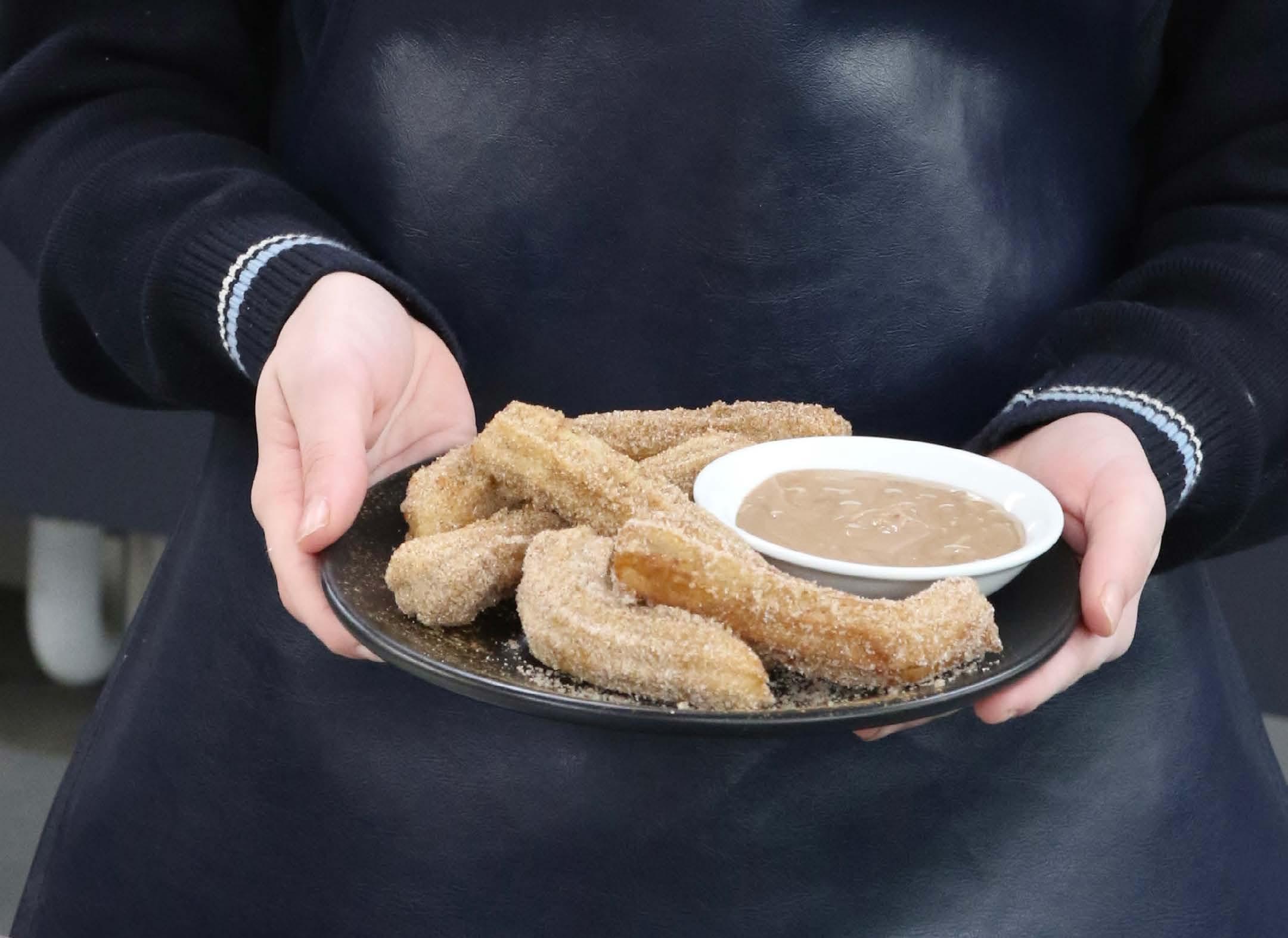
Mater Chef allows students to prepare and present seasonal foods, with a focus on food handling and safety. It also investigates prominent figures in the Australian Hospitality industry, and local and international food trends. Students further develop their creative and practical skills in the kitchen. Students produce food products for specific clients using the technology design cycle.
Assessment
Assessment may include folio assignments, practical cooking classes, design tasks, and both individual and group work.
Year 10: On the Runway
Subject Description
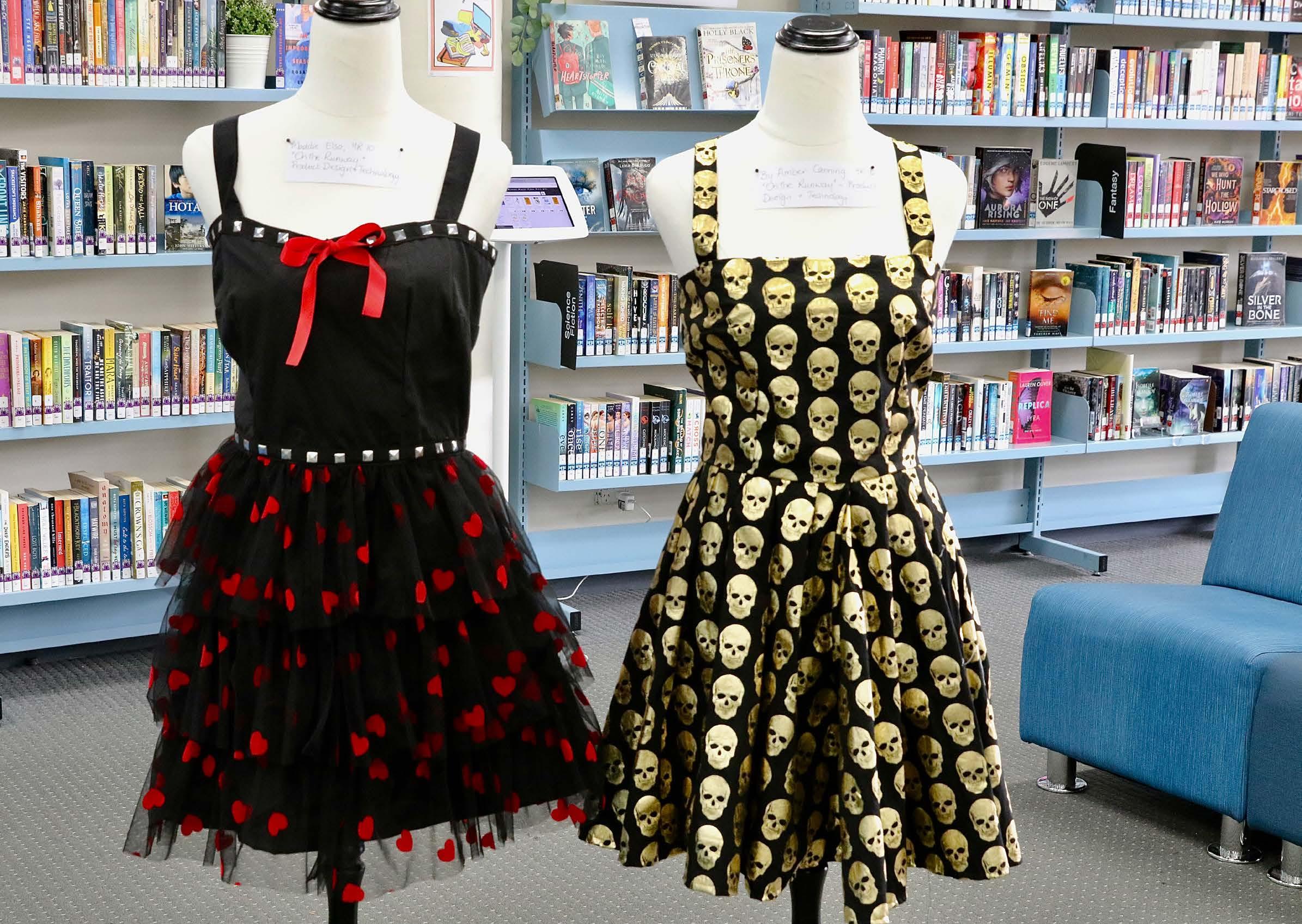
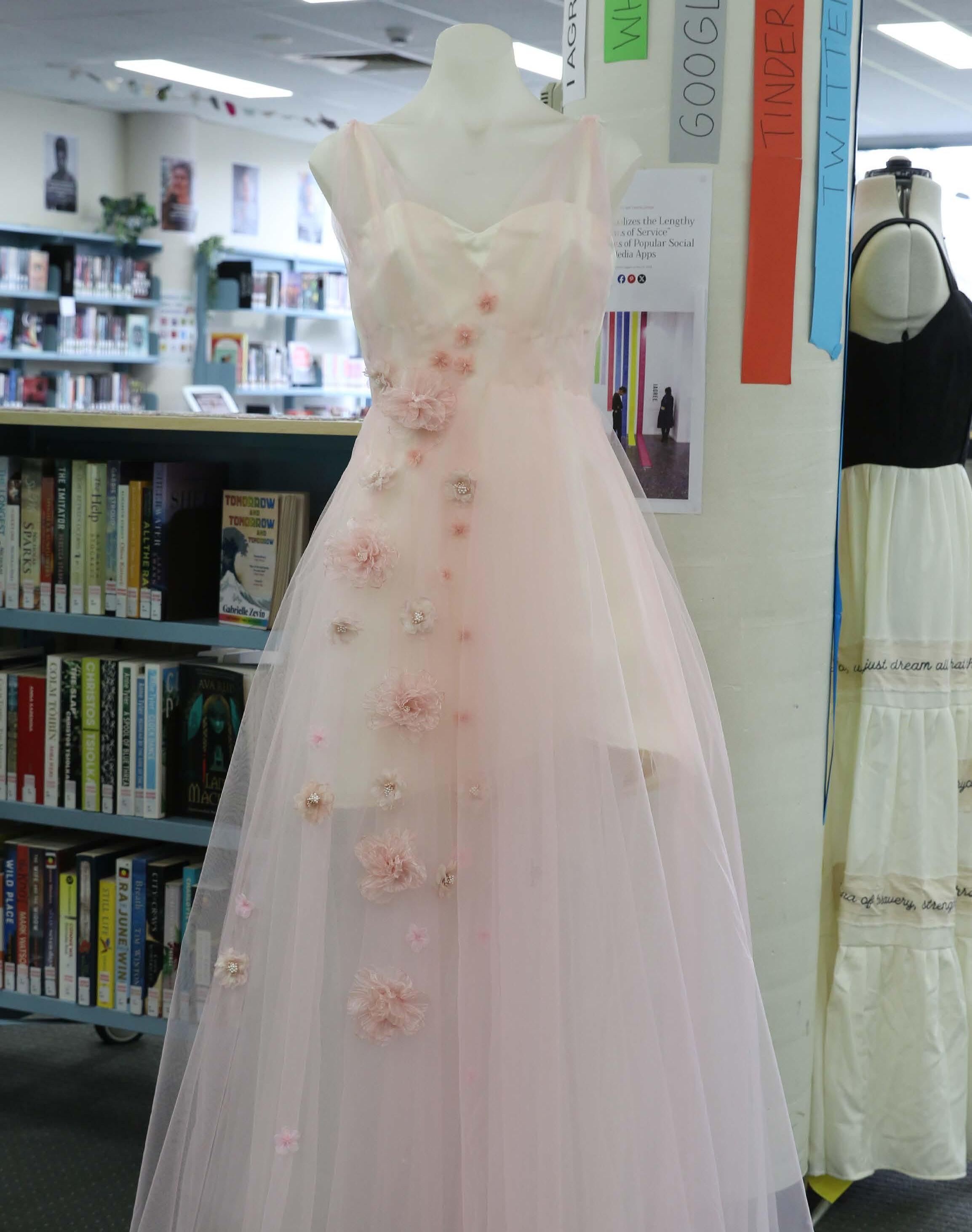
In Year 10, On the Runway, students are introduced to a variety of techniques involved in garment construction, using a commercial pattern. They design and produce a garment making choices regarding fabrics and design elements within the framework of a folio. They research suitable fabrics, care labelling of textile products and the impact of textiles on the environment.
Assessment
Assessment may include design folios, garment construction tasks, research activities, and evaluation of completed products.
Pathway
Students who are considering VCE Product Design and Technology are encouraged to complete On the Runway in Year 10.
YEAR 11 & 12 CURRICULUM
Welcome to VCE
The Victorian Certificate of Education (VCE) is a senior secondary qualification usually completed over two years in Years 11 and 12. At Mater Christi College, students may choose between the VCE pathway or the VCE Vocational Major VCE or VCE-VM pathway, depending on their interests, strengths, and future goals. Both pathways provide opportunities for students to build knowledge, confidence, and skills for further education, training, and employment.
VCE Pathways and Higher Study
The VCE pathway provides a broad range of subject options and is designed for students considering university, TAFE, apprenticeships, or employment. Students completing VCE may receive an ATAR for university entrance. The VCE-VM pathway focuses on practical learning, workplace skills, and vocational pathways, supporting students interested in apprenticeships, TAFE, employment, and handson learning experiences. Students may also access VET programs, university enhancement studies, and accelerated learning opportunities throughout their senior years.
Victorian Certificate of Education (VCE)
TAFE, apprenticeships, university (nonATAR pathways) or employment Vocational Education and Training (VET)
University (via ATAR), TAFE, apprenticeships, or employment
VCE Prerequisites
While there are few formal prerequisites for most VCE studies, students are encouraged to carefully consider teacher recommendations, subject requirements, and their strengths when selecting subjects. Some subjects may recommend prior study at Year 10 level to ensure students are well prepared for Units 1–4 and future pathways.
For further information about Year 10 and VCE subject pathways, please refer to the Year 10 section of this curriculum guide
VCE Assessment
Assessment in VCE includes a range of School Assessed Coursework (SACs), practical tasks, projects, investigations, presentations, and examinations. In Unit 3 and 4, students complete internal school assessed tasks and external exams which contribute to study scores and the calculation of an ATAR. VCE-VM students complete practical and applied learning assessments aligned to vocational and workplace-focused outcomes.
Core VCE Subjects
• English or English Language
• VCE-VM Literacy
Religion and Society (Unit 1 – Year 11 or Unit 2 – Year 12) or Catholic Action Program (CAP)
VCE VET Courses:
VET Business
Certificate III Chinese *
VCE Subjects:
• Accounting Art Creative Practice Biology
• Business Management
• Chemistry Dance Drama
• Foundation Mathematics French * General Mathematics
• Health and Human Development
• History
• Legal Studies Literature
Mathematical Methods *
• Media
• Outdoor and Environmental Studies
• Physical Education
Physics Politics
• Product Design and Technology
• Psychology Visual Communication Design
VCE-VM Subjects:
• Personal Development Skills
• Work Related Skills Literacy
• Numeracy
Prerequisites – whilst there are no subject prerequisites for any Year 11 subject, it is recommended that students selecting those subjects above marked with an asterisk (*) have completed the equivalent Year 10 subject.
KEY LEARNING AREAS
Choosing Senior Subjects
Students are encouraged to carefully select subjects that reflect their interests, abilities, career aspirations, and future study pathways. When making subject selections, students should consider prerequisite requirements, previous achievement, personal strengths, and future goals. Researching subjects thoroughly and seeking advice from teachers, Learning Leaders, Careers staff, and families can support informed decision-making.
Please note that while every effort is made to offer the subjects listed in this guide, some subjects may not proceed or may be combined as a Year 11 and 12 class if enrolment numbers are insufficient.
How to Submit Selections
Students submit subject selections online through the College subject selection portal during the subject selection period.
Important Information
Students should ensure their proposed course meets the minimum requirements for their chosen qualification pathway. Course planning forms, subject information, and pathway guidance are available through the College Knowledge Banks and Careers resources. Any changes to subject selections after submission must be discussed with the relevant Year Level Coordinator or Learning Leader and may require parent/carer approval.
Higher Study Opportunities
Mater Christi College offers a range of opportunities for highly capable students to extend their learning through VCE acceleration, VET programs, Higher Education Studies, Virtual School Victoria (VSV), and University Enhancement Programs. These pathways provide opportunities for students to challenge themselves academically, develop independence, and explore university and vocational pathways while completing senior secondary studies.
Year 11 & 12: Core VCE English
LEARNING PATHWAY
The English pathways in Years 11 and 12 provide students with opportunities to strengthen their communication, analytical, and literacy skills through a range of academic and applied learning approaches. Students can choose from VCE English, VCE English Language, or VCEVM Literacy depending on their interests, learning strengths, and future pathways. Across all courses, students develop skills in reading, writing, speaking, analysing texts, and communicating ideas effectively in different contexts. These subjects support pathways into university, further study, training, and employment while helping students become confident and capable communicators.
Year 11 & 12: Core VCE English
Subject Description
VCE English focuses on the study and analysis of texts from a range of genres, cultures, and time periods. Students develop skills in analytical, persuasive, and creative writing while exploring how language and ideas shape meaning. The course includes text analysis, argument analysis, oral presentations, and the creation of written responses. Students build strong communication and critical thinking skills that support a wide range of tertiary pathways and careers.
Units
Unit 1 & 2
– Reading and Exploring Texts
– Crafting Texts
– Exploring Argument
Unit 3 & 4
– Reading and Responding to Texts
– Creating Texts
– Analysing Argument
Further information on the study design can be found at:
VCE English and EAL
Assessment
Assessment may include analytical essays, creative and persuasive writing tasks, oral presentations, text responses, and examinations.
In Units 3 and 4, students complete School Assessed Coursework (SACs) and an end-of-year examination.
A final study score (for Units 3 & 4) is determined by:
Unit 3 SAC results will contribute 25%
Unit 4 SAC results will contribute 25%
End of year written exam will contribute 50%
Pathway
VCE English provides a strong foundation for university study, humanities, education, law, journalism, media, communications, business, and a wide range of professional careers that require advanced literacy and communication skills.
Year 11 & 12: Core VCE English Language
Subject Description
VCE English Language is the study of the functions of spoken and written language, and the ways in which language is used by individuals and groups to reflect thinking and values.
Students analyse language linguistically to learn how language is rule governed and informed by accepted systems. Students examine a range of contemporary and historical texts to understand how speakers and readers use language for a range of purposes.
Units
Unit 1 – Language and Communication
Unit 2 – Language Change
Unit 3 – Language Variation and Purpose
Unit 4 – Language Variation and Identity
Further information on the study design can be found at:
VCE English Language
Assessment
Assessment may include analytical essays, creative and persuasive writing tasks, oral presentations, text responses, and examinations.
In Units 3 and 4, students complete School Assessed Coursework (SACs) and an end-of-year examination.
Pathway
VCE English Language supports pathways into linguistics, speech pathology, teaching, journalism, law, communications, psychology, media, marketing, and other language-focused or analytical professions.
Year 11 & 12: Core VCE English/English as an Additional Language
Subject Description
VCE English continues to develop students critical and creative thinking and writing skills through a focus on how English language is used to create meaning in written, spoken and multimodal texts of varying complexity. The study of texts enables students to draw meanings from these tests for deeper engagement and understanding. Students create their own responses to these texts and build to critical analysis of the meaning of texts and applying and refining capacity for inferential reading and viewing.
Areas of Study
Unit 1 – Reading and Exploring Texts/Crafting Texts
Unit 2 – Reading and Exploring Texts/Exploring Argument
Unit 3 – Reading and Responding to Texts/Creating Texts
Unit 4 – Reading and Responding to Texts/Analysing Argument
Further information on the study design can be found at:
VCE English and English as an Additional Language Study Design
Assessment
Assessment may consist of text responses, short stories, analytical responses, annotated persuasive texts, oral presentations, reflective commentaries and persuasive writing.
A final study score (for Units 3 & 4) is determined by:
Unit 3 SAC results will contribute 25%
Unit 4 SAC results will contribute 25%
End of year written exam will contribute 50%
Year 11 & 12: Core VCE Religion & Society
LEARNING
PATHWAY
Religious Education in Years 11 and 12 encourages students to explore faith, ethics, spirituality, and social responsibility through inquiry, reflection, and discussion. Students examine the role of religion in society, investigate ethical issues and contemporary challenges, and consider how beliefs and values influence individuals and communities. Pathways are available through VCE Religion and Society or the Catholic Action Program, allowing students to engage with both academic and practical applications of faith, leadership, and community service.
Year 11 & 12: Core VCE Religion & Society
Subject Description
VCE Religion and Society explores the nature and purpose of religion and how religious beliefs and practices influence societies and individuals. Students investigate ethical issues, meaning and purpose, spirituality, and the interaction between religion and contemporary society. The course develops research, analytical, and critical thinking skills while encouraging respectful discussion and reflection on diverse worldviews and traditions.
Units
Unit 1 – The Role of Religion in Society
Unit 2 – Religion and Ethics
Unit 3 – The Search for Meaning
Unit 4 – Religion, Challenge and Change
Units 3 & 4 are an elective option that is completed as a scored VCE subject - Unit 1 is completed over the whole year in year 11 - Unit 2 is completed over the whole year in year 12.
Assessment
Assessment may include essays, case studies, analytical exercises, structured questions, media analysis, reports, oral presentations, and SACs.
A final study score (for Units 3 & 4) is determined by:
Unit 3 SAC results will contribute 25%
Unit 4 SAC results will contribute 25%
End of year written exam will contribute 50%
Pathway
VCE Religion and Society supports pathways into teaching, law, humanities, philosophy, social work, theology, psychology, community services, and other careers involving ethics, communication, leadership, and critical thinking.
Year 11: Core Catholic Action Program
Subject Description
The Catholic Action Program provides students with opportunities to deepen their understanding of Catholic Social Teachings and put their learning into action. Through both classroom activities and practical experiences, students explore how they can make a positive difference in their community.
The program includes group presentations and project-based learning, encouraging collaboration and the development of key skills. Students may also engage with local community organisations and participate in volunteer activities, gaining valuable real-world experience. This is a College-based subject and is not an accredited VCE unit. A key requirement of the program is the completion of 30 hours of school-based and community service, supporting students in developing a strong sense of social responsibility and active citizenship.
Program Focus
• Catholic Social Teaching
• Community service and outreach
• Leadership and collaboration
• Social justice and advocacy
• Reflection and practical application of faith
Assessment
Assessment may include journals, reflections, presentations, participation in projects, community service logs, and practical involvement in school and community activities.
Pathway
The Catholic Action Program supports pathways into community services, youth work, education, leadership programs, social justice initiatives, volunteering, and careers focused on supporting and engaging with the wider community.
Year 11 & 12 VCE: The Arts Pathway
LEARNING PATHWAY
The Arts pathway provides students with opportunities to explore creativity, communication, performance, and design through a range of visual and performing arts disciplines. Students develop technical, analytical, and creative skills while experimenting with artistic processes, responding to artworks and performances, and creating original works across a variety of media and forms. The pathway encourages imagination, collaboration, critical thinking, and self-expression while supporting future pathways into creative industries, tertiary study, and professional arts practice.
Year 11 & 12: VCE Art Creative Practice
Subject Description
VCE Art Creative Practice invites students to explore, experiment and develop their artistic voice through a dynamic and contemporary approach to art making. Students will investigate how artists transform ideas, experiences and observations into compelling artworks that challenge, inspire and connect with audiences. Through creative exploration, research and experimentation with a range of materials, processes and techniques, students will generate, refine and resolve their own artistic ideas. Students will engage with artworks, artists and contemporary art practices from diverse cultural and historical contexts, using these insights to inform and extend their creative thinking. Through making, analysing and reflecting, they will build confidence, independence and technical skill while developing a deeper understanding of art as a powerful form of personal expression, communication and cultural dialogue.
Units
Unit 1 – Interpreting Artworks and Exploring the Creative Practice
Unit 2 – Interpreting Artworks and Developing the Creative Practice
Unit 3 – Investigation, Ideas, Artworks and the Creative Practice
Unit 4 – Interpreting, Resolving and Presenting Artworks
Further information on the study design can be found at:
VCE Art Creative Practice
Assessment
Assessment may include written analysis (SACs), Body of Work (SATs) and written examinations.
A final study score (for Units 3 & 4) is determined by:
Unit 4 SAC results will contribute 10%
Unit 3 & 4 SAT results will contribute 60%
End of year exam will contribute 30%
Pathway
Art Creative Practice supports pathways into fine arts, visual arts, illustration, gallery and museum studies, design, creative industries, and tertiary arts programs.
Year 11 & 12 VCE: Dance
Subject Description
Across VCE Dance students will be provide opportunities for students to explore the potential of movement as a means of creative expression and communication. Students will create and perform their own dance works, as well as study the dance works of others through performance and analysis. In each unit, students will undertake regular and systematic dance training to develop their physical skills and will advance their ability to execute a diverse range of expressive movements. Students will also develop and refine their choreographic skills by exploring personal and learnt movement vocabularies. They will study the ways other choreographers have created and arranged movement to communicate an intention and will create their own dance works. Students will perform learnt solo and group dance works, as well as their own works. They will also analyse the ways ideas are communicated through dance and how dance styles, traditions and works can influence dance practice, the arts, artists and society more generally.
Units
Unit 1 – Dance – Choreography, Dance Technique and Performance, and Creative Practice
Unit 2 – Dance – Dance perspectives, Dance Technique and Performance, and Creative Practice
Unit 3 – Dance – Dance perspectives, technique, performance and analysis
Unit 4 – Dance – Dance perspectives, choreography and perfomance
Further information on the study design can be found at: VCE Dance
Assessment
Assessment may include written analysis (SACs), solo and group performances and written/ performance examinations.
A final study score (for Units 3 & 4) is determined by:
Unit 3 SAC results will contribute 15%
Unit 4 SAC results will contribute 10%
Unit 3 & 4 Solo Performance Exam will contribute 50%
End of year written exam will contribute 25%
Pathway
VCE Dance provides pathways into further study and careers in performing arts, education, fitness, choreography, arts management, and the broader creative industries through the development of creative, collaborative, and performance skills.
Year 11 & 12 VCE: Drama
Subject Description
VCE Drama allows student to bring stories, ideas and issues to life through performance. Students will become theatre-makers, creating and performing original works inspired by thought-provoking themes, real-world issues and imaginative stimulus material. Through improvisation, play-making and rehearsal, they will explore character, movement, voice and dramatic storytelling to engage and inspire audiences. Students will experiment with a range of performance styles and draw inspiration from Australian and international theatre practitioners. They will collaborate creatively, take artistic risks and use dramatic elements, symbolism and production design to communicate powerful messages. Along the way, they will build confidence, creativity, communication and teamwork skills while reflecting on and evaluating their own work and the performances of others. Drama offers students the opportunity to express themselves, develop their creative voice and experience the excitement and energy of live performance.
Units
Unit 1 – Introducing Performance Styles and Contemporary Drama Practices
Unit 2 – Contemporary Drama Practices and Australian Identity
Unit 3 – Devised Ensemble Performance
Unit 4 – Devised Solo Performance
Further information on the study design can be found at: VCE Drama
Assessment
Assessment may include written analysis (SACs), solo and ensemble performances and written/ performance examinations.
A final study score (for Units 3 & 4) is determined by:
Unit 3 SAC results will contribute 30%
Unit 4 SAC results will contribute 10%
Unit 4 Solo Performance Exam will contribute 35%
End of year written exam will contribute 25%
Pathway
Drama supports pathways into acting, theatre production, directing, education, performing arts, media, communications, and creative industries.
Year 11 & 12: VCE Media
Subject Description
VCE Media is a subject that empowers students to explore the stories and technologies shaping the world around them. Students will dive into the powerful influence of media across film, television, social media, advertising and digital platforms, investigating how media messages are created, shared and understood by different audiences. They will examine how media can inform, entertain, persuade and challenge perspectives, while exploring issues of representation, influence, power and emerging technologies. A major focus of the unit is hands on media production. Students will take on the role of media creators, developing original media products from concept to completion. Through planning, filming, editing, designing and refining their work, they will build creative, technical and problem-solving skills while experimenting with contemporary production techniques. Students will learn to communicate ideas effectively, engage audiences and critically evaluate media in an increasingly connected and fast-paced digital world.
Units
Unit 1 – Media Forms, Representations and Australian Stories
Unit 2 – Narrative Across Media Forms
Unit 3 – Media Narratives and Pre-Production
Unit 4 – Media Production, Agency and Control
Further information on the study design can be found at: VCE Media
Assessment
Assessment may include written analysis (SACs), video essays, podcasts, folio (SATs) and written examinations.
A final study score (for Units 3 & 4) is determined by:
Unit 3 SAC results will contribute 10%
Unit 4 SAC results will contribute 10%
Unit 3 & 4 SAT results will contribute 40%
End of year written exam will contribute 40%
Pathway
Media supports pathways into film and television, journalism, photography, digital content creation, communications, advertising, marketing, and multimedia production.
Year 11 & 12: VCE Visual Communication Design
Subject Description
VCE Visual Communication Design invites students to think creatively, solve problems and bring ideas to life through visual communication. Students will explore how designers shape the way people interact with messages, products, spaces and digital experiences, while developing the skills to create designs of their own. Through a combination of manual and digital methods, students will sketch, model, prototype and refine their own designs. They will experiment with visual language, typography and imagery to communicate ideas effectively for diverse audiences and contexts. Along the way, students will participate in design critiques and build confidence using professional design terminology. They will investigate how cultural, social, environmental and technological influences shape design decisions, while applying ethical, sustainable and human-centred approaches. Students will also explore the rich connections between design, place and time, including the valuable contributions of Aboriginal and Torres Strait Islander design knowledge and perspectives.
Units
Unit 1 – Finding, Reframing and Resolving Design Problems
Unit 2 – Design Contexts and Connections
Unit 3 – Visual Communication in Design Practice
Unit 4 – Delivering Design Solutions
Further information on the study design can be found at: VCE Visual Communication Design
Assessment
Assessment may include written analysis (SACs), folio (SATs) and written/drawing examinations.
A final study score (for Units 3 & 4) is determined by:
Unit 3 SAC results will contribute 20%
Unit 3 & 4 SAT results will contribute 50%
End of year written exam will contribute 30%
Pathway
Visual Communication Design supports pathways into graphic design, architecture, interior design, industrial design, advertising, animation, UX/UI design, and other creative and designbased industries.
Year 11 & 12: VCE English Pathway
LEARNING PATHWAY
English electives provide students with opportunities to extend their reading, writing, analytical, and creative thinking skills through specialised studies of language and literature. These subjects encourage students to engage deeply with texts, ideas, and communication while developing confidence in interpretation, discussion, and written expression. English electives support pathways into university study, humanities, media, law, education, communications, and creative industries.
Year 11 & 12: VCE Literature
Subject Description
VCE Literature aims to foster students enjoyment and appreciation of artistic and aesthetic merits of stories and storytelling, and enables students to participate in cultural conversations that take place around them. Students read and explore a diverse range of established and emerging literacy works, and become empowered to discuss texts. Students extend their creativity and higher order thinking to express and develop their critical and creative voices.
Units
Unit 1 – Literature
– Reading practices
– Exploration of literary movements and genres
Unit 2 – Literature
– Voices of Country
– The text in its context Unit 3 – Literature
– Adaptations and transformations
– Developing interpretations Unit 4 – Literature
– Creative responses to texts
– Close analysis of texts
Further information on the study design can be found at: VCE Literature
Assessment
Assessment may include close analysis essays, analytical responses, oral presentations, comparative essays, creative responses and passage analysis.
A final study score (for Units 3 & 4) is determined by:
Unit 3 SAC results will contribute 25%
Unit 4 SAC results will contribute 25%
End of year written exam will contribute 50%
Pathway
Literature supports pathways into writing, journalism, publishing, teaching, communications, law, humanities, media, performing arts, and tertiary study in literature and the arts.
Year 11 & 12 VCE: Health & Physical Education Pathway
LEARNING PATHWAY
The Health and Physical Education pathway explores how physical, mental, social, and environmental factors influence health, wellbeing, movement, and participation in physical activity. Students develop an understanding of human development, performance, fitness, and outdoor environments while building practical, analytical, and problem-solving skills. Through theoretical and applied learning experiences, students investigate health and wellbeing at personal, community, and global levels, supporting pathways into health sciences, sport, outdoor education, community services, and allied health fields.
Year 11 & 12: VCE Physical Education
Subject Description
VCE Physical Education examines the complex relationships between biophysical (anatomical, biomechanical, physiological and skill acquisition) and psychosocial (psychological and sociocultural) factors in developing and refining movement for participation and performance in physical activity, sport and exercise. Students engage in physical, written, oral and digital learning to apply theoretical concepts and critically reflect on influences affecting participation and performance at all levels. Central to the study is the integration of theory and practice, where knowledge and skills are developed through practical experiences that may be structured, opportunistic or investigative. These activities encourage students to reflect on their participation, share perspectives and recognise the educational value of movement. By linking practical experiences with theory, students build a holistic understanding of movement and performance, deepening their knowledge of biophysical and psychosocial principles and their application in real-world contexts. This learning supports informed decision-making and promotes lifelong engagement in physical activity and health outcomes.
Units
Unit 1 – The Human Body in Motion
Unit 2 – Physical Activity, Sport and Society
Unit 3 – Movement Skills and Energy for Physical Activity
Unit 4 – Training to Improve Performance
Further information on the study design can be found at:
VCE Physical Education Study Design
Assessment
Assessment may consist of analysis of case studies, structured questions, laboratory reports, written reports and data analysis.
A final study score (for Units 3 & 4) is determined by:
Unit 3 SAC results will contribute 20%
Unit 4 SAC results will contribute 30%
End of year written exam will contribute 50%
Pathway
Physical Education supports pathways into sport science, physiotherapy, exercise science, teaching, coaching, fitness industries, health promotion, recreation, and allied health professions.
Year 11 & 12: VCE Health & Human Development
Subject Description
VCE Health and Human Development adopts a broad, multidimensional understanding of health. Students explore the World Health Organization (WHO) definition and other interpretations, with wellbeing treated as an implicit element of health. The study examines health, health status and human development as dynamic, shaped by interacting biological, sociocultural and environmental factors that can be influenced by individuals, communities and governments. Students analyse how these factors operate across the settings in which people are born, grow, live, work and age. In Australian and global contexts, they investigate health outcomes, the Australian healthcare system, and responses to inequality and inequity. They evaluate the role of global health organisations and Australia’s overseas aid program. Concepts are considered from individual and collective, local, national and global perspectives, and across the lifespan. Students build health literacy, interpret health information and media, and apply strategies to improve health and wellbeing at personal, community and global levels.
Units
Unit 1 – Understanding Health and Wellbeing
Unit 2 – Managing Health and Development
Unit 3 – Australia’s Health in a Globalised World Unit 4 – Health and Human Development in a Global Context
Further information on the study design can be found at: VCE Health and Human Development Study Design
Assessment
Assessment may consist of analysis of case studies, structured questions and data analysis.
A final study score (for Units 3 & 4) is determined by:
Unit 3 SAC results will contribute 25%
Unit 4 SAC results will contribute 25%
End of year written exam will contribute 50%
Pathway
Health and Human Development supports pathways into nursing, healthcare, public health, social work, psychology, nutrition, teaching, community services, and medical and allied health fields.
Year 11 & 12: VCE Outdoor & Environmental Studies
Subject Description
VCE Outdoor and Environmental Studies develops students’ understanding of outdoor environments, and how humans interact with, relate to, and impact them over time. Outdoor environments include landscapes from protected wilderness to areas heavily modified by human activity. The study encourages critical inquiry into environmental issues, sustainability, and connections to Country, past and present. Students examine how natural and human influences shape environmental health. Through passive and active outdoor experiences, they build experiential knowledge, supported by studies in environmental history, ecology, and human relationships with nature. They explore changing interactions between people and environments from the past to the future.
Learning occurs through guided activities such as bushwalking, cycling, canoeing, conservation work, and visits to diverse locations including parks, coasts, forests and cultural sites. Activities emphasise human-powered engagement and include day and multi-day experiences in local and extended settings. These experiences deepen understanding, responsibility, and informed action toward environmental sustainability goals.
Note: That subject includes a compulsory levy. The indicative levy for 2027 is $1475.
Units
Unit 1 – Connections with outdoor environments
Unit 2 – Discovering outdoor environments
Unit 3 – Relationships with outdoor environments
Unit 4 – Sustainable outdoor environments
Further information on the study design can be found at: VCE Outdoor and Environmental Studies Study Design Assessment
Assessment may consist of analysis of case studies, structured questions, journal reports, written reports and data analysis.
A final study score (for Units 3 & 4) is determined by:
Unit 3 SAC results will contribute 25%
Unit 4 SAC results will contribute 25%
End of year written exam will contribute 50%
Pathway
Outdoor and Environmental Studies supports pathways into environmental science, outdoor education, conservation, sustainability, ecotourism, recreation, education, and environmental management careers.
Year 11 & 12: VCE Humanities Pathway
LEARNING PATHWAY
The Humanities pathway explores how people, societies, governments, economies, and historical events shape the world. Students develop analytical, research, communication, and critical thinking skills while investigating business, finance, politics, law, and history. Through real-world case studies, inquiry-based learning, and evaluation of evidence, students build an understanding of decision-making, leadership, ethics, and global issues. This pathway supports students interested in business, law, economics, politics, social sciences, education, journalism, and public service careers.
Year 11 & 12: VCE Accounting
Subject Description
VCE Accounting focuses on the financial recording, reporting, analysis and decision-making processes used in sole proprietor trading businesses. Students learn key accounting principles and apply them through both theoretical and practical tasks using manual and ICT-based methods. They develop skills in collecting, recording, analysing and interpreting financial data to support business decision making. Throughout the course, students use critical and analytical thinking to evaluate business situations, compare alternative financial outcomes and provide accounting advice. Ethical considerations are also explored, helping students understand the responsibilities involved in managing business finances and making informed financial decisions in real-world business contexts.
Units
Unit 1 – Role of Accounting in Business
Unit 2 – Accounting and Decision-Making for a Trading Business
Unit 3 – Financial Accounting for a Trading Business
Unit 4 – Recording, Reporting, Budgeting and Decision-Making
Further information on the study design can be found at: VCE Accounting
Assessment
Assessment may include folios, structured questions, reports, case studies, feasibility investigations, ICT-based tasks, and examinations.
A final study score (for Units 3 & 4) is determined by:
Unit 3 SAC results will contribute 25%
Unit 4 SAC results will contribute 25%
End of year written exam will contribute 50%
Pathway
Accounting supports pathways into accounting, commerce, finance, economics, business management, banking, entrepreneurship, and tertiary business studies.
Year 11 & 12: VCE Business Management
Subject Description
VCE Business Management explores how businesses use resources effectively to achieve their objectives. The course follows the development of a business from the initial idea and planning stages through to establishment, daily operations, and long-term success. Students examine the challenges faced by decision-makers and develop an understanding of how businesses adapt to change in dynamic environments.
The study introduces a range of management theories and compares them with real-world business practices through contemporary case studies from recent years. Students analyse how businesses respond to challenges and opportunities, while also evaluating strategies used to improve performance and sustainability.
Throughout the course, students build skills in problem-solving, decision-making, and strategic thinking. They learn to propose and assess alternative approaches to business issues, preparing them to understand the complexities of modern business operations and management in both local and global contexts.
Units
Unit 1 – Planning a Business
Unit 2 – Establishing a Business Unit 3 – Managing a Business Unit 4 – Transforming a Business
Further information on the study design can be found at: VCE Business Management
Assessment
Assessment may include reports, essays, case studies, media analysis, structured questions, data analysis and examinations.
A final study score (for Units 3 & 4) is determined by:
Unit 3 SAC results will contribute 25%
Unit 4 SAC results will contribute 25%
End of year written exam will contribute 50%
Pathway
Business Management supports pathways into business, management, marketing, entrepreneurship, human resources, commerce, economics, and leadership roles.
Year 11 & 12: VCE History
Subject Description
VCE History is a dynamic discipline that investigates the past and present. Students develop an understanding of history through structured inquiry into human actions, events and societies across different times and places. They will learn to analyse and evaluate primary and secondary sources, interpret evidence and construct informed historical arguments. Students build skills in critical thinking, research and communication while exploring how historians investigate the past and revise interpretations when new evidence or perspectives emerge. Through studying a variety of eras, people, places and ideas, students gain an appreciation of the complexity of history and the ways historical knowledge is continuously shaped by fresh understandings.
Units
Unit 1 – Change and Conflict
Unit 2 – The Changing World Order
Unit 3 – The Russian Revolution
Unit 4 – The Chinese Revolution
Further information on the study design can be found at: VCE History
Assessment
Assessment may include historical inquiries, essays, source analysis, extended responses and examinations.
A final study score (for Units 3 & 4) is determined by:
Unit 3 SAC results will contribute 25%
Unit 4 SAC results will contribute 25%
End of year written exam will contribute 50%
Pathway
History supports pathways into law, politics, journalism, education, archaeology, international relations, public policy, research, and humanities studies.
Year 11 & 12: VCE Legal Studies
Subject Description
VCE Legal Studies explores the key institutions and principles that underpin the Australian legal system. Students study the rule of law, law-making bodies, the Australian Constitution, the protection of rights, and the Victorian justice system. Students apply legal concepts to real and hypothetical scenarios, developing skills in legal reasoning, analysis and argument in civil and criminal cases. Students also examine how individuals can influence law reform and evaluate the effectiveness of legal institutions and the justice system. Throughout the course, students investigate the principles of justice - fairness, equality and access - and how these are achieved within the Victorian legal system.
Units
Unit 1 – The Presumption of Innocence
Unit 2 – Wrongs and Rights
Unit 3 – Rights and Justice
Unit 4 – The People, The Law and Reform
Further information on the study design can be found at: VCE Legal Studies
Assessment
Assessment may include case studies, structured questions, essays, reports, folios and examinations.
A final study score (for Units 3 & 4) is determined by:
Unit 3 SAC results will contribute 25%
Unit 4 SAC results will contribute 25%
End of year written exam will contribute 50%
Pathway
Legal Studies supports pathways into law, criminology, policing, politics, public policy, government, human rights advocacy, journalism, and social sciences.
Year 11 & 12: VCE Politics
Subject Description
VCE Politics examines power, conflict and cooperation in a changing world. Students explore political stability, reform and crises in Australia, the Indo-Pacific and globally, investigating issues including climate change, human rights, inequality, sustainability, conflict and economic instability. The subject analyses how political actors use power to pursue interests and address challenges, while considering Australia’s global role. Students also study how social, economic, historical, cultural, environmental, technological and psychological factors influence politics. Through examining political systems, democratic values and governance, they build skills to interpret events, power dynamics and conflict resolution.
Units
Unit 1 – Politics, Power and Political Actors
Unit 2 – Democracy: Stability and Change
Unit 3 – Global Cooperation and Conflict
Unit 4 – Power in the Indo-Pacific
Further information on the study design can be found at: VCE Politics
Assessment
Assessment may include political inquiries, source analysis, essays, short-answer questions, extended responses, and examinations.
A final study score (for Units 3 & 4) is determined by:
Unit 3 SAC results will contribute 25%
Unit 4 SAC results will contribute 25%
End of year written exam will contribute 50%
Pathway
Politics supports pathways into law, international relations, journalism, public policy, diplomacy, political science, government, and social sciences.
Year 11 & 12 VCE: Language Pathway
LEARNING PATHWAY
The Languages pathway develops students’ communication, cultural understanding, and global awareness through the study of language in real-world contexts. Students build speaking, listening, reading, and writing skills while exploring how language connects people, cultures, and communities. Courses focus on practical communication, interpersonal interaction, and workplace or social applications, preparing students for further study, travel, and careers in an increasingly global society.
Year 11 & 12: VCE French
Subject Description
VCE French focuses on communication in interpersonal, interpretive, and presentational contexts. Students develop speaking, listening, reading, and writing skills while exploring French language and culture through contemporary topics and real-world situations.
Units
Unit 1 – French
– Interpersonal communication
– Interpretive communication
– Presentational communication
Unit 2 – French
– Interpersonal communication
– Interpretive communication
– Presentational communication
Unit 3 – French
– Interpersonal communication
– Interpretive communication
– Presentational communication
Unit 4 – French
– Interpersonal communication
– Interpretive communication
– Presentational communication
Further information on the study design can be found at: VCE French
Assessment
Assessment may include conversations, interviews, role-plays, presentations, listening and reading comprehension tasks and examinations.
A final study score (for Units 3 & 4) is determined by:
Unit 3 SAC results will contribute 25%
Unit 4 SAC results will contribute 25%
End of year written exam will contribute 50%
Pathway
French supports pathways into international studies, tourism, translation, education, diplomacy, global business, travel industries, and university language studies.
Year 11 & 12: VCE Mathematics Pathway
LEARNING PATHWAY
The Mathematics pathway develops students’ problem-solving, analytical, and reasoning skills through the study of number, algebra, functions, statistics, geometry, and mathematical modelling. Students can choose from VM Numeracy Foundation Mathematics, General Mathematics, or Mathematical Methods depending on their strengths, interests, and future career goals. Mathematics supports logical thinking and practical applications across science, technology, business, engineering, finance, and everyday life.
Further Information
• Essential Mathematics → VCE VM Numeracy or VCE Foundation Mathematics
• General Mathematics → VCE General Mathematics
• Enhanced Mathematics → VCE Mathematical Methods
Students intending to study Mathematical Methods are strongly encouraged to complete Enhanced Mathematics in Year 10.
Year 11 & 12: VCE Foundation Maths
(Units 1 & 2 not offered from 2028 onwards and Units 3 & 4 not offered from 2029 onwards)
Subject Description
In VCE Foundation Mathematics students learn from the following areas of study: ‘Data analysis, probability and statistics’, ‘Algebra, number and structure’, ‘Space and measurement’ and ‘Discrete mathematics’. They explore ideas and solve problems of varying levels of difficulty using both by-hand skills and with the aid of technology.
*Note that the Foundation Mathematics pathway is not suitable for students who may wish to change into General Mathematics or Mathematical Methods in the future.
Units
Unit 1 – Measurement, Number, Data Analysis, Financial and Consumer Mathematics
Unit 2 – Space and Location, Algebra, Data Analysis and Statistics, Financial and Consumer Mathematics
Unit 3 – Fractions, Percentages, Decimals, Ratios and Rates, Equations, Data Analysis
Unit 4 – Managing money, Global and National Issues, Transformations, Measurement
Further information on the study design can be found at: VCE Foundation Mathematics
Assessment
Assessment may consist of topic tests, problem-solving tasks or mathematical investigations.
A final study score (for Units 3 & 4) is determined by:
Unit 3 SAC results will contribute 40%
Unit 4 SAC results will contribute 20%
End of year written exam will contribute 40%
Pathway
Foundation Mathematics supports pathways into vocational education, trades, hospitality, retail, community services, and workplace-based careers requiring practical numeracy skills.
Year 11 & 12 VCE: General Maths
Subject Description
In VCE General Mathematics students learn from the following areas of study: ‘Data analysis, probability and statistics’, ‘Algebra, number and structure’, ‘Functions, relations and graphs’ and ‘Discrete mathematics’. They explore ideas and solve problems of varying levels of difficulty using both by-hand skills and with the aid of technology.
Units
Unit 1 – Univariate Data, Sequences and Financial Mathematics, Linear Functions and Graphs, and Matrices.
Unit 2 – Bivariate Data, Variation, Graphs and Networks, Applications of Trigonometry, and Measurement.
Unit 3 – Data Analysis, and Recursion and Financial Modelling.
Unit 4 – Matrices, and Networks and Decision Mathematics.
Further information on the study design can be found at: VCE General Mathematics
Assessment
Assessment may include SACs, modelling tasks, investigations, problem-solving activities, and end-of-year examinations.
A final study score (for Units 3 & 4) is determined by:
Unit 3 SAC results will contribute 24%
Unit 4 SAC results will contribute 16%
End of year written exam will contribute 60% (Exams contribute 30% each)
Pathway
General Mathematics supports pathways into business, commerce, economics, health sciences, information technology, teaching, and tertiary courses requiring applied mathematics skills.
Year 11 & 12: VCE Mathematical Methods
Subject Description
Mathematical Methods focuses on advanced mathematical concepts including algebra, calculus, probability, statistics, and functions. Students apply mathematical reasoning to theoretical and practical problems, preparing for higher-level mathematics and science-based study.
Units
Unit 1 – Mathematical Methods
– Linear and quadratic functions, Coordinate geometry, Polynomial and circular functions
Unit 2 – Mathematical Methods
– Probability and counting methods, Exponential and logarithmic functions, Calculus foundations
Unit 3 – Mathematical Methods
– Functions and transformations, Differential calculus, Advanced algebra and coordinate geometry
Unit 4 – Mathematical Methods
– Integral calculus, Probability and statistics
Further information on the study design can be found at: VCE Mathematical Methods
Assessment
Assessment may include SACs, modelling tasks, investigations, problem-solving activities, and end-of-year examinations.
A final study score (for Units 3 & 4) is determined by:
Unit 3 SAC results will contribute 20%
Unit 4 SAC results will contribute 20%
End of year written exams will contribute 60%
(Exam 1 contributes 20% and Exam 2 contributes 40%)
Pathway
Mathematical Methods supports pathways into engineering, science, medicine, data science, economics, technology, mathematics, and university courses with advanced mathematics prerequisites.
Year 11 & 12 VCE: Science Pathway
LEARNING PATHWAY
The Science pathway develops students’ understanding of the natural world through scientific inquiry, investigation, experimentation, and problem-solving. Students explore biological, chemical, and physical systems while building analytical, research, and practical laboratory skills. Science subjects encourage curiosity, evidence-based thinking, and innovation, supporting pathways into health, medicine, engineering, environmental science, technology, and research careers.
Year 11 & 12 VCE: Biology
Subject Description
VCE Biology allows students to investigate the processes that sustain life at cellular, system and species levels, building an understanding of the dynamic and interconnected nature of living systems and the consequences of change. Students explore molecular and evolutionary concepts alongside key scientific skills, recognising how these underpin modern biology and contribute to solving real-world problems and advancing scientific knowledge. Throughout the course, students develop inquiry skills including practical experimentation, research, thinking. They will pose questions, form hypotheses, conduct investigations and analyse both qualitative and quantitative data.
Students evaluate methods, assess data reliability, justify conclusions and communicate findings effectively. They also apply biological knowledge, scientific skills and ethical reasoning to investigate contemporary bioethical issues.
Units
Unit 1 – How do organisms regulate their functions?
Unit 2 – How does inheritance impact on diversity?
Unit 3 – How do cells maintain life?
Unit 4 – How does life change and respond to challenges?
Further information on the study design can be found at: VCE Biology
Assessment
Assessment may consist of analysis and evaluation of case studies and primary and/or secondary data, comparison and evaluation of practical activities and structured scientific poster and logbook.
A final study score (for Units 3 & 4) is determined by:
Unit 3 SAC results will contribute 20%
Unit 4 SAC results will contribute 30%
End of year written exam will contribute 50%
Pathway
Biology supports pathways into medicine, nursing, allied health, psychology, biomedical science, veterinary science, environmental science, research, and biotechnology.
Year 11 & 12: VCE Chemistry
Subject Description
VCE Chemistry enables students to investigate chemical, biochemical and geophysical phenomena through the study of the nature of substances and their interactions. Students explore how chemical processes can be applied to produce useful materials while considering sustainability and minimising impacts on human health and the environment. Throughout the course, they will apply chemical principles to explain and quantify the behaviour of matter and engage in practical investigations involving the analysis and synthesis of materials. Students develop key inquiry skills, including experimentation, research, data analysis, and problemsolving through critical and creative thinking. They will pose questions, form hypotheses, conduct investigations and interpret qualitative and quantitative data, while evaluating methods, assessing limitations and communicating conclusions. Students also apply chemical knowledge and ethical reasoning to analyse contemporary issues.
Units
Unit 1 – How can the diversity of materials be explained?
Unit 2 – How do chemical reactions shape the natural world?
Unit 3 – How can design and innovation help to optimise chemical processes?
Unit 4 – How are carbon-based compounds designed for purpose?
Further information on the study design can be found at:
VCE Chemistry
Assessment
Assessment may consist of comparison and evaluation of practical activities, analysis and evaluation of primary and/or secondary data problem solving taks, analysis and evaluation of research, case studies and real world issues.
A final study score (for Units 3 & 4) is determined by:
Unit 3 SAC results will contribute 20%
Unit 4 SAC results will contribute 30%
End of year written exam will contribute 50%
Pathway
Chemistry supports pathways into medicine, pharmacy, engineering, forensic science, environmental science, nutrition, biomedical science, and chemical engineering.
Year 11 & 12: VCE Physics
Subject Description
VCE Physics allows students to investigate phenomena across scales ranging from the subatomic to the macroscopic, using observation, experimentation, measurement and mathematical analysis to develop both qualitative and quantitative explanations. Students explore key ideas that have shaped scientific understanding, including relativity and quantum theory, while recognising that physics continues to evolve and drive technological innovation. Throughout the course, students develop an understanding of how systematic observation, experimentation and modelling contribute to the development of theories and laws. They engage in practical investigations and apply physics principles to explain and quantify real-world phenomena. Students build key inquiry skills, including experimentation, research, data analysis and problemsolving through critical and creative thinking. They evaluate evidence, assess limitations and communicate findings clearly. Students also investigate the impact of physics in society.
Units
Unit 1 – How is energy useful to society?
Unit 2 – How does physics help us to understand the world?
Unit 3 – How do fields explain motion and electricity?
Unit 4 – How have creative ideas and investigations revolutionised thinking in physics?
Further information on the study design can be found at: VCE Physics
Assessment
Assessment may consist of a range of problem solving tasks, experimental, investigations and presentations.
A final study score (for Units 3 & 4) is determined by:
Unit 3 SAC results will contribute 30%
Unit 4 SAC results will contribute 20%
End of year written exam will contribute 50%
Pathway
VCE Physics supports pathways into careers such as engineering, medical technology, astrophysics and renewable energy.
Year 11 & 12 VCE: Psychology
Subject Description
VCE Psychology explores how biological, psychological, and social factors influence thoughts, emotions, learning, memory, and behaviour. Students investigate how people develop, think, and interact with the world while building scientific inquiry, research, and analytical skills through practical investigations and case studies.
Units
Unit 1 – How are behaviour and mental processes shaped?
Unit 2 – How do internal and external factors influence behaviour and mental processes?
Unit 3 – How does experience affect behaviour and mental processes?
Unit 4 – How is wellbeing supported and maintained?
Further information on the study design can be found at:
VCE Psychology
Assessment
Assessment may consist of case studies, practical investigations, data and media analyses and logbook tasks.
A final study score (for Units 3 & 4) is determined by:
Unit 3 SAC results will contribute 20%
Unit 4 SAC results will contribute 30%
End of year written exam will contribute 50%
Pathway
Psychology supports pathways into psychology, counselling, mental health, education, nursing, allied health, social work, criminology, marketing, public policy, and scientific research.
Year 11 & 12 VCE: Technology Pathway
LEARNING PATHWAY
The Technology pathway develops students’ creativity, innovation, and practical problem-solving skills through the design and production of products and solutions. Students learn to investigate design problems, generate ideas, prototype solutions, and evaluate products using ethical, sustainable, and user-focused design processes. This pathway supports students interested in design, engineering, textiles, manufacturing, technology, and creative industries.
Bon Appetit (Elective)
On the Runway (Elective)
Mater Chef (Elective
Year 11 & 12 VCE: Product Design and Technology
Subject Description
Product design will address diverse individual, societal and environmental needs through innovative and ethical solutions that improve quality of life. It will integrate knowledge of social, technological and cultural factors influencing products. Students will follow a design process involving research, prototyping and evaluation, developing creativity, collaboration and problem solving skills while safely using materials, tools and emerging technologies.
Units
Unit 1 – Design Practices
Unit 2 – Positive Impacts for End Users
Unit 3 – Ethical Product Design and Development
Unit 4 – Production and Evaluation of Ethical Designs
Assessment
Assessment may include folios, production tasks, case studies, design investigations, product analysis, SACs, and examinations. Students also complete practical product design and evaluation tasks.
Further information on the study design can be found at: Product Design and Technologies
A final study score (for Units 3 & 4) is determined by:
Unit 3 SAC results will contribute 50%
Unit 4 SAC results will contribute 20%
End of year written exam will contribute 30%
Pathway
Product Design and Technology supports pathways into industrial design, fashion and textiles, engineering, architecture, interior design, manufacturing, product development, and creative technologies.
Year 11 & 12: VET Pathway
WHAT DO VET PROGRAMS PROVIDE?
• A nationally recognised vocational qualification with credit arrangements similar to other senior subjects
• Credit towards VCE certificates
• The opportunity to contribute to an ATAR through scored VCE VET programs
• Practical training linked to a specific industry sector
• Opportunities to apply skills and knowledge in real or simulated workplace settings through Structured Workplace Learning (SWL)
• Pathways into further education and training opportunities
• Increased employability and job readiness after school
• A transition pathway into apprenticeships and traineeships
Victorian Certificate of Education (VCE)
University (via ATAR), TAFE, apprenticeships, or employment
Vocational Major (VCE-VM)
TAFE, apprenticeships, university (nonATAR pathways) or employment
VOCATIONAL EDUCATION AND TRAINING DELIVERED IN SCHOOLS (VETDSS)
Vocational Education and Training (VET) allow students to complete nationally recognised qualifications as developed by industry, giving them the skills and knowledge they need to work in a particular job. VET Courses are available in a range of qualifications.
Students on ALL pathways can elect to complete a VET course.
VET Courses offered onsite at Mater Christi College include:
BSB30120 – Certificate III in Business (Partial Completion)
CUA30920 – Certificate III in Music (Performance)
10949NAT – Certificate II in Applied Languages [Chinese]
11074NAT – Certificate III in Applied Languages [Chinese]
Vocational Education and Training (VET)
Year 11 & 12: VET Pathway
Looking for Something Different?
Please click here to see other VET courses offered via the Mullum Cluster.
For further information about VET in the VCE and a full list of VET courses available to study in the VCE, please click here.
Recognition of VET in the VCE
Students who complete all or part of a nationally recognised VET qualification receive unit credits towards satisfactory completion of the VCE, and the nominal hours required for the VCE-VM pathway.
In addition to this, a block credit may be awarded, with students gaining a fifth or sixth study increment (10 per cent of the lowest study score in the primary four-scaled studies) towards their ATAR.
Students are also able to complete a scored VET study, which can provide them a study score that will contribute to their ATAR.
Year 10 students are offered the opportunity to accelerate into a scored VCE VET course.
Please contact the College’s VET Learning Leader if you require any further information.
For Noting
• Providers of VET courses set a tuition fee that is payable by parents/carers. These costs are in addition to tuition fees. They are based on qualification level, provider, course content and materials required. These fees are not published until the beginning of the year of study.
• Places for many VET courses fill up quickly, so it is essential that students complete the College’s online VET application form by the due date if they wish to be enrolled in their preferred VET course.
Year 11 & 12 VET: Certificate III in Applied Language – Chinese (11074NAT)
Overview
The Certificate III in Applied Language is a national accredited curriculum that aims to provide participants with the language skills and cultural knowledge to enable them to communicate in social and workplace situations in a language other than English [Chinese].
Students develop the intercultural sensitivity and capacity to function in environments where there is a range of cultural and language backgrounds present. They learn the linguistic competency required to routinely understand and use an additional language in social and workplace settings.
This is an 18-month program consisting of 4 core units.
- Semester Two Elective (Year 10)
- Full Year Commitment (Year 11)
Credits in the VCE
Students may be able to attain up to three VCE VET units, including a Unit 3 and 4 sequence. Upon completion of all course requirements, the RTO will issue a completion certificate. Where a student has attained only some units, the RTO will issue a statement of attainment.
The certificate is taught face to face at Mater Christi College, but is delivered in partnership with the RTO, Ripponlea Institute (RTO 21230).
Assessment
Assessment may include listening tasks, oral presentations, reading comprehension, and a range of written tasks.
Pathway
This course supports pathways into VET studies, business, tourism, international relations, hospitality, trade, and careers requiring intercultural communication skills. Students may also gain VCE credit through the VCE VET program.
Year 11 & 12 VET: VCE VET Certificate III in Business (BSB30120)
Overview
The Certificate III in Business is a one-year partial qualification that provides students who have completed the Cert II in Workplace Skills, the chance to build on the knowledge and skills learnt, across a variety of business service roles.
Students learn to perform a range of tasks using business, technology and technological skills to support work in workplace teams. They develop the skills to engage effectively with colleagues and supervisors, contribute to team decisions, problem-solve, develop professional workplace documents, and work to continuously evaluate and improve their own performance.
Credits in the VCE
Students may be able to attain up to three VCE VET units, including a scored Unit 3 and 4 sequence.
Students wishing to receive an ATAR contribution can undertake scored assessment. The assessment consists of three coursework tasks worth 66% of the overall study score, and an end of year performance examination worth the remaining 34% of the overall study score.
Upon completion of all scored assessments, VCAA will award the student a study score out of 50.
The RTO will issue a statement of attainment for the units completed.
The certificate is taught face to face at Mater Christi College, but is delivered in partnership with the RTO, Ripponlea Institute (RTO 21230).
Assessment
Assessment may include portfolio tasks, reports, presentations and a final examination.
Pathway
This subject provides pathways into small business ownership, entrepreneurship, retail, customer service, business administration, marketing, and event management. It also supports entry into further VET business studies, traineeships, or employment in a range of business and service industries.
Further Information
Further information on the program and scored pathways can be found at: VCE VET Business
Year 11 & 12 Vocational Major Pathway
LEARNING PATHWAY
The VCE Vocational Major (VCE-VM) pathway is designed for students who prefer applied, practical and hands-on learning. It focuses on developing the personal, workplace and employability skills needed for further training, apprenticeships, employment and community participation. Through subjects such as Personal Development Skills (PDS) and Work Related Skills (WRS), students build confidence, leadership, teamwork, communication and problemsolving abilities while connecting their learning to real-world experiences. The pathway supports students in becoming active community members, preparing for future careers, and developing the skills needed to successfully transition into work, further education or training.
Vocational Major: Literacy
Subject Description
VCE-VM Literacy focuses on developing the practical reading, writing, speaking, listening and communication skills required for everyday life, further education, training and employment. Students engage with a wide range of real-world texts and communication forms, learning how to understand, create and respond to information effectively. The course emphasises functional literacy, helping students build confidence in using language in personal, workplace and community contexts while developing skills that can be applied across many future pathways.
Units of Study
Unit 1 – Literacy
– Literacy for personal use
– Understanding and creating digital texts
Unit 2 – Literacy
– Understanding issues and voices
– Responding to opinions
Unit 3 – Literacy
– Accessing and understanding informational, organisational and procedural texts
– Creating and responding to informational, organisational and procedural texts
Unit 4 – Literacy
– Understanding and engaging with literacy for advocacy
– Speaking to advise or advocate
Further information on the study design can be found at:
VCE-VM Literacy Study Design
Assessment
Assessment in VCE-VM Literacy is competency-based and focuses on demonstrating literacy skills in practical and applied contexts. Students may complete journals, research tasks, visual and oral presentations, performances, digital documents, workplace-style texts, and other literacy-based activities. Evidence is gathered through completed tasks, teacher observations and practical demonstrations of literacy skills, with multiple opportunities provided for students to demonstrate achievement of learning outcomes.
Pathway
VCE-VM Literacy provides essential communication skills that support success in employment, apprenticeships, traineeships, further education and everyday life. The subject prepares students for workplace communication, vocational training programs, TAFE pathways and community participation by developing the literacy skills required to interpret information, communicate effectively and advocate for themselves and others in a range of settings.
Year 11 & 12: VCE Vocational Major Numeracy
(Units 1 and 2 offered from 2027 onwards and Units 3 and 4 offered from 2028)
Subject Description
Students will develop their numeracy practices to make sense of their personal, public, and vocational lives. They will develop mathematical skills with consideration of their local, community, national, and global environments and contexts. Students will use, evaluate, and justify appropriate technologies.
Units
Unit 1 – Relationships, Quantity and Measures
Unit 2 – Dimension, Direction, Uncertainty, Systematics
Unit 3 – Number, Shape, Relationships, Quantity and Measures
Unit 4 – Dimension, Direction, Uncertainty, Systematics
Further information on the study design can be found at: VCE Vocational Major Numeracy
Assessment
Students will complete investigations and projects, multimedia presentations, posters, or reports and prepare folios of work. These assessments do not contribute to an ATAR score and are assessed as S or N only.
Pathway
Vocational Major Numeracy supports pathways into vocational education, trades, hospitality, retail, community services, and workplace-based careers requiring practical numeracy skills.
Vocational Major: Work Related Skills
Subject Description
In VCE VM Work Related Skills, students will develop practical skills and knowledge to prepare for future education, training and employment pathways. They will explore workplace environments, employer expectations and the transferable skills required for success in a changing workforce. Students will build communication, teamwork, problem-solving and organisational skills while learning about workplace health and safety, industrial relations and employee rights and responsibilities. Through classroom learning and practical experiences, including Structured Workplace Learning (SWL), students will apply their understanding in real-world settings. The subject supports students to make informed career decisions, strengthen employability skills and confidently transition from school to further study, training or employment.
Units of Study
Unit 1 – Careers and Learning for the Future
– Future career pathways
– Career and education goal setting
Unit 2 – Workplace Skills and Capabilities
– Skills for employment and further education
– Transferable workplace skills
Unit 3 – Industrial Relations, Workplace Environment and Practices
– Workplace wellbeing
– Workplace rights and responsibilities
– Communication and collaboration
Unit 4 – Portfolio Preparation and Presentation
– Portfolio development
– Portfolio presentation
Further information on the study design can be found at:
VCE-VM Work Related Skills
Assessment
Assessment is based on the demonstration of practical workplace and employability skills. Students may complete journals, research activities, presentations, portfolios, workplace investigations, performances and digital presentations. Assessment evidence is gathered through completed tasks, teacher observation and practical application of workplace knowledge and skills.
Pathway
Work Related Skills provides direct preparation for employment, apprenticeships, traineeships and further vocational education. It equips students with the transferable skills required across a broad range of industries and supports successful transitions into the workforce, TAFE programs, VET qualifications and other training opportunities. The portfolio and career planning components also help students prepare for job applications, interviews and future career development.
Vocational Major: Personal Development Skills
Subject Description
VCE-VM Personal Development Skills focuses on helping students develop self-awareness, resilience, leadership, teamwork and community engagement skills. Students explore personal identity, emotional wellbeing, relationships and citizenship while learning how to contribute positively to their communities. The subject encourages students to take action through community-based projects and develop practical life skills that support both personal growth and future success.
Units of Study
Unit 1 – Healthy Individuals
– Personal identity and emotional intelligence
– Community health and wellbeing
– Promoting a healthy life
Unit 2 – Connecting with Community
– Understanding community
– Community cohesion
– Supporting and engaging with communities
Unit 3 – Leadership and Teamwork
– Social awareness and interpersonal skills
– Effective leadership
– Effective teamwork
Unit 4 – Community Project
– Planning a community project
– Implementing a community project
– Evaluating a community project
Further information on the study design can be found at:
VCE-VM Personal Development Skills
Assessment
Assessment is competency-based and focuses on demonstrating achievement of learning outcomes through practical activities and applied learning. Students may complete journals, research tasks, visual and oral presentations, performances, digital presentations, project work and communitybased activities. Assessment evidence may be gathered through teacher observations, completed tasks and participation in practical learning experiences.
Pathway
Personal Development Skills prepares students for a wide range of future pathways by strengthening employability skills, leadership capabilities and community engagement. The subject supports transitions into employment, apprenticeships, traineeships, community services, youth work, further education and training, and any pathway that values communication, teamwork and leadership skills.