Spotlight on a Rare All-White Albino
Dolphin Near Chincoteague
Albino or Leucistic? The Genetic Phenomenon
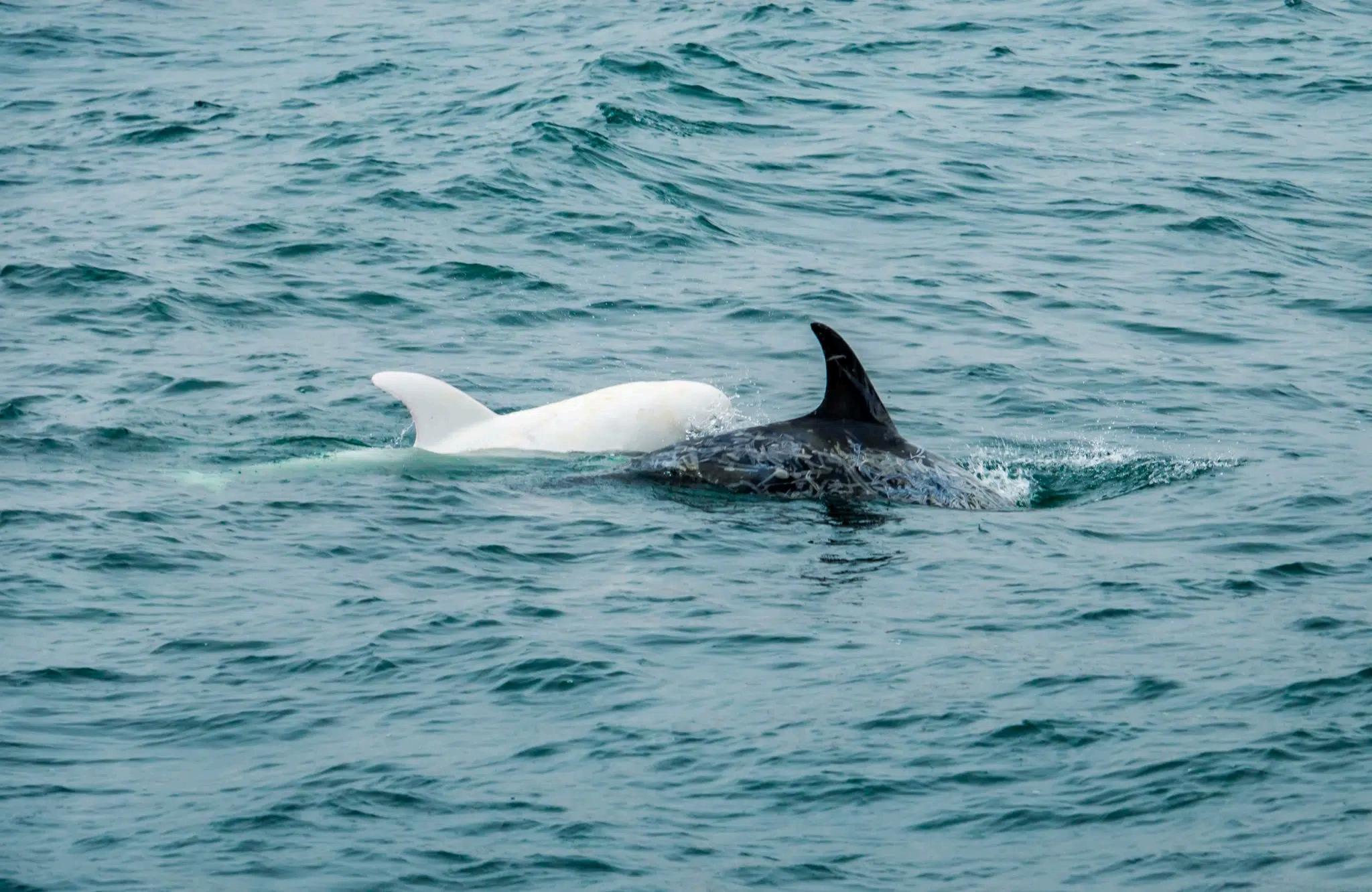
Albinism — the complete absence of pigment, often resulting in pinkish skin and red or light eyes.
Leucism — reduced pigmentation, which retains normal eye coloration.
The eye coloration couldn’t be seen in available footage, making it unclear whether it’s leucistic (eyes darker) or albino (eyes reddish).

Since 1962, NOAA has documented only about 14 albino bottlenose dolphins worldwide.
An even broader review of leucistic dolphins (all species) between 1929 and 2019 recorded just 14 occurrences globally. Dozen all-white dolphins have been spotted worldwide in the last century.
What This Means for Wildlife Watchers Dolphins generally rely on camouflage— dark on top, light underneath—to blend into their environment.
A bright white dolphin stands out, making vulnerability to predators a concern. Fortunately, dolphins travel in tight-knit pods.
That social structure offers added protection, with more eyes and family members ready to help.

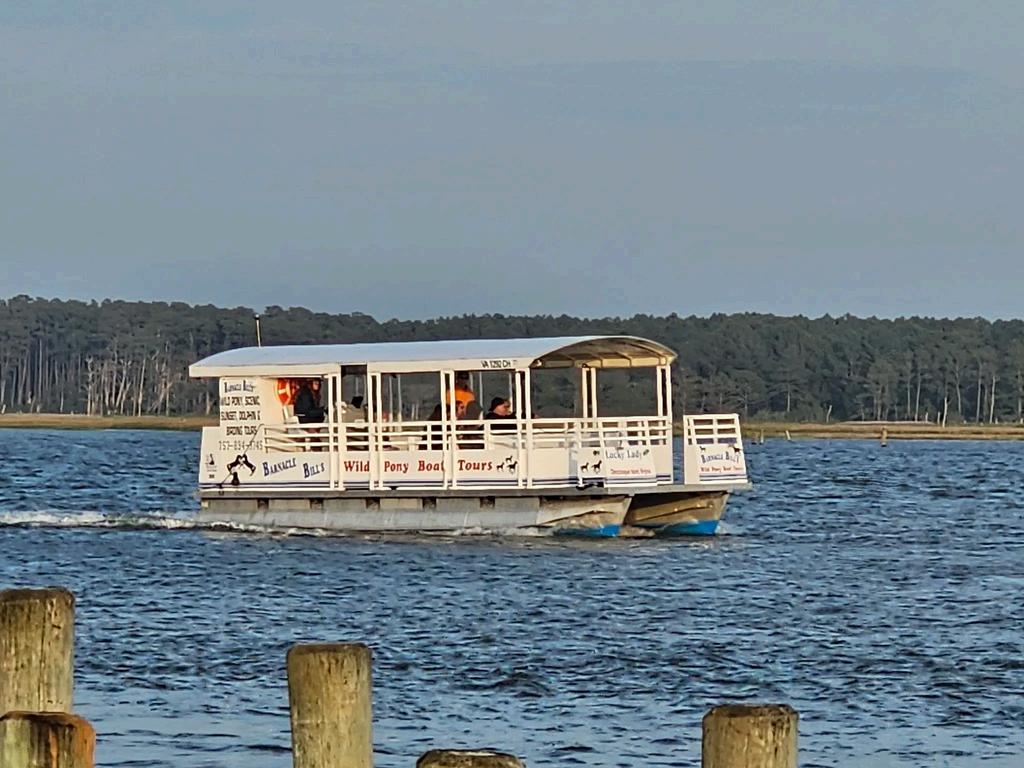
Add This to Your Tour with Barnacle Bill’s Insider routes — our guides know the hotspots where pods frequent sandbars and feeding zones.
Flexible scheduling — maximize your chances with early morning or late afternoon departures, prime times for marine activity.
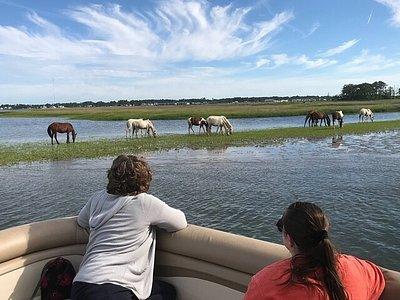
Multispecies magic — from wild ponies and shorebirds to the occasional dolphin, our tours are a rich wildlife mosaic.
https://wildponytours.com/spotlight-on-a-rare-all-white-