Tower
The Masters School - 49 Clinton Ave, Dobbs Ferry, N.Y. 10522
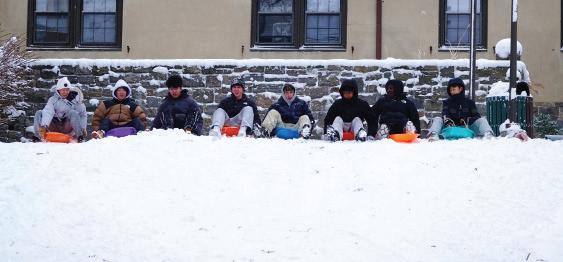
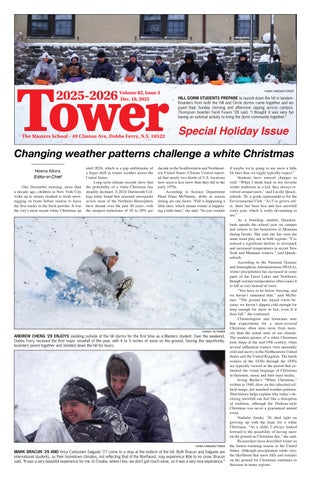
HILL DORM STUDENTS PREPARE to launch down the hill in tandem. Boarders from both the Hill and Circle dorms came together and enjoyed their Sunday morning and afternoon zipping across campus. Thompson boarder Farid Fuseni ‘28 said, “I thought it was very fun having an optional activity to bring the dorm community together.”
Special Holiday Issue
Changing weather patterns challenge a white Christmas
Neena Atkins Editor-in-Chief
One December morning, more than a decade ago, children in New York City woke up to streets cloaked in fresh snow, tugging on boots before sunrise to leave the first tracks in the fresh powder. It was the city’s most recent white Christmas up
until 2024, which is a gap emblematic of a larger shift in winter weather across the United States.
Long-term climate records show that the probability of a white Christmas has steadily declined. A 2024 Dartmouth College study found that seasonal snowpacks across most of the Northern Hemisphere have shrunk over the past 40 years, with the steepest reductions of 10 to 20% per
decade in the Southwestern and Northeastern United States. Climate Central reported that nearly two-thirds of U.S. locations now receive less snow than they did in the early 1970s.
According to Science Department Head Dana McNamee, shifts in season timing are one factor. “Fall is happening a little later, which means winter is happening a little later,” she said. “So you wonder
JOHNNY YE/TOWER
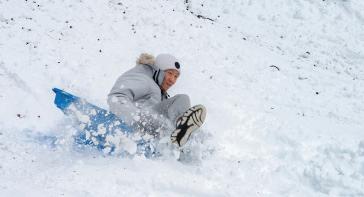
ANDREW CHENG ‘29 ENJOYS sledding outside of the hill dorms for the first time as a Masters student. Over the weekend, Dobbs Ferry received the first major snowfall of the year, with 4 to 5 inches of snow on the ground. Seizing the opportunity, boarders joined together and sledded down the hill for hours.
Volume 82, Issue 3 Dec. 18, 2025 MARIA VINIEGRA/TOWER
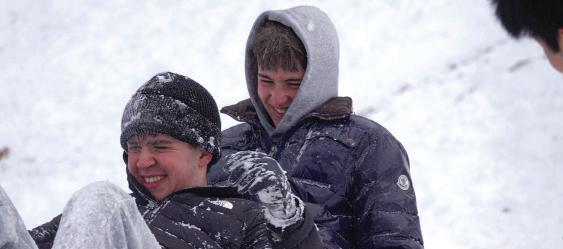
MARK BRACUN ‘29 AND Artur Carbonieri Salgado ‘27 come to a stop at the bottom of the hill. Both Bracun and Salgado are international students, so their hometown climates, not reflecting that of the Northeast, may experience little to no snow. Bracun said, “It was a very beautiful experience for me. In Croatia, where I live, we don’t get much snow, so it was a very nice experience.”
if maybe we’re going to see snow a little bit later than we might typically expect.”
Students have noticed changes as well. “When I think back to my favorite winter traditions as a kid, they always revolved around snow,” said Lucille Quackenbush ‘26, a grade representative for the Environmental Club. “As I’ve grown older, there has been less and less snowfall every year, which is really devastating to see.”
As a boarding student, Quackenbush spends the school year on campus and returns to her hometown in Montana during breaks. She said she has seen the same trend play out in both regions. “I’ve noticed a significant decline in snowpack and increased temperatures in recent New York and Montana winters,” said Quackenbush.
According to the National Oceanic and Atmospheric Administration (NOAA), winter precipitation has increased in some parts of the Great Lakes and Northeast, though warmer temperatures often cause it to fall as rain instead of snow.
“You have to be below freezing, and we haven’t sustained that,” said McNamee. “The ground has stayed warm because we haven’t dipped cold enough for long enough for snow to last, even if it does fall,” she continued.
Climatologists and historians note that expectations for a snow-covered Christmas often stem more from memory than the actual state of our climate. The modern picture of a white Christmas took shape in the mid-19th century, when several influential winters were unusually cold and snowy in the Northeastern United States and the United Kingdom. The harsh winters of the 1830s through the 1850s are typically viewed as the period that cemented the visual language of Christmas in literature, music and later mass media.
Irving Berlin’s “White Christmas,” written in 1940, drew on this inherited cultural image, not standard weather patterns. That history helps explain why today’s declining snowfall can feel like a disruption of tradition, although the Dickens-style Christmas was never a guaranteed annual event.
Nathalie Jansky ‘26 shed light on growing up with the hope for a white Christmas. “As a child, I always looked forward to the possibility of having snow on the ground on Christmas day,” she said. Researchers have described winter as the fastest-warming season in the United States. Although precipitation totals vary, the likelihood that snow falls and remains on the ground for Christmas continues to decrease in many regions.
MARIA VINIEGRA/TOWER
TOWER
Editors-in-Chief
Neena Atkins
Allie Faber
Lead Opinion Editor
Ayanna Beckett
Lead Lifestyle Editor
Mila Benson
Lead Arts Editor
Ella Liu
Lead Sports Editor
Thomas McCallum
Lead News Editor
Elaina Barreto
Lead Copy Editor/Accountability Manager
Siena Versaci
Opinion Editor
Helen Gao
Lifestyle Editor
Jaden Laboriel
Arts Editor/Copy Editor
Brielle Broomes
Sports Editor
Loewy Nalle
News Editor/Illustration Editor
Olivia Shim
Photo Editor
Jack Bilman
Social Media Manager
Alex Kagoshima
Marketing Director
Brooke Muntner
Web Editor/Technology Coordinator
William Grey Dickson
Faculty Advisors
Ellen Cowhey
Matt Ives
Columnists
Julia Panos
Gigi Wheeler
Jasmine Mao
Avery Gosnell
Annadele Dyott
Mason Dwek
Alex Kritzer
Alex Pinnock
Deanna Apuzzo
Photographers & Illustrators
Annadele Dyott, Johnny Ye, Maria Viniegra, Siena Olay, Alexandria Abadir, Etienne Millet, Catherine Yi, Madeleine Dermansky, Mark He, Andrew Berman, Knox Gary, Sofia Ding, Sam Haas, Mya
Niki Agrawal,
non, Rose Yuan, Clara Chu and Roni Barkan



@masterstower
@masterstower
@masterstower
TOWER 2025-2026
Tower is hand-delivered on the day of publication to the Upper School. 650 copies are printed. A copy is sent to each of our advertisers. Tower is the winner of the Pacemaker Award for Overall Excellence, a Columbia Scholastic Silver-Crown awardee, a Best Newspaper of the Year New York Press Association (NYPA) honoree, an award-winning member of the National Scholastic Press Association (NSPA), Journalism Education Association (JEA) and the Private School Journalism Association (PSJA). We encourage Letters to the Editor, which can be submitted to the following email address: TowerEditors@MastersNY.org. Published approximately six times a year, Tower is a public forum, with its Editorial Board making all decisions concerning content. Commentaries and opinion columns are the expressed opinion of the author and not of Tower and its Editorial Board or its advisers. Furthermore, the opinions conveyed are not those of The Masters School, faculty, or staff. Unsigned editorials express views of the majority of the Editorial Board.
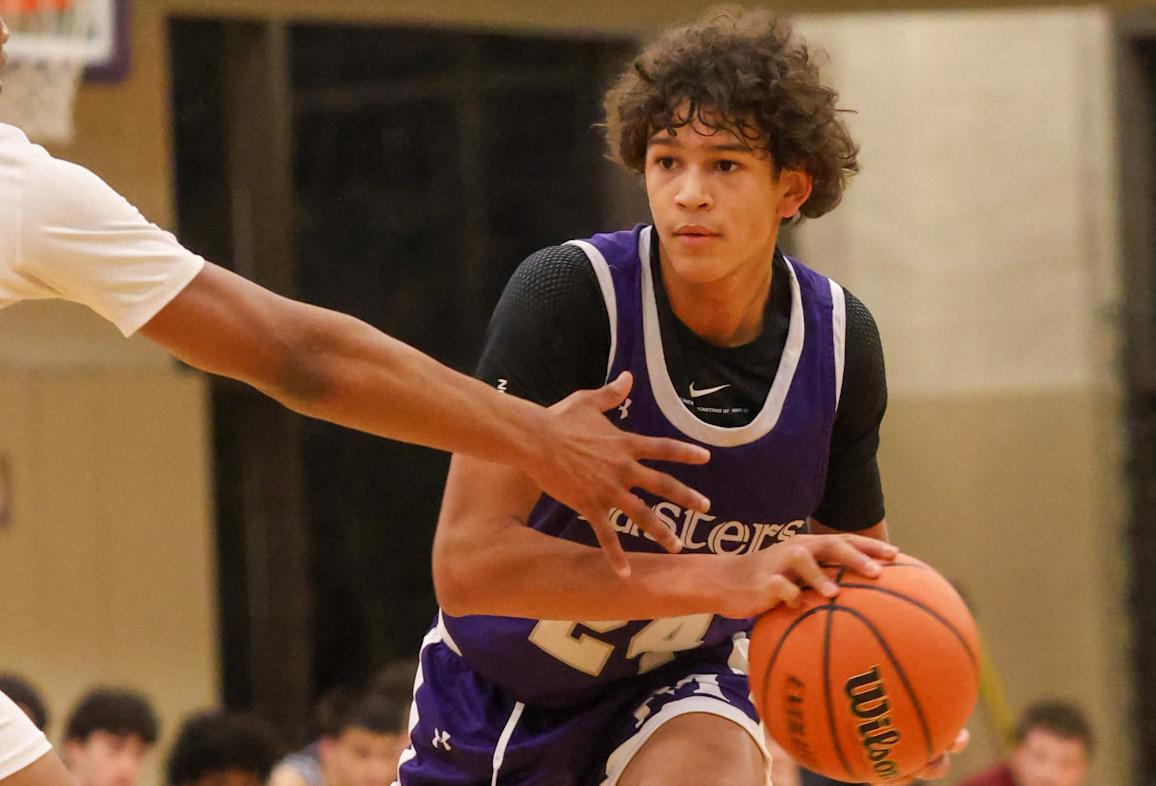
JAKE TOOMER ‘29 LOOKS for a pass at the boys varsity basketball game against the Frederick Gunn School on Dec. 12. Masters won the game with a final score of 61-44. Their next home game is on Jan. 12.
Holiday season intensifies economic hardships
The holiday season amplifies economic hardships for families facing food insecurity, making it difficult to afford gifts and celebrations.
Christmas traditions hold local roots
The page explores the history of Christmas traditions in Westchester, featuring figures like Frosty the Snowman and Rudolph.
Winterlight concert embraces non-religious songs
The Winterlight concert has moved from religious roots to embrace diversity. Masters community members shared their thoughts with some wanting more holiday music while recognizing the value of sacred texts in choral studies.
Lunar New Year deserves more recognition
Helen Gao ‘27 argues that Masters should officially recognize Lunar New Year to promote cultural inclusivity and connection among students.
4 5 9
Recinos,
Aviana Ki-
ANDREW BERMAN/TOWER
Costello family cranberry ice recipe passes down through four generations
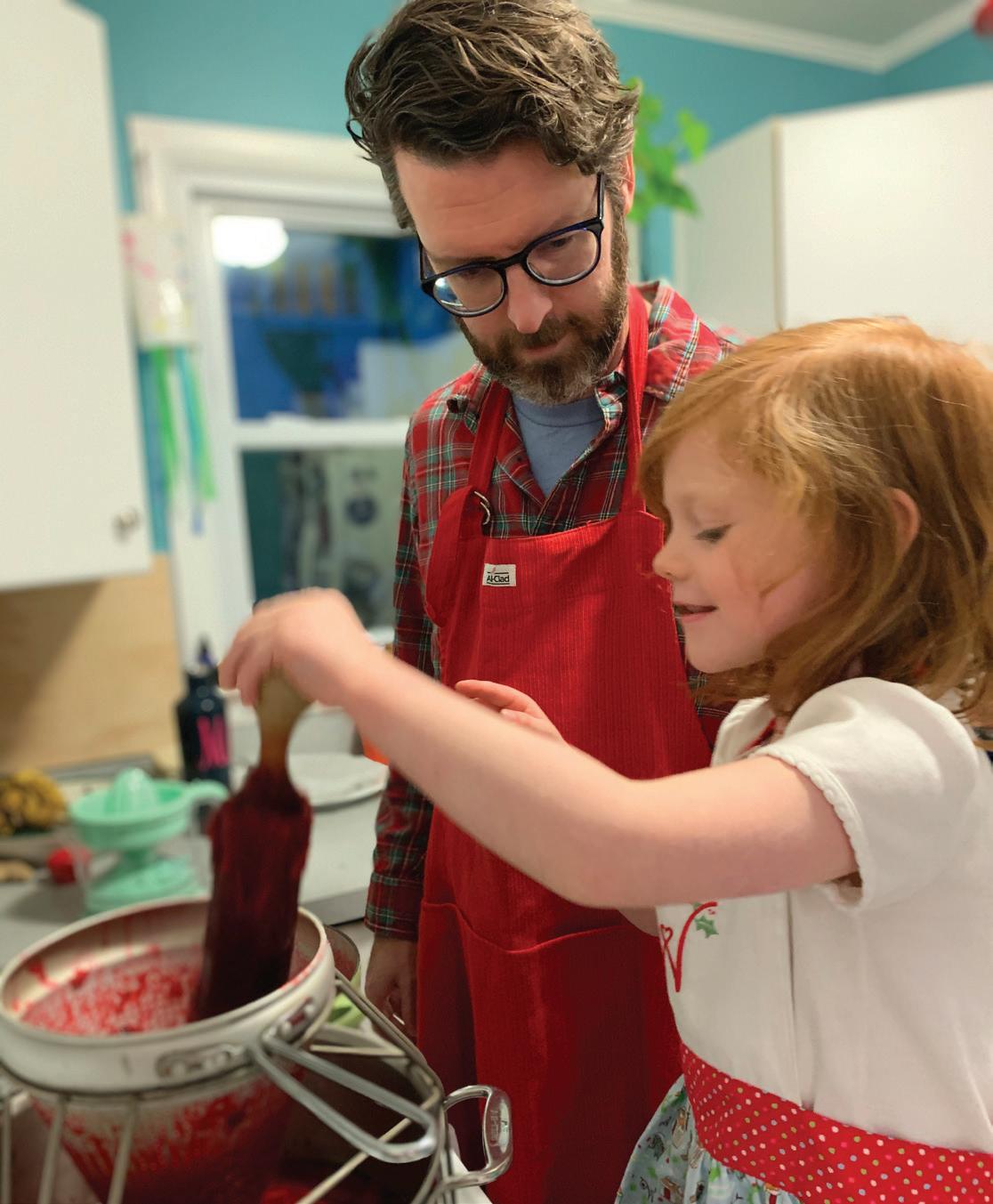
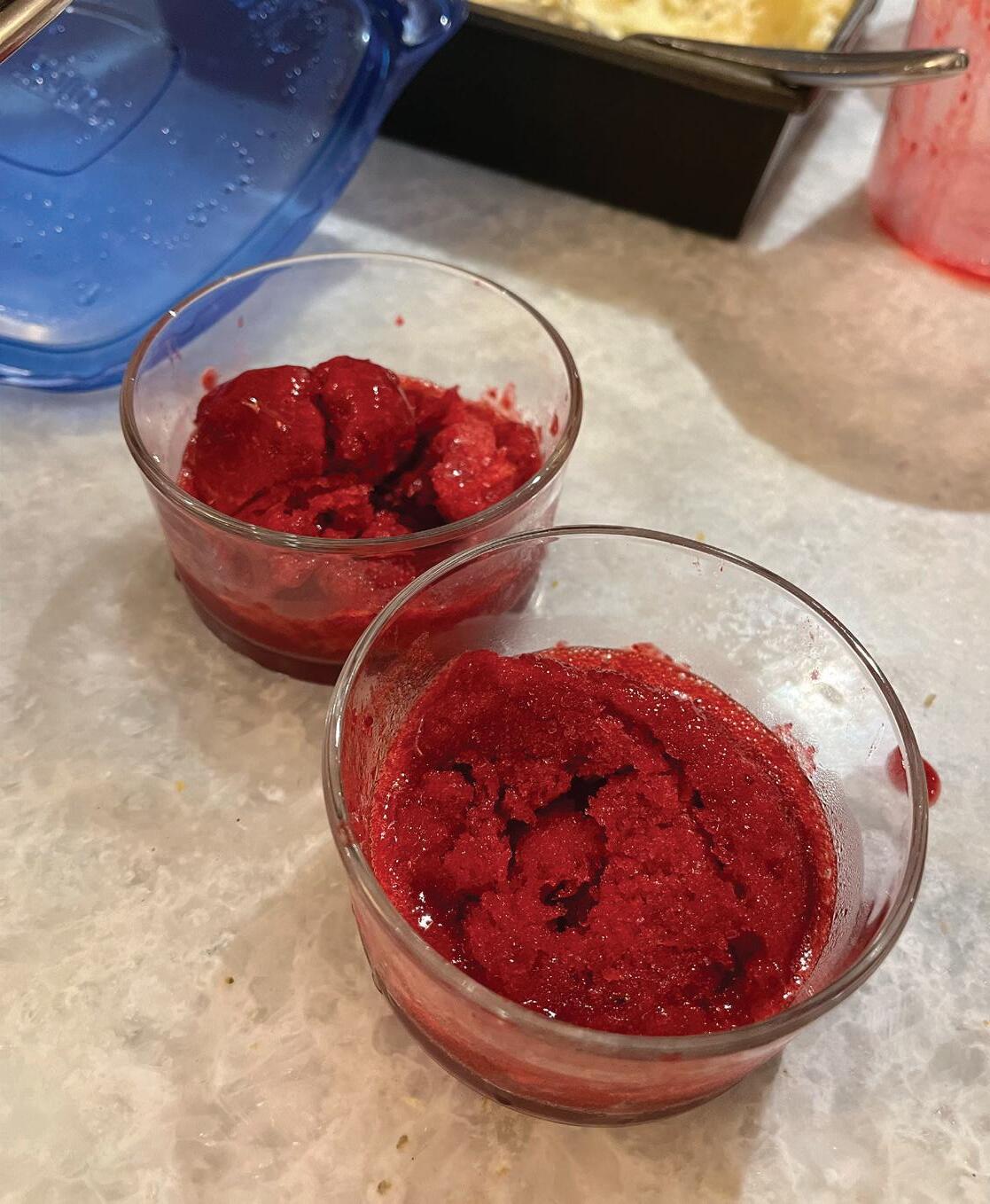
CRANBERRY ICE RECIPE
Ingredients:
1 16oz package of cranberries
2 cups of water
2 cups of sugar
1 orange’s rind
Juice of 1 orange
Steps:
1. Cook cranberries in water until all are soft.
2. Run cranberries through a sieve.
3. Add sugar in cup increments.
4. Stir mixture while hot until sugar is dissolved.
5. Add in the orange juice and orange rind.
Allie Faber Editior-In-Chief
Over 100 years ago in St. Joseph, Missouri, Marie Costello bought a refrigerator. Chasing the age of household appliances, Costello put her new gadget to use. Nestled in a little booklet of fridge-friendly recipes that came with the new fridge was cranberry ice, a dish that now, a century later, joins holiday dinners and forges family connection.
The frozen treat – a blend of sweet oranges, crushed cranberries and smooth sugar – requires multiple rounds of freezing and whipping. But, Nola Hirdt ‘26, Costello’s great-great-granddaughter, promises the results are worth the hours of elbow grease.
“It’s delicious. It’s so airy, but so creamy at the same time. And the tart, the sweet –it’s all there. I understand why this has stuck around,” Hirdt said.
Despite the time-consuming cranberry
ice preparation process, the recipe has powerful persistence. At every wintry holiday meal, from Thanksgiving to Christmas, a frozen cup of Costello’s cranberry ice accompanies the Hirdt family’s main course.
“It seems like a dessert, because, obviously, it’s like ice cream. But we have special cranberry ice dishes that are like little glass, tiny glass bowls that are put next to the cup and we eat it with the meal.”
Costello’s descendants
are now scattered around the country, and her ten children relocated throughout the Midwest and the Northeast. For Hirdt and her family, the recipe is more than a tasty treat; it’s an opportunity to reconnect with far-flung relatives.
6. Taste. Should be tart-sweet, add more sugar if necessary.
7. Freeze mixture.
8. Break frozen mixture into small pieces.
9. Beat mixture until light pink color, but be careful not to melt the ice!
“It’s become a family tradition, not only to eat it, but also to make it. I’ve gone over and helped [my extended family] with the cranberry ice before, because since we make it for so many people, there are tons and tons of cranberries. We have to go in shifts… we make an event out of it.”
10. Refreeze mixture.
11. Enjoy!
Over the years, the significance of Costello’s cranberry ice has changed for Hirdt.
“For the longest time, it was just, ‘I’m so excited to eat ice cream.’ Now that I do know how long this has been in the family, I think it’s just so adorable to think about how long ago that was – like, this is my great-greatgrandma. This was forever ago.”
Opinion: Community festivities foster bonding
William Grey Dickson Web Editor & Technology Coordinator
As winter break approaches each year, we gather as a community to celebrate our various traditions and build greater student body unity. Some of these traditions are public, but many are in smaller groups and build community among grades and friend groups.
Camaraderie manifests through various yearly advisory games where gradewide activities are present, such as the building of gingerbread houses, which was established by the class of 2027 co-presidents last holiday season.
Masters student Etienne Millet ‘27 reflected on this experience.
He said, “I would definitely say it was a great bonding experience for our class, because I think the combination of a little bit of competitive fun was really great, because we collaborated as an advisory, but we also competed against other advisories…. So I think that really helped
lighten the mood a lot and just made it fun for everyone all around.”
In addition to grade-wide events, smaller-scale activities build the sense of community bonding even more. For example, Secret Santa and Secret Snowflake traditions are held for many members of our community. In contrast to other gradewide traditions, this event takes place in a smaller setting, mainly between friendships and advisories. The tradition features a secret gift giver for each member in a group, and on an agreed day, the gift giver, along with the present, is revealed.
A participant in this tradition, Collin Lally ‘27, said, “It’s just a really fun holiday activity to do with friends. It really brings our friend group together for the holiday times. I think it does this because, regardless of religion or beliefs, gift giving is non-discriminatory, so you can all connect.”
These traditions have a genuine impact on our student body and enable our students to get to know each other during a break from the cramming period prior to the vacation. It should be a goal for Masters’ community to strengthen its al-
ready thriving bonds through traditions on campus. Our time at Masters should be memorable, and with these events, our
community can continue to thrive before our departure from this campus for winter break.
WITHIN THE FAMILY RECIPE book are the instructions to make the Costello family cranberry ice desert. The dish is a key part of their celebrations from Thanksgiving to Christmas. The century-old recipe originated with Marie Costello and has connected the family, which is now spread out across the country.
NOLA HIRDT
DICKSON ARGUES THE IMPORTANCE of school community holiday traditions in building connections between students. Common traditions include: decorating gingerbread houses and Secret Snowflake exchanges. Students have the opportunity to form stronger bonds through these activities before winter break.
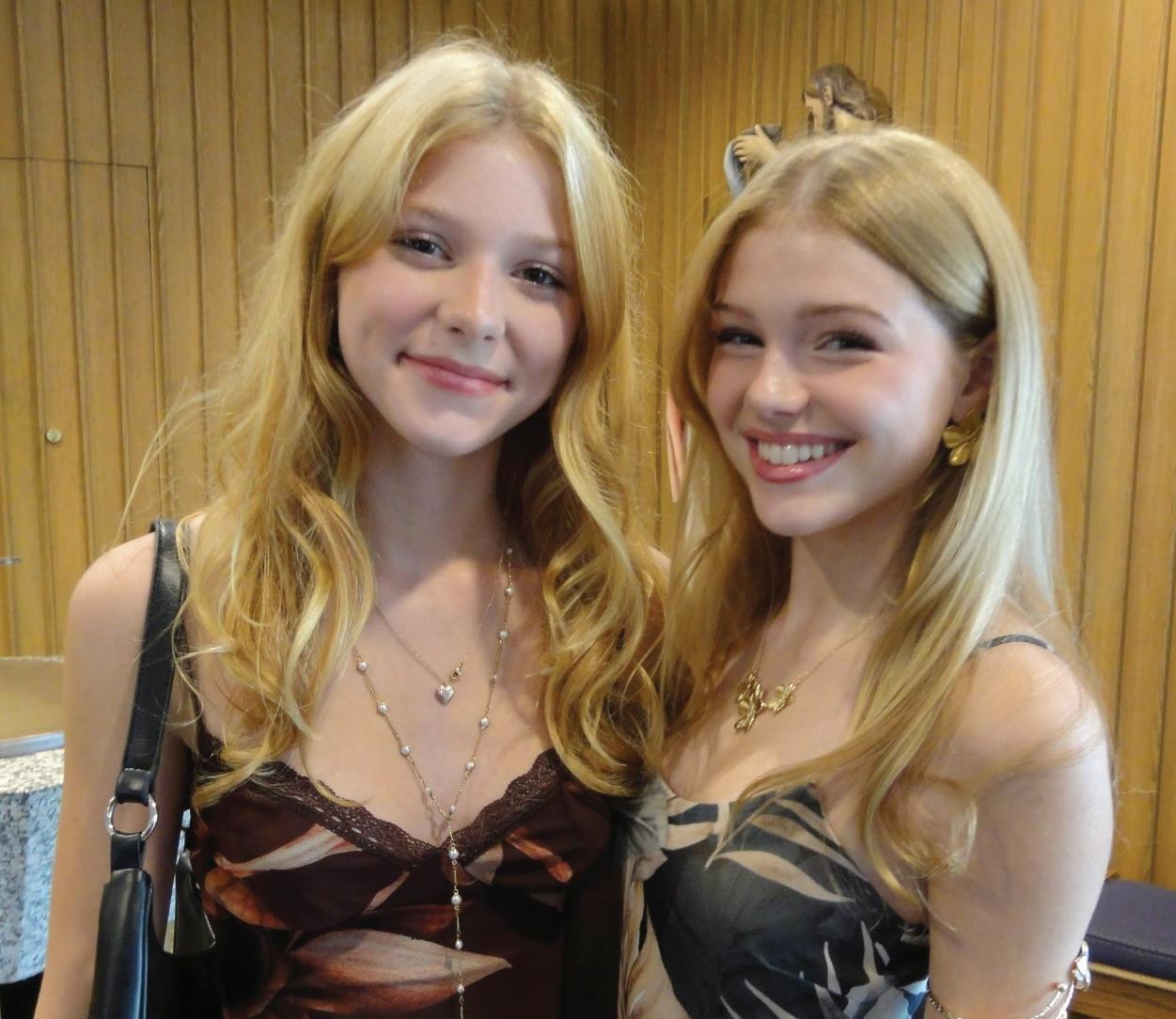
NOLA HIRDT ‘26 STANDS with her sister, Jule Hirdt ‘29. They inherited their family’s 100-year old cranberry ice tradition. The recipe was originally found by Marie Costello in a guide for a kitchen appliance.
NOLA HIRDT/TOWER
MYA RECINOS/TOWER
Holiday season intensifies economic hardships
Brielle Broomes Arts Editor & Copy Editor
When bright lights flicker in store windows and lively holiday music plays, it is natural to become excited for the holiday season — being able to spend time with family, celebrate traditions and a boost of holiday cheer. However, this is not a universal sentiment. For some families, the holiday season is a reminder of how their financial struggles affect their experiences.
According to Feeding America, over 94,000 people in Westchester County alone live with food insecurity, a number that becomes even more troubling as families enter the holiday season. For many families, December is less about celebration and more about survival. Economically disadvantaged problems are often amplified during the holiday season because of the pressure of providing expensive gifts, meals and joyous — yet often costly — moments that their children can remember.
“We are lucky that we are [part] of the few who are able to experience this, and so, I just feel that the biggest issue is that people are not necessarily aware enough that there truly is economic inequality.”
-Gideon Silkowski ‘26
Marie-Louise Miller, the faculty advisor of Masters Interested in Sharing and Helping (MISH), expressed the importance of recognizing the unseen emotional weight that families carry during the season.
“The holiday season is a season that’s constantly advertised. So we hang up wreaths on the doors, and we put up pretty lights and bells. And most of it [the holiday season] revolves around food, or going out and doing things that require money. It’s
everywhere, and it creates longing. We live in a society where we compare ourselves with the person next to us down the street.”
Miller continued, “There’s a stress that families won’t be able to make things right for the people they love, because of not having the financial means to match what is advertised.”
According to a poll from the Associated Press-NORC Center for Public Affairs Research, 45% of Americans in households that earn less than $50,000 report that, throughout the past years, it has been more difficult to afford gifts for their children during the holiday season. Rising costs have made it necessary for families to prioritize basic needs, but sometimes at the expense of holiday gifts for their children.
MISH Co-Chair, Gideon Silkowski ‘26, has played a significant role in the organization of food drives during the holiday season. Silkowski said, “People tend to believe that just because they [personally] have some level of wealth… that everyone throughout the holiday season will have gifts and be able to celebrate.”
Silkowski continued, “We are lucky that we are [part] of the few who are able to experience this, and so, I just feel that the biggest issue is that people are not necessarily aware enough that there truly is economic inequality.”
Leydi Rodriguez is the director of community engagement at the Children’s Village, a non-profit organization that supports vulnerable families. “ I think the biggest challenge is paying their bills on time and then still being able to do that extra special thing for their child, whether that’s to have a traditional Thanksgiving meal or to have gifts under the tree,” Rodriguez said.
Rodriguez continued, “So sometimes, we see that parents have to choose whether they have to pay their electricity bill or buy their kids a gift. So we [the Children’s Village] try to lessen that burden by providing that. We give the groceries and resources that they need, because every kid, and every family deserves to eat and deserves to enjoy the holiday.”
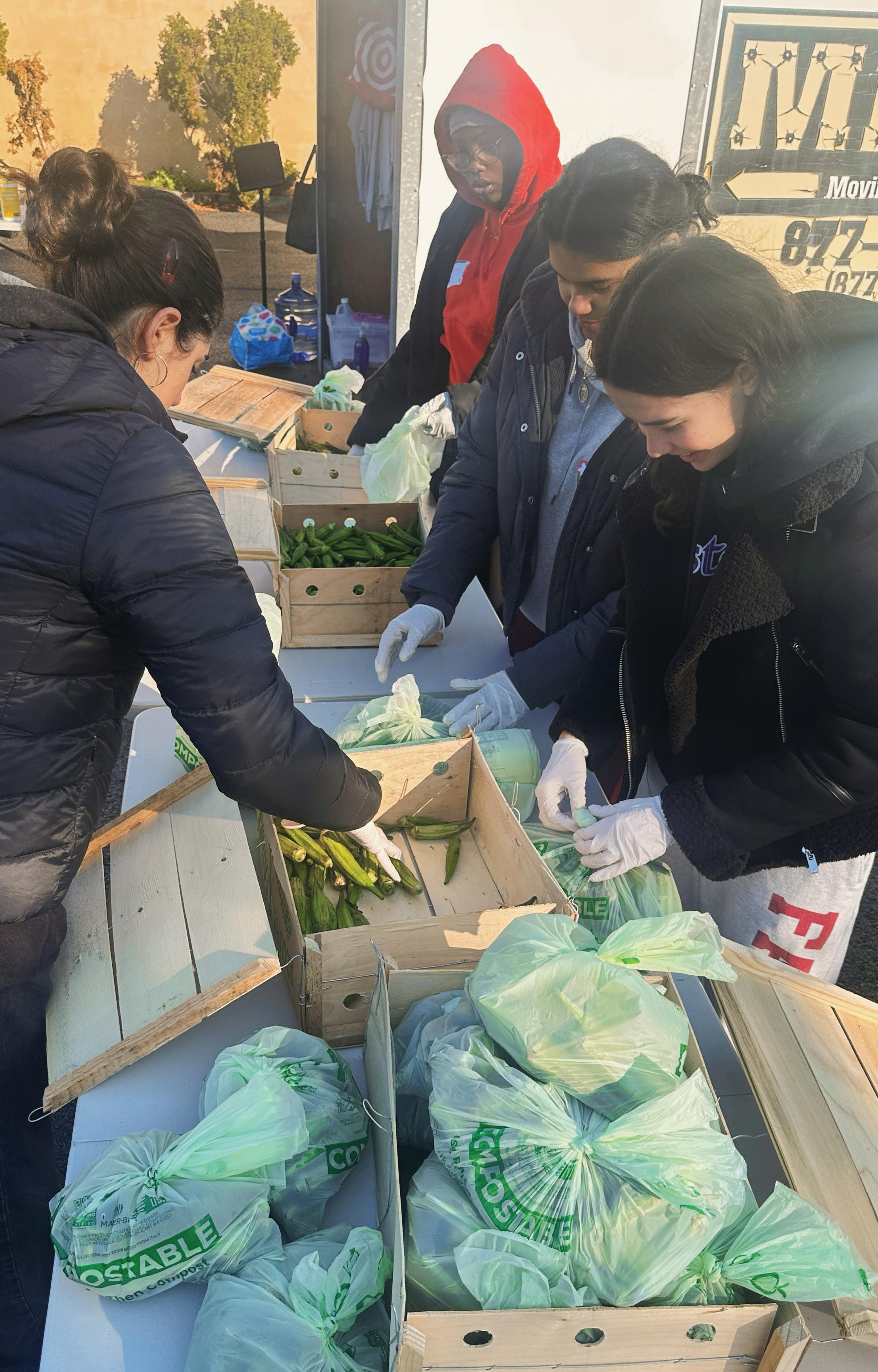
and Helping (MISH) collaborated, alongside other volunteers and organizers, with the nonprofit organization, Grassroots Grocery on Nov. 8 to pack and deliver food to food-insecure families in the Bronx and in Westchester.
Living with two religions: blending celebrations and cultures
Jack Bilman & Thomas McCallum
Photo Editor & Lead Sports Editor
Does your family blend religious and cultural traditions or keep them separate?
Asher Le Breton: “ I keep it pretty separate. My dad, who grew up a Christian, he’s not very religious anymore, and he actually wanted us to be raised Jewish, so he’s very happy to do Hanukkah separately. We don’t really blend them that much, it’s two pretty distinct things.”
Alex Kritzer: “There’s not exactly religious tension in my house or anything, but we do kind of keep the tradition separate. Usually when we celebrate every night of Hanukkah, we do that as its own little ceremony, so there’s a little corner of the house with the menorah and everything’s blue and white and silver, and we sort of isolate that as a tradition and then we also do Christmas”
How do you spend the Holidays in a mixed religion household?
Le Breton: “I always do Hanukkah with my mom, my dad and my sister at home. Every night for the eight days, we light the candles and sometimes we do presents. But then we usually go to Los Angeles to see my mom’s parents, and we spend Christmas with them.”
Sonnenburg: “For Christmas, we all like to get together with the entire extended family and meet up in person. We’ve tried to make sure we’re with family on Christmas, because that’s really what it’s about for us.”
Kritzer: “Neither of my cousins are that religious, but my mom is Catholic and my dad is Jewish, so we celebrate both Hanukkah and Christmas, and it gets very hectic around the holiday season. We just celebrated the first night of Hanukkah last night, and we decorated the Christmas tree a little before that, so it’s sort of a cultural fusion.”
How does religious observation differ between your two holidays?
Le Breton: “We’re more into the religious side of Hanukkah, especially if we go to temple, and the Christmas aspect is just more of a fun thing that became a tradition when my grandmother, who also grew up Jewish, realized that Christmas had much more of a theme to it, and she felt like she was missing out. So, she started doing Christmas as just a fun tradition and Hanukkah is more the religious side.”
Sonnenburg: “Christmas feels more like a cultural thing and it’s just a fun time to have everybody around. It’s just kind of become a tradition at this point so we can really spend time with family.”
ELLEN COWHEY/TOWER
MASTERS INTERESTED IN SHARING
Christmas traditions hold local roots
Jaden Laboriel Lifestyle Editor
Poetry from Ossining
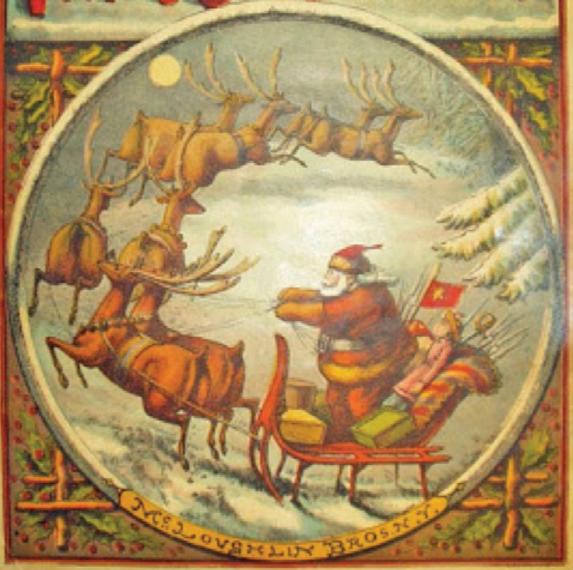
“‘Twas the night before Christmas” is considered to be one of the most important pieces of literature that shaped the image of Santa Claus in the minds of millions of Americans. Poet and author Clement C. Moore anonymously released the poem in 1823, only taking full credit for the piece years later. In 1839, Moore purchased an estate in a village called Sing Sing, which is now known as Ossining. Even though Moore was not a longtime resident of Ossining, members of his family lived long lives in the town and were actively involved in the community.
Frosty from Armonk
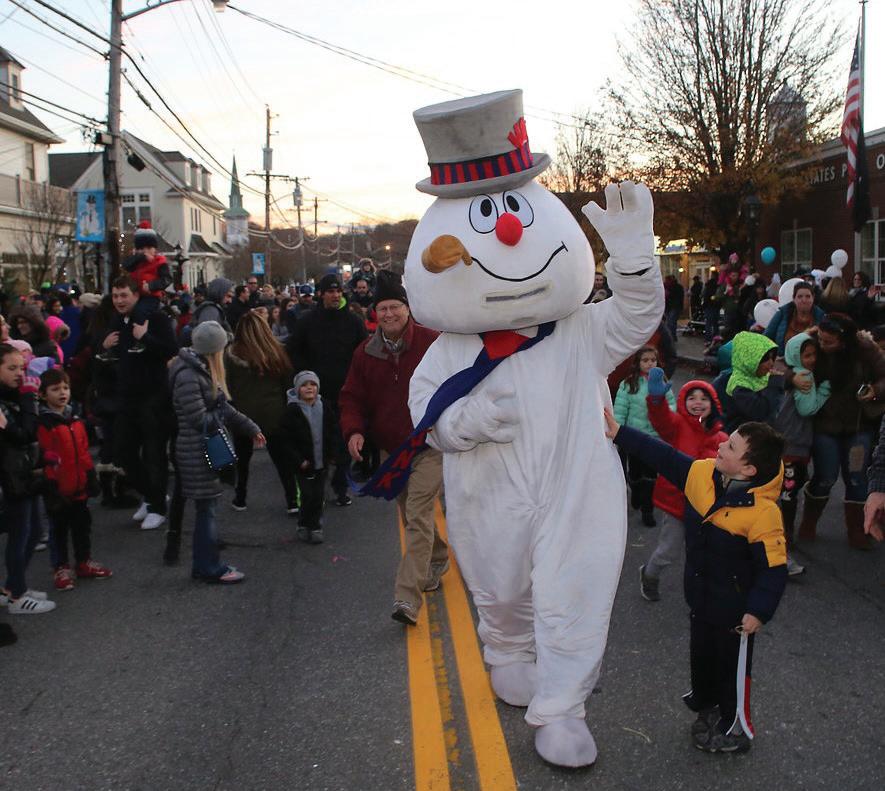
According to Lohud, there are a total of three towns in Westchester that could be hailed as the birthplace of the holiday classic, Frosty the Snowman, including Armonk. It is believed that the songwriting duo of Walter E. “Jack” Rollins and Steve Nelson could have made the song in Mount Vernon or White Plains. Neverthe less, the town of Armonk has claimed the song and its history as its own solely because Steve Nelson built a home and raised a family there. To further cement this, Armonk hosts a festive parade that consists of a snowman being driven around the town, signifying his return home.
Writer from Irvington
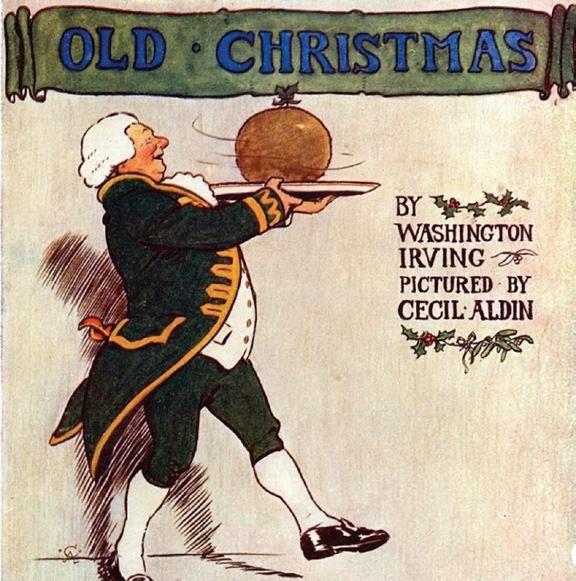
As days grow shorter and icy winds greet people outdoors, Christmas quickly comes to mind. While traditions vary or are not celebrated at all, one universal theme remains. Time with loved ones matters most. Each year, communities fill with lights, cheer and the Christmas spirit. But how did the holiday take root in American culture?
Author Washington Irving played a major role. A lifelong New Yorker, Irving wrote classics like “The Legend of Sleepy Hollow” and “Rip Van Winkle.” Inspired by tales of Saint Nicholas delivering gifts, he admired the figure so deeply that he founded the Saint Nicholas Society in 1835.
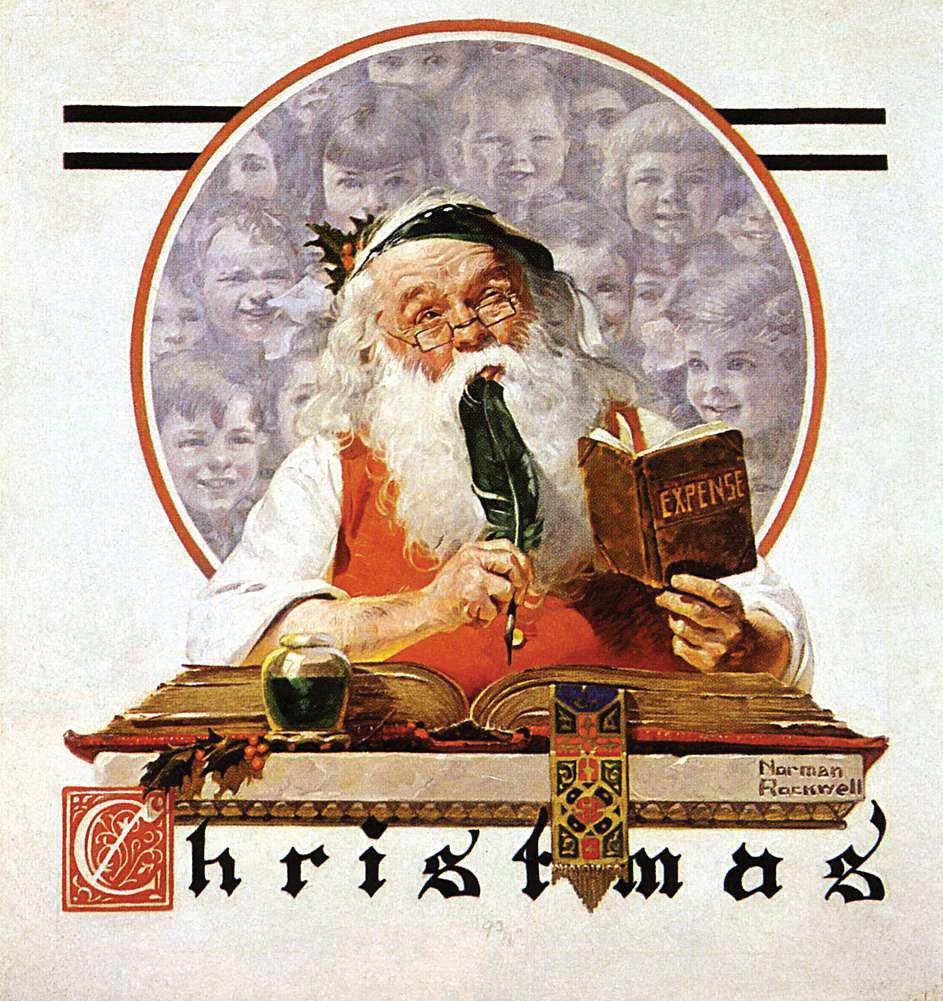
Rockwell’s Santa Claus
Painter and illustrator Norman Rockwell’s images are thought to have started the now-popular depiction of Santa’s large red hat and huge belly. Rockwell was born in Manhattan, but later moved to New Rochelle at the age of 17. In the 1940s, New Rochelle was known to be a hub for popular illustrators of the time. Rockwell spent 25 years making countless pieces in different homes and studios all around New Rochelle.
Rockwell’s love and admiration for New Rochelle enabled him to scour the city for ideas, models and props that would help him in his work.
Rudolph from New Rochelle
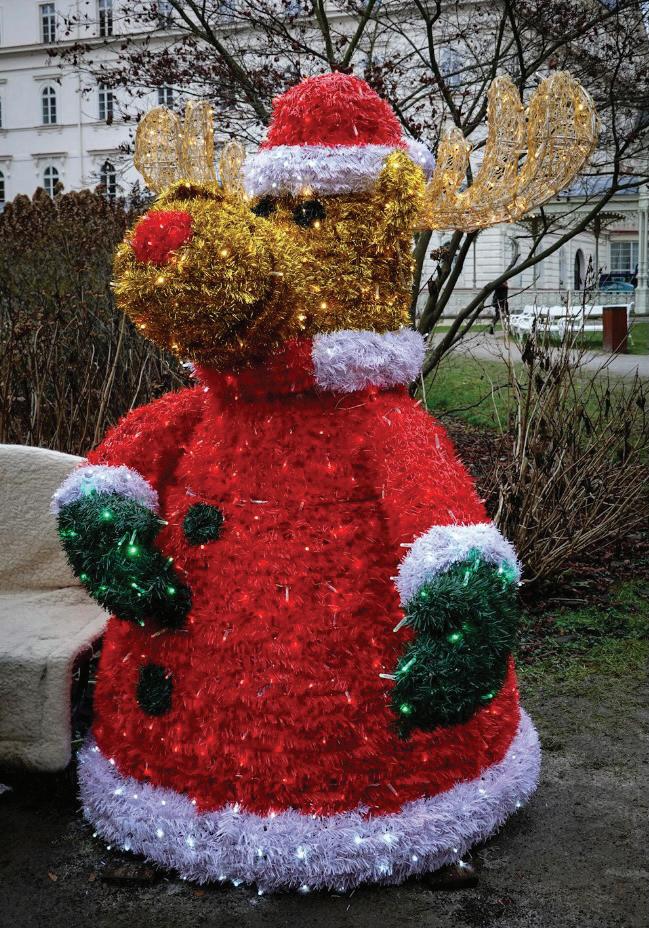
The story of Rudolph the Red-Nosed Reindeer has been a Christmas tradition for years in America, but one of the most interesting parts of the story is that its creator is from Westchester. Robert May was born on July 27th, 1905, in New Rochelle. After graduating from New Rochelle High School in 1922, he set off to college to become a writer. Once he left college, he landed a job at the department store Montgomery Ward as a copywriter. He was tasked with making a Christmas story centered around an animal that would help promote the store. His boss ended up making him write about a reindeer.

COURTESY OF MAGDA EHLERS
The Rockwell, Irving and Moore images are out of copyright.



5 hours in NYC: holiday style
Mila Benson Lead Lifestyle Editor

As snowfall blankets the city and cheerful spirit rings through the streets, New York City becomes a winter wonderland in the holiday season. Department store windows transform into dazzling displays, and even the buzzing energy of busy sidewalks take on a joyful edge. The holidays in New York are unlike anywhere else. Below, you’ll find the perfect way to spend a day in NYC.
10:00am - Train to Grand Central
Board a mid-morning Metro-North train for a scenic route to New York City along the Hudson River – about a 55-minute ride with ticket prices ranging from $9-14. Heading into Grand Central, holiday wreaths adorn the walls and ceilings, bustling with tourists and locals alike. For a quick grab-and-go breakfast in the terminal, Zaros offers reliable coffee and pastries. With more time to have a sit down meal, Grand Brasserie is a great option. Just steps away from Grand Brasserie is a small holiday market with goods like glass art and woolen winter gear.
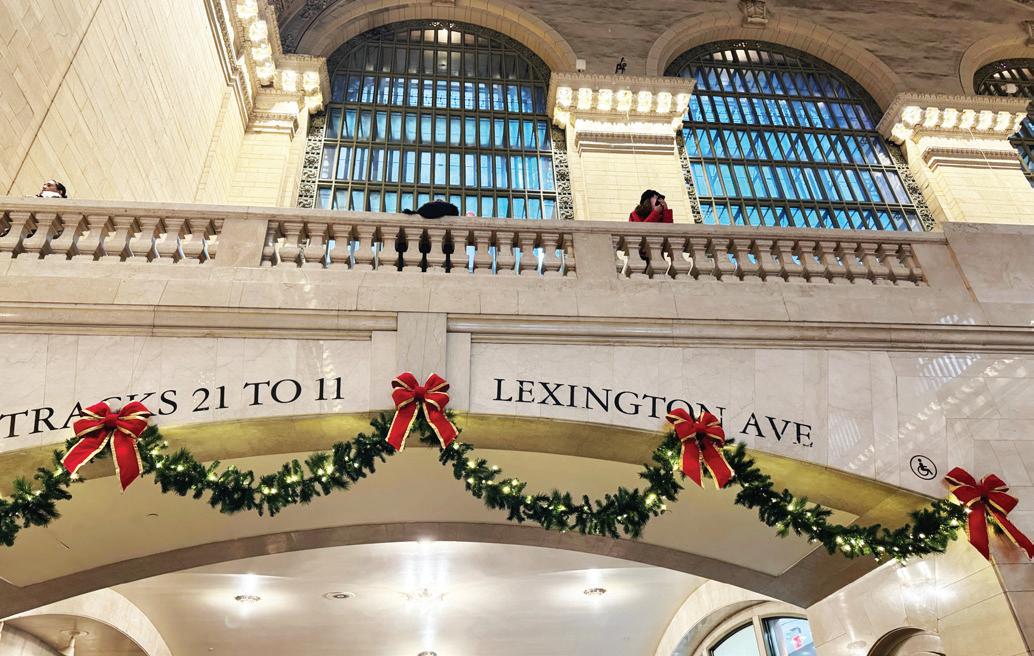
11:30am - Take the 6 train downtown to
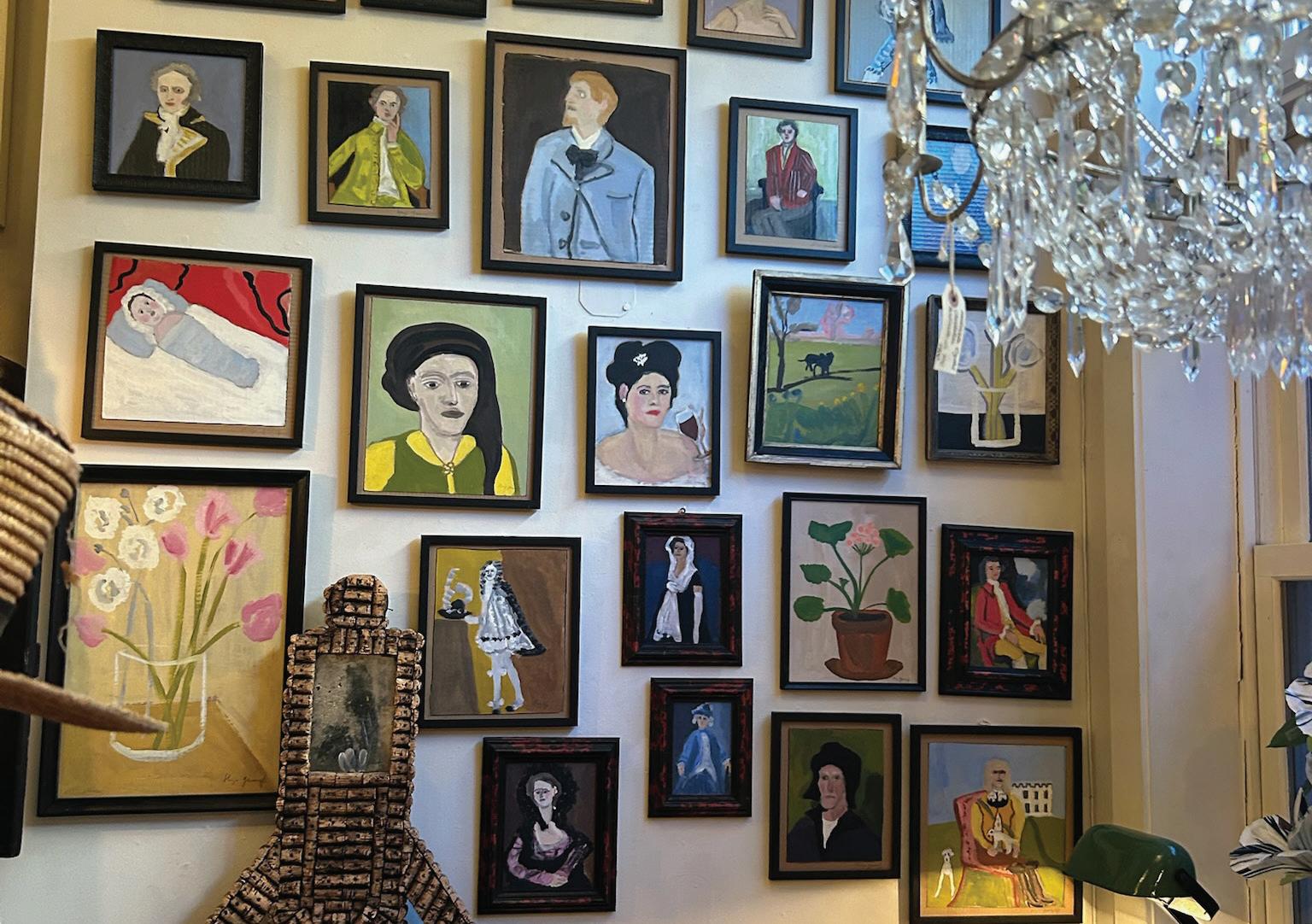
Sitting inconspicuously in an old scrap metal store is the Il Buco Vita (51 Bond Street) holiday pop-up, an unassuming place to shop for all things hand-made. Il Buco Vita is a curated collection of European homewares, originally founded by the owners of the Il Buco restaurants. Inside, you’ll find a plethora of clay pieces, ranging from Hanukkah menorahs to entire pieces of furniture, all on the pricier side. Just down the street is a more budget friendly option for holiday market shopping -- the pop-up collective NYC market with activities like ornament-decorating and candle-making, as well as local small retail stalls.
12:15pm - Grab a nosh at Russ and Daughters deli
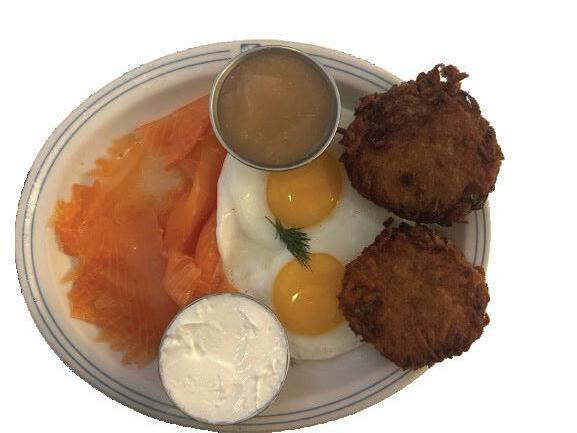
Dishing out latkes, bagels, nova lox, gefilte fish, herring and more since 1914, Russ and Daughters (127 Orchard Street) is a New York icon. What began as a brick and mortar store run by a Polish-Jewish immigrant is now a sprawling landmark in NYC’s food scene. Secur ing a spot here isn’t easy – especially on weekends when they don’t take reservations. So, if you find yourself with time to spare while waiting for a table, consider it a gift: explore the Lower East Side and everything it has to offer (see NYC Hacks below).
1:30pm - Take the B, D, F or M train back uptown
The Rockefeller Center tree and rink, Bryant Park winter market and Saks Fifth Avenue (Fifth Avenue between 49th and 50th) window displays are iconic New York holiday treats, all within walking distance of each other. At Bryant Park, browse the holiday kiosks for handmade gifts and explore the wide variety of food options (see Biting into Bryant Park for more). Finish off the day with a stroll around Saks Fifth Avenue to view the dazzling window displays.
NYC Hacks!

Want to save some cash on train tickets? Opt for an off-peak metro north ride: midday on weekdays and all day on weekends.
If you find yourself waiting for a table at Russ and Daughters, explore the neighborhood. John Darien (8 East Second Street between 2nd Avenue and the Bowery), an upscale but festive homegoods store is worth checking out. For an experience, visit Autophoto, a gallery and interactive museum of everything photobooth. Admission is free, but the booths themselves cost about $8 each.
Bryant Park can get busy. To avoid crowds, consider showing up on weekday mornings or during off-peak periods like early November, January and February.





Biting into Bryant Park
Brooke Munter Marketing Director
The temperature in New York City has dropped to freezing, but the Bryant Park Market brightens the season with holiday spirit, making it the perfect spot for a meet and eat. When it comes to food, Bryant Park does not disappoint. With almost 200 vendors, it can be hard to navigate, but as a yearly returner to the market, I’ve confidently compiled the ultimate guide of where and where not to buy food this winter.
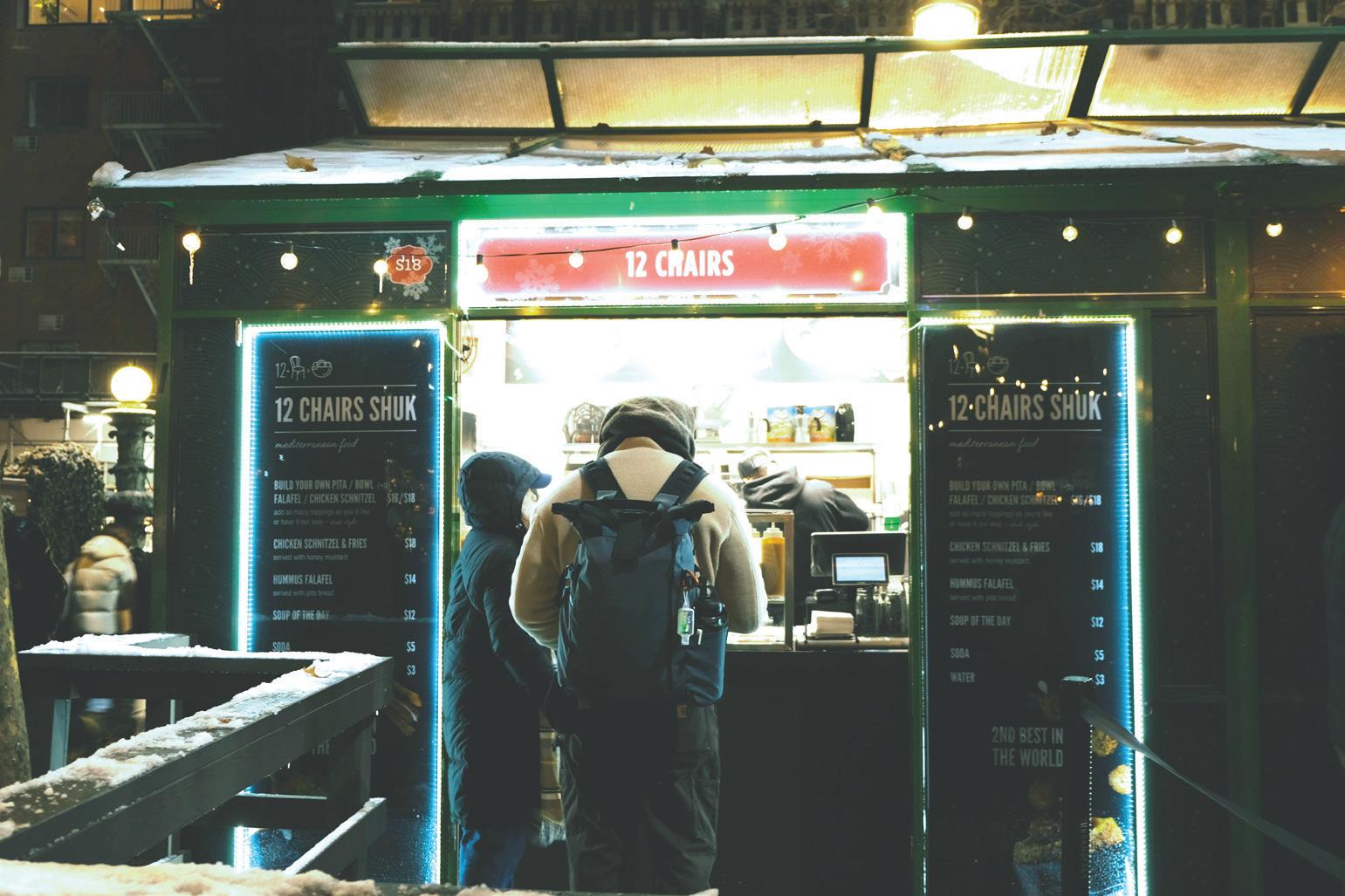
My first stop was 12 Chairs, a cafe featuring Mediterranean and Middle Eastern dishes. I got chicken schnitzel and fries, and I was overwhelmingly impressed. I’ve had this dish at many places, but 12 Chairs does it better than the rest, with its immaculate flavor, juicy interior and perfect amount of crisp. I rate the food a 9/10.
Certain that nothing could match 12 Chairs, Gunther’s, famous for creamy tomato soup with grilled cheese bites, proved me wrong. Gunther’s was my favorite place of the day and is my number one recommendation amongst the stalls in the Park. Separately and together, the grilled cheese and soup are delectable and flavorful full of salt and pure deliciousness in all of the best ways and deserves a 10/10 rating.
My friend told me to try Raclette, a vendor serving traditional alpine cheese melted and scraped off a wheel, despite its unpleasant smell. When I went, I sure smelled it, but I still ordered melted raclette scraped over cured ham on a toasted baguette. I’m not a picky eater, but getting myself to try this was challenging. I took a bite and it was pretty good at first. I continued to eat it, but the smell got worse and I think that’s what
threw me off most, but whatever it was, I couldn’t continue. I give it a 6/10 – not my favorite.
To wash all of this food down, I went to Max Brenner Hot Chocolate. With the cold weather and a hot chocolate in hand, I felt like I was really doing the Bryant Park Winter Market correctly. This hot chocolate was exactly what I was looking for, but it didn’t stand out from any typical hot chocolate, so I’d give it a 7/10


rating.
Next up was Pickle Me, and I ordered their fried pickle stick. I have no words to describe this other than outstanding. It’s a perfect ratio of the pickle to the fried part around it, and for that I give it a 9.5/10.
Last on the salty side of things was Happy Dumpling. I ordered fried dumplings and I was indifferent — not exceptional, not disgusting, but right in the middle, scoring a 7/10 rating. The last on the list was Buttermee Pancakes, and when I say it was the best dessert I’ve ever had, I mean it. I ordered the signature: mini pancakes topped with whipped cream and bacon. While waiting in a long line, I questioned if it was worth it, but once I tasted it, I knew I did the right thing by waiting. The pancakes were beyond fluffy and the bacon and whipped cream added an exceptional kick of sugar. When looking for a dessert vendor, this one is my number one favorite and a must-have.


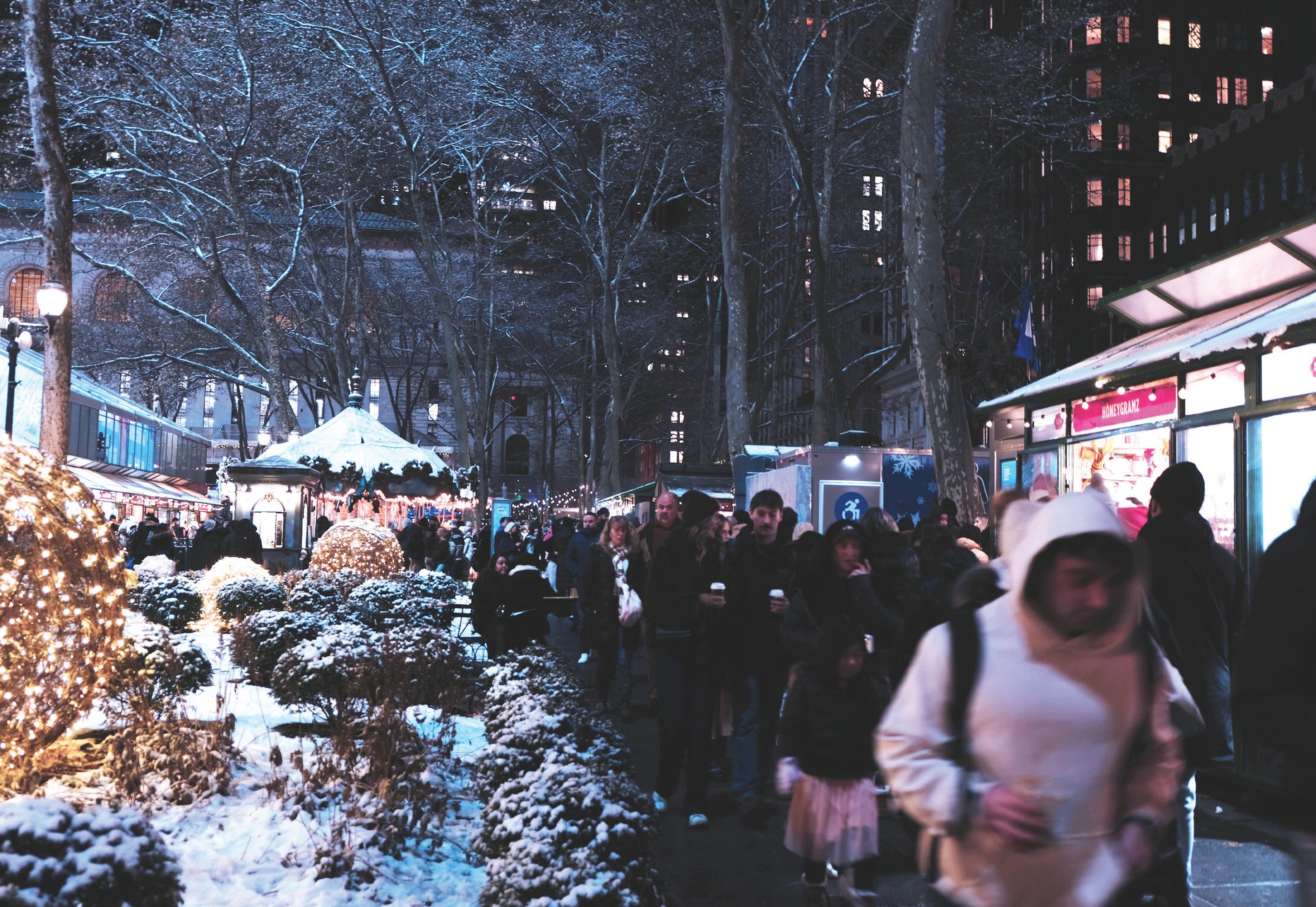
BRYANT PARK WINTER VILLAGE is filled with bright and festive lights no matter what time of day it is. With over 200 vendors and an ice skating rink, the park never fails to provide a whole day of fun this holiday season. Snow has already hit the ground, enhancing Bryant Parks beauty and holiday vibe.
THE 12 CHAIRS VENDOR features Mediterranean and Middle Eastern dishes. Starting as a small cafe, 12 Chairs has since become incredibly popular, opening up different locations. The cafe is Israeli owned, serving authentic Tel Aviv-style food.
OLLIE MUI
OLLIE MUI
Hallmark spreads holiday magic with Spanish-dubbed films
Elaina Barreto Lead News Editor
Everyone knows the classic Hallmark film storyline, with smalltown charm, emotional misunderstandings, main characters taking a break from their stressful jobs in big cities and traditional happy endings. Yet, the Hallmark Channel has also recently tried to promote more diversity within its audiences through the recent launch of Hallmark en Español, a series of Spanish-dubbed movies.
The channel was released in May 2024 across streaming platforms. Hallmark movies are not new to Hispanic audiences, since Hallmark has been selling their movies to Latin American networks since the early 2000s. However, the goal of Hallmark en Español is to increase accessibility to Spanish-speaking audiences.
Upper School Spanish Teacher Allison Eggleston said she encourages her students to consume Spanish media in order to improve their fluency. She said she was once told to picture learning a language as filling a cup of water. When an individual reads or hears someone speak or sing in Spanish, they are filling their cup.
“When people are first learning — like when the cup isn’t full — it’s not always easy to produce the language, but the more you keep on filling up your cup, when it gets full and gets up to the very top, that’s when language starts to spill out and you feel more comfortable speaking. So, essentially I think that anything that gets a learner more easily able to engage with or exposes themselves to the language is always a good thing.”
“I feel like [Hallmark en Español] could help people stay connected to their culture if they didn’t learn Spanish as a child. [Now], they could learn. It’s very important to preserve your roots.”
- Laura Peralta ‘27
Although Hallmark movies are known for focusing on themes like family, friendship and love that can relate to all audiences, including Latino individuals, the movies do lack aspects of a traditional Hispanic Christmas.
Laura Peralta ‘27, a member of the affinity group Latinas Divinas
and whose family comes from the Dominican Republic, said she feels movies that are supposed to appeal to Hispanic audiences should actually try to incorporate the holiday customs of those communities, like the typical large celebrations during Nochebuena.
Despite Hallmark Channel’s attempt to reach Hispanic audiences through the launch of Hallmark en Español, the channel has not produced movies originally filmed in Spanish.
Peralta said she believes it is especially important for Hallmark en Español movies to be filmed in Spanish as Hallmark is already a large part of mainstream media. “This is a country with such a high population of Hispanic people, [so movies in Spanish] shouldn’t be closed off. It should be accessible to everyone in the country.”
Despite certain flaws, Hallmark en Español could help connect younger and older Latino generations.
Peralta said, “There are so many generations of people who were not born in the country that their family is from, and I feel like that [Hallmark en Español] could help people stay connected to their culture if they didn’t learn Spanish as a child. [Now] they could learn. It’s very important to preserve your roots.”
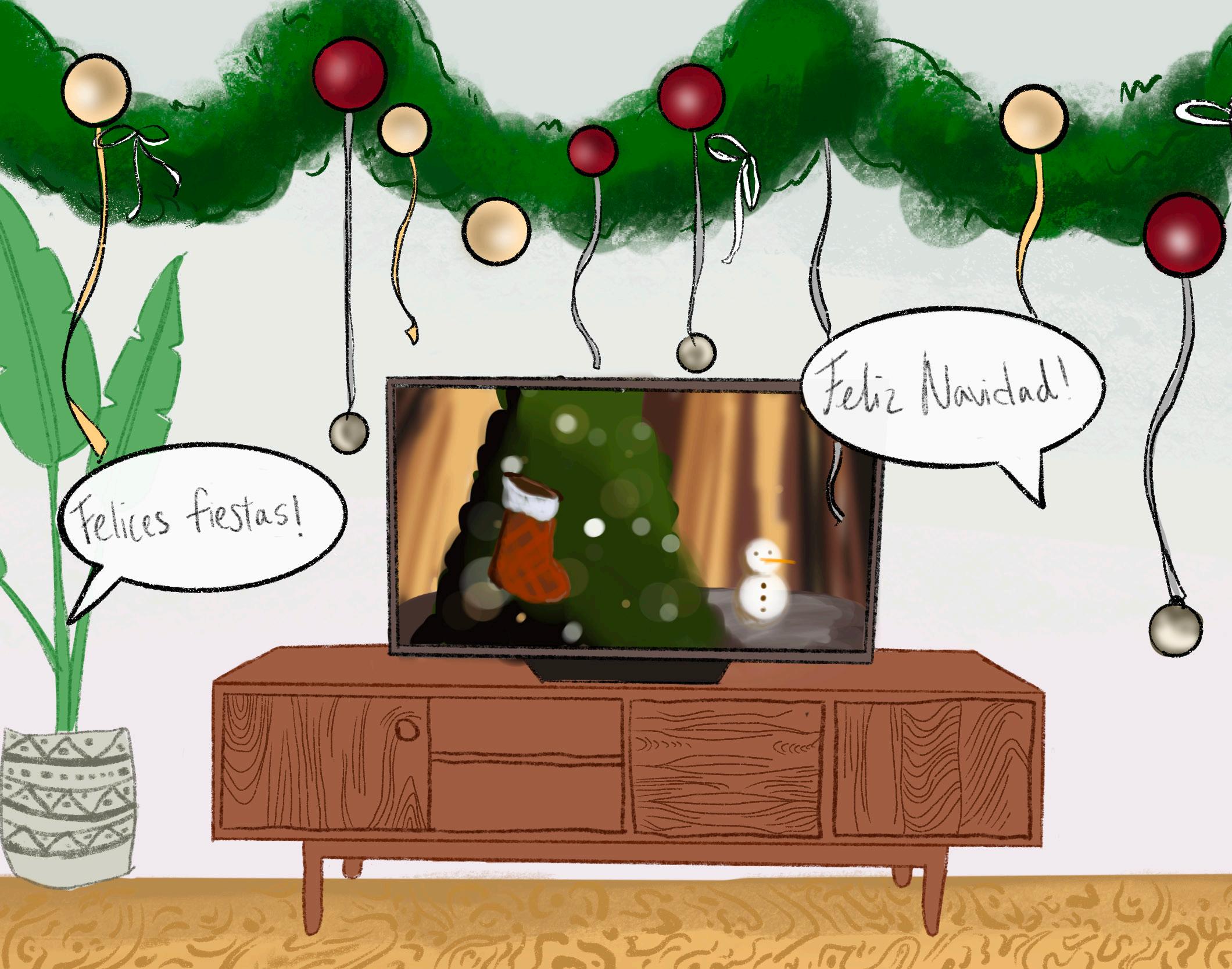

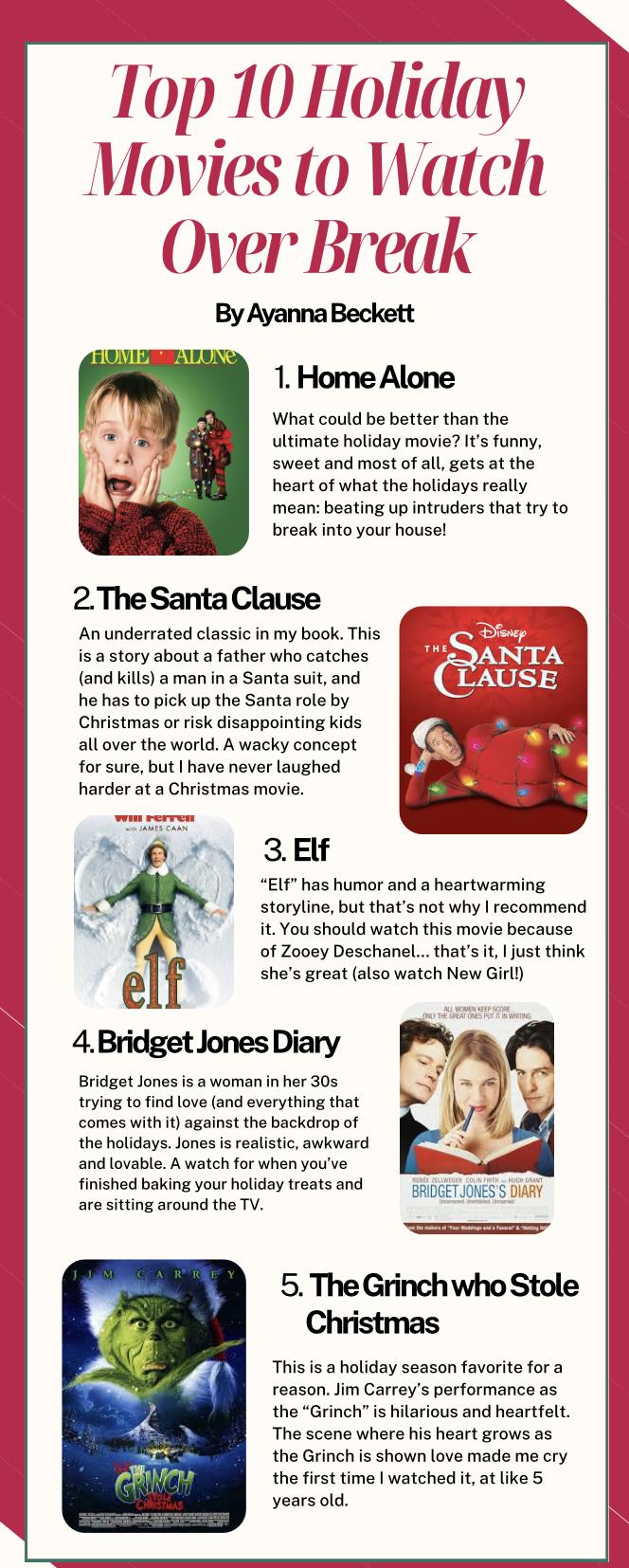
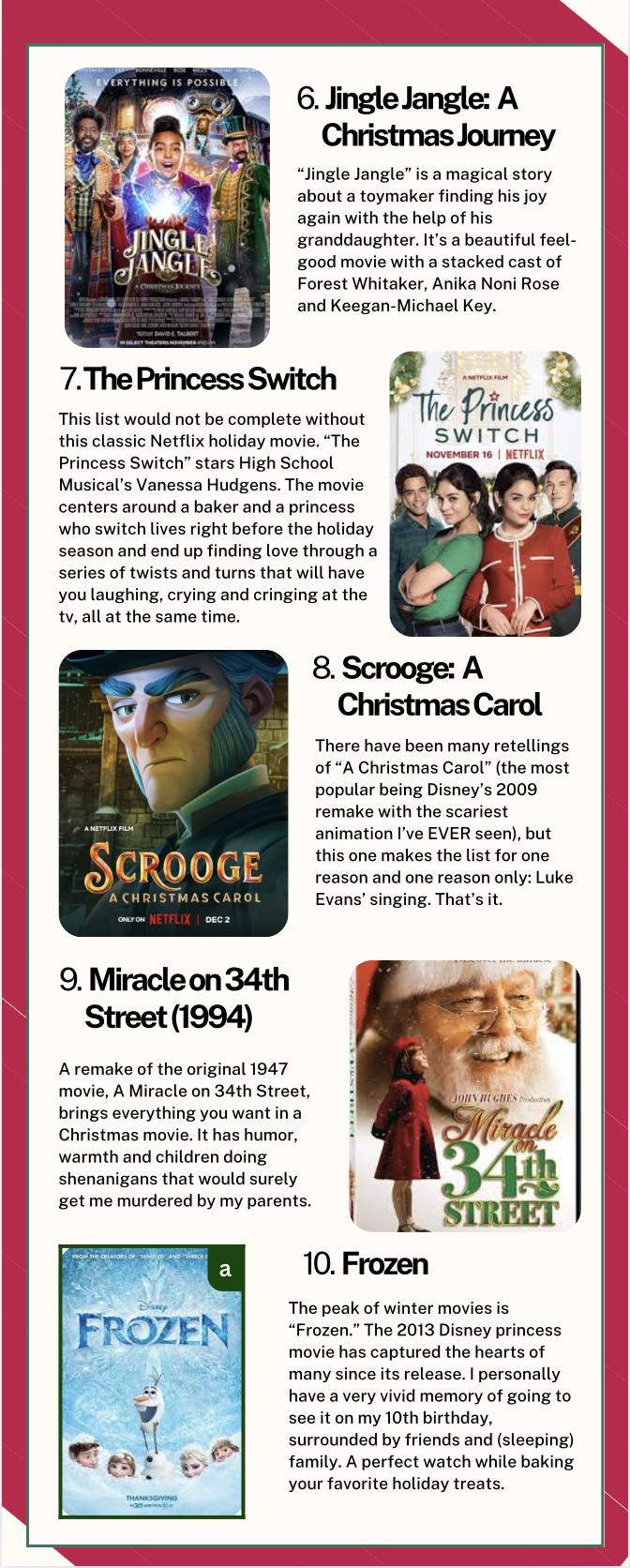
HALLMARK IS FAMOUS FOR its classic Christmas movie storylines. To further spread holiday joy, Hallmark launched a channel of Spanish-dubbed movies in 2024 to increase availability of their films for Spanish-speaking audiences around the world. Despite Hallmark’s attempt to reach out to Hispanic communities, the American media production company has yet to create movies encompassing Hispanic Christmas traditions or film movies originally in Spanish.
CLARA CHU/TOWER
Spanish caroling spreads joy across campus classrooms
Photo Editor & Lead Sports Editor
Every year, right before winter break, the hallways and classrooms have been filled with the unique sounds of Spanish culture students caroling. For 10 years, the Advanced Topics in Spanish language and culture classes have gone from classroom to classroom during the last week of school, singing Spanish holiday songs and dressing up in holiday outfits.
The tradition, called a parranda, is commonplace in many Spanish-speaking countries, including Puerto Rico. A parranda, which translates to a spree or excursion, consists of a group of people coming together and going door-to-door to sing carol-like songs.
The classes are led by Upper School Spanish Teacher Roberto Mercedes, who teaches students about many aspects of Latin American and Hispanic culture. By using his own experience growing up in the Dominican Republic, he decided to bring the tradition to the classroom.
“Many countries, like Puerto Rico, the Dominican Republic, Venezuela, Ecuador, Colombia and Mexico have this tradition of
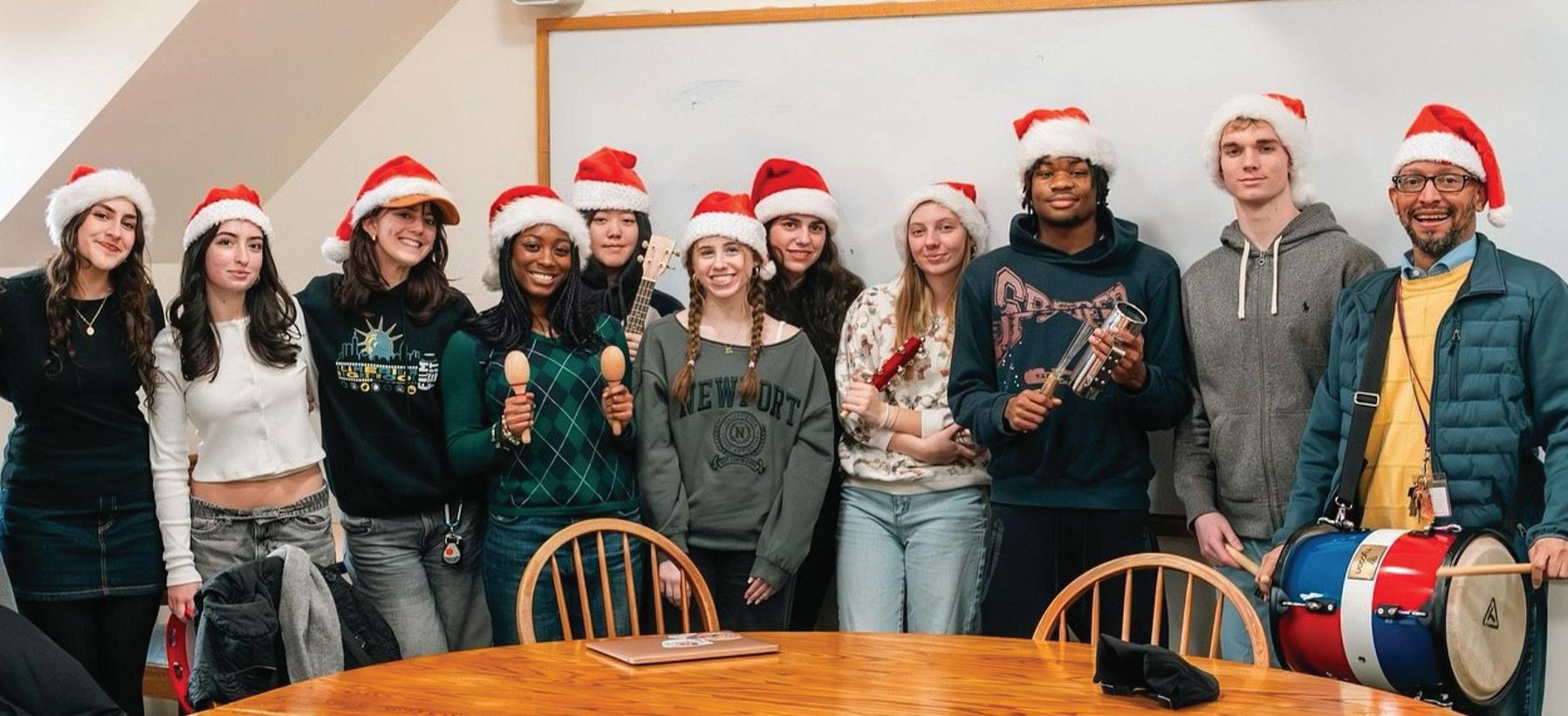
THE ADVANCED TOPICS IN Spanish language culture class poses before heading out on a Parranda in Dec. 2025. The annual tradition, led by Upper School Spanish Teacher Roberto Mercedes, traverses buildings across campus to spread holiday cheer. This year’s Parranda will take place on the Thursday and Friday before winter break. The class will sing songs like Alegre Vengo, Traigo La Trulla and Feliz Navidad.
the parranda. People go out in the street and celebrate and smile and feel joy, so I thought ‘Why not bring this experience to Masters?’”
Mercedes said.
Students in the advanced topics class are also looking forward to the Parrandas. One advanced topics in Spanish language and cul-
ture student Vincent Von Jan ‘27 said, “I’m excited to spread holiday joy and cheer and lift the spirit of students in a time when work can be overbearing.”
Another advanced topics student, Alex Cho added, “It always looked like a lot of fun, especially when they would come into
the classrooms, so that’s probably what I’m excited about most.”
Mercedes also believes that spreading traditions helps to preserve culture. “Sometimes traditions like this [the parranda] fade away, but if we have a little bit of it here at Masters, we are protecting it,” Mercedes said.
Winterlight concert embraces non-religious songs
Ella Liu Lead Lifestyle Editor
The annual Winterlight concert contains many festive performances for the whole community to enjoy. However, you may notice the lack of typical Christmas, Hanukkah or other religiously-associated songs.
Many decades ago, Masters was more focused on Christian values, and the Winterlight concert, then called “Candlelight,” was held at the South Presbyterian Church. However, as religious diversity increased, it became clear that things had to change in order to accommodate the students.
Department of Performing Arts Chair Jennifer Carnevale said, “We realized this was a really uncomfortable situation for our Jewish students, our Muslim students, our non-denominational students, and that wasn’t the place Masters was.”
Additionally, since participation in the Winterlight concert is graded for the academic ensembles, Carnevale believed that performing a religious song might mean that a student’s religious beliefs would be involved in the grade they received.
This is clear within the Middle School, where participation in the winter concert is required for all students, so sacred texts are not allowed.
Carnevale said, “[The Middle School] only has one concert a year. So if your only song you do all year is a Christmas song and
you’re a Jewish kid, how does that feel?”
However, juniors Isabella Cardace and Laura Peralta believe that adding more popular holiday songs would make the concert fit the season more.
“I think if they’re going to call it “Winterlight concert” and not just “con-
cert” then it should have something to do with winter,” Cardace said.
“We’re supposed to start off the [winter] season and get everyone in the mood. We’re not doing that,” Peralta said.
In fact, Upper School ensembles are not strictly banned from including any sa-
cred texts within their repertoire. Choral ensembles, especially Tower Singers who perform older music, typically involve the study of religious songs within their curriculum.
Choral Music Faculty Member Caitlin Adler said, “Choral music in particular, so much of its history is in the church. And in the church specifically, not temples, because in synagogues, where cantors are the main musical leader in the worship sessions, they are doing solo work.”
Adler mentioned that there are many technical skills that could be taught using sacred scripture.
“We talk a lot about polyphony, which is multiple melodic lines that are layered on top of each other, and that style of composition came out of the Renaissance… that’s a super important technique for singers to learn how to sing, because you can’t depend on another person’s part for your part, you have to be able to sustain your own melody,” Adler said.
Adler continued and explained how religious music that students may not relate to can still have a positive impact on their music ability.
“I think religious music, sacred texts and sacred pieces fall into that category of music that you may not always personally identify with, but you should still be exposed to and understand the tradition and understand the value that it may have in the discipline you’re studying,” Adler said.
Jack Bilman & Thomas McCallum
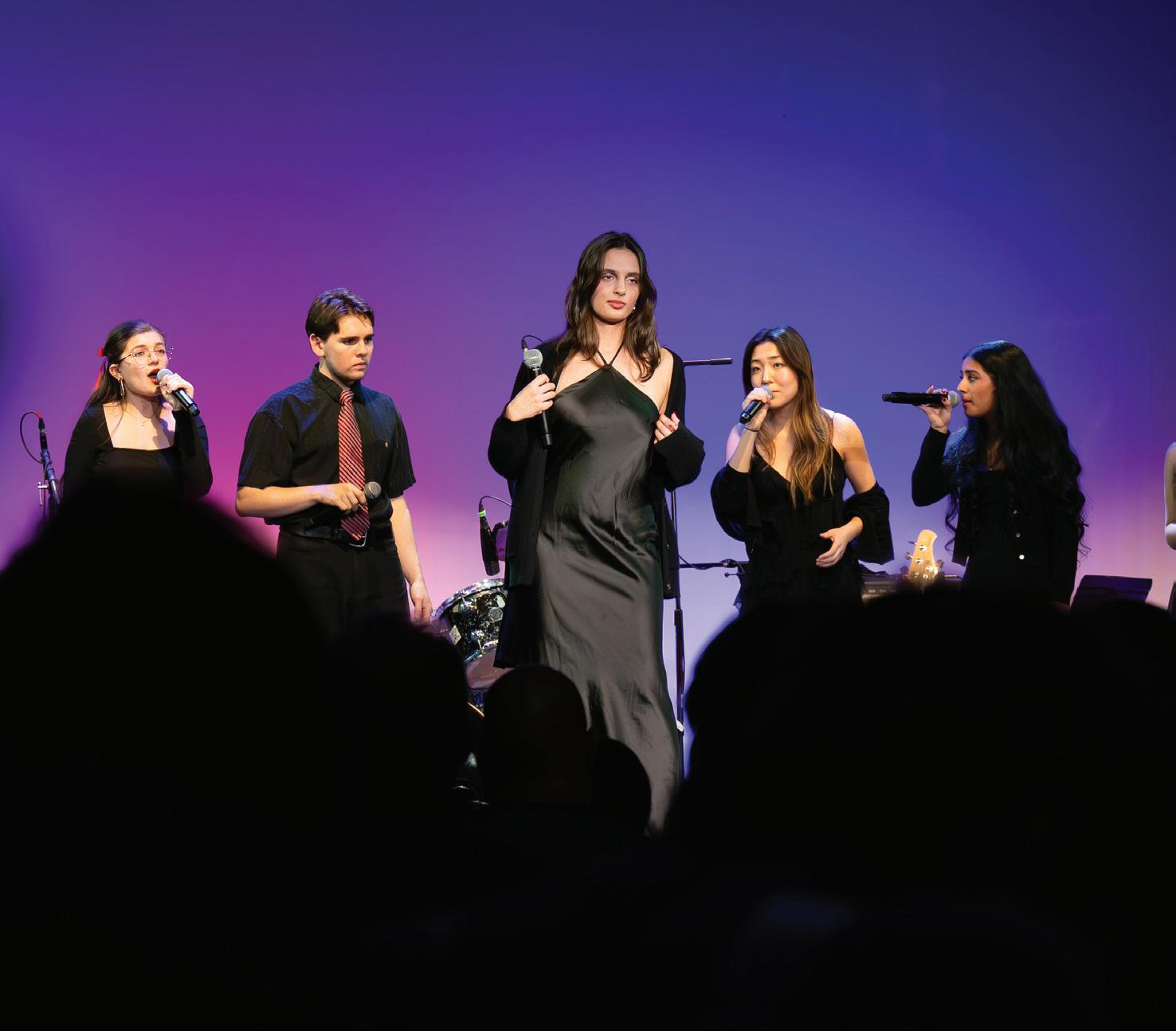
ASH MUNITZ ‘27 STANDS with Dobbs 16 as she solos Twilight Zone by Ariana Grande. The Winterlight concert on Sunday, Dec. 14. featured music performed by several DoPA classes, and took place in the new Strayer Theater in Follett Hall. Later this winter, DoPA will put on the Upper School Revue and the Upper School Musical.
JOHNNY YE/TOWER
ROBERTO MERCEDES
Speak up in the darkness, search for the light
This past weekend unfolded beneath a familiar and chilling shadow. Once again, celebrations meant to gather people in joy and community were interrupted by violence.
An annual Hanukkah celebration in Bondi Beach, Australia, ended in violent gunfire, which left at least 15 dead, including one of the gunmen, a 10-year-old girl and a Holocaust survivor. Closer to home, at Brown University in Providence, Rhode Island, students hid behind locked doors and drawn shades as a shooter opened fire around 4 p.m. in the engineering building.
Even a close relative of a Tower staffer is a student at Brown, who is thankfully secure. Masters alumni who are current Brown students, Teddy Meyer ‘24, Nate Meyer ‘22 and Hannah Shapiro ‘23, were also confirmed safe, according to an email from Head of School Laura Danforth on Saturday. That reassurance can provide relief, yet it doesn’t erase the reality that yet another community had been forced to measure its day by how close it came to tragedy.
Unfortunately, these are not isolated incidents. They are part of a pattern that has grown impossible to ignore. Mass shootings have increased in frequency since the 1970s, with a particularly steep rise over the past decade. The United States, despite making up only about 5% of the world’s population, represents nearly a third of the world’s mass shootings. The numbers are staggering but what may be more alarming is how easily they start to blur together.
Horrific headlines now arrive with numbing regularity. We scroll past them between homework assignments, group chats and sports scores. We absorb the location, time and number injured and then move on, because the alternative is to sit with grief that feels endless. When violence becomes routine, we risk losing our ability to recognize catastrophe for what it is: a collective failure demanding a collective response.
Violence claims lives in the moment it erupts and also utterly alters how we move through the world.
And yet, this season insists on light. Families gather to light menorahs, children string Christmas lights on trees and snow sparkles with cheer. These rituals matter precisely because they brighten the darkness. They remind us that community is still possible, that warmth can exist even in the coldest months.
Still, light alone is not enough if it is purely symbolic. To confront mass violence, we must pair remembrance with resolve. This means viewing shootings as actionably treatable, rather than inevitable. It also means advocating for policies that prioritize public safety, holding leaders accountable to take action on gun control and caring for one another in the aftermath.
Finding light does not signify ignoring the darkness but rather carrying something light enough to move through it. In a world where tragedy feels constant, choosing empathy and awareness is how we keep that light alive.
What happened to the War on Christmas?
Obituary of a
propaganda machine
Alex Kritzer Online Columnist
Here’s some food for thought for the political media junkies this holiday season: who here remembers the war on Christmas?
It is easy to forget now, when grifting and rage-baiting off topics far more lurid and far more offensive has become the norm. But once upon a time, this talking point – the idea that American liberals were hell-bent on “taking Christ out of Christmas” – was among the crowning jewels of the entire right-wing culture-war industry. In an age before trans issues, before “woke” and “DEI,” perhaps no other cog in the rage-machine, save for gay marriage, loomed so large.
The War on Christmas was, for some time in the early-to-mid-2010s, the golden standard; the definitive blueprint for how to manufacture a cultural outrage. Since its earliest days on The O’Reilly Factor it was the golden goose that made FOX their fortune -- the favorite child in a family of imaginary ghosts. So why in recent years have we stopped hearing so much about it?
According to a YouGov poll, belief in the existence of the War on Christmas declined overall in America by thirteen points from 2022 to 2024 – from 39% to 26%. Most shockingly of all, it did so even among Republicans: not just by a little, but a staggering 23 points from 59% to 36%.
This is not just on par with the rest of the country, but substantially more: perhaps as the mainstream right turns more
and more extreme, it seems old talking points from the neoconservative era no longer sate their unholy appetite. But maybe the reason is slightly deeper than conservatives tiring of their own rhetoric.
Talking points are not just cynical power-schemes: they also encapsulate, to some extent, a faction’s political psychology. And the War on Christmas particularly has always had a deeper meaning: it was a vehicle to externalize anxieties about the waning social status of conservative Christianity in a polite-society fashion. It allowed the right to lament the loss of cultural capital without being branded as hicks or bigots.
Nowadays, though, there is clearly no need for that mask. If a right-wing influencer believes Christians or white Americans or whatever other group is being minoritized, they’ll tell you outright, and in no shortage of vulgar detail. We can also say, then, that the War on Christmas was a manifestation of an impulse which has since found other, more base outlets.
Of course, it only found those outlets at the end of the long memetic trail that earlier culture-war talking points ironically paved. No matter how disparate they are, we would have never arrived at Tucker Carlson and Nick Fuentes had we not started with Bill O’Reilly.
I doubt many obituaries will be written for the War on Christmas. But it has served its purpose, and now largely fades into obscurity. On the headstone, however, it will warn:
Sometimes a conspiracy grows so bloated, so all-consuming, that it consumes itself. Sometimes we create the monsters which become our own doom.
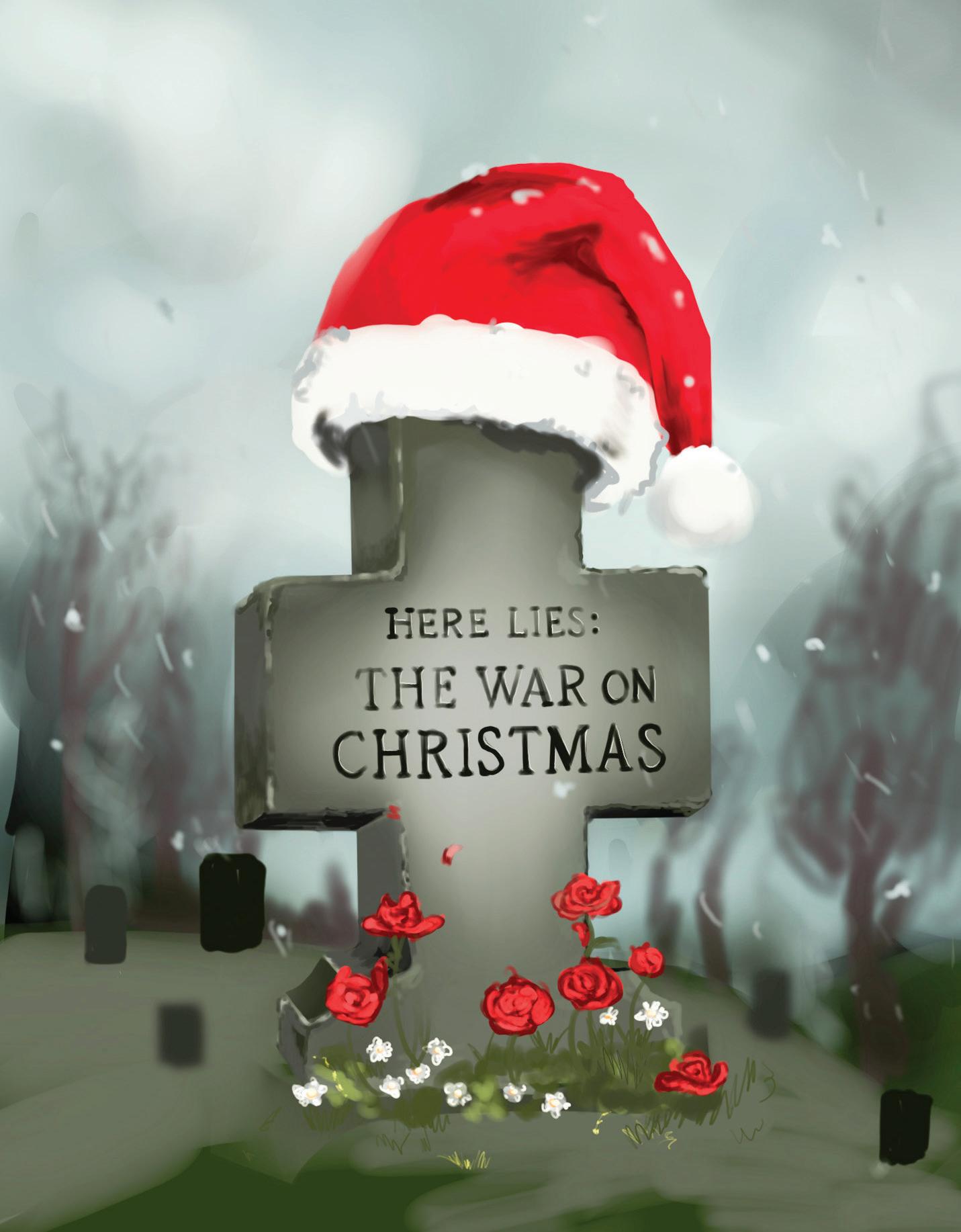
KRITZER ANALYZES THE DOWNFALL of the “War on Christmas.” He recalls a conservative political rhetoric that aimed to curry favor within their Christian base and stoke the flames of cultural outrage.
CLARA CHU/TOWER
The guide to dodging polarization during the holidays

Videos and posts regarding holiday dinner conversations have proliferated on social media throughout the holiday season. Whether it’s a teenager jokingly asking, “Could you pass the ICE?” in hopes of instigating a debate about immigration, or another relative obliviously speaking offensively about his or her opinion on an issue, the current political climate plays an outsized role in the conversation at the table.
This dynamic is not unique to the dinner table. Holiday gatherings reveal something bigger about how divided the country feels, since our relatives hail from all walks of life and geo-
graphical regions, as well as generations. Importantly, it is not disagreements that are new; it’s how personal and intense they have become. In our culture, political identity has become a part of social identity, making even casual comments appear loaded.
These conflicts feel bigger and more frequent now for several reasons. Forces like social media, increasingly biased news sources and algorithm-driven outrage are strong actors in driving a wedge between people. One uncle insists crime is “out of control everywhere,” while a cousin cites falling national crime statistics. Both are sincere, and right in their feeds. The media prioritizes posts that spark emotion, so one person may only see footage of shoplifting and carjackings, while the other sees contradictory charts and debunkings.
If the nation is tense, it is no surprise that the dinner table is too. But even when the conversation gets heated, his worth remembering that these “opponents” are the same people who baked us birthday cakes or taught us how to ride a bike.
Navigating these conversations when they arise can be difficult, so here are some playful yet practical strategies for surviving the discussion.
First, ask questions instead of arguing; it can be surprisingly disarming and shows a willingness to listen and understand. Second, name the moment; just recognizing what is going on and shifting the focus of the conversation away from the argument can be very effective. Lastly, it is never a bad idea to try to find common ground, whether that be through shared hometown news, mutual frustration with local traffic or taxes or admiration for your mother’s holiday cooking.
The holiday dinner table won’t solve the nation’s problems with division, but it can remind us of something politics often forgets: people are more than their opinions. If we practice patience with our relatives, we might be able to carry a bit of that grace into the civic arena. And if all else fails, volunteer to do the dishes.
Keep style while also keeping warm
Fashion Over Time
The cold days of winter are here, and I dread the tricky early morning decisions I have to make: choosing between one of my higher rotation jackets or my dreaded puffer coat. Once I finally get into the routine of wearing long sleeves and cardigans, December rolls around, and those cardigans are not warm enough anymore.
But we do not have to freeze to death to be stylish. On a recent chilly night, I was talking with my friends about “fashion over comfort.” Some said that comfort always comes before fashion, while others said they prefer for their outfit to be cute, even if it meant they would be giving up warmth.
Across campus, fashion seems to be more important than winter comfort. There seems to be an increasing number of people not dressing for the weather. Instead of a heavy coat, they will wear a thin sweater, leaving their necks vulnerable to the wind. And sure, your slim and unlayered outfit may look nice at first glance, but your goosebumps speak for themselves.
I will admit that I have been guilty of actively not dressing as warmly as I could because I like my outfit. When making a quick trip to the Fonseca Center or walking a friend to their bus, I will leave my jacket behind, thinking a less bundled-up look fits the mood, and I almost always regret it. As someone who used to be an avid jacket denier — though I no longer identify with that version of myself — I can confirm that the cold is not more forgiving to those in cute outfits.
But staying warm does not mean sacrificing your style. Scarves and jackets can allow for the chance to add
even more personality to your outfits, and they will also keep you warm. Scarves are an untapped market for limitless accessorizing. Not only is there a range of colors, but materials and size are all factors that can allow the scarf to be personal to you.
“[Your coat] has to go with everything,” Sam Friedman ’27, one of my friends brought up in the conversation. With so many different jackets in the world, it is more than likely that there is a jacket that you could find that would suffice on a cold day and would suit your outfit.
If your clothes are really important to you, then the next time you shop for a new winter coat, consider how it will look with the rest of your clothes, and consider how versatile the jacket is. Can you wear it with more than one outfit? The point is, we do not have to let jackets and scarves be armor over our personalities, and they are only ruining an outfit because we let them.
Toby Milward embraces festivities
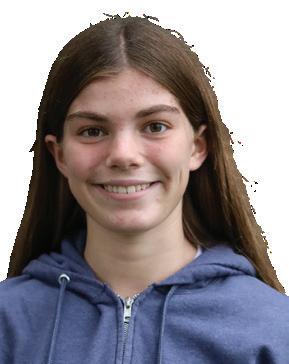
For Ninth Grade Co-President, Toby Milward ‘29 the celebration of the new year is important, but, he says, “In high school, I think the new school year is a more important milestone because you’re getting back into the routine after being on summer break for three months,” he said. Milward feels like he just finished his summer reading, but in reality, much has changed for him since then.
Milward earned the title of ninthgrade class co-president on Oct. 3, becoming the first leader of a new grade. During the elections, he explained that he decided to focus on connecting with classmates instead of
overanalyzing his speech. While not a typical decision, looking back, Milward said he thinks it was an effective way to gain votes and the respect of his classmates. Connecting on a more personal, less professional level allowed him to be a genuine, strong candidate. It also helped him form new relationships with a grade that had grown significantly since his Masters Middle School graduation. “Becoming class president was a fun process for me,” Milward added.
In addition to becoming a new Executive Committee elected member, Milward is on the varsity squash team, cross country team, and plays guitar in the student performing group Walkmen. Looking towards the holidays, Milward thinks about connecting with his grade, as well as his closest friends and family. Along with co-president Lorenzo Zapata ‘29, Milward plannedto organize a Secret Santa, White Elephant game or other festive activities among the ninth grade advisories. Milward and Zapata have also begun plan -
differs around the world
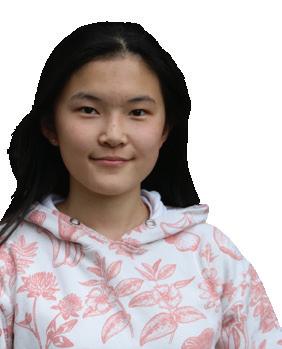
Previously, I thought that Santa Claus was the universal gift-bringer. Doesn’t he fly around the entire world? It turns out, I could not have been more wrong. The classic Santa Claus figure was only recently invented in the United States in the 1800s, and Christians around the world have very different ideas about who brings all those Christmas gifts.
Emilia Friebe ‘27 explained that in her hometon of Cologne, Germany, “You go into a separate room and close the door. There are no gifts under the tree at that point. Bells are sitting there, and when the bell rings, that is when Christkind is there and brings the presents.” Christkind is a young, feminine angelic figure in parts of central and western Europe.
In Spain, Día de los Reyes Magos (Three Kings Day) is the major celebration. 12 days after the birth of Jesus, three kings brought him gifts. To commemorate this story, children in Spain wake up to gifts on Jan. 6.
Leyre Cabrera ‘27 from Zaragoza, Spain, shared their holiday tradition: “We have a special breakfast [dish], which is called Roscón. It is basically a cake. You get to cut it, take however big a piece you want – but if you get [a plastic figurine of] baby Jesus in your piece, you have to pay for [Roscón] next year.”
Gift bringers vary even further within Spain. Ane Garcia ‘29 from Madrid, Spain, gets another round of Christmas gifts in addition to Día de los Reyes Magos.
ning a movie night, aiming to unite students and create stronger bonds.
On a more personal level, Milward spends time with his close family on Christmas in Windham, a ski resort around two hours away from Masters. “Windham is one of my favorite places to be because of all the people there and the views of the mountains,” he explained. Spending time with his family over the holidays is Milward’s chance to slow time back down and take a break.
When he gets back, however, the class president is right back in it. “The school year always goes slowly in the moment, but it seems like it went by so quickly when you look back,” Milward said. Having been a Panther since fifth grade, Milward will be ready to get back to running, squash playing, leading and seeing his peers. Until then, Milward tells everyone, “Happy holidays and enjoy the break!”
She explained, “On [Dec.] 24 evening, everyone goes upstairs and then suddenly you’ll hear a bang on the door. Then you go down and all the presents are there.” This special gift-bringer, popular in Northern Spain, is called Olentzero, a figure similar to Santa Claus, but originating from the Christmas traditions of the Basque people.
In the warm Southern Hemisphere, kids from Campinas, Brazil, open their presents from Papai Noel, the Brazilian Santa Claus, at midnight. Junior Artur Carbonieri Salgado said, “We don’t have chimneys. So at night, he will pass by the house. When you go outside to try to find him, sometimes we hear noises, but we never actually see him. Then you come back in [the house]; the presents are always there.”
While Santa Claus appears to be the “only” gift-bringing figure — at least in all the popular media I grew up with — many cultures have their own fascinating stories. For that reason, engaging with people around the world can broaden everyone’s worldview.
Freshman Focus
Gigi Wheeler Columnist
Westchester Politics
Julia Panos Columnist
Avery Gosnell Columnist
Jasmine Mao Columnist
Lunar New Year deserves more recognition
Helen Gao Opinion Editor
A ring on my laptop kicked off my Lunar New Year. My aging grandma called me during class for a FaceTime. I hung up in guilt. What once was the most vibrant Eve faded into another mundane school day. Adding Lunar New Year to the Masters calendar would allow us to pick up traditions we left behind.
“Lunar New Year is the most celebrated holiday in many cultures, including Chinese, Vietnamese, Korean and others,” said Associate Dean of Global Studies and Mandarin Teacher Penny Peng. In New York, Asian American and Pacific Islander (AAPI) communities total over 2.17 million, about 10.8% of the state population. At Masters, these groups represent a very visible proportion of the student body.
For me, staying in class during the holiday reduced it to an online event. My celebration consisted of rushing through phone calls during the lunch break. The taste of dumplings reached me only through TikTok. Because the International Club’s party is often held a week late, many students grapple with loneliness and disconnection
during the actual holiday.
Masters’ policy states that students can request to be excused from classes to observe a religious or cultural holiday, but they must catch up on the missed work themselves. This policy creates a dilemma, forcing a choice between academic and cultural celebration.
In fact, the need to request a day
off is inherently exclusive. It leaves Lunar New Year reserved and optional rather than embraced by the school as a whole, which offers non-AAPI communities little incentive to pay attention to it. As Peng said, “We want students to be global citizens,” yet a closedoff holiday contradicts this goal, as the party is attended predominantly by Asian students. A break could give
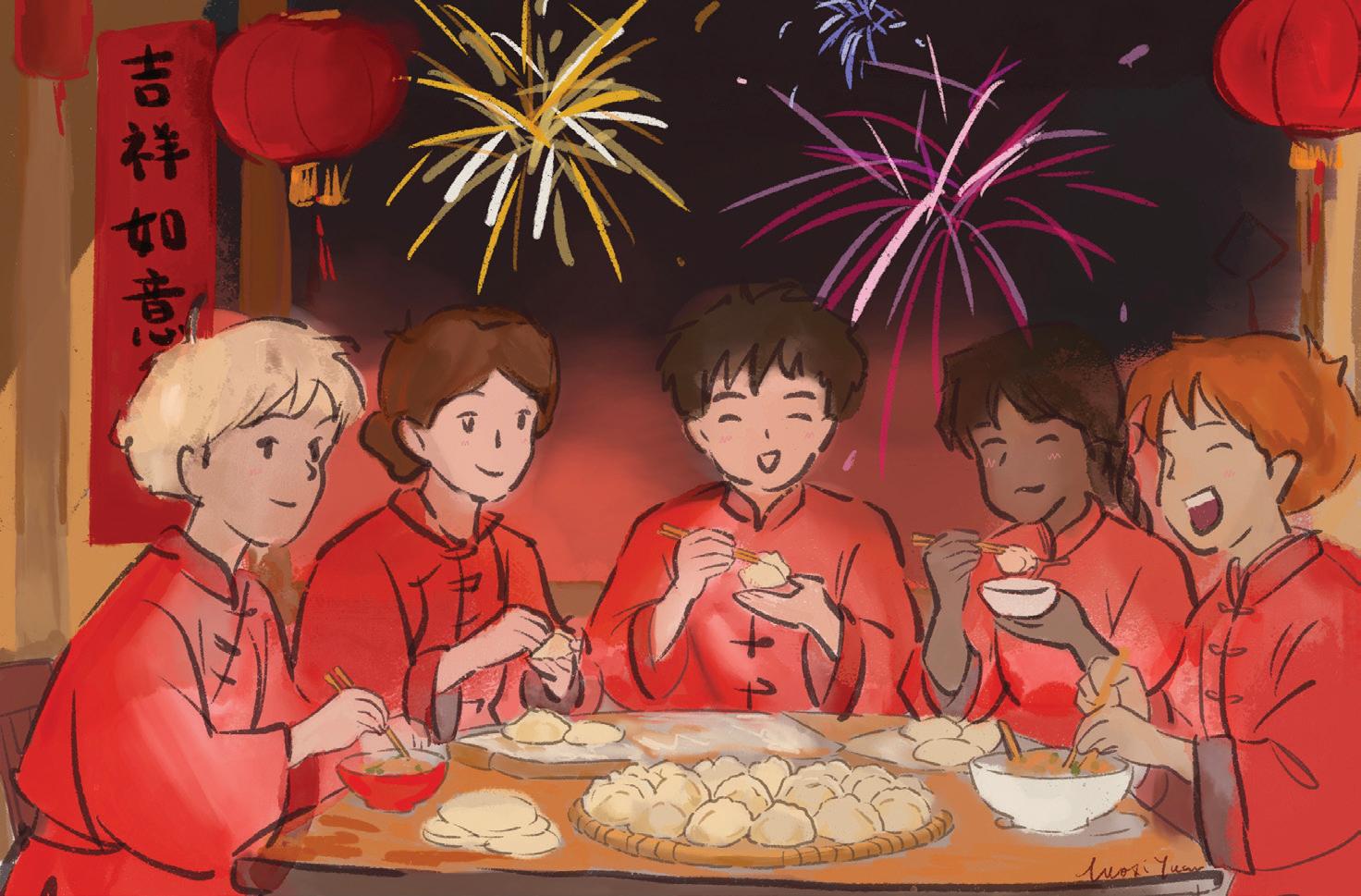
ARGUES THAT LUNAR New Year is not embraced as it should be at Masters. She states that the current policy creates a dilema for students to choose between academics and cultural celebration. Additionally she discusses how new cultures can strengthen community in Masters by adding diversity and new perspectives.
a wider array of people the chance to pause, notice, and be a little more curious about different cultures.
Of course, the winter calendar is already filled with two long breaks, Wintermission and snow days. Inserting another official day off is no easy task. Administration also needs to consider fairness across cultural observances that are not documented in the school’s calendar. This might be addressed through switching professional development days or aligning the day off with an existing long weekend.
Two years ago, the Governor of New York, Kathy Hochul, signed a law to make Lunar New Year a mandated closure for all public schools. Shouldn’t Masters, a school that prides itself on diversity, be more committed to publicizing AAPI culture and heritage? On the threshold of a new beginning, it is time to initiate our first school-wide celebration.
Peng shared that she may introduce a “red day” in which the entire school wears red attire. She continued, “Red decorations can cast away the hideous monster Nian in the legend, and bless fortune to the whole school.” Traditions like this could be invaluable in bringing our communities together and integrating the Lunar New Year into Masters culture.
Picking the hits and misses of 2025

Olivia Shim News Editor & Illustration Editor
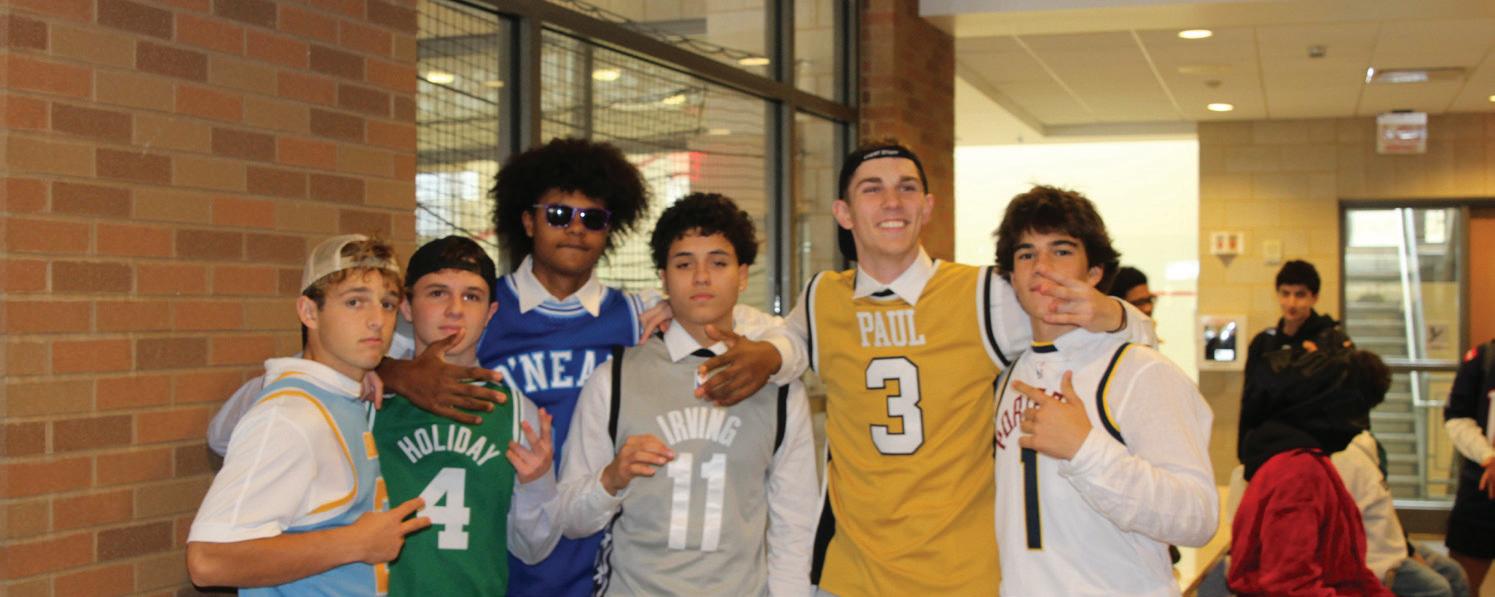
Halloween is special at Masters for a simple reason: everyone participates. This year’s theme was movies, and each grade and department committed fully to their assigned category. In the morning, everyone is excited to show off their costumes, admire

others’ costumes, and look forward to the shorter classes, which, inevitably is one of the best parts. In between classes, students excitingly wonder about the facultys’ performances. By the time each group took the stage for their skits, the energy was high. While the performance can feel long by the end, Halloween consistently brings the community together in a way few events do.
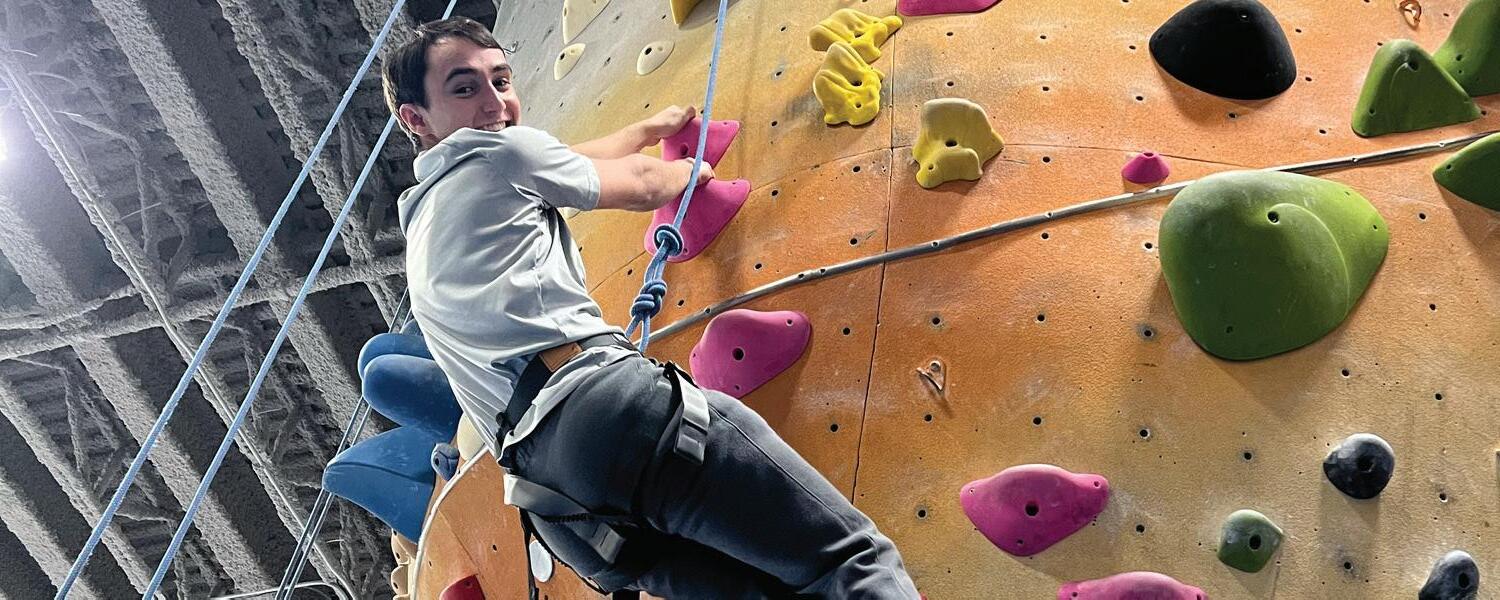
Another top spot is secured by Winter Mission, which offers students four days to explore one class of their choice. Taking place right after the stress of the first semester, the shift to something more fun feels refreshing to students and faculty. Whether the students are hiking, cooking, exploring the city, studying AI ethics, learning backstage theater production or analyzing the rise and falls of American
malls, the week offered time to relax. Without the usual homework or academic pressure, students can enjoy something unique at Masters. It acts a transition for the Masters community to be ready for the next semester. Winter Mission demonstrates how a tradition that took a couple years to fully settle in proves to be sucessful in the community’s eyes.

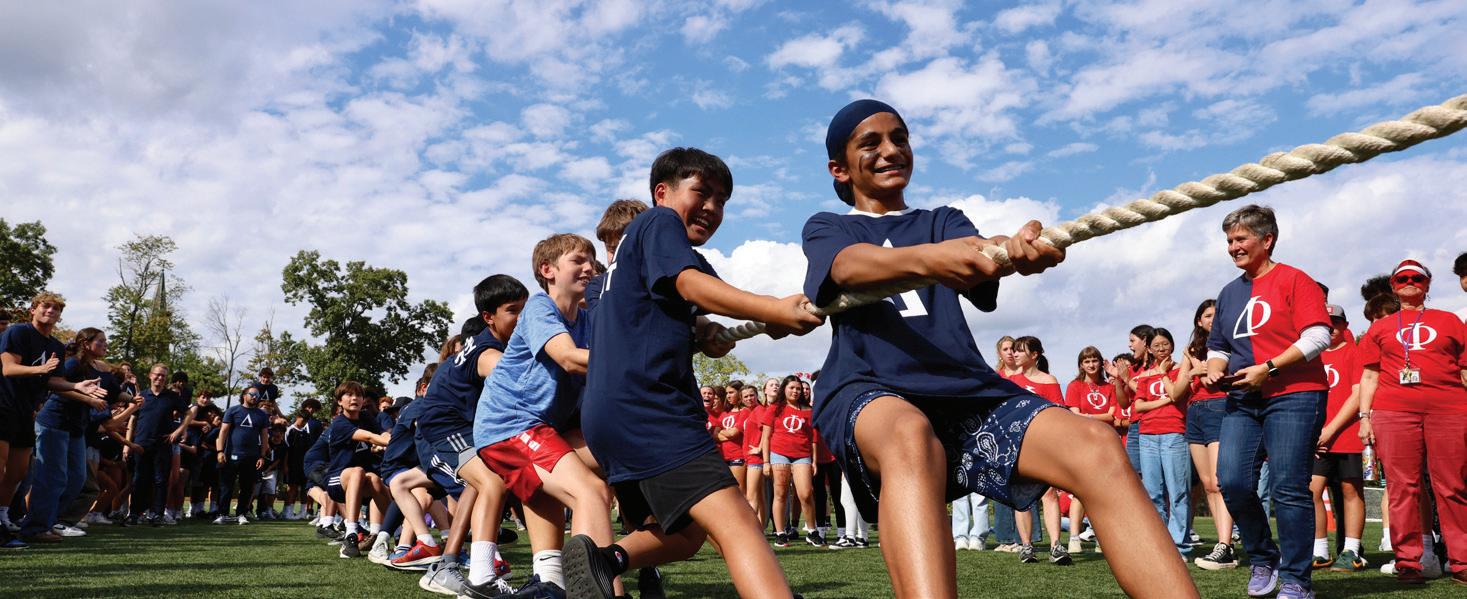
The pep rally, by contrast, shows the growing pains of a tradition still in development. Introduced for the first time this year, it was held at the very end of Founder’s Day, after hours of outdoor activities and hot weather. By the time students were waiting for the teams on the turf, many were exhausted. The fatigue in the atmosphere worked against the rally’s intended fun.
Still, the event’s goals were admirable. Honoring athletes and building school spirit is another way Masters can celebrate unity, espe-
cially on Founder’s Day. However, the timing and structure limited its impact. Without established traditions such as familiar chants, competition, or expectations, students were unsure how to engage. Applause faded quickly, and momentum was never fully built.
A few shifts could help it succeed next year, though. Having it earlier in the day when students are more energized, teaching chants to the student body ahead of time, or even adding competitions, could get the crowd more involved.
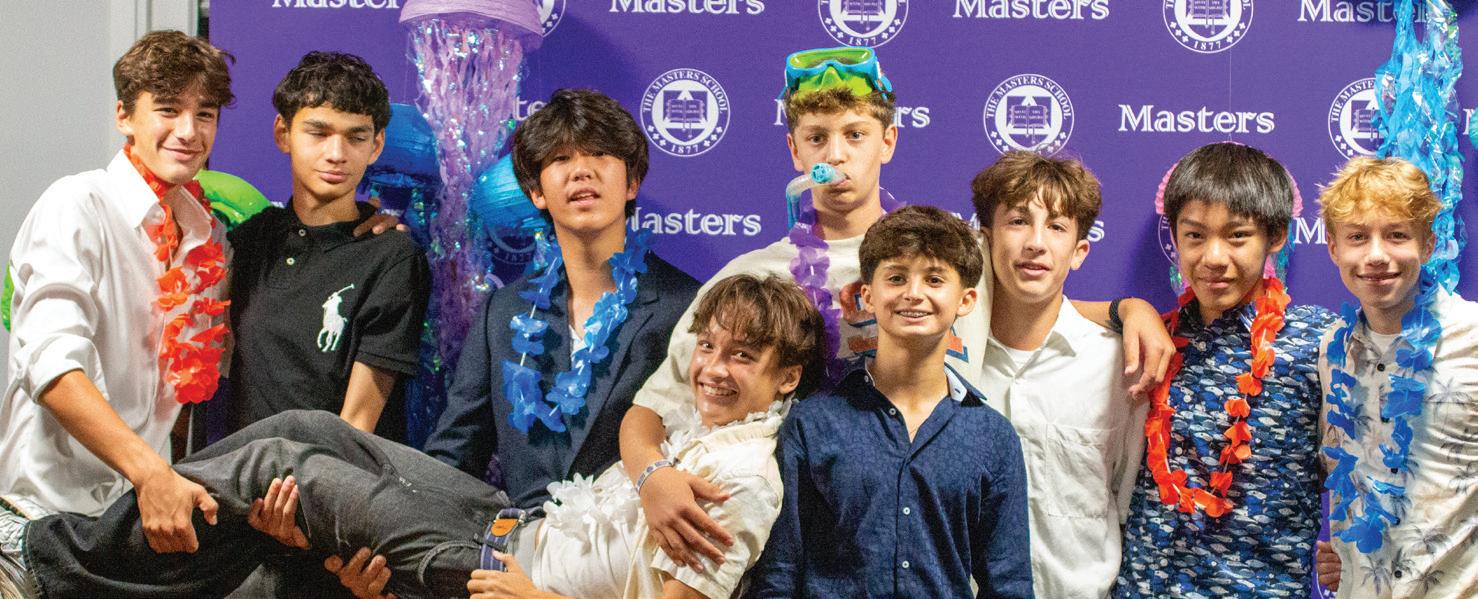
Homecoming also had room to improve. While the dance itself was fine, the atmosphere never reached the excitement students were hoping for. The biggest issue was the music, which many found to be out of touch with what people actually wanted to dance to, possibly because it was chosen by a school-hired DJ rather than student.
However, the fixes are straightforward. A student-curated playlist
would immediately raise the energy. Adding small activities, such as a photobooth, could also make the dance feel more memorable. Similar to the pep rally, Homecoming is not a bad idea. In fact, it is a great addition to Masters. It just needs a clearer identity and more student involvement.
GAO
ROSE YUAN/TOWER
JACK BILMAN/TOWER
AYANNA BECKETT/TOWER
XAVIER ROLSTON/TOWER