DANIELA RIVERA
Hacia Cuando (To When)
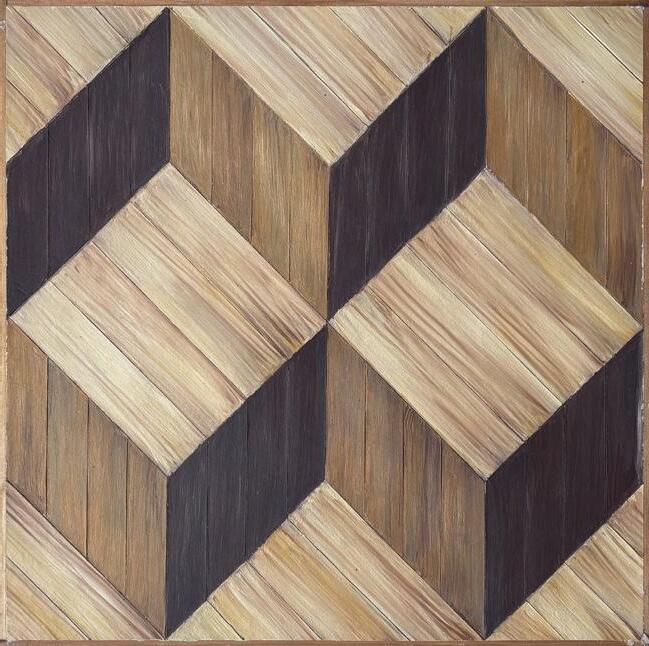
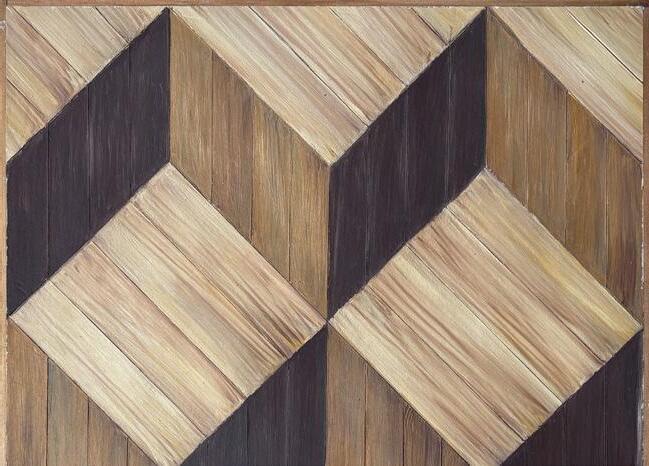
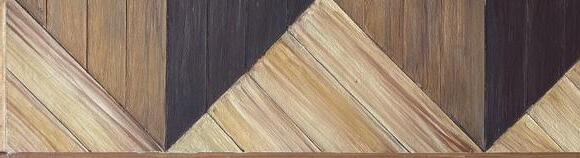
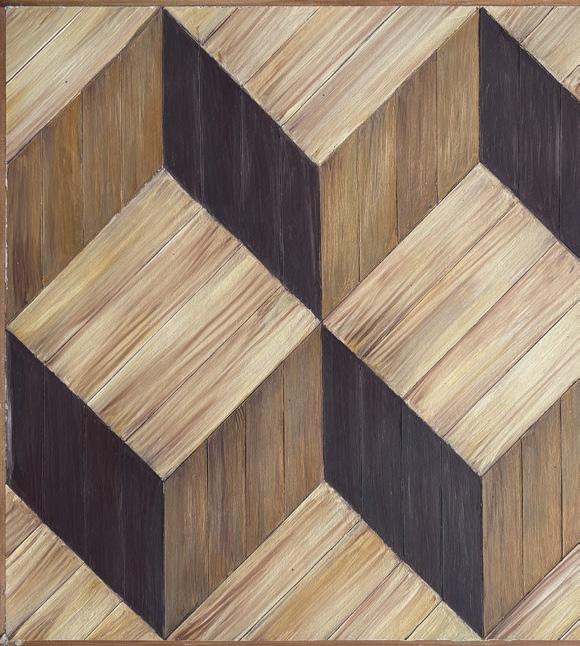
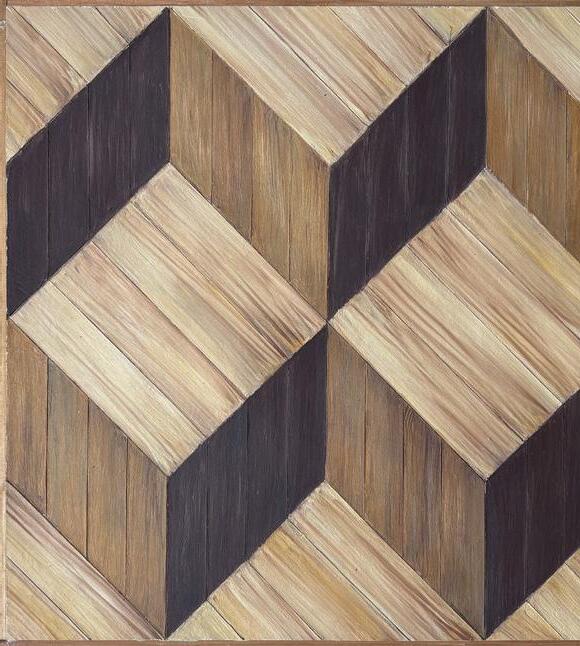
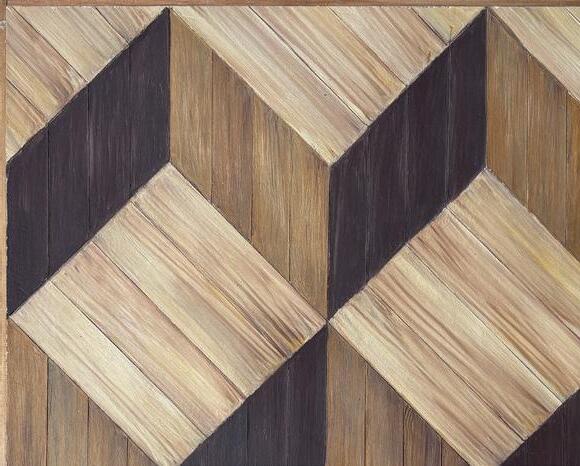
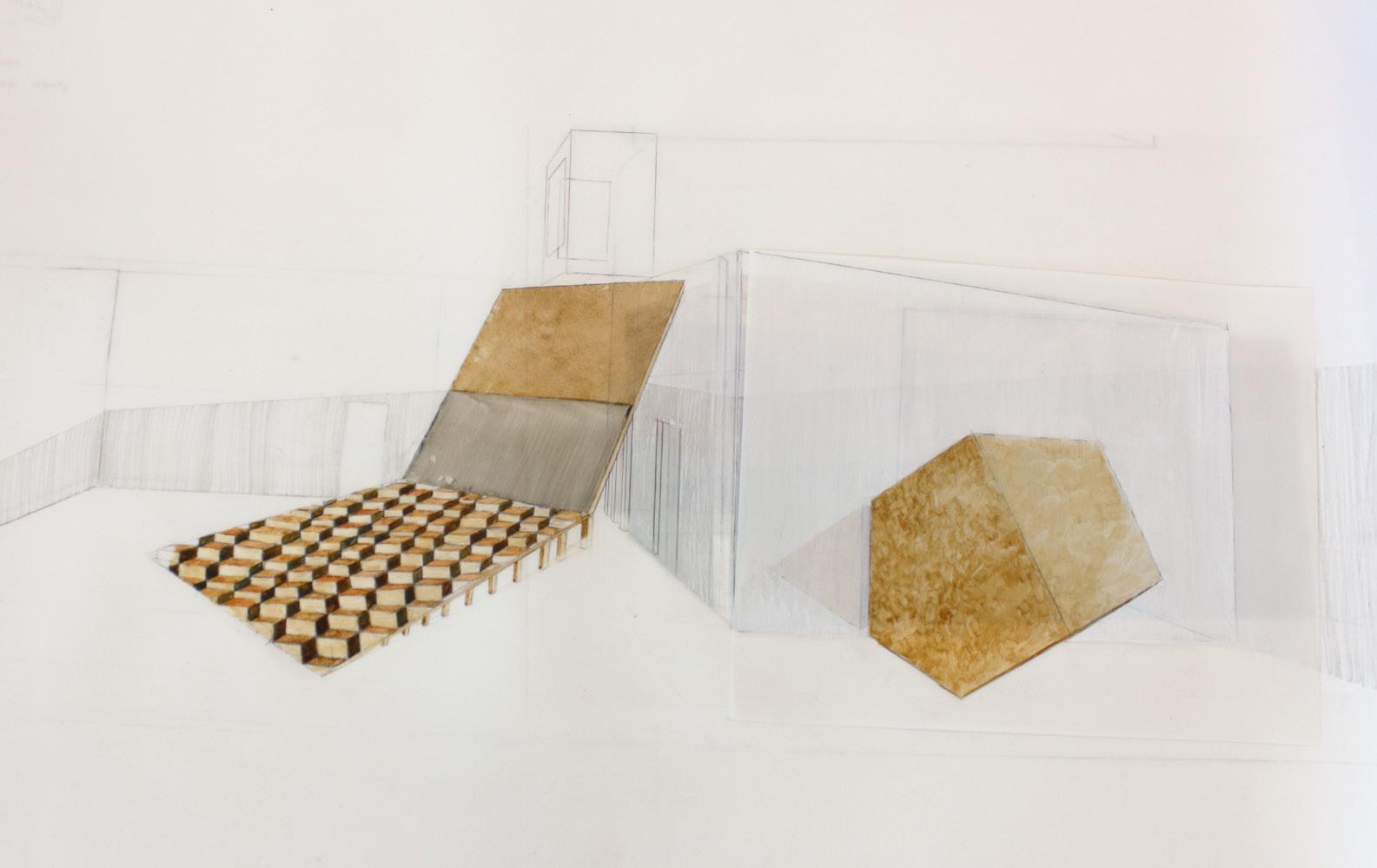
Hacia Cuando (To When), a commission by Chilean-born and Massachusetts-based artist Daniela Rivera in MASS MoCA’s third-floor galleries, explores the migration of cultural traditions, histories, narratives, and practices through a material language of pre-Hispanic fresco traditions and the sonic language of resonance. By transforming soil, stone, pigment, movement, and sound, Rivera’s solo exhibition aims to question and engage with history, materiality, and site specificity, and explore the cultural, historical, and colonial histories present in her techniques and materials. At the center of the exhibition is a tilted platform of handmade fresco tiles materials with both Indigenous and colonial influences which acts as a sonic device when walked across by museum visitors. The void made by the floor’s incline acts as a resonance space, amplifying the sounds through contact microphones as viewers make their way across the platform’s surface creating further evidence of transitory and migratory pathways. Rivera’s cross-disciplinary project demonstrates how migration physical, cultural, or otherwise is constantly taking place and reshaping society and ourselves, demonstrated through a commission which operates simultaneously as painting, sculpture, site-specific installation, and sonic instrument.
Physical migration across continents, regions, rivers, oceans, borders, and seasons is one of the most common practices among all living things on Earth. Cultural migration, or the process by which human populations carry their customs, beliefs, traditions, and languages from one region or country to another, is no less common, albeit complicated by human society. The movement of people across borders throughout human history has reshaped and redefined social and cultural landscapes, and transformed global political and economic
systems.1 In many ways, migrants are agents of cultural change influencing the culture of the places they move to while affecting the cultures they leave behind.2 In the present day just as in the past, human migration is driven by variables such as economic opportunity, instability and political volatility, environmental concerns, violence, and forced displacement and conflict.3 Rivera’s commission for MASS MoCA recalls these contexts through material and cultural practices rooted in Indigenous, ancestral, and pre-Columbian traditions and their respective application in site-specific movement and sound.
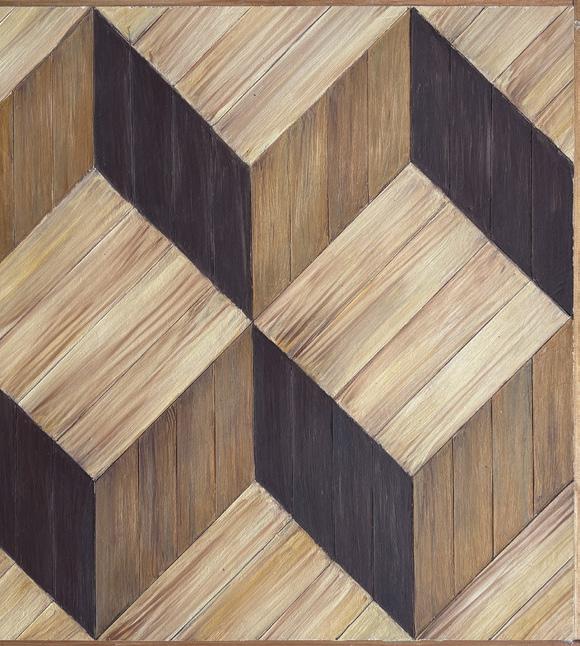
In the main gallery rests a large, inclined platform floor comprised of intricately painted handmade fresco tiles, each fabricated in a pre-Hispanic tradition with origins that stretch from ancient Greece to Mesoamerica and the Andes. Rivera’s frescos are made in the ancient Teotihuacán tradition by slaking
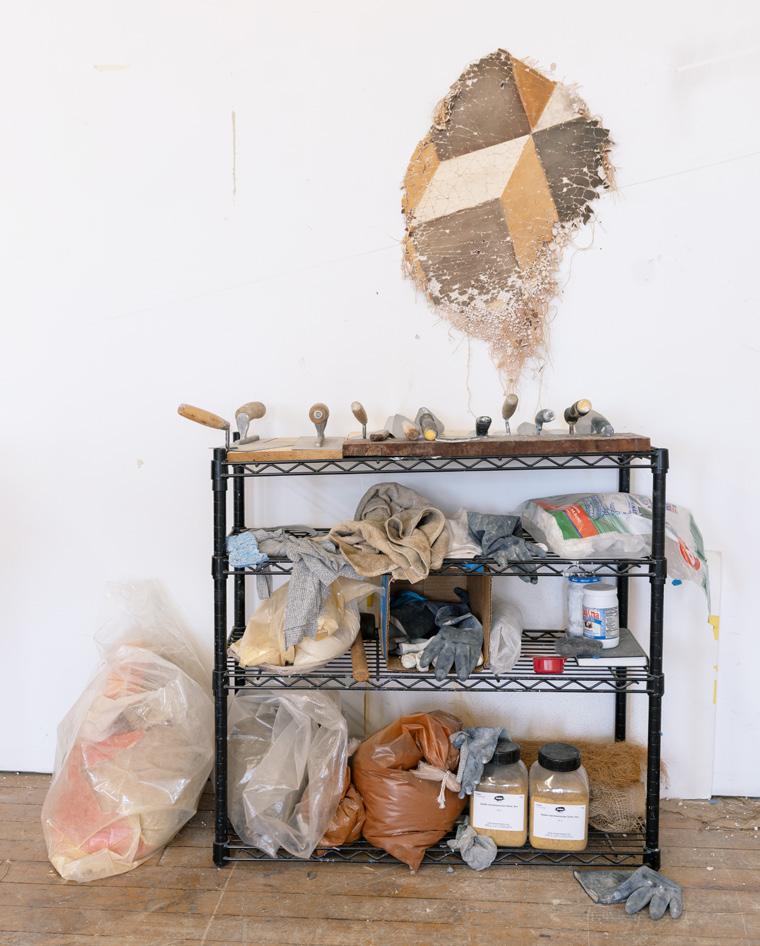
Process image for Daniela Rivera: Hacia Cuando (To When) Images courtesy of the artist
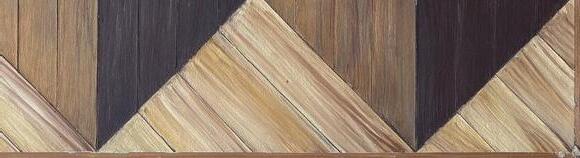
LEFT: Process image of Daniela Rivera’s floor tiles. Image courtesy the artist
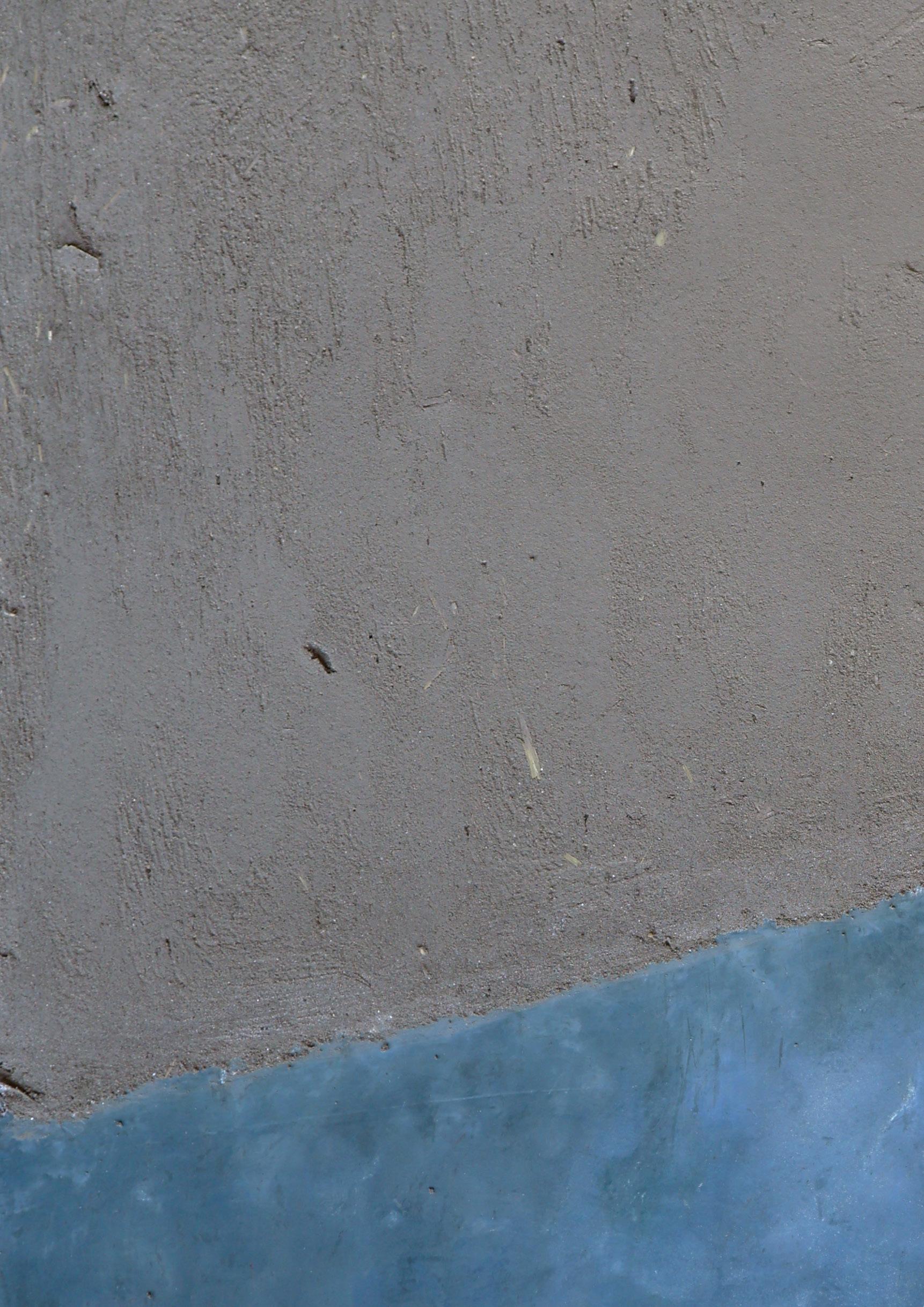
limestone, or calcium oxide, in water to become calcium hydroxide, a malleable putty that the artist applied to square tiles of coconut fibers, onto which pigment is applied, bonded, and hardened by absorbing carbon dioxide from the air. In this buon fresco process, the pigment bonds with and becomes part of the plaster as it dries, similar in some ways to the impacts of cultural migration that underscore Rivera’s project: a colorful bonding and the product of movement and intention, whose impact and legacy are longstanding and exceptionally strong.
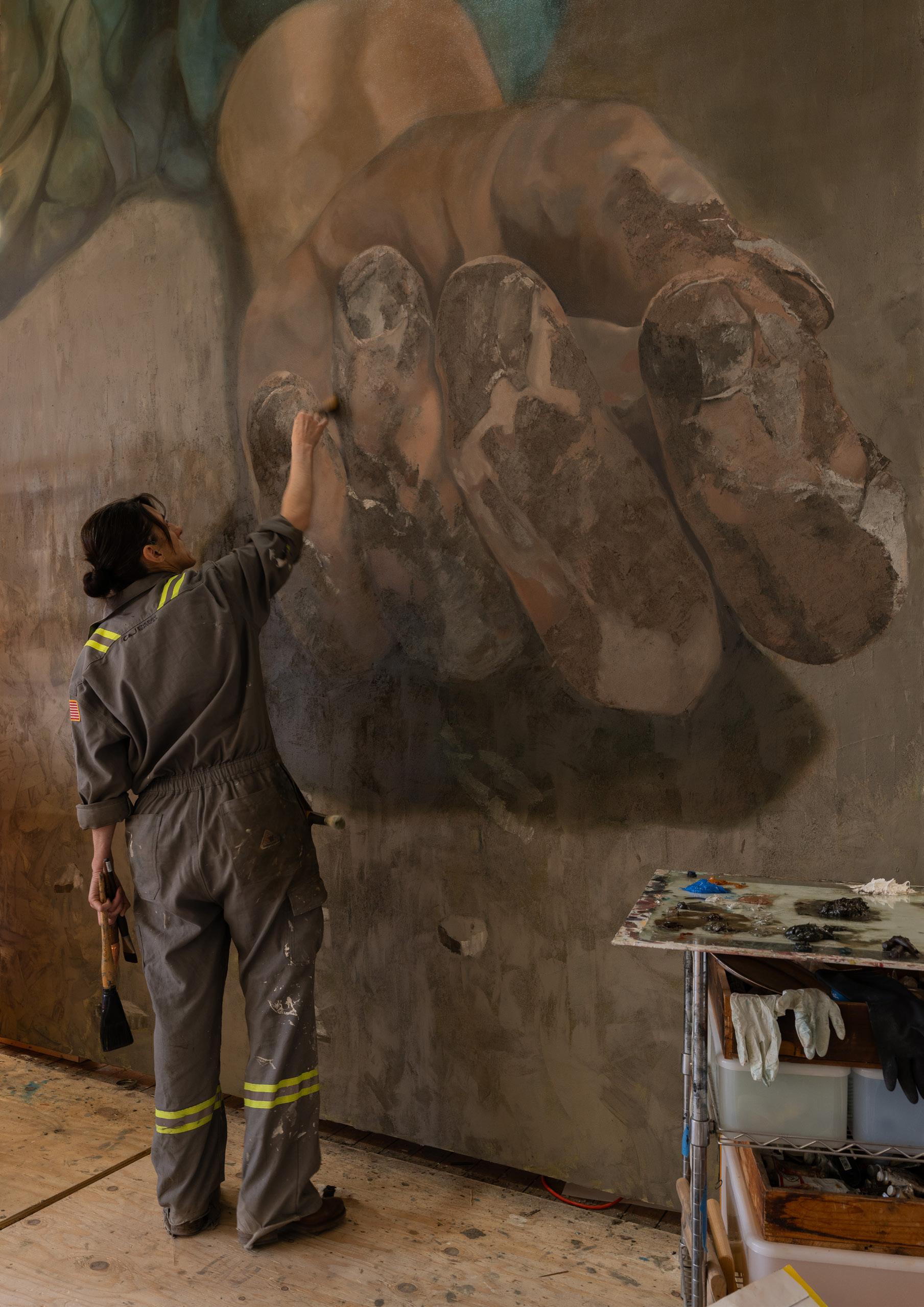
In recent years, Rivera has studied Mesoamerican fresco-making techniques with Maestro Jesús González Gutiérrez at La Escuela de Muralismo in Oaxaca, Mexico, and was trained in masonry, adobe, and tadelakt lime plaster techniques in Santiago, Chile, under Maestro Francisco Díaz. These fresco-making practices were popularized in the 1920s during the Mexican Muralism movement, public wall frescos that artistically
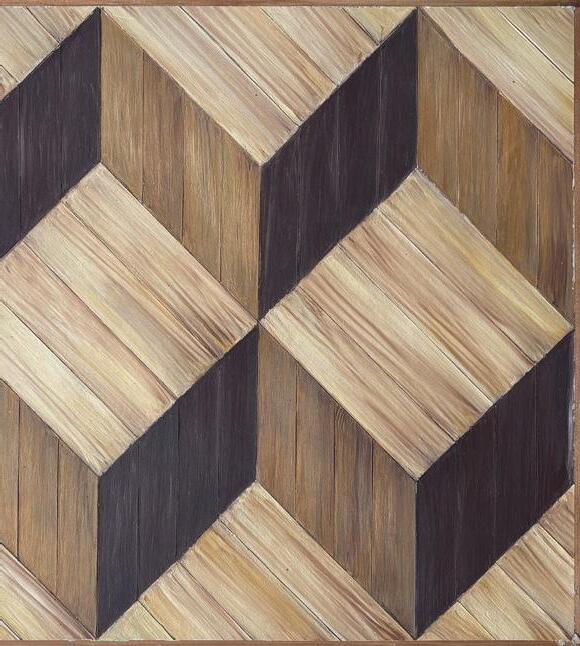
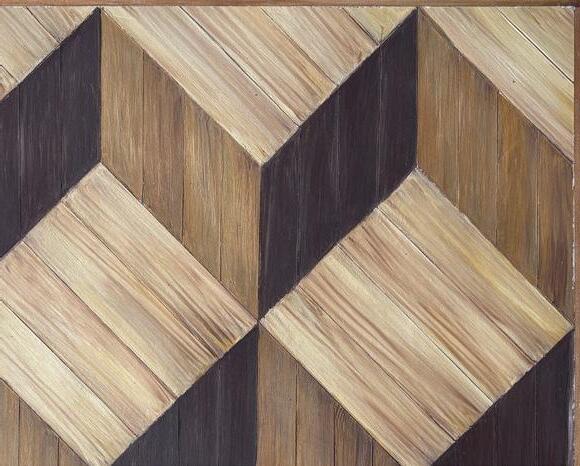
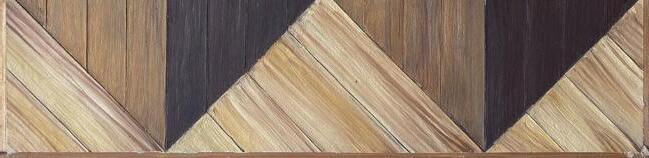
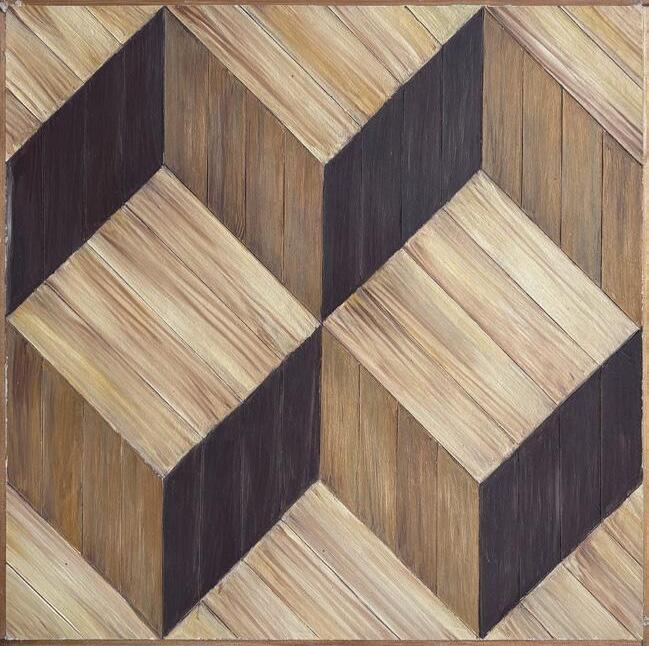
promoted Mexican national consciousness and social ideals.4 These pre-Columbian architectural and material practices have been Europeanized by the artist and her studio team to resemble the pattern of parquet floors, an architectural design with origins in 16th-century Versailles. This material merging of Mesoamerican traditions with European design aesthetics is uniquely reflective of the cultural migration at the conceptual center of Rivera’s project. The word parquet derives from the Old French term parchet, meaning “a small enclosed space or compartment,” an apt description for the space created by the fresco platform’s wooden incline, under which contact microphones have been placed to amplify the sound of viewers’ steps as they move across the surface. By shifting the fresco’s location from its typical placement on the wall to the floor, and by hand-painting the tiles to resemble parquet flooring, Rivera creates a visual illusion that simulates volume and points to the critical inquiry and ethics of simulation.
Drawing of exhibition plans for Daniela Rivera: Hacia Cuando (To When). Courtesy of the artist
“Simulation has always been a strategy of subversion and resistance in Latin America,” Rivera explains. “The history of fresco is complex, as it developed across multiple locations from the 4th century BCE to the 1st century CE ranging from classical Greek antiquity to pre-Columbian-era Mexico. Drawn to the fresco for its ancestral history, I chose to specifically focus the exhibition on Teotihuacán fresco traditions, which I have been learning about and studying in Oaxaca, Mexico.”5
The horizon line and linearity are recurrent themes in Rivera’s decades-long crossdisciplinary practice, reflected here in the application of copperpoint to the gallery’s walls, at an angle in keeping with the artist’s tilted fresco. An ancient drawing technique in which an artist drags a pure copper stylus (or wire) across an abrasive-coated surface, Medieval scribes used copperpoint in manuscripts, and it was a prized practice of Renaissance artists
for its remarkable detail.6 The copperpoint wall drawings and inclined fresco floor are joined by a large 20-foot figurative painting and a two-sided wall-mounted object made of the same fresco and tadelakt materials in wildly different applications, underscoring the multiple forms of influence that cultural migration makes possible.
As a means of activating Rivera’s resonant fresco floor as a musical instrument, in October 2026 Rivera and MASS MoCA will present a new opera work in the gallery using the amplified sounds of both visitors and performers, combining recordings from visitors’ migrating across the surface with the sound of performers’ voices and movement. Hacia Cuando: An Opera will feature collaborators Javier Gustavo Bustos (Buenos Aires, Argentina), Jenny Olivia Johnson (Los Angeles, California), and Sebastian Muirhead (Santiago, Chile).
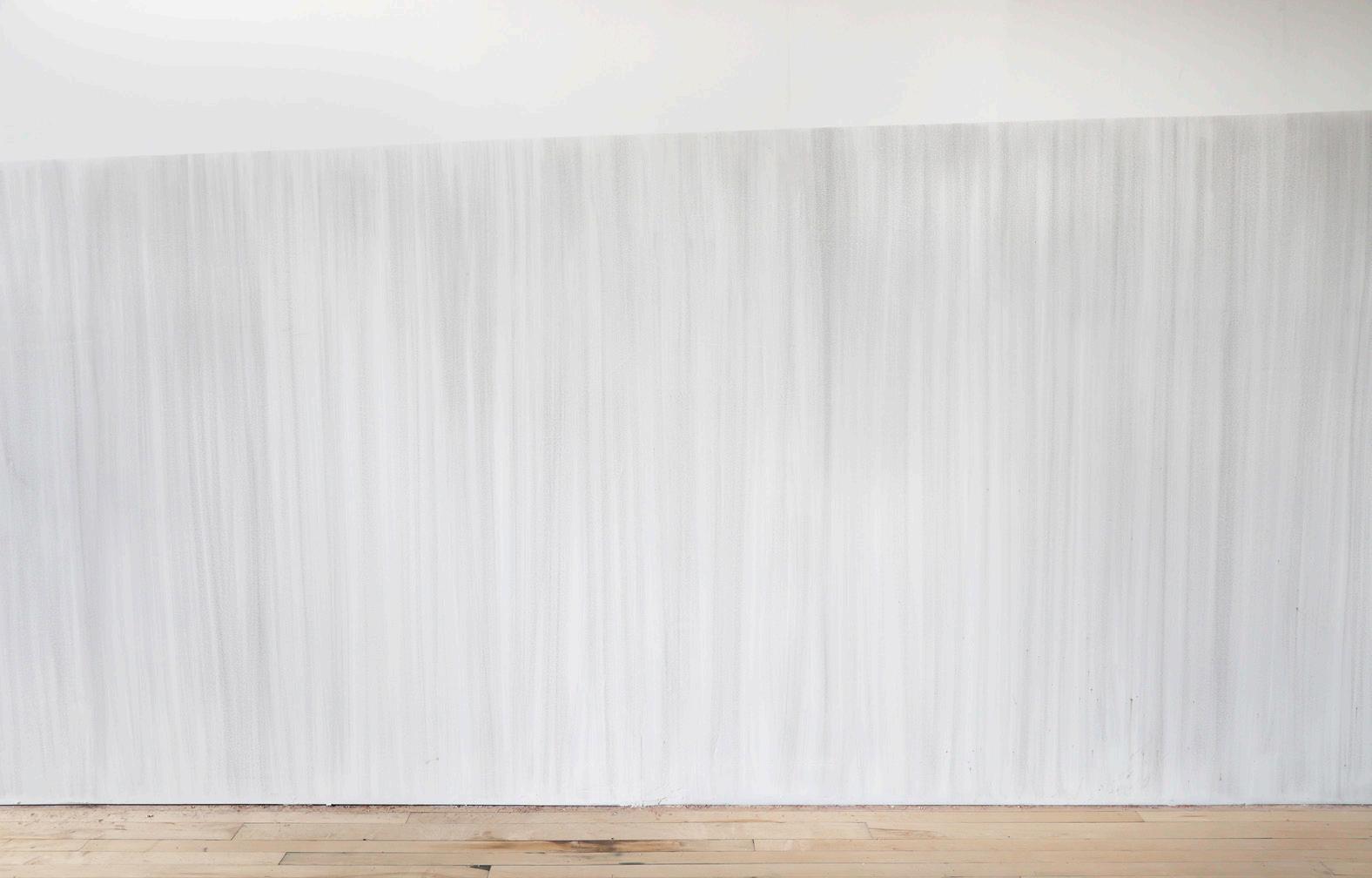
Daniela Rivera, Hacia Cuando (portable horizon line), 2026. Copperpoint drawing on wall, dimensions variable. Courtesy of the artist. Photo: Amy Chen
Conceptually informed by matters of migration and materially rooted in the ancestral traditions of the Americas, Rivera’s project for MASS MoCA is both about movement and how we are moved by the world around us. Hacia Cuando (To When) is shaped by the artist to reflect a recalibration of cultural heritage that prioritizes process over notions of historical authorship. Through this project Rivera asks us to question the linearity and fixedness of cultural significance and material traditions, and instead invites us to leave a lasting mark of our movement and to be moved by those that preceded us and those who follow.
Evan Garza, Curator, MASS MoCA
1 Jillina Weng, “The Effects of International Migration on Culture,” Critical Debates in Humanities, Science and Global Justice, June 27, 2025, https://criticaldebateshsgj.scholasticahq.com/ post/3273.
2 Hillel Rapoport, Sulin Sardoschau, and Arthur Silve, “Migration and Cultural Change,” CESifo Economic Studies, Center of Excellence for Migration and Integration Research, Junior Economist Workshop on Migration Research, October 12–13, 2020, www.ifo.de/sites/default/files/cemir20_Rapoport.pdf.
3 Weng, “The Effects of International Migration on Culture,” 2025.
4 Alejandro Anreus, Leonard Folgarait, Robin Adèle Greeley. Mexican Muralism: A Critical History, University of California Press (2012).
5 Daniela Rivera, as told to the author, April 2026.
6 Erica David, “The Precision and Magic of Copperpoint Drawing,” Copper in the Arts, Copper Development Association, April 2018.
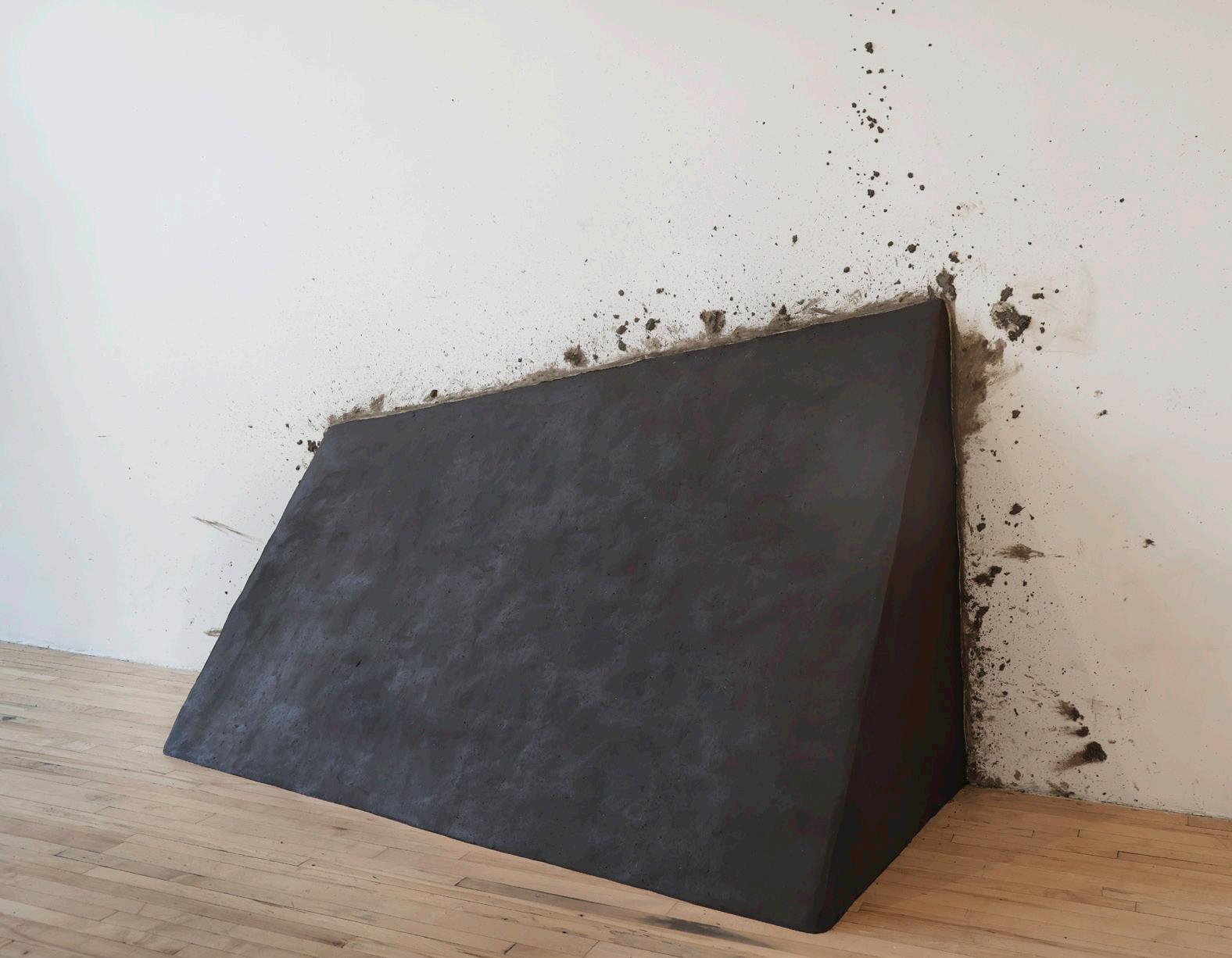
TOP: Daniela Rivera, Hacia Cuando (Tilted Paradigm), 2026. Soil, hay, and wood structure, dimensions variable. Courtesy of the artist. Photo: Amy Chen RIGHT: Daniela Rivera working in her studio, Framingham, MA. Image courtesy the artist
Born in Santiago, Chile, Daniela Rivera received her BFA from Pontificia Universidad Católica de Chile in 1996 and her MFA from the School of the Museum of Fine Arts, Boston, in 2006. She is currently Professor of Studio Art at Wellesley College. She has exhibited widely in Latin American cities including Santiago, Chile, as well as in the United States at the Davis Museum, the Fitchburg Art Museum, and Museum of Fine Arts Boston. She has been awarded residencies at Surf Point, Proyecto’ace in Buenos Aires, Headlands Center for the Arts, and the Skowhegan School of Painting and Sculpture. She is the recipient of notable fellowships and grants including the inaugural Wagner Arts Fellowship, the Rappaport Prize, Now + There, the Massachusetts Cultural Council Award, Vermont Studio Center, the National Association of Latino Arts and Culture, the Berkshire Taconic Community Foundation, FONDART Chile, and the St. Botolph Club Foundation Distinguished Artist Award. Recent exhibitions include: Donde El Cielo Toca La Tierra / Where the Sky Touches
The Earth at Matucana 100 in Santiago, Chile, Praxis of Local Knowledge for the San Francisco Arts Commission, and New Worlds: Women to Watch at the National Museum of Women in the Arts.
Daniela Rivera: Hacia Cuando (To When)
July 11, 2026 – June 2027
Conceived with Denise Markonish, Daniela Rivera: Hacia Cuando (To When) is organized by Evan Garza, Curator, MASS MoCA
Daniela Rivera: Hacia Cuando (To When) has been supported by a grant from Berkshire Taconic Community Foundation’s Artist’s Resource Trust.
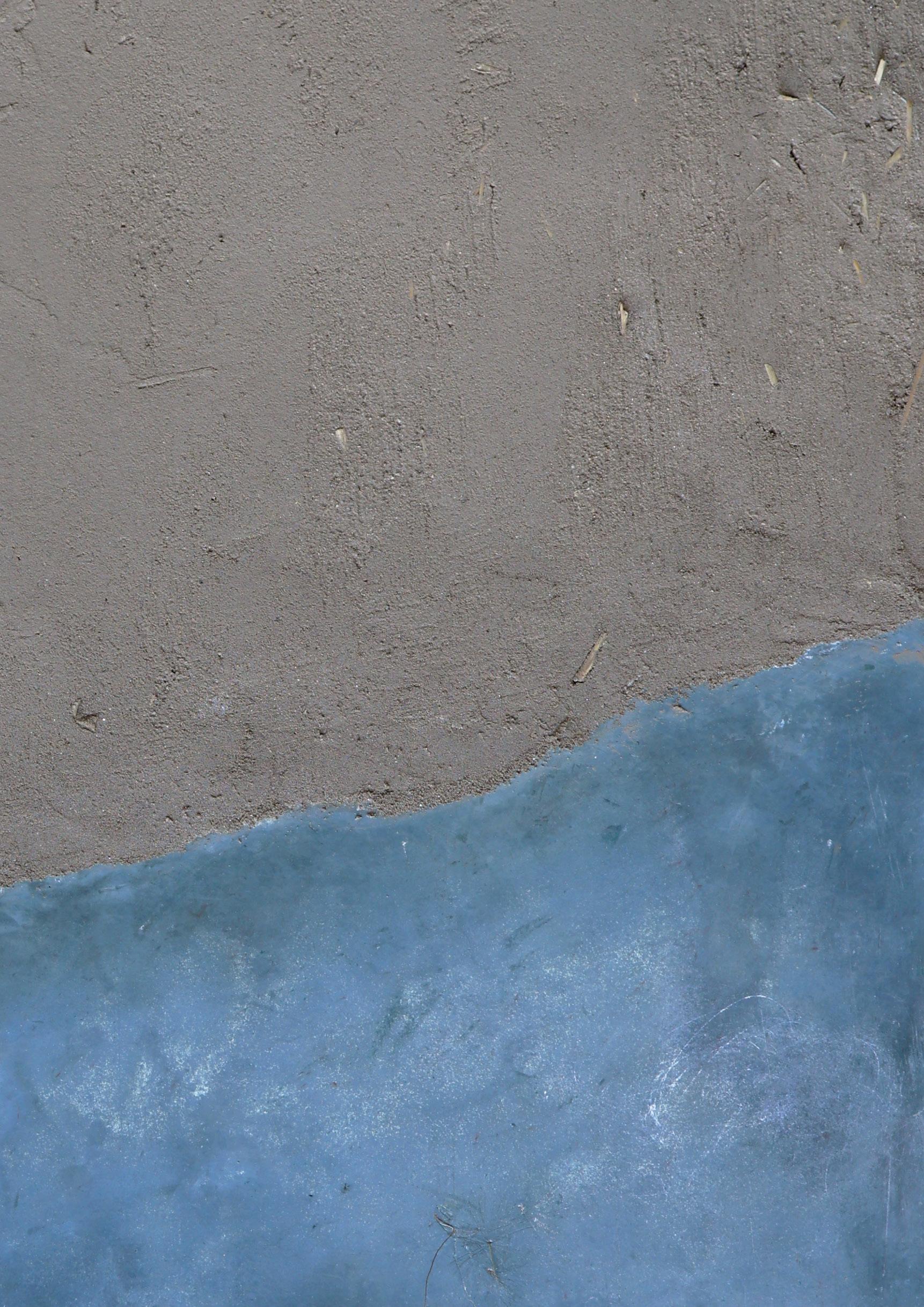
Cover: Process image. Photo: Amy Chen
Associated Programs: Hacia Cuando: An Opera Saturday, October 10, 2026, 1pm & 4pm
In Conversation: Daniela Rivera & Curator Evan Garza Saturday, October 10, 2026, 2pm