AMANDA LOVELEE
Field Guide





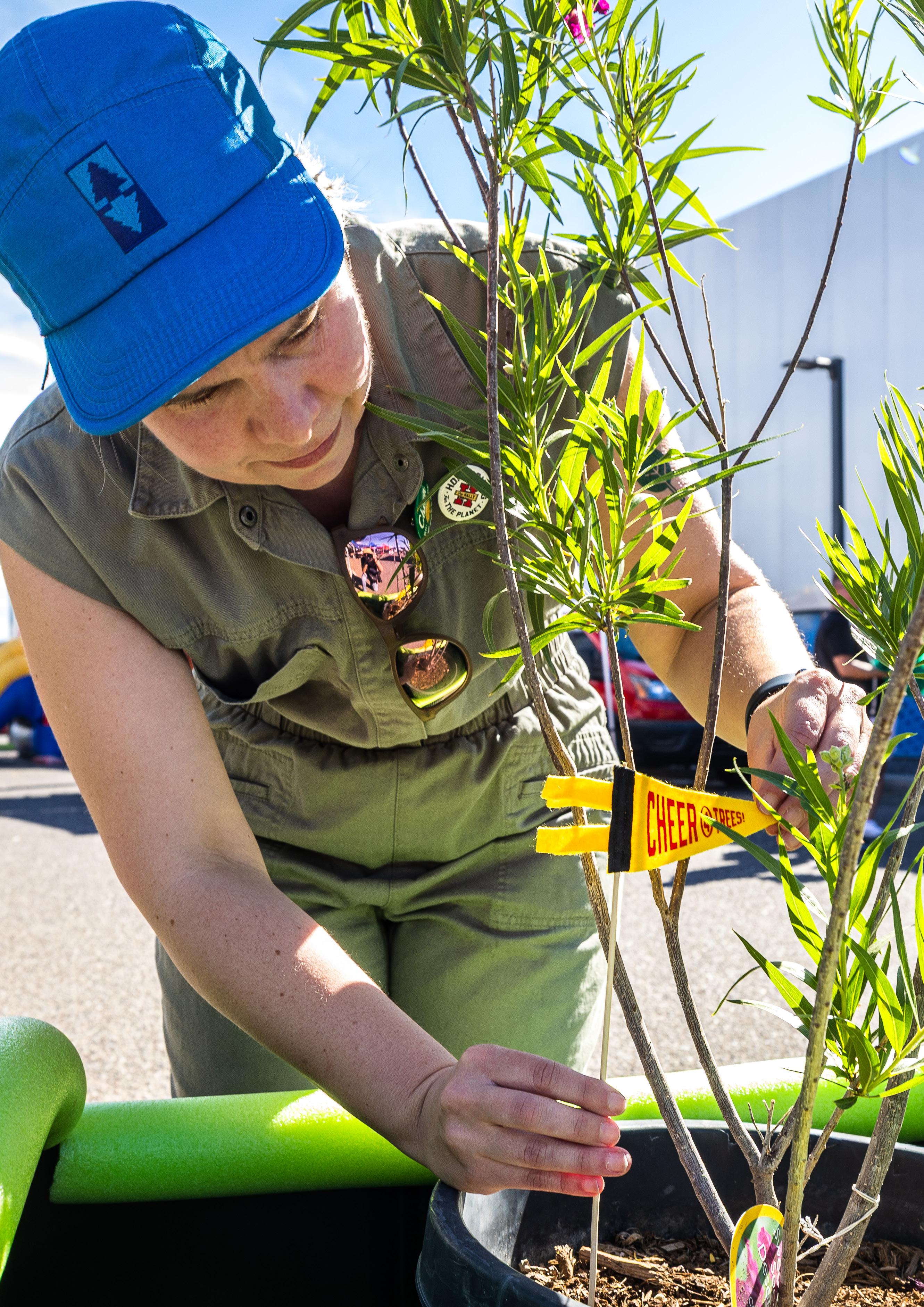
Photo: Charlie Leight

Homecoming is a public art project that transforms the American pep rally into a joyful celebration of environmental resilience. Merging art, science, and community, the project invites us to cheer not for a team, but for the trees and the future of our environment.
Our planet is in a precarious state of climate change: Lovelee’s ongoing climate activism manifests as pep rallies across the country to celebrate environmental heroes, from trees and rivers to snails and shade.
At MASS MoCA, Lovelee transforms space into both a site for pep rallies and a micro field station for the visual study of assisted plant migration, mapping cross-sector work right outside our front doors.
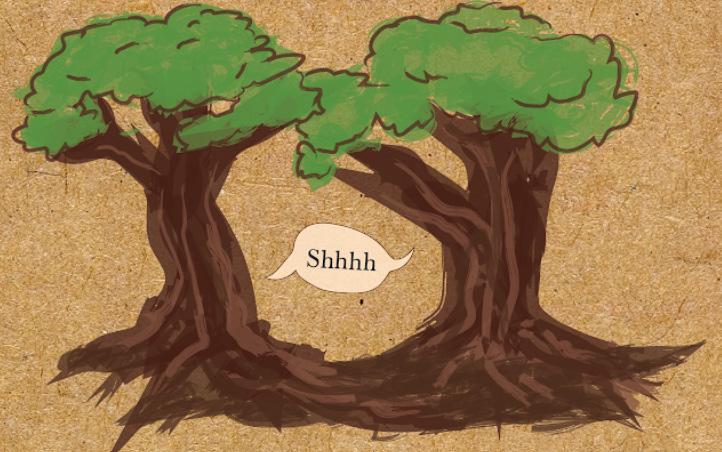
Foresters and scientists are engaging with assisted migration, a practice that helps forests in the northeastern U.S. tolerate warming temperatures. Trees don’t operate in isolation; two originally distanced trees in a new community with each other communicate through airborne chemical signaling about unfamiliar threats and climates.
For Homecoming in North Adams, Lovelee collaborated with MASS MoCA's Public Programs department Senior Manager Gabriel Sacco, Smith College plant scientist Jess Gersony, and the PLACE Lab to invite two red oaks; one red oak is from Mellow Marsh Farm in North Carolina, and another tree is from the Native Plant Trust in Massachusetts. They will be "in residence" and acclimate to shifting climates together.
Lovelee envisions translating our gestural language of sport and joy into a practice of cheering for trees as a way to address climate anxiety, turning our grief for the environment into climate justice activism. We invite you to engage in focusing your energy to uplift the trees through using your voice! Cheer for trees!
Take a moment while you’re reading this to sit near the trees and dive into Lovelee and Gersony’s world of amplifying climate resilience through science and art.
This field guide is a tool to get to know the trees while they are in residence, learn about tree companions and forests nearby, and engage in art and climate. Become a fan of the forest with us!
Human-induced climate change is shifting the climate in the northeastern U.S. Specifically, by 2070, the climate in Massachusetts (MA) could feel like Maryland or South Carolina today (low- or high-CO2 emissions scenario, respectively), see image below.¹ Massachusetts and Connecticut are warming faster than any other area in the U.S. east of the Mississippi, and extreme precipitation events (e.g. flooding one summer and drought the next) are happening more frequently and are expected to get worse in the coming years.²
This work is in collaboration with Smith College plant scientist Jess Gersony and the PLACE Lab.
The Massachusetts Clean Energy and Climate Plan for 2050 currently in place plans to reach net 0 carbon emissions by 2050. This is in line with data from the UN Intergovernmental Panel on Climate Change (IPCC) which suggests that net 0 carbon emissions by 2050 will help keep our climate from reaching a tipping point.
Forests take up 20% to 40% of carbon emissions in the Northeast. However, this carbon uptake (photosynthesis) has a cost. For every molecule of CO2 that comes into a plant, 400 molecules of water are lost. To put that in a different unit: a single tree can move 100 gallons of water from the soil to the atmosphere every day if in ideal conditions. Because trees rely on water in order to photosynthesize, increased frequency of climate-change induced droughts can decrease the forest's ability to uptake carbon. Forest managers and scientists are researching and implementing practices to make sure our forests are as resilient as possible against this changing climate!
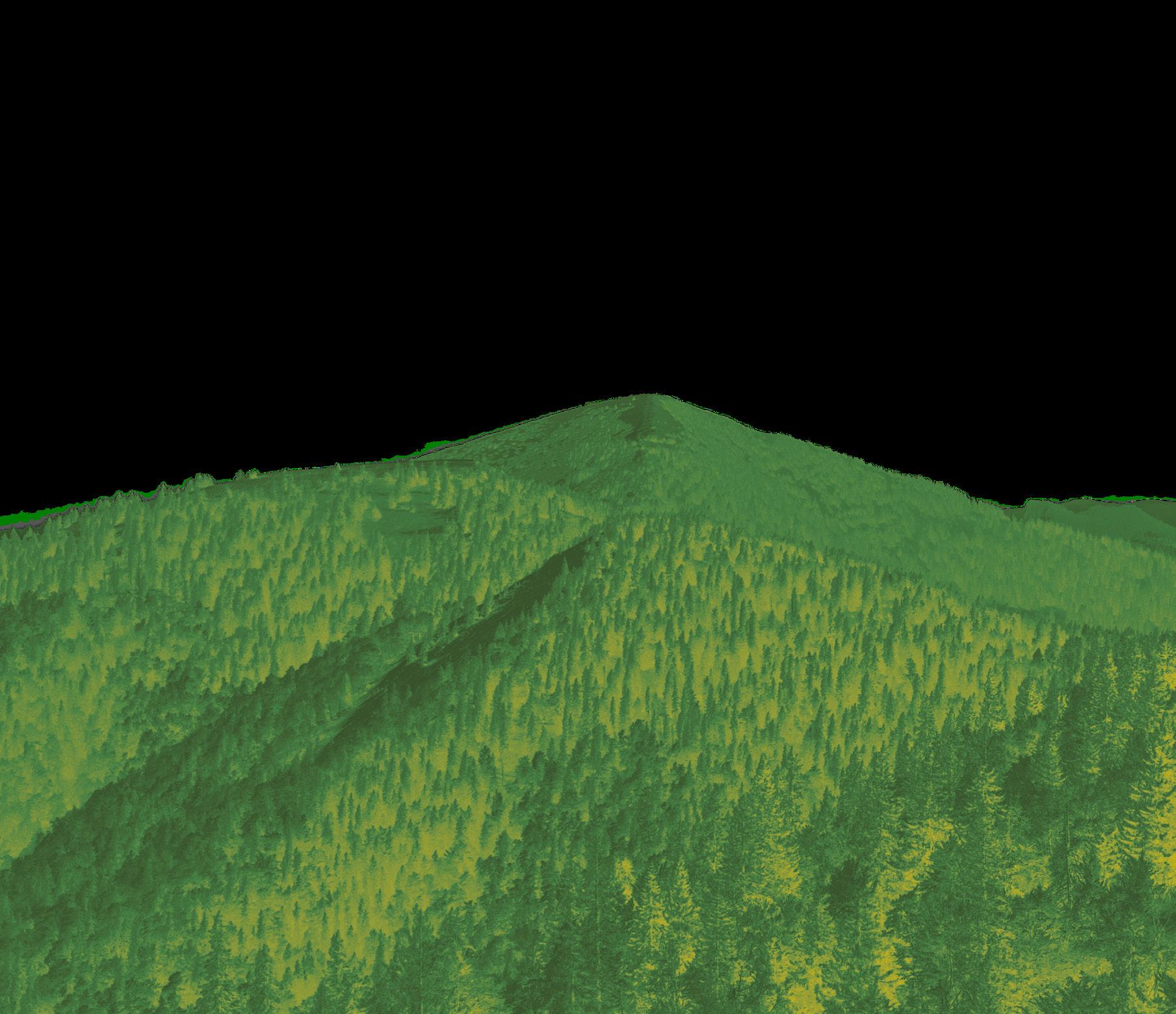
Indigenous botanist Dr. Robin Wall Kimmerer has described the process as "helping forests walk.” Because plants cannot pick up their things and move to more ideal climates, various partners of the forest have started thinking creatively about how best to serve our forests. The U.S. Forest Service defines assisted migration as “the movement of populations or species by humans from one territory to another in response to climate change,” the idea being that because temperatures in the Northeast will feel more like the southern states in the coming years, Northeastern forests could benefit from having some trees that are more comfortable with those conditions. This practice is currently being researched and implemented across the country to support climate-smart forestry.
Lovelee is in love with the idea of helping people to slow down, watch nature, to listen, to observe, and to get to know the spectacles of the natural world. If we can spend a Friday night watching football and cheering for our home team, why can't we spend an hour cheering for our local trees?
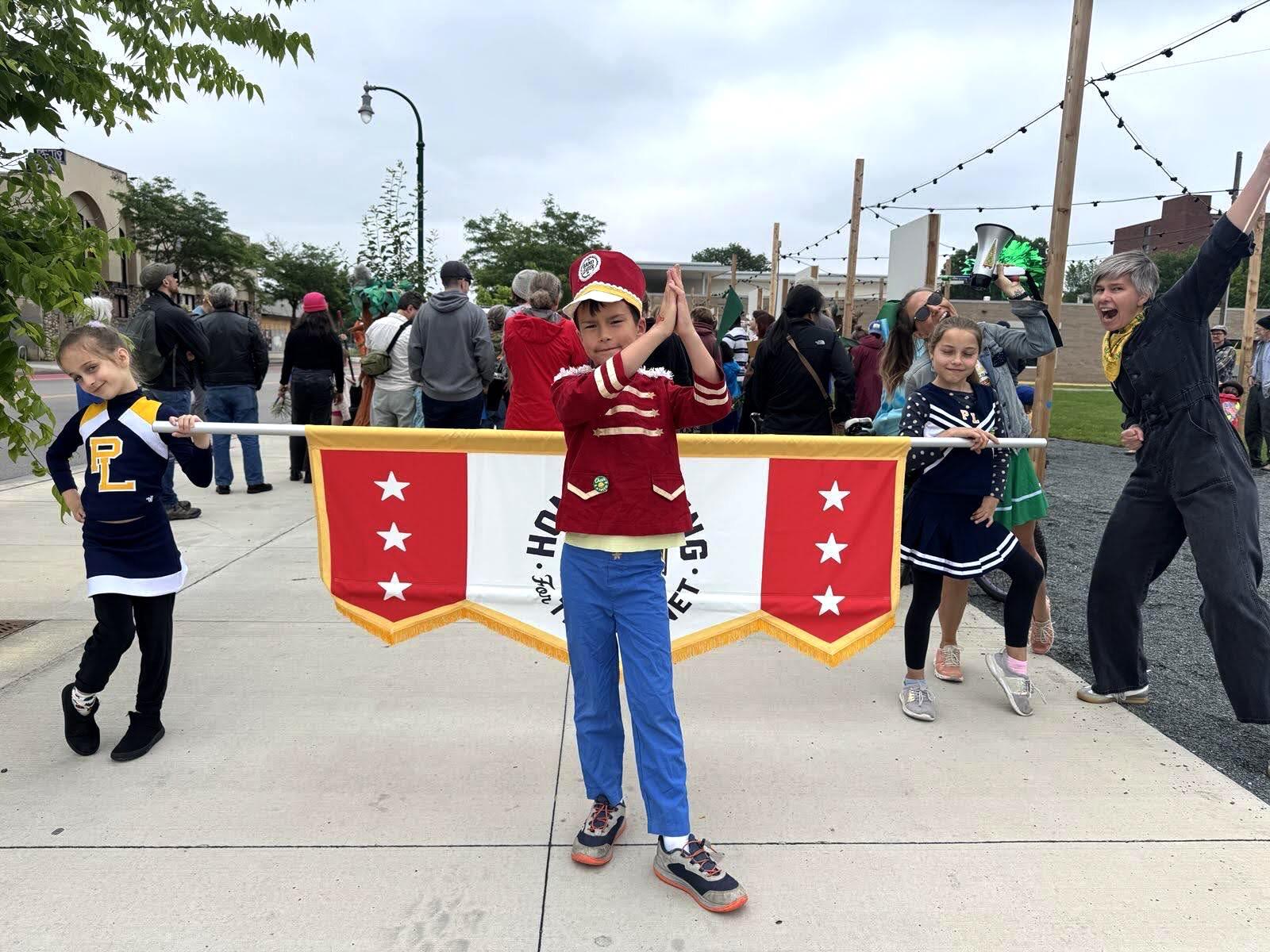
How do we publicly display our wins in Environmental Justice? How can we share our cheer in visual art? Using the aesthetic of banners in gymnasiums, the pennants and banners serve as a reminder to keep cheering and not to give up on our climate actions. They are a way to display our pride in our forests and a way to join the team of climate change heroes.
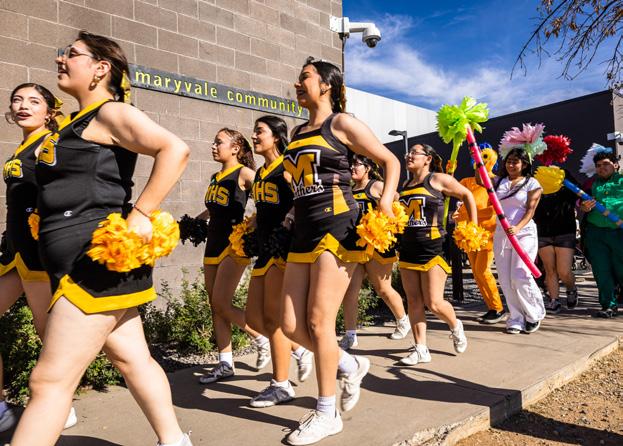

Lovelee uses the model of a high school pep rally as a familiar and bipartisan way to bring pride and cheering to a place and enter climate change topics with joy. She has held pep rallies for a tree, an endangered snail, a river, and a lake. Each pep rally is unique, and the framework is owned by the community partners.
Lovelee invites community partner tabling to share ways to engage with local environmental justice organizations, pep speeches from scientists, park rangers, students, policy-makers and stakeholders, and artists, marching bands, local high school cheerleaders, lots of cheering, and community partners, turning climate change into a playful party where people can connect to each other, place, and action. As climate activist and scientist Dr. Ayana Elizabeth Johnson says “We know the problems, we know the solutions, we just need to throw better parties.” So if we can cheer for a football team, let’s also Cheer for trees!
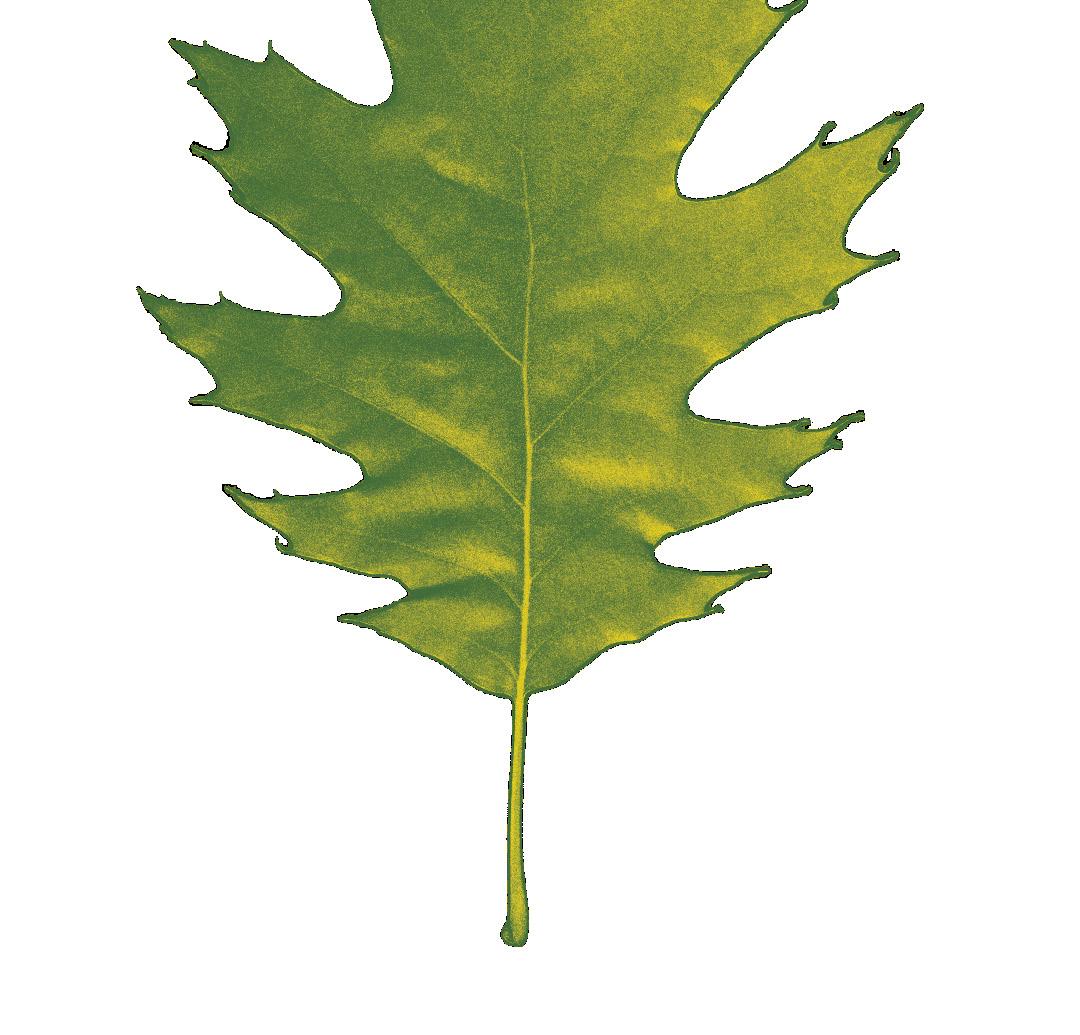
(MASS MoCA’s trees in residence) Currently red oaks have a range between southern Georgia and southern Canada. They are deciduous, meaning they shed their leaves in the winter. They have dark green, shiny leaves with ~9 lobes and can grow to be over 100 feet tall and canopy dominant. Red oaks are Jess Gersony and the PLACE Lab’s favorite research species because they are super resilient, and they have a large influence on the northeastern U.S. ecosystem.
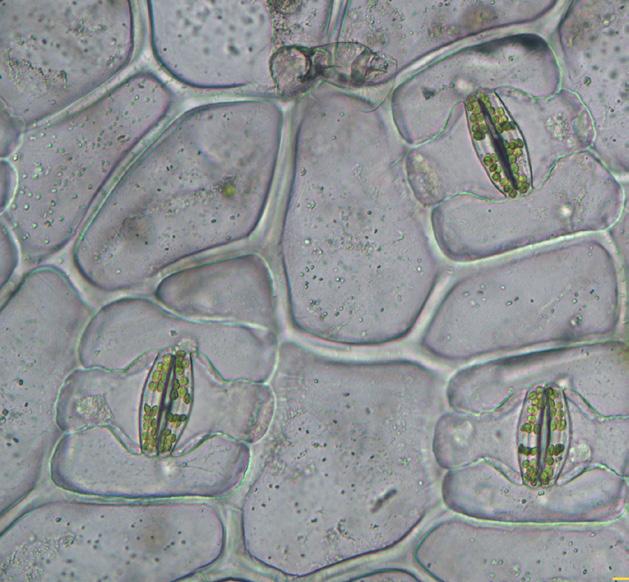

Stomata are amazing! They are microscopic pores on the surface of leaves that typically open during the day and close at night. This behavior allows plants to absorb CO2 when the sun is out and they can photosynthesize. They are like little mouths! They are smaller than the width of a human hair, and there can be over 100,000 stomata in a square inch of leaf!
Photo: Dr. Anju Manandhar
VOCs allow trees to talk to one another! They are essentially airborne chemicals (hormones) that allow plants to communicate. For instance, one plant can send out VOCs to inform another plant of incoming threats. And when the plant receives these chemicals through their leaves, they can change the way they function to become more resilient to that incoming stress! VOCs enable community dialogue and support among plants.
Print by Melanie Mowinski’s MCLA printmaking students
Are you interested in your primary action of climate care being around wealth redistribution?
Would you like your actions to focus on education?
Consider donating to local, environmental justice organizations e.g. in Western MA: No Loose Braids, Mumbet’s Freedom Farm, Eagle Eye Institute
Are you of voting age?
Center climate science and solutions in curricula, as recommended by Massachusetts Climate Chief Melissa Hoffer: mass.gov/info-details/recommendations-of-the-climate-chief
Vote for politicians who are supportive of the Green New Deal!
Encourage those around you to…
Would you like your actions to focus on politics?
Contact your local, state and federal rep encouraging them to support Green New Deal efforts. Join your city/town's Conservation Commission, run for office, or become an environmental lawyer
Would you like your actions to engage with the arts?
Hold your own pep rally for nature! Host a public climate-art exhibit!
Would you like your actions to engage with science and forestry?
Participate in citizen science efforts for air quality monitoring and biodiversity and phenology tracking (search “Participatory Science at the US EPA”, “Nature’s Notebook through the National Phenology Network,” and more at usa.gov/citizenscience). Consider studying global change ecology and joining the scientists as they search for climate solutions!
Climate change is big. It can be hard to wrap your arms around all the problems and all the solutions. At times it can feel overwhelming to know where to begin, if your actions even matter. To make it fun, we invite you to use Lovelee’s template and write your own climate cheer. Engage your own joy and perform it for our trees at MASS MoCA, in a park, forest, or even your backyard. Let's cheer our dreams for the planet into action. Your voice matters!
CLIMATE CHEER:
We cheer for trees— They clean our air! We cheer for trees— We show we care! We cheer for nature— We are nature! Same team!
Same dream! Same future! We cheer for tomorrow, We cheer for today— We stand for our planet All the way!
Find a friend or make a friend. We can’t do this work alone. Fill in the blanks together! Find your voice and cheer with passion, hope, and joy! When I say tree, you say ________! Tree! _______! Tree! _______! One last time like you mean it! TREE!!!! _______!!!
Words of Encouragement for a Plant is a project by artist Amanda Lovelee. It is an invitation to write plants some words of encouragement, give them some love, and cheer them on.
Instructions:
Sit down with a plant. It could be your favorite tree at a park, a weed in your yard, or a plant at your house.
Spend some time together.
Cut out the pennant from this field guide.
Write your plant friend some words of encouragement or a cheer.
Tape the pennant to a stick and leave the message with your buddy.
Head up to Kidspace to complete your project!
We’ve known about human-induced climate change since before 1940! Scientists alone cannot convince policy makers and the public to move beyond status quo climate policies. The field of climate change science and policy needs artists. Artists are translators, creative problem solvers, future dreamers, and leaders. The crosssector world of art and science has existed at field stations, in labs and on research projects. This work is not new, but this moment is urzgent. Art can take hard-to- understand concepts and make them accessible and participatory. Homecoming would not be the project that it is without the deep collaboration between an artist and a scientist shifting and growing each other's practice. We need more cross-sector collaboration. We hope Homecoming is an invitation and a rally call for artists, scientists, and institutions to all think about their role and super powers in climate change actions.
With this in mind, thank you to all the partners across disciplines who worked on this project with us.
Thank you to Amanda Lovelee and Jess Gersony for allowing MASS MoCA to steward this project on our campus. Thanks to the PLACE Lab at Smith College for the research and development of this project and making the connection from science to art and back again. Thanks also to Melanie Mowinski and her students at MCLA for the Homecoming zine design.
We are honored to work with Lovelee to share with her, and continue, our commitment to climate justice. This place was formerly the site of Natalie Jeremijenko’s Tree Logic. The changing landscape, new knowledge, and refreshed context of climate justice are motives for us to continue to call out our relationship with our more than human friends in the new world we live in.
Thank you to MASS MoCA’s Buildings & Grounds department, and Director of Facilities, Andy Schlatter, for coordinating the architectural build that turned this historic space into Homecoming
Lovelee worked with our Buildings and Grounds team at MASS MoCA to source locally sawed pine from renewable sources. We partially fabricated the bleachers with pinewood from past exhibitions, including EJ Hill’s Brake Run Helix roller coaster decks. The wood is untreated, although it will patina over time; it is also a nonpollutant.
MASS MoCA is grateful to colleagues across our campus including MASS MoCA’s Public Programs, who produced this exhibition and program, especially Gabriel Sacco.
Additionally, thanks to MASS MoCA's Visual Arts department, especially the Art Fabrication team and Director of Exhibitions Spencer Byrne-Seres; and the Communications & Content department, especially Jen Falk, Amy Chen, and Emma Leone.
Thank you to This is Folly for the original Homecoming design work, Hudson and Walden for always being willing to lead a parade and carry the supplies, Carol Lovelee for being my number one cheerleader, and my high school art teacher Eric Hotaling for convincing my mom I was good enough for art school. Thank you to Gabriel Sacco for saying yes over and over again while adding the MASS MoCA magic to Homecoming!
Finally, our biggest THANK YOU goes to YOU: Our audiences, participants, and interlocutors of Homecoming and these pep rallies. You are leading the shift we need, from thought into action by using your voices, to support worldwide environmental justice goals.
Amanda Lovelee (she/her) is a civic and environmentally focused artist whose work sits at the intersection of science, connection, and system change. Her public practice uses empathy and play as tools to shift conversations about shared futures. She works with governments and in cross-sector collaborations, creating bright, joyful, engaging, and complex large-scale public art projects. In past projects, she has partnered with arborists, planners, biologists, water resource managers, and scientists.
Lovelee is currently a U.S. Cultural Policy Fellow at Stanford University, working at the intersection of art, culture, and climate change. She is the co-founder of CAIR Lab, a firm that builds and supports the field of artists in residence in government.
Lovelee holds an MFA in Visual Studies from the Minneapolis College of Art and Design and a BFA in Photography from the University of Hartford. Her work has been supported by ArtPlace America, the Jerome Foundation, the Knight Foundation, the McKnight Foundation, Minnesota State Arts Board, Salzburg Global Seminar, and the National Endowment for the Arts. She was a 2022/23 McKnight Visual Artist Fellow and 2022 Design for Civic Change Fellow at the Center for Urban Pedagogy.

Jess Gersony (she/her) is a plant physiologist, artist, and educator. She is passionate about exploring human-planet interactions through both scientific and artistic inquiry, and strives to do this work through an intersectional, social justice lens. The ultimate goals of her work are to increase and deepen our awareness of (and relationship to) the natural world, to further diversity, equity, and inclusion in STEM spaces, and to improve our understanding of how plants are responding to climate change.
Gersony’s scientific research about plants and climate change has been published in New Phytologist and Plant Physiology, and her poetry has been published in the Sycamore Review,
and Bear Review, among others. She was also a member of professional tap dance companies in NYC (CPD+) and Boston (Subject:Matter).
Gersony received her PhD from Harvard University in Plant Physiology, where she also studied poetry under Josh Bell and Jorie Graham. She is currently an Assistant Professor of Biological Sciences at Smith College where she runs the PLACE (PLant physiology, Art, and Community Engagement) lab. The work of the PLACE Lab has been funded by multiple grants from the National Science Foundation and the USDA.
Amanda Lovelee: Homecoming
Support for Homecoming is provided by the Endeavor Foundation.
Core support for MASS MoCA’s Department of Public Programs is provided by the WLS Spencer Foundation.

Major support is generously provided by the national Leadership in Art Museums (LAM) initiative funded by the Alice L. Walton Foundation, the Mellon Foundation, and Pilot House Philanthropy; the Feigenbaum Foundation; and the Ruth E. Proud Charitable Trust.
Support is also provided by Anonymous (2); the Avangrid Foundation, in partnership with Berkshire Gas Company; the Robert Lehman Foundation; Berkshire Bank; Berkshire Taconic Community Foundation; and MountainOne.
Major organizational support for MASS MoCA has been provided by grants from the Barr Foundation, Helen Frankenthaler Foundation, The Leonard & Ruth Horwich Family Foundation, Mellon Foundation, and Robert Motherwell and Renate Ponsold (in memoriam).