Ifirst watched The Devil Wears Prada when I was nine, and it was a game changer. I often trace my desire to be in the editorial space back to that movie and it’s bustling and glamourous environment.
Sometimes, you forget why you went for the career you dreamed of as a kid. Your childhood fantasies tend to dwindle and fade as you grow up and enter the workforce you once dreamed about. The glamour is sucked out, you put your head down, and reality sets in.
I don’t know if it was the glass of champagne I was sipping, but after watching The Devil Wears Prada 2, that childhood awe for my job fell back into my lap. The glamour, the glitz and the dreams suddenly reignited just in time for us to go to print for our ‘Fashion’ issue.
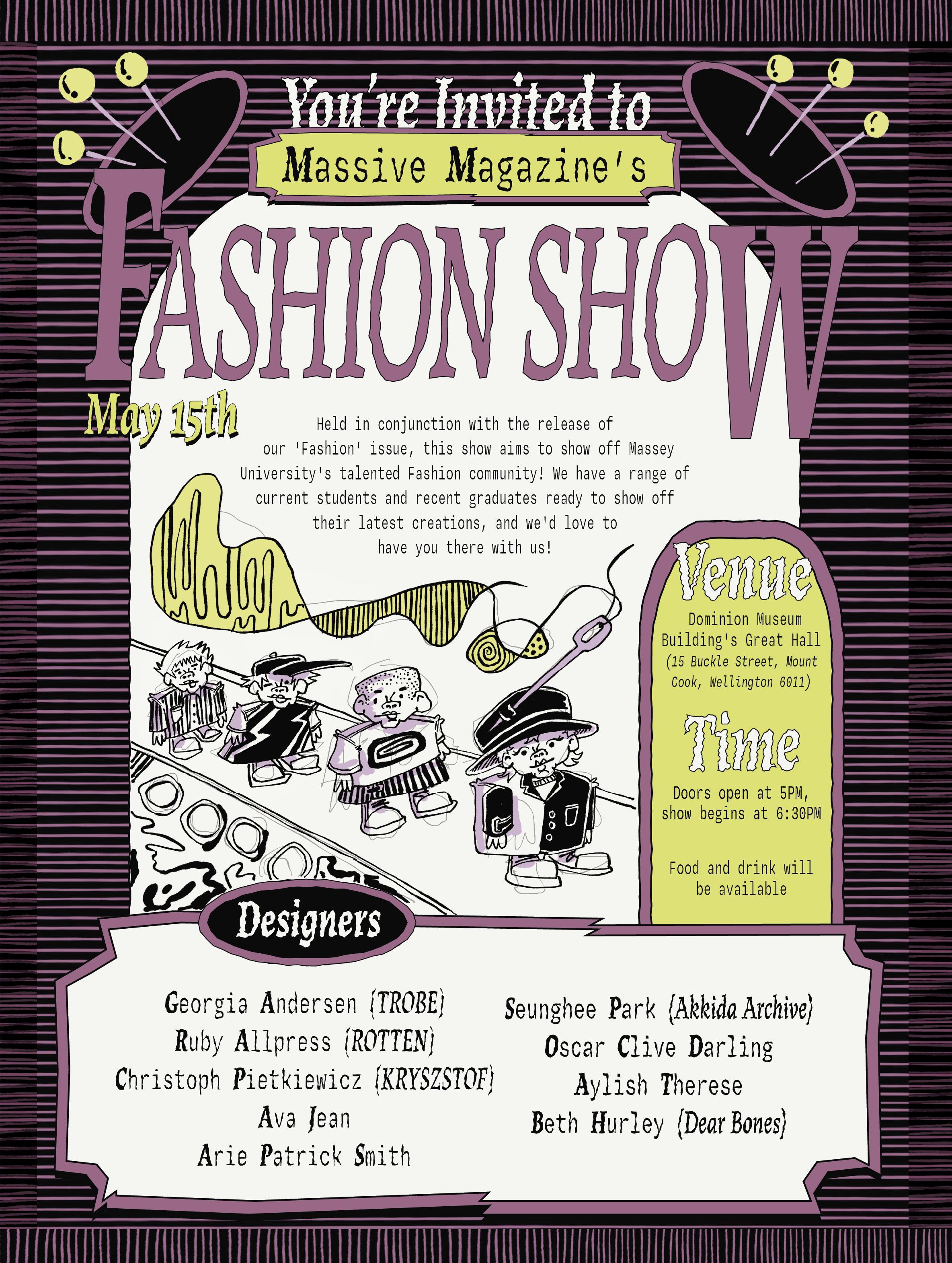
I’d like to point out, we unknowingly planned for this issue to come out around the same time as the movie. But man, was it great timing. Especially because we’re also hosting Massive’s first ever fashion show this Friday.
As a nine-year-old, I saw myself as Andy Sachs. But after two months of sleepless nights, chasing designers, and jumping into the world of fashion, I’ve definitely become Miranda Priestly.
While she is the so-called “devil” of the movies, Miranda was the first female character I saw that was unapologetically ambitious, competent, iconic and powerful. Yes, she has her flaws... a lot of them. But don’t we all?
Somewhere along the way, women in leadership became synonymous with being too loud, too demanding, too cold, too ambitious. But the truth is, the people who create incredible things rarely do so by being passive. Industries like fashion, publishing and media thrive on vision, precision and people willing to chase excellence relentlessly.
Behind every word of this issue, every garment on the runway this Friday, and every photoshoot or spread is someone obsessing over the details. Someone staying up too late, sending one more email, making one more edit, fixing one more problem.
Glamour has never existed without hard work.
Ambition, just like fashion and art, is beautiful. Particularly on a woman who wears it.
KAWEPŪRONGO
4 5 6 7 9 10 11 12 13 14 15 16 17
Massive is largely funded by Te Tira Ahu Pae and the student services levy, however, remains editorially independent.
Disclaimer: The views presented within this publication do not necessarily represent the views of the editor.
NZ Media Council: Those with a complaint towards the publication should first complain in writing to the editor editor@massivemagazine.org.nz
If unsatisfied with the response, complaints should be made to the NZ Media Council info@mediacouncil.org.nz
Wikipedia is considered to be the World’s most significant tool for reference material. The Wiki links show up on the 1st page of Google 97% of the time. With a Page on one of the most revered reference tools, you are sure to get yourself or your business noticed. So if you’re thinking of getting a Wikipedia Page created, it’s the best time of the year.
Kia ora Massive readers,
I’m Ayla, one of your two Distance Student Reps for 2026, writing from the sandy east coast of Northland. I was first appointed last year and have just been re-elected, which has given me the chance to be part of some pretty cool projects.
One of those is the Student Services Fee (SSF) Advisory Board, which I joined in 2023. The SSF is included in your fees and helps fund a range of services across Massey; from wellbeing and advocacy, to Massive Mag and Radio Control.
Right now, the Annual SSF Survey is live. This survey is the main way you can influence how this fee supports your student experience. The feedback we collect helps guide funding decisions, identify where students need more support, and improve existing services.
It takes about 10 minutes, the questions are easy as, and you can go in the draw to win some solid prizes.
If you’re a distance student and have questions, ideas, or just want to yap, flick me an email and make sure you’re part of our Facebook group Massey@Distance.
Have a good week,
Ayla Brook (ayla@tetiraahupae.ac.nz)
GUEST EDITOR CALL OUT
WHAT DOES LOVE LOOK LIKE IN 2026?
SHOW US AND GET CASH
If you’re into creating content, a photographer with a fresh eye, a quick-witted writer, or all of these, this is your chance to share how love looks, feels, and works in your world. For every piece of approved content you create and we use, you could get up to $1500 .
Scan the QR code to see the briefs and get all the deets.
MONDAY MAY 11TH • 2026
Students Complain About Lack of Comms After Chemical Substance was Detonated on Manawatū Campus
Words by Jessie Davidson • SHE/HER
Massey University students from the Manawatū campus claim they were informed too late about the detonation of a chemical substance on campus.
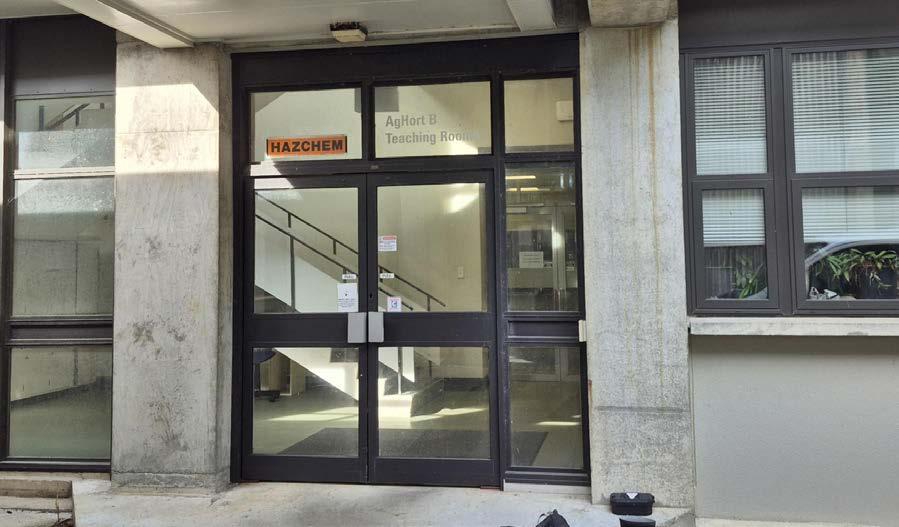
On Friday the 30th of May, students were informed via email that emergency services were on campus to remove chemicals from a chemical storage room in the AgHort B building. But due to the nature of the items, a series of controlled detonations were to take place on campus that afternoon.
Speaking to Massive, students said that this email was sent too late.
“They only sent emails explaining like ten minutes before it was over,” one student claimed.
Another student said they were turned away from entering campus as the chemicals were being detonated, but they didn’t know what was happening in the moment.
“Holy shit, actually so nuts. I thought it was a collision or some shit, aye,” she said.
Some students speculated it was a homemade bomb, while others concluded it was just old chemicals.
“They were cleaning out a cupboard with old chemicals in it and found something that was explosive so people came to explode it in the field behind the student car park I believe,” a student said.
AgHort B Building Photo Credit: Caitlin Payne
In response to Massive, a Massey University spokesperson confirmed that the chemicals found in the hazardous materials storage room had shown signs of degradation.
Emergency services were called immediately who concluded “the safest option was to move them to an isolated location on campus and carry out controlled detonations”.
These detonations were conducted by New Zealand Police and specialist Defence Force personnel. As part of the response, several buildings were evacuated and roads were closed.
Massey acknowledged that communication to students had “limited notice”.
“Because this was a fast-moving and highly controlled Police operation, the university had limited advance notice of the timing of the detonations and necessary evacuations,” they said.
“Information was relayed as soon as possible to those within the affected area ... public safety considerations meant wider
AgHort B Building Photo Credit: Sean Chapman
communications had to follow the direction and timing set by Police.”
A second email was sent to students once the operation concluded, and buildings and roads were reopened.
New Student Reps Trained and Ready
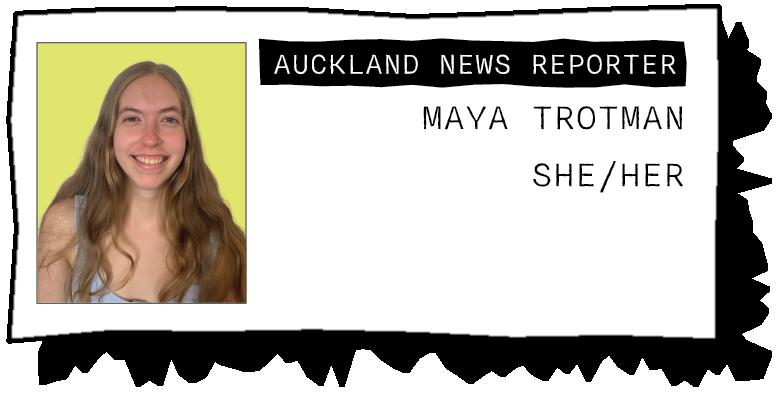
Words by Maya Trotman • SHE/HER
Two weeks ago, Te Tira Ahu Pae and Ngā Haumi ki te Ao’s newly elected student representatives came together for a week-long training on Massey University’s Manawatū campus.
Across the week, 17 lessons were held to prepare the new student reps for Te Tira Ahu Pae and Ngā Haumi ki te Ao for the year ahead.
Staff from Te Tira Ahu Pae, Ngā Haumi ki te Ao, Massey University and external organisations came in to facilitate these lessons. One of these lessons was dedicated to Te Tiriti o Waitangi, taught by associate professor Te Rina Warren.
General manager of Ngā Haumi ki te Ao, Ana Tupangaia, said that understanding the essence and intent of why Te Tiriti o Waitangi was developed is key. This is so it’s mana can be integrated it anywhere in life, such as the student rep space.
Tupangaia said she hoped the “jam packed” week of lessons armed the reps with a baseline understanding to better inform their mahi.
Observing the first rep training where Ngā Haumi ki te Ao and Te Tira Ahu Pae operated in partnership was a highlight for Tupangaia.
“It was a great display of true partnership and a positive starting point to how both associations operate in partnership for the rest of 2026 and beyond,” she said.
Te Tira Ahu Pae student president, Takunda Mabonga, agreed that working alongside Ngā Haumi ki te Ao was a valuable experience. He said the training enabled the organisations to grow closer.
Student rep manager, Sean Chapman, said that it was “awesome” to see student reps sharing ideas and planning their year.
“17 lessons over three days was a huge ask! But our reps did it. Terrible karaoke singing in the Wharekai and all!”
Chapman said that each lesson was lived streamed and recorded for those who could only attend online. This will be an ongoing part of the training throughout the year.
“Every new journey has to start somewhere, and our Reps are off the starting mark for the year. I just hope I can keep up with them.”
Student Service Fee Survey –A Chance for Students to have Their Voices Heard
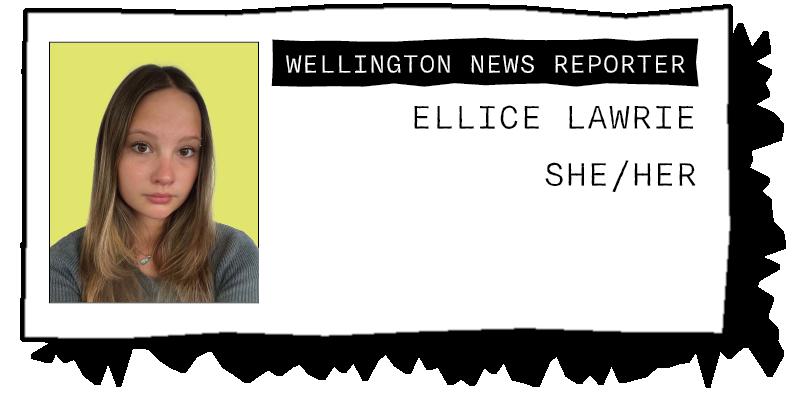
Words by Ellice Lawrie • SHE/HER
Massey University’s Student Service Fee (SSF) survey opened on the 28th of April, giving students a chance to voice their opinions on where they want their money to go.
All universities charge their students an SSF, and puts the money towards funding services like health, counselling, clubs, and events.
Distance student rep, Ayla Brook, said that the SSF survey is an important way for students to voice their opinions in a way that will make an impact.
“This annual survey is the main way students can influence how this fee supports their university experience,” Brook said.
“The survey asks students to rank how important the various SSF funded services are, if they agree with the proposed 2027 fee, and how they would divvy up the fund between all service groups.”
The survey’s data will influence decisions that directly impact students.
Brook said this included “funding decisions, identifies where students may need more support, and improving current services”.
For those running student services, the SSF data can also help them improve their services.
For current students, particularly those who still have studying ahead of them, Brooks said that the SSF’s potential impact is important.
“This annual survey is the main way students can influence how this fee supports their university experience,” she said.
The survey takes approximately ten minutes to complete and can be found on QR codes around campus.
Pukeahu Students Launch TV Show
Words by Jessie Davidson • SHE/HER
KickstART, an arts review show made entirely by a class of Toi Rauwhārangi College of Creative Arts students, has successfully gone to air.
Segments in the first episode of KickstART included interviews with Wellington author Claire Mabey and emerging musician Lauren Docherty, also known as Clova.
A story on the re-opened Te Matapihi Ki Te Ao Nui Wellington Central Library also featured.
For the next ten weeks, the show’s 30-minute episodes will run for ten weeks on Face TV (Channel 83), YouTube and Facebook Live every Friday at 10:30pm.
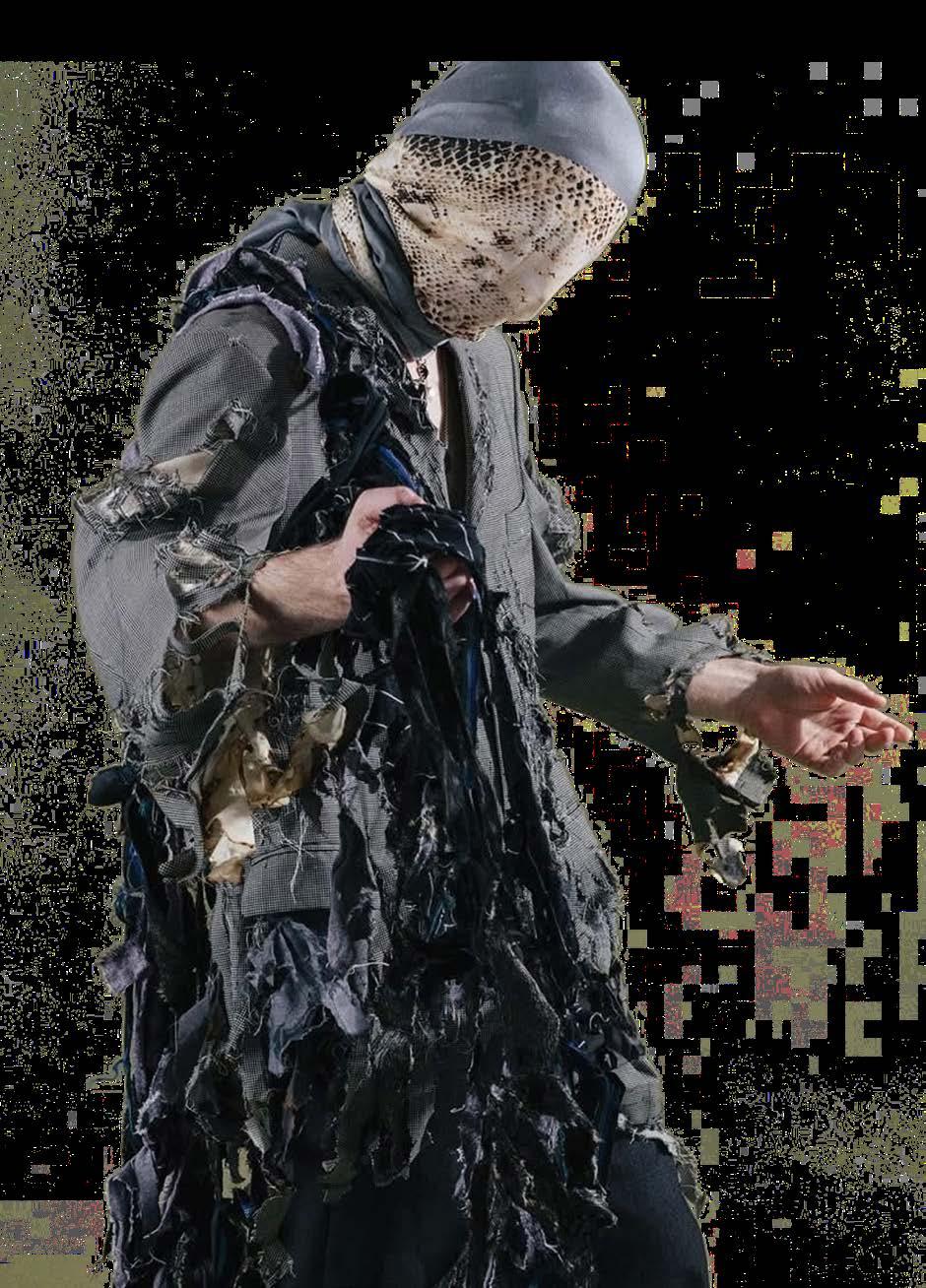
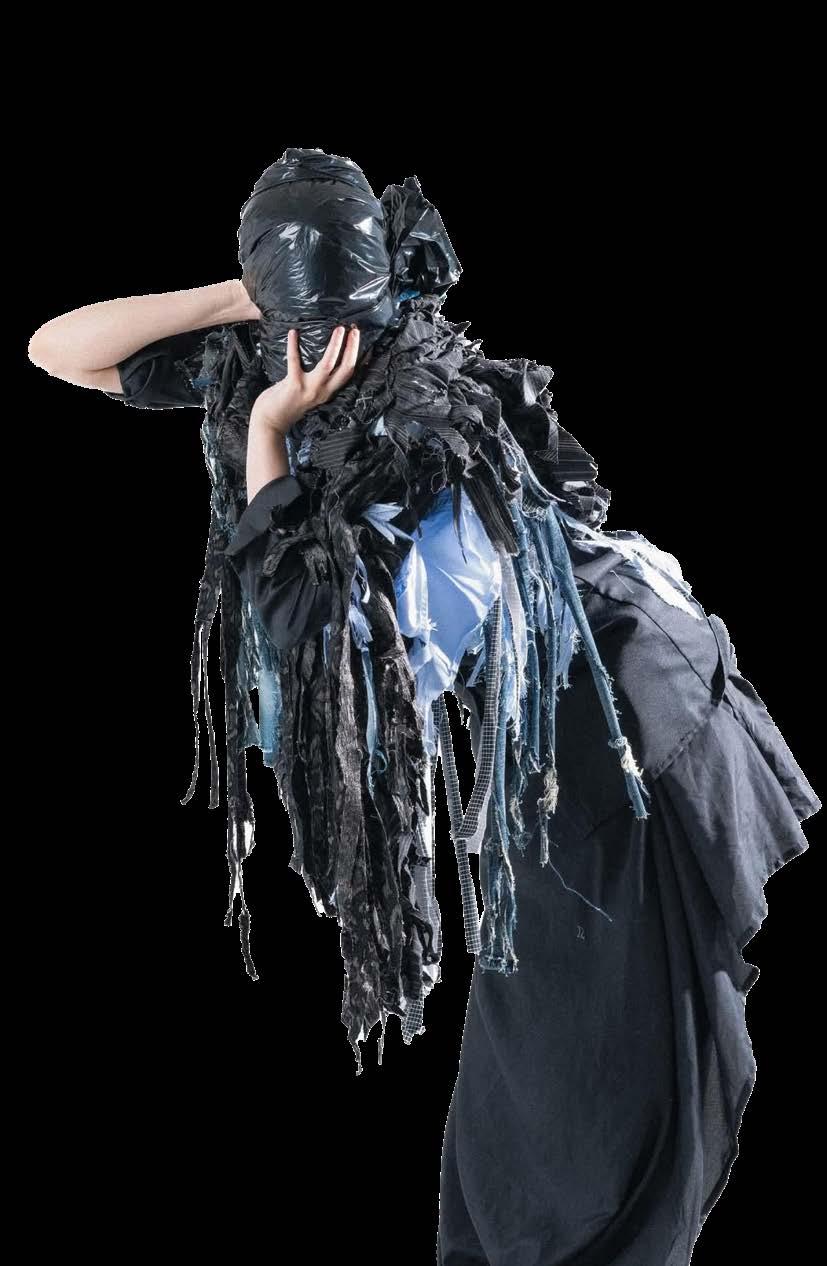
Burnt, shredded, cut, and resewn, Arie Patrick-Smith’s clothing does not shy away from showing the scars of its creation. The garments show the wounds of unheard and unknown stories—seeking beauty within the destruction.
“Destruction here is being repurposed, reutilized into something that I personally find quite beautiful,” he says.
During Arie’s first year studying Fine Arts, he switched to Massey’s Fashion course. However, he found that Fine Arts allowed him to have more creative freedom and he switched back after three weeks.
“I just found it [Fashion] quite confirmative and I felt like I couldn’t express myself properly ... If anything, I feel like I have more creative freedom as a fashion designer in fine arts.”\
Within his clothing and art, the Fine Arts student explores internal struggles, beauty being found in unconventional places, and the natural cycles of life.
The clothes he creates are not just fashion. They tell a story.
In one of his shredded garments, he explores the concept that broken foundations lead to broken people. He pushes the message that we must acknowledge and address our internal struggles. If we do not, these will seep into our physical existence.
Arie’s designs serve as a warning for what will happen if we do not care for ourselves.
He says, “I wanted to show how when you fail to address your own internal struggles and worlds, then that will seep out into the physical reality.”
All the materials are second hand, sourced from op-shops and his own home. Through Arie’s creations, these materials are given another chance—reflecting the cycle of life, death and rebirth.
“My own Fine Arts practice is centred around the cycles of life, death, and rebirth and the spiritual connection that we as humans have with the land.”
The clothes he creates are not ones you typically see being worn along the street, but this is purposeful. He’s not trying to create clothing that appeals to the masses. In fact, creating clothes that disturb people drives him.
“My creative practice ... is making things that the general collective of people might find grotesque or ugly or unconventional, but if anything, that’s what drives me. Just finding beauty and beauty in the little things, beauty in the unseen, the overlooked.”
His clothing embodies the concept of disturbing the comforted and comforting the disturbed.
Arie’s garments show how fashion is so much more than just the clothes on our back. Fashion
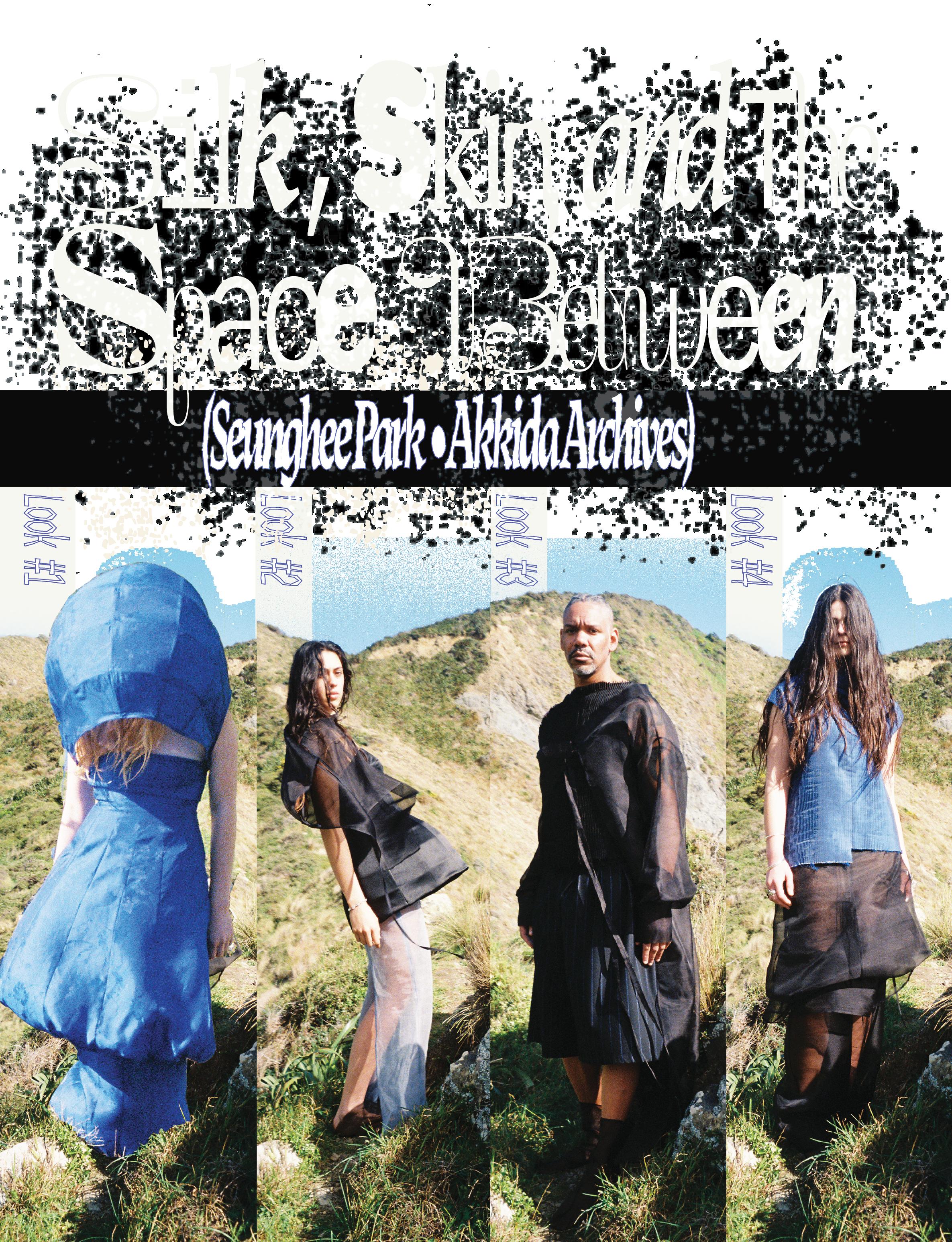
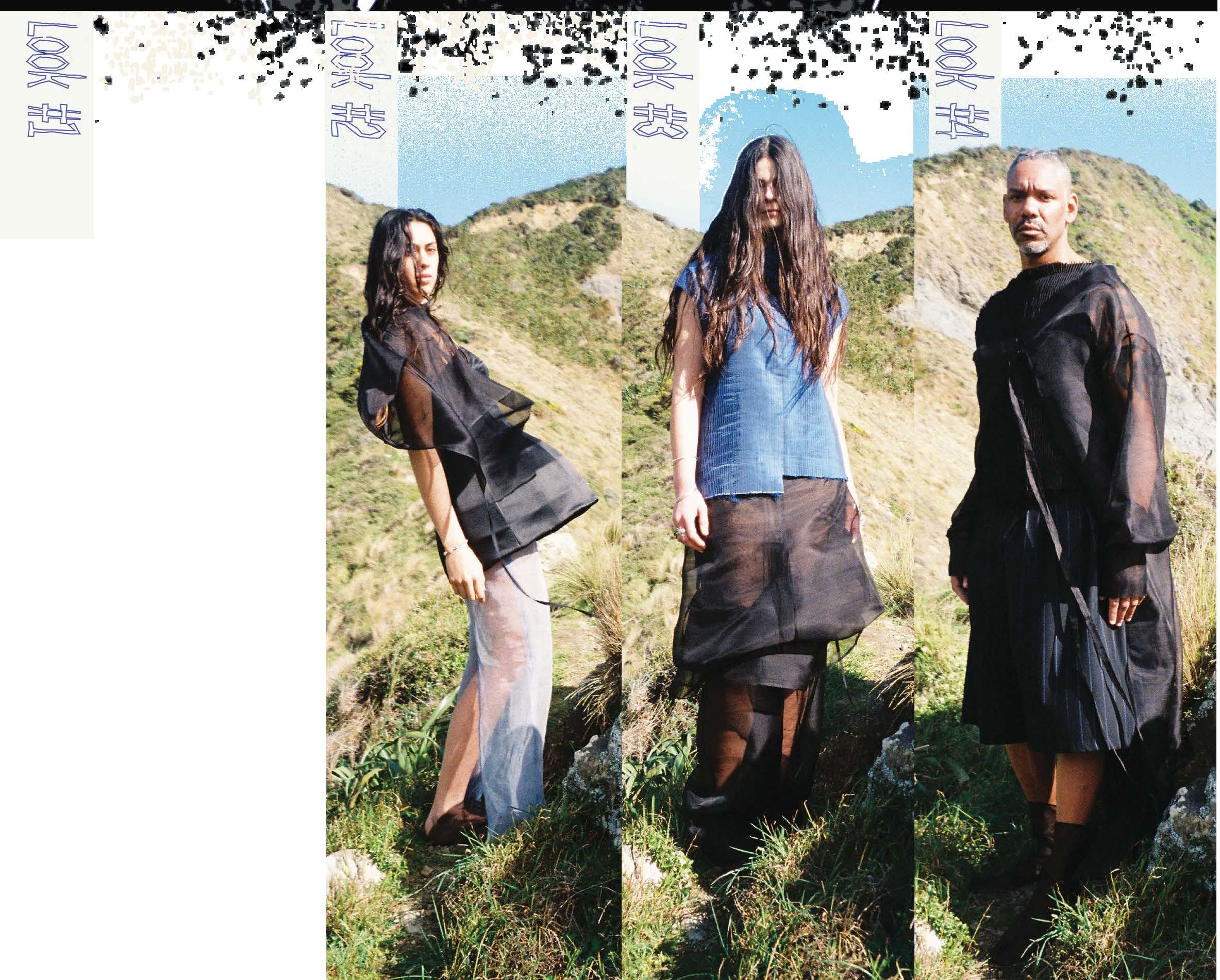
Typically, creating clothes is about how fabric fits the body. But Massey graduate Seunghee Park shifts that focus to what lies in between. The space between fabric and skin, self and surroundings. Inspired by a sense of disconnection and the uneasy feeling of being out of place, her work explores belonging and unbelonging. It explores the quiet, uncertain space that exists between the two.
for Seunghee’s graduate collection, Dysphoric Gaze, her Korean and European heritage bled into the stitches of her work. Creating bold and beautiful designs, she threaded four unique, hybrid pieces.
Inside and outside Fashion, Seunghee’s heritage has become increasingly intertwined with her identity. In high school, she went by Piper. Now, all future work will be under her given name, Seunghee.
She says, “I don’t actually need an English name. I already have a name, and I want to go back to it.”
From the material to the theme, this exploration of heritage, identity and the space between is vividly apparent in her designs.
“It’s about the space between the person who’s wearing the clothes and the clothes,” she says. “I had sheer things that were half transparent and half opaque. That also linked to my identity being half and half. Here, and there,”
Hanbok, traditional Korean clothing inspired much of Seunghee’s research when designing her collection. Delicate silk, tedious pleating, and voluminously shaped fabrics inspired by medieval hanbok wove their way into her work.
Not only did she draw inspiration from the physical appearance of Hanbok, she also integrated it physically using Oksa fabric. This is a delicate, sheer fabric used in traditional Korean clothing.
“I wanted to experiment how it would look doubling or tripling the sheer fabric itself. Then it gives that space that’s not as sheer and then there’s space that’s sheer.”
Dysphoric Gaze compiles pieces which contrast how they fit the model dramatically. In just one design, Seunghee designs the top and bottom halves to be complete opposites.
“It’s part of the experience of different levels of space between the person and the back,” she says.
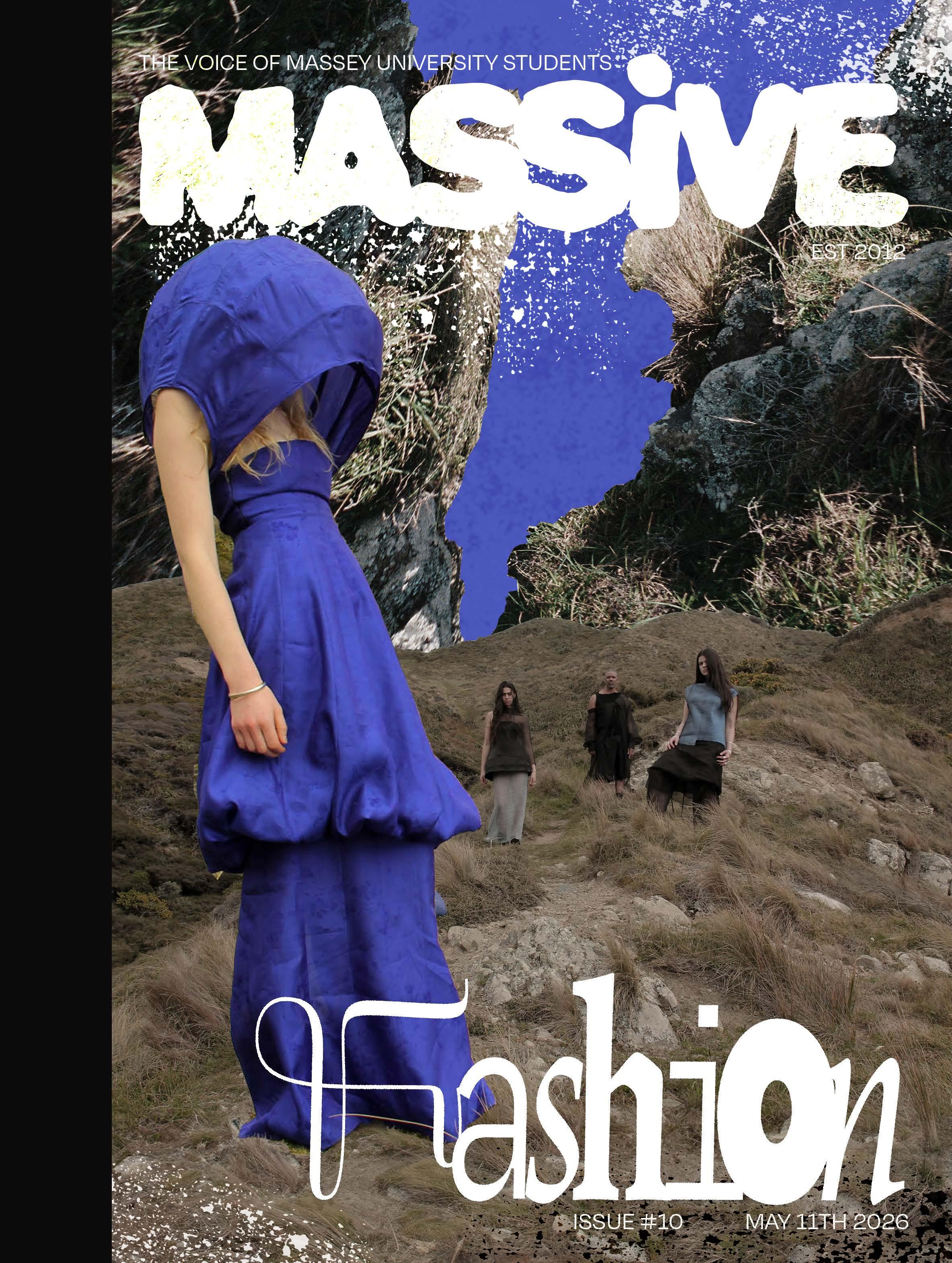
In Look 01, for instance, space billows through the flowy voluminous fabric of the pants—similar to traditional Korean men’s pants. In contrast, space is scarce in the more tight-fitting top which hugs the torso, similar to traditional European clothing.
The uniquely curved headpiece is the statement of this design. Its sleigh shape is drawn from a nostalgic place of Korean culture.
“Back in the day, if you were to pee while you’re asleep, you’d put on this kind of
sleigh shaped hat. Then you would go around the neighbourhood and people would throw salt at you,” Seunghee explains.
The headpiece highlights the space between the person and the piece.
“The idea of covering your identity from other people around you kind of got me into doing something that is voluminous and covers your whole face.”
Other pieces in the collection were equally as detailed with their meaning, fit, and shape. Despite this timeconsuming process, Seunghee’s passion pushed her to the end.
“I love being busy and I love being like hectic, I just love being in that really busy space where I know what I’m doing.”
After spending months studying spaces of belonging, Seunghee has found the space where she belongs: in the world of fashion.
Wherever her designing dreams take her, Seunghee’s tangible passion could fill any empty space with shining rays of silk and light.
Stepping into Oscar Clive Darling’s studio, you’re transported into the world of J.R.R Tolkien’s Middle Earth harmonising with the sound of a sewing machine. When Oscar is designing, he’s kept company by fantasy audiobooks or Japanese neo-psychedelia band, Fishmans.
But Oscar’s origins do not begin behind the overlocker—they begin on the courts.
“Basketball was everything for me.”
Oscar’s first love is basketball, and he even almost played internationally. After graduating high school, he’d been accepted to play at a United States university. But then COVID-19 ruined his plans.
“I had to self-isolate for ten days before I could go over, and then on day nine the whole country went into lockdown,” says Oscar.
“After lockdown, I had to rethink my plan, so I decided to go study DVC [Design Visual Communication] at Massey.”
Oscar already had a passion for clothing and design through basketball’s notorious fashion scene. But it was during his first year at Massey when he took a Fashion course where Oscar found his new calling.
Having never designed or crafted garments, Oscar found himself staring up at a steep learning curve.
He says, “Most people don’t realise how technical garment production can be. It’s almost like learning a trade.”
“I’m quite meticulous. I love learning something new and practising and getting better.”
Oscar’s affair with denimwear began after realising that making a pair of baggy jeans would be easier than finding a pair that fit him.
“I love working with denim, so I just kept doing it.”
In just his first year out of university, Oscar landed an internship at Duncan McLean—a denimwear store and studio which focuses on denim, using Japanese Kaihara fabric. This internship opened Oscar’s eyes to the world of Japanese denim and led him to explore his signature workwear style.
For Oscar, the design process starts by asking what he wants to wear.
“It’s shifted a bit from baggy, oversized pieces. Now I’m looking into workwear traditional pieces. Things that aren’t going to go in and out of cycles of styles.”
Oscar says he wants to make pieces that “were selling 100 years ago and are going to be sold in 100 years”.
Oscar’s meticulous personality is the perfect fit for a denim workwear designer. Focusing on timelessness and functionality, his pieces are a beautiful marriage between gorp-core, expensive steeze and American workwear.
“I’m inspired by less high fashion and more functional fashion,” he says.
“I try to look at what people could wear every single day and beat to shit, and it’s still good quality.”
This year bought a change to Oscar’s studio scenery. During his study, his studio began from his bedroom in Wellington. Now, he’s relocated back home to Aotea, designing in a space he finds more inspiring.
That inspiration must be working overtime, because he is now selling his work in Ponsonby concept store, The Shelter—a shop of curated Aotearoa designer apparel and décor. The store’s creative director first noticed Oscar after he won The Shelter by taylor Award at the 2024 Hokonui Design Awards. After seeing more of his work through Instagram, he was offered a place to sell his work.
“I try to look at what people could wear every single day and beat to shit, and it’s still good quality.”
Although Aotearoa’s smaller market can feel difficult to break into, Oscar says the relationships that you build with clients are more intimate.
“I
found that when I was at the shelter, and people were looking at my work, they wanted to know your story as well.”
“Everyone complains about designing in New Zealand because it’s such a small market. But you’re also lucky enough to live in New Zealand and feel more connected with your clients.”
Despite reaching larger audiences, Oscar’s kaupapa remains the same— making handmade, quality pieces. His garments are investments. Ones that you can rip to shreds and look cool doing it.
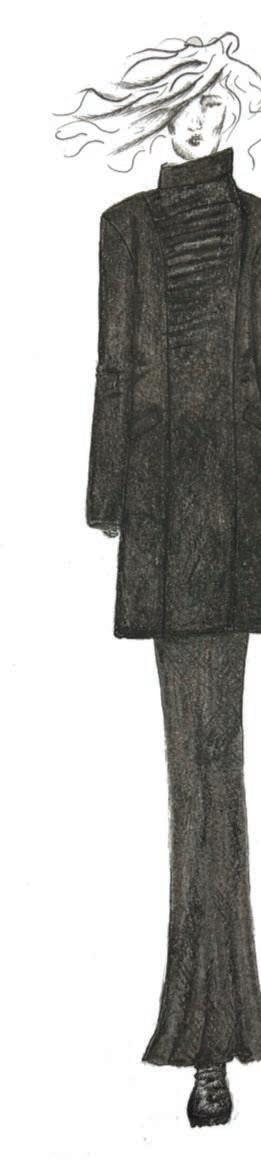
Constructing
AylishTherese Constructing Aylish Therese T
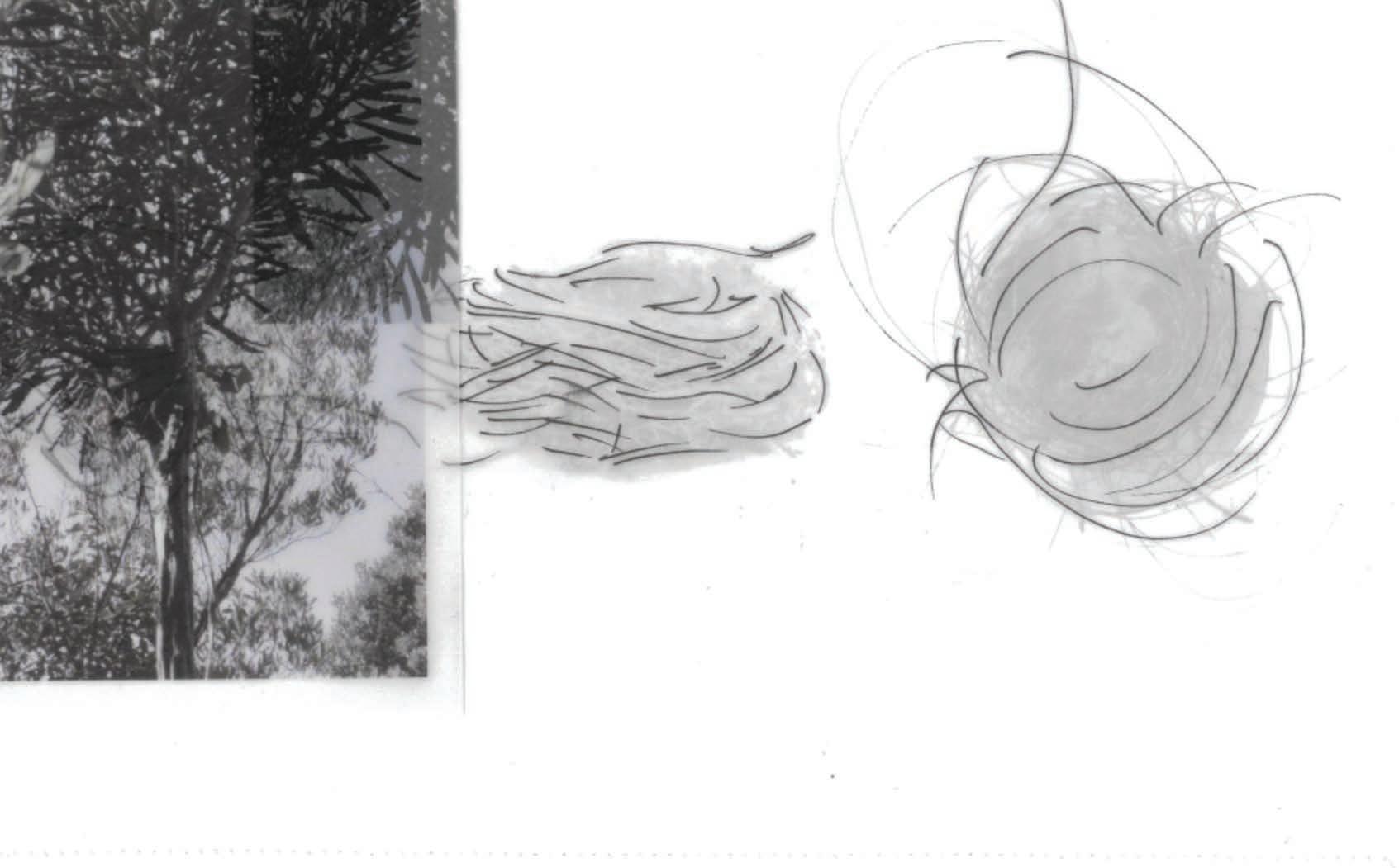
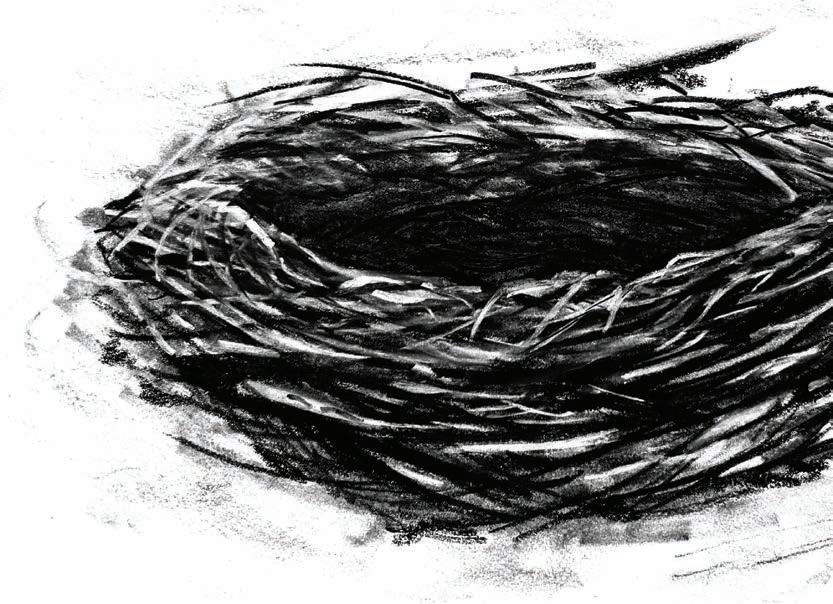
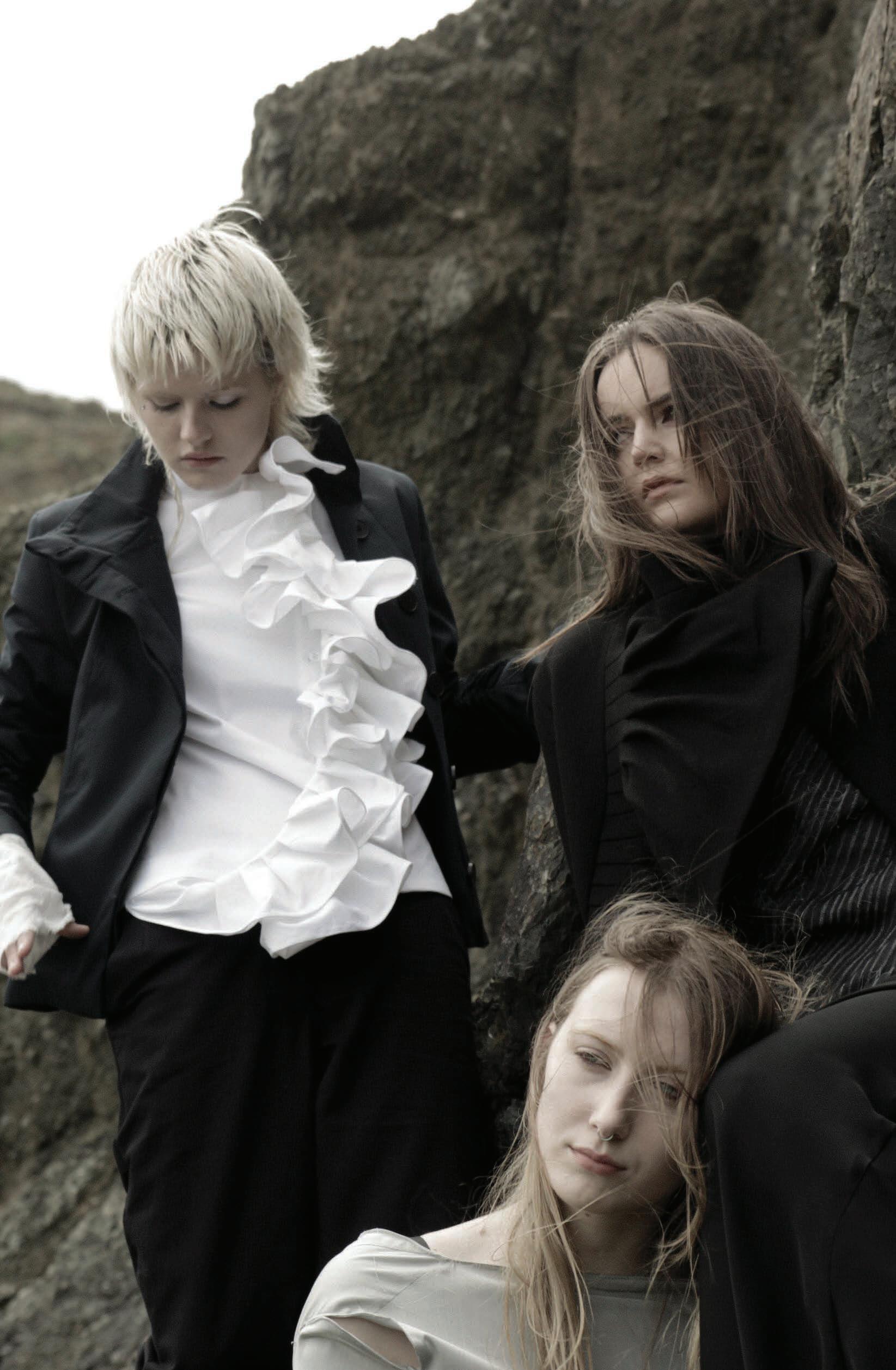
wo red gemstone pins hold Aylish’s bouquet of blonde curls in a high bun as she walked me through her graduate collection, Nest. Throughout last year she became obsessed with birds. The deeper she delved into exploring these soaring creatures, the more she fell in love with collecting, nesting, and eventually flying away.
“People literally started calling me bird girl.”
This memory etched itself into her mind and became one of her twigs she could design with.
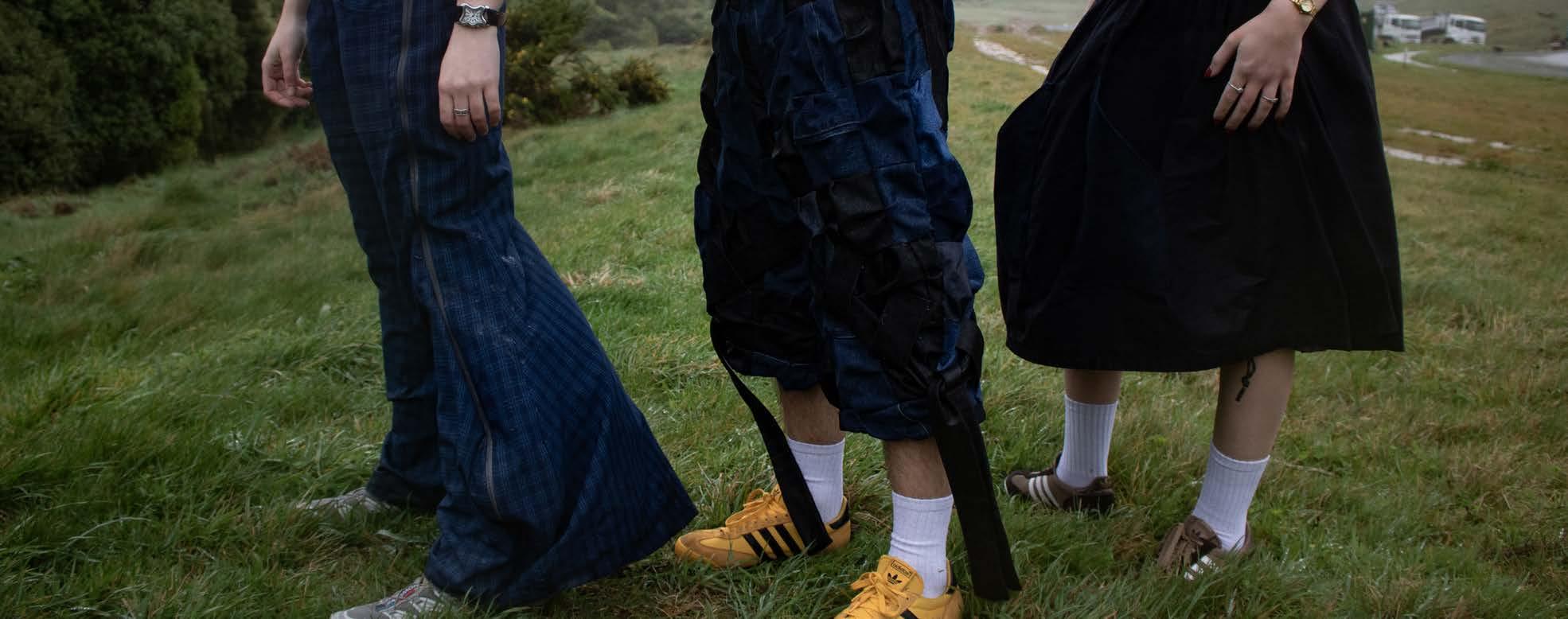
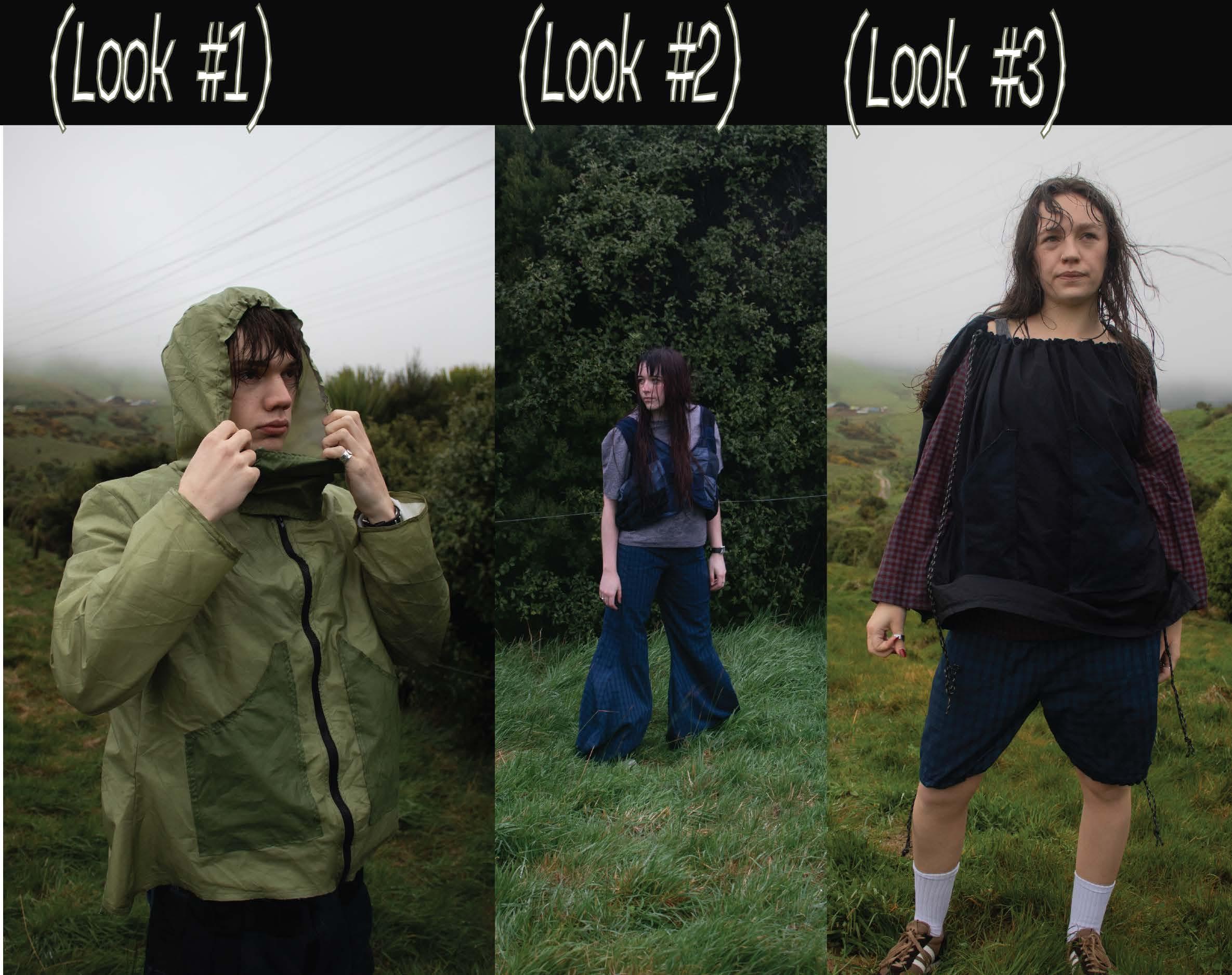
In look three of Aylish’s collection, she wanted to embody the freedom that birds symbolize to her.
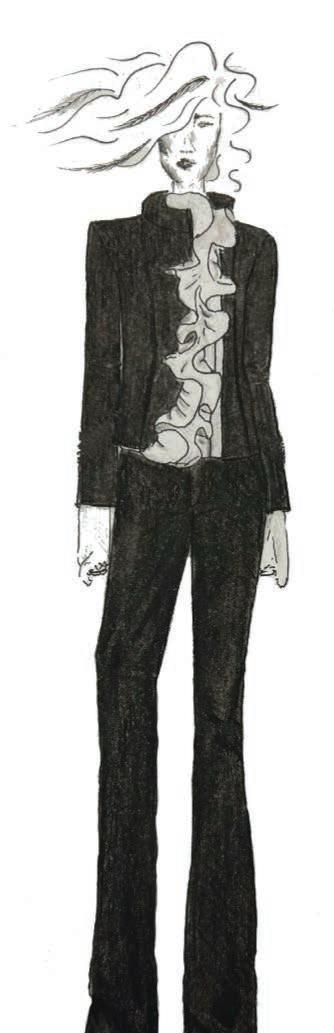
“I wanted there to be a badass kind of rock star look out of all the pieces. Something to show the way we can soar.”
This was heavily influenced by the 1970s’ own fearless liberty, and Patti Smith’s voice swirling through Aylish’s headphones.
“Speeding the American plain. Into freedom, freedom, freedom.”
Nest explores how we assemble our homes and communities, as if we are birds building a nest. We don’t exist in isolation. We construct inner worlds based on materials and memories that make us laugh and cry. That provides us with peace and war.
She says, “We collect memories and things from friends and family, our childhoods, and we’re building ourselves in the process.”
Whether it be a beautiful twig or a piece of rubbish, anything that leaves a resonance becomes part of our mental landscape. Each of Aylish’s garments signifies how we collect experiences, memories, songs, and photos to build our own inner homes—our nests.
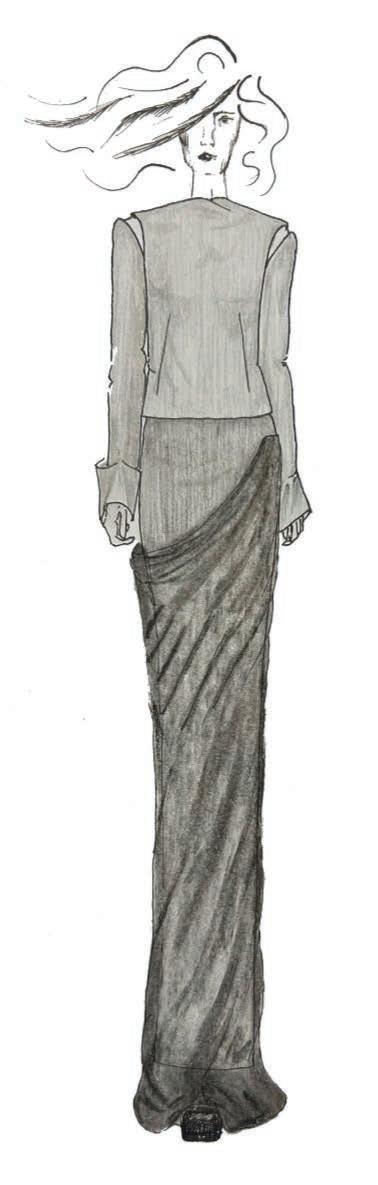
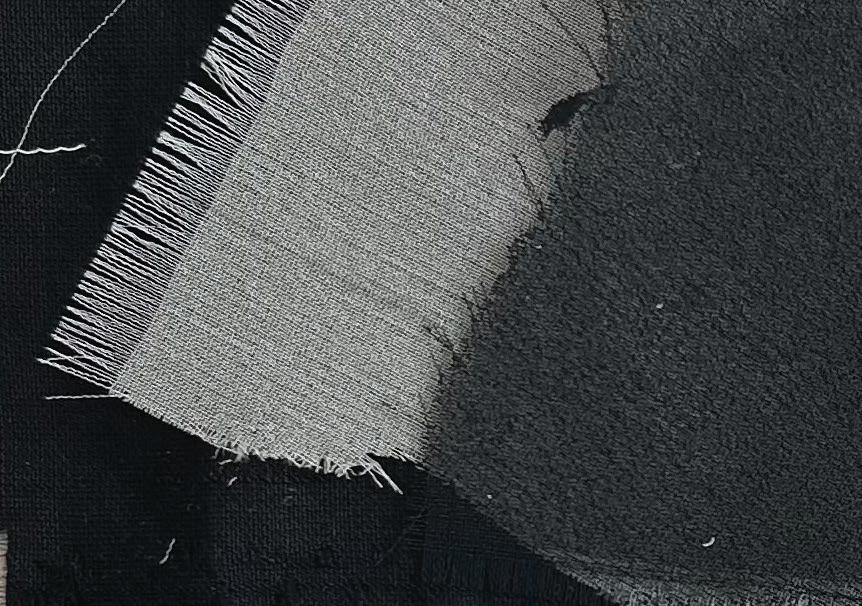
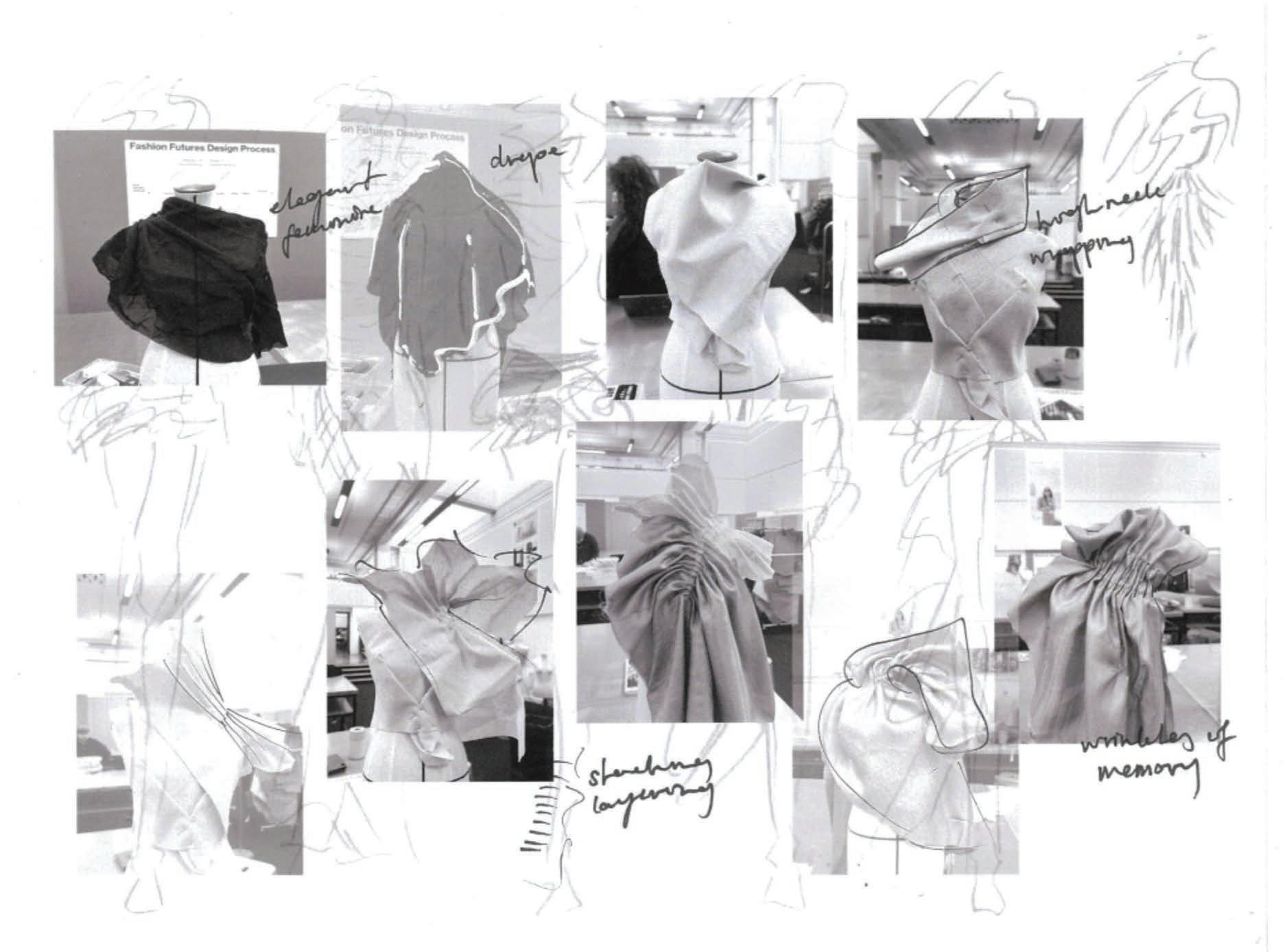
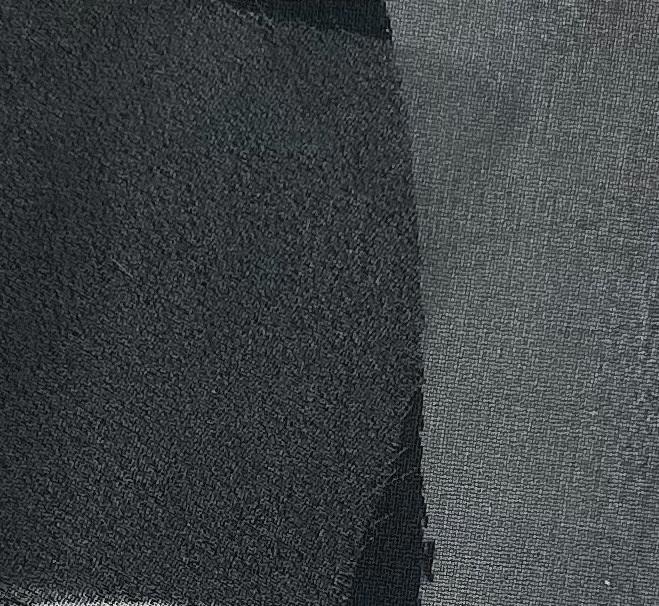
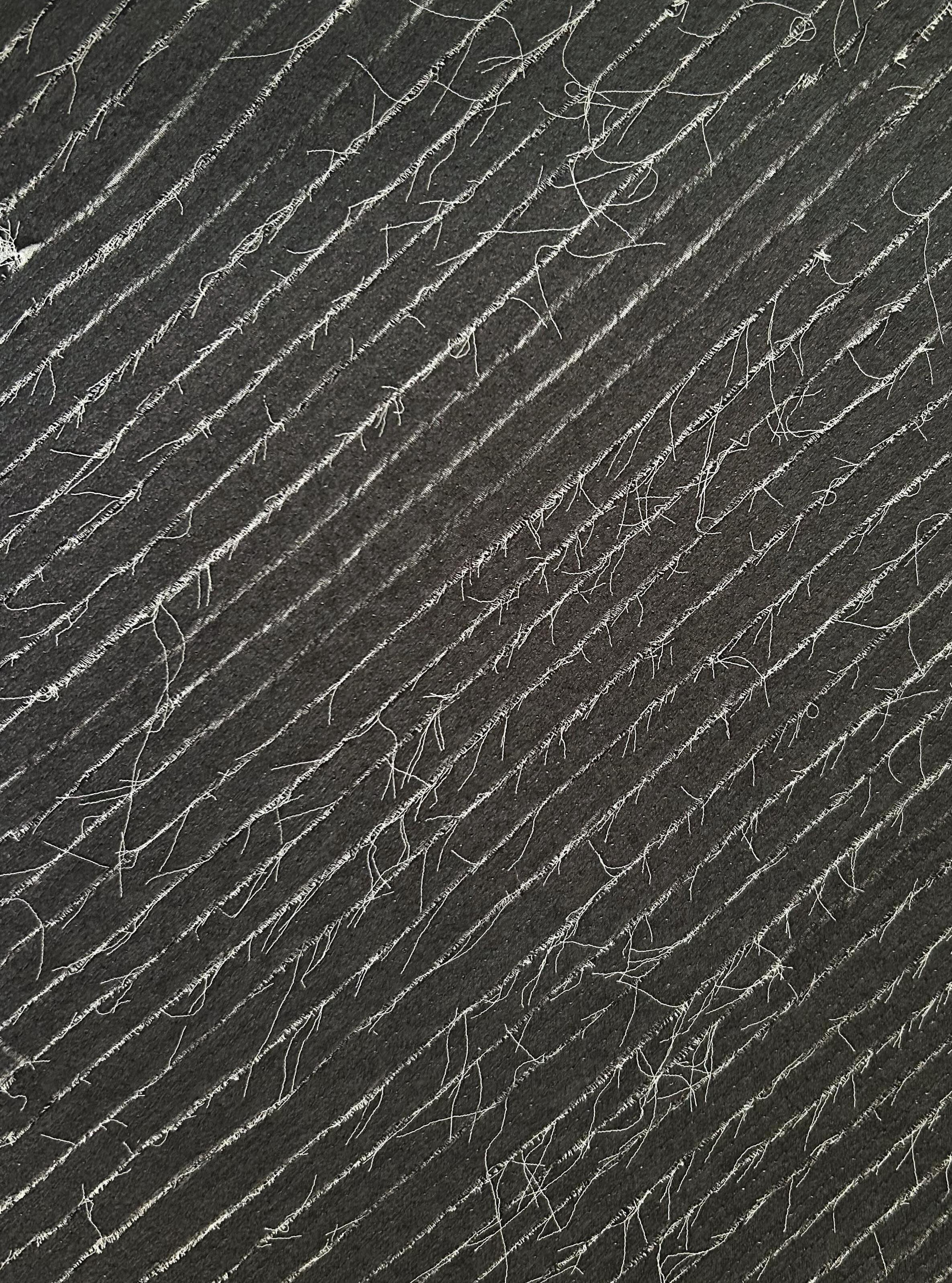
Aylish’s ruffled silhouettes and sewing techniques resemble this construction of the self. She stacks pleats, resembling the stacking of twigs in nests. She creates white garments that are built to stain and carry a physical memory. She collects all sorts of features—tangible and intangible—to create her assortment of bird burrows.
She recalls sitting on Te Whanganui-a-Tara’s waterfront, watching “a huge flock of birds fly around in unison. They all moved at the same time, and it was just so beautiful to me”.
To these lyrics, Aylish sketched, cut, and sewed huge ruffles protruding from a simple white button up.
Over the summer, Aylish dug her head into Smith’s eclectic memoir, Just Kids. The book is riddled with hardship and pain. But just as Aylish’s garments portray the homes we create, Smith speaks to the nest she maintained with her best friend, Robert Mapplethorpe, through it all.
Smith writes: “Where does it all lead? What will become of us? These were our young questions, and young answers were revealed. It leads to each other. We become ourselves.”
All we have is our nests inside.
a Nest:
Constructing a Nest:
Every artist has their inspirations, but it’s clear to Aylish what makes her clothes unique. What makes her, her. This anthropological study of our personal archives is the backbone of Nest.
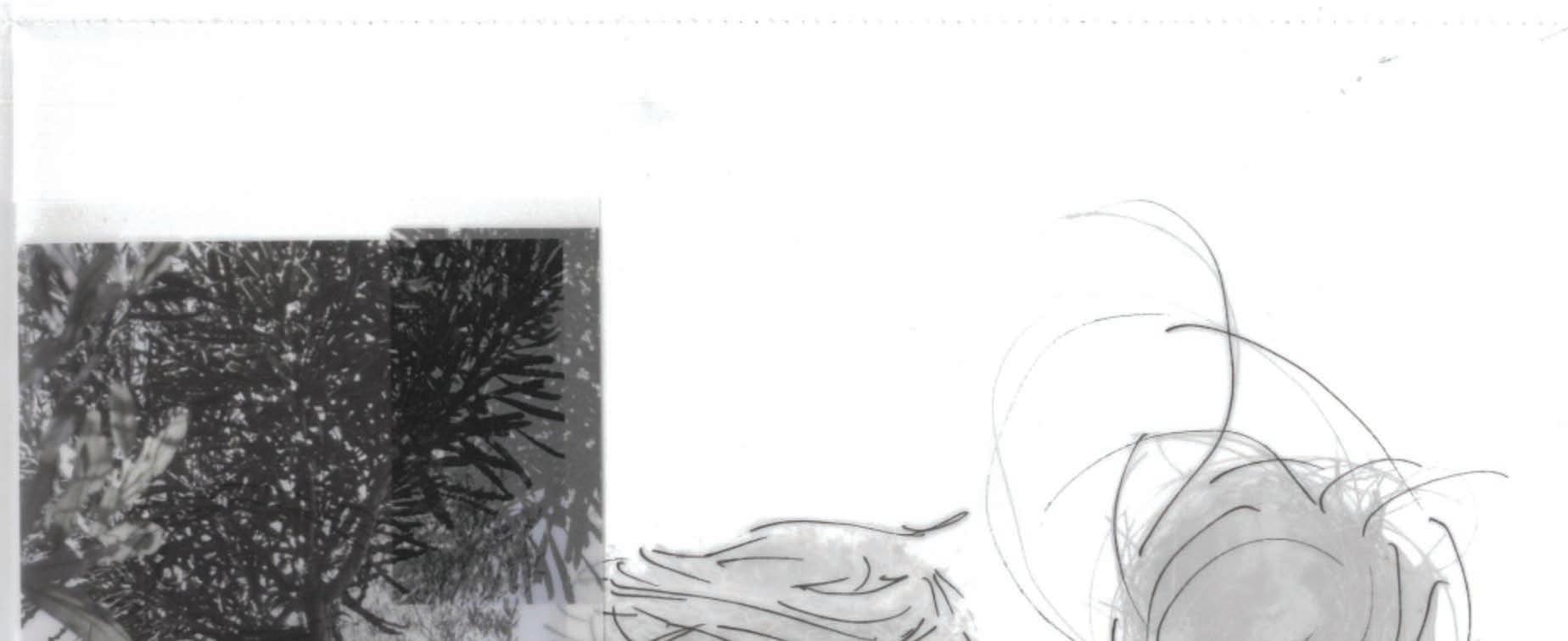
Inside Aylish’s workbooks are sprawling charcoal sketches and patches of miscellaneous fabrics. The once white pages are collections and combinations of her many influences. Stains of herself take up every corner. Whether it’s sitting and watching birds in the sky or analysing runway looks, Aylish shows everything that has gone into assembling her own personal nest.
This collection calls the viewer and the wearer to reflect on their own accumulations within. For Aylish, it’s birds, Patti Smith, Maison Margiela, and so much more.
But what has your internal magpie taken from the world to create the self?
For the past three years, Aylish has built and lay in her nest of Te Whanganui-a-Tara. But now, she prepares to fly away. Leaving the nests we put so much love and care into constructing is scary. But wherever we go, we bring the complex nests we hold within.
It was the pursuit of love that drew Christoph Pietkiewicz to fashion. But it’s his love for the craft that’s kept him hooked ever since.
Christoph first heard the hum of a sewing machine in Year 11 after enrolling in a Fashion elective in pursuit of a boy he was seeing at the time.
He says, “The guy who I was seeing back in the day decided to do fashion. And I was like, ‘fuck it, I’m going to just follow him into it’. Then I realised it was really sick and that’s all I wanted to do from then on.”
What began as a romantic chase quickly became something deeper, paired with a needle and thread. Every stitch, every concept and every frustrating design choice he’s made, he carries out with love.
“I fell in love with how you can take something from out of your head and make a tangible piece of clothing out of it. I love doing the sewing, pattern making, construction techniques, and the design, of course.”
Graduating from Massey University’s Fashion degree in 2019, Christoph has spent the last seven years running his small business, KRYSZSTOF_, from his home studio in Karori.
“Half of it [the studio], I’ve turned into my walk-in wardrobe, and then the other half is my big rumpus space,” he says.
“It’s big chaotic energy. Everything’s organised real haphazardly. It makes sense to me, but my partner can’t find anything in here.”
The brand name, KRYSZSTOF_, is influenced by the bastardization of Christoph’s Polish name. His grandparents both arrived in Aotearoa as war refugees, and he reflects the pride he has for them and his Polish heritage in his work.
“I’ve always been very proud of my heritage. When you come to a different country from wartime circumstances, it’s a huge deal,” he says.
“Mum always wanted to call me Krzysztof, but dad wouldn’t allow it. So, I decided to name the brand after that.”
Like his brand name, Christoph’s designs are truly unique. Sitting somewhere between streetwear and high fashion, with a utilitarian edge, they are defined by structure, durability, and signature deep pockets.
Most importantly, Christoph’s garments follow a strong ethos—anyone can wear a KRYSZSTOF_ design, regardless of their gender or size.
He says, “Fashion doesn’t have to be prescriptive to one certain size or figure.”
Sustainability is equally core to his practice. In response to the relentless churn of fast fashion, Christoph launched the Whakamau
project. This is a service dedicated to extending the life of garments through repair, alteration, and reinvention.
“It’s coded by tikanga,” he explains. “Repairing clothing adds to the mana of a piece.”
Through Whakamau, Christoph aims to create clothing that outlasts trends, even lifetimes. He also applies this philosophy to his own work, reworking past designs and pushing them in new directions.
“My love of clothes has influenced me the most,” he says. “My wardrobe is full of literally hundreds and hundreds of pieces. The fact I can keep creating more pieces and going further and pushing things beyond. I’d say that’s my biggest inspiration.”
Now, as he prepares his winter collection, his story comes full circle. Just as he stumbled into fashion through love, he’s now designing an entire collection inspired by his partner.
“I’m designing everything in his memory,” Christoph says. “He’s tangata whenua and refuses to wear anything but the Tino [Rangatiratanga] colours.”
Love—romantic, cultural, and creative—runs through every thread of Christoph’s work. It’s stitched into each garment, shaping not just what he makes, but why he makes it.
It’s Christoph’s fashionable love affair that quietly shapes each piece long before it ever reaches the body.
The Art of
The Art of
Photos by Jessie Davidson • SHE/HER
Photos by Beth Hurley • SHE/HER
of Unlearning
Garments gently hang from a curtain rail beside an open window. They sway softly as the evening breeze brushes past them, curling around the small Island Bay home studio. The room is glowing gold from the low warmth of lamps and the remaining rays of the setting sun. Everything is glazed in an intimate haze. My fingers curled around a hot cup of peppermint tea as Beth Hurley takes me through the intricate process of her craft.
of Unlearning
what began as a space for expression has become a site of interrogation for the third year Fashion student. Since moving to Wellington, Beth has become increasingly aware of the structures which underpin the fashion industry.
She says, “Fashion has been told through one narrative, a very western, colonial, and capitalist driven narrative that has completely restricted our concept of fashion and what it can be.”
Rather than being discouraged by this, Beth embraces it. Through using fashion “as a vessel” to navigate complex and uncomfortable feelings, she turns these emotions into something
The act of unlearning is a central component of her practice.
“The biggest lesson I’ve learned is unlearning, and learning to be ok with uncomfortable feelings.”
As a Pākehā designer learning what it means to decolonise the fashion industry, Beth recognises the intricate complexities and privilege of her position.
“The way to decolonise is definitely to reindigenise. To recenter indigenous voices. But it does put [me in] an interesting position of where does that leave me? Someone who completely agrees with those values?”
Her practice documents navigating that complex space of recognising complicity and actively choosing not to look away.
Beth is interested in breaking down the emotional barriers that often arise in these kōrero. She speaks on how discussions around politics and identity can quickly become guarded. This defensiveness is often shaped by ego.
“Don’t use white guilt as a feeling to avoid. Use it as something to teach you something and navigate that,” she says.
Within her upcoming collection, Haunted Pastures, she extends this thinking into material form. This collection draws on the displacement of European animals as victims of colonial expansion. It is a careful navigation of asking what is hers to speak on and how to navigate that responsibly.
“What’s for me to speak on? What’s for me to relate to in my home?”
Beth’s work consistently invites reflection on history, identity, and the subconscious ways clothes carry meaning.
In the warmth of her room, surrounded by fabrics and flickering light, her practice is not fixed, but continuously unfolding. It is shaped by the ongoing act of unlearning.
“I hope it serves as a form of reflection. To open a conversation.”
(Georgia Andersen • TROBE)
WOBBLY WHATMEN& IF’S
Photo provided by Georgia Andersen
“It was this little dude on a skateboard that had a willy. It was so funny. God, it’s funny,” she laughs.
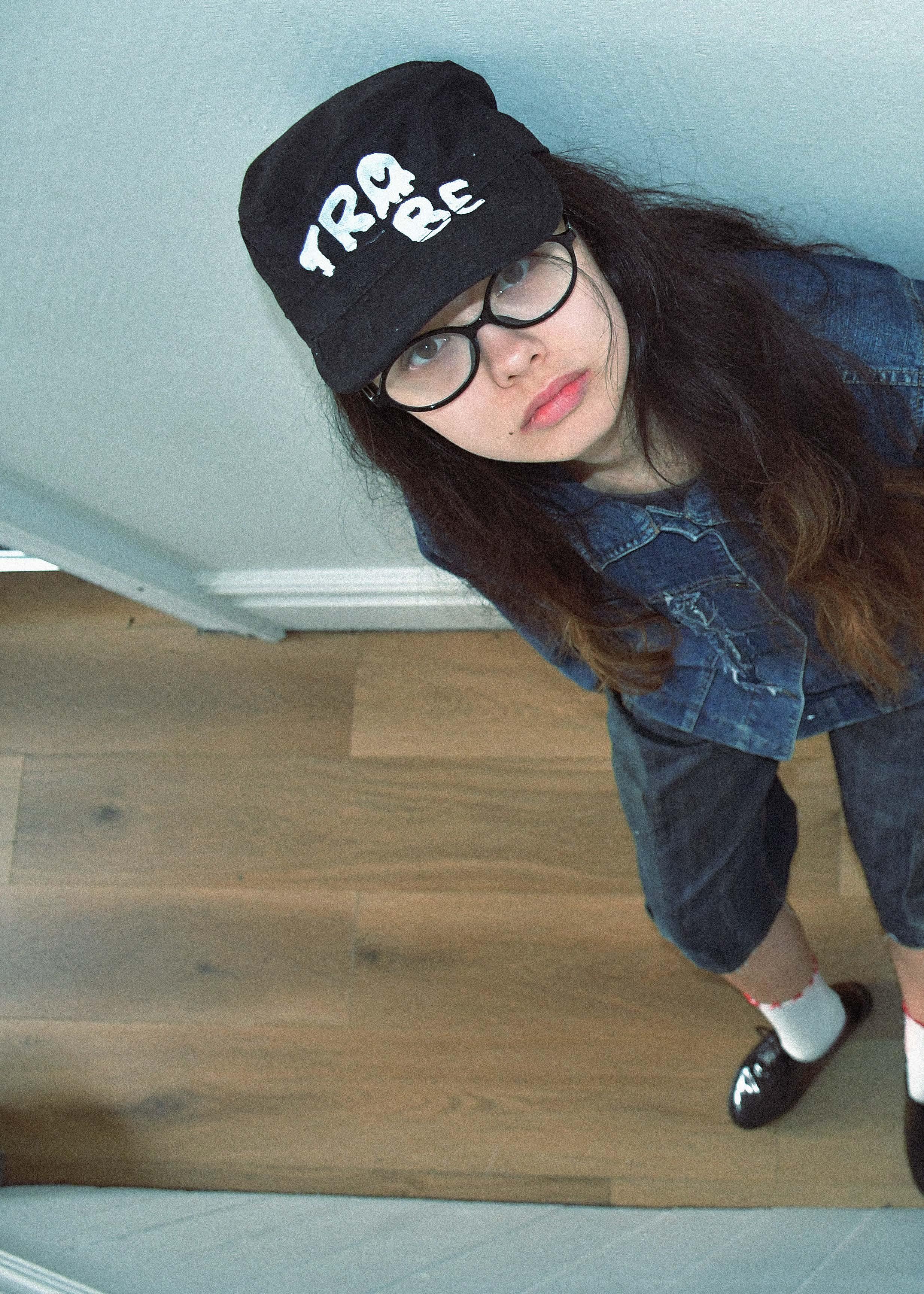
This drawing evolved into a man doing yoga on a surfboard and became the first design she ever put on a shirt. Eight years later, Georgia has a booming business, and her sketchbooks are full of wobbly men, unique creatures, and fantastical ideas that defy logic.
Atop a snow-covered mountain range, a denim monster sluggishly strides through the snow. With him, he carries a brown briefcase. It’s a simple design, aside from the strange white symbol painted on its lid. He reaches the peak and falls to his knees. Unclipping it, a treasure is revealed—Trobe.
When Massey graduate and founder of Trobe, Georgia Andersen, first spoke to Massive in 2024, her tenyear goal was simple—ski, surf and make clothes. Now, she’s surfing in Bali for a month before heading down South to take photos on the slopes of Queenstown’s ski fields.
Meanwhile, her clothing and designs have never been more popular.
Her advice? Never let logic get in the way of a good idea.
“Just giving anything a go and making mistakes is the best part of life. That’s where all the fun lies,” she says.
Trobe began out of Georgia’s bedroom when she was 14. She remembers feeling downhearted that all the clothes she liked at the time were too expensive for her. So, she decided to make her own.
“I thought, I’ll just make my own clothing and then I can fully express myself exactly how I want for a reasonable price.”
Despite not knowing much about art or design, Georgia drew her first ever creature.
“It was this little dude on a skateboard that had a willy. It was so funny. God, it’s funny,” she laughs.
This drawing evolved into a man doing yoga on a surfboard and became the first design she ever put on a shirt. Eight years later, Georgia has a booming business, and her sketchbooks are full of wobbly men, unique creatures, and fantastical ideas that defy logic.
“My work is evolving all the time. But it’s definitely not trying to follow trends. It’s a little bit wacky and makes people question what’s going on.”
Creating whimsical, silly, and illogical concepts is something Georgia thrives on.
“I love questioning a concept. Questioning why things are done a certain way or why some things make me feel a certain way, and how I connect to it. Basically, asking what if and why not?”
“Like, why can’t we wear jeans upside down or put a denim monster on a mountain? Questioning the logic of things and your traditional instincts.”
Georgia’s denim monster was born in 2025 out of denim scraps, hot glue and a spandex suit. After it’s venture
up a Queenstown mountain range, it lived in Georgia’s Wellington flat.
She says, “It would scare me every time I’d get up to go to the toilet in the middle of the night. It’s just so bizarre.”
Upcycling is a key component of Georgia’s products. From turning old denim into handstand jeans, or unwanted leather into leg warmers, each piece is one of a kind.
But for these unique designs to come to life, Georgia has to be bored.
“It’s very important for me to get bored. I have to get really, really bored. And then so many ideas come to the surface. Especially if I’m in nature and just looking at different textures.”
As Trobe continues to grow, its wacky spirit shows no signs of settling.
Back on that mountain peak, the denim monster still stands. It’s briefcase open, logic left somewhere in the valleys far below.
Trobe isn’t just clothing. It’s every ‘what if’, every bored afternoon, every strange little idea Georgia chose to follow instead of dismiss.
Trobe is proof that instinct can be louder than reason and being a little bit wacky is far more interesting than not.
(Georgia Andersen • TROBE)
Words by Jessie Davidson • SHE/HER
Photos by Brianna Grapes
WHAT YOUR STYLE SAYS ABOUT YOU
FAIRYCORE
Song: Soldier, Poet, King (The Oh Hellos)
Your life is a fairytale (at least in your own head). Glitter is a key feature of your daily makeup routine, and you enjoy scrolling through TavernTok in your spare time.
You’ve been writing your shifting script for months now, and sometime soon, you’ll try to shift into the world of Tinkerbell.
OLDMONEY
Song: Doin’ Time (Lana Del Ray)
You’re either studying business or law, aiming to make some BANK to pay for your cashmere sweaters and vicuña wool slacks. In your downtime, you invest in stocks, practice your equestrian skills, and smoke cigars with your friends. Some people call you conceited, but you simply just know what you like—being rich.
GORPCORE
Song: Wandering Eye (Fat Freddy’s Drop)
Hey guys, please get off that wall. Not everything needs to be climbed istg. Pick up your Nalgene water bottle, clip your carabiner of keys onto your belt loop, and get to class. It’s Friday, and you’ve already skipped uni four times. I know you want to chalk up your hands and hang upside down, but you’re not a bat.
BALLETCORE
Song: Swan Theme from the Swan Lake Suite, Op. 20a (Tchaikovsky)
Slick back buns are your go-to hairstyle, and it’s starting to affect your hairline. Be careful, or you’ll start looking like Jojo Siwa in her Dance Moms era. Which is ironic, considering this is your favourite show. A perfectionist at heart, you’re always aiming to be at the top of the pyramid, no matter what it takes.
COTTAGECORE
Song: Would That I (Hozier)
Spending your weekends baking sourdough and frolicking through grass fields, your favourite outfit is a knitted cardigan and a DIY maxi skirt. You’re one of those annoying people who claims they’re born in the wrong era and wishes to travel back to an 1800s farm (without all the racism). Even though you’re not lactose intolerant, you take almond milk in your coffee which you drink while reading smutty fantasy novels.
Thread covers the carpeted floor of Ruby Allpress’s small Aro Valley bedroom. The afternoon sun peers through her stained-glass windows, lighting up a collection of art prints and her own fashion patterns hanging on the walls. In the corner sits a big box of fabric scraps, all collected from various op shops around Wellington. Her beloved sewing machine has recently moved from her floor to a small desk, but she’s considering moving it back to the carpeted surface.
“Iquite liked it on the floor because I could reach everything,” she says. “I was pressing the pedal with my knee, it worked quite well.”
Now in her fourth year of Fashion Design, Ruby’s designs have transformed dramatically since she was gifted a sewing machine at age ten.
“I’ve loved it ever since ... my mum taught me the basics and it went from there.”
Ruby’s first few creations were some “poor fitted tops and tote bags” before getting into the scrunchie business in Year Nine.
“Me and another Ruby created a business called RR Scrunchies and sold scrunchies at school,” she says.
RR Scrunchies became Ruby Creates, then Ru Creates, then RuCo, and finally became Rotten. This final and current brand name is inspired by her dad’s nickname, Johnny Rotten.
“We always got called Rotten’s kids. It’s just a pretty fun name.”
As her brand name changed, Ruby says that it’s reflective of the different phases of her life. With these phases, her designs also transformed.
“[My designs] used to be more mainstream and tailored for women’s bodies. Throughout the years, I’ve developed a more masculine vibe in my pieces. Being around and being part of queer communities have influenced what I’m making.”
Ruby’s designs can be best described as androgynous, youthful, playful, and expressive.
Anyone can wear them, no matter their gender, ethnicity or age.
“I
don’t think clothes should have an age limit. I think it’s really silly when old people feel like they have to dress like old people. Like no! Be fun! I’m so excited to be old and fun,” she says.
Ruby’s entire practice is based on sustainability. She aims to create with a purpose of reusing and reducing waste. Not only is this better for the environment, but it also creates more interesting designs.
“Fabric bins at op shops are great. It’s crazy what people throw away,” she says.
“Upcycling can be fun and doesn’t have to be ugly. I think a lot of people think
that upcycling is always patchwork and ugly fabrics. But it isn’t. It can be cool.”
While most young designers dream of their own label, Ruby has different ambitions. With her bold silhouettes and a youthful vibrance, Ruby is setting out to make a sustainable change in the fashion industry.
“Having a label sounds terrifying. But making sustainable change, that’s something I really care about.”
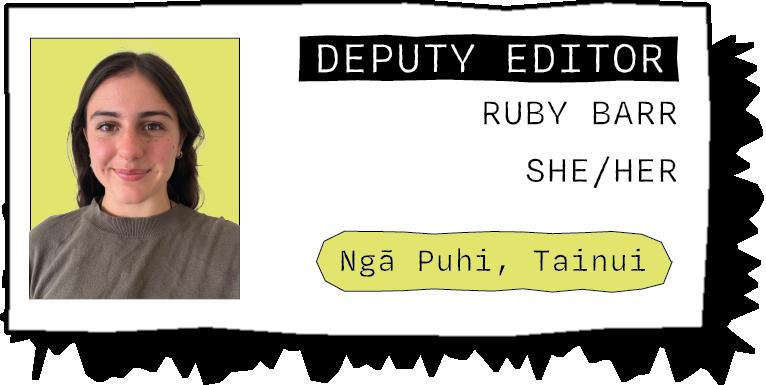
Words by Ruby Barr •
For Ava Hampton, every day is a colourful day...
Radiating colour, sparkles, and femininity, electric pink highlights peak through blonde hair as Ava Hampton marches through the Textiles block in her teal platform docs.
The third year Fashion student uses vibrant colour palettes to inform every aspect of her life. From a bubble-gum pink jumpsuit to hot-pink crockery—Ava is always saturated in colour.
Ava’s mother shares a similar passion for exuberant fashion and vivid design. This inspired Ava to confidently explore her own identity through clothes and makeup.
“I grew up completely in that eclectic environment, so it kind of translated into my style now,” says Ava.
This eclectic environment has seeped into Ava’s art. To understand her design inspiration, simply search pop icons, dreamscape, ethereal and fairy core on Pinterest. Her pieces reimagine nostalgia for books like Winx Club and the Rainbow Magic series.
Garment production is almost hereditary for Ava. As a child, her great-grandmother taught her how to sew by creating dolls’ clothes. However, the pursuit of Fashion as a career always felt like an impossible dream.
But in 2021, this dream suddenly felt possible after Ava won the Supreme Design award at Fashion design competition, Pin’d, with a pink military-inspired garment.
She says, “I felt so proud of myself and for my hard work, and I thought, ‘shit, I can really do this!’”
After this, Ava went to Massey to study the craft further. Now, glamour, performance, saturation and sparkles have become a melting pot of ideas for her new projects. Currently,
Chappel Roan’s flamboyant, drag style is Ava’s main source of inspiration.
“I take a lot of inspiration from pop culture,” she says.
“I think using a more colourful palette tends to give you more opportunities when it comes to the design process.”
But the colour that keeps coming back to Ava is pink.
For Ava, pink is more than just a colour. Different shades of pink hold different connotations that are all part of her selfexpression.
“It [pink] is really fun, but it also represents a type of femininity.”
Through pink, she expresses her gender as a performance of self instead of a conformity to gendered colours. As Ava’s understanding of gender expression continues to develop, her designs adapt to explore the possibilities of androgyny.
“I’m not wearing it because I’m a girl, I’m wearing it because I’ve made it mine.”
“I’m a lesbian, and my relationship with femininity is quite different to a cis, het woman.”
Her queer identity has led her to discover her personal style and creative practice. Through the queer community, Ava says she has found purpose in her art form.
She says, “Being surrounded by queer people who all express gender individually has informed my practice. If you look into embodied dress practice, it’s a way of dressing our identities. That means so much more than simply putting on clothes.”
A lot of Ava’s creative processes begin with videos, movies and TV shows with queer referencing and “most importantly, amazing costuming”.
Ava wants her pieces to feel like an extension of self, extenuating the parts of the wearer that make them feel powerful. She strives to create pieces with flair that challenge gender stereotypes in a vividly animated way.
“Pieces that make people feel beautiful empowered.”and
Jonomint - Aorta
Pining Radiata - Heart It All Before Welcomer - Magazine Clippingd (feat. Lontalius)
Pining Radiata - Heart It All Before
Bug Michigan - Wing and Shell mouth - #RRR
LAUGHING STOCK - Frogtown ruth
Art by Brianna
One of my mates is weirdly into chicks wearing lingerie. The guy literally spends hundreds on sets for whoever he’s seeing at the time and low-key refuses to have sex without a sexy set.
At the time, I was like, sure, bro. Whatever helps you sleep at night. But I recently had to confess that I’ve since eaten my words because my girlfriend decided to go blow her student allowance on a “super expensive set”.
I was a bit shitty about the whole thing until she sent me a snap of her wearing it.
Black, lacy, and so see-through Artemis II probably saw her nips from space, I immediately started sporting a solid semi. My brain was gone, and for the next couple of hours, all I could think of was her in that god dam set.
Fast forward to that night, I finally got to see it in person, and now I fully get what my mate was on about it.
There was no mucking around, and we got down to business. I realised I was faced with what might have been the hardest decision of my life: do I take it off her or leave it on?
Sexcapade submissions provided by
For 20% off your next purchase, enter discount
All I’m saying is whoever invented stringy lace lingerie deserves some kind of national holiday.
All I can say is thank god for two-piece sets. The panties might have been gone, but I made dam sure to keep that bra on her. I’ve honestly never had such a good orgasm, and she knew it. Probably why the next morning, she went off to class and left the panties on my bed with a little note: “have fun x.”
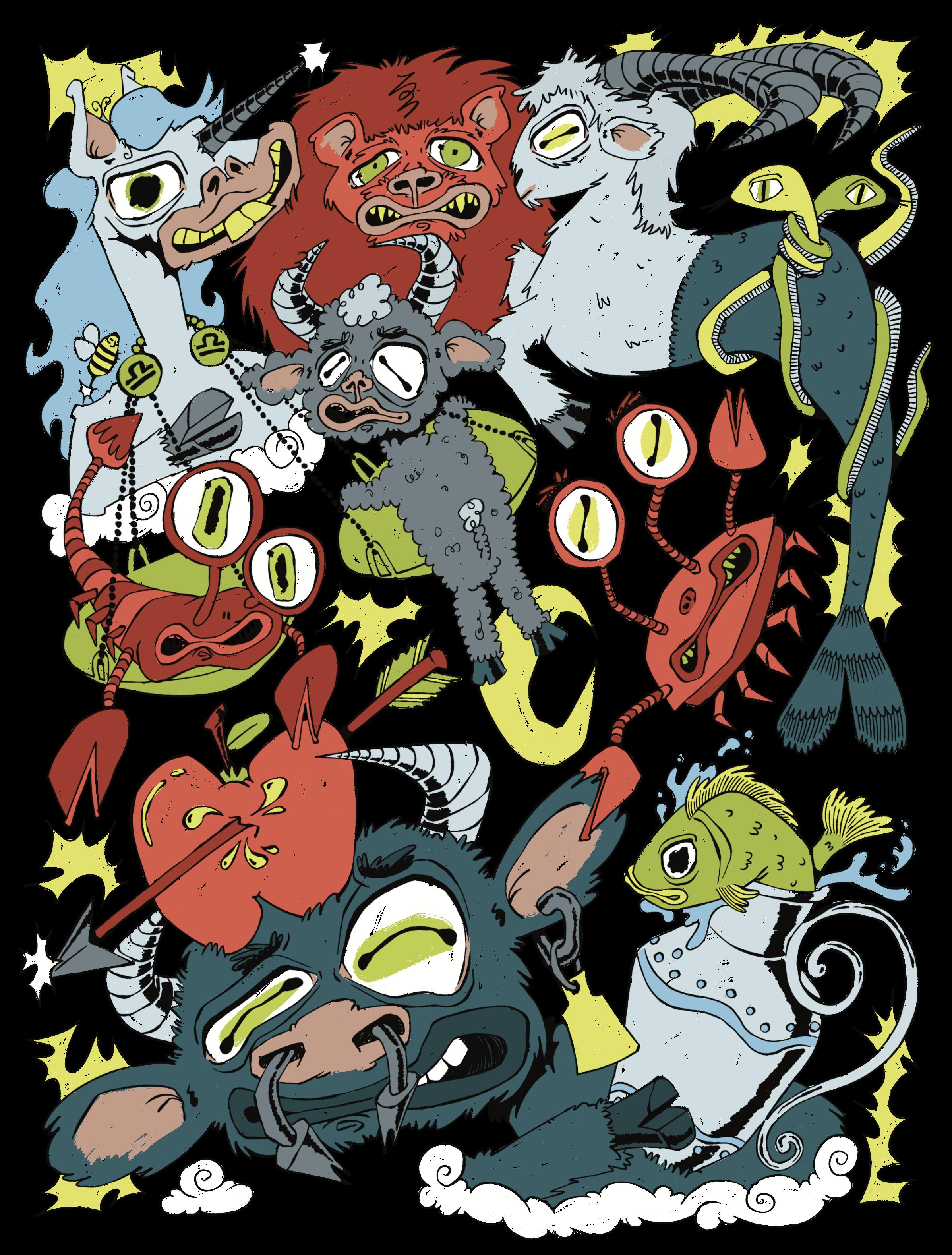
Taurus’s new moon will launch a fresh start for your bank account in the next week. Manifesting an abundance of riches flowing into your life has finally come to fruition. Spend it wisely.
This week, a fresh start will greet you and wash your hands of the procrastination station you’ve been stuck inside. It’s time to delete TikTok, stop watching reels, and lock in before it’s too late.
You’re seeking closure this week Gemini, but don’t expect to find any. Sometimes things don’t happen for a reason and you just have to let it go. Stop holding onto people who aren’t holding onto you.
Your social realm is booming this week Cancer! Take advantage of your social calendar and use it as networking events. You never know... maybe you’ll meet your next boss.
Girl. You’ve been working overtime, and this week all your hard work will fall into place. Get ready for that final hurdle and then prepare yourself for a whole lot of praise. You deserve it xx
Negative energy has been holding you back recently Leo, and it’s time to switch it up. Download Hinge, dress up, get glam, and go on a date at that expensive Italian restaurant you’ve been eyeing up. Even if your date is kinda lame, at least you’ve eaten pasta.
Recently, you feel like all your friends are the sheep in the paddocks. You’re right. So maybe it’s time to do some much-needed reflecting on your past actions. Trust me, you’re not a victim.
Plan a vacay this week Virgo. Stop off at a tropical island and catch some rays before winter arrives in Aotearoa. Aim to be the tannest baddie around. Everyone will be jealous of you.
Spend some time this week tweaking your weekly routine to enhance your wellbeing. Right now, you’re giving “I haven’t changed my undies in two weeks” vibe. It’s gross and unhealthy. Go outside and touch some grass.
Avoid social gatherings with people you don’t know this week. I can’t say what will happen, but it involves poo on the end of a stick being waved at you. To prevent smelling like sewage, stay at home.
You’ve been dreaming of starting a family recently, but girl, take a look around you. There are goldfish who have better parental instincts than you. For now, stick to house plants.
Recently, you’ve been feeling intelligent, but you’re still using ChatGPT to write your assignments. Challenge yourself to actually doing the class readings this week and you might learn something.
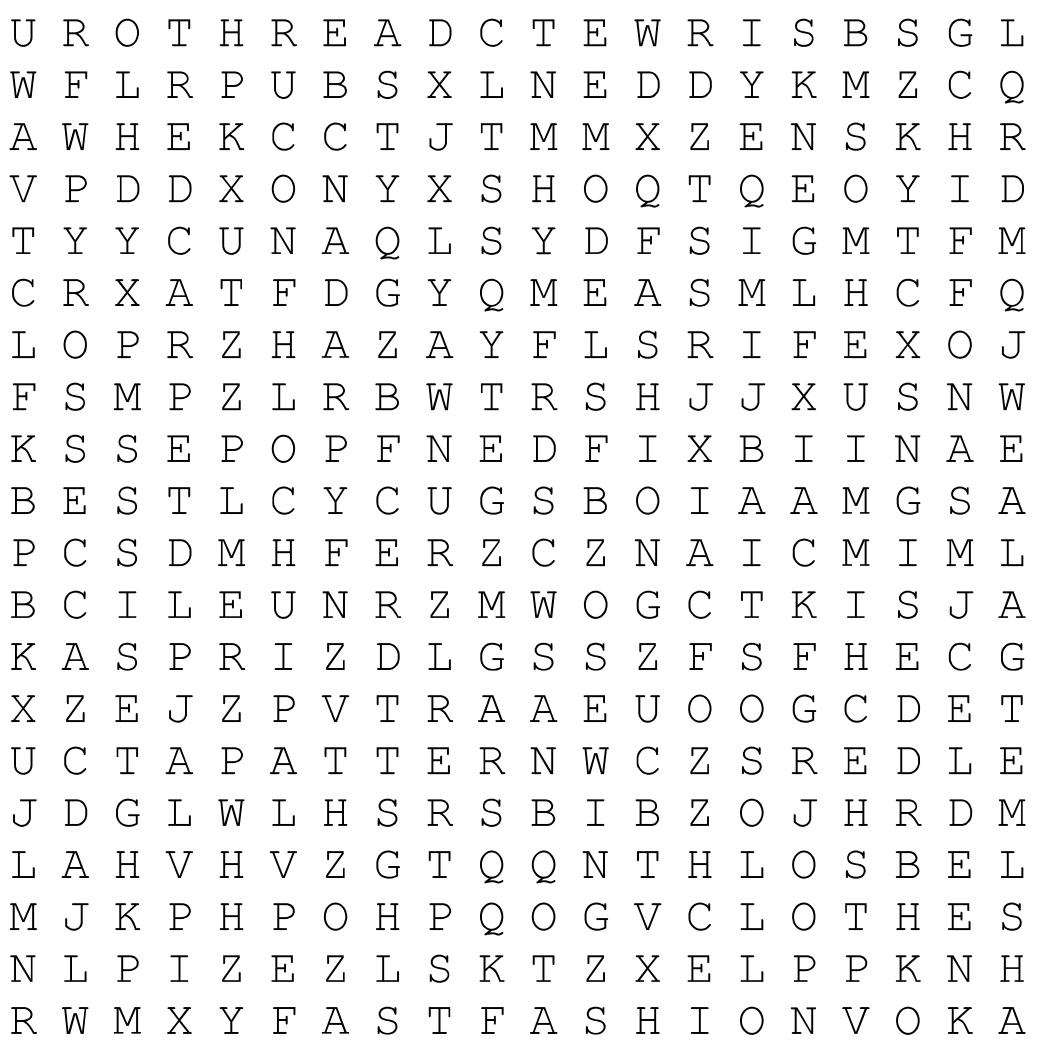
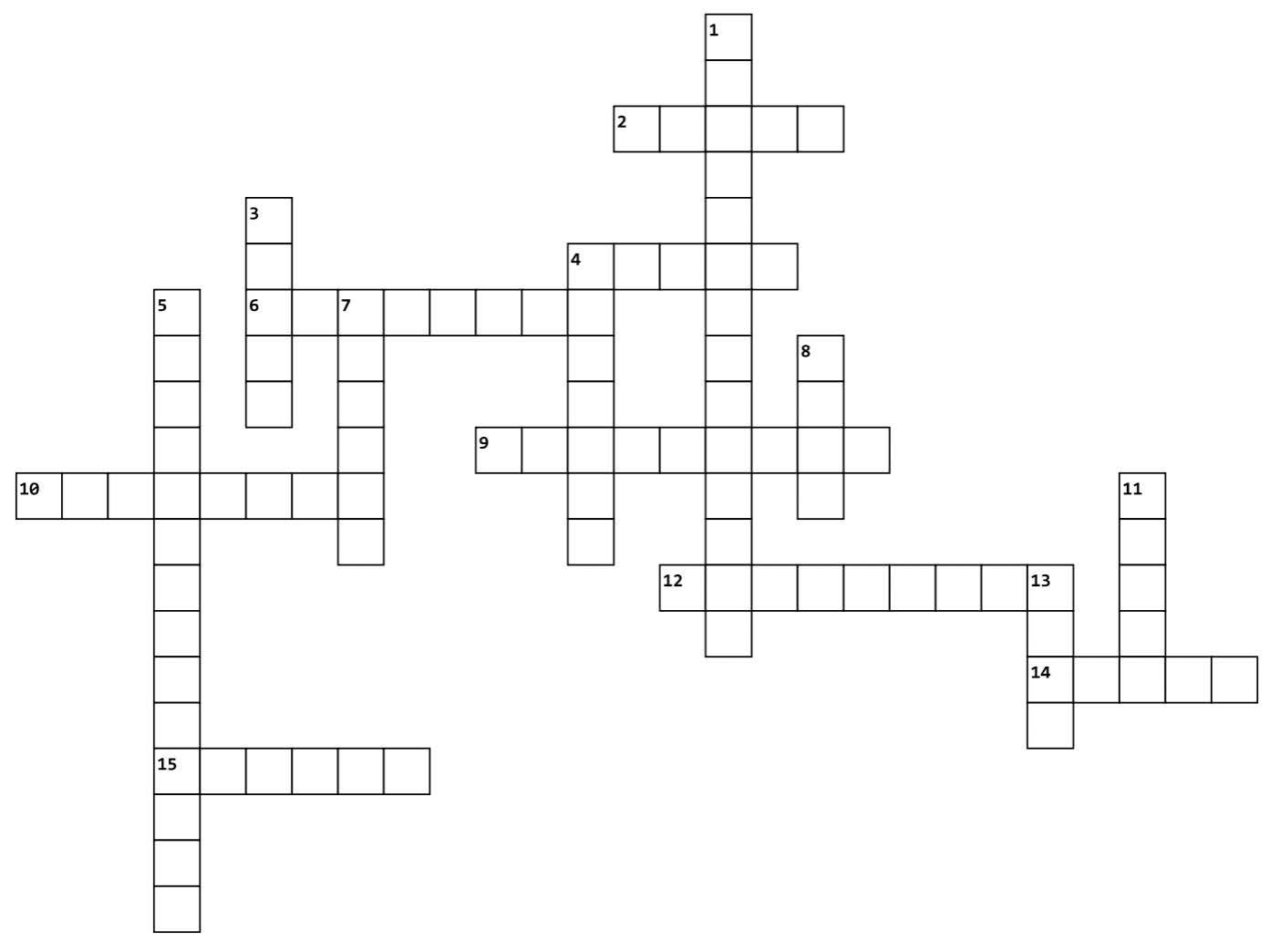
1. Iconic 1920s knee-length, straight-fit garments for women (7, 7)
3. Top selling fashion magazine (5)
4. City where the Met Gala is held (3, 4)
5. Who said this: “I like my money where I can see it—hanging in my closet”? (6, 8)
7. Fictional fashion magazine in The Devil Wears Prada (6)
8. Trend of wearing black clothing, dark makeup, and black-dyed hair (4)
11. House of ______ (5)
13. What was Lady Gaga’s 2010 MTV awards dress made out of? (4)
2. Kendall Jenner: “You’re cute _____” (5)
4. City where denim was invented (5)
6. Fashion trend of wearing functional and technical outdoor gear (4, 4)
9. Karl Lagerfeld’s cat (9)
10. Last week’s Massive theme (8)
12. Celebrity known for their extravagant Halloween costumes (5, 4)
14. Dress with a triangular silhouette (1,4)
15. Major sewing machine brand (6)
Lock-and-leave living in Albany
Explore our 1-3 bedroom unit homes in Ōkahukura Albany, just a short walk from Massey University.
Our single-level 1-3 bedroom unit homes offer a low maintenance lifestyle with 2 years of free body corp fees included for a limited time. Priced from $599k, and just a short walk away from Massey University offering the perfect lock-and-leave lifestyle.