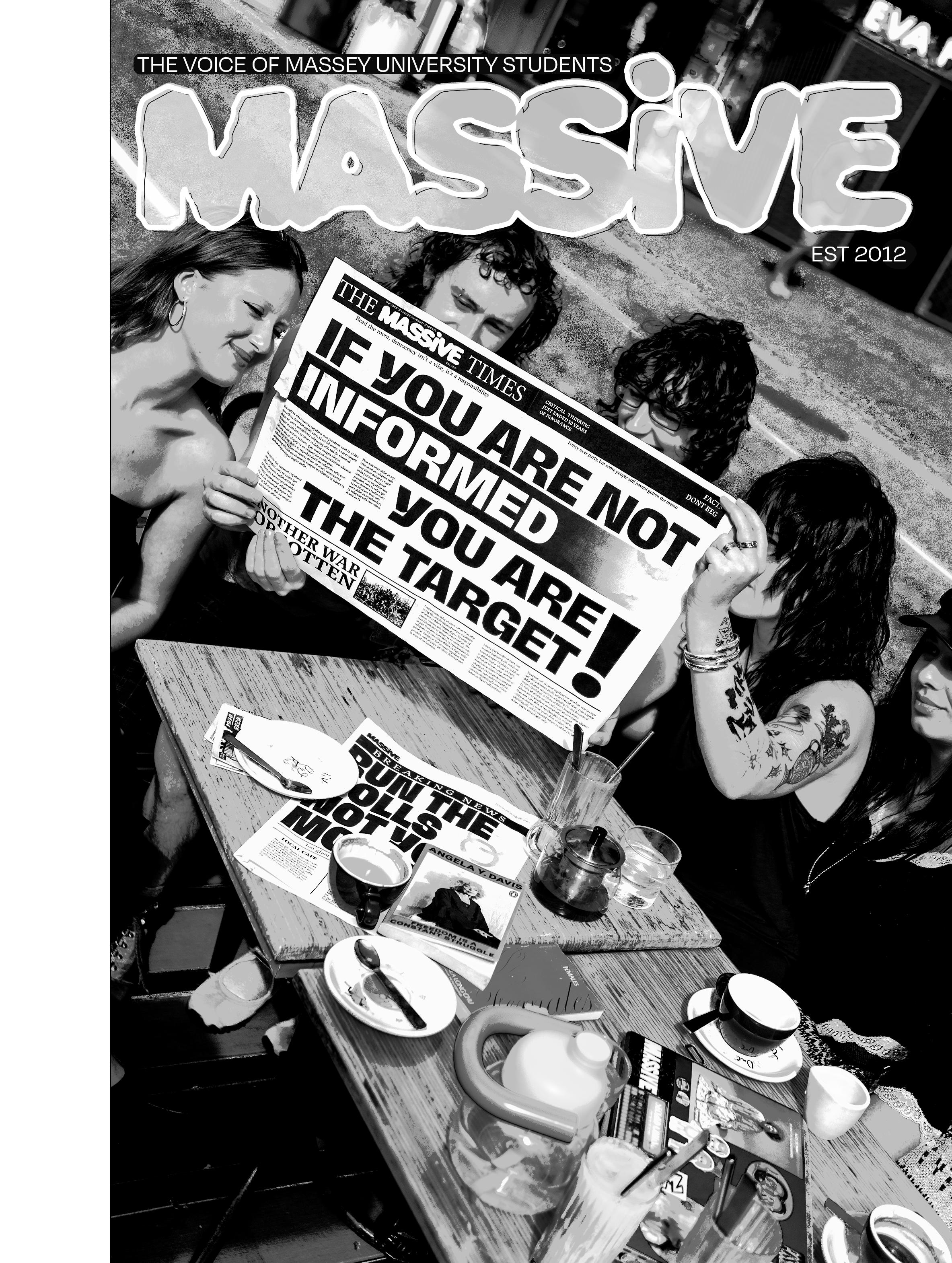
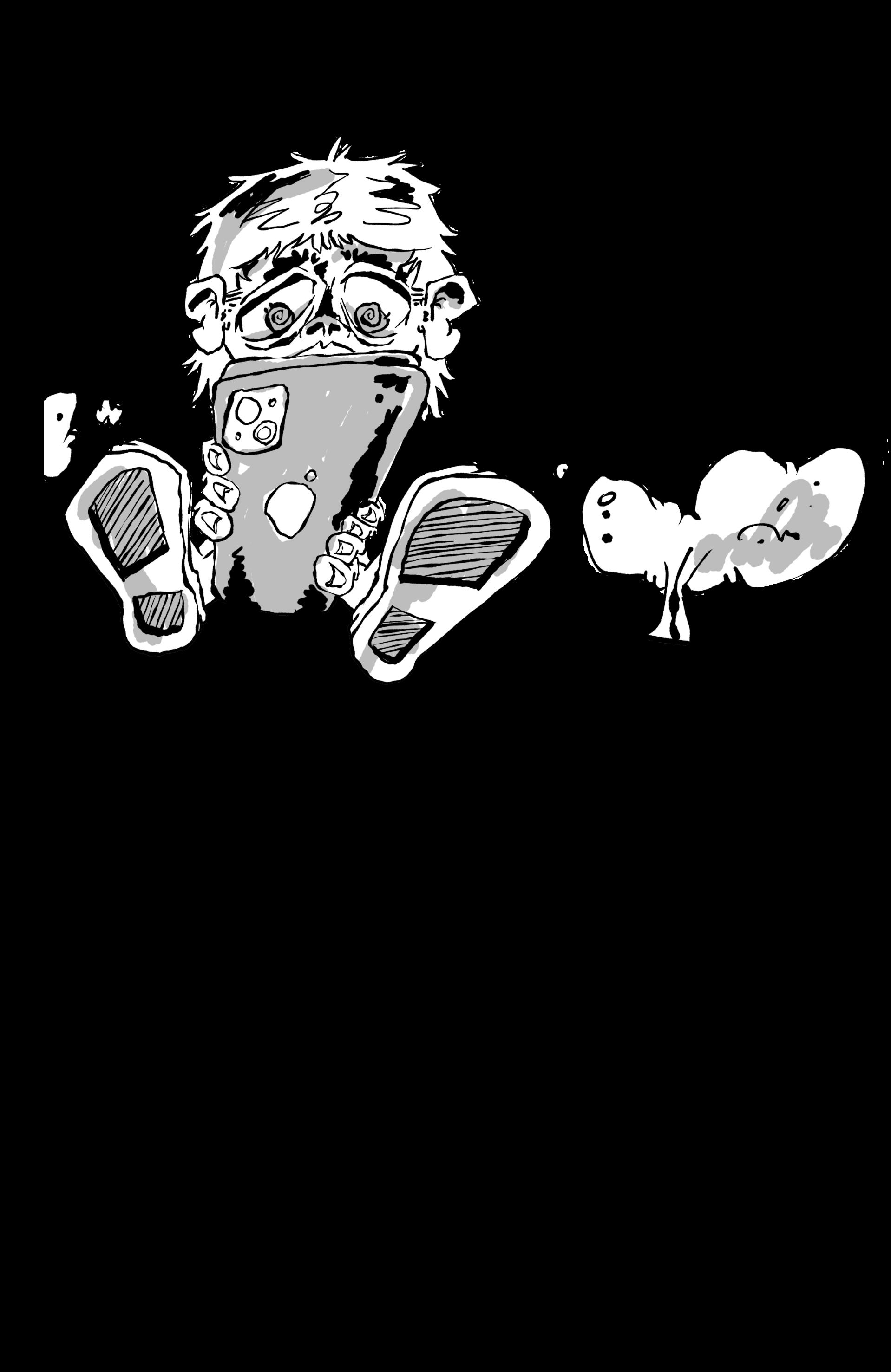
When I was 13, my mum joined an activist group fighting climate change. Of course I was proud of her. It was an issue everyone around me seemed to care about. But suddenly, the stories I saw on the 6pm news, the headlines flooding my social media, and the debates filling my classroom weren’t distant anymore. They were at home.
So, I started to tune it out.
I scrolled past story after story about our warming planet. I stayed unusually quiet in class when the topic came up. I avoided the conversations altogether.
Until one evening, I broke down. Sobbing into Mum’s shoulder, I realised what I had been doing all along: ignoring a problem in the hope it would disappear.
It wouldn’t, and it hasn’t.
Today, news avoidance is at an all-time high. The Conversation found that 60% of Kiwis actively avoid the news, many blaming the emotional toll of relentless negative stories.
Globally, the trend is similar. A Reuters survey found that 40% of people across 50 countries sometimes or often avoid the news, which is an increase of 27% since 2017. The main reason? News makes them feel worse.
That’s understandable. The news can be overwhelming. With social media, it’s now possible to doomscroll through a constant stream of crises from every corner of the world. After growing up in a family of avid news readers and three years studying journalism, I know just how exhausting it can be.
But turning away doesn’t make the world better. It makes it worse.
The news isn’t supposed to be comfortable. Journalism exists to challenge power, expose corruption, and shine a light on injustice. It gives voice to those who would otherwise go unheard. It is not meant to go down like a cup of tea and a slice of cake. It is meant to unsettle us, to provoke us, to push us to care.
Choosing ignorance is a privilege.
6 7 8 9
When we opt out, we also avoid responsibility. We stop noticing warning signs and avoid uncomfortable truths. In doing so, we create space for misinformation to thrive from online sources and forums who benefit from our disengagement.
We’ve seen where that can lead. Just look at the 2022 Covid protests at parliament.
In our world, which is facing complex, urgent challenges, staying informed isn’t optional— it’s essential. We cannot advocate for change if we don’t understand what’s happening around us.
I was lucky to learn this lesson early. I had people around me who helped me make sense of it all. And I won’t pretend it became easy, because it didn’t. It still isn’t.
But I would rather be uncomfortable and informed than comfortable and ignorant.
So instead of turning my back on climate change, I chose to engage. In 2019, I made a submission to the Zero Carbon select committee. I attended protests. I wrote
about the crisis facing our planet. I didn’t do this because I was an expert, or because it made me feel better, but because doing nothing felt worse.
Because ignoring the problem doesn’t make it disappear.
It only makes us blind to it.
As Maya Angelou once said: “We are only as blind as we want to be.”
Massive is largely funded by Te Tira Ahu Pae and the student services levy, however, remains editorially independent.
Disclaimer: The views presented within this publication do not necessarily represent the views of the editor.
Subject: Respekt Da Grind
Boo! Há! Just a little “I’ve been dead for years” joke.
So hi, my name’s Guy. I’m a fly motherfucker. Super ok at art and shit. I’m even in the Massey Art Hall of Fame. Yes, there is one. Look it up. You’ll find my work everywhere. You’ve driven past it before and not known it was mine. My weaving was presented inside the beehive (in a major way) my sculptures are everywhere. Including right outside 12 Block. You wouldn’t know though because these gardeners are just letting it grow over just like Massey’s memory of it’s fallen heroes. Look me up for reals though. I’m the shit.
NZ Media Council: Those with a complaint towards the publication should first complain in writing to the editor editor@massivemagazine.org.nz
If unsatisfied with the response, complaints should be made to the NZ Media Council info@mediacouncil.org.nz
Subject: Empty Stands in Palmy
I love Massive, and get every issue since last year. However, the magazine stand in palmy is always empty this semester :(
We’re on the case!
Dear Guy Ngan’s Ghost, Appreciate you homie! Haunt those gardeners.
Blame the people who put the magazines on stands in Palmy. It’s not a Massive team member! We’re still looking for a Massive Palmy reporter, and they would be responsible for putting mags on stands... could that be you?
The sushi place on Auckland Campus has closed! I haven’t been to see the store myself but apparently it never reopened after the summer break, which is sad because it was probably the most decently healthy thing on campus lol.
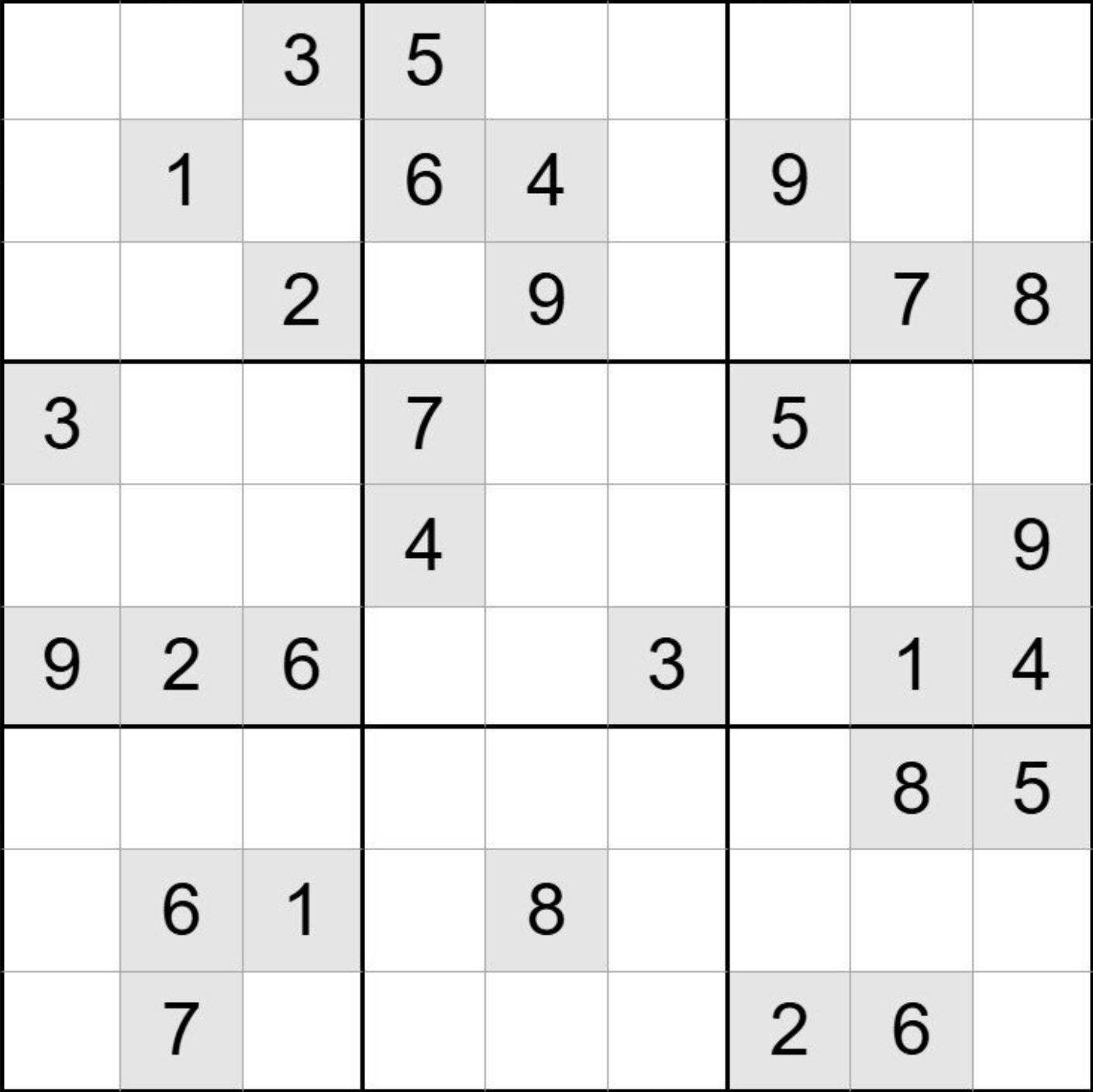
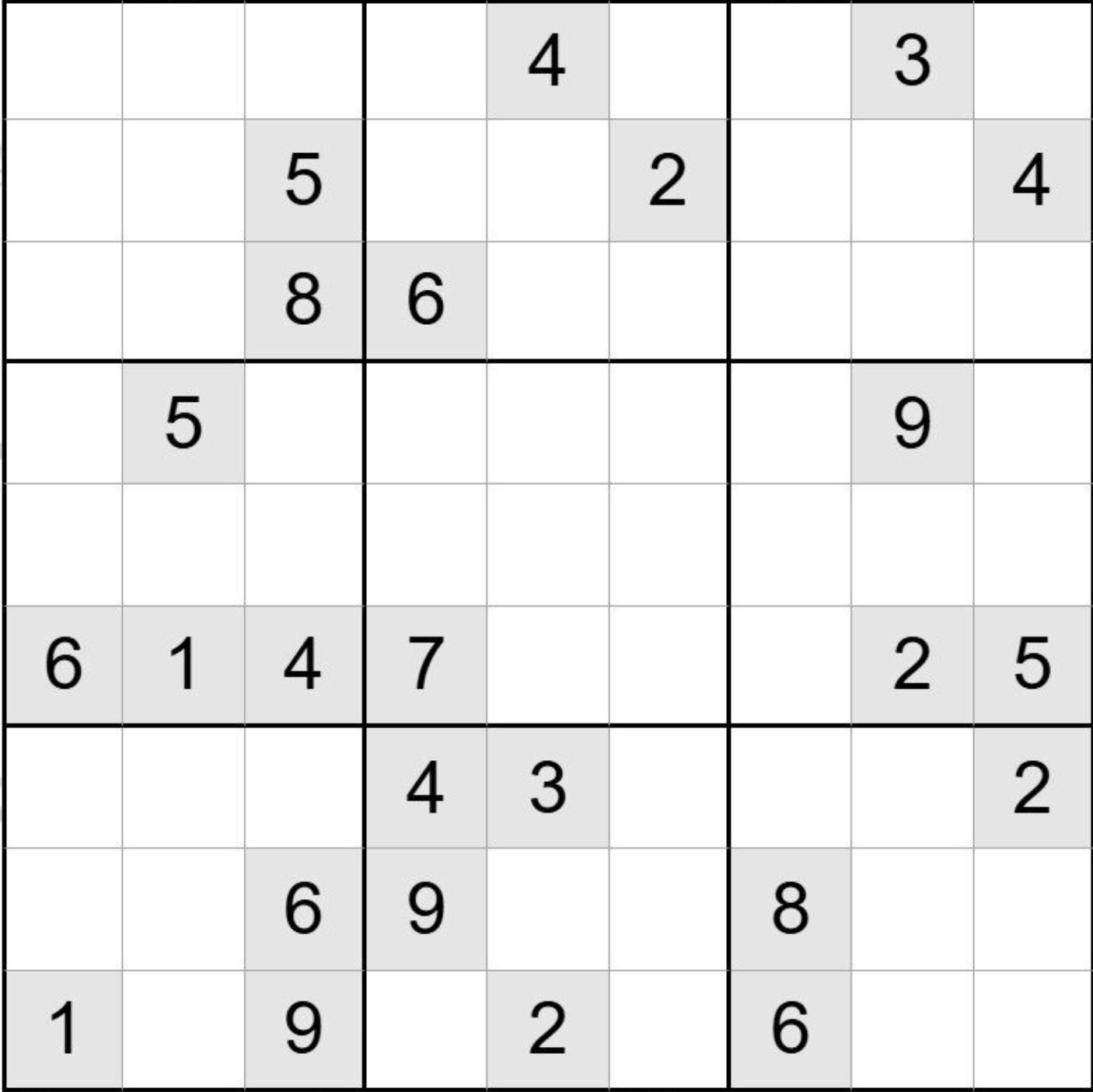
Subject: Sudoku is too hard now make it easy again
I can see you have made it harder now - It was already hard for me to begin with ! Can we meet in the middle and put it on medium mode. I refuse to suffer in silence.
I can’t win.
SUBMIT A LETTER
Kia ora everyone,
My name is Takunda Mabonga, and I am incredibly honoured to be your new Students’ Association President. I am 24 years old and grew up on a farm not far from Queenstown. So, if you ever catch me looking slightly overwhelmed by the size of Auckland, that is probably why.
Being elected to this role genuinely means the world to me. There is so much I want to do, and even before officially starting, I have already hit the ground running. I have been communicating with Auckland University’s students’ association, finding out ways to support a petition they are bringing to the government. This petition is seeking greater financial support to cover travel expenses. It is exactly the kind of issue that affects students in real ways, and I want to ensure our voice is part of that conversation. So keep an ear out for
more information on how we can make your life easier.
On a completely different note, I have also volunteered for the upcoming staff vs students netball game here on the Auckland Campus. More details are still to come on that one, but consider this your early warning: I will be giving it absolutely everything.
Being a student is one of the most unique and exciting experiences life has to offer, and I do not take the privilege of this role for granted. I genuinely cannot wait to meet each of you, hear your stories, and figure out together how I can best serve this community.
So if you see me around campus, come say hi! Let’s make it a great year.
- Takunda
GUEST EDITOR CALL OUT
ISSUE 15: ‘IMMIGRANT/REFUGEE’
Massive Magazine is Looking for Immigrant/Refugee Writers and Artists!
Massive Magazine is publishing our Immigrant/Refugee issue in week three of semester two. This issue is created by Immigrant/Refugee students and spotlights Massey University’s Immigrant/Refugee cohort.
Students can write or create art about anything relating to their culture, experience and where they are from. If you’re interested, please email editor@massivemagazine.org.nz by July 3rd.
MONDAY APRIL 20TH • 2026
Massey Excludes AI-Related Greenhouse Gas Emissions in Sustainability Reporting
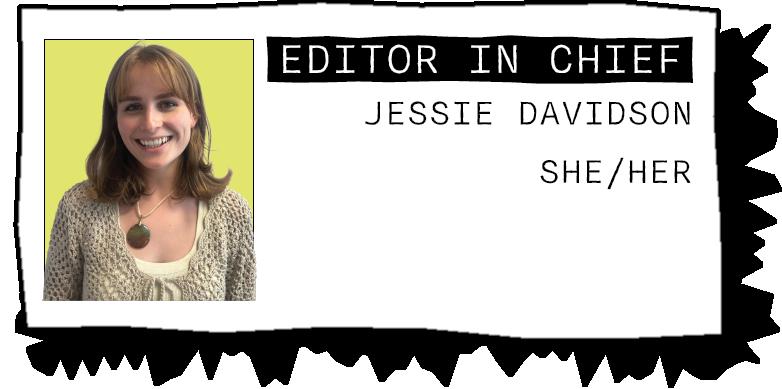
Words by Jessie Davidson • SHE/HER
Despite committing to a net zero carbon goal by 2030, Massey University is excluding AI-related emissions from its annual reporting.
In 2019, Massey’s senior leadership team approved a commitment for the university to aim for net zero greenhouse gas (GHG) emissions by 2030. Each year, a report is conducted to track its GHG emissions.
However, a Massey spokesperson confirmed to Massive that the university does not currently include information and communication technology emissions in its reporting. This includes AI-related GHG emissions.
Dr Sy Taffel, a senior lecturer in Media Studies and author of Digital Media Ecologies, told Massive that leaving AI-related emissions out of sustainability reporting isn’t “unique to Massey University. It’s endemic”.
“When we look at what any corporation includes in their annual sustainability reports, there’s a lot of bullshitting in terms of what emissions they may or may not count,” Taffel said.
“Whether it’s a university, corporation, nation state, or something else. They all use those arguments that they’re green, sustainable and care about the future.”
“We now have companies saying that they will be carbon neutral in the future even though their carbon footprint has grown enormously in the last few years because of AI.”
Information and communications technology GHG emissions are produced through digital products, such as computers and phones. This includes the manufacturing, energy used during their operation, and disposal.
Taffel said that tracking these kinds of emissions are “relatively straightforward to approximate”. But because Massey isn’t including these in their reports, “they’re not going to be counting AI emissions, which is a lot harder to track”.
“There are so many variables in place when counting AI emissions because people will be using different AI tools in a number of different ways.”
Encouragement to use AI as a tool has increased at Massey. From lecturers using AI to create course content, research groups creating AI advertisements, to introductions of AI courses.
Massey’s own staff policy for AI use stated that Massey “has a responsibility to ensure we are preparing students and emerging researchers for ... navigating and using GenAI tools”.
They stated this will be done by encouraging staff to use GenAI tools for “informed and considered uses” in “learning, teaching, research, and administrative work”.
Overall, Taffel said Massey’s embrace of AI is “problematic, environmentally and socially”.
“It’s disappointing that Massey has jumped on the AI bandwagon in a deeply uncritical way.”
Since 2018, Massey’s carbon emissions have dropped by 44% from its base number of 22,441.09 gross emissions. However, this doesn’t account for staff and student AI use and the carbon emissions this may have created.
“These [AI emissions] are currently difficult to measure with any accuracy,” a Massey spokesperson said.
Climate Impact Partners (CIP) explained that AI uses a lot of energy, requiring huge data machines which work around the clock for months. Every time they generate a response, these machines use a lot of energy and water to generate a response.
“It’s better than nothing”
According to Exploding Topics, ChatGPT received over 2.5 billion prompts per day and has approximately 5.6 billion visits per month.
All these AI prompts have created a substantial carbon cost. For instance, CIP said that researchers estimated that simply training ChatGPT-3 emitted roughly 500 metric tons of carbon dioxide.
This is roughly the equivalent of driving a car from Wellington to Auckland about 3000 times.
A Massey spokesperson said the university will compensate for the university’s AI-related emissions in 2030 by purchasing carbon credits.
While they don’t know the total amount of Massey’s AI-related emissions, the university said they will explore how to measure these over the next few years.
Design Honours Students Make Do
At the beginning of the year, Conceptual, Textile and Industrial Design honours student’s classroom space was downsized. While students have made some improvements, many are still disappointed.
Historically, Conceptual, Textile, and Industrial Design honours students have been allocated individual desks and workspaces to support their honours year.
At the beginning of the semester, Massive reported that these students were placed into two rooms, expected to share limited desks, computers and equipment. This was part of a restructure of Massey’s College of Creative Arts.
Seven weeks into semester, Conceptual Design student, Jess*, said students have found ways to make the space work better for them.
“We’ve been moving the space around to make it work more for us, and the teachers have been encouraging it,” Jess said.
To make the space work better between degrees, she said that each degree has taken specific rooms for themselves.
“The Industrial and Textile people claimed one room, and Concept students are in the other one.”
While Jess had used the space, she noticed not many other students had been.
“I think most people don’t think it’s worth the bother, especially when there aren’t Wacom tablets in it yet.”
Four new Wacom tablets are being put in the space soon, according to Jess.
While Jess felt the situation had improved, she still doesn’t think honours students should be paying the same amount as previous cohorts.
“I still don’t think we should be paying extra for the space, but I guess it’s better than nothing.”
However, for Industrial honours student Leo, the space hasn’t had any noticeable improvements.
Words by Ellice Laurie • SHE/HER
“There hasn’t been any noticeable changes, there’s still the same amount of computers and desks, and the printer doesn’t even work.”
He said although the downsize is inconvenient, the space is workable at this point in the year. However, he felt that later in the year is when students will feel the downsize.
“Later on in the year, when people are actually making things and trying to go between the workshop and classroom and need to use computers for 3D modelling and rendering, it will become a real issue.”
Leo said that although the new classroom has been hard on the students, the real issue is how the university has approached the issue.
“I think that the students aren’t really upset about the downsizing itself, as it was inventible, but more so how they have managed it without the consideration of our needs.”
For students who are struggling to access equipment or specialised spaces, please contact your course coordinator or technical team.
*Name changed for anonymity
Te Tira Ahu Pae Re-Registers as an Incorporated Society
Words by Jessie Davidson • SHE/HER
Te Tira Ahu Pae has officially re-registered as an incorporated society after spending a year reworking and strengthening how they operate.
An incorporated society is a registered, not-for-profit legal entity for groups such as sports clubs, cultural groups, or student associations. Starting in October 2023, incorporated societies had just under three years to reregister and change from the Incorporated Societies Act 1908 to the 2022 Act.
As part of the re-registration, Te Tira Ahu Pae took a proper look at how it operated. They updated governance, decision-making, and overall structure to line up with legal requirements and run better.
The team behind this update was 2025 general president Chiavanni Le’Mon, manawhakahaere Ripeka Paapu, and Pasifika co-presidents Caroline Tatin and Mary Ieremia. Pāmamao disability student rep Alhanis Jacobsen and Ōtehā disability rep Eloise Fleming also contributed to create a sustainable foundation for Te Tira Ahu Pae.
Le’Mon told Massive that this is a “huge milestone for Te Tira Ahu Pae”.
“We had four women presidents leading this last year ... and I think we achieved a lot.”
Le’Mon said that she wanted to ensure that Te Tira Ahu Pae was a trusted service for Massey students—particularly after a challenging couple of years.
“We hope this will set the foundation of Te Tira Ahu Pae becoming a trusted space for students to come and share any issues that they might be dealing with,” she said.
She pointed to the recent changes with distance exams, where distance students now must sit their exams in person instead of online.
“To see all the queries and anxieties come through, it was important to ensure that communications were going out and to ensure that people were being supported in this time of change.”
As Le’Mon finished her time as president of Te Tira Ahu Pae, she hoped the reregistration and remodel of the association built confidence within Massey students.
“It’s about ensuring that Te Tira Ahu Pae builds an image where Massey University students across all different communities can feel confident that we will represent and support them through their journey of study.”
In a press release, a Te Tira Ahu Pae spokesperson said that with the registration confirmed, they are now in a stable position.
“[We] can focus on what it’s here to do, representing and supporting the Massey student community now and into the future.”
Level Four of the Auckland Library Closed
Words by Maya Trotman • SHE/HER
The Ōtehā Auckland campus library is closing off its fourth level to students as the School of Built Environment gets ready to move in.
Levels three, four, and five of the Ōtehā library are popular silent study spaces for students and are often crowded during exams and assignment deadline peaks.
From Thursday 30 April, level four has closed to all students seeking a place to study. Now, it will be the new residence of the School of Built Environment, housing staff and postgraduates.
One student said that while she normally studied on levels one, two or three, she felt bad for others.
“There’s a lot of students that this will be really frustrating for.”
A Massey spokesperson told Massive that these plans are part of the Ōtehā Auckland Space Consolidation project. This is a project intended to improve the utilisation of Massey spaces.
They explained that the Auckland campus has “more space than we need, so we are exiting from some buildings” to enable Massey to lease space to external tenants.
This work is happening across all three campuses to encourage students and staff to “undertake the same, or increased level of activity” in less campus space.
Earlier this year, Massive reported that location changes for Massey’s Business school and Mathematical and Computational Sciences School also occurred as part of the project.
Last year, Massey signed a five-year contract which leased out part of Auckland’s Student Central building to the NZ Police.
On Wellington’s campus, the College of Creative Arts was downsized. Massive reported that some programmes were pushed out of their former buildings entirely.
For Auckland students, a Massey spokesperson said the rest of the library has been reorganised to provide students with as much study space as possible. Level three and level five will continue to be available as silent study spaces.
MASSIVE IS HIRING 2 x NEWS REPORTERS
Do you enjoy scouring news sites every morning or know all the latest gossip on campus? You’d fit right in as a Massive news reporter. We have our Manawatū and Distance news reporter role up for grabs!
As a news reporter, you’ll be responsible for keeping students in the loop about what’s happening on your respective campus. You will track down stories, investigate and conduct interviews to produce one news article per week.
To apply, send your CV, cover letter, and three to five examples of your writing to editor@massivemagazine.org.nz with the subject line ‘Application for insert role here’. Don’t be shy, any examples of writing will do from an essay from class or a poem from your note’s app.
Both roles are 4 hours per week.
VOTE!
With the general election coming up, it’s the perfect excuse to start yelling from the rooftops to,
For many of you, it will be your first time voting. This is as exciting as it is overwhelming, and it can be hard to know where to start. Luckily for you, Massive is here to kick start your hot girl democratic journey.
To make it even easier, we’ve sorted out how each party will affect different Massey degrees. While the parties are yet to release their policies for this election, here’s what to expect based on their previous stances...
Leader:
Chris Hipkins
Well-paying
and action on the cost of living.
Nursing
Picture this: You’ve had a suspicious lump on your lower back for a week now, and it’s started to smell. You want to go to the doctor, but you also don’t want to break your bank. Well, Labour is trying to combat that... emphasis on trying.
In October 2025, Labour proposed a policy that would grant all New Zealanders three free GP visits per year. The policy intends to increase accessibility for patients in need, however, it disregards the needs of healthcare workers.
In 2024, there was an average nationwide shortage of 587 nurses per shift. Choosing
to stretch an already stretched workforce isn’t the way to go. Labour should be aiming to fix the main problem first by funding more nurse and doctor placements.
Aotearoa’s job market is screaming for help, and Labour wants to answer.
With a record number of Kiwis fleeing to Aussie for work, Labour’s proposed ‘Future Fund’ is aiming to keep them here. Through investing in Kiwi infrastructure and businesses, Labour is aiming to create a
Words by Ellice Lawrie • SHE/HER & Grace Byrne • SHE/HER • Ngāti Porou
home with good jobs that Kiwis will want to be part of.
To all those entrepreneurs out there, Hipkins wants to invest in you before foreign investors get in first.
Much to the disdain of city folk, National has always had a strong focus on farmers.
After claiming that Labour was launching a war on farmers for banning live animal exports, putting a price on agricultural emissions, and regulating water quality, National went to the frontlines. The party’s ‘Getting Back to Farming’ package focuses on easing regulations on farmers, fueling rural economies, and localising decision making.
Now cows can legally shit in our rivers!
Amidst our rural health crisis, National has also pushed to train more rural medical professionals. A new medical school is being established at Waikato University and is set to welcome students from 2028.
Soon enough, farmers will access medical care easily!
Marama Davidson & Chlöe Swarbrick
A fair economy, sustainability and environmental justice, honouring Te Tiriti o Waitangi, encouraging action from local government and communities, and ensuring equality in decision making.
To get our free doctor visits, Labour wants to install a policy called ‘Capital Gains Tax’. This would introduce a 28% tax on any profit made when selling a commercial or residential property. However, farms are excluded from this tax.
Speaking to RNZ, Hipkins said: “Farmers work hard. We want to get out there and encourage people to work hard.”
Translation: Chris Hipkins is scared of upsetting rural voters and doesn’t want to annoy them. But commercial businesses? They apparently don’t work hard enough and deserve to get taxed.
General rule of thumb: if someone has a facial piercing, you’re not likely to see them voting blue.
Last year, National released a strategy last year to make New Zealand a global creative powerhouse. Their creative and cultural strategy, ‘Amplify’, intends to support NZ arts by:
Arts Business
• Making arts funding easier to access.
• Developing creative education work programs.
• Identifying and updating regulations limiting creative sectors.
• Supporting the uptake of new technology in creative sectors.
Recently, National has been criticised for funding big names instead of local New Zealand artists. For example, the government used the major events and tourism fund to help fund Robbie Williams’ NZ tour in New Zealand this year. While National’s staying tight lipped about how much of this fund they actually used, I bet it would have done wonders for a number of local artists.
Rebuilding economy, health, restoring law and order, education.
While the arts might not be Nationals’ number one priority, business certainly is. If you have some proper dough in your pockets, National wants you so bad.
During their time in office, National delivered record trade results. They increased trade exports by $12 billion, secured a United Arab Emirates trade deal, and initiated trade talks with India.
Don’t worry students, even though the cost of living keeps rising, trade talks have been initiated.
Christopher Luxon
Vet Arts Business
Hey Vets! The Green Party love animals just like you! How lucky!
Their animal welfare policy is intended to ensure the welfare health of all NZ animals. They want to start a department of animal welfare who’d regulate who can own a pet, who can breed animals, and more.
The Greens want to uphold the kaitiaki role and whakapapa connections of Māori to animals.
Under the Greens, the arts would flourish. Their proposed arts policy seeks to provide artsy educational opportunities in schools and communities. This would also increase platforms and resources for the arts, which is needed following the recent closure of Te Auaha.
Under this policy, arts, culture, and heritage would get the spotlight they’re itching for.
Surprise, surprise! The left wing does business too!
Our businesses are struggling through our rocky economy. The Greens want to change this by strengthening relationships with businesses, promoting local, and honouring Te Tiriti business practices. Business standards would be more ethical, meaning your boss can’t get away with giving you a 10 minute break on an eight hour shift.
Basically, they want positive social, ethical, and cultural business practices.
Remember when Labour banned live animal exports? Well NZ First wants to reverse the ban. In fact, they’ve already tried and failed during their time in coalition. Some say the exports are animal abuse, but Winston Peters says: “money, money, money!”
In 2023, they stated that they would remove Landcorp state owned enterprises and turn it into a crown entity for share farming, sharecropping, and sharemilking. This is to help first time farm owners and transitons of farm ownership.
Farming Arts Business
NZ First’s lack of art policies isn’t surprising. I don’t think Winston is the type to break it down at a bunker rave. But nonetheless, he’s still promised to secure and future proof RNZ Concert.
NZ First also asked that government agencies use woolen insulation in new buildings to support sheep farmers. Random side quest from Winston.
So, to the big fans of woolen insulation and live animal exports, I think you know who you’re voting for.
Leader:
David Seymour
Main Priorities:
Economy and cost of living, law and order, health and education, defending equal rights, hunting and firearms.
Do you wish it was a little easier to fire your employees? NZ First does too! They want a full reinstatement of the 90-day trial program. Good old Winston, taking me back to the good old days of training wage exploitation.
They also want to get rid of regulations that prioritise protecting the environment over making profit. It’s another one of Winston’s wet dreams that makes business money, but screws everything else up.
Leader: Main Priorities:
Fair democracy and equal citizenship, building a prosperous nation, protecting community and country, sovereignty and responsible government, selfsufficiency and pragmatic environmentalism.
Winston Peters
Māori & Pasifika Students
ACT believes they’re big on equal rights. To reinforce this, they want to take away support for those in Māori and Pasifika communities. Because that’s super equal!
ACT proposed a bill in March last year wanting to take away race-based scholarships for Māori and Pasifika students. According to Parmar, celebrating cultural successes is “divisive”.
Right... like racism isn’t divisive or anything.
Agriculture
You might have to start wearing camo on your hot girl walks, because ACT wants to increase public land for hunting. Suddenly, you’ll become target practice on your favourite walk.
My mind doesn’t go to firearms when I’m thinking about how to make a positive impact on the environment, but David Seymour’s does.
ACT New Zealand wants to rewrite parts of New Zealand’s firearms legislation, including changes to laws introduced after the Christchurch mosque shootings. Those 2019 reforms banned most military-style semi-automatic weapons and later led to the creation of a national firearms registry.
With this change, ACT is advocating for greater access to public conservation land for hunting, arguing that hunters should have a stronger role in pest control and land management.
That doesn’t mean you’re about to become target practice on your walk. However, it does mean hunting access could increase in some public areas, depending on how policies are implemented.
For now, your hot girl walk is safe. But maybe keep some camo on hand.
Business
ACT wants to introduce a new tax system that would collapse New Zealand’s current structure into just two income tax rates, with the top rate dropping to around 28% and the bottom rate at 17.5%.
The result? Higher earners would see the biggest tax cuts, while lower-income earners are likely to see far less benefit by comparison. It’s a policy which favours those at the top of the pay scale, while ignoring those at the bottom.
For a party that raves about equal rights, it’s odd that they’ve leant on blatant classism. But hey, if you’re stinking rich and ignorant, this could be the party for you.
Leader: Main Priorities:
Rawiri Waititi & Debbie Ngarewa-Packer
Whānau ora, mana motuhake, protection of our taonga tuku iho, to uphold te tiriti o Waitangi, and tangata whenua.
Business
For Te Pāti Māori, farming should follow Māori tikanga. Unlike right wing parties, this party has a strong focus on regenerative and organic farming practices.
In 2023 Te Pāti Māori released their kai sovereignty policy. This stated that land for urban and rural food farms would be set aside, and they’d invest $100 million into an agricultural innovation fund. They are focused on preserving indigenous plants and the whakapapa of our ecosystems.
Basically, it’s a long-term approach to farming. Good outcomes, just not the kind that arrive before your next assignment deadline.
While other parties are focused on how the arts can make them money, Te Pāti Māori wants to uplift Toi Māori to reclaim how Māori culture is portrayed.
Instead of spending our tax money on Robbie Williams (sigh), they’d invest money into the development and protection of Toi Māori. Basically, under Te Pāti Māori, Māori art will receive funding.
Bad news for rich business baddies, Te Pāti Māori wants to tax the rich.
I’m sure there are heaps of students with more than $2 million in their bank accounts, and they should beware. In 2023, the party proposed its tax policies that would see those with a net wealth over $2 million get a 2% tax. Those with $5 million would have 4%, and $10 million would get a whopping 8% tax.
Not only will the rich lose money, they also won’t be able to get money through fraud (poor babies). Te Pāti Māori wants to invest $500 million into the Serious Fraud Office and Inland ro investigate the $7 billion lost to tax evasion each year.
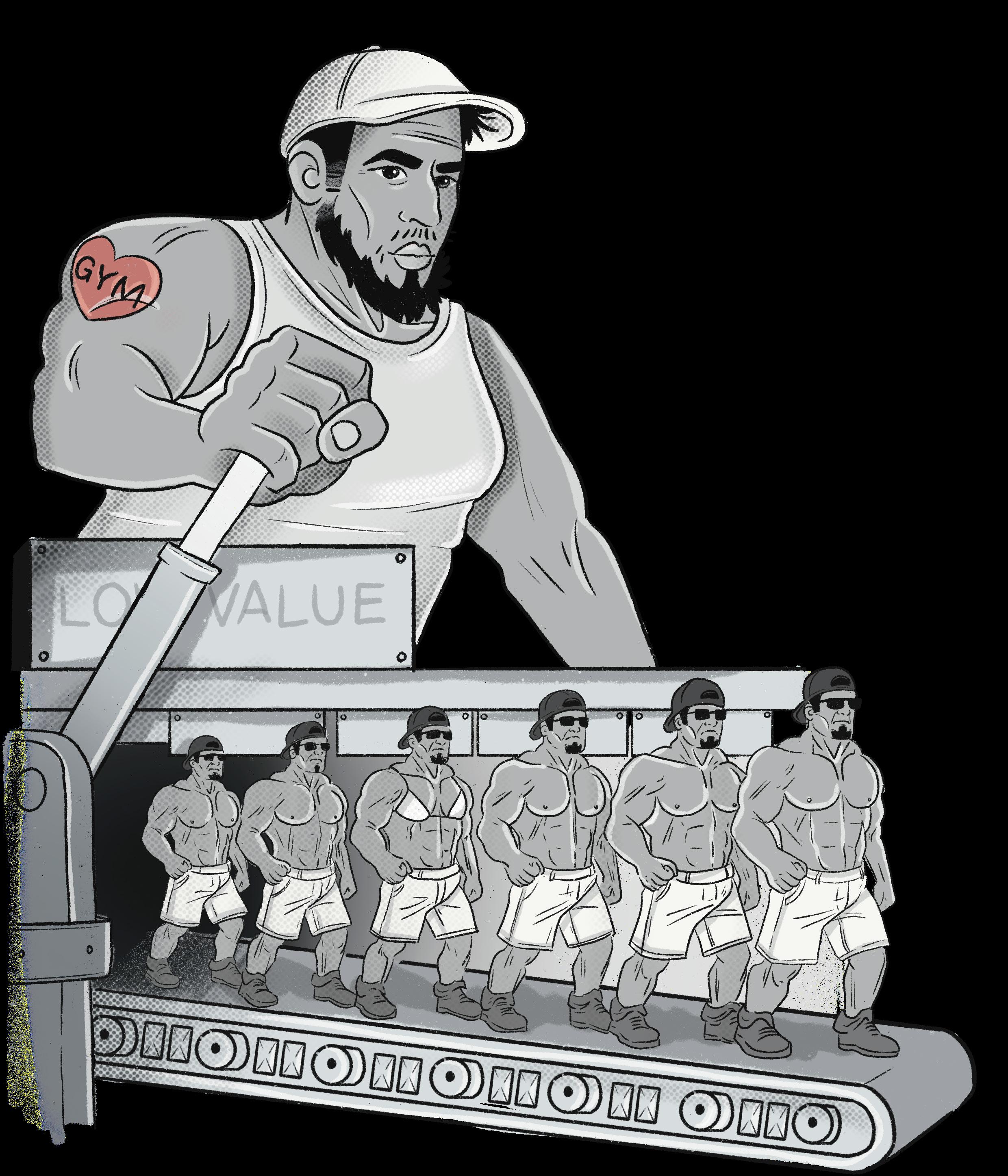
Decoding the language INSIDE THE MANOSPHERE
Nah bro, you’re such a low value male. You couldn’t even fuck a 5/10 dishwasher if you wanted to. I was mogging you even before I started looksmaxxing. A femoid’s never going to crack a beta cuck like you.
ost Millennials and above may have a stroke attempting to decipher this dictionary. For Gen Z and Alpha, we’re probably already fluent whether we like it or not. Largely deriving from incel forums on 4chan, 8chan, and Reddit, the manosphere has formed its own
In the weeks following the release of Louis Theroux’s Inside the Manosphere, conversations about manfluencers and the red pill
Throughout 2022, manosphere influencers such as Andrew Tate, Sneako, and Fresh & Fit were at the forefront of our feeds. But now, four years deep into this extremist ideology being mainstream, we have enough language to truly
Words by Lee Judi • THEY/THEM
Art by Brianna Grapes • SHE/HER
Theroux explores how these figures determine their value. Specificities about income, height, gym routine, and sexual partners are the main statistics that are prioritised.
When men judge their worth based on these qualities, it’s clear that something inside of them doesn’t like what they see when they look in the mirror. Achieving these standards of masculinity give these men the idea that they have the entitlement to women.
Critical sociolinguist and associate professor, Julia de Bres, says manfluencers are judging themselves based on the pyramid of hegemonic masculinities. In the pyramid, subordinate and marginalised masculinities are at the bottom, and hegemonic masculinities are at the top.
When manfluencers judge themselves on the spectrum of low and high value, they are really judging themselves based on the pyramid of hegemonic masculinities. This is the scale of an idealised concept of manhood. Rich macho dudes at the top and feminist soy boys at the bottom.
De Bres explains how these ideas are nothing new—but have been repackaged.
She says, “We’re in this reactionary phase where people come up with new terms for ideas as old as time because we’re still stuck in the framework of hegemonic masculinity.”
Prominent manosphere influencer, Justin Waller, warns his one million followers on Instagram: “You don’t think she won’t leave you for that buff dude? I promise you bro, she will.” This is kind of rhetoric around the ownership of women has been around for centuries.
De Bres explains that this construction of new words makes these ideas new and revolutionary, particularly for young men.
She says, “The newness of that internet slang is what attracts people.”
By using the term low/high value, they hide what they’re really asking: Am I good enough? Am I deserving of love simply because of my proximity to the top of the pyramid?
In the manosphere, there is a rule book to abide by that will promise you a romantic relationship based on your position in the pyramid. Although, the rule book is based on a harmful metric and a promise that doesn’t come to fruition.
Myron Gaines, one half of Fresh & Fit, believes he meets the standards of a high-value male. This means he believes he has the right to ownership over a woman. He says on TikTok: “As the man, you are the leader. You are the dictator.”
These ideologies often find and target vulnerable and insecure men and draw them in with shiny new language. People crave intimate relationships, and men have been shown a way to obtain one using language that appeals to them. Ironically, it’s extremely harmful and doesn’t even create the true human connection they seek.
When interviewing a fan of Justin Wallers, Theroux exposes the lack of self-confidence these men start off with.
The fan says: “As a man, you’re born without value. You have to build it.”
This clearly illustrates the self-conscious mindset these men operate from. Believing they are worthless until they get rich and buff reveals their insecurities. They will fight to continue to meet unrealistic standards, constantly fearful that their woman will be stolen by a man of ‘higher value’.
Poster boy of the manosphere, Andrew Tate, directly spoke about jealousy in a post on X: “I’m fiercely protective of my women. I’m not insecure. I’m not jealous. I’m territorial and she’s MINE. She speaks to zero men but me, my team or her family.”
The word ‘territorial’ directly implies a defense. If Tate isn’t jealous, then what is he defending his relationship against? What does another man have that he lacks?
His entire statement is an oxymoron to how we know jealousy operates.
The term ‘mogging’ often arises in videos about dating in the manosphere. It means to dominate another man by being bigger, fitter, and better looking than him. Translation: to mog someone is to create jealousy. To feel mogged is to feel jealous. Men at the top of the pyramid mog the men at the bottom.
As de Bres explains: “These are new terms, but the ideas are old.”
These male influencers know that jealousy is an identifier of insecurity. Tate said it himself in his declaration: “I’m not insecure. I’m not jealous.”
To avoid accusations pointing to insecurity, manfluencers have created new terms to escape allegations of weakness and attract young audiences.
The manosphere’s grasp on contemporary colloquialisms is normalising bigotry and removing the autonomy that women have fought to gain—and we are addicted to it.
Words by Lena Chambers
Homelessness is at an all-time high in Aotearoa. Instead of helping those who need shelter, our government is pushing them out of sight.
In February this year, justice minister Paul Goldsmith and police minister Mark Mitchell announced the new move-on orders. This legislation gives police the power to move people on the streets and arrest them if they breach the order.
Specifically, these orders require a person to leave an area for up to 24 hours. These orders apply to people aged 14 and older who are begging, rough sleeping, or indicating an intent to inhabit a public place.
The aim of this amendment is to target disorderly and antisocial behaviour which harms local businesses.
Simon Sherlock, also known as ‘The Sign Man’, lives and sleeps on the streets. He’s known around Wellington for his colourful and positive signs which he makes for anyone passing by. Speaking to Massive, he says he supports the move on orders to deal with disruptive people.
“You can’t have someone sitting outside your shop screaming and yelling in groups, harassing customers, begging for money, smoking weed,” he says.
“There has to be a time and a place for public and police to say enough is enough.”
Because Sherlock has a busking license and leaves the city centre to sleep, Sherlock isn’t affected by the orders. He says he also has good relationships with security guards and police.
“I’m friends with the police … And if they did decide to move me on, I’d come back.”
For rough sleeper Dwane, he’s already been moved on after being found sleeping outside a building in town.
He says, “I was told I wasn’t allowed to sleep in the CBD, [so I went to the] waterfront.”
In March, The Post reported that officials estimated between 9000 and 15,000 would be moved-on each year. They warn the orders will make homelessness worse, saying an estimated six people will be
imprisoned every year and up to 818 cases taken to court.
Minh Van, manager of Mint Nails & Beauty on Left Bank, believes the orders are evil even though they impact her business.
“Of course it’s not good for business. But that’s not a reason to do those things to them,” she says.
Van believes that without proper help, these people could end up in prison. This would make it harder for them to get jobs and get off the street.
Currently, the penalty for breaching the order is a fine of up to $2,000 or a maximum three-month imprisonment.
On average, it costs the government $150,000 per year to imprison one person. Whereas, associate professor Nevil Pierse told Stuff that it would only cost $20,000 per year to house and support a homeless person.
Currently, there aren’t enough houses available in Aotearoa, and frontline agencies are under resourced. This creates a run on effect which is keeping the homeless without homes. Instead of focusing on solving these issues, our government is pouring money into hiding our homeless.
Other Wellington businesses owners collectively agree that while homelessness is an issue, the move-on orders isn’t the solution.
Jeremy Tailor, owner of Slow Boat Records, believes the orders are impractical and inhumane.
He says, “It’s an ambulance at the bottom of the cliff stuff. It’s persecuting people who are already struggling.”
Jane Baxter, co-owner of Abstract Designs, says the rise of homelessness has affected her business and the vibe of Cuba. However, she is not enthusiastic about the orders.
“A move on is not the solution,” she says, “But as a business owner yeah I want to have my door open and have my customers feel safe to come in.”
She says there are different types of homeless people. Some desperately need
support while others are just making trouble.
“You’re just moving the problem and making it someone else’s issue. It needs to be solved, rather than moved.”
In March, Willis street’s St Peter’s Church held a community hui protesting the move-on orders. Speaking to those gathered, Wellington city missioner, Reverend Murray Edridge, challenged the National’s Party’s promises to support rough sleepers.
“Where is that [support]? We’re better than this as a country.”
Laurie Foon, councilor for Paekawakawa Southern Ward, tells Massive this isn’t what her community wants. She opposes the conflation of violent behaviour and poverty, saying that there simply isn’t enough government funding.
“There are no homes for them. There are no resources for them,” she says.
“This outcome that we have of growing homelessness is a result of punitive policy making from the word go. That’s where we need to invest.”
Most of these people are like me, like you. They’ve had homes. They crave homes. They need warmth, comfort and safety. Especially women, youth and people with mental health conditions. These people need support. Not to be hidden and villainised.
A solution will not appear at the wave of a wand. People are homeless because of difficult life situations, layers of punitive policy, funding cuts, changes of leadership, mental health, and rising costs. This is also how they will get off the streets.
It’s not simple. It’s not fast. We have the agencies in place, led by people who deeply understand this issue. They just need to be given support from the government.
Nationals’ track record on dealing with the homeless issue is not endearing. The move on-orders are another ineffective, costly, and violent solution.
It’s leaving our homeless whānau to be kicked like cans down the road.
TIMES THE SATIRICAL
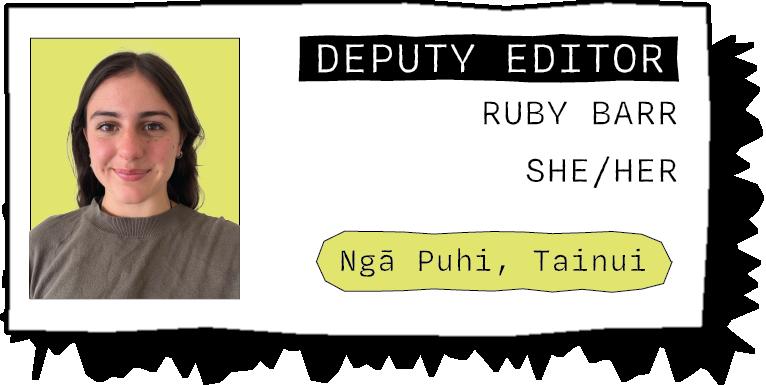
WORDS BY RUBY BARR • SHE/HER
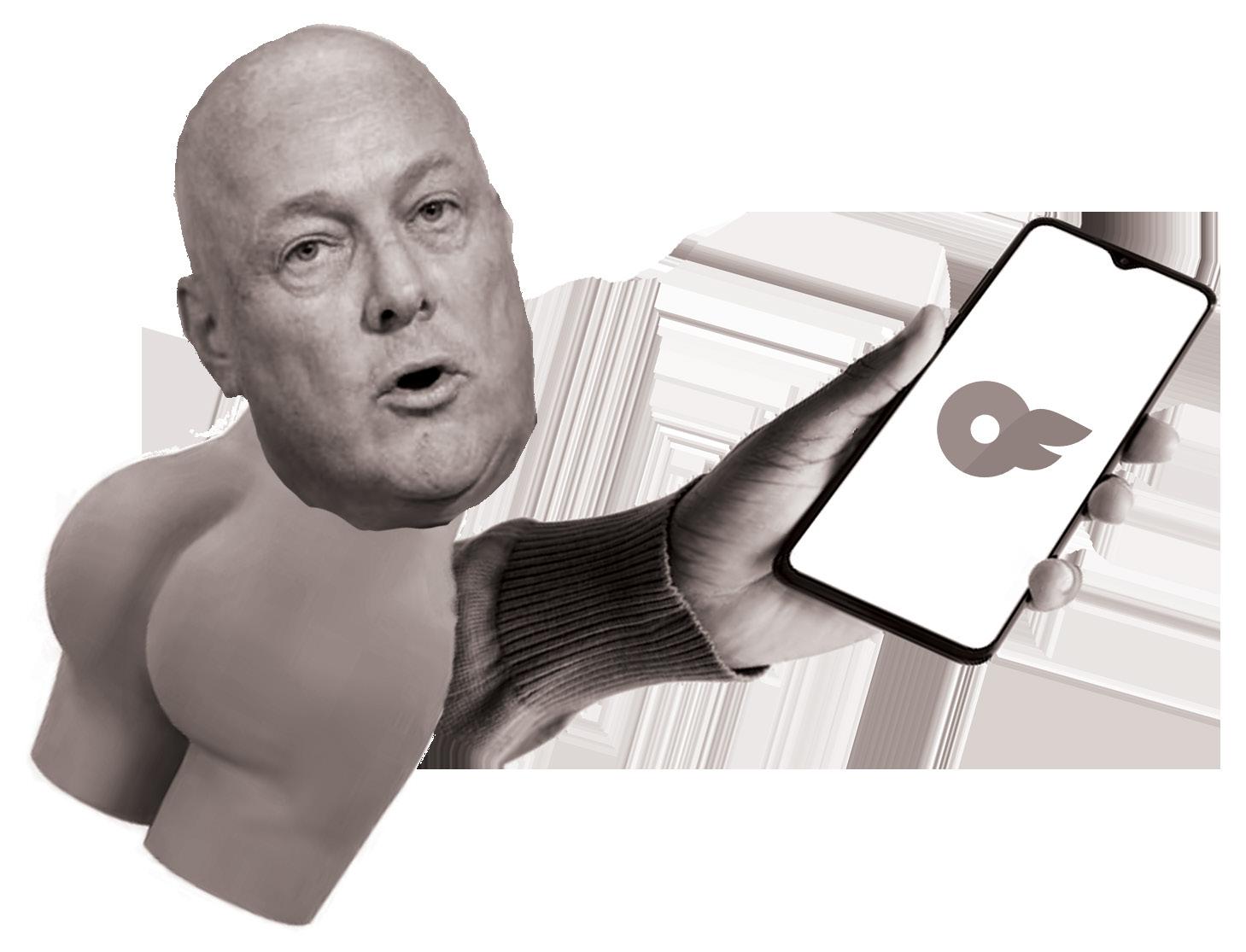
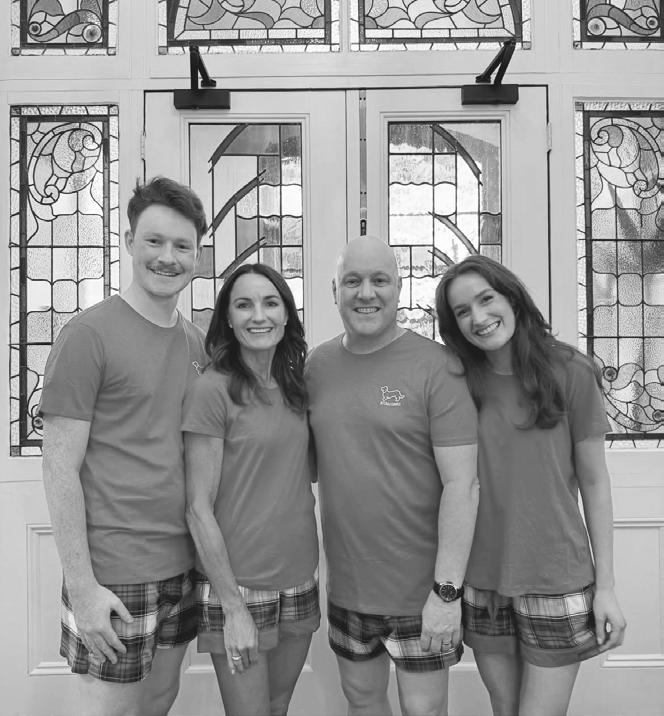
Prime Minister Christopher Luxon has been identified as popular OnlyFans creator @ministerialmarmitemotorway after an Instagram post of himself and his family in matching pyjamas went viral.
GONE WILD
PRIME MINISTER SEX SCANDAL SEYMOUR & WINSTON: ENEMIES TO LOVERS WATCH OUT FOR WILLIS
CHRISTOPHER
CRACK IDENTIFIED ON ONLYFANS GOVERNMENT
The account’s subscription fee was $39.33 a month. This is considerably higher than the average $10 to $20 OnlyFans fee.
Users online claimed they identified Luxon’s posterior after recognising the red, white, and green gingham pattern of the Peter Alexander Christmas pyjamas.
Most of @ministerialmarmitemotorway’s OnlyFans posts were close-ups of his buttocks on several different surfaces, inanimate objects and food groups.
One subscriber described in detail one of the account’s most popular videos: “I never knew a white guy could shake ass so hard it squashes a whole loaf of sourdough.”
Along with taxpayers’ money, an inside source alleged that the subscription money was used to pay for the renovations to the premier house.
The Prime Minister’s office released a statement that denied the account belonged to Luxon.
“The Prime Minister is not commenting on the matter. However, we assure New Zealanders that the account was made with deep fake images and videos,” it stated.
“It’s very concerning that someone was able to deep fake such an accurate depiction of the Prime Minister’s buttocks.
We will be investigating as to how they achieved this.”
The Prime Minister will be holding a press conference this evening to discuss the allegations.
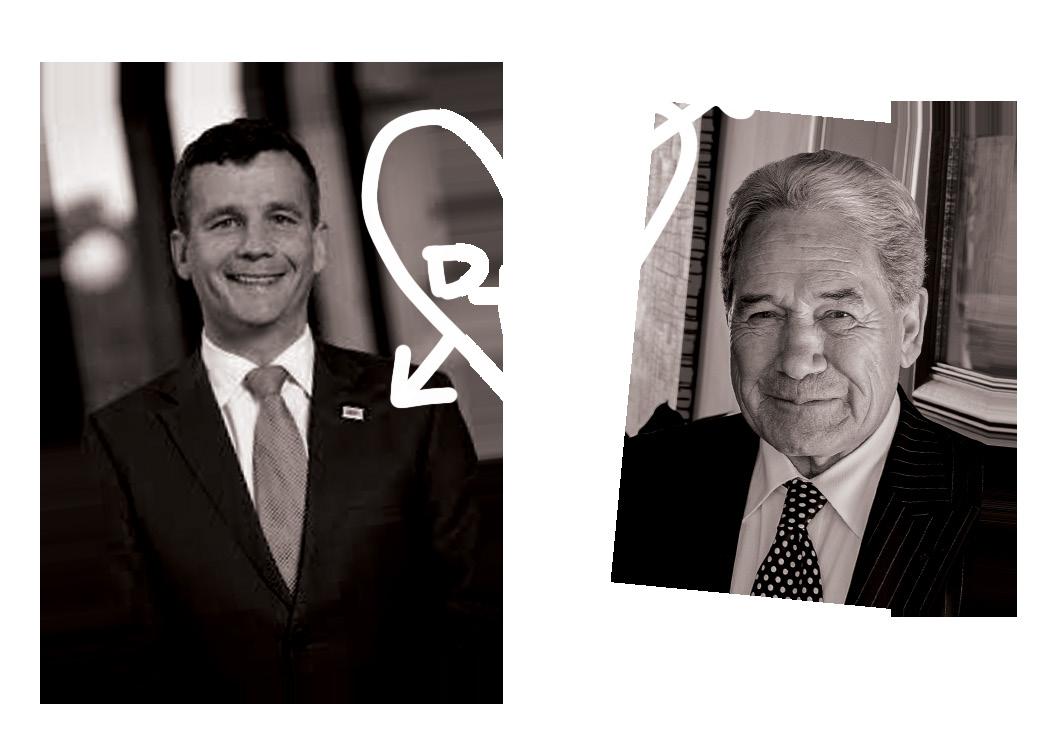
David Seymour has stepped away from politics after announcing his shocking engagement to fellow deputy Prime Minister, Winston Peters.
The couple announced at a press conference this morning that Seymour is retiring to focus on being a stay-at-home father to their future children.
Seymour revealed that the pair eloped in the summer after a romantic getaway to Twisted Frequency. They kept the relationship out of the public eye until it was made official.
PARLIAMENT
AFTER FINDING “REAL CONNECTION” WITH WINSTON PETERS
THE COUPLE ANNOUNCED THEY’RE CONCEIVING TRIPLETS THROUGH AN ANONYMOUS SURROGACY AND WILL HOMESCHOOL THEM UNTIL THEY TURN 21.
While this coupling might shock the nation, it shouldn’t be a surprise that Seymour had goals for a family. In a 2021 interview with Woman’s Weekly, Seymour said he would step down from his role for the chance to start his family.
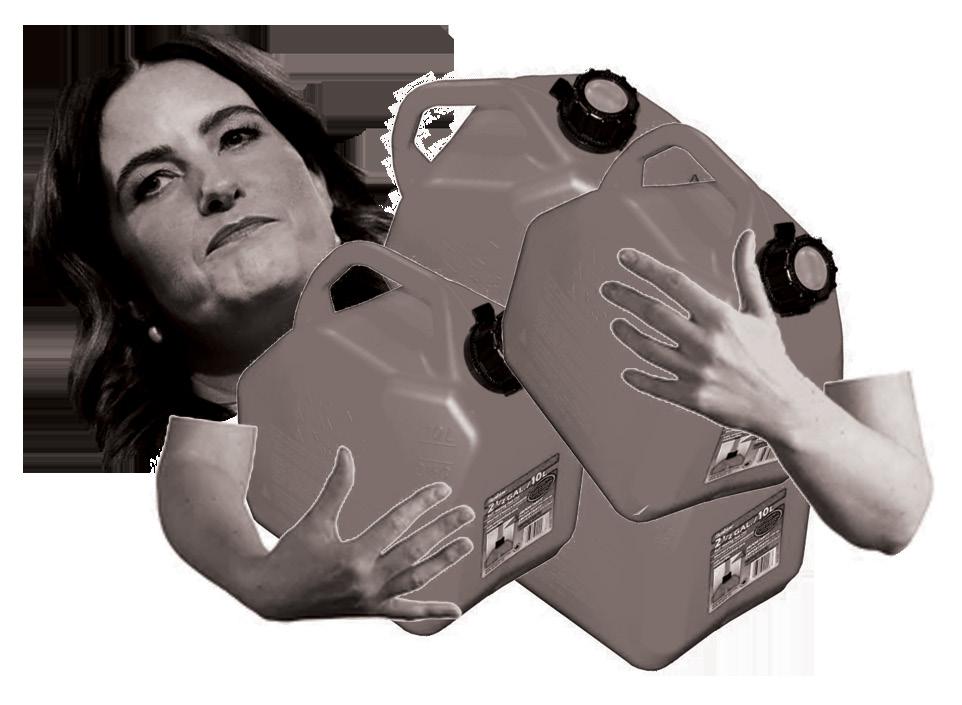
FUEL TANKS IN PARLIAMENT’S UNDERGROUND CARPARK NICOLA WILLIS FOUND HOARDING
Finance minister Nicola Willis has resigned after she was found hoarding up to 3000 litres of fuel in parliament’s underground carpark amidst Aotearoa’s fuel crises.
Last Friday, a parliament security guard found Willis “nose deep in the tank” during a routine sweep of the grounds.
ACCORDING TO THE GUARD, WILLIS WAS TOO HIGH ON THE FUMES TO COMPLETE A FULL SENTENCE.
“She just kept repeating the phrases ‘cost of living crisis’ and ‘smart kiwis’ in between huffs,” the guard said.
“We all hope to find a real connection…and being effectively married to Parliament gets in the way a bit,” he said.
“I’d make a great stay-at-home dad because I don’t feel the need to prove myself. I made a career that I’m proud of early on, and I would happily stay home to look after the children.”
Seymour said that he is excited to show off his relationship to the public. Peters is yet to comment on the matter, but the couple was spotted drinking matcha outside Nature Baby while trialling luxury strollers.
They said the scene was “honestly depressing” after they had to help Willis out of the carpark and drive her to the hospital for rehabilitation.
Parliament released a statement which revealed that recorded amount of stolen fuel amounts to around $11,000. This enough to fill 60 cars.
“We had no prior knowledge of the hidden tanks, and the finance minister has resigned as of this morning,” the statement read.
Willis has since recovered from the effects of the inhalation. However, her muscle spasms reportedly caused her to
accidentally cut another 100 jobs from the public sector before her resignation.
On an Instagram live, Willis told concerned viewers that she would rather discuss her “ongoing commitment to savings, reprioritisation, and fiscal discipline” than her petrol hoarding.
Willis is due to stand trial in coming weeks. However, she said she isn’t giving up her political career just yet and aims to run for head girl of Queen Margeret’s College next year.
“Everyone has to start small,” she said.
My relationship with Te Pāti Māori as a rangatahi Māori entering election season...
Parliament is notoriously pale—the exterior and the inhabitants. So, when Te Pāti Māori was founded in 2004, they sent shockwaves through parliament’s halls. They were the first political party exposed to vitamin D and culture beyond fish and chips.
As a rangatahi Māori, Te Pāti Māori was an inspiring representation of Māori infiltrating a white system that historically excluded us. They gave me hope. If we could influence the operations of governance, what else was possible for our people?
Unfortunately, the last year has made me lose faith in Te Pāti Māori.
In the last 12 months, Te Pāti Māori has been experiencing intense scrutiny after expelling two MPs, Mariameno Kapa-Kingi and Tākuta Ferris, in November last year. This came after
months of disputes over leadership, allegations of financial mismanagement, and bringing the party into disrepute.
After Mariameno was kicked out, she took Te Pāti Māori to court, where they ruled the expulsion as unlawful. While Mariameno returned to the party, Tākuta decided not to go through the court to be reinstated into Te Pāti Māori.
However, Tākuta did call for a vote of no confidence in the party’s president, John Tamihere, and petitioned for him to stand down. On social media, Tākuta said that John needed to resign “so that the mana of Te Pāti Māori may be restored, and the voice of our people remain steadfast, united, and grounded in truth”.
Many people believe that the decision to expel Mariameno and Tākuta was because of a relationship breakdown between the Kapa-Kingi whānau and Tamihere whānau.
Words by Kamaia Bainbridge-Frost • SHE/HER
Ngā Puhi, Waikato Tainui, Fasito’otai
The Tamihere whānau includes John, his daughter and party general manager Kiri Tamihere-Waititi, and her husband, party co-leader Rawiri Waititi. The Kapa-Kingi whānau is made up of Mariameno and her son, former party vice-president, Eru Kapa-Kingi.
Eru, the spokesperson of Toitū te Tiriti, is frustrated with the party’s leadership. After resigning from Te Pāti Māori in March 2025 due to disagreements with John, Eru announced in October 2025 that Toitū te Tiriti no longer aligns itself with the party.
In an interview with Te Ao Māori News, he claimed that Te Pāti Māori’s leadership ran off a “dictatorship model”. The party
After this and other disagreements with Mariameno, Te Pāti Māori’s leadership expelled her and Tākuta.
This was just one among many scandals the party has faced, and the media continues to report on how Te Pāti Māori is crumbling from the inside.
I can’t help but feel ripped off. This beef was giving my hapori a bad rep.
Speaking to ākonga Māori Ruby Barr (Ngā Puhi, Tainui) and Grace Byrne (Ngāti Porou), I learnt I wasn’t the only one feeling this way.
Ruby says that she stopped feeling represented by Te Pāti Māori after they stopped “operating with aroha” internally.
“It feels like a system of drama which is not how Māori should operate,” she says.
“[Government] is a racist institution. But when we’re not putting our best foot forward, pākehā are going to make assumptions about us [Māori] that are incorrect.”
Ruby says the lack of constructive kōrero within the party is tarnishing the reputation of Māori. She says this has made it harder for Māori to operate and be taken seriously in government.
However, she does acknowledge the difficulties of operating as a Māori party within our colonial system of governance. Ruby says it’s “necessary we get our voices heard”.
Grace echoes Ruby’s views and says it’s important for all parties, not just Māori, to follow tikanga and the values of Te Tiriti
She says, “In Māori culture, wide community communication feels very important. A sense of togetherness.”
“It feels like a lot of drama for a professional political party.”
Both Ruby and Grave say they don’t feel represented by Te Pāti Māori.
Neither of them will be voting for Te Pāti Māori in the upcoming election.
This hurts me. My mamae is strong. Te Pāti Māori is supposed to represent Māori—the intricate beauty of Te Ao Māori. I want to support Māori in all sectors, especially governance. But my need to hold politicians to account has left me feeling torn.
But two things can be true at once.
I still believe having a Māori party in government is essential to infiltrate pākehā systems. I also believe it is essential we hold our politicians to account. I want Te Pāti Māori to succeed and uphold the mana of our people. Right now, they are not.
Writing this was confronting. I did not realise the depth of mamae that I felt with Te Pāti Māori. As we go into this year’s election, I hope Te Pāti Māori can reconcile their relationship with Māori and change for the better.
But for now...
I do not feel represented by Te Pāti Māori. I will not vote for Te Pāti Māori in the upcoming election.
Some wars dominate our attention, until they don’t.
Ukraine once led every headline. Now, five years on, it flickers in and out of view. Gaza saturated our feeds just last year. Despite ongoing civilian casualties, coverage has thinned. Meanwhile, conflicts in Sudan, Myanmar and Yemen continue largely unnoticed.
Now, the conflict in Iran dominates headlines. But how long will it be before this too becomes background noise?
Here in Aotearoa, it can feel like we live in an untouchable bubble. When a war breaks out and Western media turns to cover it, we respond, we protest, and we post. But as coverage recedes, so too does our attention. Despite the conflict continuing, our engagement often doesn’t. It seems like public urgency dissolves as quickly as it forms.
But why are we so quick to move on?
Is this compassion fatigue? Is the sheer volume of violent and complex global conflicts creating an overwhelmed disinterest. Or is it media fatigue? Are the conflicts that feel distant from our daily lives gradually losing their grip on our attention.
Are we forgetting wars? Or are we simply learning to live alongside them?
Dr Shine Choi, a senior lecturer in Politics and International Relations, says that forgetting depends on perspective. For those with personal, historical or politics ties to places like Ukraine, Gaza or Iran, these conflicts aren’t distant or forgettable.
She says, “It’s hard to forget, because that is their reality.”
Even in Aotearoa, many people carry these connections. For them, the war doesn’t end once the media coverage does.
But for those without those links, and who experience conflicts through news cycles, their attention often follows the media. When the media moves on, they do too.
Choi says, “When we see war being covered, it feels like we’re jumping from one conflict to the other.”
In just a few years, global attention has shifted from Afghanistan to Ukraine to Gaza. When Western forces withdrew from Afghanistan in 2021, focus moved on. Russia’s invasion of Ukraine in 2022 took centre stage. By 2023, the war in Gaza had redirected attention once again.
Each shift leaves less-publicised crises and their people neglected and vulnerable.
The constant rotation of crises leaves audiences overwhelmed as they’re caught between wanting to care and the impossibility of keeping up. There is guilt in attempting to quickly learn the history and complexity of each new conflict, just to abandon it when the next one emerges.
“It’s like, now we are learning all about the history of Gaza, why it’s happening, how it built up ... and then the media switches over to another conflict, and another one,” Choi says.
“It feels like our attention is being constantly pulled into the next point of conflict.”
That pressure creates another problem. It’s no longer just about understanding a conflict, but showing off that understanding. Often, this is done through social media. Posting and signaling awareness has replaced meaningful action.
This is where ‘slacktivism’ emerges. A cross between slacker and activism, this refers to low-effort online actions, like liking or sharing posts, to support a cause without leaving the couch.
“Media makes us think that it’s all about how much you know about what’s going on, or how deeply you know the history,” Choi says.
This reflects a broader habit where we equate knowledge with action. We assume that being informed is a form of political action.
“That’s a very Western, modernist conception of political change where I feel like we’re giving too much to a very onedimensional and one kind of knowing.”
Challenging this idea, she asks: “What does it even mean to know about these devastations?”
When talk of war revolves around strategy, national security, ideology and more, it tends to return to the same question: who holds the power. With this in mind, individual action can feel limited, futile and unproductive.
“There isn’t a right response or right way to pay attention,” she says.
It’s easy to understand why many people turn inward and focus on their own lives, rather than overseas conflicts.
“I think that’s valid and we shouldn’t feel so guilty about that.”
However, if simply consuming news and knowing about conflicts feels disempowering or complicit, then paying attention is also not the answer.
There is a difference between watching and witnessing a war.
Watching is distant, surface level and fleeting. It happens through screens, in the safety of our homes. It involves absorbing fragments of violence between other pieces of information
Witnessing is heavier. It requires sitting with the reality of human cruelty and suffering. It’s about recognising what we are seeing is not a moment, but part of a cycle of loss, displacement and trauma that stretches beyond the news cycle.
Consider the 1950s Korean war, which has been labelled as the ‘Forgotten War’. For those whose lives and histories are shaped by it, it is far from forgotten. Its impacts persist across generations, in militarised borders, divided families, and unresolved political tensions.
War doesn’t disappear. It reshapes itself. This reshaping outlasts headlines, attention spans, and the moments we choose to look away.
We need to recognise that what we are seeing on our screens continues long after we’ve stopped looking.
“These are the conversations that matter,” Choi says.
“Wars are not simply events that get covered by the news… they are not just what happens when a bomb is dropped.”
Aotearoa may feel distant from these conflicts, but that distance can be deceptive. Many here are living with the aftermath of war through personal ties, migration, and more.
War has not disappeared. For many, it never does.
When attention inevitably shifts away from Iran, the question isn’t whether the war will continue. The question is whether we will keep seeing it.
And what it really means to witness, rather than just watch.
Slur, Slumbug And Strings
Speak Mountains
Sat, 25 April
605 Morningside
Zykei EP Release Gig
Sat, 25 April
Porridge Watson, Whanganui
MeanOwls - Torn Identity (Mana Manu Titi) mouth - #RRR
Pining Radiata - Heart It All Before
reasearchintospeed - This is the Road
LAUGHING STOCK - Frogtown
Crook - Shoving
Menzies - Mash Potato
Emma Carter - Burn It Down
Mieke - Blushing
- Perpetual task list
The boys lost it when I told them this and reckoned I should send it in, so here goes.
I’m a 19-year-old biz student. My current life plan is pass papers, sink piss with the boys, and avoid anything that looks like a serious relationship.
Anyway, I’ve been hooking up with this girl who’s a Politics major. The first time we hung out, we were just lying on my bed scrolling and I saw some article about Labour and National going at it, so I made a comment to bait her a bit.
She was like, “That’s not even close to right”, and obviously, I’m not gonna let that slide in my bedroom. I thought she’d get annoyed and bugger off, but instead she climbs on top of me mid-argument and keeps making her point.
I’m trying to focus on defending my own point and not get too turned on, but she’s literally grinding and smirking. Anyway, the debate didn’t stay academic for very long, and I’d say I probably won once it got physical.
Now it’s our thing. We had drinks recently, and while the boys were playing beer pong, I was arguing with her in the kitchen about international trade. I barely know what I’m saying half the time, but I’ve realised if I challenge her, she gets super fired up. When she gets fired up, good things happen.
Sexcapade submissions provided by
For 20% off your next purchase, enter discount
The funniest moment was last week, though. She was going down on me, I’m pretty close to blowing my load, and she stops, looks at me and goes, “You still haven’t addressed my point about regulatory frameworks.”
Mate. I don’t even know what that means.
The boys reckon it’s the weirdest foreplay they’ve ever heard of, but I’m not complaining. I don’t understand politics any better, but I’m definitely benefiting from the debates.
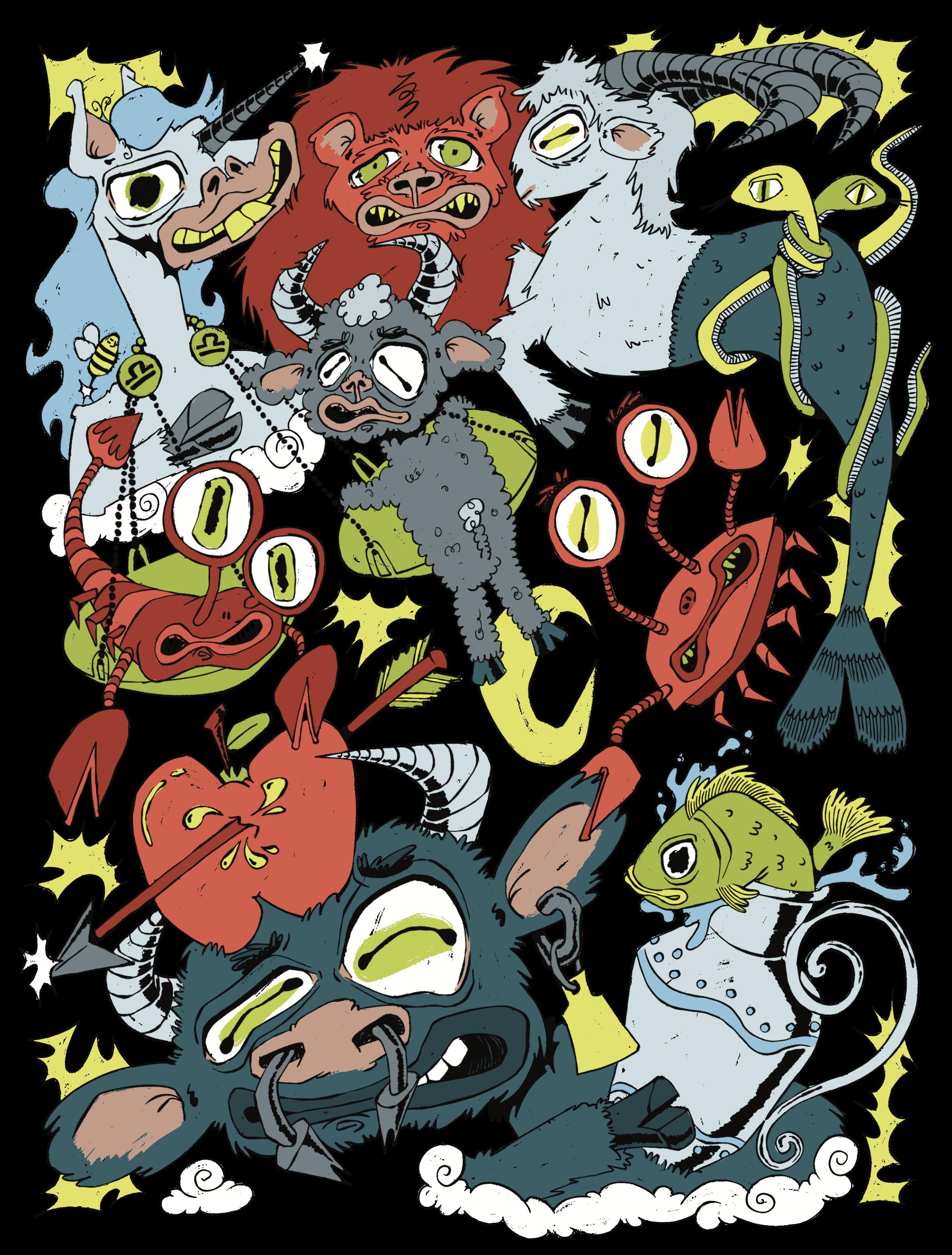
Your out-of-the-gate comments need to stop, Aries. Your dark humour is making the people around you feel uncomfortable. This week, try to keep it light and playful.
The emotions you’ve been keeping in are about to burst in an embarrassingly public display. Think about opening up to someone to alleviate your internal pressure.
Waking up with hangxiety after every night out is not normal. Quit spilling your guts to randoms at house parties that you were plus one’d to. Maybe you’ll start to feel better.
Your financial problems are 100% your fault. Nobody is blaming you for spending your course-related costs on festival tickets, but getting Uber Eats for the third time this week is a bit excessive.
Have fun in the now, this week, Leo, because big decisions are coming up ahead. Revel in the ecstasy of present moments without the stress of looming responsibilities.
Has your sex life been feeling routine lately? Try bringing something new into your intimacy this week. The world is your oyster, so get messy, imaginative, and intimate.
A significant new moon and alignment with Saturn will bring intense energy into your relationships. Be aware of who you put this energy towards and what relationships are giving you energy back.
Evaluate your daily habits this week because your rigid routine is affecting the people you love. Not everyone wants to wake up at 6am to the sound of you grunting through your at-home exercises.
High energy for you this week, which could manifest itself both positively and negatively (so watch out). Creative sparks and relationship adjustments are coming your way.
Try keeping in touch with the people you love—they miss you! Give them a call, write a heartfelt letter or even a text. It’s important to remind the people around you that you love them, even if it feels apparent.
Try loosening up on your staunch perspectives. Not every conversation has to be an intellectual debate. Walk a mile in someone else’s shoes before making a targeted comment.
To begin your week, have an everything shower. Babe, you’re in for a treat. Hot hookups are on your way, so keep your lips pursed and your legs open.
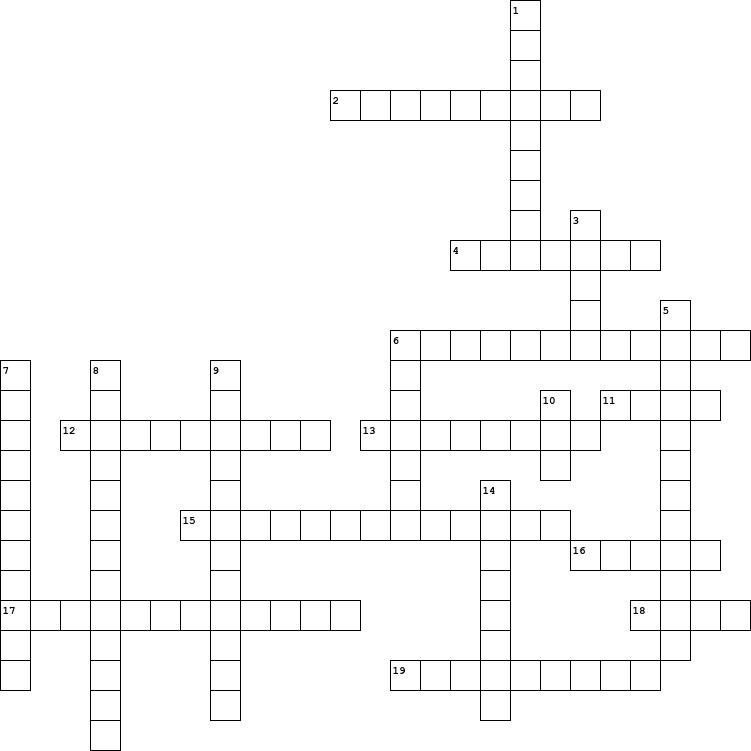
2. Electoral Commission mascot (6, 3)
4. Last Massive theme (7)
6. Criticised legislation that gives police power to move the homeless (4, 2, 6)
11. Name Andrea Vance called ACT Party leader Brooke van Velden last year (4)
12. Founder and funder of the 2014 Internet Party (3, 6)
13. John Key ran into scandal after he pulled on a waitress’s what? (8)
15. Major Māori news organisation (8, 5)
16. Popular fuel finding app (5)
17. Current leader of the NZ opposition party (5, 7)
18. Finish the 2021 quote of the year: “Go out and spread your ____” (4)
19. Justice for _________ (9)
1. Winston Peters’ nickname (9)
3. What was thrown at politician Steven Joyce during Waitangi Day 2016? (5)
5. First female Prime Minister in NZ (5, 7)
6. Last name of Te Tira Ahu Pae’s new general president (7)
7. Term describing online male influencers (11)
8. What is the name of Jacinda Ardern’s documentary? (5, 8)
9. Who is on the NZ $10 bill? (4, 8)
10. Number of parties currently in parliament (3)
14. What month are the 2026 general elections? (8)
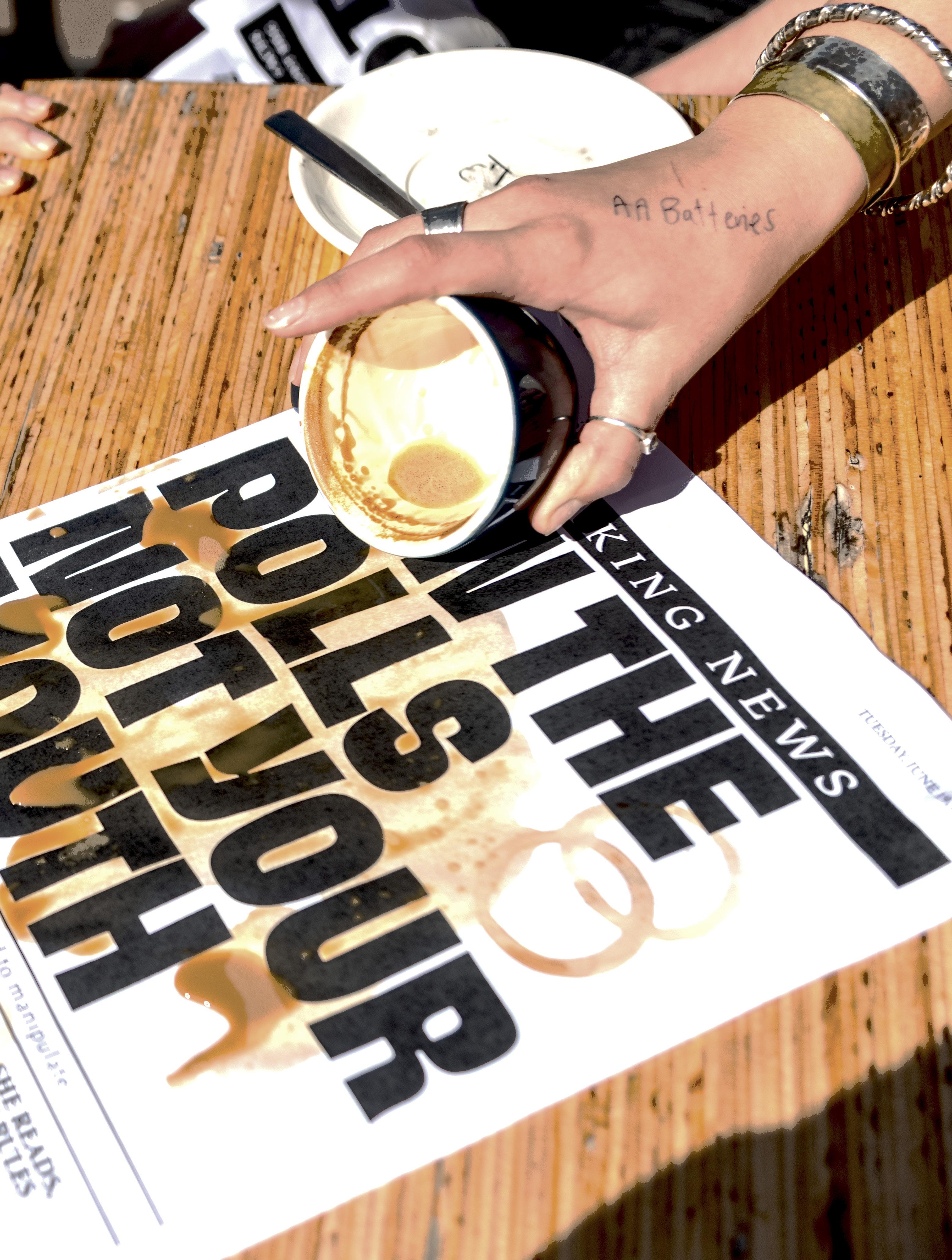
Cover and centrefold by Lee Judi Ngā mihi nui to Swimsuit Coffee for providing their space.