Leaflet
MARCH – APRIL 2026
EDITOR-IN-CHIEF
Dave Barnett mhsleaflet@gmail.com
MANAGING EDITOR
Meghan Connolly mconnolly@masshort.org
FROM THE EDITOR DAVE BARNETT
UPCOMING MHS CLASSES
GREEN PARTNER SPOTLIGHT
FROM THE STACKS BY MAUREEN O'BRIEN
HAMAMELIS VIRGINIANA ILLUSTRATION BY MARIANNE
ORLANDO
IN FIRST PERSON WITH MICHAEL DOSMANN
SPRING PERENNIAL PLANT SYMPOSIUM
NEW ENGLAND FALL FLOWER SHOW: GROWING TOGETHER
SEASONAL RUMBLINGS BY JOHN LEE
THE STORY BEHIND 'CAIRN CROFT' MAGNOLIA BY KEVIN DOYLE COLLOQUIA PLANTARUM: INTERVIEWS WITH PLANTS BY
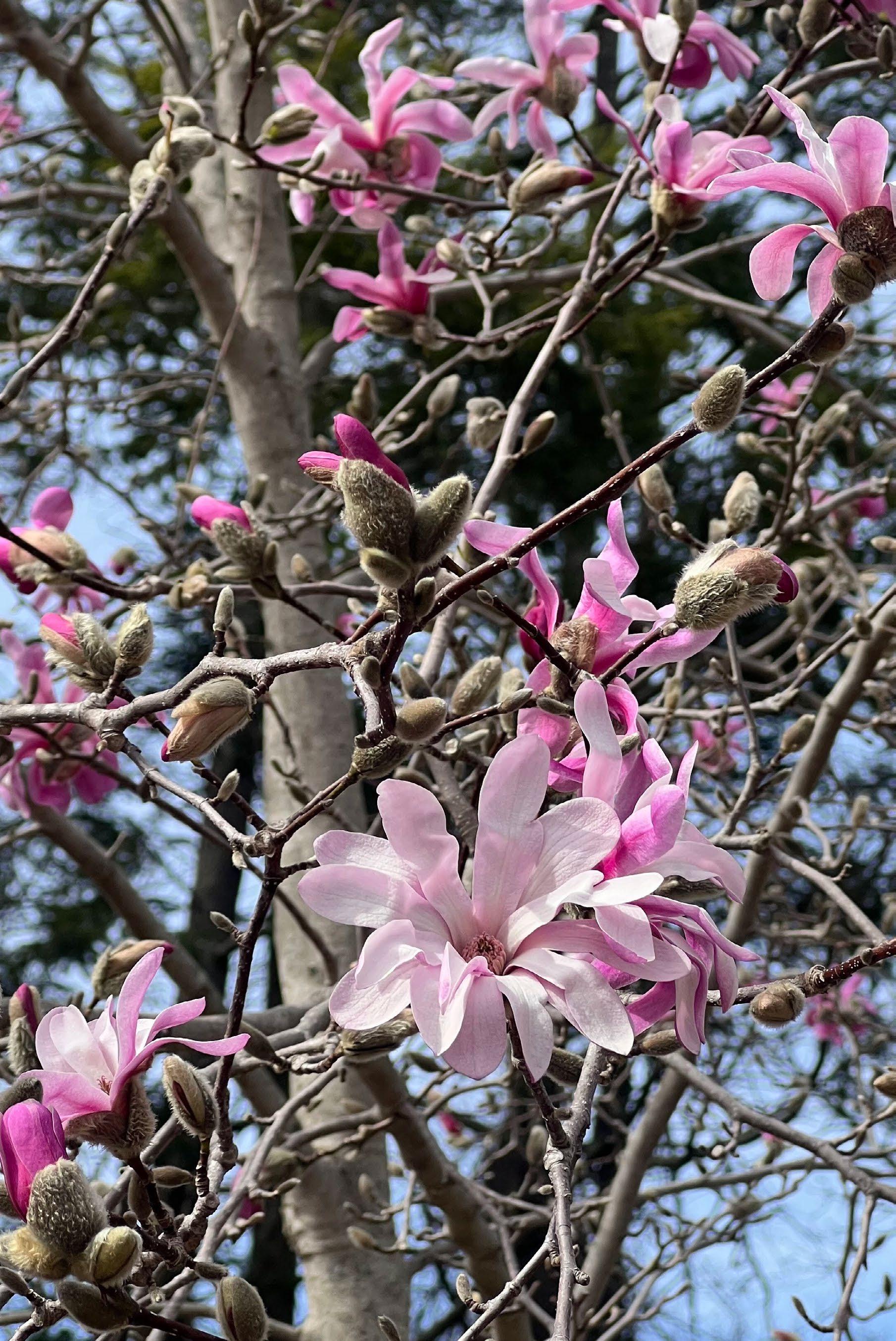
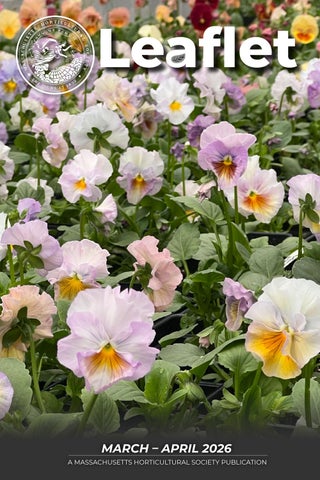
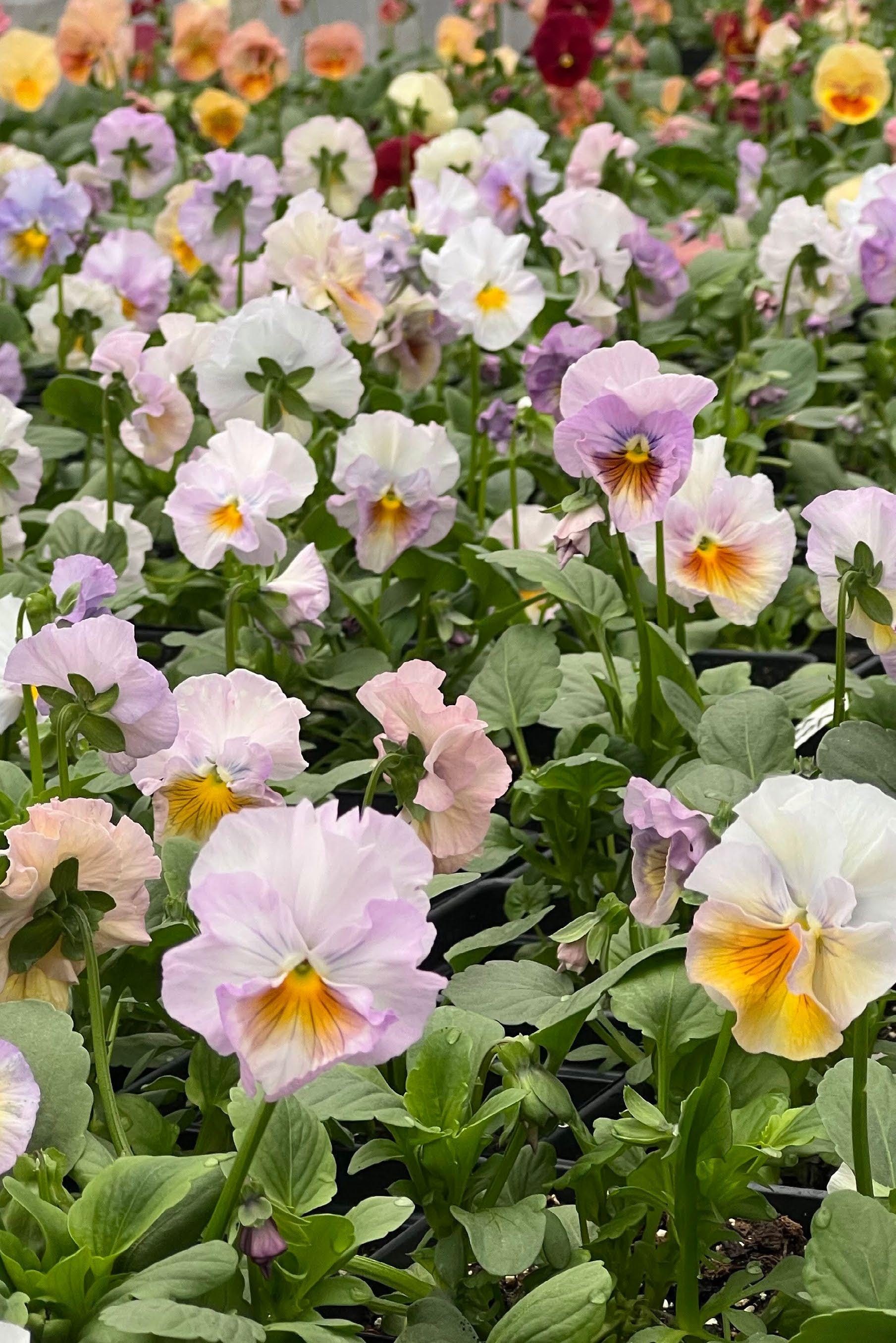
Front Cover: Pansies growing in the greenhouse. Back Cover: Magnolia in April in Bressingham Garden.
From the EDITOR
The calendar says it is time to “spring forward” but as I write this we are buried in over two feet of snow – what a winter it has been! But fear not, the staff at Massachusetts Horticultural Society has been busy planning a wide range of horticultural classes (see pages 4-5) and other educational activities and exhibits to support the MHS mission of "helping people change their lives and communities for the better through growing plants together." Don’t miss the Spring Perennial Plant Symposium on March 6 (p. 18). And planning is well underway for the Fall Flower Show on September 18-20, building upon the growth and success of the 2025 Flower Show.

This is the time of year when we read all the seed catalogs and order the seeds we plan to grow and nurture in our flower and vegetable gardens, and on pages 6-8 Maureen O’Brien highlights the large selection of seed, nursery and trade catalogs from the 19th through 21st centuries that are preserved in the MHS Library. She also notes the exhibit of archival photographs that will be on display starting in April in the Education Building lobby, so be sure to stop by and see it when you visit the Garden this spring. Staff and volunteers have been preparing for the opening of the Garden at Elm Bank to visitors on April 1, and it promises to be a colorful and exciting year with several more additions and enhancements to the plantings and gardens planned.
It was a pleasure to interview and work with friend and valued colleague Michael Dosmann for this issue’s “In First Person” article (p. 10), highlighting another individual making a huge impact in our horticultural profession. Finally, I hope you enjoy John Lee’s “Seasonal Rumblings” with Bert and Brenda (p. 20), Kevin Doyle’s story about the “discovery” of the ‘Cairn Croft’ Magnolia (p. 26), and Shannon Goheen’s “interview” with the pines (p. 29).
Think plants and think spring!
Dave Barnett Editor-in-Chief
UPCOMING CLASSES
Setting Up your Garden: Early Season Prep
Saturday, March 14 10-11:30am
Intro to Horticulture: 10-Week Foundations Course
Virtual Tuesdays, March 17–May 19
6-7:30pm
Creating a Meadowscape at Home
Virtual
Monday, April 13 6-8 pm
Rethinking Garden Maintenance
Sunday May 31 10-11:30am
Understanding Hydrangeas
Saturday July 18 10-11:30am OR 12-1:30pm
DESIGN
Designing with Face Vases
Saturday, March 14 10-11:30am
Hand-Tied Bouquets & Vase Arrangements
Saturday, April 11 10-11:30am
Six Week Spring Ikebana Course, Beginners Series
Starts Tuesday, April 14 4-6pm
Long & Low Arrangements
Saturday, May 16 10-11:30am
Petals in Parallel Workshop
Saturday, June 20 10-11:30am
BOTANICAL ART
Color Mixing for Artists
Starts Monday, March 16 10am-1pm
Mixed Media Botanical Journal
Starts Thursday, April 9 10am-2pm
Studio Focus: Yes P's! Painting Spring Flowers
Starts Tuesday, May 5 10am-1pm
Botanical Sketchbook: Inspired by Maria Sybilla Merian
Starts Wednesday, May 20 10am-2pm
Introduction to Botanical Art: Foundations in a Week
Starts Friday, May 29 9:30am-2:30pm
PRUNING
Seasonal Pruning: Early Spring
Saturday, April 11
10-11:30am OR 12-1:30pm
Seasonal Pruning: Late Spring
Saturday, May 30
10-11:30am OR 12-1:30pm
Seasonal Pruning: Summer
Sunday, July 19
10-11:30am OR 12-1:30pm
Green Partner Spotlight
Shop at Green Partner businesses to receive 10% off with your MHS Membership card!


Walpole, MA Lexington, MA
Holden, MA
For gardeners, this is the season of lists and callow hopefulness; hundreds of thousands of bewitched readers are poring over their catalogs, making lists . . . , and dreaming their dreams.
Katharine S. White (1892–1977)
Springtime offers hope that the seeds ordered and nurtured during the winter will provide pleasure and bounty through the growing season.
Collections – Trade Catalogs
The Library maintains a large selection of seed, nursery and trade catalogs from the 19th through 21st centuries. A few times a year, we receive requests from researchers around the world for these catalogs. Sometimes, the Library is the only source of a catalog.
The catalogs vary in size and design, ranging from a mere list to works of art. A series of catalogs can reflect changing mores and the growth of the business.
The Library is still adding to its Collections of trade catalogs. Today many catalogs are online or are published in limited quantities. While these catalogs may not be referenced immediately, they may be a valuable resource in the future. If you have catalogs that you don’t want to throw away but would be willing to donate to our collection, drop Library Manager Maureen O’Brien a line at mobrien@masshort.org.
The vintage catalogs are stored offsite in boxes by alphabetical order. Recently a patron asked for United States catalogs for the 20th century Hummel’s Exotic Gardens. This request gave us the opportunity to explore what else was in the box. In addition to product listings, we found lovely artwork, some interesting layouts and various methods of promoting their products. Here are a few of the items in the box.
1The Hummels, in Carlsbad, California, were famous for hybridizing and selling spectacular cacti, succulents, and bromeliads worldwide from the 1930s to the 1970s.
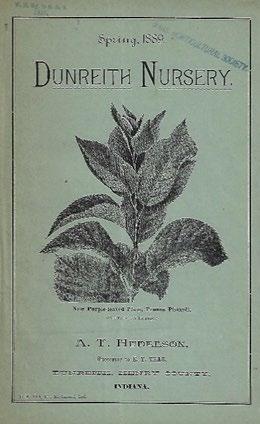
▷ A. T. Hudelson's Dunreith Nursery catalog is beautiful illustrated with black and white engravings. However, the print inside is almost illegible without a magnifying glass. Dunreith Nursery, A. T. Huddleson, Dunreith, Henry County, Indiana, Spring 1889. MHS Collections.
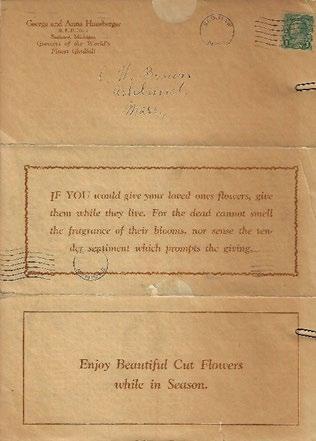
◁ This 1-page pamphlet was folded so one side served as the mailer, and the reverse was a wholesale price list. The mailer side had this notation "If you would give your loved ones flowers, give them while they live. For the dead cannot smell the fragrance of their blooms, nor sense the tender sentiment which prompts the giving.” Postage was 1 cent. George and Anna Hunsberger “Growers of the World’s Finest Gladioli,” Saginaw Michigan, 1925. MHS Collections.
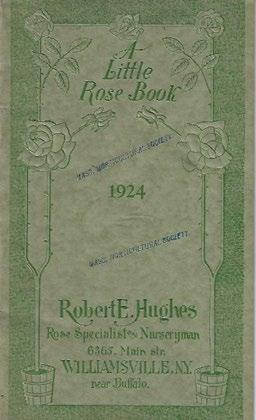
◁ Robert E. Hughes produced a beautifully embossed cover for its annual catalogs. Robert E. Hughes, Rose Specialist and Nurseryman, Williamsburg, N.Y., 1924. MHS Collections. Inside contains the caveat: “The description of our roses is not handed down from the Hybridists who, in the hurry to put their creations on the market, frequently over-estimate the habit of growth and blooming propensities. Our descriptions are strictly as we find them, always stating defects when they exist.
Library Quarterly Exhibits
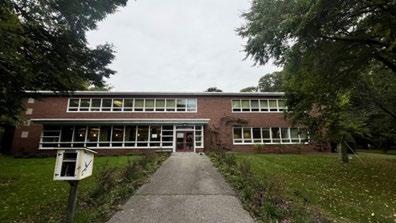
The Education Building is home to many important happenings in the Garden. In addition to business and educational functions, this midcentury modern building hosts a rotation of Botanical Art exhibitions from April through December and the model train display during Christmas in July and Festival of Trees.
MHS Book Club
Beginning on April 1, 2026, the Library will exhibit a selection of its holdings in the lobby of the Education Building. The display will change every three months. The first exhibition will feature original 19th century photographs of Elm Bank. You can view a slideshow of the history of Elm Bank and photographs here.
The Education Building at the Garden at Elm Bank, September 2024. It was erected ca. 1957 by the Stigmatine Fathers, owners of Elm Bank from 1941 to 1976. The Commonwealth then acquired Elm Bank and used it as an educational facility until the mid-1980s. MHS renovated the building after it entered its 99-year lease with the Commonwealth in 1996.
Book Club meetings take place on the third Tuesday of the month at 1:30 pm in the Putnam Building. All are welcome to attend. These are the books for the Club’s upcoming discussions:
March 17
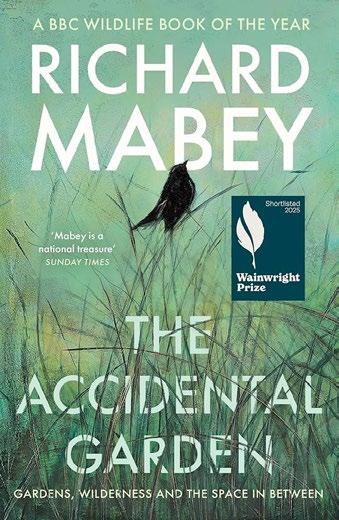
The Accidental Garden by
Richard Mabey
Come Visit!

April 21
The Gardens at Highgrove
By King Charles III
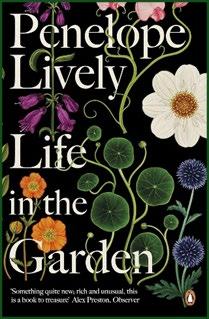
May 19
Life in the Garden by
Penelope Lively
The Garden is closed from January through March, but the Library is open by appointment. Please email Library & Archives Manager Maureen O’Brien for an appointment or other information.
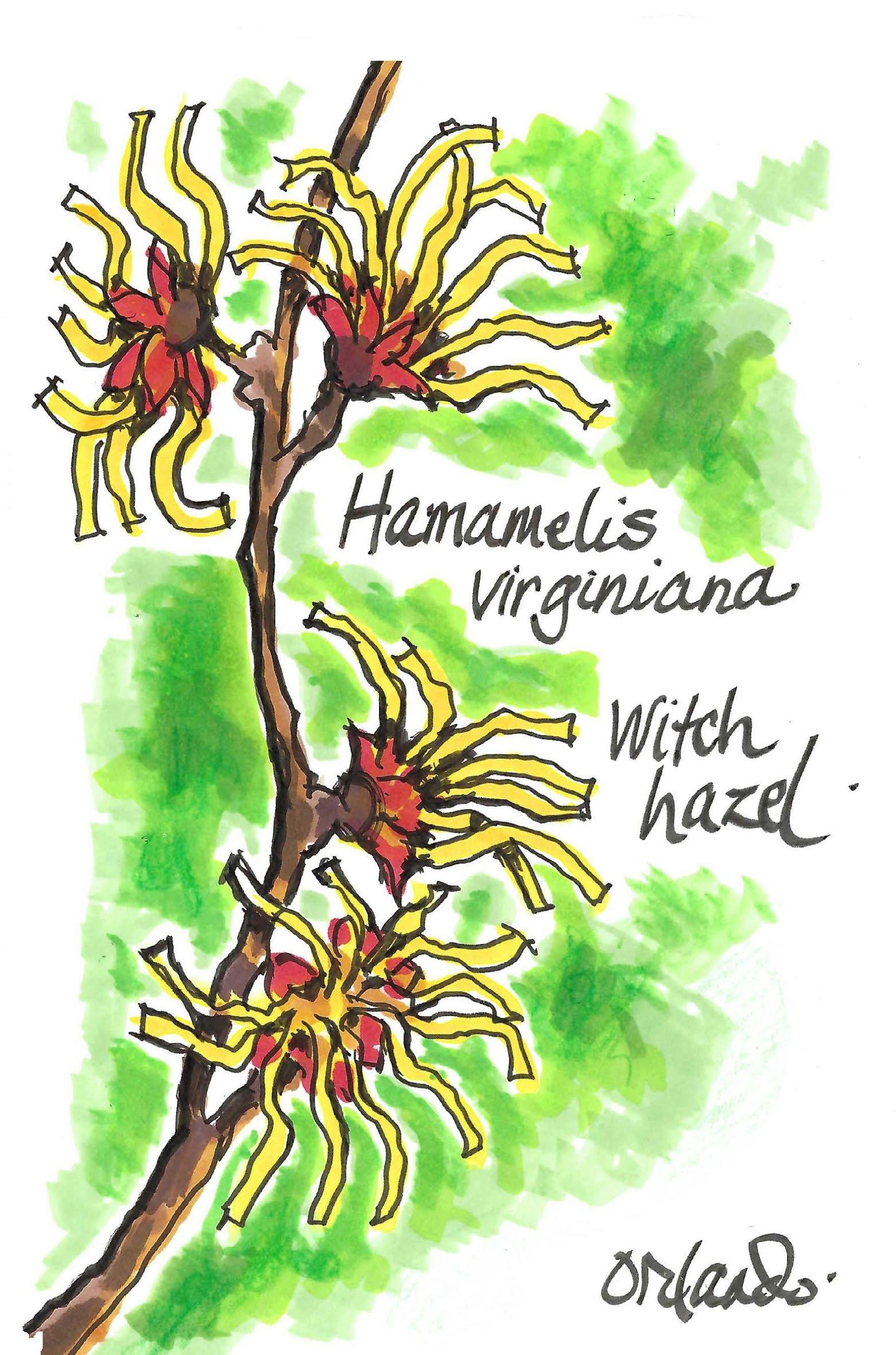
Marianne Orlando is a landscape architect turned freelance illustrator who loves plants, and does commissioned drawings of homes, pets and people. You can see samples of her work at www.marianneorlando.com.
In First Person

Michael Dosmann
Michael Dosmann is the Keeper of the Living Collections at the Arnold Arboretum of Harvard University. Since 2007 he has led a team to curate the Arnold’s collection of temperate woody plants. He has been on over twenty expeditions to study, collect, and preserve plants native to Asia, Europe, and North America. In 2015, working with director Ned Friedman, Michael launched the Campaign for the Living Collections, a long-term strategic plan to review and improve the collections of Harvard’s Tree Museum. He lectures frequently about and has written over one hundred articles on the exploration, conservation, and horticultural improvement of woody plants. He has a BS in Public Horticulture from Purdue University, MS in Horticulture from Iowa State University, and PhD in Horticulture from Cornell University. He is an Honorary Member of the Garden Club of America, and received the David Fairchild Medal for Plant Exploration from the National Tropical Botanical Garden, Professional Citation Award from the American Public Gardens Association, and a Silver Medal for Curatorial Excellence from the Massachusetts Horticultural Society. An elected member of the Horticultural Club of Boston, Michael is currently the second vice president. Here is Michael’s story in his own words:
As I recount the path that took me from the rural Midwest to the Arnold Arboretum, I cannot help but think about the many inspiring mentors who provided invaluable advice, experiences, and of course support. And, that starts with family. I grew up near the northern Indiana town of Lakeville, the youngest of four boys. Gardening was one of my mom’s favorite pastimes and she infected me with a passion for plants. As the snow melted each spring, we’d routinely spy the latest bulb to emerge or bloom to break. My dad was a police officer, spending most of his 40+ year career as a detective for the city of South Bend and later the University of Notre Dame. We had twenty acres, and I have many fond memories playing in the woods, constantly being outside, climbing trees (and falling out of them). We had a large vegetable garden as well as lots of ornamental plants, some that were heirlooms from older generations on both sides of the family. As a kid, my parents and I would often visit Fernwood Botanical Garden in Niles, Michigan, a place that opened my eyes to the world of public gardens. As a member of the high school Science Club I led the charge to sell poinsettias and Easter lilies every year to raise money, and I was also a member of the FFA Soils Judging Team (wasn’t every teenager?). My family also raised American Quarter Horses. I got my first pony before I turned two, and for the next twenty or so years, horses were the solid constant in my life.
I was a ten-year 4-H member, exhibiting about a dozen or so projects annually at the fair. It was through 4-H that I was introduced to Purdue University, Indiana’s Land Grant. After my freshman year in high school, I attended a 3-day summer workshop on campus in animal sciences focused on horses (where I learned I did not want to become a veterinarian). I returned next summer for plant sciences and specifically ornamentals (and again after my junior year as a counselor for the program). It was during these workshops that I met faculty in Purdue’s Department of Horticulture, including
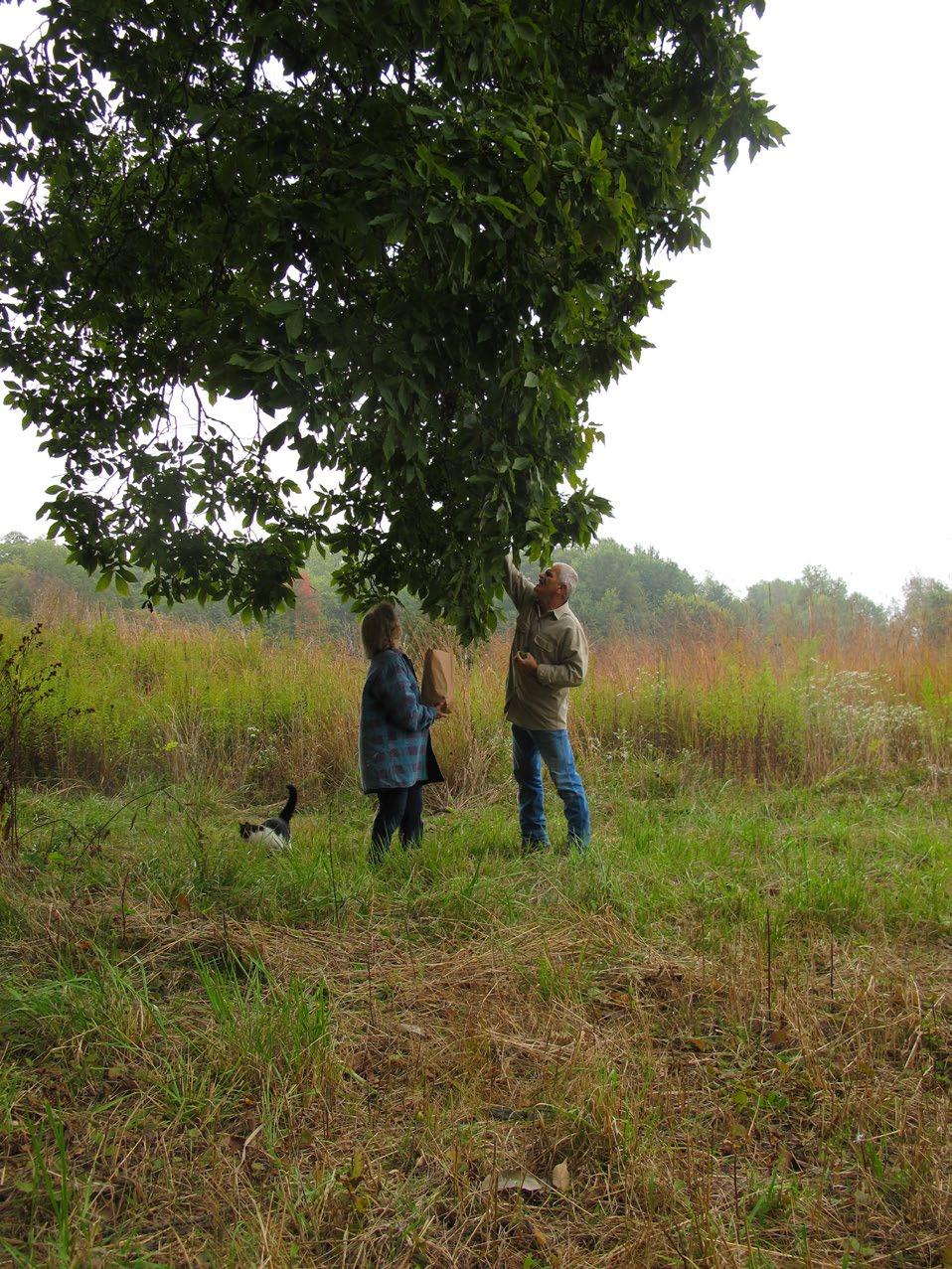
Michael's parents (Dave and Bobbi) collecting shagbark hickory fruits in 2013.
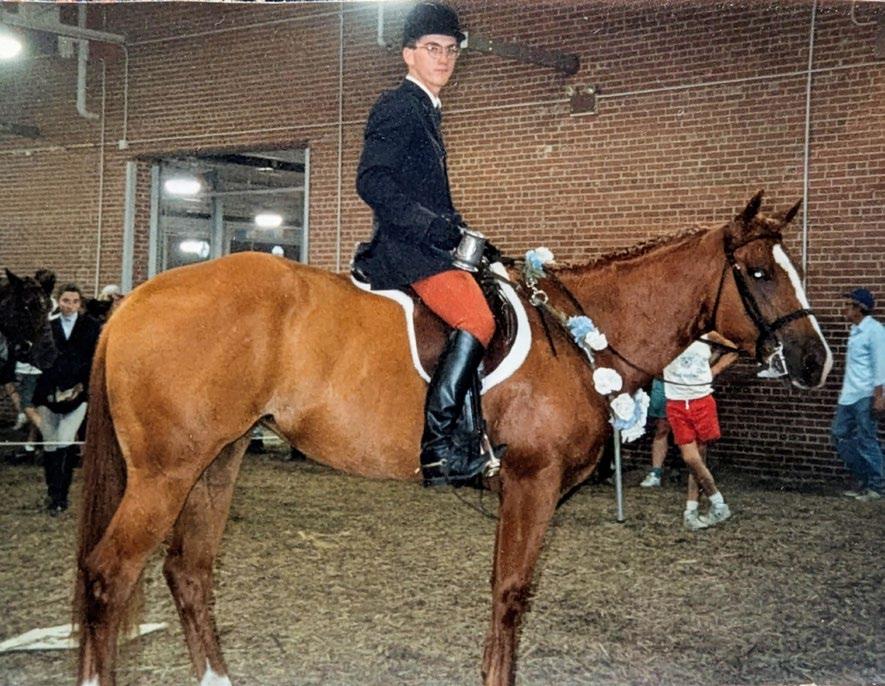
Michael on one of his mares, Skip's Classy Bonanza, in 1993.
Harrison Flint who would later become my academic advisor and an important, cherished mentor. In addition to teaching woody plants, Harrison created the first undergraduate program in the country to train folks to work in public gardens. So, before my senior year of high school, I made what seemed like the easiest choice in the world: I applied to just one school (Purdue) and majored in Public Horticulture.
I was on the Purdue University Equestrian Team all four years, competing in Nationals three times. Due to a course scheduling conflict (I needed to find time to get to the barn to ride), I took Carole Lembi’s BTNY 305 (Fundamentals of Plant Classification) as a freshman instead of my junior or senior year. She was a great instructor, and I became fascinated by plant classification, ways of describing plants, and nomenclature. My A in the course and enthusiasm led me to become a teaching assistant (TA) the next three years. Pretty crazy when I think that as a sophomore, I was leading one of the Friday afternoon labs. I wasn’t alone, however, as my ‘assistant’ the first year was the new professor teaching the course, Greg Shaner. He became another incredible mentor and helped me improve my teaching and better deliver the 20-minute lectures that started each lab. To this day when I go into the field, I use the hand lens he gave me as a graduation gift.
I took Harrison’s infamous HORT 217, Woody Landscape Plants. I did well, became hooked on trees and shrubs, and became a TA the next couple of years (there were over one hundred people in the class each fall, so we TAs worked our rear ends off). I also took Harrison’s HORT 527, Advance Woody Plant Systematics. Whereas HORT 217 was a grueling regimen of weekly ID field quizzes, ID twig exams, and written tests, HORT 527 was different. It was a small class, about eight of us, and we studied, read, and wrote heavily and widely about a range of topics: taxonomic concepts and woodies of course, but also related areas of plant exploration, ecology, conservation, and even plant records and curation. We went on 3-day field trips to public gardens throughout the Midwest to meet garden curators and horticulturists and learn plants we never would have seen in West Lafayette. Prior to coming to Purdue, Harrison worked at the Arnold Arboretum, and from him I first learned about Harvard’s Tree Museum. At that time, this kid with the big glasses
who hid wildly curly hair under a baseball cap never, ever would have thought he’d eventually curate Arnold’s collection.
During the summers I had a couple of jobs, most notably working at Fernwood as an intern and later Seasonal Horticulturist. I did a lot of display garden maintenance, teaching, and leading garden tours. I also worked in Purdue’s Entomology Department for Cliff Sadof, a professor whose course I’d taken. I scouted Indiana nurseries for insects, met with owners to tell them what I was seeing, and assisted him with a few projects. I got a taste for research while working for Cliff. With his encouragement and that from about a dozen other faculty, I decided to go off to graduate school.
I went to Iowa State University to earn a Master’s Degree in Horticulture, working under Jeff Iles as my Major Professor. Jeff was another great mentor. In addition to guiding me with my thesis research on Cercidiphyllum japonicum (we tackled drought physiology, but I did some side projects on propagation, too), Jeff provided valuable exposure and experience in extension and outreach. Of course, I was a TA for Woody Landscape Plants, where the other TA was Tony Aiello (then a research technician in the department). I’d end up collaborating with Tony ever since (even botanizing in China, Japan, and the US together) during his tenure at the Morris Arboretum, Longwood Gardens, and now Scott Arboretum. Tony and Jeff’s friendships are some of the oldest I have.
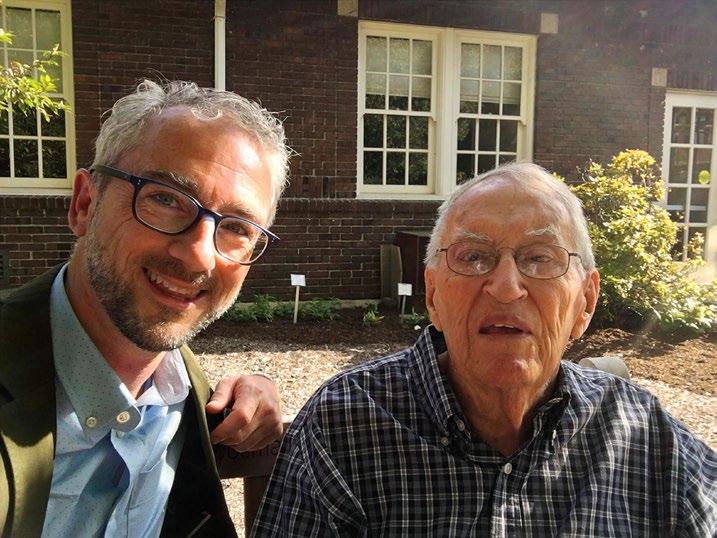
Michael with mentors Harrison Flint (above) and Jeff Iles (below) in 2019.
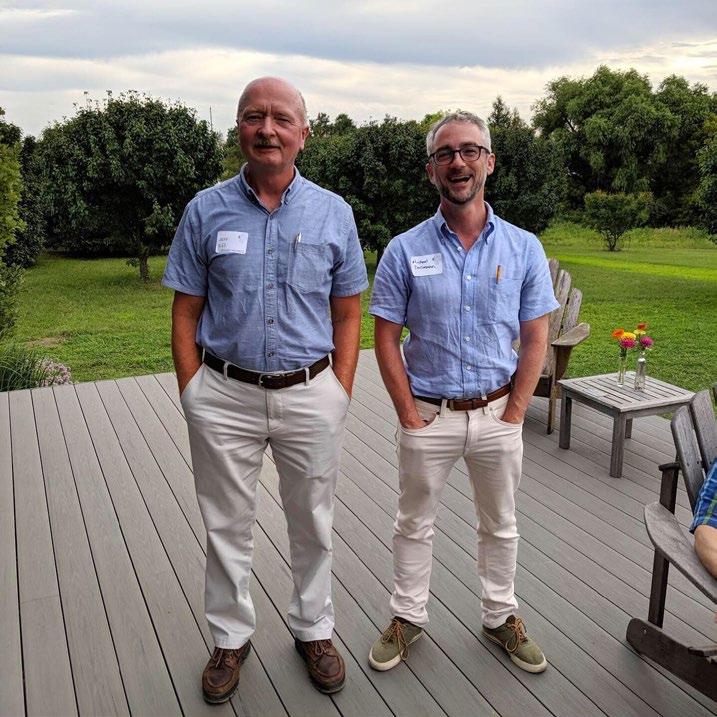
After completing my MS, I spent a year in the UK as a Garden Club of America Interchange Fellow. What an incredible experience that was to work at Royal Botanic Garden Edinburgh, University of Reading, and Royal Botanic Gardens, Kew. I took deep dives on curating collections (particularly for research and conservation), learned a whole new plant palette, and worked with outstanding people. In fact, during a
two-week stint at Hilliers Arboretum I hung out with Mike Dirr (he was there on sabbatical). One of the most incredible conversations ever was an afternoon with him, Mike Buffin (Hillier’s curator at the time), and plantsman extraordinaire Roy Lancaster (Hillier’s first curator).
In 2000 I received a Student Travel Award from the American Association of Botanic Gardens and Arboreta (AABGA)—now the American Public Gardens Association (APGA)—to attend its annual conference in Asheville, NC. It was there that I had the opportunity to meet many icons of the public horticulture world – including the Arnold Arboretum’s Peter Del Tredici, who I had corresponded with but never met. This conference led quite literally to me being offered a two-year appointment as a Putnam Research Fellow at the Arnold. Peter likes to tell folks that he “rescued me from the compost heap of horticulture”— and he was absolutely right! That job offer, and his mentorship, also changed my life.
My responsibilities at the Arnold were chunked into a few bins: The Leventritt Shrub and Vine Garden was under development, and part of my charge was to work on the curatorial/horticultural end of things – what plants would we grow, why, and where would they go? From a research angle, I tackled some propagation and taxonomic projects that led to publications. However, the most important one was an assessment of the famous 1980 Sino-American Botanical Expedition, which we published in BioScience as a case study on the efficacy of plant exploration. Lastly, I got to be an all-around horticultural resource, leading tours, and teaching classes through the Adult Education and Internship Programs. My first day was also the day that Steve Schneider joined the Arnold as an apprentice. He’d go on to work his way up from that to being Director of Operations and Head of Public Programs. We became fast friends, and through the years tackled a lot of projects and expeditions together. He now heads up Northeastern University’s Arboretum.
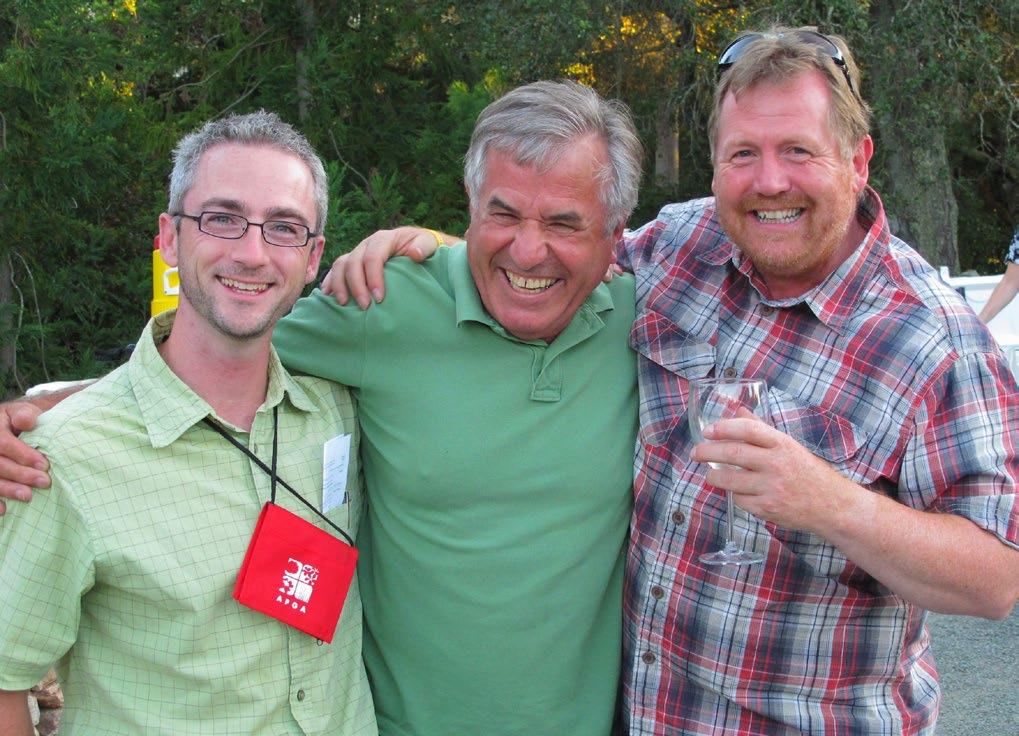
Michael with Peter Del Tredici and Kew's Tony Kirkham in 2011.
Midway through my Putnam Fellowship, Peter and then Arboretum Director Bob Cook encouraged me to get a Ph.D., and I decided to do so at Cornell University. With Tom Whitlow as my fantastic Major Professor, and other faculty (Nina Bassuk, Kevin Nixon, Monica Geber, Peter Trowbridge, Don Rakow, among others) playing key roles as colleagues and mentors, I conducted my dissertation research on the ecophysiology of Koelreuteria paniculata. I TA’d Nina and Peter’s course on woody plants (Creating the Urban Eden) and Tom’s Restoration Ecology course. I remained active with AABGA as a student member, giving presentations at the regional meeting at Cornell in 2004 (where I first met Dave Barnett) and the annual conferences in 2005 and 2006. I stayed connected to Arnold colleagues, particularly because I had clear interests in research and curating living plant collections. I began to craft a vision on how living plant collections can better support scholarship and conservation. I found them to be vastly underutilized and I wanted to fix it.
I completed my Ph.D. in December 2006 and started full-time as the Curator of Living Collections at the Arnold Arboretum in January 2007; the ink on my diploma was barely dry. In 2017 my title was changed to Keeper of the Living Collections, the same one held by Ernest Wilson – what an incredible and humbling honor! During my time here, I’ve had the privilege of working with Bob (and deputy director Richard Schulhof) and now director Ned Friedman on a wide range of exciting things. It is hard to express how fortunate I feel to have landed here. And after all these years, my job is just as exciting and fulfilling as it was on day one. I’m responsible for all levels of development and curation of the institution’s living collections, including plant exploration, records and documentation. You’ll also find me siting each individual specimen in the landscape with Rodney Eason (director of horticulture and landscape), and engaging with a diversity of scholars from around the world who come to study our plants.
The Arnold has a long and established tradition of pushing the boundaries of collections management and curation. Although I may be the one with my hand on the rudder, steering the course of this fabled plant collection, it really is a full team effort. I’m surrounded by hardworking and creative colleagues like the current curatorial team of Kyle Port, Kathryn Richardson, Miles Sax, and Madeline Schill. They and 154 years of their predecessors deserve the credit.
One of the most transformative initiatives has been working with Ned and members of our Living Collections Advisory Board to put together a long-term strategy we named the Campaign for the Living Collections
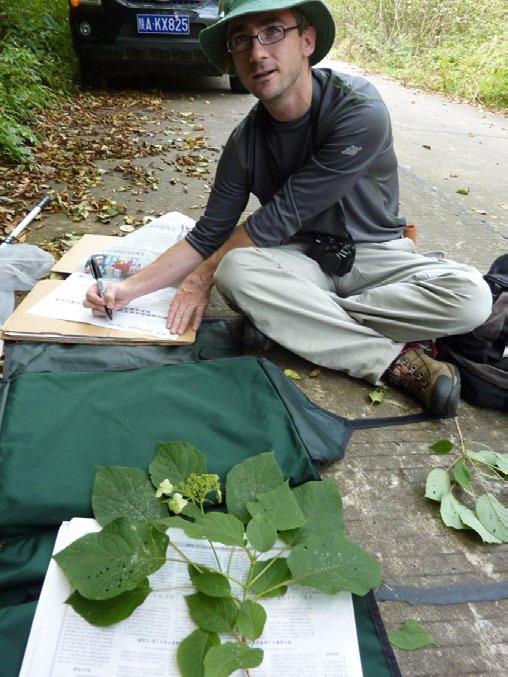
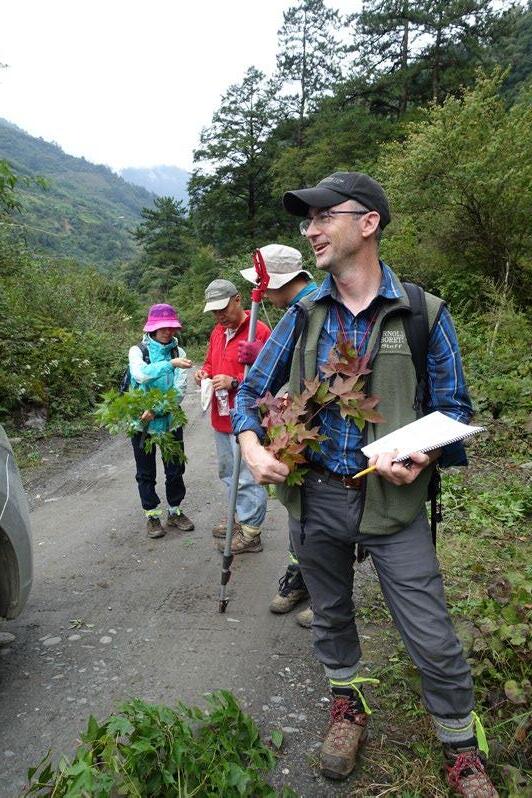
Chinese collections of Acer oliverianum in Sichuan (above), 2017, and Hydrangea longipes in Shaanxi (left) in 2010.
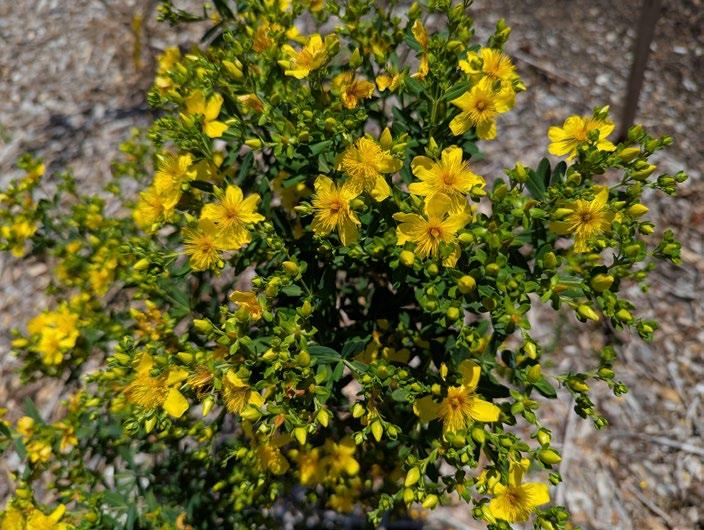
(launched in 2015). The Arnold had been actively engaged in plant exploration since forever, and I’d been going on expeditions (Adirondacks, Ozarks, China among other places) about every year since I started the job. But, the Campaign elevated our exploration efforts from a modest to a major institutional program. The goal: collect four hundred species from around the world, and with multiple expeditions conducted by several staff annually. A few years ago we hired Miles to manage the program, and last year alone Team Arnold collected in China, South Korea, Japan, and Bosnia and Herzegovina. Along the way we’ve made authentic and solid collections with botanical and horticultural colleagues from around the world. It takes a global village to do this important work that needs to be done. I have had the chance to visit incredible places and collect hundreds of phenomenal species: Acer griseum and Corylus fargesii from China; Hamamelis vernalis and Taxodium distichum from the Ozarks; Quercus virginiana from Virginia (hardy in Boston!); a newto-science St. Johnswort (Hypericum swinkianum) from the Midwest (pictured below).
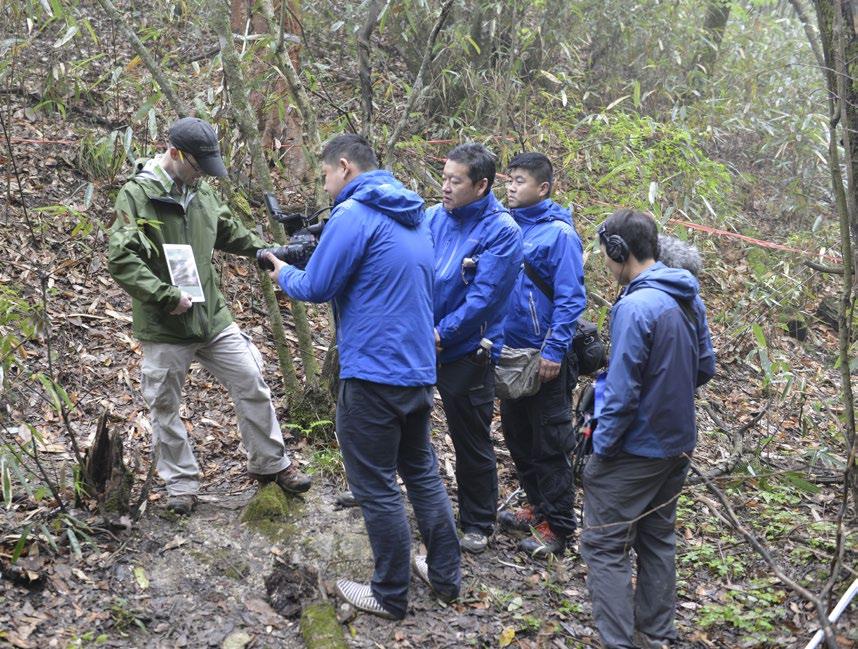
In 2014 I starred in a three-part film for CCTV-9, one of China’s documentary channels. The focus: Wilson’s exploration of China 125 years ago, and the many wonderful plants found in China. Despite my only knowing a handful of Chinese words (thank goodness for subtitles), I hosted the program and took viewers along Wilson’s journeys to observe and collect the dove tree (Davidia involucrata), yellow poppy (Meconopsis integrifolia), and the regal lily (Lilium regale), among others. What a great opportunity to help tell these stories. Along the same vein of story telling, for the past decade I’ve overseen Arnoldia, our quarterly magazine. While holding on to our traditional
Filming for CCTV-9 in China.
Back in 2007, just one week into my job Dave Barnett and Dennis Collins took me to lunch at Doyles to celebrate my new gig. Dave, who was President of APGA at the time, had an ulterior motive: He asked if I (and the Arnold) would be interested in co-hosting with Mount Auburn an APGA Symposium on Collections Management. I of course said “yes” and that fall we hosted about 150 of our curatorial colleagues in our two gardens. It was such a success that the Association has been offering them up every few years since then. A few years later I joined the APGA Board of Directors, serving two, threeyear terms. It was rewarding to serve an organization I care deeply about and that has done such great work for gardens and professionals. I’ve also sat on a number of committees and working groups for other gardens, including one of the Crop Germplasm Committees for USDA, helping to guide and shape the nation’s work exploring, curating, and utilizing woody plant germplasm (and another committee for the USDA Plant Hardiness Zone Map). I’ve always felt that service and giving back is important. And bearing in mind how important mentors have been to me, I’ve tried my best to give it back/pay it forward when it comes to mentoring fellows, interns, and other emerging professionals.
Looking back, I’m so grateful for my parents’ early encouragement and exposure to nature and gardens. The advice and support that I got from incredible advisors during my college and early career years was transformative. And, how lucky I was that the Arnold took a chance on hiring me full-time, fresh out of grad school. Looking forward, I cannot wait to see how plants we’ve collected on the Campaign do in Boston. What new scientific discoveries or horticultural introductions might come from them? I look forward to studying and writing about these plants and other topics in Arnoldia, and who knows, I may even have a book or three inside of me that are just dying to be written.
For “In First Person,” Leaflet Editor-in-Chief Dave Barnett interviews people who have made their mark in horticulture and adjacent fields by asking a standard set of questions about their work and career, and then works collaboratively with them to write this column to share their passions and tell their story. bread-and-butter content, we’ve relaunched the publication with a new look and set of departments to broaden the kinds of stories to tell, contributors to tell them, and expand the readership.
THIS FRIDAY: One Day. Four Speakers. All About Plants.
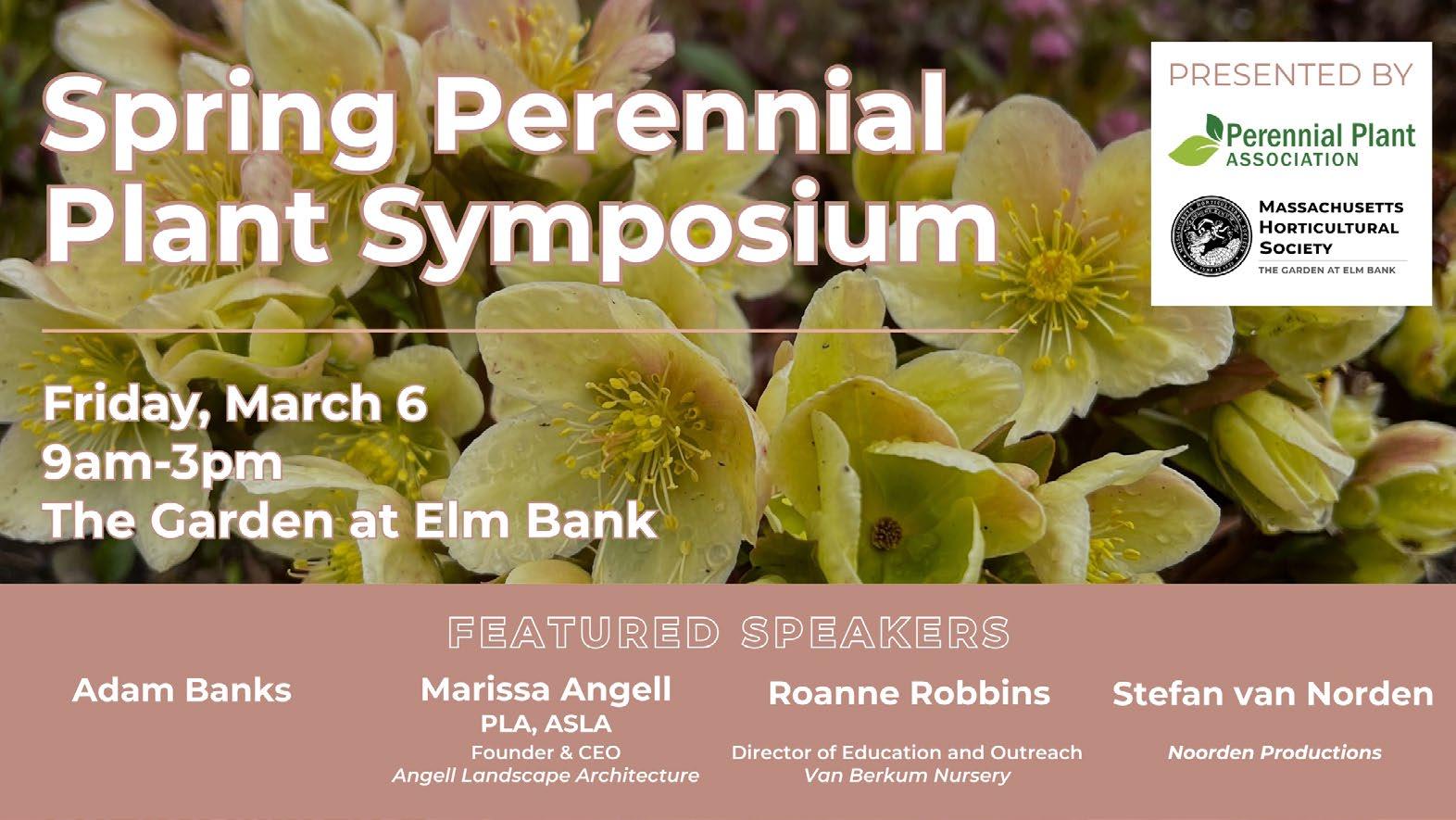

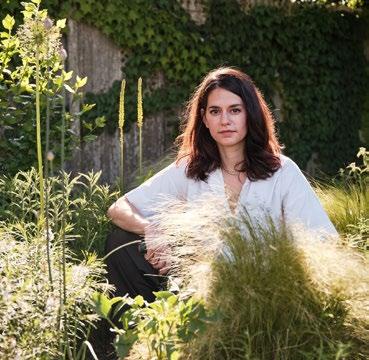
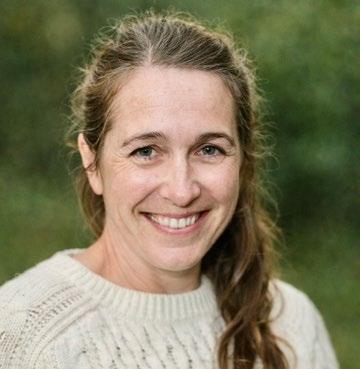
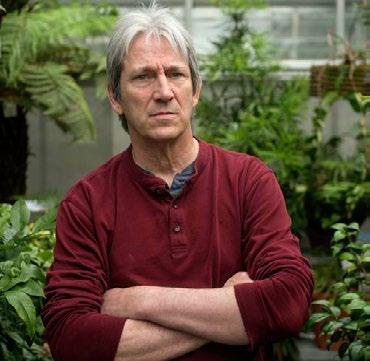
Get ready to spring into inspiration! The Spring Perennial Plant Symposium brings together plant lovers, gardeners, designers, and landscape pros for a day of insight, community, and transformational ideas at the Garden at Elm Bank.
Presented by Perennial Plant Association and Massachusetts Horticultural Society, this day-long event features four expert speakers from across New England who will dive into resilient plant systems, ecological relationships, and thoughtful design that celebrates nature and place.
Save my Spot


Seasonal Rumblings
BY JOHN LEE
John shares stories of Bert and Brenda and their gardening wisdom. These chronicles feature recipes, tried-and-true gardening practices, and seasonal struggles and successes. Bert and Brenda were first introduced in the March 2022 issue of Leaflet.
Pretty much a normal winter so far. December had brought the usual and expected cold weather that froze everything but the compost pile which, on the coldest days, was a little steamy as the thermophilic bacteria went to work on their last helpings of yard waste. It is sometimes said that when a person dies,
a library burns to the ground. Such fermentation has been working in Bert’s brain. Brenda had forever been making (without intention) a catalogue of her life— recipes, how-tos, the sort of things that keep a house in good order, feed the family; that sort of thing. Some of the younger folks in the area
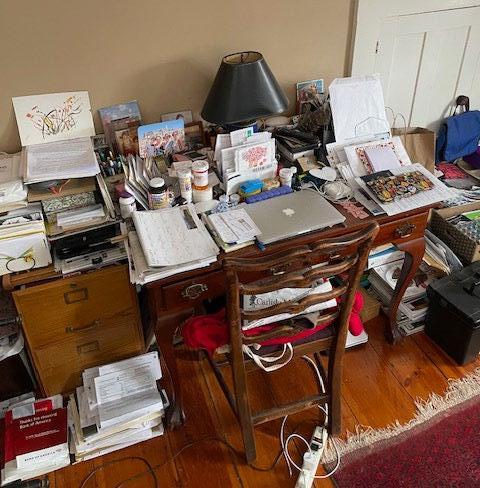
hired a lot of these chores out. Were their lives really that busy? What were they missing by not taking care of their lives themselves? Bert, it could be said, felt much the same way. He, however, squirreled away his ‘library’ between his ears. Brenda had always kept compendious notes on scraps of what might have been waste paper (like the backs of envelopes). This usually made Bert crazy. In his world, everything had a home. On the inside of his head was a sign that said ‘put it back now; this means you!’ Between the two of them, their senses of order were oppositional. Bert was a creature of habit who simply needed to know where everything was. There were no loose screws in his heaven. Brenda, on the other hand, had no sense of order (if you asked Bert). Whatever was wherever it might have come to mind. But given Bert’s proclivities to tidy up wherever he went, her most urgent
notes-to-self often went missing. Brenda forever found this frustrating. Life was good when Bert kept his tools in order but tended to descend into chaos when he got into her business. Bert’s ‘library’ was a card catalogue; Brenda’s was a messy desk (although she claimed to know where everything was had Bert not ‘tidied’ up and tossed the one piece of paper that had her shopping list or next recipe).
It was as if Bert’s life was in the ‘how-to’ section of the shelves and Brenda’s was in with the mysteries. Index vs serendipity. But it was also how whoever might follow
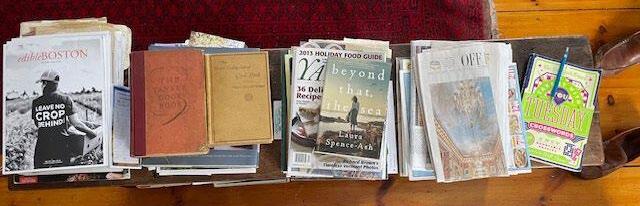
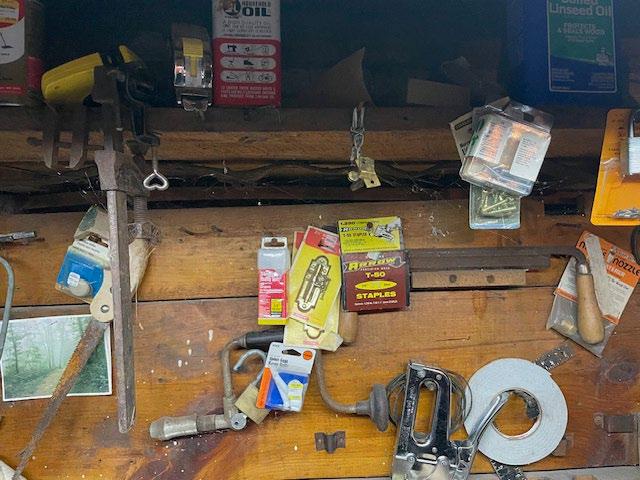
in their footsteps might see their lives. Bert’s ‘books’ were all lined up and arranged by author. Brenda’s books needed the help of a patient librarian who might someday pull everything together and produce a best-seller a la Julia Child or The Whole Earth Catalogue, a giant meshugana whiteboard. If one asked around, the both of them seemed to know pretty much everything about everything domestic, perhaps because they had had years to build their libraries. Bert was a ‘California Closet’ guy if only because, if he was lucky enough to have any help in the gardens, he needed to tell whoever where to find the right tool and/or to know where it had been put back. Hunting for something was not time well spent. Brenda, however, did her best
thinking on the settee with the old wooden bench at her knees. Here she aggregated inspiration, took note of what needed her attention and started her correspondences (and sometimes got Bert off dead-center).
One only needed to know that at times they rubbed each other’s fur the wrong way and soothing the resulting insult was no easy task. He tried mightily to disregard her seemingly lackadaisical attitude toward efficiency. When he was tidying up in the kitchen after dinner, he made sure that if placement was in question, he was sure to ask. His fantasy may have been the Taj Magarage (every ‘jewel’ in its right location always); hers was carefully curated chaos. Despite their seeming dysfunction, they
actually got on rather well even if there was no merging of the ‘libraries’.
Every time the sun set at this time of year, they would look at each other and know that spring was one day closer. About now, no matter the snow fall, every cold day seemed to get into their bones - daily paroxysms of ague every time he felt the need to go outside to take the compost or pick up the mail. It used to be that Bert (more so than Brenda) just loved the refreshingly dry air of a sunny winter’s day.
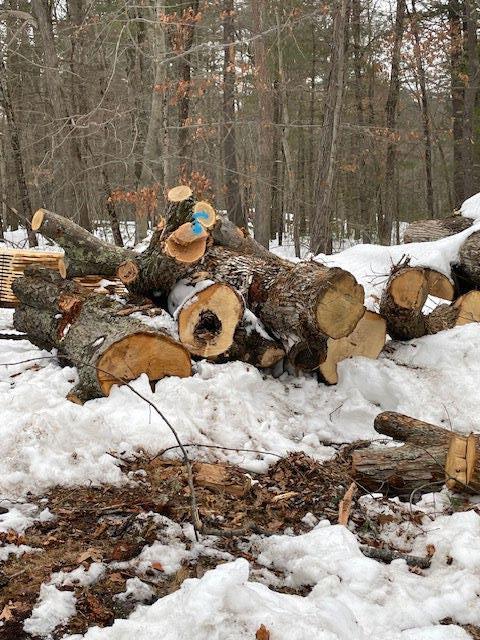
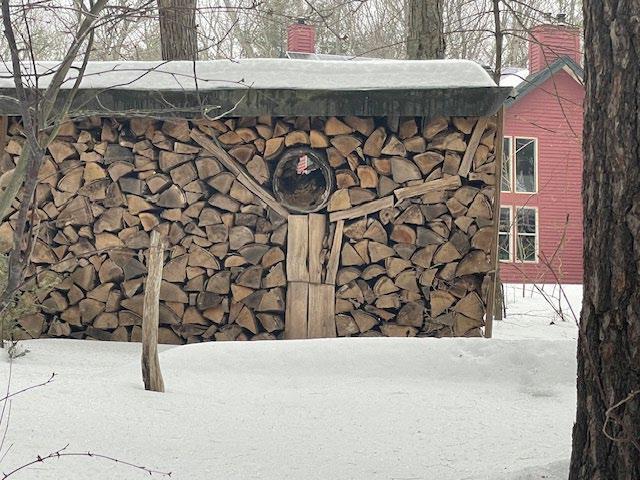
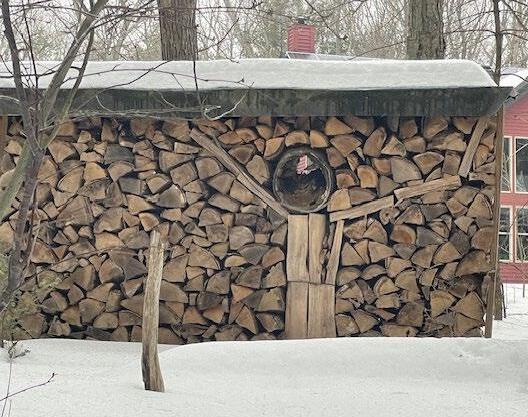
The smell of sap in the sugar maples as the splitter cleaved another butt. One used to say that wood in the winter thrice warmed a body: once at felling, once at bucking and once at splitting. Wood in the hearth was a given. Nowadays, Bert had a load of logs dropped near the back door where he could buck and split without wading through snow up to his knees. Brenda insisted now that he rent a splitter and call up a neighbor to help with the back-breaking work. Bert always insisted on bucking up his own wood—each butt either nine or sixteen inches precisely depending on whether the resultant pile was destined for the kitchen stove, the Royal Oak in the parlor and/or the fireplace. Bert always tried to keep a year’s seasoned cordwood on hand just in case. Green wood was heavier and did not burn as well. And it made for a sooty chimney which was prone to catching fire. They had never suffered a chimney fire. Bert would tell
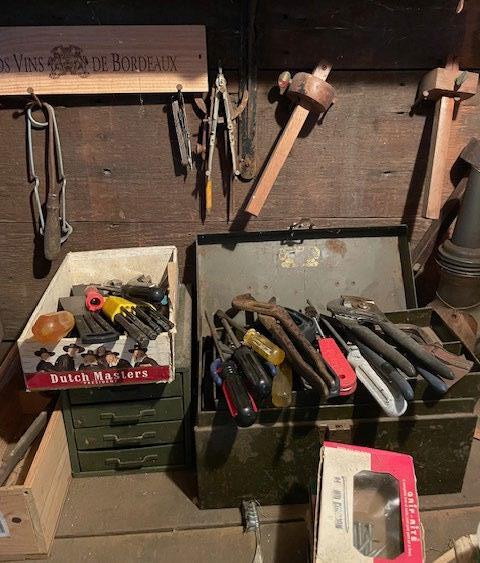
you that it was because his firewood was at least a year in the rick. He was fussy that way. He stacked his wood in ricks (or face cords) with
about a foot or two between ricks if only because Brenda was terrified of a house fire. She believed that IF there was a fire, their house would be a complete loss because the local volunteer fire squad could not get to them fast enough to save much more than the structure. This was a problem for them. Not only would what few worldly possessions have gone up in smoke, but pretty much their most precious asset would have been reduced to ashes They were land rich
and because they had been largely self-reliant, their real estate was just that, their ‘real estate’: land and buildings. With the house gone and no living relatives who might take them in, life as they had known it would be over. The thought of living any other way was unbearable. That was why Bert was so compulsive about his wood piles. He genuinely feared a fire being the ruination of their lives. However, aside from his gardens, keeping the home fires burning was a divine responsibility and with the grace of god and a
bit of luck, he would continue to bring creature comfort into their home. Some of the other folks in town simply liked having a fire in the evening and bought a load of wood from whoever had a good price. But most of them complained loudly that their fires sizzled, smoked up their living rooms and tended to throw sparks all over the place were it not for a screen or doors. What did they know? He knew how to tell if wood was cured by rapping on the ends. He had grown up with wood. He burned only hardwood; no spruce or pine (except for kindling), no larch (it burned too hot), nor any poplar (it burns too quickly). He preferred birch, ash, beech, maple, oak and hickory. But ash was his favorite because it was straight-grained so it was easy to split.
John Lee is the retired manager of MHS Gold Medal winner Allandale Farm, Cognoscenti contributor and president of MA Society for Promoting Agriculture. He sits on the UMASS Board of Public Overseers and is a long-time op-ed contributor to Edible Boston and other publications.
The Story Behind ‘Cairn Croft’ Magnolia
By Kevin Doyle
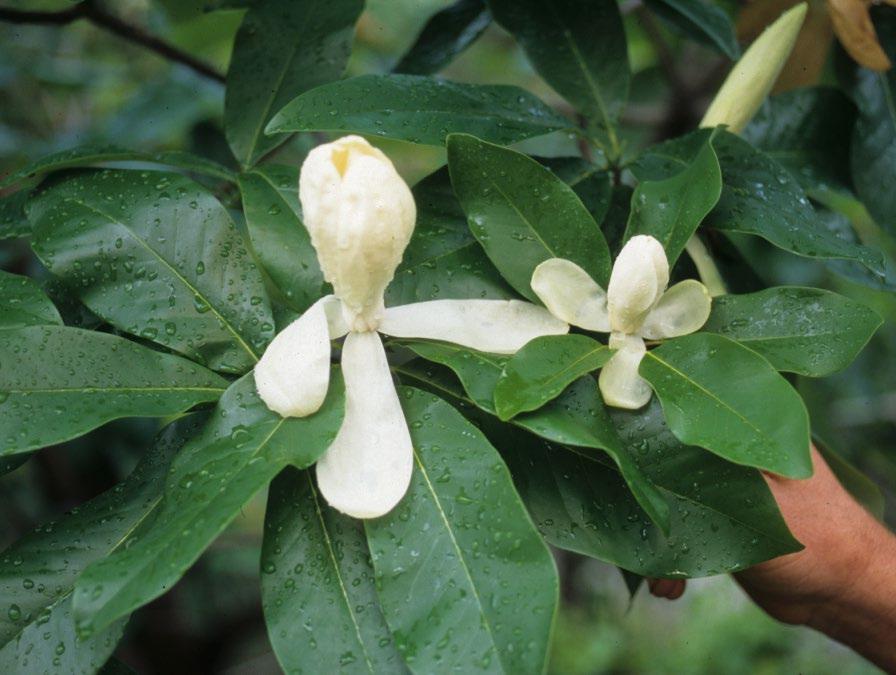
The “discovery” of Magnolia x thompsoniana 'Cairn Croft' involves a fun story that I enjoy re-living. In the late 1980s I was managing a private estate in Westwood when a grove of about a dozen Rosebay Magnolias (Magnolia virginiana) was being planted. As the small plants in 2-gallon pots were being placed by the landscape contractor, I noticed that one of these plants looked quite different from all the others. It had larger leaves and appeared more “woody” with a looser habit. I asked the contractor to plant this individual at the end of the hedgerow so that I could more easily monitor its growth. Over the next several years I continued to observe it as it grew much more rapidly than the other magnolias. In 1998, after nine years had passed, the plant was twice the size of all the others and it finally flowered for the first time. Lo and behold, the flowers were also much larger.
Magnolia 'Cairn Croft' (left) and M. virginiana (right)
I asked Gary Koller from the Arnold Arboretum to come take a look at the plant, and he immediately agreed that this was something unusual. He recommended that I bring some flowering branches to the Arboretum for identification and/or potential propagation. The greenhouse staff directed me to Peter Del Tredici, who at the time I had never met. Peter was not in his office at the time, so I left the magnolia branches with a note and my phone number. Later that day Peter called me with excitement, asking where I had found this plant. Soon thereafter, he came out to Westwood to see and photograph the plant.
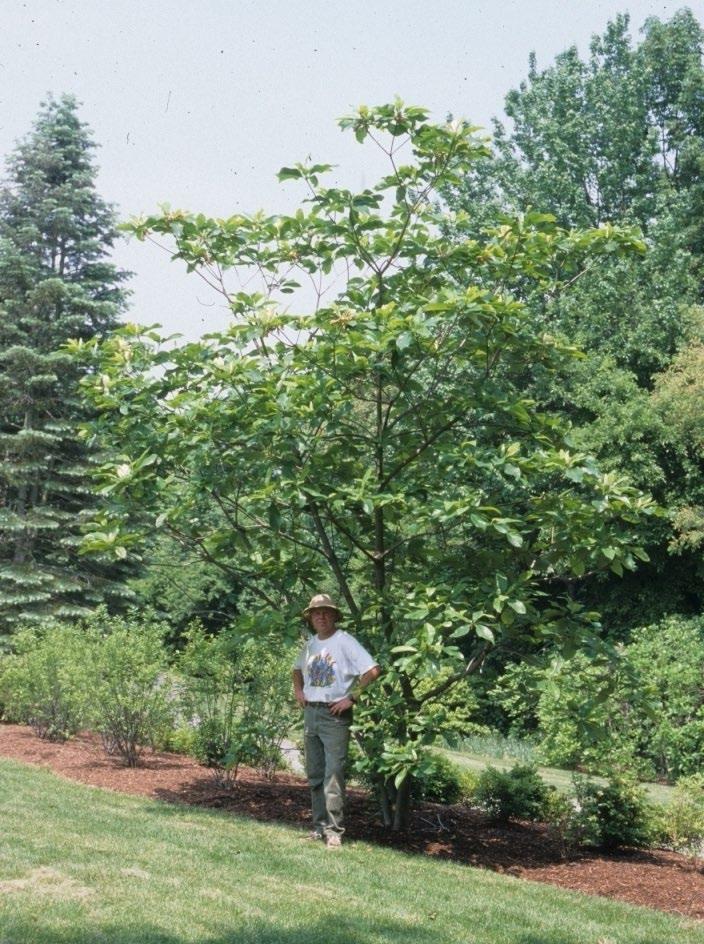
Kevin Doyle with original plant, June 1999.
Peter confirmed that this specimen, originally obtained from a nursery as a seedling of Magnolia virginiana, was actually a chance hybrid between Rosebay magnolia (M. virginiana) and Umbrella magnolia (M. tripetala), two eastern United States native species. This naturally occurring hybrid had first been described in Western horticultural literature in 1820 and was ultimately named Magnolia x thompsoniana after Archibald Thomson, who initially noted a single unusual specimen among a flat of seedlings of M. virginiana at his Mile End nursery in London. For a more complete background, see Peter Del Tredici’s article about Magnolia x thompsoniana ‘Cairn Croft' in a 2007 issue of Arnoldia.
The ‘Cairn Croft’ magnolia blooms from mid-June through July and produces flowers with a sweet, lemony fragrance that are two to three times larger than those of the typical Rosebay magnolia. Its bright, shiny green leaves are six to eight inches long by two to three inches wide.
But back to my story, Peter immediately set out propagating the plant from cuttings at the Arboretum’s Dana Greenhouses, and he offered me the opportunity to name this new clone. I chose the name ‘Cairn Croft’ after the name I had given my own garden in Dover. Peter did
successfully propagate several cuttings from “my” original plant and subsequently distributed scions to two nurseries, hoping that it could become commercially available. Unfortunately it has not become popular and is hard to find. The original plant in Westwood was a vigorous grower, having reached a height of fifteen feet and a spread of seventeen feet in its first twelve years.
Apparently this ungainly habit of growth, making it difficult to use in small or medium-sized gardens, has prevented it from becoming commercially successful, despite its large and deliciously fragrant flowers. Nevertheless, I continue to have fond memories of discovering and having the opportunity to name this magnolia, and also of meeting Peter Del Tredici, who is still a valued friend and colleague after all these years.
Kevin Doyle has been gardening at ‘Cairn Croft’ for 50 years and based his design-build business from there. He has enjoyed a fabulous career that he would never have imagined 50 years ago.
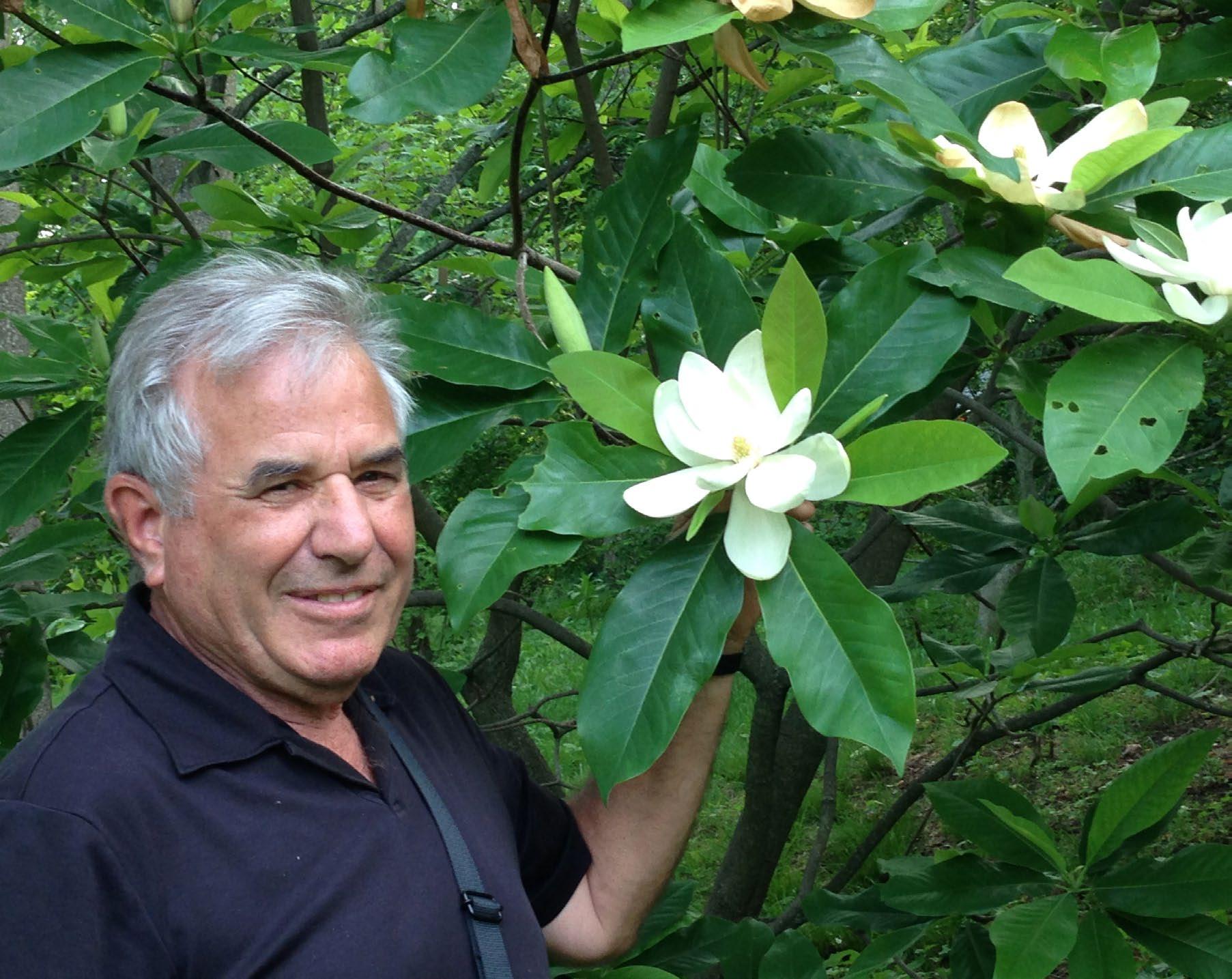
Peter Del Tredici with Magnolia 'Cairn Croft', 2015.
Colloquia plantarum
Interviews with Plants
By Shannon Goheen
Have you ever heard a person who lives anywhere between southeastern Canada, the east coast, and out to, say, Minnesota, refer to literally any evergreen tree in the forest as a “pine” or… maybe that’s you! My father-inlaw nearly always called evergreens “pine trees”, much to my amusement. Pine trees have the botanical name of Pinus (PIE-nus). Two species of pine trees figure largely in my comings and goings here on Cape Cod and further afoot in New England, and those are Eastern white pines, or Pinus strobus (PIE -nus STROH -bus) and pitch pines, or Pinus rigida (PIE-nus RIH-jih-duh).
There are good reasons for people to know the name “pine” over all other evergreen trees, and we’ll explore that interesting little factoid in this interview with these majestic beings of the eastern woods. I’m pretty sure the white pine (WP) and the pitch pine (PP) cousins have lots to say.
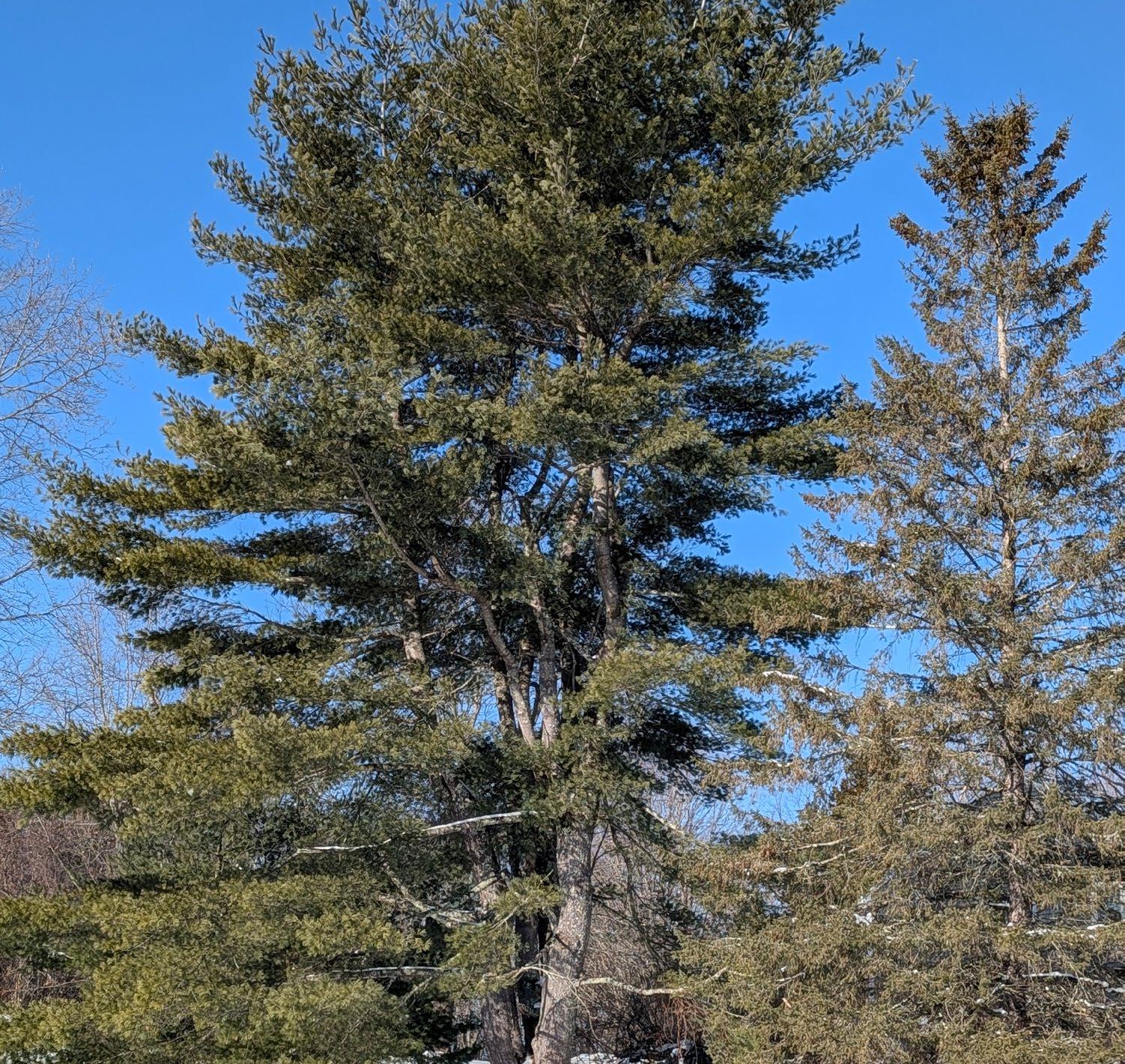
Above: White pine (Pinus strobus) tree after snowstorm. Photo by Dave Barnett.
WP: Hello down there, tiny human. What are you looking at?
Me: You, of course! I love the way you grow so tall, but your branches are so low, at least when you’re young. I’ve observed that when you really get going, your low branches eventually die off, and we’ll see much more of your lovely trunk.
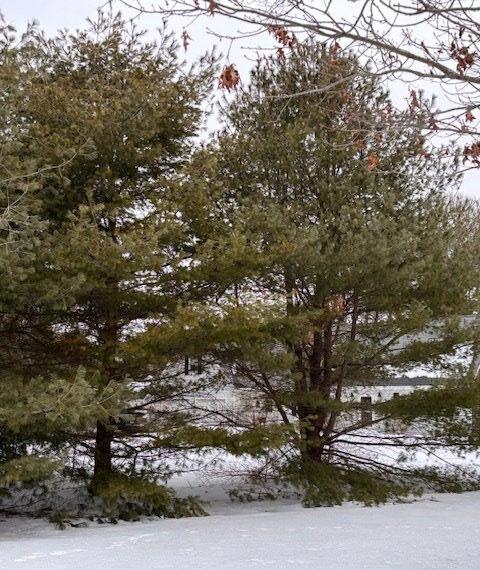
WP: Yes, once we hit 20-30 years or so, we change shape from being conical to more open. We’re shape-shifters, of sorts.
Me: I love that you change over time, but as a landscape designer, that’s not always the easiest thing to plan for. I know full well what you’ll become but it’s a long time coming. I think my favorite thing about you are your beautiful needles. They are so soft and silvery! I can almost stick my face into them without a care.
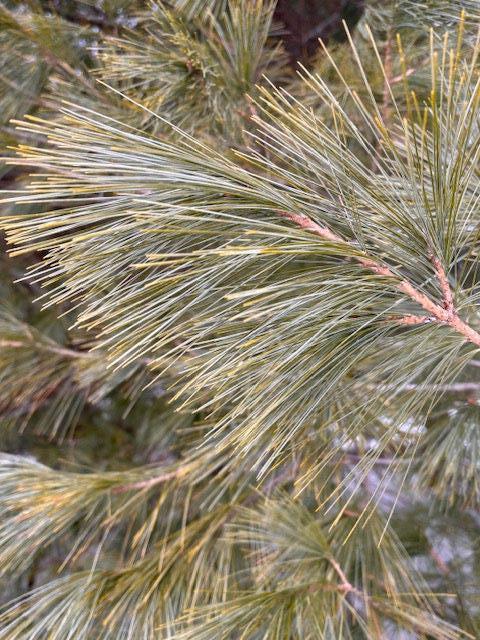
WP: They appear silvery because along the underside of each needle are two rows of stomata, pores that help us breathe, so to speak.
Me: Ah yes. Stomata. That would be a fun botanical diversion to explore sometime.
WP: Our needles are indeed soft and in lovely bundles of five. You can always know us that way.
Me: We call those bundles “fascicles.” I like to say that word. Fascicles. And the pitch pines, they have bundles of three with twisty needles, and less obvious stomata. Sometimes I have to examine the fascicles of a young pitch pine because it looks just like a full and chubby white pine from a distance.
White pine (Pinus strobus) trees, approximately 20 years old
White pine fascicles showing sets of five needles and the silver stomata.
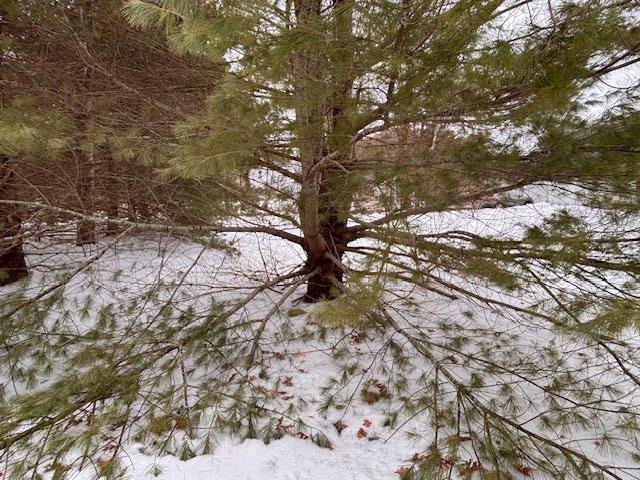
White pine ground branches that provide cover for wildlife that will eventually die off as the pine ages.
PP: Who are you calling chubby? We are most definitely not “chubby.” We could be described as “full” in our youth.
Me: Oh hello pitch pine! I love the way you look at any age, with your free-form branches and patchy bark. Sometimes it looks like you’re stooping down to look at something on the ground and other times, well, most times, you reach to the sky. And you almost always have companions. In fact, I was told that standing with your friends is how you resist the wind. When your companions are taken away, you are more likely to fall. Is that true?
PP: Yes, my friends and family are the reason I can stand tall. We start life together and try to grow old together. Of course, weather happens and so do people, some who find us undesirable. Little do they know how integrated we are with our preferred environment.
Me: Which is?
PP: We like sandy soil, burned areas, and coastal exposure. We send a short tap root down to get the nourishment we need. We also like to grow right next to the ocean where the wind and salt spray never stop. Who else can do that?
Me: You’re right. No other tree that I know of can grow that close to the coastal bank and still thrive. You are the crown jewels of seaside trees, at least in my experience and observation. You go where others won’t or can’t and you grow like the dickens.
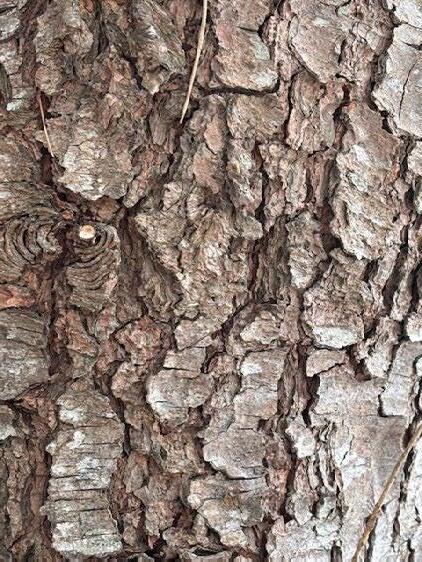
PP: Thank you. We have evolved with extremely challenging environmental conditions, like fire, for instance. Our bark – you may have noticed that it grows in loose plates - protects our inner system from fire. Even better, if our tops get burned, we can sprout anywhere along our trunk from dormant buds.
Me: Oh! That explains a phenomenon that I never fully explored. I heard that you are the only tree that can be buried in sandy soil six feet deep or more, against your trunk, and still live to tell about it. Every other tree would die in short order. It’s because of those dormant buds. Wow!
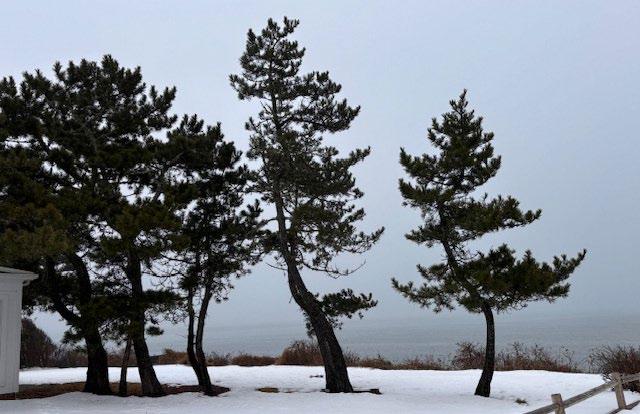
Pitch pines at the edge of a coastal bank.
PP: And that’s why we colonize burned or cleared places so quickly and in bunches. We often cover the open ground along with our smaller friends, evergreen and deciduous shrubs and grasses.
Me: I’ve seen that very thing you reference. Inkberry (Ilex glabra) and bayberry (Myrica pensylvanica), for instance, spread and resprout by rhizomes, or underground connected root systems. Native grasses like switchgrass (Panicum virgatum) have deep roots and drop a lot of seeds and they like open areas. The grass-like sedge (Carex pensylvanica) like the shady woodland areas. And we can’t forget the iconic lowbush blueberry (Vaccinium angustifolium) and huckleberry (Gaylussacia baccata) that finish the job, along with a lot of other lovely leafy characters. That all makes sense.
PP: In earlier times, Native Americans burned the woods on occasion and so did lightning strikes. We loved those conditions. Since there are rarely any fires anymore and lots of people don’t like the way we look, we are in a decline. That concerns us.
WP: We don’t like fire nearly as much. We can handle it—sort of—but fire isn’t our thing. We like cool, moist soil that we can really sink our roots into and grow.
Me: I do sing your praises wherever I can, pitch pine. I happen to think you are beautiful—needles, pitch, and all. One big difference between the two of you in the landscape is that pitch pines can and do have masses of companion plants growing right up to their trunks, and even lawn grass. White pines, however, drop a thick mulch of needles year-
round. They shade the ground in younger years, and their shallow root system makes the area underneath them dry and acidic. That’s not to say that nothing grows under their canopy, but they tend to be loners in the landscape. Oh, pardon me! I’m speaking as if you both aren’t here, and I apologize. I see you!
WP: Do you really see me?
Me: Well…yes. I see you as a massive, commanding and beautiful sentry tree, native to northeastern North America. And you too, pitch pine. You are the scrappy, tough-as-nails, never-give-up native cousin who can grow a little further south. I am in awe of you both, for different reasons.
WP: I appreciate your awe, but you are at least three centuries too late to see how tall we can really grow. And I doubt that we will ever again be allowed to live long enough to grow like our ancestors did.
Me: You’re referring to the fact that three centuries ago, you would have been taller?
WP: Oh, so much taller. So, so much taller. My ancestors grew to be 200 feet tall or more…and lived so much longer. Some were 400 years old.
Me: Astonishing! I can’t even imagine that. Your ancestors were at least 20 stories high, about the height of a building we call the Bunker Hill Monument, and likely even taller. And 400 years old? Think of what those pines saw and heard and felt while they grew without limits. I heard that some white pines had trunks that were seven feet in diameter, give or take. That’s as wide as four or five adult humans standing side by side.
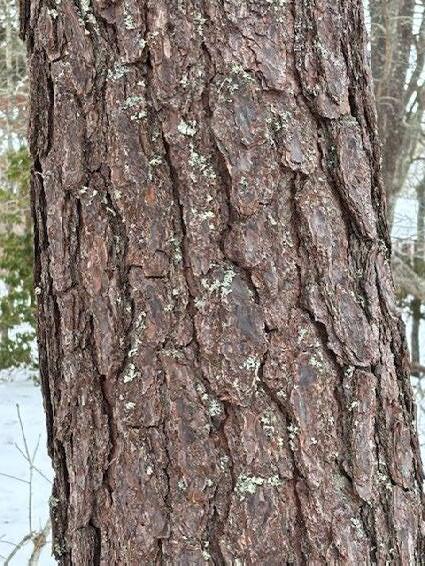
Bark of white pine (left) and pitch pine (right).
WP: Imagine how long it took for us to get that tall, and that wide, and how we were supported by rich soil, rain, and enough sun to thrive. There was literally nothing to blot out the sun. And we thrived for so long…until the colonists arrived.
Me: I can’t fathom how cruel and short-sited it was to destroy groves of pine trees as you describe them, but you know how people can be.
WP: Yes, I know.
Me: Centuries ago, any living white pine was earmarked for the King if it was over 24 inches wide. The British wanted to be the sovereign of the seas, and they needed tall, straight, and solid masts for their ships. Your huge ancestors were the perfect fit. The best trees were marked with arrow cuts that they called the king’s broad arrow.” It looked like a turkey footprint carved into the bark.
WP: I like turkeys. They often roost in my branches.
Me: They look like giant Christmas ornaments!
WP: What are Christmas ornaments?
Me: Just a human thing. It was illegal for colonists to cut trees for themselves that were marked by the Crown, but they did it anyway. Not fair to you pines, of course. The colonists weren’t any better as far as harvesting huge white pines was concerned.
WP: No, harvesting is harvesting, regardless of who did it. Our huge ancestors were destroyed.
Me: It’s painful to think of what we lost. But from a purely historical perspective, here’s an interesting human-centric story. There were two rebellions in the State of New
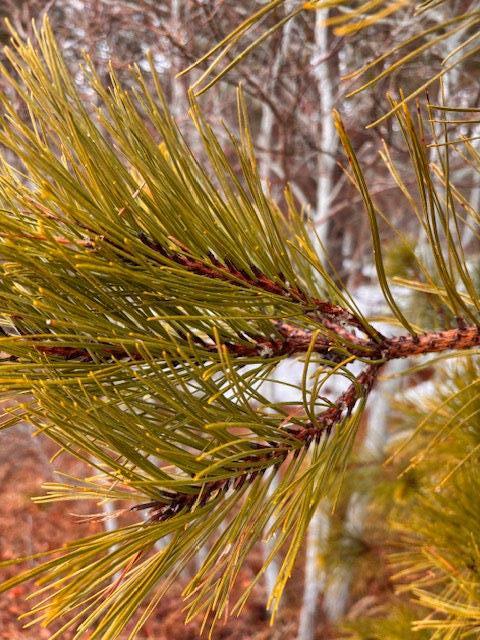
Pitch pine fascicles showing sets of three needles.
Hampshire having to do with pines. One was the Mast Tree Riot in 1736 and another one in 1772 known as the Pine Tree Riot. That second one was a biggie. The representative of the Crown, the guy who marked the trees, and some others, got beaten by a mob and shortly after that, some other notable events happened that led to what we call the American War of Independence. We did win, by the way.
WP: Did you get what you wanted?
Me: We didn’t want to be ruled by a king, so yes, at that time, we got what we wanted.
PP: Well, we’re all still here.
Me: Thank goodness! Not only do we need you but the birds, the deer, squirrels, box turtles, snakes, tree frogs, salamanders, bears, bald eagles, ospreys…you name it…depend on you. Our ecosystem as we know it depends on you, and others, so don’t leave us! I know you can’t stop a chain saw or a tornado or a hurricane, but please hang in there. You make our corner of North America so much better. And pitch pine, when I remove one of you for various (good!) reasons, I leave about ten feet of trunk standing for the birds. It lasts for years, poses no danger to humans, and the birds go nuts, especially woodpeckers. I love watching them and honoring you.
So, the three of us parted and got back to doing what we do, holding the birds, housing mammals, typing furiously at the computer…we all have our jobs.
The pines were here early, over 150 million years ago, and rapidly colonized the landscape after the retreat of the last glacier. They thrive and persist where other trees could not, growing in sand, holding land in place, providing shade and shelter, and fueling economies. The white pines adapt well, but the pitch pines depend on fire to clear out their competition, like oaks and maples. Their long-term survival is more tenuous, and I was glad to speak to them while they remain in force, at least in my corner of the world.
Shannon Goheen has been loving plants and designing landscapes, primarily on Cape Cod, for nearly 40 years as Second Nature Gardenworks. She talks about plants and landscape notes on Instagram as @theeveninggowngardener.