
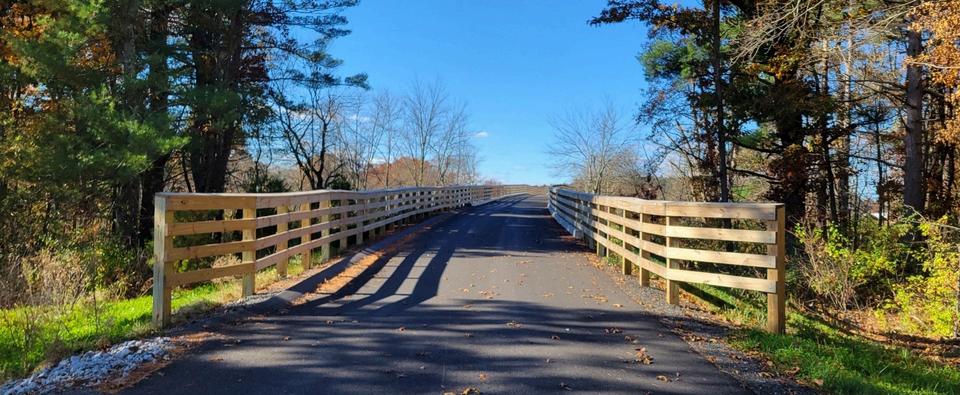
Massachusetts’ shared-use path network is 1,000+ miles and growing, with over 50% of Massachusetts residents living within 10 miles of an existing trail. With new public spaces come new users, devices, and needs.
This creates conflicts in constrained spaces.
MassBike created this resource guide to navigate these issues so everyone feels welcome and safe on our shared trails!
Implement the solution
Measure the outcome
Post trail etiquette signage (that includes language about ebikes) at trail entrances & intersections
Advocate and participate in Safe Routes To School programming
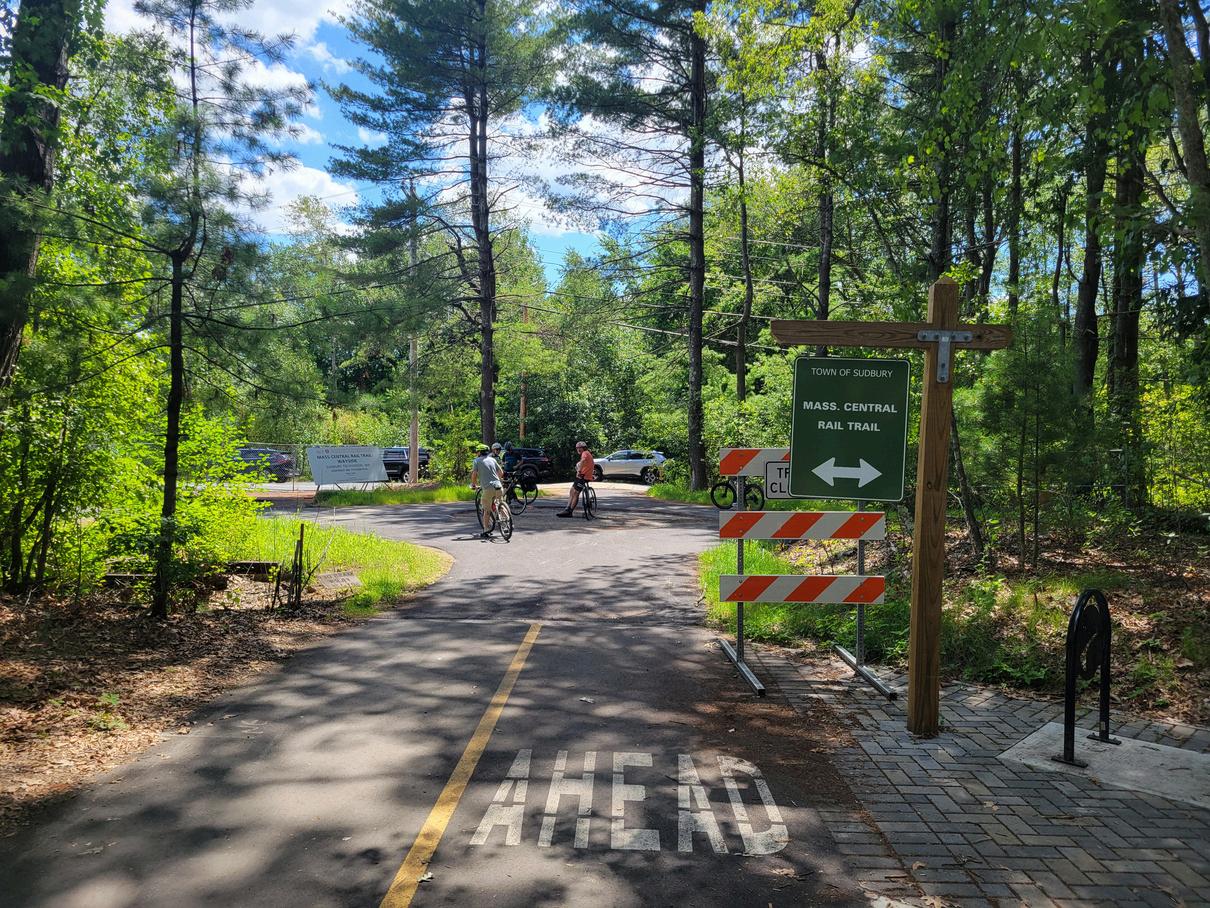
Paint recommended speeds on asphalt
Host school events like bike buses or educational group rides to teach about bike safety/road safety
New devices of varying speed are utilizing limited space on trails. Micromobility; which include, bike-share, ebikes, escooters and more, has created safety concerns, especially around speed limits and trail etiquette.
Micromobility has increased over the last decade
Bike Boom: Growth in overall ridership since 2020 due to affordability, access to outdoors & climate concerns.
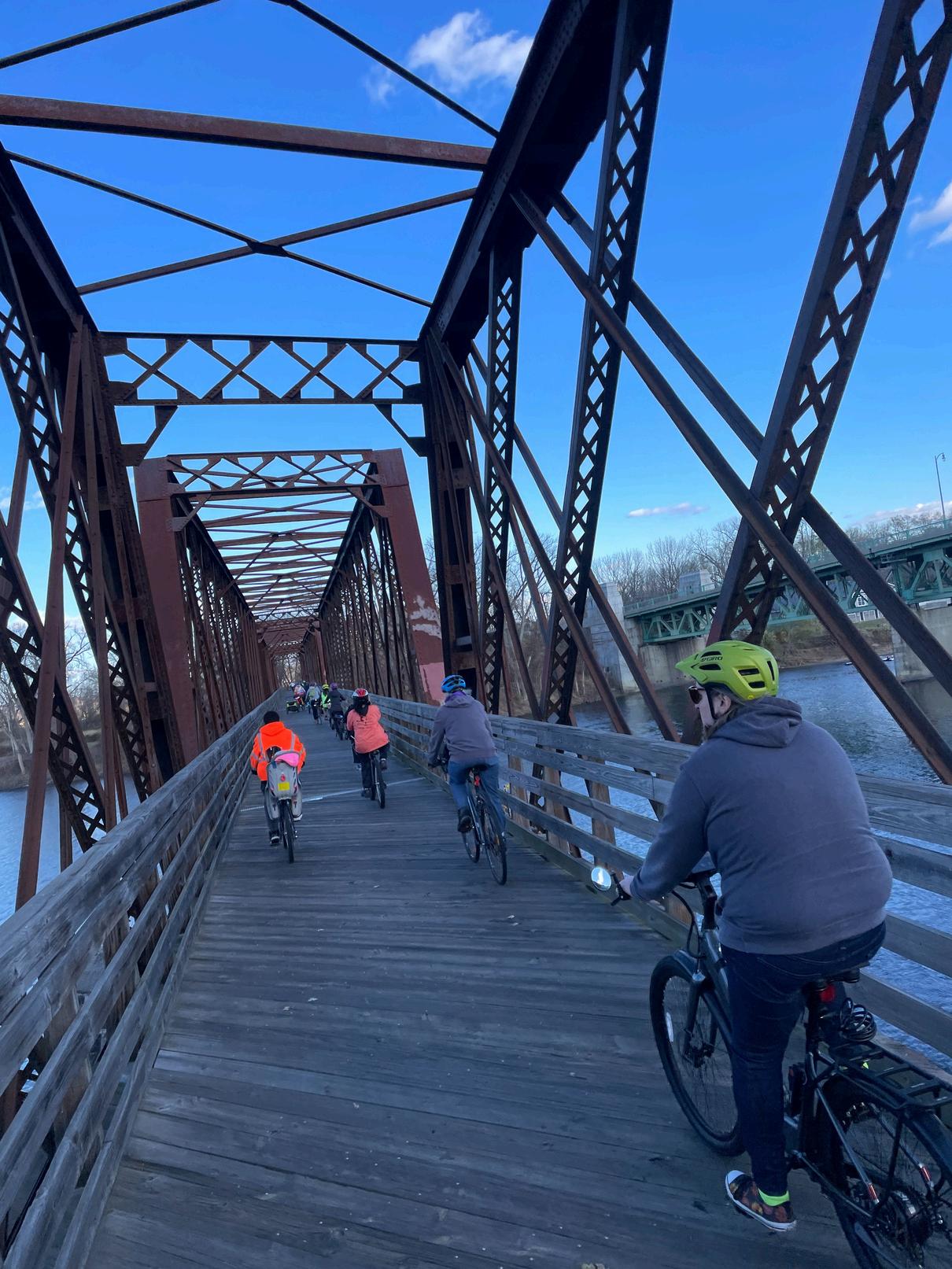
In 2025 alone 40+ miles of Shared Use Path were added in MA, completing our regional networks and making us more connected.
As on Summer of 2026, Legislation is in process to clarify devices and where they are eligible to ride.
As of August 10, 2022, the e-bike definition language was signed into law as amendments to the Transportation Bond Bill (H.5151) to include Class 1 and Class 2 definitions for e-bikes.
CLASS 1: Bicycle equipped with a motor that provides assistance only when the rider is pedaling, and that ceases to provide assistance when the e-bike reaches 20 mph, with an electric motor of 750 watts or less.
CLASS 2: Bicycle equipped with a throttle-actuated motor that ceases to provide assistance when the e-bike reaches 20 mph, with an electric motor of 750 watts or less
“Mopeds” aka Motorized Bicycles are required to be register with the RMV.
Motorized Bicycles operation requirements in MA
“Dirt Bikes” aka Recreation Vehicles, are not allowed on roads but are supposed to be insured.
Off-Road Recreational Vehicle operation requirement in MA

May of 2026, Governor Healey filed a bill: “An Act to enhance the safe use of micromobility devices”
This was based on recommendations from MassDOT’s Micromobility Commission. MassBike Executive Director, Galen Mook, participated in these discussion which resulted in these reports:
Small Wheels, Big Potential (summary)
Special Commission on Micromobility Report (full report)
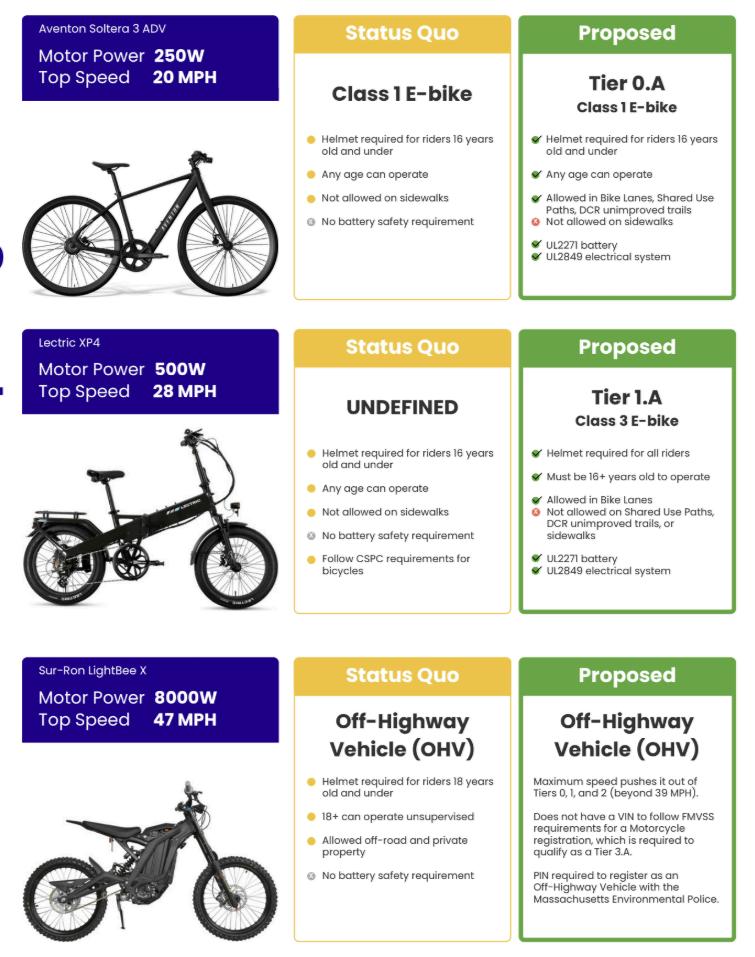
Micromobility Report Summary, page 10. January 2026
These issues are not unique to Massachusetts and are part of a nationwide trend in micromobility.
E-Bike Smart
Learn about the world of electric bikes
People for Bikes wrote a 3-part series on the topic from a bike industry point of view.
1. The E-Bike Problem is an E-Moto Problem (9/18/25)
2. The Hidden Dangers of Illegal e-Motos (9/26/25)
3. Solutions to the E-Moto Problem (10/9/25)
E-motos are being marketed to young people as lifestyle products. The video below demonstrates some of the blurriness of the marketing.
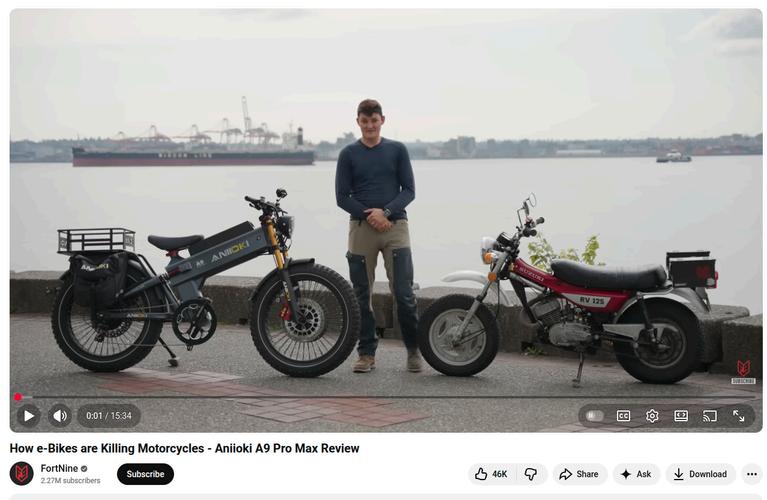
Motorcyclist provides a critical comparison on the difference between e-bikes (class 3) and motorcycles or lack thereof.
FortNine
Emphasizing bike riding safety and skills for adults and students can create a safer environment for bike riders.
Safe Routes To Schools (SRTS) is a MassDOT program which provides biking education in elementary and high schools and builds biking infrastructures to public schools so that kids can bike to school.
Work directly with MassBike to schedule classes for your community!
Smart Cycling is a Bike League national program with on-line and in-person cycling events.
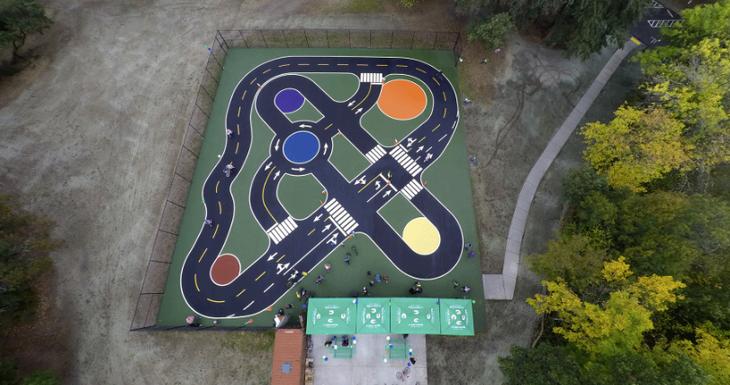
Parents and educators an use Traffic Gardens as a hands-on approach to teaching safe biking principles.
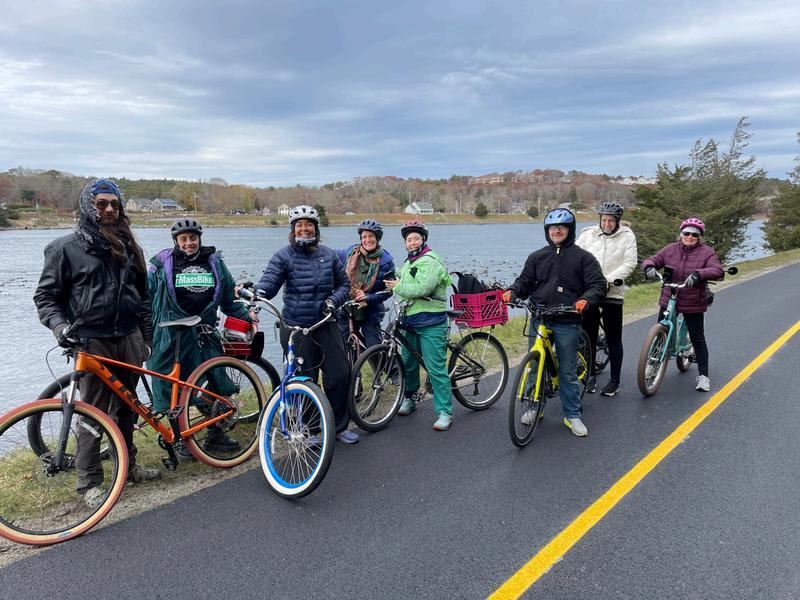
Bike Buses are started by community members and there are several operating in Massachusetts. These programs encourage students to bike to school with a safe and supervised group.
Legibility
Able to read sign while biking past
Reiterate information in other media (website, trail map, etc)
Age-inclusive & reading level of 5th-7th grade
literacy
Translations made available
QR codes
Not age-inclusive
Can’t be used while in motion
Better for context sign or translation services
Tone
Use words like “Allowed” ‘Class 1 & 2 eBikes Allowed’
Avoid using “Prohibited” when possible. ‘Class 3 eBike Prohibited”
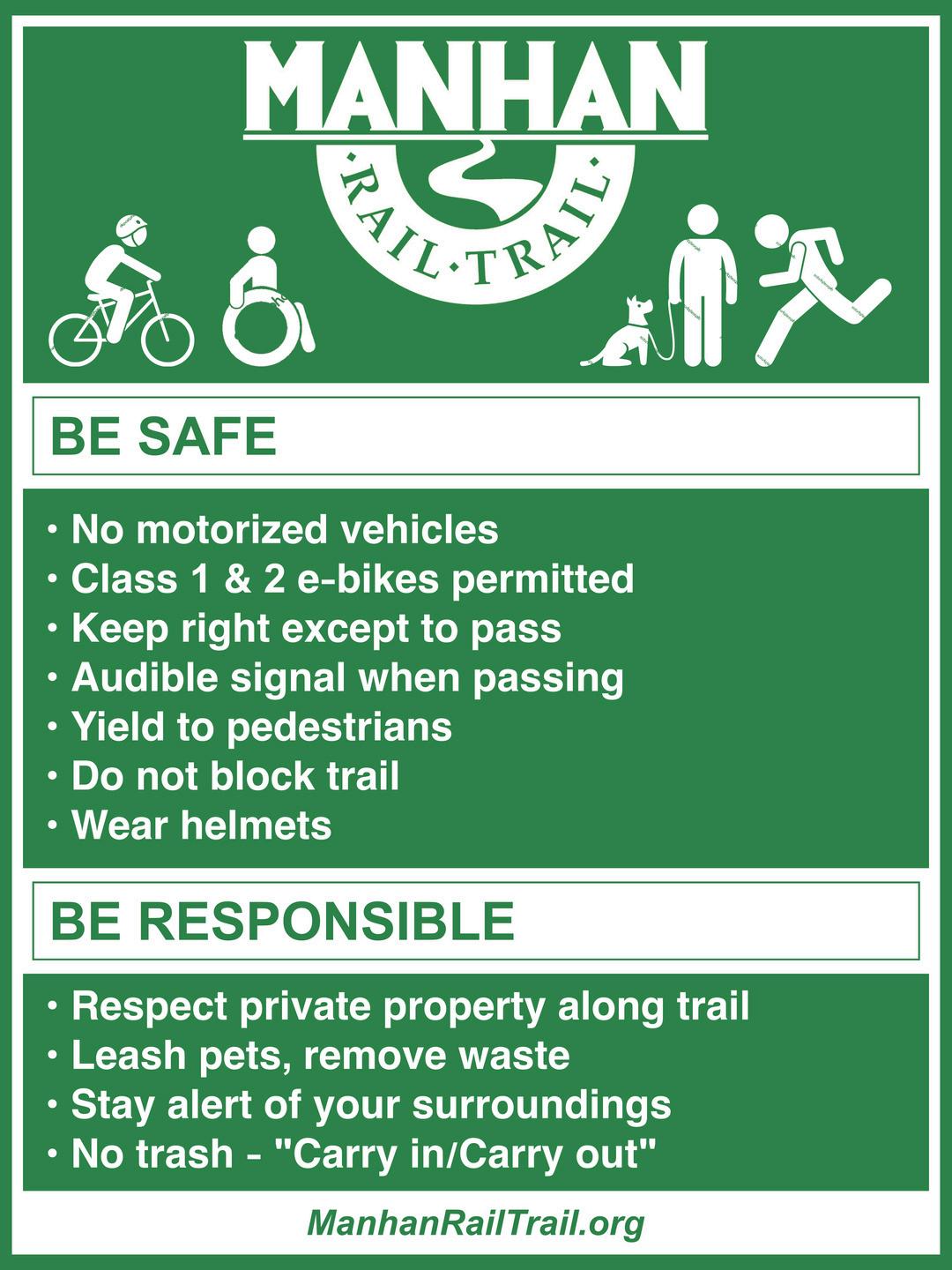
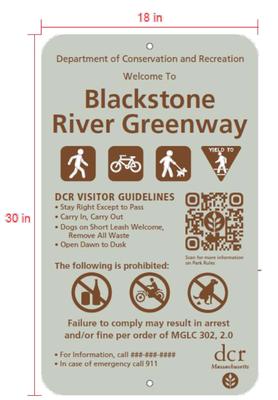
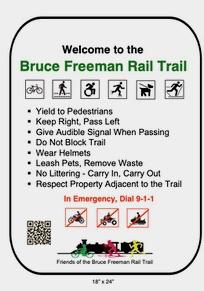
Key Elements to age-friendly, legible signage:
Bare Minimum Content
High Contrast
Non-Reflective
Minimun Font Size: 2"
Large Type
At Eye level
Icons & Text
Minimum Size: 18" x 24"
Class of eBikes allowed
On-leash pets only
No littering: carry-in, carry-out
Keep right, except to pass
Give audible warning when passing
Be alert of your surroundings
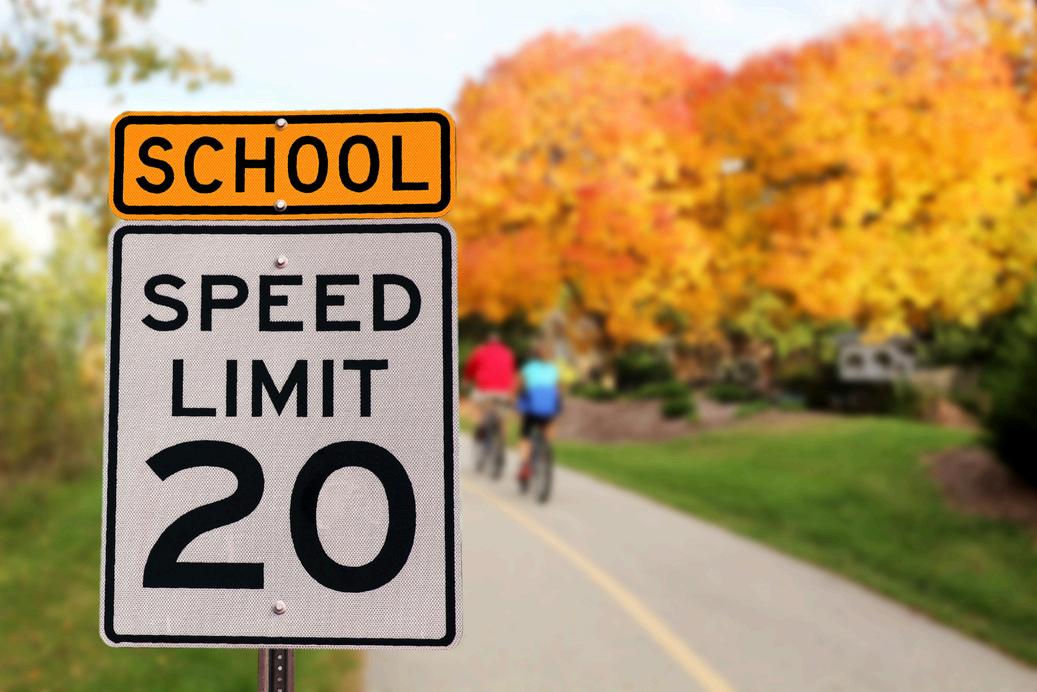
General Speed Limit signs:
White signs are enforceable
Yellow is a recommendation
MA law allows municipalities to set their own speed limits on rail trails, if it goes through a public process. To date, none have done so. Here are some possible examples for what future signage could look like.
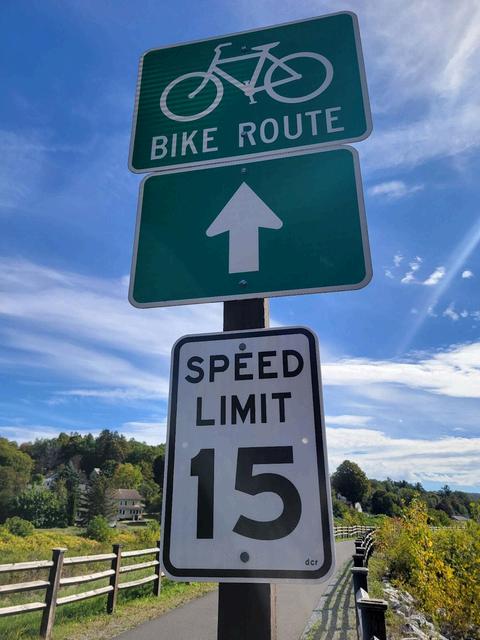
Note: It is legally possible to have two different speed limits for different times of day or days of the week, like a School Zone or “25 mph unless posted” signs.
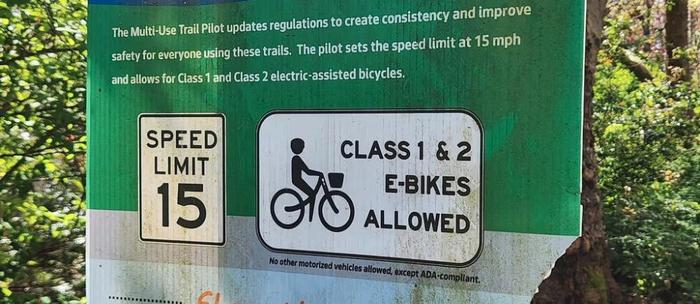
Source unknown
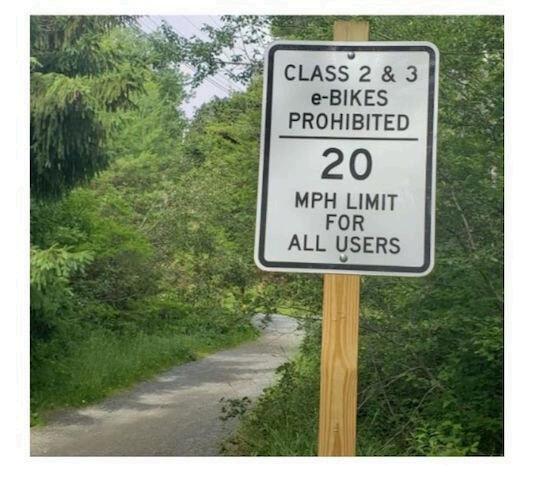
A few of these are currently being used on trails in Massachusetts.
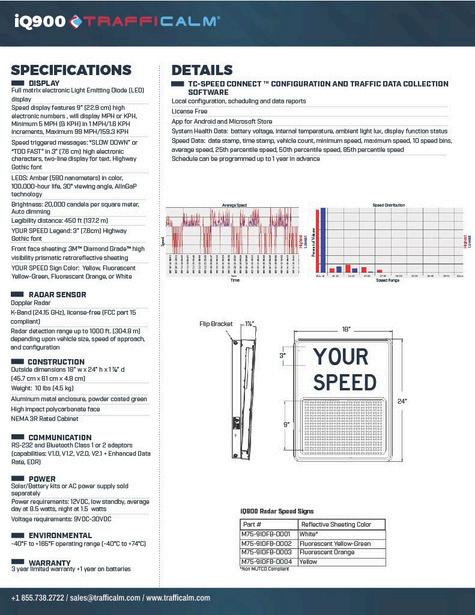
Brochure for signs
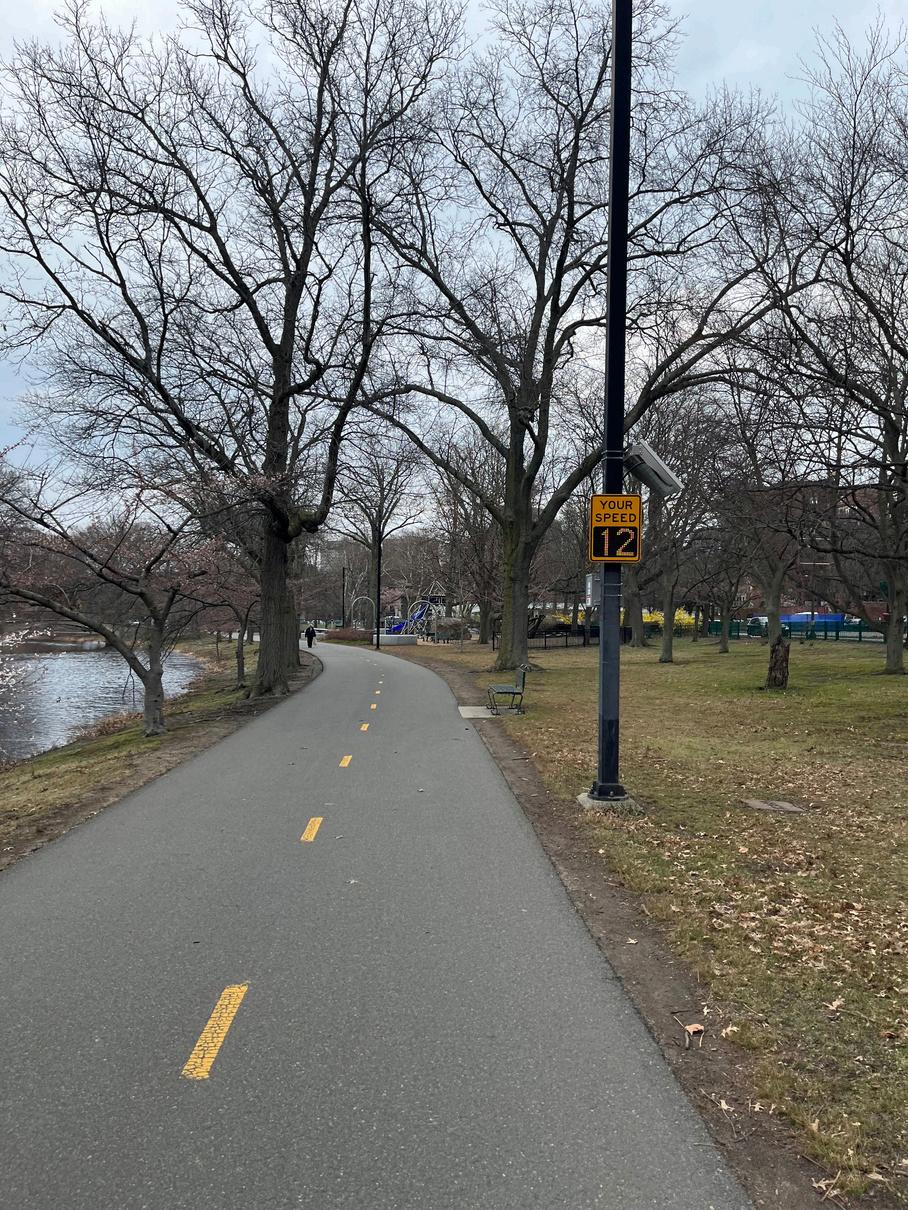
These signs are commonly seen around school zones but can also be used on Shared Use Paths.
The feedback signs can be programmed to have smiley face when the rider is going at reasonable speeds and frowning face when rider is going too fast.
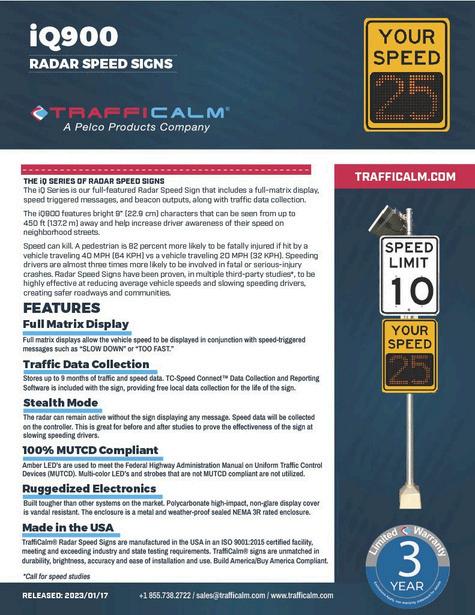
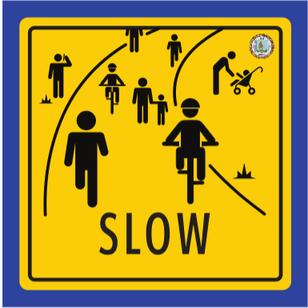
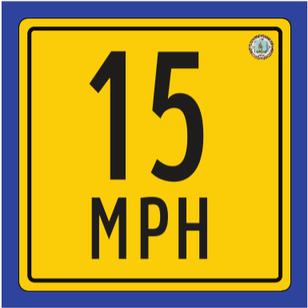
Yellow signs are cautionary, not legal speed limits.
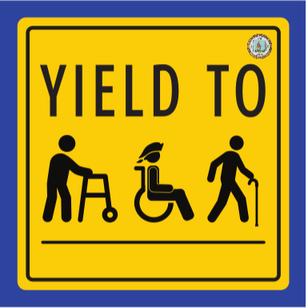
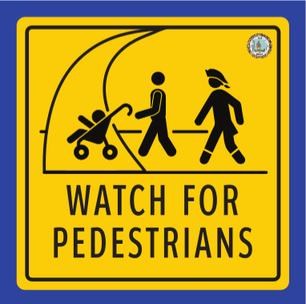
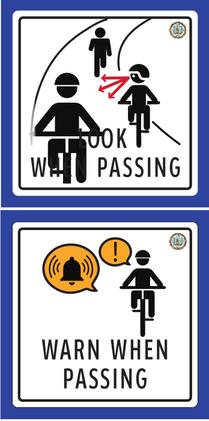
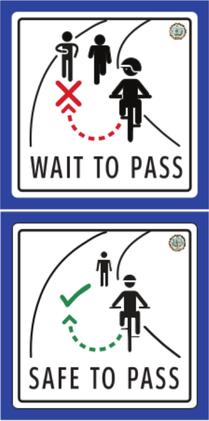
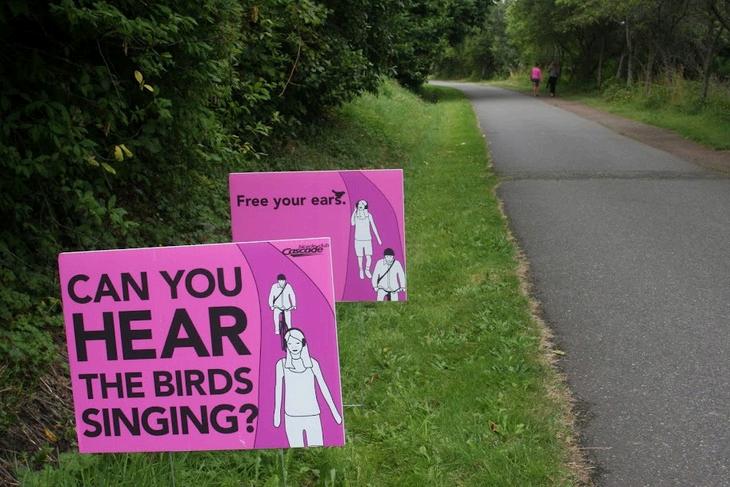
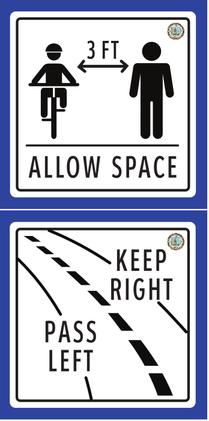
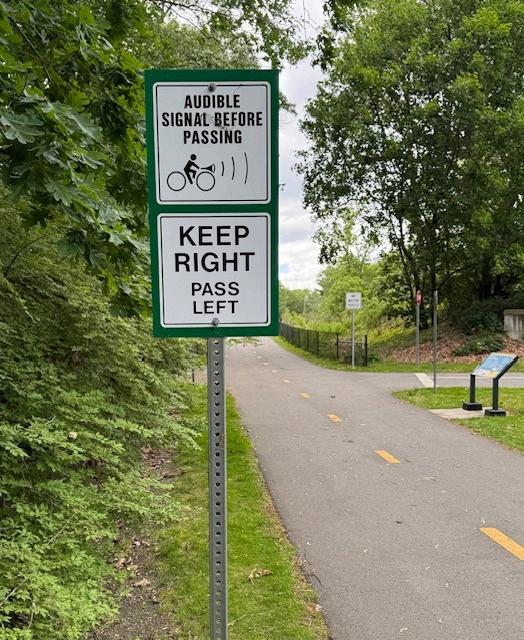
Some of our Rail Trails do allow horseback riding. Additional layer of caution need to recognized when riding near horses.
NEMBA (New England Mountain Biking Association) made a short video on the topic & Bay Circuit Trail also has resources:
Sharing the Trails with Horses NEMBA
Bay-Circuit Trail Etiquette
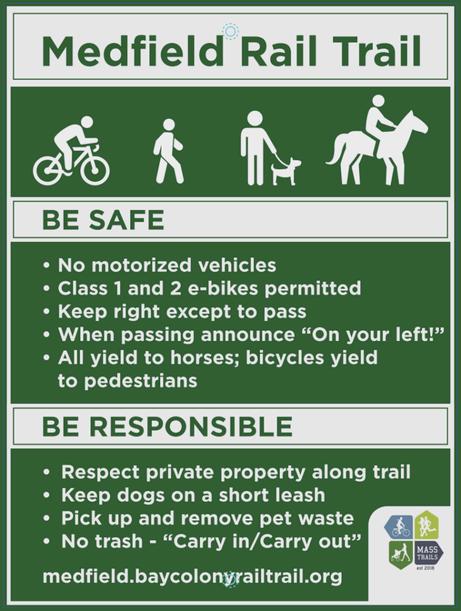
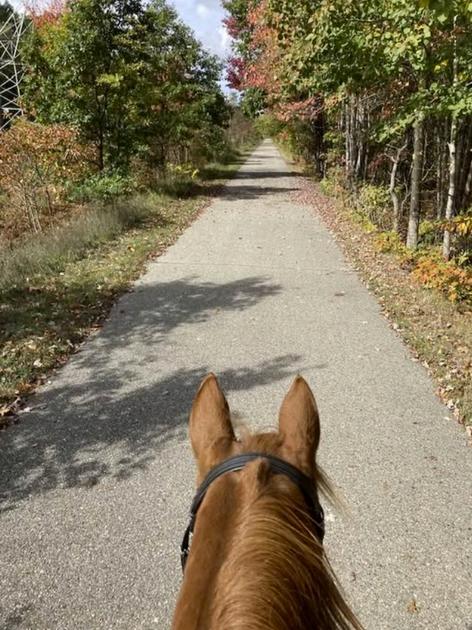
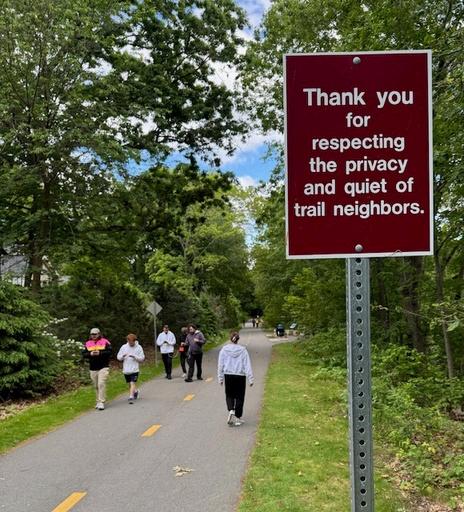
Cochituate Rail Trail
ABC Quick Check before you ride
Air:
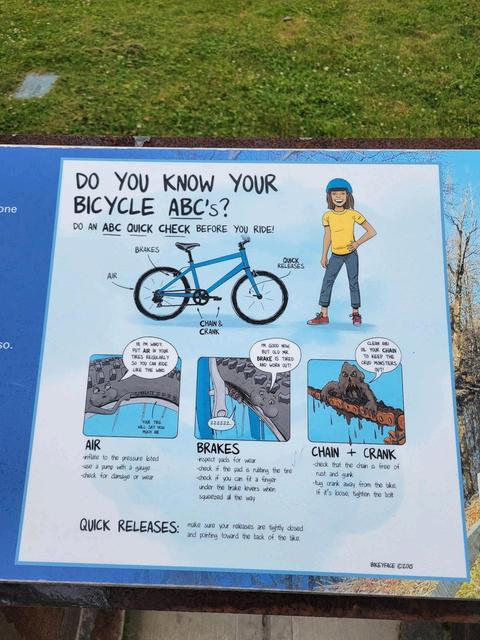
Inflate to the pressure listed. Use a pump with a gauge. Check for damage or wear.
Brakes:
Inspect pads for wear, Check if the pad is rubbing the tire. Check if you can fit a finger under the break levers when they squeeze all the way.
Chain & Crank:
Check that the chain is free of rust and gunk. Tug crank away from the bike; if it’s loose, tighten the bolt.
If your entity has a social media presences or does physical mailings, consider sharing resources your trail uses through those avenues.
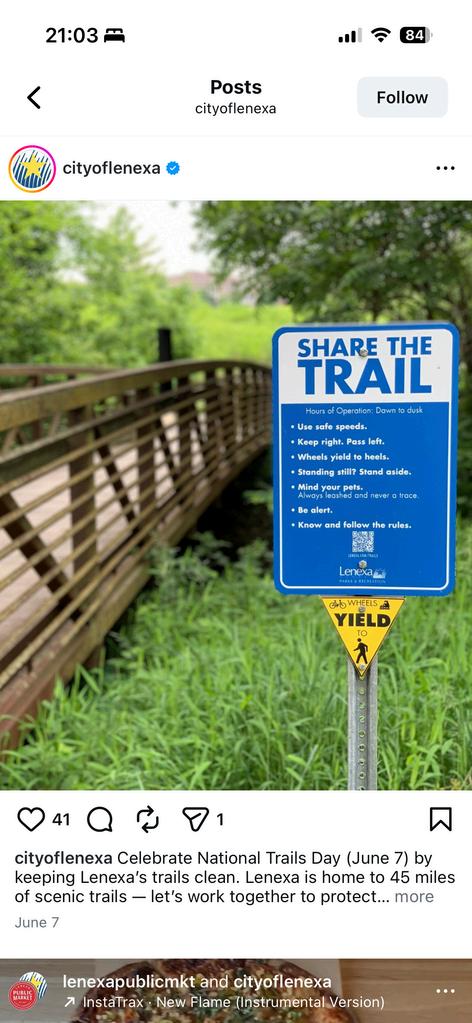
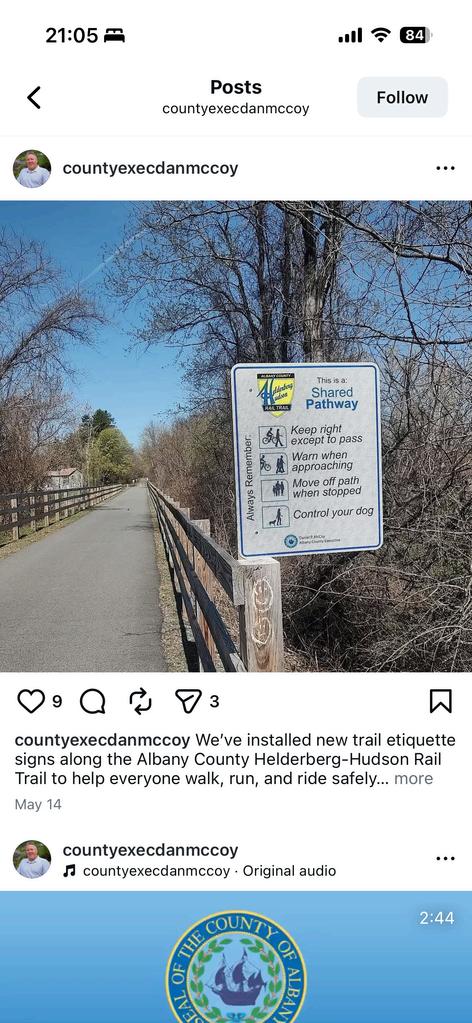
Posting recommendation and rules on your website and/or printed trail maps to reach the broadest amount of users.
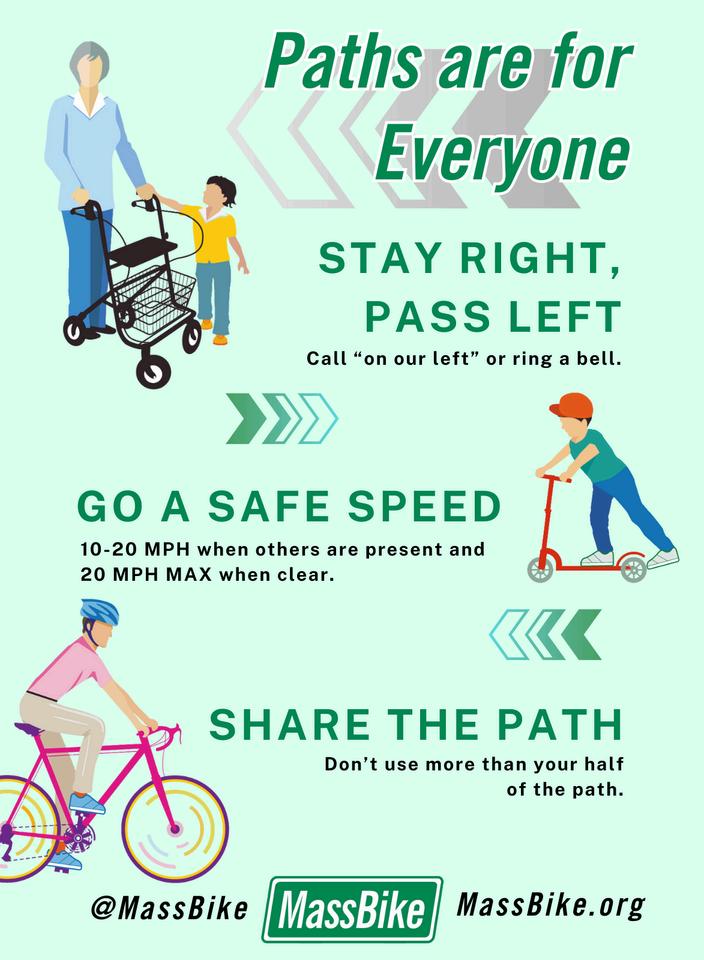
This image is an example of a resource MassBike has made available for anyone to use for for websites or socials.
Feel free to use on your various feeds.
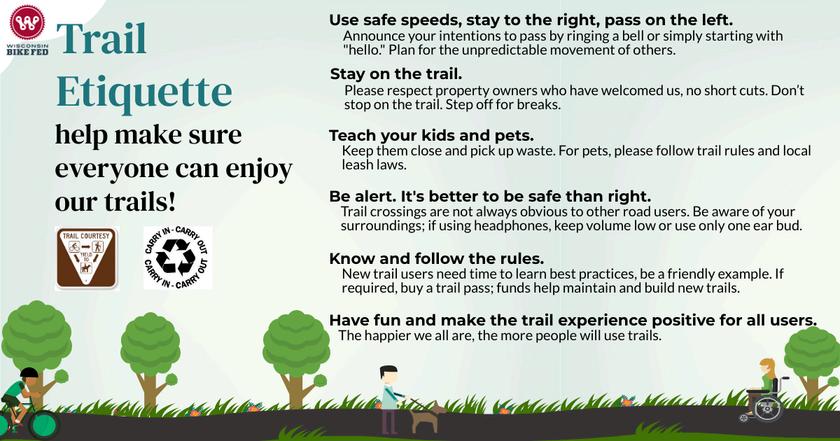
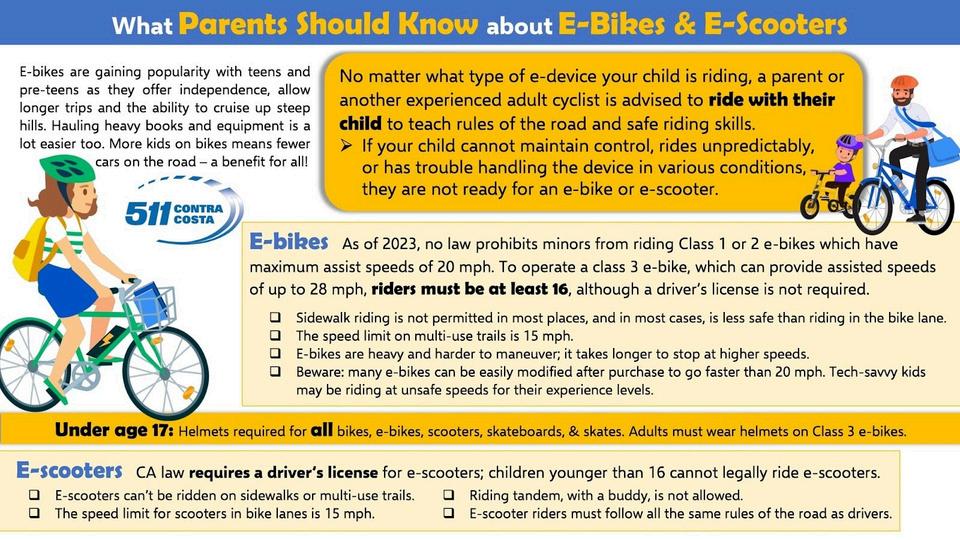
Street Smart, Contra Costa, CA
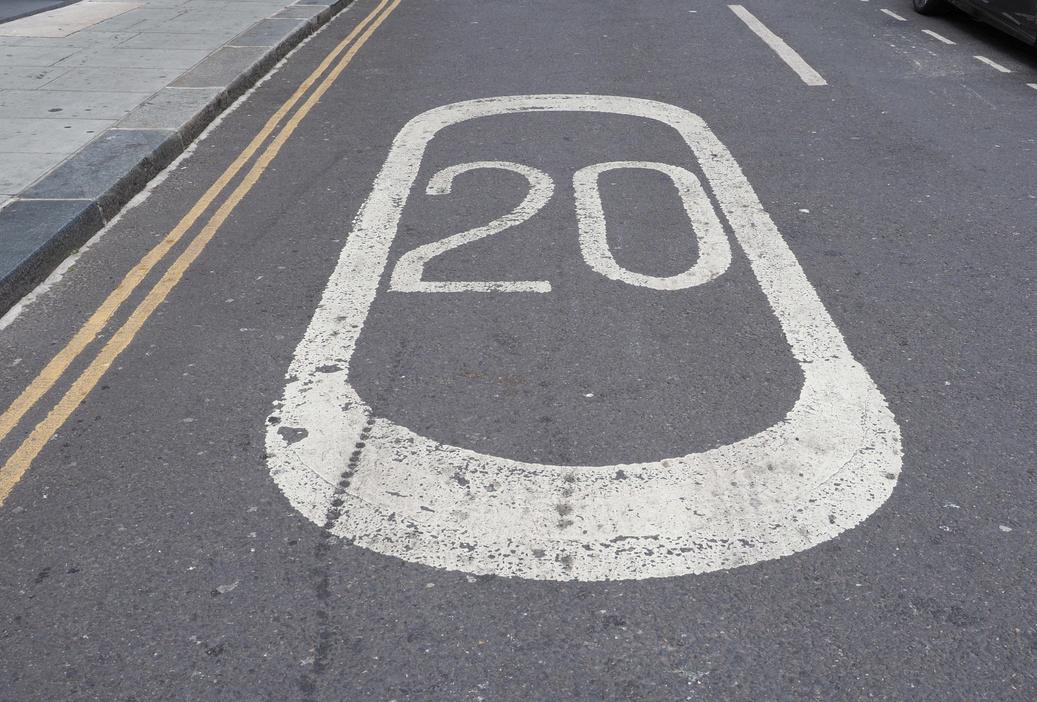
Paint recommended speeds on asphalt
Post trail etiquette signage (that includes language about ebikes) at trail entrances & intersections

Advocate and participate in Safe Routes To School programming

Host school events like bike buses or educational group rides to teach about bike safety/road safety
Implement the solution
Measure the outcome
Here are additional resources regarding trail etiquette, signage, and other resources for cycling programs.
Federal Highways: ebike & pathways
NACTO: Urban Street Design Guide
PBIC: Micromobility Typology
PedBike Info: ebikes
E-bike Battery Recycling Guide
Rails to Trails: Signage and Surface Markings
Rails to Trails: Share the Trail Video Series
Esplanade Association: Trail Safety, 2024
Seattle Bike Blog: Headphone Use
Better World Club: Roadside assistance for all bikes
Safe Routes to Schools: E-Bike Webinar
Ride Cafe: A Parent’s Guide to Safe & Legal E-bikes for Teens
MassBike, MassDOT & the Ride Cafe: Youth Micromobility Safety Webinar