How Agentic AI Is Transforming Customer Experience in Used Car Marketplaces
Anup Shukla Director – Digital Transformation
The customer journey in the used car market involves so many loops and bends that it often leaves buyers frustrated and automotive dealers with a low conversion rate. Lack of transparency in pricing, unclear vehicle history and financing hurdles mar the experience –making it far less seamless than buying a new car.
Lack of trust remains a critical barrier. A Gallup survey places car salespeople among the least reliable professionals, with only eight percent of respondents rating them high on honesty and ethical standards.1 Opaque and fractured processes compound this trust deficit, further deterring buyers.
Progress is being made, with many dealerships streamlining processes to overcome this challenge. A leading used vehicle marketplace consolidated and standardized business processes across contact centers, auction operations, finance and accounting, human resources and IT. The digital-first operations delivered a consistent, high-quality Customer Satisfaction (CSAT) score of 85-95 percent, while significantly lowering operational costs.
The next frontier is already here: Agentic AI. By embedding autonomous Artificial Intelligence (AI) agents into the used car marketplace, dealers can fundamentally re-shape Customer Experience (CX) in buying and selling. Unlike traditional chatbots that merely share eligibility criteria, an AI agent can go further – verifying documents, matching buyers with the right financing plan and booking a test drive end-to-end, without human intervention.
The potential extends across the entire value chain –lead qualification, dynamic pricing, fraud detection, regulatory compliance and post-purchase engagement. Agentic AI doesn’t just remove friction, it builds transparency and trust, creating a differentiated advantage in an industry long plagued by inefficiency and skepticism.

1https://news.gallup.com/poll/608903/ethics-ratings-nearly-professions-down.aspx
Why Traditional Buying-Selling Models Fail
The used car market may be massive, but its traditional buying and selling models are increasingly unable to meet the expectations of digitally savvy customers. Structural inefficiencies, shifting consumer behaviors and heightened competition from digital-native entrants have exposed the gaps in the legacy approach.
Key challenges include:
Market Fragmentation
The US and European used car markets together generated USD 1.2 Trillion in revenue in 2023, yet remain highly fragmented. With the top 20 players controlling less than 20 percent market share in the US and under 10 percent in Europe, digital innovation has been slow, leaving incumbents vulnerable to new-age players.2
Digital-native Competition
New-age players have proven that customers are willing to purchase high-value assets online if the experience is transparent, seamless and personalized, setting a higher benchmark for incumbents.
Evolving Consumer Behavior
Today, 95 percent of used car searches begin online and more than 70 percent of buyers compare prices across third-party platforms. This shift demands digital-first, on-demand experiences, including algorithm-driven pricing, seamless browsing and multi-location delivery – something that traditional models struggle to deliver.3
For CXOs across dealerships, equipment manufacturers, financial providers and marketplaces, the implications are clear – the traditional car-buying and selling model is broken. Without trust, transparency and digitally orchestrated customer journeys, incumbents will struggle to compete against disruptors who are already defining the new standard.
From AI to Agentic AI: A Step-Change in CX
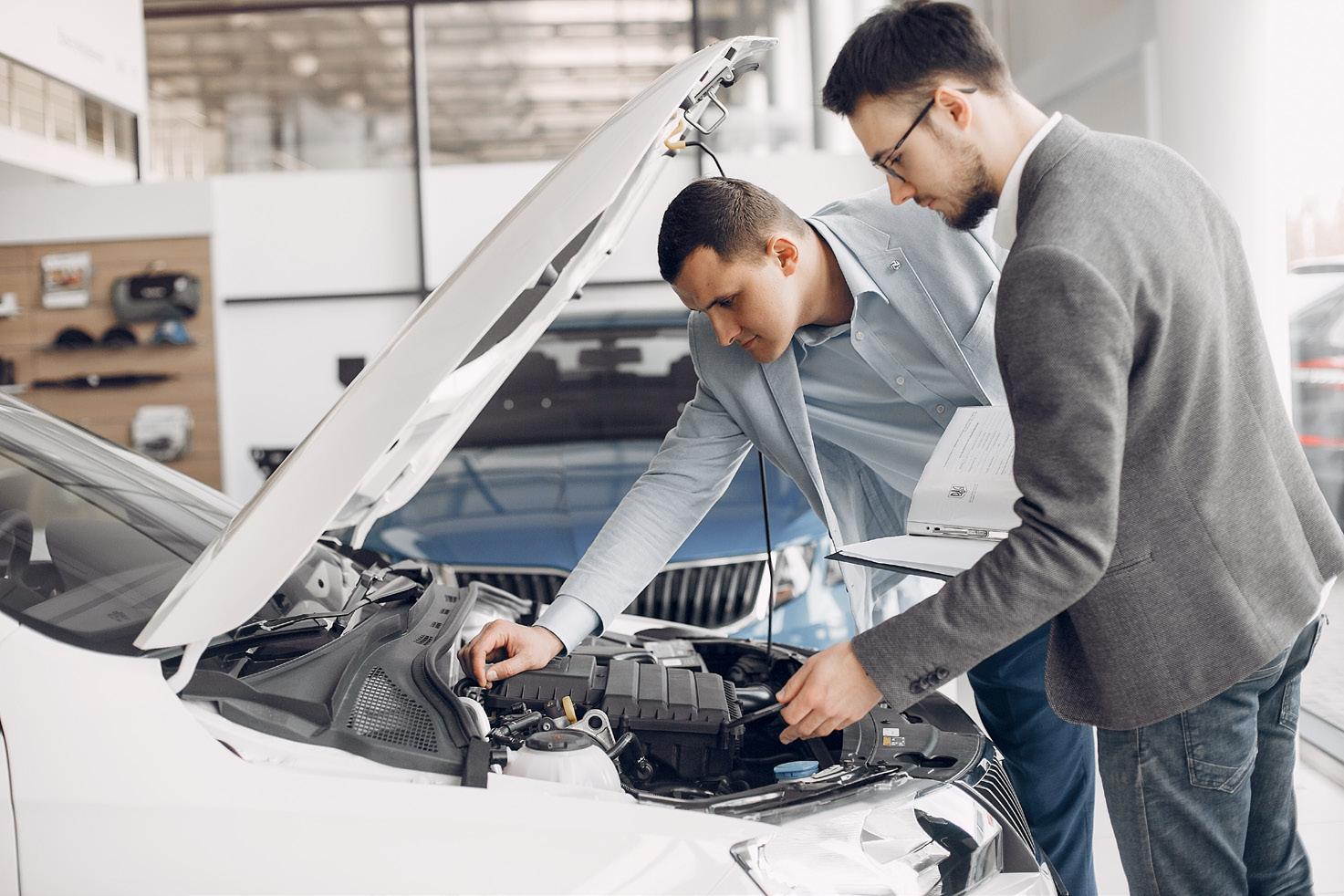
Where traditional AI has been the co-pilot to human agents driving CX, agentic AI is set to take the driver’s seat. Automation tools, such as chatbots, scripted virtual assistants and recommendation engines, have made customer interactions faster and cost-to-serve lower. However, they have not solved the deeper problems of trust, transparency and friction.
Agentic AI marks an inflection point in that journey. Unlike traditional AI, which reacts to prompts, agentic AI is designed to act with intent, autonomy and adaptability. It does not just process data, it understands context, sets goals and executes actions to move the customer toward resolution.
Five Core Capabilities that Set Agentic AI Apart
Autonomy
It operates independently, without needing constant supervision.
Goal-driven Execution
It works toward defined outcomes, such as completing a transaction or retaining a customer.
Learning
Reasoning
It interprets complex situations and adapts based on evolving inputs.
It improves over time through reinforcement and data-oriented feedback.
When applied to the used car marketplace, these capabilities are transformative.
Seamless Orchestration
It connectes across systems –pricing, financing, verification and customer support – to deliver one continuous experience.
Buyers no longer need to wade through stale listings or confusing financing options. Agents can deliver personalized recommendations, dynamic pricing and verified vehicle histories in real-time.
Sellers are spared the tedious tasks of managing unqualified leads and repetitive queries. AI agents can automatically validate documents, optimize listings and manage bidding processes.
What was once a disjointed operation, low on trust, a streamlined and transparent function with engaged customers.
Agentic AI Across Customer Journey Stages
From the time a lead enters a dealer’s portal to the vehicle handover, AI agents can manage interactions end-to-end. Where the traditional process relied on manual validation, back-and-forth calls and stressful negotiations, agentic AI brings:
Frictionless Onboarding & Verification
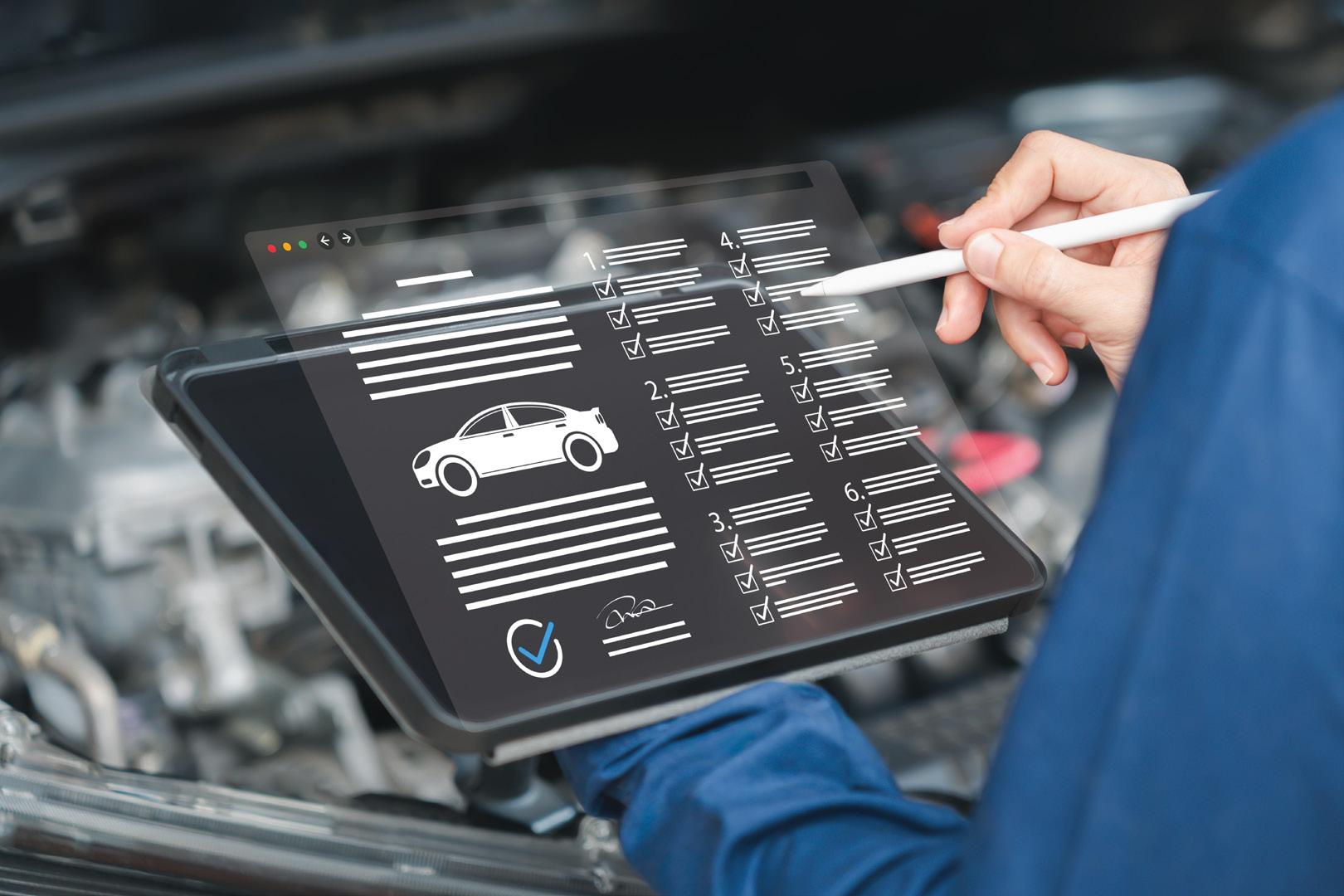
Instead of manual uploads and stalled approvals, AI agents can instantly validate documents, auto-complete profiles and ensure buyers and sellers start their journey with confidence.
Personalized Listing & Discovery
Stale inventory and generic filters give way to tailored recommendations, dynamic pricing insights and verified vehicle histories tailored to the customer’s needs.
Post-sale Support
Reactive call-center interactions evolve into proactive service reminders, warranty assistance and even re-sale optimization, which extend the lifetime value for both customer and marketplace.
What does this look like in practice?
Smart Negotiation & Test Drive
Stressful haggling and no-shows are replaced by AI-assisted negotiations, scheduling and fraud detection that protect both parties.
Seamless Transaction & Handover
Where delays and hidden costs once dominated, secure, transparent transactions and seamless financing integration become the new standard.
Consider Cathy, a 38-year-old marketing manager who loves upgrading her cars but dreads the selling process. Usually, she would spend hours uploading ownership documents, waiting for approvals and second-guessing opaque pricing models, often abandoning the process out of frustration.
With an AI-powered virtual agent, Cathy’s journey looks very different. Her documents and images are verified instantly, a vehicle condition report is generated automatically and her seller profile is created seamlessly. Instead of chasing information, Cathy is guided step by step with personalized prompts, gaining confidence and clarity along the way.
The outcome is a win-win: Cathy completes her sale smoothly, while the marketplace sees measurable gains. Our projections show that such transformation can reduce bounce rates by 15-20 percent, increase seller conversion from 35 percent to 75 percent and shorten sales cycles from 21 days to 12.
5-Year Outlook and Strategic Recommendations
Agentic AI is set to draw a firm line between leaders and laggards in the used car marketplace. The next 5 years will determine which organizations seize competitive advantage and which are left behind.
The Early Adoption Window
2025-27
2027-29
This is the time for forward-looking leaders to act. Pilot programs, targeted deployments and intelligent integration across customer touchpoints will deliver tangible ROI. In this phase, the greatest risk lies in inaction. Hesitation will only leave organizations scrambling to meet benchmarks set by bold early movers.
The Mainstream Shift
By this stage, customer expectations will harden. They will no longer accept opaque, slow or fragmented experiences. Gartner projects that by 2029, agentic AI will autonomously resolve 80 percent of common service issues, cutting operational costs by 30 percent.4 This tipping point will drive mass adoption across the industry, with competitive differentiation shifting from if a company uses agentic AI to how well it does so.
Structural Market Separation
2029-30
The industry will divide sharply. Leaders will run autonomous CX at scale with humans engaged in only complex, high-value exceptions. The payoff will be market-defining. Advanced AI technologies like agentic AI are projected to unlock trillions in global economic value. Conversely, companies that fail to adapt risk losing 23 percent of potential cash flow compared to today.5 By this stage, the gap between leaders and laggards will be structural – making it virtually impossible for latecomers to catch up.
4https://www.gartner.com/en/newsroom/press-releases/2025-03-05-gartner-predicts-agentic-ai-will-autonomously-resolve-80-percent-of-com mon-customer-service-issues-without-human-intervention-by-20290
5https://www.mckinsey.com/~/media/mckinsey/featured insights/artificial intelligence/notes from the frontier modeling the impact of ai on the world economy/mgi-notes-from-the-ai-frontier-modeling-the-impact-of-ai-on-the-world-economy-september-2018.ashx wns.com


Strategic Imperatives for Automotive and Used Car Industry
To secure advantage, leaders must act with urgency. The path forward is clear:
First movers will lock in customer loyalty and market share. Waiting for the perfect conditions to adopt agentic AI is a losing strategy.
Do not stall at pilot programs. Develop proprietary AI capabilities and move quickly to enterprise-wide orchestration.
Start measuring efficiency in terms of trust, loyalty and lifetime value.
Anticipate regulatory shifts in the US and Europe; design agentic AI that is ethical, compliant and adaptable.
Set the benchmark for AI-enabled CX. Those who define the standard will not just win customers, they will write the industry’s next playbook.
Owning the Future of CX
Few industries test customer patience like the used car marketplace, where friction and distrust have long been the norm. Agentic AI changes that equation entirely. It is not another layer of automation but the foundation for a new CX model – one where trust, speed and personalization determine who wins and who fades into irrelevance.
Over the next 5 years, the decisive factor in this sector will not be inventory or pricing power, but CX as orchestrated by agentic AI. Customers are already choosing marketplaces for the confidence and seamlessness of the journey they provide, and this trend will only accelerate.
Agentic AI will inevitably re-define automotive CX. The opportunity lies in deciding whether to lead that shift by designing journeys built on trust and personalization, or risk being constrained by outdated models.
AboutWNS
WNS, part of Capgemini, is an Agentic AI-powered intelligent operations and transformation company. We combine deep domain expertise with talent, technology, and AI to co-create innovative solutions for over 700 clients across various industries. WNS delivers an entire spectrum of solutions, including industry-specific offerings, customer experience services, finance and accounting, human resources, procurement, and research and analytics to re-imagine the digital future of businesses. WNS has 66,085 professionals across 65 delivery centers worldwide, including facilities in Canada, China, Costa Rica, India, Malaysia, the Philippines, Poland, Romania, South Africa, Sri Lanka, Turkey, the United Kingdom, and the United States.
To know more, write to us at marketing@wns.com or visit us atwww.wns.com
Copyright © 2025 WNS. All rights reserved.