
The Agentic AI Shift: Trends Shaping Retail

Manish Vora BU Head, Manufacturing, Retail & Consumer Products

The holiday shopping season has always been a defining moment for retail. However, in 2025, its gravitational pull is stronger than ever, turning what was once a short, sharp spike into a quarter-long phenomenon. Research reveals this extended window in action: 60 percent of shoppers planned on starting holiday shopping from October, while the same percentage didn’t expect to be finished until December.1,2
This shift from peak season to ‘perma-peak’ is re-shaping retailer strategies as they navigate a more complex and competitive holiday shopping battleground. Those who get it right stand to benefit from a strong season, with holiday sales expected to rise by 4 percent in 2025 compared to 2024.3
Promisingly, the tools available to retailers and shoppers have never been more powerful. If 2024 was the year Artificial Intelligence (AI) entered the
shopping conversation, then 2025 is the year it takes control. Crucially, 2025’s AI applications are of an entirely different nature than last year, with Agentic AI — AI agents that can proactively manage and execute end-to-end processes with minimal human intervention — re-defining what’s possible.
This first-ever Agentic AI-powered holiday season marks a major shift in the retail landscape. Shoppers will offload much of their discovery and decision-making to networks of AI agents, while retailers gain the ability to deliver hyperpersonalized and curated experiences in seconds. Amid this agentic explosion, human experiences that fuel joy and empathetic support will remain integral.
Here, we examine the five forces defining the 2025 holiday shopping season and signaling a deeper transformation heading into 2026 and beyond.

Agentic Commerce
In 2024, AI was a helpful voice in the shopping journey. However, in 2025, it’s increasingly becoming the decision-maker, with AI assistants acting as personal concierges for millions of shoppers. Welcome to the era of Agentic Commerce — where consumers don’t just browse or compare; they delegate to AI agents.
This shift is already visible. 48 percent of shoppers have already used or plan to use Generative AI (Gen AI) during year-end sales events — a 9 percentage point increase over 2024.4 Consumer openness is rising too: 71 percent of shoppers want Gen AI integrated into their shopping interactions, and 68 percent are interested in tools that aggregate results across search engines, social media and retailer website 5
All of which is raising the bar for digital experiences. Shoppers want tools that harness agentic capabilities to act, as well as suggest, building curated baskets and negotiating the best deals autonomously.
Walmart is one brand leading the way in this space, introducing new AI-powered tools into its app, including store-specific savings, interactive 3D showrooms and AI-powered party planning.6 Google, meanwhile, has launched agentic shopping capabilities across its platforms that can call stores on behalf of users and place orders when prices fall within their budgets.7
Amazon’s AI assistant, Rufus, is another example. It leverages insights from each customer’s individual shopping activity, with predictive capabilities providing tailored answers on conversational context.8 As well as retailers embedding AI-powered capabilities into their own platforms, others are transforming the landscape by slotting directly into existing AI assistant conversations.
4Consumers Are Rewriting the Rules of Year-End Sales Events | BCG
5AI Agents for Shoppers: Rise of Agentic AI in Retail Experiences | Capgemini
6Walmart Announces New Holiday Shopping Experiences | Walmart
7Let AI Do the Hard Parts of Your Holiday Shopping | Google


PayPal’s Honey browser extension, for instance, displays products that chatbots recommend with real-time pricing, merchant options and exclusive offers.9 Similarly, Target customers will be able to discover and shop the brand right inside ChatGPT, as part of an effort to re-imagine AI-powered shopping as a curated, conversational experience.10
8Amazon’s Next-gen AI Assistant for Shopping is Now Even Smarter, More Capable, and More Helpful | Amazon
9PayPal Continues to Shape Agentic Commerce with Instant Product Discovery
10Target to Launch First-of-its-Kind Conversational, Curated Shopping Experience in ChatGPT | Target
Algorithmic Holidays
Volatility is expected to be a defining feature of this holiday season, with 78 percent of retailers worried about securing enough inventory and 76 percent concerned about supplier reliability amid geopolitical tensions.11 It means that the ability of retailers to forecast demand spikes, optimize promotions, pre-empt bottlenecks and anticipate shoppers’ needs will prove crucial to delivering success.

EQ Experiences
In other words, this holiday season is all about algorithmic precision, which will shape everything from dynamic pricing to inventory allocation. Real-time data will prove integral to anticipating needs, with holiday shopping
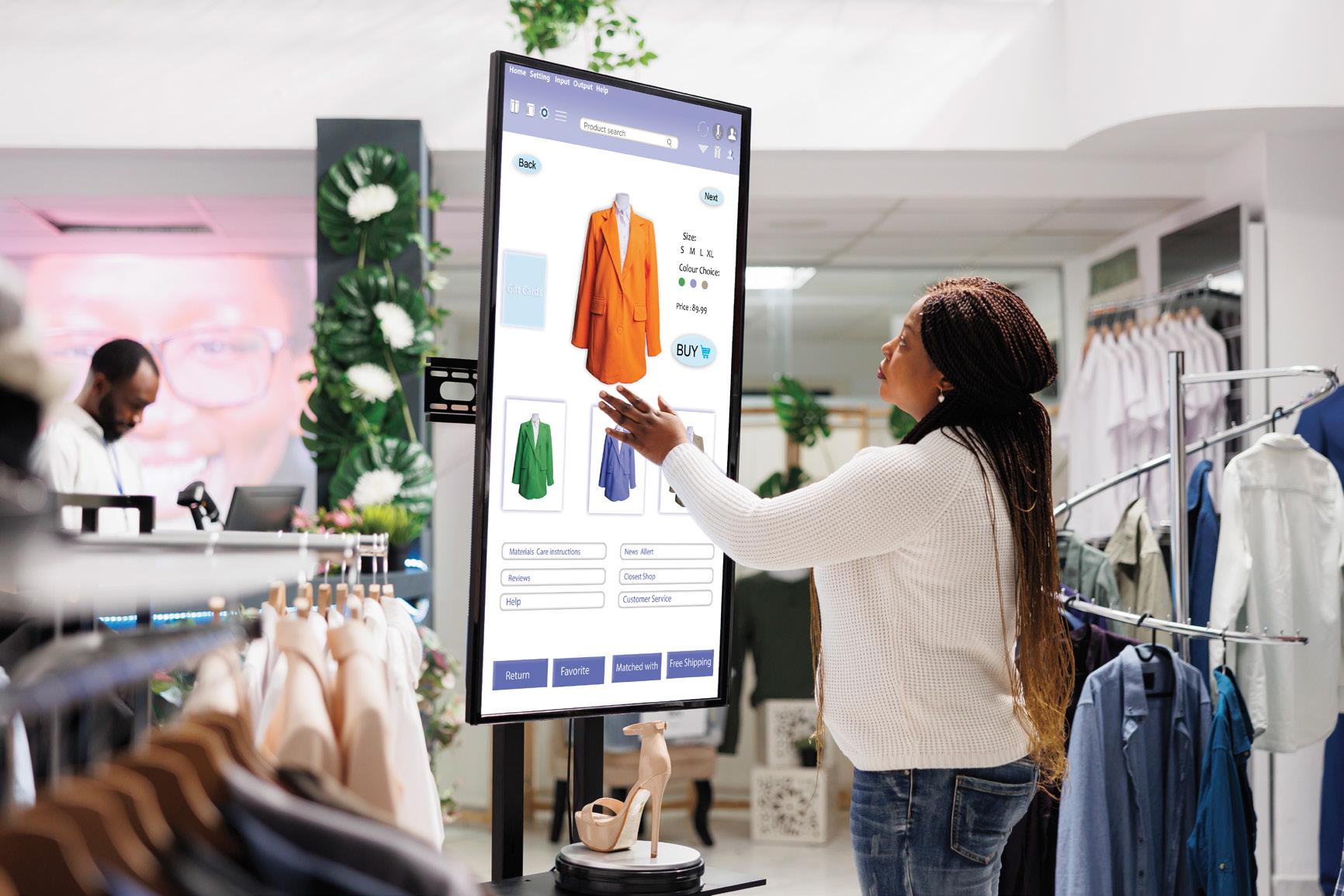
Amid the rise of Agentic AI and automation, the human touch is making a comeback. In-store interactions, live chat and empathetic support remain critical — especially for complex purchases — and retailers will be tasked with delivering the optimal blend of technology and human interaction.
In a season defined by economic caution — 81 percent are concerned about recent price increases for essentials — warm, human experiences can prove a It’s a development brought into even sharper focus when considering the emotional impact of holiday shopping across channels, with 58 percent considering it to be stressful, and 77 percent usually feeling frustrated when shopping online.13
So what does an empathetic, human experience look like in 2025? It’s a holiday shopping journey where technology works quietly in the background, freeing people to do what they do best — connect. Customer service agents have real-time insights at their fingertips, enabling them to resolve issues before they escalate and offer thoughtful, personal suggestions. Meanwhile, in-store staff are augmented by AI intelligence that streamlines tasks, giving them more time to focus on genuine interactions.
Dutch chain Albert Heijn is showcasing the latter in action, having recently introduced an AI tool that provides staff with instant answers to common questions, like product locations or stock levels, directly on the shop floor.14 Such innovations can improve both employee satisfaction and customer service, helping humanize the 2025 holiday season.
Loyalty Shift
Loyalty is up for grabs this holiday season, with seven in 10 shoppers across all income groups engaging in three or more value-seeking behaviors in 2025. where once loyalty revolved around points and perks, this year, it’s about experiences that feel personal, purposeful and participatory.
Drawing on insights from Capgemini’s recent research, loyalty is being re-shaped by unprecedented levels of choice and experimentation. 70 percent of consumers globally — and 75 percent of Gen Z — have switched brands simply to experiment. 70 percent of Gen Z have also tried competitors because sharing preference data did not improve their experience
And as Agentic AI broadens the universe of relevant options, loyalty based on convenience or habit is becoming increasingly fragile. AI agents can now surface alternatives that better match personal specifications, weakening long-held brand preferences.
While shoppers are still deal-driven, retailers that move beyond price cuts and deliver value through quality, convenience and meaningful connection look set to thrive. With analytics and Agentic AI, retailers can personalize at a granular level and do it at speed. Augmenting this with unexpected benefits and emotional resonance can deliver experiences worth more than the price tag, driving further spend.
UK department store John Lewis is leveraging this appetite with its John Lewis Lounge. The premium lounge experience is exclusive to members of its loyalty scheme, and offers guests complimentary coffee or sparkling wine, chocolates and the option of hand and arm massages.17 Belgian retailer Colruyt Group, meanwhile, is giving its customers greater agency and control, enabling them to select personal data-sharing profiles in exchange for a more personalized, tailored experience.




152025 Deloitte Holiday Retail Survey | Deloitte Insights
16AI Agents for Shoppers: Rise of Agentic AI in Retail Experiences | Capgemini
17The John Lewis Lounge | John Lewis
18Colruyt Group Empowers Customers with Xtra Data Control | ESM Magazine


The Transparency Advantage
With as many as 71 percent of shoppers wondering if tariffs and duties will raise prices this holiday season,19 transparency is becoming the new currency of trust. Shoppers want peace of mind, knowing where their products are and when they’ll arrive.
UPS Global Checkout is a prime example, enabling customers to see the total cost of an order before they complete their purchase, including shipping, taxes, duties and fees.20 Uber Eats is another company striving to make the holidays less stressful, recently adding tools
like ‘live order editing’ to its app, in response to the near 20 percent jump in Christmas grocery orders it experienced last year.21
Crucially, transparency also extends beyond convenience and tracking in 2025, with consumers seeking insight into product provenance and sustainability. It’s something particularly important to younger consumers, with 63 percent of Gen Z planning to buy refurbished goods, and one in three cutting consumption to reduce environmental impact.22
Partnering to Thrive This Holiday Season
There’s no question that Agentic AI and digital innovations are enabling retailers to raise the bar. Research from Capgemini shows that 61 percent of organizations are planning to explore Agentic AI solutions in the near future, with almost 23 percent having already launched pilots.23
This signals a clear trajectory: Agentic AI is fast becoming a core capability, and the pace of adoption will accelerate in 2026. Retailers that embrace this shift now will not only be best placed to win this holiday season, but also set the tone for next year’s competitive landscape.
To succeed, organizations must stay agile and overcome the barriers that come with complex transformation. Collaborating with experienced third-party providers offers a proven path, giving instant access to the data, digital and domain expertise required to deliver exceptional experiences, through the holidays and beyond.
As Agentic AI evolves, the opportunity lies in harmonizing human judgment with autonomous intelligence. Explore how this balance can re-define your retail advantage.

23Take Supply Chain Resilience and Efficiency to the Next Level with Agentic AI | Capgemini

About WNS
WNS, part of Capgemini, is an Agentic AI-powered intelligent operations and transformation company. We combine deep domain expertise with talent, technology, and AI to co-create innovative solutions for over 700 clients across various industries. WNS delivers an entire spectrum of solutions, including industry-specific offerings, customer experience services, finance and accounting, human resources, procurement, and research and analytics to re-imagine the digital future of businesses. WNS has 66,085 professionals across 65 delivery centers worldwide, including facilities in Canada, China, Costa Rica, India, Malaysia, the Philippines, Poland, Romania, South Africa, Sri Lanka, Turkey, the United Kingdom, and the United States.
To know more, write to us at marketing@wns.com or visit us at www.wns.com
Copyright © 2025 WNS. All rights reserved.