More Than a Line Item:
Why We Cannot Afford to Lose our Counselors
By Ali Robidoux, MASCA Board Chair & Conference Committee Chair
As the “pink slip season” looms over Massachusetts districts, a familiar and dangerous pattern is emerging. Faced with rising operational costs and the cost of healthcare, school boards, superintendents, and school principals are scanning their budgets for positions to cut. All too often, the first names on the chopping block are School Counselors and School Adjustment Counselors.
But let’s be clear: removing a counselor isn’t just a “budgetary adjustment.” It is a structural blow to the safety, academic viability, and mental health of our entire school community.
In Massachusetts, we are unique in our utilization of both School Counselors and School Adjustment Counselors. While our roles overlap in our shared devotion to student success, the distinction in our daily work is vital.
School Counselors are the experts of the school’s academic and post-secondary domains. We manage course selection, college and ca-
reer readiness, and provide the primary touch point for social-emotional learning across the entire student body.
School Adjustment Counselors bring a clinical or social work lens. SACs provide intensive, Tier 3 mental health support. They work with our most vulnerable students, such as those facing severe trauma, behavioral crises, IEP services, or significant mental health diagnoses like depression and anxiety.
When you cut one, you inevitably cripple the other. Without a SAC, the School Counselor becomes a fulltime crisis responder, and the college/career infrastructure collapses. Without a School Counselor, the SAC is buried under administrative overflow, leaving students in crisis without the deep clinical support they need.
The American School Counselor Association (ASCA) recommends a student-to-school-counselor ratio of 250:1. Currently, many Massachusetts
(continued next page)
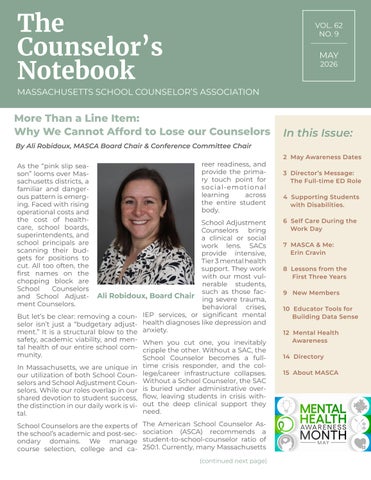
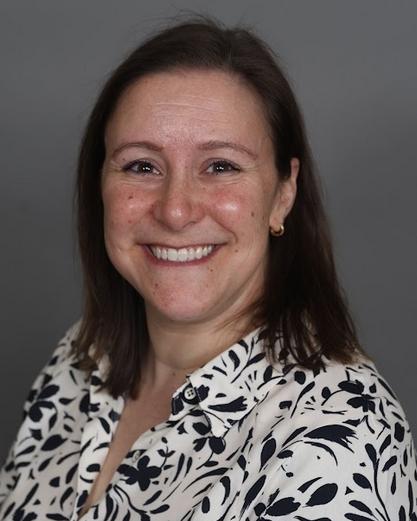
Ali Robidoux, Board Chair
More than a Line Item
(continued from previous page)
districts are operating at double that, with ratios of 400:1 or 500:1.
When we exceed these ratios, or worse, eliminate positions, we move from proactive prevention to reactive “firefighting.” ASCA maintains that a comprehensive school counseling program is essential for student achievement; research even shows that access to effective counselors significantly increases graduation rates and four-year college attendance, particularly for lower-income students.
When a counselor is lost, the “cost savings” are an illusion. The burden doesn’t disappear; it simply shifts.
1. On Teachers: Without a counselor to de-escalate a student in crisis, that crisis stays in the classroom. Teachers lose instructional time to manage behavioral meltdowns they aren’t trained to handle.
2. On Safety: Counselors are often the first to hear about bullying, selfharm, or threats. Removing them removes the school’s most sensitive “early warning system.”
3. On Equity: For many students, the school counselor is the only mental health professional or college advisor they will ever see. Cutting these roles is, at its core, an equity issue that disproportionately impacts students who lack outside resources.
To our administrators and school committees: A school without a robust counseling department is a building waiting for a crisis it cannot manage. We are not “extra” staff; we are the glue that holds the academic and emotional lives of our students together.
As we advocate for our budgets this spring, let us remind our stakeholders that across all grade levels, you cannot teach a student who does not feel safe, and you cannot guide a student who has no one to show them the way.

AWARENESS DATES
Asian-Pacific American Heritage Month
Jewish American History Month
Mental Health Month
Military Appreciation Month
National Foster Care Month
National Physical Fitness and Sports Month
Teen Pregnancy Prevention Month 4–8 National PTA Teacher Appreciation Week

Director’s Message
The Full-Time ED Role
By Bob Bardwell, MASCA Executive Director
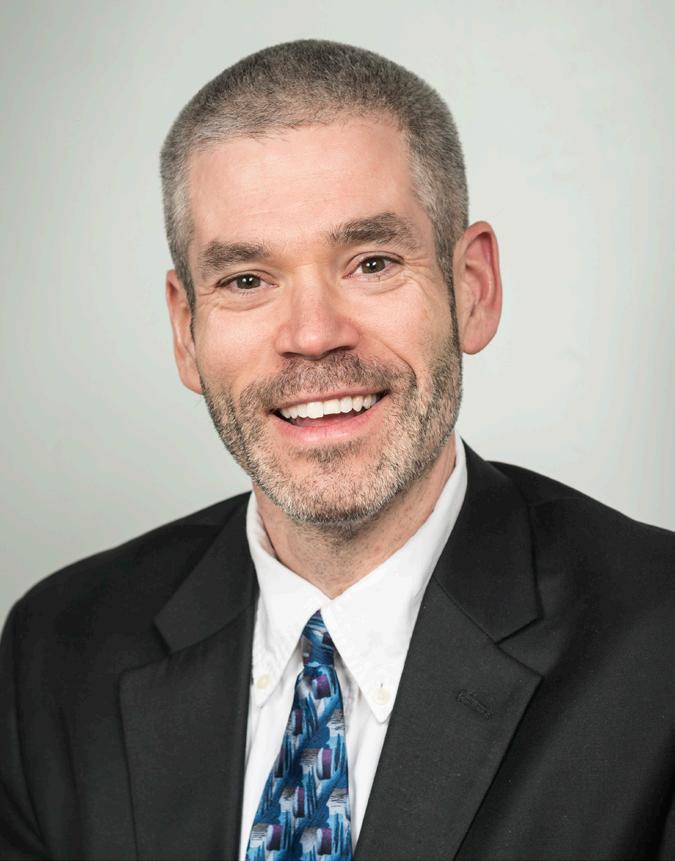
Bardwell
This July 1, 2026 I will complete my first year as the MASCA full-time Executive Director. For those who have been around for a while, you know that I was the part-time Executive Director for six years previously, starting in July 2019. As we approach this milestone, I thought it might be helpful to provide some insight into what I do now that I am full-time.
Before I get into what I do, I first want to acknowledge that in my part-time role I worked way more than part-time hours. To be honest, I am not even sure how I was able to work full-time in a school for all those years. In the beginning I was not as busy but it seems like in each subsequent year that more programs and services were started, things like Special Interest & Affinity Groups (2020), Book Club (2020), Mentoring (2021), Job Bank (2021), Multiview Briefs (2021), Program Reviews (2023), Summer Camp (2023), Diversity Fellows (2024), Editorial Board (2024), microcredentials (2024), in-district trainings (2025), Ollie the MASCA mascot (2025) and CEs (2025).
While some of these initiatives require little of my time (i.e. Job Bank), others are very involved (i.e. Summer Camp). In some cases, I was/am responsible for all aspects of the program (i.e. in-district trainings), while others are mostly handled by a coordinator (i.e. Mentoring, Program Review). Ideally I prefer that our programs and initiatives are led by volunteer or appointed members while I only have to provide logistical support. This year I work with some 60+ volunteers.
So what does a typical day look like for me? Well, my favorite answer to almost every question is, “It depends.” Probably the biggest task is answering emails. On average on any given week day, I easily get over 100 emails. While some of these are spam and quickly go into the trash, others are from daily subscriptions which help keep me current in education news and on the cutting edge and then there are the ones that need a response and/or attention.
I try to get through the easy ones first, those that only require a quick response or can be easily done with a little bit of research, link or connection with others. Others that require more time and/or attention often wait depending on the day. Unfortunately there are some emails that end up getting buried in the inbox (remember, on average 100+ emails a day).
I also spend a lot of time in meetings, mostly virtually, but there are still some in-person. Some days there may only be one (a day with no meetings is extremely rare), or up to six or seven. Obviously during the school year there are more meetings but even during the summer and on school break days there can be several, especially if I am working with folks not on a school schedule. A good majority of the meetings are about MASCA related projects (our professional development, collaborating with partners, connecting with leaders and volunteers) and more and more I am being invited to the table with other educators and/or sister agencies. A good example of this is the Statewide Graduation Council, which is at least one meeting a month, often in-person in Worcester. While it is super important that MASCA has a seat at the table, there is only so much time for these and we are getting more and more such requests, which is a good thing. Fortunately, others have stepped forward to represent MASCA in these new spaces and places.
New for the 2025-26 school year were professional development trainings offered by MASCA. I was fortunate to be able to work with 23 districts from Chicopee to Natick and Rockport to Chatham. Trainings were tailored to each school/district and ranged from two hours to multiple full-days. Because of this high level of individualization, each presentation I did required considerable prep time. No two presentations were exactly alike. As a result of these trainings over $24,000 was earned before expenses. MASCA will once again offer this option in 2026-27. Worth noting is that there are seven new trainings added to our list for next year, including how to work with Gen Z and Gen Alpha students.
I also spend a considerable amount of time dealing with fiscal matters. When I started there was a treasurer who handled all of the check writing and bookkeeping entries in Quick Books. We began using an accountant to do the routine data entry and then the treasurer resigned. At that time it was decided that I would take over the check writing duties. I work very
(continued on page 5)
Bob
Supporting Students with Disabilities and their Families
By Aaron VanDeKoppel, M.S. MASCA Ethics Committee
There’s a short essay from 1987 that tends to resurface now and again on social media, describing what it’s like raising a child with a disability. It’s called “Welcome to Holland” by Emily Perl Kingsley. If you’re unfamiliar, it essentially compares the experience of having a child with a disability to that of excitedly planning a vacation to Italy, only - and much to your surprise - you step off the plane in Holland. Everyone else has gone to Italy and can revel in their wonderful experiences together. And while Holland has its own charm, it wasn’t the trip you planned, and that feeling of loss stays with you. It ends by suggesting that if you dwell in that loss, you may not be able to enjoy the beauty that Holland has to offer.
Now this piece is not without its criticisms. Some take issue with the omission of the very real hardships children with disabilities and their families experience, while others disagree that the sense of loss does go away and you acclimate. However, I think it serves as a poetic representation of lived experience that resonates with some but not all. Ultimately, it’s a matter of gaining perspective, which is foundational in our roles as School Counselors.
Empathy is one of our greatest tools, and lived experience - direct or otherwise - sharpens it. Parenting is tough, no doubt, and raising children with disabilities comes with its own unique challenges, which can often be misunderstood or simply unrecognized. In a way, I’ve been fortunate to learn from many direct experiences in my life, which may hopefully provide some insight for School Counselors when supporting families of children with disabilities.
For 36 years my mother was a special education teacher, working at a district school specialized for students with cognitive impairments, multiple severe impairments, and complex profiles. She worked year-round, and as a young child I would go to work with her - it was the 80’s, after all. One of her students was in a hospital bed most of the day and I recall asking my mom “what can they even learn?” In her Midwestern positive, “goget-em” sort of way she replied “Everyone is good at something and we can all learn. Even if it’s just how to sit up or put your shirt on. We meet them where they’re at.”
Later in her career, some of her students were employed, as part of their educational programming, where she provided occupational support and I would sometimes visit her at the sites. I vividly remember her interactions with students: relational, dignified, high expectations, and support derived from an understanding of who they were holistically - she knew their families, their neighborhoods; she showed genuine kindness, without condescension or pity. The lessons I absorbed from these experiences stuck with me, both professionally and personally, and it’s fortunate they did.
Fast forward years later to my wife and I raising our own children. We have two hilarious boys with their own unique and complex needs: our older son is Autistic with ADHD; our younger son has Myelomeningocele (Spina Bifida) with several other associated medical diagnoses and has undergone many brain and spine surgeries. It’s surprising how quickly you can adjust to a new normal, even when
that normal is unknown, scary, and exhausting. And I know we aren’t alone.
Recent data from Stanford University shows that 94% of parents of children with disabilities report emotional distress, significantly higher than parents of children without disabilities. This distress isn’t just about the diagnosis; it’s exacerbated by material hardship, economic uncertainty, and the relentless stress of caregiving. When you layer on systemic and sociocultural barriers that many face, the challenges become exponential. In her 2023 memoir This Boy We Made, Taylor Harris poignantly captures this struggle, describing the labyrinthine and often discriminatory medical system she navigated as a black mother in the south while seeking answers for her son’s mysterious symptoms. In this context, we must continue to break down barriers to services and deepen our cultural competencies - especially for those at the intersection of disability and other inequities.
Students with disabilities and their families are not monoliths. Still, through our fundamental relationship building and empathy, there are simple ways we can support. First, resist the instinct to read disengagement as indifference. When a parent seems distant, hard to reach, or slow to follow through, consider what their day actually looks like. Raising a child with a disability means that even ordinary tasks - a school form, a phone call, a meeting - can exist within a much larger constellation of appointments, therapies, insurance battles, and caregiving demands that never fully pause. What looks like disengagement may be overwhelm.
Second: offering patience and grace - both to families, and to ourselves. We may have worked with many children with similar profiles, and we (continued next page)
Supporting Students
(continued from previous page)
may genuinely know what tends to help. But this family is living with this child, this diagnosis, this set of circumstances, for the first time. Parents often need to arrive at understanding through their own process, and our role can be to move with them - checking in, offering perspective, continuing to show up even when progress feels slow, and trusting that our consistent presence and guidance will land when the family is ready to receive it.
Finally, we should consider that we are rarely the only voice in the room. Parents of children with disabilities are frequently navigating entire teams of specialists, each with their own priorities and recommendations. There is only so much time, energy, and cognitive bandwidth available in a day. When a family doesn’t act on our guidance, it may have nothing to do with its value - it may simply be a matter of capacity. Holding that awareness keeps frustration from decaying into resentment - preserving the relationship, the soil from which everything else grows.
References:
- RAPID Survey Project. Stanford University. (December 8, 2025). Families with a young child with a disability report high rates of economic hardship and emotional distress. https:// rapidsurveyproject.com/article/ families-with-a-young-child-witha-disability-report-high-rates-ofeconomic-hardship-and-emotional-distress/
- Harris, T. (2023). This Boy We Made: A Memoir of Motherhood, Genetics, and Facing the Unknown. Catapult.
The Full-Time ED Role
(continued from page 3)
closely with the accountant, board leaders and the Fiscal Oversight Committee Chair, regularly checking in and staying current about our monthly and yearly financial reports. Preparing a budget for the next fiscal year is also very time consuming.
Membership is also another area where I spend a considerable amount of time. In 2019 there was a membership coordinator who handled the day-to-day membership inquiries and renewals. During Covid it was decided that we would no longer use a membership coordinator since so many of the things about membership overlap into the work of the Executive Director. On some days there are no membership related tasks while on other days I spend hours on membership stuff. I also support the Member Engagement Committee with its’ initiatives and activities.
I also support a variety of other projects, including but not limited to attending committee meetings regularly (i.e. Government Relations & Advocacy, Diversity Fellows), coordinating the special interest and affinity group meetings, supporting the microcredential offerings, updating/creating content on the website, creating the weekly MASCA Matters content, and supporting Summer Camp behind the scenes. Some of these activities occur frequently while others only occasionally. No two days are ever the same, just like in the daily work of a school counselor.
Hopefully this gives a bit of insight into what I do every day for you the members, and for the Association. There are so many positives that help make MASCA one of the strongest state/territory school counseling associations in the country. I have made this statement for many years now and only feel stronger now that MASCA has a full-time Executive Director. Our innovative and timely programs and initiatives, membership expansion, budget growth, and the fact that we have contested elections show that MASCA is a healthy and exciting organization, one that people want to be involved. Who wants to be a part of a stagnant and boring organization?
If it is not has already apparent, I really love my job and excited to see the progress that MASCA experienced over the past few years. I love interacting with school counselors, graduate students and our partners across the Commonwealth and beyond. I love representing MASCA, whether if be advocating with the DESE Commissioner or helping a new member acclimate to their member portal. Of course, like any other job, there are some challenges and less fun tasks that I must content with, but luckily those are few and far between.
If you had read this far, thank you. I also want to issue you a fun challenge. All you have to do is reach out to me (executivedirector@masca.org) and tell me why you love MASCA. All of those who do this by Monday, May 11 will be entered into a random giveaway for an Amazon gift card. All responses will be printed in the June Counselor’s Notebook.
Speaking of the June CN, look in this space next month for a preview of the 2026-27 academic year. We’ve got some new and exciting things planned for you.
Self Care During the Work Day
By Maryrose O’Neil, CTE SIG C-Facilitator
We all know that a school counselor’s workday is unpredictable, consistently busy, and demanding. When even a single day can feel overwhelming—making it hard to come up for air—it can seem nearly impossible to find time for self-care. However, with intentional habits and small, consistent strategies, it is possible to care for your own mental and physical well-being, even in the midst of a hectic schedule. Over the past few years, I have worked to incorporate simple selfcare practices into my daily routine, and they have made a meaningful difference in both my mindset and overall health.

Although I often eat lunch at my desk while catching up on work (which I know is not ideal), I do so intentionally so that I can use my actual lunch break to go for a walk outside—regardless of the weather. Stepping out of my office, breathing in fresh air, and engaging my senses helps me reset mentally. This time away from screens, deadlines, and constant interactions provides clarity, reduces stress, and restores a sense of calm. Incorporating movement into my workday has a noticeable impact on my mood and stress levels.
Before I even arrive at work, I begin my day with a guided meditation during my commute. I choose meditations that include positive affirmations and reminders of mindfulness and gratitude. On days when I feel especially overwhelmed or “stuck in my head,” I opt for a grounding meditation to help bring my focus back to the present moment. If I notice my thoughts drifting—perhaps toward my to-do list or concerns about a student—I pause the meditation, take a few deep breaths, and then begin again with intention.
After my meditation, I say a brief prayer of gratitude and speak positive expectations for myself and the day ahead. I typically follow this with energizing, empowering music that lifts my mood and helps me feel prepared to take on whatever the day may bring.
Movement is another essential part of my selfcare routine. Just like my students, I benefit from regular movement breaks. In the mornings, I make a point to deliver passes to students myself. This not only helps me get my steps in, but also allows me to connect with students and staff and get a sense of how the day is unfolding. As a Technical Division School Counselor, I also take opportunities to walk through the shops, observing what students are working on and engaging with them in their learning environments.
Hydration is another simple yet powerful form of self-care. In a profession that can be emotionally and mentally taxing, staying hydrated is essential. Drinking water not only supports physical health, but also serves as a small, grounding ritual. Taking a moment to sip water can be a reminder to pause, breathe, and reconnect with yourself. I keep my water bottle with me throughout the day as a visual cue to slow down and take care of my needs.
Finally, one of the most important—and enjoyable—self-care strategies I practice is laughter. Whenever possible, I try not to take things too seriously and allow myself to laugh, even at my own mistakes. Sharing moments of humor with colleagues helps break up the intensity of the day and strengthens connections. Laughter boosts endorphins, reduces stress, and brings a sense of lightness to even the most challenging situations. When appropriate, I also use humor with students, as it can help build rapport and create a more positive, supportive environment.
At the end of the day, self-care during the workday does not have to be elaborate or time-consuming. It is about finding small, meaningful ways to care for yourself amidst the demands of your role. By building these practices into your routine, you not only support your own well-being, but also show up more fully for the students and colleagues who rely on you each day.
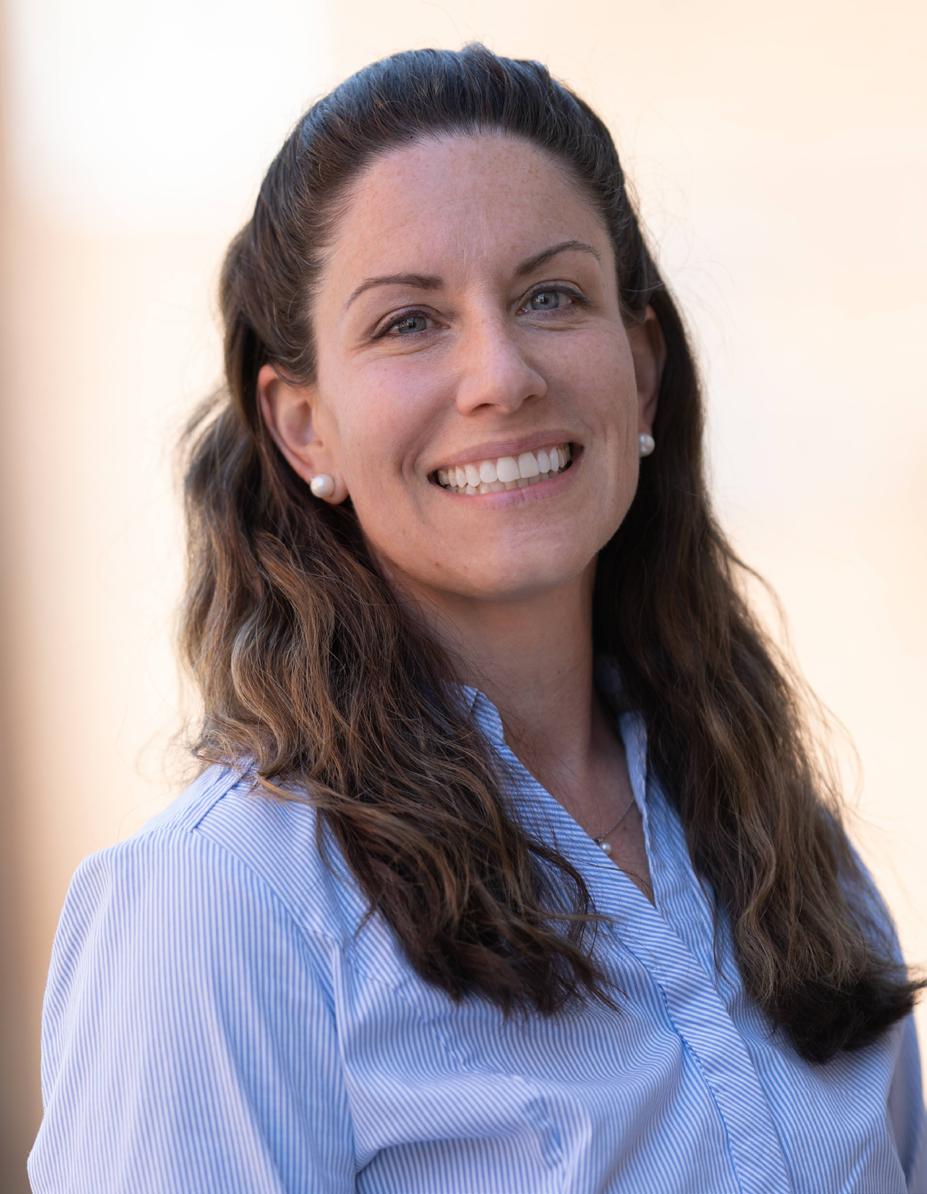
Erin Craven
Director of School Counseling & Assessment
Malden Public Schools, Malden, MA
Why are you a MASCA member?
MASCA has been a driving force of advocacy for School Counselors across Massachusetts for many years. It is in great part due to MASCA’s collaborative work with DESE and our state government, that our profession is where it is today. What makes you unique as a school counselor?
I’m not sure about this. What inspires you about being a school counselor?
Our students’ resilience, optimism, altruism and hopes for the future. What would you be doing if you were not a school counselor?
My original plan was to be an Outward Bound counselor, or an English professor in a rural area. My undergraduate degree is in English Literature, and I am at my happiest when I am outdoors. I knew I wanted to help students no matter what!
What is your favorite tool to use in your work as a school counselor?
I think being authentic with students is the best possible thing we can do when we work with them. I always tell graduate interns that students, particularly middle and high school ones, can sniff out when people are not being genuine, and they do not appreciate it. What words do you live by?
“Don’t ask what the world needs. Ask what makes you come alive. And then go and do that. Because what the world needs is more people who have come alive.”
Why is it important to you to be part of a community of school counselors?
No one knows our profession like us. Being able to tap into a community of people who are encountering the same work, and are able to support one another in a way no one else can, is vital to sustainment and growth.
How would
you describe your job to a 5 year old?
I work with kids every day to make sure they feel safe and hap py in school and outside of school. I help them figure out how to be better at school stuff, or what they want to be when they grow up, and how to be a good friend. How do you decompress/eliminate stress or refuel for the next day?
What is your favorite dessert?
Chocolate Mousse
What is your guilty pleasure?
Buffalo Chicken Calzone
As I’ve gotten older, I’ve found joy in getting up early, and getting some physical activity in my day before the school day takes over. I love my work. and sometimes, stressful days are just part of that work. I live by the “This too, shall pass” mantra some weeks.
What brings you joy?
Outside of work: Being outdoors in the woods. Snowboarding, backpacking, snowshoeing, kayaking, hiking. Just put me in the woods. Inside of work: The students. As an administrator, I do not have the caseload I did as a counselor, but I requested my office to remain in the high school, as the kids are still the best part of any school day! Share an example of something that you learned from one of your students.
My students have taught me SO much over the years. I think I am most impressed by my students’ overall capacity to be hopeful and joyful, even in the face of strong adversity. I have never seen the level of resilience that so many of my students embody every day.
What superpower do you wish you had?
I wish I could fly
What is your typical breakfast?
A protein bar, some fruit and coffee. What is one thing that you are really good at?
Snowboarding. I was taught how to ride by former Olympians, and I have won gold medals in amateur competitions.
What is your coffee order?
Black with a splash of coconut milk
What could you talk about for 30 minutes with no notes?
Hiking in the White Mountains of NH
Do you have any hidden talents? I can ride a bicycle with no hands. What TV show are you currently binge watching?
The Rookie
What book are you currently reading? What is the author?
James by Percival Everett
What is something you think people don’t know about you?
I love gardening, and have a giant perennial garden at my house. What is your favorite song or artist? Too many to name!
Lessons from the First Three Years of MASCA’s Program Review Initiative
By Kari Denitzio, Program Review Coordinator
MASCA launched its Program Review initiative (formerly known as Program Evaluation) back in 2022. Since then, the Program Review Committee has completed reviews in five districts, with three more currently underway.
Each school counseling program that we review presents its own unique strengths, challenges, and dynamics. And while no two school counseling programs are exactly alike, our work in districts across the state has revealed some overarching lessons:
The students see you, and they appreciate you.
We’ve surveyed more than 4,400 students across Massachusetts - and they overwhelmingly report positive attitudes toward their school counselors. 77% of middle and high school students surveyed believe their counselor cares about them and their success, and 82% report being able to get in touch with their counselor when they need to. A majority of students (80%) also report that their counselors listen to them and hear what they have to say.
Results from our recently developed family survey mirror those of our student surveys, with 79% of families saying they believe their child’s school counselor cares about them. It can often seem like the angry voices are the only ones we hear, so it’s important to remember that your work is valued.
Know the director’s role - and make sure others do too.
The impact of a school counseling director can be profound. But to achieve maximum benefit, the director role must be well-defined—and well-protected.
One district we worked with was elated to receive funding for a 6-12 counseling director position. But when the person in that position was also made solely responsible for overseeing student 504 plans, the position’s impact on the counseling program was significantly blunted. In another district, turnover in building admin-
istration led to the guidance director having to operate as a de facto dean of students for many years. Another district eliminated their director position in favor of an additional stipended role for one of the school counselors - but without the power to launch initiatives or supervise and evaluate their peers, the counselor had little ability to make change.
The strongest school counseling departments are those where the director role is designed to support the counselors’ work, rather than the administration. It’s imperative that school counseling departments advocate for a clearly defined director role that reflects that focus.
Embrace the power of vertical alignment
We have worked with districts where the counseling department spans grades K-12, and those that operate across smaller grade spans (6-12 or 9-12). What we have found is that regardless of department structure, many school counselors are still operating in the siloes of their physical buildings. Even in combined middle-high schools, strong vertical alignment doesn’t just happen.
When school counseling departments aren’t intentional about collaborating across the grades, there is typically a disconnect between the type of services delivered at each level. It’s not uncommon for us to observe a profound shift within a district from a middle school counseling program primarily focused on the social/emotional domain, to a high school department almost exclusively occupied with college & career readiness activities. This can cause confusion among students, staff, and families about what types of support they can expect from the school counselors in different buildings.
(continued next page)
Lessons
(continued from previous page)
Counseling directors are encouraged to prioritize time for their counselors across grade levels to meet and engage in shared goal-setting or curriculum development. When counselors have an opportunity to learn from and support each other’s work, or to co-create programming, they create a more robust experience for students and families.
Good PR creates the conditions for strong collaboration.
Collaboration with teachers and families is at its strongest when those stakeholders have a clear understanding of the work school counselors are doing. In our surveys, teachers and staff were more likely to report strong collaboration with school counselors when they also believed they had a strong understanding of the counselor’s role. And while a majority of families have a favorable view of their child’s school counselor, onethird of families surveyed aren’t sure whether their school counseling department offers helpful programming for parents and caregivers.
How can we ensure that stakeholders understand the role of the school counselor? Find simple ways to share the successes of your department. Bear in mind that reporting on your activities is different from sharing student outcomes; the latter is your most powerful tool for building support for your program.
The more school counselors share about their work and related student outcomes, the better positioned staff and families are to partner in that work, and the better the results for students.
If you’d like to understand more about how these factors are shaping the work of your school counseling department, the MASCA Program Review Committee is eager to help. Contact mascaprogramevaluation@gmail.com for more information.
Our Newest MASCA Members
Jaclyn Bennett
Annika Bouchard
Jennifer Broderick
Marissa Carlson
Janelle Day
Olvia Dionne
Nick Dumoulin
Jilayne Flanders
Jody Gladstein
Jessica Gonzalez
Laurie Gregory
Robin Kenney-Bineau
Adam Krafcik
Miriam Lebon
Deb Loss
Emily McKeen
Marquis Moore
Masa Nakama
Mae Naron
Jon Newell
Charlotte Paul
Heidi Pontes
Kelly Porter
Amy Rodriguez
Tracy Slater
Kat Stearley
Amanda Symmes
If you know or happen to meet any of our new members, please extend a very warm welcome!
Educator Tools for Building Data Sense and Awareness of Data Careers
By Josephine Louie, Nora van Wassenaer, Madelyn Johnson, and Jennifer Stiles
Young people entering the job market today may be feeling anxious as job requirements shift within a changing technological and economic landscape. The rise of AI is prompting real questions about the skills we’ll need to find and keep jobs.
Amidst this uncertainty, building skills in science, technology, engineering, and math (STEM) remains a pretty safe bet for the future. Within STEM, needs for people in data science and AI are particularly robust and growing.
To be sure, not every student will become a data scientist or AI researcher. But in a world increasingly shaped by data and AI, all students will benefit by developing solid foundations in data and AI literacies.
A fundamental ingredient underlying both these literacies is basic data sense, the ability to detect the strengths and limitations of the data we confront, including quantitative data and information generated by AI. Like a pair of antennae, data sense raises an alert when information seems wrong, and it allows one to move forward when information passes muster.
When people can mislead with statistics and data and AI chatbots can generate outright lies, data sense may be an essential capacity to keep our perceptions of the world from going astray.
The Data Paths project, fund-
ed by the State of Massachusetts, is designed to support students’ data sense by helping schools integrate data literacy into existing learning experiences while also expanding awareness of data-intensive careers, including those connected to AI.
Resources for Students, Job Seekers, and School Counselors
The Data Paths project has developed an Online Career Hub to help students, job seekers, and school counselors find resources and tools to learn more about careers in data science and how jobs today use data. Our Online Career Hub includes resources such as:
• A resource library with an array of videos, articles, and links to websites that can help students learn more about data science, how data science and AI are related, and the professional pathways of individuals working in data fields.
• Links to recorded webinars involving conversations with data scientists and professionals who use data intensively in a variety of fields. Look out and register for our exciting lineup of upcoming webinars this spring
and next fall!
• A searchable database of data science education and training opportunities in Massachusetts, with information on program features and costs.
• Links to free career exploration tools, such as MEFA Pathway, MassHire360, O*NET, and the Bunker Hill Community College (BHCC) Career Coach.
• A searchable tool with descriptions of jobs from varied fields and how they use data, including jobs that national surveys indicate are of strong interest among youth.
Resources for Teaching and Learning
Although education leaders across disciplines recognize the importance of building students’ data sense and data science practices, many educators do not feel prepared to support appropriate activities. In school, data sense can be developed by engaging students in the kinds of processes used when working with quantitative data and statistics. Ideally, students should have recurring opportunities throughout their K–12 years to participate in the following four data investigation activities, and they should learn to ask relevant types of questions like those listed:
(continued next page)
Educator Tools
1. Formulate questions that can be investigated with data
• What is the question and why is it being asked?
2. Collect or assemble data
• Who collected the data, and what methods did they use?
3. Analyze data
• What tools and methods were used to identify and depict data patterns?
4. Interpret results and summarize conclusions
• What claims are made from the data, and how well are they supported?
(continued from previous page)
• Two-week-long curriculum modules for high school biology, chemistry, and physics, as well as middle-grades mathematics. These modules support students in using real-world datasets to investigate topics such as invasive species and their effects on ecosystems, the effects of changing carbon levels in the atmosphere, the search for habitable exoplanets, and characteristics of successful crowdfunding projects.
• Sets of short instructional routines that mathematics and science teachers of grades 4–8 can use to integrate important data practices into their teaching throughout the year.
information are freely available to people everywhere. We encourage school counselors, students, and teachers to visit our Data Paths project website and our Online Career Hub to explore and share what we’ve developed, and to contact us at datapaths@edc.org with any questions.
It’s unsettling when no one really knows what a world permeated by data and AI will bring. But building basic data sense and learning about work with data and AI will be smart ways to prepare for a future that is becoming more dataand AI-driven.
Because school calendars are packed, we know it’s difficult to add new courses that reach all students. Our project helps educators integrate fundamental data practices into existing curricula and across disciplines with the following resources:
• A standards crosswalk that maps core data literacy skills to common K–12 standards in mathematics, science, and computer science. This tool can help educators identify data practices that may be relatively easy to integrate into existing instruction, while helping to meet content and practice standards in their discipline.
These are just a few of the resources we are developing and making available through professional learning opportunities for educators. Visit https:// datapaths.edc.org/pd-events/ to learn more.
Although we’ve been developing professional learning opportunities and resources for educators and students in Massachusetts, our materials and
NOTE: MASCA has been collaborating with the Data Paths project, based at Education Development Center (EDC) in Waltham, MA, to raise public awareness of careers in data science and the value of data literacy for employment and civic life today. Josephine Louie is the project director, and Nora van Wassenaer, Madelyn Johnson, and Jennifer Stiles are researchers for Data Paths. If you are interested in upcoming Data Paths events, including webinars with data scientists, sign up for the Data Paths mailing list here. If you would like more information about Data Paths or would like to schedule a time for a virtual consultation, please contact us at datapaths@edc.org.

Mental Health Awareness with Dr. Melissa Kaplowitch
By judith Josephs, Ed. D
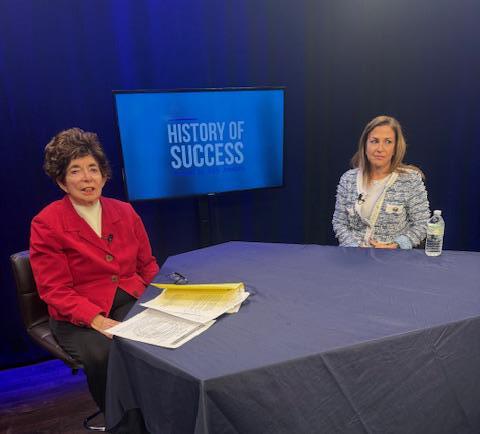
This article and video shine a light on History of Success guest Dr. Melissa Kaplowitch, Assistant Professor and Program Coordinator of the Master of Science Program in Counseling at Salem State University. Dr. Kaplowitch is responsible for training future counselors. She was awarded Counselor of the Year by the Massachusetts Mental Health Association for the work she does at Salem State as Program Coordinator for the Licensed Mental Health Counseling Program. (LMHC)
Dr. Kaplowitch’s interest began in high school working with individuals that have chronic mental health issues. Clinical training and a copy of practice are licensed by the Allied Board of Mental Health with a completion of practicum and internship including a total of 700 hours licensing exam. When students pass the exam, they will need additional clinical hours. They can gain these hours with a wide range of opportunities.
The challenges are more intense today. Academic skills are lacking. Clients need early intervention and do not receive it. There are not enough professional mental health staff entering the field. The time frame becomes difficult to achieve when there is such an acute shortage. The possible clinical issues include depression, anxiety, substance abuse, learning disorders, returning veterans, and suicide. They must be very vigilant about the issue of suicide and complete a thorough List Assessment.
One message given by Dr. Kaplowitch is to
remember that Mental Health is not as scary as it seems to be. Self-Care is built in for students as part of Mental Health and allows us to take a break and ask for physical and psychological help. Both LMHC and MSW can open their own business and do their own billing. They must work under a supervisor before they receive their final license in Massachusetts.
The licensing board for Social Workers is the Board of Registration of Social Workers. The Licensing Board for Licensed Mental Health Counselors (LMHC) is the Massachusetts Allied Mental Health and Human Services Professional Board.
There is a crossover for electives leading to a School Adjustment Counselor certification. School Adjustment Counselors take a more clinical path and receive certification from the Department of Elementary and Secondary Education (DESE). School Counselors see all students and are also licensed by the DESE.
Salem State University offers all four separate programs in License Mental Health Counseling (LMHC), Master of Social Work (MSW), School Adjustment Counseling, and School Counseling.
History of Success, hosted by Dr. Judy Josephs, is a production of Lynn Community Television whose goal is to shine a light on the Greater Lynn and North Shore community’s many assets and achievements. This episode and others may be viewed at https://lynntv.org/watch-online/programs/ history-of-success/
Click the Image above to view the video
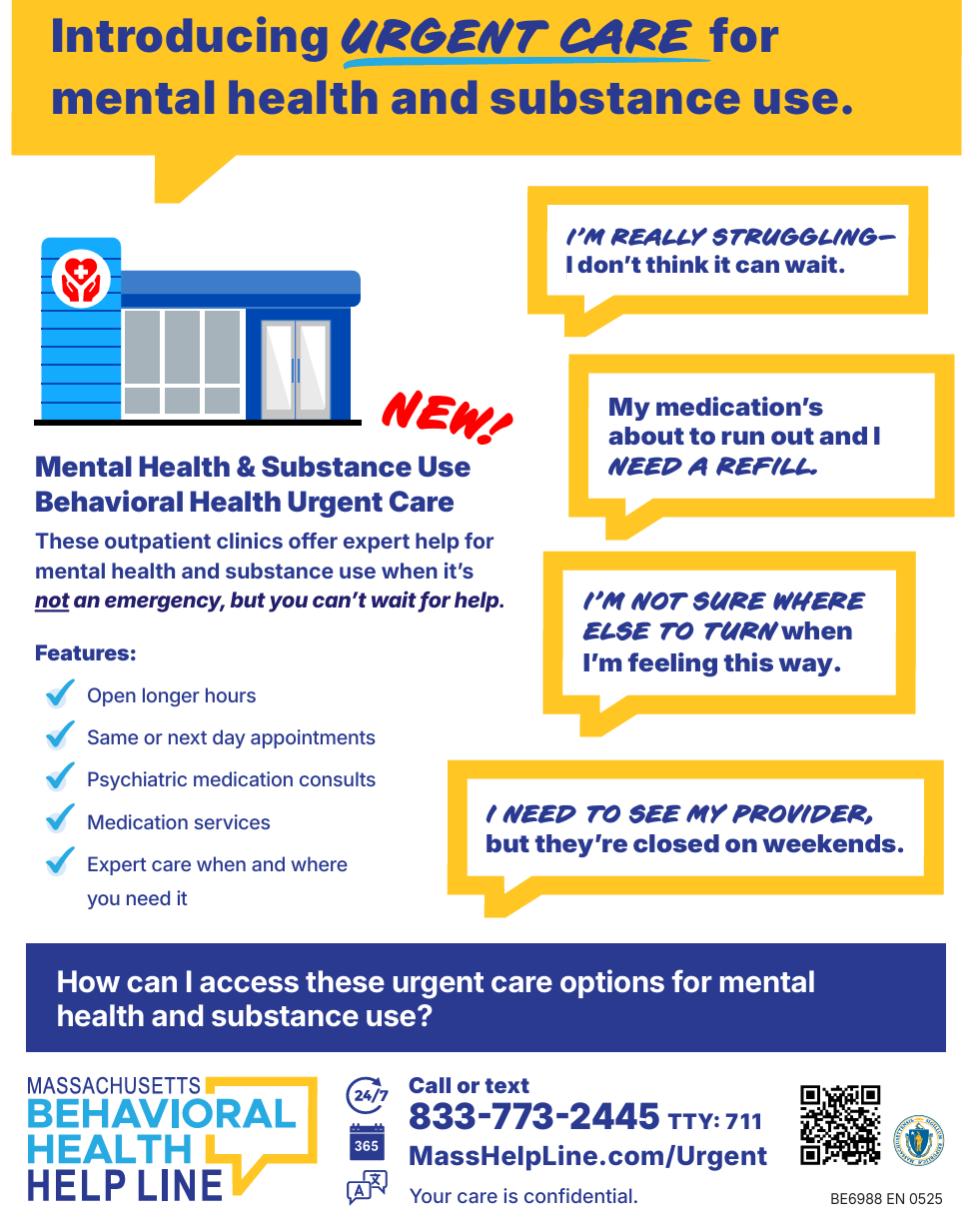
May is National Mental Health Month
MASCA Governing Board and Staff Directory
GOVERNING BOARD
Chair: Ali Robidoux
School Adjustment Counselor
New Bedford Public Schools
Assistant Chair: Cory McGann
School Counseling Department
Head
Ashland High School
Board Members
Mindy Cripps
Director of School Counseling
Billerica High School
John Crocker
Director of School Mental Health & Behavioral Services
Methuen Public Schools
Jessica Descartes
School Counselor
Tech Boston Academy
Andrea Encarnacao
School Counselor
Boston Latin School
Cynthia Esielionis
School Counselor
Ayer Shirley Regional Middle School
Lori Ford
School Counselor
Edgartown School, Martha’s Vineyard
Amanda Ugrinow
School Counselor
Westborough High School
COMMITTEES
Conference
Ali Robidoux
School Adjustment Counselor
New Bedford Public Schools
Ethics
Mindy Cripps
Guidance Director
Billerican High School
Fiscal Oversight
John Crocker
Director of School Mental Health & Behavioral Services
Methuen Public Schools
Government Relations & Advocacy
Juliette Coatsworth
School Counselor
Foxborough Regional Charter
School
Fran Frederick
School Adjustment Counselor
Belchertown High School
Inclusion, Diversity, Equity & Access
Vacant
MA Model
Jodi Then
School Counselor
Snowden International School, Boston
Cynthia Esielionis
School Counselor
Ayer Shirley Regional Middle School
Member Services
Tama Lang
School Counselor
Litwin Elementary School, Chicopee
Nomination and Bylaws
Jessica Descartes
School Counselor
Tech Boston Academy
Professional Recognition
Dina Sibilia
School Counselor
West Springfield High School
Tama Lang
School Counselor
Litwin Elementary School, Chicopee
Publicity
Luz Mederos Dorleans
School Counselor
Boston Latin Academy
Chris Soverow
Retired School Counselor
Research and Evaluation
Tim Poynton
Professor
UMASS Boston
School Counselor Pipeline
Jessica Almeida
School Counselor
Quinn Middle School, Hudson
Jennifer McGuire
College & Career Information
Coordinator
New Bedford Public Schools
Strategic Planning
Kerry Bartlett
School Counselor
Hudson High School
Technology
Jennifer McGuire
College & Career Information
Coordinator
New Bedford Public Schools
APPOINTED POSITIONS
Executive Director & Member-
ship Coordinator
Bob Bardwell
Secretary
Julia Cahill-O’Shea
Counselors Notebook & Tech
Coordinator
Jean Atwater-Williams
Mentoring Coordinator
Maryanne Margiotta
Program Review Coordinator
Kari Denitzio
Diversity Fellows
Amanda Berg
ESP, Granby Elementary School
Roz Riggins-DesRuisseux
School Counselor
Snowden International School, Boston
Denise Evans
School Counselor
The Carroll School
JC Topete Martinez
School Counselor
Boston Latin School
PDP Coordinator
Ali Robidoux
School Adjustment Counselor
New Bedford Public Schools
LIAISONS
Affiliate Liaison
Christine Weissman
School Adjustment Counselor
Athol Community Elementary
School
Counselor Educator Liaison
Megan Krell
Associate Professor
Fitchburg State University
DESE Liaison
Lisa Harney
MA Dept of Elementary & Secondary Education
Emerging Leader Liaisons
Cory McGann
School Counseling Department
Head
Ashland High School
Courtney Royal School Counselor
Gloucester High School
Graduate Student Liaisons
Ryan Beck
Gradudate Student
UMASS Amherst
Rachel Flagg
Gradudate Student
Assumption University
Nicole Ward
Gradudate Student
Boston University
EMERGING LEADERS
Allison Brann
School Counselor
Athol-Royalston Community School
Charlsey Penney School Counselor
Challenge & Reach Academy, Worcester
Jen Pinhal
Early College School Counselor
New Bedford High School
Sara Runkle
School Counselor
Kiley Prep Middle School, Springfield
Emerging Leader
Anthony Simmons
School Counselor
Atlantis Charter School
SPECIAL INTEREST GROUP (SIG) LEADERS
Career/Technical
Annie McCarthy
School Counselor
Franklin County Technical School
Maryrose O’Neil
School Counselor
Tantasqua Regional High School
Kaitlin Monahan
School Counselor
Greater Lowell Technical High School
Counseling Directors
Meg Clougherty
School Counseling Program
Director
Boston Latin School
Brynn Cooper
Director of Counseling
Weymouth High School
Elementary
Lori Ford
School Counselor
Martha’s Vineyard
Megan McShane
School Counselor
St Columbkille Partnership
School
Maura Ricardi
School Adjustment Counselor
East Street School, Ludlow
Multilingual Learners
Priscila Anderson
School Counselor
Woburn Memorial High School
Matt Baione
School Counselor
Revere High School
Olivia Hull
School Adjustment Counselor
Brookline High School
Middle Level
Dawn Martin
School Counselor
Qualters Middle School, Mansfield
Jackie Saunders
School Counselor
Gibbs School, Arlington Retirees
Helen O’Donnell
Retired School Counselor
Anne Thidemann French Retired School Adjustment Counselor
School Adjustment Counselors/
School Social Worker
Nychele Clark
School Adjustment Counselor
Gardner High School
Kate Niedel
Retired School Adjustment
Counselor
Anne Thidemann French Retired School Adjustment Counselor
Secondary
Karen McCrillis
School Counselor
Gardner High School
Anthony Simmons
School Counselor
Atlantis Charter School, Fall River
Rachael Weinhold
School Counselor
Winchendon High School
Urban
Rani Gould
School Counselor
The Academy at Kiley Middle School
Chase Grogan
Student Development Counselor
Community Academy of Science and Health
Sara Runkle
School Counselor
Kiley Prep Middle School, Springfield AFFINITY GROUP LEADERS Counselors of Color
Jessica Descartes
School Counselor
Tech Boston Academy
Andrea Encarnacao
School Counselor
Boston Latin School
Aaron Spencer
School Counselor
Nashoba Valley Technical High School
LGBTQ+
Jessica Almeida
School Counselor
Quinn Middle School, Hudson
Mindy Cripps
Director of School Counseling
Billerica High School
Denise Evans
School Counselor
The Carroll School
Mission Statement:
The mission of MASCA is to elevate and advance the school counseling profession in Massachusetts through leadership, collaboration, visibility, and professional development to optimize student success.
Vision Statement:
The vision of MASCA is to equip school counseling professionals with the knowledge and skills needed to implement a comprehensive school counseling program in their school community. Through an equitable lens, we advocate that all K-12 Massachusetts students have access to a school counselor and the opportunity to become their best selves in school, their personal lives, and their communities.
Core values:
Advocacy - Committing to center the school counseling profession by highlighting and advancing the core values of school counselors, both individually and as a profession.
Equity - Requiring inclusivity, diversity, and accessibility for all school counselors and the students and families they serve
Collaboration – Working together with all stakeholders allows school counselors to deliver the highest quality school counseling program for all students.
Excellence - Maintaining the highest level of professional standards and advancing the delivery of comprehensive school counseling programs (i.e.: MA Model) for all students.
Strategic Objectives:
Objective #1 - Advocacy - Position MASCA as a recognized, valuable, and respected voice at local, state, and regional levels by building the awareness of the importance and impact of the work and role of school counseling professionals.
Objective #2 - Equity - Position MASCA as a leading organization in dismantling racist, sexist, homophobic, gendered, ableist, ageist, religious intolerance and other oppressive policies and practices while emphasizing the need for diversity and inclusion in school counseling personnel and programming.
Objective #3 - Membership - Grow MASCA membership by retaining and engaging current members, and recruiting new members, with an on-going commitment to cultivate a more diverse membership.
Objective #4 – Professional Development - Create, provide and/or promote relevant, high-quality, accessible, and timely professional development to meet the needs of our members and support the implementation of comprehensive school counseling programs.
Objective #5 – School Counselor Pipeline - MASCA must address the increasing number of unfilled school counselor vacancies and reduction of candidates entering school counseling preparation programs.

Layout & Design
Jean Atwater-Williams