EMS News
Vol. 50 No. 7


Vol. 50 No. 7
By Timothy P. Chizmar, MD, FACEP, FAEMS
On an annual basis, we update The Maryland Medical Protocols for Emergency Medical Services to include the latest evidence-based recommendations from the medical literature and multi-disciplined perspectives. This year, there were a total of 10 major protocol revisions and 13 minor changes. While you can learn about many of these protocol changes online, it will be particularly important to practice some of the new VF/ VT interventions with your Fire/EMS department.
The new protocols take effect on
July 1, 2024. Please take the opportunity to visit the MIEMSS Online Training Center (www.emsonlinetraining.org) to review the ALS or BLS update for this year. The following protocols have been approved for implementation on July 1: n Allergic Reaction/Anaphylaxis: This is an administrative change to create consistency in the indications for treatment between the Allergic Reaction and Anaphylaxis protocols. For ease of reference, the Allergic Reaction and Anaphylaxis protocols were also moved next to each other in the book.
See EMS Protocols page 8

The app replaces the pocket protocol book and requires no internet connection
MIEMSS is excited to announce the release of The Maryland Medical Protocols for Emergency Medical Services app. We have developed an iOS and Android app designed for use on smartphones and tablets, serving as a replacement for the pocket protocol book. The app is compatible with iOS 15 and above, supporting devices as far back as the iPhone 6S (2012), and Android v5.0 (2017) or newer. The iOS version is now available on

Scan the QR code at left to access the Maryland EMS Protocols app
the App Store, while the Android version is accessible from the Google Play Store. These apps put the Maryland EMS Protocols in the palm of your hand, al-
lowing you to navigate and view all protocols with no internet connection required, as all protocol information is built into the application upon install. For convenient access to the app and details about its current features and upcoming versions, scan the QR code at left, or visit https://www.miemss.org/ home/Clinicians/Protocols-App. Additionally, the web page provides answers to frequently asked questions and email links for support. n
n 20: Topics in Trauma. TidalHealth Peninsula Regional, Salisbury, MD.
OCTOBER
n 26: R Adams Cowley Shock Trauma Center Celebration. FranceMerrick Performing Arts Center, Baltimore, MD.
n Maryland Department of Health Announces Funding Opportunity to Address the Opioid Crisis (Maryland Department of Health). On June 27, 2024, the Maryland Department of Health today announced a request for applications (RFA) for Maryland’s Opioid Restitution Fund. The focus of the RFA is to address the significant impact caused by opioids and the overdose crisis. A goal of the RFA is to support programs that address the misuse of opioid products and to treat opioid use or related disorders. Read more: https://health.maryland.gov/newsroom/Pages/Funding-opportunity-toaddress-opioid-crisis.aspx
n MSPAC Rescues Injured Logger in West Virginia (Maryland State Police). On June 20, 2024, the Maryland State Police Aviation Command (MSPAC) rescued an injured logger who fell from a tree limb in Grant County, West Virginia. Cumberlandbased Trooper 5 conducted the hoist mission with assistance on the ground from Grant County rescue personnel. First responders requested an aerial
rescue due to the severity of the logger’s injuries, the challenging terrain and the anticipated prolonged extraction time. Read more: https://news. maryland.gov/msp/2024/06/20/maryland-state-police-aviation-rescues-injured-logger-in-west-virginia/ n With Trauma Deaths on the Rise, EMS Is Developing Prehospital Blood Transfusion Programs to Improve Survival and Recovery Rates (Journal of Emergency Medical Services) The trauma death rate is on the rise nationwide. Motor vehicle crashes alone killed 42,939 people in 2021, the largest number of fatalities since 2005 while the estimated number of people injured increased more than 9 percent from 2020 to 2.5 million. The suicide rate is also climbing with suicide attempts at 1.7 million and 48,000 deaths in 2021, a 36 percent jump from 2000. So, too, firearm-related injuries. But for the first time in decades EMS clinicians now have an incredible tool at their disposal. Read more: https://www.jems.com/ patient-care/ems-is-developing-prehospital-blood-transfusion-programs/. n
The R Adams Cowley Shock Trauma Center (RACSTC) would like to give a huge shout out to our EMS clinician colleagues who partnered with us to teach Stop the Bleed on June 18, 2024, at Ridge Volunteer Fire Department:
n Jon Exline, Charles County Paramedic
n Jake Hall, Calvert County Paramedic
n Adam Weiss, St. Mary’s County
Paramedic and Medical Duty Officer
Forty-one participants attended this training, which was very well received and thoroughly enjoyed by all. “Jake, Adam, and Jon made the class that much more fun with their outgoing personalities," said RACSTC Stop the Bleed Coordinator Katie Meyers. "Thank you for taking the time to partner with us."
Please consider partnering with the R Adams Cowley Shock Trauma Center in our mission to teach every person in Maryland the potentially lifesaving skills required to stop bleeding. Free Stop the Bleed classes are provided to the public and we would value your assistance in joining with us to teach these skills. If you are able to assist with teaching at any of our upcoming classes, please email stcstopthebleed@umm.edu. n
On the first Sunday of each June, Fire and Rescue personnel from across the state converge upon the Maryland Fire-Rescue Memorial in Annapolis to pay tribute to colleagues, friends, and family members who made the ultimate sacrifice in the line of duty while serving the citizens and visitors of Maryland. Learn more at https://mdfirerescuehero.org/. n


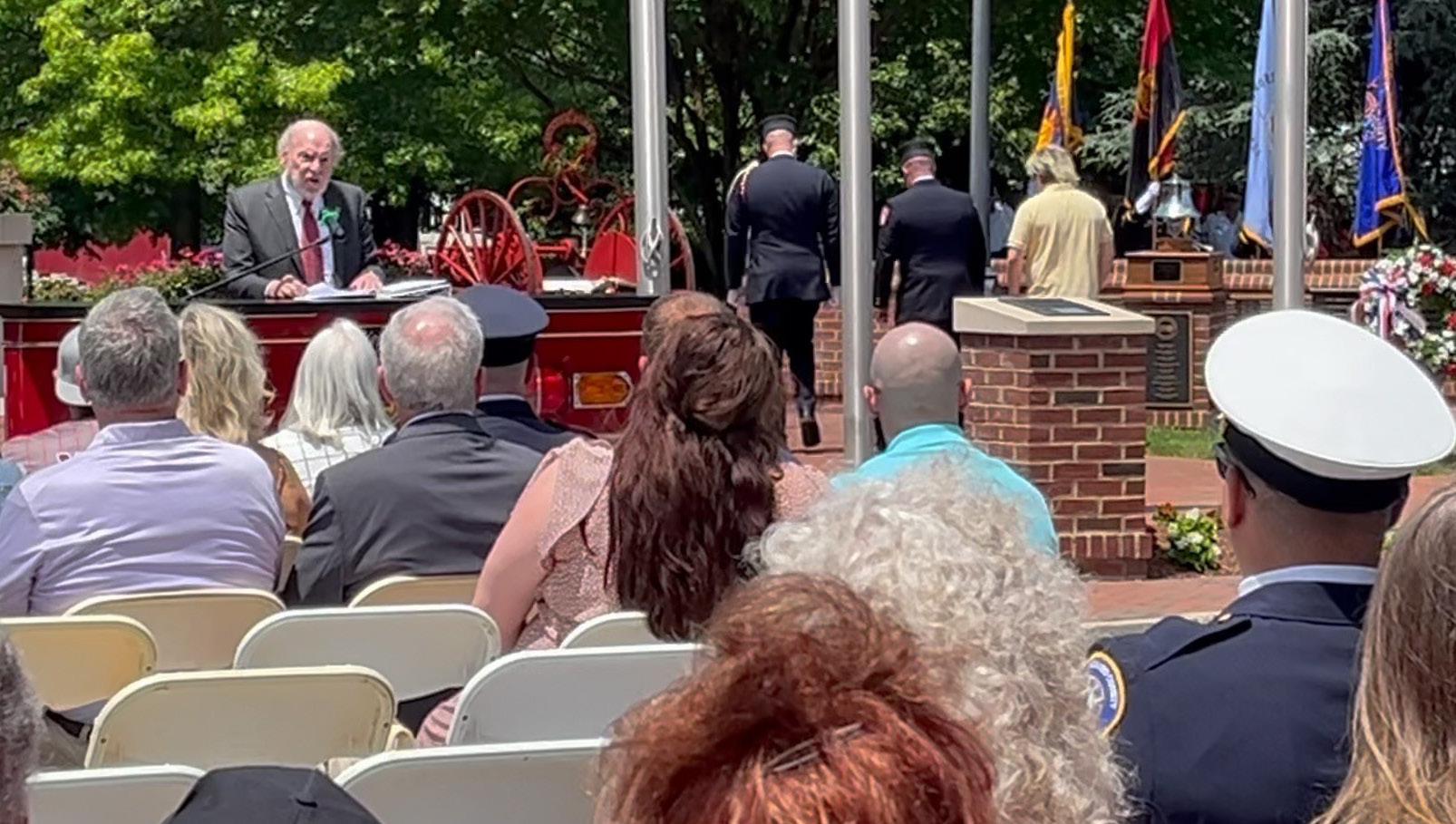


16-20, 2024
Since 1893, the Maryland State Firemen's Association (MSFA) has served to promote, advocate, and represent the interests of the volunteer fire, rescue, and emergency medical services of Maryland. This year, MSFA drew constituents, partners, and affiliates from across the state and around the region for its 132nd Annual Convention and Conference.
Learn more at https://msfa.org/ n


Last month, Mary Alice Vanhoy, MSN, RN, CEN, CPEN, NRP, FAEN, retired from her position as Nurse Manager at University of Maryland Shore Emergency Center at Queenstown, closing out a 30-year career with University of Maryland Shore Regional Health. In addition to providing high-quality patient care, the native North Carolinian grew into a powerhouse of the field of emergency medical services over the course of her career through her committed leadership, educational development, and community service throughout Maryland and beyond. Vanhoy has received many accolades and awards throughout her career, and in 2014 she became the first fellow of the Academy of Emergency Nursing (AEN) from Maryland. Recently, Mary Alice Vanhoy sat down with Maryland EMS News to reflect upon her decades of experience in the field of emergency medicine and its evolution.
n What sparked your interest in emergency medicine? I grew up in very rural North Carolina, in a fairly hilly area where there wasn’t much in the way of EMS or rescue. When I was about 6 years old, there was a car crash, and the car overturned. Everyone came with their tractors. I could see this hand moving under the car – and during the extraction the hand quit moving, and I was like, “Why did this happen?”
Little girls didn’t go into Fire and EMS in the ’70s, so I chose to go into emergency nursing, which was as close as I could be. While I was in nursing school, they started adding rescue squads and minor transport vehicles – basically, putting the patient in the ambulance and transporting them. Already being in nursing school, I was a prime candidate, so I joined our local rescue squad, where I also became a firefighter. So, I started in Fire and EMS in ’78, and Nursing in ’79. When I moved to Maryland, I worked with Talbot County EMS while they were still a volunteer group, then joined United Communities Volunteer Fire Department, where I’ve served in every role that you can think of.
n What aspects of Nursing and EMS have most changed your perspective over the course of your career? Science
and technology. When I started, and people had a heart attack, we put them in a room, with nothing to stimulate them, and they either lived or died. Twelve-lead ECG was a great evolution for EMS and hospitals. Today, I can have a patient have an infarct at 7:00 in the morning and they can be waving at me going down the road when I leave at five or six in the evening – they’ve already been treated and discharged from the cap lab.
Now it’s standard practice, but the use of CPAP to help people breathe – that came from the Eastern Shore. I was glad to be part of the evolution of our aviation system.
There were very few nurses doing EMS when I started. There are a lot of us with that combination of experience now – the Mary Beachleys and the Cyndy Wright Johnsons who have merged the two careers, trying to provide care from the 9-1-1 call all the way through the patient being discharged, hopefully, from the hospital. I think it helps us to critically think more quickly and adds that personal touch for the patient that we are carrying.
n What do you feel were some of the toughest obstacles you've encountered, and how have you overcome them? The biggest obstacle, early in my career, was being a female in this field, having to demonstrate that we can talk at the same level, but I think that’s pretty much gone now. People no longer slam on their brakes when they look up in the rearview mirror and see a female driving an ambulance. I think those barriers are only there if you let them stay that way. I realized that if I wanted to get my message across I just had to push on. I work very closely with the Maryland State Firemen’s Association, and I can switch from talking to a firefighter down in Crisfield to interacting with a legislator or even the governor or national organizations, like NHTSA.
n What hard-earned wisdom would you share with new and future generations of EMS clinicians? This is a hard field, and we are people just like everybody else. We look at the patient’s needs holistically It’s an emergency, and we will treat it that way. But remember that it’s not your emergency. You are there to render care, and whatever you are involved in may dramatically change the patient’s life – but you’ll go back home. It’s their emergency, not yours.
n What’s next for Mary Alice Vanhoy? This job does take its physical toll on you, so I don’t think I’m going to be lifting any more stretchers or firefighting anymore. But I hope to continue teaching, speaking, and delivering continuing education at conferences. I’m not one to sit idly. n

Safe Kids and Risk Watch Maryland coalitions are led by the Maryland EMSC Department. Every June these two coalitions partner with the EMSC Family Advisory Network Council to coordinate the “Steps to Safety” interactive displays at the Maryland State Firemen's Association Annual Convention and Conference in Ocean City. MIEMSS EMSC / Safe Kids provides content mentors at each station. Justin-time training is available for those volunteering at the interactive stations and short, onepage lesson plans have been developed for each station.
The Maryland Steps to Safety initiative has four goals during the MSFA Convention:


1. To provide young children and school-age children hands-on education experiences to be safer in their homes and communities through both psychomotor skills and new knowledge about high-risk injuries, and to expand the teaching tools and resources to include material for tweens and teens.
2. To provide young life safety advocates (tweens, teens and young adults) with a mentored experience and specific lesson plans to work with younger children and their families. These youth are typically involved in the local, county, and state Junior Fire Chief and Ambassadors programs.
3. To empower parents and care providers with knowledge on both the risks and the prevention strategies to keep everyone safer in their home and community (infants through seniors).
4. To demonstrate interactive safety displays based upon
evidence-based and best practices for life safety advocates across Maryland’s EMS, Fire, and Rescue services. Resource lists for social media programing, teaching tools, and EMSCfunded display locations are available.
2024 Steps to Safety Stations (Supplies provided by Risk Watch)
• Dial 9-1-1: Make the Right Call – Ocean City PSAP/ MIEMSS EMRC/SYSCOM
• Fire Safety: Hazard House and other examples of EDITH education
• Burn Safety: Scalds and Fireworks – EMSC and Burn Centers
• Right Care When It Counts award information and PSAs – EMSC FAN
• Medication Safety: Up and Away – Safe Kids Maryland – EMSC
• Water Safety: Pools and Open Water – TidalHealth Peninsula Regional Trauma Center
• Safe Sleep for Infants: ABC – EMSC Family Advisory Network/Safe Kids
• Bike Safety Education – Pediatric EMS Champions (MHSO)
• Pedestrian Safety – EMSC
• Buckle Up in All Vehicles – EMSC CPS Grant (MSHO)
• Resource table for Community Risk Reduction programs w w w
The next Safe Kids Maryland Meeting will be held on September 4, 2024, from 12:30 p.m. to 2:00 p.m., at MIEMSS headquarters. Please email safekidsmd@miemss.org to join the email notification. n
(Continued from page 1)
n Asthma/COPD: This modification eliminates the need for paramedics to consult for repeat doses of albuterol when treating adult and pediatric patients with persistent or recurrent symptoms. Need for medical consultation is also removed for administration of magnesium sulfate by paramedics treating adult patients with moderate to severe exacerbations.
n Burns – Palmar Method Instead of Rule of Nines: At the recommendation of the Burn Centers, the Rule of Nines was replaced with the Palmar Method as the recommended means of estimating the percentage body surface area (BSA) burned for both adult and pediatric patients.
n Burns and Carbon Monoxide Exposure Protocols: These changes clarify the most appropriate destination for patients with burns and/ or smoke inhalation. Patients with thermal burns with or without smoke inhalation are to be triaged to a burn center rather than a hyperbaric center. Patients with smoke inhalation without burns should be transported to a hyperbaric center.
n Calcium Administration with Low Titer O+ Whole Blood Transfusions (Pilot): This amendment calls for administration of calcium chloride in patients who receive a second unit of whole blood. The intent of this modification is to avoid hypocalcemia associated with whole blood transfusions.
n Diltiazem: This modification adds a precaution for use of diltiazem in patients with a history of CHF or decreased ejection fraction. Hypotension may occur rapidly following diltiazem administration in these patients and clinicians should be prepared with

iting: This revision allows for administration of droperidol for treatment of nausea and vomiting. In particular, droperidol is preferred for treatment of nausea and vomiting secondary to migraines, cannabinoid hyperemesis syndrome, and cyclic vomiting syndrome. Droperidol may also be used in general cases where symptoms persist after administration of ondansetron.
n Extraglottic Airways for Tactical EMT (OSP): This addition to the Tactical EMS Optional Supplemental Protocol allows for use of extraglottic airways by Tactical EMTs.
n Guidelines for Infusion Pump Settings (OSP): This addition provides medication dosing guidelines for jurisdictions participating in the Infusion Pump OSP.

calcium chloride.
n Dive Medicine (OSP): This new Optional Supplemental Protocol is intended for use by EMS clinicians providing standby medical coverage for dive operations. It provides guidance for the evaluation and treatment of public safety divers as well as all other dive related emergencies including recreational and occupational dive activities.
n Droperidol for Nausea and Vom-
n Ketamine for CPR-Induced Awareness: A maximum total dose of ketamine for treatment of CPRinduced awareness was added to the ketamine pharmacology page. Up to three 1 mg/kg doses for a total of 3 mg/kg may be administered. Additional doses require medical consultation.
n Ketamine Drip for Ventilatory Difficulty Secondary to Bucking or Combativeness in Intubated Patients (OSP): This modification allows administration of a ketamine infusion using an infusion pump to maintain sedation on extended transports for patients on a ventilator.
n Language Line Recommendations: This addition to General Patient Care reminds clinicians to utilize a translation line when a perceived language barrier is present.
n Mobile Integrated Health Collection of Laboratory Specimens and 12-Lead Acquisition (OSP): This
See EMS Protocols page 12
The National Highway Traffic Safety Administration (NHTSA) has prepared materials for use by law enforcement and public safety personnel for the following upcoming public safety and prevention campaigns: n Vehicular Heatstroke Prevention (May 1 – September 30, 2024). Nearly every state in the United States has been affected by a pediatric vehicular heatstroke death. NHTSA has released an updated call to action for this campaign: "Once You Park, Stop. Look. Lock." Download materials: https://
www.trafficsafetymarketing.gov/safety-topics/child-safety/vehicular-heatstroke-prevention n Summer Driving Tips (May 22 –September 2, 2024). Summertime usually means vacations and summer road trips. Now is a good time to review these summer driving safety tips. A little planning and some safety checks might spare you from dealing with the consequences of a breakdown — or worse, a highway crash. Download materials: https://www.trafficsafetymarketing.gov/safety-topics/vehicle-safety

Maryland Trauma Center Network
n Speeding Catches Up with You (July 8–31, 2024). This year-round social norming campaign focuses on speed prevention. Use any of these resources to encourage drivers to drive at the speed limit and to educate people about the dangers of going too fast, including information related to speed and road conditions. Download materials: https://www.trafficsafetymarketing.gov/safety-topics/speeding/speeding-catches-up-with-you. n

Please scan the QR code on this form to nominate an exemplary Nurse or EMS Clinician committed to the care of injured or burned patients
Nominations will be accepted for cases occurring in calendar year 202 4
Submissions will be accepted through January 15, 2025
Awards will be distributed at the Maryland Committee on Trauma's Point/Counterpoint Conference May 15-16, 2025 in Baltimore, Maryland
Criteria for EMS Clinician Award:
Please nominate any practicing EMS clinician in good standing from the state of Maryland. The award recognizes a clinician for acts above and beyond the standard of care for any trauma or burn patient(s)
Criteria for RN Award:
Please nominate any practicing staff nurse in good standing from the state of Maryland. The award recognizes a single staff nurse who provided care above and beyond the accepted standard of care for any trauma or burn patient(s).
Maryland Department of Transportation Motor Vehicle Administration’s (MDOT MVA)
The MDOT MVA Highway Safety Office (MHSO) is dedicated to saving lives and working with many partners across the State to reduce the number of crashes each year. In addition, the MHSO looks for ways to reduce crash severity and ways to treat crash victims easier and faster.
Maryland aims to reduce the number of crashes, and the resulting deaths and injuries, to zero by 2030.
Keeping Pedestrians and Bicyclists Safe Distracted Driving is Deadly
No one ever wants to experience a roadside emergency. However, almost everyone will experience an untimely breakdown, crash, or other emergency at some point — whether as a driver or passenger.
You can do your part to prevent roadside emergencies by keeping your vehicle properly maintained and completing repairs before they become emergencies.
Ensure you drive defensively, staying alert for hazards. Avoid distracted driving, speeding and aggressive driving, and never drive under the influence of drugs or alcohol.
No matter how well you prepare, a roadside emergency could still happen and you should know how to react.
In the event of a roadside emergency be prepared to do the following:
• Find a Safe Place – Get off the road and onto the shoulder if possible.
• Assess the Situation and Call for Help – If on a State road, dial #77 for assistance. If you are stopped in the road, dial 9-1-1.
• Use Good Judgement and Stay Vigilant –
Remain in your vehicle, buckled and facing forward if it is safe to do so. If it is not possible to remain in the car, exit safely and move away from the road, behind a barrier if possible.
For more information on roadside emergencies and to ensure you’re prepared, visit our website at: ZeroDeathsMD.gov/Roadside
In addition to bringing awareness to work zone safety, Governor Moore signed HB513/CH17 into law on Tuesday, April 9, 2024. The new law increases the fines associated with speed cameras. Previously, the fine for speed cameras in Maryland was tied for the lowest across the country at $40. Beginning June 1, 2024, the fine increased to $80, and on January 1, 2025, the fine will change to a tiered fine system:
• Vehicle exceeds posted speed limit by between 12 and 15 mph – $60
• Vehicle exceeds posted speed limit by between 16 and 19 mph – $80
• Vehicle exceeds posted speed limit by between 20 and 29 – $140
• Vehicle exceeds posted speed limit by between 30 and 39 – $270
• Vehicle exceeds posted speed limit by 40 mph or more – $500
• If vehicle is cited when workers are present in the work zone, the penalties double
The good news is that no one has to receive a citation at these higher fines, though! You just need to drive the speed limit, protecting highway workers, other motorists, and yourself in the process.
Learn more: ZeroDeathsMD.gov/WorkZone


Maryland-National Capital Region Emergency Response System
The Maryland Emergency Management Association (MDEMA) Symposium is an effort to bring together emergency management professionals and associated agencies to discuss various topics to enhance all phases of response efforts. To support this effort at the 2024 iteration of this symposium, representatives from the Maryland-National Capital Region Emergency Response System (MDERS) and partner agencies showcased five initiatives that have significantly enhanced response capabilities in Montgomery and Prince George’s Counties. These presentations covered the incorporation of small unmanned aerial systems (sUASs) as first responders for the Montgomery County Police Department (MCPD), integration of the Public Access Trauma Care (PATC) program into the public school systems in Montgomery and Prince George’s Counties, enhancement of the Prince George’s County Police Department’s (PGPD) Patrol Scenario Training (PST), reinforcement of incident command system (ICS) principles during training for MCPD officers, and strengthening inter-jurisdictional structural collapse response. These initiatives have collectively bolstered response capabilities for first responders in the Maryland-National Capital Region (MD-NCR).
On the first day of the conference, as part of the main session, MDERS Senior Emergency Response Specialist Hannah Thomas was joined by MCPD Captain Jason Cokinos and Lieutenant Doug Miller to present on the department’s innovative Drone as a First Responder (DFR). This pro -

gram prepositions sUAS platforms, commonly known as drones, to provide rapid situational assessments to emergency calls in Silver Spring. The presenters highlighted the program’s achievements in tracking suspects involved in various crimes and outlined the financial costs, operational logistics, data collection, and transparency efforts required for sustaining the program. Due to its success, MCPD plans to expand the DFR program to several other locations in the county.
The next presentation examined the inclusion of the PATC program into Montgomery County Public Schools (MCPS) and Prince George’s County Public Schools (PGCPS).
MDERS Senior Emergency Response Specialist Peter McCullough and MDERS Emergency Response Specialist Katie Weber provided information to the audience about the supplies distributed and the incorporation of PATC into the school’s curriculum. To date, MDERS has provided 774 5-pack kits to MCPS and 253 5-pack
kits to PGCPS. This is in addition to 84 training bags for each jurisdiction to assist with hands-on training for students. Although the program is well-received by MCPS and PGCPS, the speakers identified several factors that MDERS had to navigate to get PATC into the schools. Issues such as replenishment of supplies, installation of wall-mounted cabinets, appropriateness of the content for students, and adherence to regulations all were discussed with partners before the adoption of PATC into each public school system.
After that presentation, MDERS Emergency Response Specialist Elizabeth Adams and PGPD Corporal Juan Penafiel detailed the advancements made to PGPD’s PST curriculum. This program is an aspect of the mandated training for student officers that tests their ability to demonstrate skills, tactics, and techniques learned during the training academy. In coordination
See MDERS page 14
(Continued from page 8)
addition allows an MIH paramedic to collect samples including blood draws, fecal or urinary samples, and oral or nasal swabs as well as obtain 12-lead ECGs as a part of a regularly scheduled MIH visit. A Maryland-licensed practitioner (MD, DO, NP, or PA) must order the lab tests and ECG and agree to review the results with the patient.
n Needle Decompression Thoracostomy: This modification of the NDT procedure specifies smaller catheter sizes for pediatric patients, including the use of a standard 16-gauge IV catheter for patients less than 4 years of age. A 3.25 inch, 14-gauge catheter continues to be recommended for patients 4-years-of-age and older.
n Norepinephrine for Treatment of Hypotension/Shock (OSP): This new OSP allows for use of norepinephrine
Asking whether my patient had been pregnant in the last year may have helped save her life.
for treatment of patients 18-years-old and older with sustained hypotension despite maximum fluid boluses as described in the Shock: Hypoperfusion protocol. Use of a norepinephrine infusion applies to treatment of cardiogenic, hypovolemic, septic, and neurogenic shock. Epinephrine remains the first-line vasopressor for treatment of anaphylactic shock.
n Overdose/Poisoning: This addition to the Clinical Pearls encourages clinicians to refer patients who are refusing transport after an overdose to available recovery resources.

Life-threatening complications can happen up to a year after pregnancy. Most pregnancy-related deaths are preventable.
Ask whether your patient is pregnant or was pregnant in the last year.
Connect her to the care she needs right away.
Rocuronium for RSI and Ventilatory Difficulty Secondary to Bucking or Combativeness (OSP): This revision adds rocuronium as an alternative to vecuronium for use in both RSI and treatment of ventilator difficulty secondary to bucking or
SCT/RN Changes for InterfacilThese revisions incorporate a regulatory change allowing an SCT paramedic to transport patients who are receiving a single critical care (SCT) intervention. Patients receiving more than one SCT intervention still require an RN/team
This modification eliminates the recommendation to administer oxygen to all pediatric patients with stroke symptoms. This change expands the use of TXA to include treatment of pediatric patients with suspected hemorrhagic shock due to trauma or post-
n Ventricular Assist Device (VAD) Protocol: This revision expands the application of the protocol to include pediatric patients.
See EMS Protocols page 14

The State EMS Board is authorized to take disciplinary action against clinicians who engage in prohibited conduct to safeguard the integrity of the EMS system. COMAR 30.02.04.01 lists conduct which is prohibited. Below is a sample of actions the EMS Board has taken from April to June, 2024, as a result of prohibited conduct. For more information contact Lisa Chervon, Chief of the MIEMSS Office of Integrity, at lchervon@miemss.org or (410) 7062339. Additionally, MIEMSS maintains a searchable database of all EMS Board decisions at https://www. miemss.org/home/public, which can be found under Public Orders Report in the left-hand column.
n IRC23-046 (PARAMEDIC) April 10, 2024. In fall 2023, the Paramedic pled guilty to the crime of 2nd Degree Assault. The Paramedic was subsequently sentenced to two (2) years and six (6) months of supervised probation, followed by two (2) years and six (6) months of unsupervised probation. The Paramedic was also ordered to obtain anger management and substance abuse counseling, and mental health treatment. As a result, the Paramedic’s license was placed on probation until April 30, 2026, with the condition that the Paramedic continue ongoing mental health counseling during this probationary period.
n IRC23-052 (EMT) April 10, 2024. In June 2022, the EMT pled not guilty with agreed statement of facts to the crime of driving a vehicle while impaired by alcohol. The EMT was subsequently sentenced to unsupervised probation before judgment for a period of one (1) year. In May 2023, the EMT pled guilty to the crime of driving/attempting to drive a vehicle not
equipped with an ignition interlock as required by program. Based upon this plea, the sentence imposed for the above-mentioned driving a vehicle while impaired by alcohol case was changed to guilty, and the EMT was sentenced to 45 days in jail, with all suspended. Additionally, the EMT was issued one (1) year of unsupervised probation beginning May 1, 2023. Upon appeal to the Circuit Court, the EMT’s violation of probation was upheld. As a result, the EMT’s certification was placed on probation for one (1) year from the date of the Final Decision.
n IRC23-053 (PARAMEDIC) April 10, 2024. In October 2023, the Paramedic pled guilty to the crimes of driving a vehicle while impaired by alcohol per se, and failure to return to and remain at the scene of an accident involving attended vehicle damage. The Paramedic was subsequently sentenced to one (1) year in jail, with all but thirty (30 days suspended, and five (5) years of supervised probation. Additionally, the Paramedic was ordered to attend self-help group meetings, continue with mental health treatment, abstain from alcohol and drugs, attend a Victim Impact Panel, and participate in the Ignition Interlock Program. As a result, the Paramedic’s certification was placed on probation until April 30, 2026.
n IRC23-024 (EMT) April 10, 2024. In March 2023, the EMT was found guilty of Assault – First Degree, and Use of a Firearm/Violent Crime in the Circuit Court of Anne Arundel County. The EMT was sentenced to 20 years in jail, with all suspended, for the assault conviction, and five (5) years in jail, with three (3) years of supervised probation for the firearm
conviction. As a result, the EMT’s certification was revoked.
n IRC21-022 (PARAMEDIC) June 12, 2024. In March 2021, the Paramedic failed to provide the appropriate standard of care prior to terminating resuscitative efforts. The Paramedic was counseled by the EMSOP MAB, who revoked the Paramedic’s affiliation for a minimum of one (1) year. As a result of this incident, the Paramedic met with the State EMS Medical Director and a performance improvement plan was developed, in cooperation with a new EMSOP. The Paramedic failed to successfully complete the performance improvement plan. Accordingly, in June 2023, the EMS Board issued a Noncompliance Notice to the Paramedic, proposing to revoke the Paramedic’s ALS license, but to allow the Paramedic to retain his credentials as an EMT. The Paramedic requested a hearing to contest the Board’s proposed discipline. In April 2024, following a hearing the Administrative Law Judge (ALJ) issued a Proposed Decision, which concluded that the EMS Board’s sanction of revocation be upheld. By Final Decision and Order of the EMS Board, dated June 12, 2024, the Paramedic’s license is revoked and the clinician may practice as an EMT for one (1) year, subject to the renewal requirements for continued EMT certification.
n IRC24-006 (EMT) June 20, 2024. In March 2023, the EMT pled guilty to the crime of driving a vehicle while impaired by alcohol, and was issued unsupervised probation before judgment for a period of eighteen (18) months. As a result, the EMT’s certification was placed on probation for
See Compliance page 16
MDERS...
(Continued from page 11)
with PGPD, MDERS revamped their evaluation process and documentation process to create a more streamlined and objective evaluation process. These amendments have alleviated previous concerns to allow evaluators to closely focus on the actions of student officers and capture all needed data points for assessment.
Subsequent to that presentation, former MDERS Co-Director Nicole Markuski and MCPD Lt. Chris Hackley shared the joint effort between both agencies to provide an ICS refresher to all MCPD sergeants. This effort entailed two tabletop exercises that challenged participants to navigate the complexities of an active assailant incident at a mall and school. The participants were continuously fed new information throughout the exercises to test and evaluate their ability to exert control over a complex emergency. The exercises provided invaluable information for MCPD to identify gaps and improve their overall response capabilities.
Lastly, Prince George’s County
EMS Protocols...
(Continued from page 12)
n Ventricular Fibrillation and Pulseless Ventricular Tachycardia Algorithm: Extensive modifications of the adult algorithm include the incorporation of vector change and dual sequential defibrillation for persistent VF/VT. Additional changes include limitation of epinephrine to one dose, which should be given following the initial dose of amiodarone, and the addition of esmo-

[Photo: MDERS]
Fire Department (PGFD) Assistant Chief Jon Bender and Montgomery County Fire Rescue Service (MCFRS) Battalion Chief Doug Hinkle discussed progress in cross-jurisdictional structural collapse response. Both departments have intensified joint training efforts and have made strides to closely align their equipment caches to promote familiarity during large-scale incidents. MDERS has supported equipment acquisitions
for both departments and training initiatives which will culminate in a twoday full-scale exercise in the spring of 2025.
The MDEMA Conference served as a platform to showcase MDERS and partner agencies’ endeavors in bolstering response capabilities in the Maryland-National Capital Region. MDERS staff eagerly anticipate sharing further advancements at the next conference. n
lol for persistent VF/VT. Considerations for transport to an ECPR capable destination are also included.
Scan the QR code at right or visit https://miemss.org/home/ems-providers/protocols to download the complete 2024 Maryland Medical Protocols for Emergency Medical Services. n
Timothy P. Chizmar, MD, FACEP, FAEMS, is the State EMS Medical Director at MIEMSS.

Scan the QR code above to download the 2024 Maryland EMS Protocols


Scan the QR code below or go to history.miemss.org to learn how you can contribute to the Maryland EMS Interactive
History Timeline:

Maryland EMS News
MIEMSS
653 W. Pratt St. Baltimore, MD 21201-1536

Governor Wes Moore
Lt. Governor Aruna Miller
Copyright © 2024 by the Maryland Institute for Emergency Medical Services Systems
653 W. Pratt St. Baltimore, MD 21201-1536 www.miemss.org
Chairman, EMS Board: Clay B. Stamp, NRP
Executive Director, MIEMSS: Theodore R. Delbridge, MD, MPH
Managing Editor: Patrick Tandy (ptandy@miemss.org)
Design & Layout: Patrick Tandy
Photography: MIEMSS Media Services (unless noted otherwise)
(Continued from page 13) Compliance...
one (1) year from the date of the Final Decision.
n IRC24-004 (EMT) June 20, 2024 In May 2023, the EMT pled guilty to the crime of driving a vehicle while impaired by alcohol, for a violation that occurred in February 2023, and was issued supervised probation before judgment for a period of one (1) year, and ordered to complete alcohol education. Additionally, the EMT failed to disclose this disposition upon Request for Extension in May 2023, and again on the Application for Renewal of EMT submitted in January 2024. As a result, the EMT’s certification was placed on probation for one (1) year and the EMT was formally reprimanded for failure to disclose the disposition.
n IRC24-018 (PARAMEDIC) June 20, 2024. In October 2023, the Paramedic pled guilty to the crime of Visual Surveillance – Private Area. The Paramedic was issued supervised probation before judgment for a period of eighteen (18) months. As a result, the Paramedic was reprimanded and the Paramedic’s license was placed on probation for two (2) years from the date of the Final Decision.
n IRC24-015 (EMT) June 20, 2024. In December 2023, the EMT pled guilty to the crime of Theft <$100. The EMT was issued unsupervised probation before judgment for a period of one (1) year. The EMT was also ordered to pay full restitution to the Walmart. As a result, the EMT’s certification was placed on probation for two (2) years from the date of the Final Decision.
n IRC24-014 (PARAMEDIC) June 20, 2024. In October 2023, during an
EMS response, the Paramedic failed to provide the appropriate standard of care to a patient, resulting in the abandonment of the patient to a lower level of care. Additionally, the Paramedic falsely documented circumstances surrounding the care rendered to the patient during this incident upon completion of the electronic patient care report for this incident. As a result, the Paramedic’s license was placed on probation for two (2) years, with additional training on patient care, as approved by MIEMSS.
n IRC24-011 (EMT) June 20, 2024
In November 2023, during an EMS response, the EMT failed to provide the appropriate standard of care to a medical patient. Specifically, the EMT failed to properly apply the presumption of death protocol and improperly assessed a patient. As a result, and after the EMT completed remediation through the EMT’s EMSOP, the EMT’s certification was placed on probation until June 30, 2028.
n IRC24-008 (EMT) June 20, 2024
In June 2023, the EMT pled guilty to the crime of 2nd Degree Assault in the District Court for Howard County. The EMT’s guilty plea arose out of an incident involving the assault of a subordinate co-worker while on duty at the Howard County Department of Fire and Rescue Services in April 2022. The EMT was subsequently sentenced to three (3) years in jail with all but two (2) days suspended, eighteen (18) months of supervised probation, followed by eighteen (18) months of unsupervised probation. The EMT was also ordered to obtain evaluation for psycho-sexual illness. As a result of the above findings, the EMT’s certification was revoked. n