

CELLTRANSPORT CODE THE UNCOVERINGTHEMYSTERY THATLIESWITHIN

THIS MAGAZINE PROVIDES AN IN-DEPTH EXPLORATION OF CELL TRANSPORT MECHANISMS, FOCUSING ON THE ESSENTIAL PROCESSES THAT REGULATE THE MOVEMENT OF SUBSTANCES ACROSS THE CELL MEMBRANE.



THE GATEWAY MYSTERY
Uncover the secrets of the cell membrane, the crucial barrier that controls what enters and exits the cell
PASSIVE ESCAPE
Discover how molecules move effortlessly through the membrane without using any energy it's a smooth escape with simple diffusion, osmosis, and facilitated diffusion
OPERATION ACTIVE MISSION
Dive into the action where cells use energy to transport molecules against the flow through processes like the sodium-potassium pump, exocytosis, and endocytosis.
THE IN & OUT FILES
Investigate the processes of exocytosis and endocytosis, where cells take in large materials and eject others

Test your detective skills with fun puzzles and a quiz to solve the mysteries of cell transport and solidify your knowledge.
CASE SOLVED
Review the key clues and connections to wrap up your investigation on how cell transport keeps everything running smoothly
Cell
Membran
The cell membrane is the outermos bilayer, which gives the membrane up of hydrophilic (water-loving) ph lipid tails, arranged in a way that al and exit The fluid mosaic model des structure with embedded proteins, roles in cell function

Cell transport mechanisms are responsible for maintaining cellular homeostasis, which is the stable internal environment necessary for the cell’s survival and function The membrane’s permeability properties and the transport mechanisms help cells take in essential nutrients, expel waste, and communicate with other cells in the body
WHY IS IT


The cell membrane transport is essential for maintaining the life and function of a cell It regulates the movement of substances in and out of the cell, ensuring that the cell has the necessary nutrients, ions, and water to carry out its processes At the same time, it helps remove waste products and toxins to maintain a healthy internal environment This process is crucial for homeostasis the balance that keeps the cell functioning properly Without efficient transport, a cell would not be able to maintain its structure, communicate with other cells, or respond to changes in its environment Overall, cell membrane transport plays a fundamental role in sustaining life at the cellular level


Passive transport is the movement of molecules across the cell membrane without the need for cellular energy (ATP) This process occurs naturally, driven by the concentration gradient— molecules move from areas of higher concentration to areas of lower concentration The ultimate goal of passive transport is to achieve equilibrium (balanced concentrations onboth sides of the membrane)


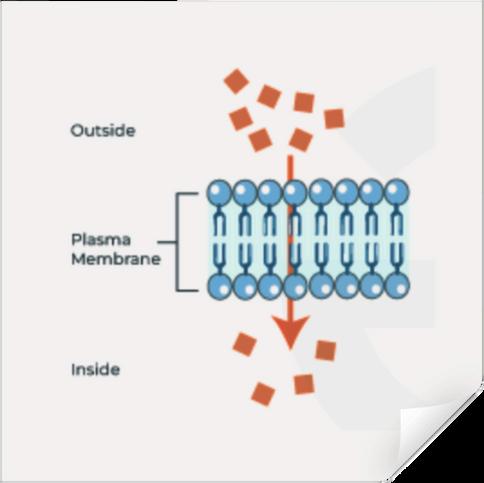
In Simple Diffusion, molecules pass directly through the lipid bilayer of the membrane, moving from an area of high concentration to low concentration This type of transport does not require any help from proteins
Example: Oxygen and carbon dioxide move in and out of red blood cells in the lungs through simple diffusion.
TRANSPORT Passive

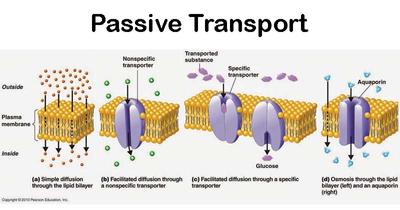
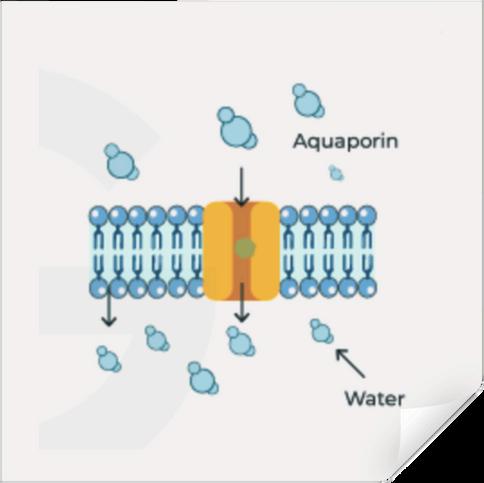
Osmosis is the diffusion of water molecules across the cell membrane through aquaporins. Water moves from an area of low solute concentration to high solute concentration to maintain balance on both sides of the membrane
Example: In plant cells, water enters the vacuole through osmosis, maintaining pressure that helps the plant’s structure.



Facilitated Diffusion: Larger or polar molecules that cannot pass through the lipid bilayer depend on transport proteins (carrier or channel proteins) to move across the membrane, facilitating their movement from high to low concentration
Example: Glucose enters cells via transporter proteins, while ions like sodium and potassium move through ion channels.
Active transport is the movement of substances across the cell membrane against their concentration gradient (from low to high concentration) This process requires energy in the form of ATP. Active transport is essential for maintaining concentration gradients of key ions and molecules inside and outside the cell
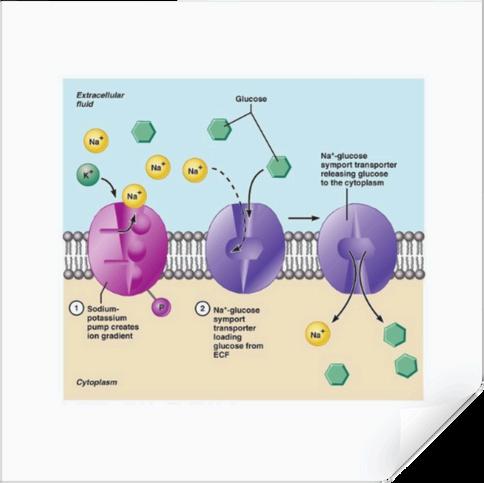
The sodium-potassium pump is an active transport mechanism that moves three sodium ions (Na⁺) out of the cell and two potassium ions (K⁺) into the cell, against their respective concentration gradients. This pump is vital for maintaining the resting potential of cells and is especially important in nerve cells for generating action potentials.
Example: The sodiumpotassium pump is crucial in nerve signaling, allowing the rapid transmission of electrical signals along nerves
TRANSPORTActive

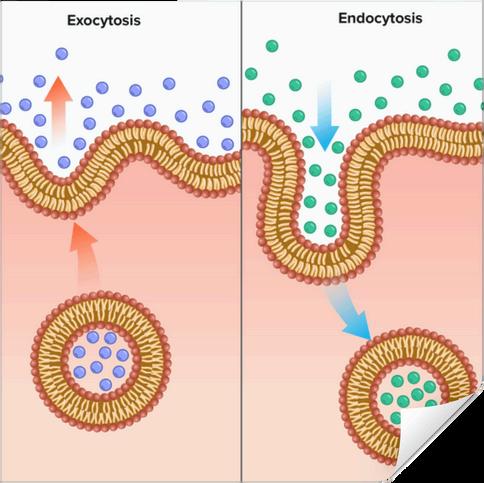
Exocytosis is the reverse of endocytosis, in which the cell expels large molecules, such as proteins or waste products, by fusing vesicles with the plasma membrane, releasing the contents into the extracellular environment.
Example: Neurotransmitters are released from neurons to communicate with other neurons or muscle cells
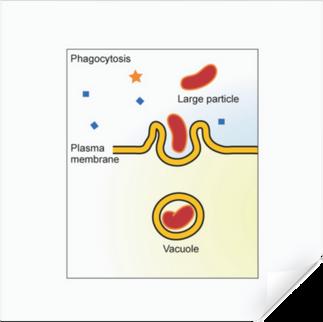
Endocytosis is the process by which cells engulf large molecules or particles by folding their membrane around the substance to form a vesicle There are different types of endocytosis based on the material being ingested:
a) Receptor-Mediated Endocytosis:
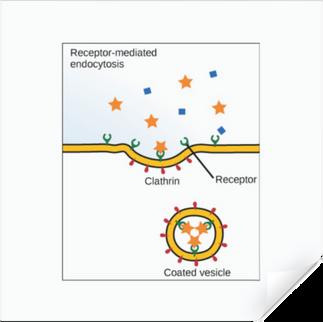
Specific molecules such as hormones or cholesterol bind to receptors on the cell surface, triggering the formation of a vesicle that contains the bound substance
Example: Cholesterol enters the cell through LDL receptors via receptor-mediated endocytosis
b) Pinocytosis (Cell Drinking):
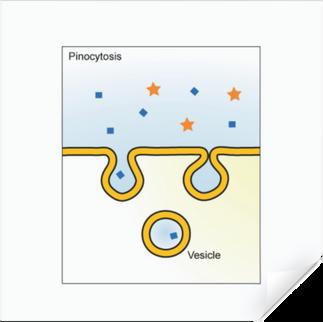
This process involves the cell engulfing extracellular fluid and dissolved solutes into small vesicles
Example: Cells in the kidneys absorb fluid from the bloodstream in this manner
c) Phagocytosis (Cell Eating):
The cell engulfs large particles such as debris, pathogens, or other foreign material This process is mostly carried out by immune cells like macrophages
Example: White blood cells engulf bacteria during an immune response
Exocytosis and Endocytosis Comparison
EXOCYTOSIS
Process of expelling substances from the cell
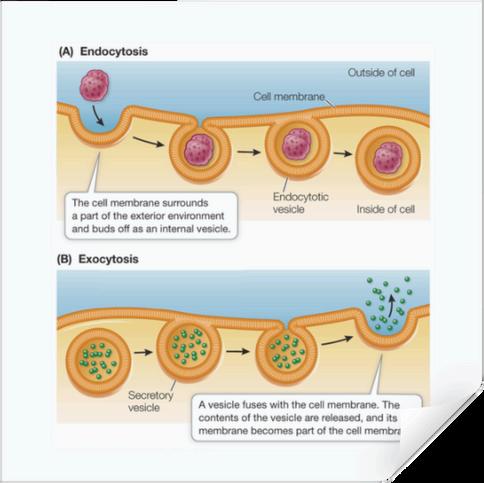
ENDOCYTOSIS
Process of engulfing substances into the cell
Involves the fusion of a vesicle with the plasma membrane Involves the invagination of the plasma membrane to form a vesicle
Facilitates the secretion of proteins, enzymes, and waste products
Facilitates the uptake of nutrients, immune cells' engulfment of pathogens, and receptormediated uptake

Importance!
Example: White blood cells engulfing pathogens.
Both exocytosis and endocytosis are vital for maintaining cell function. Exocytosis helps the cell expel waste products, hormones, and other molecules, while endocytosis enables the cell to take in necessary nutrients, ions, and signaling molecules Together, they play essential roles in immune response, cell signaling, and maintaining homeostasis.
The
MissingC
Storyline: You are a cell detective i moleculelostwithinthecellmemb knowledgeofcelltransporttotrac
Objective: Solve the case by fol
transport Each clue leads to a dif solvedtoadvance
Notes!
PassiveTransport(Noenergyneeded,high →lowconcentration)
Simple Diffusion: Small, non-polar molecules movefreely ;Osmosis:Water moves across the membrane ; Facilitated Diffusion: Large/charged molecules use transport proteinsActiveTransport(Requires energy,low → highconcentration)
Sodium-Potassium Pump: Moves Na⁺ and K⁺ to maintaincellbalance ;Endocytosis:Cellengulfs substances into vesicles ; Exocytosis: Cell releasessubstancesviavesicles

Clue:"Thecellissecretingproteinsneededforthe extracellularmatrix"
Choices:
A)Endocytosis,B)Exocytosis
Thiscluesuggeststhemissingmoleculehasbeensecretedfrom thecell Younotethatexocytosisallowscellstorelease importantsubstanceslikehormonesorproteins

Clue:"Themoleculemovedfromthebloodstream,through themembraneviafacilitateddiffusion,enteredthecell’s vesicle,andwasthensecreted"
Choices:
A)Glucose,B)Insulin,C)Oxygen
CGameonclusion

Clue:"Thismoleculemovesthroughthemembrane withoutenergyfromhightolowconcentration"
Choices:
A)SimpleDiffusion,B)ActiveTransport,C)Osmosis
Oncesolved,youcollecttheFirstClueinyour EvidenceBag:“Themoleculeisasmall,non-polar molecule”Thissuggestsitmayhaveusedsimple diffusionorosmosis

Clue:"Thismoleculeistoobigorpolartomoveeasilythrough themembranealone"
Choices:
A)Oxygen(O₂),B)Glucose(C₆H₁₂O₆),C)Water(H₂O)
Onceyou’vehelpedthetransporter,youcollectanotherclue: "Thismoleculeusescarrierproteinsformovementacrossthe membrane"Yournotebooknowcontainsanotethatglucose usesfacilitateddiffusion
Clue:"Thisprocessrequiresenergytomoveionsagainsttheir gradient"
Choices: A)Sodium-PotassiumPump B)Exocytosis C)Endocytosis
Aftersolvingthis,theEvidenceBagnowcontains“Active transportisrequiredtomaintainthecell'selectricalpotential”
The detective concludes that the missing molecule was insulin. It traveled from the bloodstream, entered the cell via facilitated diffusion, and was secreted through exocytosis to help regulate blood sugar levels. You’ve solved the case!
CODE THECELL transport UNCOVERING THE MYSTERY THAT LIES WITHIN



MARY ANNE MACASAET 2025 ISSUE .