UNTANGLING THE COSMOS
IF NATURE COULD PREACH

UNTANGLING THE COSMOS
IF NATURE COULD PREACH
THE MAN BEHIND RISE311 AND A MOVEMENT OF STRENGTH









The Eden Magazine is a free online publication is your guide to healthy living, spiritual awareness, compassion and love for all living beings, holistic lifestyle, mindfulness, organic living, positive thinking, sustainability, and personal development
Founder & Editor-in-Chief
Maryam Morrison
Executive Editor/Contributing Writer
Dina Morrone
East Coast Liaison & Partnership Director
Paulette Dozier
Contributing Writers
Sadhguru, Isha Foundation
Dr. Rob Moir
Emilie Macas
Nikki Pattillo
Polly Wirum
Joe Santos, Jr.
Guest Writer
Philip Smith
Contributing Stylists + Makeup Artist
Edward Hakopian
Lisa Joy Walton
Graphics & Photography
JSquared Photography @j2pix (Los Angeles) Artin Mardirosian (Nexision) (Los Angeles)
Benjamin D. Buren – AliveStudios.Com (Denver, SanFrancisco, Boston)
Sheri Determan (Los Angeles)
Greg Doherty (Los Vegas)
Ben Rollins (Atlanta)
Web developer
Brad wallace https://bradwallacedesign.com/
325 N. Maple Dr. Po Box 5132 Beverly Hills, CA 90209





46

59 66

72

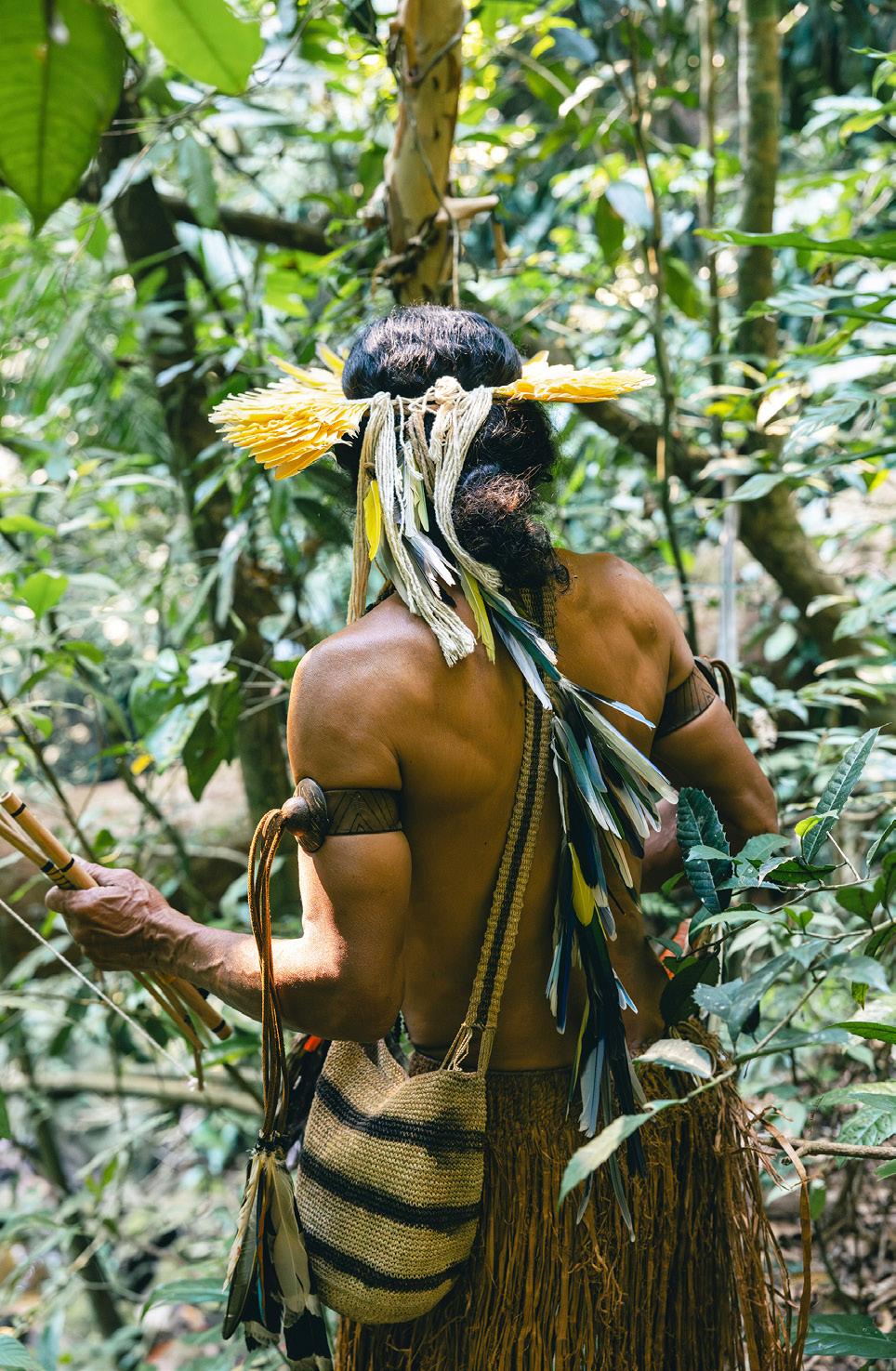
46 SHAMANIC SOUL by Lisa Biritz
59 GUARDIANS OF AN ANCIENT LEGACY
The Story of Turtle & Tortoise Rescue
66 WHAT IS THE PURPOSE OF LIFE by Isha Foundation
72
HOW DOES SELF-WORTH SHAPE YOUR LIFE EXPERIENCE by Polly Wirum
76 TIF NATURE COULD PREACH by Nikki Pattillo
82 IN A WORLD FULL OF NOISE, TRUST THE VOICE WITHIN by Emilie Macas
94 A VISIT TO ERNEST HEMINGWAY'S HOME IN KEY WEST, FLORIDA
76

82

94


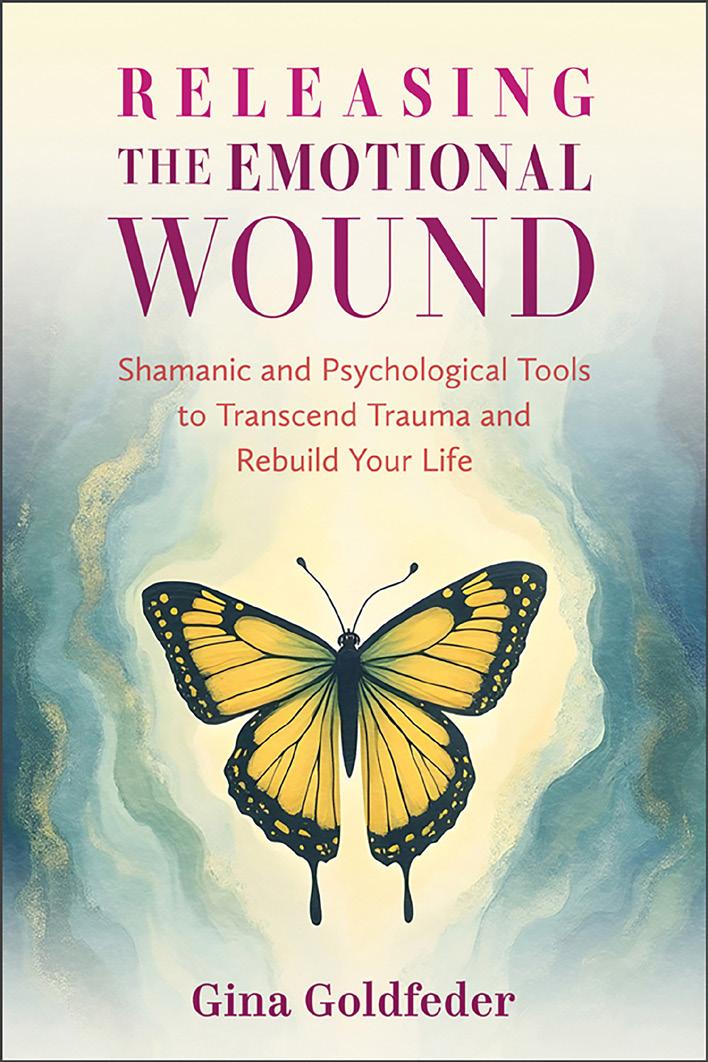
By Gina Goldfeder



II don’t remember the day I stopped enjoying ruminating about the suffering from my past. My emotional wound had become my best friend, my confidant, from an early age. I had gotten used to the idea that the discomfort I lived with inside my home was a kind of destiny, perhaps because I could never escape it, so I just had to put on a brave face about it.
The wound is a dish cooked over low heat. In my case, I couldn’t say exactly when it started, and I don’t even remember my childhood well enough to draw any conclusions, but a few images and fragments occasionally visit my consciousness.
Some turn out to be others’ stories, filling gaps in my memories. This leads me to think that something unspeakable is blocking my memories of the past. I must confess that rather than feeling envious, I feel curiosity, admiration, and astonishment when it comes to those who remember their childhood in detail.
I could say that my wound began at birth with my mother’s postpartum depression. It lasted my first year and a half of life, and she couldn’t even hold me in her arms. I know this because it’s what my father tells me and because I see myself in a photograph of me in front of my birthday cake with a number 2 candle, next to my grandmother and him.
Or perhaps it was the day when my mother helped a blind man cross the street and let go of my arm—or held it with greater force, I don’t remember well—but what I do remember is that at that moment I felt immense anger, because it seemed to me that the man was more important to her than I was.
Or perhaps it was the day my father shouted at my mother in a restaurant, and then we left alone and walked endless blocks home.
I also think that maybe it was when I was 15 and heard
my father talking on the phone with his lover.
Or maybe it was three years later, when I heard my mother tell him that a “steady lover” no longer seemed right for her.
Or when my father cursed me in front of my mother’s coffin.
Stop Blaming the Past
I want to go back to the miracle of no longer enjoying blaming the past and identifying with my wound. Perhaps the exhaustion of being a victim for so many years left me immune, though that's unfair; I have worked throughout my life to stop being “my wound.”
Perhaps it was the acceptance that there are events that have no solution, and what remains is to look for an opportunity to live a worthy and meaningful existence.
As I said at the beginning, I don’t remember how it happened, but I know two things for sure: After a long process of introspection and therapeutic support, one day I stopped being afraid, and the pain turned into my strength. I say this with all the honesty I can muster.
A phrase from Bert Hellinger, creator of Family Constellations, comes to mind: “The wound, too, is part of life, and also the scar that indicates that the wound is healed, although the place remains vulnerable and warns us to proceed with care and caution.”
But why do we identify with the emotional wound? Why does our identity cling to it?
Well, from my perspective, what we know most about ourselves is what hurts us—the ways we haven’t been seen or the injuries we’ve received from those we love. When we connect with the pain, we learn what matters to us, what our value system is, and who we are in this world, especially when we are children.
The pain-wound that appears from who knows where—because I can almost guarantee that it always takes us by surprise—suddenly places us in a vulnerable place, and we start to dwell there; some of us with insecurity, others with fear, anger, or desolation, and still others with self-doubt.
The wound is the opposite of love. You hurt me because you don’t love me is the first thing a child thinks, or worse yet, perhaps the feeling of being unloved impregnates their skin, making them believe that they “are that.” Identification is one of the earliest processes of development, as we internalize everything we see on the outside as children, and that’s how our personality is built.
Surprisingly, we hold onto our wounds to find meaning in our story.
One of the most significant themes I work on with couples in my private practice is validation of the inflicted wound; everything else flows, surfaces, and resolves if they can recognize the pain they have caused each other. It is a powerful formula that I invariably resort to and has yielded results for many years in my professional work.
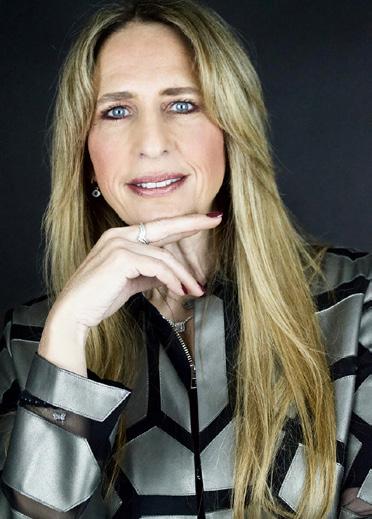
Gina Goldfeder, Ph.D., is a psychologist who specializes in individual and couples psychotherapy. Working with clients for almost thirty years, she draws on her training in healing modalities informed by shamanism, such as dream interpretation, as well as psychodrama, sacred geometry, and ThetaHealing. Gina offers courses and workshops. She lives in Mexico City. https://ginagoldfeder.com
Signs
Imagine the wound as a portal that takes you to other dimensions, ranging from darkness to light. Visualize a subtle golden thread that connects those who have inflicted hurt with those who have been hurt. In that encounter, when there is an act of humility and an honest attempt to repair the offense, the wound becomes love.
We don’t let it go, because it gives us the opportunity to reclaim our individuality and to finally be seen. We don’t let it go, because the ties that bind us to it can disappear, nor do we let it go as a matter of honor. However, when we regain what we have lost, whether someone has helped us repair it or we have repaired it ourselves, it is time to explore new horizons.
The wound is a solitary experience, a universe different from others, with its own language. There are various investigations and theories on this subject that explain the meaning, triggers, and different manifestations of an emotional wound. However, it has not yet been discovered how the brain chooses which experience will become traumatic and the meaning it carries.
Just as there are people who recognize the origin of their wound, there are others who deny it and bury it in forgetfulness in an attempt to have an apparently balanced life, thinking that the pain is already in the past, so it is better not to open the door for fear that the heart-wrenching childhood experience will drown them.
Despite our efforts to keep the wound in exile, triggers will appear at the moment we least expect, connecting us to unresolved suffering.
These triggers can be as subtle or trivial as, for instance, seeing a scene in a movie that suddenly provokes uncontrollable tears; hearing a piece of music that brings back memories we had forgotten or blocked; a word or phrase written on a billboard confronting us; or more complex, noticeable, or transcendent triggers, such as the death of a family member, the birth of a child, a divorce, a job change, a move, an inheritance or financial loss, to mention a few.
Any of these events marks a life change, putting us to the test and connecting us with what we fear, what has hurt us, or what we have forgotten in order to survive. Then, the wound emerges as a call or reminder of what has not yet been resolved or alerts us to protect ourselves from situations that resemble that old injury.
The repair occurs when we validate such experiences, recognize the impact they have had on our lives, are able to release them, and change their place in our world.



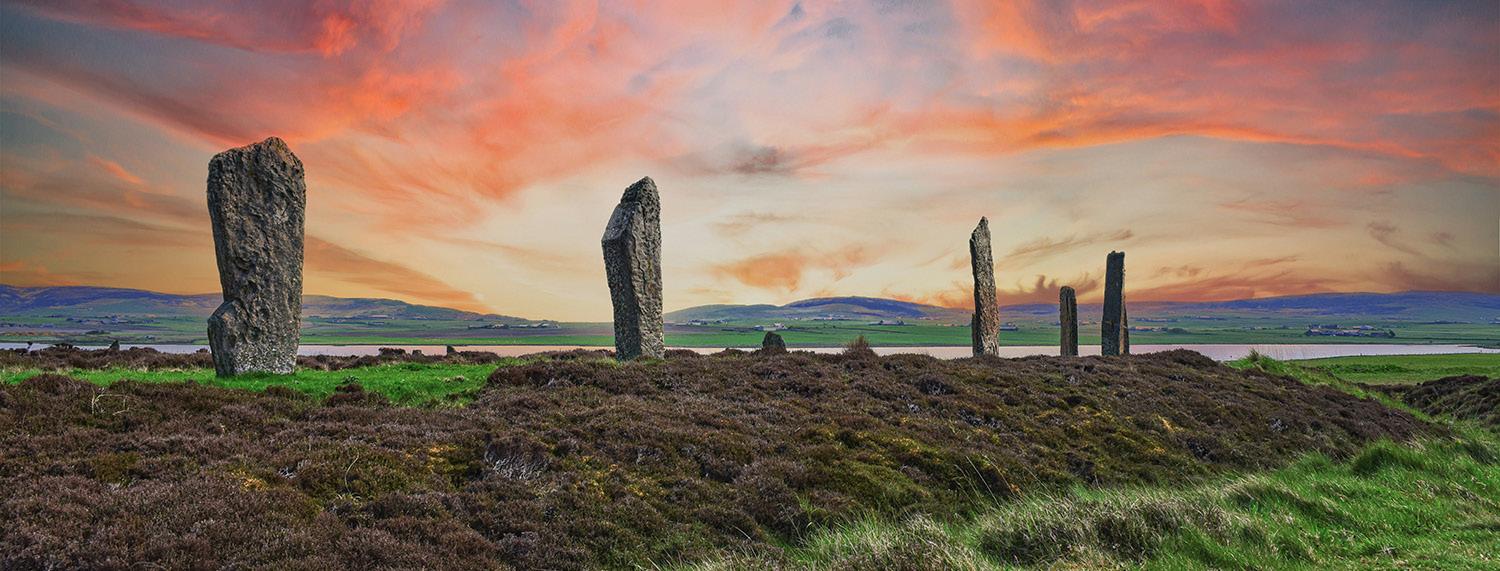



By Todd Elliot

Ancient people often used the word spirit to refer to a principle that linked the soul, wholly nonmaterial, to the material body.
Most of us have been raised in a culture that devalues the spiritual at the expense of the physical, to the extent that the spiritual is deemed to be nonexistent or is given a grudging nod as something completely personal. It is as if it has no place in helping form our understanding of the world. Culturally, over the last few hundred years of intellectual history, this has been a necessary corrective to the overvaluation of the spiritual during the Middle Ages and the early modern period.
However, times have changed, and humanity is now facing a crisis. We have to change our way of thinking and feeling about the cosmos in order to reclaim our position as caretakers of creation, before we destroy the very Earth from which we draw our nourishment and every part of our material needs. I intend to briefly lay the intellectual foundations necessary for a magical understanding of the cosmos, or, in other words,
an enchanted world. This will not be an exhaustive treatment of these topics, but rather an introduction to new ideas for those who might be unfamiliar and a suggestion of resources for those wishing to study in greater depth.
I have always been fascinated by the idea of a hidden reality, a world of spirits behind the apparent solid physical world we inhabit. Could there be more to our world than meets the eye? Many traditional or Indigenous cultures around the world have never lost their sense of enchantment, and now many modern “civilized” people all over the world are reclaiming the enchanted world of spirits and an animated, ensouled world. And not a moment too soon, for our world is teetering on the brink of ecological collapse and societal breakdown. It is imperative that we as humans reclaim our ancient role as caretakers and mediators between the gods and the earth.
family ethically raise vegetables, fruits, and livestock.
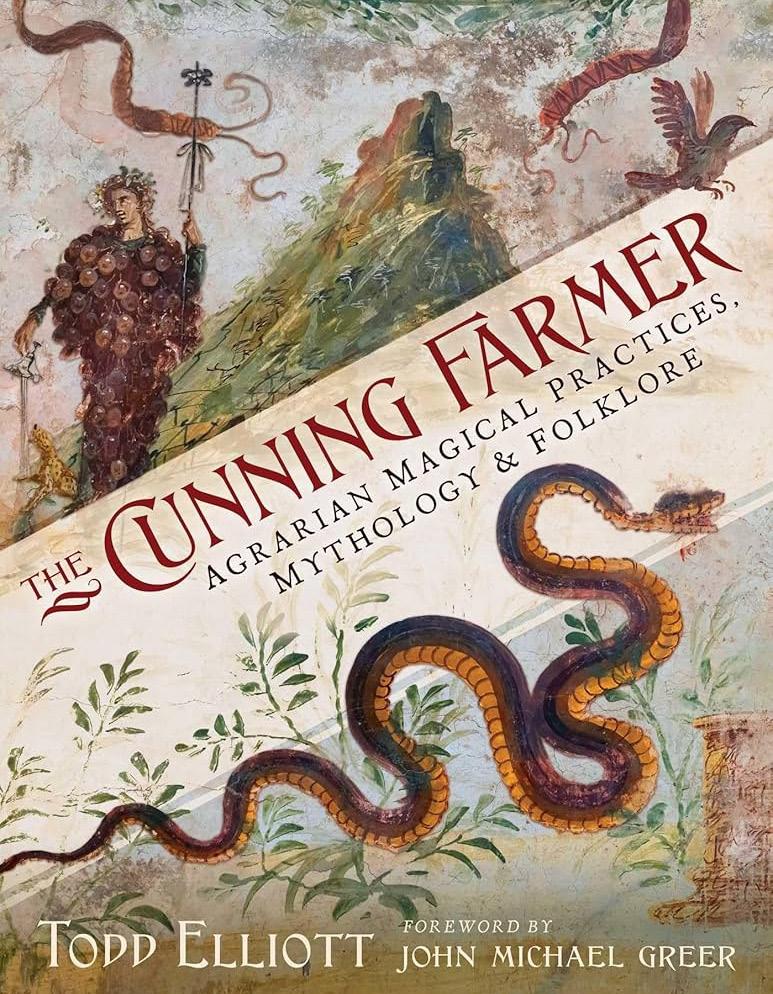
The Cunning Farmer by Todd Elliott, published by Inner Traditions International and Bear & Company, © 2023. All rights reserved.
The mysteries of creation are lost in the distant past, in mythic time, or in the massive numerical abstractions of science. Science has as its goal the description of the physical cosmos and describes the Earth as four billion years old and the universe as fourteen billion years old, more or less. But what do these unimaginably large numbers really mean? We, as spiritual beings, don’t live in a cosmos that is only physical. Equally untenable because of its literalism is the biblical age of the cosmos, which is supposed to be about six thousand years old. We live in the present, in our own experience, within a living cosmos. I propose that we look on creation as having happened in a time out of time, the dreamtime, if you will, the time of the gods and ancestors, the creators who shaped our cosmos. Mythographer Mircea Eliade loved the phrase in illo tempore”from the Vulgate Bible, meaning “in those days,” to refer to this time. This mythic creation is eternally present, creating and recreating the world every minute, renewing its being, as if by the very breath of the creator, inhaling and exhaling being into our cosmos.
I further suggest that we posit the idea of a spiritual realm, an archetypal realm beyond time and space, which contains the myths and sacred stories, the gods and angels, the pure mathematical forms. From this realm proceeds the logos, the living information that shapes and underlies our experience of the material world, which lives and breathes and occasionally erupts into our own world. This is the realm of the world soul of the ancients, the great dreaming mind of god from which all emerges. We humble humans draw our meaning and our inspiration from this place. It shapes our myths, religions, dreams, art, and all of our creative endeavors, for better or worse.
This concept is close to what Henry Corbin, the gifted exponent of Sufi philosophy, referred to as the mundus imaginalis (the imaginal realm), “a world that is [as] ontologically real as the world of the senses and that of the
intellect. This world requires its own faculty of perception, namely, imaginative power, a faculty with a cognitive function, a noetic value that is as real as sense perception or intellectual intuition. We must be careful not to confuse it with the imagination identified by so-called modern man with ‘fantasy,’ and which, according to him, is nothing but an outpour[ing] of ‘imaginings.’”
According to Corbin, this is an intermediary realm between the realms of the senses and the archetypes, and it mediates between the two. “Ontologically, it ranks higher than the senses and lower than the purely intelligible world; it is more immaterial than the former and less immaterial than the latter. This approach to imagination [provides] a basis for demonstrating the validity of dreams and of visionary reports describing and relating ‘events in heaven’ as well as the validity of symbolic rites,” he writes.
I propose that spiritual forces are responsible for much of the phenomena that occur in our world on many levels. This bold statement will require, perhaps, a bit of unpacking. First, what do we mean by spirit? The ancient Greeks used the word pneuma, and the Latin equivalent is spiritus, both of which have the additional meaning of breath or wind, and from which our English word spirit derives. Ancient people often used the word spirit to refer to a principle that linked the soul, wholly nonmaterial, to the material body. It was considered to be the fifth element, a subtle form of matter similar to air but more rarified.
In a sense, spirit is like Corbin’s imaginal realm, a mediator between the physical and the soul that the ancients used to explain how the non-physical acted on the body. In accordance with the Hermetic maxim, “As above, so below,” what is true of the individual is true on a cosmic scale; the cosmic spirit joins the anima mundi, or the world soul, to physical matter, enlivening and animating the whole cosmos.
by Brother Nakulananda Self-Realization Fellowship

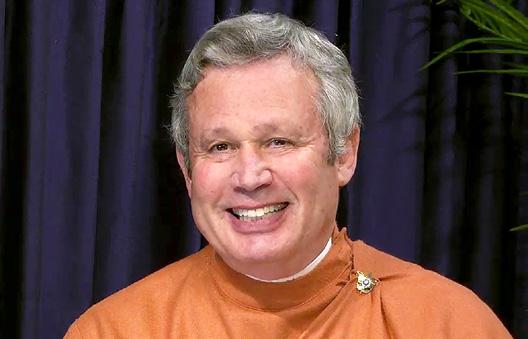
For more information about Yogananda's
Taking a moment for stillness can sometimes feel countercultural in a society that runs on productivity. And when we do decide to carve out time for stillness, calm, or quiet reflection, we soon encounter our restless mind. Our thoughts are conditioned to run on external stimuli from the five senses: sight, hearing, touch, smell, and taste. Unless we make a conscious effort to turn our focus, and energies, inward, we are, for the most part, totally mesmerized by the outer drama of this existence. It is so easy to forget that the true nature that lies within each human being is not the mind, but the soul.
Paramahansa Yogananda, author of Autobiography of a Yogi, often said that earth is not our true home, we are in the school of life, learning lessons that we are divine beings, made in the image of God. Yogananda said: “Infinity is our Home. We are just sojourning awhile in the caravanserai of the body.” The soul, being a part of the Infinite Spirit, is ever-existing, ever-conscious, ever-new Bliss, known as Sat-ChitAnanda in Sanskrit. If our true nature is infinite and joyous, and we are not experiencing that in our daily lives and consciousness, then we might be temporarily bound by delusion, deceived to think we are these small fleshly beings powerless to constant change and duality: good and evil, light and darkness, health and disease, and all the other ups and downs of material life.
Yogananda and other spiritual masters remind us of and awaken us to the understanding that we, too, have that infinite divine bliss and peace within us. The great wisdom of India teaches that finding the stillness of the soul in deep meditation is the key to shifting our consciousness from ordinary material consciousness to spiritual consciousness. As with a nugget of gold covered by mud, we must remove the mud of
ignorance to perceive the gold of the soul.
In deep meditation, our life force (prana in Sanskrit) and consciousness are reversed, instead of flowing outward into the world via the senses, we can direct that energy inward to the world of soul consciousness.
Sometimes there is very little we can do to control the outer world, but we do have the power over the inner world of the mind. If we want to positively influence our mind and evolve spiritually, knowing our true nature as bliss, peace, love, and joy, we must find stillness and cut off the senses from their identification with the world and its many distractions.
In the stillness of the soul, we experience what the Bible references as the “peace that passeth all understanding.” Yogananda says, “You cannot buy peace; you must know how to manufacture it within, in the stillness of your daily practices in meditation.” That peace, cultivated from within, then extends to all other aspects of our lives and the world at large. No matter our external circumstances or the demands of our roles in the material world, we can embody that peace everywhere we go, and our souls will shine forth in all their glory and light. That is the growth that comes from inner stillness.
When our heart-call is intense, and we do not give up, God will come. It is important that we remove from our mind all doubt that God will answer

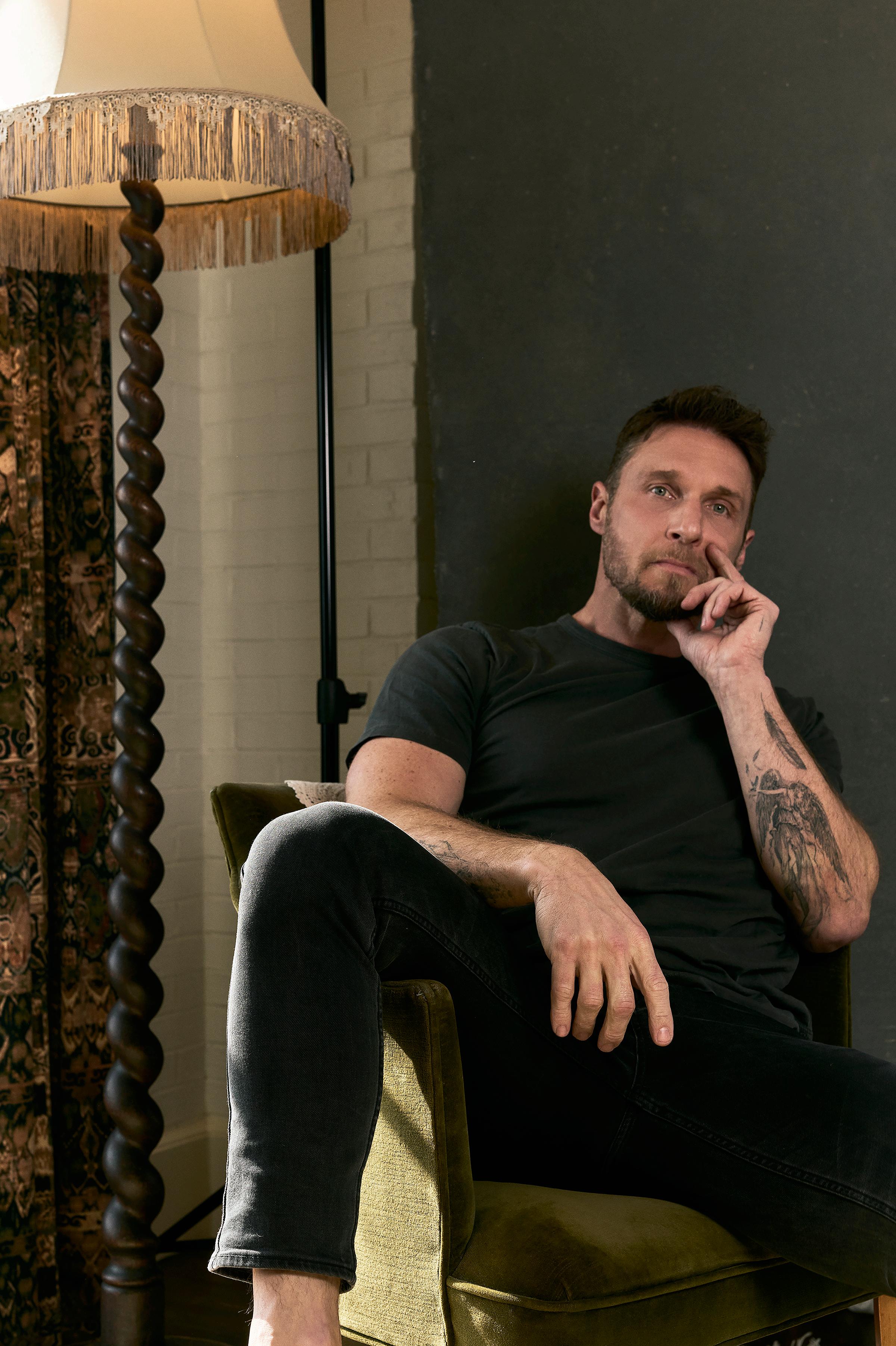
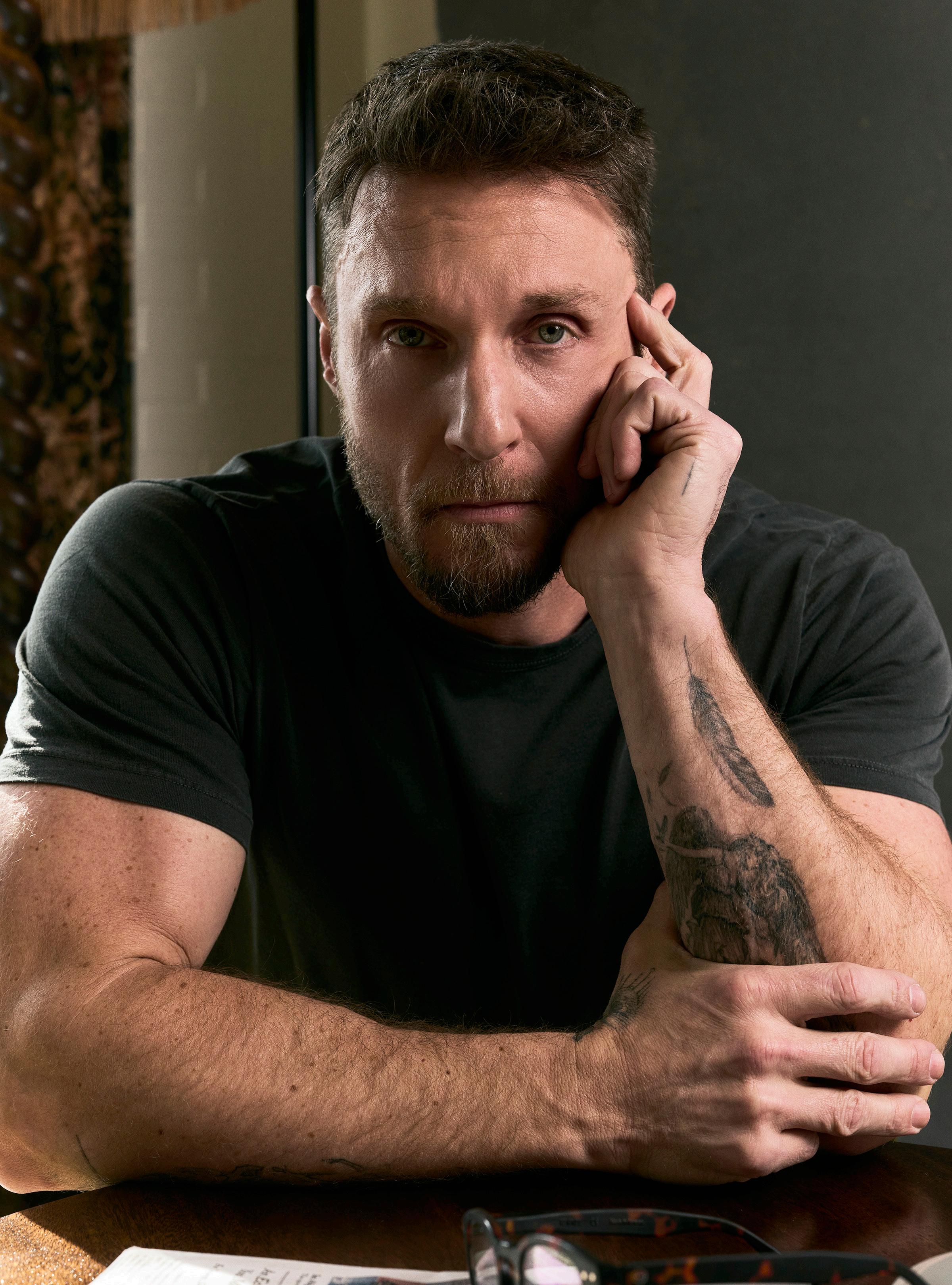
Strength, endurance, and longevity are often pursued through discipline and intensity, but for Jason Walsh, true performance begins with a deeper understanding of the body itself. Renowned for training some of the most recognized names in film and sport, and as the co-founder of RISE311, Walsh has built a reputation grounded not only in physical results but in a holistic approach that honors recovery, sustainability, and long-term wellness.
In recent years, his focus has expanded beyond movement into the powerful role of nutrition, specifically, how clean, plant-based protein can support both peak performance and optimal digestion. Recognizing that what we consume is just as important as how we train, Walsh is helping to shift the conversation toward smarter, more intentional fueling, where gut health, ingredient integrity, and bioavailability take center stage.
In this interview, Jason shares the inspiration behind his science-driven approach to plant-based innovation, the insights he has gained from working with high-performing individuals, and his vision for a future where strength and wellness are built from the inside out. Thoughtful and forward-thinking, his perspective offers a compelling reminder that true vitality is not just achieved, it is cultivated.

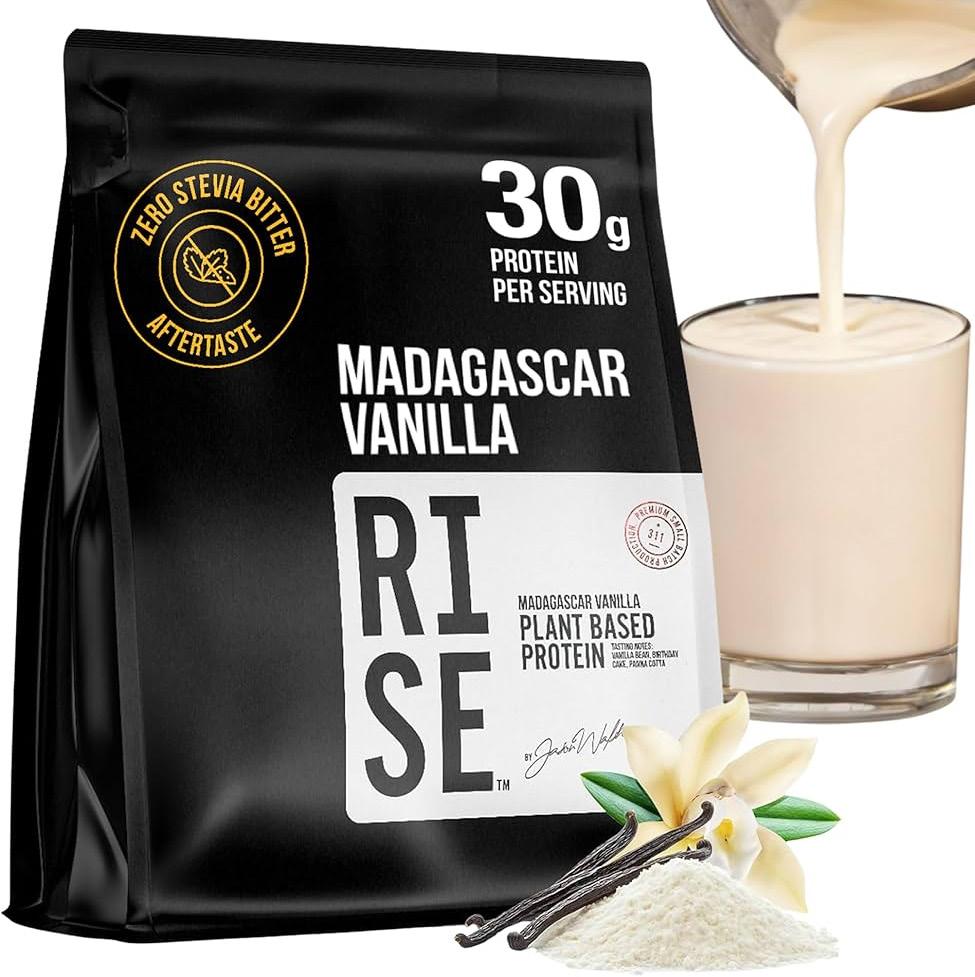
Your work has long focused on elite performance. What personal experiences or observations led you to explore plant-based protein as a serious solution for strength and recovery?
It wasn’t ideology, it was problem-solving. Over two decades of training actors and athletes, I kept seeing the same pattern: people doing everything right in the gym but fighting their own digestion afterward. Whey worked for some, but for many of my clients, it caused bloating, sluggishness, and inflammation that actively slowed their recovery.
I started asking a different question: what if the protein itself was the bottleneck? Not the training, not the discipline, the protein. Once I saw that a carefully formulated plant-based protein could match whey on amino acid completeness while eliminating the digestive overhead, the direction was clear. Plant-based wasn’t the destination. Better performance and results were achieved. Plant-based turned out to be the best vehicle to get there.
As a celebrity trainer, you’ve worked with bodies under extreme demand. What digestive challenges did you see most often, and how did that influence the formulation of your protein at RISE311?
Bloating was the big one. Then inflammation. Brain fog on set. I’d have clients doing intense physical work, preparing for major film roles, and then spending the next two hours feeling heavy and distended. That’s not a side effect you can train through when you’re on a tight production schedule.
That experience became the design brief for RISE311. We built the formulation around digestion as a performance metric. We use a patent-pending pea protein process that removes anti-nutrient factors, combined with sprouted barley that’s been sprouted over three to four days, essentially pre-digesting the protein before it reaches your system. Then we layered in a protease enzyme blend. Blood
tests confirmed higher amino acid levels at both the 30- and 180-minute marks compared to protein without enzymes. If the body can’t break it down cleanly, the macros on the label are just numbers.
Many athletes still associate protein with heaviness or bloating. How does your plant-based protein redefine that narrative from a digestion and absorption standpoint?
That association exists because most proteins earn it. RISE311 was designed to feel invisible in the system.
We pursued a 1.0 PDCAAS. The gold standard for amino acid completeness is the same score as whey, meat, and eggs. That distinction matters more than people realize: every protein contains all nine essential amino acids. It’s the levels of each that determine whether your body uses them immediately or wastes what it can’t match.
Beyond completeness, we focused on removing friction. Our sprouted barley tests at 70% bioavailability. The same as whey in lab settings. The enzyme blend pre-digests the protein when you mix it. No gut drag, no inflammation. When people say, “I don’t feel it sitting in my stomach,” that’s exactly the point. Protein should leave you comfortably full, not feeling like you swallowed a brick.
I’M EXCITED ABOUT INTELLIGENCE REPLACING NOISE. PERSONALIZED, HONEST, FUNCTIONAL NUTRITION. THE INDUSTRY HAS GOTTEN AWAY WITH MEDIOCRITY FOR TOO LONG.
RISE311 is built on the idea of total performance, fitness, recovery, and nutrition. How do you see digestive health as a foundational part of peak performance?
You can’t separate them. The gut is the gatekeeper for how we feel and how we recover. It’s why the gut-brain axis is becoming a much broader conversation in health, not just gym circles. This goes well beyond building muscle.
When digestion is compromised, recovery is compromised. Hormones, immune response, and sleep quality all trace back. I tell clients: You don’t recover in the gym. You recover through proper digestion and rest. If the gut is inflamed, your body stays defensive. Defense mode isn’t where growth happens. That’s true whether you’re training for a role or trying to keep up with your kids on a Saturday morning.
Can you walk us through the science behind your protein formulation and how specific ingredients were chosen to support gut health and bioavailability?
We started with a clear target: a 1.0 PDCAAS. Most plant
proteins score between 0.7 and 0.85, which means 15–30% of the protein you’re consuming isn’t fully utilized. You’re paying for 25 grams, but your body’s only using 18.
We paired USA-grown split yellow pea protein, using a patent-pending method to remove anti-nutrient factors, with USA-grown sprouted barley. Pea is low in methionine and cysteine; barley is low in lysine. Together they hit 1.0. We then added 3 grams of high-quality leucine per serving. The threshold that triggers muscle protein synthesis through the mTOR pathway. Below that 3 grams, you’re leaving results on the table.
The enzyme blend was non-negotiable. Blood tests confirmed higher amino acid absorption at 30 and 180 minutes versus protein without enzymes. We also use Stevia Reb-M exclusively, less than 0.1% of the stevia leaf, for clean sweetness with zero bitter aftertaste. Every ingredient had to justify its presence. No fillers, no pixie dust. If it didn’t improve performance or digestion, it didn’t make the formulation.
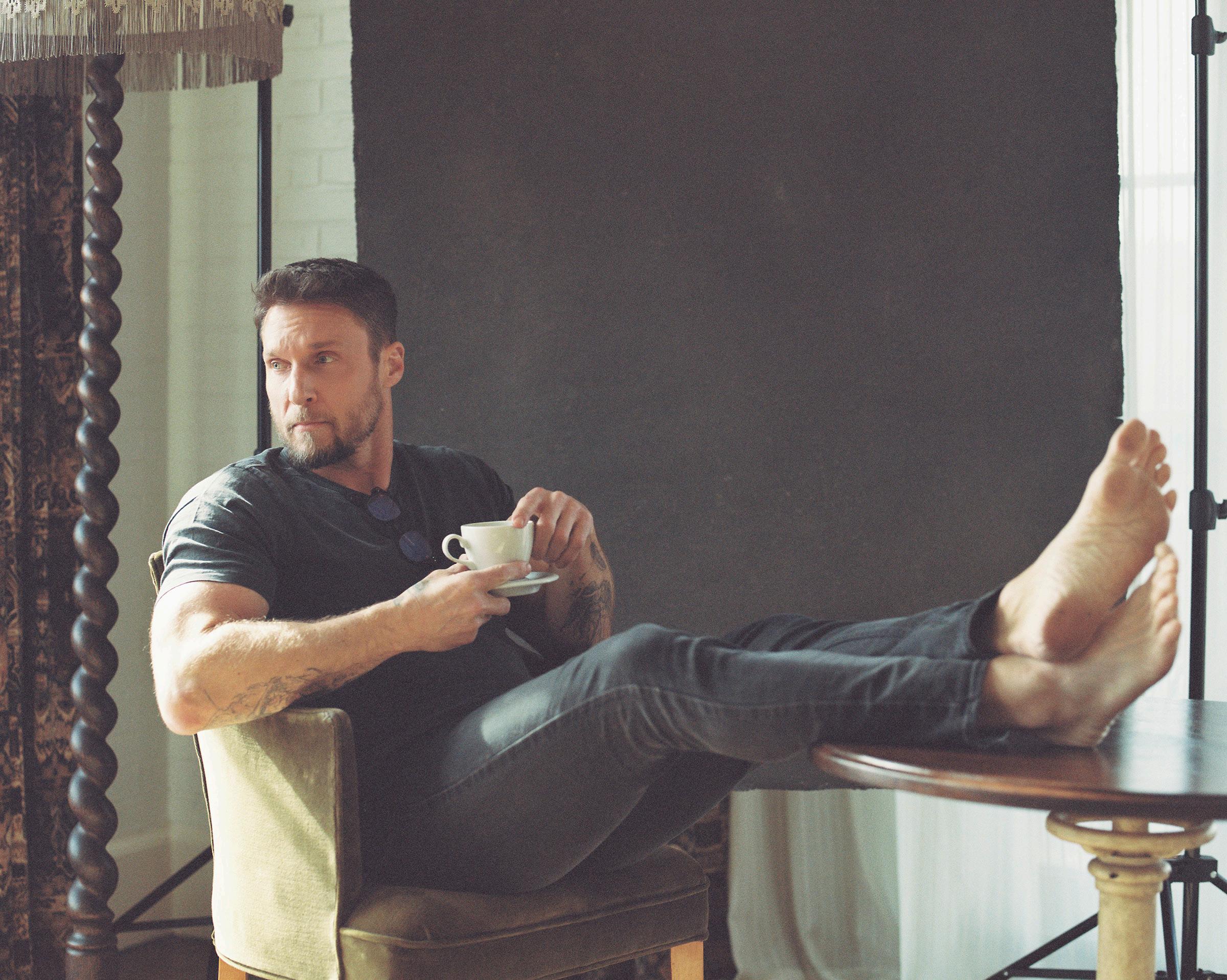
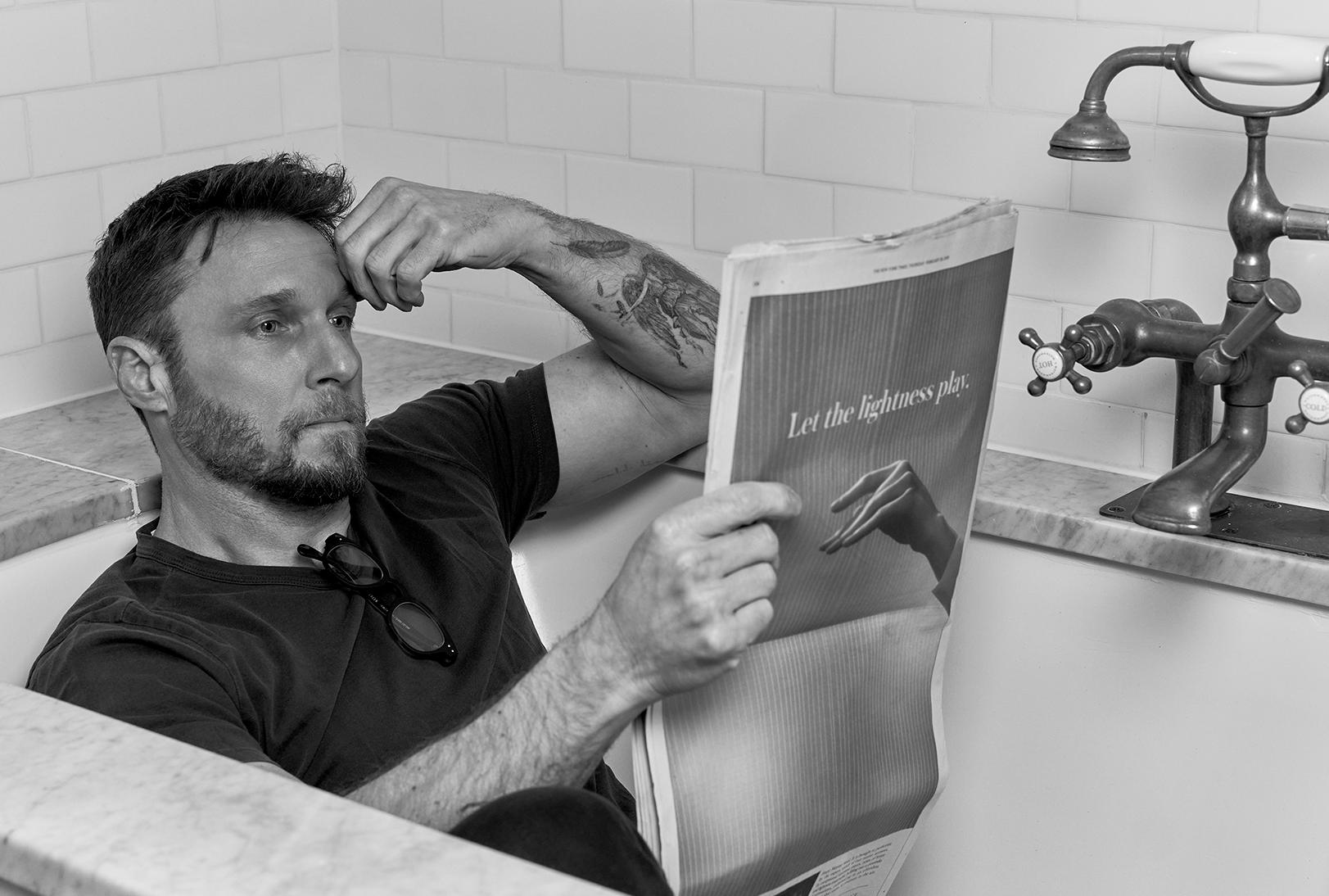
You’ve trained some of the most recognizable names in entertainment and sports. How have your celebrity clients responded to cleaner, plant-based nutrition compared to traditional options?
The response is usually relief. I’ve had A-list clients training for major action roles who made RISE311 their go-to because its taste made hitting protein targets easy, not a chore. For clients focused on building mass, the 3 grams of leucine per serving allowed us to drive muscle protein synthesis without the digestive compromise of other options.
But maybe the most telling feedback has come from clients, particularly female clients, who’d struggled with bloating from other proteins for years. When something doesn’t upset your system, isn’t thick enough to chew, and doesn’t leave a chalky aftertaste, you actually stick with it. Consistency is the hardest thing to achieve in nutrition. RISE311 earns it by not fighting you.
Performance culture is evolving. How do you think sustainability and conscious ingredient sourcing now play a role in how athletes and high performers fuel their bodies? Where your ingredients come from determines what ends up in the final product. That’s not an environmental statement; it’s a quality one. We source USA-grown pea and barley specifically because American soil quality results in lower levels of heavy metal contamination. A lot of proteins that market
themselves as “premium” source from overseas, and the heavy metal testing tells its own story. RISE311 tests below California Prop 65 limits on every batch, and Prop 65 is the strictest standard anywhere in the world.
Our barley is upcycled. We’re using ingredients that would otherwise go to waste. We ship stainless steel scoops with every first order, and subscribers can get more for free, because we don’t want single-use plastics going out with every pouch. These aren’t sustainability goals. They’re sustainability practices. There’s a difference, and our customers notice it.
On a personal level, has transitioning toward cleaner, plant-based nutrition changed how you feel, train, or recover day to day?
Absolutely. I’m 50 now, and the margin for error is smaller. I wake up ready to go. My joints don’t ache the way they used to. I sleep better. I still train hard, but I recover faster and feel more balanced across the whole day, not just in the hour after a session.
Nutrition at this stage isn’t about restriction. It’s about precision. I want every input working with my physiology, not against it. That’s the core idea behind RISE311: make decisions for longevity without sacrificing performance. For me, that’s not a tagline, it’s how I live.

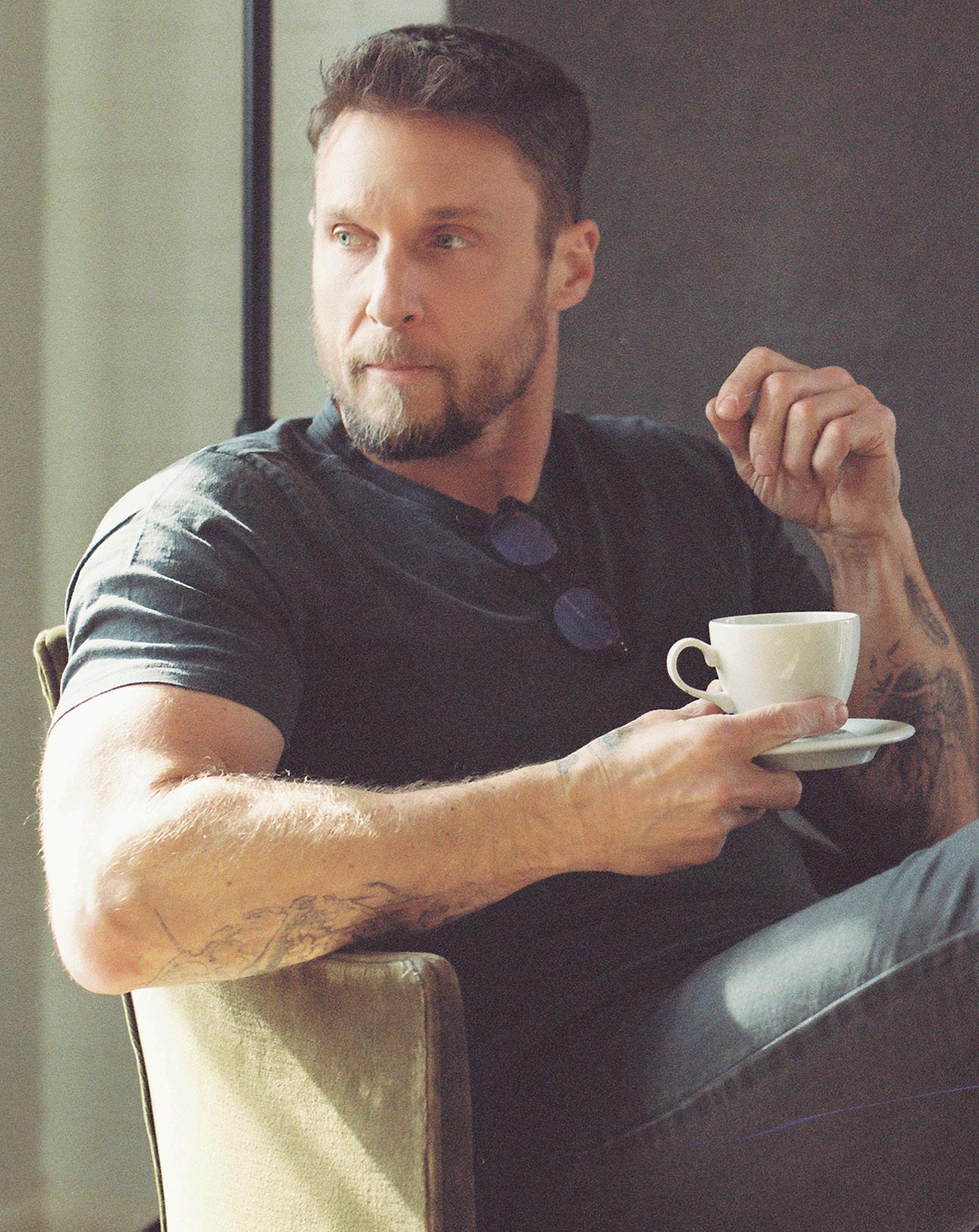

“WHERE YOUR INGREDIENTS COME FROM DETERMINES WHAT ENDS UP IN THE FINAL PRODUCT. THAT’S NOT AN ENVIRONMENTAL STATEMENT; IT’S A QUALITY ONE.
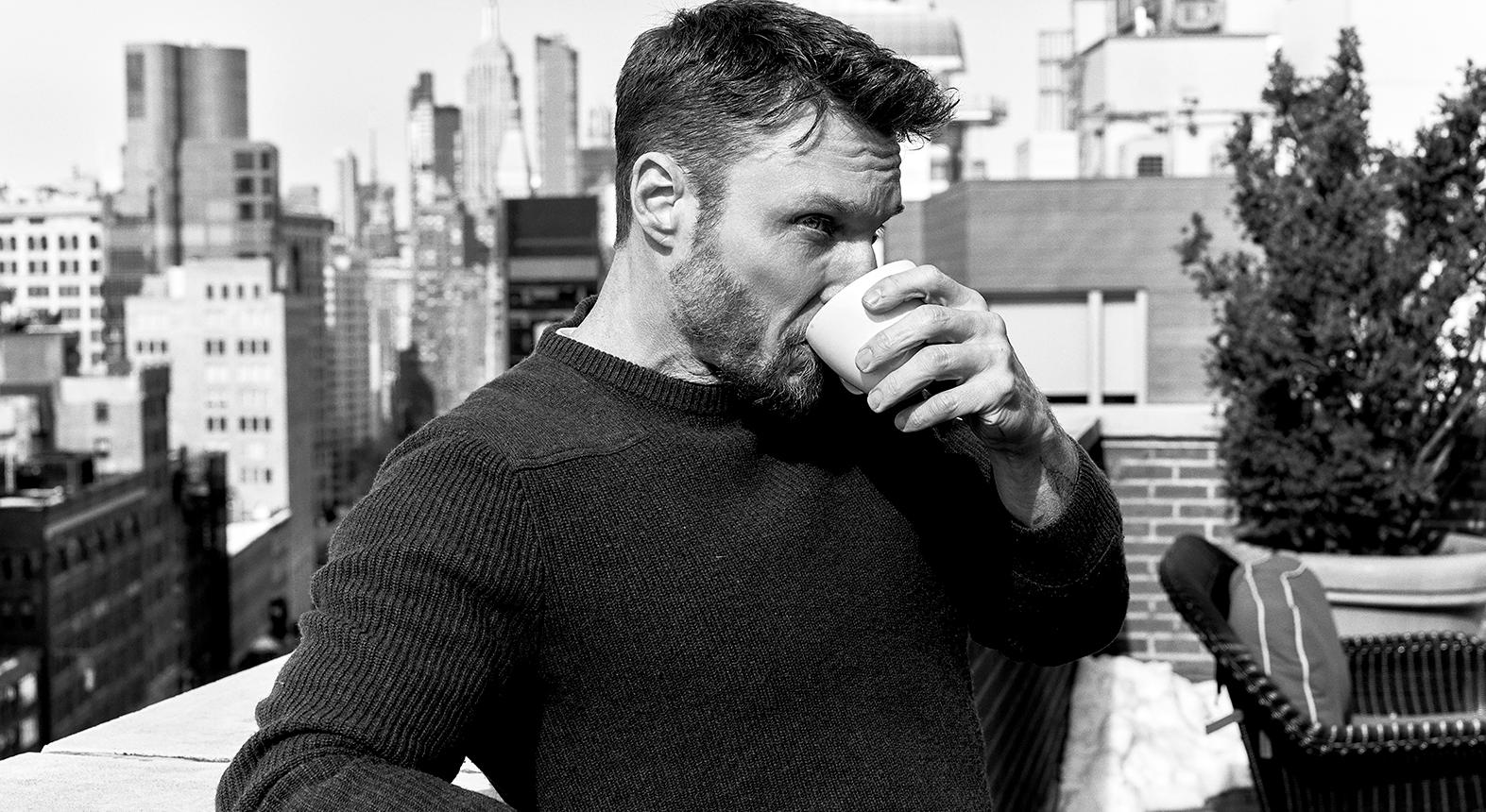
There’s often a gap between fitness trends and real science. How do you ensure that innovation at RISE311 stays evidence-based rather than trenddriven?
I ask one question: would I give this to my clients under pressure? Not clients with time to experiment, but clients with a start date in six weeks. If the answer’s no, it doesn’t move forward.
We lean on peer-reviewed research and feedback from people who actually train under load. Every batch is third-party tested for heavy metals and microbial contamination using ICP-MS analysis. We’re working on Informed Sport certification, which will soon mean every batch is screened for over 285 banned substances. Trends come and go. Biology doesn’t. If something looks compelling online but fails under real training stress, it’s useless to me.
ing shakes with 10–15 grams of protein and 20–30 grams of sugar, then spending millions on influencer marketing to move them. That math doesn’t work for anyone who’s reading labels.
The good news is that consumers are getting smarter. They’re comparing price per gram, asking about sourcing, and checking third-party testing. The more educated the market becomes, the harder it is for brands to do well. That’s a rising tide I want to be part of. If RISE311 helps people stop accepting bloating, fatigue, and confusion as normal side effects of training hard, that’s a win.
Special Thanks to Jason Walsh
Photography by Leo Jacob
@popeofthebowery
Editing by Dina Morrone
Looking ahead, what excites you most about the future of performance nutrition, and what do you hope your work contributes to the next generation of athletes and wellness seekers?
I’m excited about intelligence replacing noise. Personalized, honest, functional nutrition. The industry has gotten away with mediocrity for too long. Brands launch-
More learning, more refining, more coaching. We’re carefully expanding RISE311 with a new shaker and new flavors, and we’re bringing our own creatine to market. But carefully is the key word. Every product has to meet the same standard: would I put my name on it and hand it to a client without hesitation?
The coach continues to coach because that’s where the truth lives. Real feedback, real bodies, real demand. That’s what keeps RISE311 honest, and it’s what I’ll keep doing.




J. Eric Oliver’s How To Know Your Self: The Art & Science of Discovering Who You Really Are is a mix of psychology, neuroscience, philosophy, and lived human experience that answers a deceptively simple question: Why do so many of us move through life with a low hum of dissatisfaction, even when nothing is “wrong”? And more importantly: What is actually happening beneath the surface of the self?
by J. Eric Oliver
My grandfather grew up in Galveston, Texas, in the early 1900s. His old Victorian home did not have indoor plumbing, nor did his neighborhood have sewage, so the family relieved themselves in a little shed around the back, which they charmingly called the “small house.” This, in turn, was emptied every day by George, the driver of the equally endearing “honey wagon.” George was an older Black man who spent his days steering a horse-drawn cart around the neighborhood, emptying pails of human excrement into its big copper tank. Most remarkably, Grandpa said that George always had a smile on his face.
This story haunts me. Southeast Texas is brutally hot and humid during the summer. It’s the kind of climate that makes you feel par- boiled the moment you step outside. The stench of the honey wagon must have been unbearable, and I don’t even want to think about the flies. In this swampy oven, George didn’t just have to handle his own crap (metaphorically speaking), but everyone else’s as well. Yet he did this day in, day out, and, if Grandpa’s memory serves, always with that smile.
So, how did he do it?

If you wanted to survive, you embraced your role and played your part, and the group protected you in return. Life wasn’t about finding your inner truth but about keeping the wolves at bay, sometimes literally.
I can imagine two different scenarios. In one, George is an existential hero, a Camusian Sisyphus in overalls. Texas in the early 1900s was a horribly racist place, and George probably had few work options.
Maybe he had a family to support, and this was the only job he could find. But rather than wallow in despair, George is determined to rise above the misery, transcending his horrible circumstance through sheer force of will. So he drives and fills the honey wagon every day, but with a Stoic sense of dignity and pride, and maybe even a dash of joy. That’s the inspiring spin.
But I suspect another story is closer to the truth. In this version, George also drives the honey wagon, but he hates it, every sweltering, stinking, fly-infested minute of it. Yet he never looks for another job because he can’t imagine an alternative. He’s gotten so accustomed to the smell, the nausea, and the fetid misery that it’s come to seem weirdly natural. In this version, his smile isn’t a reflection of inner peace but an emotional camouflage, a way to hide his feelings and protect his dignity from others' condescension. Yet beneath the smile, George suffers in silence, trapped in a terrible situation from which he can see no escape.
Either way, there are lessons here for all of us. Much like George, we all have to
face challenges in life. Sometimes, these are unavoidable. We contract a disease, get abandoned by a lover, or endure Uncle Don’s elaborate conspiracy theories at Thanksgiving dinner. And, like Version One George, it’s up to us to meet these tests with a brave face and a positive attitude.
But this isn’t where our story ends. For even on our best days, many of us are plagued with a nagging sense that things aren’t as good as they could be. Sometimes this feeling is heavy, a real funk, a palpable fear or sadness. But more often our suffering comes in a softer form, a hushed feeling of discontent. It’s that constant hum of tension and anxiety, like a distant radio playing static, the quiet disquiet of ordinary life.
This type of suffering is self-inflicted. We’re typically the authors of our own distress. What’s worse, we’re also usually blind to this fact. We may have a vague sense that something’s off and that things aren’t as good as they should be. Yet, that’s typically as far as our self-awareness takes us. Too often, we’ve gotten so used to our misery that we can’t imagine anything else. We’ve been pulling that honey wagon for so long that we’ve forgotten that life could be any different. Either way, we struggle, lost in a fog within a fog.
But why is this the case?
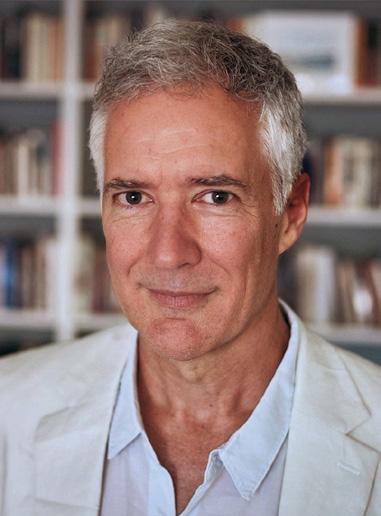
J. Eric Oliver is a professor of political science at the University of Chicago and host of the Knowing with Eric Oliver podcast. He has published six books, including Fat Politics: The Hidden Sources of America’s Obesity Epidemic, The Paradoxes of Segregation, and Enchanted America: How Intuition and Reason Divide Our Politics His newest book is How to Know Your Self: The Art and Science of Discovering Who You Really Are. Eric grew up in Houston, Texas. He got his B.A. from Wesleyan University and his Ph.D. from the University of California, Berkeley. Prior to coming to Chicago, he taught at Princeton University, was a Robert Wood Johnson Health Policy Scholar at Yale, and was awarded a CAREER grant from the National Science Foundation. He has written on local and suburban politics, how people’s racial environments affect their opinions, why liberals and conservatives choose different baby names, and the sources of populism and conspiracy theories in American politics. At Chicago, he teaches courses on topics ranging from the evolution of consciousness to the impact of myth and symbol in American politics to the politics of AI. Eric is married to the writer and poet Thea Goodman. They have two children, Martin and Ethan, and a dog, Aesop. Good boy!
Excerpted from How To Know Your Self: The Art; Science of Discovering Who YouReally Are. Copyright (c) 2026 by J. Eric Oliver. Used with permission of the publisher, Liveright Publishing Corporation, a division of W. W. Norton; Company, Inc. All rights reserved.
According to history’s wisest thinkers, the answer lies with the self. One of these sages was none other than my high school English teacher, Mrs. Malone. She was a brilliant, imposing woman, the kind of teacher who could silence us just by clearing her throat. She opened our muddled teenage minds to the genius of Dostoevsky, Dickinson, and Hemingway, and we students revered her. One day, she wrote “know thyself” on the blackboard. Distilled in these two little words, she said, was the collective wisdom of the ancient Greeks, those marbleized founders of Western civilization who, when not inventing democracy or wrestling in the nude, spent their time doling out cryptic advice. If we wanted to lead a happy and meaningful life, Mrs. Malone said, we would need to heed their guidance and know ourselves.
During my bumpy adolescence, I took her advice to heart. And so began a lifelong quest to know this elusive self. Over the following decades, I devoured scores of books on Buddhism, existentialism, and positive psychology. I sought wisdom from priests, gurus, and even Turkish rug sellers (who, oddly enough, often have surprising insight into spiritual matters). I dipped my toes into self- help, twisted myself into various yoga poses, saw a parade of therapists, dabbled in psychedelics, and even subjected myself to long, silent meditation retreats where the highlight of the day might be the sound of someone’s growling stomach. In short, I did my best to tick off every box on the spiritual seeker’s bucket list.
Yet, for all this effort, I remained unsettled. If I weren’t chasing a peak experience, my life often felt lacking in meaning. Even as I was achieving professional success, I was less sure of myself than ever. I was doing all the “right” things, whatever that means—but the deeper fulfillment I was grasping for always seemed beyond my reach. Like trying to catch
a shadow, my self-knowledge often seemed to come up short, and this heavy, stinky honey wagon always seemed to be dragging me down. Eventually, it dawned on me that my quest had some fundamental problems.
First off, it turns out the Greeks didn’t have a word that meant “self” as we know it today. If they really carved “know thyself” onto the ancient temple at Delphi, as the legend says, it probably meant something more like “know thy place.” In other words, “know thyself ” was another way of saying, “Hey, you’re about to enter a sacred building. Put down your wine, put on your best tunic, and, for Zeus’s sake, stop fooling around!”
Funnily enough, “know thy place” is actually great advice. In fact, for most of human history, these were probably the best three words you could live by. Our ancestors typically existed in small groups tightly bound by custom and tradition. Famine, violence, and death were always close by. If you wanted to survive, you embraced your role and played your part, and the group protected you in return. Life wasn’t about finding your inner truth but about keeping the wolves at bay, sometimes literally.
But that doesn’t apply to us today. We no longer teeter on the brink of survival. Released from our ancestors’ dogmas, we now enjoy the liberty, or perhaps the burden, to figure out what makes us happy, who we should love, and what our life’s purpose should be. In this sense, we’re freer and more isolated as individuals than at any other point in human history. And so, “know thy place” has evolved into the more introspective “know thyself” we often hear today.
All of this, however, still leaves us with a second problem: What exactly is this self we are supposed to know? The answer isn’t straightforward.
Mental health conditions like anxiety and loneliness can increase HIV risk. Integrated care and community support are key to prevention.

By Thresa Giles, CEO

MMany communities experience the shared challenges of social isolation, economic insecurity, and emotional strain, often exacerbated by mental health conditions. For those who work in community outreach and non-profits, the connection between mental health and physical well-being has never been clearer. Now, those who work directly in HIV education and prevention are exploring how mental health can shape one’s HIV risk.
Mental health concerns such as anxiety, depression, and loneliness do not just affect how a person feels; they can shape behavior, decision-making, and the ability to access care. Understanding the possible links between mental health and HIV risk can be critical for building a comprehensive public health response that addresses both emotional needs and widespread disease prevention.
Risk behaviors and the emotionallandscape
When one is struggling with depression or anxiety, it can be easy for their judgment to become clouded. People may have lower
self-protective instincts when they are battling a bout of mental illness. In fact, studies show that people who are experiencing emotional distress are more likely to engage in unprotected sex, have multiple partners, and avoid testing, leading to a higher risk of HIV exposure or diagnosis.
This pattern of behavior is not rooted in irresponsibility. The behavior is instead a coping mechanism for someone attempting to navigate emotional instability, often with comorbidities of economic uncertainty or lack of mental healthcare access.
Loneliness in particular can play a significant, though often underestimated, role in HIV risk. Feelings of loneliness and isolation often accompany mental health conditions like depression. Often, as a way of trying to cope with feelings of loneliness, people will seek out connections with multiple partners in any way they can, translating into increasingly risky sexual behaviors. These people may be prioritizing emotional release over physical health because their emotional turmoil is the wound that is currently aching and demanding their attention.

Thresa Giles is the Chief Executive Officer of Hope & Help, Central Florida’s leading nonprofit dedicated to ending the HIV/AIDS epidemic. With over 30 years of experience across the for-profit and nonprofit sectors, Thresa brings extensive leadership expertise in finance, operations, compliance, and organizational development. Before joining Hope & Help, Thresa served as Chief Financial Officer of Stand for Children, Inc., a national nonprofit advancing education and social equity. Her career has spanned key functional areas, including procurement, regulatory compliance, grant administration, and asset management. Thresa’s leadership is driven by a vision to strengthen community partnerships and expand access to care through strategic growth, innovation, and team development. Her work has earned her accolades such as the Jacksonville Women of Influence Award, the Ultimate CFO Award, and the State of Delaware Outstanding Leader Award.
The role of substance use as a bridge between distress and risk People may turn to substances to help quiet the noises in their head, to “feel better,” or just to drop out of life for a while. However, substance use can often compound the connection between mental health concerns and HIV risk.
Substance use can greatly impair judgment and make it more difficult to remember to use protection. Some substances, such as methamphetamine, opioids, and heavy alcohol use, have been linked to increased sexual behavior, which in turn can increase HIV risk.
For many individuals experiencing mental health crises, the patterns of self-medication can easily become intertwined with high-risk sexual behavior, creating a vicious cycle that reinforces emotional instability, feelings of isolation, and vulnerability to HIV.
The power of integrated mental health and sexual health services
Traditional healthcare models do not typically acknowledge the link between mental health and HIV risk, separating mental healthcare and sexual healthcare in most cases. However, we can see that the factors that contribute to increased HIV risk rarely happen in isolation. A person who is navigating a mental health issue may need more than just occasional counseling or an antidepressant; they may need to receive guidance on healthy relationships, motivation to attend medical appointments, and support for stopping the abuse of substances.
Integrated care models can bridge the gap. Clinics that offer community outreach as well as counseling, HIV testing, and mental health support under one roof can not only contribute to stemming the spread of HIV in communities with high
mental health care needs but also reduce stigma for patients, leading to better adherence to care plans.
Community-based responses
Community-based organizations can be a game-changer in revitalizing the integration of mental health and sexual health services. These organizations often operate within the neighborhoods they serve and are uniquely positioned to address issues of social and economic disparities, stigma, fear, and misinformation.
Many community-based organizations have set out to seamlessly meld mental health services with HIV education, peer support groups, and harm-reduction education. The spaces emphasize the importance of emotional wellness, social support, and physical health, and the connections between all three.
By offering services such as peer mentors, low-cost therapy options, free HIV testing, and substance-use treatment, these community-based organizations help create resilient, informed communities, which can go a long way in preventing the spread of HIV.
As mental health concerns persist across nearly all demographics, public health organizations find themselves at a critical crossroads. While some may continue to treat mental health and HIV prevention and care separately, those who recognize the link between the two will move forward in developing comprehensive care approaches.
Ultimately, preventing and eventually ending HIV in the future will require all of us to acknowledge the depth of the human experience. Meeting people’s emotional needs is not just an ancillary consideration; it is crucial to HIV prevention.


SARDINIA, ITALY – With the launch of the first nonstop flight from New York JFK to Olbia in May 2026, Sardinia is opening a new chapter for U.S. travelers. Long celebrated for its turquoise waters, the island is now positioning itself as a destination for deeper, more meaningful travel. Through Cesarine, Italy's oldest network of home cooks, visitors can step inside private homes - from coastal hotspots to remote inland villages - offering a more authentic way to experience Sardinia beyond its iconic coastline.
Monticanaglia and Porto Cervo: The Intimate Side of Costa Smeralda
Just beyond the beach clubs of Porto Cervo, the village of Monticanaglia reveals a quieter, more authentic Sardinia. Here, Cesarino Tomaso, with over forty years of culinary experience, welcomes
guests into his home for hands-on cooking classes rooted in Gallurese tradition. His signature experience, "Sapori di Sardegna", guides travelers through the preparation of handmade gnocchetti sardi, each dish crafted with organic, locally sourced ingredients and paired with regional wines.
Olbia: A Gateway to Authentic Encounters
Olbia is more than a gateway - it is a destination where travelers can immediately immerse themselves in local life. At Simonetta’s restored ancestral village, visitors experience a deeper cultural immersion - where cooking, history, and rural life intertwine among almond trees and centuries-old stone houses. Her "Longevity Tour" combines pasta-making, wine tasting, and storytelling, reflecting Sardinia's


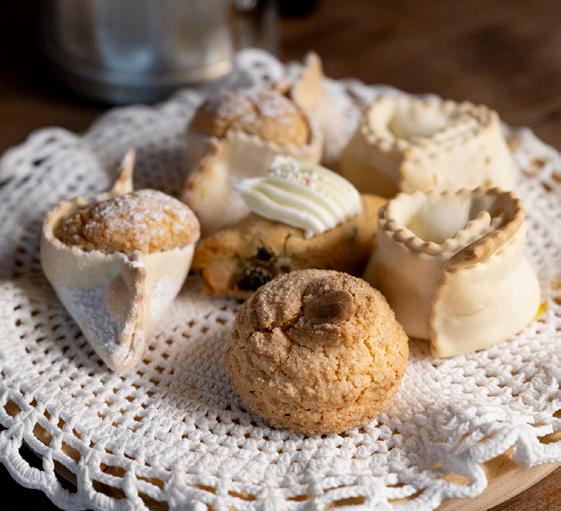
globally renowned lifestyle and sense of community. Cesarina Maria Immacolata hosts guests in her home for a three-course culinary journey, from mazza frissa to handmade Sardinian agnolotti, ending with a convivial tiramisu shared around the table. In the countryside between Mannazzu and Putzolu, Cesarina Maria Antonietta offers a deeply immersive, intellectually stimulating approach to Sardinian cuisine. Her signature experiences - such as hands-on classes dedicated to chijusoni, pitzosu, and busa - go far beyond cooking. Guests are guided through ancient techniques, family knowledge, and the cultural meaning behind each gesture, culminating in curated tastings of local specialties and wines. Tailor-made and multilingual, her experiences are designed as intimate rituals of discovery, offering travelers a rare opportunity to connect with Sardinia's deepest roots through its culinary heritage.
Inland, the province of Nuoro offers an entirely different dimension of Sardinia - one of silence, authenticity, and ancient knowledge. Here, Luca is among the very few artisans in the world capable of making filindeu, the legendary "threads of God" pasta. In his rare and intimate demonstrations, guests witness the intricate technique behind one of the most elusive culinary traditions on Earth. In nearby mountain villages, experiences continue with hands-on classes dedicated to culurgiones, traditional desserts like seadas, and handmade pastas that carry generations of history. In Antioca's home in Ollolai, at nearly 1,000 meters above sea level, guests slow down to rediscover the rhythms of village life - learning to prepare maharrones de poddighe while surrounded by forests, granite landscapes, and the scent of wood-fired bread.
In the vibrant capital of the island, Cagliari offers a refined yet deeply authentic perspective on Sardinian lifestyle and cuisine. Here, Cesarina Valentina celebrates the essence of simplicity, where exceptional ingredients take center stage. Her experiences highlight the artistry of fresh pasta, bread-making, and traditional Sardinian desserts - true edible jewels that captivate both visually and in flavor, each telling a story of heritage and passion.

Alongside her, Cesarino Marco welcomes guests with a philosophy rooted in hospitality and conviviality. With a background spanning private chef services and collaborations in the food industry, his experience blends technical expertise with warmth, guiding guests through the preparation of traditional dishes with seasonal, high-quality ingredients. In Cagliari, cooking becomes more than a meal - it is a shared moment of storytelling, culture, and genuine connection in the heart of Sardinia's most dynamic city.
Today’s luxury traveler is seeking more than exclusivity - they are searching for authenticity, connection, and meaning. Sardinia delivers all three. Through Cesarine, visitors move beyond the surface - entering homes, learning traditions, and forming connections that transform a destination into a lasting memory.
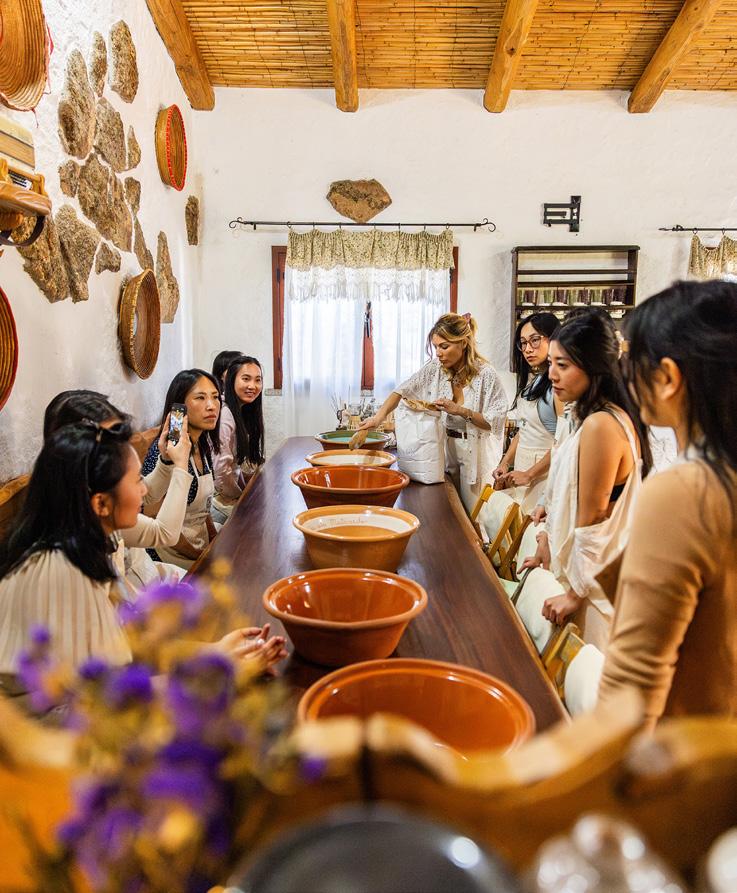
By Lisa Biritz
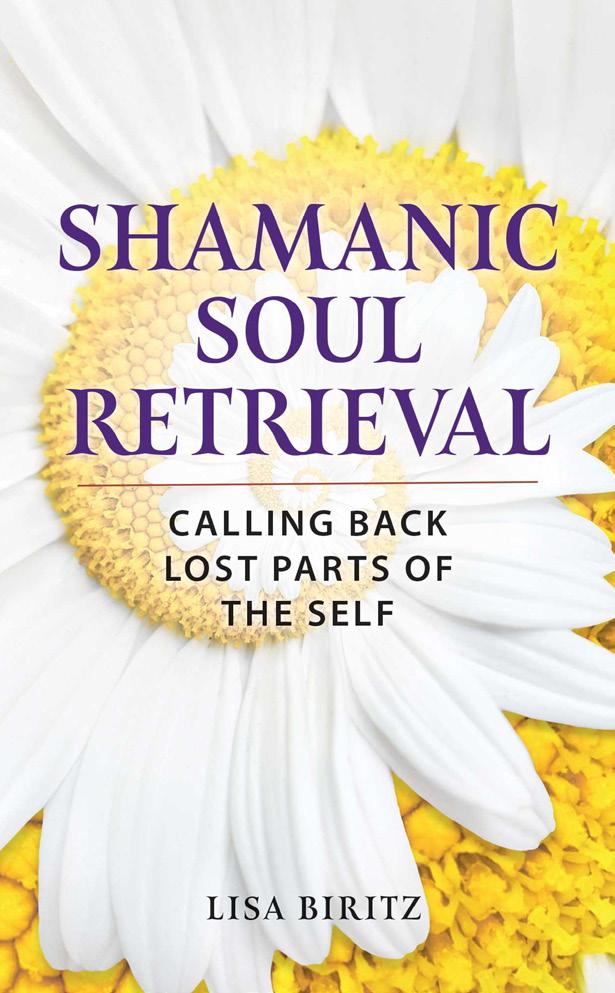
Trauma can do untold emotional damage. It doesn’t always fade. Sometimes it fractures us. In Shamanic Soul Retrieval: Calling Back Lost Parts of the Self, spiritual teacher and shamanic practitioner Lisa Biritz brings one of humanity’s oldest healing traditions into the modern world, offering readers a practical path to emotional and spiritual restoration.
"Shamanism
is not mysterious or exclusive,” Biritz writes. “It is a natural human capacity to reconnect with the invisible forces that heal.
Rooted in Indigenous wisdom practiced for more than 45,000 years, Shamanic Soul Retrieval is based on a radical idea: when we experience trauma, grief, or prolonged stress, parts of our soul — our life force — can splinter away. The result can be chronic fatigue, low self-worth, anxiety, depression, or a lingering sense that something inside us is missing. Biritz reframes the soul as a luminous sphere of energy, brightest when whole. Through clear, compassionate guidance, she explains how soul fragmentation occurs. More importantly, she explains how it can be gently reversed.
Shamanic Soul Retrieval offers an accessible, modern approach. Readers learn simple visualization practices, guided meditations, and Indigenous-inspired techniques they can safely use on their own to reconnect with lost aspects of themselves and restore balance, vitality, and emotional resilience. Beautifully illustrated with 37 full-color images, this compact, how-to guide is designed for anyone navigating trauma, burnout, spiritual disconnection, or personal transformation. It is also a useful guide for practitioners seeking a grounded introduction to one of shamanism’s most powerful healing tools.
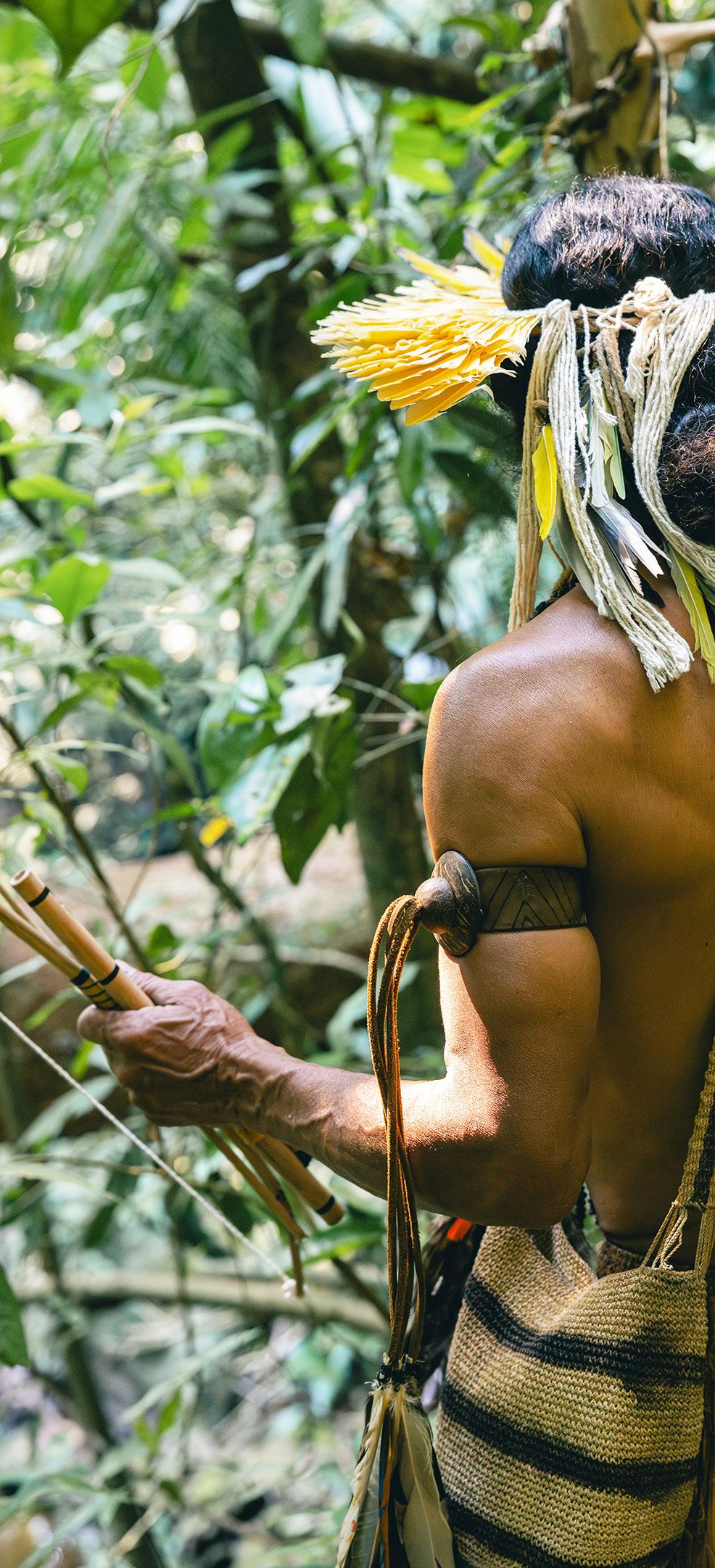
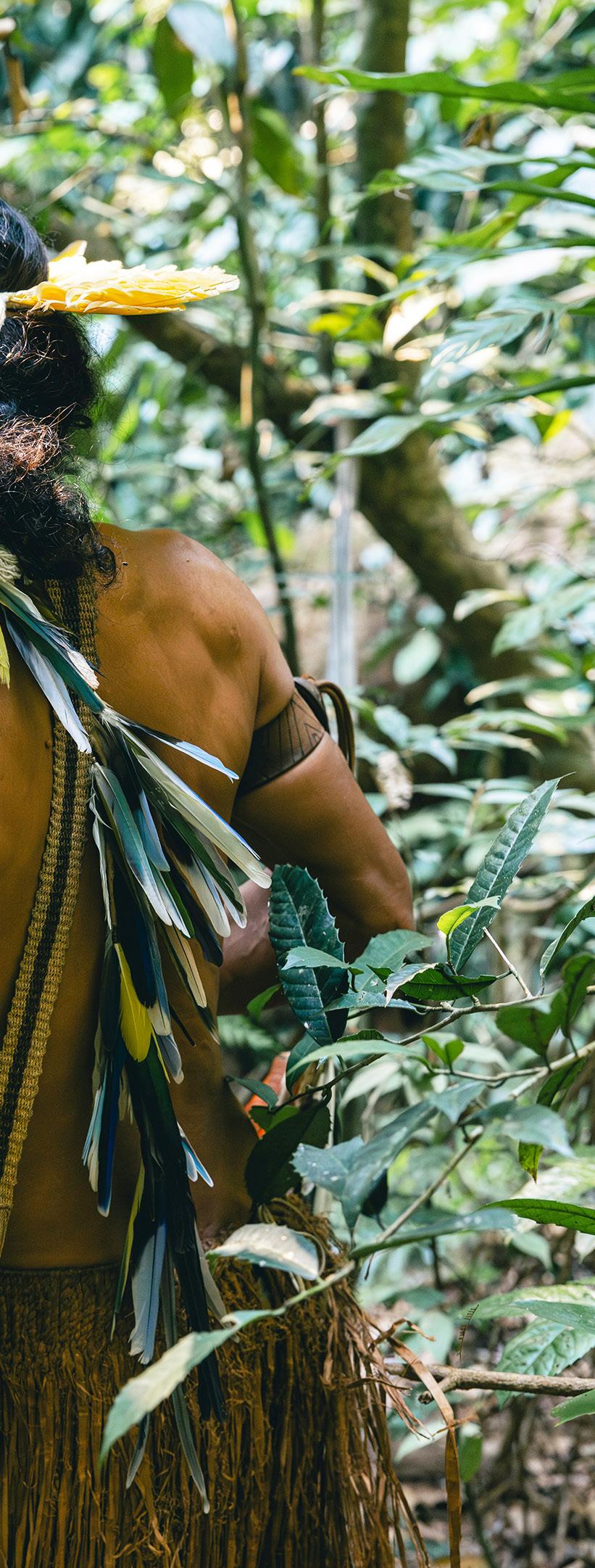
Like almost everyone practicing shamanism in our Western world, I found the path to ancient healing methods through my own health issues and a near-death experience. Shamanism even has a specific expression to describe this, a wounded healer, someone who, due to a life-threatening illness, a psychosis, or a near-death experience, “goes to the other side” and returns to life of their own accord. They bring with them knowledge and an understanding of the path to recovery on a deep cellular level. Consequently, they are well placed to accompany others in their healing and, at the same time, develop a compassionate heart for all beings, a prerequisite for effective healing work.
Although my childhood was characterized by affluence, I grew up nonetheless in a strict, old-school household and was raised in accordance with what might be termed old-school ways, as did many of my generation. My parents were shaped by the Second World War and the postwar era. For them, their expression of love was that we children should grow up with material security, leaving little room for feelings, which were rationalized or suppressed.
In addition, as I emerged from puberty into adulthood, I had to watch helplessly as my brother—and this is how I explain it to myself today—slipped into schizophrenia due to birth trauma through lack of oxygen combined with our harsh upbringing. To witness how a person whom I loved dearly could lose his mind and his grounding and suffer deeply as a result was one of the most painful experiences in my life, characterized by feelings of total powerlessness.
I myself suffered from problems caused by a slipped disc and pains in the lower abdomen during that time. Not surprisingly, I was also psychologically imbalanced, my emotions fluctuating between fear and anger. It often felt as though my soul were burning. Everything hurt, and my heart was crying out. I was not free, and I was not happy.
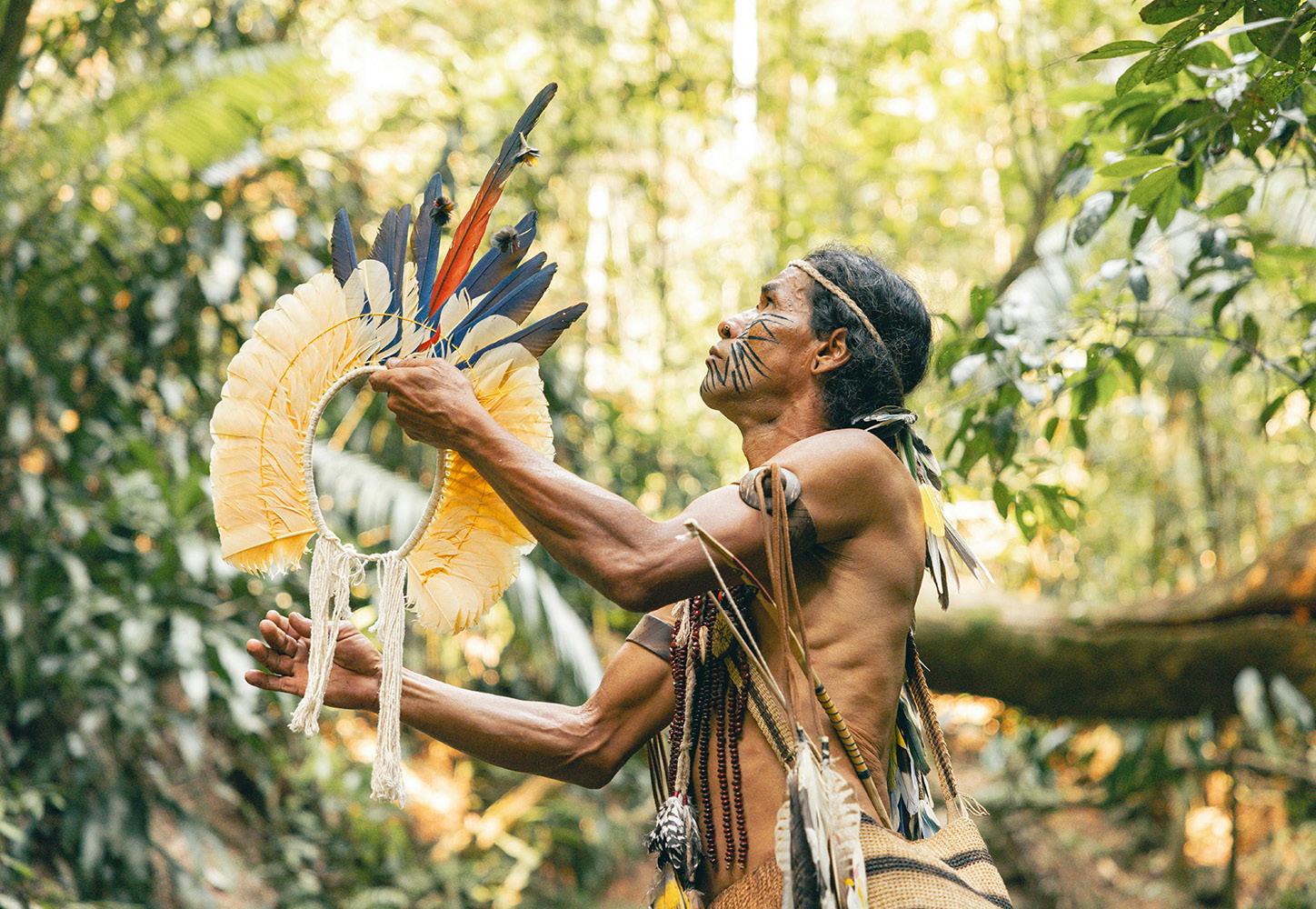
The many doctors that I consulted could help me only superficially or not at all. To some extent, my conditions even got worse. I was groping in the dark and had no idea why I was feeling that way. I realized I had to consciously seek out a healthy lifestyle. Since I found no answers in the West, I traveled around the world to seek teachers on every continent. It was my only chance to become healthy and happy again. During this time, I also went through a near-death experience in Asia, during a short but very severe and dangerous illness.
I tried out pretty much everything during my fascinating travels, from yoga and shiatsu, via faith healers and gurus in India, to the shamans of North and South America and African and Australian healers. I spent time with those who really helped me and received their training.
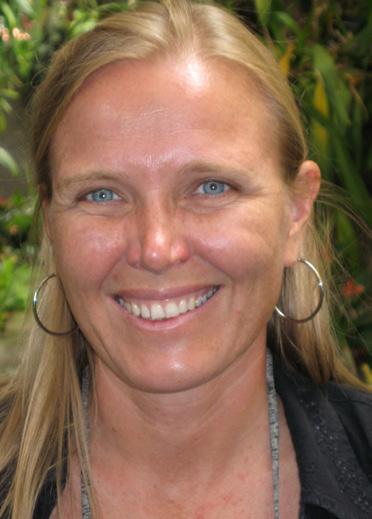
Lisa Biritz studied shamanism with Sandra Ingerman (Core Shamanism) and Sun Bear in the Hawaiian Huna tradition.
Lisa divides her time between Hawaii and Austria, where she leads seminars and organizes unique experiences, including encounters with dolphins and whales in the wild.
She also authored Shamanic Star Wisdom Oracle.
More information about Lisa is available at: https://lisarainbow.com/ Shamanic Soul Retrieval published by Inner Traditions International and Bear & Company, © 2026. All rights reserved.
Shamanic soul retrieval is one of the methods that helped me, and in a surprisingly simple yet effective way. It is worth noting that it is practiced by all indigenous cultures worldwide. It is performed, for instance, by the Aborigines, the indigenous peoples of South and North America, and the ancient Mongolian peoples. This is because the understanding of life energy and vitality as an intact, shining, and vital soul is universal, as are the methods of making the soul whole again when it has been harmed or injured.
During my travels, I have learned that healing is essentially very straightforward. You just need the appropriate tools.
You are whole when you feel whole!
What Is Shamanic Soul Retrieval?
We are all familiar with the phenomenon. Some people are just bursting with vitality and seem ageless, even though they may already be well past retirement age. But it has nothing to do with plastic surgery because their lives are clearly visible in the lines on their faces. These people often seem to have more energy than some of their
younger contemporaries, who could be their grandchildren. Looking at them, you might think in admiration that you would also like to age in the same way.
Where does this energy and vitality, independent of age, come from?
Where does our life force come from in the first place?
As is often the case, the answer is so obvious and simple that we readily overlook it: the soul contains our life energy. Like a glowing, luminous ball of light, it gives us vitality. In Hawaiian huna shamanism, for example, the soul is even described as a “bowl of light and life.”
The soul: a luminous sphere of light
When I perform healing work, I ask my clients to imagine their soul as a vibrating, glowing ball of energy. As soon as they close their eyes, they can nearly always see their soul sphere clearly, and also see where parts are missing.
Over time, due to painful and traumatic experiences, fragments of our soul energy may leave us. In modern psychology, this phenomenon is known as dissociation; in shamanism, it is known as, it is known as soul loss. When there is no possibility of changing or healing a painful experience, parts of the soul split off and leave. This act of leaving and finding a safe place where fragments of the soul can no longer be hurt is often the only strategy that we humans have left to protect ourselves. At the same time, all memories of the painful event follow the soul fragments, which is why traumatized people frequently cannot remember stressful events at all.
When fragments of the soul are missing, we feel dull, incomplete, and lacking in essential life energy. The consequences can range from constant fatigue, depression, chronic illness, addiction, and recurring accidents to personality disorders. We feel as though we are not really living but are functioning on “automatic pilot,” as if we are living our lives for someone or something else. These fragments of the soul do not return on their own.



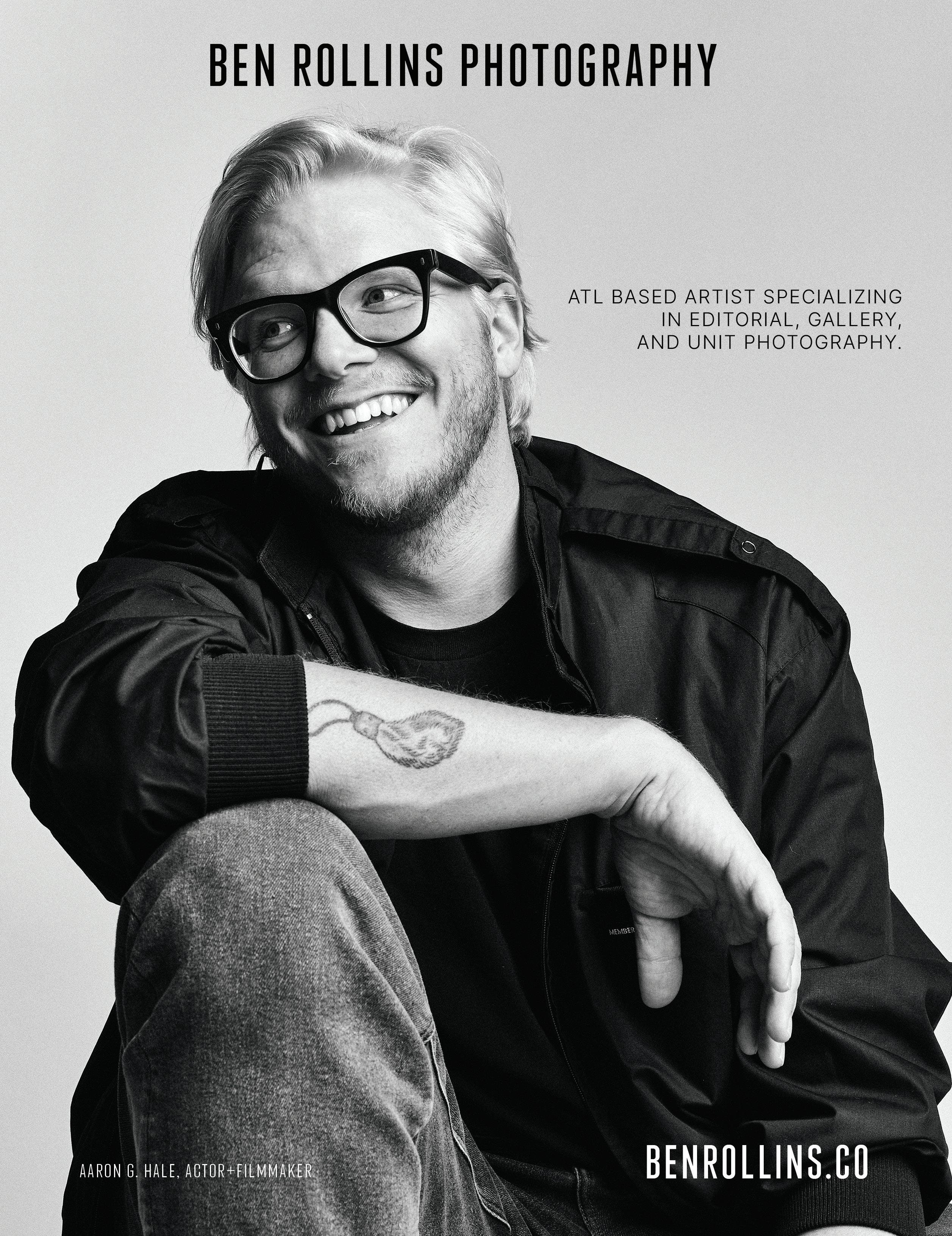

By Ken Karakas

WWhat does it mean to live a juicy life?
Most people live an average life. They grow up in a neighborhood somewhere in the world. They get the best education they can. They have local friends and school friends. They get the best job they can find. They spend their time making a living so they can survive. They find a mate. They start a family. They adopt the norms of their culture, political system, and religious norms so they can fit in socially. They accept beliefs about who they are and what their world is all about. They have good times and bad times, and they manage. Some have more success, and some have less. They do their best to cope with their outside world and make their lives as comfortable as possible. They accept their lot and become numb to the possibility of living a life that they truly desire.
Occasionally, a person awakens and feels a yearning for something more. They feel a desire. It grows inside of them enough that they are inspired to
act. When they act, they find the means to create a better life. They discover joy and appreciation. They discover their passion. They allow themselves to pursue their best life. They discover their true power. They live a life with juice.
If you would like something more like success, health, wealth, freedom, joy, or peace, I have some suggestions.
First, start to look after yourself. Find the time to feel good. Discover the things that make you feel good. Enjoy what you love. Everything starts with a better you. You deserve to live a wonderful life.
Why are you here? You are here to live joyfully. You are here to appreciate life. You are here to discover your true self. You are here to discover your unique talents and abilities and to use them in the best ways to serve. You are here to follow your dreams and to live them. By creating your desires, you are expanding the universe in your own unique way. You are here to have fun.

I encourage you to acknowledge your divinity. Discover your uniqueness. You have a unique perspective on all things in life. Through experience, you discover what you like and what you don’t like. You matter. You are important. When you acknowledge that you have value, that you are just as important as any other person, you can give yourself permission to make your desires a reality and to create your best life.
So how do you do it? Decide today that you want to be happy. Decide that you want to feel good. Take the time to think about what makes you happy. What do you enjoy? What makes you feel good? Take charge of what you control. You control what you feel and
what you think. Begin to become aware of what you think and how you feel every day. We become what we think about!
Some thoughts make you feel sad, angry, or depressed. Some thoughts make you feel joy. Some thoughts make you happy. Some make you laugh. Once you become aware of the way you feel, you can notice what thoughts make you feel that way. You will want to feel good more often, so think about the thoughts that make you feel good. This may sound like a small thing, but it will have an enormous impact on your life. No matter what level of consciousness you are in, this will improve your joy.
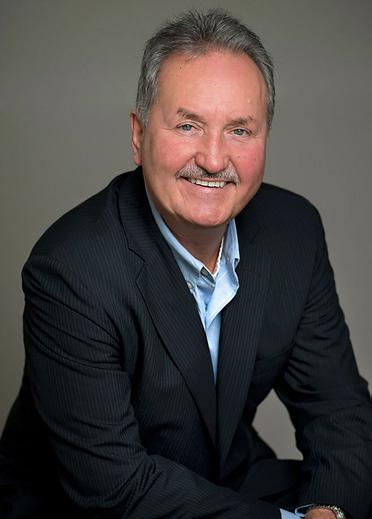
When he was twenty-seven, he decided he would be a writer. He started fiction novels and worked on them on and off throughout his life without success. Often, he ignores the impulse to write because he believes it is more rational to serve as a realtor to pay the bills. He has been studying personal development, goal achievement, how one can think, and techniques for success for over 25 years. He loves this material and continues to improve his life. In 2015, He had the idea of writing a book to share information that might help others improve their lives. The book is titled Mind Food, and it was published as an eBook. His first published book, Juicy, is available in print and eBook formats. When he completed this book, he realized that writing is his main passion and that he wants to serve. “I have discovered my purpose. I am starting a new career late in life. I am committed to serving people by sharing what I learn. I wish you the best life you can imagine,” he says.
If you are living at lower emotional levels, such as sadness or anger, this will help you to reach for higher emotions, such as pride, courage, and hope. You may be living at a higher level beyond courage to optimism, willingness, and reason, and as you practice the habit of feeling good and learning to be in alignment with Source, you will feel even better. If you are living at the highest levels on the emotional scale, you are experiencing joy, love, and peace. You are having a juicy life.
When you are living a juicy life, you are feeling good most of the time. We all have things happen in life that can cause us to react and feel bad. If we are in the habit of feeling good because of our desire to do so, we will be able to guide our emotions back to feeling good. When you feel good, you appreciate more things. You find more beauty. You have desires. You are successful in the pursuit of your desires. You are using your unique talents and abilities to serve people in whatever field of endeavor in which you are involved. You have better relationships with kindness and love. You are enthusiastic about your desires. Because you are feeling good (in alignment with Source), you are supported by the universe. You are improving your awareness. You are following your passion. Through your experiences, you realize you can manifest your desires. You know you create your life, and you want the best for yourself. You appreciate your life. It is fun. You can help others and contribute more.
When you live a life with juice, you serve in better ways. You do what you love to do. You have discovered your purpose, and you follow it joyously. You create your best life, and you inspire others to live a juicier life. You serve for joy, and you effect positive changes in the world.
How do you live a juicy life? You start with a small step right where you are. You decide to be happy. You decide you want to feel good. You find
a thought that makes you feel good. When you feel good, you act on anything that comes to you in that state. If you just make small changes to feel better, this will have a huge impact on your life. If you decide you want to move up and go after a desire, determine what you want most and go after it. Begin to feel what it would be like to have achieved that desire. Create an image of yourself with your desire as reality. You don’t have to know how your desire will become reality. Just have faith and be patient. Focus on that image and feel good about your desire until it manifests. Feel good as you enjoy the ride.
Once you realize how good it feels to feel good daily and that you can create your desires, you will want to continue living this way. You will discover your unique perspective and talents. You will get so much joy from using your talents and abilities. You will realize that people love what you do. You will realize that you have a unique place in life. You could become the best in your field. You could become a leader. Because you are living such a juicy life, you will be noticed. Your life will be an inspiration for others to seek more joy.
Because you are in the habit of feeling good, you will attract valuable information that will inspire you to feel even better. As you pursue your desires, you will attract information and people who will help you reach them. You will change your beliefs from being limited to being unlimited. You will establish habits for a healthy, wealthy, and successful life.
The choice is yours. It always has been. You choose how you live, and by observing what is in your life, you know what you are choosing. If you choose to think about thoughts that bring you happiness and joy, you will notice improvements in your circumstances. As you continue moving toward better thoughts and better feelings, you will soon be living YOUR best life. Your Juicy life.
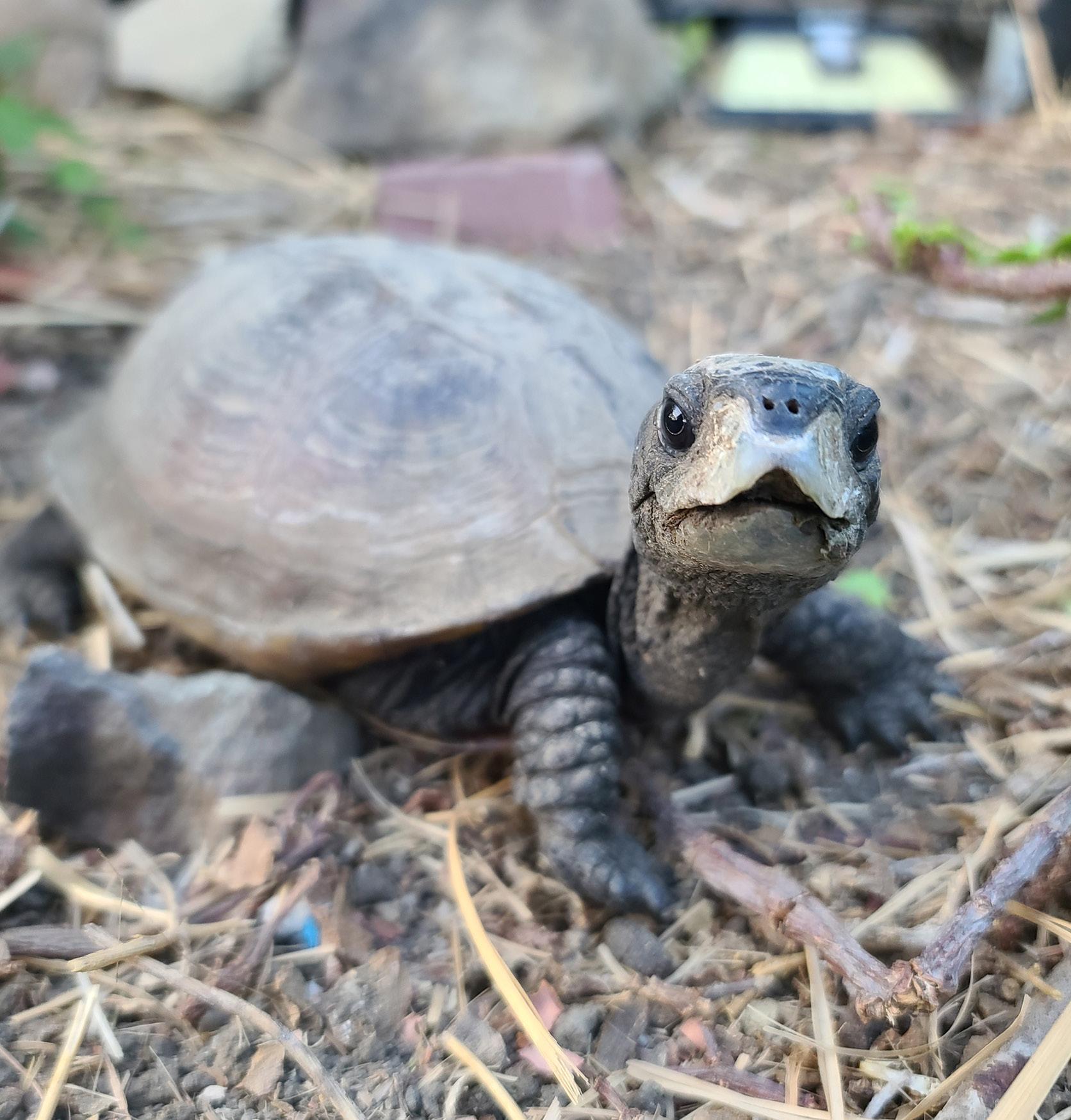
www.turtleandtortoiserescueofarroyogrande.org

For more than 220 million years, turtles and tortoises have endured, surviving mass extinctions, shifting continents, and the rise and fall of countless species. Yet today, their future hangs in a delicate balance. Conservationists warn that the next 50 years may be their most uncertain, as human activity increasingly threatens their survival.
Amid this global concern, organizations like American Tortoise Rescue continue to raise awareness through initiatives such as World Turtle Day on May 23. But beyond global campaigns, there are deeply rooted, hands-on efforts happening quietly, places where compassion meets action every single day.
One such place is the Turtle & Tortoise Rescue of Arroyo Grande, California.
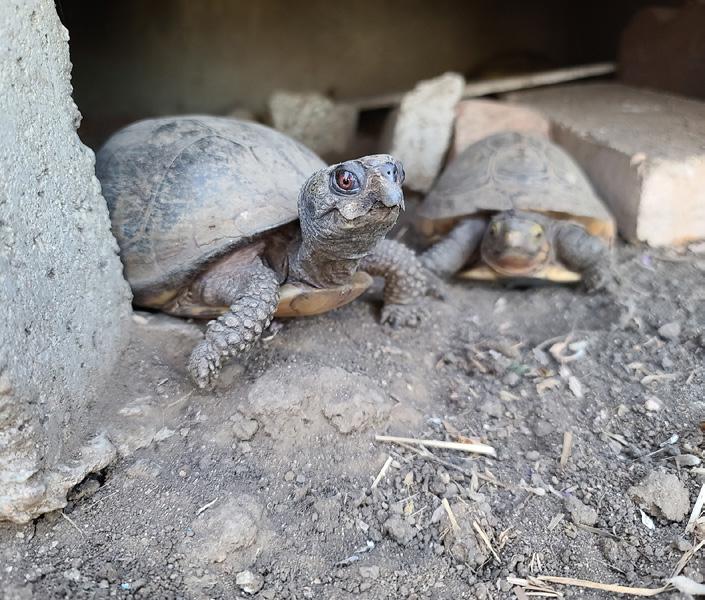
Since 1992, the Turtle & Tortoise Rescue has been a haven for animals in need. Nestled on an ecologically friendly five-acre sanctuary along California’s Central Coast, it stands as a testament to dedication, vision, and a lifelong love for these ancient creatures.
The rescue was built from the ground up by Bob Thomas, a devoted keeper of chelonians and reptiles. His passion wasn’t casual; it was a calling. With years of hands-on experience and a deep understanding of animal care, Bob became a refuge for unwanted pets and abandoned animals that had nowhere else to go.
Determined to do more, he expanded his knowledge by studying and working with two Southern California animal rescues, gaining expertise in habitat design, rehabilitation, and conservation. He then returned to the Central Coast with a dream of creating a sanctuary that would not only house animals but also truly protect and nurture them.
That dream became reality when he and his wife discovered a five-acre parcel in Arroyo Grande. Over the next three decades, it evolved into a thriving sanctuary that has rescued an estimated 5,000 animals, a remarkable legacy rooted in compassion and perseverance.
Every great mission faces a turning point. For Turtle & Tortoise Rescue, that moment came when Bob Thomas began preparing for retirement, raising the possibility that the sanctuary might close its doors.
But fate had already begun writing the next chapter.
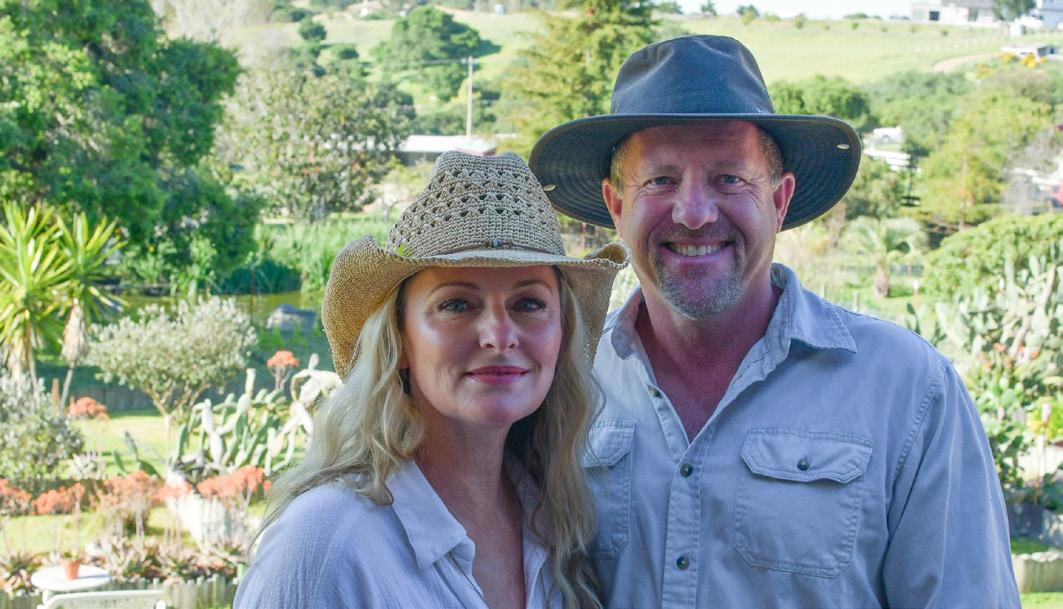
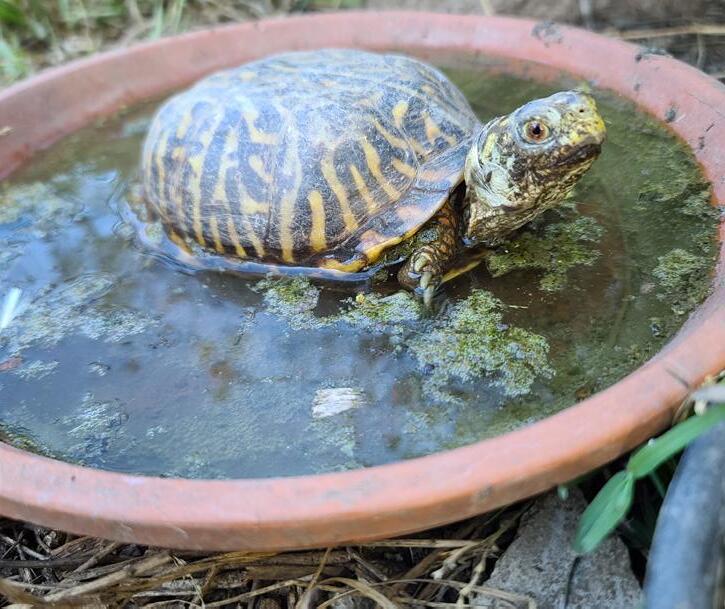
Jeff and Dr. Tammy Dobbs, longtime admirers of turtles and tortoises, first connected with the rescue after saving a severely injured box turtle from a ranch in Nipomo. They named the turtle Jacque, and through that rescue, formed a bond with Bob and his work.
When they learned of his plans, they stepped forward, not just as supporters, but as stewards of the mission. Their decision ensured that the sanctuary would not only survive but continue to grow and evolve.
More Than Rescue: A Mission of Education and Inclusion
Today, Turtle & Tortoise Rescue remains deeply committed to its founding mission: rescuing, protecting, and providing lifelong care for turtles, tortoises, and other animals. But its impact extends far beyond its residents.
Education is at the heart of everything they do. The sanctuary actively engages with schools and the broader community, offering programs that foster awareness, empathy, and respect for wildlife.
Their work is especially meaningful in their outreach to children and adults with special needs. By creating inclusive experiences, they provide opportunities for connection, learning, and healing, reminding us that the bond between humans and animals can be transformative.
Looking ahead, the organization is working on initiatives to increase accessibility across the sanctuary, enabling more people to experience its mission firsthand.

Protecting the Future of the Past Turtles and tortoises are living links to Earth’s distant past. Their slow, steady lives carry lessons in patience, resilience, and balance. Yet their survival is no longer guaranteed.
Sanctuaries like Turtle & Tortoise Rescue play a vital role in bridging the gap between awareness and action. They remind us that conservation is not only a global effort, it is also deeply local, personal, and profoundly human.
As World Turtle Day approaches, their story stands as both inspiration and invitation: to protect what has endured for millions of years, and to ensure that these ancient beings continue their journey far into the future.
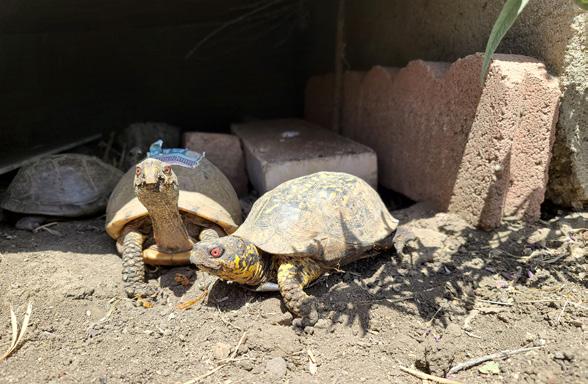
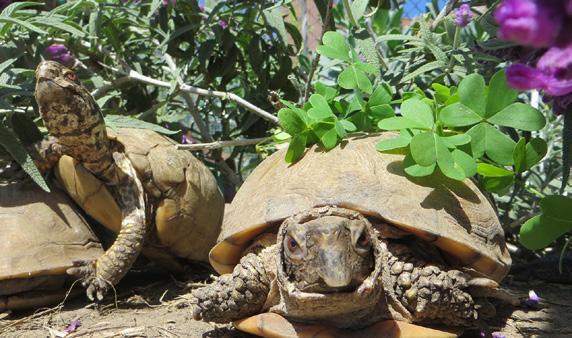
We rescue turtles, tortoises, and other animals that are in need of a caring and protected home for a variety of reasons. Some are abandoned, some are found, and others outlive their caretakers! The majority stay here on the ranch, while others are re-released into their native habitat, and some are made available for adoption.
We’ve taken in animals from all over the state of California and the country, and will continue to do so for as long as we have the space and resources. Most turtles and tortoises are welcome, along with small farm animals. Due to animal safety concern and other liabilities, we cannot take any poisonous animals, nor snapping turtles, large farm animals (such as horses and cows), pigs or peacocks, and no other animals considered dangerous to children.
Under certain circumstances, we will also board some animals. Currently, we’re boarding 7 animals due to their owners travelling for the military or retiring and moving.
By Angela Manno
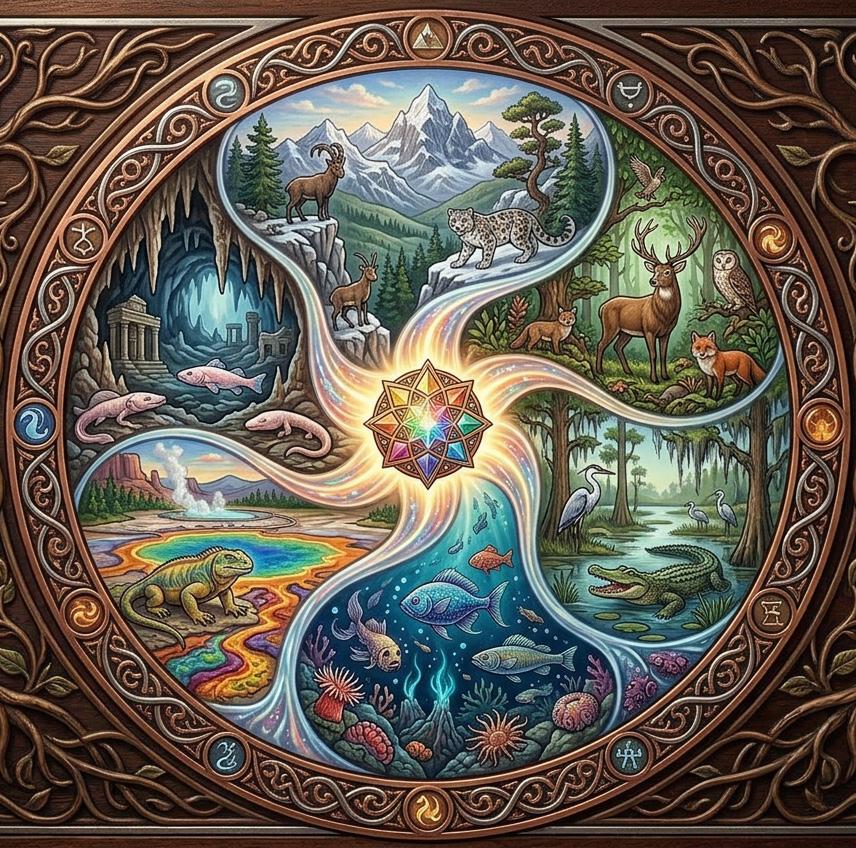
We must also forge a new relationship, or recapture a more ancient rapport, with the Natural World. Of all the fragmentation and disconnection within humanity itself, it is our relationship to the planet and to Nature that has been most severely violated. Humans are suffering spiritually as well as physically, many not even cognizant of the deep wounds to this primal relationship. Healing these wounds is paramount to our survival as a species, indeed, to the survival of all Life on Earth.
Thomas Berry makes it plain that the needed transformation of our relationship with the Earth is radical (from the Latin, radical is meaning of or relating to the root). We must foster a major paradigm shift, that is, “to reinvent the human at the species level,” and what Pope Francis calls an ecological conversion. Over the centuries, the Western mind has divorced itself from Nature, and this has become the primary cause of our current ecological crisis and the source of great angst in the human psyche. I feel that the only way back to health, indeed, our own survival, depends on nothing less than a “re-enchantment with the Earth as a living reality.”
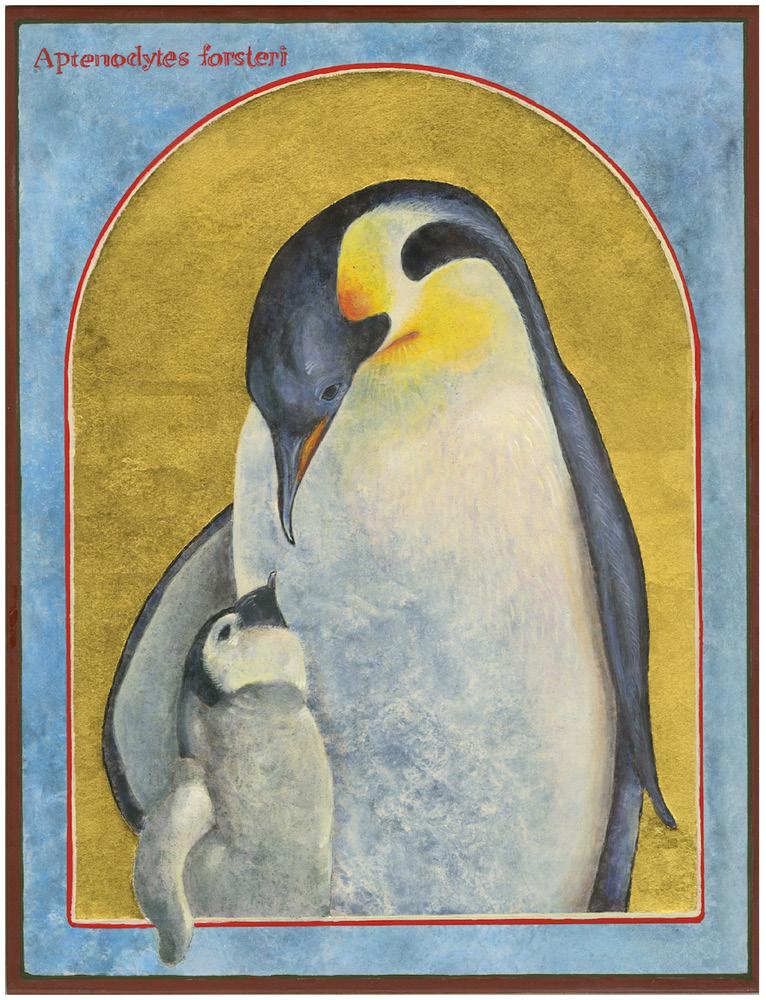
There are Five Forces contributing to species loss, which can be remembered in the acronym, HIPPO, developed by E.O. Wilson, in descending order of the most deleterious:
Habitat loss
Invasive species
Pollution

Population growth Overexploitation of species
These are anthropogenic conditions that can and must be reversed if there are to be any wild places left for species to live.
“Grace happens when we act with others on behalf of our world”. — Joanna Macy, scholar of Buddhism, general systems theory, and deep ecology.
The window for effective action is open only for a short while longer. There are many reasons for hope, many ambitious new initiatives and understandings, as well as an emerging global spirituality and ethics embodied in numerous documents, including the Earth Charter and the Five Mindfulness Trainings formulated by Zen master Thich Nhat Hanh, sources that offer guideposts in forging a viable human presence on the planet.
The Half Earth Project has calculated that 50 percent of the world’s land and sea must be protected and connected in order to stem biodiversity collapse, and is working with local inhabitants, scientists, and governments around the world to make this a reality. 12 It is mapping the entire globe, identifying areas with the most biodiversity, and proposing corridors to link them, combining preservation, restoration, and expansion. Rewilding initiatives to restore and maintain biologically diverse ecosystems, connect those areas, and reintroduce apex predators are growing in the UK, Chile, Sweden, Portugal, Romania, Bulgaria, and Germany.



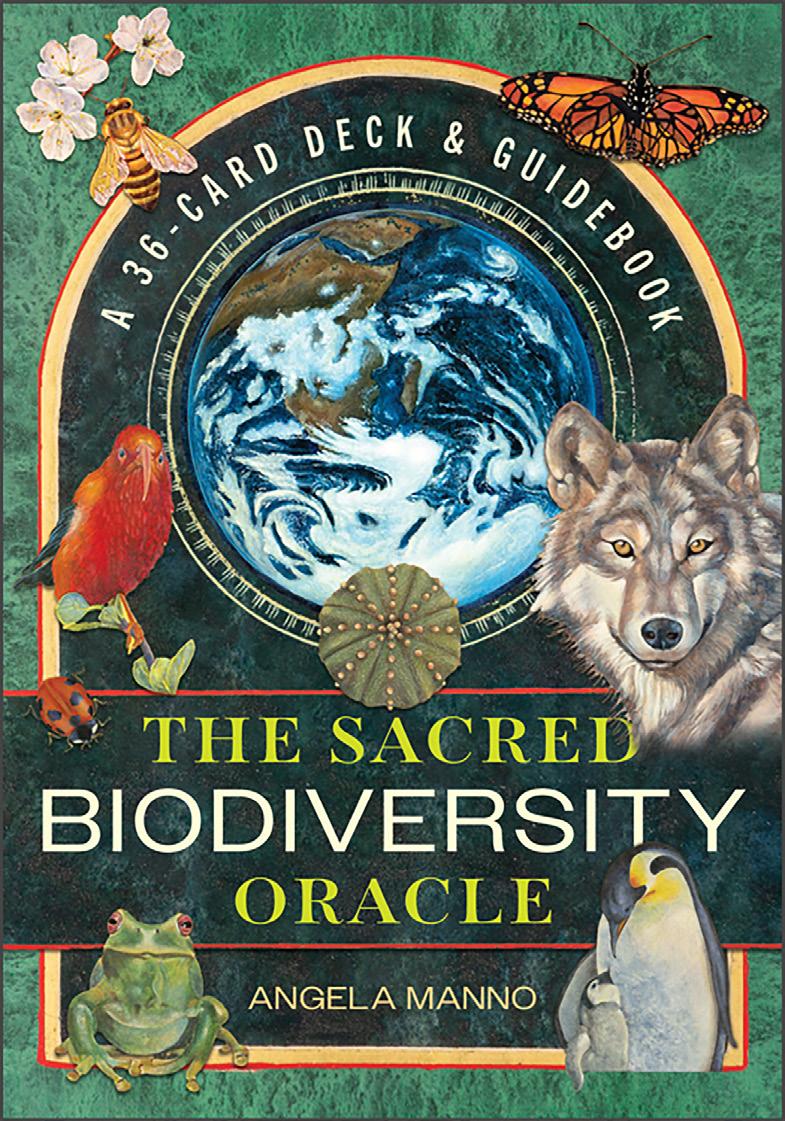
Finally, in an effort to stop or reduce destructive practices such as poaching, wildlife trafficking, overfishing, and illegal harvesting, many initiatives are emerging to develop alternative, sustainable, and culturally appropriate sources of income for local communities living in and around protected areas. Indigenous communities are integral to wild places and are estimated to protect 80 percent of the world’s biodiversity.
They are deeply involved with and essential to the conservation of these areas, because these places are their home and they are dependent on them for their sustenance. One out of hundreds of stories that encourage me is the turnabout of the Maasai tribe, for whom killing a lion was once a rite of passage for males to achieve their warrior status.
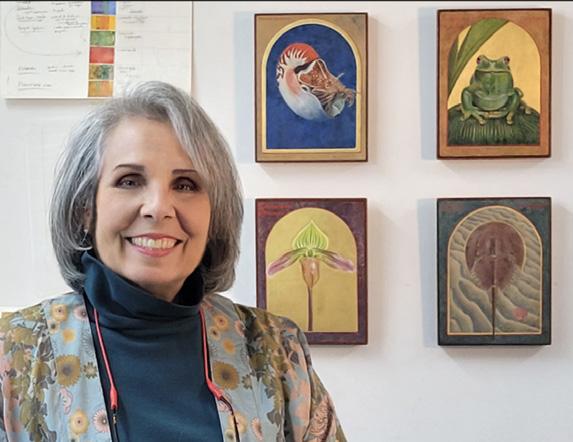
Her work has been exhibited in private and public collections around the world, including NASA, the Smithsonian’s National Air and Space Museum, and the National Museum of Women in the Arts. She works with the Center for Biological Diversity on its endangered species programs and lives in New York City. https://angelamanno.com/
The Maasai are also herders, so to keep their herds safe, instead of hunting down lions, they have become protectors of lions, or “Lion Guardians.” These guardians find and name lions, use radio telemetry to keep track of their numbers, and warn herders of lions’ presence. Today, being a Lion Guardian bestows even more prestige than killing a lion once did! Other inspiring examples include the World Wildlife Fund’s “Nature Pays” program, which helps Community Conservation Enterprises (CCEs) provide livelihoods to local communities while also supporting the protection of habitats and biodiversity. Thus, the saying, Conservation benefits when people benefit from conservation. In a similar vein, Dr. Jane Goodall realized that to protect chimpanzees, she had to work with local people to conserve chimpanzee habitat. To address the human side of the biodiversity crisis, the TACARE or “take-care” program was created, a model for conservation that relies
on community-centered conservation. Dr. Goodall’s Roots and Shoots program harnesses the tremendous energy, vision, positivity, and enthusiasm of young people. Through this initiative, students identify local problems, then develop and implement action plans. An important effort of this group has been reforestation, in which students have planted one million trees and distributed them to communities to “regreen” hills and villages. Instead of tearing down the forest for resources, the forest has become a source of income generation for communities. Another highly successful initiative is the Greenbelt movement, begun in 1977 by Nobel Prize winner Wangari Maathai, in which she mobilized Kenyan women to plant more than 51 million trees. We need to work together as never before, to double down, to keep “swelling the ranks,” to use Dr. Goodall’s words.
The biological meaning of regeneration is the ability of organisms and ecosystems to renew, regrow, and restore themselves. The Biblical connotation refers to salvation, rebirth, going from a previous state of separation to reconnecting once again with the Divine. In ecological spirituality, this means repairing and restoring the seamless connections throughout the biosphere and the human world to reestablish a single sacred, synergistic community. In his book, Regeneration: Ending the Climate Crisis in One Generation, Paul Hawken defines regeneration as a holistic approach: as with integral ecology, regeneration is “a comprehensive approach to tackling our greatest challenges, weaving climate, justice, biodiversity, democracy, and human dignity into a tapestry of action, policy, and transformation” that can end the climate crisis in one generation.



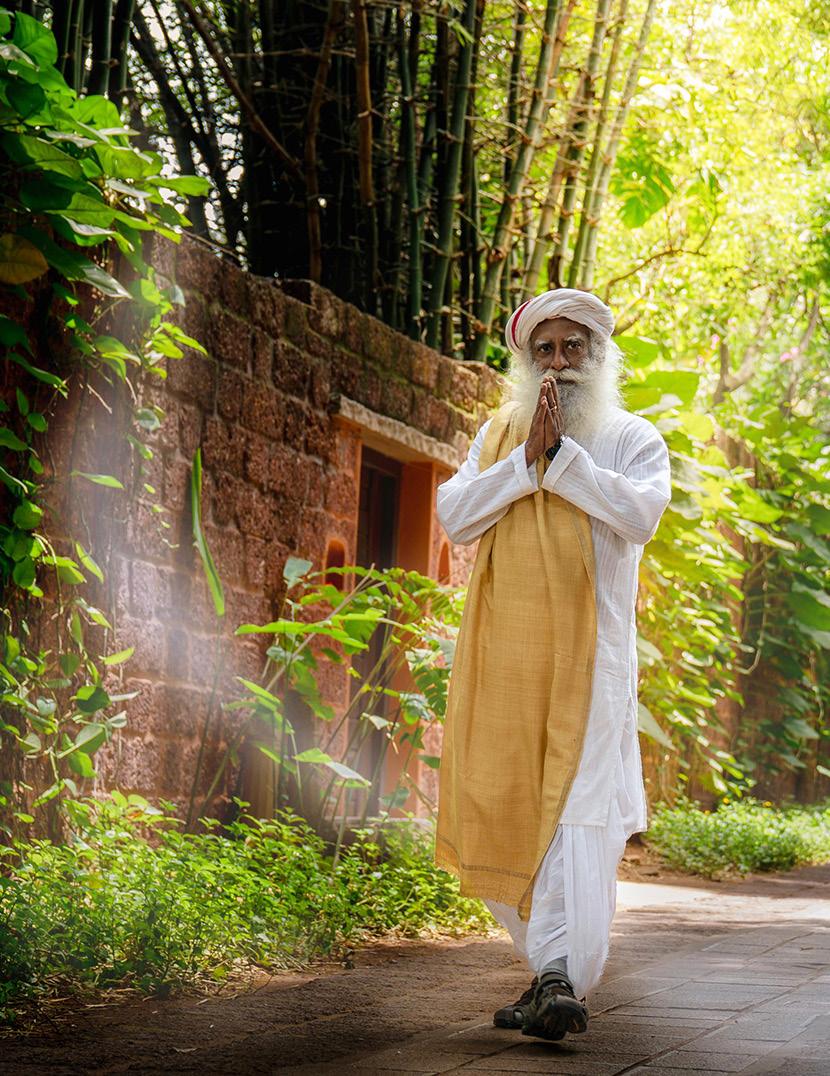
by Sadhguru, Isha Foundation

Sadhguru: For most people, their own physiological and psychological drama engages them for a whole lifetime. They think they are living, but they are actually just battling their own physiology and their psychological mess. You can call this a career, a marriage, or a revolution, but essentially, you are battling in your own physiological and psychological drama. As if these two kinds of dramas were not sufficient distractions, now we have a whole social drama, which is magnified on social media. This social drama is such a distraction when it comes to knowing the simple truths about life. What is all this about? Asatoma Sadgamaya - moving from untruth to truth. What is untruth – what is truth? Your ideas of who you are, what religion you belong to, what is yours, what is not yours, everything that you made up is untrue. Truth is always there. It is in the lap of this truth that all of us exist.
When I say "truth," I do not mean what you utter. "Truth" means the fundamental laws that make everything in existence happen. Everything that is necessary for this life to happen is here. Otherwise, you would not be here. The question is, are you in tune with these forces, or are you against them? The moment you believe you are something that you are not, you are against the forces of life. Because you are creating a psychological drama, you are screening off the existential drama. You are missing the Creator's creation because your own silly creations are keeping you busy in your head. Everyone is carrying their own world. If all of us have our
own worlds, we are bloody liars. Whatever nonsense we are imagining is entirely our psychological drama. When you create a drama, at least it must happen your way. But that is not the reality right now.
If your thoughts and emotions were happening the way you want them to, you would be blissful right now. But just about any idiot around you can determine what happens in your mind. Your thoughts and emotions are not even yours. They are constantly in a compulsive reaction to everything around them. In this state, even your drama does not happen the way you want it. So, what is the problem? What is the solution? People come up with all kinds of things.
For example, the number of people who have cardiac problems in Britain and the United States is much higher than the number of people who have cardiac problems in Japan. Because the Japanese eat much less fat and also eat much less, they eat healthily. But the French eat much more fat than the Americans and the British, yet they have fewer cardiac problems. People say one reason why the English and the Americans have more cardiac problems is that they drink a lot more alcohol than the Japanese. But the Italians drink much more alcohol than the British and the Americans, yet they have fewer cardiac problems. Why? The problem is that you speak English. Like this, there are all kinds of solutions in the world.

The only valuable herething is life. If you look at it, everything areyoudoing is just to somehow enhance this life.

You can genuinely explore only when you realize you do not know. If you believe, you will not explore anything. "I know" is only a thought – "I do not know" is a fact. The sooner you get it, the better it is. In a way, enlightenment is a celebration of ignorance – a blissful ignorance. Because you are not cluttered with knowledge, you see everything the way it is. If you are cluttered with knowledge, you are prejudiced about everything. Asatoma Sadgamaya must happen on all levels. The moment you believe something that you do not know, you become a web of lies. Without even knowing, you are caught up in a web of lies of your own making. When you were five years of age, you were joyful. Today, if you are miserable, this means that you are caught in asat or an untruth. But by the time you are thirty, if you are ecstatic, this means you are moving towards truth – life is bursting within you. This is all you have to check.
The only purpose of life is to take this life to its highest possible peak. There is nothing else to do. Most people will get it only when they are dead. They thought something else was important. Nothing else is important. The only thing that is valuable here is life. We do everything else
because we believe it will enhance life. We lay a garden, we build a building, we build a family, we build a nation because we believe it will facilitate and enhance life. But the only valuable thing here is life. If you look at it, everything you are doing is just to somehow enhance this life. Whether you pray, meditate, drink, do drugs, get married, pursue wealth and money, whatever you do is essentially to enhance life. Spending a whole lifetime doing all kinds of circus to feel a little good here and there is one way of handling it. In pursuit of joy, pleasure, and happiness, how much misery are people causing to themselves...
When human experience essentially happens from within, if you take charge of it, you can determine the nature of your experience. There are two ways to handle life. One way is to first invest a certain amount of time to enhance yourself from within. Then you step out into the world if you wish. Once this life is enhanced from within, you will do what is needed. You do not have to do any circus to enhance your life. Doing circus involves tricks, and tricks can fail, and misery will happen. Right now, we have driven a large percentage of the population into this mode where everyone has to do something first. No, first establish your being, then do whatever you want to do.

Infrastructures to Raise Human Consciousness
Experience Yoga in its classical form at Isha Yoga Center Los Angeles and Isha Institute of Inner-sciences. Established by Sadhguru, the centers serve as powerful spaces for inner transformation and raising human consciousness. Located in northern Los Angeles County and Tennessee, the centers offer an array of yoga and meditation programs in a vibrant and conducive ambience.
You are invited to Free Yoga Day, a monthly open-door event a t the center. On this day, we offer a variety of free sessions dedicated to educating and empowering individuals to take charge of their well-being through simple but powerful practices sourced from the Yogic tradition.
Learn more at ishausa.org/la

If you step out into the world without establishing yourself from within, you will mess yourself up and the world. The world has been messed up with good intentions. People who caused major wars on the planet believed they were doing good things. Even extremists who are blowing themselves up believe they are doing good things. Otherwise, why would they throw away their lives? Simply because you believe something that gives you a false sense of knowing. What a disaster human beings have become because they are identified with what they think they know.
Knowledge is fine for doing things in the world. But when it comes to life, "I do not know" is the only thing that will keep your intelligence alert and on every moment of your life.
If you see things clearly, no one has to tell you what to do. If there was clarity, naturally, you would do the right things. When even a bird with such a small brain knows what it has to do about its life perfectly well, with such a big brain, how come you do not know? Because someone has messed you up. How come human beings still do not know what they should eat? Look at the cholesterol controversy. For decades, they have been telling everyone, "Don't eat this – you will get bad cholesterol." Now they are saying there is no such thing. This is happening because we are looking at everything in pieces. In pieces, you will never get to the truth. If we want Asatoma Sadgamaya to happen, what is needed is not information and analysis.
Your ability to gather information and analyze it will be absolutely meaningless in the next ten to fifteen years' time, because a simple gadget will do this better than you. After twelve years of going to school, if you turn on Alexa, you feel like a dumb idiot in front of her. I never understood why I should gather all this information –that is why I barely went to school. On
the way to school, I would get these thoughts, "What am I going to do with all this? Why are they trying to make me remember all this nonsense?" This realization led me to other places. The spiritual process means that every day you are stepping into a new sphere of life. Something new that you did not know comes into your experience. It is a constant expansion of who you are.
Once you come as a human being, you are not fixed like other creatures. For all other creatures, nature has drawn two lines within which they live and die. This is why their life is so much simpler, because it is fixed – a fixed software. Human life is an open software. You can make anything out of yourself. You can become god-like, or you can become a brute – both are possible right now.
We have been working in prisons. If you look at the lives of so-called hardcore criminals, murderers, and the like, one wrong decision at a particular moment, and they are going to the hangman. Very easily, a similar situation could have happened to you. The difference is just this: Though your impulse pushed you that way, consciously you said, "That's not it." This is a human being. To be a human being essentially means to be capable of being conscious – nature gave us freedom. What human beings are suffering right now is their freedom.
Because there is such a big potential, you need to be conscious. If there was no great potential, just eat, sleep, reproduce, and die one day. This is what every other creature is doing. This is what a lot of human beings are trying to do, too. Their entire life is planned around their survival – eating, sleeping, reproduction, and dying anyway happens. This is the basic survival process that even an earthworm can handle. With such a big brain, you must do something else. Time is ticking away – you must come to your senses.
by
by Polly Wirum



We all come into this world and experience a unique life that offers many opportunities to learn about life, love, spirituality, and our collective experience. Our individual journeys are multifaceted as we are exposed to different ways of being or moving through life. This blog offers an opportunity to explore life through the lens of your personal self-worth. Are your beliefs about yourself helping you live the best life, or could you use a refresh of how you view yourself?
Self-worth or self-belief is one of the biggest factors in determining which lessons you repeat in your life and how you navigate these challenges.
Many metaphysical modalities look at life lessons and how self-worth is a factor. Psychics look at your karmic lessons that often require healthy self-worth to overcome. Astrologers, look at your second house to see how your self-worth might be expressed in this lifetime. Palm readers look at your fate line to determine if it's clear and strong, or broken and undetermined. Numerology looks for numbers that indicate a strong sense of self and life path numbers that indicate where your self-worth might be impacted.
Traditional health care also recognizes that a patient's self-worth affects their compliance with self-care and follow-up appointments. Our personal vision of self-worth ultimately touches everything we do, and regardless of what another tells us, we each have the choice to be strong and empowered.

So much is connected to our self-worth, and most of us waver now and again, questioning who we are as human beings, partners, parents, and even spiritual beings. Is there a trick to keeping the currency high in our self-worth?
In this article, the concept of a healthy self-worth is a person who feels empowered and believes they can freely choose the direction of their life. A robust selfworth isn't obtained by comparison to
others; it is an inherent belief in who you are, regardless of environment or situation. When I physically read a client, I note their sense of self. Is it strong and inspired by life, or does it feel fragmented and unfocused?
How High is Your Self-Worth?
Just like getting your oil changed on your car is important, checking in on your vision of self is important. Doing these check-ins can help you determine whether something is affecting how you feel about yourself and make the best decisions for your well-being.
How resilient do you feel? Are you able to take on challenges and then let go of what is out of your control? Our resiliency and self-worth go hand in hand.
How easy is it for you to be Intimate with others?
Can you communicate your needs and set boundaries? Do you feel worthy of love and respect? Our ability to trust ourselves and others is linked to our self-worth.
Do you prioritize your wellness and selfcare, or do you always put others' needs before yourself? Knowing what you need to thrive and prioritizing this is a sign of healthy self-worth.
Are you accountable for both your good decisions and not-so-good decisions? We are all human and will make both good choices and some questionable choices, but owning the good and bad indicates a healthy self-worth.
Are you staying where you are not valued? This could be a work relationship, a romantic relationship, or any other place that you have outgrown. Being able to walk away from unhealthy choices requires a strong belief in yourself and what you deserve.
Is it easy to have goals and make choices that reflect what you value in life? This indicates a healthy self-worth.
Wirum is a psychic, life coach, and writer. Years ago, she experienced a health crisis that led to a complete spiritual and life transformation.
When she thought her life was crumbling, the universe was easing her grip on everything, distracting her from the truth. The healing helped her discover the beauty of a joyful and uncomplicated life.It is here that she connects with wisdom and magic. She shares this with her clients through life’s coaching psychic readings and spiritual retreats. visit Pollywirum.com
Are you your own guru, or do you find yourself constantly seeking others' advice? A person who believes in themself will seek other’s opinion when appropriate but ultimately trusts their ability to gather facts and make a good decision.
How strong is your sense of self? This is the feeling of knowing who you are, feeling good in your own skin, enjoying time alone. I would almost describe it as a happiness factor. This feeling of enjoying yourself is also related to your self-worth.
Pay attention to your accountability.
Do things that you love where you feel successful, and slowly try new things. Recognizing that we all have a learning curve, so mistakes and blunders will happen.
Don't take everything personally. Crazy and sometimes unfortunate things happen to us and around us. Don’t take it personally. This includes when someone is in a bad mood and takes it out on you; don’t take it personally. You just happened to be in the line of fire. This can be an opportunity to decide if you will let it go, or you might calmly let them know you didn't appreciate the incident.
Show people how you want to be treated. This means if someone is always late, or doesn't follow through on plans, or does anything else that shows disrespect, let them know you don’t appreciate it.
Positive self-talk is important. Most of us have thoughts about ourselves that come to mind at some point in the day. Make sure you are giving yourself some positive feedback.
Keep promises to yourself. We can always change our minds, but if you promise yourself you will start working out, and you keep breaking the promise, that needs to be explored.
Have good personal boundaries and keep them.
Show up on time to scheduled events. This demonstrates that your time and others' time are important and valued.
One of my favorite ways to increase my self-worth is to do something physical. I always feel strong and empowered. It moves energy in my mind and body and is pretty much my go-to for feeling good. Move your body in a way that feels good to you.
Maintaining healthy physical and emotional wellness practices will help you stay strong in challenging times. Part of this is being aware of situations or people that affect your well-being. Determine if time apart is enough, or if you need to take a bigger step away from the situation.
One of the big bonuses of a healthy self-worth is your ability to manifest what you want. The more you practice your manifesting, the better results you have, and the more magical life becomes. This really is a snowball effect. It all starts with believing in yourself.
Faith in loving outcomes for you and the planet is also a bonus of valuing yourself. I originally planned on focusing on faith for this month's article; as I mulled over the different components of faith and what might determine a person’s faith, I explored the link between one's self-worth and their faith in a desired outcome. This internal dialogue reminded me of how important our belief in ourselves is; it affects everything!
Thank you for reading this article, and I hope it inspires you to be kind and loving to yourself and to know that you are a vital part of our world. Your happiness helps shift us all into a reality of fulfilled lives.
by Nikki Pattillo

If nature could preach, it would not stand behind a pulpit or speak in thunderous declarations. It would whisper through leaves, fall softly on rooftops, and stretch golden light across the horizon. Its sermons would not be bound in pages, yet they would be written everywhere and in everything. In forests, in storms, and in the quiet warmth of morning. And though its voice would be gentle, its truths would be deep, persistent, and impossible to ignore.
Nature has always been a silent teacher for humanity. For those willing to pause and listen, it offers wisdom about life, faith, endurance, and transformation. The trees, the rain, and even the sunlight each carry a message that is timeless, simple, and yet immensely profound.
“ The truth is, nature has always been preaching to us. We are just often too busy to listen as we rush past trees without noticing their stillness. We complain about rain without considering its purpose. We shield our eyes from sunlight without appreciating its gift.
IIf trees could preach, their message would begin with stillness. A tree does not rush, nor does it compare itself to the forest around it. It simply grows slowly, quietly, and steadily. Year after year, it stretches upward while sending its roots deeper into the unseen soil. Its strength is not found in how quickly it rises, but in how deeply it is anchored. There are many lessons for us here about what is hidden in our lives.

In a world obsessed with visible success, trees remind us that what is unseen matters most. Roots are never admired, yet they determine everything. Without deep roots, a tree cannot withstand wind, drought, or a storm. In the same way, a life without depth—without grounding, without truth, without spiritual nourishment—cannot endure pressure.
Trees would also preach perseverance as they endure seasons without complaint. In winter, they stand stripped and bare, appearing lifeless. Yet beneath the surface, life continues. Growth is happen-
ing in ways no one can see. When spring comes, what once seemed dead is suddenly alive again.
How often in our lives do we mistake stillness for stagnation? How often do we assume that because nothing is visible, nothing is happening? The trees would gently correct us and say that growth is not always loud or seen. Sometimes the most important work is hidden.
They would also teach resilience. Storms do not destroy every tree, as they often bend without breaking. Their flexibility becomes their survival. A rigid tree snaps under pressure, but one that can sway with the wind remains standing. There is wisdom in learning when to stand firm and when to bend.
Finally, trees would preach generosity. They give shade to strangers, fruit to the hungry, shelter to birds, and beauty to all who pass by. They do not choose who is worthy of their gifts as they simply give. What would happen if we lived the same way?

On the other hand, if rain could preach, its voice would be steady and soothing, like a rhythm we forgot we needed. Rain would teach us about surrender. It falls without resistance and does not cling to the sky or hesitate in its descent. It simply lets go, trusting its purpose. In a culture that encourages control and self-protection, rain reminds us that sometimes the most powerful thing we can do is release what we are holding on to.
There are also lessons in cleansing. Rain washes away dust, dirt, and dryness, and it refreshes all that it touches. After a long drought, the first rainfall feels like utter grace. The earth drinks deeply, and life begins again.
We, too, carry dust such as burdens, regrets, wounds, and weariness. The rain reminds us that renewal is possible and we do not have to carry burdens or hurt on our shoulders or in our hearts forever. There is healing and renewal in letting things be washed away from our lives.
Rain would also speak about timing, as it does not fall constantly. There are seasons of dryness and seasons of abundance. Too much rain can overwhelm; too little can starve. Its rhythm is purposeful, even when it feels disruptive.
In our own lives, we often want constant clarity, constant growth, and constant answers. But rain teaches us that life moves in cy-
cles. There are times when we feel refreshed and times when we feel dry, and both are necessary.
And then there is also the quiet beauty of the rain’s persistence. A single drop seems insignificant, but over time, rain shapes landscapes. It carves valleys, nourishes forests, and fills oceans. Its power is not in its force, but in consistency. One could see that those small acts, repeated over time, can create profound change. What would the rain whisper? Maybe we should not underestimate what steady faithfulness can do.
If sunlight could preach, it would do so with warmth and clarity, as the sun does not shine selectively upon us. It does not choose only the worthy or the deserving. It rises each day, offering light to all. Its generosity is constant, its presence reliable.
There is a lesson here about consistency, as we often live in emotional patterns. Giving when we feel like it, withdrawing when we do not. Sunlight reminds us of the power of showing up daily, of being steady in love, in kindness, and in purpose. This seems important, to show up. To show up when you don’t want to, or you're too tired to. Why? Because when we pass on to the next world, we don’t take our materialistic things with us, we take how we treated others, so yes, it seems important to show up just like the sunlight does.

Nikki Pattillo graduated from Stephen F. Austin State University in Texas and began her career as a clinical and molecular biologist. As a child, Nikki was psychic, conversing regularly with her angels and guides, but it wasn’t until she was in her 30s that she accepted her gift.
She is now an international author with Ozark Mountain Publishing. She authored Children of Stars: Advice for Parents and Star Children, A Spiritual Evolution, A Day in Spirit: A Spiritual Calendar for Teens, and A Golden Compass
She has been featured on BRAVO and The History Channel and writes numerous magazine and newspaper articles to help raise awareness and consciousness of environmental and spiritual issues.
Sunlight also reveals to us that in darkness, things are hidden. Shapes are unclear, paths uncertain. But when light appears, everything becomes visible. Truth has a way of doing the same thing in our lives. It illuminates what we could not see before, both the beautiful and the broken things in our lives.
This can be uncomfortable for most of us, seeing how light exposes everything. It shows us what needs attention, what needs healing, what needs change. But it also shows us the way forward. Sunlight would not only reveal truth in our lives, it would also guide us. Sunlight helps plants grow as they instinctively turn towards it. Without light, growth is stunted. With it, life flourishes. We, too, are drawn toward what gives us life.
And then there is the warmth. Sunlight does not just illuminate—it comforts. After a long winter, its touch feels like hope. It reminds us that warmth returns and that cold seasons do not last forever. How many people are living in emotional or spiritual winters? Sunlight would gently remind them that warmth is coming.
Individually, the trees, rain, and sunlight each offer their own wisdom. But together, they tell a fuller story. Trees need rain to grow. Rain needs sunlight to nourish what it touches. Sunlight needs something to shine upon to reveal its beauty. None of them exists in isolation, as this is a picture of almost perfect balance.
One could see that a healthy life is not built on one principle alone. It requires depth (like the trees), renewal (like the rain), and truth and warmth (like the sunlight). Remove one, and something is missing.
Together, they also tell a story of transformation. A seed planted in the ground does not remain as it is. With time, water, and light, it becomes something entirely new. Growth is not immediate, but it is inevitable when the conditions are right.
This is the quiet promise woven into creation that change is possible. No matter how small the beginning, no matter how long the wait, transformation can happen under any circumstance.
The truth is, nature has always been preaching to us. We are just often too busy to listen as we rush past trees without noticing their stillness. We complain about rain without considering its purpose. We shield our eyes from sunlight without appreciating its gift.
But the messages remain. Stand firm, but grow deep. Let go, and allow yourself to be renewed.
Shine with consistency, and bring warmth wherever you go.
These are not complicated teachings. They do not require advanced understanding or special training. They simply require attention. And perhaps that is the final lesson nature would preach: “slow down.”
Because wisdom is not always found in louder voices or faster answers on the web, social media, or in our Instagram-demanding lives. Sometimes it is found in the quiet persistence of a tree, the gentle fall of rain, or the steady rise of the sun.
If we are willing to listen, we may discover that the world around us has been speaking the truth to us all along. And in that stillness, we may find not only lessons, but a beautiful transformation.

“Animals Have Souls Don’t Put Them in Your Bowl”
Heartfelt Conversations by Rmilie Macas

“
Connecting with my inner wisdom has been one of the most transformative choices of my life. Learning to trust this quiet, steady knowing has not always been easy, but it has undoubtedly been the most rewarding experience.
The world is loud right now. Louder perhaps than it has ever been in your lifetime.
What began in 2020 as a crack in the foundation has, by 2026, become a full unraveling. The masks we wore socially, politically, and personally have fallen away. Systems we once trusted are cracking. Certainties we leaned on no longer hold the weight they once did.
And here we are, together in it.
For me, 2020 was the first time I was truly brought to my knees. I surrendered, and for a Taurus, that doesn't come easily. But in that surrender, in the middle of so much uncertainty, I discovered something unexpected: a deep, unshakable certainty within myself.
I don't know what this moment means for you. But for me, it has been an invitation to stop looking outside for answers and to look within. For me, that presence is God. You may call it something else, the Universe, Spirit, Source, your own inner knowing. The essential point here is not who has it right or recognition of a name, because it will look different for each of us; what truly matters is the presence of something greater that flows through each of us.
I think about the younger, softer ver-
sion of myself, the one who waited to be seen, guided, told she was safe. Many of us grew up with that unmet need and learned, quietly and without realizing it, to search outside ourselves for a validation that could only ever come from within. That search wore me out.
And it never brought me home.
2020 was the beginning. 2026 is the continuation.
2026 is asking us, I think, to go even deeper. To honestly look at what we're still carrying, to pay attention to the triggers that life might be trying to show us. The chaos unfolding in the world is not only a disruption. It is an invitation.
What are you ready to release so you can finally fully step into your own power?
When I speak of power, I refer to your inner strength. The ability to remain centered in your hearts while the world faces polarization, hatred, anger, and darkness at all levels. That kind of steadiness and grace.
The answers are found within, if you listen and turn off the outside noises, your inner guidance, this inner light will show you the way.
Émilie Macas is a Trauma-Informed Transformational Educator focused on Emotional Awareness, a Reiki Teacher, a Mindfulness-Meditation Educator, a Certified Life Coach, an Author, and a Motivational Speaker. Émilie has owned a private practice for over a decade. She continues to empower others to adopt a spirit of raw truthfulness, guiding them to their inner wisdom and empowering them to connect with their inner pharmacy.
I know this inner voice well. It guided me 23 years ago to take one of the greatest leaps of my life, leaving everything behind in Europe and moving to Canada, to find love. It spoke again when I was diagnosed with an autoimmune condition, leading me to explore root causes and manage it naturally for over 20 years.
It has never led me wrong when I was quiet enough to hear it.
I believe that same voice lives in you. Your intuition. Your gut. Your inner knowing. God, the Universe, Spirit, however you name it, is moving through you. It has always been there. I simply think for most of us, life gets very loud, and we forget how to listen.
What has helped me, and I am offering it here not as "the formula" but as an invitation to find what works for you.
5 Practical Ways to Sharpen and Trust Your Inner Voice
Find time to be in silence. Be present in the moment (breathing and meditation are a great help).
1. Pay attention to your body; at times, you feel it (there is no 'right way' or 'best way' to experience our inner voice). Just pay attention to the physical response.
2. Pay attention to your feelings, your emotions (emotions are energy in motion). The stomach is where our feelings/emotions sit. Pay attention to how you feel.
3. Make sure you listen to your inner voice, not the voice in your head (your thoughts). In psychological terms, it is called inner speech.
4. Your inner compass is not the voice of your past or the fears projected by others.
5. Look at your inner voice patterns, connect with your heart.
Connecting with my inner wisdom has been one of the most transformative choices of my life. Learning to trust this quiet, steady knowing has not always been easy, but it has undoubtedly been the most rewarding experience. We live in a world filled with external voices, social media, AI, and the loud voices of opinions of everyone around us. We are experiencing great tribulations and disturbances, and I will go so far as to call it a spiritual war. And underneath all of that, many of us carry our own wounds, unmet needs, fear, and selfdoubt.
This internal voice is not our compass. It is our story talking.
When I have done the work, faced what I was carrying, healed what I held for most of my life, and released the conditioning that was never really mine. I began to hear something different. Fear sounds like urgency. Inner wisdom sounds like clarity. This process allows us to clear our path and reconnect with our true essence, which is love. We reconnect, and in that moment, we experience the profound unity of our true essence.
I don't have all the answers. I am still finding my way, too, one quiet moment at a time.
But today I would like to leave you with a question.
What does your inner voice sound like when you finally get quiet enough to hear it?
With love and Light,
The Way I See It by Joey Santos
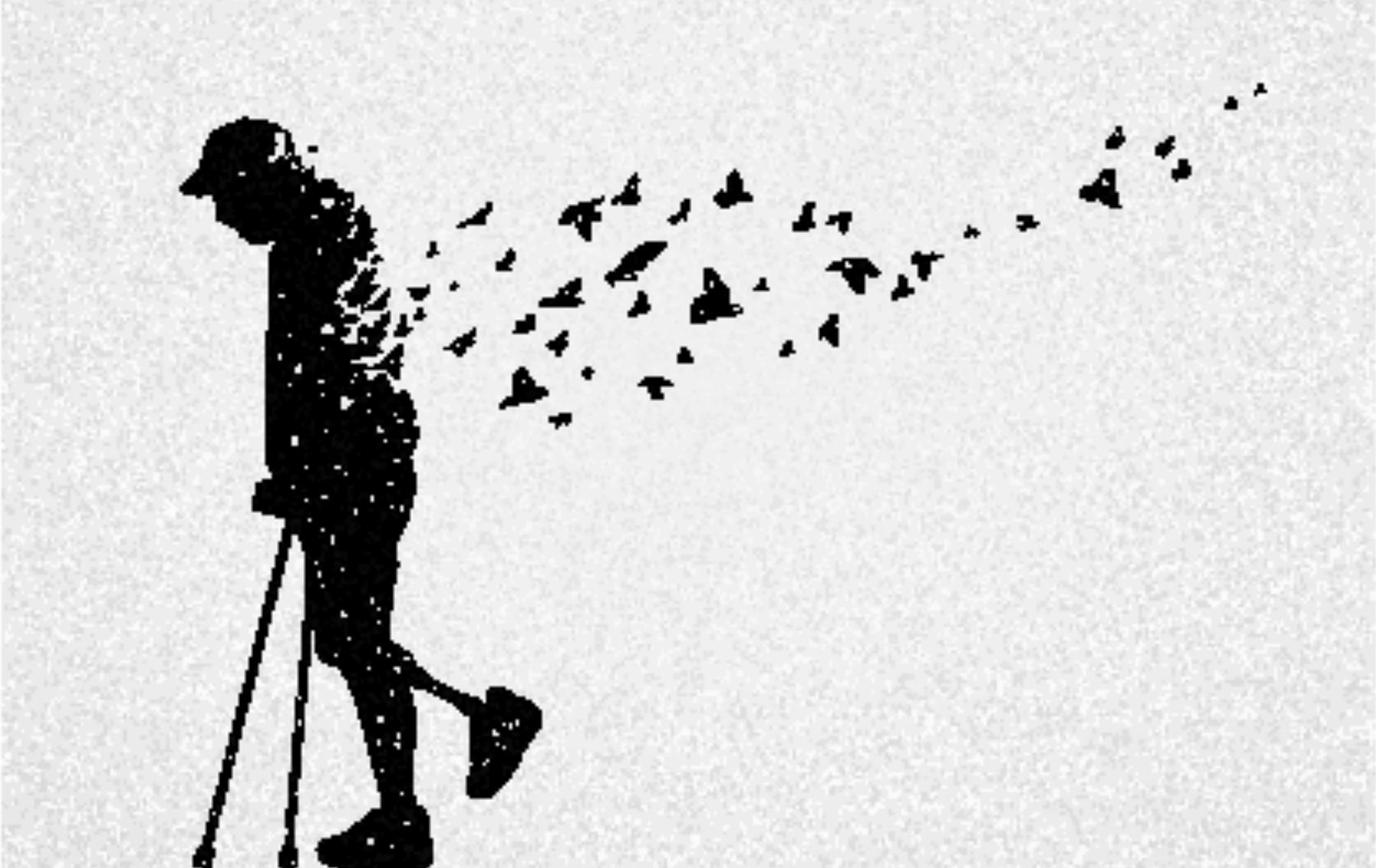
Well… here it comes. Any day now. Any moment. Any second, or six months from now, maybe forty years.
It doesn’t really matter, does it? The moment is destined, the destination… well, that depends on perception.
Some believe in continuation, a transition, a shift into another realm, another form of energy, still flowing, still present, just different. Others greet the prospect with something more structured, religious certainty. God. Heaven, Hell. Places above, places below, places beyond. Waiting rooms of eternity where every choice we’ve made is tallied, weighed, and judged.
One option? A glorious golden city behind pearly gates, loved ones waiting with open arms, a forgiving, merciful, gentle God bathed in light. Cherub angels, feathered wings, harps softly playing, hymns floating through eternity.
Eternity. Ummm… maybe. And then, of course, there’s the other option.
Also behind gates, but what about these red, sizzling. Unforgiving. Where devils don’t greet you, they claim you. Condemnation, flames, punishment… forever. No, thank you. I’ll pass.
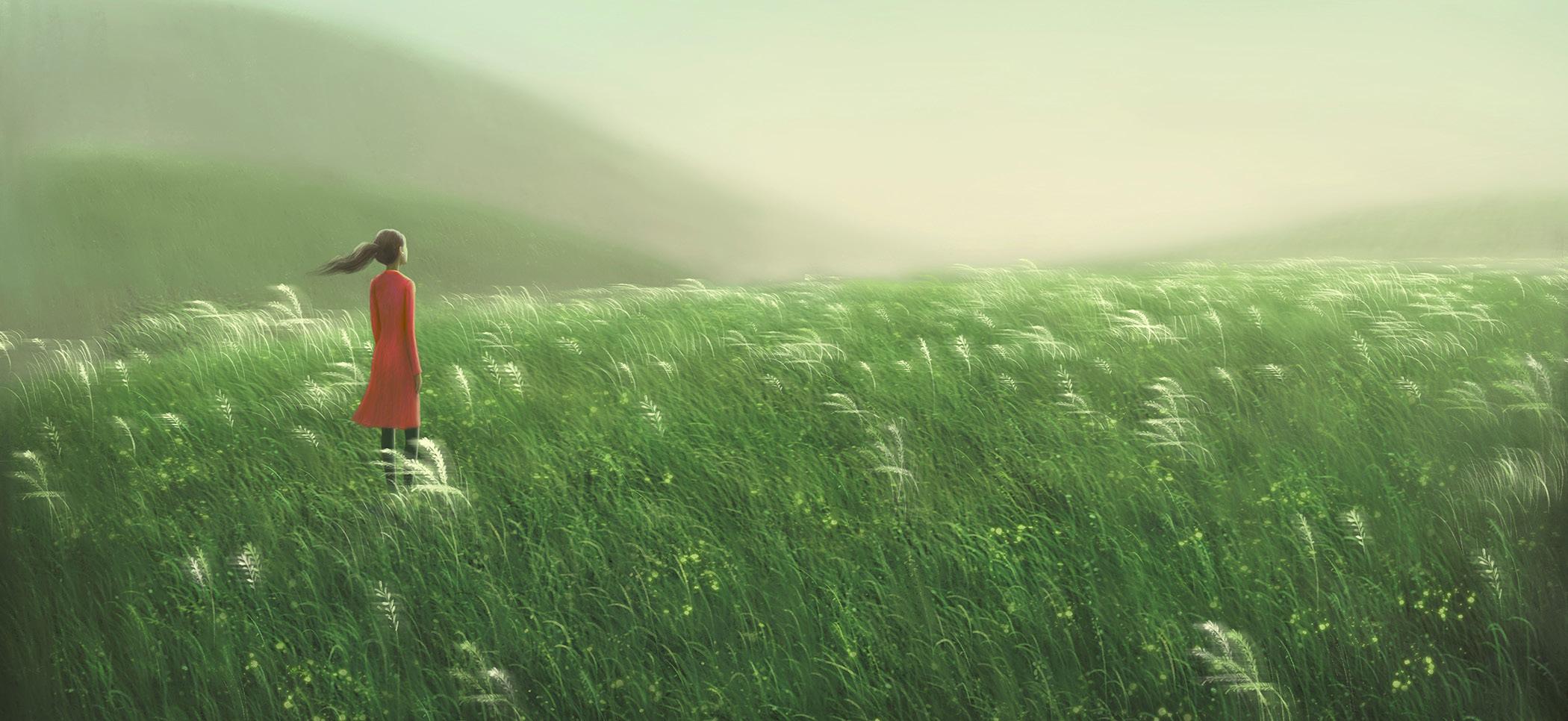
The truth is, those are just two entries on a very long list, a menu of hope and fear curated by those who claim to know what comes next. And like everything else in life, I’ve created my own list.
FEAR:
That after all of this, all the hoping, believing, trusting, wanting, waiting, working, dreaming, after every attempt to be better, do better, become better…
It just… stops.
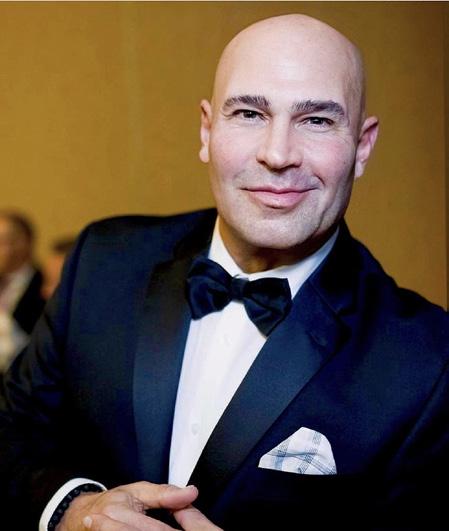
Joey Santos is a Celebrity Chef, Life Stylist and Co-Host of The Two Guys From Hollywood Podcast on Spotify. A Columnist for The Eden Magazine since 2016.
Joey was raised in NYC, Malibu, and West Hollywood. He is the son of Film and Television Actor Joe Santos, and his Grandfather is World- Renowned Latin Singer Daniel Santos. To follow Joey on IG: @jojoboy13 To contact Joey visit whynotjoe@gmail.com
The end of the rainbow is simply that, the end, no yellow brick road, no ruby slippers, no grand reveal, and no Wizard waiting behind the curtain to say: “Welcome. Well done. You made it.”
The record skips. Silence.
HOPE:
Ah… but here’s my version. A place where I continue, not as I was, but as I am, distilled. A space where reflection is absolute, where time doesn’t tick, it exists. Where every moment is understood, not questioned.
Timeless, glorious, and safe. Colorful in its embrace, no doubt, and no hesitation. All beauty… no flaws.
Every word heard, every feeling known, and somehow, softly, somewhere, the
music plays.
“A kiss is still a kiss, a sigh is just a sigh, and the fundamental things apply, as time goes by.”
Maybe that’s it, not a place, and not a judgment. But a return.
A return to the very energy we were created from, to belong to it, to recognize it, and to finally understand that we were never separate from it.
And in that understanding, to bow… not in fear, but in gratitude.
For the time, however long or short. For the space, however grand or humble, for the choices we made, even the ones made in haste. Because maybe, just maybe, nothing was wasted. Maybe every misstep, every heartbreak, every triumph, every joy, was simply part of the lesson.
Not a test, not a punishment, but a path. So yes, the big day is coming for all of us, and while I don’t pretend to know where we’re going, I’m starting to believe it matters far less than how we live while we’re here, because if there is something waiting, I’d like to arrive not with answers. But with a life fully lived, and if there isn’t, let it be said we made this fleeting moment, this brief, beautiful flicker of existence… feel like eternity.



Yacht Club was founded in 2020, a time of global uncertainty. What inspired you to launch a luxury lifestyle and resort wear brand in such a pivotal moment, and how did that timing shape your vision? That timing was everything, and also the point.
Yacht Club Access was founded in 2020 during one of the most uncertain periods in modern history. The world had slowed down, travel paused, industries were shifting, and people were forced to re-evaluate what truly mattered. In the middle of that disruption, I felt a very clear calling to create something that represented hope, beauty, and forward movement.
Luxury, to me, has always been more than products; it’s about how something makes you feel. In a moment when people were craving escape, optimism, and connection, resort wear became symbolic of what we were all dreaming of again: travel, freedom, celebration, and possibility. I wanted YCA to embody that future, the life people were working toward.
The uncertainty of that year also sharpened my focus on purpose. I didn’t want to build a brand that only looked good; I wanted one that did good. That’s when the foundation for "Passport to Entrepreneurship™" and our broader community impact work truly took shape. The timing forced me to build YCA intentionally, with resilience, adaptability, and humanity at its core.
In many ways, launching during 2020 shaped YCA into the brand it is today: bold, optimistic, global in vision, and grounded in the belief that even in the hardest moments, we can still create something beautiful, powerful, and lasting.
Your designs seamlessly blend elevated coastal athletics with refined luxury. How do you balance performance, comfort, and sophistication while staying true to the Yacht Club aesthetic? That balance is really the foundation of the Yacht Club Access identity. From the very beginning, I envisioned YCA as elevated coastal athletics meeting refined luxury, pieces that move with you, travel with you, and still command a room.
Performance and comfort start with the fabric and construction. Every silhouette is designed to support the body, not restrict it. I think about how a woman actually lives: walking through airports, stepping onto yachts, attending rooftop dinners, moving between meetings and moments of leisure. The garments have to feel effortless, breathable, flexible, and strong because the lifestyle they serve is dynamic.
Sophistication comes from the architecture of the design, clean lines, intentional cuts, sculpted structure, and a timeless color story that never feels trendy. We avoid over-designing. Instead, we focus on details that whisper luxury: the drape of a fabric, the precision of a seam, the way a piece frames the body.
What keeps it unmistakably Yacht Club is the mindset behind the design. The brand represents access to experiences, to opportunity, to confidence. Every collection must reflect that spirit of modern elegance, global travel, and self-assured movement. When performance, comfort, and sophistication are in harmony, the result isn’t just clothing; it’s a lifestyle uniform for the man and woman who command their world with ease.


We are committed to operating with integrity, ensuring that every aspect of our business—from sourcing eco-friendly materials to providing exceptional customer service. Our dedication extends beyond fashion, as we are deeply invested in giving back to our community by empowering underserved teens with the tools, resources, and opportunities to succeed.

Purpose-driven impact is at the heart of your brand. Can you share how Yacht Club integrates social or environmental responsibility into its creative process and business model? Purpose isn’t something we add on later; it’s embedded into the DNA of Yacht Club Access. From concept to execution, every creative decision is filtered through the question: “How does this create impact beyond the product?”
On the creative side, our collections are developed with intention. We prioritize quality over excess, timeless design over fleeting trends, and pieces meant to be worn, lived in, and kept. That philosophy naturally reduces waste and supports a more sustainable approach to consumption. We also collaborate with designers and partners, like our recent international partnership with Costa Rican designer Francini Sánchez, who share a respect for craftsmanship, culture, and responsible production.
From a business perspective, our model is deeply connected to the community. Through "Passport to Entrepreneurship™", we reinvest directly into youth, particularly homeless, trafficked, and underrepresented teens, by providing entrepreneurship education, creative training, and real-world career exposure. Many of our brand activations, partnerships, and product launches are intentionally tied to this initiative so that commercial success directly fuels social progress.
We also design our experiences, including our VIP events and professional development programs, to serve as platforms for education, mentorship, and opportunity. The brand isn’t just selling a lifestyle; we’re building pathways into it.

For me, true luxury is conscious, responsible, and generous. When creativity, commerce, and community move together, the impact becomes lasting.
The Yacht Club woman embodies strength, movement, and mindful living. How do you envision your designs supporting women not just in how they look, but in how they feel and live?
The Yacht Club woman is intentional. She moves with purpose, she values her time, and she designs her life as thoughtfully as she dresses for it. When I create for her, I’m not just thinking about how she will look in a mirror; I’m thinking about how she will move through her day, her goals, and her world.
Our designs are built to support her physically and mentally. When a woman feels comfortable, supported, and confident in what she’s wearing, she shows up differently. She stands taller. She speaks with more clarity. She gives herself permission to take up space. That shift is powerful.
My vision has always been that YCA feels like armor and ease at the same time. This armor is intentional. Garments move with her ambitions, not against them. Pieces she can travel in, build in, celebrate in. When a woman feels good in her body and aligned with her lifestyle, everything else flows more effortlessly: her relationships, her work, her wellness, her sense of self.
Ultimately, YCA isn’t about dressing a moment; it’s about supporting a life. And when a woman is supported in how she lives, she becomes unstoppable.

Resort wear often tells a story of escape and freedom. What lifestyle or emotional experience do you hope women feel when they wear Yacht Club?
When a woman wears Yacht Club Access, I want her to feel free, grounded, and expansive all at once.
Resort wear has always symbolized escape, but for me, it’s deeper than a vacation. It represents the freedom to choose your life, the courage to pursue your dreams, and the confidence to exist in your fullness. YCA is designed to evoke that emotional state, the feeling of standing at the edge of possibility, where the world feels open and yours to navigate.
I envision our pieces to carry a sense of arrival not just to a destination, but to herself. Whether she’s boarding a flight, walking into a meeting, or stepping into a new season of her life, YCA should remind her that she belongs in every space she enters.
Ultimately, Yacht Club is about creating an emotional experience of elegant liberation where luxury feels effortless, movement feels natural, and her life feels beautifully, intentionally her own.
As a founder and creative force, what lessons have you learned since 2020 about leadership, resilience, and building a brand with meaning in today's fashion landscape? Since 2020, I’ve learned that leadership is less about control and more about clarity, courage, and consistency. When the world is unpredictable, your values become your compass. I’ve learned to lead with vision, but also with humanity, listening deeply, adapting quickly, and making decisions rooted in both strategy and heart.
Resilience, for me, has meant staying committed to the long game. Building a meaningful brand in today’s fashion landscape requires patience, discipline, and the ability to move through uncertainty without losing your identity. Trends will shift. Markets will fluctuate. But your purpose must remain steady. When your foundation is solid, you don’t panic when the waves come; you navigate.
I’ve also learned that a brand with meaning is built from the inside out. It’s not just the designs, the campaigns, or the partnerships; it’s the culture, the intention, and the responsibility you take for the space you occupy in the world. Every choice we make at YCA, from our creative process to our community work, reflects who we are and what we stand for.
Ultimately, the most important lesson has been this: build something that outlives you. Build something that creates access, opens doors, and leaves people better than you found them. That is the true measure of success, and the legacy I’m committed to creating with Yacht Club Access.

Natasha Simmons is an Atlanta-based entrepreneur, CEO, and Creative Director of Yacht Club Access, a premium swimwear and resort-wear brand known for blending luxury fashion with an elevated coastal lifestyle. A visionary and serial entrepreneur, she founded the company in 2020, transforming her background in modeling and luxury travel into a global lifestyle brand rooted in “timeless elegance.”
Her journey is marked by resilience; having experienced teenage homelessness, Simmons turned adversity into ambition. During her modeling and acting career, she was immersed in yacht clubs and luxury living. There, she also worked closely with a personal seamstress to design her own swimwear and wardrobe, laying the foundation for her future brand.
Simmons began her retail career in merchandising and rose into management at designer department stores, where she refined her eye for product, presentation, and customer experience. These experiences sparked her creativity and strategic vision, which she now channels into expanding Yacht Club Access into luxury boutiques, hotels, and global markets.
Beyond business, she is deeply committed to impact and empowerment, using her platform to inspire aspiring entrepreneurs, particularly women, to build purpose-driven, legacy brands, with a strong passion for giving back to homeless and trafficked teens through mentorship, resources, and opportunity-driven initiatives via the Yacht Club "Passport to Entrepreneurship."

Tucked beneath swaying palms and sunlit skies, the Ernest Hemingway Home and Museum in Key West, Florida, offers far more than a glimpse into literary history; it invites visitors into the intimate, living world of one of America’s most iconic writers. From For Whom the Bell Tolls to The Old Man and the Sea, Ernest Hemingway’s words shaped generations, capturing resilience, courage, and the quiet struggles of the human spirit. Yet within this tropical sanctuary, another side of Hemingway endures, his deep affection for cats.
The story begins in the 1930s, when Hemingway settled into this Spanish Colonial home, seeking both solitude and inspiration. According to local lore, one afternoon, a sea captain knocked at his gate, offering an unusual gift, a white cat with six toes named Snow White. Intrigued and amused, Hemingway accepted.
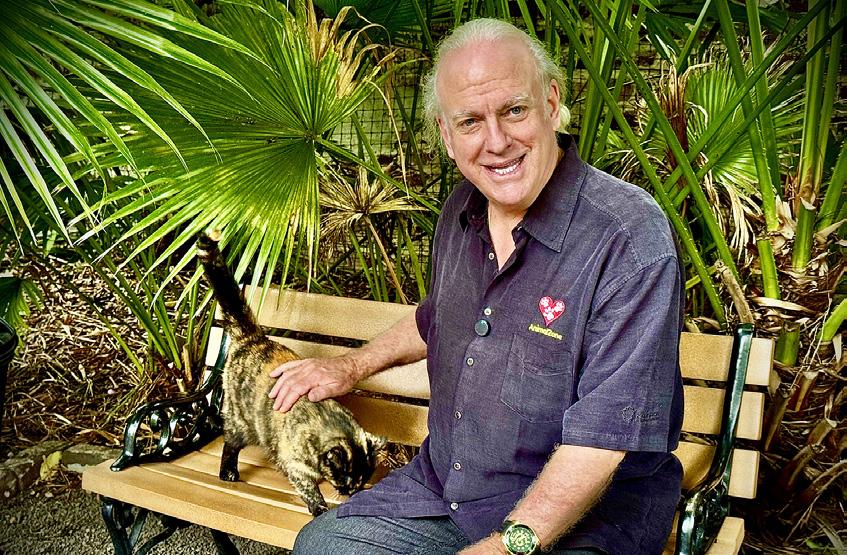
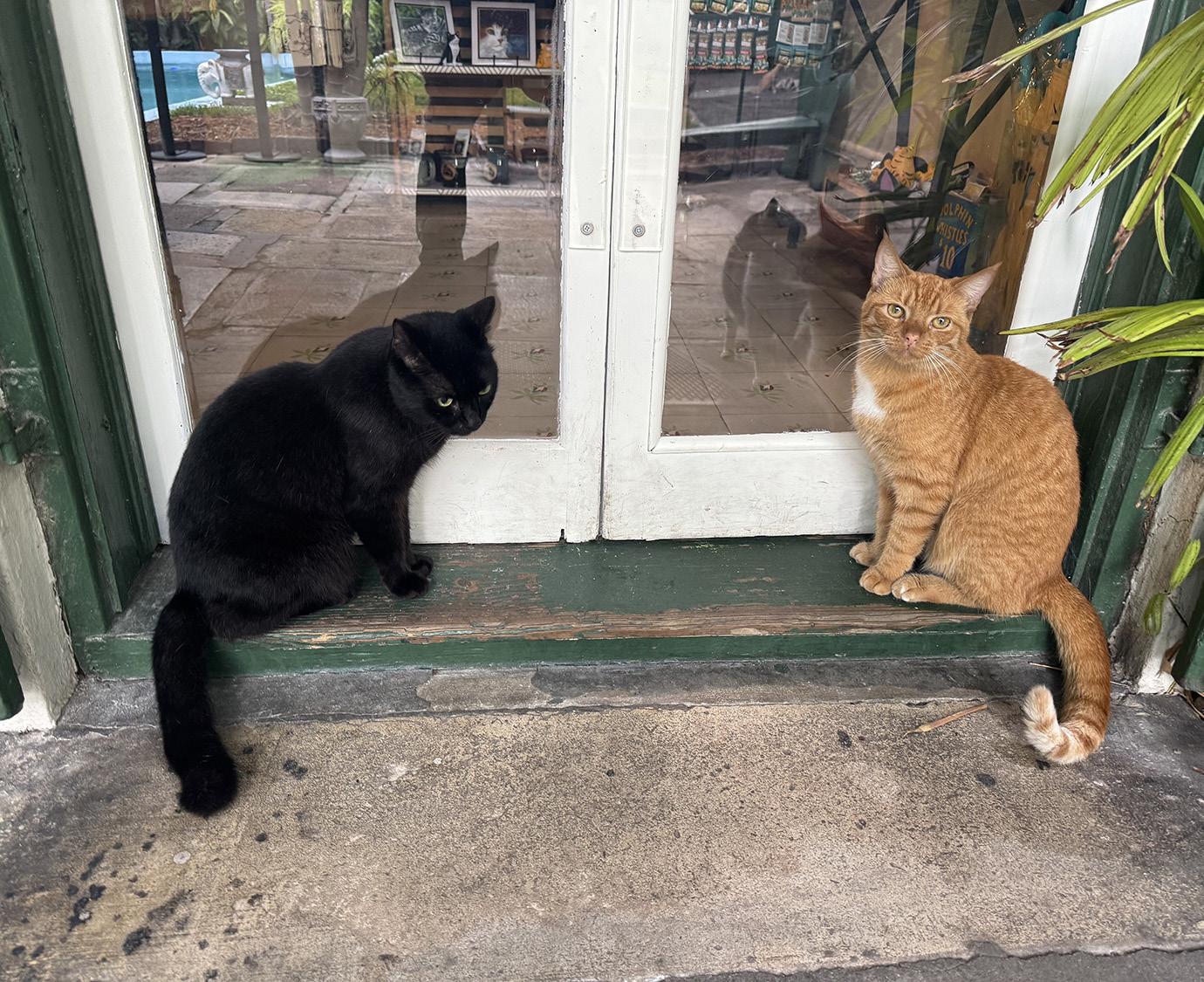

In a short story often retold by guides, Hemingway is said to have watched the cat stride confidently across his writing desk, its extra toes tapping lightly against the wood as if claiming the space. “A writer should have companions who understand independence,” he reportedly remarked with a grin. Snow White quickly became more than a pet; she became a quiet presence during long writing hours, a symbol of the unconventional life Hemingway embraced. From that single cat, a lineage still thrives today.
Visitors to the home will find more than 60 cats wandering freely through the lush grounds, nearly half of them polydactyl— possessing six, seven, or even eight toes. Once favored by sailors as good luck companions, these cats now form one of the most unique feline communities in the world. Their calm demeanor and regal independence echo the spirit of the man who once lived among them.
During a recent visit, AnimalZone guide Alexa Morgan led an engaging tour of the estate, granting access to Hemingway’s pri-
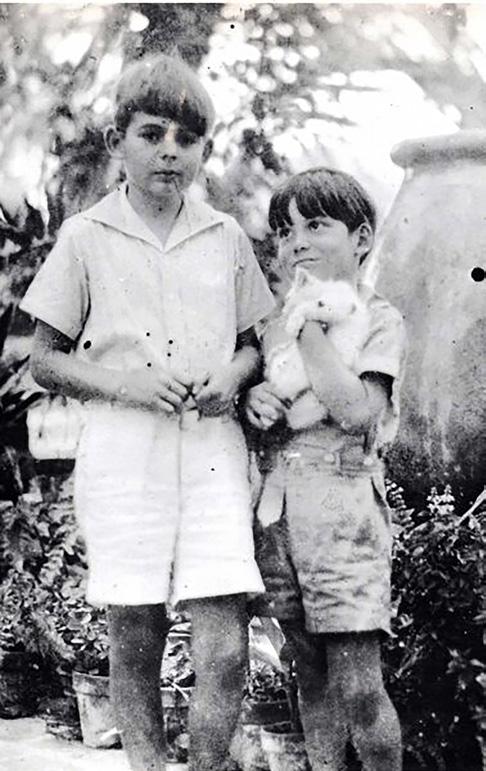
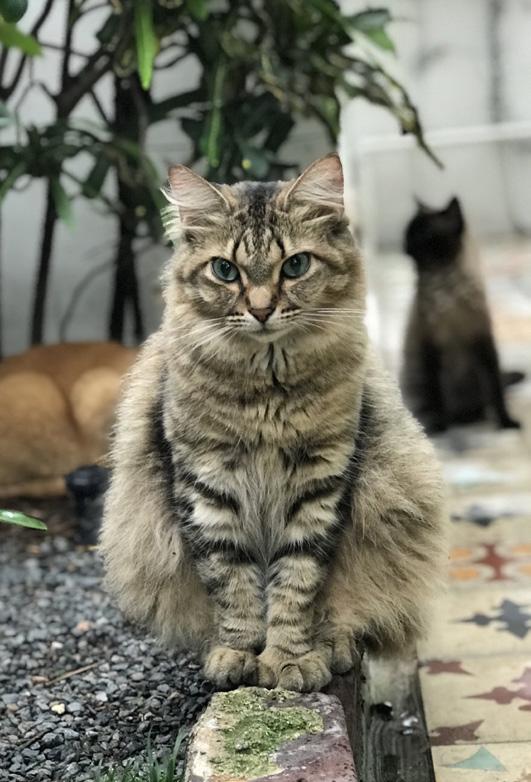
https://www.hemingwayhome.com/

vate writing studio. There, his original typewriter rests as if waiting for its next story, a silent witness to the creative force that once filled the room.
The caretakers continue Hemingway’s tradition by naming the cats after notable figures—among them Joe DiMaggio and Marilyn Monroe, adding a playful, personal touch to the experience. As AnimalZone host Arthur Von Wiesenberger reflects, these cats are not just residents; they are part of Hemingway’s enduring story.
To walk these grounds is to step into a living narrative, where literature, legend, and a quiet chorus of padded paws come together in perfect harmony.
“These cats are part of Hemingway's story,” says AnimalZone Creator and Host Arthur Von Wiesenberger, “and offer a personal look into the eccentric, creative figure we know him to be.”
Full episodes are available at animalzone.org, and on Plex, Tubi, Roku, Vimeo, and Pluto.