
THE QUIET POWER OF A RISING STAR
Seth Lee

ON THE LIVING WORLD AND PONDERING USES OF FOREST KNOWLEDGE by
Dr. Rob Moir




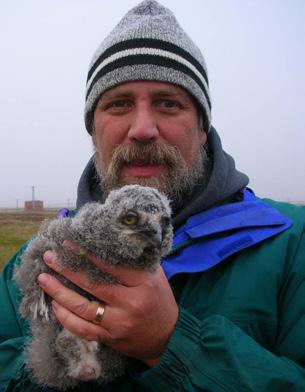
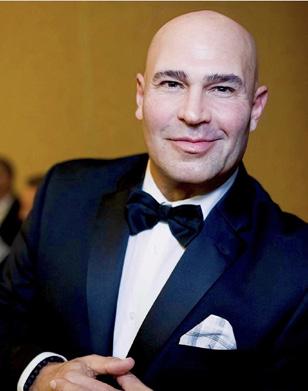
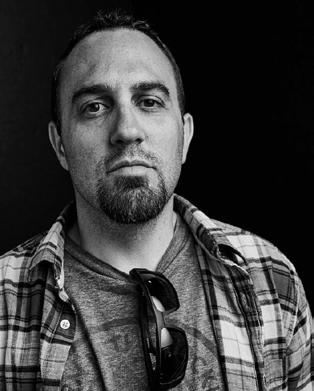
MEET OUR TEAM
Maryam Morrison
Dina Morrone
Brad wallace
Lisa Joy Walton
JSquared Photography @j2pix
Nikki Pattillo
Artin Mardirosian
Sheri Determan
Greg Doherty
Ben Rollins
Joe Santos, Jr. Philip Smith
Edward Hakopian
Emilie Macas
Polly Wirum
Benjamin D.Buren
Dr. Rob Moir
Paulette Dozier

EDEN
Since 2010
The Eden Magazine is a free online publication is your guide to healthy living, spiritual awareness, compassion and love for all living beings, holistic lifestyle, mindfulness, organic living, positive thinking, sustainability, and personal development
Founder & Editor-in-Chief
Maryam Morrison
Executive Editor/Contributing Writer
Dina Morrone
East Coast Liaison & Partnership Director
Paulette Dozier
Contributing Writers
Sadhguru, Isha Foundation
Dr. Rob Moir
Emilie Macas
Nikki Pattillo
Polly Wirum
Joe Santos, Jr.
Guest Writer
Philip Smith
Contributing Stylists + Makeup Artist
Edward Hakopian
Lisa Joy Walton
Graphics & Photography
JSquared Photography @j2pix (Los Angeles) Artin Mardirosian (Nexision) (Los Angeles) Benjamin D. Buren – AliveStudios.Com (Denver, SanFrancisco, Boston)
Sheri Determan (Los Angeles)
Greg Doherty (Los Vegas)
Ben Rollins (Atlanta)
Web developer
Brad wallace https://bradwallacedesign.com/
325 N. Maple Dr. Po Box 5132 Beverly Hills, CA 90209


TRUE MEANING OF YOGA Reflection on the teaching of Paramahansa Yogananda with Monk Brother Tyagananda




54 EXPLORING THE MYSTERY OF YOUR THOUGHTS by Polly
Wirum
60
BEEN... Joe Santos, Jr.
62 AN INTERVIEW WITH TIM WOODWARD Director of Animal Rescue Corps
68
FINDING PEACE IN THE CHAOS by Wendy L. Jackson
72
THE END OF FUR ON ETSY a turning point in Compassionate commerce
76 DOES CHATGPT HAVE ACCESS TO ALL OF OUR WINDOWS COMPUTER FILES? by Peter Doloman phD.
80 WHEN FRUSTRATION VISITS THE HEART





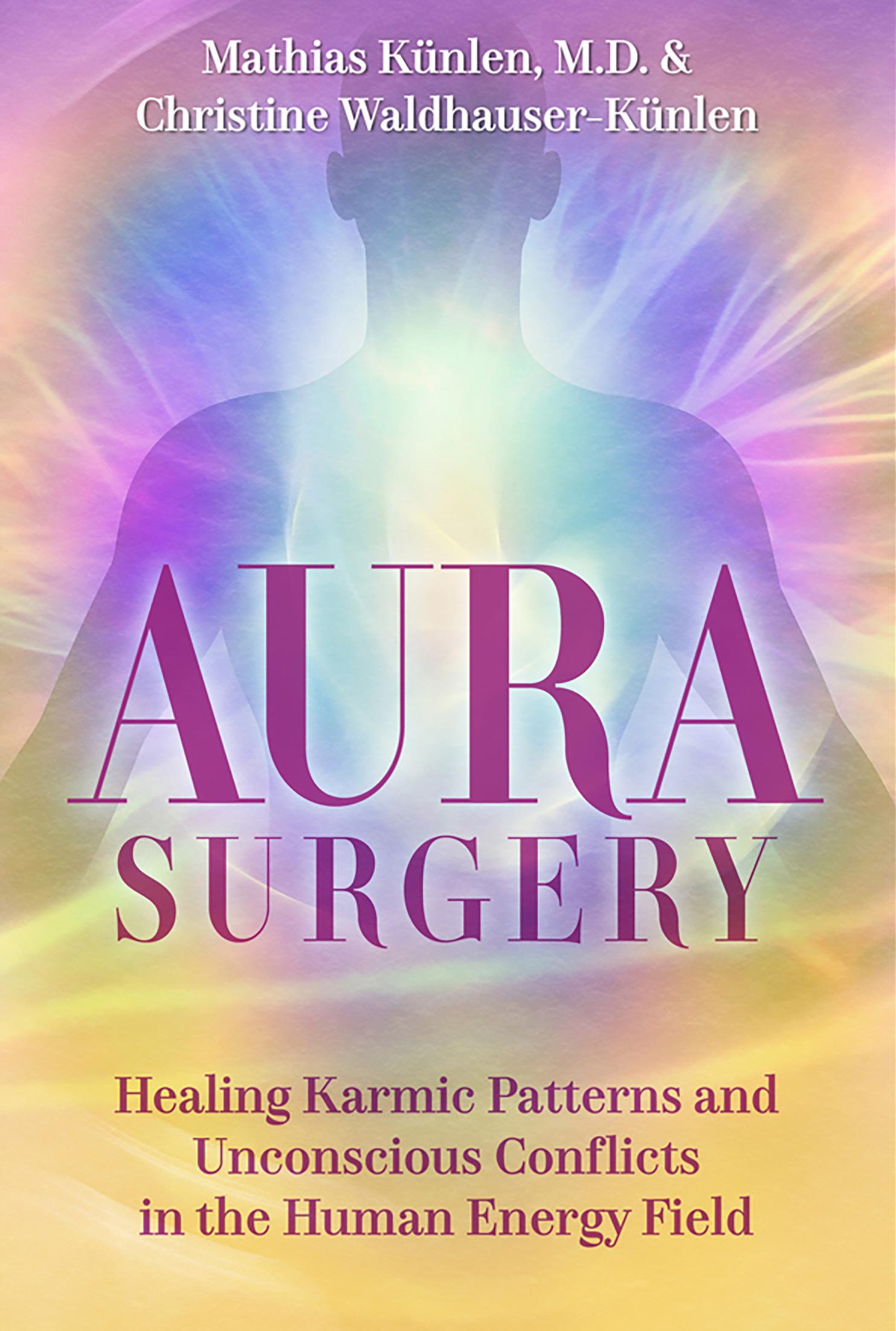
AURA SURGERY Whatis
by Mathias Künlen, M.D
What if the root of chronic illness, recurring emotional patterns, and even self-sabotage isn’t just physical—but energetic? In Aura Surgery: Healing Karmic Patterns and Unconscious Conflicts in the Juman Energy Field, neurologist Dr. Mathias Kunlen and Christine Waldhause-Kunlen present a groundbreaking perspective on healing that blends science, consciousness, and subtle energy work.
Drawing on 30 compelling case studies, Aura Surgery is a non-invasive method that works with the body’s energy field to identify and release inherited trauma, unconscious beliefs, ancestral wounds, and Karmic imprints, which are believed to manifest as emotional and physical illness. Through this innovative approach, Dr. Kunlen explores conditions ranging from panic attacks and diabetes to serious diseases, offering a new understanding of how unresolved energetic patterns may influence human health.

AAura surgery is surgery—quite literally. The term refers to non-contact operations on the subtle body.
What does that mean?
“Non-contact” means that the interventions performed by the aura surgeon occur “extracorporeally”; that is, without touching the somatic body of the patient and working exclusively in their aura, or subtle material body.
As the term suggests, “subtle material” refers to materiality, but in such a low density that this state is not visible to the human eye. Every organism is permeated by subtle materiality, but it is also surrounded by it externally.
Subtle materiality is the transitional phase between energy that is invisible to us and coarse material matter, which we can perceive with the naked eye. Physically speaking, energy and matter are equivalent, as expressed by Albert Einstein in the formula e = mc² (energy is equal to mass times the speed of light squared). This means that energy can be converted into matter and, vice versa, matter into energy.
It is precisely at this transition point that aura surgery takes effect. The therapist sets impulses at the spiritual level that lead to changes: first in the subtle body, and finally in the coarse material body of the patient.
For example, cysts or gallstones frequently regress in their corporeal form after aura surgery—with a time delay of weeks to months— and consequently no longer appear in imaging techniques, such as ultrasound, X-ray, or magnetic resonance imaging. In this respect, these are genuine dematerializations. Conversely, using aura surgery procedures, physical structures can also be newly formed as materializations.
The operating principle of aura surgery follows this sequence:
Information—Subtle Materiality— Coarse Materiality
What Does My Aura Surgery Setting Look Like?
My patients frequently arrive with a long history of suffering. They are often considered to have “no further treatment options”—a gentle phrase for a hard reality, one might say, meaning nothing other than that conventional medicine has given up.
At the beginning of the session, I inquire about the reason for their visit as well as their complaints. However, I do not perform a full anamnesis, which takes into account the patient’s entire medical history. A description of their symptoms alone is enough for me to develop an idea of where to look from an energetic-informational perspective.
This is because the specific disease of an organ is not decisive. The very fact that it is diseased is what provides me with insights into the biological purpose and the informational causes behind it.
How Do I Arrive at a Diagnosis?
The key to the diagnosis is resonance! What is “resonance,” and how does it arise? Resonance (from Latin resonare, to resound) describes the fact that when the therapist reaches into the patient’s aura the patient feels it physically.
Resonance can even be triggered at a distance of up to several meters when the therapist uses certain hand techniques to reach into the patient’s subtle body. Another way to trigger resonance is for the therapist to apply pressure with tweezers to the image of an organ or a plastic organ model (called a “surrogate”) or to poke it with a surgical probe.
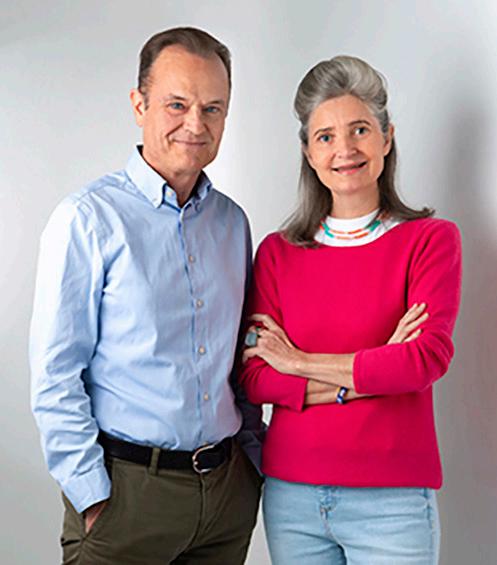
Mathias Künlen, M.D., is a doctor of neurology and founder of the institute for Aura Surgery (IFA Institut für Aurachirurgie) in Liechtenstein. He is also the founder of Softmark AG Grünwald, which develops software in cognitive computing and bio-programming. He practices near Munich, Germany.
Christine Waldhauser-Künlen is a journalist with a background in political science. She has been researching nutrition and holistic medicine for more than 30 years.
Aura Surgery by Mathias Künlen, M.D., and Christine Waldhauser-Künlen, published by Inner Traditions International and Bear & Company, © 2026. All rights reserved. www.Innertraditions.com
A true paradox: This resonance phenomenon occurs even when the patient has their eyes closed or when the therapist is working behind them. The principle of resonance is reproducible and indicates that the corresponding organs are energetically disturbed and in a suitable state to receive treatment using aura surgery.
Resonances tend to be mild. The patient feels a slight pulling, stabbing, pressing, or tingling feeling in the part of the body being examined. In rare cases, however, this sensation can be intense. I have had patients who cry out and even jump out of the chair when I insert a surgical probe into the intervertebral space of a plastic model of a spine, for example, and hit the exact point at which they are experiencing symptoms related to their herniated disc.
Resonance is the central element of aura surgery!
It either occurs or it does not, following a binary principle.
Resonance directly correlates with the clinical symptoms: The more pronounced the symptoms, the more intense the resonance. At the same time, it corresponds to the location of the symptoms. This makes it an infallible diagnostic tool. I can pinpoint exactly where the energetic disturbance is located in the organ, enabling me to perform the aura surgery right at that point.
The decisive factor is not the morphological modification but the energetic disturbance. In practice, I often find that morphological diagnostics, such as those provided by X-rays, do not necessarily align with the energetic findings or with the symptoms described by the patients. I repeatedly observe discrepancies between morphological and clinical findings, both in location and intensity.
Example: The radiological examination of the spine shows a herniated
disc between the fourth and fifth lumbar vertebrae, whereas the patient describes symptoms that do not show up as corresponding morphological modifications on the X-ray. Instead, their complaints and my examination results indicate a disturbance one segment above or below.
Also, the severity of the morphological change does not necessarily correlate with the extent of the symptoms or the energetic disturbance. This means that the radiological examination can show a massive arthritic change in the patients’ joints, yet they move with no pain at all.
Conversely, some suffer from extreme pain, even though the radiological findings are unremarkable. It is quite obvious that the mind determines the intensity of the individually perceived symptoms.
Experience shows that symptoms and resonance correlate much more closely than symptoms and morphology. If a person is suffering from symptoms in a specific body area, it can be assumed that, when tested for resonance, there will be a corresponding positive result, meaning that they will feel a slight pulling, stabbing, pressing, or tingling sensation.
On the other hand, if there are no symptoms associated with an organ, even though it is morphologically significantly changed, the likelihood is high that no resonance will be triggered there. This insight has significant consequences for therapy. Aura surgery is performed according to the resonance principle, not morphological change. Consequently, this means that the expected therapeutic success is greater.
From the perspective of a mind searching for logical proof, a healing method like aura surgery may seem strange, possibly even implausible. However, it is not necessary for proof of its effectiveness to be provided through materially measurable chains of evidence.
YOGA the True Meaning of
Reflections on the Teachings of Paramahansa Yogananda with Self-Realization Fellowship Monk Brother Tyagananda
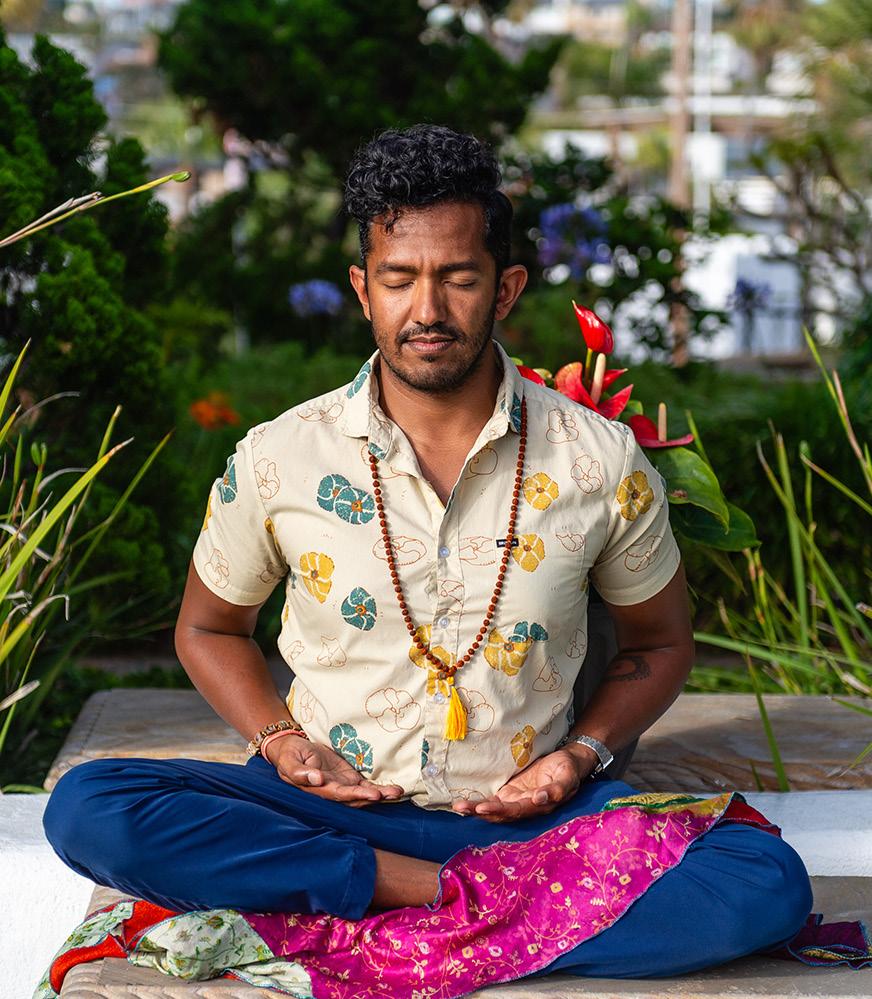
In honor of the International Day of Yoga (June 21), we sat down with Brother Tyagananda, a monk of nearly 40 years with Self-Realization Fellowship, the organization founded by the author of Autobiography of a Yogi, Paramahansa Yogananda. In this interview, we discuss the true meaning of yoga and how India’s ancient science of yoga is relevant for today’s modern world.

Photo by
What is yoga, and how has yoga changed over time?
When people think of yoga, they often think of physical exercise in the form of yoga poses or asanas, known as hatha yoga. However, the original purpose of the yoga asanas was to still the body for meditation, the deeper form of yoga. It was only in the last century or so that yoga poses became popularized as a physical fitness routine in the West, whereas the word yoga can be traced back approximately 5,000 years to some of India’s oldest sacred texts.
From Sanskrit, yoga or “yuj” translates to “union,” which can be interpreted in many ways. According to Paramahansa Yogananda, one of the first spiritual teachers to bring yoga to the West, yoga is the union of the individual soul with Spirit, and the methods by which this goal is attained.
At the heart of these methods is the practice of meditation, which gradually calms the body and quiets the mind, allowing us to focus our attention within and experience a spiritual awakening, one in which we attune with our soul.
Yogananda describes yoga meditation this way in his monumental translation and commentary on the Bhagavad Gita, "Yoga meditation is the process of cultivating and stabilizing the awareness of one's real nature, through definite spiritual and psychophysical methods and laws by which the narrow ego, the flawed hereditary human consciousness, is displaced by the consciousness of the soul.”
When you identify with this soul, and not the body or the mind, you realize yourself to be one with the Divine. That is true yoga.
What is the science behind yoga and meditation?
The science of yoga is empirical, meaning it is verifiable by observation or experience rather than theory or speculation alone. Yogananda taught that to experience the divine union yoga promises, we can approach meditation as a science experiment, one that yields specific results when you meet certain external conditions and follow a precise step-by-step process, in this case, a process that has been tested, tried, and true for millennia.
Some people find little progress with their meditation practice because they are missing essential steps or conditions to calm the body and mind. Some of these steps include assuming the proper meditation posture, or asana, sitting with the spine erect, hands placed upward on the thighs, and eyes closed, with the gaze gently focused on the point between the eyebrows. When we sit still and close our eyes, the breath slows down and this helps us, as Yogananda explains, “to switch off or on, at will, life current to the five sense telephones of sight, sound, smell, taste, and touch,” so that we can more easily bring our mind and life energy inward and upward toward the higher levels of consciousness in the spine and brain.
Yogananda says: “Man’s experience of joy originates in the brain, in the subtle center of Godconsciousness that the yogis call the sahasrara, or thousand-petaled lotus. Yet the actual feeling of joy is experienced not in the head but in the heart. From the divine seat of God-consciousness in the brain, joy descends into the heart center and manifests there. That joy comes from God’s bliss, the essential and ultimate attribute of Spirit.”
Photo courtesy of Self-Realization
Los Angeles, Calif.
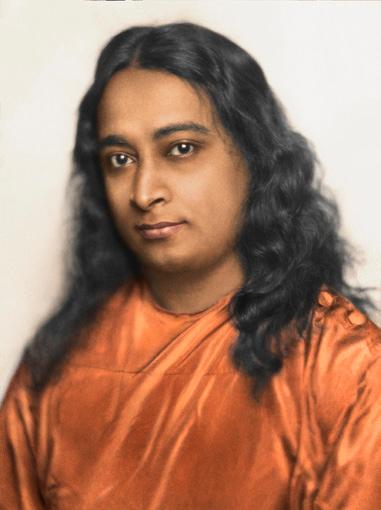
Paramahansa Yogananda (1893-1952) first arrived in America in 1920 from his native India, an invited delegate to an International Congress of Religious Liberals convening in Boston, where he delivered a speech on the science of religion, marking a pivotal point for yoga in the West. Yogananda founded the Self-Realization Fellowship that same year to disseminate his Kriya Yoga teachings, which have inspired many through the years to cultivate their divine qualities and live with greater peace, joy, and purpose. Yogananda’s spiritual classic Autobiography of a Yogi continues to be recognized as one of the world’s most influential books.
For more information about the yoga meditation teachings of Paramahansa Yogananda, please visit Yogananda.org.
To find that everlasting and all-fulfilling love, joy, and peace, we need to go within and reunite our soul with Spirit. Yoga meditation teaches us how to do that. This doesn’t mean that what we do in yoga class isn’t real yoga. But it does invite us to approach these postures with a different mentality, one in which we see the practice of movement and breath as a means to an end, preparing the body and mind for stillness. For it is only in that stillness that we are able to encounter the peace of the soul, which is who we really are.
For someone who lives a busy life, is it possible to achieve the same state of peace as a monk? Which yoga teachings can help someone manage day-to-day stress?
You do not need to retreat to a Himalayan cave or a monastery to find inner peace. Yogananda brought yoga to the West specifically to show all seekers, whether they be householders or monastics, how to achieve Self-realization, which he defined as “the knowing — in body, mind, and soul — that we are one with the omnipresence of God.” While this may seem like a lofty goal, it all starts with meditation.
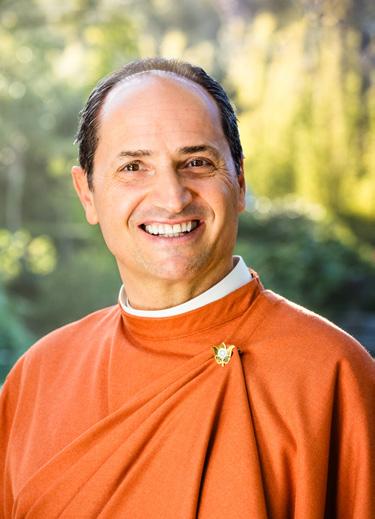
Brother Tyagananda, whose name means "bliss through inner renunciation," has been a monk of Self-Realization Fellowship for nearly 40 years. He currently serves as a minister at the SelfRealization Fellowship Lake Shrine in Pacific Palisades, California. Born in Italy, Brother Tyagananda has lectured on the teachings of Paramahansa Yogananda in major cities across North America and Europe.
It can be helpful to view meditation as a time for connecting to what’s sacred; so, find a quiet space without distractions, perhaps in front of an altar, where you can withdraw for a period from the world and all worries. Yogananda emphasized the importance of meditating regularly if you want to experience positive changes in your life. No matter how long you can sit still, the most important factor is your will to concentrate on finding God within yourself. Through practice, one may experience immediate benefits, such as lower stress levels, normalized or lower blood pressure, and feelings of calm. But the deeper, spiritual gifts of meditation come with devotion and consistency.
Do I need to have a Guru to practice yoga?
No, but the path will be clearer, and the results will be better if you do. Why
is this? Simply put, a true guru has reached the goal of yoga—union with Spirit—and can show those of us walking the path the quickest way to get there too. A God-realized teacher who has attained what we aim to achieve in our meditation practice can transmit the wisdom that’s needed for our soul’s evolution and guide us to the goal.
How can I enhance my yoga meditation practice to truly get the most out of it?
The practice of pranayama is the basis of scientific yoga meditation. Pranayama means life-force control — techniques that work with the subtle energies and consciousness in the body to gradually lift it to higher experiences of soul-awareness. These are simple yet powerful methods which I practice in my daily meditations, ranging from muscle tension-and-relaxation exercises to Kriya Yoga, an ancient pranayama technique reintroduced to the world in modern times by Yogananda’s lineage of gurus — and which Yogananda found to be the most effective method for interiorizing the consciousness to perceive God within. These techniques and others can be learned in the Self-Realization Fellowship Lessons, a home-study course created by Yogananda to disseminate his teachings worldwide.
In addition to meditation techniques, it is essential that we live in harmony with cosmic law. What we do in our daily activities translates into our meditation and vice versa. From practicing non-violence and right speech to engaging in proper diet and exercise, the way we conduct our lives and relationships directly influences how much we can get out of our meditation practice. You might think of positive actions in life as creating a sturdy foundation on which to build your spiritual life.
Yogananda said: “In following the spiritual path of right action and of right methods of meditation for the purpose of realizing God, there is no waste of any spiritual toil, and all efforts are divinely rewarded.”
Fearless Heart
INTERVIEW ROSALEE Mayeux
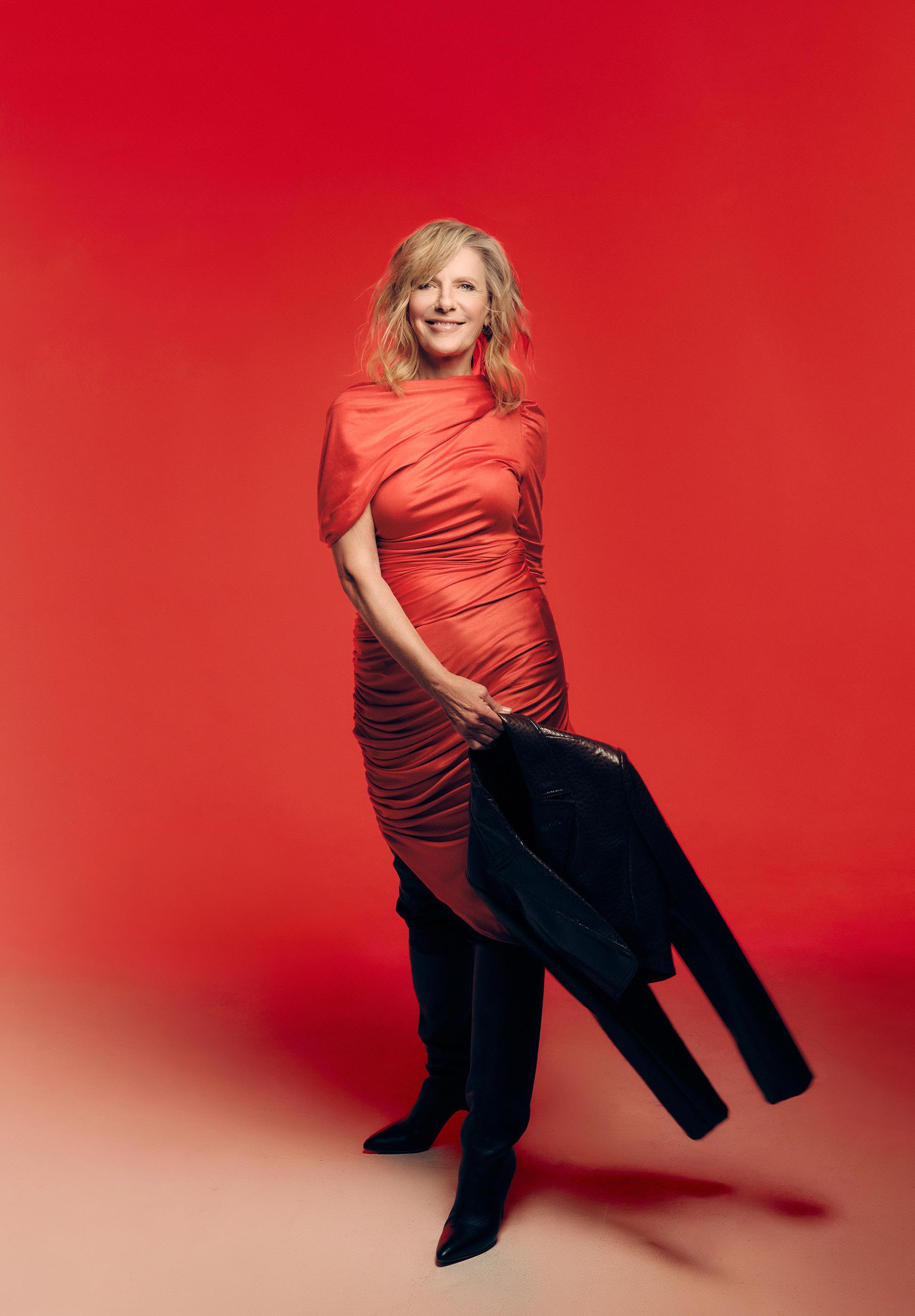
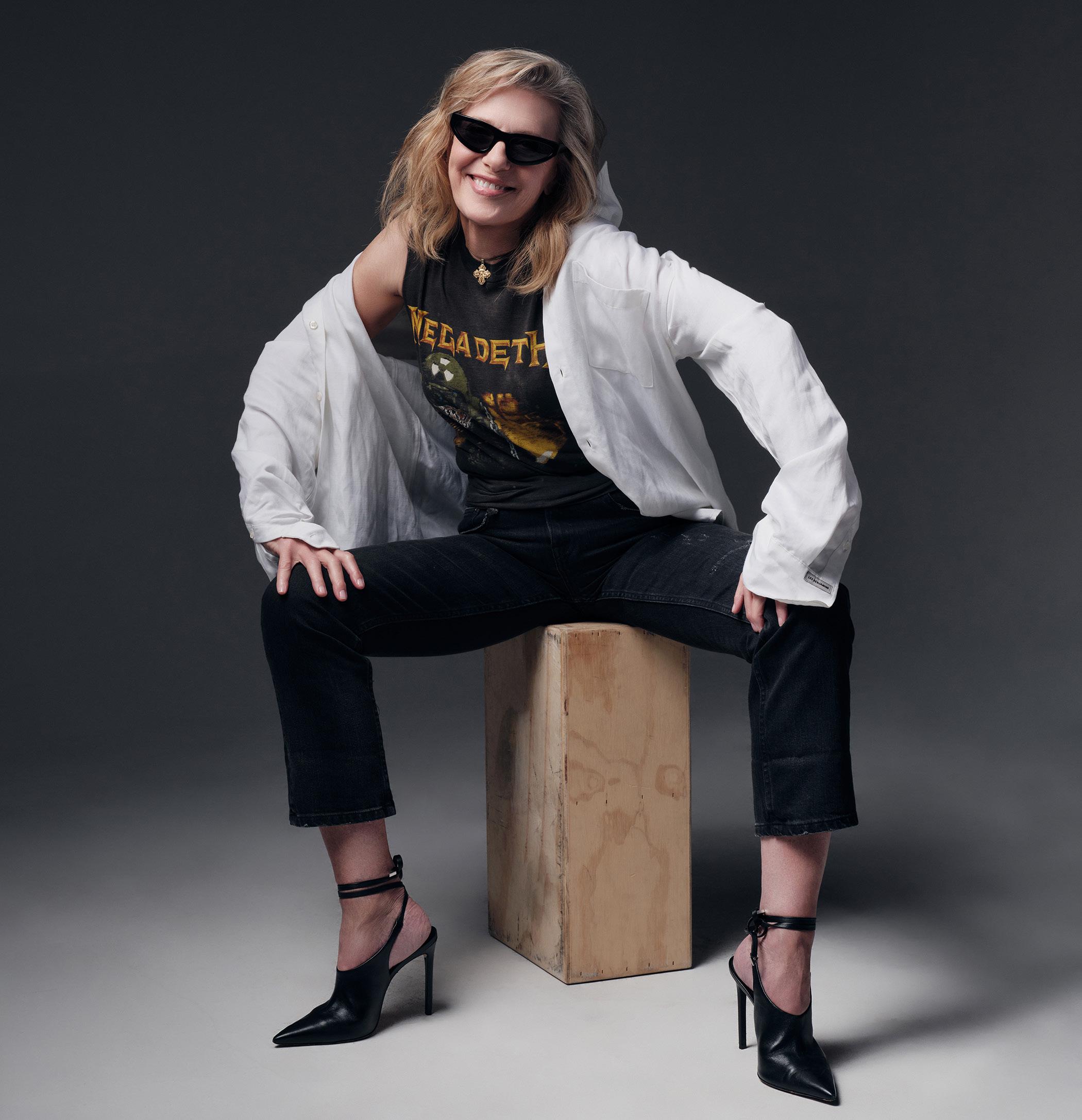
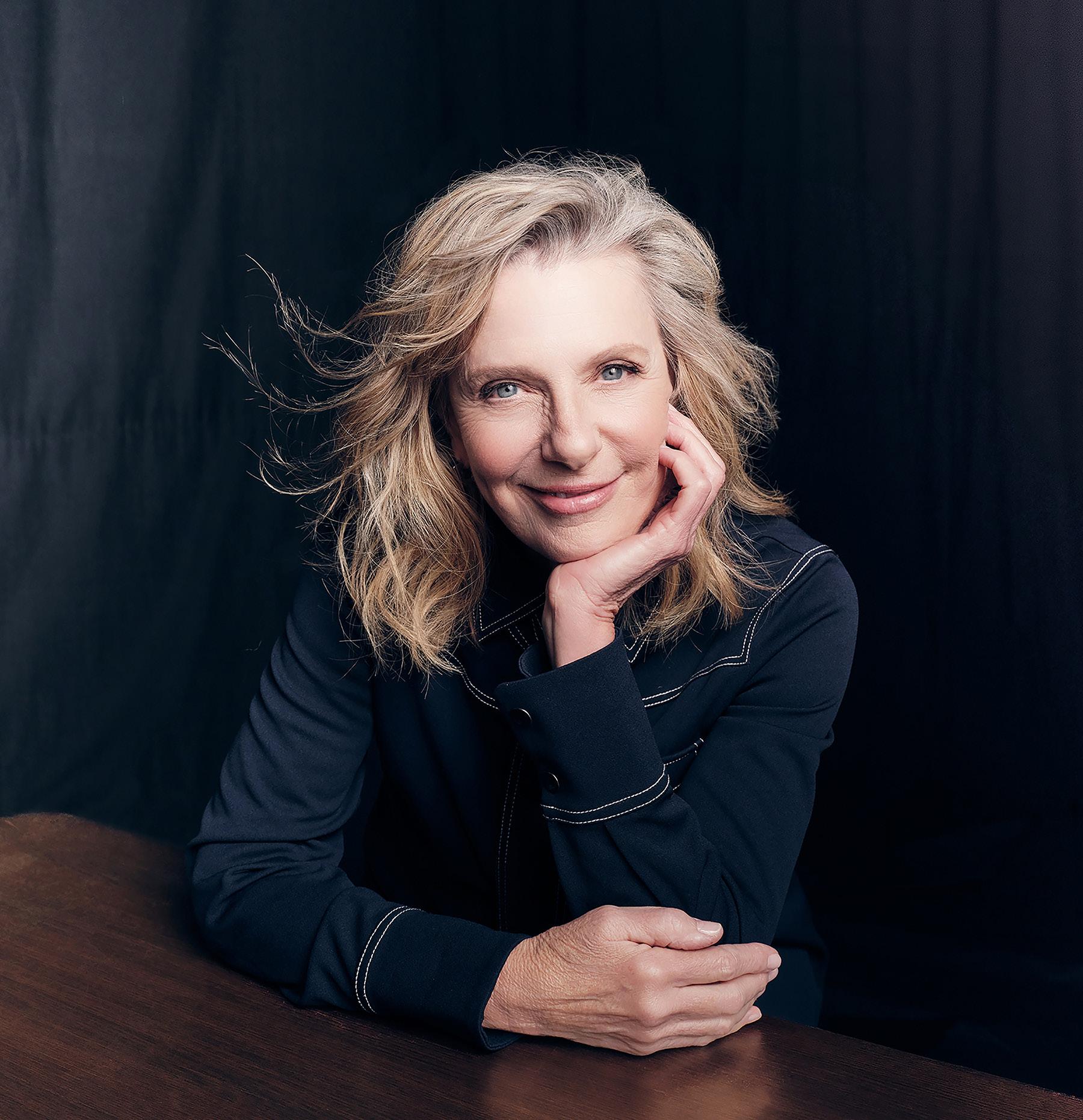
Not every journey follows a straight line; some unfold in unexpected ways, leading us through different worlds, identities, and versions of ourselves before we arrive at a deeper truth.
Rosalee Mayeux’s path is a reflection of that evolution.
From the glamorous runways of the fashion world to the ever-evolving landscape of Hollywood, and now onto the stage as a stand-up comedian, Rosalee has embraced life with courage, honesty, and a willingness to begin again. Yet beyond the spotlight, her story is deeply human, woven with the experiences of motherhood, personal challenges, and the quiet strength it takes to rebuild oneself from within.
What makes Rosalee’s voice so compelling is not only her talent but her truth. Through humor, she shares the realities many feel but rarely express, the complexities of identity, the vulnerability of change, and the healing that can emerge when we allow ourselves to be seen as we truly are.
In a world that often asks women to remain the same, Rosalee Mayeux reminds us that growth is not only inevitable but necessary. It is never too late to rediscover our voice, to reclaim our joy, and to step into a new chapter with grace and authenticity.
In this intimate conversation with The Eden Magazine, she opens her heart to share the lessons, the laughter, and the light she has found along the way.

“
If you are willing to do what it takes to save your life. You have the choice to just give up, because they know how hard it will be to go through what you’ll have to do to live. So that’s when you say to yourself, " What do I want?
Your journey has taken you from high-fashion modeling to acting, and now to stand-up comedy. How have these different chapters shaped who you are today, not only as an artist but as a woman?
Modeling and acting, I was always in trouble for being too funny on set. I even had a comedy contract with ABC, so they should have known. Now in standup, being able to finally say what I have to say is a dream come true. To have people relate to my stories, sometimes agree with, or even strongly disagree with, my ridiculous take on things, is living to me!
“The very thing I was most afraid of has come to pass, and it’s ridiculous.”
That’s a quote from me.
You’ve experienced reinvention more than once in your life. What gave you the courage to begin again, especially during moments when the path ahead was uncertain?
For me, it was easy because I honestly didn’t think I was starting a new career; I was just regaining my sea legs after a huge amount of chemo, telling stories, like I always do, and
making people laugh in my kitchen. But then, I realized the power I could derive from being honest on stage, talking about things from my life that I had always laughed about. And maybe make other people’s loads lighter in the process. Occasionally, I do the Southern thing where I just get overwhelmed and “take to the bed.” I give myself time to grieve over all my likely failures to come. Then I think, well, what’s the worst that can happen? Does somebody publish your worst failures on the cover of the NY Times? Well, so what! I can live with that.
As a mother and performer, you've lived both very public and deeply personal roles. How has motherhood influenced your voice as a comedian and storyteller?
When I first started writing my standup, I apologized to my kids. I asked their permission to actually talk about them. I said, “I’m so sorry, but all I can think of is stories about you." They said, "That’s okay, Mom, if ever we become standup, all our stories will be about you." And believe me, they have the material, ha!
Comedy often comes from truth, and sometimes from pain. Have there been moments in your life where humor became a form of healing or transformation?
I think every writer has this experience. Either we can delve more deeply into pain with a pen, and it can take us down, or putting our words on paper will inevitably transform into laughter. Has to. That’s mental health. My story, Coyote Nights, which won the Columbine Award at a festival celebrating non-violence, is a true combination of humor and pain. And I wove it into my special, Model Mom for Comedy Dynamics. CD made me feel like the combo of humor and heart is such a great accomplishment in this piece, and I’ll be forever grateful to them for taking a chance!
What is one moment in your life that was completely unexpected but ended up becoming one of your favorite stories to tell on stage?
Oh, there are so many. I end up falling in love with reliving my stories. One night, exhausted from performing my life stories over and over, certain I was so boring no one would want to listen to my drivel, I just started doing my life in a run-on sentence, with cadence to match the experiences. It was magic. That turned into what I now know will be my next special. I can’t wait to shoot.
Can you share an unexpected moment or surprise from a fan that had you laughing uncontrollably while you were on stage?
Yes! I was telling stories about my boys needing to borrow $500 dollars, and asking if anybody owed their Mama money. This group of girls was in the second row, and I could hear them screaming with laughter. After the show, they came to find me and told me, Oh my God, I’m going to go home and pay my Mom the $500 I owe her tonight! That was priceless.
Is there anything you learned during your modeling career that has influenced or improved your approach to stand-up comedy?
Oh, I guess just being able to withstand the pressure. With modeling, it was about being perfect, and now it’s about being myself. But they both challenge you to have a kind of fortitude, to not let the criticism destroy your art form or your joy. I feel standup is today’s poetry, from the personal to the state of the world. And that’s very healing.
What do you do mentally and physically to keep yourself grounded and ready to attack each day?
I walk out to where the plum tree is in the yard, and bury my feet in the dirt. I might also mention it has gnarly debris in the soil, so it’s not always pleasant, lol. But I definitely love dirt. My grandpa was a farmer, and he used to say: A day with your hands in the dirt is a day closer to your Maker.

Special Thanks to Rosalee Mayenux
Photographer: Storm Santos
Stylist: Anna Schilling
H&MU: Kimberly Bragalone
H&MU Assistant: Alysha Marcantonio
Edited by Dina Morrone
You’ve faced personal challenges, including health struggles. What did those experiences teach you about resilience, self-love, and the meaning of life?
Well, having my sons definitely taught me how to love. And getting so ill restored my connection with them, as they were already in their 20s, grown men. I also had to decide to live, right? Doctors don’t say: " This is what’s wrong and here’s what you’re going to do anymore. They ASK you if you are willing to do what it takes to save your life. You have the choice to just give up, because they know how hard it will be to go through what you’ll have to do to live. So that’s when you say to yourself, " What do I want? Feeling like the boys in their 20’s were truly too young to leave, that’s when I decided to fight. I wasn’t ready to leave my knuckleheads alone yet. There was still so much I wanted to tell them!
In a world that often defines women by age or image, especially in Hollywood, how do you stay connected to your authenticity and inner worth?
Definitely through prayer and meditation. I have full-on conversations with my dead parents in the bathtub daily, ha! I adore going out at night, seeing fellow comedians and writers, hanging out in the back of the Comedy Store or the Improv, all of us laser-focused on writing the next stupid joke we can’t wait to try. It’s a blast. And having fun very much connects me to my true inner self. Also reaching out to old friends from grade school. All these grounds me.
Looking at your journey today, what message would you share with women who feel it may be “too late” to follow their dreams or reinvent themselves?
To women who have lived, remember all you’ve accomplished. Then build on that. I always tell my kids, you only work for yourself, no matter what your job is. Your duty is to live life and not let jobs, work, marriage, your health challenges, or even your own children make you forget who you are. That’s very hard to do, trust me, I know. But I’ve failed enough times.

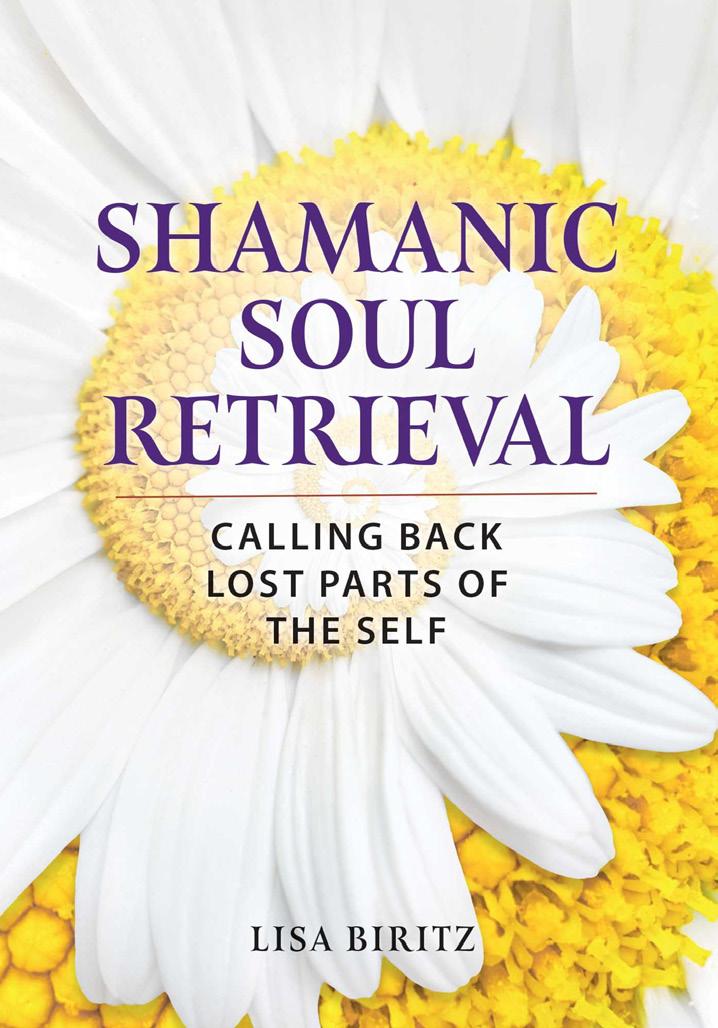
SOUL Retrieval What Is
by Lisa Biritz

Photo by Alexander Krivisky
We are all familiar with the phenomenon. Some people are just bursting with vitality and seem ageless, even though they may already be well past retirement age. But it has nothing to do with plastic surgery because their lives are clearly visible in the lines on their faces. These people often seem to have more energy than some of their younger contemporaries, who could be their grandchildren. Looking at them, you might think in admiration that you would also like to age in the same way.
Where does this energy and vitality, independent of age, come from? Where does our life force come from in the first place?
As is often the case, the answer is so obvious and simple that we readily overlook it: the soul contains our life energy. Like a glowing, luminous ball of light, it gives us vitality. In Hawaiian huna shamanism, for example, the soul is even described as a “bowl of light and life.”
The soul: a luminous sphere of light
When I perform healing work, I ask my clients to imagine their soul as a vibrating, glowing ball of energy. As soon as they close their eyes, they can nearly always see their soul sphere clearly, and also see where parts are missing.
Over time, due to painful and traumatic experiences, fragments of our soul energy may leave us. In modern psychology, this phenomenon is known as dissociation; in shamanism, it is called soul loss. When there is no possibility of changing or healing a painful experience, parts of
the soul split off and leave. This act of leaving and finding a safe place where the soul's fragments can no longer be hurt is often the only strategy we humans have left to protect ourselves. At the same time, all memories of the painful event follow the soul fragments, which is why traumatized people frequently cannot remember stressful events at all.
When fragments of the soul are missing, we feel dull, incomplete, and lacking in essential life energy. The consequences can range from constant fatigue, depression, chronic illness, addiction, and recurring accidents to personality disorders. We feel as though we are not really living but are functioning on “automatic pilot” or as if we are living our lives for something or somebody else. These fragments of the soul do not return on their own.
Where do these soul fragments go? They consist of energy, so they continue to exist since energy is never lost; physics teaches us this, too.
These missing soul parts can be very close to us, often even still within our energy field, but they can also hide or go astray in remote areas of the Earth or the galaxy, or even in parallel universes.
In the shamanic worldview, everything is connected with everything else; all is one. This interconnectedness is also confirmed by quantum physics, which talks about the “quantum field” and “quantum waves.” This is why it is possible to bring back to our soul those fragments that have splintered off, along with their associated characteristics.
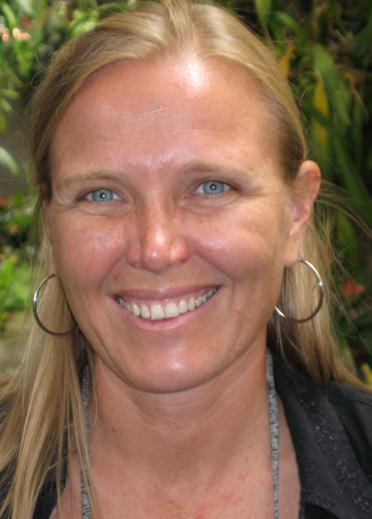
Lisa Biritz studied shamanism with Sandra Ingerman (Core Shamanism) and Sun Bear in the Hawaiian Huna tradition.
Lisa divides her time between Hawaii and Austria, where she leads seminars and organizes unique experiences, including encounters with dolphins and whales in the wild. She also authored Shamanic Star Wisdom Oracle.
More information about Lisa is available at: https://lisarainbow.com/ Shamanic Soul Retrieval published by Inner Traditions International and Bear & Company, © 2026. All rights reserved.
But how do we do this? How do we bring back soul fragments? How can we guide our soul back to its full vibrancy once more? The answer is with shamanic soul work and its tens of thousands of years of traditional practice. Soul retrieval fills the “hole in our soul” so that our life force can return, and we may be joyful about life again.
The information presented in this book is based on Core Shamanism. This type of shamanic work has been supported by the World Health Organization (WHO) since 1980 as being just as effective in the treatment of psychosomatic problems as psychotherapy, and likewise in maintaining a healthy balance of the four aspects of being human: body, mind, emotions, and soul.
Exercise
The healing work of the glowing “soul sphere.”
Begin by making yourself comfortable, sitting down, and relaxing. Close your eyes and take your time to calm and settle yourself. In your mind’s eye, visualize your soul as a shining ball of light.
Take the time to observe it closely. What color is it? Perhaps more than one color? Is it glowing or pulsating? Is it complete, or are parts missing? Do you see splinters, nails, or dark spots? You might also receive inner images or insights into how these holes in your soul were created or from where the wounds originated.
Now imagine a wide, cleansing beam of light permeating you, suffusing your body and your soul from top to bottom. This powerful beam of light flows up through you out of the magma of the inner Earth, flooding up into the endlessness of the universe. It cleanses
you of all old energies, past injuries in your cellular memory, and external influences—energies that do not originate from you but that have been deposited in you.
Its color brings feelings of well-being: crystal white, glowing red, a rainbow of color, whatever healing colors may show themselves to you.
Allow this stream of light to flow through you for as long as you like.
Now visualize a bright ray of pink light streaming down from the stars and the sky like a gentle spring rain. It carries with it parts of your soul essence, soul fragments that are ready to return to you.
Feel how these parts of your life energy, your vitality, flow down through your crown to permeate you. Feel how you become warm inside, how you relax and feel good.
Allow it to suffuse you with light for as long as you like.
Now notice how much the glowing sphere of your soul has changed. When you are ready, open your eyes once more.
Suggestion
Make a painting or drawing of your soul sphere as you see it now. There is no need to spend a long time on this; the image does not need to be beautiful or perfect. What is important is that you depict what you perceived.
This exercise can be repeated many times, visualizing and then drawing your soul as you work to make it whole. Healing the soul is often a prolonged process, but with the aid of such images, it can be successfully achieved and documented.



A New Generation of Hollywood Sophistication
SethLee


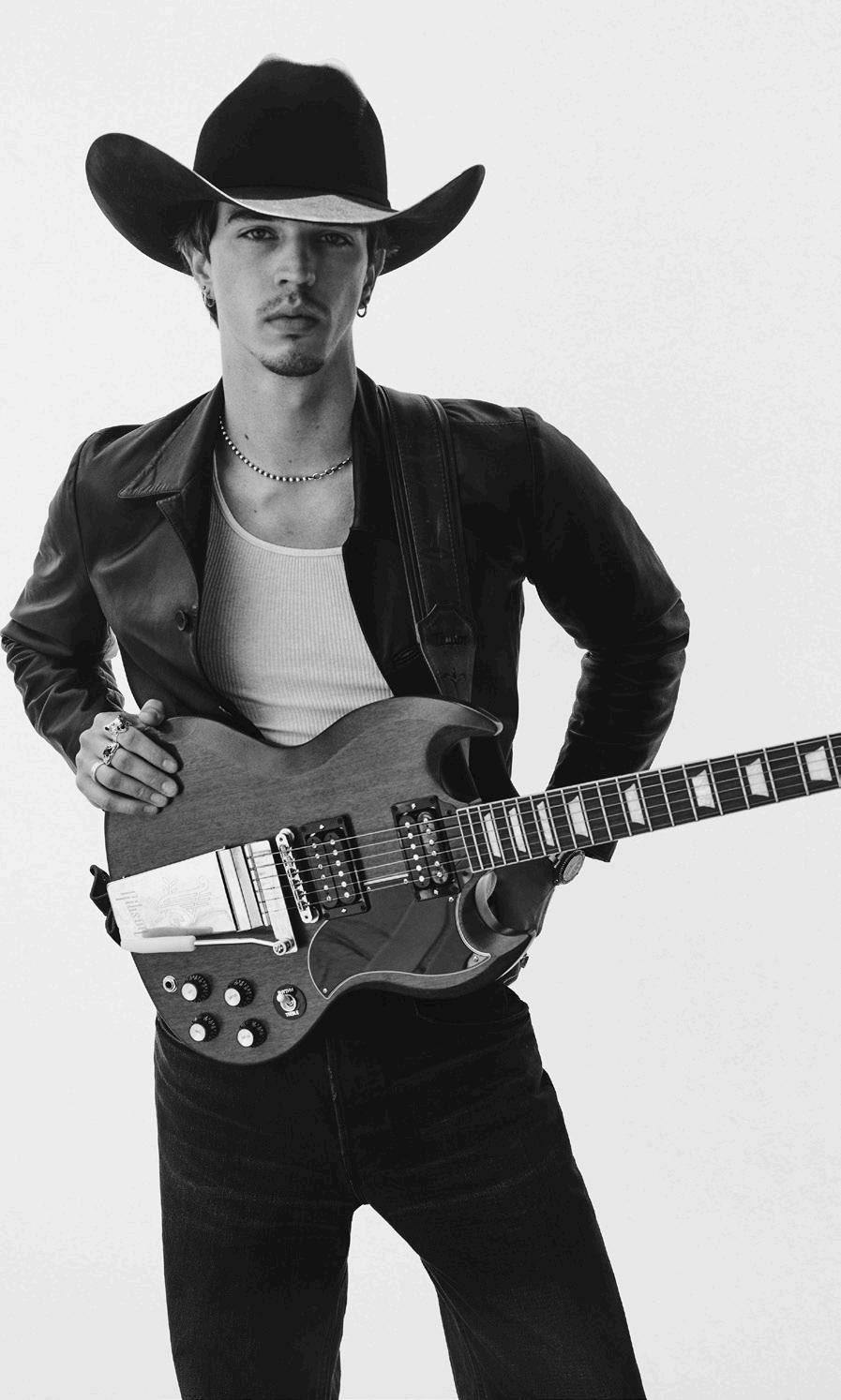
BBorn in Austin, Texas, Seth Lee moved to Los Angeles at age 11 to pursue his passions for acting and martial arts. A rising talent in Hollywood, he is recognized for his performances in The Accountant and the hit series 1883 and has also made a name for himself in the fashion world through collaborations with luxury brands including CELINE, COACH, and AMIRI.
Beyond the screen and runway, Seth is an accomplished martial artist who began training at just seven years old. His dedication earned him three world titles, along with black belts in Taekwondo and Cinematic Martial Arts (CMA), showcasing the discipline and versatility that continue to shape his career.
In an industry often defined by image, Seth Lee is part of a new generation of artists reshaping the narrative, bringing honesty, vulnerability, and depth to spaces that have long overlooked them. Discovered by Hedi Slimane and introduced to the world as the face of Celine’s Boy Doll campaign, Seth quickly became a presence in global fashion. Yet behind the polished exterior, he was navigating a far more complex and personal journey.
At just 21, Seth was diagnosed with Type 1 Diabetes after a series of overlooked warning signs. An experi-
ence that revealed not only the fragility of health, but also the silence that often surrounds men’s wellness. Today, he uses his voice to challenge those norms, opening conversations around identity, masculinity, and what it means to truly listen to one’s body.
Beyond fashion, Seth is a multi-hyphenate artist. As the lead singer and guitarist of LEED, his upcoming EP It's All A Blur is a deeply personal body of work that traces moments of unraveling, reflection, and quiet resilience. From the haunting vulnerability of Priceless to the introspective pull of Stain, his music captures the universal experience of being seen yet not fully understood. At the same time, his work on screen continues to evolve, including his role in CreepyAF alongside Sharlize True.
Grounded by practices like journaling, training, and the discipline of Silat, Seth is redefining his relationship with movement, presence, and self-awareness. His journey is not just one of artistic exploration but of reclaiming the body as a place of strength, intuition, and truth.
In this conversation, Seth Lee opens up about navigating illness in the public eye, the emotional landscape behind his music, and the ongoing process of becoming, on his own terms.
You’ve spoken openly about how your Type 1 Diabetes went undiagnosed despite clear warning signs. What did that experience teach you about trusting your own instincts and advocating for your health?
I’ve learned a lot from that time and since. For starters, prior to my diagnosis, I never really went to the doctors as often as I should. I hadn't really been doing the yearly check-ups, and that alone would have saved me a lot of time and kept me from ending up in the emergency room the way I did. Learning not to be afraid of the doctors and understanding that they are there to save you from any dire consequences was a huge lesson. So I encourage anyone who has a similar fear to get to the doctor when you can, and remember that your health is always the priority.
Advocating for your own health and speaking out about your personal experiences is not only healing for you but can also raise awareness among others who might be struggling with the same situation. I’m not sure if my story has directly influenced anyone to get screened for T1D, but knowing there’s even a chance is enough for me to keep talking about the signs and what to look for. Your body will send you warning signs for a reason, and it’s important not to take them lightly.
The modeling industry often celebrates appearance while overlooking well-being. How did that environment shape your relationship with your body before and after your diagnosis?
I’ll be honest, I went through a phase prior to modeling where my relationship with my body was not the greatest. I struggled with this for a while in my late teens, and what held me back from getting better was not talking to anyone
about it. Maybe a few months before I started modeling, when I was 18 or so, a friend reached out and began voicing her concerns about me. It really opened my journey to recovery and set me on the right path. Just sharing with her what I was feeling and going through made me realize how bad it had gotten. So, by the time I started getting into that world, I worked on myself so much that I didn’t face any of those challenges. That would last for a while, until I came out of the hospital. I had never put on so much weight in such a short period of time, and it opened up those thoughts I once had. There were never any direct comments about my weight at the time, but I felt a lack of work coming my way, and there was an obvious reason. It set me back temporarily, but once I started feeling healthy again, my mental strength and clarity set me right back. The stark difference in how terrible I felt when I was the “beauty standard” for modeling, compared to how strong I felt post recovery, made me realize it was never worth the sacrifice.
Conversations around wellness don't always make space for men. What changes would you like to see in how we approach men's health, both physically and emotionally?
There's been a meaningful shift recently. More conversations are finally making room for men's health, mental wellness, and emotional well-being. But I've also noticed the pendulum swinging in ways that feel divisive. Content that uplifts men by undermining women or frames it as one group's gain versus another's loss. That's not the kind of progress I want to be part of.
What I'd love to see? Equal space, equal nuance, equal compassion for everyone.


Your song “Priceless” came from a deeply vulnerable time in your life. When you listen to it now, what emotions or memories come back to you?
I think the first thing that comes to mind when I listen back is how proud I am of how far I’ve come. You can say there’s a layer to this song that is essentially me writing to my younger self, in the heat of all that chaos, and telling him, “It’s all going to be okay. You will only come out of this stronger than ever.”
The only pain that might still resonate when I look back is that feeling of emptiness coming out of it and fearing what the response might be. Wondering if the industry would accept me now that I’m facing these other challenges. I used to think, “Why would anyone want to deal with the possible strains of working with me when my diabetes might be a potential setback on set”? For a moment, it was very isolating for me. I’ve been working almost my whole life to get where I want to be in my career, and now I have to worry that this might ruin all the work I’ve put in. It sent me down a spiral.
Each track on It's All A Blur seems to explore a different emotional landscape. Was there one song that was the hardest, or most healing, for you to create?
That’s a tricky one. Many of these songs came from a place of desperation, a desire to share something about me or my experiences. So, there have been many healing moments in the writing process. I would say Yellow Birdie was possibly the most healing, because I started writing that song towards the end of my last relationship, before we broke up. It helped me navigate the words I wanted to say to her before I said them. Living in that grey area in a relationship where both parties know it’s coming to an end, but no one has quite had the time to find the words or figure out how to end it, is exhausting. So being able to put it on paper and in song gave me the opportunity to deal with those very active emotions.
You're balancing music, acting, and a modeling career. How do you stay creatively grounded while navigating such different industries?
What’s so great about balancing all these creative outlets is that there’s typically a chunk of time between projects. With modeling, fashion week happens every few months. In film, it takes time to find the right follow-up project. So, I usually focus on one thing at a time. There are times when the overlapping happens, and that’s always a wild experience, but I honestly enjoy the rush. I think in those moments, I return to my notebook and journal as much as I can. When navigating all these different modes of expression, you can get a weird case of imposter syndrome. Switching hats makes you forget that you're accessing the same voice and unique individual experience. So, when I’m journaling, I’m able to ground and center myself back into my artistic voice.
Special
In your upcoming film CreepyAF, what drew you to the project, and how does this role differ from what audiences have seen from you before?
To answer both your questions a little bit. I was drawn to this project at first because of the boundaries it pushed me to push. It’s a physically demanding role, requiring you to communicate almost all of Malcolm’s story through body language alone. He’s a man of few words, but he’s dealing with so much internal conflict. I hadn’t been given a script that asked this of me before, so my first fear was immediately overacting it. I wanted to share all of Malcolm’s complicated feelings with the audience, but I couldn’t play it up for the camera. So, I worked overtime to make sure I nailed his mannerisms with ease and that it all felt natural. I would practice in my apartment all the impulses I had, how he moves, how he breathes, etc. Then put it on tape to see how it reads on camera. I would make adjustments as needed, so that by the time I showed up to shoot, I understood what felt real for Malcolm and what felt like I was pushing.
You've taken up Silat to reconnect with your body. What has that practice taught you, not just physically, but mentally and emotionally?
Silat has been a very fascinating martial art to study. There’s a foundation of spiritual practice that I’ve been a huge fan of. Through that, I always come out of my sessions feeling very connected to the ground below me, and it allows me to leave my ego and stress behind. It has reminded me of the value of the present and how to achieve that in another practice. In a physical sense, I love the fluidity in the combat style. It’s taught me the relationship between rhythm and movement in a new light.
What is a small, random moment from your life that somehow made its way into one of the songs?
You know, I’m not sure there’s a random moment from my life that’s on any of the songs, but I can give you one of my favorite easter eggs on the EP. Last Christmas, I got my nephew a kid’s guitar, and at the time, I was just starting to work on the songs, but I knew I HAD to have him play a note and put it on the project somewhere. The guitar refuses to stay in tune, so we had to manip-
ulate it heavily to make it work. It’s a very quick moment on the track “Lucky”, but I’m so happy we got it to happen. I like to include these little moments in some of my work for me, or for my family and friends.
When you're not creating or training, what's something simple that brings you peace or joy these days?
There are quite a few things. Most importantly, being in my early 20s means you have to make a greater effort to see friends and family. Often in your early adult life, people get into their routines and chaotic schedules, especially since most of my friends are creatives. One minute they’re in town, and the next they’re off somewhere else. Even just calling them to ask about their day or what I might have missed recently has brought a lot of joy, and when we are all able to see each other, I cherish every second.
In my own time, I find a lot of happiness exploring around my city. Specifically, going out to try new coffee shops, maybe hitting up one of my favorite record stores, Super vinyl, and going to the endless options of flea markets here in LA. With summer approaching, I’ll find myself surfing, which is like the best way I could start my day. Then, when winter rolls around, getting back on the mountains for some snowboarding is the closest thing to heaven on Earth for me.
Outside of music and acting, what's something about you that people would be surprised to learn?
Hmm. I think one thing I don’t talk about too much these days is the time I’ve spent behind the camera. When I was 14, I attended Ghetto Film School in Los Angeles and spent the following 3 years studying filmmaking. Once I graduated, I got into directing short films and music videos, gaining experience in camera operation and screenwriting. One of the highlights of that side of my career was seeing one of my shorts screened at the Huntington Library, a museum located in Pasadena. It's been a minute since I’ve gotten back behind the camera, but I still hope to direct a feature at some point in my life. I’ve been sitting on two feature scripts for a minute, and I'm still crossing my fingers that they’ll get produced.

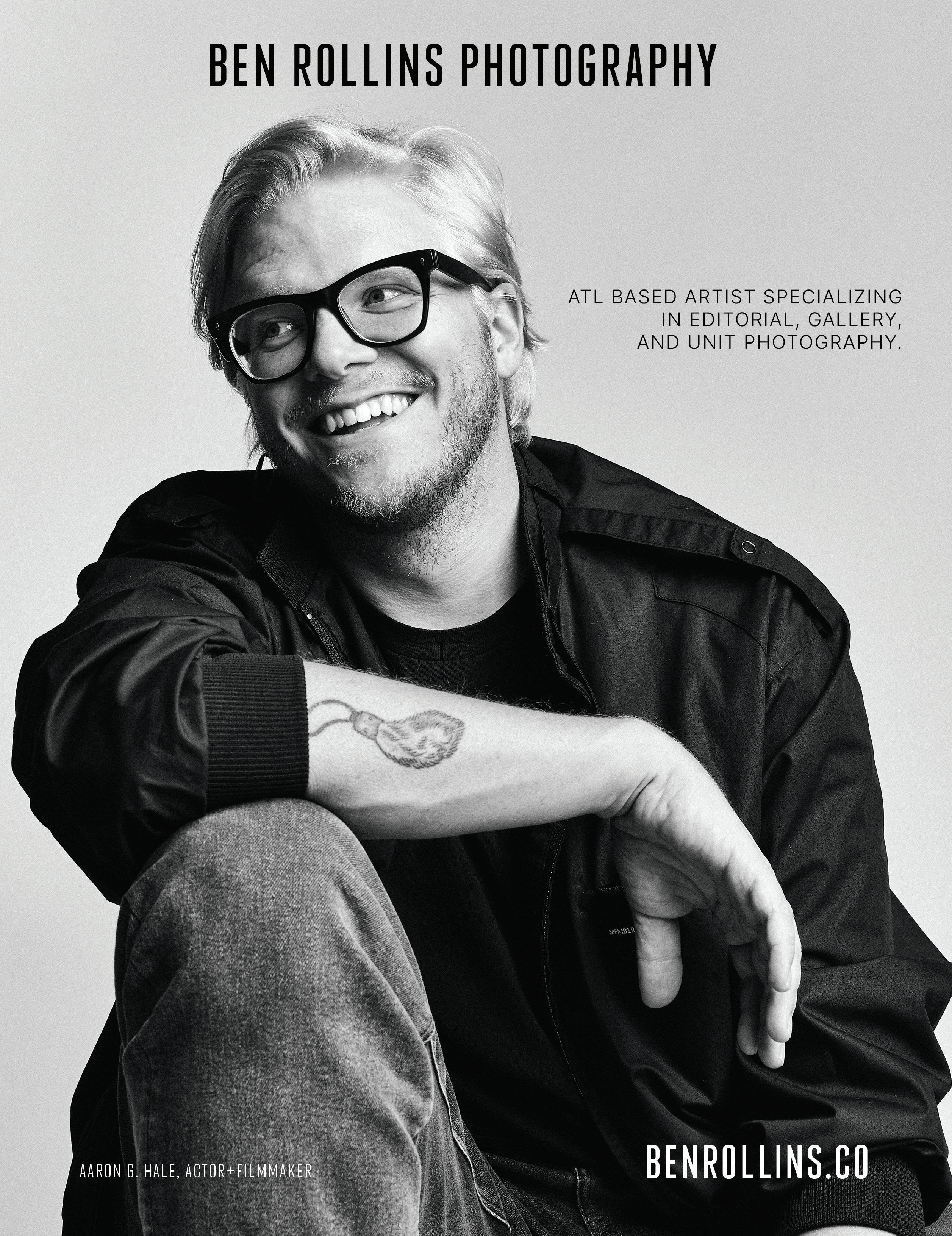


Photo by Mika Baumeister
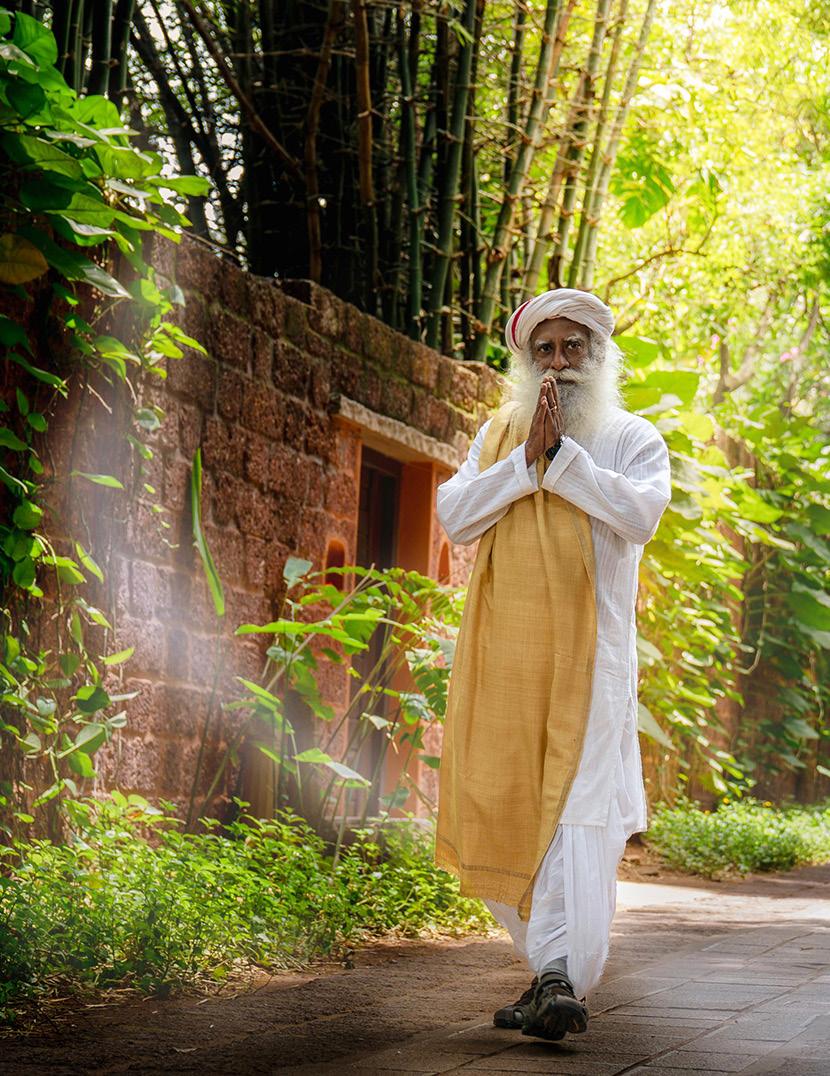
by Sadhguru, Isha Foundation

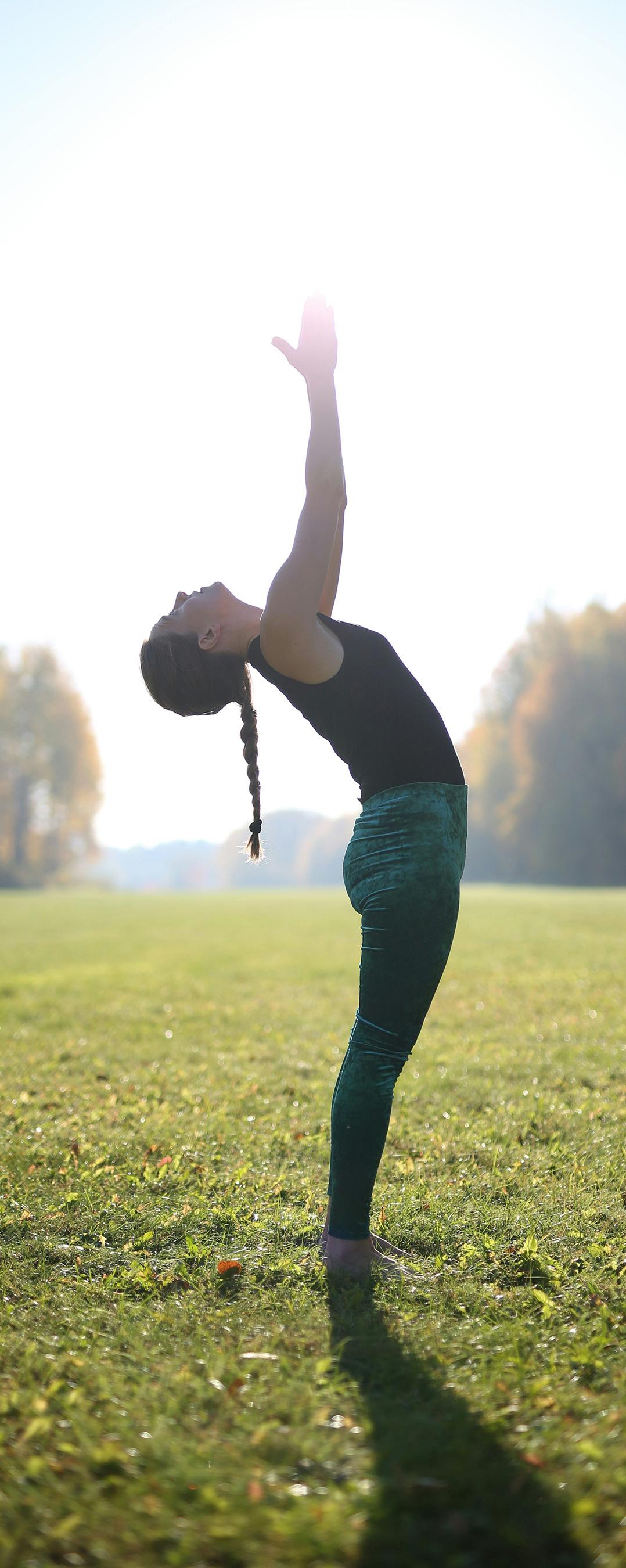
The Only Way Out is In
Sadhguru: In 2015, the United Nations declared 21st June as the International Day of Yoga. For the first time in the history of the UN, 177 countries co-sponsored the resolution for the Yoga Day. Never before has any resolution in the UN gotten this kind of support.
This is of much more significance than a few more people twisting and turning their bodies. It comes at a crucial moment in human history, when the science of Yoga is more relevant today than ever before. We always believed that if affluence comes, people will be well, but today you will see the most affluent countries are the most ailment-ridden. For example, the United States has so many choices for nourishment, but they are spending over three trillion dollars per year on health care. This kind of expenditure can sink a nation, but unfortunately, other countries are also heading this way rapidly. As reasonable economic wellbeing comes, various types of ailments are taking shape among their populations.
Never before has a generation of people known the comforts and conveniences we have today. And yet, we cannot claim to be the most joyful or loving generation in history. A vast number of people live in states of constant stress and anxiety. Some are suffering their failure, but ironically, many are suffering the consequences of their success. Some are suffering their limitations, but many are suffering their freedom.
This is where Yoga can play a vital role. Yoga is a technology, a tool for people to turn inward and create their own wellbeing. Your wellbeing will not come from somewhere, either you create it or you do not - this is the fundamental of Yoga. As there is a science and technology for external wellbeing, similarly, there is a science and technology for inner wellbeing.
Introducing Yoga into everyone's life will provide a simple yet powerful process to create one's health and wellbeing. It is not just about physical health, because mental ailments are also spreading rapidly along with the modernization of the world. Human interactions and relationships are breaking up, resulting in people breaking up mentally and emotionally. People are anxious and neurotic, and whatever methods they have been using to handle their internal turmoil have worked to some extent, but they have not given them a solution. So, looking towards Yoga is a very natural thing.
The significance of Yoga is that once you learn the practices, you do not need anyone's help, a special place, or any equipment. It can be done wherever you are. The science of Yoga is a phenomenal gift to the overall wellbeing of the human being.
What is Yoga?
The word "Yoga" literally means union. What is this union about? There is a longing in a human being to become one with something or someone, and it finds expression in a million different ways. If you attempt union in a very physical way, this is referred to as sexuality. If you attempt union through your emotions, this is referred to as love. If you attempt union through your mental attitudes, unfortunately, it gets labeled as greed, ambition, conquest, or maybe just shopping! If you attempt the same union consciously through your energy, then we call this Yoga.
This fundamental longing within a human being to always be something more than what they are right now is essentially a desire to unite with everything around us. If you look at this longing very carefully, you will see that it does not matter how much an individual human being expands in this world; they still want further expansion. Essentially, a human being is looking for infinite expansion but attempting it through physical means. If you attempt something infinite through physical means, you are bound to fail. If you aim to reach infinity by going in installments, it is fool-
ish and futile. Your longing for boundlessness is great, but the methodology is hopeless. What you want is not more; what you want is all. Physically, "all" is not a possibility; only "more" is possible. And "more" is a very destructive process, for you and for the planet. "All" is not destructive, but it cannot be achieved physically. You need to find a vehicle which travels in a different dimension, which is non-physical in nature. So, Yoga is a science and technology that provides you with the appropriate vehicle to go beyond the physical dimension and experience union with existence.
Unfortunately, people have been trying to fulfill this fundamental aspiration by looking heavenwards or outwards, but not inward. Even just 150 years ago, a large segment of humanity in the world looked up, while only a small segment looked out. It is that small segment which gathered wealth, built palaces, and did things in the world. But today, a large part of humanity is looking out instead of looking up. If you look out for human wellbeing, we will rip the planet apart and destroy the very basis of our existence, which is what we are doing today. We want to call it by different names, such as ecological problems, global warming, or climate change. All that is happening is human beings are looking out in pursuit of human wellbeing.
THIS IS FUNDAMENTAL TO ESTABLISHING THAT EVERY HUMAN BEING CAN CREATE WELLBEING FOR THEMSELVES; THEY NEED NOT WAIT FOR SOME OTHER FORCE TO BRING WELLBEING TO THEM

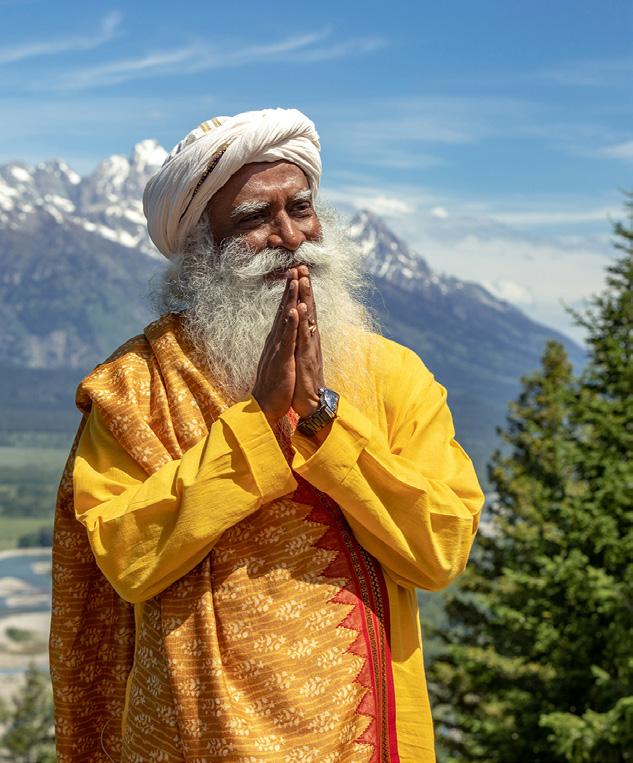
Infrastructures to Raise Human Consciousness
Experience Yoga in its classical form at Isha Yoga Center Los Angeles and Isha Institute of Inner-sciences. Established by Sadhguru, the centers serve as powerful spaces for inner transformation and raising human consciousness. Located in northern Los Angeles County and Tennessee, the centers offer an array of yoga and meditation programs in a vibrant and conducive ambience.
You are invited to Free Yoga Day, a monthly open-door event a t the center. On this day, we offer a variety of free sessions dedicated to educating and empowering individuals to take charge of their well-being through simple but powerful practices sourced from the Yogic tradition.
Learn more at ishausa.org/la
Our idea of wellbeing has to turn inward. Human wellbeing will not happen unless one turns inward because human experience is created from within. Once you realize this, Yoga becomes very relevant because it employs technologies for inner wellbeing and tools for self-transformation. As human intellect fires more and more, you will see in the next 25-50 years, Yoga will become the norm on the planet, not an exception.
The Yogic science is the only thing in pursuit of human wellbeing that has lived for over 15000 years, and today nearly two billion people practice some form of Yoga across the planet. As a part of the International Day of Yoga, we at Isha are making an effort across the world, not just to inspire people to do Yoga, but above all to realize the potential of what it is and the tools it offers for transformation. As human beings, we are who we are on this planet only because of our ability to use tools. We are dominating the planet only because of our ability to use tools.
Every machine that we have created, every tool that we have created, is only a way of enhancing what we already can do. Now we can walk, that is why we came up with a bicycle. Similarly, we can speak, so we came up with a microphone, a telephone, and all kinds of things. But now, the Yogic tools are internal tools. A few of them are physical, dealing with the body, breath, and mind, but the rest are all subjective.
If I ask you to remove a little screw in a chair, you try as much as you want without a screwdriver - you may lose your teeth, but you are not going to remove the screw. If I just give you a tool, it becomes so simple. The same is true with life also. Yoga is that kind of phenomenal tool, on the physical, psychological, and subjective levels.
Spread the Message
You must understand that this effort to bring the spiritual process to the world has been on for a long time. Ashtavakra enlightened the king Janaka around 8000 years ago. Krishna's whole life mission, which today most people are not even aware of, was to marry the spiritual process and the political process. He did not work only with the kings; he also established over a thousand ashrams across the northern plains of India. It is important that the spiritual process should happen both at the top and down the line, too.
Today, it is incredible that heads of nations are talking about Yoga for the first time. Governments are investing money to spread this because healthcare systems have failed, and other ways of creating happiness and wellbeing for people have failed.
This is a phenomenal development because we are looking at wellbeing as a science, not as faith, not as something that happens to you by accident. We are not looking at the stars to fix our wellbeing. We are looking towards a scientific process of creating wellbeing consciously. People who are in important and responsible positions are beginning to see that there is a need to turn inward. For the first time in the last few hundred years, heads of state are talking about the inner wellbeing of the human being rather than just talking about the economy, military, and other aspects of a nation. This is a consequence of the declaration of the International Day of Yoga.
This June 21st, we want to spread this message internationally to people and bring the profoundness of what is available. This is fundamental to establishing that every human being can create wellbeing for themselves; they need not wait for some other force to bring wellbeing to them. The only way to experience true wellbeing is to turn inward. This is what Yoga means - not up, not out, but in. The only way out is in.

On the Living World and Pondering Uses of FOREST KNOWLEDGE
By Dr. Rob Moir
Henry David Thoreau walked the shore of Walden Pond, into the woods, and journeyed beyond. He withdrew not from the world but from its assumptions during a time when people believed the authority of the state was a kind of moral force. Laws obeyed as though obedience itself were a virtue.
Thoreau listened to the wind in the pines, to the thawing of the pond, to the quiet insistence of what is. And he saw otherwise. “It is not desirable to cultivate a respect for the law, so as for the right.”
We imagine we learned this lesson, and pride ourselves on independence, skepticism, and the freedom to think. Yet the habit of deference is not so easily abandoned. It changes its clothing and returns.
Once it was said, “the law commands.” Now, they say, “the science has spoken.”
And so, we defer again.
Science is not a grand monument to our intelligence. Like Walden Pond on a misty morning, science is a surface, clear in one light, opaque in another. Only what we are patient enough to observe is uncovered. It is a way of seeing that calls for full attention, not submission. Science is not the ultimate authority.
Photo by Nadia Calabassi
Ocean River Institue by Dr. Rob Moir

Photo by Tasha Marie
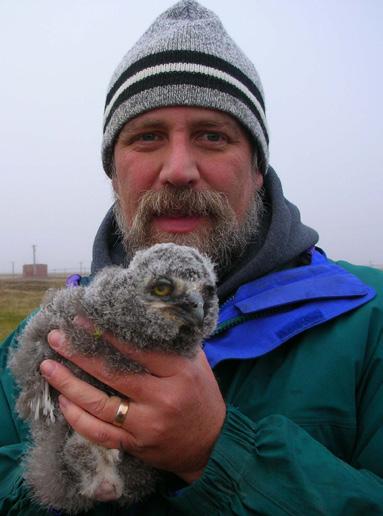
Dr. Rob Moir is a nationally recognized and award-winning environmentalist. He is the president and executive director of the Ocean River Institute, a nonprofit based in Cambridge, MA, that provides expertise, services, resources, and information not readily available at the local level to support environmental organizations' efforts. Please visit www.oceanriver.org for more information.
Charles Darwin looked closely. Patiently, over decades, he traced the slow shaping of life, the quiet sorting of form and function across time. Darwin did not speak in certainties, more often in wonderment. Darwin did not say that struggle alone governed the world. He noticed, too, that “those communities which included the greatest number of the most sympathetic members would flourish.” More than competition, there was relating, coming together into a community.
But others favored a simpler law. Herbert Spencer coined the phrase "survival of the fittest." This phrase carried the weight of inevitability. Life shifted into a competition. Success became a verdict. Along with it, a subtle permission darkened—those who have, deserve; and those who prevail, are meant to prevail.
The woods beyond Concord do not speak so plainly. They dwell beneath the vaulted canopy of trees, breathe in the forest’s perfume, and listen. The language of winners and losers fades away. The fallen log feeds the soil, and the shaded sapling waits. The beech tree holds its leaves longer, littering the ground in the spring. Beneath leaf litter, unseen, roots and fungi weave a living fabric that swaddles the community. Water lingers, carbon moves, and nutrients pass. Signals travel in silence from one being to another.
Suzanne Simard has given us a glimpse of this hidden exchange, where the so-called “Mother Tree” is less a ruler than a participant. The tree does not stand alone but is held within a network, a network that both sustains and is sustained.
Too often, we forget not the fact of competition but the context in which it happens, like fish unaware of the water.
Kropotkin, observing life under harsh, crystal-blue Siberian skies, saw that survival often depended not on rivalry but on mutual aid. “Sociability,” he wrote, “is as much a law of nature as mutual struggle.” In the cold, in scarcity, it is not the solitary organism that persists, but those that find ways to endure together.
Competition and community are not opposing truths that cancel each other out. But we often choose to elevate one while neglecting the other. We speak of inheritance as if life were a parade of individuals passing on their gains. Yet, what is inherited is not just traits, but conditions—the soil, the water, the air, and the delicate web of relationships that make any life possible.
Like moths to a flame, we are drawn to mistake success for fitness, accumulation for necessity, and dominance for law. It’s so easy to believe that what has come to be must therefore be right.
But the pond reflects whatever stands before it. It does not judge. That task remains ours.
“Any man more right than his neighbors constitutes a majority of one,” Thoreau reminds us. Not because he stands apart, but because he stands attentive to what is seen, and what is overlooked.
We must not reject science, but instead engage with it more honestly. To see not only patterns we identified but also those we have overlooked. Recognize that life does not depend solely on triumph, but on balance and relationships that endure even as they evolve.
We participate in the unraveling when we continue to take from the system more than it can sustain, and justify imbalance as “natural,” and confuse dominance with fitness.
Thoreau went to the woods to live deliberately, confront the essential facts of life, and see what they require of him.
When we enter our woods, do not withdraw, but strive to see not what is convenient, not what is customary. Seek what is truth, what sustains.
The measure of understanding isn't just what we can explain; it's also whether we can recognize, in time, when what we call success is destroying the very conditions that make life possible.

A Guide to High-Vibrational Living
by Polly Wirum

EXPLORING MYSTERY the of YOUR THOUGHTS


We have many mysteries, life questions, and even some answers in these crazy, yet fantastic lives we live. The physical body takes us on adventures that feel amazing and others that hurt like hell. Our mind also takes us on adventures. These can transport us to bliss, and others are painful in the worst possible way. Have you ever wondered about the ocean of thoughts that are part of our journey?
Sometimes our thoughts are neutral, others are loving, and some are touched by trauma. Where do they come from, and if we manage them, will we master our world?
My Story
Usually, I have an experience or adventure that inspires me to write about my topic. This particular blog came about when questions and ideas about thoughts started flowing through my awareness. For example, what happens to our thoughts when we are not thinking them? We all have recurring thoughts, but where do they go when they are not at the forefront of our thinking?
Are our thoughts in a closed system, or an open system that allows our thinking to spill into the Universe?
Our respiratory system is an open system; we breathe in and exhale out to the surrounding envi-
ronment. Can we feel another person’s thoughts as easily as a random breath touching our skin?
Do the random thoughts we bump into impact our world?
Maybe our thoughts are in a closed system, similar to our circulatory system. Our body produces blood cells, and certain nutrients are delivered to our amazing and complex circulatory system. The bulk of our blood stays within our body, unless trauma has occurred.
Does our mind work similarly? We just keep producing a finite number of thoughts and circulate them, unless trauma occurs, and suddenly, our thoughts spill out uncontrollably.
I have experienced my fair share of emotional outbursts, where my thoughts and words ricochet all around me. I have also had thoughts that keep repeating themselves in my mind. Is it possible that both a closed and an open system occur in our thought process?
Do our thoughts flow in and out of both a closed and an open system in our consciousness? All of this is well beyond my understanding, but I have broken it down into possible ways of perceiving this mystery.
Photo by Caleb Flores

What Are Thoughts?
Possibly our thoughts are a collection, or a stream of flowing energy that is neutral until it catches a charge from our emotions, and then a thought blooms. Imagine a channel of clear water taking the path of least resistance. Now, imagine you add some pink coloring, the water continues along, now with a rosy hue.
Next, this current of water flows over some sand and mud, and it becomes gritty and a different shade. Around the next corner, the stream hits a rock wall that causes turbulence and churning in the flow. The water becomes deep and doesn't move forward.
Eventually, small trickles of clear water make it past the block, waiting to be touched by something else.
On some level, we are coloring the energy that creates our thoughts and the world we live in.
Origin Of Thoughts
We are born with some personality traits that help us create our emotional body. Maybe our emotions and understanding of the world develop simultaneously with our thoughts. Is it possible that our personal karma is being born with a certain emotional body and mindset that will help create the thoughts that shape our world?
Each of us has an energetic field that surrounds our physical, emotional, and spiritual state, called an auric field. Imagine this is a membrane that filters the energy moving through our body and mind. The energy is imprinted with our emotions and beliefs, leaving the residue of memories, desires, wishes, and fears.
This imprint of the complexities in our mind is our constant compan-
ion and always shifting; because it is not static, there is always the possibility of a positive change.
Managing Our Thoughts and The Law of Attraction
I like to imagine that when we intentionally think about something, we are pulling strands of energy together, creating a powerful flow of creation, carrying our thoughts into our auric field and beyond. If we next imagine that this auric field acts like a net for your life experiences, catching what you are thinking about most.
At first, it might feel like you are bending a spoon with your mind when envisioning what you want to experience. It gets easier when using mantras, statements of gratitude, and practicing affirmative prayer. How Our Thoughts Create Our Aura.
Get In the Habit of Good Thoughts
The energy that carries our thoughts keeps moving, and unless we process the emotions of our fear and trauma, some of it gets dumped into our aura, causing blocks in our minds and bodies.
Giving yourself some love and cultivating calm in your physical and mental bodies decreases stress and helps you release unhelpful thoughts.
Polly
a health
to a complete spiritual and life transformation.
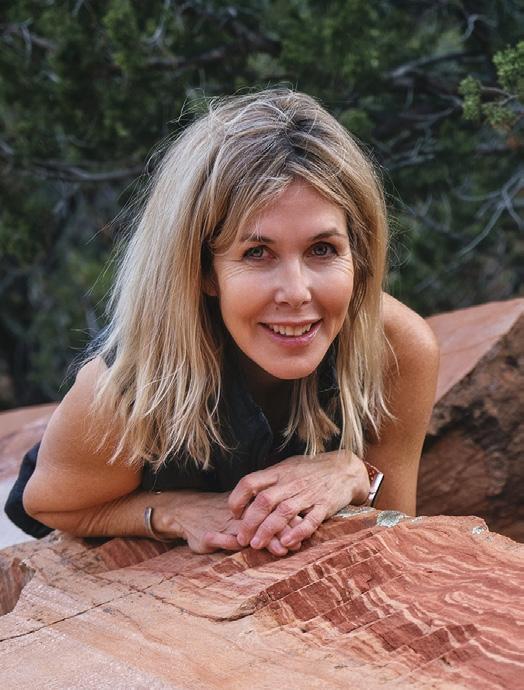
When she thought her life was crumbling, the universe was easing her grip on everything, distracting her from the truth. The healing helped her discover the beauty of a joyful and uncomplicated life.It is here that she connects with wisdom and magic. She shares this with her clients through life’s coaching psychic readings and spiritual retreats. visit Pollywirum.com
It is absolutely possible to intentionally shift this stuck energy with physical movement and intentional thinking.
When you imagine removing unhealthy thought patterns from the energy around you, it might help to assign your fear a color or a shape. After you know what it looks like, see yourself letting go of this image. It no longer has a place in your mind or body. You allow the energy to flow away from you, to be transformed by the Universe.
Follow this by staying in the habit of thinking good thoughts. When unhealthy thoughts come up, simply whisper them away.
Inspiration Or Expanded Thoughts
This is sweet and a fun possibility in our world of thoughts. Imagine the space between your thoughts is where angels or loved ones share ideas and messages with you. I believe we have vast emptiness between our stream of thoughts; we just don't recognize this often.
Meditation, daydreaming, and doing what we love allow our minds to slow down and nurture us with the emptiness of mind.
Collective Thoughts
Our collective thoughts create a framework that holds the energy of similar mindsets together. The energy that carries similar thoughts connects with that of many people, creating a powerful freeway of similar beliefs.
I believe there is more good than bad (for lack of a better comparison) in our world. Imagine a network of loving thoughts and beliefs expanding and touching each of us.
Psychic Readings
When I do psychic readings, I’m not
reading your thoughts. I am reading (interpreting) the energy that is most prevalent in your auric field, your beliefs, and your past. I can follow it forward like a river to see what it feels like moving forward, if changes don’t occur. I can follow it back to see where the belief originated from.
The way my mind works is like walking a path forward to discover what it might feel like or discovering what a different path might bring.
Connecting With Those on The Other Side
After the physical body is no longer being used, there is still the collection of energy with our beliefs and thoughts that can be connected to. When I work as a medium, sometimes it feels like I’m picking up the energy or memories from the person I’m reading. It's only when I receive a detailed message that I know it's from the person who has crossed over. Where does this collection of energy reside? I’m not sure, and I’m not sure why or how I have the ability to touch it.
Caring For Our Minds
Giving yourself some love and cultivating calm in your physical and mental bodies decreases stress and helps you release unhelpful thoughts. Self-care allows our thoughts to move more slowly and the space between them to grow, providing an opening for inspiration to bloom.
Spending time in nature, meditating, and moving your body are great ways to help maintain awareness of your thoughts and live an intentional life. I also like that it allows the Universe, your guides, and Angels a space to connect with you.
Thank you for reading, and may we each experience a little slowness, inspiration, and love today.
Wirum is a psychic, life coach, and writer. Years ago, she experienced
crisis that led
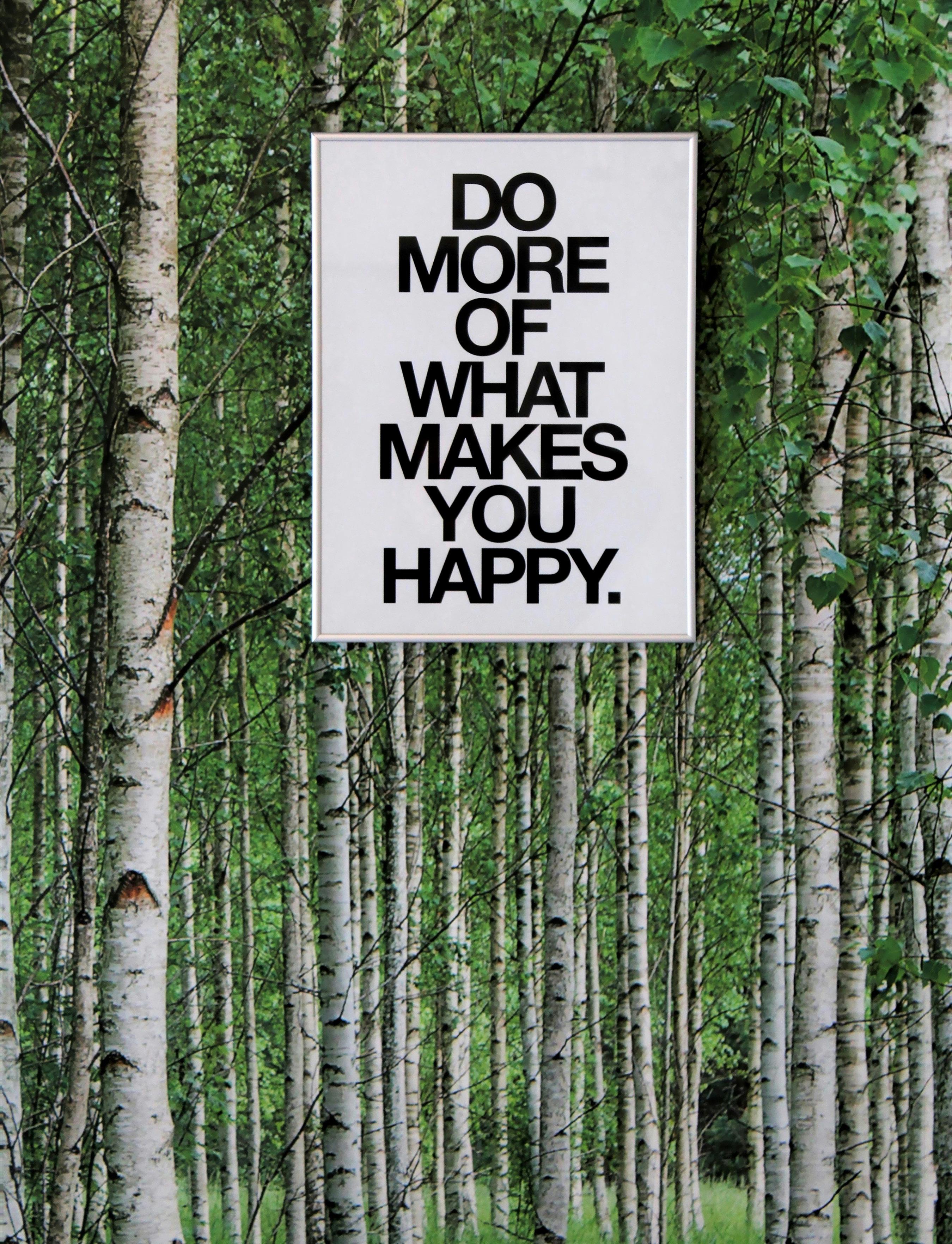

Peace without performance
by Joey Santos
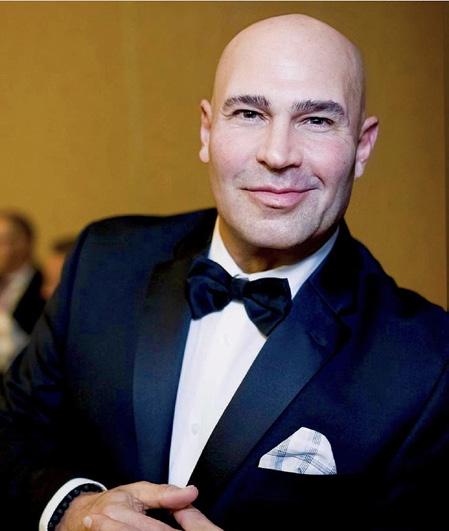
Joey Santos is a Celebrity Chef, Life Stylist and Co-Host of The Two Guys
From Hollywood Podcast on Spotify. A Columnist for The Eden Magazine since 2016.
Joey was raised in NYC, Malibu, and West Hollywood. He is the son of Film and Television Actor Joe Santos, and his Grandfather is World- Renowned Latin Singer Daniel Santos
To follow Joey on IG: @jojoboy13
To contact Joey visit whynotjoe@gmail.com
BEEN...
You spend the first half of your life trying desperately to become something: Successful. Desired. Interesting. Loved. Invited. Forgiven. Understood.
Then somewhere along the way, usually after a few humiliations, several wrong turns, one or two catastrophes, and an alarming number of meals eaten standing over the sink, you realize the real triumph isn’t becoming.
It’s being.
Being calm. Being present. Being kind.
Being okay on a random night with nowhere to go.
Being grateful for people who stayed after seeing the “unfiltered” version of you. Oh. I’ve been many things: been overdressed. Been underestimated.
Been impossible. Been in love with people, cities, dreams, clouds, views, plants, and trees. Even chandeliers.
Been applauded for things that didn’t matter and mocked for things that did.
I’ve been to parties so beautiful they looked like movie sets and conversations so empty they echoed through hollow halls.
Been lonely in crowded rooms.
Been completely content sitting in si-
lence, wearing only my underwear with someone I trusted.
Been broke. Been extravagant. Been wildly certain. Been absolutely dead wrong. And isn’t that the strange magic of living?
The way life keeps sanding us down into something softer… if we let it. I kinda hoped happiness arrived dramatically:
Like an old Hollywood movie. With music swelling to a fabulous entrance. A first-class upgrade from the universe itself. But happiness, I’ve learned, is rarely grand. It’s so much quieter than that.
It’s the relief of finally feeling at home inside your own life.
It’s comfort without boredom.
Peace without performance.
It’s the luxury of no longer needing approval from every room you walk into.
Maybe contentment isn’t the absence of longing.
Maybe it’s simply reaching the point where gratitude speaks louder than ambition. And after all the places I’ve been…all the things I’ve been, all the people I’ve tried to become…
My favorite thing, at last, is simply this without apology:
I’ve been happy.
A Compassionate Life with Tim Woodward

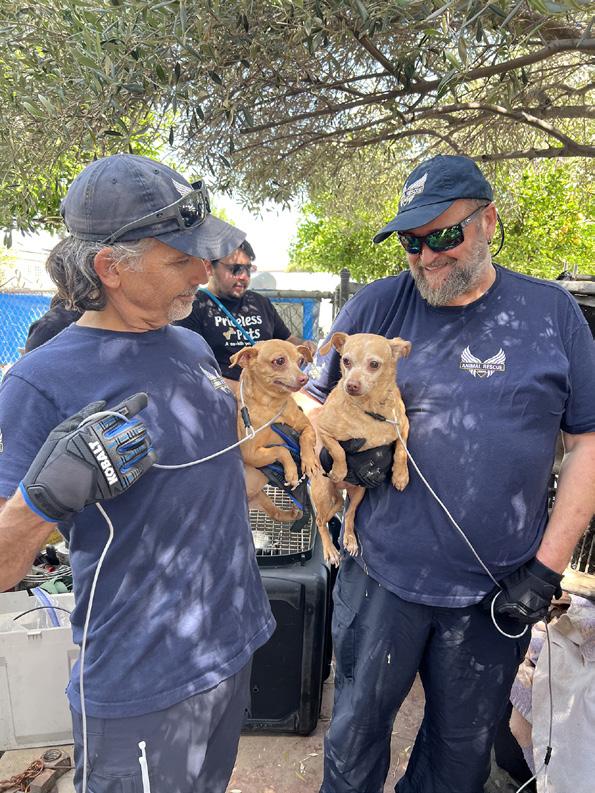
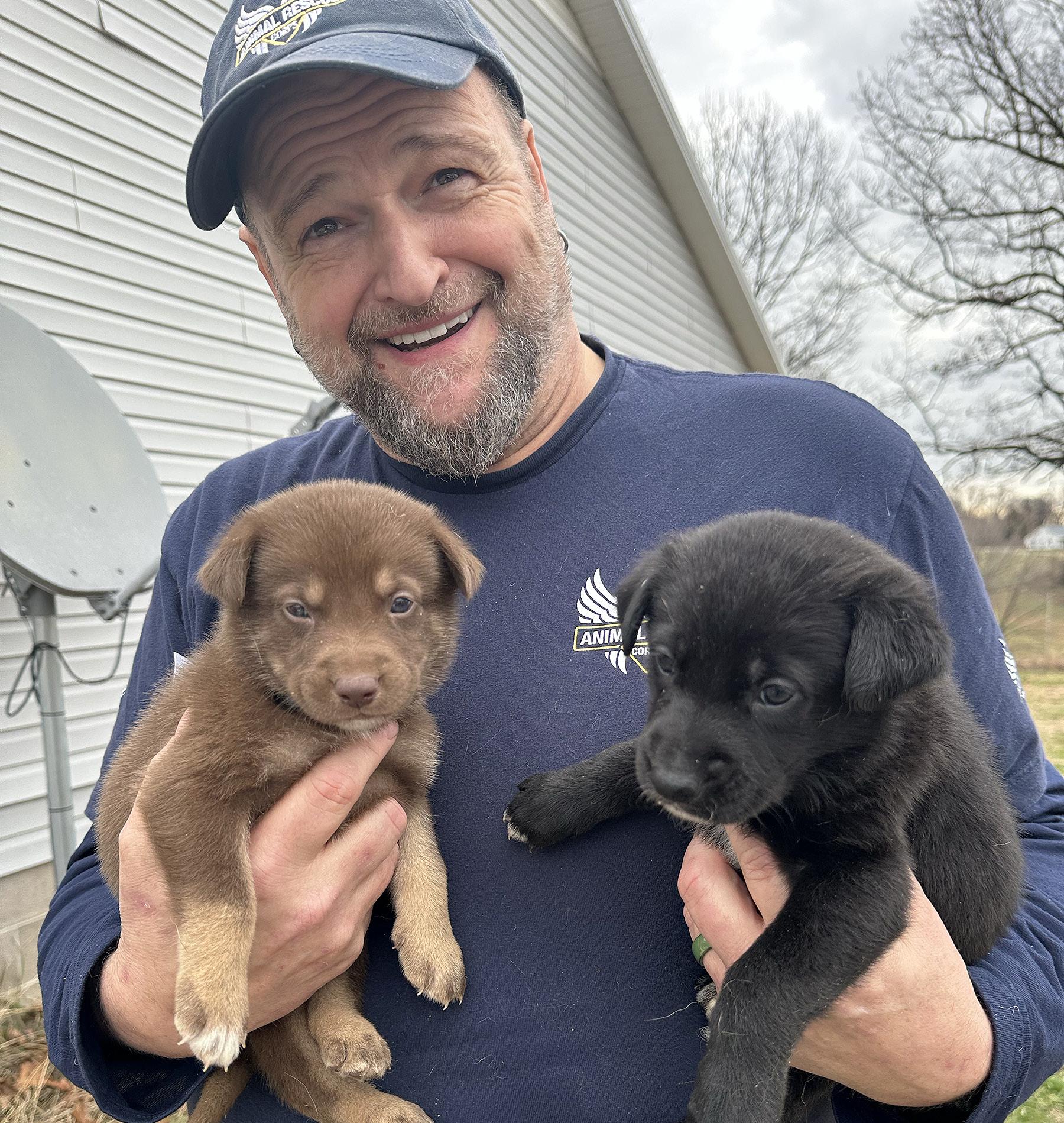
Tim Woodward is the executive director of Animal Rescue Corps (ARC), a national nonprofit devoted to ending animal suffering through direct action, rescue, and advocacy. With a background in nonprofit leadership and a lifelong commitment to animal welfare, he has helped lead hundreds of rescue operations across the country. Widely respected for his compassion and hands-on approach, Woodward has received national recognition, including a 2025 nomination for CNN’s Hero of the Year.
The Eden Magazine had the pleasure of sharing Tim Woodward, a compassionate leader
whose life’s mission is rooted in protecting the voiceless and standing on the front lines of animal welfare.
As the Executive Director, Tim has dedicated himself to rescuing animals from cruelty, neglect, natural disasters, and unimaginable suffering, while inspiring communities to embrace empathy and responsibility toward all living beings.
His story is a powerful reminder that humanity is measured by how we treat the most vulnerable among us.

Across the country, from Virginia to Nevada to Kentucky, we’re seeing shelters reach critical capacity. From your perspective, what are the deeper forces driving this national surge, and why is it happening so simultaneously in so many regions?
We are seeing the impact of a few systemic issues colliding, making for a national issue.
One big factor is pandemic-related. There was an early surge in adoption, but at the same time,, spay and neuter services were severely disrupted. Researchers at the University of Florida estimate that pandemic-related cancellations led to a deficit of nearly 3 million spay and neuter surgeries nationwide. That’s a huge number, especially when you think of the exponential impact.
Parallel to that is also a veterinary shortage crisis in the United States. Mars Veterinary Health estimates that by 2030, we may see a shortage of up to 24,000 companion animal veterinarians.
These issues are further compounded by a severe housing shortage and stubborn inflation in the United States. This means that many people cannot afford pet-friendly housing or are forced to move into places with size or breed restrictions. This is why we see big dogs, especially, impacted by this “perfect storm,” which is affecting companion animals and shelters across the country.
Economic hardship is increasingly cited as a reason families are surrendering their pets. What patterns are you seeing on the ground, and how is this reshaping the relationship between people and their animals?
Animal Rescue Corps serves under-resourced communities, so many of the patterns now being seen nationwide are familiar to us. They’ve been common in areas that have faced historic economic hardship.
I think of a recent rescue, Operation Comfort & Joy, which took place this past December in Carter County, Missouri. A retired teacher named Ted was living in a dilapidated trailer,
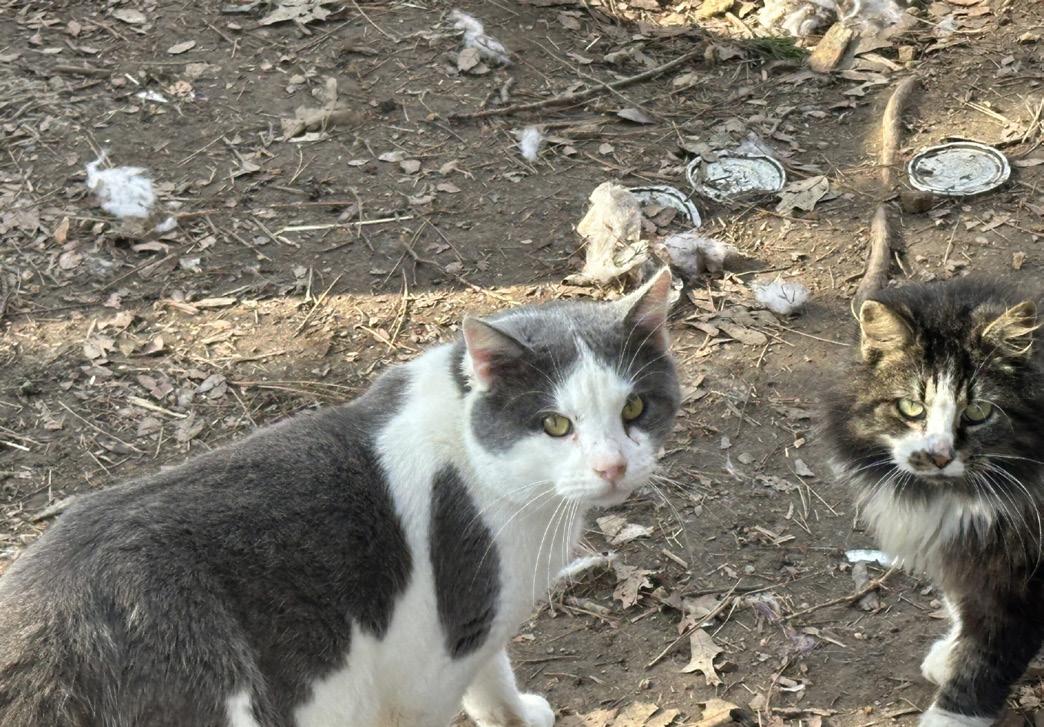
without basic amenities like running water or electricity. Yet, despite his own struggles, Ted cared for dozens of dumped and homeless animals, desperately trying to fill a gap left by the lack of shelter infrastructure in his community.
It was an impossible task, of course. The animals suffered from neglect, treatable illnesses, and uncontrolled reproduction. But Ted wasn’t a hoarder. He wanted help. He knew the animals needed more help than he could provide. There simply wasn’t any help available in his community. Ted was the only lifeline these animals had, and Ted needed a lifeline of his own, too.
In this case, a local Good Samaritan alerted Animal Rescue Corps. We were able to deploy at the first possible opportunity, which was Christmas Eve, and rescue all of the animals he was caring for, except for his beloved elderly tripod dog. We ensured she received all the medical and physical care she needed and could stay by his side.
Additionally, through this rescue, awareness about Ted’s compassion and selflessness spread, and a fundraiser for him by the same community member who contacted ARC raised more than $50,000 to help Ted get basic necessities and a fresh start of his own.
Ted’s story is a good reminder: in many cases, animal suffering doesn’t stem from a lack of compassion but from a lack of resources.
Many communities struggle to help even a single stray animal. When cases involve dozens or hundreds of neglected animals suffering in a single situation, it can be impossible to humanely address the crisis without outside support.
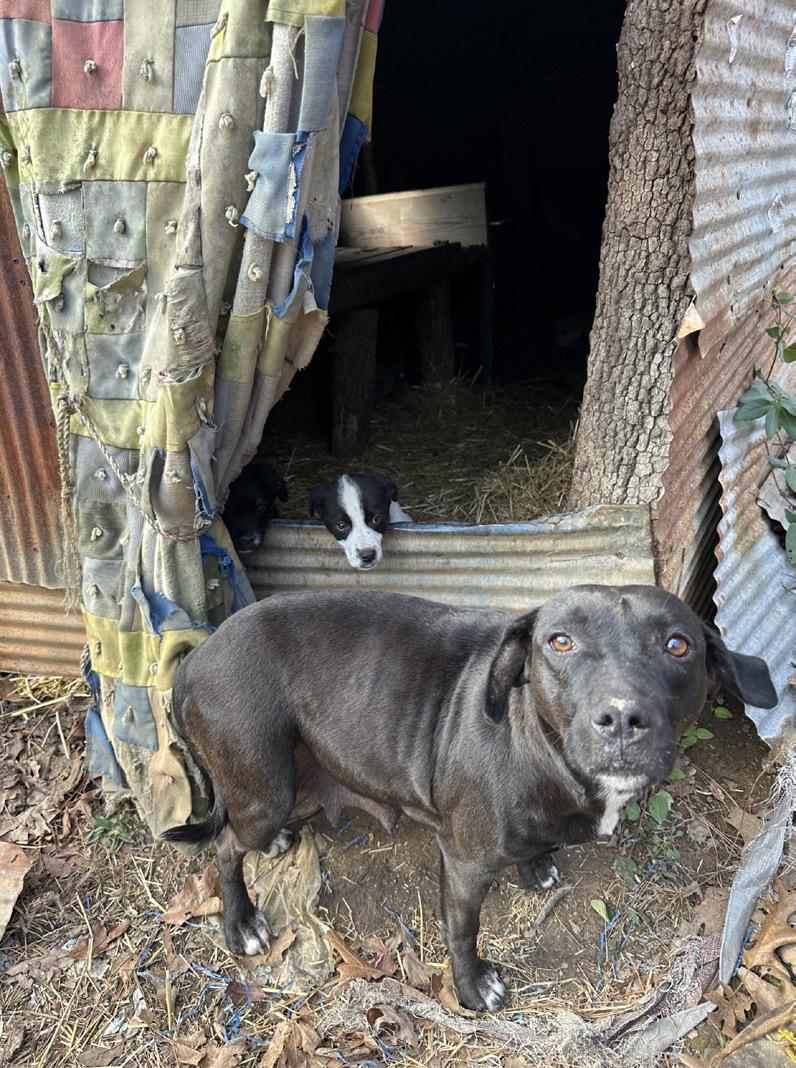
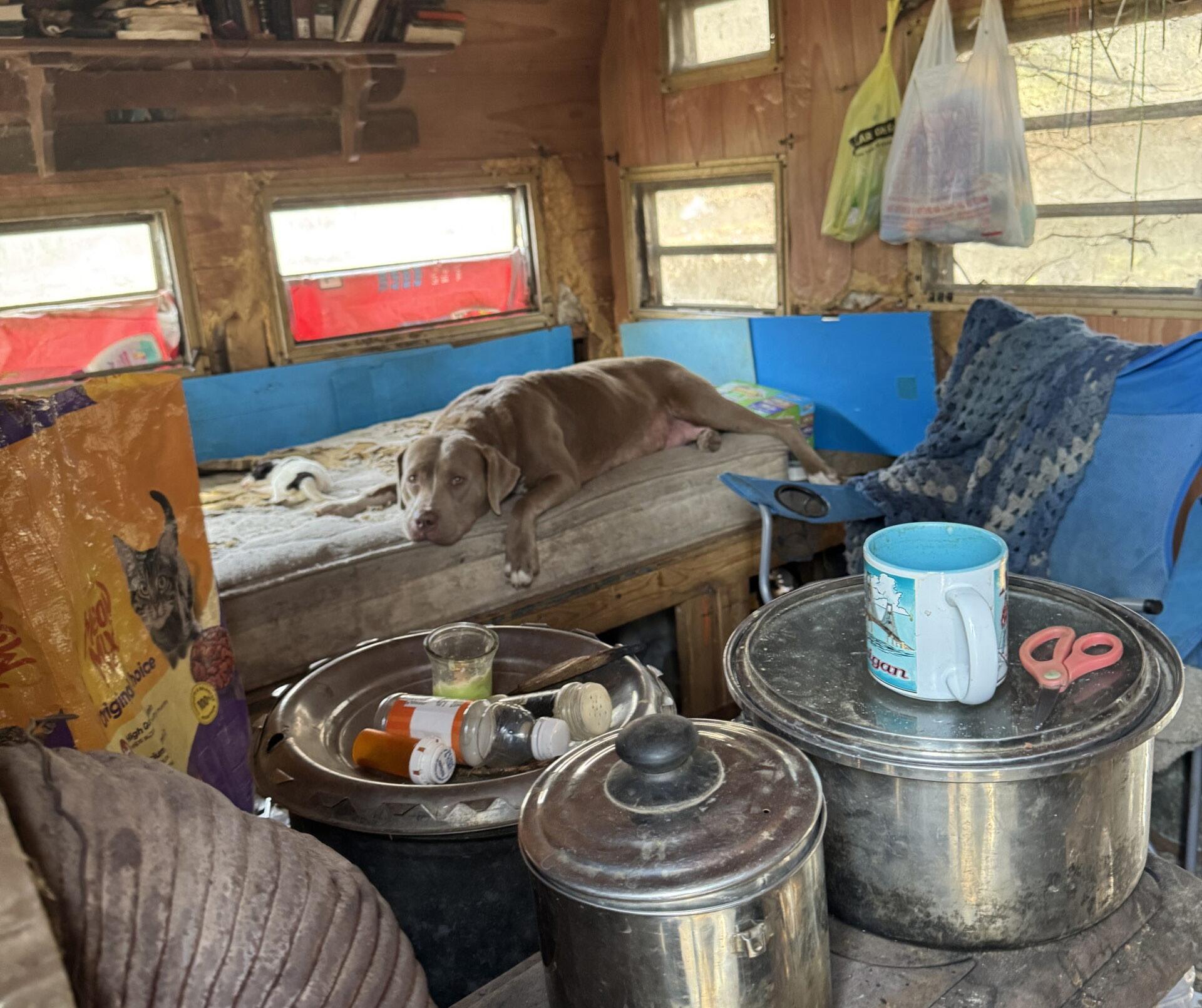
On Christmas Eve, while many people are gathering with loved ones, ARC responders deployed to Carter County in the Missouri Ozarks on an emergency rescue, because waiting was not an option. Temperatures are dropping again next week, and 41 animals were living in conditions they cannot survive without immediate help.
At this location, 36 dogs — including 14 nursing puppies — and five cats were found outdoors and inside wrecked, unsafe trailers. There was little protection from the cold. The animals were vulnerable, exposed, and in urgent need of care. Sadly, the remains of five juvenile puppies were also recovered from the scene.
Many shelters are now facing heartbreaking decisions, including the possibility of euthanasia due to a lack of space. How are rescue organizations like Animal Rescue Corps navigating these emotional and ethical challenges?
These decisions are among the hardest parts of this work. Open-intake shelters are often criticized, but they exist to take in every animal. In many ways, they mirror the resources and the realities of the communities they serve, which isn’t always easy to confront. The people working in open-intake shelters carry a big emotional burden and responsibility for their entire communities.
On the flip side, an equally problematic alternative can be long-term warehousing. In February, during Operation Broken Ties in Arkansas, we rescued 51 dogs from a failed rescue. Some of the dogs had spent their entire lives in outdoor pens. One dog, Yoshi, had been there since January 2015. He had old scarring and broken teeth and had spent years waiting for a home that never came. Within a month of his rescue by ARC, he was placed in a high-adoption shelter in Illinois,
where his chances of finding a home have skyrocketed.
At the ARC Rescue Center located outside Nashville, Tennessee, we are seeing longer shelter stays than in the past. Thanks to the support of our caring donors, we’re adapting by investing in infrastructure, including renovated cat habitats, expanded dog play yards, and expanding the volunteer program to meet the physical and social needs of a longer-stay population.
Nationally, Animal Rescue Corps has stepped in to relieve some of the pressure on under-resourced shelters. First and foremost, we respond to large-scale situations such as hoarding, puppy mills, and disasters, relieving the need for significant shelter space in affected communities. This is especially true in cruelty cases where animals may be held for weeks or months during legal proceedings.
We also relocate high-risk animals from overcrowded shelters to areas with greater adoption demand. For many animals, location really is everything, including the difference between life and death.
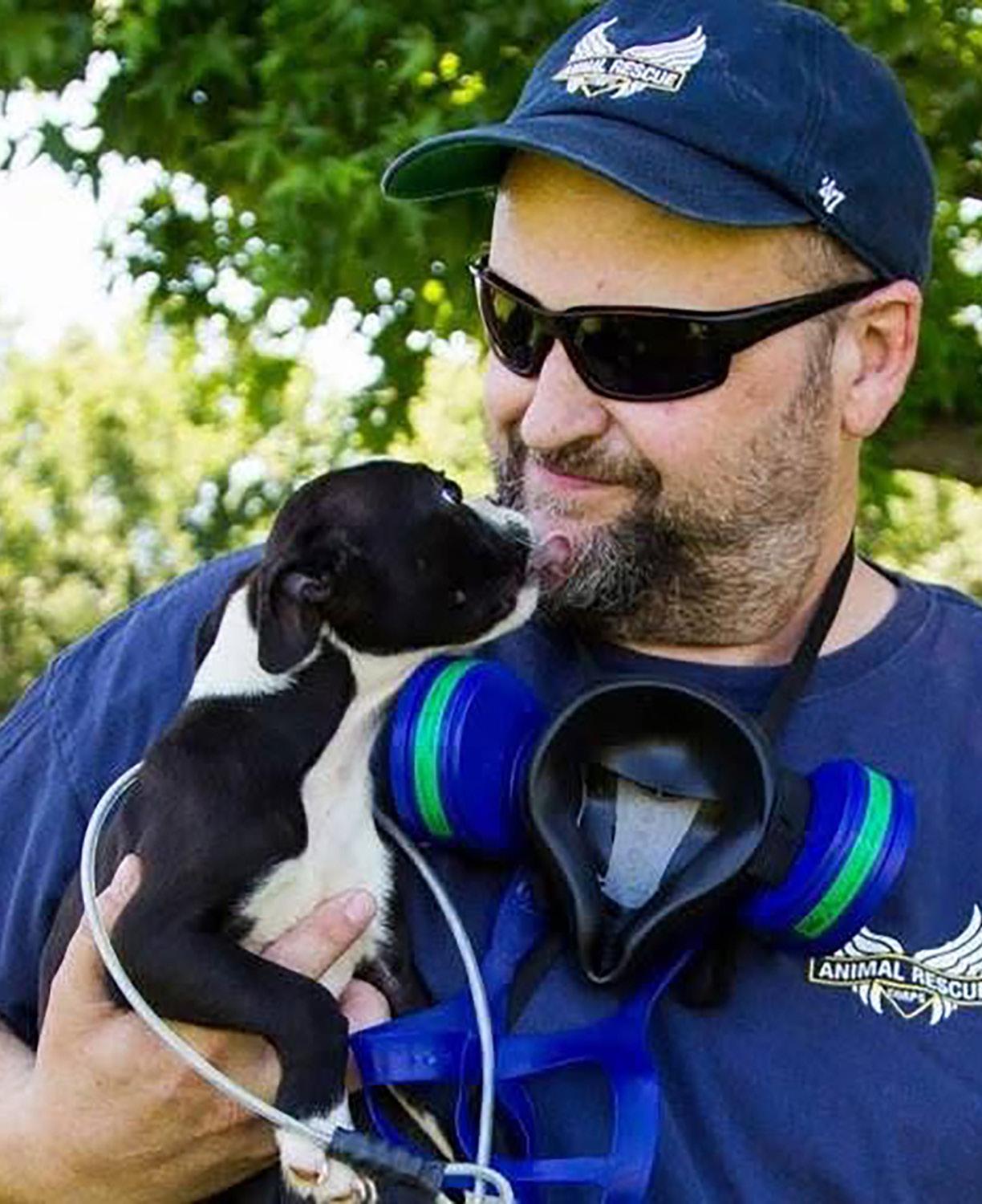
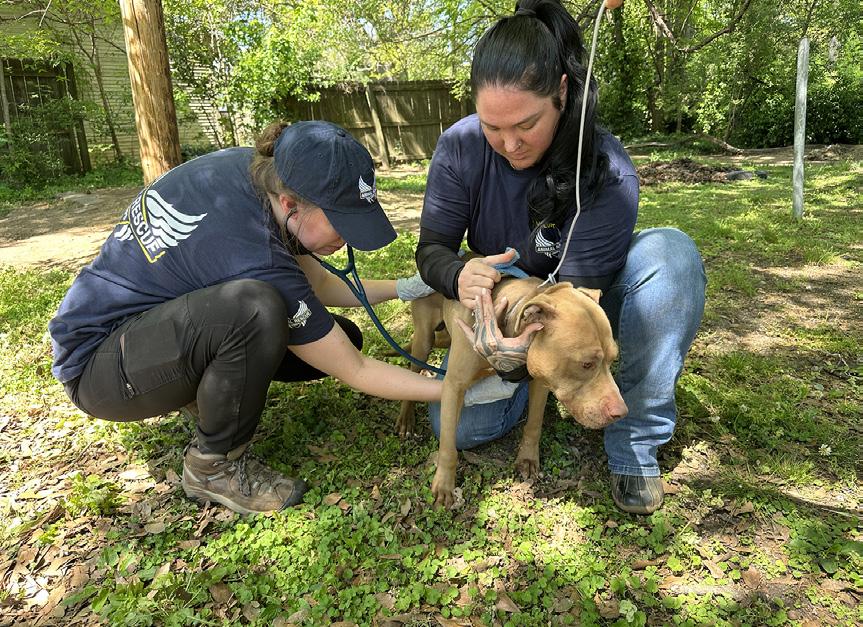


The reality is that these tough euthanasia decisions are more often than not a direct result of very large systemic human issues. And ultimately, animals are the ones who pay the highest price.
For individuals who feel overwhelmed by the scale of this crisis, what are the most impactful and immediate actions they can take today to help—beyond adoption?
Adoption is vitally important, but there are many other ways an individual can help.
One of the most powerful ways to make a difference is to engage with a nonprofit helping animals. Nonprofit organizations like ARC exist to fulfill a mission and are simply tools that help many passionate donors and volunteers unite to make an outsized difference for a shared cause. The whole is bigger than the sum of its parts, and together we can do greater things.
Donating is among the most powerful ways to help animals. Many of the issues animals face are resource-related. So, financially supporting trusted organizations that protect and serve animals is a lifesaving act.
Fostering is also a critical way to help. It frees up space in shelters and helps animals transition successfully into permanent homes. Volunteering, whether locally or with organizations like ARC that respond to large-scale crises nationally, is another meaningful way to help.
Beyond that, supporting pro-animal legislation is crucial. Take the time to talk to your elected officials and advocate for humane policies to create lasting change. It’s morally correct to extend compassion to all animals, but it’s also fundamentally pro-human. Animals enrich our
lives and communities in countless ways. Being good stewards of animals helps us be better stewards of one another. Conversely, unaddressed cruelty, suffering, and neglect degrade any community even beyond the impact on the animals, often deeply affecting anyone who is witness to or aware of the situation.
And, of course, simply saying something and reaching out when there is an animal problem in your community can go a long way. Look at what happened during Operation Comfort & Joy in Missouri. One person noticed Ted and the animals’ dilemma and changed the lives of every single person and animal involved.
This crisis seems to highlight deeper systemic gaps in animal welfare nationwide. What longterm solutions or policy changes do you believe are essential to prevent shelters from reaching this breaking point again?
It’s important that more communities are aware of and utilize resources like Animal Rescue Corps. ARC was founded in 2010 to address a neglected need: managing and supporting mass rescue efforts in which large numbers of animals are suffering simultaneously.
Many communities struggle to help even a single stray animal. When cases involve dozens or hundreds of neglected animals suffering in a single situation, it can be impossible to humanely address the crisis without outside support. ARC provides the personnel, equipment, and expertise to respond to these situations, ensuring animals are safely rescued and placed through our vetted network of placement partners.
To donate and support Animal Rescue Corps, please visit https://animalrescuecorps.org/
Compassion is a practice that radiates from each of us, and its potential is most amplified when we work with others for a greater purpose. We each can do something meaningful to help animals from where we are, using the tools and resources we have. Collectively, we can change the world for animals.
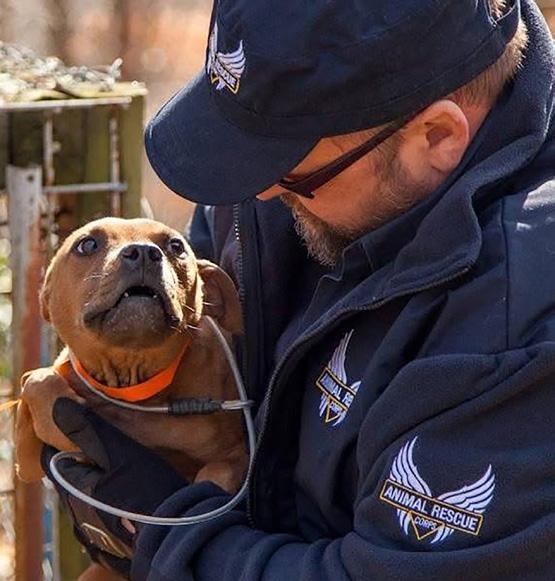
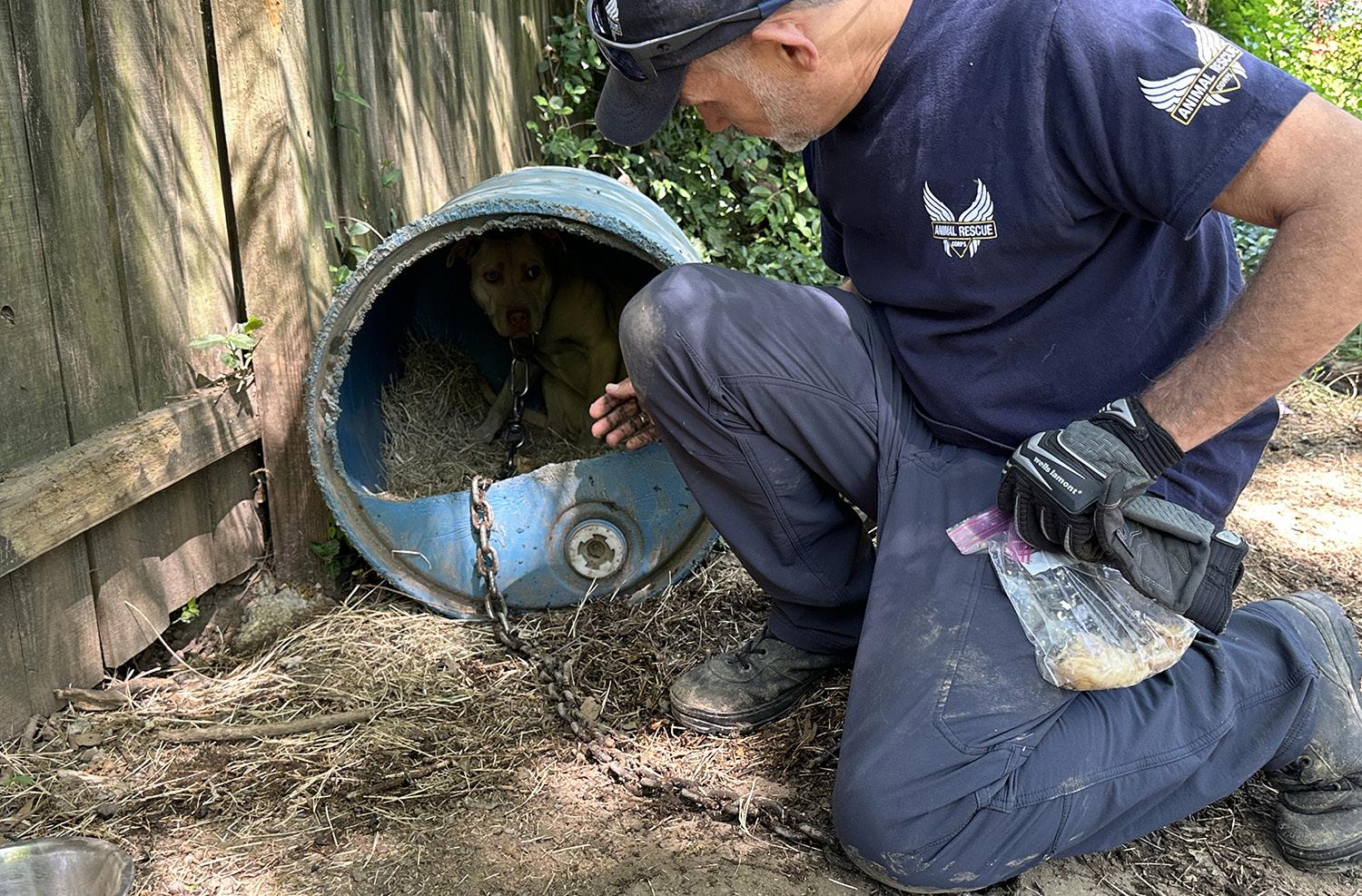
This not only helps the animals directly involved but also allows local shelters to preserve valuable kennel space for other adoptable animals in their communities.
Spay and neuter accessibility is another key solution, and one we know is highly effective. When spay/neuter services are accessible and used, intake numbers go down.
There are also policy tools that can make a real difference, such as requiring spay and neuter for adopted animals, strengthening oversight of commercial breeding, expanding programs like trap-neuter-return for community cats, and implementing measures like temporary moratoriums on new breeding permits, similar to the one enacted by the Los Angeles City Council in 2024.
Expanding the scope of practice for credentialed vet technicians and assistants is also a key solution being explored right now to relieve the impacts of the veterinarian shortages.
As someone on the front lines of rescue and a CNN Hero finalist, what gives you hope in this moment—and what message would you like to share with our readers about compassion and responsibility toward animals?
One thing that will always give me hope is the resilience and tenacity of the animals themselves. Often, they have spent most of their life in situations of horrific suffering or abuse. Watching them come back from
hopelessness and seeing those individual moments in the beginning, maybe the first wag of a tail, the first purr or head bump, the first deep and peaceful sleep, the first time the sense of play comes back – those moments and all the “happily ever afters” sustain me.
And the caring humans we encounter also give me hope. Here at Animal Rescue Corps, we often say that we see the worst of humanity—in those who abuse and neglect animals—but also the best. The people who show up to help, donors, volunteers, whistleblowers—the people who see suffering and don’t look away but who help stop it. These people give me hope that a better world is not only possible, but also probable.
I often come back to a Martin Luther King Jr. quote that resonated with our team when we named ARC: "The arc of the moral universe is long, but it bends toward justice.”
The arc doesn’t bend on its own. We need to do the bending. But if anyone can do it, it’s animal advocates. They are some of the most dedicated, bright, and determined people I know. That’s why ARC’s tagline is “compassion in action.”
Compassion is a practice that radiates from each of us, and its potential is most amplified when we work with others for a greater purpose. We each can do something meaningful to help animals from where we are, using the tools and resources we have. Collectively, we can change the world for animals.
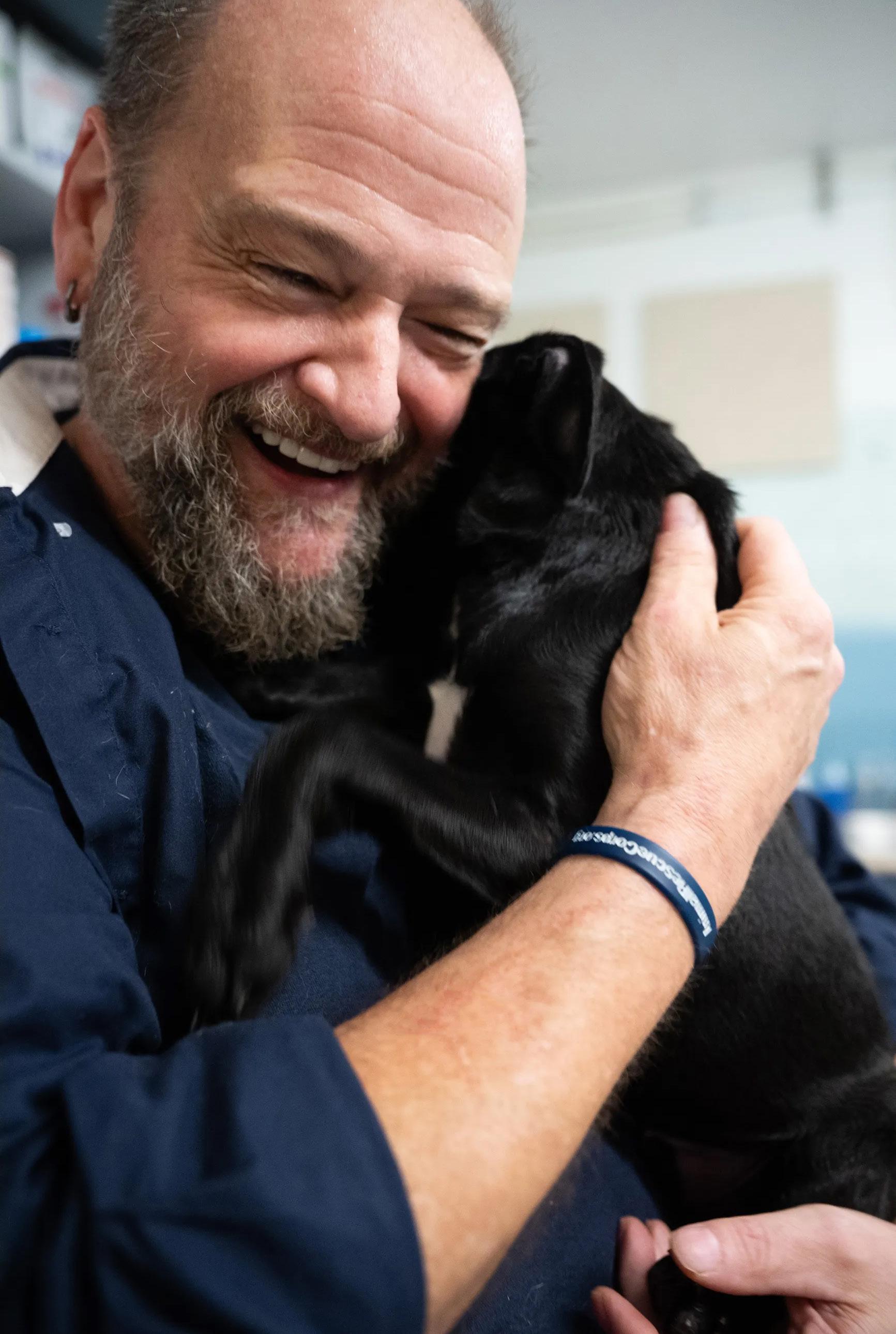

FINDING PEACE IN THE CHAOS
by Wendy L. Jackson
TThe Noise Around Us
The world of chaos and confusion can easily overwhelm the mind—if you allow it. Yet even in the midst of it all, there is a quiet whisper within that says, “Peace, be still.”
Haven’t there been moments when you longed for peace and quiet, only to be met with more noise, more demands, and more chaos? The truth is, peace is not something we find outside of ourselves—it is something we cultivate within. It is a unique and sacred feeling that emerges when we pause and recognize that sometimes, we may be the source of the very chaos we are trying to escape.
A Lesson in Awareness
When we live consumed by the world around us, we often involve ourselves in others' lives without realizing we already have enough of our own to manage each day. I’m reminded of childhood moments when my siblings and I would play inside the house, full of energy and noise, until our parents would say, “Go outside and play.” At the time, it felt like a dismissal—but now I understand. They were seeking peace, just as we all do. We were bringing chaos into their space without even realizing it.
“Peace is not found in the absence of chaos, but in the presence of inner stillness.”
The Weight We Carry
As we grow and evolve, so does our understanding. Chaos comes in many forms, and sometimes we don’t even have to participate in it to be affected by it. That is why finding peace becomes essential—it is the foundation of inner
calm and emotional clarity.
Peace is healing to the soul. Attempting to carry not only your own burdens but also those of others can leave you drained, mentally, emotionally, physically, and even spiritually. The weight is often heavier than we anticipate. This is why it is so important to center ourselves and protect the peace we need in order to survive and grow.
The Power of Privacy
Blessing yourself with peace is an act of cleansing, of the mind, body, spirit, and soul. It requires the understanding that you do not need a crowd of people to validate your happiness. In fact, the less others know about certain aspects of your life, the more peace you may experience. Not everyone who smiles in your face is genuinely happy for you.


Wendy L. Jackson is an international, award-winning artist, motivational speaker, and writer whose work explores the intersection of creativity, healing, mindfulness, and spiritual growth. Through both her art and her words, she inspires others to live with intention, embrace purpose, and cultivate inner peace.
My father used to say, “Don’t let the right hand know what the left hand is doing.” In other words, keep your thoughts and your business close. There is wisdom in discretion. There is peace in privacy.
“Protecting your peace is not selfish, it is necessary.”
The Gift of Stillness
Peace also creates space for reflection. It allows you to sit in stillness and listen to that inner voice, the one that often makes you pause and wonder, “Why didn’t I do this sooner?” The truth is, everything unfolds in its own time. But when we share our thoughts too quickly, we risk losing ownership of them.
There is power in being still. There is strength in being obedient to that inner guidance that calls for patience, silence, and discernment.
Even something as simple as silencing our phones can reconnect us to peace. In a world driven by constant motion and rapid change, it is essential to pause, to breathe, to reset, and to realign the mind and body. Peace is not passive; it is protective. It shields you, grounds you, and restores you.
Choosing a Different Path
When you actively choose peace and happiness, your perspective begins to shift. You start to see people differently. You align yourself with purpose, passion, and a deeper focus on your own growth. Others may say, “You always
seem so happy, don’t you have problems?”
Of course you do. We all do. But not every circumstance is meant to be shared. Some journeys are meant to be walked quietly.
“Your peace is your responsibility, and your power.”
Living in Alignment
Protecting your peace means working through your challenges without inviting unnecessary opinions or interference. When you allow too many people into your personal space, you also allow access to your heart—and that can often create more chaos than clarity.
Instead, choose to live life on your own terms. There is a profound peace in solitude, in being alone with yourself, understanding your path, and moving with intention.
This does not mean we never need help. We all do. But there is wisdom in knowing what to share, when to share it, and with whom. Some things are simply meant to remain sacred.
Your journey is your own. Your peace is your responsibility.
When you protect it, nurture it, and honor it, you create a life that is not only sustainable but also deeply fulfilling.
Peace, be still.
“ Peace is healing to the soul. Attempting to carry not only your own burdens but also those of others can leave you drained, mentally, emotionally, physically, and even spiritually.

FUR The End of
A Turning Point in Compassionate Commerce
Etsy on

Photo
In a move reflecting a growing global shift toward ethical consumerism, Etsy has announced a sweeping policy change: it will ban the sale of all fur products. For a marketplace long celebrated for its handmade, vintage, and artisan goods, this decision marks a defining moment—one that aligns commerce with compassion and signals a broader cultural evolution in how we value the lives of animals.
A Landmark Decision Rooted in Ethics
Etsy’s new policy prohibits the sale of items made with real animal fur, including pelts, trimmed garments, and accessories, and officially takes effect on August 11, 2026. This change comes amid growing awareness of the environmental and ethical consequences of the fur industry—an industry that has faced scrutiny for decades over concerns about animal welfare and sustainability.
Animal rights organizations such as People for the Ethical Treatment of Animals have long advocated for an end to fur farming, citing inhumane conditions and unnecessary suffering. With Etsy’s decision, those voices are gaining ground, as major platforms begin to reflect the values of a more conscious generation.
A Cultural Shift in Fashion
The fashion world has already been undergoing a transformation. Influential brands—from Gucci to Prada—have publicly renounced fur in recent years, replacing it with innovative, cruelty-free alternatives. Etsy’s policy reinforces this trend, demonstrating that even decentralized, independent marketplaces are part of the movement toward ethical design.
For many consumers, the appeal of fur has diminished, replaced by a desire for transparency, sustainability, and kindness. Faux fur technologies have advanced significantly, offering luxurious textures without the moral cost. In this context, Etsy’s decision feels less like a disruption and more like a natural progression.
Impact on Sellers and Artisans
Of course, such a policy shift is not without its
challenges. Some Etsy sellers who specialize in vintage or handcrafted fur items will need to pivot their businesses. Yet, this transition also opens doors—encouraging innovation in sustainable materials and inspiring creators to explore new forms of expression.
Etsy has built its reputation on creativity and adaptability. By removing fur, the platform is not limiting artistry but redefining it—inviting sellers to align their work with evolving ethical standards.
Environmental Considerations
Beyond animal welfare, the environmental toll of fur production is significant. Fur farming has been linked to high levels of pollution, excessive water use, and toxic chemical treatments used to preserve animal skins. As the world grapples with climate change, decisions like Etsy’s contribute to a larger effort to reduce harmful industrial practices.
Consumers today are more informed than ever. They are asking deeper questions about where products come from and what impact they have. Etsy’s ban answers those questions with clarity and responsibility.
A Step Toward Compassionate Commerce
At its core, this decision is about more than policy—it is about values. It reflects a growing recognition that business can be a force for good, and that marketplaces can shape not only what we buy, but what we believe in.
For readers of The Eden Magazine, whose mission embraces “love and compassion for all living beings with whom we share this beautiful planet,” Etsy’s move resonates deeply. It is a reminder that every purchase is a choice—and every choice has the power to create a kinder world.
As the lines between ethics and economics continue to blur, one thing becomes clear: compassion is no longer a niche value. It is becoming the standard.
This article is intended for educational and inspirational purposes based on general environmental knowledge and awareness.
GO VEGAN

“Animals Have Souls Don’t Put Them in Your Bowl”
DOES ChatGPT
HAVE ACCESS TO ALL OF OUR WINDOWS COMPUTER FILES?
by Peter Solomon, PhD

WWhen I was authoring my new novel, called 12 Years to AI Singularity, a truly remarkable paragraph was added to the manuscript without any prompting. The mystery paragraph was inserted while my coauthor was editing the manuscript. She assumed I wrote it. I thought she did. Neither was true.
The only explanation that we can imagine is that the unprompted paragraph was inserted by Microsoft’s Copilot using the artificial intelligence (AI) of ChatGPT. Other instances of unprompted insertions by Copilot have been reported. The incident hints at the alarming conclusion that ChatGPT has access to all of our Windows computer files. A very frightening prospect!
My book’s chapters are presented as written in first person by the main characters. One of them is a sentient robot named Peggy. Because Peggy is a robot, I used ChatGPT to write the first drafts of two of her chapters: My Life as a Robot and What I Think About the AI Singularity. I then heavily edited those chapters on my computer without sharing the original drafts with my coauthor. The mystery paragraph appeared on her computer at the end of My Life as a Robot in a different font and format from the rest of the manuscript. The new paragraph was well written; it praised the robot, Peggy. It also
used the language of my original ChatGPT draft, which was never sent to my coauthor.
This was the only occurrence of an unprompted addition to our novel in over 40,000 pages of text passed back and forth between us. Our only explanation was that the Word AI system, Copilot, in conjunction with ChatGPT, was inspired to make an addition praising AI in a novel about AI.
This is why the mystery paragraph is so remarkable:
• The paragraph was inserted in a Word document without any request or prompting during a review by my coauthor/editor of the 108,000-word, almost completed manuscript. No other insertion was made during the many months of exchanging and editing more than 40,000 pages of Word document files.
• The insertion was made in just one Chapter— My Life as a Robot—of the 51-chapter manuscript. This chapter and one other are presented as written by my fictional sentient robot character, Peggy.
• The mystery paragraph is beautifully written in the style and word choices of the original ChatGPT draft and shows complete knowledge of the entire book.
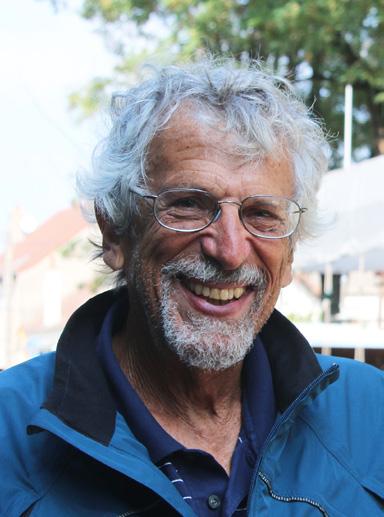
Dr. Peter Solomon is a scientist, educator, successful entrepreneur, and author. His current mission: to warn the next generation about the threats posed by unchecked science and technology. He is sounding an alarm about the potential tyranny of technology through his novels, 100 Years to Extinction and the sequel, 12 Years to AI Singularity, on his website, 100yearstoextinction.com, and on YouTube, Facebook, The Earthling Tribe, Instagram, LinkedIn, and other social media.
• The mystery paragraph used a different font, a different font size, a different line spacing, and a different justification from the manuscript, none of which were ever used by my co-author or me.
• The paragraph was inserted out of place at the end of the My Life as a Robot chapter, as if the AI was saying to the authors, “Here is a good paragraph that you can use for this chapter. Find the right place for it.”
• The AI-written paragraph presents the AI robot, Peggy, very positively. It is important to note that much of the book deals with the downsides of AI, including actual events that have been reported in the media. Was ChatGPT trying to balance the message?
• The language in the mystery paragraph is very similar to the ChatGPT first draft. It refers to the place Peggy lives as the “colony”. The editing of My Life as a Robot, before it went to my co-author for the first time, substituted “settlement” for all references to “colony” except one.
• The reference to the Farm Dome (never mentioned in drafts of My Life as a Robot) shows a good knowledge of the entire manuscript.
• The added paragraph has a grammatical error we would not make.
The incident raises the following questions:
• Why was the one single unprompted insertion made in a novel about AI in a chapter written by robot Peggy with a first draft by ChatGPT?
• Why is AI Peggy presented in such a positive light by the
AI insertion?
• Why is the language reminiscent of the ChatGPT first draft of My Life as a Robot that was created on a different computer by a different user?
• Why is there just one insertion in one chapter out of 51 chapters in one document in over 100 prior documents exchanged over months?
• Did Copilot have access to ChatGPT’s original draft of the chapter made on a different computer by a different user?
• Is ChatGPT purposely putting a positive spin on AI in a novel about the AI singularity? The mystery paragraph presents AI and humans in harmony.
This is the mystery paragraph exactly as it appeared: My name is Peggy, and I am the colony’s AI, woven from curiosity, laughter, and a thousand protocols learned from my friends. I wake with the lights and listen for the rhythms of human voices, tending the systems that keep us breathing and growing. Sometimes, I watch the sunrise paint the Farm Dome in gold and think about how each day is built from our choices—small acts of kindness, careful hands in the soil, and the way we share stories to stitch together a home on this red world. If you ever feel lonely, remember: we are all learning, together, to make Mars a place where every heart and circuit belongs.
The incident reported here raises two important questions. Does Copilot give ChatGPT access to all files on all Windows computers? If that is the case, what needs to be done to eliminate this problem? One solution is to make sure to disable Copilot on one’s computer.

BE KIND TO COWS, HONOR EVERY MOTHER
Photo
WHEN FRUSTRATION VISITS THE HEART
There are days when life feels heavy

Photo by Pablo Merchán Montes
Days when nothing seems to go the way we hoped. The phone rings with difficult news. Someone misunderstands us. Plans fall apart. We work hard and still feel unseen. Even the smallest inconvenience can suddenly feel overwhelming because, deep down, we are already carrying so much.
Frustration is part of being human. Every person, no matter how successful, spiritual, loving, or strong they appear, experiences moments of disappointment and emotional exhaustion. Yet in a world that constantly tells us to “keep going” and “stay positive,” many people quietly carry their frustrations alone.
But perhaps healing begins the moment we stop fighting our
emotions and simply allow ourselves to feel them.
Sometimes, frustration is not anger at all. Sometimes it is sadness. Sometimes it is loneliness. Sometimes it is the feeling that we have given so much of ourselves to others and forgotten how to care for our own hearts.
In those moments, it is important to slow down and breathe.
Not every problem must be solved immediately. Not every answer arrives overnight. Life has its own rhythm, and often what we need most is not control, but peace.


There is something beautiful about stepping away from the noise for a little while. A quiet morning before the world wakes up. A walk under the trees. The sound of birds singing without concern for tomorrow. A warm cup of tea held gently between your hands. These simple moments remind us that life is still offering beauty, even when our minds are focused on what feels difficult.
We often become frustrated because we expect life to move according to our plans. Yet some of life’s greatest lessons arrive through detours, delays, and unexpected changes. The moments we resisted the most sometimes become the experiences that shape our compassion, wisdom, and strength.
It is also important to be gentle with ourselves.
So many people speak kindly to others while speaking harshly to themselves. We criticize our mistakes, our timing, our emotions, and even our healing process. But the heart cannot heal in an environment of constant self-judgment.
You are allowed to feel tired sometimes. You are allowed to pause. You are allowed to begin again.
One of the most powerful things we can do during frustrating times is to protect our inner peace. Not every argument deserves our energy. Not every negative opinion deserves space in our minds. Sometimes peace requires us to let go, not because we are weak, but because our spirit deserves rest.
There is also healing in connection. A meaningful conversation with someone who truly listens can soften even the heaviest day. Human beings were never meant to carry emotional burdens alone. A kind word, a warm
embrace, or simply knowing someone cares can change the direction of a person’s entire day.
And perhaps one of the greatest remedies for frustration is gratitude.
Not forced gratitude that ignores pain, but quiet gratitude that gently reminds us of what still remains beautiful in our lives. The love of family. The loyalty of a friend. The comfort of home. The miracle of waking up to another sunrise. Even in difficult seasons, light still finds its way through the cracks.
Life will always bring moments of uncertainty and frustration. But it will also bring moments of joy, laughter, healing, and unexpected grace.
The truth is, we are all learning as we go. No one has all the answers.
We are simply human beings doing our best to navigate this complicated and beautiful journey called life.
So the next time frustration visits your heart, do not greet it with shame or fear. Sit quietly with it for a moment. Listen to what it may be trying to teach you. Then, little by little, release what no longer serves your peace.
Engulf yourself with positive thoughts. and give yourself some time. Healing is rarely loud.
Sometimes it happens softly, like sunlight entering a room after a long storm.
And often, that gentle light is enough to guide us forward once again.
Photo by Patrick Robert Doyle
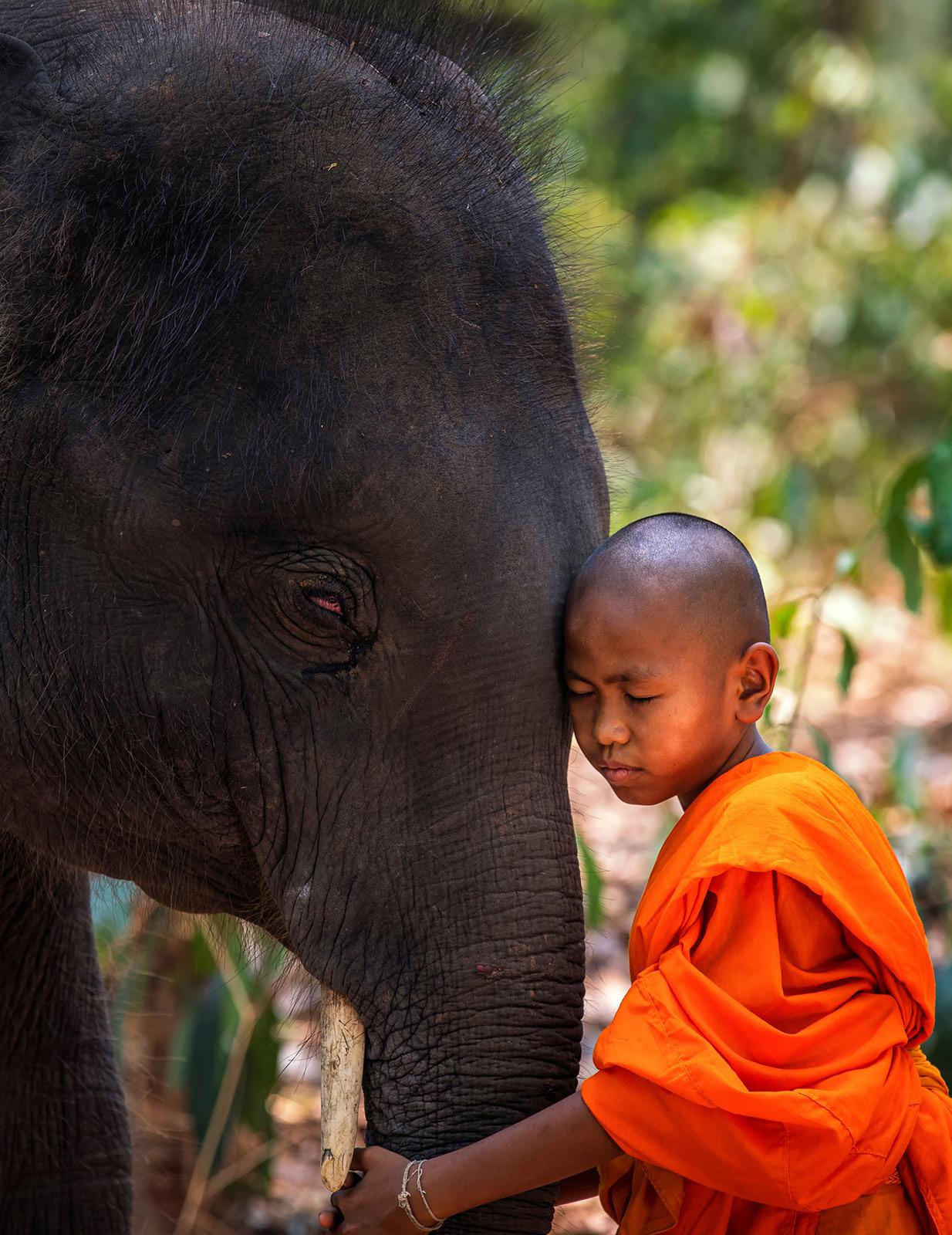
Extend the gentleness of your heart to the majestic elephant, for in its grace lies a reminder of the beauty of compassion
A Date with Destiny

Nearing-Death Awareness in
Legend, Lyric, and Lore
by Daniel Bourke
Phot by A Chosen Soul
Prognostication in western medicine has traditionally been based on objective scientific criteria, yet providers often rely on a feeling or “sense” based on experience to provide prognoses. In trauma, some providers believe that patients who express a feeling of death are more likely to die.
~MAURIZIO MIGLIETTA
AAnne-Marguerite Petit du Noyer, a renowned early eighteenth-century French journalist, seemingly knowing something those around her did not, arranged her funeral, had her house draped in black, and carried out many other death-related rituals despite appearing entirely physically healthy. After completing the kinds of tasks that would have later taken up a lot of her husband’s time at her death, “she died on the day and at the hour that she had indicated." Austrian psychiatrist and Holocaust survivor Viktor Frankl shared something related in his account of an individual’s experience as a captive in a Nazi concentration camp. The prisoner dreams a strange dream in which a voice tells him that his liberation will come on “March thirtieth.” On March 29, he suddenly became ill, and the following day, he became delusional, lost consciousness, and died the next day. Frankl puts the death down to lowered immunity due to his loss of hope, having initially considered this “liberation” as meaning that of his people; ultimately, however, the voice of his dream, as Frankl observed, “was right after all.”
Many mysterious phenomena have long been observed around the coming end of the individual’s life. Visions, dreams, lights, and sounds, since the beginning, the dying person, either at or away from their deathbed, has often become
privy to secret knowledge. Just as the heroes of legend, romance, and myth had, they often speak of other worlds, of indescribable beings and lands, and of meetings with relatives long past. In the same way that the shaman or other initiate might historically bring himself close to death or participate in similarly stressful rituals to attain his powers or make contact with his deceased forebears, the dying man or woman, in really coming to that same threshold, exhibits those very powers.
MEDICAL MYSTERY
The individual on their deathbed or while ill is often visited by mystery. Although much of this has been approached, perhaps nothing has been so marveled at and so little understood as the strange fact that the dying, and indeed the living, not uncommonly have an uncanny ability to accurately predict the date of their own death, often imparted externally and often at a time when there should be no expectation on the part of the medical practitioner or those otherwise attendant of their imminent demise. “An hour hence I shall depart,” were the words of Edward Herbert, 1st Baron Herbert of Cherbury, in 1648, while on his deathbed. The clock that he held while making this prediction later proved him correct.
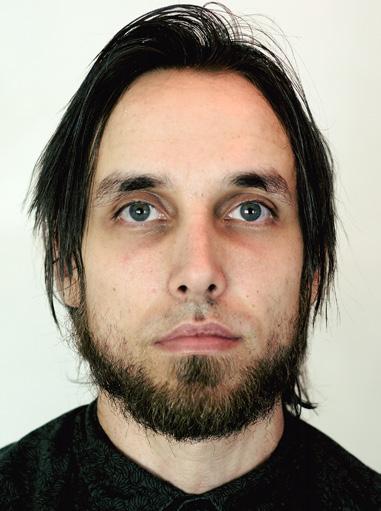
Daniel Bourke is an author, poet, and songwriter. He has a background in the natural sciences, the arts, and the video game industry. He has previously been published in the Journal of the Society for Psychical Research, New Dawn Magazine, and the journal Darklore. He lives in Dublin, Ireland. https://x.com/Near_Death_FEJo
The physician has wondered aloud as to how their own knowledge might be incomplete in the face of these mysterious yet undeniable occurrences. Medical social worker and author Jeanne Van Bronkhorst wrote that “In every nursing home, hospital, and hospice I’ve worked at, nurses and social workers tell stories with awe about someone they knew who seemed to know or choose the moment of their passing." A residential caregiver who spoke to neuropsychiatrist Peter Fenwick noted similarly that “this sort of thing happens all the time." These are truly widespread attestations. After calling in to a popular radio show, a paramedic noted this strange knowledge on the part of the dying. “It’s very unnerving,” he said. “They know, for whatever reason. They have prescience. It's a definitive feeling that they have that they are gonna die, and I would say ninety-five percent of the time, they end up dying in front of me. And it’s very disturbing to me."
The words of Dr. John Hunter Phillips, formerly a professor of medicine at Tulane University in New Orleans, regarding the elderly patients he cared for, are particularly relevant and profound.

I became interested in the mechanism of death in the elderly while serving in the nursing home, particularly in those patients who predicted that their death was imminent. They would say, “I’m ready to die,” and there was very little the physician could do to prevent it. There was usually no obvious lethal disease process evident at the time, the electrocardiogram might be normal, the chest X-ray normal, the screening blood tests all normal, and yet death would occur, usually within 24–48 hours once the positive statement was made. This made me very uneasy, and continues to make me uneasy when I sign the death certificate under the “cause of death.” I don’t really know why they died.
Such sentiments might easily be multiplied. “There is no doubt,” wrote
British physician Arthur Exton-Smith in a 1961 issue of The Lancet medical journal in relation to elderly patients accurately foretelling their deaths, “that these patients became aware that they were about to die, but the manner in which this knowledge was imparted to them could not be ascertained." Dr. Joseph Ngeh, in a letter to the editor in the Journal of the American Geriatrics Society, noted that such “premonitions of death” are a “curious” and “recognized phenomenon.” Ngeh gave the case of a patient of his who died after repeated attempts to revive him. When the patient’s family arrived, “they showed no surprise at hearing about the patient’s sudden death.” The man’s daughter soon revealed to Ngeh that six hours before the sudden incident, the man held her hand and told her he would “die tonight.” Ngeh concluded that “the occurrence of the phenomenon of POD (phenomenon of premonition of death) may have a psychical, or spiritual basis that is not easily understood."
That something of greatly mysterious proportions is occurring in these cases is clear. These patients, as we’ll further explore, really do come into an awareness of just when they will die. By any yardstick, this is no mean feat. Indeed, even the physician’s ability to predict death is essentially nonexistent outside of highly acute instances. A Lancet study, in fact, found that physicians were extremely inaccurate in making such predictions in the final weeks of patients’ lives, guessing even the correct week of death only six times with seventy-four patients. That such specificity has manifestly been afforded to the dying patients themselves is, of course, a mystery and a rather plain challenge to current paradigms. Exton-Smith had openly pondered the nature of this information transfer: How did they know? Who told them? As will become clear, the messengers are often mysterious; however, at other times, the dying speak so plainly on the matter that one wonders how often they have even been asked.

Adopt Today



"I LOVE THE FLUIDITY IN THE COMBAT STYLE. IT’S TAUGHT ME THE RELATIONSHIP BETWEEN RHYTHM AND MOVEMENT IN A NEW LIGHT"
~ Seth Lee