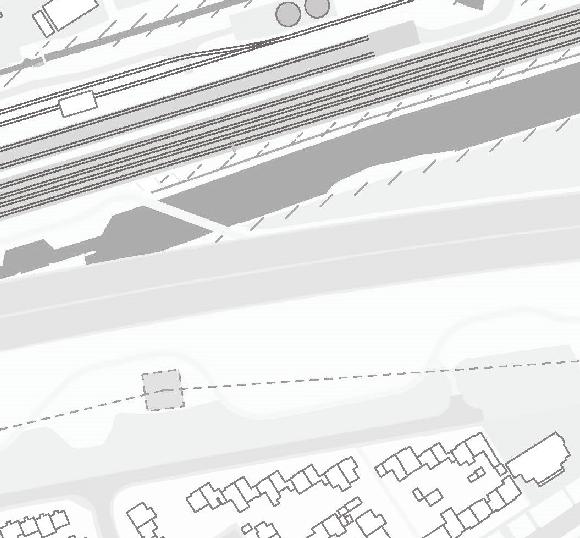
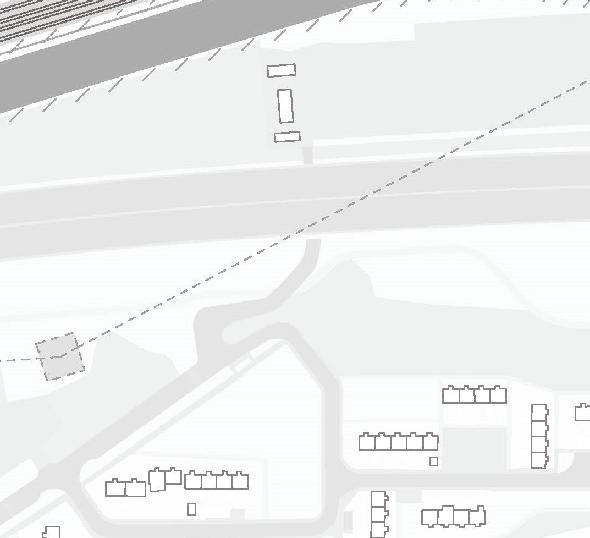
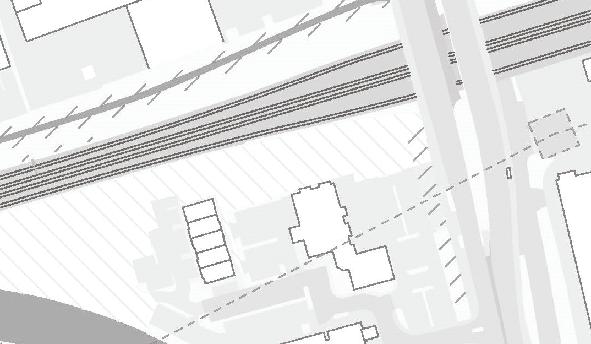
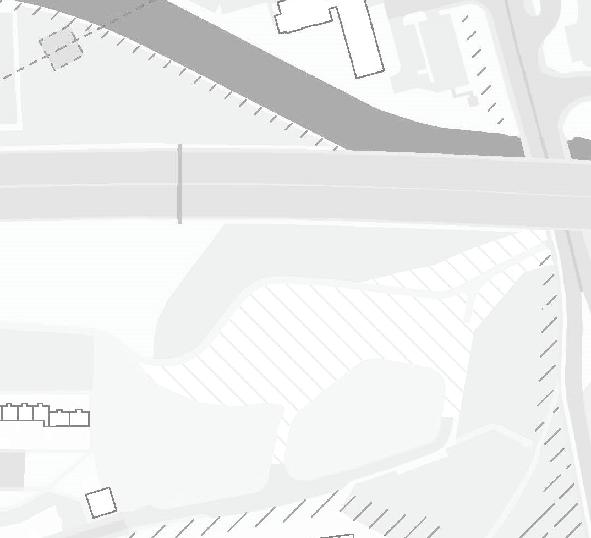
25+ Project to Restore The Planet: Design in the ERA of the New Climatic Regime
Acknowledgements
All the projects presented in this book have been made possible thanks to the guidance of our mentors, Andy Hilton and Dr Rachel Sara. Their beautiful minds opened our horizons of creativity, innovation and agency for the planet.
We also extend our gratitude to all tutors in the ERA design unit. We thank Barbora Bott for technical assistance, Anita Brindley for stepping in to support us and Georgina Mitchell for guidance.
We give special thanks to our brilliant collaborators, the West Midlands Fire Service and the Warwickshire Wildlife Trust, for sharing their knowledge and creating an exchange between our academic endeavours and their very real challenges.
Lastly, to all the experts whose research formed the foundation of our projects we extend out gratitude. Without the grounding in science, using Rachel Sara’s favourite phrase, architecture is just drawing pictures of buildings.
edItIng team:
katarzyna raj, ruby phelps, parsa sabzehparvar, mozhgan sabzehparvar and martyna kedzIa
1
2
3
4
5
6
introduction
The ERA (Extinction Rebellion Architecture) studio unit began in 2020, emerging from a sense of urgency about the climate crisis, and a position that working towards sustainability is no longer enough –we need more visionary and regenerative change. The studio is a part of the Master of Architecture programme in the Birmingham School of Architecture at Birmingham City University. It is a knowledgegenerating studio, inspired by XR’s statement that ‘We are facing an unprecedented global emergency.... a life or death situation of our own making. We must act now... We must radically and immediately begin reducing emissions and improving carbon absorption, drawing it down and locking it up again... Let’s make a better world.’.
The unit argues that in a state of climate emergency we cannot simply carry on designing ‘business as usual’ buildings but instead need to push the boundaries of architectural production to explore architecture that aims to be an active part of the solution to the current climate crisis.
The unit investigates regenerative and restorative architecture with the following overarching principles: architecture which responds to, and connects with the living and natural systems on a site; architecture which responds to its bioregion and the ecosystems of particular
place; architecture which is carbon negative - using materials that take carbon out of the atmosphere and crafting buildings that generate more energy than they consume; architecture which is water positive – positively contributing to natural water systems for living systems; architecture which uses biophilia (the affinity of human beings with the natural world) to improve wellbeing and biodiversity; architecture which uses circular economy principles; architecture which emerges from a regenerative attitude to culture. We see each of the projects as catalysts for change – or as Ilya Prigogine puts it, as ‘small islands of coherence in a sea of chaos [which] have the capacity to shift the entire system to a higher order.’ (Prigogine and Stengers, 1984)
This book has been created by ERA studio class of 2024/25, to celebrate and share the extraordinary innovations and visions of ERA projects which have focussed on the theme of WATER. These projects document 3 years of investigations, from 2022/23 to 2024/25. Projects are included here where they demonstrate radical, but realisable visions for our future environments.
whAt if we could mAke A future Architecture which emerges from locAl culturAl trAditions whilst drAwing down cArbon, increAsing biodiversity by building hAbitAts for wildlife Alongside mAking wonderful uplifting spAces for humAns? whAt if buildings could generAte their own power, be built from mAteriAls thAt AlreAdy exist Around us And creAte the spAces for us to grow our own food? whAt if we could mAke Architecture projects which cleAn our wAter systems And contribute to the wAter security of A region? whAt if we could use Architecture to mAke A better world? Credits: Dr Rachel Sara
whAt if we could bring wAter bAck to the desert?
WATER SCARCITY
Water scarcity is an increasing problem on every continent, with poorer communities most badly affected. To build resilience against climate change and to serve a growing population, an integrated and inclusive approach must be taken to managing this finite resource. The causes of water scarcity are: climate change, overpopulation, deforestation, land degradation, and poor water management.
The projects in this chapter explore how climate change influences water resources and how the architecture intervention can help local communities and people in particularly vulnerable regions.
whAt If we could use hs2 rAIlwAy to dIstrIbute wAter?
whAt if we could heAl community by introducing the orAnge silk industry?
PROJECTS
1. Way of the Bedu
Fixed nodes (settlements) for Bedu tribes in the dessert providing shade, water, and food
// nomadic life / bringing back the tradition / geopolitics of Iraq / desertification//
2. Lost in the Birrarung: Re-igniting the Fire of Australia
Architecture that welcomes wildfires
// indigenous tradition / designing with fire //
3. Citrus Save the Souk
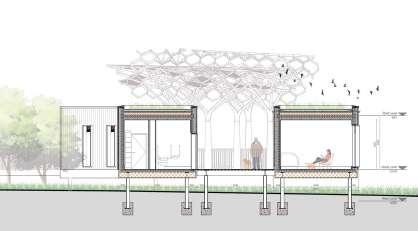
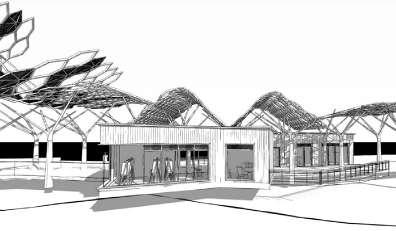
Supertree that collects and desalinates water
// water desalination / local silk industry / public spaces for local community //
4. Hydro-Link
Using HS2 railway to distribute water to UK regions
suffering from water stress and drought
// water distribution / infrastructure adaptation / reuse //
whAt if Architecture could Accept fire insteAd of dismissing it?
Project name: WAY OF THE BEDU
Author: BILAL YASIN RASHID
SITE PLAN
Location: IRAQ, AL-BUSSAYYAH
The project addresses the issue of desertification in Iraq as an effect of global warming. This phenomenon leads to droughts, wildfires, and changes in rainfall patterns. Apart from that it influences people’s lives, specifically Indigenous Bedouin tribes, forcing them to abandon their nomadic way of life and seek survival by settling down in towns. The geopolitical situation aggravates the water scarcity problem since the main sources of Iraq’s water are controlled by Turkey, Syria, and Iran.
The design proposal aims to protect the nomadic tribes’ way of life by proposing fixed nodes that provide settlements for Bedouins, enabling them to migrate regardless of the weather conditions. Overall, the proposal focuses on enabling movement and revitalizing both the land and its people.
The study of Bedouin migration patterns, lifestyle analysis, habits, traditions, and informed design decisions. An important design factor was
CROSS SECTION
also the exploration of the dynamic relationship between light and form during the five Islamic prayer times of the day.
Atmospheric Water Generator
SECTION
WATER GENERATION
Qalb
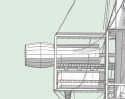
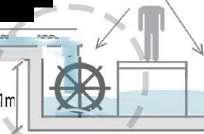
“Qalb” means heart in Arabic. The properties of the Qalb include energy production through the wind turbines that have been utilized from the front of the Jet Engine. The energy produced supports the lighting and running of the Atmospheric Water Generator. The moisture in the compressed air is passed through a filtration system where any dust or contaminants are removed. The clean and pure droplets are collected and stored in a water tank for use.
Bedu tribe settlement site plan
The form of the site is informed by the Gravitation pull towards Mekka.
Irrigation
The nodes include the irrigation zone that provides an area for planting and growing vegetables. An outdoor civic area inspired by shadow spaces, an interplay of light and shadow, to offer a contemplative environment for communal prayer and civic events. The solar farm is located in the southern region of Iraq, where the climate is characterized by high temperatures and ample sunlight throughout the year. The resting space is a shaded haven within the desert, providing a cool and comfortable place for guests and Bedouins to relax.
The communal space of the umu (“Umu” refers to the machine’s name as “mother”) provides a gathering place for Bedouin communities to engage in traditional activities such as storytelling, playing musical instruments like the Rababah, and reciting poetry after dinner.
Mini Hydro Electric Generator
Civic Area
Project name: RE-IGNITING THE FIRE OF AUSTRALIA
Author: BRIANNA MACDONALD
Location: MELBOURNE, AUSTRALIA
The project explores the relationship between the Australian wildfire and traditional aboriginal natural fires called ‘’cool burns’’. The project outlines the agency to traditional practices and gives space for all. Australians connect with their landscape through the deeper understanding felt through Aboriginal rituals. The proposal aims to showcase architecture that does not dismiss fire but actively accepts it. It embraces tradition by providing an environment that, like the ecosystem, has adapted to allow and encourage the fire to burn in the same way it has for thousands of years.
Site A welcomes the user to the idea of political disturbance within the fire break while keeping the traditional energy and ritual alive.
Site B: The first accommodation introduc es the idea of Aboriginal camp layout and begins to understand the interaction between people and the landscape.
Site C: the idea is to have a raised construction allowing for a light touch across the site as the traditional camps would have done.
Site D: The space on the land for traditional practices to be taught & give agency to those who hold the knowledge to be able to pass it on to others.
Site E: The accommodation is more laid out for a collective group of people to come together and connect over traditional ideas.
Previously hesitant infrastructure, such as clearings in the forest called ‘fire breaks,’ is no longer necessary. Fire is no longer a destructive force.
Carved by fire, the suggestion of traditional domed Aboriginal architecture.
Space for fire breaks
Accommodation pods laid in relation to points of fire in camps studied across the continent.
The harmony of community and landscape management The building that accepts fire
Project name: CITRUS SAVES THE SOUK
Author: AISHA ELTABAL
Location: BENGHAZI, LIBYA
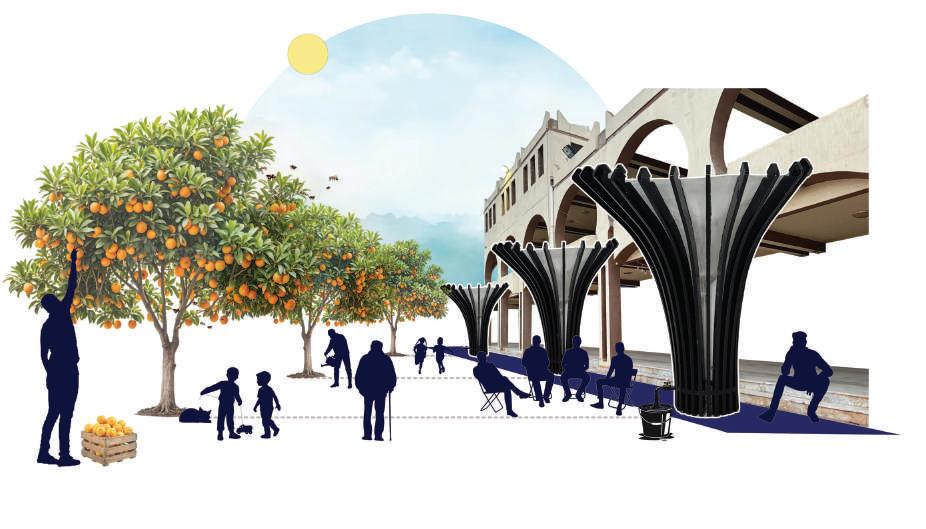
What if one could encourage people to walk down the war-torn streets of downtown Benghazi again? What if we resurrected the life of these once-busy streets? But what would people need to come back? Well, firstly, one can anticipate the need for some shade from the extreme daytime temperatures - so what if the intervention provided some shade? What if there was an activity or a purpose for people to come? What if we tried to revive a local trade that once operated within the derelict souks? The traditional local silk weaving craft perhaps. But the trade is facing major issues nationwide with the lack of raw materials - so what if craftspeople could produce their raw materials in a selfsufficient and environmentally friendly manner? For example, what if they could produce their own orange silk? What if the streets were planted with orange trees to locally-produce orange silk? What if, with the increased vegetation of orange trees, pollution was reduced within the
area, making it a much more pleasant place to be? But all of these trees need water, so what if each tree had its own rainwater collection supply to be used for its irrigation? What if there was a way to desalinate sea water too, because there’s plenty of that, but limited annual rainfall? What if the war-torn streets transformed into orange gardens, full of life, becoming the catalyst for wider urban transformation and healing?
Orange tree Revived Benghazi street Water collection and desalination structure
Orange silk production - community engagement
Project name: HYDRO-LINK
Author: DANIEL REEVES
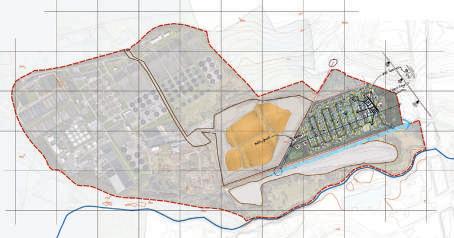
Location: ENGLAND, HS2 KINGSBURY COMPOUND
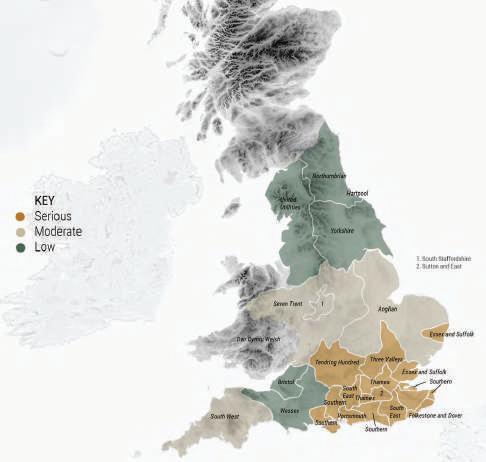
What might come as a surprise to people complaining about frequent rainfall in the UK is the fact that the country is on the brink of a water scarcity crisis. Water consumption has grown by an average of 1% per year since 1930. It is estimated that between 1,100 and 3,300 mega litres of water are over-abstracted in the UK every day. On average people in the UK use 150 litres of water daily. Londoners exceed these numbers, with an estimated daily consumption of 164 litres, despite being a region of serious water stress. The South East and East of England in particular face an increasing demand for water. Rainfall and available water are relatively low in this region, while population size is high compared to other areas in the UK.
[ WHAT HAS BEEN BUILT ALREADY ]
This project looks into what can be done to distribute water around the UK, from where it is plentiful to where it is scarce, using minimal new infrastructure and minimising environmental disruption. While education is key to ensure everyone uses water in a responsible manner, Anglian Water estimates that without new interventions the water distribution system water cut offs could become a common occurrence in five years’ time.
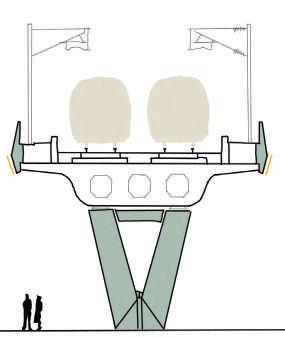
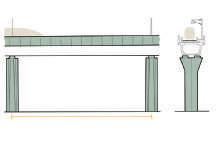
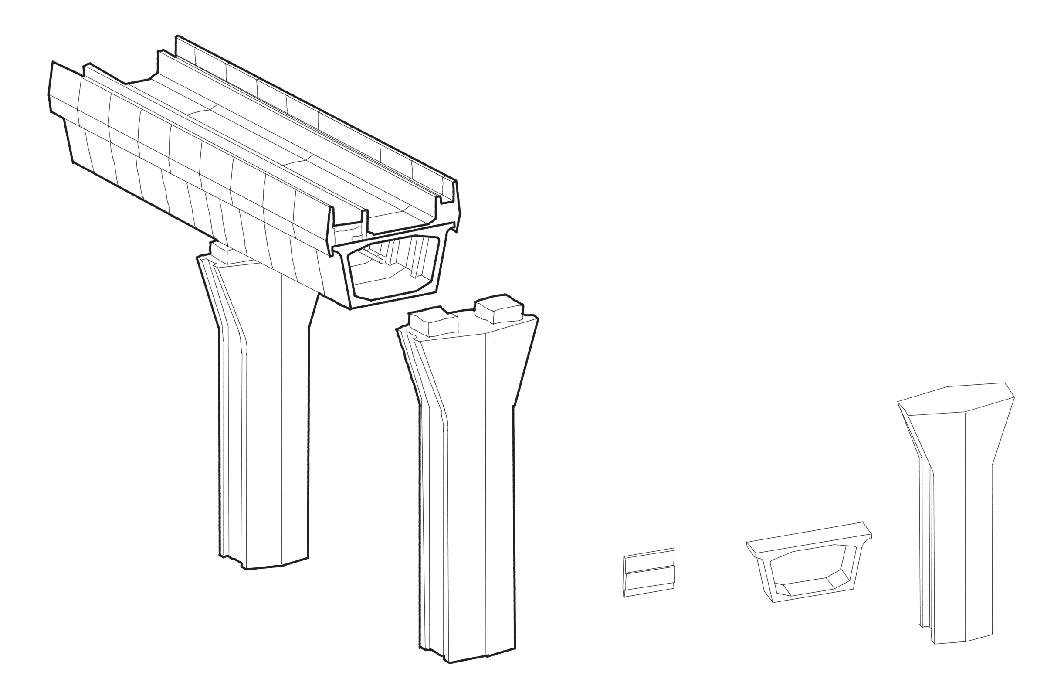
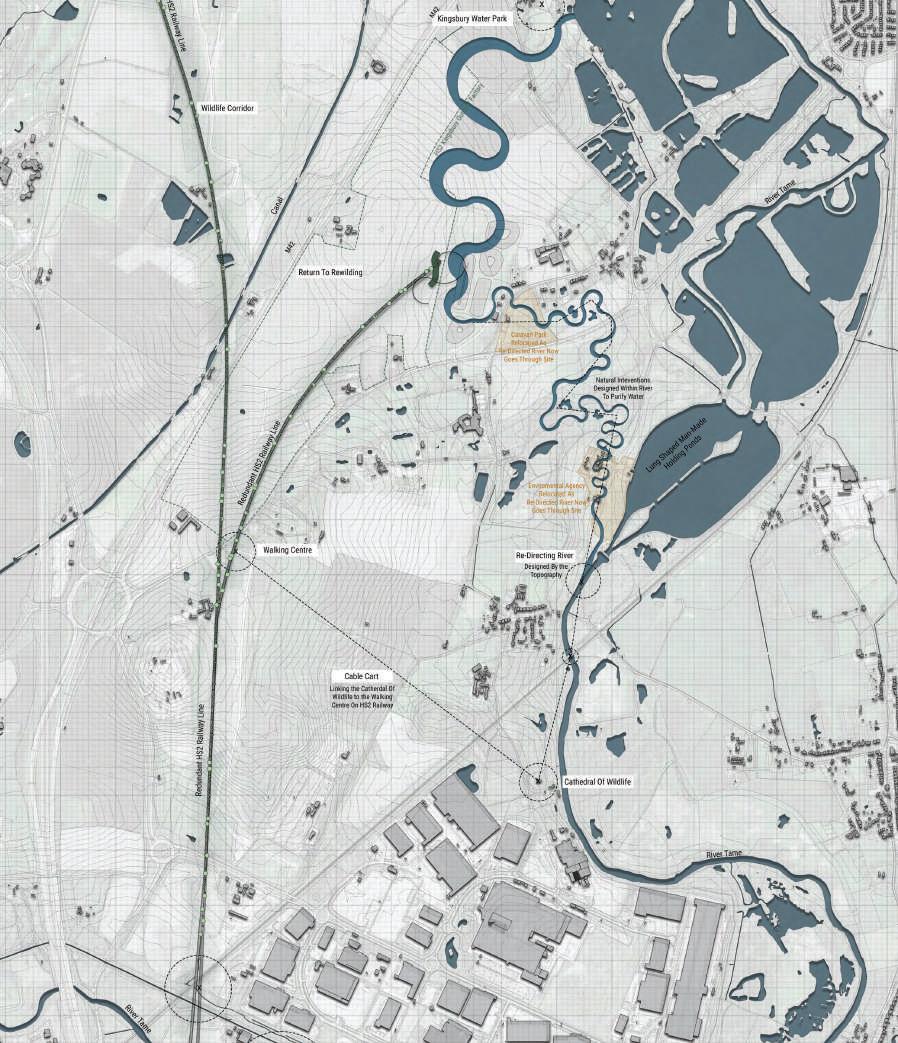
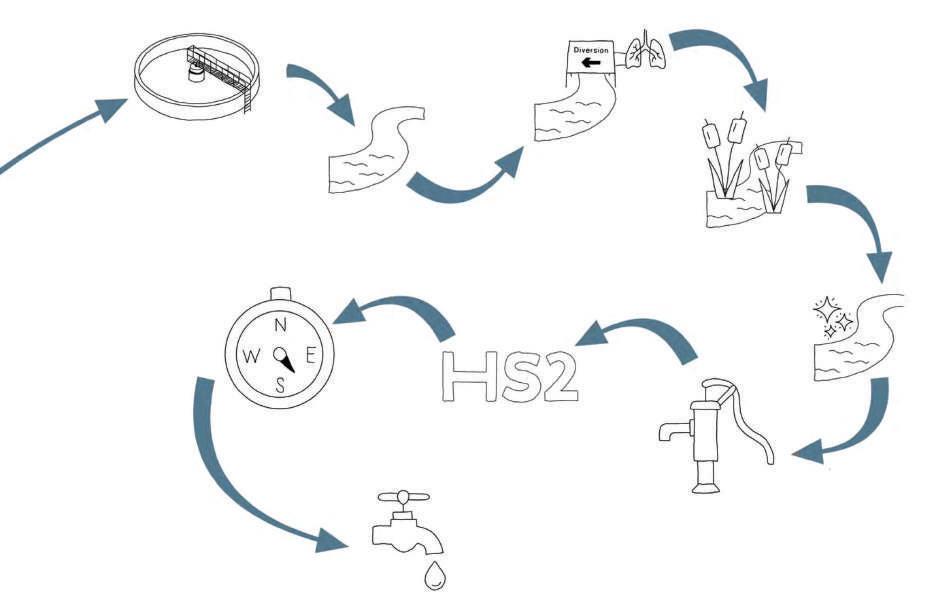
The project explores the possibility of using the HS2 railway as a dual-purpose countrywide aqueduct and rail line as a more cost effective and less disruptive solution to the regional water scarcity problem. In addition to running pipes down the tracks, the proposal makes use of redundant HS2 phase 2 lines which were cancelled by the government and incorporates redundant HS2 construction segments. The proposed interventions are located in and around the Kingsbury HS2 segments factory, which took over the green, rural landscape near the Kingsbury Water Park.
Water stress map of England showing serious stress in many southern regions
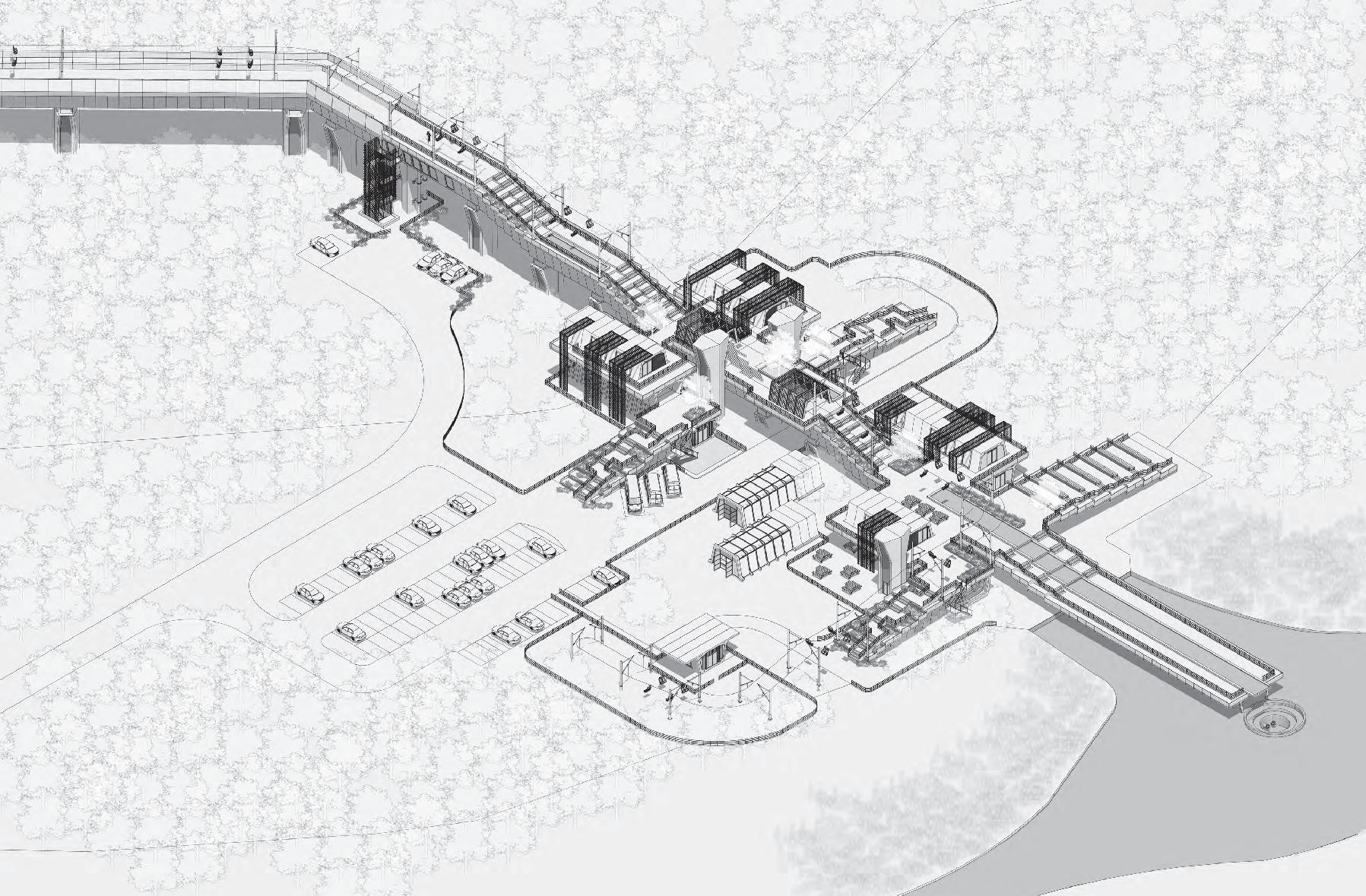
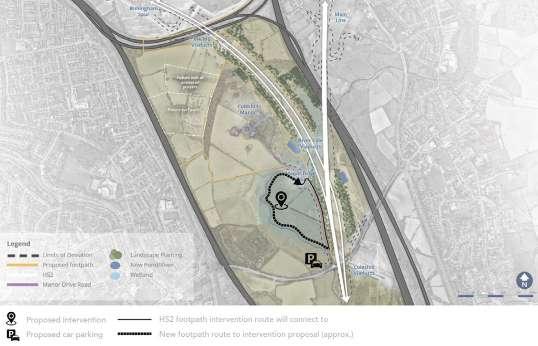
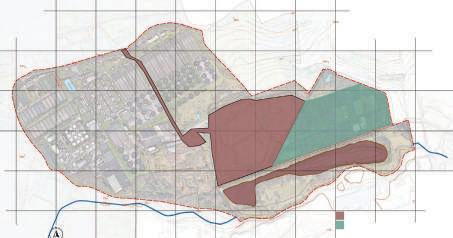
On a wider environmental scale, the proposal features an introduction of a new River Tame course, as the current lung-shaped holding ponds are full of silt and require improvements. The river is allowed to naturally meander through the segment factory site but is also strategically redirected towards the end of the decommissioned East Midlands HS2 railway rack. The end of the track is designed as mixed-use water pump station which pumps out water from the river onto the decommissioned rail track. The structure incorporates an education centre, a chair lift running above the aqueduct and restored green landscape and new offices for the Warwickshire Wildlife Trust and the Enivronmental Agency. The decommissioned railway stretch running towards Crewe is reused as a new wildlife corridor.
[ SYSTEM DIAGRAM ]
[ SYSTEM DIAGRAM ]
BIRMINGHAMWATERWASTE
Proposed masterplan showing a new cable car line, a redundant stretch of HS2 going towards Crewe as a wildlife corridor, and a new River Tame path with its connection to a redundant stretch of HS2 going towards East Midlands.
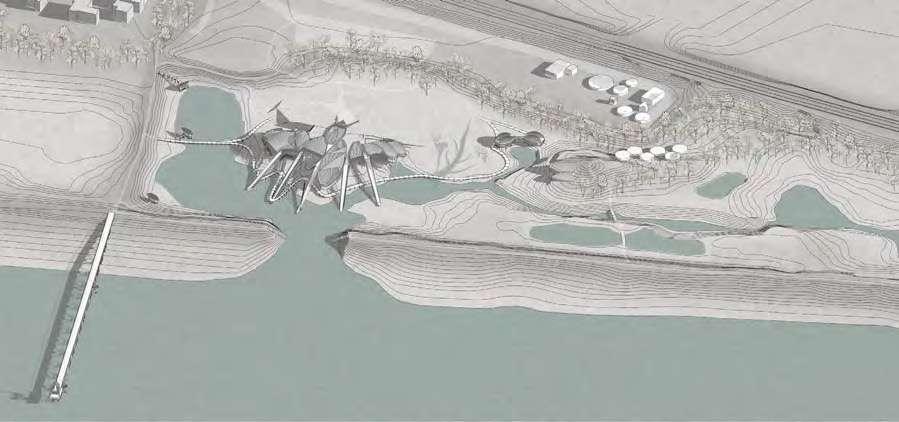
Axonometric site plan showing the proposal of HS2 connecting to the River Tame via a pump station. The view also features the new cable car, offices, visitor centre and car parking.
Systems diagram
What
if fire stations
Were not merely for emergencies, but also helped firefighters stay healthy and stress-free every day?
REGENERATIVE URBANISM
PROJECTS
As cities grow, fire stations can evolve beyond emergency response into sustainable, community-focused spaces. This chapter explores two projects that take this approach: Regenerating Stratford Road, a modular, self-sufficient fire station, and Ladywood Fire Station, which prioritizes firefighter wellbeing through biophilic and sustainable design. These projects showcase how fire stations can contribute to a resilient, people-centered, and eco-friendly urban future.
As cities grow, fire stations can evolve beyond emergency response into sustainable, community-focused spaces. This chapter explores two projects that take this approach: Regenerating Stratford Road, a modular, self-sufficient fire station, and Ladywood Fire Station, which prioritizes firefighter wellbeing through biophilic and sustainable design. These projects showcase how fire stations can contribute to a resilient, people-centered, and eco-friendly urban future.
What if fire stations could move to Where they are needed most, leaving behind green spaces for the community?
1. Regenerating Stratford Road: A Sustainable Fire Station
A modular, adaptable fire station that integrates sustainability and community spaces for a future-proof urban hub
2. Enhancing Firefighter Wellbeing: The Ladywood Fire Station
A redesign focused on firefighter wellbeing, using biophilic design and sustainable materials to enhance health and efficiency
// Adaptability / modular design / community integration //
Project name: ENHANCING FIREFIGHTER
WELLBEING: THE LADYWOOD FIRE STATION
Authors: AMRIT PADDA, DANIEL REEVES, JACOB AUSTIN
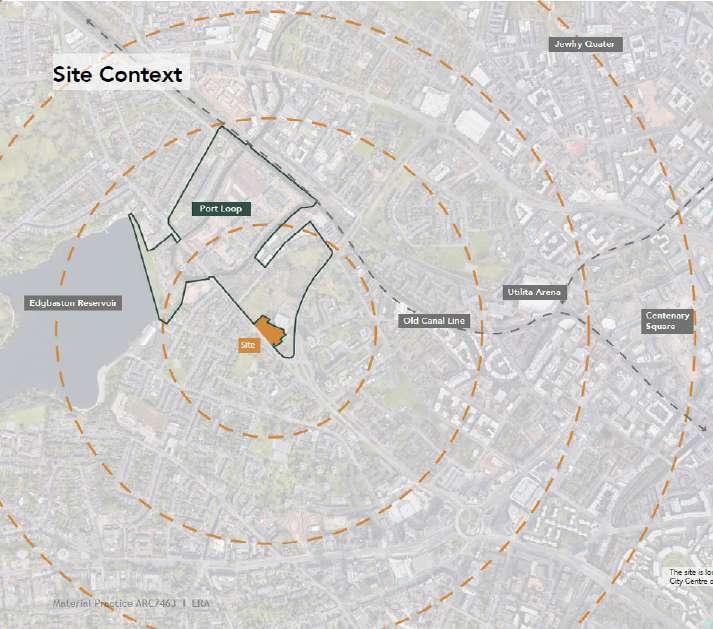
Location: UK, BIRMINGHAM, LADYWOOD
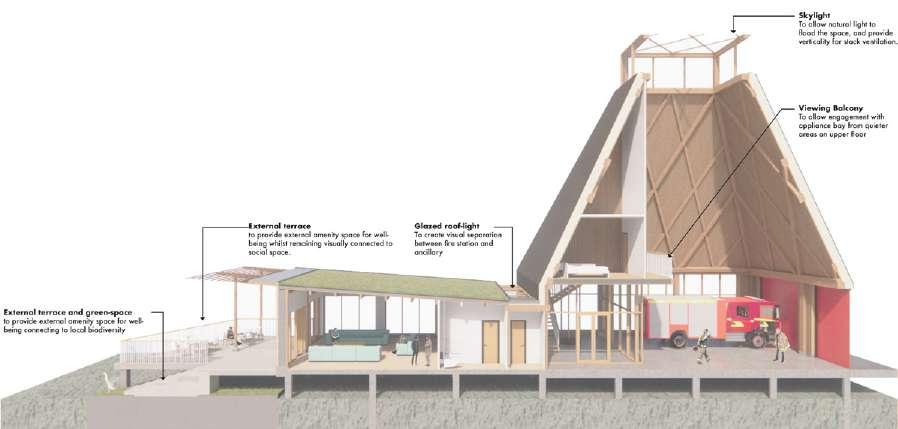
The Ladywood Fire Station redesign is driven by the objective of enhancing firefighter health, performance, and overall wellbeing. Fire stations are high-stress environments, yet their design often overlooks the mental and physical demands placed on firefighters. This project integrates biophilic design principles, sustainable materials, and strategic spatial planning to create a healthier, more efficient workspace.
In response, the redesign focuses on:
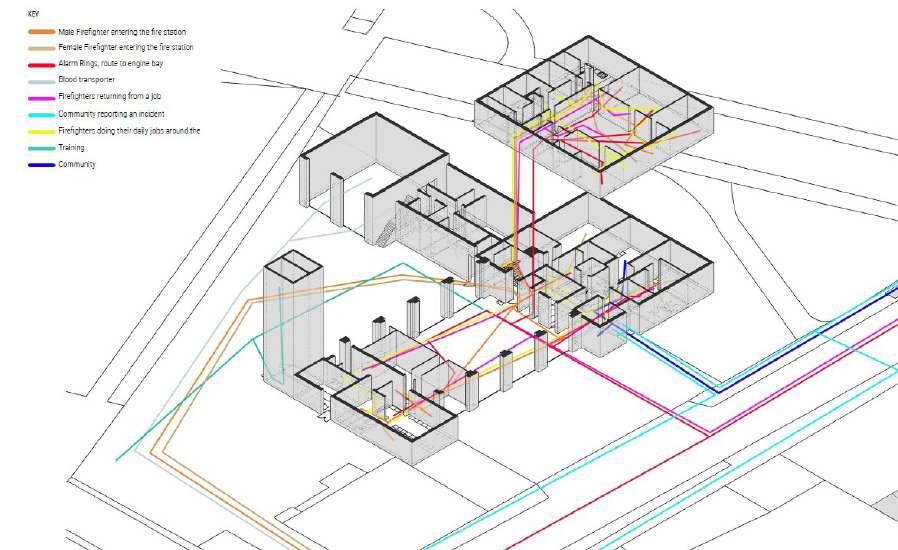
1) Optimized Spatial Layouts: Improved circulation paths for faster emergency response and better separation between active and rest zones.
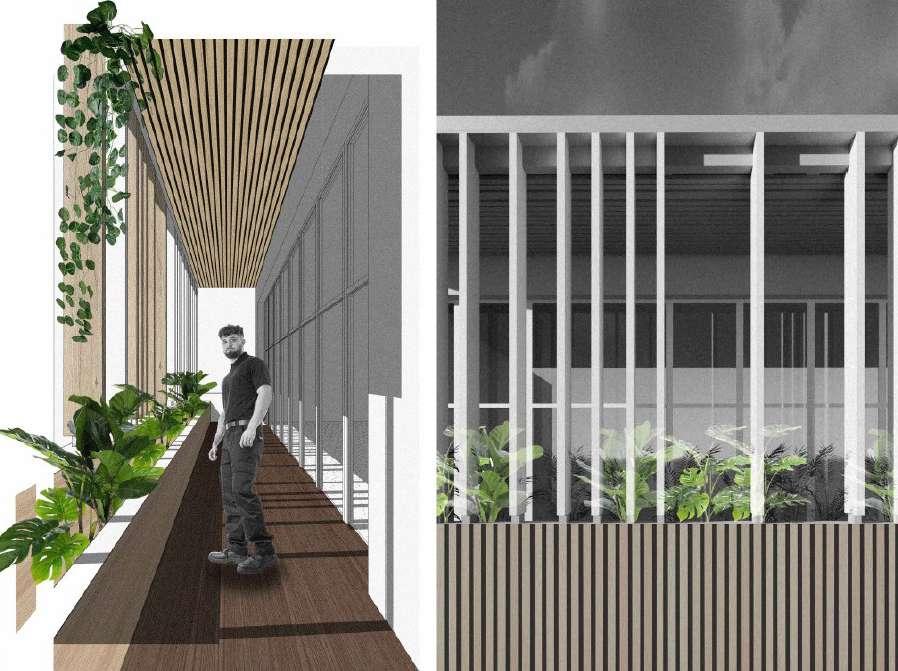
2) Biophilic Design: Natural materials, greenery, and daylight to enhance mental wellbeing and reduce stress.
Key Challenges & Design Response:
The existing fire station has poor ventilation, inefficient circulation, and inadequate rest areas. Firefighters highlighted the need for better decompression spaces, improved daylight access, and more intuitive layouts for rapid response.
3) Sustainable Materials: Reusing existing structures and incorporating carbon-neutral materials to reduce environmental impact.
By integrating these strategies, the Ladywood Fire Station becomes more than just a workplace, it becomes a space that actively supports the health and resilience of firefighters.
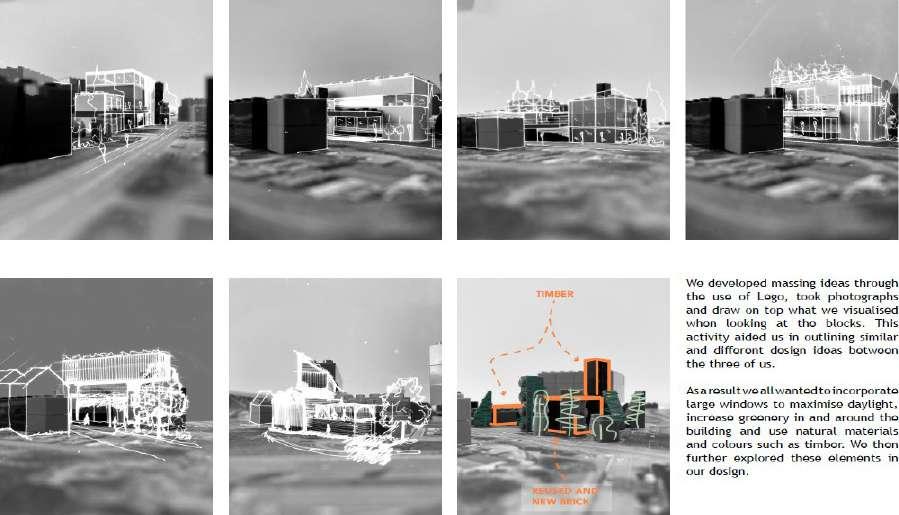
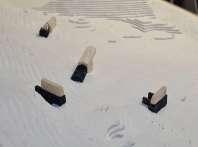
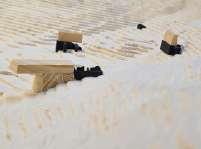
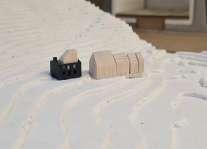
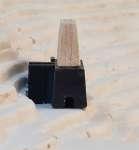
Lego blocks were used to explore massing ideas, with photos taken and sketches added to visualize design concepts. This helped identify common and different design ideas. Key elements included large windows for daylight, more greenery, and the use of natural materials like timber. These ideas were then further developed in the design.
Initial Massing Development
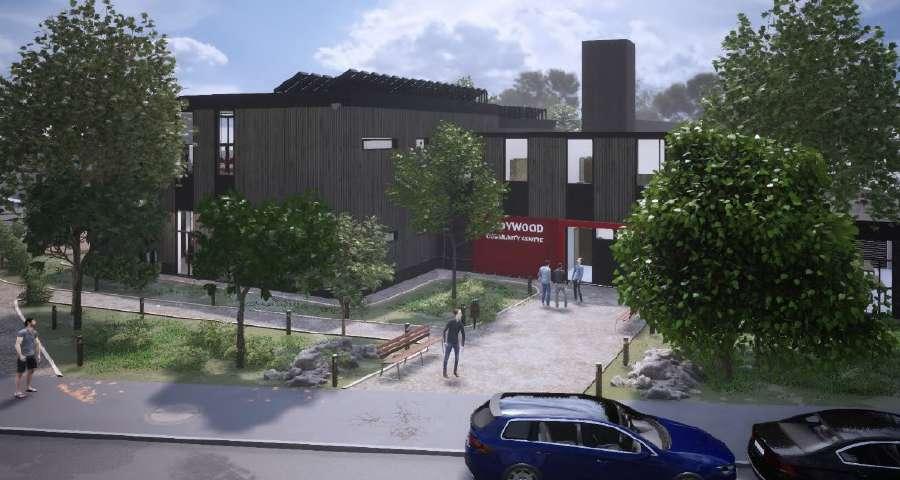
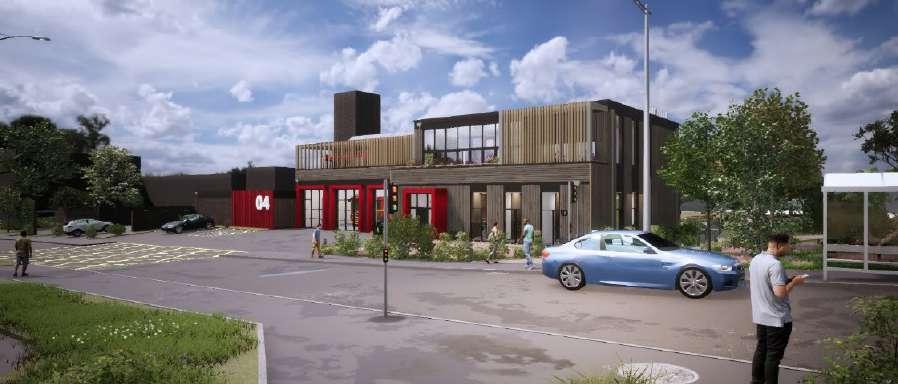
Proposed Side Perspective
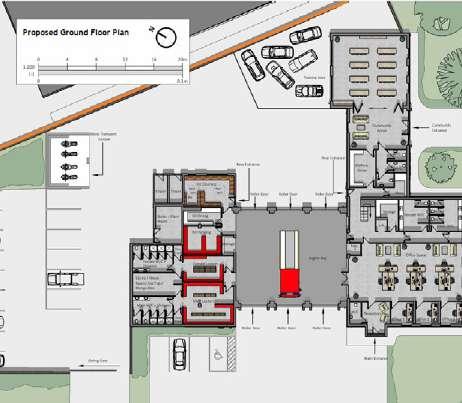
Proposed floor plans reimagine Ladywood Fire Station as a highly efficient, wellbeing-focused environment. Their design optimizes spatial flow, ensuring clear separation between operational, rest, and community areas while enhancing natural light, ventilation, and accessibility.
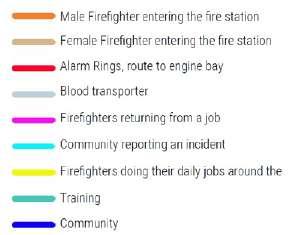
Circulation Flows Around The Existing Fire
Proposed Ground Floor Plan
Interior and Exterior Visuals
Exterior Visual of The Proposed Fire Station Design
Project name: REGENERATING STRATFORD ROAD: A SUSTAINABLE FIRE STATION FOR THE FUTURE
Author: STEFAN BRABAND, MARTYNA KEDZIA, MYLES LYDON
Location: UK, BIRMINGHAM, SPARKHILL
The Stratford Road Fire Station project reimagines emergency response infrastructure as a tool for urban regeneration. Designed to integrate with the community, the fire station serves as both an operational hub and a catalyst for environmental and social revitalization. The proposal transforms a brownfield site into a self-sufficient, adaptable space that balances emergency response efficiency with ecological and social benefits.
Key Objectives & Design Approach:
Community Integration: The fire station is designed as a multifunctional space, featuring community facilities that strengthen ties between firefighters and residents.
Sustainability and Self-Sufficiency: The proposal prioritizes energy independence, water recycling, and urban agriculture to create a resilient, lowcarbon facility.
Adaptability and Demountability: The fire station is a modular, relocatable structure that can shift to areas of greater need over time, leaving behind a green public space when relocated.
Urban Greening: The site design incorporates green roofs, urban farming, and extensive landscaping to mitigate pollution, enhance biodiversity, and provide social spaces.
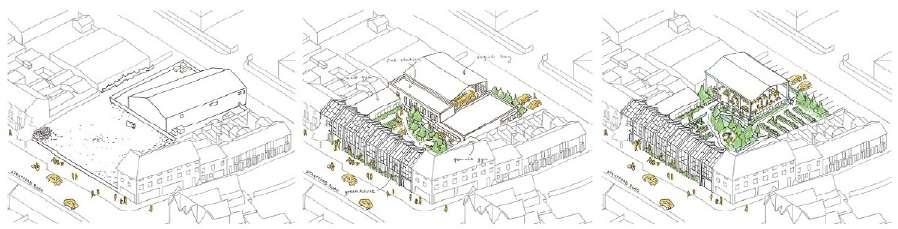
Stages now, 1 and 2
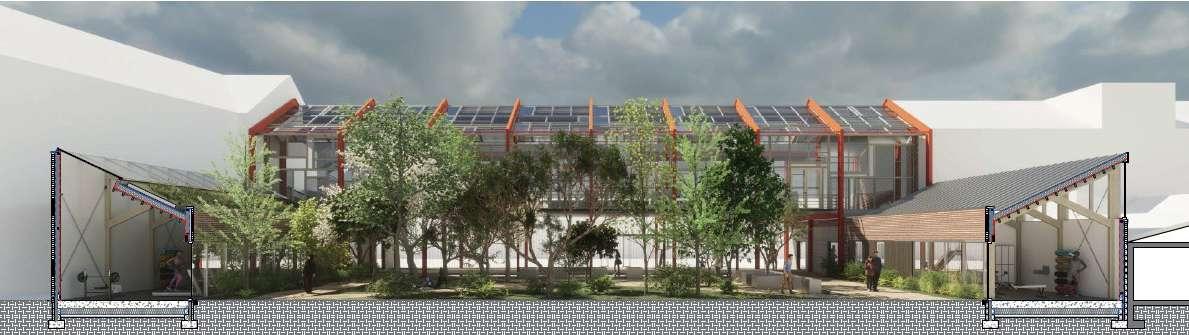
The brownfield site on Stratford Road will be turned into a community space with a greenhouse, gender-segregated gyms for the public and fire station staff, an appliance bay, and a demountable fire station amenity. As fire station locations change due to shifting call-out needs, the vacated engine bay can be repurposed as a flea and farmers market.
The garden will expand into the area left by the fire station, transforming the site into a new community hub with a greenhouse, allotments, playground, gyms, and a market.
Highgate Fire Station - Site Relocation to Sparkbrook Highstreet
Street Front View of The Proposed Design
Site Analysis
Gym Section and View by Stefan Braband
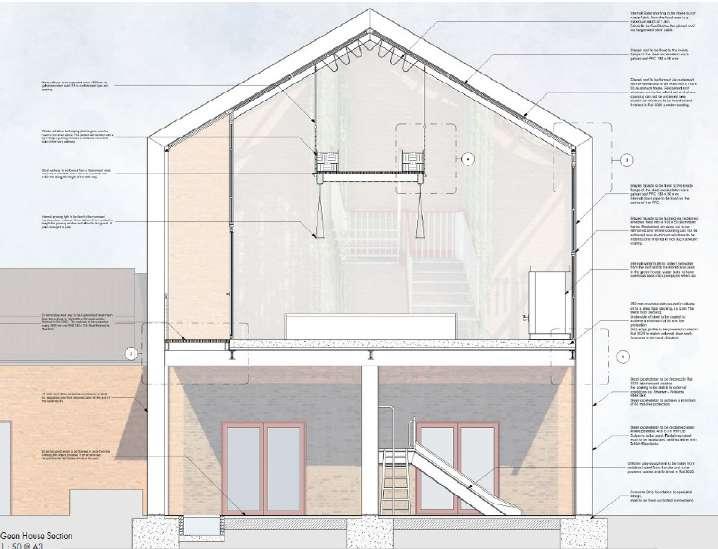
Green House Section by Myles Lydon
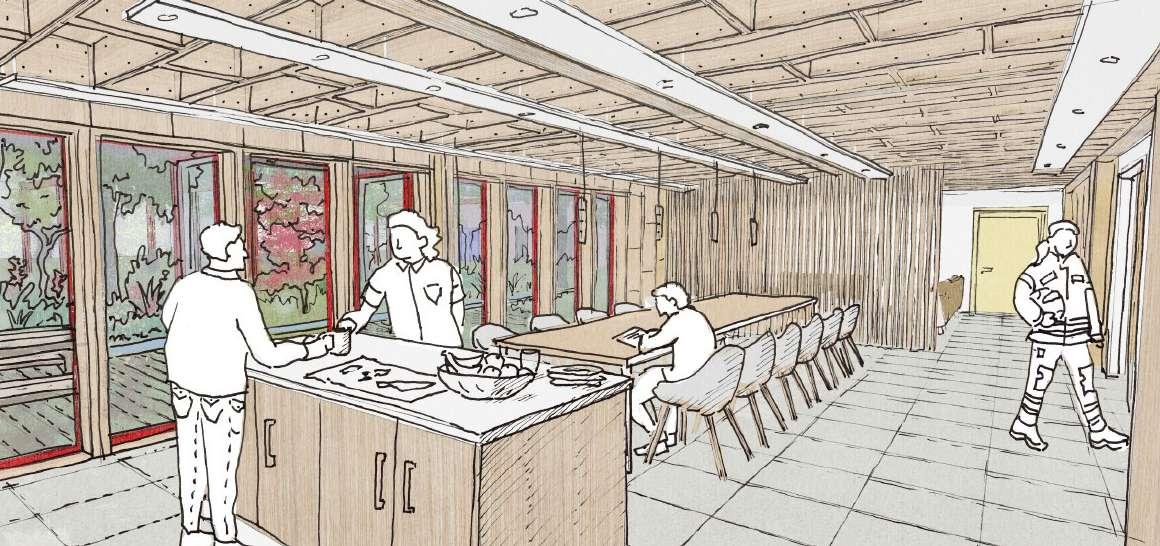
Kitchen Interior by Martyna Kedzia
What if the submerged ruins of cullen became a tourist destination, a vibrant underWater museum that tells the story of its people and their resilience?
FLOODING AND RISING
SEA LEVEL
Rising sea levels caused by climate change threaten coastal and low-lying communities, forcing them to adapt while preserving their identities. This chapter examines architectural responses to this crisis through projects that explore resilience and innovation in the face of flooding.
What if a fire station could Work With Water instead of fighting against it, using floods to protect both people and nature?
What if rising sea levels didn’t mean the end of coastal toWns, but instead the birth of floating communities that thrived alongside the Water?
PROJECTS
1. The Submerged Legacy of the Harp Players
Designing resilient coastal architecture to adapt to flooding, rising sea levels, and integrate regenerative design practices.
A flood-resilient fire station that embraces water management, sustainability, and community engagement.
// Flood resilience / sponge city / water management / elevated structures //
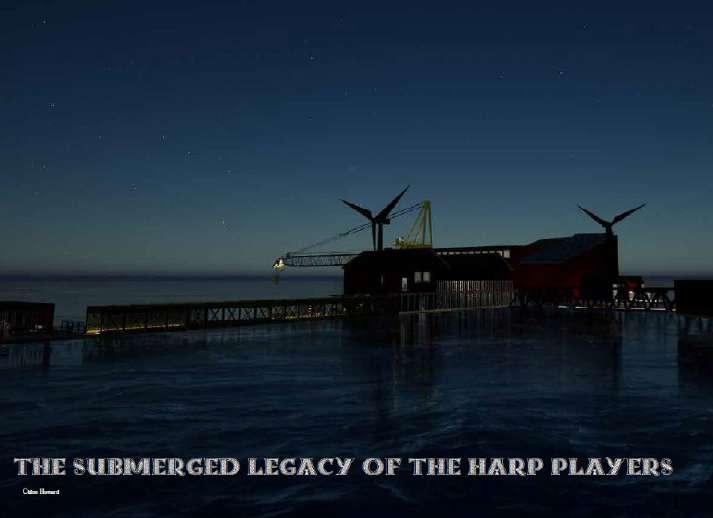
Project name: THE SUBMERGED LEGACY OF THE HARP PLAYERS
Author: CHLOE HOWARD
Location: UK, SCOTLAND, CULLEN
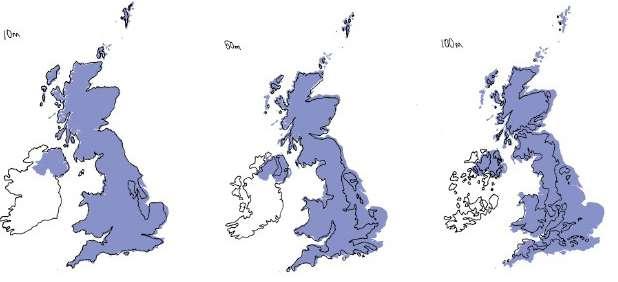
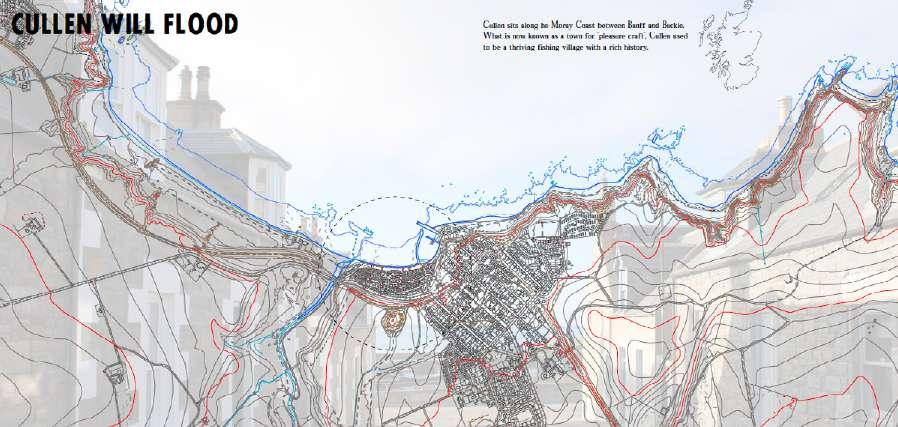
The Submerged Legacy of the Harp Players addresses the devastating consequences of rising sea levels on coastal communities, using the fishing village of Cullen on the northeast coast of Scotland as a focal point. With sea levels projected to rise by nearly two meters by the year 2100, the project explores how architecture can respond to the inevitable flooding rather than attempting to prevent it. Rather than viewing the destruction of Cullen as an end, the thesis proposes a transformation of the
submerged village into an artificial coral reef and marine ecosystem. This repurposed landscape will serve as both a site of ecological restoration and a symbolic reminder of the town’s heritage. Through adaptive design solutions such as oyster and mussel farming and the establishment of renewable energy infrastructure, the project envisions a future where the ocean’s power is harnessed sustainably.
The Sea Level is Rising
Cullen Will Flood Due to Sea Level rise
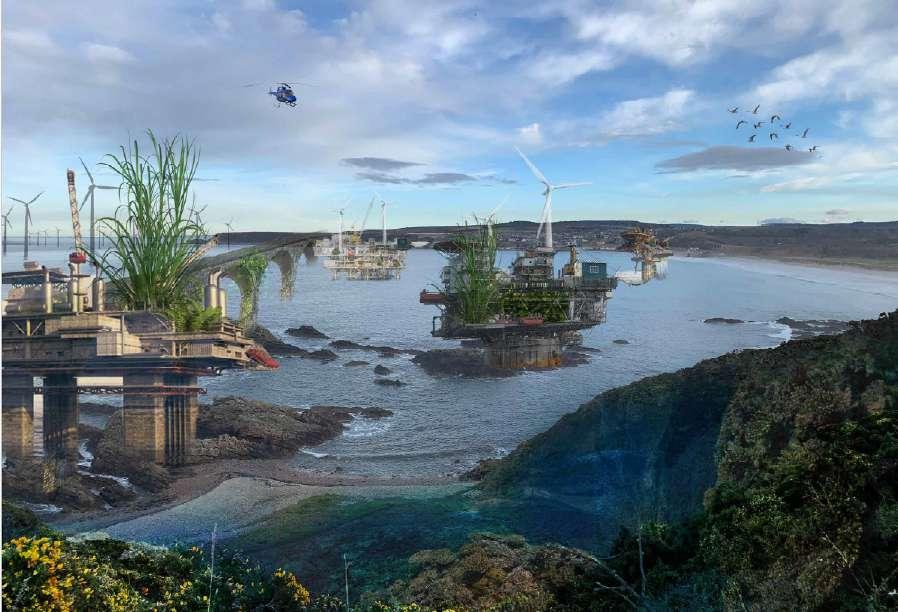
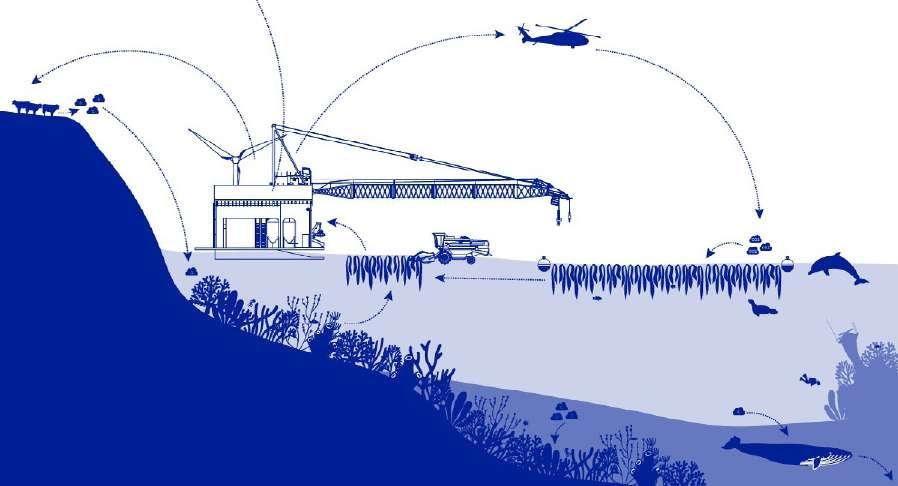
Cullen Reimagined With Oil Rigs and Regenerative Ocean Farming
This drawing illustrates the circular economy concept, where regenerative ocean farming utilizes animal waste as fertilizer. This process can be integrated with oil rigs as an architectural intervention, creating a sustainable and symbiotic relationship between marine agriculture and energy infrastructure.
Fishing Concept
The project envisions the flooded Cullen as a site of ecological regeneration, where the remnants of the town become part of a thriving underwater ecosystem. Instead of traditional fishing, the concept embraces regenerative sea farming, focusing on species like oysters, mussels, and sea greens. These species naturally filter water, contributing to the health of the marine environment.
This approach contrasts with the destructive practices of industrial fishing and promotes sustainable aquaculture. Cullen’s transformation into an artificial reef supports biodiversity while providing a renewable source of food for coastal communities.
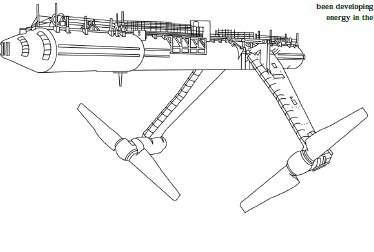
the O2, is a 72-meter-long device that generates energy from underwater turbines and can power around 2,000 homes annually.
Oil Rigs Concept
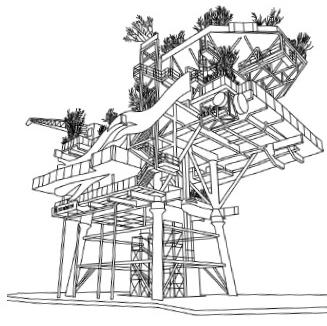
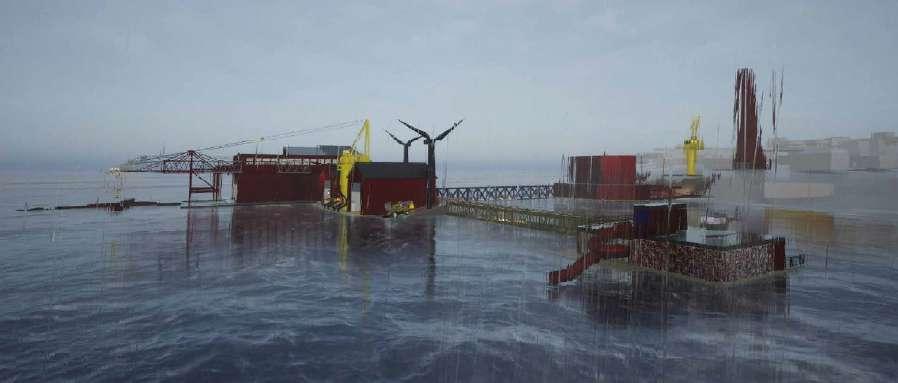
Chloe’s project critiques the oil and gas industry, which has significantly contributed to climate change. However, rather than abandoning decommissioned oil rigs, the proposal suggests repurposing them for ecological and cultural purposes. Decommissioned rigs can become part of the landscape of Cullen’s submerged remains, serving as marine research stations or platforms for renewable energy generation.
Inspired by projects like the SEE Monster (a retired oil rig converted into a public art installation), Chloe’s concept imagines oil rigs as both memorials to the fossil fuel era and symbols of resilience. Their structural strength is repurposed to support sea farming facilities and marine research.
Proposed Design Visual
The SEE Monster (a retired oil rig converted into a public art installation)
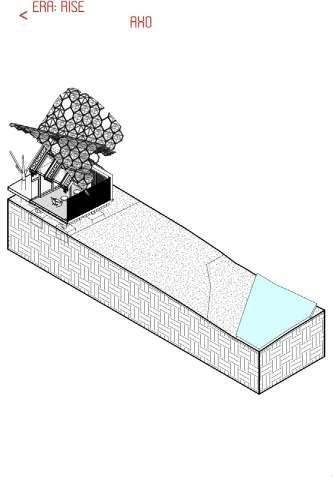
Project name: RISING BEYOND THE TIDE
Author: MATTHEW BELL
Location: UK, WALES, FAIRBOURNE
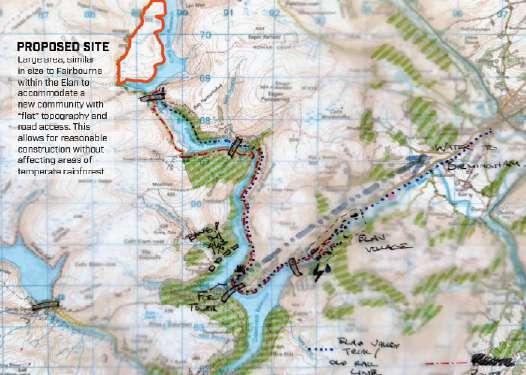
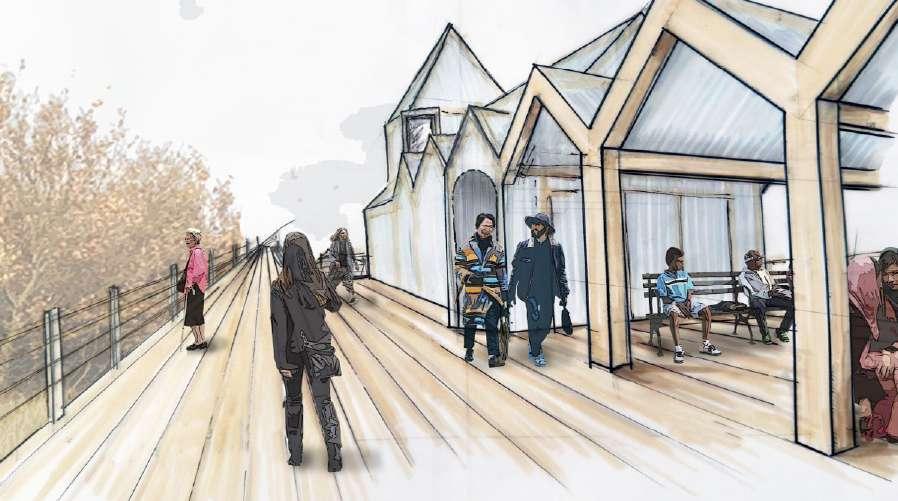
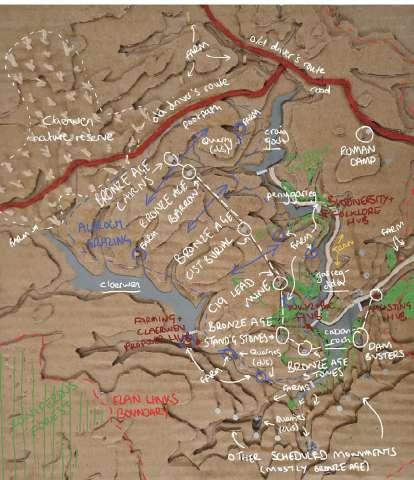
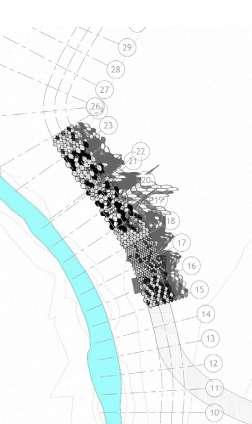
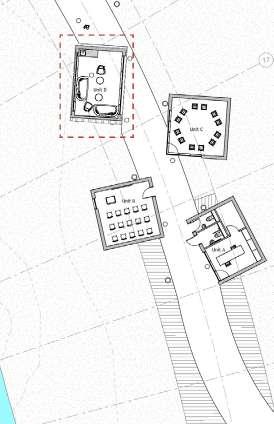
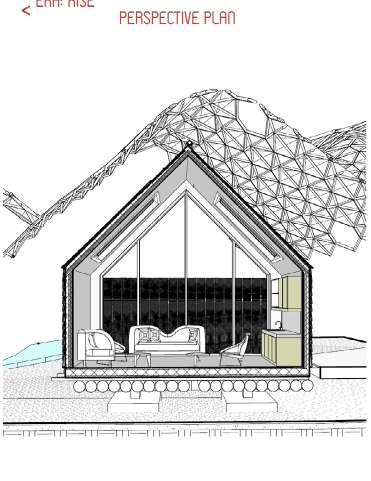
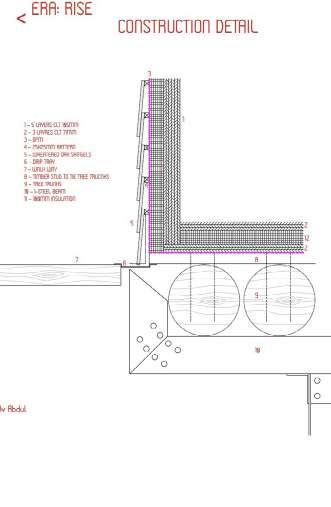
This Project explores the imminent threat of rising sea levels to Fairbourne, a coastal town in Wales, which is projected to become one of the UK’s first climate refugees. Rather than accepting its inevitable abandonment, the project proposes a relocation of the community to the Elan Valley. By embracing sustainable timber construction, renewable energy, and ecological restoration, the project envisions a self-sufficient settlement. Central to this concept is the establishment of seed houses for reforestation, timber production facilities, and modular housing to accommodate displaced residents. Through adaptive design and community-led development, the project serves as a speculative model for addressing climate migration and rethinking urban resilience in the face of environmental uncertainty.
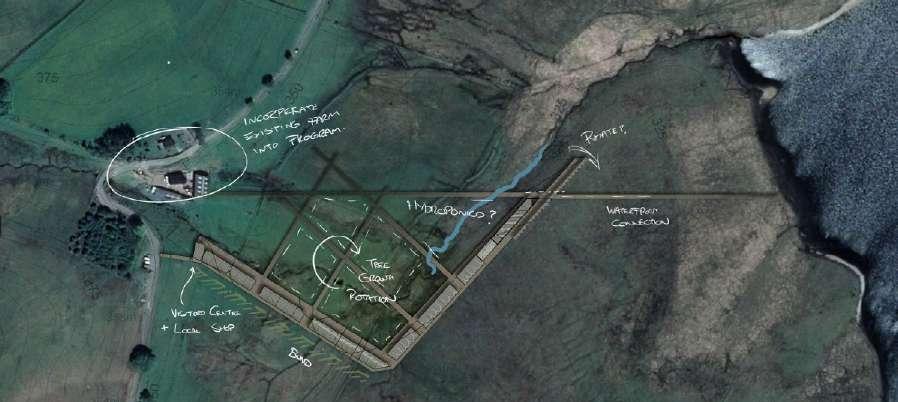
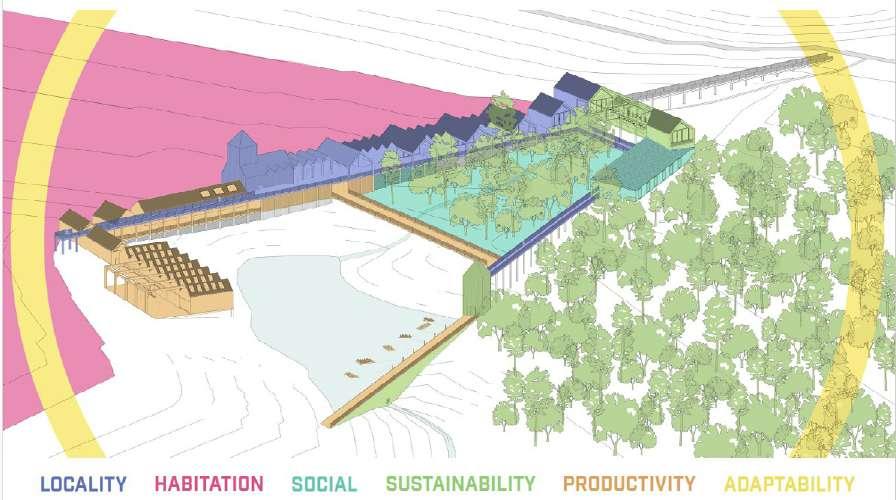
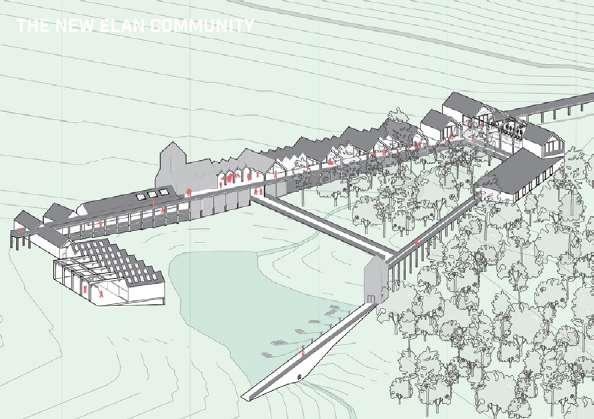
The drawing illustrates a planned site layout with zones for farming, visitor amenities, tree rotation areas, hydroponics, and waterfront features. It emphasizes sustainable land use and landscape management.
At its core, ERA: RISE critiques the government’s approach of abandoning vulnerable coastal towns deemed economically unviable. It challenges the concept of displacement by proposing a proactive and adaptive solution — the construction of a self-sufficient, ecologically integrated community. Through a circular economy model, the project leverages the region’s natural resources, particularly timber, to build a future driven by renewable materials and energy. Timber production is not only central to construction but also serves as a method of ecological restoration through managed forestry and reforestation.
Reintroducing Fairbourne #1
pathways for connection.
Reintroducing Fairbourne #2
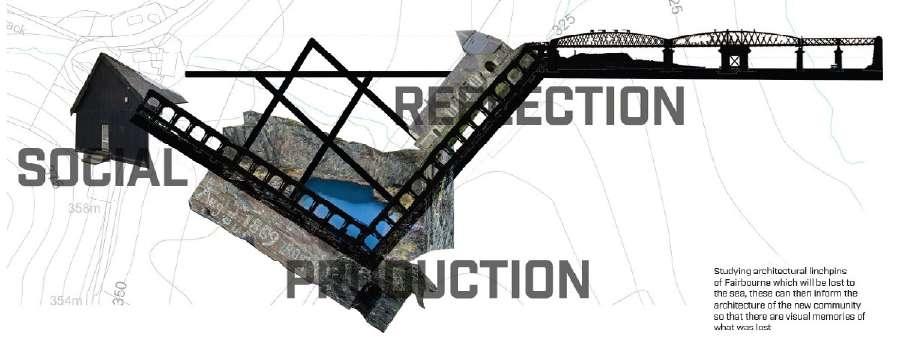
As the sea continues to rise, many key buildings and landmarks in Fairbourne will eventually be lost. By studying these important structures before they disappear, we can take inspiration from
their design and features when creating new buildings for the future community. This way, even though the original places may no longer exist, their influence will live on in the architecture, keeping the memory of Fairbourne’s past alive.
Wider Site Development Plan
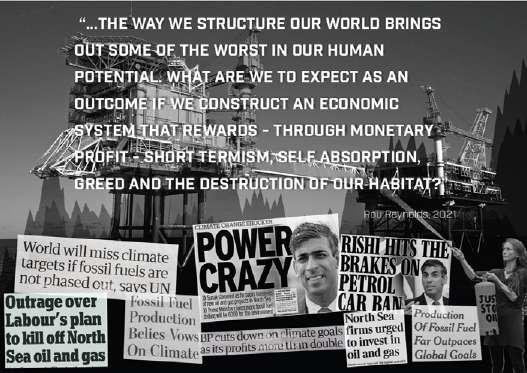
The Cost of Fossil Fuels: Profits, Protests, and a Planet in Peril
Proposed Site Location
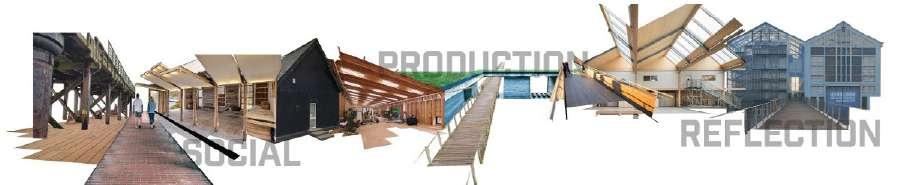
Social: Gathering spots and
Reflection: Peaceful views and scenic areas
Production: Workplaces and essential structures.
This drawing shows a plan to relocate Fairbourne, which is at risk from rising sea levels, to the Elan Valley. It envisions a self-sufficient community with modular homes, timber production, and reforestation efforts. By using renewable energy and ecological restoration, the design promotes resilience and sustainable living, offering a model for addressing climate migration.
The architectural vision of the project is expressed through distinct programmatic spaces that foster resilience and knowledge sharing. A seed house acts as both a nursery for tree planting and an educational hub on sustainable forestry. Woodworking facilities transform harvested timber into modular housing components, allowing for flexible, efficient construction. Additionally, a food hall and market provide communal gathering spaces, encouraging local food production and reducing reliance on external supply chains.
The project ultimately presents a blueprint for addressing the growing crisis of climate migration. By proposing a community centered on adaptability, self-sufficiency, and ecological stewardship, the project envisions a model of urban resilience that can be applied to other at-risk towns. It challenges the notion of climate refugees as displaced victims, reframing them instead as pioneers of regenerative living in a rapidly changing world.
Color-Coded Design: Spaces and Usages
Exterior Visual
Isometric views Technical Section
Relocation and Resilience Design
Project name: A RESILIENT FIRE STATION
Author: RICHARD ROBINSON, MATT BELL
Location: UK, BIRMINGHAM, PERRY BARR
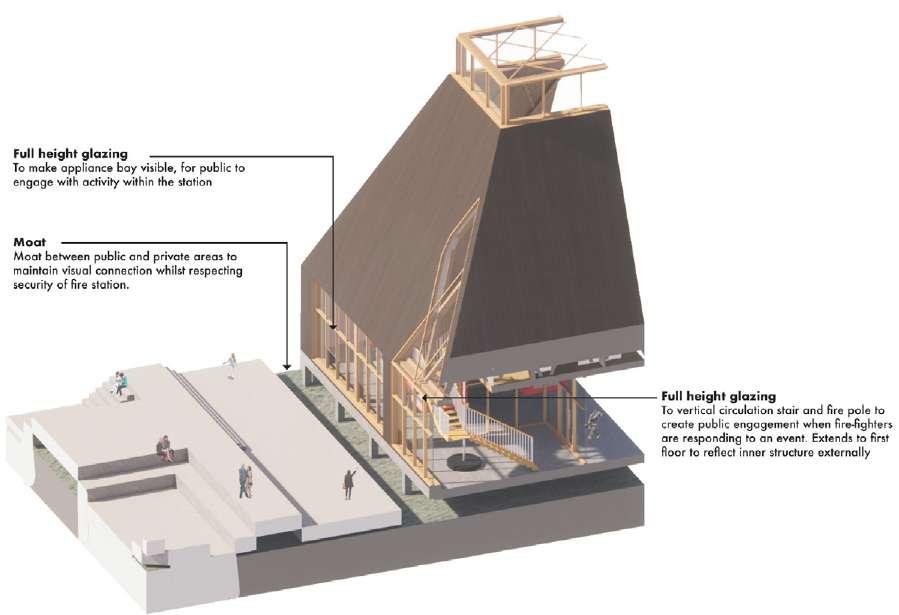
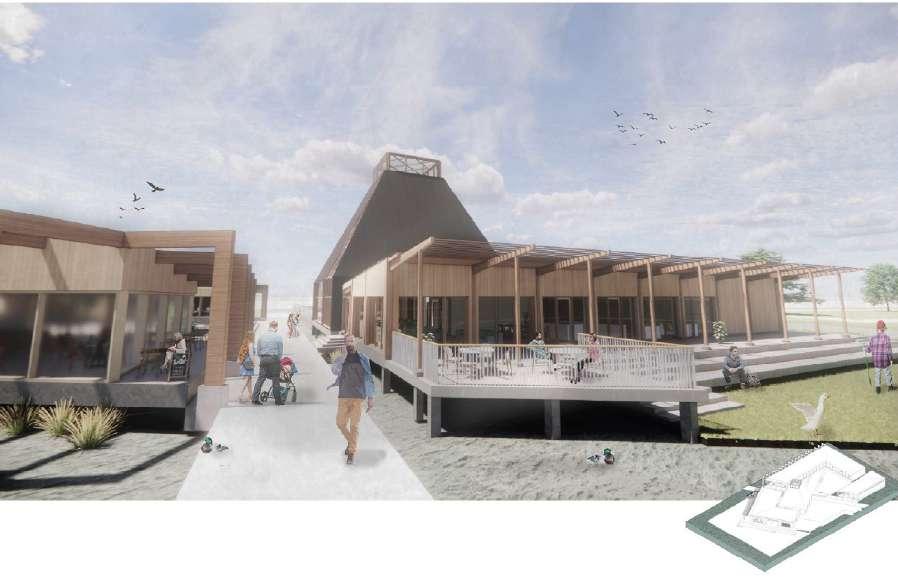
The Fire & Water project reimagines the role of the fire station as a climate-resilient, community-integrated facility that addresses the growing challenges of urban flooding and emergency response. Set within Perry Hall Park, a site historically prone to flooding, the design leverages water as an asset, integrating flood mitigation, ecological restoration, and sustainable infrastructure.
Key Objectives & Design Approach
Flood Resilience & Adaptability: The fire station is elevated above projected flood levels, with natural water filtration systems, retention basins, and green roofs to manage stormwater.
Community Integration: Public spaces like a café, learning hub, and shared gym foster a deeper connection between firefighters and the local community.
Sustainability & Circular Economy: The use of reclaimed materials, modular construction, and passive design reduces environmental impact and allows future adaptability.
Firefighter Wellbeing: Thoughtful spatial planning ensures separation of high-stress operational areas from rest and recovery spaces, promoting mental and physical health.
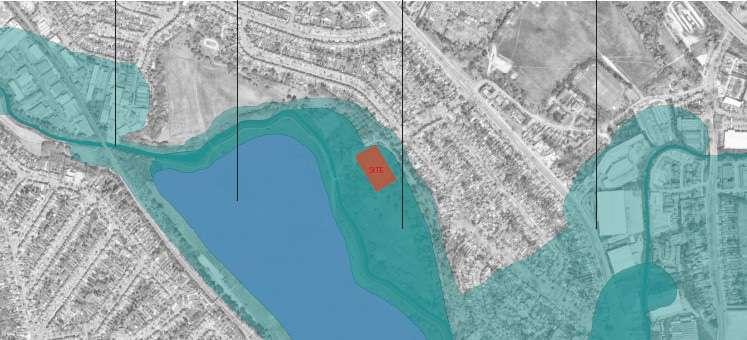
The project’s site location analysis was conducted by identifying areas in Birmingham most vulnerable to flooding, using mapping techniques and environmental data. Perry Hall Park was selected due to its high flood risk, proximity to the community, and potential for water management integration.
Fire Station Design Concept
The Context and Public Connections
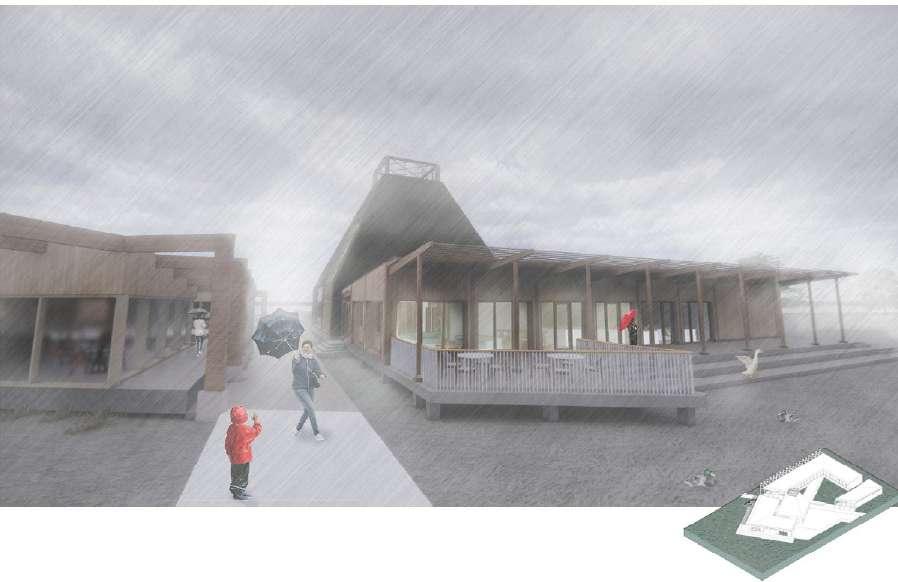
The design was tested for flood resilience, ensuring key areas remain operational even in extreme flooding. In a 1-in-100-year flood, only landscape areas submerge, while in a 1-in-1000-year flood, some spaces like the gym may flood but quickly recover using resilient materials and drainage systems. This ensures continued functionality and rapid post-flood usability.
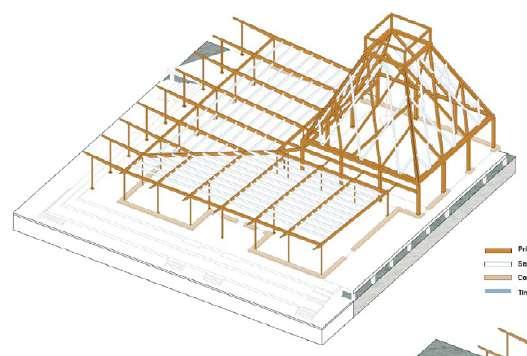
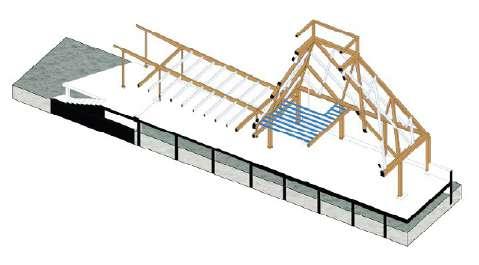
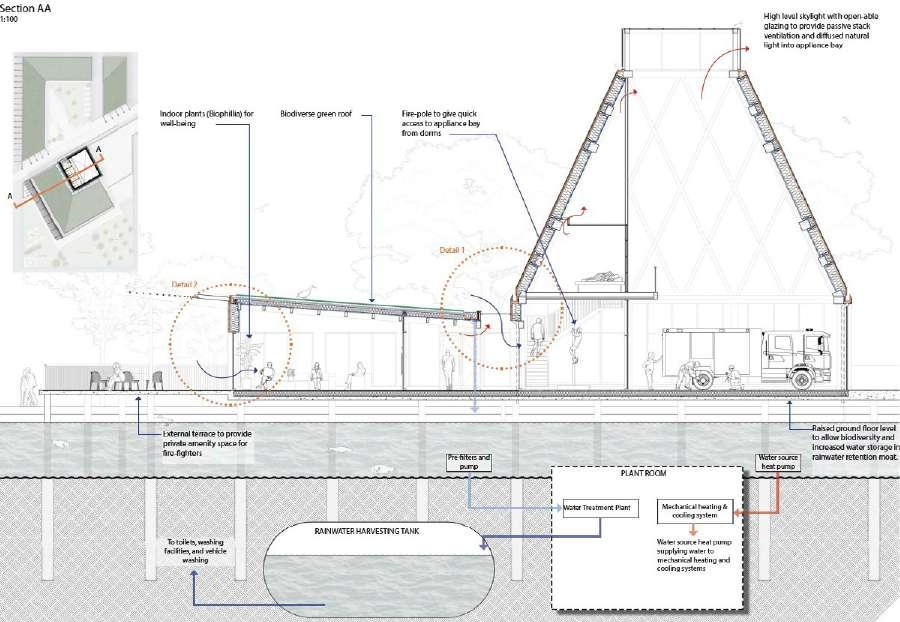
The section and technical details highlight the station’s flood-resilient construction, featuring elevated structures, permeable foundations, and biodiverse green roofs for water management. Glulam frames, flood-resistant glazing, and sustainable insulation ensure durability, while passive ventilation and natural lighting enhance efficiency. These elements create a robust, adaptable fire station that withstands extreme conditions while maintaining comfort and functionality.
Technical Section A-A
Fire Station Visual: Before Being Flooded
Fire Station Visual: After Being Flooded
Different Spaces in Section
What if saline could become a building material?
What If negative gases could be prevented from entering the atmosphere?
ENERGY PRODUCTION AND CARBON EMISSIONS
In this chapter these projects are touching on issues that have social and environmental impacts on their surrounding areas that can lead to wider problems. Within each project there is a clear environmental issue that is impacting the site area. Each author goes through the process of analysing the site and comprehensive research as to the solutions to mitigate the environmental issues successfully partnered with creating a social aspect that benefits the location.
What If Waste technology could become sustainable electricity?
PROJECTS
1. Saline Symbiosis Salt Spa Pools
// Community / Flooding // 2. DIY Water Electricity Generator Clean Energy Production
// Electricity / Radiowaves // 3. P ermafrost Thaw
Devices that Intercept Global Warming
// Collection / Greenhouse Gases //
Project name: SALINE SYMBIOSIS
Author: RICHARD ROBINSON
Location: WEST MIDLANDS
Richard’s project explores the supply of fresh water in a way that does not detrimentally impact the environment, in North Ferribly in the Humber Estuary and surrounding areas.
The analysis of the site included:
• Potential to improve flood defences
• Access to estuary
• Small village to provide water to
• Visible site to draw attention
• Potential to create new salt marsh
He is introducing desalination systems that work in line with natural tidal salt marshes. The projects aim was to reduce the impact of water poverty on the environment and the community around it, while also creating natural environments for different habitats. Within this project he is regenerating the salt marshes to create positive changes to set an example for other areas hoping to create a similar impact on the environment.
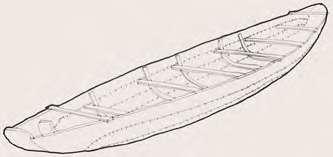
The form of the building has taken inspiration from the geology of the site itself along with lunar phases that have altered the tidal infiltration. While the form was influenced by the the Ferribly boats which were found in North Ferribly, they can clearly be seen in the form of the building.
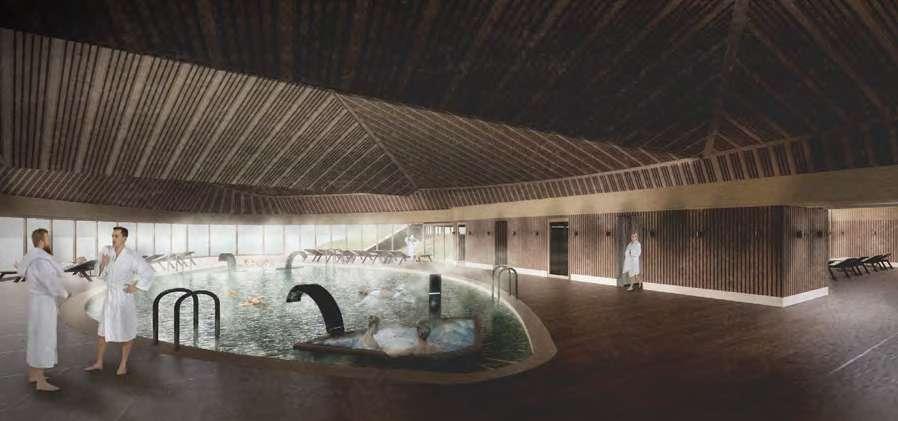
Salt wall rooms have also been included within this project acting as therapy rooms to fully utilise the salt product, they have brine cascading down the walls, this allows for salt particles to enter the air and help clear the lungs of visitors - ‘halotherapy”.
As part of Richard’s investigations he tested crystallisation with brine to create glazing within the spa area to represent how salt could be used in buildings to affect the lighting qualities.
TRANSPORTATION EVOLUTION
Project name: DIY WATER ELECTRICITY GENERATOR
Author: PETER WHITEHOUSE
Location: BRISTOL
In the current day technology has grown at extortionate rate resulting in there being redundant technology. This project looks into sustainably generated electricity.
The project starts with research into Marconis law, which was discovered in 1897 with the first radio transmission, sent over a 4.8km distance in Bristol and was later trialled to reach even further to a distance of 8.1km. This resulted in a mathematical radio wave propagation model also known as Marconis law. Encouraging the development of much more technology involving communications across the world. Peter used this law to develop his own sustainable clean energy generation device.
He found that the speed in development of new technology has far outweighed the speed in which a use for the redundant technology has been produced.
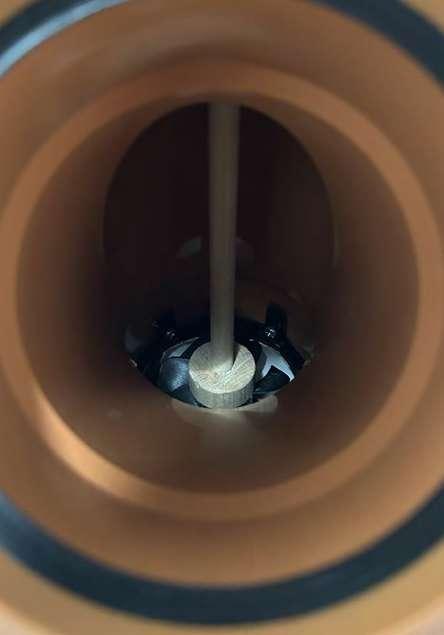
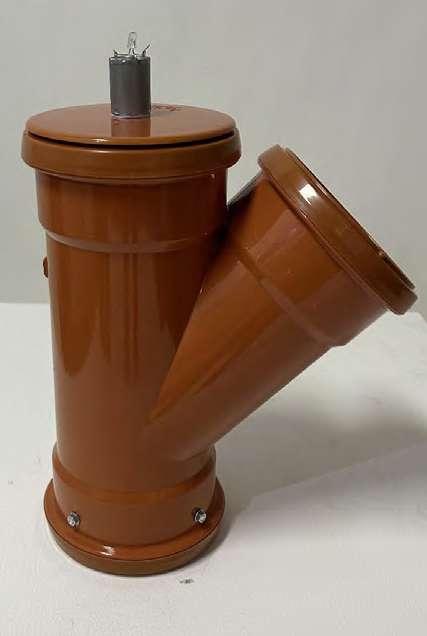
The resulting proposal is pictured as a micro hydropower generator that makes use of a redundant PC fan in a water pipe to generate electricity. This was constructed from easily accessible materials to ensure users would be able to build their own to encourage clean energy generation.
RECLAIMED TECHNOLOGY
Project name: PERMAFROST THAW
Author: RUBY PHELPS
Location: UTQIAGVIK
This project started off with a study of the cryosphere and specifically focusing on permafrost, which is a layer of icy land that contains carbon dioxide and methane. In the current climate permafrost is thawing due to global warming and releasing the carbon dioxide and methane into the atmosphere, which is impacting global warming. This vicious cycle needs to be mitigated in order to reduce the impact on the planet. The site that was chosen for this study was Utqiagvik, which is the northernmost point of Alaska.
CONCEPT
Key points stood out in the research which included, compacting the land with hooved animals, collecting the gases before they enter the atmosphere along with lifting the current infrastructure up above the ground to reduce the impact of heat transfer into the ground. This resulted in a proposal that included these features, a house on stilts with zeolites, which collect the gases underneath, that would then be regenerated in order to be reused. The gases would then be stored in a location situated away from the town. In addition there were reindeer added to the site to compress the snow with their hooves.
CARBON DIOXIDE
Permafrost Thaw Device
What if architecture could reconnect fragmented landscapes, creating a Wildlife-first bridge that engages the senses and
What if architecture could actively reverse ecological damage, regenerate nature, and promote sustainability?
What if neW developments Were required to enhance biodiversity, restoring habitats and improving air and
What if a green bridge could reconnect nature, unite communities, and create a thriving sanctuary for Wildlife?
Biodiversity Survival
Addressing critical environmental issues, particularly biodiversity loss, habitat fragmentation, and water pollution.
Addressing critical environmental issues, particularly bio-diversity loss, habitat fragmentation, and water pollution. The Tame Valley Wetlands, a vital green corridor in North Warwickshire, suffer from habitat degradation and species decline. Additionally, human activities such as urban development, agriculture, and infrastructure expansion have contributed to pollution and disrupted natural ecosystems. Historical environmental mismanagement, such as deforestation in the Elan Valley and extensive sheep grazing, has further exacerbated biodiversity loss and water quality decline.
The Tame Valley Wetlands, a vital green corridor in North Warwickshire, suffer from habitat degradation and species decline. Additionally, human activities such as urban development, agriculture, and infrastructure expansion have contributed to pollution and disrupted natural ecosystems. Historical environmental mismanagement, such as deforestation in the Elan Valley and extensive sheep grazing, has further exacerbated biodiversity loss and water quality decline.
Each project in this chapter tackles a different aspect of ecological restoration and conservation, particularly focusing on water systems. These projects incorporate a variety of strategies to mitigate environmental damage, restore biodiversity, and improve water quality.
Each project in this chapter tackles a different aspect of ecological restoration and conservation, particularly focusing on water systems. These projects incorporate a variety of strategies to mitigate environmental damage, restore biodiversity, and improve water quality.
Collectively they demonstrate how architectural and ecological interventions can address biodiversity decline, improve water quality, and reconnect fragmented ecosystems, ultimately promoting a sustainable future
Collectively they demonstrate how architectural and ecological interventions can address biodiversity decline, improve water quality, and reconnect fragmented ecosystems, ultimately promoting a sustainable future
What if a sand martin exhibit station could monitor nests, engage the community, and provide specialized habitats for relocating colonies?
What if a sustainable platforms can control jellyfish and help revive native species, restoring the caspian sea’s biodiversity?
PROJECTS
1. Willow Tits Habitat
An architectural intervention that reconnects fragmented landscapes, fosters biodiversity, and engages people with nature through design
//Biodiversity/ Water Purification /
2. Rainforest Revival
Restores the Elan Valley’s Celtic rainforests, replaces sheep grazing with aurochs
//Adaptive Reuse / Rainforest/ Sheep - Wrecked
3. Wildlife protection and heritage conservation
4. Wildlife and heritage conservation
Envisions Kingsbury Hall as a model for harmonizing historic preservation, community engagement, and ecological restoration with minimal architectural intervention.
Proposes a Green Bridge to reconnect biodiversity between Castle Vale and Castle Bromwich, fostering ecological restoration and community unity.
// Biodivrersity Protection/ Reuse Structure
6. Wings of the sand Cliffs: A Martins Haven
7. Sand Martins Wildlife Protection
8. Sand Martins Wildlife Protection
Creates a sand martin exhibit station to monitor nests, engage the community, and provide habitats for relocating colonies.
/Biodiversity Protection/ Community Engagement
9. Jellyfish Managment Platform
Control the invasive jellyfish to support the recovery of native species like sturgeon.
/Biodiversity Protection/ Community Engagement
Project name: WILLOW TITS HABITAT
Authors: SIMON WILSON
Location: TAME VALLEY, UK
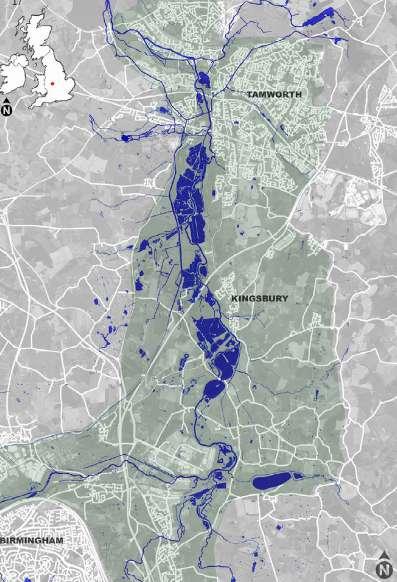
Researching in the area along the River Tame between West Birmingham and the South of Tamworth in the district of North Warwickshire, lies The Tame Valley Wetlands. Encompassing over 1,000 hectares in a green belt location. These wetlands comprise vital habitats and support a diverse array of animal and flora species.
The next set of pages will highlight the aspects of area which gives The Tame Wetlands its identity, character and charm. This section will show research from local to global sources to aid the proposal for an architectural intervention that aims to mitigate an issue or a series of issues.
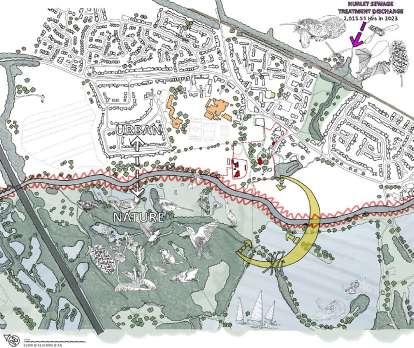
Existing Site Plan
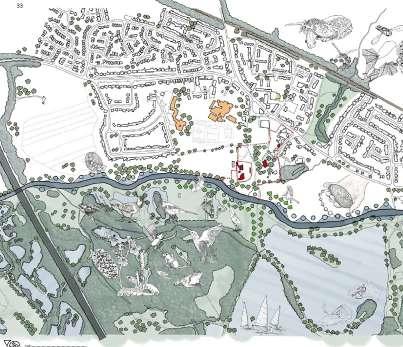
Proposed Site Plan
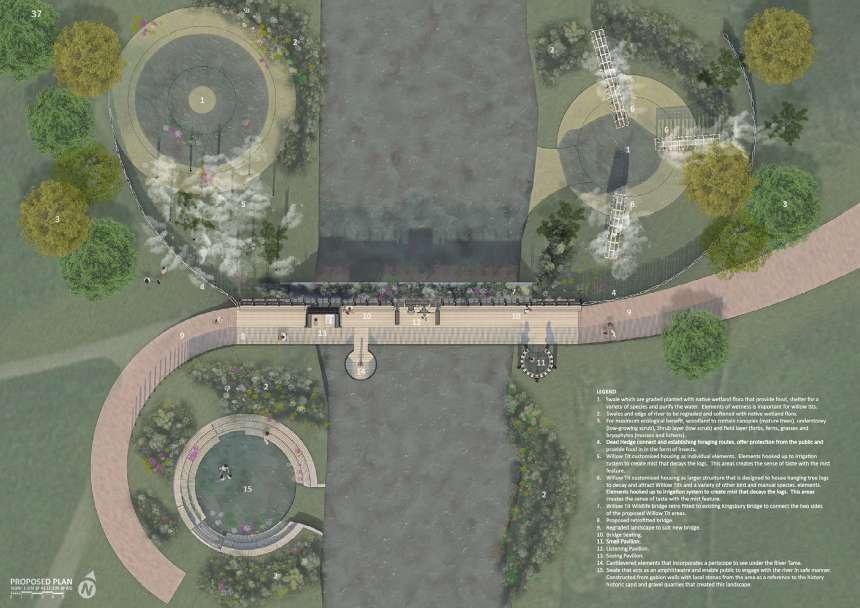
Swales are proposed to spread along the River Tame like a pearl necklace, by incorporating swales at different hights, grades and incorporating specific wetland planting this will provide not only improved biodiversity but also purifying this once dead river from pollutants. Proposed to encourage the protected water voles and endangered Fresh Water Pearl mussels to take residence in this stretch of the River Tame.
The research highlighted the issue of habitat fragmentation locally to Tame Valley. The Willow Tit is a small, endangered bird unable to travel over open spaces. We as humans traverse over fragmented spaces with bridges and tunnels, however these structures are not normally suitable for smaller animals.
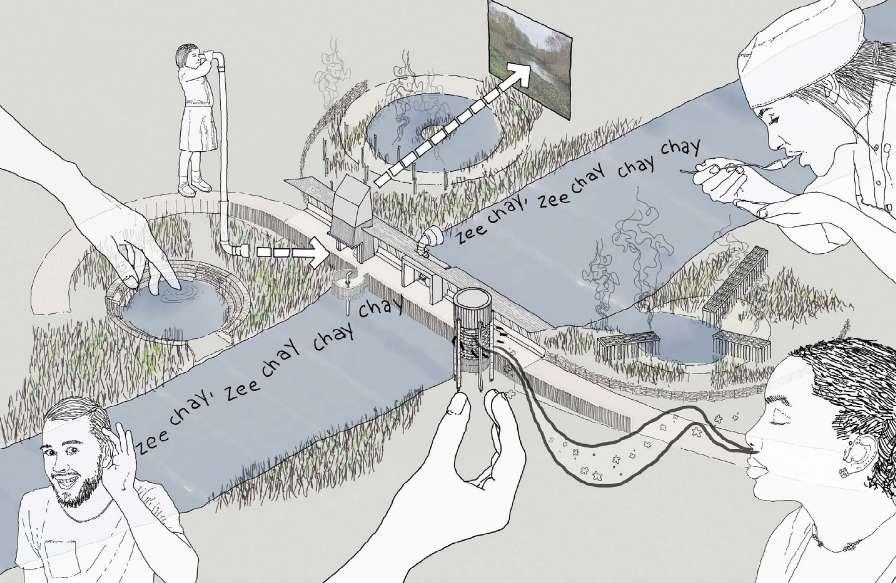
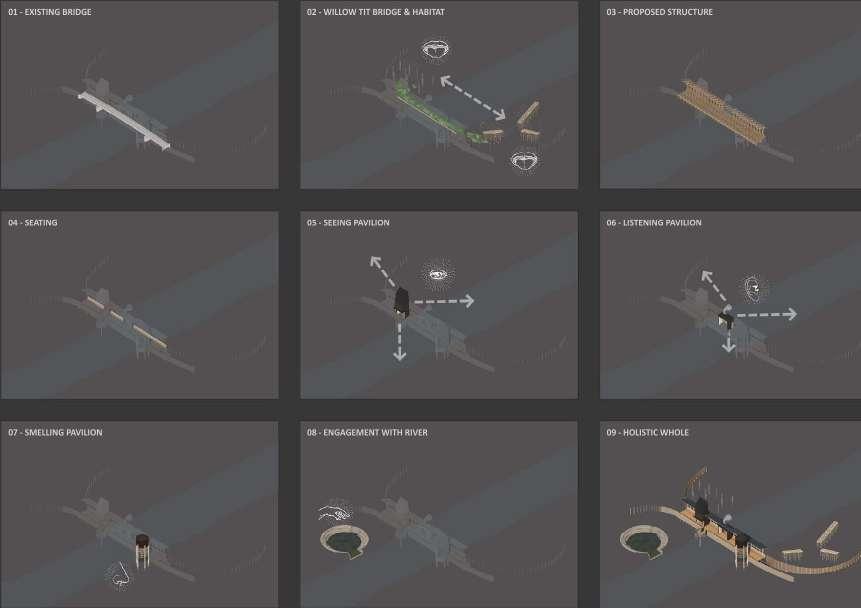
What if the proposed intervention ‘stitched’ back these parcels of land by creating a sort of wildlife bridge. A way of looking at a more than human intervention. An architectural intervention which places nature first. Could this intervention also become a device to engage with nature in a meaningful way, perhaps a learning device? By connecting human to nature in a more interactive way, could the a sensory design enable a wellbeing device?
7. Smelling Pavilion 8. Engagement with River 9. Holistic Whole
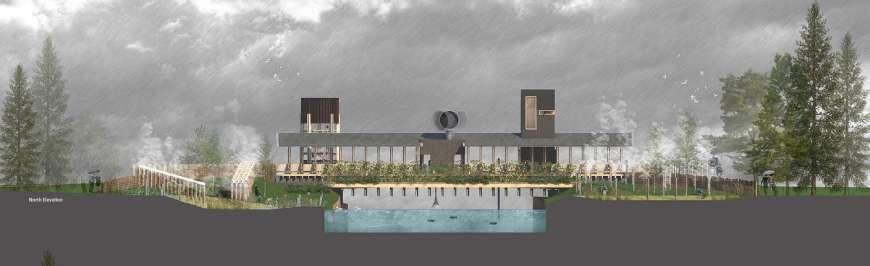
This plan reconnects habitats along the River Tame with a wildlife bridge, swales, and wetlands to enhance biodiversity. Sensory pavilions, misting systems, and interactive elements engage visitors with nature.
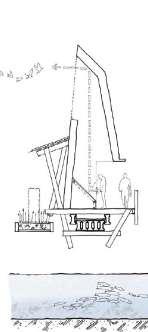
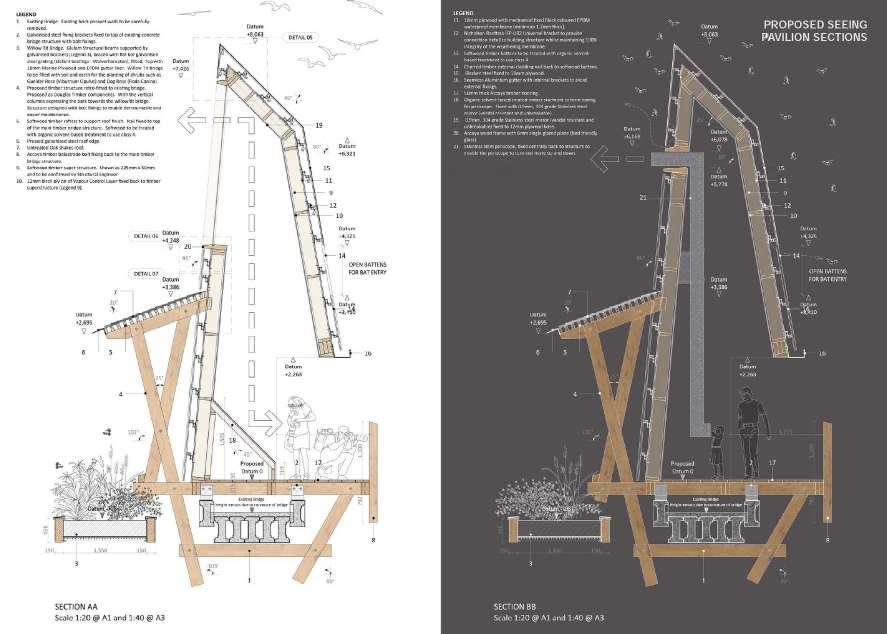
PROPOSED SEEING PAVILION SECWTIONS - Bird Watch
Proposed Bird watch
Project name: RAIN FOREST REVIVAL GLAW ANCIENT
BOVINE & ALTERNATIVE FIBRES
Authors: STEFAN BRABAND
Location: ELAN VALLEY, UK
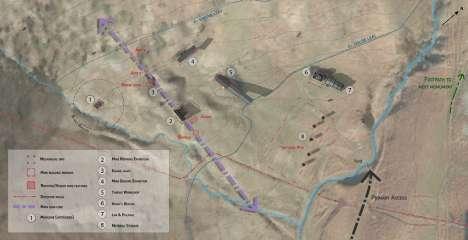
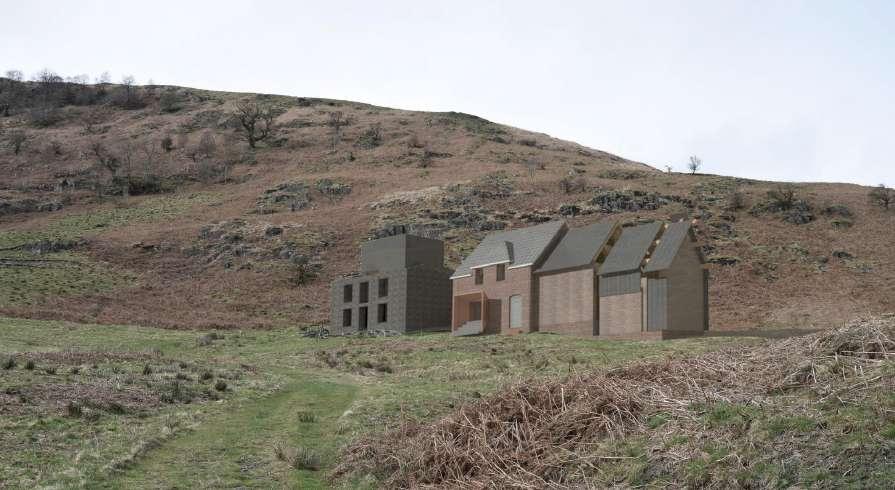
The site is strategically positioned near reservoirs to access freshwater resources for sustainable fiber production. The design integrates with the natural landscape through elevated timber structures, allowing vegetation to thrive underneath. Minimal pathways and raised walkways reduce human impact, while reforestation efforts restore the native woodland, creating a seamless transition between built and natural environments.
The project proposes a self-sustaining architectural intervention in the Elan Valley to regenerate Celtic rainforests and offer a sustainable alternative to wool production. By removing sheep grazing, native ecosystems can recover, while a workshop and educational hub processes invasive plants and freshwater seaweed into textile fibers, supporting conservation efforts and promoting public engagement through sustainable practices.
Key Objectives & Design Approach:
1. This project will facilitate the regeneration of temperate rainforests in the Elan Valley.
2. This project will use aurochs to replace sheep for conservation grazing to aid rainforest growth.
3. There will be facilities to produce an alternative textile fibre to wool, likely from wood cellulose.
4. The human presence on the site will have as little impact as possible to preserve the natural habitat. This means net negative carbon, selfcontained waste systems and protecting the water quality of the reservoirs.
5. The architecture will be discreet and complement the natural environment. Borrowing from the local vernacular.
Existing Site Plan
Proposed Site Plan
What if Architecture played a proactive role in reversing ecological damage rather than just minimizing its impact? Instead of merely preserving the environment, buildings could actively contribute to rewilding efforts, integrating conservation and resource production into their design. In this scenario, architecture wouldn’t just coexist with nature but would facilitate its regeneration— supporting biodiversity, enhancing water quality, and promoting sustainable livelihoods through responsible material production.
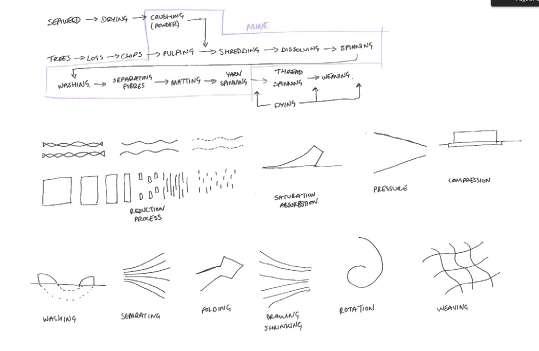
This design concept explores material transformation by drawing from natural and industrial processes like drying, crushing, pulping, spinning, and weaving. It highlights key actions—washing, separating, folding, and compression—to shape materials into adaptive, process-driven architectural forms inspired by biological systems
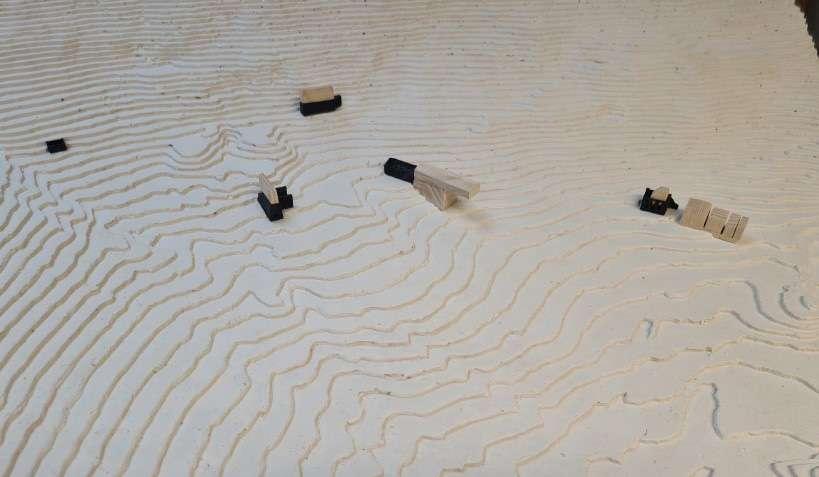
Design Process
Concept
This picture shows the existing building and structure that are applied to the buildin
The building will use a timber frame construction, sourced from local or reclaimed materials to ensure sustainability. Timber is chosen not only for its low-carbon footprint but also for its ability to blend seamlessly with the natural landscape. The structure will follow vernacular design principles, incorporating steep-pitched roofs and natural ventilation systems to harmonize with the existing environment. Where possible, existing structures will be repurposed rather than demolished, maintaining historical continuity while reducing material waste. The architecture will integrate with the terrain, using elevated walkways and lightweight foundations to prevent soil disruption, ensuring that human presence enhances rather than depletes the landscape.
Section
Plan design
Project name: WILDLIFE PROTECTION AND HERITAGE CONSERVATION
Authors: KATARZYNA RAJ
Location: TAME VALLEY WETLANDS, UK
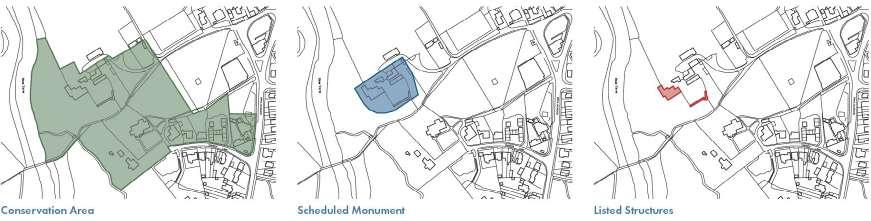
The project involves an analytical study of the Tame Valley Wetlands and the Birmingham Water Supply Network, spanning from the Elan Valley to the Humber Estuary. The aim is to enhance the Tame Valley Wetlands and encourage public engagement in conservation efforts, with a goal of involving 1 in 4 people in Warwickshire, Coventry, and Solihull. The proposal focuses on redeveloping the historic Kingsbury Hall manor house into a Tame Valley Wetlands Community Centre, providing a collaborative space for conservation organizations and the local community. Additionally, the project seeks to restore the surrounding landscape, ensuring biodiversity net-gain and improved ecological connectivity in the region.
Key Objectives & Design Approach:
The design aims to enhance biodiversity while preserving existing buildings through a combination of retrofit and new construction. Some structures will be adapted for accommodation, while a raised walkway will connect the site, weaving through and above buildings to create creative spaces and enclose a central courtyard, fostering interaction between nature and architecture.
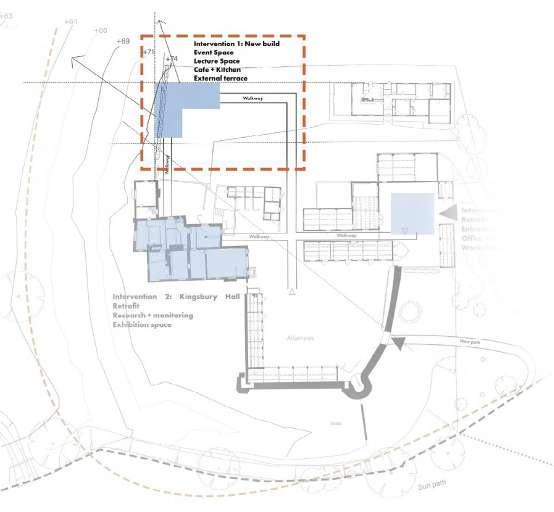
This project is focusing on designing a new building that includes an event space, lecture space, and café. A key aspect of the design is preserving the site’s scenic views, achieved by strategically positioning the building to maintain access and sightlines,
legislation required all new developments to actively enhance biodiversity rather than just minimizing harm? This could mean improving air and water quality, restoring habitats, reducing waste, and reversing species decline.
Projects would need to increase biodiversity by at least 10%, either through onsite improvements or biodiversity credits.
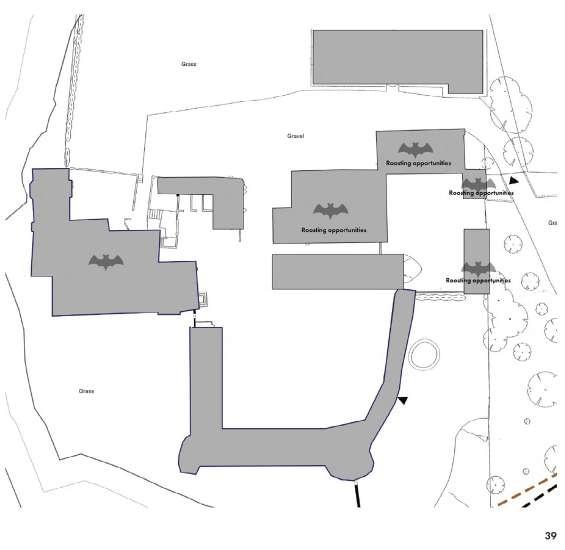
Architectural design could integrate nature-based solutions such as wildflower meadows, bat-friendly spaces, and green roofs with scented plants.
Bat surveys emphasize the need for roosting habitats, red lighting to minimize disturbance, and insect-attracting plants to support nocturnal wildlife.
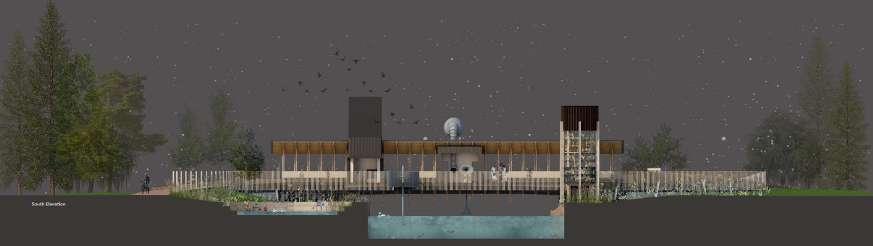
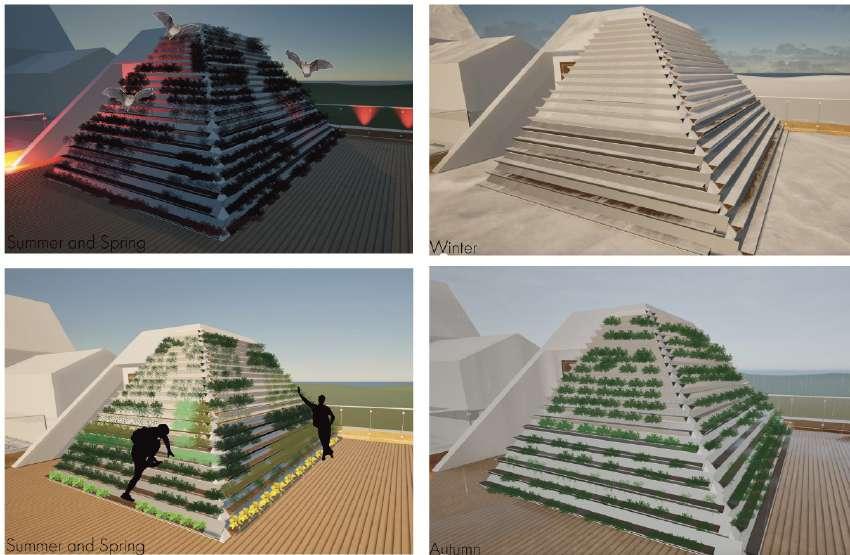
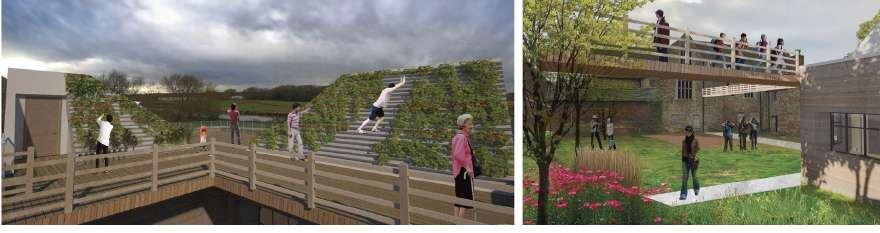
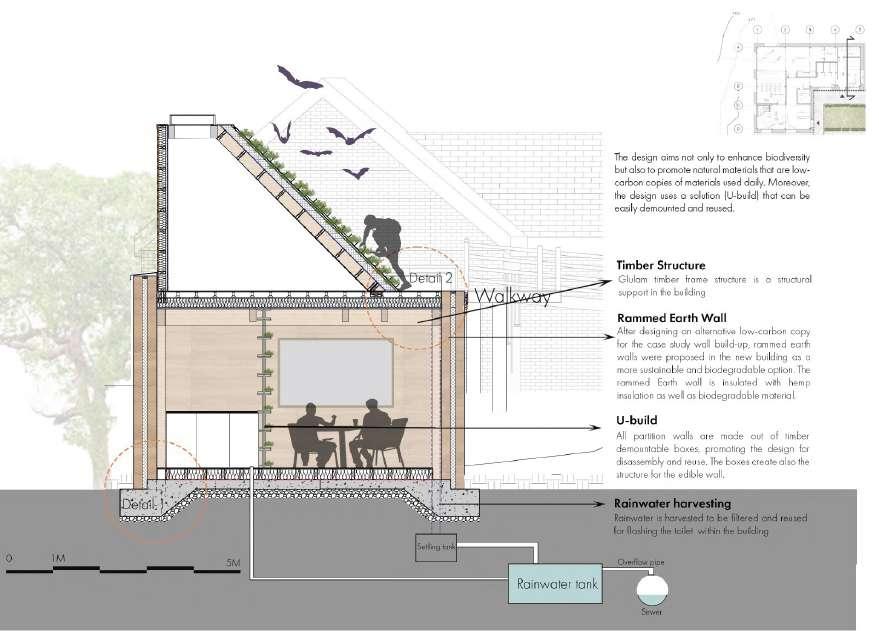
The proposed building includes event and lecture spaces with a green living roof that supports biodiversity. The rooftop garden, designed with night-scented plants, attracts insects for bats while also serving as a communal gardening space. Its 45-degree pitched structure allows climbing and adapts seasonally—bustling with activity in warmer months and transforming into a quiet viewing spot in winter. Red lighting ensures a bat-friendly environment.
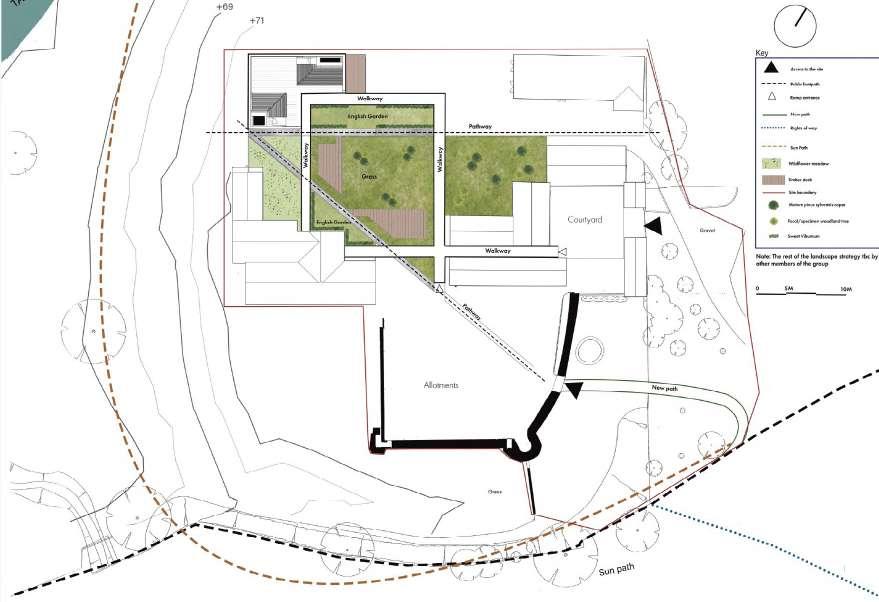
Site Plan Proposal,
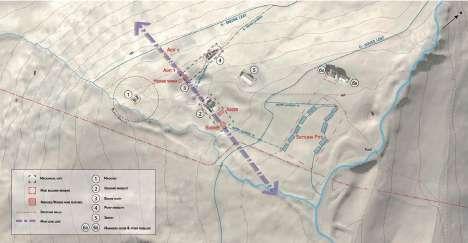
The site plan illustrates the overall orientation of the project, highlighting key elements such as the walkway, garden access points, and public pathways. It also indicates how visitors navigate through the site while ensuring connectivity between different areas. Additionally, the plan considers the sun path, optimizing natural light exposure for outdoor spaces and enhancing sustainability.
The proposed plan integrates nature with architecture, creating a seamless connection between built spaces and the surrounding wetlands. A key feature is the green living roof, designed to enhance biodiversity while providing functional and interactive spaces. The 45-degree pitched structure allows for climbing and seasonal adaptation, serving as an active communal garden in warmer months and a tranquil viewing platform in winter. The rooftop garden, planted with night-scented species, attracts insects, supporting the local bat population while fostering ecological balance. Additionally, red lighting is incorporated to minimize disturbance to nocturnal wildlife, ensuring that the space remains both environmentally and community-friendly.
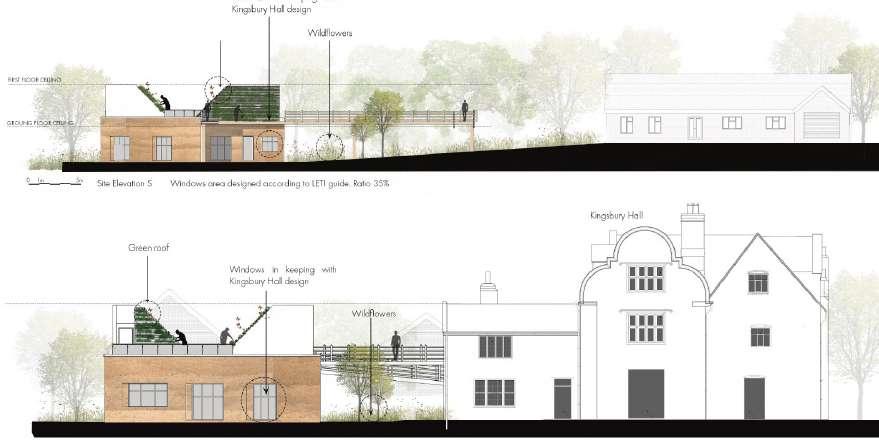
Site Elevation S - W Details
Gardens Walkways
Wildflowers
Ground Ceiling
First Floor Ceiling
Windows in keeping with kingsbury
Kingsbury Hall
Wildflowers
Windows in keeping with kingsbury
Greenroof
Project name: WILDLIFE AND HERITAGE CONSERVATION
Authors: PETER WHITEHOUSE
Location: TAME VALLEY WETLANDS, UK
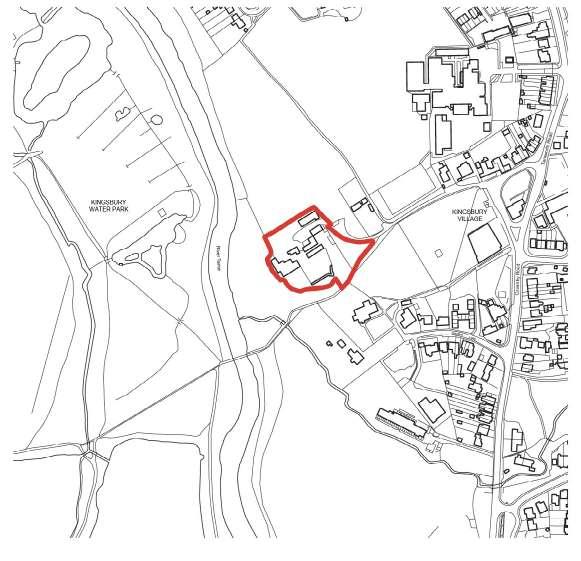
Kingsbury Hall is located on the western edge of the village of Kingsbury, in North Warwickshire. The Hall is located on a steep bluff on the eastern bank of the River Tame and overlooks Kingsbury Water Park to the south west. To the south east of the Hall is the church of St Peters & St Paul. A fairly deep man-made ravine separates the site of the Hall and the church and contains a public footpath, known as Red Lane, which leads down to a footbridge over the River Tame.
Site Address: Kingsbury Hall, Kingsbury, Tamworth, B78 2LP
Local Constituency: Country: Warwickshire County Council Borough: North Warwickshire Ward: Kingsbury
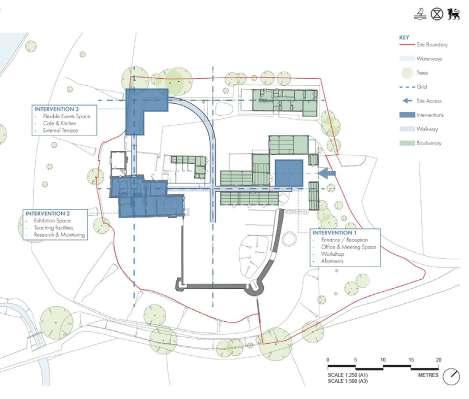
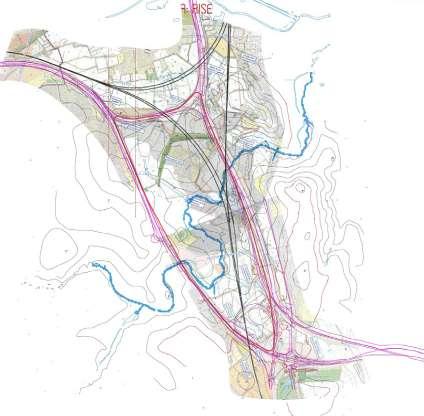
This plan illustrates three intervention proposals that can be applied to the site plan and the existing structure. The blue squares indicate these interventions and highlight the site’s biodiversity areas. The green lines represent the site’s orientation.
Key Objectives & Design Approach:
1. Supports the enhancement of the Tame Valley Wetlands.
2. Aims to connect 1 in 4 people in Warwickshire, Coventry, and Solihull to take action for wildlife.
3. Proposes the redevelopment of the c. 1500 listed Kingsbury Hall manor house and surrounding structures into a Tame Valley Wetlands community hub.
4. Provides a collaborative space for wetland organizations and the local community. Connects Kingsbury village to Kingsbury Waterpark.
5. Enhances the surrounding landscape to achieve biodiversity net-gain. Supports local wildlife and strengthens ecological connections.
What if
The restoration of Kingsbury Hall could serve as both a community hub and a thriving ecosystem? What if architectural interventions were minimized, allowing nature to reclaim the site while seamlessly integrating human activity? Could a network of bridge-links frame the beauty of the wetlands without disturbing the delicate balance of wildlife? What if this project became a model for how historic preservation, community engagement, and biodiversity enhancement could coexist in harmony?
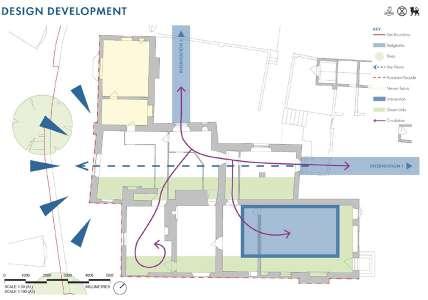
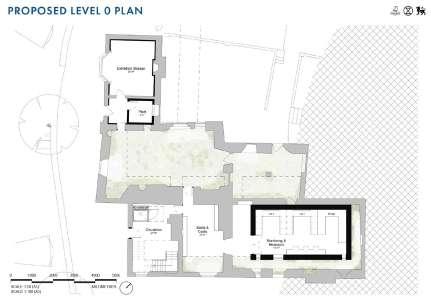
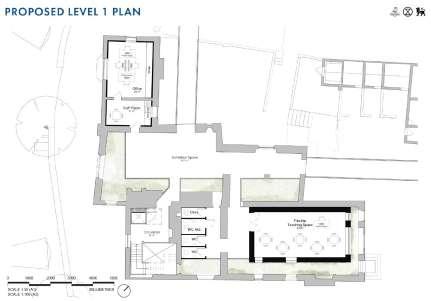
Plan number one illustrates the design development, circulation, and key views. The second plan presents the proposed ground level (Level 0) layout, while the third plan depicts the Level 1 layout of the design.
Project name: ECOLINK: BRIDGING COMMUNITIES AND NATURE
Authors: PARSA SABZEHPARVAR
Location:
TAME VALLEY WETLANDS, UK
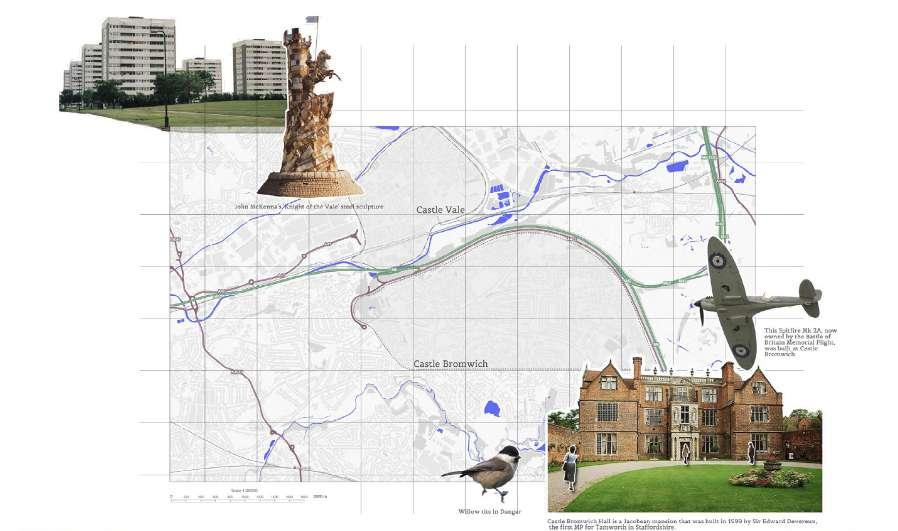
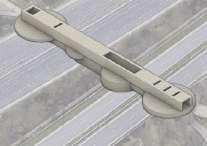
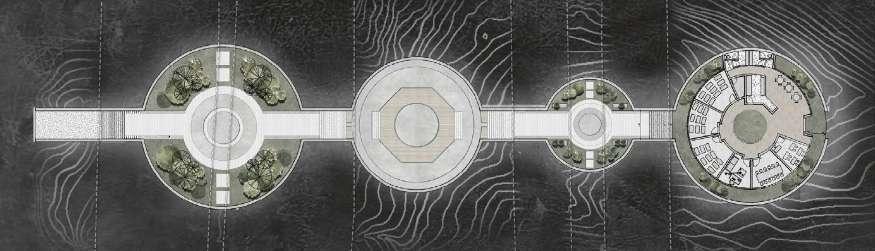
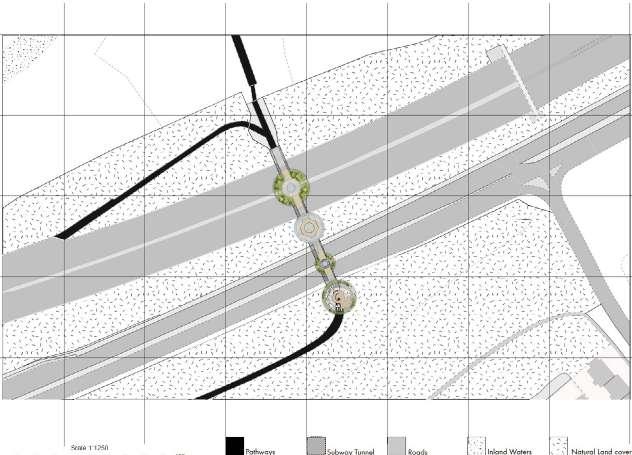
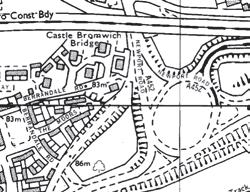
The design prioritizes re-using an existing underground subway tunnel facilitating the movement of biodiversity species between the two fragmented pieces of land while also connecting residents of both Castle Vale and Castle Bromwich separated by the M6 motorway.
What if a “Green Bridge” reconnected the fragmented biodiversity between Castle Vale and Castle Bromwich, bridging physical and ecological divides? This intervention could restore natural corridors, foster sustainability, and transform the bridge into a sanctuary for bees and endangered pollinators, creating a thriving urban refuge.
Key Objectives & Design Approach:
1. Assesses the existing tunnel conditions to identify transformation opportunities
3. Introduces natural light through strategic openings and circular excavations,
4. Incorporates domes that blend with the landscape, serving as natural light sources while enhancing both functionality and aesthetics.Waterpark.
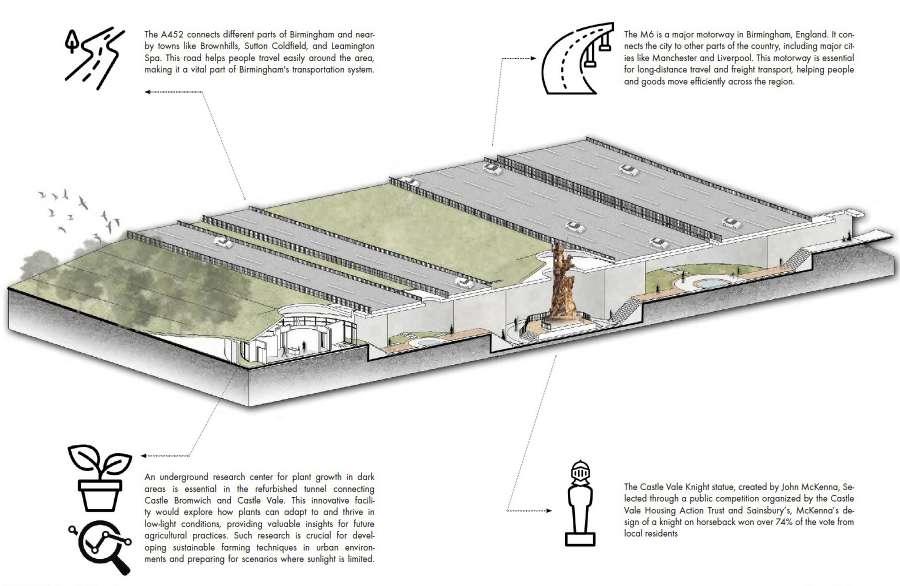
An underground research center for plant growth in dark areas is essential in the refurbished tunnel connecting Castle Bromwich and Castle Vale. This innovative facility would explore how plants can adapt to and thrive in low-light conditions, providing valuable insights for future agricultural practices.
The A452 connects different parts of Birmingham and nearby towns like Brownhills, Sutton Coldfield, and Leamington Spa. This road helps people travel easily around the area, making it a vital part of Birmingham’s transportation system
The M6 is a major motorway in Birmingham, England. It connects the city to other parts of the country, including major cities like Manchester and Liverpool. This motorway is essential for longdistance travel and freight transport, helping people and goods move efficiently across the region.
The Castle Vale Knight statue, created by John McKenna, Selected through a public competition organized by the Castle Vale Housing Action Trust and Sainsbury’s, McKenna’s design of a knight on horseback won over 74% of the vote from local residents
Project name: WINGS OF THE SAND CLIFFS: A MARTINS HAVEN
Authors: MOZHGAN SABZEHPARVAR
Location: TAME VALLEY WETLANDS, UK
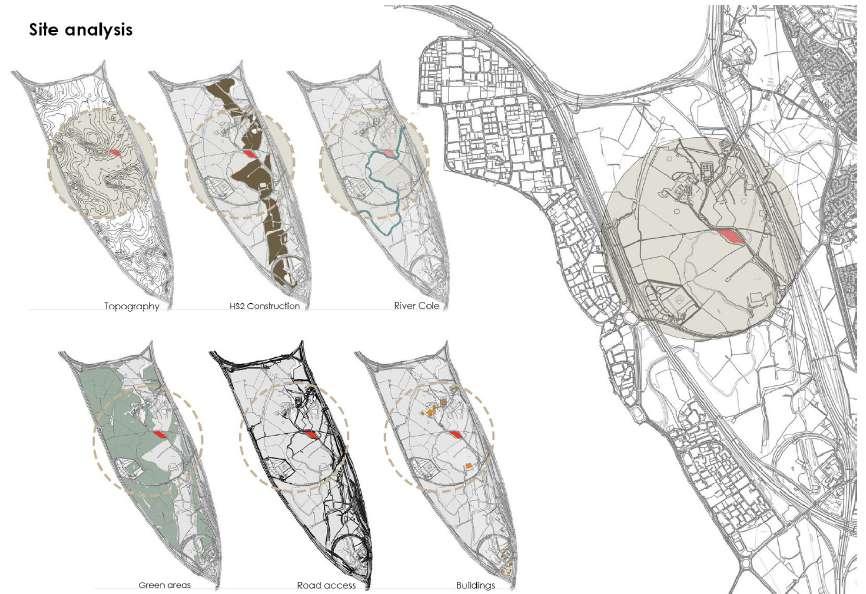
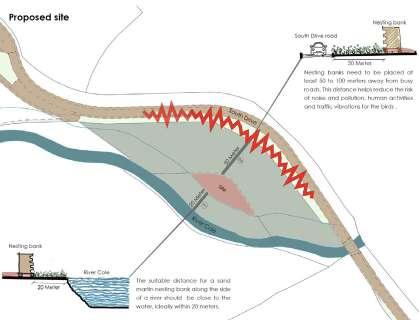
After mapping sand martin habitats within a 10 km radius along Kingsbury, near the Tame and Cole Rivers, it became evident that the southeast area of Kingsbury had one of the highest levels of sand martin deprivation. This gap in habitat continuity is disrupting the natural movement of sand martins between the river and urban areas. The chosen site, located beyond the highway in a low-risk flood zone, provides an ideal nesting area for sand martins. Its proximity to the river supports foraging, while road access ensures easy conservation efforts and visitor accessibility.
What if a dedicated sand martin exhibit station could serve as both a monitoring tool and a conservation effort? Could preserving and tracking these birds help address the challenge of distinguishing between active and inactive nest holes? What if the station provided community engagement spaces alongside specialized nesting facilities, ensuring a stable habitat for colonies that frequently relocate due to changing sand cliffs?
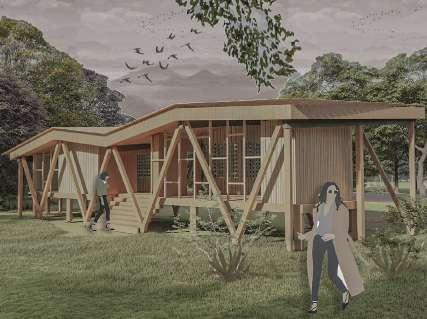
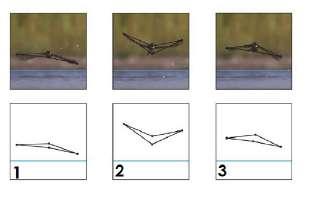
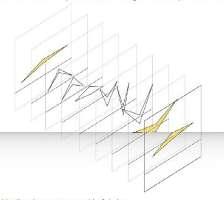
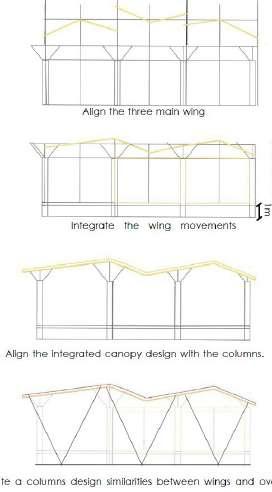
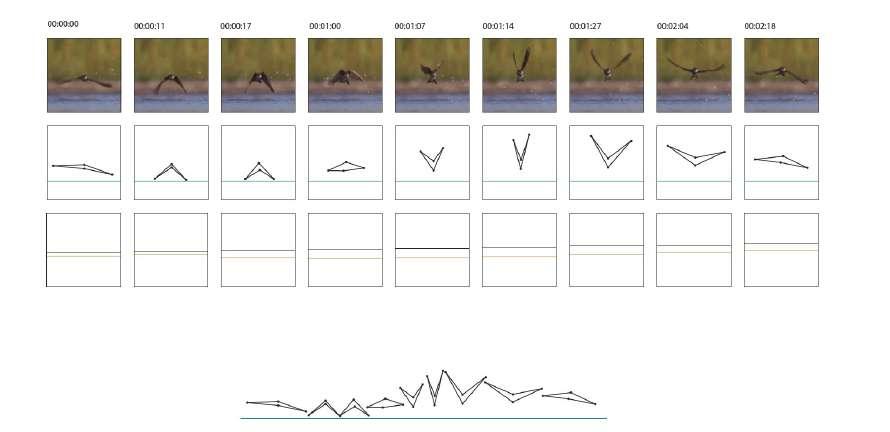
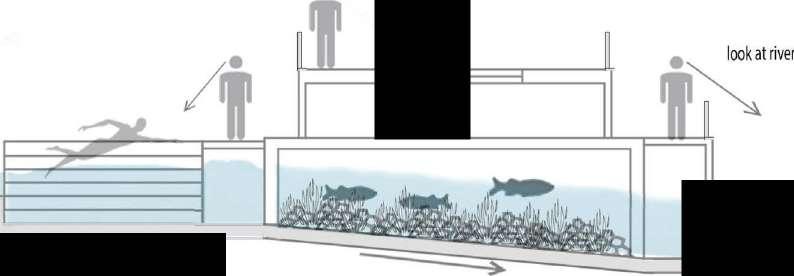
From studying Sand Martin wing movements, I identified three main wings pattern which creats one complete cycle. These motions inspired the design concept for the canopy. The building must be elevated one meter above the ground to prevent flooding, as it is located at the median level of a flood zone.
Align the three main
Key Objectives & Design Approach:
1. Enhancing Sand Martin Conservation Establish a dedicated exhibit station to monitor and preserve sand martin populations, addressing challenges in tracking active and inactive nest holes.
2. Creating Sustainable Nesting Spaces Develop a specialized sand martin nesting wall to provide a stable habitat, mitigating the impact of shifting sand cliffs on colony relocation
3. Integrating Community Engagement Incorporate public spaces within the station to educate and involve the community in sand martin conservation efforts.
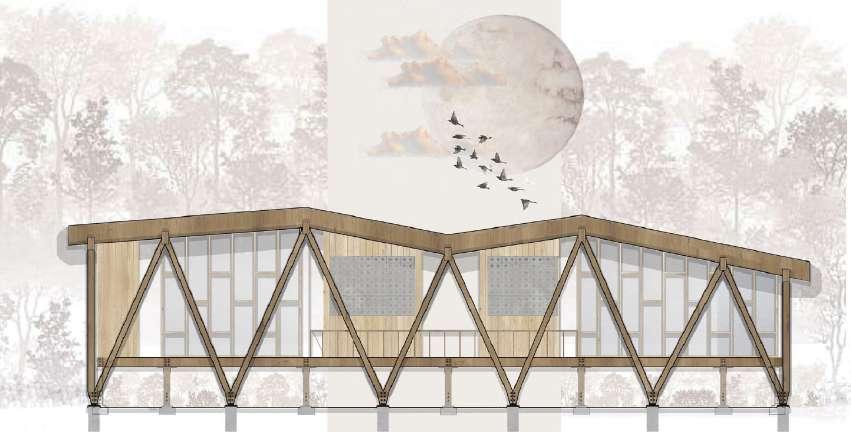
Sand Martin Nesting Area building Elevation
Project name: SAND MARTINS WILDLIFE PROTECTION
Authors: AISHA ELTABAL
Location: TAME VALLEY WETLANDS, UK
The project aims to restore ecological balance to the site following the impact of HS2 construction by creating a dedicated habitat for sand martins. Situated near Delta Junction, this intervention not only provides a sanctuary for migrating birds but also serves as an educational and research facility for the Warwickshire Wildlife Trust. Designed to bridge the gap between scientific study and public engagement, the project offers an interactive space where visitors can observe sand martins in their natural habitat while learning about their significance in local ecosystems.
What if What if a single intervention could restore habitats, support sand martins, inspire conservation action, and serve as a model for integrating ecological restoration with community engagement?
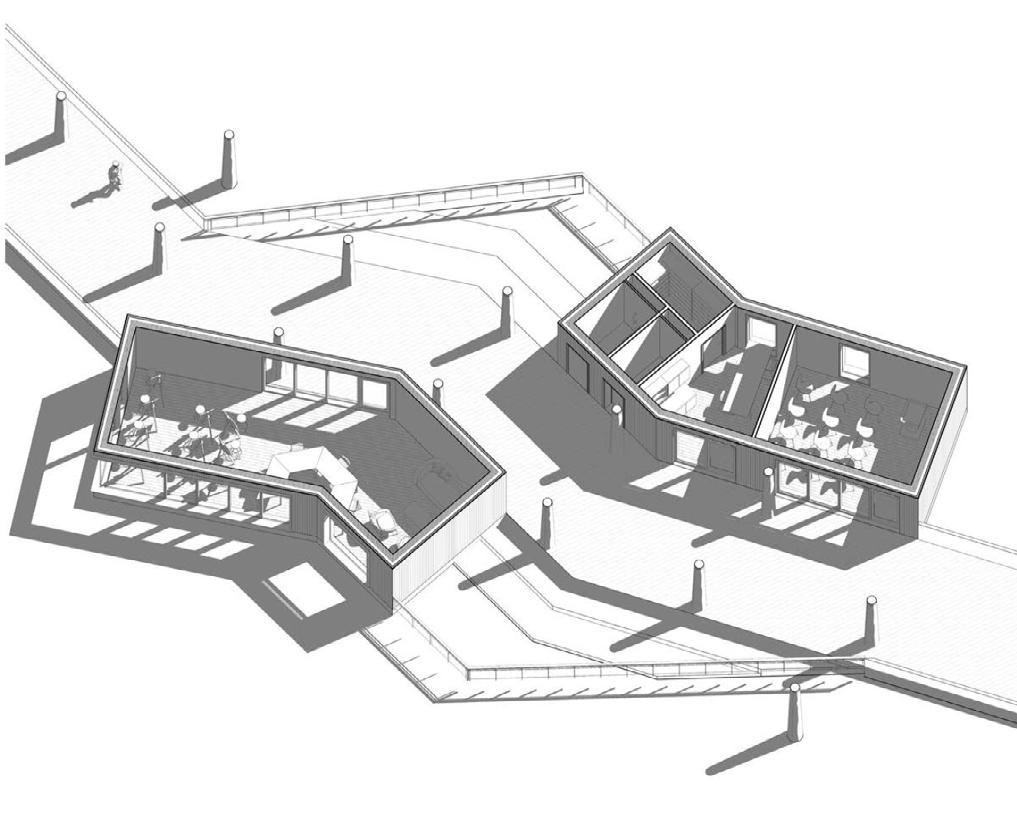
The final intervention proposal works to reinstate the ecological balance on site following the HS2 construction. The scheme creates a habitat for the birds as they migrate across Delta Junction, whilst providing an educational activity/ research facility for the Warwickshire Wildlife Trust to use with schools, colleges and groups
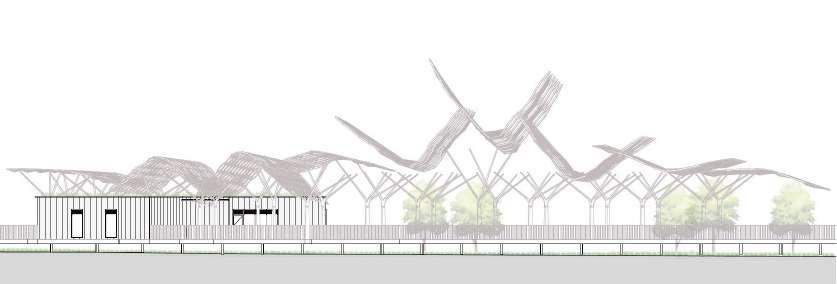
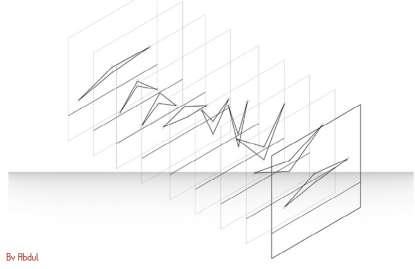
This project explores a biomimetic roof design inspired by the wing patterns from a movie. By analyzing the movement of the wings, key transformation points in the wings and head are identified and translated into a dynamic roof pattern. This approach integrates organic motion into architecture, creating a structure that embodies fluidity, adaptability, and
Key Objectives & Design Approach
Restoring Habitat and Biodiversity
Develop a sustainable environment that supports sand martin populations by providing safe nesting sites and improving ecological conditions within the area.
Encouraging Education and Awareness
Create a learning hub where researchers, students, and visitors can engage with conservation efforts through interactive exhibits, guided tours, and hands-on activities.
Fostering Community Participation
Design an accessible space that invites the public to take part in conservation initiatives, ensuring long-term involvement in habitat preservation and environmental stewardship
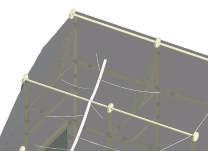
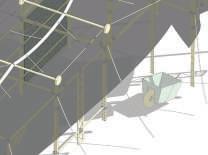
Elevation 1 illustrates the full movement of the bird, with its wing patterns forming the roof of the project, integrating seamlessly with the building’s design. Section 1 provides a detailed view of the design interventions beneath the roof, which are inspired by the bird’s wing patterns. Additionally, a 3D view showcases the wing-patterned roof along with the applied design interventions, highlighting the integration of biomimicry into the architectural fom
Elevation 1
Section 1
3D View
Project name: SAND MARTINS WILDLIFE PROTECTION
Authors: ABDULRAHMAN NASSER S ALARIFI
Location: TAME VALLEY WETLANDS, UK
Key Objectives & Design Approach:
1. Protecting and Monitoring Sand Martin Populations:
Develop a dedicated nesting and observation station to support sand martin conservation, ensuring effective tracking of nesting activity and colony movements
2. Encouraging Community Involvement
Design interactive spaces within the station to educate and engage the public, fostering a deeper connection between local communities and wildlife conservation efforts
The project will address the challenges of tracking active and inactive nest holes while providing a stable habitat for sand martin colonies, which frequently relocate due to shifting sand cliffs. The proposal integrates a sand martin nesting wall as a core feature, alongside community spaces that engage the public in conservation efforts.
The Site Plan proposal presents the overall wing-inspired roof design, showcasing its integration with the project. In the Design Plan proposal, the red bar highlights the design intervention, which will be further developed with a focus on detailed articulation and varied interventions, enhancing the functionality and spatial experience beneath the roof.
What if
What if a sand martin nesting and monitoring station could sustain local bird populations, engage the community in conservation, address the challenge of identifying active nests, and provide a long-term habitat solution for relocating colonies, all while fostering awareness and making conservation a shared responsibility?
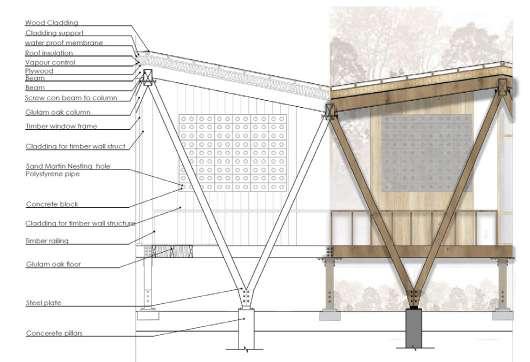
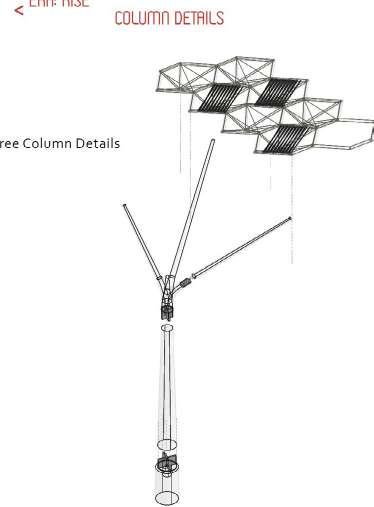
Picture 1 illustrates the design intervention beneath the wing-patterned roof, while Picture 2 provides a closer look at the detailed elements of this intervention. Picture 3 focuses on the construction details, highlighting the connection between the roof and columns, demonstrating how these elements will be assembled..
What if We made beer using seWage?
What if We fished for microplastics instead of fish?
What if We dyed our clothes With beetroot?
What if We could feed the World Without fertilisers?
PROJECTS
1. Cyanergy
WATER POLLUTION
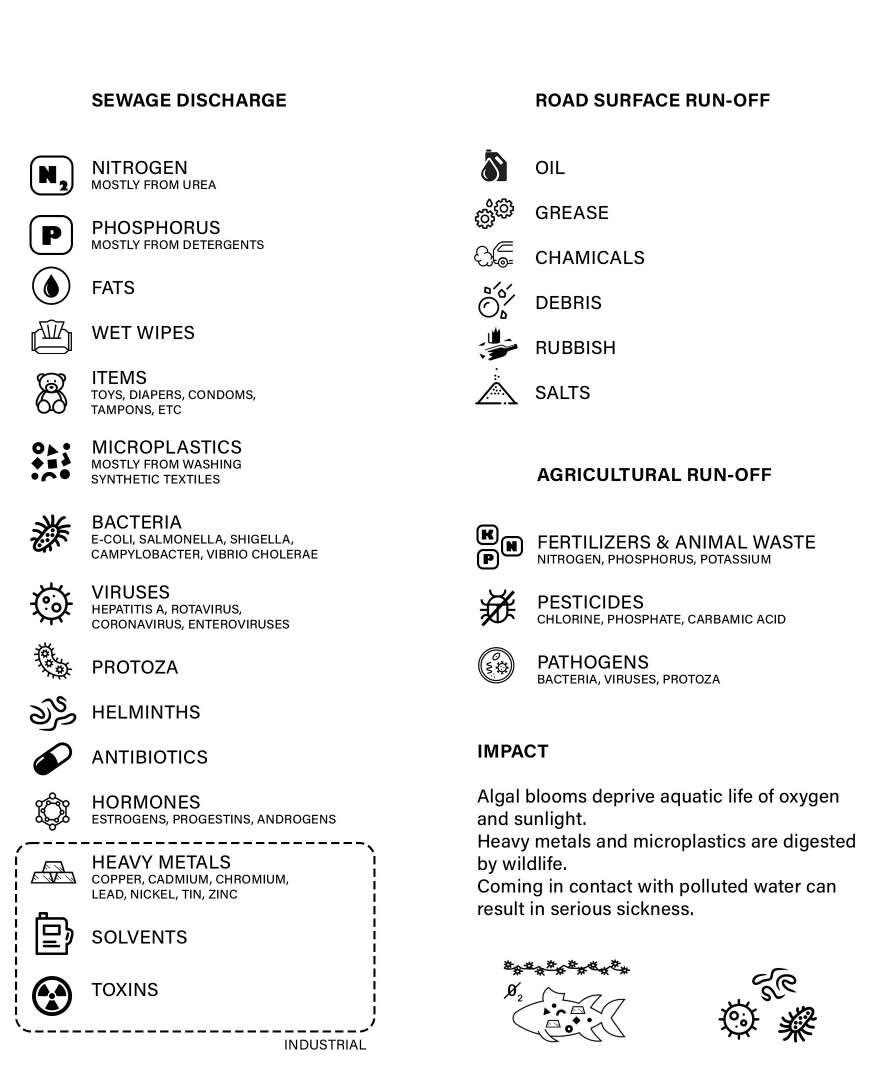
Water is a key natural resource which sustains the environment and our viability as a civilization. Yet, the current state of both our freshwater and saltwater is one of abuse. Pollution is omnipresent and manifold, and the list of contaminants we release could fill pages of this book. A very general overview of types of pollutants is included on the next page spread. The negligence of this crucial resource largely stems from prioritising profit, insufficient regulation and its reinforcement, and from personal lack of awareness. Have you ever flushed a wet wipe down the toilet? Do you understand what it is made of, how it interacts with the sewage treatment process and what harm it can cause to the environment? Do you own and wash clothes made of artificial fibres, which were likely dyed using harmful substances in an exploitative and unsafe workplace on the other side of the world? Do you know what happens to all those garment microplastics when they spread in our water and air? Do you realise the scale of fertilizers, pesticides and fungicides used to grow food you have for dinner?
The projects presented in this chapter imagine a future where we repair our relationship with water by means of sustainable production and circular systems thinking. They also imagine a future where we rectify the state of our waters by capturing the released pollution.
What if We fed coWs algae?
Floating water quality testing devices self-powered with algal samples
// agricultural pollution / water quality testing / renewable energy //
2. Restoring Nutrient Balance
Food and plant fibre production for fertilizer abandonment and removal
// agricultural pollution / natural water filtration //
3. Plastisphere Plasting!
Transforming fishing as a practice to capture microplastics instead of fish
// microplastics pollution //
4. Slow the Flow
Restoration of river meanders to aid natural pollution removal
// sewage discharge / rewilding / natural water filtration //
5. Remembering Rana
Nature friendly and human friendly garment production
// chemical pollution / sustainable production / gender equality //
6. Persian Sturgon Revival
Fish baths with biochar heavy metal removal
// heavy metal pollution / improving wildlife habitat //
7. Sewer Suds Brewery
if could safely sWim in rivers?
What if We let rivers run Wild? What
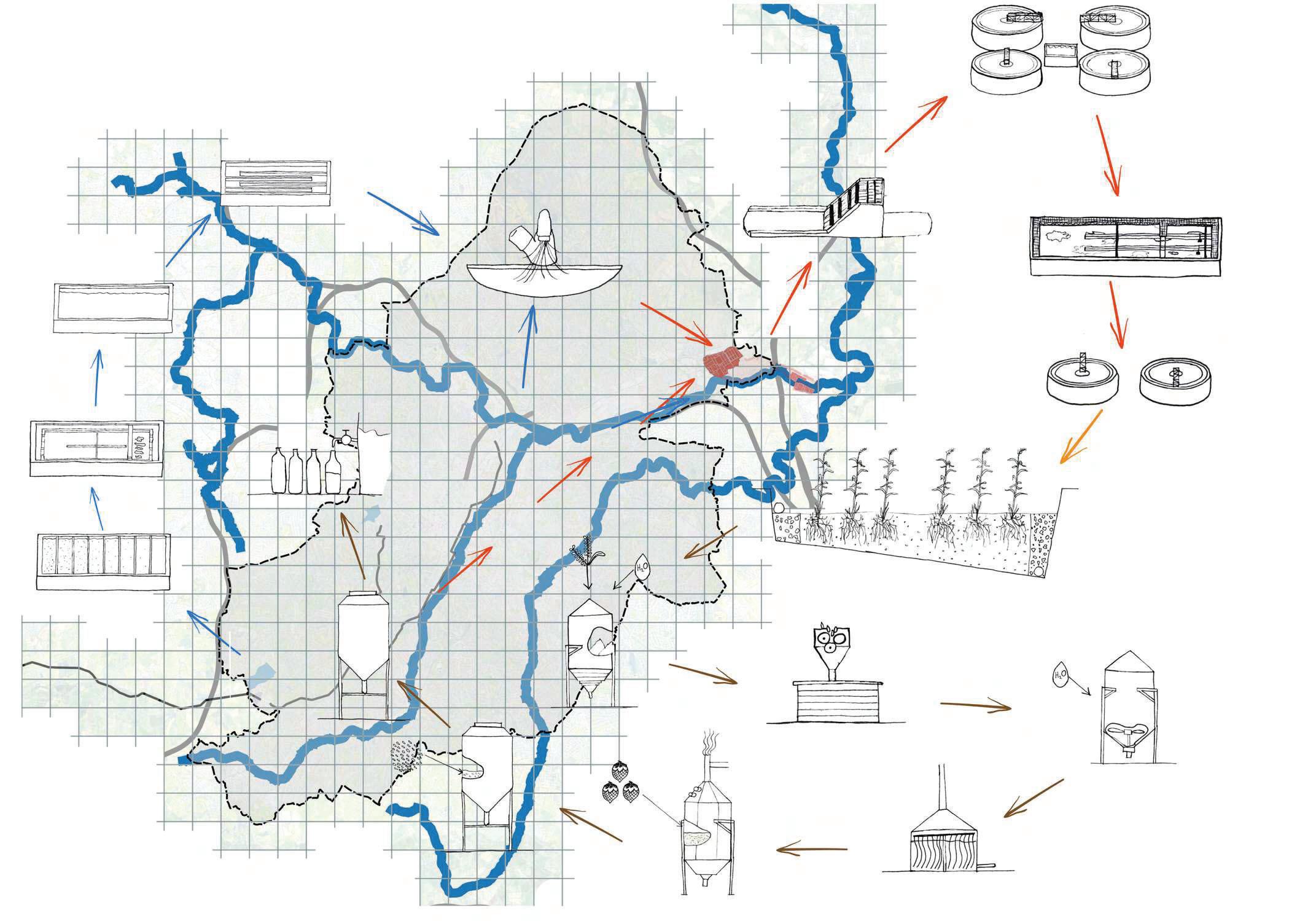
Brewing beer with naturally purified sewage effluent
// sewage discharge / sustainable production / natural water filtration //
8. Green Through
Farmers closing the fertiliser run-off loop by growing algae to feed their cattle
// agricultural pollution / reuse //
LIST OF MANMADE WATER POLLUTANTS
Project name: CYANERGY
Author: ALECE FODEN
Location: USA, FLORIDA, ALAFIA
RIVER
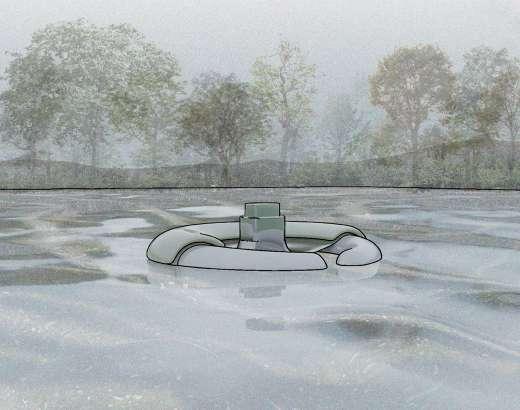
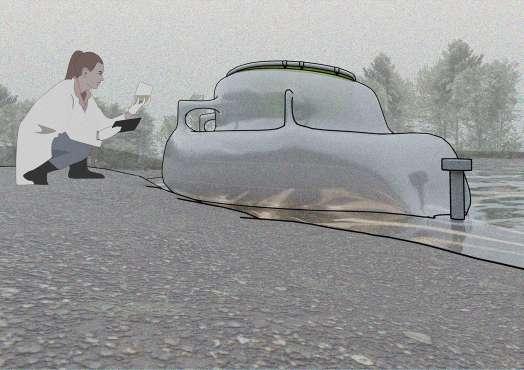
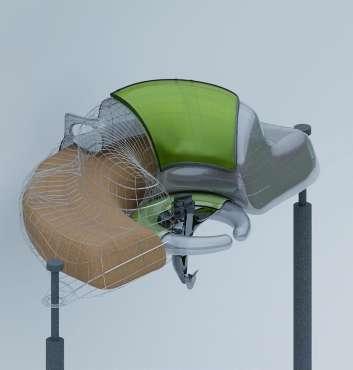
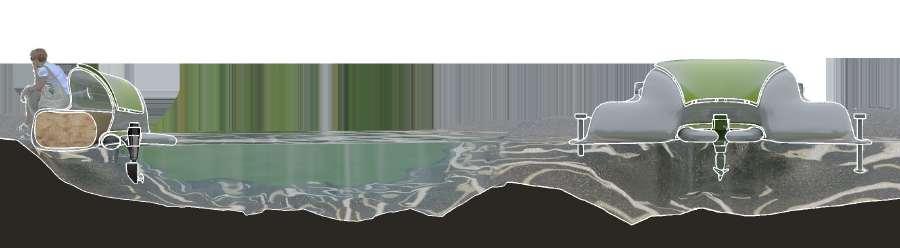
The proposal is based on the lack of consistent data on water quality along the Alafia River. To address this the device works as a floating drone that collects and deposits samples and data on water along the river. Using nutrient sensors to detect phosphorous and nitrogen in the river and collecting algal samples for toxicity testing. The samples and data are brought back to a docking station where information is uploaded which can be viewed from an app. This data shows information on the location of algal blooms and toxic algae such as Karina brevis also known as red tides. The algal samples also allow the device to operate by providing electricity through biophotovoltaics (BPV).
1. Cork Pontoon
2. Algal chamber
3. Steel posts
4. Steering mechanism
Project name: RESTORING NUTRIENT BALANCE
Author: KATARZYNA RAJ
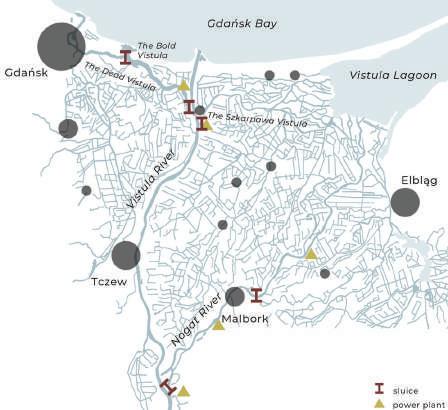
Location: POLAND, GDANSK, IMPERIAL SHIPYARD
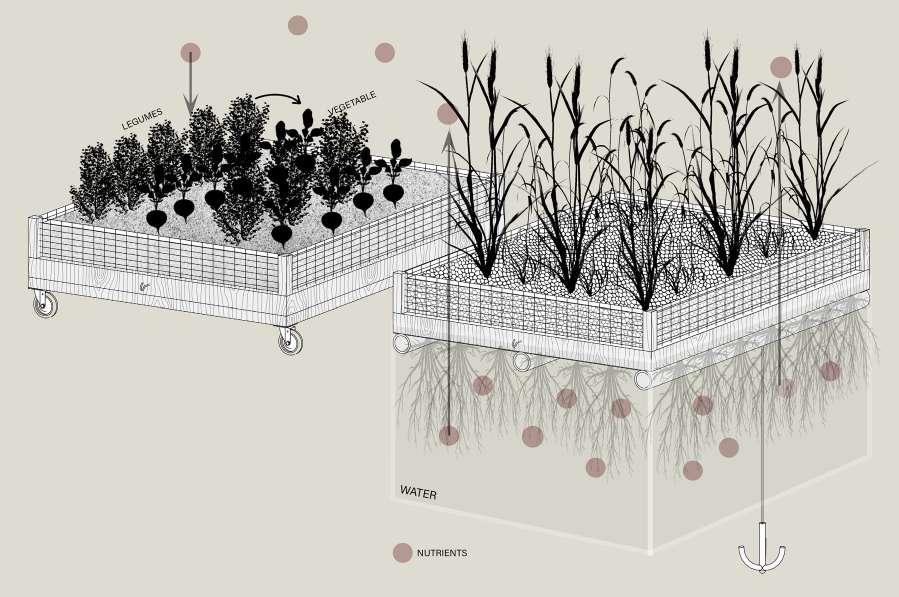
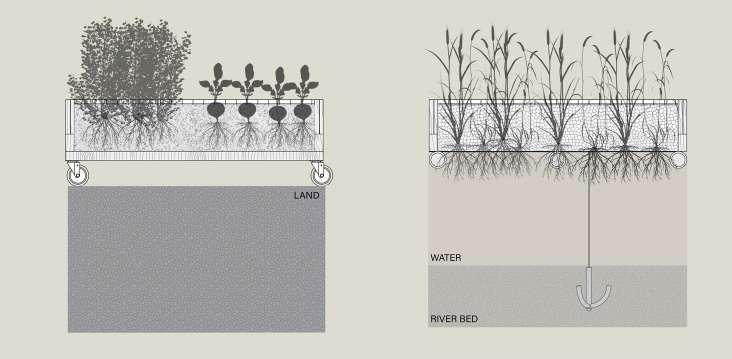
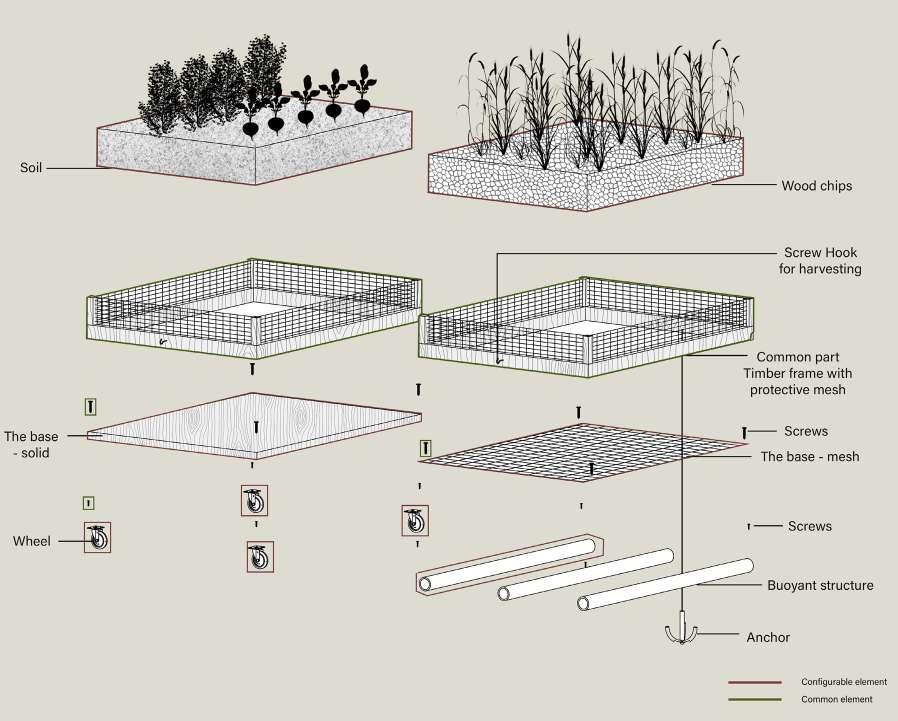
These small-scale designs aim to alleviate the problem of nutrient pollution in the waterways, which, in Poland but also in countries around the world, largely stem from fertilizer run-off from agricultural fields. The proposals are based on two avenues of research. The first is the cultivation of nitrogen fixing plants like legumes, which, unlike other crops, can process atmospheric nitrogen into usable nutrients. The second is the natural balancing of nutrients, like nitrogen and phosphorus, in a wetland environment. Respectively, the design proposes two small, modular interventions, which can be easily assembled and reconfigured. The components can create both a movable raised bed for growing vegetables with legumes and a floating water treatment wetland platform. The movable raised bed is used on land to grow vegetables without fertilizer, reducing the amount of it used in our diets overall. The floating wetlands platform floats on the water’s surface and uptakes nutrients from a polluted body of water. The platform needs to be pulled out for harvesting once a year to ensure that the nutrients do not circulate back into the water in the process of plant decomposition. The proposal presents an affordable and accessible way to encourage people to take up the initiative to grow vegetables more sustainably and to help clean polluted water.
Axonometric view showing two assembly variants:
Movable raised bed Floating wetland platform
Project name: PLASTISPHERE PLASTING!
Author: SIMON WILSON
Location: ENGLAND, BIRNBECK PIER
The production and use of plastic is a central facet of contemporary life. However, despite its widespread use and practicality it has a very negative downside. Firstly, it is produced from hydrocarbon such as coal, gas and crude oil - driving climate change. The production, disposal and incineration of plastics is estimated to reach 2.8 gigatons of CO2 per year by 2050 (CEIL; 2019).
Secondary, plastics caused widespread pollution on a global scale. Plastic is an ever-present aspect of human life, a marker of the present era of the Technosphere. Plastics have become an entangled layer of the lithosphere, polluting our oceans, atmosphere and soil, breaking down into smaller parts to create microplastics and nanoplastics.
Microplastics have been detected in water, soil, food and beverages, indicating that exposure to humans and the biosphere to these particles is ever-present. Recent studies have highlighted that microplastics and nanoplastics are being transported long distances though the air. Microplastics are persistent, inert and can be colonized by microorganisms.
The amount of plastic in the ocean is expected to double in the next 15 years, and it is estimated that by 2050, there could be more plastic in the ocean than fish (by weight} (Ellen MacArthur Foundation, 2016). It’s possible that the activity of fishing will decline and the concept of capturing microplastic, ‘plasting’, will become a more popular activity.
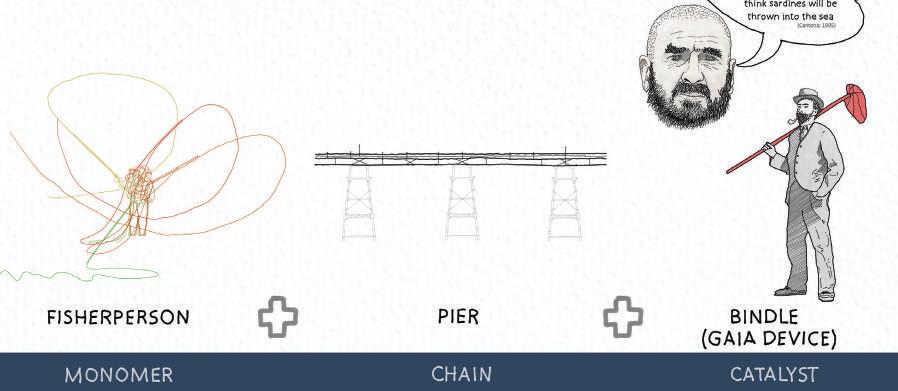
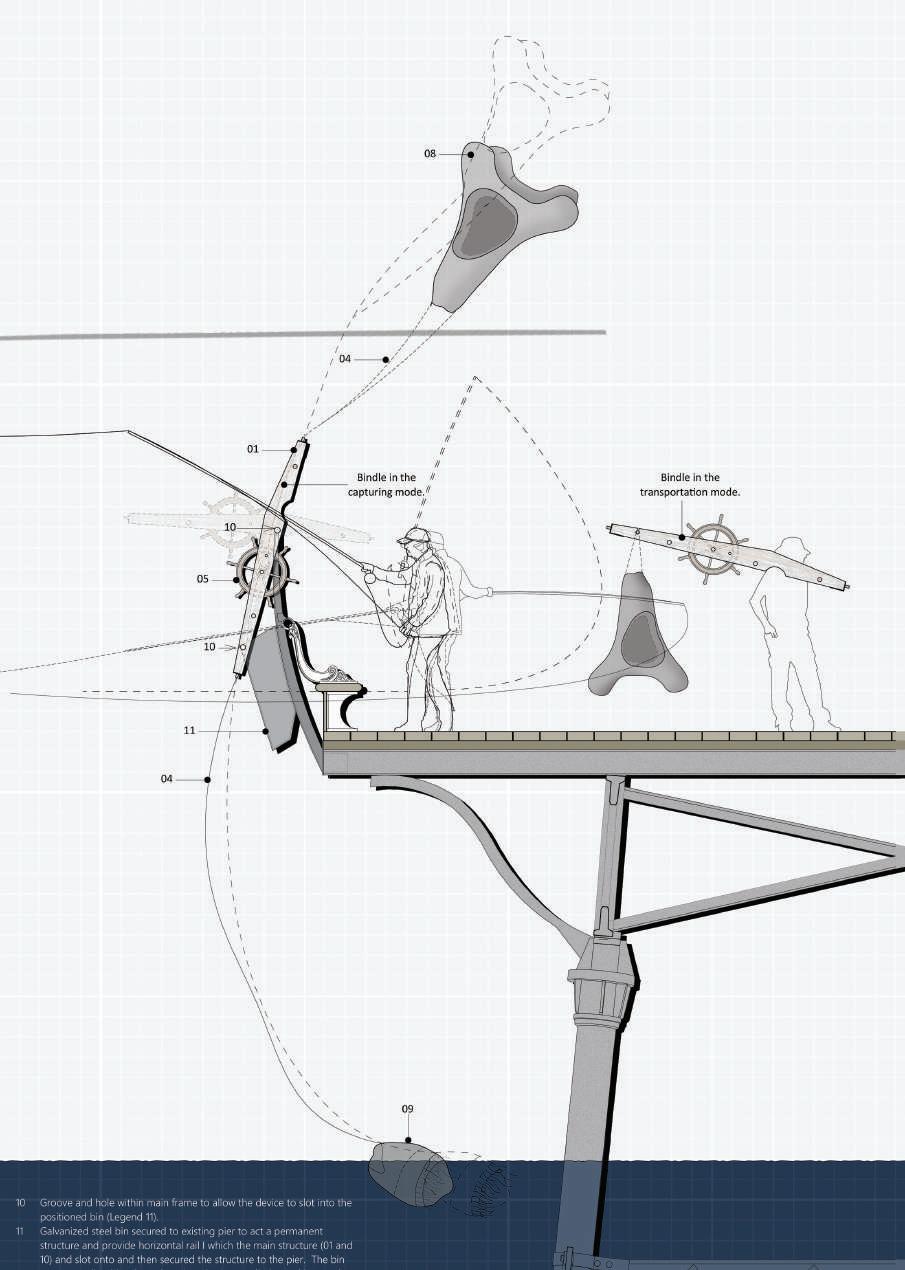
The proposal is an abstract molecule structure, where the activity of a fisherperson (monomer) along the pier (chain) is supplemented by the ‘Bindle’ (catalyst). This conceptual polymer captures microplastics, reversing its linear spread in our environment.
3D model
Section showing a microplastic collection device in action
Project name: SLOW THE FLOW
Author: ALECE FODEN
Location: ENGLAND, BIRMINGHAM, CASTLE BROMWICH
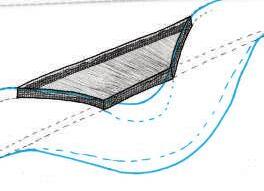
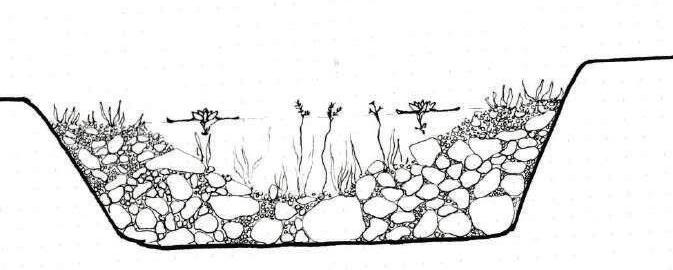
Slow the Flow proposes rewilding a canalised stretch of the river Tame, which over the last century was reduced from a meandering waterway to a concrete gutter for the city’s road surface water, untreated sewage spills and agricultural run-off from the wider area. Like many watercourses across the UK, river Tame is plagued by sewage discharges via storm overflows due to insufficient water treatment infrastructure and increased heavy rainfall events which overwhelm the network. The site is nestled between the M6 motorway flyover and a railway line with an overflow channel running alongside it. In this location the natural topography of the river Tame has been first changed in 1900s to accommodate a new racecourse. Further river redirections in the 20th century resulted from urban expansion and the construction of the motorway. The proposal features a water quality testing building, an exhibition space and a visitor centre but at the heart of it is the landscape design. The existing embankments are replaced with restored meanders and wet benches which are interventions inspired by the work of the Warwickshire Wildlife Trust. Wet benches are a manmade alternative to beaver dams which slow down the river flow. In this project the benches are enhanced by the addition of filtering stones and plants which absorb a range of pollutants. The slower flow makes the river more habitable for diverse wildlife and allows for more efficient natural water filtration.
WATER TREATMENT
WATER TREATMENT
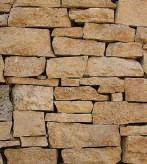
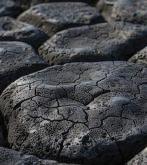
Filtering infills: gabion encasement filled with submerged and floating plants among filtering stone
Sandstone
Crushed
Project name: REMEMBERING RANA
Author: RAMEETHA HUSSAIN
Location: BANGLADESH, SAVARsustainable Food/plant based dyes
Remembering Rana is a deeply personal project. It began with the author looking critically at her past habit of purchasing fast fashion goods. It also begins with a catastrophic flood which damaged her ancestral home in Bangladesh. And as the title indicates, the project is dedicated to the 2013 Rana Factory collapse which caused the death of 1134 people, mostly female garment workers. The disaster happened not only because of the poor structural condition of the building but also due to political and systemic failures in Bangladesh.
Savar’s water and river systems suffer from industrial pollution spilling from hundreds of garment factories located alongside it, which include massive amounts of oil, grease, and ammonia. The alternative put forward by the author is using natural dyes made from fruit, vegetables or charcoal which are not as intense in colour but are safe to use and to dispose of. The project also incorporates water collection and purification systems to provide access to clean water.
The author conducted gender studies during her trip to Savar, Bangladesh, which concluded that women are not very visible in the public spaces and do not enjoy equal social freedom. This limits their opportunities for economic mobility and upskilling. The proposal challenges the current social issues of labour exploitation by designing a space for women and young people to gather, exchange ideas and learn new skills to then apply them by independent garment production and sales at the local bazaar. The ultimate goal is to empower women to take higher management positions in garment factories and to promote a healthy working environment. The centre will provide spaces to process natural dyes and to educate the community through courses and workshops.
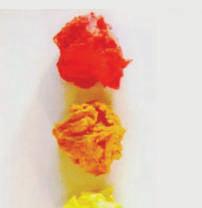
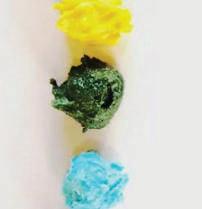
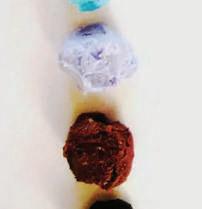
After reading upon many articles about water pollution within the region of Savar, a common factor which constantly appeared across many sources was the presence of toxic fabric dyes in surrounding rivers and lakes. As a result of this, a more sustainable approach into experimenting through making food based dyes was carried out. Prior to experimenting and making home-made dyes, thorough research was carried out into the most effective and sustainable methods. Fresh fruit and vegetables which are locally sourced and easily
However some ingredients such as squid ink used to make black dyes they could be; in this case, activated charcoal.
Breakdowns of how each of the dyes were made can be found in the factors.
more demure hue than store-bought food colourings.
make small amounts of dye.
Secondly, although these dyes are not intended to be used as food colourants, if they were, they would adjust the taste of foods. This is due to the large amounts of foods in them e.g turmeric.
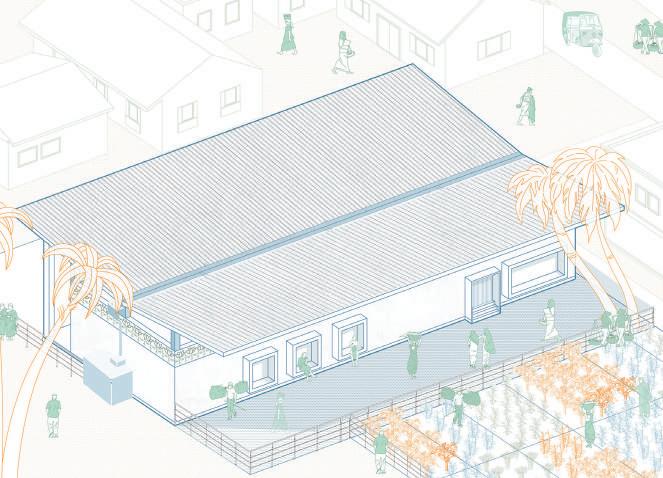
The name of the centre, ‘Bheti’, derives the from Bengali language with connotations of the word being a strong, independent female figure. The roof is the most prominent feature of the Bheti Centre, as its form follows a rainwater collection feature. Bangladesh is known for its seasons of flash flooding. Although there is plenty of rainwater, it dries as quick as it falls due to humidity and sunlight. The roof is designed to direct rainwater into collection tanks which sit at either side of the Bheti Centre. The purpose of having two tanks is so one is publicly accessed as the other is accessed by women through the Bheti Centre.
The sustainable dye farm sits on the footprint of the Rana Plaza Building, to commemorate those who were impacted by the disaster. Rather than shying away from the reality of the disaster, the dye farm is a step forward from corrupt industry environments. It encourages women to be at the forefront of society through farming and dye processing, as men are usually seen to manage farm and land themselves.
Recycled pickle/jam jars First batch of dyes (not strained) Cotton wool balls dipped in dyes to test out stain colour.
fabric dye testing material pics
Fabric samples of naturally produced dyes
Dye farm plan showing in season and off season crops
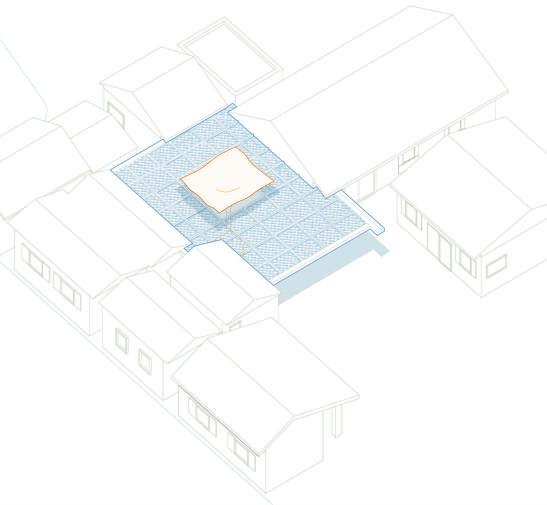
Axonometric view of the site showing the dye farm, canopies between existing buildings and the Bheti Centre
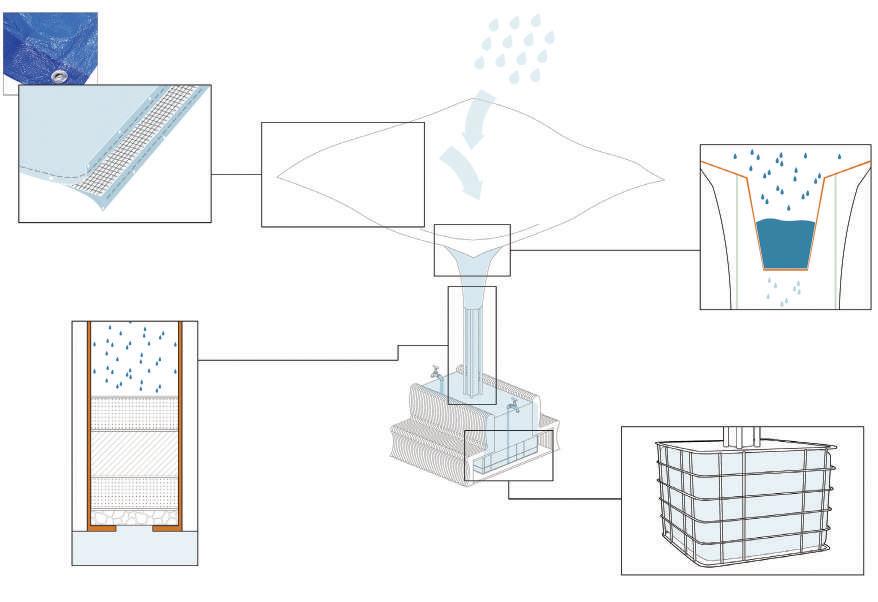
Collecting and making use of the vast amounts of rainwater which falls into this specific site is a key aspect of this proposal. These rainwater trumpets are cheap to construct and require little maintenance. They will provide filtered water to the community of Savar and double up as seating for social areas. The form is designed so they are perfect fit for the fruit and veg drying canopies. The rainwater collector trumpets will be placed around the site and in the farmer’s yard. This is so water can be accessed efficiently when needed to water the dye farm. It also allows a space where women can wash their gardening shoes/ hands before and after attending to the dye farm.
Components of the water trumpet showing the water capturing funnel and filtration layers: ceramic filter, sand, charcoal, gravel and cloth. Filtered water is stored in a standard water tank surrounded with custom benches whcih sit undeneath the shade giving funnel.
Water trumpet within canopies
THE BHETI CENTRE
Axonometric view of the Bheti Centre showing a rainwater collection tank on the side
Plan of the Bheti Centre showing spaces for processing natural dyes and for education through courses and workshops
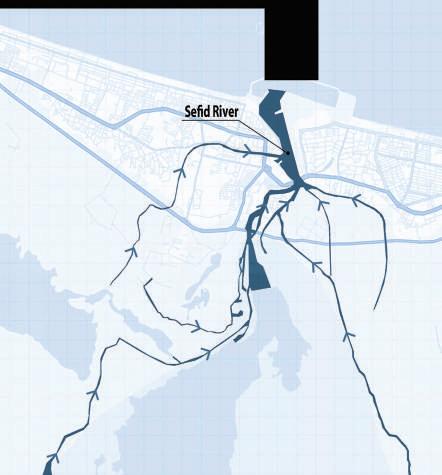
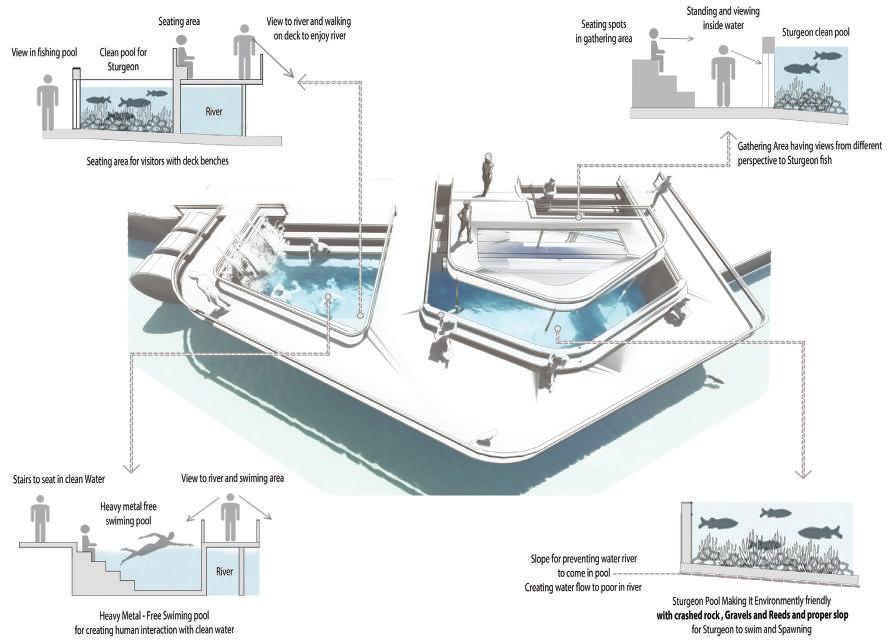
Project name: PERSIAN STURGON REVIVIAL
Author: MOZHGAN SABZEHPARVAR
Location: IRAN, RASHT, ANZALI
The Caspian Sea, the largest enclosed body of water on Earth, is facing serious environmental problems. The current pollution includes oil spills, microplastics, and heavy metals. Sefid River is a key location where Persian sturgeon, an endemic species to the Caspian Sea, migrate to spawn. The Sefid River passes through Rasht, a large inland city, and through agricultural areas. The river is vulnerable to pollutants due to urban and industrial effluents, which carry heavy metals like cadmium, chromium, mercury, nickel and lead. However, Sturgeon depend on clean rivers for spawning. Heavy metal pollution is associated with muscle atrophy and abnormal gonad development. This project proposes the creation of a safe fish pathway through an introduction of a riverbank filtration system. This proposal pumps out water from the river and passes it through a filtrating water wheel, which in turn powers the pump. The wheel buckets are constructed to house filtrating infills. These infills are constructed with various grades of biochar to maximise heavy metal capture and need to be replaced when they reach heavy metal saturation. Once the water exits the water wheel it goes into two separate pools. One is designed as a sturgeon habitat and one is designed for safe wild water swimming, which allows people to spot this endemic species and raise awareness of how manmade water pollution affects the biodiversity of the Caspian Sea.
Hydro generator creates power for the pomp thorough water wheel
Nonwoven Geotextile plus fine mesh
Coarse biochar
Nonwoven Geotextile plus fine mesh
Coarse biochar
Nonwoven Geotextile plus fine mesh
Nonwoven Geotextile plus fine mesh
Fine-grained activated biochar
Fine-grained activated biochar
Nonwoven Geotextile plus fine mesh
Semi-coarse biochar
Nonwoven Geotextile plus fine mesh
Nonwoven Geotextile plus fine mesh
generator creates power for the pomp thorough water wheel
Wheel
Axonometric site plan
Axonometric view and functions
BREWING HISTORY OF THE WEST MIDLANDS
All rivers in the UK fail to meet the minimum chemical standards set out by the government and 86% of rivers also fail to meet the status of “good ecological health” (Rivers Trust). The health of the rivers is getting worse and freshwater wildlife has fallen by 84% since 1970 (Rivers Trust). This situation is largely caused by widespread sewage discharges. In 2020, there were 403,171 recorded sewage spills in England alone. The polluted rivers are also a predominant source of potable water we find in our taps.
commercial breweries to mass produce beer. With this historic context of the brewhouse in Birmingham this could be used within the project as a method to tackle the key Headlines of our current water industry.
Process
1.Extraction
2.Screening
3.Clarification
4.Filtration
5.Disinfection
6.Use
7.Disposal
The History of brewing across the west midlands can also been seen as two distinct architectural styles, with the majority of Birmingham and the black country historically focusing on brew house and brewpub. However areas such as Burton on Trent focused on large commercial breweries to mass produce beer. With this historic context of the brewhouse in Birmingham this could be used within the project as a method to tackle the key Headlines of our current water industry.
8.Screening
9.Primary settlement
10.Aeration lanes
This project explores alternative ways of treating sewage, which can bring more public engagement and awareness of where our water comes from and how our waste is treated. The site is adjacent to Minworth Sewage Works and a water channel which carries its effluent. The masterplan includes a barley farm on a capped bio solids landfill and a secondary treatment stage where a vast reedbed farm purifies the water to a degree where it is safe
C.Mashing
D.Filtration
E.Boiling the wart
F. Primary fermentation
G.Secondary fermentation
H.Bottling
11.Secondary settlement
12..Horizontal flow bed
A.Malting
B.Milling
C.Mashing
D.Filtration
E.Boiling the wart
F. Primary fermentation
G.Secondary fermentation
H.Bottling
brewery in a new reedbed field
Proposed systems diagram. The current water and sewage treatment system is expanded to include a new end stage in sewage treatment where the effluents
Existing bio solids landfill (brown) and settlement beds (green) near the sewage treatment works
Sketches of breweries in West Midlands
Proposed site interventions - barley fields (yellow) and
Water : Myles Lydon
ERA Water : Myles Lydon 20
to use in a proposed brewery. The natural water treatment methods are used to improve the water quality downstream and to give rise to new wildlife habitat.
The key component of this proposal is the education about water, which is weaved into the beer brewing heritage of the West Midlands. The brewery is used to highlight how much water is required in production of everyday articles. The brewing process requires 2.5-10l of water per litre of beer produced. The brewery also champions Birmingham’s two distinct water supplies with the primary supply of soft water from the Elan valley and the secondary supply from the Birmingham Resilience Project that supplies hard water from the River Severn. Most important of all, the brewery promotes the use of recycled effluent water and the importance of reducing sewage pollution. The project follows circular economy principles through using hops as a part of the water treatment process. The proposed barley fields are fertilised with brewery waste and sewage works sediment.
Proposed brewery site plan showing a sequence of pavilions responding to different functions of a brewery
View showing the landscape of the brewery filled with filtrating reedbed farm
Walkway view showing the path through the brewery site
Beer hall section showing the piled construction of pavillions
Pollution tower which signals sewage discharge
Section through the site showing the pavillions set in the reedbed landscape
08
Project name: GREEN TROUGH
Author: MARTYNA KEDZIA
Location: POLAND, VISTULA FENS
Phosphorus and nitrogen are key nutrients which sustain life on earth. However, due to the liberal use of fertilisers in agriculture the natural environment is full of excess nutrients. According to the framework of planetary boundaries by the Stockholm Resilience Centre, we have crossed the safe level by a factor of two. The water which runs off agricultural fields is so rich is promotes the growth of various algae and bacteria. In the case of the Baltic Sea, this process causes large algal blooms in the summer, leading to water oxygen depletion and loss of marine wildlife habitat.
This project focuses on the landscape of the Vistula Fens, which is an alluvial delta of the river Vistula. The Fens are a predominantly agricultural area. Much land lies below the sea level and is sustained through a system of centralised water pumps. The unique arrangement of the surface drainage in the Vistula Fens creates an opportunity to take nitrogen and phosphorus out of the runoff water before it is pumped out the waterways located at a higher level.
The proposal allows farmers to harness some of the excess nutrients by growing algae in tanks filled with runoff water. Algae can be very efficient in nutrient capture. Studies show that a species of Chlorella Vulgaris can uptake 85% of nitrates and 95% of phosphates. Moreover, harvested algae
Components library composed from readily available items found on most farms
Drainage network of the Vistula Fens
Simple and accesible design for a mini algae farm constructed with components readily available at most farms. The polytunnel houses an algae tank, an interganted through and a scraching brush connected to a stirring attachement in the algae tank.
Systems diagram showing a more circular approach in nutrient use. Algae tanks are filled with agricultural run-off water which due to its nutrient saturation supports algal growth. As they grow algae uptake the nutrients and then are harvested and dried. The farmer mixes the algae in cattle feed as a protein supplement. The manure produced is used for fertilising the fields.
Section and floor plan showing old bathtubs filled with algae, an Archimedes screw used for pumping out the water and the cow feeding at the through. The CO2 exhaled during feeding supports