MARTLET THE

At 12:12 a.m. on Tuesday, July 7, a shoebox-sized satellite built by UVic students at the Centre for Aerospace Research (CfAR) was launched into orbit from the Vandenberg Space Force Base in California on SpaceX’s Transporter-17 mission.
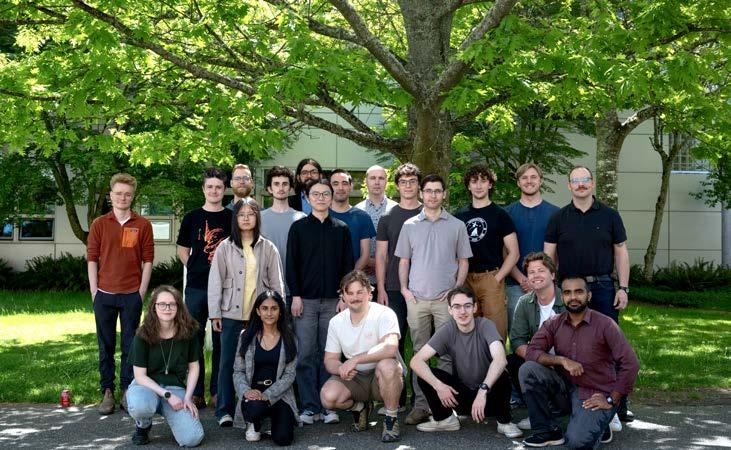
MARMOTSat is a CubeSat designed by UVic students, CfAR Space Division engineers, and volunteers from the UVic Satellite Design (UVSD) team. In total, nearly 60 people contributed to MARMOTSat, and the list of contributors appears on the satellite’s face plate.
This is the second CubeSat sent into orbit by CfAR, with the first, ORCASat, launching in 2022.
Blake Baldwin, UVic electrical engineering grad, space division electrical designer, and former UVSD president who has been with CfAR in different capacities since 2022, told the Martlet that the name comes from the endangered Vancouver Island Marmot, following
ORCASat’s animal theme.
MARMOTSat serves different purposes than ORCASat, and will be in orbit significantly longer. While ORCASat was only in orbit for six months, including two on the International Space Station (ISS), MARMOTSat’s mission will last for up to 10 years.
Baldwin explained that MARMOTSat has two key payloads: amateur radio outreach, and atmospheric research on climate change’s impacts on the ionosphere.
He also noted that the project is funded by the Canadian Space Agency (CSA), and said that “their main deliverable for us is just making sure that we’re actually training highly qualified personnel in the Canadian space sector.”
CfAR provides funding to master’s and PhD students to contribute to various parts of their projects, from research to hands-on engineering experience. They also hire co-op students from UVic and other institutions, and offer opportunities for honours and capstone projects.
MARMOTSat’s Project Manager, Levente Buzas (UVic BEng and MEng),
is a radio-frequency engineer and manager of the space division. He started with CfAR in 2018 while working on his undergraduate honours thesis.
Buzas told the Martlet that one of the unique aspects of their program is that, while most universities working on CubeSat projects would buy satellite components — like power supplies or radios — UVic builds them in the lab.
Buzas said. “[It’s] creating opportunities in Canada so the graduates don’t have to move to Silicon Valley or Europe.”
Evan Peters, a master’s student, space division lead electrical designer, and payload lead on MARMOTSat, attended one of the launch events in California.
Baldwin and Peters went to the SpaceX event, while a small group of UVSD students also traveled to California to attend a watch party hosted by ExoLaunch, the company who helped bolt MARMOTSat to the rocket.
Peters, who has been with CfAR for two years, said he felt excited but slightly nervous at the launch; “we’ve gone through all the testing and [have] high confidence that it will work, but there’s always that ‘what if.’”
But they were not in suspense for long, receiving confirmation from the ground station in Victoria that they had successfully established two-way communication by the time they had returned to their hotel. “[It] was very reassuring to hear after two or so years of stress and working on it … [that] everything was in place,” Peters said.
While MARMOTSat will be in orbit for up to 10 years, the team’s work is far from over.
“UVic has a legal responsibility to maintain control over the satellite over its entire lifespan,“ Buzas said. “That’s one of the things that we commit to by
getting licenses from the government to have a satellite and operate it.”
The team is continuing to bring the satellite’s systems online, and once they are working, the team will move on to the satellite’s intended research.
For Buzas, MARMOTSat’s success is twofold; first, to successfully launch the satellite and establish continued communication, and second, to have students interested in and involved with the project.
In April, CfAR had a showcase outside the B.C. Legislature to display ORCASat, MARMOTSat, and their MIMIQ-25 quadcopter.
The space division is also working on projects like PolarLink, a larger CubeSat that will launch in October 2027, and a confirmed but unannounced project with the CSA set to launch in 2028/29. Buzas hopes to continue expanding the work being done in the Space Division. “At this point, [MARMOTSat is] a relatively small aspect of the program,” he told the Martlet. “We have aspirations to lead a space-focused
of
BRIANNA BOCK SENIOR STAFF WRITER
their frustration, their tenacity and absolute resolve for change. Nurses care deeply about their patients and their profession, but they are also telling us that the conditions they are working under cannot continue."
In a statement on the BCNU website,
the concerns behind B.C. nurses deciding to strike included: high workloads and unsafe staffing levels, workplace violence and occupational health and safety concerns, all which undermine the nurses’ ability to provide care to patients.
On July 3, at 5:30 a.m., a picket line was declared at the Vancouver General Hospital. On July 12, the picket line extended to Victoria General Hospital, Nanaimo Regional General Hospital on the 13, and the Royal Jubilee Hospital and South Island Surgical Centre on July 14.
In a statement to the Martlet, a UVic spokesperson confirmed that UVic’s Bachelor of Science Nursing (BSN) students in “practice courses” between years three and four are currently in a range of clinical placements across the South Island.
“Most are in settings where they are being impacted by the BCNU job action. These students are not crossing picket lines, so some have had clinical shifts cancelled. Nurses are also taking other job actions, including not performing non-nursing duties.”
“UVic’s nursing students are encouraged to support their nursing colleagues. The School of Nursing’s undergraduate team communicates regularly with students to ensure they have the most up-to-date information, as the job-action situation changes day by day. Island Health also provides

post-secondary health programs with regular updates,” the spokesperson continued.
The spokesperson said that BSN students who graduated in June 2026 completed their programs in April; therefore, the completion of their degrees has not been hindered by job action.
Student Wellness nurses on campus, meanwhile, are represented by the Professional Employees Association (PEA), not the BC Nurses’ Union (BCNU). As such, UVic said, they
Gil-Peterson, a historian by training, comes from Johns Hopkins University in Baltimore, Maryland
but also just my kind of extensive research in this field and kind of anchor it in something where it can be a lot more effective.”
After ten years as Chair in Transgender Studies, UVic Professor of Sociology
Dr. Aaron Devor stepped down from the position. Dr Jules Gil-Peterson, an associate professor of History from Johns Hopkins University in Baltimore, Maryland, has been appointed to replace him.
The role of the Chair in Transgender Studies is to generate “solid reliable information to drive social change and improve the wellbeing of Trans people.”
One of their projects includes overseeing the Transgender Archives, which has been collecting documents, rare publications, and memorabilia of persons and organizations associated with Trans activism since 2007 and is the largest archive of Trans history in the world. They also host the Moving Trans History Forward conference every two years.
Devor was the inaugural chair, meaning Gil-Peterson is the second person to fill the role. Her term officially began as chair began on July 1 Gil-Peterson is a historian by training, specializing in Transgender, medical and political history. She is the author of two books, Histories of the Transgender Child (2018) and A Short History of Trans Misogyny (2024), and is currently working on a book on the class divides that shape the ways that people approached transition.
Part of what interested Gil-Peterson about the position, she said, was “the opportunity to be able to take my wealth of experience, both as a researcher and as a scholar, also public facing historian,
Gil-Peterson explained that she wanted the chair position to lean into its mission of catalyzing and fostering the highest quality research possible. To Gil-Peterson, her larger goals for the chair are to support and open opportunities for people — on and off campus — to research in order to help people achieve their academic and research goals.
Peterson said she hopes people can “work towards building up a nice big stack of really good peer reviewed research that we have to use, concretely, to defend the things we know are good.”
In Histories of the Transgender Child, Gil-Peterson explored the history of transgender children. What ultimately got her started on the book was finding old medical articles from the 60s from clinic in California “where they talked about these teenagers who were taking estrogen to transition to female, getting approved for surgery as a minor at the appropriate age and so on. And I remember reading that being like, ‘huh?
Wait a minute, what?’” explained GilPeterson.
When it comes to medical advancement, Gil-Peterson explained, we should remember that major surgeries are fairly recent developments — often within living memory. Organ transplants, for example, were only consistently successful from the 1950s onwards, with one early example in the 1930s being Lili Ilse Elvenes, a transgender woman who underwent a uterus transplant.
“Things we would call breakthroughs, of course they’re recent,” said Gil-
Peterson. “That’s normally considered a good thing. But part of the kind of brilliant strategy of anti-Transgender politics has been to sort of turn that into a disadvantage, rhetorically.”
“‘Well, this isn’t very old, how do we know it’s good? How do we know it’s been tested?’ And it’s like, ‘Well, isn’t that kind of the point that medicine gets better?
It’s new?’”
Gil-Peterson explained that when historians approach history with a slow sober perspective, “[they] can play a role in helping us, not just have those facts, like ‘by the way this is how old this.’” She questioned why, between sex change surgeries and heart transplants — both of which have been around for similar lengths of time — one is a concern, and the other one isn’t?
“Clearly it’s a moral or a political judgement … I think these are important public concerns that historians like myself should play a role in, and have a responsibility to think about how to frame those things for everyone.”
Gil-Peterson said that the chair has the responsibility “to make the most of this time, to do something really concrete, really valuable and something we can all feel proud and good about, and that we can use in defense of the people we care about, and the institutions that we know are doing good work.
“I feel incredibly optimistic and really excited to do that work, because I think, there’s nowhere else in the world, to be honest, where you have something like UVic, something like Victoria, the island, B.C., and these kinds of resources in place to let people work on these things together.”
The recommendations may become more pressing as a new academic integrity policy expands decision-making responsibilities across the
the Martlet. “Our chairs and associate deans are generally pretty good at making decisions. They know their fairness principles. They know how to do it.”
deferrals.
The recently released 2025 Ombudsperson Report made two sets of recommendations surrounding academic misconduct and concession cases, addressing longstanding concerns about unclear decision-making and bringing new issues to light to promote fairness across the university.
Angus Shaw, UVic's ombudsperson, serves as an impartial, independent, and confidential resource for members of the campus community who wish to raise concerns or injustices. The ombudsperson releases an annual report on trends and statistics collected by their office, alongside recommendations based on their experiences from the position.
“In the future with this new academic integrity policy, there’s going to be a lot of people who have never done it before…. So I foresee my recommendations becoming more pressing.”
The 2025 report addresses ambiguity in the word "should," as it appears in UVic's academic integrity policies. While the policies recommend certain penalties, Shaw emphasized that decision-makers must still exercise judgment and determine the most appropriate penalty based on the circumstances of each case.
He said he was mildly surprised that concessions became the most common issue brought to the ombudsperson’s office in 2025, as opposed to academic integrity, which was the case the previous year.
In 2024, 14.5 per cent of cases his office handled involved academic integrity, and 13.8 per cent involved concessions. In his 2024 report, Shaw noted an increase in academic integrity complaints, with “many, if not most of these cases” involving artificial intelligence (AI).
In 2025, however, concessions accounted for 16.7 per cent of cases, while academic integrity cases fell to 11.5 per cent.
continue to fulfill their professional responsibilities and remain at work, as scheduled, to support student health and wellness.
On July 13, the BCNU entered mediated bargaining with the NBA and the HEABC, and the picket lines came down at the end of the day on July 14 in a “demonstration of good faith.”
Since the end of the picketing, the BCNU has reported receiving 5 200 reports of threats and intimidation by employers to continue to work despite
the union’s direction for members to refuse all non-nursing duties. The picket lines remain down, and mediation continues.
On July 22, the job action to refuse non-nursing duties was temporarily suspended in communities affected by wildfires.






Because the ombudsperson's role is limited to making recommendations rather than enforcing decisions, Shaw’s reports serve as a way to persuade and guide others on campus, especially decision-makers, in upholding fairness.
Shaw expects these recommendations to become even more important as the university's new Policy on Academic Integrity takes effect Sept. 1. The new policy, among other changes, will distribute responsibility for academic integrity decisions among a broader group of decision-makers, such as individual instructors, rather than concentrating it primarily in those more experienced holding this kind of power, like department chairs and associate deans.
“All of a sudden, we’re going to not have hundreds of decision makers, we’re going to have like thousands of decision makers,” Shaw said in an interview with
He recommends providing clear written reasons for the chosen penalty, rather than simply citing the policy, and making decisions only after gathering sufficient information.
Shaw said this recommendation builds on concerns raised in previous reports, and that he has seen cases relating to unclear justification for academic misconduct penalties for several years.
"I do still hear repeatedly the same issue about students complaining about a penalty not being justified," Shaw said.
Another set of Shaw’s recommendations focuses on academic concessions. An academic concession can be requested by students whose course requirements are affected by unexpected and unavoidable circumstances, or conflicting responsibilities, such as illness, trauma, or bereavement, and representing the university, the province, or the country by participating in an academic event, an athletic competition, or an artistic performance.
Options for academic concession include in-course extensions and
“It’s not like AI has gone away or anything,” Shaw said. “In fact, the conversation has only increased. So it’s really hard for me to draw conclusions for why that is the case.”
Shaw said his recommendations on concessions were driven by the seriousness of a small group of cases he encountered, where the boundaries between concessions and accommodations were blurred. In several of these cases, students felt they had been treated unfairly in ways that could affect their transcripts or careers.
Shaw found that when students disclose a disability in a concession request, decision-makers may focus too heavily on the disability itself, rather than independently assessing whether the student meets the criteria for a concession.
To address this, Shaw argues decisionmakers have an "enhanced duty of clarity." They should keep concession and disability accommodation processes separate, and provide clear written reasons demonstrating that concession

requests were assessed independently on their own merits.
Of those who used the ombudsperson office in 2025, 90 per cent were students, 72 per cent of those students were undergraduates, and 33 percent of all users were registered with the Centre For Accessible Learning (CAL).
“[Students] are entitled to a fair process,” Shaw said. “It feels like the university is this very powerful [entity]. It has a bunch of resources. But remember that they’re bound by fairness principles.”
Shaw acknowledged that making decisions, particularly in academic integrity cases, is not easy. Since those decisions can have lasting consequences for both a student's education and future
career, he says it is important that decision-makers are well supported. As the university's new academic integrity policy expands decision-making responsibilities to more members of the UVic community, Shaw said he is developing additional guidance, while encouraging staff to use the ombudsperson's existing resources, such as one-on-one consultations and online resources, which include a section dedicated to staff support.
A recent study proved successful in training humans to differentiate AI-generated and natural faces. The project was conducted at the Australian National University’s (ANU) Emotions and Faces Lab by Dr. Amy Dawel, lead on the project.
She later brought it to Dr. Jim Tanaka, a professor of psychology at UVic who co-leads the UVic Different Minds lab, to replicate.
“Her research was really kind of looking at authenticity … she was quite naturally drawn to AI,” Tanaka said.
The technique developed by Dawel drew participants’ attention to six defining characteristics: distinctiveness, memorability, proportionality, symmetry, attractiveness, and expressiveness.
The study’s abstract explains that previous efforts to train AI-generated facial recognition focused on training people to spot “artifacts” that AI-generated images tend to have, “such as mismatched earrings or anatomical abnormalities."
Dr. James Dunn, who worked on the study from the University of New South Wales (UNSW), said in a
Lab
statement to the Martlet t hat their “approach is different because it directs attention toward broader perceptual qualities of the face.”
Tanaka said that early generations of AI-generated faces had “artifacts,” that served as cues, “but over the last couple years, these synthetic faces and AI faces have gotten really good,” he said.
However, Tanaka said that AI-generated faces tend to be more attractive, symmetrical, and proportional than a typical face.
“We’re average in a funny, unique way,” he said. He said that the more faces that are morphed into one, the more attractive that face is perceived as.
He said that AI-generated faces have a similar phenomenon, as they are being generated from massive “face databases.”
Dr. Eric Mah, co-lead of the Different Minds Lab said that the training is simple, and takes about thirty minutes. Participants are given a face that is labelled as human or AI, then asked to rate it on the six defining characteristics.
“It really gives them an opportunity to start to associate the differences in symmetry,” Mah said. He said that Dawel’s initial idea
for the characteristics came from prior work she had done which showed that people tend to view AI and human faces as being different on these characteristics.
While the initial study at ANU was conducted in-person, UVic’s replication of the study was done online. Both studies showed drastic improvement; in less than one hour of training, identification improved by 30 per cent.
A major focus of the study is AI-related fraud and misinformation.
Dunn said in a statement to the Martlet that “fraud and misinformation were important motivations [behind the study] because AI-generated faces can give false identities and deceptive communications a convincing human appearance.”
He explained that this research is important because of the rapid advancement of this technology, and that “AI-generated images, voices and identities are increasingly difficult to distinguish from real ones, which is beginning to blur the boundary between what is authentic and what is synthetic.

"I think our dream really is to have this as an easily accessible kind of tool or training program that people can go through,” Mah said.
“I hope the study changes the assumption that ordinary people are essentially helpless when confronted with highly realistic AI-generated faces,” Dunn said in a statement.
Dunn said that the next steps are determining how training transfers to faces produced by newer and different generative-AI systems. He said that because the replication showed that training is successful when deployed online, it has potential to be delivered affordably at scale.
New school will combine current programs into one major, offering students “more options and fluidity”
This fall, UVic’s Department of Biochemistry and Microbiology (BCMB) will become the School of Molecular Life Sciences (MLSC), combining their current two undergraduate programs in biochemistry and microbiology into one molecular life sciences major.
The current master’s and PhD programs in Biochemistry and Microbiology will remain unchanged, and MLSC will retain BCMB’s honours, combined major, and co-op programs.
Current declared students in BCMB have the option to continue with their current program, or transition to the MLSC major. Any incoming first years and transfer students starting after September 2026 will go into the new program.
In an interview with the Martlet Dr. Jennifer Cobb, the BCMB department chair, explained that the changes are intended to “create more options and fluidity” for students.
MLSC majors can specialize in biochemistry or microbiology, where their transcripts will say either “Option in Biochemistry” or “Option in Microbiology.”
These specializations resemble the requirements for the old majors, Cobb said.
According to a statement from the university, the main program changes include removing certain requirements including the first year physics course, adding two new required classes at the 100- and 300-levels, and the amalgamation of two 400-level lab courses.
Bronte Coyle, who is entering her fourth year of biochemistry, said she likes that MLSC has created a first year class to introduce incoming students to the fields of biochemistry and microbiology.
UVic Senate approved the MLSC
proposals in December 2025. The rationale for the proposed changes provided to Senate noted that other Canadian and international institutions have made similar shifts in their language to incorporate “molecular terminology,” and said the new name would align with a “trend toward broader, interdisciplinary, and molecularly-focused branding.”
Cobb said that their designation as a school rather than a department was intentional, though the reporting structure of the two are almost identical.
“We felt [a department] kind of sounds more … like a physical location, and currently about 35 per cent of the research that’s going on isn’t physically located here.”
MLSC, Cobb explained, has partnerships with the BC Cancer Deeley Research Centre at Royal Jubilee Hospital and the Genome BC Proteomics Centre at the Vancouver Island Technology Park.
Dr. Shay Waugh, a two-time UVic microbiology grad, thinks the changes could be very beneficial by enhancing the interdisciplinary nature of the training students receive. Waugh’s own research combines microbiology with disciplines like molecular biology, immunology, biochemistry, and bioinformatics.
Waugh, having finished her PhD in microbiology, will soon begin a postdoctoral fellowship at UBC’s Life Sciences Institute.
“It seems like life sciences is this term that is trying to encompass the diversity and the intersection of all these different fields,” Waugh said. “I think … [UVic is] utilizing this to expand their program to be more representative of the actual practical work of doing science nowadays.”
Discussions around a name change began as early as 2024 following an external departmental review, and in May 2025, faculty members voted unanimously
for the name change.
Cobb said that MLSC also used feedback from a student survey while developing the changes.
Dr. Al Boraston, BCMB undergraduate advisor, also told the Martlet that the new name captures the interdisciplinary nature of the work in the department. “The distinction between biochemistry and microbiology has blurred more and more over the years,” he said.
However, students have mixed thoughts about the changes.
“It seems like there’s been a lot of stuff that maybe wasn’t really told to students,” said Isabel Washeim, a 2026 biochemistry grad and MLSC lab assistant. “A lot of these changes came … very quickly, at least from the student perspective.”
Coyle said that if MLSC were to make this change again, she wishes they would take students’ opinions into account, and let students know earlier. She told the Martlet that she was first introduced to potential changes in fall 2025 when students were asked to complete the survey, but “didn’t realize how serious it was.”
The survey had 70 students participate; fourth year biochemistry major Josiah Lee Nelson was not a participant, and says he learned about the changes through email and word of mouth.
Despite the sudden changes to the curriculum, Washeim believes the faculty and lab instructors are well-equipped to support students.
“I have full faith that they’re going to do a fantastic job,” she said.
Incoming transfer student Lex Robillard said they only learned about the transition from BCMB to MLSC when emailing admissions with a different question and were told they were no longer a biochemistry student.
Robillard said they were upset to learn

about the changes, having already moved to Victoria for the BCMB program and declined offers from other institutions.
As a transfer student, Robillard is considered a “new entrant” per UVic’s policy.
“It’s just really frustrating to me that other people who've done the same amount of schooling as me have a choice, but I don't,” they said.
Robillard’s partner is also transferring into MLSC, and has not yet been notified of the change, they said.
“He only knows that he’s not doing … microbiology because I told him.”
Several students that spoke with the Martlet expressed concerns around hirability and having a competitive edge for grad school applications with a MLSC major.
Coyle wonders if the workforce outside of UVic is ready for the transition to MLSC.
“I don’t know if we fully prepped…
[employers to receive] a resume and a cover letter that says [you] graduated with a molecular life sciences degree rather than a biochemistry degree,” she said.
Robillard similarly worries an MLSC major may impact their chances when
applying for master’s or PhD programs.
“My concern is … having a degree that’s just an 'option in biochemistry' might put me below other candidates because they have the actual fully specialized biochemistry degree that I would not end up receiving,” they shared.
In response to these concerns, Cobb, whose own undergrad was in psychology, explained that students often cross between disciplines after graduation.
“If you look at individuals who are in labs, many don’t have the same [background],” she said. Waugh shared similar advice, saying that her journey to grad school and lab work was based more on her research experience and publications.
Boraston believes MLSC will have a positive impact instead of limiting students after graduation. “When [you] have a biochemistry degree, people are automatically assuming that you have a certain skill set, and that skill set may or may not match what they want,” he said.
“With [MLSC], you don’t have that bias anymore. The students are going to be evaluated based on what they’ve done.”
The sociologist was appointed to the Officer level, in recognition of “achievement and merit of a high degree,” which has led to policy change in Canada.
BRIANNA BOCK
SENIOR STAFF WRITER
UVic scientist and Professor Emerita of Sociology, Dr. Cecilia Benoit, was named an Officer of the Order of Canada last month for her research on sex work, maternal care, and health equity, which has informed policy change in Canada. Following her retirement as a faculty member, Benoit is now a scientist at the Canadian Institute for Substance Abuse Research (CISUR) at UVic. Created in 1967, the Order of Canada is presented by the governor general to Canadians to recognize “outstanding achievement,” dedication to community, and service to the nation. The Officer (O.C) level is awarded to those who have accomplished an “achievement and merit of a high degree, especially service to Canada or to humanity at large.” Benoit’s research began with her master’s degree, which examined the differences in work and rights recognition for women in rural and urban regions. During her PhD at the University of Toronto, Benoit witnessed an “active childbirth” movement, seeking to challenge the “medicalization” of birth.
For some women, Benoit explained, having childbirth seen as a medical event that requires a hospital visit can result in “very high c-section … [and] post-
partum depression [rates].”
Benoit shared that there was also another movement at that time, working to change the laws that banned midwives from providing pregnancy and childbirth care. At the time, Benoit said in an interview with the Martlet a medical degree and license were required to midwifery, and midwives were seen in many urban areas of the country as “dirty” and “not educated.”
Having grown up in a small town in Newfoundland, where midwives still worked, Benoit was encouraged by her supervisor to return to Newfoundland and interview working midwives. The modernization of the Canadian healthcare system in the 1950s introduced family physicians as a person’s primary point of care. While these physicians were available, specialistics like obstetricians — doctors specializing in pregnancy, labour, and birth — were harder to come by, especially in rural areas. In Newfoundland and Labrador, where Benoit conducted her research, there were very few physicians to attend births. Outside of urban centers, a midwife might be a pregnant woman’s only source of healthcare before the 1950’s. On top of healthcare, Benoit said, midwives also provided emotional and practical support in their communities.
“During the pregnancy, [a woman would] only see a doctor maybe 15 to
20 minutes every month or so, which is very different from midwifery … it’s more of a friendship or partnership,” said Benoit.
“The doctor would just turn up during the labour and delivery, but there was no other primary attendant…. It could be a pretty isolating and traumatic experience for people. Not because of the medical problem of birth, but more the lack of social support.”
In the 1990s, the social movements around childbirth and midwifery and research, including Benoit’s, pushed governments through sociological evidence to recognize that training and employing midwives was cost-effective.
“It feels great, since I never, ever would have thought that we could see a sweeping change in Canada around midwifery and alternative care in 30 years. I wouldn’t have thought of that when I was beginning out,” said Benoit.
“It gives me a great feeling that change is possible.… It gives me hope, and that’s why I continued to do that kind of work subsequently in other areas of research.”
Benoit’s other research includes work with sex workers in Victoria in partnership with Peers Victoria. Findings from that research were cited in the 2010 legal challenge to Canada’s former prostitution laws. Benoit’s work with sex workers focused on destigmatizing sex work, and involved interviewing 201 sex workers in Victoria, asking them
Zac de Vries will be running against fellow councillor Karen Harper and Save Our Saanich candidate Rishi Sharma in upcoming local general election
DECLAN SNOWDEN MANAGING EDITOR
Zac de Vries is a UVic alum and current two-term District of Saanich Councillor — the municipality in which most of UVic resides.
De Vries graduated from UVic in 2017 with a double major in political science and geography, and ran for council the year after. He has now served as a councillor for eight years.
De Vries also works as a sector specialist in food and beverage processing with B.C.’s Ministry of Agriculture and Food.
On June 18, he announced his intent to run for mayor of Saanich in this fall’s municipal elections.
In his time as a councillor, de Vries has served on the Capital Regional District (CRD) board — which makes decisions on matters important to CRD residents across the region in a collaborative effort with member municipalities — and chaired the Capital Region Housing Corporation, a non-profit housing operator on southern Vancouver Island that operates 50 properties across eight municipalities at below-market rates.
De Vries said he was prompted to run for mayor after Dean Murdoch, Saanich’s current mayor, announced he would not be running for re-election
this year.
“I think we’re in a really important moment where we’ve been making progress on these major issues, but there’s still so much more work to do. We know that there’s going to be at least three new councillors, with various retirements and the fact that two of us are running for mayor, and so I want to be able to provide leadership and assistance to these new councillors,” de Vries said. Fellow Saanich councillor Karen Harper has also announced her intent to run for mayor.
De Vries said his focus will be on collaboration, both between council and the community. In recent years, Saanich politics have become increasingly characterized by division over land use and controversial projects such as the Quadra-McKenzie Plan (QMP). Many, such as the group Save Our Saanich, opposed the QMP, calling it “disastrous,” while others supported the plan, arguing it increases housing availability, includes protection for green spaces, and reduces car dependency.
Save Our Saanich will be running a candidate for mayor as well, Rishi Sharma.
“I think it’s important that we balance all these various interests…. The Saanich I grew up in is one in
which young people could get a start, [where] families could put down roots, and seniors could age in place. That has become increasingly challenging for all generations,” de Vries said.
He emphasized a need for “a mix of housing and affordability to support residents of every incumbent stage of life,” and said that while conversations around planning for the future are difficult, they are necessary.
“There’s a lot of really important issues facing our community right now, whether it’s housing, transportation, affordability in general, as well as ensuring that we’re taking climate action and making sure our community is ready for the changing climate that we’re experiencing,” de Vries said.
At the conclusion of his interview with the Martlet, de Vries asked what issues students were facing on campus, thanked the UVSS for their advocacy work and for bringing student issues to council, and expressed regret that the majority of Saanich council did not support advocacy resolutions for a student food bank grant and reduced ferry fares for post-secondary students in March.

“I am a University of Victoria alumni. I ran for council the year after I graduated because I really felt like they weren’t considering the long-term interests of young people getting a start here, starting families, and that sort of thing…. I think that if we want a positive and strong future as a community, we need to ensure that young people can get a start here, and that is one of my top priorities,” he said.
Phelps Bondaroff launches re-election campaign, touting focus on housing, transportation, healthcare, and community-building
ABIGAIL FISHMAN SENIOR STAFF WRITER
District of Saanich Councillor Teale
need…. As municipal councilors we serve as a conduit to other, higher levels of government.”
Phelps Bondaroff holds many roles outside of his elected capacity.
targets as possible, but those targets only represent 75 per cent of the anticipated housing needs for the district.
questions about their working conditions, health, and access to supportive resources.
“I think our work collectively on stigma has been really, really effective and changing some people’s minds, but not everybody, to have a more humanistic and more realistic approach to why people pursue sex work compared to other jobs that are available.”
Dr. Benoit has also researched “street involved youth” with Victoria Foundry, formerly the Victoria Youth Clinic.
“We were again able to show that it’s not as bleak as sometimes people think, and that these people have agency,” Benoit said.
“Many of them actually ended up in adulthood in viable careers and in good situations. So much of it depends on the supports that were available along the way, and that’s still the challenge…. That problem hasn’t disappeared, but we shouldn’t forget that many youth have done well through progressive public policy.”
Phelps Bondaroff kicked off his campaign for re-election to Saanich council and election to the CRD with a launch party at Rutledge Park on July 11, featuring button making and a book swap.
“I was very humbled,” said Benoit about receiving the Order of Canada appointment. “The research that I’m describing now, that was not popular research in academia … there were very few qualitative or mixed-methods journals that would accept papers at that time … now community-based research is much, much stronger.”

As a councillor, Phelps Bondaroff serves on the Royal McPherson Theatre Board; is a trustee of the Greater Victoria Public Library; serves as director on the Regional Water Supply Commission for the Capital Regional District (CRD); and serves on the board of the Climate Caucus — a national non-profit that supports elected officials to enact and advocate for climate initiatives.
“One of the things that has been very important in this term is community engagement,” he said.
Phelps Bondaroff holds weekly office hours every Thursday at his local coffee shop, and sends a free monthly subscription-based newsletter to help keep residents informed on council decisions, upcoming events, and more.
“I often will go knock on doors and talk to people to meet them where they’re at,” he said.
In an interview with the Martlet he shared that he wants to work on ensuring council engages with a wider demographic of people.
Many people cannot attend the council’s Monday meetings, he explained, “and those people are often shut out of the process.” Phelps Bondaroff said that this engagement has been very important to him as a councilor, and that it has led to much of his advocacy work.
“A lot of the advocacy stuff that I’ve done has been responding to community
He is the chair and co-founder of AccessBC — a grassroots campaign for free contraception — as well as the director of research for OceansAsia, a marine conservation organization that investigates and fights marine wildlife crime.
Phelps Bondaroff is also the research coordinator for the BC Humanist Association, a charitable organization that works to protect the separations of religion and government, and the lead of the Greater Victoria Placemaking Network’s Pocket Places Project, which maps, monitors, promotes, stocks, and builds little free libraries around Greater Victoria.
His educational background includes a PhD in politics and international studies from the University of Cambridge, United Kingdom. He also has two Bachelor of Arts degrees in political science and international relations from the University of Calgary, where he became involved in student politics.
In his last term, Phelps Bondaroff “mobilized 13 municipalities” to lobby the provincial government to recognize housing as a human right. The federal government and United Nations have both done this already.
“When housing is treated as a commodity, it leads to decisions that maximize profit…. When we recognize housing as a human right, it changes the conversation and prioritizes people’s well-being and their need for housing.”
He said that the council has been trying to get as close to the provincial housing
Saanich has traditionally been a community of single-family homes with a small number of apartments and condos, Phelps Bondaroff said. He believes that diversifying the housing market is “critical.”
“I’ve been very consistent in my support for housing, because we critically need it and we’re in a housing crisis.”
He said that in 2024, half of the development permits the council approved were for non-market housing.
“A lot of the work with respect to housing that I’ve done this term, I would hope to continue.”
Phelps Bondaroff also emphasized community-planning, access to green spaces, transit options, and amenities as important factors in housing.
Transportation is another area where he has worked, and says he plans to continue working to make change.
Phelps Bondaroff said according to the council’s most recent climate report, the average annual transportation cost per household is $28 344. “We’re in a cost of living crisis, and it’s critical that we’re looking at ways to make things more affordable.”
He believes that if safe and affordable transportation options are made accessibly, then traffic and emissions can be reduced, and work can be done to approve affordability.
“The big focus for me this term and moving forward is going to be making sure that transit is fast, frequent, accessible, and reliable.”
Phelps Bondaroff said he voted against the 2026 budget because it proposed a $647 000 cut from the active
transportation plan, which he says only delays the rollout. “Owning a vehicle should not be a requirement for active participation in society, nor should you have to break the bank to get around.”
He said the other reason he voted against the budget is that it did not fully fund the Urban Forest Strategy and the Biodiversity Conservation Strategy. He said that both are critical and need to be fully funded. “We need to be supporting these things now because it’s so much easier to protect the environment than it is to rebuild it.”
Another large focus of his over the last term has been finding primary care for Saanich residents. Phelps Bondaroff helped co-found the Family Doctors for Saanich campaign, a grassroots initiative which he participates in outside of his elected capacity.
The campaign is a grassroots initiative made up of community members that works to connect people with nurse practitioners and doctors in the district.
In the fall, the group is doing a “welcome wagon,” to welcome new doctors to town. “They get a basket of local goods. We make sure their spouse has a job. We make sure their kids have a sports team. We make sure they feel loved,” he said.
The group is also fundraising for two non-profit clinics, the South Island Primary Care Society and Shoreline Medical. “They’re trying to do some expansion of their clinics. We want to support those efforts.”
Another key factor in the Family Doctors for Saanich campaign is the Health Connect Registry — the waiting list that the province maintains for people who do not have primary care.
He explained that many people are
deterred by the slow-moving rate of the list, adding that he himself has been on it for five years. However, according the the Family Doctors for Saanich website, there are almost 42 000 in the region that need primary care, and only half are on the list.
“So when the province looks at the data to see how many doctors to send us, they see 19 000 people are on the list,” he said. He encourages people to register if they are in need of primary care.
In the future, Phelps Bondaroff says wants to continue his work in communitybuilding. He also says he wants to explore and revamp the council’s grant system, including exploring microgrants — small grants of around $50–$500 to be used toward community events and activities.
“[It] isn’t a lot of money, but it’s enough money to pay
On July 4, the Fernwood skate park transformed came alive as a runway for six B.C. designers, organized by UVic political science student Gabrielle Elhav
On July 4, VicFits’ second ever fashion show
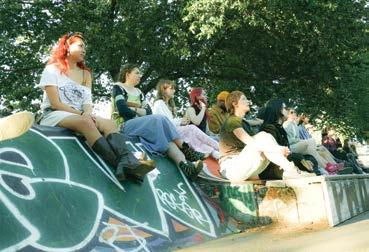
HEAT was alight with summer fervor, as crowds gathered on the Fernwood Skate Park's sizzling asphalt. Rather than the usual crowd of skaters rolling about, onlookers spread picnic blankets across a grassy knoll, while ticket-holders sat in folding chairs along ramps amidst a sea of worn denim, funky patterned silks, and military surplus.
Originally an anonymous venture, Gabrielle Elhav’s brainchild VicFits has upended Victoria’s fashion scene, capturing the city's most unique outfits one street photograph at a time.
The venture began in September 2022, when Elhav was inspired by a similar Instagram account based out of Toronto, @416_fits.
Originally coined UVicFits, the project’s orbit quickly expanded to the greater Victoria area, though Elhav remains at the university as a political science student minoring in digital interactive media in the arts.
While VicFit’s may have gotten its start in the digital sphere, populating people’s Instagram timelines with the latest streetwear, Elhav is now shifting more analog. “I think [social media] can be really limiting not only sharing people's stories, but…[for] fashion and photography,” they said.
Rather than solely posting outfits online, VicFits now takes the form of a monthly Substack newsletter, along with printed zines distributed in about a dozen shops across Victoria.
The shift comes after last year's “neoluddite” fashion show, Artificium, a collaboration with the Ministry of Casual Living which explored “how digitization coincides with what we wear.”
Now, Vicfit's first solo show is part ode to Spike Lee, part personified kickflip holding a dripping ice cream cone. As Elhav wrote on Substack, “HEAT highlights the clothes made by, and for, the movers.”
HEAT’s runway — if it could be called that — wasn’t christened by couture fashion houses and elite tastemakers, but constructed from the blacktop of the local skate park. Here, the scrawled graffiti wasn't just set dressing, it was a living collaboration that spilled onto the clothes.
As golden hour settled over the crowd, local DJ Nitro started up an energetic backing track, deftly blending electronic hits with classic Hip-Hop tracks.
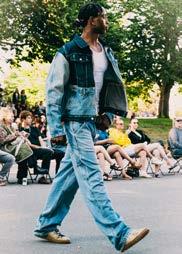
Models began to strut along the concrete, each stopping to pose atop a cement manual pad. Some blew kisses, others held fingerguns, and all were the very picture of cool confidence amidst the balmy day.
As Elhav put it, these models were the people
“[who] skateboard, [who] blow bubbles…who spend their time outside doing this,” even including executive members of UVic Skate. First of the designers were The Odds Against Us, a brand based out of Vancouver who’s fresh designs were bursting with metal rivets and neon plaids, each of their six looks more eye-catching than the last.
The studio's elevated streetwear was defined by boxy silhouettes, artistic tattered hems, and statement chains. On each outfit were skeletal patches in the shape of femurs, pelvic bones, and more — flipping the internal outward in an embroidered expression of memento mori.
Models Davey Long, Audrey Young, Heidi Kebede, Donny Kim, Andrei Dimaano, and Terrell Mourato embodied each look, sauntering across the concrete with a laidback vibe.
According to fashion line collaborator 16k. Freddy, the studio’s reappearing motif “16k” represents nostalgia and the longing for great times—namely the year 2016. Freddy also said their pieces are 100 per cent upcycled and handcrafted, with many pieces sewn from scratch.
Next in the lineup, created by Bodhi LaPerriere, came Sonder Studios. As Elhav aptly wrote, the brand “is heavily inspired … by 90s streetwear, vintage military clothing, and 2000s high fashion” influences which were on full display through the studio's three looks.
Their maxi skirt and short vest, modeled by Emmy Skylar and made of deep charcoal denim, mirrored the tones of the asphalt underfoot while offering an elegant twist. Tieg Mifflin modeled a similar denim and khaki number, the dark wash jacket sliced through with a swirling jungle print.
Meanwhile, model Finn Barker wore a practical black hoodie simply printed with “Sonder,” evoking skate culture's love for branded clothing, ubiquitous with such names as Supreme and Vans.
Following on the runway, Mayflower Textiles showcased a number of upcycled ensembles plucked straight out of a 2000s romcom. The charming looks were both fun and feminine, and one could imagine each model strutting past the runway and into a first date.
Stark printed graphics, metal eyelets, and asymmetrical cuts (as seen on Iona Aire and Naomi Brown) cemented a handmade feel, befitting a clothing project that prides itself on “sourcing vintage fabrics and materials.”
One hot pink top, modeled by Ashen Quiñones, featured a grey trash-can printed beside the numbers “‘26,” perhaps a subtle commentary on the state of this year. Offering another bright pop amidst the collections more subtle color palette, a rainbow of mismatched buttons traced the puff sleeved dress shirt worn by Kebede.
Mifflin donned Mayflower Textile’s sole ‘masculine’ look, with an orange-black tee, written with “Mayflower,” and red ink-stained shorts — the archetypical skater outfit only lacked a real board. Next up was Scrapped Studios, a Vancouver based clothing brand by Chanelle Herrera and Cole Smith focused on “elevating and prolonging the life of second-hand clothing.”
A sport’s jersey halter top, also worn by Quiñones, ignited murmurs concerning the timely overlap with the FIFA world cup. Meanwhile, model Matyas Tesfamariam wore a matching mosaic set, a pair of jeans and jacket merging darkwash with sky-blue denim, showcasing the studio’s technical artistry. That denim stretched into Dimaano’s look, whose star-stamped jean shorts paired with a tee featuring a freeform, almost liquid, print. A newsboy cap and handkerchief lent a contrasting hipster lean to the otherwise skatewear outfit.
Model Phoebe Rogers’—wore an almost punk getup, with a Harley Davidson halter top accompanying green camouflage shorts and glossy cowboy boots. Large earrings and bangles were the language of this studio, with silver metals complimenting each individual look.
Named by Designer Kiara Jeanette for her late Aunt Jeanette, Ette Designs is a clothing brand rooted in confidence, ethical artisanship, and the celebration of her African heritage. Her designs explore the intersections of contemporary silhouettes and traditional patterned fabrics.
For Jeanette, dedication to ethical production means using deadstock materials, as she said “fabric from bigger companies that would be thrown out … then [is sold] for a cheaper price, so that's where I get a lot of my fabrics.”
“I do my own sewing, or I have different sewists in Victoria and Vancouver … everything's [small batch], made by people I can actually talk to and they're paid fair,” the designer added.
Ette Design’s geometric bomber jackets, modeled by Marc Micu and Naomi Brown, were paired with a pair of matching boxy shorts and plain athletic shorts respectively; one, a zigzagging print of vibrant primary colors, the other full of greyscale dots and dashes.
The newly debuted Pollyanna Cowgirl, a creation of Annabelle Crossley, was all about playing with negative space, complete with star-shaped peekaboo panels and elaborate lace-up ties.
What’s more, glitzy patterns like leopard paired with checkered gingham and plaids to create a collection part Bratz dolls part rave fashion.
The project's “playful and sensual” design

philosophy was on full display with pieces like a half-skirt half-bloomer worn by Juniper Mericer, or a white ripped ribcage long sleeve on Rogers.
Likewise, a matching denim star bikini and tie-up chaps turned heads, with red flames running along model Mimi Beauregard’s legs.
Complimenting each designer’s ready-towear clothing, Elhav’s expert styling was realized with accessories from vintage vendor Avantique and eyeware from Eyefinery Optical Studio.
As the show wound down and the sun set, conversations ignited, and the audience could be heard discussing standout designs and cherished thrift stores in Victoria. Elhav soon addressed the crowd, thanking all the talent and volunteers who worked on the show before cheering “I love this community!”
The subsequent afterparty turned the show's broiling heat down to a simmer. Inside the Fernwood Community Center designers sold their clothing featured in the show beside nail artists, graffiti artists, and other vendors. “It’s as ready to wear as you can get,” said Elhav.
Sustainability was certainly the word of the evening. Elhav described Victoria's fashion as “very scrappy and very secondhand.”
“We are an island so we need to know how to cultivate what we have, he said” Techniques like upcycling secondhand clothing, sewing from deadstock fabrics, and equitable labour practices were all treated by designers as givens — a notable divergence from the status quo of fast fashion and textile pollution.
One local business, Shasta Lily Barkman, even advertised private sewing lessons and custom mending of clothes.
DJ blac asphalt and indie band from UNDERGROUND set the crowd alight, with folks dancing to the frenetic music. Outside, circles of attendees played basketball and soccer, while refreshments passed from hand to hand, courtesy of new Korean corn dog vendor Up Dog and beverage company Softer drinks.
HEAT wasn’t just a hotbed for up and coming designers, but also new models. The show was Vancouver Island University student Tino Maruta’s very first time modeling, strutting the runway in a number from Scrapped Studios.
Her split-green bikini top and baggy shorts, made from two pairs of men's pants, were elevated by a draped lace shawl crafted from a tablecloth — while their “sunburnt” makeup and maximalist jewelry came courtesy of Maruta herself.
Sat behind the designer’s booth, a metal rack packed full of repurposed clothes, Maruta said of Herrera and Smith; “as a plus sized person, seeing someone else make clothes in
my size … means something to me.”
Being represented in fashion, and even simply shopping for clothing, has been a struggle for her, and others with larger bodies. Thus, Maruta delighted in having a look tailored to her measurements, calling it a euphoric experience.
Maruta went on to say they wanted to model not just clothes, but confidence and joy. “I love to inspire … I’m doing this for baby Tino.”
As she watched the line of models walk out the door, her nerves were set on edge, but as everyone erupted in cheer, the positive energy behind the scenes reassured them. “Everyone had such a good time doing this,” she said. “Modeling is not taking away but living through the piece … whatever you’re wearing, own it.”
Yet, all too often, fashion is a realm of imitation and appropriation. As streetwear steadily makes its way to elite catwalks, or, as Elhav notes in a piece on Substack, “Mark Zuckerberg’s new Meta skateboard-themed store,” credit and control is stripped from the marginalized communities who push the boundaries of style and design.
The very creations meant to critique and exceed the mainstream are absorbed, their sharp teeth filed down.
Yet, HEAT flipped the script. As Elhav wrote “I really hope this show felt like a love letter and thank you to the Black and Brown communities that created so many of these subcultures’ styles.”
Discussing the representation within the show, they said “I went with my heart, and my heart was inclusive…. When you live diverse, your work’s diverse.”
Two years ago, Elhav attended her first ever fashion show through VicFits.
“The whole time I was thinking, I don’t want this fashion show to end,” they said. “How do I get off my phone and into the room?”
Now — after a frenzied two months balancing manpower, logistics, and advertising (or as Elhav calls it "making something from nothing") their question was answered with an outpouring of local support.
Perched on a wooden skate ramp, wearing a “VicFits” tank they’d spray painted 20 minutes before the show, Elhav looked out towards the lingering crowd and smiled.
“I love the skate community here, and my goal for this show is literally to just put them on a pedestal … we just really love this place and want to preserve it. And the way you preserve it is that you use it and you love it and you take care of it.”




At July 6 Saanich council meeting, three motions resulting from SYC work unanimously passed
focuses.
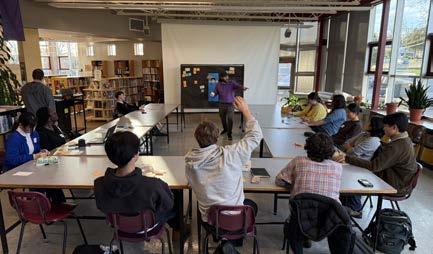
During the July 6 District of Saanich Council meeting, the Student Youth Council (SYC) — a community-led pilot project aimed at helping Saanich youth learn about and participate in local government — turned in their 2025–2026 end-of-term report, which proposes a permanent youth advisory committee.
August Kirby, the twelfth-grade student at Claremont Secondary School who initiated the council, says it began when he asked his teacher, Mark Neufeld, what youth participation in politics looks like.
“They don’t,” Kirby said. “They don’t look like anything if they’re not there.”
In early 2025, Neufeld suggested reaching out to Saanich Mayor Dean Murdock, to talk about starting a youth council. “Dean Murdock, I think, is a particularly youth-focused person. So as a mayor, he was a great guy to have this conversation with,” Neufeld said.
Saanich Councillor Teale Phelps Bondaroff had approached the mayor about a youth council around the same time, and Murdock connected them all. Neufeld said that Kirby worked on the project for almost a year; “There were times I would have given up on the process… but [Kirby]was unrelenting,” he said.
Participating schools had teachers appointed to select their respective youth representatives.
“We ended up getting a great crew,” Neufeld said. Six of eight schools in the district participated, with a total of 14 students involved.
The group began meeting regularly in November 2025, where they learned about all aspects of local government, heard from guest speakers, and developed policy motions.
An initial priority for SYC members was choosing an area of focus, so they sent out a youth engagement survey, which received 319 responses. In comparison, the Saanich council’s 2026 budget survey had zero respondents below the age of 18.
Kirby said that the SYC came up with about 20 issues to tackle, and

Graphic courtesy of the Native Students Union.
AVERY FEDERSPIEL NSU COLUMNIST
Working within the limits of academia while also attempting to transcend them is a common experience for Indigenous students, and it is a fight.
ago.
Next
ELLA BAIRD CONTRIBUTING WRITER
The University of Victoria men’s basketball team is entering the 2026–2027 season with a positive focus on community and connection. Coming off an outstanding 22–4 season and a bronze-medal finish at the 2026 U SPORTS final, the UVic Vikes are building on their past success to knit a new roster together.
NCAA Division I men's program compete in Victoria.”
Entering his fifth year, Vikes forward, Shadynn Smid, expressed that the tournament offers an exceptional opportunity to build team chemistry on and off the court early in the preseason.
“A trip to the Bahamas will create that off-court chemistry,” said Smid.
Oregon State on Aug. 20 and 22 for two exhibition games at the CARSA gym.
These games hold a special meaning for Victoria local Cole Bekkering, who is returning home after playing at NCAA Division II Biola University in La Mirada, California.
survey respondents put forward the same list of issues. “So the survey came back, and echoed exactly what we felt,” he said. The three main issues that emerged were transportation, affordability, and safety.
“[Transportation] seemed like the most feasible, quickest way to make change on all of those bases,” Kirby said.
In the July 6 meeting, Phelps Bondaroff brought forward three motions that resulted from SYC work, all of which unanimously passed.
The first motion asked the council to receive the SYC’s endof-term report for information, and asked the Council to consider establishing a permanent youth advisory committee. The report documents SYC’s work during the pilot term and flags need for greater youth engagement in the district.
The proposed solution in the report is a permanent youth advisory committee. Phelps Bondaroff told the Martlet that there are seats reserved on Saanich advisory committees for youth, but “[they] are often unable to fill them because it’s a big ask.” He also said that it may be intimidating for youth to participate in an environment surrounded by adults with expertise on the issue.
The comprehensive end-of-term report was written by Phelps Bondaroff. “We wanted to make sure we captured everything, so there was institutional memory,” he said, “so the next Saanich Council can use the information that we gathered to inform the decisions they make about a future youth council.… We wanted to honor their work.”
The second motion called on the council to endorse, in principle, the Reconciliation Corridor Initiative (RCI) process — an Indigenous-led project exploring potential to realign the dormant corridor with the needs of the Lək ʷəŋən Nations. The project is exploring the potential for passenger rail service on a portion of the corridor between Vic West and Westshore Parkway.
The SYC came across the RCI in their research after choosing transportation as one of their
“We saw it as an opportunity to take about 20 000 cars off the road a month in that ‘Colwood Crawl’ area,” Kirby said.
The third motion asked the council to direct the mayor to write to B.C. Premier David Eby and relevant political ministers, calling on the province to expand the “Get on Board” program, which lets youth 12 and under ride BC Transit and TransLink transit services for free.
The motion calls to expand the program to include youth up to and including the age of 18. Additionally, it calls to explore working with the Ministry of Education and Child Care to add curriculum elements that train youth on using transit safely.
“It’s added to by the fact that in the City of Victoria, you can get a free bus pass to go anywhere,” Kirby said, referencing the City of Victoria Annual Youth U-PASS program which lets youth between the ages of 13 and 18 apply for a free BC transit Youth U-PASS.
Saanich does not have a similar program, despite being served by the same transit system.
“These young people are not only engaged, but they’re voting for more meetings to discuss municipal policy, to learn more, to engage more, and that was incredibly inspiring,” Phelps Bondaroff said.
Kirby emphasized the importance of engaging with youth. He said he finds youth usually don’t struggle to speak with adults. “It’s really the adults that have problems talking to youth because they don’t know what to say.… They don’t know if they can talk in their big words, they try to sugarcoat it, which leaves youth feeling like they’re not a part of the conversation.”
“This youth representation in politics is super important for building better futures for kids and for adults,” Kirby said.
According to the Institutional Planning & Analysis office at UVic, the UVic Indigenous student population sits at just under 1 600 students which is approximately 7 per cent of the general 22 000 students attending this institution. 7 per cent... that’s not even double digits. Keep in mind, this is a massive jump compared to enrollment in the early 2000s with less than 1 000 First Nations, Inuit, and Métis student attendees.
When I share my educational journey to non-Indigenous people, I am often met with comments on its unique-ness, its ‘inspiring’ effect, or an empathetic stare and a pat on the back, maybe even a murmur of its difficulty that acknowledges not everyone can just do school.
And what does this even mean? To do school? To be in university as an Indigenous person means that the hurdles thrown your way during elementary, middle, and high school have all led up to this experience. The be-all and endall of education: A degree.
From 1876 to 1920, Indigenous people in ‘Kanada’ were involuntarily stripped of their “Indian” status if they received post-secondary education, or joined the medical or legal field. This practice is called enfranchisement.
Other methods included stripping status when an Indigenous woman married a non-Indigenous man, offering an application process to on-reserve folks who wanted to enter society by proving their “civility,” and more.
When enfranchised, you were no longer considered an “Indian” needing Indigenousspecific federal government services and fully assimilated into Canadian society. In other words, access to community, health benefits, treaty rights, rights in general, and Indigenous identity were taken away for pursuing the same things as the white majority.
Let’s remember some key things about intergenerational trauma. Various sources suggest at minimum, trauma inflicted on one person is genetically passed down up to at least two generations after the initial harm. 1920 was 3–4 generations
For Indigenous people in so-called Canada, the pains of the continuous and historically more severe oppression continue to be felt as its generational successors. Within that same truth, the space Indigenous academic professionals presently take up was fought for in light of colonial violence.
At UVic, 1 600 Indigenous students are on campus and learning, which is a large accomplishment when taking in our reality and histories. If a great-grandparent of ours tried to do the same thing, they would’ve been subject to being enfranchised.
Our population is small but the fact that we are here highlights the resilience Indigenous students must have to get through and succeed in post-secondary.
Indigenous students with status no longer lose it by attending school, but as a whole, we are giving up time in our communities, opportunities to reconnect with relatives, and our ways of being to accommodate pursuing the same piece of paper that a majority of our non-Indigenous peers breeze through classes for.
Indigenous students face and consume Euro-dominated, adolescent Western knowledge that teaches the inner-workings of an anti-Indigenous system.
Consequentially, we have learned how to move through and overcome this colonial system while still empowering our identities as Indigenous people.
The sentiment across the UVic Indigenous community is that we are not here to just do school. We’re here to resurge and bring back everything we learned to uplift ourselves and our relatives.
Indigenous peoples have fought for the right to sit in all levels of the classroom, and will never experience it as most do.
I write this column because I need you to know that. We can’t be reduced to inspirational stories. We are not just regular students.
Can you imagine the pressure?
The entire history of so-called Canada rests on your shoulders while you sit in a classroom listening to a settler peer posing a query as to why Indigenous knowledge is even relevant to our learning (as if we haven’t been here over 10,000 years). We’re here to untangle the past. Why are you here?
The journey begins in Nassau, Bahamas, from Aug. 1–9 at the Baha Mar Summer Hoops League, where the Vikes will take on Division I programs Texas A&M, Cincinnati, and South Carolina.
Division I teams compete at the top level of the National Collegiate Athletic Association (NCAA), which regulates student athletics across hundreds of post-secondary institutions in the USA, and one Canadian institution, Simon Fraser University.
In a press release, the Vikes touted this as “a rare opportunity to see an
“Having the guys come close every practice, every game, just having fun … that creates a family-like feeling in the team.”
Rather than focusing on the scoreboard, Smid emphasized that gelling with the team is the ultimate victory. Regardless of whether they win or lose, he says that the time spent together is what matters most.
“With new players coming in, we'll have to get on the right page, and get used to each other's playing style … I feel like that will be the biggest win we can get out of these games,” said Smid.
Following their games in the Bahamas, the Vikes will return home to host NCAA Division I team
“My grandparents, my brothers, my family will all be there,” Bekkering said, anticipating his UVic debut. “At least 10 people in the stands, cheering me on, and that's something I haven't had in a couple of years.”
While Bekkering is eager to see the Vikes succeed as a unit this coming season, his personal goals extend beyond the gym floor. He is also passionate about mentoring developing athletes.
“I want to be able to help contribute to the University of Victoria basketball-wise, but also off the court as a human being,” said Bekkering. He shared that his personals are “to be a great person in the community, and help [UVic]

win a national title on the basketball court.”
Following the Guy Vetrie Memorial Tournament, which the Vikes will host from Sept. 24–26, the Vikes’ regular season will begin.



World renowned chamber musicians will gather in Victoria from July 24 to Aug. 9, for the Victoria Summer Music Festival’s 30th anniversary.

accomplishment he gets from pulling it off, and seeing the community’s response.
Despite a year of heartbreaking festival cancellations — including Rifflandia, which has no plans to return, and FernFest, which only managed a reduced one-day event after receiving last-minute funding — one local tradition has persisted. The Victoria Summer Music Festival (VSMF) is still going strong, celebrating its 30th anniversary this year.
The festival will run from July 24 to Aug. 9, bringing awardwinning and renowned chamber musicians to the city. UVic has partnered with the VSMF, bringing all concerts to the Phillip T. Young Recital Hall. The VSMF also offers 10 free tickets for students per concert (first come, first served) and $15 student tickets after all the free tickets have been given out. Although the festival is still going strong, organizing it is no small task. Ron Cox, president of the VSMF, told the Martlet that planning for the festival begins a year in advance.
“We meet year-round, every month. There’s a lot of planning to do. So as soon as the festival ends this year … we’ll start meeting again in September,” Cox said, noting that the first meeting in September will reflect on the lessons learned from this year’s event. Cox, who has worked with the festival for a decade and has been president for the last three years, told the Martlet his favourite part of the festival is the sense of

Losing Myself to New Projects From Cate Kennan and Seventhirtyatmorning: An Offbeat by CFUV Review
BENJAMIN
FREDRICH-DUNNE
CONTRIBUTING WRITER
I’ve been indulging in the seductive slowness of a summer evening. In nights where all there is to do is watch the colour fade out of the sky and feel the heat fade out of the air.
Often, during these nights, I search for its perfect pairing. What drink best complements the dusty grey sky with its faint lingering tendrils of day? What book is most evocative of the way the heat radiates off my body into the cool air?
My effort to find music that matches a particular, finite moment has kept me coming back to two brief, captivating records released in June.
While the digital DNA of underground rapper Seventhirtyatmorning’s One Man Band might seem wildly different to the folk soundscapes of Cate Kennan’s latest album, Shadows my time spent with the albums revealed what they shared: surprising beauty through their fleeting intricacy, much like the summer night.
jumps out at you. Musical strength is found when they are assembled, with each piece made better by its peers. While listening, I can’t help but think of the harmonious symphony my senses take in over those golden hours of the day. All the scenery’s combined factors culminate in much the same way as the elements of a song.
The complicated track constructions of these albums mean that each listenthrough leaves me picking out new pieces of each song, such as hi-hat patterns I hadn't previously noticed, or analog warbles which pricked my ears in a particular way. In the same way, I seem to find new things to notice around me, even as I stare out at the same view yet another time. Does the sun always hit that way? When it diffuses through the willow tree?
Slightly sweet summer air. The smell of earth, of some distant sweet flowers, and berries floats on the breeze. I remember past harvests where half the yield was lost as snacks.
I remember every time I’ve watched the sun cross the horizon.
“We’re a firm believer that [festivals] are a very important source of bringing people together,” he said. “The feedback we get is just heartwarming…. People that love [classical] music can come together and enjoy music together and experience worldclass music. I think it’s critical.”
Cox said the VSMF started 30 years ago as a community response after the Victoria International Festival, another classical music festival, came to an end.
While the VSMF brings established musicians to Victoria, it also supports young artists, through what Cox called “outreach concerts” — free concerts held in retirement homes, or places like the Christ Church Cathedral, that give up-and-coming artists performance opportunities and a way to make a bit of money.
“One of the things that we really believe strongly in is supporting young artists,” Cox said. “It’s going to be one of the focuses for our strategy session this fall.”
Arthur Rowe, the festival's artistic director and a professor of piano and collaborative piano at UVic, said in a statement, “[The VSMF] has always been delighted and grateful to be able to engage some of the fabulous musicians who live in our Victoria community.” Rowe, who has worked with the festival since 2003, and became the artistic director in 2008, talked about the importance of having strong relationships in the
music scene, which has helped bring talented musicians to Victoria. He also served as the artistic director for Jeffery Concerts in London, Ontario, for 39 years, and maintains a strong relationship with the Banff International String Quartet competition, which he described as a “world-renowned competition.”
The festival will showcase the Poiesis Quartet, the first prize winners of the 2025 Banff International String Quartet competition, as well as celebrated artists Milena Pajaro-van de Stadt and James Ehnes, amongst others.
In addition to serving as the artistic director, Rowe will also be performing at the festival. “[I’m] looking forward very much to playing with Milena, who is the former violist of really one of the best string quartets in the world, the Dover String Quartet,” Rowe said.
Rowe said the Poiesis Quartet plays more “new music” than fans of the festival have experienced before, and that he is excited for them to perform. “They are an interesting group, keen to present new music…. So that’s going to be an exciting couple of concerts.”
At the time of publication, three concerts have already taken place. However, those interested in experiencing world-class chamber music can still see James Ehnes and Andrew Armstrong perform on Aug. 1, Élisabeth Pion on Aug. 5, and David Lakirovich, Desmond Hoebig, and Rowe on Aug. 9.
The environs unfolded around me into intricate, delicate layers. Each time my gaze wandered back towards the sky, the clouds had shifted in their never-ending shuffle. Bird calls mingled with the wind whistle, the tango of tousled leaves. While the last minutes of sun sit silent on my face, darkness whispers its hello. Choppy samples, massive synths, cluttered drums, sweetly melodic vocals, and sporadic noises come together in Seventhirtyatmorning’s song “CLOUDS N RAIN.” The fully self-produced album maintains this blistering intensity throughout, stacking elements on top of another into full arrangements.
While the layers of Shadows are more understated, they are certainly still numerous; Kennan finds warmth and nostalgia in crafting auditory scenes. I particularly enjoy “Moonlight,” which slowly adds new elements as the song progresses.
There may not be any singular component to these songs which
The dreamlike landscapes of sound that Cate Kennan lays out allow for a pleasant exploration of the past. Her songs play with memory; each note carries some vague reminder of the past. In the same way, I find myself recollecting days past with each trilled chickadee call, each distant barking dog. There is something bittersweet about even the happiest memories.
Bittersweet, a conflicted word, one at odds with itself.
One Man Band is bittersweet, too. Its glistening, sharp production is paired against an undeniable emotional vocal performance. Phone calls from well-wishing friends are interspersed throughout.
Both musical projects feel as concerned with the past as they are with the future, spending as much time with what happened as what might be still to come.
Read the full column at martlet.ca






Across
1. Spa amenity
6. _____ Sark, historic ship
11. Other name, in short 14. The Great and the Terrible 15. Vote "Yay"
16. Closest star
17. Type of flat sea urchin
19. Vegas opener
20. Scottish horse breed
22. Meaning “in the style of”
25. Hiring fairness abbreviation
26. Forever and ever
27. Goes down a rock face
29. Baseball team from 52-across
30. Peacock feather features
32. Word with “Tu” or “man”
35. Summer activity for the family
40. It might be written out of stones
41. Dodgers' player Yoshinobu
42. Level of some hot sauces
46. "Eleanor Rigby" Band
47. What's said if the score is 1-1
50. "___ Raining Men"
51. Poem of praise
52. City in Ohio
54."Yes," in Japanese
55. Food-named marine creature
61. O'Hare airport code
62. Frida portrayer Hayek
63. Mushroom eating plumber
64. Issa of Insecure and Barbie
65. Type of window
66. Terrible feeling
Down
1. ___ the season
2. Egg cells
3. Saw director James
4. Final word in a story
5. "Bicycle Day" drug
6. Nymph who was seduced by Zeus
7. Stepsister quality, in a fairy tale
8. Barterer
9. Cylindrical, to a botanist
10. Gave the go ahead
11. Lion from Narnia
12. ______ Lumpur, Malaysian
capital
13. Actor Elgort of Baby Driver
18. Medium-sized wild cat
21. Some ER workers
22. Spaces
23. ___ __ rest (bury)
24. Imitators
25. Johnny who plays a pirate
28. Air pump reading; abbr.
31. Pig's home
32. _____ Banchero, Orlando Magic power forward
33. Gave a stage performance
34. Decided on
36. Like someone who loves routines
37. Medicine to make you barf
38. Bleats
39. Ambulance worker; abbr.
42. Word with “book” or “Miller”
43. "Indeed"
44. Straight forward, for a story
45. Highest peak in North America
47. Blood of Greek Gods
48. Princess adornment
49. Like a rude comment
53. Company in Looney Tunes
56. Maya Hawke's mother
57. Gun clip, in short
58. Gym or Frat goer
59. One, in Munich
60. Name in a rainbow mnemonic