We provide full financial protection for our package holidays which include international flights, by way of our Air Travel Organiser’s Licence (ATOL). We do not levy any surcharges.
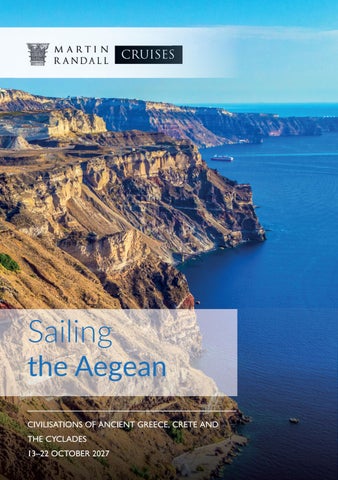
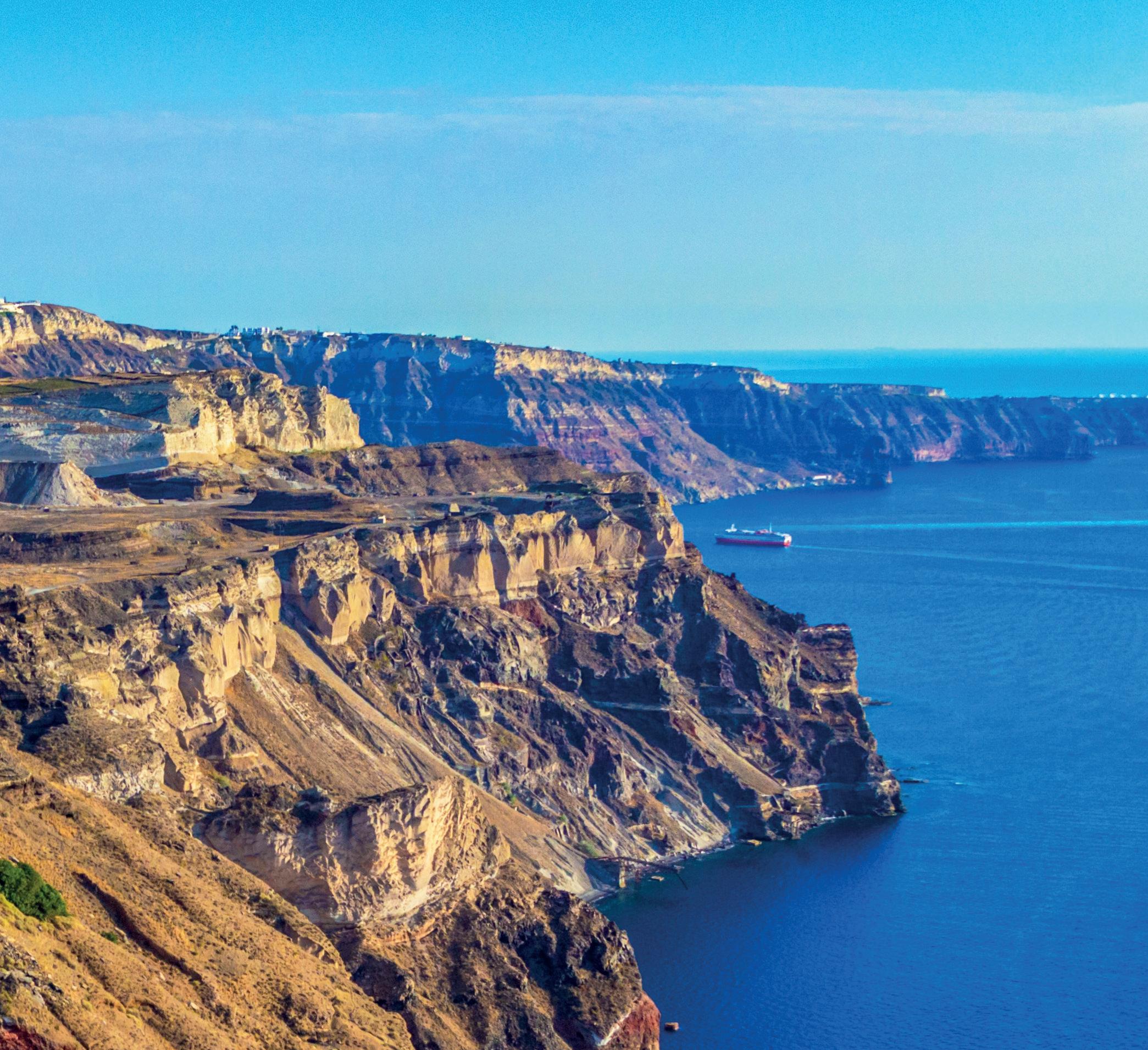
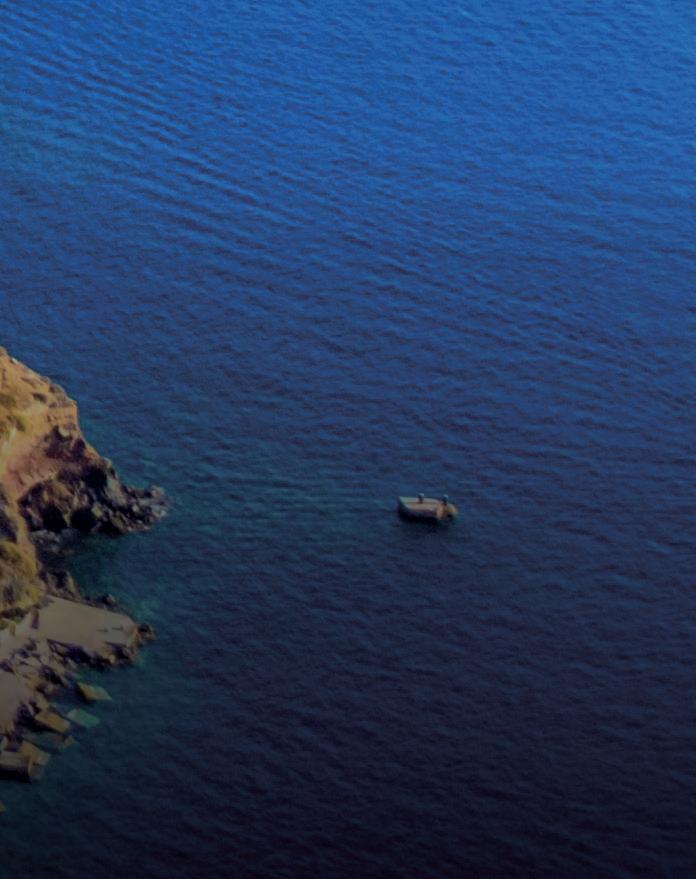
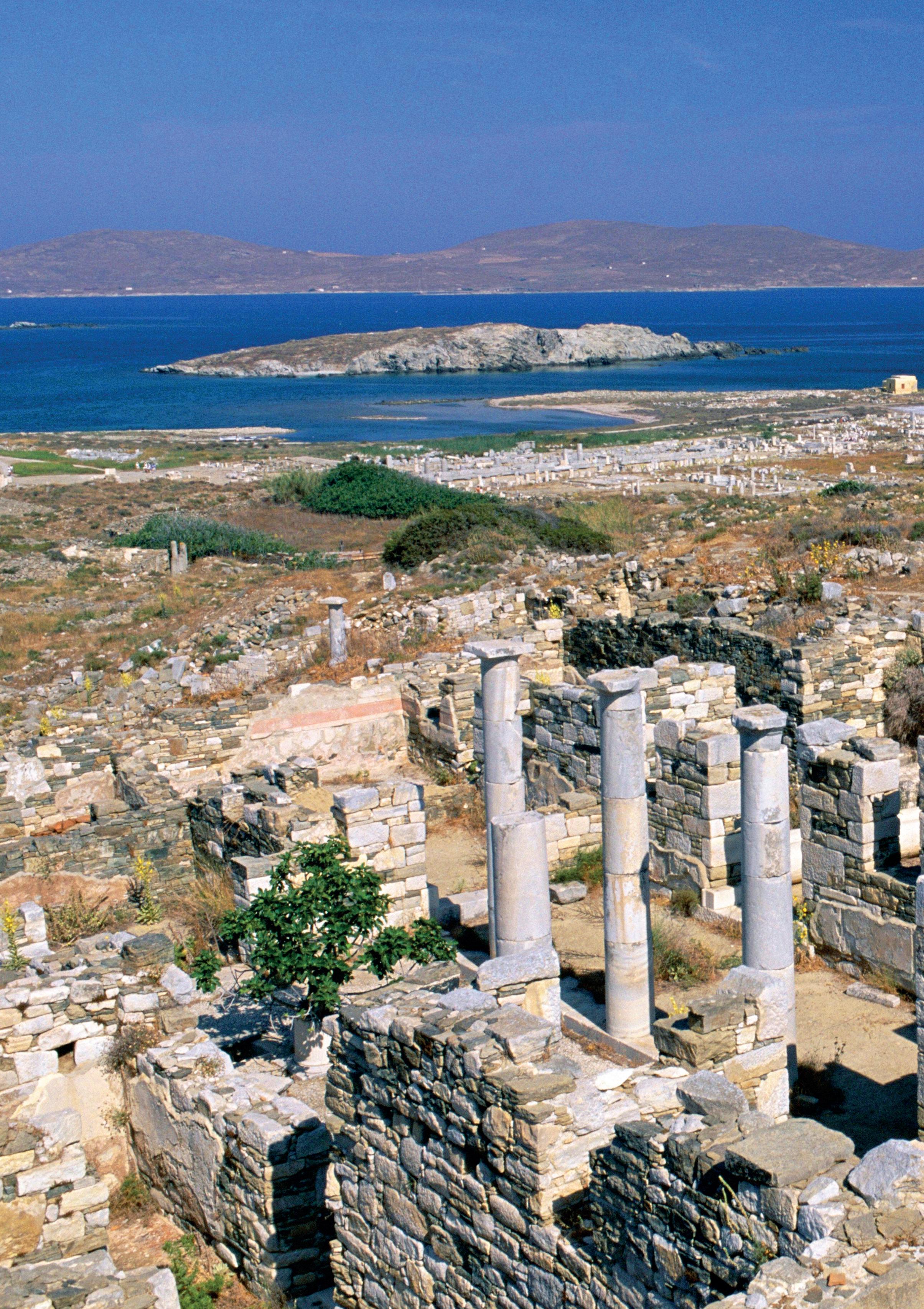
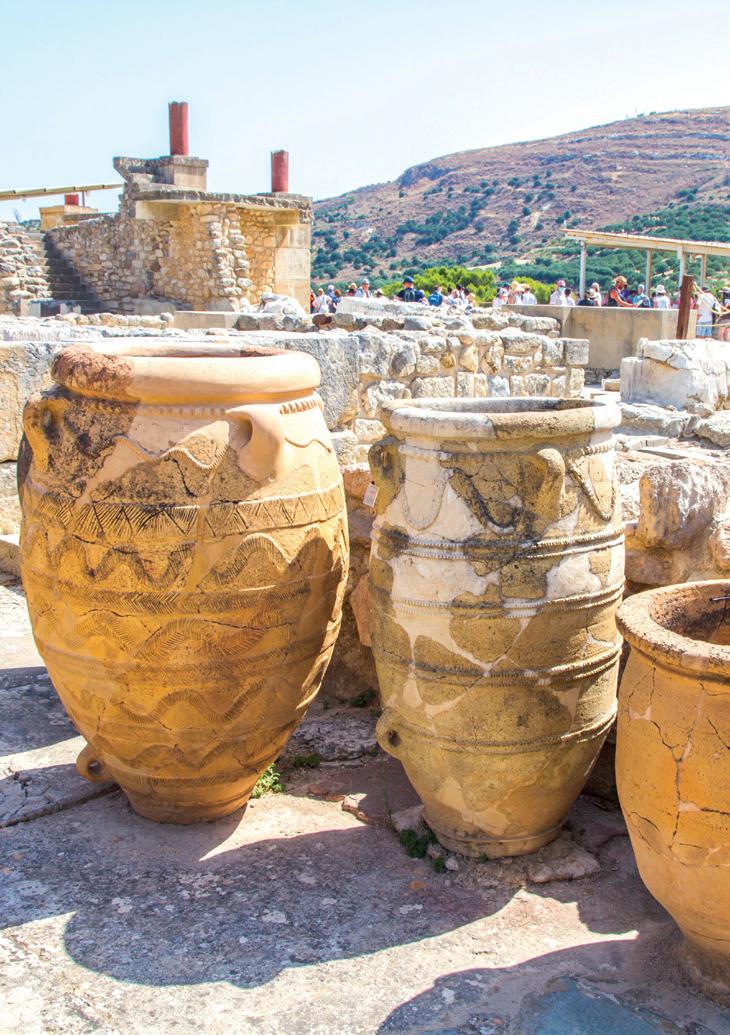
Photograph: Delos. Front cover: Santorini
A word from our Cruise Director
Few seas carry more history than the Aegean. Homer called these waters ‘paths of the sea’ – and for 3,000 years they have connected civilisations of extraordinary variety, from the prehistoric Cyclades and the Bronze Age palace-kingdoms of Crete to the temples of Classical Greece and the elegant legacy of Venice.
Aboard the Variety Voyager, our small group of no more than 60 will sail these same waters, guided throughout by two eminent lecturers in Classical Greece. From a private evening at the Acropolis Museum to the buried streets of Akrotiri and the sacred island of Delos, this is the Aegean in all its contrasts.
I do hope we can welcome you on board.
Sophie
Watts, Cruise Director
Included:
– Hotel accommodation (5-star) in Athens for two nights.
–Ship accommodation on board the 4-star Variety Voyager, exclusively chartered for our group of a maximum 60 participants and sta .
– Most meals, from dinner on the fi rst day to breakfast on the last with wine, beer and soft drinks. Three meals are in restaurants ashore. There are just two independent lunches in Athens.
– Coach travel between airport and ship, and to sites when not reached on foot. If you are booking your fl ights independently, you may join one of our transfers, so long as they coincide with our group fl ight arrivals.
– Lectures by Dr Christina Hatzimichael Whitley and James Whitley on board the ship and some guiding on site.
– Excursions, visits and admission costs.
– All tips for waiters, ship crew, local guides, drivers; all city and port taxes.
– The assistance of experienced Martin Randall Travel sta .
– A printed booklet including practical details, maps and background information.
We o er fl ights from London with this cruise: Economy with British Airways
Wednesday 13th October: London Heathrow to Athens (BA 628 departing at 9.25 and arriving at 15.20)
Friday 22nd October. Athens to London Heathrow (BA 627 departing 13.20 and arriving at 15.30).
How strenuous? A good level of fitness is necessary for the visits to small towns where coaches can not access the centre and steps, cobbled streets and hills are standard. If you have a medical condition or a disability which may affect your holiday or necessitate special arrangements being made for you, please discuss these with us before booking - or, if the condition develops or changes subsequently, as soon as possible before departure.
Sailing the Aegean
13–22 October 2027
10 days • Speakers: Dr Christina Hatzimichael-Whitley & Professor
James Whitley
An exclusive private evening at the Acropolis Museum – with two days to explore the city before embarking.
Seven nights aboard the Variety Voyager – a 4-star mega yacht chartered exclusively for our group.
Two eminent lecturers in Classical Greece – joining us on board and on site, bringing the ancient world vividly to life.
The greatest ancient sites of the Aegean – among them the Acropolis, Mycenae, Knossos, Akrotiri and Delos.
An intentionally small group of no more than 60 – dividing into two on site, ensuring every visitor travels with an expert at their side.
The Aegean Sea both divides and unites. It separates the peoples of the Greek mainland, the Cyclades – the ‘circle of islands’ around Delos – and Crete. Yet Homer’s ‘paths of the sea’ have linked them for millennia, carrying traders, warriors and pilgrims across waters that have witnessed the rise and fall of extraordinary civilisations: the haunting figurines of the prehistoric Cyclades, the palace-kingdoms of the Bronze Age, the temples of Classical Greece, the maritime empire of Venice.
On this ten-day voyage we encounter all of it. We walk the monuments of Classical Athens – above all the Acropolis, whose legacy endures to this day. We explore the Bronze Age citadels of Mycenae
and Tiryns, so formidable they furnished Homer and the great tragedians with the raw material of legend. In Crete – always an island apart – the Minoan palaces of Knossos and Phaistos reveal a civilisation unlike any other. And in the Cyclades we discover extraordinary contrasts: Akrotiri on Santorini, buried by a volcanic eruption of greater force than Krakatoa; sacred Delos, the cultural heart of the Archaic Aegean; and Syros, offering a flavour of island life in more recent times.
As the Byzantine scholar Steven Runciman observed, ‘the beauty of Greece lies in its contrasts’ – and we will find them in abundance, from the mountains of Crete to the plains of the Argolid and the islands of the Cyclades.
Excellent! It was everything we hoped for in an Aegean cruise. “
Privileged access
Through partnerships and relationships cultivated over many years, we are able to o er our travellers access to people, places and experiences that lie quietly beyond the reach of ordinary tourism.
Congenial company
Our travellers are kindred spirits: brought together by shared interests and a warm curiosity for the world and its cultures.
Itinerary
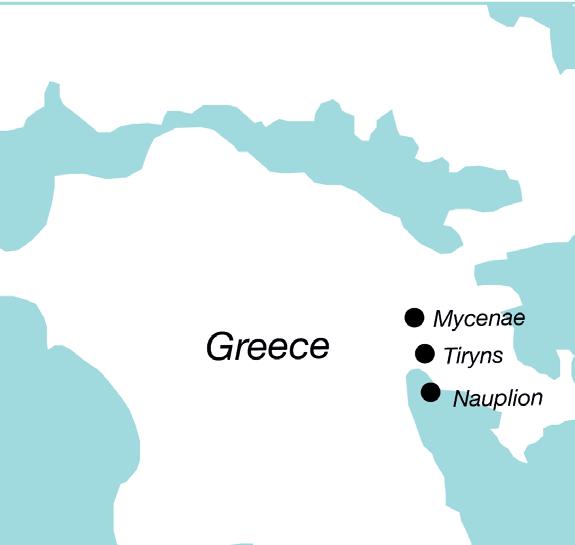
Athens, Nauplion, Mycenae, Tiryns
Day 1: Athens. We o er a morning fl ight from London Heathrow to Athens. The tour begins at 7.00pm with drinks, an introductory talk and dinner. First of two hotel nights in Athens.
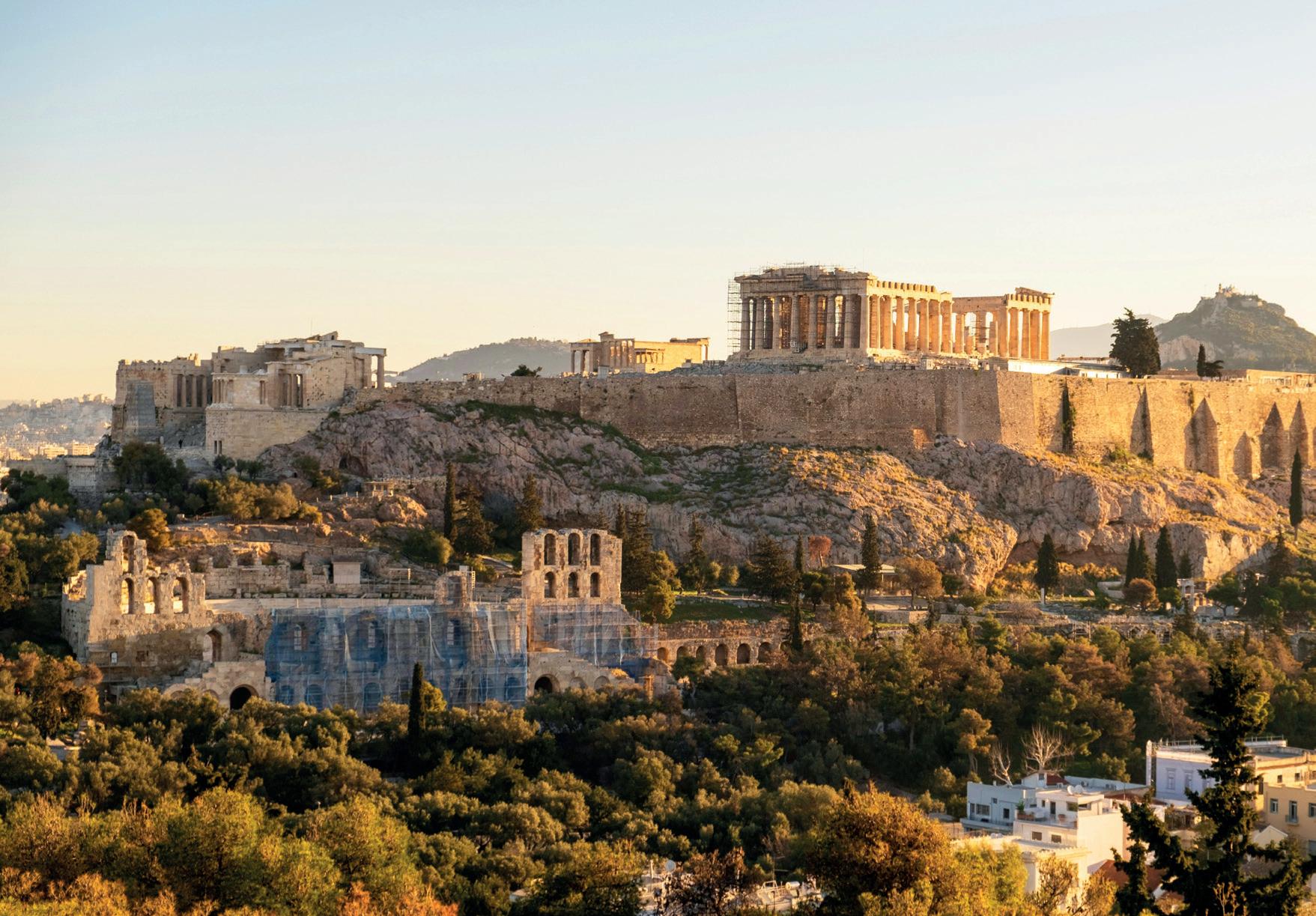
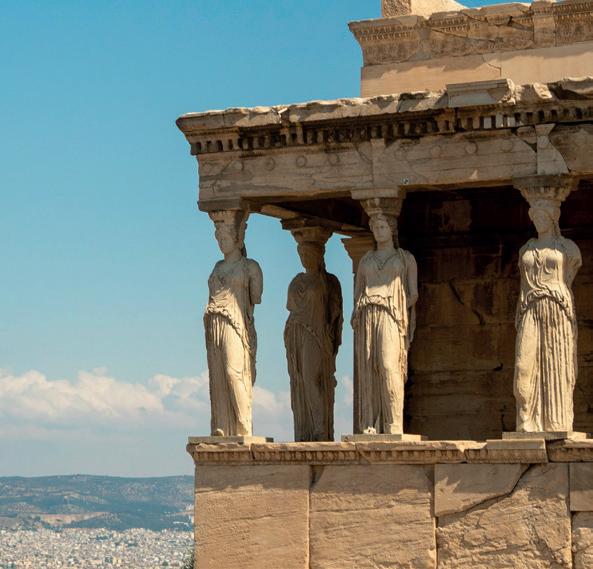
Day 2: Athens. Morning visit to the Acropolis, the foremost site of Classical Greece. Built during the apogee of Athenian power 447–438 bc and dedicated to Athena, the Parthenon temple is unequalled for sophistication of design, quality of craftsmanship and beauty of sculpture. Other architectural masterpieces here are the Propylaia (monumental gateways) and the exquisitely wrought Erechtheion with the Karyatid (‘maidens’) porch. A free afternoon is followed by a dinner and a private evening visit to the Acropolis museum with superb Archaic and Classical sculpture.
Day 3: Athens. This morning take a guided tour of either the National Archaeological Museum (subject to renovation works) or the Cycladic museum. Both hold fi ne collections of Greek art and artefacts. Alternatively opt for free time –Plaka and Anafiotika are charming old quarters on the slopes of the Acropolis with a scattering of ancient remains, including the Library of Hadrian and the Tower of the Winds. In the afternoon take the coach to Lavrion and board Variety Voyager for the fi rst of 7 nights. Sail in the early evening to Nauplion.
Day 4: Nauplion, Tiryns, Mycenae. Today’s theme is the Mycenaean civilisation of the Argolid Plain, the Greece of Homer’s heroes (16th–13th centuries bc). Visit Tiryns, a citadel with massive Cyclopean walls of enormous blocks of masonry. Back in Nauplion either visit the archaeological museum with an eclectic collection of artefacts from all over southern Argolis, or enjoy some
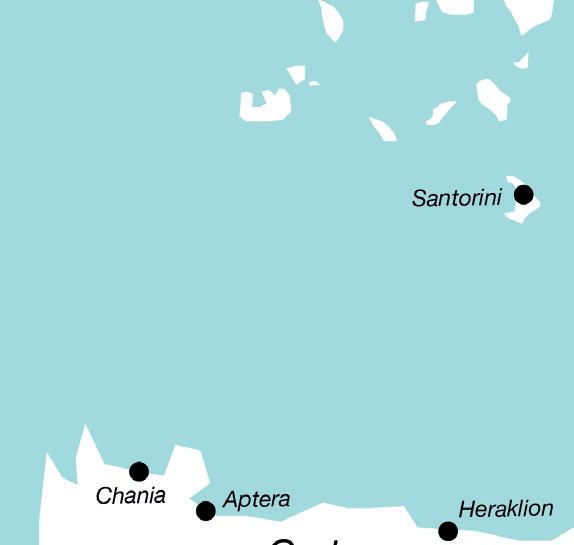
Chania, Aptera, Heraklion, Knossos
free time in one of the most attractive towns of mainland Greece. In the afternoon visit Mycenae, reputedly Agamemnon’s capital, with the Treasury of Atreus (fi nest of beehive tombs) and Acropolis (Lion Gate). Sail overnight to Crete.
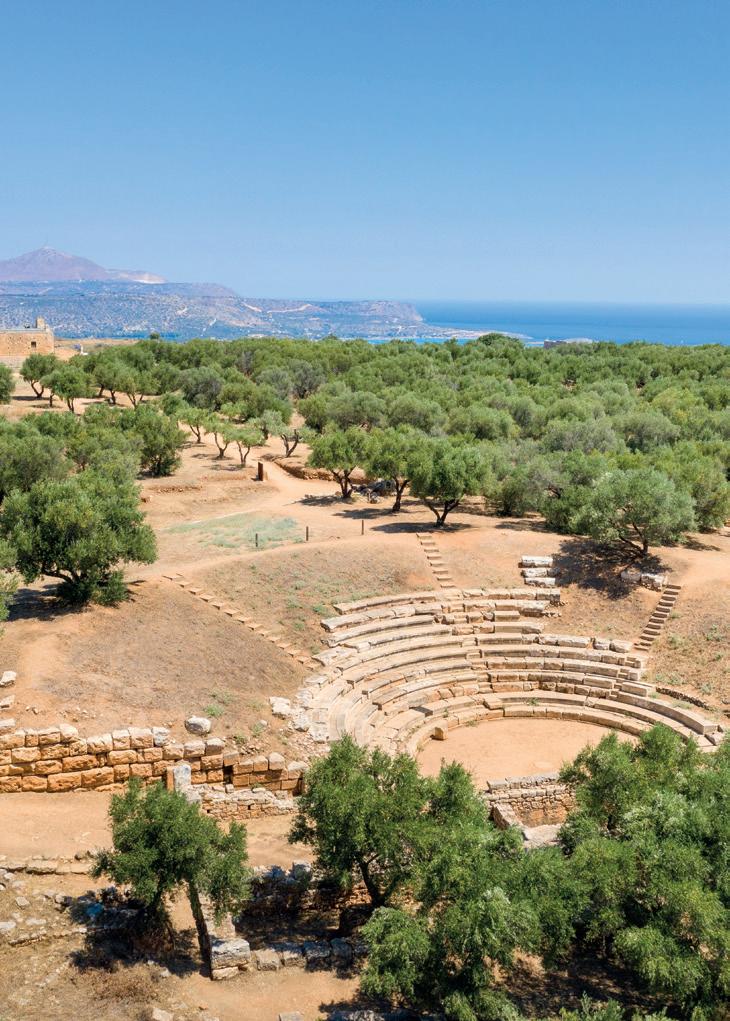
Day 5: Chania, Aptera. Morning visit to Aptera, one of the most powerful Graeco-Roman city states. This is a huge site with Roman ruins, a theatre and a Turkish fort. In the afternoon, visit the excellent Archaeological Museum of Chania, housing around 3,500 archeological objects, including fi ndings from excavations in several areas of the city that have taken place over the last 50 years. Time also to explore Chania’s beautiful harbour and the narrow alleys of its old town, displaying a fascinating mix of architectural styles: Venetian, Ottoman, Neoclassical. Sail overnight to Heraklion.
Day 6: Heraklion. Moor in Heraklion, centre of the Bronze Age Aegean. Blessed with a rich variety of landscapes, natural resources were abundant and farming flourished in Protohistoric Crete. Spend the morning in the Mesara, a rich agricultural plain along the south coast. Gortyn was the Roman capital of Crete where a famous, 5th-century bc inscription has details of Greek law. Spectacularly situated on a ridge, Phaestos is the second largest Minoan palace. Some free time in Heraklion this afternoon.
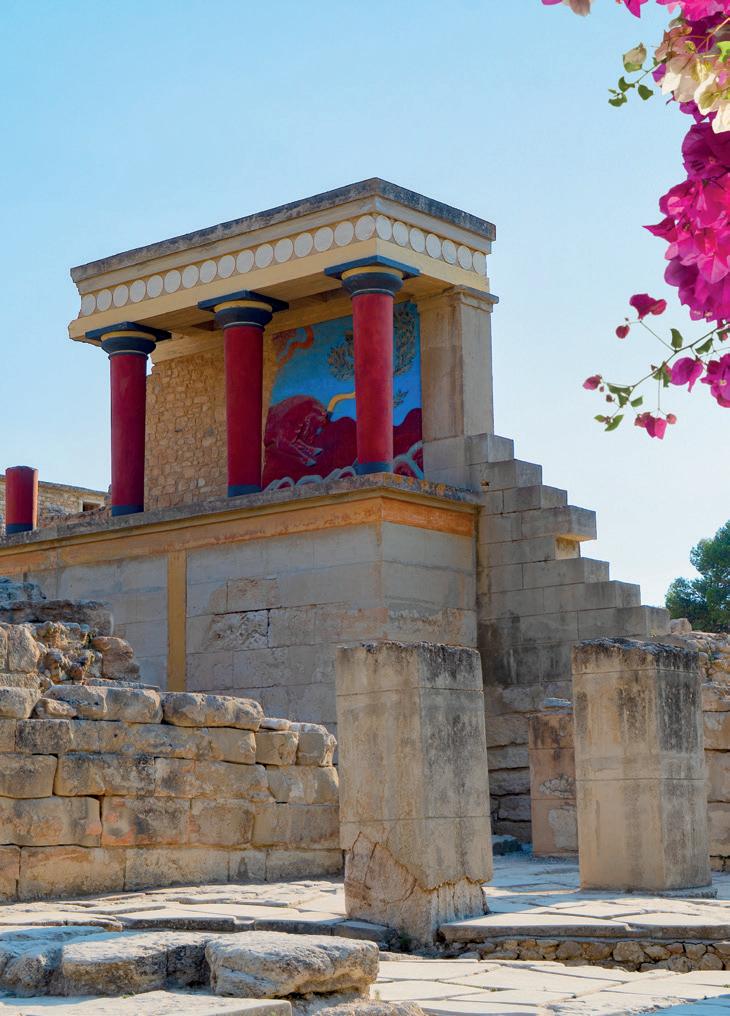
Day 7: Heraklion, Knossos. Morning visit to the Archaeological Museum in Heraklion, which houses the island’s largest collection of Minoan art. Spend the afternoon at Knossos, the capital of Minoan Crete and centre of the Bronze Age Aegean. Shrouded in myth both ancient and modern, it comprised at its peak a magnifi cent palace with courts, religious buildings and
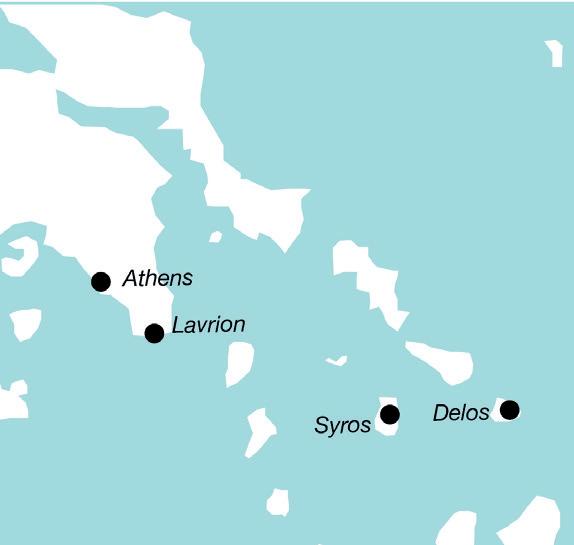
Itinerary Santorini, Delos Syros, Lavrion, Athens
mansions. Excavated by Sir Arthur Evans early in the 20th century, his reconstructions not only protect the excavated remains but illustrate the splendour of palatial civilisation. Visit the Villa Ariadne by special arrangement, a research centre belonging to the British School of Athens (subject to the completion of renovation works).
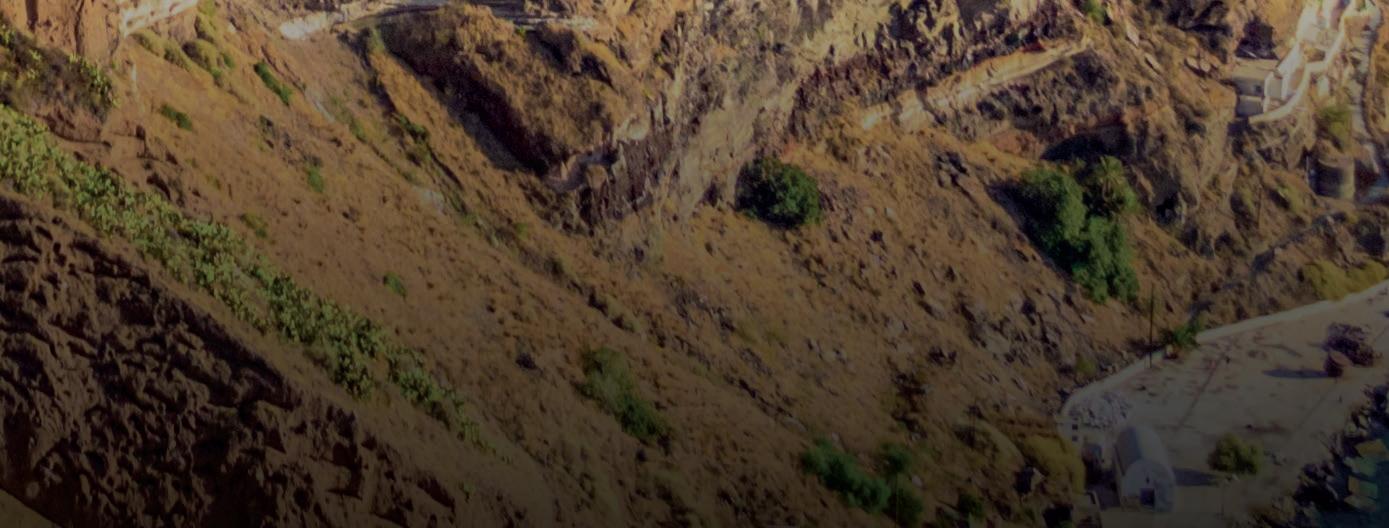
Day 8: Santorini. Spend the morning in the island’s capital, Fira, with its iconic white-washed town dotted with blue-domed churches. The new Prehistoric museum here features some fi ne frescoes. Lunch is included in the town before an afternoon visit to Akrotiri, a Bronze Age site buried by volcanic eruption in 1600 bc , preserving beautifully streets, buildings, household items and fresco fragments. Sail overnight to Delos.
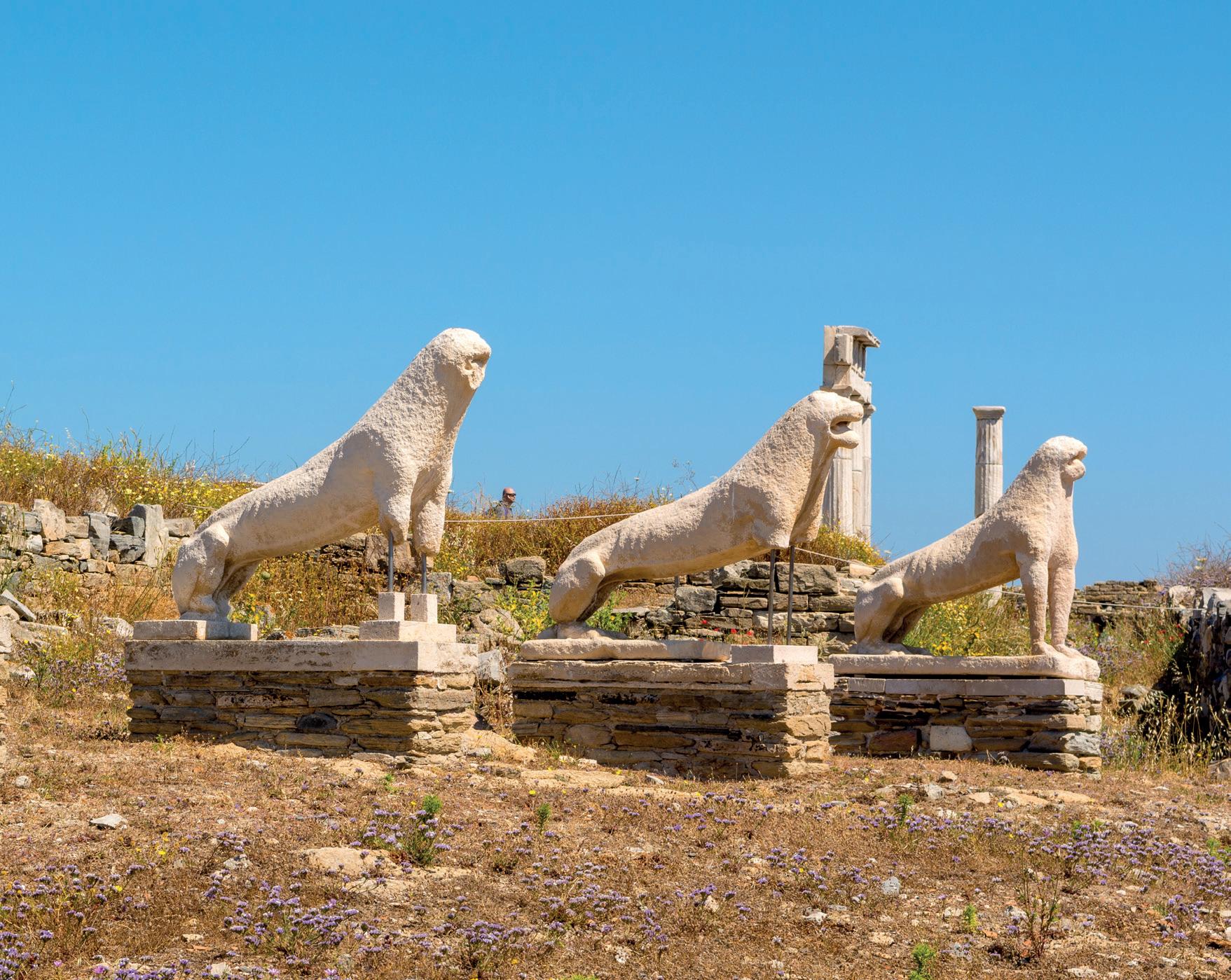
Day 9: Delos, Syros. Revered as the birthplace of Artemis and Apollo, the small island of Delos was the most important religious sanctuary of ancient
Greece. It accumulated great riches, dispersed when Greek power was superceded by Roman. Today uninhabited and visited entirely on foot, it is one of the most atmospheric and alluring of ancient sites with remains of several temples and assorted structures and the famous lions sculpted in the 7th century bc. The energetic can climb Mt Kynthos for fi ne views. Sail over lunch to Syros, one of the smallest, the least visited and the prettiest of the Cyclades islands. We moor for the afternoon in Ermoúpoli, an elegant port town with evidence of its former Venetian and Ottoman occupation above the bustling seafront. Free time here to stroll, shop, swim. Sail overnight to Lavrion .
Day 10: Lavrion, Athens. Disembark by 9.00am. Coaches drop at Athens airport for the departure of the British Airways fl ight to London at c. 1.20pm.
Accommodation & the ship
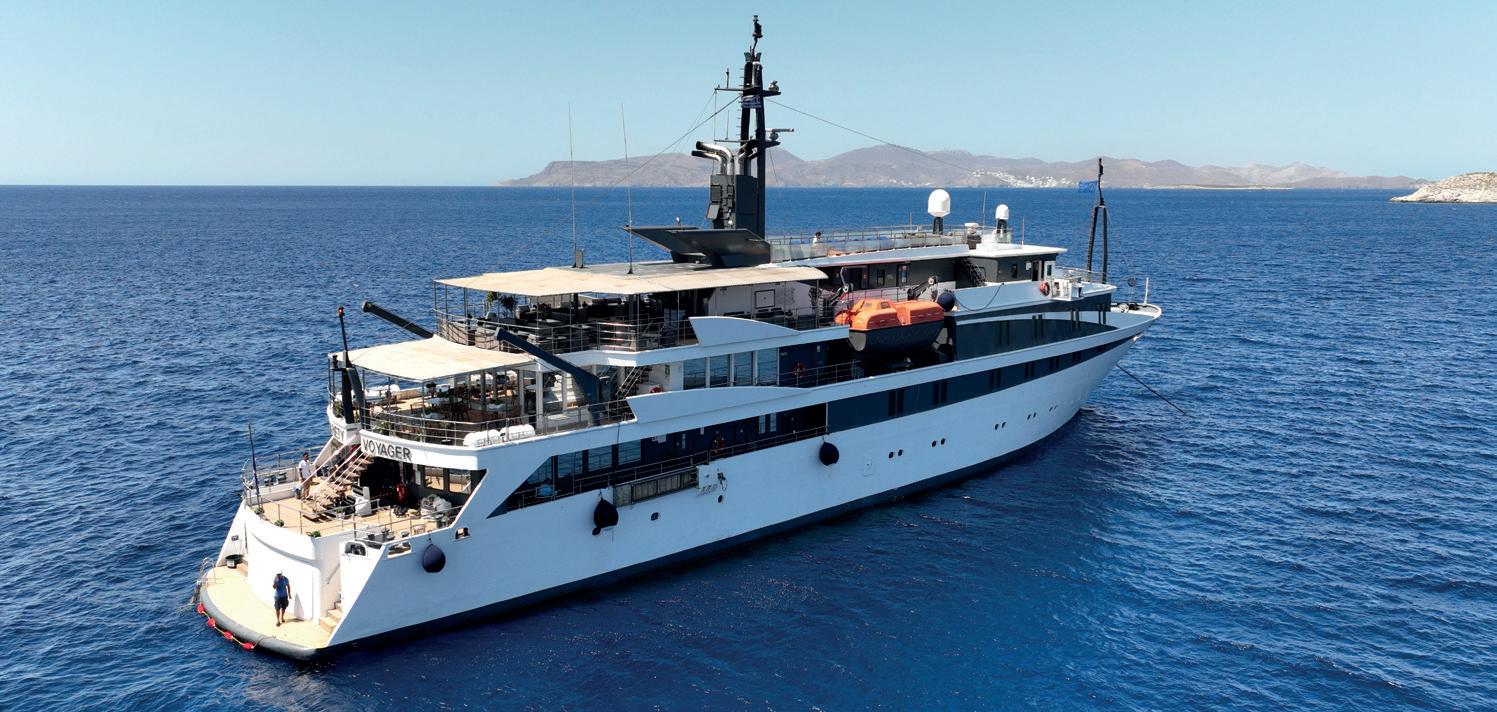
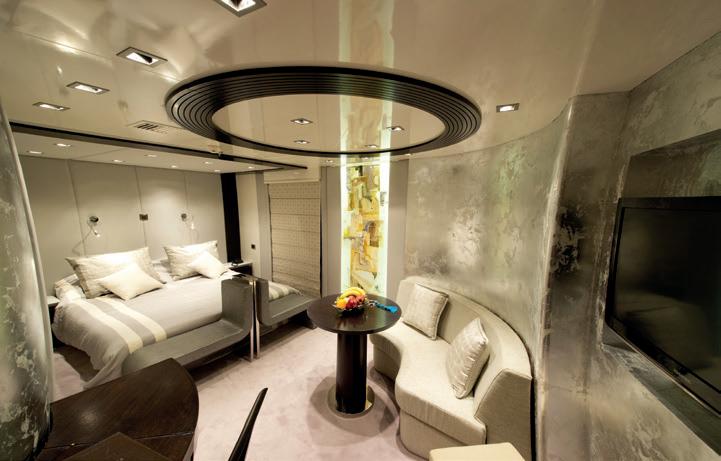
Variety Voyager is a comfortable, 36-cabin mega-yacht, launched in 2012 and renovated in 2023. With facilities equivalent to a 4-star hotel, the multinational crew is dedicated to the highest standards of service.
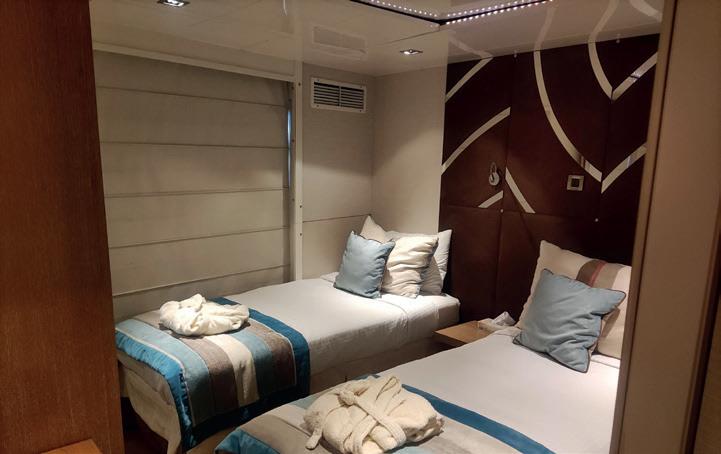
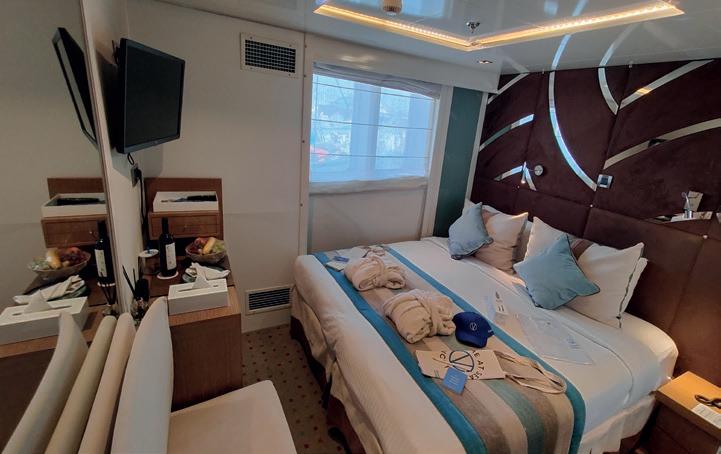
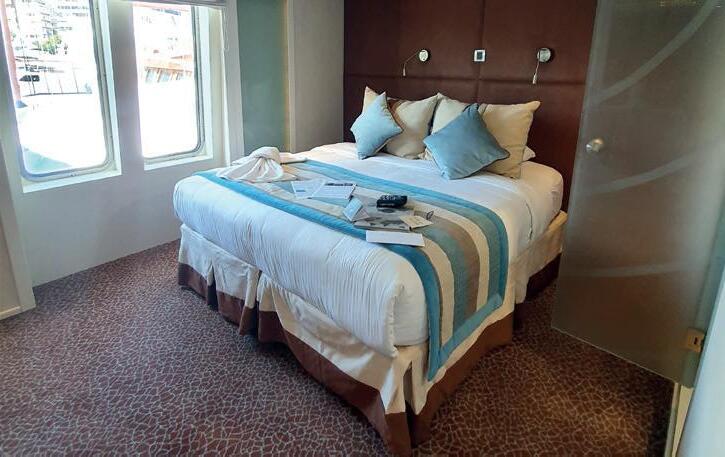
All cabins have windows to the outside and are equipped with the facilities such as adjustable air conditioning, television, safe and hairdryer. Bathrooms have showers only.
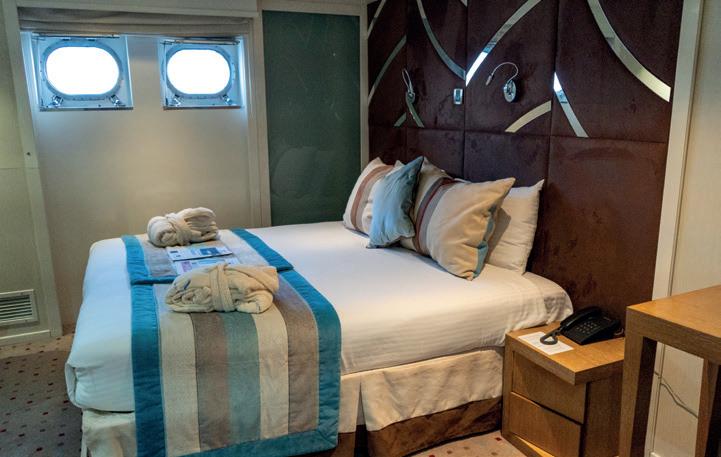
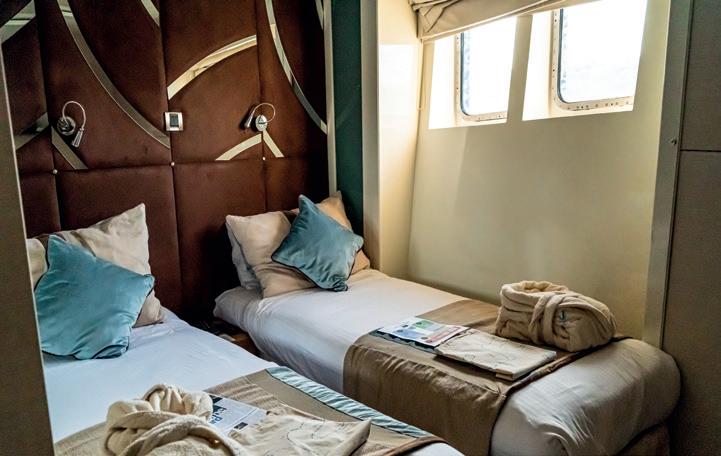
Cabins on the Upper and Main decks have large windows while those on the Lower deck have portholes. There are no single cabins as such but we are allocating some for single occupancy. Cabin sizes vary across decks.
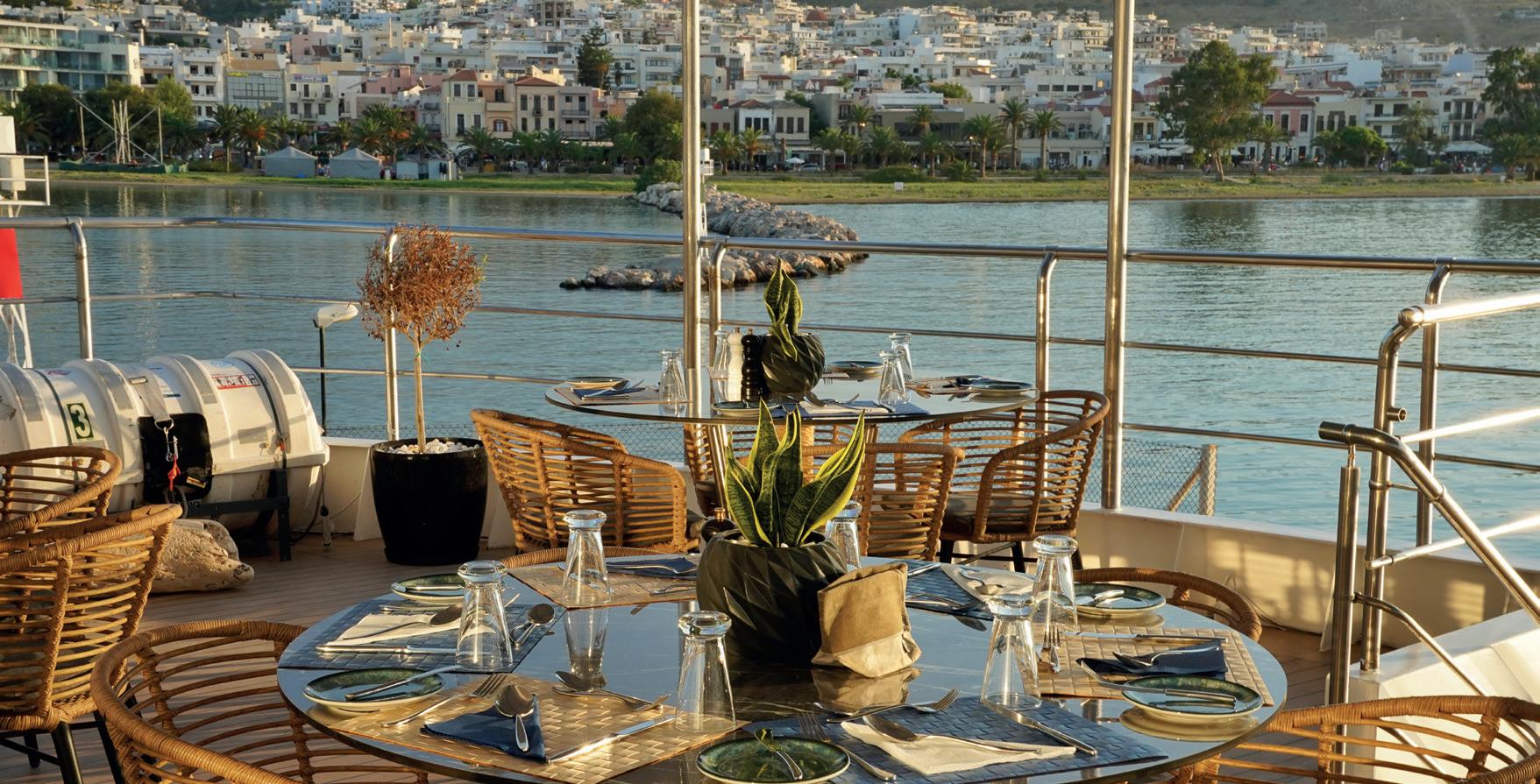
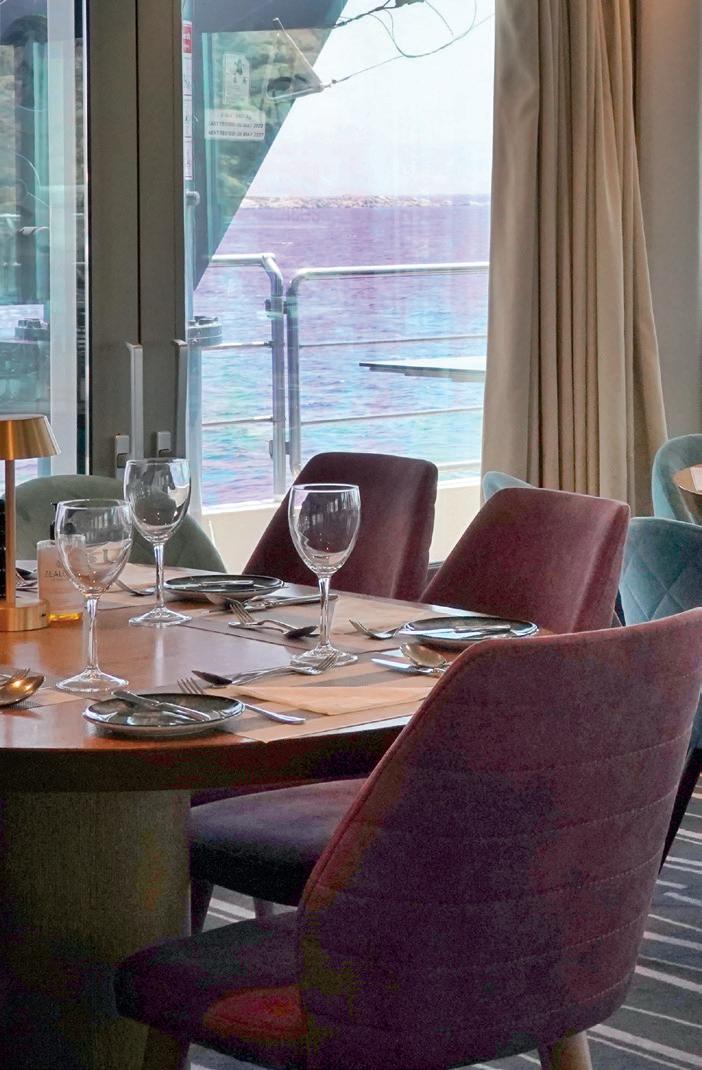
Public areas are generous with an air-conditioned dining room and lounge, both of which open onto a covered terrace. The sundeck has sunloungers.
The size of the ship means we are, more often than not, able to dock in port rather than anchor outside, avoiding the use of tenders or zodiacs.
Accommodation in Athens, 13–15 October 2027
Royal Olympic Hotel. Rated locally as 5 star, this is a comfortable hotel located a 10-minute walk from the Acropolis. We have booked ‘Athenian Panorama’ rooms with views over Athens. The roof garden restaurant has views of the Acropolis. Décor is traditional in style and there is an outdoor swimming pool (weather permitting).
www.royalolympic.com
Value for money
The price includes nearly everything, not only the major ingredients such as hotel, transport and the costs of the lecturers and manager but also tips, drinks with meals, and airport taxes. The price published is the price you pay.
Our ship
Category C, Lower deck cabin
Category B, Lower deck cabin
Category B, Main deck cabin
Owner’s suite, Upper deck
Category A, Main deck cabin
Category P, Upper deck cabin
Restaurant
“
This was my rst experience of cruising but I hope not my last. The ship was comfortable and the food, excellent.
Personal service
From your first conversation with us to the moment you return home, we take care of everything, so that you need think of nothing but the journey ahead.
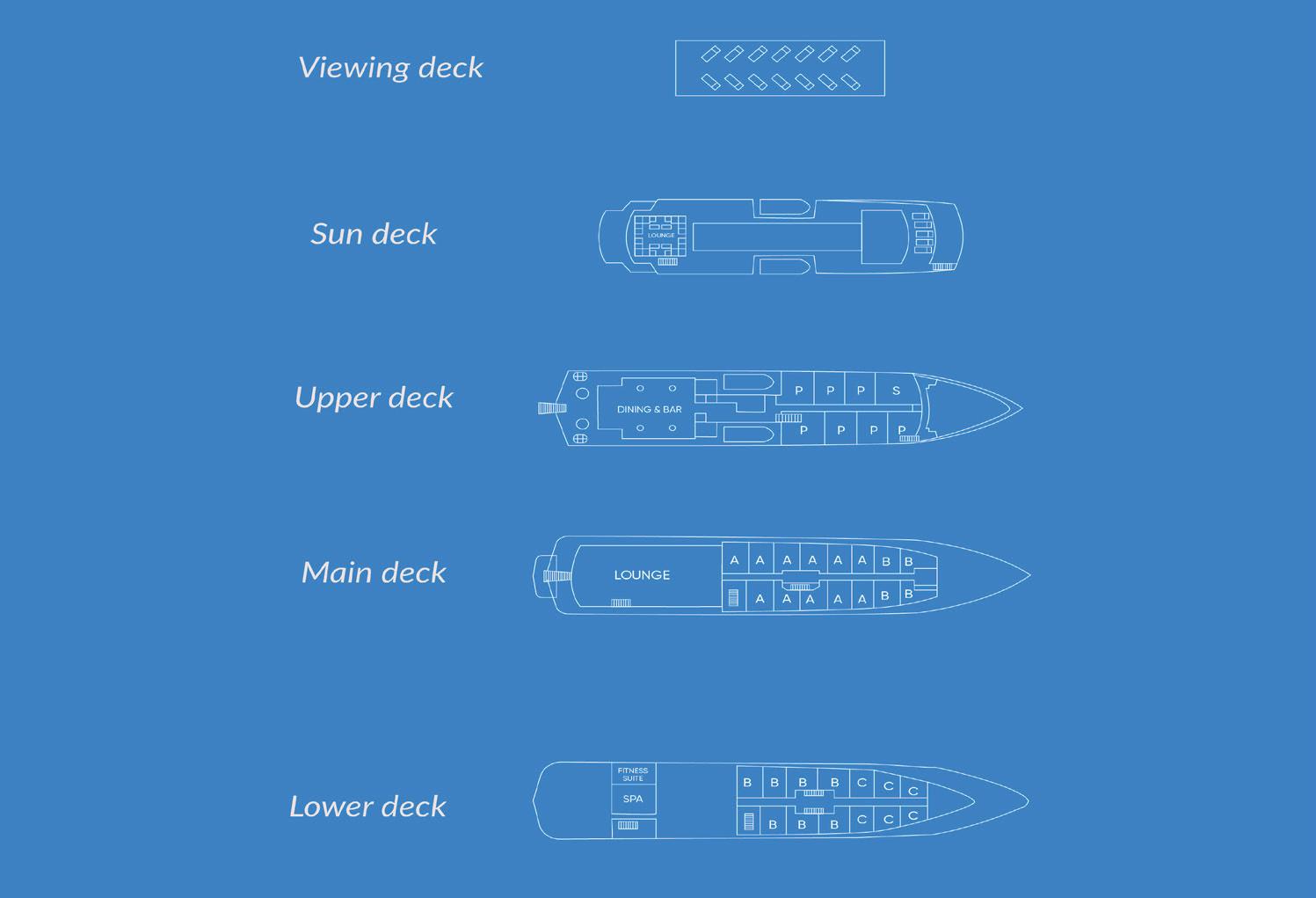
Variety Voyager: deck plan
Double occupancy:
Owners suite (upper deck): 4 windows, double bed, 22.5m 2
Category P (upper deck): 2 windows, double bed, 15.9–20.7m 2
Category A (main deck): 2 windows, double or twin beds, 12.4–16m 2
Category B (main deck): 2 windows, twin beds, 12.8m 2
Category B (lower deck): 2 portholes, double bed, 14–18.6m 2
Single occupancy:
Category A (main deck): 2 windows, double or twin beds, 12–13.6m 2
Category B (main deck): 2 windows, double or twin beds, 10.7–12.3m 2
Category B (lower deck): 2 portholes, double bed, 14m 2
Category C (lower deck): 2 portholes, double or twin beds, 12.8–13.5m 2
The experts
Our experts are chosen not just for what they know, but for the way they share it — with wit, warmth and enthusiasm that transforms a journey into something utterly memorable.
Dr Christina Hatzimichael-Whitley
Born in Greece and deeply rooted in its landscape and history, Christina brings to her work a rare combination of personal connection and scholarly rigour. A lecturer at Cardi University, her expertise centres on the Aegean Bronze Age, though her teaching ranges widely – from Greek art and archaeology through the Classical and Byzantine periods to gender theory and Modern Greek.
She holds degrees from three of the world’s leading universities – Thessaloniki, Toronto and Cambridge, and has excavated extensively across Greece and Cyprus. As assistant director of the Praisos Project in Crete, she has been at the heart of a major survey and excavation of the Classical city of Praisos. Christina has been sharing this knowledge and passion with travellers on specialist tours in both Britain and the United States for more than a decade.
Professor James Whitley
Professor of Mediterranean Archaeology at Cardi University and a former Director of the British School at Athens, James has been at the forefront of Greek archaeology for more than three decades – teaching, excavating and publishing across the full sweep of the ancient world, from the Bronze Age to the Hellenistic period.
His fieldwork has taken him across Britain, Italy and Greece. He has directed a major programme of excavation around the ancient city of Praisos in Crete since 1992. His publications include the award-winning The Archaeology of Ancient Greece (Cambridge, 2001), recipient of the Runciman Prize, and most recently Knossos: Myth, History and Archaeology (Bloomsbury, 2023) – a testament to his ability to bring the ancient world to life for the specialist and general reader alike.
The lecturers were charming, very knowledgeable and passionate. “
How to book
On our website
Click ‘Book now’ on any tour page. Fill in your details, consent to the booking conditions, and pay the deposit (15% of the total booking price) or full balance if booking within 12 weeks of departure.
Confirming your booking
Once you have completed the above, we will send a formal confirmation. Your deposit is then non-refundable except under the special circumstances mentioned in our booking conditions.
Booking conditions
It is important that you read these before committing to a booking. We will direct you to these when you book, but you can also find them online: www.martinrandall.com/terms
Fitness
Ensure also that you have read ‘How strenuous’ in the ‘Practicalities’ section of the tour description – and that you have taken our fitness tests, available at martinrandall.com/about under ‘Fitness’.
Martin Randall Travel Ltd
10 Barley Mow Passage, London W4 4PH
Tel +44 (0)20 8742 3355 info@martinrandall.co.uk
From North America: Tel 1 800 988 6168 (toll-free) northamerican@martinrandall.com