The day-by-day itinerary including details of the performances.
12. DISCOVER THE PLACE
One of the loveliest lengths of riparian scenery anywhere in the world.
14.
MEET THE MUSICIANS
International musicians of the highest calibre.
18.
ACCOMMODATION
Information about the ship.
20.
TRAVEL OPTIONS
A range of ways to travel to and from the festival.
Published: June 2026
21. WALKING THE DANUBE
Combine a selection of the festival concerts with attractive walks, travelling parallel to the festival.
22.
PRE-FESTIVAL TOUR
Extend your stay with a tour that has been designed to link with the festival.
23. BOOKING
Details of how to book.
MUSIC ALONG THE DANUBE: AN
INTRODUCTION
Music Along the Danube was the first festival Martin Randall Travel ever created, and it was the first of our big musical events that I ever experienced, almost 20 years ago.
It remains both our longest-running festival and our most frequently repeated – and for good reason. The part of the Danube along which we travel not only runs through some of the most sublime scenery in Europe – dark green forests, craggy outcrops and terraced vineyards, punctuated by church spires and and historic villages – but also through the imperial grandeur of Vienna, heart of the Western classical music tradition.
This provides an endlessly rich seam of inspiration when looking for resonance between music and place, which forms the artistic foundation to all of our festivals. Haydn, Mozart, Schubert and Beethoven are the four pillars around which the festival revolves, towering composers of Vienna’s golden age, whose music alone could sustain a hundred festivals – the difficulty is which masterpieces to choose.
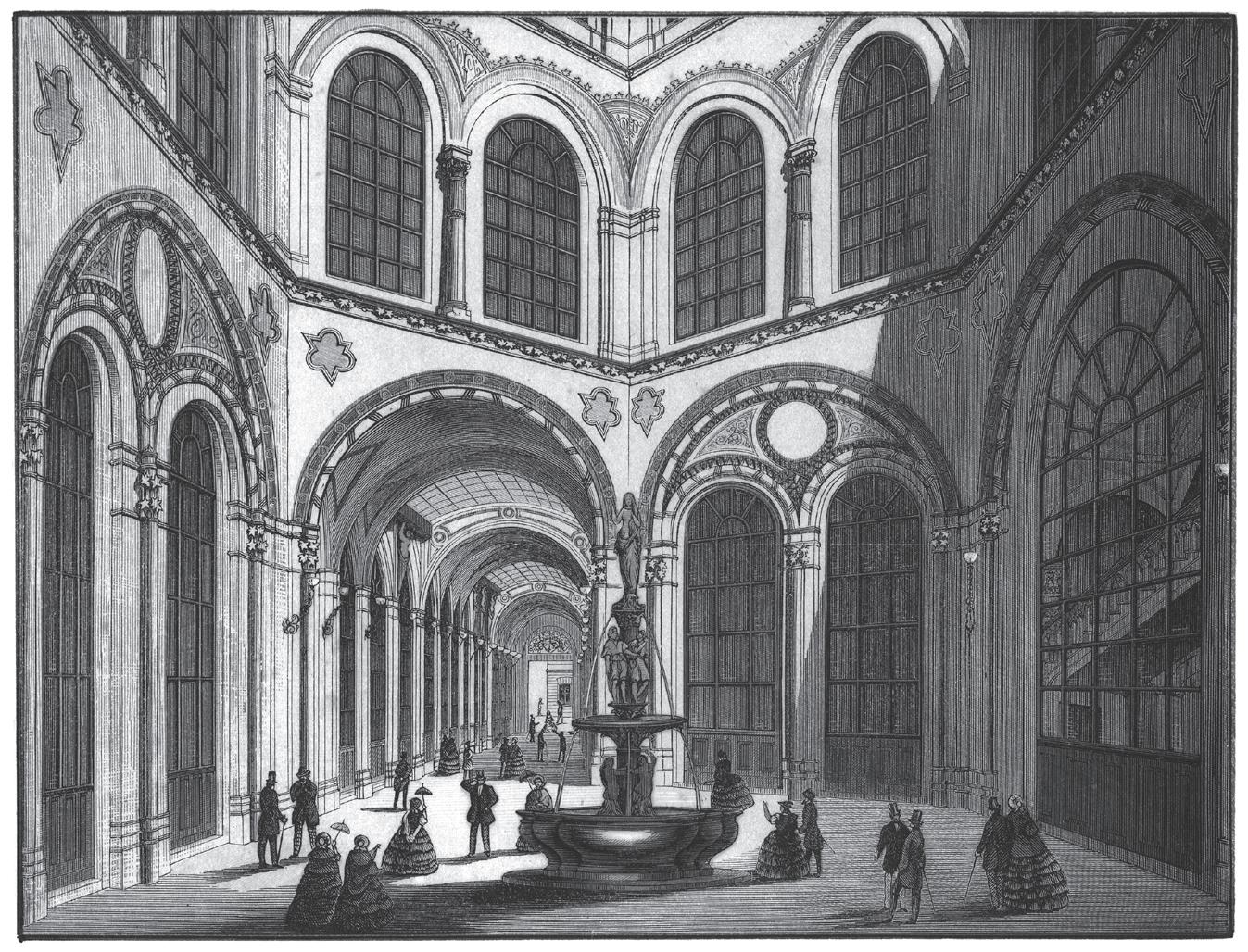
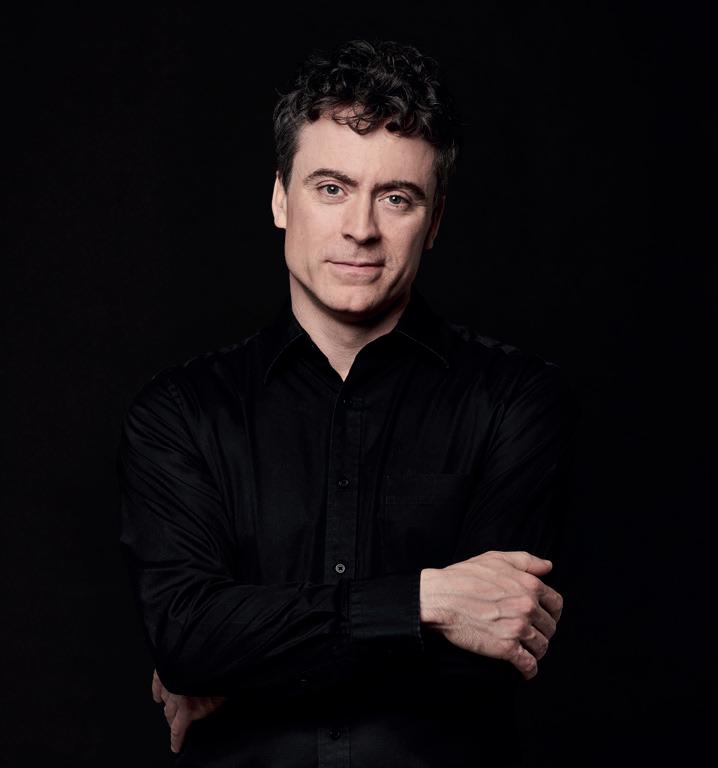
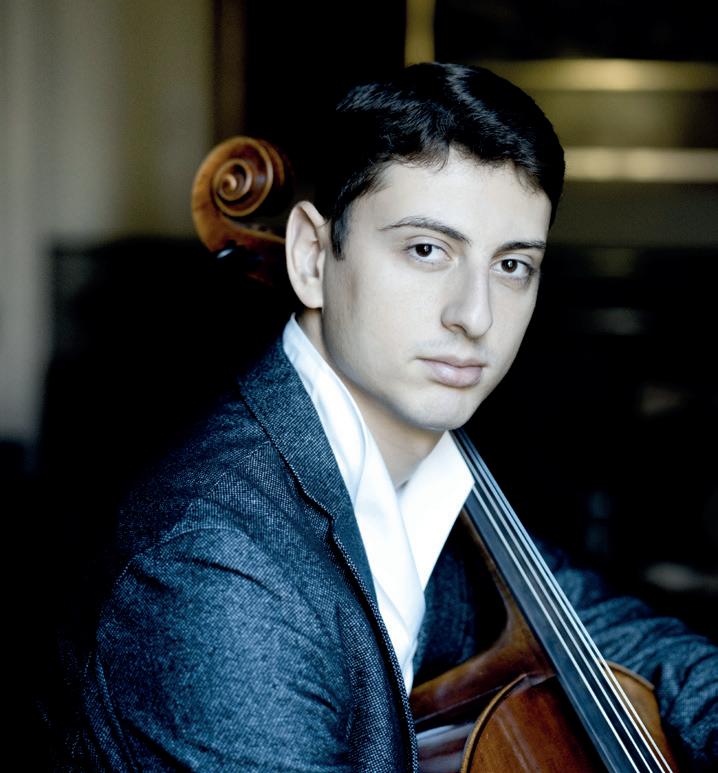
Our 2027 line-up is especially compelling. Star pianists Paul Lewis and Benjamin Grosvenor both appear, the former with finely shaped Mozart programme, the latter offering Romantic virtuosity including works by Chopin and Liszt. And world-class cellist Narek Hakhnazaryan joins the Vienna Chamber Orchestra to perform Haydn’s first Cello Concerto amidst the finery of the Palais Ferstel in Vienna.
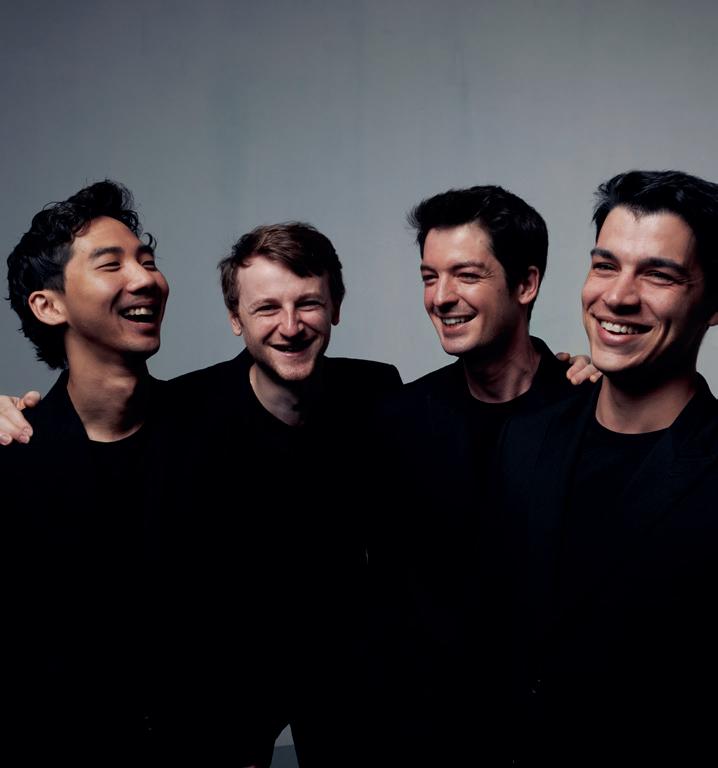
Superb baritone Benjamin Appl is joined by James Baillieu to perform Schubert’s profoundly lyrical Die schöne Müllerin in a former hunting lodge in the Austrian countryside, and the dazzling Quatuor
Arod present string quartets by Haydn, Beethoven and Bartók in the exquisite Primatial Palace in Bratislava.
Marking Beethoven’s anniversary year, his music features especially prominently – his Mass in C is performed in the Bergkirche in Eisenstadt, where it was premiered in 1807 under his own direction, while the brilliant Akademie für Alte Musik present wind quintets by Mozart and Beethoven in the frescoed splendour of Melk Abbey. In Grein’s jewel of an 18th-century theatre, Raffaelle La Ragione and Cristiano Gualdo explore mandolin sonatas, including Beethoven’s remarkable contributions to the instrument.
Throughout, talks by Dr Katy Hamilton deepen the musical context. And there is the simple pleasure of life on the river itself: gliding past quiet countryside, watching great cities emerge as the Danube widens, and covering the distance with effortless grace.
Lizzie Watson, Artistic Director
THE FESTIVAL PACKAGE
The price includes:
— Eight private concerts.
— Accommodation for seven nights onboard a luxury river cruiser. See page 18.
— All meals, with wine and other drinks, interval drinks.
— Talks on the music by Dr Katy Hamilton.
— Coach travel for airport transfers and to concert venues when not within walking distance of the mooring.
— Tips, taxes and admission charges.
— The assistance of festival staff and a detailed programme booklet.
Optional extras:
— Return flights between the UK and Munich. See page 20.
— Pre-festival tour: King Ludwig II (3–8 July 2027). See page 22.
The Walking Party:
— Combine six of the festival concerts with attractive walks, travelling parallel to the festival. See page 21.
THE SPEAKER
Dr. Katy Hamilton . Writer and broadcaster, she has provided talks for, amongst others, Wigmore Hall, BBC Proms and the Salzburg Festival. A frequent contributor to BBC Radio 3, Katy’s specialism is the music of the 19th and early 20th centuries, and she is the editor of Brahms in the Home and Concert Hall (2014) and Brahms in Context (2019). Katy has taught at the Royal College of Music, City Lit, and the Universities of Nottingham and Middlesex.
MARTIN RANDALL FESTIVALS
This festival has been planned by Lizzie Watson. It follows the format that Martin Randall established over 30 years ago with our first Danube Music Festival, of sitespecific concerts for a private audience. Since then we have organised festivals along the Rhine, Loire and Seine rivers, in Oxford, Suffolk, York, Lincoln, the Cotswolds and the West Country, to Seville, Toledo, Burgos, Santiago, Venice, Florence, Rome, Bologna, the Veneto, to St Petersburg, Prague, through Thuringia, and the Alentejo.
Meet the musicians. See pages 14–17 for their biographies.
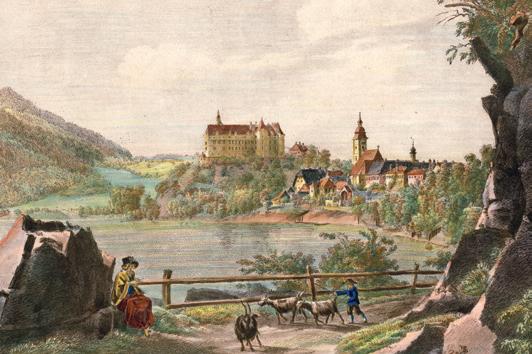
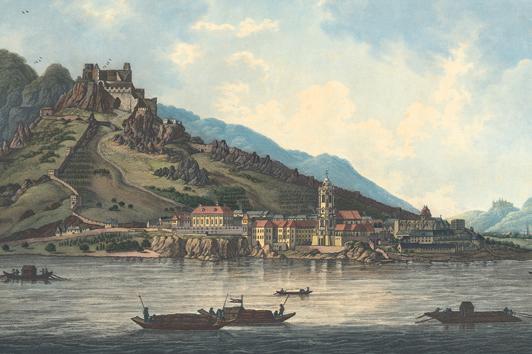
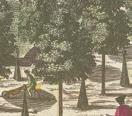
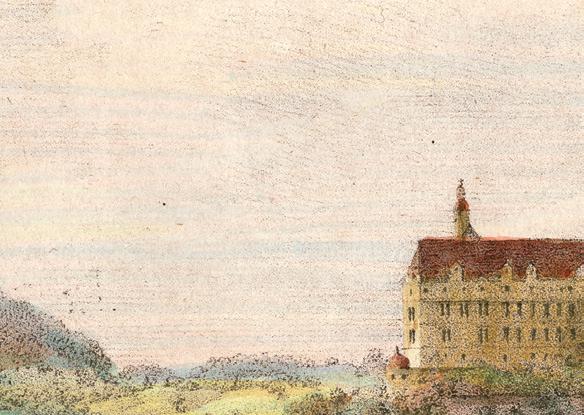
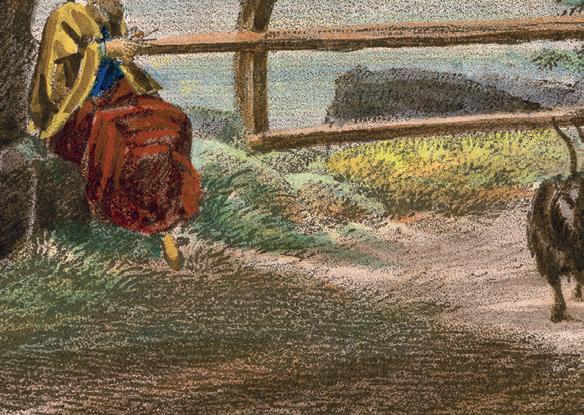
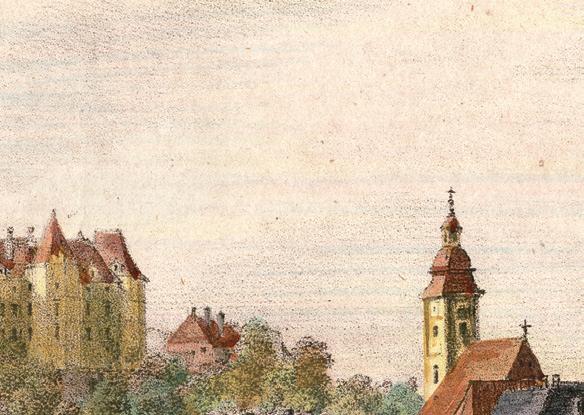
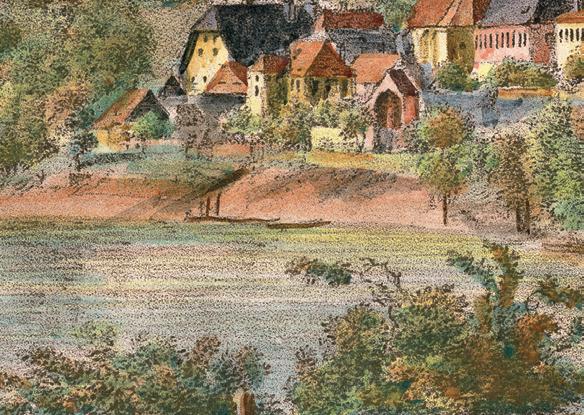
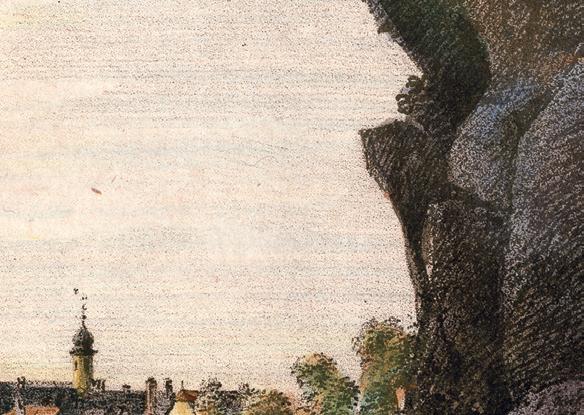
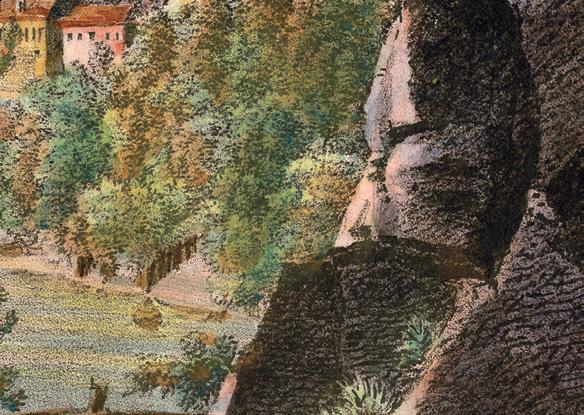
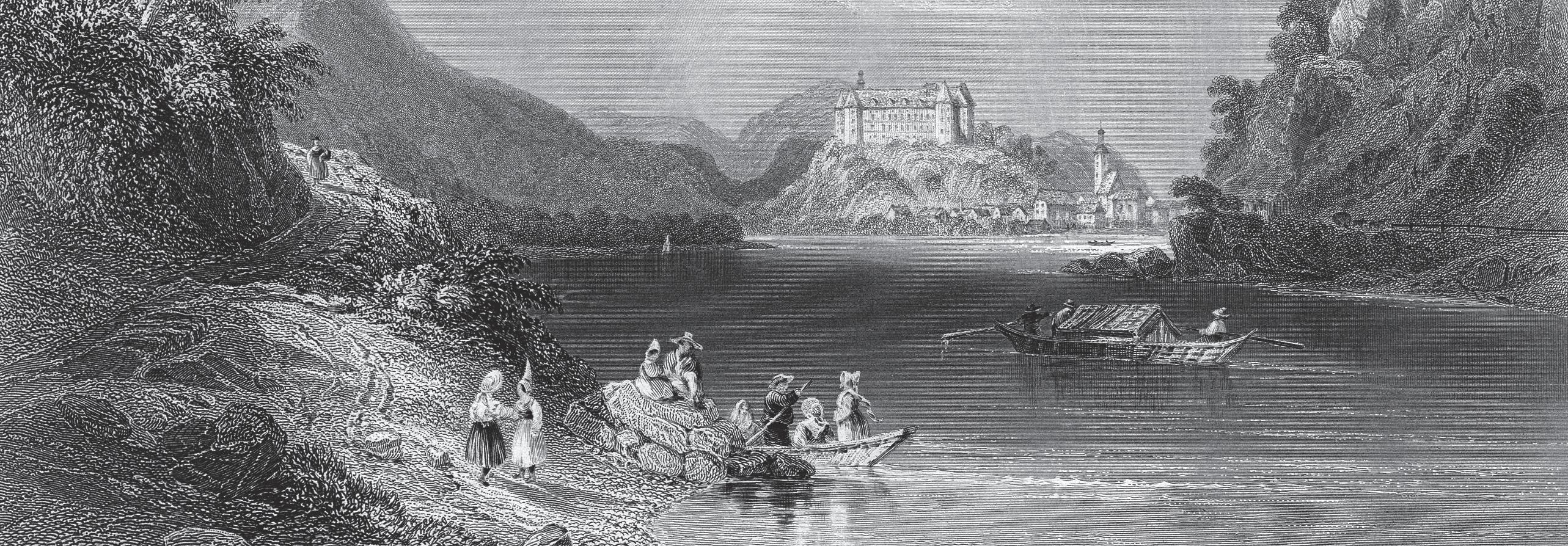
Illustration: Grein, lithograph by A. Kunike c. 1840.
THE FESTIVAL PROGRAMME
Day 1
Thursday 8 July
Passau
Fly from London Heathrow or Manchester or make your way to Passau independently. For travel options, see page 20. Selecting Option 1 includes lunch en route to the ship in Landshut; Options 2 & 3 transfer directly to the ship.
The ship is ready for boarding from 4.00pm. Afternoon tea is available upon arrival.
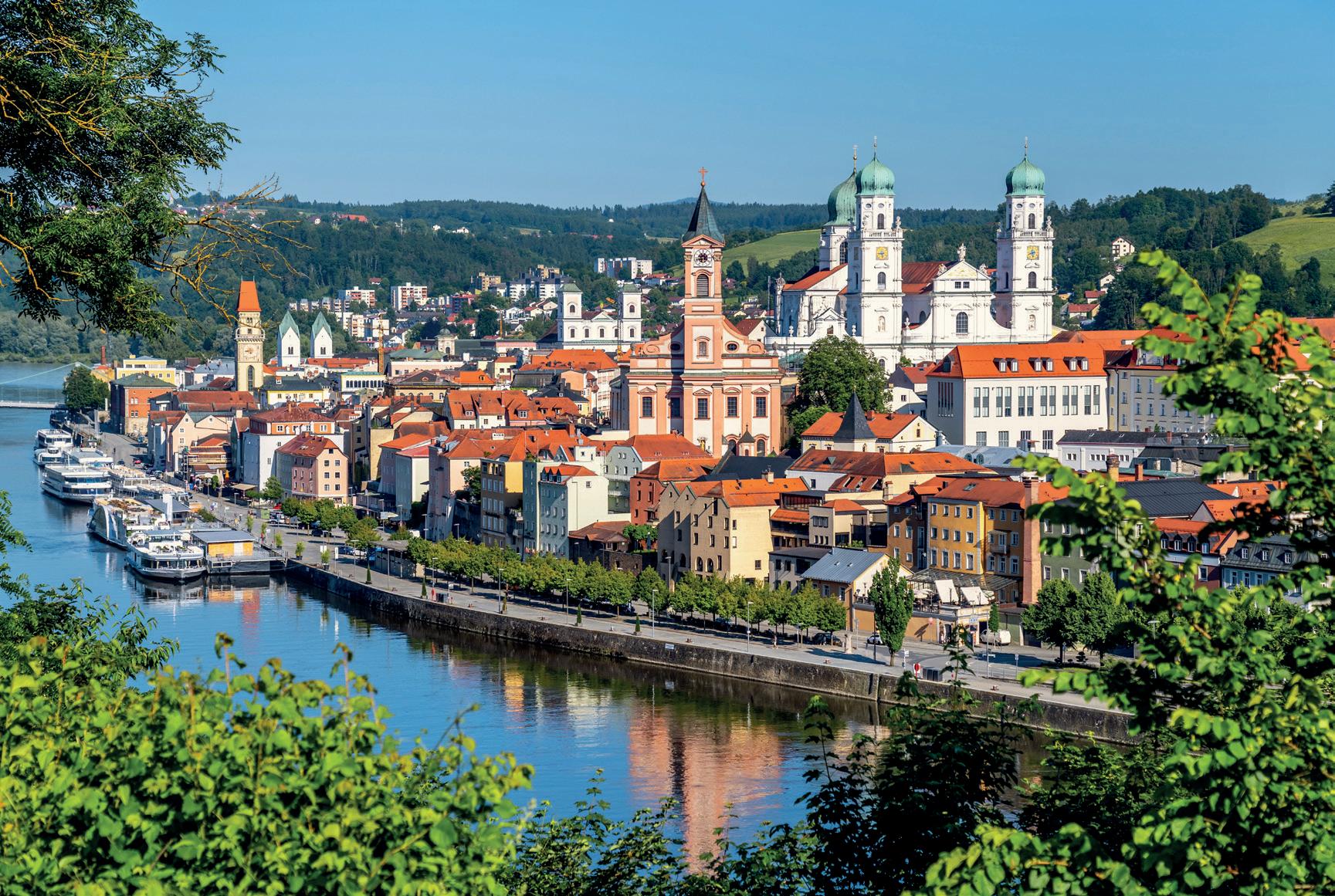
Piled up on promontories at the confluence of three rivers, the Bavarian city of Passau is crammed with historic buildings, dominated by the great Baroque cathedral. It was one of the most important episcopal seats in Central Europe and served as a refuge for the Habsburg court in times of danger.
The ship sails at 6.30pm. A reception is followed by dinner.
Day 2
Friday 9 July
Grein, Dürnstein
Moor at Grein, a charming little town squeezed between the Danube and the hills with a 16th-century Schloss rising to one side. The series of daily talks begins.
It is a short walk from the ship to the main square where the tiny theatre lies hidden within the town hall. Built in 1791 on the banks of the Danube, the Stadttheater Grein is the oldest surviving civic theatre in Austria still used for performances today. Remarkably intact, its tiny wooden stage, painted scenery and intimate auditorium preserve the atmosphere of an eighteenthcentury playhouse.
Recital, 10.00am:
Grein, Stadttheater
Classical Mandolin
Raffaele La Ragione mandolin
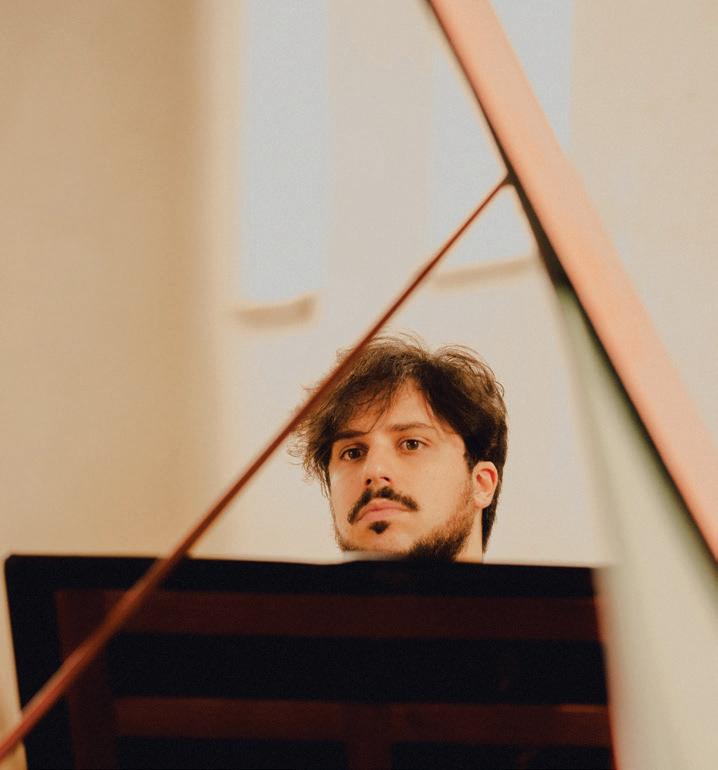
Cristiano Gaudio fortepiano
The eighteenth century mandolin is a delight to hear: its sound is light, charming, and fresh, though also expressive in the right hands. The four composers in this programme illustrate its full range, from the classical restraint of Vincent Neuling’s Sonata to the joi de vivre of four early Beethoven works from the 1790s. Expect impressive feats from the Bortolazzi Sonata Op.9, written to showcase the composer’s own skill on the instrument, pushed even further by the expansive Hummel Grande Sonata Op.37a, especially in the dance-like finale.
Return to the ship, which during the afternoon passes through some of the most gorgeous riverine landscape in Europe, the wine-producing region of the Wachau.
Moor at Dürnstein, perhaps the loveliest little town on the river. The ruins of a castle in which Richard the Lionheart was imprisoned cling to a steep hill which rears behind, while a gorgeous Baroque abbey church perched above the river signals the monastery, venue for the evening concert.
Recital, 8.15pm:
Dürnstein Abbey, Prälatensaal Mozart+
Paul Lewis piano
This performance explores variations. The two popular Mozart Sonatas that frame the programme, K284 and K331, both include them as movements, the former based on an elegant gavotte, the latter on a lullaby-like siciliana (the whole piece then finishing with the famous ‘Rondo alla turca’). Mendelssohn’s Variations sérieuses are more soulful, maintaining the searching quality of the theme even through its virtuosic transformations. Copland’s Piano Variations from 1930 are bracingly modern in comparison, by turns grand and introspective, but always with the clean austerity of a Bauhaus building.
Return to the ship for dinner. Sail overnight to Vienna.
Day 3
Saturday 10 July
Vienna
Wake up at a mooring 20 minutes from the centre of Vienna.
Principal seat of the Habsburgs for over 600 years, Vienna became capital of a extensive agglomeration of territories that encompassed much of central and eastern Europe. The fabric of the city is a glorious mix of the magnificent and the charming, the imperious and the unpretentious. It remains one of the world’s greatest centres for the arts, and has no rivals for its dominant place in the history of music.
The morning is free to explore the city and visit a museum or two. The Kunsthistorisches Museum should not be missed, the Belvedere Palace has paintings by Klimt, the Beethoven apartment is fascinating, MAK an exciting museum of decorative arts.
Concert, 4.00pm: Palais Ferstel
Haydn’s Cello Concerto No. 1
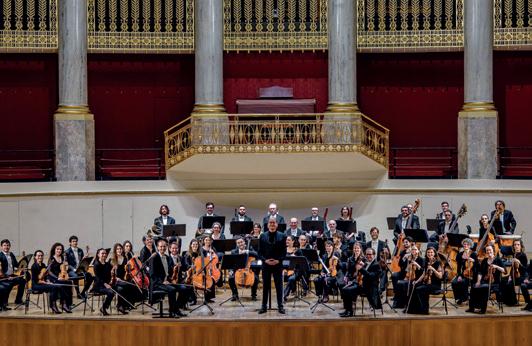
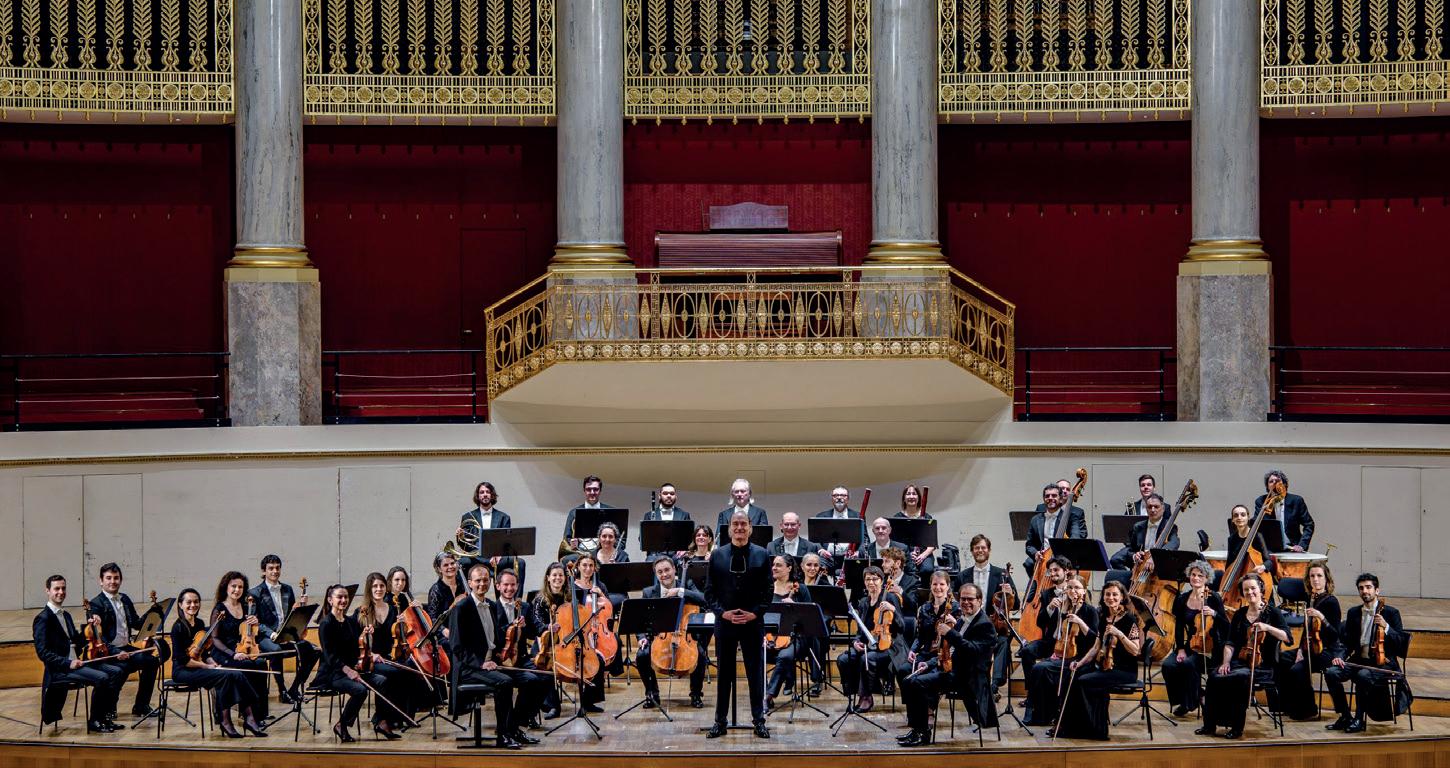
Vienna Chamber Orchestra
Narek Hakhnazaryan cello
One of the benefits of Haydn’s position as Kapellmeister for the Esterházy family was that it gave him access to superb musicians. It is very likely that his Cello Concerto No.1 was written for the lead cellist in the court orchestra, Joseph Franz Weigl, who must have been extremely capable. Aside from the grand chords in the first movement and furious passagework in the finale, Haydn gave Weigl plenty of sustained notes throughout to show off the beauty of his tone. It remains a gift for cellists in the present day.
Return to the ship for dinner. Sail throughout the evening, to Bratislava.
The ship moors in the early morning in Bratislava.
Now capital of Slovakia, Bratislava was for 70 years the second city of Czechoslovakia and for 300 years before that the capital (as Pressburg) of the Habsburg rump of Hungary while Ottoman Turks occupied most of the country. Its compact historic centre is a dense mesh of unspoilt streets, squares and restored façades.
Concert, 10.30am:
Bratislava, Primatial Palace
String Quartets
Quatuor Arod
Haydn’s Op.76 quartets crystallised forty years of experience in the form into a set of unparalleled brilliance. We will hear No.5 of the set, which passes from pastoral grace to sad profundity to wit and sparkle. It is not hard to see why Beethoven was so intimidated by his precursor, going to extreme lengths to refine his Op.18 set before publication. The stormy intensity of No.4 in C minor puts it in another world from Haydn, and sets the stage for the frenzied, folkinspired sound of Bartók’s Quartet No.4.
After lunch take a short drive to Schloss Eckartsau. Though only 25 miles from Vienna, the Marchfeld is surprisingly rural, an alluvial plain ringed by mountains, and significant in Austrian history as a hunting ground and field of battle.
Schloss Eckartsau is an enchanting Baroque hunting lodge which was extended for Archduke Franz Ferdinand (he of the Sarajevo assassination in 1914) and became the final Austrian residence of Charles, the last Emperor of Austria.
Recital, 4.00pm:
Schloss Eckartsau
Die schöne Müllerin
Benjamin Appl baritone
James Baillieu piano
There can be no more quintessential experience of a lieder cycle than Schubert’s Die schöne Müllerin twenty of the poems that Wilhelm Müller published in 1821, Schubert elevated the story of the wandering miller to exceptionally Romantic heights. It is one of the great tests for lieder singers to navigate the transitions from bouncy optimism to hopeless despair via lovesick enchantment and jealous rage, and to capture the character of the ever-present stream that eventually joins the miller in dialogue at the end.
Remain moored in Bratislava until the early morning.
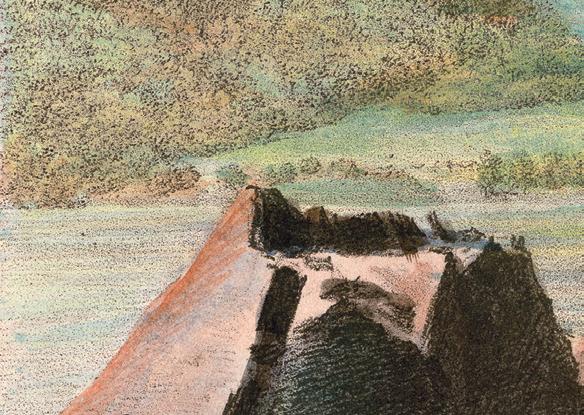
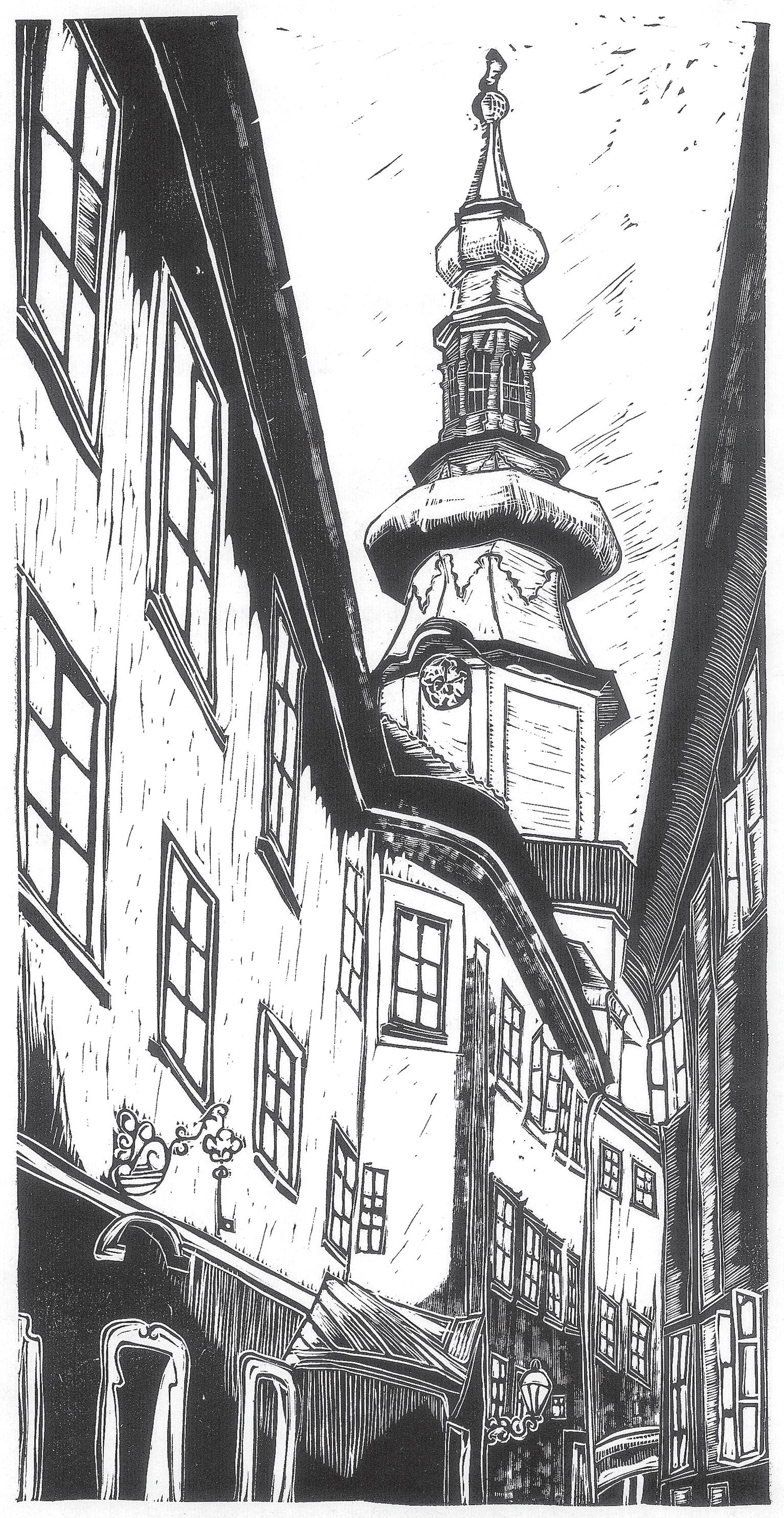
Illustration: Bratislava, 20th-century woodcut
Day 5
Monday 12 July
Eisenstadt Sail throughout the morning, with a talk on board.
Drive to Eisenstadt, an attractive country town to the south-east of Vienna. It is dominated by a vast 17th-century mansion, the principal seat of the Esterházy family, famously Haydn’s patrons for much of his life.
Completed in 1807 under the patronage of the Esterházy princes, the Bergkirche is one of Eisenstadt’s most distinctive Baroque churches, crowned by its curious artificial hill and Calvary chapels. The church is closely associated with Ludwig van Beethoven, who conducted the premiere of his Mass in C major here in September 1807. The concert takes place beneath the church’s lofty dome and richly decorated galleries.
Concert, 4.00pm: Bergkirche Mass in C
Haydn wrote an annual mass for Princess Maria Esterházy’s name-day, and when his health failed Beethoven stepped in for the 1807 instalment. The resulting Mass in C paid homage to the master, especially in the grandeur of the Gloria, but also demonstrates his own dramatic style in movements such as the Agnus Dei. Admired for its warm, lyrical beauty, it is a deeply human expression of faith. A rare treat is to hear Beethoven’s Elegischer Gesang alongside it, an unusually tender work from 1814 mourning the passing of a friend and patron’s young wife.
Return to the ship for dinner. Sail overnight from Vienna Nussdorf to near Melk.
The music was pure delight from start to nish. I always enjoy the fact that the music festivals introduce me to music I would not have otherwise thought of listening to, or to have the opportunity to hear live. “
Vienna Chamber Choir
THE FESTIVAL PROGRAMME
Day 6
Tuesday 13 July
Melk
Sail upstream throughout the morning.
Around lunchtime, the domed abbey of Melk appears ahead on an outcrop beside the river. Its formidable bulk presents to the world an image of awesome power, and there is no diminution of this impression inside. Stone, stucco, paint, gold and all the media at the disposal of craftsmen and artists in the 18th century combine to create some of the giddiest heights ever attained in Baroque art.
A tour of the abbey passes through a sequence of ceremonial courtyards, guest apartments, hall and library, culminating in a church of unsurpassed decorative richness.
The concert takes place in the Kolomanisaal, the summer refectory of the abbey. Walls and vault are covered in frescoes by Gaetano Fanti and Paul Troger, the leading fresco specialists of their time in the Austrian empire.
Concert, 4.45pm
Melk Abbey, Kolomanisaal Mozart & Beethoven Wind Quintets
Akademie für Alte Musik Berlin
The popularity of wind bands in eighteenth-century courts led to the finest wind players in the world working in continental Europe. Mozart’s Quintet for Piano and Winds K452 made the most of what they could do, with lyrical and spectacular contributions alongside the scampering of the piano.
Beethoven modelled his Op.16 Quintet on Mozart’s, taking the integration of the whole ensemble to the next level. Anton Reicha felt that such capable players deserved chamber music of their own, and works such as his Quintet Op.91 No.3 pushed the instruments of the day to their limits.
Return to the ship for dinner. Sail upstream, from near Melk to Linz.
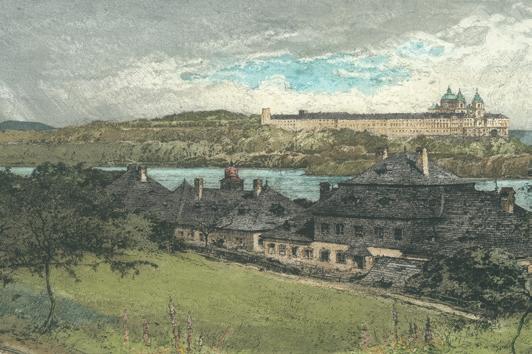
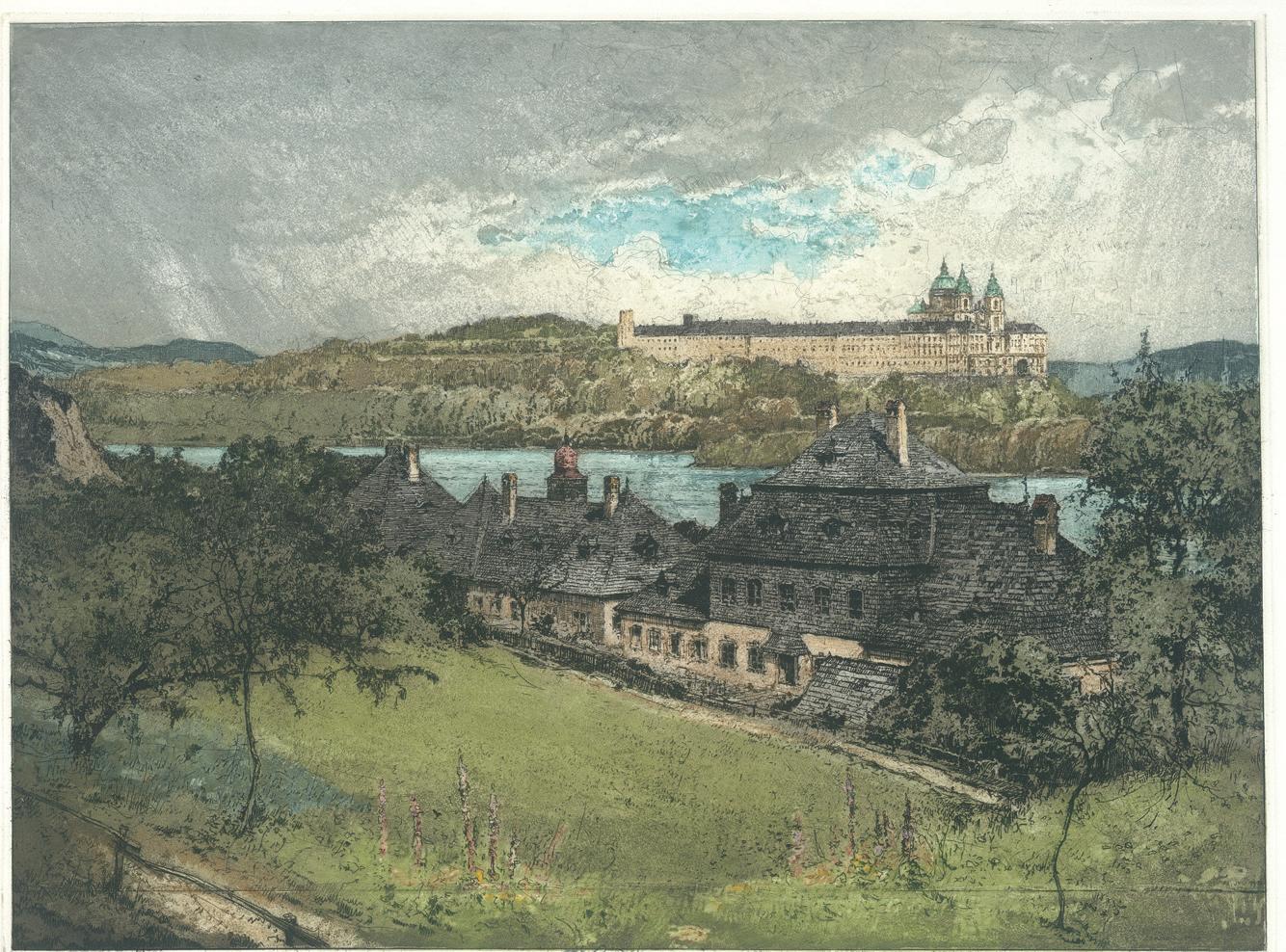
Illustration: Melk Abbey, early-20th-century etching by Luigi Kasimir.
Day 7
Wednesday 14 July
Linz
Sail throughout the morning, arriving in Linz just after lunch.
The historic capital of Upper Austria, Linz is a picturesque maze of streets, alleys and historic buildings grouped around a huge market square, only yards from the mooring. There is time for some independent exploration before the afternoon concert.
The Palais Kaufmännischer Verein, opened in 1898, is a building of a sort that was a peculiarity of the Habsburg Empire, a suite of richly ornamented rooms and halls for meetings, receptions, balls and concerts. The concert is in the Bildersaal, so called because of wall paintings of historic scenes.
Recital, 4.00pm:
Linz, Palais Kaufmännischer Verein
The Romantic Piano
Benjamin Grosvenor piano
This is a programme of Romantic heavyhitters, including some of the most popular works in the repertoire. We begin with Beethoven’s incomparable ‘Moonlight’ Sonata, passing from darkness to delicacy to roar, here paired with his equally lyrical Sonata Op.109, albeit in a more consistently inward mode. In the second half, Liszt’s flamboyant meditations on three of Petrarch’s sonnets show how a piano can express all the torments of unrequited love, whilst Chopin’s Sonata No.2 puts more emphasis on lament, especially the unforgettable Funeral March in the third movement.
Sail upstream overnight from Linz to Passau, with a reception and dinner against a backdrop of river and wooded hills receding into the dusk.
Day 8
Thursday
Passau
15 July
The ship moors at Passau and coaches leave for Munich city centre and the airport between 8.30 and 9.30am. See page 20 for the options available for return travel to the UK.
Selecting Option 2 or 3 allows for some independent sightseeing in Munich.
“My ‘Music along the Danube’ experience was nothing short of revelatory. I go to a lot of concerts and have always enjoyed the music, but on a decidedly super cial level. Following the talks I found myself – for the rst time – listening to every note. What joy MRT brings to our lives!
DISCOVER THE PLACE
To write
about the
Danube is to embark on the life story of a large part of Europe.
Ready to book?
See page 23 for details.
Unlike every other long river between the Urals and the Bay of Biscay, this majestic stream has never been the possession of any single state or even of any single empire – whether Frank or Slav, Magyar, Teuton or Turk. Through all geo-political obsessions, the Danube has moved with serene impartiality.
This is simply the biggest river of Europe. From its origins in south-western Germany, the Danube flows to the Black Sea over a course of about 1,750 miles, gathering force from waters which drain 300,000 square miles and passing through ten countries. More than 300 often furious tributaries pour their national waters into the Danube, but the river placidly swallows them all.
To travel with the Danube is a European experience. There may be no better way
of growing into the knowledge of why Europe, even this middle Europe of so many conflicts in the past, has been more than the sum of its parts; and of why these parts, however little they may have seemed to belong to each other (much less love each other), have remained members of one body and segments of one civilisation.
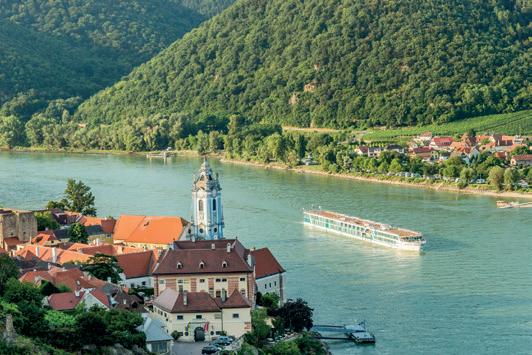
A wonderful diversity of scene complements the ethnic, linguistic and national variety. The stretch between Passau and Bratislava is one of the loveliest lengths of riparian scenery anywhere in the world. Its monuments are many and remarkable. And nowhere on Earth can match the Danube region for its contribution to the canon of classical music over the course of several hundred years.
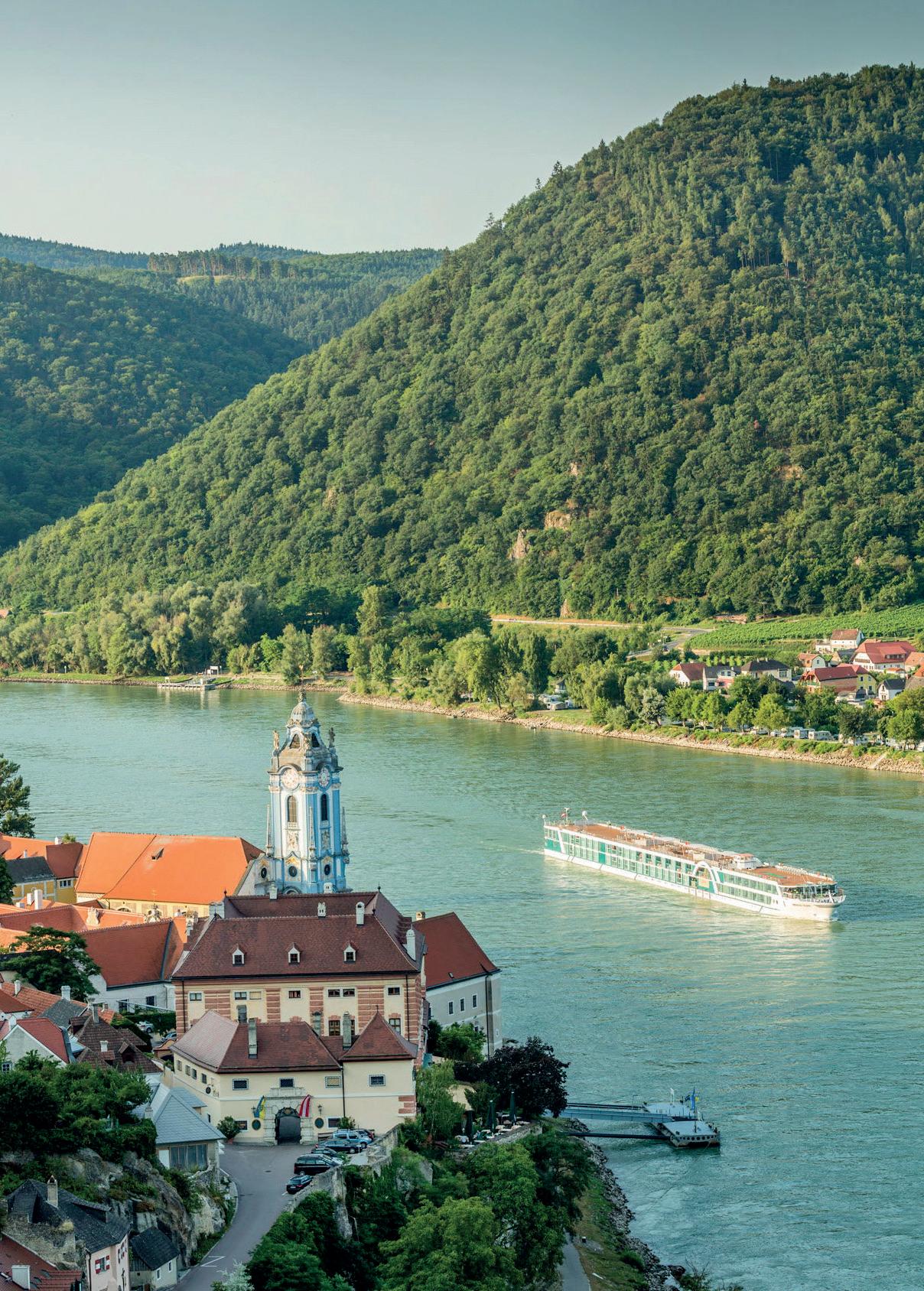
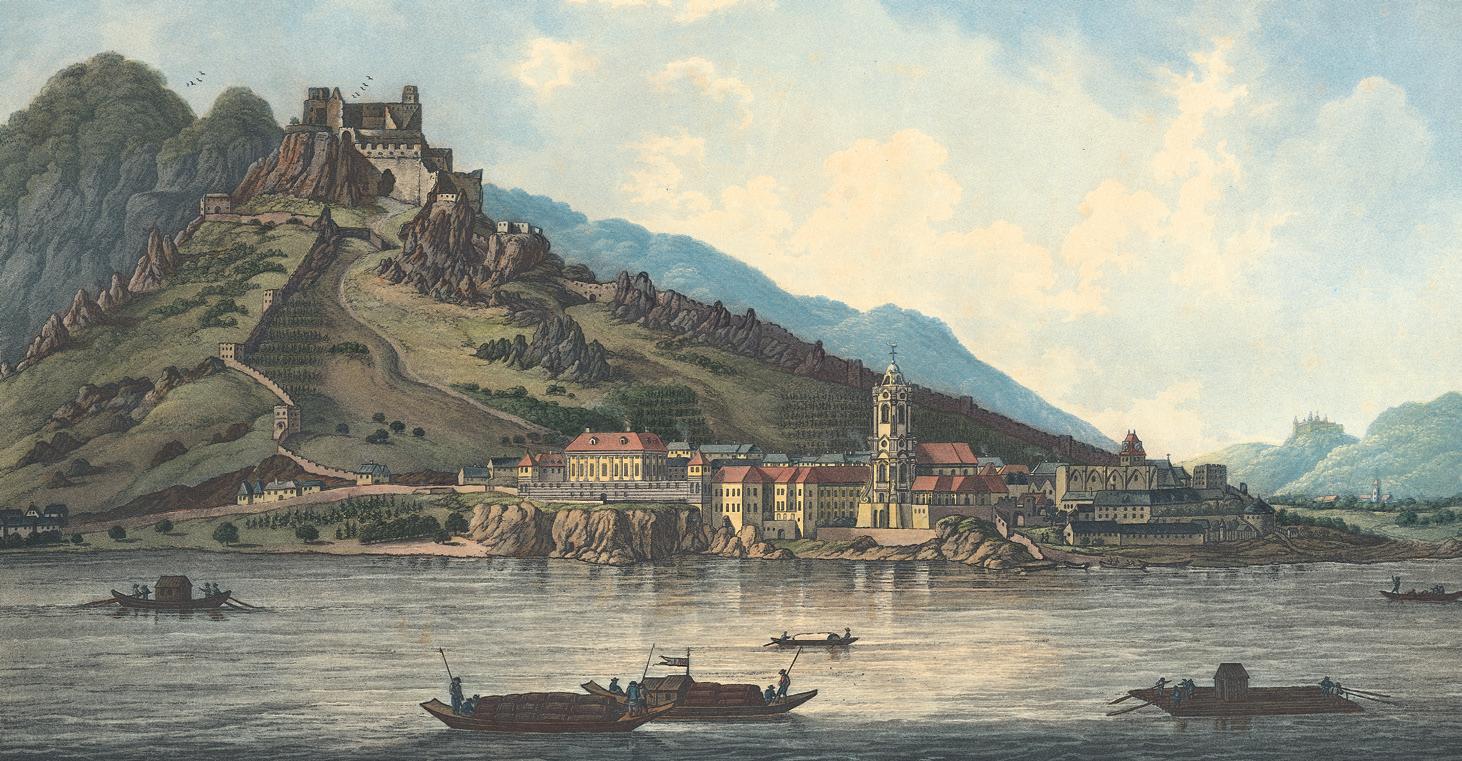
Photograph: Dürnstein on the Danube.
MEET THE MUSICIANS
RAFFAELE LA RAGIONE
Born in Naples in 1986, Raffaele La Ragione has devoted himself from a very young age to the study of the mandolin, exploring its original repertoire from early music to contemporary works. He was educated at the Milan Conservatory, where he graduated under Ugo Orlandi, and at the University of Bologna.
His concert career has taken him to perform in Italy, Europe, and Asia, as a guest at festivals and prestigious concert seasons (Ravenna Festival, Istanbul Musik Festivali, St. Martin in the Fields), collaborating with renowned orchestras and ensembles, including the Seoul Philharmonic Orchestra (Myung-Whun Chung), La Serenissima (Adrian Chandler) and the Greek National Opera.
La Raggione’s album Mandolin on Stage – The Greatest Mandolin Concertos with the orchestra Il Pomo d’Oro conducted by Francesco Corti received numerous awards and a nomination for the Preis der Deutschen Schallplattenkritik as Best Early Music Recording.
Alongside his concert career, he is Mandolin Professor at the Gaetano Donizetti Conservatory in Bergamo.
CRISTIANO GAUDIO
Born in 1995 in Bassano del Grappa (Italy), Cristiano Gaudio gained international recognition through his successes at the Bruges International Harpsichord Competition, the Leipzig Bach Competition, and the Milan Harpsichord Competition.
As a soloist, Gaudio has performed at festivals such as the Utrecht Early Music Festival and Baroque en Rio in Rio de Janeiro and his concert activity has taken him to many major stages, including Teatro alla Scala, the Concertgebouw in Amsterdam and Seoul Arts Center. His playing combines stylistic clarity with an expressive rhetoric informed by historical performance practice and shaped by a distinctly personal musical voice.
Cristiano Gaudio collaborates regularly with some of today’s most influential baroque ensembles, including Il Giardino Armonico (Giovanni Antonini), Il Pomo d’Oro (Francesco Corti), Les Musiciens du Louvre (Marc Minkowski) and more.
Gaudio’s debut solo album, Händel vs Scarlatti, released by L’Encelade, was met with unanimous critical acclaim and awarded the Diapason d’Or, Choc de Classica and Amadeus d’Oro.
Paul Lewis is one of the foremost interpreters of the Central European piano repertoire and has received a CBE for services to music.
His global popularity is reflected in the world-class orchestras with whom he works, including the Berlin Philharmonic, London Symphony, and Leipzig Gewandhaus orchestras. His close relationship with Boston Symphony Orchestra led to his selection as the 2020 Koussevitzky Artist at Tanglewood.
In 2026 and 2027, Lewis will tour his Mozart+ series around the world, juxtaposing Mozart’s lesser-known piano repertoire with works by composers such as Poulenc, Chopin and Weber, illuminating Mozart’s influences over subsequent generations.
Lewis’ discography with Harmonia Mundi includes many award-winning Beethoven and Schubert recordings, as well as Romantic repertoire such as Schumann, Mussorgsky, Brahms and Liszt.
In chamber music, Lewis works closely with tenor Mark Padmore in Lied recitals around the world – they have recorded three Schubert song cycles together – and he is co-Artistic Director of Midsummer Music, an annual chamber music festival held in Buckinghamshire, UK. In May 2025 he was the first non-American pianist to chair the jury of the The Cliburn Piano Competition.
PAUL LEWIS
VIENNA CHAMBER ORCHESTRA
The Vienna Chamber Orchestra, founded in 1946, has an exceptionally rich musical heritage. Important milestones include performances conducted by Benjamin Britten in 1946, the debut of nineyear-old Daniel Barenboim in 1952, and a recital by Alfred Brendel in 1964. This legacy has been further enriched through collaborations with outstanding conductors such as Carlo Zecchi, Philippe Entremont, Yehudi Menuhin and more.
Ever since its founding, the Vienna Chamber Orchestra has presented a Matinee Cycle in the Mozart Hall of the Vienna Konzerthaus. In addition, the orchestra regularly performs at the Vienna Musikverein. Since 2012, it has been a permanent partner of the Theater an der Wien and the Wiener Kammeroper, and a regular partner of the Vienna Opera Summer festival since its founding in 2024. Furthermore, the orchestra is a partner of the Liszt Festival Raiding from 2024 to 2028.
The orchestra’s international standing is reflected in its extensive international touring. Recent years have seen the orchestra perform in Japan, Azerbaijan, Morocco, Vietnam, and many more destinations worldwide.
NAREK HAKHNAZARYAN
Since winning First Prize and Gold Medal at the XIV International Tchaikovsky Competition aged just 22, cellist Narek Hakhnazaryan has established himself as one of the world’s most captivating and sought-after musicians.
A former BBC New Generation Artist, Hakhnazaryan has performed at the BBC Proms, and with all the BBC Orchestras. He has also collaborated with esteemed conductors (Gergiev, Jurowski, Koopman, Alsop, Petrenko to name but a few) and he has appeared with the Chicago Symphony, London Symphony, Helsinki Philharmonic and many more orchestras worldwide.
A versatile artist, Hakhnazaryan recently made his conducting debut at Hamburg’s Laeiszhalle with the Neue Philharmonie Hamburg Orchestra and led critically acclaimed productions of Gluck’s Orpheus and Eurydice and Rossini’s Barber of Seville in Armenia.
THE CONCERTS
Private. All the performances are planned and administered by us, and the audience consists exclusively of those who have taken the festival package.
Seating. Specific seats are not reserved. You sit where you want.
Acoustics. This festival is more concerned with locale and authenticity than with acoustic perfection. The venues may have idiosyncrasies or reverberations of the sort not found in modern concert halls.
Changes. Musicians fall ill, venues may close for repairs, airlines alter schedules: there are many circumstances which could necessitate changes to the programme. We ask you to be understanding should they occur.
Floods and droughts. We cannot rule out changes to the programme arising from exceptionally high or low water levels on the Danube, either of which may bring river traffic to a halt. These might necessitate more travel by coach or the loss of a concert, though we would always try to minimise the impact on the itinerary.
Founded in 2013, the Quatuor Arod has performed in the greatest concert halls in France and worldwide, including Carnegie Hall, Mozarteum in Salzburg and the Elbphilharmonie Hamburg, to name but a few. The quartet has participated in festivals in Verbier, Aix-en-Provence, Prague (Spring Festival) and more. In 2025 they were Ensemble in Residence at the Mendelssohn-Haus in Leipzig.
The Quatuor Arod has collaborated with artists such as Klaus Mäkelä, Thibaut Garcia, Kit Armstrong and many more. In 2017, they premiered French composer Benjamin Attahir’s first string quartet (commissioned by La Belle Saison, ProQuartet and the Quatuor Arod). The quartet is keen to promote contemporary music, and regularly commissions short pieces from young composers.
The Quatuor Arod has benefited from the teaching of Mathieu Herzog, Jean Sulem, and the Quatuor Artemis and have worked regularly with the Quatuor Ébène and the Quatuor Diotima. In 2016, they won the First Prize at the ARD International Music Competition in Munich. They had previously been awarded first prize at the Carl Nielsen International Competition in 2015 and the FNAPEC European Competition in 2014. In 2016, they were HSBC laureates of the Festival d’Aix Academy. They were appointed BBC New Generation Artists from 2017 to 2019, and ECHO Rising Star for the season 20182019.
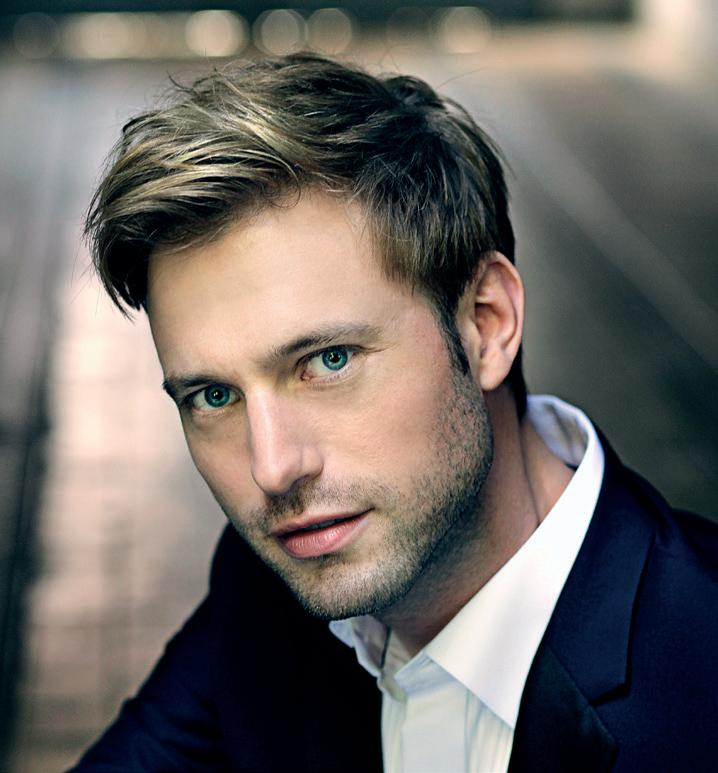
BENJAMIN APPL
Baritone Benjamin Appl is praised for a voice that “belongs to the last of the old great masters of song” with “an almost infinite range of colours” (Süddeutsche Zeitung).
A former BBC New Generation Artist, Wigmore Hall Emerging Artist and ECHO Rising Star, he was named Gramophone Young Artist of the Year in 2016. Having studied in both Munich and London, he was later mentored by Dietrich FischerDieskau, whom he describes as “an invaluable and hugely formative influence.”
Appl appears regularly at major festivals and venues worldwide including Ravinia, Schubertiade Schwarzenberg and Wigmore Hall. Recent orchestral partners include The Philadelphia Orchestra, Staatskapelle Dresden, and the Royal Liverpool Philharmonic, with whom he was Artist in Residence in the 2024–25 season.
On the opera stage, Appl’s highlights include Papageno in Die Zauberflöte at the Hamburgische Staatsoper and Opéra Rouen, and his role and house debut as Harlequin in Ariadne auf Naxos at Gran Teatre del Liceu Barcelona. 2026 sees his house and role debut at the Teatro Real Madrid as Mercutio in Gounod’s Roméo et Juliette .
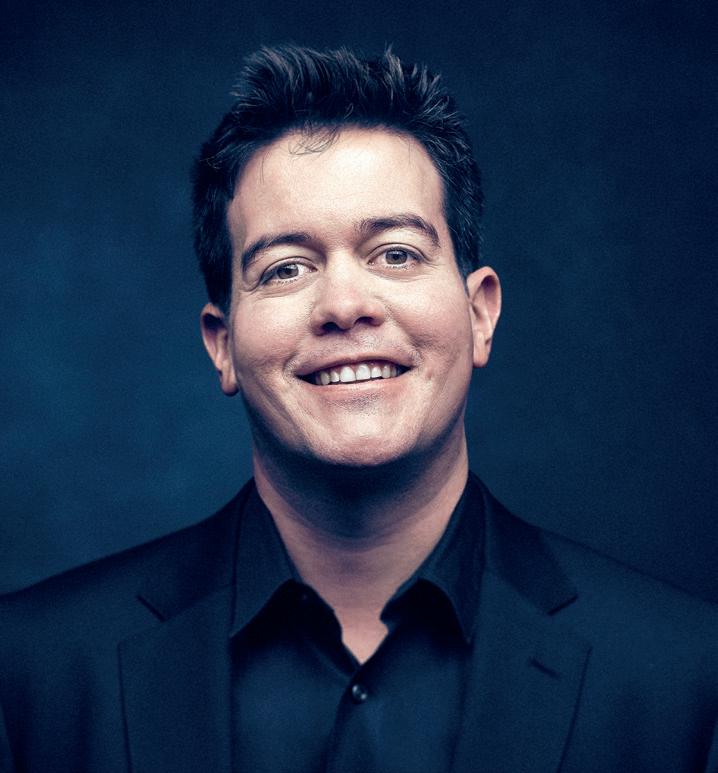
Described by The Daily Telegraph as ‘in a class of his own’ James Baillieu is one of the leading song and chamber music pianists of his generation. He has collaborated with a wide range of singers and instrumentalists including Benjamin Appl, Ian Bostridge, the Elias and Heath Quartets, Dame Kiri Te Kanawa, Pretty Yende and more.
James is a frequent guest at many of the world’s most distinguished music centres including the Metropolitan Opera House, Bozar Brussels, Wiener Staatsoper and more, as well as festivals such as Aixen-Provence, Festspillene i Bergen and Edinburgh.
James was prize winner of the Wigmore Hall Song Competition, Das Lied International Song Competition, the Kathleen Ferrier and Richard Tauber Competitions and in 2016 he was shortlisted for the Royal Philharmonic Society Outstanding Young Artist Award.
James Baillieu is a Senior Professor at the Royal Academy of Music, a coach for the Jette Parker Young Artist Program at the Royal Opera House, a course leader for the Samling Foundation, and is head of the Song Program at the Atelier Lyrique of the Verbier Festival Academy.
JAMES BAILLIEU
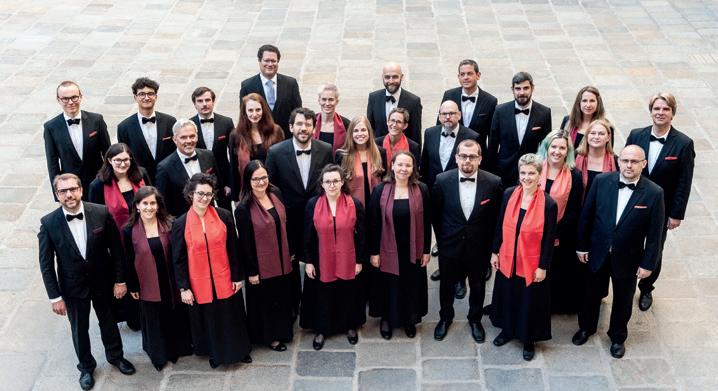
VIENNA CHAMBER CHOIR
Since its founding in 1947, the Vienna Chamber Choir has developed into a trend-setting international ensemble for the modern interpretation of choral music.
The members of the choir are always ready to accept new challenges in their effort to provide high-quality performances noted for musical precision and perfection. It has produced a large number of CD recordings, several for the famous choral music publishers Helbling and Carus.
The Vienna Chamber Choir is a regular partner of the Haydn Festival in Eisenstadt, Bruckner Festival in Linz, Beethoven Festival in Bonn and more. The Choir has worked with Ádám Fischer (Haydn Philharmonic, Danish National Chamber Orchestra); Rubén Dubrovsky (Bach Consort Vienna), Martin Haselböck (Wiener Akademie) and more.
MICHAEL GROHOTOLSKY
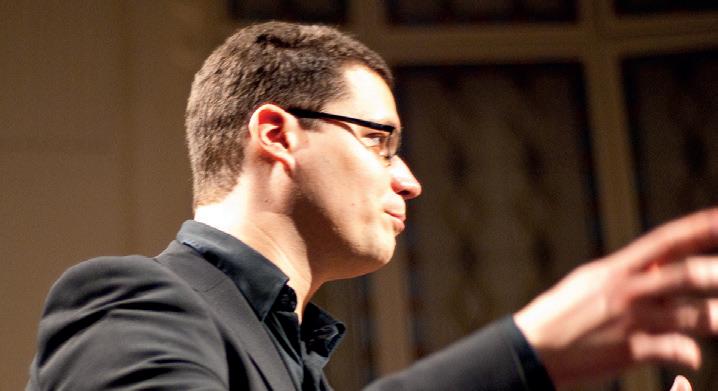
Michael Grohotolsky began his musical career as alto soloist with the Vienna Boys’ Choir. He is a lecturer in conducting and the direction of vocal and instrumental ensembles at the University for Music and the Performing Arts in Vienna.
Grohotolsky has been artistic director of the Vienna Chamber Choir since 2007. Since 2001 he has been choirmaster of the Neue Oper Wien and since 2009 the artistic director of the Vienna Youth Choir. In 2003 he was awarded the Erwin Ortner Fund’s Promotional Prize for Young Choral Directors.
AKADEMIE FÜR ALTE MUSIK BERLIN
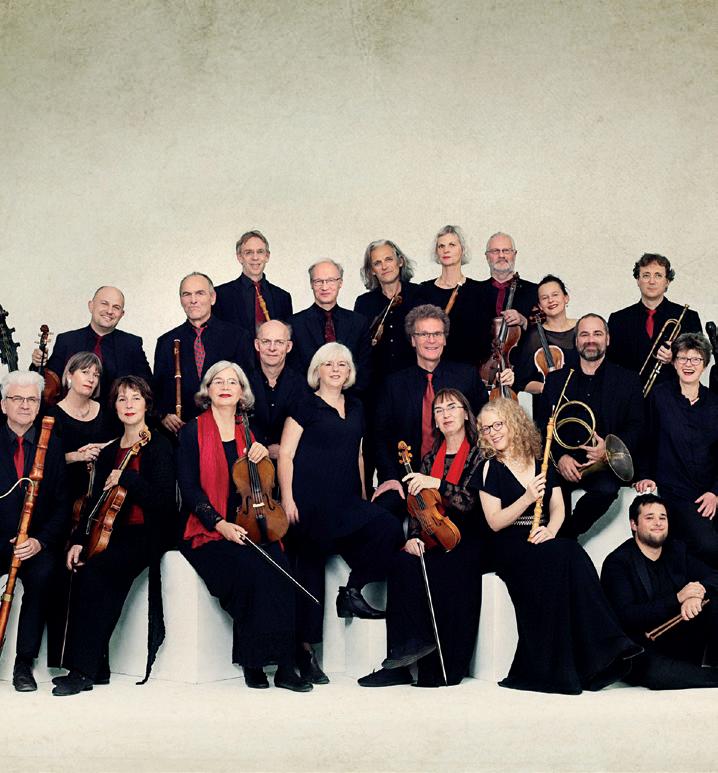
The Akademie für Alte Musik Berlin (Akamus) was founded in 1982 in Berlin and has since become one of the world‘s leading chamber orchestras on period instruments. For over 35 years, the orchestra has presented a subscription series at the Konzerthaus Berlin and it has regularly performed baroque operas at the Berlin State Opera since 1994.
Akamus performs under the changing direction of its concertmasters Bernhard Forck, Georg Kallweit, Yves Ytier and Mayumi Hirasaki, as well as selected conductors. The ensemble has a particularly close and long-standing artistic partnership with René Jacobs. Akamus also works regularly with internationally renowned soloists such as Isabelle Faust, Kit Armstrong, Alexander Melnikov and Carlo Vistoli.
The ensemble’s recordings, which number around one hundred, have won all the major recording awards, including the Grammy Award, Diapason d’Or, Gramophone Award, Choc de l’année and the Annual Prize of the German Record Critics. In 2006 the orchestra received the Telemann Prize of the City of Magdeburg, and in 2014 the Bach Medal of the City of Leipzig.
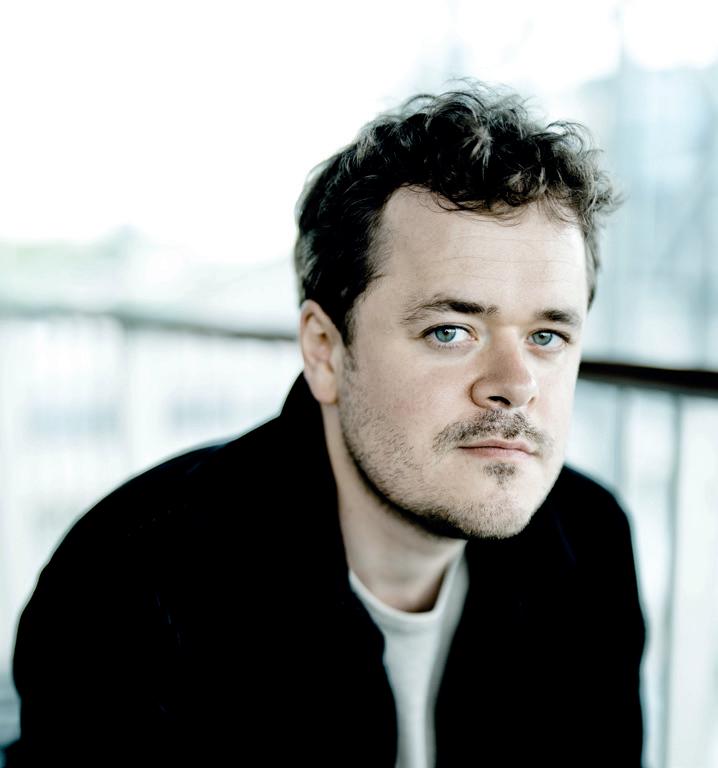
Acclaimed and multi-award-winning British pianist Benjamin Grosvenor is renowned for his ‘indisputable virtuosity’ and understated elegance at the keyboard, and appears on the world’s most prestigious stages.
Amongst the several highlights of his 2025/26 season, Benjamin debuts with the Swedish Radio (Beethoven 1), and returns to the Concertgebouw Amsterdam for his debut performance with John Wilson’s Sinfonia of London. He also makes his debut at Berlin’s Boulez Saal and Vienna’s Muzikverein.
Previous concerto engagements have included Boston Symphony, NHK Symphony and Orchestre National de France. He was a featured artist at the Théâtre des Champs-Elysées in Paris and in 2024 premiered Hommage à Liszt by Brett Dean – which was commissioned for him – in Lucerne, Chicago and London.
Benjamin performs with all the major UK orchestras and regularly appears at the BBC Proms, most recently with Ravel G major (2025) and Busoni (2024). He has also performed a solo recital and at the First and Last Nights. His recent conductor collaborations include Marin Alsop, Edward Gardner, Paavo Järvi and more.
Benjamin’s impressive discography on Decca Classics stretches back to 2011, with his most recent release of solo repertoire by Chopin described by International Piano Magazine Critic’s Choice as an ‘Altogether revelatory experience’.
ACCOMMODATION
THE SHIP
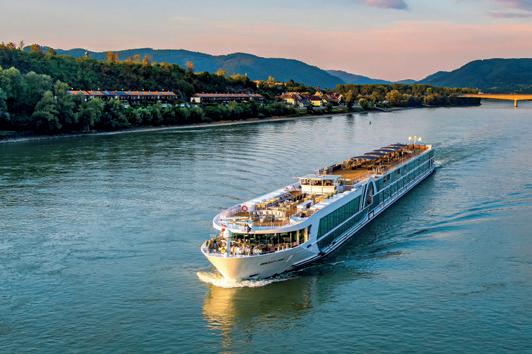
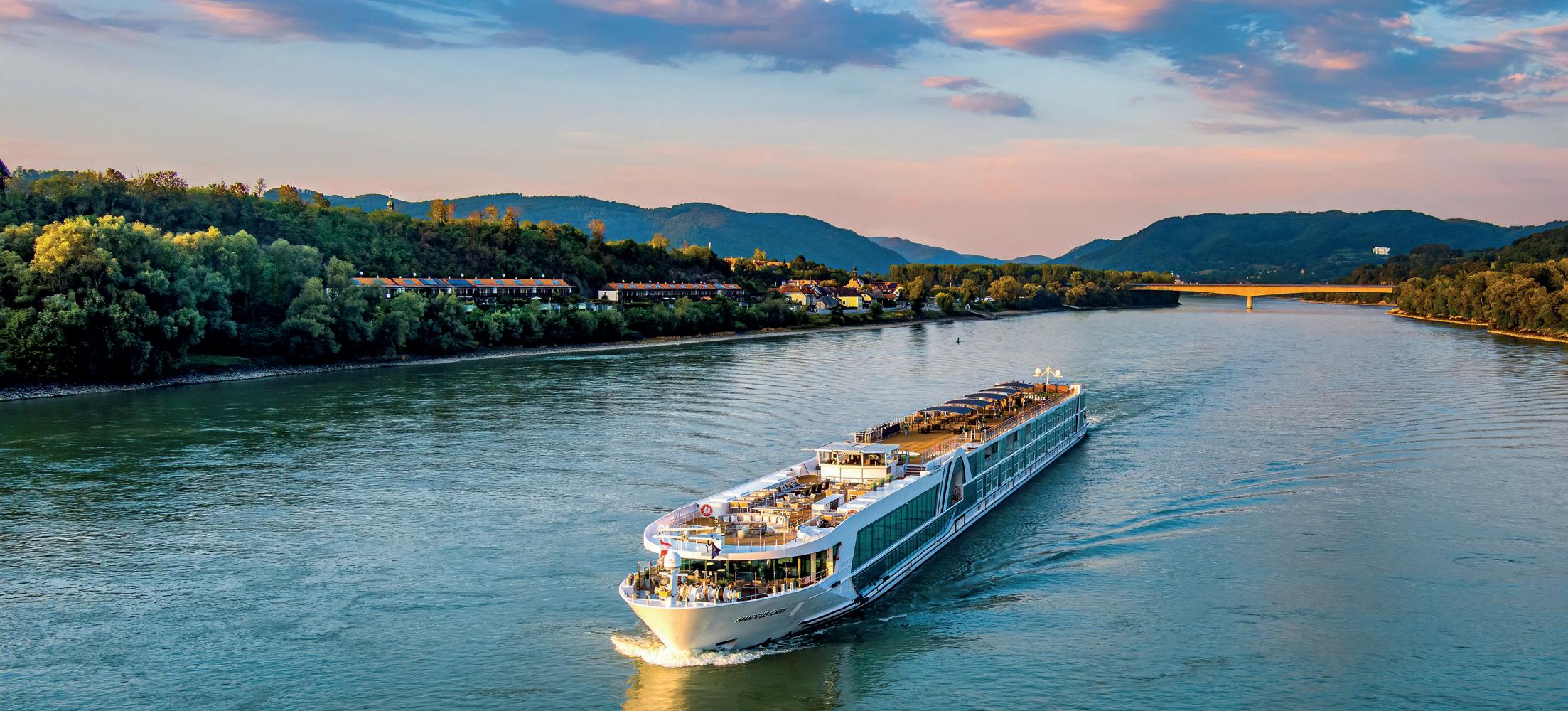
Launched in 2022, the MS Amadeus Cara is one of the most comfortable river cruisers in Europe. The multinational crew is dedicated to the highest standards of service.
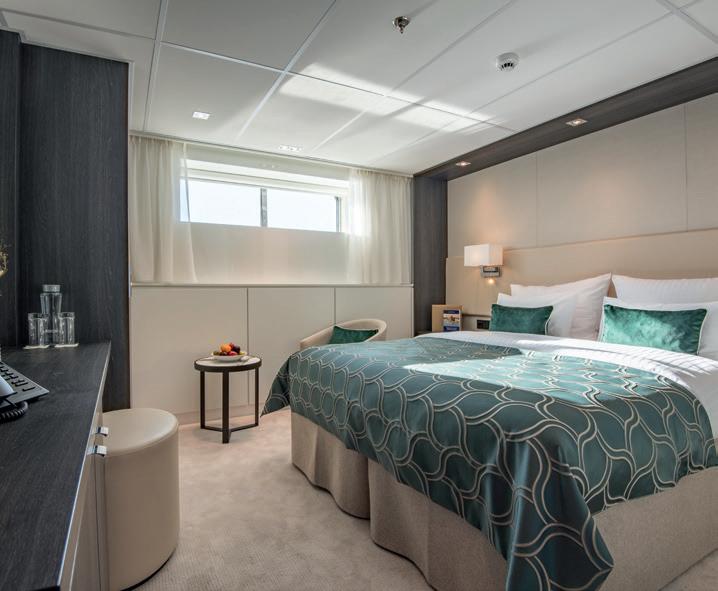
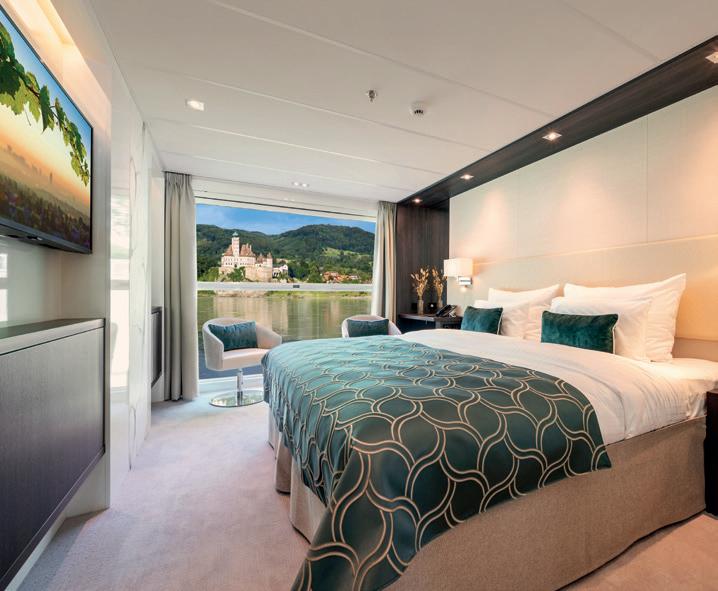
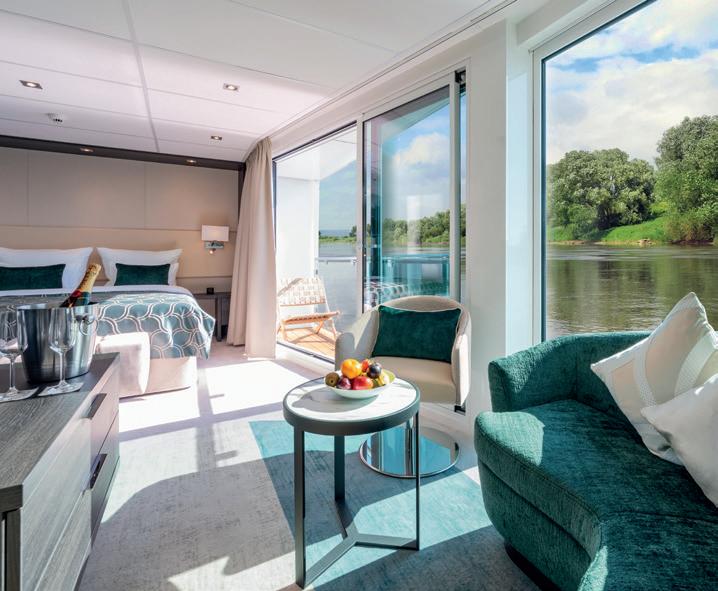
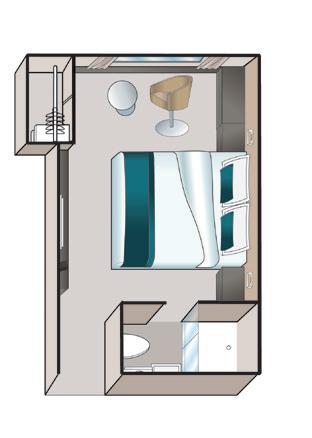
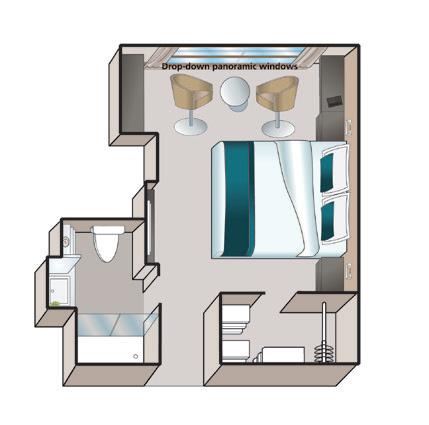
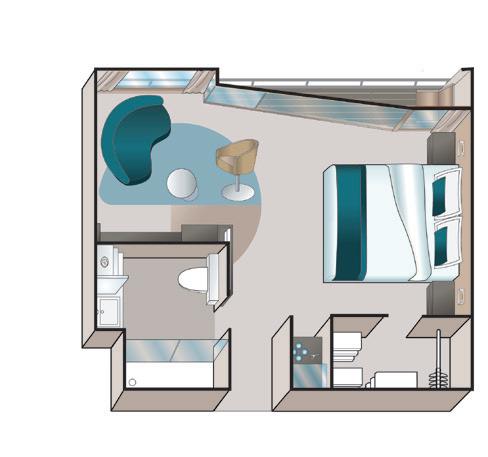
With a floor area of 16m 2 (Haydn deck) or 17.5m 2 (Strauss and Mozart decks) the cabins are reasonably spacious by the standards of river cruisers. All have windows to the outside and are equipped with the facilities one would expect of a first-class hotel such as adjustable airconditioning, telephone, TV and safe. Bathrooms have showers only. Special attention has been paid to noise insulation.
In layout and furnishings the cabins are very similar, the significant differences being the size of windows and height above water level (higher cabins enjoy better views and fewer stairs).
Cabins on the top decks (Mozart and Strauss) are the most desirable, with floorto-ceiling windows which slide open, and minibars. There are ten suites (Mozart) measuring 26.4m 2 with a corner sofa area and small balcony. Cabins on the lowest (Haydn) deck have smaller windows which do not open. There are no single cabins as such but we are allocating some twin-bed cabins for single occupancy.
The public areas include the lounge and bar, a library area and a restaurant which can seat everyone at a single sitting. The sun deck has a tented area for shade.
www.lueftner-cruises.com
Haydn deck cabin
Strauss/Mozart deck cabin
Mozart deck suite
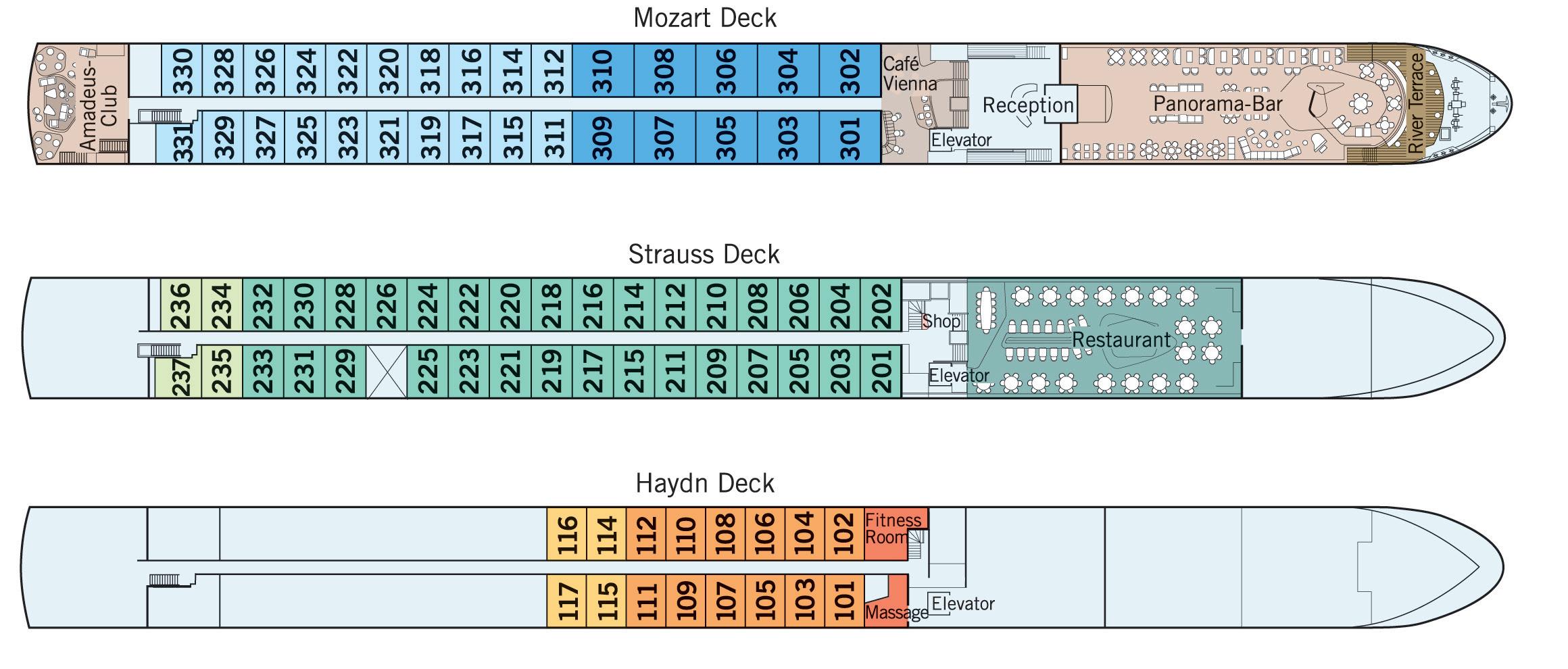
KEY
Haydn Front: Dark orange
Strauss Back: Pale green
Strauss Front:
Dark green
Mozart Standard: Pale blue
Mozart Suites: Dark blue
CABINS
Haydn Front – lowest deck For double or single occupancy
Strauss Back – middle deck For double or single occupancy
Strauss Front – middle deck For double or single occupancy
Mozart Standard – top deck For double or single occupancy
Mozart Suites – top deck Not available for single occupancy
Cabins towards the front of the ship are quieter than those further back.
Please contact us or visit our website www.martinrandall.com for prices.
FITNESS FOR THE FESTIVAL
Quite a lot of walking is necessary to reach some of the concert venues and to get around the towns we visit.
You will sometimes need to walk for up to 20 minutes/1 kilometre each way in order to attend the concerts, with no additional transportation possible. Even in big cities taxis are not readily available or cannot get close enough to the ship or the concert venue to justify their use.
Many of the concert venues do not have a lift. You need to be averagely fit, surefooted and able to manage everyday walking and stairclimbing without difficulty.
We are very happy to talk you through each day’s manoeuvres, as these differ festival to festival, to identify if it may be necessary to opt out at any point.
A higher fitness level is required for the Walking Party. You will need to be in good physical condition, and used to country walking over hilly terrain. There is not always the opportunity to return to the hotel to freshen up before every concert or dinner.
If you have a medical condition or a disability which may affect your holiday or necessitate special arrangements being made for you, please discuss these with us before booking – or, if the condition develops or changes subsequently, as soon as possible before departure.
Thursday, 8th July: London Heathrow to Munich (LH 2471) departing at 09.00 and arriving at 11.55.
Break the drive to Passau with lunch at Landshut, a former capital of Bavaria. There are two hours here; it should be possible to see the main street with its Renaissance and Baroque house fronts, the great Gothic church of St Martin or the precociously Italianate Renaissance ducal palace.
Thursday, 15th July: Transfer directly from the ship to the airport. Munich to London Heathrow (LH 2476) departing at 14.35 and arriving at 15.40.
Option 2 – London Heathrow (later)
Thursday, 8th July: London Heathrow to Munich (LH 2473) departing at 10.50 and arriving at 13.45. Drive directly from the airport to the ship at Passau, a journey of under two hours.
Thursday, 15th July: Coaches take you first to the centre of Munich, where you have about four hours of free time. Munich to London Heathrow (LH 2480) departing at 18.35 and arriving at 19.40.
Option 3 – Manchester
Thursday, 8th July: Manchester to Munich (LH 2501) departing at 10.35 and arriving at 13.35. Drive directly from the airport to the ship at Passau, a journey of under two hours.
Thursday, 15th July: Coaches take you first to the centre of Munich, where you have about two hours of free time. Munich to Manchester (VL 2502) departing at 16.00 and arriving at 17.05.
Actual flight schedules for July 2027 are not yet available. These are the most likely times (they rarely change) but they will be updated as soon as the times for next summer are released.
THE NO-FLIGHTS OPTION
If you are not joining our flight/rail options, you are welcome to join our coach transfers if your travel arrangements coincide with any of the options above.
PRE-FESTIVAL TOUR
If you are opting to include your travel, pre-festival tour participants return to the UK on travel Option 1 (returning to London Heathrow).
We charge for travel, if you are opting for it, as part of your pre-festival tour booking. You therefore pay the ‘no flights’ price for the festival.
Illustration: Dürnstein, early 20th-century etching by Luigi Kasimir.
WALKING THE DANUBE CONCERTS & COUNTRY WALKS
8–15 July 2027 (m n 421)
8 days
Speaker: Richard Wigmore
Six private concerts in beautiful and appropriate buildings, part of our Music Along the Danube festival, with the addition of seven country walks.
A singularly beguiling combination of music and place: some the most beautiful locations in the Danube valley are also where some of the greatest composers of the Western classical tradition lived or worked.
Stays in hotels in Vienna, Dürnstein and Melk rather than on the ship.
Led by expert speaker, critic and musicologist Richard Wigmore.
ITINERARY
Day 1. Fly at c. 9.00am from London Heathrow to Vienna (Austrian Airlines). Drive to Dürnstein, perhaps the loveliest little town on the river, where two nights are spent. Walk up to the ruins of a castle where Richard the Lionheart was once imprisoned, and which cling to a steep hill behind the town.
Day 2: Dürnstein. Leave the hotel on foot for this morning’s walk (c. 2.5 hours). A short climb on a small road into the vine-clad hills overlooking the Danube. The terrain is easy underfoot as the walk is predominantly on quiet, shaded roads. Return to Dürnstein for dinner, and an evening recital in the Prälatensaal of Dürnstein Abbey (see page 6).
Day 3: Leopoldsberg, Vienna. Drive up the Leopoldsberg, a high hill with fine
views over the capital and the Danube valley. Walk down through beech woods, vineyards and salubrious ivy-clad suburbs on a c. 2 hour walk on footpaths, country roads and quiet streets. Late-afternoon concert in the Palais Ferstel (see page 7). First of three nights in Vienna.
Day 4: Vienna, Eckartsau. A free morning in Vienna for independent exploration; or participate in an optional walking tour of the city. Drive to Schloss Eckartsau for a short circular walk (1.5 hours), in the national park surrounding the Schloss, before an afternoon recital (see page 8).
Day 5: Eisenstadt. Drive to the Burgenland for a walk of c. 2 hours through gently rolling countryside. The ‘Weinrieden’ trail takes you through the oldest vineyards with a view of the lake. Continue by coach to Eisenstadt in time for an afternoon concert in the Bergkirche (see page 9).
Day 6: Melk. Drive to Felbring for a morning woodland walk through landscapes of beech and pine, with vistas across the Danube Valley. Walk for c. 2 hours on a mixture of grassy footpaths and stony tracks, on level terrain with some downhill and uphill sections (sturdy walking boots are necessary). In the afternoon, there is a short drive to Melk, a delightful little town on the Danube nestling under the abbey. Afternoon concert (see page 10). First of two nights in Melk.
Day 7: Grein, Linz: Drive along a picturesque road beside the Danube to the little riverside town of Auhmühle. Walk for c. 2 hours on moderately gentle woodland
paths and quiet roads. After lunch, depart for Linz, for the final concert in the Palais Kaufmännischer Verein (see page 11).
Day 8: Grafenegg. Schloss Grafenegg is a medieval country residence, which was augmented with one of Austria’s most flamboyant and successful essays in Gothic Revival. Visit here (no walk today). Travel on by coach to Vienna Airport. Return to Heathrow by c. 6.45pm.
PRACTICALITIES
Included: travel by coach for transfers and excursions; 6 private concerts; accommodation as described below; breakfasts, 6 lunches (of which 2 picnics) and 6 dinners with wine, water and coffee; all admission charges; all tips for restaurant staff and drivers; all state taxes; the services of the lecturer and tour manager.
Accommodation: Richard Löwenherz, Dürnstein (richardloewenherz.at). Grand Hotel Wien (grandhotelwien.com): Hotel zur Post, Melk (post-melk.at)
How strenuous? This is a walking tour, graded ‘moderate’. It is essential for participants to have appropriate walking footwear, be in good physical condition and to be used to country walking with uphill and downhill content. There are a few moderately steep climbs, but no walk is more than 6 miles or 3 hours. (Please see www. martinrandall.com/about-us for our walking tour grading system).
Small group: between 12 and 22 participants.
KING LUDWIG II AND THE WITTELSBACH PALACES OF BAVARIA
Pre-festival tour:
3–8 July 2027 (m n 420 )
6 days • Speaker: Tom Abbott
Explore eight royal palaces and castles set against the breathtaking backdrop of Germany’s most beautiful state.
Learn about the lives, loves and legacies of King Ludwig II and the House of Wittelsbach, rulers of Bavaria for over 700 years.
Art and architecture from the Renaissance through to Late Romanticism, much of it opulent and theatrical.
ITINERARY
Day 1: Schleissheim, Munich. Fly at c. 9.00am from London Heathrow to Munich (Lufthansa). Between airport and city, the palace and garden at Schleissheim form a rare ensemble of Baroque taste. There is a gallery of Baroque art, sculpted stucco of exceptional quality in the state apartments, Hofgarten (Court Garden) and a collection of Meissen porcelain in Schloss Lustheim. First of two nights in Munich.
Day 2: Munich. The Residenz in the centre of the city was the principal Wittelsbach palace and seat of government; a magnificent sprawl of buildings, courtyards, state apartments and museums of every period from Renaissance to the end of the 19th century. There are fine works of art and sumptuous interiors of the highest importance, especially the Rococo interiors and the Cuvilliés Theatre (subject to confirmation).
Day 3: Nymphenburg, Linderhof. Drive to the city’s outskirts and the palace
and park of Nymphenburg, birthplace of Ludwig II. After lunch drive to Ettal, site of the only one of Ludwig II’s commissioned castles to have been completed. 1870s Linderhof was reputed to have been the King’s favourite castle; it draws, like Herrenchiemsee, on French influences, lavish interiors in Renaissance and Baroque styles, extravagant terrace gardens and Oriental adornments. First of three nights in Hohenschwangau.
Day 4: Hohenschwangau, Neuschwanstein. Visit Hohenschwangau castle, site of Ludwig II’s childhood, owned by his parents Maximilian II of Bavaria and Princess Marie of Prussia. Majestic lakeside Alpine location, frescoes featuring medieval Swan-Knight Lohengrin which led to Ludwig II’s obsession with Wagner. Then continue to Neuschwanstein, the famous fairytale turreted castle ordered by Ludwig II in homage to Wagner though never completed.
Day 5: Herrenchiemsee. In the countryside southeast of Munich and surrounded by a park, woodland and a great lake, Schloss Herrenchiemsee is a copy of Versailles. Ludwig II’s megalomaniac hymn of homage to the absolutism of Louis XIV, his final folly, brought the Bavarian state to the brink of bankruptcy.
Day 6: Berg, Starnberg. Leave Hohenschwangau, drive to Berg and the mock Gothic castle to which Ludwig II retreated from his ministers, and where he was placed under house arrest after his forced abdication in 1886 on grounds of insanity. Lake Starnberg surrounds
the castle and is the scene of Ludwig II’s death and that of his doctor, officially by drowning. Visit the Memorial Chapel and have lunch in Starnberg. Fly from Munich, returning to London Heathrow at c. 3.40pm.
If combining this tour with the Music Along the Danube festival: After lunch, transfer by coach (c. 2h 45m, including a 30-minute stop) to the ship in Passau to join the festival.
PRACTICALITIES
Included: travel by private coach throughout; accommodation as described below; breakfasts, 1 lunch and 4 dinners with wine; all admissions; tips for waiters, drivers and guides; all state and airport taxes; the services of the lecturer and tour manager.
How strenuous? This is a strenuous tour with long coach journeys and a lot of walking, climbing stairs, and standing around in the castles and gardens. There are a couple of steep uphill walks to reach castles. Average distance by coach per day: 65 miles.
Group size: between 10 and 24 participants.
MAKING A BOOKING
1. Booking Option. We recommend that you contact us first, or visit our website, to make a booking option which we will hold for 72 hours. To confirm it, please send the deposit within this period – 15% of your total booking price. Alternatively, make a definite booking straight away via our website.
2. Definite booking. Full payment is required if you are booking within 12 weeks of the date the festival begins.
3. Our confirmation. Upon receipt of the deposit we shall send you confirmation of your booking. After this your deposit is non-returnable except in the special circumstances mentioned in our Booking Conditions. Further details about the festival may also be sent at this stage, or will follow shortly afterwards.
Participation in our festivals is a very different experience from conventional group travel.
No repetitive or redundant announcements, no herding by elevated umbrella, no unnecessary roll calls, little hanging around. We work on the assumption that you are adults, and our staff cultivate the virtue of unobtrusiveness.
We provide sufficient information to enable you to navigate the festival events without needing to be led. However, festival staff are also stationed around the events to direct you if needed.
MARTIN RANDALL TRAVEL LTD
10 Barley Mow Passage
London W4 4PH
United Kingdom
Tel +44 (0)20 8742 3355 info@martinrandall.co.uk www.martinrandall.com
Contact the London office from the USA and Canada:
Tel 1 800 988 6168 (toll free) northamerica@martinrandall.com
MARTIN RANDALL AUSTRALASIA
PO Box 1024
Indooroopilly QLD 4068
Australia
Tel 1300 55 95 95 New Zealand 0800 877 622 anz@martinrandall.com.au
MARTIN RANDALL TRAVEL…
is Britain’s leading specialist in cultural travel and one of the most respected tour operators in the world.
MRT aims to produce the best planned, best led and altogether the most fulfilling and enjoyable cultural tours and events available. They focus on art, architecture, archaeology, history, music and gastronomy, and are spread across Britain, continental Europe, the Middle East, North Africa, India, Japan and the Americas.
For 2027 we have planned around 200 expert-led tours for small groups (usually 10–20 participants), six music festivals of our own devising such as Music along the Danube , several short history and music breaks, an extensive programme of online talks, and single days in London.
For nearly 40 years the company has led the field through incessant innovation and improvement, setting the benchmarks for itinerary planning, operational systems and service standards.
To see our full range of cultural tours and events, please visit www.martinrandall.com