The day-by-day itinerary including concert details.
12. DISCOVER THE PLACE
Vicenza & Palladio’s villas – beauty and genius.
14.
MEET THE MUSICIANS
International musicians of the highest calibre.
22.
TRAVEL OPTIONS
A range of ways to travel to and from the festival.
20.
ACCOMMODATION
Choose between four 4-star hotels, three in the centre
Published: May 2026
23. MAKING A BOOKING
Details of how to book.
24.
PRE- & POSTFESTIVAL TOURS
Extend your stay in the Veneto with tours that have been designed to link with the festival.
MUSIC IN THE PALLADIAN VILLAS
AN INTRODUCTION
The Veneto stands as one of the supreme cultural centres of Renaissance and Baroque Italy.
It was here that Andrea Palladio (1508–80) transformed the ancient classical tradition into something entirely new, and the great patrician and merchant families of Venice were quick to commission him. Looking to the fertile plains of the terraferma for both agricultural investment and civilised retreat, they created houses that were simultaneously working estates and temples of cultured leisure – places designed for the pleasures of the mind and the senses: conversation, poetry, fine food, and above all, music.
No art form was more central to villa life than music. The most immediately transporting of the arts, in its manifold variety of mood and meaning, it accompanied every aspect of that rural idyll – and happily, the great age of the villa, from the middle of the 16th century to the middle of the 18th, coincides precisely with the great age of music in Venice and the Veneto. It is this magnificent convergence of architecture and music that lies at the heart of our festival.
The formula we have pioneered at Martin Randall Travel – bringing together exceptional musicians with incomparable buildings – lends itself nowhere more naturally than to the villas of the Veneto. With seven performances in some of the finest masterpieces Palladio ever designed, this is a programme I am particularly proud of.
Nardus Williams and Elizabeth Kenny open the festival with a superb Strozzi programme in the frescoed Villa Caldogno, followed the same evening by a dramatic journey through Monteverdi’s madrigals, culminating with Il Combattimento – fierce, theatrical and unmissable – performed in the spectacular Teatro Olimpico in Vicenza.
The next day takes us out into the rolling countryside and past fertile plains to Palladio’s first villa – Godi Malinverni – for a concert by the outstanding Solomon’s Knot. Exciting new ensemble Ayres Extemporae then perform works by Bach and his Italian forebears in the majestic Villa Contarini Camerini.
Perched high on a hilltop, La Rocca Pisana was inspired by Palladio’s La Rotonda. Here Theatro dei Cervelli animate the space with a creative programme of Cavalli, Monteverdi and others. That
evening we move to a darker mood, as Accademia Bizantina and renowned counter-tenor Andreas Scholl perform a moving programme including Vivaldi’s intensely poignant Stabat Mater
The festival concludes with Porpora’s Mitridate in the dramatic setting of the Teatro Olimpico, brought to us by acclaimed ensemble il Pomo d’Oro. With dazzling arias originally intended for Farinelli, this is a fitting culmination to an unforgettable union of music and place.
Lizzie Watson, Artistic Director
THE FESTIVAL PACKAGE
The price includes:
— Seven private concerts in historic and appropriate buildings.
— Accommodation for five nights – choose between four hotels. See page 20.
— Breakfasts, one lunch, three dinners and interval drinks.
— Talks on the music by Professor John Bryan.
— Coach travel between the airport and Vicenza, and to concert venues when not reached on foot.
— All tips, taxes and admission charges.
— A detailed programme booklet.
— The assistance of festival staff.
Optional extras:
— A choice of pre- and post-festival tours. See pages 24–25.
— Arriving a day early in your festival hotel. See page 20.
— Extra dinners, so that each evening is spent in the company of other participants. Details will be available at a later stage.
— A range of walks and visits led by art historians. Details will be available at a later stage.
THE SPEAKER
Professor John Bryan . Emeritus professor of Music at the University of Huddersfield, and a practising musician, he is a member of the Rose Consort of Viols and has performed with Musica Antiqua. An artistic adviser to York Early Music Festival, he founded the North East Early Music Forum, is chair of the Viola da Gamba Society and has been guest conductor of York Opera and The Academy of St Olave’s. His book Early English Viols: Instruments, Makers and Music was published by Routledge in 2016.
MARTIN RANDALL FESTIVALS
This festival follows the format established by Martin Randall over 30 years ago with our Danube Music Festival: site-specific concerts for a private audience, uniting exceptional music with exceptional places. Since then we have organised festivals along the Danube, Rhine, Loire, Main and Seine rivers; in Oxford, Suffolk, York, Lincoln, Canterbury, the Cotswolds and the West Country; to Seville, Toledo, Burgos, Santiago, Venice, Florence, Rome, Bologna, Sicily, and the Veneto; to St Petersburg, Prague, through Thuringia, and the Alentejo.
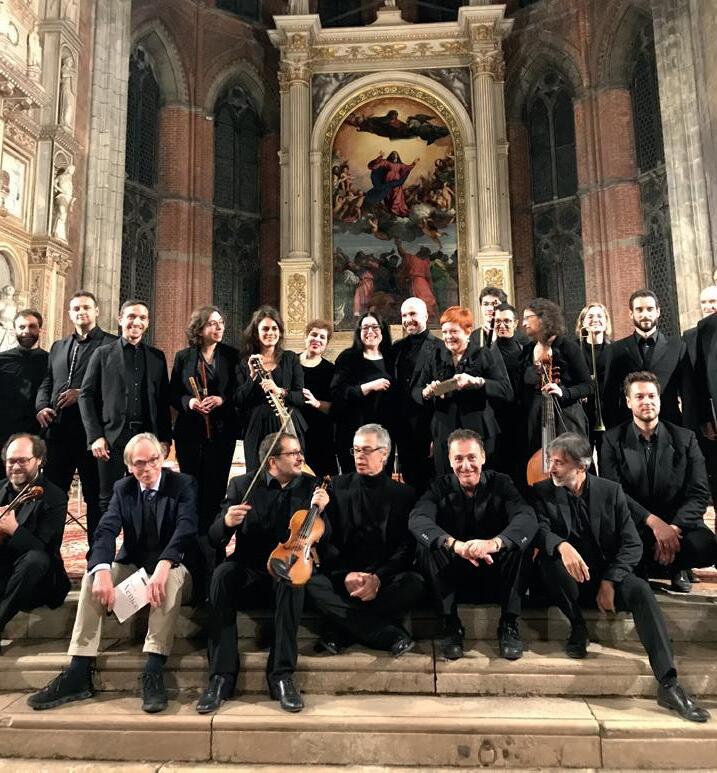
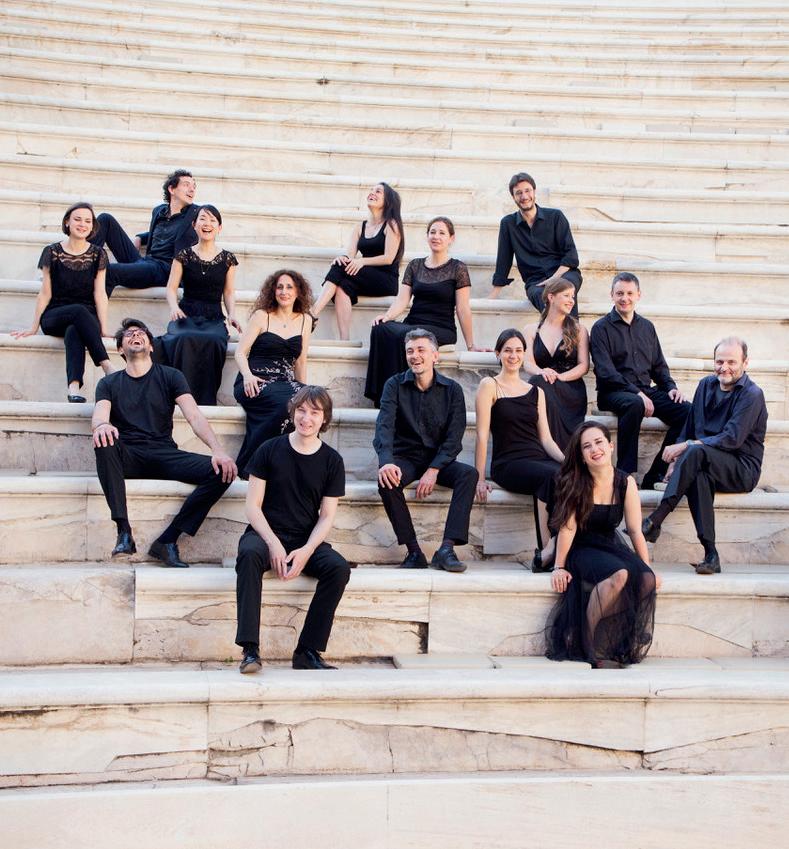
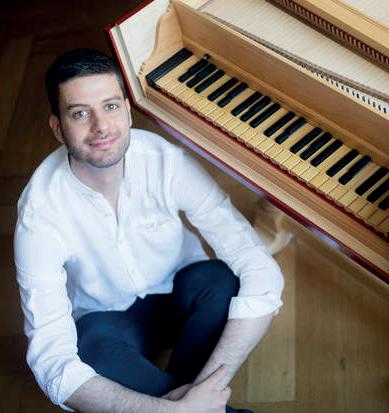
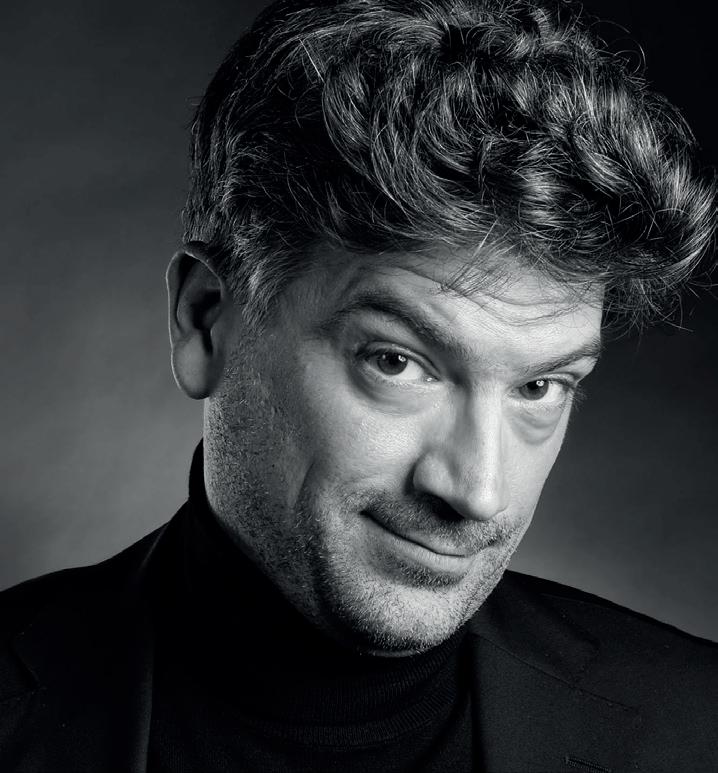
Meet the musicians. See pages 14–18 for their biographies.
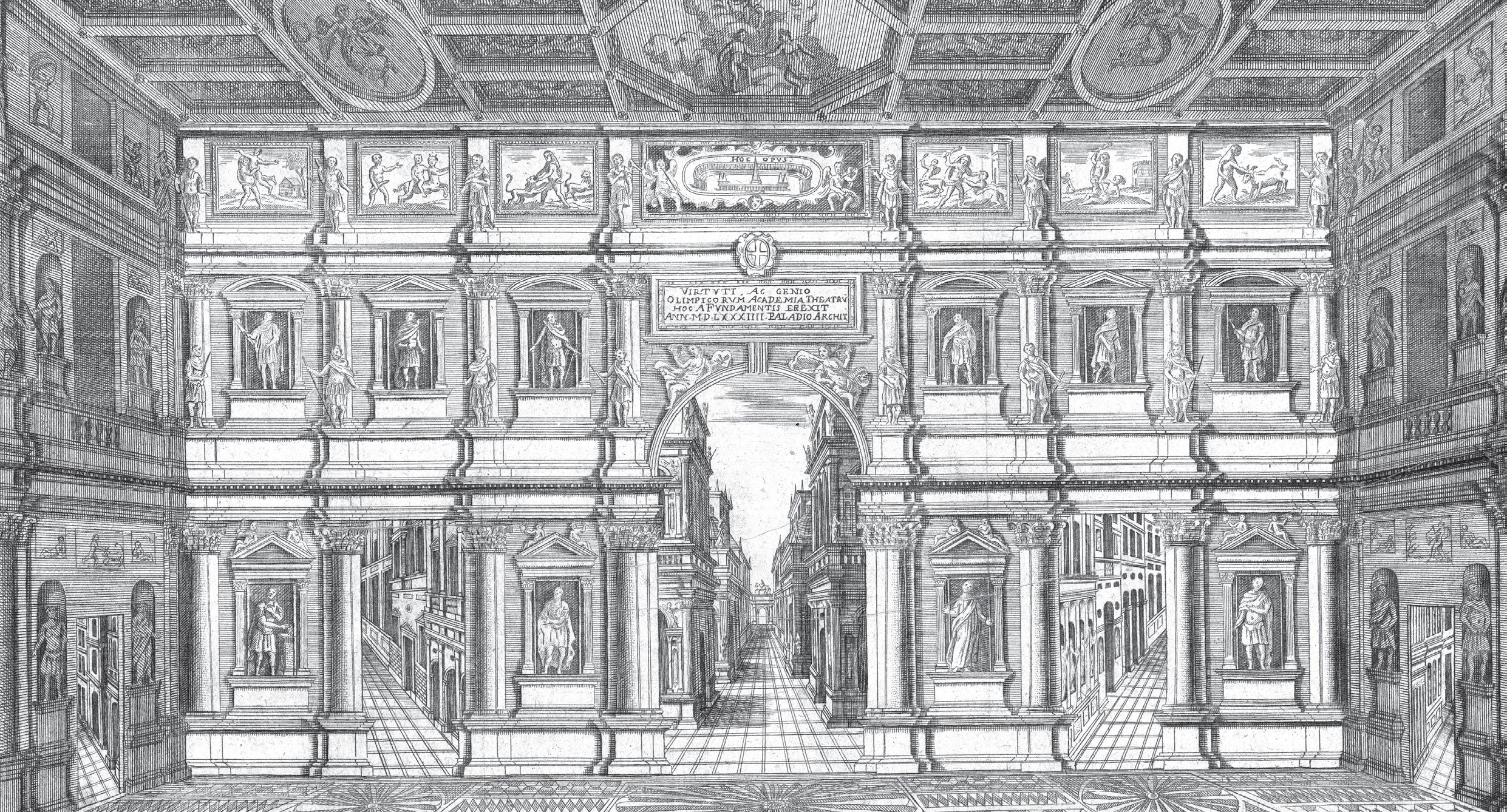
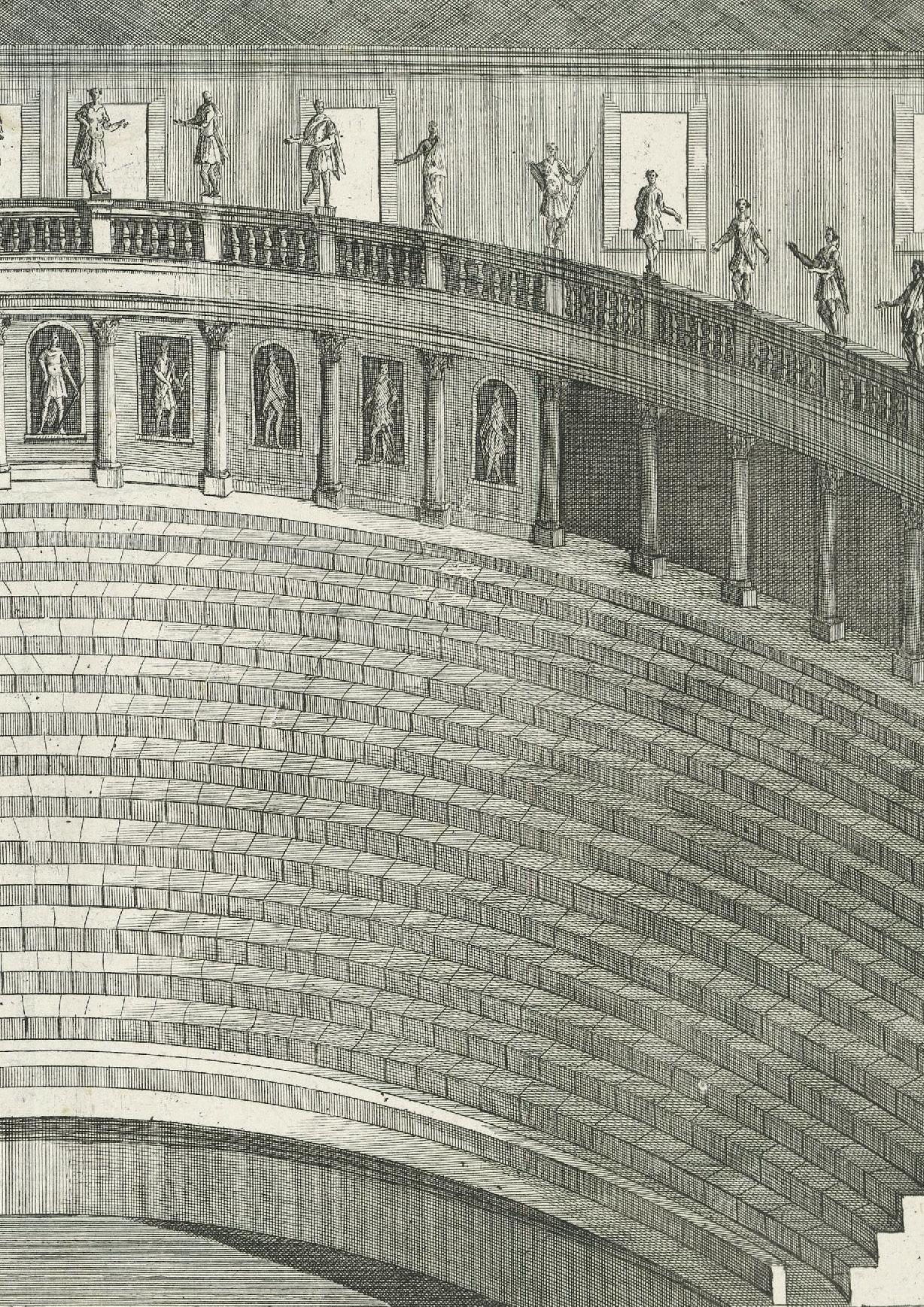
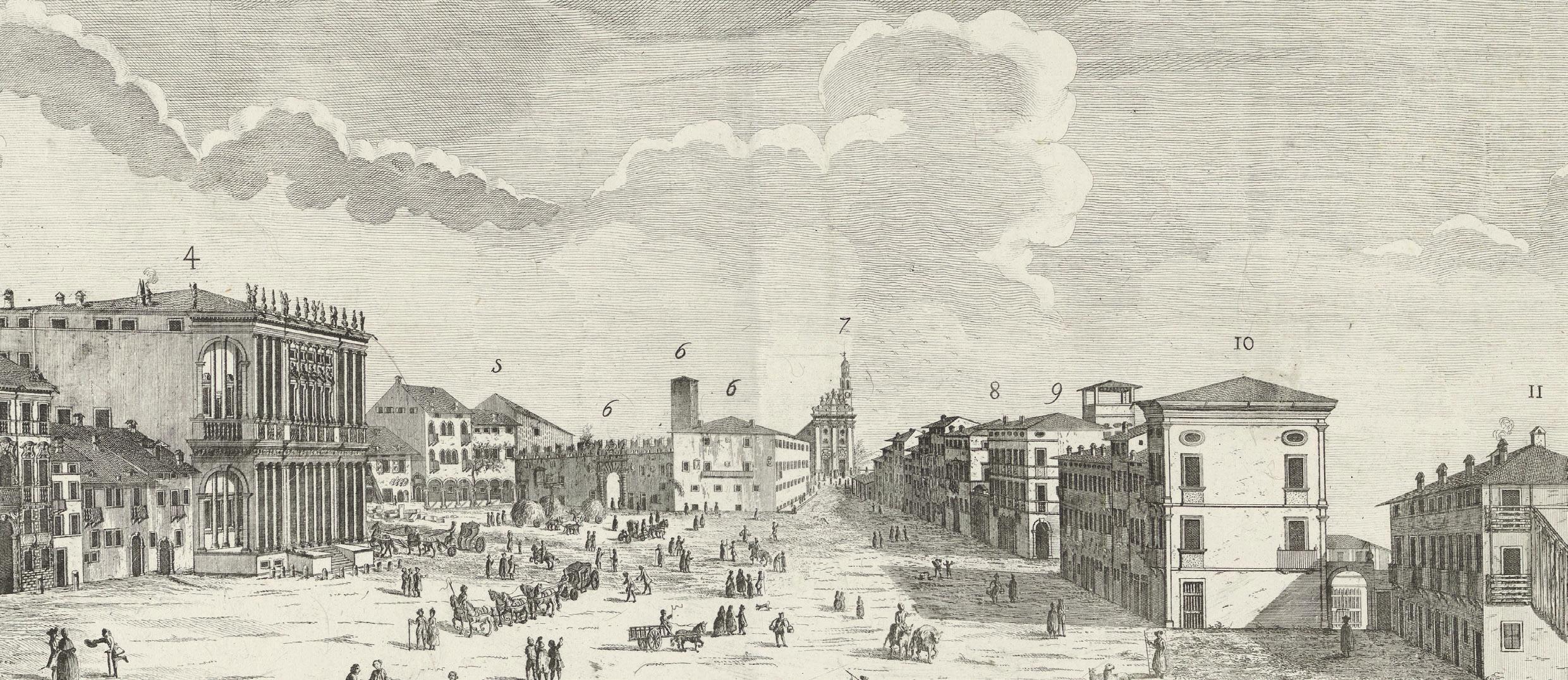
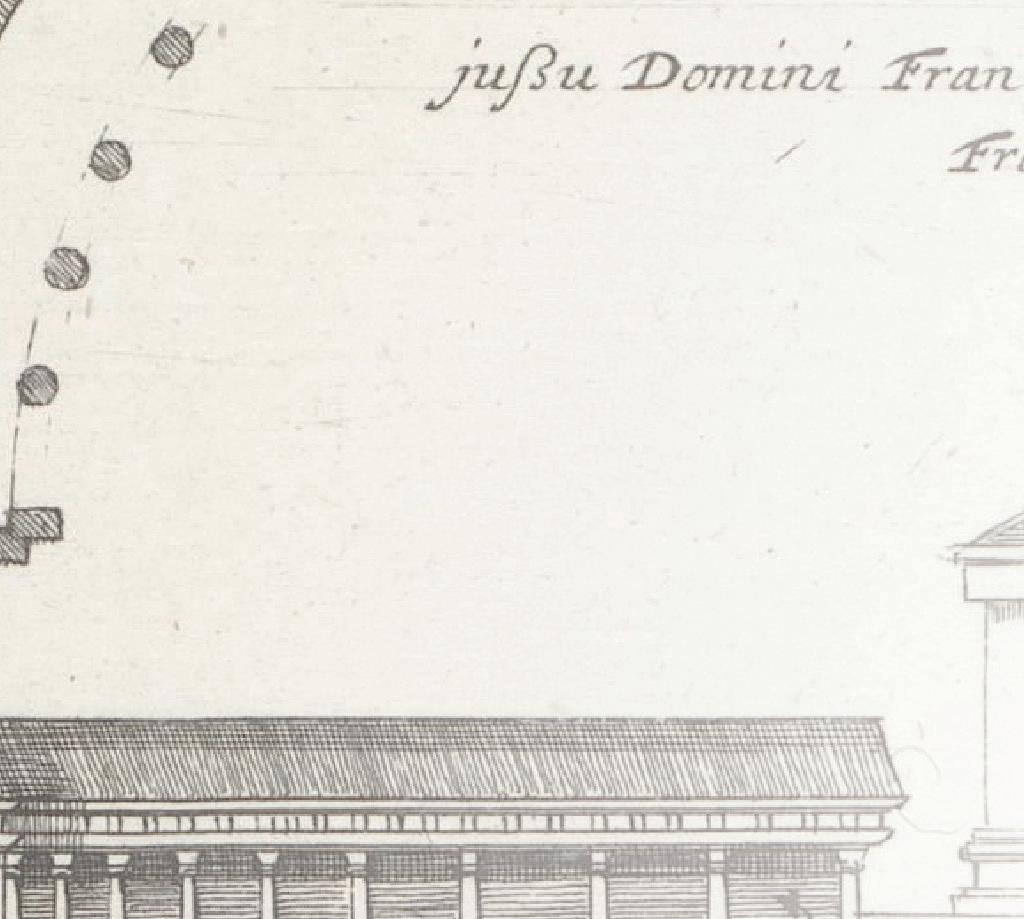
Illustration: Vicenza, Teatro Olimpico, 18th-century engraving.
THE FESTIVAL PROGRAMME
Arrive a day early
Sunday 6th June
Day 1
Monday 7th June
Day 2
Tuesday 8th June
We are offering the option of arriving at your hotel in Vicenza a day before the festival begins.
Fly from London to Venice or Verona, or make your own way independently. Coach transfer to Vicenza. For travel options, see page 23.
Fly from London to Venice, or make your own way independently. Coach transfer to Vicenza. For travel options, see page 23.
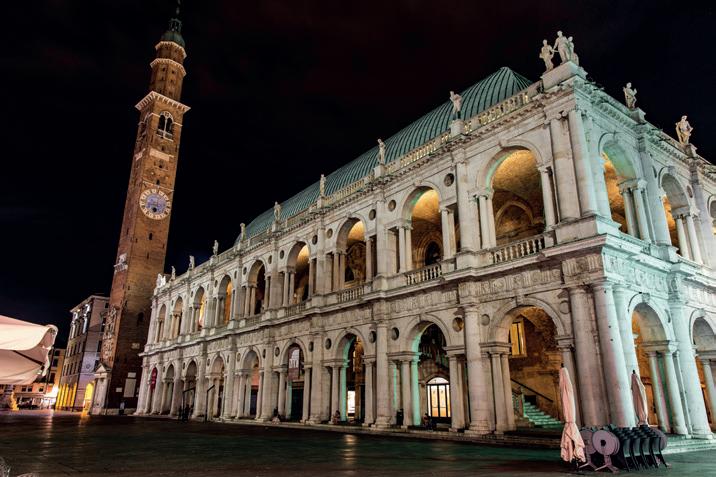
The city of Vicenza is an architectural jewel of the Italian Renaissaince and was home to its most famous architect, Palladio. Palladio’s presence is felt throughout the city with the Basilica Palladiana dominating the city scape, numerous palazzi, and one of the festival’s key concert venues; Palladio’s Renaissance theatre, the Teatro Olimpico.
There is some free time to become acquainted with Vicenza.
Settle into your chosen hotel before a drinks reception and dinner.
There is a morning lecture on the music before setting off by coach or minibus to Villa Caldogno where the first concert of the festival takes place.
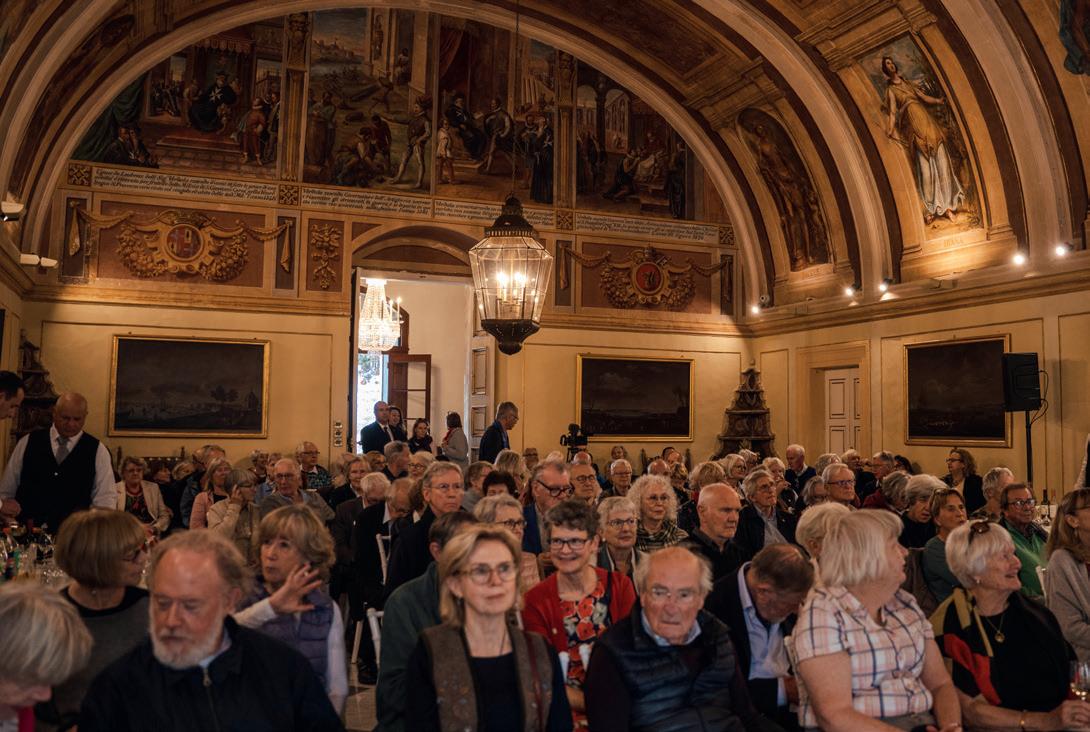
Due to the size of the hall, the concert is performed twice today, and the audience split – half to attend in the morning, the other half in the early afternoon.
If attending the morning concert, return to Vicenza for an independent lunch, with optional visits taking place later that afternoon; if your concert takes place in the afternoon, optional visits are available in the morning, followed by an independent lunch.
Villa Caldogno, attributed to Palladio and built between 1540–1570 for the Caldogno merchant family, is a unesco world heritage site. The villa’s magnificent central salon, where the concerts take place, is decorated with remarkable Renaissance frescoes depicting aristocratic entertainments, including intimate musica da camera performances by courtesans.
Concert, 11.00am or 2.15pm
Villa Caldogno, Caldogno Strozzi & Friends
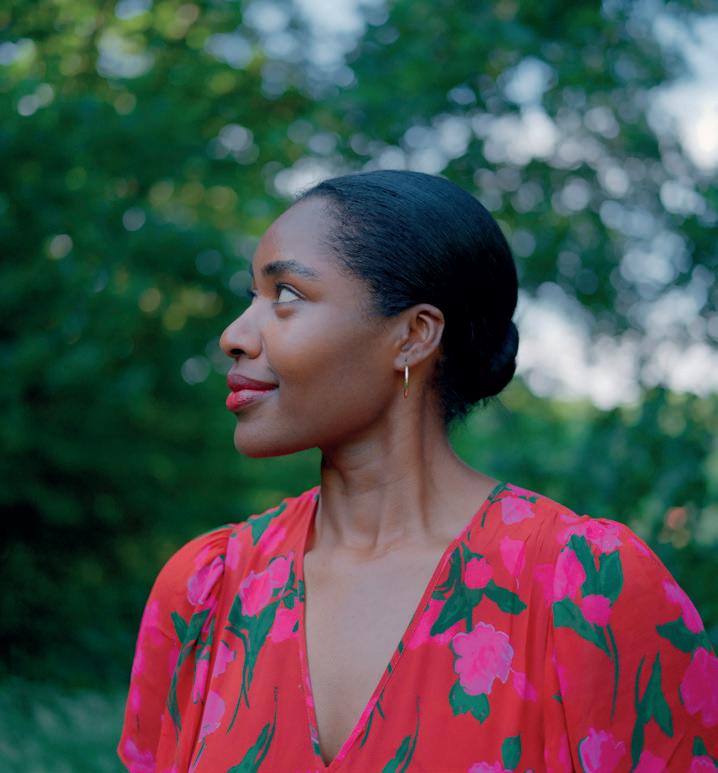
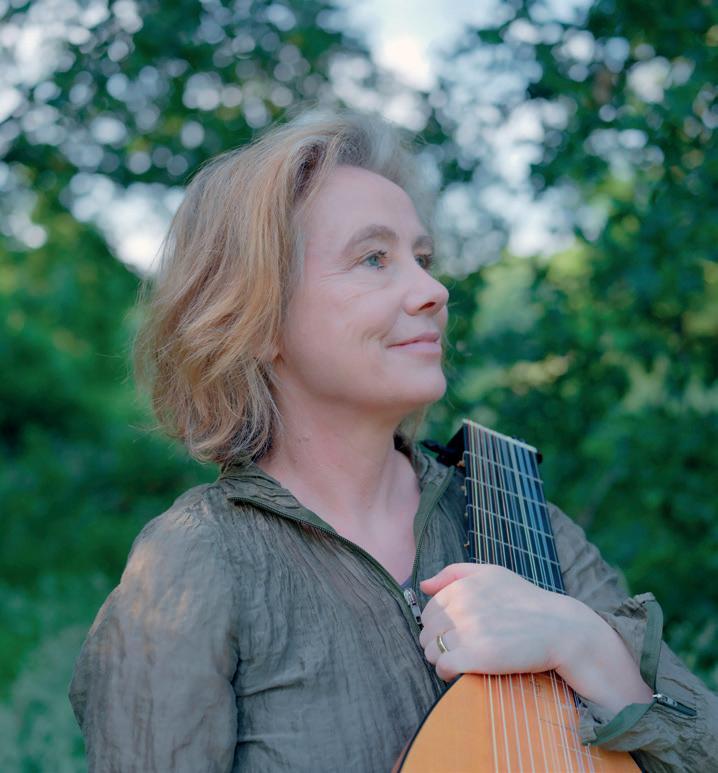
Nardus Williams soprano Elizabeth Kenny theorbo
Nardus Williams and Elizabeth Kenny bring the voice of “La virtuosa cantatrice” to life in a programme exploring the extraordinary cross currents of vocal writing that blew across northern Italy in the late sixteenth and early seventeenth centuries. Venice in particular with its
position as a hub of international trade, became a hotbed of artistic innovation. Barbara Strozzi performed her own works in private, exclusive settings but her published works and her often ironical social commentary carried her influence much further.
Before her, composers such as Maddalena Casulana explored the female voice in ensemble and solo songs. Monteverdi, Cavalli, and later, Antonio Vivaldi, all working in Venice, showed that the power of virtuoso singing, whether underpinned by a single plucked instrument or by a whole orchestra, could magnetise an audience with stories in sound.
Dinner is included for all before the evening performance.
‘It was a huge treat to hear the music in such extraordinary surroundings.’
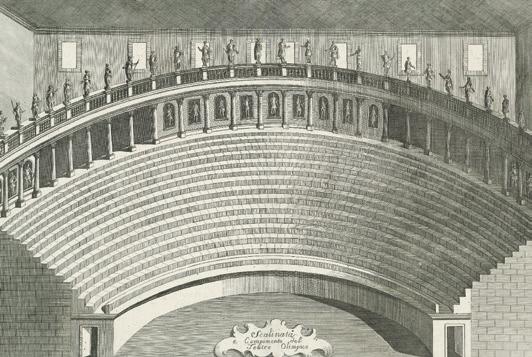
Teatro Olimpico, designed by Andrea Palladio in 1580, was his final masterpiece and the first purpose-built indoor theatre of the modern age. Inspired by the grandeur of Ancient Roman theatres yet adapted for Renaissance audiences, it remains one of the world’s most extraordinary performance spaces.
Completed by Vincenzo Scamozzi, the theatre is famed for its breathtaking illusionistic stage set: a labyrinth of perspectival streets created for the first production of Oedipus Rex . Astonishingly preserved, the Teatro Olimpico offers audiences the rare experience of entering a living vision of the ideal Renaissance city.
Concert, 8.30pm
Teatro Olimpico, Vicenza Il Combattimento di Tancredi e Clorinda
La Venexiana Gabriele Palomba conductor
A musical transformation in context: Monteverdi believed he had achieved something unique in Il Combattimento di Tancredi e Clorinda , published in his Eighth Book of Madrigals of 1638. Here he created music that matched itself to the intense action of the battle and required his madrigal performers to act as well as sing, calling it stile concitato .
This evening’s programme builds us up to Il combattimento through successive excerpts from his Third to Seventh books of Madrigals, showing the thrilling way in which Monteverdi’s expressive language emerged over the course of several decades and crystallised following his arrival in Venice.
Illustration: Vicenza, Teatro Olimpico.
THE FESTIVAL PROGRAMME
Day 3
Wednesday 9th June
Once again the audience is split today due to the intimate size of the concert venues.
The first group attends a morning concert at Villa Godi Malinverni, and remains there for lunch. In the afternoon, there is an afternoon concert in Villa Contarini Camerini before returning to Vicenza. The second group attends a morning concert in Villa Contarini Camerini before travelling to Villa Godi Malinverni for lunch, then remains there for the afternoon concert.
Nestling in foothills twenty miles north of Vicenza, the Villa Godi Malinverni is the earliest major villa design attributable to Andrea Palladio. The monumentality of its impact arises from its simple, almost cuboid massing and sophisticated set of proportions. Inside it is richly frescoed by Giovanni Battista Zelotti. The concert is by kind permission of Christian G. Malinverni.
Concert, 11.30am or 3.30pm:
Villa Godi Malinverni
Solomon’s Knot
Programme to be confirmed.
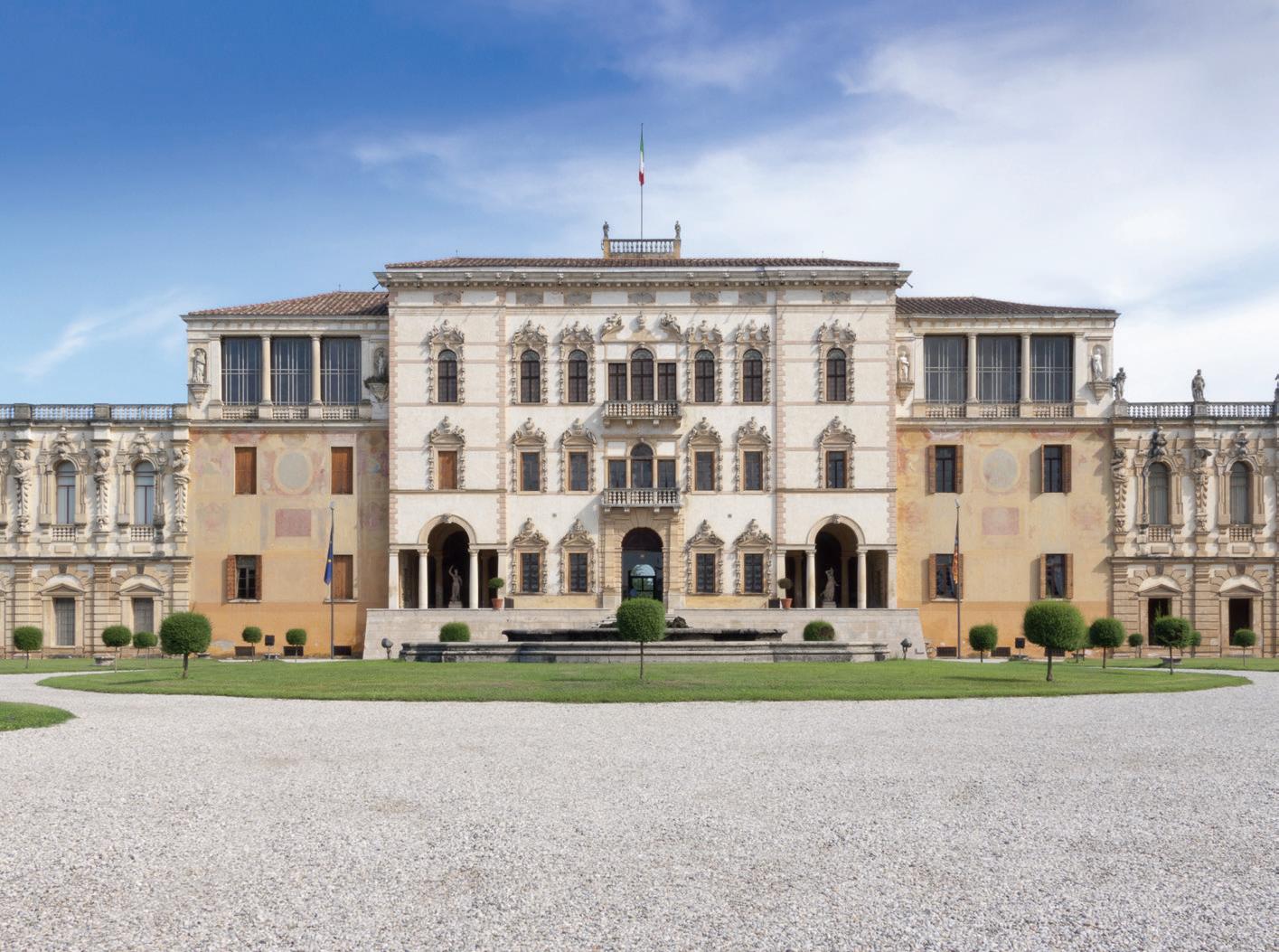
The Contarini were one of the richest and most powerful of Venetian clans, and their villa at Piazzola sul Brenta spreads around courts and gardens and canals with commensurate splendour. At its heart is a villa of the 1540s, controversially attributed to Palladio, but it was much extended and ornamented in several campaigns in the seventeenth and eighteenth centuries, resulting in the most Baroque of the great villas of the Veneto. The concert takes place in a purpose-built music room.
Concert, 10.30am or 4.15pm:
Villa Contarini Camerini
Bach & Italy
Ayres Extemporae
Arcangelo Corelli’s string music looms large in the late seventeenth century, miraculously balancing grace, harmonic ingenuity and theatricality in pieces such as the F major Sonata Op.5 No.10 in this programme. Contemporary Italian composers could not escape his influence: Giovanni Stefano Carbonelli’s Sonata da Camera No.11 follows Corelli closely. But even international musicians such as Johann Georg Pisendel studied his methods, shown by his Violin Sonata in C minor. J.S. Bach was clearly impressed too, as we will hear in two of his sonatas for viola da gamba BWV1028 and 1029, where the Italian sound is layered with his own stunning counterpoint.
Coaches return to Vicenza in time for an independent dinner, or an optional dinner if you choose to attend.
Day 4
Thursday 10th June
There is a morning lecture on the music.
Once again, the audience is split today, with one group attending a morning concert in Villa Pisana La Rocca and the other in the afternoon.
With its striking hilltop site, La Rocca (designed 1576) is perhaps the most famous of Italian Palladian villas not by Palladio himself, being the creation of his best pupil and assistant, Vincenzo Scamozzi (1548–1616). Open to the elements through an oculus in the dome and intended only for occasional entertainments, this remarkable building approaches the status of pure architecture, untrammelled by functional compromises. It remains privately owned.
Concert, 11.00am or 3.00pm: Villa Pisana La Rocca Scenes of a Theatrical Nature
Theatro dei Cervelli Andrés Locatelli director
This concert is a showcase for the full emotional spectrum and creative ferment of early seventeenth-century Venetian secular music. The pieces range from Claudio Monteverdi’s later madrigals, offering multiple perspectives on sensual and passionate love, to playful canzoni and scherzi musicali by Tarquinio Merula; from
Biagio Marini’s extravagant and innovative instrumental sonatas to dramatic and comic excerpts of stage works by Francesco Cavalli and Monteverdi.
Dinner is independent this evening, unless you choose to attend one of our optional dinners.
The Church of St Filippo Neri is situated in Corso Palladio, the main street of Vicenza. Though it was built in 1730, a century and a half after Palladio’s death, and the façade was added a hundred years after that, essentially it is Palladian in style, demonstrating the extraordinary longevity of the great architect’s influence in the Veneto.
Alessandro Tampieri director Andreas Scholl counter-tenor
This is a performance of Marian devotion, with all of the pieces referring to The Virgin. The grandeur of Porpora’s The Triumph of Divine Justice is matched by the intimacy of two Vinci oratorios, expressing Mary’s perspective in the first person, a suffering that is also soulfully evoked in Vivaldi’s Stabat Mater and Angelo Ragazzi’s instrumental Sonata in F minor. At the other end of the spectrum, we have the charming classical sound of Pasquale Anfossi’s Salve Regina , and Pergolesi’s dazzling Violin Concerto in B-flat major rounding out the programme.
There is a morning lecture on the music before free time in Vicenza, or a range of optional visits and walks to choose from.
A gala dinner is included for all before the evening performance.
Opera, 7.30pm
Teatro Olimpico, Vicenza
Poropora’s Mitridate
il Pomo d’Oro
Andrea Buccarella conductor
Valerio Contaldo Mitridate
Nicola Porpora’s opera Mitridate was adapted for London in 1736, and revolves around the political and romantic intrigues between the King and his sons. Porpora is one of those historical figures who seem to have known everyone: he worked with the legendary poet Pietro Metastasio, he gave the young freelancer Joseph Haydn
work, and he was the teacher of Farinelli, one of the greatest singers in the history of opera. His music is filled with thrilling eighteenth-century fireworks, especially in the arias that were intended for Farinelli to sing.
Please note this is a concert performance.
Extra dinners:
You can opt to join the extra dinners in Vicenza on the Wednesday 9th and Thursday 10th June. This ensures that you eat in the company of other festival participants on all evenings. Details and the option to book these will be sent nearer to departure.
Day 6
Saturday 12th June
‘World-class performers playing in wonderful and cleverly-selected venues.’
Coaches take participants to Venice or Verona airport. Fly to London or leave the festival independently. For travel options, see page 22.
Optional walks and visits
There will be a range of art historical and architectural walks and visits to choose from on during the festival, carefully planned to fit around the concerts and meals, led by the following experts. Details and the opportunity to book these will be sent nearer the time.
Professor Fabrizio Nevola. Chair and Professor of Art History and Visual Culture at the University of Exeter, specialising in the urban and architectural history of Early Modern Italy. He has published widely including the award-winning Siena: Constructing the Renaissance City.
Dr Michael Douglas-Scott mixes scholarship with accessible discourse, wit with reasoned opinion, and is highly sought-after as an art history lecturer. He has written articles for Arte Veneta , Burlington Magazine and the Journal of the Warburg & Courtauld Institutes
Dr Sarah Pearson. Architectural historian and writer specialising in Italy. Her MA focused on the architecture of Andrea Palladio. She has taught at the Universities of Reading and East Anglia, and currently lectures at Madingley Hall at the University of Cambridge.
DISCOVER THE PLACE
VICENZA & PALLADIAN VILLAS
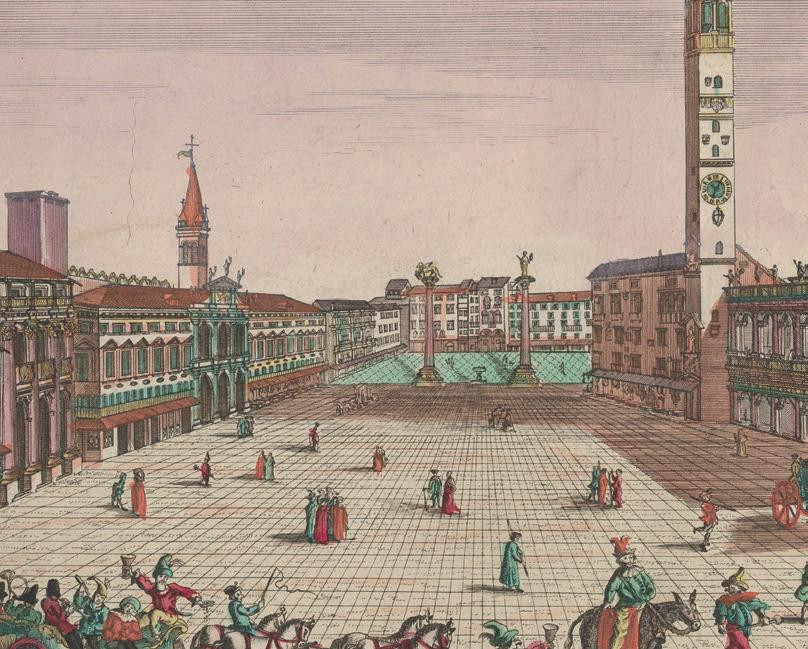
Vicenza is architecturally the most distinguished and homogeneous city in northern Italy, much of its fabric consisting of 16th-century aristocratic residences.
Situated on the Bacchiglione river at the foot of the Berici Hills, midway between Venice and Verona, it is the quiet jewel of the Veneto – prosperous, well-preserved and less visited than its more famous neighbours. Our base for this festival, it sits at the heart of Palladio’s world: the villas of the Veneto radiate outwards from the city across the surrounding plains and hills, making it the natural starting point for any exploration of his work.
Andrea Palladio spent most of his life here; his buildings rising with easy familiarity among the palaces, loggias and arcaded streets of a city that has changed remarkably little since he knew it. His creations include the town hall (Basilica Palladiana), a theatre of unparalleled ambition (Teatro Olimpico), and several grand private houses. Others are scattered across the Veneto – some intimate, some palatial, but all works of genius whose influence stretched far into the future.
In 16th-century Italy a villa was first and foremost a farm, and in the Veneto agriculture had become a serious business for the city-based mercantile aristocracy. As Venice’s maritime empire declined in the face of Ottoman expansion, its great families turned instead landward, pouring their capital into the rich agricultural estates of the Veneto – and it was Palladio who gave their ambitions architectural form.
His was an aesthetic of a very particular kind. Designing for a clientele who –whether princes of commerce, soldieraristocrats or gentlemen of leisure –shared an intense admiration for ancient Rome, Palladio was the first architect regularly to apply the colonnaded temple front to secular buildings. Practicality and beauty were inseparable were inseparable in everything he designed. His patrons were formed by humanist learning, and in his work they recognised an ideal made tangible.
Nor was his genius merely a matter of surface ornament. Even in his most pared-down buildings there is a geometric order arising from sophisticated systems of proportion and an unerring sense of design. These are spaces that speak – and it is our privilege, in this festival, to fill them with music.
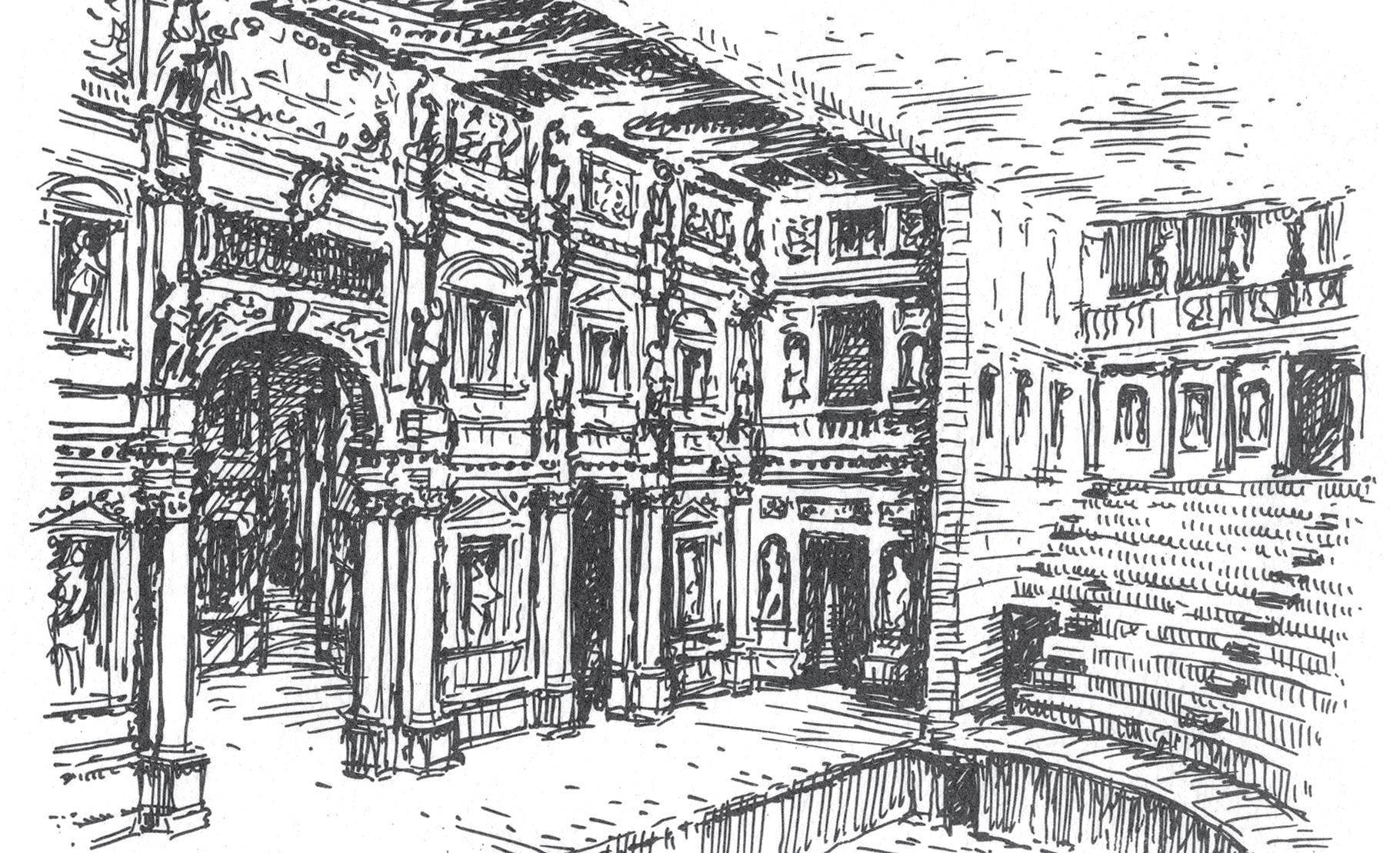
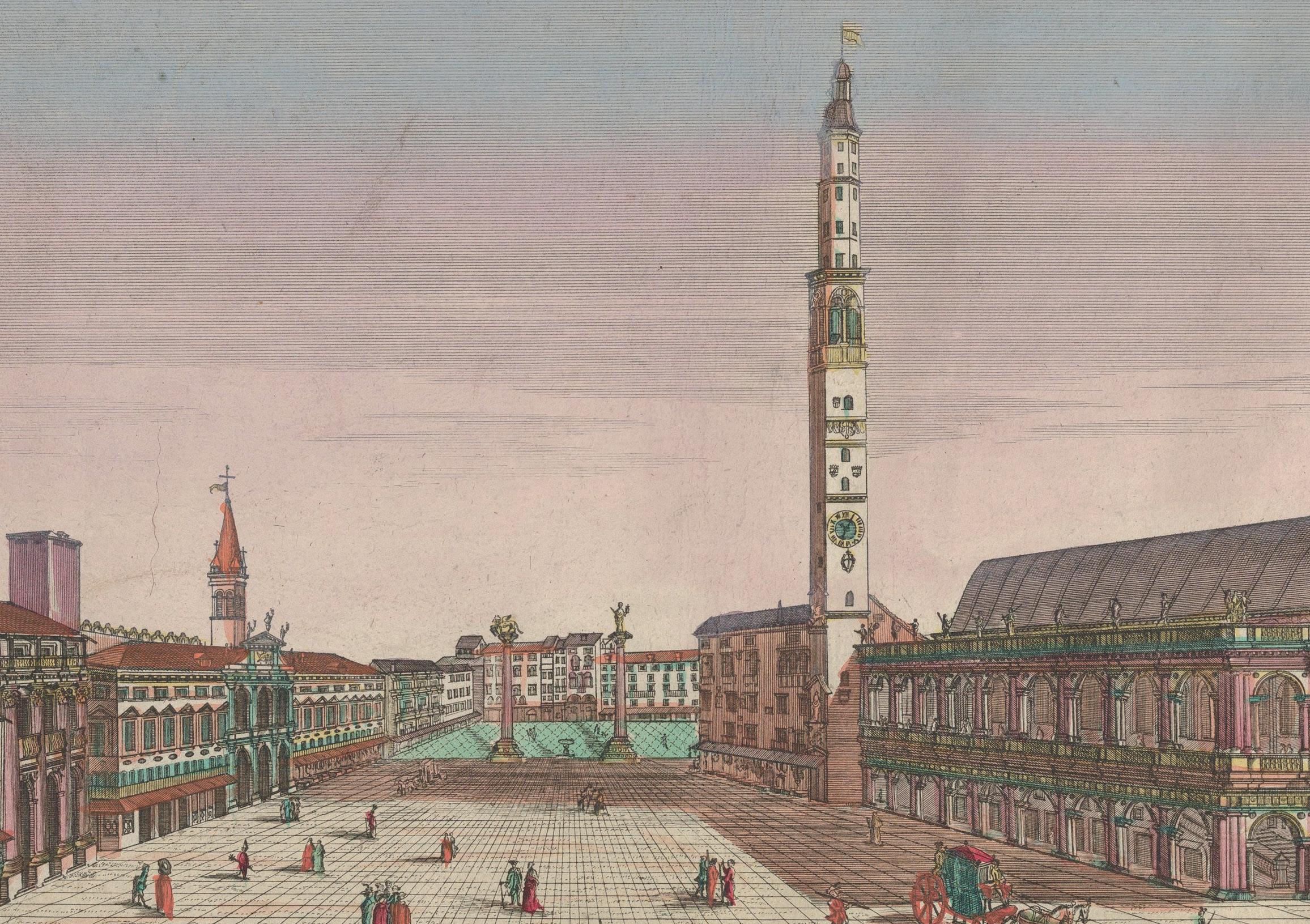
Illustration: Grandstand of the Teatro Olimpico, anonymous ca. 1585
MEET THE MUSICIANS
NARDUS WILLIAMS
Praised for her “magnetism” (The Arts Desk), Nardus Williams has “confirmed her place as an outstanding artist” (Early Music Review).
In 2025/26, Nardus sings Partenope for English National Opera; Contessa (Le nozze di Figaro) for Norwegian National Opera; and Asteria (Tamerlano) for the London Handel Festival.
Her concert engagements include Handel’s Solomon with the Orchestra of the Age of Enlightenment; Messiah with the Aalborg Symphony Orchestra, Academy of Ancient Music, and Dunedin Consort; and Schumann’s Das Paradies und die Peri with the National Symphony Orchestra of Ireland.
Following celebrated recitals at the BBC Proms and Snape Maltings, Nardus appeared at Wigmore Hall on International Women’s Day with Elizabeth Kenny and Dame Mary Beard, and gives further recitals at Leeds Song, Brighton Early Music Festival, and Banbury Early Music Festival.
Nardus’ debut album, Handel in Rome , recorded with Dunedin Consort under John Butt, was released on Linn Records in 2024.
ELIZABETH KENNY
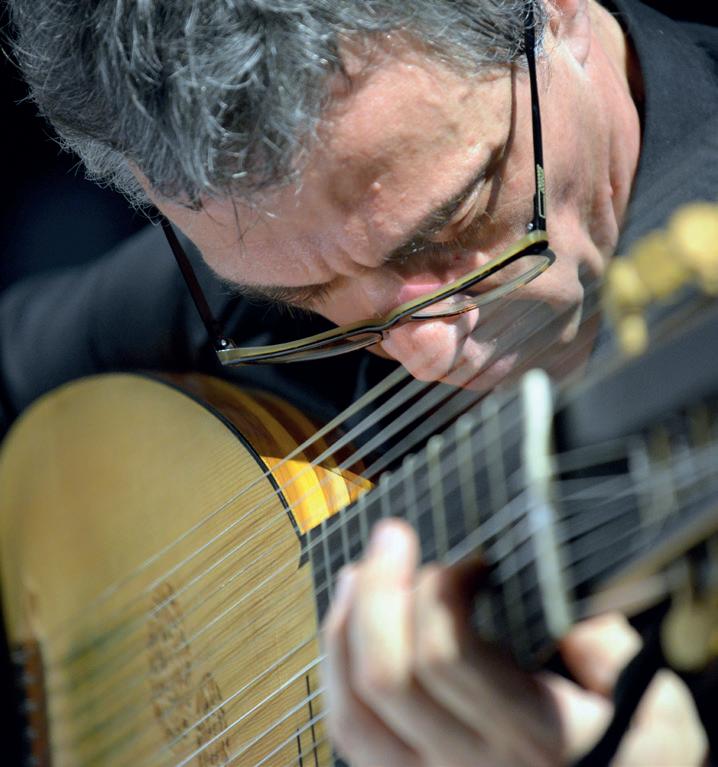
Elizabeth Kenny is one of Europe’s leading lute players. Her playing has been described as “incandescent” (Music and Vision), “radical” (The Independent on Sunday) and “indecently beautiful” (Toronto Post).
In thirty years of touring, she has played with many of the world’s best period instrument groups and experienced many different approaches to music making. She now concentrates on smaller collaborations and recitals, both solo and with friends and colleagues who inspire her. Her love of seventeenth century theatre has lead her to direct programmes with Theatre of the Ayre, and to appear as a guest director for projects where singers and players work on equal terms. Since 2020 she has been Dean of Students at the Royal Academy of Music alongside her teaching of the lute and related plucked instruments.
LA VENEXIANA
La Venexiana was founded in 1997 by Claudio Cavina, who directed it with a fierce passion and dedication until 2016. Years of intense activity involving both concert work and recording have made the group a significant reference point within the early music world, particularly having showcased composers such as Luzzaschi, d’India, Marenzio and da Venosa. Claudio Monteverdi has been a special focus, with the Monteverdi Edition promoted by Glossa, and most recently celebrated with the re-releasing of Orfeo (Choc du Monde de la Musique, the First Choice of the BBC Classical Music and Gramophone Editor’s Choice 2007, Gramophone Award 2008 – Baroque Opera) accompanied by the complete re-issuing of the madrigals.
The group also focuses on the sacred and theatrical music of Scarlatti, Handel, Steffani, Cavalli, in interpretations that are both lively and troubled – like the composers themselves. Its fundamental philosophy is that in music it is always better to take risks than to remain halfhearted: a route followed by Round M, a recording project which takes in both Monteverdi and jazz, or indeed the utopian and visionary project re-introducing today’s public to Arianna by Monteverdi (the first live performance of which took place on Martin Randall Travel’s Monteverdi in Venice festival in 2015).
GABRIELE PALOMBA
Gabriele Palmoba has collaborated with La Venexiana since 1997 and is now the artistic director and musical conductor of the ensemble.
Palmoba graduated from the Civic School of Milan with a Lute Diploma under the guidance of Paul Beier. He performs as a soloist and continuo player in Italy and abroad, playing for European festivals and theatres with many important early music ensembles.
With Emanuela Galli and Franco Pavan, he took part in an important project related to Renaissance lute music. On the occasion of the fifth centenary of Petrucci’s printing (2007), this project continued with the release of a CD dedicated entirely to the first publication of music for lute by Spinacino and, as soloist, with a monograph on Giovanni Maria da Crema and Alberto da Mantova.
AYRES EXTEMPORAE
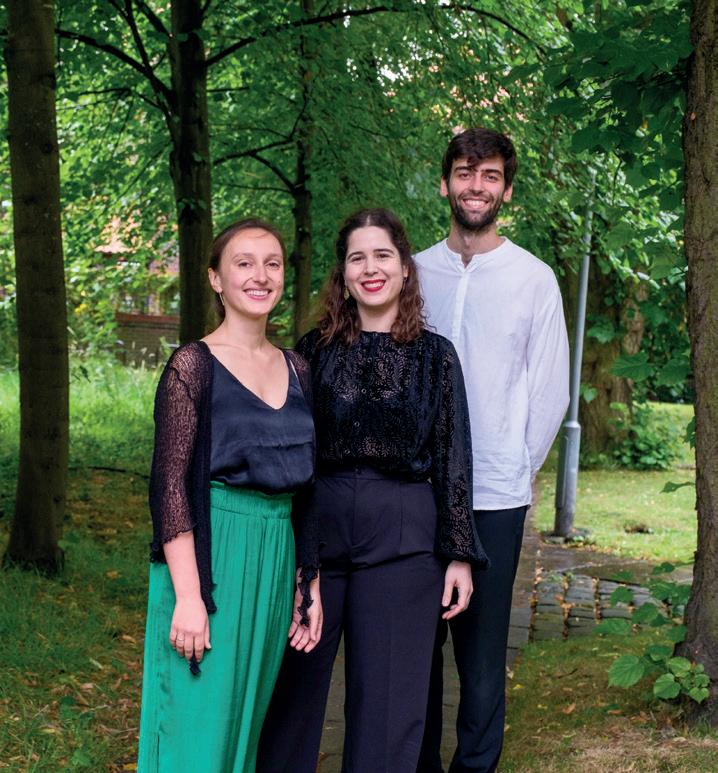
Ayres Extemporae is a historically informed group based in Belgium and The Netherlands. It is formed by the Moldovan-Spanish violinist Xenia Gogu, the Spanish cellist Víctor García García, playing on a five-string cello piccolo, and the Portuguese cellist Teresa Madeira. They are winners of the 2024 York International Young Artists Competition, which led them to record their debut album with Linn Records (Outhere) in 2025. In 2022, they were awarded the 1st Prize and the Audience Prize at the Semana de Música Antigua de Estella-Lizarra and the 2nd Prize at the Biagio Marini International Early Music Competition. They have performed at prestigious festivals throughout Europe, such as MA Brugge Festival, York Early Music Festival, FIAS in Madrid, SWRSchwetzinger Festspiele in Germany, Femàs in Sevilla, Festival À Corda in Portugal, FestiVita! Early Music Festival in Brussels amongst others.
SOLOMON’S KNOT
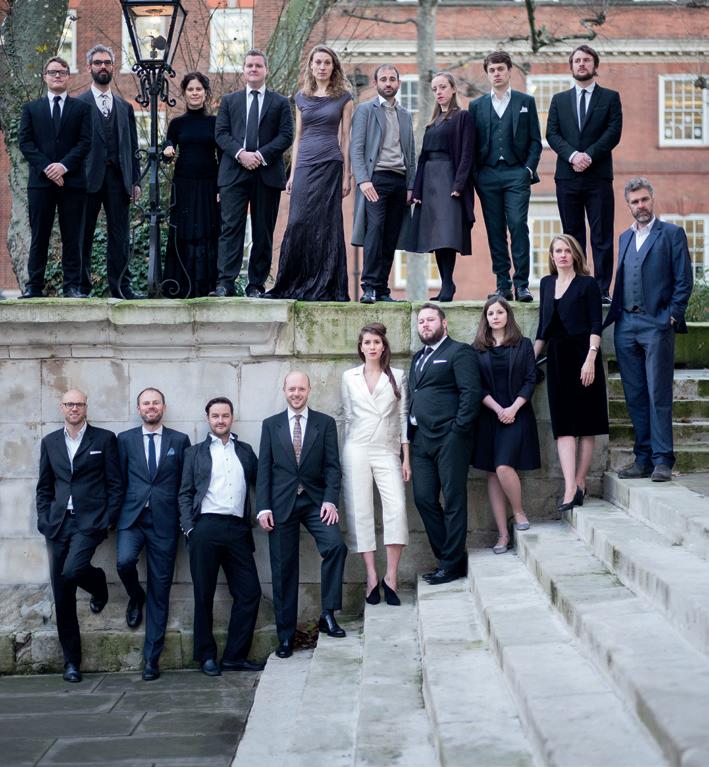
Solomon’s Knot is “one of the UK’s most innovative and imaginative ensembles” (The Observer). Performing without a conductor and singing everything from memory, the group’s acclaimed sound is defined by tight, compact instrumental playing coupled with the vocal virtuosity of soloists who meld as an intuitive ensemble. Performing regularly throughout the UK & Europe, Solomon’s Knot is the longterm Baroque Ensemble in Residence at Wigmore Hall and has appeared at the BBC Proms, Snape Maltings, Bachfest Leipzig and more.
Collaboration is at the heart of the group’s ethos, working with stage directors, visual artists, ensembles, composers and choreographers including Tim Carroll, Federay Holmes, John La Bouchardière and others.
In 2019 Solomon’s Knot released their debut CD with Sony Classical, Magnificat, which has been followed by further releases of Bach, Telemann and more. Collaborating with the Swiss label Prospero Classical, they released Bach Motets in 2023, George Jeffreys: Lost Majesty (German Quarterly Critics’ Choice) in 2024, and Bach’s Horns (Gramophone Editor’s Choice) in 2025.
THE CONCERTS
Private. All the performances are planned and administered by MRT, and the audience consists exclusively of those who have taken the festival package.
Seating. Specific seats are not reserved. You sit where you want.
Audience size. There will be up to 160 participants on the festival. Four of our venues cannot hold this number, so at these, the performance will be repeated.
Historical venues. All but two of the venues were designed as private villas for the elite of the Venetian empire and have their own idiosyncrasies. Some of the seating may be less comfortable than modern concert halls.
Acoustics. This festival is more concerned with locale and authenticity than with acoustic perfection. The venues may have idiosyncrasies or reverberations of the sort not found in modern concert halls.
Changes. Musicians fall ill, venues may close for repairs, airlines alter schedules: there are many circumstances which could necessitate changes to the programme. We ask you to be understanding should they occur.
THEATRO DEI CERVELLI
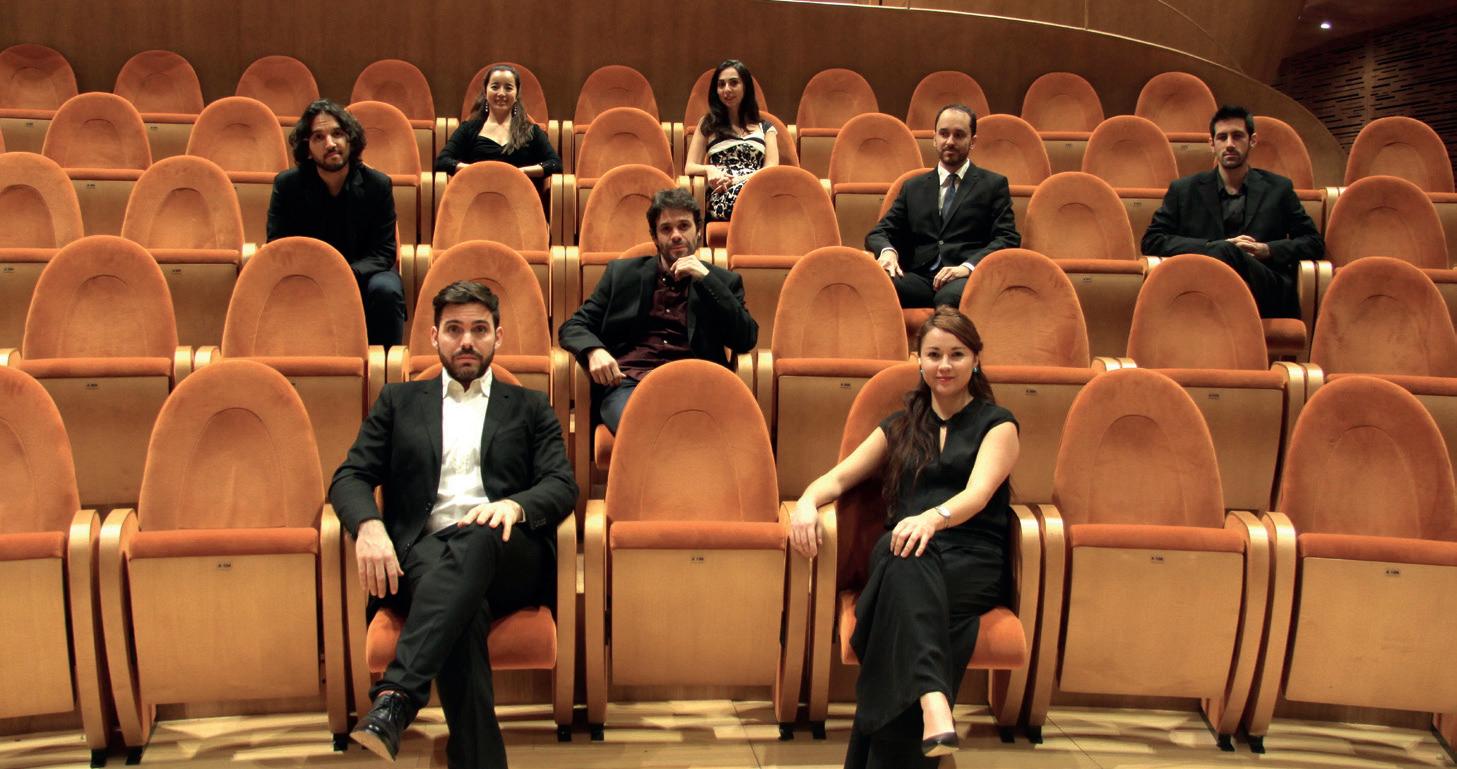
Theatro dei Cervelli (Theatre of the Brains!) is a recently created ensemble devoted to Renaissance and Early Baroque Italian music directed by musician and musicologist Andrés Locatelli. It reunites singers and instrumentalists of international provenance that share the same passion for the rediscovery of Italian sacred and secular music from ca. 1500–1650. Their mission is to explore the interaction between thought, music and emotion from a historical perspective and through a careful study of historical performance, theory, and musical/textual traditions.
The ensemble’s name is borrowed from Italian humanist Tommaso Garzoni (15491589), whose treatise Theatro de’ vari e diversi cervelli mondani (1583) is one of the most curious early-modern attempts to describe and categorise the human mind and all the different personalities (called cervelli, cervellini, cervellazzi, etc.).
ANDRÉS LOCATELLI
Andrés Locatelli (1983) is an ItalianArgentinean recorder player, conductor and musicologist based in Switzerland. As a conductor and musical director, Andrés is particularly interested in sacred and secular polyphonic music of the Renaissance and Baroque eras, 17th-century opera, and experimental interdisciplinary projects based on early music.
He has worked with il Pomo d’Oro (Francesco Corti), Les Musiciens du Louvre (Marc Minkowski), La Venexiana (Claudio Cavina), Ensemble Elyma (Gabriel Garrido), Musica Temprana (Adrián van der Spoel), Holland Baroque (Judith & Tinneke Steenbrink) and Concerto Italiano (Rinaldo Alessandrini), among others. He has conducted ensembles such as Concerto Köln and Ensemble Il Profondo.
In 2018, he created the vocal-instrumental ensemble Theatro dei Cervelli, dedicated to the rediscovery of marginalized or unknown Italian repertoires of the 17th century. The ensemble’s first album was acclaimed by international critics.
ACCADEMIA BIZANTINA
Accademia Bizantina was founded in Ravenna in 1983 with the intention of “making music like a large quartet”. Then as now, the group is managed autonomously by its guardian members, guaranteeing the chamber music approach to their performances which has ever been their distinguishing feature.
A number of prominent personalities in the musical world supported the orchestra’s development and growth, among them Jorg Demus, Carlo Chiarappa, Riccardo Muti and Luciano Berio. Over the years they have also enjoyed the collaboration of many fine musicians, among them Stefano Montanari who was an integral part of the orchestra for over 20 years. This has allowed the ensemble, which plays on period instruments, to become ever more specialised in 17th-, 18th- and 19th-century repertoire. Gradually the orchestra developed a distinguished voice by adopting its own interpretative style based on a common language and shared performance practice, reflecting the noblest tradition of Italian chamber music.
In 2025, their album Invocazioni Mariane , recorded with Alessandro Tampieri as musical director with countertenor Andreas Scholl, won the International Classical Music Awards (ICMA).
ALESSANDRO TAMPIERI
Born in Ravenna, Alessandro Tampieri was introduced to music through choral singing, guitar, and, above all, the violin and viola, and he joined the Accademia Bizantina at a very young age.
He trained as a concert performer as a soloist, chamber musician, and orchestral player in both symphonic and opera settings (including the Filarmonica and Teatro alla Scala), exploring a wide-ranging repertoire.
His affinity for 17th- and 18th-century musical language and a marked aptitude for improvisation later led him to specialise in this repertoire, primarily as a violinist, but also occasionally performing on the viola, viola d’amore, and, as a continuo player, the baroque guitar and archlute.
Since 2011, he has been Concertmaster of Accademia Bizantina, for which he serves as artistic director alongside Ottavio Dantone.
ANDREAS SCHOLL
Born into a family of singers in Eltville on the Rhine, near Wiesbaden, Andreas Scholl’s early musical training was with the Kiedricher Chorbuben, a choir with a tradition of 650 years. He later went on to study under Richard Levitt and René Jacobs at the Schola Cantorum Basiliensis.
During a career spanning three decades, Andreas Scholl has released a series of extraordinary solo recordings ranging from German Lied, works by Handel, Mozart, and Gluck as well as Baroque music by Bach and Vivaldi to critical acclaim. Scholl has performed with the highest calibre ensembles around the globe including Berliner Philharmoniker, New York Philharmonic, Royal Concertgebouw Orchestra, Boston Symphony Orchestra and all of the world’s leading Baroque orchestras.
He has sung opposite Cecilia Bartoli and Renée Fleming. Scholl has performed all over the world in the top concert halls, opera houses, and the music festivals including Glyndebourne, The Metropolitan Opera, Opéra Royal de Versailles, and Prague Spring in Brno and Holešov.
IL POMO D’ORO
Founded in 2012, il Pomo d’Oro soon established itself as an ensemble of outstanding quality in the field of historically informed performance. After 14 years, il Pomo d’Oro is looking back on a prolific concert presence worldwide, and an impressive list of 44 recordings, many of them award-winning.
Recent productions include Handel’s Theodora which introduced the new vocal ensemble ‘il Pomo d’Oro choir’ alongside a stellar cast. The concert recording won the BBC Music Magazine’s Choral Award in 2023. The recording of Wagner’s Wesendonck Lieder with Joyce DiDonato is nominated for a Grammy in 2025.
In 2023, il Pomo d’Oro launched its biggest recording project: the complete recording of Mozart’s symphonies, conducted by Maxim Emelyanychev, in collaboration with the French label Aparté. The first two volumes have already been released, each with an instrumental solo concerto as a bonus.
ANDREA BUCCARELLA
Andrea Buccarella is one of the most appreciated musicians and specialists for early music of his generation.
In 2012 Andrea became the artistic director and conductor of Abchordis Ensemble. Since then, Andrea has dedicated himself to conscientious research, aiming for the discovery of musical masterpieces of the past which are not performed in modern times, with special focus on the sacred, instrumental and operatic repertoire of 18th-century Italy. Under his guidance the Abchordis Ensemble won the First Prize at the International Händel Competition 2015 in Göttingen.
As conductor he has recorded for SONY Deutsche Harmonia Mundi (Stabat Mater and Dies Irae), Challenge Classics (Cieco Amor) and The Vivaldi Edition (Vivaldi, Cantate per Soprano I). Andrea has been invited to conduct several vocal and instrumental ensembles, including the Venice Baroque Orchestra, La Cetra Barockorchester Basel, il Pomo d’Oro, Solistenensemble Kaleidoskop, Kore Orchestra and others. In February 2020 he made his debut as conductor at the Musikverein Wien with the Venice Baroque Orchestra and Julia Lezhneva.
VALERIO CONTALDO
Valerio Contaldo is a remarkably versatile tenor, praised for his radiant, bronze timbre and expressive musicality. Equally at home in baroque opera, classical oratorio, and 20th-century sacred repertoire, he brings a distinctive warmth and refinement to a wide range of roles, from Monteverdi and Bach to Mozart, Rossini, and Frank Martin. His broad repertoire and stylistic flexibility have made him a sought-after soloist on both opera and concert stages across Europe, Asia, the Americas, and Australia.
Fitness for the festival
This is a physically demanding festival where it is necessary to be able to walk for anything up to 25 minutes and at a pace which is unlikely to slow others down when moving together.
Three of the hotels are based in the centre of Vicenza where three of the seven concerts take place. The distances between the hotels and venues ranges from 300m–1.2km.
One hotel is situated outside of the city – participants are transferred to Vicenza by minibus and dropped as close to the concert venue as possible (for one of the venues this still entails a c. 700m walk).
Some of the concert venues outside of Vicenza are harder to reach and require uphill walking of around 15–20 minutes from where the coach will drop the group (depending on fitness), with no additional transportation possible. Taxis are not always readily
available and sometimes cannot get close enough to the hotel or the concert venue to justify their use.
Many of the concert venues do not have a lift. You need to be averagely fit, sure-footed and able to manage everyday walking and stairclimbing without difficulty.
We are very happy to talk you through each day’s manoeuvres, as these differ festival to festival, to identify if it may be necessary to opt out at any point.
We ask that you also take the simple fitness tests on page 23 before booking.
There are some days of the festival where you will cover a significant distance by coach.
If you have a medical condition or a disability which may affect your holiday or necessitate special arrangements being made for you, please discuss these with us before booking – or, if the condition develops or changes subsequently, as soon as possible before departure.
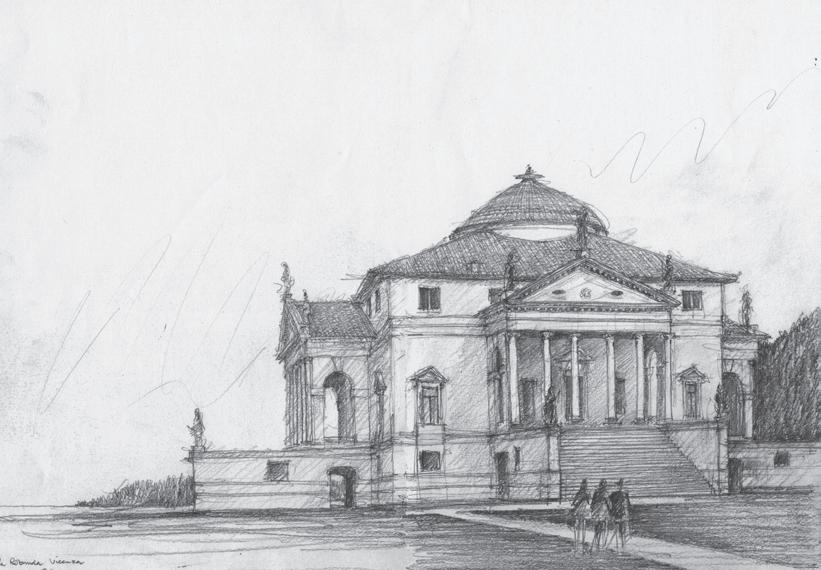
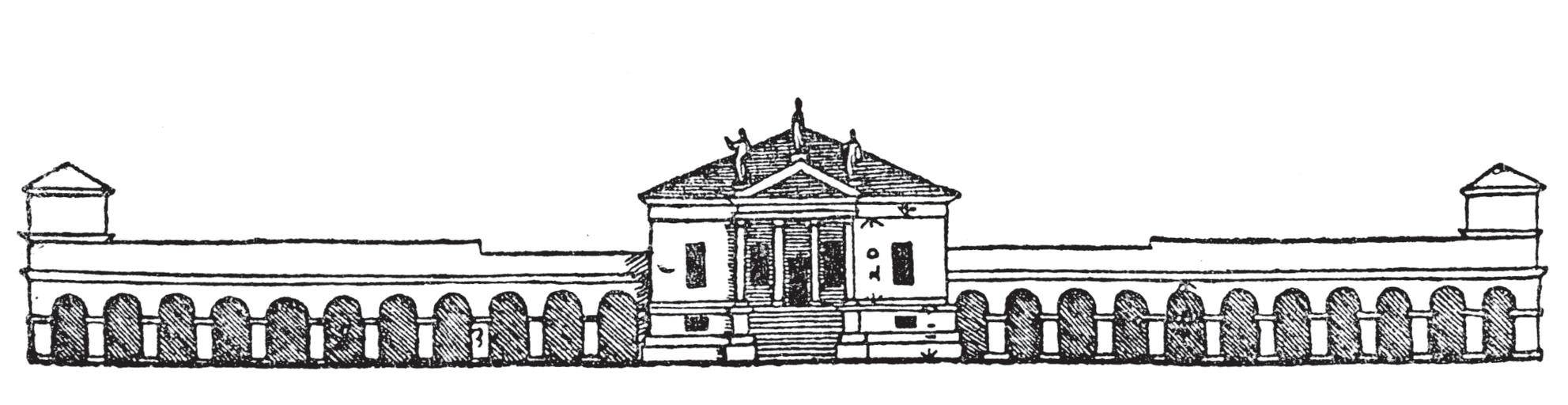
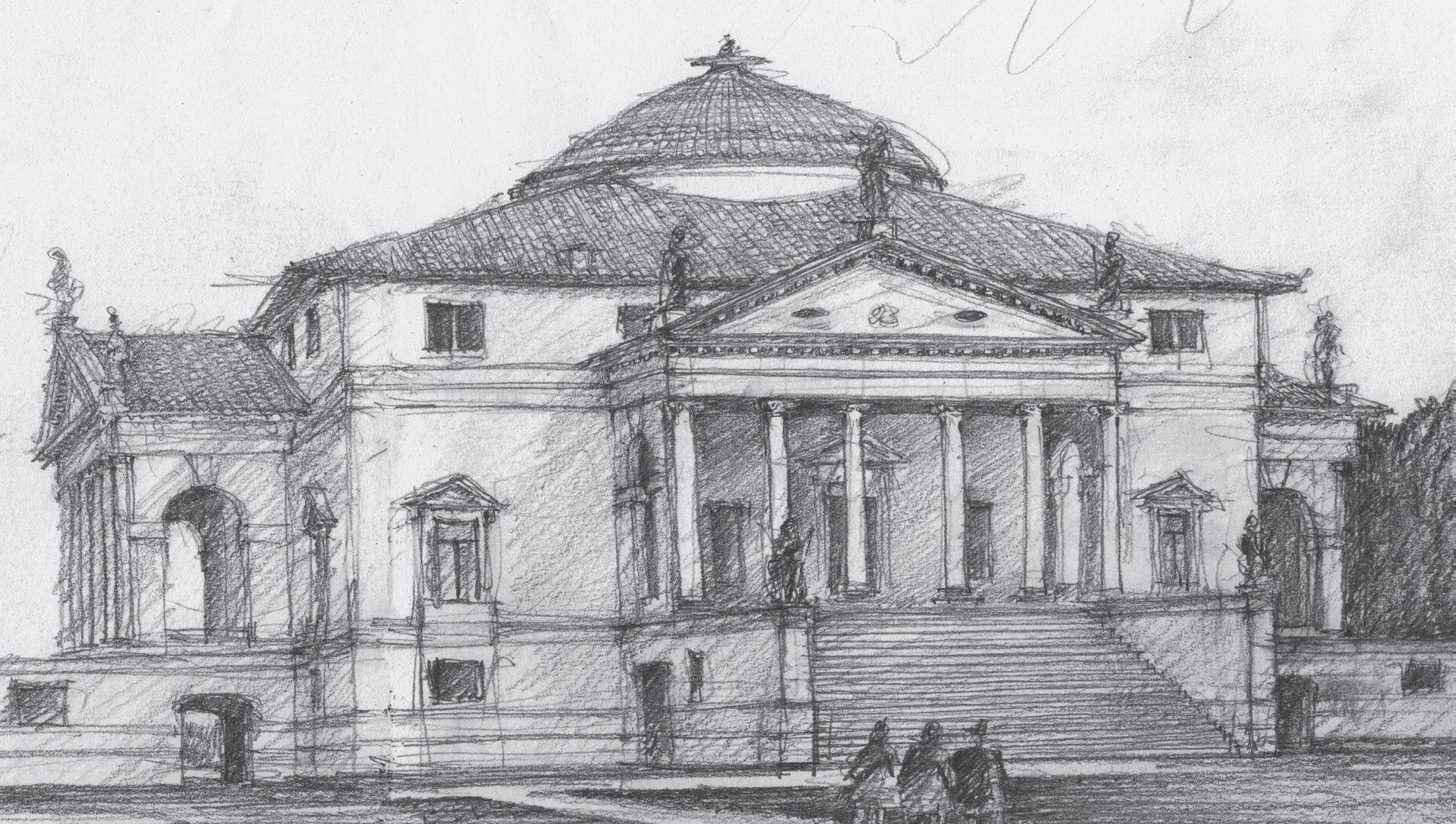
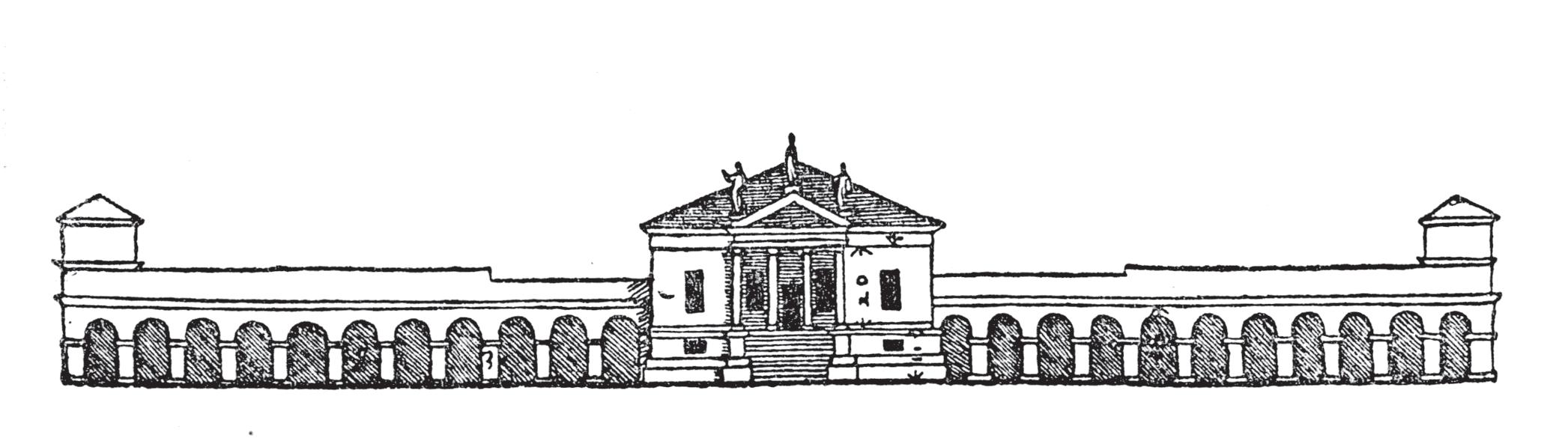
Illustration: Vicenza, Villa La Rotonda, drawing by Keith Mackness
ACCOMMODATION
There is a choice of four 4-star hotels. Three are in the centre of Vicenza; our top category hotel, Villa Michaelangelo, is situated just outside the city.
These are the best hotels on in the area. They differ in size, architecture and style, and have Italian charm of varying degrees. They range from traditional, family-run to luxury resort hotels.
Coaches cannot enter the centre of Vicenza, and so stop a short walking distance outside the old city walls. Walking distances to the coach and two concert venues within Vicenza (Teatro Olimpico, Chiesa di San Filippo Neri) are indicated on the following pages.
Your choice of hotel is the sole determinant of the different prices.
There is also the option of arriving in your hotel a day before the festival begins (6 June).
ANTICO HOTEL VICENZA (4*) GLAM BOUTIQUE HOTEL (4*)
This small traditional hotel is situated right in the historical centre of Vicenza, with a roof terrace overlooking Palladio’s stunning Basilica Palladiana It is traditional in style, with original red terrazzo flooring in some of the rooms, antique wooden furnishing, and red brocaded curtains.
There is a breakfast room and a bar but no restaurant. Good restaurants and other bars are located very nearby.
All rooms have air-conditioning, a minibar, safes, and Wifi.
Room types available:
Classic: Size: c. 16-18m 2 . All have showers (no baths); some have small balconies.
Superior : Size: c. 18-20m 2 . All have showers (no baths); some have small balconies.
Junior Suite: Size: c. 27m 2 . These have both a bath and a shower; views of the Duomo; some have small balconies.
Walk to coach: 550m Luggage is transferred separately by minivan.
Teatro Olimpico: 600m
Chiesa di San Filippo Neri: 350m www.anticohotelvicenza.com
A small, recently remodelled hotel. The decor is striking, with darker hues and ‘contemporary’ (sometimes rather suggestive) artwork a key feature. It is well located and comfortable, even luxurious for a smaller-city Italian hotel.
There is a breakfast room, lounge, and a bar but no restaurant. Good restaurants and other bars are located very nearby.
All rooms have air-conditioning, a minibar, safes, and Wifi; all have showers, no baths.
Room types available:
Standard: Size: c. 15m 2 with a queen-size bed.
Superior: Size: c. 17-18m 2 with a double or twin bed.
Deluxe: Size: c. 18-22m 2 ; rooms also have a coffee machine.
Suite: Size: c. 25m 2 . These have fourposter beds, smart TVs, a small sitting area and a coffee machine.
Walk to coach: the coach stops outside the hotel.
Teatro Olimpico: 270m
Chiesa di San Filippo Neri: 750m www.theglamhotel.it
Just outside a city gate of Vicenza, the Campo Marzio is well located, comfortable and excellently managed. A fairly undistinguished exterior screens attractively furnished bedrooms of a good size. The rooms have been recently refurbished in a contemporary style and are bright and airy. Staff are particularly helpful and friendly.
There is a breakfast room and a bar but no restaurant. Good restaurants and other bars are located very nearby.
All rooms have air-conditioning, a minibar, safes, and Wifi; all have either a shower or a bath.
Room types available:
Deluxe: Size: c. 31m 2 . Light and airy rooms with seating area and a sofa.
Premium Rooftop: Size: c. 34m 2 . Located on the top (4th) floor of the hotel with a seating area and a sofa.
Junior Suite: Size: c. 36m 2 . Additional small drawing room next to the bedroom.
Suite: Size: c. 41m 2 . Additional small drawing room next to the bedroom.
Walk to coach: the coach stops outside the hotel.
Teatro Olimpico: 1.1km
Chiesa di San Filippo Neri: 300m
www.hotelcampomarzio.com
Occupying an 18th-century villa, this smart, well-run hotel in the Berici Hills is approximately four miles from the centre of Vicenza. Surrounded by five hectares of gardens, its tranquil hilltop position affords fine views. All the rooms have recently been refurbished and updated. The rooms and public areas are bright and airy, and the breakfast room has stunning views across the valley.
All are decorated in classic style with restrained good taste. There is a good restaurant, a spa, and an indoor swimming pool with panoramic windows that open to allow the sense of being outdoors.
All rooms have air-conditioning, bathrobes, a minibar, safes, and Wifi; all have either a shower or a bath.
Room types available:
Classic: Size: c. 15-18m 2
Superior: Size: c. 18-22m 2 . These rooms also have a kettle.
Deluxe: Size: c. 22-25m 2 . These have views of the Villa’s grounds. Some are split over two floors.
Suite Duplex: Size: c. 32-40m 2 . Split over two floors with the bedroom on a mezzanine floor; great views. Includes fresh flowers, Illy espresso machine and kettle.
Executive Suite: Size: c. 30m 2 . These are not duplexes like the Suites, just cover one floor and have floor-to-ceiling windows with beautiful views over the grounds.
Includes fresh flowers, Illy espresso machine and kettle.
The hotel can only be accessed by minibus and is four miles away from the centre of Vicenza.
www.hotelvillamichelangelo.com
HOTEL CAMPO MARZIO (4*)
HOTEL VILLA MICHELANGELO (4*)
TRAVEL OPTIONS
Arriving a day early Arriving on the first day of the festival
OPTION 1 – VENICE
6 June: London Heathrow to Venice (BA 602) departing at 12.25 and arriving at 15.40.
12 June: Venice to London Heathrow (BA 601) departing at 12.30 and arriving at 13.55.
OPTION 2 – VERONA
6 June: London Gatwick to Verona (BA BA 2590) departing at 16.15 and arriving at 19.25.
12 June: Verona to London Gatwick (BA 2589) departing at 11.25 and arriving at 12.40.
At the time of going to print, flight schedules have not yet been published for June 2027 so these times are indicative and subject to change.
OPTION 3 – VENICE
7 June: London Heathrow to Venice (BA 600) departing at 8.50 and arriving at 12.05.
12 June: Venice to London Heathrow (BA 601) departing at 12.30 and arriving at 13.55.
OPTION 4 – VENICE
7 June: London Heathrow to Venice (BA 598) departing at 10.10 and arriving at 13.25.
12 June: Venice to London Heathrow (BA 603) departing at 14.20 and arriving at 15.45.
OPTION 5 – VENICE
7 June: London Heathrow to Venice (BA 602) departing at 11.50 and arriving at 15.05.
12 June: Venice to London Heathrow (BA 603) departing at 14.20 and arriving at 15.45.
London Heathrow); post-festival tour participants fly out to Venice on Option 5 (from London Heathrow).
We charge for travel, if you are opting for it, as part of your pre- or postfestival tour booking. You therefore pay the ‘no flights’ price for the festival.
MAKING A BOOKING
1. Booking Option. We recommend that you contact us first, or visit our website, to make a booking option which we will hold for 72 hours. To confirm it, please send the deposit within this period – 15% of your total booking price. Alternatively, make a definite booking straight away via our website.
2. Definite booking. Full payment is required if you are booking within 12 weeks of the date the festival begins.
3. Our confirmation. Upon receipt of the deposit we shall send you confirmation of your booking. After this your deposit is non-returnable except in the special circumstances mentioned in our Booking Conditions. Further details about the festival may also be sent at this stage, or will follow shortly afterwards.
Participation in our festivals is a very different experience from conventional group travel.
No repetitive or redundant announcements, no herding by elevated umbrella, no unnecessary roll calls, little hanging around. We work on the assumption that you are adults, and our staff cultivate the virtue of unobtrusiveness.
Though there will be up to 160 participants, you will often find yourself in smaller groups – the audience is divided between four hotels, and into different restaurants for some of the dinners.
For those who are not averse to group activities there are extra meals, walks and visits to sign up to. You choose the level of participation that suits you.
We provide sufficient information to enable you to navigate the festival events without needing to be led. However, festival staff are also stationed around the events to direct you if needed.
A survey of various surviving villas and palaces designed by Andrea Palladio (1508–80), the world’s most influential architect.
Stay throughout in Vicenza, Palladio’s home town and site of many of his buildings.
With many special appointments, this itinerary would be impossible for independent travellers.
ITINERARY
Day 1. Fly at c. 10.30am (British Airways) from London Heathrow to Venice. Drive to Vicenza where all five nights are spent.
Day 2: Vicenza. See in Vicenza several palaces by Palladio including the Palazzo Barbaran da Porto, which houses the Palladio Museum, and the colonnaded Palazzo Chiericati. His chief civic works here are the Basilica – the medieval town hall nobly encased in classical guise – and the Teatro Olimpico (see also page 7), the earliest theatre of modern times.
Day 3: Bagnolo di Lonigo, Poiana Maggiore, Fratta Polesine. The Villa Pisani at Bagnolo di Lonigo, small but majestic, is considered by many scholars to be Palladio’s first masterpiece. The Villa Poiana, another early work, has restrained but noble proportions. The Villa Badoer at Fratta Polesine, from the middle of his career, is a perfect example of Palladian hierarchy, a raised residence connected by curved colonnades to auxiliary buildings.
Day 4: Vicenza, Lugo di Vicenza. The hilltop ‘La Rotonda’, a 10-minute drive from Vicenza, is the most famous of Palladio’s buildings, domed and with four porticoes. In the foothills of the Dolomites, Villa Godi Malinverni (see also page 8 ) is an austere cuboid design with lavish frescoes inside. Some free time in Vicenza.
Day 5: Bassano del Grappa, Maser, Fanzolo. At the lovely town of Bassano there is a wooden bridge designed by Palladio. The Villa Barbaro at Maser, built by Palladio for two highly cultivated Venetian brothers, has superb frescoes by Veronese, while the Villa Emo at Fanzolo typically and beautifully combines the utilitarian with the monumental.
Day 6: Malcontenta. Explore one of Palladio’s most evolved, most beautiful and most influential buildings, the Villa Cornaro at Piombino Dese. Drive along a stretch of the canal between Padua and the Venetian Lagoon, which is lined with the summer retreats of Venetian patricians. The Villa Foscari, ‘La Malcontenta’, is one of Palladio’s best known and most enchanting creations. Fly from Venice to London Heathrow, arriving at c. 4.45pm.
Many of the villas on this itinerary are privately owned and require special permission to visit. The selection and order may therefore vary a little from the description above.
If combining this tour with Music in the Palladian Villas, transfer to your
festival hotel (if different) on 6 June. We will assume that you require festival accommodation on 6 June (‘arriving a day early’) and your festival booking will include this cost.
PRACTICALITIES
Included: travel by private coach; hotel accommodation; breakfasts; 2 lunches and 3 dinners with wine, water, coffee; all admissions; all tips; all taxes; the services of the lecturer and tour manager.
Accommodation, Hotel Campo Marzio (hotelcampomarzio.com): see page 21.
How strenuous? The tour involves a lot of walking, sometimes uphill and over unevenly paved ground, as the coach can rarely get close to the villas or enter town centres. There is a lot of standing outside and inside villas. A good level of fitness is necessary. It should not be attempted by anyone who has difficulty with everyday walking and stair-climbing. Some days involve a lot of driving. Average distance by coach per day: 58 miles.
VENETIAN HILLS RENAISSANCE ART IN THE FOOTHILLS OF THE DOLOMITES
Post-festival tour:
12–17 June 2027 (m n 402)
6 days • Speaker: Dr Carlo Corsato
An exploration of the ravishingly beautiful landscapes of this little-known corner of the Veneto, from the vine-clad Prosecco hills to the snowy peaks of the Dolomites.
A selection of hidden artistic jewels including altarpieces and frescoes by Venetian masters, paintings ranging from medieval to Rococo, and the architecture of Andrea Palladio.
Some of the loveliest and most off-thebeaten-track hill towns in Italy, easily reached from the tranquil town of Follina.
ITINERARY
Day 1. Fly at c.1.00pm (British Airways) from London Heathrow to Venice. Drive through the hills to Follina where all five nights are spent.
For participants joining Music in Palladian Villas: a transfer is provided from Vicenza to Follina on 12th June.
Day 2: Fanzolo, Conegliano. Andrea Palladio’s Villa Emo at Fanzolo typically and beautifully combines the utilitarian with the monumental. Drive to the birthplace of Giambattista Cima del Conegliano, the lovely town from which the artist took his name. Visit the cathedral to see one of his greatest works.
Day 3: Maser, Asolo, Bassano. The Villa Barbaro at Maser, built by Palladio for two highly cultivated Venetian brothers, has superb frescoes by Veronese. The lovely hilltop town of Asolo was home to three exceptional women: Queen Caterina Corner, the actress Eleonora Duse and the writer and traveller Freya Stark. Visit the cathedral where the
Assumption of the Virgin by Lorenzo Lotto has been treasured in the past 500 years. Bassano del Grappa is a highly attractive town in the foothills of the Dolomites with a series of picturesque squares with painted façades. Home of the prolific Bassano family of painters, there are several of their works in the civic museum.
Day 4: Vittorio Veneto. The tiny city of Serravalle (now joined with Cèneda to form Vittorio Veneto), occupying a gorge scoured by the River Meschio, has a fine group of mediaeval and Renaissance buildings, 15thcentury frescoes in the chapel of S. Lorenzo and a Titian in the cathedral. In the church of Santa Maria in Cèneda there is an exquisite Annunciation by Previtali. Finish the day with a wine tasting.
Day 5: Belluno, Feltre, Possagno. Drive north along the valley of the Piave into an ever-more dramatic mountain landscape. Sitting athwart a promontory looped by the Piave, Belluno is a beautiful little city with a Renaissance cathedral and Venetian-style palaces. Among the fine paintings is an exquisite Madonna & Child by Cima in the Museo Civico. In Feltre, important buildings include the Teatro della Sena and the Chiesa di S. Maria degli Angeli, while in nearby Possagno visit the museum focussed on Canova’s works.
Day 6: Treviso. Once an important fortress city, Treviso has a fine historic centre with imposing public buildings and many painted façades. The main focus is the civic museum and convent of Santa Caterina which houses a collection of Renaissance masterpieces by Cima da Conegliano, Lotto, Bassano and Titian. Fly from Venice airport, arriving at London Heathrow at c. 6.30pm.
PRACTICALITIES
Included: travel by private coach; breakfasts; 1 lunch and 3 dinners with wine, water, coffee; all admissions; all tips for waiters, drivers; all taxes; the services of the lecturer and tour manager.
Accommodation: Hotel dei Chiostri, Follina (hoteldeichiostri.com): 4-star hotel in the little hill town of Follina, installed in former abbey buildings. Standards of decor and maintenance are more rustic than 4-star hotels in major cities. Double rooms are junior suites; single rooms are doubles for sole use.
How strenuous? The tour involves quite a lot of walking, some of which is uphill or in the town centres where vehicular access is restricted. Streets are often cobbled, and the tour should not be attempted by anyone who has difficulty with everyday walking and stair-climbing. Some days involve a lot of driving. Average distance by coach per day: 55 miles.
Group size: between 8 and 20 participants.
If combining this tour with Music in the Palladian Villas, we will arrange a transfer from your festival hotel to Follina on 12 June.
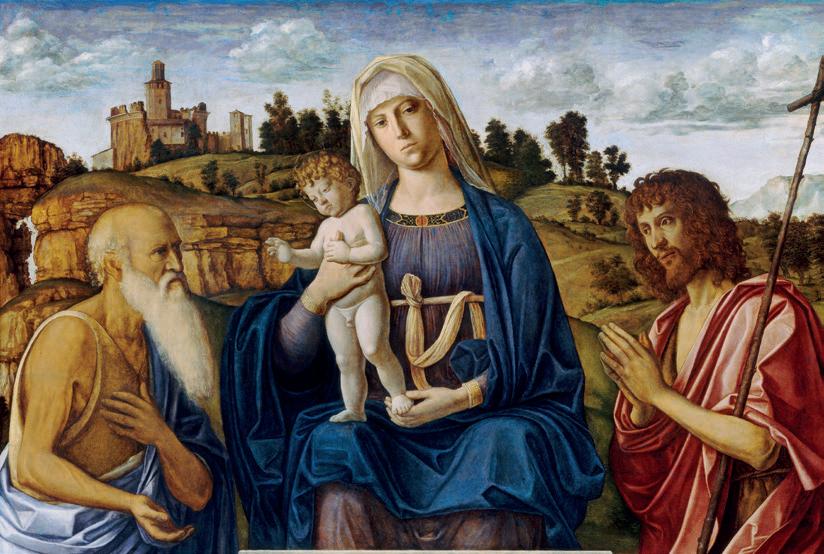
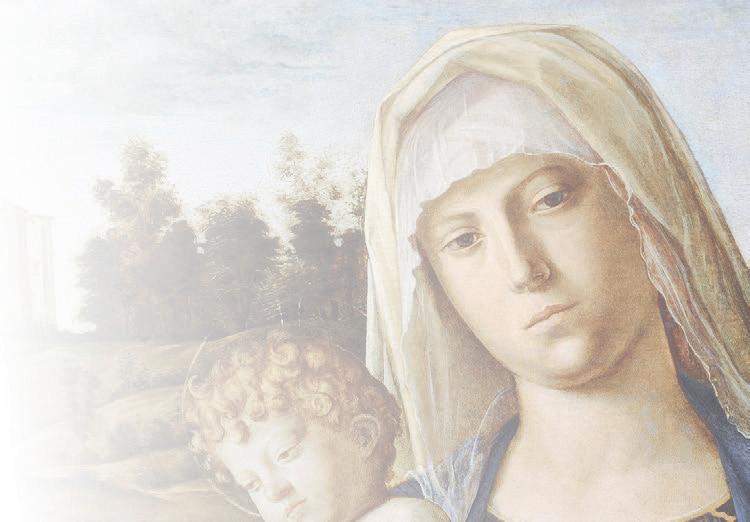
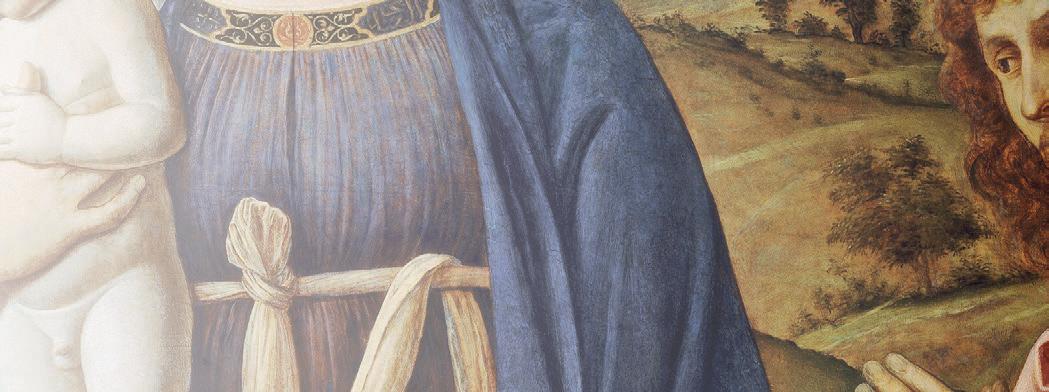
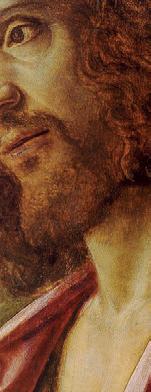
Illustration: Madonna and Child with Saint Jerome and Saint John the Baptist, Cima da Conegliano, c.1492
Tel +44 (0)20 8742 3355 info@martinrandall.co.uk www.martinrandall.com
Contact the London office from the USA and Canada:
Tel 1 800 988 6168 (toll free) northamerica@martinrandall.com
MARTIN RANDALL AUSTRALASIA
PO Box 1024
Indooroopilly QLD 4068
Australia
Tel 1300 55 95 95 New Zealand 0800 877 622 anz@martinrandall.com.au
MARTIN RANDALL TRAVEL…
is Britain’s leading specialist in cultural travel and one of the most respected tour operators in the world.
MRT aims to produce the best planned, best led and altogether the most fulfilling and enjoyable cultural tours and events available. They focus on art, architecture, archaeology, history, music and gastronomy, and are spread across Britain, continental Europe, the Middle East, North Africa, India, Japan and the Americas.
For 2027 we have planned around 200 expert-led tours for small groups (usually 10–20 participants), six music festivals of our own devising such as Music in Palladian Villas , several short history and music breaks, an extensive programme of online talks, and single days in London.
For nearly 40 years the company has led the field through incessant innovation and improvement, setting the benchmarks for itinerary planning, operational systems and service standards.
To see our full range of cultural tours and events, please visit www.martinrandall.com