one man’s BANGLADESH
martin bradley
One man’s Bangladesh
Copyright © 2026
Martin A Bradley
A digital chap book published by The Blue Lotus Publishing, Colchester, Essex, England 2026
one man’s BANGLADESH
martin bradley
welcome to
one man’s BANGLADESH
one man’s BANGLADESH
Bangladesh’s Dhaka captivates the soul in the way that the unknown and untried frequently do.
Like so many cities, Dhaka presents itself gradually, coyly, like a be-veiled mistress stripping off her layers especially for you. She is intimate, fascinating, and never to be forgotten.
Pigeons, reminders of a stately past, flock in the evening air, turn briefly roseate then silhouette, swirling against a gently setting sun. A distant Azan, calling the faithful to prayer, provides a lyrical soundtrack, as perfumed people provide the fragrance.
Dhaka is an ancient city. It was a Mughal Capital from 1608 and previously named Jahangirnagar . It comes layered with an ever encroaching modernity.
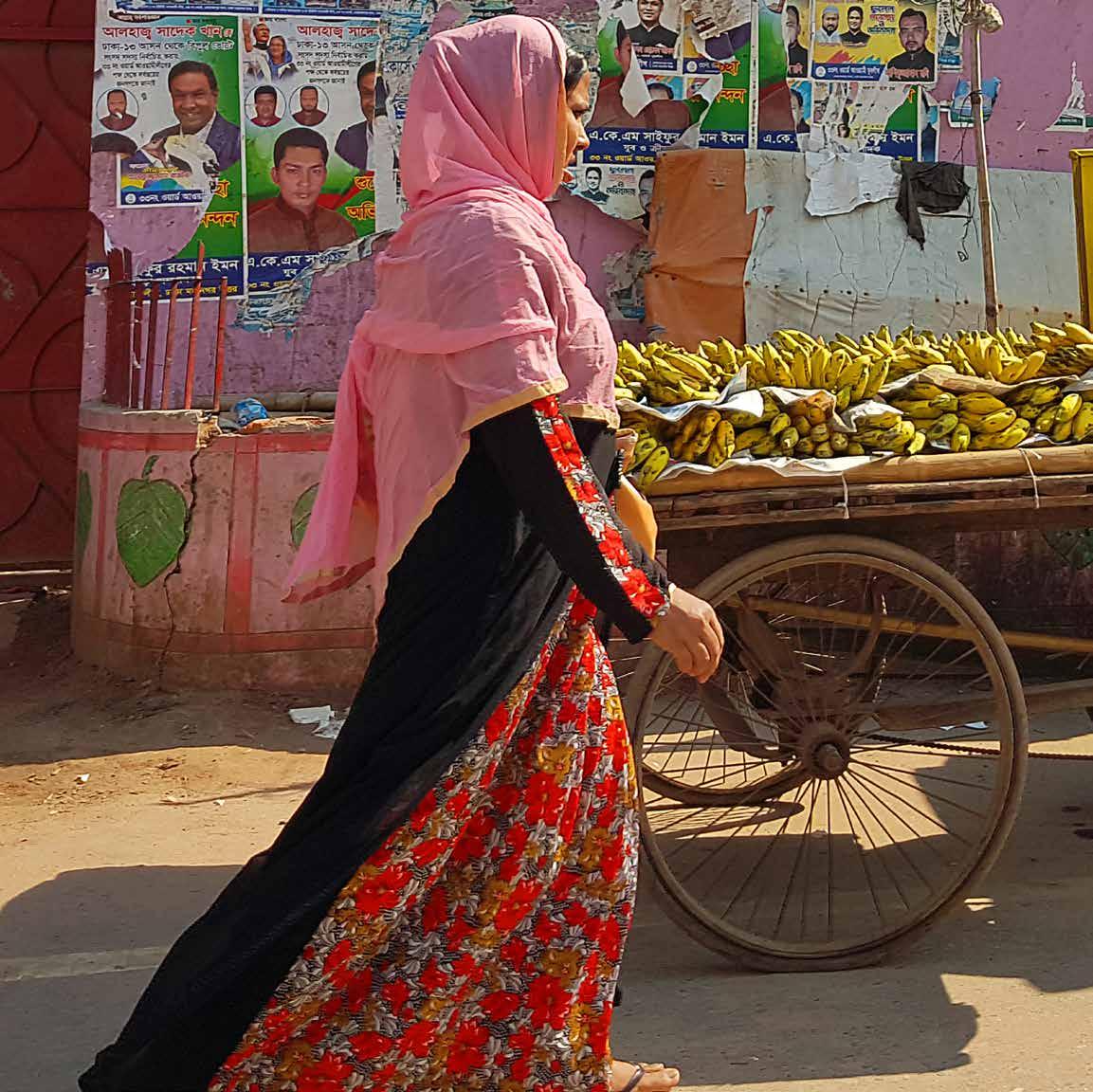
Sprightly slim Rickshaw riders vie with Mercedes Benz, and are as ever present as the white Toyota Corollas which swim like sharks in the daily, dusty, congested city roads. If you are a traveller, a tourist with time on your hands, the slow progress of your chosen vehicle will provide treasured
glimpses of city life, and a moment or two of mindful meditation. While third gender ‘ladies’, dressed to impress, might come a tap, tap, tapping at your wee small car window, your driver inches forward, into the melee.
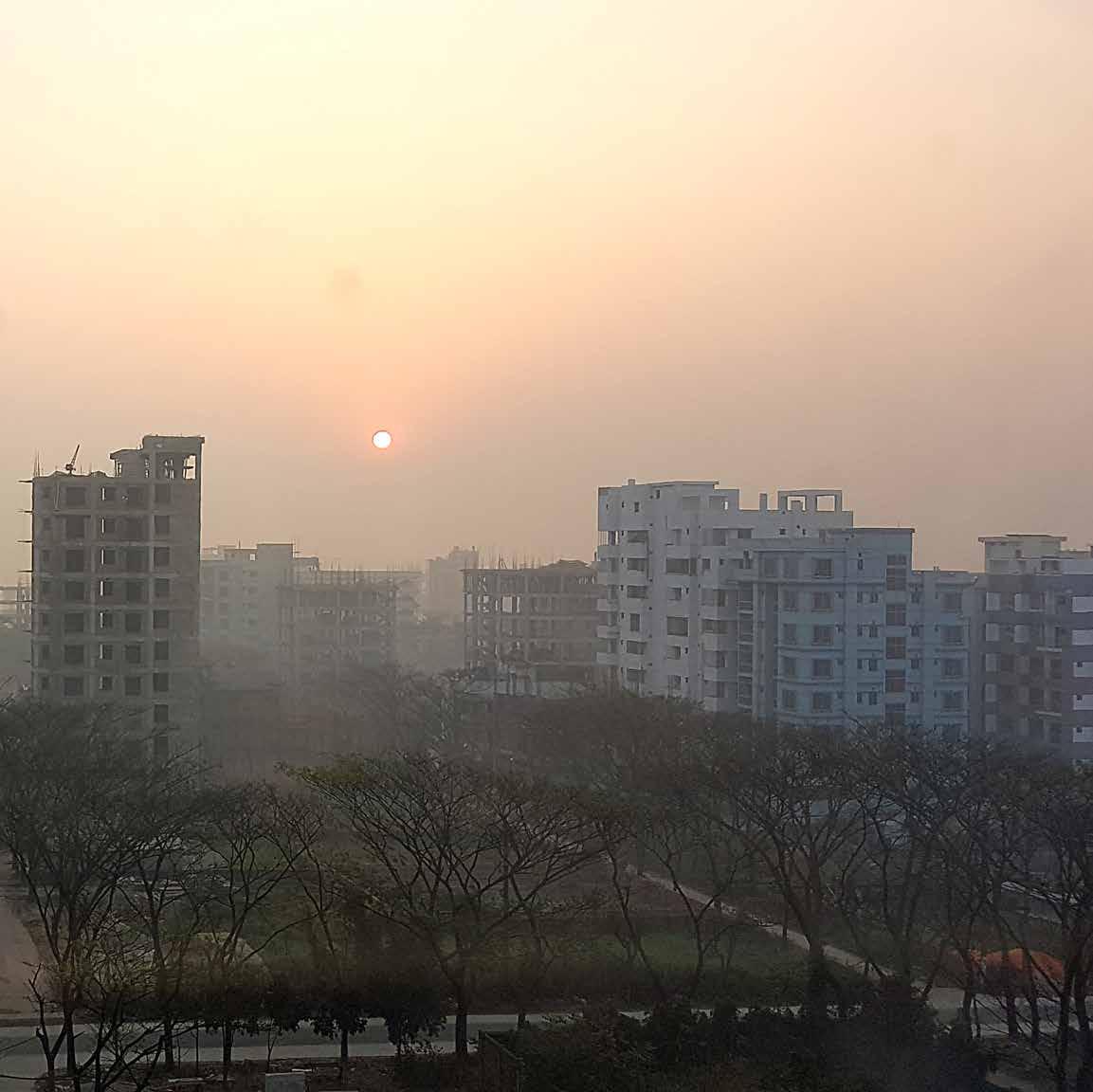
Spring is the perfect time to visit in Dhaka. Mornings and evenings allow the traveller to ease himself into and out of the day’s warmth. The weather is neither too hot, nor too cold, but a pleasant medium heat. Trees, bare from the winter, begin to sprout green. It is a reawakening, a birthing of a new year, bringing sunshine to the traveller’s eye.
Everywhere you go, city residents smile beguiling smiles, inquire of your origins with innocent enthusiasm and a genuine curiosity, for foreigners intrigue the people of Bangladesh. Men in long kurtas, with beards frequently bright with orange henna peer with keen, intelligent eyes, exuding a patience honed by centuries of culture.
Up-town, away from the old city, there are few tourists. White faces, unless belonging to those who trade in business, are seldom seen. It is a blessing. The traveller is therefore able to cling to his oriental fantasies, unhindered by intervening familiarity.
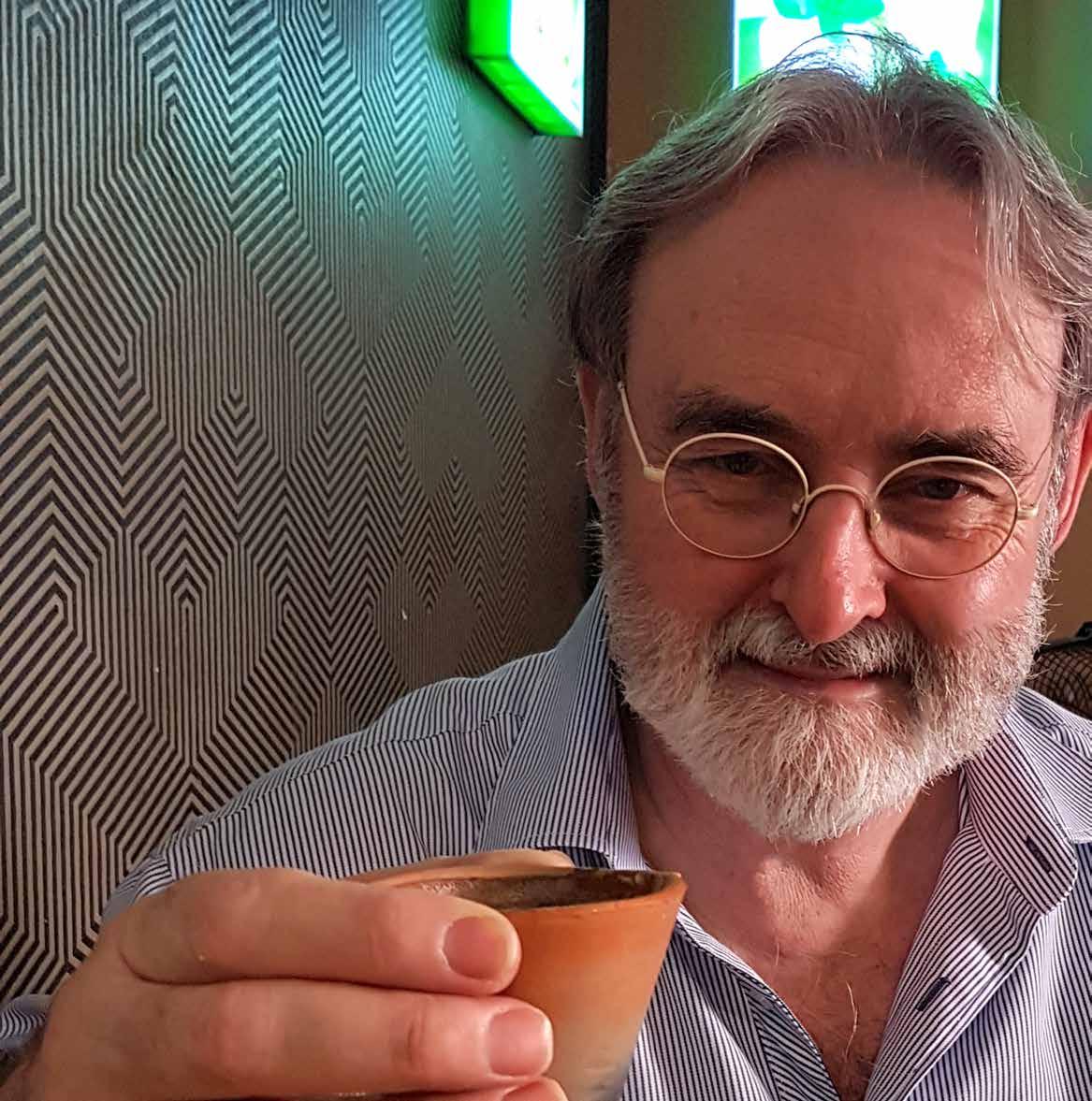
While in other countries tea is ‘stretched’, and coffee scorched by burning embers, Dhaka presents its tea delight in terracotta receptacles, replete with the skin of boiled milk. Away from bustling, automobile filled, streets, roti bread is fried by conjurers of magical tasty morsels, and vendors of carrots proffer their wares to health conscious passers-by.
Elsewhere... in the room, the women come and go, but are not talking of Michelangelo, but are returnees from the Americas with drawings and prints et al. It is where the cultural glitterati glide in elegant saris draped to listen to Sufi inspired art philosophy, and chat. Forever to chat.
Dhaka needs to be seen to be believed. A traveller must immerse himself there at least once in a lifetime. He must embrace the city’s vitality, experience this lotus floating on a plethora of rivers and return home to tell his tale of exotica.
It’s 4 am in Dhaka, the capital of Bangladesh. The noise of construction has awoken me. I would say all is dark, but it isn’t. There are floodlights, and other lights coming from the construction of tower blocks all around the one I’m still trying to rest in. But at least the night air is cool. There is no need for air-conditioning, or even a fan. But some mosquito netting might have been a nice idea, though. Bangladesh, being riverine, is plagued with mosquitoes.
7.41am, Dhaka time. The day has brightened, and yet it’s still hazy outside. I too am a little hazy, but my Malaysian time says it 9.41am, and it’s high time that I was up and about. So, up and about is what I am.
After a sumptuous breakfast collated by mine host, I descend, via a lift filled with happy mosquitoes, from the seventh to the ground floor. Yay! I’m out and about in Dhaka. Nadeen, my friend’s driver, drives us. We’re in a somewhat white, aging, gas fuelled, Toyota Corolla. We drive out of this large, privately gated, community, aptly named a RA (Residential Area). There are other RAs but, seemingly, they are public housing. This is private, and mushrooming.
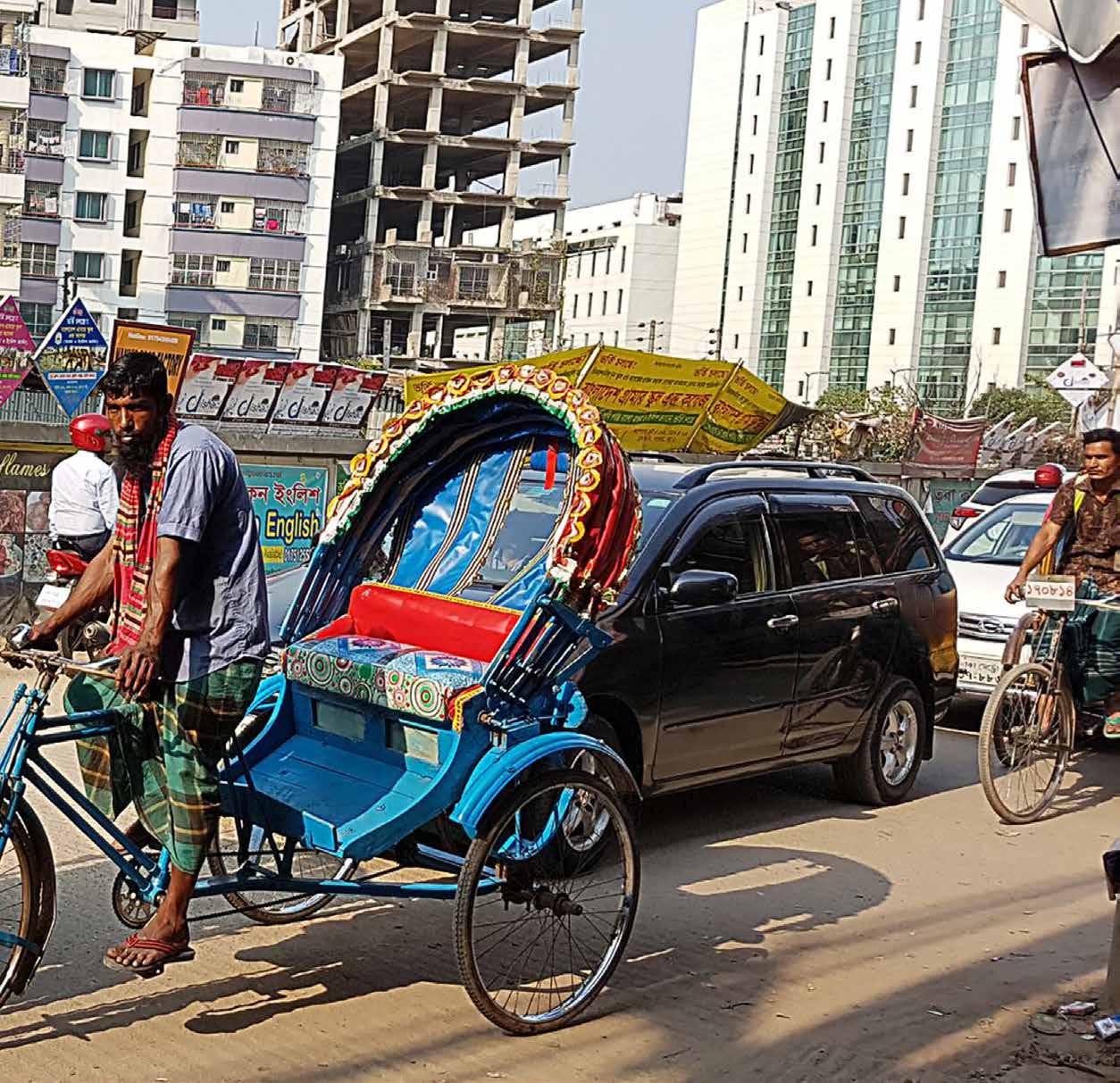
Tall rectangles, some only inches apart, spring from lands reclaimed from ponds. This is the other side of Dhaka, not the Old Town, but a burgeoning newer town in the making. It is protected from the hoi polloi by large gates, and top-ranking security guards.
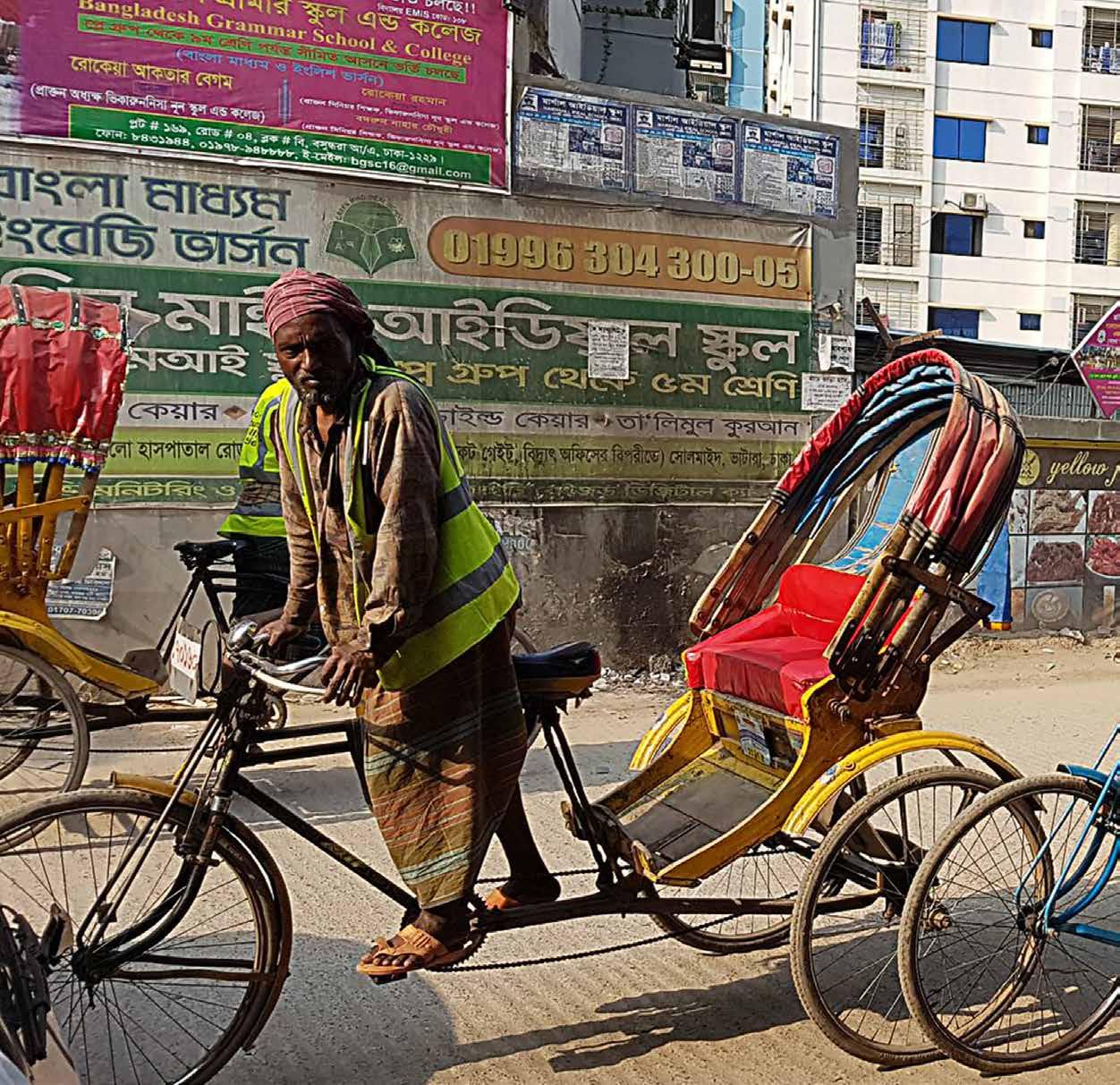
Through those gates we have hit the narrow, dusty, streets the guide books had warned against. Looking through the side-windows of my friend’s car, I appear to be in the very midst of a rickshaw convention.
I am surrounded by noise, and a very crowded South Asian humanity. However, on asking, I discover that this is simply daily life here. There are few taxis, hardly any Uber, no Grab, but rickshaws and Obhai auto rickshaws (elsewhere known as tuk tuks), which are, effectively, cages on three wheels. All these take up the transportation slack, and there’s no shortage of customers.
There are thousands of colourful rickshaws. They are pedalled by ‘lunghi’ (chequered sarong) dressed men, their headgear (‘gamcha’) tied to prevent sweat from hampering their progress. Those wiry, hard-working, and hard peddling men stretch their lean legs onto pedals, and push, twisting handlebars to avoid cars, trucks, the eponymous Asian tuk-tuks, and pedestrians. At every turn, those brave men launch their metal and wood-framed vehicles forward along the harsh streets, dragging a variety of passengers on to their destinations.
For us, in our antique Japanese car, It takes 5 minutes to drive out of the RA into Dhaka proper. When I say Dhaka proper, I mean narrow lanes, which
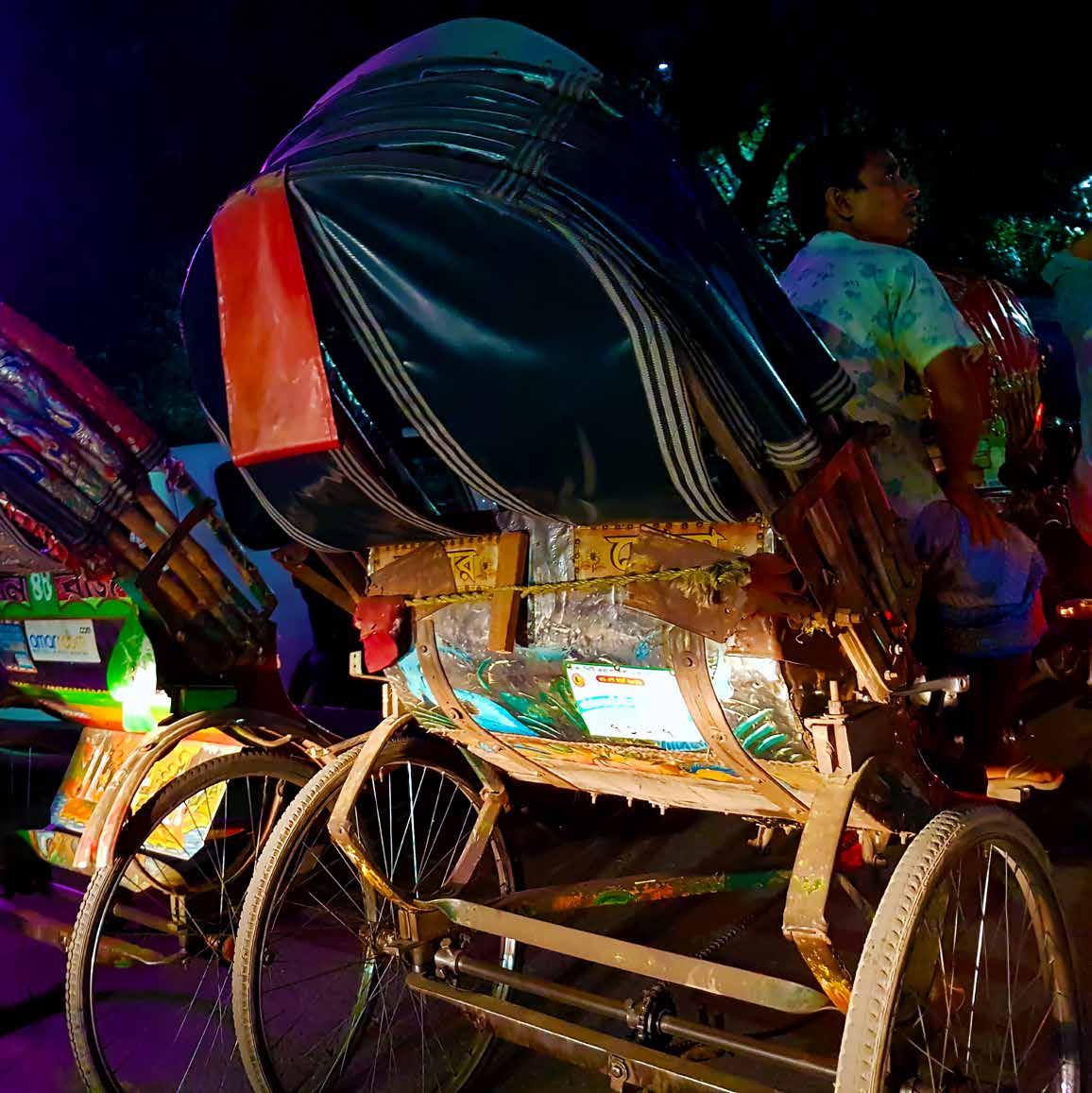
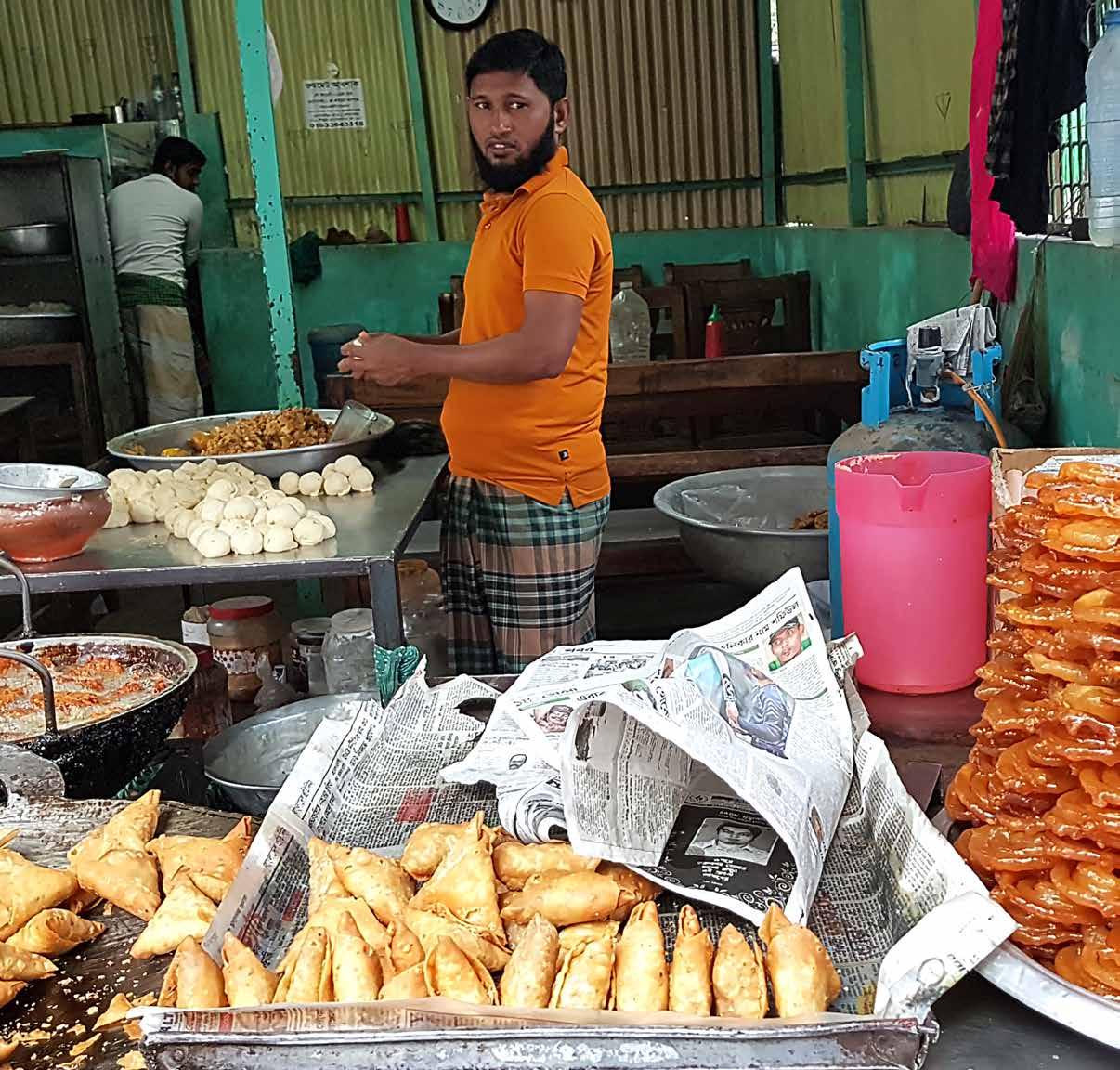
we weave through, passing the fixers of motor cars, sellers of all sorts of chromium to fix to your vehicle, fruit pedlars, ladies covered head to toe in loose black ‘burkas’. Everybody is weaving in and out - motorcycles, tuktuks, rickshaws, cycle riders wearing masks to keep out dust, car fumes, insects. Above us are makeshift bunting, proclaiming candidates to Dhaka’s mayoral election. Photocopied, black & white A4 and A3 papers constitute the ephemeral bunting, streaming past us as we pass through. Five more minutes and we are on the main road, and narrowly avoiding oncoming traffic.
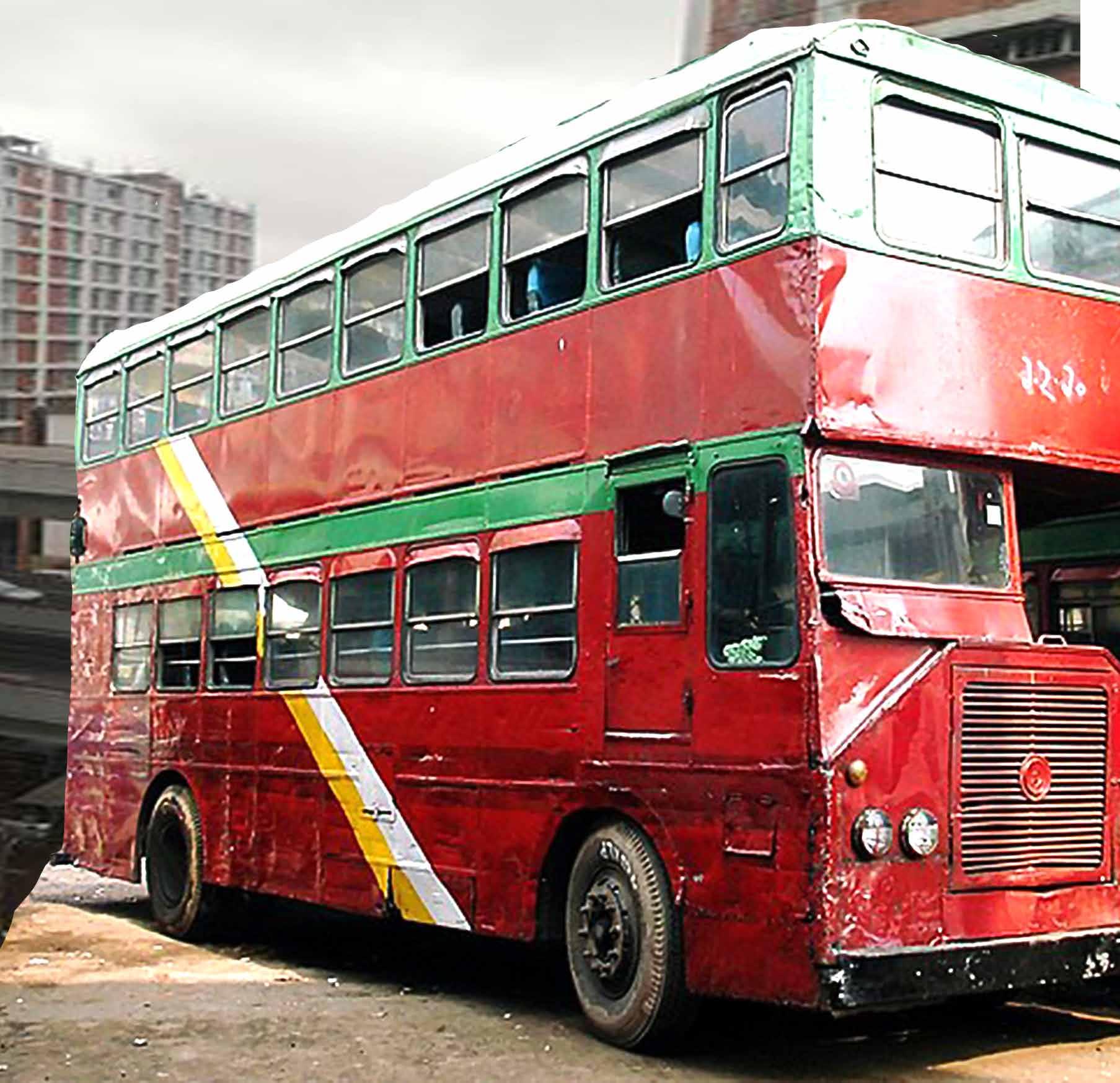
There are horns blaring….’I'm coming, I'm coming, watch out, watch out’. It seems that most cars are scraped. Many are bashed with gouged metal and heavily scratched paint. Obviously, they are the ones which did not heed the beeping, blaring warnings, or did and were bashed anyway. Beside us are single-decker buses, looking as if they have just returned from a war zone. And, in many respects, they have – the streets of Dhaka, one of the Earth’s most densely populated areas (pipped at the no.1 post by Manila, according to Google).
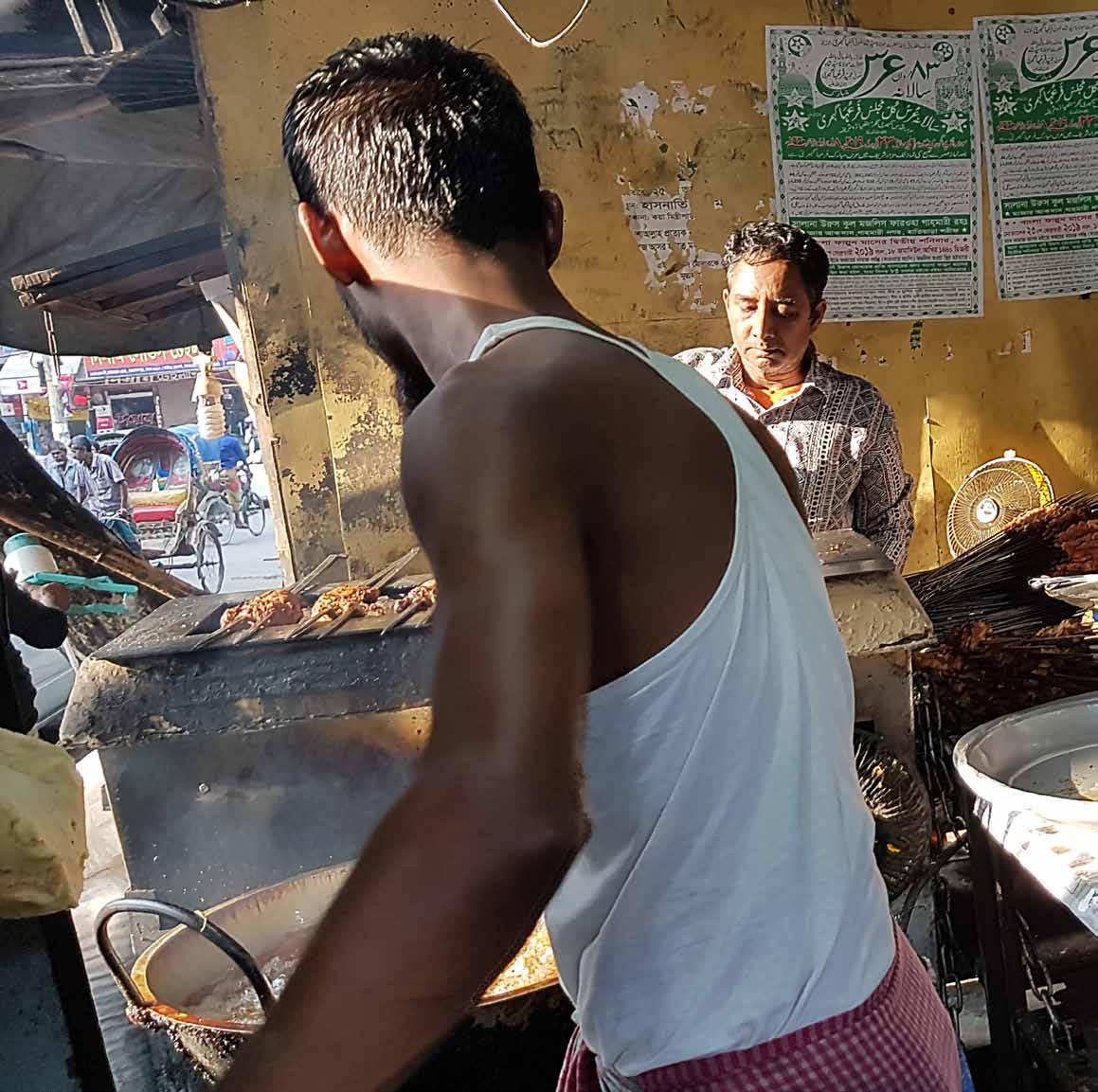
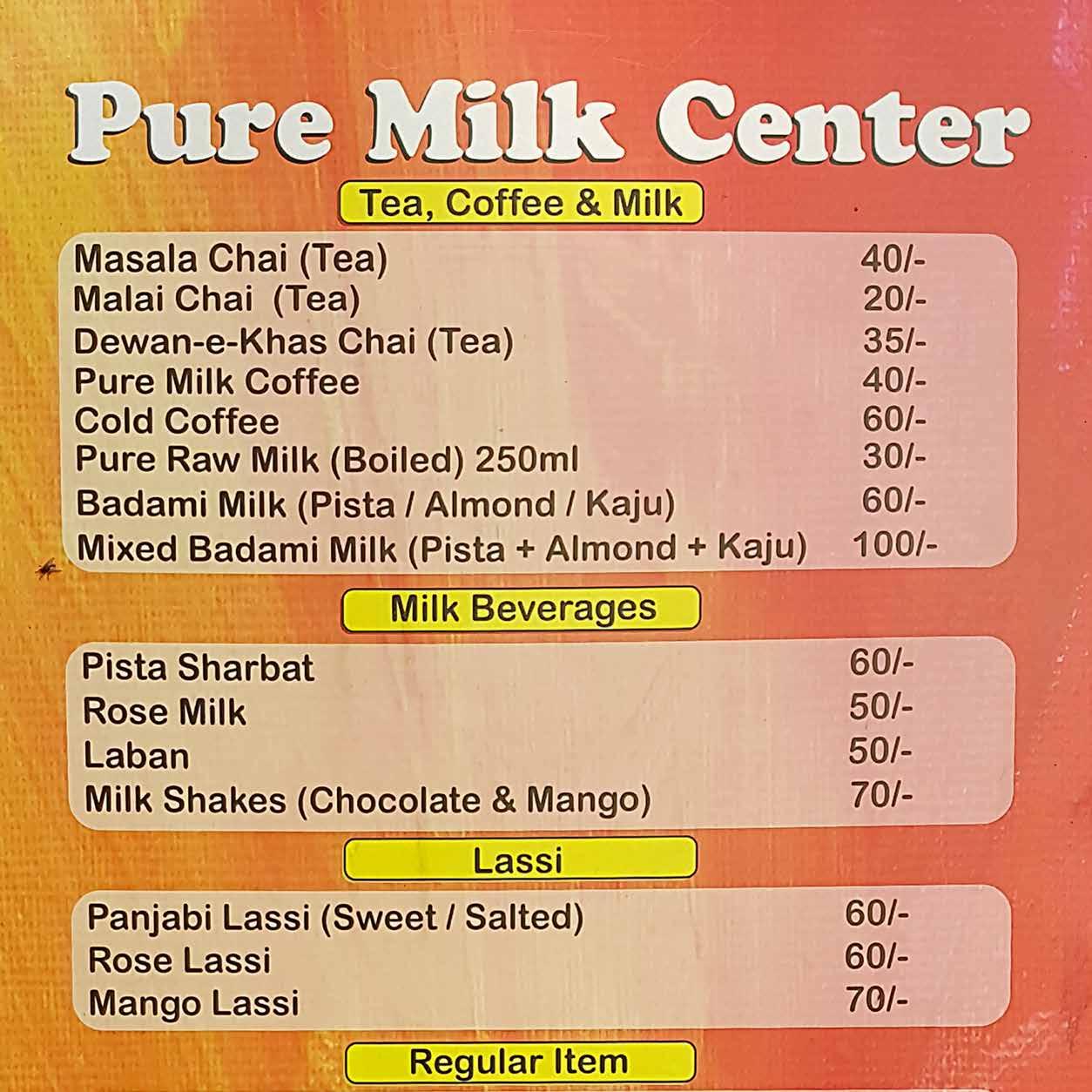
Down side-lanes, singlet and lunghi wearing men create Sringara/samosas, and deep fried bean cakes. They fry bread (Parathas or Bakarakhani) in large ‘kualis’ (woks) of oil, which are frequently served with kebabs (Kebobs). One small enterprise also sells ‘Jelebis’ (very sweet, orange, Indian sweets, made from maida flour batter, deep fried and soaked in sugar syrup). In other side road, at the ‘Pure Milk Centre’, in Mohammedpur, on Tajmahal Road, Kolkata Dewan-e Khas Chai (tea) comes served in small clay pots. As
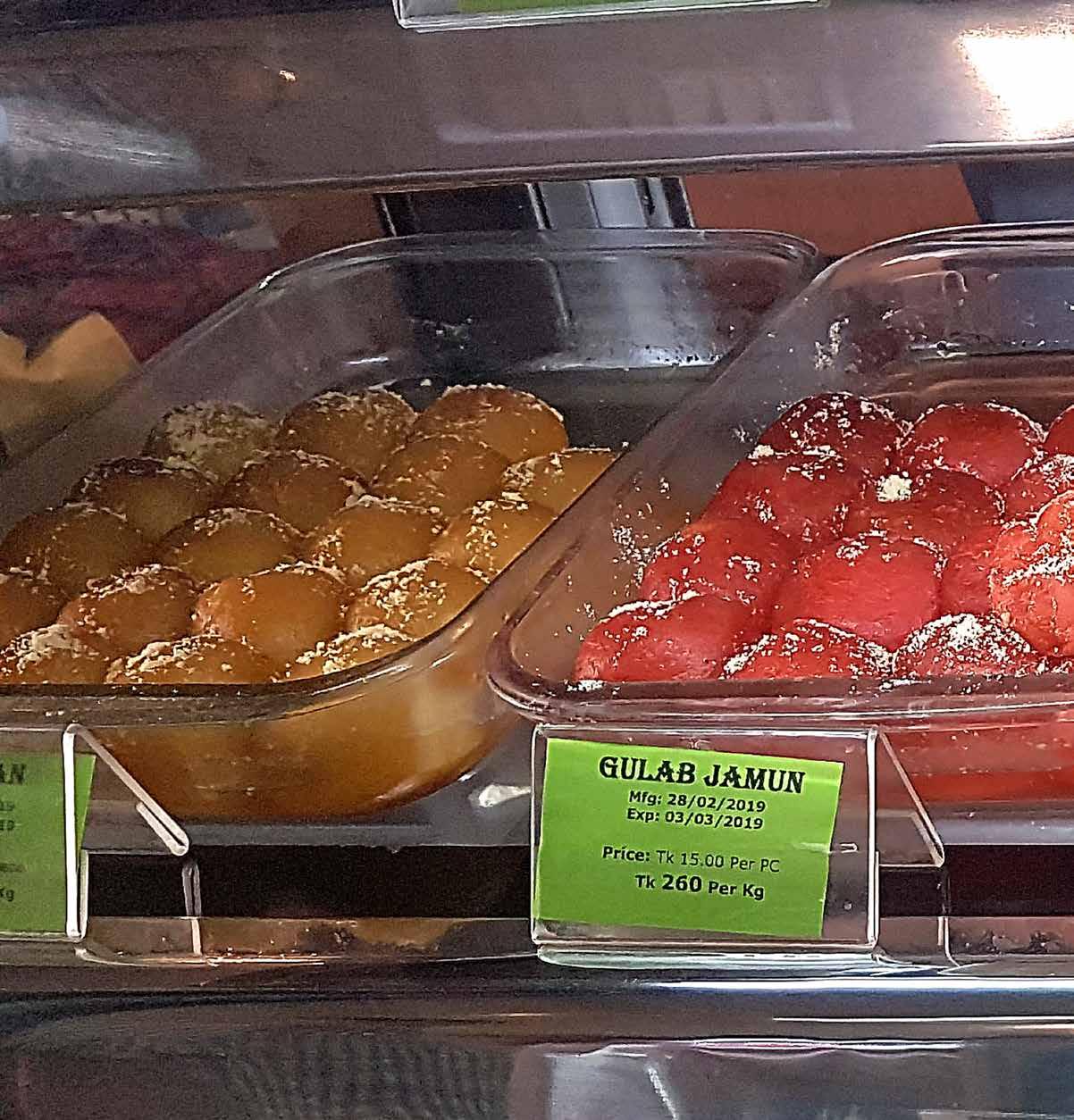
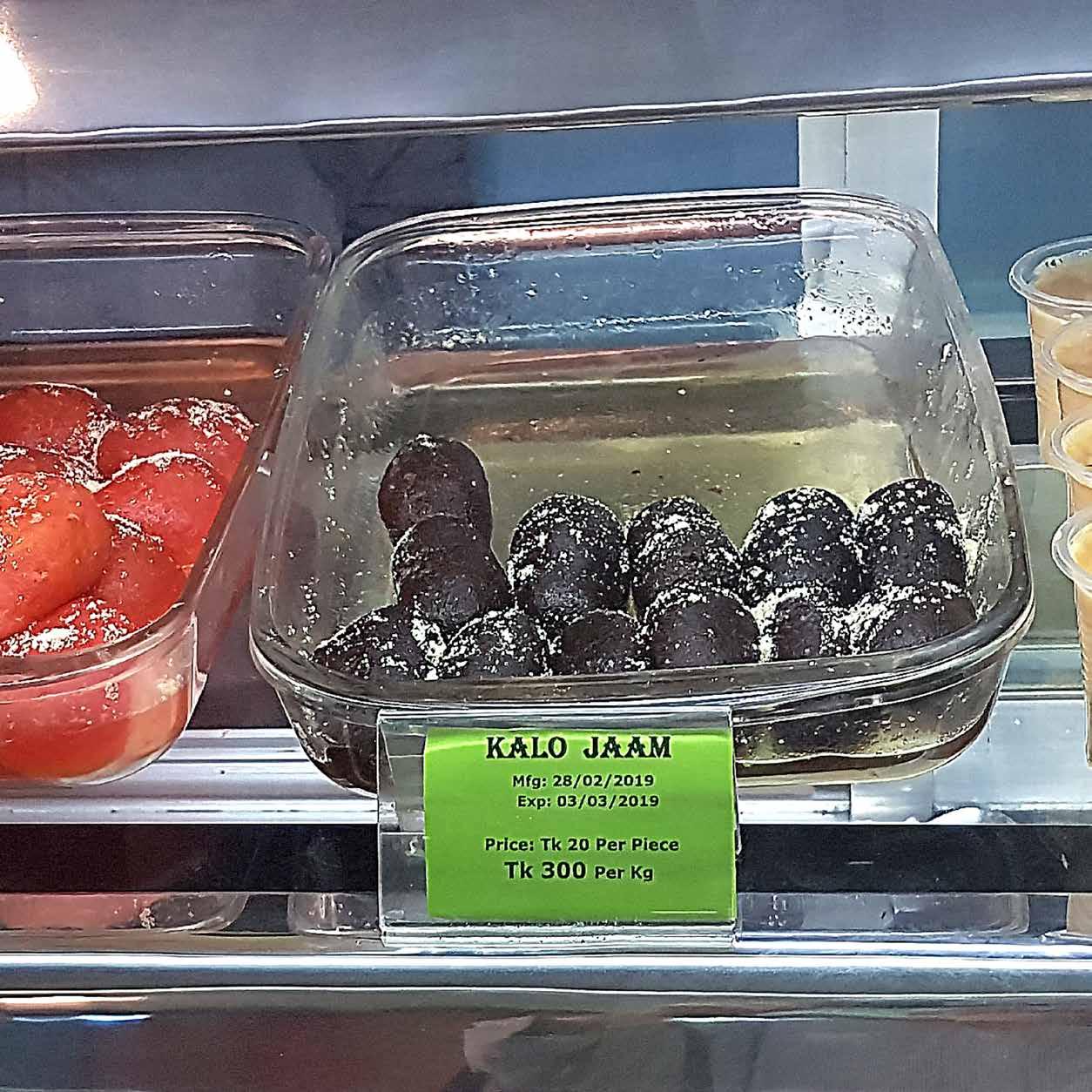
I drink, the lure of ‘Indian’ sweets is too much for me. Ras Malai (sweet/ dessert consisting of spongy balls made of fresh paneer, soaked in thickened & sweetened milk) and Gulab Jamun (fried sweet balls made of dried milk and doused in rose/cardamom syrup) beckoned, are sirens luring me to consume them. I have no power to resist.
In more up-market areas there is a plethora of coffee stalls. They sell cold or hot coffee. One yellow vendor, Coffee Hut (It’s a Cup Full of Happiness), replete with Facebook site, proffers a variety of coffees. It’s possible to choose from chocolate cold coffee, caramel cold coffee, caramel chocolate cold coffee to the same, but hot. Should the customer prefer not to have coffee, then Kit Kat or Oreo shakes and milk etc, is also available from the ‘Pure Milk Center’.
Dhaka's roads collect cars. It’s as if some giant toddler has lined their favourite modes of transport end to end, and left to have their breakfast of roti and dhal. There are few places you can visit in Dhaka without being subjected to a crowded three-lane traffic jam. On the bright side, that does give the opportunity for entrepreneurial young men to stand, at the roadside, selling carrots, cut melons ans other healthy snacks.
Meanwhile, the casual observer would notice that “Jack and Juky” sell Singer and Butterfly sewing machines, apparently, while ‘Ghua’ are Chinese dry cleaners and Fut Lian House, as a restaurant, resides on Ataturk avenue, Dhaka.
Slim, older ladies, their harsh lives etched onto their craggy faces, clothe
Biological males (who identify as women) demand from the car’s occupants, in English, their makeup a tad overdone. Nadeem slips one ‘lady’ a small note. There is a superstition that not to do so is bad luck. All this, while opposite Mr Baker sells cakes, pastries, and Bangladeshi sweets.
As the rickshaw riders ride on, the vehicular ‘Beep, beep, beep’ cacophony becomes a constant sound track to this over-packed city. Occasionally, a popular film song escapes from a car, but is bullied into submission by the constant, blatant, beeping.
In the area designated as being Banani, ’Moumita Rokomari’ edges past, frame by car windscreen frame, as if in some jerky ancient celluloid film, while rickshaws form an orderly queue under the 'no rickshaws’ sign, near the woman selling small packets of tissues. She is being passed by a silver Tata bus. And we are off again. A moment's respite of good travelling, and then, yet another jam.
We have been vying with an ‘Ashok Leyland’ double decker bus, for a place in the queue. Its ‘red and green’ facade scrapes past us, flaunting its battle scars. Then it stops, and accepts passengers, momentarily, losing its place in the road queue, somewhere near the Prime Minister's, extremely spacious, palace. We edge bravely on, heading towards one of our many destinations on that day, and on the many days of my stay, across the dusty, noisy, but nevertheless fascinating, city of Dhaka.
On a misty Bangladesh morning, with the sun barely glinting upon the expansive Buriganga river, we have arrived at the ‘launch’ (ferry) docking
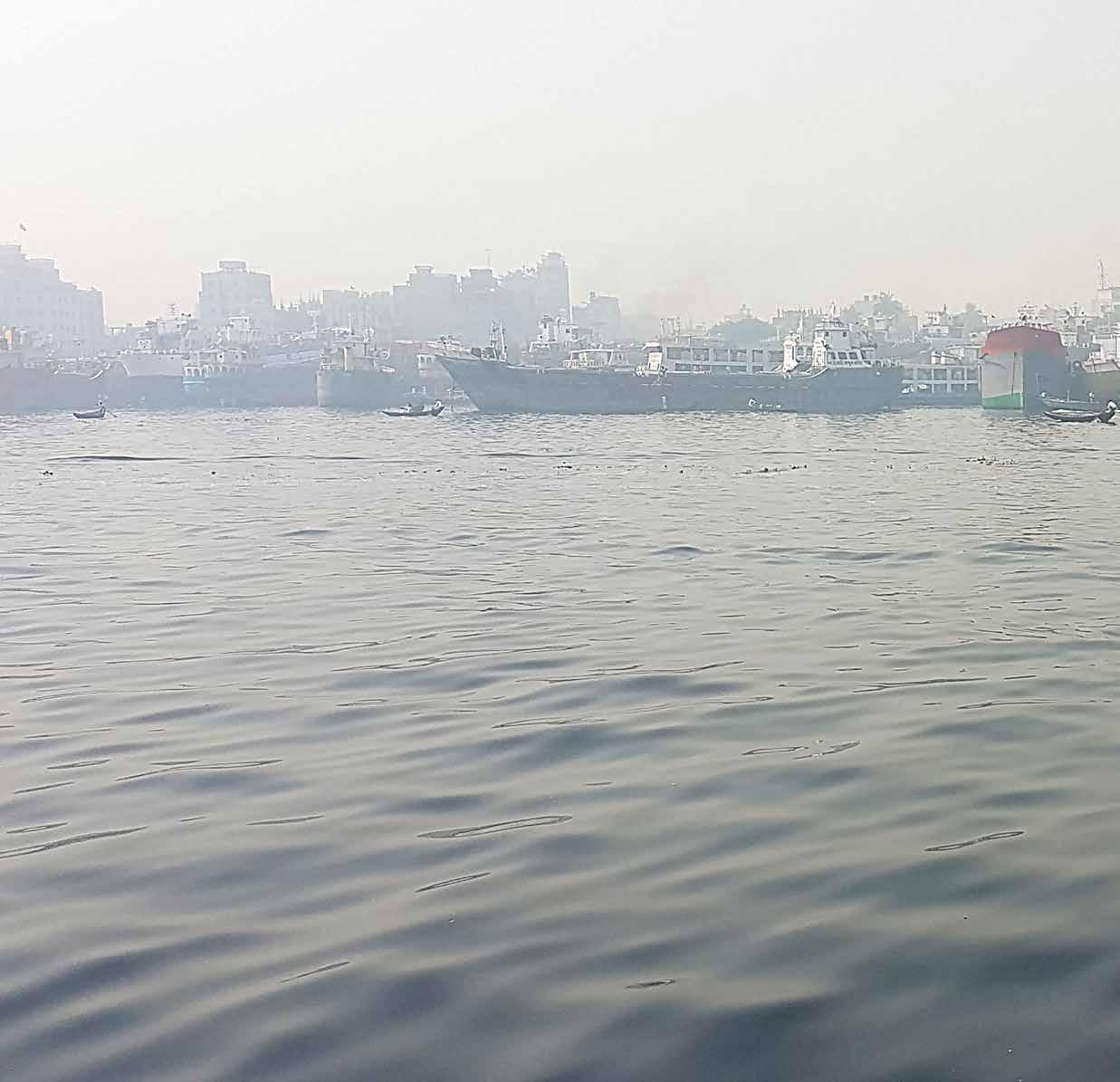
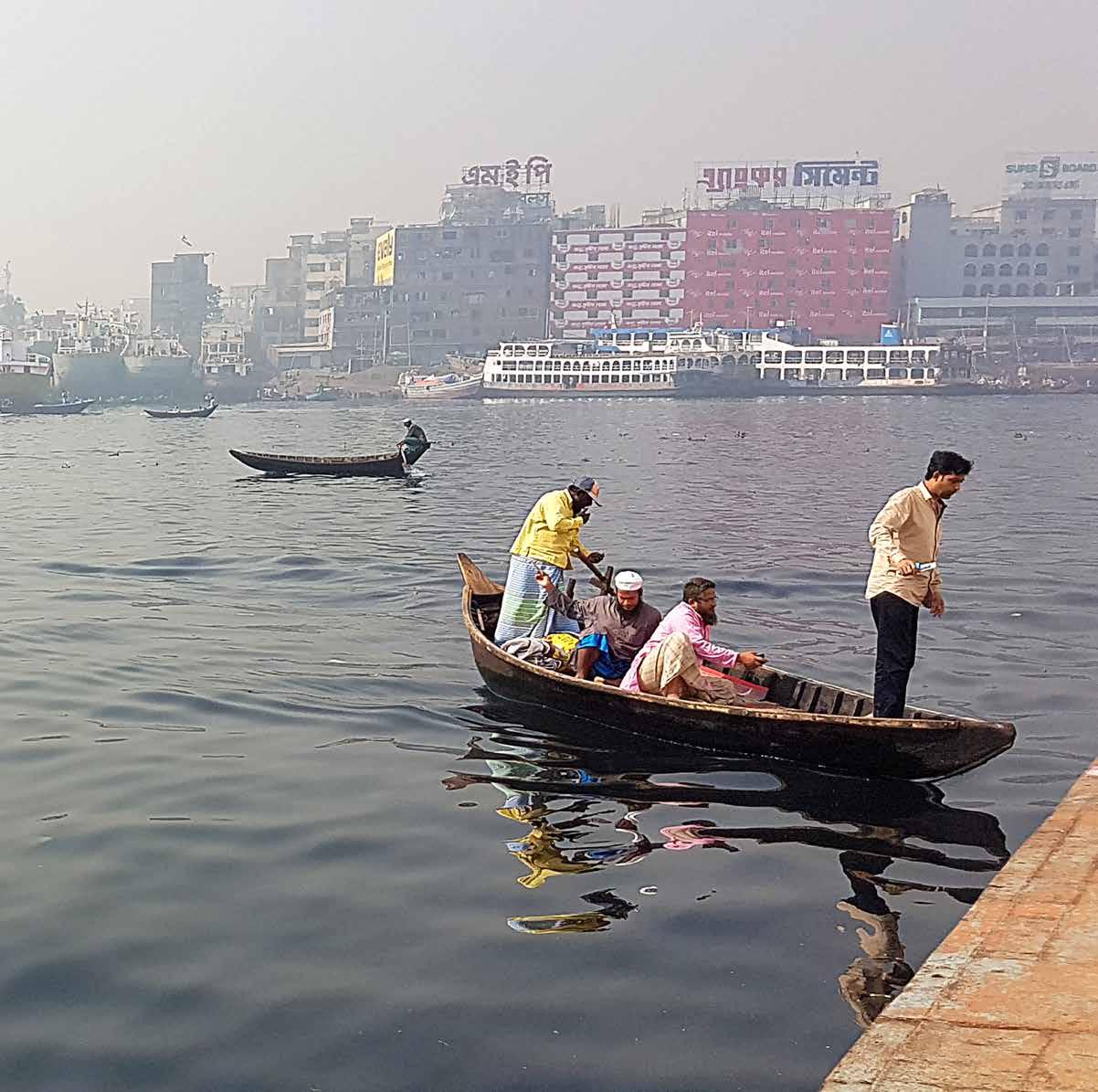
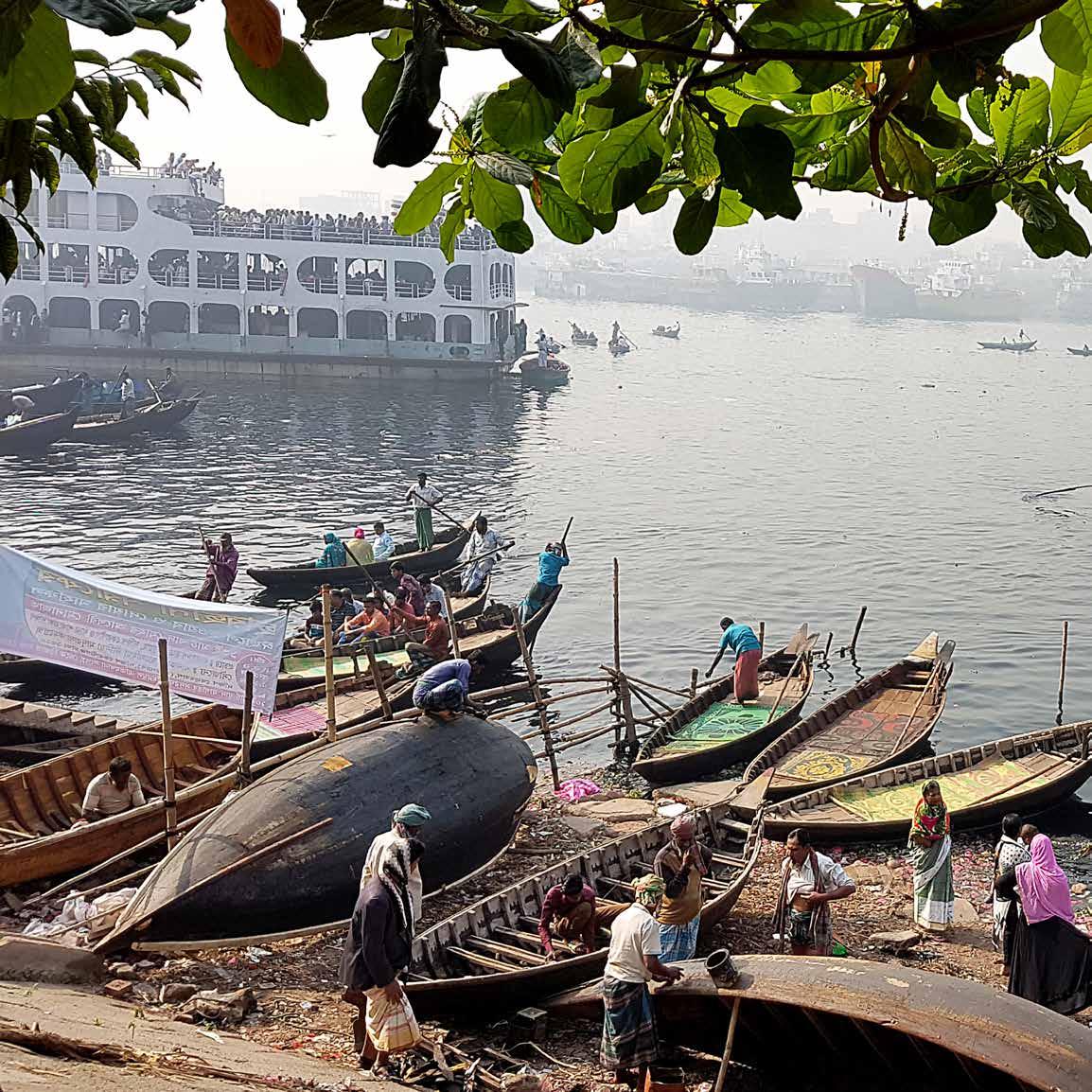
themselves in drab, street-stained saris, and tap at stationery car windows. area, at Sadarghat. It has taken some time, and some distance, threading through the morning mayhem of Dhaka city, but we have arrived and, while waiting for my friend to get the tickets for our trip, I watch as a turbaned man tars his slim, wooden, ferryboat, by hand. Two men behind him talk with expansive hand gestures. When the boatman is ready, he and a friend turn the boat right side up. One man rubs in tar, while the other uses a hammer to fix something. I have no idea what, or why.
Beside them, there are boats which appear freshly built and/or freshly tarred. As warmth is detected in the air, there is constant movement. Ferryboats alight and leave. Passengers squat on bamboo mats, lain for the purpose, leaving their shoes behind, or in front, but not on, the mat.
Those wooden boats appear to take (up to) seven passengers from one side to the other side of the river. Behind me, on the pathway, all manner of humanity moves, shuffles, eases their way along. Ladies, frequently with their faces covered, move behind men wearing chequered sarongs (lunghis), with children barely able to contain their excitement at the beginning of their journeys.
Before me, down on the river, small wooden craft ferry people about. A single oarsman with a single, lengthy, oar stand like gondoliers at the stern of each craft, urging them forward. And, just for as second, I am transported to the set of ‘Da Vinci’s Demons’, a scene in Venice perhaps or, there again, perhaps a watery scene from ‘Assassin’s Creed”, only more tangible, especially the aroma. Down the pathway, large ferries (launches) accept multitudes of
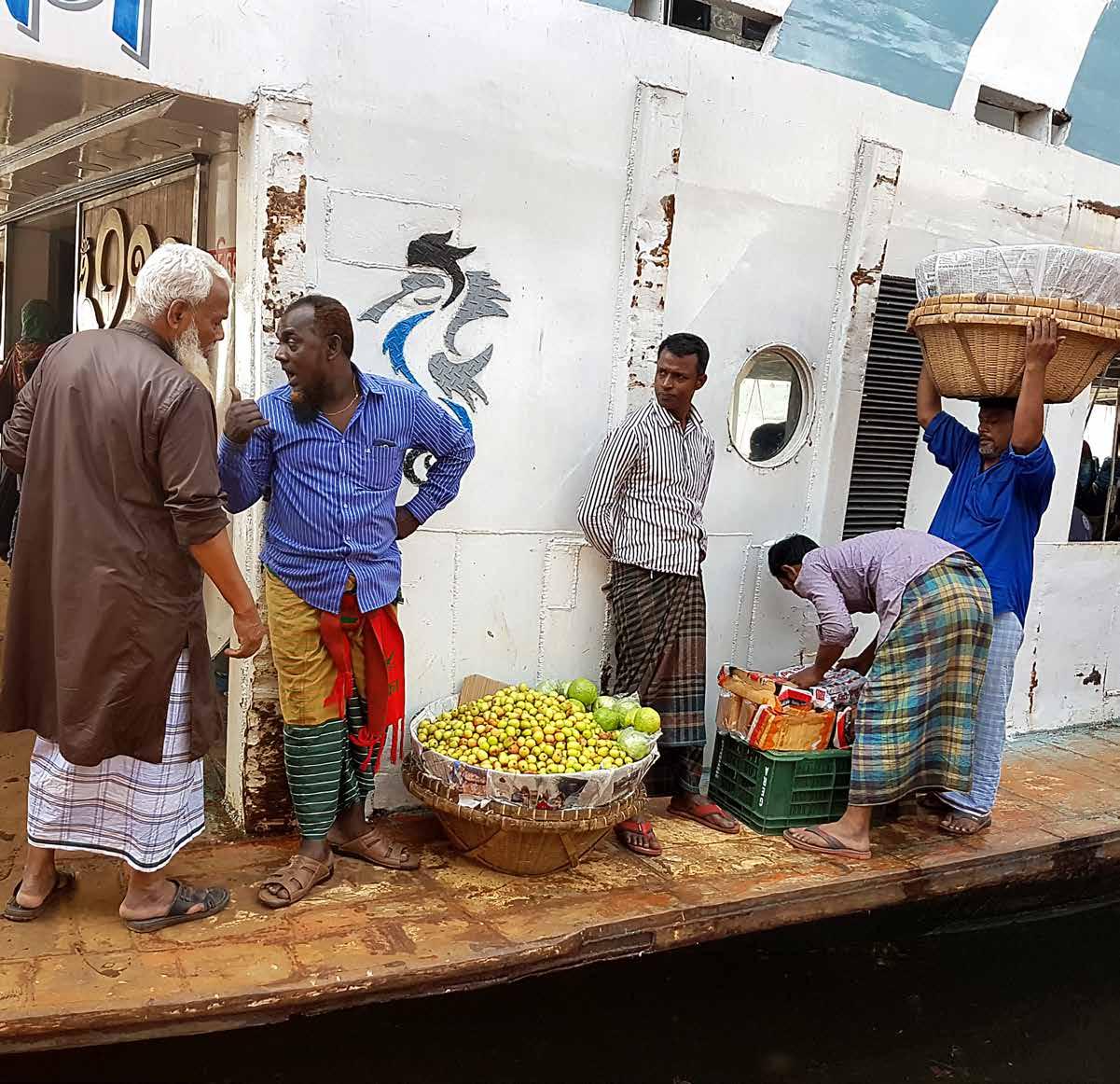
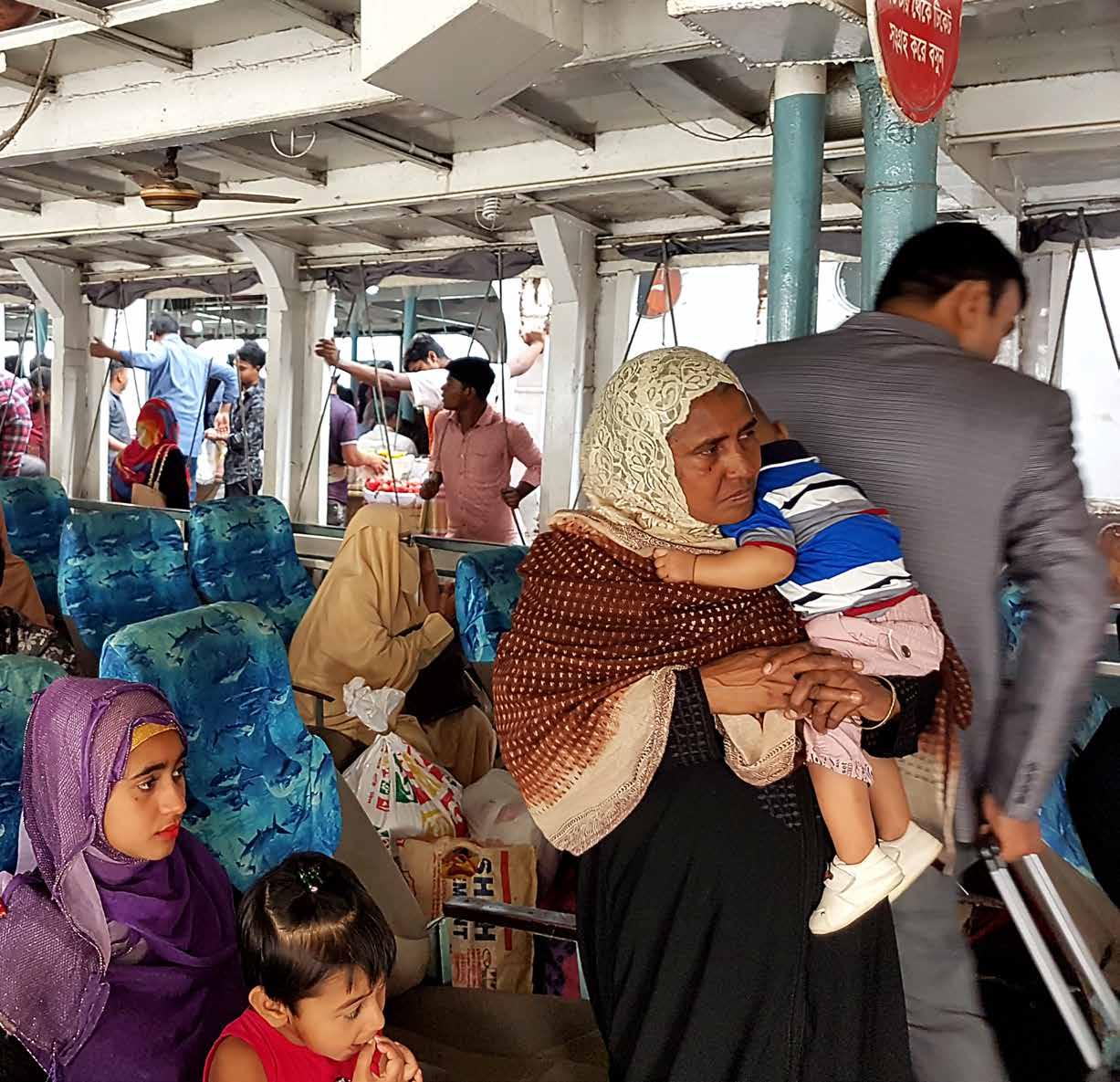
humanity. People become sardine pressed between the metal walls, as greater and then greater numbers of people horde onto the launch. The launch is like ferries across the world, with the exception of the young bearded sellers of guava, loaves of thickly sliced, white, cut, bread, and peanuts, nevertheless children swing legs against a backdrop of shimmering waters. The otherness of our cultures separates us, as does the language punctuating the nigh claustrophobic atmosphere. I am assailed by mellow scents as the morning progresses. Our ferry has (numbered) open plan seating, with seats reminiscent of long distance coaches and, like coaches, many seats are the worse for wear, yet nevertheless serviceable. The sister launch, docked beside ours, has cabins. On that vessel a man in an orange T-shirt paces back and forth, brushing his teeth. Other men in white vests adjust their equally white sarongs while, on our ferry, passengers continue to stream.
Before long, purveyors of fruits and bread board the sister launch, occasionally climbing aboard ours, proffering their wares while one young man dressed in purple displays a large rattan basket of bright red pomegranates. We wait an indeterminate wait. Then, after I have explored the launch top to bottom, climbing ladders to reach the second and third decks, we are, suddenly off. The boat is reversing out. I feel a thrill at that movement, the metallic vibration, and am excited as we begin to leave the dock and the others metal boats behind, to finally begin our journey.
Outside of Dhaka, a few kilometres downstream, tall towers, like fingers, stretch into the calm, blue sky. Those chimneys’ brick-stacks, mark the manufacture of necessity for the burgeoning building sites in and around
I’m so happy to be able to see outside. Rather than move out of the sun, there are those who prefer to shut the sun out, not just for themselves, but for others too. Life is compromise, only some have to compromise more than others. There is always a tension between our preferences. I practise patience. Sitting meditation helps. Two decks up, a clear river view brings sights of constant river traffic, large and small. Barges take sand, and goods while launches take hundreds of passengers beneath the sweltering sun. Standing aloft, on the top deck, the slightest of breezes ruffles my hair, strokes my arms, yet barely keeps the proud Bangladesh flag adrift.
Passengers sprawl on all decks. Young families are squatting on the deck, feeding, sleeping allowing the slightest of passageways as I attempt to pass. It is National Language Day. Dhaka denizens, their families and goods are on the move for this three day holiday. Yet the people are patient. There are no harsh words, no unpleasantness, only resignation. This, the second biggest of Bangladesh’s rivers, stretches as far as the eye can see, in all directions. For me it is a much needed breathing space after the noise and clamour of Dhaka. Aside from the passenger murmuring, only the chugging of hardworking water-borne engines breaks the calmness over the three plus hours, the journey takes.
The azan sounds early in the morning. I open a bleary eye after a night of fitful sleep in a mosquito netted bed. Mine host is awake. He has performed ‘wudu’ and prays. After prayer I am encouraged to walk in the misty morning. The air is fresh, not cold. Partially observed coconut trees are ghostly, emerging
only upon approach.
We wander compacted mud lanes which pass rural dwellings, on to a freshly constructed mosque. My friend guides me beside fields of rice paddy, green shoots reaching from the mud. Further, there are small ponds used as farms for fish. Farming fish is more lucrative than the intense labour needed for rice, as fish sell for more. Yet village life needs both, fish and rice to sustain the villagers. The early morning mist blurs edges, makes indistinct all but that immediately before us, as we stroll. A tea shop is open. We have strong Bangladesh tea. One elderly, bearded, man welcomes me enthusiastically. Tea here does not appear to come with fresh milk, but dried - like Coffeemate. Cups, or glasses, of tea are small. Minuscule in fact. Quite unlike the mugs I have become used to. I relish the opportunity to sit on a small plastic stall, accompanied by a small grouping of orange bearded gentlemen. I could drink more tea, should I be allowed. But time is pressing.
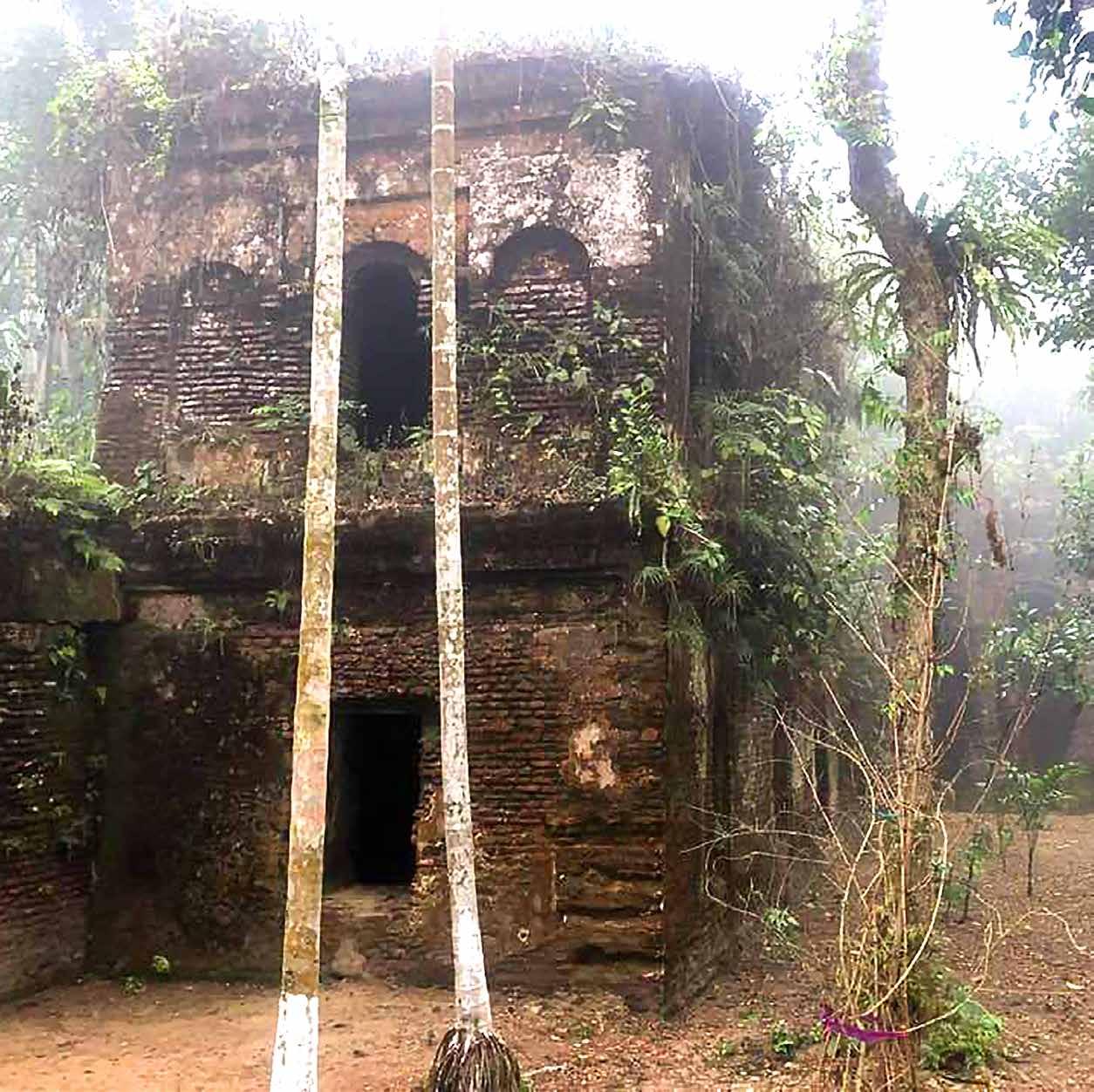
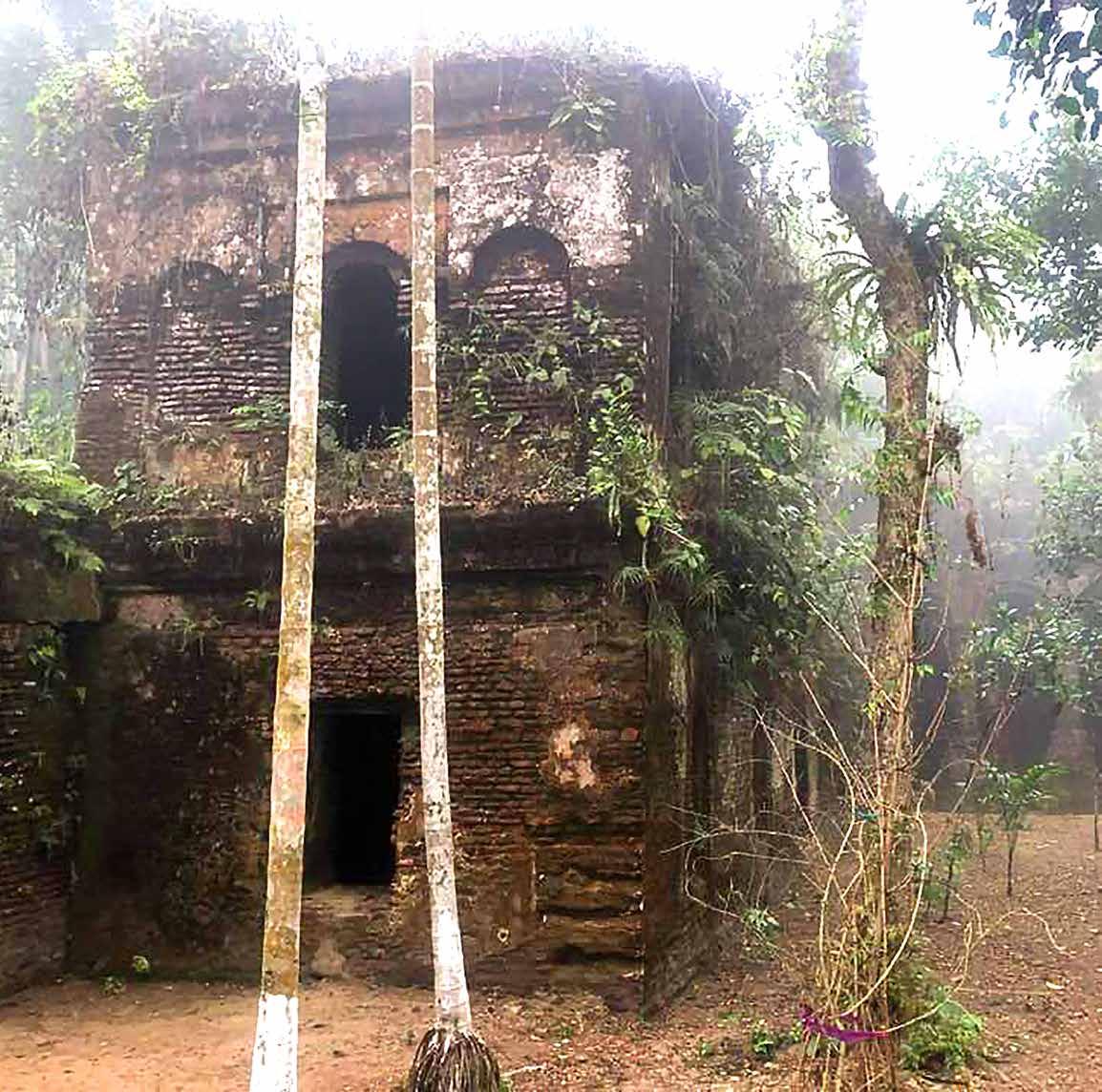
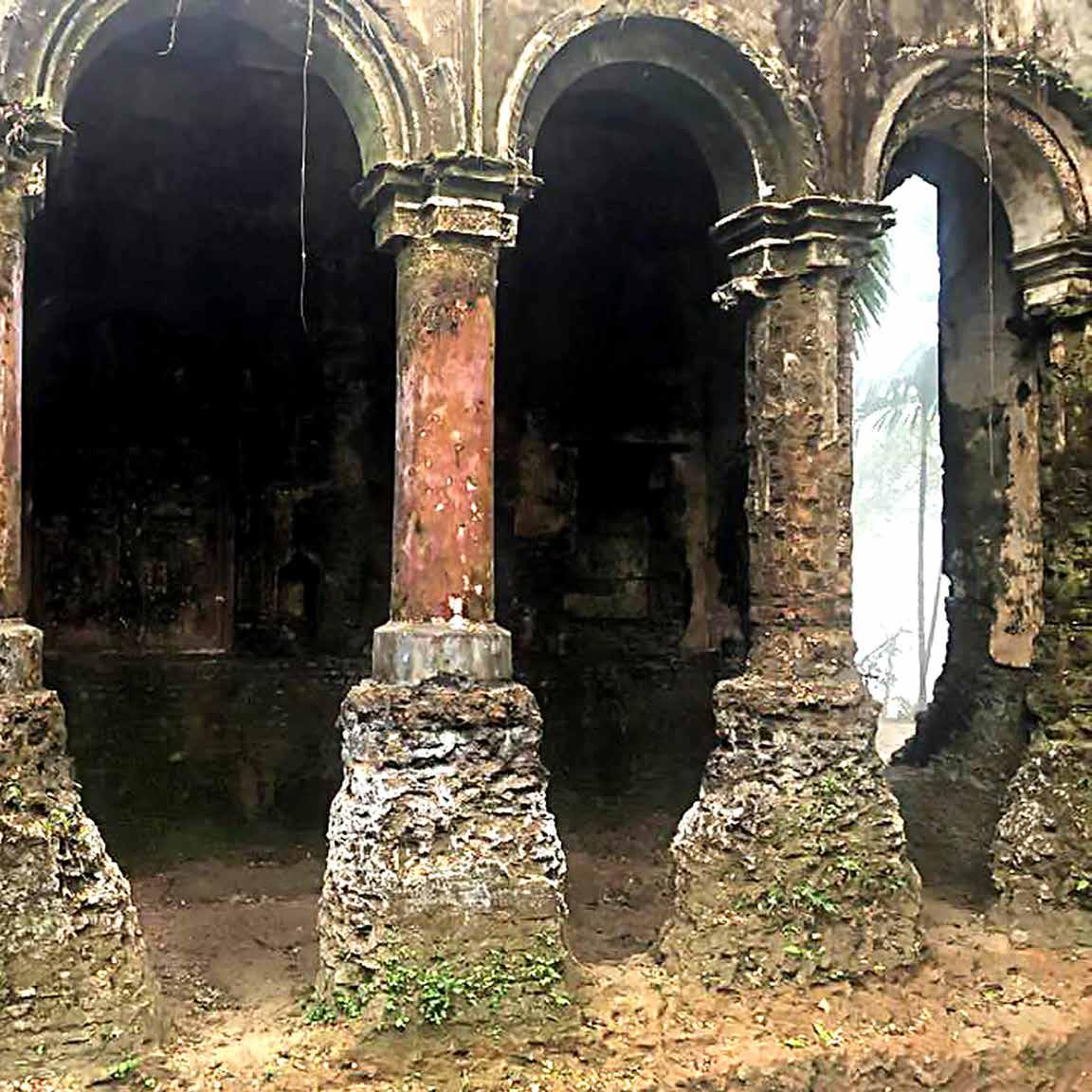
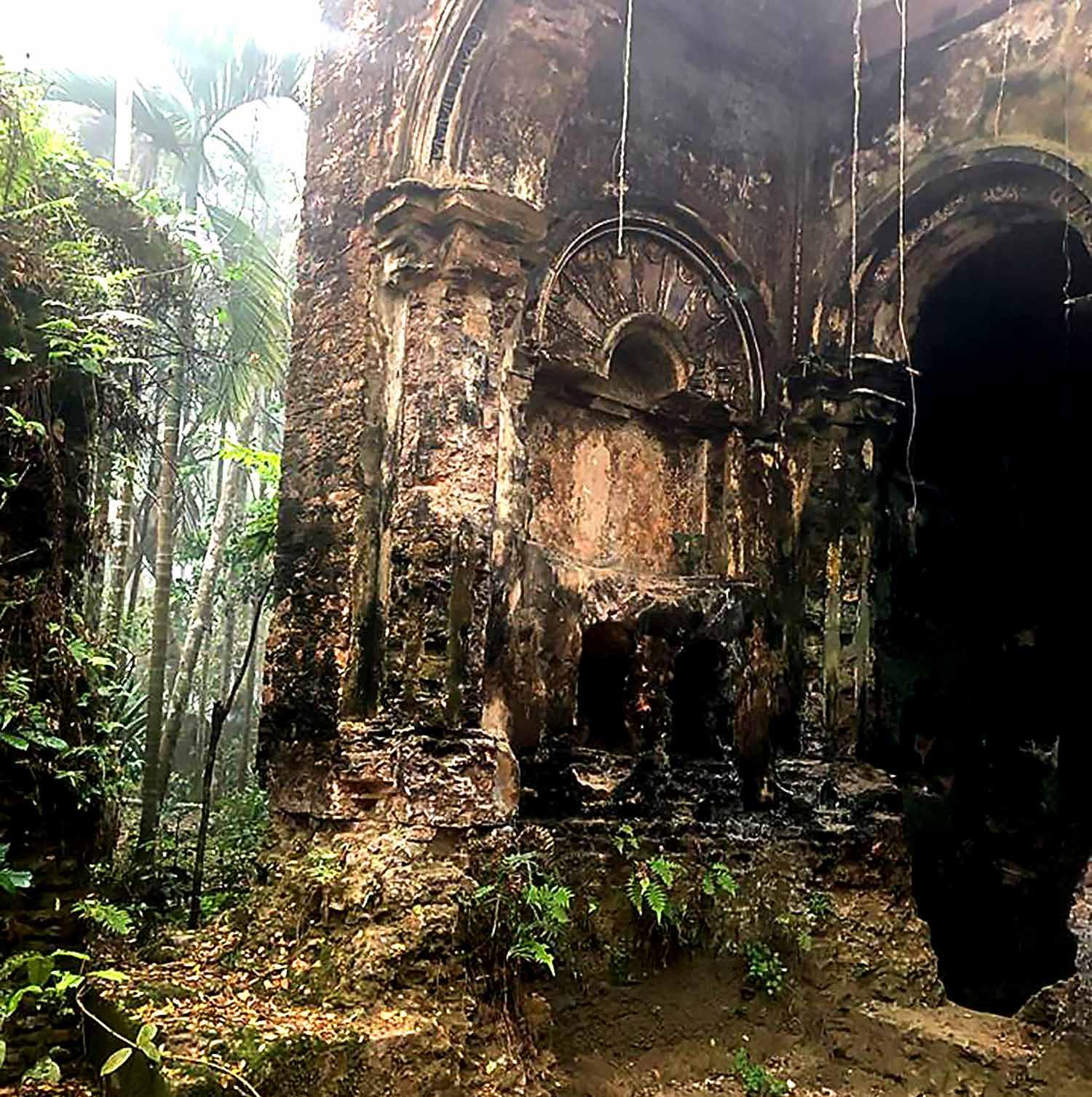
In a rickshaw, we bump and jump on the uneven road, avoiding presenting potholes, dodging other traffic. Soon we approach a large lake, the further shore remains in mist, unseen. We pass a medical centre and hospital, travel down a track and reach a 19th C Hindu mansion, now in ruins. It is as if I have been transported into Kipling’s Jungle Book, and half expect Mowgli (little frog) and Bagheera (the black panther) to walk out and greet us. There is the distinct feeling that this perfect ruin is a film set. Everything is perfectly arranged. From the crumbling, moss covered brickwork, to the small ferns sprouting from between bricks, and the decaying archways revealing glimpses of misty jungle, it could not have been more romantic. I am overawed, and drink it all in like a fine wine.
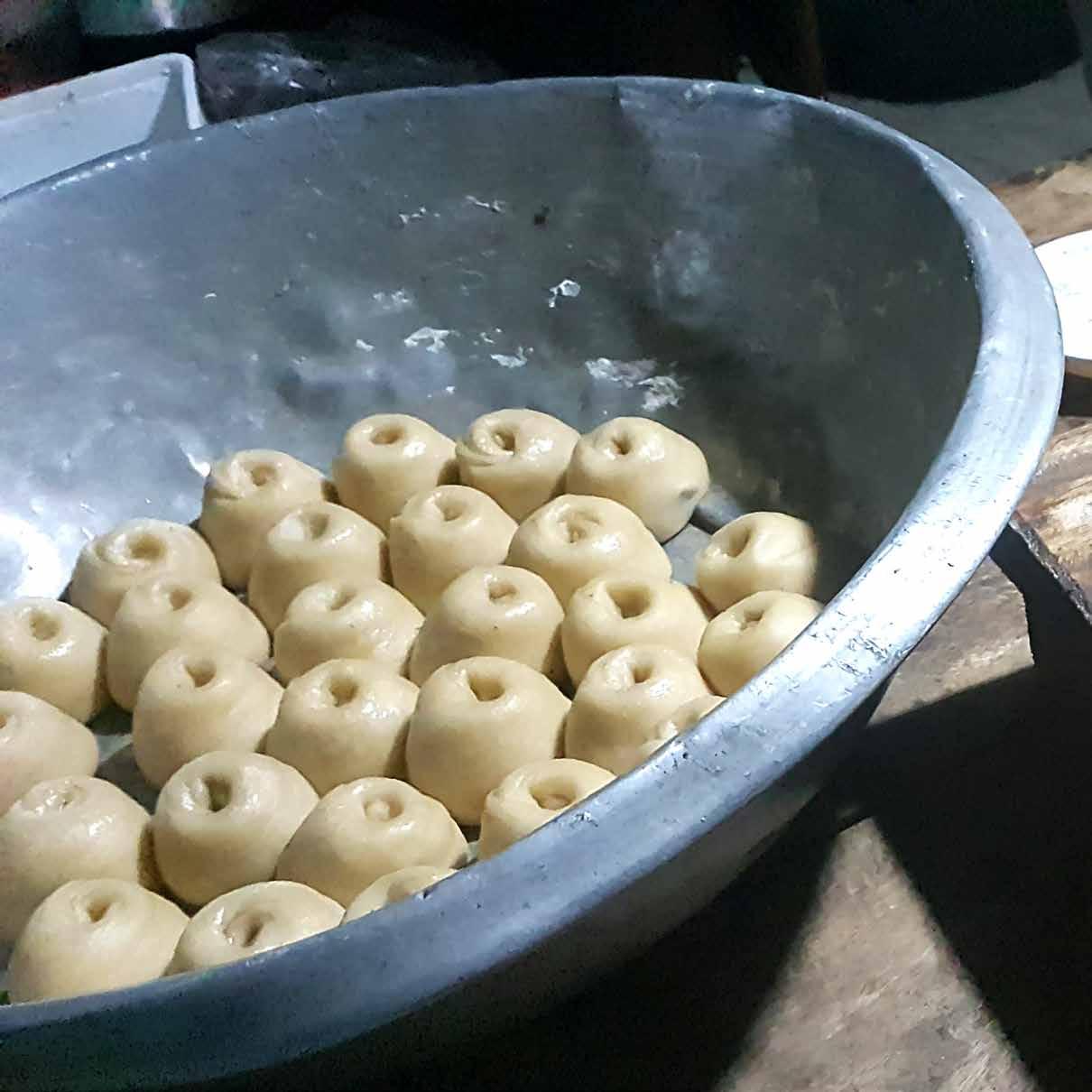
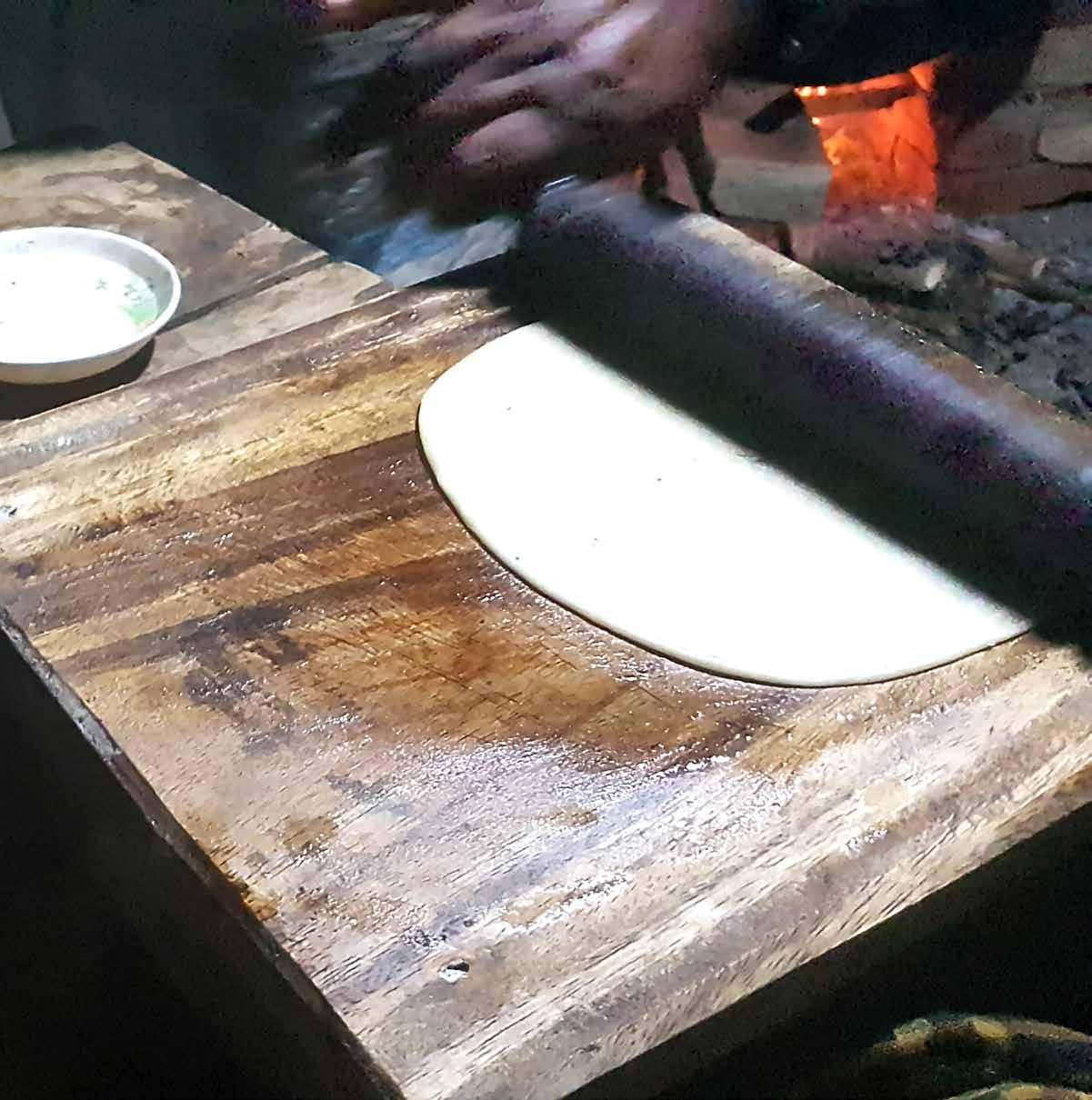
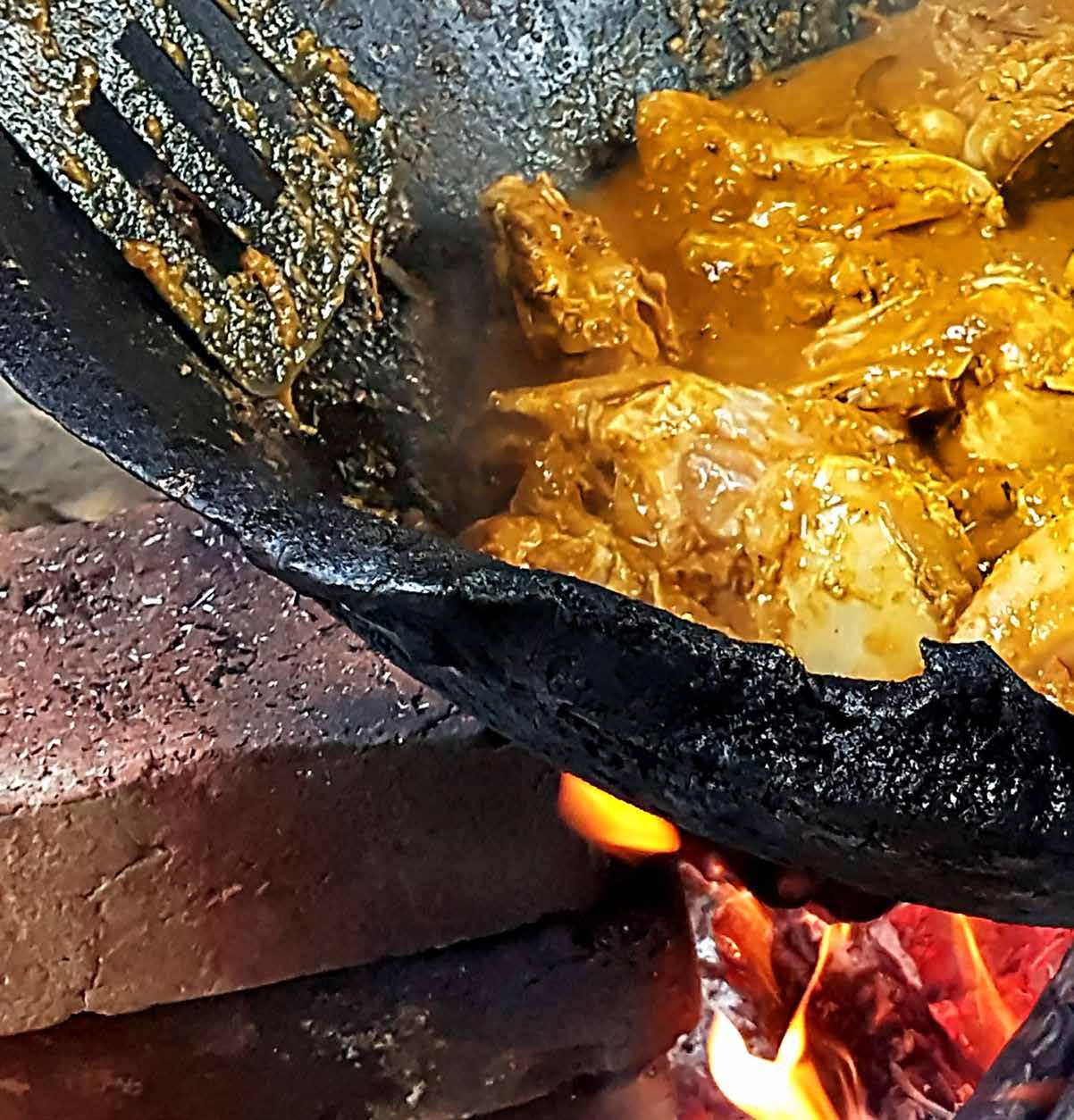
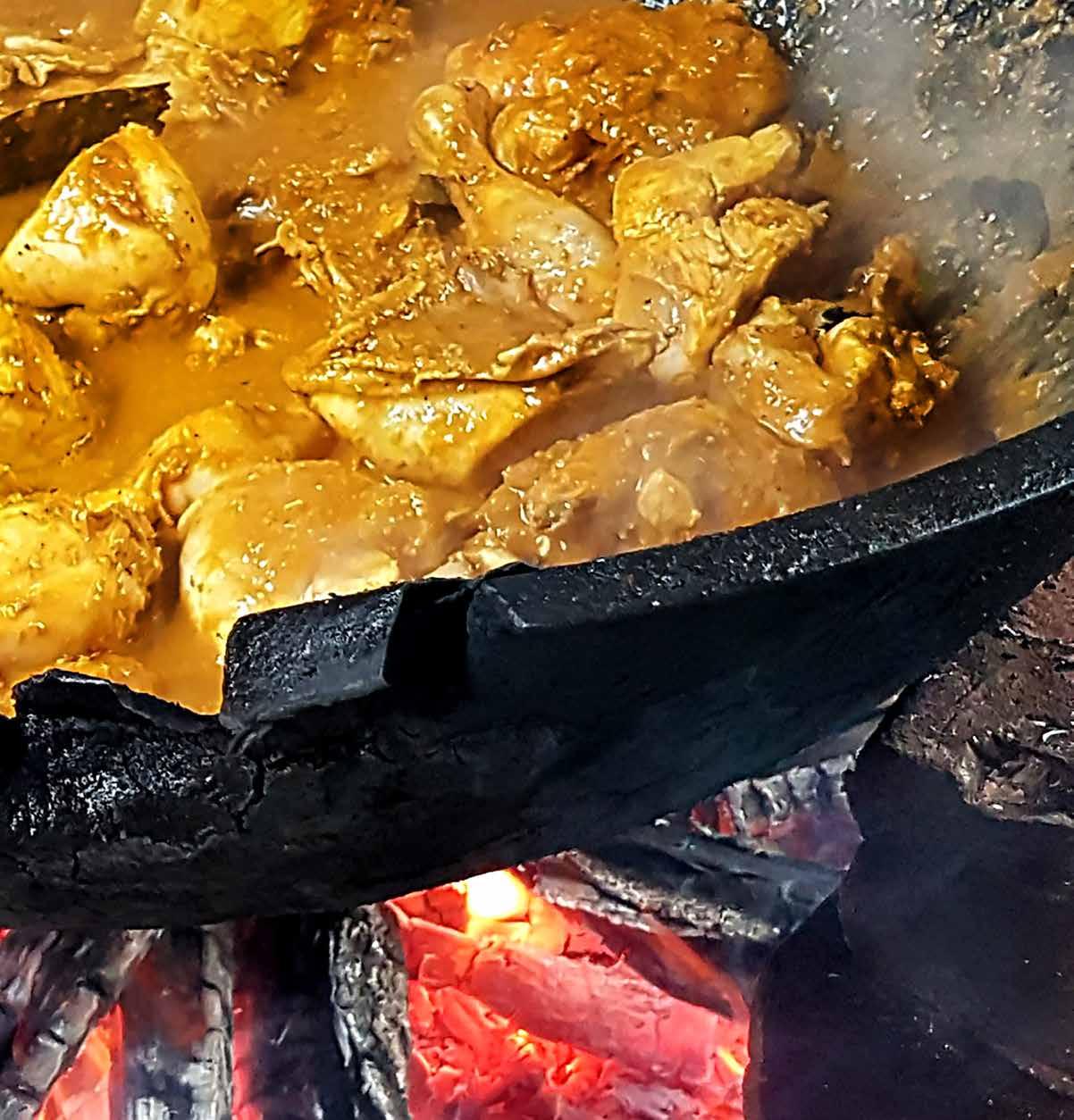
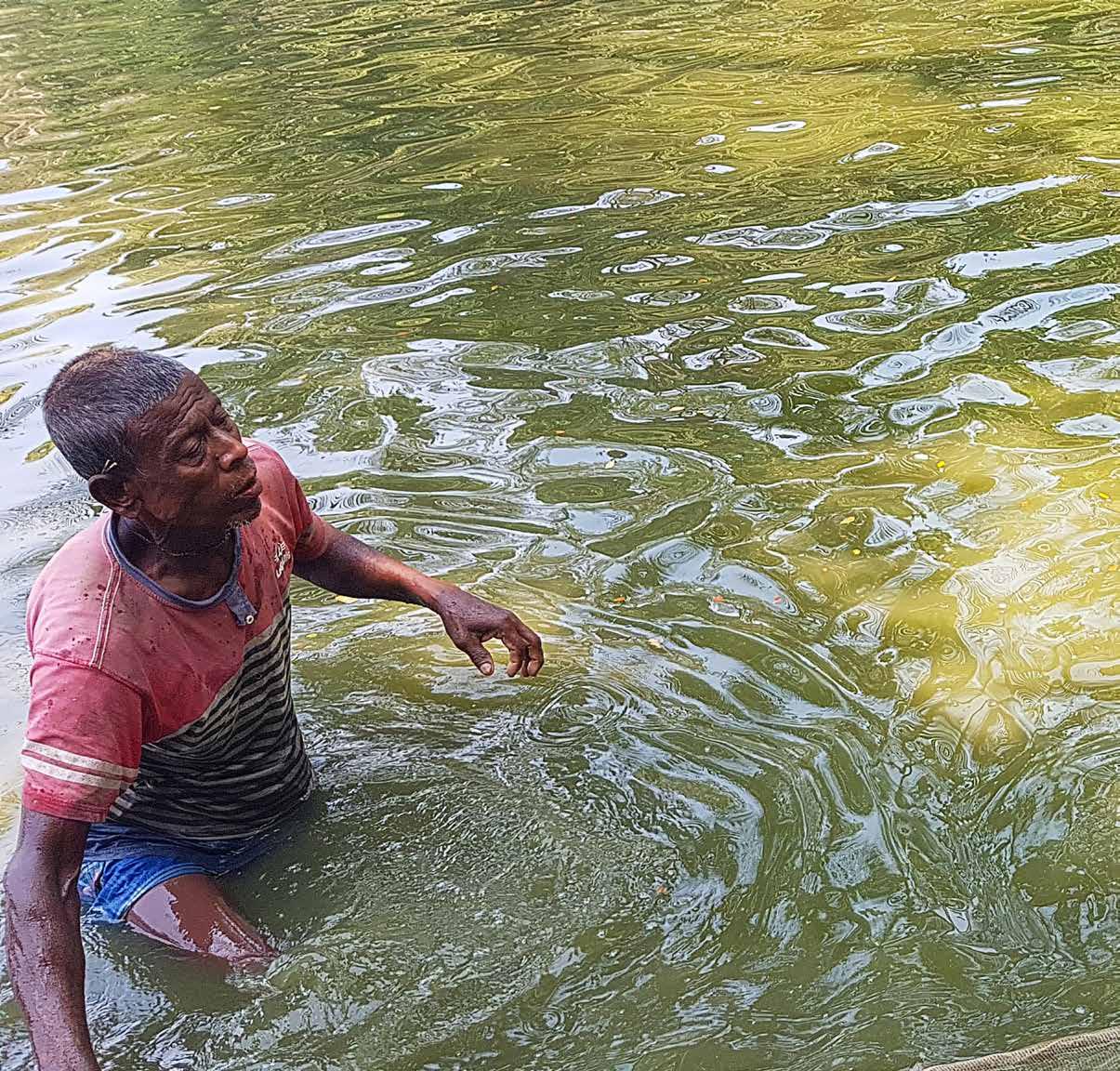
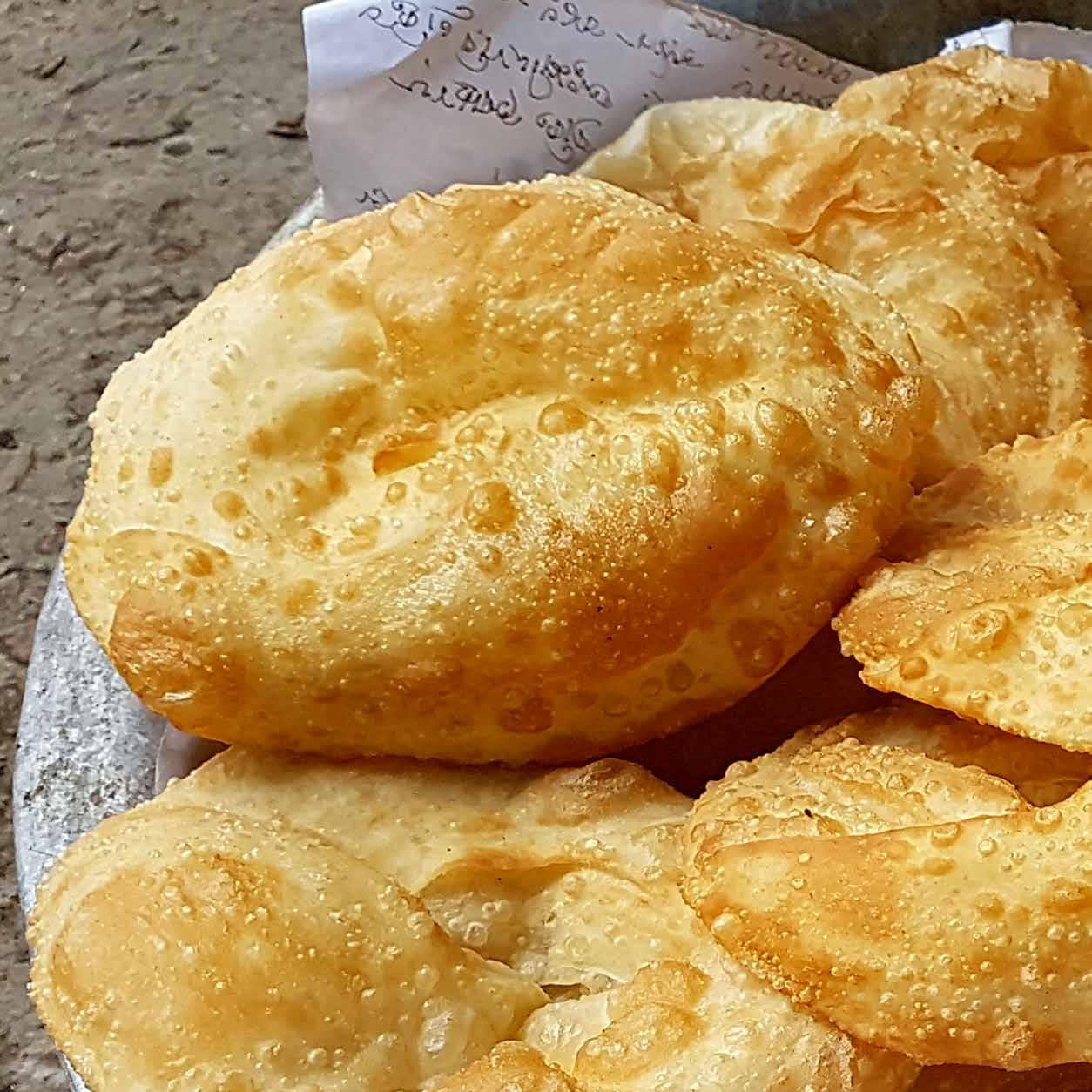
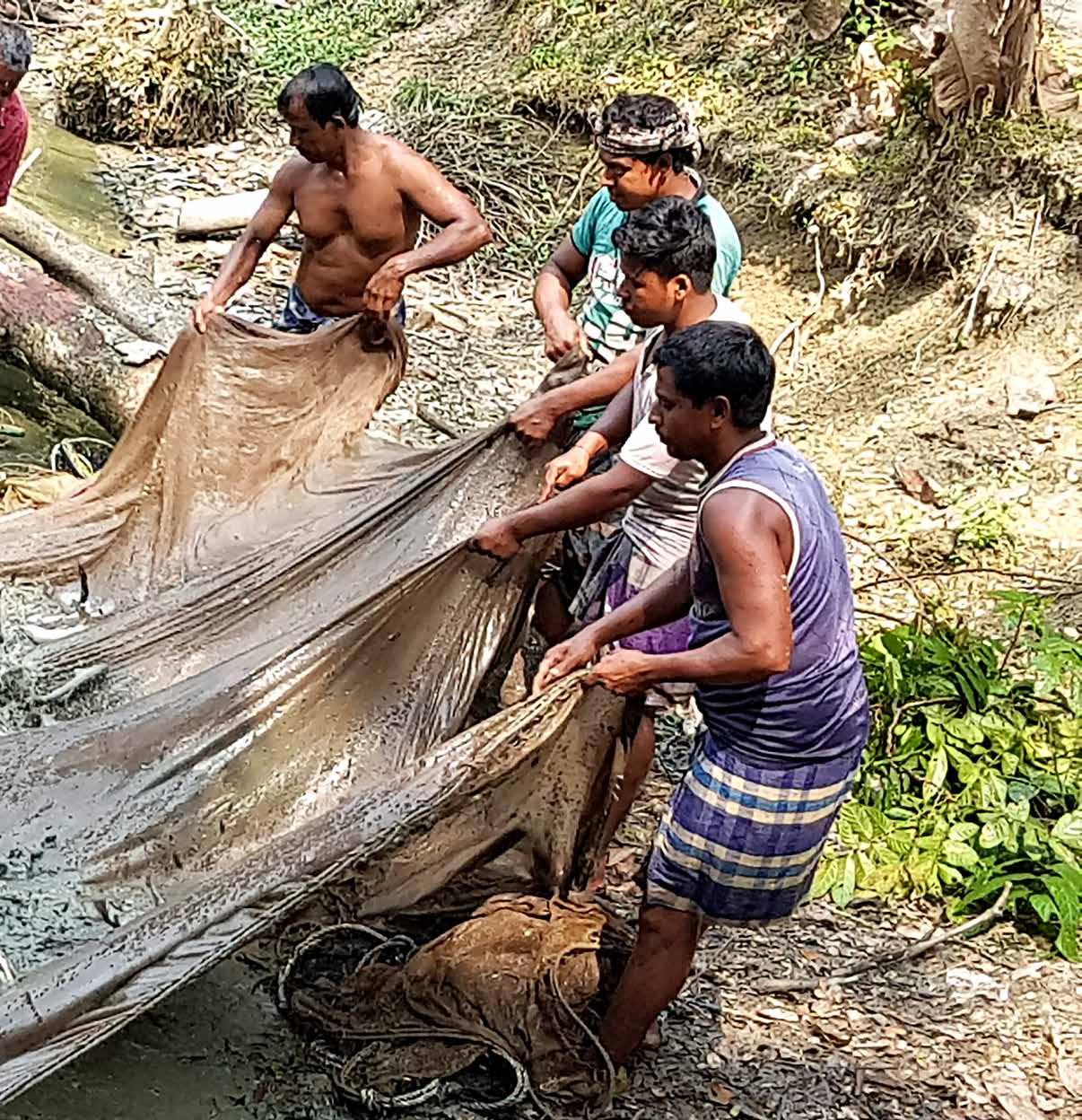
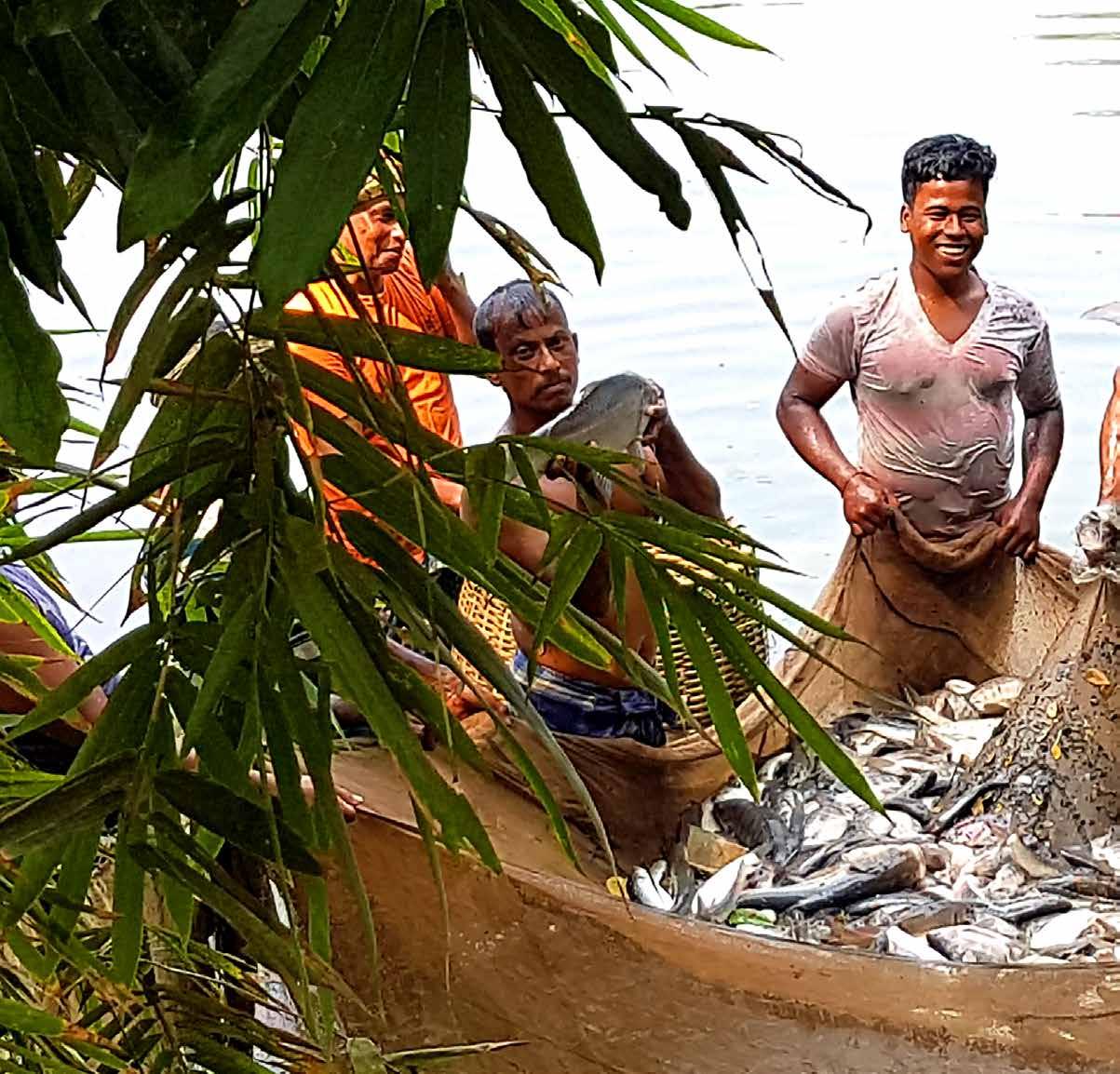
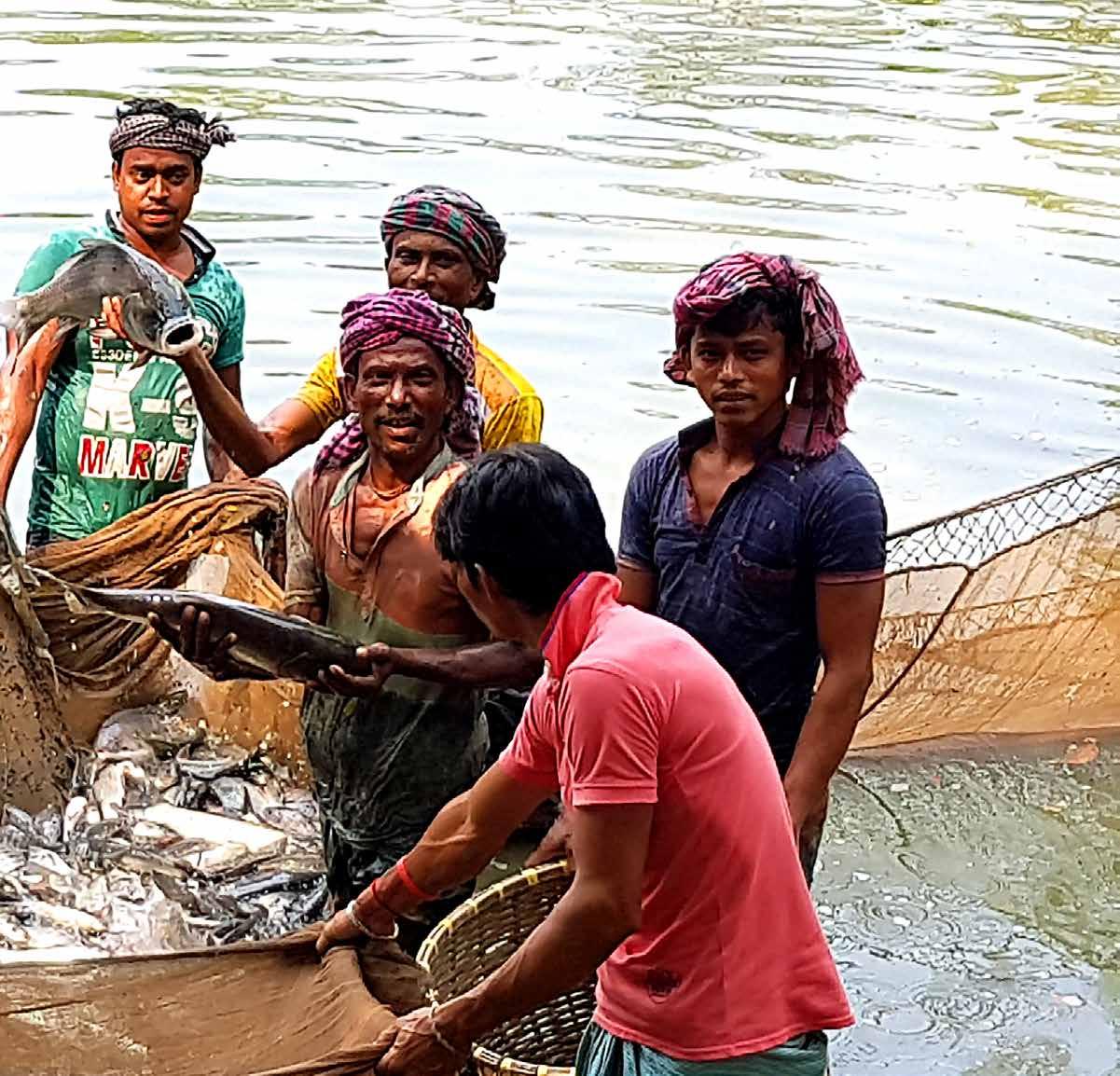
Back in the village, this incredible family - my new friends, have also arranged a fish-netting in one of the medium sized ponds. It’s especially for me to get a taste of village life. It would have happened, sooner or later anyway, but was brought forward, for me to witness. I was and am deeply grateful. The village chef freshly cooks breakfast of ‘luti’ (a deep fried bread), fried eggs and the previous evening’s chicken curry, under a canopy by the pond.
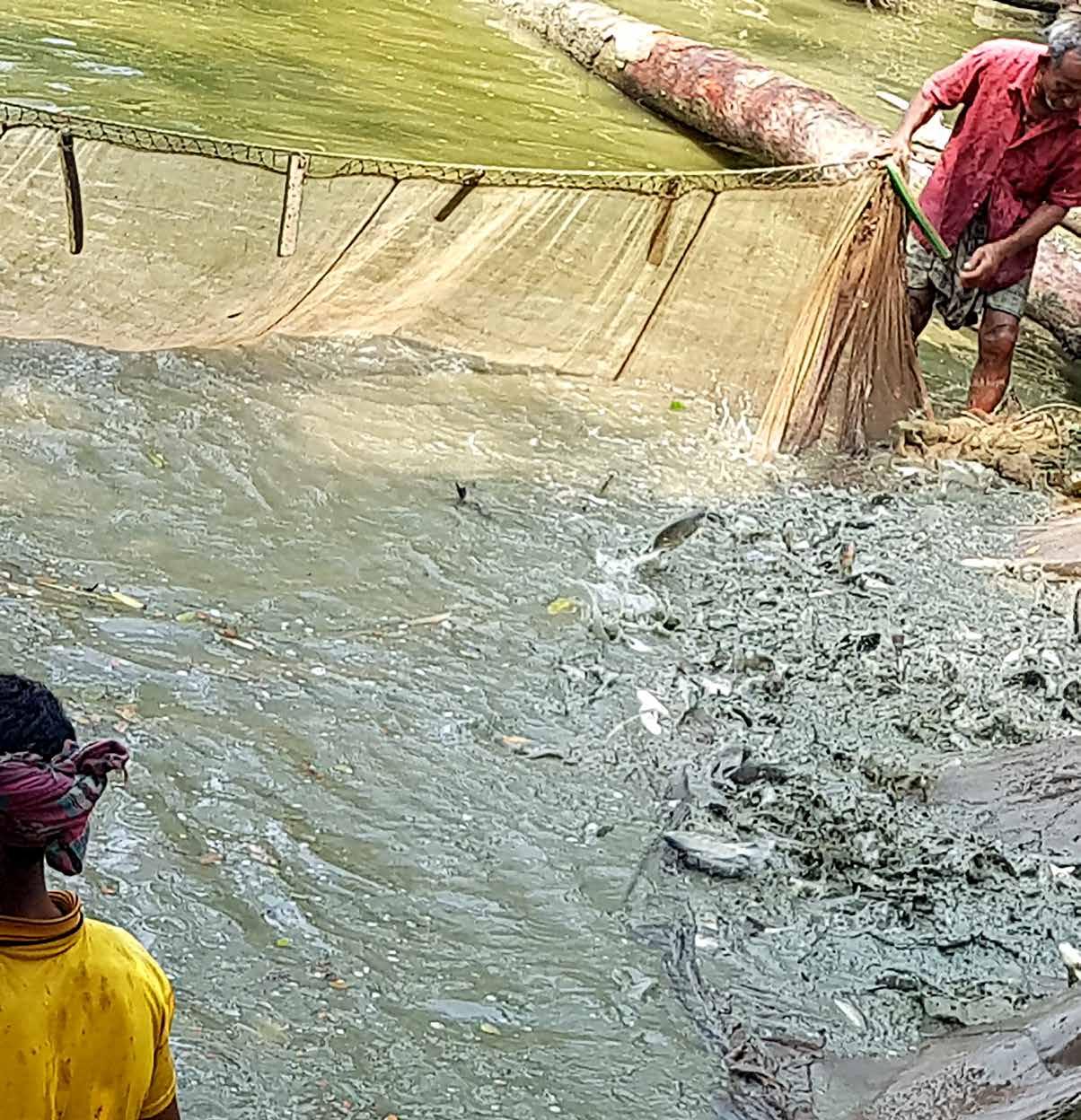
We witness the netting of village fish.
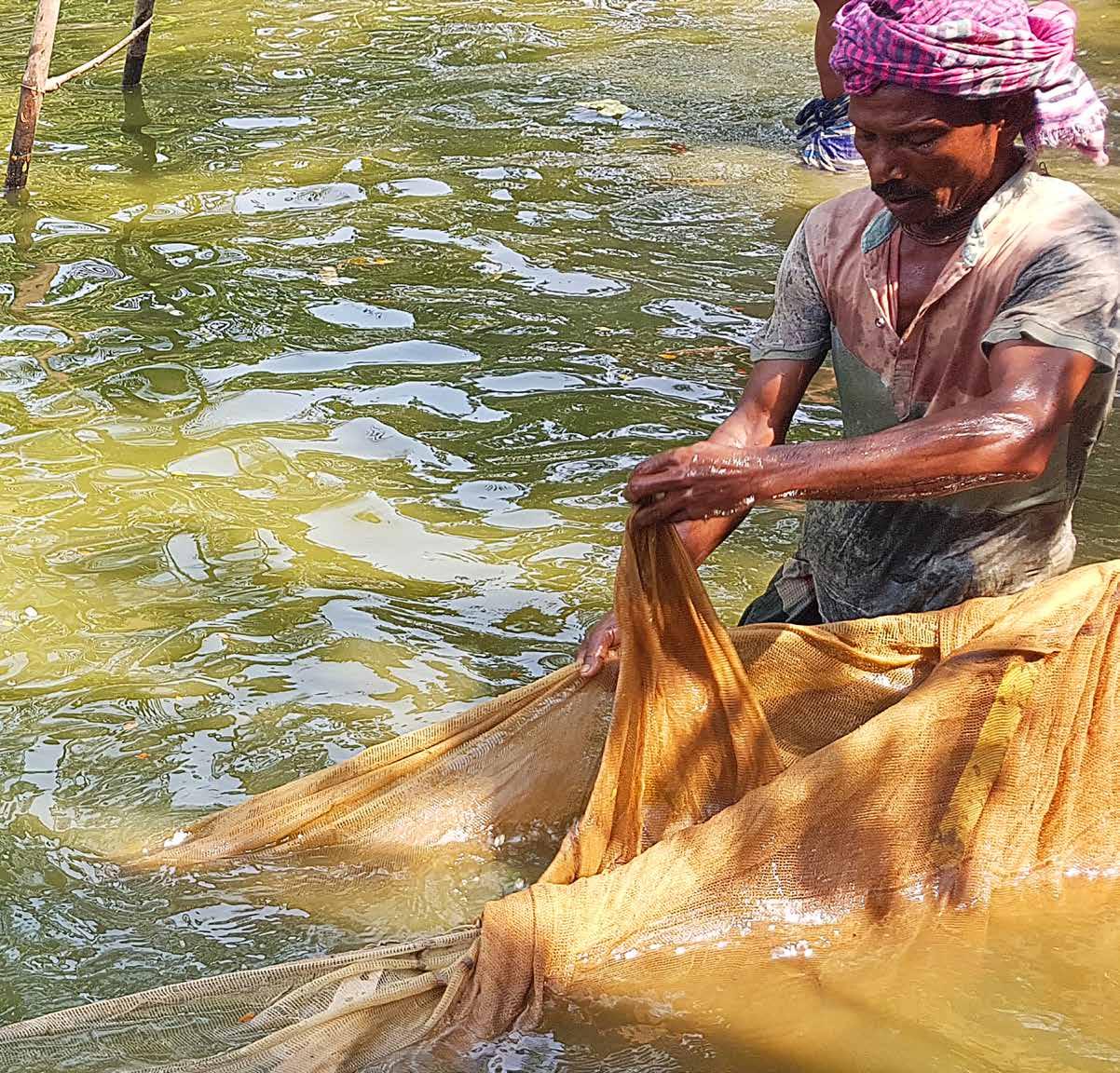
Two teams of svelte men, in lunghis and singlets, ease into the pond and grasp two different ends of a net already in place. Over time the men, still grasping the brown net, struggle to walk forward. It is a large expanse, but the villagers move patiently forward, taking the fish before them.
Gradually the pond is trawled, the two ends of the net beginning to meet. As the net ends meet, those fish able too, jump the net to freedom, while the others are caught and gathered together against the pond’s bank. The silvery fish, thrashing the water, are trapped between the net and the bank. The net is tightened until there is little water and a struggling mass of fish. From there, it is easy for the fishermen to extract and triage the fish placing some in the back of a small truck, previously prepared with waterproof plastic and enough water (taken from the pond) to keep the fish fresh and alive. Those will be for sale, smaller fish are returned, to grow, while others are distributed amongst the village families.
At night we travel back to Dhaka. The road is lengthy, and tiring.

https://issuu.com/martinabradley/docs/samphire_island
https://issuu.com/martinabradley/docs/being_here_now_

https://issuu.com/martinabradley/docs/love_s_texture
https://issuu.com/martinabradley/docs/malim_nawar_morning
https://issuu.com/martinabradley/docs/on_the_island
https://issuu.com/martinabradley/docs/cambodia_chill_re-issue
https://issuu.com/martinabradley/docs/lotus

https://issuu.com/martinabradley/docs/remembering_whiteness_booklet
the blue lotus back issues























one man’s BANGLADESH
© Martin A Bradley
Thank you for reading this digital chap book. I do hope that you enjoyed it.
The Blue Lotus will continue publishing more digital chap books in the future
Martin