Romla Walker, “wittily nuanced and full of surprises” Page 48
Chris Chibnall to celebrate Big Screen Magic in Bridport Page 40

Jon Lee Anderson From Kabul to Trumpistan Page 44

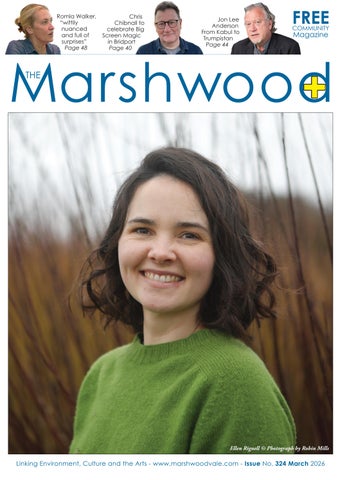
Romla Walker, “wittily nuanced and full of surprises” Page 48
Chris Chibnall to celebrate Big Screen Magic in Bridport Page 40
Jon Lee Anderson From Kabul to Trumpistan Page 44
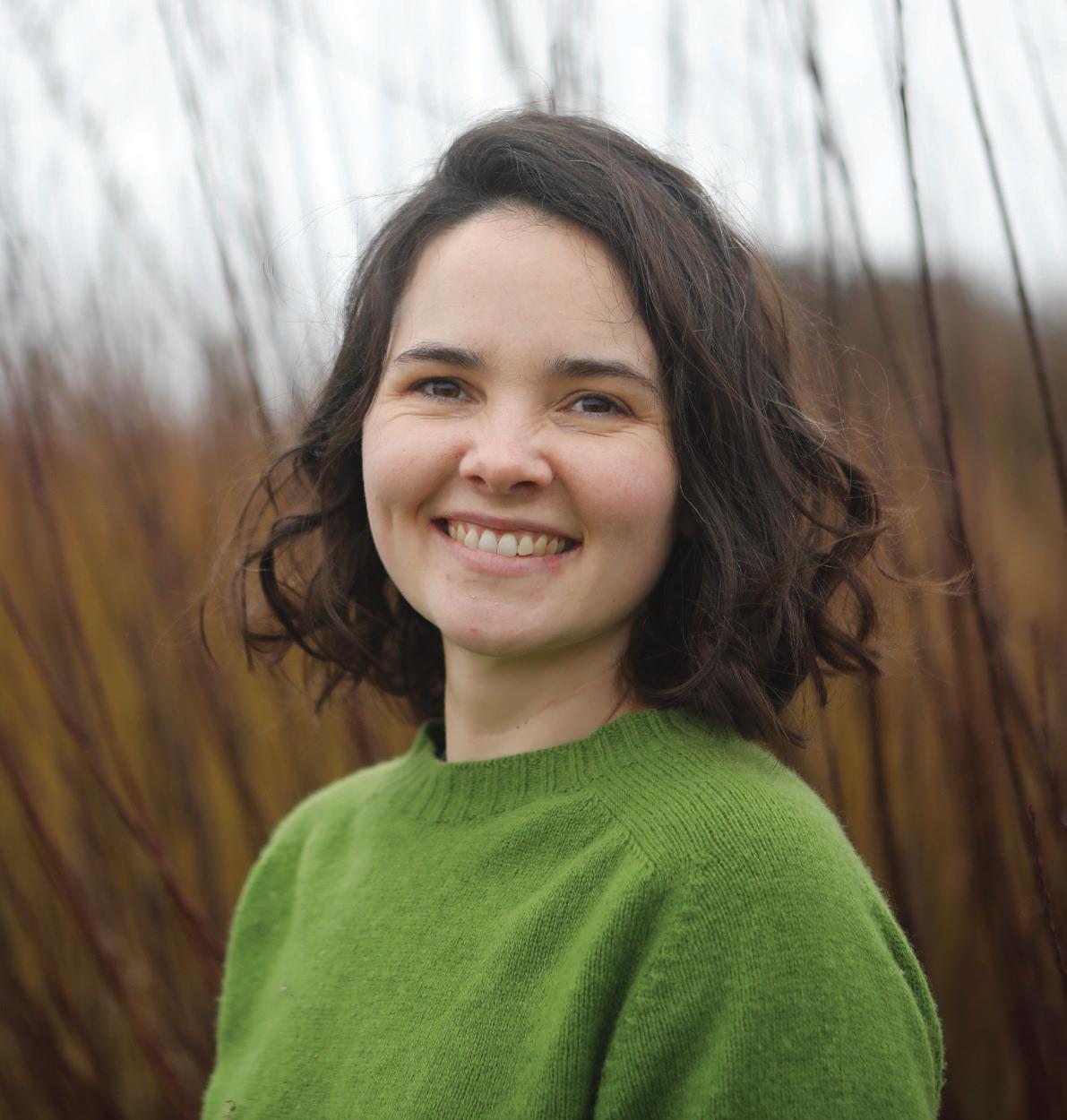

Fergus Byrne met Ellen Rignell near Bridport
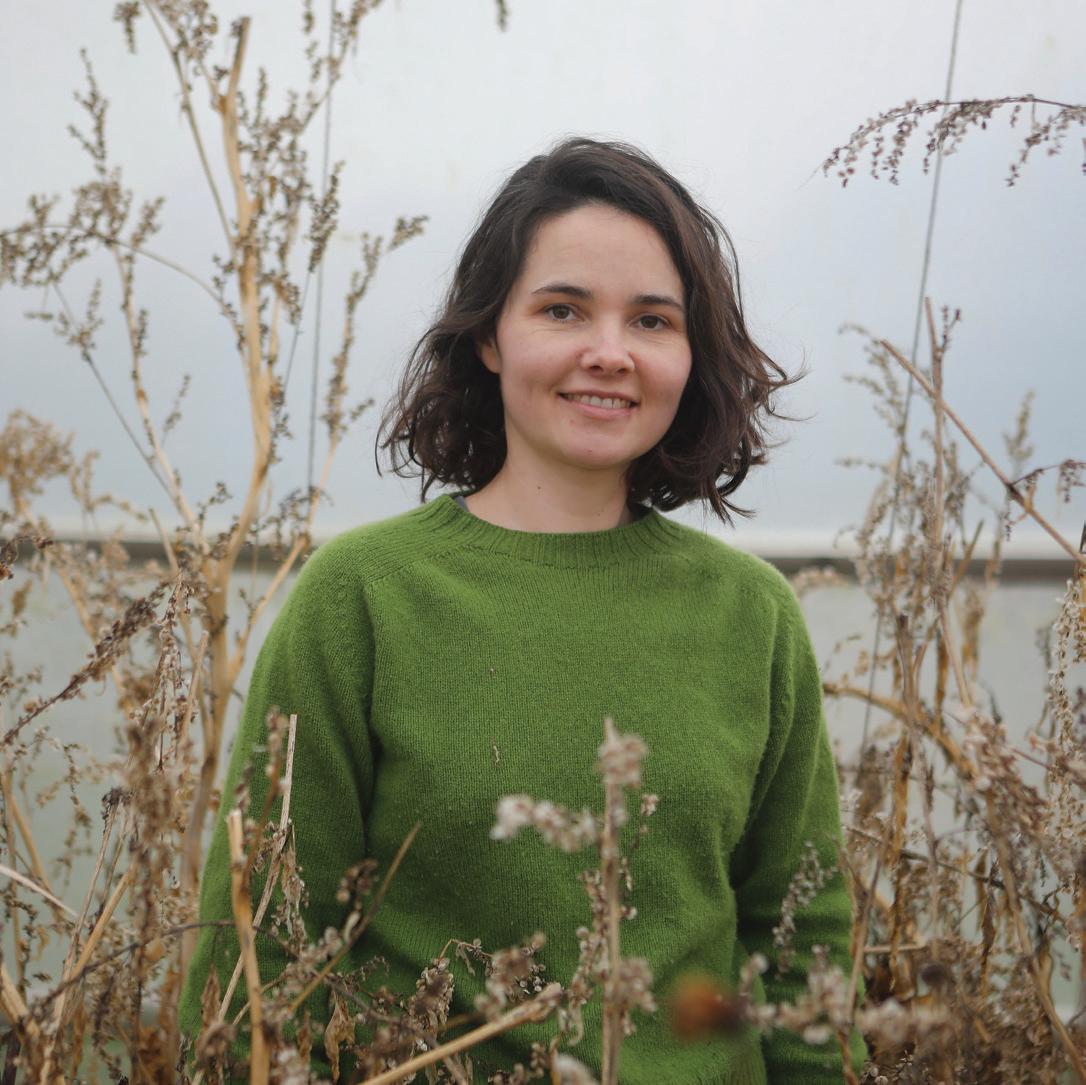
I’grew up in Brighton, the youngest of three. My parents were both psychotherapists, and we lived in the centre of Brighton & Hove, so not very rural, but my mum loved the outdoors and would take us out into the Sussex countryside to identify wildflowers and explore the rolling hills of the South Downs. She was also an intuitive gardener, always involving us in the process. My earliest gardening memory is the smell of digging up Jersey Royals for Sunday lunch. My dad was an amazing cook and was the first to introduce me to the incredible satisfaction of eating delicious food that you have grown yourself.
I’m a Quaker, and that has been a big grounding influence in my life, especially in terms of community, social justice, and environmentalism. Growing up, I attended Quaker meetings and summer camps, full of talks, activities and inspiring people. Those experiences, rooted in the quiet stillness of Quaker practice, inspired me to want to do something valuable with my life. It was at one of those events that I met Sam who many years later would become my husband. After leaving school I applied to study Politics and Philosophy at university. During my gap year, I worked and travelled, and by the end of that year I decided not to do politics. I’ve always been quite a practical person, and I found myself drawn
to the idea of working with plants which felt satisfyingly more practical and tangible.
So I deferred for another year and moved to Ireland to work at a Camp Hill community outside Kilcullen in County Kildare. Camp Hill is an intentional community where you live and work alongside people with special needs. The community I joined had a big agricultural focus. I worked in the market garden and took a lot of pleasure from growing crops and seeing them thrive. You also spend a lot of time looking after people and I gained a lot of confidence from that. It was a structured lifestyle, with set work hours and tasks, but I loved it.
After my year in Ireland, I went to study Plant Sciences at Sheffield, where Sam was also studying. As the course became more specific to plants and plant communities, I found my element. I really enjoyed working on my own projects and learning about plant genetics and ecology.
One of the most inspiring things during the course was a module on sustainable agriculture by Jonathan Leake, a soil scientist. He stressed the importance of universityeducated, environmentally passionate people entering agriculture, but told us that none of us would likely do it because it was so badly paid. His words stuck with me, and he became a kind of mentor, overseeing my final projects.
After university, I got a job with the National Institute of Agricultural Botany (NIAB) in East Anglia, working in the plant pathology department on Defra trials, assessing plant diseases and testing crop resistance. My job involved growing diseases, bulk-producing them, and spraying them on crops to test resistance. While I enjoyed the outdoor work, I eventually got fed up with just killing plants. I needed a change, and when my husband decided to enrol in a boat-building course in Lyme Regis, we moved to West Dorset.
That was a big, big jump. I retrained in practical horticulture at Bicton College, joined the Women’s Retraining as Gardeners (WRAG) scheme, and was offered a placement at Abbotsbury Gardens. After I finished the course, I got a part-time job at Abbotsbury Gardens and volunteered in the market garden at Trill Farm near Axminster, eventually doing an apprenticeship there.
Trill Farm was an incredible place to work. It was great fun. The wider farm was owned by Romey Fraser at the time and there was a lot going on. Chris Onions would cook delicious seasonal food for lunch every day and there was a constant flow of volunteers. We lived in a caravan in the garden, which was challenging in winter but wonderful in summer. It was at Trill that I started on the seed saving journey that led to me setting up Winnow Farm Seeds. There’s something really tactile and magical about working with seeds—seeing a plant complete its life cycle and being part of that process.
In 2017, I got a job with the Seed Sovereignty Program run by the Gaia Foundation, which aims to build a thriving seed-saving community in the UK. Seed saving is crucial
for preserving genetic diversity. What is amazing about plants is how incredibly generous they are. You start with this tiny seed, it becomes this massive thing, and then it gives you so many seeds. But the genetic diversity is really important because that is almost like the plant’s toolkit to cope with whatever life throws at it. And in the context of climate chaos, this is really, really important. The UK is, sadly, uniquely disconnected from agriculture and the natural world, with very few people saving seeds compared to other countries like France, Italy or the US.
I focused on open-pollinated seeds, which can be saved and replanted to produce similar plants, unlike F1 hybrid seeds that result in unpredictable offspring. Openpollinated seeds are open-source, allowing gardeners to grow and save their own seeds. I organized courses on professional seed saving, built networks among agroecological and organic growers, and attended really inspiring events, including the Organic Seed Alliance Conference in Oregon in 2020.
The conference was a turning point for me. I learned an incredible amount about seed saving and loved the culture of collaboration. It was just before COVID hit and before I had my first child. After having my second child and now living in Bridport, I decided to start Winnow Farm Seeds. I wanted to focus on growing high-quality seeds and foster in others the sense of abundance that I had experienced by growing from seed.
I partnered with two other growers, Emma Dixon and Lucy Saville, to find a shared growing space. We chose a site at Newhouse Farm in Broadoak in the Marshwood Vale with a fantastic supportive community and ethos. The heavy clay soil is actually an advantage for seed saving, as it helps grow stronger seeds. As a seed saver, to grow the most resilient seed for my customers, I want to put the plants through their paces. So I follow a strict philosophy of treating the plants ‘mean’ to encourage them to develop strong roots and resilience. We spend a lot of time on the soil, trying to encourage all these lovely fungi and bacteria that have symbiotic relationships with plant roots. Priming those plants and priming those seeds to grow better.
Now Winnow Farm has its own seed catalogue which includes productive crops like cut flowers, edible flowers, herbs, and vegetables. I have a weak spot for unusual varieties and aim to diversify what’s available to UK gardeners. Brexit has made importing seeds more difficult and expensive, so offering a wider range of options is more important than ever. It’s also important to diversify sources of seeds because half of the global seed market is controlled by just four companies.
That’s all big picture stuff, but I am also motivated by the connections to people that come with running a seed company. I enjoy writing a blog and sharing what I am up to day to day and often get emails from customers. Some even send pictures of the plants they have grown. I love this sense of community - and it keeps growing. ’

A reader recently told me that one of the reasons she enjoys this magazine is because she doesn’t feel like she is being manipulated by an algorithm. She reads what she wants, when she wants, and finds it much more relaxing than scrolling through social media. Although I’m from a generation that should be old enough to resist manipulation by social media platforms, I know exactly how hard that is. Many platforms now track not just what we like, but how long we hover over a photo, whether we re-watch a video, and even what our friends are interested in. Looking back over this issue before it goes to the printer, I am again reminded that we live in a different era. This month, we publish an interview with Jon Lee Anderson about his latest book on Afghanistan. It is exactly 20 years since we last published an interview with him, and how things have changed. Those of us horrified by the events of 9/11 and the subsequent ‘war on terror’—which appears to have ended with the US handing Afghanistan back to the Taliban— have seen the powerful influence of the internet used to sway elections, divide opinions and intensify a partisan and tribal age. Battle lines drawn over issues like Brexit turned out to have been inflated by micro-targeting and algorithmic amplification of unverified claims—many of which were later found to be untrue. The algorithm is all-powerful. Early social media was chronological (you saw the most recent post). Current platforms use predictive AI to curate what we see, meaning the platform now decides what you see based on your psychological profile, rather than who you choose to follow. The Marshwood Vale Magazine is now in its 25th year. We will reach that milestone in November and will continue to provide a platform for learning about environment, local culture and the arts, without the yoke of an algorithm.
Fergus Byrne
If you missed our Crowdfunder and would still like to donate to support the Marshwood Vale Magazine, please send donations either by cheque to Marshwood Vale Limited (address below) or direct to Marshwood Vale Limited at Monzo Business Sort Code 04-00-06 - a/c number 65919314 - Ref: Donation


Ienjoyed a childhood immersed in the Dorset countryside. Dad was a postman, Mum a stay-at-home mum, who loved their garden. I have fond memories of helping on local farms with haymaking, building dens in the woods, and always being outside.
We lived near Weymouth and my first job after school was on the RMAS boats in Portland Harbour. Later I became a ranger on the Lulworth Army Ranges, and from there I started a grounds maintenance business. That was inevitably seasonal, busy in spring and summer, so when I saw a TV programme featuring a hedgelayer, whose work was concentrated in the winter months, I got interested.
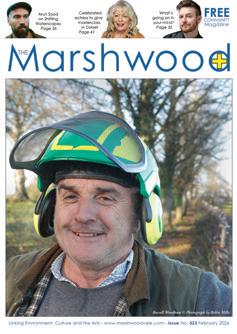
At that time, Kingston Maurward College ran hedgelaying courses, so I enrolled. It lasted only three days, at the end of which we got a certificate of attendance. It’s fair to say most of those attending were there because learning a bit of hedgelaying was on a retirement bucketlist, or they had a garden hedge which needed laying, or it was a birthday present, but for me, that was 27 years ago, and I’ve been doing it ever since and am still learning with every new hedge. Over the years I’ve been lucky enough to have been awarded many accolades including four times Dorset National Champion, and many competition titles throughout the South and South West. I’ve also judged two National Hedgelaying Championships in Ireland.
I’m committed to it, because I’m outdoors in all weathers, working with a living hedge which, after I’ve laid it, will provide habitat and a food source for small mammals and birds, create an aesthetically pleasing stockproof barrier, and breathe life back into a feature that may have shaped the landscape for centuries.
I mainly work all over Dorset, but have laid hedges in Wales and France. The hedgelaying season is between September and the end of March, although that can vary from one year to the next. I’m basically working when the hedge plants are dormant, and am mindful of when the birds are nesting. But to work on the land and be governed by the seasons is a privilege.
My tools are simple; a doubled bladed billhook, commonly known as a Yorkshire, which can be used as a short axe; a felling axe, and a small chainsaw. The principles of the job are also simple, but the techniques required to create an effective, tidy, and pleasing hedge need a lot of practice and can be physically demanding. In this work, you’re not so much thinking about what the hedge looks like when you move on to the next job, it’s more about what will happen during the rest of the
hedge’s life, or when it’s next laid, and that’s really satisfying.
After cutting and clearing out the unwanted growth on the sides of the hedge, the fundamental part of the job, making the cut, is called pleaching, which involves cutting partway through the vertical stems, or pleachers, near their base, allowing you to bend them so that they lay horizontally instead of vertically, forming a dense and tidy structure. Crucially the pleachers must not break as they bend. The thin top growth is then trimmed and woven or tucked into the laid hedge, according to the style of hedge laying followed. The pleachers will then continue to grow and be stimulated to produce new vertical shoots.
There are many styles of hedge laying, and many which have disappeared, which are local to particular areas; but it’s not hard and fast, so it’s more important that the style used will suit the purpose and characteristics of the hedge, regardless of the area. The styles I work to are the Dorset, a low flat hedge predominantly on a bank, a style suited to the control and shelter of sheep on downland. The pleachers are laid as low as possible, building a strong intertwined hedgerow. If required, hazel binders or bonds can be tucked under a pleacher on one side, and passed over the hedge at an angle of about 30° and tucked under the other side. The other style I work in is the South of England style; in this the hedge is cut and laid over to create a double brush, and a single line of stakes 18″ apart are driven into the centre of the hedge, with the top bound with hazel. String or wire should never be used in any hedge laying.
Hedges can be single species or mixed; the ancient hedgerows contain many species. Each species requires a different approach, but personally I like to work with a mixed species hedge, with a bit of holly, beech, dogrose, thorn, and hazel all making a nice combination. In all the years I’ve been doing it I’ve probably worked single-handed for over 95% of the time, but occasionally I might need a bit of help with a large overgrown hedge.
In the summer months, I’m often at the country shows exhibiting and demonstrating, such as Melplash Agricultural Show, Sherborne Castle Country Fair, Stock Gaylard Oak Fair and Dorset County Show. As well as the main show in August, where I’m the Hedgelaying Chairman, Melplash holds a ploughing and hedging match, which is the origin of the show. I’ve taken many Hedging Competition wins from my first competition in 2000 to the present day. I also run courses for those who want to learn the craft.
There have been some surprising diversions during my career as a hedgelayer. In 2022 I took part in a rather different kind of competition, one that was as much about television as it was about tradition. This one-off event was staged at Jeremy Clarkson’s Diddly Squat Farm in Oxfordshire for the hit Amazon Prime series Clarkson’s Farm. Featured in Series 2, Episode 6, Counselling, the “Diddly Squat 2022 Hedgelaying Competition” brought the craft to the attention of a worldwide audience. Against the backdrop of Clarkson’s often unconventional approach to farming, the competition highlighted the genuine skill and heritage of hedgelaying. It was an opportunity to showcase my experience and craftsmanship, and I was delighted to come away as the winner of the Dorset Class.
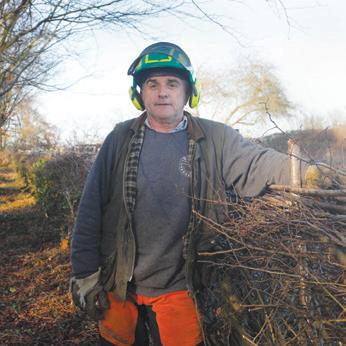
preliminary sketches while I was working, I ended up in his studio, in full hedge laying gear, while he put the finishing touches to my portrait. Toby, as a member of the Royal Society of Portrait Painters, entered the picture in the 2023 Ondaatje Prize competition at the Mall Gallery in London. My wife and I were given tickets to the Gallery, and were completely amazed when Toby was awarded first prize for his painting, entitled Winter’s Work; Russell Woodham at rest while laying a hazel hedge in the Dorset Style
A few years ago, I came across some lovely paintings of two very good friends of mine; Alan Brown, the hurdle maker, now sadly passed away, and Simon Grant Jones, a master blacksmith. They were painted by the artist Toby Wiggins, so I contacted him and told him they were friends of mine. He replied that he was painting portraits of country folk in Wessex, had seen one of my roadside signs, and wondered if, as a hedgelayer, I’d be interested in being painted as part of his project. After doing some
I never imagined I would be at a smart London gallery, as the subject of a prizewinning painting. I will treasure the print and sketches that Toby gave me and will never forget the occasion. But then, I never expected hedgelaying would take me to meet HM King Charles either, but as HM is the Patron of the National Hedgelaying Society, of which I’m a lifetime member, he has been a staunch supporter of the craft, and other rural crafts, for many years. I have had the privilege of not only meeting him but laying his hedges at Highgrove and Sandringham on six or seven occasions.
The UK has the most extensive, ancient, and speciesrich network of hedges anywhere. Our countryside is often described as a patchwork quilt, on which hedgelayers sew the seams of the countryside for generations to come.

Izzy Glaisher wants to help people to navigate the earth-shattering aftermath of cancer

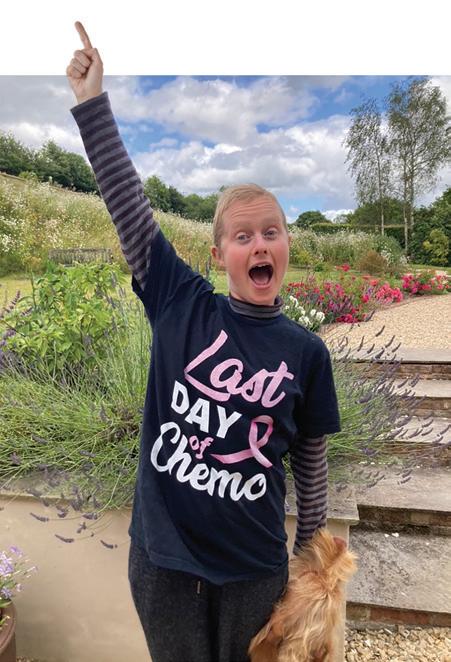
At 26, Izzy Glaisher’s life was shaped by the vibrant rhythm of London life, enjoying festivals, sunrises, and her work with the food redistribution charity, City Harvest. However, in 2023, that rhythm was disrupted by a lifealtering diagnosis. Within weeks, her world that she described as ‘freedom and fun’ was replaced by an exhausting medical ordeal.
‘In 2023 I lost both my boobs to breast cancer,’ Izzy says. ‘I found a lump and things moved quite fast after that. In the same conversation as being diagnosed I was asked if I had thought about having children and was rushed into fertility treatment so I could freeze my eggs before chemo began.’
What followed was a 14-hour double mastectomy, five months of chemotherapy—marred by two bouts of sepsis—and three weeks of radiotherapy.
Today, Izzy lives in a medically-induced menopause, a stark reminder that, as she puts it, ‘the cancer journey goes on.’
When the intensity of treatment forced her to move back to her parents’ home in Somerset, Izzy found herself physically safe but emotionally isolated. That was until a family friend suggested she call a local charity: Axminster and Lyme Cancer Support (ALCS).
Founded by Mary Kahn in 2017, ALCS fills the gap between medical necessity and human holistic needs. Speaking to the Marshwood Vale Magazine in 2023,
‘So what could be a better challenge than to walk up breast-shaped mountains in aid of the fantastic charity’
Mary explained how ALCS developed after her own breast cancer diagnosis in 2017. It was the year she and her husband were both planning to celebrate their 50th birthdays, and their eldest daughter was getting married. ‘After my operations and treatment, I was told, “off you go, and get on with your life”’ she said. However, she struggled to deal with her ‘new normal’ and found there was not enough support for people dealing with such a life-changing illness.
‘When you are diagnosed with cancer, you suddenly have a new, different language to that of your friends who are cancer-free’, she explained. ‘We often need to find a “new tribe”, an additional support network alongside our family and friends. Although it’s not a club anyone wants to belong to, we help people to connect with others who speak that language.’ To try to help fill that need she soon co-founded ALCS with her GP, Dr Yvonne Hodges.
For Izzy, the charity’s ‘head, heart, hands’ approach was transformative. From woodwork courses at the Lyme Regis Boat Building Academy to restful days in a beach hut funded by the production company that made the film Ammonite about Mary Anning—who herself died of breast cancer—the support provided a sense of agency that cancer had taken away.
‘For me, better understanding of the disease, was empowerment,’ Izzy explains. ‘To approach cancer holistically, in my case, is to welcome the life-saving modern medicine, but to look beyond it too... It’s like a resilience toolkit to carry forward with me.’
While the world often expects survivors to simply bounce back, Izzy is candid about the reality of the aftermath.
‘Cancer is earth-shattering and despite what they say, life does not “go back to normal.” There is no such thing as normal anymore,’ she says. ‘It seems to be about nurturing your hesitant light, slowly emerging from whatever shape you needed to contort to during the storm.’
Part of that emergence involves a bold, symbolic challenge. On April 4, 2026, Izzy will head to the Isle of Mull to tackle a mountain-scape her family has looked out at for two decades—specifically, two peaks affectionately nicknamed ‘the breasts.’
‘During chemotherapy, I had a eureka moment and dreamt up this fundraiser!’ she says. ‘So what could
be a better challenge than to walk up breast-shaped mountains in aid of the fantastic charity, Axminster and Lyme Cancer Support!’
With 1 in 2 people now expected to face a cancer diagnosis, Izzy highlights that survival is only half the battle. Organisations like ALCS are vital because they focus on how to ‘live well during cancer, thrive beyond it and be empowered to be proactive in your own health.’
As she prepares for her climb, Izzy isn’t just walking for herself; she’s walking for the 1,100 people ALCS supports and for the belief that even after the storm, you can still feel the sun on your face.
To support Izzy’s fundraiser, visit: https://www.justgiving.com/page/ walkingthebreastsforalcs?utm_ medium=FR&utm_source=CL
Monday, 2 March
Dance Connection - open class, Movement 4 Well-being, 11:30am, Bridport St Mary’s Church House Hall, DT6 3NN, 07787752201, https://www.dance-connection-wessex. co.uk/
Hawkchurch Film Nights, in association with Moviola. org, proudly presents ‘Four Mothers’, 89 mins, Cert.15 (very strong language, brief strong sex references). Doors open 6.30pm, film starts 7.00pm at Hawkchurch Village Hall, EX13 5XD.
Tuesday, 3 March
Scottish Country Dancing every Tuesday evening from 7.30 to 9.30 pm at Horton Village Hall TA19 9QR. Only £3.00 pay on the door. Classes suitable for beginners and no partner required. For further information contact Anita on 01460 929383, email anitaandjim22@gmail.com and check out our web site at www.ashillscd.wordpress.com See you soon.
Bridport Film Society - Julie Keeps Quiet by Koen De Bouw. Dutch with English subtitles. 7.45pm Bridport Arts Centre. Members and Guests (£5) only.
Wednesday, 4 March
West Dorset Community Orchestra meet for rehearsal in Christian Fellowship hall, East Street car park, Bridport DT6 3PL from 6-30p.m. to 7-45p.m.New members welcome. 01308 456297 www.westdorsetmusic.org.uk.
My Ballet - since 2012 - Holistic ballet classes for all adults Supportive & Non - judgemental classical ballet classes to fabulous music. 10am, 11:30am, 1o’clock & 2:15 Bull Hotel ballroom, 34 East St, Bridport DT6 3LF Classes are currently held at Bridport Town Hall, East St, DT6 3LF due to building works at the Bull Hotel. Whatsapp 07866896978. email: myballetuk@gmail.com www.my-ballet.uk
My Ballet - since 2012 - Holistic ballet classes for all adults Supportive & Non - judgemental classical ballet to fabulous music. 6:45pm to 8pm Jubilee Hall , Church Street, Winsham, Chard, TA20 4HU Whatsapp 07866896978. email: myballetuk@gmail.com www.my-ballet.uk.
Dance Connection - open class, Movement 4 Well-being, 7pm, Uplyme Village Hall, DT7 3UY, 07787752201, https:// www.dance-connection-wessex.co.uk/
Thursday, 5 March
Friends of Lyme Regis Museum Lyme Regis Museum Friends offer an illustrated talk, ‘’The Romance of the Letter Box’ by Tony Cross at 2.30 pm in the Woodmead Hall, Hill Road, Lyme Regis. DT7 3PG. Members £3 visitors £5. All
welcome. Enquiries to David Cox, 07800 895351. Slinky Machine All Stars ft Jess Hill (Bridport Birth of the Cool). The Slinkies launch Bridport Birth of the Cool with an explosive set of jazz-fusion, before Jess Hill fires up your Incognito, Chaka Khan and Marvin Gaye favourites. Bring your best moves — it’s gonna groove. Clocktower Records, Unit 10a, St. Michael’s Estate, Bridport DT6 3RR. 7pm doors/ 7.30pm show. £12 advance/£15 OTD. 01308 458077. https://bridportandwestbay.co.uk/tickets/ bridports-birth-of-the-cool-2026/
Lyme Regis Museum Friends offer an illustrated talk, ‘The Romance of the Letter Box’ by Tony Cross. At 2.30 pm in the Woodmead Hall, Lyme Regis. DT7 3PG. Members £3, visitors £5. All welcome. David Cox 07800 895351. Block of 6 Dance Connection Sessions begins, booking essential, 6pm, Bridport St Mary’s Church House Hall, DT6 3NN, 07787752201, https://www.dance-connectionwessex.co.uk/
Chesil Bank Writing Shed Do you write? Would you like to be a writer? Whatever you want to write why not come and learn with our creative writing group. New writers always welcome. 7pm - 9pm, Portesham Village Hall. Find out more by calling Linda on 01305 871802.
Scottish Country Dancing St Michael’s Scottish Country Dancing Club, 7.30 – 9.30pm at the Davis Hall, Howell Hill, West Camel BA22 7QX. First two visits free, £2.00 per session, £1.50 for members. See website www.stmichaelsscdclub.org or contact secretary Elspeth 07972125617 elspeth_a_wright@hotmail.com.
Armstrong (2019, US, PG, 100 mins, Dir: David Fairhead) Dramatic, moving & deeply human, Armstrong is the definitive story of Neil Armstrong – the first man on the moon. Doors 7:00 pm, 7:30 pm start. Clapton & Wayford Village Hall (TA18 8PS). Membership £30, guests £5 per film. For more information/book guest tickets, please email mickpwilson53@btinternet.com or k_everard@live.com. Alternatively, ring Mick Wilson on 01460 74849 or Julia Borland on 01460 72769.
My Ballet - Holistic ballet classes for all adults Supportive & Non - judgemental classical ballet to fabulous music. For posture, flexibility, strength, balance, fitness, friendship. Join the fun and feel good. Everybody welcome! Do get in touch and come for a dance! Winsham Jubilee Hall, Church St, Winsham, Chard, TA20 4HU Fridays 10am and 11.15am Whatsapp 07866896978. email: myballetuk@gmail.com www.my-ballet.uk.
“Saturday Coffee Morning” Join us for a free coffee morning which includes free toast and marmalade available and other treats on offer, 10 - 12 noon, toys and colouring books available for children to play with as well.
‘Wonder Women’ Classical pianist Sarah Hagen brings her blend of humour & musical excellence in a recital which celebrates the international lives & music of forgotten female composers of the 18th & 19th centuries. 7.30 at Litton Cheney Village Hall. adult £14, u18 £6 fam. £35 from Patricia 07799612941 or artsreach.co.uk.
Bridport & West Dorset Rambling Club 7 mile walk from Mosterton. For further information please ring 01308 898484 or 01308 863340. New members/visitors welcome.
Revelations & Dance Snippets’ - celebrating 25 years of Bridport Youth Dance. 2.30pm and 7.30pm at Bridport Electric Palace. Tickets available from Bridport Tourist Information Centre at 01308 424901 and Bridport Electric Palace at www.electricpalace.org.uk/theatre.
Friends of Weymouth Library (F.O.W.L) Felicity Herring will be the speaker at our next F.O.W.L. talk at 10-30a.m. in the Library. Tickets can be obtained from the Library @ £2 for members and £3 for non-members. More information can be obtained by phone on 01305 750557 or 01305 832613. Everyone welcome.
Sunday, 8 March
Axe Vale Orchestra Concert, 3pm, Axe Vale Orchestra invites you to an afternoon concert at Colyton Town Hall EX24 6JR. The programme includes Doppler: Andante and Rondo for two flutes and orchestra (soloists Jane Smith and Suzanne de Lozy), Dvorak: Czech Suite, Rossini: Italian Girl in Algiers Overture, and Schubert: Symphony No. 4. Tea and Cake after the concert. Tickets £15 (free for under 18s or students), from www.axevaleorchestra.co.uk via TicketSource or on the door.
Lyme Regis Museum Friends offer an illustrated talk, ‘100 years of Lyme’s History’ by Ken Gollop. At 2.30 pm in the Woodmead Hall, Hill Road, Lyme Regis. DT7 3PG. Members £3 visitors £5. All welcome. David Cox 07800 895 351.
Choral Eucharist with music by Byrd, Kodaly and Purcell. St Peter’s Church Dorchester (DT1 1XA), 10.30am. Free to attend.https://www.musicatstpetersdorchester.org/
Monday, 9 March
Dance Connection - open class, holistic, Movement 4 Wellbeing, 11:30am, Bridport St Mary’s Church House Hall, DT6
3NN, 07787752201, https://www.dance-connection-wessex. co.uk.
Winsham Art Club 2pm at Jubilee Hall TA20 4HU. The theme this practical session is Spring Flowers in Watercolour. It is a 2.5 hr. session led by a visiting tutor. Small friendly group of mixed abilities. Members £5, non-members £7. Annual membership £15. All welcome. Contact: Email : suzyna48@gmail.com for further details.
Tuesday, 10 March
Joanna Cooke (Bridport Birth of the Cool). Joanna Cooke storms into Bridport with a powerhouse set of jazzy soul. Big voice, raw emotion, gritty grooves — whether singing Nina Simone or Aretha Franklin, this is woman with soul in her veins. Electric Palace, 35 South St, Bridport DT6 3NY 6.30pm doors/ 7pm show : £15 advance (includes one drink : 01308 45807) https://www.electricpalace.org.uk/s//foyersessions-joanna-cooke/
Scottish Country Dancing every Tuesday evening from 7.30 to 9.30 pm at Horton Village Hall TA19 9QR. Only £3.00 pay on the door. Classes suitable for beginners and no partner required. For further information contact Anita on 01460 929383, email anitaandjim22@gmail.com and check out our web site at www.ashillscd.wordpress.com See you soon.
The Lyme Regis Society presents A Talk: The Story of Axmouth Harbour by Nigel Daniel. The history of this once thriving commercial port in Roman times to the leisurely haven of today. 2pm. Woodmead Halls, Hill Road, Lyme Regis. DT7 3PG. All Welcome. Members Free. Visitors £3.00. Refreshments Included. Social distanced seating available if desired. Please check website for further information: http//lymeregissociety.org.uk.
Wednesday, 11 March
West Dorset Community Orchestra meet for rehearsal in Christian Fellowship hall, East Street car park, Bridport DT6 3PL from 6-30p.m. to 7-45p.m.New members welcome. 01308 456297 www.westdorsetmusic.org.uk.
My Ballet - since 2012 - Holistic ballet classes for all adults Supportive & Non - judgemental classical ballet classes to fabulous music. For posture, flexibility, strength, balance, fitness, friendship. Join the fun and feel good. 10am,11:30am,1o’clock & 2:15 Bull Hotel ballroom, 34 East St, Bridport DT6 3LF Classes are currently held at Bridport Town Hall, East St, DT6 3LF due to building works at the Bull Hotel. Whatsapp 07866896978. email: myballetuk@gmail.com www.my-ballet.uk
My Ballet - since 2012 - Holistic ballet classes for all adults Supportive & Non - judgemental classical ballet to fabulous music. For posture, flexibility, strength, balance, fitness, friendship. Join the fun and feel good. 6:45pm to 8pm Jubilee Hall , Church Street, Winsham, Chard, TA20 4HU Whatsapp 07866896978. email: myballetuk@gmail.com www.my-ballet.uk.
Kilmington Film Night “Save The Cinema (12)” Doors and bar open 6.45 film start 7.15 at Kilmington Village Hall EX13 7RF. Tickets £6 can be ordered by contacting: John at wattsjohn307@gmail.com or Tel: 01297 521681.
Thursday, 12 March
Kilmington Film Matinee “Save The Cinema (12)” (See 11th March). Doors open 1.45pm film starts 2pm. Tickets £6, cream-teas @ £4. served during the interval but must be pre-booked with your seats see above and www. kilmingtonvillage.com/other-organisations.html for more information.
Chard History Group History of the Axminster to Lyme Railway. A talk by Tessa Leeds on the conception, construction, running and demise of the popular ‘Lyme Billy’ line. 7.00 for 7.30pm. Chard Guildhall upper floor with lift available. Members £2.50 guests £3.50 all welcome. For further information contact Tessa on 07984481634.
Scottish Country Dancing St Michael’s Scottish Country Dancing Club, 7.30 – 9.30pm at the Davis Hall, Howell Hill, West Camel BA22 7QX. First two visits free, £2.00 per session, £1.50 for members. Always a fun eveningcome along and give it a try – a warm welcome assured. No partner needed. Please bring a mug - tea, coffee, biscuits provided. See website www.stmichaelsscdclub.org or contact secretary Elspeth 07972125617 elspeth_a_wright@ hotmail.com.
Seaton Garden Club A Talk by Baz Hamblin. Dispelling the Myths of Climate Change. Seaton Masonic Hall. 2.30p.m. Members free, visitors £2.00 plus refreshments. For more details contact 01792 22869.
Bridport History Society will be welcoming Prof. Karen Hunt who will give a talk in this centenary year of the General Strike of 1926 called ‘What about the workers?’ The meeting will be held at the United Church Hall on East Street, Bridport. Doors open at 2.15 for a prompt 2.30 start. All are welcome. Members £1pp and visitors £5pp. Bridport History Society meets on the second Thursday of each month (except July and August). Membership is open to all (£12 individual/£18 couple). For more information visit https://www.bridporthistorysociety.org.uk.
My Ballet - Holistic ballet classes for all adults Supportive & Non - judgemental classical ballet to fabulous music. For posture, flexibility, strength, balance, fitness, friendship. Join the fun and feel good. Everybody welcome! Do get in touch and come for a dance! Winsham Jubilee Hall, Church St,
Winsham, Chard, TA20 4HU Fridays 10am and 11.15am Whatsapp 07866896978. email: myballetuk@gmail.com www.my-ballet.uk.
Three Cane Whale. Artsreach brings the multi-instrumental, Bristol-based chamber-folk-trio to West Dorset. Chosen by Cerys Matthews as one of her Top Five Modern Folk Albums. 7.30pm. Powerstock Hut, Powerstock, DT6 3TB. Tickets £12.50 Under 18s £6. To book: www.artsreach. co.uk. Or contact Matthew Solon: 07775 590579. Or buy on the door.
Django Chutney (Bridport Birth of the Cool). Bridport Arts Centre, 9 South Street, Bridport DT6 3NR. 7pm doors/ 7.30pm show: £15 advance: 01308 424204. Open Mic at the Millhouse Music has always been a big part of what we do here at The Millhouse, Ilminster. Come to our next open mic on Friday 13th February - as a performer or attendee of great grassroots music. The Millhouse, Rose Mills Industrial Estate, Ilminster, TA19 9PS. For enquiries: themillhouseilminster@gmail.com.
Move and Groove Adult dance with Nikki Northover at Steps studio, Crepe Farm Business Park. Every Friday at 10. 15am to 11.15am. Move and Groove focuses on enhancing creativity and dancing for well being. Enquiries and to book please contact Nikki Northover at nikkinorthover43@gmail. com
Bird Ringing & Breakfast: Start your morning surrounded by nature! Join our local bird ringing expert, Luke, for an early session of birdsong and bird ringing. 7.30am, Coppet Hill, Purcombe Farm, DT6 6RL. Visit www.coppethill. co.uk for tickets or email pippa@coppethill.co.uk for more information.
Weymouth Choral Society are proud to present Mozart’s Requiem at St John’s Church, Greenhill, Weymouth at 7.30pm. Tickets are £15 and can be purchased through the Weymouth Choral Society website or directly via TicketSource (search for Weymouth Choral Society). Dom Pipkin supported by Tootin’ Hoodlums (Bridport Birth of the Cool). Dom Pipkin brings the raw New Orleans sounds to Bridport, with bags of street soul and swagger. With sax-fuelled Tootin’ Hoodlums blasting ahead, expect a joyful second-line party in full flow. Clocktower Records, Unit 10a, St. Michael’s Estate, Bridport DT6 3RR. 7pm doors/ 7.30pm show: £12 advance/£15 OTD : 01308 458077. Website: https://bridportandwestbay.co.uk/tickets/ bridports-birth-of-the-cool-2026/
Lunchtime Concert David Bednall’s ‘Stabat Mater’ performed by vocal consort, Bryony Smith (violin) with the composer at the organ. St Peter’s Church Dorchester (DT1 1XA), 12.30-1.15pm. Admission free. https://www. musicatstpetersdorchester.org/ “Who Do You Think You Are?” A family mystery unlocking the truth using DNA which includes supper of



fresh pizzas & salad, bar will be open serving wines, beers, ciders, etc, 6.30pm, Chideock Village Hall, tickets £10. To book: 07484 709719 / suzypea@btinternet.com
Bridport & West Dorset Rambling Club 7 mile walk from Tibbs Hollow. For further information please ring 01308 898484 or 01308 863340. New members/visitors welcome.
Cantamus presents ‘This is my delight’, a concert of beautiful choral music for spring, including new pieces by Dorset composer Matthew Coleridge. St Andrew’s Church, Charmouth, at 7pm. Tickets £12 on the door. Refreshments available. cantamus-dorset.org.
Nicky Swan Performs at the Millhouse An emotionally honest blend of acoustic folk, country and blues. The Millhouse, Rose Mills Industrial Estate, Ilminster, TA19 9PS. See https://www. millhousearts.co.uk/ for more information.
Sunset Café Stompers (Bridport Birth of the Cool). The Ropemakers, 36 West St, Bridport DT6 3QP. 8pm show: £15 advance: 01308 421255. Dance Connection - open class, holistic, Movement 4 Well-being, 11:30am, Bridport St Mary’s Church House Hall, DT6 3NN, 07787752201, https://www.dance-connectionwessex.co.uk.
Singing Bowl Soundbath 7.30-9 PM Digby Memorial Hall, Digby Rd, Sherborne, Dorset DT9 3LN £17. 01935 389655 or email ahiahel@live. com
Tuesday, 17 March
Annika Skoogh Trio (Bridport Birth of the Cool). Electric Palace, 35 South St, Bridport DT6 3NY. 6.30pm doors/ 7pm show: £15 advance (includes one drink): 01308 458077.
Scottish Country Dancing every Tuesday evening from 7.30 to 9.30 pm at Horton Village Hall TA19 9QR. Only £3.00 pay on the door. Classes suitable for beginners and no partner required. For further information contact Anita on 01460 929383, email anitaandjim22@gmail.com and check out our web site at www.ashillscd.wordpress.com See you soon.
Bridport Film Society - My Favourite Cake by Maryam Moghaddam, Behtash Sanaeeha. 7.45pm Bridport Arts Centre. Members and Guests (£5) only.
Wednesday, 18 March
West Dorset Community Orchestra meet for rehearsal in Christian Fellowship hall, East Street car park, Bridport DT6 3PL from 6-30p.m. to
7-45p.m.New members welcome. 01308 456297 www.westdorsetmusic.org.uk.
My Ballet - since 2012 - Holistic ballet classes for all adults Supportive & Non - judgemental classical ballet classes to fabulous music. For posture, flexibility, strength, balance, fitness, friendship. Join the fun and feel good. 10am,11:30am,1o’clock & 2:15 Bull Hotel ballroom, 34 East St, Bridport DT6 3LF Classes are currently held at Bridport Town Hall, East St, DT6 3LF due to building works at the Bull Hotel. Whatsapp 07866896978. email: myballetuk@ gmail.com www.my-ballet.uk
My Ballet - since 2012 - Holistic ballet classes for all adults Supportive & Non - judgemental classical ballet to fabulous music. For posture, flexibility, strength, balance, fitness, friendship. Join the fun and feel good. 6:45pm to 8pm Jubilee Hall , Church Street, Winsham, Chard, TA20 4HU Whatsapp 07866896978. email: myballetuk@ gmail.com www.my-ballet.uk.
Dance Connection - open class, Movement 4 Well-being, 7pm, Uplyme Village Hall, DT73UY, 07787752201, https://www.dance-connectionwessex.co.uk.
Coffee Morning including cakes, scones & savouries, and bacon/egg rolls (made to order), 10.30am – noon; all welcome. Clapton & Wayford Village Hall. More details from Julia (01460 72769).
Thursday, 19 March
Michael J Bolton and Leonian Dream Trio (Bridport Birth of the Cool). Clocktower Records, Unit 10a, St. Michael’s Estate, Bridport DT6 3RR. 7pm doors/ 7.30pm show: £12 advance/£15 OTD: 01308 458077. Website: https:// bridportandwestbay.co.uk/tickets/bridports-birthof-the-cool-2026/.
Scottish Country Dancing St Michael’s Scottish Country Dancing Club, 7.30 – 9.30pm at the Davis Hall, Howell Hill, West Camel BA22 7QX. First two visits free, £2.00 per session, £1.50 for members. See website www.stmichaelsscdclub. org or contact secretary Elspeth 07972125617 elspeth_a_wright@hotmail.com.
New Arts Group The Festival of Britain 1951: A Nation Celebrates Speaker: Matthew Denney Bridport Town Hall 1.30 for 2.00pm All welcome £10.00.
South Somerset RSPB Local Group The Greater Sedgemoor Landscape Recovery Project. We welcome Damon Bridge who has led this ambitious project for the past two years. 7.30pm The Millennium Hall, Seavington St. Mary,


Ilminster, TA19 0QH. Entry: Group members £4, nongroup members £5, under 25’s Free. Tea/coffee & biscuits included – Wheelchair access. Further details from Denise Chamings on 01781473846 or www.rspb.org.uk/groups/ southsomerset. Everyone welcome.
My Ballet - Holistic ballet classes for all adults Supportive & Non - judgemental classical ballet to fabulous music. For posture, flexibility, strength, balance, fitness, friendship. Join the fun and feel good. Everybody welcome! Do get in touch and come for a dance! Winsham Jubilee Hall, Church St, Winsham, Chard, TA20 4HU Fridays 10am and 11.15am Whatsapp 07866896978. email: myballetuk@gmail.com www.my-ballet.uk.
Film Night at Milborne St Andrew Village Hall – More Than a Movie! Our popular Film Night returns to Milborne St Andrew Village Hall with the entertaining Roofman on the big screen Doors and bar opening at 7.00pm and the film starting at 7.30pm. As always, it’s more than just a movie – your £6.50 all-in ticket includes the film plus an ice cream or a drink, with payment by cash or card. Enjoy a relaxed, friendly atmosphere, a licensed bar and a proper bigscreen experience right here in the village. It’s a great chance to get together, enjoy a night out locally and support your village hall. Everyone welcome – we hope you’ll join us!
Comedy Night at The Millhouse Join us for Friday night giggles at The Millhouse Comedy Night. Hosted by the fabulous Ade. The Millhouse, Rose Mills Industrial Estate, Ilminster, TA19 9PS. For enquiries: themillhouseilminster@ gmail.com.
Informative talk – local speaker and enthusiastic ‘Mother of Pearl’ collector Fran Watson, will return to the village hall to give us Part Two of his entertaining presentation on this interesting hobby. £5 includes tea/coffee/squash & cake. Please book in advance. 3pm, at Clapton & Wayford Village Hall. Part One was very well received in October 2025, but it isn’t necessary to have attended on that occasion, in order to enjoy the second part! Further information from Mary (01460 74849) or Julia (01460 72769).
Move and Groove Adult dance with Nikki Northover at Steps studio, Crepe Farm Business Park. Every Friday at 10. 15am to 11.15am. Move and Groove focuses on enhancing creativity and dancing for well being. Enquiries and to book please contact Nikki Northover at nikkinorthover43@gmail. com
Neil Maya Quartet’s 1959 (Bridport Birth of the Cool). The Neil Maya Quartet brings 1959 – The Golden Year of Jazz to Bridport: expect epic tracks like “Take Five”, “So What” and “Giant Steps”, delivered with crisp sax, slick

piano and timeless style. Electric Palace, 35 South St, Bridport DT6 3NY. 2.30pm doors/ 3pm show: £15 advance (includes one drink): 01308 458077. Website: https://www.electricpalace.org.uk/s// neil-maya-quartets-1959/.
Jazz Funk Emporium (Bridport Birth of the Cool). Clocktower Records, Unit 10a, St. Michael’s Estate, Bridport DT6 3RR. 7pm doors/ 7.30pm show: £12 advance/£15 OTD: 01308 458077. Website: https://bridportandwestbay.co.uk/ tickets/bridports-birth-of-the-cool-2026/.
Bridport & West Dorset Rambling Club 5 or7 mile walk from Bridport. For further information please ring 01308 898484 or 01308 863340. New members/visitors welcome.
Cantamus presents ‘This is my delight’, a concert of beautiful choral music for spring, including new pieces by Dorset composer Matthew Coleridge.
St Mary’s Church, Norton-sub-Hamdon, at 7pm. Tickets £12 in advance from Norton Shop or on the door. Refreshments available. cantamus-dorset. org.
Pocket Sinfonia play Mozart’s Magic Flute Overture, Mendelssohn’s Midsummer Night’s Dream Suite and Grieg’s Holberg Suite in a charming concert brim-full of music you’ll know. Saturday 21 March, 7.30pm, St Mary’s Church,


Beaminster, DT8 3BA. £20/15 Seating is in the round providing an intimate, immersive performance. www. beaminsterfestival.com or 0333 666 33 66.
Sunday, 22 March
Choral Eucharist for Passion Sunday Music by Stopford, Caldara and Bruckner. St Peter’s Church Dorchester (DT1 1XA), 10.30am. Free to attend.https://www. musicatstpetersdorchester.org/
Dalwood Jazz Club presents Robert Fowler and The Martin Dale Quartet with Robert Fowler on tenor & baritone sax, Martin Dale - tenor sax, Gavin Martin - keyboard, Kevin Sanders - d/bass and Dennis Harris - drums. at 3pm. Dalwood Village Hall, EX13 7EG (near Axminster) Bar for beer/wine/soft drinks and tea/coffee/cake etc. Parking at the Village Hall £12.50p. If possible, please book in advance and pay (cash or card) at the door. Thank you! t.mackenney111@btinternet.com.
Singing Bowl Soundbath 2-4pm Bridport Unitarians, 49 East Street, Bridport, DT6 3JX £17. 01935 389655 ahiahel@ live.com
Monday, 23 March
Dance Connection - open class, Movement 4 Well-being, 11:30am, Bridport St Mary’s Church House Hall, DT6 3NN, 07787752201, https://www.dance-connection-wessex.co.uk/ Winsham Art Club 2pm at Jubilee Hall TA20 4HU. The theme this practical session is Using Charcoal. It is a 2.5 hr. session led by a visiting tutor. Small friendly group of mixed abilities. Members £5, non-members £7. Annual membership £15. All welcome. Contact: Email : suzyna48@gmail.com for further details.
Tuesday, 24 March
Maggie Reeday (Bridport Birth of the Cool). Electric Palace, 35 South St, Bridport DT6 3NY. 6.30pm doors/ 7pm show: £15 advance (includes one drink): 01308 458077. Website: https://www.electricpalace.org.uk/s//foyer-sessionsmaggie-reeday/.
U3A Bridport Talk ‘Johnny Remember Me’..... Brian & Jacqueline Sutton tell us stories all about the exciting days of John Leyton, Screaming Lord Sutch, etc. An interesting look at the 5os & 60s. The talk lasts for up to 1 hour followed by Q&A,then tea & biscuits. Venue ; Bridport United Church Hall, East street, Bridport, DT6 3LJ at 2.00 pm. Members free, visitors £3.00.
Scottish Country Dancing every Tuesday evening from 7.30 to 9.30 pm at Horton Village Hall TA19 9QR. Only £3.00 pay on the door. Classes suitable for beginners and no partner required. For further information contact Anita on
EVENTS IN APRIL
send your event details to info@marshwoodvale.com BY MARCH 14th
01460 929383, email anitaandjim22@gmail.com and check out our web site at www.ashillscd.wordpress.com See you soon.
Wednesday, 25 March
West Dorset Community Orchestra meet for rehearsal in Christian Fellowship hall, East Street car park, Bridport DT6 3PL from 6-30p.m. to 7-45p.m.New members welcome. 01308 456297 www.westdorsetmusic.org.uk.
My Ballet - since 2012 - Holistic ballet classes for all adults Supportive & Non - judgemental classical ballet classes to fabulous music. For posture, flexibility, strength, balance, fitness, friendship. Join the fun and feel good. 10am,11:30am,1o’clock & 2:15 Bull Hotel ballroom, 34 East St, Bridport DT6 3LF Classes are currently held at Bridport Town Hall, East St, DT6 3LF due to building works at the Bull Hotel. Whatsapp 07866896978. email: myballetuk@gmail.com www.my-ballet.uk
My Ballet - since 2012 - Holistic ballet classes for all adults Supportive & Non - judgemental classical ballet to fabulous music. For posture, flexibility, strength, balance, fitness, friendship. Join the fun and feel good. 6:45pm to 8pm Jubilee Hall , Church Street, Winsham, Chard, TA20 4HU Whatsapp 07866896978. email: myballetuk@gmail.com www.my-ballet.uk.
Uplyme and Lyme Regis Horticultural Society Short AGM followed by talk ‘Lessons from a Lifetime of Gardening’ by Anne Swithinbank, broadcaster and author. Uplyme Village Hall 7.30pm. Doors open 7pm. Members free; guests £3. More information https://ulrhs.wordpress. com.
Scottish Country Dancing St Michael’s Scottish Country Dancing Club, 7.30 – 9.30pm at the Davis Hall, Howell Hill, West Camel BA22 7QX. First two visits free, £2.00 per session, £1.50 for members. Always a fun eveningcome along and give it a try – a warm welcome assured. No partner needed. Please bring a mug - tea, coffee, biscuits provided. See website www.stmichaelsscdclub.org or contact secretary Elspeth 07972125617 elspeth_a_wright@ hotmail.com
Friday, 27 March
My Ballet - Holistic ballet classes for all adults Supportive & Non-judgemental classical ballet to fabulous music. For posture, flexibility, strength, balance, fitness, friendship. Join the fun and feel good. Winsham Jubilee Hall, Church St, Winsham, Chard, TA20 4HU Fridays 10am and11.15am Whatsapp 07866896978. email: myballetuk@gmail.com www.my-ballet.uk.
Musical Showcase and Open Mic at the Millhouse. The 4th Friday of every month is an opportunity for local bands to have an extended c. Min slot at our live music evenings, followed by open mic slots. If you are a band or a performer and have an extended set list to share with an





engaged audience, get in touch. We aim to showcase the best local talent in our special and vibrant Somerset grassroots music venue. The Millhouse, Rose Mills Industrial Estate, Ilminster, TA19 9PS. For enquiries: themillhouseilminster@gmail.com.
Move and Groove Adult dance with Nikki Northover at Steps studio, Crepe Farm Business Park. Every Friday at 10. 15am to 11.15am. Move and Groove focuses on enhancing creativity and dancing for well being. Enquiries and to book please contact Nikki Northover at nikkinorthover43@ gmail.com.
‘An Evening with Jim Causley’ 7pm. More than simply a folk-singer, multi award winning singersongwriter and musician Jim Causley is an all-round entertainer. His ‘Evening with’ concerts give a full night of beautiful singing, moving ballads, hilarious ditties and everything in between. Drawing equally from traditional repertoire, modern songs as well as his own compositions and settings of poems by his relative, the celebrated Cornish poet Charles Causley. All accompanied on piano and various accordions and served with a gurt dollop of Westcountry humour, an evening with Jim is an evening not to be missed! Kennaway House Cellar Bar, Coburg Rd,Sidmouth EX10 8NG. Tickets £15 from https:// villagesinaction.co.uk/
Axminster and District Choral Society’s spring concert will include Vivaldi’s magnificent Gloria and CPE Bach’s Magnificat. 7.30 pm at the Minster Church, Axminster. Tickets £16 and £14 from Archway Bookshop, members of the choir or axminsterchoral.co.uk.
Choral Evensong in Lent Music by Byrd, Elgar and Lotti. St Peter’s Church Dorchester (DT1 1XA), 4.30pm. Free to attend.https://www. musicatstpetersdorchester.org/ Bridport & West Dorset Rambling Club 7 mile walk from Abbotsbury. For further information please ring 01308 898484 or 01308 863340. New members/visitors welcome.
Cantamus presents ‘This is my delight’, a concert of beautiful choral music for spring, including new pieces by Dorset composer Matthew Coleridge. Holy Trinity Church, Bothenhampton, Bridport, at 7pm. Tickets £12 on the door. Refreshments available. cantamus-dorset.org
Bournemouth Sinfonietta Choir performs Bach’s St John Passion, one of Bach’s most moving and dramatic choral works, in the majestic setting of
Milton Abbey, 3pm. The choir is joined by Dorsetborn and internationally renowned tenor, Kieran White, recognised as one of the most expressive tenors of his generation. Musical Director David Gostick. Wessex Baroque Collective, led by Brian Lloyd Wilson. Tickets £25 in advance, £28 on the door, £5 students and under 18s. Available online at: www.bschoir.org.uk or at the door.
Netherbury Repair Cafe Netherbury Village Hall, 10:00-12:00. A free community group for Netherbury, surrounding villages and towns. With Spring hopefully on the horizon, now is the time to bring your garden tools to be repaired and sharpened. We have volunteers who can sharpen knives and who can fix: electricals, bikes, textiles, ceramics, electronics, wooden and metal items. The cafe offers home-made cakes, delicious coffee and a range of Clipper teas. Vegan and vegetarianfriendly. We are always looking for new volunteers and so if you love fixing things, baking or being part of a fun community event then come and join us. Lisa Willis on 07870 950 666 or info@ repaircafenetherbury.org www.repaircafenetherbury. org.
Singing Bowl Soundbath 2-4pm Oborne Village Hall, Oborne, nr. Sherborne, Dorset DT9 4LA £17 Lie down, relax, and allow the Pure Sounds of a crystal and Tibetan bowl soundbath plus sacred vocal overtoning give you a sonic deep-tissue massage, taking you into the deeper brainwave states of ‘the relaxation response’, while charging and balancing the aura and chakras of the subtle body, and detoxing the physical body. 01935 389655 ahiahel@live.com.
Mingus and Monk Thelonious Monk and Charles Mingus were both maverick composer/performers who shaped the course of jazz at the peak of bebop in the 1950s. Pete Canter will be playing both saxophone and double bass, accompanied by Philip Clouts at the piano, in a programme of their music. 8pm, Marine Theatre, Church St, Lyme Regis, Dorset DT7 3QB £16 advance £18 on the door. Tickets available at www.marinetheatre.com. You can also purchase tickets from the Lyme Regis Bookshop and Bridport TIC (01308 424901).
Scottish Country Dancing every Tuesday evening from 7.30 to 9.30 pm at Horton Village Hall TA19 9QR. Only £3.00 pay on the door. Classes suitable for beginners and no partner required. For further information contact Anita on 01460 929383 , email anitaandjim22@gmail.com and check out our web site at www.ashillscd.wordpress.com See you soon.


By Michael McCarthy
ere’s a melancholy list for you: turtle dove; willow tit; wood warbler; snipe; Montagu’s harrier; yellow wagtail. They’re all beautiful wild birds, and they’ve all ceased to breed in the Dorset countryside in the last forty years. And here’s a list to go with it: nightingale; grey partridge; little owl; lesser-spotted woodpecker; willow warbler. Those are more super birds which are rapidly heading the same way, towards extinction in the county.
Since moving to Dorset I have taken ever more delight in the landscape, but found increasingly distressing the disappearance of the wildlife within it. I think many people are simply not aware of this, for a landscape can still be lovely to look at while its wildlife is vanishing. But it’s certainly happening, and I’ve been looking at the proof of it by studying the Dorset Bird Report 2024, the annual assessment produced by the Dorset Bird Club – a terrific volume, beautifully illustrated with bird photos by club members, published last December – and comparing it with earlier club reports from the 1980s. In the volume for 1986, for example, all the lost species mentioned above, and the declining ones, were shown still breeding in the county. What has changed? Well, the exquisite Montagu’s harrier was a great rarity anyway, with just a single pair clinging on in Cranborne Chase which eventually disappeared, but for the rest, it may well be a combination of the effects of intensive farming, especially in wiping out insect populations, climate change, and difficulties on migration to and from sub-Saharan Africa, with the wood warbler, the turtle dove and the yellow wagtail all being summer migrants.
Let’s take the yellow wagtail, a bird of wet pastures, often found with herds of cattle. Not really celebrated; no poems about it that I’m aware of; non-birders will probably not even know it. But let me tell you, it is just the loveliest thing, a combination of brilliant yellow and olive green, a flying version of a primrose, and to watch it chasing insects around the feet
An incomer’s discovery of the natural world in the West Country
of cows in spring was the greatest delight. In 1986 there were pairs breeding across the county; now it’s gone. But more importantly, although less understood: it’s not just species that we’re losing, it’s numbers. There are simply fewer of many many birds in the countryside than there were, say, before the Millennium. I talked about this to Geoff Upton, the lead editor of the 2024 report, who started birding in Dorset in 1988. “Wild birds are just not there in anything like the same numbers that they were,” he said. “The losses are really, really sad. I try not to dwell on them.”
However, in the same period, Dorset has seen an influx of remarkable, large, new bird species now breeding in the county: white-tailed eagle, osprey, red kite, raven, little egret, cattle egret, great white egret, and most recently, as the 2024 report reveals, common crane. In 1986 all of these (bar the raven) were just birders’ dreams. The eagle, the osprey, the kite and the crane have arrived via national reintroduction projects; the three snow-white egrets, heron-relatives, have got here under their own steam from the continent, with global warming a possible reason. I’ve written about some of them in this column; they’re all thrilling to observe, and a hugely welcome addition to the county avifauna.
But I do feel strongly that the arrival of these superlative species (some, it should noted, only in tiny numbers) should not obscure the true, underlying situation, which is that birdlife in Dorset is being steadily depleted. You can gaze on the stunning landscape and simply not realise how impoverished it is becoming in terms of wildlife, compared to what it was in the lifetime of bird-lovers still living. To see a sea eagle overhead is breathtaking; but for me it just doesn’t cancel out the sadness of no more yellow wagtails.
Recently relocated to Dorset, Michael McCarthy is the former Environment Editor of The Independent. His books include Say Goodbye To The Cuckoo and The Moth Snowstorm: Nature and Joy.
Dr Sam Rose addresses the elephant in the room

When talking about rewilding I often encounter the perception that the practice is trying to replicate the past… to recreate a landscape that existed before pesky old homo-sapiens settled down and messed things up. To be honest, in the UK and Europe we are really only talking about 5-10,000 years ago, after the last ice age, which is a mere microsecond in the ticktock of the geological clock. During this period, it seems most likely that the UK was covered with a wood pasture-like mosaic of forests and glades (although this is disputed by some ecologists)
alongside closed canopy woodlands, wetlands and meadows, and populated by a lot of free roaming large herbivores and predators.
I guess it’s a fair shout. I mean, rewilders talk about modern surrogates for those large herbivores of the past whose ecosystem engineering was the key to allowing mixed mosaics of habitats to flourish, and particularly to prevent an area just turning into a closed canopy woodland, which is more limiting for biodiversity. These surrogates might be Tamworth pigs for wild boar, hardy cattle such as English
Longhorns for the ancient Aurochs, and Exmoor ponies, the nearest pony-type to the extinct Tarpan— an ancient horse.
Rewilders also talk about the mosaic ‘wood pasture’ landscape mentioned above, about messy beaver wetlands, about ‘floodplain reconnections’ or river rewiggling and about other concepts that harp back to halcyon days when animals could fight each other savagely without the nuisance of roads, canals, railway lines, houses and all the detritus of modern life getting in the way.
However, although it is—maybe—an understandable perception, it is far from the truth. No rewilder is trying to replicate a past environment, that is impossible. The climate has changed (and is now changing more rapidly), the atmospheric composition has changed, the diversity, abundance and distribution of species had changed, the way the land is used has changed, and there are lots and lots of people… everywhere. The Tamworths (for example) cannot roam freely, rootling where they wish, as their ferocious ancestors did, because everywhere is fenced, farmed, built on; we have generally changed the hell out of our country to suit our needs.
Even the so-called wilder areas, the National Parks, are far from being more suitable to this ‘extensive’ approach. They are managed landscapes, having been used by grazing livestock for thousands of years, ‘sport’ shooting for hundreds, and also for mining, quarrying and more recently, tourism. So, again, thoroughly unsuitable for replicating the past. In fact, the rewilding that we have in this country is currently, and sadly, more akin to safari parks in Africa. They are fenced and managed, looked after and looked at. They are artificial, but they are the best we can do, and are fabulous in what they are—make no mistake, the likes of Knepp, Ken Hill and Mapperton are making the changes for nature that we need to see at scale, but they are no replication of 5,000BC.
And if you are still not convinced, then look at what is not there, rather than what is there. What is the big gap? The so-called elephant in the room? The lack of predators is something that we always seem to come back to in these articles. Up until the last 1,500 years, there were wolves, lynx, bears, eagles and goshawks a-plenty. Their position at the top of the trophic cascade meant that there was balance in the ecosystem, not the free-for-all there’s now with some herbivores (see my last R-Word about deer). What’s more, there was carrion everywhere—dead animals are a key part of the food chain, for invertebrates, soil biota, larger scavengers and innumerable other purposes. Even in rewilding sites now, the carcasses of dead animals usually need to be removed due to regulations and/or health and safety.
A good example of what I am trying to say here can be seen at Oostvaardersplassen in the Netherlands, the original European rewilding experiment set up by
No rewilder is trying to replicate a past environment, that is impossible
the ‘daddy’ of rewilding, Dr Frans Vera. Back in the 1980s, 5,600 hectares of land was set aside as a reserve and fenced for rewilding with a mix of herbivores and ‘no active intervention’ policy to create a so-called ‘Pleistocene type’ landscape. It all went well for a while but by 2018, a majority of the animals had to be culled because they were dying of starvation. The cause was massive overpopulation, because the numbers were not managed by predators—or by ‘surrogate predation’ in the form of culling—and the resident livestock could not migrate to other areas with more food. The reserve itself was not big enough (nor secure enough I expect) for a natural population of wolves, but why the site managers didn’t cull regularly, I don’t know. Ironically, there is now a small but established breeding wild population of wolves in the Netherlands who, because of the fence, probably can’t get in to help manage the current population of Oostvaardersplassen.
So, coming back to the main point, no rewilder is trying to replicate the past, but they are trying to use what we know about the past—when nature was in a much better state than now—and use those natural processes to help improve nature for the future; called process restoration. What do we mean by natural processes in this context? Healthy predator-prey interaction is one example, as is the multi-herbivore approach—each of the four different main groups (pigs, deer, cattle, horses), undertake a different and complementary role in the system. Reintroduction of key species is another—beavers and pine martens being at the forefront of this in the UK now.
So, learning from the past, and mimicking the processes from those times, can help us make positive, emphatic and lasting change for the future, and also give us habitats and landscapes of the type we haven’t seen in this country for 5,000 years… and even if they are not the same, they are wonderful, so go see one, and enjoy!
To end, this is a complex subject, and I have taken shortcuts to fit in the word count, but it is all accurate. Palaeobiology is a fascinating and deeply complex field, and if you want to learn about this in more detail, maybe look at the work Professor Danielle Schreve from the University of Bristol.
Dr Sam Rose is a photographer and podcaster about nature and rewilding—see his website at whatifyoujustleaveit.info and increasingly out of date podcast “What if you just leave it?”. He also heads up the charity West Dorset Wilding (westdorsetwilding. org) and the Brit Valley Project (britvalley.org) but the views expressed here are personal and are not said on anyone else’s behalf.
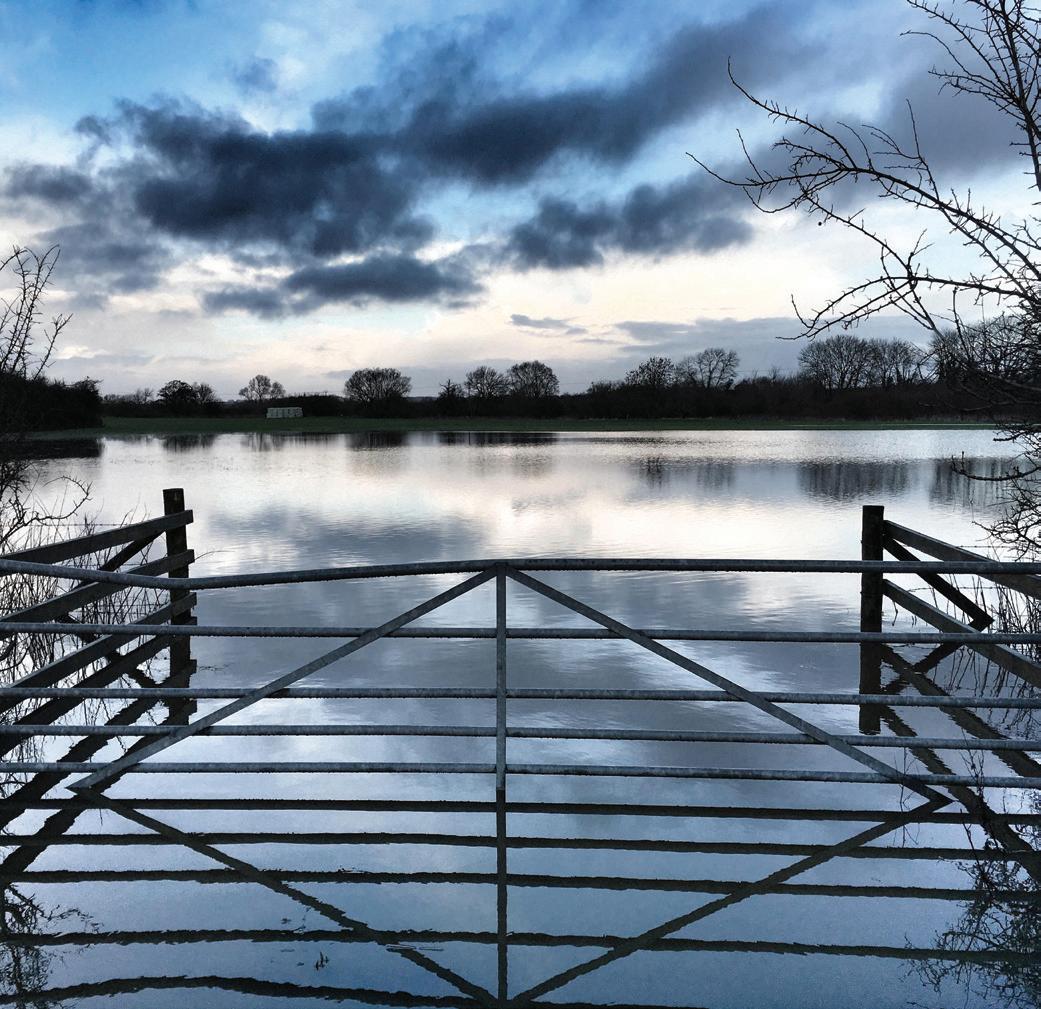
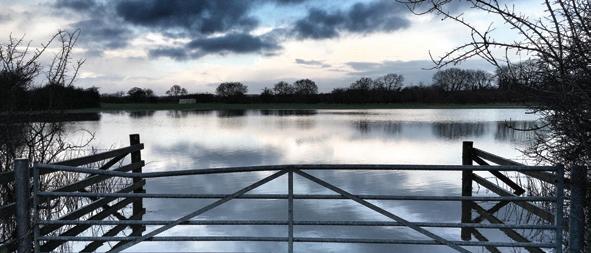
Many parts of Dorset have experienced heavy rainfall and flooding this winter, but the worst is yet to come.
Dorset has already this year recorded its second wettest January since records began in 1836, as did neighbouring Devon, with most of the county experiencing more than twice the month’s average for the period between 1991 and 2020. The start of February was also extremely rainy, and Dorset had above average rainfall in December, raising the prospect that this has been one of the wettest winters on record for the county.
The wet weather has primarily been caused by a series of Atlantic weather systems, including storms, which have been steered towards the UK by the jet stream, a narrow band of high-speed westerly winds that occur many miles above the Earth’s surface. This winter the northern polar jet stream has been particularly strong and located further south than usual.
However, climate change has turned a particularly wet winter into a near-record one. A warmer atmosphere can hold more moisture, leading to more rainfall. The UK has been warming at a rate of approximately a quarter Celsius degree per decade since the 1980s.
Last year was the UK’s warmest and sunniest on record. The UK’s 10 warmest years since records started in 1884 have all occurred in the past 20 years and there is also some evidence that climate change is making the jet stream in the northern hemisphere stronger and causing it to meander more during the year.
These are all contributing to making the UK’s winters become wetter. October 2023 to March 2024 was the wettest winter half-year on record. Six of the ten wettest winter half-years (October to March) have been in the 21st Century so far, in a series since 1767 for England and Wales.
Winter half-year rainfall for the most recent decade
has been 16 per cent higher than the average for the period between 1961 and 1990. With spring and summer 2025 being very dry, the Environment Agency had warned of drought this year if there was little winter rainfall. Instead the Agency has been busy managing floods along many of our main rivers, particularly in south-west England. The recent severe weather and flooding across Dorset and the South West has caused many problems:
• The River Cerne burst its banks and flooded Charminster following Storm Chandra at the end of January.
• Meanwhile, Dorset Council responded to the flooding from other watercourses, and from surface water and ground water.
• The Council does not proactively check all the drains on roads and streets for blockages, but relies on households and businesses to alert them to problems. However, blockages can often only be identified when drains start to overflow.
• Dorset, Wiltshire and Hampshire all suffered serious groundwater flooding in February, with saturated soils unable to absorb successive bouts of rain.
• Many households in Dorset experienced groundwater flooding for the first time this winter.
• Dorset Council warned of historically high levels of groundwater in some parts of the county. The Council pointed out that water levels were so high in early February that they peaked off the existing scale for some gauge boards.
• Groundwater in the Dickley Down borehole near the Cerne Valley reached its highest ever level of 172.59 metres on 29 January 2026. Flooding can occur in the surrounding area when readings exceed 167 metres.
• As groundwater flooding means the water table has risen near the surface, it can take several months for the soil to dry out again and levels to drop, with the threat of flooding remaining from any subsequent downpours.
• The persistent winter rain caused many other problems across the county. Dorset Council noted that floodwaters had undermined road surfaces, creating many potholes.
• Rail services in south-west England have suffered major disruption as a result of flooding.
• Agricultural land was submerged across southwest England, leading to concerns about a repeat of winter 2023-24 when many farms suffered major losses as crops rotted.
But as bad as this winter has been, it is likely to seem mild compared to future years.
Winter rainfall is projected to increase for the UK until the world reduces annual emissions of carbon dioxide and other greenhouse gases to net zero. That means rainfall will grow for at least the next 25 years, so Dorset along with the rest of the country will need to adapt and become more resilient to the impacts.
We cannot just rely on national or local governments to manage these risks for us, and every household and business in Dorset must take responsibility for understanding and tackling the growing threat.
Our flood defences along rivers will need to be strengthened, while recognising that rainwater needs somewhere to go. This may mean paying farmers to allow fields adjacent to rivers to act as emergency overflows. Our farmers will have to manage the risks of floods to crops and livestock, as well as soil erosion from increasing run-off.
It is well known that our drains and sewage systems cannot cope with the rising levels of rainwater and there will need to be sustained investment to upgrade them. Our towns and cities will experience even greater risks of flash flooding if sustainable drainage systems are not integrated into roads and pavements.
And Dorset’s economy will suffer if our roads and railways are not made more resilient to heavy and persistent rain with improved drainage. Many parts of the road and rail networks connecting Dorset to the rest of the country are also vulnerable to landslides triggered by heavy rain.
All in all we should use the experience of this winter as an indicator of Dorset’s vulnerability to rising rainfall, and a guide to where we must increase our resilience.
We cannot just rely on national or local governments to manage these risks for us, and every household and business in Dorset must take responsibility for understanding and tackling the growing threat.
And we should recognise that if the world does not reach net zero, winter rainfall will continue to increase indefinitely.
Bob
Ward FGS FRGS FEI is Policy and Communications Director at the Grantham Research Institute on
Climate Change and the Environment at the London School of Economics and Political Science.
Abig battle these days is the quality of bought compost for growing tender plants. Peat has now been replaced with woody stuff that sucks out all the added nutrients in composts within a fortnight when the plants just stop growing. So I now make my own— nervously. Most important is choosing a rich vein in my compost heap that shows signs of worms in it, which I bag up in September. Mix this with scrapings of compost rich top soil, which is also rich in the all important worm poo, finished off with a little bought compost, simply because I’m nervous of success. This mix can be a bit gooey but half rotted stems in my compost help give sufficient drainage. Add perlite if in doubt, we always use it for true spinach which needs a well drained medium.
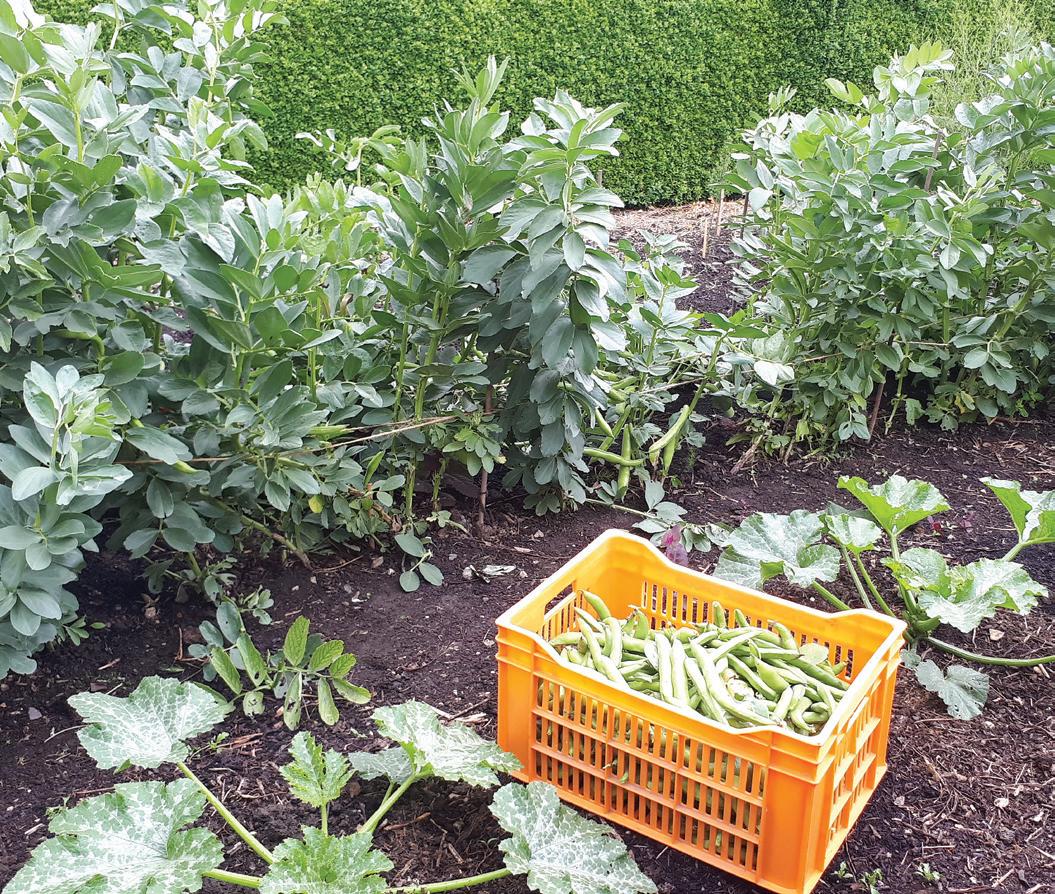
March is a time of optimism when light levels increase and every so often the sun comes out. The first sowings of early potatoes and broad beans in the first weeks are possible, wildlife permitting. Fleece is a spring thing and helps all early crops, you can now buy fleece made from plant materials rather than plastics. Most broad beans tolerate frost if the plants are
You can now buy fleece made from plant materials rather than plastics
strong and in humus-rich soil. We prefer sowing Aquadulce in November, they ripen in June before the blackfly attack, you can then transplant winter cabbages and kale. Beans set more seed if well spaced and watered while flowering.
All seeds germinate best at 20°C, our airing cupboard is now full of celeriac, beetroot, tomatoes, peppers etc which are moved to the greenhouse the moment shoots appear. Lettuce and spinach follow the same path, fleeced over after transplanting until well established. Lettuce can put up with occasional frosts of -3°C but grow faster under the fleece.
However all this is easier in April or May, an easier life but smaller and later crops with a glut in July. Your choice! And what did the worm say to the topsoil? It’s been nice gnawing you.

DORCHESTER Arts is set to welcome the Sun to the Corn Exchange in March. HELIOS, a spectacular new touring artwork by internationally acclaimed UK artist Luke Jerram, will take over the Corn Exchange from 28 March to 6 April, offering visitors an unforgettable encounter with the Sun on an extraordinary scale. Seven metres in diameter, HELIOS showcases 72dpi imagery of the Sun’s surface with remarkable clarity. Visit dorchesterarts.org.uk for opening times.


Reach out to your community through these pages.
To advertise telephone 01308 423031 or email: info@marshwoodvale.com



By Russell Jordan

Things really begin to get going in the garden this month. Lengthening days, with the vernal equinox being on the 20th of March, and gradually rising temperatures bring on an exponential increase in plant growth as they are coaxed out of winter dormancy. Spring flowering bulbs will be coming into their own as blooming harbingers of the early flowering perennials, such as Pulmonaria and Primula, which make a good accompaniment to them at the fringes of your beds and borders. Towards the back of a mixed border, you may have some of the earlier flowering shrubs, such as Ribes, Camellia and Pieris, which are most welcome for adding interest before the bulk of spring flowering stalwarts get into their stride.
With the number of gardening days lost, so far, this year due to the almost incessant rain, you may not have got all of your bare-rooted stock planted into their final positions. March is probably the last month for planting them, before they are fully into leaf, and the fact that the ground is unlikely to be short of water means that they will have a chance to send out new roots before they are going to need supplementary irrigation.
Waterlogged soil may also have kept you off garden beds and borders, to complete the necessary cutting back, weeding and tidying, before herbaceous perennials start into growth. If it remains wet, and you simply must get on with border work, then investing in some broad planks, ‘duck boards’, will allow you to move across the soil with the boards spreading your weight and reducing the need to fork and aerate the ground that you’ve just trodden on. The problem with repeatedly delaying gardening tasks, in the hope for ‘ideal weather’, is that, especially in the spring, there comes a point when absolutely everything needs to be done at once!
At least wet days give you the excuse to retire to the greenhouse, or whatever protected growing space you have, to sow seeds such as bedding plants, hardy annuals and perennials that you want to plant en masse. In theory, hardy annuals can be directly sown outdoors, towards the end of the month, but, especially in these days of ‘chemical free’ gardening, sowing them into multi-cell modules, planting out in
a few weeks’ time, gives them a better chance of not being decimated by slugs and snails.
If you have been overwintering dahlia tubers in your greenhouse then now is a good time to start thinking about nudging them towards breaking dormancy. I keep them dry and soil-less, as long as they are in frostfree storage, because I find them less prone to rots and soil borne diseases this way. It’s rising temperatures, in addition to increasing moisture, which brings them back into growth so, if sunshine raises the greenhouse temperature as early as March, I’ll start potting up the dormant tubers into moderately damp compost. Many dahlias make massive ‘knots’ of new tubers, if the summer is kind to them, and you can carefully cut off a few individual new tubers, to make new plants, when potting them up in the spring.
Similar to dahlias, if you have tender perennials overwintering in your frost-free space, I mentioned last month that they should be checked for signs of life and possibly watered to encourage new growth. This process can continue this month and, if the tender perennial was overwintered as a rooted cutting rather than as a ‘stock’ plant, it should be potted into a pot the next size up so that the roots have fresh, nutrient rich, compost to expand into. They can’t be planted outside until all risk of frost has passed, which could be well into May during some years, but growing them to as large a specimen as possible, under protection, ensures the best display for the whole of the summer. It’s worth investing in something like ‘horticultural fleece’ for that interim period when you’ve taken them out of the greenhouse, but they then need some protection from an unexpected overnight frost.
Now is a good time to buy and plant practically anything that is available as a container grown plant. In the case of herbaceous perennials, early spring is a good time to life and divide them to make new plants and, similarly, if you buy a large specimen, from a garden centre or nursery, you can probably divide it into at least three plants before adding it to your garden. When planting new plants, and also when generally weeding and tidying herbaceous borders,
adding a general ‘feed’, I’ve always used ‘blood, fish and bone’, helps to boost the plants just when they need it most.
If you have specimens of Cornus, Salix or Rubus grown for their colourful winter stems then, on established plants, these need to be stooled (cut almost to the ground) before they start into growth any time around now. This helps to intensify the winter colour and, especially in the case of Rubus, ornamental brambles, keeps then to a manageable size. They should also be fed (see previous paragraph) and mulched, after stooling, in order to promote good, vigorous, regrowth as this provides next winter’s show of colour. I’ve mentioned it many times before but it’s really difficult not to be stopped in your tracks by the appearance of Cornus sanguinea ‘Midwinter Fire’, setting the border ablaze when lit by the winter sun at the end of the day.
I almost don’t want to even think about the lawn right now. It’s completely waterlogged and there’s no way that I could get the mower onto it. Assuming that conditions improve in March then there’s a chance that it will require its first cut. If this is the case, then the mower blades should be raised to a notch above the summer cutting height (with any luck you’ll have had a chance to sharpen them and service the mower over the winter) for at least the first few cuts. Mowing the lawn when it is completely sodden will cause more harm than good, so this is definitely a case when you need to wait for ‘ideal’ conditions. Lawn repair and reinstatement is certainly something that can wait for when the grass is fully back into growth. There’s more than enough to be getting on with this month without worrying about turf management! Reach out to your community through


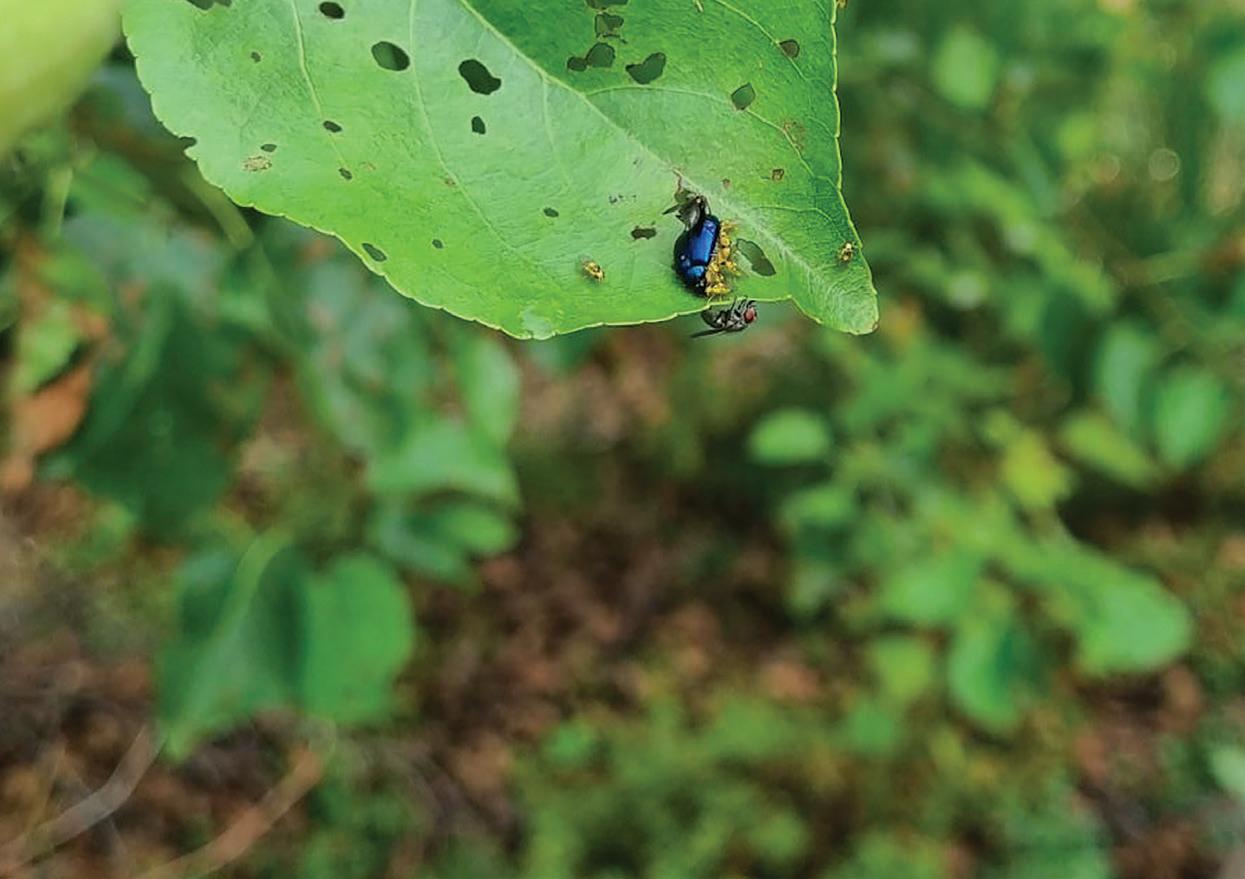
Dr Sue Holland at the food forest in Awliscombe talks to Seth Dellow about Agroforestry in action.
In a field just outside Honiton, an avant garde approach to growing organic food is under way.
A bird’s eye view of this once fallow land above the tiny village of Awliscombe reveals how it has been transformed into a flower-shaped food forest, with more than 200 plant species. Food forests are a type of agroforest, a concept where both trees and agricultural crops are grown on the same piece of land. It’s estimated to be one of just 60 small-scale projects in the UK and is maturing at the same time as the climate pendulum shifts in its favour.
The project is the brainchild of Dr Sue Holland—a botanist and ecologist—who credits a course ten years ago as the moment when the seed was planted. Sue was inspired by the wisdom imparted by Martin Crawford at the Dartington Estate near Totnes in 2016.
‘Martin was talking partly about indigenous people and communities and how they grow food. It was a sensitive way not to damage the ecosystems as you take food from them. He shared impressive cost analysis data compared with traditional farming; and showed how agroforestry is likely to be part of the solution for food security into the future. Particularly as climate change deepens and increases challenges facing food growers’, Sue reflects.
Crawford is widely recognised as a pioneer of agroforestry in the UK, having overseen the creation and development of a popular food forest at Dartington since 1994. Scientific research demonstrates that agroforestry can be more productive, profitable and sustainable than monocultures in the long-term.
Sue remarks how Martin made ‘a compelling argument’ at the time about how one could grow food and regenerate the soil. ‘The more I read about how we grow food, it became a no brainer. And it had the added benefit of making a richer, biodiverse environment, a place of beauty.’ By 2018, Sue had sourced a suitable parcel of land to turn her vision into reality.
Central to her vision was the creation of a regenerative agroforest: ‘We are trying to improve the soil while getting edible crops out of it. We plant tree species such as Italian alder (Alnus cordata) and autumn
olive (Elaeagnus umbellata) which fix nitrogen through the synergistic relationship of microbes in their roots. That nitrogen then becomes available to other plant species growing nearby.’
‘We plant the fruit trees [quince, almond, and crab apples] within three metres of the alder, so that the heavy cropping tree gets its nitrogen through the connectivity of the root system and fungal network. It’s already forming a symbiotic relationship under the ground’, Sue added. The food forest also includes perennial shrubs, such as allspice, cranberry and loganberry.
‘A big part of our job is standing back and not intervening with everything we see’
Since the creation of the food forest eight years ago, there have been some noticeable observations with wildlife and biodiversity. Sue has observed ‘a significant visiting bird population in there in the spring and summer; because we have more flowers, we have more invertebrates and hence more birds, mammals & reptiles. All the trophic levels are represented. If you cram a lot of species into an area with not too much shade, and plenty of mulch, you really do experience natural selection in real time.’
Another benefit in the agroforest has been the incorporation of a ‘scrape’—a shallow pond that accumulates rainwater. In the first year, Sue observed the arrival of two varieties of newts, snails and diving beetles. ‘All the usual mix has arrived over the last few years. I’d heard that if you’re trying to build a system without pesticides and herbicides, to keep the slugs at bay, you need amphibians and grass snakes. You need a pond to attract those creatures, and now that we have them, our leafy veg is less decimated by the slugs!’
The development of a natural equilibrium is a further development in the agroforest. Rather than rushing to banish pests with chemicals—as many of us would traditionally do—Sue simply observes the process and waits. It’s a sustainable approach rooted in what’s known as Integrated Pest Management (IPM).
‘Last year, we had an infestation of alder beetles causing havoc and my temptation was to intervene. However, there will be something that will come and deal with it’, Sue explains.
‘You wait long enough and nature looks after itself to create another equilibrium. A big part of our job is standing back and not intervening with everything we see.’ And as Sue expected, the alder leaf beetles were reduced by the arrival of predatory insects.
But just how popular and scalable is agroforestry? On a large scale, it is estimated that just 3.3% of farmed area in the UK incorporates some form of agroforestry. The figures are significantly lower than the European average of 8.8% and behind the UK’s target of reaching 10% of arable land as agroforestry by 2050.
Sue explains that there is a genuine growing momentum behind the concept. ‘We are just on the cusp of it becoming more knowable. I was at a workshop in January, where Forestry England, on behalf of DEFRA were seeking to understand how agroforestry can be scaled up significantly, and what grants might be needed. Economically it requires investment in time, money and energy—and those cost elements can be barriers.’ Sue continues: ‘But there are also cultural norms in farming; while there are farmers who are adventurous and willing to experiment, they are in the minority.’
As Sue contextualises, she considers herself to be more of an experimental hobbyist than a farmer. This position affords her the opportunity to test new ideas that might otherwise be a financial risk for traditional farmers. ‘I am very respectful of farming as I grew up in a rural farming community and saw first-hand how hard it can be. I’m fortunate that I don’t have to make the food forest work commercially yet!’
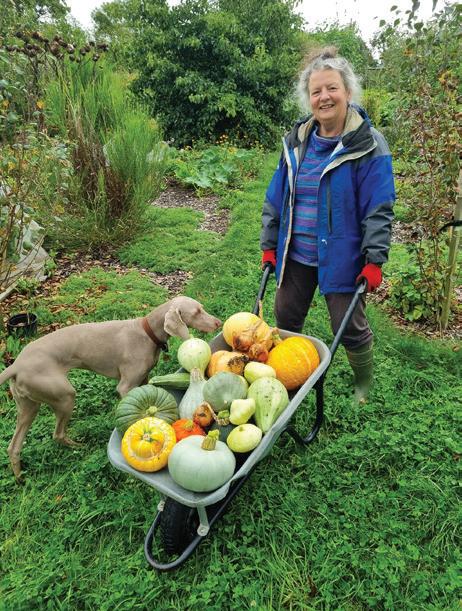
Sue Holland at the food forest. Opposite, Alder leaf beetle and predatory insects. Below, the food forest from above.
She continues: ‘For me, I am an experimentalist. What can we grow? Is this a system that can be scalable and could it be commercial? Could everyone turn their gardens into food forests? It’s another good way to engage the population as a whole in where their food comes from.’ It’s a school of thought that is increasing in popularity and prompting the creation of productive food forests across the country—from London to Sheffield and Bristol.
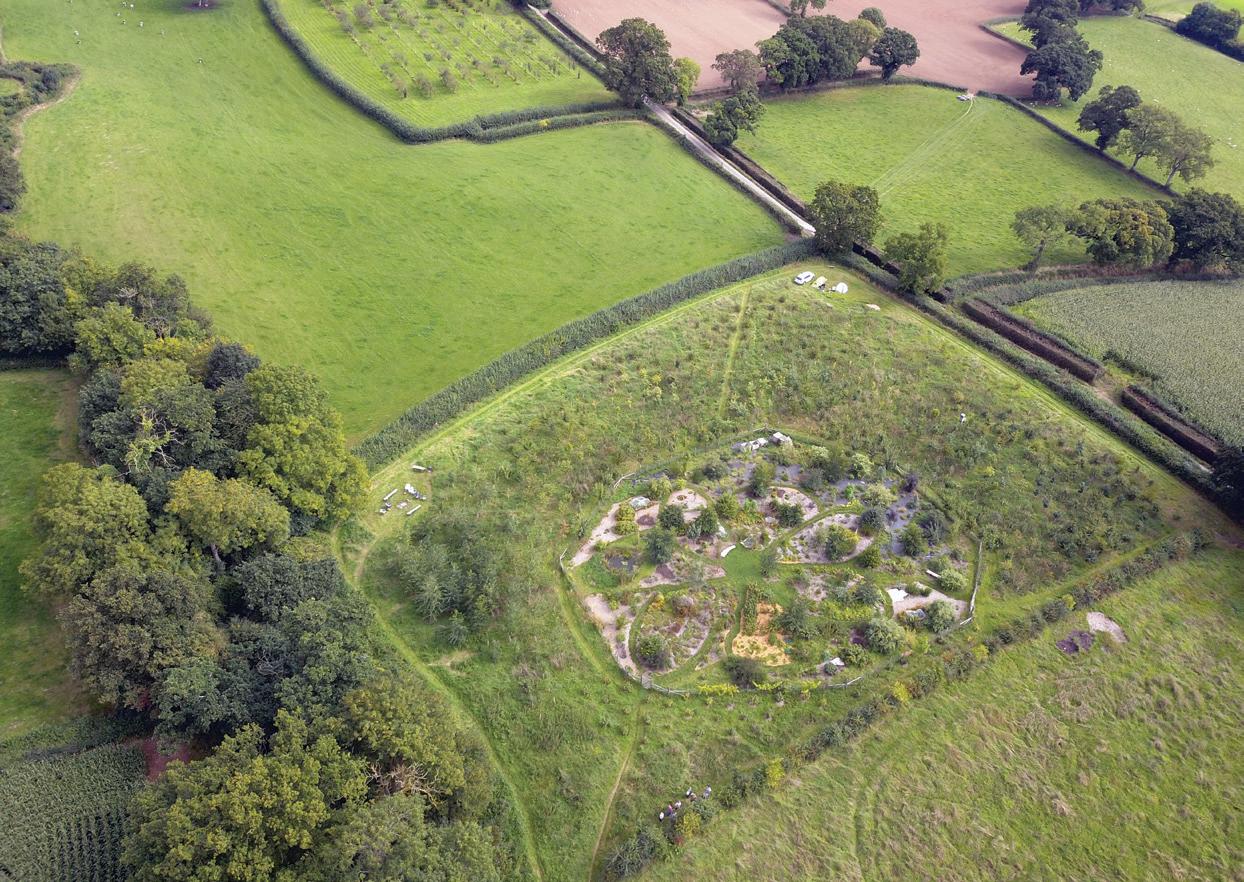
The food forest at Awliscombe is just one element of Sue’s sustainable social enterprise, Creative Beings CIC, which is on the lookout for artists and growers to collaborate with. Regular courses ranging from painting to poetry are held at the six-acre site. To find out more, visit: www.creativebeings.uk
Looking back at historical moments that happened in March, John Davis highlights Donald Campbell
It was approaching 9.00 a.m. early in 1967 and at last cold weather conditions had improved enough for Donald Campbell to begin the first run of his world water speed record attempt on the tranquil waters of Lake Coniston in the Lake District.
His sleek craft, Bluebird K7, moved slowly to the middle of the lake where Campbell, who would have been 46 in March of that year, paused briefly to correctly align the craft. Suddenly with an earshattering burst of power Campbell applied full thrust and Bluebird surged forward scattering clouds of spray in all directions.
At about 113km per hour (70 m.p.h.) Bluebird slightly lifted itself from the surface and rocketed towards the southern end of the lake. As Campbell increased the revs, Bluebird passed the start of the official measured kilometre at about 460 km per hour (285 m.p.h.) and had reached 475 km per hour (298 m.p.h.) at the end of the required distance. So far, so good, although observers in nearby boats and on shore were already noticing slight variations in the watercraft’s performance.
Without stopping to refuel, as was the custom, Campbell made preparations for the second stage immediately. Speeds of over 500 km per hour (328 m.p.h.) were reached on this run but some bouncing was apparent which caused deceleration. Suddenly Bluebird left the water, executed an almost complete backflip before plunging back onto the lake. The craft then cartwheeled across the water before coming to rest. The impact killed Campbell instantly and the main hull of Bluebird sank soon afterwards.
When rescue boats reached the scene, Mr. Whoppit, Campbell’s Teddy Bear mascot, was the first item to be noticed among the floating debris along with a helmet. Efforts were later made to find the body but although the wreck of Bluebird was located some two weeks later it was not until 2001 that remnants of Bluebird were lifted from the lake bed and two months later Campbell’s remains were finally brought to the surface by diving teams under Bill Smith, an underwater surveyor and diver.
On the day of his burial, Campbell’s coffin was carried down Coniston Water by launch for a final
time before the service and interment at St. Andrews Church, Coniston. Tragically the day was somewhat overshadowed by media coverage of the 9/11 attacks in the United States. The epitaph on his grave reads: Donald Campbell: “Whose achievements in world speed records depict his courage in life and death.”
Donald Campbell was always destined to have a thirst
for speed
Explanations of why the crash happened have been rife. Those including striking a floating object, running low on fuel or having insufficient weight in the tank have largely been dismissed. Others involving Bluebird’s structure and the effects on it of deceleration and the application of the water brake are still the subject of speculation.
In the village of Coniston, the Ruskin Museum has a display of Campbell memorabilia and Bluebird’s Bristol Orpheus engine. Campbell’s legacy is tremendous. He is the only person to have simultaneously held the water and land speed records in the same year, 1964.
His Bluebird CN7 clinched the land speed record of 649 km per hour (403 m.p.h.) on Lake Eyre, Australia in July of that year and the water speed record in Bluebird K7 followed, 445 km per hour (276 m.p.h.), on Lake Dumbleyung, also in Australia, on the last day of December. Between 1955 and 1964 he set seven world speed records, at first dominating the scene on water and then switching to land.
If there is any truth in the belief that children inherit not only the genetic makeup but also the innate characteristics of their parents, then Donald Campbell was always destined to have a thirst for speed.
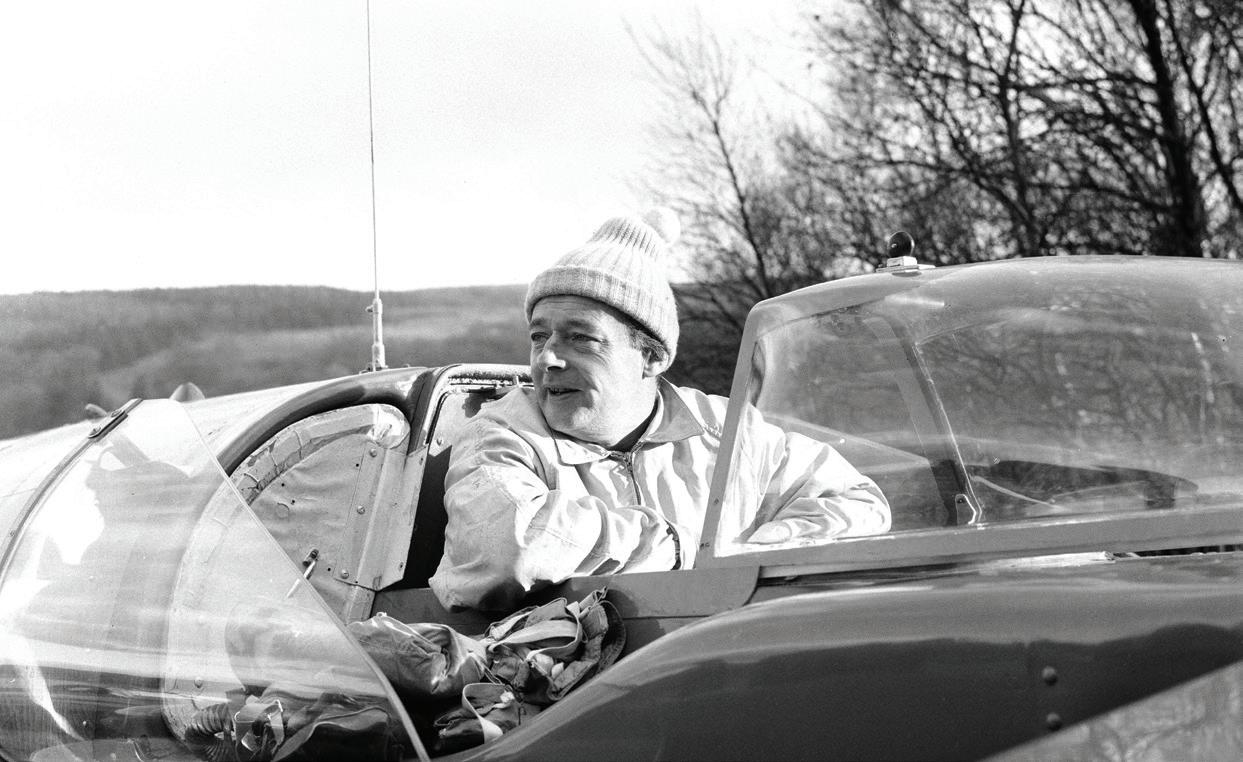
His father, Sir Malcolm Campbell, was a motor racing driver whose urge for even great achievements was later to focus on attaining land and water speed records. Born in 1885, Malcolm Campbell was a fighter pilot in the Royal Flying Corps during the First World War. As a racing car driver, he established world land speed records on nine occasions between 1924 and 1935. During September 1937 he clocked 483 km per hour at the Bonneville Salt Flats in Utah, the first time a land vehicle had ever exceeded 300 m.p.h. He set new water speed records on four occasions, his highest speed being 228 km per hour (141 m.p.h.) in Bluebird K4 at Coniston Water in 1939.
Malcolm Campbell died in 1948 aged 63, one of the few land speed record holders to die of natural causes. He was knighted by King George V in 1931 and was the recipient of a number of other decorations and awards.
The current officially recognised world land speed record is held by Andy Green at Nevada in October 1997. Using a jet-powered car, he touched 1228 km per hour (763 m.p.h.), breaking the sound barrier at just over Mach 1. The world water speed record has stood for 45 years after being set by Ken Warby in Australia in October 1978. He recorded 511 km per hour (318 m.p.h.).
Footnotes:
1 The actual speeds quoted have been rounded off to make them easier to appreciate.
2 The name Bluebird was used by the Campbells on a series of different record-breaking cars and boats. It is said to have been inspired by a fairy-tale play of that name, L’oiseau bleu, in which the bird is a symbol of the search for happiness.
3 Among the best of the dramatized versions of Donald Campbell’s final attempt at Coniston is Across the Lake (1988), made by BBC Films and starring Sir Anthony Hopkins in the leading role. (You Tube) There is also the BBC documentary Donald Campbell: Speed King (2013).
4 The song Out of This World by Marillion is dedicated to Donald Campbell and his record attempt and was sung at his funeral by lead singer Steve Hogarth.
Semi-retired and living in Lyme Regis, John Davis started working life as a newspaper journalist before moving on to teach in schools, colleges and as a private tutor. He is a history graduate with Bachelors and Masters degrees from Bristol University with a particular interest in the History of Education and Twentieth Century European History.
Spring into your New Home

£925,000
Russet House is part of an exclusive development of five timelessly designed detached homes set in attractive surroundings with extensive panoramic views. The fourbedroom home is beautifully laid out and finished to very highest standards.
Greenslade Taylor Hunt: 01460 2383282
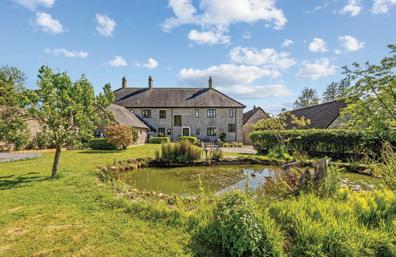
HAWKCHURCH
£735,000
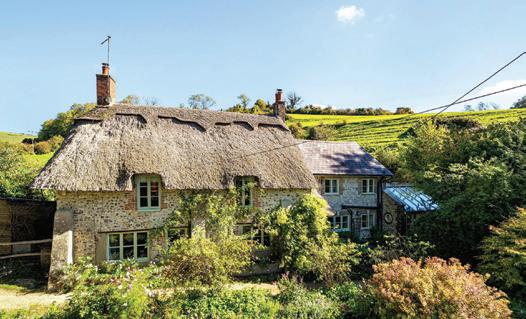
£725,000
Characterful detached family home enjoying a secluded position on the edge of Sydling St Nicholas. Offering a generous 0.75-acre plot and opportunity to extend. Dating back to as early as the 17th Century and formerly split as several cottages. Charming and deceptively spacious home.
Greenslade Taylor Hunt Tel: 01305 268786
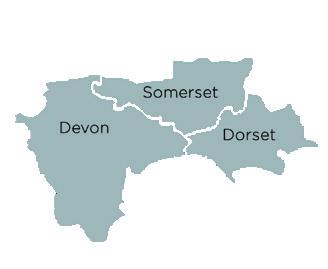
Steeped in history and character, this truly exceptional Grade II Listed period residence offers elegant, beautifully proportioned interiors, a double garage, and a private garden oasis amidst breathtaking unspoilt countryside. DOMVS: 01308 805500
LYME REGIS
£400,000
Attractive two bedroom apartment within a Grade II Listed Regency House. High ceilings and sash windows with secondary glazing. Views of the sea. Large roof terrace. Lovely communal gardens. Two parking spaces. Gordon & Rumsby: 01297 553768
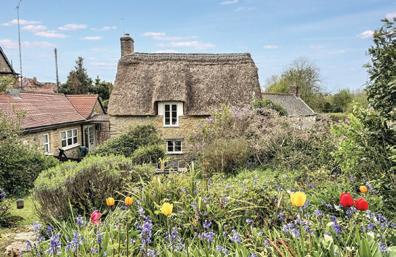
WALDITCH £400,000
A unique, Grade II listed, three bedroom detached thatch cottage, occupying a third of an acre plot in Walditch. The cottage has all the character one would expect including a lovely inglenook fireplace.
Goadsby 01308 420000

LYME REGIS OFFERS OVER £825,000
Impressive 5 bedroom detached executive style home, beautifully presented and in immaculate decorative order throughout, located in a quiet cul-de sac close to the River Lym in the beautiful coastal town of Lyme Regis.
Fox & Son 01297 32323

By Mark Hix
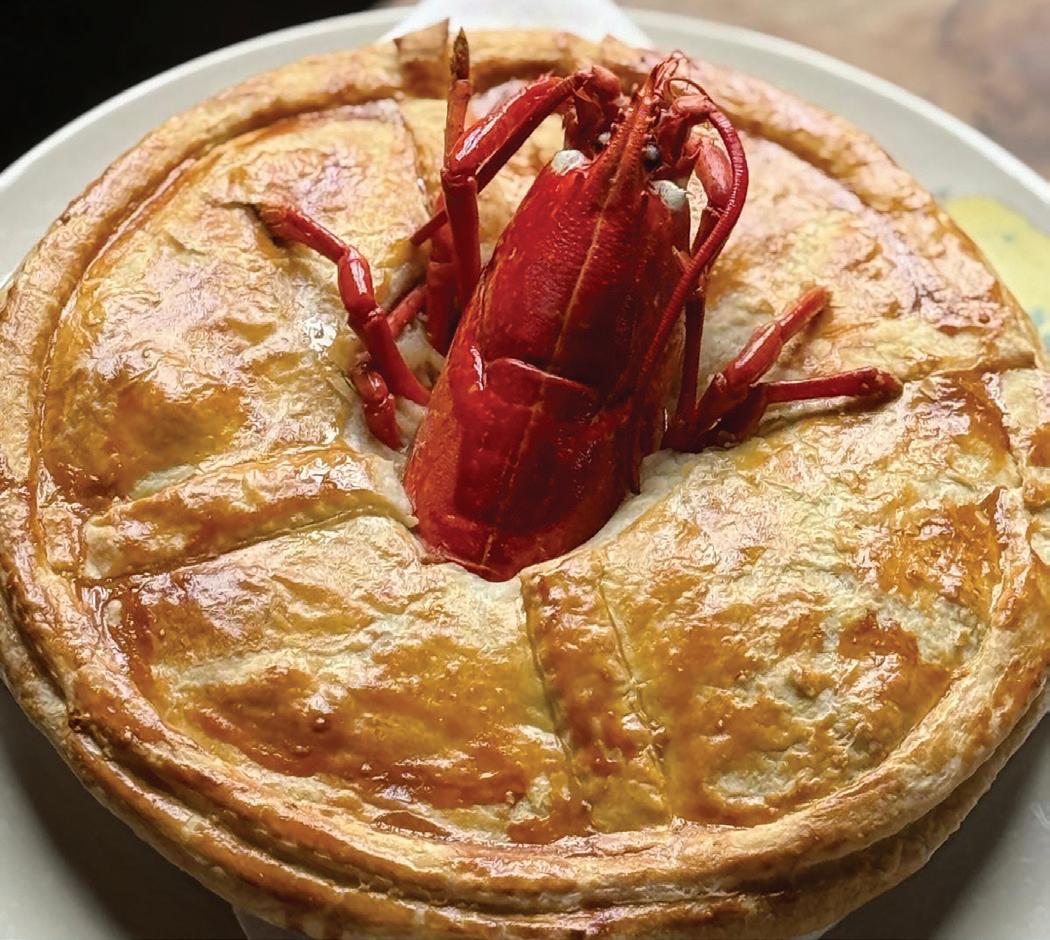
For the stock
• 1 small onion, peeled, halved and roughly chopped
• 4 cloves of garlic, roughly chopped
• ½ tbsp tomato puree
• 1 tsp fennel seeds
• 1 tsp black peppercorns
• 1 bay leaf
• A few sprigs of thyme
• 1.5 ltrs chicken stock
For the filling
• 10 chicken thighs, skinned and boned and cut into 2 cm pieces
• 1 tbsp vegetable oil
• 40g butter
• 1 small onion, peeled, halved and finely chopped
• 40g flour
• The chicken and lobster stock
• 50 ml double cream
• 1 tbs chopped chervil and tarragon
• 2 cooked lobsters with the claw and tail meat removed and the head and tail retained for finishing
For the pastry
• 285g self-raising flour
• 1 tsp sea salt
• 100g shredded beef suet
• 75g chilled butter, coarsely grated
• 1 beaten egg to glaze
Serves 4
• Put the lobster shells in a pan with the other ingredients, bring to the boil and simmer gently for an hour. Blend a third of the stock, shells and all, and return to the pan. Continue simmering for 15 minutes then strain through a fine meshed sieve.
• Heat a heavy-bottomed frying pan with the vegetable oil. Season and flour the pieces of chicken and fry on a high heat for a couple of minutes until lightly coloured. In a heavy saucepan gently cook the onion in the butter for 2-3 minutes, then stir in the flour and gradually add the stock, stirring to prevent lumps forming. Add the chicken and simmer for 45 minutes - 1 hour or until the meat is tender.
• The chicken sauce should be a very thick consistency. Add the cream and herbs and leave to cool.
• Cut the claws in half and the tails into 5-6 pieces and stir into the cooled chicken and sauce.
• Meanwhile make the pastry: mix the flour and salt with the suet and grated butter. Mix in about 150-175ml water to form a smooth dough; knead it for a minute. Roll the pastry to about 1cm thick and cut out to about 2cm larger than the pie dish all the way round. Brush the edges of the pastry with a little beaten egg; lay the pastry on top, pressing the egg-washed sides against the rim of the dish. Leave to rest in a cool place for 30 minutes.
• Preheat the oven to 200C/gas mark 6. Bake for 45 minutes, or until the pastry is golden and push the head and tail of the lobster carefully into the pastry before serving,
THE Allington Hillbillies, a local and much loved volunteer group that looks after Allington Hill, are celebrating the anniversary of when local residents raised funds to purchase Allington Hill 40 years ago.
They are putting on a weekend of entertainment on Friday 1st and Saturday 2nd May on the Hill. Friday evening will be entertainment in the form of live music, dancing as well as food and drink, while all day Saturday will be the main Country Fair, with country craft stalls, demonstrations, talks by local experts, have-a-go activities and food and drink. It’s a unique event that will be free for all.
Organisers already have a great range of stalls, activities and speakers including: a working forge, thatching demonstration, green woodworking, the West Dorset Beekeepers Association, Winnow Farm seeds, Toby Hoad horse logging, Tim Martin ropemaking, Bride Valley vineyard and Purbeck Ice Cream. The group are still signing up stall holders who can offer demonstrations of local crafts or have-a-go activities as well as musicians and food providers for the evening event on 1st May.
Other events are taking place leading up to the Fair including a special Quiz Night and raffle at The Ropemaker’s in Bridport on March 17th to raise funds for the fair.
The group is still very keen to hear anecdotes and memories of growing up and living in North Allington. Please get in touch via email if you have any to share, allingtonhill@gmail.com.




Curating this year’s From Page to Screen film Festival, Bridport’s Chris Chibnall talks to Fergus Byrne about this year’s event.
There is a particular kind of magic that happens when the lights go down in a packed theatre. It’s a feeling Chris Chibnall knows well. The man behind Broadchurch, Doctor Who, and Netflix’s latest Agatha Christie romp, Seven Dials, might spend his days crafting worlds for the small screen, running shows and writing novels, but his heart beats for the big screen. As curator of the 2026 From Page to Screen film festival in Bridport, he’s not just planning a schedule; he’s throwing a party.
‘I want the festival to feel like a party,’ he tells me, his enthusiasm bright as the excitement in his eyes. ‘I want it to feel like there is a party of film taking place over four or five days, with a really wide variety of films. We’ve got comedies, we’ve got sci-fi, we’ve got horror. People can bring in their drinks. It’s going to be really informal, and we’re going to have a lot of fun.’

For Chris, this isn’t just about movies; it’s about that childhood wonder we all remember. ‘Films are the point at which you’re first exposed to screen storytelling on a large scale,’ he says. ‘As a kid, there is a magic about film storytelling.’ He recalls that ‘mind blown’ sensation of a first cinema trip—a feeling he insists shouldn’t fade with age. He calls it the ‘Proustian rush of sitting in the dark for a couple of hours having a communal, collective experience that is entirely surprising, and marks you for life.’
He also hopes the festival will be an inclusive and celebratory event, where people can lose themselves in the magic of cinema. ‘Every film is going to have some sort of introduction, even if we’re just talking about the context of the film.’
Chris plans to include a selection of films that have left an unforgettable mark on cinema history. Some of these films he describes as ‘big screen
bangers’: movies that are not only entertaining but also transformative. ‘There are a number of really extraordinary films that are seminal films that I would want to see on a big screen, that I felt people had forgotten are based on books and texts,’ he explains. ‘Some of the biggest films you’ve ever thought of are, surprisingly, based on texts you probably don’t even know about.’
One of the highlights of the festival is Stanley Kubrick’s 2001: A Space Odyssey. Chris describes it as ‘one of the greatest, biggest swings in cinema history. It’s vast in scale, but it’s hugely entertaining and slightly mysterious. It needs the audience to complete it. Everybody’s experience of it will be different. You come out of the cinema slightly changed, a slightly different person to how you went in.’ He says it is a film that is ‘all about image and sound and the collision and the dissonance between the two’, taking you on an ‘incredible journey’.
Another standout is Buster Keaton’s The General, which Chris describes as ‘essentially the first Hollywood comedy blockbuster.’ He explains, ‘It is the source material. If you watch The General and then you watch Spielberg films or action-adventure films of the 80s, 90s, and 2000s, it all links back to The General and Buster Keaton. To see it on the big screen is very rare, and we’re also going to have live accompaniment to make it a real event.’
Comedy lovers will be thrilled to see Airplane! on the lineup, a film Chris describes as ‘the greatest comedy of all time.’ He explains, ‘It has 271 jokes across an 80-something minute running time, so it’s about three jokes a minute. You don’t often get the chance to see it in an audience, and I think comedies with an audience are transformative. It’s also one of the all-time great comedies.’
Another highlight screening is the Julie Christie version of Far from the Madding Crowd, a film with special significance for the Bridport community. Based on Thomas Hardy’s classic novel and shot in Dorset, the film celebrates the region’s rich literary and cinematic heritage. ‘The idea of screening Far from the Madding Crowd, which is obviously filmed around here, on a big screen, is exciting. It’s the 60th anniversary of it being filmed. It is a lavish, big-screen extravaganza,’ Chris says. ‘The magic of seeing that in Bridport gives me goosebumps.’
Chris hopes to engage the local community by inviting those who participated in making the film or have connections to it to share their stories and memories. ‘If anybody knows anyone who was
‘The magic of seeing that in Bridport gives me goosebumps.’
involved in the making of the film, or has relatives or has pictures, we’re going to put out a call,’ he says. ‘It was made by people around here and across the Southwest.’
Beyond the popcorn, Chris also wants to pull back the curtain on the craft itself. He speaks passionately about the hundreds of people—the editors, the sound designers, the art directors—who make the magic happen. ‘Every time the shot changes, everything within the frame has been art-directed by someone,’ he says. ‘The colour of the fabric, the sound design, the editing—everything is transformable by the choices that are made.’
A key part of this year’s festival will be its focus on that craft of filmmaking. Through filmmaker sessions, attendees will have the chance to meet industry professionals and learn about different aspects of film production. ‘These things are not just formed objects that sit there in the culture,’ Chris explains. ‘They are made by human beings. Come and talk to human beings, and if you’re interested in film as an art form, or if you want to work in the industry—especially young people—you can come and meet people, talk to them, and seek their advice.’
At its core, From Page to Screen celebrates storytelling and the transformative power of cinema, and Chris Chibnall believes that films can change how we see the world and ourselves. ‘Stories are vehicles by which you can experience other worlds,’ he says. ‘Experience other people’s lives, experience other people’s points of view, and build empathy. And definitely, the world has a bit of an empathy shortage at the moment.’
Chris says that films allow us to share that empathy, ‘whether that’s through laughter or spaceships or Thomas Hardy. You want people to have an incredible journey, and the craft of that is extraordinary.’
From Page to Screen runs from Wednesday 22 - Sun 26 April. The full programme will be announced on Thursday 12 March. Booking opens on Thursday 12 March for Bridport Arts Centre supporters and on Saturday 14 March for general public. Visit: https://www.bridport-arts.com/fpts/ or in person at Bridport Tourist Information Centre , telephone 01308 424204.

Kit Glaisyer presents an exhibition of Romantic Landscapes, a series of paintings inspired by the views from West Dorset ancient Hill Forts. You can also enjoy the progress of his current commission, on show in his studio. The gallery is open on Saturdays 10am - 3pm or by appointment. Kit Glaisyer Fine Art, 11 Downes Street, Bridport, Dorset DT6 3JR. 07983 465789 www.kitglaisyery.com @kitglaisyer.
Opening Exhibition of The Walnut Gallery, a new inviting gallery in the heart of Poundbury featuring local contemporary art. Monday to Friday 10am - 5pm or Saturday by appointment only. 16 Crown Street West, Poundbury, DT1 3DW Tel: 01305 343525
Until 7 March
Journey – Two Artists – One Studio – Two New Bodies of Work. Ceramic sculpture and drawings by Clare Trenchard. Paintings of the sculptor’s studio by Binny Mathews. Sladers Yard, West Bay, Bridport, Dorset DT6 4EL Open: Mon to Sat 10 – 4pm. All work can be viewed at www.sladersyard. co.uk t: 01308 459511. e: gallery@sladersyard.co.uk.
March - 2 May
Sally McLaren RE Retrospective: A Passion for Printmaking Original aquatint, carborundum, drypoint, line and deep etchings 1959 – present. Distinguished printmaker, painter and etcher, Sally McLaren was born in London, studied at the Ruskin School of Art in Oxford and at the Central School of Art in London. She won a scholarship to study in Paris at the famous Atelier 17 of Stanley William Hayter, returning to teach at Goldsmith’s College of Art. She is a
Fellow and Founder Member of the Printmaker’s Council of Great Britain, a Fellow of the Royal Society of Painter Printmakers now known as the Royal Society of PainterEtchers (RE). Sladers Yard, West Bay, Bridport, Dorset DT6 4EL Open: Mon to Sat 10 – 4pm. All work can be viewed at www.sladersyard.co.uk t: 01308 459511. e: gallery@ sladersyard.co.uk.
Humphrey Jennings and Charlotte Jennings Humphrey Jennings (1907-1950) Poet of the Image Paintings and collages from the 1930s and 40s. Charlotte Jennings (19352021) Colour and Music was born in London in 1935, spent the war years in New York, attended Hammersmith and Chelsea Schools of Art, before winning a major County award to the Slade School of Art in 1955. This exhibition will focus on her larger oil paintings The Art Stable, Child Okeford, Dorset DT11 8HB. kellyross@theartstable.co.uk. 07816 837905.
Airborne over Sherborne Quentin Blake’s drawings have always carried lift — lines that leap, figures mid-flight, stories that rise off the page. Airborne over Sherborne invites you into that feeling of flight and freedom with a vibrant new series of works made in 2025: birds, contraptions, and impossible inventions that somehow feel completely believable in Blake’s world. The Sherborne, Newland, Sherborne, Dorset DT9 3JG. www.thesherborne.uk.
100 Portraits Created exclusively for The Sherborne, 100 Portraits offers a rare chance to meet Quentin Blake’s imagination now: vivid, warm, and unmistakably his. These are not “likenesses” of specific people, but encounters —
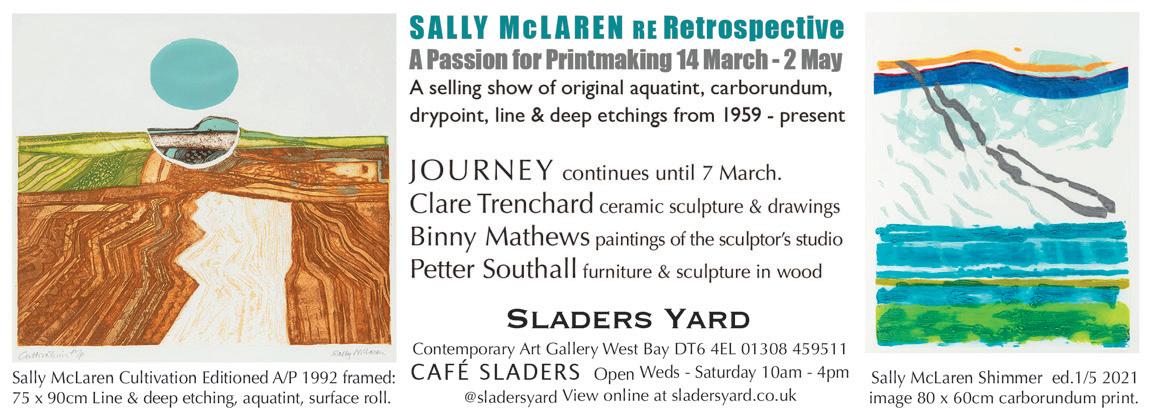
characters discovered through drawing, where a tilt of the head, a glance, or a single line can spark an entire personality. The Sherborne, Newland, Sherborne, Dorset DT9 3JG. www. thesherborne.uk.
The Folke Altarpiece: The Resurrection Painted in Baroque drama and light, The Resurrection shows Christ rising above the tomb as angels flank the scene and Roman guards recoil below. Known as the Folke Altarpiece, this newly conserved work attributed to Sir James Thornhill returns to view on loan from St Lawrence Church, Folke — a striking counterpoint to Blake’s airborne imagination within the exhibition. The Sherborne, Newland, Sherborne, Dorset DT9 3JG. www. thesherborne.uk.
Until 3 May
Grayson Perry: Aspects of Myself A new exhibition of one of Britain’s most influential contemporary artists. Standard ticket – £7, Book online – £6, NUS cardholders and MA Members – £4, ArtFund – £3, Under 19s and carers free. Some works in the exhibition will depict adult themes. The Royal Albert Memorial Museum and Art Gallery is Queen Street, Exeter, EX4 3RX. 01392 265858.
Until 10 May
People Watching Over a hundred years of British portraiture with The Ingram Collection and Dorset Museum & Art Gallery. Exploring the concept of image and portraiture in British art, ‘People Watching’ will feature approximately 50 works of sculpture, paintings, drawings, and photography from 1915 to the present day. Dorset Museum & Art Gallery, High West Street, Dorchester DT1 1XA. Open Daily: 10:00am –5:00pm. Last entry to the Museum is at 4:00pm.
Legacy in the Making This new exhibition celebrates the remarkable breadth of contemporary and historic craft in Somerset. Bringing together former members and masters of the Somerset Craft Guild, along with the 2025 Somerset Art Works × Somerset Craft Guild Emerging Maker Bursary artists, the exhibition reveals a vibrant creative community shaped by heritage, experimentation and deep connection to place. Somerset Rural Life Museum, Abbey Farm, Chilkwell St, Glastonbury BA6 8DB.
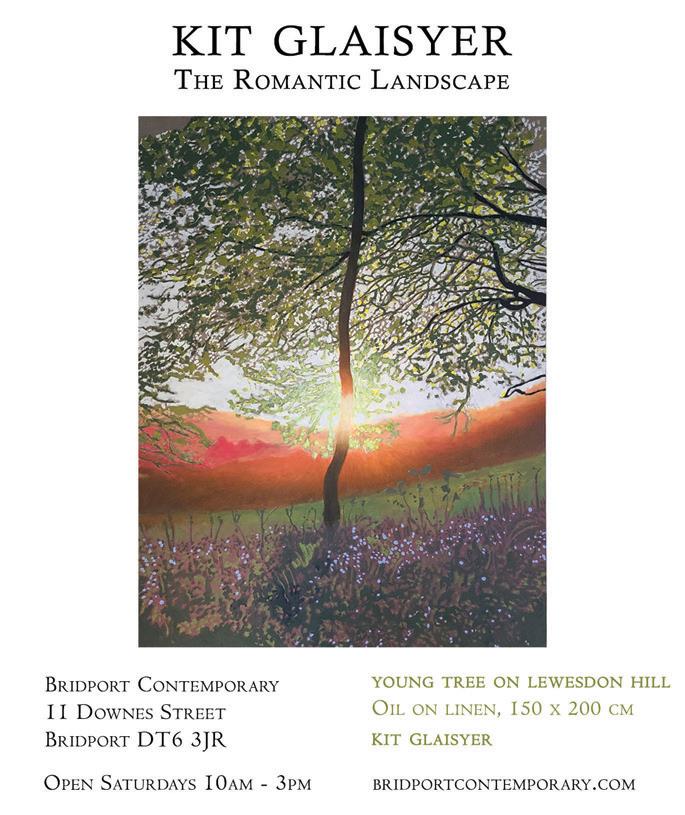
GALLERIES IN APRIL
send your gallery details to info@marshwoodvale.com BY MARCH 14th

Former Woodroffe School student, Jon Lee Anderson , is one of the most respected foreign correspondents of our time. On the eve of the publication of a new book, he talked to Fergus Byrne about the Afghan war and the paramilitarisation of America.
On more than one occasion, as he stood at the bar of a local pub trying to decide which real ale to sample, I have asked New Yorker staff writer Jon Lee Anderson how he manages to contain and compartmentalise the vast well of political knowledge he has gathered over more than forty years of war reporting.
The answer is usually a modest shrug, but the reality is that the ruptured regions he has been drawn to can no longer be compartmentalised. We live in a world where the effects of populism, trade conflicts, and wars echo across the globe. We can talk about our grandchildren or the day-to-day minutiae of normal life, but distant wars or tragic upheaval thousands of miles away are no longer irrelevant to those homely subjects. The real-life impacts on our economy, security, energy, and food costs, as well as the effects of political polarisation and protest, now have a visceral bearing on our lives.
So, when someone who possesses a rich reservoir of knowledge and experience from reporting in places such as Afghanistan, Syria, Iraq, Liberia, and Latin America publishes a new book, there is much to discuss and learn. Jon Lee Anderson’s clear, concise, and focused writing reflects the steady gaze of a man who sees war and injustice not just as anomalies but as deeply human tragedies. His role is as much to provide an important correction to official narratives as it is to document the brutal reality of a fractured world.
Speaking about his latest book, To Lose a War: The Fall and Rise of the Taliban, with CNN’s Clarissa Ward at the Kiln Theatre in Northwest London recently, he presented a stark reminder of the profound mismatch between Western ambitions and Afghan realities. He talked of mission creep, endemic corruption, Taliban resurgence, and the chaotic withdrawal of American forces following an over-two-trillion-dollar fiasco. To Lose a War: The Fall and Rise of the Taliban is not only
a searing autopsy of America’s longest conflict, but it also offers rare insight into the realities and chaos of modern warfare, and the pitfalls of nation-building.
Weaving together twenty-five years of New Yorker dispatches with new, reflective reporting on a U.S. foreign policy tragedy, the book’s narrative captures a cycle of violence, corruption, and cultural disconnect that Jon Lee believes rendered the American-led nation-building project “unworkable.”
Early in the conflict there was a sense of “purposeful determinism”, he writes. Figures like Hamid Karzai were promoted abroad as symbols of a new, democratic Afghanistan. On the surface, statistics suggested elements of success: by 2005, school attendance had jumped from under one million to nearly five million. However, this progress was hollowed out by what he calls “gangster capitalism.” In Kabul, warlords and corrupt officials carried out land grabs with “Wild West impunity,” while the poppy harvest soared by 1,500 percent, turning the country into a narco-state.
The disconnect between the occupiers and the occupied was profound. American soldiers, fuelled by protein powder and “alpha male struts,” were viewed as alien entities by the more reserved Afghans. This lack of cultural understanding was literal: in one tragic instance, when humanitarian aid rations were airdropped to starving Afghans, several died after eating desiccants, the moisture-absorbing packs in the rations, because the “Do Not Eat” warnings were not written in Farsi or Pashto. “They thought it was spices!”
The Taliban’s return was not a sudden collapse, he says, but a “classic example of a successful guerrilla war of attrition.” When faced with overwhelming U.S. forces in 2001, they simply melted away to regroup.
Corruption was endemic. Speaking to Sayed Hamed Gailani, a prominent former politician who stayed behind hoping to steer the Taliban toward a “viable
way forward”, Jon Lee quotes Gailani’s view of the corruption inside the machine of the war “The fact is, most of the money that supposedly came to Afghanistan—probably eight and a half dollars out of every ten—went back to the U.S., and meanwhile the corruption here was out of control.” Gailani described the occupation as “like one of those Turkish TV series that never end.”
Although there are many reasons the two-decade-long American “military expedition” in Afghanistan ended ignobly, while conceding that Jo Biden didn’t help matters, Jon Lee also adds the current U.S. President to the list of those who helped fuel the disastrous end. “Donald Trump set this fiasco in motion”, he writes, “by announcing his intention to pull out the remaining American troops in Afghanistan and begin negotiations with the Taliban.”
As the book concludes, the sense of betrayal is palpable. Afghan intellectuals and women—who once believed in the promise of human rights—have returned to the burkha and “iconoclastic purity.” Gailani summarised the tragedy saying the Americans spent trillions to clear the country of the Taliban, only to eventually hand it back to them, leaving a legacy of “ignominy” and a country once again shrouded in fundamentalism.
A former pupil of Woodroffe School in Lyme Regis, Jon Lee Anderson was born to a diplomat father and a children’s book author mother. Among other countries, he was raised in South Korea, Taiwan, Indonesia, and Liberia, having lived in nine different countries by the age of eighteen.
In an interview last year he described the early days of Afghanistan as “the wild place that pot heads went to and James Michener wrote about.” Change has been dramatic. Over a pint of ‘County Best’, I asked him what had happened and what his book and his experience tells us about American foreign policy in Afghanistan, and how that affects us now.
The question of how Afghanistan went from a hippie destination to a country battling to be a nation, he says, can be traced back to the 1973 coup that abolished the monarchy. Afghanistan’s King Zahir Shah, the scion of a dynasty over 250 years old, was overthrown by his cousin Daud Khan. ‘Daoud’s power grab threw the door open to more power grabs, each one bloodier than the last’, says Jon Lee. ‘In 1978, Daoud Khan was overthrown by a Communist faction; he was murdered along with most of his family.’ What followed was a series of further murders and a subsequent Soviet invasion. That war went on for a decade, leaving as many as a million Afghans dead and a further five million refugees in neighbouring countries. ‘Afterwards came a civil war, the arrival of the Taliban and with them, their allies in Al Qaeda; the 9/11 attacks, the US-led invasion that ensued— which lasted twenty years—and since 2021 the current phase of history, which one might call Taliban 2.0.’
The result is a country inhabited by disparate groups of battlehardened fighters and warlords constantly changing alliances to survive. But is it fair to say then that the involvement of foreign powers gave rise to the growth of extremist groups in Afghanistan? ‘Very much so’, says Jon Lee. ‘Throughout the halfcentury chronology, I have just described, Afghanistan’s immediate neighbours have all intervened in one way or another, as did major powers further afield. The attempt to “communise” Afghanistan by the Soviets led to an upwelling of not only nationalism but radical Islam, as well. And this was prolonged by the American expedition to Afghanistan.’


While the Taliban are back in power, there is also an extremist offshoot, ISIS Khorasan, that is active along the border with Pakistan, which Jon Lee points out frequently launches ‘murderous sectarian attacks.’ He also highlights a group of “Pakistani Taliban,” which launches terrorist attacks inside Pakistan—a country that once fostered the Afghan Taliban—in the hopes of making that country adopt a more strict form of Islam. The worm keeps turning.’
Nationalism, radical Islam, tribal and warlord factions and the wars that history has beset Afghanistan raise the question of whether it can ever be a “nation”? ‘Alexander the Great, the Mongol Golden Hordes, all have gone through Afghanistan, as did the British three times in the 19th century’, says Jon Lee. ‘It is a long story, and it goes without saying that this has shaped the Afghan temperament. There are allied and rival clans, in some cases with different languages and geographical affinities, and they all form part of the Afghan political mosaic that must be considered by any actor when attempting to rule over the whole country.’ He describes the difficulty as like trying to walk slowly without sinking while walking across quicksand. ‘Perhaps walking through a minefield is a better analogy’ he says.
But does that ‘political mosaic’ make nationhood impossible? ‘This doesn’t mean to say a consolidation of political rule over all of Afghanistan— nationhood—cannot somehow be eventually achieved. But war, not peace, is what comes most naturally to Afghanistan’s political competitors; its attempts at peaceful nation-building have themselves only ever come about through an initial spilling of blood, and never been long-lasting. Right now, the Taliban have managed to prevail over the entire country and seem to hold all the cards, certainly when it comes to coercive power, but they themselves are divided into several internal factions. Will they resolve their internal differences before a new civil war erupts? Time will tell.’
‘Trump’s current Stick-then-Carrot approach in Venezuela seems derived from an awareness of the dangers of putting “boots on the ground”, as per Bush and to a degree by Obama.’
A comment at the Kiln Theatre talk, that it was only a matter of time before there was another war in Afghanistan led to an analysis of how a war should operate. ‘There’s nothing worse that you can do if politics evolves into war,’ he said. ‘It’s about killing people to prevail.’ He suggested that while the Russians understood the importance of complete and ruthless victory, that mindset may not come so easily to the West. I asked him how we should deal with a situation where we are not as prepared to win as they are? ‘War is the most dangerous genie we humans can ever let out of the political bottle, so to speak’ he said. ‘And as Putin has learned in Ukraine, as Hitler learned by invading Russia, and Napoleon before him—it can come back to bite you, and so you should only ever resort to it as the last thing you try. Point being, if you are going to do it, make sure you can win. Otherwise, use every other tool at your disposal before unsheathing your sword. Because the battle you start today in some foreign field may become just the first of many, without a clear outcome, and ultimately be brought and waged in your own home.’
At the time of writing—and let’s face it, we never know what might come from the White House by the time this is published—the Trump administration has Iran, Colombia, and Cuba in its sights, not to mention Greenland. I wanted to know whether Jon Lee believed the increasingly belligerent and aggressive policies that are developing within the U.S. administration are the only future we have to look forward to, or if there is a less tribalist voice wanting to be heard somewhere inside the heart of America?
‘America has a remarkable and well-proven ability to reinvent itself and to restore its lost idealisms’ he explained. ‘Jimmy Carter followed the shame of Watergate and the disastrous retreat from Vietnam of the Nixon years, remember. Barack Obama followed George W. Bush and his
calamitous Wars on Terror. Trump is an awful return to the age of Neanderthalism, but hopefully it is a temporary setback.’
Perhaps the mid term elections in November will offer a glimpse into our future. ‘There are American politicians who come from the established political centre and center-left with messages of hope and also with the apparent personal determination to help lead and reset the country, amongst them the Democratic governor of California, Gavin Newsom, and young Democratic congresswoman from New York, Alexandria Ocasio-Cortez. And there are more. The mid-term legislative elections in November of this year will show us which way the country is swinging— whether Trump’s corrupt fever dream has maxed out and is on the wane, or retains the power to entrench itself even further. 2026 will be a fateful year.’
But there is a lot to undo and ‘reset’. Since the shocking exodus of the last remaining U.S. troops, the world has been distracted by other upheavals such as the Russian invasion of Ukraine, Israel’s decimation of Gaza, and, more recently, Donald Trump’s audacious snatching of President Maduro from Venezuela. But what has the impact of the Afghan debacle been on U.S. foreign policy? ‘Trump’s current Stick-thenCarrot approach in Venezuela seems derived from an awareness of the dangers of putting “boots on the ground”, as per Bush and to a degree by Obama,’ suggests Jon Lee. ‘But by using mob-style strong-arm tactics against friendly nations through the threat of tariffs and demeaning language, as he has done with the allies in Western Europe, and takeover talk, as with Canada and Greenland—obviously, there is a lot of damage being done to the international order, with unforeseeable and possibly very dangerous consequences for everyone in the near future.’
Although America’s experience in Afghanistan might appear as much of a failure as its result in Vietnam, there is one exception that has had a keen impact on American society. Vietnam veterans returned to a country that blamed them for the war’s failures, while Afghanistan veterans returned to a country that largely ignored the war’s failures but celebrated their personal service. “Thank you for your service” became a cultural maxim. Today, soldiers often receive priority boarding on planes and discounts at stores, but is that about to change? In his book, Jon Lee talks of Special Forces groups and ‘Wild West’ characters pumped up on steroids, careering around Afghanistan. Assuming not all of these are still in the forces, where are they now? Might we be seeing groups of them wearing ICE uniforms using battle-hardened techniques on their own people? ‘Yes, alarmingly’, answers Jon Lee. ‘There
‘And as Putin has learned in Ukraine, as Hitler learned by invading Russia, and Napoleon before him—it can come back to bite you’
are over three million American men and women alive today who saw combat in the battlefields of Afghanistan and Iraq.’ The wars on terror and other wars, along with the creation of the Department of Homeland Security, have contributed to a ‘palpable paramilitarisation of American culture’, with its proliferation of assault weapons like the infamous AR-15. He also points to the militia groups, the “open-carry” laws—where some states allow people to carry guns without permits—and even the militarisation of many of America’s police forces, ‘some of whom now patrol in military Humvees and other armoured vehicles.’
The parallels between what we saw on the battlefields of Afghanistan and Iraq are stark. Jon Lee also sees ‘a discernible through line between the “Us and Them” rhetoric used by George W Bush in the wars on terror and the anti-migrant “Us and Them” xenophobia and racism that has caught on like a fever amongst Trump’s followers in the United States.’
Where does this leave the American people? Some observers see a foreign policy strategy that has abandoned Afghanistan, Ukraine, Europe, Gaza, and potentially NATO. Donald Trump is gaining control over the appeals judges, the Supreme Court, the DOJ, the FBI, Homeland Security, and Immigration and Customs Enforcement. He also acts as Commanderin-Chief of the American armed forces. Many argue that he is in the process of abandoning the American people by challenging the Constitution. They question whether he is fomenting civil war to gain more control. Jon Lee puts it more concisely: ‘Trump is seeking to install himself at the head of a tyranny, plain and simple, based upon his own cult of personality. If he could rename the USA as Trumpistan, he would.’
To Lose a War: The Fall and Rise of the Taliban by Jon Lee Anderson. Published by Fitzcarraldo Editions.
ISBN 9781804272435. RRP£14.99.

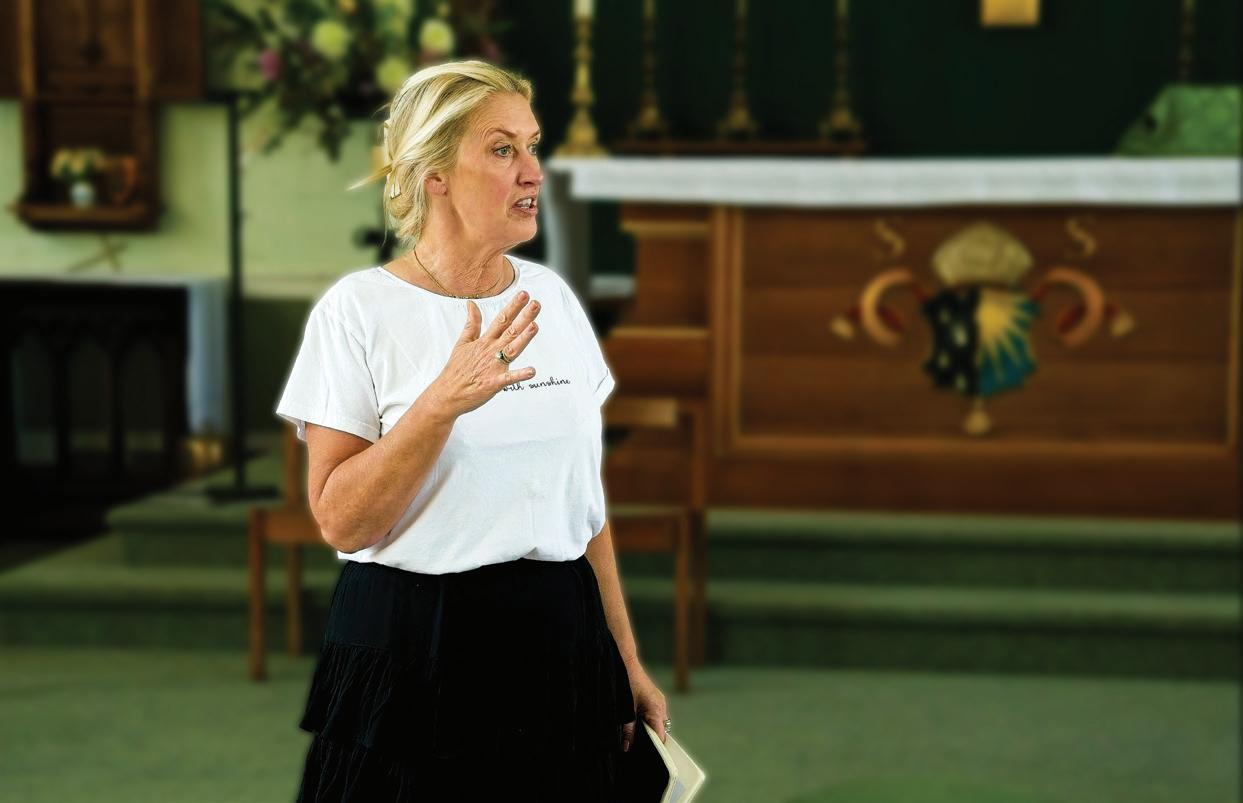
MARGIE Barbour, former director of the Marine at Lyme Regis, returns to the theatre on 19th March with two performances of her production of the acclaimed solo drama Every Brilliant Thing , at 1.30pm and 7.30.
Every Brilliant Thing was a sell-out at Bridport last year and a success in London, with a cast on rotation that included Lenny Henry, Sue Perkins and Minnie Driver. In February Daniel Radcliffe took it to New York.
Margie Barbour explains the story of the play: “You’re seven years old. Mum’s in hospital. Dad says she’s ‘done something stupid’. She finds it hard to be happy. You start a list of everything that’s brilliant about the world. Everything worth living for. You leave it on her pillow. You know she’s read it because she’s corrected your spelling.”
1: Ice cream—as a child
993: Having desert as a main course—as a teenager 999,999: Completing a task—at the end of the play.
Margie says that her brother’s suicide, aged 17, had changed her whole family’s life, and so she knew at first hand the impact of suicide: “This play is life affirming and shows the healing power of connection.
“From when I first came across it I wanted to find
an opportunity to produce it, finding Romla Walker, a professional actress, ready to take it on, was the answer to a director’s dream! It ends restating the importance of talking about things, especially the things that are difficult to talk about.”
Every Brilliant Thing, by Duncan MacMillan and Jonny Donahoe, is a funny, moving and interactive play that reveals the effect of mental illness on families. It uses powerful music, from Ramsey Lewis’s I’m In with the In Crowd to Ella Fitzgerald and the Ink Spots performing Into Each Life a Little Rain Must Fall.
Dramaturg Chris Fogg, who came to rehearsals, said: “Romla Walker gives a performance that is professional in every way, unforgettable, virtuosic, wittily nuanced and full of surprises, directed with precise, subtle clarity and assurance by Margie Barbour.”
Audience comments after Romla Walker’s performance at Bridport’s Lyric were enthusiastic: “I loved it, one of the most moving pieces of theatre I’ve ever witnessed,” said one. “Her comic timing is astonishing, and the Whitstable cameo conjured the British seaside in one crossing of her arms. Extraordinary.” Another said: “It was sensational. If you haven’t already seen it, it’s a privilege to watch.”
The performances in Bridport raised more than £1000 for suicide charities James’ Place UK and The Samaritans.
Phil’s blues and beyond BRIDPORT
PHIL Beer, best known as half of the hugely popular folk duo Show of Hands, is currently pursuing his own musical thing, including a gig with his trio on Thursday 26th March, at Bridport Arts Centre.
The world-renowned multi-instrumentalist shares the roots of his musical life in the show, Phil Beer Trio, Blues and Beyond
Supported by his long-time collaborator Miranda Sykes on double bass and bass guitar and Sian Monaghan on percussion, he will take the audience through the music of Blind Willie Johnson, the Rev Gary Davis, Davy Graham and John Mayall.
Phil will introduce the music of the Great British Blues interpreters and pioneers, while giving it that inimitable Phil Beer ‘twist’. Following the success of his 2020 album The Blues Hour, the Blues and Beyond tour brings three great musicians at the top of their game, combining effortlessly to create an evening of songs and anecdotes from an extraordinary life in music, this time from the ‘bluesy side of the street.
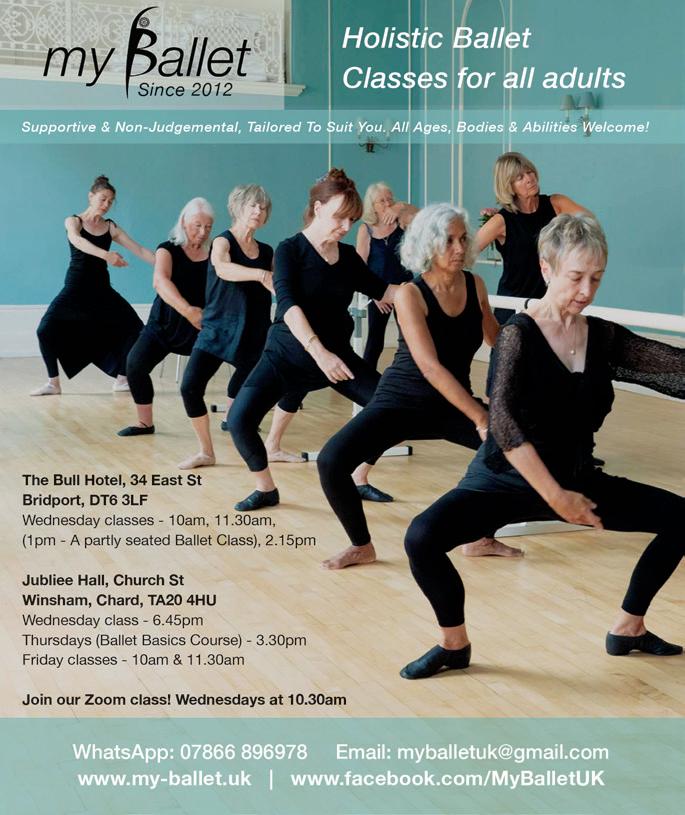


TWO popular and critically acclaimed small theatre companies combine to produce a new comedy, General Medical Emergency Ward 10, at Halstock on 4th March, Sydling St Nicholas on Thursday 5th and Winterborne Stockland on Friday 6th. Award‑winning Dyad Productions teams up with Company Gavin Robertson to bring this hilarious new show to the Artsreach circuit.
It’s Dr Ann Fleming’s first day at St David’s Hospital, where her unfortunately named mentor Dr Death, is determined to show her who’s boss. As the medical emergencies begin to overload the hapless staff, Dr Fleming has to juggle a complicated budding love affair, with a kidney and a nosey hospital boss. Not literally.
A fast‑paced comic homage to every doctors‑and‑nurses drama you can think of, General Medical Emergency Ward 10 gleefully re imagines the worlds of Holby City, Casualty, ER, Grey’s Anatomy, Doctors and many more. Expect clichés, calamities and classic medical‑soap tropes delivered with theatrical flair and razor‑sharp timing. Celebrating the drama, intrigue and emotional rollercoasters of every on‑screen hospital you’ve ever seen, this is one appointment you won’t want to miss.
Artsreach presents General Medical Emergency Ward 10 at Halstock village hall, on Wednesday 4th March, Sydling St Nicholas village hall on Thursday 5th and the Pamela Hambro Hall at Winterborne Stickland on
Friday 6th, all starting at 7.30pm.
Other regional dates on the tour include Forest Arts at New Milton on 14th March, Teignmouth Pavilions on 15th April and Tacchi Morris Arts Centre at Taunton on 21st April,
Mingus and Monk by the sea
LYME REGIS
TWO all time greats of the wider jazz genre, Thelonious Monk and Charles Mingus were both maverick composer/performers who shaped the course of jazz at the peak of bebop in the 1950s. At Bridport Arts Centre on 29th March, Pete Canter will be playing both saxophone and double bass, accompanied by Philip Clouts at the piano, in a programme of their music.
Thelonious Monk had a unique improvisational style and made numerous contributions to the jazz repertoire, including Round Midnight and Blue Monk. He is the second most recorded jazz composer after Duke Ellington. His sparse and angular music had a lightness and playfulness to it, and he would sometimes dance at the piano while his colleagues were playing. He is one of only five jazz musicians to have been featured on the cover of Time magazine.
Charles Mingus (whose centenary is this year) played the double bass, with a career spanning three decades and collaborations with other jazz musicians such as Louis Armstrong, Charlie Parker, Dizzy Gillespie and Herbie Hancock. One of his best known compositions, Goodbye Pork Pie Hat was sung by Joni Mitchell on an album she made which was dedicated to his music.
BEN Waters, Dorset born king of boogie woogie piano, comes to the Beehive Centre at Honiton on Saturday 7th March for a piano and sax evening with his son, Tom Waters.
From the moment he first danced his fingers across the keys, Ben Waters has been on a mission to capture the raw, unrestrained joy of boogie woogie and early rock’n’roll. He has long been celebrated as one of Britain’s most electrifying pianists, praised for his “key shattering boogie woogie” and described as “one of the best pianists in the UK.”
Over decades of touring the world, Ben has shared stages with musical giants including Jerry Lee Lewis, Chuck Berry, The Rolling Stones, Ray Davies, Jools Holland and many more. Now he has a remarkable musical partnership with his saxophonist son.
Tom grew up surrounded by music. At just eight years old, he picked up the saxophone after joining his father on tour with Rocket 88, where he met and was mentored by sax legends Willie Garnett, Don Weller
and Alex Garnett. By the age of nine, Tom was already sitting in with the late, great Charlie Watts.
At just 13, Tom made the bold decision to leave traditional schooling and join his father on tour fulltime. Together they performed an astonishing 900 shows across 52 countries in just three years, bringing their dynamic music to audiences around the world.
Tom later refined his craft with formal study, completing four years at the Royal Academy of Music, where he graduated with flying colours. His education, combined with his vast touring experience, has shaped him into one of the most exciting and versatile young saxophonists in the UK.
Now a rising star in his own right, Tom has worked with world-class artists across genres—from rhythm & blues and jazz to funk, Latin, and soul—and continues to perform internationally, composing and recording music for stage, screen, and television.
The grand old Duke ... VILLAGES
ARTSREACH brings Shon Dale-Jones with his Edinburgh Fringe First award-winning show, The Duke, to Portland’s Royal Manor Theatre on Thursday 12th March, West Stafford village hall on Friday 13th and Burton Bradstock hall on Saturday 14th.
Weaving together the tragi-comic fate of a family heirloom, the quandary of a scriptwriter stretching his integrity and an unfolding disaster as thousands of children flee their homes, this one-man show blends fantasy and reality in a playful, thought-provoking show that explores what truly matters in a world of crisis. Funny, poignant and inventive, The Duke received The Scotsman’s Fringe First Award when it premiered at the Edinburgh Fringe in 2016 and was made into a radio play for BBC Radio 4 in 2018.
Storyteller and actor Shon explains the background: “In 1974 my father invested £750 (£9,800 in today’s money) in a Royal Worcester porcelain figure of The
Duke of Wellington on horseback—made to celebrate his victory over Napoleon at the Battle of Waterloo. He kept the figure we affectionately called The Duke, wrapped in sponge, in a big box, under his bed.
“After he died in 2001, my mother decided to take the figure out and display it on the table in the bay window. Since 2005 I’ve been working on a film script, which is in the very final stages of development. In the spring of 2024 I sit at my desk waiting for an email that will tell me what I need to do to the script to get it onto the screen. I turn the radio on. I listen to a report about the refugee crisis. My mother calls. She tells me she’s broken The Duke. My mother, my film script and the refugee crisis all need my attention.”
Originally created by Shôn in 2016 in response to the refugee crisis that exploded following the Syrian conflict, The Duke was re-written and revived in 2025 as the refugee crisis became more extreme following increasing conflicts and disasters around the world
Other regional dates are in Somerset, on Saturday 15th March at the Kindness Festival at Frome’s Rook Lane chapel and Friday 28th at Valley Arts at Chew Stoke village hall.
When Vincent met John BRIDPORT
VINCENT died in 1890. John died in 1980. Both died of gun-shot wounds to the chest. But what might have happened had the two great artists met? Discover a possible answer when Everyman Theatre brings When Vincent met John to Bridport Arts Centre on Saturday 7th March.
Vincent van Gogh was a 19th-century Dutch PostImpressionist painter who is among the most famous and influential figures in the history of Western art. John Lennon was an English singer, songwriter, musician and peace activist who gained worldwide fame with The Beatles.
Around five years before their deaths, both men went through profound change. Vincent van Gogh finally renounced his religious ambitions and began to paint in earnest and, despite great arguments with Paul Gaugin, created his life’s great masterworks.
John Lennon renounced sex, drugs and rock & roll and began five years seclusion as a family unit—and despite arguments with Paul McCartney, created a son and what would be his last album.
Nick Wilkes’ play takes place at their exact moment of crisis and decision, exploring love, death, art and legacy.
Icelandic cellist on tour CONCERTS IN THE WEST RISING star cellist Geirþrúður Anna Guðmundsdóttir and accompanist Antoine Préat are the artists with
Concerts in the West’s March series, starting on Friday 13th at 11.30am at Bridport Arts Centre, followed by Ilminster Arts Centre that evening at 7.30pm and Crewkerne Dance House on Saturday 14th at 7.30.
The duo will play a programme of cello and piano duets, including Gabriel Faure’s Elegy, Fantasiestücke by Schumann and Grieg’s Sonata for cello and piano in A minor.
Praised for her “technical mastery” and “extraordinarily musical” performances, IcelandicAmerican cellist Geirþrúður Anna Guðmundsdóttir is carving a distinctive artistic voice, combining sensitivity with a bold and fiery stage presence. She has performed at venues across the world, including Carnegie Hall, the Southbank Centre, the Warsaw Philharmonic, Lincoln Center, and the Banff Centre, and appeared as soloist with the Iceland Symphony Orchestra and the Royal Academy of Music Symphony Orchestra among others.
The Franco-Belgian pianist Antoine Préat has performed in prestigious venues including the Wigmore Hall, St John’s Smith Square, Paris Beaux Arts Museum, Frederyk Chopin Institute and has appeared on BBC Radio 3, France Musique and Scala Radio.
INSPIRED by the great swing bands of the 1930s and 40s, Swing From Paris bring vintage gypsy jazz to Portesham village hall on Thursday 19th March, as part of a three-date Artsreach tour.
Swing from Paris is a UK-based all-string jazz quartet whose Parisian‑flavoured sound has been delighting audiences for more than 15 years.
Their performances have taken them from major jazz festivals—including the celebrated Django Reinhardt Festival at Samois-sur-Seine—to appearances on the BBC’s Hairy Bikers and even the grand opening of the award-winning M5 Gloucester Services.
Featuring violin, guitars and double bass, the ensemble presents stylish, uplifting interpretations of swing favourites and timeless classics. Their repertoire includes music inspired by Gershwin, Édith Piaf, Django Reinhardt, Stéphane Grappelli and tango master Astor Piazzolla, all delivered with the group’s signature warmth and vintage charm.
With a programme that blends exquisite musicianship with gentle humour, storytelling and engaging historical context, each performance offers audiences an atmospheric journey through the golden age of swing. Expect elegant melodies, inventive arrangements, and a stage sparkling with character and camaraderie.
Swing from Paris are in Portesham on Thursday 19th March, at Cranborne’s Cecil Memorial Hall on Friday 20th and East Stour village hall on Sunday 22nd, all starting at 7.30pm.
Chamber-folk trio on tour
IBBERTON AND POWERSTOCK
West Dorset audiences may be familiar with chamberfolk trio Three Cane Whale from their occasional gigs at Sladers Yard, West Bay, but three other Dorset communities have an opportunity to hear this adventurous group on their doorstep on a short Artsreach tour, beginning on Thursday 12th March at Ibberton village hall.
The Bristol-based acoustic chamber-folk trio play evocative, landscape-inspired music. Featuring members of Spiro, Get The Blessing and Scottish Dance Theatre, the trio are known for their richly atmospheric soundscapes and intricate musicianship.
Firmly rooted in the landscapes of the South West, with many compositions inspired by places across Dorset and Somerset, Three Cane Whale create a sound world that is both cinematic and intimate. Their acclaimed self-titled debut album was selected by Cerys Matthews as one of her top five modern folk records, praised for its uplifting, intricate and elegiac qualities.
For this Dorset tour, the trio will perform music from their 2024 album Hibernacula, alongside favourites from their extensive back catalogue. Audiences can expect a stage crowded with more than a dozen instruments—from mandolin, harmonium and acoustic guitar to more unusual and atmospheric voices including the bowed psaltery, the baroque‑esque E‑flat trumpet and the shimmering Finnish kantele.
Catch Three Cane Whale performing live at Ibberton village hall on Thursday 12th March, Powerstock Hut on Friday 13th March, and the village hall at Woodlands near Verwood on Saturday 14th, all starting at 7.30pm.
When jazz tore up the script BRIDPORT
STEP back into 1959 when Neil Maya and his quartet come to the Electric Palace at Bridport, on Saturday 21st March at 3pm. This was the year jazz tore up the script and swaggered into history. Miles Davis dropped Kind of Blue. Brubeck unleashed Time Out ... new grooves, new ideas, new bravado. Join Neil Maya to bring 1959—The Golden Year of Jazz back to life. The quartet will tell the musical story of epic tracks like Take Five, So What and Giant Steps , all delivered with crisp sax, slick piano and timeless style. And between killer tunes, Neil lifts the lid on why ’59 was the moment jazz got fearless, fresh and seriously inventive. Expect bold rhythms, cool curves and off-the-leash improvisation.
This event is part of Bridport—Birth of the Cool , a month-long festival of jazz, sponsored by Clocktower Records and Jazz Jurassica. The quartet is Neil Maya, saxophones, Tom Ball, keyboards, Kevin Saunders, bass and Gary Evans, drums.
Elementary magic, my dear Watson POOLE AND DORCHESTER
WHAT happens when a world-famous magician disappears and the great Sherlock Holmes is called in to investigate? Discover this new adventure for the great detective when Holmes and Watson: The Curious Case of The Masked Magician comes to Poole’s Lighthouse arts centre on Saturday 7th March at 11am and 2.30pm and Dorchester Corn Exchange on Sunday 15th March at 2.30.
1t’s 1906—the Golden Age of Magic. The Masked Magician bestrides London’s world of magic like a colossus until ... one night, in mid-performance, the magician vanishes. Is he dead? Has he been kidnapped? Or is he in hiding?
After a month Scotland Yard is completely baffled (obviously) and Sherlock Holmes is called in to help solve the mystery. Holmes (with an excitable Watson in tow) plunges into the secret world of Edwardian magic only to find that the Masked Magician’s identity is magic’s best kept secret.
As they meet and question the magician‘s peers (seeing a lot of magic), the mystery of his identity and fate deepen. As they unravel clue after clue, Holmes comes to share Watson’s wonder and discovers that it can sit alongside his logical outlook.
When Holmes finally uncovers the startling and surprising secrets of the Masked Magician he, Watson and the audience have to decide ...
Bristol-based actor Peter Clifford plays Holmes and the Great Baldini is Watson (and—perhaps—the missing magician!)
A celebration of variety DORCHESTER AND TOURING
FARNHAM Maltings theatre company makes a welcome return to Dorset and Devon, starting with Dorchester Arts at the Corn Exchange on 3rd March, with All For Your Delight, a celebration of the world of variety, with a dazzling mix of comedy, songs and games—plus some spectacular roller skating!
The show is with Devon’s Villages in Action at Lympstone village hall, on Sunday 8th March at 8pm, and Lustleigh on Friday 13th at 7.30pm. There is a Somerset date at Weston-super-Mare’s Front Room on Thursday 12th March. And the three Artsreach dates are Friday 20th at Child Okeford Village Hall, Saturday 21st at Sturminster Marshall Memorial Hall and Sunday 22nd at Yetminster Jubilee Hall, all starting at 7.30pm.
Danny, Jojo and Yaz are on tour, bringing their marvellous variety show to audiences across the country. In between gigs at the nation’s best holiday resorts, they’re donning their famous Brightcoats and welcoming audiences into town halls, theatres and village greens up and down the country.
But behind the sequins and spotlights, something deeper is unfolding. When an unexpected character emerges, the Brightcoats must battle to keep their show
with Nic Jeune

Bridport Arts Centre 5th March 2026.
Vertigo (1958)
‘This dizzyingly intricate film reveals new facets each time you see it. We leave Vertigo unsettled, like Scottie, who ends up on the edge of a precipice. Hitchcock is daring us to leap. He has prepared the ultimate fix for a cinema junkie: a movie to get lost in.’ Rolling Stone. Peter Travers.
Goodfellas (1990)
19th March 2026.
‘No finer film has ever been made about organized crime—not even The Godfather.’ Chicago Sun-Times. Roger Ebert.
Weymouth Pavillion 3rd March 2026.
Nouvelle Vague (2025)
‘For devoted film lovers, Nouvelle Vague is a must-see—a joyful homage to the art of cinema that’ll have you queuing at your local repertory cinema as soon as the credits roll.’ Time Out. Phil de Semlyen.
10th March 2026.
The Voice of Hind Rajab (2025)
‘Aware of the raw, incendiary power of her subject matter, Ben Hania doesn’t sensationalize this story, keeping the action fixed entirely in the call centre itself, with actors portraying the dispatchers on the line.’ New York Magazine. Bilge Ebiri.
Plaza Cinema. Dorchester 12th March 2026
Song Sung Blue (2025)
‘This is the kind of robust entertainment— wholesome though not at all toothless, alternately joyful and heart-wrenching— that doesn’t get made much anymore.’ The Hollywood Reporter. David Rooney
Peaky Blinders: The Immortal Man (2026) 6th – 12th March 2026
‘It is a story of trauma, ambition, and the inescapable gravity of family. If The Immortal Man can capture even a fraction of the series’ original magic... we are in for something truly special.’ UK Film Review. Chris Olson
on the road, as hidden secrets start rising to the surface. With the Brightcoats forced to confront what it means to live a life dedicated to performance; will our talented company have what it takes to ensure the show goes on?...
All For Your Delight features songs by double Olivier Award winning composer Darren Clark (The Curious Case of Benjamin Button).
Word Perfect with the wordsmith DORCHESTER
THE ultimate walking dictionary, as entertaining as she is erudite, Susie Dent comes to Thomas Hardye School theatre with Dorchester Arts on Sunday 8th March, at 3.30pm with her new show, Word Perfect.
Following her previous hit show, The Secret Life of Words, Britain’s best-loved wordsmith is back with a new collection of facts and stories from the wonderful world of words.
Have you ever wondered whether there’s a word for going to the fridge for the umpteenth time in search of something new? Or puzzled over the reason why a group of crows is called a ‘murder’ while owls form a ‘parliament’? Is teen slang actually designed to make us tear our hair out?
And just how many words do we need for being drunk?
With the help of funny, insightful and head-scratching examples, Susie will entertain and educate the audience with her pick of the English language’s greatest hits, reminding us how unpredictable, wayward and utterly magical our mother tongue can be.
Silver Jubilee show BRIDPORT
BRIDPORT Youth Dance celebrates its 25th birthday with two performances of Revelations and Dance Snippets at the Electric Palace, on Saturday 7th March at 2.30pm and 7.30. The afternoon show includes a curtain-raiser by BYD’s junior street crew.
Revelations is a tale of young and forbidden love between Jett from the darkness and Aria from the light. Directed by Nikki Northover and Aimee Symes, it was created as a site specific performance, as part of BYD’S Dance in the Landscape initiative, Choreography Geography, and is now being transferred to stage as a part of the Silver Jubilee celebrations.
This enchanting story about light versus dark is bookended by Dance Snippets, a showcase of soulful contemporary, high-energy street and dynamic tap dance, performed by the talented young BYD dancers, and choreographed by Nikki Northover, Aimee Symes, Charlotte Fernandes and Yaz Harwood.
Blues meets roots meets folk VILLAGES
MARK Harrison brings his band to Dorset from 6th to 8th March, for three dates with Artsreach at Broadmayne, Shillingstone and Corfe Castle. He is a multi-award-nominated singer-songwriter, storyteller and guitarist with an ever-growing reputation for being unlike any other artist out there—described by Cerys Matthews on BBC Radio 2 as “a bit different and kinda groovy too.”
He is a virtuoso guitarist whose fingerpicking and slide style are nothing short of extraordinary. Joined by Charles Benfield
on double bass and Ben Welburn on drums and percussion, this trio creates a rhythm section that defies convention and captivates audiences wherever they go.
The band is renowned for delivering unforgettable performances and their eight albums have garnered widespread acclaim. But it’s not just about the music—it’s about the stories woven into each song. From the origins of melodies to the soulful depths of the blues, Mark Harrison’s introductions add a layer of humour and thought-provoking insight that enriches every performance.
Catch the Mark Harrison Band performing live in Broadmayne village hall on Friday 6th March, Shiliingstone’s Portman Hall on Saturday 7th and Corfe Castle on Sunday 8th, all at 7.30pm.
The ideal male?
LYME REGIS
MARCUS Brigstocke comes to the Marine Theatre at Lyme Regis on Sunday 22nd March at 8pm, with his clever and hilarious new show, Vitruvian Mango—an attempt to answer the question, What are men for?
Most heavy things can be lifted by machines, most problems can be solved by computers and most puddles can be crossed without us gallantly draping our capes over them—so, asks Marcus, are we fellas of any use at all?
He thinks we might still serve some useful function ... but what is it? This show will resolve the entire issue once and for all—in a non-patriarchal, open minded, progressive sort of way.
Leonardo DaVinci’s Vitruvian Man is the image of the ideal male form. Marcus’ Vitruvian Mango is the same, but sweeter, softer, seasonally available and, when ripe, delicately perfumed.
Lyme Regis Comedy Club, on Friday 27th, has writer, comedian and television regular Esther Manito headlining.The line-up also includes Aisha Amanduri and Vlad Ilich, with host Tom Glover.
LYME REGIS
IT’s hard to believe it is nearly 40 years since Blur burst onto what would become the BritPop scene—on Friday 13th March, drummer and founder-member Dave Rowntree comes to Lyme Regis with memories of the time before we knew and loved Common People
He will be at the Marine Theatre for an evening talking about his new book, No One You Know. It’s a compilation of exclusive, intimate, never-seen-before photographs of Blur, taken by Rowntree at the start of the band’s career.
Jarvis Cocker may be the best-known member of a great band, but Dave has created a one-of-its kind document of what it’s really like to be in a young band during the vital first few years.
GPW
How to Save Your Granny From a Runaway Train (Solved by Science)
By Swapna Haddow
Illustrated by Jess Bradley
Published by Red Shed
Paperback £10.99
Reviewed by Nicky Mathewson
SHOWING us the fun side of science, this book is full of short comics, problems to be solved and cool science experiments that can be completed at home. It is fabulously funny and is packed full of silly situations with a scientific resolution. From old favourites like making your own periscope, to something new like making an electromagnet.
How to rescue Grandad from a volcano? A) use some vines? B) jump down and keep him company? C) find a fallen tree to make a ladder?
The answer is to use some vines to make pulleys of course!
With clear instructions the book then shows you how to make your own pulley system from scratch, using things from around the home.
This book is packaged perfectly to tap into a child’s imagination and bring in some real science to blow their minds. Using humour and comic style illustrations to make it accessible, it’s one of our favourites and it would be perfect for home education.
How do you save Granny from a runaway train? You’ll have to buy the book to find out!
Perfect for scientists aged 8+
10% off for Marshwood Vale readers at The Bookshop on South Street, Bridport. 01308 422964 www.dorsetbooks.com
Review by John Davis
by P.D. James
FOR bedtime readers like myself, I’m never fond of those novels that have long chapters. You get part way through a ‘thirty-pager’ when the eye-lids flutter and then the following day you can’t always remember the exact place where you stopped and/or need to back-track to find out what’s gone before.
This is where the short story comes into its own. Start fresh each time, concise single story, definite conclusion. Move on.
This slim volume of six short stories is by the crime writer P.D. James, perhaps better known for her longer ‘whodunnit’ novels and television series, many featuring the poet/sleuth Commander Adam Dalgleish.
As to be expected, there is mystery, intrigue and
more than a touch of foreboding in all six stories. There are sharp insights too among the corpse strewn tales not to mention a hangman’s noose, sleeping pills, a blue poison bottle and that toy that first became fashionable in the 1930s, a yo-yo.
Published by Faber and Faber.
Literary note: For those who find short stories appealing try other British writers who specialise in the genre like Roald Dahl, Jeffrey Archer, H.E.Bates and Zadie Smith. Some of Stephen King’s bestknown stories started out as novellas-a half-way house between a short story and a novel. These include The Mist and Shawshank Redemption. Other American short story authors include John Updike, Margaret Atwood and Edgar Allan Poe.
Among the European writers to utilise this format are Anton Chekhov, Franz Kafka, Angela Carter and Guy de Maupassant.
For starters, try one of my all-time favourites, An Occurrence at Owl Creek Bridge by the American author Ambrose Bierce. (Put the title into a search engine and then download the whole story.)
Review by John Davis
Director: Hugh Ballantyne
Creator/writer/producer, Rebecca Fairbank
BBC IPlayer, 4 episodes
ONE of the main reasons for watching this short series of programmes was sheer curiosity. Ever since the event itself in 1912 there have been endless features about the Titanic. Why then had the BBC decided to mount yet another production on the subject and could they keep viewers on-side with a more insightful probe into one of the sea’s greatest tragedies?
This showing chose a minute-by-minute chronological approach using a digital timepiece on screen to relate how the drama unfolded. The viewer is counted down through the minutes from the initial collision with the iceberg to the final sinking.
The actual words of survivors, collected from letters, diaries and witness testimonies, are spoken by actors in the main unfamiliar faces. ‘Experts’ add their own analysis of the events from differing perspectives. Historian Suzannah Lipscombe, for example, focuses on the first-class passengers (enjoying a journey likened to a stay at The Ritz combined with a grand country house party) while Admiral Lord West, formerly of the Royal Navy, comments on the reactions and strategies of Captain Edward Smith and his crew.
Overall, the format works very well and, although we are aware of the inevitable outcome, the ticking clock gives the whole piece impetus.
Among new insights introduced is the term ‘chumocracy’, used to illustrate the fact that first class passengers, accommodated in cabins on the upper decks and used to mixing with senior officers, were far more aware of what was actually going on than those in third class and steerage, down in the bowels of the vessel, who received very little communication until things got really dire. Good to see also that credit is given to the outstanding heroism of characters like wireless operator Harold Bride who continued to send out distress calls until the very end. Ironically, while protocol demanded it was women and children first when the Titanic was being abandoned, it did result in many of the too few lifeboats leaving less than half full.
There are caveats. Long-distance shots of the Titanic are low-budget CGI although the fact that all events take place totally in the dark helps. Hard to believe also that such an experienced seaman as Capt. Smith, while needing to appear calmness personified as the situation worsened, could have been as unresponsive and inanimate as portrayed in the drama. The glaring omission to me though, is the total lack of acknowledgement of the band, those courageous eight musicians under leader Wallace Hartley who continued to play out on deck until the ship slid beneath the waves. Tradition says Nearer My God to Thee was the last tune heard drifting across the ocean. A fitting tribute.

Velumili mobility scooter. Three years old. Excellent condition £500. 077743 40687.
Vax power carpet washer. Hardly used. Space needed £80.00 01460 74367.
Die cast models x15. plus wall display for sale, £2-6 each, will seperate, phone for listing/photo Seaton 07789 537011.
collections, job-lots & estate items. (Antique, wartime, toys, Motoring, advertising, Curio & interesting items) Seeking larger collections (typically £300+ in value). Fair offers & instant cash payments. Friendly approach, no obligation & Free Home Visits. Discrete Local Buyer. Darren 07875 677 89 May 26
Reliable cleaner 2-4 hrs /week. Bridport. Privae home. £18/hr. Please contact 07929 123465.
Budding Authors. Writing an interesting story, the past achievements of an organisation or a family history for self-publishing and need some advice with style, layout and editing? Contact freelance author and editor John Davis on johndavis77@ btinternet.com.
Ship’s wheel, 2ft dia with clock in centre, light varnished in v.g.c. Phone for photo £25.
Seaton 07789 537011.
Engineer’s large (metal) toolbox 33cms deep, 34 cms high, 63cms wide - £23, plus smaller tool box (metal) with inside tray £9. Seaton 07789 537011.
Tools various, large spanners, jnr hackshaw, large Phillips, ring
spanners etc etc. Phone for listing/photos
Seaton 07789 537011. LPs 60s, 70s, 80s (qty £18) £5 - £15 each. Call for listing + photo
Seaton 07789 537011. William IV table chairs. 6 chairs, £250 each, discount for multiples. Phone 01460 234585 for details, photo.
Bellavita bath lift, used only 3 times. Cost £250 will accept £100.
Vintage & antique textiles, linens, costume buttons etc. always sought by Caroline Bushell. Tel. 01404 45901. Dec 26 Coin & Stamp Collections Wanted
Antique restoration and bespoke furniture. Furniture carefully restored and new commissions undertaken. French polishing and modern hand finishes. Phil Meadley. 01297 560335. phil. meadley@btinternet. com May
Dave buys all types of tools 01935 428975 Sept 26
Jay-Be Z bed, excellent condition £30, can deliver items 01308 868752.
Val. Saint. Lambert Candlesicks. A pair of Galatea Gardenia 9” in original packaging. New and unused, perfect condition. £30. Tel: 01305871648.
Sofa, 2 seater, light burgundy with black script, wide arms, wood feet and arm trims, good
quality and condition. Can deliver. £70. Bridport, 01308427181/ 07977643852.
Whirlpool DryerSuper Capacity. Suit large family or catering business. Size 108x74x70 cm. Hard wiring connections included, 230-240V. Good condition. £225 for quick sale. Dorchester Tel: 07949878780.
Discerning collector / investor seeks pre-war collections of stamps and coins. Individual items considered. Tel Rod on 01308 863790 or 07802261339. Mar 26
Ex Display sheds. Stables, Fieldshelters, Garages, Summerhouses, Offices, Workshops, Agricultural. 01935 891195 Mar




BRIDE Valley resident Nick Tait is running Axminster’s 7-mile Minster Challenge with Joel Wilkins on Sunday 29th March, to support a local organisation taking medical supplies out to the frontline in Ukraine.
The Minster Challenge is aptly named: according to the organisers, “it is hilly, muddy and the weather on the day can have a huge impact. It really is a course to get your teeth in to!” Joel explained that any funds raised will be used to buy essential and good quality medical supplies specifically as needed by the defenders of Ukraine and Europe on the frontline. This includes CAT 7 tourniquets and IFAK (Individual First Aid Kit). These are frequently requested as their quality is better, and when a life depends on it, quality is critical.
Anyone wishing to donate can visit: https:// www.crowdfunder.co.uk/p/medical-aid-1.