



This month’s issue of Magnifier Monthly is brought to you by: Decision Fatigue™.
Decision Fatigue™: The fastest way to experience soul-crushing burnout and personal growth paralysis.
Should I drive an extra fifteen minutes to fuel up at the cheaper gas station, or should I save my valuable time and pay more at the pump near the freeway? Should I buy this smutty book from this cute little romance bookstore, or should I read it on KindleUnlimited first so I don’t waste money on something that will probably be bad quality? Should I sacrifice my fiber intake and forgo leafy greens for the foreseeable future, or do I just risk the explosive diarrhea?
Should I spend a huge amount of money on a multi-layered rebrand, or should I spend small amounts along the way to evolve the brand in time with the budget?
That last one is obviously what this issue is about, but before we go there
What the hell is going on out there?! It’s hard enough to make adulting decisions in a non-contracting
economy, must we also fear trackable and preventable parasites that wreak havoc on our bowels??
Anyway. Where was I?
Ah yes, decision fatigue. Brand strategy
This question was on my mind because I was on a call this month with an early-stage company that is in the throes of some major branding decisions. The business owners were seeking counsel (aka advice… I’ve been bingeing House of the Dragon this month) about a big investment they were about to make in a rebrand/marketing campaign
Some context for you is that they’re a company with a brilliant invention that works both as a standalone consumer product and as a layer within other products, mainly various textiles. In other words, they have opportunities for D2C revenue (directto-consumer) and B2B revenue (business-to-business).
Think GORE-TEX. GORE-TEX has its own line of products footwear, garments, gloves etc. but then they do their biggest line of business as a
Madelyn Veith
collaborator with multiple outdoor brands who use their trademarked waterproof ‘membrane’ within their products to strengthen product value (North Face, Arc’teryx, etc.).
Until this point, this business (who shall remain nameless) has branding that mainly represents their primary consumer product They’re looking to evolve into a big name brand where their trademarked material is easily identified when it’s layered in other products, but they can still effectively sell their own products.
The question they’re facing is how to represent this multi-purposed product, and whether all of the branding decisions need to be made now or if they can be spaced over time as budget allows.
Talk about decision fatigue!
We’re not here to talk about the timing and finances of those kinds of decisions that’s a whole different can of worms We’re here to talk about a path that most businesses will walk at some point, the path that is the art of housing multiple brands within a single business, and what I call ‘brand layering.’
Brand layering doesn’t necessarily involve multiple logos (although it can) It’s more about the complex overlaps that happen when you have multiple selling objectives that don’t all share the same core attributes. For example, you sell a single software that’s available in single-user mode (D2C) or enterprise mode (B2B).
These arms of your business will need to have their own identity they can’t all be claiming to meet the same set of unique needs without losing sight of the mother brand. They need brand integrity.
It’s a balancing act to be sure, and it requires many, many, many more decisions than simply signing off on a rebrand contract
Which brings us to the issue at hand...
Sally forth to learn the noble art of stacking multiple sub-brands into one big brand, and how to curate a digital presence that seamlessly represents your strategy map.
By the time you see a star in the night sky, the light you’re seeing is actually billions of years old because of the time it takes for light to cross our vast, distant galaxy. By the time you see a brand out in the real world, the work that it took to get that brand in front of you happened at some point well before your point of interaction.
Branding is a thoughtful, deliberate process that lives on the opposite end of randomized choices. Everything about a brand must be articulated, vocalized, and visualized before it leaves the station, doubly so when multiple versions of a brand must coexist Pocket this set of secrets for the steps that must be taken before you begin brand layering…
There are decisions to be made before investing in big marketing campaigns. You need to know where you’re going with your product(s), and how different brand segments overlap and how they don’t. Most importantly, map out how a layer of your brand gets its own identity while living under the roof of the overall business brand.
Who are these brand segments for? Selling directly to customers is a very different game than selling to businesses: Price points, packaging, purpose, and aesthetics all vary, and different groups of people need the right combination of experiences with your brand. 2 A B S O L U T E A U D I E N C E C L A R I T Y
With the same discretion you use to segment your audience, so must you segment your messaging. Consumers do not need to know nor do they likely care that your business is multidimensional. They need to know what you have to offer that’s directly relevant to them. Keep your messaging on target.
Once you’ve segmented your brands, you don’t go back Be consistent with your messaging across your channels, keep measuring your effectiveness with your audience, and commit to the layering. Your best tool for effective layering is commitment, not confusion. 3 4 5
The digital persona around your product or service mirrors your strategy. Everything, especially your website, should be engineered in such a way that digitally represents and articulates the segmentation of your brands.
When it comes to the never-ending journey of branding, brand guidelines are there to keep you on course
Brand guidelines are clearly defined parameters that create the filter through which every marketing (and business) choice passes. They include visual business characteristics like the logo, typography, color palette, and design elements, as well as the non-visual characteristics like the brand story, tone and voice
“Her aim is true...”
In their most official capacity, they are translated into strict policies that employees must follow for legal purposes. In a more creative sense, they ensure consistency in content and messaging across channels, ultimately building trust and recognition with consumers.
A company invents a plastic material that is completely water-proof and insulating It has a range of applications from outdoor gear to military-grade protective equipment. They want to pursue as many streams of revenue as possible which includes direct-to-consumer (D2C) and business-to-business (B2B). To sell D2C, they create a set of branding guidelines for the product as it is in its consumer product form (jackets, outdoor gear, shoes, etc.) and a separate set of guidelines as it is in materials form (the protective lining to be used in other company’s manufactured goods).
1. Establish your iconography.
Logo/signature
Colors
Typography (font)
2. Create your brand voice and tone. How does your brand “speak”? (key words) How does your brand “sound”? (tone)
3. Curate your aesthetic (imagery/design style). Guidelines for photography styles
Design elements/illustrations
4. Craft your story.
Mission
Vision
Purpose
Values

Solution on next page
Digital mechanisms for brand layering...
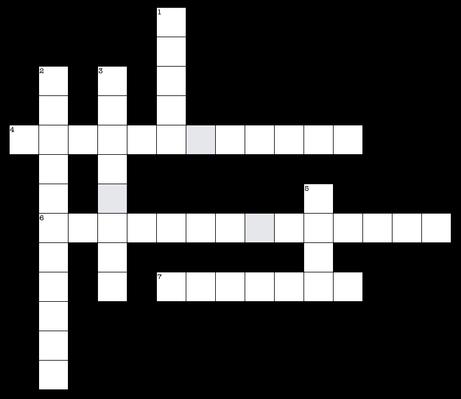
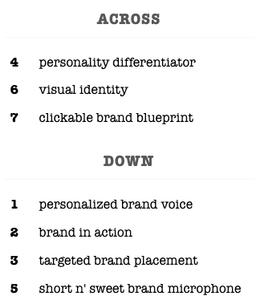

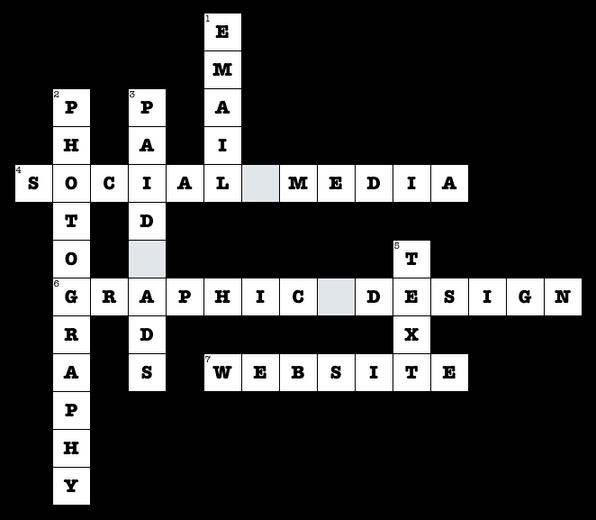
Tips from Thee LinkedIn itself
LinkedIn shared a few tips for effective content creation on its app, which also means optimizing for AI chatbot citations (LI is among one of the most-referenced source material for AI tools)
Tips include: Publish 2-3 times per week, frame your post as a question and an answer, between 200-300 words, and mix it up with posts and articles. Overall, the platform wants to spark ongoing discussion and engagement; whether or not a post contains meaningful content worthy of conversation is up to you.

Marketers come for Reddit comes for marketers. Reddit the trustworthy platform where anonymous users post their unfiltered thoughts on various topics in ‘threads’ of rketers s, and ffort to ve ounced these sence ws you ram,
TikTok, X, and YouTube channels. The purpose of this new search property is “to help site owners and creators understand how their social and video posts perform on Google Search and Discover.”

You can find all of Marove Agency’s current client collaborations on these pages.
Viewable work is linked via the icon.


Monthly services to help grow the national brand and provide a seamless member experience with efficient digital operations.

Monthly services to digitally optimize the organization with efficient systems and processes.

Volunteer work with WIFS PDX as a co-chair on the marketing committee.
Hyperlinked events are open for attendance/registration.
U L Y
A U G U S T S E P T E M B E R
20 Bridge to Happy Hour WIFS PDX
21 Book Club WIFS PDX
J U L Y A U G U S T S E P T E M B E R

THIS ISA
Gettowork, sleuths!