

How to Quantify the Impact of Your Marketing Efforts


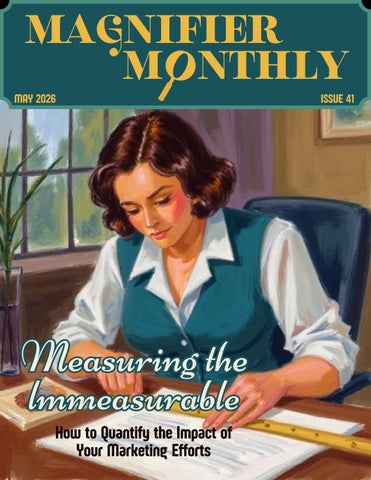
How to Quantify the Impact of Your Marketing Efforts
It’s been a really good month for the Marove Agency C-Suite. I saw Phantom of the Opera at Keller Auditorium not once, but TWICE. I saw BTS (!!!!!) in concert in the Bay Area. And, (knock on wood) my allergy nasal spray seems to be working as I have yet to succumb to the seasonal allergy attack that would have normally happened by this point in the year.
Plus, I got to nerd out about marketing at two distinct points in the past month. I had the opportunity to be on calls with founders who are at very early stages in their businesses, and who were facing the exact same problem.
They had their product and business models on lock, but when it came to marketing, they needed to figure out what kind of marketing they invest in, when, and how much.
All excellent and common questions, especially when the budget is limited and every dollar counts. Should one go vertical and hire an agency that specializes in a single channel (i.e., Facebook ads) but “guarantees” a higher rate of return on it, or should one stay relatively horizontal and build out their digital
presence across multiple channels (website + social media + emails + etc.)?
I’ve been doing this for work for nearly six years and I’ve seen a lot of businesses at this exact moment. I can confidently say that the first option (vertical) is always the most tempting one to founders.
It’s faster, cheaper in the short term, and has a very measurable definition of success. The second option is hazy and as one of the founders said, how do you even measure it? Hell, I’d probably go with door #1 too if I didn’t know any better.
Marketing is a meta concept in general. It can’t be counted like lines on a spreadsheet and it doesn’t heal illness like a prescription pill “Successful” marketing almost seems more like a feeling or phenomenon than an itemized list of steps. For instance, everyone knows the Nike swoosh, but not many people know about Nike’s go-to-market strategy that put the swoosh out in the first place.
Plus, its entire premise is delivering value by way of kept promises, and
driving sales by way of human connection.
That could mean a lot of different things. It isn’t a straightforward process like budget planning or supply chain maintenance, but rather an unknown combination of activities that blend art and science.
Plus, in order to find that magic combination, you need to do a lot of trialling and erroring and you need money to do it over time
These are the waters in which Marove Agency swims. And I’m here to tell you that you can measure marketing, but there’s an art and level of expertise to it that goes beyond just glancing at your monthly Instagram analytics report

Madelyn Veith
The problem with door #1 is that you might be putting the cart before the horse You might be spending money on a marketing plan you thought would work, but in reality it’s not even the right platform for your followers. That’s something that door #2 can help you figure out. Building out all of your digital options can show you which channels are the most effective and how all your channels work in harmony for long-term growth.
But, to do that, you need to measure your marketing activities.
Which brings us to the issue at hand.
Flip through these pages and discover the art of measuring the (seemingly) immeasurable and how to make business decisions based on successful outcomes that are costeffective in the long run
The second viewing of Phantom of the Opera (National Tour) at Keller Auditorium.
Marketing is a mysterious combination of branding, advertising, public relations, sales, digital campaigns, and more. It slips into your orbit and worms its way into your consciousness without your notice. You’re more likely to recognize something as a “marketing campaign” when it’s a bad one because of the cognitive dissonance it creates.
Given this very metaphysical dynamic, how does one know whether or not a piece of marketing is successful? When money and budget are on the line, simply going based off of a feeling is not enough. Scoop up this set of secrets to understand the importance of measuring your marketing and how to do it
What can be measured must be measured. When you’re designing your game plan, think about the moments that can be quantified ahead of time so that you can incorporate additional mechanisms if needed (i.e., surveys, forms, clicks, optins, etc ) Even if you don’t ultimately use the data, it’s better to have the option than nothing at all.
1
2 T H I N K O U T S I D E T H E B O X
The outcome you want to track might not have an obvious measurement. You may need to get creative in how you measure and/or use multiple metrics to come up with an answer. For instance, determining if your new logo resonates with customers would be a combination of short-term user feedback and long-term sales tracking.
For every marketing move you make, you need at least 2 measurements for it: what it’s like before you start, and what it’s like when you’re done Even better, what it’s like after a little bit, half way, and nearly done. More data means more information on which to base your analysis.
In between your quantifiable metrics are your qualitative thoughts. Why did this particular ad copy have a higher ROI than the other ad copy? What about it resonated with consumers and how can I replicate that cause in my other marketing activities? 3 4 5 2 (OR 3+) FOR 1 .
Different stages and scenarios of your activity need different measurements Measuring followers on social media when you’re running an unrelated email promo isn’t going to tell you much. Use metrics that are meaningful to the who/what/why/when/where of your activity.
No business endeavor is complete without a metric of success. Otherwise, how will you know if what you’re doing is working? Enter: KPIs (short for Key Performance Indicators).
A KPI may be composed of a single metric, but more often it is a combination of several metrics A marketing KPI is more of a formula with 3 points of measurement: The marketing activity, the connecting pathway and the outcome. The connecting pathway is crucial; that tells you how much of your outcome
can be attributed to your activity
KPIs come in all varieties financial, operative, technical, etc. and in the context of marketing, they’re a way for you to quantify your qualitative marketing activities and gauge how effective your strategy is.
“She counts like a pro!”
A production company is trying to sell out a local concert and wants to track whether social media is an effective way of driving sales. They launch a social media campaign and track all of the engagement and reach stats. Then they use a survey at virtual checkout to quickly ask people how they heard about the event. They compare the number of people who saw the promo AND clicked the link AND purchased a ticket, to the number of people who purchased a ticket but did NOT see the promo. They consider this ratio the difference between purchasers who are promo viewers and non-promo viewers to be their KPI.
1. Outline the marketing activity you’re using and its desired outcome.
Social media campaign
Sold out venue
2. Conceptualize the customer pathway between those points.
See ocial post > click link in bio > go to check out page > purchase ticket
3. Identify the metrics that can quantify each step/point.
Impressions
Engagement Link clicks
Ticket sales Survey that asks how purchasers heard about the concert
4. Formulate the KPI formula that blends metrics into your definition of success.
Social media will be considered effective if there is an increase in ticket sales AND that increase can be attributed to social media clicks.



Solution on next page
Label each image with the stat that can be used to track the general stages of your marketing campaigns.


Label each image with the stat that can be used to track the general stages of your marketing campaigns.

Per a recent Meta report based on user surveys and studies, 92% of users use social and discovery platforms for product info Social search using social media to learn more about a brand is where trust is built through visual proof, creators, and validation. In Meta’s words, “Search is no longer a destination. It’s a behavior.”

According to Instagram’s VP of Product Tessa Lyons and in an aim to align with evolving trends, the app is targeting longform content, specifically: connected TVs, podcasts, livestreams and mini-series, all of which comprise a growing type of ate d ue mp, artner ike a , and iness
results. They’re finding that collaborating with creators and tapping into their robust communities is the most effective way to build genuine loyalty.”

You can find all of Marove Agency’s current client collaborations on these pages.
Viewable work is linked via the icon.


Monthly services to help grow the national brand and provide a seamless member experience with efficient digital operations.

Monthly services to digitally optimize the organization with efficient systems and processes.


Social media strategy + implementation to activate multiple channels and grow a trusted brand.
SOCIAL MEDIA


Volunteer work with WIFS PDX as a co-chair on the marketing committee.
SOCIAL MEDIA
Hyperlinked events are open for attendance/registration.
M A Y
J U N E
J U L Y
M A Y J U N E J U L Y
Having no marketing budget and choosing a marketing strategy pre-revenue be like

THIS ISA
Gettowork, sleuths!