TheDo

FEATURING

’s andDon’ts ofSocialM
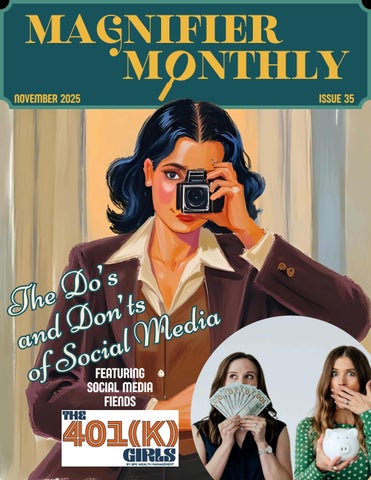
’s andDon’ts ofSocialM




Like the average independent thinker, I go through violently confusing phases of both loving and hating social media.
I’ll spend a few minutes scrolling on my Instagram feed, cackling at some of the funniest memes I’ve ever seen. Then one of my teammates from college will post some photos of their recent trip and I’ll get a quick update on their life without having to put any effort in. And then I’ll click over to my discover page and find all sorts of fresh entertainment: Videos of raccoons squeezing their lil’ booties into a rain spout, breakdowns of romantasy books by trope, fan edits of my latest pop culture obsession (currently: Frankenstein). “What a useful and amusing tool it is, this social media!” I’ll think.
But then I’ll realize that an hour has gone by and it’s well past my bedtime, and that I’m actually feeling a little angsty because 75% of what I just consumed were ads or pieces of content from strangers that claim to be experts and command me to do “this” to have healthier relationships
or “that” to live a more fulfilling life. And that’s when I remember that social media is ultimately one big business run by other businesses in pursuit of profit, and that I am but a currency in a much bigger transaction.
(My queen of the internet, Brittany Broski, just accurately summed up this very paradox on her podcast from 10:02-19:52 for those who want a comedic breakdown.)
Social Media has always been my most in-demand service, and the expression I hear the most from clients is, “I know I need to be on it but I have no idea how.” We know that social media has the power to do absolutely incredible things for our business, but it’s such a vast, unpredictable and uncontrollable ocean that even trying to weigh anchor feels like a fool’s errand.
That’s because there are a lot of forces at play, many of them not in your favor and most of them outside of your control. For instance, the way that people engage with the platforms changes over time, but that evolution has largely been driven by subtle
changes that software engineers make to the platform, and they in turn are trying to predict the next behavioral pattern. Kind of a chicken-and-egg situation that’s very difficult to keep up with.
At the same time, you can post whatever the hell you want on social media. There’s no ceiling on creativity, and with so many users on the platforms, there’s a massive opportunity to reach a lot of people.
The big question is, how does one cut through all the noise while navigating the very real and very limiting parameters set forth by the platform, aka ~The Algorithm~?
The answer is that social media is both a science and an art, and one must embrace the science before one takes license with the art.
The science is the cold hard facts. Understanding as much as you can about the limitations of a platform before you even start optimizes the time and energy you invest in creating content. Stuff like formatting, audience
Madelyn Veith
demographics, performance metrics, and what ~The Algorithm~ itself is designed to promote. This data forms the framework of your content strategy.
Once you have that as your starting point, then you step into your artistic energy and get creative with your content. This is where you bring your brand to life, where you showcase the brilliance of your craft and your authentic personality. This is where you become what makes social media worth it
And now for the issue at hand…
Discover the science and art (but mostly science) of social media in these pages. Take notes from some content creators on what they’ve learned from real-world experience and unpack the complexities that get baked into an effective content strategy.


This month, we caught up with Jessica Porter RICP® AIF® and Hayley Porter AIF® the dynamic duo that make up The 401(k) Girls, AKA your “retirement BFFS” (and no, they aren’t sisters!). They’re active on social media where their mission is to make financial topics, retirement in particular, accessible, educational, and fun. Hayley and Jessica met working for the financial planning firm BPG Wealth Management (of which The 401(k) Girls is a sub-brand) where Jessica is Vice President & Partner, and Hayley is a Financial Advisor & Retirement Plan Coordinator. The 401(k) Girls and Marove Agency collaborated in the spring of 2025 to develop a social media strategy for the early stages of their brand launch You can find & follow these social media fiends on LinkedIn and Instagram.
Hayley Porter: I kind of fell into the industry. I went to school for public health education & communication, but I didn’t really have a clear vision of how I would be applying that in the real world, I just knew that I wanted to help people become a better version of themselves. I started doing receptionist work and admin work at BPG. Now I’ve worked towards the client side to become a financial advisor.
Jessica Porter: My story is similar, it also happened by accident. I had applied for another job in commercial insurance when I moved to Portland in January 2014. My background is in automotives and so I wanted to do something totally different. I didn’t end up getting that job and I was devastated. But, it turns out that that company was a client of BPG’s. BPG reached out to this company to say they were hiring and asked if they knew anybody, and this company kindly shared my resume. So when I got the call, I was like, “I don’t know what this is, I don’t have any experience here!” But I applied anyway and the rest is history.
Did you feel the need to go study up on finance or did you learn it on the fly?
JP: Both.
HP: Yeah, there are specific licenses you need to earn in order to be a financial advisor, but a lot of the real world application happens on the job. You can have all the book-learning in the world but until you’re actually helping clients it’s less applicable.
JP: Agreed, being a part of actual meetings was the best learning experience for me because you get a real feel for what clients are actually asking, what they’re looking for, what concerns they have the stuff that’s really hard to study. And, having mentors that can teach a lot of that stuff was also immensely helpful.
I think there’s a point in anyone’s career when intuition becomes a big part of how you do your job. When was that point for you, and how long was your learning curve?
HP: I think I am in the middle of turning my corner right now I’ll be 5 years at BPG in 2026 and I think the application of the intuition and seeing so many different scenarios at this point and how the knowledge gets to be applied across scenarios is happening right now.
JP: Mine is similar, I’ve been doing this now for 11 years and I think it was around 5 years when I started to feel like the imposter thing (which still creeps in!) started to fade a bit. I was like, “Ok, I’ve seen lots of different situations. If someone asks a question, I feel comfortable answering it.” But I will say, having the confidence to respond spontaneously to people’s questions has only really happened in the last 2 years. There are circumstances now where I do well with ‘trial by fire’ and I have to respond to something in the moment, and I think it just takes longer than I would’ve thought to get to that point.
HP: Yeah, people don’t really talk about the fact that it takes a long time to feel settled and to feel like you know what you’re talking about.
JP: Agreed. Part of it for me was the perception that, for some reason, the 5-year thing sounds legit. Being able to say ‘I’ve been doing this for 5 years’ was received better by people, and that impacts how I’m feeling.
HP: It’s also a little bit of a self-fulfilling prophecy, because if you perceive that people are looking down on you because you’ve only been doing it for two years, then that kind of eats away at you and you can end up fading into the background.
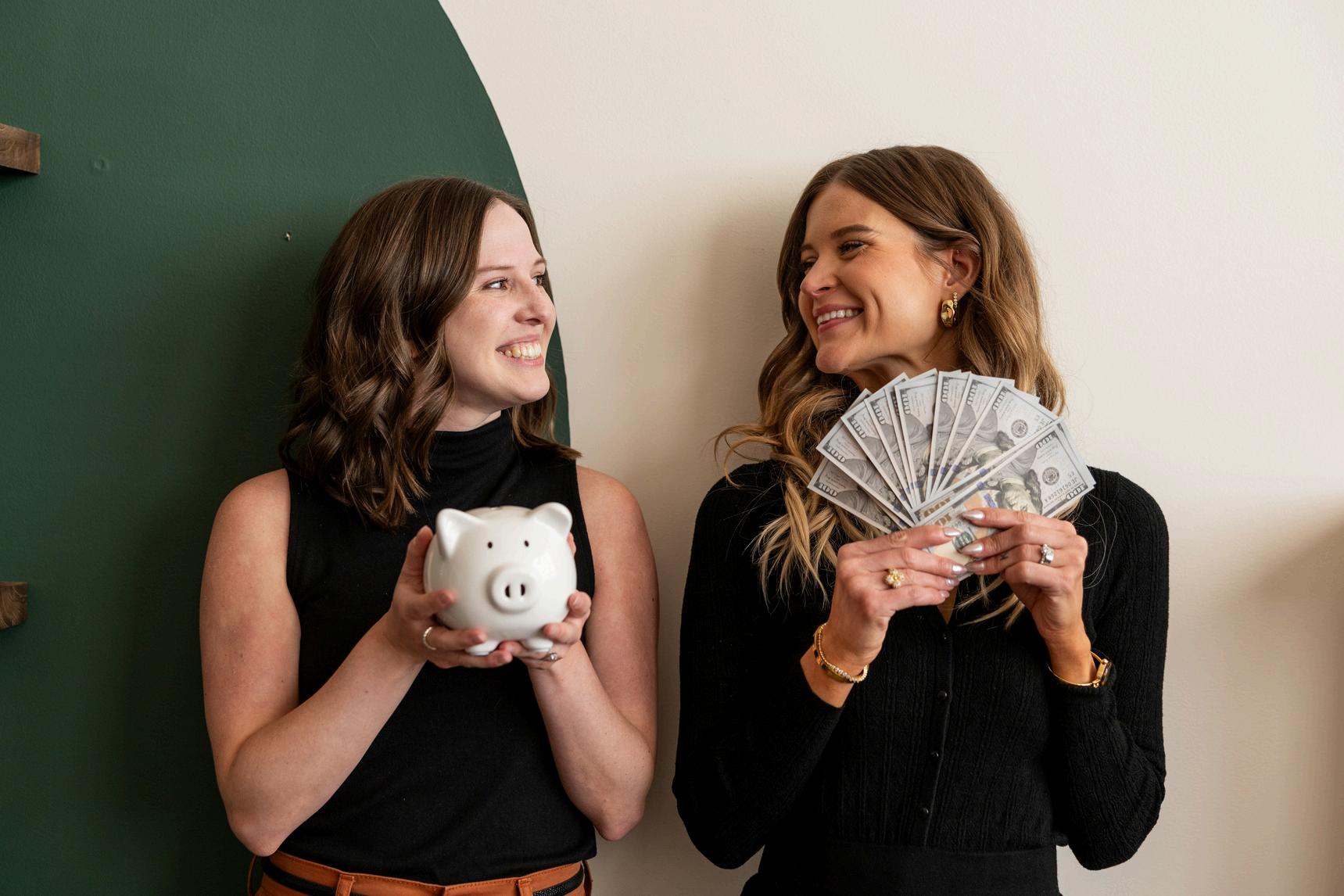
JP: When we work with somebody to build a financial plan for them and put them on the right path for saving, and then they come to us and say “We’re able to retire because of what we’ve done together, you’ve helped me create generational wealth for my family,” that just feels huge. We get to work alongside them to provide them with education that can literally change lives.
HP: We don’t have a minimum dollar amount that people need in order to work with us, and because of that, we get to be part of these conversations that are building the foundation for people’s financial future. I have noticed a real physical difference in people during our meetings, I can literally see the tension melt off of them by the time they walk out of a meeting with us. And that’s a really great feeling to know we’ve provided that service to them.
JP: So, fun fact, Hayley and I have the same last name and we are not related. But, working together for almost 4 years on retirement planning, everyone thought we were sisters. So we always joked that we’re the 401(k) sisters, and then we sat down and talked about how unique what we do is in our industry you don’t really see two young women consulting on 401(k) plans, it’s predominately male and so we thought, how can we package this? How can we use the uniqueness to brand ourselves a certain way? The 401(k) Girls was the first idea that came out, and despite weeks of brainstorming we kept coming back to that name, so we decided to just go for it.
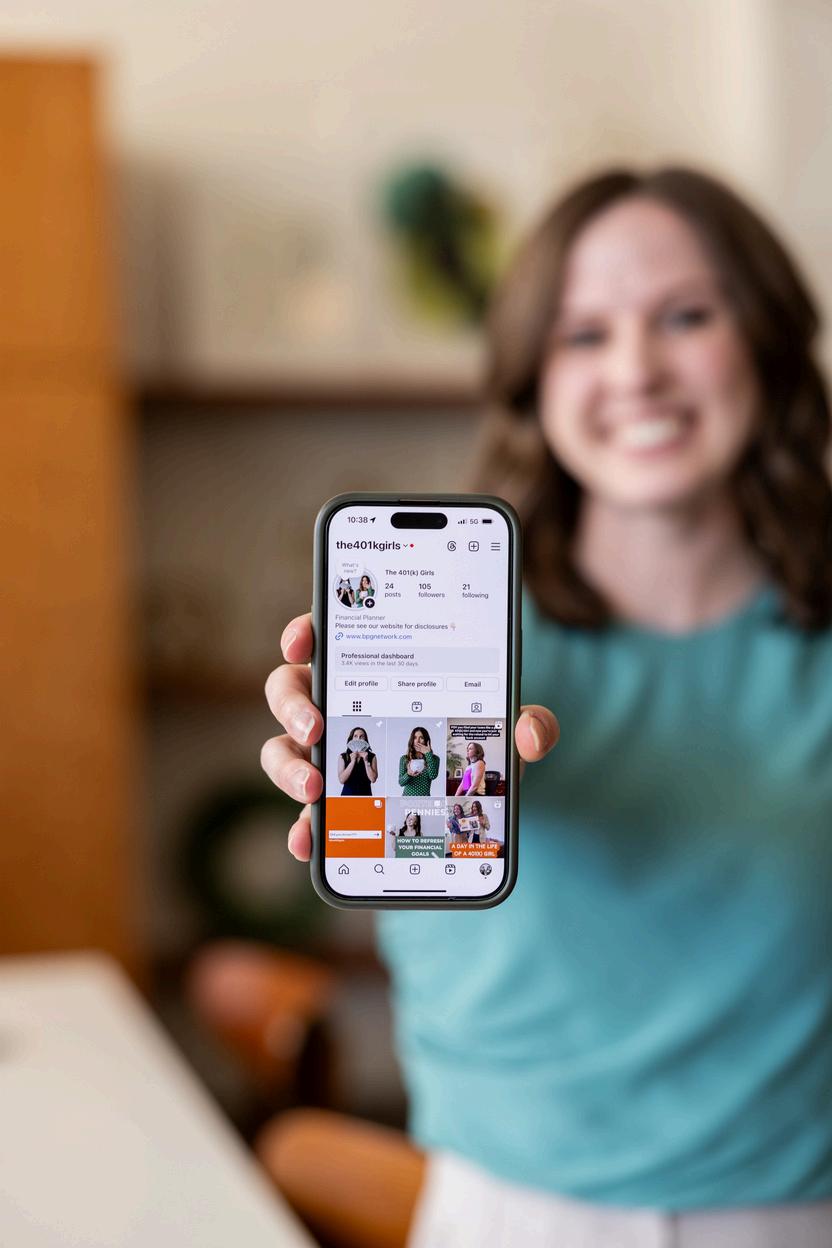
You made the decision to use social media as your medium. What was your thought process behind launching online?
HP: We decided social media was our avenue because of access. People are already on it and are seeing the financial tips and tricks out there, which may or may not be coming from people who are actually licensed to be giving that advice. So we decided we wanted to combat the misinformation that may be out there since we are licensed to do that, and also combat the perception that finance is boring and stuffy. We wanted to inject something fun and colorful into the industry.
HP: We’re in a highly-regulated industry, so there are only certain platforms we can be on for compliance purposes. Our audience on LinkedIn is mostly industry partners and colleagues, and then Instagram is mostly millennials (which is where we hang out) and there’s a lot of different fun formats you can use on IG to create content.
JP: We’re also allowed to use X but collectively we decided that that’s not the platform that would allow us to put information out in the way we wanted.
HP: Yes, and we have considered YouTube but that’s probably a future endeavor.
was your
JP: Initially, we didn’t really know what we were doing, and everything stemmed from education. So our strategy really was, ‘how do we get this information out there?’ In the beginning, it was mostly static photos and carousels.
And then we worked with someone who has more insight in the industry, and that helped us really leverage our analytics to see what’s working and what’s not. Seeing where our views are really coming from and what’s actually getting the most eyes lead us to shift to a lot more videos, which can live as evergreen content on our profile.
Now we’re aiming to post more frequently, especially on stories, so we can really show that we’re real people with personalities, not just stuffy financial advisors. We’re trying to make it feel more personal.
You mentioned your analytics and how that shaped the content you were putting out. Can you talk a little bit about what the numbers show you and how you reconcile that with ‘feeding the algorithm’?
HP: We quickly learned that static images don’t get as much traction as videos [on Instagram]. That’s just the world we live in now. We were also looking at who’s interacting with our content: Men or women? Followers or non-followers? We look at those numbers every day and evaluate what’s working better and how we can incorporate that into our habits and the content schedule we’ve created.
JP: Yep, I obsessively look at views and track if they go up. I’ve noticed that if we post something and it starts getting good views, then the post right before it will also start to get more views, probably because people are starting to scroll more on our profile. Another interesting thing I’ve noticed is that over half of our views are coming from non-followers, which means that we’re popping up in somebody’s algorithm somewhere, so we’ve started doing posts that will hook people to come to our page (like trends and funny videos), and then they’ll find the content we actually want them to see, which is the educational stuff.
This can be a lot of work, are you experiencing any burnout with this?
HP: I’m not burned out yet, and I think that’s because there are two of us and we get to share the schedule and collaborate on literally everything. Because we’re both putting effort into it, it keeps us motivated and engaged with the project.
JP: I’m not burned out but for me, the ‘least fun’ part of this is when you put time and effort into something and then it doesn’t get the views that you think it should.That’s frustrating because it can feel like you’re putting stuff out into the void that you worked hard on, but other people don’t appreciate it the same way as you, which feels demotivating. I’ve had to work on pushing through that.
HP: Yeah, I agree. I’m working on reframing it as an opportunity to pivot and think, how can I reframe this in a way that is going to grab people’s attention?
It sounds like a key word for you is ‘evolving’. You have to put stuff out there in order to get the data so you know what you need to change in order to improve.
HP: We learned that quickly. It’s highly unlikely that the very first strategy you start with is going to be the one that you stick with.
What’s been your biggest ‘lesson learned’ from running social media channels?
HP: The amount of effort and strategy that it takes to gain traction, especially in financial services where the market is saturated. We’re trying to stand out and make it fun while also giving valuable information, it’s a big thing to take on.
JP: And because it’s not our full-time job, we both have our normal day jobs of helping clients, there’s an extra challenge in making time for this.
HP: But it’s huge for both of us that we get to do this together. It definitely makes it easier and more fun.
JP: And it keeps us accountable!


Based on your personal experience, what are 3 do s and 3 don ts of social media?
JP: I’ve got the do’s. Number 1 for us is that showing personality is really important. People want to see who you are, they want to know more about you, they want you to be human beings. Number 2 is being consistent. Especially on Instagram where people are scrolling all the time, you can be posting over the weekend and staying on people’s screens. Finally, for us, creating value in what we’re giving is important. Yes, what we’re doing drives business for our company, but at the end of the day, we’re here to provide value and give people legit information to take away. We’re really trying to give value to the public.
HP: I’ve got the don’ts. The first lesson (which came from Maddy) is don’t overthink your posts. If you’re spending your time trying to perfect your reel, you’re wasting your time. Good enough is good enough, just get it out there. The best thing you can do is just start. Second, don’t go in without a clear strategy. Have a clear idea of the message you’re trying to convey and what you want to accomplish The last one is don’t be afraid to ask for professional help, especially if you’re limited on time. Having a guiding set of hands to help us get off the ground was incredibly valuable to us and saved us a ton of time.
Behind every piece of content you see on the internet is a carefully crafted strategy that brought it to life.
And behind every carefully crafted social media strategy is a content calendar. A content calendar helps you get ahead of the time-intensive activity that is content creation and social media management. It helps you visualize your long-term strategy, stay consistent with posting, and ensure that your output aligns with upcoming campaigns, events, or seasonal trends. Above all, it can help you incorporate content creation into your routine.
“Pencil me in!”
The most effective content calendars include not only the dates you want to publish content, but also the reverse-engineered process/tasks of content creation, as well as time blocked out for reviewing the performance metrics.
Imagine you’re the owner of a wedding planning business and you want to use Instagram to showcase your attention to detail at events and grow an audience of prospective clients. You decide to use a content calendar because you want to remember to take clips of the little details at the weddings and to post on pace with the amount of events you plan.
You start by plotting all of the upcoming weddings for the next 3 months on your calendar. For each event, you want to film short clips that can be stitched into reels, so you add ‘content’ on your day-of tasklist. You then block out time within a week after each event to create and post the reel You also block out an hour at the end of each month to evaluate the reach of each post.
Find an organizational format that works for you. You can find templates online or build out your own.
Asana calendar view (already use it for business)
Fill in your “cornerstone” events that could be content and/or dates you want to work around.
Weddings, attending a conference, release of guest episode on a podcast
Use 2 versions: A long-term calendar that gives you a ‘big picture’ view, and a shorter calendar that zooms in on actionable time periods.
2026focus=showcasedetails,growfollowercount(usetrendingaudio) Planningcontent3monthsatatime
Build in time for reviewing the metrics. Keep your calendar flexible so that if you find out something is performing well or not, you can calibrate your content strategy. Nothing is set in stone; you may need to completely change course if the metrics aren’t adding up.



Solution on next page
Match the content strategy with the platform it will perform best on based on the platform algorithm. Instagram
Short text post + simple visuals
Long-form video + shorts
Interactive content (polls) + commenting on other posts
Anecdotal posts + commenting
Newsletters + text posts LinkedIn
Reels + carousels
Videos + trends
Community-focused comments
Videos + pictures of real-time events
Livestream video
Images + videos + infographics


Match the content strategy with the platform it will perform best on based on the platform algorithm.
Short text post + simple visuals
Long-form video + shorts
Interactive content (polls) + commenting on other posts
Anecdotal posts + commenting
Newsletters + text posts
Reels + carousels
Videos + trends
Community-focused comments
Videos + pictures of real-time events
Livestream video
Images + videos + infographics
1. The Like is dead. Facebook recently announced that it will discontinue the ‘like’ and ‘comment’ plug-in for 3 party websites (the blue buttons you’d see on a webpage that let you like/comment via Facebook). This signals a broader trend: platforms have shifted away from direct engagement and towards algorithmic feedback to measure and curate personalized content. rd

2. TikTok leans into shopping. TikTok is making a big push this holiday season for in-app purchases. Remember, this app started as a short-form video platform, so launching a commerce channel is a big shift.
3. Google AI-ifies shopping.
Consumers can now shop in AI mode. They can find products via conversational queries which prompt users to get very specific on their preferences. In other words, make sure your AIO is up to scratch!

You can find all of Marove Agency’s current client collaborations on these pages.
Viewable work is linked via the icon.

Monthly services to help grow the national brand and provide a seamless member experience with efficient digital operations.

Monthly services to build a foundational brand through website design and grow business tiers with digital store design

Volunteer work with WIFS PDX as a co-chair on the marketing committee.
Hyperlinked events are open for attendance/registration.
N O V E M B E R
D E C E M B E R J A N U A R Y
10 Holiday Party WIFS PDX
N O V E M B E R D E C E M B E R J A N U A R Y
when a viral trend finally hits your timeline so you spend hours filming & editing your own version of it but by the time you post it the internet has moved on and now the trend is out of date

THIS ISA
Gettowork, sleuths!