
THURSDAY 5.8.25 || MARLINCHRONICLE.VWU.EDU

THURSDAY 5.8.25 || MARLINCHRONICLE.VWU.EDU


President Scott Miller gives answers, background to the changes around campus, citing the philosophy to move forward or fall
BY ISAAC FICK & LILY RESLINK
Due in part to the Virginia Wesleyan Campus Master Plan, President Scott Miller said that aside from the institution’s founding years, “the last 10 years have been the most transformational years in the history of Virginia Wesleyan.”
donorship to move forward with upgrades, modifications and additions.
The Campus Master Plan, introduced by Miller upon his arrival at VWU, has led to existing and future projects throughout the 2016-2026 period, including the Athenaeum.
came out of the master planning process in 2016, and the process included our outside facilitators asking faculty, staff and students about what the library of the future should look like,” Miller said.
With these considerations in mind, Miller said, “The library of the future is more of a learning center overall than just a place that collects books.”
Miller said that campus growth often awaits funding that can support it, and in recent years, the university has secured the
“All we had to do over a 10-year period was find the funding to make it work,” Miller said, and they found that funding this year.
“The original concept for the Athenaeum
Director of Civic Engagement and Service Learning Bethany Smeeton moved into a newly added office as a part of the
Athenaeum. Smeeton said it “offers unique opportunities that enhance the student experience, supporting both academic growth and professional development.”
ihfick@vwu.edu & lbreslink@vwu.edu See CAMPUS Page 3
BY KAMI WHISENHUNT
kjwhisenhunt@vwu.edu
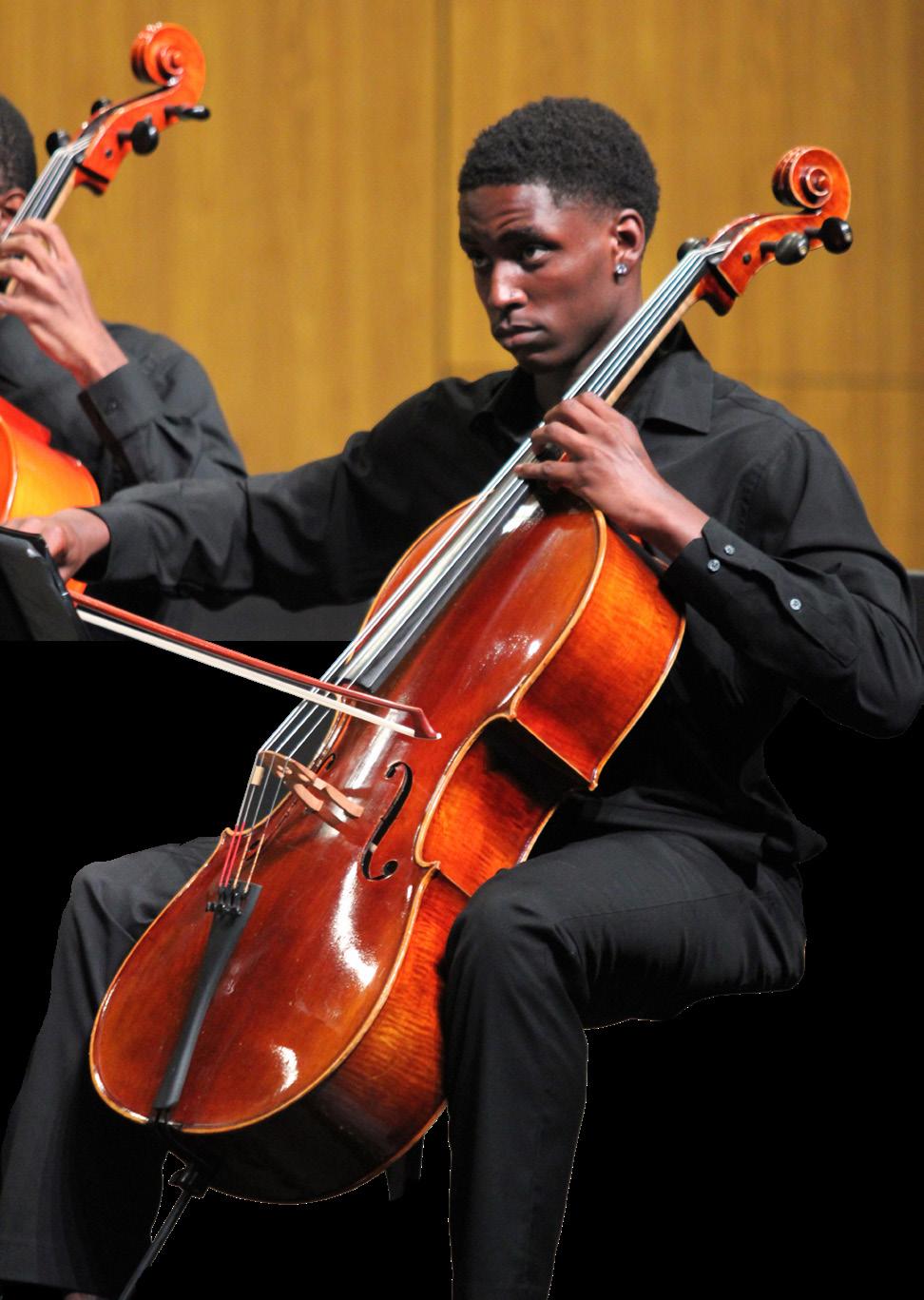
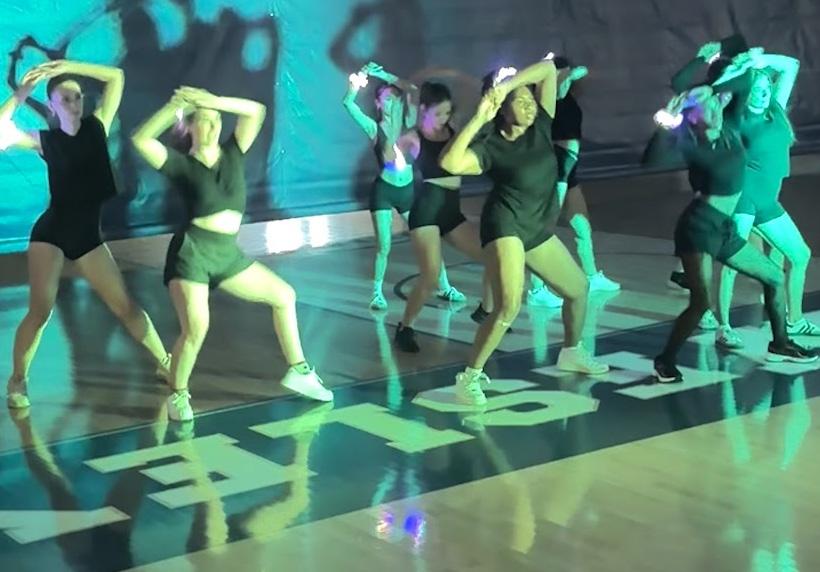
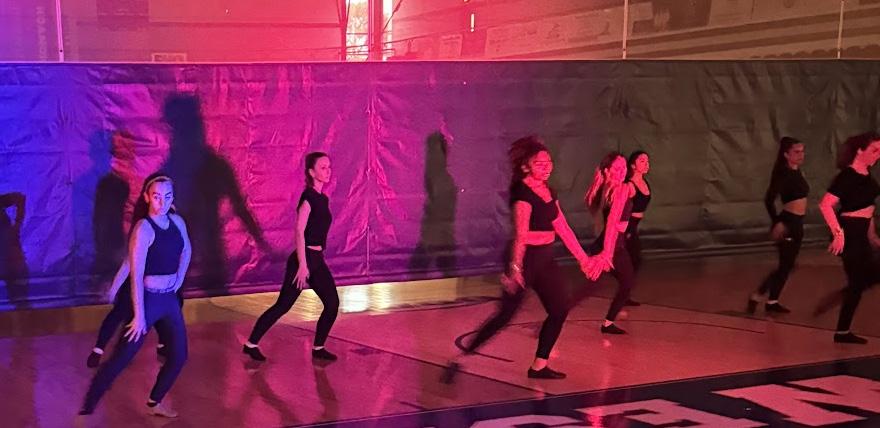
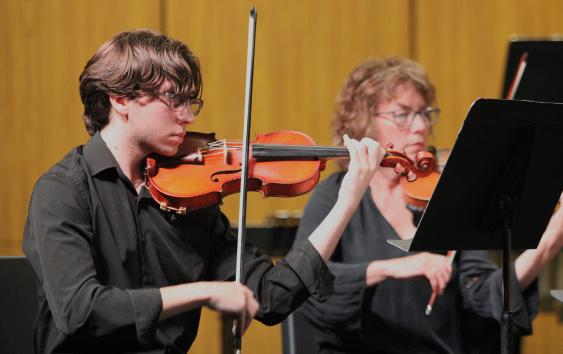
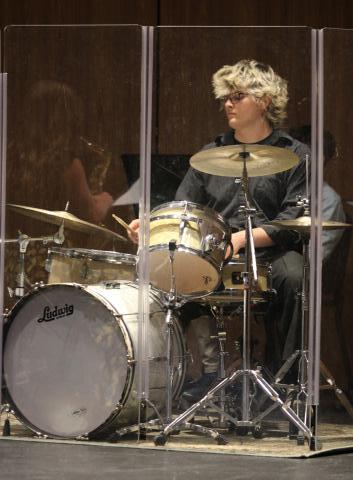
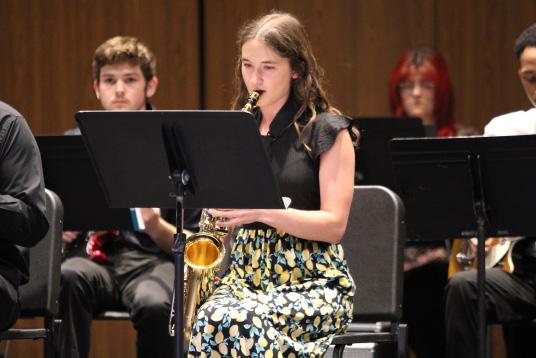
On May 1 and 2, students across campus showcased their performing and visual arts talents, displaying the creativity and hard work put into the semester. Events like the Orchestra Concert, Jazz Ensemble Concert, Marlin Gems Showcase and the Exhibition for Senior Art Majors took place.
The Neil Britton Gallery, located in the back of Hofheimer Library, held this year’s Exhibition for Senior Art Majors, featuring projects developed by students in Art 450 throughout the semester. Each student, free
Photos depict art showcases.
and Iyonna Valentine's Neil Britton
to choose their medium and art direction, filled the gallery wwith paintings, sculptures, digital, cardboard and AI art.
“Painting is really trusting the process because it doesn't look like much in the beginning, but at the end it’s really beautiful,” Iyonna Valentine, senior Art major, said.
Valentine said this exhibition was the start of her art career.
She has often shown one piece at a time in galleries, but for this, she had the freedom to showcase 13 paintings which all portray a fantasy world that escapes reality.
of Cellist


Smeeton expressed optimism about new possibilities resulting from the changes. “This vibrant new space will inspire collaboration, foster creativity and provide students with the tools and resources to thrive in their academic and professional journeys.”




Transfer portal shakes up recruiting and athletic experiences --- Page 7
With the removal of the onetime transfer exception rule, the transfer portal has been blown open, sucking in more athletes than ever before.



A Taste of Europe in Virginia Beach -- Page 9


Bidding adieu to VWU -- Page 5
Retirees Doug Kennedy, Linda Ferguson and Malesia Williams reflected on their years at VWU and shared thoughts on retirement, memories with students and advice for the future.
BY MEENA LENNON mjlennon@vwu.edu
With reports showing firearm violence around the Hampton Roads area, students on campus and parents are concerned.
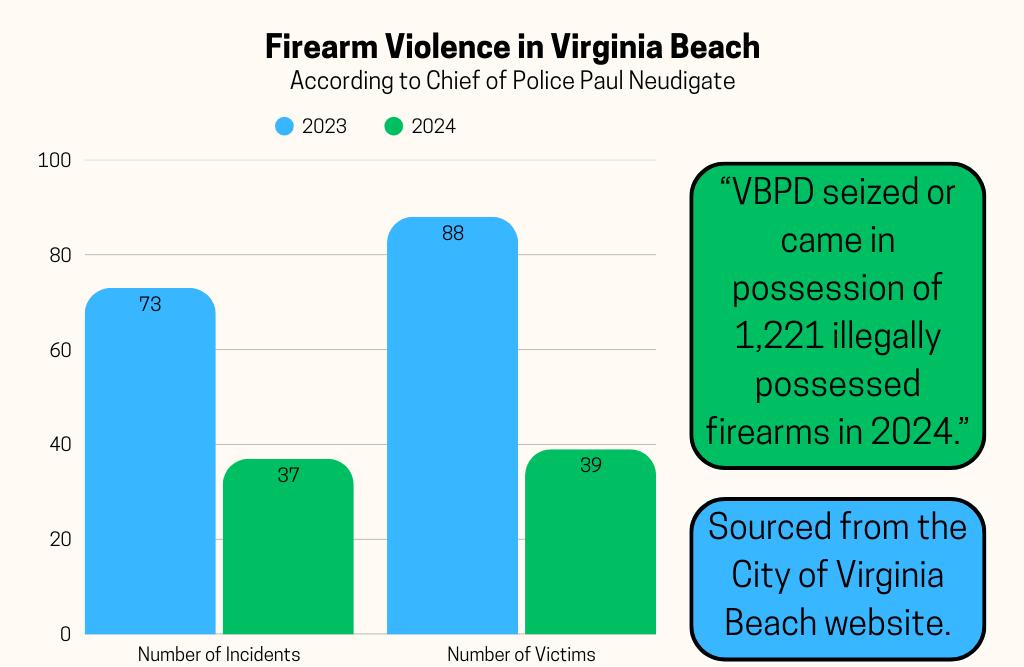
Firearm violence incidents in Virginia Beach have decreased in recent years. The City of Virginia Beach website included insight from Chief Paul Neudigate regarding 2024 crime data.
Neudigate said the decrease is due to “a prioritized focus on the small numbers of individuals willing to engage in gun violence; [...] the dedication of the VB Commonwealth Attorney’s Office to successfully prosecute homicide, shooting, robbery offenses, etc., resulting in convictions; and our courts that ensure sentencing is commensurate with the offense.”
Toussaint pointed to an example of how Australia addressed a mass shooting in 1996, where a gunman killed 35 people. “Australia said, ‘we’re not going to have this anymore.’ And so the Australian Government came together, removed semi-automatic pump-action shotguns and rifles from civilian possession as a complete key component of their gun law reforms,” Toussaint said.
Toussaint said that the U.S. government could look at other countries in parallel and use similar policies, but it has not taken this approach. “Here in America, it’s the idea of the Second Amendment, and everyone has the right to own guns,” Toussaint said.
Freshman Grace Whitt, lifetime resident of the Virginia Beach area, referred to an April 28 incident at Kempsville High School.
In response to firearm violence in the Hampton Roads area, Ceasefire Virginia is an initiative aiming to address it through education and access to services, along with law enforcement. On their website, the organization said progress toward reducing violence comes from collective action: “Together, we can build a safer Virginia, one community at a time.”
Jette Hafermann, freshman and international student, said that policies can help reduce feelings of unsafety that could arise on the Virginia Wesleyan campus.
“When I hear about shootings at other nearby universities, like the recent one at ODU, it’s definitely scary. Those kinds of incidents make me feel nervous on my own campus too, because even with policies in place, things like that can happen anywhere,” Hafermann said.
Dr. Jeffrey Toussaint, associate professor of Sociology and Criminal Justice, said that America is not doing enough to reduce firearm violence.
Toussaint pointed to the school shooting that occurred in Uvalde, Texas in 2022. “There were 100 police officers [...] outside the school, and the guy still killed children,” Toussaint said. Toussaint said he takes the stance that police presence is not effective and firearms need to be taken out of peoples’ hands.
In reference to change at the policy level, Toussaint emphasized the priority of protecting children, saying, “if that’s not a catalyst for change, for laws, policies and electing people who will act, then I’m not really sure what would be.”
Toussaint spoke on the impact of socioeconomic inequality and firearm laws in the U.S. compared to other countries. He said political reforms and improved mental health systems would aid efforts to reduce firearm violence. “We care more about access to guns than we care about our children,” Toussaint said.
She said that a retired PE teacher “was arrested for trespassing with a loaded AK47 in his car, hatchets and axes, which is crazy because he used to work there, and I used to go to school in that area, and I knew a ton of people who went to school in that area.” She said this happened where she once practiced softball every day.
Sophomore Christopher Mercer-Garrett, a Kempsville High School alumnus, said, “The school officials always manage to sweep things under the rug. This year’s incident was just an example of what happens when institutions do not hold people accountable. Back in 2022, during my junior year of high school, a firearm was confiscated, and parents weren’t notified until after the school day had ended. This was intentionally done to prevent parents from asking questions of how the incident was possible.”
Whitt mentioned concerns about how this may affect her career. “I wanted to do teaching in the future, but I’m honestly scared to go into that profession, specifically because I know that now my life and my students’ lives might be put on the line because somebody had a bad day,”
Whitt said.
Hafermann suggested that colleges inform international students on what to do in the case of a firearm incident on campus, “I wouldn’t feel really prepared if something would happen,” she said.
“I feel like Wesleyan has handled being proactive in the best way that they can with having security here and having only one entrance. But I feel like if something were to truly happen, then it would definitely be reactionary and probably lacking,” Whitt said. She said that safety measures on campus contribute to alleviating concerns, but she feels there is more that could be done.
BY MIA DIEHL mjdiehl@vwu.edu
Virginia Wesleyan University employs a full-time security team which is available 24/7. The security team offers services including on-campus escort requests, motor assistance and utilization of the LiveSafe app, allowing students to send concerns to the security team and receive alerts in case of emergencies.
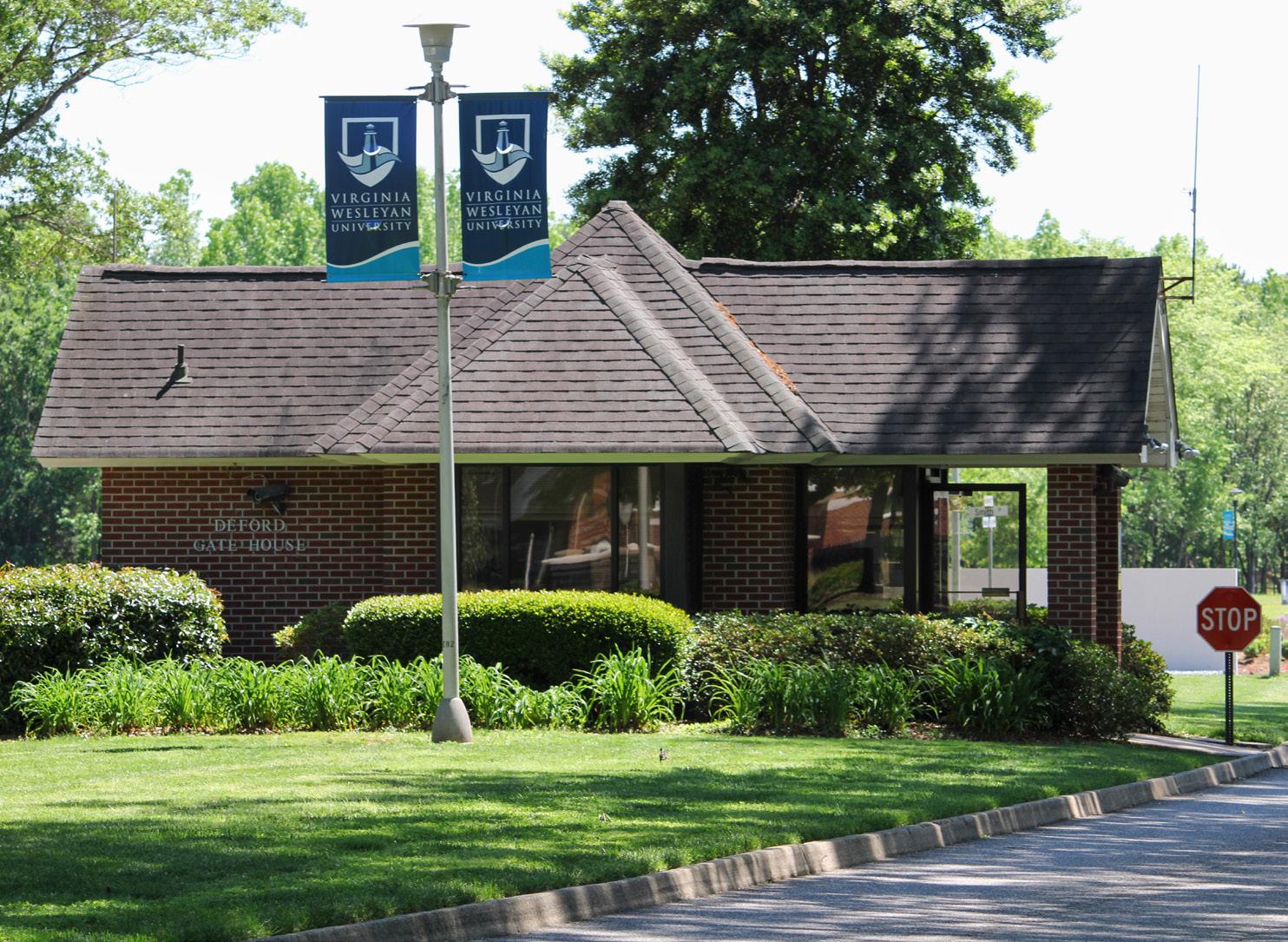
Students at Virginia Wesleyan expect the security team upon arrival at DeFord Gatehouse, where arrivals are checked to make sure they are either students or registered guests. The team can also be found making rounds across campus.
“This is my fourth college presidency. And I can say through 35 years as a college president, this has been the safest campus I’ve had in those 35 years.”
President Scott Miller
“This is my fourth college presidency. And I can say through 35 years as a college president, this has been the safest campus I’ve had in those 35 years,” President Scott Miller said.
According to the message from the Director on VWU’s Campus Security page, one of the security team’s primary goals is to deliver quality customer service.
“I was having a fire and using the grill in Honors [Village] and the security officer came promptly to ensure that all the safety precautions were taken,” junior Tyler Noll said.
“Then as I struck up a conversation, he hung out the entire time I was building the fire, offering school advice, cracking jokes and talking to me about his daughter who is graduating high school,” Noll said.
“Shortly after I was attempting to light the charcoal grill and another security guard
came, and he helped me to start the fire quickly. It was a great interaction, and if they didn’t have to keep working, I would’ve invited them to stay and enjoy the fire.”
Freshman Grace Whitt said that in all she has heard, the community has a positive consensus about individuals on the security team. “I know a couple people who are actually good friends with them. All of the security is really nice, and that reflects since I don’t really hear bad things about the people themselves.”
Whitt said she has noticed a critique: “The most concern is how lax they can be with some people coming onto campus.”
The Campus Master Plan included updates to security regarding the campus perimeter. “One of the advantages of this campus is it’s a very safe campus. As a part of the Master Plan, in 2017 we added the perimeter fencing,” Miller said, due to concerns that residents from the Campus East community would walk through campus to the newly constructed Norfolk Outlets.
Miller explained the reasoning behind limited entrance points: “It’s not to create a prison atmosphere. It’s decorative fencing, but it’s also high enough that it’s a discouragement for people that aren’t supposed to be here, so that they’re not cutting through our campus and providing any type of safety issue.”
Miller further discussed the safety of the VWU campus and the benefits of the campus’ geographical location.
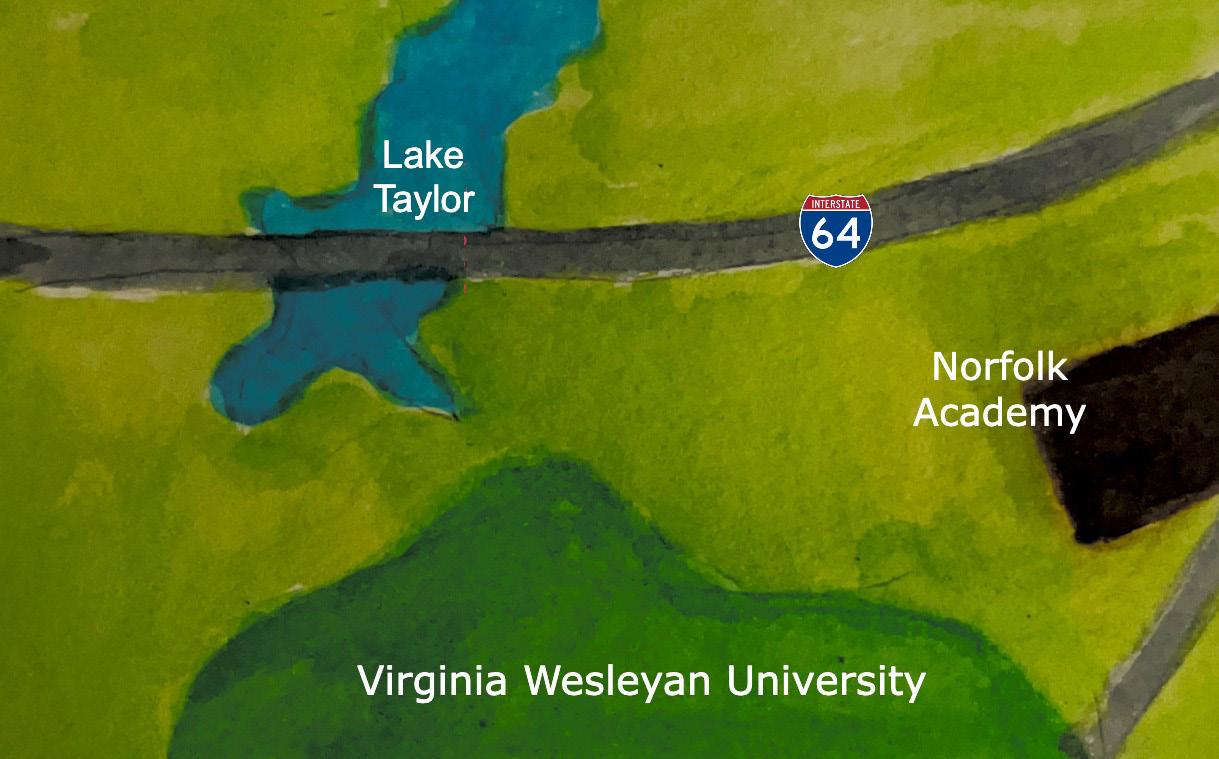
“It’s a benefit to us that Norfolk Academy, which is a non-residential selective Academy, is off the one side of the campus, that we have Lake Taylor off the back side of the campus, and then on the third side, we have the woods that has a rather deep marshy area that runs the side,” Miller said. “So we are sort of on an island and can protect the campus even more as a result of that.”
Miller said the team is “commensurate with the statistical data of what you need for a campus, a residential community of this size.” The team consists of Director Victor Dorsey and Assistant to the Director C.J. Sholler, along with 11 additional members.

CONTINUED FROM
Although many components of the Athenaeum’s transition have concluded, Miller said more changes are in the works for the library. For example, the 24-hour study area will be known as ‘the study’ and serve more functions. Accommodating the university’s transition to including e-textbooks in tuition, it will have additional computers, according to Miller, which will particularly benefit students who don’t have laptops to read their e-books.
Regarding textbooks in tuition, Miller said students will have the option to keep the book and refer to the notes they took within it to prepare for later use like licensure exams.
Miller said hopes for the Athenaeum have been realized, with one exception: “there was a hope that there would be a satellite location for a Starbucks.”
With the move from Lighthouse to Athenaeum, select Student Success offices moved from the Learning Center to the Lighthouse, making space for new resources in the Learning Center, such as a space designated for the neurodiversity grant from a year and a half ago.
In addition to this, Miller described development from Student Success in the form of grants designed for underrepresented student populations and added staffing for the department.
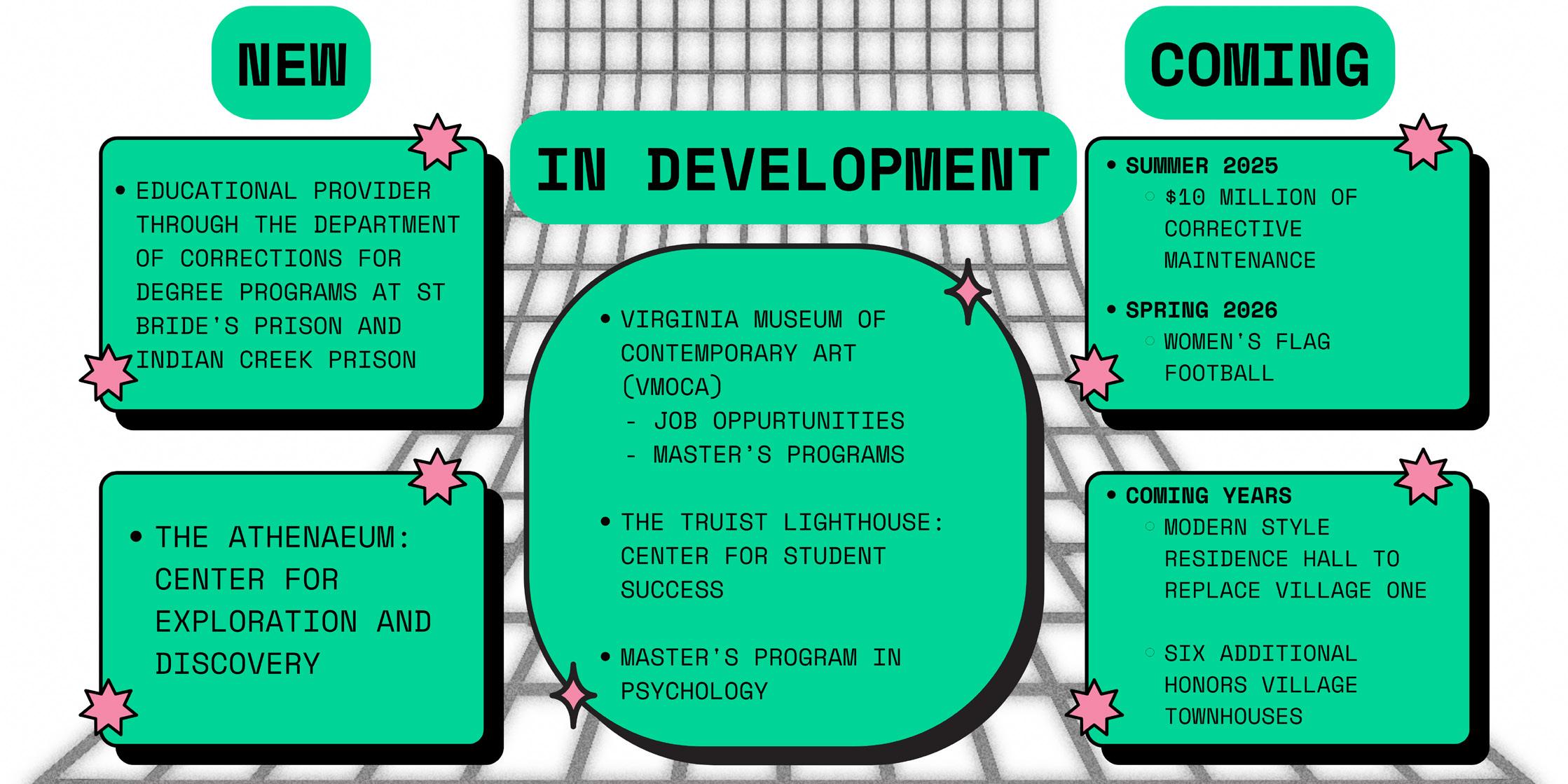
Miller spoke about opportunities with the Virginia Museum of Contemporary Art (MOCA), a project he said three donor families collaborated on.
It will provide “the most modern and largest classrooms on campus,” Miller said. He also anticipates meaningful employment opportunities there for students while getting their degrees.
Iyonna Valentine, senior and current Art major, who will start the master of Education program at VWU this summer, said, “I am still excited about MOCA opening even though I'll have already graduated by the time it’s completed.”
Valentine said she believes the MOCA will “transform the way students, especially Art majors, experience art education.”
Miller spoke on how internship opportunities at the MOCA will support the newly added Master of Arts program in art leadership. For students getting both bachelor’s and master’s degrees in related programs, Miller said this is a resource that VWU students can benefit from.
Valentine said she hopes for “hands-on opportunities like internships, workshops with professional artists, maybe even chances to help with exhibits or community outreach, for students and maybe even alumni.”
In reference to another master’s program in progress, Miller said the university is adding Psychology, “because our undergraduate degree in Psychology has been so popular.”
Miller referred to Goode, MOCA, DeFord Manor, Birdsong Field and Coastal 61 as “a beautiful front porch”
for the campus. “Each of those facilities play a unique role in the types of programs that we offer to our campus community, and we’re proud of those developments,” Miller said.
“This summer, we’ll also be investing 10 million in some of the less visible projects on campus,” which Miller said includes replacing roofs, new heating and cooling systems, bathroom updates and basic upkeep. He said the intention is to complete the bulk of these projects while most of the residential population is not on campus.
In the realm of Marlin sports, Miller expressed excitement for Women’s Flag Football beginning their first season in Spring 2026, and explained why the university has not implemented men’s football. “We’ve always had the philosophy here that men’s football [...] drains resources, and if you want to watch college football, go watch it at a division one school. But we’re not going to drain our resources on it,” Miller said.
Regarding residence halls, there are planned projects that have yet to enter the implementation phase due to funding.
“At some point in the coming years, we’d like to build a new residence hall, somewhere around 128 beds,” which Miller said would likely be built on Rose Lawn. “But there will be a need in the coming years to look at something as the usefulness of Village One reaches its
maximum age and capacity.”
The reason this project has not been started, according to Miller, is because “we have to find funding for it, and we really haven’t identified any donors that are interested in supporting a project like that. So while we wait to do that, we continue to put money into upkeep of some of the older residence halls, primarily Villages One and Two.”
Additional townhouses in Honors Village are also part of the plan. “If you’re wondering why there's a grassy area from the back of the three on the parking lot side — that is designed for three additional townhouses to be added there,” Miller said. “So pre-stubbing for utilities is already there.”
This project’s start has not been seen for the same reason: “It’s a matter of finding the funding to build three additional residence halls,” Miller said.
“While a lot of schools in the west of Virginia [...] are struggling with enrollment issues, we’re not,” Miller said. “We’re not because we develop new, creative, innovative things that are what the students of the future are looking for.”
Noting that 104 of the top businesses in the country are in Hampton Roads, Miller said, “that means every student in every major, if they want an internship before they graduate, there’s an accessibility to these top businesses.” He said this access is deeply tied to the university’s success.

BY CLAY YOKOM kayokom@vwu.edu
Pope Francis, the first Latin American pope, passed away on April 21, Easter Monday. “It's sad he's gone, but [...] in a lot of ways, it was beautiful,” Marianne McMillin, a professional tutor with the Learning Center, said of the timing. He was known for his stance on LGBTQ marriage that allowed for same sex couples to be blessed and for expanding the power of women in the Catholic Church, though they are still unable to be ordained. These choices weren’t popular with the conservative sections of the Church, McMillin said. She heard some express disappointment that women were still not in positions of authority in the church.
“There are ways in which Pope Francis put a more human touch on issues, just as there are ways in which he affirmed traditional Catholic doctrine.”
Eric Mazur
“There are ways in which Pope Francis put a more human touch on issues, just as there are ways in which he affirmed traditional Catholic doctrine,” Dr. Eric Mazur, professor of Religious Studies and Religion, Law and Policy fellow of the Robert Nusbaum Center, said. During his time as pope, Francis prioritized working with marginalized groups. “The thing I appreciate about the pope [...] is that he stood up for some important societal issues,” President Scott Miller said. “We’re in a better place as a result of him serving as pope.” Francis, “was seen as invested personally with the people — both parishioners and non-Catholics,” Mazur said. “His impact was to bring a sense of warmth to the Papal office, and that this impact would have been greater had he served in that office longer,” Mazur said.
The election for a new pope is in progress, and any baptized Roman Catholic man under the age of 80 is eligible for election, though there is a long set precedent for those elected to be cardinals.
The electors meet together in Rome and vote multiple times a day on the future pope, without contact with the outside world, and remain there until a two-thirds majority is reached. In the election, Mazur said there is speculation that the next pope may come from Africa or Asia, which would reflect Catholicism’s growing influence in Africa and may bolster its spread in Asia.
A common phrase mentioned by McMillin about the conclave is that ‘a cardinal that walks into the conclave expecting to be pope will leave a cardinal,’ which mainly is a warning against hubris and trying too hard to predict the next pope.
Virginia Wesleyan, which is affiliated with the Methodist church, has a substantial population of Catholics, according to Miller. “We serve all students,” Miller said, noting that campus ministries intentionally does not specify any particular denomination.

Elliot Fylstra|Marlin Chronicle

Editor-in-Chief
Lily Reslink lbreslink@vwu.edu
Managing Editor
Victoria Haneline vfhaneline1@vwu.edu
News Editor
Isaac Fick ihfick@vwu.edu
Community Editor
Aiden Croghan accroghan@vwu.edu
Opinions Editor
Isaac Fick ihfick@vwu.edu
Sports Editors
Coy Camiscioli clcamiscioli@vwu.edu
Sydnee Washington sawashington2@vwu.edu
Weekender Editor
MJ Matthews mjmatthews@vwu.edu
Photo Editor
McKenna Howenstine mrhowenstine@vwu.edu
Illustrations Editor
Mars Johnson ibjohnson@vwu.edu
Online Editors
Josue Maradiaga jmmaradiaga@vwu.edu
Lillian Glenn adglenn@vwu.edu
Copy Editors
Kirkland Butler kwbutler@vwu.edu
MK Morris Larkin mmorrislarkin@vwu.edu
Victoria Haneline vfhaneline1@vwu.edu
PR Director
Isabella Grosswiler idgrosswiler@vwu.edu
Marketing Coordinator
Bryant Cotterell bccotterell@vwu.edu
Engagement Editor
Sarah Czapp sczapp@vwu.edu
Advisor
Dr. Lisa Lyon Payne lpayne@vwu.edu

CONTINUED FROM PG. 1
“In the beginning, I was so focused on what is up to par with what art standards are, but then I was like, ‘I’m gonna take a step back and do my own thing,’” Valentine said.
Steering away from the hyper-realism drawings she started with, she got her inspiration from movies and songs instead. Valentine said she hopes to send the message to relax and not take life too seriously through her creations.
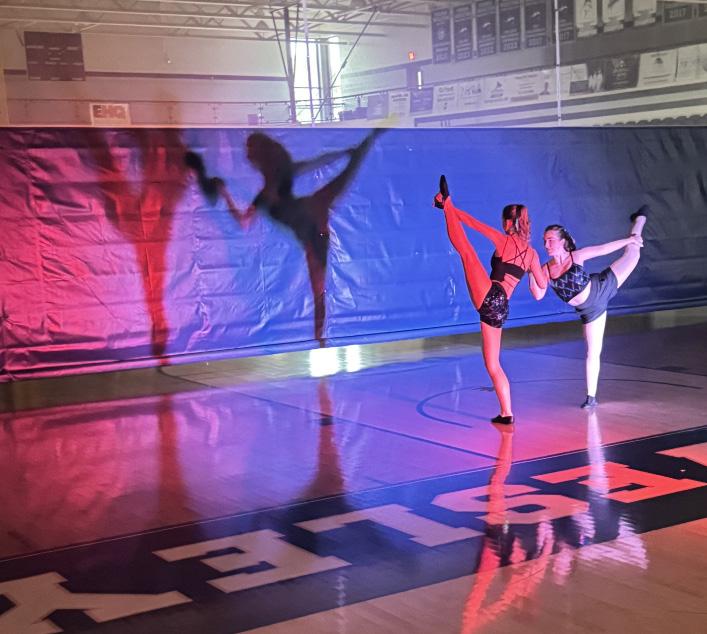
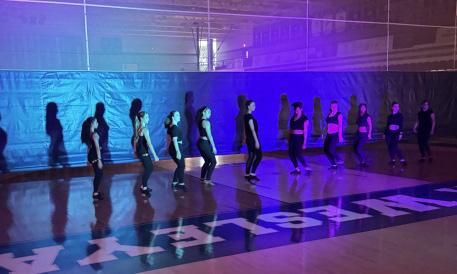
Looking to the performing arts, the Marlin Gems Dance Team began prepping for their spring showcase in November, spending time since August laying the groundwork of learning technique and team bonding.
“I definitely am excited to perform because we are really a family. When we’re at practice, we have fun and we laugh, and this is just like a big celebration for what’s been months of hard work,” senior Daryl Tucker, captain and founder of the Marlin Gems, said.
The showcase featured solos, duets and large group dances. They had a total of 11 dances, ranging in styles from contemporary to hip hop and jazz pieces. Tucker said this was their fourth annual showcase and her last. She said it feels different in many ways, some being that the group wasn’t as large as it has been in her time, and she handed off some choreographing duties to current dancers who are set to take over in the fall.
“I have been with a lot of these girls since they were freshmen, so not only have some of them seen me develop, but I’ve also seen a lot of the girls develop, not only as dancers, but as people,” Tucker said.
Last spring’s dance performance was held virtually, so for many of the dancers, this marked their first time performing live on stage. The dancer’s input helps create the flow of each show. Solo dancers choose a genre, then select from options curated by the captain, tailored to their style and strengths. For group pieces, they decide on the team’s vibe, whether serious, flowy or themed around a specific era, and Tucker builds her choreography from those requests.
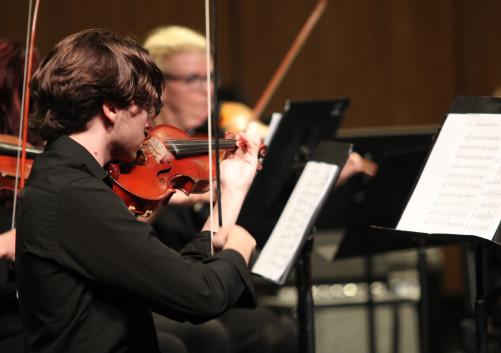
The orchestra is a group consisting of cellos, violas, violins and flutes. The spring program, following a circle of life theme, started with the cheerful “Morning Mood” moving into the sneaky “Hall of the Mountain King”, with other music pieces being “Palladio” and “Can-Can.”
“Performing gives performers, not just myself, a sense of recognition for their hard work, because usually what people see is everyone in their pit blacks just performing this beautiful piece, but what they don’t see is going into a practice room at seven and leaving at two in the morning. I often do that,” Zack Chapman, concertmaster of the orchestra, said.
Chapman helps the orchestra with sight reading, rhythmic patterns and counting of the music. He also judges the difficulty of pieces to ensure the group will succeed in learning them.
Chapman said this semester, the orchestra focused on playing confidently together because of their small size.
“I always try to say that music is like one of the heart strings. There’s music, there’s
dance, there’s theater; and then there’s singing, and music can hit one of those strands. If the audience comes out of that concert hall and feels moved, then as the performer, you did your job,” Chapman said.
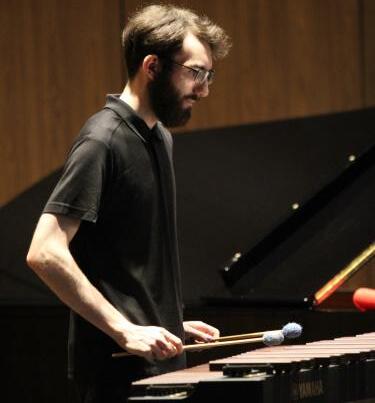
The Jazz Ensemble, under the direction of Cory Franklin, had their spring concert including performances of Funk, Jazz and Latin music. The ensemble played the funk song “Chameleon” and the Latin piece “Moving and Grooving.” Franklin said the music is chosen based on the comfort of the students and audience participation.
“This group jelled the first time we conducted and that’s what made this class fun. They genuinely like each other and take constructive criticism from each other,” Cory Franklin, director of the Jazz Ensemble said.
Franklin said throughout the semester the group has grown to conduct rehearsals on their own if need be, including how to set up the stage and equipment. The ensemble also often offers input and ideas during the class for the concert, some even being used in the spring showcase.

Each semester SURF, previously known as the Academic Symposium, allows students to present their academic accomplishments to the community.
BY ABEE CASSIDY arcassidy@vwu.edu
To showcase the accomplishments of students, Virginia Wesleyan hosted its annual “Spring Undergraduate Research Forum” (SURF) for 2025, renamed from “Academic Symposium.” The conferencestyle event provides an opportunity for undergraduates to present their research, internships, creative projects and study abroad experiences through oral presentations, poster sessions and panel discussions.
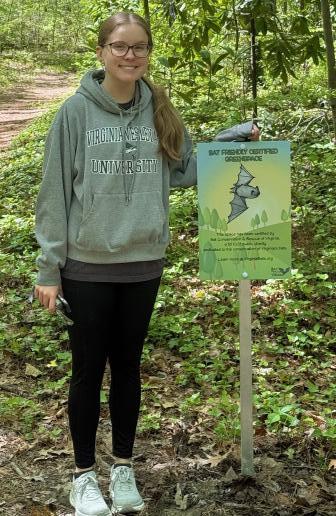
At SURF, senior Katie Baker shared her bat conservation endeavors that she achieved this semester. As part of her senior capstone project, Baker led a bat conservation project on campus aiming to monitor local bat species and raise awareness about their importance at Virginia Wesleyan. Motivated by an oldgrowth beech forest on campus, Baker had a trail designated as “bat-friendly.” This trail is in the Wesleyan Woods between Brock Village and the Honors Village. The space is designated with a certification by Bat Conservation Rescue Virginia, which Baker said is “pretty cool.” designation, including a high percentage
of English ivy, native plants, a water source and little/no artificial lighting. According to Baker, the trail met requirements. “There are no lamps or lights. Lights are known to interact with bat migration… the only thing we need to worry about is native species and whether lights or lamp posts are added along that trail,” Baker said.
The project involved collaboration with students and faculty members. “I partnered with Tri Beta Biology Honor Society in the process of getting the certification and then installing the sign: Dr. Schaus is in charge of that,” Baker said. The sign was donated by Advision Sign Company and is located on the bat friendly certified green space.
To support ongoing research, Baker developed a syllabus for future student involvement with the role bats play in pest control. “A lot of people don’t know that bats account for $3.7 billion worth of pest control in the U.S. alone,” Baker said. The syllabus addresses common misconceptions about bats and encourages the continuation of community engagement and habitat preservation at Virginia Wesleyan

Elliot Fylstra|Marlin Chronicle
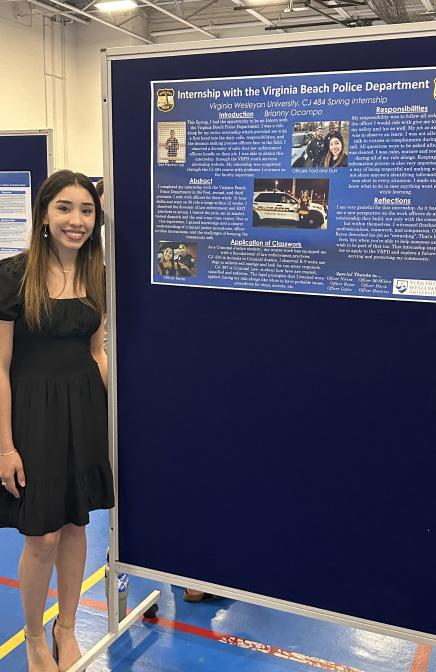
Brianny Ocampo, a senior criminal justice major, shared her experience in completing a hands-on internship with the Virginia Beach Police Department (VBPD) through the VBPD Youth Services internship website. Over 12 weeks, Ocampo rode along in 30 10-hour ride-alongs, rotating through the first, second and third precincts.
“I was mostly a calm, mature and respectful ride along,” Ocampo said. Her experience remained observational, witnessing key law enforcement operations. “I visited jails, signed muster, visited dispatch and a real time crime center. I gained a lot of knowledge in
understanding criminal justice and their procedures,” Ocampo said. Ocampo connected her academic studies to real-world procedures, learning from courses like CJ 250 and CJ 387. She was particularly inspired by Officer Reyes, who described his job as “rewarding” because of his impact on people’s lives. “This internship has given me a new perspective on the work officers do and the relationship they build,” Ocampo said. Motivated to become a police officer by her experience, she plans to apply to the VBPD and continue her journey towards a career in law enforcement.
Virginia
Wesleyan retirees say goodbye to the universiy after years of involvement with the school.
BY LORA YOUNG llyoung@vwu.edu
This year, several professors at Virginia Wesleyan are saying goodbye to the classrooms and communities they have helped shape. Retirees Doug Kennedy, Linda Ferguson and Malesia Williams reflected on their years at VWU and shared thoughts on retirement, memories with students and advice for the future.
Kennedy, professor of Sports and Recreation Professions, came to Virginia Wesleyan after finishing his doctorate at Temple University and expected to stay for just a few years. He quickly discovered his love for the school and has taught here for 37 years.
Kennedy has a passion for leisure activities as well as working with college students. Through the Sports and Recreation program, he has taught a variety of classes, his favorites being Philosophy of Sports and Recreation along with Maui Sea to Sky.
The Maui Sea to Sky class was inspired by Kennedy’s love for skiing as he heard about the local trend of wind surfing. He had heard positive feedback about traveling to Maui and
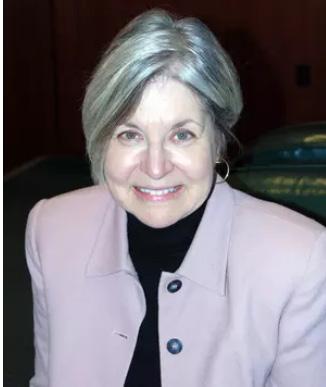
decided to start looking into creating the course. Kennedy believes that it’s important to have the opportunities for travel experiences in shaping students academically and personally.
Kennedy said that when students go on trips like these they get to see real-world situations and foster cross pollination of ideas. Over his years at VWU, Kennedy built close relationships with his students. He once had the special honor of officiating the weddings of two former students, a testament to the lasting bonds he created both inside and outside the classroom. Kennedy is sad to leave the classroom after such an enjoyable time but is looking forward to retirement.
He has plans to continue working with survivors of sexual abuse and said he will remain available to the VWU department for any needs. Kennedy is looking forward to a new path and is excited to see how the students continue to grow.
“I want the students to take chances,” Kennedy said. “You’ve got to do new things and take chances, and you gotta take a lot of swings if you’re going to try to hit a home run,” Kennedy said.
Linda Ferguson, a dedicated Business and Marketing professor, has spent an extraordinary 37 years at VWU, having a significant impact on both her students and the university community. Ferguson has taught courses in Marketing, Organizational Communication and Business Law. Throughout her career, she emphasized the importance of students not only understanding the theoretical aspects of business and marketing but also gaining practical application that showcases long-term relevance
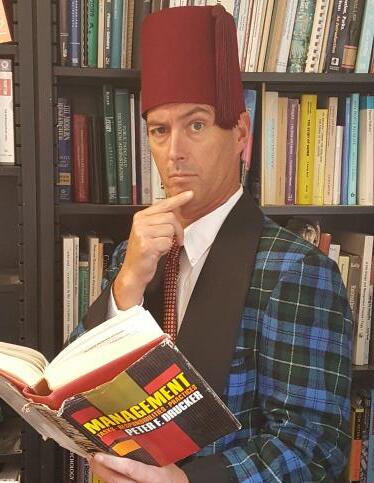
and usefulness of the material they learn. “Absorb as much as you can while you’re here so that you keep your options open,” Ferguson said. She takes great pride in having been a part of so many students’ lives, fostering a strong sense of community within the university. The integration of her professional and personal life has given her a deep sense of purpose, and she feels a strong reluctance to leave a place that has been an important part of both.While she doesn’t have any specific retirement plans, she’s looking forward to embracing this new chapter of her life, eager to explore what comes
next while continuing to reflect on the meaningful impact she’s had over the years.
VWU’s staff members have also played vital roles in shaping the campus community. Malesia Williams, a beloved housekeeper at VWU, has been an integral part of the campus community for many years. With a strong work ethic and a genuine care for the well-being of students and staff alike, she has become a familiar and welcoming presence across campus.
Williams started her time at VWU working in the kitchen and soon after, she transitioned to housekeeping. In this role she
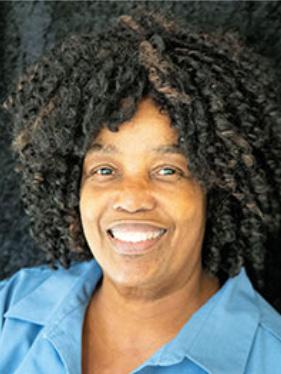
helps maintain dorms, hallways, offices and the rest of campus.
Williams’ sense of belonging at VWU is reflected in her deep connections to students.
“They’re like kids to me,” he said. She enjoys getting to see the students grow and thrive.
For Williams, being a part of the VWU community has been central to her identity, and she proudly identifies as a Marlin. She is always happy when she’s at school and working eases her mind. “I’m just a happy person, I love the college and I enjoy coming here,” Williams said. She is planning on returning part time next year, and in that time off is going to spend time with her mother.
Whether in the classroom, behind the scenes or through the support for students, these individuals have made lasting impacts. Their retirements mark the end of one chapter, but open the door for new opportunities for both themselves and the university.
Five stars to ‘Eyes and Ears: The Marlin Chronicle,’ the documentary that told a story of VWU’s student newspaper.
BY LILY RESLINK lbreslink@vwu.edu
I began my Editor-in-Chief experience with a microphone on and cameras rolling, all as part of sophomore Liam Castellano’s creative vision to produce a documentary on The Marlin Chronicle.
Throughout the entire process, Liam made every move to capture the authentic operation of the newspaper while ensuring that the team remained comfortable.
With cameras on us at our ups and downs, I had confidence that Liam would do justice to every moment that made the final cut.
Upon viewing the documentary at its debut on May 2, I can say that every second was deliberate and meaningful.
From the stress of deadlines to the joy of our small community, the footage gathered the story of the people who tell the stories. For what I imagine is the first time in history, a student journalistic

organization became the subject of a documentary film.
The ins and outs of student journalism came together in a sequence that could be appreciated by a range of people, from those who have lived it to those who have never even had a reason to think about it before.
I shared this documentary with my friends and family members, feeling personally grateful to have
an artifact that offers an inside look at something that I dedicate so much of myself to. It shares a glimpse of the struggles and triumphs that team members, past and present, can feel recognized by. I have always found the student journalist experience difficult to accurately convey. Yet, through art, Liam achieved this. By telling the story of the people who write the stories, this documentary leaves every person who watches it with a better understanding.
While Liam captured the essence of The Chronicle through mastery in their craft of video production, the least I can do is extend my endless gratitude to Liam through my own craft: publishing in the newspaper. Thank you, Liam. I know your talent will get you far.
Perhaps I say this with the greatest amount of bias that I have ever published in The Marlin Chronicle, but I encourage everyone to go watch it.
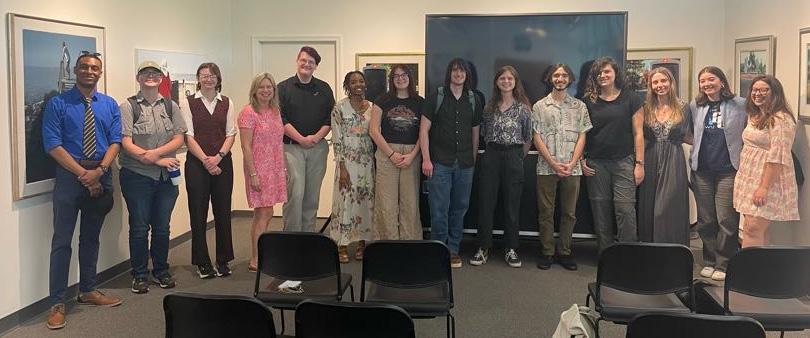
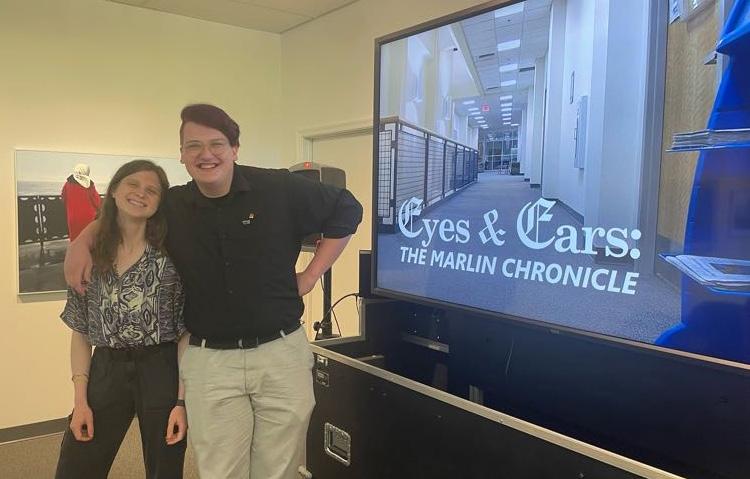

“This documentary is a wonderful display of art, craft and it had me at the edge of my seat –– but I was one being filmed. The storyline was gripping and rewarding, making 17 minutes feel like five. Watch it.” - News Editor and Opinions Editor Isaac Fick
“You can really tell a lot of work went into it, it was really well made and organized!”
- Photographer Laila Jones

“I enjoyed the visuals. It was well edited. I don’t think it was very objective.”
- Managing Editor and Copy Editor Victoria Haneline
“Liam’s documentary on The Marlin Chronicle was really well done — it looked super professional and gave a great behind the scenes look at how much hard work and heart the whole team puts in. It felt real, honest and impressive from start to finish.”
- Staff Writer Lora Young
BY CLARISSA THURSTON cathurston@vwu.edu
Cotterell: Can you give a brief overview of the Marlin Business Conference and its purpose?
Thurston: The Marlin Business Conference is a biannual event hosted by students in MBE*301 Principles of Management: A Project Approach. It’s designed to connect students, professionals and industry leaders in a collaborative environment where they can explore trends, opportunities and challenges in the business world.
With keynote speakers, panel discussions, competitions and hands-on workshops, the conference creates space for professional development, networking and real-world insight. It’s all about inspiring attendees and equipping them with tools and knowledge for their future careers and ventures.
Q: What kind of planning and effort went into making the conference a reality?
A: Like I mentioned during the opening session introduction: this conference was built on teamwork, caffeine and more Google Docs than I could count. Behind every panel discussion and speaker session you see today was an incredible amount of coordination. From the initial brainstorming meetings to the last-minute logistics, this entire event was a full-on collaborative effort.
What makes it even more special is that it was all led by students. From the speaker lineup to the room arrangements and tech setup, every detail was planned and executed by a team of peers who were just as passionate about making this event meaningful as they were about learning through the process.
There were late nights and early mornings spent editing schedules, troubleshooting problems we didn’t even know could exist and encouraging each other when things get stressful. Everyone brought something
A CEO of the Spring 2025 Conference answered questions from Marketing Coordinator of The Marlin Chronicle Bryant Cotterell.
different to the table, and it was that mix of ideas, energy and commitment that brought this conference to life.
Q: How vital was collaboration and teamwork throughout the planning process?
A: They were absolutely essential. Teamwork was everything. From day one, this wasn’t the kind of project any one person could tackle alone. We were constantly leaning on each other’s strengths, and that interdependence is really what made it all possible.
What made it work was the trust we built within the team. We communicated openly and frequently, shared responsibilities instead of assigning them in a top-down way and made decisions together. It felt less like we were divvying up tasks and more like we were co-leading the entire effort.
Q: Did you encounter any challenges or need to make compromises when it came to budgeting or staffing?
A: Absolutely. One of the biggest
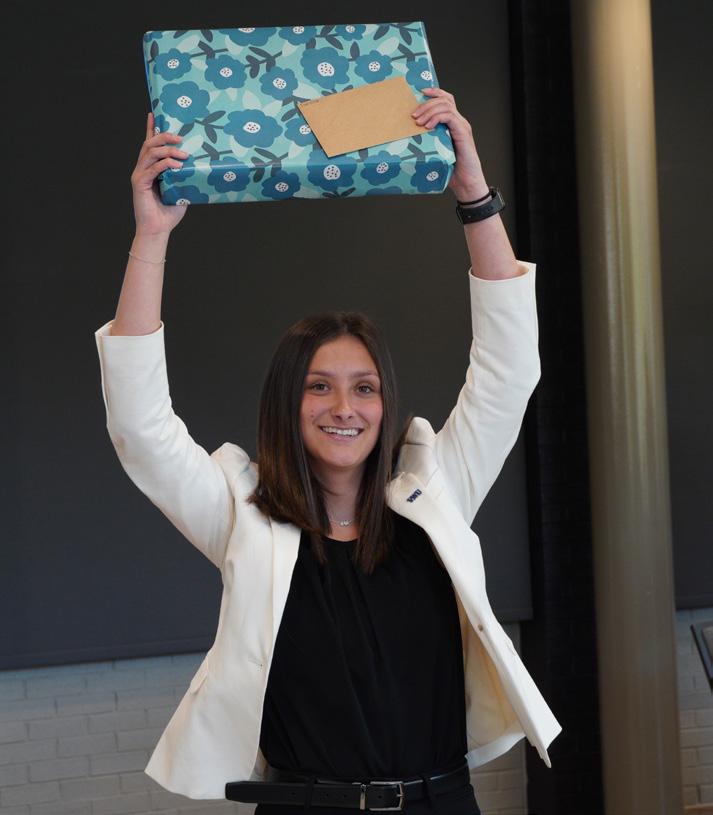
Clarissa is a sophomore double majoring in Business and International Studies with a concentration in International Business. She hopes to become an international consultant with a focus on business attraction. She is a first-generation college student in the Batten Honors College, where she plays field hockey, runs track and interns with Virginia Beach Economic Development. She stays busy, but loves being involved!
challenges we faced was staffing, especially for volunteer roles like managing the concession stands or simply attending events as support during conference week. Most of our class is made up of springseason athletes, and others often work off-campus jobs on weekends.
My advice to students planning their four years: if you’re an athlete, try to take this course during your off-season, and if you work weekends, talk to your manager early about your involvement.
Q: What was your favorite aspect of organizing the conference, particularly in terms of motivating students for future events?
A: Hands down the connections.
And I don’t just mean networking with professionals or meeting potential mentors, although those were incredible opportunities too. What really stood out to me were the deeper, more personal relationships I built with my classmates.
There’s something uniquely powerful about working side by side with people toward a shared goal, especially one as ambitious and multifaceted as this conference. You see everyone’s dedication, creativity and resilience firsthand, and it creates a kind of bond that’s hard to replicate in a classroom setting.
In those high-pressure moments, you find yourself relying on others — not just to get tasks done, but to stay motivated, grounded and even inspired. And when everything finally comes together and you see it all in action, there’s this overwhelming sense of pride in the event itself and the team that made it happen. It reminds you that when students are given ownership and trust, they rise to the occasion in amazing ways.
I think that’s the biggest motivator for future events: knowing that you’re not just participating in something, you’re building it. You’re creating a space where others can connect, learn and grow. And along the way, you’re also forming relationships that will continue to shape your experience long after the event is over. Those human moments — the support, the collaboration, the shared wins and struggles — those are what truly make the process meaningful.
BY DUDA BERNARDO mdefreitasbernardo@vwu.edu

I know it’s a cliché, but seriously, enjoy every moment. Say yes to those spontaneous adventures in the middle of the night. Say yes to hanging out with your friends, even when you’re tired. Say yes to joining that club or taking that class you’ve always wanted to, even if you have a lot on your plate.
Time flies faster than you think, and before you know it, you’ll be a senior in your last semester. So make the best of every moment, attend school events, say yes more often and collect incredible memories for your future.
But also, don’t procrastinate too much. I know the assignment is due at 11:59 p.m., but trust me, you’ll feel so much better if you finish it early. Take advantage of the free prints we get at the library, print all your syllabuses, calendars and anything to help get yourself organized. Ask for help when you need it, professors can be pretty understanding, especially when you’re honest with them.
Take those 30 minutes before the test to go over everything one more time. I know scrolling through social media sounds more fun, but getting that A will make your day. And lastly, don’t forget to sleep. I know it’s tempting to try to do everything in one night, but there’s no energy drink strong enough to keep you from burning out.
BY CLAY YOKOM kayokom@vwu.edu
My advice is simple: don’t bite off more than you can chew so you can enjoy your time at VWU.
BY KIRKLAND BUTLER
kwbutler@vwu.edu
Make sure you have a hobby. It has to be something intentional, which you dedicate a portion of your time to. Actually, for the best results, you should have a couple hobbies which only slightly interact with each other (one of them should involve moderate exercise). It helps stretch the brain, which can only be a good thing.

BY SYDNEE WASHINGTON sawashington2@vwu.edu
With the removal of the one-time transfer exception rule, the transfer portal has been blown open, sucking in more athletes than ever before. Stories swirl about athletes transferring to their third school, teams losing their entire roster to the portal and teams building their entire roster through the portal. Transferring has become so prevalent that some athletes have to come out to inform the athletic world that they do not intend on entering the transfer portal to squash speculation. Paired with NIL opportunities, the transfer portal offers more options for athletes, especially at the DI level, but its impacts are rarely discussed at the DIII level.
When deciding to transfer, DIII athletes have two options. They can sign a self-release form which allows them to communicate with only another DIII school for 30 days without having to notify the school they currently attend. Any communication beyond the 30 days needs to be approved with another completed self-release form, and within seven days of the issuance of the second release, the school communicating with the athlete must notify the currently attended school of the communication. The other option is the transfer portal: an online platform where coaches have permission to contact any athlete in the portal. To enter the portal, the athletic director has to fill out a form in the portal that authorizes schools from any division to contact the athlete. All coaches at VWU have logins for the portal.
Men’s Basketball head coach David Macedo discussed the portal’s impact on recruitment for his program.
“For us, we do pay attention to it. We still recruit traditionally, but we were able to get two young men out of the transfer portal this past year that have been great additions, TJ East and Jeremiah Boetang,” Macedo said. “It’s something we look at because it is part of everyday recruiting now.” The portal has not been significantly disruptive for the program either.
“We’ve been very fortunate that the kids have enjoyed their experience. If we do have somebody that is not back with us, it’s usually just because they want to have an opportunity to play more elsewhere, and that’s fair because we keep a lot of guys,” Macedo said.
Although many athletes reach out to Macedo in hopes of joining his program, he prioritizes players that match the team’s culture.
“We’ve had a ton of kids contact us, and there’s a lot of kids maybe that might not be a great fit that we are real honest about,” Macedo said.
Athletic Director Andrea Hoover-Erbig is familiar with the effects of the portal. One of the biggest effects is the increased ease of transferring. “Before, if somebody wanted to try to go to division II or division I, we had
to send an email giving particular institutions permission to contact our student-athletes, so it definitely has streamlined the process,” Hoover-Erbig said.
As a result, Hoover-Erbig said she has seen an increase in DIII athletes using the portal to seek out better opportunities.
“It’s something we look at because it is part of everyday recruiting now.”
Men’s Basketball head coach David Macedo
“I think the other thing I see is people want to test the waters. They enjoy being here. They want to see what other options are out there,” Hoover-Erbig said.
Hoover-Erbig believes many athletes are drawn by the desire to play at a higher level or explore other options by putting their name in the portal.
Women’s Soccer player Camille Jernigan used the transfer portal to continue competing as a graduate student.
“The extra year of eligibility I received due to COVID-19 played a big role in my decision. Without that extra year, I don’t think I would have participated in the transfer portal,” Jernigan said.
The process was relatively easy for Jernigan.
“In my opinion, it really comes down to who you know,” Jernigan said. “My coaches at Longwood were incredibly helpful and guided me through the process. I’m really grateful for that because that is not always the case. Thanks to their connections, as well as mine, I was able to find the right fit for me at Virginia Wesleyan.”
Jernigan enjoyed her time as a student-athlete at Longwood University and did not feel the need to transfer during her undergraduate years. She credits this to her mom, who advised her to choose a college she loved devoid of sports.
Jernigan believes the overwhelming nature of the recruitment process is responsible for elevated transfer numbers in recent years.
“I think in today’s society, especially with social media, younger athletes can tend to feel rushed in the recruitment process. I think a lot of them take the first offer they get without really weighing all their options, and then they end up unhappy and wanting to transfer,” Jernigan

The attractiveness of the portal for unhappy athletes can be both good and bad, according to Jernigan.
“It gives them more control over their careers, especially when factors outside of their control, like coaching changes or personal circumstances, influence their decisions,” Jernigan said. “However, I think the portal can be harmful if athletes use it without fully thinking through their decision. It’s easy to get caught up in the excitement of a new opportunity, but athletes should consider the bigger picture. While the transfer portal can be incredibly beneficial, it should be used thoughtfully and not just as a quick fix when things don’t go exactly as planned.”
Overall, the changes in the transfer portal impacts DIII on a much smaller scale than at the DI level.
“I think at division I, the impact is a whole different ball game,” Hoover-Erbig said. “I think collegiate athletics, in my opinion, is the purest here at division III. People come; they’re not getting any scholarships. They’re playing because they love the game. I think division I, with the transfer portal and NIL, has blown up the four-year experience of being a student-athlete […] and so I think the negative impacts of the transfer portal, in my opinion, are seen much more at the Division I level than at the Division III level.”
BY COY CAMISCIOLI clcamiscioli@vwu.edu
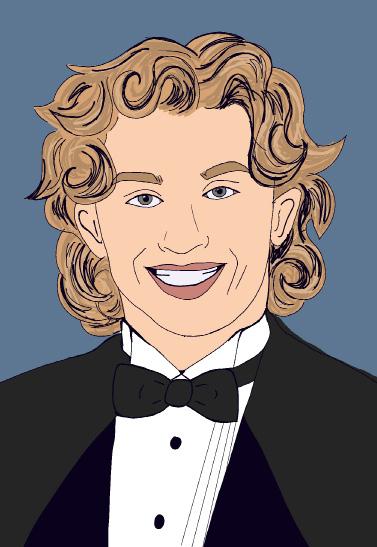
Eight teams remain in the hunt for the NBA championship as the first round came to an end this past Sunday. Perhaps the most
surprising storyline from the first round stems from the No. 3 seed Lakers losing the series to the No. 6 seed Timberwolves.
I was close to having a perfect bracket through round one, but the Nuggets’ defeat of the Clippers was my one mistake.
The next four series have the potential to go six or seven games, as all eight teams seem to have a legitimate case at a championship.
In the Western Conference, I think that the No. 1 seed Thunder will defeat the No. 4 seed Nuggets in seven games to advance but it is hard to doubt the championship experience of Jamal Murray and Nikola Jokic. The Nuggets won it all two years ago against the Miami Heat.
The Thunder dominated the regular season earning a 68-14 record and seem to be a formidable contender even with such a young roster.
The league’s top MVP candidates, Shai Gilgeous-Alexander of Thunder and Nikola Jokic of Nuggets, will now get a chance to prove why they are the MVPs.
On the other side of the West, the No. 6 seed Timberwolves will face the No. 7 seed Warriors. The Timberwolves fell short of
their goal last year losing in the Western Conference Finals to the Mavericks.
As for the Warriors, four championships in the Stephen Curry era speak for themselves as they look to push the narrative of being the greatest dynasty ever.
I don’t think the Warriors have the size on the defensive side to contain the Timberwolves after watching the Lakers get exposed for their lack of size and I think the Timberwolves will win this series in five games.
If my predictions are correct, that would put the Thunder and the Timberwolves in the Conference Finals in which I have the Thunder moving on to the NBA Finals.
For the Eastern Conference, the No. 1 seed Cavaliers are facing the No. 4 seed Pacers. The Cavaliers have had a similar season to the Thunder with such a young team dominating the regular season and earning the No. 1 seed.
However, I think the Pacers are dangerous in transition and shooting the 3-ball which I think will propel them to the Conference Finals knocking off the Cavaliers in seven games.
In the other series in the East, the reigning
champion No. 2 seed Celtics will face the No. 3 seed Knicks. I think this could be an all-time series between the two historic franchises, but I do think the Celtics will prevail in seven games.
This would set up a rematch of last year’s Eastern Conference Finals between the Celtics and Pacers. The Celtics swept the Pacers last year, but I don’t think it will be quite as easy to do it again.
I want the Pacers to win it, but I would have to take the Celtics winning in six games to set up an NBA Finals match between the Thunder and the Celtics.
This hypothetical series has all of the potential to go seven games, which would be the first time an NBA Finals series went to a game seven since 2016 when the Cavaliers defeated the Warriors.
I think if this series were to happen, the Thunder would defeat the reigning champs in seven games with Shai GilgeousAlexander winning Finals MVP. No matter how the bracket plays out, we are set for an epic finish to the 2024-25 NBA season.
Seniors weigh in on the process of moving on from their
As another school year comes to a close, senior athletes across the country are walking off the and track for the last time. For many, it is the end of a chapter filled with wins, losses, long practices and team memories.
Senior studentathletes juggle full academic schedules with intense team commitments, part-time jobs, community involvement and internships.
According to NCAA data, DIII athletes typically spend 20-30 hours per week on their sport during their season. These athletes play truly based on passion for the sport since there are no athletic scholarships at the DIII level.
Valuable memories from their sports will stay in an athlete’s mind throughout the rest of their life. “My favorite team memory was my walk-off home run against Ferrum my junior year. Walkoffs are always fun when you’re on the winning side of it. Seeing the team pile out of the dugout celebrating, I will forever remember that moment,” senior baseball player Nick Sylvester said.
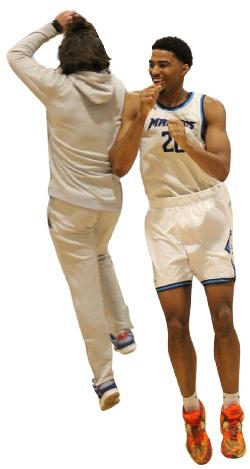
Graduating student-athletes reflect on how being a part of their team here has added to their college life. “Being on a team gives you your own tight-knit community, lifelong friendships and something to keep your head up during off days,” senior swimmer Lauren Hendricks said.
One of the unwritten jobs of a senior athlete is to give advice to the younger teammates and the future players.
A piece of advice that Sylvester said he would give is to “embrace the memories you make with your team. Some of the guys on your team will be in your life forever.”
Additionally, Nick offered the advice to “take advantage of every opportunity you are given and leave it all out on the field.”
A senior’s last moment on the field, court, track or pool that they played at for the majority of their college career can be emotional, not only because it can feel like they are leaving their second home but they may also be leaving their sport behind.

BY
Formula One (F1) is in danger of losing its soul. With the announcement of yet another street race, this time in Madrid, it’s becoming painfully clear that F1 is steering itself into a corner.
The pinnacle of motorsport, known for its speed, intensity and legendary circuits like Spa-Francorchamps and Silverstone, seems to be turning into a traveling roadshow of tight, narrow street circuits devoid of any real character.
The Madrid Grand Prix, replacing the Circuit de Catalunya, is now the latest symptom of a trend that’s undermining one of the key facets that makes F1 special.
In fairness, not every street circuit is inherently bad. Monaco, despite all of its professional racing, is iconic. It’s the place to win. Even Las Vegas, despite all of its hectic and over the top nature, has produced some great races, particularly last year.
Yet, for every Vegas, there’s a Miami or a Baku where drivers end up spending most of the race stuck in a DRS train,
unable to overtake due to the narrow track and complete absence of any rhythm.
After the first lap or pit stop, the grid is practically set, save for a pit stop or rare move. Races should not rely on pit strategy for overtakes, the action needs to occur on track.
What’s even worse than just boring races is that many of the new circuits are visually and even technically sterile. The new Madrid layout, based on early previews, looks more like an oversized go-kart track than an actual grand prix circuit.
It’s squeezed through urban sprawl, built on uneven roads with barely any elevation change or corner variety. The track has no character, no history and certainly no soul.
Furthermore, the surface is a patchwork of different asphalt types, which are notorious for low grip and high tire degradation.
To be clear — Formula One is not Formula E. The essence of F1 is natural circuits, places like Interlagos, Monza and Suzuka, where drivers can fully embrace the most advanced cars on the planet. F1 cars are not built for 90-degree corners,
painted walls or 1 car-width sections like the Baku Castle section. Forcing drivers and their cars into awkward stop-start layouts stifles the very nature of the sport.
This isn’t emanating from a lack of circuits either: iconic tracks such as Hockenheimring, Nurburgring, Portimao or Kyalami are all missed by fans.
Any of these aforementioned tracks could be tweaked to produce better races, if that’s even necessary.
Yet, instead of watching an exciting race on an iconic track, we’re stuck trying not to fall asleep while watching Singapore or Abu Dhabi.
So why does F1 keep doing it? Money, mostly. Street races bring the sport to cities, maximizing exposure while minimizing infrastructure costs. Promoters and sponsors love it, but fans and drivers are growing weary.
Max Verstappen, for instance, described street circuits as the “worst experience.” It’s a lack of enjoyment with an increased risk of damage and injury for minimal racing payoff.
The magic of F1 isn’t just the spectacle:

BY BRIAN MADDEN
Imagine biting into a bright red strawberry that you picked yourself. Sounds delicious, right? If you visit Flanagan Farms at 1707 Princess Anne Road you won’t have to imagine. Flanagan Farms just opened their U-Pick strawberry farm about a week ago, so now is the perfect time to go.
Approaching the farm, it almost comes out of nowhere, as big fields and other farms surround the area.
The small shack where they sell their strawberries provides a great experience for customers. The process is extremely easy: they give you a small bucket and you go and roam the rows and rows of strawberry shrubs. When you’re finished, you pay at the shack and are on your way to enjoying the freshest strawberries you have probably ever eaten.
Flanagan Farms is family-owned by Roy and Jeanie Flanagan. They run the farm with their five children. Everything is about family to them. “I like the interaction between me and the customers, I see a lot of family and friends too,” Fletcher Flanagan, one of the daughters, said. The way they interact is genuine from the start. Even friends are part of this amazing atmosphere and seem like they are part of the family. “I started working here freshman year, two years ago,” one of the workers at the cash register, a family friend of the Flanagans, said.
The history of the farm goes back further than just Roy

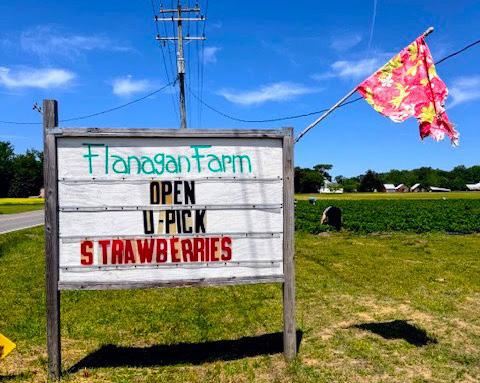
the farm side rather than retail, said. “There is so much that goes into making sure you and I can go and have a wonderful experience picking strawberries. Some things may be simple compared to everything else,” Colby said. When asked about his favorite part about working at the farm Colby said, “driving the tractor.”
Flanagan Farms prides themselves on providing the best customer experience, which is evident as soon as you arrive. Freshness and quality at a fair price is what they try to provide.

and Jeanie. Currently farmed by the fourth and fifth generations, the farm started with more than fruits and vegetables. “We used to do turkeys for turkey killing, we would raise them and that was going on for like 100 years. But my parents started the strawberry farm, and I think they’ve been doing it for 27 years,” Fletcher said. The Flanagan family is equipped with experience spanning generations.
The farm’s location in Pungo Ridge is part of their success. Located in southern Virginia Beach, Pungo Ridge has rich soil perfect for growing fresh fruits and vegetables.
Sustainability is a big part of making sure that Flanagan Farms can provide at their best. As fourth and fifth generation farmers, they practice sustainability in their production. They follow integrated pest management, using the right treatment only for pests causing significant damage, whether that be chemical or biological control.
Though Flanagan Farms is a bit of a drive from campus, it is a great idea to check them out along with other farms or locations in the Pungo area. Flanagan Farms is a great place to get some fresh strawberries, enjoy the view or just spend some quality time with people close to you in an amazing family-friendly environment.

“We have a good climate for it because during the strawberry season, it’s actually hot enough,” Fletcher said. They grow a variety of fruits and vegetables from spring through to fall.
Preparation is a huge part in making sure the farm stays in good shape throughout their whole growing season. There is a whole process devoted to making sure the strawberries are ready to pick and grow correctly. “We laid it, covered it and then we put down fertilizer. And then we bed it with the fruit with the black plastic,” Colby Flanagan, who mostly helps out with

something like that here,” she said.
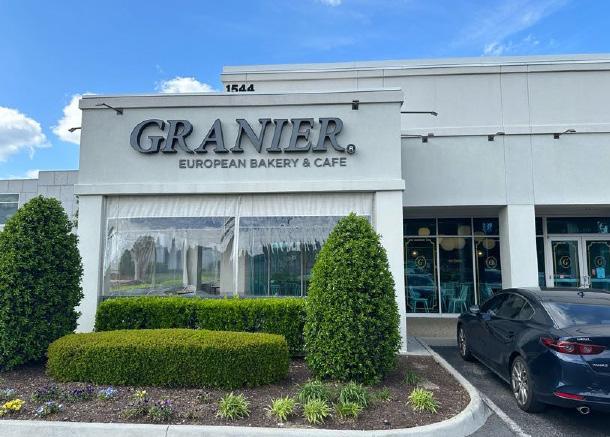
Only 25 minutes away from campus, Granier European Bakery & Café brings a little bit of Europe to Virginia Beach.
With an extensive menu, Granier serves freshly baked European-style pastries and brunch options, including omelets, sandwiches, salads and fresh juices.
As customers enter the bakery, they are struck by the welcoming and elegant vibe of the place. A sign on the wall indicates popular European locations: London, Barcelona, Rome and Lisbon.
Tables for two on the left and outside, big tables in the middle, a three person couch with two armchairs in the corner, and an extensive display of pastries in the front. There’s a place for everyone, whether customers are bringing friends, family, a study group or just want to enjoy some time alone
The first Granier Bakery opened 15 years ago in Barcelona, Spain. With over 400 locations around Spain, Portugal, Italy, England, South America and the U.S., Granier strives to bring pastries, coffee and European breakfast around the world to their customers.
Open everyday from 7 a.m. to 7 p.m., the Virginia Beach location is the third in the U.S., the other two in Miami.
Gabriela Gonzalez, owner of the Virginia Beach location, said there are almost 400 Granier franchises just in Spain. “This is like the Starbucks over there,” Gonzalez said.
Gonzalez said she fell in love with the concept after visiting Spain multiple times throughout the years. “We didn’t have
She opened the Virginia Beach locations three and a half years ago after the COVID-19 pandemic forced her to transition jobs.
America’s convenient drive-through coffee culture contrasts with how drinking coffee is viewed in Europe and other parts of the world, where it is characterized by a more mindful and social experience.
Senior Inès Pouliquen, an international student from France, said that Granier is a mixture of French coffee shop and bakery. Pouliquen said that in France “you actually have to take your time, take a coffee, sit at the table. You can stay two minutes to drink a coffee or two hours and no one would mind.”
Originally from Venezuela, Gonzalez said she tries to offer a coffee shop experience similar to what someone would find in Europe or South America.

Gonzalez said she had European customers ask her if they could “do what they do in Europe.” She said customers are happy to be able to take their time to drink a coffee or just talk for hours.
Granier’s pastries are made in Spain and shipped to the different franchise locations, ensuring a unique and authentic European flavor. “They ship it from Barcelona, and we bake it here. So that’s why the dough is different. It has less gluten, it’s less processed and it is amazing,” Gonzalez said. Even though the products come


frozen, Gonzalez said the products taste the same as in Spain.
Pouliquen tried a chocolate eclair to compare to the European version, and called it the best one she’s tasted in the U.S. “The dough is the same, and the texture is also the same as in France,” Pouliquen said.
She took some pastries home for her family to try, and they also thought the flavours were authentic.
The Virginia Beach location serves breakfast options, including different styles of eggs and croissant sandwiches. The runny egg croissant features crispy bacon, a runny egg and mixed greens.
The breakfast items are freshly made daily by their chefs. Gonzalez said having breakfast items is a way to Americanize the franchise, since those are not available in the Spanish locations.
With an extensive breakfast and brunch menu, Gonzalez said Saturday and Sunday mornings are the busiest times at Granier. She said that the best time to come and stay for hours is during the weekdays or weekend afternoons.
Isabel Gardner, a student at Tidewater Community College, said she visits the bakery regularly.
“I really like it here. I think that the coffee’s always really good, and they have really good pastries, and the people who work here are really nice and it’s a good place to sit and work,” she said. Gardner said she usually goes in the afternoon to sit and do homework with her friend.
Gardner said her favorite pastries are the tiramisu and Granier’s flaky pastries, such as the Nutella croissant.
To ensure it stays authentic to the European style, the franchise follows certain standards.
Gonzalez said they need to use the Julius coffee, a brand from Vienna, Austria. She also said they need to buy Garnier pastries and use recipes that are given to them.
“I think those two elements make it very European,” she said.
She said the franchise owners are flexible about letting her try new menu items, such as new beer and wine options that Gonzales said have been well received.
In hopes to build an afternoon clientele, Gonzalez introduced a new afternoon menu called Midday Delights. The menu features tapas, small Spanish savory dishes, such as mini pizzas, focaccia bread and tortillas Españolas (Spanish omelettes).
Pouliquen said Granier positively surprised her, describing it as the closest place she’s been to that resembles a French experience.
Since Granier has been very well received at this location, Gonzalez said they are looking to expand to a second Virginia Beach location soon.
Gonzalez also said they are thinking about keeping this location open until 9 p.m. to satisfy customers that come in for dinner and want to stay longer.
Located near the oceanfront at Hilltop East Shopping Center, this spot is the perfect choice for everyone who enjoys a special coffee experience. The drive is worth it for the incredible pastries, authentic flavors and fresh products you will find there. If you ever feel like getting to know a little bit more about Europe, consider visiting Granier European Bakery & Café at 1544 Laskin Road. Returning customers can get a loyalty card and with 10 purchases they earn a free coffee and croissant.

Tidewater Blues provides a community space of belonging through dance.
BY AIDEN CROGHAN & MJ MATTHEWS accroghan@vwu.edu & mjmatthews@vwu.edu
Amid the hustle and bustle of Norfolk every Monday night, something magical happens. Smack dab in the middle of the quaint and quiet Botetourt Gardens, Tidewater Blues throws down to the sounds of the greats in blues music, as well as contemporaries. In the Fred Heutte Center, a rebuilt ferry terminal now standing in the middle of Norfolk, common barriers to entry for gatherings of this sort are taken care of.
The night begins with a beginner’s lesson on blues dancing, and Tidewater Blues operates on donations only, no cover fee. Supportive people combined with the connectedness of blues dance make this one of the most community-feeling spaces to be found in the Tidewater area.
Today’s thriving Tidewater Blues group is the product of many passionate volunteers and a community of blues enthusiasts that have been in retirement since the previous Hampton Roads group, Siren City Blues, came to a close. “A lot of the organizers who were like, ‘We want to bring blues back, they danced when there was something called Siren City Blues, and it was here. It was very nostalgic when we got back into the Fred [Huette Center] because we were just dancing out by the Pagoda when the weather was nice,” Savanna Baltero, an organizer for Tidewater Blues, said.
“A big part of what we do is maintaining blues dancing in Norfolk and around Hampton Roads and trying to support live music. We are trying to get more connected in the live blues music that’s around, and seeing what’s danceable [...] because it would be so awesome to go in and blues-bomb places,” Baltero said.
It is evident how much care is put into making Tidewater Blues a mindful and inclusive space. “When I first started, it was kind of breaking through, where they were getting away from ‘men lead, women follow,’ and specifically trying to break that [gendered] language down,” Owl Motley, a longtime blues dancer and instructor at Tidewater Blues, said. “Nobody really knows that’s how it was supposed to be originally [...] if you go to other dance styles, it’s still very regimented.”
“We’re creating space to create community, to have community, but also to learn about the history and to honor the history,” Baltero said.
Tidewater Blues emphasizes the roots of blues in their introduction to newcomers. “We also focus on the education side, understanding where blues came from and all of the history behind it,” Baltero said. She quoted bluesman Willie Dixon: “The blues are the roots and other music are the fruits.”
The evolution of Tidewater Blues from its predecessor blues group has brought many changes, but kept the same electric energy. “We’ve tried to make a conscious
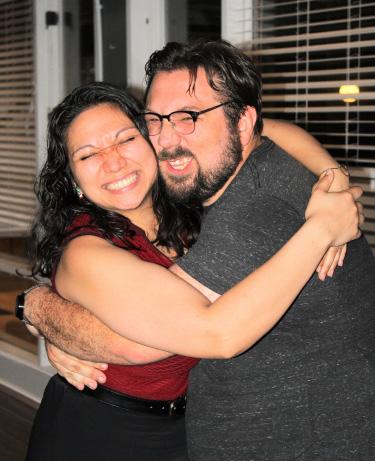
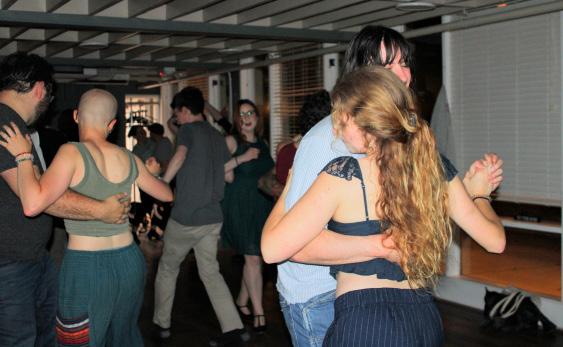
effort, especially over the past year or so, to really focus on traditional forms of Blues dancing and honoring the roots as a group — where this dance actually comes from, especially it being a dance that comes largely from African American culture,” Aaron Wright, a regular at Tidewater Blues, said.
Tidewater Blues embraces the many influences blues has had on music, so while dancing, you will hear traditional blues, along with jazz, fusion blues and even modern RnB. It’s easy to fall into a comfortable step with those around you, and just as easy to find a reason to stay with it. “Dancing and being able to move your body is hugely important for me… I tend to be pretty introverted in most other aspects of my life. This is a venue that helps me break out of my shell a bit, socialize and meet other people,” Wright said.
Though blues is a partnered dance, it can provide an outlet for self-expression. “The main thing I like about it is that the central thing about blues as a style is connection. It’s about dancing with the person that you’re partnered with and that’s a two-way kind of thing. In a lot of other dances, having a lead and follow designation is a lot more rigid. But in blues, when it’s working and functioning, both people keep their own style, they keep their own voices,” Joshua Simmons, who has been dancing with Tidewater Blues for nine months, said.
“I really like physical connection with people and this is a great way to do it –– sharing that kind of dance language with people,” Motley said. “It’s just really fun to dance with people.”
Dancing can also provide a moment of peace for people. “I come here not to think, I just listen to the music. I don’t think about what I’m doing, I just honor it,” Joshua Purnell, a longtime dancer at Tidewater Blues, said, comparing dancing to meditation.
Group instructor and volunteer organizer Nick Griffiths came to Virginia Beach looking for a blues group and found home with Tidewater Blues. “I came here, and I found that it was not only well established, but everybody here was kind and really engaged and loving it,” Griffiths said. “I just immediately dropped myself in.”
“Dance communities in particular live and die by their by the people that like prop them up,” Griffiths said. “It’s grassroots. Not a lot of people are really getting paid for this. It’s a labor of love, right?”
Griffiths’ admiration for the blues community is evident.
“There’s just so much buy-in and love and care that goes into keeping this alive. You can’t help but see when you come in, everybody just really appreciates everybody here and wants to dance and make sure this project works,” Griffiths said. “And that’s just such a cozy, ooey, gooey, lovey feeling. That’s why I keep coming here week after week.”
While many of those dancing Monday night had a
background in blues or Lindy Hop dancing, there were plenty of new dancers as well.
“This is one of the best, easiest places to fit in,” Motley said. “Just like with the music and diversity of dancing, there is a diversity of dancers.”
You can find Tidewater Blues at the Fred Heutte Center at 1000 Boutetort Gardens every Monday night. Beginner lessons start at 7 p.m., dancing starts at 8 p.m. — all are welcome.