Exploring the Psychedelic Drugs Market: Growth, Trends & Future
Prospects
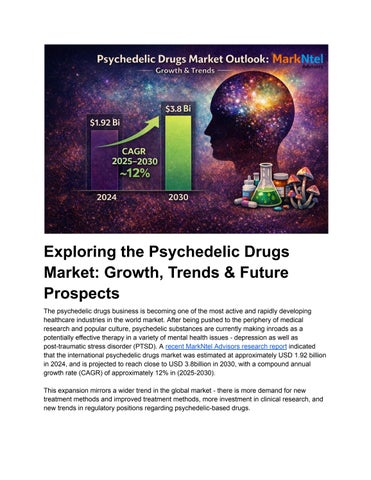
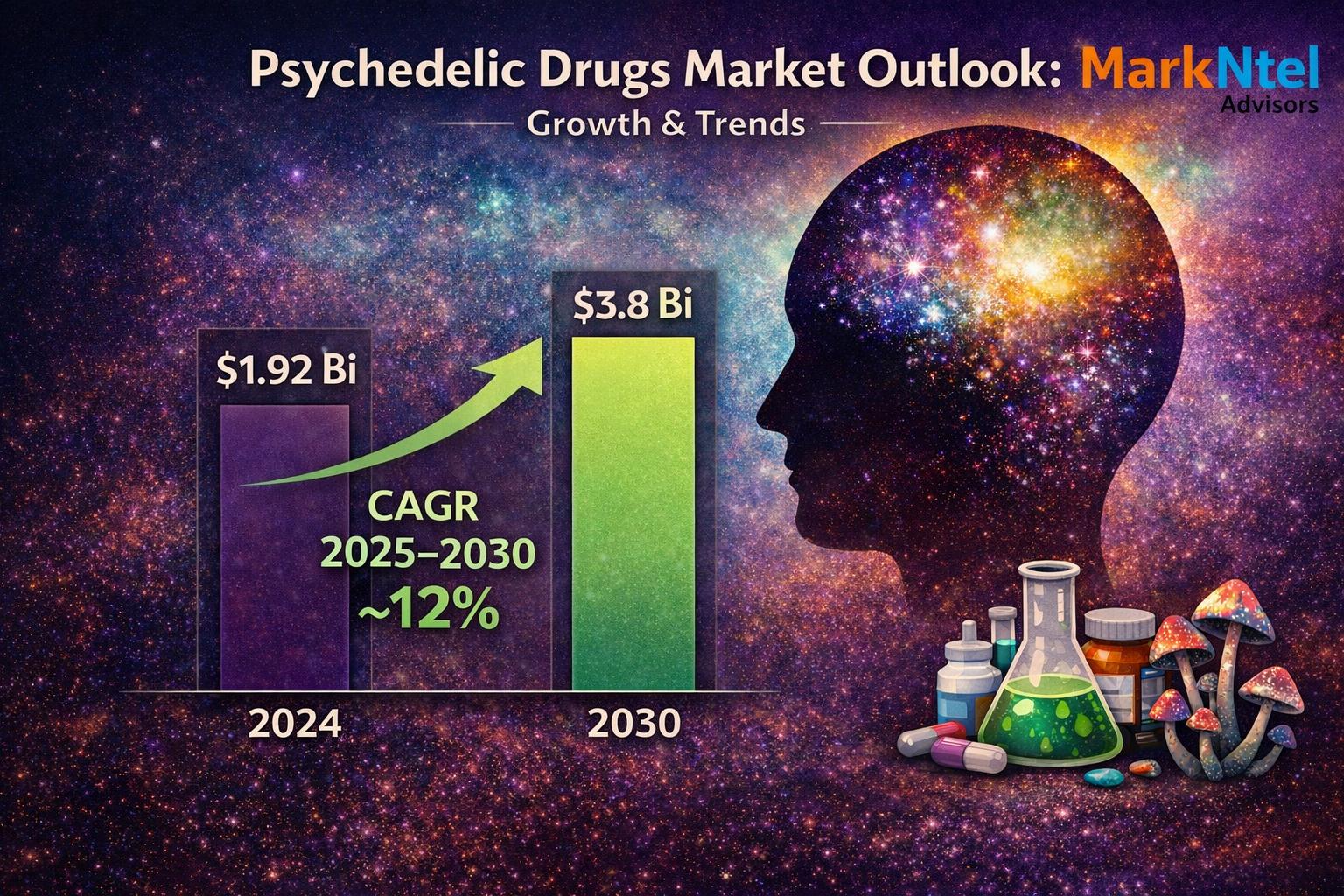
The psychedelic drugs business is becoming one of the most active and rapidly developing healthcare industries in the world market. After being pushed to the periphery of medical research and popular culture, psychedelic substances are currently making inroads as a potentially effective therapy in a variety of mental health issues - depression as well as post-traumatic stress disorder (PTSD). A recent MarkNtel Advisors research report indicated that the international psychedelic drugs market was estimated at approximately USD 1 92 billion in 2024, and is projected to reach close to USD 3 8billion in 2030, with a compound annual growth rate (CAGR) of approximately 12% in (2025-2030).
This expansion mirrors a wider trend in the global market - there is more demand for new treatment methods and improved treatment methods, more investment in clinical research, and new trends in regulatory positions regarding psychedelic-based drugs
Psychedelic Drugs: Understand the History, The
Stigmatization of Psychedelic Drugs.
Hallucinogens, also known as psychedelic drugs, are a group of psychoactive drugs that changes the perception, mood, and cognition in a significant way Among them, there are psilocybin (in magic mushrooms), lysergic acid diethylamide (LSD), ketamine, MDMA, and so on Although scientifically proven to have serious therapeutic potential, the substances were previously linked to recreational use, and in controlled clinical environments, there is a possibility of significant therapeutic potential.
The psychedelic drugs market of present days is characterized by its strategic shift in the focus of recreational popularity to the scientifically valid therapy. Controllable dosing, closely supervised treatment sessions and combined with psychotherapy imply that these substances are being more and more considered as serious medical therapies - especially where more resistant to standard pharmaceuticals have been found.
Major Forces that Spurred Market Development.
The fast growth of this market is being supported by a number of reasons:
1. Increasing Mental Health Disorders.
Mental illnesses such as depression, anxiety, PTSD, and addiction are rising in the world The conventional methods of treatment such as SSRIs and cognitive behavioral therapies are not effective on every patient and this has drawn healthcare professionals and researchers to consider other modalities Psychedelic drugs have reported encouraging results in initial and pilot studies in these incurable disorders, which supports their demand.
2. Increasing Clinical Research and Pharmaceutical Interaction.
The world has witnessed a massive rise in clinical trials examining the effectiveness and safety of different psychedelic medications. Strategy Pharmaceutical companies, biotech startups and research institutions are putting a lot of money into psychedelic R&D. There is a rise in engagement in regulatory approval pathways with some industry players testing compounds in late-stage clinical trials.
3. Changing Regulatory Environments & Cultures.
As regulators in multiple jurisdictions start to consider the frameworks in which psychedelics can be safely incorporated into medical practice, they start exploring the latter As an illustration, ketamine-based doses have already been approved in some countries in the treatment-resistant depression, and regulatory deliberations are ongoing on drugs such as MDMA and psilocybin These changes are beginning to make them more accepted and less stigmatized
4. Governmental/Publicity Campaign.
The acceptance of alternative medicine is also being increased by government programs and public education campaigns on mental health, which emphasize psychedelic acceptance With societies caring more about the state of the human mind, the not only openness to treatments, but also acceptance of them that might have been previously regarded as unconventional grows
Market Segmentation: What is the Moving Demand?
The psychedelic drugs market also has many segments, where the products are differentiated on the different drugs, source, route of administration, channel of distribution, and use:
● Drug Type: Ketamine is also a leading segment and this is mostly because of its fast acting and growing use in clinical practice in depression and anxiety treatment Psilocybin and LSD are also being considered as a therapeutic agent.
● Source: Synthetic psychedelics are on the market today and the primary reason is that they are easy to produce, and safety measures are well-established and are acceptable to regulators and clinicians.
● Therapeutic Applications: Psychedelic use has been used in a wide variety of conditions, but some of the most popular and most commercially important are treatment-resistant depression, PTSD, and anxiety disorders
● Channels and Administration: Pharmacies in hospitals, specialized psychiatric clinics, and telemedicine websites are highly instrumental in the modes of drug accessibility to patients The compounds have serious psychological impacts that frequently necessitate clinical supervision
International Environment and Local Market.
Advanced healthcare, increased funding of the research, and liberal clinical societies have now allowed North America to dominate the psychedelic drugs market. The leadership role of the region is also justified by the active involvement in clinical trials, as well as the comparatively open regulatory authorities.
But the Asia-Pacific, European as well as Latin American market is also picking up. The awareness is growing, the number of patients is increasing, and multinational players are investing, which are adding to the growing opportunities in these regions.
The Future Problems and Prospects.
The psychedelic drugs market is not an exception:
● Expensive R&D: It requires a lot of resources to carry out serious clinical trials and maneuver through complicated regulatory environment.
● Regulatory Hurdles: Although it has begun to be accepted, psychedelics continue to be highly regulated in most jurisdictions, restricting entry into the market
● Public Perceptions: Stigmatization and misunderstanding of psychedelics may be slowing down their use by clinicians and patients
The opportunities are as strong, however, as well New treatment paradigms may be unlocked through the use of continued clinical confirmation, progressive legislative action, and effective strategic collaborations in the pharmaceutical and biotech industries. Furthermore, the necessity of new approaches increases in urgency along with mental health issues that get more acute all over the world
The Future: A Changing Market
The psychedelic drugs market is experiencing an incredible change into a potential mainstream therapeutic class since it is a niche market With the development of scientific breakthrough, the changing policies, and a growing need in innovative mental health solutions, the industry is attractive to grow in the coming years up to 2030 and even further As the market is expected to continue growing over the next 10 years, all stakeholders in the fields of healthcare, pharma, and research are paying close attention to this area, and they have a good reason to.