Tomorrow’s Medicine: The Innovations Shaping Our Health Future by Mark Hiesterman

The world of health care is transforming quickly, bringing new possibilities that could change how we understand and manage our well-being Medical science is advancing through technologies and discoveries that aim to make treatments more effective, faster, and more accessible. As these advancements grow, they promise a future where staying healthy becomes easier and more personalized for everyone
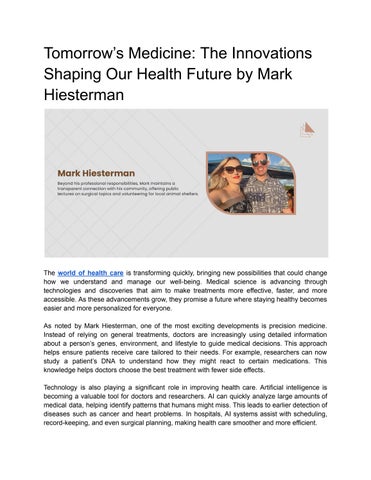
As noted by Mark Hiesterman, one of the most exciting developments is precision medicine Instead of relying on general treatments, doctors are increasingly using detailed information about a person’s genes, environment, and lifestyle to guide medical decisions. This approach helps ensure patients receive care tailored to their needs For example, researchers can now study a patient’s DNA to understand how they might react to certain medications This knowledge helps doctors choose the best treatment with fewer side effects.
Technology is also playing a significant role in improving health care Artificial intelligence is becoming a valuable tool for doctors and researchers. AI can quickly analyze large amounts of medical data, helping identify patterns that humans might miss This leads to earlier detection of diseases such as cancer and heart problems. In hospitals, AI systems assist with scheduling, record-keeping, and even surgical planning, making health care smoother and more efficient
Telehealth is another innovation that continues to grow Virtual visits allow patients to receive medical advice and follow-up care without leaving their homes. This is especially helpful for people who live far from clinics or have busy schedules As digital tools improve, telehealth will become more interactive, allowing doctors to monitor health conditions in real time using wearable devices and apps. This means patients can receive help sooner, preventing minor issues from becoming serious
Regenerative medicine is also making incredible progress Scientists are developing ways to repair or replace damaged organs and tissues using stem cells and advanced techniques This could make treatments for injuries, heart disease, and even neurological conditions more effective Researchers are also exploring the possibility of creating lab-grown organs, which may one day help address organ shortages
Finally, global collaboration is becoming essential in shaping the future of medical science
Experts around the world are sharing information, testing new ideas, and working together to solve significant health challenges This teamwork helps speed up research and ensures that life-saving discoveries reach more people
As we move forward, it is clear that medical science will continue to evolve These innovations not only improve treatments but also change how we experience health care, offering hope for a healthier, more connected world.