Voice Search and Natural Language Optimization: Ranking for Conversational Queries

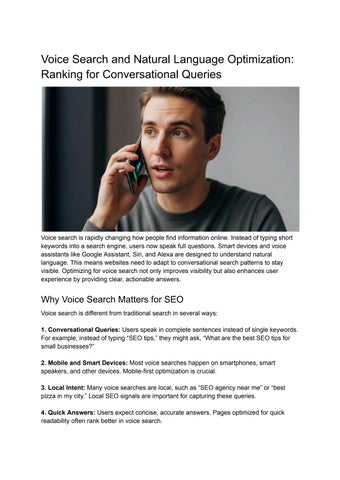
Voice search is rapidly changing how people find information online. Instead of typing short keywords into a search engine, users now speak full questions Smart devices and voice assistants like Google Assistant, Siri, and Alexa are designed to understand natural language. This means websites need to adapt to conversational search patterns to stay visible Optimizing for voice search not only improves visibility but also enhances user experience by providing clear, actionable answers
Why Voice Search Matters for SEO
Voice search is different from traditional search in several ways:
1. Conversational Queries: Users speak in complete sentences instead of single keywords. For example, instead of typing “SEO tips,” they might ask, “What are the best SEO tips for small businesses?”
2. Mobile and Smart Devices: Most voice searches happen on smartphones, smart speakers, and other devices Mobile-first optimization is crucial
3 Local Intent: Many voice searches are local, such as “SEO agency near me” or “best pizza in my city.” Local SEO signals are important for capturing these queries.
4 Quick Answers: Users expect concise, accurate answers Pages optimized for quick readability often rank better in voice search.
Understanding these differences helps content creators structure their pages for voice search and improve overall SEO performance.
How to Optimize for Voice Search
Optimizing for voice search requires a combination of strategies that focus on natural language, clarity, and structured content. Here are the main techniques:
1 Use Long-Tail and Conversational Keywords
Long-tail keywords are phrases that mimic how people naturally speak. Examples include:
● “How do I improve my website ranking for SEO?”
● “Best SEO tips for small businesses in 2026”
● “Which SEO agency can help with local search optimization?”
Using these phrases in headings, subheadings, and content helps search engines understand that your page answers specific user questions
2. Structure Content for Quick Answers
Voice assistants often read featured snippets from search results Structuring your content in a clear, scannable format increases your chances of being selected:
● Use short paragraphs with 2-3 sentences
● Include bullet points and numbered lists to summarize key information.
● Add question headings (H2/H3) like “What is voice search?” or “How to optimize for conversational queries?”
● Provide concise answers directly below the question headings
For example:
Question: How can I optimize my website for voice search?
Answer: Use natural, conversational phrases, organize content into short paragraphs and lists, and include long-tail keywords in headings and body text
3. Optimize for Local Search
Local SEO plays a big role in voice search, especially for businesses offering services:
● Claim and update your Google Business Profile
● Include your business address, phone number, and opening hours on your website
● Use location-based keywords naturally, e g , “top SEO agency in Dhaka” or “best SEO agency near me.”
● Encourage user reviews, as they improve credibility and local search ranking
Local queries are highly actionable, and optimizing for them can bring targeted traffic to your site
4. Focus on User Intent
Voice searches are driven by intent Most users are looking for answers, solutions, or guidance To optimize for intent:
● Create content that answers questions clearly.
● Avoid keyword stuffing; instead, explain concepts naturally
● Include examples and practical tips for better user engagement
For instance, instead of writing “SEO tips SEO tips SEO tips,” you could write:
“Learn practical steps to improve your website ranking. Start by optimizing your headings, improving page speed, and using natural language for your content ”

5 Make Your Content Readable and Engaging
Readability is crucial for voice search:
● Use simple, conversational English
● Break long sentences into shorter ones
● Include headings, subheadings, and lists to improve scannability.
● Add images or diagrams where needed to explain complex concepts visually
Readable content not only helps users but also assists AI-driven search engines in understanding your content
6. Implement Structured Data
Structured data (Schema org markup) helps search engines understand your content better:
● Add FAQ schema for common questions.
● Use HowTo schema for step-by-step guides
● Include structured data for local business details
Structured data improves your chances of appearing in rich snippets, which are often read aloud by voice assistants.
7 Mobile Optimization and Core Web Vitals
Most voice searches happen on mobile devices, so mobile optimization is critical:
● Ensure fast loading times; slow pages reduce voice search ranking
● Use responsive design so content displays correctly on all devices.
● Optimize Core Web Vitals (loading speed, interactivity, and visual stability)
Mobile-friendly websites provide a better experience for users and improve search rankings
8. Monitor and Adapt to Trends
Voice search and natural language optimization are evolving quickly To stay ahead:
● Use tools like Google Search Console and voice search analytics to monitor performance.
● Track long-tail queries users ask about your content
● Update your content regularly to match new user patterns
A consistent content update strategy helps maintain visibility and authority in your niche

Benefits of Voice Search Optimization
Optimizing for voice search brings several benefits:
● Increases organic traffic by targeting natural search queries
● Enhances user experience with clear and concise content
● Boosts local visibility for businesses offering nearby services
● Improves engagement metrics, as users find answers faster
By focusing on these strategies, your website becomes more accessible and useful for your audience.
Role of an SEO Agency
Optimizing for voice search can be technical and detailed. A professional SEO agency can help by analyzing your website, identifying target queries, and structuring content for conversational search They can implement long-tail strategies, structured data, and local optimization efficiently, ensuring your content ranks well for voice searches.
Conclusion
Voice search is not just a passing trend, it’s a fundamental shift in how people access information online By using long-tail conversational keywords, structured content, local SEO, and natural language writing, websites can capture more traffic and provide a better user experience
Optimizing for voice search is an ongoing process, and staying updated with the latest trends and technologies ensures your content remains relevant. With the right approach, your website can rank for conversational queries, attract local users, and stay ahead of competitors in a voice-first world